EP2142647B1 - Ganzzellsensor - Google Patents
Ganzzellsensor Download PDFInfo
- Publication number
- EP2142647B1 EP2142647B1 EP08759386.9A EP08759386A EP2142647B1 EP 2142647 B1 EP2142647 B1 EP 2142647B1 EP 08759386 A EP08759386 A EP 08759386A EP 2142647 B1 EP2142647 B1 EP 2142647B1
- Authority
- EP
- European Patent Office
- Prior art keywords
- whole
- cell
- yeast cells
- sensor according
- cell sensor
- Prior art date
- Legal status (The legal status is an assumption and is not a legal conclusion. Google has not performed a legal analysis and makes no representation as to the accuracy of the status listed.)
- Not-in-force
Links
- 210000005253 yeast cell Anatomy 0.000 claims description 86
- 108090000623 proteins and genes Proteins 0.000 claims description 82
- IJGRMHOSHXDMSA-UHFFFAOYSA-N Atomic nitrogen Chemical compound N#N IJGRMHOSHXDMSA-UHFFFAOYSA-N 0.000 claims description 80
- 229910052757 nitrogen Inorganic materials 0.000 claims description 40
- 210000004027 cell Anatomy 0.000 claims description 39
- 240000004808 Saccharomyces cerevisiae Species 0.000 claims description 38
- 239000003550 marker Substances 0.000 claims description 37
- OAICVXFJPJFONN-UHFFFAOYSA-N Phosphorus Chemical compound [P] OAICVXFJPJFONN-UHFFFAOYSA-N 0.000 claims description 36
- 235000014680 Saccharomyces cerevisiae Nutrition 0.000 claims description 36
- 229910052698 phosphorus Inorganic materials 0.000 claims description 35
- 239000011574 phosphorus Substances 0.000 claims description 35
- NINIDFKCEFEMDL-UHFFFAOYSA-N Sulfur Chemical compound [S] NINIDFKCEFEMDL-UHFFFAOYSA-N 0.000 claims description 33
- 229910052717 sulfur Inorganic materials 0.000 claims description 32
- 239000011593 sulfur Substances 0.000 claims description 32
- 239000000758 substrate Substances 0.000 claims description 22
- 238000013518 transcription Methods 0.000 claims description 19
- 230000035897 transcription Effects 0.000 claims description 19
- VYPSYNLAJGMNEJ-UHFFFAOYSA-N Silicium dioxide Chemical compound O=[Si]=O VYPSYNLAJGMNEJ-UHFFFAOYSA-N 0.000 claims description 15
- 102000004169 proteins and genes Human genes 0.000 claims description 14
- 108091006047 fluorescent proteins Proteins 0.000 claims description 13
- 102000034287 fluorescent proteins Human genes 0.000 claims description 13
- 238000000034 method Methods 0.000 claims description 12
- XLYOFNOQVPJJNP-UHFFFAOYSA-N water Substances O XLYOFNOQVPJJNP-UHFFFAOYSA-N 0.000 claims description 12
- 101150106525 RPS22B gene Proteins 0.000 claims description 11
- 101100530883 Schizosaccharomyces pombe (strain 972 / ATCC 24843) rps2202 gene Proteins 0.000 claims description 11
- 238000006243 chemical reaction Methods 0.000 claims description 11
- 230000007423 decrease Effects 0.000 claims description 9
- 230000012010 growth Effects 0.000 claims description 8
- 238000012545 processing Methods 0.000 claims description 8
- 101100115811 Saccharomyces cerevisiae (strain ATCC 204508 / S288c) DAL4 gene Proteins 0.000 claims description 7
- 101001137525 Homo sapiens Nucleolin Proteins 0.000 claims description 6
- 101100244670 Saccharomyces cerevisiae (strain ATCC 204508 / S288c) PHO11 gene Proteins 0.000 claims description 6
- 230000007812 deficiency Effects 0.000 claims description 6
- 238000001035 drying Methods 0.000 claims description 6
- 239000011159 matrix material Substances 0.000 claims description 6
- 239000000203 mixture Substances 0.000 claims description 6
- 230000008569 process Effects 0.000 claims description 6
- 239000000377 silicon dioxide Substances 0.000 claims description 6
- 102000004190 Enzymes Human genes 0.000 claims description 5
- 108090000790 Enzymes Proteins 0.000 claims description 5
- 101100467801 Lemna gibba RBCS1 gene Proteins 0.000 claims description 5
- 102100021010 Nucleolin Human genes 0.000 claims description 5
- 101150047734 SSU1 gene Proteins 0.000 claims description 5
- 101100215686 Saccharomyces cerevisiae (strain ATCC 204508 / S288c) AGP3 gene Proteins 0.000 claims description 5
- 101100045633 Arabidopsis thaliana TCX3 gene Proteins 0.000 claims description 4
- 102100036576 Coiled-coil domain-containing protein 174 Human genes 0.000 claims description 4
- 101150073536 FET3 gene Proteins 0.000 claims description 4
- 101710196315 High affinity copper uptake protein 1 Proteins 0.000 claims description 4
- 108060001084 Luciferase Proteins 0.000 claims description 4
- 101150037491 SOL1 gene Proteins 0.000 claims description 4
- 101100442137 Saccharomyces cerevisiae (strain ATCC 204508 / S288c) DAL5 gene Proteins 0.000 claims description 4
- 101100442138 Saccharomyces cerevisiae (strain ATCC 204508 / S288c) DAL80 gene Proteins 0.000 claims description 4
- 101100505264 Saccharomyces cerevisiae (strain ATCC 204508 / S288c) GNP1 gene Proteins 0.000 claims description 4
- 101100233775 Saccharomyces cerevisiae (strain ATCC 204508 / S288c) JLP1 gene Proteins 0.000 claims description 4
- 101100257555 Saccharomyces cerevisiae (strain ATCC 204508 / S288c) SPL2 gene Proteins 0.000 claims description 4
- 101100212922 Saccharomyces cerevisiae (strain ATCC 204508 / S288c) YBR099C gene Proteins 0.000 claims description 4
- GWEVSGVZZGPLCZ-UHFFFAOYSA-N Titan oxide Chemical compound O=[Ti]=O GWEVSGVZZGPLCZ-UHFFFAOYSA-N 0.000 claims description 4
- 230000022131 cell cycle Effects 0.000 claims description 4
- 239000000017 hydrogel Substances 0.000 claims description 4
- 239000007787 solid Substances 0.000 claims description 4
- 101001021527 Homo sapiens Huntingtin-interacting protein 1 Proteins 0.000 claims description 3
- 102100035957 Huntingtin-interacting protein 1 Human genes 0.000 claims description 3
- 101150085452 IPT1 gene Proteins 0.000 claims description 3
- 239000005089 Luciferase Substances 0.000 claims description 3
- 239000003651 drinking water Substances 0.000 claims description 3
- 235000020188 drinking water Nutrition 0.000 claims description 3
- 235000012239 silicon dioxide Nutrition 0.000 claims description 3
- 239000002351 wastewater Substances 0.000 claims description 3
- TWNQGVIAIRXVLR-UHFFFAOYSA-N oxo(oxoalumanyloxy)alumane Chemical compound O=[Al]O[Al]=O TWNQGVIAIRXVLR-UHFFFAOYSA-N 0.000 claims description 2
- 239000004408 titanium dioxide Substances 0.000 claims description 2
- 239000013307 optical fiber Substances 0.000 description 29
- 108020004414 DNA Proteins 0.000 description 24
- 230000005855 radiation Effects 0.000 description 20
- 239000002609 medium Substances 0.000 description 19
- 239000011521 glass Substances 0.000 description 11
- 108091005957 yellow fluorescent proteins Proteins 0.000 description 11
- 108010082025 cyan fluorescent protein Proteins 0.000 description 10
- 239000012634 fragment Substances 0.000 description 10
- 239000000243 solution Substances 0.000 description 10
- 108091026890 Coding region Proteins 0.000 description 8
- 108091028043 Nucleic acid sequence Proteins 0.000 description 8
- 230000000694 effects Effects 0.000 description 8
- 239000000499 gel Substances 0.000 description 8
- 230000004044 response Effects 0.000 description 8
- 239000013598 vector Substances 0.000 description 8
- 230000008859 change Effects 0.000 description 7
- 238000004519 manufacturing process Methods 0.000 description 7
- 230000001105 regulatory effect Effects 0.000 description 7
- LFQSCWFLJHTTHZ-UHFFFAOYSA-N Ethanol Chemical compound CCO LFQSCWFLJHTTHZ-UHFFFAOYSA-N 0.000 description 6
- 244000005700 microbiome Species 0.000 description 6
- 239000000047 product Substances 0.000 description 6
- 229910002028 silica xerogel Inorganic materials 0.000 description 6
- FHVDTGUDJYJELY-UHFFFAOYSA-N 6-{[2-carboxy-4,5-dihydroxy-6-(phosphanyloxy)oxan-3-yl]oxy}-4,5-dihydroxy-3-phosphanyloxane-2-carboxylic acid Chemical compound O1C(C(O)=O)C(P)C(O)C(O)C1OC1C(C(O)=O)OC(OP)C(O)C1O FHVDTGUDJYJELY-UHFFFAOYSA-N 0.000 description 5
- 101150047144 CDC28 gene Proteins 0.000 description 5
- 229910004298 SiO 2 Inorganic materials 0.000 description 5
- 229940072056 alginate Drugs 0.000 description 5
- 235000010443 alginic acid Nutrition 0.000 description 5
- 229920000615 alginic acid Polymers 0.000 description 5
- 239000011248 coating agent Substances 0.000 description 5
- 238000000576 coating method Methods 0.000 description 5
- 238000001514 detection method Methods 0.000 description 5
- 230000004083 survival effect Effects 0.000 description 5
- 108091081024 Start codon Proteins 0.000 description 4
- 238000010367 cloning Methods 0.000 description 4
- 230000005670 electromagnetic radiation Effects 0.000 description 4
- 230000005284 excitation Effects 0.000 description 4
- 230000002829 reductive effect Effects 0.000 description 4
- 230000002441 reversible effect Effects 0.000 description 4
- 108700028369 Alleles Proteins 0.000 description 3
- PEDCQBHIVMGVHV-UHFFFAOYSA-N Glycerine Chemical compound OCC(O)CO PEDCQBHIVMGVHV-UHFFFAOYSA-N 0.000 description 3
- VEXZGXHMUGYJMC-UHFFFAOYSA-N Hydrochloric acid Chemical compound Cl VEXZGXHMUGYJMC-UHFFFAOYSA-N 0.000 description 3
- 108091005804 Peptidases Proteins 0.000 description 3
- 239000004365 Protease Substances 0.000 description 3
- 238000012300 Sequence Analysis Methods 0.000 description 3
- 239000004098 Tetracycline Substances 0.000 description 3
- 108091023040 Transcription factor Proteins 0.000 description 3
- 102000040945 Transcription factor Human genes 0.000 description 3
- 101150050575 URA3 gene Proteins 0.000 description 3
- 241000607479 Yersinia pestis Species 0.000 description 3
- 239000012491 analyte Substances 0.000 description 3
- 239000002585 base Substances 0.000 description 3
- 150000001875 compounds Chemical class 0.000 description 3
- -1 cyclic ammonium salts Chemical class 0.000 description 3
- 230000003247 decreasing effect Effects 0.000 description 3
- 238000006460 hydrolysis reaction Methods 0.000 description 3
- 238000010348 incorporation Methods 0.000 description 3
- 238000012544 monitoring process Methods 0.000 description 3
- 230000035772 mutation Effects 0.000 description 3
- 239000013612 plasmid Substances 0.000 description 3
- 150000003839 salts Chemical class 0.000 description 3
- 238000003980 solgel method Methods 0.000 description 3
- 239000000126 substance Substances 0.000 description 3
- 229960002180 tetracycline Drugs 0.000 description 3
- 229930101283 tetracycline Natural products 0.000 description 3
- 235000019364 tetracycline Nutrition 0.000 description 3
- 229940072172 tetracycline antibiotic Drugs 0.000 description 3
- 150000003522 tetracyclines Chemical class 0.000 description 3
- 239000002028 Biomass Substances 0.000 description 2
- 108010075031 Cytochromes c Proteins 0.000 description 2
- 108091092566 Extrachromosomal DNA Proteins 0.000 description 2
- 108010010803 Gelatin Proteins 0.000 description 2
- 102000035195 Peptidases Human genes 0.000 description 2
- 239000002253 acid Substances 0.000 description 2
- 150000004703 alkoxides Chemical class 0.000 description 2
- 125000003275 alpha amino acid group Chemical group 0.000 description 2
- 239000012736 aqueous medium Substances 0.000 description 2
- 239000011324 bead Substances 0.000 description 2
- 230000015572 biosynthetic process Effects 0.000 description 2
- 239000000919 ceramic Substances 0.000 description 2
- 229910052681 coesite Inorganic materials 0.000 description 2
- 230000001276 controlling effect Effects 0.000 description 2
- 229910052906 cristobalite Inorganic materials 0.000 description 2
- 238000000695 excitation spectrum Methods 0.000 description 2
- 238000000855 fermentation Methods 0.000 description 2
- 230000004151 fermentation Effects 0.000 description 2
- 108010021843 fluorescent protein 583 Proteins 0.000 description 2
- 229920000159 gelatin Polymers 0.000 description 2
- 239000008273 gelatin Substances 0.000 description 2
- 235000019322 gelatine Nutrition 0.000 description 2
- 235000011852 gelatine desserts Nutrition 0.000 description 2
- 239000008187 granular material Substances 0.000 description 2
- 239000003906 humectant Substances 0.000 description 2
- 230000007062 hydrolysis Effects 0.000 description 2
- 238000005259 measurement Methods 0.000 description 2
- 229910052751 metal Inorganic materials 0.000 description 2
- 239000002184 metal Substances 0.000 description 2
- 235000015097 nutrients Nutrition 0.000 description 2
- 230000003287 optical effect Effects 0.000 description 2
- 239000002245 particle Substances 0.000 description 2
- 238000002360 preparation method Methods 0.000 description 2
- 108091008146 restriction endonucleases Proteins 0.000 description 2
- 229910052710 silicon Inorganic materials 0.000 description 2
- 239000002904 solvent Substances 0.000 description 2
- 229910052682 stishovite Inorganic materials 0.000 description 2
- 150000003464 sulfur compounds Chemical class 0.000 description 2
- 239000003440 toxic substance Substances 0.000 description 2
- 229910052905 tridymite Inorganic materials 0.000 description 2
- 238000011144 upstream manufacturing Methods 0.000 description 2
- SGKRLCUYIXIAHR-AKNGSSGZSA-N (4s,4ar,5s,5ar,6r,12ar)-4-(dimethylamino)-1,5,10,11,12a-pentahydroxy-6-methyl-3,12-dioxo-4a,5,5a,6-tetrahydro-4h-tetracene-2-carboxamide Chemical compound C1=CC=C2[C@H](C)[C@@H]([C@H](O)[C@@H]3[C@](C(O)=C(C(N)=O)C(=O)[C@H]3N(C)C)(O)C3=O)C3=C(O)C2=C1O SGKRLCUYIXIAHR-AKNGSSGZSA-N 0.000 description 1
- 101000935845 Aliivibrio fischeri Blue fluorescence protein Proteins 0.000 description 1
- 102000002260 Alkaline Phosphatase Human genes 0.000 description 1
- 108020004774 Alkaline Phosphatase Proteins 0.000 description 1
- 241000894006 Bacteria Species 0.000 description 1
- 102100026189 Beta-galactosidase Human genes 0.000 description 1
- OKTJSMMVPCPJKN-UHFFFAOYSA-N Carbon Chemical compound [C] OKTJSMMVPCPJKN-UHFFFAOYSA-N 0.000 description 1
- 108020004705 Codon Proteins 0.000 description 1
- 102000008186 Collagen Human genes 0.000 description 1
- 108010035532 Collagen Proteins 0.000 description 1
- 241000195493 Cryptophyta Species 0.000 description 1
- 102000016736 Cyclin Human genes 0.000 description 1
- 108050006400 Cyclin Proteins 0.000 description 1
- 102000053602 DNA Human genes 0.000 description 1
- 108010054576 Deoxyribonuclease EcoRI Proteins 0.000 description 1
- 241000196324 Embryophyta Species 0.000 description 1
- 241000588724 Escherichia coli Species 0.000 description 1
- 101000935842 Escherichia coli O127:H6 (strain E2348/69 / EPEC) Major structural subunit of bundle-forming pilus Proteins 0.000 description 1
- WQZGKKKJIJFFOK-GASJEMHNSA-N Glucose Natural products OC[C@H]1OC(O)[C@H](O)[C@@H](O)[C@@H]1O WQZGKKKJIJFFOK-GASJEMHNSA-N 0.000 description 1
- 101100246753 Halobacterium salinarum (strain ATCC 700922 / JCM 11081 / NRC-1) pyrF gene Proteins 0.000 description 1
- 101001079872 Homo sapiens RING finger protein 112 Proteins 0.000 description 1
- 108010001336 Horseradish Peroxidase Proteins 0.000 description 1
- 241001465754 Metazoa Species 0.000 description 1
- 125000001429 N-terminal alpha-amino-acid group Chemical group 0.000 description 1
- 235000014676 Phragmites communis Nutrition 0.000 description 1
- 239000002202 Polyethylene glycol Substances 0.000 description 1
- 239000004372 Polyvinyl alcohol Substances 0.000 description 1
- 108010076504 Protein Sorting Signals Proteins 0.000 description 1
- 108020004511 Recombinant DNA Proteins 0.000 description 1
- 102100037486 Reverse transcriptase/ribonuclease H Human genes 0.000 description 1
- 241000235346 Schizosaccharomyces Species 0.000 description 1
- 108010076818 TEV protease Proteins 0.000 description 1
- 101150006914 TRP1 gene Proteins 0.000 description 1
- BOTDANWDWHJENH-UHFFFAOYSA-N Tetraethyl orthosilicate Chemical compound CCO[Si](OCC)(OCC)OCC BOTDANWDWHJENH-UHFFFAOYSA-N 0.000 description 1
- 102000006290 Transcription Factor TFIID Human genes 0.000 description 1
- 108010083268 Transcription Factor TFIID Proteins 0.000 description 1
- 108090000848 Ubiquitin Proteins 0.000 description 1
- 102000044159 Ubiquitin Human genes 0.000 description 1
- 101150095029 W gene Proteins 0.000 description 1
- 150000007513 acids Chemical class 0.000 description 1
- 230000009471 action Effects 0.000 description 1
- 230000003213 activating effect Effects 0.000 description 1
- 239000000654 additive Substances 0.000 description 1
- 230000002411 adverse Effects 0.000 description 1
- 230000002776 aggregation Effects 0.000 description 1
- 238000004220 aggregation Methods 0.000 description 1
- 150000001298 alcohols Chemical class 0.000 description 1
- 239000003513 alkali Substances 0.000 description 1
- 229910052782 aluminium Inorganic materials 0.000 description 1
- 150000001413 amino acids Chemical class 0.000 description 1
- 210000001106 artificial yeast chromosome Anatomy 0.000 description 1
- 235000013405 beer Nutrition 0.000 description 1
- 108010005774 beta-Galactosidase Proteins 0.000 description 1
- 239000011942 biocatalyst Substances 0.000 description 1
- 230000033228 biological regulation Effects 0.000 description 1
- 230000029918 bioluminescence Effects 0.000 description 1
- 238000005415 bioluminescence Methods 0.000 description 1
- 230000036983 biotransformation Effects 0.000 description 1
- 150000001720 carbohydrates Chemical class 0.000 description 1
- 235000014633 carbohydrates Nutrition 0.000 description 1
- 229910052799 carbon Inorganic materials 0.000 description 1
- 150000001735 carboxylic acids Chemical class 0.000 description 1
- 230000015556 catabolic process Effects 0.000 description 1
- 239000003054 catalyst Substances 0.000 description 1
- 230000003197 catalytic effect Effects 0.000 description 1
- 230000006037 cell lysis Effects 0.000 description 1
- 239000006285 cell suspension Substances 0.000 description 1
- 238000012512 characterization method Methods 0.000 description 1
- 238000007385 chemical modification Methods 0.000 description 1
- 239000007795 chemical reaction product Substances 0.000 description 1
- 239000003795 chemical substances by application Substances 0.000 description 1
- 239000013611 chromosomal DNA Substances 0.000 description 1
- 210000000349 chromosome Anatomy 0.000 description 1
- 229920001436 collagen Polymers 0.000 description 1
- 230000000295 complement effect Effects 0.000 description 1
- 238000009833 condensation Methods 0.000 description 1
- 230000008878 coupling Effects 0.000 description 1
- 238000010168 coupling process Methods 0.000 description 1
- 238000005859 coupling reaction Methods 0.000 description 1
- 238000004132 cross linking Methods 0.000 description 1
- 238000006731 degradation reaction Methods 0.000 description 1
- 230000001419 dependent effect Effects 0.000 description 1
- 238000013461 design Methods 0.000 description 1
- 230000001687 destabilization Effects 0.000 description 1
- 238000011161 development Methods 0.000 description 1
- 238000010586 diagram Methods 0.000 description 1
- 238000003618 dip coating Methods 0.000 description 1
- 238000007599 discharging Methods 0.000 description 1
- 239000002270 dispersing agent Substances 0.000 description 1
- 239000002612 dispersion medium Substances 0.000 description 1
- 229960003722 doxycycline Drugs 0.000 description 1
- 238000000295 emission spectrum Methods 0.000 description 1
- 238000005516 engineering process Methods 0.000 description 1
- 238000011156 evaluation Methods 0.000 description 1
- 238000001704 evaporation Methods 0.000 description 1
- 230000008020 evaporation Effects 0.000 description 1
- 239000013604 expression vector Substances 0.000 description 1
- 239000012530 fluid Substances 0.000 description 1
- 150000004673 fluoride salts Chemical class 0.000 description 1
- 235000013305 food Nutrition 0.000 description 1
- 238000001879 gelation Methods 0.000 description 1
- 239000003349 gelling agent Substances 0.000 description 1
- 239000008103 glucose Substances 0.000 description 1
- 150000004676 glycans Chemical class 0.000 description 1
- 239000001963 growth medium Substances 0.000 description 1
- 238000010438 heat treatment Methods 0.000 description 1
- 210000001822 immobilized cell Anatomy 0.000 description 1
- 239000011261 inert gas Substances 0.000 description 1
- 150000002500 ions Chemical class 0.000 description 1
- 230000000670 limiting effect Effects 0.000 description 1
- 239000007788 liquid Substances 0.000 description 1
- 239000000463 material Substances 0.000 description 1
- 239000012528 membrane Substances 0.000 description 1
- 229910044991 metal oxide Inorganic materials 0.000 description 1
- 150000004706 metal oxides Chemical class 0.000 description 1
- 150000002739 metals Chemical class 0.000 description 1
- 238000000386 microscopy Methods 0.000 description 1
- 238000007857 nested PCR Methods 0.000 description 1
- 230000003472 neutralizing effect Effects 0.000 description 1
- 230000005693 optoelectronics Effects 0.000 description 1
- 150000002894 organic compounds Chemical class 0.000 description 1
- 239000003960 organic solvent Substances 0.000 description 1
- 230000020477 pH reduction Effects 0.000 description 1
- 230000036961 partial effect Effects 0.000 description 1
- 229920001277 pectin Polymers 0.000 description 1
- 239000001814 pectin Substances 0.000 description 1
- 235000010987 pectin Nutrition 0.000 description 1
- 230000001766 physiological effect Effects 0.000 description 1
- 239000004014 plasticizer Substances 0.000 description 1
- 231100000614 poison Toxicity 0.000 description 1
- 229920000058 polyacrylate Polymers 0.000 description 1
- 229920000447 polyanionic polymer Polymers 0.000 description 1
- 229920001223 polyethylene glycol Polymers 0.000 description 1
- 229920000642 polymer Polymers 0.000 description 1
- 229920005862 polyol Polymers 0.000 description 1
- 150000003077 polyols Chemical class 0.000 description 1
- 235000010482 polyoxyethylene sorbitan monooleate Nutrition 0.000 description 1
- 229920001282 polysaccharide Polymers 0.000 description 1
- 239000005017 polysaccharide Substances 0.000 description 1
- 229920000136 polysorbate Polymers 0.000 description 1
- 229920000053 polysorbate 80 Polymers 0.000 description 1
- 229920002451 polyvinyl alcohol Polymers 0.000 description 1
- 239000011148 porous material Substances 0.000 description 1
- 230000003389 potentiating effect Effects 0.000 description 1
- 238000000746 purification Methods 0.000 description 1
- 239000004065 semiconductor Substances 0.000 description 1
- 230000035945 sensitivity Effects 0.000 description 1
- 238000004904 shortening Methods 0.000 description 1
- RMAQACBXLXPBSY-UHFFFAOYSA-N silicic acid Chemical compound O[Si](O)(O)O RMAQACBXLXPBSY-UHFFFAOYSA-N 0.000 description 1
- 239000010703 silicon Substances 0.000 description 1
- 239000011343 solid material Substances 0.000 description 1
- 238000003756 stirring Methods 0.000 description 1
- 238000003860 storage Methods 0.000 description 1
- 150000003460 sulfonic acids Chemical class 0.000 description 1
- 239000000725 suspension Substances 0.000 description 1
- 239000002562 thickening agent Substances 0.000 description 1
- 229910052719 titanium Inorganic materials 0.000 description 1
- 239000010936 titanium Substances 0.000 description 1
- 231100000331 toxic Toxicity 0.000 description 1
- 231100000167 toxic agent Toxicity 0.000 description 1
- 230000002588 toxic effect Effects 0.000 description 1
- 238000012546 transfer Methods 0.000 description 1
- 230000009466 transformation Effects 0.000 description 1
- 238000002604 ultrasonography Methods 0.000 description 1
- 150000003672 ureas Chemical class 0.000 description 1
- 230000009105 vegetative growth Effects 0.000 description 1
- 230000035899 viability Effects 0.000 description 1
- 239000000080 wetting agent Substances 0.000 description 1
- 229910052726 zirconium Inorganic materials 0.000 description 1
Images
Classifications
-
- C—CHEMISTRY; METALLURGY
- C12—BIOCHEMISTRY; BEER; SPIRITS; WINE; VINEGAR; MICROBIOLOGY; ENZYMOLOGY; MUTATION OR GENETIC ENGINEERING
- C12Q—MEASURING OR TESTING PROCESSES INVOLVING ENZYMES, NUCLEIC ACIDS OR MICROORGANISMS; COMPOSITIONS OR TEST PAPERS THEREFOR; PROCESSES OF PREPARING SUCH COMPOSITIONS; CONDITION-RESPONSIVE CONTROL IN MICROBIOLOGICAL OR ENZYMOLOGICAL PROCESSES
- C12Q1/00—Measuring or testing processes involving enzymes, nucleic acids or microorganisms; Compositions therefor; Processes of preparing such compositions
- C12Q1/02—Measuring or testing processes involving enzymes, nucleic acids or microorganisms; Compositions therefor; Processes of preparing such compositions involving viable microorganisms
Definitions
- the invention relates to whole-cell sensors for the monitoring of bioavailable nitrogen, phosphorus and / or sulfur in a medium and their use.
- Boer et al. have examined the entire yeast genome for yeast genes that are activated or repressed in response to the lack of bioavailable nitrogen, phosphorus and / or sulfur.
- Boer, VM et al. The genome-versus-transcriptional responses of Saccharomyces cerevisiae grown on glucose in aerobic chemostat cultures limited to carbon, nitrogen, phosphorus, or sulfur. J. Biol. Chem. (2003) 278 (5) 3265-74 ).
- the expression profiles serve as an indicator for the characterization of nutrient-limited growth conditions.
- EP1426439A1 discloses a method for the detection of toxic substances.
- genetically modified yeast cells are used, wherein the yeast cells contain a marker gene under the control of a promoter of a gene whose transcription increases greatly in the presence of the toxic substance.
- Inama et al. disclose methods for embedding living yeast cells in SiO 2 sol gel layers on glass slides, for example for use as biocatalysts ( Inama, I. et al., Entrapment of viable microorganisms by SiO2 sol-gel layers on glass surfaces: trapping, catalytic performance and immobilization of Saccharomyces cerevisiae. J. Biotechnol. (1993) 30 (2) 197-210 ).
- US 6 117 643 discloses the use of unicellular microorganisms as a bioreporter in a monolithic bioelectric device.
- the indicated in claim 1 invention has for its object to develop a biosensor with which simply a limitation of bioavailable nitrogen, bioavailable phosphorus and / or bioavailable sulfur can be detected in a medium.
- the whole-cell sensor according to claim 1 is suitable for detecting bioavailable nitrogen, phosphorus and sulfur individually or in at least one combination in a medium. It consists of genetically modified yeast cells immobilized in a xerogel matrix, wherein the yeast cells contain at least one marker gene under the control of a promoter of a gene whose transcription increases greatly or greatly decreases in the case of nitrogen, phosphorus or sulfur deficiency, and wherein the yeast cells are coupled at least to a signal detector.
- the whole-cell sensors for bioavailable nitrogen, phosphorus and sulfur individually or in at least one combination in a medium are characterized in particular by the fact that a limitation of bioavailable nitrogen, bioavailable phosphorus and / or bioavailable sulfur in the medium can be easily detected.
- the media in which the detection is carried out are preferably aqueous media. These include, for example, culture media used for growing microorganisms such as bacteria or yeasts or algae or animal and plant cells.
- culture media used for growing microorganisms such as bacteria or yeasts or algae or animal and plant cells.
- a large field of application of the biosensor are methods of white biotechnology, where microorganisms for the production of special products such as special chemical compounds by means of a biotransformation or biocatalysis are used.
- the biosensors are also used in fermentation processes in which microorganisms are used for the production of foods, for example when brewing beer.
- Alternative applications include the purification of drinking water, industrial process water or waste water, in which the content of bioavailable nitrogen, phosphorus or sulfur is to be determined.
- Living cells rely on their need for nitrogen, sulfur and phosphorus to be met by incorporation of corresponding nitrogen, sulfur and phosphorus containing compounds.
- the availability of such compounds in the medium is hereinafter referred to as bioavailable nitrogen, sulfur or phosphorus.
- the yeast cells according to the invention advantageously allow the direct action of nitrogen, phosphorus and / or sulfur compounds on processes in living cells to assess their bioavailability.
- the yeast cells used are preferably Saccharomyces cerevisiae and Schizosaccharomyces plombe .
- At least one marker gene of the yeast cells is placed under the control of a promoter of a gene whose transcription is greatly increased or greatly reduced in the case of nitrogen, phosphorus or sulfur deficiency.
- Under greatly increased or greatly reduced transcription is understood to be at least a two-fold increase or decrease in the transcription rate compared to the transcription from the same promoter with sufficiently available bioavailable nitrogen, phosphorus and / or sulfur.
- Marker genes within the meaning of the invention are genes which code for gene products whose activity leads to a physically measurable change. This physically measurable change is dependent on the change in transcription rate. This can be easily and quickly detected by a suitable detection system.
- such marker genes are used, the Gene products can be detected without affecting the integrity or vitality of the cells.
- the gene products are preferably proteins.
- Marker genes whose gene product is an enzyme which catalyzes a color reaction in the presence of a substrate are preferably used. Further preferred are marker genes which code for a luciferase which emits light in the presence of a substrate. Particularly preferred are marker genes whose gene product is a protein that fluoresces upon excitation with light of a particular wavelength.
- the promoter in genetics is a DNA sequence that regulates the expression of a gene.
- Promoters according to the invention are preferably those regions of the genomic DNA which are specifically responsible for the regulation of the expression of a gene by reacting to specific intra- or extracellular signals and depending on these signals activate the expression of the gene under their control or repress. In the method according to the invention, these signals are the lack of bioavailable nitrogen, sulfur and / or phosphorus.
- these regulatory DNA regions are typically located on the 5 'side of the start codon of the gene of interest and have an average length of 309 bp ( Mewes HW et al., Overview of the yeast genome. Nature (1997) 387, 7-65 ).
- regulatory regions may be located further than 1000 bp from the coding sequence or at the 3 'side of the coding sequence of the gene in question or even within the transcribed sequence of the gene of interest.
- promoters By placing such promoters on the 5 'side of the start codon of any gene, preferably a marker gene, they regulate the activity of this gene in response to the specific signals mentioned above.
- the marker gene under the control of a promoter of a gene whose transcription is greatly increased or greatly decreased in the case of nitrogen, phosphorus or sulfur deficiency is introduced into a yeast cell. It may be present in the yeast cell on an extrachromosomal DNA molecule. Preferably used for this purpose is a yeast expression vector which is stably replicated in the division of the yeast cell. Particularly preferred is a so-called "high copy number" vector, which is present in the yeast cell in a large number of copies.
- extrachromosomal DNA molecules are also yeast artificial chromosomes (yeast yeast chromosomes).
- the marker gene is integrated with the promoter into the chromosomal DNA of the yeast cell. This advantageously ensures that all descendants of the yeast cell also contain the marker gene under the control of the specific promoter.
- the genetically engineered yeast cells are coupled to at least one signal detector.
- the type of signal detector is determined by the type of physically measurable change.
- a signal detector a photodetector or a spectrometer is preferably used.
- the sensor according to the invention is extremely robust: If you set in a cell z. As the expression of two different fluorescent proteins whose fluorescence metrology are well separable, on the one hand under the control of a promoter which specifically increases the transcription in a limitation, and on the other in the same cell, the expression of the second protein under the control a promoter that greatly reduces transcription, the possibility of a measurement error is greatly reduced.
- the yeast cells are immobilized in xerogels.
- Xerogels are gels that have lost their fluid, for example by evaporation or suction.
- Gels are dimensionally stable, easily deformable disperse systems of at least two components, usually made of a solid material with long or highly branched particles (eg silica, gelatin, collagens, polysaccharides, pectins, special polymers such as polyacrylates, and others, often as thickeners designated gelling agent) and a liquid (usually water) exist as a dispersing agent.
- the solid substance in the dispersion medium forms a spatial network. The formation of xerogels changes the spatial arrangement of the network.
- inorganic or biologically inert organic xerogels for embedding the yeast cells advantageously allows the survival of the cells with simultaneous stability of the structures produced, because they are toxicologically and biologically inert and are generally not degraded by the yeasts. They also allow advantageous storage of nutrients and humectants that ensure the survival of the cells.
- the yeast cells are immobilized according to the invention in a porous and optically transparent inorganic or biologically inert organic xerogel.
- the xerogel is an inorganic xerogel of silicon dioxide, alkylated silicon dioxide, titanium dioxide, aluminum oxide or mixtures thereof, according to the embodiment of claim 3, the inorganic xerogel is preferably prepared by a sol-gel process.
- first silica or other inorganic nanosols are prepared either by acid or alkali catalyzed hydrolysis of the corresponding silicon or metal alkoxides in water or a water-soluble organic solvent (such as ethanol).
- the hydrolysis is carried out in water to prevent toxic effects of the solvent on the cells to be embedded.
- Alkoxidhydrolyse arise in the course of the reaction alcohols, which are then evaporated from the nanosol obtained by passing an inert gas stream and replaced by water.
- the sol-gel matrix advantageously permits chemical modification by co-hydrolysis and co-condensation using various metal oxides of metals such as Al, Ti, Zr to produce mixed oxides or alkoxysilanes having organic radicals on the Si atom for the organic production modified silica gels.
- the cells to be embedded are mixed with the resulting nanosol.
- the process of gelation is preferably initiated by raising the temperature, neutralizing the pH, concentrating or adding catalysts such as fluorides. However, the temperature should not be increased to temperatures> 42 ° C in order not to damage the cells to be embedded.
- the nanosols When transferred to a gel, the nanosols reduce their surface / volume ratio through aggregation and three-dimensional cross-linking. During this transformation of the nanosol into a so-called lyogel, the cells are immobilized in the resulting inorganic network.
- the Immobilization of viable cells is advantageously controlled by the yeast cell: oxide ratio and by the addition of pore-forming agents.
- the proportion of yeast cells in the total amount of xerogel produced, including the embedded cells may be from 0.1 to 50% by weight depending on the application. A proportion of 2 to 25% by weight is preferably used.
- the drying step is therefore carried out very gently and slowly at temperatures of less than 40 ° C.
- yeast cells according to the invention are therefore particularly advantageous, since yeast cells have a high resistance to dryness and do not lose their survival capacity even at very low water content. This makes it possible to produce very dry xerogels.
- the invention also encompasses the use of various additives, such as soluble organic salts, i. H. Metal salts of organic carboxylic or sulfonic acids or open-chain or cyclic ammonium salts and quaternary salts of N-heterocycles and low molecular weight polyanions or polycations, or water-soluble organic compounds such as polycarboxylic acids, urea derivatives, carbohydrates, polyols such as glycerol, polyethylene glycol and polyvinyl alcohol, or gelatin, the act as plasticizers, humectants, and pore formers, inhibit cell lysis, and significantly prolong the viability of the embedded cells.
- additives such as soluble organic salts, i. H. Metal salts of organic carboxylic or sulfonic acids or open-chain or cyclic ammonium salts and quaternary salts of N-heterocycles and low molecular weight polyanions or polycations, or water-soluble organic compounds such as polycarbox
- the xerogel is applied to the yeast cells according to the embodiment of claim 4 on a substrate.
- the substrate is advantageously according to the embodiment of claim 5, an optical fiber, glass beads, a planar glass carrier or other shaped body made of glass such as hollow spheres, rods, tubes or ceramic granules.
- the yeast cells are in a porous and optically transparent xerogel, z.
- a silica xerogel fixed As a silica xerogel fixed.
- the microorganism-added silica xerogel is deposited as a layer on glass beads, an optical fiber, planar glass substrates or other shaped articles such as hollow spheres, rods, tubes or ceramic granules by means of a known sol-gel process by the nanosol-cell mixture on the applied substrate to be coated or the substrate is immersed in the nanosol-cell mixture and the nanosol is then converted by drying and the resulting concentration of the nanosol in a xerogel.
- the resulting mechanical stability of these structures allows the introduction of the whole-cell sensor into a measuring system which can be connected directly to the reaction space (fermenter) to be investigated in the sense of a near-line diagnostics.
- the yeast cells are according to the embodiment of claim 6 a part of a cavity at least partially enclosing shell structure. That is, single or multiple yeast cells are encapsulated in this cavity, which has a porous shell.
- the microporosity advantageously allows mass transfer with the environment.
- the shell structure according to the embodiment of claim 7 advantageously consists of a base body with an inner layer of a biological hydrogel and an outer layer of the porous and optically transparent xerogel, wherein the layers are applied at least partially.
- the yeast cells are embedded in the shell structure (duplex embedding).
- the inner shell consists of a biological hydrogel, for example alginate, and the outer shell is a porous xerogel layer, preferably an inorganic xerogel layer, more preferably a silica xerogel layer.
- the biological hydrogel advantageously stabilizes the yeast cells in the subsequent process of coating with the silica sol and thus increases the survival probability of the cells.
- This duplex embedding can advantageously by means of a sequential coating under Use of a nanoplotter done.
- the mechanical stability of such structures allows the introduction of the whole-cell sensor into the reaction space (fermenter) to be examined in the sense of a near-line diagnostics.
- the yeast cells are according to the embodiment of claim 8 at least on a surface in a transparent measuring cell. This also has facilities for supplying and discharging the medium. According to the embodiment of claim 9, the measuring cell may be coupled to a heating device.
- the yeast cells are located in a thermostattable and light microscopic observable measuring cell of a microfluidic system.
- the medium is introduced into the measuring cell by means of a microfluidic system (off-line diagnostics).
- the temperature setting is independent of the temperature setting in the fermenter.
- the signal detector is a photodetector.
- the photodetector is a solid state image sensor with photoresistors, photodiodes or phototransistors, which is interconnected to a data processing system.
- a solid-state image sensor is a planar and matrix-shaped arrangement of optoelectronic semiconductor components as photoelectric receivers. The color and the intensity of the yeast cells are convertible into equivalent electrical signals, so that processing in the data processing system can take place.
- the beam path between the yeast cells and the photodetector is according to the embodiment of claim 11, at least one lens.
- the light beams of the yeast cells can be focused on the photodetector, so that a reliable evaluation is also given faint changes.
- the yeast cells are coupled according to the embodiment of claim 12 with an optical radiation source so that the radiation reaches the yeast cells and the yeast cells fluoresce.
- the radiation source preferably provides electromagnetic radiation as light in the visible and the adjacent wavelength ranges in the infrared or ultraviolet. Preferably, this is an electromagnetic radiation source that emits light of a defined wavelength. The wavelength of the radiation source depends on the excitation spectrum of the fluorescent proteins.
- the marker gene according to the embodiment of claim 13 is placed under the control of a promoter which is selected from the promoters of the genes YIR028W, YJR152W, YKR034W, YAR071W, YHR136C, YFL055W, YLL057C, NSR1, FET3, HIPI, YDR508C, RPS22B, YBR099C, IPTI, SSU1, SOL1 and CTR1 from Saccharomyces cerevisiae.
- a promoter which is selected from the promoters of the genes YIR028W, YJR152W, YKR034W, YAR071W, YHR136C, YFL055W, YLL057C, NSR1, FET3, HIPI, YDR508C, RPS22B, YBR099C, IPTI, SSU1, SOL1 and CTR1 from Saccharomyces cerevisiae.
- Promoters within the meaning of the invention are also DNA sections which have a homology of more than 50%, preferably more than 80%, to the corresponding yeast promoters.
- these sections may be derived from homologous genomic regions of other organisms, preferably other yeast strains.
- they may also be synthetically produced DNA sequences whose sequence has a homology of more than 50%, preferably more than 80%, agreement with the corresponding Saccharomyces cerevisiae promoter.
- Promoters may also be synthetic DNA sequences, which are composed of a portion of one of the above-mentioned yeast promoters and a known basal promoter from Saccharomyces cerevisiae .
- the basal promoter provides the necessary for the connection of the transcription machinery DNA sequences, while the partial sequences from the yeast promoters respond specifically to regulatory signals.
- a basal promoter is preferably the basal promoter of the cytochrome c gene from Saccharomyces cerevisiae, which comprises 300 bp 5 'of the start codon of the cytochrome c gene ( Chen, J., et al. Binding of TFIID to the yeast CYC1 TATA boxes in yeast occurs independently of upstream activating sequences. PNAS (1994) 91: 11909-11913 ).
- Synthetic DNA sequence promoters may also contain multiple portions of an identical DNA sequence. This multiplication of a regulatory DNA segment advantageously allows an increase in the sensitivity of the promoter to the signals to be detected.
- the promoter used is preferably a DNA segment comprising up to 1000 bp 5 'of the start codon of the gene it controls, or a segment of this DNA segment capable of limiting nitrogen, phosphorus or Sulfur to activate or suppress the marker gene under control of this sequence.
- Promoters which are particularly preferred are those genomic regions which are enclosed by the primer pairs listed in Table 1.
- the underlined regions of the sequences are complementary to regions of the DNA to be amplified; the non-underlined regions of the primers contain restriction enzyme sites for subsequent subcloning of the resulting PCR fragments.
- the marker gene encodes an enzyme that is detectable by a simple color reaction, z. ⁇ -galactosidase, alkaline phosphatase, horseradish peroxidase.
- the invention also includes marker genes useful for Encode enzymes that lead to acidification of the medium. The pH shift is converted into a signal that is detected by a photodetector through a fluorescent protein whose fluorescence depends on the pH of the environment. Preference is given to using pHluorine.
- the marker gene encodes a luciferase. Luciferases are proteins that are capable of bioluminescence and emit light in the presence of luciferins, which is then detected by the photodetector.
- the invention encompasses marker genes which code for proteases which degrade fluorescent proteins.
- the decrease in the fluorescence of the whole-cell sensor can be measured in response to the signal to be detected.
- Preference is given to using proteases which, apart from the fluorescent protein, do not attack any other targets in the yeast cell in order not to impair the vitality of the yeast cell.
- the TEV protease is particularly preferably used. If appropriate, the corresponding fluorescent proteins must be modified by recombinant DNA techniques such that they contain the recognition sequence for the corresponding protease and are thus degradable.
- the marker gene encodes a fluorescent protein, the expression of the corresponding marker protein varying with a limitation of bioavailable nitrogen, phosphorus and / or sulfur in the medium, which leads to an increase or decrease in the fluorescence of the respective yeast cell.
- the genes coding for the fluorescent proteins GFP, YFP, CFP, BFP, RFP, DsRed, PhiYFP, JRed, emGFP (Emerald Green), Azami-Green, Zs-Green or Amcyan 1 are preferably used. Preference is given to using proteins which have been modified in such a way that they fluoresce particularly strongly, such as eGFP, eYFP, TagCFP, TagGFP, TagYFP, TagRFP and TagFP365.
- the marker gene encodes a green, (eg GFP), yellow (eg YFP), blue (eg BFP), cyan (eg CFP) or red ( eg dsRed) fluorescent protein.
- GFP green, yellow
- BFP blue
- CFP cyan
- red eg dsRed
- Such a limited half-life can be achieved, for example, by altering the N-terminal amino acid or introducing a signal sequence into the amino acid sequence of the protein encoded by the marker gene, thereby lowering the stability of the protein and shortening its half-life.
- a PEST domain which leads to a rapid degradation of the protein by the ubiquitin system of the cell.
- PEST domains are known from many proteins.
- the PEST domain of the G1 cyclin Cln2p from Saccharomyces cerevisiae is preferably used .
- the coding sequence (SEQ ID NO 13) of the 178 carboxyterminal amino acids of Cln2p (SEQ ID NO: 14) and a stop codon are added to the 3 'end of the coding sequence of the marker gene.
- yeast cells such cells that have been genetically modified in such a way that their growth can be controlled in a targeted manner.
- yeast cells are suitable in which the activity of a gene which acts on the cell cycle can be controlled in a targeted manner.
- yeast cells in which the activity of the cdc28 gene can be controlled in a targeted manner.
- the cdc28 gene is needed by the yeast cell to divide. If the gene is not present, the yeast cell can survive but not divide further.
- a yeast cell in which the endogenous CDC28 gene is deleted (a so-called ⁇ cdc28 cell) is transformed with a DNA construct containing the coding sequence of the CDC28 gene under the control of a tet responsive promoter.
- the construct contains the coding sequence of the tetracycline-controlled reverse transactivator (rtTA) under the control of a constitutive promoter.
- rtTA tetracycline-controlled reverse transactivator
- tetracycline antibiotic such as doxycycline
- a tetracycline antibiotic is added to the nutrient medium and thus produces permissive conditions.
- the tetracycline antibiotic is washed out, thereby creating restrictive conditions for the yeast.
- the reverse tetracycline-controlled transactivator can no longer activate the expression of the CDC28 gene.
- the yeast cells can not continue to divide.
- yeast cell cell cycle ( cdc ) yeast mutants are used which grow normally at permissive temperature and stop growth at a restrictive temperature.
- ts temperature-sensitive alleles of the CDC28 gene from Saccharomyces cerevisiae
- six different ts alleles were identified, which show normal growth of the Allow yeasts at 23 ° C but prevent growth at 37 ° C (Lörincz and Reed, 1986).
- temperature-sensitive mutations are known in which the permissive temperature is higher than the restrictive temperature. These are called cold-sensitive ( cs ) mutations.
- thermosensitive mutants can advantageously be grown to the desired biomass at about 25 ° C. and then embedded.
- a restrictive temperature of z. B. 37 ° C - a temperature as it is ideal for fermentation of Escherichia coli - is no longer growth of yeasts, although the cells are physiologically active.
- Yeasts bearing the temperature-sensitive alleles cdc28-4, cdc28-6 , cdc28-9, cdc28-13 , cdc28-16 , cdc28-17 , cdc28-18 and cdc28-19 are preferred .
- cold-sensitive mutants are used which are used at high temperatures and are kept at low temperature after embedding and thus no longer exhibit any division activity.
- a combination of a green (eg GFP), a yellow (eg YFP), a blue (eg BFP), a cyan (eg CFP) and / or a red (eg dsRed) fluorescent marker protein Preference is given to using combinations of proteins whose excitation and emission spectra can be clearly separated from each other by measurement. Particularly preferred are the combinations GFP and YFP as well as GFP and DsRed.
- the expression of the corresponding marker gene varies with a limitation of bioavailable nitrogen, phosphorus and / or sulfur in the medium, which leads to an increase or decrease in the fluorescence intensities in the respective yeast cell. Thus, limitations of various components can be detected simultaneously. As a result, multifunctional whole-cell sensors are available.
- the ends of two optical fibers are according to the embodiment of claim 22 at the same time the substrate for the yeast cells or a substrate with the yeast cells is connected to the Coupled optical fibers. Furthermore, a radiation source is coupled to the other end of a first optical fiber and the photodetector to the other end of the second optical fiber, so that the yeast cells for fluorescing excited by the light beams in the first optical fiber and the fluorescent light caused by the bioavailable analyte on the second optical fiber passes the photodetector, with no radiation from the radiation source reaches the substrate.
- one end of an optical fiber is the substrate for the yeast cells or the end of the optical fiber is coupled to a substrate with the yeast cells. Furthermore, the other end of the optical fiber is coupled via a beam switch either with a radiation source or the photodetector, so that either the excitation radiation of the radiation source via the beam switch and the optical fiber to the substrate or the fluorescent light on the optical fiber and the beam switch to the photodetector.
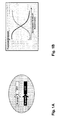
- FIG. 1 Schematic representation of a whole-cell sensor
- Figure 1 A schematically shows a yeast cell in which the YFP-encoding reading frame (YFP) is under the control of a promoter (N-sens1), which leads to increased transcription in the absence of nitrogen.
- the reading frame of CFP is placed under the control of a promoter (N-sens2), which leads to reduced transcription in the absence of nitrogen.
- Figure 1 B shows in a diagram, as determined by the respective fluorescence or their relation to one another the current availability of nitrogen for the cell can be measured.
- the genes YAR071W and RPS22B are specifically transcribed much more strongly or weaker in the case of phosphorus limitation .
- the cloning of constructs for the detection of phosphorus limitation is described below. Analogously, cloning can be carried out with specific primers (see Table 1) for constructs for the detection of sulfur limitation.
- the 1000 base pair upstream region of the upregulated YAR071 W gene is amplified by means of specific primers (see Table 1) in a PCR from Saccharomyces cerevisiae genomic DNA.
- the primers extend the sequence by a 5 'side recognition sequence for Sac I and 3' side by a Spe I recognition sequence.
- p426YAR071W a directed incorporation into the high copy-number vector p426, called p426YAR071W follows.
- the gene's regulatory region is also amplified with the specific primers listed in Table 1 in a PCR.
- the amplified region comprises the 1000 base pairs immediately preceding the reading frame of the gene.
- recognition sequences for the restriction endonucleases Sma I and Bam HI are added to the RPS22B promoter fragment on the 5 'and 3' sides.
- the high copy-number vector p424GPD is cut with Ecl I and Bam HI, removing the contained GPD promoter.
- Ecl I and Sma I produce blunt-ended fragments that can be ligated together:
- incorporation of the RPS22B promoter fragment into the plasmid follows, named p424RPS22B.
- the reading frame of the marker gene is placed under the control of the YAR071W or RPS22B promoter in plasmids p426YAR071W and p242RPS22B, respectively.
- the sequence of the marker gene is amplified with primers which extend the fragment 5 'to the side of a Spe I or Eco RI and 3' side to a Sal I site.
- YAR071 W promoter Under the control of YAR071 W promoter the coding sequence for YFP is provided, under the control of the promoter the coding sequence for RPS22B CFP is provided.
- the vector p426 contains the URA3 gene and p424 the TRP1 gene from Saccharomyces cerevisiae for selection in corresponding auxotrophic strains.
- the resulting constructs (p426YAR071W or p424RPS22B) are transformed into the yeast strain W303 ( Mat a, ade2-1, his3-1, his3-15, leu-2-3, leu2-112, trp1-1, ura3-1) and Transformants selected. Phosphorlimitleiter in such yeast cells, the transcription and expression of YFP is greatly increased, which lowers the CFP accordingly.
- a mixture of yeast cells and a silica xerogel is deposited on an optical fiber by means of a known sol-gel process.
- the mechanical stability of these structures advantageously allows the coupling of the whole-cell sensor with the reaction space (fermenter) to be examined in a measuring cell in the sense of a near-line diagnostics.
- the whole-cell sensor can also be mounted directly in the reaction chamber (fermenter).
- the end regions of two optical fibers are arranged adjacent to one another.
- the ends of the optical fibers are also the substrate for the yeast cells.
- a separate substrate may also be coupled to the optical fibers.
- At the other end of a first optical fiber is the radiation source and at the other end of the second optical fiber, the photodetector is coupled.
- the yeast cells are excited to fluoresce.
- the resulting fluorescent light passes through the second optical fiber to the photodetector, with no radiation from the radiation source reaches the substrate.
- the data processing system is interconnected with a switch for the radiation source or a diaphragm for the beam path after the radiation source, so that the radiation of the radiation source reaches the substrate in a pulsed manner.
- the photodetector is interconnected with the data processing system, so that it is possible to infer the content of bioavailable analytes via the fluorescence light detected via the photodetector together with the downstream data processing system.
- the end of an optical fiber may be coupled to the substrate or the end of the optical fiber to the substrate.
- the other end of the optical fiber is coupled via a beam switch either with the radiation source or the photodetector, so that either the excitation radiation via the beam switch and the optical fiber to the substrate or the fluorescent light on the optical fiber and the beam switch to the photodetector.
- a beam switch is, for example, a folding mirror. The photodetector and the drive for the folding mirror are interconnected with the data processing system.
- the radiation source is advantageously an electromagnetic radiation source for electromagnetic radiation as light in the visible and the adjacent wavelength ranges in the infrared or ultraviolet.
- the substrate coupled to the optical fiber (s) may also be a coated transparent tube structure to which the optical fiber is coupled.
- the YIR028W gene is much more potent at nitrogen limitation and the gene NSR1 is transcribed much less specifically at nitrogen limitation .
- genomic DNA from Saccharomyces cerevisiae are PCR-amplified with specific primers in each case the 5'-side regulatory regions of the genes including their promoters (see Table 1).
- the primers fuse interfaces to the fragments which are used for cloning into the vector pUC18. The correct sequence of the cloned fragments is verified by DNA sequence analysis.
- the reading frames of the yellow fluorescent protein (YFP) and of the cyan fluorescent protein (CFP) are PCR-amplified with DNA of the plasmids pFA6a-EYFP or pFA6a-ECFP (Driesche et al., 2005).
- YFP reading frame is placed under the control of the YIR028W promoter
- CFP reading frame is placed under the control of the NSRI promoter.
- the resulting fragments are cloned into the single-copy vectors pRS415 and pRS416, respectively (Sikorski and Hieter, 1989).
- the vector pRS415 carries the LEU2 and pRS416 the URA3 gene from S. cerevisiae for selection in corresponding auxotrophic strains.
- the resulting constructs (pRS415 -YIR028W-YFP and pRS416- NSR1-CFP ) are transfected into the yeast strain W303 ( Mat a, ade2-1, his3-1, his3-15, leu2-3, leu2-112, trp1-1, ura3 -1 ) and selected transformants.
- W303 Mat a, ade2-1, his3-1, his3-15, leu2-3, leu2-112, trp1-1, ura3 -1
- the transcription and expression of YFP is greatly increased in such yeast cells, which lowers the CFP accordingly.
- the yeast cells are embedded in a shell structure (duplex embedding), wherein the inner shell is made of alginate and the outer shell is a porous silica xerogel layer.
- duplex embedding takes place by means of a sequential coating using a nanoplotter.
- the yeast cells are embedded before plotting in an aqueous alginate solution (alginate concentration 2 weight percent) (the yeast cell content typically varies between 5 to 25 percent by volume).
- Nanoplotter defined volumes of alginate-embedded yeast cells are applied pointwise to a planar glass slide.
- the quantities of the yeast cells applied to the glass carrier can be selected in a targeted manner via the choice of the applied volumes and a defined concentration of yeast cells.
- the nanoplotter then applies a nanosol layer to the yeast cells embedded in alginate, which is then converted into a xerogel by drying.
- the yeast cells are prepared as indicated in Example 1 or 2. Subsequently, the yeast cells are applied to a planar glass slide in a temperature-sensitive and observable light microscopy measuring cell of a microfluidic system. This enables a controlled introduction of the medium to be analyzed into the measuring cell via the microfluidic system (off-line diagnostics).
- the temperature setting in the fermenter and in the measuring cell is advantageously independent of one another.
Landscapes
- Chemical & Material Sciences (AREA)
- Organic Chemistry (AREA)
- Life Sciences & Earth Sciences (AREA)
- Zoology (AREA)
- Wood Science & Technology (AREA)
- Proteomics, Peptides & Aminoacids (AREA)
- Health & Medical Sciences (AREA)
- Engineering & Computer Science (AREA)
- Microbiology (AREA)
- Biochemistry (AREA)
- Physics & Mathematics (AREA)
- Molecular Biology (AREA)
- Biotechnology (AREA)
- Biophysics (AREA)
- Analytical Chemistry (AREA)
- Immunology (AREA)
- Bioinformatics & Cheminformatics (AREA)
- General Engineering & Computer Science (AREA)
- General Health & Medical Sciences (AREA)
- Genetics & Genomics (AREA)
- Micro-Organisms Or Cultivation Processes Thereof (AREA)
- Measuring Or Testing Involving Enzymes Or Micro-Organisms (AREA)
Description
- Die Erfindung betrifft Ganzzellsensoren für das Monitoring von bioverfügbarem Stickstoff, Phosphor und/oder Schwefel in einem Medium und deren Verwendung.
- Bisherige Lösungen für das Monitoring von bioverfügbarem Stickstoff, Phosphor und/oder Schwefel in einem wässrigen Medium beruhen auf
- dem Nachweis der Änderung der physikalischen oder chemischen Eigenschaften des Mediums mit einer Änderung der Konzentration des Analyten,
- auf selektiven Bindungsstudien der entsprechenden Ionen an geeigneten Membranen oder Cagestrukturen,
- sowie spezifischen Reaktionen der Analyten, in deren Ergebnis die Reaktionsprodukte detektiert werden können.
- Daraus resultieren sehr verschiedenartig ausgestaltete Lösungen für elektrische, elektrochemische, optische oder colorimetrische Sensoren.
- Bisher bekannten Lösungsvorschlägen ist gemeinsam, dass keiner von ihnen die direkte Wirkung von Stickstoff-, Phosphor- und/oder Schwefelverbindungen auf Prozesse in lebenden Zellen, also ihre biologische Verfügbarkeit, direkt zu bewerten gestattet. Hingegen ist es nur möglich, aus den gemessenen physikalischen oder chemischen Änderungen des Mediums indirekt auf mögliche Reaktionen in den im Medium lebenden Mikroorganismen zu schließen.
- Boer et al. haben das gesamte Hefegenom auf Hefe-Gene hin untersucht, die als Antwort auf den Mangel von bioverfügbarem Stickstoff, Phosphor und/oder Schwefel aktiviert oder reprimiert werden. (Boer, V.M. et al. The genome-wider transcriptional responses of Saccharomyces cerevisiae grown on glucose in aerobic chemostat cultures limited for carbon, nitrogen, phosphorus, or sulfur. J. Biol. Chem. (2003) 278 (5) 3265-74). Die Expressionsprofile dienen als Indikator für die Charakterisierung von nährstofflimitierten Wachstumsbedingungen.
-
EP1426439A1 offenbart ein Verfahren zur Detektion von toxischen Substanzen. Dazu werden genetisch veränderte Hefezellen verwendet, wobei die Hefezellen ein Markergen unter der Kontrolle eines Promotors eines Gens enthalten, dessen Transkription sich in Anwesenheit der toxischen Substanz stark erhöht. - Inama et al. offenbaren Methoden zur Einbettung von lebenden Hefezellen in SiO2-Sol-Gel-Schichten auf Glasträgern, zum Beispiel zur Verwendung als Biokatalysatoren (Inama, I. et al., Entrapment of viable microorganisms by SiO2 sol-gel layers on glass surfaces: trapping, catalytic performance and immobilization durability of Saccharomyces cerevisiae. J. Biotechnol. (1993) 30 (2) 197-210).
-
US 6 117 643 offenbart die Verwendung einzelliger Mikroorganismen als Bioreporter in einem monolithischen bioelektrischen Gerät. - Der im Patentanspruch 1 angegebenen Erfindung liegt die Aufgabe zugrunde, einen Biosensor zu entwickeln, mit dem einfach eine Limitierung von bioverfügbarem Stickstoff, bioverfügbarem Phosphor und/oder bioverfügbarem Schwefel in einem Medium nachgewiesen werden kann.
- Diese Aufgabe wird mit den im Patentanspruch 1 aufgeführten Merkmalen gelöst.
- Der Ganzzellsensor gemäß Anspruch 1 eignet sich zur Erfassung von bioverfügbarem Stickstoff, Phosphor und Schwefel jeweils einzeln oder in wenigstens einer Kombination in einem Medium. Er besteht aus gentechnisch veränderten Hefezellen, die in einer Xerogel-Matrix immobilisiert sind, wobei die Hefezellen mindestens ein Markergen unter der Kontrolle eines Promotors eines Gens enthalten, dessen Transkription sich bei Stickstoff-, Phosphor- oder Schwefel-Mangel stark erhöht oder stark erniedrigt, und wobei die Hefezellen wenigstens mit einem Signaldetektor gekoppelt sind.
- Die Ganzzellsensoren für bioverfügbaren Stickstoff, Phosphor und Schwefel jeweils einzeln oder in wenigstens einer Kombination in einem Medium zeichnen sich insbesondere dadurch aus, dass eine Limitierung von bioverfügbarem Stickstoff, bioverfügbarem Phosphor und/oder bioverfügbarem Schwefel im Medium einfach nachzuweisen ist.
- Die Medien, in denen der Nachweis erfolgt, sind vorzugsweise wässrige Medien. Dazu zählen beispielsweise Kulturmedien, die zur Heranzucht von Mikroorganismen wie Bakterien oder Hefen oder von Algen oder von tierischen und pflanzlichen Zellen verwendet werden. Ein großes Anwendungsgebiet des Biosensors sind Verfahren der Weißen Biotechnologie, wo Mikroorganismen zur Erzeugung von speziellen Produkten wie zum Beispiel spezieller chemischer Verbindungen mittels einer Biotransformation oder Biokatalyse zum Einsatz kommen. Verwendung finden die Biosensoren ebenfalls in Gärprozessen, bei denen Mikroorganismen zur Herstellung von Lebensmitteln eingesetzt werden, beispielsweise beim Brauen von Bier. Alternative Einsatzgebiete sind die Reinigung von Trinkwasser, industriellem Brauchwasser oder Abwasser, bei der der Gehalt an bioverfügbarem Stickstoff, Phosphor oder Schwefel bestimmt werden soll.
- Lebende Zellen sind darauf angewiesen, ihren Bedarf an Stickstoff, Schwefel und Phosphor durch die Aufnahme von entsprechenden Stickstoff-, Schwefel- und Phosphor-haltigen Verbindungen zu decken. Die Verfügbarkeit solcher Verbindungen im Medium wird im Folgenden als bioverfügbarer Stickstoff, Schwefel oder Phosphor bezeichnet. Die erfindungsgemäßen Hefezellen ermöglichen im Gegensatz zu Messfühlern, die direkt den Stickstoff-, Phosphor- oder Schwefelgehalt des zu untersuchenden Mediums über physikalische oder physikochemische Eigenschaften des Mediums bestimmen, vorteilhaft die direkte Wirkung von Stickstoff, Phosphor- und/oder Schwefelverbindungen auf Prozesse in lebenden Zellen, also ihre biologische Verfügbarkeit, zu bewerten. Als Hefezellen werden bevorzugt Saccharomyces cerevisiae und Schizosaccharomyces plombe verwendet.
- Dabei ist mindestens ein Markergen der Hefezellen unter die Kontrolle eines Promotors eines Gens gestellt, dessen Transkription sich bei Stickstoff-, Phosphor- oder Schwefel-Mangel stark erhöht oder stark erniedrigt. Unter stark erhöhter oder stark erniedrigter Transkription wird eine mindestens zweifache Erhöhung bzw. Erniedrigung der Transkriptionsrate gegenüber der Transkription vom gleichen Promotor bei ausreichend vorhandenem bioverfügbaren Stickstoff, Phosphor und/oder Schwefel verstanden. Markergene im Sinne der Erfindung sind Gene, die für Genprodukte kodieren, deren Aktivität zu einer physikalisch messbaren Änderung führt. Diese physikalisch messbare Änderung ist abhängig von der Änderung der Transkriptionsrate. Dies kann durch ein geeignetes Nachweissystem einfach und schnell detektiert werden. Bevorzugt werden solche Markergene verwendet, deren Genprodukte nachgewiesen werden können, ohne die Integrität bzw. Vitalität der Zellen zu beeinträchtigen.
- Bei den Genprodukten handelt es sich bevorzugt um Proteine. Bevorzugt verwendet werden Markergene, deren Genprodukt ein Enzym ist, das in Anwesenheit eines Substrats eine Farbreaktion katalysiert. Weiter bevorzugt werden Markergene, die für eine Luciferase kodieren, die in Anwesenheit eines Substrats Licht aussendet. Besonders bevorzugt werden Markergene, deren Genprodukt ein Protein ist, das durch Anregung mit Licht einer bestimmten Wellenlänge fluoresziert.
- Als Promotor wird in der Genetik eine DNA-Sequenz bezeichnet, die die Expression eines Gens reguliert. Promotoren im Sinne der Erfindung sind bevorzugt diejenigen Bereiche der genomischen DNA, die spezifisch für die Regulation der Expression eines Gens verantwortlich sind, indem sie auf spezifische intra- oder extrazelluläre Signale reagieren und abhängig von diesen Signalen die Expression des unter ihrer Kontrolle liegenden Gens aktivieren oder reprimieren. Im erfindungsgemäßen Verfahren sind diese Signale der Mangel an bioverfügbarem Stickstoff, Schwefel und/oder Phosphor. In Hefen befinden sich diese regulierenden DNA-Bereiche in der Regel auf der 5 '-Seite des Startcodons des betreffenden Gens und haben eine durchschnittliche Länge von 309 bp (Mewes H. W. et al., Overview of the yeast genome. Nature (1997) 387, 7-65). Solche regulierenden Bereiche können aber auch weiter als 1000 bp entfernt von der kodierenden Sequenz oder auf der 3'-Seite der kodierenden Sequenz des betreffenden Gens oder sogar innerhalb der transkribierten Sequenz des betreffenden Gens liegen. Setzt man derartige Promotoren an die 5'-Seite des Startcodons eines beliebigen Gens, bevorzugt eines Markergens, regulieren sie die Aktivität dieses Gens in Abhängigkeit von den oben genannten spezifischen Signalen.
- Das unter die Kontrolle eines Promotors eines Gens, dessen Transkription sich bei Stickstoff-, Phosphor- oder Schwefel-Mangel stark erhöht oder stark erniedrigt, gestellte Markergen wird in eine Hefezelle eingebracht. Dabei kann es in der Hefezelle auf einem extrachromosomalen DNA-Molekül vorliegen. Bevorzugt verwendet wird dazu ein Hefe-Expressionsvektor, der bei der Teilung der Hefezelle stabil repliziert wird. Besonders bevorzugt ist ein sogenannter "high copy number" Vektor, der in der Hefezelle in einer großen Anzahl an Kopien vorliegt. Alternativ werden als extrachromosomale DNA-Moleküle auch künstliche Hefechromosomen (yeast artificial chromosomes) verwendet.
- In einer anderen Ausführungsform wird das Markergen zusammen mit dem Promotor in die chromosomale DNA der Hefezelle integriert. Dadurch wird vorteilhaft sichergestellt, dass alle Nachkommen der Hefezelle ebenfalls das Markergen unter Kontrolle des spezifischen Promotors enthalten.
- Um die physikalisch messbare Änderung, die durch die Aktivität der Markergene bewirkt wird, zu detektieren, sind die gentechnisch veränderten Hefezellen mit wenigstens einem Signaldetektor gekoppelt. Die Art des Signaldetektors bestimmt sich durch die Art der physikalisch messbaren Änderung. Als Signaldetektor wird bevorzugt ein Fotodetektor oder ein Spektrometer eingesetzt.
- Der erfindungsgemäße Sensor ist äußerst robust: Stellt man in einer Zelle z. B. die Expression von zwei unterschiedlich fluoreszierenden Proteinen, deren Fluoreszenzen messtechnisch gut trennbar sind, zum einen unter die Kontrolle eines Promotors, welcher die Transkription bei einer Limitierung spezifisch stark erhöht, und zum anderen in der gleichen Zelle die Expression des zweiten Proteins unter die Kontrolle eines Promotors, der die Transkription stark erniedrigt, wird die Möglichkeit eines Messfehlers stark reduziert.
- In dem erfindungsgemäßen Ganzzellsensor sind die Hefezellen in Xerogelen immobilisiert. Xerogele sind Gele, die ihre Flüssigkeit beispielsweise durch Verdampfen oder Absaugen verloren haben. Gele sind formbeständige, leicht deformierbare disperse Systeme aus mindestens zwei Komponenten, die zumeist aus einem festen Stoff mit langen oder stark verzweigten Teilchen (z.B. Kieselsäure, Gelatine, Kollagene, Polysaccharide, Pektine, spezielle Polymere, wie z.B. Polyacrylate, und andere, oft als Verdickungsmittel bezeichnete Geliermittel) und einer Flüssigkeit (meist Wasser) als Dispersionsmittel bestehen. Dabei bildet die feste Substanz im Dispersionsmittel ein räumliches Netzwerk. Bei der Entstehung von Xerogelen verändert sich die räumliche Anordnung des Netzes.
- Die erfindungsgemäße Verwendung von anorganischen oder biologisch inerten organischen Xerogelen zur Einbettung der Hefezellen erlaubt vorteilhaft das Überleben der Zellen bei gleichzeitiger Stabilität der erzeugten Strukturen, denn sie sind toxikologisch und biologisch inert und werden im Allgemeinen nicht durch die Hefen abgebaut. Sie ermöglichen weiterhin vorteilhaft die Einlagerung von Nährstoffen und Feuchthaltemitteln, die das Überleben der Zellen sichern.
- Vorteilhafte Ausgestaltungen der Erfindung sind in den Patentansprüchen 2 bis 22 angegeben.
- Die Hefezellen sind erfindungsgemäß in einem porösen und optisch transparenten anorganischen oder biologisch inerten organischen Xerogel immobilisiert. Nach der Weiterbildung des Patentanspruchs 2 ist das Xerogel ein anorganisches Xerogel aus Siliziumdioxid, alkyliertem Siliziumdioxid, Titandioxid, Aluminiumoxid oder deren Gemischen, nach der Weiterbildung des Patentanspruchs 3 wird das anorganische Xerogel vorzugsweise durch einen Sol-Gel-Prozess hergestellt.
- Dazu werden zunächst Silica- oder andere anorganische Nanosole entweder durch säure- oder alkalikatalysierte Hydrolyse der entsprechenden Silizium- oder Metallalkoxide in Wasser oder einem wasserlöslichem organischem Lösungsmittel (wie Ethanol) hergestellt. Bevorzugt wird die Hydrolyse in Wasser durchgeführt, um toxische Effekte des Lösungsmittels auf die einzubettenden Zellen zu verhindern. Bei der Herstellung von Nanosolen durch Alkoxidhydrolyse entstehen im Zuge der Reaktion Alkohole, die anschließend aus dem erhaltenen Nanosol durch Durchleitung eines inerten Gasstroms verdampft und durch Wasser ersetzt werden.
- Durch die Verwendung von Gemischen verschiedener Alkoxide können die Matrixeigenschaften gezielt beeinflusst werden. Die Sol-Gel-Matrix erlaubt vorteilhaft die chemische Modifizierung durch Co-Hydrolyse und Co-Kondensation unter Verwendung verschiedener Metalloxide von Metallen wie Al, Ti, Zr zur Herstellung von gemischten Oxiden oder von Alkoxysilanen mit organischen Resten am Si-Atom zur Herstellung von organisch modifizierten Siliziumoxid-Gelen.
- Die einzubettenden Zellen werden mit dem entstandenen Nanosol gemischt. Der Prozess der Gelbildung wird bevorzugt eingeleitet durch Erhöhung der Temperatur, Neutralisierung des pH-Werts, Aufkonzentrierung oder die Zugabe von Katalysatoren wie beispielsweise Fluoriden. Dabei sollte die Temperatur jedoch nicht auf Temperaturen >42°C erhöht werden, um die einzubettenden Zellen nicht zu schädigen. Bei der Überführung in ein Gel verringern die Nanosole ihr Oberflächen/Volumenverhältnis durch Aggregation und dreidimensionale Quervernetzungen. Während dieser Umwandlung des Nanosols in ein sogenanntes Lyogel werden die Zellen in dem entstehenden anorganischen Netzwerk immobilisiert. Die Immobilisierung überlebensfähiger Zellen wird vorteilhaft durch das Verhältnis Hefezellen:Oxid und durch die Zugabe von Poren-formenden Agentien gesteuert.
- Der Anteil von Hefezellen an der Gesamtmenge des erzeugten Xerogels einschließlich der eingebetteten Zellen kann je nach Anwendung von 0,1 bis 50% Gewichtsprozent betragen. Bevorzugt verwendet wird ein Anteil von 2 bis 25% Gewichtsprozent.
- Durch Trocknung wird dem Lyogel das noch enthaltene Lösungsmittel entzogen. Dadurch bildet sich aus dem Lyogel das Xerogel. Das entstehende Xerogel weist eine hohe Porosität auf, die einen raschen Stoffaustausch mit dem umgebenden Medium erlaubt. Der Trocknungsprozess hat eine starke Schrumpfung des Gels zur Folge, der zu Stress für die eingebetteten Zellen führt. Bevorzugt wird der Trocknungsschritt daher sehr schonend und langsam bei Temperaturen von weniger als 40°C durchgeführt.
- Mit sinkendem Wassergehalt der Matrix verringern sich die physiologische Aktivität und die Überlebensrate der eingebetteten Zellen. Ein zu hoher Wassergehalt führt jedoch zu niedriger mechanischer Stabilität und verringert die Haltbarkeit der Struktur.
- Die erfindungsgemäße Verwendung von Hefezellen ist daher besonders vorteilhaft, da Hefezellen eine hohe Resistenz gegen Trockenheit besitzen und auch bei sehr geringem Wassergehalt ihre Überlebensfähigkeit nicht einbüßen. Dadurch wird es möglich, sehr trockene Xerogele herzustellen.
- Die Erfindung umfasst auch die Verwendung verschiedener Additive wie lösliche organische Salze, d. h. Metallsalze organischer Carbon- oder Sulfonsäuren bzw. offenkettige oder cyclische Ammoniumsalze und Quartärsalze von N-Heterocyclen sowie niedermolekulare Polyanionen oder Polykationen, oder wasserlösliche organische Verbindungen wie Polycarbonsäuren, Harnstoff-Derivate, Kohlenhydrate, Polyole, wie Glycerin, Polyethylenglycol und Polyvinylalkohol, oder Gelatine, die als Weichmacher, Feuchthaltemittel und Porenbildner wirken, die Zelllyse hemmen und die Überlebensfähigkeit der eingebetteten Zellen beträchtlich verlängern.
- Das Xerogel ist mit den Hefezellen nach der Weiterbildung des Patentanspruchs 4 auf einem Substrat aufgebracht. In Verbindung mit dem Signaldetektor, vorzugsweise einem Fotodetektor, ist damit ein Funktionselement vorhanden, wobei das in Abhängigkeit vom bioverfügbaren Analyten erzeugte Fluoreszenzlicht über den Fotodetektor in ein elektrisches Signal umgewandelt wird. In Fortführung ist das Substrat vorteilhafterweise nach der Weiterbildung des Patentanspruchs 5 eine Lichtleitfaser, Glasbeads, ein planarer Glasträger oder andere Formkörper aus Glas wie Hohlkugeln, Stäbe, Röhren oder keramische Granulate.
- Dabei werden die Hefezellen in einem porösen und optisch transparenten Xerogel, z. B. einem Siliziumdioxid-Xerogel, fixiert. Das mit den Mikroorganismen versetzte Siliziumdioxid-Xerogel wird als Schicht auf Glasbeads, einer Lichtleitfaser, planaren Glasträgern oder anderen Formkörpern wie Hohlkugeln, Stäben, Röhren oder keramischen Granulaten mittels eines bekannten Sol-Gel-Prozesses abgeschieden, indem das Nanosol-Zell-Gemisch auf das zu beschichtende Substrat aufgebracht oder das Substrat in das Nanosol-Zell-Gemisch eingetaucht wird und das Nanosol anschließend durch Trocknung und die dadurch resultierende Aufkonzentrierung des Nanosols in ein Xerogel überführt wird. Die dadurch vorhandene mechanische Stabilität dieser Strukturen erlaubt das Einbringen des Ganzzellsensors in ein Messsystem, das unmittelbar mit dem zu untersuchenden Reaktionsraum (Fermenter) im Sinn einer near-line-Diagnostik verbunden werden kann.
- Die Hefezellen sind nach der Weiterbildung des Patentanspruchs 6 ein Bestandteil einer einen Hohlraum wenigstens teilweise umschließenden Hüllenstruktur. Das heißt, dass einzelne oder mehrere Hefezellen in diesem Hohlraum, der eine poröse Hülle hat, eingekapselt werden. Die Mikroporosität erlaubt vorteilhaft einen Stoffaustausch mit der Umgebung. In Fortführung besteht die Hüllenstruktur nach der Weiterbildung des Patentanspruchs 7 vorteilhafterweise aus einem Grundkörper mit einer inneren Schicht aus einem biologischen Hydrogel und einer äußeren Schicht aus dem porösen und optisch transparenten Xerogel, wobei die Schichten wenigstens bereichsweise aufgebracht sind.
- Die Hefezellen sind dabei in der Hüllenstruktur eingebettet (Duplex-Einbettung). Die innere Hülle besteht aus einem biologischen Hydrogel, beispielsweise Alginat, und die äußere Hülle ist eine poröse Xerogel-Schicht, bevorzugt eine anorganische Xerogel-Schicht, besonders bevorzugt eine Siliziumdioxid-Xerogel-Schicht. Das biologische Hydrogel stabilisiert vorteilhaft die Hefezellen bei dem nachträglichen Prozess der Beschichtung mit dem Siliziumdioxid-Sol und erhöht somit die Überlebenswahrscheinlichkeit der Zellen. Diese Duplex-Einbettung kann vorteilhafterweise mittels einer sequentiellen Beschichtung unter Nutzung eines Nanoplotters erfolgen. Die mechanische Stabilität solcher Strukturen erlaubt das Einbringen des Ganzzellsensors in den zu untersuchenden Reaktionsraum (Fermenter) im Sinn einer near-line-Diagnostik.
- Die Hefezellen befinden sich nach der Weiterbildung des Patentanspruchs 8 wenigstens auf einer Oberfläche in einer transparenten Messzelle. Diese besitzt darüber hinaus Einrichtungen zum Zuführen und Abführen des Mediums. Nach der Weiterbildung des Patentanspruchs 9 kann die Messzelle mit einer Heizeinrichtung gekoppelt sein.
- Dabei befinden sich die Hefezellen in einer temperierbaren und lichtmikroskopisch beobachtbaren Messzelle eines Mikrofluidiksystems. Das Einbringen des Mediums in die Messzelle erfolgt mittels eines Mikrofluidiksystems (off-line-Diagnostik). Die Temperatureinstellung ist dabei unabhängig von der Temperatureinstellung im Fermenter.
- Nach der Weiterbildung des Patentanspruchs 10 ist der Signaldetektor ein Fotodetektor. Der Fotodetektor ist ein Festkörperbildsensor mit Fotowiderständen, Fotodioden oder Fototransistoren, wobei dieser mit einem Datenverarbeitungssystem zusammengeschaltet ist. Ein Festkörperbildsensor ist eine flächenhafte und matrixförmige Anordnung optoelektronischer Halbleiterbauelemente als lichtelektrische Empfänger. Die Farbe und deren Intensität der Hefezellen sind in äquivalente elektrische Signale wandelbar, so dass eine Verarbeitung im Datenverarbeitungssystem stattfinden kann.
- Im Strahlengang zwischen den Hefezellen und dem Fotodetektor befindet sich nach der Weiterbildung des Patentanspruchs 11 wenigstens eine Linse. Dadurch können die Lichtstrahlen der Hefezellen auf den Fotodetektor fokussiert werden, so dass eine sichere Auswertung auch lichtschwacher Änderungen gegeben ist.
- Die Hefezellen sind nach der Weiterbildung des Patentanspruchs 12 mit einer optischen Strahlungsquelle so gekoppelt, dass die Strahlung auf die Hefezellen gelangt und die Hefezellen fluoreszieren. Die Strahlungsquelle liefert vorzugsweise elektromagnetische Strahlen als Licht im Sichtbaren und den angrenzenden Wellenlängenbereichen im Infraroten oder Ultravioletten. Vorzugsweise ist das eine elektromagnetische Strahlungsquelle, die Licht mit einer definierten Wellenlänge aussendet. Die Wellenlänge der Strahlungsquelle richtet sich nach dem Anregungsspektrum der fluoreszierenden Proteine.
- Das Markergen ist nach der Weiterbildung des Patentanspruchs 13 unter die Kontrolle eines Promotors gestellt, der ausgewählt ist aus den Promotoren der Gene YIR028W, YJR152W, YKR034W, YAR071W, YHR136C, YFL055W, YLL057C, NSR1, FET3, HIPI, YDR508C, RPS22B, YBR099C, IPTI, SSU1, SOL1 und CTR1 von Saccharomyces cerevisiae.
- Promotoren im Sinne der Erfindung sind auch DNA-Abschnitte, die zu den entsprechenden Hefe-Promotoren eine Homologie von mehr als 50%, bevorzugt mehr als 80%, aufweisen. Diese Abschnitte können beispielsweise aus homologen genomischen Bereichen von anderen Organismen, bevorzugt anderen Hefestämmen, stammen. Sie können jedoch auch synthetisch hergestellte DNA-Sequenzen sein, deren Sequenz eine Homologie von mehr als 50%, bevorzugt mehr als 80%, Übereinstimmung mit dem entsprechenden Saccharomyces cerevisiae Promotor aufweist. Promotoren können auch synthetische DNA-Sequenzen sein, die aus einem Teilbereich eines der oben genannten Hefe-Promotoren sowie einem bekannten Basalpromotor aus Saccharomyces cerevisiae zusammengesetzt sind. Der Basalpromotor stellt die für die Anbindung der Transkriptionsmaschinerie notwendigen DNA-Sequenzen zur Verfügung, während die Teilsequenzen aus den Hefepromotoren spezifisch auf regulierende Signale reagieren. Ein solcher Basalpromotor ist bevorzugt der Basalpromotor des Cytochrom c-Gens aus Saccharomyces cerevisiae, der 300 bp 5'seitig des Startcodons des Cytochrom c-Gens umfasst (Chen, J., et al. Binding of TFIID to the yeast CYC1 TATA boxes in yeast occurs independently of upstream activating sequences. PNAS (1994) 91:11909-11913).
- Promotoren aus synthetischen DNA-Sequenzen können auch mehrfache Abschnitte einer identischen DNA-Sequenz enthalten. Diese Vervielfachung eines regulatorischen DNA-Abschnitts erlaubt vorteilhaft eine Erhöhung der Sensitivität des Promotors gegenüber den zu detektierenden Signalen.
- Promotoren von Genen, deren Transkription als Antwort auf eine entsprechende Limitierung stark erhöht ist, sind vorteilhafterweise bei einer
- Stickstoff-Limitierung: YIR028W, YJR152W und YKR034W
- Phosphor-Limitierung: YAR071W und YHR136C und
- Schwefel-Limitierung: YFL055W und YLL057C.
- Promotoren von Genen, deren Transkription als Antwort auf eine entsprechende Limitierung stark erniedrigt ist, sind vorteilhafterweise bei einer
- Stickstoff-Limitierung: NSR1, FET3, HIP1 und YDR508C
- Phosphor-Limitierung: RPS22B, YBR099C und IPT1
- Schwefel-Limitierung: SSU1, SOL1 und CTR1.
- Bevorzugt wird als Promotor ein DNA-Abschnitt verwendet, der bis zu 1000 bp 5'-seitig des Startcodons des von ihm kontrollierten Gens umfasst, oder ein Teilabschnitt dieses DNA-Abschnitts, der in der Lage ist, auf die Limitierung von Stickstoff, Phosphor oder Schwefel hin das unter Kontrolle dieser Sequenz liegende Markergen zu aktivieren oder zu unterdrücken.
- Besonders bevorzugt als Promotoren sind diejenigen genomischen Bereiche, die von den in Tabelle 1 aufgeführten Primerpaaren umschlossen werden. Die unterstrichenen Bereiche der Sequenzen sind dabei komplementär zu Bereichen der zu amplifizierenden DNA; die nicht unterstrichenen Bereiche der Primer enthalten Schnittstellen für Restriktionsenzyme zur anschließenden Subklonierung der erhaltenen PCR-Fragmente.
Tab. 1 forward-Primersequenz Seq.- Nr. reverse-Primersequenz Seq.- Nr. Stickstoff-limitierung YIR028W 
1 
2 NSR1 
3 
4 Phosphor- limitierung YAR071 W 
5 
6 RPS22B 
7 
8 Schwefel- limitierung YFL055W 
9 
10 SSU1 
11 
12 - Nach der Weiterbildung des Patentanspruchs 14 kodiert das Markergen für ein Enzym, das durch eine einfache Farbreaktion nachweisbar ist, z. B. β-Galaktosidase, Alkalische Phosphatase, Meerrettich-Peroxidase. Die Erfindung umfasst auch Markergene, die für Enzyme kodieren, die zu einer Ansäuerung des Mediums führen. Der pH-Shift wird durch ein fluoreszierendes Protein, dessen Fluoreszenz vom pH-Wert der Umgebung abhängig ist, in ein Signal umgewandelt, das durch einen Photodetektor erfasst wird. Bevorzugt verwendet werden dazu pHluorine. Nach der Weiterbildung des Patentanspruchs 15 kodiert das Markergen für eine Luciferase. Luciferasen sind Proteine, die zur Biolumineszenz befähigt sind und in Anwesenheit von Luciferinen Licht abgeben, das dann vom Fotodetektor detektiert wird.
- Weiterhin umfasst die Erfindung Markergene, die für Proteasen kodieren, die fluoreszierende Proteine abbauen. Dadurch wird auf das zu detektierende Signal hin die Abnahme der Fluoreszenz des Ganzzellsensors messbar. Bevorzugt verwendet werden Proteasen, die außer dem fluoreszierenden Protein keine weiteren Ziele in der Hefezelle angreifen, um die Vitalität der Hefezelle nicht zu beeinträchtigen. Besonders bevorzugt verwendet wird die TEV-Protease. Die entsprechenden fluoreszierenden Proteine müssen ggf. mittels rekombinanter DNA-Techniken so verändert werden, dass sie die Erkennungssequenz für die entsprechende Protease enthalten und so abbaubar sind.
- Nach der Weiterbildung des Patentanspruchs 16 kodiert das Markergen für ein fluoreszierendes Protein, wobei die Expression des entsprechenden Markerproteins bei einer Limitierung von bioverfügbarem Stickstoff, Phosphor und/oder Schwefel im Medium variiert, was zu einer Zu- oder Abnahme der Fluoreszenz der jeweiligen Hefezelle führt. Bevorzugt verwendet werden die für die fluoreszierende Proteine GFP, YFP, CFP, BFP, RFP, DsRed, PhiYFP, JRed, emGFP ("Emerald Green"), Azami-Green, Zs-Green oder AmCyan 1 kodierenden Gene. Bevorzugt verwendet werden Proteine, die so verändert wurden, dass sie besonders stark fluoreszieren wie eGFP, eYFP, TagCFP, TagGFP, TagYFP, TagRFP und TagFP365. Weiterhin werden bevorzugt solche fluoreszierenden Proteine verwendet, deren Aminosäuresequenz dahingehend verändert wurde, dass sie möglichst schnell nach ihrer Bildung beginnen zu fluoreszieren. Bevorzugt verwendet werden dabei TurboGFP, TurboYFP, TurboRFP, TurboFP602, TurboFP635, und dsRed-Express.
- Nach der Weiterbildung des Patentanspruchs 17 kodiert das Markergen für ein grün, (z. B. GFP), gelb (z. B. YFP), blau (z. B. BFP), cyan (z. B. CFP) oder rot (z. B. dsRed) fluoreszierendes Protein. Nach der Weiterbildung des Patentanspruchs 18 kodiert das Markergen für ein fluoreszierendes Protein mit eingeschränkter Halbwertszeit. Dadurch wird eine rasche Ansprechzeit bei einer Abnahme der Transkription gewährleistet.
- Eine solche eingeschränkte Halbwertszeit kann zum Beispiel durch die Veränderung der N-terminalen Aminosäure oder das Einbringen einer Signalsequenz in die Aminosäuresequenz des vom Markergen kodierten Proteins erreicht werden, wodurch die Stabilität des Proteins gesenkt und seine Halbwertszeit verkürzt wird. Bevorzugt verwendet wird für die Destabilisierung des vom Markergen kodierten Proteins eine sogenannte PEST-Domäne, die zu einem raschen Abbau des Proteins durch das Ubiquitin-System der Zelle führt. Solche PEST-Domänen sind aus vielen Proteinen bekannt. Bevorzugt verwendet wird die PEST-Domäne des G1 Cyclins Cln2p aus Saccharomyces cerevisiae. Hierfür wird an das 3'-Ende der kodierenden Sequenz des Markergens die kodierende Sequenz (Seq.-Nr. 13) der 178 carboxyterminalen Aminosäuren von Cln2p (Seq.-Nr. 14) und ein Stoppcodon angefügt.

- Nach der Weiterbildung des Patentanspruchs 19 werden als Hefezellen solche Zellen eingesetzt, die genetisch dergestalt verändert wurden, dass ihr Wachstum gezielt gesteuert werden kann. Dies erlaubt vorteilhaft, die für die Herstellung von Biosensoren benötigte Menge an Hefezellen unter sogenannten permissiven Bedingungen heranzuziehen und nach der Einbettung der Hefezellen die Hefezellen durch die Einstellung von restriktiven Bedingungen daran zu hindern, sich weiter zu teilen. Dadurch wird der durch das vegetative Wachstum der Zellen innerhalb der Matrix ausgeübte Druck vorteilhaft vermieden, der sowohl die Haltbarkeit der Biosensoren beeinträchtigt als auch Stress auf die immobilisierten Zellen ausübt und deren Vitalität negativ beeinflusst.
- Bevorzugt eignen sich Hefezellen, bei denen die Aktivität eines Gens, welches auf den Zellzyklus einwirkt, gezielt gesteuert werden kann. Besonders bevorzugt werden Hefezellen, bei denen die Aktivität des cdc28-Gens gezielt gesteuert werden kann. Das cdc28-Gen wird von der Hefezelle benötigt, um sich teilen zu können. Ist das Gen nicht vorhanden, kann die Hefezelle zwar überleben, aber sich nicht weiter teilen.
- Die Steuerung der Genaktivität erfolgt beispielsweise durch das sogenannte Tet on-System. Dabei wird eine Hefezelle, in der das endogene CDC28-Gen deletiert ist (eine sogenannte Δcdc28-Zelle), mit einem DNA-Konstrukt transformiert, dass die kodierende Sequenz des CDC28-Gens unter der Kontrolle eines tet-responsiven Promotors enthält. Gleichzeitig enthält das Konstrukt die kodierende Sequenz des reversen Tetracyclin-kontrollierten Transaktivators (rtTA) unter der Kontrolle eines konstitutiven Promotors.
Solche genetisch veränderten Hefezellen exprimieren ständig den reversen Tetracyclinkontrollierten Transaktivator. Dieser kann nur in Gegenwart eines Tetracyclin-Antibiotikums wie beispielsweise Doxycyclin an den tet-responsiven Promotor binden und die Expression des unter der Kontrolle des tet-responsiven Promotors stehenden Gens unterdrücken. Um die Zellen heranzuziehen, setzt man dem Nährmedium ein Tetracyclin-Antibiotikum zu und stellt somit permissive Bedingungen her. Bei bzw. nach der Einbettung der Hefezellen in das Xerogel wäscht man das Tetracyclin-Antibiotikum aus und schafft dadurch restriktive Bedingungen für die Hefe. Der reverse Tetracyclin-kontrollierte Transaktivator kann nicht mehr die Expression des CDC28-Gens aktivieren. Die Hefezellen können sich also nicht mehr weiter teilen. - Nach der Weiterbildung des Anspruchs 20 werden als Hefezellen Zellzyklus-(cdc; cell division cycle)-Hefe-Mutanten eingesetzt, welche bei permissiver Temperatur normal wachsen und bei restriktiver Temperatur das Wachstum einstellen. So sind mehrere temperatursensitive (ts) Allele des CDC28-Gens aus Saccharomyces cerevisiae bekannt. Es wurden z.B. sechs verschiedene ts-Allele identifiziert, welche ein normales Wachstum der Hefen bei 23°C erlauben, jedoch das Wachstum bei 37°C verhindern (Lörincz and Reed, 1986). Weiterhin sind auch solche temperatursensitiven Mutationen bekannt, bei denen die permissive Temperatur höher ist als die restriktive Temperatur. Diese bezeichnet man als kältesensitive (cold sensitive, cs) Mutationen.
- Vorteilhaft kann durch die Nutzung solcher Mutanten bei permissiver Temperatur zunächst die benötigte Biomasse erzeugt werden, während die Hefezellen das Wachstum bei restriktiver Temperatur einstellen. Werden solche Mutanten für Ganzzellsensoren eingesetzt, so können bei thermosensitiven Mutanten die Zellen vorteilhaft bis zum Erreichen der gewünschten Biomasse bei ca. 25°C angezogen und dann eingebettet werden. Bei restriktiver Temperatur von z. B. 37°C - einer Temperatur wie sie für Fermentation von Escherichia coli ideal ist - erfolgt kein Wachstum der Hefen mehr, obwohl die Zellen physiologisch aktiv sind. (Lörincz, A. and Reed, S.I. Sequence analysis of temperature-sensitive mutations in the Saccharomyces cerevisiae gene CDC28. Mol. Cell. Biol. (1986) 6:4099-4103) Bevorzugt verwendet werden Hefen, die die temperatursensitiven Allele cdc28-4, cdc28-6, cdc28-9, cdc28-13, cdc28-16, cdc28-17, cdc28-18 und cdc28-19 tragen.
Für Anwendungen, bei denen die Hefen in niedrigeren Temperaturen wie beispielsweise Raumtemperatur eingesetzt werden sollen, werden kältesensitive Mutanten eingesetzt, die bei hohen Temperaturen herangezogen werden und nach der Einbettung bei niedriger Temperatur gehalten werden und so keine Teilungsaktivität mehr aufweisen. - Nach der Weiterbildung des Patentanspruchs 21 wird eine Kombination aus einem grün (z. B. GFP), einem gelb (z. B. YFP), einem blau (z. B. BFP), einem cyan (z. B. CFP) und/oder einem rot (z. B. dsRed) fluoreszierenden Markerprotein verwendet. Bevorzugt verwendet man Kombinationen von Proteinen, deren Anregungs- und Emissionsspektren messtechnisch klar voneinander trennbar sind. Besonders bevorzugt sind die Kombinationen GFP und YFP sowie GFP und DsRed. Die Expression des entsprechenden Markergens variiert bei einer Limitierung von bioverfügbarem Stickstoff, Phosphor und/oder Schwefel im Medium, das zu einer Zu- oder Abnahme der Fluoreszenzintensitäten in der jeweiligen Hefezelle führt. Damit sind Limitierungen verschiedener Komponenten gleichzeitig detektierbar. Dadurch sind multifunktionelle Ganzzell-Sensoren vorhanden.
- Die Enden zweier Lichtleitfasern sind nach der Weiterbildung des Patentanspruchs 22 gleichzeitig das Substrat für die Hefezellen oder ein Substrat mit den Hefezellen ist an die Lichtleitfasern gekoppelt. Weiterhin ist an das andere Ende einer ersten Lichtleitfaser eine Strahlungsquelle und an das andere Ende der zweiten Lichtleitfaser der Fotodetektor gekoppelt, so dass mittels der Lichtstrahlen in der ersten Lichtleitfaser die Hefezellen zum Fluoreszieren angeregt und das durch den bioverfügbaren Analyten hervorgerufene Fluoreszenzlicht über die zweite Lichtleitfaser an den Fotodetektor gelangt, wobei keine Strahlung von der Strahlungsquelle zum Substrat gelangt.
- Nach der Weiterbildung des Patentanspruchs 23 ist ein Ende einer Lichtleitfaser das Substrat für die Hefezellen oder das Ende der Lichtleitfaser ist an ein Substrat mit den Hefezellen gekoppelt. Weiterhin ist das andere Ende der Lichtleitfaser über einen Strahlumschalter entweder mit einer Strahlungsquelle oder dem Fotodetektor gekoppelt, so dass entweder die Anregungstrahlung der Strahlungsquelle über den Strahlumschalter und die Lichtleitfaser zum Substrat oder das Fluoreszenzlicht über die Lichtleitfaser und den Strahlumschalter auf den Fotodetektor gelangen.
- Gemäß Patentanspruch 24 kann der Einsatz der erfindungsgemäßen Ganzzellbiosensoren für folgende Zwecke erfolgen:
- Kontrolle und/oder Steuerung der Verfügbarkeit von bioverfügbarem Stickstoff, bioverfügbarem Phosphor und/oder bioverfügbarem Schwefel in Bioreaktoren mit Anwendungsmöglichkeiten im gesamten Bereich der "Weißen Biotechnologie";
- Überwachung und/oder Steuerung von Systemen zur Reinigung von Trinkwasser, technischem Brauchwasser und/oder Abwässern von Stickstoff-, Phosphor- und Schwefelbelastung.
- Anhand folgender Figuren und Ausführungsbeispiele wird die Erfindung näher erläutert. Dabei zeigt
Fig. 1 : Schematische Darstellung eines Ganzzellsensors -
Figur 1 A zeigt schematisch eine Hefezelle, in der der für YFP kodierende Leserahmen (YFP) unter der Kontrolle eines Promotors (N-sens1) steht, welcher bei Stickstoffmangel zu einer erhöhten Transkription führt. Analog wird der Leserahmen von CFP unter die Kontrolle eines Promotors (N-sens2), der bei Stickstoffmangel zu einer verringerten Transkription führt, gestellt.Figur 1 B zeigt in einem Diagramm, wie anhand der jeweiligen Fluoreszenzen bzw. deren Verhältnis zueinander die aktuelle Verfügbarkeit von Stickstoff für die Zelle gemessen werden kann. - Die Gene YAR071W und RPS22B werden bei einer Phosphorlimitierung jeweils spezifisch sehr viel stärker bzw. schwächer transkribiert. Die Klonierung von Konstrukten zur Detektion von Phosphorlimitierung ist im Folgenden beschrieben. Analog kann mit spezifischen Primern (siehe Tabelle 1) eine Klonierung für Konstrukte zur Detektion von Schwefel-limitierung erfolgen.
- Die 1000 Basenpaare umfassende, stromaufwärtsliegende Region des heraufregulierten Gens YAR071 W wird mittels spezifischen Primern (siehe Tabelle 1) in einer PCR aus genomischer DNA von Saccharomyces cerevisiae amplifiziert. Durch die Primer wird die Sequenz um eine 5'-seitige Erkennungssequenz für SacI und 3'-seitig um eine Erkennungssequenz für SpeI erweitert. Mittels dieser Erkennungssequenzen erfolgt ein gerichteter Einbau in den high copy-number Vektor p426, folgend p426YAR071W genannt. Für das herunterregulierte Gen RPS22B wird ebenfalls mit den in Tabelle 1 aufgeführten spezifischen Primern in einer PCR die regulatorische Region des Gens amplifiziert. Die amplifizierte Region umfasst die unmittelbar vor dem Leserahmen des Gens liegenden 1000 Basenpaare. Durch die verwendeten Primer werden an das RPS22B-Promotorfragment 5'-seitig und 3'-seitig Erkennungssequenzen für die Restriktionsendonukleasen SmaI und BamHI angefügt. Der high copy-number Vektor p424GPD wird mit EclI und BamHI geschnitten, wodurch der enthaltene GPD-Promotor entfernt wird. EclI und SmaI erzeugen stumpfendige Fragmente, die miteinander ligiert werden können: So erfolgt ein Einbau des RPS22B-Promotorfragmentes in das Plasmid, folgend p424RPS22B genannt.
- Im zweiten Schritt wird der Leserahmen des Markergens unter die Kontrolle des YAR071W-bzw. RPS22B-Promotors in den Plasmiden p426YAR071W und p242RPS22B gebracht. Dazu wird die Sequenz des Markergens mit Primern amplifiziert, welche das Fragment 5'-seitig um eine SpeI- oder EcoRI- und 3'-seitig um eine SalI-Schnittstelle erweitern. Unter die Kontrolle des YAR071 W -Promotors wird die kodierende Sequenz für YFP gestellt, unter die Kontrolle des RPS22B-Promotors wird die kodierende Sequenz für CFP gestellt. Danach erfolgt die Klonierung der entsprechenden Fragmente mit den genannten Restriktionsschnittstellen in die Vektoren p426YAR071W bzw. p424RPS22B. Die korrekte Sequenz der klonierten Fragmente wird mittels DNA-Sequenzanalyse überprüft und bestätigt.
- Der Vektor p426 enthält das URA3-Gen und p424 das TRP1-Gen aus Saccharomyces cerevisiae zur Selektion in entsprechenden auxotrophen Stämmen. Die entstandenen Konstrukte (p426YAR071W bzw. p424RPS22B) werden in den Hefestamm W303 (Mat a, ade2-1, his3-1, his3-15, leu-2-3, leu2-112, trp1-1, ura3-1) transformiert und Transformanden selektiert. Bei Phosphorlimitierung wird in solchen Hefezellen die Transkription und Expression des YFP stark erhöht, die des CFP entsprechend erniedrigt.
- Zur Fixierung der Hefezellen in einem porösen und optisch transparenten Siliziumdioxid-Xerogel wird ein Gemisch aus Hefezellen und einem Siliziumdioxid-Xerogel auf einer Lichtleitfaser mittels eines bekannten Sol-Gel-Prozesses abgeschieden.
- Eine derartige Beschichtungslösung wird in folgender Weise hergestellt:
- (1) Herstellung eines wässrigen SiO2-Nanosols:
- 100 ml Tetraethoxysilan, 400 ml Ethanol und 200 ml 0.01 M Salzsäure werden 20 h bei Raumtemperatur gerührt. Zu dieser Lösung werden 500 ml Wasser zugesetzt und ein starker Luftstrom solange durchgeleitet, bis ein Endvolumen von 700 ml erreicht ist. Das SiO2-Sol (pH 3-4) enthält ca. 4.2 % SiO2 mit einem mittleren Teilchendurchmesser von ca. 6 nm.
- (2) Herstellung der Beschichtungslösung:
- In 100 ml des wässrigen SiO2-Nanosols werden 2 g Hefezellen (Nassgewicht) unter Rühren bzw. Ultraschall 30 min. dispergiert. Als Dispergierhilfen können Netzmittel (z.B. 1 ml 5 % wässrige Tween 80-Lösung) zugesetzt werden. Mit dieser Zell-Suspension werden die obengenannten Glasträger durch einen dip-coating-Prozess (30cm/min) beschichtet und an der Luft getrocknet.
- Die mechanische Stabilität dieser Strukturen erlaubt vorteilhaft die Kopplung des Ganzzellsensors mit dem zu untersuchenden Reaktionsraum (Fermenter) in einer Messzelle im Sinn einer near-line-Diagnostik. In speziellen Ausführungen wie einer Lichtleitfaser kann auch der Ganzzellsensor unmittelbar im Reaktionsraum (Fermenter) angebracht werden.
- Die Endbereiche zweier Lichtleitfasern sind benachbart zueinander angeordnet. Die Enden der Lichtleitfasern sind gleichzeitig das Substrat für die Hefezellen. In einer Ausführungsform kann auch ein separates Substrat an die Lichtleitfasern angekoppelt sein. An das andere Ende einer ersten Lichtleitfaser ist die Strahlungsquelle und an das andere Ende der zweiten Lichtleitfaser ist der Fotodetektor gekoppelt. Mittels der Lichtstrahlen in der ersten Lichtleitfaser werden die Hefezellen zum Fluoreszieren angeregt. Das dadurch hervorgerufene Fluoreszenzlicht gelangt über die zweite Lichtleitfaser an den Fotodetektor, wobei keine Strahlung von der Strahlungsquelle zum Substrat gelangt. Dazu ist das Datenverarbeitungssystem mit einem Schalter für die Strahlungsquelle oder einer Blende für den Strahlengang nach der Strahlungsquelle zusammengeschaltet, so dass die Strahlung der Strahlungsquelle pulsiert zum Substrat gelangt. Der Fotodetektor ist mit dem Datenverarbeitungssystem zusammengeschaltet, so dass man über das über den Fotodetektor detektierte Fluoreszenzlicht im Verbund mit dem nachgeschalteten Datenverarbeitungssystem auf den Gehalt an bioverfügbaren Analyten rückschließen werden kann.
- In einer Ausführungsform kann das Ende einer Lichtleitfaser das Substrat oder das Ende der Lichtleitfaser an das Substrat gekoppelt sein. Das andere Ende der Lichtleitfaser ist über einen Strahlumschalter entweder mit der Strahlungsquelle oder dem Fotodetektor gekoppelt, so dass entweder die Anregungstrahlung über den Strahlumschalter und die Lichtleitfaser zum Substrat oder das Fluoreszenzlicht über die Lichtleitfaser und den Strahlumschalter auf den Fotodetektor gelangen. Ein Strahlumschalter ist beispielsweise ein Klappspiegel. Der Fotodetektor und der Antrieb für den Klappspiegel sind mit dem Datenverarbeitungssystem zusammengeschaltet.
- Die Strahlungsquelle ist dazu vorteilhafterweise eine elektromagnetische Strahlungsquelle für elektromagnetische Strahlen als Licht im Sichtbaren und den angrenzenden Wellenlängenbereichen im Infraroten oder Ultravioletten.
- Das mit der/den Lichtleitfaser/n gekoppelte Substrat kann auch eine beschichtete transparente Röhrenstruktur sein, an die die Lichtleitfaser gekoppelt ist.
- Das Gen YIR028W wird bei Stickstofflimitierung spezifisch sehr viel stärker, das Gen NSR1 bei Stickstofflimitierung spezifisch sehr viel schwächer transkribiert. Ausgehend von genomischer DNA von Saccharomyces cerevisiae werden mit spezifischen Primern jeweils die 5'-seitigen regulatorischen Bereiche der Gene einschließlich deren Promotoren PCR-amplifiziert (siehe Tabelle 1). Durch die Primer werden Schnittstellen an die Fragmente fusioniert, welche für die Klonierung in den Vektor pUC18 genutzt werden. Die korrekte Sequenz der klonierten Fragmente wird mittels DNA-Sequenzanalyse verifiziert.
- Die Leserahmen des gelb fluoreszierenden Proteins (YFP) und des cyan fluoreszierenden Proteins (CFP) werden mit DNA der Plasmide pFA6a-EYFP bzw. pFA6a-ECFP (Driesche et al., 2005) als Template PCR-amplifiziert. Mittels Overlap-Extension PCR (Pogulis et al., 1996) wird der Leserahmen des YFP unter die Kontrolle des YIR028W-Promotors, der Leserahmen des CFP unter die Kontrolle des NSRI-Promotors gestellt. Die resultierenden Fragmente werden in die single-copy Vektoren pRS415 bzw. pRS416 (Sikorski and Hieter, 1989) kloniert. Der Vektor pRS415 trägt das LEU2 und pRS416 das URA3 Gen aus S. cerevisiae zur Selektion in entsprechenden auxotrophen Stämmen. Die entstandenen Konstrukte (pRS415-YIR028W-YFP und pRS416-NSR1-CFP) werden in den Hefestamm W303 (Mat a, ade2-1, his3-1, his3-15, leu2-3, leu2-112, trp1-1, ura3-1) transformiert und Transformanden selektiert. Bei Stickstofflimitierung wird in solchen Hefezellen die Transkription und Expression des YFP stark erhöht, die des CFP entsprechend erniedrigt.
- Anschließend werden die Hefezellen in eine Hüllenstruktur eingebettet (Duplex-Einbettung), wobei die innere Hülle aus Alginat besteht und die äußere Hülle eine poröse Siliziumdioxid-Xerogel-Schicht ist. Die Duplex-Einbettung erfolgt mittels einer sequentiellen Beschichtung unter Nutzung eines Nanoplotters. Hierbei werden die Hefezellen vor dem Plotten in eine wässrige Alginat-Lösung (Alginat-Konzentration 2 Gewichtsprozent) eingebettet (der Hefezellenanteil variiert typischerweise zwischen 5 bis 25 Volumenprozent).
- Durch den Nanoplotter werden definierte Volumina der in Alginat eingebetteten Hefezellen punktweise auf einen planaren Glasträger aufgebracht. Durch die Verwendung eines Nanoplotters kann über die Wahl der aufgetragenen Volumina sowie einer definierten Konzentration an Hefezellen gezielt die Mengen der auf den Glasträger aufgebrachten Hefezellen gewählt werden. Anschließend bringt der Nanoplotter auf die in Alginat eingebetteten Hefezellen eine Nanosolschicht auf, die anschließend durch Trocknung in ein Xerogel überführt wird.
- Die mechanische Stabilität solcher Strukturen erlaubt vorteilhaft das Einbringen des Ganzellsensors in eine Messzelle, die unmittelbar mit dem zu untersuchenden Reaktionsraum (Fermenter) im Sinn einer near-line-Diagnostik gekoppelt ist.
- Die Hefezellen werden wie in Ausführungsbeispiel 1 oder 2 angegeben hergestellt. Anschließend werden die Hefezellen auf einem planaren Glasträger in eine temperierbare und lichtmikroskopisch beobachtbare Messzelle eines Mikrofluidiksystems aufgebracht. So wird ein gesteuertes Einbringen des zu analysierenden Mediums in die Messzelle über das Mikrofluidiksystem (off-line Diagnostik) ermöglicht. Vorteilhaft ist die Temperatureinstellung im Fermenter und in der Messzelle voneinander unabhängig.
-
- <110> Technische Universität Dresden
- <120> Ganzzellsensor
- <130> 17P0094DE
- <160> 14
- <170> PatentIn version 3.5
- <210> 1
<211> 42
<212> DNA
<213> Artificial Sequence - <220>
<223> Primer - <400> 1
tattatgagc tcgagatacg ttctccagcg tatgtatttc at 42 - <210> 2
<211> 49
<212> DNA
<213> Artificial Sequence - <220>
<223> Primer - <400> 2
tattatacta gttctcgtct ttgttgatgt tttatatcac aagatgtag 49 - <210> 3
<211> 42
<212> DNA
<213> Artificial Sequence - <220>
<223> Primer - <400> 3
tattatcccg gggagattcc aaactggttc attgaaatag gc 42 - <210> 4
<211> 41
<212> DNA
<213> Artificial Sequence - <220>
<223> Primer - <400> 4
tattatggat cccttatttt atcctgcctg ggttgagtga t 41 - <210> 5
<211> 36
<212> DNA
<213> Artificial Sequence - <220>
<223> Primer - <400> 5
tattatgagc tcggtgctgt gaccgtttcc aatacg 36 - <210> 6
<211> 44
<212> DNA
<213> Artificial Sequence - <220>
<223> Primer - <400> 6
tattatacta gttggtattt ctgatgatgt tcttgctctc tttg 44 - <210> 7
<211> 43
<212> DNA
<213> Artificial Sequence - <220>
<223> Primer - <400> 7
tattatcccg ggactgcaac tattcttaca atctttcatt tac 43 - <210> 8
<211> 45
<212> DNA
<213> Artificial Sequence - <220>
<223> Primer - <400> 8
tattatggat cctttttacc taattactat gttttgaaac gttag 45 - <210> 9
<211> 36
<212> DNA
<213> Artificial Sequence - <220>
<223> Primer - <400> 9
tattatgagc tctgttcacg ccctctacga accatg 36 - <210> 10
<211> 46
<212> DNA
<213> Artificial sequence - <220>
<223> Primer - <400> 10
tattatacta gttagcgagg attgctgaaa tcttgtatat tttcag 46 - <210> 11
<211> 26
<212> DNA
<213> Artificial Sequence - <220>
<223> Primer - <400> 11
cccggggcca cgttctaaac taacta 26 - <210> 12
<211> 31
<212> DNA
<213> Artificial Sequence - <220>
<223> Primer - <400> 12
atggatcctt ttttcttgta cttgtcttct c 31 - <210> 13
<211> 537
<212> DNA
<213> Saccharomyces cerevisiae - <220>
<221> CDS
<222> (1)..(537) - <400> 13
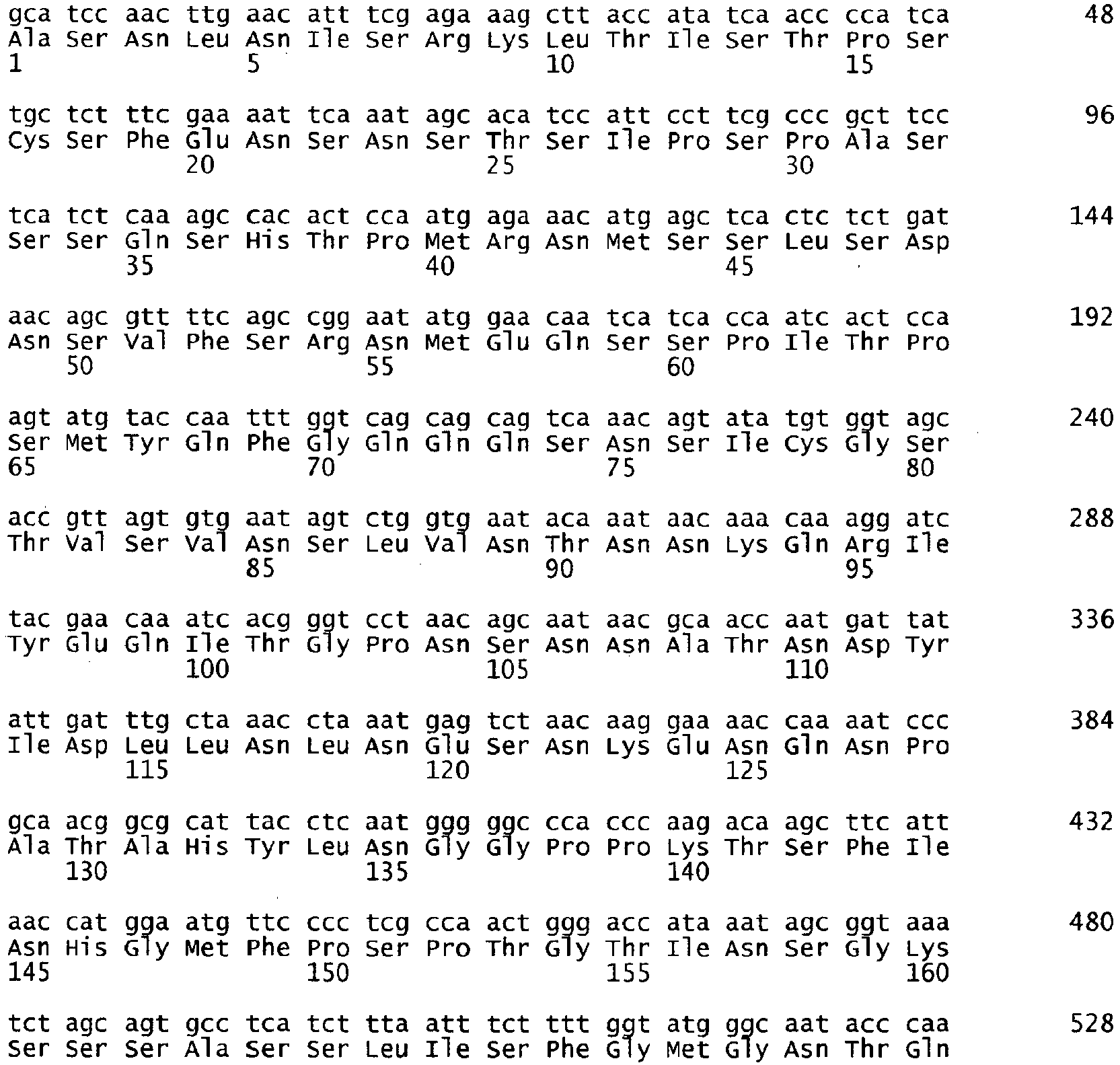

- <210> 14
<211> 178
<212> PRT
<213> Saccharomyces cerevisiae - <400> 14

Claims (12)
- Ganzzellsensor zur Erfassung von bioverfügbarem Stickstoff, Phosphor und Schwefel jeweils einzeln oder in wenigstens einer Kombination in einem Medium,
bestehend aus gentechnisch veränderten Hefezellen, die in einer Xerogel-Matrix immobilisiert sind, wobei das Xerogel ein anorganisches Xerogel ist, das aus Siliziumdioxid, alkyliertem Siliziumdioxid, Titandioxid, Aluminiumoxid oder deren Gemischen besteht, und mit den Hefezellen auf einem Substrat aufgebracht ist,
wobei die Hefezellen mindestens ein Markergen unter der Kontrolle eines Promotors eines Gens enthalten, dessen Transkriptionsrate sich bei Stickstoff-, Phosphor- oder Schwefel-Mangel mindestens zweifach erhöht oder erniedrigt,
wobei die Hefezellen wenigstens mit einem Signaldetektor gekoppelt sind,
und wobei die Hefezellen ein Bestandteil einer einen Hohlraum wenigstens teilweise umschließenden Hüllenstruktur sind, die aus einem Grundkörper mit einer inneren Schicht aus einem biologischen Hydrogel und einer äußeren Schicht aus dem porösen und optisch transparenten Xerogel besteht, wobei die Schichten wenigstens bereichsweise aufgebracht sind. - Ganzzellsensor nach Anspruch 1, dadurch gekennzeichnet, dass das Xerogel durch Trocknung eines Lyogels bei einer Temperatur von weniger als 40 °C erhalten wurde.
- Ganzzellsensor nach Anspruch 1 oder 2, dadurch gekennzeichnet, dass sich die Hefezellen wenigstens auf einer Oberfläche in einer transparenten Messzelle befinden und dass die Messzelle Einrichtungen zum Zuführen und Abführen des Mediums besitzt.
- Ganzzellsensor nach einem der Ansprüche 1 bis 3, dadurch gekennzeichnet, dass der Signaldetektor ein Fotodetektor in Form eines Festkörperbildsensors mit Fotowiderständen, Fotodioden oder Fototransistoren ist und dass der Festkörperbildsensor mit einem Datenverarbeitungssystem zusammengeschaltet ist.
- Ganzzellsensor nach einem der Ansprüche 1 bis 4, dadurch gekennzeichnet, dass das Markergen unter die Kontrolle eines Promotors gestellt ist, der ausgewählt ist aus den Promotoren der Gene YIR028W, YJR152W, YKR034W, YAR071W, YHR136C, YFL055W, YLL057C, NSR1, FET3, HIP1, YDR508C, RPS22B, YBR099C, IPT1, SSU1, SOL1 und CTR1 von Saccharomyces cerevisiae.
- Ganzzellsensor nach einem der Ansprüche 1 bis 5, dadurch gekennzeichnet, dass das Markergen für ein Enzym kodiert, das durch eine einfache Farbreaktion nachweisbar ist.
- Ganzzellsensor nach einem der Ansprüche 1 bis 6, dadurch gekennzeichnet, dass das Markergen für eine Luciferase kodiert.
- Ganzzellsensor nach einem der Ansprüche 1 bis 7, dadurch gekennzeichnet, dass das Markergen für ein fluoreszierendes Protein kodiert, wobei die Expression des durch das Markergen kodierten Proteins bei einer Limitierung von bioverfügbarem Stickstoff, Phosphor und/oder Schwefel im Medium variiert, was zu einer Zu- oder Abnahme der Fluoreszenz der jeweiligen Hefezelle führt.
- Ganzzellsensor nach Anspruch 8, dadurch gekennzeichnet, dass das Markergen für ein fluoreszierendes Protein mit eingeschränkter Halbwertszeit kodiert.
- Ganzzellsensor nach einem der Ansprüche 1 bis 9, dadurch gekennzeichnet, dass als Hefezellen Zellzyklus-(cdc; cell division cycle)-Mutanten eingesetzt werden, welche bei permissiven Bedingungen normal wachsen und bei restriktiven Bedingungen das Wachstum einstellen.
- Ganzzellsensor nach Anspruch 10, dadurch gekennzeichnet, dass als Hefezellen temperatursensitive Zellzyklus-(cdc; cell division cycle)-Mutanten eingesetzt werden, welche bei permissiver Temperatur normal wachsen und bei restriktiver Temperatur das Wachstum einstellen.
- Verwendung eines Ganzzellsensors nach einem der Ansprüche 1 bis 11 zur Kontrolle und/oder Steuerung der Verfügbarkeit von bioverfügbarem Stickstoff, bioverfügbarem Phosphor und/oder bioverfügbarem Schwefel in Bioreaktoren oder zur Überwachung und/oder Steuerung von Systemen zur Reinigung von Trinkwasser, technischem Brauchwasser oder Abwässern von Stickstoff-, Phosphor- und Schwefelbelastung.
Applications Claiming Priority (2)
| Application Number | Priority Date | Filing Date | Title |
|---|---|---|---|
| DE102007020725 | 2007-04-25 | ||
| PCT/EP2008/055099 WO2008132178A1 (de) | 2007-04-25 | 2008-04-25 | Ganzzellsensor |
Publications (2)
| Publication Number | Publication Date |
|---|---|
| EP2142647A1 EP2142647A1 (de) | 2010-01-13 |
| EP2142647B1 true EP2142647B1 (de) | 2013-09-18 |
Family
ID=39721883
Family Applications (1)
| Application Number | Title | Priority Date | Filing Date |
|---|---|---|---|
| EP08759386.9A Not-in-force EP2142647B1 (de) | 2007-04-25 | 2008-04-25 | Ganzzellsensor |
Country Status (3)
| Country | Link |
|---|---|
| US (1) | US20100221817A1 (de) |
| EP (1) | EP2142647B1 (de) |
| WO (1) | WO2008132178A1 (de) |
Families Citing this family (3)
| Publication number | Priority date | Publication date | Assignee | Title |
|---|---|---|---|---|
| DE102014218298A1 (de) * | 2014-09-12 | 2016-03-17 | Siemens Aktiengesellschaft | Verfahren zur Konservierung und Präservierung der biologischen Komponente eines Biosensors |
| EP3221464B1 (de) | 2014-11-18 | 2022-02-23 | The Trustees of Columbia University in the City of New York | Detektion von analyten unter verwendung von lebenden zellen |
| CN114636681B (zh) * | 2022-02-25 | 2025-11-21 | 清华大学 | 光纤生物传感探头及其制备方法 |
Family Cites Families (10)
| Publication number | Priority date | Publication date | Assignee | Title |
|---|---|---|---|---|
| US5723292A (en) * | 1984-05-25 | 1998-03-03 | Zymogenetics, Inc. | Stable DNA constructs |
| DE4301087C2 (de) * | 1993-01-16 | 1998-05-07 | Lange Gmbh Dr Bruno | Vorrichtung zur Bestimmung des biochemischen Sauerstoffbedarfs |
| US6117643A (en) * | 1997-11-25 | 2000-09-12 | Ut Battelle, Llc | Bioluminescent bioreporter integrated circuit |
| GB9819666D0 (en) * | 1998-09-09 | 1998-11-04 | Univ Aberdeen | Biosensor |
| GB2364307A (en) * | 2000-04-03 | 2002-01-23 | Univ Surrey | Bioluminescent reporters |
| US20050158702A1 (en) * | 2000-09-05 | 2005-07-21 | Stuelpnagel John R. | Cellular arrays comprising encoded cells |
| WO2005069738A2 (en) * | 2004-01-27 | 2005-08-04 | Ramot At Tel Aviv University Ltd. | Populations of cells and devices and systems including same |
| WO2005108963A1 (en) * | 2004-05-06 | 2005-11-17 | Nanyang Technological University | Microfluidic cell sorter system |
| DE102004025224B4 (de) * | 2004-05-21 | 2006-03-23 | Gesellschaft zur Förderung von Medizin-, Bio- und Umwelttechnologie e.V. | Verfahren und Vorrichtung zur biochemischen Bestimmung von Schwefelwasserstoff |
| EP1963538A2 (de) * | 2005-11-30 | 2008-09-03 | Guild Associates, Inc. | Differentiell fluoreszierende hefebiosensoren zur erkennung und zum biologischen abbau chemischer mittel |
-
2008
- 2008-04-25 US US12/597,296 patent/US20100221817A1/en not_active Abandoned
- 2008-04-25 EP EP08759386.9A patent/EP2142647B1/de not_active Not-in-force
- 2008-04-25 WO PCT/EP2008/055099 patent/WO2008132178A1/de not_active Ceased
Non-Patent Citations (1)
| Title |
|---|
| ARMON R ET AL: "Sol-gel applications in environmental biotechnology", JOURNAL OF BIOTECHNOLOGY, ELSEVIER SCIENCE PUBLISHERS, AMSTERDAM, NL, vol. 51, no. 3, 15 November 1996 (1996-11-15), pages 279 - 285, XP004071573, ISSN: 0168-1656, DOI: 10.1016/S0168-1656(96)01607-0 * |
Also Published As
| Publication number | Publication date |
|---|---|
| WO2008132178A1 (de) | 2008-11-06 |
| US20100221817A1 (en) | 2010-09-02 |
| EP2142647A1 (de) | 2010-01-13 |
Similar Documents
| Publication | Publication Date | Title |
|---|---|---|
| DE69910667T2 (de) | Zusammensetzung zum Nachweis eines Mikroorganismus in einer Probe | |
| DE69734204T2 (de) | Lichtproduzierender biosensor | |
| DE3833628A1 (de) | Verfahren zum nachweis und zur identifikation toxischer substanzen mit hilfe klonierter mikroorganismen | |
| EP2779900A1 (de) | Analaysegerät zum nachweis mindestens eines analyten in einer probe | |
| Nguyen-Ngoc et al. | Sol–gel process for vegetal cell encapsulation | |
| WO2008132178A1 (de) | Ganzzellsensor | |
| Žunar et al. | Confocal imaging of biomarkers at a single-cell resolution: quantifying'living'in 3D-printable engineered living material based on Pluronic F-127 and yeast Saccharomyces cerevisiae | |
| Konstantinov et al. | Real‐time compensation of the inner filter effect in high‐density bioluminescent cultures | |
| DE102008030907B4 (de) | Einrichtung und Verfahren zur Detektion und Verstärkung eines Signals | |
| US8389263B2 (en) | Spores for the stabilization and on-site application of bacterial whole-cell biosensing systems | |
| EP1112375B1 (de) | Biosensor | |
| EP2164979B1 (de) | Biosensor | |
| EP2171081B1 (de) | Einrichtung und verfahren zum nachweis einer substanz mittels partikel-plasmonen- resonanz (ppr) oder partikel-vermittelter fluoreszenz auf der basis von zelloberflächenpolarisierungen | |
| Karimi et al. | Portable enzyme-paper biosensors based on redox-active CeO2 nanoparticles | |
| DE102015218513B3 (de) | System und Verfahren zur Detektion von Primärsignalen an mittels selbstassemblierenden Proteinen funktionalisierten Oberflächen | |
| Lu et al. | Stabilization of horseradish peroxidase in silk materials | |
| DE10038237A1 (de) | Verfahren zum Nachweis von Mutationen in Nucleotidsequenzen | |
| EP4363602B1 (de) | Biologischer indikator zur bestimmung der wirksamkeit eines oxidativen sterilisationsverfahrens und verwendungsverfahren | |
| DE202012005258U1 (de) | Mittel zur schnellen quantitativen und qualitativen Bestimmung von Schmimmelpilzen und Hefen | |
| DE19710287B4 (de) | Mikrobiologischer Biosensor, Verfahren zu seiner Herstellung und seine Verwendung | |
| DE102019124459A1 (de) | Verfahren zur Durchmusterung porenbildender Membranproteine, Membrantransporter und molekularer Schalter | |
| DE202018006944U1 (de) | Glukosesensor | |
| DE60028201T2 (de) | Überwachung von genexpression | |
| DE69931615T2 (de) | Varianten amylolytischer enzyme | |
| DE102007027914A1 (de) | Sterilisierbarer Sensor zur Überwachung von biochemischen Prozessen in Fermentern |
Legal Events
| Date | Code | Title | Description |
|---|---|---|---|
| PUAI | Public reference made under article 153(3) epc to a published international application that has entered the european phase |
Free format text: ORIGINAL CODE: 0009012 |
|
| 17P | Request for examination filed |
Effective date: 20091120 |
|
| AK | Designated contracting states |
Kind code of ref document: A1 Designated state(s): AT BE BG CH CY CZ DE DK EE ES FI FR GB GR HR HU IE IS IT LI LT LU LV MC MT NL NO PL PT RO SE SI SK TR |
|
| 17Q | First examination report despatched |
Effective date: 20100310 |
|
| DAX | Request for extension of the european patent (deleted) | ||
| GRAP | Despatch of communication of intention to grant a patent |
Free format text: ORIGINAL CODE: EPIDOSNIGR1 |
|
| INTG | Intention to grant announced |
Effective date: 20130425 |
|
| GRAS | Grant fee paid |
Free format text: ORIGINAL CODE: EPIDOSNIGR3 |
|
| GRAA | (expected) grant |
Free format text: ORIGINAL CODE: 0009210 |
|
| AK | Designated contracting states |
Kind code of ref document: B1 Designated state(s): AT BE BG CH CY CZ DE DK EE ES FI FR GB GR HR HU IE IS IT LI LT LU LV MC MT NL NO PL PT RO SE SI SK TR |
|
| REG | Reference to a national code |
Ref country code: GB Ref legal event code: FG4D Free format text: NOT ENGLISH |
|
| REG | Reference to a national code |
Ref country code: CH Ref legal event code: EP |
|
| REG | Reference to a national code |
Ref country code: IE Ref legal event code: FG4D Free format text: LANGUAGE OF EP DOCUMENT: GERMAN |
|
| REG | Reference to a national code |
Ref country code: AT Ref legal event code: REF Ref document number: 632826 Country of ref document: AT Kind code of ref document: T Effective date: 20131015 |
|
| REG | Reference to a national code |
Ref country code: DE Ref legal event code: R096 Ref document number: 502008010692 Country of ref document: DE Effective date: 20131114 |
|
| PG25 | Lapsed in a contracting state [announced via postgrant information from national office to epo] |
Ref country code: NO Free format text: LAPSE BECAUSE OF FAILURE TO SUBMIT A TRANSLATION OF THE DESCRIPTION OR TO PAY THE FEE WITHIN THE PRESCRIBED TIME-LIMIT Effective date: 20131218 Ref country code: SE Free format text: LAPSE BECAUSE OF FAILURE TO SUBMIT A TRANSLATION OF THE DESCRIPTION OR TO PAY THE FEE WITHIN THE PRESCRIBED TIME-LIMIT Effective date: 20130918 Ref country code: HR Free format text: LAPSE BECAUSE OF FAILURE TO SUBMIT A TRANSLATION OF THE DESCRIPTION OR TO PAY THE FEE WITHIN THE PRESCRIBED TIME-LIMIT Effective date: 20130918 Ref country code: LT Free format text: LAPSE BECAUSE OF FAILURE TO SUBMIT A TRANSLATION OF THE DESCRIPTION OR TO PAY THE FEE WITHIN THE PRESCRIBED TIME-LIMIT Effective date: 20130918 Ref country code: CY Free format text: LAPSE BECAUSE OF FAILURE TO SUBMIT A TRANSLATION OF THE DESCRIPTION OR TO PAY THE FEE WITHIN THE PRESCRIBED TIME-LIMIT Effective date: 20130814 |
|
| REG | Reference to a national code |
Ref country code: NL Ref legal event code: VDEP Effective date: 20130918 |
|
| REG | Reference to a national code |
Ref country code: LT Ref legal event code: MG4D |
|
| PG25 | Lapsed in a contracting state [announced via postgrant information from national office to epo] |
Ref country code: FI Free format text: LAPSE BECAUSE OF FAILURE TO SUBMIT A TRANSLATION OF THE DESCRIPTION OR TO PAY THE FEE WITHIN THE PRESCRIBED TIME-LIMIT Effective date: 20130918 Ref country code: LV Free format text: LAPSE BECAUSE OF FAILURE TO SUBMIT A TRANSLATION OF THE DESCRIPTION OR TO PAY THE FEE WITHIN THE PRESCRIBED TIME-LIMIT Effective date: 20130918 Ref country code: SI Free format text: LAPSE BECAUSE OF FAILURE TO SUBMIT A TRANSLATION OF THE DESCRIPTION OR TO PAY THE FEE WITHIN THE PRESCRIBED TIME-LIMIT Effective date: 20130918 Ref country code: GR Free format text: LAPSE BECAUSE OF FAILURE TO SUBMIT A TRANSLATION OF THE DESCRIPTION OR TO PAY THE FEE WITHIN THE PRESCRIBED TIME-LIMIT Effective date: 20131219 |
|
| PG25 | Lapsed in a contracting state [announced via postgrant information from national office to epo] |
Ref country code: CY Free format text: LAPSE BECAUSE OF FAILURE TO SUBMIT A TRANSLATION OF THE DESCRIPTION OR TO PAY THE FEE WITHIN THE PRESCRIBED TIME-LIMIT Effective date: 20130918 |
|
| PG25 | Lapsed in a contracting state [announced via postgrant information from national office to epo] |
Ref country code: EE Free format text: LAPSE BECAUSE OF FAILURE TO SUBMIT A TRANSLATION OF THE DESCRIPTION OR TO PAY THE FEE WITHIN THE PRESCRIBED TIME-LIMIT Effective date: 20130918 Ref country code: NL Free format text: LAPSE BECAUSE OF FAILURE TO SUBMIT A TRANSLATION OF THE DESCRIPTION OR TO PAY THE FEE WITHIN THE PRESCRIBED TIME-LIMIT Effective date: 20130918 Ref country code: SK Free format text: LAPSE BECAUSE OF FAILURE TO SUBMIT A TRANSLATION OF THE DESCRIPTION OR TO PAY THE FEE WITHIN THE PRESCRIBED TIME-LIMIT Effective date: 20130918 Ref country code: CZ Free format text: LAPSE BECAUSE OF FAILURE TO SUBMIT A TRANSLATION OF THE DESCRIPTION OR TO PAY THE FEE WITHIN THE PRESCRIBED TIME-LIMIT Effective date: 20130918 Ref country code: RO Free format text: LAPSE BECAUSE OF FAILURE TO SUBMIT A TRANSLATION OF THE DESCRIPTION OR TO PAY THE FEE WITHIN THE PRESCRIBED TIME-LIMIT Effective date: 20130918 Ref country code: IS Free format text: LAPSE BECAUSE OF FAILURE TO SUBMIT A TRANSLATION OF THE DESCRIPTION OR TO PAY THE FEE WITHIN THE PRESCRIBED TIME-LIMIT Effective date: 20140118 |
|
| PG25 | Lapsed in a contracting state [announced via postgrant information from national office to epo] |
Ref country code: PL Free format text: LAPSE BECAUSE OF FAILURE TO SUBMIT A TRANSLATION OF THE DESCRIPTION OR TO PAY THE FEE WITHIN THE PRESCRIBED TIME-LIMIT Effective date: 20130918 Ref country code: ES Free format text: LAPSE BECAUSE OF FAILURE TO SUBMIT A TRANSLATION OF THE DESCRIPTION OR TO PAY THE FEE WITHIN THE PRESCRIBED TIME-LIMIT Effective date: 20130918 |
|
| REG | Reference to a national code |
Ref country code: DE Ref legal event code: R097 Ref document number: 502008010692 Country of ref document: DE |
|
| PG25 | Lapsed in a contracting state [announced via postgrant information from national office to epo] |
Ref country code: PT Free format text: LAPSE BECAUSE OF FAILURE TO SUBMIT A TRANSLATION OF THE DESCRIPTION OR TO PAY THE FEE WITHIN THE PRESCRIBED TIME-LIMIT Effective date: 20140120 |
|
| PLBE | No opposition filed within time limit |
Free format text: ORIGINAL CODE: 0009261 |
|
| STAA | Information on the status of an ep patent application or granted ep patent |
Free format text: STATUS: NO OPPOSITION FILED WITHIN TIME LIMIT |
|
| 26N | No opposition filed |
Effective date: 20140619 |
|
| PG25 | Lapsed in a contracting state [announced via postgrant information from national office to epo] |
Ref country code: IT Free format text: LAPSE BECAUSE OF FAILURE TO SUBMIT A TRANSLATION OF THE DESCRIPTION OR TO PAY THE FEE WITHIN THE PRESCRIBED TIME-LIMIT Effective date: 20130918 |
|
| PG25 | Lapsed in a contracting state [announced via postgrant information from national office to epo] |
Ref country code: DK Free format text: LAPSE BECAUSE OF FAILURE TO SUBMIT A TRANSLATION OF THE DESCRIPTION OR TO PAY THE FEE WITHIN THE PRESCRIBED TIME-LIMIT Effective date: 20130918 |
|
| REG | Reference to a national code |
Ref country code: DE Ref legal event code: R097 Ref document number: 502008010692 Country of ref document: DE Effective date: 20140619 |
|
| PG25 | Lapsed in a contracting state [announced via postgrant information from national office to epo] |
Ref country code: MC Free format text: LAPSE BECAUSE OF FAILURE TO SUBMIT A TRANSLATION OF THE DESCRIPTION OR TO PAY THE FEE WITHIN THE PRESCRIBED TIME-LIMIT Effective date: 20130918 Ref country code: LU Free format text: LAPSE BECAUSE OF FAILURE TO SUBMIT A TRANSLATION OF THE DESCRIPTION OR TO PAY THE FEE WITHIN THE PRESCRIBED TIME-LIMIT Effective date: 20140425 |
|
| REG | Reference to a national code |
Ref country code: CH Ref legal event code: PL |
|
| REG | Reference to a national code |
Ref country code: IE Ref legal event code: MM4A |
|
| PG25 | Lapsed in a contracting state [announced via postgrant information from national office to epo] |
Ref country code: LI Free format text: LAPSE BECAUSE OF NON-PAYMENT OF DUE FEES Effective date: 20140430 Ref country code: CH Free format text: LAPSE BECAUSE OF NON-PAYMENT OF DUE FEES Effective date: 20140430 |
|
| PG25 | Lapsed in a contracting state [announced via postgrant information from national office to epo] |
Ref country code: IE Free format text: LAPSE BECAUSE OF NON-PAYMENT OF DUE FEES Effective date: 20140425 |
|
| REG | Reference to a national code |
Ref country code: AT Ref legal event code: MM01 Ref document number: 632826 Country of ref document: AT Kind code of ref document: T Effective date: 20140425 |
|
| PG25 | Lapsed in a contracting state [announced via postgrant information from national office to epo] |
Ref country code: AT Free format text: LAPSE BECAUSE OF NON-PAYMENT OF DUE FEES Effective date: 20140425 |
|
| REG | Reference to a national code |
Ref country code: FR Ref legal event code: PLFP Year of fee payment: 9 |
|
| PG25 | Lapsed in a contracting state [announced via postgrant information from national office to epo] |
Ref country code: MT Free format text: LAPSE BECAUSE OF FAILURE TO SUBMIT A TRANSLATION OF THE DESCRIPTION OR TO PAY THE FEE WITHIN THE PRESCRIBED TIME-LIMIT Effective date: 20130918 |
|
| PG25 | Lapsed in a contracting state [announced via postgrant information from national office to epo] |
Ref country code: BG Free format text: LAPSE BECAUSE OF FAILURE TO SUBMIT A TRANSLATION OF THE DESCRIPTION OR TO PAY THE FEE WITHIN THE PRESCRIBED TIME-LIMIT Effective date: 20130918 |
|
| PG25 | Lapsed in a contracting state [announced via postgrant information from national office to epo] |
Ref country code: HU Free format text: LAPSE BECAUSE OF FAILURE TO SUBMIT A TRANSLATION OF THE DESCRIPTION OR TO PAY THE FEE WITHIN THE PRESCRIBED TIME-LIMIT; INVALID AB INITIO Effective date: 20080425 Ref country code: TR Free format text: LAPSE BECAUSE OF FAILURE TO SUBMIT A TRANSLATION OF THE DESCRIPTION OR TO PAY THE FEE WITHIN THE PRESCRIBED TIME-LIMIT Effective date: 20130918 Ref country code: BE Free format text: LAPSE BECAUSE OF FAILURE TO SUBMIT A TRANSLATION OF THE DESCRIPTION OR TO PAY THE FEE WITHIN THE PRESCRIBED TIME-LIMIT Effective date: 20140430 |
|
| REG | Reference to a national code |
Ref country code: FR Ref legal event code: PLFP Year of fee payment: 10 |
|
| PGFP | Annual fee paid to national office [announced via postgrant information from national office to epo] |
Ref country code: FR Payment date: 20170317 Year of fee payment: 10 |
|
| PGFP | Annual fee paid to national office [announced via postgrant information from national office to epo] |
Ref country code: GB Payment date: 20170307 Year of fee payment: 10 |
|
| PGFP | Annual fee paid to national office [announced via postgrant information from national office to epo] |
Ref country code: DE Payment date: 20180206 Year of fee payment: 11 |
|
| GBPC | Gb: european patent ceased through non-payment of renewal fee |
Effective date: 20180425 |
|
| PG25 | Lapsed in a contracting state [announced via postgrant information from national office to epo] |
Ref country code: GB Free format text: LAPSE BECAUSE OF NON-PAYMENT OF DUE FEES Effective date: 20180425 |
|
| PG25 | Lapsed in a contracting state [announced via postgrant information from national office to epo] |
Ref country code: FR Free format text: LAPSE BECAUSE OF NON-PAYMENT OF DUE FEES Effective date: 20180430 |
|
| REG | Reference to a national code |
Ref country code: DE Ref legal event code: R119 Ref document number: 502008010692 Country of ref document: DE |
|
| PG25 | Lapsed in a contracting state [announced via postgrant information from national office to epo] |
Ref country code: DE Free format text: LAPSE BECAUSE OF NON-PAYMENT OF DUE FEES Effective date: 20191101 |