EP2139275B1 - System und Verfahren zur deterministischen und dynamischen Vermeidung von Störungen des Betriebs eines sicherheitskritischen Funkgeräts - Google Patents
System und Verfahren zur deterministischen und dynamischen Vermeidung von Störungen des Betriebs eines sicherheitskritischen Funkgeräts Download PDFInfo
- Publication number
- EP2139275B1 EP2139275B1 EP09163173.9A EP09163173A EP2139275B1 EP 2139275 B1 EP2139275 B1 EP 2139275B1 EP 09163173 A EP09163173 A EP 09163173A EP 2139275 B1 EP2139275 B1 EP 2139275B1
- Authority
- EP
- European Patent Office
- Prior art keywords
- frequencies
- radio equipment
- operational
- safety critical
- vehicle
- Prior art date
- Legal status (The legal status is an assumption and is not a legal conclusion. Google has not performed a legal analysis and makes no representation as to the accuracy of the status listed.)
- Active
Links
Images


Classifications
-
- H—ELECTRICITY
- H04—ELECTRIC COMMUNICATION TECHNIQUE
- H04W—WIRELESS COMMUNICATION NETWORKS
- H04W16/00—Network planning, e.g. coverage or traffic planning tools; Network deployment, e.g. resource partitioning or cells structures
- H04W16/14—Spectrum sharing arrangements between different networks
-
- H—ELECTRICITY
- H04—ELECTRIC COMMUNICATION TECHNIQUE
- H04L—TRANSMISSION OF DIGITAL INFORMATION, e.g. TELEGRAPHIC COMMUNICATION
- H04L67/00—Network arrangements or protocols for supporting network services or applications
- H04L67/01—Protocols
- H04L67/12—Protocols specially adapted for proprietary or special-purpose networking environments, e.g. medical networks, sensor networks, networks in vehicles or remote metering networks
-
- H—ELECTRICITY
- H04—ELECTRIC COMMUNICATION TECHNIQUE
- H04W—WIRELESS COMMUNICATION NETWORKS
- H04W84/00—Network topologies
- H04W84/18—Self-organising networks, e.g. ad-hoc networks or sensor networks
Definitions
- Wireless technology uses radio frequency signals transmitted and propagated through space to communicate between separated nodes.
- Wireless technology including wireless headsets, keyboards, pointing devices, etc., is ubiquitous in the commercial marketplace. Wireless internet access is now available in airports, conference rooms, and coffee shops.
- wireless sensor networks can be installed, reconfigured and maintained at only a fraction of the cost of more conventional wired networks.
- Wireless sensors, wireless control devices, and wireless communication devices are being considered for aeronautical applications on commercial, private, and military aircraft in order to reduce the weight and to reduce the costs for designing, installing, manufacturing, testing, and certifying cable harnesses. Wireless sensors, wireless control devices, and wireless communication devices would also reduce the costs of aircraft interior and of system reconfiguration.
- Cognitive radio is an emerging technology used to detect and avoid interference with current occupants of a given spectral region. With a cognitive radio, the radio itself surveys the available spectrum, characterizes the current use of that spectrum, and makes a decision about where and when to transmit based on an internal data base containing relevant regulatory policies.
- this type of cognitive radio technology has three significant drawbacks related to application to aeronautical wireless sensor networks. Firstly, cognitive radio access to spectrum is, by its very nature, statistical. The FAA has already indicated its dislike of statistical systems for safety critical applications. Therefore, cognitive access faces a high level of scrutiny and is likely to be denied. Secondly, cognitive radio requires access to some kind of master database or policy engine.
- EP 1 432 154 A2 discloses a method of reducing interference in a multi-mode electronic system comprising a number of electronic devices operably coupled to a number of wireless devices.
- EP 1 261 225 A2 discloses a communication channel set up method and communication control device for reducing interference between radio communication systems.
- WO 01/11906 A1 discloses a method for determining the operating frequencies of base stations of an internal network.
- WO 92/19982 A1 discloses a method of selecting suitable channels for operation in a frequency band.
- the present application relates to a system to deterministically and dynamically prevent interference to the operation of safety-of life radio equipment in a vehicle.
- the system in one embodiment, includes a radio management system and a wireless network frequency controller communicatively coupled to the radio management system.
- the wireless network frequency controller is operable to restrict the operational frequency of any one or more of internal wireless communication devices and any one or more of wireless sensors that are communicatively coupled to the wireless network frequency controller.
- the restriction of the operational frequency is based on input from the radio management system.
- the restriction of the operational frequency ensures that all the safety-of-life radio equipment has interference-free operation with the internal wireless communication devices and the wireless sensors that are communicatively coupled to the wireless network frequency controller.
- safety-of-life radio equipment It is desirable to provide a wireless sensor network that does not require the use of complex cognitive radios and that does not interfere with the safety critical equipment, referred to herein as "safety-of-life radio equipment.”
- Figure 1 shows a system 10 in accordance with one embodiment to deterministically and dynamically prevent interference to the operation of safety-of-life radio equipment 300(1-N) in a vehicle 50.
- the system 10 includes a radio management system 107 and a wireless network frequency controller 103 that is communicatively coupled to the radio management system 107.
- the system 10 also includes a plurality of operational safety-of-life radio equipment 300(1-N) and at least one wireless sensor 101(1-N) and/or at least one internal wireless communication device 111(1-N).
- wireless sensor nodes The wireless sensors 101(1-N) and wireless communication devices 111(1-N) are referred to herein as “wireless sensor nodes.”
- Each safety-of-life radio equipment 300(1-N) operates at a fixed and known frequency at any given time during the flight. This fixed frequency may be subject to change under pilot command.
- the wireless sensors 101(1-N) represent a plurality of wireless sensors.
- the internal wireless communication devices 111(1-N) represent a plurality of internal wireless communication devices.
- the internal wireless communication devices 111(1-N) are operated as part of a vehicle infrastructure 112 of the vehicle 50.
- system 10 includes at least one wireless controller (other than wireless network frequency controller 103) that is controlled by the wireless network frequency controller 103.
- the radio management system 107 includes user input 155.
- the user input 155 is an interface to the radio management system 107 through which the user indicates when one of the safety-of-life radio equipment 300(1-N) is activated and/or deactivated in the vehicle 50.
- the user input 155 can be a display, a control panel, an activation switch, a push button, a graphical user interface (GUI) or some other user interface.
- the safety-of-life radio equipment 300(1-N) is communicatively coupled to the radio management system 107 via dedicated communication/control links represented generally by numeral 150.
- the wireless network frequency controller 103 is operable to restrict the operational frequency of any one or more of internal wireless communication devices 111(1-N) and any one or more of wireless sensors 101(1-N) that are communicatively coupled to the wireless network frequency controller 103.
- the wireless network frequency controller 103 restricts the operational frequency the internal wireless communication devices 111(1-N) and the wireless sensors 101(1-N) by controlling the frequencies used by the internal wireless communication devices 111(1-N) and the wireless sensors 101(1-N).
- the wireless network frequency controller 103 prevents the internal wireless communication devices 111(1-N) and the wireless sensors 101(1-N) from using frequencies that would cause interference with the safety-of-life radio equipment 300(1-N).
- each of the safety-of life radio equipment 300(1-N) has interference-free operation even when the safety-of-life radio equipment 300(1-N) is operable within communication range of the internal wireless communication devices 111(1-N) and the wireless sensors 101(1-N) that are communicatively coupled to the wireless network frequency controller 103.
- the internal wireless communication devices 111(1-N) and the wireless sensors 101(1-N) that are communicatively coupled to the wireless network frequency controller 107 experience interference-free operation with the safety-of-life radio equipment 300(1-N) in the vehicle 50.
- the operational frequency of the wireless sensors 101(1-N) and/or the internal wireless communication devices 111(1-N) can change as the operational status of safety-of life radio equipment 300(1-N) changes.
- the internal wireless communication devices 111(1-N) are communicatively coupled to the wireless network frequency controller 103 via a wireless communication link 104(1-N), respectively.
- the wireless sensors 101(1-N) are communicatively coupled to the wireless network frequency controller 103 via a wireless communication link 106(1-N), respectively.
- two or more of the wireless communication devices 111(1-N) are communicatively coupled to each other via a wireless communication link represented generally at 109.
- one or more of the wireless communication devices 111(1-N) are communicatively coupled to one or more of the wireless sensors 101(1-N) via a wireless communication link represented generally at 115.
- two or more of the wireless sensors 101(1-N) are communicatively coupled to each other via a wireless communication link represented generally at 108.
- on-board systems 201-2 are housed in the vehicle 50 and are communicatively coupled to the wireless network frequency controller 103.
- the vehicle 50 is an aircraft.
- the vehicle 50 is an emergency vehicle, such as a fire truck, a police vehicle, or an ambulance, that house safety-of-life radio equipment and wireless sensor nodes or other wireless devices.
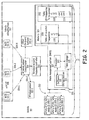
- Figures 2-4 show systems 11-13, respectively, in accordance with embodiments of the present invention to deterministically and dynamically prevent interference to the operation of safety-of-life radio equipment 300(1-N) ( Figure 1 ) in which the operational status of the various safety-of-life radio equipment 300(1-N) changes.
- FIG. 2 is a system 11 in accordance with one embodiment to deterministically and dynamically prevent interference to the operation of safety-of-life radio equipment in which a first three of safety-of-life radio equipment 300(1-3) are operable.
- System 11 includes the radio management system 107 and the wireless network frequency controller 103 that is communicatively coupled to the radio management system 107.
- System 11 also includes the operational safety-of-life radio equipment 300(1-3), a wireless sensor 101-1, and a plurality of internal wireless communication devices 111(1-N) concentrator 102 is communicatively coupled to the wireless network frequency controller 103 to aggregate and relay the sensor or communication traffic to the designated wireless communication device 111(1-N) and/or wireless sensor 101-1.
- the wireless network controller 103 and concentrator 102 are combined in common hardware.
- the radio management system 107 includes a table manager 125 and a processor 120.
- the table manager 125 manages a table-of selected-frequencies 200 and a table-of frequencies-to-be-avoided 210.
- the processor 120 is communicatively coupled with the table manager 125 and the wireless network frequency controller 103.
- the radio management system 107 further comprises the user input 155 that is communicatively coupled to the table manager 125.
- System 11 includes dedicated communication links 150 to communicatively couple the safety-of-life radio equipment 300(1-3) to the table manager 125 in the radio management system 107.
- the table manager 125 accepts information indicative of operational frequencies of safety-of-life radio equipment currently in operation from the dedicated communication links 150 and/or the user input 155 at the table-of-selected-frequencies 200 and the table-of frequencies-to-be-avoided 210.
- the table-of-selected-frequencies 200 and the table-of-frequencies-to-be-avoided 210 are stored in memory 123.
- the table manager 125 receives updated information indicative of operational frequencies of safety-of-life radio equipment currently in operation as the safety-of-life radio equipment 300(1-3) is activated and/or deactivated in the vehicle 50. As updated information is received, the table-of selected-frequencies 200 and the table-of-frequencies-to-be-avoided 210 are modified to reflect the changes in operational frequencies of the safety-of-life radio equipment currently in operation.
- the user input 155 is not included in system 11 and the table manager 125 accepts input from the at least one dedicated communication link 150 when a safety-of-life radio equipment 300(1-3) is activated and/or deactivated in the vehicle 50.
- the table-of selected-frequencies 200 is a list of the operational frequencies 220 of the safety-of-life radio equipment 300(1-3) currently in operation in the vehicle 50.
- the table-of frequencies-to-be-avoided 210 is a list of operational frequencies 220 of the safety-of-life radio equipment 300(1-3) currently in operation as well as electro-magnetic interference/electro-magnetic compatibility (EMI/EMC) threat frequencies 222 generated from the list of operational frequencies 220.
- EMI/EMC electro-magnetic interference/electro-magnetic compatibility
- the table manager 125 sends the information indicative of operational frequencies 220 of the operational safety-of-life radio equipment 300(1-3) to the processor 120.
- the processor 120 calculates the EMI/EMC threat frequencies 222 based on the operational frequencies 220 of the safety-of-life radio equipment 300(1-3) currently in operation.
- the EMI/EMC threat frequencies 222 are harmonics, inter-modulation frequencies, and/or sidebands of the operational frequencies 220 of the safety-of-life radio equipment 300(1-3).
- the processor 120 sends information indicative of the calculated EMI/EMC threat frequencies 222 to the table manager 125.
- the table manager 125 accepts the calculated EMI/EMC threat frequencies 222 at the table-of-frequencies-to-be-avoided 210.
- the processor 120 also sends the information indicative of the calculated EMI/EMC threat frequencies 222 and information indicative of the operational frequencies 220 of the operational safety-of-life radio equipment 300(1-3) to the wireless network frequency controller 103.
- the wireless network frequency controller 103 ensures that all wireless sensor nodes communicatively coupled to the wireless network frequency controller 103 do not operate at any of EMI/EMC threat frequencies 222 or at any of operational frequencies 220 of the operational safety-of-life radio equipment 300(1-3).
- the operational frequencies 220 change and the calculated EMI/EMC threat frequencies 222 change.
- the table manager 125 updates the table-of-frequencies-to-be-avoided 210 as the operational frequencies 220 and the calculated EMI/EMC threat frequencies 222 change.
- the wireless network frequency controller 103 dynamically controls the operational frequency of the wireless sensor 101-1 and each wireless communication device 111(1-3) so that they operate at frequencies other than the operational frequencies 220 and calculated EMI/EMC threat frequencies 222.
- Figures 2-4 show how the frequencies listed in the table-of-selected-frequencies 200 and the table-of-frequencies-to-be-avoided 210 change as the operational safety-of-life radio equipment changes.
- the systems 11-13 in Figures 2-4 respectively, differ in which safety-of-life radio equipment and nodes are operational in the vehicle 50.
- the operational frequencies 220, 223, 225 in Figures 2 , 3 , and 4 are lists of operational frequencies of the currently operational safety-of-life radio equipment 300(1-3).
- the list of operational frequencies 220, 223, 225 are stored in memory 123 in the table-of-selected-frequencies 200.
- the list of EMI/EMC threat frequencies 222, 224, and 226 in Figures 2 , 3 , and 4 , respectively, are generated based on the operational frequencies 220, 223, 225, respectively.
- the list of EMI/EMC threat frequencies 222, 224, and 226 are calculated by the processor 120.
- the list of operational frequencies 220, 223, 225 and the list of EMI/EMC threat frequencies 222, 224, and 226, respectively, are stored in memory 123 in the table-of-frequencies-to-be-avoided 210.
- the processor 120 executes software 121 and/or firmware that causes the processor 120 to perform at least some of the processing described here as being performed by the radio management system 107.
- the software 121 and/or firmware executed by the processor 120 comprises a plurality of program instructions that are stored or otherwise embodied on a storage medium 122 from which at least a portion of such program instructions are read for execution by the processor 120.
- the processor 120 comprises processor support chips and/or system support chips such as application-specific integrated circuits (ASICs).
- Memory 123 comprises any suitable memory now known or later developed such as, for example, random access memory (RAM), read only memory (ROM), and/or registers within the processor 120.
- the processor 120 comprises a microprocessor or microcontroller.
- the processor 120 and memory 123 are shown as separate elements in Figures 2-4 , in one implementation, the processor 120 and memory 123 are implemented in a single device (for example, a single integrated-circuit device).
- the safety-of-life radio equipment 300(1-3) is operational, one wireless sensor 101-1 is communicatively coupled to the wireless network frequency controller 103 via the wireless sensor concentrator 102, and a plurality of wireless communication devices 111(1-N) are communicatively coupled to the wireless network frequency controller 103 via the wireless sensor concentrator 102.
- the operational frequencies 220 in the table-of-selected-frequencies 200 include ⁇ 1 , ⁇ 2 , and ⁇ 3 since the safety-of-life radio equipment 300(1-3) are operational.
- the EMI/EMC threat frequencies 222 in the table-of-frequencies-to-be-avoided 210 include ⁇ m+1 , ⁇ m+2 ...
- the wireless network frequency controller 103 controls the operational frequencies of the wireless sensor 101-1 and the plurality of wireless communication devices 111(1-N) so that the wireless sensor nodes operate at the frequencies other than the frequencies ⁇ 1 , ⁇ 2 , ⁇ 3 , ⁇ m+1 , ⁇ m+2 ... and ⁇ m+7 listed in table-of-frequencies-to-be-avoided 210.
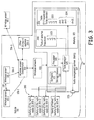
- Figure 3 is a system 12 in accordance with one embodiment to deterministically and dynamically prevent interference to the operation of safety-of-life radio equipment in which a first four of safety-of-life radio equipment 300(1-4) are operable.
- Figure 3 shows an embodiment of a system 12 in which the operational wireless sensor nodes and the operational safety-of-life radio equipment differs from the system 11 ( Figure 2 ).
- the safety-of-life radio equipment 300(1-4) is operational
- two wireless sensors 101(1-2) in the vehicle 50 are communicatively coupled to the wireless network frequency controller 103 via the wireless sensor concentrator 102
- one wireless sensor 99-1 external to the vehicle 50 is communicatively coupled to the wireless network frequency controller 103 via the wireless sensor concentrator 102.
- the wireless sensor 99-1 can be a radio of a person working outside of the vehicle 50.
- the radios of the people working outside of the aircraft for example, to refuel the aircraft or load baggage
- the operational safety-of-life radio equipment inside the aircraft will not interfere with the operational safety-of-life radio equipment inside the aircraft.
- the operational frequencies 223 in the table-of-selected-frequencies 200 include the frequencies ⁇ 1 , ⁇ 2 , ⁇ 3 , and ⁇ 4 since the safety-of-life radio equipment 300(1-4) are operational.
- the list of EMI/EMC threat frequencies 224 in the table-of-frequencies-to-be-avoided 210 includes the frequencies ⁇ k+1 , ⁇ k+2 ... ⁇ k+12 .
- the wireless network frequency controller 103 prevents the two wireless sensors 101(1-2) and the wireless sensor 99-1 from operating at the frequencies ⁇ 1 , ⁇ 2 , ⁇ 3 , ⁇ 4 , ⁇ k+1 , ⁇ k+2 ... and ⁇ k+12 listed in table-of-frequencies-to-be-avoided 210.
- the table manager 125 accepts the operational frequency ⁇ 4 of the newly activated safety-of-life radio equipment 300-4 at the table-of-selected-frequencies 200 and the table-of-frequencies-to-be-avoided 210.
- the table-of-selected-frequencies 200 and the table-of-frequencies-to-be-avoided 210 are modified so the operational frequencies 223 include frequencies ⁇ 1 , ⁇ 2 , ⁇ 3 , and ⁇ 4 .
- the table manager 125 sends the updated frequencies 223 to the processor 120.
- the processor 120 uses the updated operational frequencies 223 to re-calculate the list of EMI/EMC threat frequencies 224 to generate the updated list of EMI/EMC threat frequencies 224, which includes frequencies ⁇ k+1 , ⁇ k+2 ... ⁇ k+12 .
- the table manager 125 accepts the updated list of EMI/EMC threat frequencies 224 and replaces the old list of EMI/EMC threat frequencies 222 with the newly calculated list of EMI/EMC threat frequencies 224 at the table-of-frequencies-to-be-avoided 210.
- Figure 4 is a system 13 in accordance with one embodiment to deterministically and dynamically prevent interference to the operation of safety-of-life radio equipment in which a second three of safety-of-life radio equipment 300(1) and 300(3-4) are operable.
- Figure 4 shows an embodiment of a system 13 in which the operational wireless sensor nodes and the operational safety-of-life radio equipment differs from system 11 ( Figure 2 ) and from system 12 ( Figure 3 ).
- safety-of-life radio equipment 300(1) and 300(3-4) is operational and a plurality of wireless sensors 101(1-N) in the vehicle 50 are communicatively coupled to the wireless network frequency controller 103 via the wireless sensor concentrator 102.
- the operational frequencies 225 in the table-of-selected-frequencies 200 include the frequencies ⁇ 1 , ⁇ 3 , and ⁇ 4 since the safety-of-life radio equipment 300-1 and 300(3-4) are operational and the safety-of-life radio equipment 300-2 is deactivated.
- the EMI/EMC threat frequencies 226 in the table-of-frequencies-to-be-avoided 210 include the frequencies ⁇ s+1 , ⁇ s+2 ... ⁇ s+8 .
- the wireless network frequency controller 103 prevents the plurality of wireless sensors 101(1-N) from operating at the frequencies ⁇ 1 , ⁇ 3 , ⁇ 4 , ⁇ s+1 , ⁇ s+2 ... and ⁇ s+8 listed in table-of frequencies-to-be-avoided 210.
- the table manager 125 recognizes the deactivation of the safety-of-life radio equipment 300-2 and removes the operational frequency ⁇ 2 of the safety-of-life radio equipment 300-2 from the table-of-selected-frequencies 200 and the table-of-frequencies-to-be-avoided 210.
- the table-of-selected-frequencies 200 and the table-of-frequencies-to-be-avoided 210 are modified so the operational frequencies 225 only include frequencies ⁇ 1 , ⁇ 3 , and ⁇ 4 .
- the table manager 125 sends the updated frequencies 225 to the processor 120.
- the processor 120 Based on the operational frequencies 225, the processor 120 re-calculates the EMI/EMC threat frequencies 226, which now include the frequencies ⁇ s+1 , ⁇ s+2 , ⁇ s+8 .
- the table manager 125 accepts the revised list of threat frequencies and replaces the old list of EMI/EMC threat frequencies 224 with the newly calculated list of EMI/EMC threat frequencies 226 at the table-of-frequencies-to-be-avoided 210.
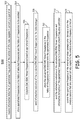
- FIG 5 is a flow diagram of one embodiment of a method to deterministically and dynamically prevent interference to the operation of safety-of-life radio equipment in a vehicle in accordance with the present invention.
- the method 500 is implemented with machine readable medium and instructions stored thereon as described above with reference to Figure 2 .
- the method 500 is described with reference to the embodiment shown in Figure 2 , though the method 500 is applicable to other configurations of safety-of-life radio equipment and wireless sensor nodes, which are communicatively coupled to the radio management system 107 ( Figure 1 ).
- information indicative of operational frequencies of the safety-of-life radio equipment currently in operation is received at a table manager in a radio management system.
- information indicative of operational frequencies of the safety-of-life radio equipment 300(1-3) ( Figure 2 ) currently in operation is received at the table manager 125 in the radio management system 107.
- the operational frequencies of the safety-of-life radio equipment currently in operation are stored in the table-of-selected-frequencies 200 and in the table-of frequencies-to-be-avoided.
- the operational frequencies ⁇ 1 , ⁇ 2 , and ⁇ 3 of the safety-of-life radio equipment 300(1-3) ( Figure 2 ) currently in operation in the vehicle 50 are stored in the table-of-selected-frequencies 200 and in the table-of-frequencies-to-be-avoided 210 as the list of frequencies 220.
- EMI/EMC threat frequencies are calculated based on operational frequencies of the safety-of-life radio equipment currently in operation.
- EMI/EMC threat frequencies ⁇ m+1 , ⁇ m+2 , ⁇ m+7 are calculated by the processor 120. The calculations are based on operational frequencies ⁇ 1 , ⁇ 2 , and ⁇ 3 of the safety-of-life radio equipment 300(1-3) currently in operation.
- information indicative of the calculated EMI/EMC threat frequencies is sent to the table manager.
- information indicative of the calculated EMI/EMC threat frequencies ⁇ m+1 , ⁇ m+2 ... and ⁇ m+7 is sent to the table manager 125 in the radio management system 107 from the processor 120.
- the calculated EMI/EMC threat frequencies are stored in the table-of-frequencies-to-be-avoided.
- the calculated EMI/EMC threat frequencies ⁇ m+1 , ⁇ m+2 ... and ⁇ m+7 are stored in the table-of-frequencies-to-be-avoided 210 as the list 222.
- the information indicative of the calculated EMI/EMC threat frequencies and information indicative of the operational frequencies of the safety-of-life radio equipment currently in operation is sent to the wireless network frequency controller from the processor.
- the information indicative of the calculated EMI/EMC threat frequencies ⁇ m+1 , ⁇ m+2 ... and ⁇ m+7 and information indicative of the operational frequencies ⁇ 1 , ⁇ 2 , and ⁇ 3 of the safety-of-life radio equipment 300(1-3) currently in operation is sent to the wireless network frequency controller 103 from the processor 120.
- the operational frequencies of any one or more of the internal wireless communication devices and/or wireless sensors that are communicatively coupled to the wireless network frequency controller are controlled to prevent interference between operational safety-of-life radio equipment and the internal wireless communication devices and to prevent interference between operational safety-of-life radio equipment and the wireless sensors.
- the operational frequency of the internal wireless communication devices 111(1-N) and wireless sensor 101-1 that are communicatively coupled to the wireless network frequency controller 103 are controlled to prevent interference between operational safety-of-life radio equipment 300(1-3) and the internal wireless communication devices 111(1-N) and wireless sensor 101-1 ( Figure 2 ).
- the wireless network frequency controller 103 does not allow any of the internal wireless communication devices 111(1-N) and wireless sensor 101-1 to operate at any of the calculated EMI/EMC threat frequencies ⁇ m+1 , ⁇ m+2 ... and ⁇ m+7 or at the operational frequencies ⁇ 1 , ⁇ 2 , and ⁇ 3 of the safety-of-life radio equipment 300(1-3).
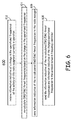
- Figure 6 is a flow diagram of one embodiment of a method 600 to update the table-of selected-frequencies 200 and the table-of-frequencies-to-be-avoided when the safety-of-life radio equipment in operation changes in accordance with the present invention.
- Method 600 is described with reference to Figures 2 and 3 although the method 600 is applicable to other configurations of safety-of-life radio equipment and wireless sensor nodes.
- Method 600 is implemented with machine readable medium and instructions stored thereon as described above with reference to Figure 2 .
- the table manager accepts changed operational frequencies of the safety-of-life radio equipment currently in operation at the table-of-selected-frequencies and at the table-of-frequencies-to-be-avoided based on the receiving information indicative of a change in the operational frequencies of the safety-of-life radio equipment currently in operation.
- the table manager 125 receives the indication that the safety-of-life radio equipment 300-4 has been activated in the vehicle 50 ( Figure 3 ).
- the table manager 125 accepts changed operational frequency ⁇ 4 of at the table-of-selected-frequencies 200 and at the table-of frequencies-to-be-avoided 210.
- the table-of-selected-frequencies 200 and table-of-frequencies-to-be-avoided 210 now each include the list 223.
- the processor re-calculates the EMI/EMC threat frequencies based on the change in the operational frequencies of the safety-of-life radio equipment currently in operation.
- the processor 120 re-calculates the EMI/EMC threat frequencies based on the addition of the frequency ⁇ 4 of at the table-of-selected-frequencies 200.
- the recalculated EMI/EMC threat frequencies include the frequencies ⁇ k+1 , ⁇ k+2 ... ⁇ k+12 .
- the processor sends information indicative of the re-calculated EMI/EMC threat frequencies to the table manager.
- the re-calculated EMI/EMC threat frequencies are stored in the table-of-frequencies-to-be-avoided based on the sending information indicative of the re-calculated EMI/EMC threat frequencies to the table manager.
- the processor 120 sends information indicative of the re-calculated EMI/EMC threat frequencies ⁇ k+1 , ⁇ k+2 ... ⁇ k+12 to the table manager 125.
- the re-calculated EMI/EMC threat frequencies ⁇ k+1 , ⁇ k+2 ... ⁇ k+12 are stored in the table-of-frequencies-to-be-avoided 210 as the list of EMI/EMC threat frequencies 224.
- the processor sends the information indicative of the re-calculated EMI/EMC threat frequencies and information indicative of the changed operational frequencies of the safety-of-life radio equipment currently in operation to the wireless network frequency controller.
- the processor 120 sends the information indicative of the re-calculated EMI/EMC threat frequencies ⁇ k+1 , ⁇ k+2 ... ⁇ k+12 and information indicative of the changed operational frequencies ⁇ 1 , ⁇ 2 , ⁇ 3 , and ⁇ 4 of the safety-of-life radio equipment 300(1-4) currently in operation to the wireless network frequency controller 103.
- the operational frequency of the wireless sensor 101(1-2) and wireless sensor 99-1 which are now communicatively coupled to the wireless network frequency controller 103 ( Figure 3 ), are controlled to prevent interference between operational safety-of-life radio equipment 300(1-4) and the wireless sensor 101(1-2) and wireless sensor 99-1.
- the wireless network frequency controller 103 does not allow the wireless sensor 101(1-2) and wireless sensor 99-1 to operate at any of the calculated EMI/EMC threat frequencies ⁇ k+1 , ⁇ k+2 ... ⁇ k+12 or at the operational frequencies ⁇ 1 , ⁇ 2 , ⁇ 3 , and ⁇ 4 of the safety-of-life radio equipment 300(1-4).
Landscapes
- Engineering & Computer Science (AREA)
- Computer Networks & Wireless Communication (AREA)
- Signal Processing (AREA)
- Health & Medical Sciences (AREA)
- Computing Systems (AREA)
- General Health & Medical Sciences (AREA)
- Medical Informatics (AREA)
- Mobile Radio Communication Systems (AREA)
Claims (6)
- System (10) zum deterministischen und dynamischen Vermeiden von Störungen des Betriebs sicherheitskritischer Funkausausrüstung (300) innerhalb eines Fahrzeugs (50), wobei das System Folgendes umfasst:ein Funkmanagementsystem (107) innerhalb des Fahrzeugs, wobei das Funkmanagementsystem einen Tabellenmanager (125) umfasst zum Managen einer Tabelle-ausgewählter-Frequenzen (200) und einer Tabelle-zu-meidender-Frequenzen (210),wobei die Tabelle-ausgewählter-Frequenzen (200) Folgendes umfasst:eine Liste von Betriebsfrequenzen der sicherheitskritischen Funkausausrüstung, die aktuell in dem Fahrzeug in Betrieb ist, undwobei die Tabelle-zu-meidender-Frequenzen (210) Folgendes umfasst:die Liste von Frequenzen der sicherheitskritischen Funkausausrüstung, die aktuell in dem Fahrzeug in Betrieb ist, undeine Liste von Bedrohungsfrequenzen Elektromagnetischer Interferenz/Elektromagnetischer Verträglichkeit EMI/EMV, die aus der Liste von Betriebsfrequenzen der sicherheitskritischen Funkausausrüstung (300), die aktuell in dem Fahrzeug (50) in Betrieb ist, erzeugt wird;eine Drahtlosnetzwerkfrequenz-Steuerung (103), die kommunikativ mit dem Funkmanagementsystem gekoppelt ist, wobei die Drahtlosnetzwerkfrequenz-Steuerung dazu betreibbar ist, die Betriebsfrequenz irgendeiner oder mehrerer interner Drahtloskommunikationsvorrichtungen (111), die als Teil einer Fahrzeuginfrastruktur (112) des Fahrzeugs (50) betrieben werden, und irgendeines oder mehrerer Drahtlossensoren (101), die mit der Drahtlosnetzwerkfrequenz-Steuerung kommunikativ gekoppelt sind, basierend auf Eingaben von dem Funkmanagementsystem einzuschränken, so dass all die sicherheitskritische Funkausausrüstung störungsfreien Betrieb mit den internen Drahtloskommunikationsvorrichtungen und den Drahtlossensoren, die mit der Drahtlosnetzwerkfrequenz-Steuerung kommunikativ gekoppelt sind, aufweist; undeinen Prozessor (120) innerhalb des Fahrzeugs, der mit dem Tabellenmanager und der Drahtlosnetzwerkfrequenz-Steuerung (103) kommunikativ gekoppelt ist, wobei die EMI-/EMV-Bedrohungsfrequenzen, basierend auf Betriebsfrequenzen der sicherheitskritischen Funkausausrüstung, die aktuell in Betrieb ist, durch den Prozessor berechnet werden.
- System nach Anspruch 1, das ferner mindestens eine dedizierte Kommunikationsverbindung (150) umfasst zum kommunikativen Koppeln der sicherheitskritischen Funkausausrüstung (300) an das Funkmanagementsystem (107).
- Verfahren zum deterministischen und dynamischen Vermeiden von Störungen des Betriebs sicherheitskritischer Funkausausrüstung (300) innerhalb eines Fahrzeugs, das kommunikativ mit einer Drahtlosnetzwerkfrequenz-Steuerung (103) innerhalb des Fahrzeugs gekoppelt ist, wobei das Verfahren Folgendes umfasst:das Empfangen, an einem Tabellenmanager, von Informationen, die Betriebsfrequenzen der sicherheitskritischen Funkausausrüstung (300), die aktuell im Betrieb ist, angeben;das Speichern, in einem Speicher (123) innerhalb des Fahrzeugs, der Betriebsfrequenzen der sicherheitskritischen Funkausausrüstung (300), die aktuell im Betrieb ist, in der Tabelle-ausgewählter-Frequenzen (200) zum Management durch den Tabellenmanager;das Berechnen von EMI-/EMV-Bedrohungsfrequenzen, basierend auf Betriebsfrequenzen der sicherheitskritischen Funkausausrüstung, die aktuell in Betrieb ist, wobei das Berechnen durch einen Prozessor (120) innerhalb des Fahrzeugs, der mit der Drahtlosnetzwerkfrequenz-Steuerung (103) und dem Tabellenmanager in einem Funkmanagementsystem innerhalb des Fahrzeugs kommunikativ gekoppelt ist, vorgenommen wird;das Speichern in dem Speicher der berechneten EMI-/EMV-Bedrohungsfrequenzen in der Tabelle-zu-meidender-Frequenzen zum Management durch den Tabellenmanager; das Senden von Informationen, die die berechneten EMI-/EMV-Bedrohungsfrequenzen angeben, vom Prozessor an den Tabellenmanager (125); unddas Senden der Informationen, die die berechneten EMI-/EMV-Bedrohungsfrequenzen angeben, und der Informationen, die die Betriebsfrequenzen der sicherheitskritischen Funkausausrüstung angeben, die aktuell im Betrieb ist, vom Prozessor an die Drahtlosnetzwerkfrequenz-Steuerung;das Einschränken, durch die Drahtlosnetzwerkfrequenz-Steuerung (103), der Betriebsfrequenz irgendeiner oder mehrerer interner Drahtloskommunikationsvorrichtungen (111) und irgendeines oder mehrerer Drahtlossensoren (101), basierend auf Eingaben von dem Funkmanagementsystem (107), so dass all die sicherheitskritische Funkausausrüstung störungsfreien Betrieb mit den internen Drahtloskommunikationsvorrichtungen und den Drahtlossensoren aufweist.
- Verfahren nach Anspruch 3, das ferner Folgendes umfasst:das Steuern, durch die Drahtlosnetzwerkfrequenz-Steuerung (103), der Betriebsfrequenz irgendeiner oder mehrerer interner Drahtloskommunikationsvorrichtungen (111), die als Teil einer Fahrzeuginfrastruktur (112) des Fahrzeugs (50) betrieben werden, die mit der Drahtlosnetzwerkfrequenz-Steuerung (103) gekoppelt sind, um Störungen zwischen betriebener sicherheitskritischer Funkausausrüstung (300) und den internen Drahtloskommunikationsvorrichtungen zu vermeiden; unddas Steuern, durch die Drahtlosnetzwerkfrequenz-Steuerung (103), der Betriebsfrequenz irgendeines oder mehrerer Drahtlossensoren (101), die mit der Drahtlosnetzwerkfrequenz-Steuerung kommunikativ gekoppelt sind, um Störungen zwischen der betriebenen sicherheitskritischen Funkausausrüstung und den internen Drahtloskommunikationsvorrichtungen zu vermeiden, und um Störungen zwischen der betriebenen sicherheitskritischen Funkausausrüstung und den Drahtlossensoren zu vermeiden.
- Verfahren nach Anspruch 5, das ferner Folgendes umfasst:das Empfangen von Informationen, die eine Änderung der Betriebsfrequenzen der sicherheitskritischen Funkausausrüstung (300), die aktuell im Betrieb ist, anzeigen, am Tabellenmanager;das Neuberechnen der EMI-/EMV-Bedrohungsfrequenzen im Prozessor, basierend auf der Änderung der Betriebsfrequenzen der sicherheitskritischen Funkausausrüstung, die aktuell im Betrieb ist;das Senden von Informationen, die die neuberechneten EMI-/EMV-Bedrohungsfrequenzen angeben, vom Prozessor an den Tabellenmanager (125); unddas Senden der Informationen, die die neuberechneten EMI-/EMV-Bedrohungsfrequenzen angeben, und der Informationen, die die geänderten Betriebsfrequenzen der sicherheitskritischen Funkausausrüstung, die aktuell in Betrieb ist, angeben, vom Prozessor an die Drahtlosnetzwerkfrequenz-Steuerung (103).
- Verfahren nach Anspruch 3, das ferner Folgendes umfasst:das Speichern in einem Speicher (123) in dem Fahrzeug der geänderten Betriebsfrequenzen der sicherheitskritischen Funkausausrüstung (300), die aktuell im Betrieb ist, in der Tabelle-ausgewählter-Frequenzen (200) und der Tabelle-zu-meidender-Frequenzen (210), basierend auf dem Empfangen von Informationen, die eine Änderung der Betriebsfrequenzen der sicherheitskritischen Funkausausrüstung, die aktuell in Betrieb ist, angeben; unddas Speichern in dem Speicher der neuberechneten EMI-/EMV-Bedrohungsfrequenzen in der Tabelle-zu-meidender-Frequenzen, basierend auf dem Senden von Informationen, die die neuberechneten EMI-/EMV-Bedrohungsfrequenzen angeben, an den Tabellenmanager.
Applications Claiming Priority (1)
| Application Number | Priority Date | Filing Date | Title |
|---|---|---|---|
| US12/146,315 US8472878B2 (en) | 2008-06-25 | 2008-06-25 | System and method to deterministically and dynamically prevent interference to the operation of safety-of-life radio equipment |
Publications (3)
| Publication Number | Publication Date |
|---|---|
| EP2139275A2 EP2139275A2 (de) | 2009-12-30 |
| EP2139275A3 EP2139275A3 (de) | 2014-01-15 |
| EP2139275B1 true EP2139275B1 (de) | 2016-08-24 |
Family
ID=41119619
Family Applications (1)
| Application Number | Title | Priority Date | Filing Date |
|---|---|---|---|
| EP09163173.9A Active EP2139275B1 (de) | 2008-06-25 | 2009-06-18 | System und Verfahren zur deterministischen und dynamischen Vermeidung von Störungen des Betriebs eines sicherheitskritischen Funkgeräts |
Country Status (3)
| Country | Link |
|---|---|
| US (1) | US8472878B2 (de) |
| EP (1) | EP2139275B1 (de) |
| CA (1) | CA2669897A1 (de) |
Families Citing this family (6)
| Publication number | Priority date | Publication date | Assignee | Title |
|---|---|---|---|---|
| US9003205B2 (en) * | 2009-03-31 | 2015-04-07 | Symbol Technologies, Inc. | Method to lower the operating cost of wireless network by enforcing low power infrastructure operation |
| US8699392B2 (en) | 2010-10-26 | 2014-04-15 | Motorola Solutions, Inc. | Method and apparatus for conserving access point power usage during low network usage intervals |
| US10136341B2 (en) * | 2017-01-03 | 2018-11-20 | Simmonds Precision Products, Inc. | Wireless data concentrator systems and methods |
| DE102018209001A1 (de) * | 2018-06-07 | 2019-12-12 | Robert Bosch Gmbh | Steuergerätvorrichtung für ein Kraftfahrzeug, Kraftfahrzeug |
| US10827411B2 (en) * | 2018-09-13 | 2020-11-03 | Rosemount Aerospace, Inc | Deployment of a wireless aircraft network |
| US10826626B2 (en) * | 2019-03-22 | 2020-11-03 | Rosemount Aerospace Inc. | Wireless communication for air data system |
Family Cites Families (12)
| Publication number | Priority date | Publication date | Assignee | Title |
|---|---|---|---|---|
| WO1992019982A1 (en) * | 1991-05-02 | 1992-11-12 | THE COMMONWEALTH OF AUSTRALIA c/o THE SECRETARY, DEPARTMENT OF DEFENCE | Operational channel selection |
| US5572201A (en) * | 1994-08-05 | 1996-11-05 | Federal Signal Corporation | Alerting device and system for abnormal situations |
| US6047165A (en) | 1995-11-14 | 2000-04-04 | Harris Corporation | Wireless, frequency-agile spread spectrum ground link-based aircraft data communication system |
| US6267723B1 (en) * | 1998-03-02 | 2001-07-31 | Nihon Kohden Corporation | Medical telemetery system, and a sensor device and a receiver for the same |
| FI991643A7 (fi) * | 1999-07-23 | 2001-01-24 | Nokia Corp | Menetelmä ja järjestely sisäverkon tukiasemien toimintataajuuksien määrittämiseksi |
| US6265788B1 (en) * | 1999-11-05 | 2001-07-24 | Ericsson Inc. | Wireless induction loop control system |
| JP4014823B2 (ja) * | 2001-05-25 | 2007-11-28 | 株式会社エヌ・ティ・ティ・ドコモ | 通信チャネル設定方法及び通信制御装置 |
| US7245216B2 (en) * | 2002-07-02 | 2007-07-17 | Tri-Sentinel, Inc. | First responder communications system |
| GB2396527B (en) * | 2002-12-20 | 2005-03-16 | Motorola Inc | Systems and methods for reducing interference |
| JP4382729B2 (ja) | 2005-09-22 | 2009-12-16 | 株式会社東芝 | 無線通信装置および無線通信方法 |
| WO2007043827A1 (en) | 2005-10-14 | 2007-04-19 | Electronics And Telecommunications Research Institute | Method of frequency channel assignment using effective spectrum sensing in multiple fa system |
| US20090063193A1 (en) * | 2007-08-31 | 2009-03-05 | Mike Barton | Dashboard diagnostics for wireless patient communicator |
-
2008
- 2008-06-25 US US12/146,315 patent/US8472878B2/en active Active
-
2009
- 2009-06-18 EP EP09163173.9A patent/EP2139275B1/de active Active
- 2009-06-19 CA CA002669897A patent/CA2669897A1/en not_active Abandoned
Also Published As
| Publication number | Publication date |
|---|---|
| US20090325495A1 (en) | 2009-12-31 |
| EP2139275A2 (de) | 2009-12-30 |
| EP2139275A3 (de) | 2014-01-15 |
| CA2669897A1 (en) | 2009-12-25 |
| US8472878B2 (en) | 2013-06-25 |
Similar Documents
| Publication | Publication Date | Title |
|---|---|---|
| EP2139275B1 (de) | System und Verfahren zur deterministischen und dynamischen Vermeidung von Störungen des Betriebs eines sicherheitskritischen Funkgeräts | |
| US9313773B2 (en) | Aircraft communications switching system | |
| US7395084B2 (en) | Dynamic antenna allocation system | |
| Sampigethaya et al. | Future e-enabled aircraft communications and security: The next 20 years and beyond | |
| CN102638799B (zh) | 用于rf频谱管理的系统和方法 | |
| EP2634932B1 (de) | Programmierbare tragbare elektronische Vorrichtung für Luftbetriebskommunikationen | |
| US7813729B2 (en) | System and method for associating a wireless mobile communications device with a specific vehicle | |
| US20140075506A1 (en) | Extensible and Scalable Distributed Computing and Communication Remote Services Platform for Telemetry Collection Adaptive Data Driven Application Hosting, and Control Services | |
| RU2481707C2 (ru) | Устройство и способ детектирования канала связи | |
| EP2542000A1 (de) | Registrierung einer Mobilstation eines Passagieres mit einem Fahrzeug-Kommunikationssystem unter Verwendung einer Passagier-Information | |
| JP2008545283A (ja) | 航空機通信システム及び携帯無線通信装置と地上との間における関連する通信方法 | |
| Sámano-Robles et al. | Wireless avionics intra-communications: Current trends and design issues | |
| JP2014043239A (ja) | 航空機システム及びデータ交換方法 | |
| US11412374B2 (en) | Aircraft interface device | |
| EP3280112A1 (de) | Bereitstellung von gesicherten datenverbindungen in einer luftfahrtumgebung | |
| EP3008936B1 (de) | Konfiguration von ressourcennutzung in kommunikationssystemen | |
| Ramanatt et al. | Challenges in implementing a wireless avionics network | |
| Kolodzy | Cognitive radio fundamentals | |
| US20040192188A1 (en) | Test procedure for use of personal mobile user equipment in an aircraft environment | |
| Mersch et al. | Coexistence of wireless avionics intra-communication networks | |
| KR101355977B1 (ko) | 텔레매틱스 통신 시스템 및 방법 | |
| WO2024185214A1 (ja) | 通信制御装置および通信制御方法 | |
| US12250130B2 (en) | Configuration management for avionics network, and method for checking the configuration of an avionics network | |
| EP3739765B1 (de) | Verfahren und vorrichtung zur datenübertragung über eine stromleitungsverbindung | |
| EP3609094B1 (de) | Tragbarer drahtloskommunikationsadapter |
Legal Events
| Date | Code | Title | Description |
|---|---|---|---|
| PUAI | Public reference made under article 153(3) epc to a published international application that has entered the european phase |
Free format text: ORIGINAL CODE: 0009012 |
|
| 17P | Request for examination filed |
Effective date: 20090618 |
|
| AK | Designated contracting states |
Kind code of ref document: A2 Designated state(s): AT BE BG CH CY CZ DE DK EE ES FI FR GB GR HR HU IE IS IT LI LT LU LV MC MK MT NL NO PL PT RO SE SI SK TR |
|
| PUAL | Search report despatched |
Free format text: ORIGINAL CODE: 0009013 |
|
| AK | Designated contracting states |
Kind code of ref document: A3 Designated state(s): AT BE BG CH CY CZ DE DK EE ES FI FR GB GR HR HU IE IS IT LI LT LU LV MC MK MT NL NO PL PT RO SE SI SK TR |
|
| AX | Request for extension of the european patent |
Extension state: AL BA RS |
|
| RIC1 | Information provided on ipc code assigned before grant |
Ipc: H04W 16/14 20090101AFI20131209BHEP Ipc: H04W 84/18 20090101ALN20131209BHEP |
|
| 17Q | First examination report despatched |
Effective date: 20140130 |
|
| RAP1 | Party data changed (applicant data changed or rights of an application transferred) |
Owner name: HONEYWELL INTERNATIONAL INC. |
|
| GRAP | Despatch of communication of intention to grant a patent |
Free format text: ORIGINAL CODE: EPIDOSNIGR1 |
|
| RIC1 | Information provided on ipc code assigned before grant |
Ipc: H04W 16/14 20090101AFI20160405BHEP Ipc: H04W 84/18 20090101ALN20160405BHEP Ipc: H04L 29/08 20060101ALI20160405BHEP |
|
| INTG | Intention to grant announced |
Effective date: 20160422 |
|
| GRAS | Grant fee paid |
Free format text: ORIGINAL CODE: EPIDOSNIGR3 |
|
| GRAA | (expected) grant |
Free format text: ORIGINAL CODE: 0009210 |
|
| AK | Designated contracting states |
Kind code of ref document: B1 Designated state(s): AT BE BG CH CY CZ DE DK EE ES FI FR GB GR HR HU IE IS IT LI LT LU LV MC MK MT NL NO PL PT RO SE SI SK TR |
|
| REG | Reference to a national code |
Ref country code: GB Ref legal event code: FG4D |
|
| REG | Reference to a national code |
Ref country code: CH Ref legal event code: EP |
|
| REG | Reference to a national code |
Ref country code: AT Ref legal event code: REF Ref document number: 824031 Country of ref document: AT Kind code of ref document: T Effective date: 20160915 |
|
| REG | Reference to a national code |
Ref country code: IE Ref legal event code: FG4D |
|
| REG | Reference to a national code |
Ref country code: DE Ref legal event code: R096 Ref document number: 602009040568 Country of ref document: DE |
|
| REG | Reference to a national code |
Ref country code: LT Ref legal event code: MG4D |
|
| REG | Reference to a national code |
Ref country code: NL Ref legal event code: MP Effective date: 20160824 |
|
| REG | Reference to a national code |
Ref country code: AT Ref legal event code: MK05 Ref document number: 824031 Country of ref document: AT Kind code of ref document: T Effective date: 20160824 |
|
| PG25 | Lapsed in a contracting state [announced via postgrant information from national office to epo] |
Ref country code: NO Free format text: LAPSE BECAUSE OF FAILURE TO SUBMIT A TRANSLATION OF THE DESCRIPTION OR TO PAY THE FEE WITHIN THE PRESCRIBED TIME-LIMIT Effective date: 20161124 Ref country code: HR Free format text: LAPSE BECAUSE OF FAILURE TO SUBMIT A TRANSLATION OF THE DESCRIPTION OR TO PAY THE FEE WITHIN THE PRESCRIBED TIME-LIMIT Effective date: 20160824 Ref country code: FI Free format text: LAPSE BECAUSE OF FAILURE TO SUBMIT A TRANSLATION OF THE DESCRIPTION OR TO PAY THE FEE WITHIN THE PRESCRIBED TIME-LIMIT Effective date: 20160824 Ref country code: IT Free format text: LAPSE BECAUSE OF FAILURE TO SUBMIT A TRANSLATION OF THE DESCRIPTION OR TO PAY THE FEE WITHIN THE PRESCRIBED TIME-LIMIT Effective date: 20160824 Ref country code: NL Free format text: LAPSE BECAUSE OF FAILURE TO SUBMIT A TRANSLATION OF THE DESCRIPTION OR TO PAY THE FEE WITHIN THE PRESCRIBED TIME-LIMIT Effective date: 20160824 Ref country code: LT Free format text: LAPSE BECAUSE OF FAILURE TO SUBMIT A TRANSLATION OF THE DESCRIPTION OR TO PAY THE FEE WITHIN THE PRESCRIBED TIME-LIMIT Effective date: 20160824 |
|
| PG25 | Lapsed in a contracting state [announced via postgrant information from national office to epo] |
Ref country code: AT Free format text: LAPSE BECAUSE OF FAILURE TO SUBMIT A TRANSLATION OF THE DESCRIPTION OR TO PAY THE FEE WITHIN THE PRESCRIBED TIME-LIMIT Effective date: 20160824 Ref country code: ES Free format text: LAPSE BECAUSE OF FAILURE TO SUBMIT A TRANSLATION OF THE DESCRIPTION OR TO PAY THE FEE WITHIN THE PRESCRIBED TIME-LIMIT Effective date: 20160824 Ref country code: GR Free format text: LAPSE BECAUSE OF FAILURE TO SUBMIT A TRANSLATION OF THE DESCRIPTION OR TO PAY THE FEE WITHIN THE PRESCRIBED TIME-LIMIT Effective date: 20161125 Ref country code: SE Free format text: LAPSE BECAUSE OF FAILURE TO SUBMIT A TRANSLATION OF THE DESCRIPTION OR TO PAY THE FEE WITHIN THE PRESCRIBED TIME-LIMIT Effective date: 20160824 Ref country code: PT Free format text: LAPSE BECAUSE OF FAILURE TO SUBMIT A TRANSLATION OF THE DESCRIPTION OR TO PAY THE FEE WITHIN THE PRESCRIBED TIME-LIMIT Effective date: 20161226 Ref country code: LV Free format text: LAPSE BECAUSE OF FAILURE TO SUBMIT A TRANSLATION OF THE DESCRIPTION OR TO PAY THE FEE WITHIN THE PRESCRIBED TIME-LIMIT Effective date: 20160824 |
|
| PG25 | Lapsed in a contracting state [announced via postgrant information from national office to epo] |
Ref country code: EE Free format text: LAPSE BECAUSE OF FAILURE TO SUBMIT A TRANSLATION OF THE DESCRIPTION OR TO PAY THE FEE WITHIN THE PRESCRIBED TIME-LIMIT Effective date: 20160824 Ref country code: RO Free format text: LAPSE BECAUSE OF FAILURE TO SUBMIT A TRANSLATION OF THE DESCRIPTION OR TO PAY THE FEE WITHIN THE PRESCRIBED TIME-LIMIT Effective date: 20160824 |
|
| REG | Reference to a national code |
Ref country code: FR Ref legal event code: PLFP Year of fee payment: 9 |
|
| REG | Reference to a national code |
Ref country code: DE Ref legal event code: R097 Ref document number: 602009040568 Country of ref document: DE |
|
| PG25 | Lapsed in a contracting state [announced via postgrant information from national office to epo] |
Ref country code: BG Free format text: LAPSE BECAUSE OF FAILURE TO SUBMIT A TRANSLATION OF THE DESCRIPTION OR TO PAY THE FEE WITHIN THE PRESCRIBED TIME-LIMIT Effective date: 20161124 Ref country code: SK Free format text: LAPSE BECAUSE OF FAILURE TO SUBMIT A TRANSLATION OF THE DESCRIPTION OR TO PAY THE FEE WITHIN THE PRESCRIBED TIME-LIMIT Effective date: 20160824 Ref country code: DK Free format text: LAPSE BECAUSE OF FAILURE TO SUBMIT A TRANSLATION OF THE DESCRIPTION OR TO PAY THE FEE WITHIN THE PRESCRIBED TIME-LIMIT Effective date: 20160824 Ref country code: PL Free format text: LAPSE BECAUSE OF FAILURE TO SUBMIT A TRANSLATION OF THE DESCRIPTION OR TO PAY THE FEE WITHIN THE PRESCRIBED TIME-LIMIT Effective date: 20160824 Ref country code: CZ Free format text: LAPSE BECAUSE OF FAILURE TO SUBMIT A TRANSLATION OF THE DESCRIPTION OR TO PAY THE FEE WITHIN THE PRESCRIBED TIME-LIMIT Effective date: 20160824 Ref country code: BE Free format text: LAPSE BECAUSE OF FAILURE TO SUBMIT A TRANSLATION OF THE DESCRIPTION OR TO PAY THE FEE WITHIN THE PRESCRIBED TIME-LIMIT Effective date: 20160824 |
|
| PLBE | No opposition filed within time limit |
Free format text: ORIGINAL CODE: 0009261 |
|
| STAA | Information on the status of an ep patent application or granted ep patent |
Free format text: STATUS: NO OPPOSITION FILED WITHIN TIME LIMIT |
|
| 26N | No opposition filed |
Effective date: 20170526 |
|
| PG25 | Lapsed in a contracting state [announced via postgrant information from national office to epo] |
Ref country code: SI Free format text: LAPSE BECAUSE OF FAILURE TO SUBMIT A TRANSLATION OF THE DESCRIPTION OR TO PAY THE FEE WITHIN THE PRESCRIBED TIME-LIMIT Effective date: 20160824 |
|
| PG25 | Lapsed in a contracting state [announced via postgrant information from national office to epo] |
Ref country code: MC Free format text: LAPSE BECAUSE OF FAILURE TO SUBMIT A TRANSLATION OF THE DESCRIPTION OR TO PAY THE FEE WITHIN THE PRESCRIBED TIME-LIMIT Effective date: 20160824 |
|
| REG | Reference to a national code |
Ref country code: CH Ref legal event code: PL |
|
| REG | Reference to a national code |
Ref country code: IE Ref legal event code: MM4A |
|
| PG25 | Lapsed in a contracting state [announced via postgrant information from national office to epo] |
Ref country code: IE Free format text: LAPSE BECAUSE OF NON-PAYMENT OF DUE FEES Effective date: 20170618 Ref country code: LU Free format text: LAPSE BECAUSE OF NON-PAYMENT OF DUE FEES Effective date: 20170618 Ref country code: LI Free format text: LAPSE BECAUSE OF NON-PAYMENT OF DUE FEES Effective date: 20170630 Ref country code: CH Free format text: LAPSE BECAUSE OF NON-PAYMENT OF DUE FEES Effective date: 20170630 |
|
| REG | Reference to a national code |
Ref country code: FR Ref legal event code: PLFP Year of fee payment: 10 |
|
| PG25 | Lapsed in a contracting state [announced via postgrant information from national office to epo] |
Ref country code: MT Free format text: LAPSE BECAUSE OF NON-PAYMENT OF DUE FEES Effective date: 20170618 |
|
| PG25 | Lapsed in a contracting state [announced via postgrant information from national office to epo] |
Ref country code: HU Free format text: LAPSE BECAUSE OF FAILURE TO SUBMIT A TRANSLATION OF THE DESCRIPTION OR TO PAY THE FEE WITHIN THE PRESCRIBED TIME-LIMIT; INVALID AB INITIO Effective date: 20090618 |
|
| PG25 | Lapsed in a contracting state [announced via postgrant information from national office to epo] |
Ref country code: CY Free format text: LAPSE BECAUSE OF NON-PAYMENT OF DUE FEES Effective date: 20160824 |
|
| PGFP | Annual fee paid to national office [announced via postgrant information from national office to epo] |
Ref country code: GB Payment date: 20190627 Year of fee payment: 11 |
|
| PG25 | Lapsed in a contracting state [announced via postgrant information from national office to epo] |
Ref country code: MK Free format text: LAPSE BECAUSE OF FAILURE TO SUBMIT A TRANSLATION OF THE DESCRIPTION OR TO PAY THE FEE WITHIN THE PRESCRIBED TIME-LIMIT Effective date: 20160824 |
|
| PG25 | Lapsed in a contracting state [announced via postgrant information from national office to epo] |
Ref country code: TR Free format text: LAPSE BECAUSE OF FAILURE TO SUBMIT A TRANSLATION OF THE DESCRIPTION OR TO PAY THE FEE WITHIN THE PRESCRIBED TIME-LIMIT Effective date: 20160824 |
|
| PG25 | Lapsed in a contracting state [announced via postgrant information from national office to epo] |
Ref country code: IS Free format text: LAPSE BECAUSE OF FAILURE TO SUBMIT A TRANSLATION OF THE DESCRIPTION OR TO PAY THE FEE WITHIN THE PRESCRIBED TIME-LIMIT Effective date: 20161224 |
|
| GBPC | Gb: european patent ceased through non-payment of renewal fee |
Effective date: 20200618 |
|
| PG25 | Lapsed in a contracting state [announced via postgrant information from national office to epo] |
Ref country code: GB Free format text: LAPSE BECAUSE OF NON-PAYMENT OF DUE FEES Effective date: 20200618 |
|
| P01 | Opt-out of the competence of the unified patent court (upc) registered |
Effective date: 20230525 |
|
| PGFP | Annual fee paid to national office [announced via postgrant information from national office to epo] |
Ref country code: DE Payment date: 20250626 Year of fee payment: 17 |
|
| PGFP | Annual fee paid to national office [announced via postgrant information from national office to epo] |
Ref country code: FR Payment date: 20250624 Year of fee payment: 17 |