EP2136293A1 - Datenverarbeitungsvorrichtung, Verfahren dafür und Computer - Google Patents
Datenverarbeitungsvorrichtung, Verfahren dafür und Computer Download PDFInfo
- Publication number
- EP2136293A1 EP2136293A1 EP09251597A EP09251597A EP2136293A1 EP 2136293 A1 EP2136293 A1 EP 2136293A1 EP 09251597 A EP09251597 A EP 09251597A EP 09251597 A EP09251597 A EP 09251597A EP 2136293 A1 EP2136293 A1 EP 2136293A1
- Authority
- EP
- European Patent Office
- Prior art keywords
- assembler
- processing apparatus
- data processing
- file
- basic block
- Prior art date
- Legal status (The legal status is an assumption and is not a legal conclusion. Google has not performed a legal analysis and makes no representation as to the accuracy of the status listed.)
- Withdrawn
Links
Images

Classifications
-
- G—PHYSICS
- G06—COMPUTING OR CALCULATING; COUNTING
- G06F—ELECTRIC DIGITAL DATA PROCESSING
- G06F8/00—Arrangements for software engineering
- G06F8/40—Transformation of program code
- G06F8/51—Source to source
Definitions
- the present invention relates to data processing apparatus, method therefor, and computer programs that are applicable to cooperative verification of hardware (HW) and software (SW) ("Co-Verification” or “Co-Simulation”) mounted on a semiconductor device.
- HW hardware
- SW software
- This method includes first to fifth steps explained below.
- the host CPU inputs and compiles a Timed software component described in a C-base language (for example, System C) as a verification model (a software model) and links the compiled Timed software component and a compiled hardware component.
- a C-base language for example, System C
- a verification model a software model
- the host CPU inputs and compiles a test bench.
- the host CPU links the verification model processed in the first step and the test bench processed in the second step and generates an execution program.
- the host CPU executes simulation on the basis of the execution program generated in the third step.
- the host CPU outputs a result of the simulation in the fourth step.
- First processing is processing as the first step for inputting a Timed software component of a binary code for host CPU as a verification model, inputting and compiling a hardware component described in a C-base language as a verification model, and linking the input Timed software component and the compiled hardware component.
- Second processing is processing as the first step for inputting and compiling a Timed software component described in the C-base language as a verification model, inputting a Timed software component of a binary code for host CPU as a verification model, inputting and compiling a hardware component described in the C-base language as a verification model, and linking the compiled or input Timed software component and the compiled hardware component.
- Timed software (a source code for simulation) is generated from Un-Timed software (original source code)
- Un-Timed software original source code
- a Basic Block is recognized with reference to an ANSI-C based source code or a binary code for host CPU.
- the original source code is illustrated as the Un-Timed software and the source code for simulation is illustrated as the Timed software.
- the source code is not changed in the existing technique.
- cycle number information or the like is only added to the original source code.
- the number of cycles of a target CPU may not be able to be accurately represented depending on a way of writing a code. For example, when there are two or more determination conditions of an if sentence, it is difficult to accurately represent the number of cycles.
- a data processing apparatus including a host processing apparatus that can cooperatively verify, using generated Timed software, hardware and software of a semiconductor device mounted with a target processing device and an operating system (OS).
- the host processing apparatus analyzes an assembler of the target processing device and recognizes a Basic Block, which is a basic unit for calculating information concerning time, and generates Timed software for the cooperative verification with reference to the Basic Block.
- the host processing apparatus analyzes the assembler and generates a source code changed to reflect cycle number information.
- the host processing apparatus generates a source code of a high level to make it possible to accurately use cycle number information from the assembler.
- the high level is the C language, and, when the data processing apparatus reads an assembler file and recognizes a function start command, converts an assembler command into a definition of a C function and outputs the assembler command to a C file, inserts time information in the C file, and starts processing from a new Basic Block.
- the data processing apparatus when the data processing apparatus reads the assembler file, updates the time information, and recognizes a branch start/end command, the data processing apparatus inserts the time information in the C file, converts the assembler command into the C language and outputs the assembler command to the C file, finishes processing of an immediately preceding Basic Block, and starts the processing from the new Basic Block.
- the data processing apparatus when the data processing apparatus reads the assembler file, updates the time information, and recognizes a function end command, the data processing apparatus inserts the time information in the C file, converts the assembler command into C function end and outputs the assembler command to the C file, and finishes processing of an immediately preceding Basic Block.
- the data processing apparatus converts the assembler command into the C language and repeats the processing from the processing for reading the assembler file.
- a data processing method including the steps of: in generating Timed software used for cooperative verification of hardware and software of a semiconductor device mounted with a target processing device and an operating system (OS), analyzing an assembler of the target processing device and recognizing a Basic Block, which is a basic unit for calculating information concerning time; and generating Timed software for the cooperative verification with reference to the Basic Block.
- OS operating system
- a computer program for causing a computer to execute data processing including: in generating Timed software used for cooperative verification of hardware and software of a semiconductor device mounted with a target processing device and an operating system (OS), processing for analyzing an assembler of the target processing device and recognizing a Basic Block, which is a basic unit for calculating information concerning time; and processing for generating Timed software for the cooperative verification with reference to the Basic Block.
- OS operating system
- the host processing apparatus analyzes an assembler of the target processing device and recognizes a Basic Block (control points), which is a basic unit for calculating information concerning time.
- a Basic Block control points
- the host processing apparatus generates Timed software for cooperative verification with reference to the Basic Block.
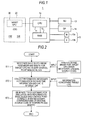
- Fig. 1 is a block diagram of a configuration example of a computer system that adopts a data processing apparatus according to the embodiment of the present invention.
- Fig. 2 is a flowchart of an overview of basic operation of the computer system shown in Fig. 1 .
- a computer system 1 includes a computer main body 10.
- the computer main body 10 is configured as an EDA (Electronic Design Automation) apparatus including a central processing unit (CPU) 11 serving as a host processing apparatus that can execute a computer program, which is implementation of the flowchart shown in Fig. 2 , and a main storage device (a RAM or a ROM) 12 in which the computer program or a part of the computer program is loaded.
- EDA Electronic Design Automation
- the computer main body 10 can also include, when necessary, an external storage device (HD) 13 including a hard disk device, a display device (DP) 14 such as a display, and user interfaces 15 such as a mouse (M) 15a and a keyboard (K) 15b.
- an external storage device (HD) 13 including a hard disk device, a display device (DP) 14 such as a display, and user interfaces 15 such as a mouse (M) 15a and a keyboard (K) 15b.
- HD external storage device
- DP display device
- K keyboard
- the CPU 11 functions as a host CPU.
- the CPU 11 recognizes a Basic Block from an assembler and a binary for a target CPU 30, which is a target processing device, mounted on a semiconductor device 20 of a verification target SoC (System on Chip) and inserts control points in the Basic Block(step ST1 in Fig. 2 ).
- a Basic Block from an assembler and a binary for a target CPU 30, which is a target processing device, mounted on a semiconductor device 20 of a verification target SoC (System on Chip) and inserts control points in the Basic Block(step ST1 in Fig. 2 ).
- SoC System on Chip
- the CPU 11 recognizes the Basic Point from the assembler and the binary for the target CPU 30 and, when necessary, an original source code.
- the CPU 11 has a function of recognizing the Basic Block on the basis of the assembler and, when necessary, changing a configuration of a source code or generating a new source code to generate Timed software.
- the CPU 11 has a function of determining, on the basis of the assembler, not only time information but also where in a code for simulation the information is inserted.
- Basis Block indicates a basis unit for calculating information concerning time.
- simulation more accurate than the existing technique can be performed. Further, items that may not be able to be accurately calculated by the existing technique can be properly calculated.
- the CPU 11 collects information concerning a target CPU necessary for simulation such as time information, cache information (step ST2 in Fig. 2 ).
- the CPU 11 generates Timed software for simulation with reference to the Basic Block and the control points. Specifically, the CPU 11 corrects, when necessary, configurations of the original source code ot the assembler and the binary or generates a new code (step ST3 in Fig. 2 ).
- the computer main body 10 "analyzes the assembler and generates a source code changed to accurately reflect cycle number information and the like” or “generates a source code of a high level (the C language, etc.) from the assembler such that the cycle number information and the like can be accurately used".
- the computer main body 10 generates Timed software from Un-Timed software (the original source code).
- the computer main body 10 determines the Basic Block according to assembler analysis rather than the existing method of determining the Basic Block only with a source code and adding cycle information to the Basic Block and generates a source code adapted to the Basic Block.
- the computer main body 10 creates a simulation (verification) model (a software model) having both high accuracy by a model formed by a relatively low-level language such as the assembler and high speed by a model formed by a high-level language such as the C language.
- a simulation (verification) model a software model having both high accuracy by a model formed by a relatively low-level language such as the assembler and high speed by a model formed by a high-level language such as the C language.
- the computer main body 10 performs predetermined simulation processing based on the generated Timed software.
- This embodiment has a characteristic in the technique for generating Timed software from Un-Timed software with reference to the assembler. Therefore, specific explanation concerning this simulation is omitted.
- Fig. 3 is a flowchart of a processing procedure for generating a C source with time accuracy from assembler description.
- Assembler commands are classified into the following three types:
- Target architecture information is used for cycle number calculation (CycleNum).
- CycleNum cycle number calculation
- a table and the like for conversion from asm to C are separately prepared (go to description is used).
- BB means Basic Block.
- step ST11 the CPU 11 opens an asmFile for input and a cFile for output.
- step ST12 the CPU 11 reads one row of the assembler file asmFile.
- step ST13 the CPU 11 determines whether the assembler file asmFile ends.
- step ST13 When the CPU 11 determines in step ST13 that the assembler file asmFile does not end, the CPU 11 shifts to processing in step ST14.
- step ST14 the CPU 11 determines whether information of the assembler file asmFile is information necessary for the C conversion and the cycle number calculation.
- step ST14 When the CPU 11 determines in step ST14 that the information of the assembler file asmFile is not information necessary for the C conversion and the cycle number calculation such as a label, the CPU 11 returns to the processing in step ST12.
- step ST14 When the CPU 11 determines in step ST14 that the information of the assembler file asmFile is information necessary for the C conversion and the cycle number calculation, the CPU 11 shifts to processing in the next step ST15.
- step ST15 the CPU 11 determines whether the information is a function start command.
- step ST15 When the CPU 11 determines in step ST15 that the information is not the function start command, the CPU 11 shifts to processing in step ST16.
- step ST15 determines in step ST15 that the information is the function start command
- the CPU 11 shifts to processing in step ST17.
- step ST16 the CPU 11 temporarily stores information necessary for function definition such as an argument.
- the CPU 11 updates CycleNum and returns to the processing in step ST12.
- step ST17 the CPU 11 converts an assembler command (asm command) into a definition of a C function and outputs the assembler command to the C file cFile.
- the CPU 11 inserts time information Wait (CycleNum) in the C file cFile.
- the CPU 11 clears the value of cycle number calculation and starts the processing from a new Basic Block (BB).
- BB Basic Block
- step ST18 the CPU 11 reads one row of the assembler file asmFile.
- step ST19 the CPU 11 determines whether information of the assembler file asmFile is information necessary for the C conversion and the cycle number calculation.
- step ST19 When the CPU 11 determines in step ST19 that the information of the assembler file asmFile is not information necessary for the C conversion and the cycle number calculation such as a label, the CPU 11 returns to the processing in step ST18.
- step ST19 When the CPU 11 determines in step ST19 that the information of the assembler file asmFile is information necessary for the C conversion and the cycle number calculation, the CPU 11 shifts to processing in the next step ST20.
- step ST20 the CPU 11 updates a value (CycleNum) of the cycle number calculation.
- step ST21 the CPU 11 determines whether the information is a branch start/end command.
- step ST21 When the CPU 11 determines in step ST21 that the information is the branch start/end command, the CPU 11 shifts to processing in step ST22.
- step ST21 When the CPU 11 determines in step ST21 that the information is the branch start/end command, the CPU 11 shifts to processing in step ST23.
- step ST22 the CPU 11 inserts time information Wait (CycleNum) in the C file cFile.
- the CPU 11 converts an assembler command (asm command) into the C language and outputs the assembler command to the C file cFile.
- the CPU 11 clears the value of the cycle number calculation, finishes the immediately preceding Basic Block (BB), and starts the processing from a new Basic Block (BB).
- step ST23 the CPU 11 determines whether the information is a function end command.
- step ST23 When the CPU 11 determines in step ST23 that the information is not the function end command, the CPU 11 shifts to processing in step ST24.
- step ST23 When the CPU 11 determines in step ST23 that the information is the function end command, the CPU 11 shifts to processing in step ST25.
- step ST24 the CPU 11 converts an assembler command (asm command) into the C language, outputs the assembler command to the C file cFile, and returns to the processing in step ST18.
- step ST25 the CPU 11 inserts time information Wait (CycleNum) in the C file cFile.
- the CPU 11 converts the assembler command (asm command) into C function end and outputs the assembler command to the C file cFile.
- the CPU 11 clears the value of the cycle number calculation, finishes the immediately preceding Basic Block (BB), and returns to the processing in step ST12.
- step ST13 When the CPU 11 determines in step ST13 that the assembler file asmFile ends, the CPU 11 shifts to processing in step ST26.
- step ST26 the CPU 11 closes the assembler file asmFile and the C file cFile.
- the host CPU 11 can cooperatively verify, using a verification model (a software model) generated as explained above, hardware and software of a semiconductor device mounted with a target CPU and one operating system (OS).
- a verification model a software model generated as explained above
- OS operating system
- the cooperative verification includes first to fifth steps explained below.
- the host CPU 11 inputs and compiles a Timed software component described in a C-base language as a verification model (a software model) and links the compiled Timed software component and a compiled hardware component.
- a verification model a software model
- the host CPU 11 inputs and compiles a test bench.
- the host CPU 11 links the verification model processed in the first step and the test bench processed in the second step and generates an execution program.
- the host CPU 11 executes simulation on the basis of the execution program generated in the third step.
- the host CPU 11 outputs a result of the simulation in the fourth step.
- the CPU 11 "analyzes the assembler and generates a source code changed to accurately reflect cycle number information and the like” or “generates a source code of a high level (the C language, etc.) from the assembler such that the cycle number information and the like can be accurately used".
- the CPU 11 determines the Basic Block according to assembler analysis rather than the existing method of determining the Basic Block only with a source code and adding cycle information to the Basic Block and generates a source code adapted to the Basic Block and outputs the source code. Therefore, it is possible to obtain effects explained below and shown in Figs. 4A to 4F in comparison with the existing method.
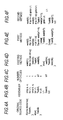
- Figs. 4A to 4F are diagrams for explaining effects of methods according to this embodiment in comparison with an existing method.
- FIG. 4A An example of an original source code is shown in Fig. 4A .
- Fig. 4B Description by an assembler is shown in Fig. 4B .
- Cycle number information is shown in Fig. 4C .
- the first method includes an if-else statement that branches into two according to a condition.
- a go to identifier is used.
- the method explained above in detail can also be formed as a computer program corresponding to the procedure and executed by a computer such as a CPU.
- Such a computer program can be recorded in a recording medium such as a semiconductor memory, a magnetic disk, an optical disk, or a floppy (registered trademark) disk and accessed by a computer in which the recording medium is set.
- a recording medium such as a semiconductor memory, a magnetic disk, an optical disk, or a floppy (registered trademark) disk and accessed by a computer in which the recording medium is set.
Landscapes
- Engineering & Computer Science (AREA)
- General Engineering & Computer Science (AREA)
- Theoretical Computer Science (AREA)
- Software Systems (AREA)
- Physics & Mathematics (AREA)
- General Physics & Mathematics (AREA)
- Debugging And Monitoring (AREA)
Applications Claiming Priority (1)
| Application Number | Priority Date | Filing Date | Title |
|---|---|---|---|
| JP2008161516A JP5151722B2 (ja) | 2008-06-20 | 2008-06-20 | データ処理装置およびその方法、並びにプログラム |
Publications (1)
| Publication Number | Publication Date |
|---|---|
| EP2136293A1 true EP2136293A1 (de) | 2009-12-23 |
Family
ID=41128267
Family Applications (1)
| Application Number | Title | Priority Date | Filing Date |
|---|---|---|---|
| EP09251597A Withdrawn EP2136293A1 (de) | 2008-06-20 | 2009-06-18 | Datenverarbeitungsvorrichtung, Verfahren dafür und Computer |
Country Status (3)
| Country | Link |
|---|---|
| US (1) | US8370797B2 (de) |
| EP (1) | EP2136293A1 (de) |
| JP (1) | JP5151722B2 (de) |
Families Citing this family (3)
| Publication number | Priority date | Publication date | Assignee | Title |
|---|---|---|---|---|
| KR20130088285A (ko) * | 2012-01-31 | 2013-08-08 | 삼성전자주식회사 | 데이터 처리 시스템 및 그 시스템에서 데이터 시뮬레이션 방법 |
| JP6474055B2 (ja) * | 2014-08-29 | 2019-02-27 | キヤノン株式会社 | 情報処理装置及びその制御方法 |
| CN114365079B (zh) * | 2019-08-29 | 2025-05-02 | 西门子股份公司 | 作为系统性能模拟的预处理的基于性能的系统配置 |
Citations (2)
| Publication number | Priority date | Publication date | Assignee | Title |
|---|---|---|---|---|
| JP2004234528A (ja) | 2003-01-31 | 2004-08-19 | Handotai Rikougaku Kenkyu Center:Kk | ハードウェア/ソフトウェア協調検証方法 |
| JP2008161516A (ja) | 2006-12-28 | 2008-07-17 | Sanyo Product Co Ltd | 遊技機 |
Family Cites Families (24)
| Publication number | Priority date | Publication date | Assignee | Title |
|---|---|---|---|---|
| US4536840A (en) * | 1982-09-30 | 1985-08-20 | Ronald Borta | Autogrammer |
| US5287511A (en) * | 1988-07-11 | 1994-02-15 | Star Semiconductor Corporation | Architectures and methods for dividing processing tasks into tasks for a programmable real time signal processor and tasks for a decision making microprocessor interfacing therewith |
| US5784631A (en) * | 1992-06-30 | 1998-07-21 | Discovision Associates | Huffman decoder |
| US6091897A (en) * | 1996-01-29 | 2000-07-18 | Digital Equipment Corporation | Fast translation and execution of a computer program on a non-native architecture by use of background translator |
| US5854924A (en) * | 1996-08-08 | 1998-12-29 | Globetrotter Software, Inc. | Static debugging tool and method |
| JPH10229427A (ja) * | 1997-02-14 | 1998-08-25 | Canon Inc | 情報処理装置及び方法 |
| US6606588B1 (en) * | 1997-03-14 | 2003-08-12 | Interuniversitair Micro-Elecktronica Centrum (Imec Vzw) | Design apparatus and a method for generating an implementable description of a digital system |
| US7430670B1 (en) * | 1999-07-29 | 2008-09-30 | Intertrust Technologies Corp. | Software self-defense systems and methods |
| US6263302B1 (en) * | 1999-10-29 | 2001-07-17 | Vast Systems Technology Corporation | Hardware and software co-simulation including simulating the cache of a target processor |
| US7356786B2 (en) * | 1999-11-30 | 2008-04-08 | Synplicity, Inc. | Method and user interface for debugging an electronic system |
| AU2001266660A1 (en) * | 2000-06-02 | 2001-12-17 | Virtio Corporation | Method and system for virtual prototyping |
| US20020108094A1 (en) * | 2001-02-06 | 2002-08-08 | Michael Scurry | System and method for designing integrated circuits |
| US6990534B2 (en) * | 2001-07-20 | 2006-01-24 | Flowfinity Wireless, Inc. | Method for a proactive browser system for implementing background frame maintenance and asynchronous frame submissions |
| US7107580B2 (en) * | 2003-01-07 | 2006-09-12 | Intel Corporation | Binary translation of self-modifying code |
| JP4271072B2 (ja) | 2004-03-31 | 2009-06-03 | Okiセミコンダクタ株式会社 | ソフトウェア検証モデル生成方法 |
| JP4342392B2 (ja) * | 2004-07-06 | 2009-10-14 | Okiセミコンダクタ株式会社 | ソフトウェア検証モデル生成方法 |
| US7721260B2 (en) * | 2004-09-08 | 2010-05-18 | Kozio, Inc. | Embedded Test I/O Engine |
| US7774746B2 (en) * | 2006-04-19 | 2010-08-10 | Apple, Inc. | Generating a format translator |
| US7568189B2 (en) * | 2006-05-03 | 2009-07-28 | Sony Computer Entertainment Inc. | Code translation and pipeline optimization |
| US8146066B2 (en) * | 2006-06-20 | 2012-03-27 | Google Inc. | Systems and methods for caching compute kernels for an application running on a parallel-processing computer system |
| US8584109B2 (en) * | 2006-10-27 | 2013-11-12 | Microsoft Corporation | Virtualization for diversified tamper resistance |
| WO2008155779A2 (en) * | 2007-06-20 | 2008-12-24 | Sanjeev Krishnan | A method and apparatus for software simulation |
| US7987457B2 (en) * | 2007-06-25 | 2011-07-26 | Microsoft Corporation | Targeted patching for native generation images |
| US7873945B2 (en) * | 2007-06-29 | 2011-01-18 | Microsoft Corporation | Automatically generating test cases for binary code |
-
2008
- 2008-06-20 JP JP2008161516A patent/JP5151722B2/ja not_active Expired - Fee Related
-
2009
- 2009-06-18 EP EP09251597A patent/EP2136293A1/de not_active Withdrawn
- 2009-06-19 US US12/487,799 patent/US8370797B2/en not_active Expired - Fee Related
Patent Citations (2)
| Publication number | Priority date | Publication date | Assignee | Title |
|---|---|---|---|---|
| JP2004234528A (ja) | 2003-01-31 | 2004-08-19 | Handotai Rikougaku Kenkyu Center:Kk | ハードウェア/ソフトウェア協調検証方法 |
| JP2008161516A (ja) | 2006-12-28 | 2008-07-17 | Sanyo Product Co Ltd | 遊技機 |
Non-Patent Citations (3)
| Title |
|---|
| BAMMI J R ET AL: "SOFTWARE PERFORMANCE ESTIMATION STRATEGIES IN A SYSTEM-LEVEL DESIGNTOOL", PROCEEDINGS OF THE 8TH. INTERNATIONAL WORKSHOP ON HARDWARE/SOFTWARE CODESIGN. CODES 2000. SAN DIEGO, CA, MAY 3 - 5, 2000; [PROCEEDINGS OF THE INTERNATIONAL WORKSHOP ON HARDWARE/SOFTWARE CODESIGN], NEW YORK, NY : ACM, US, 3 May 2000 (2000-05-03), pages 82 - 86, XP000966204, ISBN: 978-1-58113-214-4 * |
| LAJOLO M ET AL: "A COMPILATION-BASED SOFTWARE ESTIMATION SCHEME FOR HARDWARE/SOFTWARE CO-SIMULATION", 7TH INTERNATIONAL WORKSHOP ON HARDWARE/SOFTWARE CODESIGN. ROME, IT, MAY 3 - 5, 1999, NEW YORK, NY : ACM, US, 3 May 1999 (1999-05-03), pages 85 - 89, XP000903907, ISBN: 978-1-58113-132-1 * |
| LAZARESCU M T ET AL: "Compilation-based software performance estimation for system level design", HIGH-LEVEL DESIGN VALIDATION AND TEST WORKSHOP, 2000. PROCEEDINGS. IEE E INTERNATIONAL 8-10 NOVEMBER 2000, PISCATAWAY, NJ, USA,IEEE, LOS ALAMITOS, CA, USA, 8 November 2000 (2000-11-08), pages 167 - 172, XP010527536, ISBN: 978-0-7695-0786-6 * |
Also Published As
| Publication number | Publication date |
|---|---|
| US20090319986A1 (en) | 2009-12-24 |
| JP2010003123A (ja) | 2010-01-07 |
| US8370797B2 (en) | 2013-02-05 |
| JP5151722B2 (ja) | 2013-02-27 |
Similar Documents
| Publication | Publication Date | Title |
|---|---|---|
| JP4202673B2 (ja) | システムlsi開発環境生成方法及びそのプログラム | |
| US7340692B2 (en) | System LSI development apparatus and the method thereof for developing a system optimal to an application | |
| Erbas et al. | A framework for system-level modeling and simulation of embedded systems architectures | |
| US6490545B1 (en) | Method and apparatus for adaptive co-verification of software and hardware designs | |
| US8122402B2 (en) | Equivalence checking method, equivalence checking program, and generating method for equivalence checking program | |
| US11513818B1 (en) | Method, product, and system for integrating a hardware accelerator with an extensible processor | |
| JPH11513512A (ja) | ディジタル信号プロセッサの製造方法 | |
| Bouchhima et al. | Automatic instrumentation of embedded software for high level hardware/software co-simulation | |
| WO2004044798A2 (en) | Global analysis of software objects generated from a hardware description | |
| US20030023950A1 (en) | Methods and apparatus for deep embedded software development | |
| US8249850B2 (en) | Method and an apparatus for executing simulation for system performance evaluation | |
| JP2002099584A (ja) | 設計検証システム、設計検証方法および設計検証プログラムを格納したコンピュータ読取り可能な記録媒体 | |
| US20070011664A1 (en) | Device and method for generating an instruction set simulator | |
| EP2136293A1 (de) | Datenverarbeitungsvorrichtung, Verfahren dafür und Computer | |
| JP4492803B2 (ja) | 動作合成装置及びプログラム | |
| US6952817B1 (en) | Generating hardware interfaces for designs specified in a high level language | |
| US7111274B1 (en) | Scheduling hardware generated by high level language compilation to preserve functionality of source code design implementations | |
| US20040083088A1 (en) | Analysis of the performance of a portion of a data processing system | |
| US7971167B2 (en) | Semiconductor design support device, semiconductor design support method, and manufacturing method for semiconductor integrated circuit | |
| CN101916179B (zh) | 控制寄存器中的标志位的存取方法 | |
| JP4152659B2 (ja) | データ処理システムおよび設計システム | |
| Bombieri et al. | Correct-by-construction generation of device drivers based on RTL testbenches | |
| Staschulat et al. | Context sensitive performance analysis of automotive applications | |
| Madisetti et al. | On upgrading legacy electronics systems: methodology, enabling technologies and tools | |
| Meyerowitz et al. | High level CPU micro-architecture models using Kahn process networks |
Legal Events
| Date | Code | Title | Description |
|---|---|---|---|
| PUAI | Public reference made under article 153(3) epc to a published international application that has entered the european phase |
Free format text: ORIGINAL CODE: 0009012 |
|
| 17P | Request for examination filed |
Effective date: 20090709 |
|
| AK | Designated contracting states |
Kind code of ref document: A1 Designated state(s): AT BE BG CH CY CZ DE DK EE ES FI FR GB GR HR HU IE IS IT LI LT LU LV MC MK MT NL NO PL PT RO SE SI SK TR |
|
| 17Q | First examination report despatched |
Effective date: 20100208 |
|
| STAA | Information on the status of an ep patent application or granted ep patent |
Free format text: STATUS: THE APPLICATION IS DEEMED TO BE WITHDRAWN |
|
| 18D | Application deemed to be withdrawn |
Effective date: 20140103 |