EP2126136B1 - Diagnose von prostatakrebs - Google Patents
Diagnose von prostatakrebs Download PDFInfo
- Publication number
- EP2126136B1 EP2126136B1 EP08701643A EP08701643A EP2126136B1 EP 2126136 B1 EP2126136 B1 EP 2126136B1 EP 08701643 A EP08701643 A EP 08701643A EP 08701643 A EP08701643 A EP 08701643A EP 2126136 B1 EP2126136 B1 EP 2126136B1
- Authority
- EP
- European Patent Office
- Prior art keywords
- kiaa0153
- tubulin
- cells
- expression level
- prostate cancer
- Prior art date
- Legal status (The legal status is an assumption and is not a legal conclusion. Google has not performed a legal analysis and makes no representation as to the accuracy of the status listed.)
- Not-in-force
Links
Images


Classifications
-
- G01N33/57555—
-
- A—HUMAN NECESSITIES
- A61—MEDICAL OR VETERINARY SCIENCE; HYGIENE
- A61P—SPECIFIC THERAPEUTIC ACTIVITY OF CHEMICAL COMPOUNDS OR MEDICINAL PREPARATIONS
- A61P35/00—Antineoplastic agents
-
- C—CHEMISTRY; METALLURGY
- C12—BIOCHEMISTRY; BEER; SPIRITS; WINE; VINEGAR; MICROBIOLOGY; ENZYMOLOGY; MUTATION OR GENETIC ENGINEERING
- C12Q—MEASURING OR TESTING PROCESSES INVOLVING ENZYMES, NUCLEIC ACIDS OR MICROORGANISMS; COMPOSITIONS OR TEST PAPERS THEREFOR; PROCESSES OF PREPARING SUCH COMPOSITIONS; CONDITION-RESPONSIVE CONTROL IN MICROBIOLOGICAL OR ENZYMOLOGICAL PROCESSES
- C12Q1/00—Measuring or testing processes involving enzymes, nucleic acids or microorganisms; Compositions therefor; Processes of preparing such compositions
- C12Q1/68—Measuring or testing processes involving enzymes, nucleic acids or microorganisms; Compositions therefor; Processes of preparing such compositions involving nucleic acids
- C12Q1/6876—Nucleic acid products used in the analysis of nucleic acids, e.g. primers or probes
- C12Q1/6883—Nucleic acid products used in the analysis of nucleic acids, e.g. primers or probes for diseases caused by alterations of genetic material
- C12Q1/6886—Nucleic acid products used in the analysis of nucleic acids, e.g. primers or probes for diseases caused by alterations of genetic material for cancer
-
- C—CHEMISTRY; METALLURGY
- C12—BIOCHEMISTRY; BEER; SPIRITS; WINE; VINEGAR; MICROBIOLOGY; ENZYMOLOGY; MUTATION OR GENETIC ENGINEERING
- C12Q—MEASURING OR TESTING PROCESSES INVOLVING ENZYMES, NUCLEIC ACIDS OR MICROORGANISMS; COMPOSITIONS OR TEST PAPERS THEREFOR; PROCESSES OF PREPARING SUCH COMPOSITIONS; CONDITION-RESPONSIVE CONTROL IN MICROBIOLOGICAL OR ENZYMOLOGICAL PROCESSES
- C12Q2600/00—Oligonucleotides characterized by their use
- C12Q2600/106—Pharmacogenomics, i.e. genetic variability in individual responses to drugs and drug metabolism
-
- C—CHEMISTRY; METALLURGY
- C12—BIOCHEMISTRY; BEER; SPIRITS; WINE; VINEGAR; MICROBIOLOGY; ENZYMOLOGY; MUTATION OR GENETIC ENGINEERING
- C12Q—MEASURING OR TESTING PROCESSES INVOLVING ENZYMES, NUCLEIC ACIDS OR MICROORGANISMS; COMPOSITIONS OR TEST PAPERS THEREFOR; PROCESSES OF PREPARING SUCH COMPOSITIONS; CONDITION-RESPONSIVE CONTROL IN MICROBIOLOGICAL OR ENZYMOLOGICAL PROCESSES
- C12Q2600/00—Oligonucleotides characterized by their use
- C12Q2600/136—Screening for pharmacological compounds
-
- C—CHEMISTRY; METALLURGY
- C12—BIOCHEMISTRY; BEER; SPIRITS; WINE; VINEGAR; MICROBIOLOGY; ENZYMOLOGY; MUTATION OR GENETIC ENGINEERING
- C12Q—MEASURING OR TESTING PROCESSES INVOLVING ENZYMES, NUCLEIC ACIDS OR MICROORGANISMS; COMPOSITIONS OR TEST PAPERS THEREFOR; PROCESSES OF PREPARING SUCH COMPOSITIONS; CONDITION-RESPONSIVE CONTROL IN MICROBIOLOGICAL OR ENZYMOLOGICAL PROCESSES
- C12Q2600/00—Oligonucleotides characterized by their use
- C12Q2600/158—Expression markers
-
- G—PHYSICS
- G01—MEASURING; TESTING
- G01N—INVESTIGATING OR ANALYSING MATERIALS BY DETERMINING THEIR CHEMICAL OR PHYSICAL PROPERTIES
- G01N2333/00—Assays involving biological materials from specific organisms or of a specific nature
- G01N2333/90—Enzymes; Proenzymes
- G01N2333/9015—Ligases (6)
Definitions
- the present invention relates to vitro diagnosis methods of prostate cancer from a test biological sample, comprising measuring the expression level of KIAA0153 in said test biological sample, as well as to methods for screening compounds inhibiting KIAA0153 gene expression or biological activity and uses of such KIAA0153 inhibiting compounds.
- Prostate cancer is a public health problem of major and increasing importance particularly as the European population ages. In the European Union, it accounts for over 35,000 deaths every year, associated with considerable morbidity.
- PSA prostate specific antigen
- advanced prostate cancer treatment is usually performed by hormone ablation therapy and/or prostatectomy, which is not satisfactory since advanced prostate cancer invariably progresses to hormone refractrory disease, leading to death in 3-5 years. There is thus also a need for improved prostate cancer treatments.
- tubulin is subjected to a number of post-translational modifications that regulate the function and organization of microtubules (1), which are essential components of the cell cytoskeleton.
- One of these modifications is the cyclic removal and re-addition of the C-terminal tyrosine of ⁇ -tubulin by tubulin carboxypeptidase and tubulin-tyrosine-ligase (TTL), respectively.
- Tubulin tyrosination is conserved among eukaryotes (2) and suppression of TTL in mice causes perinatal death (3).
- Dividing TTL null cells retain a minor pool of tyrosinated tubulin (Tyr-tubulin), whereas postmitotic TTL null neurons lack Tyr-tubulin and display abnormalities related to neurite growth and axonal differentiation.
- the tyrosination cycle has a role in proliferation and cancer.
- Inhibition of TTL accelerates cell proliferation (4).
- TTL is progressively suppressed during tumor progression in animal models, resulting in accumulation of Glu-tubulin (5).
- TTL is frequently lost in human cancers and tubulin detyrosination is associated with tumor aggressiveness and poor prognosis (6-7).
- KIAA0153 (Genbank accession number BC001070).
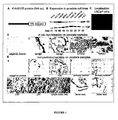
- KIAA0153 codes for a 72 KDa protein with a C-terminal TTL domain ( Figure 1a , left panel).
- TTL Tubulin-tyrosine-ligase
- TTL domain is implicated in microtubule functions, such as mitosis and chromosome stability.
- the presence in KIAA0153 of a TTL-like domain suggests that it may have a similar role in tubulin tyrosination.
- Soucek, K. et al., Prostate 66:954-965, 2006 discloses a decreased expression of tubulin tyrosine ligase in prostate cancer cells.
- KIAA0153 miss-expression interferes with the normal tubulin tyrosination cycle resulting in changes in the levels of Tyr- and Glu-tubulin. Furthermore it induces mitotic aberrations and chromosome instability.
- KIAA0153 is expressed in the proliferative cell layer of prostate glands and expression increases with prostate cancer progression. Higher expression in Gleason patterns 4 and 5 suggest that KIAA0153 may be a marker of risk of progression and requirement of more aggressive treatment. According to its expression profile, structure and function, KIAA0153 is thus a new marker of prostate cancer and may represent a novel target for prostate cancer therapy.
- the invention thus concerns an in vitro diagnosis method of prostate cancer from a biological tissue sample, comprising measuring the expression level of KIAA0153 in said biological tissue sample.
- said in vitro diagnosis method further comprises measuring the expression level of KIAA0153 in a healthy control biological sample and comparing the expression level of KIAA0153 in both samples.
- healthy sample is meant a sample from a subject that is not suffering from prostate cancer.
- prostate cancer is diagnosed when the ratio of the expression level of KIAA0153 in said test biological sample to the expression level of KIAA0153 in said healthy control biological sample is superior to 1.5, advantageously superior to 1.6, 1.7, 1.8, or 1.9.
- said method thus further comprises diagnosing metastactic prostate cancer when the ratio of the expression level of KIAA0153 in said test biological sample to the expression level of KIAA0153 in said healthy control biological sample is superior to 2.0.
- said tissue biological sample is a prostate sample.
- said prostate sample may be selected from a prostate biopsy, a prostate resection, or a cell line derived from a prostate biopsy or a prostate resection.
- the test sample and the healthy control sample are the same kind of biological tissue sample to allow for a significant comparison. This way, if the test sample is a prostate sample, then the healthy control sample is also preferably a prostate sample.
- the measure of KIAA0153 expression level may be performed either at the protein or at the nucleic acid level.
- the expression level of KIAA0153 is determined at the protein level.
- Various technologies well-known in the art may be used to measure the amount of KIAA0153 protein. Examples of suitable technologies to determine the expression level of KIAA0153 at the protein level include immunohistochemistry, immunoblotting, immunofluorescence, or mass spectrometry, but any person skilled in the art will be able to find other appropriate technologies.
- the expression level of KIAA0153 is determined at the nucleic acid level.
- a measure may be done by measuring the amount of KIAA0153 mRNA or corresponding cDNA.
- Various technologies well-known in the art may be used to measure the amount of KIAA0153 mRNA or corresponding cDNA. Examples of suitable technologies to determine the expression level of KIAA0153 at the nucleic acid level include in situ hybridization or quantitative PCR, but any person skilled in the art will be able to find other appropriate technologies.
- the results obtained by the inventors show that KIAA0153 may be considered as a new therapeutic target for treating prostate cancer.
- the invention thus also concerns a method for screening compounds for the treatment of prostate cancer by inhibiting KIAA0153 expression, comprising :
- a host cell expressing KIAA0153 is a cell in which expression of KIAA0153 is detectable. It may be natural or genetically engineered, however, a genetically engineered host cell which has been transfected (transiently or stably) or transformed with an expression vector capable of directing the expression of KIAA0153 is preferred, since it permits to have a controlled expression level of KIAA0153.
- the expression level of KIAA0153 may be measured either at the protein or nucleic acid level using various technologies.
- test compound will then be considered as inhibiting KIAA0153 expression if KIAA0153 expression is lower in host cells cultured in the presence of said compound than in host cells cultured in the absence of said compound.
- the invention also concerns a method for screening compounds for the treatment of prostate cancer by inhibiting KIAA0153 biological activity, comprising:
- KIAA0153 biological activity which is intended to mean its action in a cell expressing it, may be inhibited either by inhibiting KIAA0153 expression, or by interfering with KIAA0153 action in the cell.
- the inventors have found that KIAA0153 inhibits TTL tyrosination activity.
- a compound inhibiting KIAA0153 biological activity should restore TTL activity.
- TTL activity consists in tyrosination of tubulin.
- TTL activity is measured by measuring incorporation of exogenous tyrosine into tubulin.
- the added exogenous tyrosine may be modified to be detectable, in particular by addition of a chemical group that may then be traced, such as a radioactive group, a labelled group (fluorescent, chemiluminescent, etc).
- a chemical group such as a radioactive group, a labelled group (fluorescent, chemiluminescent, etc).
- the measure of tyrosine incorporation may also be done by removing tubulin and microtubules and measuring the remaining tyrosine concentration.
- TTL activity is measured by measuring the amount of Glu-tubulin. This measure is easily performed by well-known technologies.
- KIAA0153 All sorts of compounds may be screened using the methods of screening according to the invention described above. However, some potential inhibitors of KIAA0153 function immediately appear, including antibodies, siRNAs or antisense nucleic acids directed against KIAA0153.
- the invention thus further concerns an antibody directed against KIAA0153 protein.
- an antibody may be easily generated using well-know routine technologies for a skilled artisan.
- the term "antibody” is intended to mean not only an antibody as such but also antibody fragments such as Fab or Fab'2 or ScFv fragments. It may be polyclonal or monoclonal, and may have been further chimerized or humanized using conventional technologies.
- the invention also relates to any antibody directed against KIAA0153 protein as described above, as a medicament. Indeed, as a compound able to interfere with KIAA0153 biological activity, such an antibody may be used as a medicament, in particular for treating prostate cancer.
- the invention further concerns the use of a KIAA0153 inhibiting compound selected from an antibody, a siRNA or an antisens nucleic acid directed against KIAA0153 for manufacturing a medicament for treating prostate cancer.
- a KIAA0153 inhibiting compound selected from an antibody, a siRNA or an antisens nucleic acid directed against KIAA0153 for manufacturing a medicament for treating prostate cancer. Any compound able to inhibit KIAA0153 biological activity and/or expression may be used for this purpose.
- the disclosure also concerns a method for treating prostate cancer in a patient in need thereof, comprising the administration of a KIAA0153 inhibiting compound.
- a treatment comprising a KIAA0153 inhibiting compound is chosen if the ratio of the expression level of KIAA0153 in said test biological sample to the expression level of KIAA0153 in said healthy control biological sample is superior to 1.5, advantageously superior to 1.6, 1.7, 1.8, 1.9 or 2.0.
- HEp-2, HCT-116 cells and prostate cell lines were maintained following ATCC (American Type Cell Collection) directions. Transfections were performed by the Calcium-phosphate method. To obtain stable clones, transfected cells were trypsinysed after 48 hours post-transfections (h.p.t.) and splitted into medium containing puromycin (3 mg/ml). The selection medium was replaced every 3 days and clones were isolated after 10-14 days post-transfections (d.p.t.). To obtain double stable transfectants, single stable transfectants (puromycin resistant) were transfected with pBOS H2B-GFP (9) (histone 2B-GFP; BD PharMingen) expression vector and selected with blasticidin (2 mg/ml).
- pBOS H2B-GFP 9 (histone 2B-GFP; BD PharMingen) expression vector and selected with blasticidin (2 mg/ml).
- KIAA0153 cDNA clone was obtained from ATCC (MGC-2635 ; IMAGE: 3504490; Genbank number BC001070 ; human placenta).
- the coding region was PCR-amplified using oligos with XhoI and BclI restrictions sites (CGCCTCGAGATGGAGGCCGAGCGGGGT SEQ ID NO:1, and CGCTGATCACTAGACAAGGCAGGTAACG SEQ ID NO:2) and cloned as a fusion protein into the XhoI/BglII window of pSG5-puro-flag expression vector (10), a modified version of the puromycin-resistant vector pSG5-puro.
- pSG5-puro-flag expression vector 10
- the coding region was also amplified with oligos containing BelI sites and cloned into BglII site of pSG5-puro (without the flag epitope).
- the coding region amplified with oligos containing EcoRI sites was cloned into pGEM-Teasy (Promega) and pcDNA3.1-(Invitrogen) to obtain antisense and sense versions.
- the antisense version of KIAA0153 is also referred in the figures as Control-2.
- a clone containing human tubulin tyrosine ligase sequences was purchased to ATCC (MGC-46235; IMAGE:5767758 ; Genbank number BC036819 human brain).
- the coding region was PCR-amplified with oligos containing the BamHI sites (GATCGGATCCATGTACACCTTCGTGGTACGC SEQ ID NO:3, and CAGGGATCCTCACAGCTTGATGAAGGCA SEQ ID NO:4) and cloned into pSG5-puro-flag expression vector to obtain sense and antisense versions of the gene.
- pGFP-Cl (Clontech) for transfection controls
- pSuperPuro (Oligoengine)
- shRNA153 shRNA stable down-regulation of KIAA0153 mRNA (mRNA targeted-sequence: GAGUUCAUCCCCGAGUUUG SEQ ID NO:5; oligos were cloned into the pSuperPuro vector). Details on individual plasmids contructs, which were all verified by sequencing, are available upon request.
- For cell proliferation assay we seeded cells on 96-well plates (3000/well) and use MTT-based colorimetric assay (Chemicon Int.) following manufacturer's directions.
- Cells growing in culture plates were rinsed twice in ice-cold PBS, scraped and centrifuged.
- the cell pellet was lysed in extraction buffer (50 mM Tris-HCl pH 8, 5 mM EDTA pH 8, 150 mM NaCl, 1% Nonidet-P40, 0,02% sodium azide, 1 mM PMSF, 1X PIC (protease inhibitor cocktail, Amersham). Lysates were sonicated at 0°C for 30 sec and then cleared by centrifugation. Protein concentrations were measured by the Bradford method and 40 mg of total protein were fractionated by 8% SDS-PAGE. Alternatively cell pellets were directly lysated in Laemli buffer, sonicated, boiled and loaded onto the gels.
- Proteins were transferred to nitrocellulose paper. Western blots were blocked for 1 hour in 5% dried-fat free milk in PBS-Tween 0,05% (TBS-Triton X-100 0.1% for the detection of Glu-tubulin), and then incubated 2 hours with specific antibodies diluted in blocking solution: polyclonal serum against KIAA0153 (1/500), nitrotyrosine (1/1000 ; Upstate Bioteclmology), ⁇ -tubulin (1/2000; clone DM1A; Sigma), Tyr-tubulin (1/2000 clone 1A2; Sigma), Glu-tubulin (1/500; Synaptic Systems), ⁇ -tubulin (1/2000; Sigma), Tata box protein (TBP) (1/2000 ; IGBMC monoclonal antibodies facility), Flag (1/2000 ; IGBMC monoclonal antibodies facility). Blots were washed and incubated with specific secondary antibodies coupled to HRP (Jackson immunoresearch) and enhance chemiluminiscence
- double stable transfectants were analysed on a DMJRE2 inverted microscope (Nikon) with a x40 objective enclosed in a temperature- and CO 2 incubator. Images were acquired with a CCD camera at 20 min intervals and analysed by the Metamorph software.
- Specimens of local tumor were obtained from untreated patients who underwent radical prostatectomy after tumor diagnosis in a PSA based screening program. In total, 31 benign specimens, 12 PINs, 51 specimens of local tumors, 27 local recurrent tumors (LRT), 8 lymph node and 11 distant metastasis (10 bone, 1 lung) were used.
- tissue arrays were employed for the analysis of recurrent tumors and metastasis. A tissue array of locally recurrent tumors was constructed using 2 mm cores from specimens of local resections performed in patients with obstructive symptoms after failure of androgen ablation therapy. These specimens represented "androgen-insensitive" tumors.
- a lymph node and a distant metastases array was constructed in one paraffin block using three 0.6 mm -cores per case.
- Immunohistochemistry was performed on 5m-thick formalin-fixed paraffin-embedded tissue sections using polyclonal antibodies raised against KIAA0153 according to a standard Horseradish peroxidase (HRP) immunohistochemistry protocol. After deparaffination in xylenes and rehydration in decreasing ethanol concentrations, tissue sections were heated in citrate buffer pH 6 in a microwave oven for 30 minutes for antigen retrieval.
- HRP Horseradish peroxidase
- the reaction was stopped by rinsing the slides twice in PBS for 5 min each and heating at 92°C for 2 min in a heat block.
- the slides were placed in PBS for 5 mi HCI 0.2N for 20 mm, PBS for 5 mm, and subsequently dehydrated through washes in graded ethanols, for 5 min each.
- the tissue was placed in 2XSSC at 70°C for 5 min and then at 92°C for another 5 minutes.
- the tissue sections were covered with heat denatured digoxigenin labeled probes diluted 1/50 in hybridisation buffer (50% deionised formamide, 10% dextran sulphate, 1 mg/ml tRNA, 1X Denhardt' s solution, 1X Sait buffer).
- the siides were incubated at 65°C overnight in a humidity chamber and then, washed four times for 15 min with pre warmed washing solution (1XSSC, 50% formamide, 0.1% tween-20) at 65°C, two times 30 min each with MABT buffer (100 mM maleic acid, 150 mM NaCI, 0.1% Tween-20) at RT and covered with freshly-prepared antibody blocking solution [60% (v/v), goat immunoglobulins 20% (v/v), 2% blocking reagent (Roche)] 1 hour at RT.
- the sections were covered with goat anti-digoxigenin antibodies coupled to alkaline-phosphatase (Roche) (1/2000 in antibody blocking solution) and incubated 4 hours at 37°C in a humidity chamber.
- the slides were washed two times 30 min each in MABT buffer, rinsed two times for 10 min at RT with NTMT buffer (100 mM Tris-HCl, ph 9.5, 100 mM NaCl, 50 mM MgCl 0.1% Tween-20).
- NTMT buffer 100 mM Tris-HCl, ph 9.5, 100 mM NaCl, 50 mM MgCl 0.1% Tween-20.
- the slides were covered with alkaline phosphatase substrate solution (NBT, BCIP) containing levamisole and incubated for a few hours at RT or overnight at 4°C humidity chamber. Reaction was stopped by washing with PBS/Tween 0.1% and the tissue was counterstained with nuclear fast red (Vector labs) and mounted.
- Specific sense and antisense probes were synthesized by in vitro transcription ofKIAA0153 expression vector, in the presence of digoxigenin-labelled UTP.
- TTL Tubulin tyrosine ligase
- Cells were harvested by a brief trypsin treatment, transferred to tubes containing PBS-10% fetal calf serum and counted, The cells were collected by centrifugation at 950 rpm/5 min/RT. The cells were washed twice with PBS, centrifuged and resuspended in TTL buffer 1X (50 mM Tris-HCl pH 7.4, MgCl 12.5 mM, KCl 100 mM, DTT 1 mM, glycerol 5% Rnase A 50 mg/ml). The cell suspensions were subjected to 3 cycles of freezing-thawing (liquid N 2 - 37°C) and centrifuged at 10000 rpm for 10 min at 4°C.
- TTL buffer 1X 50 mM Tris-HCl pH 7.4, MgCl 12.5 mM, KCl 100 mM, DTT 1 mM, glycerol 5% Rnase A 50 mg/ml.
- TCA trichioroacetic acid
- BSA 200 mg was added as carrier, and the TCA precipitates were kept at 0°C for 30 min.
- the TCA precipitates were collected on GFC Whatman glass fiber filters.
- the samples were washed three times with 5 ml of 10% TCA, dried, dissolved in Scillintation liquid cocktail (ReadySafeTM Beckman) and counted in a Beckman scillintation counter.
- Cells were transfected with the Fast Forward Protocol according to the manufacture'rs instructions (Hyperfect, Qiagen).
- Western blots Cells were split into 6 well plates at 70% confluence, and transfected with siRNAs. Control GFP-siRNA (Qiagen); siRNA GADP (Dharmacon); siRNAs KIAA153 [mixture of #1 (D15633670 Dharmacon) and #2 (Dharmacon, custom)].
- Cells were transfected with Hyperfect (Qiagen), and incubated for 48 hours in high serum medium (without removing reagent).
- Cell cycle progression At various time after transfection (48 and 72 hours), the cells were incubated in low serum (4 or 16 hours, respectively), washed twice with PBS, once with PBS + 3 mM EDTA, incubated in 400 ⁇ l 0.05% trypsin followed by 2 ml complete medium, centrifuged, washed in PBS, precipitated with EtOH (PBS: EtOH 1: 2 vol: vol), incubated overnight at 4°C, rehydrated in cold PBS, incubated at RT for 2 hours, centrifuged, washed twice with PBS and resuspended in PBS + I mg per ml RNAase 1, incubated 2 hours at RT.
- PBS EtOH 1: 2 vol: vol
- KIAA0153 is differentially expressed in head & neck squamous cell carcinoma and prostate cancer (submitted and data not shown) and codes for a 72 KDa protein with a C-terminal TTL domain ( Fig. 1A , left panel). KIAA0153 is expressed in prostate cancer cell lines (middle panel), as well as a variety of other cells including mouse embryonic stem cells (data not shown), and is localized in the cytoplasm (right panel). Using in situ hybridization and immunohistochemistry, it was showed that KIAA0153 is expressed in the basal layer of prostate glands ( Fig. 1B , photos 1, 3, 6 and 7) and in neoplastic cells ( Figure 1B , photos 4, 5, 8-1 5).
- KIAA0153 expression in benign epithelial cells was rated 1.0 on average in a 4 point scoring scale. Staining was significantly increased in tumors and there was also a clear association with the Gleason pattern, with 1.6 for Gleason patterns 2 - 3 scored and 1.8 for patterns 4 - 5 scored. Scores also increased with progression, with 2.3 for locally recurrent tumors resected after failure of androgen ablation therapy, 2.6 for lymph node metastasis and 2.3 for distant metastasis. Interestingly, expression in prostate cancer precursor PIN lesions was higher than in the local tumors, almost reaching the levels of recurrent tumors and metastasis (mean score 2.1).
- TTL like domain in KIAA0153 suggests that it may have a role in microtubule functions, such as mitosis and chromosome stability.
- the karyotypically stable cell line HCT-116 that is widely used to study mitotic events and chromosomal instability and has a normal mitotic checkpoint, was used.
- the DNA profiles of stable transfectants were analyzed by flow cytometry. Cells over expressing KIAA0153 had a distinct additional peak, corresponding to 8c DNA content (where c is the amount of DNA in a haploid HCT-116 cell) compared to controls ( Fig. 2A ).
- Loss of p53 has been reported to synergizes with additional oncogenic events to promote aneuploidy but is not a primary cause of aneuploidy (13).
- Stable transfectants of HCT116 p53 -/- cells had a higher frequency of 8c cells (compare sense cells in both cell lines).
- Control-2 is a stable transfectant made up by transfecting the antisense version of KIAA0153. Although we did not observe significant differences with respect to vector stable transfectants or parental cells in terms of KIAA0153 expression or in functional assays, we maintained it in this and other experiments to serve as negative control.
- parental vector control-2 sense HCT-116 p53 wt modal chrom,# 45 45 45 45 45 45 % cells 4c or >4c - - - 10(4c) % cells deviating from modal chr.# 25 25 20 35 HCT-116 p53 -/- modal chrom.# 45 45 45 45 45 % cells 4c or >4c - 5(4c) - 20(4c) 5(5c) % cells deviating from modal chr.# 30 35 30 50 HEp-2 modal chrom.# 74 74 74 74 % Cells 4c or >4c 5(4c) - 5(4c) 20(4c) % cells deviating from modal chr.# 40 45 40 63
- HEp-2 cells were chosen because they are amenable to stable transfection and synchronisation, and have relatively low levels of endogenous KIAA0153 (see below and data not shown).
- KIAA0153 Individual clones over-expressing KIAA0153 had distinct new peaks with 8c DNA content, and higher G2/M peaks consistent with the presence of overlapping diploid and tetraploid cycles ( FIG.2B left panel).
- Karyotype analysis showed that KIAA0153 overexpression generated a relatively large proportion of cells with 136 chromosome (8c DNA content) (see Table 2).
- Another consequence of KIAA0153 overexpression is decreased proliferation ( Fig.2B , lighter grey curves in the right panel).
- NO 2 Y 3-nitrotyrosine
- KIAA0153 Transient expression of increasing amounts of KIAA0153 plasmid progressively inhibited incorporation ( FIG. 4C ).
- KIAA0153 overexpression in stable transfectants also inhibited nitrotyrosinated of ⁇ -tubulin ( Fig. 4D ).
- Fig. 4E In the stable transfectants, we found that there is an increase in endogenous Glu-tubulin in clones expressing KIAA0153, without effects on total ⁇ -tubulin levels ( Fig. 4E ).
- KIAA0153 expression in a sense clone inhibits the activity of exogenous transfected hTTL and decreased total ⁇ -tubulin expression in the absence of changes in ⁇ -tubulin or TBP levels ( Fig. 4F ).
- Glu-tubulin is normally preferentially located in a subset of less dynamic microtubules (14-16) as well as in centrioles and mid-bodies, and is absent from astral microtubules (16-17).
- Tyr-tubulin is found throughout the interphase network and the mitotic spindle.
- KIAA0153 overexpression did not detectably alter the cellular distribution of the evidently increased levels of Glu-tubulin ( Fig 5 ), and it did not affect microtubule and actin skeleton organization. It also did not affect the cellular distributions of the microtubule tip proteins EB1 (data not shown) and CLIP-170, and the molecular motor dynein ( Fig 5 ).
- Results obtained for human prostate cancer line DU145 are presented in Figure 6 and show that the inhibition of KIAA0153 expression results in a decrease of protein levels ( Fig. 6A ), in an inhibition of cell proliferation ( Fig. 6B ) and in an accumulation of cells in the G2 phase ( Fig. 6C ), thus blocking the mitosis process.
- the results were similar in LnCAP and 22RV1 (data not shown). These results show that KIAA0153 has a role in proliferation and cell cycle progression, and clearly demonstrate the interest of KIAA0153 as a target for prostate cancer therapy.
- KIAA0153 may favour tumorigenesis by increasing chromosome instability, or alternatively by affecting the incorporation of endogenous nitrotyrosine into ⁇ -tubulin.
- Nitrotyrosination of alpha-tubulin in microtubules may act as a "last check point" by triggering apoptosis in aberrant cells (20,21).
- Expression analysis in benign and malignant prostate tissue revealed a significant increase of expression in tumors and association of expression levels with the progression steps of prostate cancer. Immunoreactivity in tumor specimens increases from untreated primary tumors to local recurrent, androgen-insensitive tumors and metastases. Within the group of primary tumors expression levels were higher in the Gleason pattern 4 and 5 tumor regions as compared to patterns 2 and 3.
Landscapes
- Chemical & Material Sciences (AREA)
- Health & Medical Sciences (AREA)
- Life Sciences & Earth Sciences (AREA)
- Organic Chemistry (AREA)
- Proteomics, Peptides & Aminoacids (AREA)
- Pathology (AREA)
- Immunology (AREA)
- Zoology (AREA)
- Wood Science & Technology (AREA)
- Engineering & Computer Science (AREA)
- Analytical Chemistry (AREA)
- Genetics & Genomics (AREA)
- General Health & Medical Sciences (AREA)
- Hospice & Palliative Care (AREA)
- Bioinformatics & Cheminformatics (AREA)
- Oncology (AREA)
- General Engineering & Computer Science (AREA)
- Biochemistry (AREA)
- Molecular Biology (AREA)
- Microbiology (AREA)
- Physics & Mathematics (AREA)
- Biophysics (AREA)
- Biotechnology (AREA)
- Animal Behavior & Ethology (AREA)
- Chemical Kinetics & Catalysis (AREA)
- Public Health (AREA)
- Medicinal Chemistry (AREA)
- Pharmacology & Pharmacy (AREA)
- Veterinary Medicine (AREA)
- Nuclear Medicine, Radiotherapy & Molecular Imaging (AREA)
- General Chemical & Material Sciences (AREA)
- Investigating Or Analysing Biological Materials (AREA)
- Measuring Or Testing Involving Enzymes Or Micro-Organisms (AREA)
- Medicines That Contain Protein Lipid Enzymes And Other Medicines (AREA)
Claims (12)
- In vitro-Verfahren für die Diagnose von Prostatakrebs in einer biologischen Gewebeprobe, umfassend das Messen des Expressionsspiegels von KIAA0153 in der biologischen Gewebeprobe.
- Verfahren nach Anspruch 1, des Weiteren umfassend das Messen des Expressionsspiegels von KIAA0153 in einer gesunden biologischen Kontrollprobe und das Vergleichen des Expressionsspiegels von KIAA0153 in beiden Proben.
- Verfahren nach Anspruch 2, wobei Prostatakrebs diagnostiziert wird, wenn das Verhältnis des Expressionsspiegels von KIAA0153 in der biologischen Testprobe zum Expressionsspiegel von KIAA0153 in der gesunden biologischen Kontrollprobe höher als 1,5 ist.
- Verfahren nach Anspruch 3, des Weiteren umfassend das Diagnostizieren von metastatischem Prostatakrebs, wenn das Verhältnis des Expressionsspiegels von KIAA0153 in der biologischen Testprobe zum Expressionsspiegel von KIAA0153 in der gesunden biologischen Kontrollprobe höher als 2,0 ist.
- Verfahren nach einem der Ansprüche 1 bis 4, wobei die biologische Testprobe eine Prostataprobe ist, bevorzugt eine Prostatabiopsie-Probe, eine Prostataresektions-Probe oder eine von einer Prostatabiopsie oder Prostataresektion stammende Zelllinie.
- Verfahren nach einem der Ansprüche 1 bis 5, wobei der Expressionsspiegel von KIAA0153 auf Proteinebene, bevorzugt mittels Immunhistochemie, Immunblotting, Immunfluoreszenz oder Massenspektometrie, bestimmt wird.
- Verfahren nach einem der Ansprüche 1 bis 5, wobei der Expressionsspiegel von KIAA0153 auf Nucleinsäureebene, bevorzugt mittels in situ-Hybridisierung oder quantitativer PCR, bestimmt wird.
- Verfahren zum Screenen von Verbindungen für die Behandlung von Prostatakrebs durch Hemmung der Genexpression von KIAA0153, umfassend:a) Bereitstellen einer Wirtszelle, die KIAA0153 exprimiert,b) Bereitstellen einer Testverbindung,c) Messen des Spiegels der KIAA0153-Expression durch die Wirtszelle in Anwesenheit und Abwesenheit der Testverbindung, undd) Vergleichen der Spiegel der KIAA0153-Expression durch Wirtszellen in Anwesenheit und Abwesenheit der Testverbindung.
- Verfahren zum Screenen von Verbindungen für die Behandlung von Prostatakrebs durch Hemmung der biologischen Aktivität von KIAA0153, umfassend:a) Bereitstellen einer Wirtszelle, die KIAA0153 und Tubulintyrosinaseligase (TTL) exprimiert,b) Bereitstellen einer Testverbindung,c) Messen der TTL-Tubilintyrosinierungsaktivität in der Wirtszelle in Anwesenheit und Abwesenheit der Testverbindung, undd) Vergleichen der TTL-Tubilintyrosinierungsaktivität in Wirtszellen in Anwesenheit und Abwesenheit der Testverbindung.
- Verfahren nach Anspruch 9, wobei die TTL-Tubilintyrosinierungsaktivität durch Messen des Einbaus von exogenem Tyrosin in Tubulin oder durch Messen der Glu-Tubulin-Menge gemessen wird.
- Gegen KIAA0153-Protein gerichteter Antikörper als Medikament.
- Verwendung einer KIAA0153-hemmenden Verbindung ausgewählt aus einem Antikörper, einer siRNA oder einer Antisense-Nucleinsäure, die gegen KIAA0153 gerichtet sind, zur Herstellung eines Medikaments für die Behandlung von Prostatakrebs.
Applications Claiming Priority (2)
| Application Number | Priority Date | Filing Date | Title |
|---|---|---|---|
| US88183007P | 2007-01-23 | 2007-01-23 | |
| PCT/EP2008/050761 WO2008090177A2 (en) | 2007-01-23 | 2008-01-23 | Diagnosis of prostate cancer |
Publications (2)
| Publication Number | Publication Date |
|---|---|
| EP2126136A2 EP2126136A2 (de) | 2009-12-02 |
| EP2126136B1 true EP2126136B1 (de) | 2011-11-02 |
Family
ID=39512588
Family Applications (1)
| Application Number | Title | Priority Date | Filing Date |
|---|---|---|---|
| EP08701643A Not-in-force EP2126136B1 (de) | 2007-01-23 | 2008-01-23 | Diagnose von prostatakrebs |
Country Status (5)
| Country | Link |
|---|---|
| US (1) | US20110165178A1 (de) |
| EP (1) | EP2126136B1 (de) |
| AT (1) | ATE531822T1 (de) |
| CA (1) | CA2676436A1 (de) |
| WO (1) | WO2008090177A2 (de) |
Families Citing this family (5)
| Publication number | Priority date | Publication date | Assignee | Title |
|---|---|---|---|---|
| US10787701B2 (en) | 2010-04-05 | 2020-09-29 | Prognosys Biosciences, Inc. | Spatially encoded biological assays |
| CN103460042B (zh) * | 2011-01-21 | 2015-12-02 | 巴斯利尔药物股份公司 | Glu-微管蛋白作为对呋咱并苯并咪唑类的药物反应的生物标志物的用途 |
| FR3016638B1 (fr) * | 2014-01-23 | 2018-04-13 | Centre National De La Recherche Scientifique - Cnrs - | Nouvelle methode de depistage du cancer de la prostate |
| WO2020243579A1 (en) | 2019-05-30 | 2020-12-03 | 10X Genomics, Inc. | Methods of detecting spatial heterogeneity of a biological sample |
| WO2021252747A1 (en) * | 2020-06-10 | 2021-12-16 | 1Ox Genomics, Inc. | Fluid delivery methods |
Family Cites Families (1)
| Publication number | Priority date | Publication date | Assignee | Title |
|---|---|---|---|---|
| US6974667B2 (en) * | 2000-06-14 | 2005-12-13 | Gene Logic, Inc. | Gene expression profiles in liver cancer |
-
2008
- 2008-01-23 EP EP08701643A patent/EP2126136B1/de not_active Not-in-force
- 2008-01-23 AT AT08701643T patent/ATE531822T1/de active
- 2008-01-23 US US12/524,112 patent/US20110165178A1/en not_active Abandoned
- 2008-01-23 CA CA002676436A patent/CA2676436A1/en not_active Abandoned
- 2008-01-23 WO PCT/EP2008/050761 patent/WO2008090177A2/en not_active Ceased
Non-Patent Citations (4)
| Title |
|---|
| DATABASE GEO [online] NCBI; 17 December 2006 (2006-12-17), retrieved from http:www.ncbi.nlm.nih.gov Database accession no. GDS3289 * |
| DATABASE GEO [online] NCBI; 30 January 2007 (2007-01-30), retrieved from http:www.ncbi.nlm.nih.gov Database accession no. GDS2545 * |
| DATABASE GEO [online] NCBI; 9 March 2006 (2006-03-09), retrieved from http:www.ncbi.nlm.nih.gov Database accession no. GDS1746 * |
| WASYLYK CHRISTINE ET AL: "Tubulin tyrosine ligase like 12 links to prostate cancer through tubulin posttranslational modification and chromosome ploidy.", INTERNATIONAL JOURNAL OF CANCER. JOURNAL INTERNATIONAL DU CANCER 1 DEC 2010 LNKD- PUBMED:20162578, vol. 127, no. 11, 1 December 2010 (2010-12-01), pages 2542 - 2553, ISSN: 1097-0215 * |
Also Published As
| Publication number | Publication date |
|---|---|
| WO2008090177A3 (en) | 2008-09-18 |
| WO2008090177A2 (en) | 2008-07-31 |
| EP2126136A2 (de) | 2009-12-02 |
| CA2676436A1 (en) | 2008-07-31 |
| US20110165178A1 (en) | 2011-07-07 |
| ATE531822T1 (de) | 2011-11-15 |
Similar Documents
| Publication | Publication Date | Title |
|---|---|---|
| US11441190B2 (en) | Compositions and methods for the diagnosis and treatment of ovarian cancers that are associated with reduced SMARCA4 gene expression or protein function | |
| Marra et al. | Deregulation of HOX B13 expression in urinary bladder cancer progression | |
| US7655402B2 (en) | Diagnoses and therapeutics for cancer | |
| AU2014333513B2 (en) | Method for the prognosis and treatment of metastasizing cancer of the bone originating from breast cancer | |
| US20060147922A1 (en) | Novel diagnostic and therapeutic methods and reagents therefor | |
| KR20150028965A (ko) | 폐암 전이의 진단, 예후 및 치료 방법 | |
| KR20150122731A (ko) | 암 전이의 예후 및 치료 방법 | |
| Wong et al. | TMSB4Y is a candidate tumor suppressor on the Y chromosome and is deleted in male breast cancer | |
| KR20150014919A (ko) | 암 전이의 예후 및 치료 방법 | |
| JP2010536366A5 (de) | ||
| CA2491947A1 (en) | The use of specified tcf target genes to identify drugs for the treatment of cancer, in particular colorectal cancer, in which tcf/.beta.-catenin/wnt signalling plays a central role | |
| Zhang et al. | Expression and Yes-associated protein in gastric adenocarcinoma and inhibitory effects of its knockdown on gastric cancer cell proliferation and metastasis | |
| TW200920406A (en) | EBI3, DLX5, NPTX1 and CDKN3 for target genes of lung cancer therapy and diagnosis | |
| Shyr et al. | Tumor suppressor PAX6 functions as androgen receptor co‐repressor to inhibit prostate cancer growth | |
| Zhang et al. | KiSS1 inhibits growth and invasion of osteosarcoma cells through inhibition of the MAPK pathway | |
| Nandeesh et al. | Recurrent glioblastomas exhibit higher expression of biomarkers with stem-like properties | |
| EP2126136B1 (de) | Diagnose von prostatakrebs | |
| Lin et al. | The basal body gene, RPGRIP1L, is a candidate tumour suppressor gene in human hepatocellular carcinoma | |
| JP5139332B2 (ja) | 成長刺激タンパク質の使用 | |
| WO2016152352A1 (ja) | メラノーマ特異的バイオマーカー及びその利用 | |
| Zhong et al. | PCMT1 regulates the migration, invasion, and apoptosis of prostate cancer through modulating the PI3K/AKT/GSK-3β pathway | |
| WO2011151321A1 (en) | Asf1b as a prognosis marker and therapeutic target in human cancer | |
| Cai et al. | TCEB3 initiates ovarian cancer apoptosis by mediating ubiquitination and degradation of MCL‐1 | |
| JP2005537790A (ja) | 新規診断および治療方法およびそのための試薬類 | |
| US20120195916A1 (en) | Method of treating cancer by inhibiting trim59 expression or activity |
Legal Events
| Date | Code | Title | Description |
|---|---|---|---|
| PUAI | Public reference made under article 153(3) epc to a published international application that has entered the european phase |
Free format text: ORIGINAL CODE: 0009012 |
|
| 17P | Request for examination filed |
Effective date: 20090820 |
|
| AK | Designated contracting states |
Kind code of ref document: A2 Designated state(s): AT BE BG CH CY CZ DE DK EE ES FI FR GB GR HR HU IE IS IT LI LT LU LV MC MT NL NO PL PT RO SE SI SK TR |
|
| 17Q | First examination report despatched |
Effective date: 20100121 |
|
| DAX | Request for extension of the european patent (deleted) | ||
| GRAP | Despatch of communication of intention to grant a patent |
Free format text: ORIGINAL CODE: EPIDOSNIGR1 |
|
| GRAS | Grant fee paid |
Free format text: ORIGINAL CODE: EPIDOSNIGR3 |
|
| GRAA | (expected) grant |
Free format text: ORIGINAL CODE: 0009210 |
|
| AK | Designated contracting states |
Kind code of ref document: B1 Designated state(s): AT BE BG CH CY CZ DE DK EE ES FI FR GB GR HR HU IE IS IT LI LT LU LV MC MT NL NO PL PT RO SE SI SK TR |
|
| REG | Reference to a national code |
Ref country code: GB Ref legal event code: FG4D |
|
| REG | Reference to a national code |
Ref country code: CH Ref legal event code: EP |
|
| REG | Reference to a national code |
Ref country code: IE Ref legal event code: FG4D |
|
| RAP2 | Party data changed (patent owner data changed or rights of a patent transferred) |
Owner name: UNIVERSITE DE STRASBOURG Owner name: CENTRE NATIONAL DE LA RECHERCHE SCIENTIFIQUE (CNRS Owner name: CENTRE PAUL STRAUSS |
|
| REG | Reference to a national code |
Ref country code: DE Ref legal event code: R096 Ref document number: 602008011061 Country of ref document: DE Effective date: 20111229 |
|
| REG | Reference to a national code |
Ref country code: DE Ref legal event code: R081 Ref document number: 602008011061 Country of ref document: DE Owner name: CENTRE PAUL STRAUSS, FR Free format text: FORMER OWNER: CENTRE NATIONAL DE LA RECHERCHE, CENTRE PAUL STRAUSS, UNIVERSITE LOUIS PASTEUR, U.L.P, , FR Effective date: 20111227 Ref country code: DE Ref legal event code: R081 Ref document number: 602008011061 Country of ref document: DE Owner name: UNIVERSITE DE STRASBOURG, FR Free format text: FORMER OWNER: CENTRE NATIONAL DE LA RECHERCHE, CENTRE PAUL STRAUSS, UNIVERSITE LOUIS PASTEUR, U.L.P, , FR Effective date: 20111227 Ref country code: DE Ref legal event code: R081 Ref document number: 602008011061 Country of ref document: DE Owner name: CENTRE NATIONAL DE LA RECHERCHE SCIENTIFIQUE (, FR Free format text: FORMER OWNER: CENTRE NATIONAL DE LA RECHERCHE, CENTRE PAUL STRAUSS, UNIVERSITE LOUIS PASTEUR, U.L.P, , FR Effective date: 20111227 Ref country code: DE Ref legal event code: R081 Ref document number: 602008011061 Country of ref document: DE Owner name: CENTRE PAUL STRAUSS, FR Free format text: FORMER OWNERS: CENTRE NATIONAL DE LA RECHERCHE SCIENTIFIQUE (C.N.R.S.), PARIS, FR; CENTRE PAUL STRAUSS, STRASBOURG, FR; UNIVERSITE LOUIS PASTEUR, U.L.P., STRASBOURG, FR Effective date: 20111227 Ref country code: DE Ref legal event code: R081 Ref document number: 602008011061 Country of ref document: DE Owner name: CENTRE NATIONAL DE LA RECHERCHE SCIENTIFIQUE (, FR Free format text: FORMER OWNERS: CENTRE NATIONAL DE LA RECHERCHE SCIENTIFIQUE (C.N.R.S.), PARIS, FR; CENTRE PAUL STRAUSS, STRASBOURG, FR; UNIVERSITE LOUIS PASTEUR, U.L.P., STRASBOURG, FR Effective date: 20111227 Ref country code: DE Ref legal event code: R081 Ref document number: 602008011061 Country of ref document: DE Owner name: UNIVERSITE DE STRASBOURG, FR Free format text: FORMER OWNERS: CENTRE NATIONAL DE LA RECHERCHE SCIENTIFIQUE (C.N.R.S.), PARIS, FR; CENTRE PAUL STRAUSS, STRASBOURG, FR; UNIVERSITE LOUIS PASTEUR, U.L.P., STRASBOURG, FR Effective date: 20111227 |
|
| REG | Reference to a national code |
Ref country code: NL Ref legal event code: VDEP Effective date: 20111102 |
|
| LTIE | Lt: invalidation of european patent or patent extension |
Effective date: 20111102 |
|
| PG25 | Lapsed in a contracting state [announced via postgrant information from national office to epo] |
Ref country code: LT Free format text: LAPSE BECAUSE OF FAILURE TO SUBMIT A TRANSLATION OF THE DESCRIPTION OR TO PAY THE FEE WITHIN THE PRESCRIBED TIME-LIMIT Effective date: 20111102 Ref country code: IS Free format text: LAPSE BECAUSE OF FAILURE TO SUBMIT A TRANSLATION OF THE DESCRIPTION OR TO PAY THE FEE WITHIN THE PRESCRIBED TIME-LIMIT Effective date: 20120302 Ref country code: NO Free format text: LAPSE BECAUSE OF FAILURE TO SUBMIT A TRANSLATION OF THE DESCRIPTION OR TO PAY THE FEE WITHIN THE PRESCRIBED TIME-LIMIT Effective date: 20120202 |
|
| PG25 | Lapsed in a contracting state [announced via postgrant information from national office to epo] |
Ref country code: BE Free format text: LAPSE BECAUSE OF FAILURE TO SUBMIT A TRANSLATION OF THE DESCRIPTION OR TO PAY THE FEE WITHIN THE PRESCRIBED TIME-LIMIT Effective date: 20111102 Ref country code: SI Free format text: LAPSE BECAUSE OF FAILURE TO SUBMIT A TRANSLATION OF THE DESCRIPTION OR TO PAY THE FEE WITHIN THE PRESCRIBED TIME-LIMIT Effective date: 20111102 Ref country code: PL Free format text: LAPSE BECAUSE OF FAILURE TO SUBMIT A TRANSLATION OF THE DESCRIPTION OR TO PAY THE FEE WITHIN THE PRESCRIBED TIME-LIMIT Effective date: 20111102 Ref country code: PT Free format text: LAPSE BECAUSE OF FAILURE TO SUBMIT A TRANSLATION OF THE DESCRIPTION OR TO PAY THE FEE WITHIN THE PRESCRIBED TIME-LIMIT Effective date: 20120302 Ref country code: NL Free format text: LAPSE BECAUSE OF FAILURE TO SUBMIT A TRANSLATION OF THE DESCRIPTION OR TO PAY THE FEE WITHIN THE PRESCRIBED TIME-LIMIT Effective date: 20111102 Ref country code: SE Free format text: LAPSE BECAUSE OF FAILURE TO SUBMIT A TRANSLATION OF THE DESCRIPTION OR TO PAY THE FEE WITHIN THE PRESCRIBED TIME-LIMIT Effective date: 20111102 Ref country code: GR Free format text: LAPSE BECAUSE OF FAILURE TO SUBMIT A TRANSLATION OF THE DESCRIPTION OR TO PAY THE FEE WITHIN THE PRESCRIBED TIME-LIMIT Effective date: 20120203 Ref country code: LV Free format text: LAPSE BECAUSE OF FAILURE TO SUBMIT A TRANSLATION OF THE DESCRIPTION OR TO PAY THE FEE WITHIN THE PRESCRIBED TIME-LIMIT Effective date: 20111102 Ref country code: HR Free format text: LAPSE BECAUSE OF FAILURE TO SUBMIT A TRANSLATION OF THE DESCRIPTION OR TO PAY THE FEE WITHIN THE PRESCRIBED TIME-LIMIT Effective date: 20111102 |
|
| PG25 | Lapsed in a contracting state [announced via postgrant information from national office to epo] |
Ref country code: CY Free format text: LAPSE BECAUSE OF FAILURE TO SUBMIT A TRANSLATION OF THE DESCRIPTION OR TO PAY THE FEE WITHIN THE PRESCRIBED TIME-LIMIT Effective date: 20111102 |
|
| PG25 | Lapsed in a contracting state [announced via postgrant information from national office to epo] |
Ref country code: SK Free format text: LAPSE BECAUSE OF FAILURE TO SUBMIT A TRANSLATION OF THE DESCRIPTION OR TO PAY THE FEE WITHIN THE PRESCRIBED TIME-LIMIT Effective date: 20111102 Ref country code: CZ Free format text: LAPSE BECAUSE OF FAILURE TO SUBMIT A TRANSLATION OF THE DESCRIPTION OR TO PAY THE FEE WITHIN THE PRESCRIBED TIME-LIMIT Effective date: 20111102 Ref country code: EE Free format text: LAPSE BECAUSE OF FAILURE TO SUBMIT A TRANSLATION OF THE DESCRIPTION OR TO PAY THE FEE WITHIN THE PRESCRIBED TIME-LIMIT Effective date: 20111102 Ref country code: BG Free format text: LAPSE BECAUSE OF FAILURE TO SUBMIT A TRANSLATION OF THE DESCRIPTION OR TO PAY THE FEE WITHIN THE PRESCRIBED TIME-LIMIT Effective date: 20120202 Ref country code: DK Free format text: LAPSE BECAUSE OF FAILURE TO SUBMIT A TRANSLATION OF THE DESCRIPTION OR TO PAY THE FEE WITHIN THE PRESCRIBED TIME-LIMIT Effective date: 20111102 |
|
| PG25 | Lapsed in a contracting state [announced via postgrant information from national office to epo] |
Ref country code: MC Free format text: LAPSE BECAUSE OF NON-PAYMENT OF DUE FEES Effective date: 20120131 Ref country code: IT Free format text: LAPSE BECAUSE OF FAILURE TO SUBMIT A TRANSLATION OF THE DESCRIPTION OR TO PAY THE FEE WITHIN THE PRESCRIBED TIME-LIMIT Effective date: 20111102 Ref country code: RO Free format text: LAPSE BECAUSE OF FAILURE TO SUBMIT A TRANSLATION OF THE DESCRIPTION OR TO PAY THE FEE WITHIN THE PRESCRIBED TIME-LIMIT Effective date: 20111102 |
|
| REG | Reference to a national code |
Ref country code: CH Ref legal event code: PL |
|
| PLBE | No opposition filed within time limit |
Free format text: ORIGINAL CODE: 0009261 |
|
| STAA | Information on the status of an ep patent application or granted ep patent |
Free format text: STATUS: NO OPPOSITION FILED WITHIN TIME LIMIT |
|
| REG | Reference to a national code |
Ref country code: AT Ref legal event code: MK05 Ref document number: 531822 Country of ref document: AT Kind code of ref document: T Effective date: 20111102 |
|
| 26N | No opposition filed |
Effective date: 20120803 |
|
| REG | Reference to a national code |
Ref country code: FR Ref legal event code: ST Effective date: 20120928 |
|
| GBPC | Gb: european patent ceased through non-payment of renewal fee |
Effective date: 20120202 |
|
| REG | Reference to a national code |
Ref country code: IE Ref legal event code: MM4A |
|
| PG25 | Lapsed in a contracting state [announced via postgrant information from national office to epo] |
Ref country code: DE Free format text: LAPSE BECAUSE OF NON-PAYMENT OF DUE FEES Effective date: 20120801 Ref country code: CH Free format text: LAPSE BECAUSE OF NON-PAYMENT OF DUE FEES Effective date: 20120131 Ref country code: LI Free format text: LAPSE BECAUSE OF NON-PAYMENT OF DUE FEES Effective date: 20120131 |
|
| REG | Reference to a national code |
Ref country code: DE Ref legal event code: R119 Ref document number: 602008011061 Country of ref document: DE Effective date: 20120801 |
|
| PG25 | Lapsed in a contracting state [announced via postgrant information from national office to epo] |
Ref country code: FR Free format text: LAPSE BECAUSE OF NON-PAYMENT OF DUE FEES Effective date: 20120131 |
|
| PG25 | Lapsed in a contracting state [announced via postgrant information from national office to epo] |
Ref country code: AT Free format text: LAPSE BECAUSE OF FAILURE TO SUBMIT A TRANSLATION OF THE DESCRIPTION OR TO PAY THE FEE WITHIN THE PRESCRIBED TIME-LIMIT Effective date: 20111102 Ref country code: IE Free format text: LAPSE BECAUSE OF NON-PAYMENT OF DUE FEES Effective date: 20120123 Ref country code: GB Free format text: LAPSE BECAUSE OF NON-PAYMENT OF DUE FEES Effective date: 20120202 |
|
| PG25 | Lapsed in a contracting state [announced via postgrant information from national office to epo] |
Ref country code: ES Free format text: LAPSE BECAUSE OF FAILURE TO SUBMIT A TRANSLATION OF THE DESCRIPTION OR TO PAY THE FEE WITHIN THE PRESCRIBED TIME-LIMIT Effective date: 20120213 |
|
| PG25 | Lapsed in a contracting state [announced via postgrant information from national office to epo] |
Ref country code: FI Free format text: LAPSE BECAUSE OF FAILURE TO SUBMIT A TRANSLATION OF THE DESCRIPTION OR TO PAY THE FEE WITHIN THE PRESCRIBED TIME-LIMIT Effective date: 20111102 |
|
| PG25 | Lapsed in a contracting state [announced via postgrant information from national office to epo] |
Ref country code: MT Free format text: LAPSE BECAUSE OF FAILURE TO SUBMIT A TRANSLATION OF THE DESCRIPTION OR TO PAY THE FEE WITHIN THE PRESCRIBED TIME-LIMIT Effective date: 20111102 |
|
| PG25 | Lapsed in a contracting state [announced via postgrant information from national office to epo] |
Ref country code: TR Free format text: LAPSE BECAUSE OF FAILURE TO SUBMIT A TRANSLATION OF THE DESCRIPTION OR TO PAY THE FEE WITHIN THE PRESCRIBED TIME-LIMIT Effective date: 20111102 |
|
| PG25 | Lapsed in a contracting state [announced via postgrant information from national office to epo] |
Ref country code: LU Free format text: LAPSE BECAUSE OF NON-PAYMENT OF DUE FEES Effective date: 20120123 |
|
| PG25 | Lapsed in a contracting state [announced via postgrant information from national office to epo] |
Ref country code: HU Free format text: LAPSE BECAUSE OF FAILURE TO SUBMIT A TRANSLATION OF THE DESCRIPTION OR TO PAY THE FEE WITHIN THE PRESCRIBED TIME-LIMIT Effective date: 20080123 |