EP2113791A1 - Sodium iodide sctinitllator with flat plastic scintillator for Compton suppression - Google Patents
Sodium iodide sctinitllator with flat plastic scintillator for Compton suppression Download PDFInfo
- Publication number
- EP2113791A1 EP2113791A1 EP09156160A EP09156160A EP2113791A1 EP 2113791 A1 EP2113791 A1 EP 2113791A1 EP 09156160 A EP09156160 A EP 09156160A EP 09156160 A EP09156160 A EP 09156160A EP 2113791 A1 EP2113791 A1 EP 2113791A1
- Authority
- EP
- European Patent Office
- Prior art keywords
- detector
- pulse signals
- radioactive material
- detecting
- identifying
- Prior art date
- Legal status (The legal status is an assumption and is not a legal conclusion. Google has not performed a legal analysis and makes no representation as to the accuracy of the status listed.)
- Granted
Links
- FVAUCKIRQBBSSJ-UHFFFAOYSA-M sodium iodide Chemical compound [Na+].[I-] FVAUCKIRQBBSSJ-UHFFFAOYSA-M 0.000 title 3
- 235000009518 sodium iodide Nutrition 0.000 title 1
- 230000001629 suppression Effects 0.000 title 1
- 239000012857 radioactive material Substances 0.000 claims abstract description 62
- 238000001228 spectrum Methods 0.000 claims abstract description 26
- 238000001514 detection method Methods 0.000 claims abstract description 19
- 238000000034 method Methods 0.000 claims abstract description 15
- 230000005855 radiation Effects 0.000 claims abstract description 13
- 239000013078 crystal Substances 0.000 description 3
- 230000003111 delayed effect Effects 0.000 description 2
- 238000012544 monitoring process Methods 0.000 description 2
- 230000002285 radioactive effect Effects 0.000 description 2
- 238000009933 burial Methods 0.000 description 1
- 238000007796 conventional method Methods 0.000 description 1
- 230000007547 defect Effects 0.000 description 1
- 238000010586 diagram Methods 0.000 description 1
- 230000000694 effects Effects 0.000 description 1
- 230000007613 environmental effect Effects 0.000 description 1
- 230000005251 gamma ray Effects 0.000 description 1
- 230000003993 interaction Effects 0.000 description 1
- 239000000463 material Substances 0.000 description 1
- 238000005259 measurement Methods 0.000 description 1
- 239000011824 nuclear material Substances 0.000 description 1
- 230000005658 nuclear physics Effects 0.000 description 1
- 238000005070 sampling Methods 0.000 description 1
- 230000035945 sensitivity Effects 0.000 description 1
- 239000002699 waste material Substances 0.000 description 1
Images

Classifications
-
- G—PHYSICS
- G01—MEASURING; TESTING
- G01T—MEASUREMENT OF NUCLEAR OR X-RADIATION
- G01T1/00—Measuring X-radiation, gamma radiation, corpuscular radiation, or cosmic radiation
- G01T1/16—Measuring radiation intensity
- G01T1/20—Measuring radiation intensity with scintillation detectors
- G01T1/2008—Measuring radiation intensity with scintillation detectors using a combination of different types of scintillation detectors, e.g. phoswich
-
- G—PHYSICS
- G01—MEASURING; TESTING
- G01T—MEASUREMENT OF NUCLEAR OR X-RADIATION
- G01T1/00—Measuring X-radiation, gamma radiation, corpuscular radiation, or cosmic radiation
- G01T1/16—Measuring radiation intensity
- G01T1/17—Circuit arrangements not adapted to a particular type of detector
- G01T1/172—Circuit arrangements not adapted to a particular type of detector with coincidence circuit arrangements
Definitions
- the present invention relates to a device and a method for detecting and identifying radioactive material and, in particular, to a device and a method for detecting and identifying radioactive material which not only can detect presence of the radiation material, but also can determine the type of the detected radioactive material, so that highly efficient supervision for the radioactive material can be implemented, and amount of labor can be reduced.
- the device and method for detecting and identifying the radioactive material of this invention can be applied to any site where the radioactive material is required to be monitored and controlled, such as a customs port, a nuclear physics lab, a nuclear power plant, a burial site or a warehouse for nuclear waste, a hospital, a weapon factory, and so on.
- a plastic scintillator detector can detect and count radiation emitted from a radioactive material so as to detect whether there is the radioactive material or not and to detect strength of the emitted rays. Since the plastic scintillator detector has advantages of, for example, high efficiency and broader energy response, it becomes the first choice in the fields of detecting special nuclear material and radioactive material, measuring environmental dose-rate and energy spectrums, and so on. However, the identification can not be very accurate by using the plastic scintillator detector.
- a NaI (natriumiodide) detector is a scintillator detector having a higher energy resolution, and plays an important role in almost all of nuclear detection fields.
- Such NaI detector can obtain an energy spectrum of rays while counting the radiation, and then compares the obtained energy spectrum with the standard spectrum of radioactive nuclides to determine the type of the radioactive material emitting the radiation.
- the energy response range in a radioactive material monitoring system is between 0.05 and 3MeV, Compton scattering occurs during the interaction of the rays and the NaI crystal.
- the present invention provides a device and a method for detecting and identifying a radioactive material which combines a plastic scintillator detector with a NaI detector to enhance energy resolution.
- the present invention provides a device and a method for detecting and identifying a radioactive material to detect the rays emitted from the radioactive material with a higher efficiency.
- a device and a method for detecting and identifying a radioactive material are provided to employ an anti-coincidence technique to form an "anti-Compton spectrometer system" with an improved functionality.
- a device for detecting and identifying a radioactive material comprises: a first detector including a detection surface and generating first pulse signals when gamma rays are incident onto said detection surface; a second detector generating second pulse signals and provided in the front of the detection surface of the first detector, so that the gamma rays entering the second detector directly enter the first detector after passing through the second detector; and an identification unit.
- the identification unit comprises: a coincidence device configured to receive the first pulse signals and the second pulse signals from said first detector and said second detector; a multi-channel analyzer configured to receive the second pulse signals from the said second detector, the multi-channel analyzer generating the energy spectrum according to the second pulses, when said first pulse signals and said second pulse signals are both valid; and a determination device configured to determine the type of the radioactive material according the generated energy spectrum and to determines whether a gamma radiation exists or not according to said first pulse signals or said second pulse signals.
- the identification unit further comprises a linear gate configured to receive coincidence signals output from said coincidence device, the linear gate being turned on, when the output signals of said coincidence device are valid, to allow said multi-channel analyzer to count said second pulses.
- the identification unit further comprises a first single-channel analyzer through which the first pulse signals from said first detector are inputted to said coincidence device and said determination device.
- the identification unit further comprises a second single-channel analyzer through which the second pulse signals from said second detector are inputted to said coincidence device and said determination device.
- the identification unit further comprises a delay timer through which the second pulse signals from said second detector are inputted to said multi-channel analyzer.
- said first detector is a plastic scintillator detector.
- said second detector is a NaI detector.
- a method for detecting and identifying a radioactive material comprises: using a first detector to generate first pulse signals; using a second detector provided in the front of a detection surface of the first detector to generate second pulse signals; inputting the first pulse signals and the second pulse signals from said first detector and said second detector into a coincidence device to perform coincidence; when said first pulse signals and said second pulse signals are both valid, using a multi-channel analyzer to count said second pulses and to generate the energy spectrum according to the counted second pulses; and determining the type of the radioactive material emitting the gamma rays according to the generated energy spectrum of the gamma rays and determining whether a radiation exists or not according to said first pulse signals or said second pulse signals.
- the device for detecting and identifying a radioactive material comprises a first detector and a second detector.
- the first detector comprises a detection surface and generates a first pulse signal when rays, for example, gamma rays, X rays, or neutron rays, are incident onto said detection surface.
- the second detector generates a second pulse signal and is provided in front of the detection surface of the first detector, so that the gamma rays entering the second detector can directly enter the first detector after passing through the second detector.
- the first detector may be, for example, a plastic scintillator detector for detecting X-ray and ⁇ -ray. Such plastic scintillator detector 1 can statistically count the detected rays.
- the second detector may be, for example, a NaI (Natriumiodide) detector 2.
- both of the plastic scintillator detector 1 and the NaI detector 2 are in a rectangular parallelepiped shape.
- the plastic scintillator detector 1 and the NaI detector 2 are arranged side by side and are connected together via, for example, a bolt structure.
- the NaI detector 2 is arranged to closely abut on the front of the detection surface 3 of the plastic scintillator detector 1, and the detection surface 4 of the NaI detector 2 is parallel to that of the plastic scintillator detector.
- the device for detecting and identifying a radioactive material comprises an identification unit 9.
- the identification unit 9 is configured to process the pulse signals generated by the plastic scintillator detector 1 and the NaI detector 2 to determine whether a radiation exists or not and to determine the type of the radioactive material emitting the gamma rays according to the resultant energy spectrum.
- the identification unit 9 comprises a coincidence device 10, a multi-channel analyzer 11, and a determination device 12.
- the coincidence device 10 receives the first pulse signals and the second pulse signals from the first detector such as the plastic scintillator detector 1 and the second detector such as the NaI detector 2, respectively.
- the multi-channel analyzer 11 receives the second pulse signals from the NaI detector 2 and counts the second pulses when the first pulse signals and the second pulse signals are both valid, for example, both positive or negative. Then, the multi-channel analyzer 11 generates the energy spectrum of the gamma rays according to the counted second pulses.
- the determination device 12 may be, for example, a computer programmed with a predetermined program, which determines whether there is a radioactive material according to the first pulse signals or the second pulse signals and determines the type of the radioactive material emitting the gamma rays according to the resultant energy spectrum.
- the determination device determines that there are gamma rays entering at least one of the plastic scintillator detector 1 and the NaI detector 2 so as to determine the presence of the radioactive material. Meanwhile, by comparing the obtained energy spectrum with the standard energy spectrums of various radioactive nuclides previously stored in the computer, the type of the radioactive material can be determined.
- the identification unit 9 further comprises a linear gate 13.
- the linear gate 13 receives coincidence signals from the coincidence device 10. When both of the first and second pulse signals input into the coincidence device 10 are valid, the coincidence device 10 inputs valid signals. When at least one of the first and second pulse signals is invalid, e.g., zero, the coincidence device 10 inputs invalid signals. When the signals from the coincidence device 10 are valid, the linear gate 13 is turned on to allow the multi-channel analyzer 11 to count the second pulses.
- the identification unit 9 further comprises a first single-channel analyzer 14 by which the first pulse signals from the plastic scintillator detector 1 are processed to generate first differential signals to be input to one input terminal of the coincidence device 10 and the determination device 12, respectively, and a second single-channel analyzer 15 by which the second pulse signals from the NaI detector 2 are processed to generate second differential signals to be input to the other input terminal of the coincidence device 10 and the determination device 12, respectively.
- the identification unit 9 further comprises a delay timer 16 by which the second pulse signals from the NaI detector 12 are delayed by a predetermined duration and then are input to the multi-channel analyzer 11.
- the identification unit 9 further comprises amplifiers 17-19 for amplifying the pulse signals, and data collectors 21 and 22 for sampling the differential signals from the single-channel analyzers 14 and 15. Further, a mixer 20 is provided to divide the second pulse signals from the NaI detector 2 into two separate signals, one of which is input to the determination device 12, and the other of which is input to the multi-channel analyzer 11.
- the NaI detector is combined with the plastic scintillator detector, and the coincidence device is employed to enable the plastic scintillator detector to function as an anti-coincidence device, so that an anti-Compton energy spectrometer is constructed.
- the two detectors can provide respective advantages, but also the contribution of the gamma rays passing through the NaI detector 2 to form the Compton plateau can be suppressed, so that energy resolution in the low energy range is enhanced.
- the device for detecting and identifying a radioactive material When the device for detecting and identifying a radioactive material according to the present invention is used to detect and identify the radioactive material, scattered photons escaping from the NaI detector 2 are incident into the plastic scintillator detector 1 which acts as an anti-coincidence detector.
- the first pulse signals output from the plastic scintillator detector 1 pass through the amplifier 17 and the first single-channel analyzer 14 to form the first differential signals.
- the first differential signals are inputted to one input terminal of the coincidence device 10.
- the first differential signals are also inputted to the data collector 21 to be counted therein.
- the second pulse signals each having a small amplitude and output from the NaI detector 2, pass through the mixer 20 to be divided into two separate signals.
- the other signal of the second pulse signals passes through the amplifier 19 to be amplified and then passes through the delay timer 16 to be delayed by a predetermined duration, and then is inputted to the multi-channel analyzer 11.
- the coincidence device 10 controls the linear gate 13 to be turned on/off according to the states of the first and second differential signals from the single-channel analyzers 14 and 15, respectively. Specifically, when both of the first and second differential signals are valid (i.e., both positive or negative), the coincidence device 10 generates no signal, i.e., generates an invalid signal. When any one of the first differential signals and the second differential signals is valid, the coincidence device 10 outputs a valid signal. When the coincidence device 10 outputs a valid signal, the linear gate is turned on; otherwise the linear gate is turned off.
- the second pulse signals output from the NaI detector 2 and corresponding to the energy of gamma rays, i.e., the pulse signals from the delay timer 16, are allowed to be recorded in the energy spectrum by the multi-channel analyzer.
- the second pulse signals from the NaI detector 2 are not allowed to be recorded by the multi-channel analyzer. In this case, the energy spectrum of the gamma rays does not contain the second pulse signals from the NaI detector 2.
- the single-channel analyzer 11 does not record the second pulse signals generated by the NaI detector 2, and thus the pulse signals caused by the Compton scattering are shielded, thereby realizing anti-coincidence measurement.
- a method for detecting and identifying a radioactive material comprises using a first detector for detecting X-rays and ⁇ -rays, such as a plastic scintillator detector 1, to generate a first pulse signals, using a second detector provided in front of the detection surface 3 of the plastic scintillator detector 1, such as a NaI detector 2, to generate a second pulse signals, inputting the first pulse signals and the second pulse signals from the first detector and the second detector into a coincidence device to perform coincidence, using a multi-channel analyzer to count the second pulses and to generate energy spectrum according to the counted second pulses when the first and second pulse signals are valid, and determining the type of a radioactive material according to the generated energy spectrum and determining presence of radiation according to the first pulse signals or the second pulse signals, for example, when at least one of the first pulse signals and the second pulse signals is valid, otherwise no radiation is present.
- a first detector for detecting X-rays and ⁇ -rays such as a plastic scintillator detector 1
Landscapes
- Physics & Mathematics (AREA)
- Health & Medical Sciences (AREA)
- Life Sciences & Earth Sciences (AREA)
- General Physics & Mathematics (AREA)
- High Energy & Nuclear Physics (AREA)
- Molecular Biology (AREA)
- Spectroscopy & Molecular Physics (AREA)
- Measurement Of Radiation (AREA)
Abstract
Description
- The present invention relates to a device and a method for detecting and identifying radioactive material and, in particular, to a device and a method for detecting and identifying radioactive material which not only can detect presence of the radiation material, but also can determine the type of the detected radioactive material, so that highly efficient supervision for the radioactive material can be implemented, and amount of labor can be reduced.
- The device and method for detecting and identifying the radioactive material of this invention can be applied to any site where the radioactive material is required to be monitored and controlled, such as a customs port, a nuclear physics lab, a nuclear power plant, a burial site or a warehouse for nuclear waste, a hospital, a weapon factory, and so on.
- Conventional radiation monitoring systems usually employ a single type of detector as detecting means to separately detect the presence of a radioactive material, the position of the radioactive material, or the type of the radioactive material. For example, a plastic scintillator detector can detect and count radiation emitted from a radioactive material so as to detect whether there is the radioactive material or not and to detect strength of the emitted rays. Since the plastic scintillator detector has advantages of, for example, high efficiency and broader energy response, it becomes the first choice in the fields of detecting special nuclear material and radioactive material, measuring environmental dose-rate and energy spectrums, and so on. However, the identification can not be very accurate by using the plastic scintillator detector.
- A NaI (natriumiodide) detector is a scintillator detector having a higher energy resolution, and plays an important role in almost all of nuclear detection fields. Such NaI detector can obtain an energy spectrum of rays while counting the radiation, and then compares the obtained energy spectrum with the standard spectrum of radioactive nuclides to determine the type of the radioactive material emitting the radiation. However, since the energy response range in a radioactive material monitoring system is between 0.05 and 3MeV, Compton scattering occurs during the interaction of the rays and the NaI crystal. In the Compton scattering, since photons may escape from the NaI crystal, causing only part of photon energy to be deposited in the NaI crystal, contribution of the photons to a full-energy peak will be reduced, and a Compton plateau in the energy spectrum is formed, resulting in disturbance to the background of the energy spectrum. When the NaI detector is used to detect the radioactive material, since the activity of the detected radioactive material is usually very low, high sensitivity is required. However, using NaI detector alone can not meet this requirement.
- In order to overcome the above-mentioned defect existing in the conventional technique, the present invention provides a device and a method for detecting and identifying a radioactive material which combines a plastic scintillator detector with a NaI detector to enhance energy resolution.
- The present invention provides a device and a method for detecting and identifying a radioactive material to detect the rays emitted from the radioactive material with a higher efficiency.
- According to another aspect of the present invention, a device and a method for detecting and identifying a radioactive material are provided to employ an anti-coincidence technique to form an "anti-Compton spectrometer system" with an improved functionality.
- According to an aspect of the present invention, a device for detecting and identifying a radioactive material is provided. The device for detecting and identifying a radioactive material comprises: a first detector including a detection surface and generating first pulse signals when gamma rays are incident onto said detection surface; a second detector generating second pulse signals and provided in the front of the detection surface of the first detector, so that the gamma rays entering the second detector directly enter the first detector after passing through the second detector; and an identification unit. The identification unit comprises: a coincidence device configured to receive the first pulse signals and the second pulse signals from said first detector and said second detector; a multi-channel analyzer configured to receive the second pulse signals from the said second detector, the multi-channel analyzer generating the energy spectrum according to the second pulses, when said first pulse signals and said second pulse signals are both valid; and a determination device configured to determine the type of the radioactive material according the generated energy spectrum and to determines whether a gamma radiation exists or not according to said first pulse signals or said second pulse signals.
- In the device for detecting and identifying a radioactive material, the identification unit further comprises a linear gate configured to receive coincidence signals output from said coincidence device, the linear gate being turned on, when the output signals of said coincidence device are valid, to allow said multi-channel analyzer to count said second pulses.
- In the device for detecting and identifying a radioactive material, the identification unit further comprises a first single-channel analyzer through which the first pulse signals from said first detector are inputted to said coincidence device and said determination device.
- In the device for detecting and identifying a radioactive material, the identification unit further comprises a second single-channel analyzer through which the second pulse signals from said second detector are inputted to said coincidence device and said determination device.
- In the device for detecting and identifying a radioactive material, the identification unit further comprises a delay timer through which the second pulse signals from said second detector are inputted to said multi-channel analyzer.
- In the device for detecting and identifying a radioactive material, said first detector is a plastic scintillator detector.
- In the device for detecting and identifying a radioactive material, said second detector is a NaI detector.
- According to another aspect of the present invention, a method for detecting and identifying a radioactive material is provided. The method comprises: using a first detector to generate first pulse signals; using a second detector provided in the front of a detection surface of the first detector to generate second pulse signals; inputting the first pulse signals and the second pulse signals from said first detector and said second detector into a coincidence device to perform coincidence; when said first pulse signals and said second pulse signals are both valid, using a multi-channel analyzer to count said second pulses and to generate the energy spectrum according to the counted second pulses; and determining the type of the radioactive material emitting the gamma rays according to the generated energy spectrum of the gamma rays and determining whether a radiation exists or not according to said first pulse signals or said second pulse signals.
- The above and other features of the present invention will become obvious and can be more readily understood through the following description to embodiments in conjunction with the drawings, in which:
-
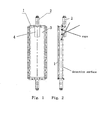
Figure 1 is a schematic view of a structure of the device for detecting and identifying the radioactive material according to the present invention; -
Figure 2 is a side view offigure 1 ; and -
Figure 3 is a circuit block diagram of the device for detecting and identifying the radioactive material according to the present invention. - Reference is made to the illustrative and non-limited embodiment of the present invention in details to explain the device for detecting and identifying a radioactive material according to the present invention.
- Referring to
figures 1 and 2 , the device for detecting and identifying a radioactive material according to the present invention comprises a first detector and a second detector. The first detector comprises a detection surface and generates a first pulse signal when rays, for example, gamma rays, X rays, or neutron rays, are incident onto said detection surface. The second detector generates a second pulse signal and is provided in front of the detection surface of the first detector, so that the gamma rays entering the second detector can directly enter the first detector after passing through the second detector. In an exemplary embodiment, the first detector may be, for example, a plastic scintillator detector for detecting X-ray and γ-ray. Suchplastic scintillator detector 1 can statistically count the detected rays. The second detector may be, for example, a NaI (Natriumiodide)detector 2. - In the exemplary embodiment shown in
figure 1 , both of theplastic scintillator detector 1 and theNaI detector 2 are in a rectangular parallelepiped shape. Theplastic scintillator detector 1 and theNaI detector 2 are arranged side by side and are connected together via, for example, a bolt structure. In particular, theNaI detector 2 is arranged to closely abut on the front of the detection surface 3 of theplastic scintillator detector 1, and thedetection surface 4 of theNaI detector 2 is parallel to that of the plastic scintillator detector. In this way, almost all of the gamma rays that enter theNaI detector 2 can directly enter theplastic scintillator detector 1 after passing through theNaI detector 2, so that it is ensured to obtain a better energy spectrum of the incident gamma rays. It can be understood that the detection surface of theplastic scintillator detector 1 can not be entirely covered by theNaI detector 2, because the volume of theNaI detector 2 is usually smaller than that of theplastic scintillator detector 1. Thus, part of the gamma rays will directly enter theplastic scintillator detector 1 instead of passing through theNaI detector 2. - The device for detecting and identifying a radioactive material comprises an identification unit 9. The identification unit 9 is configured to process the pulse signals generated by the
plastic scintillator detector 1 and theNaI detector 2 to determine whether a radiation exists or not and to determine the type of the radioactive material emitting the gamma rays according to the resultant energy spectrum. Specifically, the identification unit 9 comprises acoincidence device 10, amulti-channel analyzer 11, and adetermination device 12. Thecoincidence device 10 receives the first pulse signals and the second pulse signals from the first detector such as theplastic scintillator detector 1 and the second detector such as theNaI detector 2, respectively. Themulti-channel analyzer 11 receives the second pulse signals from theNaI detector 2 and counts the second pulses when the first pulse signals and the second pulse signals are both valid, for example, both positive or negative. Then, themulti-channel analyzer 11 generates the energy spectrum of the gamma rays according to the counted second pulses. Thedetermination device 12 may be, for example, a computer programmed with a predetermined program, which determines whether there is a radioactive material according to the first pulse signals or the second pulse signals and determines the type of the radioactive material emitting the gamma rays according to the resultant energy spectrum. Specifically, when at least one of the first pulse signals and the second pulse signals periodically is valid, the determination device determines that there are gamma rays entering at least one of theplastic scintillator detector 1 and theNaI detector 2 so as to determine the presence of the radioactive material. Meanwhile, by comparing the obtained energy spectrum with the standard energy spectrums of various radioactive nuclides previously stored in the computer, the type of the radioactive material can be determined. - In an exemplary embodiment, the identification unit 9 further comprises a
linear gate 13. Thelinear gate 13 receives coincidence signals from thecoincidence device 10. When both of the first and second pulse signals input into thecoincidence device 10 are valid, thecoincidence device 10 inputs valid signals. When at least one of the first and second pulse signals is invalid, e.g., zero, thecoincidence device 10 inputs invalid signals. When the signals from thecoincidence device 10 are valid, thelinear gate 13 is turned on to allow themulti-channel analyzer 11 to count the second pulses. - In an exemplary embodiment, the identification unit 9 further comprises a first single-
channel analyzer 14 by which the first pulse signals from theplastic scintillator detector 1 are processed to generate first differential signals to be input to one input terminal of thecoincidence device 10 and thedetermination device 12, respectively, and a second single-channel analyzer 15 by which the second pulse signals from theNaI detector 2 are processed to generate second differential signals to be input to the other input terminal of thecoincidence device 10 and thedetermination device 12, respectively. The identification unit 9 further comprises adelay timer 16 by which the second pulse signals from theNaI detector 12 are delayed by a predetermined duration and then are input to themulti-channel analyzer 11. - In a further exemplary embodiment, the identification unit 9 further comprises amplifiers 17-19 for amplifying the pulse signals, and
data collectors channel analyzers mixer 20 is provided to divide the second pulse signals from theNaI detector 2 into two separate signals, one of which is input to thedetermination device 12, and the other of which is input to themulti-channel analyzer 11. - In the device for detecting and identifying a radioactive material according to the present invention, the NaI detector is combined with the plastic scintillator detector, and the coincidence device is employed to enable the plastic scintillator detector to function as an anti-coincidence device, so that an anti-Compton energy spectrometer is constructed. In this way, not only the two detectors can provide respective advantages, but also the contribution of the gamma rays passing through the
NaI detector 2 to form the Compton plateau can be suppressed, so that energy resolution in the low energy range is enhanced. - Next, operation of the device for detecting and identifying the radioactive material according to the present invention is described by referring to
figures 1 and 2 . - When the device for detecting and identifying a radioactive material according to the present invention is used to detect and identify the radioactive material, scattered photons escaping from the
NaI detector 2 are incident into theplastic scintillator detector 1 which acts as an anti-coincidence detector. The first pulse signals output from theplastic scintillator detector 1 pass through theamplifier 17 and the first single-channel analyzer 14 to form the first differential signals. The first differential signals are inputted to one input terminal of thecoincidence device 10. The first differential signals are also inputted to thedata collector 21 to be counted therein. Meanwhile, the second pulse signals, each having a small amplitude and output from theNaI detector 2, pass through themixer 20 to be divided into two separate signals. One passes through theamplifier 18 and the second single-channel analyzer 15 to form the second differential signals. Then, the second differential signals are inputted to the other input terminal of thecoincidence device 10. Further, the second differential signals also are inputted to thedata collector 22 to be counted therein. The other signal of the second pulse signals passes through theamplifier 19 to be amplified and then passes through thedelay timer 16 to be delayed by a predetermined duration, and then is inputted to themulti-channel analyzer 11. - The
coincidence device 10 controls thelinear gate 13 to be turned on/off according to the states of the first and second differential signals from the single-channel analyzers coincidence device 10 generates no signal, i.e., generates an invalid signal. When any one of the first differential signals and the second differential signals is valid, thecoincidence device 10 outputs a valid signal. When thecoincidence device 10 outputs a valid signal, the linear gate is turned on; otherwise the linear gate is turned off. When thelinear gate 13 is turned on, the second pulse signals output from theNaI detector 2 and corresponding to the energy of gamma rays, i.e., the pulse signals from thedelay timer 16, are allowed to be recorded in the energy spectrum by the multi-channel analyzer. When thelinear gate 13 is turned off, the second pulse signals from theNaI detector 2 are not allowed to be recorded by the multi-channel analyzer. In this case, the energy spectrum of the gamma rays does not contain the second pulse signals from theNaI detector 2. Therefore, when theplastic scintillator detector 1 and theNaI detector 2 both output pulse signals, the single-channel analyzer 11 does not record the second pulse signals generated by theNaI detector 2, and thus the pulse signals caused by the Compton scattering are shielded, thereby realizing anti-coincidence measurement. - According to another aspect of the present invention, a method for detecting and identifying a radioactive material is provided. The method comprises using a first detector for detecting X-rays and γ-rays, such as a
plastic scintillator detector 1, to generate a first pulse signals, using a second detector provided in front of the detection surface 3 of theplastic scintillator detector 1, such as aNaI detector 2, to generate a second pulse signals, inputting the first pulse signals and the second pulse signals from the first detector and the second detector into a coincidence device to perform coincidence, using a multi-channel analyzer to count the second pulses and to generate energy spectrum according to the counted second pulses when the first and second pulse signals are valid, and determining the type of a radioactive material according to the generated energy spectrum and determining presence of radiation according to the first pulse signals or the second pulse signals, for example, when at least one of the first pulse signals and the second pulse signals is valid, otherwise no radiation is present. - Although exemplary embodiments of the present invention have been described, it will be appreciated by those skilled in the art that changes may be made in forms and details without departing from the spirit and scope of the present invention, the scope of which is defined in the appended claims and their equivalents.
Claims (10)
- An device for detecting and identifying a radioactive material, comprising:a first detector including a detection surface and configured to generate first pulse signals when gamma rays are incident onto said detection surface;a second detector configured to generate second pulse signals and provided in the front of the detection surface of the first detector, so that the gamma rays entering the second detector directly enter the first detector after passing through the second detector; andan identification unit comprising:a coincidence device configured to receive the first pulse signals and the second pulse signals from said first detector and said second detector;a multi-channel analyzer configured to receive the second pulse signals from the said second detector, the multi-channel analyzer generating the energy spectrum of gamma rays according to the second pulses, when said first pulse signals and said second pulse signals are valid; anda determination device configured to determine the type of the radioactive material emitting the gamma rays according the generated energy spectrum of the gamma rays.
- The device for detecting and identifying a radioactive material according to claim 1, wherein said determination device determines whether a radiation exists or not according to said first pulse signals or said second pulse signals.
- The device for detecting and identifying a radioactive material according to claim 2, wherein the identification unit further comprises:a linear gate configured to receive coincidence signals from said coincidence device, the linear gate being turned on, when the output signals of said coincidence device are valid, to allow said multi-channel analyzer to count said second pulses.
- The device for detecting and identifying a radioactive material according to claim 2, wherein the identification unit further comprises a first single-channel analyzer through which the first pulse signals from said first detector are inputted to said coincidence device and said determination device.
- The device for detecting and identifying a radioactive material according to claim 4, wherein the identification unit further comprises a second single-channel analyzer through which the second pulse signals from said second detector are inputted to said coincidence device and said determination device.
- The device for detecting and identifying a radioactive material according to claim 2, wherein the identification unit further comprises a delay timer through which the second pulse signals from said second detector are inputted to said multi-channel analyzer.
- The device for detecting and identifying a radioactive material according to any one of claims 1-6, wherein said first detector is a plastic scintillator detector.
- The device for detecting and identifying a radioactive material according to any one of claims 1-6, wherein said second detector is a NaI detector.
- A method for detecting and identifying a radioactive material, comprising:using a first detector to generate first pulse signals;using a second detector provided in the front of a detection surface of the first detector to generate second pulse signals;inputting the first pulse signals and the second pulse signals from said first detector and said second detector into a coincidence device to perform coincidence;when said first pulse signals and said second pulse signals both are valid, using a multi-channel analyzer to count said second pulses and to generate the energy spectrum of the gamma rays according to the counted second pulses; anddetermining the type of the radioactive material emitting the gamma rays according to the generated energy spectrum.
- The method for detecting and identifying a radioactive material, further comprising:determining whether a radiation exists or not according to said first pulse signals or said second pulse signals.
Priority Applications (1)
| Application Number | Priority Date | Filing Date | Title |
|---|---|---|---|
| PL09156160T PL2113791T3 (en) | 2008-04-28 | 2009-03-25 | Sodium iodide sctinitllator with flat plastic scintillator for Compton suppression |
Applications Claiming Priority (1)
| Application Number | Priority Date | Filing Date | Title |
|---|---|---|---|
| CN2008101053513A CN101571595B (en) | 2008-04-28 | 2008-04-28 | Device and method for detecting and identifying radioactive substances |
Publications (2)
| Publication Number | Publication Date |
|---|---|
| EP2113791A1 true EP2113791A1 (en) | 2009-11-04 |
| EP2113791B1 EP2113791B1 (en) | 2016-08-31 |
Family
ID=40551513
Family Applications (1)
| Application Number | Title | Priority Date | Filing Date |
|---|---|---|---|
| EP09156160.5A Not-in-force EP2113791B1 (en) | 2008-04-28 | 2009-03-25 | Sodium iodide sctinitllator with flat plastic scintillator for Compton suppression |
Country Status (4)
| Country | Link |
|---|---|
| US (1) | US8084748B2 (en) |
| EP (1) | EP2113791B1 (en) |
| CN (1) | CN101571595B (en) |
| PL (1) | PL2113791T3 (en) |
Cited By (3)
| Publication number | Priority date | Publication date | Assignee | Title |
|---|---|---|---|---|
| CN102455431A (en) * | 2010-11-25 | 2012-05-16 | 上海新漫传感技术研究发展有限公司 | Channel type radioactive detector with low detection limit |
| WO2013121071A1 (en) * | 2012-02-15 | 2013-08-22 | Universitat Rovira I Virgili | Station for identification and measurement, in real time, of ambient gamma radiation by means of spectrometry with two flashing crystals |
| CN111307837A (en) * | 2020-03-20 | 2020-06-19 | 中国核动力研究设计院 | Radioactive substance content measuring device clamped in flow channel and model establishing method |
Families Citing this family (28)
| Publication number | Priority date | Publication date | Assignee | Title |
|---|---|---|---|---|
| CN101858985A (en) * | 2010-03-18 | 2010-10-13 | 成都理工大学 | Multifunctional Rare Earth Product Radiation Detector Based on Composite Detector |
| CN102135625B (en) * | 2010-12-21 | 2012-11-28 | 上海交通大学 | Dual-detector segmenting gamma-scanning measuring device and scanning method thereof |
| TWI495896B (en) * | 2011-04-19 | 2015-08-11 | Iner Aec Executive Yuan | Method of energy spectrum analysis for nai detector |
| CN102253401A (en) * | 2011-04-28 | 2011-11-23 | 上海交通大学 | Mechanical device used for scanning measurement of chromatographic Gamma |
| US8916829B2 (en) * | 2011-08-18 | 2014-12-23 | Savannah River Nuclear Solutions, Llc | System and method for assaying a radionuclide |
| US9720101B2 (en) | 2013-06-27 | 2017-08-01 | Globalfoundries Inc. | Method of consumer/producer raw material selection |
| CN104730563A (en) * | 2013-12-24 | 2015-06-24 | 上海新漫传感技术研究发展有限公司 | Passage type personnel radioactivity monitor |
| CN104035119B (en) * | 2014-06-06 | 2016-04-13 | 成都理工大学 | Lung's uneven γ internal contamination sniffer |
| CN104133236A (en) * | 2014-07-24 | 2014-11-05 | 北京紫方启研科技有限公司 | Portable multifunctional digital radiation inspection instrument |
| CN104199080B (en) * | 2014-09-09 | 2017-03-01 | 中国科学院上海应用物理研究所 | Beta-ray detection system and method that a kind of measurement radgass produce |
| CN104820232A (en) * | 2015-04-24 | 2015-08-05 | 中国船舶重工集团公司第七一九研究所 | On-line type energy spectrum analysis anti-coincidence measurement detector |
| CN105425275B (en) * | 2015-07-19 | 2017-04-19 | 成都理工大学 | Anti-coincidence output discrimination system |
| CN105496432A (en) * | 2015-11-24 | 2016-04-20 | 中国原子能科学研究院 | Anti-universe ray system for internal exposure measurement and anti-coincidence method |
| CN106405623B (en) * | 2016-05-11 | 2019-10-08 | 吉林大学 | Compton sums it up spectrometer |
| US10330804B1 (en) * | 2018-02-04 | 2019-06-25 | David Edward Newman | One-dimensional directional particle detector |
| CN108646612A (en) * | 2018-03-20 | 2018-10-12 | 中国核电工程有限公司 | A kind of N-16 monitors data acquisition process platform |
| JP6480648B1 (en) * | 2018-04-09 | 2019-03-13 | 公立大学法人大阪府立大学 | Electromagnetic radiation detector |
| CN109725342A (en) * | 2019-01-01 | 2019-05-07 | 中国人民解放军63653部队 | A kind of scatter suppression detecting structure with the measurement of low-energyγ-ray on site |
| CN113568030B (en) * | 2020-04-29 | 2024-01-16 | 同方威视技术股份有限公司 | Detector components and radiation monitoring equipment |
| CN112083471B (en) * | 2020-09-15 | 2022-12-06 | 成都理工大学 | anti-Compton aviation gamma energy spectrum measuring system and measuring method thereof |
| CN121388728A (en) * | 2020-11-09 | 2026-01-23 | 利多(香港)有限公司 | Detection plate, analyzer and detection method |
| EP4298433A4 (en) | 2021-02-23 | 2025-01-08 | Rapiscan Systems, Inc. | SYSTEMS AND METHODS FOR ELIMINATING CROSSTALK IN SCANNING SYSTEMS WITH MULTIPLE X-RAY SOURCES |
| US12450719B2 (en) | 2021-07-13 | 2025-10-21 | Rapiscan Systems, Inc. | Image inspection systems and methods for integrating third party artificial intelligence platforms |
| CN118785948A (en) | 2022-02-03 | 2024-10-15 | 拉皮斯坎控股公司 | System and method for real-time energy and dose monitoring of X-ray linear accelerators |
| US12474282B2 (en) | 2022-05-20 | 2025-11-18 | Rapiscan Holdings, Inc. | Systems and a method of improved material classification using energy-integrated backscatter detectors |
| WO2024050199A1 (en) | 2022-09-01 | 2024-03-07 | Rapiscan Holdings, Inc. | Systems and methods for classification of radiation energy spectra |
| CN115469351A (en) * | 2022-10-27 | 2022-12-13 | 中国电子科技集团公司第二十六研究所 | A radioactive positioning detection method and security door |
| US12467882B2 (en) | 2023-03-17 | 2025-11-11 | Rapiscan Holdings, Inc. | Systems and methods for monitoring output energy of a high-energy x-ray source |
Family Cites Families (7)
| Publication number | Priority date | Publication date | Assignee | Title |
|---|---|---|---|---|
| JP3041086B2 (en) * | 1991-07-03 | 2000-05-15 | オリンパス光学工業株式会社 | Radiation detector for intraluminal insertion |
| US20040164250A1 (en) * | 2003-02-25 | 2004-08-26 | Cork Christopher P. | Handheld isotope identification system |
| CN2752760Y (en) * | 2004-11-26 | 2006-01-18 | 清华大学 | Apparatus for making safety detection for liquid utilizing radioactive source |
| CN1995993B (en) * | 2005-12-31 | 2010-07-14 | 清华大学 | A method and device for scanning matter by utilizing multiple energy radiation |
| CN101074937B (en) * | 2006-05-19 | 2010-09-08 | 清华大学 | Energy spectrum modulation device, method and device for identifying materials, and image processing method |
| CN200972460Y (en) * | 2006-11-20 | 2007-11-07 | 北京深鸣远科技开发中心 | Image and component analyser based on single energy spectrum gamma ray generator |
| EP2115490A1 (en) * | 2007-02-09 | 2009-11-11 | University Of Wollongong | Dual radiation detector |
-
2008
- 2008-04-28 CN CN2008101053513A patent/CN101571595B/en not_active Expired - Fee Related
-
2009
- 2009-03-25 PL PL09156160T patent/PL2113791T3/en unknown
- 2009-03-25 EP EP09156160.5A patent/EP2113791B1/en not_active Not-in-force
- 2009-04-09 US US12/421,194 patent/US8084748B2/en active Active
Non-Patent Citations (7)
| Title |
|---|
| AL-AZMI ET AL.: "APPLIED RADIATION AND ISOTOPES", vol. 66, 1 August 2008, ELSEVIER, article "Simplified slow anti-coincidence circuit for Compton suppression systems", pages: 1108 - 1116 |
| AL-AZMI ET AL: "Simplified slow anti-coincidence circuit for Compton suppression systems", APPLIED RADIATION AND ISOTOPES, ELSEVIER, OXFORD, GB, vol. 66, no. 8, 1 August 2008 (2008-08-01), available online 15.12.2007, pages 1108 - 1116, XP022700369, ISSN: 0969-8043 * |
| ANANENKO ET AL.: "Scintillation Parameters of a Phoswich beta- and gamma-Ray Detector", INSTRUMENTS AND EXPERIMENTAL TECHNIQUES, vol. 42, no. 1, 2002, pages 178 - 182, XP002526213 * |
| ELLETT W.H. ET AL.: "A TOTAL ABSORPTION GAMMA RAY SPECTROMETER COMBINING SODIUM IODIDE AND PLASTIC SCINTILLATORS", NUCLEAR INSTRUMENTS AND METHODS, vol. 7, 1960, pages 56 - 62, XP002525854 * |
| FRANKEL S. ET AL.: "Further Search for the Decay µ+ -> e+ + y*", PHYSICAL REVIEW, vol. 118, no. 2, 15 April 1960 (1960-04-15), pages 589 - 590, XP002525857 * |
| KISHIMOTO T. ET AL.: "A NEW HIGH ENERGY GAMMA RADIATION MEASURING SYSTEM (HERMES)", NUCLEAR INSTRUMENTS AND METHODS, vol. 198, 1982, pages 269 - 276, XP002525855 * |
| SUFFERT M. ET AL.: "ONE-CRYSTAL NaI SPECTROMETER", NUCLEAR INSTRUMENTS AND METHODS, vol. 63, 1968, pages 1 - 12, XP002525856 * |
Cited By (4)
| Publication number | Priority date | Publication date | Assignee | Title |
|---|---|---|---|---|
| CN102455431A (en) * | 2010-11-25 | 2012-05-16 | 上海新漫传感技术研究发展有限公司 | Channel type radioactive detector with low detection limit |
| CN102455431B (en) * | 2010-11-25 | 2013-08-28 | 上海新漫传感技术研究发展有限公司 | Channel type radioactive detector with low detection limit |
| WO2013121071A1 (en) * | 2012-02-15 | 2013-08-22 | Universitat Rovira I Virgili | Station for identification and measurement, in real time, of ambient gamma radiation by means of spectrometry with two flashing crystals |
| CN111307837A (en) * | 2020-03-20 | 2020-06-19 | 中国核动力研究设计院 | Radioactive substance content measuring device clamped in flow channel and model establishing method |
Also Published As
| Publication number | Publication date |
|---|---|
| US8084748B2 (en) | 2011-12-27 |
| CN101571595B (en) | 2012-04-18 |
| EP2113791B1 (en) | 2016-08-31 |
| US20100072385A1 (en) | 2010-03-25 |
| HK1138379A1 (en) | 2010-08-20 |
| PL2113791T3 (en) | 2017-04-28 |
| CN101571595A (en) | 2009-11-04 |
Similar Documents
| Publication | Publication Date | Title |
|---|---|---|
| US8084748B2 (en) | Radioactive material detecting and identifying device and method | |
| JP5027124B2 (en) | Method and apparatus for detection of co-generated radiation in a single transducer by pulse waveform analysis | |
| EP2883085B1 (en) | Gamma-ray spectrometer | |
| EP2778716B1 (en) | Detector and method for simultaneously detecting gamma ray and neutron ray using same | |
| KR101051126B1 (en) | Plastic Scintillator-based Radiation Detector and Radionuclide Detection Method Using the Same | |
| CN101539556B (en) | Integrating system and integrating method for radioactive substance detection and X-ray radiation imaging | |
| CN103197338A (en) | Underwater radiation monitoring method and system | |
| US8232530B2 (en) | Solid state neutron detector | |
| JP2001235546A (en) | Radioactive gas measuring device and fuel damage detection system | |
| CN114740521A (en) | Detection system and method based on beta-gamma coincidence | |
| US5907156A (en) | Wide range radiation detector | |
| CN105629291B (en) | Screen the method and its application of processing to the output signal of lanthanum bromide gamma ray spectrometer | |
| JP6524484B2 (en) | Radiation measurement method and radiation measurement apparatus | |
| US20120145913A1 (en) | Neutron Detection Based On Energy Spectrum Characteristics | |
| JPH11194170A (en) | Radioactive material inspection device and radioactive waste inspection system | |
| CN115236720A (en) | A multi-type ray detection device | |
| JP2002006055A (en) | Radiation measurement method and device | |
| JP5450356B2 (en) | Radiation detection method | |
| CN201196635Y (en) | Integration system used for active material detection and X ray radiation imaging | |
| Azimi et al. | Compact Beta-Gamma Radioxenon Detection System with Improved Energy Resolution Using PIPS Detector: SA Azimi et al. | |
| Santos et al. | The measurement of the half-life of the second excited state of 237Np with a new detector system and digital electronics | |
| CN201196636Y (en) | Integration system used for active material detection and X ray radiation imaging | |
| HK1138379B (en) | Equipment and method for detecting and identifying radioactive substance | |
| CN102565097B (en) | Integration system for radioactive substance detection and X-ray radiation imaging | |
| SU849874A1 (en) | Device for measuring low specific activity of -radioactive preparations |
Legal Events
| Date | Code | Title | Description |
|---|---|---|---|
| PUAI | Public reference made under article 153(3) epc to a published international application that has entered the european phase |
Free format text: ORIGINAL CODE: 0009012 |
|
| 17P | Request for examination filed |
Effective date: 20090325 |
|
| AK | Designated contracting states |
Kind code of ref document: A1 Designated state(s): AT BE BG CH CY CZ DE DK EE ES FI FR GB GR HR HU IE IS IT LI LT LU LV MC MK MT NL NO PL PT RO SE SI SK TR |
|
| AX | Request for extension of the european patent |
Extension state: AL BA RS |
|
| 17Q | First examination report despatched |
Effective date: 20100112 |
|
| AKX | Designation fees paid |
Designated state(s): AT BE BG CH CY CZ DE DK EE ES FI FR GB GR HR HU IE IS IT LI LT LU LV MC MK MT NL NO PL PT RO SE SI SK TR |
|
| REG | Reference to a national code |
Ref country code: DE Ref legal event code: R079 Ref document number: 602009040732 Country of ref document: DE Free format text: PREVIOUS MAIN CLASS: G01T0001200000 Ipc: G01T0001172000 |
|
| RIC1 | Information provided on ipc code assigned before grant |
Ipc: G01T 1/172 20060101AFI20160304BHEP |
|
| GRAP | Despatch of communication of intention to grant a patent |
Free format text: ORIGINAL CODE: EPIDOSNIGR1 |
|
| INTG | Intention to grant announced |
Effective date: 20160421 |
|
| GRAS | Grant fee paid |
Free format text: ORIGINAL CODE: EPIDOSNIGR3 |
|
| GRAA | (expected) grant |
Free format text: ORIGINAL CODE: 0009210 |
|
| AK | Designated contracting states |
Kind code of ref document: B1 Designated state(s): AT BE BG CH CY CZ DE DK EE ES FI FR GB GR HR HU IE IS IT LI LT LU LV MC MK MT NL NO PL PT RO SE SI SK TR |
|
| REG | Reference to a national code |
Ref country code: CH Ref legal event code: EP Ref country code: GB Ref legal event code: FG4D |
|
| REG | Reference to a national code |
Ref country code: IE Ref legal event code: FG4D |
|
| REG | Reference to a national code |
Ref country code: DE Ref legal event code: R096 Ref document number: 602009040732 Country of ref document: DE |
|
| REG | Reference to a national code |
Ref country code: AT Ref legal event code: REF Ref document number: 825456 Country of ref document: AT Kind code of ref document: T Effective date: 20161015 |
|
| REG | Reference to a national code |
Ref country code: NL Ref legal event code: FP |
|
| REG | Reference to a national code |
Ref country code: LT Ref legal event code: MG4D |
|
| PG25 | Lapsed in a contracting state [announced via postgrant information from national office to epo] |
Ref country code: HR Free format text: LAPSE BECAUSE OF FAILURE TO SUBMIT A TRANSLATION OF THE DESCRIPTION OR TO PAY THE FEE WITHIN THE PRESCRIBED TIME-LIMIT Effective date: 20160831 Ref country code: NO Free format text: LAPSE BECAUSE OF FAILURE TO SUBMIT A TRANSLATION OF THE DESCRIPTION OR TO PAY THE FEE WITHIN THE PRESCRIBED TIME-LIMIT Effective date: 20161130 Ref country code: LT Free format text: LAPSE BECAUSE OF FAILURE TO SUBMIT A TRANSLATION OF THE DESCRIPTION OR TO PAY THE FEE WITHIN THE PRESCRIBED TIME-LIMIT Effective date: 20160831 |
|
| PG25 | Lapsed in a contracting state [announced via postgrant information from national office to epo] |
Ref country code: SE Free format text: LAPSE BECAUSE OF FAILURE TO SUBMIT A TRANSLATION OF THE DESCRIPTION OR TO PAY THE FEE WITHIN THE PRESCRIBED TIME-LIMIT Effective date: 20160831 Ref country code: GR Free format text: LAPSE BECAUSE OF FAILURE TO SUBMIT A TRANSLATION OF THE DESCRIPTION OR TO PAY THE FEE WITHIN THE PRESCRIBED TIME-LIMIT Effective date: 20161201 Ref country code: ES Free format text: LAPSE BECAUSE OF FAILURE TO SUBMIT A TRANSLATION OF THE DESCRIPTION OR TO PAY THE FEE WITHIN THE PRESCRIBED TIME-LIMIT Effective date: 20160831 Ref country code: LV Free format text: LAPSE BECAUSE OF FAILURE TO SUBMIT A TRANSLATION OF THE DESCRIPTION OR TO PAY THE FEE WITHIN THE PRESCRIBED TIME-LIMIT Effective date: 20160831 |
|
| REG | Reference to a national code |
Ref country code: FR Ref legal event code: PLFP Year of fee payment: 9 |
|
| PG25 | Lapsed in a contracting state [announced via postgrant information from national office to epo] |
Ref country code: EE Free format text: LAPSE BECAUSE OF FAILURE TO SUBMIT A TRANSLATION OF THE DESCRIPTION OR TO PAY THE FEE WITHIN THE PRESCRIBED TIME-LIMIT Effective date: 20160831 Ref country code: RO Free format text: LAPSE BECAUSE OF FAILURE TO SUBMIT A TRANSLATION OF THE DESCRIPTION OR TO PAY THE FEE WITHIN THE PRESCRIBED TIME-LIMIT Effective date: 20160831 |
|
| PG25 | Lapsed in a contracting state [announced via postgrant information from national office to epo] |
Ref country code: BE Free format text: LAPSE BECAUSE OF FAILURE TO SUBMIT A TRANSLATION OF THE DESCRIPTION OR TO PAY THE FEE WITHIN THE PRESCRIBED TIME-LIMIT Effective date: 20160831 Ref country code: SK Free format text: LAPSE BECAUSE OF FAILURE TO SUBMIT A TRANSLATION OF THE DESCRIPTION OR TO PAY THE FEE WITHIN THE PRESCRIBED TIME-LIMIT Effective date: 20160831 Ref country code: CZ Free format text: LAPSE BECAUSE OF FAILURE TO SUBMIT A TRANSLATION OF THE DESCRIPTION OR TO PAY THE FEE WITHIN THE PRESCRIBED TIME-LIMIT Effective date: 20160831 Ref country code: DK Free format text: LAPSE BECAUSE OF FAILURE TO SUBMIT A TRANSLATION OF THE DESCRIPTION OR TO PAY THE FEE WITHIN THE PRESCRIBED TIME-LIMIT Effective date: 20160831 Ref country code: BG Free format text: LAPSE BECAUSE OF FAILURE TO SUBMIT A TRANSLATION OF THE DESCRIPTION OR TO PAY THE FEE WITHIN THE PRESCRIBED TIME-LIMIT Effective date: 20161130 Ref country code: PT Free format text: LAPSE BECAUSE OF FAILURE TO SUBMIT A TRANSLATION OF THE DESCRIPTION OR TO PAY THE FEE WITHIN THE PRESCRIBED TIME-LIMIT Effective date: 20170102 |
|
| REG | Reference to a national code |
Ref country code: DE Ref legal event code: R097 Ref document number: 602009040732 Country of ref document: DE |
|
| PG25 | Lapsed in a contracting state [announced via postgrant information from national office to epo] |
Ref country code: IT Free format text: LAPSE BECAUSE OF FAILURE TO SUBMIT A TRANSLATION OF THE DESCRIPTION OR TO PAY THE FEE WITHIN THE PRESCRIBED TIME-LIMIT Effective date: 20160831 |
|
| PLBE | No opposition filed within time limit |
Free format text: ORIGINAL CODE: 0009261 |
|
| STAA | Information on the status of an ep patent application or granted ep patent |
Free format text: STATUS: NO OPPOSITION FILED WITHIN TIME LIMIT |
|
| 26N | No opposition filed |
Effective date: 20170601 |
|
| PG25 | Lapsed in a contracting state [announced via postgrant information from national office to epo] |
Ref country code: SI Free format text: LAPSE BECAUSE OF FAILURE TO SUBMIT A TRANSLATION OF THE DESCRIPTION OR TO PAY THE FEE WITHIN THE PRESCRIBED TIME-LIMIT Effective date: 20160831 |
|
| REG | Reference to a national code |
Ref country code: CH Ref legal event code: PL |
|
| PG25 | Lapsed in a contracting state [announced via postgrant information from national office to epo] |
Ref country code: MC Free format text: LAPSE BECAUSE OF FAILURE TO SUBMIT A TRANSLATION OF THE DESCRIPTION OR TO PAY THE FEE WITHIN THE PRESCRIBED TIME-LIMIT Effective date: 20160831 |
|
| REG | Reference to a national code |
Ref country code: IE Ref legal event code: MM4A |
|
| PG25 | Lapsed in a contracting state [announced via postgrant information from national office to epo] |
Ref country code: LU Free format text: LAPSE BECAUSE OF NON-PAYMENT OF DUE FEES Effective date: 20170325 |
|
| PG25 | Lapsed in a contracting state [announced via postgrant information from national office to epo] |
Ref country code: IE Free format text: LAPSE BECAUSE OF NON-PAYMENT OF DUE FEES Effective date: 20170325 Ref country code: CH Free format text: LAPSE BECAUSE OF NON-PAYMENT OF DUE FEES Effective date: 20170331 Ref country code: LI Free format text: LAPSE BECAUSE OF NON-PAYMENT OF DUE FEES Effective date: 20170331 |
|
| REG | Reference to a national code |
Ref country code: FR Ref legal event code: PLFP Year of fee payment: 10 |
|
| PG25 | Lapsed in a contracting state [announced via postgrant information from national office to epo] |
Ref country code: MT Free format text: LAPSE BECAUSE OF NON-PAYMENT OF DUE FEES Effective date: 20170325 |
|
| PG25 | Lapsed in a contracting state [announced via postgrant information from national office to epo] |
Ref country code: HU Free format text: LAPSE BECAUSE OF FAILURE TO SUBMIT A TRANSLATION OF THE DESCRIPTION OR TO PAY THE FEE WITHIN THE PRESCRIBED TIME-LIMIT; INVALID AB INITIO Effective date: 20090325 |
|
| REG | Reference to a national code |
Ref country code: AT Ref legal event code: UEP Ref document number: 825456 Country of ref document: AT Kind code of ref document: T Effective date: 20160831 |
|
| PG25 | Lapsed in a contracting state [announced via postgrant information from national office to epo] |
Ref country code: CY Free format text: LAPSE BECAUSE OF NON-PAYMENT OF DUE FEES Effective date: 20160831 |
|
| PG25 | Lapsed in a contracting state [announced via postgrant information from national office to epo] |
Ref country code: MK Free format text: LAPSE BECAUSE OF FAILURE TO SUBMIT A TRANSLATION OF THE DESCRIPTION OR TO PAY THE FEE WITHIN THE PRESCRIBED TIME-LIMIT Effective date: 20160831 |
|
| PG25 | Lapsed in a contracting state [announced via postgrant information from national office to epo] |
Ref country code: TR Free format text: LAPSE BECAUSE OF FAILURE TO SUBMIT A TRANSLATION OF THE DESCRIPTION OR TO PAY THE FEE WITHIN THE PRESCRIBED TIME-LIMIT Effective date: 20160831 |
|
| PGFP | Annual fee paid to national office [announced via postgrant information from national office to epo] |
Ref country code: NL Payment date: 20200312 Year of fee payment: 12 Ref country code: PL Payment date: 20200228 Year of fee payment: 12 Ref country code: AT Payment date: 20200309 Year of fee payment: 12 Ref country code: DE Payment date: 20200310 Year of fee payment: 12 Ref country code: GB Payment date: 20200318 Year of fee payment: 12 |
|
| PGFP | Annual fee paid to national office [announced via postgrant information from national office to epo] |
Ref country code: FR Payment date: 20200312 Year of fee payment: 12 |
|
| PG25 | Lapsed in a contracting state [announced via postgrant information from national office to epo] |
Ref country code: IS Free format text: LAPSE BECAUSE OF FAILURE TO SUBMIT A TRANSLATION OF THE DESCRIPTION OR TO PAY THE FEE WITHIN THE PRESCRIBED TIME-LIMIT Effective date: 20161231 |
|
| REG | Reference to a national code |
Ref country code: FI Ref legal event code: MAE |
|
| PG25 | Lapsed in a contracting state [announced via postgrant information from national office to epo] |
Ref country code: FI Free format text: LAPSE BECAUSE OF NON-PAYMENT OF DUE FEES Effective date: 20200325 |
|
| REG | Reference to a national code |
Ref country code: DE Ref legal event code: R119 Ref document number: 602009040732 Country of ref document: DE |
|
| REG | Reference to a national code |
Ref country code: NL Ref legal event code: MM Effective date: 20210401 |
|
| REG | Reference to a national code |
Ref country code: AT Ref legal event code: MM01 Ref document number: 825456 Country of ref document: AT Kind code of ref document: T Effective date: 20210325 |
|
| GBPC | Gb: european patent ceased through non-payment of renewal fee |
Effective date: 20210325 |
|
| PG25 | Lapsed in a contracting state [announced via postgrant information from national office to epo] |
Ref country code: DE Free format text: LAPSE BECAUSE OF NON-PAYMENT OF DUE FEES Effective date: 20211001 Ref country code: GB Free format text: LAPSE BECAUSE OF NON-PAYMENT OF DUE FEES Effective date: 20210325 Ref country code: FR Free format text: LAPSE BECAUSE OF NON-PAYMENT OF DUE FEES Effective date: 20210331 Ref country code: NL Free format text: LAPSE BECAUSE OF NON-PAYMENT OF DUE FEES Effective date: 20210401 Ref country code: AT Free format text: LAPSE BECAUSE OF NON-PAYMENT OF DUE FEES Effective date: 20210325 |
|
| PG25 | Lapsed in a contracting state [announced via postgrant information from national office to epo] |
Ref country code: PL Free format text: LAPSE BECAUSE OF NON-PAYMENT OF DUE FEES Effective date: 20210325 |