EP2091320B1 - SORPTIONSMEDIUM Verfharen zur Herstellung und Anwendung - Google Patents
SORPTIONSMEDIUM Verfharen zur Herstellung und Anwendung Download PDFInfo
- Publication number
- EP2091320B1 EP2091320B1 EP20070819776 EP07819776A EP2091320B1 EP 2091320 B1 EP2091320 B1 EP 2091320B1 EP 20070819776 EP20070819776 EP 20070819776 EP 07819776 A EP07819776 A EP 07819776A EP 2091320 B1 EP2091320 B1 EP 2091320B1
- Authority
- EP
- European Patent Office
- Prior art keywords
- alkaloid
- sorption
- medium according
- sorption medium
- component
- Prior art date
- Legal status (The legal status is an assumption and is not a legal conclusion. Google has not performed a legal analysis and makes no representation as to the accuracy of the status listed.)
- Active
Links
Images
Classifications
-
- A—HUMAN NECESSITIES
- A01—AGRICULTURE; FORESTRY; ANIMAL HUSBANDRY; HUNTING; TRAPPING; FISHING
- A01K—ANIMAL HUSBANDRY; AVICULTURE; APICULTURE; PISCICULTURE; FISHING; REARING OR BREEDING ANIMALS, NOT OTHERWISE PROVIDED FOR; NEW BREEDS OF ANIMALS
- A01K1/00—Housing animals; Equipment therefor
- A01K1/015—Floor coverings, e.g. bedding-down sheets ; Stable floors
- A01K1/0152—Litter
-
- A—HUMAN NECESSITIES
- A01—AGRICULTURE; FORESTRY; ANIMAL HUSBANDRY; HUNTING; TRAPPING; FISHING
- A01K—ANIMAL HUSBANDRY; AVICULTURE; APICULTURE; PISCICULTURE; FISHING; REARING OR BREEDING ANIMALS, NOT OTHERWISE PROVIDED FOR; NEW BREEDS OF ANIMALS
- A01K1/00—Housing animals; Equipment therefor
- A01K1/015—Floor coverings, e.g. bedding-down sheets ; Stable floors
- A01K1/0152—Litter
- A01K1/0155—Litter comprising organic material
-
- A—HUMAN NECESSITIES
- A01—AGRICULTURE; FORESTRY; ANIMAL HUSBANDRY; HUNTING; TRAPPING; FISHING
- A01N—PRESERVATION OF BODIES OF HUMANS OR ANIMALS OR PLANTS OR PARTS THEREOF; BIOCIDES, e.g. AS DISINFECTANTS, AS PESTICIDES OR AS HERBICIDES; PEST REPELLANTS OR ATTRACTANTS; PLANT GROWTH REGULATORS
- A01N25/00—Biocides, pest repellants or attractants, or plant growth regulators, characterised by their forms, or by their non-active ingredients or by their methods of application, e.g. seed treatment or sequential application; Substances for reducing the noxious effect of the active ingredients to organisms other than pests
- A01N25/12—Powders or granules
-
- A—HUMAN NECESSITIES
- A01—AGRICULTURE; FORESTRY; ANIMAL HUSBANDRY; HUNTING; TRAPPING; FISHING
- A01N—PRESERVATION OF BODIES OF HUMANS OR ANIMALS OR PLANTS OR PARTS THEREOF; BIOCIDES, e.g. AS DISINFECTANTS, AS PESTICIDES OR AS HERBICIDES; PEST REPELLANTS OR ATTRACTANTS; PLANT GROWTH REGULATORS
- A01N43/00—Biocides, pest repellants or attractants, or plant growth regulators containing heterocyclic compounds
- A01N43/34—Biocides, pest repellants or attractants, or plant growth regulators containing heterocyclic compounds having rings with one nitrogen atom as the only ring hetero atom
- A01N43/40—Biocides, pest repellants or attractants, or plant growth regulators containing heterocyclic compounds having rings with one nitrogen atom as the only ring hetero atom six-membered rings
- A01N43/42—Biocides, pest repellants or attractants, or plant growth regulators containing heterocyclic compounds having rings with one nitrogen atom as the only ring hetero atom six-membered rings condensed with carbocyclic rings
-
- A—HUMAN NECESSITIES
- A61—MEDICAL OR VETERINARY SCIENCE; HYGIENE
- A61L—METHODS OR APPARATUS FOR STERILISING MATERIALS OR OBJECTS IN GENERAL; DISINFECTION, STERILISATION OR DEODORISATION OF AIR; CHEMICAL ASPECTS OF BANDAGES, DRESSINGS, ABSORBENT PADS OR SURGICAL ARTICLES; MATERIALS FOR BANDAGES, DRESSINGS, ABSORBENT PADS OR SURGICAL ARTICLES
- A61L9/00—Disinfection, sterilisation or deodorisation of air
- A61L9/01—Deodorant compositions
- A61L9/014—Deodorant compositions containing sorbent material, e.g. activated carbon
-
- C—CHEMISTRY; METALLURGY
- C05—FERTILISERS; MANUFACTURE THEREOF
- C05F—ORGANIC FERTILISERS NOT COVERED BY SUBCLASSES C05B, C05C, e.g. FERTILISERS FROM WASTE OR REFUSE
- C05F17/00—Preparation of fertilisers characterised by biological or biochemical treatment steps, e.g. composting or fermentation
- C05F17/10—Addition or removal of substances other than water or air to or from the material during the treatment
- C05F17/15—Addition or removal of substances other than water or air to or from the material during the treatment the material being gas
-
- Y—GENERAL TAGGING OF NEW TECHNOLOGICAL DEVELOPMENTS; GENERAL TAGGING OF CROSS-SECTIONAL TECHNOLOGIES SPANNING OVER SEVERAL SECTIONS OF THE IPC; TECHNICAL SUBJECTS COVERED BY FORMER USPC CROSS-REFERENCE ART COLLECTIONS [XRACs] AND DIGESTS
- Y02—TECHNOLOGIES OR APPLICATIONS FOR MITIGATION OR ADAPTATION AGAINST CLIMATE CHANGE
- Y02P—CLIMATE CHANGE MITIGATION TECHNOLOGIES IN THE PRODUCTION OR PROCESSING OF GOODS
- Y02P20/00—Technologies relating to chemical industry
- Y02P20/141—Feedstock
- Y02P20/145—Feedstock the feedstock being materials of biological origin
-
- Y—GENERAL TAGGING OF NEW TECHNOLOGICAL DEVELOPMENTS; GENERAL TAGGING OF CROSS-SECTIONAL TECHNOLOGIES SPANNING OVER SEVERAL SECTIONS OF THE IPC; TECHNICAL SUBJECTS COVERED BY FORMER USPC CROSS-REFERENCE ART COLLECTIONS [XRACs] AND DIGESTS
- Y02—TECHNOLOGIES OR APPLICATIONS FOR MITIGATION OR ADAPTATION AGAINST CLIMATE CHANGE
- Y02W—CLIMATE CHANGE MITIGATION TECHNOLOGIES RELATED TO WASTEWATER TREATMENT OR WASTE MANAGEMENT
- Y02W30/00—Technologies for solid waste management
- Y02W30/40—Bio-organic fraction processing; Production of fertilisers from the organic fraction of waste or refuse
Definitions
- the invention relates to specific sorption media and their use and use.
- Litter materials have recently become increasingly important in agricultural livestock production.
- the trend towards a species-appropriate livestock husbandry led to an increasing number of animals kept in groups or in livestock.
- legal directives that pursue the aspect of animal welfare have increasingly led to the importance of using suitable and in particular animal welfare-compatible bedding materials.
- the disadvantages of the conventionally used litter materials are, above all, that they do not have sufficient or sustainable fluid binding capacity and that excreted by the animals nitrogen compounds (eg urea, uric acid) microbially fermented and partially transformed into volatile noxious gases (eg ammonia, sulfur compounds).
- nitrogen compounds eg urea, uric acid
- volatile noxious gases eg ammonia, sulfur compounds.
- This fermentation process is higher, the higher the water content and the temperature of the medium.
- the resulting noxious gases are considered predisposing factors for many diseases (especially the respiratory tract) and other problems in the affected animals, such as local skin irritation and skin damage that facilitate the ingress of microorganisms (bacteria, viruses, fungi).
- the fermentation processes in the bedding material lead to a rapid proliferation of the microorganisms and thus to a strong microbial load, with bacteria, fungi and their toxins subsequently burdening the health of the animals and the care staff via the air in the air.
- the resulting noxious gases (ammonia, sulfur compounds) as well as microorganisms and toxins that affect the air in the air must be reduced to a tolerable level by ventilation systems. In winter, the freshly supplied outside air must be heated. All this leads to a considerable energy consumption.
- the stables used mainly in the poultry sector are wood shavings. These must be sprinkled in a relatively thick layer in order to achieve a reasonably effective effect due to their poor physical properties. This leads in the cold season to the fact that the insulation effect of the bedding layer leads to a shift of the dew point in the area of the stable floor in the bedding material, resulting in a further moisture penetration of the bedding due to condensation.
- the invention proposes an improved alkaloid-containing sorption medium which contains a lignocellulose-containing sorption component and at least one isoquinoline alkaloid, preferably at least one benzophenanthridine alkaloid.
- the isoquinoline alkaloids may be contained in the form of plant materials such as rhizomes, leaves, stems and the like.
- plant materials from Papaveraceae can be used for the present invention.
- plant materials from Papaveraceae can be used for the present invention.
- plants from Papaveraceae can be mentioned, for example, Sanguinaria canadensis, Macleaya cordata, Chelidonium majus, Hydrastis canadensis, etc.
- the papaveraceae contain isoquinoline alkaloids, especially benzophenanthridine alkaloids, such as sanguinarine and chelerythrine.
- extracts of plant materials such as Sanguinaria canadensis or Macleaya cordata or other Papaveraceae. According to a preferred embodiment of the invention extracts from the Macleaya cordata are used.
- Extracts of plant materials suitable according to the invention can be obtained by any known extraction method, such as, for example, aqueous extraction, alcoholic extraction, CO 2 extraction and the like.
- salts or derivatives of isolated isoquinoline alkaloids or their synthetic analogues can also be present in the sorption medium.
- the sorption medium according to the invention preferably contains sanguinarine and chelerythrine, the sanguinarine dosage being from 0.001 ppm to 1500 ppm, preferably 0.02 to 250 ppm.
- the ratio of sanguinarine to chelerythrine in extracts preferably used for the present invention may vary, for example, from 1: 100 to 100: 1.
- a ratio of about two parts of sanguinarine to about one part of chelerythrine is a particularly suitable composition.
- the sorption component of the sorption medium is selected from lignocellulose-containing materials.
- lignocellulose-containing materials are wood and bark particles and mixtures thereof.
- other materials such as straw, reed or other lignocellulosic plant materials can be used according to the invention in the sorption.
- the lignocellulose-containing material is used in unprocessed form or in processed form.
- the particle size may be, for example, less than 10 mm, preferably less than 1.6 mm.
- the woods used can be all kinds of woods.
- woods of native coniferous species such as spruce, pine or larch, are used.
- barks all barks can both soft and hardwoods are used.
- the bark of pine species is used for the sorbent component.
- the milled sorbent component which is a lignocellulosic material, is mixed with isoquinoline alkaloid-containing plant material or extracts thereof, especially plant material of Sanguinaria canadensis or Macleaya cordata or extracts thereof, in the indicated dosage of isoquinoline alkaloids, then compacted, for example pelleted, and subsequently crumbled, ie broken again to a desired particle size.
- This particle size may for example be between 0.001 and 35 mm, preferably between 0.05 and 10 mm. Ideally, dust-like portions of the material are screened out.
- the isochinolinalkaloidhaitige extract can be sprayed in dissolved form on the sorbent component. This can be done before or after the compression.
- the extract can also be applied to the finished, i. sprayed onto the desired particle size broken product.
- the present invention also relates to litter for a cage, a parking space, a stall box, etc., for a commercial, domestic or pet animal, the litter containing an alkaloid-containing sorbent medium as defined above.
- such litter contains the isoquinoline alkaloid (s) in an effective amount for the healing, alleviation or prophylaxis of diseases of the clad skin, hooves and claws of useful, domestic or hobby animals.
- the effective amount can vary within a wide range.
- the sanguinarine dosage may be, for example, in the range of 0.001 to 1500 ppm.
- the present invention also relates to an odor and liquid binder for biowaste collection containers which contains an alkaloid-containing sorption medium according to the invention.
- the odor and liquid binder for biowaste collection containers contains the isoquinoline alkaloid in an amount effective to reduce or prevent microbial growth in the biowaste collection container.
- the alkaloid-containing sorbent may contain sanguinarine in an amount of 0.001 to 1500 ppm.
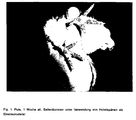
- Fig. 1 the bale lesions of a 1 week old turkey using a conventional bedding material
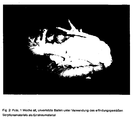
- Fig. 2 shows the uninjured bales of a 1 week old turkey when using the sorption medium according to the invention as bedding material.
- the particle size distribution in the aforementioned sorption media 1 to 7 may be, for example, as follows: 0% of the particles> 8.0 mm, 78-83% of the particles> 3.15 mm, 15-18% of the particles> 2.0 mm, 0-1 % of the particles ⁇ 2.0 mm.
- Particles of this type have, for example, a moisture content of 8.50-9.30% and have a moisture binding capacity of about 5 or more times their own weight.
- Example 1 Production of a Sorption Medium According to the Invention
- the sorbent component i. Wood or bark or a mixture thereof, is cleaned, freed of foreign matter, then dried to a dry matter content of about 10% and crushed.
- a screening can be carried out to a desired grain size.
- the isochinolinalkaloid Vietnamese extract is sprayed or admixed with the isochinolinalkaloid Vietnamese plant material. After the admixture of the alkaloid-containing substance, the material is compacted and then crumbled in a crumb to a desired particle size.
- the purified, shredded, dried, and optionally sieved to a desired grain size sorbent can be compacted and then crumbled and then sprayed a soluble form of the extract in a final step on the finished sorbent component.
- this alkaloid-containing sorption medium is suitable, for example, as bedding material for parking spaces, cages, stable boxes, etc. of livestock, pets or pets. It fulfills the requirement that all components and active ingredients used in the litter area for animals, in particular livestock, must be safe from feed law.
- the effectiveness of the sorption medium according to the invention in particular with regard to product stability and other technical properties, has hitherto not been achieved with any other feed substance-free substance combination.
- the sorption medium according to the invention has the advantage that it must be applied with full effectiveness only in a thin layer on the stable floor and thus it is not, as in shavings, to a dew point shift from the stable floor in the bedding layer, resulting in an additional moisture penetration of the Litter material from wood shavings leads.
- the amount of work for dunging and for sprinkling the stalls is a significant cost factor.
- the bedding according to the invention it is possible to save considerable costs in terms of labor, since the labor-intensive mucking out and refilling can be avoided.
- the antimicrobial properties of many isoquinoline alkaloids are known, in particular the antimicrobial properties of sanguinarine.
- the sorption medium according to the invention which contains a lignocellulose-containing sorption component and isoquinoline alkaloids, in particular sanguinarine and chelerythrine, surprising effects occur which improve the effectiveness of the bedding medium by a multiple. Even in doses in which there is no detectable antimicrobial effect, the activity of urease in the litter material according to the invention is significantly reduced. This also significantly reduces the formation of harmful ammonia. This has the consequence that on the one hand the bedding material can be used longer, on the other hand, the above-mentioned problems caused by ammonia are significantly reduced.
- urea or uric acid are excreted in the urine as the end product of the nitrogen metabolism.
- This urea is transformed by microbial activity by means of urease formed by the bacteria in large quantities to ammonia, which is gaseous. That the concentration of urea in the bedding decreases dramatically through this process.
- Urea promotes granulation and has a positive influence on wound healing in tissue injuries.
- urea is also used in various skin diseases such as psoriasis, atopic dermatitis but also in cosmetics as a moisturizing factor for the cornea.
- urea is increasingly transformed into ammonia in the stable, it is not only the ammonia that directly causes a damaging effect on the tissue, but also a reduction of the urea and thus a reduction of its protective properties on the cornea. Especially blatant is this effect in poultry.
- poultry excretes urea like mammals do.
- the pelt of young poultry is very sensitive and is easily affected by the absence of urea, by improper litter (sharp-edged) and by the irritating action of ammonia.
- there are premature bale lesions which in turn promote the infiltration of germs. This leads to painful joint diseases of the extremities, which causes movement disorders and frustration.
- the Fig. 1 shows the bale lesions in a 1 week old turkey, which result from the use of a conventional bedding material, namely the use of wood shavings (control group).
- the Fig. 2 shows the uninjured bales of a 1 week old turkey, which are observed when using a sorption medium according to the invention as bedding material.
- the alkaloid-containing sorption medium is also suitable as an odor and moisture binder in containers for collecting biowaste.
- An odor and liquid binder in biowaste containers and biowaste bins containing the sorption medium according to the invention avoids liquid accumulation in these containers and avoids or reduces microbial growth in these containers and the concomitant exposure to air. Furthermore By holding up microbial growth, there is a reduction or prevention of bad odors.
- sanguinarine can be contained, for example, in an amount of 0.001 to 1500 ppm.
Landscapes
- Life Sciences & Earth Sciences (AREA)
- Environmental Sciences (AREA)
- Health & Medical Sciences (AREA)
- Engineering & Computer Science (AREA)
- General Health & Medical Sciences (AREA)
- Zoology (AREA)
- Chemical & Material Sciences (AREA)
- Biodiversity & Conservation Biology (AREA)
- Animal Husbandry (AREA)
- Wood Science & Technology (AREA)
- Dentistry (AREA)
- Plant Pathology (AREA)
- Pest Control & Pesticides (AREA)
- Agronomy & Crop Science (AREA)
- Microbiology (AREA)
- Chemical Kinetics & Catalysis (AREA)
- Veterinary Medicine (AREA)
- Animal Behavior & Ethology (AREA)
- Epidemiology (AREA)
- Materials Engineering (AREA)
- Organic Chemistry (AREA)
- Molecular Biology (AREA)
- General Chemical & Material Sciences (AREA)
- Public Health (AREA)
- Biotechnology (AREA)
- Biochemistry (AREA)
- Toxicology (AREA)
- Disinfection, Sterilisation Or Deodorisation Of Air (AREA)
- Solid-Sorbent Or Filter-Aiding Compositions (AREA)
- Water Treatment By Sorption (AREA)
- Housing For Livestock And Birds (AREA)
- Medicines Containing Plant Substances (AREA)
Abstract
Description
- Die Erfindung bezieht sich auf spezielle Sorptionsmedien und deren Einsatz und Verwendung.
- In letzter Zeit haben Einstreumaterialien in der landwirtschaftlichen Nutztierproduktion zunehmend an Bedeutung gewonnen. Der Trend zu einer tierartgerechten Tierhaltung führte dazu, dass vermehrt Tiere in Gruppen- oder in Bodenhaltung gehalten werden. Auch gesetzliche Richtlinien, die den Aspekt des Tierschutzes verfolgen, haben vermehrt dazu geführt, dass die Notwendigkeit zur Verwendung geeigneter und insbesondere auch tierschutzgerechter Einstreumaterialien Bedeutung gewinnt.
- Bisher wurden in der Nutztierhaltung keine oder kostengünstige Einstreumaterialien verwendet, die lokal verfügbar waren, wie etwa Stroh, Sägespäne, Sägemehl oder Hobelspäne. In früheren Zeiten war auch die Verwendung von Laub durchaus gängig, was allerdings später aufgrund der arbeitsintensiven Beschaffung kaum mehr zur Anwendung kam. Diese Materialien wurden und werden ebenso im Bereich der Haltung von Hobbytieren, insbesondere Pferden, eingesetzt. Bei der Haltung von Kleintieren, wie etwa Kaninchen, Meerschweinchen etc., werden vor allem Einstreumaterialien aus Hobelspänen, Stroh, Maisspindel etc. eingesetzt. Abweichend davon werden bei der Haltung von Hauskatzen für die Befüllung der sogenannten Katzenklos vor allem flüssigkeitsbindende Materialien auf Basis von Tonmineralen und anderen mineralischen Substanzen eingesetzt, es kommen aber auch Produkte aus Holz, Stroh, Maisspindeln und anderen organischen Materialien zur Anwendung.
- Die Nachteile der herkömmlich verwendeten Einstreumaterialien sind vor allem darin gelegen, dass sie keine ausreichende oder nachhaltige Flüssigkeitsbindungskapazität haben und dass von den Tieren ausgeschiedene Stickstoffverbindungen (z.B. Harnstoff, Harnsäure) mikrobiell fermentiert und teilweise zu flüchtigen Schadgasen (z.B. Ammoniak, Schwefelverbindungen) umgebildet werden. Dieser Fermentationsprozess ist umso höher, je höher der Wassergehalt und die Temperatur des Mediums sind. Die entstehenden Schadgase gelten als Prädispositionsfaktoren für viele Erkrankungen (insbesondere des Respirationstraktes) und andere Probleme bei den betroffenen Tieren, wie etwa lokale Hautreizungen und Vorschädigungen der Haut, die das Eindringen von Mikroorganismen (Bakterien, Viren, Pilze) erleichtern. Bei Huf- und Klauentieren können diese volatilen Noxen auch zu einer Schädigung des Huf- bzw. Klauenhorns führen und somit Ursprung von Erkrankungen des Bewegungsapparats sein, die in vielen Fällen letal enden oder zumindest eine schwerwiegende Leistungsdepression der Tiere herbeiführen.
- Weiters führen die Fermentationsprozesse im Einstreumaterial zu einer raschen Vermehrung der Mikroorganismen und damit zu einer starken mikrobiellen Belastung, wobei Bakterien, Pilze und deren Toxine in weiterer Folge über die Stailluft in Aerosolform die Gesundheit der Tiere und des Betreuungspersonals belasten. Die entstehenden Schadgase (Ammoniak, Schwefelverbindungen) sowie Mikroorganismen und Toxine, welche die Stailluft beeinträchtigen, müssen durch Belüftungssysteme auf eine erträgliche Konzentration reduziert werden. Im Winter muss die frisch zugeführte Außenluft erwärmt werden. All dies führt zu einem erheblichen Energieverbrauch.
- Die im Geflügelbereich hauptsächlich eingesetzte Stalleinstreu sind Hobelspäne. Diese müssen in einer relativ dicken Schicht eingestreut werden, um aufgrund ihrer schlechten physikalischen Eigenschaften einen einigermaßen wirksamen Effekt zu erzielen. Das führt in der kalten Jahreszeit dazu, dass die Isolationswirkung der Einstreuschicht zu einer Verlagerung des Taupunktes im Bereich des Stallbodens in das Einstreumaterial führt, was zu einer weiteren Durchfeuchtung der Einstreu durch Kondensatbildung führt.
- Außerdem haben viele der üblichen Einstreumaterialien aufgrund ihrer Struktur und physikalischen Eigenschaften sowie aufgrund der Tatsache, dass sie schon per se mikrobiell kontaminiert sind, weitere erhebliche Nachteile. Dies sind etwa die Schadwirkung von scharfkantigen Hobelspänen auf die sehr sensible Ballenhaut von jungem Geflügel, die unzureichende Flüssigkeitsbindungskapazität von Hobelspänen und Stroh und die oft hochgradige Kontamination von Stroh mit Pilzen und Pilztoxinen. Aufgrund dieser unzureichenden Eigenschaften und der negativen Auswirkung bei manchen Tieren, z.B. Truthahn, besteht das Bestreben aufseiten des Gesetzgebers, aus Gründen des Tierschutzes in gewissen Produktionsbereichen die Tierzahl pro Flächeneinheit zu reduzieren. Dies würde in der Folge für den Landwirt zu einer wesentlichen Verteuerung des Produktionsprozesses und für den Konsumenten zu einer Verteuerung der landwirtschaftlichen Produkte führen.
- Weiters ist bei all diesen Materialien ein sehr hoher Arbeitsaufwand nötig, da durch die ungünstigen physikalischen Eigenschaften häufig nachgestreut werden muss, was für die Tiere eine Beunruhigung und für den Landwirt einen zusätzlichen Arbeitsaufwand darstellt. In weiterer Folge entstehen sehr große Mengen von Stalleinstreu, die teilweise schwer kompostierbar ist und somit ein erhebliches ökonomisches Problem bei der Entsorgung darstellt.
- Es wurden verschiedene Einstreumaterialien entwickelt, die die genannten Nachteile mehr oder weniger kompensieren sollten. So ist in
US 6 435 135 ein Einstreumaterial für Geflügel aus komprimierten Holzfasern beschrieben. InUS 6 837 181 ist eine Tiereinstreu aus Holzpartikeln aus Pinien- und Pappelholz genannt. InUS 5 271 355 wird die Verwendung von Pappelholz in Kombination mit Torf genannt InUS 5 542 374 wird eine Kombination von Ton und Zedernholz beschrieben. InUS 5 884 584 ist eine Tiereinstreu aus einer Kombination von Pinienholz, Luzerne und Pappelholz genannt. - Aus technischer Sicht ist die Verwendung verschiedener Zusatzstoffe möglich, die einerseits die Ureaseaktivität hemmen oder andererseits die mikrobielle Aktivität im Einstreumedium reduzieren. Die meisten bekannten Mittel sind jedoch chemischer Natur und können daher in der Regel im Bereich der Nutztierproduktion nicht eingesetzt werden. Es ist daher von besonderer Bedeutung, dass alle Komponenten und Wirkstoffe, die im Einstreubereich für Nutztiere verwendet werden, futtermittelrechtlich unbedenklich sind.
- Die Erfindung schlägt ein verbessertes, alkaloidhaltiges Sorptionsmedium vor, das eine lignocellulosehaltige Sorptionskomponente und mindestens ein Isochinolinalkaloid, vorzugsweise mindestens ein Benzophenanthridinalkaloid, enthält.
- Die Isochinolinalkaloide können in Form von Pflanzenmaterialien, wie Rhizomen, Blätter, Stängel und dergleichen, enthalten sein. Beispielsweise können für die vorliegende Erfindung Pflanzenmaterialien von Papaveraceae verwendet werden. Als besonders bevorzugte Pflanzen kann man beispielsweise Sanguinaria canadensis, Macleaya cordata, Chelidonium majus, Hydrastis canadensis etc. nennen. Die Papaveraceae enthalten Isochinolinalkaloide, insbesondere Benzophenanthridinalkaloide, wie beispielsweise Sanguinarin und Chelerythrin.
- Erfindungsgemäß können auch Extrakte aus Pflanzenmaterialien, wie beispielsweise der Sanguinaria canadensis oder der Macleaya cordata oder aus anderen Papaveraceae, enthalten sein. Gemäß einer bevorzugten Ausführungsform der Erfindung werden Extrakte aus der Macleaya cordata eingesetzt.
- Erfindungsgemäß geeignete Extrakte aus Pflanzenmaterialien können nach jedem bekannten Extraktionsverfahren erhalten werden, wie beispielsweise wässrige Extraktion, alkoholische Extraktion, CO2-Extraktion und dergleichen.
- Erfindungsgemäß können in dem Sorptionsmedium auch Salze oder Derivate isolierter Isochinolinalkaloide oder ihre synthetischen Analoga enthalten sein.
- Das erfindungsgemäße Sorptionsmedium enthält vorzugsweise Sanguinarin und Chelerythrin, wobei die Sanguinarin-Dosierung von 0,001 ppm bis 1500 ppm, bevorzugt 0,02 bis 250 ppm beträgt.
- Das Verhältnis Sanguinarin zu Chelerythrin in für die vorliegende Erfindung bevorzugt verwendeten Extrakten kann beispielsweise von 1:100 bis 100:1 variieren. Ein Verhältnis von ca. zwei Teilen Sanguinarin zu ca. einem Teil Chelerythrin ist eine besonders geeignete Zusammensetzung.
- Gemäß einem weiteren Merkmal der Erfindung kann vorgesehen sein, dass die Sorptionskomponente des Sorptionsmediums aus lignocellulosehaltigen Materialien ausgewählt ist. Beispiele für solche lignocellulosehaltigen Materialien sind Holz- und Rindenpartikel und deren Mischungen. Aber auch andere Materialien, wie etwa Stroh, Schilf oder andere lignocellulosehaltige Pflanzenmaterialien können erfindungsgemäß in der Sorptionskomponente eingesetzt werden.
- Es kann erfindungsgemäß vorgesehen sein, dass das lignocellulosehaltige Material in unverarbeiteter Form oder in verarbeiteter Form eingesetzt wird.
- Wenn die Sorptionskomponente des erfindungsgemäßen Sorptionsmediums vermahlene Holz- oder Rindenpartikel enthält, kann die Partikelgröße beispielsweise kleiner als 10 mm, bevorzugt kleiner als 1,6 mm sein. Die verwendeten Hölzer können alle Arten von Hölzern sein. Bevorzugt werden Hölzer von heimischen Koniferenarten, wie beispielsweise Fichte, Kiefer oder Lärche, verwendet. Als Rinden können alle Rinden sowohl von Weich- als auch von Harthölzern eingesetzt werden. Bevorzugt wird jedoch die Rinde von Kiefernarten für die Sorptionskomponente verwendet.
- Die vermahlene Sorptionskomponente, die ein lignocellulosehaltiges Material ist, wird mit isochinolinalkaloidhaltigem Pflanzenmaterial oder Extrakten aus diesem, insbesondere Pflanzenmaterial der Sanguinaria canadensis oder der Macleaya cordata oder Extrakten daraus, in der angegebenen Dosierung der Isochinolinalkaloide vermischt, anschließend kompaktiert, beispielsweise pelletiert, und in der Folge gekrümelt, d.h. wieder auf eine gewünschte Partikelgröße gebrochen. Diese Partikelgröße kann beispielsweise zwischen 0,001 und 35 mm, bevorzugt zwischen 0,05 und 10 mm betragen. Idealerweise werden staubförmige Anteile des Materials ausgesiebt.
- Der isochinolinalkaloidhaitige Extrakt kann in gelöster Form auf die Sorptionskomponente aufgesprüht werden. Dies kann vor oder auch nach der Verpressung erfolgen. Der Extrakt kann auch auf das fertige, d.h. auf die gewünschte Partikelgröße gebrochene Produkt aufgesprüht werden.
- Die vorliegende Erfindung betrifft auch ein Verfahren zur Herstellung des erfindungsgemäßen Sorptionsmediums. Das Verfahren beinhaltet folgende Schritte:
- (a) Reinigen und Trocknen der Sorptionskomponente,
- (b) Zerkleinern der Sorptionskomponente, gegebenenfalls Aussiebung auf eine gewünschte Korngröße,
- (c) Herstellen eines Zwischenproduktes durch Vermischen der in Schritt (b) erhaltenen Sorptionskomponente mit isochinolinalkaloidhaltigem Pflanzenmaterial oder durch Aufsprühen eines isochinolinalkaloidhaltigen Extraktes auf die im Schritt (b) erhaltene Sorptionskomponente,
- (d) Kompaktieren des im Schritt (c) erhaltenen Zwischenproduktes und anschließend Krümeln auf die gewünschte Partikelgröße.
- Gemäß einem weiteren Merkmal der Erfindung kann vorgesehen sein, dass das Verfahren folgende Schritte beihaltet:
- (a) Reinigen und Trocknen der Sorptionskomponente,
- (b) Zerkleinern der Sorptionskomponente, gegebenenfalls Aussiebung auf eine gewünschte Korngröße,
- (c) Kompaktieren des im Schritt (b) erhaltenen Produktes und anschließend Krümeln auf die gewünschte Partikelgröße,
- (d) Aufsprühen eines isochinolinalkaloidhaltigen Extrakts auf die Sorptionskomponente.
- Die vorliegende Erfindung hat auch eine Einstreu für einen Käfig, einen Einstellplatz, eine Stallbox etc. für ein Nutz-, Heim- oder Hobbytier zum Gegenstand, wobei die Einstreu ein alkaloidhaltiges Sorptionsmedium, wie es oben definiert wurde, enthält.
- Gemäß einem weiteren Merkmal der Erfindung kann vorgesehen sein, dass eine solche Einstreu das/die Isochinolinalkaloid/e in wirksamer Menge zur Heilung, Linderung oder Prophylaxe von Erkrankungen der Ballenhaut, der Hufe und Klauen von Nutz-, Heim- oder Hobbytieren enthält. Die wirksame Menge kann in einem weiten Bereich variieren. Die Sanguinarin-Dosierung kann beispielsweise im Bereich 0,001 bis 1500 ppm liegen.
- Die vorliegende Erfindung hat auch ein Geruchs- und Flüssigkeitsbindemittel für Bioabfallsammelbehälter zum Gegenstand, das ein erfindungsgemäßes alkaloidhaltiges Sorptionsmedium enthält. Vorzugsweise enthält das Geruchs- und Flüssigkeitsbindemittel für Bioabfallsammelbehälter das/die Isochinolinalkaloidie in wirksamer Menge zur Reduktion oder Vermeidung von mikrobiellem Wachstum in dem Bioabfallsammelbehälter. Beispielsweise kann das alkaloidhaltige Sorptionsmedium Sanguinarin in einer Menge von 0,001 bis 1500 ppm enthalten.
- Die Erfindung wird im Folgenden unter Bezugnahme auf spezielle Ausführungsbeispiele, Beispiele und die Figuren erläutert, wobei
Fig. 1 die Ballenläsionen einer 1 Woche alten Pute bei Verwendung eines herkömmlichen Einstreumaterials undFig. 2 die unverletzten Ballen einer 1 Woche alten Pute bei Verwendung des erfindungsgemäßen Sorptionsmediums als Einstreumaterial zeigt. - Bevorzugte Ausführungsbeispiele des erfindungsgemäßen Sorptionsmediums sind wie folgt:
- Sorptionsmedium 1: Die Sorptionskomponente ist Kiefernrinde und die Isochinolinalkaloide sind in Form eines Extrakts aus Macleaya cordata enthalten.
- Sorptionsmedium 2: Die Sorptionskomponente ist eine Mischung aus Kiefernrinde und Holz, vorzugsweise Fichten- und/oder Kiefernholz, und die Isochinolinalkaloide sind in Form eines Extrakts aus Macleaya cordata enthalten.
- Sorptionsmedium 3: Die Sorptionskomponente ist eine Mischung aus Fichten- und Kiefemholz und die Isochinolinalkaloide sind in Form eines Extrakts aus Macleaya cordata enthalten.
- Sorptionsmedium 4: Die Sorptionskomponente ist vermahlenes Kiefemholz und die Isochinolinalkaloide sind in Form eines Extrakts aus Macleaya cordata enthalten.
- Sorptionsmedium 5: Die Sorptionskomponente ist vermahlenes Fichtenholz und die Isochinolinalkaloide sind in Form eines Extrakts aus Macleaya cordata enthalten.
- Sorptionsmedium 6: Die Sorptionskomponente ist vermahlenes Lärchenholz und die Isochinolinalkaloide sind in Form eines Extrakts aus Macleaya cordata enthalten.
- Sorptionsmediums 7: Die Sorptionskomponente ist eine Mischung aus Lärchenrinde und Kiefernrinde und die Isochinolinalkaloide sind in Form eines Extrakts aus Macleaya cordata enthalten,
- Die Partikelgrößenverteilung bei den genannten Sorptionsmedien 1 bis 7 können beispielsweise wie folgt sein: 0% der Partikel > 8,0 mm, 78-83% der Partikel > 3,15 mm, 15-18% der Partikel > 2.0 mm, 0-1% der Partikel < 2,0 mm.
- Partikel dieser Art weisen beispielsweise einen Feuchtigkeitsgehalt von 8,50-9,30% auf und haben ein Feuchtigkeitsbindungsvermögen von ca. dem 5- oder einem höheren Mehrfachen ihres Eigengewichtes.
- Die Sorptionskomponente, d.h. Holz oder Rinde oder eine Mischung davon, wird gereinigt, von Fremdanteilen befreit, anschließend auf einen Trockensubstanzgehalt von etwa 10% getrocknet und zerkleinert. Gegebenenfalls kann eine Absiebung auf eine gewünschte Korngröße erfolgen. Anschließend wird der isochinolinalkaloidhaltige Extrakt aufgesprüht oder das isochinolinalkaloidhaltige Pflanzenmaterial beigemischt. Nach der Beimischung der alkaloidhaltigen Substanz wird das Material kompaktiert und danach in einem Krümler auf eine gewünschte Partikelgröße gekrümelt.
- Alternativ dazu kann das gereinigte, zerkleinere, getrocknete und gegebenenfalls auf eine gewünschte Korngröße ausgesiebte Sorptionsmaterial kompaktiert und anschließend gekrümelt werden und eine lösliche Form des Extraktes dann in einem letzten Schritt auf die fertige Sorptionskomponente aufgesprüht werden.
- Gemäß einer Ausgestaltung der Erfindung eignet sich dieses alkaloidhaltige Sorptionsmedium beispielsweise als Einstreumaterial für Einstellplätze, Käfige, Stallboxen etc. von Nutztieren, Hobbytieren oder Heimtieren. Es erfüllt die Forderung, dass alle Komponenten und Wirkstoffe, die im Einstreubereich für Tiere, insbesondere Nutztiere, verwendet werden, futtermittelrechtlich unbedenklich sein müssen. Die Wirksamkeit des erfindungsgemäßen Sorptionsmediums, insbesondere hinsichtlich Produktstabilität und sonstiger technischer Eigenschaften, konnte bisher mit keiner anderen futtermittelrechtlich unbedenklichen Stoffkombination erreicht werden. Weiters hat das erfindungsgemäße Sorptionsmedium den Vorteil, dass es bei voller Wirksamkeit nur in dünner Schicht auf den Stallboden aufgebracht werden muss und es somit nicht, wie etwa bei Hobelspänen, zu einer Taupunktverlagerung aus dem Stallboden in die Einstreuschicht kommt, was zu einer zusätzlichen Durchfeuchtung des Einstreumaterials aus Hobelspänen führt.
- Weiters stellt in der landwirtschaftlichen Nutztierproduktion, aber auch etwa bei Hobbytieren, wie dem Pferd, der Arbeitsaufwand zur Entmistung und zum Einstreuen der Ställe einen erheblichen Kostenfaktor dar. Bei der erfindungsgemäßen Einstreu ist es möglich, erhebliche Kosten im Hinblick auf den Arbeitsaufwand einzusparen, da das arbeitsintensive Ausmisten und Neueinstreuen vermieden werden kann.
- Die antimikrobiellen Eigenschaften vieler Isochinolinalkaloide sind bekannt, insbesondere die antimikrobiellen Eigenschaften von Sanguinarin. In dem erfindungsgemäßen Sorptionsmedium, das eine lignocellulosehaltige Sorptionskomponente und Isochinolinalkaloide, insbesondere Sanguinarin und Chelerythrin, enthält, kommt es zu überraschenden Effekten, welche die Wirksamkeit des Einstreumediums um ein Vielfaches verbessern. Schon in Dosierungen, bei denen es noch zu keiner nachweisbaren antimikrobiellen Wirkung kommt, ist die Aktivität der Urease im erfindungsgemäßen Einstreumaterial deutlich reduziert. Dadurch wird auch die Bildung von schädlichem Ammoniak deutlich reduziert. Dies hat zur Folge, dass einerseits das Einstreumaterial länger verwendet werden kann, andererseits die oben erwähnten, durch Ammoniak bedingten Probleme deutlich reduziert sind.
- Dies sind vor allem Erkrankungen des Respirationstraktes bei allen Tierarten, Läsionen der Haut und Hautanhangsgebilde der Gliedmaßen von Geflügel, Schädigungen von Huf- und Klauenhorn von Pferden und anderen Huftieren bzw. Klauentieren. Diese Schädigungen führen zu erheblichen Gesundheitsstörungen und Leistungseinbußen bei landwirtschaftlichen Nutztieren.
- Als Endprodukt des Stickstoffstoffwechsels werden bei Tieren Harnstoff oder Harnsäure mit dem Urin ausgeschieden. Dieser Harnstoff wird durch mikrobielle Aktivität mittels von den Bakterien gebildeter Urease in großer Menge zu Ammoniak umgebildet, das gasförmig ist. D.h. die Konzentration von Harnstoff in der Einstreu nimmt durch diesen Prozess dramatisch ab. Harnstoff ist jedoch granulationsfördernd und hat bei Gewebeverletzungen einen positiven Einfluss auf die Wundheilung. So wird Harnstoff auch bei verschiedenen Hauterkrankungen wie Psoriasis, Neurodermitis aber auch in Kosmetika als Feuchthaltefaktor für die Hornhaut eingesetzt. Wird nun in der Stalleinstreu vermehrt Harnstoff in Ammoniak umgebildet, kommt es nicht nur durch das Ammoniak zu einer schädigenden Wirkung auf das Gewebe direkt, sondern es kommt auch zu einer Reduktion des Harnstoffes und damit zu einer Verminderung dessen protektiver Eigenschaften auf die Hornhaut. Besonders krass ist dieser Effekt bei Geflügel. Geflügel scheidet in den ersten sechs Lebenswochen wie Säugetiere Harnstoff aus. Die Ballenhaut von jungem Geflügel ist sehr empfindlich und wird durch das Fehlen von Harnstoff, durch ungeeignetes Einstreumaterial (scharfkantig) und durch die reizende Wirkung von Ammoniak leicht beeinträchtigt. Es kommt daher bei Geflügel frühzeitig zu Ballenläsionen, die in der Folge wiederum das Eindringen von Keimen fördern. Dies führt zu schmerzhaften Gelenkserkrankungen der Extremitäten, wodurch Bewegungsstörungen und Fressunlust bedingt werden. Aber die negativen Effekte von ungeeignetem Einstreumaterial sind nicht nur aus tierschützerischer Sicht problematisch, die beschriebenen Faktoren führen in weiterer Folge auch zu Leistungseinbußen. Dieses Problem tritt besonders deutlich bei Puten auf, da diese durch die lange Mastdauer und das hohe Mastendgewicht durch Schmerzen im Bewegungsapparat stark beeinträchtigt werden. Durch die Verwendung eines erfindungsgemäßen Sorptionsmediums als Einstreumaterial kann dieses Problem entschärft werden.
- In einem Versuch mit 170 Mastputen wurde der Einfluss des Einstreumaterials auf die Tiergesundheit, insbesondere auf das Entstehen von Ballenverletzungen überprüft. Dazu wurde ein ca. 20 m2 großes Stallabteil mit herkömmlicher Einstreu (Hobelspänen) bis zu einer Höhe von 3 cm eingestreut (Kontrollgruppe), in einem zweiten, ebenso großen Abteil wurde ein erfindungsgemäßes Sorptionsmedium mit Kiefernrinde als Sorptionskomponente und mit einem Gehalt von 1,5 g Sanguinarin pro Tonne Sorptionsmedium als Einstreu in gleicher Weise eingebracht (Versuchsgruppe).
- In jedem Abteil wurden 85 Küken untergebracht. In beiden Abteilen wurde die Einstreu bei Durchnässung bei Bedarf entfernt und durch frische Einstreu ersetzt. Futter, Fütterungsmanagement, Stallklima und Lichtprogramm entsprachen den üblichen Rahmenbedingungen in einem Putenmastbetrieb. Erhoben wurden Futter- und Wasseraufnahme der Tiere, Leistungsparameter, Ausfälle, Gesundheitsstatus insbesondere Anzeichen von Pododermatitis, Einstreuverbrauch und Stallklimadaten.
- Der Versuch ergab, dass die Versuchsgruppe signifikant geringeres Auftreten von Ballenverletzungen, insbesondere Anzeichen von Pododermatitis, verzeichnete als die Kontrollgruppe.
- Die
Fig. 1 zeigt die Ballenläsionen bei einer 1 Woche alten Pute, die aus der Verwendung eines herkömmlichen Einstreumaterials, nämlich der Verwendung von Hobelspänen, folgen (Kontrollgruppe). DieFig. 2 zeigt die unverletzten Ballen einer 1 Woche alten Pute, die bei Verwendung eines erfindungsgemäßen Sorptionsmediums als Einstreumaterial zu beobachten sind. - Gemäß einer weiteren Ausgestaltung der Erfindung eignet sich das alkaloidhaltige Sorptionsmedium auch als Geruchs- und Feuchtigkeitsbindemittel in Behältern zum Sammeln von Bioabfällen.
- Bei der Sammlung von verrottbaren und kompostierbaren Abfällen (Biomüll), wie Küchenabfällen, kommt es zu einem Absetzen von Flüssigkeit aus den Abfällen. Das. Fehlen von trockenem, schwer verrottbarem Abfallmaterial und fehlender Durchlüftung führt zu starkem mikrobiellen Wachstum, insbesondere Wachstum von gesundheitsschädlichen Pilzen. Diese Keime, insbesondere die Pilze und deren Toxine, belasten in der Folge die Raumluft. Dies ist meistens die Luft der Küche. Durch die beschriebene mikrobielle Belastung und durch die Zersetzung der Abfälle entstehen schlechte Gerüche, die besonders bei heißer Witterung unangenehm auftreten oder aber im Bereich der Küche störend sind.
- Durch ein das erfindungsgemäße Sorptionsmedium enthaltendes Geruchs- und Flüssigkeitsbindemittel in Bioabfallbehältern und Biomülltonnen wird eine Flüssigkeitsansammlung in diesen Behältnissen vermieden und mikrobielles Wachstum in diesen Behältnissen und die damit einhergehender Belastung der Luft vermieden oder reduziert. Außerdem kommt es durch das Hinanhalten von mikrobiellem Wachstum zu einer Reduktion oder Vermeidung von schlechten Gerüchen.
- In einem erfindungsgemäßen Geruchs- und Flüssigkeitsbindemittel kann Sanguinarin beispielsweise in einer Menge von 0,001 bis 1500 ppm enthalten sein.
Claims (17)
- Alkaloidhaltiges Sorptionsmedium, dadurch gekennzeichnet, dass es eine lignocellulosehaltige Sorptionskomponente und mindestens ein Isochinolinalkaloid, vorzugsweise mindestens ein Benzophenanthridinalkaloid, enthält.
- Alkaloidhaltiges Sorptionsmedium nach Anspruch 1, dadurch gekennzeichnet, dass die Isochinolinalkaloide in Form von Pflanzenmaterialien, wie Rhizomen, Blätter, Stängel, oder als Extrakte aus solchen Pflanzenmaterialien oder als Salze oder Derivate isolierter Isochinolinalkalolde oder in Form der synthetischen Analoga enthalten sind.
- Alkaloidhaltiges Sorptionsmedium nach Anspruch 1 oder 2, dadurch gekennzeichnet, dass die Isochinolinalkaloide in Form von Pflanzenmaterialien und/oder in Form von Extrakten aus Pflanzenmaterial von Papaveraceae, vorzugsweise ausgewählt aus der aus Sanguinaria canadensis, Macleaya cordata, Chelidonium majus, Hydrastis canadensis und deren Mischungen bestehenden Gruppe, enthalten ist.
- Alkaloidhaltiges Sorptionsmedium nach einem der Ansprüche 1 bis 3, dadurch gekennzeichnet, dass Sanguinarin und Chelerythrin enthalten sind.
- Alkaloidhaltiges Sorptionsmedium nach einem der Ansprüche 1 bis 4, dadurch gekennzeichnet, dass Sanguinarin in einer Menge von 0,001 bis 1500 ppm, vorzugsweise 0,02 bis 250 ppm, enthalten ist.
- Alkaloidhaltiges Sorptionsmedium nach einem der Ansprüche 1 bis 5, dadurch gekennzeichnet, dass die Sorptionskomponente unverarbeitetes oder verarbeitetes lignocellulosehaltiges Material enthält.
- Alkaloidhaltiges Sorptionsmedium nach einem der Ansprüche 1 bis 6, dadurch gekennzeichnet, dass das lignocellulosehaltige Material vorzugsweise aus der aus Weichhölzern, Harthölzern, Rinden von Weichhölzern, Rinden von Harthölzern und deren Mischungen bestehenden Gruppe ausgewählt ist.
- Alkaloidhaltiges Sorptionsmedium nach einem der Ansprüche 1 bis 7, dadurch gekennzeichnet, dass die Sorptionskomponente Hölzer von Koniferenarten enthält, vorzugsweise ausgewählt aus der Gruppe bestehend aus Fichtenholz, Kiefemholz, Lärchenholz und deren Mischungen.
- Alkaloidhaltiges Sorptionsmedium nach einem der Ansprüche 1 bis 7, dadurch gekennzeichnet, dass die Sorptionskomponente Rinden von Kiefernarten enthält.
- Verfahren zur Herstellung eines alkaloidhaltigen Sorptionsmediums gemäß einem der Ansprüche 1 bis 9, gekennzeichnet durch folgende Schritte:(a) Reinigen und Trocknen der Sorptionskomponente,(b) Zerkleinern der Sorptionskomponente, gegebenenfalls Aussiebung auf eine Größe unter 10 mm, vorzugsweise unter 1,6 mm,(c) Herstellen eines Zwischenproduktes durch Vermischen der in Schritt (b) erhaltenen Sorptionskomponente mit isochinolinalkaloidhaltigem Pflanzenmaterial oder durch Aufsprühen eines isochinolinalkaloidhaltigen Extraktes auf die im Schritt (b) erhaltene Sorptionskomponente,(d) Kompaktieren des im Schritt (c) erhaltenen Zwischenproduktes und anschließend Krümeln auf eine Partikelgröße zwischen 0,001 und 35 mm, bevorzugt zwischen 0,05 und 10 mm.
- Verfahren zur Herstellung eines alkaloidhaitigen Sorptionsmediums gemäß einem der Ansprüche 1 bis 9, gekennzeichnet durch folgende Schritte:(a) Reinigen und Trocknen der Sorptionskomponente,(b) Zerkleinern der Sorptionskomponente, gegebenenfalls Aussiebung auf eine Größe unter 10 mm, vorzugsweise unter 1,6 mm,(c) Kompaktieren des im Schritt (b) erhaltenen Produktes und anschließend Krümeln auf eine Partikelgröße zwischen 0,001 und 35 mm, bevorzugt zwischen 0,05 und 10 mm,(d) Aufsprühen eines isochinolinalkaloidhaltigen Extrakts auf die Sorptionskomponente.
- Einstreu für einen Käfig, einen Einstellplatz, eine Stallbox etc. für ein Nutz-, Heimoder Hobbytier, dadurch gekennzeichnet, dass sie ein alkaloidhaltiges Sorptionsmedium gemäß einem der Ansprüche 1 bis 9 enthält.
- Einstreu nach Anspruch 12, dadurch gekennzeichnet, dass Sanguinarin in einer Menge von 0,001 bis 1500 ppm enthalten ist.
- Verwendung eines alkaloidhaltigen Sorptionsmediums nach einem der Ansprüche 1 bis 9 zur Herstellung einer Einstreu zur Heilung, Linderung oder Prophylaxe von Erkrankungen der Ballenhaut, der Hufe und Klauen von Nutz-, Heim- oder Hobbytieren.
- Geruchs- und Flüssigkeitsbindemittel für Bioabfallsammelbehälter, dadurch gekennzeichnet, dass ein alkaloidhaltiges Sorptionsmedium gemäß einem der Ansprüche 1 bis 9 enthalten ist.
- Geruchs- und Flüssigkeitsbindemittel nach Anspruch 15, dadurch gekennzeichnet, dass Sanguinarin in einer Menge von 0,001 bis 1500 ppm enthalten ist.
- Verwendung eines Geruchs- und Flüssigkeitsbindemittels nach Anspruch 15 oder 16 zur Reduktion oder Vermeidung von mikrobiellem Wachstum in dem Bioabfallbehälter.
Applications Claiming Priority (2)
| Application Number | Priority Date | Filing Date | Title |
|---|---|---|---|
| AT0187606A AT504373B1 (de) | 2006-11-13 | 2006-11-13 | Sorptionsmedium |
| PCT/EP2007/009790 WO2008058697A2 (de) | 2006-11-13 | 2007-11-13 | Sorptionsmedium |
Publications (2)
| Publication Number | Publication Date |
|---|---|
| EP2091320A2 EP2091320A2 (de) | 2009-08-26 |
| EP2091320B1 true EP2091320B1 (de) | 2011-10-26 |
Family
ID=39367315
Family Applications (1)
| Application Number | Title | Priority Date | Filing Date |
|---|---|---|---|
| EP20070819776 Active EP2091320B1 (de) | 2006-11-13 | 2007-11-13 | SORPTIONSMEDIUM Verfharen zur Herstellung und Anwendung |
Country Status (5)
| Country | Link |
|---|---|
| EP (1) | EP2091320B1 (de) |
| AT (2) | AT504373B1 (de) |
| DK (1) | DK2091320T3 (de) |
| ES (1) | ES2374001T3 (de) |
| WO (1) | WO2008058697A2 (de) |
Families Citing this family (1)
| Publication number | Priority date | Publication date | Assignee | Title |
|---|---|---|---|---|
| CN108541660A (zh) * | 2018-04-24 | 2018-09-18 | 上海动物园 | 动物饲养方法、动物饲养装置及其发酵床 |
Family Cites Families (4)
| Publication number | Priority date | Publication date | Assignee | Title |
|---|---|---|---|---|
| US5044324A (en) * | 1989-04-24 | 1991-09-03 | Mountain Cat, Inc. | Wood fiber crumbles |
| US5906825A (en) * | 1997-10-20 | 1999-05-25 | Magellan Companies, Inc. | Polymers containing antimicrobial agents and methods for making and using same |
| JP2001095410A (ja) * | 1999-09-28 | 2001-04-10 | Tachikawa Heiwa Nouen:Kk | 犬猫の糞尿処理材およびその製造方法 |
| JP4689332B2 (ja) * | 2005-04-20 | 2011-05-25 | 株式会社富東宮 | 生ごみ処理剤 |
-
2006
- 2006-11-13 AT AT0187606A patent/AT504373B1/de not_active IP Right Cessation
-
2007
- 2007-11-13 EP EP20070819776 patent/EP2091320B1/de active Active
- 2007-11-13 AT AT07819776T patent/ATE530064T1/de active
- 2007-11-13 DK DK07819776T patent/DK2091320T3/da active
- 2007-11-13 ES ES07819776T patent/ES2374001T3/es active Active
- 2007-11-13 WO PCT/EP2007/009790 patent/WO2008058697A2/de not_active Ceased
Also Published As
| Publication number | Publication date |
|---|---|
| WO2008058697A8 (de) | 2009-07-09 |
| ES2374001T3 (es) | 2012-02-10 |
| AT504373B1 (de) | 2009-08-15 |
| EP2091320A2 (de) | 2009-08-26 |
| DK2091320T3 (da) | 2012-01-30 |
| WO2008058697A3 (de) | 2008-09-18 |
| WO2008058697A2 (de) | 2008-05-22 |
| AT504373A1 (de) | 2008-05-15 |
| ATE530064T1 (de) | 2011-11-15 |
Similar Documents
| Publication | Publication Date | Title |
|---|---|---|
| US4519340A (en) | Absorbent composition for animal excreta and process for making and using same | |
| EP3628148B1 (de) | Verfahren zur herstellung eines einstreuzusatzes für die tierhaltung, und einstreuzusatz für die tierhaltung | |
| US5044324A (en) | Wood fiber crumbles | |
| EP3478053B1 (de) | Einstreumaterial sowie liegematratze für die tierhaltung | |
| EP2846626B1 (de) | Streu für huftiere und recycling davon in kompost | |
| EP1161859A2 (de) | Tierstreu | |
| DE4327159A1 (de) | Verfahren zur Herstellung von Sorptionsmitteln auf der Basis von Smektiten und cellulosehaltigen Materialien mit niedrigem Schüttgewicht | |
| EP2537413A1 (de) | Einstreu für die Geflügelzucht oder für den Mastdurchlauf in der Geflügelmast | |
| WO2020065035A1 (de) | Verfahren und zusammensetzung zur neutralisierung oder reduktion schädlicher gerüche oder gase | |
| DE2558257A1 (de) | Verfahren zum umsetzen tierischer exkremente | |
| KR20090012786A (ko) | 토탄이 함유된 가축사육용 깔짚 | |
| AT504373B1 (de) | Sorptionsmedium | |
| EP1020112B1 (de) | Tierstreu | |
| DE69412428T2 (de) | Biologische abbaubare Tierstreu mit Leinen oder Flachs oder ihren Mischungen | |
| DE202015104947U1 (de) | Streu für Tiere | |
| EP2543247A1 (de) | Bettmaterial für einen Stallboden | |
| DE202005007297U1 (de) | Tierstreu | |
| EP1669336A1 (de) | Langzeitdünger/Bodenverbesserer mit wildabweisender Wirkung | |
| DE102019110393A1 (de) | Hemmung der Urease in tierischen Exkrementen zur Reduzierung von Stickstoffverlusten | |
| DE102018121783A1 (de) | Herstellungsverfahren für Pflanzerden und Torfersatzstoffe | |
| DE202022002876U1 (de) | Pelletierte Einstreu angereichert mit Natriumbisulfat | |
| DE202005011433U1 (de) | Einstreu für Geflügel | |
| EP1738639A1 (de) | Einstreu für Geflügel | |
| DE202017104986U1 (de) | Langzeitdüngemittel sowie eine Vorrichtung zu dessen Herstellung | |
| DE202016101568U1 (de) | Tiereinstreu |
Legal Events
| Date | Code | Title | Description |
|---|---|---|---|
| PUAI | Public reference made under article 153(3) epc to a published international application that has entered the european phase |
Free format text: ORIGINAL CODE: 0009012 |
|
| 17P | Request for examination filed |
Effective date: 20090507 |
|
| AK | Designated contracting states |
Kind code of ref document: A2 Designated state(s): AT BE BG CH CY CZ DE DK EE ES FI FR GB GR HU IE IS IT LI LT LU LV MC MT NL PL PT RO SE SI SK TR |
|
| DAX | Request for extension of the european patent (deleted) | ||
| 17Q | First examination report despatched |
Effective date: 20100415 |
|
| GRAP | Despatch of communication of intention to grant a patent |
Free format text: ORIGINAL CODE: EPIDOSNIGR1 |
|
| RTI1 | Title (correction) |
Free format text: SORPTION MEDIUM PROCESS OF PRODUCTION UND USE |
|
| GRAS | Grant fee paid |
Free format text: ORIGINAL CODE: EPIDOSNIGR3 |
|
| GRAA | (expected) grant |
Free format text: ORIGINAL CODE: 0009210 |
|
| AK | Designated contracting states |
Kind code of ref document: B1 Designated state(s): AT BE BG CH CY CZ DE DK EE ES FI FR GB GR HU IE IS IT LI LT LU LV MC MT NL PL PT RO SE SI SK TR |
|
| REG | Reference to a national code |
Ref country code: GB Ref legal event code: FG4D Free format text: NOT ENGLISH |
|
| REG | Reference to a national code |
Ref country code: CH Ref legal event code: EP |
|
| REG | Reference to a national code |
Ref country code: IE Ref legal event code: FG4D |
|
| REG | Reference to a national code |
Ref country code: CH Ref legal event code: NV Representative=s name: BOHEST AG |
|
| REG | Reference to a national code |
Ref country code: DE Ref legal event code: R096 Ref document number: 502007008552 Country of ref document: DE Effective date: 20111222 |
|
| REG | Reference to a national code |
Ref country code: DK Ref legal event code: T3 |
|
| REG | Reference to a national code |
Ref country code: NL Ref legal event code: T3 |
|
| REG | Reference to a national code |
Ref country code: ES Ref legal event code: FG2A Ref document number: 2374001 Country of ref document: ES Kind code of ref document: T3 Effective date: 20120210 |
|
| LTIE | Lt: invalidation of european patent or patent extension |
Effective date: 20111026 |
|
| PG25 | Lapsed in a contracting state [announced via postgrant information from national office to epo] |
Ref country code: IS Free format text: LAPSE BECAUSE OF FAILURE TO SUBMIT A TRANSLATION OF THE DESCRIPTION OR TO PAY THE FEE WITHIN THE PRESCRIBED TIME-LIMIT Effective date: 20120226 Ref country code: LT Free format text: LAPSE BECAUSE OF FAILURE TO SUBMIT A TRANSLATION OF THE DESCRIPTION OR TO PAY THE FEE WITHIN THE PRESCRIBED TIME-LIMIT Effective date: 20111026 |
|
| BERE | Be: lapsed |
Owner name: NEUFELD, KLAUS Effective date: 20111130 Owner name: WESTERKAMP, ARNOLD Effective date: 20111130 Owner name: GRABHERR, HELMUT Effective date: 20111130 |
|
| PG25 | Lapsed in a contracting state [announced via postgrant information from national office to epo] |
Ref country code: GR Free format text: LAPSE BECAUSE OF FAILURE TO SUBMIT A TRANSLATION OF THE DESCRIPTION OR TO PAY THE FEE WITHIN THE PRESCRIBED TIME-LIMIT Effective date: 20120127 Ref country code: SI Free format text: LAPSE BECAUSE OF FAILURE TO SUBMIT A TRANSLATION OF THE DESCRIPTION OR TO PAY THE FEE WITHIN THE PRESCRIBED TIME-LIMIT Effective date: 20111026 Ref country code: SE Free format text: LAPSE BECAUSE OF FAILURE TO SUBMIT A TRANSLATION OF THE DESCRIPTION OR TO PAY THE FEE WITHIN THE PRESCRIBED TIME-LIMIT Effective date: 20111026 Ref country code: PT Free format text: LAPSE BECAUSE OF FAILURE TO SUBMIT A TRANSLATION OF THE DESCRIPTION OR TO PAY THE FEE WITHIN THE PRESCRIBED TIME-LIMIT Effective date: 20120227 Ref country code: LV Free format text: LAPSE BECAUSE OF FAILURE TO SUBMIT A TRANSLATION OF THE DESCRIPTION OR TO PAY THE FEE WITHIN THE PRESCRIBED TIME-LIMIT Effective date: 20111026 Ref country code: PL Free format text: LAPSE BECAUSE OF FAILURE TO SUBMIT A TRANSLATION OF THE DESCRIPTION OR TO PAY THE FEE WITHIN THE PRESCRIBED TIME-LIMIT Effective date: 20111026 |
|
| REG | Reference to a national code |
Ref country code: IE Ref legal event code: FD4D |
|
| PG25 | Lapsed in a contracting state [announced via postgrant information from national office to epo] |
Ref country code: MC Free format text: LAPSE BECAUSE OF NON-PAYMENT OF DUE FEES Effective date: 20111130 Ref country code: CY Free format text: LAPSE BECAUSE OF FAILURE TO SUBMIT A TRANSLATION OF THE DESCRIPTION OR TO PAY THE FEE WITHIN THE PRESCRIBED TIME-LIMIT Effective date: 20111026 |
|
| PG25 | Lapsed in a contracting state [announced via postgrant information from national office to epo] |
Ref country code: EE Free format text: LAPSE BECAUSE OF FAILURE TO SUBMIT A TRANSLATION OF THE DESCRIPTION OR TO PAY THE FEE WITHIN THE PRESCRIBED TIME-LIMIT Effective date: 20111026 Ref country code: SK Free format text: LAPSE BECAUSE OF FAILURE TO SUBMIT A TRANSLATION OF THE DESCRIPTION OR TO PAY THE FEE WITHIN THE PRESCRIBED TIME-LIMIT Effective date: 20111026 Ref country code: BG Free format text: LAPSE BECAUSE OF FAILURE TO SUBMIT A TRANSLATION OF THE DESCRIPTION OR TO PAY THE FEE WITHIN THE PRESCRIBED TIME-LIMIT Effective date: 20120126 Ref country code: IE Free format text: LAPSE BECAUSE OF FAILURE TO SUBMIT A TRANSLATION OF THE DESCRIPTION OR TO PAY THE FEE WITHIN THE PRESCRIBED TIME-LIMIT Effective date: 20111026 Ref country code: CZ Free format text: LAPSE BECAUSE OF FAILURE TO SUBMIT A TRANSLATION OF THE DESCRIPTION OR TO PAY THE FEE WITHIN THE PRESCRIBED TIME-LIMIT Effective date: 20111026 |
|
| PG25 | Lapsed in a contracting state [announced via postgrant information from national office to epo] |
Ref country code: BE Free format text: LAPSE BECAUSE OF NON-PAYMENT OF DUE FEES Effective date: 20111130 Ref country code: IT Free format text: LAPSE BECAUSE OF NON-PAYMENT OF DUE FEES Effective date: 20111113 Ref country code: RO Free format text: LAPSE BECAUSE OF FAILURE TO SUBMIT A TRANSLATION OF THE DESCRIPTION OR TO PAY THE FEE WITHIN THE PRESCRIBED TIME-LIMIT Effective date: 20111026 |
|
| PLBE | No opposition filed within time limit |
Free format text: ORIGINAL CODE: 0009261 |
|
| STAA | Information on the status of an ep patent application or granted ep patent |
Free format text: STATUS: NO OPPOSITION FILED WITHIN TIME LIMIT |
|
| 26N | No opposition filed |
Effective date: 20120727 |
|
| REG | Reference to a national code |
Ref country code: DE Ref legal event code: R097 Ref document number: 502007008552 Country of ref document: DE Effective date: 20120727 |
|
| PG25 | Lapsed in a contracting state [announced via postgrant information from national office to epo] |
Ref country code: MT Free format text: LAPSE BECAUSE OF FAILURE TO SUBMIT A TRANSLATION OF THE DESCRIPTION OR TO PAY THE FEE WITHIN THE PRESCRIBED TIME-LIMIT Effective date: 20111026 |
|
| PG25 | Lapsed in a contracting state [announced via postgrant information from national office to epo] |
Ref country code: LU Free format text: LAPSE BECAUSE OF NON-PAYMENT OF DUE FEES Effective date: 20111113 |
|
| PGRI | Patent reinstated in contracting state [announced from national office to epo] |
Ref country code: IT Effective date: 20130311 |
|
| PG25 | Lapsed in a contracting state [announced via postgrant information from national office to epo] |
Ref country code: FI Free format text: LAPSE BECAUSE OF FAILURE TO SUBMIT A TRANSLATION OF THE DESCRIPTION OR TO PAY THE FEE WITHIN THE PRESCRIBED TIME-LIMIT Effective date: 20111026 |
|
| PG25 | Lapsed in a contracting state [announced via postgrant information from national office to epo] |
Ref country code: TR Free format text: LAPSE BECAUSE OF FAILURE TO SUBMIT A TRANSLATION OF THE DESCRIPTION OR TO PAY THE FEE WITHIN THE PRESCRIBED TIME-LIMIT Effective date: 20111026 |
|
| PG25 | Lapsed in a contracting state [announced via postgrant information from national office to epo] |
Ref country code: HU Free format text: LAPSE BECAUSE OF FAILURE TO SUBMIT A TRANSLATION OF THE DESCRIPTION OR TO PAY THE FEE WITHIN THE PRESCRIBED TIME-LIMIT Effective date: 20111026 |
|
| REG | Reference to a national code |
Ref country code: CH Ref legal event code: PCAR Free format text: NEW ADDRESS: HOLBEINSTRASSE 36-38, 4051 BASEL (CH) |
|
| REG | Reference to a national code |
Ref country code: FR Ref legal event code: PLFP Year of fee payment: 9 |
|
| REG | Reference to a national code |
Ref country code: FR Ref legal event code: PLFP Year of fee payment: 10 |
|
| REG | Reference to a national code |
Ref country code: FR Ref legal event code: PLFP Year of fee payment: 11 |
|
| PGFP | Annual fee paid to national office [announced via postgrant information from national office to epo] |
Ref country code: IT Payment date: 20171124 Year of fee payment: 11 |
|
| PGFP | Annual fee paid to national office [announced via postgrant information from national office to epo] |
Ref country code: DK Payment date: 20181122 Year of fee payment: 12 |
|
| PGFP | Annual fee paid to national office [announced via postgrant information from national office to epo] |
Ref country code: ES Payment date: 20181123 Year of fee payment: 12 |
|
| PG25 | Lapsed in a contracting state [announced via postgrant information from national office to epo] |
Ref country code: IT Free format text: LAPSE BECAUSE OF NON-PAYMENT OF DUE FEES Effective date: 20181113 |
|
| REG | Reference to a national code |
Ref country code: ES Ref legal event code: FD2A Effective date: 20200103 |
|
| PG25 | Lapsed in a contracting state [announced via postgrant information from national office to epo] |
Ref country code: ES Free format text: LAPSE BECAUSE OF NON-PAYMENT OF DUE FEES Effective date: 20181114 |
|
| REG | Reference to a national code |
Ref country code: DK Ref legal event code: EBP Effective date: 20191130 |
|
| GBPC | Gb: european patent ceased through non-payment of renewal fee |
Effective date: 20191113 |
|
| PG25 | Lapsed in a contracting state [announced via postgrant information from national office to epo] |
Ref country code: DK Free format text: LAPSE BECAUSE OF NON-PAYMENT OF DUE FEES Effective date: 20191130 Ref country code: GB Free format text: LAPSE BECAUSE OF NON-PAYMENT OF DUE FEES Effective date: 20191113 |
|
| P01 | Opt-out of the competence of the unified patent court (upc) registered |
Effective date: 20230530 |
|
| PGFP | Annual fee paid to national office [announced via postgrant information from national office to epo] |
Ref country code: NL Payment date: 20241120 Year of fee payment: 18 |
|
| PGFP | Annual fee paid to national office [announced via postgrant information from national office to epo] |
Ref country code: FR Payment date: 20241128 Year of fee payment: 18 |
|
| PGFP | Annual fee paid to national office [announced via postgrant information from national office to epo] |
Ref country code: CH Payment date: 20241201 Year of fee payment: 18 |
|
| PGFP | Annual fee paid to national office [announced via postgrant information from national office to epo] |
Ref country code: DE Payment date: 20251105 Year of fee payment: 19 |
|
| PGFP | Annual fee paid to national office [announced via postgrant information from national office to epo] |
Ref country code: AT Payment date: 20251104 Year of fee payment: 19 |