EP2078985A1 - Method for developing lithographic printing plate - Google Patents
Method for developing lithographic printing plate Download PDFInfo
- Publication number
- EP2078985A1 EP2078985A1 EP09000225A EP09000225A EP2078985A1 EP 2078985 A1 EP2078985 A1 EP 2078985A1 EP 09000225 A EP09000225 A EP 09000225A EP 09000225 A EP09000225 A EP 09000225A EP 2078985 A1 EP2078985 A1 EP 2078985A1
- Authority
- EP
- European Patent Office
- Prior art keywords
- printing plate
- lithographic printing
- group
- developer
- acid
- Prior art date
- Legal status (The legal status is an assumption and is not a legal conclusion. Google has not performed a legal analysis and makes no representation as to the accuracy of the status listed.)
- Granted
Links
- 238000007639 printing Methods 0.000 title claims abstract description 152
- 238000000034 method Methods 0.000 title claims abstract description 69
- 238000011161 development Methods 0.000 claims abstract description 41
- 239000007921 spray Substances 0.000 claims description 23
- 239000004094 surface-active agent Substances 0.000 claims description 14
- 229920005989 resin Polymers 0.000 claims description 6
- 239000011347 resin Substances 0.000 claims description 6
- 238000012546 transfer Methods 0.000 claims description 2
- 239000010410 layer Substances 0.000 description 91
- -1 nonionic Chemical group 0.000 description 88
- 150000001875 compounds Chemical class 0.000 description 63
- 229920000642 polymer Polymers 0.000 description 46
- 125000001424 substituent group Chemical group 0.000 description 45
- 238000000576 coating method Methods 0.000 description 38
- 230000018109 developmental process Effects 0.000 description 36
- 239000000049 pigment Substances 0.000 description 35
- 239000011248 coating agent Substances 0.000 description 31
- 239000000243 solution Substances 0.000 description 31
- XLYOFNOQVPJJNP-UHFFFAOYSA-N water Substances O XLYOFNOQVPJJNP-UHFFFAOYSA-N 0.000 description 29
- 239000011230 binding agent Substances 0.000 description 28
- 229910052782 aluminium Inorganic materials 0.000 description 25
- 239000000975 dye Substances 0.000 description 25
- 150000003254 radicals Chemical class 0.000 description 24
- 239000002253 acid Substances 0.000 description 23
- 239000007864 aqueous solution Substances 0.000 description 23
- XAGFODPZIPBFFR-UHFFFAOYSA-N aluminium Chemical compound [Al] XAGFODPZIPBFFR-UHFFFAOYSA-N 0.000 description 19
- 230000002209 hydrophobic effect Effects 0.000 description 19
- 229920000591 gum Polymers 0.000 description 17
- 239000011241 protective layer Substances 0.000 description 17
- 125000000217 alkyl group Chemical group 0.000 description 16
- 235000014113 dietary fatty acids Nutrition 0.000 description 16
- 239000000194 fatty acid Substances 0.000 description 16
- 229930195729 fatty acid Natural products 0.000 description 16
- 150000003839 salts Chemical class 0.000 description 16
- 125000004432 carbon atom Chemical group C* 0.000 description 15
- 238000006116 polymerization reaction Methods 0.000 description 15
- 239000002243 precursor Substances 0.000 description 15
- 239000007787 solid Substances 0.000 description 15
- 239000003505 polymerization initiator Substances 0.000 description 14
- 238000005406 washing Methods 0.000 description 14
- 238000010438 heat treatment Methods 0.000 description 13
- 125000004435 hydrogen atom Chemical group [H]* 0.000 description 13
- 125000003118 aryl group Chemical group 0.000 description 12
- 229910052760 oxygen Inorganic materials 0.000 description 12
- 238000007788 roughening Methods 0.000 description 12
- 238000011144 upstream manufacturing Methods 0.000 description 12
- QVGXLLKOCUKJST-UHFFFAOYSA-N atomic oxygen Chemical compound [O] QVGXLLKOCUKJST-UHFFFAOYSA-N 0.000 description 11
- 229920001577 copolymer Polymers 0.000 description 11
- 239000000203 mixture Substances 0.000 description 11
- 239000001301 oxygen Substances 0.000 description 11
- 125000003178 carboxy group Chemical group [H]OC(*)=O 0.000 description 10
- 230000009257 reactivity Effects 0.000 description 10
- 239000002904 solvent Substances 0.000 description 10
- MUBZPKHOEPUJKR-UHFFFAOYSA-N Oxalic acid Chemical compound OC(=O)C(O)=O MUBZPKHOEPUJKR-UHFFFAOYSA-N 0.000 description 9
- KRKNYBCHXYNGOX-UHFFFAOYSA-N citric acid Chemical compound OC(=O)CC(O)(C(O)=O)CC(O)=O KRKNYBCHXYNGOX-UHFFFAOYSA-N 0.000 description 9
- 238000001035 drying Methods 0.000 description 9
- 239000003921 oil Substances 0.000 description 9
- VEXZGXHMUGYJMC-UHFFFAOYSA-N Hydrochloric acid Chemical compound Cl VEXZGXHMUGYJMC-UHFFFAOYSA-N 0.000 description 8
- 125000003277 amino group Chemical group 0.000 description 8
- 150000002148 esters Chemical class 0.000 description 8
- 239000000463 material Substances 0.000 description 8
- 239000003094 microcapsule Substances 0.000 description 8
- 239000011859 microparticle Substances 0.000 description 8
- 239000011734 sodium Chemical group 0.000 description 8
- 229920003169 water-soluble polymer Polymers 0.000 description 8
- IAYPIBMASNFSPL-UHFFFAOYSA-N Ethylene oxide Chemical class C1CO1 IAYPIBMASNFSPL-UHFFFAOYSA-N 0.000 description 7
- 229910019142 PO4 Inorganic materials 0.000 description 7
- 229920003171 Poly (ethylene oxide) Polymers 0.000 description 7
- 125000004453 alkoxycarbonyl group Chemical group 0.000 description 7
- 239000003792 electrolyte Substances 0.000 description 7
- 125000000524 functional group Chemical group 0.000 description 7
- 125000005843 halogen group Chemical group 0.000 description 7
- 239000010445 mica Substances 0.000 description 7
- 229910052618 mica group Inorganic materials 0.000 description 7
- 239000010452 phosphate Substances 0.000 description 7
- 229910052708 sodium Inorganic materials 0.000 description 7
- 159000000000 sodium salts Chemical class 0.000 description 7
- ZWEHNKRNPOVVGH-UHFFFAOYSA-N 2-Butanone Chemical compound CCC(C)=O ZWEHNKRNPOVVGH-UHFFFAOYSA-N 0.000 description 6
- OKKJLVBELUTLKV-UHFFFAOYSA-N Methanol Chemical compound OC OKKJLVBELUTLKV-UHFFFAOYSA-N 0.000 description 6
- HEMHJVSKTPXQMS-UHFFFAOYSA-M Sodium hydroxide Chemical compound [OH-].[Na+] HEMHJVSKTPXQMS-UHFFFAOYSA-M 0.000 description 6
- YXFVVABEGXRONW-UHFFFAOYSA-N Toluene Chemical compound CC1=CC=CC=C1 YXFVVABEGXRONW-UHFFFAOYSA-N 0.000 description 6
- 239000006096 absorbing agent Substances 0.000 description 6
- 150000001408 amides Chemical class 0.000 description 6
- 230000005540 biological transmission Effects 0.000 description 6
- LYCAIKOWRPUZTN-UHFFFAOYSA-N ethylene glycol Natural products OCCO LYCAIKOWRPUZTN-UHFFFAOYSA-N 0.000 description 6
- 229920001477 hydrophilic polymer Polymers 0.000 description 6
- 239000002736 nonionic surfactant Substances 0.000 description 6
- 239000002245 particle Substances 0.000 description 6
- 230000037361 pathway Effects 0.000 description 6
- 125000002467 phosphate group Chemical group [H]OP(=O)(O[H])O[*] 0.000 description 6
- XAEFZNCEHLXOMS-UHFFFAOYSA-M potassium benzoate Chemical compound [K+].[O-]C(=O)C1=CC=CC=C1 XAEFZNCEHLXOMS-UHFFFAOYSA-M 0.000 description 6
- 230000001235 sensitizing effect Effects 0.000 description 6
- LFQSCWFLJHTTHZ-UHFFFAOYSA-N Ethanol Chemical compound CCO LFQSCWFLJHTTHZ-UHFFFAOYSA-N 0.000 description 5
- CERQOIWHTDAKMF-UHFFFAOYSA-N Methacrylic acid Chemical compound CC(=C)C(O)=O CERQOIWHTDAKMF-UHFFFAOYSA-N 0.000 description 5
- GRYLNZFGIOXLOG-UHFFFAOYSA-N Nitric acid Chemical compound O[N+]([O-])=O GRYLNZFGIOXLOG-UHFFFAOYSA-N 0.000 description 5
- VYPSYNLAJGMNEJ-UHFFFAOYSA-N Silicium dioxide Chemical compound O=[Si]=O VYPSYNLAJGMNEJ-UHFFFAOYSA-N 0.000 description 5
- 125000003545 alkoxy group Chemical group 0.000 description 5
- 125000003282 alkyl amino group Chemical group 0.000 description 5
- 125000004104 aryloxy group Chemical group 0.000 description 5
- 239000003086 colorant Substances 0.000 description 5
- 125000004093 cyano group Chemical group *C#N 0.000 description 5
- RTZKZFJDLAIYFH-UHFFFAOYSA-N ether Substances CCOCC RTZKZFJDLAIYFH-UHFFFAOYSA-N 0.000 description 5
- 150000004665 fatty acids Chemical class 0.000 description 5
- 239000003112 inhibitor Substances 0.000 description 5
- 125000002496 methyl group Chemical group [H]C([H])([H])* 0.000 description 5
- 229910017604 nitric acid Inorganic materials 0.000 description 5
- 125000000449 nitro group Chemical group [O-][N+](*)=O 0.000 description 5
- 239000003960 organic solvent Substances 0.000 description 5
- 229910052700 potassium Inorganic materials 0.000 description 5
- 239000000126 substance Substances 0.000 description 5
- 150000005846 sugar alcohols Polymers 0.000 description 5
- ARXJGSRGQADJSQ-UHFFFAOYSA-N 1-methoxypropan-2-ol Chemical compound COCC(C)O ARXJGSRGQADJSQ-UHFFFAOYSA-N 0.000 description 4
- VVBLNCFGVYUYGU-UHFFFAOYSA-N 4,4'-Bis(dimethylamino)benzophenone Chemical compound C1=CC(N(C)C)=CC=C1C(=O)C1=CC=C(N(C)C)C=C1 VVBLNCFGVYUYGU-UHFFFAOYSA-N 0.000 description 4
- WSFSSNUMVMOOMR-UHFFFAOYSA-N Formaldehyde Chemical compound O=C WSFSSNUMVMOOMR-UHFFFAOYSA-N 0.000 description 4
- PEDCQBHIVMGVHV-UHFFFAOYSA-N Glycerol Natural products OCC(O)CO PEDCQBHIVMGVHV-UHFFFAOYSA-N 0.000 description 4
- 239000004368 Modified starch Chemical class 0.000 description 4
- 229920000881 Modified starch Chemical class 0.000 description 4
- 239000004372 Polyvinyl alcohol Substances 0.000 description 4
- ZLMJMSJWJFRBEC-UHFFFAOYSA-N Potassium Chemical group [K] ZLMJMSJWJFRBEC-UHFFFAOYSA-N 0.000 description 4
- PPBRXRYQALVLMV-UHFFFAOYSA-N Styrene Chemical compound C=CC1=CC=CC=C1 PPBRXRYQALVLMV-UHFFFAOYSA-N 0.000 description 4
- QAOWNCQODCNURD-UHFFFAOYSA-N Sulfuric acid Chemical compound OS(O)(=O)=O QAOWNCQODCNURD-UHFFFAOYSA-N 0.000 description 4
- 125000004390 alkyl sulfonyl group Chemical group 0.000 description 4
- 150000001412 amines Chemical class 0.000 description 4
- 239000002518 antifoaming agent Substances 0.000 description 4
- 125000001769 aryl amino group Chemical group 0.000 description 4
- 125000004391 aryl sulfonyl group Chemical group 0.000 description 4
- 230000015572 biosynthetic process Effects 0.000 description 4
- 229920001400 block copolymer Polymers 0.000 description 4
- 150000001732 carboxylic acid derivatives Chemical class 0.000 description 4
- 150000001733 carboxylic acid esters Chemical class 0.000 description 4
- 239000007795 chemical reaction product Substances 0.000 description 4
- 239000006185 dispersion Substances 0.000 description 4
- 238000005516 engineering process Methods 0.000 description 4
- 238000000227 grinding Methods 0.000 description 4
- JVTAAEKCZFNVCJ-UHFFFAOYSA-N lactic acid Chemical compound CC(O)C(O)=O JVTAAEKCZFNVCJ-UHFFFAOYSA-N 0.000 description 4
- 229910052744 lithium Inorganic materials 0.000 description 4
- 238000004519 manufacturing process Methods 0.000 description 4
- 229910052751 metal Inorganic materials 0.000 description 4
- 239000002184 metal Substances 0.000 description 4
- 235000019426 modified starch Nutrition 0.000 description 4
- 150000003009 phosphonic acids Chemical class 0.000 description 4
- 239000004014 plasticizer Substances 0.000 description 4
- 229920002451 polyvinyl alcohol Polymers 0.000 description 4
- 239000011591 potassium Chemical group 0.000 description 4
- 239000000047 product Substances 0.000 description 4
- 238000005507 spraying Methods 0.000 description 4
- 125000000020 sulfo group Chemical group O=S(=O)([*])O[H] 0.000 description 4
- 125000003396 thiol group Chemical group [H]S* 0.000 description 4
- 229920002554 vinyl polymer Polymers 0.000 description 4
- QGKMIGUHVLGJBR-UHFFFAOYSA-M (4z)-1-(3-methylbutyl)-4-[[1-(3-methylbutyl)quinolin-1-ium-4-yl]methylidene]quinoline;iodide Chemical compound [I-].C12=CC=CC=C2N(CCC(C)C)C=CC1=CC1=CC=[N+](CCC(C)C)C2=CC=CC=C12 QGKMIGUHVLGJBR-UHFFFAOYSA-M 0.000 description 3
- 244000215068 Acacia senegal Species 0.000 description 3
- QTBSBXVTEAMEQO-UHFFFAOYSA-N Acetic acid Chemical compound CC(O)=O QTBSBXVTEAMEQO-UHFFFAOYSA-N 0.000 description 3
- QGZKDVFQNNGYKY-UHFFFAOYSA-O Ammonium Chemical compound [NH4+] QGZKDVFQNNGYKY-UHFFFAOYSA-O 0.000 description 3
- 229920002134 Carboxymethyl cellulose Polymers 0.000 description 3
- 244000068988 Glycine max Species 0.000 description 3
- 235000010469 Glycine max Nutrition 0.000 description 3
- 229920000084 Gum arabic Chemical class 0.000 description 3
- OFOBLEOULBTSOW-UHFFFAOYSA-N Malonic acid Chemical compound OC(=O)CC(O)=O OFOBLEOULBTSOW-UHFFFAOYSA-N 0.000 description 3
- ZMXDDKWLCZADIW-UHFFFAOYSA-N N,N-Dimethylformamide Chemical compound CN(C)C=O ZMXDDKWLCZADIW-UHFFFAOYSA-N 0.000 description 3
- 239000004698 Polyethylene Substances 0.000 description 3
- 239000004793 Polystyrene Substances 0.000 description 3
- KWYUFKZDYYNOTN-UHFFFAOYSA-M Potassium hydroxide Chemical compound [OH-].[K+] KWYUFKZDYYNOTN-UHFFFAOYSA-M 0.000 description 3
- DNIAPMSPPWPWGF-UHFFFAOYSA-N Propylene glycol Chemical compound CC(O)CO DNIAPMSPPWPWGF-UHFFFAOYSA-N 0.000 description 3
- XTXRWKRVRITETP-UHFFFAOYSA-N Vinyl acetate Chemical compound CC(=O)OC=C XTXRWKRVRITETP-UHFFFAOYSA-N 0.000 description 3
- RJDOZRNNYVAULJ-UHFFFAOYSA-L [O--].[O--].[O--].[O--].[O--].[O--].[O--].[O--].[O--].[O--].[F-].[F-].[Mg++].[Mg++].[Mg++].[Al+3].[Si+4].[Si+4].[Si+4].[K+] Chemical compound [O--].[O--].[O--].[O--].[O--].[O--].[O--].[O--].[O--].[O--].[F-].[F-].[Mg++].[Mg++].[Mg++].[Al+3].[Si+4].[Si+4].[Si+4].[K+] RJDOZRNNYVAULJ-UHFFFAOYSA-L 0.000 description 3
- 239000000205 acacia gum Chemical class 0.000 description 3
- 235000010489 acacia gum Nutrition 0.000 description 3
- 125000001931 aliphatic group Chemical group 0.000 description 3
- 125000003342 alkenyl group Chemical group 0.000 description 3
- 125000000304 alkynyl group Chemical group 0.000 description 3
- 125000003368 amide group Chemical group 0.000 description 3
- 239000003945 anionic surfactant Substances 0.000 description 3
- PYKYMHQGRFAEBM-UHFFFAOYSA-N anthraquinone Natural products CCC(=O)c1c(O)c2C(=O)C3C(C=CC=C3O)C(=O)c2cc1CC(=O)OC PYKYMHQGRFAEBM-UHFFFAOYSA-N 0.000 description 3
- 239000000987 azo dye Substances 0.000 description 3
- 229910052799 carbon Inorganic materials 0.000 description 3
- 239000006229 carbon black Substances 0.000 description 3
- 235000010948 carboxy methyl cellulose Nutrition 0.000 description 3
- 239000002738 chelating agent Substances 0.000 description 3
- 235000015165 citric acid Nutrition 0.000 description 3
- 238000001816 cooling Methods 0.000 description 3
- 125000004663 dialkyl amino group Chemical group 0.000 description 3
- MTHSVFCYNBDYFN-UHFFFAOYSA-N diethylene glycol Chemical compound OCCOCCO MTHSVFCYNBDYFN-UHFFFAOYSA-N 0.000 description 3
- 238000009826 distribution Methods 0.000 description 3
- 230000000694 effects Effects 0.000 description 3
- 238000005868 electrolysis reaction Methods 0.000 description 3
- 239000008151 electrolyte solution Substances 0.000 description 3
- 229910052731 fluorine Inorganic materials 0.000 description 3
- 150000004676 glycans Chemical class 0.000 description 3
- 125000002887 hydroxy group Chemical group [H]O* 0.000 description 3
- 230000009545 invasion Effects 0.000 description 3
- 239000007788 liquid Substances 0.000 description 3
- VLKZOEOYAKHREP-UHFFFAOYSA-N n-Hexane Chemical compound CCCCCC VLKZOEOYAKHREP-UHFFFAOYSA-N 0.000 description 3
- 150000007524 organic acids Chemical class 0.000 description 3
- 125000000962 organic group Chemical group 0.000 description 3
- 150000002896 organic halogen compounds Chemical class 0.000 description 3
- 235000006408 oxalic acid Nutrition 0.000 description 3
- 230000003647 oxidation Effects 0.000 description 3
- 238000007254 oxidation reaction Methods 0.000 description 3
- 125000004430 oxygen atom Chemical group O* 0.000 description 3
- VLTRZXGMWDSKGL-UHFFFAOYSA-M perchlorate Chemical compound [O-]Cl(=O)(=O)=O VLTRZXGMWDSKGL-UHFFFAOYSA-M 0.000 description 3
- 229920000573 polyethylene Polymers 0.000 description 3
- 229920001282 polysaccharide Polymers 0.000 description 3
- 239000005017 polysaccharide Substances 0.000 description 3
- 229920001296 polysiloxane Polymers 0.000 description 3
- 229920002635 polyurethane Polymers 0.000 description 3
- 239000004814 polyurethane Substances 0.000 description 3
- 229920000036 polyvinylpyrrolidone Polymers 0.000 description 3
- 239000001267 polyvinylpyrrolidone Substances 0.000 description 3
- 235000013855 polyvinylpyrrolidone Nutrition 0.000 description 3
- 150000003242 quaternary ammonium salts Chemical class 0.000 description 3
- 238000007127 saponification reaction Methods 0.000 description 3
- 230000035945 sensitivity Effects 0.000 description 3
- 229910052717 sulfur Inorganic materials 0.000 description 3
- 125000004434 sulfur atom Chemical group 0.000 description 3
- LDHQCZJRKDOVOX-UHFFFAOYSA-N trans-crotonic acid Natural products CC=CC(O)=O LDHQCZJRKDOVOX-UHFFFAOYSA-N 0.000 description 3
- BJEPYKJPYRNKOW-REOHCLBHSA-N (S)-malic acid Chemical compound OC(=O)[C@@H](O)CC(O)=O BJEPYKJPYRNKOW-REOHCLBHSA-N 0.000 description 2
- DHKHKXVYLBGOIT-UHFFFAOYSA-N 1,1-Diethoxyethane Chemical compound CCOC(C)OCC DHKHKXVYLBGOIT-UHFFFAOYSA-N 0.000 description 2
- WSLDOOZREJYCGB-UHFFFAOYSA-N 1,2-Dichloroethane Chemical compound ClCCCl WSLDOOZREJYCGB-UHFFFAOYSA-N 0.000 description 2
- 125000000022 2-aminoethyl group Chemical group [H]C([*])([H])C([H])([H])N([H])[H] 0.000 description 2
- XLLIQLLCWZCATF-UHFFFAOYSA-N 2-methoxyethyl acetate Chemical compound COCCOC(C)=O XLLIQLLCWZCATF-UHFFFAOYSA-N 0.000 description 2
- BHJPEPMMKXNBKV-UHFFFAOYSA-N 4,4-dimethyl-1,3,2-dioxasilolane Chemical compound CC1(C)CO[SiH2]O1 BHJPEPMMKXNBKV-UHFFFAOYSA-N 0.000 description 2
- JOOXCMJARBKPKM-UHFFFAOYSA-N 4-oxopentanoic acid Chemical compound CC(=O)CCC(O)=O JOOXCMJARBKPKM-UHFFFAOYSA-N 0.000 description 2
- 229920000178 Acrylic resin Polymers 0.000 description 2
- 239000004925 Acrylic resin Substances 0.000 description 2
- 235000011960 Brassica ruvo Nutrition 0.000 description 2
- IRIAEXORFWYRCZ-UHFFFAOYSA-N Butylbenzyl phthalate Chemical compound CCCCOC(=O)C1=CC=CC=C1C(=O)OCC1=CC=CC=C1 IRIAEXORFWYRCZ-UHFFFAOYSA-N 0.000 description 2
- OKTJSMMVPCPJKN-UHFFFAOYSA-N Carbon Chemical compound [C] OKTJSMMVPCPJKN-UHFFFAOYSA-N 0.000 description 2
- FBPFZTCFMRRESA-FSIIMWSLSA-N D-Glucitol Natural products OC[C@H](O)[C@H](O)[C@@H](O)[C@H](O)CO FBPFZTCFMRRESA-FSIIMWSLSA-N 0.000 description 2
- FBPFZTCFMRRESA-JGWLITMVSA-N D-glucitol Chemical compound OC[C@H](O)[C@@H](O)[C@H](O)[C@H](O)CO FBPFZTCFMRRESA-JGWLITMVSA-N 0.000 description 2
- RGHNJXZEOKUKBD-SQOUGZDYSA-N D-gluconic acid Chemical compound OC[C@@H](O)[C@@H](O)[C@H](O)[C@@H](O)C(O)=O RGHNJXZEOKUKBD-SQOUGZDYSA-N 0.000 description 2
- FEWJPZIEWOKRBE-JCYAYHJZSA-N Dextrotartaric acid Chemical compound OC(=O)[C@H](O)[C@@H](O)C(O)=O FEWJPZIEWOKRBE-JCYAYHJZSA-N 0.000 description 2
- YMWUJEATGCHHMB-UHFFFAOYSA-N Dichloromethane Chemical compound ClCCl YMWUJEATGCHHMB-UHFFFAOYSA-N 0.000 description 2
- RWSOTUBLDIXVET-UHFFFAOYSA-N Dihydrogen sulfide Chemical class S RWSOTUBLDIXVET-UHFFFAOYSA-N 0.000 description 2
- NIQCNGHVCWTJSM-UHFFFAOYSA-N Dimethyl phthalate Chemical compound COC(=O)C1=CC=CC=C1C(=O)OC NIQCNGHVCWTJSM-UHFFFAOYSA-N 0.000 description 2
- IAZDPXIOMUYVGZ-UHFFFAOYSA-N Dimethylsulphoxide Chemical compound CS(C)=O IAZDPXIOMUYVGZ-UHFFFAOYSA-N 0.000 description 2
- IMROMDMJAWUWLK-UHFFFAOYSA-N Ethenol Chemical compound OC=C IMROMDMJAWUWLK-UHFFFAOYSA-N 0.000 description 2
- YCKRFDGAMUMZLT-UHFFFAOYSA-N Fluorine atom Chemical compound [F] YCKRFDGAMUMZLT-UHFFFAOYSA-N 0.000 description 2
- QIGBRXMKCJKVMJ-UHFFFAOYSA-N Hydroquinone Chemical compound OC1=CC=C(O)C=C1 QIGBRXMKCJKVMJ-UHFFFAOYSA-N 0.000 description 2
- DGAQECJNVWCQMB-PUAWFVPOSA-M Ilexoside XXIX Chemical group C[C@@H]1CC[C@@]2(CC[C@@]3(C(=CC[C@H]4[C@]3(CC[C@@H]5[C@@]4(CC[C@@H](C5(C)C)OS(=O)(=O)[O-])C)C)[C@@H]2[C@]1(C)O)C)C(=O)O[C@H]6[C@@H]([C@H]([C@@H]([C@H](O6)CO)O)O)O.[Na+] DGAQECJNVWCQMB-PUAWFVPOSA-M 0.000 description 2
- IMNFDUFMRHMDMM-UHFFFAOYSA-N N-Heptane Chemical compound CCCCCCC IMNFDUFMRHMDMM-UHFFFAOYSA-N 0.000 description 2
- ISWSIDIOOBJBQZ-UHFFFAOYSA-N Phenol Chemical compound OC1=CC=CC=C1 ISWSIDIOOBJBQZ-UHFFFAOYSA-N 0.000 description 2
- NBIIXXVUZAFLBC-UHFFFAOYSA-N Phosphoric acid Chemical compound OP(O)(O)=O NBIIXXVUZAFLBC-UHFFFAOYSA-N 0.000 description 2
- 239000004743 Polypropylene Substances 0.000 description 2
- FEWJPZIEWOKRBE-UHFFFAOYSA-N Tartaric acid Natural products [H+].[H+].[O-]C(=O)C(O)C(O)C([O-])=O FEWJPZIEWOKRBE-UHFFFAOYSA-N 0.000 description 2
- GWEVSGVZZGPLCZ-UHFFFAOYSA-N Titan oxide Chemical compound O=[Ti]=O GWEVSGVZZGPLCZ-UHFFFAOYSA-N 0.000 description 2
- 238000010521 absorption reaction Methods 0.000 description 2
- 238000012644 addition polymerization Methods 0.000 description 2
- 238000007259 addition reaction Methods 0.000 description 2
- 239000000654 additive Substances 0.000 description 2
- 238000007754 air knife coating Methods 0.000 description 2
- 239000003513 alkali Substances 0.000 description 2
- 125000005037 alkyl phenyl group Chemical group 0.000 description 2
- HSFWRNGVRCDJHI-UHFFFAOYSA-N alpha-acetylene Natural products C#C HSFWRNGVRCDJHI-UHFFFAOYSA-N 0.000 description 2
- BJEPYKJPYRNKOW-UHFFFAOYSA-N alpha-hydroxysuccinic acid Natural products OC(=O)C(O)CC(O)=O BJEPYKJPYRNKOW-UHFFFAOYSA-N 0.000 description 2
- LFVGISIMTYGQHF-UHFFFAOYSA-N ammonium dihydrogen phosphate Chemical compound [NH4+].OP(O)([O-])=O LFVGISIMTYGQHF-UHFFFAOYSA-N 0.000 description 2
- 150000003863 ammonium salts Chemical class 0.000 description 2
- 150000001450 anions Chemical class 0.000 description 2
- 150000004056 anthraquinones Chemical class 0.000 description 2
- 239000004599 antimicrobial Substances 0.000 description 2
- 239000012298 atmosphere Substances 0.000 description 2
- 125000004429 atom Chemical group 0.000 description 2
- 238000007611 bar coating method Methods 0.000 description 2
- 230000004888 barrier function Effects 0.000 description 2
- 238000005452 bending Methods 0.000 description 2
- ISAOCJYIOMOJEB-UHFFFAOYSA-N benzoin Chemical compound C=1C=CC=CC=1C(O)C(=O)C1=CC=CC=C1 ISAOCJYIOMOJEB-UHFFFAOYSA-N 0.000 description 2
- RWCCWEUUXYIKHB-UHFFFAOYSA-N benzophenone Chemical compound C=1C=CC=CC=1C(=O)C1=CC=CC=C1 RWCCWEUUXYIKHB-UHFFFAOYSA-N 0.000 description 2
- 239000012965 benzophenone Substances 0.000 description 2
- 125000001797 benzyl group Chemical group [H]C1=C([H])C([H])=C(C([H])=C1[H])C([H])([H])* 0.000 description 2
- 238000007664 blowing Methods 0.000 description 2
- 150000001728 carbonyl compounds Chemical class 0.000 description 2
- 150000007942 carboxylates Chemical group 0.000 description 2
- 150000001735 carboxylic acids Chemical class 0.000 description 2
- 125000002057 carboxymethyl group Chemical group [H]OC(=O)C([H])([H])[*] 0.000 description 2
- 125000002091 cationic group Chemical group 0.000 description 2
- 229920002678 cellulose Chemical class 0.000 description 2
- 239000001913 cellulose Chemical class 0.000 description 2
- 235000010980 cellulose Nutrition 0.000 description 2
- 239000012986 chain transfer agent Substances 0.000 description 2
- 239000013065 commercial product Substances 0.000 description 2
- JHIVVAPYMSGYDF-UHFFFAOYSA-N cyclohexanone Chemical compound O=C1CCCCC1 JHIVVAPYMSGYDF-UHFFFAOYSA-N 0.000 description 2
- 238000010586 diagram Methods 0.000 description 2
- GUJOJGAPFQRJSV-UHFFFAOYSA-N dialuminum;dioxosilane;oxygen(2-);hydrate Chemical compound O.[O-2].[O-2].[O-2].[Al+3].[Al+3].O=[Si]=O.O=[Si]=O.O=[Si]=O.O=[Si]=O GUJOJGAPFQRJSV-UHFFFAOYSA-N 0.000 description 2
- 239000012954 diazonium Substances 0.000 description 2
- 150000001989 diazonium salts Chemical class 0.000 description 2
- DOIRQSBPFJWKBE-UHFFFAOYSA-N dibutyl phthalate Chemical compound CCCCOC(=O)C1=CC=CC=C1C(=O)OCCCC DOIRQSBPFJWKBE-UHFFFAOYSA-N 0.000 description 2
- FLKPEMZONWLCSK-UHFFFAOYSA-N diethyl phthalate Chemical compound CCOC(=O)C1=CC=CC=C1C(=O)OCC FLKPEMZONWLCSK-UHFFFAOYSA-N 0.000 description 2
- MGWAVDBGNNKXQV-UHFFFAOYSA-N diisobutyl phthalate Chemical compound CC(C)COC(=O)C1=CC=CC=C1C(=O)OCC(C)C MGWAVDBGNNKXQV-UHFFFAOYSA-N 0.000 description 2
- ALOUNLDAKADEEB-UHFFFAOYSA-N dimethyl sebacate Chemical compound COC(=O)CCCCCCCCC(=O)OC ALOUNLDAKADEEB-UHFFFAOYSA-N 0.000 description 2
- 238000003618 dip coating Methods 0.000 description 2
- 238000007598 dipping method Methods 0.000 description 2
- UKMSUNONTOPOIO-UHFFFAOYSA-N docosanoic acid Chemical compound CCCCCCCCCCCCCCCCCCCCCC(O)=O UKMSUNONTOPOIO-UHFFFAOYSA-N 0.000 description 2
- 230000005611 electricity Effects 0.000 description 2
- 230000001804 emulsifying effect Effects 0.000 description 2
- 230000002708 enhancing effect Effects 0.000 description 2
- 125000003700 epoxy group Chemical group 0.000 description 2
- 238000005530 etching Methods 0.000 description 2
- LZCLXQDLBQLTDK-UHFFFAOYSA-N ethyl 2-hydroxypropanoate Chemical compound CCOC(=O)C(C)O LZCLXQDLBQLTDK-UHFFFAOYSA-N 0.000 description 2
- 125000001495 ethyl group Chemical group [H]C([H])([H])C([H])([H])* 0.000 description 2
- 238000001704 evaporation Methods 0.000 description 2
- 230000008020 evaporation Effects 0.000 description 2
- 230000002349 favourable effect Effects 0.000 description 2
- 239000011737 fluorine Substances 0.000 description 2
- 235000011187 glycerol Nutrition 0.000 description 2
- 229920000578 graft copolymer Polymers 0.000 description 2
- 229940083094 guanine derivative acting on arteriolar smooth muscle Drugs 0.000 description 2
- XMBWDFGMSWQBCA-UHFFFAOYSA-N hydrogen iodide Chemical class I XMBWDFGMSWQBCA-UHFFFAOYSA-N 0.000 description 2
- 150000002433 hydrophilic molecules Chemical class 0.000 description 2
- WGCNASOHLSPBMP-UHFFFAOYSA-N hydroxyacetaldehyde Natural products OCC=O WGCNASOHLSPBMP-UHFFFAOYSA-N 0.000 description 2
- RKJUIXBNRJVNHR-UHFFFAOYSA-N indolenine group Chemical group N1=CCC2=CC=CC=C12 RKJUIXBNRJVNHR-UHFFFAOYSA-N 0.000 description 2
- 229910017053 inorganic salt Inorganic materials 0.000 description 2
- 125000001449 isopropyl group Chemical group [H]C([H])([H])C([H])(*)C([H])([H])[H] 0.000 description 2
- 239000004310 lactic acid Substances 0.000 description 2
- 235000014655 lactic acid Nutrition 0.000 description 2
- 239000011777 magnesium Substances 0.000 description 2
- YIXJRHPUWRPCBB-UHFFFAOYSA-N magnesium nitrate Chemical compound [Mg+2].[O-][N+]([O-])=O.[O-][N+]([O-])=O YIXJRHPUWRPCBB-UHFFFAOYSA-N 0.000 description 2
- 239000001630 malic acid Substances 0.000 description 2
- 235000011090 malic acid Nutrition 0.000 description 2
- 150000002736 metal compounds Chemical class 0.000 description 2
- 239000007769 metal material Substances 0.000 description 2
- 150000007522 mineralic acids Chemical class 0.000 description 2
- 239000000178 monomer Substances 0.000 description 2
- 229910052901 montmorillonite Inorganic materials 0.000 description 2
- WWZKQHOCKIZLMA-UHFFFAOYSA-N octanoic acid Chemical compound CCCCCCCC(O)=O WWZKQHOCKIZLMA-UHFFFAOYSA-N 0.000 description 2
- 229920000620 organic polymer Polymers 0.000 description 2
- 230000036961 partial effect Effects 0.000 description 2
- 229910052628 phlogopite Inorganic materials 0.000 description 2
- IEQIEDJGQAUEQZ-UHFFFAOYSA-N phthalocyanine Chemical compound N1C(N=C2C3=CC=CC=C3C(N=C3C4=CC=CC=C4C(=N4)N3)=N2)=C(C=CC=C2)C2=C1N=C1C2=CC=CC=C2C4=N1 IEQIEDJGQAUEQZ-UHFFFAOYSA-N 0.000 description 2
- 229920003023 plastic Polymers 0.000 description 2
- 239000004033 plastic Substances 0.000 description 2
- 239000002985 plastic film Substances 0.000 description 2
- 229920006255 plastic film Polymers 0.000 description 2
- 229920002401 polyacrylamide Polymers 0.000 description 2
- 229920000515 polycarbonate Polymers 0.000 description 2
- 239000004417 polycarbonate Substances 0.000 description 2
- 229920001155 polypropylene Polymers 0.000 description 2
- 229920001451 polypropylene glycol Polymers 0.000 description 2
- 229920002223 polystyrene Polymers 0.000 description 2
- 238000011176 pooling Methods 0.000 description 2
- FGIUAXJPYTZDNR-UHFFFAOYSA-N potassium nitrate Chemical compound [K+].[O-][N+]([O-])=O FGIUAXJPYTZDNR-UHFFFAOYSA-N 0.000 description 2
- 239000000843 powder Substances 0.000 description 2
- WQGWDDDVZFFDIG-UHFFFAOYSA-N pyrogallol Chemical compound OC1=CC=CC(O)=C1O WQGWDDDVZFFDIG-UHFFFAOYSA-N 0.000 description 2
- WVIICGIFSIBFOG-UHFFFAOYSA-N pyrylium Chemical class C1=CC=[O+]C=C1 WVIICGIFSIBFOG-UHFFFAOYSA-N 0.000 description 2
- YGSDEFSMJLZEOE-UHFFFAOYSA-N salicylic acid Chemical compound OC(=O)C1=CC=CC=C1O YGSDEFSMJLZEOE-UHFFFAOYSA-N 0.000 description 2
- 239000004576 sand Substances 0.000 description 2
- 238000007789 sealing Methods 0.000 description 2
- 229910052710 silicon Inorganic materials 0.000 description 2
- VWDWKYIASSYTQR-UHFFFAOYSA-N sodium nitrate Chemical compound [Na+].[O-][N+]([O-])=O VWDWKYIASSYTQR-UHFFFAOYSA-N 0.000 description 2
- GEHJYWRUCIMESM-UHFFFAOYSA-L sodium sulfite Chemical compound [Na+].[Na+].[O-]S([O-])=O GEHJYWRUCIMESM-UHFFFAOYSA-L 0.000 description 2
- 239000000600 sorbitol Substances 0.000 description 2
- 238000003860 storage Methods 0.000 description 2
- 125000001273 sulfonato group Chemical group [O-]S(*)(=O)=O 0.000 description 2
- 150000003460 sulfonic acids Chemical class 0.000 description 2
- 238000004381 surface treatment Methods 0.000 description 2
- 239000008399 tap water Substances 0.000 description 2
- 235000020679 tap water Nutrition 0.000 description 2
- 239000011975 tartaric acid Substances 0.000 description 2
- 235000002906 tartaric acid Nutrition 0.000 description 2
- 229960001367 tartaric acid Drugs 0.000 description 2
- CBXCPBUEXACCNR-UHFFFAOYSA-N tetraethylammonium Chemical compound CC[N+](CC)(CC)CC CBXCPBUEXACCNR-UHFFFAOYSA-N 0.000 description 2
- OGIDPMRJRNCKJF-UHFFFAOYSA-N titanium oxide Inorganic materials [Ti]=O OGIDPMRJRNCKJF-UHFFFAOYSA-N 0.000 description 2
- JOXIMZWYDAKGHI-UHFFFAOYSA-N toluene-4-sulfonic acid Chemical compound CC1=CC=C(S(O)(=O)=O)C=C1 JOXIMZWYDAKGHI-UHFFFAOYSA-N 0.000 description 2
- 229920003176 water-insoluble polymer Polymers 0.000 description 2
- VMHYWKBKHMYRNF-UHFFFAOYSA-N (2-chlorophenyl)-phenylmethanone Chemical compound ClC1=CC=CC=C1C(=O)C1=CC=CC=C1 VMHYWKBKHMYRNF-UHFFFAOYSA-N 0.000 description 1
- CKGKXGQVRVAKEA-UHFFFAOYSA-N (2-methylphenyl)-phenylmethanone Chemical compound CC1=CC=CC=C1C(=O)C1=CC=CC=C1 CKGKXGQVRVAKEA-UHFFFAOYSA-N 0.000 description 1
- JIRHAGAOHOYLNO-UHFFFAOYSA-N (3-cyclopentyloxy-4-methoxyphenyl)methanol Chemical compound COC1=CC=C(CO)C=C1OC1CCCC1 JIRHAGAOHOYLNO-UHFFFAOYSA-N 0.000 description 1
- URBLVRAVOIVZFJ-UHFFFAOYSA-N (3-methylphenyl)-phenylmethanone Chemical compound CC1=CC=CC(C(=O)C=2C=CC=CC=2)=C1 URBLVRAVOIVZFJ-UHFFFAOYSA-N 0.000 description 1
- KEOLYBMGRQYQTN-UHFFFAOYSA-N (4-bromophenyl)-phenylmethanone Chemical compound C1=CC(Br)=CC=C1C(=O)C1=CC=CC=C1 KEOLYBMGRQYQTN-UHFFFAOYSA-N 0.000 description 1
- WXPWZZHELZEVPO-UHFFFAOYSA-N (4-methylphenyl)-phenylmethanone Chemical compound C1=CC(C)=CC=C1C(=O)C1=CC=CC=C1 WXPWZZHELZEVPO-UHFFFAOYSA-N 0.000 description 1
- 229920003067 (meth)acrylic acid ester copolymer Polymers 0.000 description 1
- AVQQQNCBBIEMEU-UHFFFAOYSA-N 1,1,3,3-tetramethylurea Chemical compound CN(C)C(=O)N(C)C AVQQQNCBBIEMEU-UHFFFAOYSA-N 0.000 description 1
- NNNLYDWXTKOQQX-UHFFFAOYSA-N 1,1-di(prop-2-enoyloxy)propyl prop-2-enoate Chemical compound C=CC(=O)OC(CC)(OC(=O)C=C)OC(=O)C=C NNNLYDWXTKOQQX-UHFFFAOYSA-N 0.000 description 1
- OVQPFRKYCXCKNG-UHFFFAOYSA-N 1,1-dibromo-1-nitropropan-2-ol Chemical compound CC(O)C(Br)(Br)[N+]([O-])=O OVQPFRKYCXCKNG-UHFFFAOYSA-N 0.000 description 1
- JIHQDMXYYFUGFV-UHFFFAOYSA-N 1,3,5-triazine Chemical class C1=NC=NC=N1 JIHQDMXYYFUGFV-UHFFFAOYSA-N 0.000 description 1
- AZQWKYJCGOJGHM-UHFFFAOYSA-N 1,4-benzoquinone Chemical compound O=C1C=CC(=O)C=C1 AZQWKYJCGOJGHM-UHFFFAOYSA-N 0.000 description 1
- CRGSUAQLKYRWDA-UHFFFAOYSA-N 1-[4-(dimethylamino)phenyl]-3-(4-methylphenyl)prop-2-en-1-one Chemical compound C1=CC(N(C)C)=CC=C1C(=O)C=CC1=CC=C(C)C=C1 CRGSUAQLKYRWDA-UHFFFAOYSA-N 0.000 description 1
- KGRVJHAUYBGFFP-UHFFFAOYSA-N 2,2'-Methylenebis(4-methyl-6-tert-butylphenol) Chemical compound CC(C)(C)C1=CC(C)=CC(CC=2C(=C(C=C(C)C=2)C(C)(C)C)O)=C1O KGRVJHAUYBGFFP-UHFFFAOYSA-N 0.000 description 1
- FMNZAHDAULEOSO-UHFFFAOYSA-N 2,2-dibromo-2-nitroethanol Chemical compound OCC(Br)(Br)[N+]([O-])=O FMNZAHDAULEOSO-UHFFFAOYSA-N 0.000 description 1
- QWQNFXDYOCUEER-UHFFFAOYSA-N 2,3-ditert-butyl-4-methylphenol Chemical compound CC1=CC=C(O)C(C(C)(C)C)=C1C(C)(C)C QWQNFXDYOCUEER-UHFFFAOYSA-N 0.000 description 1
- KJGPMAHVCDFRBN-UHFFFAOYSA-N 2,6-dichloroanthracene-9,10-dione Chemical compound ClC1=CC=C2C(=O)C3=CC(Cl)=CC=C3C(=O)C2=C1 KJGPMAHVCDFRBN-UHFFFAOYSA-N 0.000 description 1
- SMZOUWXMTYCWNB-UHFFFAOYSA-N 2-(2-methoxy-5-methylphenyl)ethanamine Chemical compound COC1=CC=C(C)C=C1CCN SMZOUWXMTYCWNB-UHFFFAOYSA-N 0.000 description 1
- PAWQVTBBRAZDMG-UHFFFAOYSA-N 2-(3-bromo-2-fluorophenyl)acetic acid Chemical compound OC(=O)CC1=CC=CC(Br)=C1F PAWQVTBBRAZDMG-UHFFFAOYSA-N 0.000 description 1
- JAHNSTQSQJOJLO-UHFFFAOYSA-N 2-(3-fluorophenyl)-1h-imidazole Chemical compound FC1=CC=CC(C=2NC=CN=2)=C1 JAHNSTQSQJOJLO-UHFFFAOYSA-N 0.000 description 1
- HZAXFHJVJLSVMW-UHFFFAOYSA-N 2-Aminoethan-1-ol Chemical compound NCCO HZAXFHJVJLSVMW-UHFFFAOYSA-N 0.000 description 1
- XNWFRZJHXBZDAG-UHFFFAOYSA-N 2-METHOXYETHANOL Chemical compound COCCO XNWFRZJHXBZDAG-UHFFFAOYSA-N 0.000 description 1
- LBLYYCQCTBFVLH-UHFFFAOYSA-N 2-Methylbenzenesulfonic acid Chemical compound CC1=CC=CC=C1S(O)(=O)=O LBLYYCQCTBFVLH-UHFFFAOYSA-N 0.000 description 1
- NIXOWILDQLNWCW-UHFFFAOYSA-N 2-Propenoic acid Natural products OC(=O)C=C NIXOWILDQLNWCW-UHFFFAOYSA-N 0.000 description 1
- LCZVSXRMYJUNFX-UHFFFAOYSA-N 2-[2-(2-hydroxypropoxy)propoxy]propan-1-ol Chemical compound CC(O)COC(C)COC(C)CO LCZVSXRMYJUNFX-UHFFFAOYSA-N 0.000 description 1
- URDCARMUOSMFFI-UHFFFAOYSA-N 2-[2-[bis(carboxymethyl)amino]ethyl-(2-hydroxyethyl)amino]acetic acid Chemical compound OCCN(CC(O)=O)CCN(CC(O)=O)CC(O)=O URDCARMUOSMFFI-UHFFFAOYSA-N 0.000 description 1
- MDKVDJZIHRFUBO-UHFFFAOYSA-N 2-amino-3-benzoyl-4-(2-benzoylphenyl)iminocyclohexa-2,5-dien-1-one Chemical compound C1=CC=C(C=C1)C(=O)C2=CC=CC=C2N=C3C=CC(=O)C(=C3C(=O)C4=CC=CC=C4)N MDKVDJZIHRFUBO-UHFFFAOYSA-N 0.000 description 1
- PTVAPTQIJMLNKJ-UHFFFAOYSA-N 2-bromo-10h-anthracen-9-one Chemical compound C1=CC=C2C(=O)C3=CC(Br)=CC=C3CC2=C1 PTVAPTQIJMLNKJ-UHFFFAOYSA-N 0.000 description 1
- RBPGISZOPGTNMV-UHFFFAOYSA-N 2-chlorofluoren-9-one Chemical compound C1=CC=C2C(=O)C3=CC(Cl)=CC=C3C2=C1 RBPGISZOPGTNMV-UHFFFAOYSA-N 0.000 description 1
- KMNCBSZOIQAUFX-UHFFFAOYSA-N 2-ethoxy-1,2-diphenylethanone Chemical compound C=1C=CC=CC=1C(OCC)C(=O)C1=CC=CC=C1 KMNCBSZOIQAUFX-UHFFFAOYSA-N 0.000 description 1
- JHTIRPSWNPNDDC-UHFFFAOYSA-N 2-ethyl-10h-anthracen-9-one Chemical compound C1=CC=C2C(=O)C3=CC(CC)=CC=C3CC2=C1 JHTIRPSWNPNDDC-UHFFFAOYSA-N 0.000 description 1
- SJEBAWHUJDUKQK-UHFFFAOYSA-N 2-ethylanthraquinone Chemical compound C1=CC=C2C(=O)C3=CC(CC)=CC=C3C(=O)C2=C1 SJEBAWHUJDUKQK-UHFFFAOYSA-N 0.000 description 1
- BQZJOQXSCSZQPS-UHFFFAOYSA-N 2-methoxy-1,2-diphenylethanone Chemical compound C=1C=CC=CC=1C(OC)C(=O)C1=CC=CC=C1 BQZJOQXSCSZQPS-UHFFFAOYSA-N 0.000 description 1
- KXXOMIPLRDTZCC-UHFFFAOYSA-N 2-methylfluoren-9-one Chemical compound C1=CC=C2C(=O)C3=CC(C)=CC=C3C2=C1 KXXOMIPLRDTZCC-UHFFFAOYSA-N 0.000 description 1
- PZBLUWVMZMXIKZ-UHFFFAOYSA-N 2-o-(2-ethoxy-2-oxoethyl) 1-o-ethyl benzene-1,2-dicarboxylate Chemical compound CCOC(=O)COC(=O)C1=CC=CC=C1C(=O)OCC PZBLUWVMZMXIKZ-UHFFFAOYSA-N 0.000 description 1
- YJERZJLSXBRUDQ-UHFFFAOYSA-N 2-o-(3,4-dihydroxybutyl) 1-o-methyl benzene-1,2-dicarboxylate Chemical compound COC(=O)C1=CC=CC=C1C(=O)OCCC(O)CO YJERZJLSXBRUDQ-UHFFFAOYSA-N 0.000 description 1
- HXIQYSLFEXIOAV-UHFFFAOYSA-N 2-tert-butyl-4-(5-tert-butyl-4-hydroxy-2-methylphenyl)sulfanyl-5-methylphenol Chemical compound CC1=CC(O)=C(C(C)(C)C)C=C1SC1=CC(C(C)(C)C)=C(O)C=C1C HXIQYSLFEXIOAV-UHFFFAOYSA-N 0.000 description 1
- YTPSFXZMJKMUJE-UHFFFAOYSA-N 2-tert-butylanthracene-9,10-dione Chemical compound C1=CC=C2C(=O)C3=CC(C(C)(C)C)=CC=C3C(=O)C2=C1 YTPSFXZMJKMUJE-UHFFFAOYSA-N 0.000 description 1
- BCHZICNRHXRCHY-UHFFFAOYSA-N 2h-oxazine Chemical compound N1OC=CC=C1 BCHZICNRHXRCHY-UHFFFAOYSA-N 0.000 description 1
- AGIJRRREJXSQJR-UHFFFAOYSA-N 2h-thiazine Chemical compound N1SC=CC=C1 AGIJRRREJXSQJR-UHFFFAOYSA-N 0.000 description 1
- CCTFMNIEFHGTDU-UHFFFAOYSA-N 3-methoxypropyl acetate Chemical group COCCCOC(C)=O CCTFMNIEFHGTDU-UHFFFAOYSA-N 0.000 description 1
- JIGUICYYOYEXFS-UHFFFAOYSA-N 3-tert-butylbenzene-1,2-diol Chemical compound CC(C)(C)C1=CC=CC(O)=C1O JIGUICYYOYEXFS-UHFFFAOYSA-N 0.000 description 1
- BTXXTMOWISPQSJ-UHFFFAOYSA-N 4,4,4-trifluorobutan-2-one Chemical class CC(=O)CC(F)(F)F BTXXTMOWISPQSJ-UHFFFAOYSA-N 0.000 description 1
- UZGVMZRBRRYLIP-UHFFFAOYSA-N 4-[5-[4-(diethylamino)phenyl]-1,3,4-oxadiazol-2-yl]-n,n-diethylaniline Chemical compound C1=CC(N(CC)CC)=CC=C1C1=NN=C(C=2C=CC(=CC=2)N(CC)CC)O1 UZGVMZRBRRYLIP-UHFFFAOYSA-N 0.000 description 1
- HUKPVYBUJRAUAG-UHFFFAOYSA-N 7-benzo[a]phenalenone Chemical compound C1=CC(C(=O)C=2C3=CC=CC=2)=C2C3=CC=CC2=C1 HUKPVYBUJRAUAG-UHFFFAOYSA-N 0.000 description 1
- ZCYVEMRRCGMTRW-UHFFFAOYSA-N 7553-56-2 Chemical compound [I] ZCYVEMRRCGMTRW-UHFFFAOYSA-N 0.000 description 1
- LPEKGGXMPWTOCB-UHFFFAOYSA-N 8beta-(2,3-epoxy-2-methylbutyryloxy)-14-acetoxytithifolin Natural products COC(=O)C(C)O LPEKGGXMPWTOCB-UHFFFAOYSA-N 0.000 description 1
- RZVHIXYEVGDQDX-UHFFFAOYSA-N 9,10-anthraquinone Chemical compound C1=CC=C2C(=O)C3=CC=CC=C3C(=O)C2=C1 RZVHIXYEVGDQDX-UHFFFAOYSA-N 0.000 description 1
- 229940076442 9,10-anthraquinone Drugs 0.000 description 1
- GJCOSYZMQJWQCA-UHFFFAOYSA-N 9H-xanthene Chemical compound C1=CC=C2CC3=CC=CC=C3OC2=C1 GJCOSYZMQJWQCA-UHFFFAOYSA-N 0.000 description 1
- NIXOWILDQLNWCW-UHFFFAOYSA-M Acrylate Chemical compound [O-]C(=O)C=C NIXOWILDQLNWCW-UHFFFAOYSA-M 0.000 description 1
- 229920002126 Acrylic acid copolymer Polymers 0.000 description 1
- 241001132374 Asta Species 0.000 description 1
- 229920001342 Bakelite® Polymers 0.000 description 1
- 235000021357 Behenic acid Nutrition 0.000 description 1
- LVDKZNITIUWNER-UHFFFAOYSA-N Bronopol Chemical compound OCC(Br)(CO)[N+]([O-])=O LVDKZNITIUWNER-UHFFFAOYSA-N 0.000 description 1
- NDKYEUQMPZIGFN-UHFFFAOYSA-N Butyl dodecanoate Chemical compound CCCCCCCCCCCC(=O)OCCCC NDKYEUQMPZIGFN-UHFFFAOYSA-N 0.000 description 1
- GOJCZVPJCKEBQV-UHFFFAOYSA-N Butyl phthalyl butylglycolate Chemical compound CCCCOC(=O)COC(=O)C1=CC=CC=C1C(=O)OCCCC GOJCZVPJCKEBQV-UHFFFAOYSA-N 0.000 description 1
- 239000005635 Caprylic acid (CAS 124-07-2) Substances 0.000 description 1
- 229920001747 Cellulose diacetate Polymers 0.000 description 1
- DQEFEBPAPFSJLV-UHFFFAOYSA-N Cellulose propionate Chemical compound CCC(=O)OCC1OC(OC(=O)CC)C(OC(=O)CC)C(OC(=O)CC)C1OC1C(OC(=O)CC)C(OC(=O)CC)C(OC(=O)CC)C(COC(=O)CC)O1 DQEFEBPAPFSJLV-UHFFFAOYSA-N 0.000 description 1
- 229920002284 Cellulose triacetate Polymers 0.000 description 1
- RYGMFSIKBFXOCR-UHFFFAOYSA-N Copper Chemical compound [Cu] RYGMFSIKBFXOCR-UHFFFAOYSA-N 0.000 description 1
- XDTMQSROBMDMFD-UHFFFAOYSA-N Cyclohexane Chemical compound C1CCCCC1 XDTMQSROBMDMFD-UHFFFAOYSA-N 0.000 description 1
- CMSMOCZEIVJLDB-UHFFFAOYSA-N Cyclophosphamide Chemical compound ClCCN(CCCl)P1(=O)NCCCO1 CMSMOCZEIVJLDB-UHFFFAOYSA-N 0.000 description 1
- RGHNJXZEOKUKBD-UHFFFAOYSA-N D-gluconic acid Natural products OCC(O)C(O)C(O)C(O)C(O)=O RGHNJXZEOKUKBD-UHFFFAOYSA-N 0.000 description 1
- 229920001353 Dextrin Chemical class 0.000 description 1
- 239000004375 Dextrin Chemical class 0.000 description 1
- MQIUGAXCHLFZKX-UHFFFAOYSA-N Di-n-octyl phthalate Natural products CCCCCCCCOC(=O)C1=CC=CC=C1C(=O)OCCCCCCCC MQIUGAXCHLFZKX-UHFFFAOYSA-N 0.000 description 1
- 239000004641 Diallyl-phthalate Substances 0.000 description 1
- PQUCIEFHOVEZAU-UHFFFAOYSA-N Diammonium sulfite Chemical compound [NH4+].[NH4+].[O-]S([O-])=O PQUCIEFHOVEZAU-UHFFFAOYSA-N 0.000 description 1
- PYGXAGIECVVIOZ-UHFFFAOYSA-N Dibutyl decanedioate Chemical compound CCCCOC(=O)CCCCCCCCC(=O)OCCCC PYGXAGIECVVIOZ-UHFFFAOYSA-N 0.000 description 1
- VOWAEIGWURALJQ-UHFFFAOYSA-N Dicyclohexyl phthalate Chemical compound C=1C=CC=C(C(=O)OC2CCCCC2)C=1C(=O)OC1CCCCC1 VOWAEIGWURALJQ-UHFFFAOYSA-N 0.000 description 1
- RDOFJDLLWVCMRU-UHFFFAOYSA-N Diisobutyl adipate Chemical compound CC(C)COC(=O)CCCCC(=O)OCC(C)C RDOFJDLLWVCMRU-UHFFFAOYSA-N 0.000 description 1
- ZVFDTKUVRCTHQE-UHFFFAOYSA-N Diisodecyl phthalate Chemical compound CC(C)CCCCCCCOC(=O)C1=CC=CC=C1C(=O)OCCCCCCCC(C)C ZVFDTKUVRCTHQE-UHFFFAOYSA-N 0.000 description 1
- XTHFKEDIFFGKHM-UHFFFAOYSA-N Dimethoxyethane Chemical compound COCCOC XTHFKEDIFFGKHM-UHFFFAOYSA-N 0.000 description 1
- QXNVGIXVLWOKEQ-UHFFFAOYSA-N Disodium Chemical class [Na][Na] QXNVGIXVLWOKEQ-UHFFFAOYSA-N 0.000 description 1
- ORAWFNKFUWGRJG-UHFFFAOYSA-N Docosanamide Chemical compound CCCCCCCCCCCCCCCCCCCCCC(N)=O ORAWFNKFUWGRJG-UHFFFAOYSA-N 0.000 description 1
- 102000004190 Enzymes Human genes 0.000 description 1
- 108090000790 Enzymes Proteins 0.000 description 1
- 239000004593 Epoxy Substances 0.000 description 1
- DBVJJBKOTRCVKF-UHFFFAOYSA-N Etidronic acid Chemical compound OP(=O)(O)C(O)(C)P(O)(O)=O DBVJJBKOTRCVKF-UHFFFAOYSA-N 0.000 description 1
- VTLYFUHAOXGGBS-UHFFFAOYSA-N Fe3+ Chemical compound [Fe+3] VTLYFUHAOXGGBS-UHFFFAOYSA-N 0.000 description 1
- KRHYYFGTRYWZRS-UHFFFAOYSA-M Fluoride anion Chemical compound [F-] KRHYYFGTRYWZRS-UHFFFAOYSA-M 0.000 description 1
- 108010010803 Gelatin Proteins 0.000 description 1
- IMQLKJBTEOYOSI-GPIVLXJGSA-N Inositol-hexakisphosphate Chemical compound OP(O)(=O)O[C@H]1[C@H](OP(O)(O)=O)[C@@H](OP(O)(O)=O)[C@H](OP(O)(O)=O)[C@H](OP(O)(O)=O)[C@@H]1OP(O)(O)=O IMQLKJBTEOYOSI-GPIVLXJGSA-N 0.000 description 1
- 240000003183 Manihot esculenta Species 0.000 description 1
- 235000016735 Manihot esculenta subsp esculenta Nutrition 0.000 description 1
- FXHOOIRPVKKKFG-UHFFFAOYSA-N N,N-Dimethylacetamide Chemical compound CN(C)C(C)=O FXHOOIRPVKKKFG-UHFFFAOYSA-N 0.000 description 1
- QPCDCPDFJACHGM-UHFFFAOYSA-N N,N-bis{2-[bis(carboxymethyl)amino]ethyl}glycine Chemical compound OC(=O)CN(CC(O)=O)CCN(CC(=O)O)CCN(CC(O)=O)CC(O)=O QPCDCPDFJACHGM-UHFFFAOYSA-N 0.000 description 1
- SECXISVLQFMRJM-UHFFFAOYSA-N N-Methylpyrrolidone Chemical compound CN1CCCC1=O SECXISVLQFMRJM-UHFFFAOYSA-N 0.000 description 1
- 229930192627 Naphthoquinone Natural products 0.000 description 1
- 239000000020 Nitrocellulose Substances 0.000 description 1
- 239000004677 Nylon Substances 0.000 description 1
- CTQNGGLPUBDAKN-UHFFFAOYSA-N O-Xylene Chemical compound CC1=CC=CC=C1C CTQNGGLPUBDAKN-UHFFFAOYSA-N 0.000 description 1
- HJRBEHGGICYUDN-UHFFFAOYSA-N O=S.[B+3] Chemical class O=S.[B+3] HJRBEHGGICYUDN-UHFFFAOYSA-N 0.000 description 1
- 240000007594 Oryza sativa Species 0.000 description 1
- 235000007164 Oryza sativa Nutrition 0.000 description 1
- ZCQWOFVYLHDMMC-UHFFFAOYSA-N Oxazole Chemical compound C1=COC=N1 ZCQWOFVYLHDMMC-UHFFFAOYSA-N 0.000 description 1
- QLZHNIAADXEJJP-UHFFFAOYSA-N Phenylphosphonic acid Chemical compound OP(O)(=O)C1=CC=CC=C1 QLZHNIAADXEJJP-UHFFFAOYSA-N 0.000 description 1
- ABLZXFCXXLZCGV-UHFFFAOYSA-N Phosphorous acid Chemical compound OP(O)=O ABLZXFCXXLZCGV-UHFFFAOYSA-N 0.000 description 1
- IMQLKJBTEOYOSI-UHFFFAOYSA-N Phytic acid Natural products OP(O)(=O)OC1C(OP(O)(O)=O)C(OP(O)(O)=O)C(OP(O)(O)=O)C(OP(O)(O)=O)C1OP(O)(O)=O IMQLKJBTEOYOSI-UHFFFAOYSA-N 0.000 description 1
- RVGRUAULSDPKGF-UHFFFAOYSA-N Poloxamer Chemical compound C1CO1.CC1CO1 RVGRUAULSDPKGF-UHFFFAOYSA-N 0.000 description 1
- 239000004952 Polyamide Substances 0.000 description 1
- 239000002202 Polyethylene glycol Substances 0.000 description 1
- 229920002396 Polyurea Polymers 0.000 description 1
- GOOHAUXETOMSMM-UHFFFAOYSA-N Propylene oxide Chemical group CC1CO1 GOOHAUXETOMSMM-UHFFFAOYSA-N 0.000 description 1
- 239000004373 Pullulan Substances 0.000 description 1
- 229920001218 Pullulan Polymers 0.000 description 1
- JUJWROOIHBZHMG-UHFFFAOYSA-N Pyridine Chemical compound C1=CC=NC=C1 JUJWROOIHBZHMG-UHFFFAOYSA-N 0.000 description 1
- NRCMAYZCPIVABH-UHFFFAOYSA-N Quinacridone Chemical compound N1C2=CC=CC=C2C(=O)C2=C1C=C1C(=O)C3=CC=CC=C3NC1=C2 NRCMAYZCPIVABH-UHFFFAOYSA-N 0.000 description 1
- 240000004274 Sarcandra glabra Species 0.000 description 1
- 235000010842 Sarcandra glabra Nutrition 0.000 description 1
- 239000006087 Silane Coupling Agent Substances 0.000 description 1
- 239000004115 Sodium Silicate Substances 0.000 description 1
- PMZURENOXWZQFD-UHFFFAOYSA-L Sodium Sulfate Chemical compound [Na+].[Na+].[O-]S([O-])(=O)=O PMZURENOXWZQFD-UHFFFAOYSA-L 0.000 description 1
- 239000004288 Sodium dehydroacetate Substances 0.000 description 1
- 229920002125 Sokalan® Polymers 0.000 description 1
- 244000061456 Solanum tuberosum Species 0.000 description 1
- 235000002595 Solanum tuberosum Nutrition 0.000 description 1
- 229920002472 Starch Polymers 0.000 description 1
- 229910000831 Steel Inorganic materials 0.000 description 1
- 244000028419 Styrax benzoin Species 0.000 description 1
- 235000000126 Styrax benzoin Nutrition 0.000 description 1
- 229930006000 Sucrose Natural products 0.000 description 1
- 235000008411 Sumatra benzointree Nutrition 0.000 description 1
- YSMRWXYRXBRSND-UHFFFAOYSA-N TOTP Chemical compound CC1=CC=CC=C1OP(=O)(OC=1C(=CC=CC=1)C)OC1=CC=CC=C1C YSMRWXYRXBRSND-UHFFFAOYSA-N 0.000 description 1
- BOTDANWDWHJENH-UHFFFAOYSA-N Tetraethyl orthosilicate Chemical compound CCO[Si](OCC)(OCC)OCC BOTDANWDWHJENH-UHFFFAOYSA-N 0.000 description 1
- GSEJCLTVZPLZKY-UHFFFAOYSA-N Triethanolamine Chemical compound OCCN(CCO)CCO GSEJCLTVZPLZKY-UHFFFAOYSA-N 0.000 description 1
- DOOTYTYQINUNNV-UHFFFAOYSA-N Triethyl citrate Chemical compound CCOC(=O)CC(O)(C(=O)OCC)CC(=O)OCC DOOTYTYQINUNNV-UHFFFAOYSA-N 0.000 description 1
- 235000021307 Triticum Nutrition 0.000 description 1
- 244000098338 Triticum aestivum Species 0.000 description 1
- QYKIQEUNHZKYBP-UHFFFAOYSA-N Vinyl ether Chemical compound C=COC=C QYKIQEUNHZKYBP-UHFFFAOYSA-N 0.000 description 1
- 235000010724 Wisteria floribunda Nutrition 0.000 description 1
- 240000008042 Zea mays Species 0.000 description 1
- 235000005824 Zea mays ssp. parviglumis Nutrition 0.000 description 1
- 235000002017 Zea mays subsp mays Nutrition 0.000 description 1
- HCHKCACWOHOZIP-UHFFFAOYSA-N Zinc Chemical compound [Zn] HCHKCACWOHOZIP-UHFFFAOYSA-N 0.000 description 1
- NNLVGZFZQQXQNW-ADJNRHBOSA-N [(2r,3r,4s,5r,6s)-4,5-diacetyloxy-3-[(2s,3r,4s,5r,6r)-3,4,5-triacetyloxy-6-(acetyloxymethyl)oxan-2-yl]oxy-6-[(2r,3r,4s,5r,6s)-4,5,6-triacetyloxy-2-(acetyloxymethyl)oxan-3-yl]oxyoxan-2-yl]methyl acetate Chemical compound O([C@@H]1O[C@@H]([C@H]([C@H](OC(C)=O)[C@H]1OC(C)=O)O[C@H]1[C@@H]([C@@H](OC(C)=O)[C@H](OC(C)=O)[C@@H](COC(C)=O)O1)OC(C)=O)COC(=O)C)[C@@H]1[C@@H](COC(C)=O)O[C@@H](OC(C)=O)[C@H](OC(C)=O)[C@H]1OC(C)=O NNLVGZFZQQXQNW-ADJNRHBOSA-N 0.000 description 1
- FJWGYAHXMCUOOM-QHOUIDNNSA-N [(2s,3r,4s,5r,6r)-2-[(2r,3r,4s,5r,6s)-4,5-dinitrooxy-2-(nitrooxymethyl)-6-[(2r,3r,4s,5r,6s)-4,5,6-trinitrooxy-2-(nitrooxymethyl)oxan-3-yl]oxyoxan-3-yl]oxy-3,5-dinitrooxy-6-(nitrooxymethyl)oxan-4-yl] nitrate Chemical compound O([C@@H]1O[C@@H]([C@H]([C@H](O[N+]([O-])=O)[C@H]1O[N+]([O-])=O)O[C@H]1[C@@H]([C@@H](O[N+]([O-])=O)[C@H](O[N+]([O-])=O)[C@@H](CO[N+]([O-])=O)O1)O[N+]([O-])=O)CO[N+](=O)[O-])[C@@H]1[C@@H](CO[N+]([O-])=O)O[C@@H](O[N+]([O-])=O)[C@H](O[N+]([O-])=O)[C@H]1O[N+]([O-])=O FJWGYAHXMCUOOM-QHOUIDNNSA-N 0.000 description 1
- IDLJKTNBZKSHIY-UHFFFAOYSA-N [4-(diethylamino)phenyl]-phenylmethanone Chemical compound C1=CC(N(CC)CC)=CC=C1C(=O)C1=CC=CC=C1 IDLJKTNBZKSHIY-UHFFFAOYSA-N 0.000 description 1
- BEUGBYXJXMVRFO-UHFFFAOYSA-N [4-(dimethylamino)phenyl]-phenylmethanone Chemical compound C1=CC(N(C)C)=CC=C1C(=O)C1=CC=CC=C1 BEUGBYXJXMVRFO-UHFFFAOYSA-N 0.000 description 1
- IIOBAWYKQQMMEQ-UHFFFAOYSA-N [B+3].I Chemical class [B+3].I IIOBAWYKQQMMEQ-UHFFFAOYSA-N 0.000 description 1
- RJRZPEGSCQEPNL-UHFFFAOYSA-N [B+3].P Chemical class [B+3].P RJRZPEGSCQEPNL-UHFFFAOYSA-N 0.000 description 1
- IRXUPISPXFFGEO-UHFFFAOYSA-N [B+3].S Chemical class [B+3].S IRXUPISPXFFGEO-UHFFFAOYSA-N 0.000 description 1
- YDONNITUKPKTIG-UHFFFAOYSA-N [Nitrilotris(methylene)]trisphosphonic acid Chemical compound OP(O)(=O)CN(CP(O)(O)=O)CP(O)(O)=O YDONNITUKPKTIG-UHFFFAOYSA-N 0.000 description 1
- 238000005299 abrasion Methods 0.000 description 1
- 239000011354 acetal resin Substances 0.000 description 1
- 150000001241 acetals Chemical class 0.000 description 1
- 230000002378 acidificating effect Effects 0.000 description 1
- 150000007513 acids Chemical class 0.000 description 1
- 229920006322 acrylamide copolymer Polymers 0.000 description 1
- 230000002411 adverse Effects 0.000 description 1
- 230000032683 aging Effects 0.000 description 1
- 150000001298 alcohols Chemical class 0.000 description 1
- 150000001338 aliphatic hydrocarbons Chemical class 0.000 description 1
- 229910052783 alkali metal Inorganic materials 0.000 description 1
- 150000001336 alkenes Chemical class 0.000 description 1
- 150000005215 alkyl ethers Chemical class 0.000 description 1
- PNEYBMLMFCGWSK-UHFFFAOYSA-N aluminium oxide Inorganic materials [O-2].[O-2].[O-2].[Al+3].[Al+3] PNEYBMLMFCGWSK-UHFFFAOYSA-N 0.000 description 1
- 229910000147 aluminium phosphate Inorganic materials 0.000 description 1
- MKSISPKJEMTIGI-LWTKGLMZSA-K aluminum (Z)-oxido-oxidoimino-phenylazanium Chemical compound [Al+3].[O-]\N=[N+](/[O-])c1ccccc1.[O-]\N=[N+](/[O-])c1ccccc1.[O-]\N=[N+](/[O-])c1ccccc1 MKSISPKJEMTIGI-LWTKGLMZSA-K 0.000 description 1
- ANBBXQWFNXMHLD-UHFFFAOYSA-N aluminum;sodium;oxygen(2-) Chemical compound [O-2].[O-2].[Na+].[Al+3] ANBBXQWFNXMHLD-UHFFFAOYSA-N 0.000 description 1
- 235000001014 amino acid Nutrition 0.000 description 1
- 150000001413 amino acids Chemical class 0.000 description 1
- BFNBIHQBYMNNAN-UHFFFAOYSA-N ammonium sulfate Chemical compound N.N.OS(O)(=O)=O BFNBIHQBYMNNAN-UHFFFAOYSA-N 0.000 description 1
- 229910052921 ammonium sulfate Inorganic materials 0.000 description 1
- 235000011130 ammonium sulphate Nutrition 0.000 description 1
- 239000002280 amphoteric surfactant Substances 0.000 description 1
- 125000000129 anionic group Chemical group 0.000 description 1
- 239000010407 anodic oxide Substances 0.000 description 1
- 239000001000 anthraquinone dye Substances 0.000 description 1
- RJGDLRCDCYRQOQ-UHFFFAOYSA-N anthrone Chemical compound C1=CC=C2C(=O)C3=CC=CC=C3CC2=C1 RJGDLRCDCYRQOQ-UHFFFAOYSA-N 0.000 description 1
- 229940027991 antiseptic and disinfectant quinoline derivative Drugs 0.000 description 1
- 239000007900 aqueous suspension Substances 0.000 description 1
- 239000004760 aramid Substances 0.000 description 1
- 150000004945 aromatic hydrocarbons Chemical class 0.000 description 1
- 229920003235 aromatic polyamide Polymers 0.000 description 1
- VUEDNLCYHKSELL-UHFFFAOYSA-N arsonium Chemical class [AsH4+] VUEDNLCYHKSELL-UHFFFAOYSA-N 0.000 description 1
- 125000000751 azo group Chemical group [*]N=N[*] 0.000 description 1
- 239000004637 bakelite Substances 0.000 description 1
- 239000002585 base Substances 0.000 description 1
- 235000015278 beef Nutrition 0.000 description 1
- 229940116226 behenic acid Drugs 0.000 description 1
- SRSXLGNVWSONIS-UHFFFAOYSA-N benzenesulfonic acid Chemical compound OS(=O)(=O)C1=CC=CC=C1 SRSXLGNVWSONIS-UHFFFAOYSA-N 0.000 description 1
- 229940092714 benzenesulfonic acid Drugs 0.000 description 1
- 229960002130 benzoin Drugs 0.000 description 1
- 125000003354 benzotriazolyl group Chemical class N1N=NC2=C1C=CC=C2* 0.000 description 1
- 229910052626 biotite Inorganic materials 0.000 description 1
- BJQHLKABXJIVAM-UHFFFAOYSA-N bis(2-ethylhexyl) phthalate Chemical compound CCCCC(CC)COC(=O)C1=CC=CC=C1C(=O)OCC(CC)CCCC BJQHLKABXJIVAM-UHFFFAOYSA-N 0.000 description 1
- HSUIVCLOAAJSRE-UHFFFAOYSA-N bis(2-methoxyethyl) benzene-1,2-dicarboxylate Chemical compound COCCOC(=O)C1=CC=CC=C1C(=O)OCCOC HSUIVCLOAAJSRE-UHFFFAOYSA-N 0.000 description 1
- ZFMQKOWCDKKBIF-UHFFFAOYSA-N bis(3,5-difluorophenyl)phosphane Chemical compound FC1=CC(F)=CC(PC=2C=C(F)C=C(F)C=2)=C1 ZFMQKOWCDKKBIF-UHFFFAOYSA-N 0.000 description 1
- QUDWYFHPNIMBFC-UHFFFAOYSA-N bis(prop-2-enyl) benzene-1,2-dicarboxylate Chemical compound C=CCOC(=O)C1=CC=CC=C1C(=O)OCC=C QUDWYFHPNIMBFC-UHFFFAOYSA-N 0.000 description 1
- 230000000903 blocking effect Effects 0.000 description 1
- 239000001055 blue pigment Substances 0.000 description 1
- 229910052796 boron Inorganic materials 0.000 description 1
- 150000001642 boronic acid derivatives Chemical class 0.000 description 1
- 239000001058 brown pigment Substances 0.000 description 1
- 244000309464 bull Species 0.000 description 1
- 239000011575 calcium Substances 0.000 description 1
- 229910052791 calcium Inorganic materials 0.000 description 1
- 235000010410 calcium alginate Nutrition 0.000 description 1
- 239000000648 calcium alginate Substances 0.000 description 1
- 229960002681 calcium alginate Drugs 0.000 description 1
- OKHHGHGGPDJQHR-YMOPUZKJSA-L calcium;(2s,3s,4s,5s,6r)-6-[(2r,3s,4r,5s,6r)-2-carboxy-6-[(2r,3s,4r,5s,6r)-2-carboxylato-4,5,6-trihydroxyoxan-3-yl]oxy-4,5-dihydroxyoxan-3-yl]oxy-3,4,5-trihydroxyoxane-2-carboxylate Chemical compound [Ca+2].O[C@@H]1[C@H](O)[C@H](O)O[C@@H](C([O-])=O)[C@H]1O[C@H]1[C@@H](O)[C@@H](O)[C@H](O[C@H]2[C@H]([C@@H](O)[C@H](O)[C@H](O2)C([O-])=O)O)[C@H](C(O)=O)O1 OKHHGHGGPDJQHR-YMOPUZKJSA-L 0.000 description 1
- 150000001721 carbon Chemical group 0.000 description 1
- 125000005626 carbonium group Chemical group 0.000 description 1
- 125000002915 carbonyl group Chemical group [*:2]C([*:1])=O 0.000 description 1
- 239000001768 carboxy methyl cellulose Substances 0.000 description 1
- 229920003064 carboxyethyl cellulose Polymers 0.000 description 1
- 229920003065 carboxyethylmethyl cellulose Polymers 0.000 description 1
- 239000008112 carboxymethyl-cellulose Substances 0.000 description 1
- 239000004359 castor oil Substances 0.000 description 1
- 235000019438 castor oil Nutrition 0.000 description 1
- 239000003093 cationic surfactant Substances 0.000 description 1
- 229920006217 cellulose acetate butyrate Polymers 0.000 description 1
- 229920001727 cellulose butyrate Polymers 0.000 description 1
- 229920006218 cellulose propionate Polymers 0.000 description 1
- 239000000919 ceramic Substances 0.000 description 1
- 238000005524 ceramic coating Methods 0.000 description 1
- 238000006243 chemical reaction Methods 0.000 description 1
- 239000003795 chemical substances by application Substances 0.000 description 1
- MVPPADPHJFYWMZ-UHFFFAOYSA-N chlorobenzene Chemical compound ClC1=CC=CC=C1 MVPPADPHJFYWMZ-UHFFFAOYSA-N 0.000 description 1
- KRVSOGSZCMJSLX-UHFFFAOYSA-L chromic acid Substances O[Cr](O)(=O)=O KRVSOGSZCMJSLX-UHFFFAOYSA-L 0.000 description 1
- 239000008119 colloidal silica Substances 0.000 description 1
- 238000006482 condensation reaction Methods 0.000 description 1
- 150000004696 coordination complex Chemical class 0.000 description 1
- 238000007334 copolymerization reaction Methods 0.000 description 1
- 229910052802 copper Inorganic materials 0.000 description 1
- 239000010949 copper Substances 0.000 description 1
- 235000005822 corn Nutrition 0.000 description 1
- 238000004132 cross linking Methods 0.000 description 1
- LDHQCZJRKDOVOX-NSCUHMNNSA-N crotonic acid Chemical compound C\C=C\C(O)=O LDHQCZJRKDOVOX-NSCUHMNNSA-N 0.000 description 1
- 239000013078 crystal Substances 0.000 description 1
- ZXJXZNDDNMQXFV-UHFFFAOYSA-M crystal violet Chemical compound [Cl-].C1=CC(N(C)C)=CC=C1[C+](C=1C=CC(=CC=1)N(C)C)C1=CC=C(N(C)C)C=C1 ZXJXZNDDNMQXFV-UHFFFAOYSA-M 0.000 description 1
- 238000007766 curtain coating Methods 0.000 description 1
- PESYEWKSBIWTAK-UHFFFAOYSA-N cyclopenta-1,3-diene;titanium(2+) Chemical class [Ti+2].C=1C=C[CH-]C=1.C=1C=C[CH-]C=1 PESYEWKSBIWTAK-UHFFFAOYSA-N 0.000 description 1
- 230000018044 dehydration Effects 0.000 description 1
- 238000006297 dehydration reaction Methods 0.000 description 1
- 235000019425 dextrin Nutrition 0.000 description 1
- WMKGGPCROCCUDY-PHEQNACWSA-N dibenzylideneacetone Chemical compound C=1C=CC=CC=1\C=C\C(=O)\C=C\C1=CC=CC=C1 WMKGGPCROCCUDY-PHEQNACWSA-N 0.000 description 1
- JBSLOWBPDRZSMB-FPLPWBNLSA-N dibutyl (z)-but-2-enedioate Chemical compound CCCCOC(=O)\C=C/C(=O)OCCCC JBSLOWBPDRZSMB-FPLPWBNLSA-N 0.000 description 1
- ZBCBWPMODOFKDW-UHFFFAOYSA-N diethanolamine Chemical compound OCCNCCO ZBCBWPMODOFKDW-UHFFFAOYSA-N 0.000 description 1
- 238000009792 diffusion process Methods 0.000 description 1
- 229940031769 diisobutyl adipate Drugs 0.000 description 1
- 239000000539 dimer Substances 0.000 description 1
- FBSAITBEAPNWJG-UHFFFAOYSA-N dimethyl phthalate Natural products CC(=O)OC1=CC=CC=C1OC(C)=O FBSAITBEAPNWJG-UHFFFAOYSA-N 0.000 description 1
- 229940014772 dimethyl sebacate Drugs 0.000 description 1
- 229960001826 dimethylphthalate Drugs 0.000 description 1
- XWVQUJDBOICHGH-UHFFFAOYSA-N dioctyl nonanedioate Chemical compound CCCCCCCCOC(=O)CCCCCCCC(=O)OCCCCCCCC XWVQUJDBOICHGH-UHFFFAOYSA-N 0.000 description 1
- PPSZHCXTGRHULJ-UHFFFAOYSA-N dioxazine Chemical compound O1ON=CC=C1 PPSZHCXTGRHULJ-UHFFFAOYSA-N 0.000 description 1
- CZZYITDELCSZES-UHFFFAOYSA-N diphenylmethane Chemical compound C=1C=CC=CC=1CC1=CC=CC=C1 CZZYITDELCSZES-UHFFFAOYSA-N 0.000 description 1
- YGANSGVIUGARFR-UHFFFAOYSA-N dipotassium dioxosilane oxo(oxoalumanyloxy)alumane oxygen(2-) Chemical compound [O--].[K+].[K+].O=[Si]=O.O=[Al]O[Al]=O YGANSGVIUGARFR-UHFFFAOYSA-N 0.000 description 1
- SZXQTJUDPRGNJN-UHFFFAOYSA-N dipropylene glycol Chemical compound OCCCOCCCO SZXQTJUDPRGNJN-UHFFFAOYSA-N 0.000 description 1
- 238000007599 discharging Methods 0.000 description 1
- 239000002270 dispersing agent Substances 0.000 description 1
- 238000010494 dissociation reaction Methods 0.000 description 1
- 239000012153 distilled water Substances 0.000 description 1
- YCZJVRCZIPDYHH-UHFFFAOYSA-N ditridecyl benzene-1,2-dicarboxylate Chemical compound CCCCCCCCCCCCCOC(=O)C1=CC=CC=C1C(=O)OCCCCCCCCCCCCC YCZJVRCZIPDYHH-UHFFFAOYSA-N 0.000 description 1
- 229960000878 docusate sodium Drugs 0.000 description 1
- ODQWQRRAPPTVAG-GZTJUZNOSA-N doxepin Chemical compound C1OC2=CC=CC=C2C(=C/CCN(C)C)/C2=CC=CC=C21 ODQWQRRAPPTVAG-GZTJUZNOSA-N 0.000 description 1
- 239000003822 epoxy resin Substances 0.000 description 1
- OQTJHDOFGAZFSD-UHFFFAOYSA-N ethene;propane-1-sulfonic acid Chemical class C=C.CCCS(O)(=O)=O OQTJHDOFGAZFSD-UHFFFAOYSA-N 0.000 description 1
- FYUWIEKAVLOHSE-UHFFFAOYSA-N ethenyl acetate;1-ethenylpyrrolidin-2-one Chemical compound CC(=O)OC=C.C=CN1CCCC1=O FYUWIEKAVLOHSE-UHFFFAOYSA-N 0.000 description 1
- 150000002170 ethers Chemical class 0.000 description 1
- 229940116333 ethyl lactate Drugs 0.000 description 1
- JVICFMRAVNKDOE-UHFFFAOYSA-M ethyl violet Chemical compound [Cl-].C1=CC(N(CC)CC)=CC=C1C(C=1C=CC(=CC=1)N(CC)CC)=C1C=CC(=[N+](CC)CC)C=C1 JVICFMRAVNKDOE-UHFFFAOYSA-M 0.000 description 1
- 238000002474 experimental method Methods 0.000 description 1
- YLQWCDOCJODRMT-UHFFFAOYSA-N fluoren-9-one Chemical compound C1=CC=C2C(=O)C3=CC=CC=C3C2=C1 YLQWCDOCJODRMT-UHFFFAOYSA-N 0.000 description 1
- 229960004279 formaldehyde Drugs 0.000 description 1
- 238000009472 formulation Methods 0.000 description 1
- AWJWCTOOIBYHON-UHFFFAOYSA-N furo[3,4-b]pyrazine-5,7-dione Chemical compound C1=CN=C2C(=O)OC(=O)C2=N1 AWJWCTOOIBYHON-UHFFFAOYSA-N 0.000 description 1
- 229920000159 gelatin Polymers 0.000 description 1
- 239000008273 gelatin Substances 0.000 description 1
- 235000019322 gelatine Nutrition 0.000 description 1
- 235000011852 gelatine desserts Nutrition 0.000 description 1
- 239000000174 gluconic acid Substances 0.000 description 1
- 235000012208 gluconic acid Nutrition 0.000 description 1
- 125000002791 glucosyl group Chemical group C1([C@H](O)[C@@H](O)[C@H](O)[C@H](O1)CO)* 0.000 description 1
- ZEMPKEQAKRGZGQ-XOQCFJPHSA-N glycerol triricinoleate Natural products CCCCCC[C@@H](O)CC=CCCCCCCCC(=O)OC[C@@H](COC(=O)CCCCCCCC=CC[C@@H](O)CCCCCC)OC(=O)CCCCCCCC=CC[C@H](O)CCCCCC ZEMPKEQAKRGZGQ-XOQCFJPHSA-N 0.000 description 1
- 150000002334 glycols Chemical class 0.000 description 1
- 230000005484 gravity Effects 0.000 description 1
- 238000007756 gravure coating Methods 0.000 description 1
- 239000001056 green pigment Substances 0.000 description 1
- 150000002357 guanidines Chemical class 0.000 description 1
- 235000019382 gum benzoic Nutrition 0.000 description 1
- 150000008282 halocarbons Chemical class 0.000 description 1
- 229910052736 halogen Inorganic materials 0.000 description 1
- 150000002367 halogens Chemical class 0.000 description 1
- 125000000623 heterocyclic group Chemical group 0.000 description 1
- 230000007062 hydrolysis Effects 0.000 description 1
- 238000006460 hydrolysis reaction Methods 0.000 description 1
- 230000005660 hydrophilic surface Effects 0.000 description 1
- 150000002460 imidazoles Chemical class 0.000 description 1
- 230000001771 impaired effect Effects 0.000 description 1
- 230000002401 inhibitory effect Effects 0.000 description 1
- 230000005764 inhibitory process Effects 0.000 description 1
- 239000003999 initiator Substances 0.000 description 1
- 239000001023 inorganic pigment Substances 0.000 description 1
- 229940079865 intestinal antiinfectives imidazole derivative Drugs 0.000 description 1
- 229910052740 iodine Inorganic materials 0.000 description 1
- 239000011630 iodine Substances 0.000 description 1
- LDHQCZJRKDOVOX-IHWYPQMZSA-N isocrotonic acid Chemical compound C\C=C/C(O)=O LDHQCZJRKDOVOX-IHWYPQMZSA-N 0.000 description 1
- 239000012948 isocyanate Substances 0.000 description 1
- 150000002513 isocyanates Chemical class 0.000 description 1
- 125000001261 isocyanato group Chemical group *N=C=O 0.000 description 1
- PXZQEOJJUGGUIB-UHFFFAOYSA-N isoindolin-1-one Chemical compound C1=CC=C2C(=O)NCC2=C1 PXZQEOJJUGGUIB-UHFFFAOYSA-N 0.000 description 1
- MGIYRDNGCNKGJU-UHFFFAOYSA-N isothiazolinone Chemical class O=C1C=CSN1 MGIYRDNGCNKGJU-UHFFFAOYSA-N 0.000 description 1
- 239000003350 kerosene Substances 0.000 description 1
- 229960000448 lactic acid Drugs 0.000 description 1
- 229910052629 lepidolite Inorganic materials 0.000 description 1
- 229940040102 levulinic acid Drugs 0.000 description 1
- QDLAGTHXVHQKRE-UHFFFAOYSA-N lichenxanthone Natural products COC1=CC(O)=C2C(=O)C3=C(C)C=C(OC)C=C3OC2=C1 QDLAGTHXVHQKRE-UHFFFAOYSA-N 0.000 description 1
- 229920002521 macromolecule Polymers 0.000 description 1
- 229910052749 magnesium Inorganic materials 0.000 description 1
- ZLNQQNXFFQJAID-UHFFFAOYSA-L magnesium carbonate Chemical compound [Mg+2].[O-]C([O-])=O ZLNQQNXFFQJAID-UHFFFAOYSA-L 0.000 description 1
- 239000001095 magnesium carbonate Substances 0.000 description 1
- 229910000021 magnesium carbonate Inorganic materials 0.000 description 1
- 239000000395 magnesium oxide Substances 0.000 description 1
- CPLXHLVBOLITMK-UHFFFAOYSA-N magnesium oxide Inorganic materials [Mg]=O CPLXHLVBOLITMK-UHFFFAOYSA-N 0.000 description 1
- AXZKOIWUVFPNLO-UHFFFAOYSA-N magnesium;oxygen(2-) Chemical compound [O-2].[Mg+2] AXZKOIWUVFPNLO-UHFFFAOYSA-N 0.000 description 1
- 230000014759 maintenance of location Effects 0.000 description 1
- 229940107698 malachite green Drugs 0.000 description 1
- FDZZZRQASAIRJF-UHFFFAOYSA-M malachite green Chemical compound [Cl-].C1=CC(N(C)C)=CC=C1C(C=1C=CC=CC=1)=C1C=CC(=[N+](C)C)C=C1 FDZZZRQASAIRJF-UHFFFAOYSA-M 0.000 description 1
- VZCYOOQTPOCHFL-UPHRSURJSA-N maleic acid Chemical compound OC(=O)\C=C/C(O)=O VZCYOOQTPOCHFL-UPHRSURJSA-N 0.000 description 1
- 239000011976 maleic acid Substances 0.000 description 1
- 229940099690 malic acid Drugs 0.000 description 1
- 229910052748 manganese Inorganic materials 0.000 description 1
- QSHDDOUJBYECFT-UHFFFAOYSA-N mercury Chemical compound [Hg] QSHDDOUJBYECFT-UHFFFAOYSA-N 0.000 description 1
- 229910052753 mercury Inorganic materials 0.000 description 1
- 229910001507 metal halide Inorganic materials 0.000 description 1
- 150000005309 metal halides Chemical class 0.000 description 1
- 229910044991 metal oxide Inorganic materials 0.000 description 1
- 150000004706 metal oxides Chemical class 0.000 description 1
- 229910052914 metal silicate Inorganic materials 0.000 description 1
- 125000005641 methacryl group Chemical group 0.000 description 1
- 239000000113 methacrylic resin Substances 0.000 description 1
- VNWKTOKETHGBQD-UHFFFAOYSA-N methane Natural products C VNWKTOKETHGBQD-UHFFFAOYSA-N 0.000 description 1
- 125000001434 methanylylidene group Chemical group [H]C#[*] 0.000 description 1
- 125000000956 methoxy group Chemical group [H]C([H])([H])O* 0.000 description 1
- 229940057867 methyl lactate Drugs 0.000 description 1
- XJRBAMWJDBPFIM-UHFFFAOYSA-N methyl vinyl ether Chemical compound COC=C XJRBAMWJDBPFIM-UHFFFAOYSA-N 0.000 description 1
- 239000001923 methylcellulose Substances 0.000 description 1
- 235000010981 methylcellulose Nutrition 0.000 description 1
- CXKWCBBOMKCUKX-UHFFFAOYSA-M methylene blue Chemical compound [Cl-].C1=CC(N(C)C)=CC2=[S+]C3=CC(N(C)C)=CC=C3N=C21 CXKWCBBOMKCUKX-UHFFFAOYSA-M 0.000 description 1
- LVHBHZANLOWSRM-UHFFFAOYSA-N methylenebutanedioic acid Natural products OC(=O)CC(=C)C(O)=O LVHBHZANLOWSRM-UHFFFAOYSA-N 0.000 description 1
- 229960000907 methylthioninium chloride Drugs 0.000 description 1
- 230000004048 modification Effects 0.000 description 1
- 238000012986 modification Methods 0.000 description 1
- 229910052627 muscovite Inorganic materials 0.000 description 1
- PSZYNBSKGUBXEH-UHFFFAOYSA-M naphthalene-1-sulfonate Chemical compound C1=CC=C2C(S(=O)(=O)[O-])=CC=CC2=C1 PSZYNBSKGUBXEH-UHFFFAOYSA-M 0.000 description 1
- 150000002791 naphthoquinones Chemical class 0.000 description 1
- 230000003472 neutralizing effect Effects 0.000 description 1
- 229910052759 nickel Inorganic materials 0.000 description 1
- PXHVJJICTQNCMI-UHFFFAOYSA-N nickel Substances [Ni] PXHVJJICTQNCMI-UHFFFAOYSA-N 0.000 description 1
- LGQLOGILCSXPEA-UHFFFAOYSA-L nickel sulfate Chemical compound [Ni+2].[O-]S([O-])(=O)=O LGQLOGILCSXPEA-UHFFFAOYSA-L 0.000 description 1
- 229910000363 nickel(II) sulfate Inorganic materials 0.000 description 1
- 229920001220 nitrocellulos Polymers 0.000 description 1
- 125000000018 nitroso group Chemical group N(=O)* 0.000 description 1
- 230000000269 nucleophilic effect Effects 0.000 description 1
- 229920001778 nylon Polymers 0.000 description 1
- 229960002446 octanoic acid Drugs 0.000 description 1
- JRZJOMJEPLMPRA-UHFFFAOYSA-N olefin Natural products CCCCCCCC=C JRZJOMJEPLMPRA-UHFFFAOYSA-N 0.000 description 1
- 239000001053 orange pigment Substances 0.000 description 1
- 150000002894 organic compounds Chemical class 0.000 description 1
- 150000001451 organic peroxides Chemical class 0.000 description 1
- 150000004893 oxazines Chemical class 0.000 description 1
- 150000002916 oxazoles Chemical group 0.000 description 1
- 125000006353 oxyethylene group Chemical group 0.000 description 1
- NWVVVBRKAWDGAB-UHFFFAOYSA-N p-methoxyphenol Chemical compound COC1=CC=C(O)C=C1 NWVVVBRKAWDGAB-UHFFFAOYSA-N 0.000 description 1
- FJKROLUGYXJWQN-UHFFFAOYSA-N papa-hydroxy-benzoic acid Natural products OC(=O)C1=CC=C(O)C=C1 FJKROLUGYXJWQN-UHFFFAOYSA-N 0.000 description 1
- 229910001737 paragonite Inorganic materials 0.000 description 1
- WXZMFSXDPGVJKK-UHFFFAOYSA-N pentaerythritol Chemical compound OCC(CO)(CO)CO WXZMFSXDPGVJKK-UHFFFAOYSA-N 0.000 description 1
- 229960003330 pentetic acid Drugs 0.000 description 1
- 125000002080 perylenyl group Chemical group C1(=CC=C2C=CC=C3C4=CC=CC5=CC=CC(C1=C23)=C45)* 0.000 description 1
- CSHWQDPOILHKBI-UHFFFAOYSA-N peryrene Natural products C1=CC(C2=CC=CC=3C2=C2C=CC=3)=C3C2=CC=CC3=C1 CSHWQDPOILHKBI-UHFFFAOYSA-N 0.000 description 1
- 239000003208 petroleum Substances 0.000 description 1
- 125000000843 phenylene group Chemical group C1(=C(C=CC=C1)*)* 0.000 description 1
- NBIIXXVUZAFLBC-UHFFFAOYSA-K phosphate Chemical compound [O-]P([O-])([O-])=O NBIIXXVUZAFLBC-UHFFFAOYSA-K 0.000 description 1
- 150000004714 phosphonium salts Chemical class 0.000 description 1
- 150000003014 phosphoric acid esters Chemical class 0.000 description 1
- 150000003018 phosphorus compounds Chemical class 0.000 description 1
- XNGIFLGASWRNHJ-UHFFFAOYSA-L phthalate(2-) Chemical compound [O-]C(=O)C1=CC=CC=C1C([O-])=O XNGIFLGASWRNHJ-UHFFFAOYSA-L 0.000 description 1
- 150000003021 phthalic acid derivatives Chemical class 0.000 description 1
- 239000001007 phthalocyanine dye Substances 0.000 description 1
- 229940068041 phytic acid Drugs 0.000 description 1
- 235000002949 phytic acid Nutrition 0.000 description 1
- 239000000467 phytic acid Substances 0.000 description 1
- 239000002798 polar solvent Substances 0.000 description 1
- 229920002454 poly(glycidyl methacrylate) polymer Polymers 0.000 description 1
- 229920000162 poly(ureaurethane) Polymers 0.000 description 1
- 239000004584 polyacrylic acid Substances 0.000 description 1
- 229920002647 polyamide Polymers 0.000 description 1
- 229920006122 polyamide resin Polymers 0.000 description 1
- 229920000768 polyamine Polymers 0.000 description 1
- 238000006068 polycondensation reaction Methods 0.000 description 1
- 229920000647 polyepoxide Polymers 0.000 description 1
- 229920000728 polyester Polymers 0.000 description 1
- 229920006267 polyester film Polymers 0.000 description 1
- 229920001225 polyester resin Polymers 0.000 description 1
- 239000004645 polyester resin Substances 0.000 description 1
- 229920001223 polyethylene glycol Polymers 0.000 description 1
- 229920000139 polyethylene terephthalate Polymers 0.000 description 1
- 239000005020 polyethylene terephthalate Substances 0.000 description 1
- 229920005596 polymer binder Polymers 0.000 description 1
- 239000002491 polymer binding agent Substances 0.000 description 1
- 229920002503 polyoxyethylene-polyoxypropylene Polymers 0.000 description 1
- 229920006324 polyoxymethylene Polymers 0.000 description 1
- 229920005749 polyurethane resin Polymers 0.000 description 1
- 239000004323 potassium nitrate Substances 0.000 description 1
- 235000010333 potassium nitrate Nutrition 0.000 description 1
- OTYBMLCTZGSZBG-UHFFFAOYSA-L potassium sulfate Chemical compound [K+].[K+].[O-]S([O-])(=O)=O OTYBMLCTZGSZBG-UHFFFAOYSA-L 0.000 description 1
- 229910052939 potassium sulfate Inorganic materials 0.000 description 1
- 235000011151 potassium sulphates Nutrition 0.000 description 1
- GHTWQCXOBQMUHR-UHFFFAOYSA-M potassium;2-[2-[bis(carboxymethyl)amino]ethyl-(carboxymethyl)amino]acetate Chemical compound [K+].OC(=O)CN(CC(O)=O)CCN(CC(O)=O)CC([O-])=O GHTWQCXOBQMUHR-UHFFFAOYSA-M 0.000 description 1
- 229920001592 potato starch Polymers 0.000 description 1
- 238000003825 pressing Methods 0.000 description 1
- BDERNNFJNOPAEC-UHFFFAOYSA-N propan-1-ol Chemical compound CCCO BDERNNFJNOPAEC-UHFFFAOYSA-N 0.000 description 1
- LLHKCFNBLRBOGN-UHFFFAOYSA-N propylene glycol methyl ether acetate Chemical compound COCC(C)OC(C)=O LLHKCFNBLRBOGN-UHFFFAOYSA-N 0.000 description 1
- 230000001681 protective effect Effects 0.000 description 1
- 235000019423 pullulan Nutrition 0.000 description 1
- 239000008262 pumice Substances 0.000 description 1
- 239000008213 purified water Substances 0.000 description 1
- 239000001057 purple pigment Substances 0.000 description 1
- JEXVQSWXXUJEMA-UHFFFAOYSA-N pyrazol-3-one Chemical compound O=C1C=CN=N1 JEXVQSWXXUJEMA-UHFFFAOYSA-N 0.000 description 1
- 150000003222 pyridines Chemical class 0.000 description 1
- 229940079877 pyrogallol Drugs 0.000 description 1
- IZMJMCDDWKSTTK-UHFFFAOYSA-N quinoline yellow Chemical compound C1=CC=CC2=NC(C3C(C4=CC=CC=C4C3=O)=O)=CC=C21 IZMJMCDDWKSTTK-UHFFFAOYSA-N 0.000 description 1
- 150000003248 quinolines Chemical class 0.000 description 1
- 239000001008 quinone-imine dye Substances 0.000 description 1
- 238000010526 radical polymerization reaction Methods 0.000 description 1
- 239000001054 red pigment Substances 0.000 description 1
- 230000001105 regulatory effect Effects 0.000 description 1
- PYWVYCXTNDRMGF-UHFFFAOYSA-N rhodamine B Chemical compound [Cl-].C=12C=CC(=[N+](CC)CC)C=C2OC2=CC(N(CC)CC)=CC=C2C=1C1=CC=CC=C1C(O)=O PYWVYCXTNDRMGF-UHFFFAOYSA-N 0.000 description 1
- 229940043267 rhodamine b Drugs 0.000 description 1
- 235000009566 rice Nutrition 0.000 description 1
- 239000010731 rolling oil Substances 0.000 description 1
- 229960004889 salicylic acid Drugs 0.000 description 1
- 229910000275 saponite Inorganic materials 0.000 description 1
- SPVXKVOXSXTJOY-UHFFFAOYSA-O selenonium Chemical class [SeH3+] SPVXKVOXSXTJOY-UHFFFAOYSA-O 0.000 description 1
- 239000010703 silicon Substances 0.000 description 1
- 239000000377 silicon dioxide Substances 0.000 description 1
- 239000002356 single layer Substances 0.000 description 1
- 229910021647 smectite Inorganic materials 0.000 description 1
- 229910001388 sodium aluminate Inorganic materials 0.000 description 1
- WBHQBSYUUJJSRZ-UHFFFAOYSA-M sodium bisulfate Chemical compound [Na+].OS([O-])(=O)=O WBHQBSYUUJJSRZ-UHFFFAOYSA-M 0.000 description 1
- 229910000342 sodium bisulfate Inorganic materials 0.000 description 1
- 235000019259 sodium dehydroacetate Nutrition 0.000 description 1
- 229940079839 sodium dehydroacetate Drugs 0.000 description 1
- AJPJDKMHJJGVTQ-UHFFFAOYSA-M sodium dihydrogen phosphate Chemical group [Na+].OP(O)([O-])=O AJPJDKMHJJGVTQ-UHFFFAOYSA-M 0.000 description 1
- 239000004317 sodium nitrate Substances 0.000 description 1
- 235000010344 sodium nitrate Nutrition 0.000 description 1
- NTHWMYGWWRZVTN-UHFFFAOYSA-N sodium silicate Chemical compound [Na+].[Na+].[O-][Si]([O-])=O NTHWMYGWWRZVTN-UHFFFAOYSA-N 0.000 description 1
- 229910052911 sodium silicate Inorganic materials 0.000 description 1
- 229910052938 sodium sulfate Inorganic materials 0.000 description 1
- 235000011152 sodium sulphate Nutrition 0.000 description 1
- 235000010265 sodium sulphite Nutrition 0.000 description 1
- 235000019832 sodium triphosphate Nutrition 0.000 description 1
- DSOWAKKSGYUMTF-GZOLSCHFSA-M sodium;(1e)-1-(6-methyl-2,4-dioxopyran-3-ylidene)ethanolate Chemical compound [Na+].C\C([O-])=C1/C(=O)OC(C)=CC1=O DSOWAKKSGYUMTF-GZOLSCHFSA-M 0.000 description 1
- RPACBEVZENYWOL-XFULWGLBSA-M sodium;(2r)-2-[6-(4-chlorophenoxy)hexyl]oxirane-2-carboxylate Chemical compound [Na+].C=1C=C(Cl)C=CC=1OCCCCCC[C@]1(C(=O)[O-])CO1 RPACBEVZENYWOL-XFULWGLBSA-M 0.000 description 1
- ZAWGLAXBGYSUHN-UHFFFAOYSA-M sodium;2-[bis(carboxymethyl)amino]acetate Chemical compound [Na+].OC(=O)CN(CC(O)=O)CC([O-])=O ZAWGLAXBGYSUHN-UHFFFAOYSA-M 0.000 description 1
- AUPJTDWZPFFCCP-GMFCBQQYSA-M sodium;2-[methyl-[(z)-octadec-9-enyl]amino]ethanesulfonate Chemical compound [Na+].CCCCCCCC\C=C/CCCCCCCCN(C)CCS([O-])(=O)=O AUPJTDWZPFFCCP-GMFCBQQYSA-M 0.000 description 1
- 230000003381 solubilizing effect Effects 0.000 description 1
- 229910001220 stainless steel Inorganic materials 0.000 description 1
- 239000010935 stainless steel Substances 0.000 description 1
- 239000008107 starch Substances 0.000 description 1
- 235000019698 starch Nutrition 0.000 description 1
- 239000010959 steel Substances 0.000 description 1
- 238000006467 substitution reaction Methods 0.000 description 1
- 239000005720 sucrose Substances 0.000 description 1
- SEEPANYCNGTZFQ-UHFFFAOYSA-N sulfadiazine Chemical compound C1=CC(N)=CC=C1S(=O)(=O)NC1=NC=CC=N1 SEEPANYCNGTZFQ-UHFFFAOYSA-N 0.000 description 1
- HXJUTPCZVOIRIF-UHFFFAOYSA-N sulfolane Chemical compound O=S1(=O)CCCC1 HXJUTPCZVOIRIF-UHFFFAOYSA-N 0.000 description 1
- 125000001174 sulfone group Chemical group 0.000 description 1
- 125000000472 sulfonyl group Chemical group *S(*)(=O)=O 0.000 description 1
- 229940042055 systemic antimycotics triazole derivative Drugs 0.000 description 1
- 239000000454 talc Substances 0.000 description 1
- 229910052623 talc Inorganic materials 0.000 description 1
- 239000003760 tallow Substances 0.000 description 1
- RYCLIXPGLDDLTM-UHFFFAOYSA-J tetrapotassium;phosphonato phosphate Chemical compound [K+].[K+].[K+].[K+].[O-]P([O-])(=O)OP([O-])([O-])=O RYCLIXPGLDDLTM-UHFFFAOYSA-J 0.000 description 1
- 230000008719 thickening Effects 0.000 description 1
- 125000004001 thioalkyl group Chemical group 0.000 description 1
- 125000005000 thioaryl group Chemical group 0.000 description 1
- JOUDBUYBGJYFFP-FOCLMDBBSA-N thioindigo Chemical compound S\1C2=CC=CC=C2C(=O)C/1=C1/C(=O)C2=CC=CC=C2S1 JOUDBUYBGJYFFP-FOCLMDBBSA-N 0.000 description 1
- 150000007944 thiolates Chemical class 0.000 description 1
- 238000004448 titration Methods 0.000 description 1
- 125000005424 tosyloxy group Chemical group S(=O)(=O)(C1=CC=C(C)C=C1)O* 0.000 description 1
- VZCYOOQTPOCHFL-UHFFFAOYSA-N trans-butenedioic acid Natural products OC(=O)C=CC(O)=O VZCYOOQTPOCHFL-UHFFFAOYSA-N 0.000 description 1
- 229910052723 transition metal Inorganic materials 0.000 description 1
- 239000001069 triethyl citrate Substances 0.000 description 1
- VMYFZRTXGLUXMZ-UHFFFAOYSA-N triethyl citrate Natural products CCOC(=O)C(O)(C(=O)OCC)C(=O)OCC VMYFZRTXGLUXMZ-UHFFFAOYSA-N 0.000 description 1
- 235000013769 triethyl citrate Nutrition 0.000 description 1
- ZIBGPFATKBEMQZ-UHFFFAOYSA-N triethylene glycol Chemical compound OCCOCCOCCO ZIBGPFATKBEMQZ-UHFFFAOYSA-N 0.000 description 1
- 125000004953 trihalomethyl group Chemical group 0.000 description 1
- 239000013638 trimer Substances 0.000 description 1
- XZZNDPSIHUTMOC-UHFFFAOYSA-N triphenyl phosphate Chemical compound C=1C=CC=CC=1OP(OC=1C=CC=CC=1)(=O)OC1=CC=CC=C1 XZZNDPSIHUTMOC-UHFFFAOYSA-N 0.000 description 1
- AAAQKTZKLRYKHR-UHFFFAOYSA-N triphenylmethane Chemical compound C1=CC=CC=C1C(C=1C=CC=CC=1)C1=CC=CC=C1 AAAQKTZKLRYKHR-UHFFFAOYSA-N 0.000 description 1
- WFKWXMTUELFFGS-UHFFFAOYSA-N tungsten Chemical compound [W] WFKWXMTUELFFGS-UHFFFAOYSA-N 0.000 description 1
- 229910052721 tungsten Inorganic materials 0.000 description 1
- 239000010937 tungsten Substances 0.000 description 1
- 229910052720 vanadium Inorganic materials 0.000 description 1
- ROVRRJSRRSGUOL-UHFFFAOYSA-N victoria blue bo Chemical compound [Cl-].C12=CC=CC=C2C(NCC)=CC=C1C(C=1C=CC(=CC=1)N(CC)CC)=C1C=CC(=[N+](CC)CC)C=C1 ROVRRJSRRSGUOL-UHFFFAOYSA-N 0.000 description 1
- 229910052724 xenon Inorganic materials 0.000 description 1
- FHNFHKCVQCLJFQ-UHFFFAOYSA-N xenon atom Chemical compound [Xe] FHNFHKCVQCLJFQ-UHFFFAOYSA-N 0.000 description 1
- 239000008096 xylene Substances 0.000 description 1
- 239000001052 yellow pigment Substances 0.000 description 1
- 229910052725 zinc Inorganic materials 0.000 description 1
- 239000011701 zinc Substances 0.000 description 1
- 229910000166 zirconium phosphate Inorganic materials 0.000 description 1
- LEHFSLREWWMLPU-UHFFFAOYSA-B zirconium(4+);tetraphosphate Chemical compound [Zr+4].[Zr+4].[Zr+4].[O-]P([O-])([O-])=O.[O-]P([O-])([O-])=O.[O-]P([O-])([O-])=O.[O-]P([O-])([O-])=O LEHFSLREWWMLPU-UHFFFAOYSA-B 0.000 description 1
- 229910000859 α-Fe Inorganic materials 0.000 description 1
Images


Classifications
-
- G—PHYSICS
- G03—PHOTOGRAPHY; CINEMATOGRAPHY; ANALOGOUS TECHNIQUES USING WAVES OTHER THAN OPTICAL WAVES; ELECTROGRAPHY; HOLOGRAPHY
- G03F—PHOTOMECHANICAL PRODUCTION OF TEXTURED OR PATTERNED SURFACES, e.g. FOR PRINTING, FOR PROCESSING OF SEMICONDUCTOR DEVICES; MATERIALS THEREFOR; ORIGINALS THEREFOR; APPARATUS SPECIALLY ADAPTED THEREFOR
- G03F7/00—Photomechanical, e.g. photolithographic, production of textured or patterned surfaces, e.g. printing surfaces; Materials therefor, e.g. comprising photoresists; Apparatus specially adapted therefor
- G03F7/26—Processing photosensitive materials; Apparatus therefor
- G03F7/30—Imagewise removal using liquid means
- G03F7/3042—Imagewise removal using liquid means from printing plates transported horizontally through the processing stations
Definitions
- This invention relates to a method for developing a lithographic printing plate for producing a lithographic printing plate. More specifically, it relates to a method for developing a lithographic printing plate in the case of using a developing apparatus which has a preheating section for preheating the lithographic printing plate having been imagewise exposed and a development section.
- PS plate lithographic printing plate precursor
- oleophilic photosensitive resin layer image-recording layer
- the lithographic printing plate is obtained by conducting plate-making according to a method which comprises exposing the lithographic printing plate precursor through an original, for example, a lith film, and then while leaving the image area of the image-recording layer, removing the image-recording layer in other unnecessary areas by dissolving with an alkaline developer or an organic solvent thereby revealing the hydrophilic surface of support and forming the non-image area (see, for example, JP-A-10-186678 ).
- An object of the invention that has been made under the above-described circumstances is to provide a method for developing a lithographic printing plate whereby the lithographic printing plate can be uniformly treated.
- the developer can be hardly stirred due to an increase in viscosity and shows a solution temperature distribution therein.
- the method of the invention is highly effective.
- the method for developing a lithographic printing plate of the invention it is possible to provide a method for developing a lithographic printing plate which comprises conveying and treating a lithographic printing plate at least in a preheating zone and a development zone located downstream thereof, whereby the performance of treating the lithographic printing plate can be uniformized.
- Figs. 1 to 3 illustrate the first embodiment of the method for developing a lithographic printing plate of the invention.
- Fig. 1 is a diagram schematically showing the constitution of a developing apparatus for lithographic printing plate to which the method for developing a lithographic printing plate according to the first embodiment of the invention is applied.
- Fig. 2 is an enlarged view of the development zone of the apparatus of Fig. 1 .
- Fig. 3 is an enlarged perspective view of the major part of Fig. 2 .
- a developing apparatus 1 for lithographic printing plate to which the method for developing a lithographic printing plate of the invention is applied comprises, toward the downstream side along the conveying direction A of a lithographic printing plate S, an exposure section 10, a heating section (preheating zone) 20, a development section (development zone) 40, a water-washing section 80, a gum solution-coating section 90 and a drying section 120, wherein the heating section 20, the development section 40, the water-washing section 80, the gum solution-coating section 90 and the drying section 120 are located in an enclosed treating chamber 130.
- the lithographic printing plate S is exposed.
- the heating section 20 comprises multiple heating units 22 for heating the lithographic printing plate S, shade-shaped reflecting plates 24 covering the heating units 22, upstream side conveying rollers 26 and downstream side conveying rollers 28 pressing the lithographic printing plate S upward and downward and conveying the same, and a support 32 supporting upward the lithographic printing plate S under conveyance that are located in a box-shaped case 34.
- the support 32 is made up of a member substantially being in linear contact with the lithographic printing plate S, for example, a wire. In this constitution, the position of the support face of lithographic printing plate S supported by the supporter 32 is designed so that the face apart a predetermined distance from the case bottom 36 facing the heating units 22.
- the interval L1 between the conveying rollers 26 and 28 is about 320 mm
- the support 32 is made of stainless steel and has a wire diameter of about 4 mm and a distance of 10 mm or longer.
- the support 32 may be made of any material so long as being tolerant to heating at about 200°C.
- use can be made of a metal material such as steel or aluminum.
- the metal material may be coated with a fluororesin to prevent marks which might be formed on the back face of the lithographic printing plate S by sliding.
- the resin material include an aramid resin, bakelite and so on.
- far-infrared ceramic heaters are employed in this embodiment to radiate far-infrared rays.
- halogen lamp heaters surface-coated with a black ceramic coating as the heaters.
- the conveyance speed of the lithographic printing plate S is set to a constant level of, for example, 1140 mm/min while the heater output is set to a maximum output of 600 W and a standard voltage of 200 V.
- the development section 40 has inlet conveying rollers 44, a guide board 48, a pair of conveying rollers 52, brush rollers normally rotating with respect to the conveying direction, guide rollers 56 and 58, a pair of squeeze rollers 62 and so on that are arranged from the upstream side of the treating tank 42 containing the developer D.
- a heater 66 having a cooling water-flow pipe 64, which is provided in the treating tank 42, is connected to a filter 72 and a pump 74 via a pipe 68.
- a spray pipe (a developer-circulating unit) 76 connected to the pump 74 is located in the neighborhood of the lithographic printing plate inlet located in the upstream side of the conveying roller 52 provided in the developer D.
- the lithographic printing plate S having been conveyed from the heating section 20 is submerged in the developer by the inlet conveying rollers 44.
- the lithographic printing plate S is transferred along the guide board 48 in the developer. Then, it is held between a pair of conveying rollers 52 and brought into contact in the development face with the brush rollers 54.
- the lithographic printing plate S is brought above the developer by the guide rollers 56 and 58, held between a pair of squeeze rollers 62, and then transferred into the water-washing section 80.
- the temperature of the developer D is controlled by heating with the heater 66 and cooling with the cooling water-flow pipe 64.
- the developer is optionally supplied from a suppliance pump (not shown in the drawing) and the excessive developer D is discharged by overflowing.
- water is supplied from a water-suppliance pump for making up for moisture evaporation. Stains in the developer D in the pipe 68 are removed by the filter 72, while the developer D is circulated by the pump 74 through the spray pipes 75 and 76.
- the developer D at a predetermined temperature (i.e., non-heated) is provided from the spray pipe 76 through the pump 74 and discharged to the upstream of a pair of conveying rollers 52 located in the downstream of the guide board 48.
- a predetermined temperature i.e., non-heated
- the "neighborhood of the lithographic printing plate inlet” means a part surrounded by a pair of conveying rollers 52 that is located in the developer contained in the treating tank 42 and appears first along the conveyance route of the lithographic printing plate S and the guide board 48 located from the inlet of the treating tank to the conveying rollers 52.
- the flow rate of the developer circulated through the spray pipe 76 may be at any level so long as the developer is prevented from retention. Namely, a flow rate of 0.1 to 5 1/min may suffice, though it depends on the size of an automatic developing machine.
- the water-washing section 80 comprises a spray pathway having a water-washing tank 82 pooling washing water such as tap water, a filter 86 removing stains from a pipe 84 and the washing water, a pump 88 lifting the washing water and spray nozzles 92, squeeze rollers 94 for conveying the lithographic printing plate S and removing the washing water, and so on.
- a water-washing tank 82 pooling washing water such as tap water, a filter 86 removing stains from a pipe 84 and the washing water, a pump 88 lifting the washing water and spray nozzles 92, squeeze rollers 94 for conveying the lithographic printing plate S and removing the washing water, and so on.
- the developer D sticking to the lithographic printing plate S is washed off.
- the spray nozzles 92 are provided so as to spray the washing water onto both side faces of the lithographic printing plate S under conveyance.
- the lithographic printing plate S which has been thus water-washed in both side faces, is then conveyed to the subsequent gum solution-coating section 100.
- Suppliance pathways for supplying tap water or the like to the water-washing tank 82 are provided to the parts other than the spray pathway.
- the gum solution-coating section 100 comprises a spray pathway having a gum solution tank 102 pooling a gum solution, a pipe 104, a pump 106 sucking and pressurizing the gum solution and spray nozzles 108, conveying rollers 112 for conveying the lithographic printing plate S, and so on.
- the gum solution for protecting the image formation face of the lithographic printing plate S is coated.
- the gum solution-coating section 100 the gum solution is sprayed from the spray nozzles 10 to the image formation face while the lithographic printing plate S is conveyed.
- the lithographic printing plate S thus coated with the gum solution is conveyed by the conveying rollers 112 to the subsequent drying section 120.
- suppliance pathways for supplying the gum solution to the gum solution tank 102 are separately provided too and a filter for removing stains from the gum solution is also provided in the spray pathway.
- the invention also involves a system requiring neither the water-washing section 80 nor the gum solution-coating section 100 depending on the formulations of the lithographic printing plate and the developer D. In such a case, the lithographic printing plate may be immediately conveyed to the drying section after the completion of the development.
- the drying section 120 comprises hot air nozzles 122 blowing a hot air stream to both side faces of the lithographic printing plate S, conveying rollers 124 and so on. By blowing a hot air stream from the hot air nozzles 122, the moisture and gum solution sticking to the lithographic printing plate S are completely removed to give a finished printing plate.
- the spray pipe 76 which is a tubular member produced merely by bending, is provided laterally in the upstream side of a pair of conveying rollers 52.
- a fresh developer D fed from the pump 74 is discharged toward the developer D pooled in the upstream side of the conveying rollers 52 along the axis direction of the conveying rollers 52.
- the developer D at a predetermined temperature (i.e., non-heated) is discharged from the spray pipe 76, which located in the neighborhood of the lithographic printing plate inlet of the treating tank 42 in the development zone, to the upstream of a pair of conveying rollers 52 located in the downstream of the guide board 48.
- the developer D is transferred and circulated within the treating tank 42.
- a fresh developer D is supplied to the neighborhood of the lithographic printing plate inlet by the spray pipe 76 and the developer D in the treating tank 42 is forcibly transferred.
- the development section 40 since the development section 40 is located in a treating chamber 130 having an enclosed structure, the development section 40 can be prevented from the invasion of outside light and the atmosphere within the development section 40 can be maintained at an appropriate temperature and humidity, which makes it possible to perform the development without affected by outside light, temperature or humidity.
- Fig. 4 is an enlarged perspective view of the major part of a developing apparatus for lithographic printing plate to which the method for developing a lithographic printing plate according to the second embodiment of the invention is applied.
- the same symbols or corresponding symbols are assigned to constitutional elements overlapping those in the first embodiment as described above or being functionally the same for the sake of simplification or skip.
- a spray pipe 142 is employed as a developer-circulating unit in the developing apparatus for lithographic printing plate according to the second embodiment.
- the spray pipe 142 which is a tubular member produced by simply bending, extends in the axis direction of the conveying rollers 52 in the upstream side of the conveying rollers 52. It has multiple discharge ports 144 for discharging the fresh developer supplied from the pump 74 toward the developer D, which is pooled in the upstream side of the conveying rollers 52, in the radial direction of the conveying rollers 52.
- Other parts have the same structures as in the first embodiment.
- the fresh developer D is discharged along the radial direction of the conveying rollers 52 in the present embodiment.
- a larger kinetic energy can be imparted to the developer D, which is pooled in the upstream side of the conveying rollers 52, and thus the developer D can be transferred more efficiently.
- FIG. 5 is an enlarged perspective view of the major part of a developing apparatus for lithographic printing plate to which the method for developing a lithographic printing plate according to the third embodiment of the invention is applied.
- a rotating blade member 146 is employed as a flow-generating unit serving as a developer-circulating unit in the developing apparatus for lithographic printing plate according to the third embodiment.
- the rotating blade member 146 which is connected to a driving unit (not shown in the figure), is located in the upstream side of the conveying rollers 52 along the axis direction of the conveying rollers 52.
- a driving unit not shown in the figure
- the rotating blade member 146 may be connected to a vibrator unit as well as to the driving unit. In this case, the rotating blade rotates and vibrates per se so that the developer D can be more efficiently replaced via circulation.
- the rotating blade member 146 makes the developer D in the neighborhood of the lithographic printing plate inlet to flow and thus forcibly replace it by the developer D, which is pooled in the treating tank 42, via circulation.
- an increase in the developer temperature can be prevented by the simple structure without resorting to use a complicated structure.
- the rotating blade member 146 can rotate and vibrate so that the developer D can be replaced and circulated more efficiently, which makes it possible to further prevent a temperature increase.
- a lithographic printing plate precursor is imagewise exposed and then the plate is rubbed with a rubbing member in the presence of an aqueous solution of pH 2 to 10.
- a rubbing member in the presence of an aqueous solution of pH 2 to 10.
- the aqueous solution to be used in the invention is an aqueous solution of pH 2 to 10.
- water alone or an aqueous solution comprising water as the main component is preferred.
- an aqueous solution having a similar composition as publicly known dampening water an aqueous solution containing a surfactant (anionic, nonionic, cationic, etc.) or an aqueous solution containing a water-soluble polymer compound is preferred.
- an aqueous solution containing both of a surfactant and water-soluble polymer compound is preferred.
- the pH value of the aqueous solution is preferably 3 to 9, more preferably 4 to 8.
- anionic surfactant usable in the invention examples include fatty acid salts, abietic acid salts, hydroxyalkanesulfonic acid salts, alkanesulfonic acid salts, dialkylsulfosuccinic ester salts, straight-chain alkylbenzenesulfonic acid salts, branched alkylbenzenesulfonic acid salts, alkylnaphthalenesulfonic acid salts, alkylphenoxypolyoxy ethylene propylsulfonic acid salts, polyoxyethylene alkylsulfophenyl ether salts, N-methyl-N-oleyltaurine sodium salt, N-alkylsulfosuccinic monoamide disodium salts, petroleum sulfonic acid salts, sulfated castor oil, sulfated beef tallow oil, sulfate ester slats of fatty acid alkyl ester, alkyl sulfate ester salt
- the cationic acid usable in the invention is not particularly restricted. Namely, any publicly known ones may be used. Examples thereof include alkylamine salts, quaternary ammonium salts, polyoxyethylene alkyl amine salts and polyethylene polyamine derivatives.
- nonionic surfactant usable in the invention examples include polyethylene glycol type higher alcohol ethylene oxide adducts, alkylphenol ethylene oxide adducts, fatty acid ethylene oxide adducts, polyhydric alcohol fatty acid ester ethylene oxide adducts, higher alkylamine ethylene oxide adducts, fatty acid amide ethylene oxide adducts, fat ethylene oxide adducts, polypropylene glycol ethylene oxide adducts, dimethylsiloxane-ethylene oxide block copolymer, dimethylsiloxane-(propylene oxide-ethylene oxide) block copolymer, polyhydric alcohol type glycerol fatty acid esters, pentaerythritol fatty acid esters, sorbitol and sorbitan fatty acid esters, sucrose fatty acid esters, polyhydric alcohol alkyl ethers and alkanolamine fatty acid amides.
- sorbitol and/or sorbitan fatty acid ester ethylene oxide adducts sorbitol and/or sorbitan fatty acid ester ethylene oxide adducts, polypropylene glycol ethylene oxide adducts, dimethylsiloxane-ethylene oxide block copolymer, dimethylsiloxane-(propylene oxide-ethylene oxide) block copolymer and polyhydric alcohol fatty acid esters are more preferable.
- the nonionic surfactant to be used in the invention has an HLB (hydrophile-lipophile balance) value of 6 or more, still preferably 8 or more.
- the amount of the nonionic surfactant contained in the aqueous solution is preferably 0.01 to 10% by weight, still preferably 0.01 to 5% by weight.
- the aqueous solution to be used in the invention may further contain an organic solvent.
- organic solvent examples include polar solvents such as aliphatic hydrocarbons (hexane, heptane, "ISOPER E, H, G” (manufactured by Esso Kagaku), gasoline, kerosene, etc.), aromatic hydrocarbons (toluene, xylene, etc.), halogenated hydrocarbons (methylene dichloride, ethylene dichloride, trichlene, monochlorobenzene, etc.), alcohols and esters.
- polar solvents such as aliphatic hydrocarbons (hexane, heptane, "ISOPER E, H, G” (manufactured by Esso Kagaku), gasoline, kerosene, etc.), aromatic hydrocarbons (toluene, xylene, etc.), halogenated hydrocarbons (methylene dichloride, ethylene dichloride, trichlene, monoch
- the organic solvent as described above is insoluble in water, it can be solubilized in water by using a surfactant or the like before using.
- the aqueous solution contains an organic solvent, it is preferable from the viewpoints of safety and inflammability that the concentration of the solvent is less than 40% by weight.
- the aqueous solution of the invention may contain a water-soluble polymer compound.
- the water-soluble polymer compound include soybean polysaccharide, modified starch, gum arabic, dextrin, cellulose derivatives (for example, carboxymethyl cellulose, carboxyethyl cellulose and methyl cellulose) and modified products thereof, pullulan, polyvinyl alcohol or derivatives thereof, polyvinyl pyrrolidone, polyacrylamide, acrylamide copolymers, vinyl methyl ether/maleic anhydride copolymers, vinyl acetate/maleic anhydride copolymers and styrene/maleic anhydride copolymers.
- soybean polysaccharide use can be made of publicly known ones.
- Soyafive (trade name, manufactured by Fuji Oil Co., Ltd.) is available and various grade products can be used.
- the soybean polysaccharide preferably usable herein is one having a viscosity in a range from 10 to 100 mPa/sec in a 10% by mass aqueous solution thereof.
- modified starch known modified starch can be used.
- the modified starch can be prepared by, for example, a method which comprises digesting starch of corn, potato, tapioca, rice, wheat or the like with the use of an acid, an enzyme, etc. to give 5 to 30 glucose residues per molecule and then adding oxypropylene thereto in an alkali.
- the content of the water-soluble polymer compound in the developing solution is preferably from 0.1 to 20% by mass, more preferably from 0.5 to 10% by mass.
- the aqueous solution of the invention may contain an antiseptic agent, a chelating compound, a defoaming agent, an organic acid, an inorganic acid, an inorganic salt or the like.
- the antiseptic agent include phenol and its derivative, formalin, imidazole derivatives, sodium dehydroacetate, 4-isothiazolin-3-one derivatives, benzisotiazolin-3-one, benzotriazole derivatives, amidine guanidine derivatives, quaternary ammonium salts, pyridine derivatives, quinoline derivatives, guanidine derivatives, diazine, triazole derivatives, oxazole, oxazine derivatives and nitro bromo alcohols such as 2-bromo-2-nitropropane-1,3-diol, 1,1-dibromo-1-nitro-2-ethanol and 1,1-dibromo-1-nitro-2-propanol.
- Examples of the chelating compound include ethylenediaminetetraacetic acid, potassium salt thereof, sodium salt thereof; diethylenetriaminepentaacetic acid, potassium salt thereof, sodium salt thereof; triethylenetetraminehexaacetic acid, potassium salt thereof, sodium salt thereof; hydroxyethylethylenediaminetriacetic acid, potassium salt thereof, sodium salt thereof, nitrilotriacetic acid, sodium salt thereof; 1-hydroxyethane-1,1-diphosphonic acid, potassium salt thereof, sodium salt thereof; organic phosphonic acids, for example, organic phosphonic acids such as aminotri (methylenephosphonic acid), potassium salt thereof, sodium salt thereof, and phophonoalkanetricarboxylic acids.
- a salt of an organic amine is also effectively used in place of the sodium salt or potassium salt in the chelating agents as described above.
- the defoaming agent use can be made of, for example, a conventional silicone-based self-emulsifying type or emulsifying type defoaming agent, and a nonionic surfactant having HLB of 5 or less.
- the silicone defoaming agent is preferably used. Either an emulsifying dispersing type or a solubilizing type can be used.
- organic acid examples include citric acid, acetic acid, oxalic acid, malonic acid, salicylic acid, caprylic acid, tartaric acid, malic acid, lactic acid, levulinic acid, p-toluenesulfonic acid, xylenesulfonic acid, phytic acid and an organic phosphonic acid.
- the organic acid can also be used in the form of an alkali metal salt or an ammonium salt.
- Examples of the inorganic acid and inorganic salt include phosphoric acid, methaphosphoric acid, ammonium primary phosphate, ammonium secondary phosphate, sodium primary phosphate, sodium secondary phosphate, potassium primary phosphate, potassium secondary phosphate, sodium tripolyphosphate, potassium pyrophosphate, sodium hexamethaphosphate, magnesium nitrate, sodium nitrate, potassium nitrate, ammonium nitrate, sodium sulfate, potassium sulfate, ammonium sulfate, sodium sulfite, ammonium sulfite, sodium hydrogen sulfate and nickel sulfate.
- the lithographic printing plate precursor to be used in the plate-making method according to the invention has a negative-working photosensitive layer in which the photosensitive layer in an exposed area is hardened.
- the negative-working photosensitive layer is not particularly restricted, a radical polymerizable photosensitive layer containing a hydrophobic binder polymer, a polymerization initiator and a polymerizable compound is preferable from the viewpoints of developability and printing durability.
- a radical polymerizable photosensitive layer is dissolved in the developer and thus increases the viscosity of the developer, which makes it particularly effectively usable in an automatic developing machine of the invention.
- hydrophobic binder polymer usable in the photosensitive layer of the invention a water-insoluble polymer is preferably employed.
- the hydrophobic binder polymer usable in the invention preferably contains substantially no acid group such as carboxyl group, sulfone group and phosphate group.
- the acid value (acid content per g of polymer, expressed by the chemical equivalent number) of the binder polymer is preferably 0.3 meq/g or less, more preferably 0.1 meq/g or less.
- the hydrophobic binder polymer usable in the invention is preferably insoluble in water or an aqueous solution of pH 10 or more, and the solubility of the hydrophobic binder polymer in water or an aqueous solution of pH 10 or more is preferably 0.5 % by mass or less, more preferably 0.1 % by mass or less.
- hydrophobic binder polymer publicly known hydrophobic binder polymers preferably having a solubility in the above-described range can be used without limitation so long as the performance of the lithographic printing plate of the invention is not impaired thereby.
- a linear organic polymer having film-forming property is preferred.
- a hydrophobic binder polymer examples include a polymer selected from acrylic resin, polyvinyl acetal resin, polyurethane resin, polyamide resin, epoxy resin, methacrylic resin, styrene-based resin and polyester resin.
- acrylic resin is preferred, and a (meth)acrylic acid ester copolymer is more preferred.
- a copolymer of an alkyl or aralkyl ester of (meth) acrylic acid with a (meth)acrylic acid ester containing a -CH 2 CH 2 O- or - CH 2 CH 2 NH- unit in R of the ester residue (-COOR) of the (meth) acrylic acid ester is particularly preferred.
- the alkyl group in the (meth)acrylic acid alkyl ester is preferably an alkyl group having from 1 to 5 carbon atoms, more preferably a methyl group.
- Preferable examples of the (meth) acrylic acid aralkyl ester include benzyl (meth)acrylate.
- the hydrophobic binder polymer may be made crosslinkable so as to enhance the film strength in the image area.
- the crosslinkability may be imparted to the binder polymer by introducing a crosslinkable functional group such as an ethylenically unsaturated bond into the main chain or side chain of the polymer.
- the crosslinkable functional group may be introduced by either copolymerization or a polymer reaction.
- the crosslinkable group as used herein means a group capable of crosslinking the polymer binder in the course of the radical polymerization which occurs in the photosensitive layer when the lithographic printing plate precursor is exposed.
- the crosslinkable group is not particularly restricted so long as having the above function.
- a functional group capable of undergoing addition polymerization such as an ethylenically unsaturated bond group, an amino group or an epoxy group.
- it may be a functional group capable of serving as a radical upon photoirradiation.
- Examples of a crosslinkable group of this type include a thiol group, a halogen group and an onium salt structure.
- an ethylenically unsaturated bond group is preferable and functional groups represented by the following formulae (1) to (3) are particularly preferred.
- R 1 to R 3 each independently represents a monovalent organic group. It is preferable that R 1 is a hydrogen atom or an alkyl group which may have a substituent. Among all, a hydrogen atom or a methyl group is preferred because of having a high radical reactivity.
- R 2 and R 3 each independently represents a hydrogen atom, a halogen atom, an amino group, a carboxyl group, an alkoxycarbonyl group, a sulfo group, a nitro group, a cyano group, an alkyl group which may have a substituent, an aryl group which may have a substituent, an alkoxy group which may have a substituent, an aryloxy group which may have a substituent, an alkylamino group which may have a substituent, an arylamino group which may have a substituent, an alkylsulfonyl group which may have a substituent or an arylsulfonyl group which may have a substituent.
- a hydrogen atom, a carboxyl group, an alkoxycarbonyl group, an alkyl group which may have a substituent or an aryl group which may have a substituent is preferred because of having a high radical reactivity.
- X represents an oxygen atom, a sulfur atom or N(R 12 ) wherein R 12 represents a hydrogen atom or a monovalent organic group.
- R 12 represents an alkyl group which may have a substituent.
- a hydrogen atom, a methyl group, an ethyl group or an isopropyl group is preferred because of having a high radical reactivity.
- Examples of the substituent which can be introduced therein include an alkyl group, an alkenyl group, an alkynyl group, an aryl group, an alkoxy group, an aryloxy group, a halogen atom, an amino group, an alkylamino group, an arylamino group, a carboxyl group, an alkoxycarbonyl group, a sulfo group, a nitro group, a cyano group, an amide group, an alkylsulfonyl group and an arylsulfonyl group.
- R 4 to R 8 each independently represents a monovalent organic group. It is preferable that R 4 to R 8 each independently represents a hydrogen atom, a halogen atom, an amino group, a dialkylamino group, a carboxyl group, an alkoxycarbonyl group, a sulfo group, a nitro group, a cyano group, an alkyl group which may have a substituent, an aryl group which may have a substituent, an alkoxy group which may have a substituent, an aryloxy group which may have a substituent, an alkylamino group which may have a substituent, an arylamino group which may have a substituent, an alkylsulfonyl group which may have a substituent or an arylsulfonyl group which may have a substituent.
- a hydrogen atom, a carboxyl group, an alkoxycarbonyl group, an alkyl group which may have a cyano group an al
- Y represents an oxygen atom, a sulfur atom or N(R 12 ) - wherein R 12 has the same meaning as R 12 in the formula (1) and preferable examples thereof are also the same.
- R 9 preferably represents a hydrogen atom or an alkyl group which may have a substituent.
- a hydrogen atom or a methyl group is preferred because of having a high radical reactivity.
- R 10 and R 11 each independently represents a hydrogen atom, a halogen atom, an amino group, a dialkylamino group, a carboxyl group, an alkoxycarbonyl group, a sulfo group, a nitro group, a cyano group, an alkyl group which may have a substituent, an aryl group which may have a substituent, an alkoxy group which may have a substituent, an aryloxy group which may have a substituent, an alkylamino group which may have a substituent, an arylamino group which may have a substituent, an alkylsulfonyl group which may have a substituent or an arylsulfonyl group which may have a substituent.
- a hydrogen atom, a carboxyl group, an alkoxycarbonyl group, an alkyl group which may have a substituent or an aryl group which may have a substituent is preferred because of having a high radical reactivity.
- Z represents an oxygen atom, a sulfur atom, N(R 13 )- or a phenylene group which may have a substituent.
- R 13 represents an alkyl group which may have a substituent, etc. Among all, a methyl group, an ethyl group or an isopropyl group is preferred because of having a high radical reactivity.
- a (meth)acrylic acid copolymer having a crosslinkable group in a side chain and polyurethane are still preferred.
- a free radical (a polymerization-initiating radical or a development radical in the course of the polymerization of a polymerizable compound) attaches to its crosslinkable functional group.
- polymerizable units undergo addition polymerization either directly or via chain polymerization of the polymerizable compound.
- a crosslinkage is formed among polymer molecules and the polymer is hardened.
- an atom in the polymer (for example, a hydrogen atom on a carbon atom adjacent to the functional crosslinkable group) is withdrawn by a free radical and a polymer radical is thus formed.
- the polymer radicals are bonded together to form a crosslinkage among the polymer molecules, which results in hardening.
- the content of the crosslinkable group (content of radical-polymerizable unsaturated double bond determined by iodine titration) in the hydrophobic binder polymer is preferably from 0.1 to 10.0 mmol, more preferably from 1.0 to 7.0 mmol, and most preferably from 2.0 to 5.5 mmol, per g of the hydrophobic binder polymer.
- the binder polymer is preferably hydrophilic. Also, from the standpoint of enhancing the printing durability, it is important that the binder polymer has good compatibility with the polymerizable compound contained in the photosensitive layer, that is, the binder polymer is preferably lipophilic. From this viewpoint, it is also effective in the invention to copolymerize a hydrophilic group and a lipophilic group in the hydrophobic binder polymer to thereby enhance the developability and the printing durability.
- hydrophilic group examples include those having a hydrophilic group such as a hydroxy group, a carboxylate group, a hydroxyethyl group, an ethyleneoxy group, a hydroxypropyl group, a polyoxyethyl group, a polyoxypropyl group, an amino group, an aminoethyl group, an aminopropyl group, an ammonium group, an amide group and a carboxymethyl group.
- a hydrophilic group such as a hydroxy group, a carboxylate group, a hydroxyethyl group, an ethyleneoxy group, a hydroxypropyl group, a polyoxyethyl group, a polyoxypropyl group, an amino group, an aminoethyl group, an aminopropyl group, an ammonium group, an amide group and a carboxymethyl group.
- the hydrophobic binder polymer preferably has a weight-average molecular weight of 5,000 or more, more preferably from 10,000 to 300,000, and a number-average molecular weight of 1,000 or more, more preferably from 2,000 to 250,000.
- the polydispersity is preferably from 1.1 to 10.
- the hydrophobic binder polymer may be a random polymer, a block polymer, a graft polymer or the like but is preferably a random polymer.
- the hydrophobic binder polymers may be used either alone or in combination of two or more kinds thereof.
- the content of the hydrophobic binder polymer is from 5 to 90 % by mass, preferably from 10 to 70 % by mass and more preferably from 10 to 60 % by mass, based on the total solid content of the photosensitive layer. Within this range, good strength of image area and good image-forming property can be obtained. (Polymerization initiator)
- the polymerization initiator to be used in the invention is a compound which generates a radical when exposed to light or heat energy and thus initiates or accelerates polymerization of a compound having a polymerizable unsaturated group.
- this radical generator it is possible to select and use an appropriate compound from among known polymerization initiators and compounds having a bond with a small bond-dissociation energy.
- radical generator examples include organohalogen compounds, carbonyl compounds, organic peroxides, azo-based polymerization initiators, azide compounds, metallocene compounds, hexaarylbiimidazole compounds, organoboron compounds, disulfone compounds, oxime ester compounds and onium salt compounds.
- organohalogen compound examples include the compounds described in Wakabayashi et al., Bull. Chem. Soc. Japan, 42, 2924 (1969 ), USP No. 3,905,815 , JP-B-46-4605 , JP-A-48-36281 , JP-A-53-133428 , JP-A-55-32070 , JP-A-60-239736 , JP-A-61-169835 , JP-A-61-169837 , JP-A-62-58241 , JP-A-62-212401 , JP-A-63-70243 , JP-A-63-298339 , and M. P. Hutt, Journal of Heterocyclic Chemistry, 1, No. 3 (1970 ) .
- oxazole compounds substituted by a trihalomethyl group and s-triazine compounds are preferred.
- Examples of the above-described carbonyl compound include benzophenone, Michler's ketone, 2-methylbenzophenone, 3-methylbenzophenone, 4-methylbenzophenone, 2-chlorobenzophenone and 4-bromobenzophenone.
- azo-based compound use can be made of, for example, azo compounds described in JP-A-8-108621 .
- metallocene compound examples include various titanocene compounds described in JP-A-59-152396 , JP-A-61-151197 , JP-A-63-41484 , JP-A-2-249 , JP-A-2-4705 and JP-A-5-83588 , and iron-allene complexes described in JP-A-1-152109 .
- hexaarylbiimidazole compound examples include various compounds described in JP-B-6-29285 and USP Nos. 3,479,185 , 4,311,783 and 4,622,286 .
- organoboron compound examples include organic borates described in JP-A-2002-116539 and Martin Kunz, Rad Tech. '98. Proceeding, Apr. 19 to 22, 1998, Chicago ; organic boron sulfonium complexes and organic boron oxosulfonium complexes described in JP-A-6-157623 , JP-A-6-175564 and JP-A-6-175561 ; organic boron iodonium complexes described in JP-A-6-175554 and JP-A-6-175553 ; organic boron phosphonium complexes described in JP-A-9-188710 ; and organic boron transition metal coordination complexes described in JP-A-6-348011 , JP-A-7-128785 , JP-A-7-140589 , JP-A-7-306527 and JP-A-7-292014 .
- Examples of the above-described disulfone compound include compounds described in JP-A-61-166544 and JP-A-2002-328465 .
- Examples of the above-described oxime ester compound include the compounds described in J.C.S. Perkin II, 1653 to 1660 (1979), J.C.S. Perkin II, 156 to 162 (1979), Journal of Photopolymer Science and Technology, 202 to 232 (1995 ) and JP-A-2000-66385 and the compounds described in JP-A-2000-80068 .
- onium salt compound examples include onium salts such as diazonium salts described in S. I. Schlesinger, Photogr. Sci. Eng., 18, 387 (1974 ) and T. S. Bal et al., Polymer, 21, 423 (1980 ); ammonium salts described in USP No. 4,069,055 and JP-A-4-365049 ; phosphonium salts described in USP Nos. 4,069,055 and 4, 069, 056 ; iodonium salts described in EP 104,143 , USP Nos.
- onium salts such as diazonium salts described in S. I. Schlesinger, Photogr. Sci. Eng., 18, 387 (1974 ) and T. S. Bal et al., Polymer, 21, 423 (1980 ); ammonium salts described in USP No. 4,069,055 and JP-A-4-365049 ; phosphonium salts described in USP Nos. 4,069,055 and
- such an onium salt acts not as an acid generator but as an ionic radical generator.
- onium salts represented by the following formulae (RI-I) to (RI-III).
- Ar 11 represents an aryl group having 20 or less carbon atoms, which may have from 1 to 6 substituent (s) . From the viewpoint of stability, perchlorate ion, hexafluorophosphate ion, tetrafluoroborate ion, sulfonate ion and sulfinate ion are particularly preferable.
- Ar 21 and Ar 22 each independently represents an aryl group having 20 or less carbon atoms, which may have from 1 to 6 substituent(s).
- substituents include an alkyl group having from 1 to 12 carbon atoms, an alkenyl group having from 1 to 12 carbon atoms, an alkynyl group having from 1 to 12 carbon atoms, an aryl group having from 1 to 12 carbon atoms, an alkoxy group having from 1 to 12 carbon atoms, an aryloxy group having from 1 to 12 carbon atoms, a halogen atom, an alkylamino group having from 1 to 12 carbon atoms, a dialkylamino group having from 1 to 12 carbon atoms, an alkylamido or arylamido group having from 1 to 12 carbon atoms, a carbonyl group, a carboxyl group, a cyano group, a sulfonyl group, a thioalkyl group having from
- Z 21 - represents a monovalent anion.
- perchlorate ion, hexafluorophosphate ion, tetrafluoroborate ion, sulfonate ion, sulfinate ion and carboxylate ion are preferable from the viewpoints of stability and reactivity.
- R 31 , R 32 and R 33 each independently represents an aryl, alkyl, alkenyl or alkynyl group having 20 or less carbon atoms, which may have from 1 to 6 substituent(s), and in view of reactivity and stability, preferably an aryl group.
- Z 31 - represents a monovalent anion.
- perchlorate ion, hexafluorophosphate ion, tetrafluoroborate ion, sulfonate ion, sulfinate ion and carboxylate ion are preferable in view of stability and reactivity.
- there can be enumerated carboxylate ion described in JP-A-2001-343742 there can be enumerated carboxylate ion described in JP-A-2001-343742 , and still more preferred is carboxylate ion described in JP-A-2002-148790 .
- the polymerization initiator is not limited to those described above, it is more preferable from the viewpoints of reactivity and stability to use a triazine-base initiator, an organohalogen compound, an oxime ester compound, a diazonium salt, an iodonium salt or a sulfonium salt.
- polymerization initiators Either one of these polymerization initiators or a combination of two or more kinds of the same may be used. These polymerization initiators may be added to a single layer together with other components. Alternatively, a separate layer may be formed for adding them.
- the polymerization initiator may be added in an amount of preferably from 0.1 to 50% by mass, more preferably from 0.5 to 30% by mass and particularly preferably from 0.8 to 20% by mass based on the total solid components constituting the photosensitive layer.
- an infrared absorbing agent in combination with the polymerization initiator as described above.
- an infrared absorbing agent has a function of converting absorbed infrared light into heat. Due to the heat thus generated, the polymerization initiator is thermally degraded to generate a radical.
- the infrared absorbing agent to be used in the invention is a dye or pigment having an absorption maximum in a wavelength range of 760 to 1200 nm.
- the dye commercially available dyes and publicly known dyes described in literatures, for example, Senryo Binran (Dye Handbook) compiled by The Society of Synthetic Organic Chemistry, Japan (1970 ) can be utilized.
- Specific examples of the dye include azo dyes, metal complex azo dyes, pyrazolone azo dyes, naphthoquinone dyes, anthraquinone dyes, phthalocyanine dyes, carbonium dyes, quinoneimine dyes, methine dyes, cyanine dyes, squarylium dyestuffs, pyrylium salts and metal thiolate complexes.
- cyanine colorants cyanine colorants, squarylium dyestuffs, pyrylium salts, nickel thiolate complexes and indolenine cyanine dyestuffs are particularly preferred.
- Examples of the pigment usable in the invention include commercially available pigments and pigments described in Colour Index (C.I.), Saishin Ganryo Binran (Handbook of Newest Pigments) compiled by Pigment Technology Society of Japan (1977 ), Saishin Ganryo Oyo Gijutsu (Newest Application Technologies of Pigments), CMC Publishing Co., Ltd. (1986 ) and Insatsu Inki Gijutsu (Printing Ink Technology), CMC Publishing Co., Ltd. (1984 ).
- the pigment examples include black pigments, yellow pigments, orange pigments, brown pigments, red pigments, purple pigments, blue pigments, green pigments, fluorescent pigments, metal powder pigments and polymer-bonded dyes.
- Specific examples of the pigment include insoluble azo pigments, azo lake pigments, condensed azo pigments, chelated azo pigments, phthalocyanine pigments, anthraquinone pigments, perylene and perynone pigments, thioindigo pigments, quinacridone pigments, dioxazine pigments, isoindolinone pigments, quinophthalone pigments, dying lake pigments, azine pigments, nitroso pigments, nitro pigments, natural pigments, fluorescent pigments, inorganic pigments and carbon black.
- carbon black is preferred.
- the particle size of the pigment is preferably in a range from 0.01 to 10 ⁇ m, more preferably in a range from 0.05 to 1 ⁇ m, and particularly preferably in a range from 0.1 to 1 ⁇ m. In the above-described range, good stability of the pigment dispersion in a coating solution for photosensitive layer and good uniformity of the photosensitive layer can be obtained.
- the infrared absorbing agent in the minimum necessary amount to the photosensitive layer in order to prevent a side effect of inhibiting the polymerization reaction.
- the infrared absorbing agent can be added in an amount ordinarily from 0.001 to 50% by mass, preferably from 0.005 to 30% by mass, and particularly preferably from 0.01 to 10% by mass, based on the total solid content of the photosensitive layer. In the above-described range, the high sensitivity can be achieved without adversely affecting the uniformity and the film strength of the photosensitive layer. (Sensitizing dye)
- a sensitizing dye in combination with the polymerization initiator as described above to increase the radical generation efficiency.
- the sensitizing dye include benzoin, benzoin methyl ether, benzoin ethyl ether, 9-fluorenone, 2-chloro-9-fluorenone, 2-methyl-9-fluorenone, 9-anthrone, 2-bromo-9-anthrone, 2-ethyl-9-anthrone, 9,10-anthraquinone, 2-ethyl-9,10-anthraquinone, 2-t-butyl-9,10-anthraquinone, 2,6-dichloro-9,10-anthraquinone, xantone, 2-methylxantone, 2-methoxyxantone, thioxantone, benzyl, dibenzalacetone, p-(dimethylamino)phenyl styryl ketone, p-(dimethylamino)phenyl p-methylstyryl ketone, benzophenone, p-(dimethylamino)
- the sensitizing dye can be added in an amount preferably from 0.1 to 50% by mass, more preferably from 0.5 to 30% by mass, and particularly preferably from 0.8 to 20% by mass, based on the total solid content of the photosensitive layer.
- the polymerizable compound to be used in the photosensitive layer according to the invention is an addition-polymerizable compound having at least one ethylenically unsaturated double bond and it is selected from compounds having at least one, preferably two or more, terminal ethylenically unsaturated double bonds.
- Such compounds are broadly known in the field of art and they can be used in the invention without any particular limitation.
- the compound has a chemical form of, for example, a monomer, a prepolymer, specifically, a dimer, a trimer or an oligomer, or a mixture or a copolymer thereof.
- Examples of the monomer and copolymer thereof include unsaturated carboxylic acids (for example, acrylic acid, methacrylic acid, itaconic acid, crotonic acid, isocrotonic acid or maleic acid) and esters or amides thereof.
- unsaturated carboxylic acids for example, acrylic acid, methacrylic acid, itaconic acid, crotonic acid, isocrotonic acid or maleic acid
- esters or amides thereof for example, acrylic acid, methacrylic acid, itaconic acid, crotonic acid, isocrotonic acid or maleic acid
- esters of an unsaturated carboxylic acid with an aliphatic polyhydric alcohol compound and amides of an unsaturated carboxylic acid with an aliphatic polyvalent amine compound are used.
- An addition reaction product of an unsaturated carboxylic acid ester or amide having a nucleophilic substituent, for example, a hydroxy group, an amino group or a mercapto group, with a monofunctional or polyfunctional isocyanate or epoxy, or a dehydration condensation reaction product of the unsaturated carboxylic acid ester or amide with a monofunctional or polyfunctional carboxylic acid is also preferably used.
- an addition reaction product of an unsaturated carboxylic acid ester or amide having an electrophilic substituent for example, an isocyanato group or an epoxy group with a monofunctional or polyfunctional alcohol, amine or thiol, or a substitution reaction product of an unsaturated carboxylic acid ester or amide having a releasable substituent, for example, a halogen atom or a tosyloxy group with a monofunctional or polyfunctional alcohol, amine or thiol is also preferably used.
- compounds in which the unsaturated carboxylic acid described above is replaced by an unsaturated phosphonic acid, styrene, vinyl ether or the like can also be used. (Microcapsules)
- the photosensitive layer As a method of adding the components constituting the photosensitive layer as described above and other components, which will be described hereinafter, to the photosensitive layer, it is possible in the invention that a part of the constituting components is encapsulated in microcapsules and then added to photosensitive layer as reported in JP-A-2001-277740 and JP-A-2001-27742 .
- the individual constituting components may be contained inside and outside in the microcapsules at an arbitrary ratio.
- a microcapsule wall preferably usable in the invention is one which has a three-dimensional crosslinkage structure and swells with a solvent.
- preferable examples of the microcapsule wall material include polyurea, polyurethane, polyester, polycarbonate, polyamide and a mixture thereof. Among all, polyurea and polyurethane are preferred. It is also possible to introduce a compound having a crosslinkable functional group such as an ethylenically unsaturated bond, which can be introduced into the water-insoluble polymer as discussed above, into the microcapsule wall.
- the average particle diameter of the above-described microcapsules is preferably from 0.01 to 3.0 ⁇ m, more preferably from 0.05 to 2.0 ⁇ m and particularly preferably from 0.10 to 1.0 ⁇ m. Within this range, a favorable resolution and a high aging stability can be obtained.
- the photosensitive layer of the invention may further contain various additives. Now, these additives will be illustrated.
- a surfactant in the photosensitive layer it is preferable in the invention to use a surfactant in the photosensitive layer to promote the developability and improve the coated face properties.
- the surfactant there can be enumerated a nonionic surfactant, an anionic surfactant, a cationic surfactant, an amphoteric surfactant and a fluorinated surfactant. Either a single surfactant or a combination of two or more kinds thereof may be used.
- hydrophilic polymer it is possible in the invention to add a hydrophilic polymer to improve the developability and elevate the dispersion stability of the microcapsules.
- hydrophilic polymer examples include polymers having a hydrophilic group such as a hydroxy group, a carboxyl group, a carboxylate group, a hydroxyethyl group, a polyoxyethyl group, a hydroxypropyl group, a polyoxypropyl group, an amino group, an aminoethyl group, an aminopropyl group, an ammonium group, an amide group, a carboxymethyl group, a sulfonate group or a phosphate group.
- a hydrophilic group such as a hydroxy group, a carboxyl group, a carboxylate group, a hydroxyethyl group, a polyoxyethyl group, a hydroxypropyl group, a polyoxypropyl group, an amino group, an aminoethyl group, an aminopropyl group, an ammonium group, an amide group, a carboxymethyl group, a sulfonate group or a phosphate group.
- the weight-average molecular weight of the hydrophilic polymer is preferably 5,000 or more and more preferably from 10,000 to 300,000.
- the hydrophilic polymer may be any one of a random polymer, a block polymer, a graft polymer and the like.
- the content of the hydrophilic polymer in the photosensitive layer is preferably 20% by mass or less, more preferably 10% by mass or less, based on the total solid content in the photosensitive layer.
- a dye having a large absorption within the visible light range can be used as an image colorant.
- the dye include Oil Yellow #101, Oil Yellow #103, Oil Pink #312, Oil Green BG, Oil Blue BOS, Oil Blue #603, Oil Black BY, Oil Black BS, Oil Black T-505 (manufactured by Orient Chemical Industries, Ltd.), Victoria Pure Blue, Crystal Violet (CI42555), Methyl Violet (CI42535), Ethyl Violet, Rhodamine B (CI145170B), Malachite Green (CI42000), Methylene Blue (CI52015), and dyes which are disclosed in JP-A-62-293247 .
- dyes such as phthalocyanine-based dye, azo-based dye, carbon black and titanium oxide are preferably usable.
- the amount of these colorants to be incorporated in the image forming layer is preferably from 0.01 to 10% by mass based on the total solid content in the image-recording material.
- the photosensitive layer of the invention may contain a compound which changes its color when exposed to an acid or a radical.
- a compound advantageously usable herein include various dyestuffs such as diphenylmethane-based dyestuffs, triphenylmethane-based dyestuffs, thiazine-based dyestuffs, oxazine-based dyestuffs, xanthene-based dyestuffs, anthraquinone-based dyestuffs, iminoquinone-based dyestuffs, azo-based dyestuffs and azomethine-based dyestuffs.
- various dyestuffs such as diphenylmethane-based dyestuffs, triphenylmethane-based dyestuffs, thiazine-based dyestuffs, oxazine-based dyestuffs, xanthene-based dyestuffs, anthraquinon
- the amount of each dye which changes its color when exposed to an acid or a radical is from 0.01 to 15% by mass based on the solid content of the photosensitive layer.
- the photosensitive layer of the invention preferably contains a small amount of a heat polymerization inhibitor to inhibit unnecessary heat polymerization of radical-polymerizable compounds during the production or storage of the photosensitive layer.
- heat polymerization inhibitor usable herein include hydroquinone, p-methoxyphenol, di-t-butyl-p-cresol, pyrogallol, t-butyl catechol, benzoquinone, 4,4'-thiobis(3-methyl-6-t-butylphenol), 2,2'-methylenebis(4-methyl-6-t-butylphenol) and N-nitroso-N-phenylhydroxylamine aluminum salt.
- the amount of the heat polymerization inhibitor to be added is preferably from about 0.01 to about 5% by mass based on the total solid content of the photosensitive layer.
- the photosensitive layer of the invention may contain a higher fatty acid derivative such as behenic acid or behenic acid amide so that it is localized on the surface of the photosensitive layer during drying following coating to prevent the inhibition of polymerization by oxygen.
- the amount of the higher fatty acid derivative to be added is preferably from about 0.1 to about 10% by mass based on the total solid content of the photosensitive layer.
- the photosensitive layer of the invention may comprise a plasticizer.
- the plasticizer usable herein include phthalic acid esters such as dimethyl phthalate, diethyl phthalate, dibutyl phthalate, diisobutyl phthalate, dioctyl phthalate, octylcapryl phthalate, dicyclohexyl phthalate, ditridecyl phthalate, butylbenzyl phthalate, diisodecyl phthalate and diallyl phthalate; glycol esters such as dimethyl glycol phthalate, ethylphthalylethyl glycolate, methylphthalylethyl glycolate, butylphthalylbutyl glycolate and triethyleneglycol dicaprylic acid ester; phosphoric acid esters such as tricresyl phosphate and triphenyl phosphate; aliphatic dibasic acid esters such as diisobutyl adipate, dioct
- the photosensitive layer of the invention may comprise inorganic microparticles to enhance the strength of the hardened film in an image area.
- the inorganic microparticles usable herein include those made of silica, alumina, magnesium oxide, titanium oxide, magnesium carbonate, calcium alginate or a mixture thereof. These inorganic microparticles may be used to reinforce the film and elevate the interfacial adhesiveness after surface roughening even if they are not capable of converting light to heat.
- the inorganic microparticles preferably have an average particle diameter of from 5 nm to 10 ⁇ m, more preferably from 0.5 ⁇ m to 3 ⁇ m.
- the inorganic microparticles can be dispersed in the photosensitive layer in a stable manner to keep the strength of the photosensitive layer sufficiently high, making it possible to form a non-image area having an excellent hydrophilicity which suffers from little stain during printing.
- the inorganic microparticles as described above can be easily available as a commercial product such as a colloidal silica dispersion.
- the content of the inorganic microparticles is preferably 20% by mass or less, more preferably 10% by mass or less based on the total solid content of the photosensitive layer.
- the photosensitive layer of the invention may contain a hydrophilic low molecular compound to enhance the developability thereof.
- hydrophilic low molecular compound usable herein include water-soluble organic compounds such as glycol (for example, ethylene glycol, diethylene glycol, triethylene glycol, propylene glycol, dipropylene glycol, tripropylene glycol) and ether or ester derivatives thereof, polyhydroxy compounds (for example, glycerin, pentaerythritol), organic amines (for example, triethanolamine, diethanolamine, monoethanolamine) and salts thereof, organic sulfonic acids (for example, toluenesulfonic acid, benzenesulfonic acid) and salts thereof, organic phosphonic acids (for example, phenylphosphonic acid) and salts thereof, organic carboxylic acids (for example, tartaric acid, oxalic acid, citric acid, malic acid, lactic acid, gluconic acid, amino acids) and salts thereof, and
- the photosensitive layer of the invention may contain, for example, a cosensitizer.
- the photosensitive layer of the invention is formed by preparing a coating solution by dispersing or dissolving the above-described necessary components in a solvent and then coating the same.
- the solvent usable herein include ethylene dichloride, cyclohexanone, methyl ethyl ketone, methanol, ethanol, propanol, ethylene glycol monomethyl ether, 1-methoxy-2-propanol, 2-methoxyethyl acetate, 1-methoxy-2-propyl acetate, dimethoxyethane, methyl lactate, ethyl lactate, N,N-dimethylacetamide, N,N-dimethylformamide, tetramethylurea, N-methylpyrrolidone, dimethyl sulfoxide, sulfolane, ⁇ -butyl lactone, toluene, and water, though the invention is not limited to these solvents. Either a single solvent or a mixture thereof may be used.
- the photosensitive layer of the invention by preparing a plurality of coating solutions having the same or different components selected from the above-described ones dispersed or dissolved in the same or different solvents, and then repeatedly coating and drying.
- the photosensitive layer coating amount (solid content) on the support obtained after coating and drying varies depending on the purpose, it is preferably from 0.3 to 3.0 g/m 2 . Within this range, a good sensitivity and favorable film properties of the photosensitive layer can be achieved.
- the coating may be conducted by various methods.
- Examples of the coating method usable herein include the bar coating method, the rotary coating method, the spray coating method, the curtain coating method, the dip coating method, the air knife coating method, the blade coating method and the roll coating method.
- a protective layer for blocking oxygen that inhibits the polymerization is dissolved in the developer and thus increases the developer viscosity, which is effective in the automatic developing machine according to the invention.
- a protective layer an oxygen block layer
- the protective layer to be used in the invention preferably has a low oxygen transmission rate A, i.e., 1.0 ⁇ A ⁇ 20 (mL/m 2 day) at 25°C under one atom.
- the oxygen transmission rate A is extremely low, i.e., less than 1.0 (mL/m 2 day), there arise some problems such that unnecessary polymerization occurs during manufacturing or storage or unnecessary fogging or line thickening occurs at image exposure.
- the oxygen transmission rate A is excessively high, i.e., more than 20 (mL/m 2 day), on the other hand, the sensitivity is lowered. More preferably, the oxygen transmission rate falls within the range 1.5 ⁇ A ⁇ 12 (mL/m 2 day) , more preferably 2.0 ⁇ A ⁇ 10.0 (mL/m 2 day) .
- the protective layer does not substantially inhibit the transmission of light to be used in exposure, shows an excellent adhesion to the photosensitive layer and can be easily removed in the development step after exposure.
- Various studies have been made on such a protective layer as having these properties. For the details of these studies, reference can be made to USP No. 3,458,311 and JP-B-55-49729 .
- a water-soluble high molecule compound having a relatively excellent crystallinity As the material usable in the protective layer, it is preferable to use a water-soluble high molecule compound having a relatively excellent crystallinity.
- water-soluble polymers such as polyvinyl alcohol, vinyl alcohol/vinyl phthalate copolymer, vinyl acetate/vinyl alcohol/vinyl phthalate copolymer, vinyl acetate/crotonic acid copolymer, polyvinylpyrrolidone, acidic cellulose, gelatin, gum arabic, polyacrylic acid and polyacrylamide. Either one of these compounds or a mixture thereof may be used.
- polyvinyl alcohol as the main component makes it possible to give the best results with respect to basic properties such as oxygen barrier properties and development removability.
- the protective layer of the lithographic printing plate precursor of the invention contains an inorganic stratiform compound to improve oxygen barrier properties and protective effect on the photosensitive layer surface.
- the inorganic stratiform compound is a particle having a thin tabular shape.
- the stratiform compound includes, for example, mica materials such as natural mica represented by the following formula: A (B, C) 2-5 D 4 O 10 (OH, F, O) 2 (wherein A represents any one of K, Na and Ca; B and C each represents any one of Fe (II), Fe(III), Mn, Al, Mg and V; and D represents Si or Al) or synthetic mica; talc represented by the following formula: 3MgO ⁇ 4SiO ⁇ H 2 O; teniolite; montmorillonite; saponite; hectolite; and zirconium phosphate.
- mica materials such as natural mica represented by the following formula: A (B, C) 2-5 D 4 O 10 (OH, F, O) 2 (wherein A represents any one of K, Na and Ca; B and C each represents any one of Fe (II), Fe(III), Mn, Al, Mg and V; and D represents Si or Al) or
- Examples of the natural mica include muscovite, paragonite, phlogopite, biotite and lepidolite.
- Examples of the synthetic mica include non-swellable mica such as fluorine phlogopite KMg 3 (AlSi 3 O 10 ) F 2 or potassium tetrasilic mica KMg 2.5 (Si 4 O 10 ) F 2 , and swellable mica such as Na tetrasililic mica NaMg 2.5 (Si 4 O 10 ) F 2 , Na or Li teniolite (Na, Li) M g2 Li (Si 4 O 10 ) F 2 , or montmorillonite based Na or Li hectolite (Na, Li) 1/8 Mg 2/5 Li) 1/8 (Si 4 O 10 )F 2 . Synthetic smectite is also useful.
- an average major diameter is ordinarily from 0.3 to 20 ⁇ m, preferably from 0.5 to 10 ⁇ m, and particularly preferably from 1 to 5 ⁇ m.
- An average thickness of the particle is ordinarily 0.1 ⁇ m or less, preferably 0.05 ⁇ m or less, and particularly preferably 0.01 ⁇ m or less.
- the swellable synthetic mica that is the typical compound of the inorganic stratiform compounds has a thickness of approximately from 1 to 50 nm and a plane size of approximately from 1 to 20 ⁇ m.
- the thus prepared coating solution for protective layer is coated on the photosensitive layer provided on a support and dried to form a protective layer.
- a coating solvent can be appropriately selected by considering the relationship with the binder employed. When a water-soluble polymer is used, it is preferred to employ distilled water or purified water as the coating solvent.
- a coating method of the protective layer is not particularly restricted and publicly known methods such as methods described in USP No. 3,458,311 and JP-B-55-49729 can be used. More specifically speaking, the protective layer is coated by, for example, the blade coating method, the air knife coating method, the gravure coating method, the roll coating method, the spray coating method, the dip coating method or the bar coating method.
- the coating amount of the protective layer is preferably from 0.05 to 10 g/m 2 . In the case of containing an inorganic stratiform compound, it is more preferable that the coating amount is from 0.1 to 0.5 g/m 2 In the case of not containing an inorganic stratiform compound, it is more preferable that the coating amount is from 0.5 to 5 g/m 2 .
- the support to be used in the lithographic printing plate precursor according to the invention is not particularly restricted so long as it is a dimensionally stable plate-like hydrophilic material.
- a dimensionally stable plate-like hydrophilic material For example, use can be made of paper, plastic, paper laminated with plastic (for example, polyethylene, polypropylene or polystyrene), a metal plate (for example, an aluminum, zinc or copper plate), a plastic film (for example, a cellulose diacetate, cellulose triacetate, cellulose propionate, cellulose butyrate, cellulose acetatebutyrate, cellulose nitrate, polyethylene terephthalate, polyethylene, polystyrene, polypropylene, polycarbonate or polyvinyl acetal film) and paper or a plastic film laminated or deposited with the metal described above.
- the support include, a polyester film and an aluminum plate. Among them, the aluminum plate is preferred because of having a good dimensional stability and being relatively inexpensive.
- the thickness of the support is preferably from 0.1 to 0.6 mm, more preferably from 0.15 to 0.4 mm and particularly preferably from 0.2 to 0.3 mm.
- a surface roughening treatment of the surface of the aluminum plate is conducted by various methods, for example, a mechanical roughening treatment, an electrochemical roughening treatment (a roughening treatment of electrochemically dissolving the surface) and a chemical roughening treatment (roughening treatment of chemically dissolving the surface selectively).
- the method of the mechanical roughening treatment use can be made of a publicly known method such as the ball grinding method, the brush grinding method, the blast grinding method or the buff grinding method.
- Examples of the electrochemical roughening treatment method include a method wherein the aluminum plate is treated with an alternating current or a direct current in an electrolyte containing an acid such as hydrochloric acid or nitric acid. Also, a method of using a mixed acid as described in JP-A-54-63902 can be used therefor.
- the surface-roughened aluminum plate is then subjected, if desired, to an alkali etching treatment using an aqueous solution of, for example, potassium hydroxide or sodium hydroxide. After further performing a neutralizing treatment, the aluminum plate is subjected to an anodic oxidation treatment to thereby increase the abrasion resistance, if desired.
- electrolyte to be used in the anodic oxidation treatment of the aluminum plate various electrolytes capable of forming a porous oxide film can be used.
- sulfuric acid, hydrochloric acid, oxalic acid, chromic acid or a mixed acid thereof is used.
- concentration of the electrolyte can be appropriately determined depending on the kind of the electrolyte.
- the conditions for the anodic oxidation treatment vary depending on the electrolyte employed, they cannot be defined commonly. However, it is usually preferred that the electrolyte concentration of the solution is from 1 to 80% by mass, the liquid temperature is from 5 to 70°C, the current density is from 5 to 60 A/dm 2 , the voltage is from 1 to 100 V, and the electrolysis time is from 10 seconds to 5 minutes.
- the amount of the anodically oxidized film formed is preferably from 1. 0 to 5. 0 g/m 2 and more preferably from 1. 5 to 4.0 g/m 2 . Within this range, a high printing durability and a high scratch resistance in an non-image area of the lithographic printing plate can be achieved.
- the aluminum plate having been subjected to the surface treatment and having the anodically oxidized film may be used as such.
- an appropriate additional treatment selected from among, for example, a treatment for enlarging micropores or a sealing treatment of micropores of the anodically oxidized film as described in JP-A-2001-253181 and JP-A-2001-322365 , and a surface hydrophilizing treatment by immersing in an aqueous solution containing a hydrophilic compound.
- the enlarging treatment and sealing treatment of micropores are not limited to those described in the above documents and any publicly known method may be employed therefor.
- hydrophilicization treatment use can be made of the alkaline metal silicate method as disclosed in USP Nos. 2,714,066 , 3,181,461 , 3,280,734 and 3,902,734 .
- This method comprises dipping or electrolyzing the support in an aqueous solution of sodium silicate or the like.
- Other examples of the hydrophilicization treatment usable herein include the method comprising the treatment with potassium zirconate fluoride as disclosed in JP-B-36-22063 , and the method comprising the treatment with a polyvinylphosphonic acid as disclosed in USP Nos. 3,276,868 , 4,153,461 and 4,689,272 .
- the lithographic printing plate precursor of the invention has an undercoat layer, which contains a compound having a polymerizable group, on the support.
- the photosensitive layer is provided on the undercoat layer.
- the undercoat layer strengthens the adhesion between the support and the photosensitive layer.
- the undercoat layer facilitates the peeling of the photosensitive layer from the support, thereby improving the developability.
- Preferred examples of the undercoat layer usable herein include a silane coupling agent having an addition-polymerizable ethylenically double bond reactive group as disclosed in JP-A-10-282679 , and phosphorus compounds having an ethylenically double bond reactive group as disclosed in JP-A-2-304441 .
- Particularly preferable compounds include those having a polymerizable group such as a methacryl group or an acryl group and a support-adsorptive group such as a sulfonate group, a phosphate group or a phosphoric ester.
- compounds having a hydrophilicity-imparting group such as an ethylene oxide group together with the polymerizable group and the support-adsorptive group can be cited as preferable compounds.
- the coating amount (solid content) of the undercoat layer is preferably from 0.1 to 100 mg/m 2 , more preferably from 1 to 30 mg/m 2 .
- a backcoat layer may be formed on the back side of the support, if necessary.
- Preferred examples of the backcoat layer usable herein include a layer made of an organic polymer compound as disclosed in JP-A-5-45885 , and a layer made of a metal oxide obtained by the hydrolysis or polycondensation of an organic metal compound or inorganic metal compound as disclosed in JP-A-6-35174 .
- silicon alkoxy compounds such as Si (OCH 3 ) 4 , Si(OC 2 H 5 ) 4 , Si(OC 3 H 7 ) 4 and Si (OC 4 H 9 ) 4 from the viewpoints of being inexpensive and easily available.
- a matting layer is formed to shorten the time required for evacuation in contact exposure using a vacuum printing frame and for prevent lack of sharpness in printing.
- the matting layer can be formed by the method, for example, described in JP-A-50-125805 , JP-B-57-6582 and JP-B-61-28986 or by thermally fusing a solid powder as described in JP-B-62-62337 .
- the light-condensing lithographic printing plate precursor thus obtained is exposed through a transparent original by using active rays radiated from a light source such as a carbon arc lamp, a mercury lamp, a metal halide lamp, a xenon lamp or a tungsten lamp, or directly exposed to an Ar laser, a YAG-SHG laser, a violet laser or an infrared laser, followed by the development.
- a light source such as a carbon arc lamp, a mercury lamp, a metal halide lamp, a xenon lamp or a tungsten lamp, or directly exposed to an Ar laser, a YAG-SHG laser, a violet laser or an infrared laser, followed by the development.
- Aqueous solution 1 is prepared. In the following composition, each amount is expressed in [g].
- the aqueous solution 1 has a pH value of 4.3.
- Enzymatically modified potato starch 400 g Na salt of dioctylsulfosuccinic acid ester 50 g
- lithographic printing plate S Specific example of lithographic printing plate S:
- An aluminum plate (material: 1050) having a thickness of 0.3 mm is subjected to a degrease treatment with a 10% by mass aqueous sodium aluminate solution at 50°C for 30 seconds to thereby remove rolling oil on the surface thereof. Thereafter, the aluminum plate surface is sand grained by using three nylon brushes implanted with bundled bristles having a diameter of 0.3 mm and an aqueous suspension (specific gravity: 1.1 g/cm 3 ) of pumice having a median diameter of 25 ⁇ m, and then thoroughly wshed with water.
- the plate is etched by dipping it in an 25% by mass aqueous sodium hydroxide solution at 45°C for 9 seconds and, after washing with water, dipped in a 20% by mass aqueous nitric acid solution at 60°C for 20 seconds, followed by wshing with water.
- the etching amount of the sand grained surface is about 3 g/m 2 .
- the aluminum plate is subjected to a continuous electrochemical surface roughening treatment using alternate current voltage of 60 Hz.
- the electrolytic solution used is a 1% by mass aqueous nitric acid solution (containing 0.5% by mass of aluminum ion) at a liquid temperature of 50°C.
- the electrochemical surface roughening treatment is performed using a rectangular wave alternate current having a trapezoidal waveform such that the time TP necessary for the current value to reach the peak from zero is 0.8 msec and the duty ratio is 1:1, and disposing a carbon electrode as the counter electrode.
- the auxiliary anode used is ferrite.
- the current density is 30 A/dm 2 expressed in the peak value of current, and 5% of the current flowing from the power source is divided to the auxiliary anode.
- the quantity of electricity at the nitric acid electrolysis is 175 C/dm 2 when the aluminum plate is serving as the anode.
- the aluminum plate is washed with water by spraying.
- the aluminum plate is subjected to an electrochemical surface roughening treatment in the same manner as in the nitric acid electrolysis as described above by using, as the electrolytic solution, a 0.5% by mass aqueous hydrochloric acid solution (containing 0.5% by mass of aluminum ion) at a liquid temperature of 50°C under the conditions that the quantity of electricity is 50 C/dm 2 when the aluminum plate is serving as the anode, and then washed with water by spraying.
- a 0.5% by mass aqueous hydrochloric acid solution containing 0.5% by mass of aluminum ion
- the plate is then treated in a 15% by mass aqueous sulfuric acid solution (containing 0.5% by mass of aluminum ion) as the electrolytic solution at a current density of 15 A/dm 2 to provide a direct current anodic oxide film of 2.5 g/m 2 , followed by washing with water drying.
- aqueous sulfuric acid solution containing 0.5% by mass of aluminum ion
- the center line average roughness (Ra) of the thus-treated aluminum plate that is measured with a stylus having a diameter of 2 ⁇ m is 0.51 ⁇ m.
- undercoat solution (1) shown below is coated to give a dry coating amount of 10 mg/m 2 to prepare a support to be used in the subsequent experiment.
- Undercoat solution (I) is coated to give a dry coating amount of 10 mg/m 2 to prepare a support to be used in the subsequent experiment.
- coating solution (1) for photosensitive layer having the following composition is bar-coated and dried in an oven at 70°C for 60 seconds to form an image-recording layer having a dry coating amount of 1.1 g/m 2 .
- coating solution (1) for protective layer having the following composition is bar-coated to give a dry coating amount of 0.75 g/m 2 and dried at 125°C for 70 seconds to thereby prepare a lithographic printing plate precursor.
- the method for developing a lithographic printing plate according to the ivnention is not restricted to the embodiments as described above and appropriate changes, modifications, etc. can be made.
Landscapes
- Physics & Mathematics (AREA)
- General Physics & Mathematics (AREA)
- Photosensitive Polymer And Photoresist Processing (AREA)
Abstract
Description
- This invention relates to a method for developing a lithographic printing plate for producing a lithographic printing plate. More specifically, it relates to a method for developing a lithographic printing plate in the case of using a developing apparatus which has a preheating section for preheating the lithographic printing plate having been imagewise exposed and a development section.
- In order to produce a lithographic printing plate to be used in ultra high-speed printing, it has been a common practice to use a lithographic printing plate precursor (PS plate) comprising a hydrophilic support having provided thereon an oleophilic photosensitive resin layer (image-recording layer) . Ordinarily, the lithographic printing plate is obtained by conducting plate-making according to a method which comprises exposing the lithographic printing plate precursor through an original, for example, a lith film, and then while leaving the image area of the image-recording layer, removing the image-recording layer in other unnecessary areas by dissolving with an alkaline developer or an organic solvent thereby revealing the hydrophilic surface of support and forming the non-image area (see, for example,
JP-A-10-186678 - In the method for developing a lithographic printing plate as disclosed in
JP-A-10-186678 - An object of the invention that has been made under the above-described circumstances is to provide a method for developing a lithographic printing plate whereby the lithographic printing plate can be uniformly treated.
- The above object of the invention can be solved by the following constitution.
- (1) A method for developing a lithographic printing plate which comprises conveying and treating a lithographic printing plate at least in a preheating zone and a development zone located downstream thereof,
wherein a developer-circulating unit is located in the neighborhood of a lithographic printing plate inlet of a treating tank located in the development zone and a developer in the neighborhood of the inlet is conveyed and circulated in the treating tank by the unit.
According to the method for developing a lithographic printing plate having the constitution as described above,
the developer in the neighborhood of the inlet is conveyed and circulated in the treating tank by the developer-circulating unit that is located in the neighborhood of the lithographic printing plate inlet of the treating tank located in the development zone. The "neighborhood of the lithographic printing plate inlet" means a part surrounded by rollers that are located in the developer contained in the treating tank and appear first along the lithographic printing plate-conveyance route and a guide board located in the developer at from the inlet of the treating tank to these rollers. Owing to this constitution, when the lithographic printing plate having the elevated temperature is guided into the treating tank, the temperature increase in the developer in the neighborhood of the lithographic printing plate inlet is prevented, which enables uniform treatment without causing a difference in the development characteristics of the lithographic printing plate. - (2) The method for developing a lithographic printing plate as described in (1) above,
wherein the developer-circulating unit is a spray pipe which supplies fresh developer to the neighborhood of the lithographic printing plate inlet and transfers the developer in the treating tank.
According to the method for developing a lithographic printing plate having the constitution as described above,
a fresh developer is supplied to the neighborhood of the lithographic printing plate inlet by the spray pipe and the developer in the treating tank is forcibly transferred. Thus, it is possible to prevent an increase in the developer temperature by employing a simple structure such as a pump without resorting to use a complicated structure as the developer-circulating unit. - (3) The method for developing a lithographic printing plate as described in (1) above,
wherein the developer-circulating unit is a flow-generating unit which makes the developer in the neighborhood of the lithographic printing plate inlet to flow and thus replaces it by the developer in the treating tank under circulation.
According to the method for developing a lithographic printing plate having the constitution as described above,
the developer in the neighborhood of the lithographic printing plate inlet is made to flow by the flow-generating unit and forcibly replaced by the developer in the treating tank under circulation. Thus, it is possible to prevent an increase in the developer temperature by employing a simple structure such as a rotating blade without resorting to use a complicated structure as the developer-circulating unit. - (4) The method for developing a lithographic printing plate as described in (3) above,
wherein the flow-generating unit generates a flow by rotation or vibration.
According to the method for developing a lithographic printing plate having the constitution as described above,
an increase in the temperature can be further prevented by rotating or vibrating a rotating blade that is employed as the flow-generating unit. - (5) The method for developing a lithographic printing plate as described in any one of (1) to (4) above,
wherein at least the development section has an enclosed structure.
According to the method for developing a lithographic printing plate having the constitution as described above,
since the development section has an enclosed structure, the development section can be prevented from the invasion of outside light and the atmosphere within the development section can be maintained at an appropriate temperature and humidity, which makes it possible to perform the development without affected by outside light, temperature or humidity. The humidity can be controlled by regulating the moisture evaporation from the developer and thus stable development can be performed. - (6) The method for developing a lithographic printing plate as described in any one of (1) to (5) above, wherein the developer contains 3 to 20% by mass of a surfactant and has a pH value of 4 to 9.5.
In the case of using, in particular, such a developer as described above in a commonly employed automatic developing machine, the developer can be hardly stirred due to an increase in viscosity and shows a solution temperature distribution therein, which results in unevenness in development. In contrast, the above method is highly effective. - (7) The method for developing a lithographic printing plate as described in (6) above, wherein the developer contains 1 to 10% by mass of a water-soluble resin as a component thereof.
- In the case of using, in particular, such a developer as described above in a commonly employed automatic developing machine, the developer can be hardly stirred due to an increase in viscosity and shows a solution temperature distribution therein. In contrast, the method of the invention is highly effective.
- According to the method for developing a lithographic printing plate of the invention, it is possible to provide a method for developing a lithographic printing plate which comprises conveying and treating a lithographic printing plate at least in a preheating zone and a development zone located downstream thereof, whereby the performance of treating the lithographic printing plate can be uniformized.
-
-
Fig. 1 is a diagram which schematically shows the constitution of a developing apparatus for lithographic printing plate to which the method for developing a lithographic printing plate according to the first embodiment of the invention is applied. -
Fig. 2 is an enlarged view of the development zone of the apparatus ofFig. 1 . -
Fig. 3 is an enlarged perspective view of the major part ofFig. 2 . -
Fig. 4 is an enlarged perspective view of the major part of a developing apparatus for lithographic printing plate to which the method for developing a lithographic printing plate according to the second embodiment of the invention is applied. -
Fig. 5 is an enlarged perspective view of the major part of a developing apparatus for lithographic printing plate to which the method for developing a lithographic printing plate according to the third embodiment of the invention is applied. -
- 1
- Developing apparatus for lithographic printing plate
- 2
- Developing apparatus for lithographic printing plate
- 3
- Developing apparatus for lithographic printing plate
- 20
- Heating section (preheating zone)
- 40
- Development section (development zone)
- 76
- Spray pipe (developer-circulating unit)
- 142
- Spray pipe (developer-circulating unit)
- 146
- Rotating blade member (rotating blade) (flow-generating unit)
- D
- Developer
- S
- Lithographic printing plate
- Next, a plural number of modes for carrying out the method for developing a lithographic printing plate of the invention will be described in greater detail by referring to drawings.
-
Figs. 1 to 3 illustrate the first embodiment of the method for developing a lithographic printing plate of the invention.Fig. 1 is a diagram schematically showing the constitution of a developing apparatus for lithographic printing plate to which the method for developing a lithographic printing plate according to the first embodiment of the invention is applied.Fig. 2 is an enlarged view of the development zone of the apparatus ofFig. 1 .Fig. 3 is an enlarged perspective view of the major part ofFig. 2 . - As
Figs. 1 and2 show, a developingapparatus 1 for lithographic printing plate to which the method for developing a lithographic printing plate of the invention is applied comprises, toward the downstream side along the conveying direction A of a lithographic printing plate S, anexposure section 10, a heating section (preheating zone) 20, a development section (development zone) 40, a water-washing section 80, a gum solution-coating section 90 and adrying section 120, wherein theheating section 20, thedevelopment section 40, the water-washing section 80, the gum solution-coating section 90 and thedrying section 120 are located in an enclosed treatingchamber 130. - In the
exposure section 10, the lithographic printing plate S is exposed. - The
heating section 20 comprisesmultiple heating units 22 for heating the lithographic printing plate S, shade-shaped reflectingplates 24 covering theheating units 22, upstreamside conveying rollers 26 and downstreamside conveying rollers 28 pressing the lithographic printing plate S upward and downward and conveying the same, and asupport 32 supporting upward the lithographic printing plate S under conveyance that are located in a box-shapedcase 34. Thesupport 32 is made up of a member substantially being in linear contact with the lithographic printing plate S, for example, a wire. In this constitution, the position of the support face of lithographic printing plate S supported by thesupporter 32 is designed so that the face apart a predetermined distance from the case bottom 36 facing theheating units 22. - With respect to the size of the
heating section 20 and the intervals among the individual members, the interval L1 between the conveyingrollers support 32 is made of stainless steel and has a wire diameter of about 4 mm and a distance of 10 mm or longer. Thesupport 32 may be made of any material so long as being tolerant to heating at about 200°C. For example, use can be made of a metal material such as steel or aluminum. Further, the metal material may be coated with a fluororesin to prevent marks which might be formed on the back face of the lithographic printing plate S by sliding. Examples of the resin material include an aramid resin, bakelite and so on. - As the
heating units 22, far-infrared ceramic heaters are employed in this embodiment to radiate far-infrared rays. Alternatively, use may be made of halogen lamp heaters surface-coated with a black ceramic coating as the heaters. The conveyance speed of the lithographic printing plate S is set to a constant level of, for example, 1140 mm/min while the heater output is set to a maximum output of 600 W and a standard voltage of 200 V. - The
development section 40 hasinlet conveying rollers 44, aguide board 48, a pair of conveyingrollers 52, brush rollers normally rotating with respect to the conveying direction, guiderollers squeeze rollers 62 and so on that are arranged from the upstream side of the treatingtank 42 containing the developerD. A heater 66 having a cooling water-flow pipe 64, which is provided in the treatingtank 42, is connected to afilter 72 and apump 74 via a pipe 68. In the neighborhood of the lithographic printing plate inlet located in the upstream side of the conveyingroller 52 provided in the developer D, a spray pipe (a developer-circulating unit) 76 connected to thepump 74 is located. - In the
development section 40, the lithographic printing plate S having been conveyed from theheating section 20 is submerged in the developer by theinlet conveying rollers 44. Next, the lithographic printing plate S is transferred along theguide board 48 in the developer. Then, it is held between a pair of conveyingrollers 52 and brought into contact in the development face with thebrush rollers 54. Next, the lithographic printing plate S is brought above the developer by theguide rollers squeeze rollers 62, and then transferred into the water-washing section 80. - In this step, the temperature of the developer D is controlled by heating with the
heater 66 and cooling with the cooling water-flow pipe 64. Further, the developer is optionally supplied from a suppliance pump (not shown in the drawing) and the excessive developer D is discharged by overflowing. Furthermore, water is supplied from a water-suppliance pump for making up for moisture evaporation. Stains in the developer D in the pipe 68 are removed by thefilter 72, while the developer D is circulated by thepump 74 through thespray pipes - When the lithographic printing plate S having an elevated temperature is transferred into the treating
tank 42, the developer D at a predetermined temperature (i.e., non-heated) is provided from thespray pipe 76 through thepump 74 and discharged to the upstream of a pair of conveyingrollers 52 located in the downstream of theguide board 48. Thus, the temperature of developer D in the neighborhood of the lithographic printing plate inlet is not elevated by the heat of the lithographic printing plate S. The "neighborhood of the lithographic printing plate inlet" means a part surrounded by a pair of conveyingrollers 52 that is located in the developer contained in the treatingtank 42 and appears first along the conveyance route of the lithographic printing plate S and theguide board 48 located from the inlet of the treating tank to the conveyingrollers 52. The flow rate of the developer circulated through thespray pipe 76 may be at any level so long as the developer is prevented from retention. Namely, a flow rate of 0.1 to 5 1/min may suffice, though it depends on the size of an automatic developing machine. - The water-
washing section 80 comprises a spray pathway having a water-washing tank 82 pooling washing water such as tap water, afilter 86 removing stains from apipe 84 and the washing water, a pump 88 lifting the washing water andspray nozzles 92, squeeze rollers 94 for conveying the lithographic printing plate S and removing the washing water, and so on. In this section, the developer D sticking to the lithographic printing plate S is washed off. - The spray nozzles 92 are provided so as to spray the washing water onto both side faces of the lithographic printing plate S under conveyance. The lithographic printing plate S, which has been thus water-washed in both side faces, is then conveyed to the subsequent gum solution-
coating section 100. Suppliance pathways for supplying tap water or the like to the water-washing tank 82 are provided to the parts other than the spray pathway. - The gum solution-
coating section 100 comprises a spray pathway having agum solution tank 102 pooling a gum solution, apipe 104, apump 106 sucking and pressurizing the gum solution andspray nozzles 108, conveyingrollers 112 for conveying the lithographic printing plate S, and so on. In this section, the gum solution for protecting the image formation face of the lithographic printing plate S is coated. - In the gum solution-
coating section 100, the gum solution is sprayed from thespray nozzles 10 to the image formation face while the lithographic printing plate S is conveyed. The lithographic printing plate S thus coated with the gum solution is conveyed by the conveyingrollers 112 to thesubsequent drying section 120. In the gum solution-coating section 100, suppliance pathways for supplying the gum solution to thegum solution tank 102 are separately provided too and a filter for removing stains from the gum solution is also provided in the spray pathway. The invention also involves a system requiring neither the water-washing section 80 nor the gum solution-coating section 100 depending on the formulations of the lithographic printing plate and the developer D. In such a case, the lithographic printing plate may be immediately conveyed to the drying section after the completion of the development. - The
drying section 120 compriseshot air nozzles 122 blowing a hot air stream to both side faces of the lithographic printing plate S, conveyingrollers 124 and so on. By blowing a hot air stream from thehot air nozzles 122, the moisture and gum solution sticking to the lithographic printing plate S are completely removed to give a finished printing plate. - As
Fig. 3 shows, thespray pipe 76, which is a tubular member produced merely by bending, is provided laterally in the upstream side of a pair of conveyingrollers 52. A fresh developer D fed from thepump 74 is discharged toward the developer D pooled in the upstream side of the conveyingrollers 52 along the axis direction of the conveyingrollers 52. Thus, no complicated structure is required and the production can be performed at a low cost. - As discussed above, according to the first embodiment of the method for developing a lithographic printing plate, the developer D at a predetermined temperature (i.e., non-heated) is discharged from the
spray pipe 76, which located in the neighborhood of the lithographic printing plate inlet of the treatingtank 42 in the development zone, to the upstream of a pair of conveyingrollers 52 located in the downstream of theguide board 48. Thus, the developer D is transferred and circulated within the treatingtank 42. Owing to this constitution, when the lithographic printing plate S having the elevated temperature is guided into the treatingtank 42, the temperature increase in the developer D in the neighborhood of the lithographic printing plate inlet is prevented, which enables uniform treatment without causing a difference in the development characteristics of the lithographic printing plate S. - According to the first embodiment of the method for developing a lithographic printing plate, a fresh developer D is supplied to the neighborhood of the lithographic printing plate inlet by the
spray pipe 76 and the developer D in the treatingtank 42 is forcibly transferred. Thus, it is possible to prevent an increase in the temperature of the developer D by employing such a simple structure as using apump 74 in common without resorting to use a complicated structure. - According to the first embodiment of the method for developing a lithographic printing plate, since the
development section 40 is located in a treatingchamber 130 having an enclosed structure, thedevelopment section 40 can be prevented from the invasion of outside light and the atmosphere within thedevelopment section 40 can be maintained at an appropriate temperature and humidity, which makes it possible to perform the development without affected by outside light, temperature or humidity. - Next, the second embodiment according to the invention will be illustrated by referring to
Fig. 4. Fig. 4 is an enlarged perspective view of the major part of a developing apparatus for lithographic printing plate to which the method for developing a lithographic printing plate according to the second embodiment of the invention is applied. In the following embodiments, the same symbols or corresponding symbols are assigned to constitutional elements overlapping those in the first embodiment as described above or being functionally the same for the sake of simplification or skip. - As
Fig. 4 shows, aspray pipe 142 is employed as a developer-circulating unit in the developing apparatus for lithographic printing plate according to the second embodiment. - The
spray pipe 142, which is a tubular member produced by simply bending, extends in the axis direction of the conveyingrollers 52 in the upstream side of the conveyingrollers 52. It hasmultiple discharge ports 144 for discharging the fresh developer supplied from thepump 74 toward the developer D, which is pooled in the upstream side of the conveyingrollers 52, in the radial direction of the conveyingrollers 52. Other parts have the same structures as in the first embodiment. - Although the method for developing a lithographic printing plate according to the second embodiment exerts the similar effects as the first embodiment, the fresh developer D is discharged along the radial direction of the conveying
rollers 52 in the present embodiment. Thus, a larger kinetic energy can be imparted to the developer D, which is pooled in the upstream side of the conveyingrollers 52, and thus the developer D can be transferred more efficiently. - Next, the third embodiment according to the invention will be illustrated by referring to
Fig. 5. Fig. 5 is an enlarged perspective view of the major part of a developing apparatus for lithographic printing plate to which the method for developing a lithographic printing plate according to the third embodiment of the invention is applied. - As
Fig. 5 shows, arotating blade member 146 is employed as a flow-generating unit serving as a developer-circulating unit in the developing apparatus for lithographic printing plate according to the third embodiment. - The
rotating blade member 146, which is connected to a driving unit (not shown in the figure), is located in the upstream side of the conveyingrollers 52 along the axis direction of the conveyingrollers 52. When the driving unit is switched on, it rotates and makes the developer D, which is pooled in the upstream side of the conveyingrollers 52, to flow, thereby forcibly replacing the developer D by another developer D in the treatingtank 42 via circulation. Therotating blade member 146 may be connected to a vibrator unit as well as to the driving unit. In this case, the rotating blade rotates and vibrates per se so that the developer D can be more efficiently replaced via circulation. - Although the method for developing a lithographic printing plate according to the third embodiment exerts the similar effects as the first embodiment, the
rotating blade member 146 makes the developer D in the neighborhood of the lithographic printing plate inlet to flow and thus forcibly replace it by the developer D, which is pooled in the treatingtank 42, via circulation. Thus, an increase in the developer temperature can be prevented by the simple structure without resorting to use a complicated structure. Moreover, therotating blade member 146 can rotate and vibrate so that the developer D can be replaced and circulated more efficiently, which makes it possible to further prevent a temperature increase. - In the invention, a lithographic printing plate precursor is imagewise exposed and then the plate is rubbed with a rubbing member in the presence of an aqueous solution of
pH 2 to 10. Thus, the protective layer and the photosensitive layer in an unexposed area are removed so as to form an image on the surface of an aluminum plate support. - The aqueous solution to be used in the invention is an aqueous solution of
pH 2 to 10. For example, water alone or an aqueous solution comprising water as the main component (containing 60% by mass or more of water) is preferred. In particular, an aqueous solution having a similar composition as publicly known dampening water, an aqueous solution containing a surfactant (anionic, nonionic, cationic, etc.) or an aqueous solution containing a water-soluble polymer compound is preferred. Among all, an aqueous solution containing both of a surfactant and water-soluble polymer compound is preferred. The pH value of the aqueous solution is preferably 3 to 9, more preferably 4 to 8. - Examples of the anionic surfactant usable in the invention include fatty acid salts, abietic acid salts, hydroxyalkanesulfonic acid salts, alkanesulfonic acid salts, dialkylsulfosuccinic ester salts, straight-chain alkylbenzenesulfonic acid salts, branched alkylbenzenesulfonic acid salts, alkylnaphthalenesulfonic acid salts, alkylphenoxypolyoxy ethylene propylsulfonic acid salts, polyoxyethylene alkylsulfophenyl ether salts, N-methyl-N-oleyltaurine sodium salt, N-alkylsulfosuccinic monoamide disodium salts, petroleum sulfonic acid salts, sulfated castor oil, sulfated beef tallow oil, sulfate ester slats of fatty acid alkyl ester, alkyl sulfate ester salts, polyoxyethylene alkyl ether sulfate ester salts, fatty acid monoglyceride sulfate ester salts, polyoxyethylene alkyl phenyl ether sulfate ester salts, polyoxyethylene styrylphenyl ether sulfate ester salts, alkyl phosphate ester salts, polyoxyethylene alkyl ether phosphate ester salts, polyoxyethylene alkyl phenyl ether phosphate ester salts, partial saponification products of styrene/maleic anhydride copolymer, partial saponification products of olefin/maleic anhydride copolymer and naphthalene sulfonate formalin condensates. Among them, it is particularly preferable to use dialkylsulfosuccinic ester salts, alkyl sulfate ester salts and alkylnaphthalenesulfonic acid salts.
- The cationic acid usable in the invention is not particularly restricted. Namely, any publicly known ones may be used. Examples thereof include alkylamine salts, quaternary ammonium salts, polyoxyethylene alkyl amine salts and polyethylene polyamine derivatives.
- Examples of the nonionic surfactant usable in the invention include polyethylene glycol type higher alcohol ethylene oxide adducts, alkylphenol ethylene oxide adducts, fatty acid ethylene oxide adducts, polyhydric alcohol fatty acid ester ethylene oxide adducts, higher alkylamine ethylene oxide adducts, fatty acid amide ethylene oxide adducts, fat ethylene oxide adducts, polypropylene glycol ethylene oxide adducts, dimethylsiloxane-ethylene oxide block copolymer, dimethylsiloxane-(propylene oxide-ethylene oxide) block copolymer, polyhydric alcohol type glycerol fatty acid esters, pentaerythritol fatty acid esters, sorbitol and sorbitan fatty acid esters, sucrose fatty acid esters, polyhydric alcohol alkyl ethers and alkanolamine fatty acid amides.
- Either one of these nonionic surfactants or a mixture of two or more kinds of the same may be used. In the invention, sorbitol and/or sorbitan fatty acid ester ethylene oxide adducts, polypropylene glycol ethylene oxide adducts, dimethylsiloxane-ethylene oxide block copolymer, dimethylsiloxane-(propylene oxide-ethylene oxide) block copolymer and polyhydric alcohol fatty acid esters are more preferable.
- From the viewpoint of the stable solubility or miscibility in water, it is preferable that the nonionic surfactant to be used in the invention has an HLB (hydrophile-lipophile balance) value of 6 or more, still preferably 8 or more. The amount of the nonionic surfactant contained in the aqueous solution is preferably 0.01 to 10% by weight, still preferably 0.01 to 5% by weight. Similarly, use can be made of acetylene glycol type and acetylene alcohol type oxyethylene adducts and fluorine-based and silicone-based surfactants.
- The aqueous solution to be used in the invention may further contain an organic solvent. Examples of the organic solvent which can be contained include polar solvents such as aliphatic hydrocarbons (hexane, heptane, "ISOPER E, H, G" (manufactured by Esso Kagaku), gasoline, kerosene, etc.), aromatic hydrocarbons (toluene, xylene, etc.), halogenated hydrocarbons (methylene dichloride, ethylene dichloride, trichlene, monochlorobenzene, etc.), alcohols and esters.
- In the case where the organic solvent as described above is insoluble in water, it can be solubilized in water by using a surfactant or the like before using. In the case where the aqueous solution contains an organic solvent, it is preferable from the viewpoints of safety and inflammability that the concentration of the solvent is less than 40% by weight.
- The aqueous solution of the invention may contain a water-soluble polymer compound. Examples of the water-soluble polymer compound include soybean polysaccharide, modified starch, gum arabic, dextrin, cellulose derivatives (for example, carboxymethyl cellulose, carboxyethyl cellulose and methyl cellulose) and modified products thereof, pullulan, polyvinyl alcohol or derivatives thereof, polyvinyl pyrrolidone, polyacrylamide, acrylamide copolymers, vinyl methyl ether/maleic anhydride copolymers, vinyl acetate/maleic anhydride copolymers and styrene/maleic anhydride copolymers.
- As the soybean polysaccharide, use can be made of publicly known ones. For example, as a commercial product, Soyafive (trade name, manufactured by Fuji Oil Co., Ltd.) is available and various grade products can be used. The soybean polysaccharide preferably usable herein is one having a viscosity in a range from 10 to 100 mPa/sec in a 10% by mass aqueous solution thereof.
- As the modified starch, known modified starch can be used.
The modified starch can be prepared by, for example, a method which comprises digesting starch of corn, potato, tapioca, rice, wheat or the like with the use of an acid, an enzyme, etc. to give 5 to 30 glucose residues per molecule and then adding oxypropylene thereto in an alkali. - Two or more kinds of the water-soluble polymer compounds may be used in combination. The content of the water-soluble polymer compound in the developing solution is preferably from 0.1 to 20% by mass, more preferably from 0.5 to 10% by mass.
- In addition to the components as cited above, the aqueous solution of the invention may contain an antiseptic agent, a chelating compound, a defoaming agent, an organic acid, an inorganic acid, an inorganic salt or the like.
- Preferable examples of the antiseptic agent include phenol and its derivative, formalin, imidazole derivatives, sodium dehydroacetate, 4-isothiazolin-3-one derivatives, benzisotiazolin-3-one, benzotriazole derivatives, amidine guanidine derivatives, quaternary ammonium salts, pyridine derivatives, quinoline derivatives, guanidine derivatives, diazine, triazole derivatives, oxazole, oxazine derivatives and nitro bromo alcohols such as
2-bromo-2-nitropropane-1,3-diol,
1,1-dibromo-1-nitro-2-ethanol and
1,1-dibromo-1-nitro-2-propanol. - Examples of the chelating compound include ethylenediaminetetraacetic acid, potassium salt thereof, sodium salt thereof; diethylenetriaminepentaacetic acid, potassium salt thereof, sodium salt thereof; triethylenetetraminehexaacetic acid, potassium salt thereof, sodium salt thereof; hydroxyethylethylenediaminetriacetic acid, potassium salt thereof, sodium salt thereof, nitrilotriacetic acid, sodium salt thereof; 1-hydroxyethane-1,1-diphosphonic acid, potassium salt thereof, sodium salt thereof; organic phosphonic acids, for example, organic phosphonic acids such as aminotri (methylenephosphonic acid), potassium salt thereof, sodium salt thereof, and phophonoalkanetricarboxylic acids. A salt of an organic amine is also effectively used in place of the sodium salt or potassium salt in the chelating agents as described above.
- As the defoaming agent, use can be made of, for example, a conventional silicone-based self-emulsifying type or emulsifying type defoaming agent, and a nonionic surfactant having HLB of 5 or less. The silicone defoaming agent is preferably used. Either an emulsifying dispersing type or a solubilizing type can be used.
- Examples of the organic acid include citric acid, acetic acid, oxalic acid, malonic acid, salicylic acid, caprylic acid, tartaric acid, malic acid, lactic acid, levulinic acid, p-toluenesulfonic acid, xylenesulfonic acid, phytic acid and an organic phosphonic acid. The organic acid can also be used in the form of an alkali metal salt or an ammonium salt.
- Examples of the inorganic acid and inorganic salt include phosphoric acid, methaphosphoric acid, ammonium primary phosphate, ammonium secondary phosphate, sodium primary phosphate, sodium secondary phosphate, potassium primary phosphate, potassium secondary phosphate, sodium tripolyphosphate, potassium pyrophosphate, sodium hexamethaphosphate, magnesium nitrate, sodium nitrate, potassium nitrate, ammonium nitrate, sodium sulfate, potassium sulfate, ammonium sulfate, sodium sulfite, ammonium sulfite, sodium hydrogen sulfate and nickel sulfate.
- Next, a lithographic printing plate precursor to be used in the invention will be illustrated.
- The lithographic printing plate precursor to be used in the plate-making method according to the invention has a negative-working photosensitive layer in which the photosensitive layer in an exposed area is hardened. Although the negative-working photosensitive layer is not particularly restricted, a radical polymerizable photosensitive layer containing a hydrophobic binder polymer, a polymerization initiator and a polymerizable compound is preferable from the viewpoints of developability and printing durability. Such a radical polymerizable photosensitive layer is dissolved in the developer and thus increases the viscosity of the developer, which makes it particularly effectively usable in an automatic developing machine of the invention.
- Next, the components constituting the photosensitive layer will be described.
- As the hydrophobic binder polymer usable in the photosensitive layer of the invention, a water-insoluble polymer is preferably employed. The hydrophobic binder polymer usable in the invention preferably contains substantially no acid group such as carboxyl group, sulfone group and phosphate group. The acid value (acid content per g of polymer, expressed by the chemical equivalent number) of the binder polymer is preferably 0.3 meq/g or less, more preferably 0.1 meq/g or less.
- That is, the hydrophobic binder polymer usable in the invention is preferably insoluble in water or an aqueous solution of
pH 10 or more, and the solubility of the hydrophobic binder polymer in water or an aqueous solution ofpH 10 or more is preferably 0.5 % by mass or less, more preferably 0.1 % by mass or less. By using such a hydrophobic binder polymer, the film strength, water resistance and inking property of the photosensitive layer are improved and an improved printing durability can be obtained. - As for the hydrophobic binder polymer, publicly known hydrophobic binder polymers preferably having a solubility in the above-described range can be used without limitation so long as the performance of the lithographic printing plate of the invention is not impaired thereby. Among all, a linear organic polymer having film-forming property is preferred.
- Preferred examples of such a hydrophobic binder polymer include a polymer selected from acrylic resin, polyvinyl acetal resin, polyurethane resin, polyamide resin, epoxy resin, methacrylic resin, styrene-based resin and polyester resin. Among these, acrylic resin is preferred, and a (meth)acrylic acid ester copolymer is more preferred. More specifically, a copolymer of an alkyl or aralkyl ester of (meth) acrylic acid with a (meth)acrylic acid ester containing a -CH2CH2O- or - CH2CH2NH- unit in R of the ester residue (-COOR) of the (meth) acrylic acid ester is particularly preferred. The alkyl group in the (meth)acrylic acid alkyl ester is preferably an alkyl group having from 1 to 5 carbon atoms, more preferably a methyl group. Preferable examples of the (meth) acrylic acid aralkyl ester include benzyl (meth)acrylate.
- The hydrophobic binder polymer may be made crosslinkable so as to enhance the film strength in the image area.
- The crosslinkability may be imparted to the binder polymer by introducing a crosslinkable functional group such as an ethylenically unsaturated bond into the main chain or side chain of the polymer. The crosslinkable functional group may be introduced by either copolymerization or a polymer reaction.
- The crosslinkable group as used herein means a group capable of crosslinking the polymer binder in the course of the radical polymerization which occurs in the photosensitive layer when the lithographic printing plate precursor is exposed. The crosslinkable group is not particularly restricted so long as having the above function. For example, there can be enumerated a functional group capable of undergoing addition polymerization such as an ethylenically unsaturated bond group, an amino group or an epoxy group. Alternatively, it may be a functional group capable of serving as a radical upon photoirradiation. Examples of a crosslinkable group of this type include a thiol group, a halogen group and an onium salt structure. Among these groups, an ethylenically unsaturated bond group is preferable and functional groups represented by the following formulae (1) to (3) are particularly preferred.

- In the above formula (1), R1 to R3 each independently represents a monovalent organic group. It is preferable that R1 is a hydrogen atom or an alkyl group which may have a substituent. Among all, a hydrogen atom or a methyl group is preferred because of having a high radical reactivity. R2 and R3 each independently represents a hydrogen atom, a halogen atom, an amino group, a carboxyl group, an alkoxycarbonyl group, a sulfo group, a nitro group, a cyano group, an alkyl group which may have a substituent, an aryl group which may have a substituent, an alkoxy group which may have a substituent, an aryloxy group which may have a substituent, an alkylamino group which may have a substituent, an arylamino group which may have a substituent, an alkylsulfonyl group which may have a substituent or an arylsulfonyl group which may have a substituent. Among all, a hydrogen atom, a carboxyl group, an alkoxycarbonyl group, an alkyl group which may have a substituent or an aryl group which may have a substituent is preferred because of having a high radical reactivity.
- X represents an oxygen atom, a sulfur atom or N(R12)
wherein R12 represents a hydrogen atom or a monovalent organic group. For example, R12 represents an alkyl group which may have a substituent. Among all, a hydrogen atom, a methyl group, an ethyl group or an isopropyl group is preferred because of having a high radical reactivity. - Examples of the substituent which can be introduced therein include an alkyl group, an alkenyl group, an alkynyl group, an aryl group, an alkoxy group, an aryloxy group, a halogen atom, an amino group, an alkylamino group, an arylamino group, a carboxyl group, an alkoxycarbonyl group, a sulfo group, a nitro group, a cyano group, an amide group, an alkylsulfonyl group and an arylsulfonyl group.

- In the above formula (2), R4 to R8 each independently represents a monovalent organic group. It is preferable that R4 to R8 each independently represents a hydrogen atom, a halogen atom, an amino group, a dialkylamino group, a carboxyl group, an alkoxycarbonyl group, a sulfo group, a nitro group, a cyano group, an alkyl group which may have a substituent, an aryl group which may have a substituent, an alkoxy group which may have a substituent, an aryloxy group which may have a substituent, an alkylamino group which may have a substituent, an arylamino group which may have a substituent, an alkylsulfonyl group which may have a substituent or an arylsulfonyl group which may have a substituent. Among all, a hydrogen atom, a carboxyl group, an alkoxycarbonyl group, an alkyl group which may have a substituent or an aryl group which may have a substituent is preferred.
- Examples of the substituent which can be introduced therein include the same ones as cited above with respect to the formula (1). Y represents an oxygen atom, a sulfur atom or N(R12) - wherein R12 has the same meaning as R12 in the formula (1) and preferable examples thereof are also the same.

- In the above formula (3), R9 preferably represents a hydrogen atom or an alkyl group which may have a substituent. Among all, a hydrogen atom or a methyl group is preferred because of having a high radical reactivity. R10 and R11 each independently represents a hydrogen atom, a halogen atom, an amino group, a dialkylamino group, a carboxyl group, an alkoxycarbonyl group, a sulfo group, a nitro group, a cyano group, an alkyl group which may have a substituent, an aryl group which may have a substituent, an alkoxy group which may have a substituent, an aryloxy group which may have a substituent, an alkylamino group which may have a substituent, an arylamino group which may have a substituent, an alkylsulfonyl group which may have a substituent or an arylsulfonyl group which may have a substituent. Among all, a hydrogen atom, a carboxyl group, an alkoxycarbonyl group, an alkyl group which may have a substituent or an aryl group which may have a substituent is preferred because of having a high radical reactivity.
- Examples of the substituent which can be introduced therein include the same ones as cited above with respect to the formula (1). Z represents an oxygen atom, a sulfur atom, N(R13)- or a phenylene group which may have a substituent. R13 represents an alkyl group which may have a substituent, etc. Among all, a methyl group, an ethyl group or an isopropyl group is preferred because of having a high radical reactivity.
- Among those described above, a (meth)acrylic acid copolymer having a crosslinkable group in a side chain and polyurethane are still preferred.
- In the crosslinkable hydrophobic binder polymer, for example, a free radical (a polymerization-initiating radical or a development radical in the course of the polymerization of a polymerizable compound) attaches to its crosslinkable functional group. Thus, polymerizable units undergo addition polymerization either directly or via chain polymerization of the polymerizable compound. As a result, a crosslinkage is formed among polymer molecules and the polymer is hardened. Alternatively, an atom in the polymer (for example, a hydrogen atom on a carbon atom adjacent to the functional crosslinkable group) is withdrawn by a free radical and a polymer radical is thus formed. Next, the polymer radicals are bonded together to form a crosslinkage among the polymer molecules, which results in hardening.
- The content of the crosslinkable group (content of radical-polymerizable unsaturated double bond determined by iodine titration) in the hydrophobic binder polymer is preferably from 0.1 to 10.0 mmol, more preferably from 1.0 to 7.0 mmol, and most preferably from 2.0 to 5.5 mmol, per g of the hydrophobic binder polymer.
- From the standpoint of enhancing the developability with an aqueous solution, the binder polymer is preferably hydrophilic. Also, from the standpoint of enhancing the printing durability, it is important that the binder polymer has good compatibility with the polymerizable compound contained in the photosensitive layer, that is, the binder polymer is preferably lipophilic. From this viewpoint, it is also effective in the invention to copolymerize a hydrophilic group and a lipophilic group in the hydrophobic binder polymer to thereby enhance the developability and the printing durability. Examples of the hydrophilic group which can be suitably used include those having a hydrophilic group such as a hydroxy group, a carboxylate group, a hydroxyethyl group, an ethyleneoxy group, a hydroxypropyl group, a polyoxyethyl group, a polyoxypropyl group, an amino group, an aminoethyl group, an aminopropyl group, an ammonium group, an amide group and a carboxymethyl group.
- The hydrophobic binder polymer preferably has a weight-average molecular weight of 5,000 or more, more preferably from 10,000 to 300,000, and a number-average molecular weight of 1,000 or more, more preferably from 2,000 to 250,000. The polydispersity (weight-average molecular weight/number-average molecular weight) is preferably from 1.1 to 10.
- The hydrophobic binder polymer may be a random polymer, a block polymer, a graft polymer or the like but is preferably a random polymer.
- The hydrophobic binder polymers may be used either alone or in combination of two or more kinds thereof.
- The content of the hydrophobic binder polymer is from 5 to 90 % by mass, preferably from 10 to 70 % by mass and more preferably from 10 to 60 % by mass, based on the total solid content of the photosensitive layer. Within this range, good strength of image area and good image-forming property can be obtained. (Polymerization initiator)
- The polymerization initiator to be used in the invention is a compound which generates a radical when exposed to light or heat energy and thus initiates or accelerates polymerization of a compound having a polymerizable unsaturated group. As this radical generator, it is possible to select and use an appropriate compound from among known polymerization initiators and compounds having a bond with a small bond-dissociation energy.
- Examples of the radical generator as described above include organohalogen compounds, carbonyl compounds, organic peroxides, azo-based polymerization initiators, azide compounds, metallocene compounds, hexaarylbiimidazole compounds, organoboron compounds, disulfone compounds, oxime ester compounds and onium salt compounds.
- Specific examples of the organohalogen compound include the compounds described in Wakabayashi et al., Bull. Chem. Soc. Japan, 42, 2924 (1969),
USP No. 3,905,815 ,JP-B-46-4605 JP-A-48-36281 JP-A-53-133428 JP-A-55-32070 JP-A-60-239736 JP-A-61-169835 JP-A-61-169837 JP-A-62-58241 JP-A-62-212401 JP-A-63-70243 JP-A-63-298339 - Examples of the above-described carbonyl compound include benzophenone, Michler's ketone, 2-methylbenzophenone, 3-methylbenzophenone, 4-methylbenzophenone,
2-chlorobenzophenone and 4-bromobenzophenone. - As the above-described azo-based compound, use can be made of, for example, azo compounds described in
JP-A-8-108621 - Examples of the above-described metallocene compound include various titanocene compounds described in
JP-A-59-152396 JP-A-61-151197 JP-A-63-41484 JP-A-2-249 JP-A-2-4705 JP-A-5-83588 JP-A-1-152109 - Examples of the above-described hexaarylbiimidazole compound include various compounds described in
JP-B-6-29285 USP Nos. 3,479,185 ,4,311,783 and4,622,286 . - Examples of the above-described organoboron compound include organic borates described in
JP-A-2002-116539 JP-A-6-157623 JP-A-6-175564 JP-A-6-175561 JP-A-6-175554 JP-A-6-175553 JP-A-9-188710 JP-A-6-348011 JP-A-7-128785 JP-A-7-140589 JP-A-7-306527 JP-A-7-292014 - Examples of the above-described disulfone compound include compounds described in
JP-A-61-166544 JP-A-2002-328465 - Examples of the above-described oxime ester compound include the compounds described in J.C.S. Perkin II, 1653 to 1660 (1979), J.C.S. Perkin II, 156 to 162 (1979), Journal of Photopolymer Science and Technology, 202 to 232 (1995) and
JP-A-2000-66385 JP-A-2000-80068 - Examples of the above-described onium salt compound include onium salts such as diazonium salts described in S. I. Schlesinger, Photogr. Sci. Eng., 18, 387 (1974) and T. S. Bal et al., Polymer, 21, 423 (1980); ammonium salts described in
USP No. 4,069,055 andJP-A-4-365049 USP Nos. 4,069,055 and4, 069, 056 ; iodonium salts described inEP 104,143 USP Nos. 339,049 and410,201 ,JP-A-2-150848 JP-A-2-296514 EPs 370,693 390,214 233,567 297,443 297,442 USP Nos. 4,933,377 ,161,811 ,410,201 ,339,049 ,4,760,013 ,4,734,444 and2,833,827 , and German Patents2,904,626 ,3,604,580 and3,604,581 ; selenonium salts described in J. V. Crivello et al. , Macromolecules, 10 (6), 1307 (1977) and J. V. Crivello et al., J. Polymer Sci., Polymer Chem. Ed., 17, 1047 (1979); and arsonium salts described in C. S. Wen et al., Teh. Proc. Conf. Rad. Curing ASTA, p. 478 (Tokyo, October 1988). - In the invention, such an onium salt acts not as an acid generator but as an ionic radical generator.
- Examples of the onium salt suitably usable in the invention are onium salts represented by the following formulae (RI-I) to (RI-III).


- In the formula (RI-I), Ar11 represents an aryl group having 20 or less carbon atoms, which may have from 1 to 6 substituent (s) . From the viewpoint of stability, perchlorate ion, hexafluorophosphate ion, tetrafluoroborate ion, sulfonate ion and sulfinate ion are particularly preferable.
- In the formula (RI-II), Ar21 and Ar22 each independently represents an aryl group having 20 or less carbon atoms, which may have from 1 to 6 substituent(s). Preferable examples of the substituent include an alkyl group having from 1 to 12 carbon atoms, an alkenyl group having from 1 to 12 carbon atoms, an alkynyl group having from 1 to 12 carbon atoms, an aryl group having from 1 to 12 carbon atoms, an alkoxy group having from 1 to 12 carbon atoms, an aryloxy group having from 1 to 12 carbon atoms, a halogen atom, an alkylamino group having from 1 to 12 carbon atoms, a dialkylamino group having from 1 to 12 carbon atoms, an alkylamido or arylamido group having from 1 to 12 carbon atoms, a carbonyl group, a carboxyl group, a cyano group, a sulfonyl group, a thioalkyl group having from 1 to 12 carbon atoms, and a thioaryl group having from 1 to 12 carbon atoms. Z21 - represents a monovalent anion. As specific examples thereof, perchlorate ion, hexafluorophosphate ion, tetrafluoroborate ion, sulfonate ion, sulfinate ion and carboxylate ion are preferable from the viewpoints of stability and reactivity.
- In the formula (RI-III), R31, R32 and R33 each independently represents an aryl, alkyl, alkenyl or alkynyl group having 20 or less carbon atoms, which may have from 1 to 6 substituent(s), and in view of reactivity and stability, preferably an aryl group. Z31 - represents a monovalent anion. As specific examples thereof, perchlorate ion, hexafluorophosphate ion, tetrafluoroborate ion, sulfonate ion, sulfinate ion and carboxylate ion are preferable in view of stability and reactivity. As more preferable examples thereof, there can be enumerated carboxylate ion described in
JP-A-2001-343742 JP-A-2002-148790 - Although the polymerization initiator is not limited to those described above, it is more preferable from the viewpoints of reactivity and stability to use a triazine-base initiator, an organohalogen compound, an oxime ester compound, a diazonium salt, an iodonium salt or a sulfonium salt.
- Either one of these polymerization initiators or a combination of two or more kinds of the same may be used. These polymerization initiators may be added to a single layer together with other components. Alternatively, a separate layer may be formed for adding them. The polymerization initiator may be added in an amount of preferably from 0.1 to 50% by mass, more preferably from 0.5 to 30% by mass and particularly preferably from 0.8 to 20% by mass based on the total solid components constituting the photosensitive layer.
- In the photosensitive layer of the lithographic printing plate precursor which is subjected to imagewise exposure using a light source radiating infrared light, use can be made of an infrared absorbing agent in combination with the polymerization initiator as described above. In general, an infrared absorbing agent has a function of converting absorbed infrared light into heat. Due to the heat thus generated, the polymerization initiator is thermally degraded to generate a radical. The infrared absorbing agent to be used in the invention is a dye or pigment having an absorption maximum in a wavelength range of 760 to 1200 nm.
- As the dye, commercially available dyes and publicly known dyes described in literatures, for example, Senryo Binran (Dye Handbook) compiled by The Society of Synthetic Organic Chemistry, Japan (1970) can be utilized. Specific examples of the dye include azo dyes, metal complex azo dyes, pyrazolone azo dyes, naphthoquinone dyes, anthraquinone dyes, phthalocyanine dyes, carbonium dyes, quinoneimine dyes, methine dyes, cyanine dyes, squarylium dyestuffs, pyrylium salts and metal thiolate complexes.
- Among these dyes, cyanine colorants, squarylium dyestuffs, pyrylium salts, nickel thiolate complexes and indolenine cyanine dyestuffs are particularly preferred.
- Examples of the pigment usable in the invention include commercially available pigments and pigments described in Colour Index (C.I.), Saishin Ganryo Binran (Handbook of Newest Pigments) compiled by Pigment Technology Society of Japan (1977), Saishin Ganryo Oyo Gijutsu (Newest Application Technologies of Pigments), CMC Publishing Co., Ltd. (1986) and Insatsu Inki Gijutsu (Printing Ink Technology), CMC Publishing Co., Ltd. (1984).
- Examples of the pigment include black pigments, yellow pigments, orange pigments, brown pigments, red pigments, purple pigments, blue pigments, green pigments, fluorescent pigments, metal powder pigments and polymer-bonded dyes. Specific examples of the pigment include insoluble azo pigments, azo lake pigments, condensed azo pigments, chelated azo pigments, phthalocyanine pigments, anthraquinone pigments, perylene and perynone pigments, thioindigo pigments, quinacridone pigments, dioxazine pigments, isoindolinone pigments, quinophthalone pigments, dying lake pigments, azine pigments, nitroso pigments, nitro pigments, natural pigments, fluorescent pigments, inorganic pigments and carbon black. Of the pigments, carbon black is preferred.
- The particle size of the pigment is preferably in a range from 0.01 to 10 µm, more preferably in a range from 0.05 to 1 µm, and particularly preferably in a range from 0.1 to 1 µm. In the above-described range, good stability of the pigment dispersion in a coating solution for photosensitive layer and good uniformity of the photosensitive layer can be obtained.
- It is preferred to add the infrared absorbing agent in the minimum necessary amount to the photosensitive layer in order to prevent a side effect of inhibiting the polymerization reaction.
- The infrared absorbing agent can be added in an amount ordinarily from 0.001 to 50% by mass, preferably from 0.005 to 30% by mass, and particularly preferably from 0.01 to 10% by mass, based on the total solid content of the photosensitive layer. In the above-described range, the high sensitivity can be achieved without adversely affecting the uniformity and the film strength of the photosensitive layer. (Sensitizing dye)
- In the photosensitive layer of the lithographic printing plate precursor which is subjected to imagewise exposure using a light source radiating light of 250 to 420 nm, use can be made of a sensitizing dye in combination with the polymerization initiator as described above to increase the radical generation efficiency.
- Specific examples of the sensitizing dye include benzoin, benzoin methyl ether, benzoin ethyl ether, 9-fluorenone, 2-chloro-9-fluorenone, 2-methyl-9-fluorenone, 9-anthrone, 2-bromo-9-anthrone, 2-ethyl-9-anthrone, 9,10-anthraquinone, 2-ethyl-9,10-anthraquinone, 2-t-butyl-9,10-anthraquinone, 2,6-dichloro-9,10-anthraquinone, xantone, 2-methylxantone, 2-methoxyxantone, thioxantone, benzyl, dibenzalacetone, p-(dimethylamino)phenyl styryl ketone, p-(dimethylamino)phenyl p-methylstyryl ketone, benzophenone, p-(dimethylamino)benzophenone (or Michler's ketone), p-(diethylamino)benzophenone, benzanthrone and 2,5-bis(4-diethylaminophenyl)-1,3,4-oxadiazole.
- The sensitizing dye can be added in an amount preferably from 0.1 to 50% by mass, more preferably from 0.5 to 30% by mass, and particularly preferably from 0.8 to 20% by mass, based on the total solid content of the photosensitive layer.
- The polymerizable compound to be used in the photosensitive layer according to the invention is an addition-polymerizable compound having at least one ethylenically unsaturated double bond and it is selected from compounds having at least one, preferably two or more, terminal ethylenically unsaturated double bonds. Such compounds are broadly known in the field of art and they can be used in the invention without any particular limitation. The compound has a chemical form of, for example, a monomer, a prepolymer, specifically, a dimer, a trimer or an oligomer, or a mixture or a copolymer thereof. Examples of the monomer and copolymer thereof include unsaturated carboxylic acids (for example, acrylic acid, methacrylic acid, itaconic acid, crotonic acid, isocrotonic acid or maleic acid) and esters or amides thereof.
- Preferably, esters of an unsaturated carboxylic acid with an aliphatic polyhydric alcohol compound and amides of an unsaturated carboxylic acid with an aliphatic polyvalent amine compound are used.
- An addition reaction product of an unsaturated carboxylic acid ester or amide having a nucleophilic substituent, for example, a hydroxy group, an amino group or a mercapto group, with a monofunctional or polyfunctional isocyanate or epoxy, or a dehydration condensation reaction product of the unsaturated carboxylic acid ester or amide with a monofunctional or polyfunctional carboxylic acid is also preferably used. Furthermore, an addition reaction product of an unsaturated carboxylic acid ester or amide having an electrophilic substituent, for example, an isocyanato group or an epoxy group with a monofunctional or polyfunctional alcohol, amine or thiol, or a substitution reaction product of an unsaturated carboxylic acid ester or amide having a releasable substituent, for example, a halogen atom or a tosyloxy group with a monofunctional or polyfunctional alcohol, amine or thiol is also preferably used. In addition, compounds in which the unsaturated carboxylic acid described above is replaced by an unsaturated phosphonic acid, styrene, vinyl ether or the like can also be used. (Microcapsules)
- As a method of adding the components constituting the photosensitive layer as described above and other components, which will be described hereinafter, to the photosensitive layer, it is possible in the invention that a part of the constituting components is encapsulated in microcapsules and then added to photosensitive layer as reported in
JP-A-2001-277740 JP-A-2001-27742 - A microcapsule wall preferably usable in the invention is one which has a three-dimensional crosslinkage structure and swells with a solvent. From these points of view, preferable examples of the microcapsule wall material include polyurea, polyurethane, polyester, polycarbonate, polyamide and a mixture thereof. Among all, polyurea and polyurethane are preferred. It is also possible to introduce a compound having a crosslinkable functional group such as an ethylenically unsaturated bond, which can be introduced into the water-insoluble polymer as discussed above, into the microcapsule wall.
- The average particle diameter of the above-described microcapsules is preferably from 0.01 to 3.0 µm, more preferably from 0.05 to 2.0 µm and particularly preferably from 0.10 to 1.0 µm. Within this range, a favorable resolution and a high aging stability can be obtained.
- If necessary, the photosensitive layer of the invention may further contain various additives. Now, these additives will be illustrated.
- It is preferable in the invention to use a surfactant in the photosensitive layer to promote the developability and improve the coated face properties. As the surfactant, there can be enumerated a nonionic surfactant, an anionic surfactant, a cationic surfactant, an amphoteric surfactant and a fluorinated surfactant. Either a single surfactant or a combination of two or more kinds thereof may be used.
- It is possible in the invention to add a hydrophilic polymer to improve the developability and elevate the dispersion stability of the microcapsules.
- Suitable examples of the hydrophilic polymer include polymers having a hydrophilic group such as a hydroxy group, a carboxyl group, a carboxylate group, a hydroxyethyl group, a polyoxyethyl group, a hydroxypropyl group, a polyoxypropyl group, an amino group, an aminoethyl group, an aminopropyl group, an ammonium group, an amide group, a carboxymethyl group, a sulfonate group or a phosphate group.
- The weight-average molecular weight of the hydrophilic polymer is preferably 5,000 or more and more preferably from 10,000 to 300,000. The hydrophilic polymer may be any one of a random polymer, a block polymer, a graft polymer and the like.
- The content of the hydrophilic polymer in the photosensitive layer is preferably 20% by mass or less, more preferably 10% by mass or less, based on the total solid content in the photosensitive layer. (Colorant)
- In the invention, a dye having a large absorption within the visible light range can be used as an image colorant. Specific examples of the dye include Oil Yellow #101, Oil Yellow #103, Oil Pink #312, Oil Green BG, Oil Blue BOS, Oil Blue #603, Oil Black BY, Oil Black BS, Oil Black T-505 (manufactured by Orient Chemical Industries, Ltd.), Victoria Pure Blue, Crystal Violet (CI42555), Methyl Violet (CI42535), Ethyl Violet, Rhodamine B (CI145170B), Malachite Green (CI42000), Methylene Blue (CI52015), and dyes which are disclosed in
JP-A-62-293247 - It is preferable to add these colorants so as to make an image area distinguishable from a non-image area after the image formation. The amount of these colorants to be incorporated in the image forming layer is preferably from 0.01 to 10% by mass based on the total solid content in the image-recording material.
- In order to form a printed-out image, the photosensitive layer of the invention may contain a compound which changes its color when exposed to an acid or a radical. Examples of such a compound advantageously usable herein include various dyestuffs such as diphenylmethane-based dyestuffs, triphenylmethane-based dyestuffs, thiazine-based dyestuffs, oxazine-based dyestuffs, xanthene-based dyestuffs, anthraquinone-based dyestuffs, iminoquinone-based dyestuffs, azo-based dyestuffs and azomethine-based dyestuffs.
- The amount of each dye which changes its color when exposed to an acid or a radical is from 0.01 to 15% by mass based on the solid content of the photosensitive layer.
- The photosensitive layer of the invention preferably contains a small amount of a heat polymerization inhibitor to inhibit unnecessary heat polymerization of radical-polymerizable compounds during the production or storage of the photosensitive layer.
- Preferable examples of the heat polymerization inhibitor usable herein include hydroquinone, p-methoxyphenol, di-t-butyl-p-cresol, pyrogallol, t-butyl catechol, benzoquinone, 4,4'-thiobis(3-methyl-6-t-butylphenol), 2,2'-methylenebis(4-methyl-6-t-butylphenol) and N-nitroso-N-phenylhydroxylamine aluminum salt.
- The amount of the heat polymerization inhibitor to be added is preferably from about 0.01 to about 5% by mass based on the total solid content of the photosensitive layer.
- The photosensitive layer of the invention may contain a higher fatty acid derivative such as behenic acid or behenic acid amide so that it is localized on the surface of the photosensitive layer during drying following coating to prevent the inhibition of polymerization by oxygen. The amount of the higher fatty acid derivative to be added is preferably from about 0.1 to about 10% by mass based on the total solid content of the photosensitive layer.
- The photosensitive layer of the invention may comprise a plasticizer. Preferable examples of the plasticizer usable herein include phthalic acid esters such as dimethyl phthalate, diethyl phthalate, dibutyl phthalate, diisobutyl phthalate, dioctyl phthalate, octylcapryl phthalate, dicyclohexyl phthalate, ditridecyl phthalate, butylbenzyl phthalate, diisodecyl phthalate and diallyl phthalate; glycol esters such as dimethyl glycol phthalate, ethylphthalylethyl glycolate, methylphthalylethyl glycolate, butylphthalylbutyl glycolate and triethyleneglycol dicaprylic acid ester; phosphoric acid esters such as tricresyl phosphate and triphenyl phosphate; aliphatic dibasic acid esters such as diisobutyl adipate, dioctyl adipate, dimethyl sebacate, dibutyl sebacate, dioctyl azelate and dibutyl maleate; polyglycidyl methacrylate, triethyl citrate, glycerintriacetyl ester and butyl laurate. The content of the plasticizer is preferably about 30% by mass or less based on the total solid content of the photosensitive layer. (Inorganic microparticles)
- The photosensitive layer of the invention may comprise inorganic microparticles to enhance the strength of the hardened film in an image area. Preferable examples of the inorganic microparticles usable herein include those made of silica, alumina, magnesium oxide, titanium oxide, magnesium carbonate, calcium alginate or a mixture thereof. These inorganic microparticles may be used to reinforce the film and elevate the interfacial adhesiveness after surface roughening even if they are not capable of converting light to heat. The inorganic microparticles preferably have an average particle diameter of from 5 nm to 10 µm, more preferably from 0.5 µm to 3 µm. Within this range, the inorganic microparticles can be dispersed in the photosensitive layer in a stable manner to keep the strength of the photosensitive layer sufficiently high, making it possible to form a non-image area having an excellent hydrophilicity which suffers from little stain during printing.
- The inorganic microparticles as described above can be easily available as a commercial product such as a colloidal silica dispersion.
- The content of the inorganic microparticles is preferably 20% by mass or less, more preferably 10% by mass or less based on the total solid content of the photosensitive layer.
- The photosensitive layer of the invention may contain a hydrophilic low molecular compound to enhance the developability thereof. Examples of the hydrophilic low molecular compound usable herein include water-soluble organic compounds such as glycol (for example, ethylene glycol, diethylene glycol, triethylene glycol, propylene glycol, dipropylene glycol, tripropylene glycol) and ether or ester derivatives thereof, polyhydroxy compounds (for example, glycerin, pentaerythritol), organic amines (for example, triethanolamine, diethanolamine, monoethanolamine) and salts thereof, organic sulfonic acids (for example, toluenesulfonic acid, benzenesulfonic acid) and salts thereof, organic phosphonic acids (for example, phenylphosphonic acid) and salts thereof, organic carboxylic acids (for example, tartaric acid, oxalic acid, citric acid, malic acid, lactic acid, gluconic acid, amino acids) and salts thereof, and organic quaternary ammonium salts (for example, tetraethylamine hydrochloride).
- In addition to the components as described above, the photosensitive layer of the invention may contain, for example, a cosensitizer.
- The photosensitive layer of the invention is formed by preparing a coating solution by dispersing or dissolving the above-described necessary components in a solvent and then coating the same. Examples of the solvent usable herein include ethylene dichloride, cyclohexanone, methyl ethyl ketone, methanol, ethanol, propanol, ethylene glycol monomethyl ether, 1-methoxy-2-propanol, 2-methoxyethyl acetate, 1-methoxy-2-propyl acetate, dimethoxyethane, methyl lactate, ethyl lactate, N,N-dimethylacetamide, N,N-dimethylformamide, tetramethylurea, N-methylpyrrolidone, dimethyl sulfoxide, sulfolane, γ-butyl lactone, toluene, and water, though the invention is not limited to these solvents. Either a single solvent or a mixture thereof may be used. The solid concentration of the coating solution is preferably from 1 to 50% by mass.
- It is also possible to form the photosensitive layer of the invention by preparing a plurality of coating solutions having the same or different components selected from the above-described ones dispersed or dissolved in the same or different solvents, and then repeatedly coating and drying.
- Although the photosensitive layer coating amount (solid content) on the support obtained after coating and drying varies depending on the purpose, it is preferably from 0.3 to 3.0 g/m2. Within this range, a good sensitivity and favorable film properties of the photosensitive layer can be achieved.
- The coating may be conducted by various methods.
Examples of the coating method usable herein include the bar coating method, the rotary coating method, the spray coating method, the curtain coating method, the dip coating method, the air knife coating method, the blade coating method and the roll coating method. - To such a radical polymerizable photosensitive layer, it is particularly necessary to provide a protective layer for blocking oxygen that inhibits the polymerization. The protective layer is dissolved in the developer and thus increases the developer viscosity, which is effective in the automatic developing machine according to the invention. In the lithographic printing plate precursor of the invention, it is preferable to form a protective layer (an oxygen block layer) on the photosensitive layer to prevent the diffusion and invasion of oxygen which inhibits the polymerization at exposure. The protective layer to be used in the invention preferably has a low oxygen transmission rate A, i.e., 1.0≤A≤20 (mL/m2 day) at 25°C under one atom. When the oxygen transmission rate A is extremely low, i.e., less than 1.0 (mL/m2 day), there arise some problems such that unnecessary polymerization occurs during manufacturing or storage or unnecessary fogging or line thickening occurs at image exposure. When the oxygen transmission rate A is excessively high, i.e., more than 20 (mL/m2 day), on the other hand, the sensitivity is lowered. More preferably, the oxygen transmission rate falls within the range 1.5≤A≤12 (mL/m2 day) , more preferably 2.0≤A≤10.0 (mL/m2 day) . In addition to the oxygen transmission rate as discussed above, it is desirable that the protective layer does not substantially inhibit the transmission of light to be used in exposure, shows an excellent adhesion to the photosensitive layer and can be easily removed in the development step after exposure. Various studies have been made on such a protective layer as having these properties. For the details of these studies, reference can be made to
USP No. 3,458,311 andJP-B-55-49729 - As the material usable in the protective layer, it is preferable to use a water-soluble high molecule compound having a relatively excellent crystallinity. Specific examples thereof usable herein include water-soluble polymers such as polyvinyl alcohol, vinyl alcohol/vinyl phthalate copolymer, vinyl acetate/vinyl alcohol/vinyl phthalate copolymer, vinyl acetate/crotonic acid copolymer, polyvinylpyrrolidone, acidic cellulose, gelatin, gum arabic, polyacrylic acid and polyacrylamide. Either one of these compounds or a mixture thereof may be used. Among all, use of polyvinyl alcohol as the main component makes it possible to give the best results with respect to basic properties such as oxygen barrier properties and development removability.
- It is also preferred that the protective layer of the lithographic printing plate precursor of the invention contains an inorganic stratiform compound to improve oxygen barrier properties and protective effect on the photosensitive layer surface.
- The inorganic stratiform compound is a particle having a thin tabular shape. The stratiform compound includes, for example, mica materials such as natural mica represented by the following formula:
A (B, C) 2-5 D4 O10 (OH, F, O)2
(wherein A represents any one of K, Na and Ca; B and C each represents any one of Fe (II), Fe(III), Mn, Al, Mg and V; and D represents Si or Al) or synthetic mica; talc represented by the following formula: 3MgO·4SiO·H2O; teniolite; montmorillonite; saponite; hectolite; and zirconium phosphate. - Examples of the natural mica include muscovite, paragonite, phlogopite, biotite and lepidolite. Examples of the synthetic mica include non-swellable mica such as fluorine phlogopite KMg3 (AlSi3O10) F2 or potassium tetrasilic mica KMg2.5 (Si4O10) F2, and swellable mica such as Na tetrasililic mica NaMg2.5 (Si4O10) F2 , Na or Li teniolite (Na, Li) Mg2Li (Si4O10) F2, or montmorillonite based Na or Li hectolite (Na, Li)1/8Mg2/5 Li)1/8(Si4O10)F2. Synthetic smectite is also useful.
- With respect to the particle size of the inorganic stratiform compound used in the invention, an average major diameter is ordinarily from 0.3 to 20 µm, preferably from 0.5 to 10 µm, and particularly preferably from 1 to 5 µm. An average thickness of the particle is ordinarily 0.1 µm or less, preferably 0.05 µm or less, and particularly preferably 0.01 µm or less. For example, the swellable synthetic mica that is the typical compound of the inorganic stratiform compounds has a thickness of approximately from 1 to 50 nm and a plane size of approximately from 1 to 20 µm.
- The thus prepared coating solution for protective layer is coated on the photosensitive layer provided on a support and dried to form a protective layer. A coating solvent can be appropriately selected by considering the relationship with the binder employed. When a water-soluble polymer is used, it is preferred to employ distilled water or purified water as the coating solvent. A coating method of the protective layer is not particularly restricted and publicly known methods such as methods described in
USP No. 3,458,311 andJP-B-55-49729 - The coating amount of the protective layer is preferably from 0.05 to 10 g/m2. In the case of containing an inorganic stratiform compound, it is more preferable that the coating amount is from 0.1 to 0.5 g/m2 In the case of not containing an inorganic stratiform compound, it is more preferable that the coating amount is from 0.5 to 5 g/m2.
- The support to be used in the lithographic printing plate precursor according to the invention is not particularly restricted so long as it is a dimensionally stable plate-like hydrophilic material. For example, use can be made of paper, plastic, paper laminated with plastic (for example, polyethylene, polypropylene or polystyrene), a metal plate (for example, an aluminum, zinc or copper plate), a plastic film (for example, a cellulose diacetate, cellulose triacetate, cellulose propionate, cellulose butyrate, cellulose acetatebutyrate, cellulose nitrate, polyethylene terephthalate, polyethylene, polystyrene, polypropylene, polycarbonate or polyvinyl acetal film) and paper or a plastic film laminated or deposited with the metal described above. Preferable examples of the support include, a polyester film and an aluminum plate. Among them, the aluminum plate is preferred because of having a good dimensional stability and being relatively inexpensive.
- The thickness of the support is preferably from 0.1 to 0.6 mm, more preferably from 0.15 to 0.4 mm and particularly preferably from 0.2 to 0.3 mm.
- A surface roughening treatment of the surface of the aluminum plate is conducted by various methods, for example, a mechanical roughening treatment, an electrochemical roughening treatment (a roughening treatment of electrochemically dissolving the surface) and a chemical roughening treatment (roughening treatment of chemically dissolving the surface selectively).
- As the method of the mechanical roughening treatment, use can be made of a publicly known method such as the ball grinding method, the brush grinding method, the blast grinding method or the buff grinding method.
- Examples of the electrochemical roughening treatment method include a method wherein the aluminum plate is treated with an alternating current or a direct current in an electrolyte containing an acid such as hydrochloric acid or nitric acid. Also, a method of using a mixed acid as described in
JP-A-54-63902 - The surface-roughened aluminum plate is then subjected, if desired, to an alkali etching treatment using an aqueous solution of, for example, potassium hydroxide or sodium hydroxide. After further performing a neutralizing treatment, the aluminum plate is subjected to an anodic oxidation treatment to thereby increase the abrasion resistance, if desired.
- As the electrolyte to be used in the anodic oxidation treatment of the aluminum plate, various electrolytes capable of forming a porous oxide film can be used. In usual, sulfuric acid, hydrochloric acid, oxalic acid, chromic acid or a mixed acid thereof is used. The concentration of the electrolyte can be appropriately determined depending on the kind of the electrolyte.
- Since the conditions for the anodic oxidation treatment vary depending on the electrolyte employed, they cannot be defined commonly. However, it is usually preferred that the electrolyte concentration of the solution is from 1 to 80% by mass, the liquid temperature is from 5 to 70°C, the current density is from 5 to 60 A/dm2, the voltage is from 1 to 100 V, and the electrolysis time is from 10 seconds to 5 minutes. The amount of the anodically oxidized film formed is preferably from 1. 0 to 5. 0 g/m2 and more preferably from 1. 5 to 4.0 g/m2. Within this range, a high printing durability and a high scratch resistance in an non-image area of the lithographic printing plate can be achieved.
- As the support to be used in the invention, the aluminum plate having been subjected to the surface treatment and having the anodically oxidized film may be used as such. However, in order to more improve the adhesion to a layer provided thereon, hydrophilisity, resistance to stain, heat insulating properties or the like, it is possible to perform an appropriate additional treatment selected from among, for example, a treatment for enlarging micropores or a sealing treatment of micropores of the anodically oxidized film as described in
JP-A-2001-253181 JP-A-2001-322365 - As the hydrophilicization treatment, use can be made of the alkaline metal silicate method as disclosed in
USP Nos. 2,714,066 ,3,181,461 ,3,280,734 and3,902,734 . This method comprises dipping or electrolyzing the support in an aqueous solution of sodium silicate or the like. Other examples of the hydrophilicization treatment usable herein include the method comprising the treatment with potassium zirconate fluoride as disclosed inJP-B-36-22063 USP Nos. 3,276,868 ,4,153,461 and4,689,272 . - It is preferable that the lithographic printing plate precursor of the invention has an undercoat layer, which contains a compound having a polymerizable group, on the support. In the case of using the undercoat layer, the photosensitive layer is provided on the undercoat layer. In an exposed area, the undercoat layer strengthens the adhesion between the support and the photosensitive layer. In an unexposed area, the undercoat layer facilitates the peeling of the photosensitive layer from the support, thereby improving the developability.
- Preferred examples of the undercoat layer usable herein include a silane coupling agent having an addition-polymerizable ethylenically double bond reactive group as disclosed in
JP-A-10-282679 JP-A-2-304441 - The coating amount (solid content) of the undercoat layer is preferably from 0.1 to 100 mg/m2, more preferably from 1 to 30 mg/m2.
- After subjecting the support to the surface treatment or forming the undercoat layer thereon, a backcoat layer may be formed on the back side of the support, if necessary.
- Preferred examples of the backcoat layer usable herein include a layer made of an organic polymer compound as disclosed in
JP-A-5-45885 JP-A-6-35174 - On the front face of the photosensitive layer or overcoat layer thus formed, a matting layer is formed to shorten the time required for evacuation in contact exposure using a vacuum printing frame and for prevent lack of sharpness in printing. The matting layer can be formed by the method, for example, described in
JP-A-50-125805 JP-B-57-6582 JP-B-61-28986 JP-B-62-62337 - Then, the light-condensing lithographic printing plate precursor thus obtained is exposed through a transparent original by using active rays radiated from a light source such as a carbon arc lamp, a mercury lamp, a metal halide lamp, a xenon lamp or a tungsten lamp, or directly exposed to an Ar laser, a YAG-SHG laser, a violet laser or an infrared laser, followed by the development.
- Next, a specific example of the developer D and a specific example of the lithographic printing plate S will be presented. Specific example of developer D:
(A)Aqueous solution 1 is prepared. In the following composition, each amount is expressed in [g]. Theaqueous solution 1 has a pH value of 4.3.Water 8970 g Anionic surfactant (following chemical formula) 400 g 
Gum arabic 150 g Enzymatically modified potato starch 400 g Na salt of dioctylsulfosuccinic acid ester 50 g Ammonium primary phosphate 10 g Citric acid 10 g EDTA-4-Na salt 10 g pH 4.3 - An aluminum plate (material: 1050) having a thickness of 0.3 mm is subjected to a degrease treatment with a 10% by mass aqueous sodium aluminate solution at 50°C for 30 seconds to thereby remove rolling oil on the surface thereof. Thereafter, the aluminum plate surface is sand grained by using three nylon brushes implanted with bundled bristles having a diameter of 0.3 mm and an aqueous suspension (specific gravity: 1.1 g/cm3) of pumice having a median diameter of 25 µm, and then thoroughly wshed with water. The plate is etched by dipping it in an 25% by mass aqueous sodium hydroxide solution at 45°C for 9 seconds and, after washing with water, dipped in a 20% by mass aqueous nitric acid solution at 60°C for 20 seconds, followed by wshing with water. The etching amount of the sand grained surface is about 3 g/m2.
- Subsequently, the aluminum plate is subjected to a continuous electrochemical surface roughening treatment using alternate current voltage of 60 Hz.
- The electrolytic solution used is a 1% by mass aqueous nitric acid solution (containing 0.5% by mass of aluminum ion) at a liquid temperature of 50°C. The electrochemical surface roughening treatment is performed using a rectangular wave alternate current having a trapezoidal waveform such that the time TP necessary for the current value to reach the peak from zero is 0.8 msec and the duty ratio is 1:1, and disposing a carbon electrode as the counter electrode. The auxiliary anode used is ferrite.
- The current density is 30 A/dm2 expressed in the peak value of current, and 5% of the current flowing from the power source is divided to the auxiliary anode. The quantity of electricity at the nitric acid electrolysis is 175 C/dm2 when the aluminum plate is serving as the anode.
- Subsequently, the aluminum plate is washed with water by spraying.
- Next, the aluminum plate is subjected to an electrochemical surface roughening treatment in the same manner as in the nitric acid electrolysis as described above by using, as the electrolytic solution, a 0.5% by mass aqueous hydrochloric acid solution (containing 0.5% by mass of aluminum ion) at a liquid temperature of 50°C under the conditions that the quantity of electricity is 50 C/dm2 when the aluminum plate is serving as the anode, and then washed with water by spraying.
- The plate is then treated in a 15% by mass aqueous sulfuric acid solution (containing 0.5% by mass of aluminum ion) as the electrolytic solution at a current density of 15 A/dm2 to provide a direct current anodic oxide film of 2.5 g/m2, followed by washing with water drying.
- The center line average roughness (Ra) of the thus-treated aluminum plate that is measured with a stylus having a diameter of 2 µm is 0.51 µm.
- Further, an undercoat solution (1) shown below is coated to give a dry coating amount of 10 mg/m2 to prepare a support to be used in the subsequent experiment.
Undercoat solution (I) - Undercoat compound (1) 0.017 g
- Methanol 9.00 g
- Water 1.00 g
Undercoat compound (1):
- On the support having the undercoat layer prepared above, coating solution (1) for photosensitive layer having the following composition is bar-coated and dried in an oven at 70°C for 60 seconds to form an image-recording layer having a dry coating amount of 1.1 g/m2. On this layer, coating solution (1) for protective layer having the following composition is bar-coated to give a dry coating amount of 0.75 g/m2 and dried at 125°C for 70 seconds to thereby prepare a lithographic printing plate precursor.
-
- Binder Polymer shown below 0.54 g (weight-average molecular weight 80,000)
- Polymerizable compound (iocyanuric acid EO- 0.40 g denatured triacrylate) (ARONIX M-315, manufactured by TOAGOSEI Co., Ltd.)
- Polymerizable compound (ethoxylated trimethylol- 0.08 g propane triacrylate; SR9035, added EO moles: 15, molecular weight 1000; manufactured by NIPPON KAYAKU Co., Ltd.)
- Sensitizing dye (1) shown below 0.06 g
- Polymerization Initiator (2) 0.18 g shown below
- Chain transfer agent (1) shown below 0.07 g
- ε-phthalocyanine pigment dispersion 0.40 g (pigment: 15 parts by mass, dispersant binder polymer (1): 10 parts by mass, solvent:cyclohexane/methoxypropyl acetate/1-methoxy-2-propanol=15 parts by mass/20 parts by mass/40 parts by mass)
- Heat polymerization inhibitor 0.01 g N-introsphenylhydrxylamine aluminum salt
- Water-soluble fluorinated surfactant (1) 0.001 g shown below
- Polyoxyethylene-polyoxypropylene condensate 0.04 g (Pluronic L44, manufactured by ADEKA Co.)
- Tetraethylamine hydrochloride 0.01 g
- 1-Methoxy-2-propanol 3.5 g
- Methyl ethyl ketone 8.0 g
Binder polymer (1):
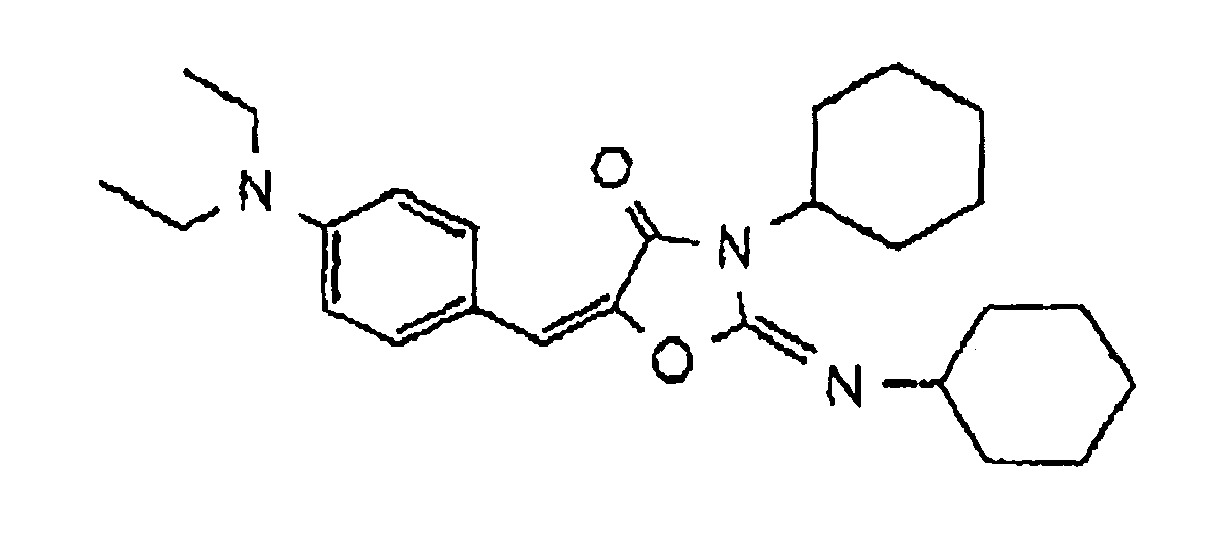


- Coating solution (1) for protective layer
- Polyvinyl alcohol (degree of saponification 40 g 98% by mol, degree of polymerization 500)
- Polyvinylpyrrolidone (weight-average 5 g molecular weight 50,000)
- Poly(vinylpyrrolidone/vinyl acetate (1/1)) 0.5 g (weight-average molecular weight 70,000)
- Surfactant (EMALEX 710, manufactured by Nihon- 0.5 g
Emulsion Co., Ltd.) - Water 950 g
- The method for developing a lithographic printing plate according to the ivnention is not restricted to the embodiments as described above and appropriate changes, modifications, etc. can be made.
Claims (7)
- Amethod for developing a lithographic printing plate, which comprises: treating a lithographic printing plate, while being conveyed, at least in a preheating zone and a development zone located downstream thereof,
wherein a developer-circulating unit is provided in a neighborhood of a lithographic printing plate inlet of a treating tank located in the development zone, and a developer in the neighborhood of the inlet is conveyed and circulated in the treating tank by the unit. - The method for developing a lithographic printing plate according to claim 1, wherein the developer-circulating unit is a spray pipe which supplies a fresh developer to the neighborhood of the lithographic printing plate inlet to transfer the developer in the treating tank.
- The method for developing a lithographic printing plate according to claim 1, wherein the developer-circulating unit is a flow-generating unit which makes the developer in the neighborhood of the lithographic printing plate inlet to flow so as to be replaced by the developer in the treating tank under circulation.
- The method for developing a lithographic printing plate according to claim 3, wherein the flow-generating unit generates a flow by rotation or vibration.
- The method for developing a lithographic printing plate according to any one of claims 1 to 4, wherein at least the development zone has an enclosed structure.
- The method for developing a lithographic printing plate according to any one of claims 1 to 5, wherein the developer comprises from 3 to 20% by mass of a surfactant and has a pH of from 4 to 9.5.
- The method for developing a lithographic printing plate according to claim 6, wherein the developer further comprises from 1 to 10% by mass of a water-soluble resin.
Applications Claiming Priority (1)
| Application Number | Priority Date | Filing Date | Title |
|---|---|---|---|
| JP2008002435A JP5066452B2 (en) | 2008-01-09 | 2008-01-09 | Development processing method for lithographic printing plate |
Publications (2)
| Publication Number | Publication Date |
|---|---|
| EP2078985A1 true EP2078985A1 (en) | 2009-07-15 |
| EP2078985B1 EP2078985B1 (en) | 2014-07-02 |
Family
ID=40545862
Family Applications (1)
| Application Number | Title | Priority Date | Filing Date |
|---|---|---|---|
| EP09000225.4A Not-in-force EP2078985B1 (en) | 2008-01-09 | 2009-01-09 | Method for developing lithographic printing plate |
Country Status (2)
| Country | Link |
|---|---|
| EP (1) | EP2078985B1 (en) |
| JP (1) | JP5066452B2 (en) |
Citations (87)
| Publication number | Priority date | Publication date | Assignee | Title |
|---|---|---|---|---|
| US2714066A (en) | 1950-12-06 | 1955-07-26 | Minnesota Mining & Mfg | Planographic printing plate |
| US2833827A (en) | 1955-01-17 | 1958-05-06 | Bayer Ag | Tri (3, 5-di lower alkyl-4-hydroxy phenyl)-sulfonium chlorides and method of preparing same |
| US2904626A (en) | 1955-05-31 | 1959-09-15 | Rca Corp | Electrical display device |
| US3181461A (en) | 1963-05-23 | 1965-05-04 | Howard A Fromson | Photographic plate |
| US3276868A (en) | 1960-08-05 | 1966-10-04 | Azoplate Corp | Planographic printing plates |
| US3280734A (en) | 1963-10-29 | 1966-10-25 | Howard A Fromson | Photographic plate |
| US3458311A (en) | 1966-06-27 | 1969-07-29 | Du Pont | Photopolymerizable elements with solvent removable protective layers |
| US3479185A (en) | 1965-06-03 | 1969-11-18 | Du Pont | Photopolymerizable compositions and layers containing 2,4,5-triphenylimidazoyl dimers |
| US3604580A (en) | 1969-12-18 | 1971-09-14 | Harold R Geister | Trailer with portable containers |
| US3604581A (en) | 1970-01-02 | 1971-09-14 | Burt Van Iperen | Pill dispenser having safety lock |
| JPS4836281A (en) | 1971-09-03 | 1973-05-28 | ||
| US3902734A (en) | 1974-03-14 | 1975-09-02 | Twm Mfg Co | Frames for axle suspension systems |
| US3905815A (en) | 1971-12-17 | 1975-09-16 | Minnesota Mining & Mfg | Photopolymerizable sheet material with diazo resin layer |
| JPS50125805A (en) | 1974-03-19 | 1975-10-03 | ||
| US4069056A (en) | 1974-05-02 | 1978-01-17 | General Electric Company | Photopolymerizable composition containing group Va aromatic onium salts |
| US4069055A (en) | 1974-05-02 | 1978-01-17 | General Electric Company | Photocurable epoxy compositions containing group Va onium salts |
| JPS53133428A (en) | 1977-04-25 | 1978-11-21 | Hoechst Ag | Radiation sensitive copying constitute |
| US4153461A (en) | 1967-12-04 | 1979-05-08 | Hoechst Aktiengesellschaft | Layer support for light-sensitive material adapted to be converted into a planographic printing plate |
| JPS5463902A (en) | 1977-10-31 | 1979-05-23 | Fuji Photo Film Co Ltd | Method of making offset printing plate |
| JPS5532070A (en) | 1978-08-29 | 1980-03-06 | Fuji Photo Film Co Ltd | Photosensitive resin composition |
| JPS5549729B2 (en) | 1973-02-07 | 1980-12-13 | ||
| US4311783A (en) | 1979-08-14 | 1982-01-19 | E. I. Du Pont De Nemours And Company | Dimers derived from unsymmetrical 2,4,5,-triphenylimidazole compounds as photoinitiators |
| JPS576582B2 (en) | 1975-03-24 | 1982-02-05 | ||
| EP0104143A1 (en) | 1982-09-18 | 1984-03-28 | Ciba-Geigy Ag | Photopolymerizable compositions containing diaryliodosyl salts |
| JPS59152396A (en) | 1983-02-11 | 1984-08-31 | チバ−ガイギ− アクチエンゲゼルシヤフト | Metallocene, manufacture and photopolymerizable composition containing same |
| US4491628A (en) | 1982-08-23 | 1985-01-01 | International Business Machines Corporation | Positive- and negative-working resist compositions with acid generating photoinitiator and polymer with acid labile groups pendant from polymer backbone |
| JPS60239736A (en) | 1984-05-14 | 1985-11-28 | Fuji Photo Film Co Ltd | Photosensitive composition |
| JPS6128986B2 (en) | 1980-08-11 | 1986-07-03 | Fuji Photo Film Co Ltd | |
| JPS61151197A (en) | 1984-12-20 | 1986-07-09 | チバ‐ガイギー アーゲー | Titanocenes and radiation-curable composition containing same |
| JPS61166544A (en) | 1985-01-18 | 1986-07-28 | Fuji Photo Film Co Ltd | Photosolubilizable composition |
| JPS61169837A (en) | 1985-01-22 | 1986-07-31 | Fuji Photo Film Co Ltd | Photosolubilizable composition |
| JPS61169835A (en) | 1985-01-22 | 1986-07-31 | Fuji Photo Film Co Ltd | Photosolubilizable composition |
| US4622286A (en) | 1985-09-16 | 1986-11-11 | E. I. Du Pont De Nemours And Company | Photoimaging composition containing admixture of leuco dye and 2,4,5-triphenylimidazolyl dimer |
| JPS6258241A (en) | 1985-09-09 | 1987-03-13 | Fuji Photo Film Co Ltd | Photosensitive composition |
| US4689272A (en) | 1984-02-21 | 1987-08-25 | Hoechst Aktiengesellschaft | Process for a two-stage hydrophilizing post-treatment of aluminum oxide layers with aqueous solutions and use thereof in the manufacture of supports for offset printing plates |
| EP0233567A2 (en) | 1986-02-14 | 1987-08-26 | BASF Aktiengesellschaft | Curable compositions containing N-sulfonylaminosulfonium salts as cationically active catalysts |
| JPS62212401A (en) | 1986-03-14 | 1987-09-18 | Fuji Photo Film Co Ltd | Photopolymerizable composition |
| JPS62293247A (en) | 1986-06-12 | 1987-12-19 | Fuji Photo Film Co Ltd | Photosensitive printing plate |
| JPS6262337B2 (en) | 1978-07-15 | 1987-12-25 | Konishiroku Shashin Kogyo Kk | |
| JPS6341484A (en) | 1986-08-01 | 1988-02-22 | チバ−ガイギ− ア−ゲ− | Titanocene, its production and composition containing the same |
| JPS6370243A (en) | 1986-09-11 | 1988-03-30 | Fuji Photo Film Co Ltd | Photosensitive composition |
| US4760013A (en) | 1987-02-17 | 1988-07-26 | International Business Machines Corporation | Sulfonium salt photoinitiators |
| JPS63298339A (en) | 1987-05-29 | 1988-12-06 | Fuji Photo Film Co Ltd | Photosensitive composition |
| EP0297442A1 (en) | 1987-07-01 | 1989-01-04 | BASF Aktiengesellschaft | Sulfonium salts comprising groups which are labile in acid environment |
| EP0297443A2 (en) | 1987-07-01 | 1989-01-04 | BASF Aktiengesellschaft | Light sensitive mixture for light sensitive coating materials |
| JPH01152109A (en) | 1987-12-09 | 1989-06-14 | Toray Ind Inc | Photopolymerizable composition |
| JPH02249A (en) | 1987-12-01 | 1990-01-05 | Ciba Geigy Ag | Titanocene and photopolymerizable composition containing it |
| JPH024705A (en) | 1988-03-24 | 1990-01-09 | Dentsply Internatl Inc | Titanate initiator for a photosetting composition |
| EP0370693A2 (en) | 1988-11-21 | 1990-05-30 | Eastman Kodak Company | Novel onium salts and the use thereof as photoinitiators |
| JPH02150848A (en) | 1988-12-02 | 1990-06-11 | Hitachi Ltd | Photobleachable radiation-sensitive composition and pattern formation method using the same |
| US4933377A (en) | 1988-02-29 | 1990-06-12 | Saeva Franklin D | Novel sulfonium salts and the use thereof as photoinitiators |
| EP0390214A2 (en) | 1989-03-31 | 1990-10-03 | E.F. Johnson Company | Method and apparatus for a distributive wide area network for a land mobile transmission trunked communication system |
| JPH02296514A (en) | 1989-05-12 | 1990-12-07 | Matsushita Electric Ind Co Ltd | Vehicle suspension control device |
| JPH02304441A (en) | 1989-05-18 | 1990-12-18 | Fuji Photo Film Co Ltd | Photosensitive planographic printing plate |
| US5041358A (en) | 1989-04-17 | 1991-08-20 | International Business Machines Corporation | Negative photoresist and use thereof |
| JPH04365049A (en) | 1991-06-12 | 1992-12-17 | Fuji Photo Film Co Ltd | Photosensitive composition material |
| JPH0545885A (en) | 1991-08-19 | 1993-02-26 | Fuji Photo Film Co Ltd | Photosensitive planographic printing plate |
| JPH0583588A (en) | 1991-09-24 | 1993-04-02 | Omron Corp | Image processing device |
| JPH0635174A (en) | 1992-07-16 | 1994-02-10 | Fuji Photo Film Co Ltd | Photosensitive planographic printing plate and processing method for the same |
| JPH0629285B2 (en) | 1983-10-14 | 1994-04-20 | 三菱化成株式会社 | Photopolymerizable composition |
| JPH06157623A (en) | 1992-08-14 | 1994-06-07 | Toyo Ink Mfg Co Ltd | Polymerizable composition and polymerization method |
| JPH06175554A (en) | 1992-12-03 | 1994-06-24 | Toyo Ink Mfg Co Ltd | Method for manufacturing volume phase hologram |
| JPH06175564A (en) | 1992-12-04 | 1994-06-24 | Toyo Ink Mfg Co Ltd | Hologram recording material and production of volume phase type hologram by using the recording material |
| JPH06175561A (en) | 1992-12-04 | 1994-06-24 | Toyo Ink Mfg Co Ltd | Hologram recording medium and production of volume phase type hologram by using the recording medium |
| JPH06175553A (en) | 1992-12-03 | 1994-06-24 | Toyo Ink Mfg Co Ltd | Holographic recording medium and volume phase hologram manufacturing method using the same |
| JPH06348011A (en) | 1993-06-04 | 1994-12-22 | Toyo Ink Mfg Co Ltd | Photopolymerizable composition |
| JPH07128785A (en) | 1993-11-02 | 1995-05-19 | Konica Corp | Material and method for forming image |
| JPH07140589A (en) | 1993-11-19 | 1995-06-02 | Konica Corp | Image forming material and image forming method |
| JPH07292014A (en) | 1994-04-25 | 1995-11-07 | Nippon Paint Co Ltd | Near infrared photopolymerizable composition |
| JPH07306527A (en) | 1994-05-11 | 1995-11-21 | Konica Corp | Image forming material and image forming method |
| JPH08108621A (en) | 1994-10-06 | 1996-04-30 | Konica Corp | Image recording medium and image forming method using the medium |
| JPH09188710A (en) | 1995-11-24 | 1997-07-22 | Ciba Geigy Ag | Borate photoinitiator derived from monoborane |
| JPH10186678A (en) | 1996-12-27 | 1998-07-14 | Fuji Photo Film Co Ltd | Heat treatment of photosensitive planographic printing plate and apparatus therefor |
| JPH10282679A (en) | 1997-04-08 | 1998-10-23 | Fuji Photo Film Co Ltd | Negative type photosensitive planographic printing plate |
| JP2000066385A (en) | 1998-08-18 | 2000-03-03 | Ciba Specialty Chem Holding Inc | Sulfonyl oximes for i-line photoresists with high sensitivity and high resist thickness |
| JP2000080068A (en) | 1998-06-26 | 2000-03-21 | Ciba Specialty Chem Holding Inc | New O-acyl oxime photoinitiator |
| JP2001027742A (en) | 1999-07-14 | 2001-01-30 | Tega Seiko Co Ltd | Connecting member for spectacle frame |
| JP2001253181A (en) | 2000-03-09 | 2001-09-18 | Fuji Photo Film Co Ltd | Original plate for positive type heat sensitive lithographic printing |
| JP2001277740A (en) | 2000-01-27 | 2001-10-10 | Fuji Photo Film Co Ltd | Original plate for lithographic printing plate |
| JP2001322365A (en) | 2000-05-16 | 2001-11-20 | Fuji Photo Film Co Ltd | Original plate for heat-sensitive lithographic printing |
| JP2001343742A (en) | 2000-05-30 | 2001-12-14 | Fuji Photo Film Co Ltd | Thermosensitive composition, and original plate of planographic printing plate using the same |
| JP2002116539A (en) | 2000-10-11 | 2002-04-19 | Fuji Photo Film Co Ltd | Original plate of planographic printing plate |
| JP2002148790A (en) | 2000-09-04 | 2002-05-22 | Fuji Photo Film Co Ltd | Heat sensitive composition, lithographic printing master plate which uses the same and sulfonium salt compound |
| JP2002328465A (en) | 2001-04-27 | 2002-11-15 | Fuji Photo Film Co Ltd | Original plate of planographic printing plate |
| JP3622063B2 (en) | 1995-11-20 | 2005-02-23 | 光洋精工株式会社 | Hydraulic control valve |
| EP1696275A2 (en) * | 2005-02-23 | 2006-08-30 | Fuji Photo Film Co., Ltd. | Method for replenishing development replenisher in automatic developing machine for photosensitive lithographic printing plate precursor and automatic photosensitive lithographic printing plate precursor developing machine |
| EP1973000A2 (en) * | 2007-03-22 | 2008-09-24 | FUJIFILM Corporation | Dipping-type automatic developing apparatus and method for lithographic printing plates |
Family Cites Families (8)
| Publication number | Priority date | Publication date | Assignee | Title |
|---|---|---|---|---|
| JPH07244383A (en) * | 1994-03-02 | 1995-09-19 | Konica Corp | Preparation of developer of automatic developing machine for photosensitive planographic printing plate |
| JPH09114103A (en) * | 1995-10-24 | 1997-05-02 | Fuji Photo Film Co Ltd | Photosensitive material processing device |
| JP2000241986A (en) * | 1999-02-17 | 2000-09-08 | Fuji Photo Film Co Ltd | Apparatus for processing photosensitive planographic printing plate material and processing method for same |
| JP2001092151A (en) * | 1999-09-20 | 2001-04-06 | Fuji Photo Film Co Ltd | Plate making method for planographic printing plate, automatic developing machine and recording medium |
| JP2001142230A (en) * | 1999-11-11 | 2001-05-25 | Fuji Photo Film Co Ltd | Plate making method for planographic printing plate, heating device and recording medium |
| JP4132711B2 (en) * | 2001-03-30 | 2008-08-13 | 富士フイルム株式会社 | Photosensitive material processing equipment |
| JP2006251368A (en) * | 2005-03-10 | 2006-09-21 | Fuji Photo Film Co Ltd | Processing method for planographic printing plate and planographic printing plate processing apparatus |
| JP4900913B2 (en) * | 2006-02-01 | 2012-03-21 | 富士フイルム株式会社 | Planographic printing plate making method |
-
2008
- 2008-01-09 JP JP2008002435A patent/JP5066452B2/en not_active Expired - Fee Related
-
2009
- 2009-01-09 EP EP09000225.4A patent/EP2078985B1/en not_active Not-in-force
Patent Citations (88)
| Publication number | Priority date | Publication date | Assignee | Title |
|---|---|---|---|---|
| US2714066A (en) | 1950-12-06 | 1955-07-26 | Minnesota Mining & Mfg | Planographic printing plate |
| US2833827A (en) | 1955-01-17 | 1958-05-06 | Bayer Ag | Tri (3, 5-di lower alkyl-4-hydroxy phenyl)-sulfonium chlorides and method of preparing same |
| US2904626A (en) | 1955-05-31 | 1959-09-15 | Rca Corp | Electrical display device |
| US3276868A (en) | 1960-08-05 | 1966-10-04 | Azoplate Corp | Planographic printing plates |
| US3181461A (en) | 1963-05-23 | 1965-05-04 | Howard A Fromson | Photographic plate |
| US3280734A (en) | 1963-10-29 | 1966-10-25 | Howard A Fromson | Photographic plate |
| US3479185A (en) | 1965-06-03 | 1969-11-18 | Du Pont | Photopolymerizable compositions and layers containing 2,4,5-triphenylimidazoyl dimers |
| US3458311A (en) | 1966-06-27 | 1969-07-29 | Du Pont | Photopolymerizable elements with solvent removable protective layers |
| US4153461A (en) | 1967-12-04 | 1979-05-08 | Hoechst Aktiengesellschaft | Layer support for light-sensitive material adapted to be converted into a planographic printing plate |
| US3604580A (en) | 1969-12-18 | 1971-09-14 | Harold R Geister | Trailer with portable containers |
| US3604581A (en) | 1970-01-02 | 1971-09-14 | Burt Van Iperen | Pill dispenser having safety lock |
| JPS4836281A (en) | 1971-09-03 | 1973-05-28 | ||
| US3905815A (en) | 1971-12-17 | 1975-09-16 | Minnesota Mining & Mfg | Photopolymerizable sheet material with diazo resin layer |
| JPS5549729B2 (en) | 1973-02-07 | 1980-12-13 | ||
| US3902734A (en) | 1974-03-14 | 1975-09-02 | Twm Mfg Co | Frames for axle suspension systems |
| JPS50125805A (en) | 1974-03-19 | 1975-10-03 | ||
| US4069056A (en) | 1974-05-02 | 1978-01-17 | General Electric Company | Photopolymerizable composition containing group Va aromatic onium salts |
| US4069055A (en) | 1974-05-02 | 1978-01-17 | General Electric Company | Photocurable epoxy compositions containing group Va onium salts |
| JPS576582B2 (en) | 1975-03-24 | 1982-02-05 | ||
| JPS53133428A (en) | 1977-04-25 | 1978-11-21 | Hoechst Ag | Radiation sensitive copying constitute |
| JPS5463902A (en) | 1977-10-31 | 1979-05-23 | Fuji Photo Film Co Ltd | Method of making offset printing plate |
| JPS6262337B2 (en) | 1978-07-15 | 1987-12-25 | Konishiroku Shashin Kogyo Kk | |
| JPS5532070A (en) | 1978-08-29 | 1980-03-06 | Fuji Photo Film Co Ltd | Photosensitive resin composition |
| US4311783A (en) | 1979-08-14 | 1982-01-19 | E. I. Du Pont De Nemours And Company | Dimers derived from unsymmetrical 2,4,5,-triphenylimidazole compounds as photoinitiators |
| JPS6128986B2 (en) | 1980-08-11 | 1986-07-03 | Fuji Photo Film Co Ltd | |
| US4491628A (en) | 1982-08-23 | 1985-01-01 | International Business Machines Corporation | Positive- and negative-working resist compositions with acid generating photoinitiator and polymer with acid labile groups pendant from polymer backbone |
| EP0104143A1 (en) | 1982-09-18 | 1984-03-28 | Ciba-Geigy Ag | Photopolymerizable compositions containing diaryliodosyl salts |
| JPS59152396A (en) | 1983-02-11 | 1984-08-31 | チバ−ガイギ− アクチエンゲゼルシヤフト | Metallocene, manufacture and photopolymerizable composition containing same |
| JPH0629285B2 (en) | 1983-10-14 | 1994-04-20 | 三菱化成株式会社 | Photopolymerizable composition |
| US4689272A (en) | 1984-02-21 | 1987-08-25 | Hoechst Aktiengesellschaft | Process for a two-stage hydrophilizing post-treatment of aluminum oxide layers with aqueous solutions and use thereof in the manufacture of supports for offset printing plates |
| JPS60239736A (en) | 1984-05-14 | 1985-11-28 | Fuji Photo Film Co Ltd | Photosensitive composition |
| JPS61151197A (en) | 1984-12-20 | 1986-07-09 | チバ‐ガイギー アーゲー | Titanocenes and radiation-curable composition containing same |
| JPS61166544A (en) | 1985-01-18 | 1986-07-28 | Fuji Photo Film Co Ltd | Photosolubilizable composition |
| JPS61169835A (en) | 1985-01-22 | 1986-07-31 | Fuji Photo Film Co Ltd | Photosolubilizable composition |
| JPS61169837A (en) | 1985-01-22 | 1986-07-31 | Fuji Photo Film Co Ltd | Photosolubilizable composition |
| JPS6258241A (en) | 1985-09-09 | 1987-03-13 | Fuji Photo Film Co Ltd | Photosensitive composition |
| US4622286A (en) | 1985-09-16 | 1986-11-11 | E. I. Du Pont De Nemours And Company | Photoimaging composition containing admixture of leuco dye and 2,4,5-triphenylimidazolyl dimer |
| EP0233567A2 (en) | 1986-02-14 | 1987-08-26 | BASF Aktiengesellschaft | Curable compositions containing N-sulfonylaminosulfonium salts as cationically active catalysts |
| US4734444A (en) | 1986-02-14 | 1988-03-29 | Basf Aktiengesellschaft | Curable mixtures containing N-sulfonylaminosulfonium salts as cationically active catalysts |
| JPS62212401A (en) | 1986-03-14 | 1987-09-18 | Fuji Photo Film Co Ltd | Photopolymerizable composition |
| JPS62293247A (en) | 1986-06-12 | 1987-12-19 | Fuji Photo Film Co Ltd | Photosensitive printing plate |
| JPS6341484A (en) | 1986-08-01 | 1988-02-22 | チバ−ガイギ− ア−ゲ− | Titanocene, its production and composition containing the same |
| JPS6370243A (en) | 1986-09-11 | 1988-03-30 | Fuji Photo Film Co Ltd | Photosensitive composition |
| US4760013A (en) | 1987-02-17 | 1988-07-26 | International Business Machines Corporation | Sulfonium salt photoinitiators |
| JPS63298339A (en) | 1987-05-29 | 1988-12-06 | Fuji Photo Film Co Ltd | Photosensitive composition |
| EP0297442A1 (en) | 1987-07-01 | 1989-01-04 | BASF Aktiengesellschaft | Sulfonium salts comprising groups which are labile in acid environment |
| EP0297443A2 (en) | 1987-07-01 | 1989-01-04 | BASF Aktiengesellschaft | Light sensitive mixture for light sensitive coating materials |
| JPH02249A (en) | 1987-12-01 | 1990-01-05 | Ciba Geigy Ag | Titanocene and photopolymerizable composition containing it |
| JPH01152109A (en) | 1987-12-09 | 1989-06-14 | Toray Ind Inc | Photopolymerizable composition |
| US4933377A (en) | 1988-02-29 | 1990-06-12 | Saeva Franklin D | Novel sulfonium salts and the use thereof as photoinitiators |
| JPH024705A (en) | 1988-03-24 | 1990-01-09 | Dentsply Internatl Inc | Titanate initiator for a photosetting composition |
| EP0370693A2 (en) | 1988-11-21 | 1990-05-30 | Eastman Kodak Company | Novel onium salts and the use thereof as photoinitiators |
| JPH02150848A (en) | 1988-12-02 | 1990-06-11 | Hitachi Ltd | Photobleachable radiation-sensitive composition and pattern formation method using the same |
| EP0390214A2 (en) | 1989-03-31 | 1990-10-03 | E.F. Johnson Company | Method and apparatus for a distributive wide area network for a land mobile transmission trunked communication system |
| US5041358A (en) | 1989-04-17 | 1991-08-20 | International Business Machines Corporation | Negative photoresist and use thereof |
| JPH02296514A (en) | 1989-05-12 | 1990-12-07 | Matsushita Electric Ind Co Ltd | Vehicle suspension control device |
| JPH02304441A (en) | 1989-05-18 | 1990-12-18 | Fuji Photo Film Co Ltd | Photosensitive planographic printing plate |
| JPH04365049A (en) | 1991-06-12 | 1992-12-17 | Fuji Photo Film Co Ltd | Photosensitive composition material |
| JPH0545885A (en) | 1991-08-19 | 1993-02-26 | Fuji Photo Film Co Ltd | Photosensitive planographic printing plate |
| JPH0583588A (en) | 1991-09-24 | 1993-04-02 | Omron Corp | Image processing device |
| JPH0635174A (en) | 1992-07-16 | 1994-02-10 | Fuji Photo Film Co Ltd | Photosensitive planographic printing plate and processing method for the same |
| JPH06157623A (en) | 1992-08-14 | 1994-06-07 | Toyo Ink Mfg Co Ltd | Polymerizable composition and polymerization method |
| JPH06175554A (en) | 1992-12-03 | 1994-06-24 | Toyo Ink Mfg Co Ltd | Method for manufacturing volume phase hologram |
| JPH06175553A (en) | 1992-12-03 | 1994-06-24 | Toyo Ink Mfg Co Ltd | Holographic recording medium and volume phase hologram manufacturing method using the same |
| JPH06175564A (en) | 1992-12-04 | 1994-06-24 | Toyo Ink Mfg Co Ltd | Hologram recording material and production of volume phase type hologram by using the recording material |
| JPH06175561A (en) | 1992-12-04 | 1994-06-24 | Toyo Ink Mfg Co Ltd | Hologram recording medium and production of volume phase type hologram by using the recording medium |
| JPH06348011A (en) | 1993-06-04 | 1994-12-22 | Toyo Ink Mfg Co Ltd | Photopolymerizable composition |
| JPH07128785A (en) | 1993-11-02 | 1995-05-19 | Konica Corp | Material and method for forming image |
| JPH07140589A (en) | 1993-11-19 | 1995-06-02 | Konica Corp | Image forming material and image forming method |
| JPH07292014A (en) | 1994-04-25 | 1995-11-07 | Nippon Paint Co Ltd | Near infrared photopolymerizable composition |
| JPH07306527A (en) | 1994-05-11 | 1995-11-21 | Konica Corp | Image forming material and image forming method |
| JPH08108621A (en) | 1994-10-06 | 1996-04-30 | Konica Corp | Image recording medium and image forming method using the medium |
| JP3622063B2 (en) | 1995-11-20 | 2005-02-23 | 光洋精工株式会社 | Hydraulic control valve |
| JPH09188710A (en) | 1995-11-24 | 1997-07-22 | Ciba Geigy Ag | Borate photoinitiator derived from monoborane |
| JPH10186678A (en) | 1996-12-27 | 1998-07-14 | Fuji Photo Film Co Ltd | Heat treatment of photosensitive planographic printing plate and apparatus therefor |
| JPH10282679A (en) | 1997-04-08 | 1998-10-23 | Fuji Photo Film Co Ltd | Negative type photosensitive planographic printing plate |
| JP2000080068A (en) | 1998-06-26 | 2000-03-21 | Ciba Specialty Chem Holding Inc | New O-acyl oxime photoinitiator |
| JP2000066385A (en) | 1998-08-18 | 2000-03-03 | Ciba Specialty Chem Holding Inc | Sulfonyl oximes for i-line photoresists with high sensitivity and high resist thickness |
| JP2001027742A (en) | 1999-07-14 | 2001-01-30 | Tega Seiko Co Ltd | Connecting member for spectacle frame |
| JP2001277740A (en) | 2000-01-27 | 2001-10-10 | Fuji Photo Film Co Ltd | Original plate for lithographic printing plate |
| JP2001253181A (en) | 2000-03-09 | 2001-09-18 | Fuji Photo Film Co Ltd | Original plate for positive type heat sensitive lithographic printing |
| JP2001322365A (en) | 2000-05-16 | 2001-11-20 | Fuji Photo Film Co Ltd | Original plate for heat-sensitive lithographic printing |
| JP2001343742A (en) | 2000-05-30 | 2001-12-14 | Fuji Photo Film Co Ltd | Thermosensitive composition, and original plate of planographic printing plate using the same |
| JP2002148790A (en) | 2000-09-04 | 2002-05-22 | Fuji Photo Film Co Ltd | Heat sensitive composition, lithographic printing master plate which uses the same and sulfonium salt compound |
| JP2002116539A (en) | 2000-10-11 | 2002-04-19 | Fuji Photo Film Co Ltd | Original plate of planographic printing plate |
| JP2002328465A (en) | 2001-04-27 | 2002-11-15 | Fuji Photo Film Co Ltd | Original plate of planographic printing plate |
| EP1696275A2 (en) * | 2005-02-23 | 2006-08-30 | Fuji Photo Film Co., Ltd. | Method for replenishing development replenisher in automatic developing machine for photosensitive lithographic printing plate precursor and automatic photosensitive lithographic printing plate precursor developing machine |
| EP1973000A2 (en) * | 2007-03-22 | 2008-09-24 | FUJIFILM Corporation | Dipping-type automatic developing apparatus and method for lithographic printing plates |
Non-Patent Citations (15)
| Title |
|---|
| "Insatsu Inki Gijutsu", 1984, CMC PUBLISHING CO., LTD. |
| "Saishin Ganryo Binran", 1977, PIGMENT TECHNOLOGY SOCIETY OF JAPAN, article "Colour Index" |
| "Saishin Ganryo Oyo Gijutsu", 1986, CMC PUBLISHING CO., LTD. |
| "Senryo Binran", 1970, THE SOCIETY OF SYNTHETIC ORGANIC CHEMISTRY |
| C. S. WEN ET AL., TEH. PROC. CONF. RAD. CURING ASTA, October 1988 (1988-10-01), pages 478 |
| J. V. CRIVELLO ET AL., J. POLYMER SCI., POLYMER CHEM. ED., vol. 17, 1979, pages 1047 |
| J. V. CRIVELLO ET AL., MACROMOLECULES, vol. 10, no. 6, 1977, pages 1307 |
| J.C.S. PERKIN II, 1979, pages 156 - 162 |
| J.C.S. PERKIN II, 1979, pages 1653 - 1660 |
| JOURNAL OF PHOTOPOLYMER SCIENCE AND TECHNOLOGY, 1995, pages 202 - 232 |
| M. P. HUTT, JOURNAL OF HETEROCYCLIC CHEMISTRY, vol. 1, 1970 |
| MARTIN, KUNZ, RAD TECH. '98. PROCEEDING, 19 April 1998 (1998-04-19) |
| S. I. SCHLESINGER, PHOTOGR. SCI. ENG., vol. 18, 1974, pages 387 |
| T. S. BAL ET AL., POLYMER, vol. 21, 1980, pages 423 |
| WAKABAYASHI ET AL., BULL. CHEM. SOC. JAPAN, vol. 42, 1969, pages 2924 |
Also Published As
| Publication number | Publication date |
|---|---|
| JP2009163130A (en) | 2009-07-23 |
| EP2078985B1 (en) | 2014-07-02 |
| JP5066452B2 (en) | 2012-11-07 |
Similar Documents
| Publication | Publication Date | Title |
|---|---|---|
| EP1840653A1 (en) | Method for preparation of lithographic printing plate and lithographic printing plate precursor | |
| JP2009058750A (en) | Development device for planographic printing plates | |
| US9144964B2 (en) | Process for making lithographic printing plate | |
| US9186878B2 (en) | Process for making lithographic printing plate | |
| JP5593262B2 (en) | Planographic printing plate precursor and method for producing the same | |
| JP3756664B2 (en) | Method for producing support for lithographic printing plate | |
| WO2014192509A1 (en) | Processing liquid and processing method for lithographic printing original plate | |
| JP5745371B2 (en) | Preparation of lithographic printing plate precursor and lithographic printing plate | |
| JP2008233660A (en) | Automatic developing apparatus and method for immersion type lithographic printing plate | |
| JP2017132227A (en) | Negative type lithographic printing plate precursor and method for preparing lithographic printing plate | |
| JP2013205569A (en) | Planographic printing plate precursor and method of making planographic printing plate | |
| EP2070696A1 (en) | Method of preparing lithographic printing plate and lithographic printing plate precursor | |
| JP5658697B2 (en) | Planographic printing plate precursor and lithographic printing plate preparation method | |
| EP2574460B1 (en) | Lithographic printing plate precursor and method of manufacturing lithographic printing plate | |
| JP5525873B2 (en) | Preparation method of lithographic printing plate | |
| EP2749947A1 (en) | Lithographic printing plate precursor and process for producing lithographic printing plate | |
| JP4940174B2 (en) | Automatic development equipment for lithographic printing plates | |
| EP3001249B1 (en) | Lithographic printing plate precursors and processes for preparing lithographic printing plates | |
| WO2011040114A1 (en) | Method for producing planographic printing plate precursor | |
| EP2078985B1 (en) | Method for developing lithographic printing plate | |
| WO2017018262A1 (en) | Planographic printing plate original, planographic printing plate manufacturing method, and organic-inorganic hybrid particles | |
| JP2009229771A (en) | Automatic developing method for lithographic printing plate | |
| JP2009216926A (en) | Automatic developing device for planographic printing plate | |
| JP4252716B2 (en) | Photopolymerization planographic printing plate | |
| JP2009058824A (en) | Development processing method |
Legal Events
| Date | Code | Title | Description |
|---|---|---|---|
| PUAI | Public reference made under article 153(3) epc to a published international application that has entered the european phase |
Free format text: ORIGINAL CODE: 0009012 |
|
| AK | Designated contracting states |
Kind code of ref document: A1 Designated state(s): AT BE BG CH CY CZ DE DK EE ES FI FR GB GR HR HU IE IS IT LI LT LU LV MC MK MT NL NO PL PT RO SE SI SK TR |
|
| AX | Request for extension of the european patent |
Extension state: AL BA RS |
|
| 17P | Request for examination filed |
Effective date: 20100115 |
|
| AKX | Designation fees paid |
Designated state(s): AT BE BG CH CY CZ DE DK EE ES FI FR GB GR HR HU IE IS IT LI LT LU LV MC MK MT NL NO PL PT RO SE SI SK TR |
|
| 17Q | First examination report despatched |
Effective date: 20101217 |
|
| GRAP | Despatch of communication of intention to grant a patent |
Free format text: ORIGINAL CODE: EPIDOSNIGR1 |
|
| INTG | Intention to grant announced |
Effective date: 20140210 |
|
| GRAS | Grant fee paid |
Free format text: ORIGINAL CODE: EPIDOSNIGR3 |
|
| GRAA | (expected) grant |
Free format text: ORIGINAL CODE: 0009210 |
|
| AK | Designated contracting states |
Kind code of ref document: B1 Designated state(s): AT BE BG CH CY CZ DE DK EE ES FI FR GB GR HR HU IE IS IT LI LT LU LV MC MK MT NL NO PL PT RO SE SI SK TR |
|
| REG | Reference to a national code |
Ref country code: GB Ref legal event code: FG4D |
|
| REG | Reference to a national code |
Ref country code: CH Ref legal event code: EP Ref country code: AT Ref legal event code: REF Ref document number: 676208 Country of ref document: AT Kind code of ref document: T Effective date: 20140715 |
|
| REG | Reference to a national code |
Ref country code: IE Ref legal event code: FG4D |
|
| REG | Reference to a national code |
Ref country code: DE Ref legal event code: R096 Ref document number: 602009025027 Country of ref document: DE Effective date: 20140821 |
|
| REG | Reference to a national code |
Ref country code: AT Ref legal event code: MK05 Ref document number: 676208 Country of ref document: AT Kind code of ref document: T Effective date: 20140702 |
|
| REG | Reference to a national code |
Ref country code: NL Ref legal event code: VDEP Effective date: 20140702 |
|
| REG | Reference to a national code |
Ref country code: LT Ref legal event code: MG4D |
|
| PG25 | Lapsed in a contracting state [announced via postgrant information from national office to epo] |
Ref country code: LT Free format text: LAPSE BECAUSE OF FAILURE TO SUBMIT A TRANSLATION OF THE DESCRIPTION OR TO PAY THE FEE WITHIN THE PRESCRIBED TIME-LIMIT Effective date: 20140702 Ref country code: ES Free format text: LAPSE BECAUSE OF FAILURE TO SUBMIT A TRANSLATION OF THE DESCRIPTION OR TO PAY THE FEE WITHIN THE PRESCRIBED TIME-LIMIT Effective date: 20140702 Ref country code: GR Free format text: LAPSE BECAUSE OF FAILURE TO SUBMIT A TRANSLATION OF THE DESCRIPTION OR TO PAY THE FEE WITHIN THE PRESCRIBED TIME-LIMIT Effective date: 20141003 Ref country code: FI Free format text: LAPSE BECAUSE OF FAILURE TO SUBMIT A TRANSLATION OF THE DESCRIPTION OR TO PAY THE FEE WITHIN THE PRESCRIBED TIME-LIMIT Effective date: 20140702 Ref country code: CZ Free format text: LAPSE BECAUSE OF FAILURE TO SUBMIT A TRANSLATION OF THE DESCRIPTION OR TO PAY THE FEE WITHIN THE PRESCRIBED TIME-LIMIT Effective date: 20140702 Ref country code: SE Free format text: LAPSE BECAUSE OF FAILURE TO SUBMIT A TRANSLATION OF THE DESCRIPTION OR TO PAY THE FEE WITHIN THE PRESCRIBED TIME-LIMIT Effective date: 20140702 Ref country code: PT Free format text: LAPSE BECAUSE OF FAILURE TO SUBMIT A TRANSLATION OF THE DESCRIPTION OR TO PAY THE FEE WITHIN THE PRESCRIBED TIME-LIMIT Effective date: 20141103 Ref country code: NO Free format text: LAPSE BECAUSE OF FAILURE TO SUBMIT A TRANSLATION OF THE DESCRIPTION OR TO PAY THE FEE WITHIN THE PRESCRIBED TIME-LIMIT Effective date: 20141002 Ref country code: BG Free format text: LAPSE BECAUSE OF FAILURE TO SUBMIT A TRANSLATION OF THE DESCRIPTION OR TO PAY THE FEE WITHIN THE PRESCRIBED TIME-LIMIT Effective date: 20141002 |
|
| PG25 | Lapsed in a contracting state [announced via postgrant information from national office to epo] |
Ref country code: PL Free format text: LAPSE BECAUSE OF FAILURE TO SUBMIT A TRANSLATION OF THE DESCRIPTION OR TO PAY THE FEE WITHIN THE PRESCRIBED TIME-LIMIT Effective date: 20140702 Ref country code: LV Free format text: LAPSE BECAUSE OF FAILURE TO SUBMIT A TRANSLATION OF THE DESCRIPTION OR TO PAY THE FEE WITHIN THE PRESCRIBED TIME-LIMIT Effective date: 20140702 Ref country code: CY Free format text: LAPSE BECAUSE OF FAILURE TO SUBMIT A TRANSLATION OF THE DESCRIPTION OR TO PAY THE FEE WITHIN THE PRESCRIBED TIME-LIMIT Effective date: 20140702 Ref country code: IS Free format text: LAPSE BECAUSE OF FAILURE TO SUBMIT A TRANSLATION OF THE DESCRIPTION OR TO PAY THE FEE WITHIN THE PRESCRIBED TIME-LIMIT Effective date: 20141102 Ref country code: NL Free format text: LAPSE BECAUSE OF FAILURE TO SUBMIT A TRANSLATION OF THE DESCRIPTION OR TO PAY THE FEE WITHIN THE PRESCRIBED TIME-LIMIT Effective date: 20140702 Ref country code: AT Free format text: LAPSE BECAUSE OF FAILURE TO SUBMIT A TRANSLATION OF THE DESCRIPTION OR TO PAY THE FEE WITHIN THE PRESCRIBED TIME-LIMIT Effective date: 20140702 Ref country code: HR Free format text: LAPSE BECAUSE OF FAILURE TO SUBMIT A TRANSLATION OF THE DESCRIPTION OR TO PAY THE FEE WITHIN THE PRESCRIBED TIME-LIMIT Effective date: 20140702 |
|
| REG | Reference to a national code |
Ref country code: DE Ref legal event code: R097 Ref document number: 602009025027 Country of ref document: DE |
|
| PG25 | Lapsed in a contracting state [announced via postgrant information from national office to epo] |
Ref country code: SK Free format text: LAPSE BECAUSE OF FAILURE TO SUBMIT A TRANSLATION OF THE DESCRIPTION OR TO PAY THE FEE WITHIN THE PRESCRIBED TIME-LIMIT Effective date: 20140702 Ref country code: DK Free format text: LAPSE BECAUSE OF FAILURE TO SUBMIT A TRANSLATION OF THE DESCRIPTION OR TO PAY THE FEE WITHIN THE PRESCRIBED TIME-LIMIT Effective date: 20140702 Ref country code: RO Free format text: LAPSE BECAUSE OF FAILURE TO SUBMIT A TRANSLATION OF THE DESCRIPTION OR TO PAY THE FEE WITHIN THE PRESCRIBED TIME-LIMIT Effective date: 20140702 Ref country code: IT Free format text: LAPSE BECAUSE OF FAILURE TO SUBMIT A TRANSLATION OF THE DESCRIPTION OR TO PAY THE FEE WITHIN THE PRESCRIBED TIME-LIMIT Effective date: 20140702 Ref country code: EE Free format text: LAPSE BECAUSE OF FAILURE TO SUBMIT A TRANSLATION OF THE DESCRIPTION OR TO PAY THE FEE WITHIN THE PRESCRIBED TIME-LIMIT Effective date: 20140702 |
|
| PLBE | No opposition filed within time limit |
Free format text: ORIGINAL CODE: 0009261 |
|
| STAA | Information on the status of an ep patent application or granted ep patent |
Free format text: STATUS: NO OPPOSITION FILED WITHIN TIME LIMIT |
|
| 26N | No opposition filed |
Effective date: 20150407 |
|
| PG25 | Lapsed in a contracting state [announced via postgrant information from national office to epo] |
Ref country code: BE Free format text: LAPSE BECAUSE OF NON-PAYMENT OF DUE FEES Effective date: 20150131 |
|
| REG | Reference to a national code |
Ref country code: CH Ref legal event code: PL |
|
| PG25 | Lapsed in a contracting state [announced via postgrant information from national office to epo] |
Ref country code: LU Free format text: LAPSE BECAUSE OF FAILURE TO SUBMIT A TRANSLATION OF THE DESCRIPTION OR TO PAY THE FEE WITHIN THE PRESCRIBED TIME-LIMIT Effective date: 20150109 |
|
| PG25 | Lapsed in a contracting state [announced via postgrant information from national office to epo] |
Ref country code: MC Free format text: LAPSE BECAUSE OF FAILURE TO SUBMIT A TRANSLATION OF THE DESCRIPTION OR TO PAY THE FEE WITHIN THE PRESCRIBED TIME-LIMIT Effective date: 20140702 |
|
| PG25 | Lapsed in a contracting state [announced via postgrant information from national office to epo] |
Ref country code: LI Free format text: LAPSE BECAUSE OF NON-PAYMENT OF DUE FEES Effective date: 20150131 Ref country code: CH Free format text: LAPSE BECAUSE OF NON-PAYMENT OF DUE FEES Effective date: 20150131 |
|
| REG | Reference to a national code |
Ref country code: FR Ref legal event code: ST Effective date: 20150930 |
|
| REG | Reference to a national code |
Ref country code: IE Ref legal event code: MM4A |
|
| PG25 | Lapsed in a contracting state [announced via postgrant information from national office to epo] |
Ref country code: FR Free format text: LAPSE BECAUSE OF NON-PAYMENT OF DUE FEES Effective date: 20150202 Ref country code: SI Free format text: LAPSE BECAUSE OF FAILURE TO SUBMIT A TRANSLATION OF THE DESCRIPTION OR TO PAY THE FEE WITHIN THE PRESCRIBED TIME-LIMIT Effective date: 20140702 |
|
| PG25 | Lapsed in a contracting state [announced via postgrant information from national office to epo] |
Ref country code: IE Free format text: LAPSE BECAUSE OF NON-PAYMENT OF DUE FEES Effective date: 20150109 |
|
| PG25 | Lapsed in a contracting state [announced via postgrant information from national office to epo] |
Ref country code: BE Free format text: LAPSE BECAUSE OF FAILURE TO SUBMIT A TRANSLATION OF THE DESCRIPTION OR TO PAY THE FEE WITHIN THE PRESCRIBED TIME-LIMIT Effective date: 20140702 |
|
| PG25 | Lapsed in a contracting state [announced via postgrant information from national office to epo] |
Ref country code: MT Free format text: LAPSE BECAUSE OF FAILURE TO SUBMIT A TRANSLATION OF THE DESCRIPTION OR TO PAY THE FEE WITHIN THE PRESCRIBED TIME-LIMIT Effective date: 20140702 |
|
| PG25 | Lapsed in a contracting state [announced via postgrant information from national office to epo] |
Ref country code: HU Free format text: LAPSE BECAUSE OF FAILURE TO SUBMIT A TRANSLATION OF THE DESCRIPTION OR TO PAY THE FEE WITHIN THE PRESCRIBED TIME-LIMIT; INVALID AB INITIO Effective date: 20090109 |
|
| PG25 | Lapsed in a contracting state [announced via postgrant information from national office to epo] |
Ref country code: TR Free format text: LAPSE BECAUSE OF FAILURE TO SUBMIT A TRANSLATION OF THE DESCRIPTION OR TO PAY THE FEE WITHIN THE PRESCRIBED TIME-LIMIT Effective date: 20140702 |
|
| PG25 | Lapsed in a contracting state [announced via postgrant information from national office to epo] |
Ref country code: MK Free format text: LAPSE BECAUSE OF FAILURE TO SUBMIT A TRANSLATION OF THE DESCRIPTION OR TO PAY THE FEE WITHIN THE PRESCRIBED TIME-LIMIT Effective date: 20140702 |
|
| PGFP | Annual fee paid to national office [announced via postgrant information from national office to epo] |
Ref country code: GB Payment date: 20211206 Year of fee payment: 14 |
|
| PGFP | Annual fee paid to national office [announced via postgrant information from national office to epo] |
Ref country code: DE Payment date: 20211130 Year of fee payment: 14 |
|
| REG | Reference to a national code |
Ref country code: DE Ref legal event code: R119 Ref document number: 602009025027 Country of ref document: DE |
|
| GBPC | Gb: european patent ceased through non-payment of renewal fee |
Effective date: 20230109 |
|
| PG25 | Lapsed in a contracting state [announced via postgrant information from national office to epo] |
Ref country code: GB Free format text: LAPSE BECAUSE OF NON-PAYMENT OF DUE FEES Effective date: 20230109 Ref country code: DE Free format text: LAPSE BECAUSE OF NON-PAYMENT OF DUE FEES Effective date: 20230801 |