EP2075332A1 - Cytokine production regulator gene and use thereof - Google Patents
Cytokine production regulator gene and use thereof Download PDFInfo
- Publication number
- EP2075332A1 EP2075332A1 EP07827955A EP07827955A EP2075332A1 EP 2075332 A1 EP2075332 A1 EP 2075332A1 EP 07827955 A EP07827955 A EP 07827955A EP 07827955 A EP07827955 A EP 07827955A EP 2075332 A1 EP2075332 A1 EP 2075332A1
- Authority
- EP
- European Patent Office
- Prior art keywords
- gene
- amino acid
- protein
- microorganism
- cells
- Prior art date
- Legal status (The legal status is an assumption and is not a legal conclusion. Google has not performed a legal analysis and makes no representation as to the accuracy of the status listed.)
- Granted
Links
Images




Classifications
-
- C—CHEMISTRY; METALLURGY
- C12—BIOCHEMISTRY; BEER; SPIRITS; WINE; VINEGAR; MICROBIOLOGY; ENZYMOLOGY; MUTATION OR GENETIC ENGINEERING
- C12N—MICROORGANISMS OR ENZYMES; COMPOSITIONS THEREOF; PROPAGATING, PRESERVING, OR MAINTAINING MICROORGANISMS; MUTATION OR GENETIC ENGINEERING; CULTURE MEDIA
- C12N15/00—Mutation or genetic engineering; DNA or RNA concerning genetic engineering, vectors, e.g. plasmids, or their isolation, preparation or purification; Use of hosts therefor
- C12N15/09—Recombinant DNA-technology
- C12N15/11—DNA or RNA fragments; Modified forms thereof; Non-coding nucleic acids having a biological activity
- C12N15/52—Genes encoding for enzymes or proenzymes
-
- A—HUMAN NECESSITIES
- A23—FOODS OR FOODSTUFFS; TREATMENT THEREOF, NOT COVERED BY OTHER CLASSES
- A23L—FOODS, FOODSTUFFS OR NON-ALCOHOLIC BEVERAGES, NOT OTHERWISE PROVIDED FOR; PREPARATION OR TREATMENT THEREOF
- A23L33/00—Modifying nutritive qualities of foods; Dietetic products; Preparation or treatment thereof
- A23L33/10—Modifying nutritive qualities of foods; Dietetic products; Preparation or treatment thereof using additives
- A23L33/135—Bacteria or derivatives thereof, e.g. probiotics
-
- A—HUMAN NECESSITIES
- A61—MEDICAL OR VETERINARY SCIENCE; HYGIENE
- A61P—SPECIFIC THERAPEUTIC ACTIVITY OF CHEMICAL COMPOUNDS OR MEDICINAL PREPARATIONS
- A61P1/00—Drugs for disorders of the alimentary tract or the digestive system
- A61P1/04—Drugs for disorders of the alimentary tract or the digestive system for ulcers, gastritis or reflux esophagitis, e.g. antacids, inhibitors of acid secretion, mucosal protectants
-
- A—HUMAN NECESSITIES
- A61—MEDICAL OR VETERINARY SCIENCE; HYGIENE
- A61P—SPECIFIC THERAPEUTIC ACTIVITY OF CHEMICAL COMPOUNDS OR MEDICINAL PREPARATIONS
- A61P17/00—Drugs for dermatological disorders
-
- A—HUMAN NECESSITIES
- A61—MEDICAL OR VETERINARY SCIENCE; HYGIENE
- A61P—SPECIFIC THERAPEUTIC ACTIVITY OF CHEMICAL COMPOUNDS OR MEDICINAL PREPARATIONS
- A61P19/00—Drugs for skeletal disorders
- A61P19/02—Drugs for skeletal disorders for joint disorders, e.g. arthritis, arthrosis
-
- A—HUMAN NECESSITIES
- A61—MEDICAL OR VETERINARY SCIENCE; HYGIENE
- A61P—SPECIFIC THERAPEUTIC ACTIVITY OF CHEMICAL COMPOUNDS OR MEDICINAL PREPARATIONS
- A61P21/00—Drugs for disorders of the muscular or neuromuscular system
-
- A—HUMAN NECESSITIES
- A61—MEDICAL OR VETERINARY SCIENCE; HYGIENE
- A61P—SPECIFIC THERAPEUTIC ACTIVITY OF CHEMICAL COMPOUNDS OR MEDICINAL PREPARATIONS
- A61P25/00—Drugs for disorders of the nervous system
-
- A—HUMAN NECESSITIES
- A61—MEDICAL OR VETERINARY SCIENCE; HYGIENE
- A61P—SPECIFIC THERAPEUTIC ACTIVITY OF CHEMICAL COMPOUNDS OR MEDICINAL PREPARATIONS
- A61P29/00—Non-central analgesic, antipyretic or antiinflammatory agents, e.g. antirheumatic agents; Non-steroidal antiinflammatory drugs [NSAID]
-
- A—HUMAN NECESSITIES
- A61—MEDICAL OR VETERINARY SCIENCE; HYGIENE
- A61P—SPECIFIC THERAPEUTIC ACTIVITY OF CHEMICAL COMPOUNDS OR MEDICINAL PREPARATIONS
- A61P3/00—Drugs for disorders of the metabolism
- A61P3/08—Drugs for disorders of the metabolism for glucose homeostasis
- A61P3/10—Drugs for disorders of the metabolism for glucose homeostasis for hyperglycaemia, e.g. antidiabetics
-
- A—HUMAN NECESSITIES
- A61—MEDICAL OR VETERINARY SCIENCE; HYGIENE
- A61P—SPECIFIC THERAPEUTIC ACTIVITY OF CHEMICAL COMPOUNDS OR MEDICINAL PREPARATIONS
- A61P31/00—Antiinfectives, i.e. antibiotics, antiseptics, chemotherapeutics
- A61P31/04—Antibacterial agents
-
- A—HUMAN NECESSITIES
- A61—MEDICAL OR VETERINARY SCIENCE; HYGIENE
- A61P—SPECIFIC THERAPEUTIC ACTIVITY OF CHEMICAL COMPOUNDS OR MEDICINAL PREPARATIONS
- A61P31/00—Antiinfectives, i.e. antibiotics, antiseptics, chemotherapeutics
- A61P31/12—Antivirals
-
- A—HUMAN NECESSITIES
- A61—MEDICAL OR VETERINARY SCIENCE; HYGIENE
- A61P—SPECIFIC THERAPEUTIC ACTIVITY OF CHEMICAL COMPOUNDS OR MEDICINAL PREPARATIONS
- A61P35/00—Antineoplastic agents
-
- A—HUMAN NECESSITIES
- A61—MEDICAL OR VETERINARY SCIENCE; HYGIENE
- A61P—SPECIFIC THERAPEUTIC ACTIVITY OF CHEMICAL COMPOUNDS OR MEDICINAL PREPARATIONS
- A61P37/00—Drugs for immunological or allergic disorders
-
- A—HUMAN NECESSITIES
- A61—MEDICAL OR VETERINARY SCIENCE; HYGIENE
- A61P—SPECIFIC THERAPEUTIC ACTIVITY OF CHEMICAL COMPOUNDS OR MEDICINAL PREPARATIONS
- A61P37/00—Drugs for immunological or allergic disorders
- A61P37/02—Immunomodulators
-
- A—HUMAN NECESSITIES
- A61—MEDICAL OR VETERINARY SCIENCE; HYGIENE
- A61P—SPECIFIC THERAPEUTIC ACTIVITY OF CHEMICAL COMPOUNDS OR MEDICINAL PREPARATIONS
- A61P37/00—Drugs for immunological or allergic disorders
- A61P37/02—Immunomodulators
- A61P37/06—Immunosuppressants, e.g. drugs for graft rejection
-
- A—HUMAN NECESSITIES
- A61—MEDICAL OR VETERINARY SCIENCE; HYGIENE
- A61P—SPECIFIC THERAPEUTIC ACTIVITY OF CHEMICAL COMPOUNDS OR MEDICINAL PREPARATIONS
- A61P37/00—Drugs for immunological or allergic disorders
- A61P37/08—Antiallergic agents
-
- A—HUMAN NECESSITIES
- A61—MEDICAL OR VETERINARY SCIENCE; HYGIENE
- A61P—SPECIFIC THERAPEUTIC ACTIVITY OF CHEMICAL COMPOUNDS OR MEDICINAL PREPARATIONS
- A61P43/00—Drugs for specific purposes, not provided for in groups A61P1/00-A61P41/00
-
- A—HUMAN NECESSITIES
- A61—MEDICAL OR VETERINARY SCIENCE; HYGIENE
- A61P—SPECIFIC THERAPEUTIC ACTIVITY OF CHEMICAL COMPOUNDS OR MEDICINAL PREPARATIONS
- A61P9/00—Drugs for disorders of the cardiovascular system
- A61P9/10—Drugs for disorders of the cardiovascular system for treating ischaemic or atherosclerotic diseases, e.g. antianginal drugs, coronary vasodilators, drugs for myocardial infarction, retinopathy, cerebrovascula insufficiency, renal arteriosclerosis
-
- C—CHEMISTRY; METALLURGY
- C12—BIOCHEMISTRY; BEER; SPIRITS; WINE; VINEGAR; MICROBIOLOGY; ENZYMOLOGY; MUTATION OR GENETIC ENGINEERING
- C12N—MICROORGANISMS OR ENZYMES; COMPOSITIONS THEREOF; PROPAGATING, PRESERVING, OR MAINTAINING MICROORGANISMS; MUTATION OR GENETIC ENGINEERING; CULTURE MEDIA
- C12N9/00—Enzymes; Proenzymes; Compositions thereof; Processes for preparing, activating, inhibiting, separating or purifying enzymes
- C12N9/10—Transferases (2.)
- C12N9/1048—Glycosyltransferases (2.4)
-
- C—CHEMISTRY; METALLURGY
- C12—BIOCHEMISTRY; BEER; SPIRITS; WINE; VINEGAR; MICROBIOLOGY; ENZYMOLOGY; MUTATION OR GENETIC ENGINEERING
- C12P—FERMENTATION OR ENZYME-USING PROCESSES TO SYNTHESISE A DESIRED CHEMICAL COMPOUND OR COMPOSITION OR TO SEPARATE OPTICAL ISOMERS FROM A RACEMIC MIXTURE
- C12P19/00—Preparation of compounds containing saccharide radicals
- C12P19/04—Polysaccharides, i.e. compounds containing more than five saccharide radicals attached to each other by glycosidic bonds
-
- A—HUMAN NECESSITIES
- A61—MEDICAL OR VETERINARY SCIENCE; HYGIENE
- A61K—PREPARATIONS FOR MEDICAL, DENTAL OR TOILETRY PURPOSES
- A61K38/00—Medicinal preparations containing peptides
Definitions
- the present invention relates to a gene involved in regulation of cytokine production from macrophages and/or immunocompetent cells, and to use of the gene.
- Cytokines such as TNFs, interleukins, and interferons are intercellular signaling substances which play an important role in a biological defense system such as an immune system, a blood system, or an inflammatory response.
- Immune response is triggered through recognition of a substance stimulating cytokine production by a pattern recognition receptor (PRR) (e.g., toll-like receptor (TLR)) whose expression is observed in host immunocytes, particularly in, for example, macrophages or dendritic cells.
- PRR pattern recognition receptor
- TLR toll-like receptor
- Immune response is regulated through direct or indirect interaction between immunocompetent cells (e.g., macrophages, dendritic cells, or lymphocytes).
- living organisms cope with, for example, bacterial or viral infection, tumor, or cytotoxicity through activation of immune response.
- induction of excessive immune response may cause an allergic disease such as atopic dermatitis, bronchial asthma, allergic rhinitis, allergic conjunctivitis, or food allergy, or an autoimmune disease such as systemic lupus erythematosus (SLE) or chronic rheumatoid arthritis. Therefore, it is important that cytokine production in a living organism can be regulated so as to achieve a more desirable state.
- SLE systemic lupus erythematosus
- cytokine-production-regulating substance i.e., a biological response modifier (BRM).
- BRM biological response modifier
- cytokine production promoting effect of a polysaccharide-glycan complex derived from a Gram-positive bacterium Patent Document 1
- IL-6 production inhibitory effect of a polysaccharide fraction derived from a bacterium belonging to the genus Lactobacillus or cells thereof Patent Document 2
- the IL-15 production promoting effect of lactobacillus cells Patent Document 3
- the IL-12 production promoting effect of cells of Lactobacillus casei etc.
- Patent Document 4 the macrophage activation effect of a polysaccharide-peptidoglycan complex derived from a bacterium belonging to the genus Lactobacillus (Patent Document 5), and the tumor cytotoxic factor inducing effect of a polysaccharide-peptidoglycan complex derived from a bacterium belonging to the genus Lactobacillus (Patent Document 6).
- PS-PG polysaccharide-peptidoglycan complex
- the present invention provides a gene involved in regulation of cytokine production from macrophages and/or immunocompetent cells and use of the gene.
- the present inventors have conducted studies on the genomic information of Lactobacillus casei YIT 9029, and as a result have found that a gene involved in regulation of production of various cytokines is present among genes involved in synthesis of a polysaccharide component of a polysaccharide-peptidoglycan complex (PS-PG), and that production of various cytokines can be regulated through use of the gene in a microorganism.
- PS-PG polysaccharide-peptidoglycan complex
- the present invention provides the following.
- Employment of the gene or polynucleotide of the present invention or a fragment thereof realizes regulation of cytokine production from macrophages and/or immunocompetent cells in a microorganism as desired, or selection, through screening, of a microorganism exhibiting cytokine production regulatory activity of interest. Employment of a microorganism in which the gene of the present invention has been introduced or modified realizes production of a food, beverage, or drug exhibiting cytokine production regulatory activity of interest.
- the term "gene” refers to a double-stranded DNA fragment, as well as a single-stranded DNA fragment (e.g., a sense or antisense fragment) which forms such a double-stranded DNA fragment. No particular limitation is imposed on the length of such a DNA fragment.
- the polynucleotide include RNA and DNA fragments, and examples of DNA fragments include cDNA, genomic DNA, and synthetic DNA fragments.
- the gene of the present invention is a gene found in Lactobacillus casei YIT 9029 and named cps1A, cps1B, cps1C, cps1D, cps1E, cps1F, cps1G, cps1J, cps2A, cps2C, cps2D, cps2E, cps2F, cps2G, cps2H, cps3A, cps3B, or cps3C, a gene represented by a gene number of LCS0838, LCS1111, LCS1128, or LCS1890, or a gene deduced from any of these genes.
- the gene of the present invention encodes a protein having a function of promoting or inhibiting cytokine production from macrophages and/or immunocompetent cells. All of the aforementioned genes are novel genes, since a polynucleotide having 90% or higher identity in sequence to any of the genes has not been found through homology search between these genes and genes registered in existing databases.
- the gene of the present invention is a gene encoding a protein selected from among the following proteins (a) to (c):
- amino acid sequence of any of SEQ ID NOs: 2, 4, 6, 8, 10, 12, 14, 16, 82, 84, 86, 88, 90, 92, 94, 96, 98, 100, 102, 104, 106, and 108 in which one or more amino acid residues are deleted, substituted, or added encompasses an amino acid sequence obtained through deletion, substitution, or addition of one to several amino acid residues (preferably 1 to 10 amino acid residues).
- “addition” encompasses addition of one to several amino acid residues to both ends of an amino acid sequence.
- deletion, substitution, or addition of an amino acid residue(s) encompasses deletion, substitution, or addition of an amino acid residue(s) in a protein having an amino acid sequence of, for example, SEQ ID NO: 2, resulting from, for example, naturally occurring mutation (e.g., single nucleotide substitution) or artificial mutation (e.g., site-directed mutagenesis or mutagenic treatment).
- amino acid residue(s) for example, a polynucleotide having a nucleotide sequence encoding an amino acid sequence of, for example, SEQ ID NO: 2 is subjected to a conventional site-directed mutagenesis, followed by expression of the polynucleotide through a customary method.
- Amino acid residue substitution may be, for example, substitution by an amino acid residue exhibiting properties (e.g., hydrophobicity, electric charge, pK, and conformational feature) similar to those of the original amino acid residue.
- amino acid sequence having 90% or higher identity to any of the amino acid sequences of (a) refers to an amino acid sequence which, upon appropriate alignment, exhibits 90% or higher identity (more preferably 95% or higher) to any of the amino acid sequences of SEQ ID NOs: 2, 4, 6, 8, 10, 12, 14, 16, 82, 84, 86, 88, 90, 92, 94, 96, 98, 100, 102, 104, 106, and 108.
- cytokine production regulatory activity refers to promotion or inhibition of production of a cytokine(s) from macrophages and/or immunocompetent cells. This expression also encompasses the case where a single gene exhibits the effect of promoting or suppressing production of different cytokines.
- cytokine examples include interferons such as IFN- ⁇ , IFN- ⁇ , and IFN- ⁇ ; interleukins such as IL-1, IL-2, IL-3, IL-4, IL-5, IL-6, IL-7, IL-8, IL-9, IL-10, IL-11, IL-12, IL-13, IL-14, IL-15, IL-16, IL-17, IL-18, IL-19, IL-20, IL-21, IL-22, IL-23, IL-24, IL-25, IL-26, IL-27, IL-28, and IL-29; tumor necrosis factors such as TNF- ⁇ and TNF- ⁇ ; chemokines such as CXCL1, CXCL2, CXCL3, CXCL4, CXCL5, CXCL6, CXCL7, CXCL8, CXCL9, CXCL10, CXCL11, CXCL12, CXCL13, CXCL
- immunocompetent cell refers to a cell involved in immune response. No particular limitation is imposed on the immunocompetent cell, and examples of the immunocompetent cell include macrophages, dendritic cells, Langerhans cells, monocytes, T-cells, B-cells, natural killer cells, and natural killer T-cells.
- homology between known proteins and a protein having any of the amino acid sequences of SEQ ID NOs: 2, 4, 6, 8, 10, 12, 14, 16, 82, 84, 86, 88, 90, 92, 94, 96, 98, 100, 102, 104, 106, and 108.
- GENETYX genetic information processing software
- the protein having the amino acid sequence of SEQ ID NO: 2 (Cps1A) has 37.5% identity in amino acid sequence to a protein encoded by the epsB gene derived from Lactobacillus delbrueckii subsp. bulgaricus Lfi5 strain and involved in exopolysaccharide synthesis.
- the protein Cps1A has 30.9% identity in amino acid sequence to a protein encoded by the epsA gene derived from Lactococcus lactis subsp. cremoris HO2 strain and involved in exopolysaccharide synthesis.
- the protein Cps1A has 70.2% identity in amino acid sequence to a protein encoded by the wzd gene derived from Lactobacillus rhamnosus RW-9595M and involved in exopolysaccharide synthesis.
- the protein Cps1A has 40.6% identity in amino acid sequence to a protein predicted by the draft sequence of Lactobacillus gasseri ATCC 33323 (JGI).
- the protein having the amino acid sequence of SEQ ID NO: 4 (Cps1B) has 46.4% identity in amino acid sequence to a protein encoded by the epsC gene derived from Lactobacillus delbrueckii subsp. bulgaricus Lfi5 strain and involved in exopolysaccharide synthesis.
- the protein Cps1B has 41.7% identity in amino acid sequence to a protein encoded by the epsB gene derived from Lactococcus lactis subsp. cremoris HO2 strain and involved in exopolysaccharide synthesis.
- the protein Cps1B has 85.8% identity in amino acid sequence to a protein encoded by the wze gene derived from Lactobacillus rhamnosus RW-9595M and involved in exopolysaccharide synthesis.
- the protein Cps1B has 40.6% identity in amino acid sequence to a protein encoded by the epsC gene derived from Lactobacillus acidophilus NCFM and involved in exopolysaccharide synthesis.
- the protein having the amino acid sequence of SEQ ID NO: 6 has 46.3% identity in amino acid sequence to a protein encoded by the rgpA gene derived from Streptococcus thermophilus CNRZ1066 and involved in polysaccharide synthesis.
- the protein Cps1C has 43.4% identity in amino acid sequence to a protein encoded by the rgpA gene derived from Lactococcus lactis subsp. lactis IL1403 and involved in polysaccharide synthesis.
- the protein having the amino acid sequence of SEQ ID NO: 8 (Cps1D) has 43.5% identity in amino acid sequence to a protein encoded by the cpsG gene derived from Streptococcus salivarius NCFB2393 and involved in polysaccharide synthesis.
- the protein having the amino acid sequence of SEQ ID NO: 10 has 24.8% identity in amino acid sequence to a protein encoded by the epsN gene derived from Lactococcus lactic subsp. cremoris HO2 strain and involved in exopolysaccharide synthesis.
- the protein Cps1E has 22.0% identity in amino acid sequence to a protein encoded by the cpsI gene derived from Streptococcus salivarius NCFB2393 and involved in polysaccharide synthesis.
- the protein Cps1E has 23.0% identity in amino acid sequence to a protein encoded by the ycbH gene derived from Lactococcus lactis subsp. lactis IL1403 and involved in polysaccharide synthesis.
- the protein having the amino acid sequence of SEQ ID NO: 14 has 30.6% identity in amino acid sequence to a protein encoded by the thgA2 gene derived from Lactobacillus plantarum WCFS1.
- the protein Cps1G has 39.3% identity in amino acid sequence (in 84 amino acid residues) to a protein encoded by the epsH gene derived from Streptococcus thermophilus CNRZ1066 and involved in exopolysaccharide synthesis.
- the protein Cps1G has 34.5% identity in amino acid sequence (in 116 amino acid residues) to a protein encoded by the yncA gene derived from Lactococcus lactis subsp. lactis IL1403 and involved in transacetylation.
- the protein having the amino acid sequence of SEQ ID NO: 16 has 58.3% identity in amino acid sequence to a protein encoded by the epsE gene derived from Lactobacillus delbrueckii subsp. bulgaricus Lfi5 and involved in exopolysaccharide synthesis.
- the protein Cps1J has 44.1% identity in amino acid sequence to a protein encoded by the epsE gene derived from Lactobacillus johnsonii NCC533 and involved in exopolysaccharide synthesis.
- the protein Cps1J has 79.3% identity in amino acid sequence to a protein encoded by the welE gene derived from Lactobacillus rhamnosus RW-9595M and involved in exopolysaccharide synthesis.
- the protein Cps1J has 65.7% identity in amino acid sequence to a protein encoded by the epsE gene derived from Lactobacillus acidophilus NCFM and involved in exopolysaccharide synthesis.
- the protein Cps1J has 47.5% identity in amino acid sequence to a protein encoded by the epsE gene derived from Streptococcus thermophilus FI9186 and involved in exopolysaccharide synthesis.
- a portion (about 37%) of the amino acid sequence of SEQ ID NO: 16 has 96.7% identity-although the remaining portion has not been elucidated to have such a homology-to the amino acid sequence of a portion of the gene (gene number: 11596438) derived from Lactobacillus paracasei Type-V (only a partial sequence thereof has been known) and involved in polysaccharide synthesis.
- the protein having the amino acid sequence of SEQ ID NO: 82 (Cps2A) was found to have no homology in amino acid sequence to any of proteins encoded by genes of, for example, other microorganisms.
- the protein having the amino acid sequence of SEQ ID NO: 84 has 38.3% identity in amino acid sequence to a protein (which is considered a glycosyltransferase) encoded by a gene (gene number: EF2195) derived from Enterococcus faecalis V583 strain.
- the protein Cps2C has 34.7% identity in amino acid sequence to a protein encoded by the rgpB gene derived from Streptococcus mutans UA159 strain and involved in exopolysaccharide synthesis.
- the protein having the amino acid sequence of SEQ ID NO: 86 has 42.4% identity in amino acid sequence to a protein (which is considered a glycosyltransferase) encoded by a gene (gene number: lp_1763) derived from Lactobacillus plantarum WCFS1 strain.
- the protein Cps2D has 38.3% identity in amino acid sequence to 100 amino acid residues on the amino-terminal side of a protein (which is considered a glycosyltransferase) encoded by a gene (gene number: EF2181) derived from Enterococcus faecalis V583 strain.
- the protein having the amino acid sequence of SEQ ID NO: 88 has 35.9% identity in amino acid sequence to a protein (which is considered a glycosyltransferase) encoded by a gene (gene number: LBA0526) derived from Lactobacillus acidophilus NCFM strain.
- the protein Cps2E has 35% identity in amino acid sequence to a protein (which is considered a glycosyltransferase) encoded by a gene (gene number: Ldb0454) derived from Lactobacillus delbrueckii subsp. bulgaricus ATCC11842 strain.
- the protein having the amino acid sequence of SEQ ID NO: 90 has 51.0% identity in amino acid sequence (in 208 amino acid residues) to a protein (which is considered a muramidase) encoded by a gene (gene number: lp_3093) derived from Lactobacillus plantarum WCFS1 strain.
- the protein Cps2F has 30.7% identity in amino acid sequence (in 326 amino acid residues) to a protein encoded by a gene (gene number: EF2174) derived from Enterococcus faecalis V583 strain.
- the protein having the amino acid sequence of SEQ ID NO: 92 has 45.9% identity in amino acid sequence to a protein (which is considered a repeat unit transporter) encoded by a gene (gene number: lp_1231) derived from Lactobacillus plantarum WCFS1 strain.
- the protein Cps2G has 42.6% identity in amino acid sequence to a protein (which is considered a repeat unit transporter) encoded by a gene (gene number: LBA1724) derived from Lactobacillus acidophilus NCFM strain.
- the protein having the amino acid sequence of SEQ ID NO: 94 was found to have no homology in amino acid sequence to any of proteins encoded by genes of, for example, other microorganisms.
- the protein having the amino acid sequence of SEQ ID NO: 96 has 66.4% identity in amino acid sequence to a protein (which is considered a glycosyltransferase) encoded by a gene (gene number: lp_1275) derived from Lactobacillus plantarum WCFS1 strain.
- the protein Cps3A has 55.7% identity in amino acid sequence to a protein (which is considered a glycosyltransferase) encoded by a gene (gene number: Ldb1838) derived from Lactobacillus delbrueckii subsp. bulgaricus ATCC11842 strain.
- the protein having the amino acid sequence of SEQ ID NO: 98 has 59.7% identity in amino acid sequence to a protein (which is considered a glycosyltransferase) encoded by a gene (gene number: lp_1276) derived from Lactobacillus plantarum WCFS1 strain.
- the protein Cps3B has 54.1% identity in amino acid sequence to a protein (which is considered a glycosyltransferase) encoded by a gene (gene number: Ldb1837) derived from Lactobacillus delbrueckii subsp. bulgaricus ATCC11842 strain.
- the protein having the amino acid sequence of SEQ ID NO: 100 has 49.7% identity in amino acid sequence to a protein (which is considered a glycosyltransferase) encoded by a gene (gene number: lp_1277) derived from Lactobacillus plantarum WCFS1 strain.
- the protein Cps3C has 39.5% identity in amino acid sequence to a protein (which is considered a glycosyltransferase) encoded by a gene (gene number: Ldb1836) derived from Lactobacillus delbrueckii subsp. bulgaricus ATCC11842 strain.
- the protein having the amino acid sequence of SEQ ID NO: 102 has 49.9% identity in amino acid sequence to a protein (which is considered a polysaccharide transport protein) encoded by a gene (gene number: Ldb1569) derived from Lactobacillus delbrueckii subsp. bulgaricus ATCC11842 strain.
- the protein LCS0838P has 48.9% identity in amino acid sequence to a protein (which is considered a polysaccharide transport protein) encoded by a gene (gene number: LBA1616) derived from Lactobacillus acidophilus NCFM strain.
- the protein having the amino acid sequence of SEQ ID NO: 104 has 30.4% identity in amino acid sequence (in 220 amino acid residues) to a protein (which is considered a glycosyltransferase) encoded by a gene (gene number: EF2176) derived from Enterococcus faecalis V583 strain.
- the protein LCS1111P has 29.9% identity in amino acid sequence (in 224 amino acid residues) to a protein (which is considered a glycosyltransferase) encoded by a gene (gene number: Ldb0178) derived from Lactobacillus delbrueckii subsp. bulgaricus ATCC11842 strain.
- the protein having the amino acid sequence of SEQ ID NO: 106 has 53.2% identity in amino acid sequence to a protein (which is considered a glycosyltransferase) encoded by a gene (gene number: LBA1283) derived from Lactobacillus acidophilus NCFM.
- the protein LCS1128P has 53.1% identity in amino acid sequence to a protein (which is considered a glycosyltransferase) encoded by the ybaI gene derived from Lactococcus lactis IL1403 strain.
- the protein having the amino acid sequence of SEQ ID NO: 108 has 18.3% identity in amino acid sequence (in 295 amino acid residues) to a protein encoded by the epsG gene derived from Lactobacillus johnsonii NCC533 strain and involved in exopolysaccharide synthesis.
- the protein LCS1890P has 18.3% identity in amino acid sequence (in 344 amino acid residues) to a protein encoded by the epsT gene derived from Lactococcus lactis subsp. cremoris HO2 strain and involved in exopolysaccharide synthesis.
- the gene of the present invention is preferably a gene having a polynucleotide selected from among the following polynucleotides (d) to (f):
- the DNA fragment having the nucleotide sequence of SEQ ID NO: 1 (the DNA fragment is named "cps1A gene") is present in Lactobacillus casei YIT 9029, the bacterium exhibits the effect of suppressing production of TNF- ⁇ , IL-6, IL-10, and IL-12 from macrophages and/or immunocompetent cells.
- the DNA fragment having the nucleotide sequence of SEQ ID NO: 3 (the DNA fragment is named "cps1B gene") is present in Lactobacillus casei YIT 9029, the bacterium exhibits the effect of suppressing production of TNF- ⁇ , IL-6, IL-10, and IL-12 from macrophages and/or immunocompetent cells.
- the DNA fragment having the nucleotide sequence of SEQ ID NO: 5 (the DNA fragment is named "cps1C gene") is present in Lactobacillus casei YIT 9029, the bacterium exhibits the effect of suppressing production of TNF- ⁇ , IL-6, IL-10, and IL-12 from macrophages and/or immunocompetent cells.
- the DNA fragment having the nucleotide sequence of SEQ ID NO: 7 (the DNA fragment is named "cps1D gene") is present in Lactobacillus casei YIT 9029, the bacterium exhibits the effect of suppressing production of TNF- ⁇ , IL-6, IL-10, and IL-12 from macrophages and/or immunocompetent cells.
- the DNA fragment having the nucleotide sequence of SEQ ID NO: 9 (the DNA fragment is named "cps1E gene") is present in Lactobacillus casei YIT 9029, the bacterium exhibits the effect of suppressing production of TNF- ⁇ , IL-6, and IL-12 from macrophages and/or immunocompetent cells.
- the DNA fragment having the nucleotide sequence of SEQ ID NO: 11 (the DNA fragment is named "cps1F gene") is present in Lactobacillus casei YIT 9029, the bacterium exhibits the effect of suppressing production of TNF- ⁇ , IL-6, and IL-12 from macrophages and/or immunocompetent cells.
- the DNA fragment having the nucleotide sequence of SEQ ID NO: 13 (the DNA fragment is named "cps1G gene") is present in Lactobacillus casei YIT 9029, the bacterium exhibits the effect of suppressing production of TNF- ⁇ , IL-6, and IL-12 from macrophages and/or immunocompetent cells.
- the DNA fragment having the nucleotide sequence of SEQ ID NO: 15 (the DNA fragment is named "cps1J gene") is present in Lactobacillus casei YIT 9029, the bacterium exhibits the effect of suppressing production of TNF- ⁇ , IL-6, IL-10, and IL-12 from macrophages and/or immunocompetent cells.
- the DNA fragment having the nucleotide sequence of SEQ ID NO: 81 (the DNA fragment is named "cps2A gene") is present in Lactobacillus casei YIT 9029, the bacterium does not affect production of TNF- ⁇ from macrophages and/or immunocompetent cells, but exhibits the effect of suppressing production of IL-10 therefrom.
- the DNA fragment having the nucleotide sequence of SEQ ID NO: 83 (the DNA fragment is named "cps2C gene") is present in Lactobacillus casei YIT 9029, the bacterium exhibits the effect of promoting production of TNF- ⁇ from macrophages and/or immunocompetent cells, and exhibits the effect of suppressing production of IL-10 therefrom.
- the DNA fragment having the nucleotide sequence of SEQ ID NO: 85 (the DNA fragment is named "cps2D gene") is present in Lactobacillus casei YIT 9029, the bacterium exhibits the effect of suppressing production of TNF- ⁇ and IL-10 from macrophages and/or immunocompetent cells.
- the bacterium When the DNA fragment having the nucleotide sequence of SEQ ID NO: 87 (the DNA fragment is named "cps2E gene") is present in Lactobacillus casei YIT 9029, the bacterium exhibits the effect of promoting production of TNF- ⁇ from macrophages and/or immunocompetent cells, and exhibits the effect of suppressing production of IL-10 therefrom.
- the bacterium When the DNA fragment having the nucleotide sequence of SEQ ID NO: 89 (the DNA fragment is named "cps2F gene") is present in Lactobacillus casei YIT 9029, the bacterium exhibits the effect of promoting production of TNF- ⁇ from macrophages and/or immunocompetent cells, and exhibits the effect of suppressing production of IL-10 therefrom.
- the DNA fragment having the nucleotide sequence of SEQ ID NO: 91 (the DNA fragment is named " cps2G gene") is present in Lactobacillus casei YIT 9029, the bacterium exhibits the effect of suppressing production of TNF- ⁇ and IL-10 from macrophages and/or immunocompetent cells.
- the bacterium When the DNA fragment having the nucleotide sequence of SEQ ID NO: 93 (the DNA fragment is named " cps2H gene") is present in Lactobacillus casei YIT 9029, the bacterium exhibits the effect of suppressing production of TNF- ⁇ and IL-10 from macrophages and/or immunocompetent cells.
- the DNA fragment having the nucleotide sequence of SEQ ID NO: 95 (the DNA fragment is named " cps3A gene") is present in Lactobacillus casei YIT 9029, the bacterium exhibits the effect of suppressing production of TNF- ⁇ and IL-10 from macrophages and/or immunocompetent cells.
- the bacterium When the DNA fragment having the nucleotide sequence of SEQ ID NO: 97 (the DNA fragment is named " cps3B gene") is present in Lactobacillus casei YIT 9029, the bacterium exhibits the effect of suppressing production of TNF- ⁇ and IL-10 from macrophages and/or immunocompetent cells.
- the DNA fragment having the nucleotide sequence of SEQ ID NO: 99 (the DNA fragment is named " cps3C gene") is present in Lactobacillus casei YIT 9029, the bacterium exhibits the effect of suppressing production of TNF- ⁇ and IL-10 from macrophages and/or immunocompetent cells.
- the bacterium When the DNA fragment having the nucleotide sequence of SEQ ID NO: 101 (i.e., the gene of gene number: LCS0838 ) is present in Lactobacillus casei YIT 9029, the bacterium exhibits the effect of suppressing production of TNF- ⁇ and IL-10 from macrophages and/or immunocompetent cells.
- the bacterium When the DNA fragment having the nucleotide sequence of SEQ ID NO: 103 (i.e., the gene of gene number: LCS1111 ) is present in Lactobacillus casei YIT 9029, the bacterium does not affect production of TNF- ⁇ from macrophages and/or immunocompetent cells, but exhibits the effect of suppressing production of IL-10 therefrom.
- the bacterium When the DNA fragment having the nucleotide sequence of SEQ ID NO: 105 (i.e., the gene of gene number: LCS1128 ) is present in Lactobacillus casei YIT 9029, the bacterium does not affect production of TNF- ⁇ from macrophages and/or immunocompetent cells, but exhibits the effect of suppressing production of IL-10 therefrom.
- the bacterium When the DNA fragment having the nucleotide sequence of SEQ ID NO: 107 (i.e., the gene of gene number: LCS1890 ) is present in Lactobacillus casei YIT 9029, the bacterium exhibits the effect of suppressing production of TNF- ⁇ and IL-10 from macrophages and/or immunocompetent cells.
- under stringent conditions refers to, for example, the case where hybridization is carried out under conditions described in Molecular Cloning - a Laboratory manual 2nd edition (Sambrook, et al., 1989); specifically, the case where hybridization is carried out in a solution containing 6 ⁇ SSC (composition of 1 ⁇ SSC: 0.15 M sodium chloride, 0.015 M sodium citrate, pH 7.0), 0.5% SDS, 5 ⁇ Denhardt's solution, and 100 mg/mL herring sperm DNA together with a polynucleotide having a nucleotide sequence complementary to any of the aforementioned nucleotide sequences at 65°C for 8 to 16 hours.
- nucleotide sequence having 90%or higher identity to any of the nucleotide sequences of (d) refers to a nucleotide sequence which, upon appropriate alignment, exhibits 90% or higher identity (more preferably 95% or higher) to any of the nucleotide sequences of SEQ ID NOs: 1, 3, 5, 7, 9, 11, 13, 15, 81, 83, 85, 87, 89, 91, 93, 95, 97, 99, 101, 103, 105, and 107.
- the gene of the present invention can be readily obtained through a customary PCR technique by use of a primer set prepared on the basis of any of the nucleotide sequences of SEQ ID NOs: 1, 3, 5, 7, 9, 11, 13, 15, 81, 83, 85, 87, 89, 91, 93, 95, 97, 99, 101, 103, 105, and 107, and using, as a template, DNA of Lactobacillus casei YIT 9029.
- the gene of the present invention can be obtained through, for example, PCR by use of a set of chemically synthesized oligonucleotides A and B (oligonucleotide A has a sequence including the N-terminal start codon of any of the aforementioned genes, and oligonucleotide B has a sequence complementary to a sequence including the stop codon of the gene), and by use, as a template, of DNA of Lactobacillus casei YIT 9029.
- a sequence for restriction enzyme cleavage may be added on the 5'-end of the oligonucleotide primer.
- the primer which may be employed in the present invention is generally, for example, a nucleotide chemically synthesized on the basis of information on the nucleotide sequence of the gene of the present invention, and may be the gene of the present invention which has already been obtained or a fragment thereof.
- a nucleotide has a partial nucleotide sequence corresponding to, for example, SEQ ID NO: 1, and includes, for example, 10 to 50 consecutive nucleotides (preferably 15 to 35 consecutive nucleotides).
- PCR is carried out under the following conditions: 94°C for 2 minutes, (95°C for 10 seconds, 52°C for 10 seconds, 72°C for 2 minutes) ⁇ 30 cycles, and 72°C for 7 minutes.
- the gene of the present invention may be artificially synthesized by means of a DNA synthesizer on the basis of the corresponding nucleotide sequence.
- the gene of the present invention is a gene involved in regulation of production of various cytokines. Therefore, when the gene of the present invention is introduced into a microorganism, or when the gene present in the microorganism is modified, cytokine production can be regulated by the microorganism.
- the genes of the present invention are introduced into a microorganism which does not originally have the genes, the genes may be introduced singly or in combination. Introduction of the gene(s) may be carried out through, for example, the competence method using DNA uptake ability, the protoplast PEG method using a protoplast, or electroporation using high-voltage pulses. Particularly, electroporation is preferably employed. Incorporation of the gene(s) into the chromosome of a microorganism may be carried out through homologous recombination or site-specific incorporation.
- Modification of the gene of the present invention may be inhibition, suppression, or promotion of expression of the gene.
- the gene may be disrupted or deleted through the insertion-inactivation method in which a DNA fragment entirely different from a target gene is inserted into the gene, or the stepwise double crossover method in which the entirety or a portion of a target gene is deleted by stepwise homologous recombination.
- the stepwise double crossover method is preferably employed.
- a target gene when the entirety or a portion of a target gene is deleted, two regions sandwiching the deletion region are obtained from chromosomal DNA or obtained through by PCR amplification, and the two DNA fragments are cloned into a plasmid vector (e.g., pYSSE3) which can replicatein Escherichia coli but cannot in a microorganism of interest, so that the fragments are aligned in the same direction as the original direction. Subsequently, the resultant recombinant plasmid DNA is introduced, through electroporation or a similar technique, into a microorganism in which deletion is caused to occur.
- a plasmid vector e.g., pYSSE3
- PCR or a similar technique there is selected, from the resultant antibiotic-resistant clones, a clone in which the plasmid has been inserted into the chromosome through recombination in a region homologous to the above-cloned region upstream or downstream of the target deletion region.
- the thus-obtained clone is repeatedly subcultured in a medium containing no antibiotic, to thereby select clones which have lost antibiotic resistance through removal of the plasmid from the chromosome by recombination between flanking homologous regions and through disappearance of the plasmid by bacterial growth.
- PCR or a similar technique there can be separated, from the thus-obtained clones, a clone in which the target gene region has been deleted.
- Suppression of expression of the gene of the present invention may be carried out through the so-called RNA interference method in which a short RNA fragment complementary to the 5'-end region of mRNA of the gene is synthesized, or a method in which the gene is modified by, for example, disrupting or deleting a regulatory gene or a region for controlling expression of the gene of the present invention. Particularly, modification of a region for controlling expression of the gene of the present invention is preferred. Specifically, the level of transcription of the gene of the present invention into mRNA can be increased or decreased by modifying the sequence of a promoter for controlling transcription of the gene.
- Promotion of expression of the gene of the present invention may be carried out through, for example, a method in which a recombinant plasmid carrying the gene is introduced into a microorganism of interest; a method in which the gene is incorporated into another site of the chromosome through site-specific recombination, to thereby increase the number of copies of the gene in a microorganism; or a method in which the level of expression of the gene is increased by modifying a region for controlling expression of the gene or by modifying a regulatory gene. Particularly preferred is a method of increasing the number of copies of the gene.
- the number of copies of the gene of interest may be increased in microbial cells through the following procedure: the gene (including the original promoter sequence and ribosome-binding site of the gene) is cloned into a plasmid having a plurality copies per microbial cell, or a recombinant plasmid is prepared by ligating only a polypeptide-encoding region of the gene to the downstream of a promoter and a ribosome-binding site which have been obtained from another gene or chemically synthesized, followed by cloning, and the plasmid is introduced into microbial cells through electroporation or a similar technique.
- the microorganism in which the gene of the present invention is introduced or modified, and the microorganism may be, for example, a Gram-positive bacterium, a Gram-negative bacterium, or yeast.
- the microorganism employed is preferably a Gram-positive bacterium, particularly preferably, for example, a bacterium belonging to the genus Lactobacillus which has been shown to be biologically safe.
- bacteria belonging to the genus Lactobacillus bacteria of the Lactobacillus casei group, such as Lactobacillus casei, Lactobacillus paracasei, Lactobacillus zeae, and Lactobacillus rhamnosus are preferably employed, and Lactobacillus casei is particularly preferably employed.
- the microorganism originally having a cytokine production regulatory gene include Lactobacillus casei YIT 9018 and Lactobacillus casei YIT 9029.
- Lactobacillus casei ATCC 334 when, preferably, a DNA fragment encoding cps1A, cps1B, cps1C, cps1D, cps1E, cps1F, cps1G, or cps1J gene is introduced to the downstream of a promoter in consideration of the operon structure of the gene or the position of the promoter, a modified microorganism in which production of TNF- ⁇ , IL-10, and IL-12 from macrophages is effectively suppressed can be obtained (Example 6).
- Deletion of, for example, cps1A gene in Lactobacillus casei YIT 9029 can yield a modified microorganism in which production of TNF- ⁇ , IL-12, IL-10, and IL-6 is promoted, and suppression activity of IL-6 production from lipopolysaccharide-stimulated macrophages is lost (Examples 4 and 5).
- Deletion of, for example, cps2A gene or cps2C gene in Lactobacillus casei YIT 9029 can yield a modified microorganism in which the level of production of TNF- ⁇ or IL-10 from macrophages is changed (Example 4).
- the thus-obtained microorganism in which the gene of the present invention has been introduced or modified can be employed, in consideration of the cytokine production regulatory activity thereof, for producing a food, beverage, or drug exhibiting various pharmacological effects.
- a food, beverage, or drug containing a microorganism which promotes production of a cytokine promoting Th1-type immune response e.g., IL-2, IL-12, or IFN- ⁇
- a cytokine promoting Th1-type immune response e.g., IL-2, IL-12, or IFN- ⁇
- a cytokine promoting Th1-type immune response e.g., IL-2, IL-12, or IFN- ⁇
- a cytokine promoting Th1-type immune response e.g., IL-2, IL-12, or IFN- ⁇
- a cytokine promoting Th1-type immune response e.g., IL-2, IL-12, or IFN-
- a food, beverage, or drug containing a microorganism which promotes production of a cytokine promoting Th2-type immune response is envisaged to inhibit, for example, inflammation which causes inflammatory bowel disease or atherosclerosis, or envisaged to be applied for, for example, inhibition of an autoimmune disease such as type I diabetes mellitus, chronic rheumatoid arthritis, systemic lupus erythematosus, polymyositis, Sjogren's syndrome, transplant rejection, connective tissue disease, multiple sclerosis, or autoimmune atrophic gastritis.
- a cytokine promoting Th2-type immune response e.g., IL-4, IL-5, or IL-10
- an autoimmune disease such as type I diabetes mellitus, chronic rheumatoid arthritis, systemic lupus erythematosus, polymyositis, Sjogren's syndrome, transplant rejection, connective tissue disease, multiple sclerosis, or autoimmune a
- TNF- ⁇ which is produced by macrophages (i.e., a type of antigen-presenting cells in the innate immune system), is a cytokine widely involved in biological defense mechanisms via inflammation. Since TNF- ⁇ receptors are ubiquitous, and TNF- ⁇ can activate a plurality of signaling pathways and can induce or inhibit expression of various genes, TNF- ⁇ is envisaged to exhibit a wide variety of physiological effects in, for example, biological defense, biological homeostasis, development, and differentiation.
- IL-6 which is produced from macrophages, monocytes, vascular endothelial cells, fibroblasts, and keratinocytes, is envisaged to play an important role in host defense, acute-phase reaction, immunoreaction, and hematopoiesis, including proliferation of B-cells or plasma cells, the effect of promoting production of IgG, IgM, and IgA antibodies, differentiation or activation of T-cells, the effect of acting on hepatocytes to thereby induce an acute-phase protein (e.g., C-reactive protein (CRP) or haptoglobin), and considerable increase of IL-6 in synovial fluid of rheumatoid arthritis patients.
- CRP C-reactive protein
- haptoglobin haptoglobin
- IL-12 which is produced by antigen-presenting cells (macrophages or dendritic cells) or B-cells, is a potent IFN- ⁇ inducer and is not produced from T-cells.
- IL-12 exhibits a plurality of effects, including the effect of differentiating naive helper T-cells (Th0 cells) into Th1 cells, and the effect of activating NK cells or NKT cells. Therefore, IL-12 is envisaged to act as a physiological bridge between the innate immune system and the adaptive immune system.
- microorganism of the present invention in which the gene of the present invention has been introduced or modified is incorporated into a food or beverage or in a drug
- living cells heated cells (dead cells), or lyophilized cells of the microorganism
- a cultured product containing the microorganism may be employed. So long as the microorganism retains cytokine production regulatory activity of interest, processed cells of the microorganism may be employed.
- the microorganism of the present invention When the microorganism of the present invention is employed in a drug, the microorganism may be mixed with a solid or liquid pharmaceutical nontoxic carrier, and the mixture may be administered in the form of a conventional drug product.
- a drug product examples include solid products such as tablet, granules, powder, and capsule; liquid products such as solution, suspension, and emulsion; and lyophilized products.
- Such a drug product may be prepared through a customary technique for drug production.
- the aforementioned pharmaceutical nontoxic carrier examples include glucose, lactose, sucrose, starch, mannitol, dextrin, fatty acid glyceride, polyethylene glycol, hydroxyethyl starch, ethylene glycol, polyoxyethylene sorbitan fatty acid ester, amino acid, gelatin, albumin, water, and saline.
- the drug product may appropriately contain a conventional additive such as a stabilizer, a humectant, an emulsifier, a binder, an isotonizing agent, or an excipient.
- the microorganism of the present invention in which the gene of the present invention has been introduced or modified may also be incorporated into a food or beverage in addition to the aforementioned drug product.
- the microorganism When the microorganism is incorporated into a food or beverage, the microorganism may be employed as is, or mixed with various nutritional ingredients.
- the resultant food or beverage can be employed, in consideration of the cytokine production regulatory activity of the microorganism, for producing a health food or food material exhibiting various pharmacological effects.
- the microorganism when the microorganism obtained through the method of the present invention is incorporated into a food or beverage, the microorganism may be appropriately mixed with an additive which can be used in a food or beverage, and the mixture may be prepared, through conventional means, into a form suitable for edible use; for example, granules, particles, tablet, capsule, or paste.
- the microorganism may be added to a variety of foods; for example, processed meat products (e.g., ham and sausage), processed fish products (e.g., kamaboko and chikuwa ), bread, confectionary, butter, and powdered milk.
- the microorganism may be added to beverages such as water, fruit juice, milk, refreshing beverages, and tea beverages.
- the term "food or beverage” encompasses animal feeds.
- Examples of the food or beverage of the present invention include fermented foods and beverages produced by use of the microorganism of the present invention, such as fermented milk, lactic acid bacteria beverages, fermented soybean milk, fermented fruit juice, and fermented plant extract.
- a fermented food or beverage may be produced through a customary method.
- a fermented milk product may be produced through the following procedure. Firstly, only the microorganism of the present invention is inoculated into a sterilized milk medium, or the microorganism and another microorganism are simultaneously inoculated into the medium, followed by culturing, and the cultured product is homogenized to thereby yield a fermented milk base.
- a separately prepared syrup is added to and mixed with the fermented milk base, and the mixture is homogenized by means of, for example, a homogenizer, followed by addition of a flavor to the resultant mixture, to thereby yield a final product.
- the thus-produced fermented milk product may be in any form, such as a plain-type product, a soft-type product, a fruit-flavor-type product, a solid product, or a liquid product.
- the gene of the present invention can also be employed for screening a microorganism exhibiting cytokine production regulatory activity.
- a microorganism exhibiting cytokine production regulatory activity can be selected through screening by determining the presence or absence of the gene of the present invention, and/or determining the level of expression of the gene.
- the presence or absence of a target gene in a microorganism the number of copies of the gene, or the level of expression thereof is determined through southern hybridization, DNA microarray, or RT-PCR by use of a probe or primer which can detect the gene of the present invention or mRNA derived therefrom.
- a microorganism of interest is selected on the basis of the presence or absence of the target gene or the level of expression of the gene.
- the gene of the present invention has a function of PS-PG synthesis or glycosyltransferase
- the gene can also be employed for the purpose of PS-PG synthesis or screening of microorganisms having PS-PG.
- the gene of the present invention can be employed for the purpose of determining whether or not a bacterium has a carbohydrate structure required for expression of, for example, an immune function, or the purpose of improving the function of a bacterium through expression of a carbohydrate which is not intrinsic to the bacterium.
- the recombinant vector of the present invention containing any of the polynucleotides shown in (d) to (f) or a portion (fragment) thereof can be obtained through a known technique (e.g., in vitro ligation) by use of any vector (e.g., pHY400, pSA3, or pYSSE3) having such a gene marker that can determine introduction of the vector into Escherichia coli and a microorganism of interest.
- a known technique e.g., in vitro ligation
- any vector e.g., pHY400, pSA3, or pYSSE3 having such a gene marker that can determine introduction of the vector into Escherichia coli and a microorganism of interest.
- a host microorganism containing the aforementioned recombinant vector can be obtained through a known method. Specifically, when the recombinant vector is introduced into a host microorganism, electroporation or a similar technique may be employed. When the recombinant vector is incorporated into the chromosome of the microorganism, there may be employed a method in which a recombinant vector having a DNA region homologous to that of the microorganism is introduced through electroporation or a similar technique, and then the vector incorporated into the chromosome by homologous recombination is determined through, for example, PCR.
- the DNA array or DNA chip of the present invention containing any of the polynucleotides shown in (d) to (f) or a portion (fragment) thereof can be prepared through a known technique such as photolithography.
- the DNA array or the DNA chip can be employed for screening a microorganism which expresses the gene of the present invention.
- a recombinant vector containing the polynucleotide of the present invention or a portion thereof, a primer for PCR or RT-PCR containing a portion (fragment) of the polynucleotide of the present invention, a primer for PCR or RT-PCR which can amplify the polynucleotide or a portion thereof, or a nucleic acid fragment for hybridization containing the polynucleotide or a portion thereof.
- the nucleic acid fragment (e.g., primer) which may be employed in the present invention is generally, for example, a nucleotide chemically synthesized on the basis of information on the nucleotide sequence of the gene of the present invention.
- a nucleotide has a partial nucleotide sequence corresponding to any of the nucleotide sequences of SEQ ID NOs: 1, 3, 5, 7, 9, 11, 13, 15, 81, 83, 85, 87, 89, 91, 93, 95, 97, 99, 101, 103, 105, and 107, and includes 10 to 50 consecutive nucleotides (preferably 15 to 35 consecutive nucleotides).
- Lactobacillus casei YIT 9029 involved in PS-PG synthesis and glycosyltransferase were retrieved from the relevant chromosomes based on the homology to known microorganism-derived polysaccharide synthesis genes. Specifically, through the Lipman-Pearson method ( Lipman, D. J. and Pearson, W.
- the genes represented by SEQ ID NOs: 1, 3, 5, 7, 9, 11, 13, 15, 81, 83, 85, 87, 89, 91, 93, 95, 97, 99, 101, 103, 105, and 107 were found to be novel genes through homology search with respect to known genes included in a database.
- a mutant strain in which a gene represented by SEQ ID NO: 3 ( cps1B ) was deleted was produced through the following procedure.
- primers there were employed an oligonucleotide 5'-cgggatccgagccaaacatgttgttgct-3' (SEQ ID NO: 17), which had been designed by adding a sequence including a BamH I restriction site to the 5'-end of a sequence selected from the sequence of SEQ ID NO: 3, and an oligonucleotide 5'-aactgcagtgttacgacaacaaccccgt-3' (SEQ ID NO: 18), which had been designed by adding a sequence including a Pst I restriction site to the 5'-end of a sequence selected from the sequence complementary to the sequence of SEQ ID NO: 3.
- KOD Plus DNA polymerase product of TOYOBO, product code: KOD-201
- PCR was performed with DNA of Lactobacillus casei YIT 9029 as a template.
- the thus-amplified DNA fragment is a partial sequence of the cps1B gene lacking the amino terminus and the carboxyl terminus.
- This product was mixed with an equiamount of Tris-EDTA (10 mM Tris(pH 8.0)-1 mM EDTA, hereinafter referred to as TE) saturated phenol-chloroform-isoamyl alcohol (25:24:1). After sufficient shaking, the mixture was centrifuged at 15,000xg for 5 minutes, to thereby separate it into two layers.
- the upper layer-an aqueous layer- was recovered, and 3 M sodium carbonate solution (pH 7) (1/10 amount to the aqueous layer) and 99.5% ethanol (thrice amount to the aqueous layer) were added thereto.
- the resultant mixture was allowed to stand at -20°C for 30 minutes or longer and then centrifuged at 4°C and 15,000xg for 15 minutes. The supernatant was removed, and 70% ethanol was added to the precipitate for washing. The obtained mixture was centrifuged at 15,000xg for 5 minutes. After centrifugation, ethanol was removed, and the precipitate was dried under reduced pressure.
- the precipitate was digested with restriction enzymes BamH I and Pst I (products of Takara Bio Inc.) at 37°C for 20 hours in H buffer (product of Takara Bio Inc.) reaction solution (100 ⁇ L). Subsequently, the aforementioned TE saturated phenol-chloroform-isoamyl alcohol treatment (mixing with solvent to recovery of aqueous layer) was repeated twice. An aqueous layer was recovered, and 3 M sodium carbonate solution (pH 7) (1/10 amount to the aqueous layer) and 99.5% ethanol (thrice amount to the aqueous layer) were added thereto.
- restriction enzymes BamH I and Pst I products of Takara Bio Inc.
- the resultant mixture was allowed to stand at -20°C for 30 minutes or longer and then centrifuged at 4°C and 15,000xg for 15 minutes. The supernatant was removed, and 70% ethanol was added to the precipitate for washing. The obtained mixture was centrifuged at 15,000xg for 5 minutes. After centrifugation, ethanol was removed, and the precipitate was dried under reduced pressure.
- pYSSE3 As a plasmid vector, there was employed pYSSE3 ( Fig. 1 ), which has a replication region for E. coli originating from plasmid pUC19 and has an erythromycin-resistant gene originating from plasmid pAM ⁇ 1 which functions both in E . coli and Lactobacillus.
- the pYSSE3 DNA was digested with restriction enzymes BamH I and Pst I (products of Takara Bio Inc.) at 37°C for 20 hours in H buffer (product of Takara Bio Inc.) reaction solution (100 ⁇ L).
- the aforementioned DNA fragment consisting of an internal sequence of the cps1B gene and the plasmid vector which had been digested with restriction enzymes were mixed each in an amount of about 0.01 to about 0.1 ⁇ g, and an equivolume of Solution I of DNA ligation kit Ver. 2.1 (product of Takara Bio Inc.) was added to the mixture, followed by incubation at 16°C for 30 minutes. The product was placed on ice.
- reaction mixture 5 ⁇ L was added to JM109 competent cells (product of TOYOBO) (100 ⁇ L), which had been placed on ice after dissolution, and the mixture was incubate for 30 minutes on ice after mild mixing. Thereafter, the reaction mixture was heated at 42°C for 30 seconds, and returned to ice. To the cell liquid, an SOC medium (product of TOYOBO) (1 mL) was added, and culture was performed at 37°C for one hour.
- JM109 competent cells product of TOYOBO
- the culture was spread onto an LB agar medium to which 500 ⁇ g/mL erythromycin (erythromycin injection, product of Dainabot) had been added (containing bacto-tryptone (10 g), bact-yeast extract (5 g), sodium chloride (5 g), and agar (15 g) in 1 L), followed by incubation at 37°C.
- erythromycin injection, product of Dainabot erythromycin injection, product of Dainabot
- the formed erythromycin-resistant colonies were grown in an LB medium to which 500 ⁇ g/mL erythromycin had been added, and recombinant plasmid DNA was extracted by means of Wizard Plus SV Minipreps DNA Purification System (product of Promega).
- DNA transfer to Lactobacillus casei YIT 9029 was performed through the following procedure.
- the relevant microorganism was grown in an MRS medium (product of Difco), and a culture liquid in a logarithmic growth phase was centrifuged at 5,000 ⁇ g and 4°C for 5 minutes, whereby the cells were collected.
- the cells were washed once with ice-cooled 20 mM HEPES (pH 7.0) and once with 10% glycerol, and the washed cells were suspended in 10% glycerol (initial Klett colorimeter value of culture liquid ⁇ 2 ⁇ L).
- the cell suspension (50 ⁇ L) and the recombinant plasmid DNA solution (3 ⁇ L) were mixed together, and the mixture was placed in a 2 mm-width cuvette for electroporation. Electroporation was performed by means of Gene Pulser II (product of Bio-Rad Laboratories, Inc.) at 1.5 kV, 200 ⁇ , and 25 ⁇ F.
- An MRS medium (1 mL) was added to the liquid after electroporation, and the mixture was cultured at 37°C for 2 hours. Subsequently, the culture liquid was spread onto an MRS agar medium to which 20 ⁇ g/mL erythromycin had been added, followed by incubation at 37°C for 2 or 3 days.
- PCR analysis employed the following two primers: a primer selected from sequences which are included in a cps1B gene present in a Lactobacillus casei YIT 9029 chromosome and which are not included in a sequence of the cps1B gene cloned to the plasmid; and a primer selected from sequences which are included in the plasmid vector and in the vicinity of a cloned cps1B gene internal fragment.
- the thus-obtained clone was employed as ⁇ cps1B.
- a mutant strain in which a gene represented by SEQ ID NO: 1 ( cps1A ) was deleted was produced through the following procedure. There was employed a set of an oligonucleotide 5'-atactgcagattggcatgggttttc-3' (SEQ ID NO: 33), which had been designed by adding a sequence including a Pst I restriction site to the 5'-end of a sequence selected from a region in the vicinity of about 1 kbp upstream of the cps1A gene, and an oligonucleotide 5'-taagaattcagcttcgtattttggtaca-3' (SEQ ID NO: 34), which had been designed by adding a sequence including an EcoR I restriction site to the 5'-end of a sequence complementary to a sequence selected from a region in the vicinity of the 5'-end of the cps1A gene.
- SEQ ID NO: 33 an oligonucleotide 5'-atact
- PCR was performed using each set of primers with DNA of Lactobacillus casei YIT 9029 as a template.
- each PCR product was subjected to the TE saturated phenol-chloroform-isoamyl alcohol treatment and precipitation with ethanol, and the precipitate was dried under reduced pressure.
- the precipitate of the former case was digested with restriction enzymes Pst I and EcoR I (products of Takara Bio Inc.) at 37°C for 20 hours in H buffer (product of Takara Bio Inc.) reaction mixture (100 ⁇ L)
- the precipitate of the latter case was digested with restriction enzymes EcoR I and Xba I (products of Takara Bio Inc.) at 37°C for 20 hours in M buffer (product of Takara Bio Inc.) reaction mixture (100 ⁇ L).
- the precipitate was dried under reduced pressure.
- a plasmid vector pYSSE3 digested with restriction enzymes Pst I and Xba I was prepared.
- the aforementioned two DNA fragments and the plasmid vector digested with restriction enzymes Pst I and Xba I were mixed each in an amount of 0.01 to 0.1 ⁇ g, and an equivolume of Solution I of DNA ligation kit Ver. 2.1 (product of Takara Bio Inc.) was added to the mixture, followed by incubation at 16°C for 30 minutes. The product was placed on ice.
- recombinant plasmid DNA including a target fragment was isolated from erythromycin-resistant colonies.
- the two DNA fragments were inserted and juxtaposed between the Pst I restriction site and the Xba I restriction site of the vector, and sandwiched the EcoR I restriction site.
- DNA transfer to Lactobacillus casei YIT 9029 and isolation of a clone endowed with erythromycin resistance were performed in a manner similar to that of Example 2.
- a part of the thus-grown erythromycin-resistant colonies was removed and suspended in TE (50 ⁇ L). The suspension was treated at 94°C for 2.5 minutes. A portion of the suspension was employed as a template of PCR.
- PCR analysis employed the following two primers: a primer having a sequence selected from a region which is present just outside the two cloned nucleotide sequences and in a Lactobacillus casei YIT 9029 chromosome, and a primer having a sequence selected from the plasmid vector region.
- the thus-obtained clone was inoculated in MRS medium containing no erythromycin and cultured overnight at 37°C. A portion (0.1%) of the proliferated cells was subcultured in a fresh MRS medium and cultured overnight at 37°C. The subculture and culture were repeatedly performed five times in total.
- the thus-obtained culture liquid was appropriately diluted and spread onto an MRS agar medium such that about 100 to about 300 colonies could grow, and cultured at 37°C for two days.
- the grown colonies were transferred to an MRS agar medium containing 20 ⁇ g/mL erythromycin and to a generally employed MRS agar medium, followed by culturing at 37°C for one day. The colonies which were not grown in the erythromycin-containing agar medium and which were grown only in the general agar medium were selected.
- a part of the thus-selected erythromycin-resistant colonies was removed and suspended in TE (50 ⁇ L). The suspension was treated at 94°C for 2.5 minutes and PCR was performed with a portion of the suspension as a template. Then, a clone which showed the following results was selected: when the PCR was performed by use of a primer having sequences within the two regions which were cloned to the plasmid and a primer having a sequence selected from a region present between the two regions, no DNA fragment was amplified; and when the PCR was performed by use of two primers each having the sequences selected from the two regions, a DNA fragment shorter than the DNA fragment having a length estimated from the original sequence of Lactobacillus casei YIT 9029, in which the difference in length corresponded to the length of the deleted region, was amplified.
- mutant strains in which other gene ( cps1B, cps1D, cps1F , or cps1G ) had been deleted can be isolated.
- a shuttle vector plasmid which can be replicated in E. coli or lactic acid bacteria, pH4611 ( Mayumi Kiwaki et al., Bioscience Microflora Vol.
- an erythromycin-resistant clone can be found to be a clone in which the plasmid has been incorporated into a chromosome.
- the plasmid can be removed from a chromosome via homologous recombination, and a plasmid-removed clone can be readily selected.
- the essential operation for the selection is the same as in the case where a non-replicated vector such as pYSSE3 is employed.
- YIT 9029/pYSSE3 was employed as a control strain with respect to 7 insertion inactivation mutant strains ( ⁇ cps1A, ⁇ cps1B, ⁇ cps1D, ⁇ cps1E, ⁇ cps1F, ⁇ cps1G , and ⁇ cps1J in Example 2) of gene-disrupted mutant strains derived from Lactobacillus casei YIT 9029.
- YIT 9029 was employed as a control strain with respect to 4 complete deletion mutant strains (Example 3). These 13 strains were cultured overnight in an MRS medium (product of Difco) at 37°C.
- Cultured cells were collected through washing with distilled water and treated at 100°C for 30 minutes, to thereby prepare heat-killed cells, followed by lyophilization.
- the lyophilized cells were suspended in PBS to a final concentration of 1 mg/mL, and the suspension was autoclaved at 121°C for 20 minutes. Before use, the product was diluted with a 10% fetal bovine serum-added RPMI-1640 medium (product of SIGMA) (hereinafter referred to as culture liquid).
- Macrophages and/or immunocompetent cells were obtained from the spleens removed from four 8- to 15-week-old female BALB/c mice (Japan SLC). Specifically, lipofiber and the like were removed from the spleens of BALB/c mice, and the spleens were broken by means of a piston of an injector in Hanks' buffer (HBSS) containing 10 mM HEPES. All cells were recovered in HBSS (30 mL). The cell suspension was filtered through a 70 ⁇ m filter and washed with centrifugation (1,500 rpm, 5 minutes, 4°C). The supernatant was removed, and the cells were sufficiently dispersed by means of a vortex or the like.
- HBSS Hanks' buffer
- Erythrocyte hemolysate (8 mL, 2 mL/spleen) was added to the cells, and the mixture was allowed to react at room temperature for 5 minutes.
- HBSS was added to the reaction mixture to adjust the total volume to 30 mL, and the resultant mixture was washed with centrifugation.
- the supernatant was removed, and the cells were sufficiently dispersed by means of a vortex or the like.
- Another volume (30 mL) of HBSS was added to the cells, and the cells were washed with centrifugation. The supernatant was removed, and the pellets were dispersed in culture liquid (20 mL).
- the count of the BALB/c mouse spleen cells was adjusted to 5 ⁇ 10 6 /mL by use of the culture liquid.
- the cell liquid was dispensed to a 96-well cell culture plate (100 ⁇ L/well, 5 ⁇ 10 5 cells/well/200 ⁇ L).
- the plate was transferred to an incubator (37°C, 5% CO 2 ), where culturing was performed for 24 hours. After completion of culture, the supernatant was recovered, and the TNF- ⁇ , IL-12p70, IL-10, and IL-6 levels of the supernatant were determined through ELISA (average and standard deviation).
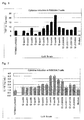
- ⁇ cps1A promoted production of TNF- ⁇ , IL-12p70, IL-10, and IL-6 in BALB/c mouse spleen cells.
- ⁇ cps1A promoted production of TNF- ⁇ , IL-12p70, IL-10, and IL-6 in BALB/c mouse spleen cells. Therefore, the cps1A gene was found to suppress production of TNF- ⁇ , IL-12p70, IL-10, and IL-6.
- ⁇ cps1B promoted production of TNF- ⁇ , IL-12p70, IL-10, and IL-6 in BALB/c mouse spleen cells. Therefore, the cps1B gene was found to suppress production of TNF- ⁇ , IL-12p70, IL-10, and IL-6.
- ⁇ cps1C promoted production of TNF- ⁇ , IL-12p70, IL-10, and IL-6 in BALB/c mouse spleen cells. Therefore, the cps1C gene was found to suppress production of TNF- ⁇ , IL-12p70, IL-10, and IL-6.
- ⁇ cps1D promoted production of TNF- ⁇ , IL-12p70, IL-10, and IL-6 in BALB/c mouse spleen cells. Therefore, the cps1D gene was found to suppress production of TNF- ⁇ , IL-12p70, IL-10, and IL-6.
- ⁇ cps1E promoted production of TNF- ⁇ , IL-12p70, IL-10, and IL-6 in BALB/c mouse spleen cells.
- ⁇ cpsE promoted production of TNF- ⁇ , IL-12p70, and IL-6 in BALB/c mouse spleen cells. Therefore, the cps1E gene was found to suppress production of TNF- ⁇ , IL-12p70, and IL-6.
- ⁇ cps1F promoted production of TNF- ⁇ , IL-12p70, and IL-6 in BALB/c mouse spleen cells. Therefore, the cps1F gene was found to suppress production of TNF- ⁇ , IL-12p70, and IL-6.
- ⁇ cps1G promoted production of TNF- ⁇ , IL-12p70, and IL-6 in BALB/c mouse spleen cells. Therefore, the cps1G gene was found to suppress production of TNF- ⁇ , IL-12p70, and IL-6.
- ⁇ cps1J promoted production of TNF- ⁇ , IL-12p70, IL-10, and IL-6 in BALB/c mouse spleen cells.
- ⁇ cps1J promoted production of TNF- ⁇ , IL-12p70, IL-10, and IL-6 in BALB/c mouse spleen cells. Therefore, the cps1J gene was found to suppress production of TNF- ⁇ , IL-12p70, IL-10, and IL-6.
- YIT 9029/pYSSE3 was employed as a control strain with respect to 14 insertion inactivation mutant strains ( ⁇ cps2A, ⁇ cps2C, ⁇ cps2D, ⁇ cps2E, ⁇ cps2F, ⁇ cps2G, ⁇ cps2H, ⁇ cps3A, ⁇ cps3B, ⁇ cps3C, ⁇ LCS0838, ⁇ LCS1111, ⁇ LCS1128 , and ⁇ LCS1890 in Example 2) of gene-disrupted mutant strains derived from Lactobacillus casei YIT 9029.
- mice macrophage RAW264.7 cells purchased from ATCC were cultured through a routine method in an incubator (37°C, 5% CO 2 ). The cells were collected through centrifugation (1,500 rpm, 5 minutes, 4°C) and suspended in the culture liquid (10 6 /mL). The cell liquid was dispensed to a 96-well cell culture plate (100 ⁇ L/well).
- the plate was transferred to an incubator (37°C, 5% CO 2 ), where culturing was performed for 24 hours. After completion of culture, the supernatant was recovered, and the TNF- ⁇ and IL-10 levels of the supernatant were determined through ELISA (average and standard deviation).
- mouse macrophage RAW264.7 cells purchased from ATCC
- mice were cultured through a routine method in an incubator (37°C, 5% CO 2 ).
- the cells were collected through centrifugation (1,500 rpm, 5 minutes, 4°C) and suspended in the culture liquid (10 6 /mL) as described in Example 4.
- the cell liquid was dispensed to a 96-well cell culture plate (100 ⁇ L/well). Subsequently, E.
- LPS coli -derived lipopolysaccharide
- Lactobacillus casei ATCC 334 standard strain
- Lactobacillus casei YIT 9029 or a heat-killed gene-disrupted strain derived from Lactobacillus casei YIT 9029 ( ⁇ cps1A, ⁇ cps1B, ⁇ cps1C, ⁇ cps1D, ⁇ cps1E, ⁇ cps1F, ⁇ cps1G , or ⁇ cps1J ) (5 ⁇ g/mL) prepared through a method similar to that of Example 4 were added to the plate.
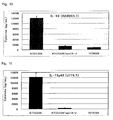
- the plate was subjected to culturing in an incubator (37°C, 5% CO 2 ) for 24 hours. After completion of culture, the supernatant was recovered, and the IL-6 level of the supernatant was determined through ELISA. The amount of IL-6 production when LPS was singly added was employed as a reference value, and the percent suppression of IL-6 production (%) after addition of each strain was calculated. With a percent suppression of IL-6 production (%) provided by Lactobacillus casei YIT 9029 being 100%, the IL-6 production suppression effects of other strains were evaluated as percentage values (%) ( Fig. 8 ).
- PCR was performed with a primer set containing an oligonucleotide 5'-taacccgggtggacttgattacacaagc-3' (SEQ ID NO: 49), having a sequence of a region containing a ribosome-binding site sequence upstream of the cps1A gene and a sequence containing an SmaI restriction site on the 5'-end; and an oligonucleotide 5'-taactgcagacactcttttttacac
- PCR was performed with DNA of Lactobacillus casei YIT 9029 as a template, whereby a DNA fragment including the genes cps1A, cps1B, cps1C, cps1D, cps1E, cps1F, cps1G , and cps1J was amplified.
- the thus-amplified DNA fragment was treated (including purification, concentration, digestion with restriction enzymes, etc.) in a manner similar to that of Example 2.
- a plasmid vector pYAP300 i.e., a plasmid which can carry the attP site of phage FSW and an int gene and which can site-specifically insert them into the attB site of Lactobacillus casei , Fig. 1
- the DNA fragment was ligated to the plasmid vector, so that the genes cps1A through cps1J were inserted to a region downstream of the transcription promoter of the vector, and the product was transferred to E. coli JM109 competent cells.
- the cells were spread onto an LB agar medium containing 500 ⁇ g/mL erythromycin, followed by culturing at 37°C for 2 days. Plasmids were extracted from the obtained colonies, and a recombinant plasmid of interest was selected based on the lengths of the plasmid and restriction-enzyme-digested fragments.
- Lactobacillus casei ATCC 334 was grown in an MRS medium, and a culture liquid in a logarithmic growth phase was centrifuged at 5,000xg and 4°C for 5 minutes, whereby the cells were collected.
- the cells were subjected to electroporation in accordance with the method of Example 2.
- An MRS medium (1 mL) was added to the liquid after electroporation, and the mixture was cultured at 37°C for 2 hours.
- the culture liquid was spread onto an MRS agar medium to which 20 ⁇ g/mL erythromycin had been added, followed by incubation at 37°C for 2 or 3 days, whereby erythromycin-resistant colonies were obtained.
- PCR analysis employed a primer having a sequence selected from a region in the vicinity of the attB site of a Lactobacillus casei ATCC 334 chromosome, and a primer having a sequence selected from a region in the relatively vicinity of an end of the cloned region from cps1A to cps1J.
- Lactobacillus casei ATCC 334 having the genes cps1A, cps1B, cps1C, cps1D, cps1E, cps1F, cps1G , and cps1J which are derived from Lactobacillus casei YIT 9029 is represented by ATCC334 cps1A-J .
- Cells of the gene-transferred strain were prepared in a manner similar to that of Example 4.
- RAW264.7 cells purchased from ATCC
- J774.1 cells purchased from RIKEN Bio Resource Center (currently) (previously RIKEN Gene Bank)
- RIKEN Bio Resource Center currently
- RIKEN Gene Bank previously RIKEN Gene Bank
- PCR was performed with two primers: an oligonucleotide 5'-tcccccgggttgggggaatctatcg-3' (SEQ ID NO: 51), having a sequence containing a ribosome-binding site sequence upstream of the cps1C gene and a sequence containing an Sma I restriction site on the 5'-end; and an oligonucleotide 5'-aaactgcagttatattttccatcgataaa-3' (SEQ ID NO: 52), having a sequence complementary to a region downstream of the cps1C gene and a sequence containing a Pst I restriction site on the 5'-end.
- PCR was performed with DNA of Lactobacillus casei YIT 9029 as a template, whereby the cps1C gene was amplified.
- the thus-amplified DNA fragment was treated (including purification, concentration, digestion with restriction enzymes, etc.) in a manner similar to that of Example 2.
- a plasmid vector pYAP300 was also subjected to digestion with restriction enzymes, calf intestine phosphatase treatment, purification, and concentration, in a manner similar to that of Example 2.
- the DNA fragment was ligated to the plasmid vector, so that the gene cps1C was inserted to a region downstream of the transcription promoter of the vector, and the product was transferred to E. coli JM109 competent cells.
- the cells were spread onto an LB agar medium containing 500 ⁇ g/mL erythromycin, followed by culturing at 37°C for 1 day. Plasmids were extracted from the obtained colonies, and a recombinant plasmid of interest was selected based on the lengths of the plasmid and restriction-enzyme-digested fragments.
- cells of a Lactobacillus casei YIT 9029 ⁇ cps1C mutant strain were grown in an MRS medium, and a culture liquid in a logarithmic growth phase was centrifuged at 5,000xg and 4°C for 5 minutes, whereby the cells were collected.
- the cells were subjected to electroporation in accordance with the method of Example 2.
- An MRS medium (1 mL) was added to the liquid after electroporation, and the mixture was cultured at 37°C for 2 hours.
- the culture liquid was spread onto an MRS agar medium to which 20 ⁇ g/mL erythromycin had been added, followed by incubation at 37°C for 2 or 3 days, whereby erythromycin-resistant colonies were obtained. A part of the colonies was removed, and insertion of a target plasmid into the attB site was confirmed through PCR.
- PCR analysis employed a primer having a sequence selected from a region in the vicinity of the attB site of a Lactobacillus casei YIT 9029 chromosome, and a primer having a sequence selected from the cloned cps1C region.
- the thus-obtained strain is represented by ⁇ cps1C / cps1C strain.
- Cells of the gene-transferred strain were prepared in a manner similar to that of Example 4.
- cytokine production inducing activity was equivalent to or lower than that of the parent Lactobacillus casei YIT 9029 ( Fig. 12 ). This phenomenon was attributed to the following mechanism.
- Re-transfer of the cps1C gene to ⁇ cps1C recovers the synthesis of cell wall polysaccharide.
- the expression amount of the cps1C gene is varied, since the transfer site is different. Therefore, cytokine production is further strongly suppressed.
- PCR was performed through employment of the DNA extract as a template and a primer set for amplifying the internal sequence of the cps1D gene (listed in Table 1). Specifically, PCR was performed by use of TaKaRa ExTaq (product of Takara Bio Inc.) under the conditions: 94°C ⁇ 2 minutes, (94°C ⁇ 10 seconds, 53°C ⁇ 10 seconds, 72°C ⁇ 1.5 minutes)x30, and 72°C ⁇ 5 minutes.
- Fig. 13 DNA fragments having the same size as that of a DNA fragment detected when YIT 9029 was employed were also found in the cases of the cells of a limited numbers of strains. Therefore, these cell strains were found to include at least a cps1D gene.
Landscapes
- Health & Medical Sciences (AREA)
- Life Sciences & Earth Sciences (AREA)
- Chemical & Material Sciences (AREA)
- Engineering & Computer Science (AREA)
- Organic Chemistry (AREA)
- Bioinformatics & Cheminformatics (AREA)
- General Health & Medical Sciences (AREA)
- Medicinal Chemistry (AREA)
- Chemical Kinetics & Catalysis (AREA)
- General Chemical & Material Sciences (AREA)
- Animal Behavior & Ethology (AREA)
- Nuclear Medicine, Radiotherapy & Molecular Imaging (AREA)
- Pharmacology & Pharmacy (AREA)
- Genetics & Genomics (AREA)
- Public Health (AREA)
- Veterinary Medicine (AREA)
- Zoology (AREA)
- Wood Science & Technology (AREA)
- Biomedical Technology (AREA)
- General Engineering & Computer Science (AREA)
- Immunology (AREA)
- Biotechnology (AREA)
- Molecular Biology (AREA)
- Microbiology (AREA)
- Biochemistry (AREA)
- Diabetes (AREA)
- Oncology (AREA)
- Mycology (AREA)
- Rheumatology (AREA)
- Plant Pathology (AREA)
- Communicable Diseases (AREA)
- Nutrition Science (AREA)
- Biophysics (AREA)
- Neurology (AREA)
- Physics & Mathematics (AREA)
- Orthopedic Medicine & Surgery (AREA)
- Physical Education & Sports Medicine (AREA)
- Food Science & Technology (AREA)
- Polymers & Plastics (AREA)
- Emergency Medicine (AREA)
Abstract
Description
- The present invention relates to a gene involved in regulation of cytokine production from macrophages and/or immunocompetent cells, and to use of the gene.
- Cytokines such as TNFs, interleukins, and interferons are intercellular signaling substances which play an important role in a biological defense system such as an immune system, a blood system, or an inflammatory response.
Immune response is triggered through recognition of a substance stimulating cytokine production by a pattern recognition receptor (PRR) (e.g., toll-like receptor (TLR)) whose expression is observed in host immunocytes, particularly in, for example, macrophages or dendritic cells. Immune response is regulated through direct or indirect interaction between immunocompetent cells (e.g., macrophages, dendritic cells, or lymphocytes). - Generally, living organisms cope with, for example, bacterial or viral infection, tumor, or cytotoxicity through activation of immune response. As has been shown, induction of excessive immune response may cause an allergic disease such as atopic dermatitis, bronchial asthma, allergic rhinitis, allergic conjunctivitis, or food allergy, or an autoimmune disease such as systemic lupus erythematosus (SLE) or chronic rheumatoid arthritis. Therefore, it is important that cytokine production in a living organism can be regulated so as to achieve a more desirable state.
- In recent years, attempts have been made to use a microorganism or a microorganism-derived component as a cytokine-production-regulating substance; i.e., a biological response modifier (BRM). Hitherto, there have been reported, for example, the cytokine production promoting effect of a polysaccharide-glycan complex derived from a Gram-positive bacterium (Patent Document 1), the interleukin (IL)-6 production inhibitory effect of a polysaccharide fraction derived from a bacterium belonging to the genus Lactobacillus or cells thereof (Patent Document 2), the IL-15 production promoting effect of lactobacillus cells (Patent Document 3), the IL-12 production promoting effect of cells of Lactobacillus casei, etc. (Patent Document 4), the macrophage activation effect of a polysaccharide-peptidoglycan complex derived from a bacterium belonging to the genus Lactobacillus (Patent Document 5), and the tumor cytotoxic factor inducing effect of a polysaccharide-peptidoglycan complex derived from a bacterium belonging to the genus Lactobacillus (Patent Document 6).
- As has been shown, in the cytokine production regulatory effect of Lactobacillus casei YIT 9018 (FERM BP-665) or Lactobacillus casei YIT 9029 (FERM BP-1366), a polysaccharide-peptidoglycan complex (PS-PG) (i.e., a cell wall component) serves as an active center (Patent Document 2). However, elucidation at the genetic level has not yet been accomplished.
- As has been reported, attempts have been made to modify the cytokine production regulatory activity of a microorganism at the genetic level by introducing the listeriolysin O gene, which is a listerial hemolysin, into Lactobacillus casei ATCC 393 (Patent Document 7). However, this modification causes problems in terms of safety or effectiveness and thus has not yet been put into practice. There has also been reported a gene involved in biosynthesis of an exopolysaccharide which is extracellularly produced by lactic acid bacterium (Patent Document 8). However, this exopolysaccharide is provided for the purpose of thickening foods or making foods creamy, and the exopolysaccharide has a structure different from that of a polysaccharide contained in the aforementioned PS-PG.
- Patent Document 1:
JP-A-1996-92112 - Patent Document 2:
JP-A-2003-73286 - Patent Document 3:
JP-A-2002-241292 - Patent Document 4:
JP-A-1998-139674 - Patent Document 5:
JP-B-1994-99314 - Patent Document 6:
JP-A-1988-196521 - Patent Document 7:
JP-A-2003-63991 - Patent Document 8:
JP-A-1997-269 - The present invention provides a gene involved in regulation of cytokine production from macrophages and/or immunocompetent cells and use of the gene.
- The present inventors have conducted studies on the genomic information of Lactobacillus casei YIT 9029, and as a result have found that a gene involved in regulation of production of various cytokines is present among genes involved in synthesis of a polysaccharide component of a polysaccharide-peptidoglycan complex (PS-PG), and that production of various cytokines can be regulated through use of the gene in a microorganism.
- Accordingly, the present invention provides the following.
- 1) A gene encoding a protein selected from among the following proteins (a) to (c):
- (a) a protein having any of the amino acid sequences of SEQ ID NOs: 2, 4, 6, 8, 10, 12, 14, 16, 82, 84, 86, 88, 90, 92, 94, 96, 98, 100, 102, 104, 106, and 108;
- (b) a protein which has an amino acid sequence equivalent to any of the amino acid sequences of (a), except that one to several amino acid residues are deleted, substituted, or added, and which exhibits cytokine production regulatory activity; and
- (c) a protein which has an amino acid sequence having 90% or higher identity to any of the amino acid sequences of (a), and which exhibits cytokine production regulatory activity.
- 2) A gene having a polynucleotide selected from among the following polynucleotides (d) to (f):
- (d) a polynucleotide having any of the nucleotide sequences of SEQ ID NOs: 1, 3, 5, 7, 9, 11, 13, 15, 81, 83, 85, 87, 89, 91, 93, 95, 97, 99, 101, 103, 105, and 107;
- (e) a polynucleotide which hybridizes, under stringent conditions, with a polynucleotide having a nucleotide sequence complementary to any of the nucleotide sequences of (d), and which encodes a protein exhibiting cytokine production regulatory activity; and
- (f) a polynucleotide which has a nucleotide sequence having 90% or higher identity to any of the nucleotide sequences of (d), and which encodes a protein exhibiting cytokine production regulatory activity.
- 3) A method for regulating cytokine production in a microorganism, comprising introducing any of the aforementioned genes into the microorganism, or modifying the gene present in the microorganism.
- 4) A microorganism in which any of the aforementioned genes has been introduced or modified.
- 5) A food or beverage containing the aforementioned microorganism.
- 6) A drug containing the aforementioned microorganism.
- 7) A screening method for selecting a microorganism exhibiting cytokine production regulatory activity, comprising determining the presence or absence of any of the aforementioned genes, and/or determining the level of expression of the gene.
- 8) A recombinant vector containing any of the aforementioned polynucleotides or a portion thereof.
- 9) A host microorganism containing the aforementioned recombinant vector.
- 10) A nucleic acid fragment which specifically hybridizes with any of the aforementioned polynucleotides.
- 11) A DNA array or DNA chip containing any of the aforementioned polynucleotides or a portion thereof.
- Employment of the gene or polynucleotide of the present invention or a fragment thereof realizes regulation of cytokine production from macrophages and/or immunocompetent cells in a microorganism as desired, or selection, through screening, of a microorganism exhibiting cytokine production regulatory activity of interest.
Employment of a microorganism in which the gene of the present invention has been introduced or modified realizes production of a food, beverage, or drug exhibiting cytokine production regulatory activity of interest. -
- [
Fig. 1 ]
Fig. 1 shows pYSSE3 and pYAP300. - [
Fig. 2 ]
Fig. 2 shows the TNF-α inducibility of gene-disrupted strains of Lactobacillus casei YIT 9029 in BALB/c mouse spleen cells (amount of bacterial cells added: 3 µg/mL). - [
Fig. 3 ]
Fig. 3 shows the IL-12p70 inducibility of gene-disrupted strains of Lactobacilluscasei YIT 9029 in BALB/c mouse spleen cells (amount of bacterial cells added: 3 µg/mL). - [
Fig. 4 ]
Fig. 4 shows the IL-10 inducibility of gene-disrupted strains of Lactobacillus casei YIT 9029 in BALB/c mouse spleen cells (amount of bacterial cells added: 30 µg/mL). - [
Fig. 5 ]
Fig. 5 shows the IL-6 inducibility of gene-disrupted strains of Lactobacillus casei YIT 9029 in BALB/c mouse spleen cells (amount of bacterial cells added: 3 µg/mL). - [
Fig. 6 ]
Fig. 6 shows TNF-α inducibility in murine macrophage RAW264.7 cells (amount of bacterial cells added: 25 µg/mL). - [
Fig. 7 ]
Fig. 7 shows IL-10 inducibility in murine macrophage RAW264.7 cells (amount of bacterial cells added: 25 µg/mL). - [
Fig. 8 ]
Fig. 8 shows suppression activity against IL-6 production induction in LPS-stimulated murine macrophage RAW264.7 cells (amount of bacterial cells added: 5 µg/mL). - [
Fig. 9 ]
Fig. 9 shows TNF-α inducibility in murine macrophage RAW264.7 cells (amount of bacterial cells added: 1 µg/mL). - [
Fig. 10 ]
Fig. 10 shows IL-10 inducibility in murine macrophage RAW264.7 cells (amount of bacterial cells added: 1 µg/mL). - [
Fig. 11 ]
Fig. 11 shows IL-12p40 inducibility in murine macrophage J774.1 cells (amount of bacterial cells added: 1 µg/mL). - [
Fig. 12 ]
Fig. 12 shows TNF-α and IL-10 inducibility in murine macrophage RAW264.7 cells, and IL-12p40 inducibility in J774.1 cells (amount of bacterial cells added: 25 µg/mL). - [
Fig. 13 ]
Fig. 13 shows detection of cps1D gene in strains of Lactobacillus casei (lane 1:YIT 9029, lane 2: YIT 0180, lane 3: YIT 0005, lane 4: YIT 0006, lane 5: YIT 0009, lane 6: YIT 0123, lane 7: YIT 0128, lane 8: YIT 0003, lane 9: YIT 0007, lane 10: YIT 0010, lane 11: YIT 0015, lane 12: YIT 0038, lane 13: YIT 0047, lane 14: YIT 0171, lane 15: YIT 0209, lane 16: YIT 0226, lane 17: YIT 0262, lane 18: YIT 0289, lane 19: YIT 0290, lane 20: YIT 0295, lane 21: YIT 0322, lane 22: YIT 0393, and lane 23: YIT 10029). - In the present invention, homology (identity) between amino acid sequences and that between nucleotide sequences may be determined through the Lipman-Pearson method (Lipman, D. J. and Pearson, W. R. 1985. Rapid and sensitive protein similarity searches. Science 227: 1435-1441) by use of genetic information processing software GENETYX (product of Genetyx Corporation) employing a homology analysis (search homology) program. Specifically, homology (%) is calculated through analysis of data on comparison between a gene involved in PS-PG synthesis by
Lactobacillus casei YIT 9029 and a known gene for polysaccharide synthesis (parameters are as follows: unit size to compare = 2, pick up location = 5). - As used herein, the term "gene" refers to a double-stranded DNA fragment, as well as a single-stranded DNA fragment (e.g., a sense or antisense fragment) which forms such a double-stranded DNA fragment. No particular limitation is imposed on the length of such a DNA fragment. Examples of the polynucleotide include RNA and DNA fragments, and examples of DNA fragments include cDNA, genomic DNA, and synthetic DNA fragments.
- The gene of the present invention is a gene found in
Lactobacillus casei YIT 9029 and named cps1A, cps1B, cps1C, cps1D, cps1E, cps1F, cps1G, cps1J, cps2A, cps2C, cps2D, cps2E, cps2F, cps2G, cps2H, cps3A, cps3B, or cps3C, a gene represented by a gene number of LCS0838, LCS1111, LCS1128, or LCS1890, or a gene deduced from any of these genes. The gene of the present invention encodes a protein having a function of promoting or inhibiting cytokine production from macrophages and/or immunocompetent cells. All of the aforementioned genes are novel genes, since a polynucleotide having 90% or higher identity in sequence to any of the genes has not been found through homology search between these genes and genes registered in existing databases. - Specifically, the gene of the present invention is a gene encoding a protein selected from among the following proteins (a) to (c):
- (a) a protein having any of the amino acid sequences of SEQ ID NOs: 2, 4, 6, 8, 10, 12, 14, 16, 82, 84, 86, 88, 90, 92, 94, 96, 98, 100, 102, 104, 106, and 108;
- (b) a protein which has an amino acid sequence equivalent to any of the amino acid sequences of (a), except that one to several amino acid residues are deleted, substituted, or added, and which exhibits cytokine production regulatory activity; and
- (c) a protein which has an amino acid sequence having 90% or higher identity to any of the amino acid sequences of (a), and which exhibits cytokine production regulatory activity.
- The amino acid sequence of any of SEQ ID NOs: 2, 4, 6, 8, 10, 12, 14, 16, 82, 84, 86, 88, 90, 92, 94, 96, 98, 100, 102, 104, 106, and 108 in which one or more amino acid residues are deleted, substituted, or added encompasses an amino acid sequence obtained through deletion, substitution, or addition of one to several amino acid residues (preferably 1 to 10 amino acid residues). As used herein, "addition" encompasses addition of one to several amino acid residues to both ends of an amino acid sequence.
- As used herein, "deletion, substitution, or addition of an amino acid residue(s)" encompasses deletion, substitution, or addition of an amino acid residue(s) in a protein having an amino acid sequence of, for example, SEQ ID NO: 2, resulting from, for example, naturally occurring mutation (e.g., single nucleotide substitution) or artificial mutation (e.g., site-directed mutagenesis or mutagenic treatment). In the case of artificial deletion, substitution, or addition of an amino acid residue(s), for example, a polynucleotide having a nucleotide sequence encoding an amino acid sequence of, for example, SEQ ID NO: 2 is subjected to a conventional site-directed mutagenesis, followed by expression of the polynucleotide through a customary method.
Amino acid residue substitution may be, for example, substitution by an amino acid residue exhibiting properties (e.g., hydrophobicity, electric charge, pK, and conformational feature) similar to those of the original amino acid residue. - The expression "amino acid sequence having 90% or higher identity to any of the amino acid sequences of (a)" refers to an amino acid sequence which, upon appropriate alignment, exhibits 90% or higher identity (more preferably 95% or higher) to any of the amino acid sequences of SEQ ID NOs: 2, 4, 6, 8, 10, 12, 14, 16, 82, 84, 86, 88, 90, 92, 94, 96, 98, 100, 102, 104, 106, and 108.
- As used herein, the expression "cytokine production regulatory activity" refers to promotion or inhibition of production of a cytokine(s) from macrophages and/or immunocompetent cells. This expression also encompasses the case where a single gene exhibits the effect of promoting or suppressing production of different cytokines.
- No particular limitation is imposed on the cytokine. Examples of the cytokine include interferons such as IFN-α, IFN-β, and IFN-γ; interleukins such as IL-1, IL-2, IL-3, IL-4, IL-5, IL-6, IL-7, IL-8, IL-9, IL-10, IL-11, IL-12, IL-13, IL-14, IL-15, IL-16, IL-17, IL-18, IL-19, IL-20, IL-21, IL-22, IL-23, IL-24, IL-25, IL-26, IL-27, IL-28, and IL-29; tumor necrosis factors such as TNF-α and TNF-β; chemokines such as CXCL1, CXCL2, CXCL3, CXCL4, CXCL5, CXCL6, CXCL7, CXCL8, CXCL9, CXCL10, CXCL11, CXCL12, CXCL13, CXCL14, CXCL15, CXCL16, CCL1, CCL2, CCL3, CCL4, CCL5, CCL6, CCL7, CCL8, CCL9, CCL10, CCL11, CCL12, CCL13, CCL14, CCL15, CCL16, CCL17, CCL18, CCL19, CCL20, CCL21, CCL22, CCL23, CCL24, CCL25, CCL26, CCL27, CCL28, CL1, CL2, CX3CL, MCP, MIP, RANTES, and Eotaxin; colony-stimulating factors such as GM-CSF, G-CSF, and M-CSF; growth factors such as EGF, PDGF, FGF, NGF, VEGF, TGF, KGF, IGF, SCF, BDNF, CNTF, OSM, and IIGF; thrombopoietin (TPO); stem cell factor (SCF); leukemia inhibitory factor (LIF); prolactine hormone; BMP; activin; leptin; adiponectin; prostaglandins (PG); and nitrogen monoxide (NO).
- As used herein, the term "immunocompetent cell" refers to a cell involved in immune response. No particular limitation is imposed on the immunocompetent cell, and examples of the immunocompetent cell include macrophages, dendritic cells, Langerhans cells, monocytes, T-cells, B-cells, natural killer cells, and natural killer T-cells.
- Next will be described the homology (identity) between known proteins and a protein having any of the amino acid sequences of SEQ ID NOs: 2, 4, 6, 8, 10, 12, 14, 16, 82, 84, 86, 88, 90, 92, 94, 96, 98, 100, 102, 104, 106, and 108. For homology search, by use of genetic information processing software GENETYX, the amino acid sequence of a protein defined by any of the aforementioned nucleotide sequences was compared with the amino acid sequence of a protein defined generally by a disclosed nucleotide sequence of the genome or a DNA fragment of lactic acid bacteria, to thereby search for genes having homology. When the entire amino acid sequence or a portion thereof having a maximum possible length of a protein has 20% or higher identity to that of the corresponding protein, these proteins are regarded as having homology.
- The protein having the amino acid sequence of SEQ ID NO: 2 (Cps1A) has 37.5% identity in amino acid sequence to a protein encoded by the epsB gene derived from Lactobacillus delbrueckii subsp. bulgaricus Lfi5 strain and involved in exopolysaccharide synthesis. The protein Cps1A has 30.9% identity in amino acid sequence to a protein encoded by the epsA gene derived from Lactococcus lactis subsp. cremoris HO2 strain and involved in exopolysaccharide synthesis. The protein Cps1A has 70.2% identity in amino acid sequence to a protein encoded by the wzd gene derived from Lactobacillus rhamnosus RW-9595M and involved in exopolysaccharide synthesis. The protein Cps1A has 40.6% identity in amino acid sequence to a protein predicted by the draft sequence of Lactobacillus gasseri ATCC 33323 (JGI).
- The protein having the amino acid sequence of SEQ ID NO: 4 (Cps1B) has 46.4% identity in amino acid sequence to a protein encoded by the epsC gene derived from Lactobacillus delbrueckii subsp. bulgaricus Lfi5 strain and involved in exopolysaccharide synthesis. The protein Cps1B has 41.7% identity in amino acid sequence to a protein encoded by the epsB gene derived from Lactococcus lactis subsp. cremoris HO2 strain and involved in exopolysaccharide synthesis. The protein Cps1B has 85.8% identity in amino acid sequence to a protein encoded by the wze gene derived from Lactobacillus rhamnosus RW-9595M and involved in exopolysaccharide synthesis. The protein Cps1B has 40.6% identity in amino acid sequence to a protein encoded by the epsC gene derived from Lactobacillus acidophilus NCFM and involved in exopolysaccharide synthesis.
- The protein having the amino acid sequence of SEQ ID NO: 6 (Cps1C) has 46.3% identity in amino acid sequence to a protein encoded by the rgpA gene derived from Streptococcus thermophilus CNRZ1066 and involved in polysaccharide synthesis. The protein Cps1C has 43.4% identity in amino acid sequence to a protein encoded by the rgpA gene derived from Lactococcus lactis subsp. lactis IL1403 and involved in polysaccharide synthesis.
- The protein having the amino acid sequence of SEQ ID NO: 8 (Cps1D) has 43.5% identity in amino acid sequence to a protein encoded by the cpsG gene derived from Streptococcus salivarius NCFB2393 and involved in polysaccharide synthesis.
- The protein having the amino acid sequence of SEQ ID NO: 10 (Cps1E) has 24.8% identity in amino acid sequence to a protein encoded by the epsN gene derived from Lactococcus lactic subsp. cremoris HO2 strain and involved in exopolysaccharide synthesis. The protein Cps1E has 22.0% identity in amino acid sequence to a protein encoded by the cpsI gene derived from Streptococcus salivarius NCFB2393 and involved in polysaccharide synthesis. The protein Cps1E has 23.0% identity in amino acid sequence to a protein encoded by the ycbH gene derived from Lactococcus lactis subsp. lactis IL1403 and involved in polysaccharide synthesis.
- There was not found a protein having 20% or higher identity in amino acid sequence to the protein having the amino acid sequence of SEQ ID NO: 12 (Cps1F).
- The protein having the amino acid sequence of SEQ ID NO: 14 (Cps1G) has 30.6% identity in amino acid sequence to a protein encoded by the thgA2 gene derived from Lactobacillus plantarum WCFS1. The protein Cps1G has 39.3% identity in amino acid sequence (in 84 amino acid residues) to a protein encoded by the epsH gene derived from Streptococcus thermophilus CNRZ1066 and involved in exopolysaccharide synthesis. The protein Cps1G has 34.5% identity in amino acid sequence (in 116 amino acid residues) to a protein encoded by the yncA gene derived from Lactococcus lactis subsp. lactis IL1403 and involved in transacetylation.
- The protein having the amino acid sequence of SEQ ID NO: 16 (Cps1J) has 58.3% identity in amino acid sequence to a protein encoded by the epsE gene derived from Lactobacillus delbrueckii subsp. bulgaricus Lfi5 and involved in exopolysaccharide synthesis. The protein Cps1J has 44.1% identity in amino acid sequence to a protein encoded by the epsE gene derived from Lactobacillus johnsonii NCC533 and involved in exopolysaccharide synthesis. The protein Cps1J has 79.3% identity in amino acid sequence to a protein encoded by the welE gene derived from Lactobacillus rhamnosus RW-9595M and involved in exopolysaccharide synthesis. The protein Cps1J has 65.7% identity in amino acid sequence to a protein encoded by the epsE gene derived from Lactobacillus acidophilus NCFM and involved in exopolysaccharide synthesis. The protein Cps1J has 47.5% identity in amino acid sequence to a protein encoded by the epsE gene derived from Streptococcus thermophilus FI9186 and involved in exopolysaccharide synthesis. A portion (about 37%) of the amino acid sequence of SEQ ID NO: 16 has 96.7% identity-although the remaining portion has not been elucidated to have such a homology-to the amino acid sequence of a portion of the gene (gene number: 11596438) derived from Lactobacillus paracasei Type-V (only a partial sequence thereof has been known) and involved in polysaccharide synthesis.
- The protein having the amino acid sequence of SEQ ID NO: 82 (Cps2A) was found to have no homology in amino acid sequence to any of proteins encoded by genes of, for example, other microorganisms.
- The protein having the amino acid sequence of SEQ ID NO: 84 (Cps2C) has 38.3% identity in amino acid sequence to a protein (which is considered a glycosyltransferase) encoded by a gene (gene number: EF2195) derived from Enterococcus faecalis V583 strain. The protein Cps2C has 34.7% identity in amino acid sequence to a protein encoded by the rgpB gene derived from Streptococcus mutans UA159 strain and involved in exopolysaccharide synthesis.
- The protein having the amino acid sequence of SEQ ID NO: 86 (Cps2D) has 42.4% identity in amino acid sequence to a protein (which is considered a glycosyltransferase) encoded by a gene (gene number: lp_1763) derived from Lactobacillus plantarum WCFS1 strain. The protein Cps2D has 38.3% identity in amino acid sequence to 100 amino acid residues on the amino-terminal side of a protein (which is considered a glycosyltransferase) encoded by a gene (gene number: EF2181) derived from Enterococcus faecalis V583 strain.
- The protein having the amino acid sequence of SEQ ID NO: 88 (Cps2E) has 35.9% identity in amino acid sequence to a protein (which is considered a glycosyltransferase) encoded by a gene (gene number: LBA0526) derived from Lactobacillus acidophilus NCFM strain. The protein Cps2E has 35% identity in amino acid sequence to a protein (which is considered a glycosyltransferase) encoded by a gene (gene number: Ldb0454) derived from Lactobacillus delbrueckii subsp. bulgaricus ATCC11842 strain.
- The protein having the amino acid sequence of SEQ ID NO: 90 (Cps2F) has 51.0% identity in amino acid sequence (in 208 amino acid residues) to a protein (which is considered a muramidase) encoded by a gene (gene number: lp_3093) derived from Lactobacillus plantarum WCFS1 strain. The protein Cps2F has 30.7% identity in amino acid sequence (in 326 amino acid residues) to a protein encoded by a gene (gene number: EF2174) derived from Enterococcus faecalis V583 strain.
- The protein having the amino acid sequence of SEQ ID NO: 92 (Cps2G) has 45.9% identity in amino acid sequence to a protein (which is considered a repeat unit transporter) encoded by a gene (gene number: lp_1231) derived from Lactobacillus plantarum WCFS1 strain. The protein Cps2G has 42.6% identity in amino acid sequence to a protein (which is considered a repeat unit transporter) encoded by a gene (gene number: LBA1724) derived from Lactobacillus acidophilus NCFM strain.
- The protein having the amino acid sequence of SEQ ID NO: 94 (Cps2H) was found to have no homology in amino acid sequence to any of proteins encoded by genes of, for example, other microorganisms.
- The protein having the amino acid sequence of SEQ ID NO: 96 (Cps3A) has 66.4% identity in amino acid sequence to a protein (which is considered a glycosyltransferase) encoded by a gene (gene number: lp_1275) derived from Lactobacillus plantarum WCFS1 strain. The protein Cps3A has 55.7% identity in amino acid sequence to a protein (which is considered a glycosyltransferase) encoded by a gene (gene number: Ldb1838) derived from Lactobacillus delbrueckii subsp. bulgaricus ATCC11842 strain.
- The protein having the amino acid sequence of SEQ ID NO: 98 (Cps3B) has 59.7% identity in amino acid sequence to a protein (which is considered a glycosyltransferase) encoded by a gene (gene number: lp_1276) derived from Lactobacillus plantarum WCFS1 strain. The protein Cps3B has 54.1% identity in amino acid sequence to a protein (which is considered a glycosyltransferase) encoded by a gene (gene number: Ldb1837) derived from Lactobacillus delbrueckii subsp. bulgaricus ATCC11842 strain.
- The protein having the amino acid sequence of SEQ ID NO: 100 (Cps3C) has 49.7% identity in amino acid sequence to a protein (which is considered a glycosyltransferase) encoded by a gene (gene number: lp_1277) derived from Lactobacillus plantarum WCFS1 strain. The protein Cps3C has 39.5% identity in amino acid sequence to a protein (which is considered a glycosyltransferase) encoded by a gene (gene number: Ldb1836) derived from Lactobacillus delbrueckii subsp. bulgaricus ATCC11842 strain.
- The protein having the amino acid sequence of SEQ ID NO: 102 (LCS0838P) has 49.9% identity in amino acid sequence to a protein (which is considered a polysaccharide transport protein) encoded by a gene (gene number: Ldb1569) derived from Lactobacillus delbrueckii subsp. bulgaricus ATCC11842 strain. The protein LCS0838P has 48.9% identity in amino acid sequence to a protein (which is considered a polysaccharide transport protein) encoded by a gene (gene number: LBA1616) derived from Lactobacillus acidophilus NCFM strain.
- The protein having the amino acid sequence of SEQ ID NO: 104 (LCS1111P) has 30.4% identity in amino acid sequence (in 220 amino acid residues) to a protein (which is considered a glycosyltransferase) encoded by a gene (gene number: EF2176) derived from Enterococcus faecalis V583 strain. The protein LCS1111P has 29.9% identity in amino acid sequence (in 224 amino acid residues) to a protein (which is considered a glycosyltransferase) encoded by a gene (gene number: Ldb0178) derived from Lactobacillus delbrueckii subsp. bulgaricus ATCC11842 strain.
- The protein having the amino acid sequence of SEQ ID NO: 106 (LCS1128P) has 53.2% identity in amino acid sequence to a protein (which is considered a glycosyltransferase) encoded by a gene (gene number: LBA1283) derived from Lactobacillus acidophilus NCFM. The protein LCS1128P has 53.1% identity in amino acid sequence to a protein (which is considered a glycosyltransferase) encoded by the ybaI gene derived from Lactococcus lactis IL1403 strain.
- The protein having the amino acid sequence of SEQ ID NO: 108 (LCS1890P) has 18.3% identity in amino acid sequence (in 295 amino acid residues) to a protein encoded by the epsG gene derived from Lactobacillus johnsonii NCC533 strain and involved in exopolysaccharide synthesis. The protein LCS1890P has 18.3% identity in amino acid sequence (in 344 amino acid residues) to a protein encoded by the epsT gene derived from Lactococcus lactis subsp. cremoris HO2 strain and involved in exopolysaccharide synthesis.
- The gene of the present invention is preferably a gene having a polynucleotide selected from among the following polynucleotides (d) to (f):
- (d) a polynucleotide having any of the nucleotide sequences of SEQ ID NOs: 1, 3, 5, 7, 9, 11, 13, 15, 81, 83, 85, 87, 89, 91, 93, 95, 97, 99, 101, 103, 105, and 107;
- (e) a polynucleotide which hybridizes, under stringent conditions, with a polynucleotide having a nucleotide sequence complementary to any of the nucleotide sequences of (d), and which encodes a protein exhibiting cytokine production regulatory activity; and
- (f) a polynucleotide which has a nucleotide sequence having 90% or higher identity to any of the nucleotide sequences of (d), and which encodes a protein exhibiting cytokine production regulatory activity.
- When the DNA fragment having the nucleotide sequence of SEQ ID NO: 1 (the DNA fragment is named "cps1A gene") is present in
Lactobacillus casei YIT 9029, the bacterium exhibits the effect of suppressing production of TNF-α, IL-6, IL-10, and IL-12 from macrophages and/or immunocompetent cells. - When the DNA fragment having the nucleotide sequence of SEQ ID NO: 3 (the DNA fragment is named "cps1B gene") is present in
Lactobacillus casei YIT 9029, the bacterium exhibits the effect of suppressing production of TNF-α, IL-6, IL-10, and IL-12 from macrophages and/or immunocompetent cells. - When the DNA fragment having the nucleotide sequence of SEQ ID NO: 5 (the DNA fragment is named "cps1C gene") is present in
Lactobacillus casei YIT 9029, the bacterium exhibits the effect of suppressing production of TNF-α, IL-6, IL-10, and IL-12 from macrophages and/or immunocompetent cells. - When the DNA fragment having the nucleotide sequence of SEQ ID NO: 7 (the DNA fragment is named "cps1D gene") is present in
Lactobacillus casei YIT 9029, the bacterium exhibits the effect of suppressing production of TNF-α, IL-6, IL-10, and IL-12 from macrophages and/or immunocompetent cells. - When the DNA fragment having the nucleotide sequence of SEQ ID NO: 9 (the DNA fragment is named "cps1E gene") is present in
Lactobacillus casei YIT 9029, the bacterium exhibits the effect of suppressing production of TNF-α, IL-6, and IL-12 from macrophages and/or immunocompetent cells. - When the DNA fragment having the nucleotide sequence of SEQ ID NO: 11 (the DNA fragment is named "cps1F gene") is present in
Lactobacillus casei YIT 9029, the bacterium exhibits the effect of suppressing production of TNF-α, IL-6, and IL-12 from macrophages and/or immunocompetent cells. - When the DNA fragment having the nucleotide sequence of SEQ ID NO: 13 (the DNA fragment is named "cps1G gene") is present in
Lactobacillus casei YIT 9029, the bacterium exhibits the effect of suppressing production of TNF-α, IL-6, and IL-12 from macrophages and/or immunocompetent cells. - When the DNA fragment having the nucleotide sequence of SEQ ID NO: 15 (the DNA fragment is named "cps1J gene") is present in
Lactobacillus casei YIT 9029, the bacterium exhibits the effect of suppressing production of TNF-α, IL-6, IL-10, and IL-12 from macrophages and/or immunocompetent cells. - When the DNA fragment having the nucleotide sequence of SEQ ID NO: 81 (the DNA fragment is named "cps2A gene") is present in
Lactobacillus casei YIT 9029, the bacterium does not affect production of TNF-α from macrophages and/or immunocompetent cells, but exhibits the effect of suppressing production of IL-10 therefrom. - When the DNA fragment having the nucleotide sequence of SEQ ID NO: 83 (the DNA fragment is named "cps2C gene") is present in
Lactobacillus casei YIT 9029, the bacterium exhibits the effect of promoting production of TNF-α from macrophages and/or immunocompetent cells, and exhibits the effect of suppressing production of IL-10 therefrom. - When the DNA fragment having the nucleotide sequence of SEQ ID NO: 85 (the DNA fragment is named "cps2D gene") is present in
Lactobacillus casei YIT 9029, the bacterium exhibits the effect of suppressing production of TNF-α and IL-10 from macrophages and/or immunocompetent cells. - When the DNA fragment having the nucleotide sequence of SEQ ID NO: 87 (the DNA fragment is named "cps2E gene") is present in
Lactobacillus casei YIT 9029, the bacterium exhibits the effect of promoting production of TNF-α from macrophages and/or immunocompetent cells, and exhibits the effect of suppressing production of IL-10 therefrom. - When the DNA fragment having the nucleotide sequence of SEQ ID NO: 89 (the DNA fragment is named "cps2F gene") is present in
Lactobacillus casei YIT 9029, the bacterium exhibits the effect of promoting production of TNF-α from macrophages and/or immunocompetent cells, and exhibits the effect of suppressing production of IL-10 therefrom. - When the DNA fragment having the nucleotide sequence of SEQ ID NO: 91 (the DNA fragment is named "cps2G gene") is present in
Lactobacillus casei YIT 9029, the bacterium exhibits the effect of suppressing production of TNF-α and IL-10 from macrophages and/or immunocompetent cells. - When the DNA fragment having the nucleotide sequence of SEQ ID NO: 93 (the DNA fragment is named "cps2H gene") is present in
Lactobacillus casei YIT 9029, the bacterium exhibits the effect of suppressing production of TNF-α and IL-10 from macrophages and/or immunocompetent cells. - When the DNA fragment having the nucleotide sequence of SEQ ID NO: 95 (the DNA fragment is named "cps3A gene") is present in
Lactobacillus casei YIT 9029, the bacterium exhibits the effect of suppressing production of TNF-α and IL-10 from macrophages and/or immunocompetent cells. - When the DNA fragment having the nucleotide sequence of SEQ ID NO: 97 (the DNA fragment is named "cps3B gene") is present in
Lactobacillus casei YIT 9029, the bacterium exhibits the effect of suppressing production of TNF-α and IL-10 from macrophages and/or immunocompetent cells. - When the DNA fragment having the nucleotide sequence of SEQ ID NO: 99 (the DNA fragment is named "cps3C gene") is present in
Lactobacillus casei YIT 9029, the bacterium exhibits the effect of suppressing production of TNF-α and IL-10 from macrophages and/or immunocompetent cells. - When the DNA fragment having the nucleotide sequence of SEQ ID NO: 101 (i.e., the gene of gene number: LCS0838) is present in
Lactobacillus casei YIT 9029, the bacterium exhibits the effect of suppressing production of TNF-α and IL-10 from macrophages and/or immunocompetent cells. - When the DNA fragment having the nucleotide sequence of SEQ ID NO: 103 (i.e., the gene of gene number: LCS1111) is present in
Lactobacillus casei YIT 9029, the bacterium does not affect production of TNF-α from macrophages and/or immunocompetent cells, but exhibits the effect of suppressing production of IL-10 therefrom. - When the DNA fragment having the nucleotide sequence of SEQ ID NO: 105 (i.e., the gene of gene number: LCS1128) is present in
Lactobacillus casei YIT 9029, the bacterium does not affect production of TNF-α from macrophages and/or immunocompetent cells, but exhibits the effect of suppressing production of IL-10 therefrom. - When the DNA fragment having the nucleotide sequence of SEQ ID NO: 107 (i.e., the gene of gene number: LCS1890) is present in
Lactobacillus casei YIT 9029, the bacterium exhibits the effect of suppressing production of TNF-α and IL-10 from macrophages and/or immunocompetent cells. - As used herein, the expression "under stringent conditions" refers to, for example, the case where hybridization is carried out under conditions described in Molecular Cloning - a Laboratory manual 2nd edition (Sambrook, et al., 1989); specifically, the case where hybridization is carried out in a solution containing 6 × SSC (composition of 1 × SSC: 0.15 M sodium chloride, 0.015 M sodium citrate, pH 7.0), 0.5% SDS, 5 × Denhardt's solution, and 100 mg/mL herring sperm DNA together with a polynucleotide having a nucleotide sequence complementary to any of the aforementioned nucleotide sequences at 65°C for 8 to 16 hours.
- The expression "nucleotide sequence having 90%or higher identity to any of the nucleotide sequences of (d)" refers to a nucleotide sequence which, upon appropriate alignment, exhibits 90% or higher identity (more preferably 95% or higher) to any of the nucleotide sequences of SEQ ID NOs: 1, 3, 5, 7, 9, 11, 13, 15, 81, 83, 85, 87, 89, 91, 93, 95, 97, 99, 101, 103, 105, and 107.
- The gene of the present invention can be readily obtained through a customary PCR technique by use of a primer set prepared on the basis of any of the nucleotide sequences of SEQ ID NOs: 1, 3, 5, 7, 9, 11, 13, 15, 81, 83, 85, 87, 89, 91, 93, 95, 97, 99, 101, 103, 105, and 107, and using, as a template, DNA of
Lactobacillus casei YIT 9029.
Specifically, the gene of the present invention can be obtained through, for example, PCR by use of a set of chemically synthesized oligonucleotides A and B (oligonucleotide A has a sequence including the N-terminal start codon of any of the aforementioned genes, and oligonucleotide B has a sequence complementary to a sequence including the stop codon of the gene), and by use, as a template, of DNA ofLactobacillus casei YIT 9029. For effective cloning of the thus-obtained gene fragment into, for example, a plasmid vector, a sequence for restriction enzyme cleavage may be added on the 5'-end of the oligonucleotide primer. The primer which may be employed in the present invention is generally, for example, a nucleotide chemically synthesized on the basis of information on the nucleotide sequence of the gene of the present invention, and may be the gene of the present invention which has already been obtained or a fragment thereof. Such a nucleotide has a partial nucleotide sequence corresponding to, for example, SEQ ID NO: 1, and includes, for example, 10 to 50 consecutive nucleotides (preferably 15 to 35 consecutive nucleotides).
When, for example, a DNA fragment having a length of 2,000 base pairs is prepared, PCR is carried out under the following conditions: 94°C for 2 minutes, (95°C for 10 seconds, 52°C for 10 seconds, 72°C for 2 minutes) × 30 cycles, and 72°C for 7 minutes. - The gene of the present invention may be artificially synthesized by means of a DNA synthesizer on the basis of the corresponding nucleotide sequence.
- The gene of the present invention is a gene involved in regulation of production of various cytokines. Therefore, when the gene of the present invention is introduced into a microorganism, or when the gene present in the microorganism is modified, cytokine production can be regulated by the microorganism.
When the genes of the present invention are introduced into a microorganism which does not originally have the genes, the genes may be introduced singly or in combination. Introduction of the gene(s) may be carried out through, for example, the competence method using DNA uptake ability, the protoplast PEG method using a protoplast, or electroporation using high-voltage pulses. Particularly, electroporation is preferably employed. Incorporation of the gene(s) into the chromosome of a microorganism may be carried out through homologous recombination or site-specific incorporation. - Modification of the gene of the present invention may be inhibition, suppression, or promotion of expression of the gene.
For inhibition of expression of the gene of the present invention, the gene may be disrupted or deleted through the insertion-inactivation method in which a DNA fragment entirely different from a target gene is inserted into the gene, or the stepwise double crossover method in which the entirety or a portion of a target gene is deleted by stepwise homologous recombination. Particularly, the stepwise double crossover method is preferably employed.
Specifically, when the entirety or a portion of a target gene is deleted, two regions sandwiching the deletion region are obtained from chromosomal DNA or obtained through by PCR amplification, and the two DNA fragments are cloned into a plasmid vector (e.g., pYSSE3) which can replicatein Escherichia coli but cannot in a microorganism of interest, so that the fragments are aligned in the same direction as the original direction. Subsequently, the resultant recombinant plasmid DNA is introduced, through electroporation or a similar technique, into a microorganism
in which deletion is caused to occur. Through PCR or a similar technique, there is selected, from the resultant antibiotic-resistant clones, a clone in which the plasmid has been inserted into the chromosome through recombination in a region homologous to the above-cloned region upstream or downstream of the target deletion region. The thus-obtained clone is repeatedly subcultured in a medium containing no antibiotic, to thereby select clones which have lost antibiotic resistance through removal of the plasmid from the chromosome by recombination between flanking homologous regions and through disappearance of the plasmid by bacterial growth. Through PCR or a similar technique, there can be separated, from the thus-obtained clones, a clone in which the target gene region has been deleted. - Suppression of expression of the gene of the present invention may be carried out through the so-called RNA interference method in which a short RNA fragment complementary to the 5'-end region of mRNA of the gene is synthesized, or a method in which the gene is modified by, for example, disrupting or deleting a regulatory gene or a region for controlling expression of the gene of the present invention. Particularly, modification of a region for controlling expression of the gene of the present invention is preferred. Specifically, the level of transcription of the gene of the present invention into mRNA can be increased or decreased by modifying the sequence of a promoter for controlling transcription of the gene.
- Promotion of expression of the gene of the present invention may be carried out through, for example, a method
in which a recombinant plasmid carrying the gene is introduced into a microorganism of interest; a method in which the gene is incorporated into another site of the chromosome through site-specific recombination, to thereby increase the number of copies of the gene in a microorganism; or a method in which the level of expression of the gene is increased by modifying a region for controlling expression of the gene or by modifying a regulatory gene. Particularly preferred is a method of increasing the number of copies of the gene. Specifically, the number of copies of the gene of interest may be increased in microbial cells through the following procedure: the gene (including the original promoter sequence and ribosome-binding site of the gene) is cloned into a plasmid having a plurality copies per microbial cell, or a recombinant plasmid is prepared by ligating only a polypeptide-encoding region of the gene to the downstream of a promoter and a ribosome-binding site which have been obtained from another gene or chemically synthesized, followed by cloning, and the plasmid is introduced into microbial cells through electroporation or a similar technique. - No particular limitation is imposed on the microorganism in which the gene of the present invention is introduced or modified, and the microorganism may be, for example, a Gram-positive bacterium, a Gram-negative bacterium, or yeast. The microorganism employed is preferably a Gram-positive bacterium, particularly preferably, for example, a bacterium belonging to the genus Lactobacillus which has been shown to be biologically safe. Among bacteria belonging to the genus Lactobacillus, bacteria of the Lactobacillus casei group, such as Lactobacillus casei, Lactobacillus paracasei, Lactobacillus zeae, and Lactobacillus rhamnosus are preferably employed, and Lactobacillus casei is particularly preferably employed. Examples of the microorganism originally having a cytokine production regulatory gene include Lactobacillus casei YIT 9018 and
Lactobacillus casei YIT 9029. - In the case of, for example, Lactobacillus casei ATCC 334, when, preferably, a DNA fragment encoding cps1A, cps1B, cps1C, cps1D, cps1E, cps1F, cps1G, or cps1J gene is introduced to the downstream of a promoter in consideration of the operon structure of the gene or the position of the promoter, a modified microorganism in which production of TNF-α, IL-10, and IL-12 from macrophages is effectively suppressed can be obtained (Example 6). Deletion of, for example, cps1A gene in
Lactobacillus casei YIT 9029 can yield a modified microorganism in which production of TNF-α, IL-12, IL-10, and IL-6 is promoted, and suppression activity of IL-6 production from lipopolysaccharide-stimulated macrophages is lost (Examples 4 and 5). Deletion of, for example, cps2A gene or cps2C gene inLactobacillus casei YIT 9029 can yield a modified microorganism in which the level of production of TNF-α or IL-10 from macrophages is changed (Example 4). - The thus-obtained microorganism in which the gene of the present invention has been introduced or modified can be employed, in consideration of the cytokine production regulatory activity thereof, for producing a food, beverage, or drug exhibiting various pharmacological effects. For example, a food, beverage, or drug containing a microorganism which promotes production of a cytokine promoting Th1-type immune response (e.g., IL-2, IL-12, or IFN-γ) is envisaged to exhibit the effect of, for example, inhibiting type I allergy, atopic dermatitis, or pollinosis, or the effect of inhibiting, for example, bacterial infection, viral infection, or cancer cell growth. In contrast, a food, beverage, or drug containing a microorganism which promotes production of a cytokine promoting Th2-type immune response (e.g., IL-4, IL-5, or IL-10) is envisaged to inhibit, for example, inflammation which causes inflammatory bowel disease or atherosclerosis, or envisaged to be applied for, for example, inhibition of an autoimmune disease such as type I diabetes mellitus, chronic rheumatoid arthritis, systemic lupus erythematosus, polymyositis, Sjogren's syndrome, transplant rejection, connective tissue disease, multiple sclerosis, or autoimmune atrophic gastritis.
TNF-α, which is produced by macrophages (i.e., a type of antigen-presenting cells in the innate immune system), is a cytokine widely involved in biological defense mechanisms via inflammation. Since TNF-α receptors are ubiquitous, and TNF-α can activate a plurality of signaling pathways and can induce or inhibit expression of various genes, TNF-α is envisaged to exhibit a wide variety of physiological effects in, for example, biological defense, biological homeostasis, development, and differentiation.
IL-6, which is produced from macrophages, monocytes, vascular endothelial cells, fibroblasts, and keratinocytes, is envisaged to play an important role in host defense, acute-phase reaction, immunoreaction, and hematopoiesis, including proliferation of B-cells or plasma cells, the effect of promoting production of IgG, IgM, and IgA antibodies, differentiation or activation of T-cells, the effect of acting on hepatocytes to thereby induce an acute-phase protein (e.g., C-reactive protein (CRP) or haptoglobin), and considerable increase of IL-6 in synovial fluid of rheumatoid arthritis patients.
IL-12, which is produced by antigen-presenting cells (macrophages or dendritic cells) or B-cells, is a potent IFN-γ inducer and is not produced from T-cells. IL-12 exhibits a plurality of effects, including the effect of differentiating naive helper T-cells (Th0 cells) into Th1 cells, and the effect of activating NK cells or NKT cells. Therefore, IL-12 is envisaged to act as a physiological bridge between the innate immune system and the adaptive immune system. - When the microorganism of the present invention in which the gene of the present invention has been introduced or modified is incorporated into a food or beverage or in a drug, living cells, heated cells (dead cells), or lyophilized cells of the microorganism may be employed. Alternatively, a cultured product containing the microorganism may be employed. So long as the microorganism retains cytokine production regulatory activity of interest, processed cells of the microorganism may be employed.
- When the microorganism of the present invention is employed in a drug, the microorganism may be mixed with a solid or liquid pharmaceutical nontoxic carrier, and the mixture may be administered in the form of a conventional drug product. Examples of such a drug product include solid products such as tablet, granules, powder, and capsule; liquid products such as solution, suspension, and emulsion; and lyophilized products. Such a drug product may be prepared through a customary technique for drug production. Examples of the aforementioned pharmaceutical nontoxic carrier include glucose, lactose, sucrose, starch, mannitol, dextrin, fatty acid glyceride, polyethylene glycol, hydroxyethyl starch, ethylene glycol, polyoxyethylene sorbitan fatty acid ester, amino acid, gelatin, albumin, water, and saline. If necessary, the drug product may appropriately contain a conventional additive such as a stabilizer, a humectant, an emulsifier, a binder, an isotonizing agent, or an excipient.
- The microorganism of the present invention in which the gene of the present invention has been introduced or modified may also be incorporated into a food or beverage in addition to the aforementioned drug product. When the microorganism is incorporated into a food or beverage, the microorganism may be employed as is, or mixed with various nutritional ingredients. The resultant food or beverage can be employed, in consideration of the cytokine production regulatory activity of the microorganism, for producing a health food or food material exhibiting various pharmacological effects. Specifically, when the microorganism obtained through the method of the present invention is incorporated into a food or beverage, the microorganism may be appropriately mixed with an additive which can be used in a food or beverage, and the mixture may be prepared, through conventional means, into a form suitable for edible use; for example, granules, particles, tablet, capsule, or paste. The microorganism may be added to a variety of foods; for example, processed meat products (e.g., ham and sausage), processed fish products (e.g., kamaboko and chikuwa), bread, confectionary, butter, and powdered milk. Alternatively, the microorganism may be added to beverages such as water, fruit juice, milk, refreshing beverages, and tea beverages. As used herein, the term "food or beverage" encompasses animal feeds.
- Examples of the food or beverage of the present invention include fermented foods and beverages produced by use of the microorganism of the present invention, such as fermented milk, lactic acid bacteria beverages, fermented soybean milk, fermented fruit juice, and fermented plant extract. Such a fermented food or beverage may be produced through a customary method. For example, a fermented milk product may be produced through the following procedure. Firstly, only the microorganism of the present invention is inoculated into a sterilized milk medium, or the microorganism and another microorganism are simultaneously inoculated into the medium, followed by culturing, and the cultured product is homogenized to thereby yield a fermented milk base. Subsequently, a separately prepared syrup is added to and mixed with the fermented milk base, and the mixture is homogenized by means of, for example, a homogenizer, followed by addition of a flavor to the resultant mixture, to thereby yield a final product. The thus-produced fermented milk product may be in any form, such as a plain-type product, a soft-type product, a fruit-flavor-type product, a solid product, or a liquid product.
- The gene of the present invention can also be employed for screening a microorganism exhibiting cytokine production regulatory activity.
Specifically, a microorganism exhibiting cytokine production regulatory activity can be selected through screening by determining the presence or absence of the gene of the present invention, and/or determining the level of expression of the gene.
For determination of the presence or absence of the gene and/or the level of expression of the gene, the presence or absence of a target gene in a microorganism, the number of copies of the gene, or the level of expression thereof is determined through southern hybridization, DNA microarray, or RT-PCR by use of a probe or primer which can detect the gene of the present invention or mRNA derived therefrom. A microorganism of interest is selected on the basis of the presence or absence of the target gene or the level of expression of the gene. - Since the gene of the present invention has a function of PS-PG synthesis or glycosyltransferase, the gene can also be employed for the purpose of PS-PG synthesis or screening of microorganisms having PS-PG. Also, the gene of the present invention can be employed for the purpose of determining whether or not a bacterium has a carbohydrate structure required for expression of, for example, an immune function, or the purpose of improving the function of a bacterium through expression of a carbohydrate which is not intrinsic to the bacterium.
- The recombinant vector of the present invention containing any of the polynucleotides shown in (d) to (f) or a portion (fragment) thereof can be obtained through a known technique (e.g., in vitro ligation) by use of any vector (e.g., pHY400, pSA3, or pYSSE3) having such a gene marker that can determine introduction of the vector into Escherichia coli and a microorganism of interest.
- A host microorganism containing the aforementioned recombinant vector can be obtained through a known method. Specifically, when the recombinant vector is introduced into a host microorganism, electroporation or a similar technique may be employed. When the recombinant vector is incorporated into the chromosome of the microorganism, there may be employed a method in which a recombinant vector having a DNA region homologous to that of the microorganism is introduced through electroporation or a similar technique, and then the vector incorporated into the chromosome by homologous recombination is determined through, for example, PCR.
- The DNA array or DNA chip of the present invention containing any of the polynucleotides shown in (d) to (f) or a portion (fragment) thereof can be prepared through a known technique such as photolithography. The DNA array or the DNA chip can be employed for screening a microorganism which expresses the gene of the present invention.
- In order to effectively perform the aforementioned introduction of the gene of the present invention into a microorganism, modification of the gene, or screening of microorganisms, preferably, there is employed a recombinant vector containing the polynucleotide of the present invention or a portion thereof, a primer for PCR or RT-PCR containing a portion (fragment) of the polynucleotide of the present invention, a primer for PCR or RT-PCR which can amplify the polynucleotide or a portion thereof, or a nucleic acid fragment for hybridization containing the polynucleotide or a portion thereof.
The nucleic acid fragment (e.g., primer) which may be employed in the present invention is generally, for example, a nucleotide chemically synthesized on the basis of information on the nucleotide sequence of the gene of the present invention. Preferably, such a nucleotide has a partial nucleotide sequence corresponding to any of the nucleotide sequences of SEQ ID NOs: 1, 3, 5, 7, 9, 11, 13, 15, 81, 83, 85, 87, 89, 91, 93, 95, 97, 99, 101, 103, 105, and 107, and includes 10 to 50 consecutive nucleotides (preferably 15 to 35 consecutive nucleotides). - The present invention will next be described in more detail by way of examples.
- The genes of
Lactobacillus casei YIT 9029 involved in PS-PG synthesis and glycosyltransferase were retrieved from the relevant chromosomes based on the homology to known microorganism-derived polysaccharide synthesis genes. Specifically, through the Lipman-Pearson method (Lipman, D. J. and Pearson, W. R., 1985, "Rapid and sensitive protein similarity searches," Science 227: 1435-1441) by use of genetic information processing software (GENETYX, product of Genetyx Corporation), all the open reading frames (ORFs) possibly encoding proteins speculated from the genomic sequence ofLactobacillus casei YIT 9029 were subjected to a homology analysis with respect to the amino acid sequences of the proteins which the aforementioned respective genes encode. As a result, several tens of ORFs which were considered to define genes possibly relating to polysaccharide synthesis and glycosyltransfer were extracted. Among them, the genes represented by SEQ ID NOs: 1, 3, 5, 7, 9, 11, 13, 15, 81, 83, 85, 87, 89, 91, 93, 95, 97, 99, 101, 103, 105, and 107 were found to be novel genes through homology search with respect to known genes included in a database. - A mutant strain in which a gene represented by SEQ ID NO: 3 (cps1B) was deleted was produced through the following procedure.
As primers, there were employed an oligonucleotide 5'-cgggatccgagccaaaacatgttgttgct-3' (SEQ ID NO: 17), which had been designed by adding a sequence including a BamH I restriction site to the 5'-end of a sequence selected from the sequence of SEQ ID NO: 3, and an oligonucleotide 5'-aactgcagtgttacgacaacaaccccgt-3' (SEQ ID NO: 18), which had been designed by adding a sequence including a Pst I restriction site to the 5'-end of a sequence selected from the sequence complementary to the sequence of SEQ ID NO: 3. By use of KOD Plus DNA polymerase (product of TOYOBO, product code: KOD-201) and according to an instruction attached to the enzyme, PCR was performed with DNA ofLactobacillus casei YIT 9029 as a template. The thus-amplified DNA fragment is a partial sequence of the cps1B gene lacking the amino terminus and the carboxyl terminus. This product was mixed with an equiamount of Tris-EDTA (10 mM Tris(pH 8.0)-1 mM EDTA, hereinafter referred to as TE) saturated phenol-chloroform-isoamyl alcohol (25:24:1). After sufficient shaking, the mixture was centrifuged at 15,000xg for 5 minutes, to thereby separate it into two layers. The upper layer-an aqueous layer-was recovered, and 3 M sodium carbonate solution (pH 7) (1/10 amount to the aqueous layer) and 99.5% ethanol (thrice amount to the aqueous layer) were added thereto. The resultant mixture was allowed to stand at -20°C for 30 minutes or longer and then centrifuged at 4°C and 15,000xg for 15 minutes. The supernatant was removed, and 70% ethanol was added to the precipitate for washing. The obtained mixture was centrifuged at 15,000xg for 5 minutes. After centrifugation, ethanol was removed, and the precipitate was dried under reduced pressure. - The precipitate was digested with restriction enzymes BamH I and Pst I (products of Takara Bio Inc.) at 37°C for 20 hours in H buffer (product of Takara Bio Inc.) reaction solution (100 µL). Subsequently, the aforementioned TE saturated phenol-chloroform-isoamyl alcohol treatment (mixing with solvent to recovery of aqueous layer) was repeated twice. An aqueous layer was recovered, and 3 M sodium carbonate solution (pH 7) (1/10 amount to the aqueous layer) and 99.5% ethanol (thrice amount to the aqueous layer) were added thereto. The resultant mixture was allowed to stand at -20°C for 30 minutes or longer and then centrifuged at 4°C and 15,000xg for 15 minutes. The supernatant was removed, and 70% ethanol was added to the precipitate for washing. The obtained mixture was centrifuged at 15,000xg for 5 minutes. After centrifugation, ethanol was removed, and the precipitate was dried under reduced pressure.
- As a plasmid vector, there was employed pYSSE3 (
Fig. 1 ), which has a replication region for E. coli originating from plasmid pUC19 and has an erythromycin-resistant gene originating from plasmid pAMβ1 which functions both in E. coli and Lactobacillus. The pYSSE3 DNA was digested with restriction enzymes BamH I and Pst I (products of Takara Bio Inc.) at 37°C for 20 hours in H buffer (product of Takara Bio Inc.) reaction solution (100 µL). Subsequently, a 10-fold concentrated CIP buffer (product of TOYOBO) (20 µL) and water were added thereto so as to adjust the total volume to 200 µL, and calf intestine phosphatase (product of TOYOBO) (3 µL) was added thereto, followed by incubation at 37°C for 2 hours. Thereafter, the aforementioned TE saturated phenol-chloroform-isoamyl alcohol treatment and precipitation with ethanol were performed, and the precipitate was dried under reduced pressure. - The aforementioned DNA fragment consisting of an internal sequence of the cps1B gene and the plasmid vector which had been digested with restriction enzymes were mixed each in an amount of about 0.01 to about 0.1 µg, and an equivolume of Solution I of DNA ligation kit Ver. 2.1 (product of Takara Bio Inc.) was added to the mixture, followed by incubation at 16°C for 30 minutes. The product was placed on ice.
- Next, the above reaction mixture (5 µL) was added to JM109 competent cells (product of TOYOBO) (100 µL), which had been placed on ice after dissolution, and the mixture was incubate for 30 minutes on ice after mild mixing. Thereafter, the reaction mixture was heated at 42°C for 30 seconds, and returned to ice. To the cell liquid, an SOC medium (product of TOYOBO) (1 mL) was added, and culture was performed at 37°C for one hour. The culture was spread onto an LB agar medium to which 500 µg/mL erythromycin (erythromycin injection, product of Dainabot) had been added (containing bacto-tryptone (10 g), bact-yeast extract (5 g), sodium chloride (5 g), and agar (15 g) in 1 L), followed by incubation at 37°C.
- The formed erythromycin-resistant colonies were grown in an LB medium to which 500 µg/mL erythromycin had been added, and recombinant plasmid DNA was extracted by means of Wizard Plus SV Minipreps DNA Purification System (product of Promega).
- DNA transfer to
Lactobacillus casei YIT 9029 was performed through the following procedure. The relevant microorganism was grown in an MRS medium (product of Difco), and a culture liquid in a logarithmic growth phase was centrifuged at 5,000×g and 4°C for 5 minutes, whereby the cells were collected. The cells were washed once with ice-cooled 20 mM HEPES (pH 7.0) and once with 10% glycerol, and the washed cells were suspended in 10% glycerol (initial Klett colorimeter value of culture liquid × 2 µL). The cell suspension (50 µL) and the recombinant plasmid DNA solution (3 µL) were mixed together, and the mixture was placed in a 2 mm-width cuvette for electroporation. Electroporation was performed by means of Gene Pulser II (product of Bio-Rad Laboratories, Inc.) at 1.5 kV, 200 Ω, and 25 µF. An MRS medium (1 mL) was added to the liquid after electroporation, and the mixture was cultured at 37°C for 2 hours. Subsequently, the culture liquid was spread onto an MRS agar medium to which 20 µg/mL erythromycin had been added, followed by incubation at 37°C for 2 or 3 days. - A part of the thus-grown erythromycin-resistant colonies was removed and suspended in TE (50 µL). The suspension was treated at 94°C for 2.5 minutes. A portion of the suspension was employed as a template of PCR. PCR analysis employed the following two primers: a primer selected from sequences which are included in a cps1B gene present in a
Lactobacillus casei YIT 9029 chromosome and which are not included in a sequence of the cps1B gene cloned to the plasmid; and a primer selected from sequences which are included in the plasmid vector and in the vicinity of a cloned cps1B gene internal fragment. The analysis revealed that the transferred plasmid was incorporated into a region homologous to a cps1B gene fragment included in the recombinant plasmid in theLactobacillus casei YIT 9029 chromosomal cps1B gene, whereby the cps1B gene was cleaved (disrupted). The thus-obtained clone was employed as Ωcps1B. - Through a method similar to the above method employed for isolating the Ωcps1B, gene-disrupted strains for each of the genes cps1A, cps1D, cps1E, cps1F, cps1G, and cps1J were isolated and are represented by Ωcps1A, Ωcps1D, Ωcps1E, Ωcps1F, Ωcps1G, and Ωcps1J, respectively. Furthermore, in order to confirm the effect of the introduction of plasmid vector pYSSE3, another disrupted strain was isolated and is represented by
YIT 9029/pYSSE3. In the disrupted strain, a part (abbreviated as #231) of a region in the genomic sequence ofLactobacillus casei YIT 9029, which region is considered to contain no effective gene, was similarly disrupted. Table 1 shows the PCR primer sequences for amplifying an internal sequence of each gene employed. -
[Table 1] Restriction site Primer sequence SEQ ID NO Restriction site Primer sequence SEQ ID NO cps1A BamH I 5' -cgggatccgacacttcgctgttggtcaa-3' 19 Pst I 5' -aactgcagggtttggtctgtaagctctc-3' 20 cps1B BamH I 5' -cgggatccgagccaaaacatgttgttgct-3' 17 Pst I 5' -aactgcagtgttacgacaacaacccgt-3' 18 cps1D Pst I 5' -aactgcaggctaaaattgttggcatgttc-3' 21 BamH I 5' -cgggatcccacaatcatctcactagctcc-3' 22 cps1E BamH I 5' -cgggatccgtggcatacttctttccattt-3' 23 Pst I 5' -aactgcaggagagctccaaagattgcaa-3' 24 cps1F BamH I 5' -cgggatccgtggcatacttctttccattt-3' 25 Pst I 5' -aactgcaggagagctccaaagattgcaa-3' 26 cps1G BamH I 5' -cgggatccatcatgaatcggcagtattta-3' 27 Pst I 5' -aactgcagaccgtctaaaatagtaacattt-3' 28 cps1J BamH I 5' -cgggatccgccgagctacatattctcga-3' 29 Pst I 5' -aactgcagtccaacgcaaccatctcaga-3' 30 #231 BamH I 5' -cgggatcctgggctcagtggttgctt-3' 31 Pst I 5' -aactgcagggtttgaatggccatcatc-3' 32 - Through a method similar to the method employed for isolating the Ωcps1B, gene-disrupted strains for each of the genes cps2A, cps2C, cps2D, cps2E, cps2F, cps2G, cps2H, cps3A, cps3B, cps3C, LCS0838, LCS1111, LCS1128, and LCS1890 had deletion were isolated and are represented by Ωcps2A, Ωcps2C, Ωcps2D, Ωcps2E, Ωcps2F, Ωcps2G, Ωcps2H, Ωcps3A, Ωcps3B, Ωcps3C, ΩCS0838, ΩLCS1111, ΩLCS1128, and ΩLCS1890, respectively. Table 2 shows the PCR primer sequences for amplifying an internal sequence of each gene employed.
-
[Table 2] Restriction site Primer sequence SEQ ID NO Restriction site Primer sequence SEQ ID NO cps2A BamH I 5' -gcggatccgcagttgggccactttc-3' 53 Pst I 5' -aactgcagggtttggtctgtaagctctc-3' 54 cps2C BamH I 5' -gcggatccgacgaggtgattgtgg-3' 55 Pst I 5' -ttctgcagttagcggtaatacatcaattt-3' 56 cps2D BamH I 5' -gcggatccgaacttgctgtcaataagc-3' 57 Pst I 5' -ttctgcagttagattggccaagccattg-3' 58 cps2E BamH I 5' -gcggatccgcggggtatacatttc-3' 59 Pst I 5' -ttctgcagttataagccttttacccc-3' 60 cps2F Kpn I 5' -ccggtaccgtactaggaccgacaggcg-3' 61 EcoR I 5' -gcgaattcttacttgatagcagccttatc-3' 62 cps2G Kpn I 5' -ccggtaccgtactaggaccgacaggcg-3' 63 EcoR I 5' -gcgaattcttaaccaatcaaaacttcaacaac-3' 64 cps2H Pst I 5' -cgctgcagtcgccaaatgaatcattgg-3' 65 BamH I 5' -gcggatccttaatacccaacatagc-3' 66 cps3A BamH I 5' -cgggatccgatcggcgaattgcggtt-3' 67 Pst I 5' -aactgcagcacgacctgatgcaccat-3' 68 cps3B BamH I 5' -cgggatccggtcgcaagattggctttg-3' 69 Pst I 5' -aactgcagccgcaatcgagactgcat-3' 70 cps3C BamH I 5' -cgggatcctggctgctggtggctttg-3' 71 Pst I 5' -aactgcagccataacagcatccctaga-3' 72 LCS0838 Hind III 5' -aataagcttttagcagcgggtgac-3' 73 Nhe I 5' -attgctagcatcaggagactcgagac-3' 74 LCS1111 BamH I 5' -cgggatccgcggcttatatgcgagaaa-3' 75 Pst I 5' -aactgcagtaacacaaatagactcaggg-3' 76 LCS1128 Pst I 5' -ttactgcagcaaatcaaacagttaca-3' 77 Xba I 5' -taatctagaccattgacggccagc-3' 78 LCS1890 EcoR I 5' -cgcgaattcctgattcaaacaactccatgg-3' 79 BamH I 5' -cgggatccttactgatcaaagttgttaatgcc-3' 80 - A mutant strain in which a gene represented by SEQ ID NO: 1 (cps1A) was deleted was produced through the following procedure. There was employed a set of an oligonucleotide 5'-atactgcagattggcatgggttttc-3' (SEQ ID NO: 33), which had been designed by adding a sequence including a Pst I restriction site to the 5'-end of a sequence selected from a region in the vicinity of about 1 kbp upstream of the cps1A gene, and an oligonucleotide 5'-taagaattcagcttcgtattttggtaca-3' (SEQ ID NO: 34), which had been designed by adding a sequence including an EcoR I restriction site to the 5'-end of a sequence complementary to a sequence selected from a region in the vicinity of the 5'-end of the cps1A gene.
There was also employed another set of an oligonucleotide 5'-gaagaattcaatatgcaggattta-3' (SEQ ID NO: 35), which had been designed by adding an EcoR I restriction site to the 5'-end of a sequence selected from a region in the vicinity of the 3'-end of the cps1A gene, and an oligonucleotide 5'-atatctagattcccccaaccatact-3' (SEQ ID NO: 36), which had been designed by adding an Xba I site to the 5'-end of a sequence complementary to a sequence selected from a region in the vicinity of about 1 kbp downstream side of the cps1A gene. By use of KOD Plus DNA polymerase (product of TOYOBO, product code: KOD-201) and according to an instruction attached to the enzyme, PCR was performed using each set of primers with DNA ofLactobacillus casei YIT 9029 as a template. In a manner similar to that of Example 2, each PCR product was subjected to the TE saturated phenol-chloroform-isoamyl alcohol treatment and precipitation with ethanol, and the precipitate was dried under reduced pressure. - The precipitate of the former case was digested with restriction enzymes Pst I and EcoR I (products of Takara Bio Inc.) at 37°C for 20 hours in H buffer (product of Takara Bio Inc.) reaction mixture (100 µL) The precipitate of the latter case was digested with restriction enzymes EcoR I and Xba I (products of Takara Bio Inc.) at 37°C for 20 hours in M buffer (product of Takara Bio Inc.) reaction mixture (100 µL). In a manner similar to that of Example 2, the precipitate was dried under reduced pressure. In a manner similar to that of Example 2, a plasmid vector pYSSE3 digested with restriction enzymes Pst I and Xba I was prepared.
- In ligation, the aforementioned two DNA fragments and the plasmid vector digested with restriction enzymes Pst I and Xba I were mixed each in an amount of 0.01 to 0.1 µg, and an equivolume of Solution I of DNA ligation kit Ver. 2.1 (product of Takara Bio Inc.) was added to the mixture, followed by incubation at 16°C for 30 minutes. The product was placed on ice.
In a manner similar to that of Example 2, recombinant plasmid DNA including a target fragment was isolated from erythromycin-resistant colonies.
In the thus-formed plasmid, the two DNA fragments were inserted and juxtaposed between the Pst I restriction site and the Xba I restriction site of the vector, and sandwiched the EcoR I restriction site. - DNA transfer to
Lactobacillus casei YIT 9029 and isolation of a clone endowed with erythromycin resistance were performed in a manner similar to that of Example 2.
A part of the thus-grown erythromycin-resistant colonies was removed and suspended in TE (50 µL). The suspension was treated at 94°C for 2.5 minutes. A portion of the suspension was employed as a template of PCR. PCR analysis employed the following two primers: a primer having a sequence selected from a region which is present just outside the two cloned nucleotide sequences and in aLactobacillus casei YIT 9029 chromosome, and a primer having a sequence selected from the plasmid vector region. The analysis revealed that, through first-stage homologous recombination, the transferred plasmid was incorporated into a region homologous to the fragment of the recombinant plasmid and in the upstream or downstream region of theLactobacillus casei YIT 9029 chromosomal cps1A gene. - The thus-obtained clone was inoculated in MRS medium containing no erythromycin and cultured overnight at 37°C. A portion (0.1%) of the proliferated cells was subcultured in a fresh MRS medium and cultured overnight at 37°C. The subculture and culture were repeatedly performed five times in total. The thus-obtained culture liquid was appropriately diluted and spread onto an MRS agar medium such that about 100 to about 300 colonies could grow, and cultured at 37°C for two days. Through the replica method, the grown colonies were transferred to an MRS agar medium containing 20 µg/mL erythromycin and to a generally employed MRS agar medium, followed by culturing at 37°C for one day. The colonies which were not grown in the erythromycin-containing agar medium and which were grown only in the general agar medium were selected.
- A part of the thus-selected erythromycin-resistant colonies was removed and suspended in TE (50 µL). The suspension was treated at 94°C for 2.5 minutes and PCR was performed with a portion of the suspension as a template. Then, a clone which showed the following results was selected: when the PCR was performed by use of a primer having sequences within the two regions which were cloned to the plasmid and a primer having a sequence selected from a region present between the two regions, no DNA fragment was amplified; and when the PCR was performed by use of two primers each having the sequences selected from the two regions, a DNA fragment shorter than the DNA fragment having a length estimated from the original sequence of
Lactobacillus casei YIT 9029, in which the difference in length corresponded to the length of the deleted region, was amplified. In the selected clone, through the above PCR, it was confirmed that the plasmid inserted in the chromosome had been removed from the chromosome through second-stage homologous recombination between the homologous sequences which differ from those employed in insertion. In this clone, the sequence attributed to the plasmid was removed, and a center portion of the cps1A gene was deleted. The thus-obtained clone is represented by Δcps1A. - In a manner as employed above, gene-disrupted strains
in which any one of the genes cps1C, cps1E, and cps1J had been deleted were isolated and are represented by Δcps1C, Δcps1E, and Δcps1J, respectively. Table 3 shows the primer sequences employed in PCR. Furthermore, when a similar procedure including amplifying the optimum regions on the upstream and downstream of each gene, cloning to the plasmid vector, transferring the recombinant plasmid toLactobacillus casei YIT 9029, and deleting a part of the gene through stepwise double crossover is performed, mutant strains in which other gene (cps1B, cps1D, cps1F, or cps1G) had been deleted can be isolated. However, in order to cause deletion in the cps1C gene, a shuttle vector plasmid which can be replicated in E. coli or lactic acid bacteria, pH4611 (Mayumi Kiwaki et al., Bioscience Microflora Vol. 20(4), 121-129, 2002) was employed as a plasmid vector. Although pH4611 can be replicated in lactic acid bacteria, removal of plasmid occurs in most cases when culturing is performed in an erythromycin-free medium. After repeated subculture, erythromycin-resistant clones decrease considerably. Thus, an erythromycin-resistant clone can be found to be a clone in which the plasmid has been incorporated into a chromosome. Through further subculturing of the clone, the plasmid can be removed from a chromosome via homologous recombination, and a plasmid-removed clone can be readily selected. The essential operation for the selection is the same as in the case where a non-replicated vector such as pYSSE3 is employed. -
[Table 3] Restriction site Primer sequence SEQ ID Restriction site Primer sequence SEQ ID cps1A upstream PstI 5' -atactgcagattggcatgggttttc-3' 33 EcoR I 5' -taagaattcagcttcgtattttggtaca-3' 34 cps1A downstream EcoRI 5' -gaagaattcaatatgcaggattta-3' 35 Xba I 5' -atatctagattcccccaaccatact-3' 36 cps1C upstream BamHI 5' -cgggatcctagggggaatctatcgtgac-3' 37 Kpn I 5' -gcggtacctccaaaaccaaaaggatttgg-3' 38 cps1C downstream KpnI 5' -gcggtaccctgacctgaactaatctgct-3' 39 Pst I 5' -ttctgcaggagaatcttatatttttccatcg-3' 40 cps1E upstream XbaI 5' -acatctagacttgttcacgtcaatacga-3' 41 Cla I 5' -ctcatcgattatgggcgggaataataat-3' 42 cps1E downstream ClaI 5' -tagatcgatacggtatacgat-3' 43 Pst I 5' -tatctgcaggccaacaaaagaaagtcg-3' 44 cps1J upstream PstI 5' -agactgcagacgattatctgttgtct-3' 45 EcoR I 5' -atagaattcacccctccaatacattg-3' 46 cps1J downstream EcoRI 5' -taagaattctgagatggttgcgttgg-3' 47 Xba I 5' -taatctagataggctttattcacatcg-3' 48 -
YIT 9029/pYSSE3 was employed as a control strain with respect to 7 insertion inactivation mutant strains (Ωcps1A, Ωcps1B, Ωcps1D, Ωcps1E, Ωcps1F, Ωcps1G, and Ωcps1J in Example 2) of gene-disrupted mutant strains derived fromLactobacillus casei YIT 9029.YIT 9029 was employed as a control strain with respect to 4 complete deletion mutant strains (Example 3). These 13 strains were cultured overnight in an MRS medium (product of Difco) at 37°C. Cultured cells were collected through washing with distilled water and treated at 100°C for 30 minutes, to thereby prepare heat-killed cells, followed by lyophilization. The lyophilized cells were suspended in PBS to a final concentration of 1 mg/mL, and the suspension was autoclaved at 121°C for 20 minutes. Before use, the product was diluted with a 10% fetal bovine serum-added RPMI-1640 medium (product of SIGMA) (hereinafter referred to as culture liquid). - Macrophages and/or immunocompetent cells were obtained from the spleens removed from four 8- to 15-week-old female BALB/c mice (Japan SLC). Specifically, lipofiber and the like were removed from the spleens of BALB/c mice, and the spleens were broken by means of a piston of an injector in Hanks' buffer (HBSS) containing 10 mM HEPES. All cells were recovered in HBSS (30 mL). The cell suspension was filtered through a 70 µm filter and washed with centrifugation (1,500 rpm, 5 minutes, 4°C). The supernatant was removed, and the cells were sufficiently dispersed by means of a vortex or the like. Erythrocyte hemolysate (8 mL, 2 mL/spleen) was added to the cells, and the mixture was allowed to react at room temperature for 5 minutes. Immediately after reaction, HBSS was added to the reaction mixture to adjust the total volume to 30 mL, and the resultant mixture was washed with centrifugation. In a similar manner, the supernatant was removed, and the cells were sufficiently dispersed by means of a vortex or the like. Another volume (30 mL) of HBSS was added to the cells, and the cells were washed with centrifugation. The supernatant was removed, and the pellets were dispersed in culture liquid (20 mL). After cell counting, the count of the BALB/c mouse spleen cells was adjusted to 5 × 10⁶/mL by use of the culture liquid. The cell liquid was dispensed to a 96-well cell culture plate (100 µL/well, 5 × 10⁵ cells/well/200 µL).
Subsequently, the aforementioned heat-killed lactic acid bacterium cells diluted with the culture liquid were dispensed to the plate (100 µL/well) such that the final concentration was adjusted to 3 or 30 µg/mL (n=3/group).
Immediately after addition of the cells, the plate was transferred to an incubator (37°C, 5% CO2), where culturing was performed for 24 hours. After completion of culture, the supernatant was recovered, and the TNF-α, IL-12p70, IL-10, and IL-6 levels of the supernatant were determined through ELISA (average and standard deviation). - The results are as follows (
Figs. 2 to 5 ).
(1) As compared withLactobacillus casei YIT 9029/pYSSE3, Ωcps1A promoted production of TNF-α, IL-12p70, IL-10, and IL-6 in BALB/c mouse spleen cells. Similarly, as compared withLactobacillus casei YIT 9029, Δcps1A promoted production of TNF-α, IL-12p70, IL-10, and IL-6 in BALB/c mouse spleen cells. Therefore, the cps1A gene was found to suppress production of TNF-α, IL-12p70, IL-10, and IL-6. - (2) As compared with
Lactobacillus casei YIT 9029/pYSSE3, Ωcps1B promoted production of TNF-α, IL-12p70, IL-10, and IL-6 in BALB/c mouse spleen cells. Therefore, the cps1B gene was found to suppress production of TNF-α, IL-12p70, IL-10, and IL-6. - (3) As compared with
Lactobacillus casei YIT 9029, Δcps1C promoted production of TNF-α, IL-12p70, IL-10, and IL-6 in BALB/c mouse spleen cells. Therefore, the cps1C gene was found to suppress production of TNF-α, IL-12p70, IL-10, and IL-6. - (4) As compared with
Lactobacillus casei YIT 9029/pYSSE3, Ωcps1D promoted production of TNF-α, IL-12p70, IL-10, and IL-6 in BALB/c mouse spleen cells. Therefore, the cps1D gene was found to suppress production of TNF-α, IL-12p70, IL-10, and IL-6. - (5) As compared with
Lactobacillus casei YIT 9029/pYSSE3, Ωcps1E promoted production of TNF-α, IL-12p70, IL-10, and IL-6 in BALB/c mouse spleen cells. Similarly, as compared withLactobacillus casei YIT 9029, ΔcpsE promoted production of TNF-α, IL-12p70, and IL-6 in BALB/c mouse spleen cells. Therefore, the cps1E gene was found to suppress production of TNF-α, IL-12p70, and IL-6. - (6) As compared with
Lactobacillus casei YIT 9029/pYSSE3, Ωcps1F promoted production of TNF-α, IL-12p70, and IL-6 in BALB/c mouse spleen cells. Therefore, the cps1F gene was found to suppress production of TNF-α, IL-12p70, and IL-6. - (7) As compared with
Lactobacillus casei YIT 9029/pYSSE3, Ωcps1G promoted production of TNF-α, IL-12p70, and IL-6 in BALB/c mouse spleen cells. Therefore, the cps1G gene was found to suppress production of TNF-α, IL-12p70, and IL-6. - (8) As compared with
Lactobacillus casei YIT 9029/pYSSE3, Ωcps1J promoted production of TNF-α, IL-12p70, IL-10, and IL-6 in BALB/c mouse spleen cells. Similarly, as compared withLactobacillus casei YIT 9029, Δcps1J promoted production of TNF-α, IL-12p70, IL-10, and IL-6 in BALB/c mouse spleen cells. Therefore, the cps1J gene was found to suppress production of TNF-α, IL-12p70, IL-10, and IL-6. -
YIT 9029/pYSSE3 was employed as a control strain with respect to 14 insertion inactivation mutant strains (Ωcps2A, Ωcps2C, Ωcps2D, Ωcps2E, Ωcps2F, Ωcps2G, Ωcps2H, Ωcps3A, Ωcps3B, Ωcps3C, ΩLCS0838, ΩLCS1111, ΩLCS1128, and ΩLCS1890 in Example 2) of gene-disrupted mutant strains derived fromLactobacillus casei YIT 9029. These 14 strains were cultured overnight in an MRS medium (product of Difco) at 37°C. Cultured cells were collected through washing with distilled water and treated at 100°C for 30 minutes, to thereby prepare heat-killed cells, followed by lyophilization. The lyophilized cells were suspended in PBS to a final concentration of 1 mg/mL, and the suspension was autoclaved at 121°C for 20 minutes. Before use, the product was diluted with a 10% fetal bovine serum-added RPMI-1640 medium (product of SIGMA) (hereinafter referred to as culture liquid). Subsequently, the aforementioned heat-killed lactic acid bacterium cells diluted with the culture liquid were dispensed to the plate (100 µL/well) such that the final concentration was adjusted to 25 µg/mL (n=3/group).
Before use, mouse macrophage RAW264.7 cells (purchased from ATCC) were cultured through a routine method in an incubator (37°C, 5% CO2). The cells were collected through centrifugation (1,500 rpm, 5 minutes, 4°C) and suspended in the culture liquid (106/mL). The cell liquid was dispensed to a 96-well cell culture plate (100 µL/well).
Immediately after addition of the mouse macrophage RAW264.7 cells, the plate was transferred to an incubator (37°C, 5% CO2), where culturing was performed for 24 hours. After completion of culture, the supernatant was recovered, and the TNF-α and IL-10 levels of the supernatant were determined through ELISA (average and standard deviation). - The results are as follows (
Figs. 6 and 7 ). - (1) As compared with
Lactobacillus casei YIT 9029/pYSSE3, Ωcps2A did not change the TNF-α level in mouse macrophage RAW264.7 cells, but promoted production of IL-10. Therefore, the cps2A gene was found not to change the TNF-α level and to suppress production of IL-10. - (2) As compared with
Lactobacillus casei YIT 9029/pYSSE3, Ωcps2C suppressed production of TNF-α and promoted production of IL-10 in mouse macrophage RAW264.7 cells. Therefore, the cps2C gene was found to promote production of TNF-α and to suppress production of IL-10. - (3) As compared with
Lactobacillus casei YIT 9029/pYSSE3, Ωcps2D promoted production of TNF-α and IL-10 in mouse macrophage RAW264.7 cells. Therefore, the cps2D gene was found to suppress production of TNF-α and IL-10. - (4) As compared with
Lactobacillus casei YIT 9029/pYSSE3, Ωcps2E suppressed production of TNF-α and promoted production of IL-10 in mouse macrophage RAW264.7 cells. Therefore, the cps2E gene was found to promote production of TNF-α and to suppress production of IL-10. - (5) As compared with
Lactobacillus casei YIT 9029/pYSSE3, Ωcps2F suppressed production of TNF-α and promoted production of IL-10 in mouse macrophage RAW264.7 cells. Therefore, the cps2F gene was found to promote production of TNF-α and to suppress production of IL-10. - (6) As compared with
Lactobacillus casei YIT 9029/pYSSE3, Ωcps2G promoted production of TNF-α and IL-10 in mouse macrophage RAW264.7 cells. Therefore, the cps2G gene was found to suppress production of TNF-α and IL-10. - (7) As compared with
Lactobacillus casei YIT 9029/pYSSE3, Ωcps2H promoted production of TNF-α and IL-10 in mouse macrophage RAW264.7 cells. Therefore, the cps2H gene was found to suppress production of TNF-α and IL-10. - (8) As compared with
Lactobacillus casei YIT 9029/pYSSE3, Ωcps3A promoted production of TNF-α and IL-10 in mouse macrophage RAW264.7 cells. Therefore, the cps3A gene was found to suppress production of TNF-α and IL-10. - (9) As compared with
Lactobacillus casei YIT 9029/pYSSE3, Ωcps3B promoted production of TNF-α and IL-10 in mouse macrophage RAW264.7 cells. Therefore, the cps3B gene was found to suppress production of TNF-α and IL-10. - (10) As compared with
Lactobacillus casei YIT 9029/pYSSE3, Ωcps3C promoted production of TNF-α and IL-10 in mouse macrophage RAW264.7 cells. Therefore, the cps3C gene was found to suppress production of TNF-α and IL-10. - (11) As compared with
Lactobacillus casei YIT 9029/pYSSE3, ΩLCS0838 promoted production of TNF-α and IL-10 in mouse macrophage RAW264.7 cells. Therefore, the LCS0838 gene was found to suppress production of TNF-α and IL-10. - (12) As compared with
Lactobacillus casei YIT 9029/pYSSE3, ΩLCS1111 did not change the TNF-α level in mouse macrophage RAW264.7 cells, but promoted production of IL-10. Therefore, the LCS1111 gene was found not to change the TNF-α level and to suppress production of IL-10. - (13) As compared with
Lactobacillus casei YIT 9029/pYSSE3, ΩLCS1128 did not change the TNF-α level in mouse macrophage RAW264.7 cells, but promoted production of IL-10. Therefore, the LCS1128 gene was found not to change the TNF-α level and to suppress production of IL-10. - (14) As compared with
Lactobacillus casei YIT 9029/pYSSE3, ΩLCS1890 promoted production of TNF-α and IL-10 in mouse macrophage RAW264.7 cells. Therefore, the LCS1890 gene was found to suppress production of TNF-α and IL-10. - Before use, mouse macrophage RAW264.7 cells (purchased from ATCC) were cultured through a routine method in an incubator (37°C, 5% CO2). The cells were collected through centrifugation (1,500 rpm, 5 minutes, 4°C) and suspended in the culture liquid (106/mL) as described in Example 4. The cell liquid was dispensed to a 96-well cell culture plate (100 µL/well). Subsequently, E. coli-derived lipopolysaccharide (LPS; 10 µg/mL), or a combination of LPS and heat-killed Lactobacillus casei ATCC 334 (standard strain),
Lactobacillus casei YIT 9029, or a heat-killed gene-disrupted strain derived from Lactobacillus casei YIT 9029 (Ωcps1A, Ωcps1B, Δcps1C, Ωcps1D, Ωcps1E, Ωcps1F, Ωcps1G, or Ωcps1J) (5 µg/mL) prepared through a method similar to that of Example 4 were added to the plate. The plate was subjected to culturing in an incubator (37°C, 5% CO2) for 24 hours. After completion of culture, the supernatant was recovered, and the IL-6 level of the supernatant was determined through ELISA. The amount of IL-6 production when LPS was singly added was employed as a reference value, and the percent suppression of IL-6 production (%) after addition of each strain was calculated. With a percent suppression of IL-6 production (%) provided byLactobacillus casei YIT 9029 being 100%, the IL-6 production suppression effects of other strains were evaluated as percentage values (%) (Fig. 8 ). - When heat-killed
Lactobacillus casei YIT 9029 cells and LPS were added in combination, production of IL-6 was considerably suppressed, as compared with the case of stimulation singly by LPS. In contrast, when the aforementioned gene-disrupted strains or Lactobacillus casei ATCC 334 (not containing the gene of the present invention) and LPS were added, production of IL-6 was promoted. Therefore, the genes cps1A, cps1B, cps1C, cps1D, cps1E, cps1F, cps1G, and cps1J were found to suppress production of IL-6 in LPS-stimulated macrophages. - In order to obtain a region including eight genes: cps1A (SEQ ID NO: 1), cps1B (SEQ ID NO: 3), cps1C (SEQ ID NO: 5), cps1D (SEQ ID NO: 7), cps1E (SEQ ID NO: 9), cps1F (SEQ ID NO: 11), cps1G (SEQ ID NO: 13), and cps1J (SEQ ID NO: 15), PCR was performed with a primer set containing an oligonucleotide 5'-taacccgggtggacttgattacacaagc-3' (SEQ ID NO: 49), having a sequence of a region containing a ribosome-binding site sequence upstream of the cps1A gene and a sequence containing an SmaI restriction site on the 5'-end; and an oligonucleotide 5'-taactgcagacactctttttacactgcg-3' (SEQ ID NO: 50), having a sequence complementary to a region downstream of the cps1J gene and a sequence containing a Pst I restriction site on the 5'-end. By use of KOD Plus DNA polymerase and according to an instruction attached to the enzyme, PCR was performed with DNA of
Lactobacillus casei YIT 9029 as a template, whereby a DNA fragment including the genes cps1A, cps1B, cps1C, cps1D, cps1E, cps1F, cps1G, and cps1J was amplified. The thus-amplified DNA fragment was treated (including purification, concentration, digestion with restriction enzymes, etc.) in a manner similar to that of Example 2. Separately, a plasmid vector pYAP300 (i.e., a plasmid which can carry the attP site of phage FSW and an int gene and which can site-specifically insert them into the attB site of Lactobacillus casei,Fig. 1 ) was also subjected to digestion with restriction enzymes, calf intestine phosphatase treatment, purification, and concentration, in a manner similar to that of Example 2. The DNA fragment was ligated to the plasmid vector, so that the genes cps1A through cps1J were inserted to a region downstream of the transcription promoter of the vector, and the product was transferred to E. coli JM109 competent cells. The cells were spread onto an LB agar medium containing 500 µg/mL erythromycin, followed by culturing at 37°C for 2 days. Plasmids were extracted from the obtained colonies, and a recombinant plasmid of interest was selected based on the lengths of the plasmid and restriction-enzyme-digested fragments. - Subsequently, Lactobacillus casei ATCC 334 was grown in an MRS medium, and a culture liquid in a logarithmic growth phase was centrifuged at 5,000xg and 4°C for 5 minutes, whereby the cells were collected. The cells were subjected to electroporation in accordance with the method of Example 2. An MRS medium (1 mL) was added to the liquid after electroporation, and the mixture was cultured at 37°C for 2 hours. Subsequently, the culture liquid was spread onto an MRS agar medium to which 20 µg/mL erythromycin had been added, followed by incubation at 37°C for 2 or 3 days, whereby erythromycin-resistant colonies were obtained. A part of the colonies was removed, and insertion of a target plasmid into the target site was confirmed through PCR. PCR analysis employed a primer having a sequence selected from a region in the vicinity of the attB site of a Lactobacillus casei ATCC 334 chromosome, and a primer having a sequence selected from a region in the relatively vicinity of an end of the cloned region from cps1A to cps1J.
- The thus-obtained Lactobacillus casei ATCC 334 having the genes cps1A, cps1B, cps1C, cps1D, cps1E, cps1F, cps1G, and cps1J which are derived from
Lactobacillus casei YIT 9029 is represented by ATCC334 cps1A-J. Cells of the gene-transferred strain were prepared in a manner similar to that of Example 4. - RAW264.7 cells (purchased from ATCC) and J774.1 cells (purchased from RIKEN Bio Resource Center (currently) (previously RIKEN Gene Bank)) were employed in a manner similar to that of Example 5. Subsequently, heat-killed lactic acid bacterium cells diluted with the culture liquid as described in Example 4, was added to the plate (100 µL/well) such that the final concentration was adjusted to 1 µg/mL, followed by culturing in an incubator (37°C, 5% CO2) for 24 hours. Immediately after completion of culture, the supernatant was recovered, and the TNF-α, IL-10, and IL-12p40 levels of the supernatant were determined through ELISA (
Figs. 9 to 11 ). - When heat-killed cells of ATCC 334 cps1A-J, to which genes derived from a
Lactobacillus casei YIT 9029 strain had been transferred, were added (1 µg/mL), the TNF-α production amount was smaller than that in the case of the parent strain ATCC 334. Therefore, the transferred genes were found to modify the immunoregulatory action of the parent ATCC 334 strain so as to suppress production of TNF-α. In addition, the ATCC 334 cps1A-J strain exhibited a considerably decreased activity on induction of IL-10 and IL-12p40 production, as compared with the production inducing activity of ATCC 334. Therefore, transfer of the genes cps1A through cps1J was found to suppress the IL-10 and IL-12p40 production inducing activity of the parent ATCC 334 strain in a macrophage strain. - PCR was performed with two primers: an oligonucleotide 5'-tcccccgggttgggggaatctatcg-3' (SEQ ID NO: 51), having a sequence containing a ribosome-binding site sequence upstream of the cps1C gene and a sequence containing an Sma I restriction site on the 5'-end; and an oligonucleotide 5'-aaactgcagttatattttccatcgataaa-3' (SEQ ID NO: 52), having a sequence complementary to a region downstream of the cps1C gene and a sequence containing a Pst I restriction site on the 5'-end. By use of KOD Plus DNA polymerase, PCR was performed with DNA of
Lactobacillus casei YIT 9029 as a template, whereby the cps1C gene was amplified. The thus-amplified DNA fragment was treated (including purification, concentration, digestion with restriction enzymes, etc.) in a manner similar to that of Example 2. Separately, a plasmid vector pYAP300 was also subjected to digestion with restriction enzymes, calf intestine phosphatase treatment, purification, and concentration, in a manner similar to that of Example 2. The DNA fragment was ligated to the plasmid vector, so that the gene cps1C was inserted to a region downstream of the transcription promoter of the vector, and the product was transferred to E. coli JM109 competent cells. The cells were spread onto an LB agar medium containing 500 µg/mL erythromycin, followed by culturing at 37°C for 1 day. Plasmids were extracted from the obtained colonies, and a recombinant plasmid of interest was selected based on the lengths of the plasmid and restriction-enzyme-digested fragments. - Subsequently, cells of a Lactobacillus casei YIT 9029Δcps1C mutant strain were grown in an MRS medium, and a culture liquid in a logarithmic growth phase was centrifuged at 5,000xg and 4°C for 5 minutes, whereby the cells were collected. The cells were subjected to electroporation in accordance with the method of Example 2. An MRS medium (1 mL) was added to the liquid after electroporation, and the mixture was cultured at 37°C for 2 hours. Subsequently, the culture liquid was spread onto an MRS agar medium to which 20 µg/mL erythromycin had been added, followed by incubation at 37°C for 2 or 3 days, whereby erythromycin-resistant colonies were obtained. A part of the colonies was removed, and insertion of a target plasmid into the attB site was confirmed through PCR. PCR analysis employed a primer having a sequence selected from a region in the vicinity of the attB site of a
Lactobacillus casei YIT 9029 chromosome, and a primer having a sequence selected from the cloned cps1C region. The thus-obtained strain is represented by Δcps1C/cps1C strain. Cells of the gene-transferred strain were prepared in a manner similar to that of Example 4. - Similar to Example 6, production of cytokine was investigated by use of RAW264.7 cells and J774.1 cells, to which cells of Δcps1C/cps1C strain were added. When cells of Δcps1C/cps1C strain were added, production of cytokines TNF-α, IL-12p40, and IL-10 was considerably suppressed, as compared with the case where cells of Δcps1C were added. The cytokine production inducing activity was equivalent to or lower than that of the parent Lactobacillus casei YIT 9029 (
Fig. 12 ). This phenomenon was attributed to the following mechanism. Re-transfer of the cps1C gene to Δcps1C recovers the synthesis of cell wall polysaccharide. However, the expression amount of the cps1C gene is varied, since the transfer site is different. Therefore, cytokine production is further strongly suppressed. - Strains of Lactobacillus casei shown in
Fig. 13 were cultured in an MRS plate medium. The grown colonies were suspended in TE, and the suspension was heated at 94°C for 3 minutes. The product was employed as a DNA extract. PCR was performed through employment of the DNA extract as a template and a primer set for amplifying the internal sequence of the cps1D gene (listed in Table 1). Specifically, PCR was performed by use of TaKaRa ExTaq (product of Takara Bio Inc.) under the conditions: 94°C × 2 minutes, (94°C × 10 seconds, 53°C × 10 seconds, 72°C × 1.5 minutes)x30, and 72°C × 5 minutes. The presence of amplified products was investigated through agarose gel electrophoresis. The results are shown inFig. 13 . As shown inFig. 13 , DNA fragments having the same size as that of a DNA fragment detected whenYIT 9029 was employed were also found in the cases of the cells of a limited numbers of strains. Therefore, these cell strains were found to include at least a cps1D gene.


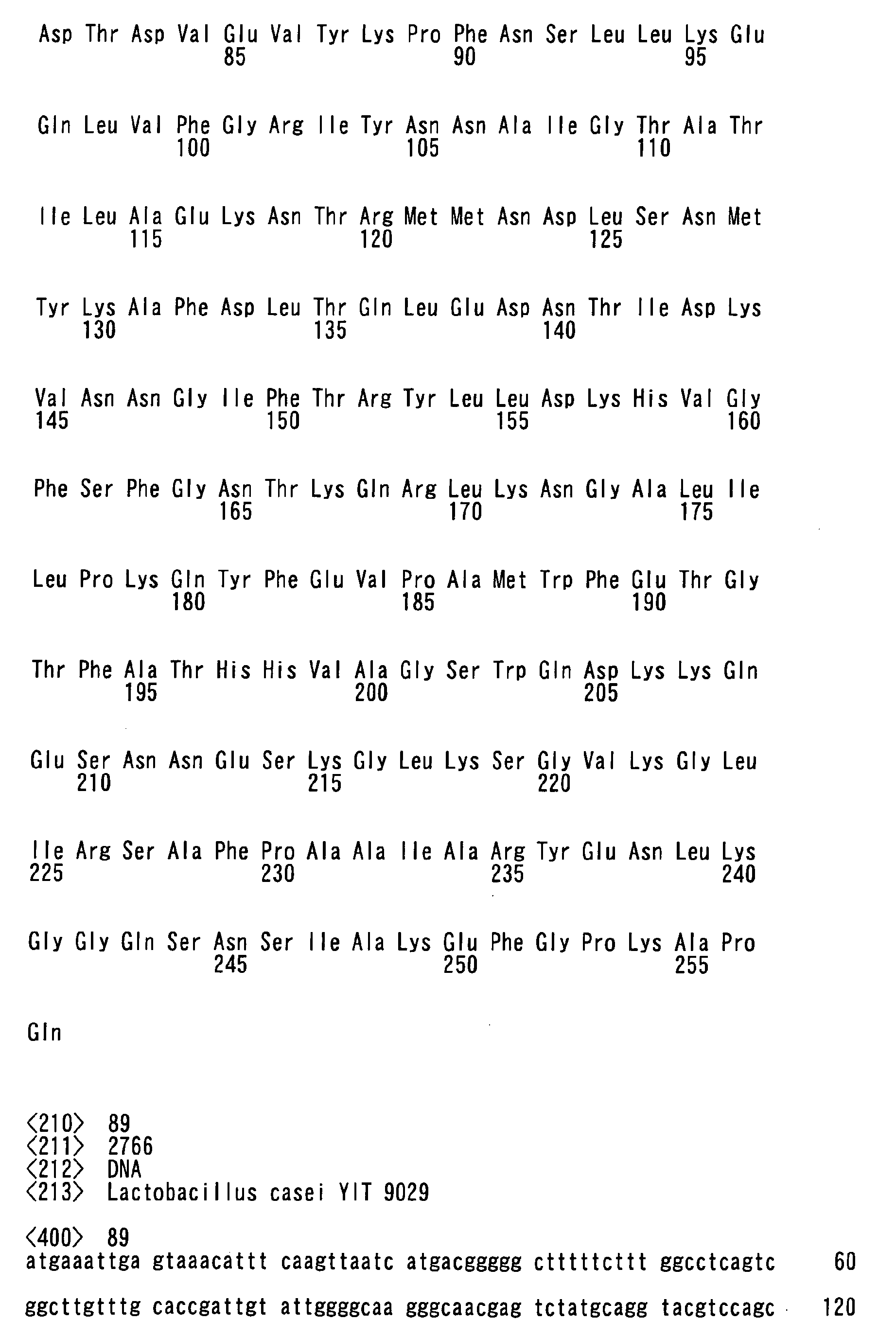


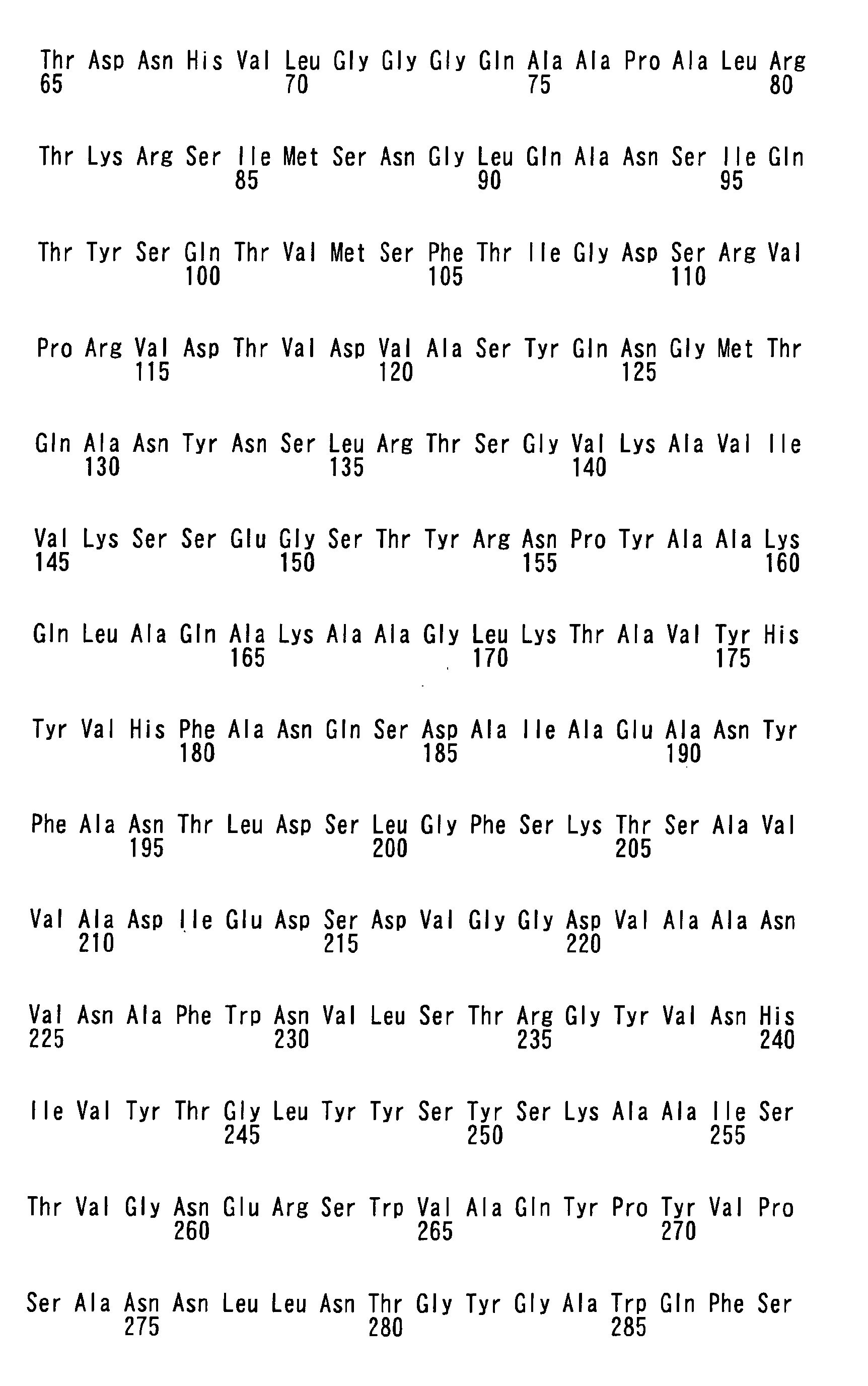


Claims (15)
- A gene encoding a protein selected from among the following proteins (a) to (c):(a) a protein having any of the amino acid sequences of SEQ ID NOs: 2, 4, 6, 8, 10, 12, 14, 16, 82, 84, 86, 88, 90, 92, 94, 96, 98, 100, 102, 104, 106, and 108;(b) a protein which has an amino acid sequence equivalent to any of the amino acid sequences of (a), except that one to several amino acid residues are deleted, substituted, or added, and which exhibits cytokine production regulatory activity; and(c) a protein which has an amino acid sequence having 90% or higher identity to any of the amino acid sequences of (a), and which exhibits cytokine production regulatory activity.
- A gene having a polynucleotide selected from among the following polynucleotides (d) to (f):(d) a polynucleotide having any of the nucleotide sequences of SEQ ID NOs: 1, 3, 5, 7, 9, 11, 13, 15, 81, 83, 85, 87, 89, 91, 93, 95, 97, 99, 101, 103, 105, and 107;(e) a polynucleotide which hybridizes, under stringent conditions, with a polynucleotide having a nucleotide sequence complementary to any of the nucleotide sequences of (d), and which encodes a protein exhibiting cytokine production regulatory activity; and(f) a polynucleotide which has a nucleotide sequence having 90% or higher identity to any of the nucleotide sequences of (d), and which encodes a protein exhibiting cytokine production regulatory activity.
- A method for regulating cytokine production in a microorganism, comprising introducing a gene as recited in claim 1 or 2 into the microorganism, or modifying the gene present in the microorganism.
- A method as described in claim 3, wherein gene modification is inhibition, suppression, or promotion of expression of a gene as recited in claim 1 or 2.
- A microorganism in which a gene as recited in claim 1 or 2 has been introduced or modified.
- A microorganism as described in claim 5, which is a Gram-positive bacterium.
- A microorganism as described in claim 6, wherein the Gram-positive bacterium is a bacterium belonging to the genus Lactobacillus.
- A microorganism as described in claim 7, wherein the bacterium belonging to the genus Lactobacillus is Lactobacillus casei.
- A food or beverage containing a microorganism as recited in any one of claims 5 to 8.
- A drug containing a microorganism as recited in any one of claims 5 to 8.
- A method for screening a microorganism exhibiting cytokine production regulatory activity, comprising determining the presence or absence of a gene as recited in claim 1 or 2, and/or determining the level of expression of the gene.
- A recombinant vector containing any of the polynucleotides as recited in claim 2 or a portion thereof.
- A host microorganism containing a recombinant vector as recited in claim 12.
- A nucleic acid fragment which specifically hybridizes with any of the polynucleotides as recited in claim 2.
- A DNA array or DNA chip containing any of the polynucleotides as recited in claim 2 or a portion thereof.
Applications Claiming Priority (2)
| Application Number | Priority Date | Filing Date | Title |
|---|---|---|---|
| JP2006292934 | 2006-10-27 | ||
| PCT/JP2007/001176 WO2008053588A1 (en) | 2006-10-27 | 2007-10-26 | Cytokine production regulator gene and use thereof |
Publications (3)
| Publication Number | Publication Date |
|---|---|
| EP2075332A1 true EP2075332A1 (en) | 2009-07-01 |
| EP2075332A4 EP2075332A4 (en) | 2010-12-29 |
| EP2075332B1 EP2075332B1 (en) | 2014-04-16 |
Family
ID=39343941
Family Applications (1)
| Application Number | Title | Priority Date | Filing Date |
|---|---|---|---|
| EP07827955.1A Active EP2075332B1 (en) | 2006-10-27 | 2007-10-26 | Cytokine production regulator gene and use thereof |
Country Status (4)
| Country | Link |
|---|---|
| US (1) | US8404823B2 (en) |
| EP (1) | EP2075332B1 (en) |
| JP (3) | JPWO2008053588A1 (en) |
| WO (1) | WO2008053588A1 (en) |
Cited By (1)
| Publication number | Priority date | Publication date | Assignee | Title |
|---|---|---|---|---|
| WO2021028475A1 (en) * | 2019-08-12 | 2021-02-18 | Institut National De Recherche Pour L'agriculture, L'alimentation Et L'environnement | Method for isolating lactic bacteria strains overproductive of exopolysaccharides |
Families Citing this family (5)
| Publication number | Priority date | Publication date | Assignee | Title |
|---|---|---|---|---|
| US8404823B2 (en) * | 2006-10-27 | 2013-03-26 | Kabushiki Kaisha Yakult Honsha | Cytokine production regulator gene and use thereof |
| TWI511461B (en) * | 2011-06-08 | 2015-12-01 | Linear Techn Inc | System and methods to improve the performance of semiconductor based sampling system (1) |
| JP6358933B2 (en) * | 2013-12-04 | 2018-07-18 | 株式会社ヤクルト本社 | Particles containing polysaccharide-peptidoglycan complex |
| US10874260B2 (en) * | 2018-11-19 | 2020-12-29 | Balboa Water Group, Llc | Reconfigurable water distribution system for a walk-in tub bathing installation with a single pump for multiple functions |
| TWI890374B (en) * | 2024-03-21 | 2025-07-11 | 景岳生物科技股份有限公司 | Use of nucleotides of fermented lactobacillus GM-090 for preparing pharmaceutical compositions for regulating immunity |
Family Cites Families (15)
| Publication number | Priority date | Publication date | Assignee | Title |
|---|---|---|---|---|
| JPS55113718A (en) * | 1979-02-27 | 1980-09-02 | Yakult Honsha Co Ltd | Antitumor agent |
| JPH0699314B2 (en) | 1986-11-14 | 1994-12-07 | 株式会社ヤクルト本社 | Macrophage activator |
| JPS63196521A (en) | 1987-02-10 | 1988-08-15 | Yakult Honsha Co Ltd | Tumor cell disorder factor inducer |
| JPH0892112A (en) | 1994-09-28 | 1996-04-09 | Yakult Honsha Co Ltd | Cytokine production promoter |
| EP0750042A1 (en) | 1995-06-20 | 1996-12-27 | Societe Des Produits Nestle S.A. | Exopolysaccarides-producing lactic acid bacteria |
| JP3653345B2 (en) * | 1996-06-26 | 2005-05-25 | 株式会社ヤクルト本社 | Lactobacillus casei vector |
| US6319692B1 (en) * | 1996-06-26 | 2001-11-20 | Kabushiki Kaisha Yakult Honsha | Methods for transferring gene into chromosome |
| JPH10139674A (en) | 1996-11-11 | 1998-05-26 | Yakult Honsha Co Ltd | Interleukin 12 production promoter |
| WO1999062316A2 (en) | 1998-04-22 | 1999-12-09 | Societe Des Produits Nestle S.A. | Identification of lactic acid bacteria genes involved in the biosynthesis of exopolysaccharides |
| JP4707246B2 (en) | 2001-02-15 | 2011-06-22 | 株式会社ヤクルト本社 | Gastrointestinal disorder preventive and therapeutic agent |
| JP4059648B2 (en) | 2001-08-28 | 2008-03-12 | 独立行政法人科学技術振興機構 | Oral cytokine inducer |
| JP5116194B2 (en) | 2001-09-04 | 2013-01-09 | 株式会社ヤクルト本社 | Inflammatory bowel disease preventive and therapeutic agent |
| US20040043003A1 (en) * | 2002-01-31 | 2004-03-04 | Wei Chen | Clinical grade vectors based on natural microflora for use in delivering therapeutic compositions |
| KR20070091333A (en) * | 2004-12-16 | 2007-09-10 | 스티치팅 탑 인스티튜트 푸드 앤드 뉴트리션 | Efficient New Production Method for Producing Capsular Polysaccharides of Pathogenic Gram-positive Bacteria by Heterologous Expression and Secretion of Complex Polysaccharides in Non-pathogenic, Non-invasive Gram-positive Bacteria |
| US8404823B2 (en) * | 2006-10-27 | 2013-03-26 | Kabushiki Kaisha Yakult Honsha | Cytokine production regulator gene and use thereof |
-
2007
- 2007-10-26 US US12/447,370 patent/US8404823B2/en active Active
- 2007-10-26 WO PCT/JP2007/001176 patent/WO2008053588A1/en not_active Ceased
- 2007-10-26 JP JP2008541990A patent/JPWO2008053588A1/en active Pending
- 2007-10-26 EP EP07827955.1A patent/EP2075332B1/en active Active
-
2013
- 2013-05-13 JP JP2013101538A patent/JP2013226142A/en active Pending
-
2015
- 2015-05-11 JP JP2015096685A patent/JP6058067B2/en active Active
Cited By (2)
| Publication number | Priority date | Publication date | Assignee | Title |
|---|---|---|---|---|
| WO2021028475A1 (en) * | 2019-08-12 | 2021-02-18 | Institut National De Recherche Pour L'agriculture, L'alimentation Et L'environnement | Method for isolating lactic bacteria strains overproductive of exopolysaccharides |
| FR3099934A1 (en) * | 2019-08-12 | 2021-02-19 | Institut National De La Recherche Agronomique (Inra) | PROCESS FOR ISOLATING LACTIC BACTERY STRAINS OVERPRODUCING EXOPOLYSACCHARIDES |
Also Published As
| Publication number | Publication date |
|---|---|
| EP2075332A4 (en) | 2010-12-29 |
| US8404823B2 (en) | 2013-03-26 |
| JP2013226142A (en) | 2013-11-07 |
| JPWO2008053588A1 (en) | 2010-02-25 |
| EP2075332B1 (en) | 2014-04-16 |
| WO2008053588A1 (en) | 2008-05-08 |
| US20100144551A1 (en) | 2010-06-10 |
| JP6058067B2 (en) | 2017-01-11 |
| JP2015213505A (en) | 2015-12-03 |
Similar Documents
| Publication | Publication Date | Title |
|---|---|---|
| US11992511B2 (en) | Lactobacillus paracasei strain and use thereof | |
| JP6058067B2 (en) | Cytokine production regulatory gene and use thereof | |
| KR101654537B1 (en) | Composition for human and/or animal nutrition, uses thereof and yeasts | |
| JP6669703B2 (en) | Modified Gram-positive bacteria and uses thereof | |
| CN107267546B (en) | Polycistronic Expression System for Bacteria | |
| JP2013511261A (en) | Recombinant microorganism | |
| CN107903310B (en) | Recombinant membrane protein, microorganism, composition containing recombinant membrane protein and microorganism and application of composition | |
| EP1841875B1 (en) | Controlled production and delivery of biologically active agents by gut bacteria | |
| WO2003064607A2 (en) | Clinical grade vectors based on natural microflora for use in delivering therapeutic compositions | |
| CN114774338A (en) | Butyric acid-producing probiotics and construction method and application thereof | |
| JP6117212B2 (en) | Modified gram positive bacteria and use thereof | |
| CN112210519A (en) | Genetically engineered bacterium for secreting acetaldehyde dehydrogenase by using edible fungi | |
| CN118955659B (en) | Clostridium praecox microorganism anti-inflammatory molecule and screening method and application thereof | |
| Axelsson et al. | Lactic Acid Bacteria: An Introduction to Taxonomy, Physiology, and Molecular Biology | |
| JP6412865B2 (en) | Bifidobacterium breve strain specific gene | |
| Yoshikawa et al. | Diverse immune responses to orally administered heat-killed cell preparation of Enterococcus faecalis strain EC-12 in murine immune tissues | |
| Vasiee et al. | Oral Immunotherapy Using Probiotic Ice Cream Containing Recombinant Food-Grade Which Inhibited Allergic Responses in a BALB/c Mouse Model. | |
| Chen et al. | Genetic operation system of lactic acid bacteria and its applications | |
| EP4696780A1 (en) | Method for transforming bacterium belonging to genus bifidobacterium | |
| JP2025021620A (en) | Immunostimulating composition | |
| CN105793412B (en) | Acid resistance adjustment method of microorganisms | |
| CN118086354A (en) | A boulardii yeast system for expressing human lysozyme and its construction method and application | |
| Vasiee et al. | Research Article Oral Immunotherapy Using Probiotic Ice Cream Containing Recombinant Food-Grade Lactococcus lactis Which Inhibited Allergic Responses in a BALB/c Mouse Model |
Legal Events
| Date | Code | Title | Description |
|---|---|---|---|
| PUAI | Public reference made under article 153(3) epc to a published international application that has entered the european phase |
Free format text: ORIGINAL CODE: 0009012 |
|
| 17P | Request for examination filed |
Effective date: 20090422 |
|
| AK | Designated contracting states |
Kind code of ref document: A1 Designated state(s): AT BE BG CH CY CZ DE DK EE ES FI FR GB GR HU IE IS IT LI LT LU LV MC MT NL PL PT RO SE SI SK TR |
|
| AX | Request for extension of the european patent |
Extension state: AL BA HR MK RS |
|
| A4 | Supplementary search report drawn up and despatched |
Effective date: 20101201 |
|
| 17Q | First examination report despatched |
Effective date: 20120420 |
|
| 17Q | First examination report despatched |
Effective date: 20120507 |
|
| DAX | Request for extension of the european patent (deleted) | ||
| GRAP | Despatch of communication of intention to grant a patent |
Free format text: ORIGINAL CODE: EPIDOSNIGR1 |
|
| INTG | Intention to grant announced |
Effective date: 20131009 |
|
| GRAP | Despatch of communication of intention to grant a patent |
Free format text: ORIGINAL CODE: EPIDOSNIGR1 |
|
| RAP1 | Party data changed (applicant data changed or rights of an application transferred) |
Owner name: KABUSHIKI KAISHA YAKULT HONSHA |
|
| GRAS | Grant fee paid |
Free format text: ORIGINAL CODE: EPIDOSNIGR3 |
|
| GRAP | Despatch of communication of intention to grant a patent |
Free format text: ORIGINAL CODE: EPIDOSNIGR1 |
|
| INTG | Intention to grant announced |
Effective date: 20140116 |
|
| RAP1 | Party data changed (applicant data changed or rights of an application transferred) |
Owner name: KABUSHIKI KAISHA YAKULT HONSHA |
|
| INTG | Intention to grant announced |
Effective date: 20140205 |
|
| GRAA | (expected) grant |
Free format text: ORIGINAL CODE: 0009210 |
|
| AK | Designated contracting states |
Kind code of ref document: B1 Designated state(s): AT BE BG CH CY CZ DE DK EE ES FI FR GB GR HU IE IS IT LI LT LU LV MC MT NL PL PT RO SE SI SK TR |
|
| REG | Reference to a national code |
Ref country code: GB Ref legal event code: FG4D |
|
| REG | Reference to a national code |
Ref country code: CH Ref legal event code: EP Ref country code: CH Ref legal event code: NV Representative=s name: BOVARD AG, CH |
|
| REG | Reference to a national code |
Ref country code: AT Ref legal event code: REF Ref document number: 662604 Country of ref document: AT Kind code of ref document: T Effective date: 20140515 |
|
| REG | Reference to a national code |
Ref country code: IE Ref legal event code: FG4D |
|
| REG | Reference to a national code |
Ref country code: DE Ref legal event code: R096 Ref document number: 602007036159 Country of ref document: DE Effective date: 20140528 |
|
| REG | Reference to a national code |
Ref country code: NL Ref legal event code: T3 |
|
| REG | Reference to a national code |
Ref country code: AT Ref legal event code: MK05 Ref document number: 662604 Country of ref document: AT Kind code of ref document: T Effective date: 20140416 |
|
| REG | Reference to a national code |
Ref country code: LT Ref legal event code: MG4D |
|
| PG25 | Lapsed in a contracting state [announced via postgrant information from national office to epo] |
Ref country code: IS Free format text: LAPSE BECAUSE OF FAILURE TO SUBMIT A TRANSLATION OF THE DESCRIPTION OR TO PAY THE FEE WITHIN THE PRESCRIBED TIME-LIMIT Effective date: 20140816 Ref country code: FI Free format text: LAPSE BECAUSE OF FAILURE TO SUBMIT A TRANSLATION OF THE DESCRIPTION OR TO PAY THE FEE WITHIN THE PRESCRIBED TIME-LIMIT Effective date: 20140416 Ref country code: BG Free format text: LAPSE BECAUSE OF FAILURE TO SUBMIT A TRANSLATION OF THE DESCRIPTION OR TO PAY THE FEE WITHIN THE PRESCRIBED TIME-LIMIT Effective date: 20140716 Ref country code: LT Free format text: LAPSE BECAUSE OF FAILURE TO SUBMIT A TRANSLATION OF THE DESCRIPTION OR TO PAY THE FEE WITHIN THE PRESCRIBED TIME-LIMIT Effective date: 20140416 Ref country code: CY Free format text: LAPSE BECAUSE OF FAILURE TO SUBMIT A TRANSLATION OF THE DESCRIPTION OR TO PAY THE FEE WITHIN THE PRESCRIBED TIME-LIMIT Effective date: 20140416 Ref country code: GR Free format text: LAPSE BECAUSE OF FAILURE TO SUBMIT A TRANSLATION OF THE DESCRIPTION OR TO PAY THE FEE WITHIN THE PRESCRIBED TIME-LIMIT Effective date: 20140717 |
|
| PG25 | Lapsed in a contracting state [announced via postgrant information from national office to epo] |
Ref country code: SE Free format text: LAPSE BECAUSE OF FAILURE TO SUBMIT A TRANSLATION OF THE DESCRIPTION OR TO PAY THE FEE WITHIN THE PRESCRIBED TIME-LIMIT Effective date: 20140416 Ref country code: ES Free format text: LAPSE BECAUSE OF FAILURE TO SUBMIT A TRANSLATION OF THE DESCRIPTION OR TO PAY THE FEE WITHIN THE PRESCRIBED TIME-LIMIT Effective date: 20140416 Ref country code: AT Free format text: LAPSE BECAUSE OF FAILURE TO SUBMIT A TRANSLATION OF THE DESCRIPTION OR TO PAY THE FEE WITHIN THE PRESCRIBED TIME-LIMIT Effective date: 20140416 Ref country code: PL Free format text: LAPSE BECAUSE OF FAILURE TO SUBMIT A TRANSLATION OF THE DESCRIPTION OR TO PAY THE FEE WITHIN THE PRESCRIBED TIME-LIMIT Effective date: 20140416 Ref country code: LV Free format text: LAPSE BECAUSE OF FAILURE TO SUBMIT A TRANSLATION OF THE DESCRIPTION OR TO PAY THE FEE WITHIN THE PRESCRIBED TIME-LIMIT Effective date: 20140416 |
|
| PG25 | Lapsed in a contracting state [announced via postgrant information from national office to epo] |
Ref country code: PT Free format text: LAPSE BECAUSE OF FAILURE TO SUBMIT A TRANSLATION OF THE DESCRIPTION OR TO PAY THE FEE WITHIN THE PRESCRIBED TIME-LIMIT Effective date: 20140818 |
|
| REG | Reference to a national code |
Ref country code: DE Ref legal event code: R097 Ref document number: 602007036159 Country of ref document: DE |
|
| PG25 | Lapsed in a contracting state [announced via postgrant information from national office to epo] |
Ref country code: EE Free format text: LAPSE BECAUSE OF FAILURE TO SUBMIT A TRANSLATION OF THE DESCRIPTION OR TO PAY THE FEE WITHIN THE PRESCRIBED TIME-LIMIT Effective date: 20140416 Ref country code: DK Free format text: LAPSE BECAUSE OF FAILURE TO SUBMIT A TRANSLATION OF THE DESCRIPTION OR TO PAY THE FEE WITHIN THE PRESCRIBED TIME-LIMIT Effective date: 20140416 Ref country code: BE Free format text: LAPSE BECAUSE OF FAILURE TO SUBMIT A TRANSLATION OF THE DESCRIPTION OR TO PAY THE FEE WITHIN THE PRESCRIBED TIME-LIMIT Effective date: 20140416 Ref country code: SK Free format text: LAPSE BECAUSE OF FAILURE TO SUBMIT A TRANSLATION OF THE DESCRIPTION OR TO PAY THE FEE WITHIN THE PRESCRIBED TIME-LIMIT Effective date: 20140416 Ref country code: RO Free format text: LAPSE BECAUSE OF FAILURE TO SUBMIT A TRANSLATION OF THE DESCRIPTION OR TO PAY THE FEE WITHIN THE PRESCRIBED TIME-LIMIT Effective date: 20140416 Ref country code: CZ Free format text: LAPSE BECAUSE OF FAILURE TO SUBMIT A TRANSLATION OF THE DESCRIPTION OR TO PAY THE FEE WITHIN THE PRESCRIBED TIME-LIMIT Effective date: 20140416 |
|
| PLBE | No opposition filed within time limit |
Free format text: ORIGINAL CODE: 0009261 |
|
| STAA | Information on the status of an ep patent application or granted ep patent |
Free format text: STATUS: NO OPPOSITION FILED WITHIN TIME LIMIT |
|
| 26N | No opposition filed |
Effective date: 20150119 |
|
| PG25 | Lapsed in a contracting state [announced via postgrant information from national office to epo] |
Ref country code: IT Free format text: LAPSE BECAUSE OF FAILURE TO SUBMIT A TRANSLATION OF THE DESCRIPTION OR TO PAY THE FEE WITHIN THE PRESCRIBED TIME-LIMIT Effective date: 20140416 |
|
| REG | Reference to a national code |
Ref country code: DE Ref legal event code: R097 Ref document number: 602007036159 Country of ref document: DE Effective date: 20150119 |
|
| PG25 | Lapsed in a contracting state [announced via postgrant information from national office to epo] |
Ref country code: LU Free format text: LAPSE BECAUSE OF FAILURE TO SUBMIT A TRANSLATION OF THE DESCRIPTION OR TO PAY THE FEE WITHIN THE PRESCRIBED TIME-LIMIT Effective date: 20141026 Ref country code: MC Free format text: LAPSE BECAUSE OF FAILURE TO SUBMIT A TRANSLATION OF THE DESCRIPTION OR TO PAY THE FEE WITHIN THE PRESCRIBED TIME-LIMIT Effective date: 20140416 |
|
| REG | Reference to a national code |
Ref country code: IE Ref legal event code: MM4A |
|
| PG25 | Lapsed in a contracting state [announced via postgrant information from national office to epo] |
Ref country code: SI Free format text: LAPSE BECAUSE OF FAILURE TO SUBMIT A TRANSLATION OF THE DESCRIPTION OR TO PAY THE FEE WITHIN THE PRESCRIBED TIME-LIMIT Effective date: 20140416 |
|
| PG25 | Lapsed in a contracting state [announced via postgrant information from national office to epo] |
Ref country code: IE Free format text: LAPSE BECAUSE OF NON-PAYMENT OF DUE FEES Effective date: 20141026 |
|
| PG25 | Lapsed in a contracting state [announced via postgrant information from national office to epo] |
Ref country code: TR Free format text: LAPSE BECAUSE OF FAILURE TO SUBMIT A TRANSLATION OF THE DESCRIPTION OR TO PAY THE FEE WITHIN THE PRESCRIBED TIME-LIMIT Effective date: 20140416 Ref country code: MT Free format text: LAPSE BECAUSE OF FAILURE TO SUBMIT A TRANSLATION OF THE DESCRIPTION OR TO PAY THE FEE WITHIN THE PRESCRIBED TIME-LIMIT Effective date: 20140416 Ref country code: HU Free format text: LAPSE BECAUSE OF FAILURE TO SUBMIT A TRANSLATION OF THE DESCRIPTION OR TO PAY THE FEE WITHIN THE PRESCRIBED TIME-LIMIT; INVALID AB INITIO Effective date: 20071026 |
|
| REG | Reference to a national code |
Ref country code: FR Ref legal event code: PLFP Year of fee payment: 10 |
|
| REG | Reference to a national code |
Ref country code: FR Ref legal event code: PLFP Year of fee payment: 11 |
|
| REG | Reference to a national code |
Ref country code: FR Ref legal event code: PLFP Year of fee payment: 12 |
|
| REG | Reference to a national code |
Ref country code: CH Ref legal event code: U11 Free format text: ST27 STATUS EVENT CODE: U-0-0-U10-U11 (AS PROVIDED BY THE NATIONAL OFFICE) Effective date: 20251101 |
|
| PGFP | Annual fee paid to national office [announced via postgrant information from national office to epo] |
Ref country code: NL Payment date: 20251021 Year of fee payment: 19 |
|
| PGFP | Annual fee paid to national office [announced via postgrant information from national office to epo] |
Ref country code: DE Payment date: 20251021 Year of fee payment: 19 |
|
| PGFP | Annual fee paid to national office [announced via postgrant information from national office to epo] |
Ref country code: GB Payment date: 20251022 Year of fee payment: 19 |
|
| PGFP | Annual fee paid to national office [announced via postgrant information from national office to epo] |
Ref country code: FR Payment date: 20251029 Year of fee payment: 19 |
|
| PGFP | Annual fee paid to national office [announced via postgrant information from national office to epo] |
Ref country code: CH Payment date: 20251101 Year of fee payment: 19 |