EP2058327A2 - Gene zur Kodierung von Insektenduftstoffrezeptoren und ihre Verwendung - Google Patents
Gene zur Kodierung von Insektenduftstoffrezeptoren und ihre Verwendung Download PDFInfo
- Publication number
- EP2058327A2 EP2058327A2 EP08165554A EP08165554A EP2058327A2 EP 2058327 A2 EP2058327 A2 EP 2058327A2 EP 08165554 A EP08165554 A EP 08165554A EP 08165554 A EP08165554 A EP 08165554A EP 2058327 A2 EP2058327 A2 EP 2058327A2
- Authority
- EP
- European Patent Office
- Prior art keywords
- receptor
- nucleic acid
- compound
- odorant
- odorant receptor
- Prior art date
- Legal status (The legal status is an assumption and is not a legal conclusion. Google has not performed a legal analysis and makes no representation as to the accuracy of the status listed.)
- Withdrawn
Links
- 108050002069 Olfactory receptors Proteins 0.000 title claims abstract description 196
- 102000012547 Olfactory receptors Human genes 0.000 title claims abstract description 179
- 241000238631 Hexapoda Species 0.000 title claims abstract description 98
- 108090000623 proteins and genes Proteins 0.000 title description 88
- 150000001875 compounds Chemical class 0.000 claims abstract description 87
- 238000000034 method Methods 0.000 claims abstract description 82
- 150000007523 nucleic acids Chemical class 0.000 claims abstract description 75
- 108020004707 nucleic acids Proteins 0.000 claims abstract description 70
- 102000039446 nucleic acids Human genes 0.000 claims abstract description 70
- 239000002299 complementary DNA Substances 0.000 claims abstract description 48
- 230000000694 effects Effects 0.000 claims abstract description 34
- 230000027455 binding Effects 0.000 claims abstract description 26
- 108020003175 receptors Proteins 0.000 claims description 160
- 102000005962 receptors Human genes 0.000 claims description 132
- 210000004027 cell Anatomy 0.000 claims description 128
- 239000013598 vector Substances 0.000 claims description 34
- 101100242228 Drosophila melanogaster Or85e gene Proteins 0.000 claims description 30
- 102000004196 processed proteins & peptides Human genes 0.000 claims description 25
- 108090000765 processed proteins & peptides Proteins 0.000 claims description 25
- 229920001184 polypeptide Polymers 0.000 claims description 24
- 101100028092 Drosophila melanogaster Or22a gene Proteins 0.000 claims description 18
- 230000004913 activation Effects 0.000 claims description 17
- 239000012528 membrane Substances 0.000 claims description 16
- 150000001413 amino acids Chemical class 0.000 claims description 14
- 230000005764 inhibitory process Effects 0.000 claims description 14
- 101100028095 Drosophila melanogaster Or23a gene Proteins 0.000 claims description 10
- 101100028103 Drosophila melanogaster Or2a gene Proteins 0.000 claims description 10
- 101100188755 Drosophila melanogaster Or33c gene Proteins 0.000 claims description 10
- 101100188768 Drosophila melanogaster Or43a gene Proteins 0.000 claims description 10
- 230000004071 biological effect Effects 0.000 claims description 10
- 101100188754 Drosophila melanogaster Or33b gene Proteins 0.000 claims description 8
- 238000004519 manufacturing process Methods 0.000 claims description 8
- -1 DOR16 Proteins 0.000 claims description 5
- 101100188753 Drosophila melanogaster Or33a gene Proteins 0.000 claims description 5
- 101100406487 Drosophila melanogaster Or47a gene Proteins 0.000 claims description 5
- 210000004102 animal cell Anatomy 0.000 claims description 5
- 230000001580 bacterial effect Effects 0.000 claims description 5
- 239000013612 plasmid Substances 0.000 claims description 5
- 230000001105 regulatory effect Effects 0.000 claims description 4
- 230000001131 transforming effect Effects 0.000 claims description 4
- 210000005253 yeast cell Anatomy 0.000 claims description 4
- 101100518396 Drosophila melanogaster Or59a gene Proteins 0.000 claims description 3
- 101150020050 Or46a gene Proteins 0.000 claims description 3
- 101100268485 Candida albicans DOR14 gene Proteins 0.000 claims 1
- 101100028093 Drosophila melanogaster Or22b gene Proteins 0.000 claims 1
- 230000003213 activating effect Effects 0.000 abstract description 16
- 239000002773 nucleotide Substances 0.000 abstract description 5
- 125000003729 nucleotide group Chemical group 0.000 abstract description 5
- 210000002569 neuron Anatomy 0.000 description 79
- 239000000523 sample Substances 0.000 description 58
- 108020004414 DNA Proteins 0.000 description 49
- 241000255581 Drosophila <fruit fly, genus> Species 0.000 description 49
- 230000014509 gene expression Effects 0.000 description 33
- 239000003205 fragrance Substances 0.000 description 31
- 102000004169 proteins and genes Human genes 0.000 description 24
- 210000001044 sensory neuron Anatomy 0.000 description 23
- 238000007901 in situ hybridization Methods 0.000 description 20
- 235000019645 odor Nutrition 0.000 description 20
- 108020004999 messenger RNA Proteins 0.000 description 19
- 230000004044 response Effects 0.000 description 18
- 241000251539 Vertebrata <Metazoa> Species 0.000 description 17
- 238000002474 experimental method Methods 0.000 description 17
- 239000003446 ligand Substances 0.000 description 17
- 238000009396 hybridization Methods 0.000 description 16
- 238000003752 polymerase chain reaction Methods 0.000 description 15
- 238000004458 analytical method Methods 0.000 description 13
- 210000004379 membrane Anatomy 0.000 description 13
- 230000001953 sensory effect Effects 0.000 description 13
- 108091032973 (ribonucleotides)n+m Proteins 0.000 description 12
- 241000255925 Diptera Species 0.000 description 12
- 210000004556 brain Anatomy 0.000 description 12
- 230000002401 inhibitory effect Effects 0.000 description 12
- 210000003128 head Anatomy 0.000 description 11
- 210000001517 olfactory receptor neuron Anatomy 0.000 description 11
- 238000002105 Southern blotting Methods 0.000 description 10
- 239000000232 Lipid Bilayer Substances 0.000 description 9
- 230000000723 chemosensory effect Effects 0.000 description 9
- 101150066555 lacZ gene Proteins 0.000 description 9
- 238000010186 staining Methods 0.000 description 9
- 241000244206 Nematoda Species 0.000 description 8
- 230000006399 behavior Effects 0.000 description 8
- 210000001519 tissue Anatomy 0.000 description 8
- SHIBSTMRCDJXLN-UHFFFAOYSA-N Digoxigenin Natural products C1CC(C2C(C3(C)CCC(O)CC3CC2)CC2O)(O)C2(C)C1C1=CC(=O)OC1 SHIBSTMRCDJXLN-UHFFFAOYSA-N 0.000 description 7
- 241000124008 Mammalia Species 0.000 description 7
- 125000003275 alpha amino acid group Chemical group 0.000 description 7
- 230000003321 amplification Effects 0.000 description 7
- 210000000349 chromosome Anatomy 0.000 description 7
- QONQRTHLHBTMGP-UHFFFAOYSA-N digitoxigenin Natural products CC12CCC(C3(CCC(O)CC3CC3)C)C3C11OC1CC2C1=CC(=O)OC1 QONQRTHLHBTMGP-UHFFFAOYSA-N 0.000 description 7
- SHIBSTMRCDJXLN-KCZCNTNESA-N digoxigenin Chemical compound C1([C@@H]2[C@@]3([C@@](CC2)(O)[C@H]2[C@@H]([C@@]4(C)CC[C@H](O)C[C@H]4CC2)C[C@H]3O)C)=CC(=O)OC1 SHIBSTMRCDJXLN-KCZCNTNESA-N 0.000 description 7
- 238000003199 nucleic acid amplification method Methods 0.000 description 7
- 108020005544 Antisense RNA Proteins 0.000 description 6
- 241000607479 Yersinia pestis Species 0.000 description 6
- WYTGDNHDOZPMIW-RCBQFDQVSA-N alstonine Natural products C1=CC2=C3C=CC=CC3=NC2=C2N1C[C@H]1[C@H](C)OC=C(C(=O)OC)[C@H]1C2 WYTGDNHDOZPMIW-RCBQFDQVSA-N 0.000 description 6
- 239000003184 complementary RNA Substances 0.000 description 6
- 230000001276 controlling effect Effects 0.000 description 6
- 238000001514 detection method Methods 0.000 description 6
- 230000001537 neural effect Effects 0.000 description 6
- 210000004222 sensilla Anatomy 0.000 description 6
- 230000009261 transgenic effect Effects 0.000 description 6
- 241001465754 Metazoa Species 0.000 description 5
- 210000003050 axon Anatomy 0.000 description 5
- 238000010367 cloning Methods 0.000 description 5
- 210000001787 dendrite Anatomy 0.000 description 5
- 239000012634 fragment Substances 0.000 description 5
- 230000006870 function Effects 0.000 description 5
- 102000052563 odorant-binding protein Human genes 0.000 description 5
- 108010000645 odorant-binding protein Proteins 0.000 description 5
- 238000002360 preparation method Methods 0.000 description 5
- 241000283707 Capra Species 0.000 description 4
- ZHNUHDYFZUAESO-UHFFFAOYSA-N Formamide Chemical compound NC=O ZHNUHDYFZUAESO-UHFFFAOYSA-N 0.000 description 4
- 241000255588 Tephritidae Species 0.000 description 4
- 239000011543 agarose gel Substances 0.000 description 4
- 239000000203 mixture Substances 0.000 description 4
- 210000000956 olfactory bulb Anatomy 0.000 description 4
- 210000001706 olfactory mucosa Anatomy 0.000 description 4
- 238000012163 sequencing technique Methods 0.000 description 4
- 241000894007 species Species 0.000 description 4
- 108091026890 Coding region Proteins 0.000 description 3
- 108020004635 Complementary DNA Proteins 0.000 description 3
- 102100028630 Cytoskeleton-associated protein 2 Human genes 0.000 description 3
- 102000016662 ELAV Proteins Human genes 0.000 description 3
- 108010053101 ELAV Proteins Proteins 0.000 description 3
- 241000282412 Homo Species 0.000 description 3
- 101000766848 Homo sapiens Cytoskeleton-associated protein 2 Proteins 0.000 description 3
- 108700026244 Open Reading Frames Proteins 0.000 description 3
- 239000012472 biological sample Substances 0.000 description 3
- WOERBKLLTSWFBY-UHFFFAOYSA-M dihydrogen phosphate;tetramethylazanium Chemical compound C[N+](C)(C)C.OP(O)([O-])=O WOERBKLLTSWFBY-UHFFFAOYSA-M 0.000 description 3
- 238000009826 distribution Methods 0.000 description 3
- 101150105251 dor gene Proteins 0.000 description 3
- 238000005516 engineering process Methods 0.000 description 3
- 230000035558 fertility Effects 0.000 description 3
- 230000002068 genetic effect Effects 0.000 description 3
- 230000001434 glomerular Effects 0.000 description 3
- 229940094991 herring sperm dna Drugs 0.000 description 3
- 230000002209 hydrophobic effect Effects 0.000 description 3
- 230000010354 integration Effects 0.000 description 3
- 230000003993 interaction Effects 0.000 description 3
- 238000002955 isolation Methods 0.000 description 3
- 238000002372 labelling Methods 0.000 description 3
- 238000012986 modification Methods 0.000 description 3
- 230000004048 modification Effects 0.000 description 3
- 239000003068 molecular probe Substances 0.000 description 3
- 230000002093 peripheral effect Effects 0.000 description 3
- 238000012545 processing Methods 0.000 description 3
- 210000001176 projection neuron Anatomy 0.000 description 3
- 238000003757 reverse transcription PCR Methods 0.000 description 3
- 230000002441 reversible effect Effects 0.000 description 3
- 210000002966 serum Anatomy 0.000 description 3
- 238000005507 spraying Methods 0.000 description 3
- YBJHBAHKTGYVGT-ZKWXMUAHSA-N (+)-Biotin Chemical compound N1C(=O)N[C@@H]2[C@H](CCCCC(=O)O)SC[C@@H]21 YBJHBAHKTGYVGT-ZKWXMUAHSA-N 0.000 description 2
- OPIFSICVWOWJMJ-AEOCFKNESA-N 5-bromo-4-chloro-3-indolyl beta-D-galactoside Chemical compound O[C@@H]1[C@@H](O)[C@@H](O)[C@@H](CO)O[C@H]1OC1=CNC2=CC=C(Br)C(Cl)=C12 OPIFSICVWOWJMJ-AEOCFKNESA-N 0.000 description 2
- 241001674044 Blattodea Species 0.000 description 2
- 241000255601 Drosophila melanogaster Species 0.000 description 2
- 101100081476 Drosophila melanogaster Obp19d gene Proteins 0.000 description 2
- WSFSSNUMVMOOMR-UHFFFAOYSA-N Formaldehyde Chemical compound O=C WSFSSNUMVMOOMR-UHFFFAOYSA-N 0.000 description 2
- NYHBQMYGNKIUIF-UUOKFMHZSA-N Guanosine Chemical compound C1=NC=2C(=O)NC(N)=NC=2N1[C@@H]1O[C@H](CO)[C@@H](O)[C@H]1O NYHBQMYGNKIUIF-UUOKFMHZSA-N 0.000 description 2
- 102000004108 Neurotransmitter Receptors Human genes 0.000 description 2
- 108090000590 Neurotransmitter Receptors Proteins 0.000 description 2
- 239000000020 Nitrocellulose Substances 0.000 description 2
- 102100027196 Odorant-binding protein 2a Human genes 0.000 description 2
- 241000283973 Oryctolagus cuniculus Species 0.000 description 2
- 229920001237 Oxo Biodegradable Polymers 0.000 description 2
- 229920001213 Polysorbate 20 Polymers 0.000 description 2
- 108020004518 RNA Probes Proteins 0.000 description 2
- 239000003391 RNA probe Substances 0.000 description 2
- 101710205286 Replication origin-binding protein Proteins 0.000 description 2
- 108091081024 Start codon Proteins 0.000 description 2
- IQFYYKKMVGJFEH-XLPZGREQSA-N Thymidine Chemical group O=C1NC(=O)C(C)=CN1[C@@H]1O[C@H](CO)[C@@H](O)C1 IQFYYKKMVGJFEH-XLPZGREQSA-N 0.000 description 2
- 108700019146 Transgenes Proteins 0.000 description 2
- OIRDTQYFTABQOQ-KQYNXXCUSA-N adenosine Chemical compound C1=NC=2C(N)=NC=NC=2N1[C@@H]1O[C@H](CO)[C@@H](O)[C@H]1O OIRDTQYFTABQOQ-KQYNXXCUSA-N 0.000 description 2
- 125000000539 amino acid group Chemical group 0.000 description 2
- 230000003376 axonal effect Effects 0.000 description 2
- 102000005936 beta-Galactosidase Human genes 0.000 description 2
- 108010005774 beta-Galactosidase Proteins 0.000 description 2
- 239000000872 buffer Substances 0.000 description 2
- 210000005056 cell body Anatomy 0.000 description 2
- 238000006243 chemical reaction Methods 0.000 description 2
- 238000003776 cleavage reaction Methods 0.000 description 2
- 238000010276 construction Methods 0.000 description 2
- OPTASPLRGRRNAP-UHFFFAOYSA-N cytosine Chemical compound NC=1C=CNC(=O)N=1 OPTASPLRGRRNAP-UHFFFAOYSA-N 0.000 description 2
- 230000001086 cytosolic effect Effects 0.000 description 2
- 239000003623 enhancer Substances 0.000 description 2
- 239000013604 expression vector Substances 0.000 description 2
- MHMNJMPURVTYEJ-UHFFFAOYSA-N fluorescein-5-isothiocyanate Chemical compound O1C(=O)C2=CC(N=C=S)=CC=C2C21C1=CC=C(O)C=C1OC1=CC(O)=CC=C21 MHMNJMPURVTYEJ-UHFFFAOYSA-N 0.000 description 2
- 239000000499 gel Substances 0.000 description 2
- 238000012252 genetic analysis Methods 0.000 description 2
- 210000004209 hair Anatomy 0.000 description 2
- 210000004408 hybridoma Anatomy 0.000 description 2
- 238000001727 in vivo Methods 0.000 description 2
- 239000002502 liposome Substances 0.000 description 2
- 210000004498 neuroglial cell Anatomy 0.000 description 2
- 229920001220 nitrocellulos Polymers 0.000 description 2
- 210000004940 nucleus Anatomy 0.000 description 2
- 230000008520 organization Effects 0.000 description 2
- 238000000059 patterning Methods 0.000 description 2
- 230000008447 perception Effects 0.000 description 2
- 239000000256 polyoxyethylene sorbitan monolaurate Substances 0.000 description 2
- 235000010486 polyoxyethylene sorbitan monolaurate Nutrition 0.000 description 2
- 238000011533 pre-incubation Methods 0.000 description 2
- 230000007115 recruitment Effects 0.000 description 2
- 108091008146 restriction endonucleases Proteins 0.000 description 2
- 230000007017 scission Effects 0.000 description 2
- 238000012216 screening Methods 0.000 description 2
- 238000013515 script Methods 0.000 description 2
- 230000035945 sensitivity Effects 0.000 description 2
- 230000008786 sensory perception of smell Effects 0.000 description 2
- 230000005026 transcription initiation Effects 0.000 description 2
- 102000035160 transmembrane proteins Human genes 0.000 description 2
- 108091005703 transmembrane proteins Proteins 0.000 description 2
- 238000011144 upstream manufacturing Methods 0.000 description 2
- VRYALKFFQXWPIH-PBXRRBTRSA-N (3r,4s,5r)-3,4,5,6-tetrahydroxyhexanal Chemical compound OC[C@@H](O)[C@@H](O)[C@H](O)CC=O VRYALKFFQXWPIH-PBXRRBTRSA-N 0.000 description 1
- 108091074834 12 family Proteins 0.000 description 1
- UMCMPZBLKLEWAF-BCTGSCMUSA-N 3-[(3-cholamidopropyl)dimethylammonio]propane-1-sulfonate Chemical compound C([C@H]1C[C@H]2O)[C@H](O)CC[C@]1(C)[C@@H]1[C@@H]2[C@@H]2CC[C@H]([C@@H](CCC(=O)NCCC[N+](C)(C)CCCS([O-])(=O)=O)C)[C@@]2(C)[C@@H](O)C1 UMCMPZBLKLEWAF-BCTGSCMUSA-N 0.000 description 1
- 101710159080 Aconitate hydratase A Proteins 0.000 description 1
- 101710159078 Aconitate hydratase B Proteins 0.000 description 1
- 102000002260 Alkaline Phosphatase Human genes 0.000 description 1
- 108020004774 Alkaline Phosphatase Proteins 0.000 description 1
- 241000256844 Apis mellifera Species 0.000 description 1
- DWRXFEITVBNRMK-UHFFFAOYSA-N Beta-D-1-Arabinofuranosylthymine Natural products O=C1NC(=O)C(C)=CN1C1C(O)C(O)C(CO)O1 DWRXFEITVBNRMK-UHFFFAOYSA-N 0.000 description 1
- 108091003079 Bovine Serum Albumin Proteins 0.000 description 1
- 239000002126 C01EB10 - Adenosine Substances 0.000 description 1
- 241000244203 Caenorhabditis elegans Species 0.000 description 1
- OYPRJOBELJOOCE-UHFFFAOYSA-N Calcium Chemical compound [Ca] OYPRJOBELJOOCE-UHFFFAOYSA-N 0.000 description 1
- 108020004705 Codon Proteins 0.000 description 1
- MIKUYHXYGGJMLM-GIMIYPNGSA-N Crotonoside Natural products C1=NC2=C(N)NC(=O)N=C2N1[C@H]1O[C@@H](CO)[C@H](O)[C@@H]1O MIKUYHXYGGJMLM-GIMIYPNGSA-N 0.000 description 1
- 241000219104 Cucurbitaceae Species 0.000 description 1
- NYHBQMYGNKIUIF-UHFFFAOYSA-N D-guanosine Natural products C1=2NC(N)=NC(=O)C=2N=CN1C1OC(CO)C(O)C1O NYHBQMYGNKIUIF-UHFFFAOYSA-N 0.000 description 1
- 238000001712 DNA sequencing Methods 0.000 description 1
- 102000004163 DNA-directed RNA polymerases Human genes 0.000 description 1
- 108090000626 DNA-directed RNA polymerases Proteins 0.000 description 1
- 102100021215 Denticleless protein homolog Human genes 0.000 description 1
- 108010035533 Drosophila Proteins Proteins 0.000 description 1
- 101001138294 Drosophila melanogaster General odorant-binding protein 83a Proteins 0.000 description 1
- KCXVZYZYPLLWCC-UHFFFAOYSA-N EDTA Chemical compound OC(=O)CN(CC(O)=O)CCN(CC(O)=O)CC(O)=O KCXVZYZYPLLWCC-UHFFFAOYSA-N 0.000 description 1
- 241000196324 Embryophyta Species 0.000 description 1
- 241000283074 Equus asinus Species 0.000 description 1
- 241000588724 Escherichia coli Species 0.000 description 1
- 229910001111 Fine metal Inorganic materials 0.000 description 1
- 108091006027 G proteins Proteins 0.000 description 1
- 102000030782 GTP binding Human genes 0.000 description 1
- 108091000058 GTP-Binding Proteins 0.000 description 1
- 102100039556 Galectin-4 Human genes 0.000 description 1
- HTTJABKRGRZYRN-UHFFFAOYSA-N Heparin Chemical compound OC1C(NC(=O)C)C(O)OC(COS(O)(=O)=O)C1OC1C(OS(O)(=O)=O)C(O)C(OC2C(C(OS(O)(=O)=O)C(OC3C(C(O)C(O)C(O3)C(O)=O)OS(O)(=O)=O)C(CO)O2)NS(O)(=O)=O)C(C(O)=O)O1 HTTJABKRGRZYRN-UHFFFAOYSA-N 0.000 description 1
- 101000968287 Homo sapiens Denticleless protein homolog Proteins 0.000 description 1
- 101000608765 Homo sapiens Galectin-4 Proteins 0.000 description 1
- 101000609277 Homo sapiens Inactive serine protease PAMR1 Proteins 0.000 description 1
- 101000788669 Homo sapiens Zinc finger MYM-type protein 2 Proteins 0.000 description 1
- 102000004882 Lipase Human genes 0.000 description 1
- 108090001060 Lipase Proteins 0.000 description 1
- 108010013563 Lipoprotein Lipase Proteins 0.000 description 1
- 102000004895 Lipoproteins Human genes 0.000 description 1
- 108010052285 Membrane Proteins Proteins 0.000 description 1
- 102000018697 Membrane Proteins Human genes 0.000 description 1
- 108091028043 Nucleic acid sequence Proteins 0.000 description 1
- 102000016979 Other receptors Human genes 0.000 description 1
- 238000010222 PCR analysis Methods 0.000 description 1
- 241000609499 Palicourea Species 0.000 description 1
- 241001494479 Pecora Species 0.000 description 1
- 206010035226 Plasma cell myeloma Diseases 0.000 description 1
- 102000009572 RNA Polymerase II Human genes 0.000 description 1
- 108010009460 RNA Polymerase II Proteins 0.000 description 1
- 102000044126 RNA-Binding Proteins Human genes 0.000 description 1
- 101710105008 RNA-binding protein Proteins 0.000 description 1
- 108700008625 Reporter Genes Proteins 0.000 description 1
- 240000004808 Saccharomyces cerevisiae Species 0.000 description 1
- 101001126150 Solanum lycopersicum Probable aquaporin PIP-type pTOM75 Proteins 0.000 description 1
- 108020005038 Terminator Codon Proteins 0.000 description 1
- 239000013504 Triton X-100 Substances 0.000 description 1
- 229920004890 Triton X-100 Polymers 0.000 description 1
- 229960005305 adenosine Drugs 0.000 description 1
- PMMURAAUARKVCB-UHFFFAOYSA-N alpha-D-ara-dHexp Natural products OCC1OC(O)CC(O)C1O PMMURAAUARKVCB-UHFFFAOYSA-N 0.000 description 1
- 238000010171 animal model Methods 0.000 description 1
- 230000000692 anti-sense effect Effects 0.000 description 1
- 230000000890 antigenic effect Effects 0.000 description 1
- 239000002787 antisense oligonuctleotide Substances 0.000 description 1
- 238000013459 approach Methods 0.000 description 1
- 238000003491 array Methods 0.000 description 1
- 230000035045 associative learning Effects 0.000 description 1
- 210000003719 b-lymphocyte Anatomy 0.000 description 1
- IQFYYKKMVGJFEH-UHFFFAOYSA-N beta-L-thymidine Natural products O=C1NC(=O)C(C)=CN1C1OC(CO)C(O)C1 IQFYYKKMVGJFEH-UHFFFAOYSA-N 0.000 description 1
- 230000015572 biosynthetic process Effects 0.000 description 1
- 229960002685 biotin Drugs 0.000 description 1
- 235000020958 biotin Nutrition 0.000 description 1
- 239000011616 biotin Substances 0.000 description 1
- 210000001052 bipolar neuron Anatomy 0.000 description 1
- 229940098773 bovine serum albumin Drugs 0.000 description 1
- 229910052791 calcium Inorganic materials 0.000 description 1
- 239000011575 calcium Substances 0.000 description 1
- 238000004422 calculation algorithm Methods 0.000 description 1
- 210000000170 cell membrane Anatomy 0.000 description 1
- 210000003169 central nervous system Anatomy 0.000 description 1
- 230000008859 change Effects 0.000 description 1
- 239000003153 chemical reaction reagent Substances 0.000 description 1
- 108091008690 chemoreceptors Proteins 0.000 description 1
- 230000002759 chromosomal effect Effects 0.000 description 1
- 210000004081 cilia Anatomy 0.000 description 1
- 230000004456 color vision Effects 0.000 description 1
- 238000004891 communication Methods 0.000 description 1
- 230000000295 complement effect Effects 0.000 description 1
- 238000004624 confocal microscopy Methods 0.000 description 1
- 108091036078 conserved sequence Proteins 0.000 description 1
- 230000001054 cortical effect Effects 0.000 description 1
- 229940104302 cytosine Drugs 0.000 description 1
- 238000012217 deletion Methods 0.000 description 1
- 230000037430 deletion Effects 0.000 description 1
- 239000003599 detergent Substances 0.000 description 1
- 230000029087 digestion Effects 0.000 description 1
- 101150000123 elav gene Proteins 0.000 description 1
- 238000001962 electrophoresis Methods 0.000 description 1
- 230000013020 embryo development Effects 0.000 description 1
- 210000002257 embryonic structure Anatomy 0.000 description 1
- 210000000981 epithelium Anatomy 0.000 description 1
- ZMMJGEGLRURXTF-UHFFFAOYSA-N ethidium bromide Chemical compound [Br-].C12=CC(N)=CC=C2C2=CC=C(N)C=C2[N+](CC)=C1C1=CC=CC=C1 ZMMJGEGLRURXTF-UHFFFAOYSA-N 0.000 description 1
- 229960005542 ethidium bromide Drugs 0.000 description 1
- 239000012530 fluid Substances 0.000 description 1
- 238000002509 fluorescent in situ hybridization Methods 0.000 description 1
- 230000008014 freezing Effects 0.000 description 1
- 238000007710 freezing Methods 0.000 description 1
- 230000002538 fungal effect Effects 0.000 description 1
- 230000004927 fusion Effects 0.000 description 1
- 229940029575 guanosine Drugs 0.000 description 1
- 230000036541 health Effects 0.000 description 1
- 229960002897 heparin Drugs 0.000 description 1
- 229920000669 heparin Polymers 0.000 description 1
- 230000001744 histochemical effect Effects 0.000 description 1
- 238000003384 imaging method Methods 0.000 description 1
- 238000003125 immunofluorescent labeling Methods 0.000 description 1
- 230000002163 immunogen Effects 0.000 description 1
- 238000012613 in situ experiment Methods 0.000 description 1
- 238000010348 incorporation Methods 0.000 description 1
- 238000013383 initial experiment Methods 0.000 description 1
- 238000003780 insertion Methods 0.000 description 1
- 230000037431 insertion Effects 0.000 description 1
- 238000007689 inspection Methods 0.000 description 1
- 230000001418 larval effect Effects 0.000 description 1
- 230000013016 learning Effects 0.000 description 1
- 210000002751 lymph Anatomy 0.000 description 1
- 210000004962 mammalian cell Anatomy 0.000 description 1
- 238000013507 mapping Methods 0.000 description 1
- 239000003550 marker Substances 0.000 description 1
- 230000007246 mechanism Effects 0.000 description 1
- 210000002686 mushroom body Anatomy 0.000 description 1
- 201000000050 myeloid neoplasm Diseases 0.000 description 1
- 230000030691 negative chemotaxis Effects 0.000 description 1
- 210000001331 nose Anatomy 0.000 description 1
- 210000002475 olfactory pathway Anatomy 0.000 description 1
- 210000000056 organ Anatomy 0.000 description 1
- 230000036961 partial effect Effects 0.000 description 1
- 210000005223 peripheral sensory neuron Anatomy 0.000 description 1
- 239000003016 pheromone Substances 0.000 description 1
- 108091008695 photoreceptors Proteins 0.000 description 1
- 230000000704 physical effect Effects 0.000 description 1
- 230000008488 polyadenylation Effects 0.000 description 1
- 210000003055 polytene chromosome Anatomy 0.000 description 1
- 230000030786 positive chemotaxis Effects 0.000 description 1
- 238000000746 purification Methods 0.000 description 1
- 230000002829 reductive effect Effects 0.000 description 1
- 238000012552 review Methods 0.000 description 1
- 210000003079 salivary gland Anatomy 0.000 description 1
- 210000000697 sensory organ Anatomy 0.000 description 1
- 230000021317 sensory perception Effects 0.000 description 1
- 230000031893 sensory processing Effects 0.000 description 1
- 238000000926 separation method Methods 0.000 description 1
- 230000019491 signal transduction Effects 0.000 description 1
- 239000012064 sodium phosphate buffer Substances 0.000 description 1
- 230000003238 somatosensory effect Effects 0.000 description 1
- 238000001228 spectrum Methods 0.000 description 1
- 235000020354 squash Nutrition 0.000 description 1
- 239000000126 substance Substances 0.000 description 1
- 238000006467 substitution reaction Methods 0.000 description 1
- 210000000225 synapse Anatomy 0.000 description 1
- 230000000946 synaptic effect Effects 0.000 description 1
- 229940104230 thymidine Drugs 0.000 description 1
- 238000013519 translation Methods 0.000 description 1
- 210000003501 vero cell Anatomy 0.000 description 1
- 238000001429 visible spectrum Methods 0.000 description 1
- 230000000007 visual effect Effects 0.000 description 1
- 238000012800 visualization Methods 0.000 description 1
- 210000001121 vomeronasal organ Anatomy 0.000 description 1
Images












Classifications
-
- C—CHEMISTRY; METALLURGY
- C07—ORGANIC CHEMISTRY
- C07K—PEPTIDES
- C07K14/00—Peptides having more than 20 amino acids; Gastrins; Somatostatins; Melanotropins; Derivatives thereof
- C07K14/435—Peptides having more than 20 amino acids; Gastrins; Somatostatins; Melanotropins; Derivatives thereof from animals; from humans
- C07K14/43504—Peptides having more than 20 amino acids; Gastrins; Somatostatins; Melanotropins; Derivatives thereof from animals; from humans from invertebrates
- C07K14/43563—Peptides having more than 20 amino acids; Gastrins; Somatostatins; Melanotropins; Derivatives thereof from animals; from humans from invertebrates from insects
-
- C—CHEMISTRY; METALLURGY
- C07—ORGANIC CHEMISTRY
- C07K—PEPTIDES
- C07K14/00—Peptides having more than 20 amino acids; Gastrins; Somatostatins; Melanotropins; Derivatives thereof
- C07K14/435—Peptides having more than 20 amino acids; Gastrins; Somatostatins; Melanotropins; Derivatives thereof from animals; from humans
- C07K14/43504—Peptides having more than 20 amino acids; Gastrins; Somatostatins; Melanotropins; Derivatives thereof from animals; from humans from invertebrates
- C07K14/43563—Peptides having more than 20 amino acids; Gastrins; Somatostatins; Melanotropins; Derivatives thereof from animals; from humans from invertebrates from insects
- C07K14/43577—Peptides having more than 20 amino acids; Gastrins; Somatostatins; Melanotropins; Derivatives thereof from animals; from humans from invertebrates from insects from flies
- C07K14/43581—Peptides having more than 20 amino acids; Gastrins; Somatostatins; Melanotropins; Derivatives thereof from animals; from humans from invertebrates from insects from flies from Drosophila
Definitions
- olfactory information requires that the brain discern which of the numerous receptors have been activated by an odorant.
- individual olfactory sensory neurons express only one of a thousand receptor genes such that the neurons are functionally distinct (Ngai et al., 1993; Ressler et al., 1993; Vassar et al., 1993; Chess et al., 1994; Dulac and Axel, unpublished).
- the axons from olfactory neurons expressing a specific receptor converge upon two spatially invariant glomeruli among the 1800 glomeruli within the olfactory bulb (Ressler et al., 1994; Vassar et al., 1994; Mombaerts et al., 1996; Wang et al., 1998).
- the bulb therefore provides a spatial map that identifies which of the numerous receptors has been activated within the sensory epithelium.
- the quality of an olfactory stimulus would therefore be encoded by specific combinations of glomeruli activated by a given odorant.
- Vertebrates create an internal representation of the external olfactory world that must translate stimulus features into neural information. Despite the elucidation of a precise spatial map, it has been difficult in vertebrates to discern how this information is decoded to relate the recognition of odors to specific behavioral responses. Genetic analysis of olfactory-driven behavior in invertebrates may ultimately afford a system to understand the mechanistic link between odor recognition and behavior. Insects provide an attractive model system for studying the peripheral and central events in olfaction because they exhibit sophisticated olfactory-driven behaviors under control of an olfactory sensory system that is significantly simpler anatomically than that of vertebrates (Siddiqi, 1987; Carlson, 1996).
- Olfactory-based associative learning for example, is robust in insects and results in discernible modifications in the neural representation of odors in the brain (Faber et al., 1998). It may therefore be possible to associate modifications in defined olfactory connections with in vivo paradigms for learning and memory.
- Olfactory recognition in the fruit fly Drosophila is accomplished by sensory hairs distributed over the surface of the third antennal segment and the maxillary palp. Olfactory neurons within sensory hairs send projections to one of 43 glomeruli within the antennal lobe of the brain (Stocker, 1994; Laissue et al, 1999).
- the glomeruli are innervated by dendrites of the projection neurons, the insect equivalent of the mitral cells in the vertebrate olfactory bulb, whose cell bodies surround the glomeruli. These antennal lobe neurons in turn project to the mushroom body and lateral horn of the protocerebrum (reviewed in Stocker, 1994).
- 2-deoxyglucose mapping in the fruit fly (Rodrigues, 1988) and calcium imaging in the honeybee demonstrate that different odorants elicit defined patterns of glomerular activity, suggesting that in insects as in vertebrates, a topographic map of odor quality is represented in the antennal lobe.
- Insects provide an attractive system for the study of olfactory sensory perception.
- We have identified a novel family of seven transmembrane domain proteins, encoded by 100 to 200 genes, that is likely to represent the family of Drosophila odorant receptors.
- Members of this gene family are expressed in topographically defined subpopulations of olfactory sensory neurons in either the antenna or the maxillary palp.
- Sensory neurons express different complements of receptor genes, such that individual neurons are functionally distinct.
- the isolation of candidate odorant receptor genes along with a genetic analysis of olfactory-driven behavior in insects may ultimately afford a system to understand the mechanistic link between odor recognition and behavior.
- This invention provides an isolated nucleic acid molecule encoding an insect odorant receptor.
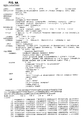
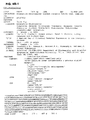
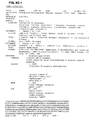
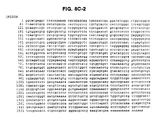
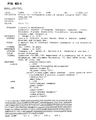
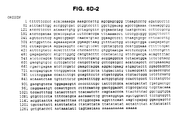
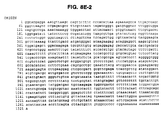
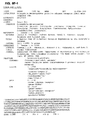
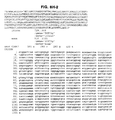
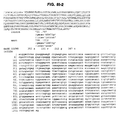
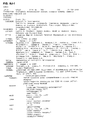
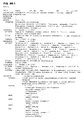
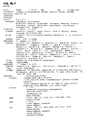
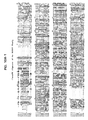
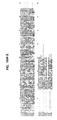
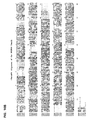
- the isolated nucleic acid molecule comprise: (a) one of the nucleic acid sequences as set forth in Figure 8 , (b) a sequence being degenerated to a sequence of (a) as a result of the genetic code; or (c) a sequence encoding one of the amino acid sequences as set forth in Figure 8 .
- This invention provides a nucleic acid molecule of at least 12 nucleotides capable of specifically hybridizing with the sequence of the above-described nucleic acid molecule.
- This invention provides a vector which comprises the above-described isolated nucleic acid molecule.
- the vector is a plasmid.
- This invention also provides a host vector system for the production of a polypeptide having the biological activity of an insect odorant receptor which comprises the above described vector and a suitable host.
- This invention provides a method of producing a polypeptide having the biological activity of an insect odorant receptor which comprising growing the above described host vector system under conditions permitting production of the polypeptide and recovering the polypeptide so produced.
- This invention also provides a purified, insect odorant receptor.
- This invention further provides a polypeptide encoded by the above-described isolated nucleic acid molecule.
- This invention provides an antibody capable of specifically binding to an insect odorant receptor. This invention also provides an antibody capable of competitively inhibiting the binding of the antibody capable of specifically binding to an insect odorant receptor.
- This invention provides a method for identifying cDNA inserts encoding an insect odorant receptors comprising:(a)generating a cDNA library which contains clones carrying cDNA inserts from antennal or maxillary palp sensory neurons; (b) hybridizing nucleic acid molecules of the clones from the cDNA libraries generated in step (a) with probes prepared from the antenna or maxillary palp neurons and probes from heads lacking antenna or maxillary palp neurons or from virgin female body tissue; (c) selecting clones which hybridized with probes from the antenna or maxillary palp neurons but not from head lacking antenna or maxillary palp neurons or virgin female body tissue; and (d) isolating clones which carry the hybridized inserts, thereby identifying the inserts encoding odorant receptors.
- This invention also provides cDNA inserts identified by the above method.
- This invention further provides a method for identifying DNA inserts encoding an insect odorant receptors comprising:(a) generating DNA libraries which contain clones carrying inserts from a sample which contains at least one antennal or maxillary palp neuron; (b) contacting clones from the cDNA libraries generated in step (a) with nucleic acid molecule capable of specifically hybridizing with the sequence which encodes an insect odorant receptor in appropriate conditions permitting the hybridization of the nucleic acid molecules of the clones and the nucleic acid molecule; (c)selecting clones which hybridized with the nucleic acid molecule; and (d) isolating the clones which carry the hybridized inserts, thereby identifying the inserts encoding the odorant receptors.
- This invention also provides a method to identify DNA inserts encoding an insect odorant receptors comprising:
- This invention also provides a method to isolate DNA molecules encoding insect odorant receptors comprising:(a) contacting a biological sample known to contain nucleic acids with appropriate polymerase chain reaction primers capable of specifically binding to nucleic acid molecules encoding insect odorant receptors in appropriate conditions permitting the amplification of the hybridized molecules by polymerase chain reaction; (b) isolating the amplified molecules, thereby identifying the DNA molecules encoding the insect odorant receptors.
- This invention also provides a method of transforming cells which comprises transfecting a host cell with a suitable vector described above. This invention also provides transformed cells produced by the above method.
- This invention provides a method of identifying a compound capable of specifically bind to an insect odorant receptor which comprises contacting a transfected cells or membrane fractions of the above described transfected cells with an appropriate amount of the compound under conditions permitting binding of the compound to such receptor, detecting the presence of any such compound specifically bound to the receptor, and thereby determining whether the compound specifically binds to the receptor.
- This invention provides a method of identifying a compound capable of specifically binding to an insect odorant receptor which comprises contacting an appropriate amount of the purified insect odorant receptor with an appropriate amount of the compound under conditions permitting binding of the compound to such purified receptor, detecting the presence of any such compound specifically bound to the receptor, and thereby determining whether the compound specifically binds to the receptor.
- This invention also provides a method of identifying a compound capable of activating the activity of an insect odorant receptor which comprises contacting the transfected cells or membrane fractions of the above-described transfected cells with the compound under conditions permitting the activation of a functional odorant receptor response, the activation of the receptor indicating that the compound is capable of activating the activity of a odorant receptor.
- This invention also provides a method of identifying a compound capable of activating the activity of an odorant receptor which comprises contacting a purified insect odorant receptor with the compound under conditions permitting the activation of a functional odorant receptor response, the activation of the receptor indicating that the compound is capable of activating the activity of a odorant receptor.
- the purified receptor is embedded in a lipid bilayer.
- This invention also provides a method of identifying a compound capable of inhibiting the activity of a odorant receptor which comprises contacting the transfected cells or membrane fractions of the above-described transfected cells with an appropriate amount of the compound under conditions permitting the inhibition of a functional odorant receptor response, the inhibition of the receptor response indicating that the compound is capable of inhibiting the activity of a odorant receptor.
- This invention provides a method of identifying a compound capable of inhibiting the activity of a odorant receptor which comprises contacting an appropriate amount of the purified insect odorant receptor with an appropriate amount of the compound under conditions permitting the inhibition of a functional odorant receptor response, the inhibition of the receptor response indicating that the compound is capable of activating the activity of a odorant receptor.
- the purified receptor is embedded in a lipid bilayer.
- This invention also provides the compound identified by the above-described methods.
- This invention provides a method of controlling pest populations which comprises identifying odorant ligands by the above-described method which are alarm odorant ligands and spraying the desired area with the identified odorant ligands.
- this invention provides a method of controlling a pest population which comprises identifying odorant ligands by the above-described method which interfere with the interaction between the odorant ligands and the odorant receptors which are associated with fertility.
- This invention provides an isolated nucleic acid molecule encoding an insect odorant receptor.
- the nucleic acid includes but is not limited to DNA, cDNA, genomic DNA, synthetic DNA or RNA.
- the nucleic acid molecule encodes a Drosophila odorant receptor.
- the isolated nucleic acid molecule comprise: (a) one of the nucleic acid sequences as set forth in Figure 8 , (b) a sequence being degenerated to a sequence of (a) as a result of the genetic code; or (c) a sequence encoding one of the amino acid sequences as set forth in Figure 8 .
- the nucleic acid molecules encoding a insect receptor includes molecules coding for polypeptide analogs, fragments or derivatives of antigenic polypeptides which differ from naturally-occurring forms in terms of the identity or location of one or more amino acid residues (deletion analogs containing less than all of the residues specified for the protein, substitution analogs wherein one or more residues specified are replaced by other residues and addition analogs where in one or more amino acid residues is added to a terminal or medial portion of the polypeptides) and which share some or all properties of naturally-occurring forms.
- These molecules include but not limited to: the incorporation of codons "preferred" for expression by selected non-mammalian hosts; the provision of sites for cleavage by restriction endonuclease enzymes; and the provision of additional initial, terminal or intermediate sequences that facilitate construction of readily expressed vectors. Accordingly, these changes may result in a modified insect odorant receptor. It is the intent of this invention to include nucleic acid molecules which encodes modified insect odorant receptor. Also, to facilitate the expression of receptor in different host cells, it may be necessary to modify the molecule such that the expressed receptors may reach the surface of the host cells. The modified insect odorant receptor should have biological activities similar to the unmodified insect odorant receptor. The molecules may also be modified to increase the biological activity of the expressed receptor.
- This invention provides a nucleic acid molecule of at least 12 nucleotides capable of specifically hybridizing with the sequence of the above-described nucleic acid molecule.
- the nucleic acid molecule hybridizes with a unique sequence within the sequence of the above-described nucleic acid molecule.
- This nucleic acid molecule may be DNA, cDNA, genomic DNA, synthetic DNA or RNA.
- This invention provides a vector which comprises the above-described isolated nucleic acid molecule.
- the vector is a plasmid.
- the above described isolated nucleic acid molecule is operatively linked to a regulatory element.
- a bacterial expression vector includes a promoter such as the lac promoter and for transcription initiation the Shine-Dalgarno sequence and the start codon AUG.
- a eukaryotic expression vector includes a heterologous or homologous promoter for RNA polymerase II, a downstream polyadenylation signal, the start codon AUG, and a termination codon for detachment of the ribosome.
- Such vectors may be obtained commercially or assembled from the sequences described by methods well-known in the art, for example the methods described above for constructing vectors in general.
- This invention also provides a host vector system for the production of a polypeptide having the biological activity of an insect odorant receptor which comprises the above described vector and a suitable host.
- This invention also provides a host vector system, wherein the suitable host is a bacterial cell, yeast cell, insect cell, or animal cell.
- the host cell of the above expression system may be selected from the group consisting of the cells where the protein of interest is normally expressed, or foreign cells such as bacterial cells (such as E . coli ), yeast cells, fungal cells, insect cells, nematode cells, plant or animal cells, where the protein of interest is not normally expressed.
- Suitable animal cells include, but are not limited to Vero cells, HeLa cells, Cos cells, CV1 cells and various primary mammalian cells.
- This invention provides a method of producing a polypeptide having the biological activity of an insect odorant receptor which comprising growing the above described host vector system under conditions permitting production of the polypeptide and recovering the polypeptide so produced.
- This invention also provides a purified, insect odorant receptor.
- This invention further provides a polypeptide encoded by the above-described isolated nucleic acid molecule.
- This invention provides an antibody capable of specifically binding to an insect odorant receptor.
- This invention also provides an antibody capable of competitively inhibiting the binding of the antibody capable of specifically binding to an insect odorant receptor.
- the antibody is monoclonal. In another embodiment, the antibody is polyclonal.
- Monoclonal antibody directed to an insect odorant receptor may comprise, for example, a monoclonal antibody directed to an epitope of an insect odorant receptor present on the surface of a cell.
- Amino acid sequences may be analyzed by methods well known to those skilled in the art to determine whether they produce hydrophobic or hydrophilic regions in the proteins which they build. In the case of cell membrane proteins, hydrophobic regions are well known to form the part of the protein that is inserted into the lipid bilayer which forms the cell membrane, while hydrophilic regions are located on the cell surface, in an aqueous environment.
- Antibodies directed to an insect odorant receptor may be serum-derived or monoclonal and are prepared using methods well known in the art.
- monoclonal antibodies are prepared using hybridoma technology by fusing antibody producing B cells from immunized animals with myeloma cells and selecting the resulting hybridoma cell line producing the desired antibody.
- Cells such as NIH3T3 cells or 293 cells which express the receptor may be used as immunogens to raise such an antibody.
- synthetic peptides may be prepared using commercially available machines.
- DNA such as a cDNA or a fragment thereof, encoding the receptor or a portion of the receptor may be cloned and expressed.
- the expressed polypeptide recovered and used as an immunogen.
- the resulting antibodies are useful to detect the presence of insect odorant receptors or to inhibit the function of the receptor in living animals, in humans, or in biological tissues or fluids isolated from animals or humans.
- antibodies against the Drosophila odorant receptor may be used to screen an cockroach expression library for a cockroach odorant receptor.
- Such antibodies may be monoclonal or monospecific polyclonal antibody against a selected insect odorant receptor.
- Different insect expression libraries are readily available and may be made using technologies well-known in the art.
- One means of isolating a nucleic acid molecule which encodes an insect odorant receptor is to probe a libraries with a natural or artificially designed probes, using methods well known in the art.
- the probes may be DNA or RNA.
- the library may be cDNA or genomic DNA.
- This invention provides a method for identifying cDNA inserts encoding an insect odorant receptors comprising:(a)generating a cDNA library which contains clones carrying cDNA inserts from antennal or maxillary palp sensory neurons; (b) hybridizing nucleic acid molecules of the clones from the cDNA libraries generated in step (a) with probes prepared from the antenna or maxillary palp neurons and probes from heads lacking antenna or maxillary palp neurons or from virgin female body tissue; (c) selecting clones which hybridized with probes from the antenna or maxillary palp neurons but not from head lacking antenna or maxillary palp neurons or virgin female body tissue; and (d) isolating clones which carry the hybridized inserts, thereby identifying the inserts encoding odorant receptors.
- step (c) after step (c), it further comprises: (a) amplifying the inserts from the selected clones by polymerase chain reaction; (b) hybridizing the amplified inserts with probes from the antennal or maxillary palp neurons; and (c) isolating the clones which carry the hybridized inserts, thereby identifying the inserts encoding the odorant receptors.
- the probes are cDNA probes.
- the appropriate polymerase chain reaction primers may be chosen from the conserved regions of the known insect odorant receptor sequences. Alternatively, the primers may be chosen from the regions which are the active sites for the binding of ligands.
- This invention also provides cDNA inserts identified by the above method.
- This invention further provides amethod for identifying DNA inserts encoding an insect odorant receptors comprising:(a) generating DNA libraries which contain clones carrying inserts from a sample which contains at least one antennal or maxillary palp neuron; (b) contacting clones from the cDNA libraries generated in step (a) with nucleic acid molecule capable of specifically hybridizing with the sequence which encodes an insect odorant receptor in appropriate conditions permitting the hybridization of the nucleic acid molecules of the clones and the nucleic acid molecule; (c)selecting clones which hybridized with the nucleic acid molecule; and (d) isolating the clones which carry the hybridized inserts, thereby identifying the inserts encoding the odorant receptors.
- This invention also provides a method to identify DNA inserts encoding an insect odorant receptors comprising:
- This invention also provides a method to isolate DNA molecules encoding insect odorant receptors comprising:(a) contacting a biological sample known to contain nucleic acids with appropriate polymerase chain reaction primers capable of specifically binding to nucleic acid molecules encoding insect odorant receptors in appropriate conditions permitting the amplification of the hybridized molecules by polymerase chain reaction; (b) isolating the amplified molecules, thereby identifying the DNA molecules encoding the insect odorant receptors.
- This invention also provides a method of transforming cells which comprises transfecting a host cell with a suitable vector described above.
- This invention also provides transformed cells produced by the above method.
- the host cells are not usually expressing odorant receptors.
- the host cells are expressing odorant receptors.
- This invention provides a method of identifying a compound capable of specifically binding to an insect odorant receptor which comprises contacting a transfected cells or membrane fractions of the above described transfected cells with an appropriate amount of the compound under conditions permitting binding of the compound to such receptor, detecting the presence of any such compound specifically bound to the receptor, and thereby determining whether the compound specifically binds to the receptor.
- This invention provides a method of identifying a compound capable of specifically bind to an insect odorant receptor which comprises contacting an appropriate amount of the purified insect odorant receptor with an-appropriate amount of the compound under conditions permitting binding of the compound to such purified receptor, detecting the presence of any such compound specifically bound to the receptor, and thereby determining whether the compound specifically binds to the receptor.
- the purified receptor is embedded in a lipid bilayer. The purified receptor may be embedded in the liposomes with proper orientation to carry out normal functions. Liposome technology is well-known in the art.
- This invention also provides a method of identifying a compound capable of activating the activity of an insect odorant receptor which comprises contacting the transfected cells or membrane fractions of the above-described transfected cells with the compound under conditions permitting the activation of a functional odorant receptor response, the activation of the receptor indicating that the compound is capable of activating the activity of a odorant receptor.
- This invention also provides a method of identifying a compound capable of activating the activity of an odorant receptor which comprises contacting a purified insect odorant receptor with the compound under conditions permitting the activation of a functional odorant receptor response, the activation of the receptor indicating that the compound is capable of activating the activity of a odorant receptor.
- the purified receptor is embedded in a lipid bilayer.
- This invention also provides a method of identifying a compound capable of inhibiting the activity of a odorant receptor which comprises contacting the transfected cells or membrane fractions of the above-described transfected cells with an appropriate amount of the compound under conditions permitting the inhibition of a functional odorant receptor response, the inhibition of the receptor response indicating that the compound is capable of inhibiting the activity of a odorant receptor.
- This invention provides a method of identifying a compound capable of inhibiting the activity of a odorant receptor which comprises contacting an appropriate amount of the purified insect odorant receptor with an appropriated amount of the compound under conditions permitting the inhibition of a functional odorant receptor response, the inhibition of the receptor response indicating that the compound is capable of activating the activity of a odorant receptor.
- the purified receptor is embedded in a lipid bilayer.
- the compound is not previously known.
- This invention also provides the compound identified by the above-described methods.
- This invention provides a method of controlling pest populations which comprises identifying odorant ligands by the above-described method which are alarm odorant ligands and spraying the desired area with the identified odorant ligands.
- this invention provides a method of controlling a pest population which comprises identifying odorant ligands by the above-described method which interfere with the interaction between the odorant ligands and the odorant receptors which are associated with fertility.
- Oregon R flies (Drosophila melanogaster) were raised on standard cornmeal-agar-molasses medium at 25°C. Transgenic constructs were injected into yw embryos. C155 elav -GAL4 flies were obtained from Corey Goodman (Lin and Goodman, 1994) and Gary Struhl provided the UAS- (cytoplasmic) lacZ stock.
- Drosophila antennae and maxillary palps were obtained by manually decapitating and freezing 5000 adult flies and shaking antennae and maxillary palps through a fine metal sieve.
- mRNA was prepared using a polyA+ RNA Purification Kit (Stratagene).
- An antennal/maxillary palp cDNA library was made from 0.5 ⁇ g mRNA using the LambdaZAPIIXR kit from Stratagene.
- phage were plated at low density (500-1000 pfu/150mm plate) and UV-crosslinked after lifting in triplicate to Hybond-N+ (Amersham).
- Complex probes were generated by random primed labeling (PrimeItII, Stratagene) of reverse transcribed mRNA (RT-PCR kit, Stratagene) from virgin adult female body mRNA and duplicate lifts hybridized at high stringency for 36 hours (65°C in 0.5M Sodium Phosphate buffer [pH7.3] containing 1% bovine serum albumin, 4% SDS, and 0.5 mg/ml herring sperm DNA).
- Genomic P1 sequences were first analyzed with the GENSCAN program (Burge and Karlin, 1997; http://CCR-081.mit.edu/GENSCAN.html), which predicts intron-exon structures and generates hypothetical coding sequences (CDS) and open reading frames. GENSCAN predicted proteins shorter than 50 amino acids were discarded. The remaining open reading frames were used to search for putative transmembrane regions greater than 15 amino acids with two programs that were obtained from the authors and used in stand-alone mode locally (see Persson and Argos, 1994; Cserzo et al., 1997).
- DAS Dense Surface Alignment
- M. Cserzo miklos@pugh.bip.bham.ac.uk
- TMAP is available at ftp://ftp.ebi.ac.uk/pub/software/unix/, or by contacting the author, Bengt Persson (bpn@mbb.ki.se). Scripts were written to apply the DAS and TMAP programs repeatedly to genome scale sequence sets.
- Probes for in situ hybridization were generated by RT-PCR using antennal/maxillary palp mRNA as a template.
- the chromosome position of DOR104 was determined by in situ hybridization of a biotin-labeled probe to salivary gland polytene chromosome squashes as described (Amrein et al., 1988).
- DOR62 maps to a cosmid sequenced by the European Drosophila Genome Project (unpublished; http://edgp.ebi.ac.uk/; Siden-Kiamos et al., 1990).
- RNA in situ hybridization was carried out essentially as described (Schaeren-Wiemers and Gerfin-Moser, 1993). This protocol was modified to include detergents in most steps to increase sensitivity and reduce background.
- the hybridization buffer contained 50% formamide, 5X SSC, 5X Denhardts, 250 ⁇ g/ml yeast tRNA, 500 ⁇ g/ml herring sperm DNA, 50 ⁇ g/ml Heparin, 2.5 mM EDTA, 0.1% Tween-20, 0.25% CHAPS. All antibody steps were in the presence of 0.1% Triton X-100, and the reaction was developed in buffer containing 0.1% Tween-20. Slides were mounted in Glycergel (DAKO) and viewed with Nomarski optics.
- Fluorescent in situ hybridization was carried out as above with either digoxigenin or FITC labeled RNA probes.
- the digoxigenin probe was visualized with sheep anti-digoxigenin (Boehringer) followed by donkey anti-sheep CY3 (Jackson).
- FITC probes were visualized with mouse anti-FITC (Boehringer) and goat anti-mouse Alexa 488 (Molecular Probes) following preincubation with normal goat serum. Sections were mounted in Vectashield reagent (Vector Labs) and viewed on a Biorad 1024 Confocal Microscope.
- mice of the genotype C155 elav -Gal4; UAS-lacZ were sectioned and first hybridized with a digoxigenin labeled antisense DOR104 RNA probe and developed as described above.
- Neuron-specific expression of lacZ driven by the elav -Gal4 enhancer trap was visualized with a polyclonal rabbit anti- ⁇ -galactosidase antibody (Organon-Technika/Cappel), visualized by a goat anti-rabbit Alexa488 conjugated secondary antibody (Molecular Probes) following preincubation with normal goat serum.
- the proportion of neurons in the third antennal segment was calculated by comparing the number of nuclei staining with the 44C11 ELAV monoclonal (kindly provided by Lily Jan) and those staining with TOTO-3 (Molecular Probes), a nucleic acid counterstain, in several confocal sections of multiple antennae. On average, 36% of the nuclei in the antenna were ELAV positive.
- a genomic clone containing the DOR104 coding region and several kb of upstream sequence was isolated from a genomic library prepared from flies isogenic for the third chromosome (a gift of Kevin Moses and Gerry Rubin). Approximately 3 kb of DNA immediately upstream of the putative translation start site of DOR104 were isolated by PCR and subcloned into the pCasperAUGßGal vector (Thummel et al., 1988). ⁇ -galactosidase activity staining was carried out with whole mount head preparations essentially as described in Wang et al. (1998). Frozen sections of DOR104-lacZ maxillary palps were incubated with a polyclonal rabbit anti- ⁇ -galactosidase antibody and as described above.
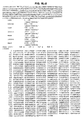
- DOR104 for D rosophila O dorant R eceptor ( Figure 1 , Lane 9), encodes a putative seven-transmembrane domain protein with no obvious sequence similarity to known serpentine receptors ( Figure 3 ).
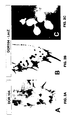
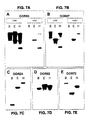
- In situ hybridization revealed that this cDNA anneals to about 15% of the 120 sensory neurons within the maxillary palp but does not anneal with neurons in either the brain or antenna. Seven cells expressing DOR104 are shown in the frontal maxillary palp section in Figure 2A .
- DOR104 might be one member of a larger family of odorant receptor genes within the Drosophila genome.
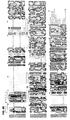
- cDNA clones containing the coding regions for 5 of the 11 genes identified by GENSCAN analysis have been isolated from an antennal/maxillary palp cDNA library and their sequences are provided in Figure 3 .
- the remaining 6 protein sequences derive from GENSCAN predictions for intron-exon arrangement. Their organization conforms well to the actual structure determined from the cDNA sequences of other members of the gene family ( Figure 3 ).
- the receptors consist of a short extracellular N-terminal domain (usually less than 50 amino acids) and seven presumed membrane-spanning domains. Analysis of presumed transmembrane domains (Kyte and Doolittle, 1982; Persson and Argos, 1994; Cserzo et al., 1997) reveals multiple hydrophobic segments, but it is not possible from this analysis to unequivocally determine either the number or placement of the membrane spanning domains. At present, our assignment of transmembrane domains is therefore tentative.
- the individual family members are divergent and most exhibit from 17-26% amino acid identity.
- Two linked clusters of receptor genes constitute small subfamilies of genes with significantly greater sequence conservation.
- Two linked genes, DOR53 and DOR67 exhibit 76% amino acid identity, whereas the three linked genes, DOR71, 72 and 73, reveal 30-55% identity ( Figure 3 ; see below).
- each of the genes shares short, common motifs in fixed positions within the putative seven transmembrane domain structure that define these sequences as highly divergent members of a novel family of putative receptor molecules.
- olfactory sensory neurons are restricted to the maxillary palp and third antennal segment.
- the third antennal segment is covered with approximately 500 fine sensory bristles or sensilla (Stocker, 1994), each containing from one to four neurons (Venkatesh and Singh, 1984).
- the maxillary palp is covered with approximately 60 sensilla, each of which is innervated by two or three neurons (Singh and Nayak, 1985).
- the third antennal segment and maxillary palp contain about 1500 and 120 sensory neurons, respectively.
- RNA in situ hybridization experiments were performed with digoxigenin-labeled RNA antisense probes to each of the 11 new members of the gene family under conditions of high stringency.
- One linked pair of homologous genes, DOR53 and DOR67 crosshybridizes, whereas the remaining 10 genes exhibit no crosshybridization under these conditions (see below).
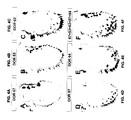
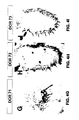
- Eight of the 11 genes hybridize to a small subpopulation (0.5-1.5%) of the 1500 olfactory sensory neurons in the third antennal segment ( Figure 4 ).
- One gene, DOR71 is expressed in about 10% of the sensory neurons in the maxillary palp but not in the antenna ( Figure 4G ). We have not detected expression of DOR46 or DOR19 in the antenna or the maxillary palp.
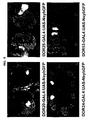
- Hybridization with the receptor probe DOR104 reveals expression in 5 of the 12 lacZ positive cells in a horizontal section of the maxillary palp ( Figure 5A ). All cells that express DOR104 are also positive for lacZ ( Figure 5C ), indicating that this receptor is expressed only in neurons.
- the probe DOR53 anneals to a non-overlapping subpopulation of neurons restricted to the medial-proximal domain of the antenna.
- in situ hybridization with the odorant binding protein, OS-F identifies a spatially restricted subpopulation of support cells in the antenna
- the DOR67 probe identifies a distinct subpopulation of neurons in a medial-proximal domain ( Figure 5G ).
- the putative odorant receptor genes are expressed in a subpopulation of sensory neurons distinct from the support cells that express the odorant binding proteins.
- each receptor is expressed in a spatially restricted subpopulation of neurons in the antenna or maxillary palp ( Figure 4 ).
- the total number of cells expressing each receptor per antenna was obtained by counting the positive cells in serial sections of antennae from multiple flies. These numbers are presented in the legend of Figure 4 .
- DOR67 and 53 for example, anneal to about 20 neurons on the medial proximal edge of the antenna ( Figure 4A and B ), whereas DOR62 and 87 anneal to subpopulations of 20 cells at the distal edge of the antenna ( Figure 4C-D ).
- Approximately 10 cells in the distal domain express DOR64 ( Figure 4E ).
- Each of the three linked genes DOR71, 72, and 73 is expressed in different neurons.
- DOR72 is expressed in approximately 15 antennal cells ( Figure 4H ), while DOR73 is expressed in 1 to 2 cells at the distal edge of the antenna ( Figure 4I ). In contrast, DOR71 is expressed in approximately 10 maxillary palp neurons but is not detected in the antenna ( Figure 4G ).
- the three sensillar types are represented in a coarse topographic map across the third antennal segment.
- the proximal-medial region for example, contains largely basiconic sensilla. Receptors expressed in this region (DOR53 and 67) are therefore likely to be restricted to the large basiconic sensilla. More distal regions contain a mixture of all three sensilla types and it is therefore not possible from these data to assign specific receptors to specific sensillar types.
- A45 Another gene, which shares weak identity (24%) with the DOR gene family over a short region (93 amino acids). This gene, however, does not appear to be a classical member of the DOR family: it is far more divergent and significantly larger than the other family members (486 amino acids). This gene is expressed in all olfactory sensory neurons (data not shown). If A45 does encode a divergent odorant receptor, then it would be present in all sensory neurons along with different complements of the more classical members of the DOR gene family.
- DOR67 and DOR53 members of a second subfamily, reside within 1 kb of each other at map position 22A2-3 and exhibit 76% sequence identity. Not surprisingly, these two linked genes crosshybridize at low stringency. Southern blots probed with either DOR67 or DOR53 reveal two hybridizing bands corresponding to the two genes within the subfamily but fail to detect additional subfamily members in the chromosome ( Figure 7A and B ).
- the members of the receptor gene family described here are present on all but the small fourth chromosome. No bias is observed toward telomeric or centromeric regions.
- the map positions, as determined from P1 and cosmid clones (Berkeley Drosophila Genome Project; European Drosophila Genome Project) are provided in Experimental Procedures. A comparatively large number of receptor genes map to chromosome 2 because the Berkeley Drosophila Genome Project has concentrated its efforts on this chromosome.
- the high degree of divergence among members of the Drosophila odorant receptor gene family is more pronounced of the family of chemoreceptors in C. elegans than the more highly conserved odorant receptors of vertebrates.
- Estimates of the size of the Drosophila receptor gene family therefore, cannot be obtained by either Southern blot hybridization or PCR analysis of genomic DNA. Rather, our estimates of the gene family derive from the statistics of small numbers.
- Vomeronasal sensory neurons express two distinct families of receptors each thought to contain from 100 to 200 genes: one novel family of serpentine receptors (Dulac and Axel, 1995), and a second related to the metabotropic neurotransmitter receptors (Herrada and Dulac, 1997; Matsunami and Buck, 1997; Ryba and Tirindelli, 1997).
- chemosensory receptors are organized into four gene families that share 20-40% sequence similarity within a family and essentially no sequence similarity between families (Troemel et al., 1995; Sengupta et al., 1996; Robertson, 1998).
- the four gene families in C. elegans together contain about 1,000 genes engaged in the detection of odors.
- the nematode receptors exhibit no sequence conservation with the three distinct families of vertebrate odorant receptor genes.
- Our studies reveal that Drosophila has evolved an additional divergent gene family of serpentine receptors comprised of from 100 to 200 genes. The observation that a similar function, chemosensory detection, is accomplished by at least eight highly divergent gene families, sharing little or no sequence similarity, is quite unusual.
- mammalian receptors not only recognize odorants in the environment but are likely to recognize guidance cues governing formation of a sensory map in the brain (Wang et al., 1998).
- the multiple properties required of the odorant receptors might change vastly over evolutionary time and this might underlie the independent origins of the multiple chemosensory receptor gene families.
- a given receptor can be expressed in one of four broad but circumscribed zones in the main olfactory epithelium (Ressler et al., 1993; Vassar et al., 1993).
- a given zone can express up to 250 different receptors and neurons expressing a given receptor within a zone appear to be randomly dispersed (Ressler et al., 1993; Vassar et al., 1993).
- the highly ordered pattern of expression observed in the Drosophila antenna might have important implications for patterning the projections to the antennal lobe.
- the peripheral receptor sheet is highly ordered and neighbor relations in the periphery are maintained in the projections to the brain.
- olfactory neurons express only one of the thousand odorant receptor genes. Neurons expressing a given receptor project with precision to 2 of the 1800 glomeruli in the mouse olfactory bulb. Odorants will therefore elicit spatially defined patterns of glomerular activity such that the quality of an olfactory stimulus is encoded by the activation of a specific combination of glomeruli (Stewart et al., 1979; Lancet et al., 1982; Kauer et al., 1987; Imamura et al., 1992; Mori et al., 1992; Katoh et al., 1993; Friedrich and Korsching, 1997).
- an odorant to activate a combination of glomeruli allows for the discrimination of a diverse array of odors far exceeding the number of receptors and their associated glomeruli.
- an equally large family of receptor genes is expressed in 16 pairs of chemosensory cells, only three of which respond to volatile odorants (Bargmann and Horvitz, 1991; Bargmann et al., 1993). This immediately implies that a given chemosensory neuron will express multiple receptors and that the diversity of odors recognized by the nematode might approach that of mammals, but the discriminatory power is necessarily dramatically reduced.
- Drosophila odorant receptors comprise a family of from 100 to 200 genes.
- the pattern of expression of these genes in the third antennal segment suggests that individual sensory neurons express a different complement of receptors and, at the extreme, our data are consistent with the suggestion that individual neurons express one or a small number of receptors.
- the problem of odor discrimination therefore reduces to a problem of the brain discerning which receptors have been activated by a given odorant.
- This model of olfactory coding is in sharp contrast with the main olfactory system of vertebrates in which sensory neurons express only a single receptor and converge on only a single pair of spatially fixed glomeruli in the olfactory bulb. Moreover, each projection neuron in the mammalian bulb extends its dendrite to only a single glomerulus.
- the integration and decoding of spatial patterns of glomerular activity, in vertebrates must occur largely in the olfactory cortex. In the fruit fly, the observation that the number of receptors may exceed the number of glomeruli suggests that individual glomeruli will receive input from more than one type of sensory neuron.
- a second level of integration in the antennal lobe is afforded by subsets of projection neurons that elaborate extensive dendritic arbors that synapse with multiple glomeruli.
- the Drosophila olfactory system reveals levels of processing and integration of sensory input in the antennal lobe that is likely to be restricted to higher cortical centers in the main olfactory system of vertebrates.
- accession numbers for the sequences reported in this paper are AF127921-AF127926.
- the present invention comprises the following aspects:
Landscapes
- Health & Medical Sciences (AREA)
- Life Sciences & Earth Sciences (AREA)
- Chemical & Material Sciences (AREA)
- Insects & Arthropods (AREA)
- Zoology (AREA)
- Organic Chemistry (AREA)
- Toxicology (AREA)
- Molecular Biology (AREA)
- Biochemistry (AREA)
- Biophysics (AREA)
- General Health & Medical Sciences (AREA)
- Genetics & Genomics (AREA)
- Medicinal Chemistry (AREA)
- Gastroenterology & Hepatology (AREA)
- Proteomics, Peptides & Aminoacids (AREA)
- Tropical Medicine & Parasitology (AREA)
- Micro-Organisms Or Cultivation Processes Thereof (AREA)
- Peptides Or Proteins (AREA)
- Measuring Or Testing Involving Enzymes Or Micro-Organisms (AREA)
- Medicines That Contain Protein Lipid Enzymes And Other Medicines (AREA)
- Agricultural Chemicals And Associated Chemicals (AREA)
- Preparation Of Compounds By Using Micro-Organisms (AREA)
Applications Claiming Priority (2)
| Application Number | Priority Date | Filing Date | Title |
|---|---|---|---|
| US25770699A | 1999-02-25 | 1999-02-25 | |
| EP00915898A EP1208111B1 (de) | 1999-02-25 | 2000-02-25 | Gene, welche für geruchsrezeptoren aus insekten kodieren und deren anwendungen |
Related Parent Applications (1)
| Application Number | Title | Priority Date | Filing Date |
|---|---|---|---|
| EP00915898.1 Division | 2000-02-25 |
Publications (2)
| Publication Number | Publication Date |
|---|---|
| EP2058327A2 true EP2058327A2 (de) | 2009-05-13 |
| EP2058327A3 EP2058327A3 (de) | 2010-08-25 |
Family
ID=22977414
Family Applications (2)
| Application Number | Title | Priority Date | Filing Date |
|---|---|---|---|
| EP08165554A Withdrawn EP2058327A3 (de) | 1999-02-25 | 2000-02-25 | Gene zur Kodierung von Insektenduftstoffrezeptoren und ihre Verwendung |
| EP00915898A Expired - Lifetime EP1208111B1 (de) | 1999-02-25 | 2000-02-25 | Gene, welche für geruchsrezeptoren aus insekten kodieren und deren anwendungen |
Family Applications After (1)
| Application Number | Title | Priority Date | Filing Date |
|---|---|---|---|
| EP00915898A Expired - Lifetime EP1208111B1 (de) | 1999-02-25 | 2000-02-25 | Gene, welche für geruchsrezeptoren aus insekten kodieren und deren anwendungen |
Country Status (11)
| Country | Link |
|---|---|
| US (3) | US20030186359A1 (de) |
| EP (2) | EP2058327A3 (de) |
| JP (1) | JP2003525022A (de) |
| AT (1) | ATE409704T1 (de) |
| AU (1) | AU778993B2 (de) |
| CA (1) | CA2364966A1 (de) |
| DE (1) | DE60040395D1 (de) |
| DK (1) | DK1208111T3 (de) |
| ES (1) | ES2315227T3 (de) |
| PT (1) | PT1208111E (de) |
| WO (1) | WO2000050566A2 (de) |
Families Citing this family (31)
| Publication number | Priority date | Publication date | Assignee | Title |
|---|---|---|---|---|
| AU778993B2 (en) * | 1999-02-25 | 2004-12-23 | Trustees Of Columbia University In The City Of New York, The | Genes encoding insect odorant receptors and uses thereof |
| US7141649B2 (en) * | 2001-01-26 | 2006-11-28 | Vanderbilt University | Mosquito arrestin 2 polypeptides |
| US7314723B2 (en) * | 2001-01-26 | 2008-01-01 | Vanderbilt University | Method of identifying chemical agents which stimulate odorant receptors of sensory neurons |
| US7166699B2 (en) * | 2001-01-26 | 2007-01-23 | Vanderbilt University | Mosquito arrestin 1 polypeptides |
| US7223550B2 (en) | 2001-02-08 | 2007-05-29 | Temple University-Of The Commonwealth System Of Higher Education | Biosensor for defecting chemical agents |
| WO2002077200A2 (en) * | 2001-03-27 | 2002-10-03 | Inscent, Inc | Efficient methods for isolating functional g-protein coupled receptors and identifying active effectors and efficient methods to isolate proteins involved in olfaction and efficient methods to isolate and identifying active effectors |
| US20070003980A1 (en) * | 2001-03-27 | 2007-01-04 | Woods Daniel F | Efficient methods to isolate effectors of proteins involved in olfactory or chemosensory pathways and efficient methods to use these effectors to alter organism olfaction, chemosensation, or behavior |
| US20100248268A1 (en) * | 2001-03-27 | 2010-09-30 | Woods Daniel F | Methods to utilize invertebrate chemosensory proteins for industrial and commercial uses |
| US7238798B2 (en) | 2001-08-14 | 2007-07-03 | Sentisearch, Inc. | Nucleic acids and proteins of insect Or83b odorant receptor genes and uses thereof |
| US7622269B2 (en) | 2004-03-19 | 2009-11-24 | Tyratech, Inc. | Methods of screening tyramine- and octopamine-expressing cells for compounds and compositions having potential insect control activity |
| WO2004100971A1 (en) * | 2003-04-24 | 2004-11-25 | Vanderbilt University | Compositions and methods for controlling insects |
| US20080009015A1 (en) * | 2003-11-21 | 2008-01-10 | Arena Pharmaceuticals, Inc. | Methods for Producing Olfactory Gpcrs |
| EP1708745B1 (de) * | 2003-12-23 | 2012-04-18 | Arbor Vita Corporation | Antikörper für onkogene stämme von hpv und verfahren zu deren verwendung |
| US20080145462A1 (en) | 2006-06-27 | 2008-06-19 | Essam Enan | Compositions and methods for treating parasitic infections |
| CN101489377A (zh) | 2006-07-17 | 2009-07-22 | 蒂拉德克公司 | 防治昆虫的组合物和方法 |
| US8945595B2 (en) * | 2009-03-04 | 2015-02-03 | The Regents Of The University Of California | Insect repellent and attractants |
| US20180044722A1 (en) * | 2016-08-12 | 2018-02-15 | Agilent Technologies, Inc. | Tri-color probes for detecting multiple gene rearrangements in a fish assay |
| JP6875815B2 (ja) | 2016-09-29 | 2021-05-26 | 住友化学株式会社 | 嗅覚受容体共受容体 |
| KR102612950B1 (ko) | 2016-12-21 | 2023-12-12 | 더 뉴질랜드 인스티튜트 포 플랜트 앤드 푸드 리서치 리미티드 | 센서 장치 및 방법 |
| WO2018208332A2 (en) | 2017-02-17 | 2018-11-15 | Koniku, Inc. | Systems for detection |
| US11932080B2 (en) | 2020-08-20 | 2024-03-19 | Denso International America, Inc. | Diagnostic and recirculation control systems and methods |
| US12377711B2 (en) | 2020-08-20 | 2025-08-05 | Denso International America, Inc. | Vehicle feature control systems and methods based on smoking |
| US12269315B2 (en) | 2020-08-20 | 2025-04-08 | Denso International America, Inc. | Systems and methods for measuring and managing odor brought into rental vehicles |
| US11760169B2 (en) | 2020-08-20 | 2023-09-19 | Denso International America, Inc. | Particulate control systems and methods for olfaction sensors |
| US11760170B2 (en) | 2020-08-20 | 2023-09-19 | Denso International America, Inc. | Olfaction sensor preservation systems and methods |
| US11881093B2 (en) | 2020-08-20 | 2024-01-23 | Denso International America, Inc. | Systems and methods for identifying smoking in vehicles |
| US11636870B2 (en) | 2020-08-20 | 2023-04-25 | Denso International America, Inc. | Smoking cessation systems and methods |
| US11813926B2 (en) | 2020-08-20 | 2023-11-14 | Denso International America, Inc. | Binding agent and olfaction sensor |
| US12251991B2 (en) | 2020-08-20 | 2025-03-18 | Denso International America, Inc. | Humidity control for olfaction sensors |
| US12017506B2 (en) | 2020-08-20 | 2024-06-25 | Denso International America, Inc. | Passenger cabin air control systems and methods |
| US11828210B2 (en) | 2020-08-20 | 2023-11-28 | Denso International America, Inc. | Diagnostic systems and methods of vehicles using olfaction |
Family Cites Families (3)
| Publication number | Priority date | Publication date | Assignee | Title |
|---|---|---|---|---|
| US6610511B1 (en) * | 1999-01-25 | 2003-08-26 | Yale University | Drosophila odorant receptors |
| AU778993B2 (en) * | 1999-02-25 | 2004-12-23 | Trustees Of Columbia University In The City Of New York, The | Genes encoding insect odorant receptors and uses thereof |
| US20050208558A1 (en) * | 1999-10-19 | 2005-09-22 | Applera Corporation | Detection kits, such as nucleic acid arrays, for detecting the expression or 10,000 or more Drosophila genes and uses thereof |
-
2000
- 2000-02-25 AU AU37093/00A patent/AU778993B2/en not_active Ceased
- 2000-02-25 ES ES00915898T patent/ES2315227T3/es not_active Expired - Lifetime
- 2000-02-25 CA CA002364966A patent/CA2364966A1/en not_active Abandoned
- 2000-02-25 EP EP08165554A patent/EP2058327A3/de not_active Withdrawn
- 2000-02-25 EP EP00915898A patent/EP1208111B1/de not_active Expired - Lifetime
- 2000-02-25 WO PCT/US2000/004995 patent/WO2000050566A2/en not_active Ceased
- 2000-02-25 DE DE60040395T patent/DE60040395D1/de not_active Expired - Fee Related
- 2000-02-25 JP JP2000601130A patent/JP2003525022A/ja active Pending
- 2000-02-25 PT PT00915898T patent/PT1208111E/pt unknown
- 2000-02-25 DK DK00915898T patent/DK1208111T3/da active
- 2000-02-25 AT AT00915898T patent/ATE409704T1/de not_active IP Right Cessation
-
2001
- 2001-08-17 US US09/932,227 patent/US20030186359A1/en not_active Abandoned
-
2002
- 2002-06-25 US US10/183,708 patent/US7241881B2/en not_active Expired - Fee Related
-
2007
- 2007-07-06 US US11/825,626 patent/US20080009065A1/en not_active Abandoned
Non-Patent Citations (71)
| Title |
|---|
| ALTSCHUL, S. F. ET AL.: "Basic local alignment search tool", J. MOL. BIOL., vol. 215, 1990, pages 403 - 410, XP002949123, DOI: doi:10.1006/jmbi.1990.9999 |
| ALTSCHUL, S. F. ET AL.: "Gapped BLAST and PSI-BLAST: a new generation of protein database search programs", NUCLEIC ACIDS RES., vol. 25, 1997, pages 3389 - 3402, XP002905950, DOI: doi:10.1093/nar/25.17.3389 |
| AMREIN, H.; GORMAN, M.; NOTHIGER, R.: "The sex-determining gene tra-2 of Drosophila encodes a putative RNA binding protein [published erratum appears", CELL, vol. 58, no. 2, 1988, pages 419 |
| AYER, R.K., JR.; CARLSON, J.: "Olfactory physiology in the Drosophila antenna and maxillary palp: acj6 distinguishes two classes of odorant pathways", J. NEUROBIOL., vol. 23, 1992, pages 965 - 982 |
| BARGMANN, C. I.; HARTWIEG, E.; HORVITZ, H. R.: "Odorant-selective genes and neurons mediate olfaction in C. elegans", CELL, vol. 74, 1993, pages 515 - 527, XP023913410, DOI: doi:10.1016/0092-8674(93)80053-H |
| BARGMANN, C. I.; HORVITZ, H. R.: "Chemosensory neurons with overlapping functions direct chemotaxis to multiple chemicals in C. elegans", NEURON, vol. 7, 1991, pages 729 - 742, XP027463354, DOI: doi:10.1016/0896-6273(91)90276-6 |
| BARGMANN, C. I.; KAPLAN, J. M.: "Signal transduction in the Caenorhabditis elegans nervous system", ANNU REV NEUROSCI, vol. 21, 1998, pages 279 - 308, XP000946797, DOI: doi:10.1146/annurev.neuro.21.1.279 |
| BEN-ARIE, N. ET AL.: "Olfactory receptor gene cluster on human chromosome 17: possible duplication of an ancestral receptor repertoire", HUM. MOL. GENET., vol. 3, 1994, pages 229 - 235, XP001030588, DOI: doi:10.1093/hmg/3.2.229 |
| BUCK, L. B.: "Information coding in the vertebrate olfactory system", ANNU REV NEUROSCI, vol. 19, 1996, pages 517 - 44 |
| BUCK, L.; AXEL, R.: "A novel multigene family may encode odorant receptors: a molecular basis for odor recognition", CELL, vol. 65, 1991, pages 175 - 187, XP023913184, DOI: doi:10.1016/0092-8674(91)90418-X |
| BURGE, C.; KARLIN, S.: "Prediction of complete gene structures in human genomic DNA", J. MOL. BIOL., vol. 268, 1997, pages 78 - 94, XP004454065, DOI: doi:10.1006/jmbi.1997.0951 |
| CARLSON, J. R.: "Olfaction in Drosophila: from odor to behavior", TRENDS GENET., vol. 12, 1996, pages 175 - 180, XP004037271, DOI: doi:10.1016/0168-9525(96)10015-9 |
| CELL, vol. 55, pages 1025 - 1035 |
| CHESS, A. ET AL.: "Allelic inactivation regulates olfactory receptor gene expression", CELL, vol. 78, 1994, pages 823 - 834, XP024246458, DOI: doi:10.1016/S0092-8674(94)90562-2 |
| COLBERT, H.A.; BARGMANN, C.I.: "Odorant-specific adaptation pathways generate olfactory plasticity in C. elegans", NEURON, vol. 14, 1995, pages 803 - 812 |
| CSERZO, M. ET AL.: "Prediction of transmembrane -helices in prokaryotic membrane proteins: the dense alignment surface method", PROTEIN ENG., vol. 10, 1997, pages 673 - 676 |
| DOE, C. Q.; SKEATH, J. B.: "Neurogenesis in the insect central nervous system", CURR. OPIN. NEUROBIOL., vol. 6, 1996, pages 18 - 24 |
| DULAC, C.; AXEL, R.: "A novel family of genes encoding putative pheromone receptors in mammals", CELL, vol. 83, 1995, pages 195 - 206 |
| FABER, T.; JOERGES, J.; MENZEL, R.: "Associative learning modifies neural representations of odors in the insect brain", NATURE NEUROSCI., vol. 2, 1998, pages 74 - 78 |
| FRIEDRICH, R. W.; KORSCHING, S. I.: "Combinatorial and chemotopic odorant coding in the zebrafish olfactory bulb visualized by optical imaging", NEURON, vol. 18, 1997, pages 737 - 752 |
| GRILLENZONI, N. ET AL.: "The iroquois complex controls the somatotopy of Drosophila notum mechanosensory projections", DEVELOPMENT, vol. 125, 1998, pages 3563 - 9 |
| HARTL, D. L. ET AL.: "Genome structure and evolution in Drosophila: applications of the framework P1 map", PROC. NATL. ACAD. SCI. U S A, vol. 91, 1994, pages 6824 - 6829 |
| HERRADA, G.; DULAC, C.: "A novel family of putative pheromone receptors in mammals with a topographically organized and sexually dimorphic distribution", CELL, vol. 90, 1997, pages 763 - 773, XP002913897, DOI: doi:10.1016/S0092-8674(00)80536-X |
| IMAMURA, K.; MATAGA, N.; MORI, K.: "Coding of odor molecules by mitral/tufted cells in rabbit olfactory bulb. I. Aliphatic compounds", J. NEUROPHYSIOL., vol. 68, 1992, pages 1986 - 2002 |
| JOERGES, J. ET AL.: "Presentations of odours and odour mixtures visualized in the honeybee brain", NATURE, vol. 387, 1997, pages 285 - 288 |
| KATOH, K. ET AL.: "Coding of odor molecules by mitral/tufted cells in rabbit olfactory bulb. II. Aromatic compounds", J. NEUROPHYSIOL., vol. 70, 1993, pages 2161 - 2175 |
| KAUER, J. S.; SENSEMAN, D. M.; COHEN, L. B.: "Odor-elicited activity monitored simultaneously from 124 regions of the salamander olfactory bulb using a voltage-sensitive dye", BRAIN RES., vol. 418, 1987, pages 255 - 261, XP024271284, DOI: doi:10.1016/0006-8993(87)90093-X |
| KIM, M. S.; REPP, A.; SMITH, D. P.: "LUSH odorant-binding protein mediates chemosensory responses to alcohols in Drosophila melanogaster", GENETICS, vol. 150, 1998, pages 711 - 21, XP002342911 |
| KIMMERLY, W. ET AL.: "A Pl-based physical map of the Drosophila euchromatic genome", GENOME RES., vol. 6, 1996, pages 414 - 430 |
| KYTE, J.; DOOLITTLE, R. F.: "A simple method for displaying the hydropathic character of a protein", J MOL. BIOL., vol. 157, 1982, pages 105 - 132, XP024014365, DOI: doi:10.1016/0022-2836(82)90515-0 |
| LAISSUE, P. P. ET AL.: "3D reconstruction of the antennal lobe in Drosophila melanogaster", J. COMP. NEUROL., 1999 |
| LANCET, D. ET AL.: "Mapping of odor-related neuronal activity in the olfactory bulb by high-resolution 2-deoxyglucose autoradiography", PROC. NATL. ACAD. SCI. USA, vol. 79, 1982, pages 670 - 674 |
| LEVY, N. S.; BAKALYAR, H. A.; REED, R. R.: "Signal transduction in olfactory neurons", J. STEROID BIOCHEM. MOL. BIOL., vol. 39, 1991, pages 633 - 637, XP023549802, DOI: doi:10.1016/0960-0760(91)90262-4 |
| LIN, D. M.; GOODMAN, C. S.: "Ectopic and increased expression of Fasciclin II alters motoneuron growth cone guidance", NEURON, vol. 13, 1994, pages 507 - 523, XP027463277, DOI: doi:10.1016/0896-6273(94)90022-1 |
| MATSUNAMI, H.; BUCK, L. B.: "A multigene family encoding a diverse array of putative pheromone receptors in mammals", CELL, vol. 90, 1997, pages 775 - 84, XP002913898, DOI: doi:10.1016/S0092-8674(00)80537-1 |
| MCKENNA, M. P. ET AL.: "Putative Drosophila pheromone-binding proteins expressed in a subregion of the olfactory system", J BIOL. CHEM., vol. 269, 1994, pages 16340 - 16347 |
| MCLATCHIE, L. M. ET AL.: "RAMPs regulate the transport and ligand specificity of the calcitonin- receptor-like receptor", NATURE, vol. 393, 1998, pages 333 - 9, XP002922193, DOI: doi:10.1038/30666 |
| MERRITT, D. J.; WHITINGTON, P. M.: "Central projections of sensory neurons in the Drosophila embryo correlate with sensory modality, soma position, and proneural gene function", J NEUROSCI, vol. 15, 1995, pages 1755 - 67 |
| MITCHELL, R. ET AL.: "Rhodopsin-family receptors associate with small G proteins to activate phospholipase D", NATURE, vol. 392, 1998, pages 411 - 4 |
| MOMBAERTS, P. ET AL.: "Visualizing an olfactory sensory map", CELL, vol. 87, 1996, pages 675 - 686, XP002922318, DOI: doi:10.1016/S0092-8674(00)81387-2 |
| MORI, K.; MATAGA, N.; IMAMURA, K.: "Differential specificities of single mitral cells in rabbit olfactory bulb for a homologous series of fatty acid odor molecules", J. NEUROPHYSIOL., vol. 67, 1992, pages 786 - 789 |
| NGAI, J. ET AL.: "Coding of olfactory information: topography of odorant receptor expression in the catfish olfactory epithelium", CELL, vol. 72, 1993, pages 667 - 680, XP024245880, DOI: doi:10.1016/0092-8674(93)90396-8 |
| PARMENTIER, M. ET AL.: "Expression of members of the putative olfactory receptor gene family in mammalian germ cells", NATURE, vol. 355, 1992, pages 453 - 455, XP002926745, DOI: doi:10.1038/355453a0 |
| PELOSI, P.: "Odorant-binding proteins", CRIT. REV. BIOCHEM. MOL. BIOL., vol. 29, 1994, pages 199 - 228 |
| PERSSON, B.; ARGOS, P.: "Prediction of transmembrane segments in proteins utilizing multiple sequence alignments", J. MOL. BIOL., vol. 237, 1994, pages 182 - 192, XP024008472, DOI: doi:10.1006/jmbi.1994.1220 |
| PIKIELNY, C. W. ET AL.: "Members of a family of Drosophila putative odorant-binding proteins are expressed in different subsets of olfactory hairs", NEURON, vol. 12, 1994, pages 35 - 49, XP024246812, DOI: doi:10.1016/0896-6273(94)90150-3 |
| RAY, K.; RODRIGUES, V.: "Cellular events during development of the olfactory sense organs in Drosophila melanogaster", DEV. BIOL., vol. 167, 1995, pages 426 - 38 |
| REDDY, G. V. ET AL.: "Development of the Drosophila olfactory sense organs utilizes cell-cell interactions as well as lineage", DEVELOPMENT, vol. 124, 1997, pages 703 - 712 |
| RESSLER, K. J.; SULLIVAN, S. L.; BUCK, L. B.: "A zonal organization of odorant receptor gene expression in the olfactory epithelium", CELL, vol. 73, 1993, pages 597 - 609, XP027461466, DOI: doi:10.1016/0092-8674(93)90145-G |
| RESSLER, K. J.; SULLIVAN, S. L.; BUCK, L. B.: "Information coding in the olfactory system: evidence for a stereotyped and highly organized epitope map in the olfactory bulb", CELL, vol. 79, 1994, pages 1245 - 1255, XP023883096, DOI: doi:10.1016/0092-8674(94)90015-9 |
| ROBERTSON, H. M.: "Two large families of chemoreceptor genes in the nematodes Caenorhabditis elegans and Caenorhabditis briggsae reveal extensive gene duplication, diversification, movement, and intron loss", GENOME RES., vol. 8, 1998, pages 449 - 463 |
| ROBINOW, S.; WHITE, K.: "The locus elavof Drosophila melanogaster is expressed in neurons at all developmental stages", DEV. BIOL., vol. 126, 1988, pages 294 - 303, XP024786794, DOI: doi:10.1016/0012-1606(88)90139-X |
| RODRIGUES, V.: "Spatial coding of olfactory information in the antennal lobe of Drosophila melanogaster", BRAIN RES., vol. 453, 1988, pages 299 - 307, XP024263593, DOI: doi:10.1016/0006-8993(88)90170-9 |
| RYBA, N. J.; TIRINDELLI, R.: "Neuron", vol. 19, 1997, article "A new multigene family of putative pheromone receptors", pages: 371 - 379 |
| SAMBROOK, J.; FRITSCH, E. F.; MANIATIS, T.: "Molecular Cloning: A Laboratory Manual", 1989, COLD SPRING HARBOR LABORATORY PRESS |
| SCHAEREN-WIEMERS, N.; GERFIN-MOSER, A.: "A single protocol to detect transcripts of various types and expression levels in neural tissue and cultured cells: in situ hybridization using digoxigenin-labelled cRNA probes", HISTOCHEMISTRY, vol. 100, 1993, pages 431 - 440 |
| SENGUPTA, P.; CHOU, J. H.; BARGMANN, C. I.: "odr-10 encodes a seven transmembrane domain olfactory receptor required for responses to the odorant diacetyl", CELL, vol. 84, 1996, pages 899 - 909 |
| SIDDIQI, O.: "Neurogenetics of olfaction in Drosophila melanogaster", TRENDS GENET., vol. 3, 1987, pages 137 - 142, XP025904104, DOI: doi:10.1016/0168-9525(87)90204-6 |
| SIDEN-KIAMOS, I. ET AL.: "Towards a physical map of the Drosophila melanogaster genome: mapping of cosmid clones within defined genomic divisions", NUCLEIC ACIDS RES., vol. 18, 1990, pages 6261 - 6270 |
| SINGH, R. N.; NAYAK, S.: "Fine structure and primary sensory projections of sensilla on the maxillary palp of Drosophila melanogaster Meigen (Diptera: Drosophilidae", INT. J. INSECT MORPHOL. EMBRYOL., vol. 14, 1985, pages 291 - 306 |
| STEWART, W. B.; KAUER, J. S.; SHEPHERD, G. M.: "Functional organization of rat olfactory bulb analyzed by the 2-deoxyglucose method", J. COMP. NEUROL., vol. 185, 1979, pages 715 - 734 |
| STOCKER, R. F. ET AL.: "Neuronal architecture of the antennal lobe in Drosophila melanogaster", CELL TISSUE RES., vol. 262, 1990, pages 9 - 34 |
| STOCKER, R. F. ET AL.: "Projection patterns of different types of antennal sensilla in the antennal glomeruli of Drosophila melanogaster", CELL TISSUE RES., vol. 232, 1983, pages 237 - 248 |
| STOCKER, R. F.: "The organization of the chemosensory system in Drosophila melanogaster: a review", CELL TISSUE RES., vol. 275, 1994, pages 3 - 26, XP000964745, DOI: doi:10.1007/BF00305372 |
| THUMMEL, C. S.; BOULET, A. M.; LIPSHITZ, H. D.: "Vectors for Drosophila melanogaster P-element-mediated transformation and tissue culture transfection", GENE, vol. 74, 1988, pages 771 - 784 |
| TROEMEL, E. R. ET AL.: "Divergent seven transmembrane receptors are candidate chemosensory receptors in C. elegans", CELL, vol. 83, 1995, pages 207 - 218, XP001008859, DOI: doi:10.1016/0092-8674(95)90162-0 |
| TROEMEL, E. R.; KIMMEL, B. E.; BARGMANN, C. 1.: "Reprogramming chemotaxis responses: sensory neurons define olfactory preferences in C. elegans", CELL, vol. 91, 1997, pages 161 - 169, XP001187056, DOI: doi:10.1016/S0092-8674(00)80399-2 |
| VASSAR, R. ET AL.: "Topographic organization of sensory projections to the olfactory bulb", CELL, vol. 79, 1994, pages 981 - 991, XP023883367, DOI: doi:10.1016/0092-8674(94)90029-9 |
| VASSAR, R.; NGAI, J.; AXEL, R.: "Spatial segregation of odorant receptor expression in the mammalian olfactory epithelium", CELL, vol. 74, 1993, pages 309 - 318, XP024245925, DOI: doi:10.1016/0092-8674(93)90422-M |
| VENKATESH, S.; SINGH, R. N.: "Sensilla on the third antennal segment of Drosophila melanogaster Meigen (Diptera: Drosophilidae", INT. J. INSECT MORPHOL. EMBRYOL., vol. 13, 1984, pages 51 - 63 |
| WANG, F. ET AL.: "Odorant receptors govern the formation of a precise topographic map", CELL, vol. 93, 1998, pages 47 - 60 |
Also Published As
| Publication number | Publication date |
|---|---|
| EP1208111B1 (de) | 2008-10-01 |
| US20030186359A1 (en) | 2003-10-02 |
| US20080009065A1 (en) | 2008-01-10 |
| JP2003525022A (ja) | 2003-08-26 |
| EP1208111A2 (de) | 2002-05-29 |
| PT1208111E (pt) | 2009-01-12 |
| US7241881B2 (en) | 2007-07-10 |
| DK1208111T3 (da) | 2009-02-09 |
| DE60040395D1 (de) | 2008-11-13 |
| EP2058327A3 (de) | 2010-08-25 |
| AU778993B2 (en) | 2004-12-23 |
| WO2000050566A2 (en) | 2000-08-31 |
| ATE409704T1 (de) | 2008-10-15 |
| AU3709300A (en) | 2000-09-14 |
| ES2315227T3 (es) | 2009-04-01 |
| EP1208111A4 (de) | 2005-08-10 |
| US20030143679A1 (en) | 2003-07-31 |
| WO2000050566A3 (en) | 2002-02-28 |
| CA2364966A1 (en) | 2000-08-31 |
Similar Documents
| Publication | Publication Date | Title |
|---|---|---|
| EP1208111B1 (de) | Gene, welche für geruchsrezeptoren aus insekten kodieren und deren anwendungen | |
| Vosshall et al. | A spatial map of olfactory receptor expression in the Drosophila antenna | |
| Brand et al. | The GAL4 system as a tool for unravelling the mysteries of the Drosophila nervous system | |
| Hinz et al. | The basic-helix-loop-helix domain of Drosophila lethal of scute protein is sufficient for proneural function and activates neurogenic genes | |
| Fambrough et al. | The Drosophila beaten path gene encodes a novel secreted protein that regulates defasciculation at motor axon choice points | |
| Sink et al. | sidestep encodes a target-derived attractant essential for motor axon guidance in Drosophila | |
| Taghert et al. | Multiple amidated neuropeptides are required for normal circadian locomotor rhythms in Drosophila | |
| Gao et al. | Identification of candidate Drosophila olfactory receptors from genomic DNA sequence | |
| Yi et al. | Mab-3 is a direct tra-1 target gene regulating diverse aspects of C. elegans male sexual development and behavior | |
| Kolodziej et al. | frazzled encodes a Drosophila member of the DCC immunoglobulin subfamily and is required for CNS and motor axon guidance | |
| Coburn et al. | A putative cyclic nucleotide–gated channel is required for sensory development and function in C. elegans | |
| Musacchio et al. | TheDrosophila kekkonGenes: Novel Members of both the Leucine-Rich Repeat and Immunoglobulin Superfamilies Expressed in the CNS | |
| US20110201051A1 (en) | Chemosensory gene family encoding gustatory and olfactory receptors and uses thereof | |
| Mori | Relation of chemical structure to specificity of response in olfactory glomeruli | |
| Stroumbakis et al. | A homolog of human transcription factor NF-X1 encoded by the Drosophila shuttle craft gene is required in the embryonic central nervous system | |
| Soller et al. | Sex-peptide-regulated female sexual behavior requires a subset of ascending ventral nerve cord neurons | |
| Dulac et al. | Expression of candidate pheromone receptor genes in vomeronasal neurons | |
| Eberle et al. | Wide distribution of the cysteine string proteins in Drosophila tissues revealed by targeted mutagenesis | |
| EP0858505B1 (de) | Klonierung von pheromon rezeptoren aus vertebraten und deren verwendungen | |
| Lehmann et al. | Astrocyte-dependent local neurite pruning in Beat-Va neurons | |
| Devaud et al. | Blocking sensory inputs to identified antennal glomeruli selectively modifies odorant perception in Drosophila | |
| Yasuoka et al. | Two subfamilies of olfactory receptor genes in medaka fish, Oryzias latipes: genomic organization and differential expression in olfactory epithelium | |
| US5831019A (en) | Associative learning and the linotte gene | |
| Das et al. | Conserved basal lamina proteins, laminin and nidogen, are repurposed to organize mechanosensory complexes responsible for touch sensation | |
| US20040048261A1 (en) | Invertebrate choline transporter nucleic acids, polypeptides and uses thereof |
Legal Events
| Date | Code | Title | Description |
|---|---|---|---|
| PUAI | Public reference made under article 153(3) epc to a published international application that has entered the european phase |
Free format text: ORIGINAL CODE: 0009012 |
|
| AC | Divisional application: reference to earlier application |
Ref document number: 1208111 Country of ref document: EP Kind code of ref document: P |
|
| AK | Designated contracting states |
Kind code of ref document: A2 Designated state(s): AT BE CH CY DE DK ES FI FR GB GR IE IT LI LU MC NL PT SE |
|
| AX | Request for extension of the european patent |
Extension state: AL LT LV MK RO SI |
|
| RIN1 | Information on inventor provided before grant (corrected) |
Inventor name: AVEL, RICHARD Inventor name: AMREIN, HUBERT O. Inventor name: VOSSHALL, LESLIE, B. |
|
| PUAL | Search report despatched |
Free format text: ORIGINAL CODE: 0009013 |
|
| PUAF | Information related to the publication of a search report (a3 document) modified or deleted |
Free format text: ORIGINAL CODE: 0009199SEPU |
|
| AK | Designated contracting states |
Kind code of ref document: A3 Designated state(s): AT BE CH CY DE DK ES FI FR GB GR IE IT LI LU MC NL PT SE |
|
| AX | Request for extension of the european patent |
Extension state: AL LT LV MK RO SI |
|
| D17D | Deferred search report published (deleted) | ||
| PUAL | Search report despatched |
Free format text: ORIGINAL CODE: 0009013 |
|
| AK | Designated contracting states |
Kind code of ref document: A3 Designated state(s): AT BE CH CY DE DK ES FI FR GB GR IE IT LI LU MC NL PT SE |
|
| AX | Request for extension of the european patent |
Extension state: AL LT LV MK RO SI |
|
| PUAF | Information related to the publication of a search report (a3 document) modified or deleted |
Free format text: ORIGINAL CODE: 0009199SEPU |
|
| D17D | Deferred search report published (deleted) | ||
| PUAL | Search report despatched |
Free format text: ORIGINAL CODE: 0009013 |
|
| AK | Designated contracting states |
Kind code of ref document: A3 Designated state(s): AT BE CH CY DE DK ES FI FR GB GR IE IT LI LU MC NL PT SE |
|
| AX | Request for extension of the european patent |
Extension state: AL LT LV MK RO SI |
|
| STAA | Information on the status of an ep patent application or granted ep patent |
Free format text: STATUS: THE APPLICATION IS DEEMED TO BE WITHDRAWN |
|
| 18D | Application deemed to be withdrawn |
Effective date: 20100301 |