EP2053072A1 - Polycarbonate resin and optical film using the same - Google Patents
Polycarbonate resin and optical film using the same Download PDFInfo
- Publication number
- EP2053072A1 EP2053072A1 EP07792676A EP07792676A EP2053072A1 EP 2053072 A1 EP2053072 A1 EP 2053072A1 EP 07792676 A EP07792676 A EP 07792676A EP 07792676 A EP07792676 A EP 07792676A EP 2053072 A1 EP2053072 A1 EP 2053072A1
- Authority
- EP
- European Patent Office
- Prior art keywords
- film
- polycarbonate resin
- bis
- optical film
- general formula
- Prior art date
- Legal status (The legal status is an assumption and is not a legal conclusion. Google has not performed a legal analysis and makes no representation as to the accuracy of the status listed.)
- Granted
Links
- 0 CC(*)(*)C(OC1)OCC11C[O+]C(C(C)(*)*)OC1 Chemical compound CC(*)(*)C(OC1)OCC11C[O+]C(C(C)(*)*)OC1 0.000 description 1
Classifications
-
- C—CHEMISTRY; METALLURGY
- C08—ORGANIC MACROMOLECULAR COMPOUNDS; THEIR PREPARATION OR CHEMICAL WORKING-UP; COMPOSITIONS BASED THEREON
- C08G—MACROMOLECULAR COMPOUNDS OBTAINED OTHERWISE THAN BY REACTIONS ONLY INVOLVING UNSATURATED CARBON-TO-CARBON BONDS
- C08G64/00—Macromolecular compounds obtained by reactions forming a carbonic ester link in the main chain of the macromolecule
- C08G64/02—Aliphatic polycarbonates
-
- C—CHEMISTRY; METALLURGY
- C08—ORGANIC MACROMOLECULAR COMPOUNDS; THEIR PREPARATION OR CHEMICAL WORKING-UP; COMPOSITIONS BASED THEREON
- C08G—MACROMOLECULAR COMPOUNDS OBTAINED OTHERWISE THAN BY REACTIONS ONLY INVOLVING UNSATURATED CARBON-TO-CARBON BONDS
- C08G64/00—Macromolecular compounds obtained by reactions forming a carbonic ester link in the main chain of the macromolecule
- C08G64/02—Aliphatic polycarbonates
- C08G64/0208—Aliphatic polycarbonates saturated
-
- C—CHEMISTRY; METALLURGY
- C08—ORGANIC MACROMOLECULAR COMPOUNDS; THEIR PREPARATION OR CHEMICAL WORKING-UP; COMPOSITIONS BASED THEREON
- C08G—MACROMOLECULAR COMPOUNDS OBTAINED OTHERWISE THAN BY REACTIONS ONLY INVOLVING UNSATURATED CARBON-TO-CARBON BONDS
- C08G64/00—Macromolecular compounds obtained by reactions forming a carbonic ester link in the main chain of the macromolecule
-
- C—CHEMISTRY; METALLURGY
- C08—ORGANIC MACROMOLECULAR COMPOUNDS; THEIR PREPARATION OR CHEMICAL WORKING-UP; COMPOSITIONS BASED THEREON
- C08L—COMPOSITIONS OF MACROMOLECULAR COMPOUNDS
- C08L69/00—Compositions of polycarbonates; Compositions of derivatives of polycarbonates
-
- G—PHYSICS
- G02—OPTICS
- G02B—OPTICAL ELEMENTS, SYSTEMS OR APPARATUS
- G02B5/00—Optical elements other than lenses
- G02B5/30—Polarising elements
-
- G—PHYSICS
- G02—OPTICS
- G02B—OPTICAL ELEMENTS, SYSTEMS OR APPARATUS
- G02B5/00—Optical elements other than lenses
- G02B5/30—Polarising elements
- G02B5/3025—Polarisers, i.e. arrangements capable of producing a definite output polarisation state from an unpolarised input state
- G02B5/3033—Polarisers, i.e. arrangements capable of producing a definite output polarisation state from an unpolarised input state in the form of a thin sheet or foil, e.g. Polaroid
- G02B5/3041—Polarisers, i.e. arrangements capable of producing a definite output polarisation state from an unpolarised input state in the form of a thin sheet or foil, e.g. Polaroid comprising multiple thin layers, e.g. multilayer stacks
- G02B5/305—Polarisers, i.e. arrangements capable of producing a definite output polarisation state from an unpolarised input state in the form of a thin sheet or foil, e.g. Polaroid comprising multiple thin layers, e.g. multilayer stacks including organic materials, e.g. polymeric layers
-
- G—PHYSICS
- G02—OPTICS
- G02F—OPTICAL DEVICES OR ARRANGEMENTS FOR THE CONTROL OF LIGHT BY MODIFICATION OF THE OPTICAL PROPERTIES OF THE MEDIA OF THE ELEMENTS INVOLVED THEREIN; NON-LINEAR OPTICS; FREQUENCY-CHANGING OF LIGHT; OPTICAL LOGIC ELEMENTS; OPTICAL ANALOGUE/DIGITAL CONVERTERS
- G02F1/00—Devices or arrangements for the control of the intensity, colour, phase, polarisation or direction of light arriving from an independent light source, e.g. switching, gating or modulating; Non-linear optics
- G02F1/01—Devices or arrangements for the control of the intensity, colour, phase, polarisation or direction of light arriving from an independent light source, e.g. switching, gating or modulating; Non-linear optics for the control of the intensity, phase, polarisation or colour
- G02F1/13—Devices or arrangements for the control of the intensity, colour, phase, polarisation or direction of light arriving from an independent light source, e.g. switching, gating or modulating; Non-linear optics for the control of the intensity, phase, polarisation or colour based on liquid crystals, e.g. single liquid crystal display cells
- G02F1/133—Constructional arrangements; Operation of liquid crystal cells; Circuit arrangements
- G02F1/1333—Constructional arrangements; Manufacturing methods
- G02F1/1335—Structural association of cells with optical devices, e.g. polarisers or reflectors
- G02F1/13363—Birefringent elements, e.g. for optical compensation
-
- Y—GENERAL TAGGING OF NEW TECHNOLOGICAL DEVELOPMENTS; GENERAL TAGGING OF CROSS-SECTIONAL TECHNOLOGIES SPANNING OVER SEVERAL SECTIONS OF THE IPC; TECHNICAL SUBJECTS COVERED BY FORMER USPC CROSS-REFERENCE ART COLLECTIONS [XRACs] AND DIGESTS
- Y10—TECHNICAL SUBJECTS COVERED BY FORMER USPC
- Y10T—TECHNICAL SUBJECTS COVERED BY FORMER US CLASSIFICATION
- Y10T428/00—Stock material or miscellaneous articles
- Y10T428/31504—Composite [nonstructural laminate]
- Y10T428/31507—Of polycarbonate
Definitions
- the present invention relates to a polycarbonate resin derived from a specific dihydroxy compound, and an optical film. Specifically, a preferable embodiment of the present invention relates to a polycarbonate resin and an optical film which are excellent in transparency, thermal resistance, mechanical strength, and water vapor permeability, and are low in photo elasticity.
- a conventional aromatic polycarbonate resin obtained by reacting 2,2-bis(4-hydroxyphenyl)propane (generally called "bisphenol A”) with phosgene or carbonic acid ester is excellent in thermal resistance and transparency and also in mechanical characteristics such as impact resistance and the like, and therefore is widely used as a structural material and also as an optical material for optical disc substrates, various types of lenses, prisms, optical fibers and the like.
- the conventional aromatic polycarbonate resin has a problem of a large photo-elastic coefficient when used as an optical film.
- the conventional aromatic polycarbonate resin is used as a phase film of a liquid crystal display and attached to a polarization plate, the following problem occurs.
- the phase film is stressed by thermal contraction, thermal expansion or the like of the polarization plate. As a result, phase spots appear and the uniformity of an image quality cannot be maintained.
- the conventional aromatic polycarbonate resin also has the following problem when used as a phase plate. Even where a 1/4 wave plate and a 1/2 wave plate are stacked together at an optimum angle in order to form a wide band circular polarization plate, the circular polarizability is insufficient over the entire wavelength range of visible light due to a large wavelength dependence of the phase contrast.
- triacetylcellulose (hereinafter, referred to as "TAC") is mainly used especially in liquid crystal displays owing to superb characteristics thereof in terms of transparency, smoothness, thickness precision, adhesion and moisture permeability ratio.
- TAC triacetylcellulose
- the liquid crystal displays are desired to have higher functions such as improved durability, polarization plate-protective films having a phase film function, and the like.
- a polarization plate-protective film formed of cyclic polyolefin has been proposed.
- such a polarization plate-protective film has problems that air bubbles are generated and the film is deformed, for example, curled or warped, due to a low water vapor permeability thereof.
- a known method for decreasing the photo-elastic coefficient of polycarbonate is described in, for example, Japanese Laid-Open Patent Publication No. 64-66234 .
- bisphenol A is copolymerized with tricyclo[5.2.1.0 2,6 ]decanedimethanol.
- this method decreases the thermal resistance and does not provide a sufficient effect of decreasing the photo-elastic coefficient.
- There is another known method of copolymerizing a bisphenol having a fluorene structure in a side chain with another bisphenol see Japanese Laid-Open Patent Publications Nos. 6-25398 and 7-109342 ).
- a bisphenol containing a fluorene structure is used at a high ratio in order to decrease the photo-elastic coefficient.
- the glass transition temperature is raised. Therefore, the process temperatures during the production of phase films, such as a temperature for film melting molding, a temperature for film stretching and the like are raised. This causes a problem of coloring, and also makes it difficult to produce the films with the film thickness, the phase contrast and the like being controlled with high precision.
- a known method for controlling the wavelength dependence of a polycarbonate resin caused by the phase contrast for example, a bisphenol having a fluorene structure in a side chain with another bisphenol (see the pamphlet of PCT International Publication WO2000/26705 ).
- a bisphenol having a fluorene structure in a side chain with another bisphenol see the pamphlet of PCT International Publication WO2000/26705 .
- such a method uses a bisphenol having a fluorene structure at a high ratio and has a problem of a high glass transition temperature.
- the present invention has an object of providing a polycarbonate resin for solving at least one of the above-described problems of the conventional art and an optical film using the same.
- the present invention has another object of providing a polycarbonate resin which is low in photo-elastic coefficient and excellent in water vapor permeability, transparency, thermal resistance, mechanical strength and moldability, and an optical film using the same.
- Y is a cycloalkylene group having a carbon number of 4 through 20 or a structure represented by the following general formula (3).
- R 1 , R 2 , R 3 and R 4 are independently a hydrogen atom or a monovalent alkyl group having a carbon number of 1 through 5.
- a polycarbonate resin and an optical film having a low photo-elastic coefficient and having controlled water vapor permeability and controlled water absorption ratio can be produced.
- a phase film according to the present invention with a polarization plate, wide viewing-angle films, circular polarization plates or elliptical polarization plates can be produced.
- Wide viewing-angle films are usable for liquid crystal displays, and circular polarization plates are preferably usable as reflection preventive films in organic or inorganic electroluminescence elements, touch panels, plasma displays, CRTs, liquid crystal displays and the like.
- a polarization plate usually has a stacking structure including a polarization layer of a polyvinyl alcohol (PVA) film or the like and a protective layer of a TAC film.
- PVA polyvinyl alcohol
- TAC protective layer of a TAC film.
- the above-mentioned polycarbonate resin can be produced by reacting a dihydroxy compound represented by the following formula (4) and a dihydroxy compound represented by the general formula (5) with a carbonic acid ester-forming compound.
- a dihydroxy compound represented by the following formula (4) and a dihydroxy compound represented by the general formula (5) with a carbonic acid ester-forming compound.
- Y is a cycloalkylene group having a carbon number of 4 through 20 or a structure represented by the following general formula (6).
- R 1 , R 2 , R 3 and R 4 are independently a hydrogen atom or a monovalent alkyl group having a carbon number of 1 through 5.
- Examples of the dihydroxy compound represented by the formula (4) used in the present invention include isosorbide and isomannide. Two types of the dihydroxy compounds may be used in combination.
- Examples of the dihydroxy compound represented by the general formula (5) used in the present invention include tricyclo(5.2.1.0 2,6 )decanedimethanol, pentacyclopentadecanedimethanol, 2,6-decalinedimethanol, 1,4-cyclohexanedimethanol, norbornanedimethanol, cyclopentane-1,3-dimethanol , 3,9-bis(2-hydroxy-1,1-dimethylethyl)-2,4,8,10-tetraoxaspiro(5,5)undecane, and the like.
- Preferable examples are tricyclo(5.2.1.0 2,6 )decanedimethanol, pentacyclopentadecanedimethanol, 1,4-cyclohexanedimethanol, and 3,9-bis(2-hydroxy-1,1-dimethylethyl)-2,4,8,10-tetraoxaspiro(5,5)undecane.
- the molar ratio of structural unit (A) represented by the formula (1) and structural unit (B) represented by the general formula (2), i.e., the molar ratio A/B is 99/1 to 1/99, more preferably 90/10 to 20/80, and most preferably 80/20 through 30/70.
- the molar ratio A/B is higher than 90/10, the water absorption ratio is too high.
- the size change of the film in accordance with the humidity is too large and so it is difficult to maintain the phase contrast uniform.
- the molar ratio A/B is lower than 20/80, the water vapor permeability is too low, and the thermal resistance is too low due to the reduction of the glass transition temperature.
- the water vapor permeability and the water absorption ratio can be controlled to be at a desired level.
- a structural unit derived from an aromatic dihydroxy compound may be introduced, in addition to the repeat units represented by the formula (1) and the general formula (2), in the range in which the achievement of above-described objects of the present invention is not obstructed.
- the mechanical properties, thermal resistance, phase contrast dispersion characteristic in accordance with the wavelength and the like can be improved.
- aromatic dihydroxy compound examples include 2,2-bis(4-hydroxyphenyl)propane (usually called "bisphenol A"), 1,1-bis(4-hydroxyphenyl)cyclohexane, 1,1-bis(4-hydroxyphenyl)-3,3,5-trimethylcyclohexane, 1,1-bis(4-hydroxyphenyl)cyclopentane, 1, 1-bis(4-hydroxyphenyl)-1-phenylethane, 4,4'-(1,3-phenylene-bis(1-methylethylidene))bisphenol, 4,4'-(1,4-phenylene-bis(1-methylethylidene))bisphenol, 2,2-bis(4-hydroxyphenyl)-4-methylpentane, 1,1-bis(4-hydroxyphenyl)ethane, bis(4-hydroxyphenyl)methane, bis(4-hydroxyphenyl)phenylmethane, 2,2-bis(4-hydroxy-3-propylphenyl)propane, 2,2-bis
- the glass transition temperature of the polycarbonate resin according to the present invention is preferably 90°C or higher and 200°C or lower, and more preferably 100°C or higher and 190°C or lower.
- the glass transition temperature is lower than 90°C, the thermal resistance is deteriorated, which is not preferable because the phase contrast is changed drastically in accordance with the environment of use.
- the glass transition temperature is higher than 200°C, the moldability is changed, which deteriorates the external appearance of the film and also makes it difficult to control the film thickness and the phase contrast.
- the polystyrene-converted weight average molecular weight of the polycarbonate resin according to the present invention is preferably 30,000 to 200,000, and more preferably 40,000 to 150,000.
- the polystyrene-converted weight average molecular weight is lower than 30,000, the film moldability and the film strength are decreased.
- the polystyrene-converted weight average molecular weight is higher than 200,000, the fluidity is deteriorated, which makes the molding conditions more strict and is not preferable.
- Polycarbonate having a bisphenol A skeleton which is conventionally in wide use for optical films is excellent in transparency, thermal resistance and mechanical strength, but has a problem of a high photo-elastic coefficient.
- a polycarbonate film is used as a phase film of a liquid crystal display and attached to a polarization plate, the following problem occurs.
- the phase film is stressed by thermal contraction, thermal expansion or the like of the polarization plate. As a result, phase spots appear and the uniformity of an image quality cannot be maintained.
- An optical film containing the polycarbonate resin according to the present invention preferably has a photo-elastic coefficient of 30x 10 -12 m 2 /N or lower, and more preferably of 20 ⁇ 10 -12 m 2 /N or lower.
- the optical film according to the present invention When used as a protective film of a polarization plate, the optical film according to the present invention preferably has a water vapor permeability ratio of 100 g/m 2 /day/25 ⁇ m or higher, and more preferably of 150 g/m 2 /day/25 ⁇ m or higher, in order to prevent air bubble generation and curling.
- the optical film according to the present invention When used as a protective film of a polarization plate, the optical film according to the present invention preferably has a water absorption ratio of 4% or lower, and more preferably of 3% or lower, in order to avoid size change of the film caused by the influence of humidity.
- the polycarbonate resin according to the present invention can be produced by a known production method.
- Usable methods include an interface polycondensation method, a pyridine method, a melt polycondensation method by transesterification, and the like.
- a known melt polycondensation method of reacting a dihydroxy compound with carbonic acid diester under the presence of a basic compound catalyst is preferably used.
- the melt polycondensation method will be described.
- the carbonic acid diester used for producing polycarbonate by the melt polycondensation method include diaryl carbonates such as diphenyl carbonate, ditolyl carbonate, bis(chlorophenyl) carbonate, m-cresyl carbonate and the like; and aliphatic carbonate compounds such as dimethyl carbonate, diethyl carbonate, diisopropyl carbonate, dibutyl carbonate, diamyl carbonate, dioctyl carbonate and the like.
- diphenyl carbonate is especially preferable.
- Such an additive is used at a ratio of 0.97 to 1.10 mols, preferably of 0.98 to 1.05 mols, with respect to a total of 1 mol of the dihydroxy compound.
- Usable basic compound catalysts specifically include alkaline metal compounds and/or alkaline earth metal compounds, nitrogen-containing compounds and the like.
- Such a compound include organic acid salts such as alkaline metal compounds and alkaline earth metal compounds and the like; inorganic salts; oxides; hydroxides; hydrides, and alkoxides; quaternary ammonium hydroxides and salts thereof; amines and the like. These compounds may be used independently or in combination.
- Usable alkaline metal compounds include sodium hydroxide, potassium hydroxide, cesium hydroxide, lithium hydroxide, sodium hydrogen carbonate, sodium carbonate, potassium carbonate, cesium carbonate, lithium carbonate, sodium acetate, potassium acetate, cesium acetate, lithium acetate, sodium stearate, potassium stearate, cesium stearate, lithium stearate, sodium boron hydride, sodium boron phenylate, sodium benzoate, potassium benzoate, cesium benzoate, lithium benzoate, disodium hydrogen phosphate, dipotassium hydrogen phosphate, dilithium hydrogen phosphate, disodium phenylphosphate; disodium salts, dipotassium salts, dicesium salts and dilithium salts of bisphenol A; sodium salts, potassium salts, cesium salts and lithium salts of phenol; and the like.
- Usable alkaline earth metal compounds include, specifically, magnesium hydroxide, calcium hydroxide, strontium hydroxide, barium hydroxide, magnesium hydrogen carbonate, calcium hydrogen carbonate, strontium hydrogen carbonate, barium hydrogen carbonate, magnesium carbonate, calcium carbonate, strontium carbonate, barium carbonate, magnesium acetate, calcium acetate, strontium acetate, barium acetate, magnesium stearate, calcium stearate, calcium benzoate, magnesium phenylphosphate, and the like.
- Usable nitrogen-containing compounds include, specifically, quaternary ammonium hydroxides having an alkyl group, an aryl group, or the like such as tetramethylammonium hydroxide, tetraethylammonium hydroxide, tetrapropylanmonium hydroxide, tetrabutylammonium hydroxide, trimethylbenzylammonium hydroxide, etc.; tertiary amines, such as triethylamine, dimethylbenzylamine, triphenylamine, etc.; secondary amines such as diethylamine, dibutylamine, etc.; primary amines such as propylamine, butylamine, etc.; imidazoles such as 2-methylimidazole, 2-phenylimidazole, benzoimidazole, etc.; bases and basic salts such as ammonia, tetramethylammonium borohydride, tetrabutylammonium borohydride, t
- transesterification catalysts include salts of zinc, tin, zirconium and lead. These are usable independently or in combination.
- Usable transesterification catalysts include, specifically, zinc acetate, zinc benzoate, zinc 2-ethylhexanoate, tin chloride (II), tin chloride (IV), tin acetate (II), tin acetate (IV), dibutyltin dilaurate, dibutyltin oxide, dibutyltin dimethoxide, zirconium acetylacetonate, zirconium oxyacetate, zirconium tetrabutoxide, lead acetate (II), lead acetate (IV), and the like.
- Such a catalyst is used at a ratio of 10 -9 to 10 -3 mols, preferably of 10 -7 to 10 -4 , with respect to a total of 1 mol of the dihydroxy compound.
- a melt polycondensation method according to the present invention is carried out using any of the above-described materials and catalysts, while sub products are removed by the transesterification reaction under heating at normal pressure or reduced pressure.
- the reaction generally occurs in multiple steps of two or more.
- a first step reaction is caused at a temperature of 120 to 260°C, preferably 180 to 240°C for 0.1 to 5 hours, preferably 0.5 to 3 hours at a pressure of normal pressure to 200 Torr.
- the reaction is continued while raising the temperature gradually up to the final temperature of 200 to 300°C and reducing the pressure gradually down to the final pressure of 1 Torr, over 1 to 3 hours.
- the polycondensation is performed at the reduced pressure of 1 Torr and a temperature of 200 to 300°C.
- the pressure is recovered by nitrogen.
- the reaction time at a pressure of 1 Torr or lower is 0.1 to 2 hours, and the total reaction time is 1 to 6 hours, normally 2 to 5 hours.
- reaction apparatus used for the above-described reaction may be of a vertical type including anchor stirring wings, max blend stirring wings, helical ribbon stirring wings or the like; of a horizontal type including paddle wings, lattice wings, glass-shaped wings or the like; or an extruder type including a screw.
- a reaction apparatus obtained by combining these reaction apparatuses in consideration of the viscosity of the polymers is also preferably usable.
- the catalyst is removed or inactivated after the polymerization reaction is terminated, in order to maintain the thermal stability and the hydrolysis stability.
- aromatic sulfonic acids such as p-toluenesulfonic acid, etc.
- aromatic sulfonic acid esters such as butyl p-toluenesulfonate, hexyl p-toluenesulfonate, etc.
- aromatic sulfonates such as tetrabutylphosphonium dodecylbenzenesulfonate, etc.
- organic halides such as chloride stearate, benzoyl chloride, chloride p-toluenesulfonate, etc.
- alkyl sulfuric acids such as dimethyl sulfate, etc.
- organic halides such as benzyl chloride, etc.; and the like.
- a step of volatilizing and removing the low boiling point compound in the polymer at a pressure of 0.1 to 1 mmHg and a temperature of 200 to 350°C may be provided.
- a horizontal apparatus including stirring wings having a high capability of updating the surface such as paddle wings, lattice wings, glass-shaped wings or the like, or a thin film vaporizer is preferably usable.
- an antioxidant preferably added as well as the above-mentioned thermal stabilizer and hydrolysis stabilizer.
- a preferable method for producing an optical film according to the present invention is a method providing a highly uniform thickness and generating no gel, fisheye, scratch or the like, or a method preventing the film from having a large content of foreign substances.
- Usable methods include, for example, a solution cast method, a melt extrusion method, a calender method and the like, which are known.
- a known method is usable for stretching the film.
- Vertical uniaxial stretching, horizontal uniaxial stretching, multi-stage stretching or simultaneous biaxial stretching or the like is usable.
- the optical film according to the present invention is preferably transparent. It is preferable that the haze value is 3% or lower and that the total light transmittance is 85% or higher.
- the stretching ratio realized by the stretching processing may be any value, and is preferably 1.1 to 5 times, and more preferably 1.2 to 3 times.
- the stretching temperature with respect to the glass transition temperature (Tg) is preferably in the range of Tg - 30°C to Tg + 50°C, and more preferably in the range of Tg - 20°C to Tg + 30°C.
- the thickness of the optical film is preferably in the range of 1 to 200 ⁇ m, more preferably in the range of 10 to 150 ⁇ m, and still more preferably in the range of 15 to 100 ⁇ m.
- the optical film according to the present invention is usable as a phase film.
- the viewing angle can be improved by controlling the refractive index along X axis, Y axis or Z axis.
- a plurality of optical films according to the present invention can be used to obtain a desired optical characteristic. For example, a 1/2 wave plate and a 1/4 wave plate may be produced and attached together at an appropriate angle. Thus, a wide band 1/4 wave plate can be produced.
- the phase contrast dispersion in accordance with the wavelength is preferably in the ranges of 0.99 ⁇ Re (450)/Re (550) ⁇ 1.05 and 0.95 ⁇ Re (650)/Re (550) ⁇ 1.10, and more preferably in the ranges of 0.99 ⁇ Re (450)/Re (550) ⁇ 1.03 and 0.98 ⁇ Re (650)/Re (550) ⁇ 1.01.
- a wide band 1/2 wave plate can be produced by attaching together 1/2 wave plates.
- the optical film according to the present invention can be attached to a polarization plate via a tacky layer or an adhesive layer to form a circular polarization plate or an elliptical polarization plate.
- the optical film according to the present invention can also be attached directly to a PVA film used for a polarization layer of the polarization plate.
- a representative polarization layer is a uniaxially stretched PVA-based film having iodine or dichroic dye adsorbing and fixed thereto.
- Such a PVA film is thin and weak, and so is protected on both surfaces thereof by a TAC film having good optical characteristics.
- a water soluble PVA resin is mainly used as an adhesive for attaching the optical film according to the present invention to the PVA film.
- a polymerization degree of the PVA-based resin There is no specific limitation on the polymerization degree of the PVA-based resin. Usually, a polymerization degree of 1000 to 5000 is selected, and a polymerization degree of 500 to 3500 is especially preferable.
- the saponification value There is no limit on the saponification value as long as the adhesive is water soluble. The saponification value is selected from the range of 70 to 100 mol%, and more preferably from the range of 90 to 100 mol%.
- a suitable adhesive other than a water soluble adhesive is a polymer which is polymerized by at least one bonding group selected from amide bond, ester bond, urethane bond and ether bond, and which has a number average molecular weight of 600 to 200,000, preferably of 5,000 to 100,000.
- the optical film according to the present invention can be used to produce a stacking film having a viewing angle and a wide band application with an arrangement described in " Society for Information Display 2001 International Symposium Digest of Technical Papers", pp. 906-909 .
- the optical film according to the present invention may be used in a liquid crystal display together with a phase film different from the optical film according to the present invention, for example, an optical compensation film formed of a polymer liquid crystal material, a wide viewing angle film obtained by aligning and curing a discotic liquid crystal material, or the like.
- the optical film according to the present invention is usable in any field with no specific limitation as long as the characteristics thereof are well utilized.
- the optical film according to the present invention is preferably usable in, for example, optical devices such as liquid crystal displays, organic or inorganic electroluminescence elements, plasma displays, CRTs, liquid crystal projectors, optical pickup systems in optical recording/reproduction devices, touch panels, reflection preventive films and the like.
- the molecular weight was measured as a styrene-converted weight average molecular weight (Mw) by GPC (GPC System-21H produced by Showa Denko K.K. using chloroform as a solvent.
- the glass transition temperature (Tg) was measured by a differential scanning calorimeter (DSC) produced by Seiko Instruments Inc.
- the phase contrast dispersion in accordance with the wavelength was measured on stretched films in the wavelength range of 400 to 800 nm using ellipsometer M220 produced by JASCO Corporation.
- the photo-elastic coefficient was calculated from a refractive index with respect to a load change, which was measured on a cast film having a thickness of 100 ⁇ m at a wavelength of 633 nm by an ellipsometer.
- the tensile strength was measured on a cast film having a thickness of 100 ⁇ m in accordance with JIS-K7127.
- the water vapor permeability ratio was measured under the conditions of 40°C/90%RH using L80-4000L produced by LYS SY AG ZLLIKON in accordance with method A of JIS-K7209.
- the water absorption ratio was measured after the film was immersed in 23°C water, as a weight change until saturation, in accordance with method A of JIS-K7209.
- the films in the following examples were produced by a solution cast method. Specifically, the resin was dissolved in dichloromethane at a concentration of 5% by weight and flown on a cast plate which had been confirmed to be horizontal. Next, the cast solution was vaporized while the vaporizing amount of the solvent from the cast solution was adjusted. Thus, a transparent film having a thickness of about 100 ⁇ m was obtained. The obtained film was fully dried in a vacuum drier at a temperature equal to or lower than the glass transition temperature. The film was stretched as follows. A sample of 5 cm ⁇ 5 cm was cut out from the film obtained by the solution cast method, and was stretched by an uniaxial stretcher at a constant temperature at a stretching rate of 15 mm/min. and a stretching ratio of 1.5 times.
- the pressure was adjusted to be reduced to 150 Torr over 30 minutes, and transesterification reaction was performed for 40 minutes under the conditions of 215°C and 150 Torr. Then, the temperature was raised to 240°C at a rate of 37.5°C/hr., and the temperature and the pressure were kept for 10 minutes at 240°C and 150 Torr. Then, the pressure was adjusted to 120 Torr over 10 minutes, and the temperature and the pressure were kept for 70 minutes at 240°C and 120 Torr. Then, the pressure was adjusted to 100 Torr over 10 minutes, and the temperature and the pressure were kept for 10 minutes at 240°C and 100 Torr. Then, the pressure was adjusted to 1 Torr or lower over 40 minutes.
- the polymerization reaction was performed under the conditions of 240°C and 1 Torr or lower for 30 minutes with stirring. After the reaction was finished, nitrogen was blown into the reactor to pressurize the inside, and the generated polycarbonate resin was pulled out while being pelletized.
- the obtained polycarbonate resin had a molecular weight (Mw) of 71,400, and Tg of 165°C.
- a film having a thickness of about 100 ⁇ m was produced.
- the film having a thickness of about 100 ⁇ m was uniaxially stretched at 175°C to obtain a stretched film having a thickness of 65 ⁇ m.
- the results of measurement of physical properties are shown in Table 1.
- a stretched film having a thickness of 65 ⁇ m was obtained in the same procedure as in Example 1 except that 2.923 kg (20 mols) of ISB, 3.926 kg (20 mols) of tricyclodecanedimethanol (TCDDM), and 8.869 kg (41.4 mols) of DPC were used and that the stretching temperature was changed to 115°C.
- TCDDM tricyclodecanedimethanol
- the results of measurement of physical properties are shown in Table 1.
- Example 2 The same procedure as in Example 2 was taken except that 3,9-bis(2-hydroxy-1,1-dimethylethyl)-2,4,8,10-tetraoxaspiro(5,5)undecane (SPG), pentacyclopentadecanedimethanol (PCPDM), 1,4-cyclohexanedimethanol (CHDM) or isomannide (IMA) was used at a composition ratio shown in Table 1 as a component to be copolymerized with ISB, instead of TCDDM, and that the stretching temperature was changed. The results of measurement of physical properties are shown in Table 1.
- the film produced in Example 2 was attached to both surfaces of a polarization film (stretched PVA film with iodine added thereto) having a thickness of 25 ⁇ m to produce a 20 cm ⁇ 20 cm polarization plate.
- a polarization film thin film having a thickness of 25 ⁇ m
- an aqueous solution of PVA of a prescribed concentration having an average polymerization degree of 1700 (completed saponified) was used.
- the obtained polarization plate did not exhibit air bubble generation, warping or curling and had a good external appearance. After being left in an atmosphere of a temperature of 60°C and a humidity of 95% for 500 hours, the obtained polarization plate did not show any change in the external appearance.
- a polycarbonate resin and an optical film having a low photo-elastic coefficient and controlled water vapor permeability can be produced.
- an optical film according to the present invention with a polarization plate or a polarization film, wide viewing angle films, circular polarization plates or elliptical polarization plates can be produced.
- the wide viewing angle films are usable in liquid crystal displays, and the circular polarization plates are usable as a reflection preventive film in organic or inorganic electroluminescence elements, touch panels, plasma displays, CRTs, liquid crystal displays and the like.
Landscapes
- Chemical & Material Sciences (AREA)
- Health & Medical Sciences (AREA)
- Chemical Kinetics & Catalysis (AREA)
- Medicinal Chemistry (AREA)
- Polymers & Plastics (AREA)
- Organic Chemistry (AREA)
- Physics & Mathematics (AREA)
- General Physics & Mathematics (AREA)
- Optics & Photonics (AREA)
- Polyesters Or Polycarbonates (AREA)
- Polarising Elements (AREA)
- Manufacture Of Macromolecular Shaped Articles (AREA)
Abstract


Description
- The present invention relates to a polycarbonate resin derived from a specific dihydroxy compound, and an optical film. Specifically, a preferable embodiment of the present invention relates to a polycarbonate resin and an optical film which are excellent in transparency, thermal resistance, mechanical strength, and water vapor permeability, and are low in photo elasticity.
- A conventional aromatic polycarbonate resin obtained by reacting 2,2-bis(4-hydroxyphenyl)propane (generally called "bisphenol A") with phosgene or carbonic acid ester is excellent in thermal resistance and transparency and also in mechanical characteristics such as impact resistance and the like, and therefore is widely used as a structural material and also as an optical material for optical disc substrates, various types of lenses, prisms, optical fibers and the like.
- Although having the thermal resistance and the mechanical strength, the conventional aromatic polycarbonate resin has a problem of a large photo-elastic coefficient when used as an optical film. For example, when the conventional aromatic polycarbonate resin is used as a phase film of a liquid crystal display and attached to a polarization plate, the following problem occurs. The phase film is stressed by thermal contraction, thermal expansion or the like of the polarization plate. As a result, phase spots appear and the uniformity of an image quality cannot be maintained.
- The conventional aromatic polycarbonate resin also has the following problem when used as a phase plate. Even where a 1/4 wave plate and a 1/2 wave plate are stacked together at an optimum angle in order to form a wide band circular polarization plate, the circular polarizability is insufficient over the entire wavelength range of visible light due to a large wavelength dependence of the phase contrast.
- As a protective film for a polarization plate, triacetylcellulose (hereinafter, referred to as "TAC") is mainly used especially in liquid crystal displays owing to superb characteristics thereof in terms of transparency, smoothness, thickness precision, adhesion and moisture permeability ratio. However, the liquid crystal displays are desired to have higher functions such as improved durability, polarization plate-protective films having a phase film function, and the like. In order to achieve such purposes, a polarization plate-protective film formed of cyclic polyolefin has been proposed. However, such a polarization plate-protective film has problems that air bubbles are generated and the film is deformed, for example, curled or warped, due to a low water vapor permeability thereof.
- A known method for decreasing the photo-elastic coefficient of polycarbonate is described in, for example, Japanese Laid-Open Patent Publication No.
64-66234 6-25398 7-109342 - According to a known method for controlling the wavelength dependence of a polycarbonate resin caused by the phase contrast, for example, a bisphenol having a fluorene structure in a side chain with another bisphenol (see the pamphlet of PCT International Publication
WO2000/26705 - As a technology for improving the water vapor permeability of a polycarbonate resin, a method of forming microscopic holes in the film is known. However, such a film cannot be used as an optical film. As such, there has been no effective means for improving the water vapor permeability of a polycarbonate resin.
- The present invention has an object of providing a polycarbonate resin for solving at least one of the above-described problems of the conventional art and an optical film using the same. As a preferable embodiment, the present invention has another object of providing a polycarbonate resin which is low in photo-elastic coefficient and excellent in water vapor permeability, transparency, thermal resistance, mechanical strength and moldability, and an optical film using the same.
- As a result of performing active studies for solving the above-described problems, the present inventors found that a polycarbonate resin having a repeat unit represented by the following formula (1) and a repeat unit represented by the following general formula (2), and an optical film using the same, can solve the above-described problems and arrived at the present invention.

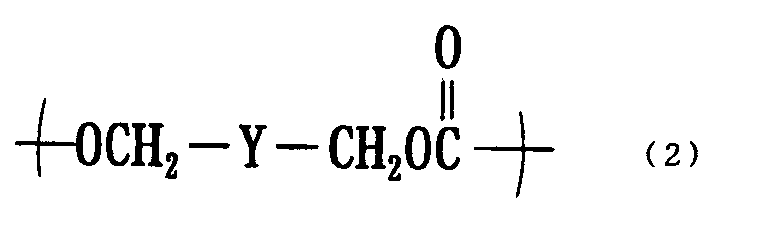
- In the formula, Y is a cycloalkylene group having a carbon number of 4 through 20 or a structure represented by the following general formula (3).

- In the general formula (3), R1, R2, R3 and R4 are independently a hydrogen atom or a monovalent alkyl group having a carbon number of 1 through 5.
- According to a preferable embodiment of the present invention, a polycarbonate resin and an optical film having a low photo-elastic coefficient and having controlled water vapor permeability and controlled water absorption ratio can be produced. By combining a phase film according to the present invention with a polarization plate, wide viewing-angle films, circular polarization plates or elliptical polarization plates can be produced. Wide viewing-angle films are usable for liquid crystal displays, and circular polarization plates are preferably usable as reflection preventive films in organic or inorganic electroluminescence elements, touch panels, plasma displays, CRTs, liquid crystal displays and the like. A polarization plate usually has a stacking structure including a polarization layer of a polyvinyl alcohol (PVA) film or the like and a protective layer of a TAC film. Where the phase film according to the present invention is used, the phase film can be directly attached to PVA used as the polarization layer without using the protective film of TAC.
- Hereinafter, the present invention will be described in more detail.
- The above-mentioned polycarbonate resin can be produced by reacting a dihydroxy compound represented by the following formula (4) and a dihydroxy compound represented by the general formula (5) with a carbonic acid ester-forming compound.

HOCH2-Y-CH2OH (5)
- In the formula, Y is a cycloalkylene group having a carbon number of 4 through 20 or a structure represented by the following general formula (6).

- In the general formula (6), R1, R2, R3 and R4 are independently a hydrogen atom or a monovalent alkyl group having a carbon number of 1 through 5.
- Examples of the dihydroxy compound represented by the formula (4) used in the present invention include isosorbide and isomannide. Two types of the dihydroxy compounds may be used in combination.
- Examples of the dihydroxy compound represented by the general formula (5) used in the present invention include tricyclo(5.2.1.02,6)decanedimethanol, pentacyclopentadecanedimethanol, 2,6-decalinedimethanol, 1,4-cyclohexanedimethanol, norbornanedimethanol, cyclopentane-1,3-dimethanol , 3,9-bis(2-hydroxy-1,1-dimethylethyl)-2,4,8,10-tetraoxaspiro(5,5)undecane, and the like. Preferable examples are tricyclo(5.2.1.02,6)decanedimethanol, pentacyclopentadecanedimethanol, 1,4-cyclohexanedimethanol, and 3,9-bis(2-hydroxy-1,1-dimethylethyl)-2,4,8,10-tetraoxaspiro(5,5)undecane.
- In the present invention, the molar ratio of structural unit (A) represented by the formula (1) and structural unit (B) represented by the general formula (2), i.e., the molar ratio A/B, is 99/1 to 1/99, more preferably 90/10 to 20/80, and most preferably 80/20 through 30/70. When the molar ratio A/B is higher than 90/10, the water absorption ratio is too high. As a result, the size change of the film in accordance with the humidity is too large and so it is difficult to maintain the phase contrast uniform. When the molar ratio A/B is lower than 20/80, the water vapor permeability is too low, and the thermal resistance is too low due to the reduction of the glass transition temperature.
- By varying the molar ratio A/B within the above-mentioned range, the water vapor permeability and the water absorption ratio can be controlled to be at a desired level.
- In the polycarbonate resin according to the present invention, a structural unit derived from an aromatic dihydroxy compound may be introduced, in addition to the repeat units represented by the formula (1) and the general formula (2), in the range in which the achievement of above-described objects of the present invention is not obstructed. With such introduction, the mechanical properties, thermal resistance, phase contrast dispersion characteristic in accordance with the wavelength and the like can be improved.
- Examples of the aromatic dihydroxy compound include 2,2-bis(4-hydroxyphenyl)propane (usually called "bisphenol A"), 1,1-bis(4-hydroxyphenyl)cyclohexane, 1,1-bis(4-hydroxyphenyl)-3,3,5-trimethylcyclohexane, 1,1-bis(4-hydroxyphenyl)cyclopentane, 1, 1-bis(4-hydroxyphenyl)-1-phenylethane, 4,4'-(1,3-phenylene-bis(1-methylethylidene))bisphenol, 4,4'-(1,4-phenylene-bis(1-methylethylidene))bisphenol, 2,2-bis(4-hydroxyphenyl)-4-methylpentane, 1,1-bis(4-hydroxyphenyl)ethane, bis(4-hydroxyphenyl)methane, bis(4-hydroxyphenyl)phenylmethane, 2,2-bis(4-hydroxy-3-propylphenyl)propane, 2,2-bis(4-hydroxy-3-(1-methylethyl)phenyl)propane, 2,2-bis(4-hydroxy-3-(1-methylpropyl)phenyl)propane, 2,2-bis(4-hydroxy-3-tert-butylphenyl)propane, 2,2-bis(4-hydroxy-3-cyclohexylphenyl)propane, 2,2-bis(4-hydroxy-3-phenylphenyl)propane, 2,2-bis(4-hydroxy-2-methyl-5-(1-methylethyl)phenyl)propane, 1,1-bis(4-hydroxy-3-tert-butyl-6-methylphenyl)-2-methylpropane, 1,1-bis(4-hydroxy-3-tert-butyl-6-methylphenyl)butane, 1,1-bis(4-hydroxy-3-cyclohexyl-6-methylphenyl)-2-methylpropane, 2,2-bis(4-hydroxy-3-tert-butyl-6-methylphenyl)propane, 1,1-bis(4-hydroxy-3-(1-methylethyl)phenyl)cyclohexane, 1,1-bis(4-hydroxy-3-tert-butylphenyl)cyclohexane, 1,1-bis(4-hydroxy-3-(1-methylpropyl)phenyl)cyclohexane, 1,1-bis(4-hydroxy-3-cyclohexylphenyl)cyclohexane, 1,1-bis(4-hydroxy-3-phenylphenyl)cyclohexane, 1,1-bis(4-hydroxy-3-(1-methylethyl)phenyl)cyclopentane, 1,1-bis(4-hydroxy-3-cyclohexylphenyl)cyclopentane, 1,1-(4-hydroxy-3-tert-butylphenyl)cyclopentane, 4,4'-(1,3-phenylene-bis(1-methylethylidene))bis-(2-cyclohexyl-5-methylphenol), 4,4'-(1,4-phenylene-bis(1-methylethylidene))bis-(2-cyclohexyl-5-methylphenol), 4,4'-(1,3-phenylene-bis(1-methylethylidene))bis(2-(1-methylethyl)phenol), 1,1-bis(4-hydroxy-3-(1-methylethyl)phenyl)-1-phenylethane, 1,1-bis(4-hydroxy-3-tert-butyl)-1-phenylethane, 4,4'-dihydroxydiphenylether, 4,4'-dihydroxy-3,3'-dimethylphenylether, 4,4'-dihydroxyphenylsulfide, 4,4'-dihydroxy-3,3'-dimethyldiphenylsulfide, 4,4'-dihydroxydiphenylsulfoxide, 4,4'-dihydroxy-3,3'-dimethyldiphenylsulfoxide, 4,4'-dihydroxydiphenylsulfone, 4,4'-dihydroxydiphenylsulfone, 4,4'-dihydroxy-3,3'-dimethyldiphenylsulfone, 9,9-bis(4-(2-hydroxyethoxy)phenyl)fluorene, 9,9-bis(4-(2-hydroxyethoxy)-3-methylphenyl)fluorene, 9,9-bis(4-(2-hydroxyethoxy)-3,5-dimethylphenyl)fluorene, 9,9-bis(4-(2-hydroxyethoxy)-3-tert-butylphenyl)fluorene, 9,9-bis(4-(2-hydroxyethoxy)-3-isopropylphenyl)fluorene, 9,9-bis(4-(2-hydroxyethoxy)-3-cyclohexylphenyl)fluorene, and the like. Two or more types of the aromatic dihydroxy compounds may be used in combination.
- The glass transition temperature of the polycarbonate resin according to the present invention is preferably 90°C or higher and 200°C or lower, and more preferably 100°C or higher and 190°C or lower. When the glass transition temperature is lower than 90°C, the thermal resistance is deteriorated, which is not preferable because the phase contrast is changed drastically in accordance with the environment of use. When the glass transition temperature is higher than 200°C, the moldability is changed, which deteriorates the external appearance of the film and also makes it difficult to control the film thickness and the phase contrast.
- The polystyrene-converted weight average molecular weight of the polycarbonate resin according to the present invention is preferably 30,000 to 200,000, and more preferably 40,000 to 150,000. When the polystyrene-converted weight average molecular weight is lower than 30,000, the film moldability and the film strength are decreased. When the polystyrene-converted weight average molecular weight is higher than 200,000, the fluidity is deteriorated, which makes the molding conditions more strict and is not preferable.
- Polycarbonate having a bisphenol A skeleton which is conventionally in wide use for optical films is excellent in transparency, thermal resistance and mechanical strength, but has a problem of a high photo-elastic coefficient. For example, when such a polycarbonate film is used as a phase film of a liquid crystal display and attached to a polarization plate, the following problem occurs. The phase film is stressed by thermal contraction, thermal expansion or the like of the polarization plate. As a result, phase spots appear and the uniformity of an image quality cannot be maintained. An optical film containing the polycarbonate resin according to the present invention preferably has a photo-elastic coefficient of 30x 10-12 m2/N or lower, and more preferably of 20×10-12 m2/N or lower.
- When used as a protective film of a polarization plate, the optical film according to the present invention preferably has a water vapor permeability ratio of 100 g/m2/day/25µm or higher, and more preferably of 150 g/m2/day/25µm or higher, in order to prevent air bubble generation and curling.
- When used as a protective film of a polarization plate, the optical film according to the present invention preferably has a water absorption ratio of 4% or lower, and more preferably of 3% or lower, in order to avoid size change of the film caused by the influence of humidity.
- The polycarbonate resin according to the present invention can be produced by a known production method. Usable methods include an interface polycondensation method, a pyridine method, a melt polycondensation method by transesterification, and the like. Especially, a known melt polycondensation method of reacting a dihydroxy compound with carbonic acid diester under the presence of a basic compound catalyst is preferably used. Hereinafter, the melt polycondensation method will be described.
- Specific examples of the carbonic acid diester used for producing polycarbonate by the melt polycondensation method include diaryl carbonates such as diphenyl carbonate, ditolyl carbonate, bis(chlorophenyl) carbonate, m-cresyl carbonate and the like; and aliphatic carbonate compounds such as dimethyl carbonate, diethyl carbonate, diisopropyl carbonate, dibutyl carbonate, diamyl carbonate, dioctyl carbonate and the like. Among these, diphenyl carbonate is especially preferable. Such an additive is used at a ratio of 0.97 to 1.10 mols, preferably of 0.98 to 1.05 mols, with respect to a total of 1 mol of the dihydroxy compound.
- Usable basic compound catalysts specifically include alkaline metal compounds and/or alkaline earth metal compounds, nitrogen-containing compounds and the like.
- Preferably usable examples of such a compound include organic acid salts such as alkaline metal compounds and alkaline earth metal compounds and the like; inorganic salts; oxides; hydroxides; hydrides, and alkoxides; quaternary ammonium hydroxides and salts thereof; amines and the like. These compounds may be used independently or in combination.
- Usable alkaline metal compounds include sodium hydroxide, potassium hydroxide, cesium hydroxide, lithium hydroxide, sodium hydrogen carbonate, sodium carbonate, potassium carbonate, cesium carbonate, lithium carbonate, sodium acetate, potassium acetate, cesium acetate, lithium acetate, sodium stearate, potassium stearate, cesium stearate, lithium stearate, sodium boron hydride, sodium boron phenylate, sodium benzoate, potassium benzoate, cesium benzoate, lithium benzoate, disodium hydrogen phosphate, dipotassium hydrogen phosphate, dilithium hydrogen phosphate, disodium phenylphosphate; disodium salts, dipotassium salts, dicesium salts and dilithium salts of bisphenol A; sodium salts, potassium salts, cesium salts and lithium salts of phenol; and the like.
- Usable alkaline earth metal compounds include, specifically, magnesium hydroxide, calcium hydroxide, strontium hydroxide, barium hydroxide, magnesium hydrogen carbonate, calcium hydrogen carbonate, strontium hydrogen carbonate, barium hydrogen carbonate, magnesium carbonate, calcium carbonate, strontium carbonate, barium carbonate, magnesium acetate, calcium acetate, strontium acetate, barium acetate, magnesium stearate, calcium stearate, calcium benzoate, magnesium phenylphosphate, and the like.
- Usable nitrogen-containing compounds include, specifically, quaternary ammonium hydroxides having an alkyl group, an aryl group, or the like such as tetramethylammonium hydroxide, tetraethylammonium hydroxide, tetrapropylanmonium hydroxide, tetrabutylammonium hydroxide, trimethylbenzylammonium hydroxide, etc.; tertiary amines, such as triethylamine, dimethylbenzylamine, triphenylamine, etc.; secondary amines such as diethylamine, dibutylamine, etc.; primary amines such as propylamine, butylamine, etc.; imidazoles such as 2-methylimidazole, 2-phenylimidazole, benzoimidazole, etc.; bases and basic salts such as ammonia, tetramethylammonium borohydride, tetrabutylammonium borohydride, tetrabutylammonium tetraphenylborate, tetraphenylammonium tetraphenylborate, etc.; and the like.
- Preferably usable transesterification catalysts include salts of zinc, tin, zirconium and lead. These are usable independently or in combination.
- Usable transesterification catalysts include, specifically, zinc acetate, zinc benzoate, zinc 2-ethylhexanoate, tin chloride (II), tin chloride (IV), tin acetate (II), tin acetate (IV), dibutyltin dilaurate, dibutyltin oxide, dibutyltin dimethoxide, zirconium acetylacetonate, zirconium oxyacetate, zirconium tetrabutoxide, lead acetate (II), lead acetate (IV), and the like.
- Such a catalyst is used at a ratio of 10-9 to 10-3 mols, preferably of 10-7 to 10-4, with respect to a total of 1 mol of the dihydroxy compound.
- A melt polycondensation method according to the present invention is carried out using any of the above-described materials and catalysts, while sub products are removed by the transesterification reaction under heating at normal pressure or reduced pressure. The reaction generally occurs in multiple steps of two or more.
- Specifically, a first step reaction is caused at a temperature of 120 to 260°C, preferably 180 to 240°C for 0.1 to 5 hours, preferably 0.5 to 3 hours at a pressure of normal pressure to 200 Torr. Next, the reaction is continued while raising the temperature gradually up to the final temperature of 200 to 300°C and reducing the pressure gradually down to the final pressure of 1 Torr, over 1 to 3 hours. Finally, the polycondensation is performed at the reduced pressure of 1 Torr and a temperature of 200 to 300°C. When the viscosity reaches a prescribed level, the pressure is recovered by nitrogen. Thus, the reaction is terminated. The reaction time at a pressure of 1 Torr or lower is 0.1 to 2 hours, and the total reaction time is 1 to 6 hours, normally 2 to 5 hours.
- Such a reaction may be performed continuously or in batches. A reaction apparatus used for the above-described reaction may be of a vertical type including anchor stirring wings, max blend stirring wings, helical ribbon stirring wings or the like; of a horizontal type including paddle wings, lattice wings, glass-shaped wings or the like; or an extruder type including a screw. A reaction apparatus obtained by combining these reaction apparatuses in consideration of the viscosity of the polymers is also preferably usable.
- In the polycarbonate resin according to the present invention, the catalyst is removed or inactivated after the polymerization reaction is terminated, in order to maintain the thermal stability and the hydrolysis stability. Generally, it is preferable to inactivate the catalyst by adding a known acidic substance. Specific preferable examples of such a substance include aromatic sulfonic acids such as p-toluenesulfonic acid, etc.; aromatic sulfonic acid esters such as butyl p-toluenesulfonate, hexyl p-toluenesulfonate, etc.; aromatic sulfonates such as tetrabutylphosphonium dodecylbenzenesulfonate, etc.; organic halides such as chloride stearate, benzoyl chloride, chloride p-toluenesulfonate, etc.; alkyl sulfuric acids such as dimethyl sulfate, etc.; organic halides such as benzyl chloride, etc.; and the like.
- After the catalyst is inactivated, a step of volatilizing and removing the low boiling point compound in the polymer at a pressure of 0.1 to 1 mmHg and a temperature of 200 to 350°C may be provided. For this step, a horizontal apparatus including stirring wings having a high capability of updating the surface such as paddle wings, lattice wings, glass-shaped wings or the like, or a thin film vaporizer is preferably usable.
- In the present invention, an antioxidant, a pigment, a dye, a reinforcing agent, a filler, a UV absorbing agent, a lubricant, a releasing agent, a crystal nucleation agent, a plasticizer, a fluidity improving agent, an antistatic agent, an antibacterial agent or the like is preferably added as well as the above-mentioned thermal stabilizer and hydrolysis stabilizer.
- A preferable method for producing an optical film according to the present invention is a method providing a highly uniform thickness and generating no gel, fisheye, scratch or the like, or a method preventing the film from having a large content of foreign substances. Usable methods include, for example, a solution cast method, a melt extrusion method, a calender method and the like, which are known. For stretching the film, a known method is usable. Vertical uniaxial stretching, horizontal uniaxial stretching, multi-stage stretching or simultaneous biaxial stretching or the like is usable.
- The optical film according to the present invention is preferably transparent. It is preferable that the haze value is 3% or lower and that the total light transmittance is 85% or higher. The stretching ratio realized by the stretching processing may be any value, and is preferably 1.1 to 5 times, and more preferably 1.2 to 3 times. The stretching temperature with respect to the glass transition temperature (Tg) is preferably in the range of Tg - 30°C to Tg + 50°C, and more preferably in the range of Tg - 20°C to Tg + 30°C. The thickness of the optical film is preferably in the range of 1 to 200 µm, more preferably in the range of 10 to 150 µm, and still more preferably in the range of 15 to 100 µm.
- The optical film according to the present invention is usable as a phase film. Where the optical film has been processed by uniaxial stretching, biaxial stretching or the like, the viewing angle can be improved by controlling the refractive index along X axis, Y axis or Z axis. A plurality of optical films according to the present invention can be used to obtain a desired optical characteristic. For example, a 1/2 wave plate and a 1/4 wave plate may be produced and attached together at an appropriate angle. Thus, a wide band 1/4 wave plate can be produced. The phase contrast dispersion in accordance with the wavelength is preferably in the ranges of 0.99 < Re (450)/Re (550) < 1.05 and 0.95 < Re (650)/Re (550) < 1.10, and more preferably in the ranges of 0.99 < Re (450)/Re (550) < 1.03 and 0.98 < Re (650)/Re (550) < 1.01. Similarly, a wide band 1/2 wave plate can be produced by attaching together 1/2 wave plates.
- The optical film according to the present invention can be attached to a polarization plate via a tacky layer or an adhesive layer to form a circular polarization plate or an elliptical polarization plate. The optical film according to the present invention can also be attached directly to a PVA film used for a polarization layer of the polarization plate. A representative polarization layer is a uniaxially stretched PVA-based film having iodine or dichroic dye adsorbing and fixed thereto. Such a PVA film is thin and weak, and so is protected on both surfaces thereof by a TAC film having good optical characteristics. By attaching the optical film according to the present invention directly to the PVA film without using the TAC film, the number of elements of, and the thickness of, the polarization plate can be reduced.
- As an adhesive for attaching the optical film according to the present invention to the PVA film, a water soluble PVA resin is mainly used. There is no specific limitation on the polymerization degree of the PVA-based resin. Usually, a polymerization degree of 1000 to 5000 is selected, and a polymerization degree of 500 to 3500 is especially preferable. There is no limit on the saponification value as long as the adhesive is water soluble. The saponification value is selected from the range of 70 to 100 mol%, and more preferably from the range of 90 to 100 mol%.
- A suitable adhesive other than a water soluble adhesive is a polymer which is polymerized by at least one bonding group selected from amide bond, ester bond, urethane bond and ether bond, and which has a number average molecular weight of 600 to 200,000, preferably of 5,000 to 100,000.
- The optical film according to the present invention can be used to produce a stacking film having a viewing angle and a wide band application with an arrangement described in "Society for Information Display 2001 International Symposium Digest of Technical Papers", pp. 906-909. The optical film according to the present invention may be used in a liquid crystal display together with a phase film different from the optical film according to the present invention, for example, an optical compensation film formed of a polymer liquid crystal material, a wide viewing angle film obtained by aligning and curing a discotic liquid crystal material, or the like.
- The optical film according to the present invention is usable in any field with no specific limitation as long as the characteristics thereof are well utilized. The optical film according to the present invention is preferably usable in, for example, optical devices such as liquid crystal displays, organic or inorganic electroluminescence elements, plasma displays, CRTs, liquid crystal projectors, optical pickup systems in optical recording/reproduction devices, touch panels, reflection preventive films and the like.
- The present invention will be described in more detail by way of examples. The present invention is not limited to any of the following examples.
- In the following examples, the molecular weight was measured as a styrene-converted weight average molecular weight (Mw) by GPC (GPC System-21H produced by Showa Denko K.K. using chloroform as a solvent. The glass transition temperature (Tg) was measured by a differential scanning calorimeter (DSC) produced by Seiko Instruments Inc. The phase contrast dispersion in accordance with the wavelength was measured on stretched films in the wavelength range of 400 to 800 nm using ellipsometer M220 produced by JASCO Corporation. The photo-elastic coefficient was calculated from a refractive index with respect to a load change, which was measured on a cast film having a thickness of 100 µm at a wavelength of 633 nm by an ellipsometer. The tensile strength was measured on a cast film having a thickness of 100 µm in accordance with JIS-K7127. The water vapor permeability ratio was measured under the conditions of 40°C/90%RH using L80-4000L produced by LYS SY AG ZLLIKON in accordance with method A of JIS-K7209. The water absorption ratio was measured after the film was immersed in 23°C water, as a weight change until saturation, in accordance with method A of JIS-K7209.
- The films in the following examples were produced by a solution cast method. Specifically, the resin was dissolved in dichloromethane at a concentration of 5% by weight and flown on a cast plate which had been confirmed to be horizontal. Next, the cast solution was vaporized while the vaporizing amount of the solvent from the cast solution was adjusted. Thus, a transparent film having a thickness of about 100 µm was obtained. The obtained film was fully dried in a vacuum drier at a temperature equal to or lower than the glass transition temperature. The film was stretched as follows. A sample of 5 cm × 5 cm was cut out from the film obtained by the solution cast method, and was stretched by an uniaxial stretcher at a constant temperature at a stretching rate of 15 mm/min. and a stretching ratio of 1.5 times.
- 5.846 kg (40 mols) of isosorbide (ISB) (dihydroxy compound represented by the formula (4)), 0.079 kg (0.4 mols) of tricyclodecanedimethanol (TCDDM) (dihydroxy compound represented by the general formula (5)), 8.869 kg (41.40 mols) of diphenyl carbonate (DPC) (carbonic acid diester), and 0.00123 g (1.46×10⁻⁵ mols) of sodium hydrogen carbonate were put into a 50-liter reactor including a stirrer and a distillation apparatus. These substances were heated up to 215°C over 1 hour in a nitrogen atmosphere of 760 Torr while being stirred. Then, the pressure was adjusted to be reduced to 150 Torr over 30 minutes, and transesterification reaction was performed for 40 minutes under the conditions of 215°C and 150 Torr. Then, the temperature was raised to 240°C at a rate of 37.5°C/hr., and the temperature and the pressure were kept for 10 minutes at 240°C and 150 Torr. Then, the pressure was adjusted to 120 Torr over 10 minutes, and the temperature and the pressure were kept for 70 minutes at 240°C and 120 Torr. Then, the pressure was adjusted to 100 Torr over 10 minutes, and the temperature and the pressure were kept for 10 minutes at 240°C and 100 Torr. Then, the pressure was adjusted to 1 Torr or lower over 40 minutes. The polymerization reaction was performed under the conditions of 240°C and 1 Torr or lower for 30 minutes with stirring. After the reaction was finished, nitrogen was blown into the reactor to pressurize the inside, and the generated polycarbonate resin was pulled out while being pelletized. The obtained polycarbonate resin had a molecular weight (Mw) of 71,400, and Tg of 165°C.
- Using the obtained polycarbonate resin, a film having a thickness of about 100 µm was produced. The film having a thickness of about 100 µm was uniaxially stretched at 175°C to obtain a stretched film having a thickness of 65 µm. The results of measurement of physical properties are shown in Table 1.
- A stretched film having a thickness of 65 µm was obtained in the same procedure as in Example 1 except that 2.923 kg (20 mols) of ISB, 3.926 kg (20 mols) of tricyclodecanedimethanol (TCDDM), and 8.869 kg (41.4 mols) of DPC were used and that the stretching temperature was changed to 115°C. The results of measurement of physical properties are shown in Table 1.
- The same procedure as in Example 2 was taken except that 3,9-bis(2-hydroxy-1,1-dimethylethyl)-2,4,8,10-tetraoxaspiro(5,5)undecane (SPG), pentacyclopentadecanedimethanol (PCPDM), 1,4-cyclohexanedimethanol (CHDM) or isomannide (IMA) was used at a composition ratio shown in Table 1 as a component to be copolymerized with ISB, instead of TCDDM, and that the stretching temperature was changed. The results of measurement of physical properties are shown in Table 1.
- The measurement was performed in the same manner as in the examples on Arton Film having a thickness of 100 µm produced by JSR Kabushiki Kaisha as a cyclic polyolefin film. The results of measurement of physical properties are shown in Table 1.
- The film produced in Example 2 was attached to both surfaces of a polarization film (stretched PVA film with iodine added thereto) having a thickness of 25 µm to produce a 20 cm × 20 cm polarization plate. As an adhesive, an aqueous solution of PVA of a prescribed concentration having an average polymerization degree of 1700 (completed saponified) was used. The obtained polarization plate did not exhibit air bubble generation, warping or curling and had a good external appearance. After being left in an atmosphere of a temperature of 60°C and a humidity of 95% for 500 hours, the obtained polarization plate did not show any change in the external appearance.
Table 1 Unit Ex.1 Ex.2 Ex.3 Ex.4 Ex.5 Ex.6 Comparative Ex.1 ISB (formula (4)) Mol% 99 50 30 50 50 45 - TCDDM (formula (5)) Mol% 1 50 0 0 0 10 - SPG (formula (5)) Mol% 0 0 70 0 0 0 - PCPDM (formula (5)) Mol% 0 0 0 50 0 0 - CHDM (formula (5)) Mol% 0 0 0 0 50 0 - IMA (formula (4)) Mol% 0 0 0 0 0 45 - Photo-elastic coefficient 10-12m2/N 14 8 8 9 9 14 3 Glass transition temperature °C 165 104 115 148 102 189 168 Re450/Re550 1.022 1.020 1.019 1.019 1.019 1.022 1.013 Re650/Re550 0.988 0.989 0.990 0.990 0.990 0.988 0.996 Tensile test Yield (MPa) 85 75 83 85 80 90 82 Elongation (%) 30 30 54 30 40 10 3 Molecular weight (Mw) 104 7.1 5.9 6.1 6.0 6.0 6.0 - Water absorption ratio % 4.0 1.5 1.0 1.0 2.0 0.68 0.1 Water vapor permeability ratio g/m2/day/ 25µm 1270 500 160 200 600 1400 30 * Re450, Re550, Re650: phase contrast (nm) at measured wavelength of 450 nm, 550 nm, 650 nm - According to a preferable embodiment of the present invention, a polycarbonate resin and an optical film having a low photo-elastic coefficient and controlled water vapor permeability can be produced. By combining an optical film according to the present invention with a polarization plate or a polarization film, wide viewing angle films, circular polarization plates or elliptical polarization plates can be produced. The wide viewing angle films are usable in liquid crystal displays, and the circular polarization plates are usable as a reflection preventive film in organic or inorganic electroluminescence elements, touch panels, plasma displays, CRTs, liquid crystal displays and the like.
Claims (7)
- A polycarbonate resin having a structural unit represented by the following formula (1) and a structural unit represented by the following general formula (2):


- The polycarbonate resin according to claim 1, wherein the structural unit represented by the general formula (2) is derived from tricycle[5.2.1.02,6]decanedimethanol, 1,4-cyclohexanedimethanol, pentacyclopentadecanedimethanol, or 3,9-bis(2-hydroxy-1,1-dimethylethyl)-2,4,8,10-tetraoxaspiro(5,5)undecane.
- The polycarbonate resin according to claim 1 or 2, wherein the molar ratio A/B of structural unit (A) represented by the formula (1) and structural unit (B) represented by the general formula (2) is 90/10 to 20/80.
- An optical film comprising the polycarbonate resin according to any one of claims 1 through 3.
- The optical film according to claim 4, wherein a photo-elastic coefficient is 30×10-12 m2/N or lower, and a water vapor permeability is 100 g/m2/day/25µm or higher.
- A phase film obtained by stretching the optical film according to claim 4 or 5.
- A polarization plate using the optical film according to claim 4 or 5 as a protective layer.
Applications Claiming Priority (2)
| Application Number | Priority Date | Filing Date | Title |
|---|---|---|---|
| JP2006223071 | 2006-08-18 | ||
| PCT/JP2007/066060 WO2008020636A1 (en) | 2006-08-18 | 2007-08-13 | Polycarbonate resin and optical film using the same |
Publications (3)
| Publication Number | Publication Date |
|---|---|
| EP2053072A1 true EP2053072A1 (en) | 2009-04-29 |
| EP2053072A4 EP2053072A4 (en) | 2010-01-27 |
| EP2053072B1 EP2053072B1 (en) | 2012-04-04 |
Family
ID=39082157
Family Applications (1)
| Application Number | Title | Priority Date | Filing Date |
|---|---|---|---|
| EP20070792676 Active EP2053072B1 (en) | 2006-08-18 | 2007-08-13 | Polycarbonate resin and optical film using the same |
Country Status (6)
| Country | Link |
|---|---|
| US (1) | US8877341B2 (en) |
| EP (1) | EP2053072B1 (en) |
| JP (1) | JP5526545B2 (en) |
| KR (1) | KR101501783B1 (en) |
| CN (1) | CN101490130B (en) |
| WO (1) | WO2008020636A1 (en) |
Cited By (7)
| Publication number | Priority date | Publication date | Assignee | Title |
|---|---|---|---|---|
| WO2009050682A3 (en) * | 2007-10-18 | 2009-07-23 | Sabic Innovative Plastics Ip | Aliphatic diol-based polycarbonates, method of making, and articles formed therefrom |
| EP2060595A4 (en) * | 2006-09-01 | 2010-02-03 | Teijin Ltd | Polycarbonate having plant-derived component and method for producing the same |
| US20120016100A1 (en) * | 2009-04-16 | 2012-01-19 | Teijin Limited | Copolycarbonate and process for producing the same |
| CN102471570A (en) * | 2009-08-12 | 2012-05-23 | 三菱瓦斯化学株式会社 | Polycarbonate resin composition |
| US8273849B2 (en) | 2009-12-30 | 2012-09-25 | Sabic Innovative Plastics Ip B.V. | Isosorbide-based polycarbonates, method of making, and articles formed therefrom |
| EP3441415A4 (en) * | 2016-04-05 | 2019-04-17 | Mitsubishi Gas Chemical Company, Inc. | POLYCARBONATE COPOLYMER, OPTICAL LENS AND FILM IN WHICH SAID POLYCARBONATE COPOLYMER IS USED, AND METHOD FOR PRODUCING THE COPOLYMER |
| EP3520981A1 (en) * | 2009-11-30 | 2019-08-07 | Mitsubishi Chemical Corporation | Polycarbonate resins and processes for producing the same |
Families Citing this family (35)
| Publication number | Priority date | Publication date | Assignee | Title |
|---|---|---|---|---|
| US7666972B2 (en) * | 2007-10-18 | 2010-02-23 | SABIC Innovative Plastics IP B., V. | Isosorbide-based polycarbonates, method of making, and articles formed therefrom |
| JP5623687B2 (en) * | 2007-10-24 | 2014-11-12 | 帝人株式会社 | Molded product formed by melt-molding copolymer polycarbonate resin |
| JP5999865B2 (en) * | 2007-12-12 | 2016-09-28 | 三菱化学株式会社 | Electrical and electronic components made of polycarbonate. |
| JP5296452B2 (en) * | 2008-08-18 | 2013-09-25 | 帝人株式会社 | Terminal-modified polycarbonate and method for producing the same |
| JP5875747B2 (en) * | 2008-11-28 | 2016-03-02 | 三菱化学株式会社 | Preservation method of dihydroxy compound for polycarbonate raw material |
| EP2371877B1 (en) * | 2008-11-28 | 2026-04-29 | Mitsubishi Chemical Corporation | Polycarbonate resin, polycarbonate resin composition, optical film, and polycarbonate resin molded article |
| JP6030816B2 (en) * | 2009-07-28 | 2016-11-24 | 帝人株式会社 | Film-like product using polycarbonate resin with low photoelastic constant |
| CN102630234A (en) | 2009-11-17 | 2012-08-08 | 三菱化学株式会社 | Polycarbonate resin and transparent film formed from the polycarbonate resin |
| JP5448264B2 (en) | 2009-11-19 | 2014-03-19 | 三菱化学株式会社 | Polycarbonate resin film and transparent film |
| JP5506364B2 (en) * | 2009-12-16 | 2014-05-28 | 三菱化学株式会社 | Heat-shrinkable molded body |
| EP2543510B1 (en) * | 2010-03-03 | 2016-05-04 | Mitsubishi Chemical Corporation | Laminate |
| JP5652056B2 (en) * | 2010-08-26 | 2015-01-14 | 三菱化学株式会社 | Resin composition and resin molded body |
| JP5625681B2 (en) * | 2010-09-27 | 2014-11-19 | 三菱化学株式会社 | Electrophotographic photosensitive member, process cartridge, and image forming apparatus |
| JP5760396B2 (en) * | 2010-11-10 | 2015-08-12 | 三菱瓦斯化学株式会社 | Polarizing plate protective film for flat panel display, retardation film for flat panel display, and methods for using them |
| JP5652153B2 (en) * | 2010-11-19 | 2015-01-14 | 三菱瓦斯化学株式会社 | Polycarbonate resin, optical film, retardation film and polarizing plate using the same |
| FR2973800B1 (en) * | 2011-04-05 | 2014-07-25 | Roquette Freres | PROCESS FOR THE PRODUCTION OF POLYCARBONATE FROM DIANHYDROHEXITOL DIALKYLCARBONATE |
| FR2973801B1 (en) * | 2011-04-05 | 2015-03-20 | Roquette Freres | PROCESS FOR THE PRODUCTION OF POLYCARBONATE FROM DIANHYDROHEXITOL DERIVATIVES WITH TWO ALKYL CARBONATE FUNCTIONS |
| JP5512624B2 (en) * | 2011-09-21 | 2014-06-04 | 日本写真印刷株式会社 | Capacitive touch sensor and display device having the same |
| JP6097547B2 (en) * | 2012-12-14 | 2017-03-15 | 帝人株式会社 | Display film |
| CN105980156A (en) * | 2014-02-10 | 2016-09-28 | 帝人株式会社 | Multilayer body |
| JP6117141B2 (en) * | 2014-04-02 | 2017-04-19 | 三菱化学株式会社 | Sound insulation member |
| JP6313133B2 (en) * | 2014-06-23 | 2018-04-18 | 帝人株式会社 | Multilayer |
| JP2016053603A (en) * | 2014-09-02 | 2016-04-14 | 三菱樹脂株式会社 | Method for producing laminated thermoplastic resin film and polarizing plate protective film obtained therefrom |
| JP6536046B2 (en) * | 2015-01-29 | 2019-07-03 | 三菱ケミカル株式会社 | Film and polarizing plate |
| JP6536047B2 (en) * | 2015-01-29 | 2019-07-03 | 三菱ケミカル株式会社 | Method of manufacturing film and method of manufacturing polarizing plate |
| JP6125061B2 (en) * | 2015-02-13 | 2017-05-10 | 日東電工株式会社 | Polarizing film, polarizing film with pressure-sensitive adhesive layer, image display device, and continuous production method thereof |
| EP3357970B1 (en) * | 2015-10-02 | 2019-06-12 | Teijin Limited | Resin composition and film formed from same |
| JP2016047930A (en) * | 2015-10-26 | 2016-04-07 | 三菱化学株式会社 | Noise insulating component |
| KR102200880B1 (en) * | 2018-11-30 | 2021-01-11 | 롯데케미칼 주식회사 | Impact midified and high heat resistance bio-mass based polymer compositions and manufacturing method the same |
| KR20260003866A (en) * | 2019-03-12 | 2026-01-07 | 닛토덴코 가부시키가이샤 | Retarder film and polarizer plate having retarder layer |
| WO2020196482A1 (en) * | 2019-03-27 | 2020-10-01 | 日東電工株式会社 | Retardation film and polarizing plate with retardation layer |
| KR102988917B1 (en) * | 2019-03-27 | 2026-07-10 | 닛토덴코 가부시키가이샤 | Polarizing plate with phase difference layer attached |
| JP7633011B2 (en) * | 2020-09-01 | 2025-02-19 | 日東電工株式会社 | Retardation films and polarizing plates |
| JP2023041293A (en) * | 2021-09-13 | 2023-03-24 | 日東電工株式会社 | Optical laminate and image display device using the same |
| JPWO2023171578A1 (en) * | 2022-03-09 | 2023-09-14 |
Family Cites Families (26)
| Publication number | Priority date | Publication date | Assignee | Title |
|---|---|---|---|---|
| DE2938464A1 (en) * | 1979-09-22 | 1981-04-09 | Bayer Ag, 5090 Leverkusen | THERMOPLASTIC POLYCARBONATES, THEIR PRODUCTION AND THEIR USE AS MOLDED BODIES AND FILMS |
| JP2569593B2 (en) | 1987-09-08 | 1997-01-08 | 三菱瓦斯化学株式会社 | Aromatic-aliphatic polycarbonate copolymer |
| JP3187142B2 (en) | 1992-07-07 | 2001-07-11 | 帝人化成株式会社 | High refractive index, low birefringence polycarbonate resin |
| BE1009103A5 (en) | 1993-09-22 | 1996-11-05 | Bayer Ag | Polycarbonates special and use for preparing optical articles. |
| TW397928B (en) * | 1993-12-22 | 2000-07-11 | Sumitomo Chemical Co | Process for prodoucing phase retarder film |
| JP4112048B2 (en) * | 1997-09-16 | 2008-07-02 | 旭化成ケミカルズ株式会社 | Process for producing aromatic carbonates |
| CA2316828C (en) | 1998-10-30 | 2010-02-23 | Teijin Limited | Retardation film and optical device employing it |
| EP1065231B1 (en) * | 1999-07-02 | 2004-09-15 | Mitsubishi Gas Chemical Company, Inc. | Cycloaliphatic copolycarbonates, their production and use |
| JP2003292603A (en) * | 2002-03-29 | 2003-10-15 | Matsushita Electric Ind Co Ltd | Thermoplastic molding materials |
| CN1564951A (en) * | 2002-06-27 | 2005-01-12 | 帝人株式会社 | Polycarbonate-based oriented film and retardation film |
| JP4088878B2 (en) * | 2002-09-06 | 2008-05-21 | ソニー株式会社 | Stereoscopic image display device |
| KR100956048B1 (en) * | 2002-11-14 | 2010-05-06 | 테이진 카세이 가부시키가이샤 | Polycarbonate Copolymers, Resin Compositions, and Molded Articles |
| JP2004346205A (en) * | 2003-05-22 | 2004-12-09 | Mitsubishi Chemicals Corp | Polycarbonate film |
| JP4351675B2 (en) * | 2003-06-16 | 2009-10-28 | 帝人株式会社 | Polycarbonate and process for producing the same |
| CN100432119C (en) | 2003-06-16 | 2008-11-12 | 帝人株式会社 | Polycarbonate and its preparation method |
| US7288161B2 (en) * | 2004-07-15 | 2007-10-30 | International Business Machines Corporation | Reworkable adhesives containing thermally labile groups |
| JP2006028441A (en) * | 2004-07-21 | 2006-02-02 | Teijin Ltd | Optical film made of aliphatic polycarbonate |
| JP4310248B2 (en) * | 2004-07-28 | 2009-08-05 | 帝人株式会社 | Polycarbonate composition and method for producing the same |
| JP4759518B2 (en) * | 2004-10-14 | 2011-08-31 | 帝人株式会社 | Polycarbonate having low photoelastic constant and film comprising the same |
| JP4626847B2 (en) * | 2005-02-22 | 2011-02-09 | 三菱瓦斯化学株式会社 | Copolycarbonate resin |
| TW200643059A (en) * | 2005-04-06 | 2006-12-16 | Showa Denko Kk | Polymer of polycarbonate diol having an alicyclic structure and production process thereof |
| JP2007070391A (en) * | 2005-09-05 | 2007-03-22 | Teijin Ltd | Polycarbonate resin composition having plant-derived components |
| JP5032013B2 (en) * | 2005-09-06 | 2012-09-26 | 帝人株式会社 | Polycarbonate resin composition having plant-derived components |
| JP2009046519A (en) * | 2005-11-29 | 2009-03-05 | Mitsui Chemicals Inc | Transparent heat-resistant molded body made of polycarbonate copolymer, production method thereof and use thereof |
| JP5532531B2 (en) * | 2006-06-19 | 2014-06-25 | 三菱化学株式会社 | Polycarbonate copolymer and method for producing the same |
| KR101357473B1 (en) | 2006-06-19 | 2014-02-03 | 미쓰비시 가가꾸 가부시키가이샤 | Polycarbonate copolymer and process for production thereof |
-
2007
- 2007-08-13 CN CN2007800275498A patent/CN101490130B/en active Active
- 2007-08-13 JP JP2008529894A patent/JP5526545B2/en active Active
- 2007-08-13 EP EP20070792676 patent/EP2053072B1/en active Active
- 2007-08-13 WO PCT/JP2007/066060 patent/WO2008020636A1/en not_active Ceased
- 2007-08-13 US US12/377,679 patent/US8877341B2/en active Active
- 2007-08-13 KR KR1020097005352A patent/KR101501783B1/en active Active
Cited By (15)
| Publication number | Priority date | Publication date | Assignee | Title |
|---|---|---|---|---|
| EP2060595A4 (en) * | 2006-09-01 | 2010-02-03 | Teijin Ltd | Polycarbonate having plant-derived component and method for producing the same |
| US7718755B2 (en) | 2007-10-18 | 2010-05-18 | Sabic Innovative Plastics Ip B.V. | Aliphatic diol-based polycarbonates, method of making, and articles formed therefrom |
| US7807772B2 (en) | 2007-10-18 | 2010-10-05 | Sabic Innovative Plastics Ip B.V. | Aliphatic diol-based polycarbonates, method of making, and articles formed therefrom |
| WO2009050682A3 (en) * | 2007-10-18 | 2009-07-23 | Sabic Innovative Plastics Ip | Aliphatic diol-based polycarbonates, method of making, and articles formed therefrom |
| US8399598B2 (en) * | 2009-04-16 | 2013-03-19 | Teijin Limited | Copolycarbonate and process for producing the same |
| US20120016100A1 (en) * | 2009-04-16 | 2012-01-19 | Teijin Limited | Copolycarbonate and process for producing the same |
| CN102471570B (en) * | 2009-08-12 | 2013-08-07 | 三菱瓦斯化学株式会社 | Polycarbonate resin composition |
| CN102471570A (en) * | 2009-08-12 | 2012-05-23 | 三菱瓦斯化学株式会社 | Polycarbonate resin composition |
| US9274252B2 (en) | 2009-08-12 | 2016-03-01 | Mitsubishi Gas Chemical Company, Inc. | Polycarbonate resin composition |
| EP3520981A1 (en) * | 2009-11-30 | 2019-08-07 | Mitsubishi Chemical Corporation | Polycarbonate resins and processes for producing the same |
| US8389662B2 (en) | 2009-12-30 | 2013-03-05 | Sabic Innovative Plastics Ip B.V. | Isosorbide-based polycarbonates, method of making, and articles formed therefrom |
| US8273849B2 (en) | 2009-12-30 | 2012-09-25 | Sabic Innovative Plastics Ip B.V. | Isosorbide-based polycarbonates, method of making, and articles formed therefrom |
| US8962770B2 (en) | 2009-12-30 | 2015-02-24 | Sabic Global Technologies B.V. | Blends of isosorbide-based copolycarbonate, method of making, and articles formed therefrom |
| EP3441415A4 (en) * | 2016-04-05 | 2019-04-17 | Mitsubishi Gas Chemical Company, Inc. | POLYCARBONATE COPOLYMER, OPTICAL LENS AND FILM IN WHICH SAID POLYCARBONATE COPOLYMER IS USED, AND METHOD FOR PRODUCING THE COPOLYMER |
| US10689487B2 (en) | 2016-04-05 | 2020-06-23 | Mitsubishi Gas Chemical Company, Inc. | Polycarbonate copolymer, optical lens and film in which said polycarbonate copolymer is used, and method for producing said copolymer |
Also Published As
| Publication number | Publication date |
|---|---|
| CN101490130B (en) | 2012-11-07 |
| US8877341B2 (en) | 2014-11-04 |
| WO2008020636A1 (en) | 2008-02-21 |
| EP2053072A4 (en) | 2010-01-27 |
| EP2053072B1 (en) | 2012-04-04 |
| KR20090045937A (en) | 2009-05-08 |
| JPWO2008020636A1 (en) | 2010-01-07 |
| US20100196720A1 (en) | 2010-08-05 |
| KR101501783B1 (en) | 2015-03-11 |
| CN101490130A (en) | 2009-07-22 |
| JP5526545B2 (en) | 2014-06-18 |
Similar Documents
| Publication | Publication Date | Title |
|---|---|---|
| EP2053072B1 (en) | Polycarbonate resin and optical film using the same | |
| EP2218747B1 (en) | Polycarbonate resin composition and method of producing the same | |
| EP3112392A1 (en) | Polycarbonate and optical member including same | |
| EP1484351B1 (en) | Polycarbonate resin composition and polarizing sheet using the same | |
| JP5587617B2 (en) | Polycarbonate resin and film with low photoelastic constant | |
| US12195622B2 (en) | Polycarbonate resin composition or copolymer, and optical film | |
| EP2639256A1 (en) | Copolycarbonate | |
| JP2024026220A (en) | Thermoplastic resin and optical components containing it | |
| JP2011236336A (en) | Polycarbonate resin having low photoelastic constant and optical molded article | |
| EP2626376B1 (en) | Polycarbonate resin and molded article | |
| US7541416B2 (en) | Polycarbonate copolymer and process for producing the same | |
| JP5583987B2 (en) | Polycarbonate resin and optical film with low photoelastic constant | |
| JP2011079897A (en) | Polycarbonate resin with low photoelastic constant, and optical film | |
| JP2005031610A (en) | Polarizer | |
| JP4577814B2 (en) | Anti-glare product | |
| JP5760396B2 (en) | Polarizing plate protective film for flat panel display, retardation film for flat panel display, and methods for using them | |
| JP2005025149A (en) | Polarizer | |
| JP2005031611A (en) | Polarizer |
Legal Events
| Date | Code | Title | Description |
|---|---|---|---|
| PUAI | Public reference made under article 153(3) epc to a published international application that has entered the european phase |
Free format text: ORIGINAL CODE: 0009012 |
|
| 17P | Request for examination filed |
Effective date: 20090217 |
|
| AK | Designated contracting states |
Kind code of ref document: A1 Designated state(s): AT BE BG CH CY CZ DE DK EE ES FI FR GB GR HU IE IS IT LI LT LU LV MC MT NL PL PT RO SE SI SK TR |
|
| AX | Request for extension of the european patent |
Extension state: AL BA HR MK RS |
|
| DAX | Request for extension of the european patent (deleted) | ||
| RBV | Designated contracting states (corrected) |
Designated state(s): DE FR GB |
|
| A4 | Supplementary search report drawn up and despatched |
Effective date: 20091228 |
|
| 17Q | First examination report despatched |
Effective date: 20100331 |
|
| GRAP | Despatch of communication of intention to grant a patent |
Free format text: ORIGINAL CODE: EPIDOSNIGR1 |
|
| GRAS | Grant fee paid |
Free format text: ORIGINAL CODE: EPIDOSNIGR3 |
|
| GRAA | (expected) grant |
Free format text: ORIGINAL CODE: 0009210 |
|
| AK | Designated contracting states |
Kind code of ref document: B1 Designated state(s): DE FR GB |
|
| REG | Reference to a national code |
Ref country code: GB Ref legal event code: FG4D |
|
| REG | Reference to a national code |
Ref country code: DE Ref legal event code: R096 Ref document number: 602007021766 Country of ref document: DE Effective date: 20120531 |
|
| PLBE | No opposition filed within time limit |
Free format text: ORIGINAL CODE: 0009261 |
|
| STAA | Information on the status of an ep patent application or granted ep patent |
Free format text: STATUS: NO OPPOSITION FILED WITHIN TIME LIMIT |
|
| 26N | No opposition filed |
Effective date: 20130107 |
|
| REG | Reference to a national code |
Ref country code: DE Ref legal event code: R097 Ref document number: 602007021766 Country of ref document: DE Effective date: 20130107 |
|
| REG | Reference to a national code |
Ref country code: FR Ref legal event code: PLFP Year of fee payment: 10 |
|
| REG | Reference to a national code |
Ref country code: FR Ref legal event code: PLFP Year of fee payment: 11 |
|
| REG | Reference to a national code |
Ref country code: FR Ref legal event code: PLFP Year of fee payment: 12 |
|
| P01 | Opt-out of the competence of the unified patent court (upc) registered |
Effective date: 20230515 |
|
| PGFP | Annual fee paid to national office [announced via postgrant information from national office to epo] |
Ref country code: DE Payment date: 20250702 Year of fee payment: 19 |
|
| PGFP | Annual fee paid to national office [announced via postgrant information from national office to epo] |
Ref country code: GB Payment date: 20250703 Year of fee payment: 19 |
|
| PGFP | Annual fee paid to national office [announced via postgrant information from national office to epo] |
Ref country code: FR Payment date: 20250703 Year of fee payment: 19 |