EP2037656A2 - Signaturlose Eingriffserkennung - Google Patents
Signaturlose Eingriffserkennung Download PDFInfo
- Publication number
- EP2037656A2 EP2037656A2 EP08163848A EP08163848A EP2037656A2 EP 2037656 A2 EP2037656 A2 EP 2037656A2 EP 08163848 A EP08163848 A EP 08163848A EP 08163848 A EP08163848 A EP 08163848A EP 2037656 A2 EP2037656 A2 EP 2037656A2
- Authority
- EP
- European Patent Office
- Prior art keywords
- state
- task
- node
- finite
- intrusion
- Prior art date
- Legal status (The legal status is an assumption and is not a legal conclusion. Google has not performed a legal analysis and makes no representation as to the accuracy of the status listed.)
- Granted
Links
Images






Classifications
-
- H—ELECTRICITY
- H04—ELECTRIC COMMUNICATION TECHNIQUE
- H04L—TRANSMISSION OF DIGITAL INFORMATION, e.g. TELEGRAPHIC COMMUNICATION
- H04L63/00—Network architectures or network communication protocols for network security
- H04L63/14—Network architectures or network communication protocols for network security for detecting or protecting against malicious traffic
- H04L63/1408—Network architectures or network communication protocols for network security for detecting or protecting against malicious traffic by monitoring network traffic
- H04L63/1416—Event detection, e.g. attack signature detection
-
- H—ELECTRICITY
- H04—ELECTRIC COMMUNICATION TECHNIQUE
- H04L—TRANSMISSION OF DIGITAL INFORMATION, e.g. TELEGRAPHIC COMMUNICATION
- H04L63/00—Network architectures or network communication protocols for network security
- H04L63/02—Network architectures or network communication protocols for network security for separating internal from external traffic, e.g. firewalls
- H04L63/0227—Filtering policies
- H04L63/0254—Stateful filtering
Definitions
- the present invention relates to telecommunications in general, and, more particularly, to network security.
- An intrusion is when an unauthorized user (e.g., a "hacker,' etc .) attempts to break into or misuse ( e . g ., steal confidential data, etc .) a computer system.
- An intrusion-detection system IDS monitors messages ( e . g ., packets, etc .) incoming to a computer system and outgoing from the computer system, and based on these messages tries to determine whether an intrusion is being attempted.
- An intrusion-detection system might conclude that an intrusion attempt is in progress when an atypical or suspicious sequence of messages occurs, or when a sequence of messages matches a known attack signature.
- FIG. 1 depicts a schematic diagram of telecommunications system 100 in accordance with the prior art.
- telecommunications system 100 comprises internal network 101 (e.g., a corporate metropolitan-area network, a residential local-area network, etc .), which receives messages via an external network (e . g ., the Internet, etc.) and sends messages via the external network to external data-processing systems.
- internal network 101 e.g., a corporate metropolitan-area network, a residential local-area network, etc .
- an external network e. g ., the Internet, etc.
- FIG. 2 depicts a schematic diagram of the elements of internal network 101, in accordance with the prior art.
- internal network 101 comprises: intrusion-detection system (IDS) 220, firewall 215, and computer systems 204-1 through 204- N , where N is a positive integer, interconnected as shown.
- IDS intrusion-detection system
- Each computer system 204- n might be a personal computer, a server, a laptop computer, a personal digital assistant (PDA) with wireless local-area network communication capability, etc.
- PDA personal digital assistant
- rules include: block all messages from domain badguys.com ; block all messages except those of a certain protocol type; etc .
- intrusion-detection system (IDS) 220 subsequently receives the message and inspects it.
- Intrusion-detection system (IDS) 220 provides an additional layer of security by detecting intrusion attempts that comprise one or more messages that are allowed through firewall 215.
- firewall 215 might restrict external access to a web server in internal network 101 to port 80, but without an intrusion-detection system, it might be possible to attack the web server itself via legitimate traffic through port 80 due to bugs in the web server software (e.g., ColdFusion, Apache, etc .).
- firewall 215 acts as a "fence" around internal network 101.
- Intrusion-detection system (IDS) 220 typically can recognize some break-in attempts that firewall 215 cannot detect, and therefore it is advantageous to deploy intrusion-detection system (IDS) 220 in addition to firewall 215 for added security.
- intrusion-detection system (IDS) 220 relies on an attack signature database, it is essential to keep the database up-to-date. In particular, over time malicious users often discover new techniques to exploit vulnerabilities and attack systems, and in response security experts formulate new attack signatures to guard against these techniques. As in the case of antivirus software, the owner of intrusion-detection system (IDS) 220 typically has two options to ensure that the attack signature database is regularly updated with new attack signatures: either subscribe to an automated update service provided by the vendor of intrusion-detection system (IDS) 220, or manually check for new attack signatures and retrieve and install them.
- IDS intrusion-detection system
- intrusion-detection system (IDS) 220 depends on the owner's diligence - in the former option, the owner must periodically pay subscription fees in a timely fashion, and in the latter option, the owner must check for new updates with great frequency - as well as some combination of time, effort, and money.
- VoIP Voice over Internet Protocol
- IP Internet Protocol
- VoIP user agents at the calling and called telecommunications terminals e . g ., hardphones, softphones, etc .
- RTP Reaf-time Transport Protocol
- a VoIP gateway might employ a media management protocol such as the Media Gateway Control Protocol (MGCP) or MEGACO/H.248 in order to translate traffic transparently between an IP-based network and a non-IP-based network (e . g ., between a PSTN phone and an IP phone, etc .).
- MGCP Media Gateway Control Protocol
- MEGACO/H.248 Media Gateway Control Protocol
- VoIP Voice over Internet Protocol
- the present invention enables the detection of intrusions in Voice over Internet Protocol (VoIP) systems, without the use of an attack signature database.
- VoIP Voice over Internet Protocol
- the illustrative embodiment is based on the observation that various VoIP-related protocols (e . g ., the Session Initiation Protocol [SIP], etc .) are simple enough to be represented by a finite-state machine (FSM) of compact size, thereby avoiding the disadvantages inherent in signature-based intrusion-detection systems.
- VoIP-related protocols e . g ., the Session Initiation Protocol [SIP], etc .
- FSM finite-state machine
- a finite-state machine for each session/node/protocol combination representing the allowed (or "legal”) states and state transitions for the protocol at that node in that session, and any deviations (possibly due to a malicious attack) are easily detected and flagged.
- the illustrative embodiment comprises: generating, in response to a first signal, a second signal that indicates a potential intrusion at a node N , wherein the node N communicates in accordance with a protocol P , and wherein the current state of the protocol P at the node N corresponds to a state S of a finite-state machine, and wherein the first signal is incompatible with the state S of the finite-state machine.
- Figure 1 depicts a schematic diagram of a telecommunications system in accordance with the prior art.
- Figure 2 depicts a schematic diagram of the salient elements of internal network 101, as shown in Figure 1 , in accordance with the prior art.
- Figure 3 depicts a telecommunications system in accordance with the illustrative embodiment of the present invention.
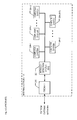
- FIG 4 depicts a schematic diagram of the salient elements of intrusion-detection system (IDS) 320, as shown in Figure 3 , in accordance with the illustrative embodiment of the present invention.
- IDS intrusion-detection system
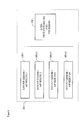
- Figure 5 depicts a schematic diagram of the salient contents of memory 403, as shown in Figure 4 , in accordance with the illustrative embodiment of the present invention.
- Figure 6 depicts a schematic diagram of the salient contents of data block 502- i , as shown in Figure 5 , in accordance with the illustrative embodiment of the present invention.
- Figure 7 depicts a schematic diagram of the salient contents of data sub-block 605- i-j , as shown in Figure 6 , in accordance with the illustrative embodiment of the present invention.
- Figure 8 depicts illustrative finite-state machine 707 -i-j-k, as shown in Figure 7 , in accordance with the illustrative embodiment of the present invention.
- Figure 9 depicts a portion of illustrative global finite-state machine 606- i , as shown in Figure 6 , in accordance with the illustrative embodiment of the present invention.
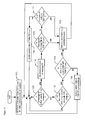
- FIG. 10 depicts a flowchart of the salient tasks of intrusion-detection system (IDS) 320 in accordance with the illustrative embodiment of the present invention.
- IDS intrusion-detection system
- FIG 11 depicts a flowchart of the salient tasks of the first thread, which is spawned at task 1020 of Figure 10 , in accordance with the illustrative embodiment of the present invention.
- Figure 12 depicts a flowchart of the salient tasks of the second thread, which is spawned at task 1030 of Figure 10 , in accordance with the illustrative embodiment of the present invention.
- FIG. 3 depicts telecommunications system 300 in accordance with the illustrative embodiment of the present invention.
- telecommunications system 300 comprises network 305, four Voice-over-IP (VoIP) nodes 310-1 through 310-4, and intrusion-detection system (IDS) 320, interconnected as shown.
- VoIP Voice-over-IP
- IDS intrusion-detection system
- Network 305 is capable of transporting messages between a source (e . g ., one of VoIP nodes 310-1 through 310-4, from IDS 320, etc .) and destination ( e . g ., one of VoIP nodes 310-1 through 310-4, from IDS 320, etc .) in well-known fashion.
- a source e . g ., one of VoIP nodes 310-1 through 310-4, from IDS 320, etc .
- destination e . g ., one of VoIP nodes 310-1 through 310-4, from IDS 320, etc .
- network 305 is depicted in Figure 3 in a conceptual and abstract manner: in some embodiments network 305 might be a wireless network, while in some other embodiments network 305 might be a wired network, while in yet some other embodiments network 305 might comprise both wired and wireless technologies, or might in fact comprise a plurality of constituent networks (for example, a combination of the Public Switched Telephone Network [PSTN], the Internet, and a wireless local-area network).
- PSTN Public Switched Telephone Network
- the fact that telecommunications system 300 comprises four VoIP nodes is merely illustrative, and in some other embodiments there might be a fewer number or greater number of VoIP nodes 310.
- Each VoIP node 310- i is one of a VoIP-capable terminal, server, gateway, etc . that is capable of transmitting and receiving messages in accordance with one or more Voice-over-IP protocols (e . g ., Session Initiation Protocol [SIP], Real-time Transport Protocol [RTP], etc .), in well-known fashion.
- VoIP node 310- i is programmed to notify intrusion-detection system (IDS) 320 of any protocol state transitions at VoIP node 310- i .
- IDS intrusion-detection system
- VoIP node 310- i when there is a change in the state of the Session Initiation Protocol (SIP) at VoIP node 310- i , VoIP node 310- i might transmit a SIP message that is ignored by other VoIP nodes but that indicates to IDS 320 of the protocol state change.
- SIP Session Initiation Protocol
- VoIP nodes 310 in accordance with the illustrative embodiment.
- Intrusion-detection system (IDS) 320 is capable of: monitoring messages transported over network 305 (i . e. , "packet sniffing") in well-known fashion; of being programmed to block messages in accordance with one or more specified policies, after an intrusion has been detected; and of executing the tasks described below and with respect to Figures 10 through 12 .
- a schematic diagram of the salient elements of intrusion-detection system (IDS) 320 is described below and with respect to Figure 4
- a pictorial representation of the salient data stored at intrusion-detection system (IDS) 320 is described below and with respect to Figures 5 through 9 .
- the illustrative embodiment employs a single centralized intrusion-detection system (IDS) 320
- IDS intrusion-detection system
- some other embodiments of the present invention might employ a plurality of intrusion-detection systems in a distributed manner (for example, an IDS embedded at every VoIP node), and it will be clear to those skilled in the art, after reading this disclosure, how to make and use such embodiments.
- FIG. 4 depicts a schematic diagram of the salient elements of intrusion-detection system (IDS) 320 in accordance with the illustrative embodiment of the present invention.
- intrusion-detection system (IDS) 320 comprises receiver 401, processor 402, memory 403, and transmitter 404, interconnected as shown.
- Receiver 401 receives signals from network 305 and forwards the information encoded in the signals to processor 402, in well-known fashion. It will be clear to those skilled in the art, after reading this disclosure, how to make and use receiver 401.
- Processor 402 is a general-purpose processor that is capable of receiving information from receiver 401, of executing instructions stored in memory 403 (including, in particular, instructions corresponding to the tasks of Figure 7 ), of reading data from and writing data into memory 403, and of transmitting information to transmitter 404.
- processor 402 might be a special-purpose processor. In either case, it will be clear to those skilled in the art, after reading this disclosure, how to make and use processor 402.
- Memory 403 stores data and executable instructions, as is well-known in the art, and might be any combination of random-access memory (RAM), flash memory, disk drive memory, etc . It will be clear to those skilled in the art, after reading this disclosure, how to make and use memory 403.
- RAM random-access memory
- flash memory disk drive memory
- Transmitter 404 receives information from processor 402 and transmits signals that encode this information to network 305, in well-known fashion. It will be clear to those skilled in the art, after reading this disclosure, how to make and use transmitter 404.
- FIG. 5 depicts a schematic diagram of the salient contents of memory 403 in accordance with the illustrative embodiment of the present invention.
- memory 403 comprises a first portion with instructions to be executed by processor 402, and a second data portion.
- the first portion comprises program 501, which executes the tasks described below and with respect to Figures 10 through 12 .
- the second portion comprises three data blocks 502-1 through 502-3 corresponding to three corresponding sessions; the contents of these data blocks is described below and with respect to Figures 6 through 9 .
- the fact that three data blocks 502 are depicted in Figure 5 is merely illustrative, and there might be a fewer number or greater number of data blocks 502 corresponding to respective sessions.
- FIG. 6 depicts a schematic diagram of the salient contents of data block 502- i in accordance with the illustrative embodiment of the present invention.
- data block 502- i comprises data sub-blocks 605- i -1 through 602- i -4, each of which is associated with a respective node 310- i that participates in session i , and global finite-state machine (FSM) 606- i for session i , which is described in detail below and with respect to Figure 9 .
- FSM global finite-state machine
- FIG. 7 depicts a schematic diagram of the salient contents of data sub-block 605- i-j in accordance with the illustrative embodiment of the present invention.
- data sub-block 605- i-j comprises finite-state machines (FSMs) 770- i-j -1 through 770- i-j -3, each of which is associated with the state of a respective protocol (e . g ., Session Initiation Protocol [SIP], Real-time Transport Protocol [RTP], etc .) at VoIP node 310- j during session i .
- FSMs finite-state machines
- Each finite-state machine 770- i-j-k represents the possible (or "legal") states and state transitions for its corresponding protocol, and keeps tracks of the current state of that protocol at VoIP node 310- j during session i .
- Finite-state machine 770 -i-j-k is described in detail below and with respect to Figure 8 .
- data sub-block 605- i-j comprises three finite-state machines 770 is merely illustrative, and there might be a fewer number or greater number of finite-state machines 770 corresponding to respective protocols at VoIP node 310- j in session i .
- FIG. 8 depicts an illustrative finite-state machine (FSM) 707 -i-j-k in accordance with the illustrative embodiment of the present invention
- finite-state machine 707 -i-j-k corresponds to the legal states and state transitions of the Session Initiation Protocol (SIP) at a calling VoIP-capable terminal 310- j during a session i .
- SIP Session Initiation Protocol
- finite-state machine (FSM) 707- i-j-k comprises nine states 801 through 809, where 801 is the starting state for a SIP session at VoIP-capable terminal 310- i , and token 800, which keeps track of the current state of FSM 707 -i-j-k (state 802 in Figure 8 ).
- Each arc (or directed edge) in finite-state machine (FSM) 707 -i-j-k indicates a legal transition from a first state to a second state, where the label on the arc indicates a type of message ( e . g ., SIP_INVITE, SIP_INVITE_ACK, etc .) received or transmitted by node 310- i that engenders the state change.
- type of message e . g ., SIP_INVITE, SIP_INVITE_ACK, etc .
- finite-state machine (FSM) 707 -i-j-k of Figure 8 every arc label corresponds to a message received or transmitted by VoIP node 310- j
- finite-state machine (FSM) 707 -i-j-k might have one or more arc labels that correspond to a message that does not involve VoIP node 310- j at all.
- finite-state machine (FSM) 707- i-j-k might have one or more arc labels that correspond to a signal other than a protocol-related message (e.g ., a remote procedure call, some other kind of message, etc .).
- a protocol-related message e.g ., a remote procedure call, some other kind of message, etc .
- Figure 9 depicts a portion of illustrative global finite-state machine (FSM) 606- i in accordance with the illustrative embodiment of the present invention.
- the portion of global finite-state machine (FSM) 606- i depicted in Figure 9 comprises a start state, state 901, state 902, an arc from the start state to state 901, and an arc from state 901 to state 902.
- State 901 represents a composite of the states of: a calling node's FSM 707 (state 804), a server's FSM 707 (state xxx), and a called node's FSM 707 (yyy).
- state 901 enforces a constraint on these three nodes' FSMs that these FSMs must concurrently be in the indicated respected states, within a specified concurrency time limit (two seconds in this case). In other words, once one of these nodes' FSM 707 reaches its indicated state, then the other two nodes' respective FSMs 707 must also reach their indicated states within two seconds. If this currency constraint is not satisfied, then an alert indicating a potential intrusion is generated, as described in detail below and with respect to Figure 12 .
- state 902 represents a composite of the states of the calling node's FSM (state 805), the server's FSM (state zzz), and the called node's FSM (state www), and indicates a concurrency constraint of three seconds on these states.
- the arc from the start state to state 901 represents a state transition that occurs automatically upon initial execution of global fi nite-state machine (FSM) 606- i , as is typical in the art.
- FSM global fi nite-state machine
- the arc from state 901 to state 902 represents a state transition that occurs when a first SIP_INVITE message is sent from the calling node to the server, a second SIP_INVITE message is sent from the server to the called node, and a SIP_INVITE_ACK message is sent back from the called node to the server.
- a constraint might require that at least two of the three specified FSM 707 states be reached concurrently, or might be unrelated to the timing of the FSM 707 states ( e . g ., enforcing a condition on the number of times that a FSM 707 state is visited, etc .). It will be clear to those skilled in the art, after reading this disclosure, how to make and use embodiments of the present invention that employ such alternative constraints in global finite-state machine (FSM) 606- i .
- FSM global finite-state machine
- FIG 10 depicts a flowchart of the salient tasks of intrusion-detection system (IDS) 320 in accordance with the illustrative embodiment of the present invention. It will be clear to those skilled in the art, after reading this disclosure, which tasks depicted in Figure 8 can be performed simultaneously or in a different order than that depicted.
- IDS intrusion-detection system
- intrusion-detection system (IDS) 320 checks whether a new session i has been initiated. If so, execution proceeds to task 1020, otherwise execution continues back at task 1010 again.
- IDS intrusion-detection system
- intrusion-detection system (IDS) 320 spawns a first thread for detecting illegal "local" protocol states or transitions in session i , as described in detail below and with respect to Figure 11 .
- intrusion-detection system (IDS) 320 spawns a second thread for detecting illegal "global" protocol states or transitions in session i , as described in detail below and with respect to Figure 12 .
- intrusion-detection system (IDS) 320 spawns a third thread for processing alerts that are generated by the first and second threads.
- the particular measures taken at task 1040 will depend on the programmed policies of the particular implementation, and might include simple logging of the alert, blocking subsequent messages accordingly from reaching their destinations, "locking down" one or more nodes participating in session i, etc.
- intrusion-detection system (IDS) 320 might actively participate in the blocking of messages, while in some other embodiments intrusion-detection system (IDS) 320 might instruct some other entity ( e .
- IDS intrusion-detection system
- intrusion-detection system (IDS) 320 spawns a fourth thread for detecting when session i has terminated, and in response, terminating the first three threads, and finally itself. It will be clear to those skilled in the art, after reading this disclosure, how to program intrusion-detection system (IDS) 320 to perform task 1050.
- FIG. 11 depicts a flowchart of the salient tasks of the first thread spawned at task 1020, in accordance with the illustrative embodiment of the present invention.
- the thread initializes FSMs 707- i-x-y , for all nodes x and protocols y in session i , to their start states, in well-known fashion.
- the thread checks if a message M sent to or from a node 310- j in session i has been observed. If so, then execution branches to task 1160, otherwise execution branches to task 1130.
- the thread checks whether the current state of a protocol k at a node 310- j in session i has changed. If so, then execution branches to task 1140, otherwise execution branches back to task 1120.
- the thread checks whether the state change at node 310- j is incompatible with finite-state machine (FSM) 707 -i-j-k ( e . g ., a transition from state 801 of Figure 8 to state 805 without any intermediate states, etc .). If the state change is incompatible, then execution branches to task 1190, otherwise execution branches to task 1150.
- FSM finite-state machine
- the thread updates the current state of finite-state machine (FSM) 707- i-j-k accordingly via token 800.
- FSM finite-state machine
- the thread determines the protocol k of message M , in well-known fashion. After task 1160, execution continues at task 1170.
- the thread checks whether message M is incompatible with finite-state machine (FSM) 707 -i-j-k. If so, execution branches to task 1190, otherwise execution branches to task 1175.
- FSM finite-state machine
- the thread checks whether message M is incompatible with some other finite-state machine (FSM) 707 -i-x-k for another node 310- x in session i (x ⁇ j ). If so, execution branches to task 1190, otherwise execution branches to task 1180.
- FSM finite-state machine
- the thread updates the current states of finite-state machines (FSMs) 707 -i-y-k for each node 310- y in session i .
- FSMs finite-state machines
- the thread generates an alert that indicates a potential intrusion.
- the alert might specify a particular node 310 as the likely target (or "victim") of the potential intrusion (e . g ., the node associated with the FSM 707 incompatibility, etc .), while in some other embodiments the alert might not specify any particular node.
- execution continues at task 1120.
- Figure 12 depicts a flowchart of the salient tasks of the second thread spawned at task 1030, in accordance with the illustrative embodiment of the present invention.
- the thread initializes global finite-state machine (FSM) 606- i to its start state.
- FSM global finite-state machine
- the thread checks whether a message M belonging to session i has been observed. If so, then execution proceeds to task 1230, otherwise execution continues back at task 1220.
- the thread checks whether message M is incompatible with global finite-state machine (FSM) 606- i . If so, then execution continues at task 1290, otherwise execution proceeds to task 1240.
- FSM global finite-state machine
- the thread checks whether message M matches the label of a state transition of global finite-state machine (FSM) 606- i from its current state to a new state S . If so, then execution proceeds to task 1250, otherwise execution continues back at task 1220.
- FSM global finite-state machine
- the thread branches based on whether ⁇ is finite. If it is, then execution continues at task 1270, otherwise execution proceeds to task 1260.
- the thread sets the value of ⁇ to the time limit specified by state S , and starts a real-time countdown of ⁇ to zero.
- the thread branches based on whether ⁇ equals zero. If so, then execution proceeds to task 1280, otherwise execution continues back at task 1220.
- the thread checks whether global finite-state machine (FSM) 606- i has reached state S . If not, then execution proceeds to task 1290, otherwise execution continues back at task 1215.
- FSM global finite-state machine
- the thread generates an alert that indicates a potential intrusion, as described above at task 1190.
- execution continues back at task 1215.
- VoIP Voice over Internet Protocol
- FSM finite-state machine
Landscapes
- Engineering & Computer Science (AREA)
- Computer Security & Cryptography (AREA)
- Computer Hardware Design (AREA)
- Computing Systems (AREA)
- General Engineering & Computer Science (AREA)
- Computer Networks & Wireless Communication (AREA)
- Signal Processing (AREA)
- Data Exchanges In Wide-Area Networks (AREA)
- Telephonic Communication Services (AREA)
- Computer And Data Communications (AREA)
Applications Claiming Priority (1)
| Application Number | Priority Date | Filing Date | Title |
|---|---|---|---|
| US11/854,437 US9736172B2 (en) | 2007-09-12 | 2007-09-12 | Signature-free intrusion detection |
Publications (3)
| Publication Number | Publication Date |
|---|---|
| EP2037656A2 true EP2037656A2 (de) | 2009-03-18 |
| EP2037656A3 EP2037656A3 (de) | 2010-12-29 |
| EP2037656B1 EP2037656B1 (de) | 2016-12-07 |
Family
ID=40193656
Family Applications (1)
| Application Number | Title | Priority Date | Filing Date |
|---|---|---|---|
| EP08163848.8A Not-in-force EP2037656B1 (de) | 2007-09-12 | 2008-09-08 | Signaturlose eingriffserkennung |
Country Status (4)
| Country | Link |
|---|---|
| US (1) | US9736172B2 (de) |
| EP (1) | EP2037656B1 (de) |
| JP (1) | JP5536320B2 (de) |
| KR (1) | KR101458215B1 (de) |
Cited By (2)
| Publication number | Priority date | Publication date | Assignee | Title |
|---|---|---|---|---|
| CN102256020A (zh) * | 2011-04-07 | 2011-11-23 | 深圳市共进电子有限公司 | 一种网络语音服务控制装置及方法 |
| CN109194668A (zh) * | 2018-09-18 | 2019-01-11 | 中国人民解放军战略支援部队信息工程大学 | Ims网络sip会话防纂改装置及方法 |
Families Citing this family (7)
| Publication number | Priority date | Publication date | Assignee | Title |
|---|---|---|---|---|
| US9438641B2 (en) | 2007-09-12 | 2016-09-06 | Avaya Inc. | State machine profiling for voice over IP calls |
| US9736172B2 (en) | 2007-09-12 | 2017-08-15 | Avaya Inc. | Signature-free intrusion detection |
| KR101177002B1 (ko) | 2011-01-18 | 2012-08-27 | 한국인터넷진흥원 | 실시간 모니터링 방법 및 그 시스템 |
| CN104484308B (zh) * | 2014-11-18 | 2017-12-26 | 瑞昱半导体股份有限公司 | 应用于操作模式有限状态机的控制方法 |
| CN106033252B (zh) * | 2015-03-11 | 2020-05-08 | 瑞昱半导体股份有限公司 | 三方交握方法以及电脑可读媒体 |
| CN107094310B (zh) * | 2017-05-09 | 2018-08-10 | 广州能量盒子科技有限公司 | 一种移动终端内应用的网络连接方法及系统 |
| US10749900B2 (en) * | 2018-09-28 | 2020-08-18 | The Mitre Corporation | Deploying session initiation protocol application network security |
Family Cites Families (54)
| Publication number | Priority date | Publication date | Assignee | Title |
|---|---|---|---|---|
| US5557742A (en) * | 1994-03-07 | 1996-09-17 | Haystack Labs, Inc. | Method and system for detecting intrusion into and misuse of a data processing system |
| US6880087B1 (en) * | 1999-10-08 | 2005-04-12 | Cisco Technology, Inc. | Binary state machine system and method for REGEX processing of a data stream in an intrusion detection system |
| US6789202B1 (en) * | 1999-10-15 | 2004-09-07 | Networks Associates Technology, Inc. | Method and apparatus for providing a policy-driven intrusion detection system |
| US7089303B2 (en) * | 2000-05-31 | 2006-08-08 | Invicta Networks, Inc. | Systems and methods for distributed network protection |
| US6671364B2 (en) * | 2002-03-29 | 2003-12-30 | Longboard, Inc. | System and method of triggering services for call control |
| US7370357B2 (en) * | 2002-11-18 | 2008-05-06 | Research Foundation Of The State University Of New York | Specification-based anomaly detection |
| US7468979B2 (en) | 2002-12-20 | 2008-12-23 | Force10 Networks, Inc. | Layer-1 packet filtering |
| US9270643B2 (en) * | 2003-11-21 | 2016-02-23 | Intel Corporation | State-transition based network intrusion detection |
| US7613923B2 (en) * | 2004-02-25 | 2009-11-03 | Watchguard Technologies, Inc. | Method and apparatus for controlling unsolicited messaging in real time messaging networks |
| US20050229246A1 (en) * | 2004-03-31 | 2005-10-13 | Priya Rajagopal | Programmable context aware firewall with integrated intrusion detection system |
| US7451486B2 (en) | 2004-09-30 | 2008-11-11 | Avaya Inc. | Stateful and cross-protocol intrusion detection for voice over IP |
| KR100624483B1 (ko) * | 2004-10-06 | 2006-09-18 | 삼성전자주식회사 | 네트워크에서의 차등 침입탐지 장치 및 방법 |
| JP4409412B2 (ja) | 2004-10-29 | 2010-02-03 | エヌ・ティ・ティ・コムウェア株式会社 | トラフィック制御システム及び方法、輻輳検出装置、ならびに、コンピュータプログラム |
| KR100628317B1 (ko) * | 2004-12-03 | 2006-09-27 | 한국전자통신연구원 | 네트워크 공격 상황 탐지 장치 및 그 방법 |
| CA2594020C (en) | 2004-12-22 | 2014-12-09 | Wake Forest University | Method, systems, and computer program products for implementing function-parallel network firewall |
| US7607170B2 (en) * | 2004-12-22 | 2009-10-20 | Radware Ltd. | Stateful attack protection |
| US7262697B2 (en) * | 2005-01-07 | 2007-08-28 | Robert Bosch Gmbh | Dual sensing intrusion detection method and system with state-level fusion |
| JP4170299B2 (ja) * | 2005-01-31 | 2008-10-22 | 独立行政法人 宇宙航空研究開発機構 | 通信状態遷移モニタ方法及びこれを利用した通信状態遷移モニタ装置 |
| EP1869858A2 (de) | 2005-04-13 | 2007-12-26 | France Telecom | Verfahren zur steuerung des sendens unangeforderter voice-informationen |
| WO2006126202A2 (en) | 2005-05-26 | 2006-11-30 | Kayote Networks, Inc. | Detection of spit in voip calls |
| JP4545647B2 (ja) * | 2005-06-17 | 2010-09-15 | 富士通株式会社 | 攻撃検知・防御システム |
| US7653188B2 (en) * | 2005-07-20 | 2010-01-26 | Avaya Inc. | Telephony extension attack detection, recording, and intelligent prevention |
| WO2007019583A2 (en) * | 2005-08-09 | 2007-02-15 | Sipera Systems, Inc. | System and method for providing network level and nodal level vulnerability protection in voip networks |
| US7813482B2 (en) * | 2005-12-12 | 2010-10-12 | International Business Machines Corporation | Internet telephone voice mail management |
| US8121839B2 (en) * | 2005-12-19 | 2012-02-21 | Rockstar Bidco, LP | Method and apparatus for detecting unsolicited multimedia communications |
| US20070150773A1 (en) * | 2005-12-19 | 2007-06-28 | Nortel Networks Limited | Extensions to SIP signaling to indicate SPAM |
| US20070143846A1 (en) * | 2005-12-21 | 2007-06-21 | Lu Hongqian K | System and method for detecting network-based attacks on electronic devices |
| US20070177615A1 (en) * | 2006-01-11 | 2007-08-02 | Miliefsky Gary S | Voip security |
| US20070165811A1 (en) * | 2006-01-19 | 2007-07-19 | John Reumann | System and method for spam detection |
| CN101009737B (zh) * | 2006-01-26 | 2010-09-15 | 国际商业机器公司 | 用于阻止垃圾语音呼叫的方法和装置 |
| KR100738567B1 (ko) * | 2006-02-01 | 2007-07-11 | 삼성전자주식회사 | 동적 네트워크 보안 시스템 및 그 제어방법 |
| DE102006023924A1 (de) | 2006-05-19 | 2007-11-22 | Nec Europe Ltd. | Verfahren zur Identifizierung von unerwünschten Telefonanrufen |
| US20080037440A1 (en) * | 2006-06-29 | 2008-02-14 | Politowicz Timothy J | Detecting voice over internet protocol traffic |
| CN101506792B (zh) | 2006-08-17 | 2013-06-05 | 雷肯实验公司 | Voip电信交换机 |
| US8220048B2 (en) | 2006-08-21 | 2012-07-10 | Wisconsin Alumni Research Foundation | Network intrusion detector with combined protocol analyses, normalization and matching |
| US7441429B1 (en) | 2006-09-28 | 2008-10-28 | Narus, Inc. | SIP-based VoIP traffic behavior profiling |
| US8270588B2 (en) * | 2006-10-04 | 2012-09-18 | Ronald Schwartz | Method and system for incoming call management |
| FR2907292A1 (fr) | 2006-10-16 | 2008-04-18 | France Telecom | Controle de message a transmettre depuis un domaine d'emetteur vers un domaine de destinataire |
| US7962434B2 (en) * | 2007-02-15 | 2011-06-14 | Wisconsin Alumni Research Foundation | Extended finite state automata and systems and methods for recognizing patterns in a data stream using extended finite state automata |
| US20080263648A1 (en) | 2007-04-17 | 2008-10-23 | Infosys Technologies Ltd. | Secure conferencing over ip-based networks |
| US8274968B2 (en) | 2007-07-20 | 2012-09-25 | Cisco Technology, Inc. | Restriction of communication in VoIP address discovery system |
| US8161540B2 (en) | 2007-07-27 | 2012-04-17 | Redshift Internetworking, Inc. | System and method for unified communications threat management (UCTM) for converged voice, video and multi-media over IP flows |
| US9736172B2 (en) | 2007-09-12 | 2017-08-15 | Avaya Inc. | Signature-free intrusion detection |
| US9438641B2 (en) * | 2007-09-12 | 2016-09-06 | Avaya Inc. | State machine profiling for voice over IP calls |
| US9100417B2 (en) | 2007-09-12 | 2015-08-04 | Avaya Inc. | Multi-node and multi-call state machine profiling for detecting SPIT |
| US9178898B2 (en) * | 2007-09-12 | 2015-11-03 | Avaya Inc. | Distributed stateful intrusion detection for voice over IP |
| US8176001B2 (en) | 2007-10-18 | 2012-05-08 | Redshift Internetworking, Inc. | System and method for detecting spam over internet telephony (SPIT) in IP telecommunication systems |
| ATE511296T1 (de) | 2007-12-31 | 2011-06-15 | Telecom Italia Spa | Verfahren zum detektieren von anomalien in einem kommunikationssystem, das numerische paketmerkmale verwendet |
| EP2227889B1 (de) | 2007-12-31 | 2011-07-13 | Telecom Italia S.p.A. | Verfahren zur detektion von anomalien in einem kommunikationssystem, das symbolische paketmerkmale verwendet |
| EP2272236B1 (de) | 2008-04-30 | 2017-07-26 | NEC Corporation | Vorrichtung und verfahren zur identitätsüberprüfung eines kommunikationspartners |
| KR101107742B1 (ko) | 2008-12-16 | 2012-01-20 | 한국인터넷진흥원 | 에스아이피(sip) 기반 서비스의 보호를 위한 sip 침입 탐지 및 대응 시스템 |
| US20100328074A1 (en) | 2009-06-30 | 2010-12-30 | Johnson Erik J | Human presence detection techniques |
| US8640238B2 (en) | 2011-09-14 | 2014-01-28 | Architecture Technology Corporation | Fight-through nodes for survivable computer network |
| US9094449B2 (en) | 2011-09-14 | 2015-07-28 | Architecture Technology Corporation | Fight-through nodes for survivable computer network |
-
2007
- 2007-09-12 US US11/854,437 patent/US9736172B2/en active Active
-
2008
- 2008-09-08 EP EP08163848.8A patent/EP2037656B1/de not_active Not-in-force
- 2008-09-09 JP JP2008230503A patent/JP5536320B2/ja not_active Expired - Fee Related
- 2008-09-11 KR KR1020080089964A patent/KR101458215B1/ko not_active Expired - Fee Related
Non-Patent Citations (4)
| Title |
|---|
| BAZARA I A BARRY ET AL.: "Towards Intelligent Cross Protocol Intrusion Detection in the Next Generation Networks based on Protocol Anomaly Detection", TOWARD NETWORK INNOVATION BEYOND EVOLUTION: THE 9TH INTERNATIONAL CONFERENCE ON ADVANCED COMMUNICATION TECHNOLOGY, 1 February 2007 (2007-02-01), pages 1505 - 1510, XP031085043 |
| CHEN E Y: "Detecting DoS Attacks on SIP Systems", VOIP MANAGEMENT AND SECURITY, 2006, pages 51 - 56 |
| SENGAR H. ET AL.: "VoIP Intrusion Detection through Interacting Protocol State Machines", DEPENDABLE SYSTEMS AND NETWORKS, 2006, 25 June 2006 (2006-06-25), pages 393 - 402, XP010925326, DOI: doi:10.1109/DSN.2006.73 |
| YANLAN DING ET AL.: "Intrusion Detection System for signal based SIP Attacks through Timed HCPN", AVAILABILITY, RELIABILITY AND SECURITY, 1 April 2007 (2007-04-01), pages 190 - 197, XP031079585 |
Cited By (3)
| Publication number | Priority date | Publication date | Assignee | Title |
|---|---|---|---|---|
| CN102256020A (zh) * | 2011-04-07 | 2011-11-23 | 深圳市共进电子有限公司 | 一种网络语音服务控制装置及方法 |
| CN109194668A (zh) * | 2018-09-18 | 2019-01-11 | 中国人民解放军战略支援部队信息工程大学 | Ims网络sip会话防纂改装置及方法 |
| CN109194668B (zh) * | 2018-09-18 | 2021-04-20 | 中国人民解放军战略支援部队信息工程大学 | Ims网络sip会话防纂改装置及方法 |
Also Published As
| Publication number | Publication date |
|---|---|
| US9736172B2 (en) | 2017-08-15 |
| JP2009071817A (ja) | 2009-04-02 |
| KR20090027596A (ko) | 2009-03-17 |
| KR101458215B1 (ko) | 2014-11-04 |
| EP2037656B1 (de) | 2016-12-07 |
| JP5536320B2 (ja) | 2014-07-02 |
| EP2037656A3 (de) | 2010-12-29 |
| US20090070874A1 (en) | 2009-03-12 |
Similar Documents
| Publication | Publication Date | Title |
|---|---|---|
| US9736172B2 (en) | Signature-free intrusion detection | |
| US9178898B2 (en) | Distributed stateful intrusion detection for voice over IP | |
| US7814547B2 (en) | Stateful and cross-protocol intrusion detection for voice over IP | |
| Keromytis | A comprehensive survey of voice over IP security research | |
| Chen | Detecting DoS attacks on SIP systems | |
| CN101040497B (zh) | 防火墙系统和防火墙控制方法 | |
| Keromytis | A survey of voice over IP security research | |
| US20130139246A1 (en) | Transparent bridge device | |
| Park | Voice over IP security | |
| EP2141885B1 (de) | Eingebettete Firewall an einem Telekommunikationsendpunkt | |
| Ding et al. | Intrusion detection system for signal based SIP attacks through timed HCPN | |
| Sher et al. | Security threats and solutions for application server of IP multimedia subsystem (IMS-AS) | |
| Phithakkitnukoon et al. | Voip security—attacks and solutions | |
| Satapathy et al. | A comprehensive survey of security issues and defense framework for VoIP Cloud | |
| Keromytis | Voice over IP Security: A Comprehensive Survey of Vulnerabilities and Academic Research | |
| Patrick | Voice over IP security | |
| Hosseinpour et al. | Modeling SIP normal traffic to detect and prevent SIP-VoIP flooding attacks using fuzzy logic | |
| Singh et al. | BLAZE: A Mobile Agent Paradigm for VoIP Intrusion Detection Systems. | |
| Berger et al. | Internet security meets the IP multimedia subsystem: an overview | |
| Natouri et al. | IMS threats taxonomy: Survey and proposal | |
| Barry et al. | A hybrid, stateful and cross-protocol intrusion detection system for converged applications | |
| Ochang et al. | Security Analysis of VoIP Networks Through Penetration Testing | |
| KR20100027829A (ko) | 가상 프록시 서버를 이용한 에스아이피 공격탐지 시스템 및방법 | |
| Keromytis | A Comprehensive Survey of Voice over IP Security Research |
Legal Events
| Date | Code | Title | Description |
|---|---|---|---|
| PUAI | Public reference made under article 153(3) epc to a published international application that has entered the european phase |
Free format text: ORIGINAL CODE: 0009012 |
|
| AK | Designated contracting states |
Kind code of ref document: A2 Designated state(s): AT BE BG CH CY CZ DE DK EE ES FI FR GB GR HR HU IE IS IT LI LT LU LV MC MT NL NO PL PT RO SE SI SK TR |
|
| AX | Request for extension of the european patent |
Extension state: AL BA MK RS |
|
| PUAL | Search report despatched |
Free format text: ORIGINAL CODE: 0009013 |
|
| AK | Designated contracting states |
Kind code of ref document: A3 Designated state(s): AT BE BG CH CY CZ DE DK EE ES FI FR GB GR HR HU IE IS IT LI LT LU LV MC MT NL NO PL PT RO SE SI SK TR |
|
| AX | Request for extension of the european patent |
Extension state: AL BA MK RS |
|
| 17P | Request for examination filed |
Effective date: 20110623 |
|
| AKX | Designation fees paid |
Designated state(s): AT BE BG CH CY CZ DE DK EE ES FI FR GB GR HR HU IE IS IT LI LT LU LV MC MT NL NO PL PT RO SE SI SK TR |
|
| 17Q | First examination report despatched |
Effective date: 20111012 |
|
| GRAP | Despatch of communication of intention to grant a patent |
Free format text: ORIGINAL CODE: EPIDOSNIGR1 |
|
| INTG | Intention to grant announced |
Effective date: 20160629 |
|
| STAA | Information on the status of an ep patent application or granted ep patent |
Free format text: STATUS: GRANT OF PATENT IS INTENDED |
|
| GRAS | Grant fee paid |
Free format text: ORIGINAL CODE: EPIDOSNIGR3 |
|
| GRAA | (expected) grant |
Free format text: ORIGINAL CODE: 0009210 |
|
| STAA | Information on the status of an ep patent application or granted ep patent |
Free format text: STATUS: THE PATENT HAS BEEN GRANTED |
|
| AK | Designated contracting states |
Kind code of ref document: B1 Designated state(s): AT BE BG CH CY CZ DE DK EE ES FI FR GB GR HR HU IE IS IT LI LT LU LV MC MT NL NO PL PT RO SE SI SK TR |
|
| REG | Reference to a national code |
Ref country code: GB Ref legal event code: FG4D |
|
| REG | Reference to a national code |
Ref country code: CH Ref legal event code: EP Ref country code: AT Ref legal event code: REF Ref document number: 852580 Country of ref document: AT Kind code of ref document: T Effective date: 20161215 |
|
| REG | Reference to a national code |
Ref country code: IE Ref legal event code: FG4D |
|
| REG | Reference to a national code |
Ref country code: DE Ref legal event code: R096 Ref document number: 602008047733 Country of ref document: DE |
|
| PG25 | Lapsed in a contracting state [announced via postgrant information from national office to epo] |
Ref country code: LV Free format text: LAPSE BECAUSE OF FAILURE TO SUBMIT A TRANSLATION OF THE DESCRIPTION OR TO PAY THE FEE WITHIN THE PRESCRIBED TIME-LIMIT Effective date: 20161207 |
|
| REG | Reference to a national code |
Ref country code: LT Ref legal event code: MG4D |
|
| REG | Reference to a national code |
Ref country code: NL Ref legal event code: MP Effective date: 20161207 |
|
| PG25 | Lapsed in a contracting state [announced via postgrant information from national office to epo] |
Ref country code: NO Free format text: LAPSE BECAUSE OF FAILURE TO SUBMIT A TRANSLATION OF THE DESCRIPTION OR TO PAY THE FEE WITHIN THE PRESCRIBED TIME-LIMIT Effective date: 20170307 Ref country code: GR Free format text: LAPSE BECAUSE OF FAILURE TO SUBMIT A TRANSLATION OF THE DESCRIPTION OR TO PAY THE FEE WITHIN THE PRESCRIBED TIME-LIMIT Effective date: 20170308 Ref country code: LT Free format text: LAPSE BECAUSE OF FAILURE TO SUBMIT A TRANSLATION OF THE DESCRIPTION OR TO PAY THE FEE WITHIN THE PRESCRIBED TIME-LIMIT Effective date: 20161207 Ref country code: SE Free format text: LAPSE BECAUSE OF FAILURE TO SUBMIT A TRANSLATION OF THE DESCRIPTION OR TO PAY THE FEE WITHIN THE PRESCRIBED TIME-LIMIT Effective date: 20161207 |
|
| REG | Reference to a national code |
Ref country code: AT Ref legal event code: MK05 Ref document number: 852580 Country of ref document: AT Kind code of ref document: T Effective date: 20161207 |
|
| PG25 | Lapsed in a contracting state [announced via postgrant information from national office to epo] |
Ref country code: FI Free format text: LAPSE BECAUSE OF FAILURE TO SUBMIT A TRANSLATION OF THE DESCRIPTION OR TO PAY THE FEE WITHIN THE PRESCRIBED TIME-LIMIT Effective date: 20161207 Ref country code: HR Free format text: LAPSE BECAUSE OF FAILURE TO SUBMIT A TRANSLATION OF THE DESCRIPTION OR TO PAY THE FEE WITHIN THE PRESCRIBED TIME-LIMIT Effective date: 20161207 Ref country code: ES Free format text: LAPSE BECAUSE OF FAILURE TO SUBMIT A TRANSLATION OF THE DESCRIPTION OR TO PAY THE FEE WITHIN THE PRESCRIBED TIME-LIMIT Effective date: 20161207 |
|
| PG25 | Lapsed in a contracting state [announced via postgrant information from national office to epo] |
Ref country code: NL Free format text: LAPSE BECAUSE OF FAILURE TO SUBMIT A TRANSLATION OF THE DESCRIPTION OR TO PAY THE FEE WITHIN THE PRESCRIBED TIME-LIMIT Effective date: 20161207 |
|
| PG25 | Lapsed in a contracting state [announced via postgrant information from national office to epo] |
Ref country code: SK Free format text: LAPSE BECAUSE OF FAILURE TO SUBMIT A TRANSLATION OF THE DESCRIPTION OR TO PAY THE FEE WITHIN THE PRESCRIBED TIME-LIMIT Effective date: 20161207 Ref country code: RO Free format text: LAPSE BECAUSE OF FAILURE TO SUBMIT A TRANSLATION OF THE DESCRIPTION OR TO PAY THE FEE WITHIN THE PRESCRIBED TIME-LIMIT Effective date: 20161207 Ref country code: EE Free format text: LAPSE BECAUSE OF FAILURE TO SUBMIT A TRANSLATION OF THE DESCRIPTION OR TO PAY THE FEE WITHIN THE PRESCRIBED TIME-LIMIT Effective date: 20161207 Ref country code: CZ Free format text: LAPSE BECAUSE OF FAILURE TO SUBMIT A TRANSLATION OF THE DESCRIPTION OR TO PAY THE FEE WITHIN THE PRESCRIBED TIME-LIMIT Effective date: 20161207 Ref country code: IS Free format text: LAPSE BECAUSE OF FAILURE TO SUBMIT A TRANSLATION OF THE DESCRIPTION OR TO PAY THE FEE WITHIN THE PRESCRIBED TIME-LIMIT Effective date: 20170407 |
|
| PG25 | Lapsed in a contracting state [announced via postgrant information from national office to epo] |
Ref country code: AT Free format text: LAPSE BECAUSE OF FAILURE TO SUBMIT A TRANSLATION OF THE DESCRIPTION OR TO PAY THE FEE WITHIN THE PRESCRIBED TIME-LIMIT Effective date: 20161207 Ref country code: PL Free format text: LAPSE BECAUSE OF FAILURE TO SUBMIT A TRANSLATION OF THE DESCRIPTION OR TO PAY THE FEE WITHIN THE PRESCRIBED TIME-LIMIT Effective date: 20161207 Ref country code: PT Free format text: LAPSE BECAUSE OF FAILURE TO SUBMIT A TRANSLATION OF THE DESCRIPTION OR TO PAY THE FEE WITHIN THE PRESCRIBED TIME-LIMIT Effective date: 20170407 Ref country code: BE Free format text: LAPSE BECAUSE OF FAILURE TO SUBMIT A TRANSLATION OF THE DESCRIPTION OR TO PAY THE FEE WITHIN THE PRESCRIBED TIME-LIMIT Effective date: 20161207 Ref country code: BG Free format text: LAPSE BECAUSE OF FAILURE TO SUBMIT A TRANSLATION OF THE DESCRIPTION OR TO PAY THE FEE WITHIN THE PRESCRIBED TIME-LIMIT Effective date: 20170307 Ref country code: IT Free format text: LAPSE BECAUSE OF FAILURE TO SUBMIT A TRANSLATION OF THE DESCRIPTION OR TO PAY THE FEE WITHIN THE PRESCRIBED TIME-LIMIT Effective date: 20161207 |
|
| REG | Reference to a national code |
Ref country code: DE Ref legal event code: R097 Ref document number: 602008047733 Country of ref document: DE |
|
| PLBE | No opposition filed within time limit |
Free format text: ORIGINAL CODE: 0009261 |
|
| STAA | Information on the status of an ep patent application or granted ep patent |
Free format text: STATUS: NO OPPOSITION FILED WITHIN TIME LIMIT |
|
| 26N | No opposition filed |
Effective date: 20170908 |
|
| PG25 | Lapsed in a contracting state [announced via postgrant information from national office to epo] |
Ref country code: DK Free format text: LAPSE BECAUSE OF FAILURE TO SUBMIT A TRANSLATION OF THE DESCRIPTION OR TO PAY THE FEE WITHIN THE PRESCRIBED TIME-LIMIT Effective date: 20161207 Ref country code: SI Free format text: LAPSE BECAUSE OF FAILURE TO SUBMIT A TRANSLATION OF THE DESCRIPTION OR TO PAY THE FEE WITHIN THE PRESCRIBED TIME-LIMIT Effective date: 20161207 |
|
| REG | Reference to a national code |
Ref country code: CH Ref legal event code: PL |
|
| PG25 | Lapsed in a contracting state [announced via postgrant information from national office to epo] |
Ref country code: MC Free format text: LAPSE BECAUSE OF FAILURE TO SUBMIT A TRANSLATION OF THE DESCRIPTION OR TO PAY THE FEE WITHIN THE PRESCRIBED TIME-LIMIT Effective date: 20161207 |
|
| REG | Reference to a national code |
Ref country code: IE Ref legal event code: MM4A |
|
| PG25 | Lapsed in a contracting state [announced via postgrant information from national office to epo] |
Ref country code: LU Free format text: LAPSE BECAUSE OF NON-PAYMENT OF DUE FEES Effective date: 20170908 |
|
| REG | Reference to a national code |
Ref country code: FR Ref legal event code: ST Effective date: 20180531 |
|
| PG25 | Lapsed in a contracting state [announced via postgrant information from national office to epo] |
Ref country code: LI Free format text: LAPSE BECAUSE OF NON-PAYMENT OF DUE FEES Effective date: 20170930 Ref country code: CH Free format text: LAPSE BECAUSE OF NON-PAYMENT OF DUE FEES Effective date: 20170930 Ref country code: IE Free format text: LAPSE BECAUSE OF NON-PAYMENT OF DUE FEES Effective date: 20170908 |
|
| PG25 | Lapsed in a contracting state [announced via postgrant information from national office to epo] |
Ref country code: FR Free format text: LAPSE BECAUSE OF NON-PAYMENT OF DUE FEES Effective date: 20171002 |
|
| PG25 | Lapsed in a contracting state [announced via postgrant information from national office to epo] |
Ref country code: MT Free format text: LAPSE BECAUSE OF NON-PAYMENT OF DUE FEES Effective date: 20170908 |
|
| REG | Reference to a national code |
Ref country code: DE Ref legal event code: R082 Ref document number: 602008047733 Country of ref document: DE Representative=s name: PAGE, WHITE & FARRER GERMANY LLP, DE |
|
| PG25 | Lapsed in a contracting state [announced via postgrant information from national office to epo] |
Ref country code: HU Free format text: LAPSE BECAUSE OF FAILURE TO SUBMIT A TRANSLATION OF THE DESCRIPTION OR TO PAY THE FEE WITHIN THE PRESCRIBED TIME-LIMIT; INVALID AB INITIO Effective date: 20080908 |
|
| PG25 | Lapsed in a contracting state [announced via postgrant information from national office to epo] |
Ref country code: CY Free format text: LAPSE BECAUSE OF NON-PAYMENT OF DUE FEES Effective date: 20161207 |
|
| PG25 | Lapsed in a contracting state [announced via postgrant information from national office to epo] |
Ref country code: TR Free format text: LAPSE BECAUSE OF FAILURE TO SUBMIT A TRANSLATION OF THE DESCRIPTION OR TO PAY THE FEE WITHIN THE PRESCRIBED TIME-LIMIT Effective date: 20161207 |
|
| REG | Reference to a national code |
Ref country code: DE Ref legal event code: R079 Ref document number: 602008047733 Country of ref document: DE Free format text: PREVIOUS MAIN CLASS: H04L0029060000 Ipc: H04L0065000000 |
|
| PGFP | Annual fee paid to national office [announced via postgrant information from national office to epo] |
Ref country code: GB Payment date: 20230927 Year of fee payment: 16 |
|
| PGFP | Annual fee paid to national office [announced via postgrant information from national office to epo] |
Ref country code: DE Payment date: 20231229 Year of fee payment: 16 |
|
| REG | Reference to a national code |
Ref country code: DE Ref legal event code: R119 Ref document number: 602008047733 Country of ref document: DE |
|
| GBPC | Gb: european patent ceased through non-payment of renewal fee |
Effective date: 20240908 |
|
| PG25 | Lapsed in a contracting state [announced via postgrant information from national office to epo] |
Ref country code: DE Free format text: LAPSE BECAUSE OF NON-PAYMENT OF DUE FEES Effective date: 20250401 |
|
| PG25 | Lapsed in a contracting state [announced via postgrant information from national office to epo] |
Ref country code: GB Free format text: LAPSE BECAUSE OF NON-PAYMENT OF DUE FEES Effective date: 20240908 |