EP2036928A1 - Magnesium halide adduct, olefins polymerization catalyst component and catalyst made therefrom - Google Patents
Magnesium halide adduct, olefins polymerization catalyst component and catalyst made therefrom Download PDFInfo
- Publication number
- EP2036928A1 EP2036928A1 EP07720696A EP07720696A EP2036928A1 EP 2036928 A1 EP2036928 A1 EP 2036928A1 EP 07720696 A EP07720696 A EP 07720696A EP 07720696 A EP07720696 A EP 07720696A EP 2036928 A1 EP2036928 A1 EP 2036928A1
- Authority
- EP
- European Patent Office
- Prior art keywords
- aryl
- magnesium halide
- alkyl
- formula
- range
- Prior art date
- Legal status (The legal status is an assumption and is not a legal conclusion. Google has not performed a legal analysis and makes no representation as to the accuracy of the status listed.)
- Granted
Links
Images

Classifications
-
- B—PERFORMING OPERATIONS; TRANSPORTING
- B01—PHYSICAL OR CHEMICAL PROCESSES OR APPARATUS IN GENERAL
- B01J—CHEMICAL OR PHYSICAL PROCESSES, e.g. CATALYSIS OR COLLOID CHEMISTRY; THEIR RELEVANT APPARATUS
- B01J21/00—Catalysts comprising the elements, oxides, or hydroxides of magnesium, boron, aluminium, carbon, silicon, titanium, zirconium, or hafnium
-
- C—CHEMISTRY; METALLURGY
- C07—ORGANIC CHEMISTRY
- C07F—ACYCLIC, CARBOCYCLIC OR HETEROCYCLIC COMPOUNDS CONTAINING ELEMENTS OTHER THAN CARBON, HYDROGEN, HALOGEN, OXYGEN, NITROGEN, SULFUR, SELENIUM OR TELLURIUM
- C07F3/00—Compounds containing elements of Groups 2 or 12 of the Periodic Table
- C07F3/02—Magnesium compounds
-
- C—CHEMISTRY; METALLURGY
- C08—ORGANIC MACROMOLECULAR COMPOUNDS; THEIR PREPARATION OR CHEMICAL WORKING-UP; COMPOSITIONS BASED THEREON
- C08F—MACROMOLECULAR COMPOUNDS OBTAINED BY REACTIONS ONLY INVOLVING CARBON-TO-CARBON UNSATURATED BONDS
- C08F10/00—Homopolymers and copolymers of unsaturated aliphatic hydrocarbons having only one carbon-to-carbon double bond
-
- B—PERFORMING OPERATIONS; TRANSPORTING
- B01—PHYSICAL OR CHEMICAL PROCESSES OR APPARATUS IN GENERAL
- B01J—CHEMICAL OR PHYSICAL PROCESSES, e.g. CATALYSIS OR COLLOID CHEMISTRY; THEIR RELEVANT APPARATUS
- B01J31/00—Catalysts comprising hydrides, coordination complexes or organic compounds
- B01J31/26—Catalysts comprising hydrides, coordination complexes or organic compounds containing in addition, inorganic metal compounds not provided for in groups B01J31/02 - B01J31/24
- B01J31/28—Catalysts comprising hydrides, coordination complexes or organic compounds containing in addition, inorganic metal compounds not provided for in groups B01J31/02 - B01J31/24 of the platinum group metals, iron group metals or copper
- B01J31/30—Halides
-
- B—PERFORMING OPERATIONS; TRANSPORTING
- B01—PHYSICAL OR CHEMICAL PROCESSES OR APPARATUS IN GENERAL
- B01J—CHEMICAL OR PHYSICAL PROCESSES, e.g. CATALYSIS OR COLLOID CHEMISTRY; THEIR RELEVANT APPARATUS
- B01J23/00—Catalysts comprising metals or metal oxides or hydroxides, not provided for in group B01J21/00
-
- B—PERFORMING OPERATIONS; TRANSPORTING
- B01—PHYSICAL OR CHEMICAL PROCESSES OR APPARATUS IN GENERAL
- B01J—CHEMICAL OR PHYSICAL PROCESSES, e.g. CATALYSIS OR COLLOID CHEMISTRY; THEIR RELEVANT APPARATUS
- B01J25/00—Catalysts of the Raney type
-
- C—CHEMISTRY; METALLURGY
- C08—ORGANIC MACROMOLECULAR COMPOUNDS; THEIR PREPARATION OR CHEMICAL WORKING-UP; COMPOSITIONS BASED THEREON
- C08F—MACROMOLECULAR COMPOUNDS OBTAINED BY REACTIONS ONLY INVOLVING CARBON-TO-CARBON UNSATURATED BONDS
- C08F110/00—Homopolymers of unsaturated aliphatic hydrocarbons having only one carbon-to-carbon double bond
- C08F110/04—Monomers containing three or four carbon atoms
- C08F110/06—Propene
-
- C—CHEMISTRY; METALLURGY
- C08—ORGANIC MACROMOLECULAR COMPOUNDS; THEIR PREPARATION OR CHEMICAL WORKING-UP; COMPOSITIONS BASED THEREON
- C08F—MACROMOLECULAR COMPOUNDS OBTAINED BY REACTIONS ONLY INVOLVING CARBON-TO-CARBON UNSATURATED BONDS
- C08F210/00—Copolymers of unsaturated aliphatic hydrocarbons having only one carbon-to-carbon double bond
-
- C—CHEMISTRY; METALLURGY
- C08—ORGANIC MACROMOLECULAR COMPOUNDS; THEIR PREPARATION OR CHEMICAL WORKING-UP; COMPOSITIONS BASED THEREON
- C08F—MACROMOLECULAR COMPOUNDS OBTAINED BY REACTIONS ONLY INVOLVING CARBON-TO-CARBON UNSATURATED BONDS
- C08F4/00—Polymerisation catalysts
- C08F4/42—Metals; Metal hydrides; Metallo-organic compounds; Use thereof as catalyst precursors
- C08F4/44—Metals; Metal hydrides; Metallo-organic compounds; Use thereof as catalyst precursors selected from light metals, zinc, cadmium, mercury, copper, silver, gold, boron, gallium, indium, thallium, rare earths or actinides
- C08F4/60—Metals; Metal hydrides; Metallo-organic compounds; Use thereof as catalyst precursors selected from light metals, zinc, cadmium, mercury, copper, silver, gold, boron, gallium, indium, thallium, rare earths or actinides together with refractory metals, iron group metals, platinum group metals, manganese, rhenium technetium or compounds thereof
- C08F4/62—Refractory metals or compounds thereof
- C08F4/64—Titanium, zirconium, hafnium or compounds thereof
- C08F4/65—Pretreating the metal or compound covered by group C08F4/64 before the final contacting with the metal or compound covered by group C08F4/44
- C08F4/652—Pretreating with metals or metal-containing compounds
- C08F4/655—Pretreating with metals or metal-containing compounds with aluminium or compounds thereof
Definitions
- Spherical magnesium halide-alcohol complexes and spherical Ziegler-Natta catalysts prepared by supporting titanium compounds and electron donor compounds thereon are well-known in the art.
- spherical catalysts When used in olefin polymerization, in particular, propylene polymerization, such spherical catalysts exhibit relatively high catalytic activities and isotacticities, and the resultant polymers have good particle morphology and higher bulk densities.
- magnesium halide complexes are magnesium chloride-alcohol complexes comprising generally binary components of magnesium chloride and alcohol, and in some cases, the magnesium halide complexes further comprise a minor amount of water.
- Such magnesium halide complexes may be prepared by known processes, such as spray drying process, spray cooling process, high-pressure extruding process, or high-speed stirring process.
- the magnesium chloride-alcohol complexes are described in, for example, US 4,421,674 , US 4,469,648 , WO 87/07620 , WO 93/11166 , US 5,100,849 , US 6,020,279 , US 4,399,054 , EP 0 395 383 , US 6,127,304 and US 6,323,152 .
- the catalysts prepared from the above magnesium chloride-alcohol complex supports exhibit un-satisfied hydrogen response so that they cannot meet the requirement of industrial scale production of polypropylene.
- introducing a gem-dihydrocarbyloxy hydrocarbon compound in the preparation of a magnesium halide complex may provide a novel particulate magnesium halide complex, which not only has a narrower particle size distribution and an easily controlled average particle size but also can be prepared by a simple process (this facilitates the industrial scale production of the complex).
- the olefin polymerization catalysts prepared therefrom exhibit very high activities and isotacticities, and better hydrogen response, and the resulting polymers have good particle morphology and less fines so that the catalysts are quite suitable for the industrial scale production of polypropylene. Furthermore, catalysts based on the combination of the supports of the invention and diether type internal electron donors have a characteristic that the polymerization rate decreases more slowly when used in propylene polymerization.
- an object of the invention is to provide a spherical magnesium halide complex comprising a magnesium halide, an alcohol and a gem-dihydrocarbyloxy hydrocarbon.
- Another object of the invention is to provide a process for preparing the spherical magnesium halide complex according to the invention.
- Still another object of the invention is to provide a titanium-containing catalyst component for olefin polymerization, which is a reaction product of the spherical magnesium halide complex of the invention, at least one titanium compound, and optionally an internal electron donor.
- Still another object of the invention is to provide a catalyst for olefin polymerization, comprising a reaction product of the following components:
- the present invention provides a spherical magnesium halide complex comprising a magnesium halide, an alcohol and a gem-dihydrocarbyloxy hydrocarbon.
- the spherical magnesium halide complex has a composition represented by the formula (I): MgX 2 ⁇ mROH ⁇ nE ⁇ pH 2 O (I) wherein X is chloride or bromide or a C 1 -C 14 alkoxy or aryloxy, preferably chloride; R is C 1 -C 12 alkyl, C 3 -C 10 cycloalkyl or C 6 -C 10 aryl, preferably C 1 -C 4 alkyl; E is a gem-dihydrocarbyloxy hydrocarbon represented by the formula (II): wherein R 1 and R 2 , which are identical or different, are hydrogen or C 1 -C 10 linear or branched alkyl, C 3 -C 10 cycloalkyl, C 6 -C 10 aryl, C 7 -C 10 alkylaryl or arylalkyl, said aryl, alkylaryl and arylalkyl being optionally substituted by one or more halogen
- the R 1 and R 2 which are identical or different, are C 1 -C 10 linear or branched alkyl.
- the R 3 and R 4 which are identical or different, are C 1 -C 10 linear or branched alkyl, or C 6 -C 10 aryl.
- the R 1 , R 2 , R 3 and R 4 are independently methyl, ethyl, propyl, isopropyl, butyl, isobutyl, tert-butyl, pentyl, isopentyl, cyclopentyl, hexyl, cyclohexyl, phenyl, halogen-substituted phenyl, tolyl, halogen-substituted tolyl, indenyl, benzyl or phenethyl. More preferably, the R 1 and R 2 are independently methyl, ethyl, propyl, butyl, pentyl, hexyl, isopropyl, isobutyl, or isopentyl.
- Examples of the gem-dihydrocarbyloxy hydrocarbon compounds of the formula (II) include, but are not limited to, 2,2-dimethoxy propane, 2,2-dimethoxybutane, 2,2-dimethoxypentane, 3,3-dimethoxypentane, 2,2-diethoxypropane, 2,2-diethoxybutane, 2,2-diethoxypentane, 3,3-diethoxypentane, 2,2-diphenoxypropane, 1,1-dimethoxycyclopentane, 1,1-diethoxycyclopentane, 1,1-dimethoxycyclohexane, 1,1-diethoxycyclohexane, 2,2-dimethyl-1,3-dioxolane, 2-ethyl-2-methyl-1,3-dioxolane, 1,4-dioxa-spiro[4.4]nonane, 1,4-dioxa-spiro[4.5]decane, 2,2-dimethyl-1,3
- the magnesium halide complex according to the invention has a composition represented by the formula (I), MgX 2 ⁇ mROH ⁇ nE ⁇ pH 2 O (I) wherein X is chloride, R is a C 1 -C 4 alkyl, m is in a range of from 1.5 to 3.5, n is in a range of from 0.02 to 0.3, and E and p are as defined above.
- the magnesium halide complex according to the invention can be prepared by processes known in the art for preparing magnesium halide-alcohol complexes, such as spray drying process, spray cooling process, high-pressure extruding process, or high-speed stirring process.
- a magnesium halide, an alcohol and a gem-dihydrocarbyloxy hydrocarbon compound contact and react with each other under heating condition, with the final reaction temperature being high enough to molten the complex of the magnesium halide, the alcohol and the gem-dihydrocarbyloxy hydrocarbon compound to form a melt, preferably reaching 100 to 140 °C, and then the melt of the complex is solidified to form solid particles.
- the contacting and reaction between the magnesium halide, the alcohol and the gem-dihydrocarbyloxy hydrocarbon compound are optionally performed in an inert liquid medium.
- the inert medium is generally an inert liquid aliphatic hydrocarbon solvent, such as kerosene, paraffin oil, vaseline oil, white oil, and the like, and when necessary, contains optionally some amount of an organic silicon compound or a surfactant, such as dimethyl silicone oil or the like.
- the magnesium halides useful in the preparation of the magnesium halide complex according to the invention include magnesium dichloride, magnesium dibromide, and derivatives of magnesium dichloride and magnesium dibromide formed by replacing one or two halogen atoms of magnesium dichloride or magnesium dibromide with C 1 -C 14 alkyl, aryl, alkoxy or aryloxy.
- Examples of the magnesium halides include, but are not limited to, magnesium dichloride, magnesium dibromide, phenoxy magnesium chloride, isopropoxy magnesium chloride, and butoxy magnesium chloride, with magnesium dichloride being preferred.
- the magnesium halides may be used alone or in combination.
- the alcohols useful in the preparation of the magnesium halide complex according to the invention may be represented by formula ROH, wherein R is C 1 -C 12 alkyl, C 3 -C 10 cycloalkyl or C 6 -C 10 aryl, preferably C 1 -C 4 alkyl.
- R is C 1 -C 12 alkyl, C 3 -C 10 cycloalkyl or C 6 -C 10 aryl, preferably C 1 -C 4 alkyl.
- the alcohols include, but are not limited to, methanol, ethanol, n-propanol, isopropanol, n-butanol, iso-butanol, n-pentanol, iso-pentanol, n-hexanol, n-octanol, 2-ethylhexanol, ethylene glycol and propylene glycol.
- the magnesium halide complex according to the invention may be prepared by a process comprising the steps of:
- the above-prepared spherical particles of the magnesium halide complex may be used in the preparation of catalyst components for olefin polymerization.
- the present invention provides a titanium-containing catalyst component for olefin polymerization, which comprises a reaction product of the spherical magnesium halide complex of the invention, at least one titanium compound, and optionally an internal electron donor.
- the titanium compound may be selected from those represented by formula TiX 3 or Ti(OR 3 ) 4-m X m , in which R 3 (s) is/are independently C 1 -C 14 aliphatic hydrocarbyl group, X(s) is/are independently F, Cl, Br or I, and m is an integer of from 1 to 4.
- titanium compound examples include, but are not limited to, titanium tetrachloride, titanium tetrabromide, titanium tetraiodide, tetrabutoxy titanium, tetraethoxy titanium, tributoxy titanium chloride, dibutoxy titanium dichloride, butoxy titanium trichloride, triethoxy titanium chloride, diethoxy titanium dichloride, ethoxy titanium trichloride, titanium trichloride, and mixtures thereof, with titanium tetrachloride being preferred.
- Suitable internal electron donor compounds include esters, ethers, ketones, amines, silanes, and the like.
- ester compounds include esters of aliphatic and aromatic mono-and poly-basic carboxylic acids, such as benzoates, phthalates, malonates, succinates, glutarates, pivalates, adipates, sebacates, maleates, naphthalene dicarboxylates, trimellitates, benzene-1,2,3-tricarboxylates, pyromellitates and carbonates.
- esters of aliphatic and aromatic mono-and poly-basic carboxylic acids such as benzoates, phthalates, malonates, succinates, glutarates, pivalates, adipates, sebacates, maleates, naphthalene dicarboxylates, trimellitates, benzene-1,2,3-tricarboxylates, pyromellitates and carbonates.
- Examples include ethyl benzoate, diethyl phthalate, di-iso-butyl phthalate, di-n-butyl phthalate, di-iso-octyl phthalate, di-n-octyl phthalate, diethyl malonate, dibutyl malonate, diethyl 2,3-di-iso-propylsuccinate, di-iso-butyl 2,3-di-iso-propylsuccinate, di-n-butyl 2,3-diisopropylsuccinate, dimethyl 2,3-di-iso-propylsuccinate, di-iso-butyl 2,2-dimethylsuccinate, di-iso-butyl 2-ethyl-2-methylsuccinate, diethyl 2-ehtyl-2-methylsuccinate, diethyl adipate, dibutyl adipate, diethyl sebacate, dibutyl sebac
- Preferred ester compounds further include esters of polyols represented by the general formula (III), wherein R 1 to R 6 and R 1 to R 2n , which are identical or different, are hydrogen, halogen, or optionally substituted linear or branched C 1 -C 20 alkyl, C 3 -C 20 cycloalkyl, C 6 -C 20 mono-ring or multi-ring aryl, C 7 -C 20 alkylaryl, C 7 -C 20 arylalkyl, C 2 -C 10 alkenyl, or C 2 -C 10 ester group, with the proviso that R 1 and R 2 are not hydrogen; R 3 to R 6 and R 1 to R 2n optionally comprise one or more heteroatoms, which are selected from the group consisting of nitrogen, oxygen, sulfur, silicon, phosphorus and halogen, replacing carbon or hydrogen or the both; and one or more of R 3 to R 6 and R 1 to R 2n are optionally linked to form a ring; and n is an integer ranging from
- ester compounds of polyols are disclosed in detail in WO 03/068828 and WO 03/068723 , all relevant contents of which are incorporated herein by reference.
- ester compounds of polyols the preferred are those of the general formula (IV), wherein R 1 to R 6 and R 1 to R 2 are as defined in the general formula (III).
- R 3 , R 4 , R 5 and R 6 are not simultaneously hydrogen, and at least one of R 3 , R 4 , R 5 and R 6 is selected from the group consisting of halogen, C 1 -C 10 linear or branched alkyl, C 3 -C 10 cycloalkyl, C 6 -C 10 aryl, C 7 -C 10 alkylaryl and arylalkyl.
- ester compounds of polyols of the formula (III) are also those of the general formula (V): wherein R 1 -R 6 are as defined in the general formula (III); R's are identical or different, and are hydrogen, halogen, linear or branched C 1 -C 20 alkyl, C 3 -C 20 cycloalkyl, C 6 -C 20 aryl, C 7 -C 20 alkylaryl, or C 7 -C 20 arylalkyl.
- R 1 and R 2 are selected from the group consisting of phenyl, halophenyl, alkylphenyl and haloalkyl-phenyl.
- the preferred ether compounds include 1,3-diether compounds represented by the general formula (VI): wherein R I , R II , R III , R IV , R V and R VI , which are identical or different, are selected from the group consisting of hydrogen, halogen, linear or branched C 1 -C 20 alkyl, C 3 -C 20 cycloalkyl, C 6 -C 20 aryl, C 7 -C 20 alkylaryl and C 7 -C 20 arylalkyl; and R VII and R VIII , which are identical or different, are selected from the group consisting of linear or branched C 1 -C 20 aryl, C 3 -C 20 cycloalkyl, C 6 -C 20 aryl, C 7 -C 20 alkylaryl and C 7 -C 20 arylalkyl; and two or more of R I to R VI may be bonded to each other to form a ring.
- 1,3-diethers wherein R VII and R VIII are independently C 1 -C 4 alkyl are preferred.
- Such 1,3-diether compounds are disclosed in Chinese Patent ZL89108368.5 and CN1141285A , the relevant contents of which are incorporated herein by reference.
- the titanium-containing catalyst component for olefin polymerization according to the invention may be prepared by methods known in the art, for example, by reacting the particulate magnesium halide complex with a titanium compound.
- the titanium-containing catalyst component for olefm polymerization according to the invention is prepared by a method comprising the steps of: suspending the magnesium halide complex of the invention in chilled titanium tetrachloride or a mixture of titanium tetrachloride and an inert solvent, with the temperature of the liquid being generally in a range of from -30°C to 0°C, preferably from -20°C to -10°C; then heating the resulting mixture to a temperature of from 40°C to 130°C, preferably from 60°C to 120°C, and maintaining at that temperature for 0.5 to 2.0 hours; and then filtering off the liquid and recovering the solids.
- Such treatment with titanium tetrachloride may be performed for one or more times, and preferably for 2 to 4 times.
- the inert solvent is preferably an aliphatic or aromatic hydrocarbon, such as hexane, heptane, octane, decane, toluene, and the like.
- At least one internal electron donor compound may be used to treat the magnesium halide complex.
- the titanium compound is used in an amount of from 5 to 50 moles, with respect to one mole of magnesium halide in the magnesium halide complex; and the internal electron donor compound is used in an amount of from 0 to 1.0 mole, preferably from 0.01 to 0.5 moles, with respect to one mole of magnesium halide in the magnesium halide complex.
- the present invention provides a catalyst for olefin polymerization, comprising a reaction product of the following components:
- Preferred external electron-donor compounds include silicon compounds of formula R 1 a R 2 b Si(OR 3 ) c , wherein a and b are independently an integer of from 0 to 2, c is an integer of from 1 to 3, and the sum of (a+b+c) is 4; R 1 , R 2 and R 3 are independently C 1 -C 18 hydrocarbyl optionally containing heteroatom(s).
- silicon compounds those wherein a is 1, b is 1, c is 2, at least one of R 1 and R 2 is selected from the group consisting of branched alkyl, alkenyl, cycloalkyl or aryl having 3 to 10 carbon atoms and optionally containing heteroatom(s), and R 3 is a C 1 -C 10 alkyl, especially methyl, are particularly preferred.
- silicon compounds include cyclohexyl methyl dimethoxy silane, diisopropyl dimethoxy silane, di-n-butyl dimethoxy silane, di-iso-butyl dimethoxy silane, diphenyl dimethoxy silane, methyl tert-butyl dimethoxy silane, dicyclopentyl dimethoxy silane, 2-ethylpiperidino tert-butyl dimethoxy silane, 1,1,1-trifluoro-2-propyl 2-ethylpiperidino dimethoxy silane and 1,1,1-trifluoro-2-propyl methyl dimethoxy silane.
- silicon compounds wherein a is 0, c is 3, R 2 is a branched alkyl or cycloalkyl optionally containing heteroatom(s), and R 3 is methyl are also preferred.
- silicon compounds include cyclohexyl trimethoxy silane, tert-butyl trimethoxy silane and tert-hexyl trimethoxy silane.
- Preferred external electron-donor compounds include also the aforementioned 1,3-diether compounds of the formula (VI), among which 2-isopentyl-2-isopropyl-1,3-dimethoxypropane and 9,9-bis(methoxymethyl)fluorene are particularly preferred.
- the alkyl aluminium cocatalysts b) and the optional external electron-donor compounds c) can contact and react with the active component a) separately or as a mixture.
- the polymerization of olefin(s) is carried out in liquid phase of liquid monomer or a solution of monomer in an inert solvent, or in gas phase, or in a combination of gas phase and liquid phase, according to the known processes.
- the polymerization is generally carried out at a temperature of from 0°C to 150°C, preferably from 60°C to 100°C, and at normal or higher pressure.
- a spherical magnesium chloride complex was prepared according to the same procedure as described in Example 1.A, except for that the amount of 2,2-dimethoxy propane was changed to 6ml. 31 Grams of spherical magnesium chloride complex were obtained and found to have an average particle diameter of 61 microns.
- a spherical catalyst component was prepared according to the same procedure as described in Example 1.B, except for that the spherical magnesium chloride complex as prepared in the above A was used to replace the spherical magnesium chloride complex as prepared in Example 1.A.
- a spherical magnesium chloride complex was prepared according to the same procedure as described in Example 1.A, except for that no 2,2-dimethoxy propane was used
- a spherical catalyst component was prepared according to the same procedure as described in Example 1.B, except for that the spherical magnesium chloride complex as prepared in the above A was used to replace the spherical magnesium chloride complex as prepared in Example 1.A.
- a spherical catalyst component was prepared according to the same procedure as described in Example 5.B, except for that the spherical magnesium chloride complex as prepared in the above A was used to replace the spherical magnesium chloride complex as prepared in Example 5.A.
- the catalyst based on the combination of the support according to the invention and the diether type internal electron donor remains the characteristics of catalysts containing a diether type internal electron donor, such as higher activity and better hydrogen response, when the catalyst is used in propylene polymerization.
- the catalyst based on the combination of the support according to the invention and the diether type internal electron donor has a characteristic that the polymerization rate decreases more slowly so that it is particularly suitable for a polymerization process having multiple reactors in series, facilitating to make productivities of the reactors matching and enhance output of polypropylene plants.
Landscapes
- Chemical & Material Sciences (AREA)
- Organic Chemistry (AREA)
- Chemical Kinetics & Catalysis (AREA)
- Health & Medical Sciences (AREA)
- Medicinal Chemistry (AREA)
- Polymers & Plastics (AREA)
- Engineering & Computer Science (AREA)
- Materials Engineering (AREA)
- Inorganic Chemistry (AREA)
- Transition And Organic Metals Composition Catalysts For Addition Polymerization (AREA)
Abstract
wherein X is chloride, bromide, or a C1-C14 alkoxy or aryloxy; R is C1-C12 alkyl, C3-C10 cycloalkyl or C6-C10 aryl; E is a gem-dihydrocarbyloxy hydrocarbon represented by the formula (II):

Description
- The present application claims the priority of the Chinese Patent Application No.
200610067177.9, filed on April 6, 2006 200610113864.X, filed on October 20, 2006 - The present invention relates to spherical magnesium halide complexes comprising a magnesium halide, an alcohol and a gem-dihydrocarbyloxy hydrocarbon, to spherical catalyst components and catalysts prepared from the spherical magnesium halide complexes, and to use of the catalysts in the polymerization of α-olefin CH2=CHR or a mixture thereof, in which R is H, or alkyl or aryl having 1 to 12 carbon atoms.
- Spherical magnesium halide-alcohol complexes and spherical Ziegler-Natta catalysts prepared by supporting titanium compounds and electron donor compounds thereon are well-known in the art. When used in olefin polymerization, in particular, propylene polymerization, such spherical catalysts exhibit relatively high catalytic activities and isotacticities, and the resultant polymers have good particle morphology and higher bulk densities.
- Most of the known magnesium halide complexes are magnesium chloride-alcohol complexes comprising generally binary components of magnesium chloride and alcohol, and in some cases, the magnesium halide complexes further comprise a minor amount of water. Such magnesium halide complexes may be prepared by known processes, such as spray drying process, spray cooling process, high-pressure extruding process, or high-speed stirring process. The magnesium chloride-alcohol complexes are described in, for example,
US 4,421,674 ,US 4,469,648 ,WO 87/07620 WO 93/11166 US 5,100,849 ,US 6,020,279 ,US 4,399,054 ,EP 0 395 383US 6,127,304 andUS 6,323,152 . - When the catalysts prepared from such magnesium chloride-alcohol complexes are used in olefin polymerization, a cracking phenomenon of the catalyst particles takes place easily so that there are many polymer fines. The main reason might be that catalytic active sites formed in the complex supports by reacting the complexes with titanium halides and electron donor compounds are not uniformly distributed. In order to overcome this drawback, it has been attempted to incorporate electron donor compounds in the course of the preparation of the magnesium chloride-alcohol complex supports. For example, the techniques as disclosed in Chinese Patent
ZL02136543.1 CN1563112A introduce internal electron donors well-known in the art, such as phthalates, in the preparation of the supports so as to form spherical "magnesium chloride-alcohol-phthalate" multi-component supports, which react then with titanium tetrachloride to form catalysts. However, because the spherical multi-component supports are likely viscous during the preparation thereof, it is difficult to form spherical particles having a desired particle diameter (the disclosed spherical supports have average particle sizes, D50, in the range of from 70 to 200 microns). Furthermore, when used in propylene polymerization, the catalysts exhibit a catalytic activity of 406gPP/gcat. Therefore, the catalysts are not satisfied. - Moreover, when used in propylene polymerization, the catalysts prepared from the above magnesium chloride-alcohol complex supports exhibit un-satisfied hydrogen response so that they cannot meet the requirement of industrial scale production of polypropylene.
- The inventors diligently studied to solve the aforementioned problems. As a result, they have found out that introducing a gem-dihydrocarbyloxy hydrocarbon compound in the preparation of a magnesium halide complex may provide a novel particulate magnesium halide complex, which not only has a narrower particle size distribution and an easily controlled average particle size but also can be prepared by a simple process (this facilitates the industrial scale production of the complex). Meanwhile, when used in olefin polymerization, especially propylene polymerization, the olefin polymerization catalysts prepared therefrom exhibit very high activities and isotacticities, and better hydrogen response, and the resulting polymers have good particle morphology and less fines so that the catalysts are quite suitable for the industrial scale production of polypropylene. Furthermore, catalysts based on the combination of the supports of the invention and diether type internal electron donors have a characteristic that the polymerization rate decreases more slowly when used in propylene polymerization.
- Thus, an object of the invention is to provide a spherical magnesium halide complex comprising a magnesium halide, an alcohol and a gem-dihydrocarbyloxy hydrocarbon.
- Another object of the invention is to provide a process for preparing the spherical magnesium halide complex according to the invention.
- Still another object of the invention is to provide a titanium-containing catalyst component for olefin polymerization, which is a reaction product of the spherical magnesium halide complex of the invention, at least one titanium compound, and optionally an internal electron donor.
- Still another object of the invention is to provide a catalyst for olefin polymerization, comprising a reaction product of the following components:
- a) the titanium-containing catalyst component according to the invention;
- b) an alkylaluminum cocatalyst; and
- c) optionally, an external electron-donor.
- Still another object of the invention is to provide a process for polymerizing olefin CH2=CHR, in which R is H, or alkyl or aryl having 1 to 12 carbon atoms, comprising contacting the olefin(s) with the catalyst according to the invention under polymerization conditions.
-
-
Figure 1 plots activities of the catalyst of Example 5 according to the invention and that of Comparative Example 3 at different polymerization time. - In the first aspect, the present invention provides a spherical magnesium halide complex comprising a magnesium halide, an alcohol and a gem-dihydrocarbyloxy hydrocarbon.
- In an embodiment, the spherical magnesium halide complex has a composition represented by the formula (I):
MgX2·mROH·nE·pH2O (I)
wherein
X is chloride or bromide or a C1-C14 alkoxy or aryloxy, preferably chloride;
R is C1-C12 alkyl, C3-C10 cycloalkyl or C6-C10 aryl, preferably C1-C4alkyl;
E is a gem-dihydrocarbyloxy hydrocarbon represented by the formula (II):
m is in a range of from 1 to 5, preferably from 1.5 to 3.5;
n is in a range of from 0.005 to 1.0, preferably from 0.02 to 0.3; and
p is in a range of from 0 to 0.8. - In a preferred embodiment, in the gem-dihydrocarbyloxy hydrocarbon compounds of the formula (II), the R1 and R2, which are identical or different, are C1-C10 linear or branched alkyl. In another preferred embodiment, in the gem-dihydrocarbyloxy hydrocarbon compounds of the formula (II), the R3 and R4, which are identical or different, are C1-C10 linear or branched alkyl, or C6-C10 aryl. In another preferred embodiment, the R1, R2, R3 and R4 are independently methyl, ethyl, propyl, isopropyl, butyl, isobutyl, tert-butyl, pentyl, isopentyl, cyclopentyl, hexyl, cyclohexyl, phenyl, halogen-substituted phenyl, tolyl, halogen-substituted tolyl, indenyl, benzyl or phenethyl. More preferably, the R1 and R2 are independently methyl, ethyl, propyl, butyl, pentyl, hexyl, isopropyl, isobutyl, or isopentyl.
- Examples of the gem-dihydrocarbyloxy hydrocarbon compounds of the formula (II) include, but are not limited to, 2,2-dimethoxy propane, 2,2-dimethoxybutane, 2,2-dimethoxypentane, 3,3-dimethoxypentane, 2,2-diethoxypropane, 2,2-diethoxybutane, 2,2-diethoxypentane, 3,3-diethoxypentane, 2,2-diphenoxypropane, 1,1-dimethoxycyclopentane, 1,1-diethoxycyclopentane, 1,1-dimethoxycyclohexane, 1,1-diethoxycyclohexane, 2,2-dimethyl-1,3-dioxolane, 2-ethyl-2-methyl-1,3-dioxolane, 1,4-dioxa-spiro[4.4]nonane, 1,4-dioxa-spiro[4.5]decane, 2,2-dimethyl-1,3-dioxane, 2-ethyl-2-methyl-1,3-dioxane, 6,10-dioxa-spiro[4.5]decane, 1,5-dioxa-spiro[5.5]undecane, 2-methyl-1,4-dioxa-spiro[4.4]nonane, 2-methyl-1,4-dioxa-spiro[4.5]decane.
- In a particularly preferred embodiment, the magnesium halide complex according to the invention has a composition represented by the formula (I),
MgX2·mROH·nE·pH2O (I)
wherein X is chloride, R is a C1-C4 alkyl, m is in a range of from 1.5 to 3.5, n is in a range of from 0.02 to 0.3, and E and p are as defined above. - The magnesium halide complex according to the invention can be prepared by processes known in the art for preparing magnesium halide-alcohol complexes, such as spray drying process, spray cooling process, high-pressure extruding process, or high-speed stirring process. Typically, a magnesium halide, an alcohol and a gem-dihydrocarbyloxy hydrocarbon compound contact and react with each other under heating condition, with the final reaction temperature being high enough to molten the complex of the magnesium halide, the alcohol and the gem-dihydrocarbyloxy hydrocarbon compound to form a melt, preferably reaching 100 to 140 °C, and then the melt of the complex is solidified to form solid particles. The contacting and reaction between the magnesium halide, the alcohol and the gem-dihydrocarbyloxy hydrocarbon compound are optionally performed in an inert liquid medium. The inert medium is generally an inert liquid aliphatic hydrocarbon solvent, such as kerosene, paraffin oil, vaseline oil, white oil, and the like, and when necessary, contains optionally some amount of an organic silicon compound or a surfactant, such as dimethyl silicone oil or the like.
- The magnesium halides useful in the preparation of the magnesium halide complex according to the invention include magnesium dichloride, magnesium dibromide, and derivatives of magnesium dichloride and magnesium dibromide formed by replacing one or two halogen atoms of magnesium dichloride or magnesium dibromide with C1-C14 alkyl, aryl, alkoxy or aryloxy. Examples of the magnesium halides include, but are not limited to, magnesium dichloride, magnesium dibromide, phenoxy magnesium chloride, isopropoxy magnesium chloride, and butoxy magnesium chloride, with magnesium dichloride being preferred. The magnesium halides may be used alone or in combination.
- The alcohols useful in the preparation of the magnesium halide complex according to the invention may be represented by formula ROH, wherein R is C1-C12 alkyl, C3-C10 cycloalkyl or C6-C10 aryl, preferably C1-C4 alkyl. Examples of the alcohols include, but are not limited to, methanol, ethanol, n-propanol, isopropanol, n-butanol, iso-butanol, n-pentanol, iso-pentanol, n-hexanol, n-octanol, 2-ethylhexanol, ethylene glycol and propylene glycol.
- In a preferred embodiment, the magnesium halide complex according to the invention may be prepared by a process comprising the steps of:
- (i) preparing a melt of a magnesium halide complex by:
- in a closed reactor, mixing the magnesium halide, the alcohol, the gem-dihydrocarbyloxy hydrocarbon compound and an inert medium, and heating the resultant mixture to a temperature of from 100 to 140 °C while stirring, to form a melt of a magnesium halide complex,
wherein the inert medium is generally an inert aliphatic hydrocarbon solvent, such as kerosene, paraffin oil, vaseline oil and white oil, and when necessary, contains optionally an organic silicon compound, such as organic silicon oil, for example, dimethyl silicone oil or the like; and
wherein a trace amount of water contained in the magnesium halide and the alcohol may participate in the reaction for forming the complex; and during the preparation of the magnesium halide complex, the order of the addition of individual raw materials is arbitrary; and - (ii) forming spherical particles of the magnesium halide complex by:
- applying shearing action on the above melt of the magnesium halide complex and then discharging it into a cooling medium, to form spherical particles of the magnesium halide complex,
- After washed with an inert hydrocarbon solvent and dried, the above-prepared spherical particles of the magnesium halide complex may be used in the preparation of catalyst components for olefin polymerization.
- In the second aspect, the present invention provides a titanium-containing catalyst component for olefin polymerization, which comprises a reaction product of the spherical magnesium halide complex of the invention, at least one titanium compound, and optionally an internal electron donor.
- The titanium compound may be selected from those represented by formula TiX3 or Ti(OR3)4-mXm, in which R3(s) is/are independently C1-C14 aliphatic hydrocarbyl group, X(s) is/are independently F, Cl, Br or I, and m is an integer of from 1 to 4. Examples of the titanium compound include, but are not limited to, titanium tetrachloride, titanium tetrabromide, titanium tetraiodide, tetrabutoxy titanium, tetraethoxy titanium, tributoxy titanium chloride, dibutoxy titanium dichloride, butoxy titanium trichloride, triethoxy titanium chloride, diethoxy titanium dichloride, ethoxy titanium trichloride, titanium trichloride, and mixtures thereof, with titanium tetrachloride being preferred.
- Use of internal electron donor compounds in catalyst components for olefin polymerization is well known in the art. In particular, the incorporation of an internal electron donor compound in a catalyst component for propylene polymerization may be quite necessary, in order to obtain propylene polymers having high isotacticity. All internal electron-donor compounds commonly used in the art can be used in the present invention.
- Suitable internal electron donor compounds include esters, ethers, ketones, amines, silanes, and the like.
- Preferred ester compounds include esters of aliphatic and aromatic mono-and poly-basic carboxylic acids, such as benzoates, phthalates, malonates, succinates, glutarates, pivalates, adipates, sebacates, maleates, naphthalene dicarboxylates, trimellitates, benzene-1,2,3-tricarboxylates, pyromellitates and carbonates. Examples include ethyl benzoate, diethyl phthalate, di-iso-butyl phthalate, di-n-butyl phthalate, di-iso-octyl phthalate, di-n-octyl phthalate, diethyl malonate, dibutyl malonate,
diethyl 2,3-di-iso-propylsuccinate, di-iso-butyl 2,3-di-iso-propylsuccinate, di-n-butyl 2,3-diisopropylsuccinate,dimethyl 2,3-di-iso-propylsuccinate, di-iso-butyl 2,2-dimethylsuccinate, di-iso-butyl 2-ethyl-2-methylsuccinate, diethyl 2-ehtyl-2-methylsuccinate, diethyl adipate, dibutyl adipate, diethyl sebacate, dibutyl sebacate, diethyl maleate, di-n-butyl maleate, diethyl naphthalene dicarboxylate, dibutyl naphthalene dicarboxylate, triethyl trimellitate, tributyl trimellitate, triethyl benzene-1,2,3-tricarboxylate, tributyl benzene-1,2,3-tricarboxylate, tetraethyl pyromellitate, tetrabutyl pyromellitate, etc. - Preferred ester compounds further include esters of polyols represented by the general formula (III),

- Such ester compounds of polyols are disclosed in detail in
WO 03/068828 WO 03/068723 - Among said ester compounds of polyols, the preferred are those of the general formula (IV),

- For the ester compounds of polyols represented by the general formulae (III) and (IV), it is preferred that R3, R4, R5 and R6 are not simultaneously hydrogen, and at least one of R3, R4, R5 and R6 is selected from the group consisting of halogen, C1-C10 linear or branched alkyl, C3-C10 cycloalkyl, C6-C10 aryl, C7-C10 alkylaryl and arylalkyl.
- Among said ester compounds of polyols of the formula (III), the preferred are also those of the general formula (V):

- For the ester compounds of polyols represented by the formulae (III), (IV) and (V), it is preferred that at least one of R1 and R2 is selected from the group consisting of phenyl, halophenyl, alkylphenyl and haloalkyl-phenyl.
- The preferred ether compounds include 1,3-diether compounds represented by the general formula (VI):

ZL89108368.5 CN1141285A , the relevant contents of which are incorporated herein by reference. - The titanium-containing catalyst component for olefin polymerization according to the invention may be prepared by methods known in the art, for example, by reacting the particulate magnesium halide complex with a titanium compound. In a preferred embodiment, the titanium-containing catalyst component for olefm polymerization according to the invention is prepared by a method comprising the steps of: suspending the magnesium halide complex of the invention in chilled titanium tetrachloride or a mixture of titanium tetrachloride and an inert solvent, with the temperature of the liquid being generally in a range of from -30°C to 0°C, preferably from -20°C to -10°C; then heating the resulting mixture to a temperature of from 40°C to 130°C, preferably from 60°C to 120°C, and maintaining at that temperature for 0.5 to 2.0 hours; and then filtering off the liquid and recovering the solids. Such treatment with titanium tetrachloride may be performed for one or more times, and preferably for 2 to 4 times. The inert solvent is preferably an aliphatic or aromatic hydrocarbon, such as hexane, heptane, octane, decane, toluene, and the like.
- Before, during or after the reaction between the particulate magnesium halide complex and the titanium compound, at least one internal electron donor compound may be used to treat the magnesium halide complex.
- In the preparation of the titanium-containing catalyst component according to the invention, the titanium compound is used in an amount of from 5 to 50 moles, with respect to one mole of magnesium halide in the magnesium halide complex; and the internal electron donor compound is used in an amount of from 0 to 1.0 mole, preferably from 0.01 to 0.5 moles, with respect to one mole of magnesium halide in the magnesium halide complex.
- In the third aspect, the present invention provides a catalyst for olefin polymerization, comprising a reaction product of the following components:
- a) the titanium-containing catalyst component according to the present invention (active component);
- b) an alkylaluminum cocatalyst, represented by formula AlR1 nX3-n, wherein R1(s) is/are independently C1-C8 linear, branched or cyclic alkyl; X is halide, preferably chloride; and n = 1, 2 or 3. The preferred are triethyl aluminum, triisobutyl aluminum, tri-n-butyl aluminum, tri-n-hexyl aluminum, tri-n-octyl aluminum, alkyl aluminum chlorides, such as AlEt2Cl, etc. These alkylaluminum compounds can be used alone or in combination. In general, the alkylaluminum compounds are used in such an amount that molar ratio of Al/Ti is in a range of from 1 to 1000; and
- c) optionally, an external electron-donor compound, such as mono- or multifunctional carboxylic acids, carboxylic anhydrides, and esters of carboxylic acids, ketones, ethers, alcohols, lactones, organic phosphorus compounds, and organic silicon compounds, in an amount ranging from 0.005 to 0.5 moles, preferably from 0.01 to 0.25 moles, with respect to one mole of the alkylaluminum compound.
- Preferred external electron-donor compounds include silicon compounds of formula R1 aR2 bSi(OR3)c, wherein a and b are independently an integer of from 0 to 2, c is an integer of from 1 to 3, and the sum of (a+b+c) is 4; R1, R2 and R3 are independently C1-C18 hydrocarbyl optionally containing heteroatom(s). Among these silicon compounds, those wherein a is 1, b is 1, c is 2, at least one of R1 and R2 is selected from the group consisting of branched alkyl, alkenyl, cycloalkyl or aryl having 3 to 10 carbon atoms and optionally containing heteroatom(s), and R3 is a C1-C10 alkyl, especially methyl, are particularly preferred. Examples of such silicon compounds include cyclohexyl methyl dimethoxy silane, diisopropyl dimethoxy silane, di-n-butyl dimethoxy silane, di-iso-butyl dimethoxy silane, diphenyl dimethoxy silane, methyl tert-butyl dimethoxy silane, dicyclopentyl dimethoxy silane, 2-ethylpiperidino tert-butyl dimethoxy silane, 1,1,1-trifluoro-2-propyl 2-ethylpiperidino dimethoxy silane and 1,1,1-trifluoro-2-propyl methyl dimethoxy silane. Additionally, those silicon compounds wherein a is 0, c is 3, R2 is a branched alkyl or cycloalkyl optionally containing heteroatom(s), and R3 is methyl are also preferred. Examples of such silicon compounds include cyclohexyl trimethoxy silane, tert-butyl trimethoxy silane and tert-hexyl trimethoxy silane.
- Preferred external electron-donor compounds include also the aforementioned 1,3-diether compounds of the formula (VI), among which 2-isopentyl-2-isopropyl-1,3-dimethoxypropane and 9,9-bis(methoxymethyl)fluorene are particularly preferred.
- The alkyl aluminium cocatalysts b) and the optional external electron-donor compounds c) can contact and react with the active component a) separately or as a mixture.
- The catalysts of the invention are useful in polymerization of olefin CH2=CHR (wherein R is H, or alkyl or aryl having 1 to 12 carbon atoms) or a feed containing said olefin and a small amount of diene, if necessary.
- Thus, in the fourth aspect, the present invention provides a process for polymerizing olefin, comprising contacting an olefin of formula CH2=CHR, wherein R is H, or alkyl or aryl having 1 to 12 carbon atoms, and optionally another kind of said olefin as comonomer, and optionally a diene as a second comonomer, with the catalysts of the invention under polymerization conditions.
- The polymerization of olefin(s) is carried out in liquid phase of liquid monomer or a solution of monomer in an inert solvent, or in gas phase, or in a combination of gas phase and liquid phase, according to the known processes. The polymerization is generally carried out at a temperature of from 0°C to 150°C, preferably from 60°C to 100°C, and at normal or higher pressure.
- Without limited by any theory, it is believed that, because the active sites in the catalysts prepared from the spherical magnesium halide complexes of the invention are distributed uniformly, polymer fines, which are generally considered as being resulted from cracking of catalyst particles, are substantially reduced, when the catalysts are used in olefin polymerization, especially propylene polymerization. Meanwhile, the catalysts exhibit better hydrogen response, and very high activities and isotacticities.
- The following examples are provided to further illustrate the present invention and by no means intend to limit the scope thereof.
-
- 1. Melt index of polymers: ASTM D 1238-99.
- 2. Isotacticity of polymers: measured by heptane extraction method carried out as follows: 2 g of dry polymer sample is extracted with boiling heptane in an extractor for 6 hours, then the residual substance is dried to constant weight, and the ratio of the weight of the residual polymer (g) to 2 is regarded as isotacticity.
- 3. Particle size distribution: average particle size and particle size distribution of the particulate magnesium halide complexes are measured on Masters Sizer Model 2000 (manufactured by Malvern Instruments Co., Ltd.).
- To a 1L autoclave were charged with 110 ml of white oil (having a rotational viscosity of 13-16m/s at 25 °C, obtained from Hengshun Petroleum and Chemical Corp., Fushun, Liaoning), 220 ml of dimethyl silicone oil (having a rotational viscosity of 350-400m/s at 25 °C, obtained from the Second Chemical Factory of Beijing, Beijing), 15 g of magnesium chloride, 28 ml of ethanol and 4ml of 2,2-dimethoxy propane. The mixture was heated to 125 °C while stirring at 300 rpm and maintained at that temperature for 3 hours. Then the mixture was passed through an emulsifier in line (Model WL 500 CY emulsifier obtained from Shanghai High-shearing Homogenizer Co., Ltd.) and discharged into 3 liters of hexane which had previously been cooled to -30°C. After filtering off the liquid, the solids were washed with hexane thrice and then dried under vacuum, to give 30.3g of spherical magnesium chloride complex, which was found to have an average particle diameter of 50 microns.
- To a 300 ml glass reactor was charged with 100 ml of titanium tetrachloride, and the content was cooled to -20°C. Then 8 g of the above-prepared spherical magnesium chloride complex was added to the reactor, and the reaction mixture was heated to 100 °C over 3 hours, and 1.5ml of di-iso-butyl phthalate was added thereto during the heating. Then the mixture was maintained at 100 °C for 0.5 hours, followed by filtering off the liquid. The residual solids were washed with titanium tetrachloride twice and with hexane thrice, and then dried under vacuum, to give a spherical catalyst component.
- To a 5L autoclave were added 2.5 liters of propylene, 1mmol of triethyl aluminium, 0.05mmol of cyclohexyl methyl dimethoxy silane (CHMMS), 10mg of the above spherical catalyst component, and 1.5 liters (standard volume) of hydrogen gas. Then the content was heated to 70°C and allowed to polymerize for 1 hour. The results are shown in the below Table 1 and Table 2.
- Propylene polymerization was carried out using the catalyst component prepared in Example 1 according to the same procedure as described in Example 1.C, except for that the amount of hydrogen gas was changed to 5.0 liters (standard volume). The results are shown in the below Table 1 and Table 2.
- A spherical magnesium chloride complex was prepared according to the same procedure as described in Example 1.A, except for that the amount of 2,2-dimethoxy propane was changed to 6ml. 31 Grams of spherical magnesium chloride complex were obtained and found to have an average particle diameter of 61 microns.
- A spherical catalyst component was prepared according to the same procedure as described in Example 1.B, except for that the spherical magnesium chloride complex as prepared in the above A was used to replace the spherical magnesium chloride complex as prepared in Example 1.A.
- Propylene polymerization was carried out using the catalyst component prepared in the above B according to the same procedure as described in Example 1.C. The results are shown in the below Table 1 and Table 2.
- Propylene polymerization was carried out using the catalyst component prepared in Example 3 according to the same procedure as described in Example 1.C, except for that the amount of hydrogen gas was changed to 5.0 liters (standard volume). The results are shown in the below Table 1 and Table 2.
- A spherical magnesium chloride complex was prepared according to the same procedure as described in Example 1.A, except for that no 2,2-dimethoxy propane was used
- A spherical catalyst component was prepared according to the same procedure as described in Example 1.B, except for that the spherical magnesium chloride complex as prepared in the above A was used to replace the spherical magnesium chloride complex as prepared in Example 1.A.
- Propylene polymerization was carried out using the catalyst component prepared in the above B according to the same procedure as described in Example 1.C. The results are shown in the below Table 1 and Table 2.
- Propylene polymerization was carried out using the catalyst component prepared in Comparative Example 1 according to the same procedure as described in Example 1.C, except for that the amount of hydrogen gas was changed to 5.0 liters (standard volume). The results are shown in the below Table 1 and Table 2.
Table 1 Properties of the Catalysts Example No. Activity kgPP/gcat Isotacticity Index of Polymer % MI of Polymer g/10min Example 1 47.0 98.5 3.9 Example 2 54.2 97.1 26 Example 3 47.1 98.1 4.8 Example 4 54.7 97.3 30 Comparative Example 1 48.2 98.2 2.9 Comparative Example 2 51.3 97.1 21 Table 2 Particle Size Distribution of Polymers Example No. Above 2mm wt% 2 to 0.9mm wt% 0.9 to 0.43mm wt% 0.43 to 0.3mm wt% Below 0.3mm wt% Example 2 18.3 67.5 10.9 1.6 1.7 Example 4 22.8 69.3 7.0 0.4 0.5 Comparative Example 2 10.0 37.3 42.1 4.5 6.6 - From the data shown in the Table 1, it can be seen that, when used in propylene polymerization, the catalysts prepared from the magnesium chloride complexes according to the invention exhibit higher catalytic activities, and in particular, better hydrogen response.
- From the data shown in the Table 2, it can be seen that the polymers, which are obtained from propylene polymerization using the catalysts prepared from the magnesium chloride complexes according to the invention, have less fines, that indicates that cracking of the catalyst particles is substantially reduced.
- To a 150L reactor were charged with 20 liters of white oil (having a rotational viscosity of 13-16m/s at 25 °C, obtained from Hengshun Petroleum and Chemical Corp., Fushun, Liaoning), 80 liters of dimethyl silicone oil (having a rotational viscosity of 350-400m/s at 25 °C, obtained from the Second Chemical Factory of Beijing, Beijing), 7 Kg of magnesium chloride, 11.3 liters of ethanol and 1.8 liters of 2,2-dimethoxy propane. The mixture was heated to 125 °C while stirring and maintained at that temperature for 3 hours. Then the mixture was passed through a super-gravity rotary bed (from Beijing Research Institute of Chemical Industry, Sinopec., Beijing) and discharged into 1000 liters of hexane which had previously been cooled to -30°C. After filtering off the liquid, the solids were washed with hexane thrice and then dried under vacuum, to give a spherical solid magnesium chloride complex.
- To a 300 ml glass reactor was charged with 100 ml of titanium tetrachloride, and the content was cooled to -20°C. Then 8 g of the above-prepared spherical magnesium chloride complex was added to the reactor, and the reaction mixture was heated to 110 °C over 3 hours, and 1.5ml of 2-isopentyl-2-isopropyl-1,3-dimethoxy propane was added thereto during the heating. After filtering off the liquid, the residual solids were washed with titanium tetrachloride twice and with hexane thrice, and then dried under vacuum, to give a spherical catalyst component.
- To a 5L autoclave were added 2.5 liters of propylene, 1mmol of triethyl aluminium, 0.05mmol of CHMMS, 10mg of the above spherical catalyst component, and 1.5 liters (standard volume) of hydrogen gas. Then the content was heated to 70°C and allowed to polymerize for 1 hour. The results are shown in the below Table 3.
- Propylene polymerization was carried out using the catalyst component prepared in Example 5 according to the same procedure as described in Example 5.C, except for that the amount of hydrogen gas was changed to 5.0 liters (standard volume). The results are shown in the below Table 3.
- Four runs of propylene polymerization were carried out using the catalyst component prepared in Example 5 according to the same procedure as described in Example 5.C, except for that the polymerization time was changed to 0.5, 2, 3, and 4 hours, respectively. The results are shown in the below Table 3.
- To a 150L reactor were charged with 20 liters of white oil, 80 liters of dimethyl silicone oil, 7 Kg of magnesium chloride, and 11.3 liters of ethanol. The mixture was heated to 125 °C while stirring and maintained at that temperature for 3 hours. Then the mixture was passed through a super-gravity rotary bed (from Beijing Research Institute of Chemical Industry, Sinopec., Beijing) and discharged into 1000 liters of hexane which had previously been cooled to -30°C. After filtering off the liquid, the solids were washed with hexane thrice and then dried under vacuum, to give a spherical solid magnesium chloride complex.
- A spherical catalyst component was prepared according to the same procedure as described in Example 5.B, except for that the spherical magnesium chloride complex as prepared in the above A was used to replace the spherical magnesium chloride complex as prepared in Example 5.A.
- Propylene polymerization was carried out using the catalyst component prepared in the above B according to the same procedure as described in Example 5.C. The results are shown in the below Table 3.
- Propylene polymerization was carried out using the catalyst component prepared in Comparative Example 3 according to the same procedure as described in Example 5.C, except for that the amount of hydrogen gas was changed to 5.0 liters (standard volume). The results are shown in the below Table 3.
- Four runs of propylene polymerization were carried out using the catalyst component prepared in Comparative Example 3 according to the same procedure as described in Example 5.C, except for that the polymerization time was changed to 0.5, 2, 3, and 4 hours, respectively. The results are shown in the below Table 3.
Table 3 Properties of the catalysts Example No. Hydrogen added in the polymerization L Polymerization time hr Activity kgPP/gcat I.I of polymers % MI of polymers g/10min Example 5 1.5 1 54.2 98.9 5.1 Example 6 5.0 1 79.9 97.8 42 Example 7 1.5 0.5 37.5 97.9 7.2 1.5 2 65.7 98.5 4.8 1.5 3 100 98.6 6.3 1.5 4 144 98.3 8.6 Comparative Example3 1.5 1 45.5 98.6 7.7 Comparative Example4 5.0 1 76.5 97.3 51 Comparative Example5 1.5 0.5 42.2 97.9 6.5 1.5 2 85.7 98.1 4.1 1.5 3 103 98.6 6.9 1.5 4 114 98.7 7.9 - From the data shown in the Table 3, it can be seen that the catalyst based on the combination of the support according to the invention and the diether type internal electron donor remains the characteristics of catalysts containing a diether type internal electron donor, such as higher activity and better hydrogen response, when the catalyst is used in propylene polymerization.
- From the data shown in the Table 3 and
Figure 1 , it can be seen that, when used in propylene polymerization, the catalyst based on the combination of the support according to the invention and the diether type internal electron donor has a characteristic that the polymerization rate decreases more slowly so that it is particularly suitable for a polymerization process having multiple reactors in series, facilitating to make productivities of the reactors matching and enhance output of polypropylene plants. - The patents, patent applications and testing methods cited in the specification are incorporated herein by reference.
- While the invention has been described with reference to exemplary embodiments, it will be understood by those skilled in the art that various changes and modifications may be made without departing from the spirit and scope of the invention. Therefore, the invention is not limited to the particular embodiments disclosed as the best mode contemplated for carrying out this invention, but the invention will include all embodiments falling within the scope of the appended claims.
wherein the cooling medium may be an inert hydrocarbon solvent having a relatively low boiling point, such as pentane, hexane, heptane, gasoline, petroleum ether, and the like, and may be controlled at a temperature of from -60 °C to 30 °C, preferably from -40 °C to 0 °C, prior to its contacting with the magnesium halide complex melt stream.
Claims (17)
- A magnesium halide complex, having a composition represented by the formula (I):
MgX2·mROH·nE·pH2O (I)
wherein
X is chloride, bromide, or a C1-C14 alkoxy or aryloxy;
R is C1-C12 alkyl, C3-C10 cycloalkyl or C6-C10 aryl;
E is a gem-dihydrocarbyloxy hydrocarbon represented by the formula (II):
m is in a range of from 1 to 5;
n is in a range of from 0.005 to 1.0; and
p is in a range of from 0 to 0.8. - The magnesium halide complex according to claim 1, wherein R is a C1-C4 alkyl.
- The magnesium halide complex according to claim 1 or 2, wherein in the formula (II), the R1 and R2, which are identical or different, are C1-C10 linear or branched alkyl; and the R3 and R4, which are identical or different, are C1-C10 linear or branched alkyl, or C6-C10 aryl.
- The magnesium halide complex according to any one of claims 1-3,
wherein m is in a range of from 1.5 to 3.5, and n is in a range of from 0.02 to 0.3. - The magnesium halide complex according to claim 1, wherein R is a C1-C4 alkyl, X is chloride, m is in a range of from 1.5 to 3.5, and n is in a range of from 0.02 to 0.3.
- A process for preparing the magnesium halide complex according to claim 1, which process comprises the steps of:(i) preparing a melt of a magnesium halide complex by:in a closed reactor, mixing a magnesium halide, an alcohol, a gem-dihydrocarbyloxy hydrocarbon compound and an inert medium, and heating the resultant mixture while stirring to a temperature of from 100 to 140 °C, to form a melt of a magnesium halide complex,wherein the magnesium halide is selected from the group consisting of magnesium dichloride, magnesium dibromide, and derivatives of magnesium dichloride and magnesium dibromide formed by replacing one or two halogen atoms of magnesium dichloride or magnesium dibromide with C1-C14 alkyl, aryl, alkoxy or aryloxy;
wherein the alcohol is represented by formula ROH, in which R is C1-C12 alkyl, C3-C10 cycloalkyl or C6-C10 aryl;
wherein the gem-dihydrocarbyloxy hydrocarbon compound has a general formula (II):
wherein the inert medium is selected from the group consisting of kerosene, paraffin oil, vaseline oil and white oil, and contains optionally organic silicon compound; and
wherein the magnesium halide is added in an amount of from 0.1 to 1.0 mol/liter of the inert medium, and the alcohol and the gem-dihydrocarbyloxy hydrocarbon compound are added in an amount of from 1 to 5 moles and from 0.005 to 1 mole, respectively, with respect to one mole of magnesium halide; and(ii) forming particles of the magnesium halide complex by:applying shearing action on the above melt of the magnesium halide complex and then discharging it into a cooling medium, to form spherical particles of the magnesium halide complex, wherein the cooling medium is controlled at a temperature of from -60 °C to 30 °C prior to its contacting with the magnesium halide complex melt stream. - A catalyst component useful in olefin polymerization, comprising a reaction product of a magnesium halide complex, at least one titanium compound, and an optional internal electron donor, wherein the magnesium halide complex has a composition represented by the formula (I):
MgX2·mROH·nE·pH2O (I)
wherein
X is chloride, bromide, or a C1-C14 alkoxy or aryloxy;
R is C1-C12 alkyl, C3-C10 cycloalkyl or C6-C10 aryl;
E is a gem-dihydrocarbyloxy hydrocarbon represented by the formula (II):
m is in a range of from 1 to 5;
n is in a range of from 0.005 to 1.0; and
p is in a range of from 0 to 0.8. - The catalyst component according to claim 7, wherein in the formula (I), R is a C1-C4 alkyl.
- The catalyst component according to claim 7 or 8, wherein in the formula (II), R1 and R2, which are identical or different, are C1-C10 linear or branched alkyl; and R3 and R4, which are identical or different, are C1-C10 linear or branched alkyl, or C6-C10 aryl.
- The catalyst component according to any one of claims 7-9, wherein in the formula (I), m is in a range of from 1.5 to 3.5, and n is in a range of from 0.02 to 0.3.
- The catalyst component according to claim 7, wherein in the formula (I), R is a C1-C4 alkyl, X is chloride, m is in a range of from 1.5 to 3.5, and n is in a range of from 0.02 to 0.3.
- The catalyst component according to any one of claims 7-11, wherein the titanium compound is at least one represented by formula TiX3 or formula Ti(OR3)4-mXm, in which R3(s) is/are independently C1-C14 aliphatic hydrocarbyl, X(s) is/are independently F, Cl, Br or I, and m is an integer of from 1 to 4.
- The catalyst component according to any one of claims 7-12, wherein the internal electron donor is selected from the group consisting of esters, ethers, ketones and amines.
- The catalyst component according to any one of claims 7-12, wherein the internal electron donor is at least one selected from the group consisting of esters of aliphatic and aromatic mono- and poly-basic carboxylic acids, esters of aliphatic and aromatic polyols, and di-ethers.
- The catalyst component according to claim 14, wherein the internal electron donor is at least one selected from the group consisting of:benzoates, phthalates, malonates, succinates, glutarates, pivalates, adipates, sebacates, maleates, naphthalene dicarboxylates, trimellitates, benzene-1,2,3-tricarboxylates, pyromellitates and carbonates;esters of polyols represented by the general formula (III),wherein R1 to R6 and R1 to R2n, which are identical or different, are hydrogen, halogen, or optionally substituted linear or branched C1-C20 alkyl, C3-C20 cycloalkyl, C6-C20 mono-ring or multi-ring aryl, C7-C20 alkylaryl, C7-C20 arylalkyl, C2-C10 alkenyl, or C2-C10 ester group, with the proviso that R1 and R2 are not hydrogen; R3 to R6 and R1 to R2n optionally comprise one or more heteroatoms, which are selected from the group consisting of nitrogen, oxygen, sulfur, silicon, phosphorus and halogen, replacing carbon or hydrogen or the both, and one or more of R3 to R6 and R1 to R2n are optionally linked to form a ring; and n is an integer ranging from 0 to 10; and

1,3-diether compounds represented by the general formula (VI),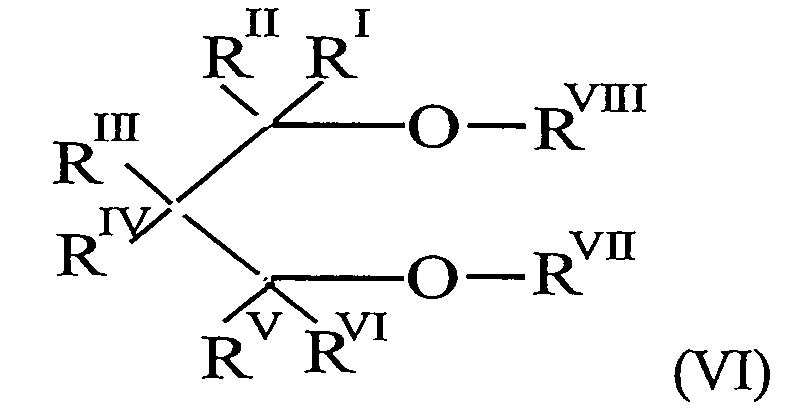
- A catalyst for the polymerization of an olefin of formula CH2=CHR, wherein R is H, or alkyl or aryl having 1 to 12 carbon atoms, comprising a reaction product of the following components:a) the catalyst component according to any one of claims 7 to 15;b) an alkylaluminum cocatalyst; andc) optionally, an external electron-donor.
- A process for polymerizing olefin, comprising contacting an olefin of formula CH2=CHR, wherein R is H, or alkyl or aryl having 1 to 12 carbon atoms, and optionally another kind of said olefin as comonomer, and optionally a diene as a second comonomer, with the catalyst according to claim 16 under polymerization conditions.
Applications Claiming Priority (3)
| Application Number | Priority Date | Filing Date | Title |
|---|---|---|---|
| CNB2006100671779A CN100491410C (en) | 2006-04-06 | 2006-04-06 | Adduct of magnesium halides, preparation method, and application |
| CN200610113864XA CN101165074B (en) | 2006-10-20 | 2006-10-20 | Catalyst component used for olefin polymerization and catalyst thereof |
| PCT/CN2007/001123 WO2007112700A1 (en) | 2006-04-06 | 2007-04-06 | Magnesium halide adduct, olefins polymerization catalyst component and catalyst made therefrom |
Publications (3)
| Publication Number | Publication Date |
|---|---|
| EP2036928A1 true EP2036928A1 (en) | 2009-03-18 |
| EP2036928A4 EP2036928A4 (en) | 2014-10-08 |
| EP2036928B1 EP2036928B1 (en) | 2015-12-23 |
Family
ID=38563120
Family Applications (1)
| Application Number | Title | Priority Date | Filing Date |
|---|---|---|---|
| EP07720696.9A Active EP2036928B1 (en) | 2006-04-06 | 2007-04-06 | Magnesium halide adduct, olefins polymerization catalyst component and catalyst made therefrom |
Country Status (7)
| Country | Link |
|---|---|
| US (1) | US20100099833A1 (en) |
| EP (1) | EP2036928B1 (en) |
| KR (1) | KR101173267B1 (en) |
| BR (1) | BRPI0709454B8 (en) |
| MY (1) | MY151043A (en) |
| SG (1) | SG189559A1 (en) |
| WO (1) | WO2007112700A1 (en) |
Cited By (1)
| Publication number | Priority date | Publication date | Assignee | Title |
|---|---|---|---|---|
| EP4190822A1 (en) * | 2021-12-06 | 2023-06-07 | Clariant International Ltd | Process for the preparation of a spherical support for ziegler-natta catalyst |
Families Citing this family (7)
| Publication number | Priority date | Publication date | Assignee | Title |
|---|---|---|---|---|
| US9499569B2 (en) | 2009-07-15 | 2016-11-22 | China Petroleum & Chemical Corporation | Spherical magnesium halide adduct, a catalyst component and a catalyst for olefin polymerization prepared therefrom |
| CN102796127B (en) * | 2011-05-27 | 2015-02-11 | 中国石油化工股份有限公司 | Spherical magnesium halide adduct and preparation method and application thereof |
| CN103788246B (en) * | 2012-10-29 | 2015-10-21 | 中国石油化工股份有限公司 | A kind of carrier for olefin polymerization catalyst and its preparation method and application |
| CN103788244B (en) * | 2012-10-29 | 2016-03-30 | 中国石油化工股份有限公司 | A kind of carrier for olefin polymerization catalyst and application thereof |
| CN103788249B (en) * | 2012-10-29 | 2016-01-13 | 中国石油化工股份有限公司 | A kind of carrier for olefin polymerization catalyst and application thereof |
| CA3148264A1 (en) | 2019-09-11 | 2021-03-18 | Brink's Network Inc. | Self-service modular drop safes |
| KR102711301B1 (en) | 2022-03-23 | 2024-09-26 | 숭실대학교산학협력단 | Vehicle passing height determination device and control method thereof |
Family Cites Families (28)
| Publication number | Priority date | Publication date | Assignee | Title |
|---|---|---|---|---|
| IT1114822B (en) * | 1977-07-04 | 1986-01-27 | Montedison Spa | COMPONENTS OF CATALYSTS FOR THE POLYMERIZATION OF ALPHA-OLEFINS |
| IT1096661B (en) | 1978-06-13 | 1985-08-26 | Montedison Spa | PROCEDURE FOR THE PREPARATION OF SOLID SPHEROIDAL PRODUCTS AT AMBIENT TEMPERATURE |
| IT1098272B (en) | 1978-08-22 | 1985-09-07 | Montedison Spa | COMPONENTS, CATALYSTS AND CATALYSTS FOR THE POLYMERIZATION OF ALPHA-OLEFINS |
| US4442277A (en) * | 1981-03-09 | 1984-04-10 | Phillips Petroleum Company | Process and catalyst for olefin polymerization |
| IT1136627B (en) | 1981-05-21 | 1986-09-03 | Euteco Impianti Spa | SUPPORTED CATALYST FOR THE POLYMERIZATION OF ETHYLENE |
| FI80055C (en) | 1986-06-09 | 1990-04-10 | Neste Oy | Process for preparing catalytic components for polymerization of olefins |
| JP2816700B2 (en) | 1989-04-25 | 1998-10-27 | 株式会社福原精機製作所 | Electromagnetic needle selection device for circular knitting machine |
| JP2879347B2 (en) | 1989-10-02 | 1999-04-05 | チッソ株式会社 | Manufacturing method of olefin polymerization catalyst |
| JP3205001B2 (en) * | 1990-03-30 | 2001-09-04 | ベイセル、ノース、アメリカ、インコーポレーテッド | Ultra pure propylene polymer |
| FI90248C (en) | 1991-11-29 | 1994-01-10 | Borealis As | A process for preparing a particulate support for an olefin polymerization catalyst |
| TW400342B (en) * | 1994-09-06 | 2000-08-01 | Chisso Corp | A process for producing a solid catalyst component for olefin polymerization and a process for producing an olefin polymer |
| EP0717053B1 (en) * | 1994-11-25 | 2001-03-14 | Japan Polyolefins Co., Ltd. | Catalyst for olefin polymerization and process for producing polyolefin using the same |
| IT1274250B (en) | 1995-02-21 | 1997-07-15 | Himont Inc | DIETTERS THAT CAN BE USED IN THE PREPARATION OF ZIEGLER-NATTA CATALYSTS |
| US6323152B1 (en) | 1998-03-30 | 2001-11-27 | Basell Technology Company Bv | Magnesium dichloride-alcohol adducts process for their preparation and catalyst components obtained therefrom |
| IL127230A (en) | 1997-03-29 | 2004-07-25 | Montell Technology Company Bv | Magnesium dichloride-alcohol adducts, process for their preparation and catalyst components obtained therefrom |
| CN1151183C (en) | 2000-06-15 | 2004-05-26 | 中国石油化工股份有限公司 | Spherical catalyst components used for polymerization or copolymerization of olefin and its catalyst |
| CN100441561C (en) | 2002-02-07 | 2008-12-10 | 中国石油化工股份有限公司 | Polyester compound for preparing olefine polymerizing catalyst |
| CN1169845C (en) | 2002-02-07 | 2004-10-06 | 中国石油化工股份有限公司 | Solid catalyst component for olefin polymerization and catalyst containing same and use thereof |
| CN1463990A (en) | 2002-06-10 | 2003-12-31 | 营口市向阳催化剂有限责任公司 | Process for preparing olefin polymerization ball type catalytic component and carrier |
| PL372053A1 (en) * | 2002-06-13 | 2005-07-11 | Basell Poliolefine Italia S.P.A. | Process for the preparation of ethylene copolymers |
| CN1169840C (en) * | 2002-08-15 | 2004-10-06 | 浙江大学 | Preparation method of spherical catalyst carrier MgCl2-alcohol-organic complexing agent composite |
| EP1572355B1 (en) * | 2002-12-18 | 2011-06-29 | Basell Poliolefine Italia S.r.l. | Magnesium dichloride-based adducts and catalyst components obtained therefrom |
| CA2510679C (en) * | 2002-12-18 | 2013-04-23 | Basell Poliolefine Italia S.P.A. | Polymerization catalysts comprising titanium and magnesium |
| CN1267508C (en) | 2003-08-08 | 2006-08-02 | 中国石油化工股份有限公司 | Magnesium halide/alcohol addition compound and its preparing method and use |
| WO2005063832A1 (en) * | 2003-12-23 | 2005-07-14 | Basell Poliolefine Italia S.R.L. | Magnesium dichloride-ethanol adducts and atalyst components obtained therefrom |
| CN1286863C (en) | 2004-03-25 | 2006-11-29 | 浙江大学 | Olefinic polymerization catalyst carried by carrier of sphere MgCl-alcohol-organic complexing agent and preparation method |
| CN1289542C (en) * | 2004-07-05 | 2006-12-13 | 中国石油化工股份有限公司 | Globular catalyst component used for olefine polymerization and its catalyst |
| CN1670043A (en) * | 2005-03-07 | 2005-09-21 | 营口市向阳催化剂有限责任公司 | Catalyst for polymerization of olefins and its preparation and polymerization method |
-
2007
- 2007-04-06 BR BRPI0709454A patent/BRPI0709454B8/en active IP Right Grant
- 2007-04-06 KR KR1020087026783A patent/KR101173267B1/en active Active
- 2007-04-06 SG SG2011072808A patent/SG189559A1/en unknown
- 2007-04-06 WO PCT/CN2007/001123 patent/WO2007112700A1/en not_active Ceased
- 2007-04-06 MY MYPI20083967 patent/MY151043A/en unknown
- 2007-04-06 EP EP07720696.9A patent/EP2036928B1/en active Active
- 2007-04-06 US US12/294,980 patent/US20100099833A1/en not_active Abandoned
Cited By (2)
| Publication number | Priority date | Publication date | Assignee | Title |
|---|---|---|---|---|
| EP4190822A1 (en) * | 2021-12-06 | 2023-06-07 | Clariant International Ltd | Process for the preparation of a spherical support for ziegler-natta catalyst |
| WO2023104650A1 (en) * | 2021-12-06 | 2023-06-15 | Clariant International Ltd | Process for the preparation of a spherical support for ziegler-natta catalyst |
Also Published As
| Publication number | Publication date |
|---|---|
| EP2036928A4 (en) | 2014-10-08 |
| BRPI0709454B1 (en) | 2017-11-07 |
| SG189559A1 (en) | 2013-05-31 |
| BRPI0709454B8 (en) | 2018-02-27 |
| WO2007112700A1 (en) | 2007-10-11 |
| KR101173267B1 (en) | 2012-08-10 |
| KR20080112360A (en) | 2008-12-24 |
| EP2036928B1 (en) | 2015-12-23 |
| MY151043A (en) | 2014-03-31 |
| US20100099833A1 (en) | 2010-04-22 |
| BRPI0709454A2 (en) | 2011-07-12 |
| BRPI0709454A8 (en) | 2018-01-30 |
Similar Documents
| Publication | Publication Date | Title |
|---|---|---|
| EP2489685B1 (en) | Process for preparing a catalyst component for olefin polymerization | |
| CA2572506C (en) | Spheric catalyst component for olefin polymerization and catalyst comprising the same | |
| EP2036928B1 (en) | Magnesium halide adduct, olefins polymerization catalyst component and catalyst made therefrom | |
| US10239969B2 (en) | Spherical magnesium halide adduct, a catalyst component and a catalyst for olefin polymerization prepared therefrom | |
| EP3059263B1 (en) | Spherical carriers for olefin polymerization catalyst, catalyst components, catalyst, and preparation methods therefor | |
| CN101486776B (en) | Catalyst component for olefinic polymerization , and catalyst thereof | |
| CN102040680B (en) | Catalyst component and catalyst for olefin polymerization | |
| CN102040690A (en) | Method for preparing polypropylene with low ash content | |
| WO1992019659A1 (en) | A large-pore polyolefin, a method for its production and a procatalyst containing a transesterification product of a lower alcohol and a phthalic acid ester | |
| CN1726080A (en) | Magnesium chloride-based adducts and catalyst components prepared therefrom | |
| KR20110083478A (en) | Solid catalyst for propylene polymerization and preparation method thereof | |
| CN101724101A (en) | Catalyzer component for olefin polymerization and catalyzer thereof | |
| EP2673305A2 (en) | Ziegler-natta catalyst composition with controlled morphology | |
| EP2520593B1 (en) | Preparation method of a solid catalyst for polypropylene polymerization, and the solid catalyst obtained therefrom | |
| CN101165074A (en) | Catalyst component used for olefin polymerization and catalyst thereof | |
| RU2636660C2 (en) | Catalyst designed for olefines polymerization, method for its production and application | |
| KR100572616B1 (en) | Solid catalyst for olefin polymerization and its manufacturing method | |
| EP2367853B1 (en) | Catalyst components for the polymerization of olefins and catalysts therefrom obtained | |
| KR20120002790A (en) | Process for preparing solid catalyst for propylene polymerization | |
| CN114478846A (en) | Carrier of catalyst with function of catalyzing olefin polymerization, preparation method and application of carrier, olefin polymerization catalyst and application of olefin polymerization catalyst | |
| CN101565477A (en) | Catalyst component and catalyst for olefinic polymerization |
Legal Events
| Date | Code | Title | Description |
|---|---|---|---|
| PUAI | Public reference made under article 153(3) epc to a published international application that has entered the european phase |
Free format text: ORIGINAL CODE: 0009012 |
|
| 17P | Request for examination filed |
Effective date: 20081013 |
|
| AK | Designated contracting states |
Kind code of ref document: A1 Designated state(s): AT BE BG CH CY CZ DE DK EE ES FI FR GB GR HU IE IS IT LI LT LU LV MC MT NL PL PT RO SE SI SK TR |
|
| AX | Request for extension of the european patent |
Extension state: AL BA HR MK RS |
|
| DAX | Request for extension of the european patent (deleted) | ||
| RBV | Designated contracting states (corrected) |
Designated state(s): DE FR GB IT |
|
| RIC1 | Information provided on ipc code assigned before grant |
Ipc: C08F 4/654 20060101ALI20140827BHEP Ipc: C08F 4/02 20060101AFI20140827BHEP Ipc: C08F 110/06 20060101ALI20140827BHEP |
|
| A4 | Supplementary search report drawn up and despatched |
Effective date: 20140909 |
|
| GRAP | Despatch of communication of intention to grant a patent |
Free format text: ORIGINAL CODE: EPIDOSNIGR1 |
|
| RIC1 | Information provided on ipc code assigned before grant |
Ipc: C08F 4/02 20060101AFI20150605BHEP Ipc: C08F 4/654 20060101ALI20150605BHEP Ipc: C08F 110/06 20060101ALI20150605BHEP |
|
| INTG | Intention to grant announced |
Effective date: 20150625 |
|
| GRAS | Grant fee paid |
Free format text: ORIGINAL CODE: EPIDOSNIGR3 |
|
| GRAA | (expected) grant |
Free format text: ORIGINAL CODE: 0009210 |
|
| AK | Designated contracting states |
Kind code of ref document: B1 Designated state(s): DE FR GB IT |
|
| REG | Reference to a national code |
Ref country code: GB Ref legal event code: FG4D |
|
| REG | Reference to a national code |
Ref country code: DE Ref legal event code: R096 Ref document number: 602007044279 Country of ref document: DE |
|
| REG | Reference to a national code |
Ref country code: FR Ref legal event code: PLFP Year of fee payment: 10 |
|
| REG | Reference to a national code |
Ref country code: DE Ref legal event code: R097 Ref document number: 602007044279 Country of ref document: DE |
|
| PLBE | No opposition filed within time limit |
Free format text: ORIGINAL CODE: 0009261 |
|
| STAA | Information on the status of an ep patent application or granted ep patent |
Free format text: STATUS: NO OPPOSITION FILED WITHIN TIME LIMIT |
|
| 26N | No opposition filed |
Effective date: 20160926 |
|
| REG | Reference to a national code |
Ref country code: FR Ref legal event code: PLFP Year of fee payment: 11 |
|
| REG | Reference to a national code |
Ref country code: FR Ref legal event code: PLFP Year of fee payment: 12 |
|
| P01 | Opt-out of the competence of the unified patent court (upc) registered |
Effective date: 20230502 |
|
| PGFP | Annual fee paid to national office [announced via postgrant information from national office to epo] |
Ref country code: GB Payment date: 20260323 Year of fee payment: 20 |
|
| PGFP | Annual fee paid to national office [announced via postgrant information from national office to epo] |
Ref country code: IT Payment date: 20260326 Year of fee payment: 20 |
|
| PGFP | Annual fee paid to national office [announced via postgrant information from national office to epo] |
Ref country code: DE Payment date: 20260320 Year of fee payment: 20 |
|
| PGFP | Annual fee paid to national office [announced via postgrant information from national office to epo] |
Ref country code: FR Payment date: 20260427 Year of fee payment: 20 |