EP2036092B1 - Verfahren zur navigation von elementen in einem media-player - Google Patents
Verfahren zur navigation von elementen in einem media-player Download PDFInfo
- Publication number
- EP2036092B1 EP2036092B1 EP07825832.4A EP07825832A EP2036092B1 EP 2036092 B1 EP2036092 B1 EP 2036092B1 EP 07825832 A EP07825832 A EP 07825832A EP 2036092 B1 EP2036092 B1 EP 2036092B1
- Authority
- EP
- European Patent Office
- Prior art keywords
- item
- media
- items
- media item
- media items
- Prior art date
- Legal status (The legal status is an assumption and is not a legal conclusion. Google has not performed a legal analysis and makes no representation as to the accuracy of the status listed.)
- Active
Links
Images


Classifications
-
- G—PHYSICS
- G11—INFORMATION STORAGE
- G11B—INFORMATION STORAGE BASED ON RELATIVE MOVEMENT BETWEEN RECORD CARRIER AND TRANSDUCER
- G11B27/00—Editing; Indexing; Addressing; Timing or synchronising; Monitoring; Measuring tape travel
- G11B27/10—Indexing; Addressing; Timing or synchronising; Measuring tape travel
- G11B27/102—Programmed access in sequence to addressed parts of tracks of operating record carriers
- G11B27/105—Programmed access in sequence to addressed parts of tracks of operating record carriers of operating discs
-
- G—PHYSICS
- G11—INFORMATION STORAGE
- G11B—INFORMATION STORAGE BASED ON RELATIVE MOVEMENT BETWEEN RECORD CARRIER AND TRANSDUCER
- G11B27/00—Editing; Indexing; Addressing; Timing or synchronising; Monitoring; Measuring tape travel
- G11B27/10—Indexing; Addressing; Timing or synchronising; Measuring tape travel
- G11B27/34—Indicating arrangements
Definitions
- This invention relates to a method of navigating a set of media items at a media player and to control logic and a media player for performing the method.
- Media players can store and play media content such as audio tracks (e.g. songs) and image or video files (e.g. digital still images, video clips, movies).
- a typical media player has a rewriteable storage medium such as a solid state memory or hard drive on which a user can store media content. More efficient media coding schemes and the decreasing cost of high capacity storage media have allowed devices of this kind to store a significant quantity of content. It is now possible to store vast amounts of content, such as a user's entire audio collection, on a single storage device.
- US 2004/123725 discloses automatic generation and updating ofplaylists based on a measured hit rate.
- a playlist is a list with a selection of available audio items that are played in the order in which they appear on the playlist, at random or in shuffle play.
- US 2004/123725 discloses that the hit rate may be measured from a length of playing time of an audio item until the user activates a skip button. The audio items are ordered according to descending playing time. Thus, it is determined whether the user likes each of the pieces of audio data based on its calculated hit rate. The pieces of audio data which the user does not like may be excluded from the playlist.
- Dynamic playlist generation is described in an article by E.Pampalk et al, titled “Dynamic Playlist generation based on skipping behaviour" published in the proceedings of the annual synmposium on music information retrieval, 15 September 2005 pages 1-4 (EPO reference XP002424957 ). Discloses the application of detected skipping to the generation of playlists.
- EP1548741 discloses dynamical adaptation of playlists based on user rating. Playing time is used as one way of determining the rating.
- EP 1489765 discloses that a user rating of an audio item may be determined from the proportion of an audio item that has been played. Each of these documents aims to increase the probability that audio items will be played with increasingly higher rating, the rating increasing with user-allowed playing-time. Items with low playing time are not played.
- the present invention seeks to provide an improved way of navigating a set of media items at a media player.
- a first aspect of the present invention provides a method of navigating a set of media items according to claim 1 is provided
- the amount of the first item that was presented, before a user decided to select a new media item, is used to control how similar the second media item should be to the first media item.
- the amount is used to select the position of the next item within the ordered list.
- a single user input e.g. input via a single button, or using voice/gesture
- the invention can be applied to portable or fixed players and is especially useful in players which are mounted in, or used within, vehicles.
- the next most similar item in the ordered set of media items can be presented to the user, as it is assumed the user liked the first item.
- the method can be performed iteratively, with each subsequent iteration of the method using the same set of media items or only a portion of the ordered set of media items (such as a portion of the ordered set beginning with the second media item). After each iteration of the method, presented items can be removed from the set of items available for selection during further iterations of the method.
- the selection of the first media item can be achieved by: making a random selection, receiving a selection from a user or retrieving an identifier of the last presented item.
- the step of determining what amount of the first media item was presented can be determined from an elapsed time, or from an amount of data (e.g. number of bytes) consumed during presentation.
- the amount can be an absolute amount of the item (e.g. elapsed time or number of bytes) or can be expressed as a ratio of the elapsed presentation time (or amount of data used during presentation) to the total length of the item.
- the step of ordering the set of media items can be achieved using various techniques.
- the ordering is preferably achieved using one or more characteristics of the media items themselves, which has the advantage of not requiring the media player to learn a user's preferences. Metadata which accompanies each media item can be used. Additionally, or alternatively, fingerprint techniques can be used.
- Each media item has a 'fingerprint' which is based on features of the media item, such as spectral content, beat etc. Different genres of item have different types of fingerprint. By calculating distances between fingerprints of media items and ordering according to increasing distance, it is possible to order according to similarity.
- ordering can be performed as an initial step, before presentation of the first item, during presentation of the first item, or after receiving the input from a user. Ordering can be performed after each selection of a new item, with the new ordering being based on similarity of the set of items to the new item, or the ordering can be performed less frequently to conserve processing resources.
- the step of using the determined duration comprises mapping the determined duration to one of the media items in the ordered set of media items.
- the mapping can be a linear mapping or a non-linear mapping which has an advantage of taking into account the typical behaviour of a user.
- the step of selecting a second media item uses a ratio of the duration for which the first media item was presented to the total duration of the first item.
- the set of items can be all of the items stored on a storage medium, or a sub-set of those items, such as a playlist created by a user.
- the items can be stored on a storage device which is local to the player or which is external to the player and accessed via a communications interface.
- the method is especially useful with media items in the form of audio tracks, such as songs, but can also be applied to other forms of media item, such as video.
- control logic for implementing the method and a media player which incorporates the control logic.
- the media player can comprise a store which holds the media items, or it can access a remote store which holds the media items.
- the functionality described here can be implemented in software, hardware or a combination of these.
- the invention can be implemented by means of hardware comprising several distinct elements, and by means of a suitably programmed processor.
- another aspect of the invention provides a computer program product (software) carrying instructions which, when executed by a computer or processor, implement the method.
- the software may be stored on an electronic memory device, hard disk, optical disk or other machine-readable storage medium.
- the software may be downloaded directly to the media player via a network connection.
- the media player can be implemented as a fixed or portable player, such as vehicle-mounted unit, personal media player, home media centre, set-top box, Personal Video Recorder (PVR), mobile phone or as software performed by a general purpose personal computer (PC).
- a fixed or portable player such as vehicle-mounted unit, personal media player, home media centre, set-top box, Personal Video Recorder (PVR), mobile phone or as software performed by a general purpose personal computer (PC).
- PVR Personal Video Recorder
- PC general purpose personal computer
- FIG. 1 shows a media player 10 according to an embodiment of the invention.
- the player 10 includes, or has access to, a storage medium 11 which stores digital data representing media content items 12 in a conventional manner.
- the storage medium 11 can form part of the same physical device as the player 10, such as an internal hard-disk drive or internal flash memory or can be a removable device, such as a removable memory card (e.g. a Universal Serial Bus (USB) memory stick) or an optical disc (e.g. Compact Disc (CD), Digital Versatile Disc (DVD) or Blu-RayTM disc).
- the storage medium 11 is an optical disc
- the player includes a transport mechanism with a drive and a read head to retrieve data from the optical disc, the detail of which will be well known to a skilled person.
- the storage medium 11 can be located remotely from the player and the player communicates with the storage medium 11 via a wired or wireless communication link.
- a portable media player 10 can be wirelessly connected to a remote media server.
- a playback unit 20 receives data from the storage medium 11.
- the playback unit 20 includes demultiplexing and decoding functions appropriate to the types of data stored on medium 11, e.g. MP3 and MPEG4 decoders.
- data is retrieved from the storage medium 11 into a buffer and delivered from the buffer to an output stage for presentation to a user.
- An output stage of the playback unit 20 includes a digital-to-analogue converter (DAC) which feeds loudspeakers, a headphone socket or audio line out.
- DAC digital-to-analogue converter
- the output stage can include a display or a video line out. All of this is conventional and the detail will be known to a skilled person.
- the player 10 has a set of user controls 50 which allow a user to provide control inputs to the player 10.
- the user controls 50 can take the form of an operating panel mounted on the media player 10 or a wired or wireless remote control. Where the player 10 is used in a vehicle, controls 50 can be positioned on, or adjacent, controls for the vehicle, such as buttons on control stalks adjacent the steering wheel or a control panel mounted in a dashboard of the vehicle.
- the user controls can have a graphical user interface (GUI) or the user controls can use a video overlay to display user selectable options on a display connected to the player 10.
- GUI graphical user interface
- User controls interface 38 determines what controls have been operated by a user and applies input signals to other units within controller 30. Where the user controls include graphical menus, interface 38 provides outputs to display those menus.
- the user controls 50 include a single control 51 which allows a user to easily provide an input to the player.
- This control can be a button, but can also take the form of any manually-actuable input or even a voice or gesture input device.
- simple players such as a player without a display, there may only be the single user control 51 and the feature is always activated.
- the feature can be activated by selection from a menu, or by a dedicated control on the user controls 50.
- a controller 30 controls operation of the player 10.
- Controller 30 includes the following blocks or functional units which are particularly relevant to the present invention: a next item selection unit 31, an item ordering unit 32, a feature vector metadata database 33, a timer 37, an audio file duration calculation function 36 and a user controls interface 38.
- the functional units are preferably implemented as code modules which form a control application executed by a general-purpose processor. However, it will be readily appreciated that the controller 30 can alternatively be implemented using an Application Specific Integrated Circuit (ASIC), a programmable array or any other suitable logic circuit.
- the processor or logic circuit includes a working memory.
- An item selection unit 31 controls the selection of a new media content item for playback.
- Unit 31 receives inputs from user controls 50 (via user controls interface 38) whenever a user activates one of the controls 50. Particularly relevant to this invention, item selection unit 31 is notified when a button 51 is pressed.
- the next item selection unit 31 provides a seed item to the item ordering unit 32.
- Item ordering unit 32 arranges the set of stored items based on likeness to the seed item, from most similar to least similar. As described above, the similarity ordering can be based on analysis of metadata or analysis of the content data (e.g. spectral content, beat etc.)
- a suitable technology is LikeMusicTM of Koninklijke Philips Electronics N.V. Determining similarity of content items is described, for example, in WO 2005/050620 , WO 2005/071569 and WO 2006/054235 and does not need to be described in any further detail.
- the Item ordering unit 32 has access to a feature vector metadata database 33.
- the feature vector metadata database 33 contains a record for each content item 12 in the storage medium 11. Each database record contains a unique identification of the item 12 (e.g. the fully qualified file name) and an associated feature vector for that item 12.
- This database 33 can be stored on the same storage medium 11 as the content items or on another storage device, such as a memory local to the controller 30, as shown in Figure 1 .
- the item ordering unit 32 retrieves the feature vector for the seed item from the feature vector metadata database 33. It calculates the distance from the seed item feature vector to the feature vector of each other individual item by a matrix calculation. The items are then ordered based on the calculated distance, from smallest distance (most similar items) to largest distance (least similar items). The complete calculated playlist is provided to the item selection unit 31.
- the feature vector need only be extracted once, as it does not change unless there is a change to the item itself. The extraction of the feature vector can be performed by player 10 or by an external server.
- the next item selection unit 31 also uses a timing calculation unit 35. Two main times are calculated and used by the method: (i) the total duration of an item and (ii) the duration that an item is played before a user selects a new item.
- Item duration calculation unit 36 can calculate the total duration of an item. There are various ways of calculating the total duration. Unit 36 accesses storage medium 11 to obtain information about the requested item. Some media content items include total duration as part of metadata for the item. This metadata may be stored with the item or the item may include a field indicating the location of the metadata which carries the total duration field. Clearly, if the item's metadata includes this information, this is the easiest way to obtain the total duration.
- Another way of calculating the total duration is to retrieve the total file size of the item (e.g. in bytes) and to divide this by the average bitrate for the item.
- files e.g. MP3 compressed audio
- the average bitrate can be retrieved from the file in a number of ways: directly from metadata (for file formats which include this information); by using the average of the bitrates for individual audio frames; based on knowledge of the audio file storage (e.g. Compact Disc Digital Audio (CD-DA) is always 1411200 bits/s).
- CD-DA Compact Disc Digital Audio
- a timer 37 can calculate the elapsed time between the time at which playback of a content item begins and the time at which button 51 is pressed by the user. Note that as an alternative to using time-based measurements it is possible to derive similar information using number-of-bytes-based measurements. This would derive the number of bytes consumed by the playback unit 20 compared to the total number of bytes for the item.
- FIG. 2 shows a time line of a first item (e.g. a song) 'Item 1'.
- Item 1 has a total duration of 3 minutes (180 seconds).
- time t 0 playback of the item begins.
- time t 90s a user presses control 51 to select a new item.
- Controller 30 counts the time between the start of presentation of Item 1 and the time at which the user pressed control 51 and records an elapsed presentation time of 90 seconds.
- the set of items 60 have been ordered according to likeness to Item 1.
- Figure 3 shows the ordered list of items, with item 2 being the next most similar to Item 1 and Item 12 being the least similar.
- the duration that the user listened to Item 1 (the elapsed presentation time) is used to select a new item from the ordered list. The reasoning is that if a user spent a long time listening to Item 1, the next item should be similar to Item 1 whereas if a user spent a short time listening to Item 1, the next item should be very different to Item 1. In this example the elapsed duration was 90 seconds.
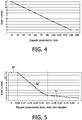
- the mapping from elapsed presentation time to item selection is a linear relationship, as shown graphically in Figure 4 .
- the selection of the next item is linearly related to the portion of Item 1 that is presented to the user.
- the horizontal axis is expressed as elapsed presentation time.
- the mapping between elapsed presentation time and next item is tailored to the total length (180 seconds) of the current item. More generally, the horizontal axis can be expressed as the ratio of (elapsed presentation time/total item duration) to give the fraction of the item that was presented. This ratio has the range 0 - 1.
- the horizontal axis can comprise the same fixed set of elapsed times (or numbers of consumed bytes) regardless of the total length of the item.
- This alternative can provide the user with more certainty as to how their input will affect the choice of next item.
- the mapping need not be linear, and Figure 5 shows an example of a non-linear mapping. This mapping takes into account the fact that a user needs some time to identify the current item and also takes into account that a real dislike will be signalled by a user early in the item.
- the first 10% of the elapsed presentation time (portion 65) is not taken into account to determine the number of items to skip.
- the next portion 66 of the elapsed presentation time has a steep linear (or non-linear) relationship.
- next item that is presented to the user is the next most similar item in the list 60.
- the next most similar item is Item 2.
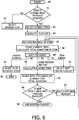
- FIG. 6 shows a more detailed flow chart of one example embodiment of the method.
- the player is started with the feature activated.
- Steps 81-83 determine a starting item. This depends on whether the player stored the identity of an item that was playing, during a previous session, before the player was switched off (step 81). If the player has stored the identity of an item, that item is selected at step 82. If the identity of a previously played item is not known, an item is randomly selected (step 83). A further possibility (not shown) is that a user may select the starting item.
- an ordered list of the items is created (using unit 32), with the item selected at steps 82 or 83 as the seed item.
- step 85 playback of the selected item is initiated, using playback unit 20.
- step 86 current time is stored to enable subsequent calculation of the presentation time of the item (i.e. the time a user listens to/watches the item before making an input).
- the amount a user listens to/watches the item can be computed by counting the number of bytes of the item that have been presented.
- the total duration of the item is also determined, such as by using one of the above described methods.
- the controller waits for an event.
- the possible events include: the player being stopped (output branch 89); the user pressing control 51 (output branch 93); and playback of the item ending due to reaching the end of the item (output branch 91). If the player is stopped (output branch 89) the controller stores the identity of the current item at step 90 and then stops the player (step 91). If playback of the item reached the natural end of the item (output branch 91), this indicates the user liked the item. Therefore, at step 92, the next most similar item is selected in the ordered list (generated at step 84) and playback of that item begins at step 85. If the user pressed control 51 (output branch 93) this indicates a user wishes to select a different item.
- the presentation time and total duration are used to select a new item. This can be based on equation (1) or any other desired mapping.
- the list of items (the playlist) needs to be rearranged.
- Steps 96-98 show one way in which the list of items can be rearranged.
- steps 96-98 The reasoning behind steps 96-98 is that, as long as the new seed song is still sufficiently similar to the original (i.e. first) seed song, the likeness ordering of the first seed song is representative for the new seed song because they are similar. No new playlist need be calculated. This avoids the problem of recently presented items from being reselected within a short period and minimises processing performed by ordering unit 32.
- the old playlist is still used for the new current song, but the start is shifted to right behind the new current song (so the playlist is shorter).
- the playlist is recalculated with the new current song as seed song, because the playlist is not optimal anymore and because it has become potentially too short.
- the halfway point in the list will only be exceeded if a user signals a dissatisfaction with the current song. Note that use of the halfway point of the playlist as criterion is only a guideline and this figure can be varied as required.
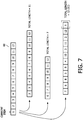
- Figure 7 shows the way in which the simple playlist of Figure 3 can alter over a period of time, using the method of Figure 6 .
- the original playlist 60 is shown at the top of Figure 7 .
- Presentation of Item 1 begins.
- the options during (or at the end of) Item 1 are:
- An alternative method reorders the playlist each time a new item starts. A history of recently played items is maintained, and this list is used to filter out recently played items when generating an ordered list of items. This prevents recently played items from reappearing in the playlist, which can be annoying to a user.
- a media player 10 which stores, or has access to, a set of media items 12.
- the player presents 20 a first of the media items.
- the set of media items 12 are ordered 32 according to at least one criterion indicative of similarity of the media items to the first media item.
- the player determines 37 what amount of the first media item was presented before an input is received from a user control 51.
- a second media item is selected for presenting using the determined amount as a measure for selecting the second media item from the ordered set of media items.
- a single user input e.g. from a single button 51
- the ordering 32 can be based on similarity of features or similarity of metadata.
Landscapes
- Indexing, Searching, Synchronizing, And The Amount Of Synchronization Travel Of Record Carriers (AREA)
- Management Or Editing Of Information On Record Carriers (AREA)
- Management, Administration, Business Operations System, And Electronic Commerce (AREA)
- Television Signal Processing For Recording (AREA)
- User Interface Of Digital Computer (AREA)
Claims (14)
- Verfahren zum Navigieren einer Menge von Medienelementen (12), umfassend:Auswählen eines ersten Medienelements aus der Menge der Medienelemente;Ordnen (84) der Menge von Medienelementen nach mindestens einem Kriterium, das die Ähnlichkeit der Medienelemente mit dem ersten Medienelement anzeigt, um eine geordnete Menge von Medienelementen zu erhalten, die jeweils einer anderen Position der geordneten Menge zugeordnet sind;Präsentation (85) des ersten Medienelements und Warten auf eine Benutzereingabe (88) während der Präsentation des ersten Medienelements;nach Erhalt der Benutzereingabe:- Bestimmen, welcher Umfang des ersten Medienelements vor dem Erhalt der Eingabe präsentiert wurde,- Auswählen einer Position in der geordneten Menge unter Verwendung des bestimmten Umfangs als Maß für die Auswahl der Position,- Auswählen eines zweiten Medienelements aus dieser Position in der geordneten Menge von Medienelementen, und- Präsentation des ausgewählten zweiten Medienelements.
- Verfahren nach Anspruch 1, wobei der Schritt der Auswahl einer Position in der geordneten Menge die Verwendung des bestimmten Umfangs umfasst, um eine der Positionen in der geordneten Menge von Medienelementen abzubilden.
- Verfahren nach Anspruch 2, wobei die Abbildung nichtlinear ist.
- Verfahren nach einem der vorstehenden Ansprüche, wobei der Schritt der Bestimmung, welcher Umfang des ersten Medienelements präsentiert wurde, ein Verhältnis der Dauer, für die das erste Medienelement präsentiert wurde, zur Gesamtdauer des ersten Medienelements oder das Verhältnis der während der Präsentation des ersten Medienelements verwendeten Datenmenge zur Gesamtdatenmenge des ersten Medienelements bestimmt.
- Verfahren nach einem der vorstehenden Ansprüche, wobei der Schritt des Ordnens (84) eine der Ähnlichkeit von Merkmalen und der Ähnlichkeit von Metadaten, die den Medienelementen zugehörig sind, als Kriterium für das Ordnen der Menge von Medienelementen verwendet.
- Verfahren nach einem der vorstehenden Ansprüche, umfassend weiter das Führen einer Liste der präsentierten Medienelemente und das Entfernen der präsentierten Medienelemente aus der geordneten Menge von Medienelementen.
- Verfahren nach einem der vorstehenden Ansprüche, wobei der Schritt des Ordnens (97) nach jeder Auswahl eines Medienelements ausgeführt wird.
- Verfahren nach einem der Ansprüche 1 bis 5, bei einer nachfolgenden Iteration des Verfahrens weiter umfassend die Verwendung derselben geordneten Menge von Medienelementen (98) für die Schritte der Auswahl einer Position in der geordneten Menge und der Auswahl eines zweiten Medienelements, wenn die relativen Positionen des zweiten Medienelements und des ersten Medienelements in der geordneten Menge von Medienelementen innerhalb eines vorbestimmten Bereichs liegen.
- Verfahren nach Anspruch 8, wobei bei einer nachfolgenden Iteration des Verfahrens der Schritt der Auswahl des zweiten Medienelements einen Teil der geordneten Menge von Medienelementen verwendet, der mit dem letzten ausgewählten Medienelement beginnt.
- Verfahren nach einem der vorstehenden Ansprüche, bei dem für den Fall, dass während der Präsentation des ersten Medienelements keine Eingaben von einem Benutzer erhalten werden, das Medienelement, das dem ersten Medienelement in der geordneten Menge von Medienelementen am ähnlichsten ist, als zweites Medienelement ausgewählt wird.
- Verfahren nach einem der vorstehenden Ansprüche, bei dem die Menge der Medienelemente aus einer größeren Menge von auf einem Speichermedium gespeicherten Elementen ausgewählt wird.
- Steuerlogik, die so angeordnet ist, dass sie das Verfahren nach einem der vorhergehenden Ansprüche ausführt.
- Medienwiedergabegerät, umfassend:einen Speicher für das Speichern von Medienelementen oder eine Schnittstelle für den Zugriff auf einen Speicher von Medienelementen;eine Benutzeroberfläche für den Empfang von Benutzereingaben; undeine Steuerlogik (30), die so angeordnet ist, dass sie das Verfahren nach einem der Ansprüche 1 bis 11 durchführt.
- Software zur Durchführung des Verfahrens nach einem der Ansprüche 1 bis 11.
Priority Applications (1)
| Application Number | Priority Date | Filing Date | Title |
|---|---|---|---|
| EP07825832.4A EP2036092B2 (de) | 2006-06-23 | 2007-06-21 | Verfahren zur navigation von elementen in einem media-player |
Applications Claiming Priority (3)
| Application Number | Priority Date | Filing Date | Title |
|---|---|---|---|
| EP06115975 | 2006-06-23 | ||
| EP07825832.4A EP2036092B2 (de) | 2006-06-23 | 2007-06-21 | Verfahren zur navigation von elementen in einem media-player |
| PCT/IB2007/052407 WO2008007269A2 (en) | 2006-06-23 | 2007-06-21 | Method of navigating items at a media player |
Publications (3)
| Publication Number | Publication Date |
|---|---|
| EP2036092A2 EP2036092A2 (de) | 2009-03-18 |
| EP2036092B1 true EP2036092B1 (de) | 2018-10-24 |
| EP2036092B2 EP2036092B2 (de) | 2021-06-09 |
Family
ID=38923627
Family Applications (1)
| Application Number | Title | Priority Date | Filing Date |
|---|---|---|---|
| EP07825832.4A Active EP2036092B2 (de) | 2006-06-23 | 2007-06-21 | Verfahren zur navigation von elementen in einem media-player |
Country Status (5)
| Country | Link |
|---|---|
| US (1) | US8621392B2 (de) |
| EP (1) | EP2036092B2 (de) |
| JP (1) | JP2009541908A (de) |
| CN (1) | CN101479801B (de) |
| WO (1) | WO2008007269A2 (de) |
Families Citing this family (8)
| Publication number | Priority date | Publication date | Assignee | Title |
|---|---|---|---|---|
| US8315950B2 (en) | 2007-12-31 | 2012-11-20 | Sandisk Technologies Inc. | Powerfully simple digital media player and methods for use therewith |
| US8713026B2 (en) | 2008-06-13 | 2014-04-29 | Sandisk Technologies Inc. | Method for playing digital media files with a digital media player using a plurality of playlists |
| DE102009045382A1 (de) * | 2009-10-06 | 2011-04-07 | Robert Bosch Gmbh | Verfahren zur Analyse von Dateinamen |
| JP5601724B2 (ja) * | 2011-11-25 | 2014-10-08 | 楽天株式会社 | 情報処理装置、情報処理方法、情報処理プログラム、及び情報処理プログラムが記録された記録媒体 |
| US9785639B2 (en) * | 2012-04-27 | 2017-10-10 | Mobitv, Inc. | Search-based navigation of media content |
| EP2869213A1 (de) * | 2013-10-31 | 2015-05-06 | Alcatel Lucent | Medieninhaltbestellsystem und Verfahren zum Ordnen von Medieninhalten |
| US9531989B1 (en) * | 2016-06-17 | 2016-12-27 | Spotify Ab | Devices, methods and computer program products for playback of digital media objects using a single control input |
| US11379338B2 (en) * | 2019-10-23 | 2022-07-05 | EMC IP Holding Company LLC | Customizing option-selections in application based on usage pattern |
Citations (5)
| Publication number | Priority date | Publication date | Assignee | Title |
|---|---|---|---|---|
| US20020078056A1 (en) | 2000-12-19 | 2002-06-20 | Intel Corporation | Method & apparatus for intelligent and automatic preference detection of media content |
| US20040123725A1 (en) | 2002-12-27 | 2004-07-01 | Samsung Electronics Co., Ltd. | Playlist managing apparatus and method |
| EP1489765A2 (de) | 2003-06-17 | 2004-12-22 | Matsuhita Electric Industrial Co., Ltd. | Musikauswahlsystem und Musikverteilungssystem |
| EP1548741A1 (de) | 2003-12-24 | 2005-06-29 | Bose Corporation | Intelligente Auswahl von Musiktiteln. |
| US20050273515A1 (en) | 2002-10-28 | 2005-12-08 | Koninklijke Philips Electronics N.V. | Apparatus and mehtod for replacing a media content item |
Family Cites Families (12)
| Publication number | Priority date | Publication date | Assignee | Title |
|---|---|---|---|---|
| EP1200902A2 (de) * | 1999-07-16 | 2002-05-02 | Agentarts, Inc. | Verfahren und system zum erzeugen von automatisierten alternativen inhaltsempfehlungen |
| US7000188B1 (en) * | 2001-03-29 | 2006-02-14 | Hewlett-Packard Development Company, L.P. | System and method for intelligently selecting media through a simplified user interface |
| US20050021470A1 (en) * | 2002-06-25 | 2005-01-27 | Bose Corporation | Intelligent music track selection |
| US6996390B2 (en) * | 2002-06-26 | 2006-02-07 | Microsoft Corporation | Smart car radio |
| US20070071330A1 (en) | 2003-11-18 | 2007-03-29 | Koninklijke Phillips Electronics N.V. | Matching data objects by matching derived fingerprints |
| JP2007519115A (ja) | 2004-01-20 | 2007-07-12 | コーニンクレッカ フィリップス エレクトロニクス エヌ ヴィ | アーチスト及び楽曲の類似性に基づくプレイリスト |
| WO2006054235A2 (en) | 2004-11-18 | 2006-05-26 | Koninklijke Philips Electronics N.V. | Method of processing a set of content items, and data- processing device |
| US7756388B2 (en) * | 2005-03-21 | 2010-07-13 | Microsoft Corporation | Media item subgroup generation from a library |
| US20060218187A1 (en) * | 2005-03-25 | 2006-09-28 | Microsoft Corporation | Methods, systems, and computer-readable media for generating an ordered list of one or more media items |
| US7580932B2 (en) * | 2005-07-15 | 2009-08-25 | Microsoft Corporation | User interface for establishing a filtering engine |
| US20070089057A1 (en) * | 2005-10-14 | 2007-04-19 | Yahoo! Inc. | Method and system for selecting media |
| US7668867B2 (en) * | 2006-03-17 | 2010-02-23 | Microsoft Corporation | Array-based discovery of media items |
-
2007
- 2007-06-21 CN CN2007800236440A patent/CN101479801B/zh active Active
- 2007-06-21 JP JP2009516051A patent/JP2009541908A/ja not_active Withdrawn
- 2007-06-21 WO PCT/IB2007/052407 patent/WO2008007269A2/en not_active Ceased
- 2007-06-21 EP EP07825832.4A patent/EP2036092B2/de active Active
- 2007-06-21 US US12/305,206 patent/US8621392B2/en active Active
Patent Citations (5)
| Publication number | Priority date | Publication date | Assignee | Title |
|---|---|---|---|---|
| US20020078056A1 (en) | 2000-12-19 | 2002-06-20 | Intel Corporation | Method & apparatus for intelligent and automatic preference detection of media content |
| US20050273515A1 (en) | 2002-10-28 | 2005-12-08 | Koninklijke Philips Electronics N.V. | Apparatus and mehtod for replacing a media content item |
| US20040123725A1 (en) | 2002-12-27 | 2004-07-01 | Samsung Electronics Co., Ltd. | Playlist managing apparatus and method |
| EP1489765A2 (de) | 2003-06-17 | 2004-12-22 | Matsuhita Electric Industrial Co., Ltd. | Musikauswahlsystem und Musikverteilungssystem |
| EP1548741A1 (de) | 2003-12-24 | 2005-06-29 | Bose Corporation | Intelligente Auswahl von Musiktiteln. |
Also Published As
| Publication number | Publication date |
|---|---|
| CN101479801A (zh) | 2009-07-08 |
| CN101479801B (zh) | 2011-04-06 |
| WO2008007269A2 (en) | 2008-01-17 |
| WO2008007269A3 (en) | 2008-07-10 |
| EP2036092B2 (de) | 2021-06-09 |
| US20090178001A1 (en) | 2009-07-09 |
| US8621392B2 (en) | 2013-12-31 |
| JP2009541908A (ja) | 2009-11-26 |
| EP2036092A2 (de) | 2009-03-18 |
Similar Documents
| Publication | Publication Date | Title |
|---|---|---|
| EP2036092B1 (de) | Verfahren zur navigation von elementen in einem media-player | |
| US7930305B2 (en) | Information processing apparatus and method, and program | |
| US20100332483A1 (en) | Content output queue generation | |
| US7227073B2 (en) | Playlist managing apparatus and method | |
| US20040225519A1 (en) | Intelligent music track selection | |
| US20040017997A1 (en) | Automated playlist generation | |
| US20030236582A1 (en) | Selection of items based on user reactions | |
| EP1548741A1 (de) | Intelligente Auswahl von Musiktiteln. | |
| US20050021470A1 (en) | Intelligent music track selection | |
| JP2006073184A (ja) | 情報取得方法及び情報取得装置 | |
| WO2003023781A1 (en) | Extension of m3u file format to support user interface and navigation tasks in a digital audio player | |
| US6744701B2 (en) | Information reproduction apparatus and method for erasing program data | |
| JP2005284574A (ja) | 車載用情報機器、車載用情報機器の制御方法、制御プログラムおよび記録媒体 | |
| EP1652186B1 (de) | Verfahren zur schnellen rekonstruktion von inhaltsinformationen | |
| US7765198B2 (en) | Data processing apparatus, data processing method, and data processing system | |
| US7532559B2 (en) | Audio player | |
| EP1763884A2 (de) | Verfahren und einrichtung zur erzeugung eines identifikationsdatenblocks für einen datenträger | |
| JP2005209331A (ja) | インテリジェント音楽トラック選択 | |
| EP1608170A1 (de) | Verfahren und System zum Einstellen von Benutzerpreferenzen und Benutzerprofilen | |
| JP2005276337A (ja) | 再生装置 | |
| KR100642895B1 (ko) | 광디스크장치의 디스크 관리방법 | |
| EP1520274A2 (de) | Abspielsystem mit fernbedienungseinrichtung | |
| HK1092306A (en) | Selection of media items based on user reactions | |
| CN1571028A (zh) | 光盘装置的恢复播放控制方法 | |
| KR20050122970A (ko) | 속성별 북마크 분류 저장 및 표시방법 |
Legal Events
| Date | Code | Title | Description |
|---|---|---|---|
| PUAI | Public reference made under article 153(3) epc to a published international application that has entered the european phase |
Free format text: ORIGINAL CODE: 0009012 |
|
| 17P | Request for examination filed |
Effective date: 20090123 |
|
| AK | Designated contracting states |
Kind code of ref document: A2 Designated state(s): AT BE BG CH CY CZ DE DK EE ES FI FR GB GR HU IE IS IT LI LT LU LV MC MT NL PL PT RO SE SI SK TR |
|
| AX | Request for extension of the european patent |
Extension state: AL BA HR MK RS |
|
| DAX | Request for extension of the european patent (deleted) | ||
| 17Q | First examination report despatched |
Effective date: 20101108 |
|
| RAP1 | Party data changed (applicant data changed or rights of an application transferred) |
Owner name: KONINKLIJKE PHILIPS N.V. |
|
| RIC1 | Information provided on ipc code assigned before grant |
Ipc: G11B 27/10 20060101AFI20180328BHEP Ipc: G11B 27/34 20060101ALI20180328BHEP |
|
| GRAP | Despatch of communication of intention to grant a patent |
Free format text: ORIGINAL CODE: EPIDOSNIGR1 |
|
| STAA | Information on the status of an ep patent application or granted ep patent |
Free format text: STATUS: GRANT OF PATENT IS INTENDED |
|
| INTG | Intention to grant announced |
Effective date: 20180507 |
|
| GRAS | Grant fee paid |
Free format text: ORIGINAL CODE: EPIDOSNIGR3 |
|
| GRAA | (expected) grant |
Free format text: ORIGINAL CODE: 0009210 |
|
| STAA | Information on the status of an ep patent application or granted ep patent |
Free format text: STATUS: THE PATENT HAS BEEN GRANTED |
|
| AK | Designated contracting states |
Kind code of ref document: B1 Designated state(s): AT BE BG CH CY CZ DE DK EE ES FI FR GB GR HU IE IS IT LI LT LU LV MC MT NL PL PT RO SE SI SK TR |
|
| REG | Reference to a national code |
Ref country code: GB Ref legal event code: FG4D |
|
| REG | Reference to a national code |
Ref country code: CH Ref legal event code: EP |
|
| REG | Reference to a national code |
Ref country code: IE Ref legal event code: FG4D |
|
| REG | Reference to a national code |
Ref country code: DE Ref legal event code: R096 Ref document number: 602007056617 Country of ref document: DE Ref country code: AT Ref legal event code: REF Ref document number: 1057630 Country of ref document: AT Kind code of ref document: T Effective date: 20181115 |
|
| REG | Reference to a national code |
Ref country code: NL Ref legal event code: MP Effective date: 20181024 |
|
| REG | Reference to a national code |
Ref country code: LT Ref legal event code: MG4D |
|
| REG | Reference to a national code |
Ref country code: AT Ref legal event code: MK05 Ref document number: 1057630 Country of ref document: AT Kind code of ref document: T Effective date: 20181024 |
|
| PG25 | Lapsed in a contracting state [announced via postgrant information from national office to epo] |
Ref country code: NL Free format text: LAPSE BECAUSE OF FAILURE TO SUBMIT A TRANSLATION OF THE DESCRIPTION OR TO PAY THE FEE WITHIN THE PRESCRIBED TIME-LIMIT Effective date: 20181024 |
|
| PG25 | Lapsed in a contracting state [announced via postgrant information from national office to epo] |
Ref country code: ES Free format text: LAPSE BECAUSE OF FAILURE TO SUBMIT A TRANSLATION OF THE DESCRIPTION OR TO PAY THE FEE WITHIN THE PRESCRIBED TIME-LIMIT Effective date: 20181024 Ref country code: IS Free format text: LAPSE BECAUSE OF FAILURE TO SUBMIT A TRANSLATION OF THE DESCRIPTION OR TO PAY THE FEE WITHIN THE PRESCRIBED TIME-LIMIT Effective date: 20190224 Ref country code: AT Free format text: LAPSE BECAUSE OF FAILURE TO SUBMIT A TRANSLATION OF THE DESCRIPTION OR TO PAY THE FEE WITHIN THE PRESCRIBED TIME-LIMIT Effective date: 20181024 Ref country code: LT Free format text: LAPSE BECAUSE OF FAILURE TO SUBMIT A TRANSLATION OF THE DESCRIPTION OR TO PAY THE FEE WITHIN THE PRESCRIBED TIME-LIMIT Effective date: 20181024 Ref country code: PL Free format text: LAPSE BECAUSE OF FAILURE TO SUBMIT A TRANSLATION OF THE DESCRIPTION OR TO PAY THE FEE WITHIN THE PRESCRIBED TIME-LIMIT Effective date: 20181024 Ref country code: BG Free format text: LAPSE BECAUSE OF FAILURE TO SUBMIT A TRANSLATION OF THE DESCRIPTION OR TO PAY THE FEE WITHIN THE PRESCRIBED TIME-LIMIT Effective date: 20190124 Ref country code: FI Free format text: LAPSE BECAUSE OF FAILURE TO SUBMIT A TRANSLATION OF THE DESCRIPTION OR TO PAY THE FEE WITHIN THE PRESCRIBED TIME-LIMIT Effective date: 20181024 Ref country code: LV Free format text: LAPSE BECAUSE OF FAILURE TO SUBMIT A TRANSLATION OF THE DESCRIPTION OR TO PAY THE FEE WITHIN THE PRESCRIBED TIME-LIMIT Effective date: 20181024 |
|
| PG25 | Lapsed in a contracting state [announced via postgrant information from national office to epo] |
Ref country code: SE Free format text: LAPSE BECAUSE OF FAILURE TO SUBMIT A TRANSLATION OF THE DESCRIPTION OR TO PAY THE FEE WITHIN THE PRESCRIBED TIME-LIMIT Effective date: 20181024 Ref country code: PT Free format text: LAPSE BECAUSE OF FAILURE TO SUBMIT A TRANSLATION OF THE DESCRIPTION OR TO PAY THE FEE WITHIN THE PRESCRIBED TIME-LIMIT Effective date: 20190224 Ref country code: GR Free format text: LAPSE BECAUSE OF FAILURE TO SUBMIT A TRANSLATION OF THE DESCRIPTION OR TO PAY THE FEE WITHIN THE PRESCRIBED TIME-LIMIT Effective date: 20190125 |
|
| REG | Reference to a national code |
Ref country code: DE Ref legal event code: R026 Ref document number: 602007056617 Country of ref document: DE |
|
| PLBI | Opposition filed |
Free format text: ORIGINAL CODE: 0009260 |
|
| PG25 | Lapsed in a contracting state [announced via postgrant information from national office to epo] |
Ref country code: CZ Free format text: LAPSE BECAUSE OF FAILURE TO SUBMIT A TRANSLATION OF THE DESCRIPTION OR TO PAY THE FEE WITHIN THE PRESCRIBED TIME-LIMIT Effective date: 20181024 Ref country code: IT Free format text: LAPSE BECAUSE OF FAILURE TO SUBMIT A TRANSLATION OF THE DESCRIPTION OR TO PAY THE FEE WITHIN THE PRESCRIBED TIME-LIMIT Effective date: 20181024 Ref country code: DK Free format text: LAPSE BECAUSE OF FAILURE TO SUBMIT A TRANSLATION OF THE DESCRIPTION OR TO PAY THE FEE WITHIN THE PRESCRIBED TIME-LIMIT Effective date: 20181024 |
|
| PLAX | Notice of opposition and request to file observation + time limit sent |
Free format text: ORIGINAL CODE: EPIDOSNOBS2 |
|
| 26 | Opposition filed |
Opponent name: MOLNIA, DAVID Effective date: 20190724 |
|
| PG25 | Lapsed in a contracting state [announced via postgrant information from national office to epo] |
Ref country code: EE Free format text: LAPSE BECAUSE OF FAILURE TO SUBMIT A TRANSLATION OF THE DESCRIPTION OR TO PAY THE FEE WITHIN THE PRESCRIBED TIME-LIMIT Effective date: 20181024 Ref country code: RO Free format text: LAPSE BECAUSE OF FAILURE TO SUBMIT A TRANSLATION OF THE DESCRIPTION OR TO PAY THE FEE WITHIN THE PRESCRIBED TIME-LIMIT Effective date: 20181024 Ref country code: SK Free format text: LAPSE BECAUSE OF FAILURE TO SUBMIT A TRANSLATION OF THE DESCRIPTION OR TO PAY THE FEE WITHIN THE PRESCRIBED TIME-LIMIT Effective date: 20181024 |
|
| PG25 | Lapsed in a contracting state [announced via postgrant information from national office to epo] |
Ref country code: SI Free format text: LAPSE BECAUSE OF FAILURE TO SUBMIT A TRANSLATION OF THE DESCRIPTION OR TO PAY THE FEE WITHIN THE PRESCRIBED TIME-LIMIT Effective date: 20181024 |
|
| PLBB | Reply of patent proprietor to notice(s) of opposition received |
Free format text: ORIGINAL CODE: EPIDOSNOBS3 |
|
| PG25 | Lapsed in a contracting state [announced via postgrant information from national office to epo] |
Ref country code: MC Free format text: LAPSE BECAUSE OF FAILURE TO SUBMIT A TRANSLATION OF THE DESCRIPTION OR TO PAY THE FEE WITHIN THE PRESCRIBED TIME-LIMIT Effective date: 20181024 |
|
| REG | Reference to a national code |
Ref country code: CH Ref legal event code: PL |
|
| RAP2 | Party data changed (patent owner data changed or rights of a patent transferred) |
Owner name: KONINKLIJKE PHILIPS N.V. |
|
| REG | Reference to a national code |
Ref country code: BE Ref legal event code: MM Effective date: 20190630 |
|
| PG25 | Lapsed in a contracting state [announced via postgrant information from national office to epo] |
Ref country code: TR Free format text: LAPSE BECAUSE OF FAILURE TO SUBMIT A TRANSLATION OF THE DESCRIPTION OR TO PAY THE FEE WITHIN THE PRESCRIBED TIME-LIMIT Effective date: 20181024 |
|
| PG25 | Lapsed in a contracting state [announced via postgrant information from national office to epo] |
Ref country code: IE Free format text: LAPSE BECAUSE OF NON-PAYMENT OF DUE FEES Effective date: 20190621 |
|
| PG25 | Lapsed in a contracting state [announced via postgrant information from national office to epo] |
Ref country code: LU Free format text: LAPSE BECAUSE OF NON-PAYMENT OF DUE FEES Effective date: 20190621 Ref country code: CH Free format text: LAPSE BECAUSE OF NON-PAYMENT OF DUE FEES Effective date: 20190630 Ref country code: LI Free format text: LAPSE BECAUSE OF NON-PAYMENT OF DUE FEES Effective date: 20190630 Ref country code: BE Free format text: LAPSE BECAUSE OF NON-PAYMENT OF DUE FEES Effective date: 20190630 |
|
| PUAH | Patent maintained in amended form |
Free format text: ORIGINAL CODE: 0009272 |
|
| STAA | Information on the status of an ep patent application or granted ep patent |
Free format text: STATUS: PATENT MAINTAINED AS AMENDED |
|
| PG25 | Lapsed in a contracting state [announced via postgrant information from national office to epo] |
Ref country code: CY Free format text: LAPSE BECAUSE OF FAILURE TO SUBMIT A TRANSLATION OF THE DESCRIPTION OR TO PAY THE FEE WITHIN THE PRESCRIBED TIME-LIMIT Effective date: 20181024 |
|
| 27A | Patent maintained in amended form |
Effective date: 20210609 |
|
| AK | Designated contracting states |
Kind code of ref document: B2 Designated state(s): AT BE BG CH CY CZ DE DK EE ES FI FR GB GR HU IE IS IT LI LT LU LV MC MT NL PL PT RO SE SI SK TR |
|
| REG | Reference to a national code |
Ref country code: DE Ref legal event code: R102 Ref document number: 602007056617 Country of ref document: DE |
|
| PG25 | Lapsed in a contracting state [announced via postgrant information from national office to epo] |
Ref country code: MT Free format text: LAPSE BECAUSE OF FAILURE TO SUBMIT A TRANSLATION OF THE DESCRIPTION OR TO PAY THE FEE WITHIN THE PRESCRIBED TIME-LIMIT Effective date: 20181024 Ref country code: HU Free format text: LAPSE BECAUSE OF FAILURE TO SUBMIT A TRANSLATION OF THE DESCRIPTION OR TO PAY THE FEE WITHIN THE PRESCRIBED TIME-LIMIT; INVALID AB INITIO Effective date: 20070621 |
|
| PGFP | Annual fee paid to national office [announced via postgrant information from national office to epo] |
Ref country code: DE Payment date: 20250626 Year of fee payment: 19 |
|
| PGFP | Annual fee paid to national office [announced via postgrant information from national office to epo] |
Ref country code: GB Payment date: 20250617 Year of fee payment: 19 |
|
| PGFP | Annual fee paid to national office [announced via postgrant information from national office to epo] |
Ref country code: FR Payment date: 20250624 Year of fee payment: 19 |