EP2025505A1 - Feuille pour support d'impression sérigraphique et numérique - Google Patents
Feuille pour support d'impression sérigraphique et numérique Download PDFInfo
- Publication number
- EP2025505A1 EP2025505A1 EP08161121A EP08161121A EP2025505A1 EP 2025505 A1 EP2025505 A1 EP 2025505A1 EP 08161121 A EP08161121 A EP 08161121A EP 08161121 A EP08161121 A EP 08161121A EP 2025505 A1 EP2025505 A1 EP 2025505A1
- Authority
- EP
- European Patent Office
- Prior art keywords
- masterbatch
- mixture
- sheet
- films
- bosses
- Prior art date
- Legal status (The legal status is an assumption and is not a legal conclusion. Google has not performed a legal analysis and makes no representation as to the accuracy of the status listed.)
- Granted
Links
- 238000007639 printing Methods 0.000 title claims description 11
- 239000000203 mixture Substances 0.000 claims abstract description 31
- 238000000034 method Methods 0.000 claims abstract description 20
- 239000011230 binding agent Substances 0.000 claims abstract description 14
- 239000000463 material Substances 0.000 claims abstract description 9
- 238000004519 manufacturing process Methods 0.000 claims abstract description 8
- 239000004594 Masterbatch (MB) Substances 0.000 claims description 32
- VTYYLEPIZMXCLO-UHFFFAOYSA-L Calcium carbonate Chemical compound [Ca+2].[O-]C([O-])=O VTYYLEPIZMXCLO-UHFFFAOYSA-L 0.000 claims description 21
- GWEVSGVZZGPLCZ-UHFFFAOYSA-N Titan oxide Chemical compound O=[Ti]=O GWEVSGVZZGPLCZ-UHFFFAOYSA-N 0.000 claims description 17
- 239000004743 Polypropylene Substances 0.000 claims description 12
- 239000000454 talc Substances 0.000 claims description 11
- 229910052623 talc Inorganic materials 0.000 claims description 11
- 229910000019 calcium carbonate Inorganic materials 0.000 claims description 10
- 229920000092 linear low density polyethylene Polymers 0.000 claims description 9
- 239000004707 linear low-density polyethylene Substances 0.000 claims description 9
- -1 polypropylene Polymers 0.000 claims description 9
- XAGFODPZIPBFFR-UHFFFAOYSA-N aluminium Chemical compound [Al] XAGFODPZIPBFFR-UHFFFAOYSA-N 0.000 claims description 8
- 239000004408 titanium dioxide Substances 0.000 claims description 8
- 239000000155 melt Substances 0.000 claims description 6
- 229920001155 polypropylene Polymers 0.000 claims description 5
- 229920005629 polypropylene homopolymer Polymers 0.000 claims description 5
- 229920005606 polypropylene copolymer Polymers 0.000 claims description 4
- 150000001412 amines Chemical class 0.000 claims description 3
- 239000004698 Polyethylene Substances 0.000 claims 1
- 229920001577 copolymer Polymers 0.000 claims 1
- 229920000573 polyethylene Polymers 0.000 claims 1
- 238000001125 extrusion Methods 0.000 description 5
- RNFJDJUURJAICM-UHFFFAOYSA-N 2,2,4,4,6,6-hexaphenoxy-1,3,5-triaza-2$l^{5},4$l^{5},6$l^{5}-triphosphacyclohexa-1,3,5-triene Chemical compound N=1P(OC=2C=CC=CC=2)(OC=2C=CC=CC=2)=NP(OC=2C=CC=CC=2)(OC=2C=CC=CC=2)=NP=1(OC=1C=CC=CC=1)OC1=CC=CC=C1 RNFJDJUURJAICM-UHFFFAOYSA-N 0.000 description 4
- 229920001400 block copolymer Polymers 0.000 description 4
- 239000003063 flame retardant Substances 0.000 description 4
- 125000006850 spacer group Chemical group 0.000 description 4
- 239000004480 active ingredient Substances 0.000 description 3
- 241000256815 Apocrita Species 0.000 description 2
- 238000003490 calendering Methods 0.000 description 2
- 229920001519 homopolymer Polymers 0.000 description 2
- 238000009434 installation Methods 0.000 description 2
- 230000003746 surface roughness Effects 0.000 description 2
- 239000013543 active substance Substances 0.000 description 1
- 239000000654 additive Substances 0.000 description 1
- 229910052782 aluminium Inorganic materials 0.000 description 1
- 230000015572 biosynthetic process Effects 0.000 description 1
- 239000003086 colorant Substances 0.000 description 1
- 238000004891 communication Methods 0.000 description 1
- 230000000694 effects Effects 0.000 description 1
- 238000004049 embossing Methods 0.000 description 1
- 239000006260 foam Substances 0.000 description 1
- 239000008240 homogeneous mixture Substances 0.000 description 1
- 239000004611 light stabiliser Substances 0.000 description 1
- 238000004806 packaging method and process Methods 0.000 description 1
- 229920003023 plastic Polymers 0.000 description 1
- 239000004033 plastic Substances 0.000 description 1
- 238000013001 point bending Methods 0.000 description 1
- 239000000843 powder Substances 0.000 description 1
- 238000004439 roughness measurement Methods 0.000 description 1
- 238000006748 scratching Methods 0.000 description 1
- 230000002393 scratching effect Effects 0.000 description 1
- 238000007650 screen-printing Methods 0.000 description 1
- 239000012815 thermoplastic material Substances 0.000 description 1
- 230000004584 weight gain Effects 0.000 description 1
- 235000019786 weight gain Nutrition 0.000 description 1
- 238000003466 welding Methods 0.000 description 1
Images
Classifications
-
- B—PERFORMING OPERATIONS; TRANSPORTING
- B32—LAYERED PRODUCTS
- B32B—LAYERED PRODUCTS, i.e. PRODUCTS BUILT-UP OF STRATA OF FLAT OR NON-FLAT, e.g. CELLULAR OR HONEYCOMB, FORM
- B32B3/00—Layered products comprising a layer with external or internal discontinuities or unevennesses, or a layer of non-planar shape; Layered products comprising a layer having particular features of form
- B32B3/26—Layered products comprising a layer with external or internal discontinuities or unevennesses, or a layer of non-planar shape; Layered products comprising a layer having particular features of form characterised by a particular shape of the outline of the cross-section of a continuous layer; characterised by a layer with cavities or internal voids ; characterised by an apertured layer
- B32B3/28—Layered products comprising a layer with external or internal discontinuities or unevennesses, or a layer of non-planar shape; Layered products comprising a layer having particular features of form characterised by a particular shape of the outline of the cross-section of a continuous layer; characterised by a layer with cavities or internal voids ; characterised by an apertured layer characterised by a layer comprising a deformed thin sheet, i.e. the layer having its entire thickness deformed out of the plane, e.g. corrugated, crumpled
-
- B—PERFORMING OPERATIONS; TRANSPORTING
- B29—WORKING OF PLASTICS; WORKING OF SUBSTANCES IN A PLASTIC STATE IN GENERAL
- B29C—SHAPING OR JOINING OF PLASTICS; SHAPING OF MATERIAL IN A PLASTIC STATE, NOT OTHERWISE PROVIDED FOR; AFTER-TREATMENT OF THE SHAPED PRODUCTS, e.g. REPAIRING
- B29C48/00—Extrusion moulding, i.e. expressing the moulding material through a die or nozzle which imparts the desired form; Apparatus therefor
- B29C48/03—Extrusion moulding, i.e. expressing the moulding material through a die or nozzle which imparts the desired form; Apparatus therefor characterised by the shape of the extruded material at extrusion
- B29C48/07—Flat, e.g. panels
-
- B—PERFORMING OPERATIONS; TRANSPORTING
- B32—LAYERED PRODUCTS
- B32B—LAYERED PRODUCTS, i.e. PRODUCTS BUILT-UP OF STRATA OF FLAT OR NON-FLAT, e.g. CELLULAR OR HONEYCOMB, FORM
- B32B27/00—Layered products comprising a layer of synthetic resin
- B32B27/18—Layered products comprising a layer of synthetic resin characterised by the use of special additives
- B32B27/20—Layered products comprising a layer of synthetic resin characterised by the use of special additives using fillers, pigments, thixotroping agents
-
- B—PERFORMING OPERATIONS; TRANSPORTING
- B32—LAYERED PRODUCTS
- B32B—LAYERED PRODUCTS, i.e. PRODUCTS BUILT-UP OF STRATA OF FLAT OR NON-FLAT, e.g. CELLULAR OR HONEYCOMB, FORM
- B32B27/00—Layered products comprising a layer of synthetic resin
- B32B27/32—Layered products comprising a layer of synthetic resin comprising polyolefins
-
- B—PERFORMING OPERATIONS; TRANSPORTING
- B32—LAYERED PRODUCTS
- B32B—LAYERED PRODUCTS, i.e. PRODUCTS BUILT-UP OF STRATA OF FLAT OR NON-FLAT, e.g. CELLULAR OR HONEYCOMB, FORM
- B32B3/00—Layered products comprising a layer with external or internal discontinuities or unevennesses, or a layer of non-planar shape; Layered products comprising a layer having particular features of form
- B32B3/10—Layered products comprising a layer with external or internal discontinuities or unevennesses, or a layer of non-planar shape; Layered products comprising a layer having particular features of form characterised by a discontinuous layer, i.e. formed of separate pieces of material
- B32B3/12—Layered products comprising a layer with external or internal discontinuities or unevennesses, or a layer of non-planar shape; Layered products comprising a layer having particular features of form characterised by a discontinuous layer, i.e. formed of separate pieces of material characterised by a layer of regularly- arranged cells, e.g. a honeycomb structure
-
- B—PERFORMING OPERATIONS; TRANSPORTING
- B32—LAYERED PRODUCTS
- B32B—LAYERED PRODUCTS, i.e. PRODUCTS BUILT-UP OF STRATA OF FLAT OR NON-FLAT, e.g. CELLULAR OR HONEYCOMB, FORM
- B32B37/00—Methods or apparatus for laminating, e.g. by curing or by ultrasonic bonding
- B32B37/14—Methods or apparatus for laminating, e.g. by curing or by ultrasonic bonding characterised by the properties of the layers
- B32B37/15—Methods or apparatus for laminating, e.g. by curing or by ultrasonic bonding characterised by the properties of the layers with at least one layer being manufactured and immediately laminated before reaching its stable state, e.g. in which a layer is extruded and laminated while in semi-molten state
- B32B37/153—Methods or apparatus for laminating, e.g. by curing or by ultrasonic bonding characterised by the properties of the layers with at least one layer being manufactured and immediately laminated before reaching its stable state, e.g. in which a layer is extruded and laminated while in semi-molten state at least one layer is extruded and immediately laminated while in semi-molten state
-
- B—PERFORMING OPERATIONS; TRANSPORTING
- B32—LAYERED PRODUCTS
- B32B—LAYERED PRODUCTS, i.e. PRODUCTS BUILT-UP OF STRATA OF FLAT OR NON-FLAT, e.g. CELLULAR OR HONEYCOMB, FORM
- B32B37/00—Methods or apparatus for laminating, e.g. by curing or by ultrasonic bonding
- B32B37/14—Methods or apparatus for laminating, e.g. by curing or by ultrasonic bonding characterised by the properties of the layers
- B32B37/15—Methods or apparatus for laminating, e.g. by curing or by ultrasonic bonding characterised by the properties of the layers with at least one layer being manufactured and immediately laminated before reaching its stable state, e.g. in which a layer is extruded and laminated while in semi-molten state
- B32B37/156—Methods or apparatus for laminating, e.g. by curing or by ultrasonic bonding characterised by the properties of the layers with at least one layer being manufactured and immediately laminated before reaching its stable state, e.g. in which a layer is extruded and laminated while in semi-molten state at least one layer is calendered and immediately laminated
-
- B—PERFORMING OPERATIONS; TRANSPORTING
- B29—WORKING OF PLASTICS; WORKING OF SUBSTANCES IN A PLASTIC STATE IN GENERAL
- B29C—SHAPING OR JOINING OF PLASTICS; SHAPING OF MATERIAL IN A PLASTIC STATE, NOT OTHERWISE PROVIDED FOR; AFTER-TREATMENT OF THE SHAPED PRODUCTS, e.g. REPAIRING
- B29C48/00—Extrusion moulding, i.e. expressing the moulding material through a die or nozzle which imparts the desired form; Apparatus therefor
- B29C48/001—Combinations of extrusion moulding with other shaping operations
- B29C48/0013—Extrusion moulding in several steps, i.e. components merging outside the die
- B29C48/0014—Extrusion moulding in several steps, i.e. components merging outside the die producing flat articles having components brought in contact outside the extrusion die
-
- B—PERFORMING OPERATIONS; TRANSPORTING
- B29—WORKING OF PLASTICS; WORKING OF SUBSTANCES IN A PLASTIC STATE IN GENERAL
- B29C—SHAPING OR JOINING OF PLASTICS; SHAPING OF MATERIAL IN A PLASTIC STATE, NOT OTHERWISE PROVIDED FOR; AFTER-TREATMENT OF THE SHAPED PRODUCTS, e.g. REPAIRING
- B29C48/00—Extrusion moulding, i.e. expressing the moulding material through a die or nozzle which imparts the desired form; Apparatus therefor
- B29C48/03—Extrusion moulding, i.e. expressing the moulding material through a die or nozzle which imparts the desired form; Apparatus therefor characterised by the shape of the extruded material at extrusion
- B29C48/07—Flat, e.g. panels
- B29C48/08—Flat, e.g. panels flexible, e.g. films
-
- B—PERFORMING OPERATIONS; TRANSPORTING
- B29—WORKING OF PLASTICS; WORKING OF SUBSTANCES IN A PLASTIC STATE IN GENERAL
- B29C—SHAPING OR JOINING OF PLASTICS; SHAPING OF MATERIAL IN A PLASTIC STATE, NOT OTHERWISE PROVIDED FOR; AFTER-TREATMENT OF THE SHAPED PRODUCTS, e.g. REPAIRING
- B29C48/00—Extrusion moulding, i.e. expressing the moulding material through a die or nozzle which imparts the desired form; Apparatus therefor
- B29C48/16—Articles comprising two or more components, e.g. co-extruded layers
- B29C48/18—Articles comprising two or more components, e.g. co-extruded layers the components being layers
- B29C48/21—Articles comprising two or more components, e.g. co-extruded layers the components being layers the layers being joined at their surfaces
-
- B—PERFORMING OPERATIONS; TRANSPORTING
- B32—LAYERED PRODUCTS
- B32B—LAYERED PRODUCTS, i.e. PRODUCTS BUILT-UP OF STRATA OF FLAT OR NON-FLAT, e.g. CELLULAR OR HONEYCOMB, FORM
- B32B2607/00—Walls, panels
Definitions
- the present invention relates to the field of sheets or plates of plastic material intended to receive printing, in particular by screen printing or else digital.
- the invention relates more particularly to inkjet prints of a digitized image stored on a computer, in order to produce large signboards or communication panels.
- a material is sought on the one hand and a plate structure on the other hand which leads to the formation of a support suitable for printing.
- the targeted properties include a surface condition sufficiently smooth to allow printing quality by conventional printing means and maximum opacity to provide the required contrast. It is also desired that the plates are light for economic reasons as well as manipulation. Finally, fire resistance meets a security imperative.
- expanded PVC sheets have the advantage of having a smooth appearance, a relatively low surface area, a very good opacity and a satisfactory fire resistance.
- this material is expensive and the resulting plates are sensitive to scratches.
- Double-walled polypropylene foam sheets obtained by extrusion through a specific die followed by a calibration are also known.
- Two or a plurality of parallel planar walls are connected by longitudinal struts, forming lengthwise cavities with the walls.
- These plates have the advantage of having a high rigidity in the direction of the spacers, a low surface weight and a cost significantly lower than PVC.
- the main disadvantage of this product is related to the shrinkage at the junction of the spacers and the surface walls. As a result, the flatness of the latter is not perfect, and the surface has a certain roughness that can be a handicap for printing.
- the applicant has therefore set as an objective to achieve a plate with the advantages of the plates of the prior art but without the disadvantages.
- Hard sheets or sheets with a honeycomb structure used in the field of packaging to form rigid envelopes of the blister type, are known. Such sheets are obtained by assembling three layers: a central layer consisting of an embossed sheet with cylindrical bosses on one side and two layers, one on each side of the central layer. The particular conformation of the central layer gives the sheet its mechanical properties, such as rigidity load resistance, as well as its functional characteristics.
- the patent EP 1638770 describes a method of manufacturing this type of sheet.
- the sheets thus obtained have properties similar to those of expanded PVC for a lower basis weight.
- the weight gain is 30 to 50%.
- the surface appearance is homogeneous slightly grained after extrusion which allows optimum grip of the ink.
- the roughness is significantly lower than that of polypropylene double walled honeycomb plates. The line effect linked to the spacers is deleted.
- the blend comprises from 40 to 60 percent polypropylene copolymer and / or 10 to 30 percent polypropylene homopolymer.
- the polypropylene has a melt index at 230 ° C. -2.16 kg of between 1 and 12 g / 10 min.
- the mixture comprises from 2 to 5% linear low density polyethylene and / or has a melt index at 190 ° C-2.16 kg of between 0.5 and 5 g / 10 min.
- the stiffness of the sheet is improved by incorporating from 10 to 20% of masterbatch comprising 50 to 60% talc and 5-10% calcium carbonate.
- the mixture comprises up to 2% of opacifying masterbatch, in particular 5-20% of aluminum powder, and more particularly up to 0.5% of opacifying masterbatch containing 10-15% of powder of aluminum.
- the mixture comprises up to 5% of anti-UV masterbatch, especially 10-30% of sterically hindered amine (HALS), in particular from 0 to 2% of anti-UV masterbatch.
- HALS sterically hindered amine
- At least one of the films is coextruded with a binder, the films being brought into contact and bonded together by the binder.
- the weight of the plate is between 150g / m 2 and 4000g / m 2 but preferably the weight of the plate is between 400 and 3000g / m 2 .
- the plate has a thickness of between 1 and 20 mm and preferably a thickness of between 2 and 14 mm.
- the diameter of the bosses on the central layer is chosen between 3 and 18 mm, preferably between 4 and 12 mm.
- the plate obtained is used as a printing medium.
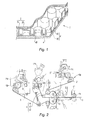
- a honeycomb sheet or plate structure suitable for use as a printing medium is shown on the figure 1 .
- Sheet 1 is composed of three layers 2, 4 and 6 respectively.
- the layer 4 is embossed and has bosses 41 distributed in a repeating pattern, preferably regular.
- the layers 2, 4, 6 are here of substantially the same thickness. However, depending on the applications that may vary, one could adopt different layer thicknesses.
- the bosses are cylindrical straight, sectional, parallel to the layer, circular, oval or other.
- the cylindrical bosses are distributed hexagonally on the central layer 4, their number varying according to their diameter.
- the density of cylindrical bosses per m 2 varies between 30,000 and 40,000 for cylindrical bosses of 4 mm in diameter and between 10,000 and 20,000 for cylindrical bosses of 8 mm in diameter.
- the height of the cylindrical bosses is variable and depends on the diameter of the bosses, the height being 2.6 mm for a diameter of 4 mm and 4.5 mm for a diameter of 8 mm.
- the bosses are frustoconical or dome-shaped.
- the central layer 4 has bosses 4B extending on one side of the surface of the layer.
- the invention also relates to a central layer embossed differently, in a symmetrical pattern for example with respect to the plane of the layer.
- the lower layer 6 consists of a layer 60 bonded to the central layer by a suitable binder 61.
- This binder may be a thermally activated material.
- the upper layer 2 consists of a layer 20 bonded to the central layer by the top of the bosses 4B of the latter by a suitable binder 21.
- this binder may be a thermally activated material.
- layer 4 is simple but it may also include a layer 40 coated with layers 41 and 42 of binder. These last involved in the connection with the upper and lower layers.
- the installation 10 comprises three extrusion heads 11a 11b and 11c of thermoplastic material which deliver three sheets 2, 4 and 6. Immediately downstream of the extrusion heads 11a and 11c, the sheet is calendered between calender rolls, 12a and 12c respectively so as to calibrate its thickness and to ensure a state of the outer surfaces as desired.
- Sheets 2 and 6 consist of two coextruded layers 20 and 21, 60 and 61 respectively. Layers 21 and 61 are thermally activated binders.
- the central sheet 4 possibly with three coextruded layers: a layer of binder 41 and 42 on both sides of the layer 40, is engaged between the rolls of an embossing group. The engraving of the cylinders makes it possible to obtain the pattern of the type represented on the figure 1 .
- the sheets Downstream of the three groups 12a 12b and 12c the sheets are at a temperature below the softening temperature of the composition.
- the three sheets are then superimposed on each other and welded together by means of a welding group 13 which raises the temperature of the binders beyond their softening temperature while exerting a binding pressure.
- the use of a binder makes it possible to avoid having to soften the layers 20, 40 and 60.
- the sheet 1 thus formed is calendered through the calibration group 14.
- Such a structure is in itself known.
- a material is used which, in combination with this structure, makes it possible to produce a printing medium that is particularly advantageous both in terms of print quality and lightness as well as cost.
- composition of the mixture was developed which is extruded into each of the extrusion heads.
- the amounts are in percent of the weight of the extruded composition.
- Polypropylene copolymer 30 to 80%, preferably 40 to 60%, having a melt index at 230 ° C - 2.16 kg of between 1 and 12 g / 10 min, preferably between 3 and 8 g / min.
- Polypropylene homopolymer 0 to 50%, preferably 10 to 30%, having the same melt index at 230 ° C - 2.16 kg of between 1 and 12 g / 10 min, preferably between 3 and 8 g / min.
- Linear low density polyethylene 0 to 10%, preferably 2 to 5%, having a melt index at 190 ° C - 2, between 0.5 and 5 g / 10 min.
- Mastering stiffening mixture 5 to 30%, preferably 10 to 20%, comprising 40 to 70% of talc and 0 to 20% of calcium carbonate, preferably 50 to 60% of talc and 5 to 10% of calcium carbonate .
- Flame retardant masterbatch 1 to 20%, preferably 2 to 15%, containing 40 to 90% active substances, preferably 60 to 80%.
- White dye masterbatch 1 to 10%, preferably 2 to 5%, containing from 50 to 80% of titanium dioxide, preferably 60 to 75% of titanium dioxide.
- opacifying masterbatch containing 5 to 20% of aluminum powder, preferably 10 to 15% of aluminum powder.
- An anti-UV masterbatch 0 to 5%, preferably 0 to 2%, containing for example 10 to 30% Hindered Amine Light Stabilizers (HALS).
- HALS Hindered Amine Light Stabilizers
- a masterbatch is a composition made from the main components of the composition to be produced incorporating the additives in an amount sufficient to obtain a homogeneous mixture.
- the plates made with this composition have a combination of properties: rigidity, scratch resistance, impact resistance, surface roughness, remarkable compared to the plates of the prior art.
- Example 2 Expanded PVC 1 Expanded PVC 2 Thickness (mm) 3.0 5.8 3.0 5.0 Mass (g / m 2 ) 1000 2000 2000 2800 Rigidity (N / mm) 4.4 19.6 5.6 21.4 Resistance to fracture (N) 36 170 82 205
- Example 4 Expanded PVC 1 Thickness (mm) 3.0 5 3.0 Mass (g / m 2 ) 1000 1750 2000 Impact resistance case height (mm) 1300 1500 500
Landscapes
- Engineering & Computer Science (AREA)
- Mechanical Engineering (AREA)
- Laminated Bodies (AREA)
- Decoration By Transfer Pictures (AREA)
- Application Of Or Painting With Fluid Materials (AREA)
- Printing Methods (AREA)
- Photographic Developing Apparatuses (AREA)
- Paper (AREA)
- Ink Jet Recording Methods And Recording Media Thereof (AREA)
Abstract
Description
- La présente invention concerne le domaine des feuilles ou plaques en matériau plastique destinées à recevoir une impression notamment par sérigraphie ou bien numérique.
- L'invention concerne plus particulièrement les impressions à jet d'encre d'une image numérisée stockée sur un ordinateur, afin de réaliser des panneaux de signalisation ou de communication de grande dimension.
- Pour ce type d'application, on recherche un matériau d'une part et une structure de plaque d'autre part qui conduisent à la formation d'un support apte à l'impression. Les propriétés visées sont notamment un état de surface suffisamment lisse pour permettre une impression de qualité par les moyens d'impression conventionnels ainsi qu'une opacité maximale pour assurer le contraste requis. On souhaite par ailleurs que les plaques soient légères pour des raisons économiques ainsi que de manipulation. Enfin la résistance au feu répond à un impératif de sécurité.
- On trouve sur le marché par exemple des plaques en PVC expansé qui ont comme avantage d'avoir un aspect lisse, une masse surfacique relativement faible, une très bonne opacité ainsi qu'une résistance au feu satisfaisante. Cependant ce matériau est onéreux et les plaques obtenues sont sensibles aux rayures.
- On connaît également des plaques alvéolaires en polypropylène à double paroi obtenues par extrusion à travers une filière spécifique suivie d'un calibrage. Deux ou une pluralité de parois planes, parallèles, sont reliées par des entretoises longitudinales, ménageant des alvéoles dans le sens de la longueur avec les parois. Ces plaques ont pour avantage de présenter une rigidité élevée dans le sens des entretoises, une masse surfacique faible ainsi qu'un coût nettement inférieur à celui du PVC. L'inconvénient principal de ce produit est lié aux retassures à la jonction des entretoises et des parois de surface. De ce fait la planéité de ces dernières n'est pas parfaite, et la surface présente une certaine rugosité pouvant constituer un handicap pour l'impression.
- Le déposant s'est donc fixé comme objectif de réaliser une plaque offrant les avantages des plaques de l'art antérieur mais sans les inconvénients.
- On connaît des feuilles ou plaques, rigides, à structure en nid d'abeilles, utilisées dans le domaine de l'emballage pour former des enveloppes rigides de type blister. De telles feuilles sont obtenues par assemblage de trois couches : une couche centrale constituée d'une feuille gaufrée avec des bossages de forme cylindrique sur une face et deux couches, une de chaque côté de la couche centrale. La conformation particulière de la couche centrale confère à la feuille ses propriétés mécaniques, telles que rigidité résistance à la charge, ainsi que ses caractéristiques fonctionnelles.
- Le brevet
EP 1638770 décrit un procédé de fabrication de ce type de feuille. - Conformément à l'invention le procédé de fabrication d'une plaque à structure en nid d'abeille pour une utilisation comme support d'impression, selon lequel on extrude séparément trois films, on thermoforme un film formant la couche centrale avec des bossages à section cylindrique sur une face, et on applique et on lie les deux autres films formant des couches planes sur chacune des faces de la couche centrale, est caractérisé par le fait que le matériau constituant chacune des trois couches est réalisé à partir d'un mélange comprenant en poids
- 30 à 80% de polypropylène copolymère,
- 0 à 50% de polypropylène homopolymère,
- 0 à 10% de polyéthylène basse densité linéaire,
- 5 à 30% de mélange maître comprenant 40-70% de talc et 0-20% de carbonate de calcium,
- 1 à 10% de mélange maître colorant blanc contenant 50 à 80% de dioxyde de titane.
- Les feuilles ainsi obtenues ont des propriétés proches de celles du PVC expansé pour une masse surfacique inférieure. Pour une même surface imprimée, le gain en poids est de 30 à 50%.
- L'aspect de surface est homogène légèrement grainée suite à l'extrusion ce qui permet une accroche optimale de l'encre. La rugosité est nettement inférieure à celle des plaques alvéolaires double paroi en polypropylène. L'effet lignes lié aux entretoises est supprimé.
- De préférence, le mélange comprend de 40 à 60% de polypropylène copolymère et/ou de 10 à 30% de polypropylène homopolymère. Le polypropylène a un indice de fluidité à 230°C -2,16kg compris entre 1 et 12g/10min.
- De préférence encore le mélange comprend de 2 à 5% de polyéthylène basse densité linéaire et/ou a un indice de fluidité à 190°C-2,16kg compris entre 0,5 et 5g/10min.
- On améliore la rigidité de la feuille en incorporant de 10 à 20% de mélange maître comprenant 50 à 60% de talc et 5-10% de carbonate de calcium.
- Avantageusement, le mélange comprend jusqu'à 2% de mélange maître opacifiant, en particulier de 5-20% de poudre d'aluminium, et plus particulièrement jusqu'à 0,5% de mélange maître opacifiant contenant10-15% de poudre d'aluminium.
- Avantageusement encore le mélange comprend jusqu'à 5% de mélange maître anti-UV, notamment de 10-30% d'amine à encombrement stérique (HALS), notamment de 0 à 2% de mélange maître anti-UV.
- Selon un mode de réalisation au moins l'un des films est coextrudé avec un liant, les films étant mis en contact et liés entre eux par le liant.
- Le poids de la plaque est compris entre 150g/m2 et 4000g/m2 mais de préférence le poids de la plaque est compris entre 400 et 3000g/m2.
- La plaque a une épaisseur comprise entre 1 et 20 mm et de préférence une épaisseur comprise entre 2 et 14 mm.
- Le diamètre des bossages sur la couche centrale est choisi entre 3 et 18 mm, de préférence entre 4 et 12 mm.
- On utilise la plaque obtenue comme support d'impression.
- D'autres avantages et caractéristiques sont présentés avec la description plus en détail qui suit du procédé selon l'invention se référant aux dessins annexés sur lesquels :
- La
figure 1 représente un exemple de feuille à structure en nid d'abeille. - La
figure 2 montre le schéma d'une installation de fabrication de feuille à structure en nid d'abeille. - Une structure de feuille ou plaque en nid d'abeille susceptible de convenir pour une utilisation comme support d'impression est montrée sur la
figure 1 . La feuille 1 est composée de trois couches 2, 4 et 6 respectivement. Une couche centrale 4 prise en sandwich entre deux couches, 2 et 6, de couverture, une couche 6, ici sur la figure, inférieure et une couche 2 supérieure. Ces dernière sont planes et liées par une face à la couche centrale 4. La couche 4 est gaufrée et présente des bossages 41 répartis selon un motif répétitif, de préférence régulier. Les couches 2, 4, 6 sont ici sensiblement de même épaisseur. Toutefois, en fonction des applications qui peuvent varier, on pourrait adopter des épaisseurs de couches différentes. - Dans le mode de réalisation représenté les bossages sont cylindriques droits, à section, parallèle à la couche, circulaire, ovale ou autre. Les bossages cylindriques sont répartis de façon hexagonale sur la couche centrale 4, leur nombre variant en fonction de leur diamètre. Par exemple, la densité de bossages cylindriques par m2 varie entre 30 000 et 40 000 pour des bossages cylindriques de 4 mm de diamètre et entre 10 000 et 20 000 pour des bossages cylindriques de 8 mm de diamètre. La hauteur des bossages cylindriques est variable et dépend du diamètre des bossages, la hauteur étant de 2,6 mm pour un diamètre de 4 mm et de 4,5 mm pour un diamètre de 8 mm. Selon d'autres modes de réalisation non représentés, les bossages sont tronconiques ou en forme de dôme.
- De préférence la couche centrale 4 présente des bossages 4B s'étendant sur un seul côté de la surface de la couche. L'invention concerne aussi une couche centrale gaufrée différemment, selon un motif symétrique par exemple par rapport au plan de la couche.
- La couche inférieure 6 est constituée d'une couche 60 liée à la couche centrale par un liant approprié 61. Ce liant peut être un matériau à activation thermique.
- La couche supérieure 2 est constituée d'une couche 20 liée à la couche centrale par le sommet des bossages 4B de cette dernière par un liant approprié 21. Comme pour la couche inférieure ce liant peut être un matériau à activation thermique. Sur cet exemple la couche 4 est simple mais elle peut aussi comprendre une couche 40 revêtue de couches 41 et 42 de liant. Ces dernières participant à la liaison avec les couches supérieure et inférieure.
- Un moyen non limitatif pour fabriquer ce produit est illustré sur la
figure 2 . - L'installation 10 comprend trois têtes d'extrusion 11a 11b et 11c de matière thermoplastique qui délivrent trois feuilles 2, 4 et 6. Immédiatement en aval des têtes d'extrusion 11a et 11c, la feuille est calandrée entre des cylindres de calandrage, 12a et 12c respectivement de façon à calibrer son épaisseur et à assurer un état des surfaces extérieures tel que souhaité. Les feuilles 2 et 6 sont constituées de deux couches coextrudées 20 et 21, 60 et 61 respectivement. Les couches 21 et 61 sont des liants à activation thermique. La feuille centrale 4, éventuellement à trois couches coextrudées : une couche de liant 41 et 42 sur les deux faces de la couche 40, est engagée entre les cylindres d'un groupe de gaufrage. La gravure des cylindres permet d'obtenir le motif du type représenté sur la
figure 1 . - En aval des trois groupes 12a 12b et 12c les feuilles sont à une température inférieure à la température de ramollissement de la composition.
- Les trois feuilles sont ensuite superposées les unes aux autres et soudées ensemble au moyen d'un groupe de soudage 13 qui élève la température des liants au-delà de leur température de ramollissement tout en exerçant une pression de liaison. L'emploi d'un liant permet d'éviter d'avoir à ramollir les couches 20, 40 et 60. La feuille 1 ainsi formée est calandrée à travers le groupe de calibrage 14.
- Une telle structure est en soi connue. Conformément à l'invention on emploie un matériau qui permet en combinaison avec cette structure de réaliser un support d'impression particulièrement avantageux aussi bien en termes de qualité d'impression ou de légèreté que de coût.
- On a mis au point la composition suivante du mélange qui est extrudé dans chacune des têtes d'extrusion. Les quantités sont en pourcent du poids de la composition extrudée.
- Polypropylène copolymère : 30 à 80%, de préférence 40 à 60%, ayant un indice de fluidité à 230°C - 2,16 kg compris entre 1 et 12 g/10 min de préférence compris entre 3 et 8 g/min.
- Polypropylène homopolymère : 0 à 50%, de préférence 10 à 30%, ayant le même indice de fluidité à 230°C - 2,16 kg compris entre 1 et 12 g/10 min de préférence compris entre 3 et 8 g/min.
- Polyéthylène basse densité linéaire : 0 à 10%, de préférence 2 à 5%, ayant un indice de fluidité à 190°C - 2, compris entre 0,5 et 5 g/10min.
- Mélange maître rigidifiant: 5 à 30%, de préférence 10 à 20%, comprenant 40 à 70% de talc et 0 à 20% de carbonate de calcium, de préférence 50 à 60% de talc et 5 à 10% de carbonate de calcium.
- Mélange maître ignifugeant : 1 à 20%, de préférence 2 à 15%, contenant de 40 à 90% de substances actives, de préférence 60 à 80%.
- Mélange maître colorant blanc, 1 à 10% de préférence 2 à 5%, contenant de 50 à 80% de dioxyde de titane, de préférence de 60 à 75% de dioxyde de titane.
- Mélange maître opacifiant, 0 à 2%, de préférence de 0 à 0,5%, contenant de 5 à 20% de poudre d'aluminium, de préférence de 10 à 15% de poudre d'aluminium.
- Mélange maître anti-UV, 0 à 5%, de préférence 0 à 2%, contenant par exemple de 10 à 30% d'amine à encombrement stérique (HALS : Hindered Amine Light Stabilizers).
- On rappelle qu'un mélange maître est une composition réalisée à partir des composants principaux de la composition à réaliser incorporant les additifs en quantité suffisante pour obtenir un mélange homogène.
- Les plaques réalisées avec cette composition présentent une combinaison de propriétés : rigidité, résistance à la rayure, résistance à l'impact, rugosité de surface, remarquable par rapport aux plaques de l'art antérieur.
- On a fabriqué selon le procédé rapporté ci-dessus des échantillons de plaques.
-
- Plaque ayant une masse de 1000g/m2 ;
- Diamètre des bulles ou bossages, 4 mm. (38000 de bulles par m2 )
- Épaisseur de chaque couche, 300-350µm.
-
- 48,7% PP copolymère bloc (indice de fluidité =3,5 g/10 min.)
- 30% PP homopolymère (indice de fluidité = 5 g/10 min.)
- 2% polyéthylène basse densité linéaire (indice de fluidité = 1 g/10 min.)
- 10% Mélange maître à 50% talc et 5% carbonate de calcium.
- 6% Mélange maître ignifugeant à 70% de substance active.
- 3% Mélange maître blanc à 75% de dioxyde de titane.
- 0,3% Mélange maître opacifiant à 12% de poudre d'aluminium.
-
- Plaque ayant une masse de 2000 g/m2 ;
- Diamètre des bulles, 8 mm.
- Épaisseur de chaque couche, 600-700µm.
-
- 48,7% PP copolymère bloc (indice de fluidité =3,5 g/10 min.)
- 30% PP homopolymère (indice de fluidité = 5 g/10 min.)
- 2% polyéthylène basse densité linéaire (indice de fluidité = 1 g/10 min.)
- 10% Mélange maître à 50% talc et 5% carbonate de calcium.
- 6% Mélange maître ignifugeant à 70% de substance active.
- 3% Mélange maître blanc à 75% de dioxyde de titane.
- 0,3% Mélange maître opacifiant à 12% de poudre d'aluminium.
-
- Plaque ayant une masse de 1750g/m2 ;
- Diamètre des bulles ou bossages, 8 mm. (16000 bulles par m2 )
- Épaisseur de chaque couche, 600-700µm.
-
- 82% PP copolymère bloc (indice de fluidité = 7 g/10 min.)
- 3% polyéthylène basse densité linéaire (indice de fluidité = 1 g/10 min.)
- 10% Mélange maître à 50% talc et 5% carbonate de calcium.
- 3% Mélange maître blanc à 60% de dioxyde de titane.
- 2% Mélange maître anti UV à 20% de HALS.
-
- Plaque ayant une masse de 1000g/m2 ;
- Diamètre des bulles ou bossages, 4 mm. (38000 de bulles par m2 )
- Épaisseur de chaque couche, 300-350µm.
-
- 78% PP copolymère bloc (indice de fluidité = 7 g/10 min.)
- 2% polyéthylène basse densité linéaire (indice de fluidité = 1 g/10 min.)
- 10% Mélange maître à 50% talc et 5% carbonate de calcium.
- 6% Mélange maître ignifugeant à 70% de substance active.
- 3% Mélange maître blanc à 75% de dioxyde de titane.
- On a testé les plaques ainsi fabriquées par rapport aux plaques de l'art antérieur.
- Propriétés en flexion en 3 points mesurée selon la norme ISO 178.
Exemple 1 Exemple 2 PVC expansé 1 PVC expansé 2 Épaisseur (mm) 3,0 5,8 3,0 5,0 Masse (g/m2) 1000 2000 2000 2800 Rigidité (N/mm) 4,4 19,6 5,6 21,4 Résistance à la rupture (N) 36 170 82 205 - Résistance à la rayure mesurée selon la méthode Erichsen (ISO 4586).
Exemple 1 PVC expansé 1 Épaisseur (mm) 3,0 3,0 Masse (g/m2) 1000 2000 Résistance à la rayure (N) 1,0 0,7 - Résistance à l'impact à froid : test interne à -20°C.
Exemple 4 Exemple 3 PVC expansé 1 Épaisseur (mm) 3,0 5, 3,0 Masse (g/m2) 1000 1750 2000 Résistance à l'impact hauteur de casse (mm) 1300 1500 500 - Mesure de rugosité de surface : méthode Bendtsen selon la norme ISO 8791.
Exemple 4 PP alvéolaire avec entretoises Épaisseur (mm) 3,0 3,5 Masse (g/m2) 1000 600 Rugosité Bendtsen (ml/min) 400 1000
Claims (15)
- Procédé de fabrication d'une feuille (1) à structure en nid d'abeille, selon lequel on extrude séparément trois films (2, 4, 6), on thermoforme un film formant la couche centrale (4) avec des bossages (4B) sur au moins une face, et on applique et on lie les deux autres films (2) formant des couches planes sur chacune des faces de la couche centrale, caractérisé par le fait que le matériau constituant chacune des trois couches est réalisé à partir d'un mélange comprenant en poids :30 à 80% de polypropylène copolymère,0 à 50% de polypropylène homopolymère,0 à 10% de polyéthylène basse densité linéaire,5 à 30% de mélange maître rigidifiant comprenant 40-70% de talc et 0-20% de carbonate de calcium,1 à 10% de mélange maître colorant blanc contenant 50 à 80% de dioxyde de titane,
- Procédé selon la revendication 1 dont le mélange comprend de 40 à 60% de polypropylène copolymère et/ou de 10 à 30% de polypropylène homopolymère.
- Procédé selon l'une des revendications précédentes dont le polypropylène a un indice de fluidité à 230°C -2,16kg compris entre 1 et 12g/10min.
- Procédé selon l'une des revendications précédentes dont le mélange comprend de 2 à 5% de polyéthylène basse densité linéaire et plus particulièrement le polyéthylène a un indice de fluidité à 190°C-2,16kg compris entre 0,5 et 5g/10min.
- Procédé selon l'une des revendications précédentes dont le mélange comprend de 10 à 20% de mélange maître comprenant 50 à 60% de talc et 5-10% de carbonate de calcium et plus particulièrement le mélange comprend jusqu'à 2% de mélange maître opacifiant.
- Procédé selon la revendication précédente dont le mélange maître opacifiant contient de 5-20% de poudre d'aluminium.
- Procédé selon la revendication 2 dont le mélange comprend jusqu'à 0,5% de mélange maître opacifiant contenant10-15% de poudre d'aluminium.
- Procédé selon l'une des revendications précédentes dont le mélange comprend jusqu'à 5% de mélange maître anti-UV et plus particulièrement le mélange maître anti-UV contient de 10-30% d'amine à encombrement stérique (HALS).
- Procédé selon la revendication précédente dont le mélange contient de 0 à 2% de mélange maître anti-UV.
- Procédé selon l'une des revendications précédentes dont au moins l'un des films est coextrudé avec un liant, les films étant mis en contact et liés entre eux par le liant.
- Procédé, selon l'une des revendications précédentes, de fabrication d'une feuille à structure en nid d'abeille de poids compris entre 150g/m2 et 4000g/m2 et plus particulièrement entre 400g/m2 et 3000g/m2.
- Procédé, selon l'une des revendications précédentes, de fabrication d'une feuille à structure en nid d'abeille dont l'épaisseur est comprise entre 1 et 20 mm et plus particulièrement entre 2 et 14 mm.
- Procédé selon l'une des revendications précédentes dont les bossages sont à section cylindrique.
- Procédé selon l'une des revendications précédentes dont le diamètre des bossages sur la couche centrale est choisi entre 3 et 18 mm, de préférence entre 4 et 12 mm.
- Utilisation d'une plaque obtenue selon le procédé de l'une des revendications précédentes comme support d'impression.
Applications Claiming Priority (1)
| Application Number | Priority Date | Filing Date | Title |
|---|---|---|---|
| FR0705429A FR2919222B1 (fr) | 2007-07-25 | 2007-07-25 | Feuille pour support d'impression serigraphique et numerique |
Publications (2)
| Publication Number | Publication Date |
|---|---|
| EP2025505A1 true EP2025505A1 (fr) | 2009-02-18 |
| EP2025505B1 EP2025505B1 (fr) | 2010-06-30 |
Family
ID=39145045
Family Applications (1)
| Application Number | Title | Priority Date | Filing Date |
|---|---|---|---|
| EP08161121A Not-in-force EP2025505B1 (fr) | 2007-07-25 | 2008-07-24 | Feuille pour support d'impression sérigraphique et numérique |
Country Status (5)
| Country | Link |
|---|---|
| EP (1) | EP2025505B1 (fr) |
| AT (1) | ATE472405T1 (fr) |
| DE (1) | DE602008001637D1 (fr) |
| ES (1) | ES2348200T3 (fr) |
| FR (1) | FR2919222B1 (fr) |
Cited By (4)
| Publication number | Priority date | Publication date | Assignee | Title |
|---|---|---|---|---|
| FR2950561A1 (fr) * | 2009-09-30 | 2011-04-01 | Ds Smith Kaysersberg | Plaque en materiau thermoplastique avec proprietes optiques ameliorees procede de fabrication d'une telle plaque et son utilisation |
| FR2964919A1 (fr) * | 2010-09-20 | 2012-03-23 | Ds Smith Kaysersberg | Procede pour habiller les parois d'un vehicule |
| WO2015192948A1 (fr) * | 2014-06-19 | 2015-12-23 | Imballaggi Protettivi S.R.L. | Feuille ou panneau sandwich en nid d'abeille, à base de polypropylène thermoplastique |
| WO2016198354A1 (fr) * | 2015-06-11 | 2016-12-15 | Colines S.P.A. | Feuille ou panneau sandwich en nid d'abeille à base de prolypropylène comprenant un film central thermoformé |
Families Citing this family (2)
| Publication number | Priority date | Publication date | Assignee | Title |
|---|---|---|---|---|
| US11292234B2 (en) | 2012-09-13 | 2022-04-05 | Dow Global Technologies Llc | Polyolefin based films suitable for thermoforming |
| EP4096927A4 (fr) * | 2020-01-30 | 2024-02-14 | Uniqco-IP Pty Ltd. | Feuille d'emballage et procédé de fabrication de feuille d'emballage |
Citations (3)
| Publication number | Priority date | Publication date | Assignee | Title |
|---|---|---|---|---|
| FR2803832A1 (fr) * | 2000-01-19 | 2001-07-20 | Kaysersberg Packaging Sa | Plaque alveolaire en matiere thermoplastique, notamment pour intercalaire ou emballage |
| EP1574544A1 (fr) * | 2004-03-12 | 2005-09-14 | Kaysersberg Packaging | Matériau pour la fabrication de plaques opaques, plaques fabriquées avec ce matériau |
| EP1638770A1 (fr) | 2004-04-30 | 2006-03-29 | Gruppo Colines S.R.L. | Procede et appareil de production d'une feuille sandwich |
-
2007
- 2007-07-25 FR FR0705429A patent/FR2919222B1/fr not_active Expired - Fee Related
-
2008
- 2008-07-24 AT AT08161121T patent/ATE472405T1/de not_active IP Right Cessation
- 2008-07-24 ES ES08161121T patent/ES2348200T3/es active Active
- 2008-07-24 DE DE602008001637T patent/DE602008001637D1/de active Active
- 2008-07-24 EP EP08161121A patent/EP2025505B1/fr not_active Not-in-force
Patent Citations (3)
| Publication number | Priority date | Publication date | Assignee | Title |
|---|---|---|---|---|
| FR2803832A1 (fr) * | 2000-01-19 | 2001-07-20 | Kaysersberg Packaging Sa | Plaque alveolaire en matiere thermoplastique, notamment pour intercalaire ou emballage |
| EP1574544A1 (fr) * | 2004-03-12 | 2005-09-14 | Kaysersberg Packaging | Matériau pour la fabrication de plaques opaques, plaques fabriquées avec ce matériau |
| EP1638770A1 (fr) | 2004-04-30 | 2006-03-29 | Gruppo Colines S.R.L. | Procede et appareil de production d'une feuille sandwich |
Cited By (11)
| Publication number | Priority date | Publication date | Assignee | Title |
|---|---|---|---|---|
| FR2950561A1 (fr) * | 2009-09-30 | 2011-04-01 | Ds Smith Kaysersberg | Plaque en materiau thermoplastique avec proprietes optiques ameliorees procede de fabrication d'une telle plaque et son utilisation |
| WO2011039303A1 (fr) * | 2009-09-30 | 2011-04-07 | Ds Smith Kaysersberg | Plaque en materiau thermoplastique avec proprietes optiques ameliorees procede de fabrication d'une telle plaque et son utilisation |
| US20120222566A1 (en) * | 2009-09-30 | 2012-09-06 | Ds Smith Kaysersberg | Plate made of a thermoplastic material having improved optical properties, method for manufacturing such a plate, and use thereof |
| AU2010302691B2 (en) * | 2009-09-30 | 2015-05-21 | Ds Smith Plastics France | Plate made of a thermoplastic material having improved optical properties, method for manufacturing such a plate, and use thereof |
| FR2964919A1 (fr) * | 2010-09-20 | 2012-03-23 | Ds Smith Kaysersberg | Procede pour habiller les parois d'un vehicule |
| WO2015192948A1 (fr) * | 2014-06-19 | 2015-12-23 | Imballaggi Protettivi S.R.L. | Feuille ou panneau sandwich en nid d'abeille, à base de polypropylène thermoplastique |
| US10596777B2 (en) | 2014-06-19 | 2020-03-24 | Imballaggi Protettivi S.R.L. | Honeycomb sandwich panel |
| WO2016198354A1 (fr) * | 2015-06-11 | 2016-12-15 | Colines S.P.A. | Feuille ou panneau sandwich en nid d'abeille à base de prolypropylène comprenant un film central thermoformé |
| EA034090B1 (ru) * | 2015-06-11 | 2019-12-26 | Колинес С.п.А. | Многослойное сотовое полотно или панель на основе полипропилена, содержащее центральную термоформованную пленку |
| US10654243B2 (en) | 2015-06-11 | 2020-05-19 | Colines S.P.A. | Honeycomb sandwich sheet or panel, based on polypropylene, with a central thermoformed film |
| EP3882016A1 (fr) * | 2015-06-11 | 2021-09-22 | COLINES S.p.A. | Feuille ou panneau sandwich en nid d'abeille à base de prolypropylène comprenant un film central thermoformé |
Also Published As
| Publication number | Publication date |
|---|---|
| DE602008001637D1 (de) | 2010-08-12 |
| EP2025505B1 (fr) | 2010-06-30 |
| FR2919222A1 (fr) | 2009-01-30 |
| ES2348200T3 (es) | 2010-12-01 |
| FR2919222B1 (fr) | 2009-10-16 |
| ATE472405T1 (de) | 2010-07-15 |
Similar Documents
| Publication | Publication Date | Title |
|---|---|---|
| EP2025505B1 (fr) | Feuille pour support d'impression sérigraphique et numérique | |
| JP7322489B2 (ja) | 化粧シート及び化粧部材 | |
| US20110300363A1 (en) | High-strength polypropylene-base barrier film for packing purposes, method for the production and the use thereof | |
| CH640179A5 (fr) | Pellicule a couches multiples, sac constitue d'une telle pellicule et procede de fabrication de cette derniere. | |
| JP7548008B2 (ja) | 積層フィルム及びそれを用いた成型転写箔 | |
| FR2883791A1 (fr) | Structure plane composee d'un assemblage cohesif de cellules alveolaires jointives | |
| WO2016039379A1 (fr) | Feuille de résine imperméable aux liquides, ainsi que feuille pour matériau de construction et feuille pour matériau d'emballage de produits de la vie quotidienne mettant en oeuvre ladite feuille de résine | |
| EP3058135B1 (fr) | Procédé de fabrication d'un document de sécurité, tel qu'un billet de banque | |
| FR2621853A1 (fr) | Feuille de mousse de resine de polypropylene pour le thermoformage et procede pour sa production et conteneur pour produits alimentaires obtenu par thermoformage d'une telle feuille | |
| EP2004403B1 (fr) | Procede de fabrication d'un complexe incluant une couche support presentant une texture specifique | |
| EP2483071B1 (fr) | Plaque en materiau thermoplastique avec proprietes optiques ameliorees procede de fabrication d'une telle plaque et son utilisation | |
| HUE030040T2 (en) | Multilayer plastic film | |
| FR2964919A1 (fr) | Procede pour habiller les parois d'un vehicule | |
| EP1726428B1 (fr) | Procédé de fabrication d'une plaque alvéolaire | |
| FR2684923A1 (fr) | Plaque thermoplastique renforcee estampable et articles obtenus a partir de celle-ci. | |
| WO2006072604A3 (fr) | Stratifie de matieres de film thermoplastique presentant une porosite traversante | |
| FR2675178A1 (fr) | Matiere plastique pour la realisation de dalles ou de les de revetements de sols ou de murs et materiau de revetement obtenu. | |
| BE653675A (fr) | ||
| EP1743986A2 (fr) | Plaque alvéolaire multiparois | |
| WO2011045492A1 (fr) | Tablette de recouvrement d'un compartiment à bagages de véhicule automobile | |
| FR2803832A1 (fr) | Plaque alveolaire en matiere thermoplastique, notamment pour intercalaire ou emballage | |
| FR2877874A1 (fr) | Procede ameliore de decoration notamment par dorure a froid de tube souple par iml(in mould label) | |
| BE676113A (fr) | ||
| WO2020025511A1 (fr) | Panneau composite bio-sourcé présentant une surface de rugosité contrôlée et procédés de fabrication associés | |
| WO2021065999A1 (fr) | Feuille, stratifié, objet façonné et procédé de production d'un objet façonné |
Legal Events
| Date | Code | Title | Description |
|---|---|---|---|
| PUAI | Public reference made under article 153(3) epc to a published international application that has entered the european phase |
Free format text: ORIGINAL CODE: 0009012 |
|
| AK | Designated contracting states |
Kind code of ref document: A1 Designated state(s): AT BE BG CH CY CZ DE DK EE ES FI FR GB GR HR HU IE IS IT LI LT LU LV MC MT NL NO PL PT RO SE SI SK TR |
|
| AX | Request for extension of the european patent |
Extension state: AL BA MK RS |
|
| 17P | Request for examination filed |
Effective date: 20090818 |
|
| GRAP | Despatch of communication of intention to grant a patent |
Free format text: ORIGINAL CODE: EPIDOSNIGR1 |
|
| AKX | Designation fees paid |
Designated state(s): AT BE BG CH CY CZ DE DK EE ES FI FR GB GR HR HU IE IS IT LI LT LU LV MC MT NL NO PL PT RO SE SI SK TR |
|
| GRAS | Grant fee paid |
Free format text: ORIGINAL CODE: EPIDOSNIGR3 |
|
| GRAA | (expected) grant |
Free format text: ORIGINAL CODE: 0009210 |
|
| AK | Designated contracting states |
Kind code of ref document: B1 Designated state(s): AT BE BG CH CY CZ DE DK EE ES FI FR GB GR HR HU IE IS IT LI LT LU LV MC MT NL NO PL PT RO SE SI SK TR |
|
| REG | Reference to a national code |
Ref country code: GB Ref legal event code: FG4D Free format text: NOT ENGLISH Ref country code: CH Ref legal event code: EP |
|
| REG | Reference to a national code |
Ref country code: IE Ref legal event code: FG4D Free format text: LANGUAGE OF EP DOCUMENT: FRENCH |
|
| REF | Corresponds to: |
Ref document number: 602008001637 Country of ref document: DE Date of ref document: 20100812 Kind code of ref document: P |
|
| REG | Reference to a national code |
Ref country code: NL Ref legal event code: VDEP Effective date: 20100630 |
|
| PG25 | Lapsed in a contracting state [announced via postgrant information from national office to epo] |
Ref country code: NO Free format text: LAPSE BECAUSE OF FAILURE TO SUBMIT A TRANSLATION OF THE DESCRIPTION OR TO PAY THE FEE WITHIN THE PRESCRIBED TIME-LIMIT Effective date: 20100930 Ref country code: LT Free format text: LAPSE BECAUSE OF FAILURE TO SUBMIT A TRANSLATION OF THE DESCRIPTION OR TO PAY THE FEE WITHIN THE PRESCRIBED TIME-LIMIT Effective date: 20100630 Ref country code: SE Free format text: LAPSE BECAUSE OF FAILURE TO SUBMIT A TRANSLATION OF THE DESCRIPTION OR TO PAY THE FEE WITHIN THE PRESCRIBED TIME-LIMIT Effective date: 20100630 |
|
| LTIE | Lt: invalidation of european patent or patent extension |
Effective date: 20100630 |
|
| PG25 | Lapsed in a contracting state [announced via postgrant information from national office to epo] |
Ref country code: FI Free format text: LAPSE BECAUSE OF FAILURE TO SUBMIT A TRANSLATION OF THE DESCRIPTION OR TO PAY THE FEE WITHIN THE PRESCRIBED TIME-LIMIT Effective date: 20100630 Ref country code: AT Free format text: LAPSE BECAUSE OF FAILURE TO SUBMIT A TRANSLATION OF THE DESCRIPTION OR TO PAY THE FEE WITHIN THE PRESCRIBED TIME-LIMIT Effective date: 20100630 Ref country code: SI Free format text: LAPSE BECAUSE OF FAILURE TO SUBMIT A TRANSLATION OF THE DESCRIPTION OR TO PAY THE FEE WITHIN THE PRESCRIBED TIME-LIMIT Effective date: 20100630 Ref country code: LV Free format text: LAPSE BECAUSE OF FAILURE TO SUBMIT A TRANSLATION OF THE DESCRIPTION OR TO PAY THE FEE WITHIN THE PRESCRIBED TIME-LIMIT Effective date: 20100630 Ref country code: HR Free format text: LAPSE BECAUSE OF FAILURE TO SUBMIT A TRANSLATION OF THE DESCRIPTION OR TO PAY THE FEE WITHIN THE PRESCRIBED TIME-LIMIT Effective date: 20100630 |
|
| PG25 | Lapsed in a contracting state [announced via postgrant information from national office to epo] |
Ref country code: PL Free format text: LAPSE BECAUSE OF FAILURE TO SUBMIT A TRANSLATION OF THE DESCRIPTION OR TO PAY THE FEE WITHIN THE PRESCRIBED TIME-LIMIT Effective date: 20100630 |
|
| BERE | Be: lapsed |
Owner name: DS SMITH KAYSERSBERG Effective date: 20100731 |
|
| PG25 | Lapsed in a contracting state [announced via postgrant information from national office to epo] |
Ref country code: EE Free format text: LAPSE BECAUSE OF FAILURE TO SUBMIT A TRANSLATION OF THE DESCRIPTION OR TO PAY THE FEE WITHIN THE PRESCRIBED TIME-LIMIT Effective date: 20100630 Ref country code: NL Free format text: LAPSE BECAUSE OF FAILURE TO SUBMIT A TRANSLATION OF THE DESCRIPTION OR TO PAY THE FEE WITHIN THE PRESCRIBED TIME-LIMIT Effective date: 20100630 |
|
| REG | Reference to a national code |
Ref country code: IE Ref legal event code: FD4D |
|
| PG25 | Lapsed in a contracting state [announced via postgrant information from national office to epo] |
Ref country code: SK Free format text: LAPSE BECAUSE OF FAILURE TO SUBMIT A TRANSLATION OF THE DESCRIPTION OR TO PAY THE FEE WITHIN THE PRESCRIBED TIME-LIMIT Effective date: 20100630 Ref country code: RO Free format text: LAPSE BECAUSE OF FAILURE TO SUBMIT A TRANSLATION OF THE DESCRIPTION OR TO PAY THE FEE WITHIN THE PRESCRIBED TIME-LIMIT Effective date: 20100630 Ref country code: IS Free format text: LAPSE BECAUSE OF FAILURE TO SUBMIT A TRANSLATION OF THE DESCRIPTION OR TO PAY THE FEE WITHIN THE PRESCRIBED TIME-LIMIT Effective date: 20101030 Ref country code: MC Free format text: LAPSE BECAUSE OF NON-PAYMENT OF DUE FEES Effective date: 20100731 Ref country code: CY Free format text: LAPSE BECAUSE OF FAILURE TO SUBMIT A TRANSLATION OF THE DESCRIPTION OR TO PAY THE FEE WITHIN THE PRESCRIBED TIME-LIMIT Effective date: 20100630 Ref country code: CZ Free format text: LAPSE BECAUSE OF FAILURE TO SUBMIT A TRANSLATION OF THE DESCRIPTION OR TO PAY THE FEE WITHIN THE PRESCRIBED TIME-LIMIT Effective date: 20100630 |
|
| PG25 | Lapsed in a contracting state [announced via postgrant information from national office to epo] |
Ref country code: DK Free format text: LAPSE BECAUSE OF FAILURE TO SUBMIT A TRANSLATION OF THE DESCRIPTION OR TO PAY THE FEE WITHIN THE PRESCRIBED TIME-LIMIT Effective date: 20100630 Ref country code: IE Free format text: LAPSE BECAUSE OF FAILURE TO SUBMIT A TRANSLATION OF THE DESCRIPTION OR TO PAY THE FEE WITHIN THE PRESCRIBED TIME-LIMIT Effective date: 20100630 |
|
| PLBE | No opposition filed within time limit |
Free format text: ORIGINAL CODE: 0009261 |
|
| STAA | Information on the status of an ep patent application or granted ep patent |
Free format text: STATUS: NO OPPOSITION FILED WITHIN TIME LIMIT |
|
| PG25 | Lapsed in a contracting state [announced via postgrant information from national office to epo] |
Ref country code: GR Free format text: LAPSE BECAUSE OF FAILURE TO SUBMIT A TRANSLATION OF THE DESCRIPTION OR TO PAY THE FEE WITHIN THE PRESCRIBED TIME-LIMIT Effective date: 20101001 |
|
| 26N | No opposition filed |
Effective date: 20110331 |
|
| PG25 | Lapsed in a contracting state [announced via postgrant information from national office to epo] |
Ref country code: BE Free format text: LAPSE BECAUSE OF NON-PAYMENT OF DUE FEES Effective date: 20100731 |
|
| REG | Reference to a national code |
Ref country code: DE Ref legal event code: R097 Ref document number: 602008001637 Country of ref document: DE Effective date: 20110330 |
|
| PG25 | Lapsed in a contracting state [announced via postgrant information from national office to epo] |
Ref country code: MT Free format text: LAPSE BECAUSE OF FAILURE TO SUBMIT A TRANSLATION OF THE DESCRIPTION OR TO PAY THE FEE WITHIN THE PRESCRIBED TIME-LIMIT Effective date: 20100630 |
|
| PG25 | Lapsed in a contracting state [announced via postgrant information from national office to epo] |
Ref country code: BG Free format text: LAPSE BECAUSE OF FAILURE TO SUBMIT A TRANSLATION OF THE DESCRIPTION OR TO PAY THE FEE WITHIN THE PRESCRIBED TIME-LIMIT Effective date: 20100630 Ref country code: LU Free format text: LAPSE BECAUSE OF NON-PAYMENT OF DUE FEES Effective date: 20100724 Ref country code: PT Free format text: LAPSE BECAUSE OF FAILURE TO SUBMIT A TRANSLATION OF THE DESCRIPTION OR TO PAY THE FEE WITHIN THE PRESCRIBED TIME-LIMIT Effective date: 20101130 Ref country code: HU Free format text: LAPSE BECAUSE OF FAILURE TO SUBMIT A TRANSLATION OF THE DESCRIPTION OR TO PAY THE FEE WITHIN THE PRESCRIBED TIME-LIMIT Effective date: 20110101 |
|
| PG25 | Lapsed in a contracting state [announced via postgrant information from national office to epo] |
Ref country code: TR Free format text: LAPSE BECAUSE OF FAILURE TO SUBMIT A TRANSLATION OF THE DESCRIPTION OR TO PAY THE FEE WITHIN THE PRESCRIBED TIME-LIMIT Effective date: 20100630 |
|
| REG | Reference to a national code |
Ref country code: CH Ref legal event code: PL |
|
| PG25 | Lapsed in a contracting state [announced via postgrant information from national office to epo] |
Ref country code: CH Free format text: LAPSE BECAUSE OF NON-PAYMENT OF DUE FEES Effective date: 20120731 Ref country code: LI Free format text: LAPSE BECAUSE OF NON-PAYMENT OF DUE FEES Effective date: 20120731 |
|
| PG25 | Lapsed in a contracting state [announced via postgrant information from national office to epo] |
Ref country code: BG Free format text: LAPSE BECAUSE OF FAILURE TO SUBMIT A TRANSLATION OF THE DESCRIPTION OR TO PAY THE FEE WITHIN THE PRESCRIBED TIME-LIMIT Effective date: 20100930 |
|
| REG | Reference to a national code |
Ref country code: FR Ref legal event code: PLFP Year of fee payment: 8 |
|
| REG | Reference to a national code |
Ref country code: GB Ref legal event code: 732E Free format text: REGISTERED BETWEEN 20150709 AND 20150715 |
|
| REG | Reference to a national code |
Ref country code: ES Ref legal event code: PC2A Owner name: DS SMITH PLASTICS FRANCE Effective date: 20150811 |
|
| REG | Reference to a national code |
Ref country code: DE Ref legal event code: R081 Ref document number: 602008001637 Country of ref document: DE Owner name: DS SMITH PLASTICS FRANCE, FR Free format text: FORMER OWNER: DS SMITH KAYSERSBERG, KUNHEIM, FR |
|
| REG | Reference to a national code |
Ref country code: FR Ref legal event code: TP Owner name: DS SMITH PLASTICS FRANCE, FR Effective date: 20150922 |
|
| REG | Reference to a national code |
Ref country code: FR Ref legal event code: PLFP Year of fee payment: 9 |
|
| REG | Reference to a national code |
Ref country code: FR Ref legal event code: PLFP Year of fee payment: 10 |
|
| REG | Reference to a national code |
Ref country code: FR Ref legal event code: PLFP Year of fee payment: 11 |
|
| PGFP | Annual fee paid to national office [announced via postgrant information from national office to epo] |
Ref country code: IT Payment date: 20180710 Year of fee payment: 11 Ref country code: ES Payment date: 20180801 Year of fee payment: 11 Ref country code: FR Payment date: 20180731 Year of fee payment: 11 |
|
| PGFP | Annual fee paid to national office [announced via postgrant information from national office to epo] |
Ref country code: GB Payment date: 20180719 Year of fee payment: 11 |
|
| PGFP | Annual fee paid to national office [announced via postgrant information from national office to epo] |
Ref country code: DE Payment date: 20180928 Year of fee payment: 11 |
|
| REG | Reference to a national code |
Ref country code: DE Ref legal event code: R119 Ref document number: 602008001637 Country of ref document: DE |
|
| GBPC | Gb: european patent ceased through non-payment of renewal fee |
Effective date: 20190724 |
|
| PG25 | Lapsed in a contracting state [announced via postgrant information from national office to epo] |
Ref country code: GB Free format text: LAPSE BECAUSE OF NON-PAYMENT OF DUE FEES Effective date: 20190724 Ref country code: DE Free format text: LAPSE BECAUSE OF NON-PAYMENT OF DUE FEES Effective date: 20200201 |
|
| PG25 | Lapsed in a contracting state [announced via postgrant information from national office to epo] |
Ref country code: FR Free format text: LAPSE BECAUSE OF NON-PAYMENT OF DUE FEES Effective date: 20190731 |
|
| PG25 | Lapsed in a contracting state [announced via postgrant information from national office to epo] |
Ref country code: IT Free format text: LAPSE BECAUSE OF NON-PAYMENT OF DUE FEES Effective date: 20190724 |
|
| REG | Reference to a national code |
Ref country code: ES Ref legal event code: FD2A Effective date: 20201201 |
|
| PG25 | Lapsed in a contracting state [announced via postgrant information from national office to epo] |
Ref country code: ES Free format text: LAPSE BECAUSE OF NON-PAYMENT OF DUE FEES Effective date: 20190725 |