EP2023677A2 - Übermittlung von Nachrichten in Telekommunikationsnetzen - Google Patents
Übermittlung von Nachrichten in Telekommunikationsnetzen Download PDFInfo
- Publication number
- EP2023677A2 EP2023677A2 EP08014049A EP08014049A EP2023677A2 EP 2023677 A2 EP2023677 A2 EP 2023677A2 EP 08014049 A EP08014049 A EP 08014049A EP 08014049 A EP08014049 A EP 08014049A EP 2023677 A2 EP2023677 A2 EP 2023677A2
- Authority
- EP
- European Patent Office
- Prior art keywords
- message
- information
- network
- messages
- grouping
- Prior art date
- Legal status (The legal status is an assumption and is not a legal conclusion. Google has not performed a legal analysis and makes no representation as to the accuracy of the status listed.)
- Granted
Links
Images


Classifications
-
- H—ELECTRICITY
- H04—ELECTRIC COMMUNICATION TECHNIQUE
- H04W—WIRELESS COMMUNICATION NETWORKS
- H04W4/00—Services specially adapted for wireless communication networks; Facilities therefor
- H04W4/12—Messaging; Mailboxes; Announcements
- H04W4/14—Short messaging services, e.g. short message services [SMS] or unstructured supplementary service data [USSD]
-
- H—ELECTRICITY
- H04—ELECTRIC COMMUNICATION TECHNIQUE
- H04L—TRANSMISSION OF DIGITAL INFORMATION, e.g. TELEGRAPHIC COMMUNICATION
- H04L51/00—User-to-user messaging in packet-switching networks, transmitted according to store-and-forward or real-time protocols, e.g. e-mail
- H04L51/58—Message adaptation for wireless communication
-
- H—ELECTRICITY
- H04—ELECTRIC COMMUNICATION TECHNIQUE
- H04L—TRANSMISSION OF DIGITAL INFORMATION, e.g. TELEGRAPHIC COMMUNICATION
- H04L61/00—Network arrangements, protocols or services for addressing or naming
- H04L61/50—Address allocation
- H04L61/5069—Address allocation for group communication, multicast communication or broadcast communication
-
- H—ELECTRICITY
- H04—ELECTRIC COMMUNICATION TECHNIQUE
- H04W—WIRELESS COMMUNICATION NETWORKS
- H04W4/00—Services specially adapted for wireless communication networks; Facilities therefor
- H04W4/06—Selective distribution of broadcast services, e.g. multimedia broadcast multicast service [MBMS]; Services to user groups; One-way selective calling services
Definitions
- the present invention relates to a method for transmitting messages in telecommunication networks, preferably mobile networks according to a GSM, GPRS and / or UMTS radio network standard, by means of a message service of a telecommunication network, wherein at least one of the telecommunication network node involved in the message transmission for each message receiver one a message content and at least one information for contacting the message recipient in a telecommunication network message is received.
- telecommunication networks preferably mobile networks according to a GSM, GPRS and / or UMTS radio network standard
- the subject matter of the present invention is furthermore a network node in a telecommunication network, preferably a mobile radio network according to a GSM, GPRS and / or UMTS radio network standard, which participates in the transmission of messages in the telecommunication network by means of a message service of the telecommunication network and embodies and / or is set up to carry out a method according to the invention at least partially.
- a network node in a telecommunication network preferably a mobile radio network according to a GSM, GPRS and / or UMTS radio network standard, which participates in the transmission of messages in the telecommunication network by means of a message service of the telecommunication network and embodies and / or is set up to carry out a method according to the invention at least partially.
- GSM Global System Mobile
- GPRS General Packet Radio Service
- UMTS UMTS Radio Network Standard
- a terminal operated in a telecommunication network of a news channel This can this case via appropriate input units and editors on the part of the terminal in particular a certain for at least two message recipients, a message content and for each of the message recipients at least one information for contacting the message recipient in a telecommunication network having message create.
- the correspondingly created message is then sent from the terminal to the telecommunications network using the intelligence service of the telecommunications network.
- a disadvantage of this type of group communication is that corresponding users, whether as sender or as message recipient, must respectively enter or record separately the contact information of the group members of a corresponding message to be sent as group communication for each message sending the contact information of the group members.
- the handling and / or use of a corresponding message transmission as group communication is accordingly user-unfriendly and uncomfortable.
- a further disadvantage is that corresponding group communication applications each require the sending of individual messages to the respective message recipient and thus the respective costs incurred for the message transmission costs for each individual case.
- the invention is in the light of this prior art, the object to improve the transmission of messages in telecommunications networks such that without changes from the terminals used by news channels and / or message recipients terminals in a simple and inexpensive way a message transmission with group communication functionality is feasible.
- the technical solution is the present invention, a method for transmitting messages in telecommunications networks, preferably mobile networks according to a GSM, GPRS and / or UMTS radio network standard, by means of a news service of a telecommunications network, being part of at least one of the telecommunications network node involved in the communication for each message recipient one Message content and at least one information for contacting the message recipient in a telecommunication network containing message is received, which is characterized in that the network node is recognized on the basis of the received messages that a news station within a predetermined period successively sends at least two messages to different message recipients , the length and / or the content of the message contents of the messages is detected, with identical length and / or equality of the message contents information for at least network-side grouping of the message sender and the message receiver is generated, the grouping information the contacting information of the respective message recipients and / or news channels and Individual information associated with the respective message recipients and / or news channels, the news with the grouping info tion and
- the invention makes use of the finding that by group-side detection and / or identification of a message sent by a message transmitter to at least two message recipients as a group message and then adding and / or providing a grouping of the message transmitter and the message receiver enabling grouping information at least on the network side to simple and cost-effective way a message transmission with group communication functionality is feasible, without changes by the terminals used by news channels and / or message recipients are required.
- users of the service must not extra - even not in advance - subscribe to an appropriate service provider.
- the handling and use of a group communication according to the invention can be made more comfortable and user-friendly by assigning the contacting information and individual information of the respective message receiver and / or the message sender to the grouping information.
- An advantageous embodiment of the invention is characterized by a dialogue taking place between the telecommunication network and the message transmitter within the context of the information assignment for the acquisition of individual information of the respective message recipients.
- the individual information of the respective message recipients are manually entered by the message sender and / or taken from a database used by the news channel in the context of the dialogue for detecting individual information of the respective message recipients.
- the dialogue is formed and / or initiated automatically on the telecommunications network side.
- a concrete embodiment of the invention provides that the telecommunications network according to the invention grouping the message transmitter sends a message by the message service, which prompts the message transmitter to enter the contact information of the respective message receiver individual information to the respective message recipients, which are then assigned to the grouping information.
- the input of the individual information is advantageously carried out by manual inputs of the message transmitter, preferably on the part of the terminal used by the news station in the telecommunications network, and / or by receiving corresponding individual information of the message receiver from a database used by the news channel.
- the database with individual information is advantageously a database on the part of the terminal used by the news station in the telecommunications network, preferably one of a so-called address book functionality of the terminal database used by the terminal, and / or accessible via the telecommunications network database of corresponding individual information for the news station managing service provider.
- the dialogue for capturing individual information of the respective message recipients advantageously takes place by means of a message service of the telecommunication network, preferably by means of SMS or MMS as message service.
- a message service using SyncML for data synchronization is used.
- the individual information of the respective message recipient and / or message sender has at least one name of the respective message recipient and / or message sender.
- a further embodiment of the invention provides that the information is allocated by a database of the network node and / or by an accessible via the network node database of the telecommunications network.
- the messages are forwarded to the message recipients using the grouping information, the contacting information of the respective message recipients and / or message senders and the individual information of the respective message recipients and / or message senders, according to another proposal of the invention.
- a particularly advantageous embodiment of the invention provides that at least part of the individual information of a message recipient and / or a message sender is used as contacting information of the message recipient and / or the message sender.
- the local part of an email composed of local part and global part (domain part) can be used as individual information.
- the comparison is made with respect to the equality of the message contents using a mathematical algorithm, preferably without reading the message content.
- a particularly preferred embodiment of the invention provides for the formation of a so-called hash value with a hash or scatter value function, particularly preferably via the message content and the contact information, in particular the call number (MSISDN) of the message sender using a hash algorithm.
- An advantageous embodiment of the invention provides that the message content is provided with the grouping information.
- a preferred embodiment of the invention is characterized in that the contact information of the respective message recipient is provided with the grouping information.
- the provision of the message content and / or the contact information with the grouping information advantageously does not necessitate any changes to the format and / or structure of the protocol of the message service of the telecommunication network intended for message transmission.
- a device for identifying and / or extracting the group information from the correspondingly provided message content and / or the corresponding contact information is advantageously provided.
- An advantageous embodiment of the invention is characterized by a use of the grouping information as information for contacting the news station in the telecommunications network.
- An advantageous embodiment of the invention is characterized by a use of the grouping information of responding to the message message recipients as information for contacting the message sender and / or other message recipients in the telecommunications network.
- the grouping information is a telephone number in the telecommunications network, preferably an MSISDN (MSISDN: Mobile Subscriber ISDN; ISDN: Integrated Services Digital Network).
- MSISDN Mobile Subscriber ISDN
- ISDN Integrated Services Digital Network
- a further advantageous embodiment of the invention provides for the use of the grouping information for the billing of uses of the intelligence service of the telecommunications network, preferably for a fee-reduced billing of uses of the intelligence service of the telecommunications network.
- a particularly preferred embodiment of the invention is characterized by a dialogue which takes place prior to generation of the grouping information between the telecommunication network and the message transmitter for activation or rejection of the grouping.
- the dialogue takes place by means of a message service of the telecommunications network.
- the dialogue is formed and / or initiated automatically on the telecommunications network side.
- a concrete embodiment of the invention provides that the telecommunications network according to the invention detecting the desire of a news station to send a group message, that is a message of a message content to at least two different message recipients, sends the message station by means of the news service a message that tells the news station that the Sending a group message has been detected and the user for activation selection offers the use of the group functionality according to the invention by providing grouping information.
- the user can then advantageously respond to the activation selection with a reply message and activate the group functionality for the message transmission, preferably with a message to the telecommunication network, which is advantageously sent to the telecommunication network with a message service.
- a preferred embodiment of the invention is characterized by a short message service (SMS) as a news service of the telecommunications network.
- SMS short message service
- a further embodiment of the invention provides for the use of a terminal operable in a telecommunication network, preferably in the form of a mobile terminal operable in a mobile radio network, by the message transmitter and / or the message receiver.
- the present invention further provides a network node in a telecommunications network, preferably a mobile network according to a GSM, GPRS and / or UMTS radio network standard, which is involved in the transmission of messages in the telecommunication network by means of a message service of the telecommunication network and at least one unit for receiving message content and at least one information for contacting a message receiver in a telecommunication network having messages has, proposed, which is characterized by, at least one unit for detecting that a news station within a predetermined period sequentially sends at least two messages to different message recipients, at least one unit for detecting the length and / or content of the message contents of the messages, at least one Unit for comparing the length and / or the equality of the message contents, at least one unit for generating information for the at least network-side grouping of the message sender and the message tenempfnature, with identical length and / or equality of the message content, at least one unit for assigning contacting information of
- the network node is designed and / or configured to carry out a method according to the invention at least partially.
- the invention further relates to a network node in a telecommunications network, preferably a mobile network according to a GSM, GPRS and / or UMTS radio network standard, which is involved in the transmission of messages in the telecommunications network by means of a message service of the telecommunications network.
- the network node is designed and / or configured to carry out a method according to the invention at least partially.
- the network node according to the invention is a switching device for the intelligence service of the telecommunications network, preferably an SMSC for the transmission of messages by means of SMS.
- the network node is a server device for the intelligence service of the telecommunications network or has this use.
- the computing device of a network node upstream of the SMSC which is designed to filter out and / or process the information to be filtered for the method according to the invention.
- the computing device assumes the functions and / or tasks of the SMSC.
- Fig. 1 shows the terminal 1 of a news channel 1 and terminals 6, 7, and 8 of message receivers 6, 7 and 8 in a telecommunications network 13, in this case a mobile network 13 according to a GSM, GPRS and / or UMTS radio network standard.
- the terminals 1, 6, 7 and 8 are in the present case in the mobile network 13 operable mobile terminals in the form of mobile phones. Further shows Fig.
- SMSI SMS interception SMS: Short Message Service
- GCSA GroupCom Application Server
- the devices 2, 3, 4 and 5 can be realized or functionalized as separate devices and / or as a device by a computing device.
- the message generated by the mobile radio telephone 1 of the message transmitter 1 has an identical message content for each message receiver 6, 7 and 8, and information for contacting the message receiver 6, 7 or 8 in the mobile radio network 13 for each of the message receivers 6, 7 and 8 ,
- Fig. 2 and Fig. 3 show an embodiment of a corresponding message generation on the part of the mobile telephone 1 of a news channel 1. It is on the part of the mobile phone 1 in step 9 by means of an executed by the mobile phone 1 editor application message content, in the present case "Hi guys I want to go for lunch. What about you?
- contact information of possible message recipients 6, 7 and 8, in the present case their call numbers (MSISDNs) in the mobile radio network 13 are selected from a database maintained by the mobile radio telephone 1, in the present case a so-called PhoneBook respective message receivers 6, 7 and 8 are then sent in step 12 from the mobile telephone 1 to the respective message receivers 6, 7 and 8, in the present case "Philip", "Tom” and "Anja.”
- the mobile radio telephone 1 transmits the messages the mobile network 13.
- Fig. 1 shows the transmission of messages to the respective message recipients 6, 7 and 8.
- the news station 1 sends the messages from his mobile phone 1 by means of the news service, in this case by SMS, to the mobile network 13, in the present example to the router 2 of the mobile network 13th
- the messages are transmitted to the message receivers 6, 7 and 8 as part of the message transmission in the mobile radio network 13 to the computing device 3 (SMSI) for detecting a group message.
- SMSI computing device 3
- the computing device 3 (SMSI) then detects the length and / or content of the message contents of the messages.
- a computing device 4 (GCAS) information for at least network-side grouping of the message transmitter 1 and the message receiver 6, 7 and 8.
- the computing device 4 provides the messages with the grouping information .
- the grouping information becomes, as in connection with Fig. 4 and Fig. 5 explained in more detail, the contacting information of the respective message receiver 6, 7, 8 and the message transmitter 1 and individual information of the respective message receiver 6, 7, 8 and the message sender 1, such as the name of the respective message receiver 6, 7 and 8 and the message transmitter 1, assigned.
- the with the Grouping information provided messages are using the grouping information and the contacting information of the respective message receiver 6, 7 and 8 of the computing device 4 (GCAS) to the intended for the message transmission by means of the message service SMS in the mobile network 13 and established switching device 5 of the mobile network 13, in this case an SMSC 5, transmitted. From the SMSC 5 of the mobile network 13, the messages are then forwarded with the grouping information to the mobile phones 6, 7 and 8 of the message receiver 6, 7 and 8.
- GCAS computing device 4
- the grouping information is a call number MSISDN in the mobile radio network 13, which provides the mobile radio network 13 and the message recipients 6, 7 or 8 answering to the message as for contacting the message sender 1 and / or other message receivers 6, 7 or 8 in the mobile radio network 13 is usable.
- at least a portion of the individual information of a message recipient 6, 7, 8 and / or the message transmitter 1 as contacting information of the message receiver 6, 7, 8 and the message transmitter 1 can be used, in particular after detection of the individual information from message recipients 6, 7, 8 and News station 1 according to the in Fig. 4 and Fig. 5
- the messaging using the grouping information causes a fee-reduced billing of uses of the news service SMS of the mobile network 13.
- CDR Call Detail Record
- Fig. 2 shows a dialogue between the mobile telephone 1 and the mobile network 13 for activating the group communication functionality.
- the mobile radio network 13 automatically transmits to the mobile radio telephone 1 in the case of mobile network-side detection of a group message to be transmitted by the computing device 3 (SMSI) of the mobile radio network 13 a message, in this case "Hello, we have found that you have a SMS to a group.” to the mobile phone 1 for activation selection, as in Fig. 2 represented by the method step marked with 14.
- SMSI computing device 3
- Fig. 3 shows in method step 15 the reception of the transmitted message of the message sender 1 ("Kevin") provided with the grouping information, in the present case "From Kevin Example Hi Guys: I want to go for lunch. on the part of the message recipients 6, 7 and 8.
- the message can the message receiver 6, 7 and 8 using the grouping information to the communication partners, so the news station 1 and the message receivers 6, 7 or 8, answer and the so from the mobile network 13th use offered grouping functionality.
- the grouping according to the invention can be introduced via two different processes. Firstly, when sending a message by means of the message service of the telecommunication network, in this case an SMS message, to various message recipients from a network side in the message transmission between connected computing device, in this case preferably a server, recognized that this is a directed to a group Message (SMS).
- SMS group Message
- the numbers of the message recipients and the message sender are automatically summarized and formed into a group, the group for unique identification receives a mobile phone number used as grouping information, a so-called group call number.
- group number By means of this mobile number (group number) then a clear assignment to the group members is possible.
- group number a mobile phone number used as grouping information
- group call number By means of this mobile number (group number) then a clear assignment to the group members is possible.
- group number a computer program that allows access to the group server.
- group members with their mobile phone numbers can be entered very easily and saved under a keyword for later use.
- Fig. 4 shows the related Fig. 1 .
- Fig. 2 and Fig. 3 explained in more detail messaging in connection with a detection, assignment and use of individual information according to the invention.
- method step 17 based on the messages received by the computing devices 3, 4 of the telecommunications network 13 from the message transmitter 1, the message transmitter 1 successively transmits a message of identical length and / or message content to three message recipients 6, 7 and 8 within a predefinable duration would like to send.
- the computing device 3 or 4 sends via the telecommunication network 13 a message to the message transmitter 1 with the indication that the possibility of a group message transmission has been detected and asks for confirmation or activation selection with respect to a grouping according to the invention.
- the message transmitter 1 sends a corresponding activation selection for a group message transmission according to the invention via the telecommunication network 13 to the computer 3 or 4.
- the computing device 3 or 4 in the method step identified by reference numeral 21 requests a request for the presence of individual information, in this case in particular a name, for each call number used as contact information (MSISDN) of the message recipients provided for the group message 6, 7 and 8 and / or the message transmitter 1 to a computing device 16 of the telecommunications network 13, in this case a HAB server 16, directed, which manages a database with individual information. In the presence of corresponding individual information, these are communicated to the computing device 3 or 4 and assigned to the grouping information.
- MSISDN contact information
- the individual information is provided by the computing device 16 or by the database managed by the computing device 16 via the in Fig. 4 detected by the reference numeral 20 process step.
- the message sender 1 on the one hand to him for a message transmission with the group functionality to manually enter personal information using his terminal 1 and store the part of the computer 16 or managed by the computer 16 or the corresponding individual information from a dedicated database on the part of the terminal 1 of the news station 1 and transferred to the computer 16.
- the database on the part of the terminal 1 of the message sender 1 is a database used by the terminal 1 in connection with a so-called address book functionality (address book).
- the input of the individual information in the detection step 20 can be made on request by the telecommunications network 13 as well as independently on request by the news station 1. Further details regarding the detection of individual information will be in connection with the embodiment according to Fig. 5 explained in more detail.
- the individual information associated with the grouping information in method step 21 can then be used in the context of a further message transmission 22, 22 'and 22 "as contacting information for the transmission of the message 23 to the respective message recipients 6, 7 and 8.
- the individual information the respective contacting information (MSISDNs) of the message recipients 6, 7 and 8, detected name "Chris” (message receiver 6), "Tom” (message receiver 7) and “Jim” (message receiver 8) usable as contacting information for further message transmission.
- the flowchart according to Fig. 5 shows the detection of individual information of message recipients in the context of a message transmission according to the invention.
- the transmission of a group message according to the invention is detected by the telecommunications network 13.
- a request is sent to the contacting information of the message recipients 6, 7 and 8 of the group message to be sent, that is to say to the MSISDNs of the message recipients 6, 7 and 8 with and / or for the group message , in the present case in particular a name of the message receivers 6, 7 and 8 and of the message transmitter 1, started.
- a corresponding check is made with regard to the presence of individual information.
- step 27 If corresponding individual information about the contacting information of the message recipients 6, 7 and 8 and the message sender 1 of the group message to be sent by the telecommunication network 13 is available, these are in method step 27 with a response message of the respectively provided for the transmission of the group message means 3, 4 of the telecommunications network 13 communicated and inserted in step 28 in the group message to be sent.
- step 29 If corresponding individual information about the contacting information of the message recipients 6, 7 and 8 and the message sender 1 of the group message to be sent is not present on the part of the telecommunication network 13, the same is detected in step 29 by a corresponding response and a collection of individual information on the contacting information of the message receiver 6, 7 and 8 and the message sender 1 of the group message to be sent.
- a message in the present case a so-called push message by means of SMS, is sent to capture individual information about the contacting information of the message receiver 6, 7 and 8 and of the message sender 1 of the group message to be sent via the telecommunications network 13 to the message sender 1 News station 1 in process step 31, the possibility is offered to have corresponding individual information automatically from a database on the part of his terminal 1, in the present case advantageously a in connection with a so-called address book functionality (address book) used database to take over. If the news station 1 refuses this possibility, it is informed in method step 32 with a message that it was not possible to collect individual information on the contacting information of the message recipients 6, 7 and 8 of the group message to be sent.
- address book address book
- step 33 corresponding individual information concerning the Contacting information of the message recipients 6, 7 and 8 of the group message to be sent is automatically taken from the database by the terminal 1. Correspondingly adopted individual information is then used in the context of further message transmission.
- method step 34 to collect individual information about the contacting information of the message recipients 6, 7 and 8 of the group message to be sent via the telecommunication network 13 to the message transmitter 1, a message, in the present case a so-called push message via SMS, is sent. With the message the news station 1 is informed that he can now manually enter corresponding individual information.
- method step 35 it is checked whether a corresponding manual input takes place within a predefinable time period.
- a corresponding individual information about the corresponding contacting information of the respective message receivers 6, 7 and 8 as well as the message transmitter 1 is transmitted to the telecommunication network 13 by the message transmitter 1 in step 37.
- Correspondingly recorded individual information is then inserted in method step 38 into the group message or added to the group message and used further in the course of the message transmission.
Landscapes
- Engineering & Computer Science (AREA)
- Computer Networks & Wireless Communication (AREA)
- Signal Processing (AREA)
- Mobile Radio Communication Systems (AREA)
Abstract
Description
- Die vorliegende Erfindung betrifft ein Verfahren zur Übermittlung von Nachrichten in Telekommunikationsnetzen, vorzugsweise Mobilfunknetzen gemäß einem GSM-, GPRS- und/oder UMTS-Funknetzstandard, mittels eines Nachrichtendienstes eines Telekommunikationsnetzes, wobei seitens wenigstens eines an der Nachrichtenübermittlung beteiligten Netzknotens des Telekommunikationsnetzes für jeden Nachrichtenempfänger einer einen Nachrichteninhalt und wenigstens eine Information zur Kontaktierung des Nachrichtenempfängers in einem Telekommunikationsnetz aufweisende Nachricht empfangen wird.
- Gegenstand der vorliegenden Erfindung ist ferner ein Netzknoten in einem Telekommunikationsnetz, vorzugsweise einem Mobilfunknetz gemäß einem GSM-, GPRS- und/oder UMTS-Funknetzstandard, welcher an der Übermittlung von Nachrichten in dem Telekommunikationsnetz mittels eines Nachrichtendienstes des Telekommunikationsnetzes beteiligt ist und ausgebildet und/oder eingerichtet ist, ein erfindungsgemäßes Verfahren zumindest teilweise auszuführen.
- Im Stand der Technik sind verschiedene Systeme, Verfahren und Vorrichtungen zur Übermittlung von Nachrichten in einem Telekommunikationsnetz, insbesondere ein Mobilfunknetz gemäß einem GSM- (GSM: Global System Mobile), GPRS- (General Paket Radio Service) und/oder UMTS-Funknetzstandard (UMTS: Universal Mobile Telecommunications System) bekannt.
- Bei der Erstellung entsprechender Nachrichten seitens eines in einem Telekommunikationsnetz betreibbaren Endgerätes eines Nachrichtensenders kann dieser dabei über entsprechende Eingabeeinheiten und Editoren seitens des Endgerätes insbesondere eine für wenigstens zwei Nachrichtenempfänger bestimmte, einen Nachrichteninhalt und für jeden der Nachrichtenempfänger wenigstens eine Information zur Kontaktierung des Nachrichtenempfängers in einem Telekommunikationsnetz aufweisende Nachricht erstellen. Die entsprechend erstellte Nachricht wird dann von dem Endgerät an das Telekommunikationsnetz unter Nutzung des Nachrichtendienstes des Telekommunikationsnetzes gesendet. Nachteilig bei dieser Art von Gruppenkommunikation ist, dass entsprechende Nutzer sei es als Sender oder als Nachrichtenempfänger jeweils die Kontaktinformationen der Gruppenmitglieder einer entsprechenden als Gruppenkommunikation zu versendenden Nachricht für jedes Versenden von Nachrichten die Kontaktinformation der Gruppenmitglieder separat eingeben beziehungsweise erfassen müssen. Die Handhabung und/oder Nutzung einer entsprechenden Nachrichtenübermittlung als Gruppenkommunikation ist dementsprechend nutzerunfreundlich und unkomfortabel.
- Von Nachteil ist desweiteren, dass entsprechende Gruppenkommunikationsanwendungen jeweils das Versenden einzelner Nachrichten an den jeweiligen Nachrichtenempfänger und somit die jeweiligen für die Nachrichtenübermittlung anfallenden Kosten für jeden Einzelfall bedingen.
- Der Erfindung liegt in Anbetracht dieses Standes der Technik die Aufgabe zugrunde, die Übermittlung von Nachrichten in Telekommunikationsnetzen derart zu verbessern, dass ohne Änderungen seitens der von Nachrichtensendern und/oder Nachrichtenempfängern genutzten Endgeräte auf einfache und kostengünstige Art und Weise eine Nachrichtenübermittlung mit Gruppenkommunikationsfunktionalität realisierbar ist.
- Zur technischen Lösung wird mit der vorliegenden Erfindung ein Verfahren zur Übermittlung von Nachrichten in Telekommunikationsnetzen, vorzugsweise Mobilfunknetzen gemäß einem GSM-, GPRS- und/oder UMTS-Funknetzstandard, mittels eines Nachrichtendienstes eines Telekommunikationsnetzes, wobei seitens wenigstens eines an der Nachrichtenübermittlung beteiligten Netzknotens des Telekommunikationsnetzes für jeden Nachrichtenempfänger einer einen Nachrichteninhalt und wenigstens eine Information zur Kontaktierung des Nachrichtenempfängers in einem Telekommunikationsnetz aufweisende Nachricht empfangen wird, vorgeschlagen, welches dadurch gekennzeichnet ist, dass seitens des Netzknotens anhand der empfangenen Nachrichten erkannt wird, dass ein Nachrichtensender innerhalb einer vorgebbaren Dauer nacheinander wenigstens zwei Nachrichten an unterschiedliche Nachrichtenempfänger sendet, die Länge und/oder der Inhalt der Nachrichteninhalte der Nachrichten erfasst wird, bei identischer Länge und/oder Gleichheit der Nachrichteninhalte eine Information zur zumindest netzwerkseitigen Gruppierung des Nachrichtensenders und der Nachrichtenempfänger erzeugt wird, der Gruppierungsinformation die Kontaktierungsinformationen der jeweiligen Nachrichtenempfänger und/oder Nachrichtensender sowie Individualinformationen der jeweiligen Nachrichtenempfänger und/oder Nachrichtensender zugeordnet werden, die Nachrichten mit der Gruppierungsinformation versehen werden und die Nachrichten unter Nutzung der Gruppierungsinformation und zumindest der Kontaktierungsinformation der jeweiligen Nachrichtenempfänger und/oder Nachrichtensender an die Nachrichtenempfänger weitergeleitet werden.
- Der Erfindung macht sich die Erkenntnis zunutze, dass durch eine netzwerksseitige Detektierung und/oder Identifizierung einer von einem Nachrichtensender an wenigstens zwei Nachrichtenempfänger versendeten Nachricht als Gruppennachricht und anschließender Hinzufügung und/oder Bereitstellung einer zumindest netzwerkseitig eine Gruppierung des Nachrichtensenders und der Nachrichtenempfänger ermöglichenden Gruppierungsinformation auf einfache und kostengünstige Art und Weise eine Nachrichtenübermittlung mit Gruppenkommunikationsfunktionalität realisierbar ist, ohne dass Änderungen seitens der von Nachrichtensendern und/oder Nachrichtenempfängern genutzten Endgeräte erforderlich sind. Neben dem Vorteil, dass keine Änderungen seitens der genutzten Endgeräte erforderlich sind, müssen entsprechende Nutzer des Dienstes diesen nicht extra - auch nicht im voraus - bei einem entsprechenden Dienstanbieter abbonieren. Darüber hinaus sind durch die Zuordnung der Kontaktierungsinformationen und von Individualinformationen der jeweiligen Nachrichtenempfänger und/oder des Nachrichtensenders zu der Gruppierungsinformation die Handhabung und die Nutzung einer erfindungsgemäßen Gruppenkommunikation komfortabler und benutzerfreundlicher gestaltbar.
- Eine vorteilhafte Ausgestaltung der Erfindung ist gekennzeichnet durch einen zwischen dem Telekommunikationsnetzwerk und dem Nachrichtensender im Rahmen der Informationszuordnung erfolgenden Dialog zur Erfassung von Individualinformationen der jeweiligen Nachrichtenempfänger. Vorteilhafterweise werden im Rahmen des Dialogs zur Erfassung von Individualinformationen der jeweiligen Nachrichtenempfänger die Individualinformationen der jeweiligen Nachrichtenempfänger von dem Nachrichtensender manuell eingegeben und/oder aus einer von dem Nachrichtensender genutzten Datenbank übernommen. Vorteilhafterweise ist der Dialog telekommunikationsnetzseitig automatisiert ausgebildet und/oder initiiert.
- Eine konkrete Ausgestaltung der Erfindung sieht vor, dass das Telekommunikationsnetz nach erfindungsgemäßer Gruppierung dem Nachrichtensender mittels des Nachrichtendienstes eine Nachricht sendet, die den Nachrichtensender auffordert, zu den Kontaktierungsinformationen der jeweiligen Nachrichtenempfänger Individualinformationen zu den jeweiligen Nachrichtenempfängern einzugeben, die dann der Gruppierungsinformation zugeordnet werden. Die Eingabe der Individualinformationen erfolgt vorteilhafterweise durch manuelle Eingaben des Nachrichtensenders, vorzugsweise seitens des von dem Nachrichtensender im Telekommunikationsnetz genutzten Endgerätes, und/oder durch Übernahme entsprechender Individualinformationen der Nachrichtenempfänger aus einer von dem Nachrichtensender genutzten Datenbank. Die Datenbank mit Individualinformationen ist vorteilhafterweise eine Datenbank seitens des von dem Nachrichtensender im Telekommunikationsnetz genutzten Endgerätes, vorzugsweise eine von einer sogenannten Adressbuchfunktionalität des Endgerätes genutzte Datenbank seitens des Endgerätes, und/oder eine über das Telekommunikationsnetz erreichbare Datenbank eines entsprechende Individualinformationen für den Nachrichtensender verwaltenden Diensteanbieters.
- Der Dialog zur Erfassung von Individualinformationen der jeweiligen Nachrichtenempfänger erfolgt vorteilhafterweise mittels eines Nachrichtendienstes des Telekommunikationsnetzes, vorzugsweise mittels SMS oder MMS als Nachrichtendienst. In einer besonders bevorzugten Ausgestaltung der Erfindung wird ein SyncML zur Datensynchronisation einsetzender Nachrichtendienst verwendet.
- Vorteilhafterweise weist die Individualinformation des jeweiligen Nachrichtenempfängers und/oder Nachrichtensenders wenigstens einen Namen des jeweiligen Nachrichtenempfängers und/oder Nachrichtensenders auf.
- Eine weitere Ausgestaltung der Erfindung sieht vor, dass die Informationszuordnung seitens einer Datenbank des Netzknotens und/oder seitens einer über den Netzknoten erreichbaren Datenbank des Telekommunikationsnetzes erfolgt.
- Die Nachrichten werden gemäß einem weiteren Vorschlag der Erfindung unter Nutzung der Gruppierungsinformation, der Kontaktierungsinformation der jeweiligen Nachrichtenempfänger und/oder Nachrichtensender sowie der Individualinformation der jeweiligen Nachrichtenempfänger und/oder Nachrichtensender an die Nachrichtenempfänger weitergeleitet.
- Eine besonders vorteilhafte Ausgestaltung der Erfindung sieht vor, dass wenigstens ein Teil der Individualinformation eines Nachrichtenempfängers und/oder eines Nachrichtensenders als Kontaktierungsinformation des Nachrichtenempfängers und/oder des Nachrichtensenders genutzt wird. Vorteilhafterweise kann so beispielsweise der lokale Teil (local part) einer aus lokalem Teil (local part) und globalem Teil (domain part) aufgebauten E-Mail (locat_part@domain_part) als Individualinformation genutzt werden.
- Vorteilhafterweise erfolgt der Vergleich bezüglich der Gleichheit der Nachrichteninhalte unter Nutzung eines mathematischen Algorithmus, vorzugsweise ohne ein Auslesen des Nachrichteninhalts. Eine besonders bevorzugte Ausgestaltung der Erfindung sieht dabei die Bildung eines sogenannten Hash-Wertes mit einer Hash- bzw. Streuwertfunktion, besonders bevorzugt über den Nachrichteninhalt und der Kontaktinformation, insbesondere der Rufnummer (MSISDN) des Nachrichtensenders unter Nutzung eines Hash-Algorithmus vor.
- Eine vorteilhafte Ausgestaltung der Erfindung sieht vor, dass der Nachrichteninhalt mit der Gruppierungsinformation versehen wird. Eine bevorzugte Ausgestaltung der Erfindung ist dadurch gekennzeichnet, dass die Kontaktinformation des jeweiligen Nachrichtenempfängers mit der Gruppierungsinformation versehen wird. Das Versehen des Nachrichteninhalts und/oder der Kontaktinformation mit der Gruppierungsinformation macht vorteilhafterweise keine Veränderungen an dem Format und/oder dem Aufbau des Protokolls des für die Nachrichtenübermittlung vorgesehenen Nachrichtendienstes des Telekommunikationsnetzes erforderlich. Seitens des Telekommunikationsnetzwerkes ist vorteilhafterweise eine Einrichtung zur Identifizierung und/oder Extrahierung der Gruppeninformation aus dem entsprechend mit diesem versehenen Nachrichteninhalt und/oder der entsprechend mit dieser versehenen Kontaktinformation vorgesehen.
- Eine vorteilhafte Ausgestaltung der Erfindung ist gekennzeichnet durch eine Nutzung der Gruppierungsinformation als Information zur Kontaktierung des Nachrichtensenders im Telekommunikationsnetz. Eine vorteilhafte Ausgestaltung der Erfindung ist gekennzeichnet durch eine Nutzung der Gruppierungsinformation von auf die Nachricht antwortenden Nachrichtenempfängern als Information zur Kontaktierung des Nachrichtensenders und/oder anderer Nachrichtenempfänger im Telekommunikationsnetz. Vorteilhafterweise ist die Gruppierungsinformation eine Rufnummer im Telekommunikationsnetz, vorzugsweise eine MSISDN (MSISDN: Mobile Subscriber ISDN; ISDN: Integrated Services Digital Network). Vorteilhafterweise wird eine entsprechende Rufnummer als Gruppierungsinformation für eine erfindungsgemäße Nachrichtenübermittlung mit Gruppenkommunikationsfunktionalität von dem Telekommunikationsnetzwerk bereitgestellt und in beziehungsweise mit diesem verwaltet.
- Eine weitere vorteilhafte Ausgestaltung der Erfindung sieht eine Nutzung der Gruppierungsinformation zur Abrechnung von Nutzungen des Nachrichtendienstes des Telekommunikationsnetzes vor, vorzugsweise für eine gebührenreduzierte Abrechnung von Nutzungen des Nachrichtendienstes des Telekommunikationsnetzes. Vorteilhafterweise wird so ein weiterer Anreiz zur Nutzung einer erfindungsgemäßen Gruppenfunktionalität zur Übermittlung von Nachrichten in Telekommunikationsnetzen sowohl für entsprechende Diensteanbieter, insbesondere Provider wie Mobilfunknetzbetreiber, als auch den Nutzer des Dienstes.
- Eine besonders bevorzugte Ausgestaltung der Erfindung ist gekennzeichnet durch einen vor der Erzeugung der Gruppierungsinformation zwischen dem Telekommunikationsnetzwerk und dem Nachrichtensender erfolgenden Dialog zur Aktivierung beziehungsweise Ablehnung der Gruppierung. Vorteilhafterweise erfolgt der Dialog mittels eines Nachrichtendienstes des Telekommunikationsnetzes. Vorteilhafterweise ist der Dialog telekommunikationsnetzseitig automatisiert ausgebildet und/oder initiiert. Eine konkrete Ausgestaltung der Erfindung sieht vor, dass das Telekommunikationsnetz nach erfindungsgemäßer Detektierung des Wunsches eines Nachrichtensender eine Gruppennachricht, also eine Nachricht eines Nachrichteninhaltes an wenigstens zwei unterschiedliche Nachrichtenempfänger, zu versenden dem Nachrichtensender mittels des Nachrichtendienstes eine Nachricht sendet, die dem Nachrichtensender mitteilt, dass das Versenden einer Gruppennachricht erkannt wurde und dem Nutzer zur Aktivierungsauswahl die Nutzung der erfindungsgemäßen Gruppenfunktionalität durch Bereitstellung einer Gruppierungsinformation anbietet. Auf die Aktivierungsauswahl kann der Nutzer dann vorteilhafterweise mit einer Antwortnachricht reagieren und die Gruppenfunktionalität für die Nachrichtenübermittlung aktivieren, vorzugsweise mit einer Nachricht an das Telekommunikationsnetz, welche vorteilhafterweise mit einem Nachrichtendienst an das Telekommunikationsnetz gesendet wird.
- Eine bevorzugte Ausgestaltung der Erfindung ist gekennzeichnet durch einen Kurzmitteilungsdienst (SMS) als Nachrichtendienst des Telekommunikationsnetzes.
- Eine weitere Ausgestaltung der Erfindung sieht die Nutzung eines in einem Telekommunikationsnetz betreibbaren Endgerätes, vorzugsweise in Form eines in einem Mobilfunknetz betreibbaren mobilen Endgerätes, seitens des Nachrichtensenders und/oder der Nachrichtenempfänger vor.
- Zur technischen Lösung der eingangs genannten Aufgabe wird mit der vorliegenden Erfindung ferner ein Netzknoten in einem Telekommunikationsnetz, vorzugsweise einem Mobilfunknetz gemäß einem GSM-, GPRS- und/oder UMTS-Funknetzstandard, welcher an der Übermittlung von Nachrichten in dem Telekommunikationsnetz mittels eines Nachrichtendienstes des Telekommunikationsnetzes beteiligt ist und wenigstens eine Einheit zum Empfangen von einen Nachrichteninhalt und wenigstens eine Information zur Kontaktierung eines Nachrichtenempfängers in einem Telekommunikationsnetz aufweisenden Nachrichten aufweist, vorgeschlagen, welcher gekennzeichnet ist durch, wenigstens eine Einheit zur Erkennung, dass ein Nachrichtensender innerhalb einer vorgebbaren Dauer nacheinander wenigstens zwei Nachrichten an unterschiedliche Nachrichtenempfänger sendet, wenigstens eine Einheit zur Erfassung der Länge und/oder des Inhalts der Nachrichteninhalte der Nachrichten, wenigstens einer Einheit zum Vergleichen der Länge und/oder der Gleichheit der Nachrichteninhalte, wenigstens einer Einheit zum Erzeugen einer Information zur zumindest netzwerkseitigen Gruppierung des Nachrichtensenders und der Nachrichtenempfänger, bei identischer Länge und/oder Gleichheit der Nachrichteninhalte, wenigstens einer Einheit zum Zuordnen von Kontaktierungsinformationen der jeweiligen Nachrichtenempfänger und/oder Nachrichtensender sowie Individualinformationen der jeweiligen Nachrichtenempfänger und/oder Nachrichtensender zu der Gruppierungsinformation, einer Einheit zum Versehen der Nachrichten mit der Gruppierungsinformation und wenigstens einer Einheit zum Weiterleiten der Nachrichten unter Nutzung der Gruppierungsinformation und zumindest der Kontaktierungsinformation der jeweiligen Nachrichtenempfänger und/oder Nachrichtensender an die Nachrichtenempfänger.
- Vorteilhafterweise ist der Netzknoten ausgebildet und/oder eingerichtet, ein erfindungsgemäßes Verfahren zumindest teilweise auszuführen.
- Gegenstand der Erfindung ist ferner ein Netzknoten in einem Telekommunikationsnetz, vorzugsweise einem Mobilfunknetz gemäß einem GSM-, GPRS- und/oder UMTS-Funknetzstandard, welcher an der Übermittlung von Nachrichten in dem Telekommunikationsnetz mittels eines Nachrichtendienstes des Telekommunikationsnetzes beteiligt ist. Dabei ist der Netzknoten, ausgebildet und/oder eingerichtet, ein erfindungsgemäßes Verfahren zumindest teilweise auszuführen.
- Vorteilhafterweise ist der erfindungsgemäße Netzknoten eine Vermittlungseinrichtung für den Nachrichtendienst des Telekommunikationsnetzes, vorzugsweise ein SMSC für die Übermittlung von Nachrichten mittels SMS. Eine weitere Ausgestaltung der Erfindung sieht vor, dass der Netzknoten eine Servereinrichtung für den Nachrichtendienst des Telekommunikationsnetzes ist beziehungsweise diese nutzend aufweist. Vorteilhafterweise ist die Recheneinrichtung von einem dem SMSC vorgeschalteten Netzknoten, welcher ausgebildet ist, die für die erfindungsgemäße Verfahrensführung zu filternden Information herauszufiltern und/oder zu verarbeiten. In einer weiteren Ausgestaltung übernimmt die Recheneinrichtung die Funktionen und/oder Aufgaben des SMSC.
- Weitere Einzelheiten, Merkmale und Vorteile der Erfindung werden nachfolgend anhand der in den Figuren der Zeichnung dargestellten Ausführungsbeispiele der Erfindung näher erläutert. Dabei zeigen:
- Fig. 1
- in einer schematischen Prinzipdarstellung eine erfindungsgemäße Übermittlung von Nachrichten in einem Telekommunikationsnetz;
- Fig. 2
- in einer schematischen Prinzipdarstellung ein Ausführungsbeispiel eines Dialogs zwischen einem Nachrichtensender und einem Telekommunikationsnetz zur Aktivierung einer erfindungsgemäßen Gruppenkommunikationsfunktionalität im Rahmen einer erfindungsgemäßen Nachrichtenübermittlung;
- Fig. 3
- in einer schematischen Prinzipdarstellung ein Ausführungsbeispiel einer Nachrichtenübermittlung im Rahmen einer erfindungsgemäßen Nachrichtenübermittlung;
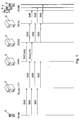
- Fig. 4
- in einer schematischen Prinzipdarstellung ein Ausführungsbeispiel einer Nachrichtenübermittlung im Rahmen einer erfindungsgemäßen Nachrichtenübermittlung mit Individualinformationen und
- Fig. 5
- in einem Flussablaufdiagramm ein Ausführungsbeispiel eines erfindungsgemäßen Dialogs zwischen einem Nachrichtensender und einem Telekommunikationsnetz zur Erfassung von Individualinformationen von Nachrichtenempfängern im Rahmen einer erfindungsgemäßen Nachrichtenübermittlung.
-
Fig. 1 zeigt das Endgerät 1 eines Nachrichtensenders 1 sowie Endgeräte 6, 7, und 8 von Nachrichtenempfängern 6, 7 und 8 in einem Telekommunikationsnetz 13, vorliegend einem Mobilfunknetz 13 gemäß einem GSM-, GPRS- und/oder UMTS-Funknetzstandard. Die Endgeräte 1, 6, 7 und 8 sind vorliegend in dem Mobilfunknetz 13 betreibbare mobile Endgeräte in Form von Mobilfunktelefonen. Ferner zeigtFig. 1 seitens des Mobilfunknetzes 13 für die Übermittlung von Nachrichten in dem beziehungsweise über das Mobilfunknetz 13 vorgesehene und eingerichtete Einrichtungen 2, 3, 4 und 5 des Mobilfunknetzes 13, vorliegend einen Router/ITP 2, eine Recheneinrichtung 3, vorliegend SMSI genannt (SMSI: SMS Interception; SMS: Short Message Service), zur Detektierung einer Gruppennachricht, eine Recheneinrichtung 4, vorliegend GCSA genannt (GCSA: GroupCom Application Server), zur Erzeugung einer Gruppierungsinformation und Versehung eines des Inhalts einer zu übermittelnden Nachrichten mit der Gruppierungsinformation und einer Vermittlungseinrichtung SMSC 5. Die Einrichtungen 2, 3, 4 und 5 können dabei als separate Einrichtungen und/oder als eine Einrichtung von einer Recheneinrichtung realisiert beziehungsweise funktionalisiert sein. - Seitens des Mobilfunktelefons 1 eines Nachrichtensenders 1 wird in bekannter Art und Weise eine mittels eines Nachrichtendienstes des Mobilfunknetzes 13, vorliegend SMS, übermittelbare Nachricht erzeugt und über das Mobilfunknetz 13 an mehrere Nachrichtenempfänger 6, 7 und 8 beziehungsweise dessen Engeräte 6, 7 und 8 gesendet. Die seitens des Mobilfunktelefons 1 des Nachrichtensenders 1 erzeugte Nachricht weist dabei für jeden Nachrichtenempfänger 6, 7 und 8 einen identischen Nachrichteninhalt und für jeden der Nachrichtenempfänger 6, 7 und 8 jeweils eine Information zur Kontaktierung des Nachrichtenempfänger 6, 7 beziehungsweise 8 in dem Mobilfunknetz 13 auf.
-
Fig. 2 undFig. 3 zeigen ein Ausführungsbeispiel einer entsprechenden Nachrichtenerzeugung seitens des Mobilfunktelefons 1 eines Nachrichtensenders 1. Dabei wird seitens des Mobilfunktelefons 1 in Verfahrensschritt 9 mittels einer seitens des Mobilfunktelefons 1 ausgeführten Editoranwendung ein Nachrichteninhalt, vorliegend "Hi guys. I want to go for lunch. What about you? Tom", erzeugt. In Verfahrensschritt 10 werden aus einer seitens des Mobilfunktelefons 1 unterhaltenen Datenbank, vorliegend einem sogenannten PhoneBook, Kontaktinformationen möglicher Nachrichtenempfänger 6, 7 und 8, vorliegend deren Rufnummern (MSISDNs) im Mobilfunknetz 13 ausgewählt. Die aus Nachrichteninhalt und der Kontaktinformation der jeweiligen Nachrichtenempfänger 6, 7 und 8 bestehenden Nachrichten werden dann in Verfahrensschritt 12 von dem Mobilfunktelefon 1 an die jeweiligen Nachrichtenempfänger 6, 7 und 8, vorliegend "Philip", "Tom" und "Anja" gesendet. Dabei übermittelt das Mobilfunktelefon 1 die Nachrichten an das Mobilfunknetz 13. -
Fig. 1 zeigt die Übermittlung der Nachrichten an die jeweiligen Nachrichtenempfänger 6, 7 und 8. Dabei sendet der Nachrichtensender 1 die Nachrichten von seinem Mobilfunktelefon 1 aus mittels des Nachrichtendienstes, vorliegend mittels SMS, an das Mobilfunknetz 13, vorliegend exemplarisch an den Router 2 des Mobilfunknetzes 13. - Seitens des Routers/ITP 2 des Mobilfunknetzes 13 werden die Nachrichten an die Nachrichtenempfänger 6, 7 und 8 im Rahmen der Nachrichtenübermittlung im Mobilfunknetz 13 an die Recheneinrichtung 3 (SMSI) zur Detektierung einer Gruppennachricht übermittelt. Seitens der Recheneinrichtung 3 (SMSI) wird anhand der empfangenen Nachrichten erkannt wird, dass der Nachrichtensender 1 vorliegend innerhalb einer vorgebbaren Dauer nacheinander drei Nachrichten an unterschiedliche Nachrichtenempfänger 6, 7 und 8 sendet. Die Recheneinrichtung 3 (SMSI) erfasst dann die Länge und/oder den Inhalt der Nachrichteninhalte der Nachrichten. Bei identischer Länge und/oder Gleichheit der Nachrichteninhalte der Nachrichten erzeugt dann eine Recheneinrichtung 4 (GCAS) eine Information zur zumindest netzwerkseitigen Gruppierung des Nachrichtensenders 1 und der Nachrichtenempfänger 6, 7 und 8. Anschließend versieht die Recheneinrichtung 4 (GCAS) die Nachrichten mit der Gruppierungsinformation. Der Gruppierungsinformation werden dabei, wie im Zusammenhang mit
Fig. 4 undFig. 5 noch näher erläutert, die Kontaktierungsinformationen der jeweiligen Nachrichtenempfänger 6, 7, 8 und des Nachrichtensenders 1 sowie Individualinformationen der jeweiligen Nachrichtenempfänger 6, 7, 8 und des Nachrichtensenders 1, wie beispielsweise der Name der jeweiligen Nachrichtenempfänger 6, 7 und 8 sowie des Nachrichtensenders 1, zugeordnet. Die mit der Gruppierungsinformation versehenen Nachrichten werden unter Nutzung der Gruppierungsinformation und der Kontaktierungsinformation der jeweiligen Nachrichtenempfänger 6, 7 und 8 von der Recheneinrichtung 4 (GCAS) an die für die Nachrichtenübermittlung mittels des Nachrichtendienstes SMS im Mobilfunknetz 13 vorgesehene und eingerichtete Vermittlungseinrichtung 5 des Mobilfunknetzes 13, vorliegend ein SMSC 5, übermittelt. Von dem SMSC 5 des Mobilfunknetzes 13 werden die Nachrichten dann mit der Gruppierungsinformation an die Mobilfunktelefone 6, 7 und 8 der Nachrichtenempfänger 6, 7 und 8 weitergeleitet. - Die Gruppierungsinformation ist vorliegend eine Rufnummer MSISDN im Mobilfunknetz 13, welche das Mobilfunknetz 13 zur Verfügung stellt und die von auf die Nachricht antwortenden Nachrichtenempfängern 6, 7 oder 8 als zur Kontaktierung des Nachrichtensenders 1 und/oder anderer Nachrichtenempfänger 6, 7 oder 8 im Mobilfunknetz 13 nutzbar ist. Vorteilhafterweise ist ferner wenigstens ein Teil der Individualinformation eines Nachrichtenempfängers 6, 7, 8 und/oder des Nachrichtensenders 1 als Kontaktierungsinformation des Nachrichtenempfängers 6, 7, 8 und des Nachrichtensenders 1 nutzbar, insbesondere nach Erfassung der Individualinformationen von Nachrichtenempfängern 6, 7, 8 beziehungsweise des Nachrichtensenders 1 entsprechend dem in
Fig. 4 undFig. 5 dargestellten Dialogen zur Erfassung von Individualinformationen der jeweiligen Nachrichtenempfänger 6, 7, 8 beziehungsweise des Nachrichtensenders 1. Die Nachrichtenübermittlung unter Nutzung der Gruppierungsinformation bewirkt dabei eine gebührenreduzierte Abrechnung von Nutzungen des Nachrichtendienstes SMS des Mobilfunknetzes 13. Vorteilhafterweise wird dabei mit und/oder durch die Nutzung der Gruppierungsinformation eine entsprechende Abrechnungsinformation in dem sogenannten CDR (CDR: Call Detail Record) des Mobilfunknetzes für die Rufnummern (MSISDNs) der beteiligten Gruppenkommunikationspartner 1, 6, 7 und 8 gesetzt beziehungsweise aktiviert. -
Fig. 2 zeigt einen Dialog zwischen dem Mobilfunktelefon 1 und dem Mobilfunknetz 13 zur Aktivierung der Gruppenkommunikationsfunktionalität. Dabei sendet das Mobilfunknetz 13 an das Mobilfunktelefon 1 bei mobilfunknetzseitiger Detektierung einer zu übermittelnden Gruppennachricht durch die Recheneinrichtung 3 (SMSI) des Mobilfunknetzes 13 automatisch eine Nachricht, vorliegend "Hello. We discovered that you have sent a SMS to a group. Would you like to use ors SMS group function and save up to 30%? Replay with YES (for free) for more info. Your Provider Team", an das Mobilfunktelefon 1 zur Aktivierungsauswahl, wie inFig. 2 durch den mit 14 gekennzeichneten Verfahrensschritt dargestellt. -
Fig. 3 zeigt in Verfahrensschritt 15 den Empfang der mit der Gruppierungsinformation versehenen übermittelten Nachricht des Nachrichtensenders 1 ("Kevin"), vorliegend "From Kevin Example Hi guys. I want to go for lunch. What about you? Tom Reply goes to all!" seitens der jeweiligen Nachrichtenempfänger 6, 7 und 8. Auf die Nachricht können die Nachrichtenempfänger 6, 7 und 8 unter Nutzung der Gruppierungsinformation an die Kommunikationspartnern, also dem Nachrichtensender 1 und den Nachrichtenempfängern 6, 7 oder 8, antworten und die so von dem Mobilfunknetz 13 angebotene Gruppierungsfunktionalität nutzen. - Die erfindungsgemäße Gruppierung ist vorliegend über zwei unterschiedliche Prozesse einleitbar. Zum einen wird bei einem Versenden einer Nachricht mittels des Nachrichtendienstes des Telekommunikationsnetzes, vorliegend einer SMS-Nachricht, an verschiedene Nachrichtenempfänger von einer netzwerkseitig in die Nachrichtenübermittlung dazwischen geschaltete Recheneinrichtung, vorliegend vorzugsweise einem Server, erkannt, dass es sich hierbei um eine an eine Gruppe gerichtete Nachricht (SMS) handelt. Die Nummern der Nachrichtenempfänger und des Nachrichtensenders werden automatisch zusammengefasst und zu einer Gruppe ausgebildet, wobei die Gruppe zur eindeutigen Identifizierung eine als Gruppierungsinformation genutzte Mobilfunkrufnummer, eine sogenannte Gruppenrufnummer, erhält. Mittels dieser Mobilfunknummer (Gruppenrufnummer) ist dann eine eindeutige Zuordnung zu den Gruppenmitgliedern ermöglicht. Neben einer automatischen Gruppeninitiierung via SMS ist es ferner ermöglicht, eine Gruppe mit Hilfe eines Computerprogramms, welches Zugriff auf den Gruppenserver gestattet, zu bilden. Im Rahmen dieser Gruppierungsmöglichkeit können äußerst komfortabel Gruppenmitglieder mit ihren Mobilfunknummern eingegeben und unter einem Stichwort für eine spätere Verwendung gespeichert werden.
-
Fig. 4 zeigt die im Zusammenhang mitFig. 1 ,Fig. 2 undFig. 3 näher erläuterte Nachrichtenübermittlung im Zusammenhang mit einer erfindungsgemäßen Erfassung, Zuordnung und Nutzung von Individualinformationen. - In Verfahrensschritt 17 wird anhand der seitens der Recheneinrichtungen 3, 4 des Telekommunikationsnetzes 13 von dem Nachrichtensender 1 empfangenen Nachrichten erkannt, dass der Nachrichtensender 1 innerhalb einer vorgebbaren Dauer nacheinander eine Nachricht mit identischer Länge und/oder gleichem Nachrichteninhalt an drei Nachrichtenempfänger 6, 7 und 8 senden möchte. In Verfahrensschritt 18 sendet die Recheneinrichtung 3 beziehungsweise 4 über das Telekommunikationsnetz 13 eine Nachricht an den Nachrichtensender 1 mit dem Hinweis das die Möglichkeit einer Gruppennachrichtenversendung detektiert wurde und bittet um Bestätigung beziehungsweise Aktivierungsauswahl bezüglich einer erfindungsgemäßen Gruppierung. In Verfahrensschritt 19 sendet der Nachrichtensender 1 eine entsprechende Aktivierungsauswahl für eine erfindungsgemäße Gruppennachrichtenversendung über das Telekommunikationsnetz 13 an die Recheneinrichtung 3 beziehungsweise 4.
- Bei erfolgter Aktivierungsauswahl entsprechend Verfahrensschritt 19 wird in dem mit dem Bezugszeichen 21 gekennzeichneten Verfahrensschritt von der Recheneinrichtung 3 beziehungsweise 4 eine Anfrage nach dem Vorhandensein von Individualinformationen, vorliegend insbesondere einem Namen, für die jeweils als Kontaktierungsinformation genutzte Rufnummer (MSISDN) der für die Gruppennachricht vorgesehenen Nachrichtenempfänger 6, 7 und 8 und/oder des Nachrichtensenders 1 an eine Recheneinrichtung 16 des Telekommunikationsnetzes 13, vorliegend einem HAB Server 16, gerichtet, welche eine Datenbank mit Individualinformationen verwaltet. Bei Vorhandensein von entsprechenden Individualinformationen werden diese der Recheneinrichtung 3 beziehungsweise 4 mitgeteilt und der Gruppierungsinformation zugeordnet.
- Die Individualinformationen werden seitens der Recheneinrichtung 16 beziehungsweise seitens der von der Recheneinrichtung 16 verwalteten Datenbank über den in
Fig. 4 mit dem Bezugszeichen 20 gekennzeichneten Verfahrensschritt erfasst. Dabei kann der Nachrichtensender 1 zum einen die von ihm für eine Nachrichtenübermittlung mit der Gruppenfunktionalität zu verwendenden Individualinformationen manuell über sein Endgerät 1 eingeben und seitens der Recheneinrichtung 16 beziehungsweise seitens der von der Recheneinrichtung 16 verwalteten Datenbank speichern oder aber die entsprechenden Individualinformationen aus einer dazu vorgesehenen Datenbank seitens des Endgerätes 1 des Nachrichtensenders 1 entnehmen und an die Recheneinrichtung 16 übertragen. Im vorliegenden Fall ist die Datenbank seitens des Endgerätes 1 des Nachrichtensenders 1 eine von dem Endgerät 1 im Zusammenhang mit einer sogenannten Adressbuchfunktionalität (address book) genutzte Datenbank. Die Eingabe der Individualinformationen in dem Erfassungsschritt 20 kann auf Aufforderung von dem Telekommunikationsnetz 13 als auch selbstständig auf Verlangen durch den Nachrichtensender 1 erfolgen. Weitere Details bezüglich der Erfassung von Individualinformationen werden im Zusammenhang mit dem Ausführungsbeispiel gemäßFig. 5 näher erläutert. - Die der Gruppierungsinformation in Verfahrensschritt 21 zugeordneten Individualinformationen sind vorliegend dann im Rahmen einer weiteren Nachrichtenübermittlung 22, 22' und 22" als Kontaktierungsinformationen für die Übermittlung der Nachricht 23 an die jeweiligen Nachrichtenempfänger 6, 7 und 8 nutzbar. Dementsprechend sind vorliegend insbesondere die als Individualinformationen zu den jeweiligen Kontaktierungsinformationen (MSISDNs) der Nachrichtenempfänger 6, 7 und 8, erfassten Namen "Chris" (Nachrichtenempfänger 6), "Tom" (Nachrichtenempfänger 7) und "Jim" (Nachrichtenempfänger 8) als Kontaktierungsinformation für eine weitere Nachrichtenübermittlung nutzbar.
- Das Flussablaufdiagramm gemäß
Fig. 5 zeigt die Erfassung von Individualinformationen von Nachrichtenempfängern im Rahmen einer erfindungsgemäßen Nachrichtenübermittlung. In Verfahrensschritt 24 ist seitens des Telekommunikationsnetzes 13 die erfindungsgemäße Versendung einer Gruppennachricht detektiert. Daraufhin wird in Verfahrensschritt 25 eine Anfrage nach seitens des Telekommunikationsnetzes 13 zu den Kontaktierungsinformationen der Nachrichtenempfänger 6, 7 und 8 der zu versendenden Gruppennachricht, also zu den MSISDNs der der Nachrichtenempfänger 6, 7 und 8 mit und/oder für die Gruppennachricht weiter zu verwendende Individualinformationen, vorliegend insbesondere ein Name der Nachrichtenempfänger 6, 7 und 8 sowie des Nachrichtensenders 1, gestartet. In Verfahrensschritt 26 erfolgt eine entsprechende Überprüfung bezüglich des Vorhandenseins von Individualinformationen. - Sind entsprechende Individualinformationen zu den Kontaktierungsinformationen der Nachrichtenempfänger 6, 7 und 8 sowie dem Nachrichtensender 1 der zu versendenden Gruppennachricht seitens des Telekommunikationsnetzes 13 vorhanden, werden diese in Verfahrensschritt 27 mit einer Antwortnachricht der beziehungsweise den für die Übermittlung der Gruppennachricht vorgesehenen Einrichtungen 3, 4 des Telekommunikationsnetzes 13 mitgeteilt und in Verfahrensschritt 28 in die zu versendende Gruppennachricht eingefügt.
- Sind entsprechende Individualinformationen zu den Kontaktierungsinformationen der Nachrichtenempfänger 6, 7 und 8 sowie dem Nachrichtensender 1 der zu versendenden Gruppennachricht seitens des Telekommunikationsnetzes 13 nicht vorhanden, wird selbiges in Verfahrensschritt 29 durch eine entsprechende Antwort detektiert und eine Erfassung von Individualinformationen zu den Kontaktierungsinformationen der Nachrichtenempfänger 6, 7 und 8 und des Nachrichtensenders 1 der zu versendenden Gruppennachricht eingeleitet.
- In Verfahrensschritt 30 wird zur Erfassung von Individualinformationen zu den Kontaktierungsinformationen der Nachrichtenempfänger 6, 7 und 8 sowie des Nachrichtensenders 1 der zu versendenden Gruppennachricht über das Telekommunikationsnetz 13 an den Nachrichtensender 1 eine Nachricht, vorliegend eine sogenannte Push message mittels SMS, gesendet, mit welcher dem Nachrichtensender 1 in Verfahrensschritt 31 die Möglichkeit angeboten wird, entsprechende Individualinformationen automatisch aus einer Datenbank seitens seines Endgerätes 1, vorliegend vorteilhafterweise eine im Zusammenhang mit einer sogenannten Adressbuchfunktionalität (address book) genutzte Datenbank, übernehmen zu lassen. Lehnt der Nachrichtensender 1 diese Möglichkeit ab, so wird er in Verfahrensschritt 32 mit einer Nachricht darüber informiert, dass eine Erfassung von Individualinformationen zu den Kontaktierungsinformationen der Nachrichtenempfänger 6, 7 und 8 der zu versendenden Gruppennachricht nicht erfolgen konnte. Nimmt der Nachrichtensender 1 diese Möglichkeit an, so werden in Verfahrensschritt 33 entsprechende Individualinformationen zu den Kontaktierungsinformationen der Nachrichtenempfänger 6, 7 und 8 der zu versendenden Gruppennachricht automatisch aus der Datenbank seitens des Endgerätes 1 übernommen. Entsprechend übernommene Individualinformationen werden dann im Rahmen der weiteren Nachrichtenübermittlung verwendet.
- In Verfahrensschritt 34 wird zur Erfassung von Individualinformationen zu den Kontaktierungsinformationen der Nachrichtenempfänger 6, 7 und 8 der zu versendenden Gruppennachricht über das Telekommunikationsnetz 13 an den Nachrichtensender 1 eine Nachricht, vorliegend eine sogenannte Push message mittels SMS, gesendet. Mit der Nachricht wird dem Nachrichtensender 1 mitgeteilt, dass er entsprechende Individualinformationen nunmehr manuell eingeben kann. In Verfahrensschritt 35 wird überprüft, ob innerhalb einer vorgebbaren Zeitdauer eine entsprechende manuelle Eingabe erfolgt.
- Erfolgt innerhalb der vorliegend von dem Telkommunikationsnetz 13 vorgebbaren Zeitdauer keine manuelle Eingabe, wird in Verfahrensschritt 36 festgehalten, dass zu den entsprechenden Kontaktierungsinformationen der Nachrichtenempfänger 6, 7 und 8 sowie dem Nachrichtensender 1 keine Individualinformation eingegeben wurde. Die Nachrichtenübermittlung wird dann ohne eine entsprechende Individualinformation fortgesetzt.
- Erfolgt innerhalb der vorliegend von dem Telkommunikationsnetz 13 vorgebbaren Zeitdauer eine manuelle Eingabe, wird in Verfahrensschritt 37 von dem Nachrichtensender 1 eine entsprechende Individualinformationen zu den entsprechenden Kontaktierungsinformationen der jeweiligen Nachrichtenempfänger 6, 7 und 8 sowie des Nachrichtensenders 1 aufweisende Nachricht an das Telekommunikationsnetz 13 übertragen. Entsprechend erfasste Individualinformationen werden dann in Verfahrensschritt 38 in die Gruppennachricht eingefügt beziehungsweise der Gruppennachricht zugefügt und im Rahmen der Nachrichtenübermittlung weiter verwendet.
- Die in den Figuren der Zeichnung dargestellten und in Zusammenhang mit diesen beschriebenen Ausführungsbeispiele der Erfindung dienen lediglich der Erläuterung der Erfindung und sind für diese nicht beschränkend.
-
- 1
- Nachrichtensender/Endgerät
- 2
- Telekommunikationsnetz/Router (ITP)
- 3
- Telekommunikationsnetz/SMSI
- 4
- Telekommunikationsnetz/GCAS
- 5
- Telekommunikationsnetz/SMSC
- 6
- Nachrichtenempfänger/Endgerät
- 7
- Nachrichtenempfänger/Endgerät
- 8
- Nachrichtenempfänger/Endgerät
- 9
- Verfahrensschritt/Editieren Nachrichteninhalt
- 10
- Verfahrensschritt/Auswahl Nachrichtenempfänger
- 12
- Verfahrensschritt/Nachrichtenübermittlung
- 13
- Telekommunikationsnetz
- 14
- Verfahrensschritt/Dialog (Einladung zur Gruppenfunktionalität)
- 15
- Verfahrensschritt/Nachrichtenempfang
- 16
- Recheneinrichtung/Server (HAB Server)
- 17
- Verfahrensschritt Initiierung Gruppennachricht (Initial Implicit Group SMS)
- 18
- Verfahrensschritt Anforderung Bestätigung Gruppennachricht (Request for Confirmation)
- 19
- Verfahrensschritt Bestätigung Gruppennachricht (Confirmation Message)
- 20
- Verfahrensschritt Synchronisation Individualinformationen (Synchronisation of address book)
- 21
- Verfahrensschritt Anforderung Individualinformationen (Request of address book entries for MSISDN's)
- 22
- Verfahrensschritt/Nachrichtenübermittlung
- 22'
- Verfahrensschritt/Nachrichtenübermittlung
- 22"
- Verfahrensschritt/Nachrichtenübermittlung
- 23
- Nachricht
- 24
- Verfahrensschritt Detektierung Gruppennachricht (Group SMS detection)
- 25
- Verfahrensschritt Anforderung Übereinstimmung Individualinformationen (Request of MSISDN/name matching)
- 26
- Verfahrensschritt Übereinstimmungsüberprüfung (Match?)
- 27
- Verfahrensschritt Antwort/Bestimmung Individualinformationen (Reply: First Name, Last Name, email:, Address:)
- 28
- Verfahrensschritt Einfügung Individualinformationen in Gruppennachricht (Integration of information into Group SMS)
- 29
- Verfahrensschritt Erfassung/Ermittlung Individualinformationen (Return negative MSISDN/name matching)
- 30
- Verfahrensschritt Erfassung/Ermittlung Individualinformationen aus Datenbank (Prepare push message (SMS) to A-Party (initial message for phone address-book synchronisation)
- 31
- Verfahrensschritt Auswahl/Entscheidung
- 32
- Verfahrensschritt Mitteilung keine Individualinformationen (Inform user that MSISDN/name matching can not be executed)
- 33
- Verfahrensschritt Übermittlung Individualinformationen aus Datenbank (Execute synchronisation according to mobile device)
- 34
- Verfahrensschritt Erfassung/Ermittlung Individualinformationen durch manuelle Eingaben (Prepare push message (SMS) to A-Party (request for manual MSISDN/name matching)
- 35
- Verfahrensschritt zeitlich bedingte Eingabenerfassung (Reply <1 min)
- 36
- Verfahrensschritt keine Individualinformationen einfügbar (No name to include for this MSISDN)
- 37
- Verfahrensschritt Antwort/Eingabe angeforderte Individualinformationen (Reply: Requested Name for MSISDN)
- 38
- Verfahrensschritt Einfügung Individualinformationen in Gruppennachricht (Insert Name into Group SMS)
Claims (23)
- Verfahren zur Übermittlung von Nachrichten in Telekommunikationsnetzen (13),
vorzugsweise Mobilfunknetzen (13) gemäß einem GSM-, GPRS- und/oder UMTS-Funknetzstandard,
mittels eines Nachrichtendienstes eines Telekommunikationsnetzes (13),
wobei
seitens wenigstens eines
an der Nachrichtenübermittlung beteiligten Netzknotens des Telekommunikationsnetzes (13)
für jeden Nachrichtenempfänger (6, 7, 8) einer
einen Nachrichteninhalt und
wenigstens eine Information zur Kontaktierung des Nachrichtenempfängers (6, 7, 8) in einem Telekommunikationsnetz (13) aufweisende Nachricht
empfangen wird,
dadurch gekennzeichnet,
dass
seitens des Netzknotens anhand der empfangenen Nachrichten erkannt wird, dass ein Nachrichtensender (1) innerhalb einer vorgebbaren Dauer nacheinander wenigstens zwei Nachrichten an unterschiedliche Nachrichtenempfänger (6, 7, 8) sendet,
die Länge und/oder der Inhalt der Nachrichteninhalte der Nachrichten erfasst wird,
bei identischer Länge und/oder Gleichheit der Nachrichteninhalte
eine Information zur zumindest netzwerkseitigen Gruppierung des Nachrichtensenders (1) und der Nachrichtenempfänger (6, 7, 8) erzeugt wird,
der Gruppierungsinformation die Kontaktierungsinformationen der jeweiligen Nachrichtenempfänger (6, 7, 8) und/oder Nachrichtensender (1) sowie Individualinformationen der jeweiligen Nachrichtenempfänger (6, 7, 8) und/oder Nachrichtensender (1) zugeordnet werden,
die Nachrichten mit der Gruppierungsinformation versehen werden und
die Nachrichten unter Nutzung der Gruppierungsinformation und zumindest der Kontaktierungsinformation der jeweiligen Nachrichtenempfänger (6, 7, 8) und/oder Nachrichtensender (1) an die Nachrichtenempfänger (6, 7, 8) weitergeleitet werden. - Verfahren nach Anspruch 1, gekennzeichnet durch einen zwischen dem Telekommunikationsnetzwerk (13) und dem Nachrichtensender (1) im Rahmen der Informationszuordnung erfolgenden Dialog zur Erfassung von Individualinformationen der jeweiligen Nachrichtenempfänger (6, 7, 8).
- Verfahren nach Anspruch 2, dadurch gekennzeichnet, dass im Rahmen des Dialogs zur Erfassung von Individualinformationen der jeweiligen Nachrichtenempfänger (6, 7, 8) die Individualinformationen der jeweiligen Nachrichtenempfänger (6, 7, 8) von dem Nachrichtensender (1) manuell eingegeben und/oder aus einer von dem Nachrichtensender (1) genutzten Datenbank übernommen werden.
- Verfahren nach Anspruch 2 oder Anspruch 3, dadurch gekennzeichnet, dass der Dialog zur Erfassung von Individualinformationen der jeweiligen Nachrichtenempfänger (6, 7, 8) mittels eines Nachrichtendienstes des Telekommunikationsnetzes (13) erfolgt.
- Verfahren nach einem der Ansprüche 1 bis 4, dadurch gekennzeichnet, dass die Individualinformation des jeweiligen Nachrichtenempfängers (6, 7, 8) wenigstens einen Namen des jeweiligen Nachrichtenempfängers (6, 7, 8) aufweist.
- Verfahren nach einem der Ansprüche 1 bis 5, dadurch gekennzeichnet, dass die Informationszuordnung seitens einer Datenbank des Netzknotens und/oder seitens einer über den Netzknoten erreichbaren Datenbank des Telekommunikationsnetzes (13) erfolgt.
- Verfahren nach einem der Ansprüche 1 bis 6, dadurch gekennzeichnet, dass die Nachrichten unter Nutzung der Gruppierungsinformation, der Kontaktierungsinformation der jeweiligen Nachrichtenempfänger (6, 7, 8) und/oder Nachrichtensender (1) sowie der Individualinformation der jeweiligen Nachrichtenempfänger (6, 7, 8) und/oder Nachrichtensender (1) an die Nachrichtenempfänger (6, 7, 8) weitergeleitet werden.
- Verfahren nach einem der Ansprüche 1 bis 7, dadurch gekennzeichnet, dass wenigstens ein Teil der Individualinformation eines Nachrichtenempfängers (6, 7, 8) und/oder eines Nachrichtensenders (1) als Kontaktierungsinformation des Nachrichtenempfängers (6, 7, 8) und/oder des Nachrichtensenders (1) genutzt wird.
- Verfahren nach einem der Ansprüche 1 bis 8, dadurch gekennzeichnet, dass der Nachrichteninhalt mit der Gruppierungsinformation versehen wird.
- Verfahren nach einem der Ansprüche 1 bis 9, dadurch gekennzeichnet, dass die Kontaktinformation des jeweiligen Nachrichtenempfängers (6, 7, 8) mit der Gruppierungsinformation versehen wird.
- Verfahren nach einem der Ansprüche 1 bis 10, gekennzeichnet durch eine Nutzung der Gruppierungsinformation als Information zur Kontaktierung des Nachrichtensenders (1) im Telekommunikationsnetz (13).
- Verfahren nach einem der Ansprüche 1 bis 11, gekennzeichnet durch eine Nutzung der Gruppierungsinformation von auf die Nachricht antwortenden Nachrichtenempfängern (6, 7, 8) als Information zur Kontaktierung des Nachrichtensenders (1) und/oder anderer Nachrichtenempfänger (6, 7, 8) im Telekommunikationsnetz (13).
- Verfahren nach einem der Ansprüche 1 bis 12, dadurch gekennzeichnet, dass die Gruppierungsinformation eine Rufnummer (MSISDN) im Telekommunikationsnetz (13) ist.
- Verfahren nach einem der Ansprüche 1 bis 12, gekennzeichnet durch eine Nutzung der Gruppierungsinformation zur Abrechnung von Nutzungen des Nachrichtendienstes des Telekommunikationsnetzes (13), vorzugsweise für eine gebührenreduzierte Abrechnung von Nutzungen des Nachrichtendienstes des Telekommunikationsnetzes (13).
- Verfahren nach einem der Ansprüche 1 bis 14, gekennzeichnet durch einen vor der Erzeugung der Gruppierungsinformation zwischen dem Telekommunikationsnetzwerk (13) und dem Nachrichtensender (1) erfolgenden Dialog zur Aktivierung beziehungsweise Ablehnung der Gruppierung.
- Verfahren nach Anspruch 15, dadurch gekennzeichnet, dass der Dialog mittels eines Nachrichtendienstes des Telekommunikationsnetzes (13) erfolgt.
- Verfahren nach einem der Ansprüche 1 bis 16, gekennzeichnet, durch einen Kurzmitteilungsdienst (SMS) als Nachrichtendienst des Telekommunikationsnetzes (13).
- Verfahren nach einem der Ansprüche 1 bis 17, gekennzeichnet durch die Nutzung eines in einem Telekommunikationsnetz (13) betreibbaren Endgerätes (1, 6, 7, 8), vorzugsweise in Form eines in einem Mobilfunknetz (13) betreibbaren mobilen Endgerätes (1, 6, 7, 8), seitens des Nachrichtensenders (1) und/oder der Nachrichtenempfänger (6, 7, 8).
- Netzknoten in einem Telekommunikationsnetz (13),
vorzugsweise einem Mobilfunknetz gemäß einem GSM-, GPRS- und/oder UMTS-Funknetzstandard,
welcher
an der Übermittlung von Nachrichten in dem Telekommunikationsnetz (13) mittels eines Nachrichtendienstes des Telekommunikationsnetzes (13) beteiligt ist und
wenigstens eine Einheit zum Empfangen von
einen Nachrichteninhalt und
wenigstens eine Information zur Kontaktierung eines Nachrichtenempfängers in einem Telekommunikationsnetz (13) aufweisenden
Nachrichten aufweist,
gekennzeichnet durch,
wenigstens eine Einheit zur Erkennung, dass ein Nachrichtensender (1) innerhalb einer vorgebbaren Dauer nacheinander wenigstens zwei Nachrichten an unterschiedliche Nachrichtenempfänger (6, 7, 8) sendet,
wenigstens eine Einheit zur Erfassung der Länge und/oder des Inhalts der der Nachrichteninhalte der Nachrichten,
wenigstens einer Einheit zum Vergleichen der Länge und/oder der Gleichheit der Nachrichteninhalte,
wenigstens einer Einheit zum Erzeugen einer Information zur zumindest netzwerkseitigen Gruppierung des Nachrichtensenders (1) und der Nachrichtenempfänger (6, 7, 8), bei identischer Länge und/oder Gleichheit der Nachrichteninhalte,
wenigstens einer Einheit zum Zuordnen von Kontaktierungsinformationen der jeweiligen Nachrichtenempfänger (6, 7, 8) und/oder Nachrichtensender (1) sowie Individualinformationen der jeweiligen Nachrichtenempfänger (6, 7, 8) und/oder Nachrichtensender (1) zu der Gruppierungsinformation,
einer Einheit zum Versehen der Nachrichten mit der Gruppierungsinformation und
wenigstens einer Einheit zum Weiterleiten der Nachrichten unter Nutzung der Gruppierungsinformation und zumindest der Kontaktierungsinformation der jeweiligen Nachrichtenempfänger (6, 7, 8) und/oder Nachrichtensender (1) an die Nachrichtenempfänger (6, 7, 8). - Netzknoten nach Anspruch 19, dadurch gekennzeichnet, dass dieser ausgebildet und/oder eingerichtet ist, ein Verfahren nach einem der Ansprüche 1 bis 18 zumindest teilweise auszuführen.
- Netzknoten in einem Telekommunikationsnetz (13),
vorzugsweise einem Mobilfunknetz (13) gemäß einem GSM-, GPRS- und/oder UMTS-Funknetzstandard,
welcher
an der Übermittlung von Nachrichten in dem Telekommunikationsnetz (13) mittels eines Nachrichtendienstes des Telekommunikationsnetzes (13)
beteiligt ist,
dadurch gekennzeichnet, dass
dieser ausgebildet und/oder eingerichtet ist, ein Verfahren nach einem der Ansprüche 1 bis 18 zumindest teilweise auszuführen. - Netzknoten nach einem der Ansprüche 19 bis 21, dadurch gekennzeichnet, dass dieser eine Vermittlungseinrichtung (SMSC) für den Nachrichtendienst des Telekommunikationsnetzes (13) ist.
- Netzknoten nach einem der Ansprüche 19 bis 22, dadurch gekennzeichnet, dass dieser eine Servereinrichtung für den Nachrichtendienst des Telekommunikationsnetzes (13) ist.
Applications Claiming Priority (1)
| Application Number | Priority Date | Filing Date | Title |
|---|---|---|---|
| DE102007038014A DE102007038014B4 (de) | 2007-08-10 | 2007-08-10 | Übermittlung von Nachrichten in Telekommunikationsnetzen |
Publications (3)
| Publication Number | Publication Date |
|---|---|
| EP2023677A2 true EP2023677A2 (de) | 2009-02-11 |
| EP2023677A3 EP2023677A3 (de) | 2011-12-14 |
| EP2023677B1 EP2023677B1 (de) | 2013-01-16 |
Family
ID=40070590
Family Applications (1)
| Application Number | Title | Priority Date | Filing Date |
|---|---|---|---|
| EP08014049A Not-in-force EP2023677B1 (de) | 2007-08-10 | 2008-08-06 | Verfahren und Vorrichtung zur Übermittlung von Nachrichten in Telekommunikationsnetzen |
Country Status (3)
| Country | Link |
|---|---|
| EP (1) | EP2023677B1 (de) |
| DE (1) | DE102007038014B4 (de) |
| ES (1) | ES2399151T3 (de) |
Citations (4)
| Publication number | Priority date | Publication date | Assignee | Title |
|---|---|---|---|---|
| WO2002060199A1 (en) | 2000-12-29 | 2002-08-01 | Elisa Communications Oyj | Method for implementing a messaging service by means of a telephone network |
| US20020110225A1 (en) | 2001-01-02 | 2002-08-15 | Gary Cullis | Address book for a voice message delivery method and system |
| US20040122838A1 (en) | 2002-12-18 | 2004-06-24 | International Business Machines Corporation | Method, system and program product for transmitting electronic communications using implicitly formed contact groups |
| EP1732334A2 (de) | 2005-06-10 | 2006-12-13 | Vodafone AG | Vermittlungseinrichtung und Vermittlungsverfahren für Nachrichtenübermittlung über ein Telekommunikationsnetzwerk |
Family Cites Families (3)
| Publication number | Priority date | Publication date | Assignee | Title |
|---|---|---|---|---|
| GB2317073B (en) * | 1996-09-05 | 2001-04-04 | Orange Personal Comm Serv Ltd | Mobile communications |
| EP1333693A1 (de) * | 2002-02-04 | 2003-08-06 | Koninklijke KPN N.V. | Verfahren und System zur Nachrichtenübertragung an Endgerätegruppen |
| KR100799559B1 (ko) * | 2005-11-18 | 2008-01-31 | 한국전자통신연구원 | 단문 메시지 전송 서비스 시스템 및 그 방법 |
-
2007
- 2007-08-10 DE DE102007038014A patent/DE102007038014B4/de not_active Expired - Fee Related
-
2008
- 2008-08-06 EP EP08014049A patent/EP2023677B1/de not_active Not-in-force
- 2008-08-06 ES ES08014049T patent/ES2399151T3/es active Active
Patent Citations (4)
| Publication number | Priority date | Publication date | Assignee | Title |
|---|---|---|---|---|
| WO2002060199A1 (en) | 2000-12-29 | 2002-08-01 | Elisa Communications Oyj | Method for implementing a messaging service by means of a telephone network |
| US20020110225A1 (en) | 2001-01-02 | 2002-08-15 | Gary Cullis | Address book for a voice message delivery method and system |
| US20040122838A1 (en) | 2002-12-18 | 2004-06-24 | International Business Machines Corporation | Method, system and program product for transmitting electronic communications using implicitly formed contact groups |
| EP1732334A2 (de) | 2005-06-10 | 2006-12-13 | Vodafone AG | Vermittlungseinrichtung und Vermittlungsverfahren für Nachrichtenübermittlung über ein Telekommunikationsnetzwerk |
Also Published As
| Publication number | Publication date |
|---|---|
| DE102007038014A1 (de) | 2009-04-02 |
| ES2399151T3 (es) | 2013-03-26 |
| DE102007038014B4 (de) | 2009-06-10 |
| EP2023677A3 (de) | 2011-12-14 |
| EP2023677B1 (de) | 2013-01-16 |
Similar Documents
| Publication | Publication Date | Title |
|---|---|---|
| DE602004003558T2 (de) | Verfahren und Vorrichtung zur Erzeugung einer dynamischen Gruppe - Adresse | |
| DE102009030219A1 (de) | Verfahren zur Übertragung einer elektronischen Kurznachricht an mehrere Empfänger | |
| DE60318838T2 (de) | Verfahren und Vorrichtung zum Bereitstellen von Nachrichten in den Posteingangsdienst einer Dienstnachricht | |
| DE102007049025B4 (de) | Konfiguration von Endgeräten in Mobilfunknetzen | |
| DE60033191T2 (de) | Abrechnungssystem für ein system zur sofortigen nachrichtenübermittlung | |
| DE102006001503B4 (de) | Verfahren und System zum Übermitteln von Zusatzdaten | |
| EP2023677B1 (de) | Verfahren und Vorrichtung zur Übermittlung von Nachrichten in Telekommunikationsnetzen | |
| EP1959694B1 (de) | Verfahren und Vorrichtung zur Übermittlung von Nachrichten in Telekommunikationsnetzen | |
| EP2063591B1 (de) | Verfahren und Vorrichtung zur Übermittlung von Nachrichten in Telekommunikationsnetzen | |
| EP2063673B1 (de) | Gruppenkommunikation in Telekommunikationsnetzen | |
| DE102007009801A1 (de) | Übertragung von Medienobjekten zwischen Kommunikationspartnern in Kommunikationsnetzen | |
| DE102007008952A1 (de) | Übermittlung von Nachrichten in Telekommunikationsnetzen | |
| EP1919167B1 (de) | Übermittlung von Nachrichten in einem Telekommunikationsnetz | |
| EP2107743B1 (de) | Verfahren und Vorrichtung zur Einrichtung eines Benutzerkontos | |
| WO2003096652A2 (de) | Adressierverfahren zum bidirektionalen versand von elektronischen nachrichten | |
| EP1873987B1 (de) | Verfahren zum Managen von Nachrichten zwischen zumindest zwei Teilnehmern | |
| EP1424830B1 (de) | Verfahren zum Bereitstellen von Präsenzinformationen mindestens einer Kommunikationseinheit auf mindestens einem Präsenzserver, zugehörige Kommunikationseinheit, Präsenzserver sowie Kommunikationsnetz | |
| DE102007047281A1 (de) | Verfahren zum Übertragen von Nachrichten mittels Multimedia Message Service (MMS) | |
| DE102005053914B9 (de) | Kommunikationssystem, Verfahren zum Betreiben eines Kommunikationssystems, Server-Einheit, Verfahren zum Betreiben einer Server-Einheit, Kommunikationsdienst-Client-Einheit und Verfahren zum Betreiben einer Kommunikationsdienst-Client-Einheit | |
| DE10131876B4 (de) | Verfahren zur teilnehmerindividuellen Informations- und Datenverwaltung in Telekommunikationsnetzen | |
| DE602004006989T2 (de) | System und Verfahren zur Nutzung einer ersten Kommunikation über ein erstes Kommunikationsmittel zum Herstellen einer zweiten Kommunikation über ein zweites Kommunikationsmittel | |
| EP1641303A1 (de) | Nutzung von Presence-Informationen (Statusinformationen) zur Erweiterung einer bestehenden Kommunikationsverbindung | |
| EP1732334A2 (de) | Vermittlungseinrichtung und Vermittlungsverfahren für Nachrichtenübermittlung über ein Telekommunikationsnetzwerk | |
| DE102006017848A1 (de) | Verfahren zum Vermitteln von Nachrichten in einem Kommunikationsnetzwerk, System hierfür, sowie Datenträger und Verwendung des Datenträgers in einem System zum Vermitteln von Nachrichten in einem Kommunikationsnetzwerk | |
| EP2348695A2 (de) | Erfassung einer Kennung eines Kommunikationsteilnehmers in einem Kommunikationsendgerät |
Legal Events
| Date | Code | Title | Description |
|---|---|---|---|
| PUAI | Public reference made under article 153(3) epc to a published international application that has entered the european phase |
Free format text: ORIGINAL CODE: 0009012 |
|
| AK | Designated contracting states |
Kind code of ref document: A2 Designated state(s): AT BE BG CH CY CZ DE DK EE ES FI FR GB GR HR HU IE IS IT LI LT LU LV MC MT NL NO PL PT RO SE SI SK TR |
|
| AX | Request for extension of the european patent |
Extension state: AL BA MK RS |
|
| PUAL | Search report despatched |
Free format text: ORIGINAL CODE: 0009013 |
|
| AK | Designated contracting states |
Kind code of ref document: A3 Designated state(s): AT BE BG CH CY CZ DE DK EE ES FI FR GB GR HR HU IE IS IT LI LT LU LV MC MT NL NO PL PT RO SE SI SK TR |
|
| AX | Request for extension of the european patent |
Extension state: AL BA MK RS |
|
| RIC1 | Information provided on ipc code assigned before grant |
Ipc: H04L 12/58 20060101AFI20111104BHEP Ipc: H04W 4/14 20090101ALI20111104BHEP Ipc: H04L 29/12 20060101ALI20111104BHEP |
|
| REG | Reference to a national code |
Ref country code: DE Ref legal event code: R079 Ref document number: 502008009111 Country of ref document: DE Free format text: PREVIOUS MAIN CLASS: H04W0004140000 Ipc: H04L0012580000 |
|
| 17P | Request for examination filed |
Effective date: 20120614 |
|
| GRAP | Despatch of communication of intention to grant a patent |
Free format text: ORIGINAL CODE: EPIDOSNIGR1 |
|
| RIC1 | Information provided on ipc code assigned before grant |
Ipc: H04L 29/12 20060101ALI20120710BHEP Ipc: H04L 12/58 20060101AFI20120710BHEP Ipc: H04W 4/14 20090101ALI20120710BHEP |
|
| AKX | Designation fees paid |
Designated state(s): AT BE BG CH CY CZ DE DK EE ES FI FR GB GR HR HU IE IS IT LI LT LU LV MC MT NL NO PL PT RO SE SI SK TR |
|
| GRAS | Grant fee paid |
Free format text: ORIGINAL CODE: EPIDOSNIGR3 |
|
| GRAA | (expected) grant |
Free format text: ORIGINAL CODE: 0009210 |
|
| AK | Designated contracting states |
Kind code of ref document: B1 Designated state(s): AT BE BG CH CY CZ DE DK EE ES FI FR GB GR HR HU IE IS IT LI LT LU LV MC MT NL NO PL PT RO SE SI SK TR |
|
| REG | Reference to a national code |
Ref country code: GB Ref legal event code: FG4D Free format text: NOT ENGLISH |
|
| REG | Reference to a national code |
Ref country code: CH Ref legal event code: EP |
|
| REG | Reference to a national code |
Ref country code: IE Ref legal event code: FG4D Free format text: LANGUAGE OF EP DOCUMENT: GERMAN |
|
| REG | Reference to a national code |
Ref country code: AT Ref legal event code: REF Ref document number: 594386 Country of ref document: AT Kind code of ref document: T Effective date: 20130215 Ref country code: CH Ref legal event code: EP |
|
| REG | Reference to a national code |
Ref country code: DE Ref legal event code: R096 Ref document number: 502008009111 Country of ref document: DE Effective date: 20130314 |
|
| REG | Reference to a national code |
Ref country code: ES Ref legal event code: FG2A Ref document number: 2399151 Country of ref document: ES Kind code of ref document: T3 Effective date: 20130326 |
|
| REG | Reference to a national code |
Ref country code: NL Ref legal event code: VDEP Effective date: 20130116 |
|
| REG | Reference to a national code |
Ref country code: LT Ref legal event code: MG4D |
|
| PG25 | Lapsed in a contracting state [announced via postgrant information from national office to epo] |
Ref country code: LT Free format text: LAPSE BECAUSE OF FAILURE TO SUBMIT A TRANSLATION OF THE DESCRIPTION OR TO PAY THE FEE WITHIN THE PRESCRIBED TIME-LIMIT Effective date: 20130116 Ref country code: BG Free format text: LAPSE BECAUSE OF FAILURE TO SUBMIT A TRANSLATION OF THE DESCRIPTION OR TO PAY THE FEE WITHIN THE PRESCRIBED TIME-LIMIT Effective date: 20130416 Ref country code: SE Free format text: LAPSE BECAUSE OF FAILURE TO SUBMIT A TRANSLATION OF THE DESCRIPTION OR TO PAY THE FEE WITHIN THE PRESCRIBED TIME-LIMIT Effective date: 20130116 Ref country code: IS Free format text: LAPSE BECAUSE OF FAILURE TO SUBMIT A TRANSLATION OF THE DESCRIPTION OR TO PAY THE FEE WITHIN THE PRESCRIBED TIME-LIMIT Effective date: 20130516 Ref country code: NO Free format text: LAPSE BECAUSE OF FAILURE TO SUBMIT A TRANSLATION OF THE DESCRIPTION OR TO PAY THE FEE WITHIN THE PRESCRIBED TIME-LIMIT Effective date: 20130416 |
|
| PG25 | Lapsed in a contracting state [announced via postgrant information from national office to epo] |
Ref country code: LV Free format text: LAPSE BECAUSE OF FAILURE TO SUBMIT A TRANSLATION OF THE DESCRIPTION OR TO PAY THE FEE WITHIN THE PRESCRIBED TIME-LIMIT Effective date: 20130116 Ref country code: SI Free format text: LAPSE BECAUSE OF FAILURE TO SUBMIT A TRANSLATION OF THE DESCRIPTION OR TO PAY THE FEE WITHIN THE PRESCRIBED TIME-LIMIT Effective date: 20130116 Ref country code: NL Free format text: LAPSE BECAUSE OF FAILURE TO SUBMIT A TRANSLATION OF THE DESCRIPTION OR TO PAY THE FEE WITHIN THE PRESCRIBED TIME-LIMIT Effective date: 20130116 Ref country code: PL Free format text: LAPSE BECAUSE OF FAILURE TO SUBMIT A TRANSLATION OF THE DESCRIPTION OR TO PAY THE FEE WITHIN THE PRESCRIBED TIME-LIMIT Effective date: 20130116 Ref country code: GR Free format text: LAPSE BECAUSE OF FAILURE TO SUBMIT A TRANSLATION OF THE DESCRIPTION OR TO PAY THE FEE WITHIN THE PRESCRIBED TIME-LIMIT Effective date: 20130417 Ref country code: FI Free format text: LAPSE BECAUSE OF FAILURE TO SUBMIT A TRANSLATION OF THE DESCRIPTION OR TO PAY THE FEE WITHIN THE PRESCRIBED TIME-LIMIT Effective date: 20130116 |
|
| PG25 | Lapsed in a contracting state [announced via postgrant information from national office to epo] |
Ref country code: HR Free format text: LAPSE BECAUSE OF FAILURE TO SUBMIT A TRANSLATION OF THE DESCRIPTION OR TO PAY THE FEE WITHIN THE PRESCRIBED TIME-LIMIT Effective date: 20130116 |
|
| PG25 | Lapsed in a contracting state [announced via postgrant information from national office to epo] |
Ref country code: EE Free format text: LAPSE BECAUSE OF FAILURE TO SUBMIT A TRANSLATION OF THE DESCRIPTION OR TO PAY THE FEE WITHIN THE PRESCRIBED TIME-LIMIT Effective date: 20130116 Ref country code: RO Free format text: LAPSE BECAUSE OF FAILURE TO SUBMIT A TRANSLATION OF THE DESCRIPTION OR TO PAY THE FEE WITHIN THE PRESCRIBED TIME-LIMIT Effective date: 20130116 Ref country code: CZ Free format text: LAPSE BECAUSE OF FAILURE TO SUBMIT A TRANSLATION OF THE DESCRIPTION OR TO PAY THE FEE WITHIN THE PRESCRIBED TIME-LIMIT Effective date: 20130116 Ref country code: SK Free format text: LAPSE BECAUSE OF FAILURE TO SUBMIT A TRANSLATION OF THE DESCRIPTION OR TO PAY THE FEE WITHIN THE PRESCRIBED TIME-LIMIT Effective date: 20130116 Ref country code: DK Free format text: LAPSE BECAUSE OF FAILURE TO SUBMIT A TRANSLATION OF THE DESCRIPTION OR TO PAY THE FEE WITHIN THE PRESCRIBED TIME-LIMIT Effective date: 20130116 |
|
| PLBE | No opposition filed within time limit |
Free format text: ORIGINAL CODE: 0009261 |
|
| STAA | Information on the status of an ep patent application or granted ep patent |
Free format text: STATUS: NO OPPOSITION FILED WITHIN TIME LIMIT |
|
| PG25 | Lapsed in a contracting state [announced via postgrant information from national office to epo] |
Ref country code: CY Free format text: LAPSE BECAUSE OF FAILURE TO SUBMIT A TRANSLATION OF THE DESCRIPTION OR TO PAY THE FEE WITHIN THE PRESCRIBED TIME-LIMIT Effective date: 20130116 |
|
| 26N | No opposition filed |
Effective date: 20131017 |
|
| REG | Reference to a national code |
Ref country code: DE Ref legal event code: R097 Ref document number: 502008009111 Country of ref document: DE Effective date: 20131017 |
|
| BERE | Be: lapsed |
Owner name: VODAFONE HOLDING G.M.B.H. Effective date: 20130831 |
|
| REG | Reference to a national code |
Ref country code: CH Ref legal event code: PL |
|
| PG25 | Lapsed in a contracting state [announced via postgrant information from national office to epo] |
Ref country code: MC Free format text: LAPSE BECAUSE OF FAILURE TO SUBMIT A TRANSLATION OF THE DESCRIPTION OR TO PAY THE FEE WITHIN THE PRESCRIBED TIME-LIMIT Effective date: 20130116 Ref country code: LI Free format text: LAPSE BECAUSE OF NON-PAYMENT OF DUE FEES Effective date: 20130831 Ref country code: CH Free format text: LAPSE BECAUSE OF NON-PAYMENT OF DUE FEES Effective date: 20130831 |
|
| REG | Reference to a national code |
Ref country code: IE Ref legal event code: MM4A |
|
| PG25 | Lapsed in a contracting state [announced via postgrant information from national office to epo] |
Ref country code: BE Free format text: LAPSE BECAUSE OF NON-PAYMENT OF DUE FEES Effective date: 20130831 |
|
| PG25 | Lapsed in a contracting state [announced via postgrant information from national office to epo] |
Ref country code: IE Free format text: LAPSE BECAUSE OF NON-PAYMENT OF DUE FEES Effective date: 20130806 |
|
| REG | Reference to a national code |
Ref country code: AT Ref legal event code: MM01 Ref document number: 594386 Country of ref document: AT Kind code of ref document: T Effective date: 20130806 |
|
| PG25 | Lapsed in a contracting state [announced via postgrant information from national office to epo] |
Ref country code: AT Free format text: LAPSE BECAUSE OF NON-PAYMENT OF DUE FEES Effective date: 20130806 |
|
| PG25 | Lapsed in a contracting state [announced via postgrant information from national office to epo] |
Ref country code: TR Free format text: LAPSE BECAUSE OF FAILURE TO SUBMIT A TRANSLATION OF THE DESCRIPTION OR TO PAY THE FEE WITHIN THE PRESCRIBED TIME-LIMIT Effective date: 20130116 Ref country code: MT Free format text: LAPSE BECAUSE OF FAILURE TO SUBMIT A TRANSLATION OF THE DESCRIPTION OR TO PAY THE FEE WITHIN THE PRESCRIBED TIME-LIMIT Effective date: 20130116 |
|
| PG25 | Lapsed in a contracting state [announced via postgrant information from national office to epo] |
Ref country code: HU Free format text: LAPSE BECAUSE OF FAILURE TO SUBMIT A TRANSLATION OF THE DESCRIPTION OR TO PAY THE FEE WITHIN THE PRESCRIBED TIME-LIMIT; INVALID AB INITIO Effective date: 20080806 Ref country code: LU Free format text: LAPSE BECAUSE OF NON-PAYMENT OF DUE FEES Effective date: 20130806 |
|
| REG | Reference to a national code |
Ref country code: FR Ref legal event code: PLFP Year of fee payment: 8 |
|
| PGFP | Annual fee paid to national office [announced via postgrant information from national office to epo] |
Ref country code: ES Payment date: 20150827 Year of fee payment: 8 Ref country code: GB Payment date: 20150819 Year of fee payment: 8 Ref country code: DE Payment date: 20150821 Year of fee payment: 8 |
|
| PGFP | Annual fee paid to national office [announced via postgrant information from national office to epo] |
Ref country code: FR Payment date: 20150820 Year of fee payment: 8 |
|
| PGFP | Annual fee paid to national office [announced via postgrant information from national office to epo] |
Ref country code: IT Payment date: 20150824 Year of fee payment: 8 |
|
| PG25 | Lapsed in a contracting state [announced via postgrant information from national office to epo] |
Ref country code: PT Free format text: LAPSE BECAUSE OF FAILURE TO SUBMIT A TRANSLATION OF THE DESCRIPTION OR TO PAY THE FEE WITHIN THE PRESCRIBED TIME-LIMIT Effective date: 20130116 |
|
| REG | Reference to a national code |
Ref country code: DE Ref legal event code: R119 Ref document number: 502008009111 Country of ref document: DE |
|
| GBPC | Gb: european patent ceased through non-payment of renewal fee |
Effective date: 20160806 |
|
| REG | Reference to a national code |
Ref country code: FR Ref legal event code: ST Effective date: 20170428 |
|
| PG25 | Lapsed in a contracting state [announced via postgrant information from national office to epo] |
Ref country code: DE Free format text: LAPSE BECAUSE OF NON-PAYMENT OF DUE FEES Effective date: 20170301 Ref country code: FR Free format text: LAPSE BECAUSE OF NON-PAYMENT OF DUE FEES Effective date: 20160831 Ref country code: GB Free format text: LAPSE BECAUSE OF NON-PAYMENT OF DUE FEES Effective date: 20160806 |
|
| PG25 | Lapsed in a contracting state [announced via postgrant information from national office to epo] |
Ref country code: IT Free format text: LAPSE BECAUSE OF NON-PAYMENT OF DUE FEES Effective date: 20160806 |
|
| PG25 | Lapsed in a contracting state [announced via postgrant information from national office to epo] |
Ref country code: ES Free format text: LAPSE BECAUSE OF NON-PAYMENT OF DUE FEES Effective date: 20160807 |
|
| REG | Reference to a national code |
Ref country code: ES Ref legal event code: FD2A Effective date: 20181129 |