EP2015579A1 - Verfahren und Vorrichtung zum Anzeigen und Entschlüsseln von AVS1-P2 Bitströmen verschiedener Versionen - Google Patents
Verfahren und Vorrichtung zum Anzeigen und Entschlüsseln von AVS1-P2 Bitströmen verschiedener Versionen Download PDFInfo
- Publication number
- EP2015579A1 EP2015579A1 EP08011603A EP08011603A EP2015579A1 EP 2015579 A1 EP2015579 A1 EP 2015579A1 EP 08011603 A EP08011603 A EP 08011603A EP 08011603 A EP08011603 A EP 08011603A EP 2015579 A1 EP2015579 A1 EP 2015579A1
- Authority
- EP
- European Patent Office
- Prior art keywords
- bitstream
- avs
- avs1
- decoding
- version information
- Prior art date
- Legal status (The legal status is an assumption and is not a legal conclusion. Google has not performed a legal analysis and makes no representation as to the accuracy of the status listed.)
- Ceased
Links
- 238000000034 method Methods 0.000 title claims abstract description 23
- 230000011664 signaling Effects 0.000 title abstract description 7
- 238000012545 processing Methods 0.000 claims description 7
- 238000004590 computer program Methods 0.000 claims description 6
- 238000010586 diagram Methods 0.000 description 8
- 230000007704 transition Effects 0.000 description 6
- 230000008569 process Effects 0.000 description 4
- 230000000007 visual effect Effects 0.000 description 3
- 238000009795 derivation Methods 0.000 description 2
- 239000000463 material Substances 0.000 description 2
- 238000013459 approach Methods 0.000 description 1
- 238000006243 chemical reaction Methods 0.000 description 1
- 238000001514 detection method Methods 0.000 description 1
- 230000006870 function Effects 0.000 description 1
- 238000010348 incorporation Methods 0.000 description 1
- 230000010365 information processing Effects 0.000 description 1
- 238000013507 mapping Methods 0.000 description 1
- 238000012986 modification Methods 0.000 description 1
- 230000004048 modification Effects 0.000 description 1
- 230000006855 networking Effects 0.000 description 1
- 230000009466 transformation Effects 0.000 description 1
Images

Classifications
-
- H—ELECTRICITY
- H04—ELECTRIC COMMUNICATION TECHNIQUE
- H04N—PICTORIAL COMMUNICATION, e.g. TELEVISION
- H04N21/00—Selective content distribution, e.g. interactive television or video on demand [VOD]
- H04N21/60—Network structure or processes for video distribution between server and client or between remote clients; Control signalling between clients, server and network components; Transmission of management data between server and client, e.g. sending from server to client commands for recording incoming content stream; Communication details between server and client
- H04N21/65—Transmission of management data between client and server
- H04N21/654—Transmission by server directed to the client
-
- H—ELECTRICITY
- H04—ELECTRIC COMMUNICATION TECHNIQUE
- H04N—PICTORIAL COMMUNICATION, e.g. TELEVISION
- H04N21/00—Selective content distribution, e.g. interactive television or video on demand [VOD]
- H04N21/20—Servers specifically adapted for the distribution of content, e.g. VOD servers; Operations thereof
- H04N21/23—Processing of content or additional data; Elementary server operations; Server middleware
- H04N21/236—Assembling of a multiplex stream, e.g. transport stream, by combining a video stream with other content or additional data, e.g. inserting a URL [Uniform Resource Locator] into a video stream, multiplexing software data into a video stream; Remultiplexing of multiplex streams; Insertion of stuffing bits into the multiplex stream, e.g. to obtain a constant bit-rate; Assembling of a packetised elementary stream
-
- H—ELECTRICITY
- H04—ELECTRIC COMMUNICATION TECHNIQUE
- H04N—PICTORIAL COMMUNICATION, e.g. TELEVISION
- H04N19/00—Methods or arrangements for coding, decoding, compressing or decompressing digital video signals
- H04N19/46—Embedding additional information in the video signal during the compression process
-
- H—ELECTRICITY
- H04—ELECTRIC COMMUNICATION TECHNIQUE
- H04N—PICTORIAL COMMUNICATION, e.g. TELEVISION
- H04N21/00—Selective content distribution, e.g. interactive television or video on demand [VOD]
- H04N21/20—Servers specifically adapted for the distribution of content, e.g. VOD servers; Operations thereof
- H04N21/23—Processing of content or additional data; Elementary server operations; Server middleware
- H04N21/234—Processing of video elementary streams, e.g. splicing of video streams or manipulating encoded video stream scene graphs
- H04N21/2343—Processing of video elementary streams, e.g. splicing of video streams or manipulating encoded video stream scene graphs involving reformatting operations of video signals for distribution or compliance with end-user requests or end-user device requirements
- H04N21/23439—Processing of video elementary streams, e.g. splicing of video streams or manipulating encoded video stream scene graphs involving reformatting operations of video signals for distribution or compliance with end-user requests or end-user device requirements for generating different versions
-
- H—ELECTRICITY
- H04—ELECTRIC COMMUNICATION TECHNIQUE
- H04N—PICTORIAL COMMUNICATION, e.g. TELEVISION
- H04N21/00—Selective content distribution, e.g. interactive television or video on demand [VOD]
- H04N21/20—Servers specifically adapted for the distribution of content, e.g. VOD servers; Operations thereof
- H04N21/23—Processing of content or additional data; Elementary server operations; Server middleware
- H04N21/235—Processing of additional data, e.g. scrambling of additional data or processing content descriptors
-
- H—ELECTRICITY
- H04—ELECTRIC COMMUNICATION TECHNIQUE
- H04N—PICTORIAL COMMUNICATION, e.g. TELEVISION
- H04N21/00—Selective content distribution, e.g. interactive television or video on demand [VOD]
- H04N21/40—Client devices specifically adapted for the reception of or interaction with content, e.g. set-top-box [STB]; Operations thereof
- H04N21/43—Processing of content or additional data, e.g. demultiplexing additional data from a digital video stream; Elementary client operations, e.g. monitoring of home network or synchronising decoder's clock; Client middleware
- H04N21/434—Disassembling of a multiplex stream, e.g. demultiplexing audio and video streams, extraction of additional data from a video stream; Remultiplexing of multiplex streams; Extraction or processing of SI; Disassembling of packetised elementary stream
- H04N21/4348—Demultiplexing of additional data and video streams
-
- H—ELECTRICITY
- H04—ELECTRIC COMMUNICATION TECHNIQUE
- H04N—PICTORIAL COMMUNICATION, e.g. TELEVISION
- H04N21/00—Selective content distribution, e.g. interactive television or video on demand [VOD]
- H04N21/40—Client devices specifically adapted for the reception of or interaction with content, e.g. set-top-box [STB]; Operations thereof
- H04N21/43—Processing of content or additional data, e.g. demultiplexing additional data from a digital video stream; Elementary client operations, e.g. monitoring of home network or synchronising decoder's clock; Client middleware
- H04N21/435—Processing of additional data, e.g. decrypting of additional data, reconstructing software from modules extracted from the transport stream
-
- H—ELECTRICITY
- H04—ELECTRIC COMMUNICATION TECHNIQUE
- H04N—PICTORIAL COMMUNICATION, e.g. TELEVISION
- H04N21/00—Selective content distribution, e.g. interactive television or video on demand [VOD]
- H04N21/40—Client devices specifically adapted for the reception of or interaction with content, e.g. set-top-box [STB]; Operations thereof
- H04N21/43—Processing of content or additional data, e.g. demultiplexing additional data from a digital video stream; Elementary client operations, e.g. monitoring of home network or synchronising decoder's clock; Client middleware
- H04N21/44—Processing of video elementary streams, e.g. splicing a video clip retrieved from local storage with an incoming video stream or rendering scenes according to encoded video stream scene graphs
- H04N21/4402—Processing of video elementary streams, e.g. splicing a video clip retrieved from local storage with an incoming video stream or rendering scenes according to encoded video stream scene graphs involving reformatting operations of video signals for household redistribution, storage or real-time display
- H04N21/440218—Processing of video elementary streams, e.g. splicing a video clip retrieved from local storage with an incoming video stream or rendering scenes according to encoded video stream scene graphs involving reformatting operations of video signals for household redistribution, storage or real-time display by transcoding between formats or standards, e.g. from MPEG-2 to MPEG-4
-
- H—ELECTRICITY
- H04—ELECTRIC COMMUNICATION TECHNIQUE
- H04N—PICTORIAL COMMUNICATION, e.g. TELEVISION
- H04N21/00—Selective content distribution, e.g. interactive television or video on demand [VOD]
- H04N21/60—Network structure or processes for video distribution between server and client or between remote clients; Control signalling between clients, server and network components; Transmission of management data between server and client, e.g. sending from server to client commands for recording incoming content stream; Communication details between server and client
- H04N21/63—Control signaling related to video distribution between client, server and network components; Network processes for video distribution between server and clients or between remote clients, e.g. transmitting basic layer and enhancement layers over different transmission paths, setting up a peer-to-peer communication via Internet between remote STB's; Communication protocols; Addressing
- H04N21/633—Control signals issued by server directed to the network components or client
- H04N21/6332—Control signals issued by server directed to the network components or client directed to client
-
- H—ELECTRICITY
- H04—ELECTRIC COMMUNICATION TECHNIQUE
- H04N—PICTORIAL COMMUNICATION, e.g. TELEVISION
- H04N21/00—Selective content distribution, e.g. interactive television or video on demand [VOD]
- H04N21/60—Network structure or processes for video distribution between server and client or between remote clients; Control signalling between clients, server and network components; Transmission of management data between server and client, e.g. sending from server to client commands for recording incoming content stream; Communication details between server and client
- H04N21/63—Control signaling related to video distribution between client, server and network components; Network processes for video distribution between server and clients or between remote clients, e.g. transmitting basic layer and enhancement layers over different transmission paths, setting up a peer-to-peer communication via Internet between remote STB's; Communication protocols; Addressing
- H04N21/633—Control signals issued by server directed to the network components or client
- H04N21/6332—Control signals issued by server directed to the network components or client directed to client
- H04N21/6336—Control signals issued by server directed to the network components or client directed to client directed to decoder
Definitions
- Certain embodiments of the invention relate to video signal processing. More specifically, certain embodiments of the invention relate to a method and system for signaling and decoding AVS1-P2 bitstreams of different versions.
- the Audio Video Coding Standard of China is a streamlined, highly efficient video coder employing the latest video coding tools for high definition and high quality video services.
- AVS provides video coding algorithms that are optimized between absolute coding performance and complexity of implementation.
- Exemplary AVS applications may comprise broadcast TV, HD-DVD, and broadband video networking.
- AVS is a set of standards comprising AVS1-P1 (System for broadcast), AVS1-P2 (Video for HD), AVS1-P3 (Audio, 2 and 5.1 channels), AVS1-P6 (DRM), AVS1-P8 (Video for mobile), and AVS1-P9 (File format).
- the AVS1-P2 Jizhun profile has been standardized, and other portions of AVS are currently being work on.
- the AVS1-P2 video codec has a very broad application range that covers various forms of digital compressed video from low bit-rate Internet streaming applications to HDTV broadcast and Digital Cinema applications with nearly lossless coding.
- the AVS1-P2 specification defines AVS1-P2 bitstream syntax and specifies a complete process required to decode the bitstream.
- the AVS1-P2 bitstream is defined as a hierarchy of layers with a video sequence layer as the outermost layer, a picture layer, a slice layer, a macroblock layer and a block layer, accordingly.
- a start code based bitstream structure has been adopted in the AVS1-P2 specification.
- Each layer of the AVS1-P2 bitstream begins with a unique start code allowing a decoder's parser to find each layer within the AVS1-P2 bitstream.
- the AVS working group provides two reference models of the AVS1-P2 bitstream in the AVS specification version AVS1-P2 Rm52j_r1 and the AVS specification version AVS1-P2, respectively.
- the reference model of the AVS1-P2 bitstream in the AVS specification version AVS1-P2 Rm52j_r1 is not fully compliant with the AVS specification version AVS1-P2.
- a current picture is field coded while a backward reference picture is frame coded. This is different from the derivation process in the AVS specification version AVS1-P2.
- a system and/or method is provided for signaling and decoding AVS1-P2 bitstreams of different versions, substantially as shown in and/or described in connection with at least one of the figures, as set forth more completely in the claims.
- FIG. 1 is a block diagram of an exemplary video coding system, in accordance with an embodiment of the invention.
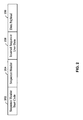
- FIG. 2 is diagram illustrating an exemplary AVS1-P2 bitstream structure, in accordance with an embodiment of the invention.
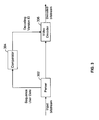
- FIG. 3 is a block diagram of an exemplary video decoder, in accordance with an embodiment of the invention.
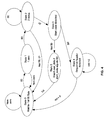
- FIG. 4 is diagram illustrating an exemplary AVS1-P2 bitstream transcoding, in accordance with an embodiment of the invention.
- Certain embodiments of the invention may be found in a method and system for signaling and decoding AVS1-P2 bitstreams of different versions.
- Various aspects of the invention may comprise inserting decoding version information such as a decoding version identifier, for example, in an AVS1-P2 bitstream.
- the AVS1-P2 bitstream may be decoded based on the inserted decoding version information.
- the decoding version information may be inserted in the AVS1-P2 bitstream during AVS encoding or during AVS1-P2 bitstream transcoding.
- the AVS1-P2 bitstream may conform to the decoding version of AVS1-P2 Rm52j_r1 or AVS1-P2.
- the AVS1-P2 bitstream may be first parsed to detect and extract the decoding version information in the received AVS1-P2 bitstream.
- the extracted decoding version information may be evaluated to determine a decoding version ID.
- the video decoder may decode the received encoded AVS1-P2 bitstream based on the decoding version ID. When no specific decoding version ID can be determined, a default decoder version ID may be used by the video decoder.
- the decoding version information may be represented by a specific sequence of user data and may be inserted at the end of a sequence header of corresponding AVS1-P2 bitstream.
- FIG. 1 is a block diagram of an exemplary video coding system, in accordance with an embodiment of the invention.
- a video source 102 a video encoder 104
- a video decoder 106 a video display 108.
- the video encoder may comprise an encoding processor (enc_processor) 104a and an encoding memory (enc_memory) 104b.
- the video decoder 106 may comprise a decoding processor (de_processor) 106a and a decoding memory (dec_memory) 106b.
- the video source 102 may comprise suitable logic, circuitry and/or code that may provide a video stream from, for example, a camcorder, VCR, CCD camera, or from an Internet video stream.
- the encoding processor 104a may comprise suitable logic, circuitry and/or code that may be enabled to convert a video stream from the video source 102 into a compressed format by using as few bits as possible while acceptably maintaining the visual appearance.
- a user data sequence comprising decoding version information may be inserted into the encoded bitstream for decoding the encoded bitstream syntax to produce a displayable video imagery sequence.
- the encoding memory 104b may comprise suitable logic, circuitry and/or code that may comprise instructions executable by, for example, the encoding processor 104a.
- a user data sequence comprising decoding version information may be stored in the encoded memory 104b.
- the encoded memory 104b may be coupled to the encoded processor 104a and may be FLASH memory, electronically erasable programmable memory (EEPROM), or DRAM.
- the decoding processor 106a may comprise suitable logic, circuitry and/or code that may be used to convert a compressed video stream back into an uncompressed format.
- the video decoder 106 may decode the encoded bitstream based on the decoding version information in the received video data and recreate a sequence of video images.
- the decoding memory 106b may comprise suitable logic, circuitry and/or code that may comprise instructions executable by, for example, the decoding processor 106a.
- a user data sequence comprising decoding version information may be stored in the decoding memory 106b.
- the decoding memory 106b may be coupled to the decoding processor 106a and may be FLASH memory, electronically erasable programmable memory (EEPROM), or DRAM.
- the video display 108 may comprise suitable logic, circuitry and/or code that may be a device, for example, a computer output device to present visual images with analog or digital video inputs.
- the video source 102 may provide a video stream from a camcorder or from an Internet video stream.
- the video encoder 104 may carry out various AVS specific prediction, transformation and/or encoding processes to create an encoded AVS bitstream.
- the encoded AVS bitstream may be expanded by inserting a specific user data sequence.
- the specific user data sequence may carry the syntax information for the encoded AVS bitstream such as the specific AVS specification version, for example, AVS1-P2 Rm52j_r1 or AVS1-P2.
- the specific AVS specification version may identify which AVS version the encoded AVS bitstream may conform to.
- the expanded encoded AVS bitstream may be sent to the decoder 106 over an intermediate medium such as a wireless channel or a DVD.
- the video decoder 106 may decode the encoded AVS bitstream based on the syntax information of the specific user data sequence and produce a decoded video sequence.
- the video display 108 may present the decoded video sequence as visual images accordingly.
- FIG. 2 is diagram illustrating an exemplary AVS1-P2 bitstream structure, in accordance with an embodiment of the invention. Referring to FIG. 2 , there is shown a sequence header start code 202, a sequence header 204, a sequence user data 206, and a video data payload 208.
- the start code 202 may be a unique code with a value of 0x000001.
- the start code 202 may be byte-aligned to be used for providing AVS encoded bitstream synchronization.
- the sequence header 204 may be placed in the AVS1-P2 bitstream to provide necessary information needed to decode the data payload and support user access appropriately for the given distribution medium.
- the sequence header 204 may be placed at the start of each chapter on a DVD to facilitate random access or may be placed every 1 ⁇ 2-second in broadcast TV to facilitate changing channels.
- the sequence user data 206 may be used to provide, for example, some vendor specific information.
- a vendor specific sequence user data may be defined to indicate which specific AVS specification version such as AVS1-P2 Rm52j_r1 or AVS1-P2 the corresponding AVS1-P2 bitstream may comply with.
- the sequence user data 206 may be inserted into the AVS1-P2 bitstream, for example, after the sequence header.
- An exemplary sequence user data 206 may be as follows:
- the video data payload 208 may comprise actual video data information.
- FIG. 3 is a block diagram of an exemplary video decoder, in accordance with an embodiment of the invention. Referring to FIG. 3 , there is shown a parser 302, a comparator 304, and an AVS decoder 306.
- the parser 302 may comprise suitable logic, circuitry and/or code that may be enabled to analyze and classify the received AVS1-P2 bitstream. For example, the start code within the received AVS bitstream may be parsed for resynchronization and identification. The parser 302 may detect and extract the unique sequence user data 206 within the received AVS bitstream. The parser 302 may pass the extracted unique sequence user data information to the comparator 304 while the encoded AVS bitstream may be communicated to the AVS decoder 306, respectively.
- the comparator 304 may comprise suitable logic, circuitry and/or code that may be operable to compare the extracted unique sequence user data information from the parser 302 to a stored AVS decoding version list. Based on the comparison, decoding version information to be used for decoding the encoded AVS bitstream may be determined.
- the AVS decoding list may comprise a mapping of a sequence user data such as AVS1P2RM52JR1 or AVS1P2SPEC to a decoding version ID, for example, 0 or 1.
- the comparator 304 may pass the decoding version ID to the AVS decoder 306. In instances where no valid sequence user data information may be available in the received AVS bitstream, a default decoding version ID may be communicated to the AVS decoder 306.
- the AVS decoder 306 may comprise suitable logic, circuitry and/or code that may decode the encoded AVS bitstream based on the decoding version provided by the comparator 304.
- the parser 302 may analyze and classify the received AVS1-P2 bitstream. Once a sequence user data within the received encoded AVS1-P2 bitstream being detected, the parser 302 may extract the detected sequence user data and pass to the comparator 304. The comparator 304 may compare the received sequence user data to a decoding version list to determine a decoding version ID and pass to the AVS decoder 306. The AVS decoder 306 may be operable to decode the encoded AVS1-P2 bitstream based on the decoding version ID.
- the comparator 302 may pass a default decoding ID to the decoder 304 to decode the encoded AVS bitstream accordingly.
- FIG. 4 is a diagram illustrating an exemplary AVS1-P2 bitstream transcoding, in accordance with an embodiment of the invention. Referring to FIG. 4 , there is shown an exemplary state machine with state 0, state 1, state 2, state 3, state 4, and state 5.
- the state machine may transit among different states according to different input byte values.
- the state machine may be reset and start with the state 0.
- an input of "00” may result in a transition from state 0 to the state 1. Otherwise the state machine remains in the state 0.
- the state machine may transition from the state 1 to the state 2 with an input of "00". Otherwise, the state machine may be reset from the state 1 back to the state 0.
- an input of "00” may cause state machine to remain in the state 2.
- An input of "01” may result in a transition from the state 2 to the state 3. Otherwise, the state machine may be reset from the state 2 back to the state 0.
- the state machine may detect a start code. An input of "B0" may result in a transition from the state 3 to the state 4. Otherwise, the state machine may transition to the state 5.
- the state machine may declare the detection of a sequence header.
- a counter may be set to, for example, the number of bytes of a portion of the sequence header.
- a specific sequence user data comprising decoding version information may be inserted when the counter may count down to zero and the state machine may be reset to the state 0. Otherwise, the state machine may remain in the state 4.
- the state machine may determine that neither a sequence header nor a start code has been detected and may transition to the state 0 regardless the upcoming input byte value.
- decoding version information may be inserted in an AVS1-P2 bitstream.
- the AVS1-P2 bitstream may be decoded based on the decoding version information.
- the decoding version information may be inserted in the AVS1-P2 bitstream during AVS encoding ( FIG. 2 ) or during AVS1-P2 bitstream transcoding ( FIG. 4 ).
- the AVS1-P2 bitstream may comply with the decoding version of AVS1-P2 Rm52j_r1 or AVS1-P2.
- the AVS1-P2 bitstream may be parsed at the parser 302 to identify and extract, for example, the decoding version information in the received AVS1-P2 bitstream.
- the extracted decoding version information may be evaluated at the comparator 304 to determine a decoding version ID and pass to the AVS decoder 306.
- the comparator 304 may pass a default decoding version ID to the AVS decoder 306 for decoding the received encoded AVS1-P2 bitstream.
- the decoding version information may be indicated by a specific sequence user data 206.
- the specific sequence user data 206 may be inserted at the end of a sequence header 204 of the AVS1-P2 bitstream.
- Another embodiment of the invention may provide a machine and/or computer readable storage and/or medium, having stored thereon, a machine code and/or a computer program having at least one code section executable by a machine and/or a computer, thereby causing the machine and/or computer to perform the steps as described herein for signaling and decoding AVS1-P2 bitstreams of different versions.
- the present invention may be realized in hardware, software, or a combination of hardware and software.
- the present invention may be realized in a centralized fashion in at least one computer system, or in a distributed fashion where different elements are spread across several interconnected computer systems. Any kind of computer system or other apparatus adapted for carrying out the methods described herein is suited.
- a typical combination of hardware and software may be a general-purpose computer system with a computer program that, when being loaded and executed, controls the computer system such that it carries out the methods described herein.
- the present invention may also be embedded in a computer program product, which comprises all the features enabling the implementation of the methods described herein, and which when loaded in a computer system is able to carry out these methods.
- Computer program in the present context means any expression, in any language, code or notation, of a set of instructions intended to cause a system having an information processing capability to perform a particular function either directly or after either or both of the following: a) conversion to another language, code or notation; b) reproduction in a different material form.
Landscapes
- Engineering & Computer Science (AREA)
- Multimedia (AREA)
- Signal Processing (AREA)
- Compression Or Coding Systems Of Tv Signals (AREA)
Applications Claiming Priority (2)
| Application Number | Priority Date | Filing Date | Title |
|---|---|---|---|
| US94855307P | 2007-07-09 | 2007-07-09 | |
| US12/142,409 US8576918B2 (en) | 2007-07-09 | 2008-06-19 | Method and apparatus for signaling and decoding AVS1-P2 bitstreams of different versions |
Publications (1)
| Publication Number | Publication Date |
|---|---|
| EP2015579A1 true EP2015579A1 (de) | 2009-01-14 |
Family
ID=40019449
Family Applications (1)
| Application Number | Title | Priority Date | Filing Date |
|---|---|---|---|
| EP08011603A Ceased EP2015579A1 (de) | 2007-07-09 | 2008-06-26 | Verfahren und Vorrichtung zum Anzeigen und Entschlüsseln von AVS1-P2 Bitströmen verschiedener Versionen |
Country Status (5)
| Country | Link |
|---|---|
| US (1) | US8576918B2 (de) |
| EP (1) | EP2015579A1 (de) |
| KR (1) | KR100963211B1 (de) |
| CN (2) | CN102088596B (de) |
| TW (1) | TWI504275B (de) |
Cited By (1)
| Publication number | Priority date | Publication date | Assignee | Title |
|---|---|---|---|---|
| KR100963211B1 (ko) | 2007-07-09 | 2010-06-16 | 브로드콤 코포레이션 | 버전이 다른 avs1-p2 비트스트림을 시그널링하고디코딩하기 위한 방법 및 장치 |
Families Citing this family (9)
| Publication number | Priority date | Publication date | Assignee | Title |
|---|---|---|---|---|
| US9154797B2 (en) | 2010-09-20 | 2015-10-06 | Onecodec, Limited | Systems and methods for encoding and decoding |
| CA2816284C (en) * | 2010-09-28 | 2018-06-26 | Onecodec, Limited | Encoding and decoding a multimedia signal using syntax to generate a dynamically configured decoder |
| US10129556B2 (en) | 2014-05-16 | 2018-11-13 | Bevara Technologies, Llc | Systems and methods for accessing digital data |
| US10025787B2 (en) | 2011-08-17 | 2018-07-17 | Bevara Technologies, Llc | Systems and methods for selecting digital data for archival |
| US9591355B2 (en) * | 2012-10-19 | 2017-03-07 | Broadcom Corporation | Decoding video streams using decoders supporting a different encoding profile |
| WO2015176009A1 (en) | 2014-05-16 | 2015-11-19 | Bevara Technologies, Llc | Systems and methods for selecting digital data for archival |
| EP3740882A1 (de) | 2018-01-18 | 2020-11-25 | Bevara Technologies, LLC | Browsernavigation für datenzugriff |
| EP4500871A1 (de) | 2022-03-28 | 2025-02-05 | Bevara Technologies, LLC | Modulare pipelines für den zugriff auf digitale daten |
| EP4697345A1 (de) | 2024-08-17 | 2026-02-18 | Maciej Bajer | System zur dynamischen bestimmung der lebensmittelbewertung unter verwendung benutzerprogrammierter funktionen |
Family Cites Families (18)
| Publication number | Priority date | Publication date | Assignee | Title |
|---|---|---|---|---|
| US6208745B1 (en) * | 1997-12-30 | 2001-03-27 | Sarnoff Corporation | Method and apparatus for imbedding a watermark into a bitstream representation of a digital image sequence |
| JP4448334B2 (ja) * | 2002-04-19 | 2010-04-07 | マイクロソフト コーポレーション | バイト整列されていない(non−byte−alignedpositions)のポジション、および/またはビット・シフトされたポジション(bit−siftedpositions)を含む位置におけるスタート・コード・エミュレーションを防ぐための方法およびシステム |
| EP1613068A4 (de) * | 2003-04-09 | 2008-04-09 | Matsushita Electric Industrial Co Ltd | Osd-synthetisierte bilddecodierungseinrichtung, osd-synthetisiertes bilddecodierungsverfahren, programm und aufzeichnungsmedium |
| US20050169544A1 (en) * | 2004-02-02 | 2005-08-04 | Clark Adam L. | System and method for encoding and decoding video |
| US20050229231A1 (en) | 2004-03-31 | 2005-10-13 | Lippincott Louis A | Converter-assisted video encoder |
| US9560367B2 (en) * | 2004-09-03 | 2017-01-31 | Nokia Technologies Oy | Parameter set and picture header in video coding |
| US20060083298A1 (en) * | 2004-10-14 | 2006-04-20 | Nokia Corporation | Reference picture management in video coding |
| US7209059B2 (en) * | 2004-12-06 | 2007-04-24 | Matsushita Electric Industrial Co., Ltd. | Decoding method and encoding method |
| US8615038B2 (en) * | 2004-12-06 | 2013-12-24 | Nokia Corporation | Video coding, decoding and hypothetical reference decoder |
| WO2006083824A2 (en) * | 2005-02-01 | 2006-08-10 | Texas Instruments Incorporated | Random access in avs-m video bitstreams |
| US7822121B2 (en) * | 2005-03-17 | 2010-10-26 | Lsi Corporation | Method and/or apparatus for implementing global motion compensation in a video system |
| US7974517B2 (en) * | 2005-10-05 | 2011-07-05 | Broadcom Corporation | Determination of decoding information |
| WO2007065351A1 (fr) * | 2005-12-05 | 2007-06-14 | Huawei Technologies Co., Ltd. | Procede de binarisation et dispositif associe |
| US7626518B2 (en) * | 2006-06-08 | 2009-12-01 | Via Technologies, Inc. | Decoding systems and methods in computational core of programmable graphics processing unit |
| WO2008009175A1 (en) * | 2006-07-14 | 2008-01-24 | Anyka (Guangzhou) Software Technologiy Co., Ltd. | Method and system for multi-channel audio encoding and decoding with backward compatibility based on maximum entropy rule |
| US9503777B2 (en) * | 2007-06-05 | 2016-11-22 | Broadcom Corporation | Method and system for unified start code emulation prevention bits processing for AVS |
| US8576918B2 (en) | 2007-07-09 | 2013-11-05 | Broadcom Corporation | Method and apparatus for signaling and decoding AVS1-P2 bitstreams of different versions |
| US7932843B2 (en) * | 2008-10-17 | 2011-04-26 | Texas Instruments Incorporated | Parallel CABAC decoding for video decompression |
-
2008
- 2008-06-19 US US12/142,409 patent/US8576918B2/en active Active
- 2008-06-26 EP EP08011603A patent/EP2015579A1/de not_active Ceased
- 2008-07-07 CN CN2011100375352A patent/CN102088596B/zh not_active Expired - Fee Related
- 2008-07-07 CN CN2008101283835A patent/CN101345864B/zh active Active
- 2008-07-09 KR KR1020080066669A patent/KR100963211B1/ko not_active Expired - Fee Related
- 2008-07-09 TW TW097125917A patent/TWI504275B/zh active
Non-Patent Citations (4)
| Title |
|---|
| DANIEL CARDENAS: "Elementary stream", WIKIPEDIA, 22 June 2007 (2007-06-22), XP002505989, Retrieved from the Internet <URL:http://en.wikipedia.org/w/index.php?title=Elementary_stream&oldid=140813961> [retrieved on 20081128] * |
| DUTA S.; DIMITROVA N.: "Smart video streams: 101 uses of the user data field in MPEG", IEEE COMPUTER SOCIETY PRESS, vol. 2, 30 October 1995 (1995-10-30), pages 1462 - 1466, XP002123091, Retrieved from the Internet <URL:http://ieeexplore.ieee.org/stamp/stamp.jsp?arnumber=00540940> * |
| GAO, W. ET AL: "AVS - The Chinese Next-Generation Video Coding Standard", NAB, 22 April 2004 (2004-04-22), Las Vegas, XP002505793, Retrieved from the Internet <URL:http://www.avs.org.cn/reference/AVS%20NAB%20Paper%20Final03.pdf> [retrieved on 20081127] * |
| RONALDO HUSEMANN, GASPARE G. BRUNO, VALTER ROESLER: "An approach to increase the performance of motion estimation algorithms implemented in hardware", ACM, vol. 192, 22 November 2006 (2006-11-22), Natal, Rio Grande do Norte, Brazil, pages 108 - 117, XP002505794, ISBN: 85-7669-100-0, Retrieved from the Internet <URL:http://delivery.acm.org/10.1145/1190000/1186610/p108-husemann.pdf?key1=1186610&key2=0526877221&coll=GUIDE&dl=GUIDE&CFID=12445854&CFTOKEN=97505897> [retrieved on 20081127] * |
Cited By (1)
| Publication number | Priority date | Publication date | Assignee | Title |
|---|---|---|---|---|
| KR100963211B1 (ko) | 2007-07-09 | 2010-06-16 | 브로드콤 코포레이션 | 버전이 다른 avs1-p2 비트스트림을 시그널링하고디코딩하기 위한 방법 및 장치 |
Also Published As
| Publication number | Publication date |
|---|---|
| KR100963211B1 (ko) | 2010-06-16 |
| US8576918B2 (en) | 2013-11-05 |
| TW200922329A (en) | 2009-05-16 |
| KR20090006014A (ko) | 2009-01-14 |
| CN101345864A (zh) | 2009-01-14 |
| TWI504275B (zh) | 2015-10-11 |
| CN102088596A (zh) | 2011-06-08 |
| US20090016446A1 (en) | 2009-01-15 |
| CN101345864B (zh) | 2012-03-21 |
| HK1158414A1 (en) | 2012-07-13 |
| CN102088596B (zh) | 2013-07-10 |
Similar Documents
| Publication | Publication Date | Title |
|---|---|---|
| US8576918B2 (en) | Method and apparatus for signaling and decoding AVS1-P2 bitstreams of different versions | |
| US10271069B2 (en) | Selective use of start code emulation prevention | |
| CN1973545B (zh) | 用于可缩放媒体编码和传输的多个互操作性点 | |
| US8351514B2 (en) | Method, protocol, and apparatus for transporting advanced video coding content | |
| US8472731B2 (en) | Image signal decoding apparatus, image signal decoding method, image signal encoding apparatus, image signal encoding method, and program | |
| JP5918903B2 (ja) | 拡張データの処理 | |
| US9883213B2 (en) | Embedding encoded audio into transport stream for perfect splicing | |
| US9392279B2 (en) | Method and system for generating an instantaneous decoding refresh (IDR) picture slice in an H.264/AVC compliant video data stream | |
| CN101040535B (zh) | 转换成中间格式的两步算术解码 | |
| KR100969224B1 (ko) | 미싱 또는 무효 포워드 레퍼런스 픽쳐들을 갖는 b 픽쳐들의 처리 방법 및 시스템 | |
| CN108122558B (zh) | 一种latm aac音频流的实时转容实现方法及装置 | |
| CN101743748B (zh) | 比特流解码设备以及具有解码解决方案的方法 | |
| CN101547346B (zh) | 富媒体电视中场景描述的收发方法及设备 | |
| US20130191133A1 (en) | Apparatus for audio data processing and method therefor | |
| HK1158414B (en) | Method for video processing and system for data processing | |
| US8155506B2 (en) | System and method for transport PID version check | |
| JP2004186992A (ja) | 符号化装置 | |
| CN1263312C (zh) | 一种快速定位编码图像的方法 | |
| AU2015202063B2 (en) | Image signal decoding device, image signal decoding method, image signal encoding device, image signal encoding method, and program | |
| TWI495299B (zh) | 利用音視頻橋接管理節能網路的方法和系統 | |
| JP2020014246A (ja) | 送信装置、送信方法、受信装置および受信方法 |
Legal Events
| Date | Code | Title | Description |
|---|---|---|---|
| PUAI | Public reference made under article 153(3) epc to a published international application that has entered the european phase |
Free format text: ORIGINAL CODE: 0009012 |
|
| 17P | Request for examination filed |
Effective date: 20080626 |
|
| AK | Designated contracting states |
Kind code of ref document: A1 Designated state(s): AT BE BG CH CY CZ DE DK EE ES FI FR GB GR HR HU IE IS IT LI LT LU LV MC MT NL NO PL PT RO SE SI SK TR |
|
| AX | Request for extension of the european patent |
Extension state: AL BA MK RS |
|
| 17Q | First examination report despatched |
Effective date: 20090223 |
|
| AKX | Designation fees paid |
Designated state(s): DE GB |
|
| APBK | Appeal reference recorded |
Free format text: ORIGINAL CODE: EPIDOSNREFNE |
|
| APBN | Date of receipt of notice of appeal recorded |
Free format text: ORIGINAL CODE: EPIDOSNNOA2E |
|
| APBR | Date of receipt of statement of grounds of appeal recorded |
Free format text: ORIGINAL CODE: EPIDOSNNOA3E |
|
| APAF | Appeal reference modified |
Free format text: ORIGINAL CODE: EPIDOSCREFNE |
|
| APBT | Appeal procedure closed |
Free format text: ORIGINAL CODE: EPIDOSNNOA9E |
|
| STAA | Information on the status of an ep patent application or granted ep patent |
Free format text: STATUS: THE APPLICATION HAS BEEN REFUSED |
|
| 18R | Application refused |
Effective date: 20150427 |