EP2004161B1 - Orale zusammensetzung mit dha und genistein zur verbesserung der hauteigenschaften - Google Patents
Orale zusammensetzung mit dha und genistein zur verbesserung der hauteigenschaften Download PDFInfo
- Publication number
- EP2004161B1 EP2004161B1 EP07727920A EP07727920A EP2004161B1 EP 2004161 B1 EP2004161 B1 EP 2004161B1 EP 07727920 A EP07727920 A EP 07727920A EP 07727920 A EP07727920 A EP 07727920A EP 2004161 B1 EP2004161 B1 EP 2004161B1
- Authority
- EP
- European Patent Office
- Prior art keywords
- composition
- dha
- genistein
- skin
- weight
- Prior art date
- Legal status (The legal status is an assumption and is not a legal conclusion. Google has not performed a legal analysis and makes no representation as to the accuracy of the status listed.)
- Active
Links
Images

Classifications
-
- A—HUMAN NECESSITIES
- A61—MEDICAL OR VETERINARY SCIENCE; HYGIENE
- A61K—PREPARATIONS FOR MEDICAL, DENTAL OR TOILETRY PURPOSES
- A61K31/00—Medicinal preparations containing organic active ingredients
- A61K31/185—Acids; Anhydrides, halides or salts thereof, e.g. sulfur acids, imidic, hydrazonic or hydroximic acids
- A61K31/19—Carboxylic acids, e.g. valproic acid
- A61K31/20—Carboxylic acids, e.g. valproic acid having a carboxyl group bound to a chain of seven or more carbon atoms, e.g. stearic, palmitic, arachidic acids
- A61K31/202—Carboxylic acids, e.g. valproic acid having a carboxyl group bound to a chain of seven or more carbon atoms, e.g. stearic, palmitic, arachidic acids having three or more double bonds, e.g. linolenic
-
- A—HUMAN NECESSITIES
- A61—MEDICAL OR VETERINARY SCIENCE; HYGIENE
- A61K—PREPARATIONS FOR MEDICAL, DENTAL OR TOILETRY PURPOSES
- A61K31/00—Medicinal preparations containing organic active ingredients
- A61K31/045—Hydroxy compounds, e.g. alcohols; Salts thereof, e.g. alcoholates
- A61K31/07—Retinol compounds, e.g. vitamin A
-
- A—HUMAN NECESSITIES
- A61—MEDICAL OR VETERINARY SCIENCE; HYGIENE
- A61K—PREPARATIONS FOR MEDICAL, DENTAL OR TOILETRY PURPOSES
- A61K31/00—Medicinal preparations containing organic active ingredients
- A61K31/33—Heterocyclic compounds
- A61K31/335—Heterocyclic compounds having oxygen as the only ring hetero atom, e.g. fungichromin
- A61K31/35—Heterocyclic compounds having oxygen as the only ring hetero atom, e.g. fungichromin having six-membered rings with one oxygen as the only ring hetero atom
- A61K31/352—Heterocyclic compounds having oxygen as the only ring hetero atom, e.g. fungichromin having six-membered rings with one oxygen as the only ring hetero atom condensed with carbocyclic rings, e.g. methantheline
-
- A—HUMAN NECESSITIES
- A61—MEDICAL OR VETERINARY SCIENCE; HYGIENE
- A61K—PREPARATIONS FOR MEDICAL, DENTAL OR TOILETRY PURPOSES
- A61K31/00—Medicinal preparations containing organic active ingredients
- A61K31/33—Heterocyclic compounds
- A61K31/335—Heterocyclic compounds having oxygen as the only ring hetero atom, e.g. fungichromin
- A61K31/365—Lactones
- A61K31/375—Ascorbic acid, i.e. vitamin C; Salts thereof
-
- A—HUMAN NECESSITIES
- A61—MEDICAL OR VETERINARY SCIENCE; HYGIENE
- A61P—SPECIFIC THERAPEUTIC ACTIVITY OF CHEMICAL COMPOUNDS OR MEDICINAL PREPARATIONS
- A61P17/00—Drugs for dermatological disorders
-
- A—HUMAN NECESSITIES
- A61—MEDICAL OR VETERINARY SCIENCE; HYGIENE
- A61P—SPECIFIC THERAPEUTIC ACTIVITY OF CHEMICAL COMPOUNDS OR MEDICINAL PREPARATIONS
- A61P17/00—Drugs for dermatological disorders
- A61P17/10—Anti-acne agents
-
- A—HUMAN NECESSITIES
- A61—MEDICAL OR VETERINARY SCIENCE; HYGIENE
- A61P—SPECIFIC THERAPEUTIC ACTIVITY OF CHEMICAL COMPOUNDS OR MEDICINAL PREPARATIONS
- A61P29/00—Non-central analgesic, antipyretic or antiinflammatory agents, e.g. antirheumatic agents; Non-steroidal antiinflammatory drugs [NSAID]
Definitions
- the present invention relates to a composition for enhancing skin appearance and to the use of a combination of active compounds.
- Dietary fish oil is known to convey significant protection against UVR-induced erythema upon ingestion.
- Carotenoids such as lycopene and ⁇ -carotene have also been shown to give significant protection against UVR-induced erythema when induced orally.
- vitamins E & C when taken orally in combination have also been shown to provide protection against UVR-induced erythema.
- US 6,589,535 discloses a nutritional supplement which contains an oil rich in ⁇ -3 and ⁇ -6 fatty acids and a carotenoid in combination to combat the harmful effects of xenobiotics on the skin, in particular on the skin's immune system.
- this is limited to food supplements such as capsules or tablets and does not disclose how such materials may be delivered via a beverage or other food product.
- Blackcurrant seed oil is preferred as the source of the fatty acids, however this contains the less utility ⁇ -3 PUFA ⁇ -linolenic acid and is not as rich overall in ⁇ -3 PUFA's as fish oil.
- US2003/0082275 discloses a drinkable ⁇ -3 preparation, which is storage stable.
- the drink disclosed contains a very high level of oil and consequently is unstable, forming a two-phase beverage upon storage.
- a drink having 4wt% oil, giving an ⁇ -3 concentration of 1.6 wt% is exemplified.
- Egg yolk is used as an emulsifier which contains approximately 8wt% lecithin.
- WO 02/074308 describes a composition for the prevention of osteoporosis which comprises a combination of isoflavones and polyunsaturated fatty acids.
- US 5,976,606 relates to a process for obtaining DHA-containing tofu or soybean milk drink.
- the aim is to avoid the undesirable taste and/or smell of fish oil.
- EP-A-1340427 discloses acidic milks containing EPA and/or DHA. The document aims to provide formulations that are stable against oxidation and phase separation.
- WO2006056293 a document which was filed before the date of filing of the European patent application but published after that date, discloses a consumable emulsion, comprising at least 50% water, 0.2 to 5 wt% of an oil comprising at least 12wt% of docosahexaenoic acid and eicosapentaenoic acid, an antioxidant, a flavouring, at least 0.01 wt% food-grade phospholipid emulsifier and from 0.01 to 0.5 wt% soy isoflavone material wherein the soy isoflavone is selected from genistein and daidzein
- compositions that can provide beneficial anti-ageing effects on skin.
- compositions that can achieve enhanced effects on skin.
- the present invention is based on the surprising finding of a synergistic effect between two compounds in their effect on skin cells.
- a composition for oral consumption comprising genistein and docosahexaenoic acid (DHA) and less than 1% by weight of soy protein, wherein the weight ratio of genistein to DHA is in the range of from 1:100 to 1:1, the composition comprises genistein in an amount of from 0.0001% to 0.1% by weight, which comprises less than 0.01% by weight of a food grade phospholipid emulsifier.
- the genistein and DHA exhibit an anti-ageing effect on skin.
- the invention involves the finding of a synergistic effect between DHA and genistein.
- the levels of DHA and genistein in the compositions of the invention are preferably selected so as to achieve a synergistic effect.
- the genistein may be in glycosylated or non-glycosylated form, or a mixture of these two forms.
- Reference to genistein throughout this specification means the glycosylated or non-glycosylated forms, or mixtures of the two forms, unless specifically stated otherwise. Amounts of genistein are calculated based on non-glycosylated form (i.e., as if any glycosylated genistein were non-glycosylated).
- the genistein is preferably present in the composition of the invention as a component of a natural product or an extract or concentrate thereof.
- the natural product is soy or red clover, more preferably soy.
- compositions of the invention preferably contain less than 1% by weight of soy protein, more preferably less than 0.5% by weight of soy protein, even more preferably less than 0.1% by weight of soy protein, such as less than 0.01% or less than 0.001% or less than 0.0001% by weight.
- the composition of the invention may be free of soy protein or substantially free of soy protein.
- the weight ratio of genistein to DHA in the composition of the invention is in the range of from 1:200 to 2:1, preferably from 1:100 to 1:1, more preferably in the range of from 1:80 to 1:5, even more preferably from 1:60 to 1:10, preferably from 1:50 to 1:15, such as from 1:40 to 1:20, for example 1:30 to 1:20.
- composition of the invention comprises genistein in an amount of from 0.0001% to 0.1% by weight, preferably from 0.001% to 0.05% by weight, more preferably from 0.005% to 0.04% by weight, even more preferably from 0.005% to 0.025% by weight, most preferably from 0.01% to 0.025% by weight.
- the genistein is present in the form of soy isoflavones. Therefore, it is preferred that the composition comprises from 0.01 to 0.5 wt% soy isoflavones. This is equivalent to from 10 to 500 mg/100g. Preferably the product contains from 0.01 to 0.3 wt% soy isoflavones.
- compositions of the invention comprise DHA.
- the DHA is preferably present in the form of a fish oil or is from a microbial source.
- the DHA may be in the form of a free acid, a C1 to C6 alkyl ester, a glyceride (including mono- di- and triglycerides) or mixtures thereof.
- the DHA is in the form of a glyceride (e.g., a triglyceride).
- Reference herein to DHA means the free acid or alkyl esters or glycerides or mixtures thereof.
- DHA is an ⁇ -3, polyunsaturated, 22-carbon fatty acid. It is also present in abundance in certain fish (such as tuna and bluefish) and marine animal oils.
- the amount of DHA in the compositions of the invention ranges from 0.001% to 4% by weight of the composition. More preferred amounts are from 0.01% to 5% by weight, such as from 0.1% to 1% by weight or from 0.1 to 0.5% by weight.
- the composition may comprise less than 0.2% by weight oil comprising DHA. In another alternative embodiment, the composition may comprise more than 5% by weight oil comprising DHA.
- the DHA may be present together with EPA.
- Eicosapentaenoic acid is one of several ⁇ -3 fatty acids used by the body. Increased intake of EPA has been shown to be beneficial in coronary heart disease, high blood pressure, and inflammatory disorders such as rheumatoid arthritis.
- Eicosapentaenoic acid (EPA) and docosahexaenoic acid (DHA) come from cold water fish such as wild salmon (not farm raised), mackerel, sardines, herring and other northern marine animals. Fish can make EPA and DHA from the ⁇ 3 essential fatty acid, alpha-linolenic acid (LNA), but get much of their EPA and DHA from brown and red algae which manufacture EPA and DHA from carbohydrates - sugar, starch, cellulose, etc.
- LNA alpha-linolenic acid
- brown and red algae have begun to be grown commercially for EPA and DHA. These make 10 to 14% of long-chain ⁇ 3s (on dry weight basis) and can be used as food sources of EPA and DHA-containing triglycerides.
- compositions of the invention are oral compositions, i.e. they are adopted for oral consumption. As such, the compositions are edible and non-toxic.
- the composition of the invention is edible and is preferably water based, i.e. comprises at least 50wt% water, preferably at least 60wt% or even at least 70wt% water. It may be either liquid or frozen.
- the product thus has the sensation of being a regular water-based product and can be consumed on a regular basis as part of a consumer's normal diet. For example, it could replace a fruit juice normally consumed at breakfast time.
- composition of the invention may preferably be packaged as a beverage, for example in a container such as a carton or a bottle of coated paper or cardboard, glass or plastic.
- the container preferably has a volume of from 10 to 500 ml, such as from 20 to 100 ml.
- composition of the invention comprises less than 50% by weight water and/or is substantially free of preservatives and/or flavouring.
- composition preferably comprises one or more further components selected from antioxidants, flavouring agents, preservatives and stabilisers.
- composition of the invention preferably has a pH of from 3 to 5, such as from 3 to 4.
- the composition has a viscosity of from 2 to 100 centipoise at a shear rate of 1s -1 and at 25°C.
- composition of the invention may take any suitable form, including, for example, food products and nutritional supplements.
- Compositions for oral consumption which may be used according to the invention include beverages, bars and other liquid and solid forms such as tablets, pills, capsules and powders (which may contain crystalline material), as well as spreads, margarines, creams, sauces, dressings, mayonnaises, ice creams, fillings, confectionaries and cereals.
- compositions of the invention are in the form of a substantially homogeneous aqueous emulsion, suspension or dispersion.
- composition of the invention is preferably packaged as a beverage.
- One or more antioxidants are preferably present in the compositions of the invention in order to prevent or slow down the natural oxidative degradation of the DHA.
- Rancid fish oil not only has an unpleasant taste but may even have negative health effects ( Kubow S., "Toxicity of dietary lipid peroxidation products", Trends in Food Sciences & Technology, September, 67-71 (1990 )).
- Suitable antioxidants can be selected, although not exclusively, from the following list, either singularly or in combination: TBHQ, Ascorbyl esters (e.g. ascorbyl palmitate), ascorbic acid, Tocopherols, Rosemary Extract; fruit concentrates or extracts, black or green tea extract, Propyl Gallate, essential oils or oleoresins, butylated hydroxyanisole (BHA), butylated hydroxytoluene (BHT), citric acid or esters, co enzyme Q10, Tocotrienols, Chelators (e.g. EDTA), Carriers, polyphenols, phenolic compounds, flavonoids, oxygen scavengers.
- Ascorbyl esters e.g. ascorbyl palmitate
- ascorbic acid e.g. ascorbic acid
- Tocopherols e.g. ascorbyl palmitate
- Rosemary Extract fruit concentrates or extracts, black or green tea extract
- Propyl Gallate essential oils or
- Especially preferred antioxidants are vitamins C and E. Not only are these effective antioxidants but they also have been shown to give skin benefits when consumed.
- an amount of antioxidant should be added sufficient to prevent the DHA from going rancid over a typical shelf-life of 6 months.
- the amount of antioxidant will depend on the type and activity of the antioxidant used.
- the product has a weight ratio of antioxidant to oil of from 1:10 to 1:100 based on the antioxidant activity of vitamin C. For example, if an antioxidant with twice the activity of vitamin C was used, the ratio would be from 1:20 to 1:200.
- antioxidant activity is as measured using an appropriate assay (e.g. Trolox equivalent antioxidant capacity).
- compositions of the invention preferably comprise a flavouring.
- Suitable flavouring agents may be natural or synthetic.
- Flavouring may be required to make the product more palatable for consumption.
- the composition contains at least 0.01 wt% food-grade phospholipid emulsifier.
- the emulsifier is present in an amount of from 0.05 to 3 wt%, more preferably from 0.1 to 1 wt%.
- Phospholipid emulsifiers were found to be very suitable.
- a food grade phospholipid emulsifier may be required in order to carry DHA in a oil-in-water emulsion. It is preferred that the phospholipid emulsifier is lecithin. Phospholipid emulsifiers are oil soluble, but the lecithin can be added to either phase prior to emulsification. Preferably it is added to the aqueous phase.
- the product may also comprise from 0.0005 to 0.1 wt% carotenoids. This is equivalent to from 0.5 to 100 mg/100g. Preferably, the product contains from 0.002 to 0.04 wt% carotenoids.
- the carotenoids being oil soluble, would be comprised predominantly within the oil phase. Highly preferred carotenoids are ⁇ -carotene, and lycopene. These carotenoids provide moderate protection from UV induced erythema, thought to be due to their antioxidant functionality including scavenging of reactive oxygen species.
- composition of the invention is typically consumed from one to four times daily (preferably once daily).
- the composition may produce an anti-ageing effect on skin.
- anti-ageing we mean that the skin may appear less wrinkled (i.e., there is an anti-wrinkling effect on wrinkles and/or fine lines) and may have one or more further benefits for the skin selected from: reduced dryness; increased firmness; increased elasticity; increased smoothness; less inflammation; clearer skin; fewer spots, pimples and blemishes (including acne); clearer skin; less sensitive skin; and generally healthier skin.
- compositions of the invention may exhibit the anti-ageing effect by increasing collagen synthesis in the skin and compositions of the invention may be used to increase collagen synthesis (as part of, or separately from, the anti-ageing effect); preferably collagen synthesis is increased by at least 10%, more preferably at least 20% such as at least 25% (by weight preferably over a 14 week period, based on a control without added DHA and genistein).
- the skin may include the skin of the whole body, preferably the face, neck and/or hands.
- the skin may also include scalp skin with benefits for hair (including reduced ageing) and scalp itch or irritation. Conveniently, the benefit can be cosmetic.
- the product of the present invention can be prepared from an aqueous phase and an oil phase.
- the water-soluble ingredients are put together in the aqueous phase and the oil-soluble ingredients in the oil phase.
- the exception is the emulsifier. It has been surprisingly found that the emulsifier, which is oil-soluble, gives a more stable emulsion when it is added to the aqueous phase.
- the two phases are then blended together in conventional emulsifier equipment.
- the produced emulsion is shelf-stable and the oil does not go rancid for months.
- the oil phase and aqueous phase are then blended together to form a homogenous stable emulsion.
- the oil is on a powdered carrier material to assist emulsion formation.
- the stable emulsion may then be packaged in a sealed container such as a metal, coated cardboard (e.g. tetra Pak) or plastic container.
- a sealed container such as a metal, coated cardboard (e.g. tetra Pak) or plastic container.
- the container is then preferably sealed so as to give no headspace or a gas filled (e.g. nitrogen or carbon dioxide) headspace. This assists still further in preventing the DHA or fish oil oxidising.
- the emulsion may be frozen and packaged and sold as a frozen consumer product.
- the composition of the invention is contained in a capsule.
- the component of the composition may then be in a more concentrated form.
- the capsule may be made of any suitable material well known in the art such as gelatin.
- the capsule is adapted to be swallowed by the consumer and typically one or two capsules will be taken from one to four times per day.
- Each capsule preferably comprises from 10 to 4000 mg of polyunsaturated fatty acid (more preferably from 10 to 3000 mg or 20 to 2000 mg or 20 to 1000 mg, even more preferably from 50 mg to 500 mg) and from 10 to 500 mg of soy isoflavones, or a mixture thereof (preferably from 20 mg to 500 mg, such as from 30 mg to 250 mg or from 40 mg to 150 mg).
- the active ingredients in the invention may be distributed across different capsules, tablets, pills or powders, so that for instance the user may be provided with one tablet, capsule, pill or powder containing the DHA, and another tablet, capsule, pill or powder containing the genistein.
- the user is also ideally provided with instructions to take the liquids, capsules, pills or powders according to a dosage regime, which may entail taking them in the same dose, i.e. at the same time or in quick succession.
- the composition of the invention may be included as one component of a complex food product.
- the composition may be present in a solid or gelatinous form as a filling or layer within a bar, or a similar product.
- the composition of the invention may therefore be included in a wide range of everyday foodstuffs, for instance in "health food” bars which could be eaten as an alternative to other food snacks.
- the kit of parts may additionally or alternatively comprise a number of separately packaged beverages, wherein the consumer will typically drink one beverage per day. Also within such a kit of parts may be found a composition for topical application to the skin, wherein the quantity of topical composition supplied is intended to provide for use by the consumer for the same number of days as beverages supplied.
- the beverage may also be sold in a single package, from which it is intended the consumer drink a measured amount per day.
- the topical composition may be provided in amounts which will allow for continued use of the topical composition beyond the time when the beverage has been used, similarly, more beverage may be provided so that this may continue to be consumed beyond the time when the supply of topical composition has run out.
- the kit of parts may comprise a packaged product in which different supplements are packaged together, optionally with use instructions, in order to achieve the benefits of the invention.
- the kit may comprise capsules, tablets pills and/or powders including separately or in combination salicylic acid, a C1 to C6 alkyl ester thereof and a salt thereof and a polyunsaturated fatty acid. It is possible that this kit would also include a topical composition.
- a kit of parts would typically offer a product which could be used for from about 1 week to about 3 months, often about 2 weeks to about 2 months, most preferably for about 1 month.
- a biochemical assay and protein extraction method was developed to determine changes in new collagen synthesis in the skin.
- the lysis buffer contained 1% NP-40, 0.1% sodium deoxycholate, 0.1% SDS, 6 mM sodium chloride and 0.05M Tris at pH 7.6.
- Protease inhibitor cocktail 1000X; Sigma P8340 was added prior to use at a level of 10 ⁇ l per ml of lysis buffer. Following complete homogenisation of the tissue, unwanted cell debris was removed by centrifugation for 20 minutes at 20,000g at 4°C. The clarified cell lysate was frozen at -80°C until needed.
- the total protein concentration of each cell lysate was measured using the Pierce BCA protein assay kit.
- a set of eight standard solutions ranging from 0 to 1200 ⁇ g/ml protein was prepared from the supplied 2 mg/ml BSA stock solution. 10 ⁇ l of standard or cell lysate was added to duplicate wells of a flat-bottomed, 96-well microtitre plate.
- the reagent solution was prepared according to the kit instructions from 50 parts reagent A and 1 part reagent B. 200 ⁇ l of the final reagent was added to each well of the microtitre plate. The plate was mixed, covered and incubated at 37°C for 30 minutes and absorbance read at 562 nm. A protein standard curve was constructed and used to determine the protein concentration of each cell lysate.
- Collagen I is synthesised as a precursor molecule, Procollagen I.
- the amount of free propeptide therefore, reflects stoichiometrically, the amount of collagen I synthesised.
- the Procollagen Type I C-peptide Enzyme Immunoassay (EIA) kit allows for the quantitative determination of Procollagen Type I C-peptide (PIP).
- PIP standards were prepared in sample diluent at concentrations ranging from 0 to 640 ng/ml. 100 ⁇ l of antibody-Peroxidase conjugate solution and 20 ⁇ l of cell lysate (1 ⁇ g protein) or standard was added to duplicate wells. The plate was sealed and incubated at 37°C for 3 hours before being washed four times with 400 ⁇ l of PBS. Each well then received 100 ⁇ l of substrate solution and the plate incubated at room temperature, on the benchtop, for 15 minutes. After this period, 100 ⁇ l stop solution was added to each well and absorbance measured at 450nm with a plate reader.
- the Corneometer measures skin hydration through detection of epidermal capacitance.
- the probe is made of two finger-type metal plates close to each other, with a measurement depth of approximately 30 mm.
- the instrument determines the humidity level of the most external cutaneous layers of the stratum corneum.
- the action principle of the Corneometer ® is based on the modification of the electrical capacities of the detector which is designed in the form of a condenser.
- the surface of the measurement head modifies its electrical capacity according to the humidity level of the skin. An increase in the value measured by the corneometer is indicative of improved skin hydration.
- TransEpidermal Water Loss measurements can be performed with a Servomed "Evaporimeter" EP-3 ® .
- a probe made up of two captors is traversed by a flow of water vapor.
- the difference of the partial pressure is measured between the two captors. This value corresponds to the evaporation speed of a volatile substance (in this case, water).
- a reduction in TEWL is indicative of improved skin barrier properties
- Measurements for skin elasticity and firmness are made with a cutometer and described in Escoffier et al, J Invest Dermatol, 93(3):353-7 .
- the measurement is done with an instrument which, using the vacuum principle, sucks up a defined area of skin surface and records it optically. Analysis of the recorded measurement curves makes it possible to determine the elastic and plastic characteristics of the skin. Young skin shows a high degree of elasticity and loses shape only gradually while regaining its original state after the end of the suction procedure. Skin which is young, healthy, supple and adequately moist will have a higher elasticity than an aged dry, rough skin.
- the cutometer therefore gives a set of measurements which allows us to quantify elastic characteristics.
- the technique consists of skin aspiration by a measurement probe.
- the skin is sucked into the orifice of the probe by negative pressure created within the device.
- the depth to which the skin penetrates into the probe is measured by a non-contact optical measurement system.
- This system consists of a light source and light receptor, as well as two prisms facing each other, which project the light from transmitter to receptor. Light intensity varies with penetration depth of the skin.
- the resistance of the skin to be sucked up gives an indication of the firmness of the skin and the ability to return to its original position gives an indication of the elasticity of the skin.
- a curve is displayed at the end of each measurement which allows several calculations to be made corresponding to skin mechanical properties.
- Skin roughness and wrinkling can be assessed using replicas and skin profilometry as described by Cook, J Soc Cosmet Chem, 1980; 31:339-359 .
- a silicon rubber material such as Silflo is prepared and applied to the test area. Once set it is removed and analysed using optical profilometry. With this measurement method, a parallel stripe pattern is projected onto the skin surface and depicted on the CCD chip of a camera. The 3D measurement effect is achieved by the fact that minute evaluation differences on the skin surface deflect the parallel projection stripes and that these deflections constitute a qualitative and quantitative measurement of the skin profile.
- the skin profiles are recorded by the CCD camera, digitised, and transferred to the measurement and evaluation computer for qualitative evaluation.
- Huvec cells Human umbilical vein endothelial cells, TCS Biologicals were cultured and passaged in EGM-2 (Endothelial growth medium, Biowhittaker) supplemented with heparin, VEGF (vascular endothelial growth factor), gentamicin sulphate, ascorbic acid, HEGF (Human endothelial growth factor), hydrocortisone, HFGF-B (Human fibroblast growth factor B), R3-IGF-1 (long R insulin-like growth factor 1) and FBS (foetal bovine serum).
- EGM-2 Endothelial growth medium, Biowhittaker
- VEGF vascular endothelial growth factor
- gentamicin sulphate ascorbic acid
- HEGF Human endothelial growth factor
- hydrocortisone Human endothelial growth factor
- HFGF-B Human fibroblast growth factor B
- R3-IGF-1 long R insulin-like growth factor 1
- Cells were routinely plated out in 6-well tissue culture dishes, at a seeding density of about 5000 cells/cm 2 in 2ml complete medium/well, 24 hours before starting the experiment, and incubated at 37°C in 5% CO 2 .
- Test solutions were prepared in EGM-2 containing all supplements except hydrocortisone. Endothelial cells were treated for 24 hours with 0.1 ng/ml ILlbeta.
- tissue culture supernatant and the endothelial cells were harvested after addition of recombinant IL1-beta (t24). All tissue culture supernatants were stored at - 20°C.
- the remaining 950 ⁇ l of original cell suspension was centrifuged at 13000 rpm in a microcentrifuge for 10 minutes. The supernatant was discarded and the cell pellet washed with 500 ⁇ l of Dulbecco's PBS and centrifuged as before. The supernatant was discarded as before and cell pellet stored at -20°C prior to cell lysis. The number of cells per pellet was estimated from the Coulter Counter data.
- tissue culture supernatant was examined for cytotoxicity using the Promega CytoTox 96 non-radioactive cytotoxicity assay.
- This assay quantitatively measures lactate dehydrogenase (LDH) released upon cell lysis and is a good indication of cell viability.
- 50 ⁇ l of tissue culture supernatant or control medium was added to duplicate wells of a 96-well microtitre plate.
- 50 ⁇ l of CytoTox reagent was added and mixed well. The plate was incubated in the dark, at room temperature, for 30 minutes. After this time 50 ⁇ l of stop solution was added to each well and the absorbance of the plate was read at 492nm. Any test samples giving an absorbance value of more than double that of the control medium was considered to be cytotoxic. No results have been included from samples that showed any signs of cytotoxicity.
- the lysis buffer contained 1% NP-40, 0.1% sodium deoxycholate, 0.1% SDS, 6 mM sodium chloride and 0.05M Tris at pH 7.6.
- Protease inhibitor cocktail 1000X; Sigma P8340 was added prior to use at a level of 10 ⁇ l per ml of lysis buffer.
- the partially lysed cell pellets were completely homogenised with a pellet pestle and unwanted cell debris removed by centrifugation for 20 minutes at 20,000g at 4°C. The clarified cell lysate was frozen at -80°C until needed.
- the total protein concentration of each cell lysate was measured using the Pierce BCA protein assay kit.
- a set of eight standard solutions ranging from 0 to 1200 pg/ml protein was prepared from the supplied 2 mg/ml BSA stock solution. 10 ⁇ l of standard or cell lysate was added to duplicate wells of a flat-bottomed, 96-well microtitre plate.
- the reagent solution was prepared according to the kit instructions from 50 parts reagent A and 1 part reagent B. 200 ⁇ l of the final reagent was added to each well of the microtitre plate. The plate was mixed, covered and incubated at 37°C for 30 minutes and absorbance read at 562 nm. A protein standard curve was constructed and used to determine the protein concentration of each cell lysate.
- ICAM-1 protein in each cell lysate was estimated using the Human sICAM-1 DuoSet ELISA kit (R&D Systems DY720) according to the manufacturer's instructions.
- the capture antibody was diluted to a final concentration of 4 ⁇ g/ml in PBS and 100 ⁇ l was used to coat each well of a 96-well microtitre plate overnight at room temperature. The plate was then washed three times with wash buffer (0.05% Tween 20 in PBS). Each well received 300 ⁇ l of blocking buffer (1% BSA, 5% sucrose and 0.05% sodium azide in PBS), and the plate was incubated at room temperature for 1 hour before being washed as before. Each cell lysate was then diluted 1/200 in reagent diluent (1% BSA in PBS) and 100 ⁇ l added to duplicate wells of the antibody coated plate.
- ICAM-1 standards were prepared in reagent diluent, at concentrations ranging from 0 to 1000 pg/ml, and duplicate 100 ⁇ l standards were added to the appropriate wells on the plate. A separate set of standards was routinely used for each plate. The plate was incubated at room temperature for 2 hours before being washed again. 100 ⁇ l of detection antibody, diluted to a final concentration of 100 ng/ml, was added to each well and the plate incubated at room temperature for 2 hours. The plate was washed as before. Each well received 100 ⁇ l of streptavidin-HRP conjugate diluted 1/200 in reagent diluent and the plate incubated at room temperature, in the dark, for 20 minutes.
- the plate was washed for the final time and 100 ⁇ l of substrate solution (1:1 mixture of colour reagent A and colour reagent B, R&D Systems DY999) was added to each well. After 20 minutes incubation, at room temperature in the dark, the colour development was stopped by the addition of 50 ⁇ l of 2N sulphuric acid. The absorbance of the plates was measured at 450nm with the correction wavelength set at 570nm.
- a standard curve was plotted of mean absorbance versus ICAM-1 concentration and the line of best fit calculated by regression analysis. The unknown concentration of ICAM-1 in the samples was calculated from this, taking the lysate dilution factor into account.
- the IL-6 protein concentration of each tissue culture supernatant was assayed using the QuantiGlo Q6000 Human IL-6 assay (R&D Systems) according to the manufacturer's instructions.
- IL-6 standards were prepared in calibrator diluent at concentrations ranging from 0 to 3000 pg/ml. 50 ⁇ l of assay diluent and 150 ⁇ l of tissue culture supernatant or standard was added to duplicate wells. The plate was incubated at room temperature for 2 hours on a horizontal orbital plate shaker before being washed four times with wash buffer. 200 ⁇ l of IL-6 conjugate was added to each well and the plate incubated at room temperature for 3 hours on a horizontal orbital plate shaker (about 500rpm). The plate was washed as before. Each well received 200 ⁇ l of substrate solution and the plate incubated at room temperature, on the benchtop, for 40 minutes. The relative light unit (RLU) of each well was determined using a luminometer set with 1 minute lag time, 1 second/well read time, summation mode and automatic gain on.
- RLU relative light unit
- the PGE2 protein concentration of each tissue culture lysate was assayed using the DE2100 Human PGE2 assay (R&D Systems) according to the manufacturer's instructions.
- PGE2 standards were prepared in calibrator diluent at concentrations ranging from 0 to 1000 pg/ml.
- 150 ⁇ l of assay diluent and 50 ⁇ l of tissue culture lysate or standard was added to duplicate wells.
- 50 ⁇ l of PGE2 HS antibody solution was added to each well and incubated for 18-24, hours at 2-8 °C. The plate was then washed four times with wash buffer.
- 200 ⁇ l of pNPP substrate was added to each well and the plate incubated at room temperature for 1 hour at 37°C. 50ul of stop solution was then added to each well.
- the optical density of each well was determined using a microplate reader set to 405nM with wavelength correction set between 570nM and 590nM.
- Genistein and DHA were obtained from Sigma Aldrich.
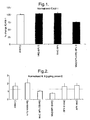
- Figure 1 shows the synergy between genistein and DHA in human umbilical vein endothelial cells in terms of the changes in ICAM-1.
- DMEM human dermal fibroblast cells
- FBS human bovine serum
- Cells were routinely plated out in 6-well tissue culture dishes, at a seeding density of about 5000. cells/cm 2 in 2ml complete medium/well for 24 hours, and incubated at 37°C in 5% CO 2 . Media was removed and cells grown in DMEM & 1% FBS, 24 hours prior to treatments.
- Test solutions were prepared in DMEM containing low serum (1% FBS). Dermal fibroblasts were oxidatively stressed for 24 hours with 1 ⁇ M PMA (Sigma P8139).
- Collagen I is synthesised as a precursor molecule, Procollagen I.
- the amount of free propeptide therefore, reflects stoichiometrically, the amount of collagen I synthesised.
- the Procollagen Type I C-peptide Enzyme Immunoassay (EIA) kit allows for the quantitative determination of Procollagen Type I C-peptide (PIP).
- PIP standards were prepared in sample diluent at concentrations ranging from 0 to 640 ng/ml. 100 ⁇ l of antibody-Peroxidase conjugate solution and 20 ⁇ l of cell lysate (1 ⁇ g protein) or standard was added to duplicate wells. The plate was sealed and incubated at 37°C for 3 hours before being washed four times with 400 ⁇ l of PBS. Each well then received 100 ⁇ l of substrate solution and the plate incubated at room temperature, on the benchtop, for 15 minutes. After this period, 100 ⁇ l stop solution was added to each well and absorbance measured at 450nm with a plate reader.
- Figure 2 shows the synergy between genistein and DHA in human primary dermal fibroblasts in terms of changes in IL6.
- Figure 3 shows the synergy between genistein and DHA in human primary dermal fibroblasts in terms of changes in PGE2.
- Figure 4 shows the synergistic stimulation of procollagen 1 in human dermal fibroblast cells treated with DHA and genistein.
- composition of the invention Ingredient Weight % DHA 0.40 Genistein 0.017 Vitamin C 0.17 Vitamin E 0.25 Lycopene 0.005 Beta-carotene 0.002 Citric acid 0.18 Flavouring, sweetener, thickener, emulsifier q.v. Water To 100%
- the composition can be prepared by adding the components to water and homogenising the mixture.
Landscapes
- Health & Medical Sciences (AREA)
- Pharmacology & Pharmacy (AREA)
- Veterinary Medicine (AREA)
- Chemical & Material Sciences (AREA)
- Public Health (AREA)
- General Health & Medical Sciences (AREA)
- Medicinal Chemistry (AREA)
- Animal Behavior & Ethology (AREA)
- Life Sciences & Earth Sciences (AREA)
- Epidemiology (AREA)
- Organic Chemistry (AREA)
- Nuclear Medicine, Radiotherapy & Molecular Imaging (AREA)
- General Chemical & Material Sciences (AREA)
- Chemical Kinetics & Catalysis (AREA)
- Engineering & Computer Science (AREA)
- Bioinformatics & Cheminformatics (AREA)
- Dermatology (AREA)
- Rheumatology (AREA)
- Pain & Pain Management (AREA)
- Acyclic And Carbocyclic Compounds In Medicinal Compositions (AREA)
- Pharmaceuticals Containing Other Organic And Inorganic Compounds (AREA)
Claims (14)
- Zusammensetzung zum oralen Verzehr, die Genistein und Docosahexaensäure (DHA) und weniger als 1 Gew.-% Sojaprotein umfasst, wobei das Gewichtsverhältnis von Genistein zu DHA im Bereich von 1:100 bis 1:1 liegt, wobei die Zusammensetzung Genistein in einer Menge von 0,0001 Gew.-% bis 0,1 Gew.-% und weniger als 0,01 Gew.-% eines Phospholipid-Emulgators mit Lebensmittelqualität umfasst.
- Zusammensetzung gemäß Anspruch 1, welche in Form einer im Wesentlichen homogenen wässrigen Emulsion, Suspension oder Dispersion vorliegt.
- Zusammensetzung gemäß Anspruch 1 oder Anspruch 2, wobei Genistein und DHA eine Anti-Aging-Wirkung auf die Haut zeigen.
- Zusammensetzung, wie sie in einem der vorangehenden Ansprüche beansprucht wird, wobei das Genistein als eine Komponente eines natürlichen Produkts oder eines Extrakts oder Konzentrats davon vorliegt.
- Zusammensetzung, wie sie in Anspruch 4 beansprucht wird, wobei das natürliche Produkt Soja ist.
- Zusammensetzung, wie sie in einem der vorangehenden Ansprüche beansprucht wird, wobei DHA in Form eines Fischöls vorliegt oder aus einer mikrobiellen Quelle ist.
- Zusammensetzung, wie sie in einem der vorangehenden Ansprüche beansprucht wird, die eine oder mehrere weitere Komponente(n), ausgewählt aus Antioxidanzien, Aromamitteln, Konservierungsmitteln und Stabilisatoren, umfasst.
- Zusammensetzung, wie sie in einem der vorangehenden Ansprüche beansprucht wird, die als Getränk oder Riegel, vorzugsweise als Getränk, verpackt ist.
- Zusammensetzung, wie sie in einem der vorangehenden Ansprüche beansprucht wird, die einen pH von 3 bis 5 hat.
- Zusammensetzung, wie sie in einem der vorangehenden Ansprüche beansprucht wird, die weniger als 50 Gew.-% Wasser umfasst und/oder im Wesentlichen frei von Konservierungsmitteln und/oder Aromamittel ist.
- Zusammensetzung, wie sie in einem der vorangehenden Ansprüche beansprucht wird, die weniger als 0,2 Gew.-% Öl, das DHA umfasst, umfasst.
- Zusammensetzung, wie sie in einem der Ansprüche 1 bis 11 beansprucht wird, die mehr als 5 Gew.-% Öl, das DHA umfasst, umfasst.
- Zusammensetzung, wie sie in einem der vorangehenden Ansprüche beansprucht wird, wobei die Zusammensetzung in Form eines Nahrungsmittelprodukts oder eines Nahrungsergänzungsmittels vorliegt.
- Zusammensetzung, wie sie in einem der Ansprüche 1 bis 12 beansprucht wird, wobei die Zusammensetzung in der Form einer Tablette, Pille, Kapsel oder eines Pulvers vorliegt.
Priority Applications (1)
| Application Number | Priority Date | Filing Date | Title |
|---|---|---|---|
| EP07727920.6A EP2004161B8 (de) | 2006-04-12 | 2007-04-10 | Orale zusammensetzung mit dha und genistein zur verbesserung der hauteigenschaften |
Applications Claiming Priority (4)
| Application Number | Priority Date | Filing Date | Title |
|---|---|---|---|
| EP06252020 | 2006-04-12 | ||
| EP07102128 | 2007-02-12 | ||
| EP07727920.6A EP2004161B8 (de) | 2006-04-12 | 2007-04-10 | Orale zusammensetzung mit dha und genistein zur verbesserung der hauteigenschaften |
| PCT/EP2007/053452 WO2007116052A1 (en) | 2006-04-12 | 2007-04-10 | Oral composition comprising dha and genistein for enhancing skin properties |
Publications (3)
| Publication Number | Publication Date |
|---|---|
| EP2004161A1 EP2004161A1 (de) | 2008-12-24 |
| EP2004161B1 true EP2004161B1 (de) | 2012-05-23 |
| EP2004161B8 EP2004161B8 (de) | 2013-04-17 |
Family
ID=38267588
Family Applications (1)
| Application Number | Title | Priority Date | Filing Date |
|---|---|---|---|
| EP07727920.6A Active EP2004161B8 (de) | 2006-04-12 | 2007-04-10 | Orale zusammensetzung mit dha und genistein zur verbesserung der hauteigenschaften |
Country Status (3)
| Country | Link |
|---|---|
| US (2) | US20090286872A1 (de) |
| EP (1) | EP2004161B8 (de) |
| WO (1) | WO2007116052A1 (de) |
Families Citing this family (7)
| Publication number | Priority date | Publication date | Assignee | Title |
|---|---|---|---|---|
| US8343753B2 (en) | 2007-11-01 | 2013-01-01 | Wake Forest University School Of Medicine | Compositions, methods, and kits for polyunsaturated fatty acids from microalgae |
| WO2009062828A1 (en) * | 2007-11-12 | 2009-05-22 | Unilever Nv | Packaged liquid edible composition comprising carotenoids |
| WO2011057183A1 (en) * | 2009-11-06 | 2011-05-12 | Alcon Research, Ltd. | Nutritional supplements for relief of dry eye |
| US20140080773A1 (en) * | 2012-09-19 | 2014-03-20 | Conopco, Inc. D/B/A Unilever | Composition for Delivering an Anti-Ageing Effect on the Skin and a Method for Improving Skin Characteristics |
| WO2015085045A1 (en) | 2013-12-06 | 2015-06-11 | Ambo Innovations, Llc | Omega-3 fatty acid articles of manufacture, and methods and apparatus for making same |
| JP2017537072A (ja) * | 2014-11-28 | 2017-12-14 | 株式会社アモーレパシフィックAmorepacific Corporation | ゲニステインまたはエピガロカテキンガレートを含む細胞若返り促進誘導用組成物 |
| US20220175710A1 (en) * | 2019-04-18 | 2022-06-09 | Akershus Universitetssykehus Hf | Combination therapy |
Family Cites Families (11)
| Publication number | Priority date | Publication date | Assignee | Title |
|---|---|---|---|---|
| CA2119000A1 (en) * | 1993-03-19 | 1994-09-20 | David Frederick Horrobin | Formulation for use in smokers |
| JP3177947B2 (ja) * | 1996-07-30 | 2001-06-18 | 株式会社ジャニフ・テック | Dha入り豆腐、飲用豆乳およびそれらの乾燥粉末の製造方法 |
| IT1299191B1 (it) * | 1998-06-23 | 2000-02-29 | Sigma Tau Healthscience Spa | Composizione atta a prevenire e trattare l'osteoporosi e le alterazioni legate alla menopausa |
| US6673374B2 (en) * | 1998-07-31 | 2004-01-06 | Howard Murad | Pharmaceutical compositions and methods for managing skin conditions |
| NO313076B1 (no) * | 1999-12-28 | 2002-08-12 | Pronova Biocare As | Flytende n¶rings- og/eller nytelsesmiddel og fremgangsmåte for fremstilling derav |
| FR2804023B1 (fr) * | 2000-01-26 | 2002-09-20 | Johnson & Johnson Consumer Fr | Complement nutritionnel a base d'huile de pepins de cassis |
| FR2815859B1 (fr) * | 2000-10-26 | 2003-02-28 | Oreal | Utilisation de l'association d'au moins un carotenoide a activite provitaminique a et d'au moins un carotenoide sans activite provitaminique a pour traiter les signes du vieillissement |
| MXPA03008137A (es) * | 2001-03-15 | 2003-12-12 | Roche Vitamins Ag | Composicion para prevencion de osteoporosis que comprende combinacion de isoflavonas y acidos grasos poliinsaturados. |
| GB0111282D0 (en) * | 2001-05-09 | 2001-06-27 | Laxdale Ltd | Potentiation of therapeutic effects of fatty acids |
| EP1587377A2 (de) * | 2003-01-31 | 2005-10-26 | The Procter & Gamble Company | Mittel zur verbesserung deserscheinungsbilds von säugetier-keratingewebe |
| ATE456373T1 (de) * | 2004-11-29 | 2010-02-15 | Unilever Nv | Orale zusammensetzung zur verbesserung der hauteigenschaften |
-
2007
- 2007-04-10 EP EP07727920.6A patent/EP2004161B8/de active Active
- 2007-04-10 US US12/226,165 patent/US20090286872A1/en not_active Abandoned
- 2007-04-10 WO PCT/EP2007/053452 patent/WO2007116052A1/en not_active Ceased
-
2011
- 2011-09-19 US US13/236,358 patent/US20120083524A1/en not_active Abandoned
Also Published As
| Publication number | Publication date |
|---|---|
| EP2004161A1 (de) | 2008-12-24 |
| US20120083524A1 (en) | 2012-04-05 |
| EP2004161B8 (de) | 2013-04-17 |
| WO2007116052A1 (en) | 2007-10-18 |
| US20090286872A1 (en) | 2009-11-19 |
Similar Documents
| Publication | Publication Date | Title |
|---|---|---|
| EP2004160B1 (de) | Orale zusammensetzung mit anti-alterungswirkung für die haut | |
| US8987329B2 (en) | Oral composition comprising a polyunsaturated fatty acid and salicylic acid for obtaining an antiinflammatory effect in skin | |
| US20120083524A1 (en) | Oral Composition Comprising DHA and Genistein for Enhancing Skin Properties | |
| JP2010502662A (ja) | スキンケア組成物 | |
| US20100093844A1 (en) | Oral composition for enhancing skin properties | |
| US10406091B2 (en) | Skin anti-ageing composition | |
| US20140080773A1 (en) | Composition for Delivering an Anti-Ageing Effect on the Skin and a Method for Improving Skin Characteristics | |
| EP2365807B1 (de) | Orale zusammensetzung beinhaltend daidzein und ein anthocyanidin | |
| CA2751511C (en) | Edible composition for treating cutaneous signs of ageing |
Legal Events
| Date | Code | Title | Description |
|---|---|---|---|
| PUAI | Public reference made under article 153(3) epc to a published international application that has entered the european phase |
Free format text: ORIGINAL CODE: 0009012 |
|
| 17P | Request for examination filed |
Effective date: 20080722 |
|
| AK | Designated contracting states |
Kind code of ref document: A1 Designated state(s): AT BE BG CH CY CZ DE DK EE ES FI FR GB GR HU IE IS IT LI LT LU LV MC MT NL PL PT RO SE SI SK TR |
|
| RAP1 | Party data changed (applicant data changed or rights of an application transferred) |
Owner name: UNILEVER N.V. Owner name: UNILEVER PLC |
|
| 17Q | First examination report despatched |
Effective date: 20090608 |
|
| GRAC | Information related to communication of intention to grant a patent modified |
Free format text: ORIGINAL CODE: EPIDOSCIGR1 |
|
| GRAP | Despatch of communication of intention to grant a patent |
Free format text: ORIGINAL CODE: EPIDOSNIGR1 |
|
| GRAS | Grant fee paid |
Free format text: ORIGINAL CODE: EPIDOSNIGR3 |
|
| GRAA | (expected) grant |
Free format text: ORIGINAL CODE: 0009210 |
|
| DAX | Request for extension of the european patent (deleted) | ||
| AK | Designated contracting states |
Kind code of ref document: B1 Designated state(s): AT BE BG CH CY CZ DE DK EE ES FI FR GB GR HU IE IS IT LI LT LU LV MC MT NL PL PT RO SE SI SK TR |
|
| REG | Reference to a national code |
Ref country code: GB Ref legal event code: FG4D |
|
| REG | Reference to a national code |
Ref country code: CH Ref legal event code: EP |
|
| REG | Reference to a national code |
Ref country code: AT Ref legal event code: REF Ref document number: 558720 Country of ref document: AT Kind code of ref document: T Effective date: 20120615 |
|
| REG | Reference to a national code |
Ref country code: IE Ref legal event code: FG4D |
|
| REG | Reference to a national code |
Ref country code: NL Ref legal event code: T3 |
|
| REG | Reference to a national code |
Ref country code: DE Ref legal event code: R096 Ref document number: 602007022825 Country of ref document: DE Effective date: 20120726 |
|
| REG | Reference to a national code |
Ref country code: LT Ref legal event code: MG4D Effective date: 20120523 |
|
| PG25 | Lapsed in a contracting state [announced via postgrant information from national office to epo] |
Ref country code: IS Free format text: LAPSE BECAUSE OF FAILURE TO SUBMIT A TRANSLATION OF THE DESCRIPTION OR TO PAY THE FEE WITHIN THE PRESCRIBED TIME-LIMIT Effective date: 20120923 Ref country code: LT Free format text: LAPSE BECAUSE OF FAILURE TO SUBMIT A TRANSLATION OF THE DESCRIPTION OR TO PAY THE FEE WITHIN THE PRESCRIBED TIME-LIMIT Effective date: 20120523 Ref country code: SE Free format text: LAPSE BECAUSE OF FAILURE TO SUBMIT A TRANSLATION OF THE DESCRIPTION OR TO PAY THE FEE WITHIN THE PRESCRIBED TIME-LIMIT Effective date: 20120523 Ref country code: FI Free format text: LAPSE BECAUSE OF FAILURE TO SUBMIT A TRANSLATION OF THE DESCRIPTION OR TO PAY THE FEE WITHIN THE PRESCRIBED TIME-LIMIT Effective date: 20120523 Ref country code: CY Free format text: LAPSE BECAUSE OF FAILURE TO SUBMIT A TRANSLATION OF THE DESCRIPTION OR TO PAY THE FEE WITHIN THE PRESCRIBED TIME-LIMIT Effective date: 20120523 |
|
| REG | Reference to a national code |
Ref country code: AT Ref legal event code: MK05 Ref document number: 558720 Country of ref document: AT Kind code of ref document: T Effective date: 20120523 |
|
| PG25 | Lapsed in a contracting state [announced via postgrant information from national office to epo] |
Ref country code: LV Free format text: LAPSE BECAUSE OF FAILURE TO SUBMIT A TRANSLATION OF THE DESCRIPTION OR TO PAY THE FEE WITHIN THE PRESCRIBED TIME-LIMIT Effective date: 20120523 Ref country code: SI Free format text: LAPSE BECAUSE OF FAILURE TO SUBMIT A TRANSLATION OF THE DESCRIPTION OR TO PAY THE FEE WITHIN THE PRESCRIBED TIME-LIMIT Effective date: 20120523 Ref country code: GR Free format text: LAPSE BECAUSE OF FAILURE TO SUBMIT A TRANSLATION OF THE DESCRIPTION OR TO PAY THE FEE WITHIN THE PRESCRIBED TIME-LIMIT Effective date: 20120824 Ref country code: PT Free format text: LAPSE BECAUSE OF FAILURE TO SUBMIT A TRANSLATION OF THE DESCRIPTION OR TO PAY THE FEE WITHIN THE PRESCRIBED TIME-LIMIT Effective date: 20120924 |
|
| PG25 | Lapsed in a contracting state [announced via postgrant information from national office to epo] |
Ref country code: BE Free format text: LAPSE BECAUSE OF FAILURE TO SUBMIT A TRANSLATION OF THE DESCRIPTION OR TO PAY THE FEE WITHIN THE PRESCRIBED TIME-LIMIT Effective date: 20120523 |
|
| PG25 | Lapsed in a contracting state [announced via postgrant information from national office to epo] |
Ref country code: RO Free format text: LAPSE BECAUSE OF FAILURE TO SUBMIT A TRANSLATION OF THE DESCRIPTION OR TO PAY THE FEE WITHIN THE PRESCRIBED TIME-LIMIT Effective date: 20120523 Ref country code: EE Free format text: LAPSE BECAUSE OF FAILURE TO SUBMIT A TRANSLATION OF THE DESCRIPTION OR TO PAY THE FEE WITHIN THE PRESCRIBED TIME-LIMIT Effective date: 20120523 Ref country code: SK Free format text: LAPSE BECAUSE OF FAILURE TO SUBMIT A TRANSLATION OF THE DESCRIPTION OR TO PAY THE FEE WITHIN THE PRESCRIBED TIME-LIMIT Effective date: 20120523 Ref country code: AT Free format text: LAPSE BECAUSE OF FAILURE TO SUBMIT A TRANSLATION OF THE DESCRIPTION OR TO PAY THE FEE WITHIN THE PRESCRIBED TIME-LIMIT Effective date: 20120523 Ref country code: CZ Free format text: LAPSE BECAUSE OF FAILURE TO SUBMIT A TRANSLATION OF THE DESCRIPTION OR TO PAY THE FEE WITHIN THE PRESCRIBED TIME-LIMIT Effective date: 20120523 Ref country code: DK Free format text: LAPSE BECAUSE OF FAILURE TO SUBMIT A TRANSLATION OF THE DESCRIPTION OR TO PAY THE FEE WITHIN THE PRESCRIBED TIME-LIMIT Effective date: 20120523 |
|
| PG25 | Lapsed in a contracting state [announced via postgrant information from national office to epo] |
Ref country code: PL Free format text: LAPSE BECAUSE OF FAILURE TO SUBMIT A TRANSLATION OF THE DESCRIPTION OR TO PAY THE FEE WITHIN THE PRESCRIBED TIME-LIMIT Effective date: 20120523 |
|
| PLBE | No opposition filed within time limit |
Free format text: ORIGINAL CODE: 0009261 |
|
| STAA | Information on the status of an ep patent application or granted ep patent |
Free format text: STATUS: NO OPPOSITION FILED WITHIN TIME LIMIT |
|
| RAP2 | Party data changed (patent owner data changed or rights of a patent transferred) |
Owner name: UNILEVER PLC Owner name: UNILEVER N.V. |
|
| PG25 | Lapsed in a contracting state [announced via postgrant information from national office to epo] |
Ref country code: ES Free format text: LAPSE BECAUSE OF FAILURE TO SUBMIT A TRANSLATION OF THE DESCRIPTION OR TO PAY THE FEE WITHIN THE PRESCRIBED TIME-LIMIT Effective date: 20120903 |
|
| 26N | No opposition filed |
Effective date: 20130226 |
|
| REG | Reference to a national code |
Ref country code: DE Ref legal event code: R097 Ref document number: 602007022825 Country of ref document: DE Effective date: 20130226 |
|
| PG25 | Lapsed in a contracting state [announced via postgrant information from national office to epo] |
Ref country code: BG Free format text: LAPSE BECAUSE OF FAILURE TO SUBMIT A TRANSLATION OF THE DESCRIPTION OR TO PAY THE FEE WITHIN THE PRESCRIBED TIME-LIMIT Effective date: 20120823 |
|
| PG25 | Lapsed in a contracting state [announced via postgrant information from national office to epo] |
Ref country code: MC Free format text: LAPSE BECAUSE OF FAILURE TO SUBMIT A TRANSLATION OF THE DESCRIPTION OR TO PAY THE FEE WITHIN THE PRESCRIBED TIME-LIMIT Effective date: 20120523 |
|
| REG | Reference to a national code |
Ref country code: CH Ref legal event code: PL |
|
| PG25 | Lapsed in a contracting state [announced via postgrant information from national office to epo] |
Ref country code: CH Free format text: LAPSE BECAUSE OF NON-PAYMENT OF DUE FEES Effective date: 20130430 Ref country code: LI Free format text: LAPSE BECAUSE OF NON-PAYMENT OF DUE FEES Effective date: 20130430 |
|
| PG25 | Lapsed in a contracting state [announced via postgrant information from national office to epo] |
Ref country code: MT Free format text: LAPSE BECAUSE OF FAILURE TO SUBMIT A TRANSLATION OF THE DESCRIPTION OR TO PAY THE FEE WITHIN THE PRESCRIBED TIME-LIMIT Effective date: 20120523 |
|
| PG25 | Lapsed in a contracting state [announced via postgrant information from national office to epo] |
Ref country code: TR Free format text: LAPSE BECAUSE OF FAILURE TO SUBMIT A TRANSLATION OF THE DESCRIPTION OR TO PAY THE FEE WITHIN THE PRESCRIBED TIME-LIMIT Effective date: 20120523 |
|
| PG25 | Lapsed in a contracting state [announced via postgrant information from national office to epo] |
Ref country code: LU Free format text: LAPSE BECAUSE OF NON-PAYMENT OF DUE FEES Effective date: 20130410 Ref country code: HU Free format text: LAPSE BECAUSE OF FAILURE TO SUBMIT A TRANSLATION OF THE DESCRIPTION OR TO PAY THE FEE WITHIN THE PRESCRIBED TIME-LIMIT; INVALID AB INITIO Effective date: 20070410 |
|
| REG | Reference to a national code |
Ref country code: FR Ref legal event code: PLFP Year of fee payment: 10 |
|
| REG | Reference to a national code |
Ref country code: FR Ref legal event code: PLFP Year of fee payment: 11 |
|
| PGFP | Annual fee paid to national office [announced via postgrant information from national office to epo] |
Ref country code: IE Payment date: 20170421 Year of fee payment: 11 |
|
| REG | Reference to a national code |
Ref country code: FR Ref legal event code: PLFP Year of fee payment: 12 |
|
| REG | Reference to a national code |
Ref country code: IE Ref legal event code: MM4A |
|
| PG25 | Lapsed in a contracting state [announced via postgrant information from national office to epo] |
Ref country code: IE Free format text: LAPSE BECAUSE OF NON-PAYMENT OF DUE FEES Effective date: 20180410 |
|
| PGFP | Annual fee paid to national office [announced via postgrant information from national office to epo] |
Ref country code: NL Payment date: 20200427 Year of fee payment: 14 |
|
| PGFP | Annual fee paid to national office [announced via postgrant information from national office to epo] |
Ref country code: IT Payment date: 20200423 Year of fee payment: 14 |
|
| REG | Reference to a national code |
Ref country code: DE Ref legal event code: R081 Ref document number: 602007022825 Country of ref document: DE Owner name: UNILEVER GLOBAL IP LIMITED, WIRRAL, GB Free format text: FORMER OWNER: UNILEVER N.V., ROTTERDAM, NL |
|
| REG | Reference to a national code |
Ref country code: NL Ref legal event code: MM Effective date: 20210501 |
|
| REG | Reference to a national code |
Ref country code: GB Ref legal event code: 732E Free format text: REGISTERED BETWEEN 20220203 AND 20220209 |
|
| PG25 | Lapsed in a contracting state [announced via postgrant information from national office to epo] |
Ref country code: NL Free format text: LAPSE BECAUSE OF NON-PAYMENT OF DUE FEES Effective date: 20210501 |
|
| PG25 | Lapsed in a contracting state [announced via postgrant information from national office to epo] |
Ref country code: IT Free format text: LAPSE BECAUSE OF NON-PAYMENT OF DUE FEES Effective date: 20200410 |
|
| P01 | Opt-out of the competence of the unified patent court (upc) registered |
Effective date: 20230501 |
|
| PGFP | Annual fee paid to national office [announced via postgrant information from national office to epo] |
Ref country code: DE Payment date: 20250422 Year of fee payment: 19 |
|
| PGFP | Annual fee paid to national office [announced via postgrant information from national office to epo] |
Ref country code: GB Payment date: 20250418 Year of fee payment: 19 |
|
| PGFP | Annual fee paid to national office [announced via postgrant information from national office to epo] |
Ref country code: FR Payment date: 20250424 Year of fee payment: 19 |
|
| PG25 | Lapsed in a contracting state [announced via postgrant information from national office to epo] |
Ref country code: IT Free format text: LAPSE BECAUSE OF NON-PAYMENT OF DUE FEES Effective date: 20210410 |