EP1987635B1 - Vorrichtung, verfahren und computerprogrammprodukt zur bereitstellung einer persistenten aufwärtsstrecken- und abwärtsstrecken-ressourcenzuteilung - Google Patents
Vorrichtung, verfahren und computerprogrammprodukt zur bereitstellung einer persistenten aufwärtsstrecken- und abwärtsstrecken-ressourcenzuteilung Download PDFInfo
- Publication number
- EP1987635B1 EP1987635B1 EP07705517.6A EP07705517A EP1987635B1 EP 1987635 B1 EP1987635 B1 EP 1987635B1 EP 07705517 A EP07705517 A EP 07705517A EP 1987635 B1 EP1987635 B1 EP 1987635B1
- Authority
- EP
- European Patent Office
- Prior art keywords
- node
- persistent
- allocation
- data flow
- rrc
- Prior art date
- Legal status (The legal status is an assumption and is not a legal conclusion. Google has not performed a legal analysis and makes no representation as to the accuracy of the status listed.)
- Active
Links
Images


Classifications
-
- H—ELECTRICITY
- H04—ELECTRIC COMMUNICATION TECHNIQUE
- H04L—TRANSMISSION OF DIGITAL INFORMATION, e.g. TELEGRAPHIC COMMUNICATION
- H04L5/00—Arrangements affording multiple use of the transmission path
- H04L5/0091—Signalling for the administration of the divided path, e.g. signalling of configuration information
- H04L5/0094—Indication of how sub-channels of the path are allocated
-
- H—ELECTRICITY
- H04—ELECTRIC COMMUNICATION TECHNIQUE
- H04W—WIRELESS COMMUNICATION NETWORKS
- H04W72/00—Local resource management
- H04W72/20—Control channels or signalling for resource management
- H04W72/23—Control channels or signalling for resource management in the downlink direction of a wireless link, i.e. towards a terminal
-
- H—ELECTRICITY
- H04—ELECTRIC COMMUNICATION TECHNIQUE
- H04W—WIRELESS COMMUNICATION NETWORKS
- H04W72/00—Local resource management
- H04W72/50—Allocation or scheduling criteria for wireless resources
- H04W72/54—Allocation or scheduling criteria for wireless resources based on quality criteria
- H04W72/543—Allocation or scheduling criteria for wireless resources based on quality criteria based on requested quality, e.g. QoS
-
- H—ELECTRICITY
- H04—ELECTRIC COMMUNICATION TECHNIQUE
- H04L—TRANSMISSION OF DIGITAL INFORMATION, e.g. TELEGRAPHIC COMMUNICATION
- H04L5/00—Arrangements affording multiple use of the transmission path
- H04L5/0001—Arrangements for dividing the transmission path
- H04L5/0003—Two-dimensional division
- H04L5/0005—Time-frequency
- H04L5/0007—Time-frequency the frequencies being orthogonal, e.g. OFDM(A) or DMT
-
- H—ELECTRICITY
- H04—ELECTRIC COMMUNICATION TECHNIQUE
- H04L—TRANSMISSION OF DIGITAL INFORMATION, e.g. TELEGRAPHIC COMMUNICATION
- H04L5/00—Arrangements affording multiple use of the transmission path
- H04L5/003—Arrangements for allocating sub-channels of the transmission path
- H04L5/0044—Allocation of payload; Allocation of data channels, e.g. PDSCH or PUSCH
-
- H—ELECTRICITY
- H04—ELECTRIC COMMUNICATION TECHNIQUE
- H04W—WIRELESS COMMUNICATION NETWORKS
- H04W72/00—Local resource management
- H04W72/50—Allocation or scheduling criteria for wireless resources
- H04W72/52—Allocation or scheduling criteria for wireless resources based on load
-
- H—ELECTRICITY
- H04—ELECTRIC COMMUNICATION TECHNIQUE
- H04W—WIRELESS COMMUNICATION NETWORKS
- H04W72/00—Local resource management
- H04W72/50—Allocation or scheduling criteria for wireless resources
- H04W72/54—Allocation or scheduling criteria for wireless resources based on quality criteria
Definitions
- the exemplary embodiments of this invention relate generally to wireless communications systems and devices and, more specifically, relate to packet mode transmissions of data between a wireless network and a user equipment (UE), such as a cellular phone.
- UE user equipment
- the signaling to allocate transmission resources can be sent as part of a Layer-1 (physical layer) allocation table.
- the allocation table represents a signaling overhead that consumes some amount of the finite available bandwidth.
- the invention provides a method for allocating transmission resources to a user equipment per claim 1, a corresponding computer program product per claim 7 and a node B per claim 8. Preferred embodiments are described in the dependent claims.
- the exemplary embodiments of this invention reduce the signaling overhead by pre-allocating a pattern of transmission resources to a particular UE.
- This procedure may be referred to, in a non-limiting sense, as a persistent allocation or as a semi-static allocation, and implies an allocation of resources for more than one transmission interval (e.g., more than one sub-frame).
- the exemplary embodiments of this invention pertain to both the physical layer aspects and to Layer-3 signaling mechanisms to support persistent allocation.
- the use of the exemplary embodiments of this invention is applicable for both the uplink (UE to wireless network) and downlink (wireless network to UE).
- the use of the exemplary embodiments of this invention is particularly well-suited to, and provides enhanced operation for, UTRAN LTE.
- the UTRAN LTE relies on OFDMA in the DL and single carrier FDMA in the UL, where a default conventional assumption for both the DL and the UL is the use of fast scheduling/user multiplexing every 1.0 msec TTI (i.e., one time allocations).
- a default conventional assumption for both the DL and the UL is the use of fast scheduling/user multiplexing every 1.0 msec TTI (i.e., one time allocations).
- a default conventional assumption for both the DL and the UL is the use of fast scheduling/user multiplexing every 1.0 msec TTI (i.e., one time allocations).
- 1.0 msec TTI i.e., one time allocations
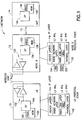
- a wireless network 1 is adapted for communication with a UE 10 via a Node B (base station) 12.
- the network 1 may include at least one network control function (NCF) 14.
- the UE 10 includes a data processor (DP) 10A, a memory (MEM) 10B that stores a program (PROG) 10C, and a suitable radio frequency (RF) transceiver 10D for bidirectional wireless communications with the Node B 12, which also includes a DP 12A, a MEM 12B that stores a PROG 12C, and a suitable RF transceiver 12D.
- DP data processor
- MEM memory
- PROG program
- RF radio frequency
- the Node B 12 is coupled via a data path 13 to the NCF 14 that also includes a DP 14A and a MEM 14B storing an associated PROG 14C.
- At least one of the PROGs 10C, 12C and 14C is assumed to include program instructions that, when executed by the associated DP, enable the electronic device to operate in accordance with the exemplary embodiments of this invention, as will be discussed below in greater detail.
- the UE 10 is assumed to include and implement a protocol stack 10E containing at least layers L1 (PHY), L2 (RLL) and L3 (RNL), and typically higher layers as well (e.g., an IP layer).
- the Node B 12 is assumed to include and implement a protocol stack 12E also containing at least layers L1 (PHY), L2 (RLL) and L3 (RNL), and typically also the higher layers as well (e.g., an IP layer).
- the L2 (MAC layer) of the Node B 12 includes the functionality of a PDCP 32B
- the L3 (RNL) includes the functionality of a RRC 34A, as discussed in further detail below.
- the various embodiments of the UE 10 can include, but are not limited to, cellular phones, personal digital assistants (PDAs) having wireless communication capabilities, portable computers having wireless communication capabilities, image capture devices such as digital cameras having wireless communication capabilities, gaming devices having wireless communication capabilities, music storage and playback appliances having wireless communication capabilities, Internet appliances permitting wireless Internet access and browsing, as well as portable units or terminals that incorporate combinations of such functions.
- PDAs personal digital assistants
- portable computers having wireless communication capabilities
- image capture devices such as digital cameras having wireless communication capabilities
- gaming devices having wireless communication capabilities
- music storage and playback appliances having wireless communication capabilities
- Internet appliances permitting wireless Internet access and browsing, as well as portable units or terminals that incorporate combinations of such functions.
- the embodiments of this invention may be implemented by computer software executable by the DP 10A of the UE 10 and the DP 12A of the Node B, or by hardware, or by a combination of software and hardware.
- the MEMs 10B, 12B and 14B may be of any type suitable to the local technical environment and may be implemented using any suitable data storage technology, such as semiconductor-based memory devices, magnetic memory devices and systems, optical memory devices and systems, fixed memory and removable memory.
- the DPs 10A, 12A and 14A may be of any type suitable to the local technical environment, and may include one or more of general purpose computers, special purpose computers, microprocessors, digital signal processors (DSPs) and processors based on a multi-core processor architecture, as non-limiting examples.
- a network element such as the Node B 12, pre-allocates transmission resources to at least one UE 10, and thus avoids sending a Layer-1 allocation table for every allocation per sub-frame.
- Figure 2 shows a non-limiting example where transmission resources are periodically allocated to a UE 10 in the frequency-time domain. This example assumes localized transmission in the frequency domain in the allocated sub-frames, but it should be realized that the process can be generalized to cover cases with distributed transmission in the frequency domain per sub-frame.
- the example in Figure 2 illustrates a case where only persistent allocation is used for the UE 10.
- a hybrid approach can also be adapted where both persistent allocation and one-time allocation is used. This permits temporarily increasing the capacity allocation to a UE 10 if the granted persistent allocation is found to be insufficient for some relatively short (temporary) period of time.
- the UE 10 is assigned the same band of frequencies in each consecutive sub-frame, whereas in the example of Figure 3 , the UE 10 is assigned different frequency bands per sub-frame.
- Layer 1 is the physical (PHY) layer
- Layer 2 is the MAC layer
- Layer 3 is the Radio Network Layer (RNL) 34.
- RNL Radio Network Layer
- Above Layer 3 are typically other layers, agents and entities, such as an IP layer 36, a QoS agent 38 and a Security agent 40, that are not particularly germane to an understanding of this invention.
- the PHY layer 30 includes a PHY controller/manager function 30A
- the Radio Link Layer 32 includes a MAC controller/manager function 32A and a PDCP controller/manager function 32B
- the Radio Network Layer 34 is assumed to include a RRC controller/manager function 34A.
- the RRC entity 34A at L3 includes a persistent allocation manager function that controls the persistent allocation of resources to UEs 10.
- the RRC entity 34A decides whether persistent allocation should be used. If persistent allocation is used, then the BTS, which forms a part of the Node B 12, informs the UE 10 of the allocated resources via RRC signaling, as well as the PHY 30A (L1) via CPHY control messages. This implies that the use of the separate L1 signaling to the UE 10 (via an allocation table) for each allocation is avoided, which can provide a significant advantage due to the reduction in signaling overhead.
- the signaling message is received at the UE 10 at L3. Information in the received signaling message is subsequently passed on to the UE PHY.
- the RRC signaling message and/or the CPHY control message may comprise: a frequency resource(s) ID, a repetition factor (e.g., once every X TTIs), SFN mod X (e.g., to "synchronize" the allocation at the Node B 12 and the UE 10), and a hopping sequence (e.g., if the allocated frequency resources periodically change to provide frequency diversity).
- the RRC signaling message and/or the CPHY control message may comprise a parameter indicating the "duration" of the allocation. In further embodiments, such a duration parameter may not be necessary because the Node B sends a specific message to release previously assigned persistent allocations.
- the determination by the persistent allocation manager function whether or not a persistent allocation is used may be based on, as non-limiting examples, one or more of: the type of data flow being set up (e.g., VoIP, streaming), any specific QoS requirements of the UE 10 setting up the data flow, a total number of active UEs in a cell, the types of data flows (and resource allocations) currently in use by other UEs, and the current load in the network, in particular the DL load caused by L1 control signaling (e.g., allocation table).
- the use of the persistent allocation in accordance with the exemplary embodiments of this invention may be particularly advantageous during high load conditions.
- the Node-B MAC layer packet scheduler (part of MAC entity 32A) may be enabled to propose new persistent allocations for UEs 10 and/or modifications of existing persistent allocations to higher or lower data rates. This is desirable since throughput monitoring and buffer information is available at the MAC layer 32.
- the persistent allocation manager function that is resident in the Radio Network Layer 34 makes the final determination as to whether to comply with the suggestions received from the L2 MAC entity 32A packet scheduler.
- the persistent allocation manager in L3 may also receive inputs from other layers, such as L1 (PHY), that affect the persistent resource allocation (e.g., channel quality indications).
- PHY L1
- Other examples of information that may be provided by PHY to the persistent allocation manager function include, but need not be limited to, one or both of the load per resource pool (frequency and/or time) and an optimal MCS (Modulation and Coding Scheme) to be persistently assigned to a certain UE 10.
- Figure 5 depicts a flowchart illustrating one non-limiting example of a method for practicing the exemplary embodiments of this invention.
- the method includes: allocating resources to a user equipment for a data flow over a plurality of time intervals with a single signaling event at a wireless network radio network layer (501); and informing the user equipment of the allocated resources (502).
- the method further comprises: informing a physical layer control/manager function of the allocated resources.
- informing the physical layer control/manager function of the allocated resources comprises using at least one CPHY control message.
- allocating is performed in response to a new data flow being set up.
- informing the user equipment of the allocated resources comprises using radio resource control signaling.
- allocating comprises considering only information available in the radio network layer.
- allocating comprises considering, at least in part, information obtained from at least one layer other than the radio network layer.
- the information comprises at least one of: a cell-based measurement, a link-based measurement, a channel quality indication, a load per frequency resource pool, a load per time resource pool, and a modulation and coding scheme.
- the information is obtained from a component of a physical layer. In other embodiments, the information is obtained from a component of a medium access control layer.
- the method further comprises: allocating at least one resource to accommodate fluctuations in radio resource requirements of the user equipment. In further embodiments, allocating is performed in response to a Node B medium access control layer packet scheduler proposing one of a new allocation or a modification of an existing allocation. In other embodiments, the method further comprises: determining whether a persistent allocation should be used or modified for a respective data flow, wherein allocating comprises in response to determining that a persistent allocation should be used or modified for a respective data flow, allocating the persistent allocation for the respective data flow.
- determining whether persistent allocation should be used or modified for the respective data flow comprises considering at least one of: a type of the respective data flow, QoS requirements of a respective user equipment associated with the respective data flow, a total number of active user equipments in a cell, types of data flows currently in use by other user equipments, resource allocations of the other user equipments, and current load in an associated network.
- the plurality of time intervals comprises a plurality of sub-frames.
- the exemplary embodiments of this invention provide a method, apparatus and computer program product(s) to provide a persistent allocation manager function in a Radio Network Layer of a wireless network component for selectively allocating resources to UEs for a plurality of sub-frame intervals with a single signaling event so as to reduce an amount of signaling to the UEs.
- the persistent allocation may be made in accordance only with information available in the Radio Network Layer, or in accordance with information obtained from another layer or layers, such as the Radio Link Layer.
- the persistent resource allocation may be made in conjunction with a temporary resource allocation to accommodate fluctuations in radio resource requirements by a particular UE.
- the various embodiments may be implemented in hardware or special purpose circuits, software, logic or any combination thereof.
- some aspects may be implemented in hardware, while other aspects may be implemented in firmware or software which may be executed by a controller, microprocessor or other computing device, although the invention is not limited thereto.
- While various aspects of the invention may be illustrated and described as block diagrams, flow charts, or using some other pictorial representation, it is well understood that these blocks, apparatus, systems, techniques or methods described herein may be implemented in, as non-limiting examples, hardware, software, firmware, special purpose circuits or logic, general purpose hardware or controller or other computing devices, or some combination thereof.
- Embodiments of the inventions may be practiced in various components such as integrated circuit modules.
- the design of integrated circuits is by and large a highly automated process. Complex and powerful software tools are available for converting a logic level design into a semiconductor circuit design ready to be etched and formed on a semiconductor substrate. Programs, such as those provided by Synopsys, Inc. of Mountain View, California and Cadence Design, of San Jose, California automatically route conductors and locate components on a semiconductor chip using well established rules of design as well as libraries of pre-stored design modules. Once the design for a semiconductor circuit has been completed, the resultant design, in a standardized electronic format (e.g., Opus, GDSII, or the like) may be transmitted to a semiconductor fabrication facility or "fab" for fabrication.
- a standardized electronic format e.g., Opus, GDSII, or the like
Landscapes
- Engineering & Computer Science (AREA)
- Signal Processing (AREA)
- Computer Networks & Wireless Communication (AREA)
- Quality & Reliability (AREA)
- Mobile Radio Communication Systems (AREA)
Claims (9)
- Verfahren zum Zuweisen von Übertragungsressourcen an ein Benutzergerät, User Equipment, UE, (10) in einem universellen terrestrischen Funkzugangsnetzwerk, Universal Terrestrial Radio Access Network, UTRAN, durch einen Knoten B (12), umfassend eine Funknetzwerkschicht, Radio Network Layer, RNL, (34) einschließlich einer Funkressourcensteuerungs, Radio Resource Control, RRC,-Einheit (34a), dadurch gekennzeichnet, dass das Verfahren umfasst:Bestimmen, durch die RRC-Einheit (34a) des Knotens B (12), einer Notwendigkeit für eine persistente Übertragungsressourcenzuweisung an das UE (10) oder einer Notwendigkeit deren Änderung in Reaktion auf einen mit dem UE (10) und über den Knoten B (12) eingerichteten Datenfluss,wobei diepersistente Übertragungsressourcenzuweisung eine Zuweisung von Übertragungsressourcen für mehr als ein Übertragungsintervall bedeutet, und wobei die Bestimmung das Berücksichtigen von mindestens einem der Folgenden umfasst: einen Typ des Datenflusses, QoS-Anforderungen des dem Datenfluss zugewiesenem Benutzergeräts, eine Gesamtzahl von aktiven Benutzergeräten in einer Zelle,Typen von aktuell von anderen Benutzergeräten verwendeten Datenflüssen, Ressourcenzuweisungen der anderen Benutzergeräte und die aktuelle Last in dem UTRAN;in Reaktion auf die Bestimmung der Notwendigkeit für eine persistente Übertragungsressourcenzuweisung an das UE (10) oder der Notwendigkeit deren Änderung durch Zuweisen, durch eine persistente Zuweisungsmanagerfunktion der RRC-Einheit (34a) in der RNL, von Übertragungsressourcen an das UE (10) für den Datenfluss über mehrere Zeitübertragungsintervalle; und Benachrichtigen des UE (10) über die zugewiesenen Übertragungsressourcen mit einer einzelnen RRC-Signalisierungsnachricht in der RNL.
- Verfahren nach Anspruch 1, ferner umfassend:Benachrichtigen einer Steuerungs-/Managerfunktion der physischen Schicht des Knotens B.
- Verfahren nach Anspruch 1, wobei das Zuweisen umfasst, dass nur Information berücksichtigt werden, die in der Funknetzwerkschicht verfügbar sind.
- Verfahren nach Anspruch 1, wobei das Zuweisen umfasst, dass zumindest teilweise Informationen berücksichtigt werden, die von mindestens einer anderen Schicht als der Funknetzwerkschicht erhalten werden.
- Verfahren nach Anspruch 4, wobei die Informationen mindestens eines der Folgenden umfassen: eine zellenbasierte Messung, eine verbindungsbasierte Messung, eine Kanalqualitätsanzeige, eine Last pro Frequenzressourcenpool, ein Last-pro-Zeit-Ressourcenpool und ein Modulations-
und Kodierungsschema. - Verfahren nach Anspruch 1, ferner umfassend:Zuweisen von mindestens einer Ressource, um Fluktuationen in den Funkressourcenanforderungen des Benutzergeräts zu berücksichtigen.
- Computerprogramm, das Programmanweisungen umfasst, die auf einem greifbaren computerlesbaren Medium verkörpert sind, wobei das Ausführen der Programmanweisungen durch einen Prozessor zu Vorgängen gemäß einem der Ansprüche 1, 2, 4 oder 5 führen.
- Knoten B (12) in einem universellen terrestrischen Funkzugriffsnetzwerk, UTRAN, dadurch gekennzeichnet, dass der Knoten B (12) umfassteine Funknetzwerkschicht, RNL, (34), die eine Funkressourcensteuerungs, RRC,-Einheit (34a) enthält, wobei die RRC-Einheit (34a) des Knotens B konfiguriert ist, um eine Notwendigkeit für eine persistente Übertragungsressourcenzuweisung an das UE (10) oder eine Notwendigkeit deren Änderung in Reaktion auf einen mit dem UE (10) und über den Knoten B (12) eingerichteten Datenfluss zu bestimmen, wobei die persistente Übertragungsressourcenzuweisung eine Zuweisung von Übertragungsressourcen für mehr als ein Übertragungsintervall bedeutet, und wobei die Bestimmung das Berücksichtigen von mindestens einem der Folgenden umfasst: einen Typ des Datenflusses, QoS-Anforderungen der dem Datenfluss zugewiesenem Benutzergerät, eine Gesamtzahl von aktiven Benutzergeräten in einer Zelle, Typen von aktuell von anderen Benutzergeräten verwendeten Datenflüssen, Ressourcenzuweisungen der anderen Benutzergeräte und die aktuelle Last in dem UTRAN, undin Reaktion auf die Bestimmung der Notwendigkeit für eine persistente Übertragungsressourcenzuweisung an das UE (10) oder der Notwendigkeit deren Änderung die RRC-Einheit (34a) des Knotens B (12) ferner konfiguriert ist, um persistente Übertragungsressourcen an das UE (10) für den Datenfluss über mehrere Zeitübertragungsintervalle zuzuweisen; undeinen Sender, der mit der Funknetzwerkschichtkomponente gekoppelt ist, wobei der Sender konfiguriert ist, um eine Information, die die zugewiesenen Übertragungsressourcen anzeigt, an das UE (10) mit einer einzelnen mit einer einzelnen Funkressourcensteuerungs, RRC,-Signalisierungsnachricht in der RNL zu übertragen.
- Knoten B nach Anspruch 8, wobei die RRC-Einheit (34a) der Funknetzwerkschichtkomponente ferner konfiguriert ist, um eine Steuerungs-/Managerfunktion der physischen Schicht des Knotens B(12) der zugewiesenen Ressourcen zu benachrichtigen.
Applications Claiming Priority (2)
| Application Number | Priority Date | Filing Date | Title |
|---|---|---|---|
| US76508106P | 2006-02-03 | 2006-02-03 | |
| PCT/IB2007/000243 WO2007088468A2 (en) | 2006-02-03 | 2007-02-01 | Apparatus, method, and computer program product providing persistent uplink and downlink resource allocation |
Publications (3)
| Publication Number | Publication Date |
|---|---|
| EP1987635A2 EP1987635A2 (de) | 2008-11-05 |
| EP1987635A4 EP1987635A4 (de) | 2012-02-15 |
| EP1987635B1 true EP1987635B1 (de) | 2018-11-07 |
Family
ID=38327757
Family Applications (1)
| Application Number | Title | Priority Date | Filing Date |
|---|---|---|---|
| EP07705517.6A Active EP1987635B1 (de) | 2006-02-03 | 2007-02-01 | Vorrichtung, verfahren und computerprogrammprodukt zur bereitstellung einer persistenten aufwärtsstrecken- und abwärtsstrecken-ressourcenzuteilung |
Country Status (6)
| Country | Link |
|---|---|
| US (2) | US8452295B2 (de) |
| EP (1) | EP1987635B1 (de) |
| JP (1) | JP4891345B2 (de) |
| CN (1) | CN101411237B (de) |
| TW (1) | TWI375441B (de) |
| WO (1) | WO2007088468A2 (de) |
Families Citing this family (17)
| Publication number | Priority date | Publication date | Assignee | Title |
|---|---|---|---|---|
| KR101254801B1 (ko) * | 2006-04-19 | 2013-04-15 | 삼성전자주식회사 | 패킷 데이터 통신 시스템에서 데이터 제어 채널의 송수신방법 및 장치 |
| JP5129257B2 (ja) * | 2006-10-27 | 2013-01-30 | テレフオンアクチーボラゲット エル エム エリクソン(パブル) | 通信システムにおいて無線資源を割り当てる方法および構成 |
| KR101328164B1 (ko) * | 2007-01-12 | 2013-11-13 | 삼성전자주식회사 | 무선 통신 시스템의 자원 할당 방법 및 장치 |
| KR101377961B1 (ko) * | 2007-07-27 | 2014-03-25 | 엘지전자 주식회사 | 헤더 오버헤드 감소를 위한 패킷 전송 방법 |
| US7839824B2 (en) * | 2007-07-31 | 2010-11-23 | Beceem Communications Inc. | Allocation of periodically distributed frames of wireless communication |
| GB0714927D0 (en) | 2007-08-01 | 2007-09-12 | Nokia Siemens Networks Oy | Resource allocation |
| MX2010002747A (es) | 2007-09-11 | 2011-02-25 | Wi Lan Inc | Correccion de error para asignacion de recursos persistente. |
| KR20090030562A (ko) | 2007-09-20 | 2009-03-25 | 엘지전자 주식회사 | 광대역 무선 접속 시스템에서 자원할당을 위한 패킷전송방법 |
| WO2009057391A1 (ja) * | 2007-10-31 | 2009-05-07 | Nec Corporation | 通信システムにおけるリソース割当方法及びリソース割当システム並びにそれに用いる基地局 |
| US8208433B2 (en) * | 2008-02-19 | 2012-06-26 | Broadcom Corporation | Method and apparatus for allocating resources in wireless communication system |
| US8964536B2 (en) | 2009-10-05 | 2015-02-24 | Qualcomm Incorporated | Apparatus and method for dynamic load balancing in a multi-carrier wireless communication system |
| RU2543562C2 (ru) * | 2010-02-02 | 2015-03-10 | Чайна Мобайл Коммуникейшенс Корпорейшн | Способ и устройство распределения субфреймов (субкадров) нисходящего канала |
| EP2564652B1 (de) | 2010-04-30 | 2014-04-23 | Telefonaktiebolaget LM Ericsson (publ) | Verfahren und vorrichtung zur steuerung der verstopfung durch maschine zu maschine (m2m) verkehr |
| JP5054804B2 (ja) * | 2010-05-28 | 2012-10-24 | 株式会社エヌ・ティ・ティ・ドコモ | 無線基地局及び無線リソース割り当て方法 |
| CN103250456B (zh) * | 2010-10-18 | 2017-10-31 | 瑞典爱立信有限公司 | 基于优先级和资源利用的通信调度 |
| WO2016070413A1 (en) * | 2014-11-07 | 2016-05-12 | Mediatek Singapore Pte. Ltd. | Methods for enhanced contention based access response message |
| CN105991224B (zh) * | 2015-02-13 | 2019-07-02 | 中兴通讯股份有限公司 | 一种上行数据的传输控制方法和装置 |
Family Cites Families (27)
| Publication number | Priority date | Publication date | Assignee | Title |
|---|---|---|---|---|
| US6904110B2 (en) * | 1997-07-31 | 2005-06-07 | Francois Trans | Channel equalization system and method |
| GB0004088D0 (en) * | 2000-02-21 | 2000-04-12 | Nokia Networks Oy | Packet data services in a telecommunications system |
| US6714515B1 (en) * | 2000-05-16 | 2004-03-30 | Telefonaktiebolaget Lm Ericsson (Publ) | Policy server and architecture providing radio network resource allocation rules |
| US20020071407A1 (en) * | 2000-07-08 | 2002-06-13 | Samsung Electronics Co., Ltd. | HARQ method in a CDMA mobile communication system |
| CA2376962A1 (en) * | 2001-04-02 | 2002-10-02 | Lucent Technologies Inc. | Method and system for umts packet transmission scheduling on uplink channels |
| AU2002302870A1 (en) * | 2002-05-08 | 2003-11-11 | Nokia Corporation | Dynamic allocation of a radio resource |
| KR100917042B1 (ko) * | 2002-08-14 | 2009-09-10 | 엘지전자 주식회사 | 무선 이동통신 시스템의 방송 및 멀티캐스트 데이터의전송 방법 |
| US7623540B2 (en) * | 2002-12-31 | 2009-11-24 | Vixs Systems, Inc. | Method and apparatus for channel allocation in a wireless local area network (WLAN) |
| KR20050038977A (ko) | 2003-10-23 | 2005-04-29 | 삼성전자주식회사 | 무선 통신 시스템에서 자원 할당 정보 송수신 시스템 및방법 |
| CN1691539A (zh) * | 2004-04-30 | 2005-11-02 | 皇家飞利浦电子股份有限公司 | 用于多入多出无线通信系统的通用多入多出-联合检测方法和装置 |
| US8259752B2 (en) * | 2004-05-07 | 2012-09-04 | Interdigital Technology Corporation | Medium access control layer architecture for supporting enhanced uplink |
| KR101153597B1 (ko) * | 2004-10-29 | 2012-06-12 | 텔레폰악티에볼라겟엘엠에릭슨(펍) | 통신 네트워크에서 자원 할당 |
| EP1825697A1 (de) * | 2004-12-13 | 2007-08-29 | TELEFONAKTIEBOLAGET LM ERICSSON (publ) | Latenzverminderung beim aufbauen eines drahtlosen aufwärtsstrecken-kommunikationskanals |
| US20060203724A1 (en) * | 2005-03-08 | 2006-09-14 | Donna Ghosh | Multi-carrier, multi-flow, reverse link medium access control for a communication system |
| US20060221933A1 (en) * | 2005-03-29 | 2006-10-05 | Bauer Markus G | Managing internet protocol based resources in a packet-based access network |
| US8031583B2 (en) * | 2005-03-30 | 2011-10-04 | Motorola Mobility, Inc. | Method and apparatus for reducing round trip latency and overhead within a communication system |
| US20070058595A1 (en) * | 2005-03-30 | 2007-03-15 | Motorola, Inc. | Method and apparatus for reducing round trip latency and overhead within a communication system |
| US8085657B2 (en) * | 2005-04-01 | 2011-12-27 | Sony Corporation | Flow control in a cellular communication system |
| US7630338B2 (en) * | 2005-04-13 | 2009-12-08 | Nokia Corporation | Techniques for radio link resource management in wireless networks carrying packet traffic |
| US8744465B2 (en) * | 2005-06-16 | 2014-06-03 | Qualcomm Incorporated | Resource allocation method in a communication system |
| US7822059B2 (en) * | 2005-07-27 | 2010-10-26 | Atheros Communications, Inc. | Managing contention-free time allocations in a network |
| US7558294B2 (en) * | 2005-07-27 | 2009-07-07 | Intellon Corporation | Time synchronization in a network |
| JP2009512277A (ja) * | 2005-10-07 | 2009-03-19 | インターデイジタル テクノロジー コーポレーション | 高速ダウンリンク及び高速アップリンクをサポートする制御情報を提供する方法及びシステム |
| US20090022098A1 (en) * | 2005-10-21 | 2009-01-22 | Robert Novak | Multiplexing schemes for ofdma |
| US7567543B2 (en) * | 2005-10-24 | 2009-07-28 | Nec Laboratories America, Inc. | Method and apparatus for cross layer resource allocation for wireless backhaul networks |
| US7852826B2 (en) * | 2006-09-29 | 2010-12-14 | Intel Corporation | Techniques to communication MAP information elements in a wireless network |
| US20090135807A1 (en) * | 2007-11-27 | 2009-05-28 | Shweta Shrivastava | Persistent scheduling of harq retransmissions |
-
2007
- 2007-02-01 WO PCT/IB2007/000243 patent/WO2007088468A2/en not_active Ceased
- 2007-02-01 US US11/700,999 patent/US8452295B2/en active Active
- 2007-02-01 CN CN200780009459.6A patent/CN101411237B/zh active Active
- 2007-02-01 EP EP07705517.6A patent/EP1987635B1/de active Active
- 2007-02-01 JP JP2008552915A patent/JP4891345B2/ja active Active
- 2007-02-02 TW TW096103885A patent/TWI375441B/zh active
-
2013
- 2013-04-19 US US13/866,316 patent/US9357539B2/en active Active
Non-Patent Citations (2)
| Title |
|---|
| "Radio Sub - system Link Control; GSM 05.02", ETSI STANDARD, EUROPEAN TELECOMMUNICATIONS STANDARDS INSTITUTE (ETSI), SOPHIA ANTIPOLIS CEDEX, FRANCE, no. 3.8.0 ( Release 95, phase 1), 1 December 1995 (1995-12-01), XP014041246 * |
| ANONYMOUS: "What is RRC and RAB? - telecomHall", 20 May 2013 (2013-05-20), XP055311307, Retrieved from the Internet <URL:http://www.telecomhall.com/what-is-rrc-and-rab.aspx> [retrieved on 20161017] * |
Also Published As
| Publication number | Publication date |
|---|---|
| WO2007088468A3 (en) | 2007-11-29 |
| US20070184842A1 (en) | 2007-08-09 |
| CN101411237B (zh) | 2014-09-10 |
| CN101411237A (zh) | 2009-04-15 |
| TWI375441B (en) | 2012-10-21 |
| US20140314051A1 (en) | 2014-10-23 |
| US9357539B2 (en) | 2016-05-31 |
| JP4891345B2 (ja) | 2012-03-07 |
| EP1987635A2 (de) | 2008-11-05 |
| US8452295B2 (en) | 2013-05-28 |
| WO2007088468A2 (en) | 2007-08-09 |
| JP2009525656A (ja) | 2009-07-09 |
| TW200742371A (en) | 2007-11-01 |
| EP1987635A4 (de) | 2012-02-15 |
Similar Documents
| Publication | Publication Date | Title |
|---|---|---|
| US9357539B2 (en) | Apparatus, method, and computer program product providing persistent uplink and downlink resource allocation | |
| US11026250B2 (en) | Scheduling method, device, and system | |
| JP4728301B2 (ja) | ユーザ装置、送信方法、及び通信システム | |
| US8169964B2 (en) | Adaptive scheme for lowering uplink control overhead | |
| RU2676873C2 (ru) | Устройство и способ для синхронного мультиплексирования и множественного доступа для различных целей запаздывания, используя тонкое управление | |
| CN101836493B (zh) | 具有不对称上行链路和下行链路配置的时分双工的上行链路调度授权 | |
| CN101485118B (zh) | 共存网络的资源分配 | |
| CN104871627A (zh) | 多tti调度消息的覆写 | |
| WO2009022295A2 (en) | Mapping of uplink ack in tdd with asymmetric frame structure | |
| JP2012213206A (ja) | 移動通信システムにおけるアップリンクリソースの割当て | |
| WO2017118229A1 (zh) | 一种资源调度方法、装置及系统 | |
| JPWO2009022391A1 (ja) | 送信装置、受信装置および通信方法 | |
| WO2018027918A1 (zh) | 上行信道发送方法和装置 | |
| CN107371243B (zh) | 一种资源确定方法、相关设备及系统 | |
| CN108141725A (zh) | 在无线通信系统中使用的基站和无线设备 | |
| CN116210324A (zh) | 用于协调上行链路授权的方法及设备 | |
| CN101536598A (zh) | 移动通信系统、基站、用户装置及方法 | |
| CN112584532B (zh) | 上行信道的信息确定方法、终端及网络侧设备 | |
| CN107295643B (zh) | 一种调度方法、装置和设备 | |
| EP4470332A1 (de) | Vorrichtung, verfahren und computerprogramm zur auswahl von sidelink-ressourcen zwischen verschiedenen rats | |
| JP2020102883A (ja) | アップリンク情報送信方法および装置、基地局、ならびにユーザ機器 | |
| JP6802747B2 (ja) | 基地局装置、端末装置、制御方法、及びプログラム |
Legal Events
| Date | Code | Title | Description |
|---|---|---|---|
| PUAI | Public reference made under article 153(3) epc to a published international application that has entered the european phase |
Free format text: ORIGINAL CODE: 0009012 |
|
| 17P | Request for examination filed |
Effective date: 20080901 |
|
| AK | Designated contracting states |
Kind code of ref document: A2 Designated state(s): AT BE BG CH CY CZ DE DK EE ES FI FR GB GR HU IE IS IT LI LT LU LV MC NL PL PT RO SE SI SK TR |
|
| RIN1 | Information on inventor provided before grant (corrected) |
Inventor name: MOGENSEN, PREBEN, E. Inventor name: PEDERSEN, KLAUS, I. Inventor name: ROSA, CLAUDIO |
|
| A4 | Supplementary search report drawn up and despatched |
Effective date: 20120116 |
|
| RIC1 | Information provided on ipc code assigned before grant |
Ipc: H04W 4/00 20090101ALI20120117BHEP Ipc: H04L 12/56 20060101AFI20120117BHEP |
|
| DAX | Request for extension of the european patent (deleted) | ||
| 17Q | First examination report despatched |
Effective date: 20130118 |
|
| RAP1 | Party data changed (applicant data changed or rights of an application transferred) |
Owner name: NOKIA CORPORATION |
|
| RAP1 | Party data changed (applicant data changed or rights of an application transferred) |
Owner name: NOKIA TECHNOLOGIES OY |
|
| STAA | Information on the status of an ep patent application or granted ep patent |
Free format text: STATUS: EXAMINATION IS IN PROGRESS |
|
| REG | Reference to a national code |
Ref country code: DE Ref legal event code: R079 Ref document number: 602007056728 Country of ref document: DE Free format text: PREVIOUS MAIN CLASS: H04L0012560000 Ipc: H04L0012700000 |
|
| GRAP | Despatch of communication of intention to grant a patent |
Free format text: ORIGINAL CODE: EPIDOSNIGR1 |
|
| STAA | Information on the status of an ep patent application or granted ep patent |
Free format text: STATUS: GRANT OF PATENT IS INTENDED |
|
| RIC1 | Information provided on ipc code assigned before grant |
Ipc: H04W 72/04 20090101ALN20180605BHEP Ipc: H04L 12/70 20130101AFI20180605BHEP |
|
| INTG | Intention to grant announced |
Effective date: 20180618 |
|
| GRAS | Grant fee paid |
Free format text: ORIGINAL CODE: EPIDOSNIGR3 |
|
| GRAA | (expected) grant |
Free format text: ORIGINAL CODE: 0009210 |
|
| STAA | Information on the status of an ep patent application or granted ep patent |
Free format text: STATUS: THE PATENT HAS BEEN GRANTED |
|
| AK | Designated contracting states |
Kind code of ref document: B1 Designated state(s): AT BE BG CH CY CZ DE DK EE ES FI FR GB GR HU IE IS IT LI LT LU LV MC NL PL PT RO SE SI SK TR |
|
| REG | Reference to a national code |
Ref country code: GB Ref legal event code: FG4D |
|
| REG | Reference to a national code |
Ref country code: CH Ref legal event code: EP Ref country code: AT Ref legal event code: REF Ref document number: 1063408 Country of ref document: AT Kind code of ref document: T Effective date: 20181115 |
|
| REG | Reference to a national code |
Ref country code: IE Ref legal event code: FG4D |
|
| REG | Reference to a national code |
Ref country code: DE Ref legal event code: R096 Ref document number: 602007056728 Country of ref document: DE |
|
| REG | Reference to a national code |
Ref country code: SE Ref legal event code: TRGR |
|
| REG | Reference to a national code |
Ref country code: NL Ref legal event code: MP Effective date: 20181107 |
|
| REG | Reference to a national code |
Ref country code: LT Ref legal event code: MG4D |
|
| REG | Reference to a national code |
Ref country code: AT Ref legal event code: MK05 Ref document number: 1063408 Country of ref document: AT Kind code of ref document: T Effective date: 20181107 |
|
| PG25 | Lapsed in a contracting state [announced via postgrant information from national office to epo] |
Ref country code: IS Free format text: LAPSE BECAUSE OF FAILURE TO SUBMIT A TRANSLATION OF THE DESCRIPTION OR TO PAY THE FEE WITHIN THE PRESCRIBED TIME-LIMIT Effective date: 20190307 Ref country code: FI Free format text: LAPSE BECAUSE OF FAILURE TO SUBMIT A TRANSLATION OF THE DESCRIPTION OR TO PAY THE FEE WITHIN THE PRESCRIBED TIME-LIMIT Effective date: 20181107 Ref country code: LV Free format text: LAPSE BECAUSE OF FAILURE TO SUBMIT A TRANSLATION OF THE DESCRIPTION OR TO PAY THE FEE WITHIN THE PRESCRIBED TIME-LIMIT Effective date: 20181107 Ref country code: AT Free format text: LAPSE BECAUSE OF FAILURE TO SUBMIT A TRANSLATION OF THE DESCRIPTION OR TO PAY THE FEE WITHIN THE PRESCRIBED TIME-LIMIT Effective date: 20181107 Ref country code: LT Free format text: LAPSE BECAUSE OF FAILURE TO SUBMIT A TRANSLATION OF THE DESCRIPTION OR TO PAY THE FEE WITHIN THE PRESCRIBED TIME-LIMIT Effective date: 20181107 Ref country code: BG Free format text: LAPSE BECAUSE OF FAILURE TO SUBMIT A TRANSLATION OF THE DESCRIPTION OR TO PAY THE FEE WITHIN THE PRESCRIBED TIME-LIMIT Effective date: 20190207 Ref country code: ES Free format text: LAPSE BECAUSE OF FAILURE TO SUBMIT A TRANSLATION OF THE DESCRIPTION OR TO PAY THE FEE WITHIN THE PRESCRIBED TIME-LIMIT Effective date: 20181107 |
|
| PG25 | Lapsed in a contracting state [announced via postgrant information from national office to epo] |
Ref country code: PT Free format text: LAPSE BECAUSE OF FAILURE TO SUBMIT A TRANSLATION OF THE DESCRIPTION OR TO PAY THE FEE WITHIN THE PRESCRIBED TIME-LIMIT Effective date: 20190307 Ref country code: NL Free format text: LAPSE BECAUSE OF FAILURE TO SUBMIT A TRANSLATION OF THE DESCRIPTION OR TO PAY THE FEE WITHIN THE PRESCRIBED TIME-LIMIT Effective date: 20181107 Ref country code: GR Free format text: LAPSE BECAUSE OF FAILURE TO SUBMIT A TRANSLATION OF THE DESCRIPTION OR TO PAY THE FEE WITHIN THE PRESCRIBED TIME-LIMIT Effective date: 20190208 |
|
| PG25 | Lapsed in a contracting state [announced via postgrant information from national office to epo] |
Ref country code: CZ Free format text: LAPSE BECAUSE OF FAILURE TO SUBMIT A TRANSLATION OF THE DESCRIPTION OR TO PAY THE FEE WITHIN THE PRESCRIBED TIME-LIMIT Effective date: 20181107 Ref country code: DK Free format text: LAPSE BECAUSE OF FAILURE TO SUBMIT A TRANSLATION OF THE DESCRIPTION OR TO PAY THE FEE WITHIN THE PRESCRIBED TIME-LIMIT Effective date: 20181107 Ref country code: PL Free format text: LAPSE BECAUSE OF FAILURE TO SUBMIT A TRANSLATION OF THE DESCRIPTION OR TO PAY THE FEE WITHIN THE PRESCRIBED TIME-LIMIT Effective date: 20181107 |
|
| REG | Reference to a national code |
Ref country code: DE Ref legal event code: R097 Ref document number: 602007056728 Country of ref document: DE |
|
| PG25 | Lapsed in a contracting state [announced via postgrant information from national office to epo] |
Ref country code: EE Free format text: LAPSE BECAUSE OF FAILURE TO SUBMIT A TRANSLATION OF THE DESCRIPTION OR TO PAY THE FEE WITHIN THE PRESCRIBED TIME-LIMIT Effective date: 20181107 Ref country code: RO Free format text: LAPSE BECAUSE OF FAILURE TO SUBMIT A TRANSLATION OF THE DESCRIPTION OR TO PAY THE FEE WITHIN THE PRESCRIBED TIME-LIMIT Effective date: 20181107 Ref country code: SK Free format text: LAPSE BECAUSE OF FAILURE TO SUBMIT A TRANSLATION OF THE DESCRIPTION OR TO PAY THE FEE WITHIN THE PRESCRIBED TIME-LIMIT Effective date: 20181107 |
|
| RAP2 | Party data changed (patent owner data changed or rights of a patent transferred) |
Owner name: NOKIA TECHNOLOGIES OY |
|
| PLBE | No opposition filed within time limit |
Free format text: ORIGINAL CODE: 0009261 |
|
| STAA | Information on the status of an ep patent application or granted ep patent |
Free format text: STATUS: NO OPPOSITION FILED WITHIN TIME LIMIT |
|
| REG | Reference to a national code |
Ref country code: CH Ref legal event code: PL |
|
| 26N | No opposition filed |
Effective date: 20190808 |
|
| GBPC | Gb: european patent ceased through non-payment of renewal fee |
Effective date: 20190207 |
|
| PG25 | Lapsed in a contracting state [announced via postgrant information from national office to epo] |
Ref country code: MC Free format text: LAPSE BECAUSE OF FAILURE TO SUBMIT A TRANSLATION OF THE DESCRIPTION OR TO PAY THE FEE WITHIN THE PRESCRIBED TIME-LIMIT Effective date: 20181107 Ref country code: SI Free format text: LAPSE BECAUSE OF FAILURE TO SUBMIT A TRANSLATION OF THE DESCRIPTION OR TO PAY THE FEE WITHIN THE PRESCRIBED TIME-LIMIT Effective date: 20181107 Ref country code: LU Free format text: LAPSE BECAUSE OF NON-PAYMENT OF DUE FEES Effective date: 20190201 |
|
| REG | Reference to a national code |
Ref country code: IE Ref legal event code: MM4A |
|
| PG25 | Lapsed in a contracting state [announced via postgrant information from national office to epo] |
Ref country code: CH Free format text: LAPSE BECAUSE OF NON-PAYMENT OF DUE FEES Effective date: 20190228 Ref country code: LI Free format text: LAPSE BECAUSE OF NON-PAYMENT OF DUE FEES Effective date: 20190228 |
|
| PG25 | Lapsed in a contracting state [announced via postgrant information from national office to epo] |
Ref country code: IE Free format text: LAPSE BECAUSE OF NON-PAYMENT OF DUE FEES Effective date: 20190201 Ref country code: GB Free format text: LAPSE BECAUSE OF NON-PAYMENT OF DUE FEES Effective date: 20190207 |
|
| PG25 | Lapsed in a contracting state [announced via postgrant information from national office to epo] |
Ref country code: FR Free format text: LAPSE BECAUSE OF NON-PAYMENT OF DUE FEES Effective date: 20190228 |
|
| PG25 | Lapsed in a contracting state [announced via postgrant information from national office to epo] |
Ref country code: TR Free format text: LAPSE BECAUSE OF FAILURE TO SUBMIT A TRANSLATION OF THE DESCRIPTION OR TO PAY THE FEE WITHIN THE PRESCRIBED TIME-LIMIT Effective date: 20181107 |
|
| PG25 | Lapsed in a contracting state [announced via postgrant information from national office to epo] |
Ref country code: CY Free format text: LAPSE BECAUSE OF FAILURE TO SUBMIT A TRANSLATION OF THE DESCRIPTION OR TO PAY THE FEE WITHIN THE PRESCRIBED TIME-LIMIT Effective date: 20181107 |
|
| PG25 | Lapsed in a contracting state [announced via postgrant information from national office to epo] |
Ref country code: HU Free format text: LAPSE BECAUSE OF FAILURE TO SUBMIT A TRANSLATION OF THE DESCRIPTION OR TO PAY THE FEE WITHIN THE PRESCRIBED TIME-LIMIT; INVALID AB INITIO Effective date: 20070201 |
|
| PGFP | Annual fee paid to national office [announced via postgrant information from national office to epo] |
Ref country code: SE Payment date: 20251230 Year of fee payment: 20 |
|
| PGFP | Annual fee paid to national office [announced via postgrant information from national office to epo] |
Ref country code: DE Payment date: 20251230 Year of fee payment: 20 |
|
| PGFP | Annual fee paid to national office [announced via postgrant information from national office to epo] |
Ref country code: BE Payment date: 20260105 Year of fee payment: 20 Ref country code: IT Payment date: 20260122 Year of fee payment: 20 |