EP1986881B1 - Sports vehicle seat with adaptive lateral restraints - Google Patents
Sports vehicle seat with adaptive lateral restraints Download PDFInfo
- Publication number
- EP1986881B1 EP1986881B1 EP07712200A EP07712200A EP1986881B1 EP 1986881 B1 EP1986881 B1 EP 1986881B1 EP 07712200 A EP07712200 A EP 07712200A EP 07712200 A EP07712200 A EP 07712200A EP 1986881 B1 EP1986881 B1 EP 1986881B1
- Authority
- EP
- European Patent Office
- Prior art keywords
- seat
- shape
- lateral
- configuration
- restraints
- Prior art date
- Legal status (The legal status is an assumption and is not a legal conclusion. Google has not performed a legal analysis and makes no representation as to the accuracy of the status listed.)
- Active
Links
Images



Classifications
-
- B—PERFORMING OPERATIONS; TRANSPORTING
- B60—VEHICLES IN GENERAL
- B60N—SEATS SPECIALLY ADAPTED FOR VEHICLES; VEHICLE PASSENGER ACCOMMODATION NOT OTHERWISE PROVIDED FOR
- B60N2/00—Seats specially adapted for vehicles; Arrangement or mounting of seats in vehicles
- B60N2/90—Details or parts not otherwise provided for
- B60N2/986—Side-rests
- B60N2/99—Side-rests adjustable
-
- B—PERFORMING OPERATIONS; TRANSPORTING
- B60—VEHICLES IN GENERAL
- B60N—SEATS SPECIALLY ADAPTED FOR VEHICLES; VEHICLE PASSENGER ACCOMMODATION NOT OTHERWISE PROVIDED FOR
- B60N2/00—Seats specially adapted for vehicles; Arrangement or mounting of seats in vehicles
- B60N2/02—Seats specially adapted for vehicles; Arrangement or mounting of seats in vehicles the seat or part thereof being movable, e.g. adjustable
- B60N2/0224—Non-manual adjustments, e.g. with electrical operation
-
- B—PERFORMING OPERATIONS; TRANSPORTING
- B60—VEHICLES IN GENERAL
- B60N—SEATS SPECIALLY ADAPTED FOR VEHICLES; VEHICLE PASSENGER ACCOMMODATION NOT OTHERWISE PROVIDED FOR
- B60N2/00—Seats specially adapted for vehicles; Arrangement or mounting of seats in vehicles
- B60N2/02—Seats specially adapted for vehicles; Arrangement or mounting of seats in vehicles the seat or part thereof being movable, e.g. adjustable
- B60N2/0224—Non-manual adjustments, e.g. with electrical operation
- B60N2/0244—Non-manual adjustments, e.g. with electrical operation with logic circuits
- B60N2/026—Non-manual adjustments, e.g. with electrical operation with logic circuits varying hardness or support of upholstery, e.g. for tuning seat comfort when driving curved roads
-
- B—PERFORMING OPERATIONS; TRANSPORTING
- B60—VEHICLES IN GENERAL
- B60N—SEATS SPECIALLY ADAPTED FOR VEHICLES; VEHICLE PASSENGER ACCOMMODATION NOT OTHERWISE PROVIDED FOR
- B60N2/00—Seats specially adapted for vehicles; Arrangement or mounting of seats in vehicles
- B60N2/90—Details or parts not otherwise provided for
- B60N2/986—Side-rests
-
- B—PERFORMING OPERATIONS; TRANSPORTING
- B60—VEHICLES IN GENERAL
- B60N—SEATS SPECIALLY ADAPTED FOR VEHICLES; VEHICLE PASSENGER ACCOMMODATION NOT OTHERWISE PROVIDED FOR
- B60N2210/00—Sensor types, e.g. for passenger detection systems or for controlling seats
- B60N2210/40—Force or pressure sensors
Definitions
- the present invention relates to a sports vehicle seat.
- a seat with a high degree of lateral restraint serves not only to prevent undesired lateral movement of the driver when cornering, but also to transmit any lateral stress promptly to the driver's body, to enable the driver to "physically feel" the dynamic performance of the vehicle.
- a seat with a high degree of lateral restraint fails to comfortably accommodate occupants of different build - and must therefore be adapted to the build of the usual occupant - and makes entering and exiting the vehicle particularly awkward.
- DE10211383 discloses a vehicle seat having a mechanical shaping mechanism, which comprises a memory metal and is controlled by an evaluation unit connected to a force sensors arranged in the seat, according to the preamble of claim 1.
- a sports vehicle seat having the features of claim 1.
- Number 1 in Figure 1 indicates as a whole a sports vehicle seat comprising a vertical seatback 2 and a horizontal seat portion 3.
- Seatback 2 comprises two lateral restraints 4, on opposite sides of seatback 2, for laterally retaining an occupant of the seat; and
- seat portion 3 comprises two lateral restraints 5, on opposite sides of seat portion 3, for laterally retaining an occupant of the seat.
- Each lateral restraint 4, 5 incorporates at least one shape-memory member 6 (shown schematically in Figure 1 ) which changes shape when subjected to physical external stress.
- shape-memory members 6 shown schematically in Figure 1
- the shape and/or size of lateral restraints 4 and 5 can therefore be altered to adapt the degree of lateral restraint provided by lateral restraints 4 and 5.
- Seat 1 also comprises an actuating device 7 (shown schematically in Figure 1 ) which applies physical external stress to each shape-memory member 6 to adapt the shape and/or size of lateral restraints 4 and 5 as a function of vehicle driving mode.
- the physical external stress applied to shape-memory members 6 by actuating device 7 is heat generated by an electric current.
- each lateral restraint 4, 5 may assume a comfort configuration characterized by a low degree of lateral restraint (as shown in Figures 1 , 7 , 9 ), and a racing configuration characterized by a high degree of lateral restraint (as shown in Figures 2-6 , 8 , 10 ).
- Each lateral restraint 4, 5 may preferably also assume intermediate configurations between the comfort configuration and the racing configuration. In an alternative embodiment, each lateral restraint 4, 5 only assumes the comfort configuration or the racing configuration.
- lateral restraints 4 of seatback 2 are positioned parallel to each other and perpendicular to seatback 2 in the comfort configuration, and deform, by increasing in volume and tilting towards each other, to grip the occupant of seat 1, when switching from the comfort configuration to the racing configuration.
- lateral restraints 5 of seat portion 3 are withdrawn inside seat portion 3, with only a minimum part projecting vertically upwards from seat portion 3, in the comfort configuration, and deform, by increasing in volume and tilting towards each other, to grip the occupant of seat 1, when switching from the comfort configuration to the racing configuration. More specifically, lateral restraints 5 of seat portion 3 expand upwards and increase in volume, when switching from the comfort configuration to the racing configuration, so as to project upwards from seat portion 3.
- lateral restraints 5 of seat portion 3 rotate towards the occupant of seat 1, when switching from the comfort configuration to the racing configuration.
- each lateral restraint 5 of seat portion 3 is formed in two parts, which rotate by different angles when switching from the comfort configuration to the racing configuration.
- actuating device 7 comprises proximity or force sensors 8, each for determining the distance between at least one lateral restraint 4, 5 and the occupant of seat 1, so as to adapt the shape and/or size of lateral restraint 4, 5 to the actual size of the occupant.
- Two proximity sensors are preferably embedded in lateral restraints 4 of seatback 2 to accurately adapt deformation of lateral restraints 4 to comfortably enclose the sides of the occupant of the seat with no cramping.
- two proximity sensors are embedded in lateral restraints 5 of seat portion 3 to accurately adapt deformation of lateral restraints 5 to comfortably enclose the legs of the occupant of the seat with no cramping.
- each shape-memory member 6 comprises a main body 9 made of a shape-memory polymer (SMP), which is rigid at low temperature, but becomes soft and rubbery (and therefore deformable) at high temperature (roughly over 25-40°C, depending on the type of polymer used).
- SMP shape-memory polymer
- Each shape-memory member 6 also comprises a number of actuating wires 10 integrated in, close to a lateral wall of, main body 9, and made of a shape-memory alloy (SMA) which shortens above a given threshold temperature and lengthens again below the threshold temperature.
- SMA shape-memory alloy
- main body 9 is heated until it becomes deformable; actuating wires 10 are then heated or cooled to produce a change in their length (shorten if heated, lengthen if cooled) and so deform main body 9; and, finally, main body 9 is cooled to become once more rigid and so stabilize the new shape.
- vehicle driving mode is determined, and actuating device 7 accordingly adapts the shape and/or size of lateral restraints 4 and 5.
- the degree of lateral restraint provided by lateral restraints 4 and 5 is thus optimized at all times with respect to the vehicle driving mode, to achieve maximum comfort in normal driving mode, and maximum safety and driving performance in racing mode.
- the vehicle comprises a control unit which governs actuating device 7 to adapt the shape and/or size of lateral restraints 4 and 5 as a function of vehicle driving mode.
- Vehicle driving mode may be determined manually, according to the setting of a driver-operated selector, or automatically by determining vehicle speed and/or longitudinal and lateral acceleration of the vehicle.
- lateral restraints 4 and 5 of seat 1 may differ for both aesthetic and functional reasons.
- seat 1 By adapting the degree of lateral restraint to vehicle driving mode, seat 1 as described above has numerous advantages, by providing a high degree of comfort in normal driving mode along public highways, as well as a high degree of safety and driving performance in track racing mode. Moreover, by virtue of sensors 8, the shape and/or size of lateral restraints 4 and 5 of seat 1 can be adapted to the actual build of the occupant of seat 1, which can therefore comfortably and safely accommodate occupants of widely differing build.
Landscapes
- Engineering & Computer Science (AREA)
- Aviation & Aerospace Engineering (AREA)
- Transportation (AREA)
- Mechanical Engineering (AREA)
- Seats For Vehicles (AREA)
Description
- The present invention relates to a sports vehicle seat.
- When cornering, a vehicle and the occupants are subjected to lateral (or centrifugal) acceleration directly proportional to the square of vehicle speed, and inversely proportional to the curve radius.
- Lateral acceleration of an occupant of a vehicle when cornering results in a lateral force which tends to push the occupant out of the seat. Which is why vehicle seats normally provide for a certain degree of lateral restraint to counteract the lateral forces to which occupants are subjected when cornering.
- When driving normally along public highways, vehicle speed, and therefore lateral acceleration when cornering, are relatively low, so that vehicle seats need only a minimum amount of lateral restraint to ensure adequate driving comfort of the occupants. Conversely, when racing on track or along highways closed off to the public, vehicle speed is high, so that lateral acceleration when cornering may reach extremely high levels (as much as 1 g in the case of sports cars). In which case, seats must offer a high degree of lateral restraint to prevent the occupants being unseated when cornering. It should be pointed out that a seat with a high degree of lateral restraint serves not only to prevent undesired lateral movement of the driver when cornering, but also to transmit any lateral stress promptly to the driver's body, to enable the driver to "physically feel" the dynamic performance of the vehicle.
- In the case of a sports vehicle that can be used both normally on public highways and on race tracks, a trade-off in terms of the degree of lateral restraint of the seats is inevitable. That is, it must not be so low as to penalize racing performance, but at the same time it must not be so high as to impair easy access to the seat portion of the seat during normal use. The compromise struck normally fails to achieve either. The only valid alternative is to have two sets of seats, one for normal use, and one for racing. Changing the seats, however, is a fairly long, painstaking job which calls for skilled labour, in that incorrect assembly may have serious consequences, particularly in the event of accidents.
- Moreover, a seat with a high degree of lateral restraint fails to comfortably accommodate occupants of different build - and must therefore be adapted to the build of the usual occupant - and makes entering and exiting the vehicle particularly awkward. These drawbacks are obviously routine in track racing, but are unacceptable during normal use of the vehicle.
-
DE10211383 discloses a vehicle seat having a mechanical shaping mechanism, which comprises a memory metal and is controlled by an evaluation unit connected to a force sensors arranged in the seat, according to the preamble ofclaim 1. - It is an object of the present invention to provide a sports vehicle seat which is cheap and easy to produce, while at the same time eliminating the aforementioned drawbacks.
- According to the present invention, there is provided a sports vehicle seat having the features of
claim 1. - A number of non-limiting embodiments of the present invention will be described by way of example with reference to the accompanying drawings, in which:
-
Figure 1 shows a view in perspective of a sports vehicle seat in accordance with the present invention and in a comfort configuration; -
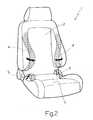
Figure 2 shows a view in perspective of theFigure 1 seat in a racing configuration; -
Figure 3 shows a plan view of the seatback of theFigure 1 seat in the racing configuration; -
Figure 4 shows a front view of the seatback of theFigure 1 seat in the racing configuration; -
Figure 5 shows a view in perspective of the seat portion of theFigure 1 seat in the racing configuration; -
Figure 6 shows a plan view of the seat portion of theFigure 1 seat in the racing configuration; -
Figure 7 shows a view in perspective of an alternative embodiment of the seat portion of theFigure 1 seat in the comfort configuration; -
Figure 8 shows a view in perspective of theFigure 7 seat portion in the racing configuration; -
Figure 9 shows a view in perspective of a further embodiment of the seat portion of theFigure 1 seat in the comfort configuration; -
Figure 10 shows a view in perspective of theFigure 9 seat portion in the racing configuration; and -
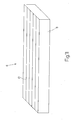
Figure 11 shows schematically a view in perspective of a shape-memory member used in theFigure 1 seat. -
Number 1 inFigure 1 indicates as a whole a sports vehicle seat comprising avertical seatback 2 and ahorizontal seat portion 3.Seatback 2 comprises twolateral restraints 4, on opposite sides ofseatback 2, for laterally retaining an occupant of the seat; andseat portion 3 comprises twolateral restraints 5, on opposite sides ofseat portion 3, for laterally retaining an occupant of the seat. - Each
lateral restraint Figure 1 ) which changes shape when subjected to physical external stress. By changing the shape of shape-memory members 6, the shape and/or size oflateral restraints lateral restraints -
Seat 1 also comprises an actuating device 7 (shown schematically inFigure 1 ) which applies physical external stress to each shape-memory member 6 to adapt the shape and/or size oflateral restraints memory members 6 by actuatingdevice 7 is heat generated by an electric current. - Under the control of
actuating device 7, eachlateral restraint Figures 1 ,7 ,9 ), and a racing configuration characterized by a high degree of lateral restraint (as shown inFigures 2-6 ,8 ,10 ). Eachlateral restraint lateral restraint - As shown in
Figures 1 to 4 ,lateral restraints 4 ofseatback 2 are positioned parallel to each other and perpendicular toseatback 2 in the comfort configuration, and deform, by increasing in volume and tilting towards each other, to grip the occupant ofseat 1, when switching from the comfort configuration to the racing configuration. - As shown in
Figures 1 ,2 ,5 and 6 ,lateral restraints 5 ofseat portion 3 are withdrawn insideseat portion 3, with only a minimum part projecting vertically upwards fromseat portion 3, in the comfort configuration, and deform, by increasing in volume and tilting towards each other, to grip the occupant ofseat 1, when switching from the comfort configuration to the racing configuration. More specifically,lateral restraints 5 ofseat portion 3 expand upwards and increase in volume, when switching from the comfort configuration to the racing configuration, so as to project upwards fromseat portion 3. - In an alternative embodiment shown in
Figures 7 to 10 ,lateral restraints 5 ofseat portion 3 rotate towards the occupant ofseat 1, when switching from the comfort configuration to the racing configuration. In theFigure 9 and 10 variation, eachlateral restraint 5 ofseat portion 3 is formed in two parts, which rotate by different angles when switching from the comfort configuration to the racing configuration. - In a preferred embodiment, actuating
device 7 comprises proximity orforce sensors 8, each for determining the distance between at least onelateral restraint seat 1, so as to adapt the shape and/or size oflateral restraint lateral restraints 4 ofseatback 2 to accurately adapt deformation oflateral restraints 4 to comfortably enclose the sides of the occupant of the seat with no cramping. Similarly, two proximity sensors are embedded inlateral restraints 5 ofseat portion 3 to accurately adapt deformation oflateral restraints 5 to comfortably enclose the legs of the occupant of the seat with no cramping. - According to the invention and as shown in
Figure 11 , each shape-memory member 6 comprises a main body 9 made of a shape-memory polymer (SMP), which is rigid at low temperature, but becomes soft and rubbery (and therefore deformable) at high temperature (roughly over 25-40°C, depending on the type of polymer used). Each shape-memory member 6 also comprises a number of actuatingwires 10 integrated in, close to a lateral wall of, main body 9, and made of a shape-memory alloy (SMA) which shortens above a given threshold temperature and lengthens again below the threshold temperature. A number of parallel, spaced actuatingwires 10 are preferably provided. - Starting with a shape-
memory member 6 with a rigid main body 9, main body 9 is heated until it becomes deformable; actuatingwires 10 are then heated or cooled to produce a change in their length (shorten if heated, lengthen if cooled) and so deform main body 9; and, finally, main body 9 is cooled to become once more rigid and so stabilize the new shape. - In actual use, vehicle driving mode is determined, and actuating
device 7 accordingly adapts the shape and/or size oflateral restraints lateral restraints device 7 to adapt the shape and/or size oflateral restraints - Vehicle driving mode may be determined manually, according to the setting of a driver-operated selector, or automatically by determining vehicle speed and/or longitudinal and lateral acceleration of the vehicle.
- It should be pointed out that the shape, number, and location of
lateral restraints seat 1 may differ for both aesthetic and functional reasons. - By adapting the degree of lateral restraint to vehicle driving mode,
seat 1 as described above has numerous advantages, by providing a high degree of comfort in normal driving mode along public highways, as well as a high degree of safety and driving performance in track racing mode. Moreover, by virtue ofsensors 8, the shape and/or size oflateral restraints seat 1 can be adapted to the actual build of the occupant ofseat 1, which can therefore comfortably and safely accommodate occupants of widely differing build.
Claims (15)
- A sports vehicle seat (1) comprising:lateral restraints (4, 5) for laterally retaining an occupant of the seat (1); each lateral restraint (4, 5) incorporates at least one shape-memory member (6), which changes shape when subjected to physical external stress so that the shape and/or size of the lateral restraints (4, 5) are/is adaptive to adapt the degree of lateral restraint provided by the lateral restraints (4, 5); andan actuating device (7) to adapt the shape and/or size of the lateral restraints (4, 5) as a function of vehicle driving mode by subjecting each shape-memory member (6) to physical external stress to change the shape of the shape-memory member (6);the seat (1) is characterized in that:each shape-memory member (6) comprises a main body (9) made of a shape-memory polymer and a number of actuating wires (10) integrated in the main body (9), close to a lateral wall of the main body (9), and made of a shape-memory alloy;each lateral restraint (4, 5) may assume a comfort configuration characterized by a low degree of lateral restraint, and a racing configuration characterized by a high degree of lateral restraint; andtwo lateral restraints (4, 5), facing each other on opposite sides of the seat (1), deform and tilt towards each other to grip the occupant, when switching from the comfort configuration to the racing configuration.
- A seat (1) as claimed in Claim 1, wherein the actuating device (7) subjects each shape-memory member (6) to electric heating of varying intensity.
- A seat (1) as claimed in Claim 1 or 2, wherein a shape-memory member (6) comprises a number of parallel, spaced actuating wires (10).
- A seat (1) as claimed in Claim 1, 2 or 3, wherein, to change the shape of a shape-memory member (6), the main body (9) is heated to become deformable, the actuating wires (10) are heated or cooled to produce a change in their length and so deform the main body (9), and the main body (9) is cooled to become once more rigid and so stabilize the new shape.
- A seat (1) as claimed in one of Claims 1 to 4, wherein each lateral restraint (4, 5) may assume intermediate configurations between the comfort configuration and the racing configuration.
- A seat (1) as claimed in one of Claims 1 to 5, and comprising a vertical seatback (2) and a horizontal seat portion (3); the seatback (2) comprises at least two first lateral restraints (4), which deform and tilt towards each other to grip the occupant, when switching from the comfort configuration to the racing configuration.
- A seat (1) as claimed in Claim 6, wherein the two first lateral restraints (4) deform by tilting towards each other and increasing in volume, when switching from the comfort configuration to the racing configuration.
- A seat (1) as claimed in one of Claims 1 to 7, and comprising a vertical seatback (2) and a horizontal seat portion (3); the seat portion (3) comprises at least two second lateral restraints (5), which expand upwards when switching from the comfort configuration to the racing configuration.
- A seat (1) as claimed in Claim 8, wherein the two second lateral restraints (5) deform by tilting towards each other to grip the occupant, when switching from the comfort configuration to the racing configuration.
- A seat (1) as claimed in one of Claims 1 to 7, and comprising a vertical seatback (2) and a horizontal seat portion (3); the seat portion (3) comprises at least two second lateral restraints (5), which rotate towards the occupant when switching from the comfort configuration to the racing configuration.
- A seat (1) as claimed in Claim 10, wherein each second lateral restraint (5) is formed in at least two parts, which rotate by different angles when switching from the comfort configuration to the racing configuration.
- A seat (1) as claimed in one of Claims 1 to 11, wherein the actuating device (7) comprises at least one sensor (8) for determining the distance between at least one lateral restraint (4, 5) and the occupant, so as to adapt the shape and/or size of the lateral restraint (4, 5) as a function of the actual size of the occupant.
- A seat (1) as claimed in Claim 12, wherein the sensor (8) is a proximity sensor.
- A seat (1) as claimed in Claim 12, wherein the sensor (8) is a force sensor.
- A seat (1) as claimed in Claim 12, 13, or 14, wherein the sensor (8) is embedded in the lateral restraint (4, 5).
Applications Claiming Priority (2)
| Application Number | Priority Date | Filing Date | Title |
|---|---|---|---|
| IT000090A ITBO20060090A1 (en) | 2006-02-10 | 2006-02-10 | SEAT FOR A SPORTS VEHICLE WITH LATERAL CONTAINMENT. |
| PCT/EP2007/051300 WO2007090898A2 (en) | 2006-02-10 | 2007-02-09 | Sports vehicle seat with adaptive lateral restraints |
Publications (2)
| Publication Number | Publication Date |
|---|---|
| EP1986881A2 EP1986881A2 (en) | 2008-11-05 |
| EP1986881B1 true EP1986881B1 (en) | 2009-12-23 |
Family
ID=38068509
Family Applications (1)
| Application Number | Title | Priority Date | Filing Date |
|---|---|---|---|
| EP07712200A Active EP1986881B1 (en) | 2006-02-10 | 2007-02-09 | Sports vehicle seat with adaptive lateral restraints |
Country Status (5)
| Country | Link |
|---|---|
| US (1) | US7905548B2 (en) |
| EP (1) | EP1986881B1 (en) |
| DE (1) | DE602007003954D1 (en) |
| IT (1) | ITBO20060090A1 (en) |
| WO (1) | WO2007090898A2 (en) |
Cited By (2)
| Publication number | Priority date | Publication date | Assignee | Title |
|---|---|---|---|---|
| DE102010023077A1 (en) * | 2010-06-08 | 2011-12-08 | Gm Global Technology Operations Llc (N.D.Ges.D. Staates Delaware) | Vehicle e.g. passenger car has vehicle seat with side flange whose position is changed based on driving fashion of driver of vehicle, when driver occupies the vehicle seat |
| DE102012023931A1 (en) * | 2012-12-06 | 2014-06-12 | GM Global Technology Operations LLC (n. d. Gesetzen des Staates Delaware) | Motor car, has seat adjustable by actuator, and control device for controlling actuator based on movement conditions of motor car, where seat comprises compressed gas-chamber and actuator comprises valve |
Families Citing this family (31)
| Publication number | Priority date | Publication date | Assignee | Title |
|---|---|---|---|---|
| JP5044230B2 (en) * | 2007-02-14 | 2012-10-10 | 株式会社デルタツーリング | Biological signal analyzing apparatus, sheet, and biological signal analyzing method |
| US8246057B2 (en) | 2008-11-27 | 2012-08-21 | Bombardier Recreational Products Inc. | Side supports for straddle-type seat |
| DE102011114622A1 (en) * | 2011-09-30 | 2013-04-04 | Sitech Sitztechnik Gmbh | Vehicle seat with sidewalls formed from autoreactive scaffolding structures |
| BR112016001620B1 (en) * | 2013-07-23 | 2022-01-25 | Nissan Motor Co., Ltd | VEHICLE STEERING SUPPORT DEVICE AND VEHICLE STEERING SUPPORT METHOD |
| KR101511562B1 (en) * | 2013-12-20 | 2015-04-13 | 현대자동차주식회사 | Active type seat foam using piezoelectric effect element and shape memory polymer for a car |
| US10647235B2 (en) * | 2014-06-09 | 2020-05-12 | Lear Corporation | Adjustable seat assembly with driving modes |
| US9637034B2 (en) * | 2014-08-25 | 2017-05-02 | Ford Global Technologies, Llc | Foam cord for seating foam stability and rigidity |
| CN104210394A (en) * | 2014-08-29 | 2014-12-17 | 常州市艾森塑料科技有限公司 | Warmth retention-type car seat |
| EP3194206B1 (en) * | 2014-09-18 | 2022-01-26 | Safran Seats USA LLC | Adjustable lie-flat seat |
| EP3231663B1 (en) * | 2014-12-12 | 2022-04-06 | Dayou A-Tech Co., Ltd | Integrated foam type headrest having different hardnesses, and manufacturing method thereof |
| US9827888B2 (en) * | 2016-01-04 | 2017-11-28 | Lear Corporation | Seat assemblies with adjustable side bolster actuators |
| JP6583021B2 (en) * | 2016-02-01 | 2019-10-02 | トヨタ紡織株式会社 | Vehicle seat |
| US10583757B2 (en) * | 2016-11-15 | 2020-03-10 | Faurecia Automotive Seating, Llc | Occupant support system |
| JP6492372B2 (en) * | 2017-02-03 | 2019-04-03 | 本田技研工業株式会社 | Vehicle system, vehicle control method, and vehicle control program |
| EP3595927A1 (en) * | 2017-03-15 | 2020-01-22 | Toyota Boshoku America, Inc. | Self-adjusting vehicle seat |
| US10464455B2 (en) * | 2017-07-28 | 2019-11-05 | Ford Global Technologies, Llc | Active seat bolster adjustment based on occupant pressure map and method |
| JP6647328B2 (en) * | 2018-02-06 | 2020-02-14 | 本田技研工業株式会社 | Vehicle seat |
| DE102018117104A1 (en) * | 2018-07-16 | 2020-01-16 | Recaro Aircraft Seating Gmbh & Co. Kg | Aircraft seat device |
| EP3616985B1 (en) * | 2018-08-29 | 2021-06-16 | Adient Engineering and IP GmbH | Side plate for a vehicle seat and vehicle seat |
| US10960793B2 (en) * | 2019-03-06 | 2021-03-30 | Toyota Motor Engineering & Manufacturing North America, Inc. | Active vehicle seat with morphing portions |
| IT201900023343A1 (en) * | 2019-12-09 | 2021-06-09 | Italdesign Giugiaro Spa | System for adjusting the trim of a car seat |
| US11897379B2 (en) | 2021-10-20 | 2024-02-13 | Toyota Motor Engineering & Manufacturing North America, Inc. | Seat with shape memory material member actuation |
| US12383066B2 (en) | 2022-04-26 | 2025-08-12 | Toyota Motor Engineering & Manufacturing North America, Inc. | Chair with shape memory material-based movement synchronized with visual content |
| US11780355B1 (en) | 2022-08-18 | 2023-10-10 | Ford Global Technologies, Llc | Additive manufactured cushioned component |
| US11932142B2 (en) | 2022-08-18 | 2024-03-19 | Ford Global Technologies, Llc | Additive manufactured cushioned component |
| US12241458B2 (en) | 2023-02-16 | 2025-03-04 | Toyota Motor Engineering & Manufacturing North America, Inc. | Actuator with contracting member |
| US12270386B2 (en) | 2023-02-16 | 2025-04-08 | Toyota Motor Engineering & Manufacturing North America, Inc. | Shape memory material member-based actuator |
| US12163507B2 (en) | 2023-02-22 | 2024-12-10 | Toyota Motor Engineering & Manufacturing North America, Inc. | Contracting member-based actuator with clutch |
| US12152570B2 (en) | 2023-02-22 | 2024-11-26 | Toyota Motor Engineering & Manufacturing North America, Inc. | Shape memory material member-based actuator with electrostatic clutch preliminary class |
| US12234811B1 (en) | 2023-08-21 | 2025-02-25 | Toyota Motor Engineering & Manufacturing North America, Inc. | Monitoring a state of a shape memory material member |
| US12589512B2 (en) | 2023-12-28 | 2026-03-31 | Toyota Motor Engineering & Manufacturing North America, Inc. | Shearing tool with closure assist |
Family Cites Families (17)
| Publication number | Priority date | Publication date | Assignee | Title |
|---|---|---|---|---|
| US4655505A (en) * | 1984-12-13 | 1987-04-07 | Nhk Spring Co., Ltd. | Pneumatically controlled seat for vehicle |
| US5092654A (en) * | 1989-03-30 | 1992-03-03 | Aisin Seiki Kabushiki Kaisha | Seatback spring device |
| JP2751431B2 (en) * | 1989-07-14 | 1998-05-18 | 日産自動車株式会社 | Sheet |
| US4924163A (en) * | 1989-09-22 | 1990-05-08 | Tachi-S Company, Ltd. | Side support control device for use in a vehicle seat |
| US5263765A (en) * | 1989-12-27 | 1993-11-23 | Nissan Motor Co., Ltd. | Automatic adjustable seat |
| US6746078B2 (en) * | 1997-12-17 | 2004-06-08 | Automotive Technologies International, Inc. | System and method for moving a headrest based on anticipatory sensing |
| DE19644376A1 (en) * | 1996-10-25 | 1998-04-30 | Bayerische Motoren Werke Ag | Adjustment device for a vehicle seat |
| DE19649149B4 (en) * | 1996-11-27 | 2005-08-11 | Bayerische Motoren Werke Ag | A method of adjusting a vehicle seat component |
| EP1063134A1 (en) * | 1999-06-24 | 2000-12-27 | Siemens Aktiengesellschaft | Device for electrically connecting a plurality of sensors integrably fixed on a matrix in a vehicle seat |
| US6824212B2 (en) * | 2000-08-24 | 2004-11-30 | Lear Corporation | Vehicle seat |
| DE10211383A1 (en) | 2002-03-14 | 2003-10-02 | Siemens Ag | Motor vehicle has automatically adjustable shape controlled by evaluation unit having sensors memory and a processor |
| US20050205364A1 (en) | 2004-03-12 | 2005-09-22 | Browne Alan L | Variable resistance strut assemblies and articles containing the same |
| DE102004014881B4 (en) * | 2004-03-26 | 2008-02-28 | Recaro Gmbh & Co. Kg | Vehicle seat with side bolsters |
| WO2005105516A2 (en) | 2004-04-28 | 2005-11-10 | Massachusetts Institute Of Technology | Rapid heating, cooling and massaging for car seats using integrated shape memory alloy actuators and thermoelectric devices |
| US7367626B2 (en) * | 2004-05-26 | 2008-05-06 | General Motors Corporation | Occupant detecting seat assembly with headrest and method of moving headrest |
| JP4459948B2 (en) * | 2006-12-11 | 2010-04-28 | 本田技研工業株式会社 | Vehicle seat |
| US7909403B2 (en) * | 2008-03-03 | 2011-03-22 | GM Global Technology Operations LLC | Manipulable seat bolster utilizing active material actuation |
-
2006
- 2006-02-10 IT IT000090A patent/ITBO20060090A1/en unknown
-
2007
- 2007-02-09 WO PCT/EP2007/051300 patent/WO2007090898A2/en not_active Ceased
- 2007-02-09 DE DE602007003954T patent/DE602007003954D1/en active Active
- 2007-02-09 EP EP07712200A patent/EP1986881B1/en active Active
- 2007-02-09 US US12/278,966 patent/US7905548B2/en active Active
Cited By (2)
| Publication number | Priority date | Publication date | Assignee | Title |
|---|---|---|---|---|
| DE102010023077A1 (en) * | 2010-06-08 | 2011-12-08 | Gm Global Technology Operations Llc (N.D.Ges.D. Staates Delaware) | Vehicle e.g. passenger car has vehicle seat with side flange whose position is changed based on driving fashion of driver of vehicle, when driver occupies the vehicle seat |
| DE102012023931A1 (en) * | 2012-12-06 | 2014-06-12 | GM Global Technology Operations LLC (n. d. Gesetzen des Staates Delaware) | Motor car, has seat adjustable by actuator, and control device for controlling actuator based on movement conditions of motor car, where seat comprises compressed gas-chamber and actuator comprises valve |
Also Published As
| Publication number | Publication date |
|---|---|
| DE602007003954D1 (en) | 2010-02-04 |
| US20090284059A1 (en) | 2009-11-19 |
| ITBO20060090A1 (en) | 2007-08-11 |
| EP1986881A2 (en) | 2008-11-05 |
| WO2007090898A3 (en) | 2008-01-10 |
| US7905548B2 (en) | 2011-03-15 |
| WO2007090898A2 (en) | 2007-08-16 |
Similar Documents
| Publication | Publication Date | Title |
|---|---|---|
| US7905548B2 (en) | Sports vehicle seat with adaptive lateral restraints | |
| CN115362082B (en) | Seat rail pair for longitudinal adjustment of a vehicle seat, and energy absorber and locking device, in particular for such a seat rail pair | |
| EP2662238B1 (en) | A seat carrier arrangement | |
| CN1640714B (en) | Automobile seat | |
| US6688697B2 (en) | Head restraint | |
| EP0886587B1 (en) | A vehicle seat | |
| KR101746464B1 (en) | System and method for preventing interference between front and rear seat of vehicle | |
| CN103025574A (en) | Seat for vehicle | |
| EP2644446B1 (en) | Headrest for motor vehicle seats | |
| ES2228393T3 (en) | VEHICLE SEAT. | |
| CN113165591A (en) | Method for operating a restraint system and restraint system for a vehicle | |
| EP2907692B1 (en) | Child seat with lateral head protection | |
| US8919877B2 (en) | Head restraint for a vehicle seat | |
| CN118339059A (en) | Restraint system for a vehicle and corresponding operating method | |
| JP2007504986A (en) | Steering column assembly with steering column capable of correcting tilt and length | |
| KR101765054B1 (en) | Motor vehicle seat | |
| US7347451B2 (en) | Pre-crash column release | |
| EP2674322A1 (en) | Vehicle seat with a passenger protection function | |
| JP2005170144A (en) | Vehicle headrest | |
| US20050253408A1 (en) | Seat component to prevent whiplash injury | |
| CN112009327A (en) | Motor vehicle seat | |
| KR0175530B1 (en) | Car headrest structure projecting in a collision | |
| KR100482637B1 (en) | Automobile seat fixing structure for preventing injury of neck | |
| US20050088019A1 (en) | Non-stop active car headrest | |
| KR200339627Y1 (en) | Cars headrest |
Legal Events
| Date | Code | Title | Description |
|---|---|---|---|
| PUAI | Public reference made under article 153(3) epc to a published international application that has entered the european phase |
Free format text: ORIGINAL CODE: 0009012 |
|
| 17P | Request for examination filed |
Effective date: 20080910 |
|
| AK | Designated contracting states |
Kind code of ref document: A2 Designated state(s): DE GB |
|
| 17Q | First examination report despatched |
Effective date: 20090109 |
|
| RBV | Designated contracting states (corrected) |
Designated state(s): DE GB |
|
| GRAP | Despatch of communication of intention to grant a patent |
Free format text: ORIGINAL CODE: EPIDOSNIGR1 |
|
| GRAS | Grant fee paid |
Free format text: ORIGINAL CODE: EPIDOSNIGR3 |
|
| GRAA | (expected) grant |
Free format text: ORIGINAL CODE: 0009210 |
|
| AK | Designated contracting states |
Kind code of ref document: B1 Designated state(s): DE GB |
|
| REG | Reference to a national code |
Ref country code: GB Ref legal event code: FG4D |
|
| REF | Corresponds to: |
Ref document number: 602007003954 Country of ref document: DE Date of ref document: 20100204 Kind code of ref document: P |
|
| PLBE | No opposition filed within time limit |
Free format text: ORIGINAL CODE: 0009261 |
|
| STAA | Information on the status of an ep patent application or granted ep patent |
Free format text: STATUS: NO OPPOSITION FILED WITHIN TIME LIMIT |
|
| 26N | No opposition filed |
Effective date: 20100924 |
|
| REG | Reference to a national code |
Ref country code: DE Ref legal event code: R079 Ref document number: 602007003954 Country of ref document: DE Free format text: PREVIOUS MAIN CLASS: B60N0002440000 Ipc: B60N0002900000 |
|
| P01 | Opt-out of the competence of the unified patent court (upc) registered |
Effective date: 20230525 |
|
| PGFP | Annual fee paid to national office [announced via postgrant information from national office to epo] |
Ref country code: GB Payment date: 20260223 Year of fee payment: 20 |
|
| PGFP | Annual fee paid to national office [announced via postgrant information from national office to epo] |
Ref country code: DE Payment date: 20260220 Year of fee payment: 20 |