EP1986343A2 - Steuerverfahren und -vorrichtung für eine Uplink-Zugangsübertragungsleistung in einem Funkkommunikationssystem - Google Patents
Steuerverfahren und -vorrichtung für eine Uplink-Zugangsübertragungsleistung in einem Funkkommunikationssystem Download PDFInfo
- Publication number
- EP1986343A2 EP1986343A2 EP20080007853 EP08007853A EP1986343A2 EP 1986343 A2 EP1986343 A2 EP 1986343A2 EP 20080007853 EP20080007853 EP 20080007853 EP 08007853 A EP08007853 A EP 08007853A EP 1986343 A2 EP1986343 A2 EP 1986343A2
- Authority
- EP
- European Patent Office
- Prior art keywords
- transmission power
- uplink access
- value related
- access transmission
- delay
- Prior art date
- Legal status (The legal status is an assumption and is not a legal conclusion. Google has not performed a legal analysis and makes no representation as to the accuracy of the status listed.)
- Granted
Links
Images







Classifications
-
- H—ELECTRICITY
- H04—ELECTRIC COMMUNICATION TECHNIQUE
- H04W—WIRELESS COMMUNICATION NETWORKS
- H04W52/00—Power management, e.g. Transmission Power Control [TPC] or power classes
- H04W52/04—Transmission power control [TPC]
- H04W52/06—TPC algorithms
- H04W52/14—Separate analysis of uplink or downlink
- H04W52/146—Uplink power control
-
- H—ELECTRICITY
- H04—ELECTRIC COMMUNICATION TECHNIQUE
- H04W—WIRELESS COMMUNICATION NETWORKS
- H04W52/00—Power management, e.g. Transmission Power Control [TPC] or power classes
- H04W52/04—Transmission power control [TPC]
- H04W52/30—Transmission power control [TPC] using constraints in the total amount of available transmission power
- H04W52/36—Transmission power control [TPC] using constraints in the total amount of available transmission power with a discrete range or set of values, e.g. step size, ramping or offsets
- H04W52/362—Aspects of the step size
-
- H—ELECTRICITY
- H04—ELECTRIC COMMUNICATION TECHNIQUE
- H04W—WIRELESS COMMUNICATION NETWORKS
- H04W52/00—Power management, e.g. Transmission Power Control [TPC] or power classes
- H04W52/04—Transmission power control [TPC]
- H04W52/38—TPC being performed in particular situations
- H04W52/50—TPC being performed in particular situations at the moment of starting communication in a multiple access environment
-
- H—ELECTRICITY
- H04—ELECTRIC COMMUNICATION TECHNIQUE
- H04W—WIRELESS COMMUNICATION NETWORKS
- H04W48/00—Access restriction; Network selection; Access point selection
- H04W48/08—Access restriction or access information delivery, e.g. discovery data delivery
- H04W48/12—Access restriction or access information delivery, e.g. discovery data delivery using downlink control channel
-
- H—ELECTRICITY
- H04—ELECTRIC COMMUNICATION TECHNIQUE
- H04W—WIRELESS COMMUNICATION NETWORKS
- H04W52/00—Power management, e.g. Transmission Power Control [TPC] or power classes
- H04W52/04—Transmission power control [TPC]
- H04W52/18—TPC being performed according to specific parameters
- H04W52/24—TPC being performed according to specific parameters using SIR [Signal to Interference Ratio] or other wireless path parameters
- H04W52/243—TPC being performed according to specific parameters using SIR [Signal to Interference Ratio] or other wireless path parameters taking into account interferences
-
- H—ELECTRICITY
- H04—ELECTRIC COMMUNICATION TECHNIQUE
- H04W—WIRELESS COMMUNICATION NETWORKS
- H04W52/00—Power management, e.g. Transmission Power Control [TPC] or power classes
- H04W52/04—Transmission power control [TPC]
- H04W52/30—Transmission power control [TPC] using constraints in the total amount of available transmission power
- H04W52/34—TPC management, i.e. sharing limited amount of power among users or channels or data types, e.g. cell loading
- H04W52/343—TPC management, i.e. sharing limited amount of power among users or channels or data types, e.g. cell loading taking into account loading or congestion level
Definitions
- the present invention relates to a radio communications system having a plurality of radio zones (hereinafter, referred to as cells) and, more particularly, to a method and a device for controlling the transmission power of an uplink access control signal.
- a base station and a mobile station In a mobile communications system, for a base station and a mobile station to perform data communication, they need to establish synchronization between them in advance. Since initial access from the mobile station in particular is not always in synchronization, the base station requires some procedure for uplink synchronization with the mobile station.
- a random access channel (RACH) and an uplink shared channel (UL-SCH) are provided for uplink synchronization and uplink data transmission.
- the RACH is a channel to transmit a control signal for the establishment of uplink synchronization and further to request a resource for the transmission of uplink data.
- the probability of RACH transmission collision be reduced as low as possible (see 3GPP TS 36.300 V.1.0.0, March 19, 2007).
- the UL-SCH is a channel to transmit data and Layer-2/Layer-3 control packets.
- FIG. 1A is a diagram schematically showing a generic structure of a mobile communications system according to LTE
- FIG. 1B is a resource structure diagram schematically showing radio resources based on both frequency-division and time-division techniques.
- a RACH and an enhanced dedicated channel (EDCH) share the same frequency resource, multiplexed by using different spreading and scrambling codes.
- WCDMA wideband code division multiple access
- EDCH enhanced dedicated channel
- LTE a plurality of frequency-divided and time-divided resources are shared by a RACH and an UL-SCH exclusively of each other.
- the LTE uplink has a resource structure in which a system bandwidth of 10 MHz is time-divided into time intervals of 1 msec, each of which is further frequency-divided into widths of 1.25 MHz. Referring to FIG. 1B , each of t1, t2, ...
- each of FB#1, FB#2, ... on the vertical axis corresponds to a 1.25-MHz-wide frequency resource.
- one rectangular block defined by one time resource and one frequency resource as shown in FIG. 1B will be simply referred to as "resource.”
- each base station eNB determines how to allocate such system resources to the RACH and UL-SCH.
- a RACH resource is periodically allocated as shown in FIG. 1B so that a mobile station UE can gain access to the base station without a long delay. It is also possible to allocate a plurality of RACH resources at a time and thereby secure a sufficient RACH access capacity.
- Each base station eNB generally broadcasts information indicative of which resource(s) is allocated to the RACH. Therefore, every mobile station UE (User Equipment) in a cell can gain access to the RACH resource(s) whenever the mobile station UE needs, in accordance with the broadcast information.
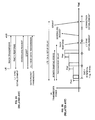
- FIG. 2A is a sequence diagram showing a procedure of uplink access through a RACH
- FIG. 2B is a schematic time chart showing an example of the power ramping performed before synchronization is established through a RACH.
- BCH broadcast channel
- P LOSS path loss
- K initial coefficient K
- the initial RACH transmission power P init is set so that the reception quality of a RACH signal received by the base station eNB will be kept at a desired level.
- the mobile station UE performs RACH transmission using a RACH resource at this initial transmission power P init .
- the base station eNB Upon arrival of this RACH transmission at the base station eNB, the base station eNB sends a RACH response including a value for timing adjustment back to the mobile station UE, whereby the mobile station UE can establish physical-layer synchronization.
- the mobile station UE sends a scheduling request to the base station eNB.
- the base station eNB allocates UL-SCH resources in response to this request and sends back a transmission grant.
- the mobile station UE transmits data packets by using the allocated UL-SCH resources.
- the mobile station UE when a RACH signal does not arrive at the base station eNB due to an increase in the level of interference or due to the occurrence of fading, the mobile station UE receives no RACH response even after a predetermined period of time has passed. Therefore, the mobile station UE increases its RACH transmission power by a predetermined step P del at each time as shown in FIG. 2B until the mobile station UE receives a RACH response.
- Such increasing in RACH transmission power step by step is called "power ramping".
- a period during which the RACH transmission power is increased step by step, starting from the first RACH transmission, is called “power ramping period,” and this power ramping period plus an elapsed time before physical-layer synchronization is established upon receipt of the RACH response is called “RACH access delay.” Accordingly, when a RACH transmission collision occurs, the RACH access delay increases.
- LTE call setup delay the sum of the RACH access delay and an elapsed time between the establishment of physical-layer synchronization and the establishment of connection upon receipt of the transmission grant.
- the LTE call setup delay also serves as a key performance indicator (KPI), an object of evaluation, of system performance.
- KPI key performance indicator
- the RACH transmission power of the mobile station UE can be set at such a level that sufficient RACH reception quality is secured at the base station eNB while interference to a neighboring cell is suppressed.
- the mobile station UE can establish synchronization by RACH transmission at lower transmission power than a mobile station UE having a high path loss. Accordingly, uplink interference to a neighboring cell can be effectively prevented.
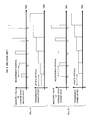
- FIG. 3A is a diagram schematically showing how neighboring cells interfere with each other
- FIG. 3B is a graph showing the RACH access delay varying with the level of RACH interference
- FIG. 3C is a graph showing the RACH access delay varying with the load of RACH access
- FIG. 4 is a time chart showing variation in the average RACH access delay and variation in the RACH transmission power offset, to describe the party effect between neighboring cells.
- a base station tries to make the RACH access delay as short as possible because failing in gaining RACH access causes a delay in a call setup or handover procedure.
- the RACH access delay can be reduced by increasing the initial RACH transmission power as described above.
- FIG. 3A it is assumed that the initial RACH transmission power P init has been increased in a cell A. This increase in initial RACH transmission power in the cell A causes an increase in RACH interference with a neighboring cell B.
- a base station eNB2 controlling the cell B allows the initial RACH transmission power P init to be increased in the cell B in order to shorten the RACH access delay.
- This increase in initial RACH transmission power in the cell B causes an increase in interference with the neighboring cell A and another neighboring cell C.
- the initial RACH transmission power is further increased.
- a phenomenon called "party effect” is caused, in which the cause and effect repeat between neighboring cells, whereby the initial RACH transmission power is increased more and more.
- the initial RACH transmission power is reciprocally increased between neighboring cells, which causes a chain reaction, resulting in the initial RACH transmission power P init being ultimately set at a maximum value in every cell.
- the RACH access delay becomes longer.
- the level of RACH interference can be measured, for example, as the number of failed RACH transmissions (that is, the number of RACH transmissions made before a RACH response shown in FIG. 2B is received), which is reported to a base station from a mobile station present in the cell of the base station. Therefore, the RACH access delay is measured by using this number, and statistical processing is further performed, whereby the average RACH access delay can be obtained.
- the frequency of RACH access (the load of RACH access) can be measured as the number of times a base station receives RACH access from mobile stations present in the cell of the base station. Therefore, this number is similarly subjected to statistical processing, whereby the average RACH access delay can be obtained.
- each base station eNB raises a RACH transmission power offset as shown in FIG. 4 so that the initial RACH transmission power will be increased step by step.
- This operation causes the above-described "party effect,” resulting in the initial RACH transmission power being set at a maximum value in every cell in the end. This is a cause for degradation of the uplink capacity in the entire network.
- Such a problem concerns not only the LTE, but may exist in cell-based general radio communications systems using an access scheme (FTDMA) based on a frequency-divided and time-divided resource structure.
- FTDMA access scheme
- a problem concerns not only the LTE, but may exist in cell-based general radio communications systems using an access scheme (FTDMA) based on a frequency-divided and time-divided resource structure.
- FTDMA access scheme
- An object of the present invention is to solve the above-described problem and to provide an uplink access transmission power control method and device that can control inter-cell interference.
- a control method of uplink access transmission power in each of a plurality of radio communication devices each controlling cells in a radio communications system includes: detecting an uplink access delay in a cell of the radio communication device; comparing amount of access delay obtained from the uplink access delay with a target delay; and controlling a value related to uplink access transmission power based on the comparison result.
- inter-cell interference can be controlled by using a target delay in such a manner that a radio communication device controls a value related to the uplink access transmission power in its own cell, based on the result of comparison between the amount of access delay obtained and the target delay in its own cell.
- uplink access transmission power control can be automatically performed in a radio communications system.
- control for increasing/decreasing the RACH transmission power offset In this specification, description will be given of control for increasing/decreasing the RACH transmission power itself or the size of an increment/decrement step.
- FIG. 5A and 5B show schematic time charts for describing the outline of a transmission power control method according to a first exemplary embodiment of the present invention.
- FIG. 5A shows an example of the average RACH access delay varying with time.
- FIG. 5B shows the initial RACH transmission power offset varying with time, which is controlled based on the average RACH access delay.
- a target RACH access delay (TargetRachDelay), a default initial RACH power P0, and a maximum initial RACH transmission power offset (MaxInitRachP0) are preset on each of radio communication devices respectively controlling cells within a network. These parameters, which are set depending on each cell, may be set by a control station (such as an operation and management server of the network, or a radio resource control server) controlling each radio communication device, or may be set when each radio communication device is installed.
- the target RACH access delay (TargetRachDelay) may be common among the cells in the network, or may be set for each cell individually.
- the default initial RACH power P0 and/or the maximum RACH transmission power offset may be set at small values.
- An average RACH access delay (AvRachDelay) is measured by each radio communication device at constant time intervals.
- a radio communication device can measure, as the level of RACH interference, for example, the number of failed RACH transmissions (the number of RACH transmissions made before a RACH response shown in FIG. 2 is received), which is reported from a mobile station present in its own cell. Therefore, the radio communication device can obtain the average RACH access delay by statistically processing the numbers of failed RACH transmissions reported from a plurality of mobile stations present within its own cell.
- this reported information can be included in, for example, a scheduling request to be sent from a mobile station and thereby reported to the radio communication device.
- the reported information can also be transmitted to the radio communication device by padding an allocated resource with it when the allocated resource is larger than requested by a scheduling request, or when the allocated resource is larger than transmission data.
- the reported information is generated not by a mobile station UE but on the radio communication device side or on the base station side.
- a radio communication device can measure, as the frequency of RACH access (the load of RACH access), the number of times a base station eNB has completely received RACH transmission from (the number of times RACH access is gained by) a mobile station UE present in its own cell. Therefore, the radio communication device can obtain the average RACH access delay by statistically processing this number similarly. This method has the advantage that the radio communication device can obtain the average RACH access delay by itself, without reports from mobile stations UE.
- each radio communication device measures the average RACH access delay (AvRachDelay) at constant time intervals.
- AvRachDelay the radio communication device compares it with the target RACH access delay (TargetRachDelay).
- the average RACH access delay at time T1 is smaller than the target RACH access delay, but becomes larger at time T2, and becomes further larger at time T3.
- initial RACH power P init is the value of the default initial RACH power P0 plus the initial RACH transmission power offset (InitRachP0).
- the default initial RACH power P0 can be obtained, for example, based on the reception quality of a downlink pilot signal.
- the radio communication device decreases the initial RACH transmission power offset of its own cell by a predetermined step PDEL from the current value.
- the fact that the initial RACH transmission power offset becomes smaller increases the possibility that the RACH access delay of a mobile station UE attempting to gain access to this cell becomes larger between time T1 and time T2.
- the initial RACH transmission power offset is increased by the predetermined step PDEL from the current value.
- the radio communication device further increases the initial RACH transmission power offset by the predetermined step PDEL.
- the radio communication device can increase the initial RACH transmission power offset only to the same level as the maximum initial RACH transmission power offset. That is, the initial RACH power cannot be set higher than this level.
- the radio communication device decreases the initial RACH transmission power offset by the predetermined step PDEL from the current value (here, the maximum initial RACH transmission power offset). Since the fact that the initial RACH transmission power offset is decreased leads to a reduction in RACH interference with a neighboring cell, a radio communication device controlling the neighboring cell can also decrease the initial RACH transmission power offset of the neighboring cell. Note that a lower limit may be placed on the decreased initial RACH transmission power offset.
- the average RACH access delay (AvRachDelay) is equal to the target RACH access delay (TargetRachDelay)
- setting can be made such that the initial RACH transmission power offset is increased or decreased depending on which one of interference prevention and connection higher priority is placed on in this cell. For example, in the case where the radio communication device controlling this cell places higher priority on interference prevention, the initial RACH transmission power offset is decreased. In the case where higher priority is placed on connection, the initial RACH transmission power offset is increased.
- the initial RACH transmission power offset is not changed when the average RACH access delay (AvRachDelay) is equal to the target RACH access delay (TargetRachDelay).
- the maximum initial RACH transmission power offset can be set in each cell, this reference can be set depending on which one of interference prevention and connection higher priority is placed on in each cell. For example, in the case where a radio communication device controlling a cell places higher priority on interference prevention, it is sufficient that the maximum initial RACH transmission power offset is set at a relatively small value. In the case where higher priority is placed on connection, it is sufficient that the maximum initial RACH transmission power offset is set at a relatively large value.
- the intervals at which the average RACH access delay is measured are not necessarily coincident with the intervals at which the initial RACH transmission power offset is updated.
- the increment/decrement step PDEL by which the initial RACH transmission power offset (InitRachP0) is increased/decreased the same step size is not necessarily used for an increment step and for a decrement step, but different step sizes may be used.
- a change can be made between the size of an increment step and the size of a decrement step, depending on the difference between the initial RACH transmission power offset and the maximum initial RACH transmission power offset. For example, at time T1 and time T2, since the difference between the initial RACH transmission power offset and the maximum initial RACH transmission power offset is large, the increment step and the decrement step both can be made large. At time T3, since the initial RACH transmission power offset is at a level close to the maximum initial RACH transmission power offset, the size of an increment step can be made small. At time T5, since the initial RACH transmission power offset is at the same level as the maximum initial RACH transmission power offset, the size of a decrement step can be made large.
- the increment/decrement step PDEL can be varied depending on the difference between the average RACH access delay and the target RACH access delay. For example, since the difference between the average value and the target value is smaller at time T2 than at time T3, the size of the increment step at time T2 can be made smaller than that at time T3. In any case, according to the present exemplary embodiment, the initial RACH transmission power offset cannot exceed the maximum initial RACH transmission power offset.
- RACH access delay in place of the average RACH access delay, it is also possible to adopt another criterion such as a value containing a predetermined proportion of the RACH access delay (for example, a 95% RACH access delay value which contains 95% of the RACH access delay).
- a value containing a predetermined proportion of the RACH access delay for example, a 95% RACH access delay value which contains 95% of the RACH access delay.
- FIG. 6A and 6B shows schematic time charts for describing the outline of a transmission power control method according to a second exemplary embodiment of the present invention.
- FIG. 6A is a time chart showing an example of the average RACH access delay varying with time
- FIG. 6B is a time chart showing the initial RACH transmission power offset varying with time which is controlled based on the average RACH access delay.
- the target RACH access delay (TargetRachDelay) and the average RACH access delay (AvRachDelay) shown in FIG. 6A are similar to those described in the first exemplary embodiment, and therefore description thereof will be omitted.
- the radio communication device when a radio communication device sets or updates the initial RACH transmission power in its own cell, the radio communication device notifies a new initial RACH transmission power offset to a radio communication device controlling a neighboring cell.
- a radio communication device when a radio communication device has received a notification of the initial RACH transmission power offset of a neighboring cell (hereinafter, referred to as "neighboring RACH transmission power offset (NbrRachP0)"), the radio communication device, if increasing the initial RACH transmission power offset of its own cell, sets an increment step of a large size when the initial RACH transmission power offset of its own cell is sufficiently smaller than the neighboring RACH transmission power offset (NbrRachP0).
- the radio communication device sets an increment step of a small size when the initial RACH transmission power offset of its own cell has been increased to a level close to the neighboring RACH transmission power offset (NbrRachP0) or has exceeded the neighboring RACH transmission power offset (NbrRachP0).
- the RACH access delay does not change greatly when the level of RACH interference or the load of RACH access is small.
- the rate of increase in the RACH access delay becomes greater. Accordingly, it is preferable to change the size of an increment step by which the initial RACH transmission power offset is increased, depending on whether the average RACH access delay is large or small.
- a radio communication device performs less-active control of the RACH transmission power offset when the initial RACH transmission power offset of its own cell almost exceeds or has exceeded the neighboring RACH transmission power offset (NbrRachP0), whereby an increment step of a smaller size is set as the transmission power offset is increased.
- NbrRachP0 neighboring RACH transmission power offset
- the radio communication device decreases the initial RACH transmission power offset of its own cell by a predetermined step PDEL D1 from the current value.
- the fact that the initial RACH transmission power offset becomes smaller increases the possibility that the RACH access delay of a mobile station attempting to gain access to this cell becomes larger between time T1 and time T2.
- the radio communication device increases the initial RACH transmission power offset by a predetermined step PDEL U1 from the current value if the initial RACH transmission power offset of its own cell is smaller than the neighboring RACH transmission power offset (NbrRachP0).
- the radio communication device further increases the initial RACH transmission power offset by the predetermined step PDEL U1 .
- the radio communication device increases the initial RACH transmission power offset by a step PDEL U2 the size of which is smaller than that of the predetermined step PDEL U1 . According to the second exemplary embodiment, it is allowable that the initial RACH transmission power offset of its own cell exceeds the neighboring RACH transmission power offset because of this increase.
- the radio communication device decreases the initial RACH transmission power offset by a predetermined step PDEL D2 from the current value if the initial RACH transmission power offset of its own cell is greater than the neighboring RACH transmission power offset.
- the decrement step PDEL D2 used at this time has a larger size than the predetermined step PDEL D1 used at time T1.
- the radio communication device reduces the size of an increment step, from the step PDEL U1 to the step PDEL U2 , whereby it is possible to avoid the scenario of the RACH transmission power offsets of all cells being rapidly increased.
- the party effect can be effectively prevented.
- the size of a decrement step is increased from the step PDEL D1 to the step PDEL D2 , whereby the RACH transmission power offset of the neighboring cell is also resultantly decreased, with the result that the level of interference can be promptly reduced.
- an upper limit and a lower limit may be placed on the increased initial RACH transmission power offset and the decreased initial RACH transmission power offset, respectively.
- FIG. 7A and 7B shows schematic time charts for describing the outline of a transmission power control method according to a third exemplary embodiment of the present invention.
- FIG. 7A is a time chart showing an example of the average RACH access delay varying with time
- FIG. 7B is a time chart showing the initial RACH transmission power offset varying with time which is controlled based on the average RACH access delay.
- the target RACH access delay (TargetRachDelay) and the average RACH access delay (AvRachDelay) shown in FIG. 7A are similar to those described in the first exemplary embodiment, and therefore description thereof will be omitted.
- the radio communication device when a radio communication device sets or updates the initial RACH transmission power in its own cell, the radio communication device notifies a new initial RACH transmission power offset to a radio communication device controlling a neighboring cell.
- a radio communication device has received a notification of the initial RACH transmission power offset of a neighboring cell (hereinafter, referred to as "neighboring RACH transmission power offset (NbrRachP0)")
- the radio communication device places an upper limit on the initial RACH transmission power offset by using the neighboring RACH transmission power offset (NbrRachP0) in place of the maximum initial RACH transmission power offset used in the first exemplary embodiment.
- the basic operation of the third exemplary embodiment is similar to that of the first exemplary embodiment.
- the initial RACH transmission power offset of each cell does not become larger than the RACH transmission power offset (NbrRachP0) of its neighboring cell, and thus the party effect can be effectively prevented.
- an increment step PDEL U and a decrement step PDEL D by which the initial RACH transmission power offset (InitRachP0) is increased or decreased may have the same size, or may have different sizes.
- the increment step PDEL U and the decrement step PDEL D can be varied depending on the difference between the initial RACH transmission power offset and the neighboring RACH transmission power offset (NbrRachP0). For example, at time T2, since the difference between the initial RACH transmission power offset and the neighboring RACH transmission power offset (NbrRachP0) is large, the size of the increment step PDEL U can be made large. At time T3, since the initial RACH transmission power offset is at a level close to the neighboring RACH transmission power offset (NbrRachP0), the size of the increment step PDEL U can be made small. At time T5, since the initial RACH transmission power offset is at the same level as the neighboring RACH transmission power offset (NbrRachP0), the size of the decrement step PDEL D can be made large.
- the increment step PDEL U and the decrement step PDEL D can also be varied depending on the difference between the average RACH access delay and the target RACH access delay. For example, since the difference between the average value and the target value at time T2 is smaller than that at time T3, the size of the increment step at time T2 is made smaller than that at time T3.
- the initial RACH transmission power offset cannot exceed the neighboring RACH power offset (NbrRachP0).
- FIG. 8 is a time chart showing the initial RACH transmission power offset varying with time which is controlled based on the average RACH access delay, in a transmission power control method according to a modification example of the second exemplary embodiment of the present invention.
- the target RACH access delay (TargetRachDelay) and the average RACH access delay (AvRachDelay) are similar to those shown in FIG. 6A in the second exemplary embodiment, and therefore illustration thereof is omitted in FIG. 8 .
- a radio communication device controlling the cell B receives neighboring RACH transmission power offsets (NbrRachP0_A, NbrRachP0_C) from the neighboring cells A and C respectively.
- the radio communication device selects any one of the received neighboring RACH transmission power offsets as a reference. Which to select can be determined depending on which one of interference prevention and connection higher priority is placed on. For example, if the radio communication device controlling the cell B places higher priority on interference prevention, the radio communication device may select a smaller one (here, NbrRachPO_A) of the neighboring RACH transmission power offsets as a reference.
- the radio communication device may select a larger one (here, NbrRachP0_C) of the neighboring RACH transmission power offsets as a reference.
- a larger one here, NbrRachP0_C
- the average value of the plurality of neighboring RACH transmission power offsets can also be used.
- modification example shown in FIG. 8 can also apply to neighboring RACH transmission power offsets in the third exemplary embodiment.
- a radio communication device does not necessarily need to always refer to the neighboring RACH transmission power offsets (NbrRachP0) of all the neighboring cells.
- NbrRachP0 neighboring RACH transmission power offsets
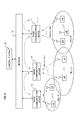
- FIG. 9 is a block diagram showing an example of the schematic structure of a radio communications system including radio communication devices implementing the present invention.
- a plurality of radio communication devices including radio communication devices 10 to 12 are communicably connected to each other through a network 13, and that each of the radio communication devices is controlled by a control station 14 through the network 13.
- the control station 14 include a central station controlling the network 13, an O&M server performing network operation and maintenance, a PRM server performing radio resource management, and the like.
- the radio communication devices 10 to 12 control the allocation of uplink and downlink resources in the cells A to C respectively, and that each of the cells A to C has a basic resource structure as shown in FIG. 1B .
- the RACH transmission power control according to any one of the above-described exemplary embodiments is performed by each radio communication device.
- the plurality of radio communication devices connected through the network 13 may be included in a single base station eNB, or each of the radio communication devices may be a single base station eNB.
- the configuration and operation of each of a radio communication device and a mobile station will be described.
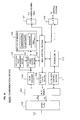
- FIG. 10 is a block diagram showing a configuration of a radio communication device mounted with a RACH transmission power control device according to the present invention. To avoid complication, shown here is only the circuitry related to the RACH transmission power control according to the present invention.
- the radio communication device has a radio transceiver 100 and a multiplexer/demultiplexer 101, as physical-layer devices performing radio communication with a plurality of mobile stations present in its own cell.
- the multiplexer/demultiplexer 101 demultiplexes a RACH channel from an uplink UL, and a RACH signal on the RACH channel is decoded by a RACH decoder 102.
- a RACH delay measurement section 103 statistically processes the number of RACH receptions, whereby the average RACH access delay can be obtained as described already.
- the RACH delay measurement section 103 receives the numbers of failed RACH transmissions through a scheduler 110 and a UL/DL-SCH control section 111, which will be described later, and statistically processes the numbers of failed RACH transmissions, thereby obtaining the average RACH access delay.
- a RACH transmission power control section 104 controls the initial RACH transmission power in its own cell in accordance with any one of the above-described exemplary embodiments.
- a set-value memory 105 stores various set values to be used in any one of the above-described exemplary embodiments. For example, in the case of the first exemplary embodiment, the set-value memory 105 stores the target RACH access delay (TargetRachDelay) and the maximum initial RACH transmission power offset (MaxInitRachP0).
- the RACH transmission power control section 104 compares the average RACH access delay (AvRachDelay) with the target RACH access delay (TargetRachDelay) and, in accordance with the result of this comparison, performs control for increasing/decreasing the initial RACH transmission power offset (InitRachP0) with an upper limit placed at the maximum initial RACH transmission power offset (MaxInitRachP0).
- the set-value memory 105 stores the target RACH access delay (TargetRachDelay) and the neighboring RACH transmission power offset (NbrRachP0).
- the RACH transmission power control section 104 compares the average RACH access delay (AvRachDelay) with the target RACH access delay (TargetRachDelay) and compares the initial RACH transmission power offset (InitRachP0) with the neighboring RACH transmission power offset (NbrRachP0). In accordance with the results of these comparisons, the RACH transmission power control section 104 performs control for increasing/decreasing the initial RACH transmission power offset (InitRachP0). Note that the RACH transmission power control section 104, as well as a main control section 106, can also be implemented by executing programs on a program-controlled processor such as a CPU or a computer.
- the main control section 106 controls the allover operation of the radio communication device.
- the main control section 106 receives information on a neighboring cell, such as the RACH resources used in the neighboring cell and the neighboring RACH transmission power offset (NbrRachP0), from a radio communication device controlling the neighboring cell through an interface 107 and stores the information in the set-value memory 105.
- the main control section 106 receives the target RACH access delay (TargetRachDelay) and the maximum initial RACH transmission power offset (MaxInitRachP0) from the controller through an interface 108 and stores these values in the set-value memory 105.
- the main control section 106 broadcasts the initial RACH transmission power offset set by the RACH transmission power control section 104, across its own cell by using a BCH transmission control section 109, whereby each mobile station becomes capable of RACH transmission.
- downlink data received from the controller through the interface 108 is transmitted to the mobile station UE in question through the scheduler 110 and the UL/DL-SCH control section 111, and uplink data from this mobile station UE is transmitted to the controller through the UL/DL-SCH control section 111 and the scheduler 110.
- FIG. 11 is a block diagram showing a configuration of a mobile station UE shown in FIG. 9 .
- the mobile station UE has a radio transceiver 200 and a multiplexer/demultiplexer 201, as physical-layer devices performing radio communication with a base station eNB or radio communication device.
- the radio transceiver 200 and multiplexer/demultiplexer 201 receive RACH resource information and initial RACH transmission power information broadcast from a radio communication device. This RACH-related information is output to a RACH control section 204 through a BCH reception control section 202 and a main control section 203.
- the RACH control section 204 outputs a RACH signal to the multiplexer/demultiplexer 201 through a RACH encoder 205.
- the signal is multiplexed by the multiplexer/demultiplexer 201 and then transmitted over the RACH by using a predetermined RACH resource.
- the RACH control section 204 establishes uplink synchronization by receiving a response to this RACH transmission from the radio communication device.
- An UL/DL-SCH control section 206 makes a scheduling request when, for example, uplink data is created, and transmits the request through the radio transceiver 200 and the multiplexer/demultiplexer 201.
- the UL/DL-SCH control section 206 Upon receipt of a scheduling grant from the radio communication device as a response to the scheduling request, the UL/DL-SCH control section 206 outputs the data for transmission, which is input from an upper layer, to the multiplexer/demultiplexer 201, which then transmits the data through the radio transceiver 200 by using an allocated UL-SCH resource.
- the RACH control section 204 counts the number of failed RACH transmissions made, or the time having passed (the power ramping period), before the RACH response to the RACH transmission is received, and notifies this count value to the radio communication device as information for calculating the average RACH access delay.
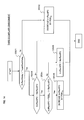
- FIG. 12 is a flow chart showing the RACH transmission power control method according to the first exemplary embodiment of the present invention. The specific operation of the first exemplary embodiment shown in FIG. 5A and FIG. 5B will be described in more detail with reference to this flow chart.
- the set-value memory 105 stores a target RACH access delay (TargetRachDelay), a maximum initial RACH transmission power offset (MaxInitRachP0), and a lower-limit initial RACH transmission power offset (LowerLimitInitRachP0).
- the main control section 106 of the radio communication device controls the RACH access delay measurement section 103, thereby obtaining the average RACH access delay (AvRachDelay) at constant time intervals (see FIG. 5A ).
- the RACH transmission power control section 104 compares the obtained average RACH access delay (AvRachDelay) with the target RACH access delay (TargetRachDelay) (Step S301).
- the RACH transmission power control section 104 decreases the initial RACH transmission power offset (InitRachP0) of its own cell by a predetermined step PDEL D from the current level (Step S302).
- the lower-limit initial RACH transmission power offset (LowerLimitInitRachP0) may be set as a lower limit. Note that if the radio communication device places higher priority on connection than on interference prevention, it may be determined in Step S301 whether or not AvRachDelay ⁇ TargetRachDelay.
- the RACH transmission power control section 104 subsequently determines whether or not the current initial RACH transmission power offset (InitRachP0) is smaller than the maximum initial RACH transmission power offset (MaxInitRachP0) (Step S303). If the current initial RACH transmission power offset (InitRachP0) has been already set at the maximum initial RACH transmission power offset (MaxInitRachP0) (Step S303: No), the processing is terminated.
- Step S303 When the current initial RACH transmission power offset (InitRachP0) is smaller than the maximum initial RACH transmission power offset (MaxInitRachP0) (Step S303: Yes), the RACH transmission power control section 104 further determines whether or not the initial RACH transmission power offset (InitRachP0) will exceed the maximum initial RACH transmission power offset (MaxInitRachP0) if the current initial RACH transmission power offset (InitRachP0) is increased by a predetermined increment step PDEL U (Step S304).
- This operation in Step S304 is an example of a method for determining whether or not the current initial RACH transmission power offset (InitRachP0) has been raised to a level close to the maximum initial RACH transmission power offset (MaxInitRachP0) .
- Step S304 If InitRachP0 + PDEL U ⁇ MaxInitRachP0 (Step S304: Yes), the RACH transmission power control section 104 increases the current initial RACH transmission power offset (InitRachP0) by the predetermined step PDEL U (Step S305). Upon this operation, the main control section 106 controls the BCH transmission control section 109, thereby broadcasting the new initial RACH transmission power offset (InitRachP0) of its own cell.
- Step S304 the RACH transmission power control section 104 sets the current initial RACH transmission power offset (InitRachP0) at the maximum initial RACH transmission power offset (MaxInitRachP0) (Step S306) Upon this operation, the main control section 106 controls the BCH transmission control section 109, thereby broadcasting the new initial RACH transmission power offset (InitRachP0) of its own cell.
- the initial RACH transmission power offset (InitRachP0) of each cell can be controlled as illustrated in FIG. 5B , and in the entire network, automatic control of the RACH transmission power can be achieved.
- FIG. 13 is a flow char showing the RACH transmission power control method according to the second exemplary embodiment of the present invention.
- the specific operation of the second exemplary embodiment shown in FIG. 6A and FIG. 6B will be described in more detail with reference to this flow chart.
- the set-value memory 105 stores a target RACH access delay (TargetRachDelay), a neighboring RACH transmission power offset (NbrRachP0), an upper-limit initial RACH transmission power offset (UpperLimitMaxInitRachP0), and a lower-limit initial RACH transmission power offset (LowerLimitInitRachP0).
- the main control section 106 of the radio communication device controls the RACH access delay measurement section 103, thereby measuring the average RACH access delay (AvRachDelay) at constant time intervals (see FIG. 6A ).
- the RACH transmission power control section 104 compares the measured average RACH access delay (AvRachDelay) with the target RACH access delay (TargetRachDelay) (Step S401).
- the RACH transmission power control section 104 subsequently determines whether or not the current initial RACH transmission power offset (InitRachP0) is equal to or larger than the neighboring RACH transmission power offset (NbrRachP0) (Step S402).
- Step S402 When the initial RACH transmission power offset (InitRachP0) of its own cell is smaller than the neighboring RACH transmission power offset (NbrRachP0) (Step S402: No), the RACH transmission power control section 104 decreases the current initial RACH transmission power offset (InitRachP0) by a predetermined step PDEL D1 (Step S403).
- Step S402 When the current initial RACH transmission power offset (InitRachP0) of its own cell is equal to or larger than the neighboring RACH transmission power offset (NbrRachP0) (Step S402: Yes), the RACH transmission power control section 104 decreases the current initial RACH transmission power offset (InitRachP0) by a predetermined step PDEL D2 (Step S404) In Step S403 and Step S404, it is also possible to set the lower-limit initial RACH transmission power offset (LowerLimitInitRachP0) as a lower limit.
- the lower-limit initial RACH transmission power offset LiwerLimitInitRachP0
- the RACH transmission power control section 104 subsequently determines whether or not the current initial RACH transmission power offset (InitRachP0) is equal to or larger than the neighboring RACH transmission power offset (NbrRachP0) (Step S405).
- Step S405 When the current initial RACH transmission power offset (InitRachP0) of its own cell is smaller than the neighboring RACH transmission power offset (NbrRachP0) (Step S405: No), the RACH transmission power control section 104 further determines whether or not the initial RACH transmission power offset (InitRachP0) will exceed the neighboring RACH transmission power offset (NbrRachP0) if the current initial RACH transmission power offset (InitRachP0) is increased by a predetermined step PDEL U1 (Step S406).
- This operation in Step S406 is an example of the method for determining whether or not the current initial RACH transmission power offset (InitRachP0) has been raised to a level close to the neighboring RACH transmission power offset (NbrRachP0).
- Step S406 the RACH transmission power control section 104 increases the current initial RACH transmission power offset (InitRachP0) by the predetermined step PDEL U1 (Step S407).
- the main control section 106 controls the BCH transmission control section 109, thereby broadcasting the new initial RACH transmission power offset (InitRachP0) of its own cell.
- Step S405 When the initial RACH transmission power offset (InitRachP0) of its own cell is equal to or larger than the neighboring RACH transmission power offset (NbrRachP0) (Step S405: Yes), or If InitRachP0 + PDEL U1 > NbrRachP0 (Step S406: Yes), then the RACH transmission power control section 104 increases the current initial RACH transmission power offset (InitRachP0) by a predetermined step PDEL U2 (Step S408). In Step S408, it is also possible to set the upper-limit initial RACH transmission power offset (UpperLimitMaxInitRachP0) as an upper limit.
- the main control section 106 controls the BCH transmission control section 109, thereby broadcasting the new initial RACH transmission power offset (InitRachP0) of its own cell.
- the initial RACH transmission power offset (InitRachP0) of each cell can be controlled as illustrated in FIG. 6B , and in the entire network, automatic control of the RACH transmission power can be achieved.
- FIG. 14 is a flow chart showing the RACH transmission power control method according to the third exemplary embodiment of the present invention.
- the specific operation of the third exemplary embodiment shown in FIG. 7A and FIG. 7B will be described in more detail with reference to this flow chart.
- the set-value memory 105 stores a target RACH access delay (TargetRachDelay), a neighboring RACH transmission power offset (NbrRachP0), and a lower-limit initial RACH transmission power offset (LowerLimitInitRachP0).
- the main control section 106 of the radio communication device controls the RACH access delay measurement section 103, thereby measuring the average RACH access delay (AvRachDelay) at constant time intervals (see FIG. 7A ).
- the RACH transmission power control section 104 compares the measured average RACH access delay (AvRachDelay) with the target RACH access delay (TargetRachDelay) (Step S501).
- the RACH transmission power control section 104 decreases the current initial RACH transmission power offset (InitRachP0) of its own cell by a predetermined step PDEL D (Step S502).
- the lower-limit initial RACH transmission power offset (LowerLimitInitRachP0) may be set as a lower limit. Note that if the radio communication device places higher priority on connection than on interference prevention, it may be determined in Step S501 whether or not AvRachDelay ⁇ TargetRachDelay.
- the RACH transmission power control section 104 subsequently determines whether or not the current initial RACH transmission power offset (InitRachP0) is smaller than the neighboring RACH transmission power offset (NbrRachP0) (Step S503). If the current initial RACH transmission power offset (InitRachP0) has been already set at the neighboring RACH transmission power offset (NbrRachP0) (Step S503: No), the processing is terminated.
- Step S503 When the current initial RACH transmission power offset (InitRachP0) is smaller than the neighboring RACH transmission power offset (NbrRachP0) (Step S503: Yes), the RACH transmission power control section 104 further determines whether or not the initial RACH transmission power offset (InitRachP0) will exceed the neighboring RACH transmission power offset (NbrRachP0) if the current initial RACH transmission power offset (InitRachP0) is increased by a predetermined step PDEL U (Step S504).
- This operation in Step S504 is an example of the method for determining whether or not the current initial RACH transmission power offset (InitRachP0) has been raised to a level close to the neighboring RACH transmission power offset (NbrRachP0).
- Step S504 If InitRachP0 + PDEL U ⁇ NbrRachP0 (Step S504: Yes), the RACH transmission power control section 104 increases the current initial RACH transmission power offset (InitRachP0) by the predetermined step PDEL U (Step S505). Upon this operation, the main control section 106 controls the BCH transmission control section 109, thereby broadcasting the new initial RACH transmission power offset (InitRachP0) of its own cell.
- Step S504 When InitRachP0 + PDEL U > NbrRachP0 (Step S504: No), the RACH transmission power control section 104 sets the current initial RACH transmission power offset (InitRachP0) at the neighboring RACH transmission power offset (NbrRachP0) (Step S506). Upon this operation, the main control section 106 controls the BCH transmission control section 109, thereby broadcasting the new initial RACH transmission power offset (InitRachP0) of its own cell.
- the initial RACH transmission power offset (InitRachP0) of each cell can be controlled as illustrated in FIG. 7B , and in the entire network, automatic control of the RACH transmission power can be achieved.
- determination is made based on whether the value of the average RACH access delay is large or small, relatively to the neighboring RACH transmission power offset.
- Any one of the above-described exemplary embodiments of the present invention can be applied to mobile communications systems based on LTE.
- FIG. 15 is a schematic network diagram of a mobile communications system to which the present invention is applied.
- a plurality of base stations eNB are connected to a network 601, and each of the base stations eNB can connect to an external network 603, typified by the Internet, through a gate way 602 serving as a central station or control station.
- Various setup parameters are set on each of the base stations eNB from an O&M server 604, and the above-described RACH transmission power control according to any one of the exemplary embodiments is carried out.
- O&M server 604 the above-described RACH transmission power control according to any one of the exemplary embodiments is carried out.
- automatic control of the RACH transmission power in the entire network can be achieved, and a process of tuning the network can be automatically performed.
- the present invention can be applied to radio communications systems in which inter-cell interference may occur and, more particularly, to mobile communications systems using an access scheme (FTDMA) based on a frequency-divided and time-divided resource structure.
- FTDMA access scheme
Landscapes
- Engineering & Computer Science (AREA)
- Computer Networks & Wireless Communication (AREA)
- Signal Processing (AREA)
- Mobile Radio Communication Systems (AREA)
- Transmitters (AREA)
Applications Claiming Priority (1)
| Application Number | Priority Date | Filing Date | Title |
|---|---|---|---|
| JP2007120298A JP4946610B2 (ja) | 2007-04-27 | 2007-04-27 | 無線通信システムにおける上りアクセス送信電力制御方法および装置 |
Publications (3)
| Publication Number | Publication Date |
|---|---|
| EP1986343A2 true EP1986343A2 (de) | 2008-10-29 |
| EP1986343A3 EP1986343A3 (de) | 2011-05-04 |
| EP1986343B1 EP1986343B1 (de) | 2015-10-21 |
Family
ID=39681050
Family Applications (1)
| Application Number | Title | Priority Date | Filing Date |
|---|---|---|---|
| EP08007853.8A Active EP1986343B1 (de) | 2007-04-27 | 2008-04-23 | Steuerverfahren und -vorrichtung für eine Uplink-Zugangsübertragungsleistung in einem Funkkommunikationssystem |
Country Status (4)
| Country | Link |
|---|---|
| US (1) | US8046020B2 (de) |
| EP (1) | EP1986343B1 (de) |
| JP (1) | JP4946610B2 (de) |
| CN (1) | CN101296006B (de) |
Cited By (3)
| Publication number | Priority date | Publication date | Assignee | Title |
|---|---|---|---|---|
| CN101873291A (zh) * | 2009-04-21 | 2010-10-27 | 财团法人工业技术研究院 | 多点协调系统中上行干扰避免的方法与装置 |
| WO2011159207A1 (en) * | 2010-06-14 | 2011-12-22 | Telefonaktiebolaget L M Ericsson (Publ) | Method and arrangement in a communication network |
| CN106851808A (zh) * | 2010-04-01 | 2017-06-13 | 太阳专利信托公司 | 终端装置和功率调节方法 |
Families Citing this family (22)
| Publication number | Priority date | Publication date | Assignee | Title |
|---|---|---|---|---|
| US7991363B2 (en) | 2007-11-14 | 2011-08-02 | Paratek Microwave, Inc. | Tuning matching circuits for transmitter and receiver bands as a function of transmitter metrics |
| KR101493456B1 (ko) * | 2007-11-28 | 2015-02-13 | 삼성전자주식회사 | 이동통신 시스템에서 홈 셀에서 공용 셀로의 핸드오버 방법 |
| JP5112229B2 (ja) * | 2008-09-05 | 2013-01-09 | 株式会社エヌ・ティ・ティ・ドコモ | 配信装置、端末装置及びシステム並びに方法 |
| EP2244514A1 (de) * | 2009-04-23 | 2010-10-27 | Panasonic Corporation | Logisches Kanalpriorisierungsverfahren zur Erzeugung von mehrfachen Uplink-Transportblöcken |
| EP2244515A1 (de) * | 2009-04-23 | 2010-10-27 | Panasonic Corporation | Logisches Kanalpriorisierungsverfahren zur Erzeugung von mehrfachen Uplink-Transportblöcken |
| WO2011052067A1 (ja) * | 2009-10-30 | 2011-05-05 | 富士通株式会社 | 基地局、通信方法および移動局 |
| BR112012019294B1 (pt) * | 2010-02-12 | 2022-03-29 | Mitsubishi Electric Corporation | Sistema de comunicação móvel, estação base e terminal móvel |
| CA2793703C (en) | 2010-04-01 | 2020-06-30 | Sun Patent Trust | Transmit power control for physical random access channels |
| US10536910B2 (en) | 2010-05-28 | 2020-01-14 | Qualcomm Incorporated | Apparatus and method for random access channel power prioritization |
| JP2011259043A (ja) * | 2010-06-04 | 2011-12-22 | Ntt Docomo Inc | 移動通信システム、無線制御装置、基地局及び移動制御方法 |
| US8712340B2 (en) | 2011-02-18 | 2014-04-29 | Blackberry Limited | Method and apparatus for radio antenna frequency tuning |
| US9635624B2 (en) * | 2011-02-22 | 2017-04-25 | Qualcomm Incorporated | Discovery reference signal design for coordinated multipoint operations in heterogeneous networks |
| JP5303611B2 (ja) * | 2011-06-29 | 2013-10-02 | アンリツ株式会社 | 移動通信端末試験装置及び移動通信端末試験方法 |
| US9769826B2 (en) * | 2011-08-05 | 2017-09-19 | Blackberry Limited | Method and apparatus for band tuning in a communication device |
| KR20140097374A (ko) * | 2011-11-14 | 2014-08-06 | 엘지전자 주식회사 | 무선 통신 시스템에서 네트워크 접속을 제어하기 위한 방법 및 장치 |
| CN103179654B (zh) * | 2011-12-26 | 2017-07-18 | 中兴通讯股份有限公司 | Prach的发射功率的确定方法及装置 |
| US10404295B2 (en) | 2012-12-21 | 2019-09-03 | Blackberry Limited | Method and apparatus for adjusting the timing of radio antenna tuning |
| CN103828447B (zh) * | 2013-10-24 | 2017-09-08 | 华为技术有限公司 | 上行功率控制方法和装置 |
| EP3226622B1 (de) | 2014-01-31 | 2018-06-13 | Fujitsu Limited | Zugangsverfahren eines drahtloskommunikationsnetzwerks |
| CN110545575B (zh) * | 2016-04-23 | 2022-06-21 | 上海朗帛通信技术有限公司 | 一种窄带移动通信的方法和装置 |
| EP3373667B1 (de) * | 2017-03-06 | 2021-11-17 | Tata Consultancy Services Limited | Verzögerte leistungssteigerung von vorrichtungen |
| US12069718B2 (en) * | 2018-06-13 | 2024-08-20 | Telefonaktiebolaget Lm Ericsson (Publ) | Network node, a communications device and methods therein for transmission of uplink grants |
Citations (1)
| Publication number | Priority date | Publication date | Assignee | Title |
|---|---|---|---|---|
| JP2007120298A (ja) | 2007-01-05 | 2007-05-17 | Yamaha Corp | 幅木および二重床構造体 |
Family Cites Families (11)
| Publication number | Priority date | Publication date | Assignee | Title |
|---|---|---|---|---|
| WO2000059129A1 (de) * | 1999-03-25 | 2000-10-05 | Siemens Aktiengesellschaft | Verfahren zur regelung der sendeleistung in einem mobilfunksystem und entsprechendes mobilfunksystem |
| US6374117B1 (en) * | 1999-12-22 | 2002-04-16 | Telefonaktiebolaget Lm Ericsson (Publ) | Queue based power control scheduling |
| WO2001078423A1 (en) | 2000-04-11 | 2001-10-18 | Airnet Communications Corporation | Method and apparatus for originating gsm-900/gsm-1900/gsm-1800 cellular calls without requiring full power at call initiation |
| JP3522678B2 (ja) * | 2000-09-27 | 2004-04-26 | 松下電器産業株式会社 | 通信端末装置及び復調方法 |
| SE0302655D0 (sv) * | 2003-10-06 | 2003-10-06 | Ericsson Telefon Ab L M | Method and arrangement in a telecommunication system |
| JP2006101308A (ja) * | 2004-09-30 | 2006-04-13 | Fujitsu Ltd | 無線基地局装置及びパスサーチ方法 |
| JP2006287489A (ja) * | 2005-03-31 | 2006-10-19 | Matsushita Electric Ind Co Ltd | 移動通信システム及び下り初期送信電力制御方法 |
| EP1953285B1 (de) * | 2005-11-04 | 2014-09-03 | Shima Seiki Manufacturing., Ltd. | Bildsimulierungsvorrichtung und verfahren für melangegarn und programm |
| GB2469229B (en) | 2005-11-04 | 2011-02-02 | Nec Corp | Wireless communication system and method of controlling a transmission power |
| US8798661B2 (en) * | 2005-12-23 | 2014-08-05 | Qualcomm Incorporated | Method and apparatus for determining output transmit power for an access channel in a wireless communication network |
| US7853281B2 (en) * | 2006-04-14 | 2010-12-14 | Qualcomm Incorporated | Methods and apparatus for tracking wireless terminal power information |
-
2007
- 2007-04-27 JP JP2007120298A patent/JP4946610B2/ja active Active
-
2008
- 2008-04-23 EP EP08007853.8A patent/EP1986343B1/de active Active
- 2008-04-23 US US12/107,947 patent/US8046020B2/en active Active
- 2008-04-28 CN CN2008100950795A patent/CN101296006B/zh active Active
Patent Citations (1)
| Publication number | Priority date | Publication date | Assignee | Title |
|---|---|---|---|---|
| JP2007120298A (ja) | 2007-01-05 | 2007-05-17 | Yamaha Corp | 幅木および二重床構造体 |
Cited By (6)
| Publication number | Priority date | Publication date | Assignee | Title |
|---|---|---|---|---|
| CN101873291A (zh) * | 2009-04-21 | 2010-10-27 | 财团法人工业技术研究院 | 多点协调系统中上行干扰避免的方法与装置 |
| CN101873291B (zh) * | 2009-04-21 | 2013-02-06 | 财团法人工业技术研究院 | 多点协调系统中上行干扰避免的方法与装置 |
| CN106851808A (zh) * | 2010-04-01 | 2017-06-13 | 太阳专利信托公司 | 终端装置和功率调节方法 |
| CN106851808B (zh) * | 2010-04-01 | 2020-08-18 | 太阳专利信托公司 | 终端装置和功率调节方法 |
| WO2011159207A1 (en) * | 2010-06-14 | 2011-12-22 | Telefonaktiebolaget L M Ericsson (Publ) | Method and arrangement in a communication network |
| US9265065B2 (en) | 2010-06-14 | 2016-02-16 | Telefonaktiebolaget L M Ericsson (Publ) | Method and arrangement in a communication network |
Also Published As
| Publication number | Publication date |
|---|---|
| JP4946610B2 (ja) | 2012-06-06 |
| CN101296006B (zh) | 2013-03-06 |
| US8046020B2 (en) | 2011-10-25 |
| EP1986343A3 (de) | 2011-05-04 |
| US20080268893A1 (en) | 2008-10-30 |
| CN101296006A (zh) | 2008-10-29 |
| EP1986343B1 (de) | 2015-10-21 |
| JP2008278268A (ja) | 2008-11-13 |
Similar Documents
| Publication | Publication Date | Title |
|---|---|---|
| EP1986343B1 (de) | Steuerverfahren und -vorrichtung für eine Uplink-Zugangsübertragungsleistung in einem Funkkommunikationssystem | |
| US20240098739A1 (en) | Method and apparatus in a telecommunication system | |
| US20220330335A1 (en) | Method and device for performing random access process in unlicensed band | |
| US10251184B2 (en) | Method and apparatus for communication in wireless communication system using unlicensed band | |
| KR102185431B1 (ko) | 무선통신 시스템에서 상향링크 전력 제어 방법 및 장치 | |
| EP2260668B1 (de) | Störungsverringerung in einem kommunikationsnetz durch scheduling- und streckenanpassung | |
| US8811325B2 (en) | Network side device and method for transmitting configuration information of pathloss power threshold thereof | |
| US8085785B2 (en) | Mobile station, a base station, a mobile communication system and a communication control method | |
| US10187881B2 (en) | Uplink power control method and apparatus | |
| CN114845415A (zh) | 一种上行信号的发送方法、用户设备 | |
| US10925012B2 (en) | Cellular user equipment and method of operation | |
| US10212736B2 (en) | Apparatus and method for controlling channel access adaptively in wireless communication system | |
| EP3386247A1 (de) | Basisstation und zeitsteuerungsverfahren | |
| US8879412B2 (en) | Adaptation of cyclic shift for random access preambles | |
| KR20150090816A (ko) | 이동 통신 시스템에서 복수의 캐리어를 이용하는 데이터 송수신 방법 및 장치 | |
| KR101830227B1 (ko) | 단말 접속 제어를 위한 차단 인자 설정 방법 및 장치 | |
| HK1159394B (en) | Method and arrangement in a telecommunications system | |
| HK1220314B (zh) | 电信系统中的方法和设备 |
Legal Events
| Date | Code | Title | Description |
|---|---|---|---|
| PUAI | Public reference made under article 153(3) epc to a published international application that has entered the european phase |
Free format text: ORIGINAL CODE: 0009012 |
|
| AK | Designated contracting states |
Kind code of ref document: A2 Designated state(s): AT BE BG CH CY CZ DE DK EE ES FI FR GB GR HR HU IE IS IT LI LT LU LV MC MT NL NO PL PT RO SE SI SK TR |
|
| AX | Request for extension of the european patent |
Extension state: AL BA MK RS |
|
| PUAL | Search report despatched |
Free format text: ORIGINAL CODE: 0009013 |
|
| AK | Designated contracting states |
Kind code of ref document: A3 Designated state(s): AT BE BG CH CY CZ DE DK EE ES FI FR GB GR HR HU IE IS IT LI LT LU LV MC MT NL NO PL PT RO SE SI SK TR |
|
| AX | Request for extension of the european patent |
Extension state: AL BA MK RS |
|
| 17P | Request for examination filed |
Effective date: 20111103 |
|
| AKX | Designation fees paid |
Designated state(s): AT BE BG CH CY CZ DE DK EE ES FI FR GB GR HR HU IE IS IT LI LT LU LV MC MT NL NO PL PT RO SE SI SK TR |
|
| 17Q | First examination report despatched |
Effective date: 20131203 |
|
| REG | Reference to a national code |
Ref country code: DE Ref legal event code: R079 Ref document number: 602008040743 Country of ref document: DE Free format text: PREVIOUS MAIN CLASS: H04B0007005000 Ipc: H04W0052140000 |
|
| GRAP | Despatch of communication of intention to grant a patent |
Free format text: ORIGINAL CODE: EPIDOSNIGR1 |
|
| RIC1 | Information provided on ipc code assigned before grant |
Ipc: H04W 52/24 20090101ALN20150324BHEP Ipc: H04W 52/14 20090101AFI20150324BHEP Ipc: H04W 52/34 20090101ALN20150324BHEP |
|
| INTG | Intention to grant announced |
Effective date: 20150422 |
|
| GRAS | Grant fee paid |
Free format text: ORIGINAL CODE: EPIDOSNIGR3 |
|
| GRAA | (expected) grant |
Free format text: ORIGINAL CODE: 0009210 |
|
| AK | Designated contracting states |
Kind code of ref document: B1 Designated state(s): AT BE BG CH CY CZ DE DK EE ES FI FR GB GR HR HU IE IS IT LI LT LU LV MC MT NL NO PL PT RO SE SI SK TR |
|
| REG | Reference to a national code |
Ref country code: GB Ref legal event code: FG4D Ref country code: NL Ref legal event code: MP Effective date: 20151021 |
|
| REG | Reference to a national code |
Ref country code: CH Ref legal event code: EP |
|
| REG | Reference to a national code |
Ref country code: AT Ref legal event code: REF Ref document number: 757356 Country of ref document: AT Kind code of ref document: T Effective date: 20151115 |
|
| REG | Reference to a national code |
Ref country code: IE Ref legal event code: FG4D |
|
| REG | Reference to a national code |
Ref country code: DE Ref legal event code: R096 Ref document number: 602008040743 Country of ref document: DE |
|
| REG | Reference to a national code |
Ref country code: LT Ref legal event code: MG4D |
|
| REG | Reference to a national code |
Ref country code: AT Ref legal event code: MK05 Ref document number: 757356 Country of ref document: AT Kind code of ref document: T Effective date: 20151021 |
|
| PG25 | Lapsed in a contracting state [announced via postgrant information from national office to epo] |
Ref country code: IT Free format text: LAPSE BECAUSE OF FAILURE TO SUBMIT A TRANSLATION OF THE DESCRIPTION OR TO PAY THE FEE WITHIN THE PRESCRIBED TIME-LIMIT Effective date: 20151021 Ref country code: HR Free format text: LAPSE BECAUSE OF FAILURE TO SUBMIT A TRANSLATION OF THE DESCRIPTION OR TO PAY THE FEE WITHIN THE PRESCRIBED TIME-LIMIT Effective date: 20151021 Ref country code: IS Free format text: LAPSE BECAUSE OF FAILURE TO SUBMIT A TRANSLATION OF THE DESCRIPTION OR TO PAY THE FEE WITHIN THE PRESCRIBED TIME-LIMIT Effective date: 20160221 Ref country code: LT Free format text: LAPSE BECAUSE OF FAILURE TO SUBMIT A TRANSLATION OF THE DESCRIPTION OR TO PAY THE FEE WITHIN THE PRESCRIBED TIME-LIMIT Effective date: 20151021 Ref country code: ES Free format text: LAPSE BECAUSE OF FAILURE TO SUBMIT A TRANSLATION OF THE DESCRIPTION OR TO PAY THE FEE WITHIN THE PRESCRIBED TIME-LIMIT Effective date: 20151021 Ref country code: NL Free format text: LAPSE BECAUSE OF FAILURE TO SUBMIT A TRANSLATION OF THE DESCRIPTION OR TO PAY THE FEE WITHIN THE PRESCRIBED TIME-LIMIT Effective date: 20151021 Ref country code: NO Free format text: LAPSE BECAUSE OF FAILURE TO SUBMIT A TRANSLATION OF THE DESCRIPTION OR TO PAY THE FEE WITHIN THE PRESCRIBED TIME-LIMIT Effective date: 20160121 |
|
| PG25 | Lapsed in a contracting state [announced via postgrant information from national office to epo] |
Ref country code: LV Free format text: LAPSE BECAUSE OF FAILURE TO SUBMIT A TRANSLATION OF THE DESCRIPTION OR TO PAY THE FEE WITHIN THE PRESCRIBED TIME-LIMIT Effective date: 20151021 Ref country code: PT Free format text: LAPSE BECAUSE OF FAILURE TO SUBMIT A TRANSLATION OF THE DESCRIPTION OR TO PAY THE FEE WITHIN THE PRESCRIBED TIME-LIMIT Effective date: 20160222 Ref country code: PL Free format text: LAPSE BECAUSE OF FAILURE TO SUBMIT A TRANSLATION OF THE DESCRIPTION OR TO PAY THE FEE WITHIN THE PRESCRIBED TIME-LIMIT Effective date: 20151021 Ref country code: FI Free format text: LAPSE BECAUSE OF FAILURE TO SUBMIT A TRANSLATION OF THE DESCRIPTION OR TO PAY THE FEE WITHIN THE PRESCRIBED TIME-LIMIT Effective date: 20151021 Ref country code: SE Free format text: LAPSE BECAUSE OF FAILURE TO SUBMIT A TRANSLATION OF THE DESCRIPTION OR TO PAY THE FEE WITHIN THE PRESCRIBED TIME-LIMIT Effective date: 20151021 Ref country code: GR Free format text: LAPSE BECAUSE OF FAILURE TO SUBMIT A TRANSLATION OF THE DESCRIPTION OR TO PAY THE FEE WITHIN THE PRESCRIBED TIME-LIMIT Effective date: 20160122 Ref country code: AT Free format text: LAPSE BECAUSE OF FAILURE TO SUBMIT A TRANSLATION OF THE DESCRIPTION OR TO PAY THE FEE WITHIN THE PRESCRIBED TIME-LIMIT Effective date: 20151021 |
|
| REG | Reference to a national code |
Ref country code: DE Ref legal event code: R097 Ref document number: 602008040743 Country of ref document: DE |
|
| PG25 | Lapsed in a contracting state [announced via postgrant information from national office to epo] |
Ref country code: CZ Free format text: LAPSE BECAUSE OF FAILURE TO SUBMIT A TRANSLATION OF THE DESCRIPTION OR TO PAY THE FEE WITHIN THE PRESCRIBED TIME-LIMIT Effective date: 20151021 |
|
| PLBE | No opposition filed within time limit |
Free format text: ORIGINAL CODE: 0009261 |
|
| STAA | Information on the status of an ep patent application or granted ep patent |
Free format text: STATUS: NO OPPOSITION FILED WITHIN TIME LIMIT |
|
| PG25 | Lapsed in a contracting state [announced via postgrant information from national office to epo] |
Ref country code: RO Free format text: LAPSE BECAUSE OF FAILURE TO SUBMIT A TRANSLATION OF THE DESCRIPTION OR TO PAY THE FEE WITHIN THE PRESCRIBED TIME-LIMIT Effective date: 20151021 Ref country code: BE Free format text: LAPSE BECAUSE OF NON-PAYMENT OF DUE FEES Effective date: 20160430 Ref country code: SK Free format text: LAPSE BECAUSE OF FAILURE TO SUBMIT A TRANSLATION OF THE DESCRIPTION OR TO PAY THE FEE WITHIN THE PRESCRIBED TIME-LIMIT Effective date: 20151021 Ref country code: EE Free format text: LAPSE BECAUSE OF FAILURE TO SUBMIT A TRANSLATION OF THE DESCRIPTION OR TO PAY THE FEE WITHIN THE PRESCRIBED TIME-LIMIT Effective date: 20151021 Ref country code: DK Free format text: LAPSE BECAUSE OF FAILURE TO SUBMIT A TRANSLATION OF THE DESCRIPTION OR TO PAY THE FEE WITHIN THE PRESCRIBED TIME-LIMIT Effective date: 20151021 |
|
| 26N | No opposition filed |
Effective date: 20160722 |
|
| REG | Reference to a national code |
Ref country code: DE Ref legal event code: R119 Ref document number: 602008040743 Country of ref document: DE |
|
| PG25 | Lapsed in a contracting state [announced via postgrant information from national office to epo] |
Ref country code: SI Free format text: LAPSE BECAUSE OF FAILURE TO SUBMIT A TRANSLATION OF THE DESCRIPTION OR TO PAY THE FEE WITHIN THE PRESCRIBED TIME-LIMIT Effective date: 20151021 |
|
| REG | Reference to a national code |
Ref country code: CH Ref legal event code: PL |
|
| PG25 | Lapsed in a contracting state [announced via postgrant information from national office to epo] |
Ref country code: LU Free format text: LAPSE BECAUSE OF FAILURE TO SUBMIT A TRANSLATION OF THE DESCRIPTION OR TO PAY THE FEE WITHIN THE PRESCRIBED TIME-LIMIT Effective date: 20160423 Ref country code: BE Free format text: LAPSE BECAUSE OF FAILURE TO SUBMIT A TRANSLATION OF THE DESCRIPTION OR TO PAY THE FEE WITHIN THE PRESCRIBED TIME-LIMIT Effective date: 20151021 |
|
| REG | Reference to a national code |
Ref country code: IE Ref legal event code: MM4A |
|
| REG | Reference to a national code |
Ref country code: FR Ref legal event code: ST Effective date: 20161230 |
|
| PG25 | Lapsed in a contracting state [announced via postgrant information from national office to epo] |
Ref country code: DE Free format text: LAPSE BECAUSE OF NON-PAYMENT OF DUE FEES Effective date: 20161101 Ref country code: FR Free format text: LAPSE BECAUSE OF NON-PAYMENT OF DUE FEES Effective date: 20160502 Ref country code: CH Free format text: LAPSE BECAUSE OF NON-PAYMENT OF DUE FEES Effective date: 20160430 Ref country code: LI Free format text: LAPSE BECAUSE OF NON-PAYMENT OF DUE FEES Effective date: 20160430 |
|
| PG25 | Lapsed in a contracting state [announced via postgrant information from national office to epo] |
Ref country code: IE Free format text: LAPSE BECAUSE OF NON-PAYMENT OF DUE FEES Effective date: 20160423 |
|
| PG25 | Lapsed in a contracting state [announced via postgrant information from national office to epo] |
Ref country code: CY Free format text: LAPSE BECAUSE OF FAILURE TO SUBMIT A TRANSLATION OF THE DESCRIPTION OR TO PAY THE FEE WITHIN THE PRESCRIBED TIME-LIMIT Effective date: 20151021 Ref country code: HU Free format text: LAPSE BECAUSE OF FAILURE TO SUBMIT A TRANSLATION OF THE DESCRIPTION OR TO PAY THE FEE WITHIN THE PRESCRIBED TIME-LIMIT; INVALID AB INITIO Effective date: 20080423 |
|
| PG25 | Lapsed in a contracting state [announced via postgrant information from national office to epo] |
Ref country code: MC Free format text: LAPSE BECAUSE OF FAILURE TO SUBMIT A TRANSLATION OF THE DESCRIPTION OR TO PAY THE FEE WITHIN THE PRESCRIBED TIME-LIMIT Effective date: 20151021 Ref country code: MT Free format text: LAPSE BECAUSE OF NON-PAYMENT OF DUE FEES Effective date: 20160430 Ref country code: TR Free format text: LAPSE BECAUSE OF FAILURE TO SUBMIT A TRANSLATION OF THE DESCRIPTION OR TO PAY THE FEE WITHIN THE PRESCRIBED TIME-LIMIT Effective date: 20151021 |
|
| PG25 | Lapsed in a contracting state [announced via postgrant information from national office to epo] |
Ref country code: BG Free format text: LAPSE BECAUSE OF FAILURE TO SUBMIT A TRANSLATION OF THE DESCRIPTION OR TO PAY THE FEE WITHIN THE PRESCRIBED TIME-LIMIT Effective date: 20151021 |
|
| PGFP | Annual fee paid to national office [announced via postgrant information from national office to epo] |
Ref country code: GB Payment date: 20250418 Year of fee payment: 18 |