EP1983397A2 - Landmarkennavigation für Fahrzeuge über blinkende optische Baken - Google Patents
Landmarkennavigation für Fahrzeuge über blinkende optische Baken Download PDFInfo
- Publication number
- EP1983397A2 EP1983397A2 EP08153415A EP08153415A EP1983397A2 EP 1983397 A2 EP1983397 A2 EP 1983397A2 EP 08153415 A EP08153415 A EP 08153415A EP 08153415 A EP08153415 A EP 08153415A EP 1983397 A2 EP1983397 A2 EP 1983397A2
- Authority
- EP
- European Patent Office
- Prior art keywords
- vehicle
- beacon
- optical
- optical beacons
- image frames
- Prior art date
- Legal status (The legal status is an assumption and is not a legal conclusion. Google has not performed a legal analysis and makes no representation as to the accuracy of the status listed.)
- Granted
Links
Images




Classifications
-
- G—PHYSICS
- G05—CONTROLLING; REGULATING
- G05D—SYSTEMS FOR CONTROLLING OR REGULATING NON-ELECTRIC VARIABLES
- G05D1/00—Control of position, course, altitude or attitude of land, water, air or space vehicles, e.g. using automatic pilots
- G05D1/02—Control of position or course in two dimensions
- G05D1/021—Control of position or course in two dimensions specially adapted to land vehicles
- G05D1/0231—Control of position or course in two dimensions specially adapted to land vehicles using optical position detecting means
- G05D1/0234—Control of position or course in two dimensions specially adapted to land vehicles using optical position detecting means using optical markers or beacons
-
- G—PHYSICS
- G05—CONTROLLING; REGULATING
- G05D—SYSTEMS FOR CONTROLLING OR REGULATING NON-ELECTRIC VARIABLES
- G05D1/00—Control of position, course, altitude or attitude of land, water, air or space vehicles, e.g. using automatic pilots
- G05D1/02—Control of position or course in two dimensions
- G05D1/021—Control of position or course in two dimensions specially adapted to land vehicles
- G05D1/0231—Control of position or course in two dimensions specially adapted to land vehicles using optical position detecting means
- G05D1/0244—Control of position or course in two dimensions specially adapted to land vehicles using optical position detecting means using reflecting strips
Definitions
- the present invention is directed to positioning and navigation systems.
- Positioning and navigation systems are used in a wide range of applications.
- One particular application that presents unique challenges is in connection with robots or unmanned vehicles.
- GPS global positioning system
- INS inertial navigation system
- a GPS/INS positioning system is expensive and achieves precise navigation only when a significant view of the GPS satellites exists from time to time.
- INS systems accrue error as a function of time because they use acceleration sensors to calculate position displacement through integration. Therefore, every minute that a GPS/INS-based system does not see enough sky to cancel out the INS error, the position accuracy of the vehicle continues to worsen.
- Dead reckoning is a technique used to update position during periods of "blackout" of the absolute positioning system (e.g., GPS). This may be achieved by sensing the relative movement of the vehicle as it moves about. INS techniques may be used to determine relative movement, but odometry is often used instead of INS for dead reckoning. The sources of error with odometry are the uncertainty in the direction of motion at any instant and slippage of the vehicle's wheels on the terrain. Dead reckoning error is commonly specified as percent error versus distance traveled and two percent dead reckoning error is considered very good. Thus, for applications that require very precise positioning determinations, it is not tolerable to have blackouts in the absolute positioning system.
- the absolute positioning system e.g., GPS
- a landmark navigation system uses a sensor, usually a camera, to determine a vehicle's position and orientation with respect to artificial or natural landmarks.
- Artificial landmarks may be deployed at known locations and in current systems heretofore known take the form of a high contrast bar code or dot pattern.
- a sensor device can observe both the orientation and distance to the landmark so that only two landmarks need to be viewed in order to compute the vehicle's position.
- the challenge in a landmark navigation system is in reliably identifying the landmarks in cluttered scenes.
- the accuracy of the position computation is dependent on accurately determining the camera orientation to the landmark. Also, sufficient illumination is necessary with existing landmark navigation solutions.
- the present invention is directed to a system and method for landmark navigation of a vehicle that is much less expensive and complex to deploy than systems heretofore known.
- optical beacons are deployed at locations throughout a field of operation of a vehicle.
- the optical beacons emit or reflect an optical signal at a predetermined blink frequency.
- the locations of the optical beacons may or may not be known to the vehicle.
- At least one imaging device on the vehicle such as a digital camera, to capture images in the field of operation, and in particular a pair of image frames.
- Data is generated that represents a difference frame between two image frames captured by the imaging device. Pixel locations of optical beacons in the difference frame are identified. The position and orientation of the vehicle is determined from data representing pixel locations of optical beacons in the difference frame.
- the time interval between the image frames of the pair is equal to one-half of the blink period of the optical signal.
- positions for one or more optical beacons are known, data representing those positions are stored in the vehicle and used to match or associate pixel locations of beacons to actual optical beacons for purposes of the position and orientation computations.
- the position of an optical beacon may be self-surveyed and thus determined by the vehicle using data accumulated over time for views of the optical beacon captured by the vehicle at different locations in the field of operation.
- the vehicle may have other positioning systems that it can use to determine its position or orientation in the field of operation, and thus the optical beacon positioning techniques of the present invention may augment those other positioning systems.
- a vehicle is shown at reference numeral 10 that moves about within a field of operation shown at reference numeral 20.
- the vehicle may be a robotic self-controlled vehicle, or a remotely controlled vehicle, or any other vehicle on which it is desired to have navigation capabilities.
- the field of operation 20 may be a room inside a building, an entire building, an outdoor region such as a town or city, etc.
- Positioned throughout the field of operation 20 are optical beacons 30(1) to 30(N).
- the positions or locations of the optical beacons 30(1) to 30(N) are known a priori or otherwise determined prior to deployment of a vehicle 10 in the field of operation.
- the vehicle 10 determines the positions of the optical beacons by way of a self-surveying technique described hereinafter.
- the optical beacons may be positioned on the ceiling of a room or building or on a vertical structure (e.g., wall) for indoor applications.
- the optical beacons may be positioned on vertical structures such as exterior building walls, or other vertical structures.
- the optical beacons 30(1) to 30(N) either emit or reflect light at a predetermined blink frequency, as described in further detail hereinafter in conjunction with FIG. 3 .
- the vehicle-mounted system 100 comprises at least one imaging sub-system (e.g., camera) 110, an image acquisition sub-system 120, a positioning sub-system 130 and a navigation sub-system 140.
- the system 100 may comprise other positioning equipment or components shown at 150, such as a global positioning system (GPS) receiver, an inertial navigation system (INS) positioning device, light direction and ranging (LIDAR) sensor, etc.
- GPS global positioning system
- INS inertial navigation system
- LIDAR light direction and ranging
- Data storage memory units 122 and 132 are provided for use by the image acquisition sub-system and the positioning sub-system, respectively.
- the image acquisition sub-system 120 and the positioning sub-system 130 may be separate units, each comprising a data processing component such as a computer, microprocessor, application specific integrated circuit, etc., that executes signal processing algorithms embodied by computer program instructions stored in a computer readable medium, or embodied by firmware as the case may be.
- the memory 122 is for storing image data obtained by the imaging sub-system 110 and as working memory for the processing functions of the image acquisition sub-system 120.
- the memory 132 is for storing position data for the plurality of optical beacons 30(1) to 30(N), as well as data for the blink frequency (or period) of the optical beacons.
- the memory 132 is also used as a working memory for storing data used in the position computations described hereinafter.
- the image sub-system 120 and positioning sub-system 130 may be performed by a single data computing, processing or controller unit.
- the memories 122 and 132 may be a single memory unit for storing image data, beacon light source position data, and other working data in connection with the position computations that are described hereinafter.
- the imaging sub-system 110 comprises one or more imaging devices, e.g., digital cameras, 112(1) to 112(M).
- the cameras 112(1) to 112(M) may be mounted in a fixed orientation on the vehicle or can be mounted on an actively slewing structure.
- the positioning sub-system 130 is programmed with the orientation, relative to the vehicle, of the cameras 112(1) to 112(M).
- the positioning sub-system is programmed with the range of motion of the camera and is supplied with a signal from the slewing mechanism to allow the positioning sub-system 130 to track the orientation of each camera relative to the vehicle at the instants image frames are obtained.
- the field of view of the cameras 112(1) to 112(M) are aligned to see as many optical beacons as possible at any one moment because a better position calculation can be made when data for more optical beacons are captured in the image frames.
- the field of operation is indoors and it is known that the optical beacons are positioned on the ceilings of an indoor structure, one or two conventional digital cameras with a relatively wide field-of-view lens (e.g., 60 degrees) oriented upwards is sufficient.
- the optical beacons are positioned on vertical structures (in an indoor or outdoor application)
- six cameras, each with a 60 degree field-of-view provides a full 360 degree view so as to capture all optical beacons.
- three cameras each having a 180 degree field of view may be sufficient as well.
- Still another alternative is to use a single camera with a 360 degree panoramic lens, wherein software in the image acquisition sub-system 120 is provided to map out the distortion of a panoramic lens.
- Sony Corporation has developed a camera module that uses a 360° full-circle lens and has a built-in panorama expansion processing function.
- the image acquisition sub-system 120 controls the timing of the image acquisition by the imaging sub-system 110 so that each camera captures a pair of image frames separated in time from each other by a time interval that is precisely one-half of the blinking period of light emitted or reflected by the optical beacons.
- the image acquisition sub-system 120 stores the digital data for pairs of image frames, and as described hereinafter, computes a difference image between the frames in each pair, in order to identify from the digital pixel data pixels corresponding to optical beacons.
- the pixel data for identified optical beacons in the difference frame is supplied to the positioning sub-system 130 for use in the position computations described hereinafter.
- the positioning sub-system 130 computes the position and orientation of the vehicle at each position update cycle based on the pixel data for identified optical beacons in difference frames.
- the positioning sub-system 130 supplies the position data to a navigation sub-system 140 that uses the position information to generate velocity and direction controls to the vehicle's motor and steering mechanisms.
- FIG. 3 shows two optical beacons 30(1) and 30(2) and the timing of light emitted by them.
- Beacons 30(1) and 30(2) are active beacons because they contain the light source that emits light to be detected by a camera on the vehicle.
- the light sources across optical beacons need not be synchronized as shown in FIG. 3 , nor is it necessary to calibrate the power of the light sources of the optical beacons.
- the frequency f of the light sources of the optical beacons is 10 Hz.
- the light source may be any light source that can be operated to blink at a controlled frequency.
- the light produced by the beacon sources needs to be detectable by the cameras used in the imaging sub-system.
- the light sources may be infra-red light emitting diodes (LEDs) that produce infra-red light that is invisible to the naked eye of a human.
- Power for the light sources of the optical beacons may be from a battery, a solar panel and storage cell or conventional wall power supply obtained from a building or structure.
- Beacon 30(1) is at a known position defined by coordinates (x a , y a , z a ) and beacon 30(2) is at a known positioned defined by coordinates (x b , y b , z b ).
- data describing the position of each of the optical beacons in the field of operation are stored in the vehicle in what may be referred to herein as a beacon database.
- the optical beacons are passive beacons and one or more light sources are mounted on the vehicle itself to illuminate the optical beacons.
- Passive optical beacons shown at 40(1) to 40(N) are deployed as the optical beacons instead of the active blinking optical beacons 30(1) to 30(N) shown in FIG. 1 .
- the vehicle has a blinking light source (visible or invisible to humans) that illuminates the reflector beacons.
- each camera 112(1) to 112(M) may have a dedicated light source 114(1) to 114(M).
- Each light source may have an illumination pattern that matches the field-of-view of the corresponding camera. However, this is not required and multiple cameras may operate with respect to the same light source. All other components and functions of the system and method described above are the same.
- Each vehicle-based light source 114(M) to 114(M) blinks at a fixed frequency and with a 50% duty cycle as shown in FIG. 3 .
- the light sources 114(1) to 114(M) may be on continuously to emit the blinking light into the field of operation, or they be activated only when needed shortly and through a position update cycle.
- the passive optical beacons may employ standard passive "corner" reflector technology.
- a corner reflector also known as a "corner cube” is a retroreflector (returns light to the source regardless of angle of incidence) consisting of three mutually perpendicular, intersecting flat surfaces that reflects electromagnetic waves back towards the source.
- beacons are merely mechanical structures that do not require power or electronics. Moreover, since some structures in the field of operation may serve as inherent reflector devices, it may be possible to use those existing structures (whose locations are known or can easily be determined) as reflector beacons.
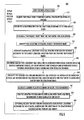
- FIG. 5 a process 300 for deriving the vehicle position (performed by the components shown in FIG. 2 that are on or in the vehicle) is now described.
- the process 300 is the same whether active optical beacons or passive optical beacons, or a combination, are used.
- the process 300 is performed at each position update cycle, and begins at 302.
- each camera is controlled to obtained a pair of image frames, where the image frames are captured with a time interval separated them that is exactly one-half the blink period T. This ensures that one frame will be acquired while a given light source (of an active optical beacon or on the vehicle incident on a passive optical beacon) is on and the other frame will be acquired while a given light source is off.
- FiGs. 6A and 6B illustrate two exemplary images acquired by a camera, separated in time by exactly one-half the blink period T, where some beacon light sources are captured in each image frame of the pair.
- the image frame in FIG. 6A captured beacon light sources 30(1), 30(3) and 30(N)
- the image frame in FIG. 6B captured beacon light sources 30(2) and 30(4).
- the image acquisition sub-system generates a "difference" frame by subtracting one image frame from the other image frame to thereby produce an image frame that contains pixels corresponding to only the optical beacons (above some threshold to account for background noise).
- image decimation may be employed to set groups of pixels to maximum values. Such a technique can help overcome the slight misalignment of the two images by insuring that the brighter, non-beacon features in the images overlap and thus are eliminated during the two-frame subtraction.
- imaging may be performed when the vehicle is stationary.
- Still another alternative is to use a very fast blink frequency or to perform imaging along the axis of motion of the vehicle.
- An optical frequency filter on the camera lens tuned to the optical frequency of the light source may have the additional benefit of reducing motion edge effects.
- the difference frame is analyzed to identify pixel locations of optical beacons (active or passive) using image thresholding, such as binary thresholding well known in the art.
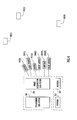
- FIG. 7 illustrates a binary threshold image derived from the result of subtracting one of the image frames shown in FIGs. 6A and 6B from the other image frame.
- the dots 324 shown in FIG. 7 are the beacon image pixels that correspond to light sources 30(1) to 30(N) in the field of view shown in FIGs. 6A and 6B . If multiple cameras are used on the vehicle, then the pixel locations of beacons in each of the resulting difference frames are identified.
- FIG. 8 illustrates the meaning of the pixel data derived from the images captured by two cameras, camera A and camera B, mounted on a vehicle.
- Camera A has an angular field-of-view (FOV)-A and camera B has an angular FOV-B.
- Optical beacon 30(2) is within the FOV of camera A and as a result when camera A is triggered to capture images, optical beacon 30(2) will produce an image pixel in the image plane (IP)-A for camera A.
- optical beacon 30(1) is within the FOV of camera B and when camera B is triggered to capture images, optical beacon 30(1) will produce an image pixel in the image plane IP-B for camera B.
- the beacon pixel locations derived from the difference frame are associated or matched to actual beacons in the beacon database according to the closest (tracked) beacons for previous "difference" frames. That is, beacon pixel positions from prior difference frames have already been associated with an actual beacon in the beacon database.
- first beacon match data is generated that represents the associations that can be made based on closest beacons from difference frames at previous position update cycles.
- FIG. 9 illustrates numeric identifiers being associated or assigned to each beacon pixel in the difference frame shown in FIG. 7 .
- beacon pixels for a current position update cycle are at only slightly different positions than the positions of beacon pixels for a previous update cycle, then they may easily be associated to actual beacons by virtue of the beacon associations made at the prior update cycle.
- the beacon pixels for a current position update cycle are at only slightly different positions than the positions of beacon pixels for a previous update cycle, then they may easily be associated to actual beacons by virtue of the beacon associations made at the prior update cycle.
- the first difference frame is analyzed, it will not be possible to associate beacon pixels to actual beacons based on prior update cycles.
- beacon pixel location cannot be associated with an actual beacon pixel from associations made at prior update cycles (because the beacon pixel locations are too far from beacon pixel locations at prior update cycles or because it is the first position update cycle)
- three-dimensional ray intersection techniques are used to associate the beacon pixel location with a beacon in the beacon database.
- FIG. 10 for an illustration of the computation at 340. In this case, an unassociated beacon pixel is produced on the IP of a camera.
- the unassociated beacon image pixel is associated to beacon light source 30(i) because the beacon image pixel is determined to be close to a computed theoretical position in the image plane given the approximate vehicle position (from prior update cycles or from the navigation sub-system), camera orientation and position of beacon 30(i) in the beacon database.
- second beacon match data is generated that represents the associations made for those pixel locations that are matched using the three-dimensional pixel to beacon ray intersection technique.
- the position and orientation of the vehicle are computed for the current position update cycle. Since the position and orientation of each camera relative to the position and orientation of the vehicle are known, a single solution for the position and orientation of the vehicle will have associated with it a sum of errors between (a) the observed image pixel rays (derived from the beacon pixel positions) and (b) the theoretical rays derived from the calculated camera positions and orientation to the locations of the beacons stored in the beacon database. Thus, by minimizing this error, it is possible to compute an estimated position and orientation of the vehicle. For example, a least squares fit solution minimizes this error according to the minimum summation of squared deviations between rays (or alternatively, deviations between pixel locations on the image plane).
- the vehicle position and orientation is derived from the first beacon match data (produced at 330) and the second beacon match data (produced at 340). Only two beacons need to be identified in order to triangulate the vehicle's position, but additional beacon observations increase the accuracy of the computation.
- the current velocity is calculated based on the position computation made in 350, the position at a prior position update cycle and the duration between position update cycles.
- Velocity is computed in terms of ground speed and direction. The velocity may be "smoothed" similar to GPS computations by average over recent position changes of the vehicle.
- the updated vehicle position and velocity, together with the frame-pair time for the position update cycle, are sent to the navigation sub-system in the vehicle.
- beacons may be placed in the field of operation after the device is already deployed such that the information on one or more beacons is not contained in the beacon database stored in the vehicle.
- data for such an completely unassociated beacon pixel is stored. After the position and orientation for the update cycle in which a completely unassociated beacon pixel is found, an intersection ray is calculated and stored.
- beacon rays derived from images captured at multiple different positions and orientations of the vehicle are compared with each other to determine if several beacon rays are pointing to the same position in space according to the triangulation of multiple beacon rays that were recorded from significantly different view angles, even though that point in space does not match with a beacon in the beacon database. If so, then data is added to the beacon database for any new self-surveyed beacons from a position derived from the unassociated beacon rays and the position and orientation of the vehicle when those unassociated beach rays were computed and stored. In this way, new beacons can be self-surveyed by the vehicle.
- a vehicle may be initialized in a field of operation with an arbitrary starting position or a position that is determined by other means (e.g., GPS), and the beacons in the field of operation can be self-surveyed thereafter. As the vehicle moves about, new beacons will come into the vehicle's field-of-view and those beacons can then be self-surveyed as well. Thus, a few beacons can be rapidly deployed and then the vehicle can self-survey other beacons that are "dropped" into the field of operation after the vehicle is in the field of operation.
- a vehicle may be air-dropped into a hostile or inaccessible territory, use GPS for initial position determination and then use the recently dropped beacons for precise navigation outside of reception coverage of GPS satellites.
- the system and method of the present invention provides for an inexpensive navigation system for indoor and outdoor applications.
- the positioning system need not be integrated with the vehicle's navigation sub-system so that the vehicle can be totally autonomous.
- the system and method can work with other navigational systems, such as GPS, by fusing its positioning data with GPS positioning data.
- Dead reckoning can be achieved between landmark observations using odometry, inertial navigation systems, or any other technique that can calculate relative motion.
- Location position sensing and obstacle avoidance may be implemented concurrently using conventional machine vision and LIDAR sensor, for example.
- the applications for the system and method according to the present invention are any application for which vehicles, such as robots, are used, including but not limited to line of office or hospital delivery robots, home assistance to elderly or handicapped, landscape maintenance, farming, mining, construction as well as military applications.
- Vehicles that use the techniques described herein can perform missions that require sub 6-inch positioning accuracy indoors, outdoors in cities, in forests, near structures, inside partially enclosed stadiums, caves, and other situations where a GPS-based solution is ineffective.
- Still another example involves cave navigation.
- a robotic vehicle may deploy landmark beacons of the type described herein as it moves into the cave and then surveys the beacons as it moves away from them.
- two robotic vehicles working in tandem can reuse the beacons as they proceed through long tunnel systems.
- One robotic vehicle may carry the light beacons and the other may carry a video-based survey system, and where the two robots do not move at the same time.
- visible, non-blinking light beacons may be used such that the image frame subtraction method may not be necessary.
- Still another variation is to determine the range (and position) of the landmark beacons with a sensor, such as a LIDAR sensor, in order to more accurate triangulation position computations.
- a sensor such as a LIDAR sensor
- a ranging sensor could be directed at the landmark beacon.
- the beacon landmarks may be integrated with a reflective target to facilitate a ranging technique such as LIDAR.
Landscapes
- Physics & Mathematics (AREA)
- Engineering & Computer Science (AREA)
- Electromagnetism (AREA)
- Aviation & Aerospace Engineering (AREA)
- Radar, Positioning & Navigation (AREA)
- Remote Sensing (AREA)
- General Physics & Mathematics (AREA)
- Automation & Control Theory (AREA)
- Navigation (AREA)
Applications Claiming Priority (1)
| Application Number | Priority Date | Filing Date | Title |
|---|---|---|---|
| US11/736,042 US7739034B2 (en) | 2007-04-17 | 2007-04-17 | Landmark navigation for vehicles using blinking optical beacons |
Publications (3)
| Publication Number | Publication Date |
|---|---|
| EP1983397A2 true EP1983397A2 (de) | 2008-10-22 |
| EP1983397A3 EP1983397A3 (de) | 2011-06-29 |
| EP1983397B1 EP1983397B1 (de) | 2012-12-12 |
Family
ID=39705029
Family Applications (1)
| Application Number | Title | Priority Date | Filing Date |
|---|---|---|---|
| EP08153415A Ceased EP1983397B1 (de) | 2007-04-17 | 2008-03-27 | Landmarkennavigation für Fahrzeuge über blinkende optische Baken |
Country Status (4)
| Country | Link |
|---|---|
| US (1) | US7739034B2 (de) |
| EP (1) | EP1983397B1 (de) |
| JP (1) | JP5543696B2 (de) |
| CA (1) | CA2628657C (de) |
Cited By (13)
| Publication number | Priority date | Publication date | Assignee | Title |
|---|---|---|---|---|
| WO2010071842A1 (en) * | 2008-12-19 | 2010-06-24 | Xollai, Llc | System and method for determining an orientation and position of an object |
| ES2428771R1 (es) * | 2012-05-07 | 2013-11-27 | Alcay Jose Serrat | Sistema de control de vehiculos |
| WO2014020547A1 (en) * | 2012-07-31 | 2014-02-06 | Indoorgo Navigation Systems Ltd. | Navigation method and device |
| CN104181920A (zh) * | 2013-05-21 | 2014-12-03 | 成都四威高科技产业园有限公司 | 一种基于视觉的agv定位方法 |
| FR3022358A1 (fr) * | 2014-06-12 | 2015-12-18 | Terabee Sas | Systeme de reperage dynamique et procede de guidage automatique |
| WO2016068715A1 (en) * | 2014-10-31 | 2016-05-06 | Fugro N.V. | Underwater positioning system |
| US9410804B2 (en) | 2011-04-21 | 2016-08-09 | Konecranes Global Corporation | Techniques for positioning a vehicle |
| WO2018176358A1 (en) * | 2017-03-31 | 2018-10-04 | Intel Corporation | Autonomous tunnel navigation with a robotic system |
| WO2019143249A1 (en) | 2018-01-22 | 2019-07-25 | Fugro N.V. | Method of and apparatus for monitoring positions on an object |
| WO2019141989A1 (en) * | 2018-01-17 | 2019-07-25 | Mo-Sys Engineering Limited | Bulk handling with autonomous vehicles |
| WO2019143250A1 (en) | 2018-01-22 | 2019-07-25 | Fugro N.V. | Surveying instrument for and surveying method of surveying reference points |
| JP2019203826A (ja) * | 2018-05-24 | 2019-11-28 | 凸版印刷株式会社 | ビーコン発信機位置抽出システム及びビーコン発信機位置抽出方法 |
| CN110780672A (zh) * | 2013-07-02 | 2020-02-11 | 波音公司 | 用于度量系统的机器人安装的界标系统 |
Families Citing this family (57)
| Publication number | Priority date | Publication date | Assignee | Title |
|---|---|---|---|---|
| US8285475B2 (en) * | 2007-03-02 | 2012-10-09 | Avago Technologies Ecbu Ip (Singapore) Pte. Ltd. | Combined beacon and scene navigation system |
| KR101461185B1 (ko) * | 2007-11-09 | 2014-11-14 | 삼성전자 주식회사 | 스트럭쳐드 라이트를 이용한 3차원 맵 생성 장치 및 방법 |
| US20090140926A1 (en) * | 2007-12-04 | 2009-06-04 | Elden Douglas Traster | System and method for localization utilizing dynamically deployable beacons |
| US8374786B2 (en) * | 2007-12-11 | 2013-02-12 | Qualcomm Incorporated | GNSS method and receiver with camera aid |
| US8175332B2 (en) * | 2008-05-22 | 2012-05-08 | International Business Machines Corporation | Upper troposphere and lower stratosphere wind direction, speed, and turbidity monitoring using digital imaging and motion tracking |
| US20100268466A1 (en) * | 2009-04-15 | 2010-10-21 | Velayutham Kadal Amutham | Anti-collision system for railways |
| US8679260B2 (en) * | 2009-11-11 | 2014-03-25 | Intellibot Robotics Llc | Methods and systems for movement of an automatic cleaning device using video signal |
| US8406465B1 (en) * | 2009-12-09 | 2013-03-26 | The Boeing Company | Aircraft contrail detection |
| US9311539B1 (en) | 2009-12-09 | 2016-04-12 | The Boeing Company | Aircraft contrail detection |
| US8635015B2 (en) * | 2009-12-17 | 2014-01-21 | Deere & Company | Enhanced visual landmark for localization |
| US20110153338A1 (en) * | 2009-12-17 | 2011-06-23 | Noel Wayne Anderson | System and method for deploying portable landmarks |
| US8224516B2 (en) | 2009-12-17 | 2012-07-17 | Deere & Company | System and method for area coverage using sector decomposition |
| GB2484316A (en) * | 2010-10-06 | 2012-04-11 | St Microelectronics Res & Dev | Self navigation of mobile devices |
| US9471063B2 (en) * | 2011-08-11 | 2016-10-18 | Chien Ouyang | Robotic lawn mower with network sensors |
| US11048268B2 (en) * | 2011-08-11 | 2021-06-29 | Chien Ouyang | Mapping and tracking system for robots |
| CA2883695A1 (en) * | 2012-08-31 | 2014-03-06 | Autonomous Tractor Corporation | Navigation system and method |
| JP5803868B2 (ja) * | 2012-09-20 | 2015-11-04 | カシオ計算機株式会社 | 動画処理装置、動画処理方法及びプログラム |
| US8712690B1 (en) | 2013-01-11 | 2014-04-29 | Intermec Ip Corp. | Systems, methods, and apparatus to determine physical location and routing within a field of low power beacons |
| KR101490170B1 (ko) * | 2013-03-05 | 2015-02-05 | 엘지전자 주식회사 | 로봇 청소기 |
| US10378897B2 (en) | 2013-06-21 | 2019-08-13 | Qualcomm Incorporated | Determination of positioning information of a mobile device using modulated light signals |
| US10791319B1 (en) * | 2013-08-28 | 2020-09-29 | Outward, Inc. | Multi-camera 3D content creation |
| JP2015055534A (ja) * | 2013-09-11 | 2015-03-23 | 株式会社リコー | 情報処理装置、情報処理装置の制御プログラム及び情報処理装置の制御方法 |
| AU2013400684B2 (en) * | 2013-09-20 | 2018-05-17 | Caterpillar Inc. | Positioning system using radio frequency signals |
| US9336506B2 (en) | 2014-05-02 | 2016-05-10 | Google Inc. | Machine-readable delivery platform for automated package delivery |
| US9824324B2 (en) | 2014-05-13 | 2017-11-21 | Google Llc | Automated package relocation from an unmanned kiosk |
| JP6688747B2 (ja) | 2014-06-19 | 2020-04-28 | ハスクバーナ・アーベー | 自動的なビーコン位置判定 |
| US9244147B1 (en) * | 2014-10-22 | 2016-01-26 | Google Inc. | Automated package delivery to a delivery receptacle |
| US9798995B1 (en) | 2014-10-22 | 2017-10-24 | Google Inc. | Mobile delivery receptacle |
| CN105716579B (zh) * | 2014-12-05 | 2017-12-15 | 北京蚁视科技有限公司 | 一种基于信标的视觉定位系统及方法 |
| US20170046891A1 (en) * | 2015-08-12 | 2017-02-16 | Tyco Fire & Security Gmbh | Systems and methods for location identification and tracking using a camera |
| US9742492B2 (en) | 2015-12-30 | 2017-08-22 | Surefire Llc | Systems and methods for ad-hoc networking in an optical narrowcasting system |
| JP2019508677A (ja) * | 2016-01-08 | 2019-03-28 | インテリジェント テクノロジーズ インターナショナル、インコーポレイテッド | 地図を使用した車両構成部品の制御 |
| DE102016205277B4 (de) * | 2016-03-31 | 2017-11-23 | Ford Global Technologies, Llc | Verfahren und System zur Bestimmung der Genauigkeit eines satellitengestützten Navigationssystems |
| US10417469B2 (en) | 2016-05-07 | 2019-09-17 | Morgan E. Davidson | Navigation using self-describing fiducials |
| US11828859B2 (en) | 2016-05-07 | 2023-11-28 | Canyon Navigation, LLC | Navigation using self-describing fiducials |
| US11036946B2 (en) | 2016-05-07 | 2021-06-15 | Canyon Navigation, LLC | Navigation using self-describing fiducials |
| TWI599787B (zh) * | 2016-08-01 | 2017-09-21 | 明泰科技股份有限公司 | 載具導航方法及系統 |
| EP3497405B1 (de) * | 2016-08-09 | 2022-06-15 | Nauto, Inc. | System und verfahren zur präzisionsortung und kartierung |
| RU2017106412A (ru) * | 2017-02-27 | 2018-08-27 | Михаил Дмитриевич Косткин | Сигнальное устройство и маяк |
| US10761541B2 (en) * | 2017-04-21 | 2020-09-01 | X Development Llc | Localization with negative mapping |
| US11493930B2 (en) | 2018-09-28 | 2022-11-08 | Intrinsic Innovation Llc | Determining changes in marker setups for robot localization |
| US9917652B1 (en) | 2017-06-06 | 2018-03-13 | Surefire Llc | Adaptive communications focal plane array |
| NL2019224B1 (en) | 2017-07-11 | 2019-01-25 | Fugro Tech Bv | Underwater Wireless Optical Communication Unit and System |
| US10831199B2 (en) | 2017-09-29 | 2020-11-10 | Deere & Company | Using unmanned aerial vehicles to provide ground control points for aerial survey |
| CN111201837B (zh) * | 2017-10-16 | 2022-10-11 | 昕诺飞控股有限公司 | 用于控制多个照明设备的方法和控制器 |
| US10236986B1 (en) | 2018-01-05 | 2019-03-19 | Aron Surefire, Llc | Systems and methods for tiling free space optical transmissions |
| US10250948B1 (en) | 2018-01-05 | 2019-04-02 | Aron Surefire, Llc | Social media with optical narrowcasting |
| MX2020008586A (es) * | 2018-02-23 | 2020-09-21 | Crown Equip Corp | Sistemas y metodos para navegacion interior de vehiculos en base a objetivos opticos. |
| CN110471402A (zh) * | 2018-05-09 | 2019-11-19 | 陕西外号信息技术有限公司 | 对能够自主移动的机器进行导引的系统和方法 |
| WO2019226045A1 (en) * | 2018-05-20 | 2019-11-28 | Avular B.V. | Estimating a pose of a spatially movable platform |
| US11551552B2 (en) * | 2018-07-30 | 2023-01-10 | GM Global Technology Operations LLC | Distributing processing resources across local and cloud-based systems with respect to autonomous navigation |
| US10824160B2 (en) | 2018-09-28 | 2020-11-03 | X Development Llc | Robot localization with co-located markers |
| US10852740B2 (en) | 2018-09-28 | 2020-12-01 | X Development Llc | Determining the orientation of flat reflectors during robot mapping |
| WO2020257948A1 (en) * | 2019-06-28 | 2020-12-30 | Advanced Intelligent Systems Inc. | System and method for optical localization |
| US12253361B2 (en) | 2021-07-30 | 2025-03-18 | FLIR Unmanned Aerial Systems AS | Alignment of independent visual navigation systems and methods |
| US11830219B2 (en) * | 2021-12-29 | 2023-11-28 | Midea Group Co., Ltd. | Joint visual localization and orientation detection method |
| CN116337090B (zh) * | 2023-02-23 | 2025-10-17 | 北京科技大学 | 一种具有高抗扰能力的车路协同导航系统及方法 |
Citations (2)
| Publication number | Priority date | Publication date | Assignee | Title |
|---|---|---|---|---|
| US5974348A (en) | 1996-12-13 | 1999-10-26 | Rocks; James K. | System and method for performing mobile robotic work operations |
| US6654482B1 (en) | 1997-11-04 | 2003-11-25 | Michel Parent | Method and device for locating and guiding a mobile unit equipped with a linear camera |
Family Cites Families (10)
| Publication number | Priority date | Publication date | Assignee | Title |
|---|---|---|---|---|
| US4424943A (en) * | 1981-05-04 | 1984-01-10 | Hughes Aircraft Company | Tracking system |
| US4786167A (en) * | 1985-10-03 | 1988-11-22 | Rothbone Richard R | Optical navigation system |
| US5396243A (en) * | 1992-12-23 | 1995-03-07 | The United States Of America As Represented By The Secretary Of The Air Force | Infrared laser battlefield identification beacon |
| JPH07140225A (ja) * | 1993-11-16 | 1995-06-02 | Sanyo Electric Co Ltd | 位置測定装置および該装置を用いた移動体制御装置 |
| JP3404151B2 (ja) * | 1994-10-04 | 2003-05-06 | 株式会社山武 | 位置認識システム |
| US5920394A (en) * | 1995-09-01 | 1999-07-06 | Research Corporation Technologies, Inc. | Optical coordinate measuring machine |
| US6859729B2 (en) * | 2002-10-21 | 2005-02-22 | Bae Systems Integrated Defense Solutions Inc. | Navigation of remote controlled vehicles |
| US7145478B2 (en) * | 2002-12-17 | 2006-12-05 | Evolution Robotics, Inc. | Systems and methods for controlling a density of visual landmarks in a visual simultaneous localization and mapping system |
| US7063256B2 (en) * | 2003-03-04 | 2006-06-20 | United Parcel Service Of America | Item tracking and processing systems and methods |
| US7599789B2 (en) * | 2006-05-24 | 2009-10-06 | Raytheon Company | Beacon-augmented pose estimation |
-
2007
- 2007-04-17 US US11/736,042 patent/US7739034B2/en active Active
-
2008
- 2008-03-27 EP EP08153415A patent/EP1983397B1/de not_active Ceased
- 2008-04-08 CA CA2628657A patent/CA2628657C/en active Active
- 2008-04-14 JP JP2008105165A patent/JP5543696B2/ja not_active Expired - Fee Related
Patent Citations (2)
| Publication number | Priority date | Publication date | Assignee | Title |
|---|---|---|---|---|
| US5974348A (en) | 1996-12-13 | 1999-10-26 | Rocks; James K. | System and method for performing mobile robotic work operations |
| US6654482B1 (en) | 1997-11-04 | 2003-11-25 | Michel Parent | Method and device for locating and guiding a mobile unit equipped with a linear camera |
Cited By (31)
| Publication number | Priority date | Publication date | Assignee | Title |
|---|---|---|---|---|
| US10331952B2 (en) | 2008-12-19 | 2019-06-25 | Landing Technologies, Inc. | System and method for determining an orientation and position of an object |
| US10430653B2 (en) | 2008-12-19 | 2019-10-01 | Landing Technologies, Inc. | System and method for autonomous vehicle control |
| WO2010071842A1 (en) * | 2008-12-19 | 2010-06-24 | Xollai, Llc | System and method for determining an orientation and position of an object |
| US8301326B2 (en) | 2008-12-19 | 2012-10-30 | Reconrobotics, Inc. | System and method for autonomous vehicle control |
| US9710710B2 (en) | 2008-12-19 | 2017-07-18 | Xollai Inc. | System and method for autonomous vehicle control |
| US11501526B2 (en) | 2008-12-19 | 2022-11-15 | Landing Technologies, Inc. | System and method for autonomous vehicle control |
| US9410804B2 (en) | 2011-04-21 | 2016-08-09 | Konecranes Global Corporation | Techniques for positioning a vehicle |
| US10408945B2 (en) | 2011-04-21 | 2019-09-10 | Konecranes Global Corporation | Techniques for positioning a vehicle |
| ES2428771R1 (es) * | 2012-05-07 | 2013-11-27 | Alcay Jose Serrat | Sistema de control de vehiculos |
| US10715963B2 (en) | 2012-07-31 | 2020-07-14 | Ariel-University Research And Development Company Ltd. | Navigation method and device |
| US10477356B2 (en) | 2012-07-31 | 2019-11-12 | Ariel-University Research And Development Company Ltd. | Navigation method and device |
| WO2014020547A1 (en) * | 2012-07-31 | 2014-02-06 | Indoorgo Navigation Systems Ltd. | Navigation method and device |
| CN104181920A (zh) * | 2013-05-21 | 2014-12-03 | 成都四威高科技产业园有限公司 | 一种基于视觉的agv定位方法 |
| CN110780672B (zh) * | 2013-07-02 | 2023-08-15 | 波音公司 | 用于度量系统的机器人安装的界标系统 |
| CN110780672A (zh) * | 2013-07-02 | 2020-02-11 | 波音公司 | 用于度量系统的机器人安装的界标系统 |
| FR3022358A1 (fr) * | 2014-06-12 | 2015-12-18 | Terabee Sas | Systeme de reperage dynamique et procede de guidage automatique |
| AU2015340110B2 (en) * | 2014-10-31 | 2020-02-06 | Fugro N.V. | Underwater positioning system |
| NL2013724B1 (en) * | 2014-10-31 | 2016-10-04 | Fugro N V | Underwater positioning system. |
| WO2016068715A1 (en) * | 2014-10-31 | 2016-05-06 | Fugro N.V. | Underwater positioning system |
| US10371791B2 (en) | 2014-10-31 | 2019-08-06 | Fugro N.V. | Underwater positioning system |
| CN107110953B (zh) * | 2014-10-31 | 2021-02-09 | 复格欧公共有限责任公司 | 水下定位系统 |
| CN107110953A (zh) * | 2014-10-31 | 2017-08-29 | 复格欧公共有限责任公司 | 水下定位系统 |
| WO2018176358A1 (en) * | 2017-03-31 | 2018-10-04 | Intel Corporation | Autonomous tunnel navigation with a robotic system |
| US11656083B2 (en) | 2017-03-31 | 2023-05-23 | Intel Corporation | Autonomous tunnel navigation with a robotic system |
| WO2019141989A1 (en) * | 2018-01-17 | 2019-07-25 | Mo-Sys Engineering Limited | Bulk handling with autonomous vehicles |
| WO2019143249A1 (en) | 2018-01-22 | 2019-07-25 | Fugro N.V. | Method of and apparatus for monitoring positions on an object |
| US11346653B2 (en) | 2018-01-22 | 2022-05-31 | Fnv Ip B.V. | Method of and apparatus for monitoring positions on an object |
| WO2019143250A1 (en) | 2018-01-22 | 2019-07-25 | Fugro N.V. | Surveying instrument for and surveying method of surveying reference points |
| US11940262B2 (en) | 2018-01-22 | 2024-03-26 | Fnv Ip B.V. | Surveying instrument for and surveying method of surveying reference points |
| EP4542166A1 (de) | 2018-01-22 | 2025-04-23 | Fnv Ip B.V. | Vermessungsinstrument und vermessungsverfahren zur vermessung von referenzpunkten |
| JP2019203826A (ja) * | 2018-05-24 | 2019-11-28 | 凸版印刷株式会社 | ビーコン発信機位置抽出システム及びビーコン発信機位置抽出方法 |
Also Published As
| Publication number | Publication date |
|---|---|
| EP1983397B1 (de) | 2012-12-12 |
| CA2628657A1 (en) | 2008-10-17 |
| JP5543696B2 (ja) | 2014-07-09 |
| CA2628657C (en) | 2013-07-16 |
| JP2008268204A (ja) | 2008-11-06 |
| US20080262718A1 (en) | 2008-10-23 |
| US7739034B2 (en) | 2010-06-15 |
| EP1983397A3 (de) | 2011-06-29 |
Similar Documents
| Publication | Publication Date | Title |
|---|---|---|
| US7739034B2 (en) | Landmark navigation for vehicles using blinking optical beacons | |
| EP3715785B1 (de) | Slam-gestützte ins | |
| KR102403504B1 (ko) | 이동 로봇 및 그 제어 방법 | |
| TWI827649B (zh) | 用於vslam比例估計的設備、系統和方法 | |
| US20090312871A1 (en) | System and method for calculating location using a combination of odometry and landmarks | |
| US20160188977A1 (en) | Mobile Security Robot | |
| US20020049530A1 (en) | Method of tracking and sensing position of objects | |
| CN112068152B (zh) | 使用3d扫描仪同时进行2d定位和2d地图创建的方法和系统 | |
| US20210276441A1 (en) | A computerized system for guiding a mobile robot to a docking station and a method of using same | |
| KR20180080498A (ko) | 공항용 로봇 및 그의 동작 방법 | |
| EP2820498A1 (de) | Mobiler roboter | |
| WO2022126603A1 (en) | Localization system and method for mobile equipment | |
| US11598878B2 (en) | Vision-cued random-access lidar system and method for localization and navigation | |
| JP7265269B2 (ja) | マップデータの修正方法及び修正プログラム | |
| Escalera et al. | Continuous mobile robot localization by using structured light and a geometric map | |
| US12253361B2 (en) | Alignment of independent visual navigation systems and methods | |
| Karakaya et al. | Low cost easy-to-install indoor positioning system | |
| Hoang et al. | Localization estimation based on Extended Kalman filter using multiple sensors | |
| Shacklock et al. | Visual guidance for autonomous vehicles: capability and challenges | |
| CN112859880A (zh) | 一种移动机器人室内自动定位及智能避障系统及方法 | |
| Ruotsalainen et al. | Monocular visual SLAM for tactical situational awareness | |
| Cassinis et al. | AMIRoLoS an active marker internet-based robot localization system | |
| Park et al. | Visual LiDAR Odometry Using Tree Trunk Detection and LiDAR Localization | |
| Rydell et al. | Chameleon v2: Improved imaging-inertial indoor navigation | |
| US20250147170A1 (en) | Method for deriving position during navigation |
Legal Events
| Date | Code | Title | Description |
|---|---|---|---|
| PUAI | Public reference made under article 153(3) epc to a published international application that has entered the european phase |
Free format text: ORIGINAL CODE: 0009012 |
|
| 17P | Request for examination filed |
Effective date: 20080327 |
|
| AK | Designated contracting states |
Kind code of ref document: A2 Designated state(s): AT BE BG CH CY CZ DE DK EE ES FI FR GB GR HR HU IE IS IT LI LT LU LV MC MT NL NO PL PT RO SE SI SK TR |
|
| AX | Request for extension of the european patent |
Extension state: AL BA MK RS |
|
| PUAL | Search report despatched |
Free format text: ORIGINAL CODE: 0009013 |
|
| AK | Designated contracting states |
Kind code of ref document: A3 Designated state(s): AT BE BG CH CY CZ DE DK EE ES FI FR GB GR HR HU IE IS IT LI LT LU LV MC MT NL NO PL PT RO SE SI SK TR |
|
| AX | Request for extension of the european patent |
Extension state: AL BA MK RS |
|
| 17Q | First examination report despatched |
Effective date: 20110609 |
|
| AKX | Designation fees paid |
Designated state(s): DE FR GB IT |
|
| RAP1 | Party data changed (applicant data changed or rights of an application transferred) |
Owner name: EXELIS INC. |
|
| GRAP | Despatch of communication of intention to grant a patent |
Free format text: ORIGINAL CODE: EPIDOSNIGR1 |
|
| GRAS | Grant fee paid |
Free format text: ORIGINAL CODE: EPIDOSNIGR3 |
|
| GRAA | (expected) grant |
Free format text: ORIGINAL CODE: 0009210 |
|
| AK | Designated contracting states |
Kind code of ref document: B1 Designated state(s): DE FR GB IT |
|
| REG | Reference to a national code |
Ref country code: GB Ref legal event code: FG4D |
|
| REG | Reference to a national code |
Ref country code: DE Ref legal event code: R096 Ref document number: 602008020741 Country of ref document: DE Effective date: 20130207 |
|
| PLBE | No opposition filed within time limit |
Free format text: ORIGINAL CODE: 0009261 |
|
| STAA | Information on the status of an ep patent application or granted ep patent |
Free format text: STATUS: NO OPPOSITION FILED WITHIN TIME LIMIT |
|
| 26N | No opposition filed |
Effective date: 20130913 |
|
| REG | Reference to a national code |
Ref country code: DE Ref legal event code: R097 Ref document number: 602008020741 Country of ref document: DE Effective date: 20130913 |
|
| REG | Reference to a national code |
Ref country code: DE Ref legal event code: R082 Ref document number: 602008020741 Country of ref document: DE Representative=s name: PATENTANWAELTE MAGENBAUER & KOLLEGEN, DE Ref country code: DE Ref legal event code: R082 Ref document number: 602008020741 Country of ref document: DE Representative=s name: PATENTANWAELTE MAGENBAUER & KOLLEGEN PARTNERSC, DE |
|
| REG | Reference to a national code |
Ref country code: FR Ref legal event code: PLFP Year of fee payment: 8 |
|
| REG | Reference to a national code |
Ref country code: FR Ref legal event code: PLFP Year of fee payment: 9 |
|
| PGFP | Annual fee paid to national office [announced via postgrant information from national office to epo] |
Ref country code: IT Payment date: 20160323 Year of fee payment: 9 |
|
| REG | Reference to a national code |
Ref country code: FR Ref legal event code: PLFP Year of fee payment: 10 |
|
| PG25 | Lapsed in a contracting state [announced via postgrant information from national office to epo] |
Ref country code: IT Free format text: LAPSE BECAUSE OF NON-PAYMENT OF DUE FEES Effective date: 20170327 |
|
| REG | Reference to a national code |
Ref country code: FR Ref legal event code: PLFP Year of fee payment: 11 |
|
| REG | Reference to a national code |
Ref country code: DE Ref legal event code: R079 Ref document number: 602008020741 Country of ref document: DE Free format text: PREVIOUS MAIN CLASS: G05D0001020000 Ipc: G05D0001430000 |
|
| PGFP | Annual fee paid to national office [announced via postgrant information from national office to epo] |
Ref country code: DE Payment date: 20240327 Year of fee payment: 17 Ref country code: GB Payment date: 20240327 Year of fee payment: 17 |
|
| PGFP | Annual fee paid to national office [announced via postgrant information from national office to epo] |
Ref country code: FR Payment date: 20240325 Year of fee payment: 17 |
|
| REG | Reference to a national code |
Ref country code: DE Ref legal event code: R119 Ref document number: 602008020741 Country of ref document: DE |
|
| GBPC | Gb: european patent ceased through non-payment of renewal fee |
Effective date: 20250327 |
|
| PG25 | Lapsed in a contracting state [announced via postgrant information from national office to epo] |
Ref country code: DE Free format text: LAPSE BECAUSE OF NON-PAYMENT OF DUE FEES Effective date: 20251001 |
|
| PG25 | Lapsed in a contracting state [announced via postgrant information from national office to epo] |
Ref country code: GB Free format text: LAPSE BECAUSE OF NON-PAYMENT OF DUE FEES Effective date: 20250327 |
|
| PG25 | Lapsed in a contracting state [announced via postgrant information from national office to epo] |
Ref country code: FR Free format text: LAPSE BECAUSE OF NON-PAYMENT OF DUE FEES Effective date: 20250331 |