EP1978737A2 - Vorrichtung und Verfahren zur Bildinterpolation - Google Patents
Vorrichtung und Verfahren zur Bildinterpolation Download PDFInfo
- Publication number
- EP1978737A2 EP1978737A2 EP20080004561 EP08004561A EP1978737A2 EP 1978737 A2 EP1978737 A2 EP 1978737A2 EP 20080004561 EP20080004561 EP 20080004561 EP 08004561 A EP08004561 A EP 08004561A EP 1978737 A2 EP1978737 A2 EP 1978737A2
- Authority
- EP
- European Patent Office
- Prior art keywords
- picture
- region
- interpolation
- motion vector
- source
- Prior art date
- Legal status (The legal status is an assumption and is not a legal conclusion. Google has not performed a legal analysis and makes no representation as to the accuracy of the status listed.)
- Withdrawn
Links
Images






Classifications
-
- H—ELECTRICITY
- H04—ELECTRIC COMMUNICATION TECHNIQUE
- H04N—PICTORIAL COMMUNICATION, e.g. TELEVISION
- H04N7/00—Television systems
- H04N7/01—Conversion of standards, e.g. involving analogue television standards or digital television standards processed at pixel level
- H04N7/0135—Conversion of standards, e.g. involving analogue television standards or digital television standards processed at pixel level involving interpolation processes
- H04N7/014—Conversion of standards, e.g. involving analogue television standards or digital television standards processed at pixel level involving interpolation processes involving the use of motion vectors
-
- G—PHYSICS
- G06—COMPUTING OR CALCULATING; COUNTING
- G06T—IMAGE DATA PROCESSING OR GENERATION, IN GENERAL
- G06T3/00—Geometric image transformations in the plane of the image
- G06T3/40—Scaling of whole images or parts thereof, e.g. expanding or contracting
- G06T3/4007—Scaling of whole images or parts thereof, e.g. expanding or contracting based on interpolation, e.g. bilinear interpolation
-
- H—ELECTRICITY
- H04—ELECTRIC COMMUNICATION TECHNIQUE
- H04N—PICTORIAL COMMUNICATION, e.g. TELEVISION
- H04N7/00—Television systems
- H04N7/01—Conversion of standards, e.g. involving analogue television standards or digital television standards processed at pixel level
- H04N7/0127—Conversion of standards, e.g. involving analogue television standards or digital television standards processed at pixel level by changing the field or frame frequency of the incoming video signal, e.g. frame rate converter
Definitions
- the present invention relates to a frame interpolation apparatus and a method for interpolating a new frame between frames of an input motion picture.
- a motion vector (flow) between frames is calculated by estimating a motion between the frames.
- the interpolation frame is generated by motion compensation using the motion vector.
- artifacts occur.
- JP-A No. 2005-6275 Patent reference 1
- a distribution, a direction, and a DCT coefficient of flows (motion vectors) in an entire frame are calculated.
- a reliance of the flows in the entire frame is estimated by the distribution, the direction and the DCT coefficient.
- interpolation/non-interpolation of a new frame is controlled.
- the new frame is not interpolated. In this case, artifacts can be suppressed.
- the present invention is directed to a frame interpolation apparatus and a method for smoothing motion pictures by interpolating a new frame between frames of the motion pictures.
- an apparatus for generating an interpolation picture between a source picture and a destination picture comprising: a motion estimation unit configured to calculate a first motion vector from a source region of the source picture to a destination region of the destination picture, a second motion vector scaled from the first motion vector based on a first temporal distance between the source picture and the interpolation picture, and a third motion vector scaled from the first motion vector based on a second temporal distance between the destination picture and the interpolation picture; a distortion energy calculation unit configured to calculate a distortion energy of the source region, the distortion energy being smaller when a difference between a pixel value of a pixel of the source region and a pixel value of a corresponding pixel of the destination region is smaller; a weight calculation unit configured to calculate a first weight of a first interpolation region of the interpolation picture using the distortion energy of the source region, the first interpolation region being pointed from the source region by the second motion vector; a motion compensation picture generation unit
- a apparatus for generating an interpolation picture between a source picture and a destination picture comprising: a motion estimation unit configured to calculate a first motion vector from a source region of the source picture to a destination region of the destination picture, a second motion vector scaled from the first motion vector based on a first temporal distance between the source picture and the interpolation picture, and a third motion vector scaled from the first motion vector based on a second temporal distance between the destination picture and the interpolation picture; a distortion energy calculation unit configured to calculate a distortion energy of the source region, the distortion energy being smaller when a difference between a pixel value of a pixel of the source region and a pixel value of a corresponding pixel of the destination region is smaller; a weight calculation unit configured to calculate a first weight of a first interpolation region of the interpolation picture using the distortion energy of the source region, the first interpolation region being pointed from the source region by the second motion vector; a motion compensation picture
- a method for generating an interpolation picture between a source picture and a destination picture comprising: calculating a first motion vector from a source region of the source picture to a destination region of the destination picture, a second motion vector scaled from the first motion vector based on a first temporal distance between the source picture and the interpolation picture, and a third motion vector scaled from the first motion vector based on a second temporal distance between the destination picture and the interpolation picture; calculating a distortion energy of the source region, the distortion energy being smaller when a difference between a pixel value of a pixel of the source region and a pixel value of a corresponding pixel of the destination region is smaller; calculating a first weight of a first interpolation region of the interpolation picture using the distortion energy of the source region, the first interpolation region being pointed from the source region by the second motion vector; generating a first motion compensation picture by compensating the source region to a temporal position of the inter
- a method for generating an interpolation picture between a source picture and a destination picture comprising: calculating a first motion vector from a source region of the source picture to a destination region of the destination picture, a second motion vector scaled from the first motion vector based on a first temporal distance between the source picture and the interpolation picture, and a third motion vector scaled from the first motion vector based on a second temporal distance between the destination picture and the interpolation picture; calculating a distortion energy of the source region, the distortion energy being smaller when a difference between a pixel value of a pixel of the source region and a pixel value of a corresponding pixel of the destination region is smaller; calculating a first weight of a first interpolation region of the interpolation picture using the distortion energy of the source region, the first interpolation region being pointed from the source region by the second motion vector; generating a first motion compensation picture by compensating the source region to a temporal position of the inter
- a frame interpolation apparatus 10 of the first embodiment is explained by referring to Figs. 1 ⁇ 7 .
- the frame interpolation apparatus 10 in case of inputting a motion picture, a new (interpolation) frame is interpolated between two (object) frames. By increasing a number of frames per unit time, the motion picture is smoothed.
- the present embodiment can be applied.
- Fig. 1 is a block diagram of the frame interpolation apparatus 10 of the first embodiment.
- the frame interpolation apparatus 10 includes a motion estimation unit 12, a distortion energy calculation unit 14, an artifact prevention image generation unit 16, an alpha map generation unit 18, a motion compensation warping unit 20, and an alpha blending unit 22.
- the frame interpolation apparatus 10 locally calculates a reliance degree of flow based on a source picture, a destination picture, and an estimated flow.
- the reliance degree is converted to an alpha ( ⁇ ) -value, and an alpha ( ⁇ ) -map is generated.
- a motion compensation picture and an artifact prevention picture using the alpha-value, local artifacts (a corrupted picture) can be removed.
- a motion estimation unit 12 (2) A motion estimation unit 12:
- a flow estimation method of the motion estimation unit 12 is, for example, a block matching method, an optical flow method, a Pel-recursive method, and a Bayesian method.
- the block matching method is explained.
- the flow estimation method is not limited to the block matching method.
- the optical flow method, the Pel-recursive method, or the Bayesian method may be used.
- a source picture is divided into blocks each having a rectangular region as follows.
- B i i + x ⁇ y T
- 0 ⁇ x ⁇ M 1
- 0 ⁇ y ⁇ M 2
- a block matching algorithm based on SSD is represented as follows.
- u i argmin u ⁇ W E i ⁇ u ⁇ ⁇ x ⁇ B i I dst ⁇ i + u + x - I src ⁇ i + x 2
- each pixel in the same block has the same flow.
- the flow of each pixel is represented as follows. u ⁇ i + x ⁇ u i , ⁇ x ⁇ B i
- the distortion energy calculation unit 14 calculates distortion energy of each pixel.
- a displaced pixel difference (a difference between a brightness of a pixel of a source picture and a brightness of a flowed pixel of a destination picture) is represented as follows.
- dpd x I dst ⁇ x + u x - I src x
- N (x) ⁇ X is a set of pixels adjacent to the pixel x. For example, nine pixels or twenty five pixels including the pixel x is the set N(x).
- the first distortion energy (displaced pixel difference energy) is extended by considering the second distortion energy (smoothing energy) as follows.
- U x ⁇ s ⁇ N x ⁇ ⁇ D ⁇ x + s ⁇ V x ⁇ s
- L2 norm dpt x
- V x ⁇ s u ⁇ x + s - u x + v ⁇ x + s - v x
- U x u x , v x T u, v: x coordinate, y coordinate of vector u
- weighting may be operated by similarity between pixels as follows.
- the first term of the right side represents weight of Gaussian in space kernel. Briefly, a center pixel of the kernel has the largest weight.
- the second term of the right side represents similarity kernel. The nearer two pixels are located to each other on the picture, the larger the weight of the two pixels is. Accordingly, a region of pixels having the same motion is only convoluted. As a result, if only a boundary of the region of pixels having the same motion overlaps an edge of the picture, convolution of another region of pixels having different motion can be avoided.
- the artifact prevention picture generation unit 16 uses an artifact prevention picture as an interpolation frame instead of unreliable flow region.
- the temporal weighted average picture has visually few entropy and excellent quality.
- the source picture I src or the destination picture I dst may be used as the interpolation frame.
- a normal average (not the weighted average) may be used as follows.
- I t x 0.5 ⁇ I src x + 0.5 ⁇ I dst x
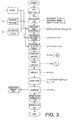
- the alpha-map generation unit 18 is explained by referring to a flow chart of Fig.5 .
- the alpha-map generation unit 18 generates an alpha-map, i.e., a reliance map.
- the alpha-map has a coefficient of each pixel used for alpha-blending.
- An alpha-value (a reliance degree) as the coefficient has a range "0 ⁇ 1" and the same size as the source picture.
- the distortion energy U (x) is defined as a real number above "0" .
- a motion compensation picture (based on flow) should be preferentially used for alpha-blending. Briefly, as to a region having small distortion energy, the alpha-value is nearly set to "1". As to a region having large distortion energy, the alpha-value is nearly set to "0".
- the distortion energy U(x) is converted to the alpha-value having range "0 ⁇ 1".
- ⁇ x exp - U x 2 2 ⁇ ⁇ 2 ⁇ : standard deviation of conversion
- Plural alpha-values often overlap on the same region of the alpha-map by shifting.
- a higher alpha-value is preferentially used because a reliance degree of the higher alpha-value is higher than a reliance degree of a lower alpha-value.
- the x-element and y-element are omitted by the operator. In order to guarantee omission of the x-element and y-element, the x-element and the y-element may be locally repeated by shifting.
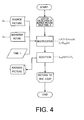
- the motion compensation warping unit 20 warps a source picture and a destination picture by flow, and generates a motion compensation picture.
- a shift method by flow is the same as the alpha-map generation unit 18.
- a region having no pixel values often exists on the motion compensation picture.
- a pixel value of adjacent regions is assigned by filtering.
- a pixel value of a corresponding region on the artifact prevention picture is assigned.
- the alpha-blending unit 22 compounds the motion compensation picture and the artifact prevention picture according to the alpha-map.
- the frame interpolation apparatus 10 of the first embodiment in case of inputting a motion picture, a new frame is interpolated between a source frame and a destination frame. By increasing the number of frames per unit time, contents of the motion picture are visually smoothed. Especially, local defects in the frame are removed.
- the frame interpolation apparatus 10 of the second embodiment is explained by referring to Fig.8 .
- the frame interpolation apparatus 10 calculates distortion energy of each pixel.
- the calculation quantity may become too large. Accordingly, in the second embodiment, the frame interpolation apparatus 10 calculates distortion energy of each block. Except for a distortion energy calculation unit 14 in Fig. 1 , a function of each unit of the frame interpolation apparatus 10 of the second embodiment is the same as the first embodiment, and its explanation is omitted.
- the distortion energy calculation unit 14 calculates distortion energy by unit of block.
- a source picture is divided into plural blocks each having a rectangular region as follows.
- B i i + x ⁇ y T
- 0 ⁇ x ⁇ M ⁇ 1
- 0 ⁇ y ⁇ M ⁇ 2
- SAD Sum of Absolute Difference
- Smoothing energy is calculated as a difference between a flow of a notice block and flows of adjacent blocks as follows.
- V i ⁇ j ⁇ u j - u i ⁇ 2
- equation (10) a sum of absolute differences may be used.
- the smoothing energy is calculated as a sum of the difference for all the adjacent blocks.
- distortion energy is defined as follows.
- Equation (11) The distortion energy of equation (11) is calculated by unit of block.
- N represents the number of adjacent blocks (for example, adjacent four blocks).
- Fig.9 the frame interpolation apparatus 10 of the third embodiment is explained by referring to Fig.9 .
- an encoded picture signal is transmitted.
- a decoder 24 decodes the encoded picture signal, and an interpolation frame is generated using the decoded picture signal.
- the motion estimation unit 12 does not calculate a flow.
- the decoder 24 calculates a flow by decoding the encoded picture, and this flow is directly used to generate the interpolation frame.
- Figs. 10 ⁇ 14 the frame interpolation apparatus 10 of the fourth embodiment is explained by referring to Figs. 10 ⁇ 14 .
- artifact of the interpolation frame caused by an erroneous flow is prevented with alpha-blending.
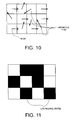
- Fig. 10 shows an estimation result of flows has low accuracy (many erroneous flows are included), a problem occurs.
- Fig. 11 shows an alpha-map created from the flows in Fig.10 .
- Fig.11 alpha-values corresponding to the erroneous flows are low (black area in Fig.11 ).
- a temporal weighted average picture is used as the artifact prevention picture.
- a first area having high alpha-value and a second area having low alpha-value mix in the alpha-map especially, in the same motion region
- a motion compensation picture and a temporal weighted average picture mix in the interpolation picture are visually recognized as a flicker.
- the temporal weighted average picture may be suddenly inserted onto the interpolation picture in which almost region has the same motion.
- the same motion is extracted as a global motion from the source picture and the destination picture.
- the global motion is a leading motion of almost region in the picture. Accordingly, a picture to compensate a low reliance region is generated using the global motion and used for alpha-blending.
- the temporal weighted average picture is also regarded as a static global motion. As a result, the global motion is considered as extension from the alpha-blending.
- the frame interpolation apparatus 10 of the fourth embodiment is explained by referring to Fig .12 .
- the frame interpolation apparatus 10 includes the motion estimation unit 12, the distortion energy calculation unit 14, the alpha-map generation unit 18, the motion compensation warping unit 20, the alpha-blending unit 22, a global motion extraction unit 26, a second distortion energy calculation unit 28, a second alpha-map generation unit 30, and a second motion compensation warping unit 32.
- the fourth embodiment is basically an extension of alpha-blending and the same as the first embodiment. Accordingly, units different from the first embodiment in the frame interpolation apparatus of the fourth embodiment are explained. In the fourth embodiment, the following descriptions are used.
- the global motion extraction unit 26 is explained by referring to Figs.13 and 14 .
- the global motion is modeled by geometrical transformation from two-dimensional plane to two-dimensional plane.
- a typical geometrical transformation is affine transformation.
- the affine transformation represents a parallel motion, a rotation, an enlargement, and a shearing deformation (deformation from a square to a lozenge) .
- the affine transformation is a popular geometrical transformation, but complicated because its free degree is six. Accordingly, in following explanation, the parallel motion is only applied as geometrical transformation.
- the geometrical transformation is represented as two-dimensional flow of one unit, and its free degree is two as follows.
- u ⁇ u ⁇ v T
- This geometrical transformation is determined by calculating a typical flow from some region.
- the typical flow is calculated as an average value or a median value.
- the k-means method is an algorithm to cluster the flow field into K units.
- z t i k , ⁇ i ⁇ ⁇ 2
- a cluster having minimum distance from the average is determined and the label is updated as follows.
- z t + 1 i arg min k ⁇ 1 ... K ⁇ ⁇ u ⁇ k t - u i ⁇ L
- the equations (14) and (15) are repeated a predetermined number of times.
- the output value converges at several times of operation, and sometimes converges at one time.
- clustering result (by k-means method) of a source picture is used as the initial label.
- the label is updated by following labeling.
- T is the number of iteration of k-means method.
- a global motion is determined by an average value or a vector median value as follows.
- u ⁇ k ⁇ u ⁇ U k u Num
- U k u i
- z i k , ⁇ i ⁇ ⁇ 2
- u ⁇ k arg min k ⁇ U k ⁇ u j ⁇ U k ⁇ u - u j ⁇ L
- U k u i
- z i k , ⁇ i ⁇ ⁇ 2
- alpha-map ⁇ t (x) is generated.
- sum of weight coefficients of I m ( x ), I k ( x ) ,I t ( x ) is designed as "1". This model is represented as follows.
- I x ⁇ x ⁇ I mc x + 1 - ⁇ x ⁇ k ⁇ 1 ... K ⁇ k x ⁇ I k x + ⁇ t x I t x ⁇ k ⁇ 1 ... K ⁇ k x ⁇ ⁇ t x
- the second term of the right side is weighted average of each alpha-value in the global motion warping picture. In this case, a region having high alpha-value in the global motion warping picture is preferentially used.
- the motion compensation picture and the temporal weighted average picture are respectively weighted-averaged at a temporal position of the interpolation picture.
- the temporal position of the interpolation picture may not be quantized.
- the motion compensation picture and the temporal weighted average picture are weighted-averaged at any position near the temporal position.
- the alpha-map calculation unit 18 shifts the alpha-map at the temporal position of the interpolation frame after generating the alpha-map.
- the alpha-map may be generated.
Landscapes
- Engineering & Computer Science (AREA)
- Multimedia (AREA)
- Signal Processing (AREA)
- Physics & Mathematics (AREA)
- General Physics & Mathematics (AREA)
- Theoretical Computer Science (AREA)
- Television Systems (AREA)
- Compression Or Coding Systems Of Tv Signals (AREA)
- Controls And Circuits For Display Device (AREA)
Applications Claiming Priority (1)
| Application Number | Priority Date | Filing Date | Title |
|---|---|---|---|
| JP2007082613A JP2008244846A (ja) | 2007-03-27 | 2007-03-27 | フレーム補間装置及びその方法 |
Publications (1)
| Publication Number | Publication Date |
|---|---|
| EP1978737A2 true EP1978737A2 (de) | 2008-10-08 |
Family
ID=39708878
Family Applications (1)
| Application Number | Title | Priority Date | Filing Date |
|---|---|---|---|
| EP20080004561 Withdrawn EP1978737A2 (de) | 2007-03-27 | 2008-03-12 | Vorrichtung und Verfahren zur Bildinterpolation |
Country Status (4)
| Country | Link |
|---|---|
| US (1) | US20080240241A1 (de) |
| EP (1) | EP1978737A2 (de) |
| JP (1) | JP2008244846A (de) |
| CN (1) | CN101277419A (de) |
Cited By (4)
| Publication number | Priority date | Publication date | Assignee | Title |
|---|---|---|---|---|
| WO2012001520A3 (en) * | 2010-06-30 | 2012-03-01 | France Telecom | Pixel interpolation method and system |
| GB2510368A (en) * | 2013-01-31 | 2014-08-06 | Imagination Tech Ltd | Generating a composite image by clustering pixel values according to distance measures |
| US10776688B2 (en) | 2017-11-06 | 2020-09-15 | Nvidia Corporation | Multi-frame video interpolation using optical flow |
| CN113726980A (zh) * | 2020-05-25 | 2021-11-30 | 瑞昱半导体股份有限公司 | 图像处理方法 |
Families Citing this family (21)
| Publication number | Priority date | Publication date | Assignee | Title |
|---|---|---|---|---|
| GB0618323D0 (en) * | 2006-09-18 | 2006-10-25 | Snell & Wilcox Ltd | Method and apparatus for interpolating an image |
| US8942505B2 (en) * | 2007-01-09 | 2015-01-27 | Telefonaktiebolaget L M Ericsson (Publ) | Adaptive filter representation |
| JP5106203B2 (ja) * | 2008-03-27 | 2012-12-26 | 株式会社東芝 | 補間画像生成装置、方法およびプログラム |
| US8805101B2 (en) * | 2008-06-30 | 2014-08-12 | Intel Corporation | Converting the frame rate of video streams |
| JP2011234307A (ja) * | 2010-04-30 | 2011-11-17 | Toshiba Corp | 画像処理装置 |
| GB201007351D0 (en) * | 2010-04-30 | 2010-06-16 | Imagination Tech Ltd | Varying temporal interpolation in a motion compensated frame interpolation system |
| JP5730517B2 (ja) * | 2010-08-20 | 2015-06-10 | 京楽産業.株式会社 | 遊技機用中継基板 |
| JP5730516B2 (ja) * | 2010-08-20 | 2015-06-10 | 京楽産業.株式会社 | 遊技機 |
| JP5645636B2 (ja) * | 2010-12-16 | 2014-12-24 | 三菱電機株式会社 | フレーム補間装置及び方法 |
| TWI502979B (zh) * | 2012-02-13 | 2015-10-01 | Altek Corp | 影像移動估算方法 |
| CN103248795B (zh) * | 2012-02-13 | 2016-03-30 | 华晶科技股份有限公司 | 影像移动估算方法 |
| JP6091082B2 (ja) * | 2012-05-11 | 2017-03-08 | キヤノン株式会社 | 画像処理装置、画像処理方法、及び、プログラム |
| CN103647973B (zh) * | 2013-12-10 | 2017-01-04 | 华为技术有限公司 | 一种帧率上采样的方法和装置 |
| CN108027959B (zh) * | 2015-09-25 | 2022-10-25 | 皇家飞利浦有限公司 | 荧光成像中低帧率下的空间闪烁去除 |
| JP6904192B2 (ja) * | 2017-09-22 | 2021-07-14 | 株式会社Jvcケンウッド | 補間フレーム生成装置 |
| US20190297326A1 (en) * | 2018-03-21 | 2019-09-26 | Nvidia Corporation | Video prediction using spatially displaced convolution |
| CN111277780B (zh) * | 2018-12-04 | 2021-07-20 | 阿里巴巴集团控股有限公司 | 一种改善插帧效果的方法和装置 |
| CN114503557B (zh) | 2019-09-22 | 2025-09-16 | 寰发股份有限公司 | 视频数据预测方法和装置 |
| US10958869B1 (en) * | 2019-11-14 | 2021-03-23 | Huawei Technologies Co., Ltd. | System, device and method for video frame interpolation using a structured neural network |
| CN111491204B (zh) * | 2020-04-17 | 2022-07-12 | Oppo广东移动通信有限公司 | 视频修复方法、装置、电子设备和计算机可读存储介质 |
| KR102201297B1 (ko) * | 2020-05-29 | 2021-01-08 | 연세대학교 산학협력단 | 다중 플로우 기반 프레임 보간 장치 및 방법 |
Citations (1)
| Publication number | Priority date | Publication date | Assignee | Title |
|---|---|---|---|---|
| JP2005006275A (ja) | 2002-11-22 | 2005-01-06 | Matsushita Electric Ind Co Ltd | 補間フレーム作成装置、補間フレーム作成方法、および補間フレーム作成プログラム |
Family Cites Families (23)
| Publication number | Priority date | Publication date | Assignee | Title |
|---|---|---|---|---|
| US5512956A (en) * | 1994-02-04 | 1996-04-30 | At&T Corp. | Adaptive spatial-temporal postprocessing for low bit-rate coded image sequences |
| US6178205B1 (en) * | 1997-12-12 | 2001-01-23 | Vtel Corporation | Video postfiltering with motion-compensated temporal filtering and/or spatial-adaptive filtering |
| US6192080B1 (en) * | 1998-12-04 | 2001-02-20 | Mitsubishi Electric Research Laboratories, Inc. | Motion compensated digital video signal processing |
| JP2001007846A (ja) * | 1999-06-18 | 2001-01-12 | Fujitsu Ltd | フレーム中継装置 |
| US6625333B1 (en) * | 1999-08-06 | 2003-09-23 | Her Majesty The Queen In Right Of Canada As Represented By The Minister Of Industry Through Communications Research Centre | Method for temporal interpolation of an image sequence using object-based image analysis |
| KR100708091B1 (ko) * | 2000-06-13 | 2007-04-16 | 삼성전자주식회사 | 양방향 움직임 벡터를 이용한 프레임 레이트 변환 장치 및그 방법 |
| US7197074B2 (en) * | 2003-02-20 | 2007-03-27 | The Regents Of The University Of California | Phase plane correlation motion vector determination method |
| JP4220284B2 (ja) * | 2003-03-28 | 2009-02-04 | 株式会社東芝 | フレーム補間方法、装置及びこれを用いた画像表示システム |
| US8107535B2 (en) * | 2003-06-10 | 2012-01-31 | Rensselaer Polytechnic Institute (Rpi) | Method and apparatus for scalable motion vector coding |
| KR100657261B1 (ko) * | 2003-12-10 | 2006-12-14 | 삼성전자주식회사 | 적응적 움직임 보상 보간 방법 및 장치 |
| US7499494B2 (en) * | 2003-12-23 | 2009-03-03 | Genesis Microchip Inc. | Vector selection decision for pixel interpolation |
| JP4198608B2 (ja) * | 2004-01-15 | 2008-12-17 | 株式会社東芝 | 補間画像生成方法および装置 |
| US8369405B2 (en) * | 2004-05-04 | 2013-02-05 | Qualcomm Incorporated | Method and apparatus for motion compensated frame rate up conversion for block-based low bit rate video |
| AU2005267169A1 (en) * | 2004-07-20 | 2006-02-02 | Qualcomm Incorporated | Method and apparatus for frame rate up conversion with multiple reference frames and variable block sizes |
| WO2006061421A2 (en) * | 2004-12-09 | 2006-06-15 | Thomson Licensing | Method and apparatus for generating motion compensated pictures |
| JP4398925B2 (ja) * | 2005-03-31 | 2010-01-13 | 株式会社東芝 | 補間フレーム生成方法、補間フレーム生成装置および補間フレーム生成プログラム |
| US7535517B2 (en) * | 2005-04-14 | 2009-05-19 | Samsung Electronics Co., Ltd. | Method of motion compensated temporal noise reduction |
| US8903196B2 (en) * | 2005-10-05 | 2014-12-02 | Texas Instruments Incorporated | Video presentation at fractional speed factor using time domain interpolation |
| CN101374462A (zh) * | 2005-12-09 | 2009-02-25 | 皇家飞利浦电子股份有限公司 | 基于模型的流动分析和可视化 |
| JP2007180981A (ja) * | 2005-12-28 | 2007-07-12 | Victor Co Of Japan Ltd | 画像符号化装置、画像符号化方法、及び画像符号化プログラム |
| US8582660B2 (en) * | 2006-04-13 | 2013-11-12 | Qualcomm Incorporated | Selective video frame rate upconversion |
| US8630346B2 (en) * | 2007-02-20 | 2014-01-14 | Samsung Electronics Co., Ltd | System and method for introducing virtual zero motion vector candidates in areas of a video sequence involving overlays |
| US8144778B2 (en) * | 2007-02-22 | 2012-03-27 | Sigma Designs, Inc. | Motion compensated frame rate conversion system and method |
-
2007
- 2007-03-27 JP JP2007082613A patent/JP2008244846A/ja active Pending
-
2008
- 2008-03-12 EP EP20080004561 patent/EP1978737A2/de not_active Withdrawn
- 2008-03-26 US US12/056,085 patent/US20080240241A1/en not_active Abandoned
- 2008-03-26 CN CNA2008100872796A patent/CN101277419A/zh active Pending
Patent Citations (1)
| Publication number | Priority date | Publication date | Assignee | Title |
|---|---|---|---|---|
| JP2005006275A (ja) | 2002-11-22 | 2005-01-06 | Matsushita Electric Ind Co Ltd | 補間フレーム作成装置、補間フレーム作成方法、および補間フレーム作成プログラム |
Cited By (5)
| Publication number | Priority date | Publication date | Assignee | Title |
|---|---|---|---|---|
| WO2012001520A3 (en) * | 2010-06-30 | 2012-03-01 | France Telecom | Pixel interpolation method and system |
| GB2510368A (en) * | 2013-01-31 | 2014-08-06 | Imagination Tech Ltd | Generating a composite image by clustering pixel values according to distance measures |
| GB2510368B (en) * | 2013-01-31 | 2017-03-01 | Imagination Tech Ltd | Pixel Clustering |
| US10776688B2 (en) | 2017-11-06 | 2020-09-15 | Nvidia Corporation | Multi-frame video interpolation using optical flow |
| CN113726980A (zh) * | 2020-05-25 | 2021-11-30 | 瑞昱半导体股份有限公司 | 图像处理方法 |
Also Published As
| Publication number | Publication date |
|---|---|
| CN101277419A (zh) | 2008-10-01 |
| JP2008244846A (ja) | 2008-10-09 |
| US20080240241A1 (en) | 2008-10-02 |
Similar Documents
| Publication | Publication Date | Title |
|---|---|---|
| US20080240241A1 (en) | Frame interpolation apparatus and method | |
| US8396330B2 (en) | Image upscaling based upon directional interpolation | |
| US8755636B2 (en) | Method and apparatus of high-resolution image reconstruction based on multi-frame low-resolution images | |
| US8958484B2 (en) | Enhanced image and video super-resolution processing | |
| US8237868B2 (en) | Systems and methods for adaptive spatio-temporal filtering for image and video upscaling, denoising and sharpening | |
| US8773595B2 (en) | Image processing | |
| JP4997281B2 (ja) | イメージ中の推定動きベクトルの決定方法、コンピュータプログラムおよびディスプレイ装置 | |
| US8130840B2 (en) | Apparatus, method, and computer program product for generating interpolated images | |
| US8335258B2 (en) | Frame interpolation device and frame interpolation method | |
| US20070291170A1 (en) | Image resolution conversion method and apparatus | |
| US20130278596A1 (en) | Image generation apparatus, image display apparatus, image generation method and non-transitory computer readable medium | |
| US10832379B1 (en) | Temporal stability for single frame super resolution | |
| US20080246884A1 (en) | Motion estimation method | |
| US20090226097A1 (en) | Image processing apparatus | |
| KR100727390B1 (ko) | 적응적인 영상크기 변환장치 및 그의 영상크기 변환방법 | |
| EP2579212B1 (de) | Erkennung von Bildabschwächungen in einem interpolierten Bild | |
| Lee et al. | Frame rate up conversion based on variational image fusion | |
| US7403234B2 (en) | Method for detecting bisection pattern in deinterlacing | |
| US8830395B2 (en) | Systems and methods for adaptive scaling of digital images | |
| US8817869B2 (en) | Image processing device and method, and image display device and method | |
| US7796191B1 (en) | Edge-preserving vertical interpolation | |
| CN102447870A (zh) | 静止物体检测方法和运动补偿装置 | |
| US7783134B2 (en) | Edge-oriented interpolation method and system for a digital image | |
| US20070216801A1 (en) | Image processing apparatus and method and program | |
| EP2237559A1 (de) | Estimation du mouvement de l'arrière-plan basé sur la réduction du halo |
Legal Events
| Date | Code | Title | Description |
|---|---|---|---|
| PUAI | Public reference made under article 153(3) epc to a published international application that has entered the european phase |
Free format text: ORIGINAL CODE: 0009012 |
|
| 17P | Request for examination filed |
Effective date: 20080312 |
|
| AK | Designated contracting states |
Kind code of ref document: A2 Designated state(s): AT BE BG CH CY CZ DE DK EE ES FI FR GB GR HR HU IE IS IT LI LT LU LV MC MT NL NO PL PT RO SE SI SK TR |
|
| AX | Request for extension of the european patent |
Extension state: AL BA MK RS |
|
| STAA | Information on the status of an ep patent application or granted ep patent |
Free format text: STATUS: THE APPLICATION HAS BEEN WITHDRAWN |
|
| 18W | Application withdrawn |
Effective date: 20090720 |