EP1975008A2 - Panel assembly - Google Patents
Panel assembly Download PDFInfo
- Publication number
- EP1975008A2 EP1975008A2 EP08102967A EP08102967A EP1975008A2 EP 1975008 A2 EP1975008 A2 EP 1975008A2 EP 08102967 A EP08102967 A EP 08102967A EP 08102967 A EP08102967 A EP 08102967A EP 1975008 A2 EP1975008 A2 EP 1975008A2
- Authority
- EP
- European Patent Office
- Prior art keywords
- panel
- insert
- parent
- skin
- assembly
- Prior art date
- Legal status (The legal status is an assumption and is not a legal conclusion. Google has not performed a legal analysis and makes no representation as to the accuracy of the status listed.)
- Granted
Links
Images




Classifications
-
- B—PERFORMING OPERATIONS; TRANSPORTING
- B60—VEHICLES IN GENERAL
- B60R—VEHICLES, VEHICLE FITTINGS, OR VEHICLE PARTS, NOT OTHERWISE PROVIDED FOR
- B60R13/00—Elements for body-finishing, identifying, or decorating; Arrangements or adaptations for advertising purposes
- B60R13/08—Insulating elements, e.g. for sound insulation
- B60R13/0815—Acoustic or thermal insulation of passenger compartments
-
- B—PERFORMING OPERATIONS; TRANSPORTING
- B60—VEHICLES IN GENERAL
- B60R—VEHICLES, VEHICLE FITTINGS, OR VEHICLE PARTS, NOT OTHERWISE PROVIDED FOR
- B60R13/00—Elements for body-finishing, identifying, or decorating; Arrangements or adaptations for advertising purposes
- B60R13/02—Internal Trim mouldings ; Internal Ledges; Wall liners for passenger compartments; Roof liners
-
- B—PERFORMING OPERATIONS; TRANSPORTING
- B60—VEHICLES IN GENERAL
- B60R—VEHICLES, VEHICLE FITTINGS, OR VEHICLE PARTS, NOT OTHERWISE PROVIDED FOR
- B60R13/00—Elements for body-finishing, identifying, or decorating; Arrangements or adaptations for advertising purposes
- B60R13/02—Internal Trim mouldings ; Internal Ledges; Wall liners for passenger compartments; Roof liners
- B60R13/0237—Side or rear panels
Definitions
- the present invention relates to an acoustic panel assembly comprising a parent panel, an insert panel mounted to the parent panel, the insert panel having a sound absorbing insert body, a rim body surrounding the insert body.
- EPP expanded polypropelyene
- an object of this invention is to provide a simple low cost acoustical panel assembly of the above mentioned type.
- an acoustic panel assembly of the above mentioned type comprising a sound transmitting insert skin bonded to at least a portion of an outer surface of the main and rim bodies and a sound reflecting skin bonded to a portion of an outer surface of the parent panel and bonded to a portion of an outer surface of the insert panel.
- the parent panel has a higher density parent body and a sound reflecting skin bonded to the surface thereof.
- the insert panel is mounted to the parent panel, and includes a sound absorbing insert body, a lower density rim body surrounding the insert body and a sound transmitting insert skin bonded to at least a portion of an outer surface of the main and rim bodies.
- the parent panel includes a border portion which surrounds an opening which engages an outer edge of the insert panel.
- the border portion and the edge engage each other and form an interlocking joint.
- the border portion defines an annular groove which receives the outer edge of the insert panel.
- the body of the parent panel comprises a higher density expanded polypropelyene material, and rim body of the insert panel comprises a lower density expanded polypropelyene material.
- the panel assembly 10 includes a parent panel 12 and an insert panel 14 which is mounted or received in an opening 16 in the parent panel 12.
- the opening 16 is surrounded by a border portion 18 formed by the parent panel 12.
- An inwardly opening annular recess or groove 20 is formed in the border portion 18.
- the parent panel 12 includes a body 22 preferably formed out of high density expanded polypropelyene.
- the insert panel 14 includes a sound absorbing main body 30, a lower density rim body or frame 32 surrounding the main body 30 and a sound transmitting insert skin 34 bonded to at least a portion of an outer surface of the main body 30 and the rim body 32.
- the border portion 18 engages the outer edge portion of the rim body 32 of the insert panel 14, and the border portion 18 and the rim body 32 form an interlocking joint 36.
- the side of the insert panel visible in Fig. 1 is preferable a finished surface.
- the skin 34 is preferably a woven or non-woven cloth or a perforated vinyl. The porous (to sound) skin 34 will allow sound waves to pass to the acoustical absorbing body 30 placed behind the skin.
- a non-porous (sound reflecting) skin 40 is bonded to both the parent panel 12 and to the insert panel 14.
- the skin 40 is bonded to the visible side of the parent panel 12 and is bonded to the non-visible side of the insert panel 14.
- the skin 40 is also bonded to both the border portion 18 of the parent panel 12 and to the rim body 32 of the insert panel 14 throughout the joint 36.
- a portion of the skin 40 overlaps and is bonded to a portion of the insert skin 34. Because through the joint 36 both sides of the skin 40 are bonded to the parent panel 12 or to the insert panel 14, this assembly requires no secondary fasteners or adhesives to complete the assembly.
- the skin 34 preferably has a finished visible surface, and is permanently bonded to the low density EPP soft rim 32 of the desired shape.
- the rim 32 has a molded-in shape which forms the interlocking joint 36 with the inner surface of the border portion 18 of the parent panel 12. On the visible or finished side of the joint 36, the parent panel 12 and the insert panel 14 form a "coach" joint 42.
- the panel assembly 10 is preferably made in a mold assembly 50 which includes a front or finished side mold tool 52 and a back or unfinished side mold tool 54.
- Tool 52 includes a rib 53 which forms a pair of concave surfaces 56 and 58 which form the coach joint 42.
- the insert panel 14, including the insert skin 34, is placed against mold tool 52 with rim body 32 engaging concave surface 58.
- the rib 53 locates the insert panel 14 in the tool and provides the form for the parent panel portion of the coach joint 42.
- the insert panel rim body 32 portion is placed against surface 58 of rib 53 of mold tool 52. Then, the acoustical material body 30 is then loaded into the cavity surrounded by the rim body 32. A V-shaped groove 59 is formed between the insert panel rim body 32 and surface 56 of rib 53.
- the skin 40 is heated to the forming temperature and formed over the insert panel 14 (including the back side of the acoustical material 30) and over the remaining exposed surface of mold tool 52.
- the skin 40 flows around the male joint portion of the insert panel 14 as the skin 40 is drawn by vacuum towards the surface of mold tool 52.
- the rim body 32 is shaped so that the width and depth of the V-shaped groove 59 will allow the skin 40 to be pulled into the groove 59 and properly bond to the surfaces of the groove 59.
- the mold tool 54 is moved into position with shoulder 60 engaging the skin 40 on the back side of the insert panel 14.
- the mold tools 52 and 54 and the insert panel 14 thereby form a mold cavity 62.
- EPP beads are then blown into the cavity 62. Steam is then applied through the rear side of the mold to swell and soften the beads. The mold is then fully closed to compress the EPP to the final shape.
- the cavity 62 for the EPP enclosed by mold tool 54 mold extends over the inside edge of the insert panel 14 and thereby forms a back wall of the interlocking joint 36 and retains the acoustical material 30 placed in the insert panel 14 prior to molding the parent panel 12.
- the high density EPP thereby forms the parent panel 12 and completes the coach joint 42.
- the parent panel 12 is thereby bonded directly to the skin 40 and indirectly to the insert panel 14.
- the outer peripheral half of the joint 42 is formed as the parent panel 12 is molded.
- the perimeter is trimmed with a water jet to remove the excess skin therefrom.
- the part of the skin 40 which covers the back side of the acoustical body 30 may be removed if desired for additional sound control. Otherwise, the part of the skin 40 which covers the back of the acoustical body 30 will act as a barrier to sound.
- a sound wave impinging on the porous skin 34 will pass through the acoustical body 30 and reflect off any part of the skin 40 which remains on the back side of the acoustical body 30. The sound wave would then pass through the acoustical material a second time effectively doubling the acoustical properties of the panel assembly 10.
- the result is a panel assembly 10 with a molded-in insert panel 14 with acoustical properties.
- the combination of the barrier properties of the parent panel finished surface skin 40 and the acoustical properties of the insert panel 14 provide a greater sound reduction within the operator enclosure as a system than the individual components would produce.
- the integrated locking features of the insert panel 14 combined with the EPP process provides a durable, reliable, and aesthetically pleasing joint between the insert panel 14 and parent panel 12 without the use of secondary fasteners or adhesives. This results in lower cost for materials and assembly labor.
- Such a panel assembly may be used for any interior surface of a cab or operator station for an off-road or automotive vehicle, as well as architectural interior panel applications.
Landscapes
- Engineering & Computer Science (AREA)
- Mechanical Engineering (AREA)
- Physics & Mathematics (AREA)
- Acoustics & Sound (AREA)
- Soundproofing, Sound Blocking, And Sound Damping (AREA)
- Vehicle Interior And Exterior Ornaments, Soundproofing, And Insulation (AREA)
Abstract
Description
- The present invention relates to an acoustic panel assembly comprising a parent panel, an insert panel mounted to the parent panel, the insert panel having a sound absorbing insert body, a rim body surrounding the insert body.
- It is known to provide vehicles with interior panels made out of expanded polypropelyene (EPP). In agricultural vehicles, there is a need for interior panels which absorb sound and reduce noise level in the vehicle cab. However, EPP panels do not reduce noise levels in a vehicle interior.
- It is known to attach acoustical material to interior panels. But, this requires secondary operations to mechanically fasten and/or adhesively bond the acoustical material to the back of the panels. These secondary operations complicate the assembly process, create additional cost, and result in a less reliable assembly.
- A simpler, lower cost sound absorbing panel assembly is desired.
- Accordingly, an object of this invention is to provide a simple low cost acoustical panel assembly of the above mentioned type.
- This and other objects are achieved by the present invention, wherein an acoustic panel assembly of the above mentioned type comprising a sound transmitting insert skin bonded to at least a portion of an outer surface of the main and rim bodies and a sound reflecting skin bonded to a portion of an outer surface of the parent panel and bonded to a portion of an outer surface of the insert panel. The parent panel has a higher density parent body and a sound reflecting skin bonded to the surface thereof. The insert panel is mounted to the parent panel, and includes a sound absorbing insert body, a lower density rim body surrounding the insert body and a sound transmitting insert skin bonded to at least a portion of an outer surface of the main and rim bodies.
- The parent panel includes a border portion which surrounds an opening which engages an outer edge of the insert panel. The border portion and the edge engage each other and form an interlocking joint. The border portion defines an annular groove which receives the outer edge of the insert panel. The body of the parent panel comprises a higher density expanded polypropelyene material, and rim body of the insert panel comprises a lower density expanded polypropelyene material.
-
Fig. 1 is a perspective view of a panel assembly according to the present invention; -
Fig. 2 is a view taken along lines 2-2 ofFig. 2 ; -
Fig. 3 is a sectional view of a mold assembly for making the panel assembly ofFigs. 1 and2 ; -
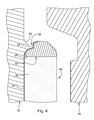
Fig. 4 is a sectional view of the mold assembly ofFig. 3 including an insert panel; -
Fig. 5 is a sectional view of the mold assembly ofFig. 3 including the insert panel and a sound reflecting skin; -
Fig. 6 is a sectional view of the mold assembly ofFig. 5 with the back side mold tool engaged against the skin on the insert panel; and -
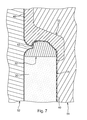
Fig. 7 is a sectional view of the mold assembly ofFig. 6 with the parent panel material in the mold cavity. - Referring to
Figs. 1 and2 , thepanel assembly 10 includes aparent panel 12 and aninsert panel 14 which is mounted or received in anopening 16 in theparent panel 12. The opening 16 is surrounded by aborder portion 18 formed by theparent panel 12. An inwardly opening annular recess orgroove 20 is formed in theborder portion 18. Theparent panel 12 includes abody 22 preferably formed out of high density expanded polypropelyene. - The
insert panel 14 includes a sound absorbingmain body 30, a lower density rim body orframe 32 surrounding themain body 30 and a sound transmittinginsert skin 34 bonded to at least a portion of an outer surface of themain body 30 and therim body 32. Theborder portion 18 engages the outer edge portion of therim body 32 of theinsert panel 14, and theborder portion 18 and therim body 32 form an interlockingjoint 36. The side of the insert panel visible inFig. 1 is preferable a finished surface. Theskin 34 is preferably a woven or non-woven cloth or a perforated vinyl. The porous (to sound)skin 34 will allow sound waves to pass to the acoustical absorbingbody 30 placed behind the skin. - A non-porous (sound reflecting)
skin 40 is bonded to both theparent panel 12 and to theinsert panel 14. Theskin 40 is bonded to the visible side of theparent panel 12 and is bonded to the non-visible side of theinsert panel 14. Theskin 40 is also bonded to both theborder portion 18 of theparent panel 12 and to therim body 32 of theinsert panel 14 throughout thejoint 36. A portion of theskin 40 overlaps and is bonded to a portion of theinsert skin 34. Because through thejoint 36 both sides of theskin 40 are bonded to theparent panel 12 or to theinsert panel 14, this assembly requires no secondary fasteners or adhesives to complete the assembly. Theskin 34 preferably has a finished visible surface, and is permanently bonded to the low density EPPsoft rim 32 of the desired shape. Therim 32 has a molded-in shape which forms the interlockingjoint 36 with the inner surface of theborder portion 18 of theparent panel 12. On the visible or finished side of thejoint 36, theparent panel 12 and theinsert panel 14 form a "coach"joint 42. - Referring now to
Fig. 3 , thepanel assembly 10 is preferably made in amold assembly 50 which includes a front or finishedside mold tool 52 and a back or unfinishedside mold tool 54.Tool 52 includes arib 53 which forms a pair ofconcave surfaces coach joint 42. Theinsert panel 14, including theinsert skin 34, is placed againstmold tool 52 withrim body 32 engagingconcave surface 58. Therib 53 locates theinsert panel 14 in the tool and provides the form for the parent panel portion of thecoach joint 42. - Referring now to
Fig. 4 , the insertpanel rim body 32 portion is placed againstsurface 58 ofrib 53 ofmold tool 52. Then, theacoustical material body 30 is then loaded into the cavity surrounded by therim body 32. A V-shaped groove 59 is formed between the insertpanel rim body 32 andsurface 56 ofrib 53. - Referring now to
Fig. 5 , theskin 40 is heated to the forming temperature and formed over the insert panel 14 (including the back side of the acoustical material 30) and over the remaining exposed surface ofmold tool 52. Theskin 40 flows around the male joint portion of theinsert panel 14 as theskin 40 is drawn by vacuum towards the surface ofmold tool 52. Preferably, therim body 32 is shaped so that the width and depth of the V-shaped groove 59 will allow theskin 40 to be pulled into thegroove 59 and properly bond to the surfaces of thegroove 59. - Referring now to
Fig. 6 , themold tool 54 is moved into position withshoulder 60 engaging theskin 40 on the back side of theinsert panel 14. Themold tools insert panel 14 thereby form amold cavity 62. - Referring now to
Fig. 7 , EPP beads are then blown into thecavity 62. Steam is then applied through the rear side of the mold to swell and soften the beads. The mold is then fully closed to compress the EPP to the final shape. Thecavity 62 for the EPP enclosed bymold tool 54 mold extends over the inside edge of theinsert panel 14 and thereby forms a back wall of the interlockingjoint 36 and retains theacoustical material 30 placed in theinsert panel 14 prior to molding theparent panel 12. The high density EPP thereby forms theparent panel 12 and completes thecoach joint 42. Theparent panel 12 is thereby bonded directly to theskin 40 and indirectly to theinsert panel 14. The outer peripheral half of thejoint 42 is formed as theparent panel 12 is molded. - After de-molding the
parent panel 12, the perimeter is trimmed with a water jet to remove the excess skin therefrom. The part of theskin 40 which covers the back side of theacoustical body 30 may be removed if desired for additional sound control. Otherwise, the part of theskin 40 which covers the back of theacoustical body 30 will act as a barrier to sound. A sound wave impinging on theporous skin 34 will pass through theacoustical body 30 and reflect off any part of theskin 40 which remains on the back side of theacoustical body 30. The sound wave would then pass through the acoustical material a second time effectively doubling the acoustical properties of thepanel assembly 10. - The result is a
panel assembly 10 with a molded-ininsert panel 14 with acoustical properties. The combination of the barrier properties of the parent panel finishedsurface skin 40 and the acoustical properties of theinsert panel 14 provide a greater sound reduction within the operator enclosure as a system than the individual components would produce. The integrated locking features of theinsert panel 14 combined with the EPP process provides a durable, reliable, and aesthetically pleasing joint between theinsert panel 14 andparent panel 12 without the use of secondary fasteners or adhesives. This results in lower cost for materials and assembly labor. Such a panel assembly may be used for any interior surface of a cab or operator station for an off-road or automotive vehicle, as well as architectural interior panel applications. - While the present invention has been described in conjunction with a specific embodiment, it is understood that many alternatives, modifications and variations will be apparent to those skilled in the art in light of the foregoing description. Accordingly, this invention is intended to embrace all such alternatives, modifications and variations which fall within the spirit and scope of the appended claims.
Claims (9)
- An acoustic panel assembly (10) comprising a parent panel (12), an insert panel (14) mounted to the parent panel (12), the insert panel (14) having a sound absorbing insert body (30), a rim body (32) surrounding the insert body (30) characterized in that a sound transmitting insert skin (34) is bonded to at least a portion of an outer surface of the main and rim bodies (30, 32) and a sound reflecting skin (40) is bonded to a portion of an outer surface of the parent panel (12) and bonded to a portion of an outer surface of the insert panel (14).
- The panel assembly (10) of claim 1, wherein the parent panel (12) includes an opening surrounded by a border portion (18), the border portion (18) engaging an outer edge of the insert panel (14), the border portion (18) and the edge forming an interlocking joint (36).
- The panel assembly (10) of claim 2, wherein the border portion (18) defines an annular groove (20) which receives the outer edge of the insert panel (14).
- The panel assembly (10) of one of the claims 1 to 3, wherein the parent panel (12) comprises a higher density material, and rim body (32) comprises a lower density material.
- The panel assembly (10) of one of the claims 1 to 4, wherein the parent panel (12) comprises high density expanded polypropelyene, and rim body (32) comprises low density expanded polypropelyene.
- The panel assembly (10) of one of the claims 1 to 5, wherein the parent panel (12) having a higher density parent body; and the insert panel (14) mounted to the parent panel (12), the insert panel (12) having a sound absorbing insert body (30), a lower density rim body (32) surrounding the insert body (30) and a sound transmitting insert skin (34) bonded to at least a portion of an outer surface of the main and rim bodies (30, 32).
- The panel assembly (10) of one of the claims 1 to 6, wherein the parent panel (12) surrounds the insert panel (14).
- The panel assembly (10) of one of the claims 1 to 7, wherein the sound reflecting skin (40) is bonded to a portion of the insert skin (34).
- The panel assembly (10) of one of the claims 1 to 8, wherein the sound reflecting skin (40) is bonded to a visible side of the parent panel (12) and to a non-visible side of the insert panel (14).
Applications Claiming Priority (1)
| Application Number | Priority Date | Filing Date | Title |
|---|---|---|---|
| US11/693,443 US7503429B2 (en) | 2007-03-29 | 2007-03-29 | Acoustic panel assembly |
Publications (3)
| Publication Number | Publication Date |
|---|---|
| EP1975008A2 true EP1975008A2 (en) | 2008-10-01 |
| EP1975008A3 EP1975008A3 (en) | 2014-07-23 |
| EP1975008B1 EP1975008B1 (en) | 2016-08-24 |
Family
ID=39598433
Family Applications (1)
| Application Number | Title | Priority Date | Filing Date |
|---|---|---|---|
| EP08102967.0A Not-in-force EP1975008B1 (en) | 2007-03-29 | 2008-03-27 | Panel assembly |
Country Status (3)
| Country | Link |
|---|---|
| US (1) | US7503429B2 (en) |
| EP (1) | EP1975008B1 (en) |
| CN (1) | CN101274609A (en) |
Cited By (1)
| Publication number | Priority date | Publication date | Assignee | Title |
|---|---|---|---|---|
| EP2138355A3 (en) * | 2008-06-28 | 2012-01-11 | Deere & Company | Acoustic panel assembly |
Families Citing this family (8)
| Publication number | Priority date | Publication date | Assignee | Title |
|---|---|---|---|---|
| JP5701665B2 (en) * | 2011-04-12 | 2015-04-15 | 豊和繊維工業株式会社 | Dash silencer mounting structure |
| US8434591B2 (en) | 2011-09-21 | 2013-05-07 | Robert Bosch Gmbh | Acoustic barrier |
| JP5820223B2 (en) * | 2011-10-06 | 2015-11-24 | 豊和繊維工業株式会社 | Soundproof sheet for automobile, method for producing the same, and dash silencer for automobile using the soundproof sheet |
| JP5900461B2 (en) * | 2013-10-28 | 2016-04-06 | トヨタ自動車株式会社 | Molding apparatus and resin member manufacturing method |
| US9248781B2 (en) | 2014-04-08 | 2016-02-02 | Toyota Motor Engineering & Manufacturing North America, Inc. | Packaging tray having integrated noise and vibration reduction features |
| US9963873B2 (en) * | 2016-09-27 | 2018-05-08 | David R. Hall | Flexible, sound-attenuating roll-up wall system |
| KR102335982B1 (en) * | 2017-06-16 | 2021-12-07 | 현대자동차주식회사 | Nvh pad for vehicle |
| US12586555B2 (en) * | 2022-05-18 | 2026-03-24 | Sabin, LLC | Hinging alignment tabs in semi-rigid substrate |
Family Cites Families (13)
| Publication number | Priority date | Publication date | Assignee | Title |
|---|---|---|---|---|
| DE3202594A1 (en) * | 1982-01-27 | 1983-08-11 | Ford-Werke AG, 5000 Köln | MOTOR VEHICLE BODY WITH A FIXED CONNECTED COMPOSITE ROOF |
| US20040231784A1 (en) * | 1993-10-28 | 2004-11-25 | Lear Corporation | Method for forming plastic molded panels with inserts |
| DE59903532D1 (en) * | 1998-10-21 | 2003-01-09 | Arvinmeritor Gmbh | Composite component for vehicle bodies |
| US6183038B1 (en) * | 1999-03-11 | 2001-02-06 | Delphi Technologies, Inc. | Door trim assembly and method of making same |
| US6669265B2 (en) * | 2000-06-30 | 2003-12-30 | Owens Corning Fiberglas Technology, Inc. | Multidensity liner/insulator |
| US6412852B1 (en) * | 2000-07-25 | 2002-07-02 | Foamade Industries, Inc. | Water, dust and sound attenuating barrier and trim panel module and method for assembling within a vehicle door |
| EP1365388A4 (en) * | 2001-01-23 | 2006-07-26 | Kasai Kogyo Kk | Soundproof material for vehicle and method of manufacturing the material |
| US7125067B2 (en) * | 2002-04-09 | 2006-10-24 | Ford Global Technologies, Llc | Magnesium door assembly for automobiles |
| US20040113455A1 (en) * | 2002-10-17 | 2004-06-17 | Schmidt Glen D. | Energy absorbing impact deflector incorporating a thermoformed outer panel and an expanded foam insert |
| US6971475B2 (en) * | 2003-05-01 | 2005-12-06 | Collins & Aikman Products Co. | Vehicle trim components with selectively applied foam and methods of making same |
| JP2005067528A (en) * | 2003-08-27 | 2005-03-17 | Kasai Kogyo Co Ltd | Vehicular interior trim material |
| ATE411202T1 (en) * | 2003-10-31 | 2008-10-15 | Dow Global Technologies Inc | SOUND ABSORPTION SYSTEM |
| US6986543B2 (en) * | 2004-05-24 | 2006-01-17 | Lear Corporation | Automotive interior trim assembly and pad insertion |
-
2007
- 2007-03-29 US US11/693,443 patent/US7503429B2/en active Active
-
2008
- 2008-03-07 CN CNA2008100076927A patent/CN101274609A/en active Pending
- 2008-03-27 EP EP08102967.0A patent/EP1975008B1/en not_active Not-in-force
Cited By (1)
| Publication number | Priority date | Publication date | Assignee | Title |
|---|---|---|---|---|
| EP2138355A3 (en) * | 2008-06-28 | 2012-01-11 | Deere & Company | Acoustic panel assembly |
Also Published As
| Publication number | Publication date |
|---|---|
| CN101274609A (en) | 2008-10-01 |
| EP1975008A3 (en) | 2014-07-23 |
| US7503429B2 (en) | 2009-03-17 |
| US20080238121A1 (en) | 2008-10-02 |
| EP1975008B1 (en) | 2016-08-24 |
Similar Documents
| Publication | Publication Date | Title |
|---|---|---|
| US7503429B2 (en) | Acoustic panel assembly | |
| US6183038B1 (en) | Door trim assembly and method of making same | |
| US6093272A (en) | Method of making trim panel having two different trim materials | |
| JP2014518175A (en) | Outer module with outer panel for module-structured casing component, module-structured casing component itself, and method of manufacturing outer module | |
| CN100372704C (en) | Interior member for cab of work vehicle, method of molding the interior member, and wall member | |
| EP1618294A2 (en) | Vehicle trim components with selectively applied foam and methods of making same | |
| US12108199B2 (en) | Cork-leather-covered loudspeaker grille | |
| DE102013205185A1 (en) | In-Mold scarskin lining for interior panel with decoration application | |
| JPWO2013077003A1 (en) | Interior and exterior materials for automobiles and manufacturing method thereof | |
| JP5283194B2 (en) | Sound absorbing material and sound absorbing method | |
| US20040090089A1 (en) | Flexible headliner for automotive vehicle | |
| US6935673B1 (en) | Dashboard of a passenger motor vehicle and method of making same | |
| JP2017210151A (en) | Service hole cover and manufacturing method thereof | |
| US20100264684A1 (en) | Visor made from a vehicle panel material | |
| KR101179989B1 (en) | Pillar trim for vehicle | |
| WO2007069953A1 (en) | A trim panel for the interior of a motor vehicle and a manufacturing process for such a trim panel | |
| JP6721159B2 (en) | Service hole cover manufacturing method | |
| US20050210779A1 (en) | 3-D molded watershield resonance frequency diffuser | |
| JP2017202727A (en) | Service hole cover | |
| JP2006036089A (en) | Vehicular molded ceiling, and method for manufacturing the same | |
| JP2005035314A (en) | Speaker lid of on-vehicle speaker | |
| JP2007112374A (en) | Interior materials for vehicles | |
| CN209964278U (en) | Visor assembly with integrated microphone | |
| JP3897379B2 (en) | Shock absorbing door trim structure and door trim | |
| JPS63269749A (en) | Automobile ceiling material and its manufacture |
Legal Events
| Date | Code | Title | Description |
|---|---|---|---|
| PUAI | Public reference made under article 153(3) epc to a published international application that has entered the european phase |
Free format text: ORIGINAL CODE: 0009012 |
|
| AK | Designated contracting states |
Kind code of ref document: A2 Designated state(s): AT BE BG CH CY CZ DE DK EE ES FI FR GB GR HR HU IE IS IT LI LT LU LV MC MT NL NO PL PT RO SE SI SK TR |
|
| AX | Request for extension of the european patent |
Extension state: AL BA MK RS |
|
| PUAL | Search report despatched |
Free format text: ORIGINAL CODE: 0009013 |
|
| AK | Designated contracting states |
Kind code of ref document: A3 Designated state(s): AT BE BG CH CY CZ DE DK EE ES FI FR GB GR HR HU IE IS IT LI LT LU LV MC MT NL NO PL PT RO SE SI SK TR |
|
| AX | Request for extension of the european patent |
Extension state: AL BA MK RS |
|
| RIC1 | Information provided on ipc code assigned before grant |
Ipc: B60R 13/02 20060101ALI20140618BHEP Ipc: B60R 13/08 20060101AFI20140618BHEP |
|
| 17P | Request for examination filed |
Effective date: 20150123 |
|
| RBV | Designated contracting states (corrected) |
Designated state(s): AT BE BG CH CY CZ DE DK EE ES FI FR GB GR HR HU IE IS IT LI LT LU LV MC MT NL NO PL PT RO SE SI SK TR |
|
| AKX | Designation fees paid |
Designated state(s): DE FR |
|
| AXX | Extension fees paid |
Extension state: MK Extension state: BA Extension state: RS Extension state: AL |
|
| GRAP | Despatch of communication of intention to grant a patent |
Free format text: ORIGINAL CODE: EPIDOSNIGR1 |
|
| INTG | Intention to grant announced |
Effective date: 20160317 |
|
| GRAS | Grant fee paid |
Free format text: ORIGINAL CODE: EPIDOSNIGR3 |
|
| GRAA | (expected) grant |
Free format text: ORIGINAL CODE: 0009210 |
|
| AK | Designated contracting states |
Kind code of ref document: B1 Designated state(s): DE FR |
|
| REG | Reference to a national code |
Ref country code: DE Ref legal event code: R096 Ref document number: 602008045832 Country of ref document: DE |
|
| REG | Reference to a national code |
Ref country code: DE Ref legal event code: R097 Ref document number: 602008045832 Country of ref document: DE |
|
| PLBE | No opposition filed within time limit |
Free format text: ORIGINAL CODE: 0009261 |
|
| STAA | Information on the status of an ep patent application or granted ep patent |
Free format text: STATUS: NO OPPOSITION FILED WITHIN TIME LIMIT |
|
| 26N | No opposition filed |
Effective date: 20170526 |
|
| REG | Reference to a national code |
Ref country code: FR Ref legal event code: ST Effective date: 20171130 |
|
| PG25 | Lapsed in a contracting state [announced via postgrant information from national office to epo] |
Ref country code: FR Free format text: LAPSE BECAUSE OF NON-PAYMENT OF DUE FEES Effective date: 20170331 |
|
| PGFP | Annual fee paid to national office [announced via postgrant information from national office to epo] |
Ref country code: DE Payment date: 20220222 Year of fee payment: 15 |
|
| REG | Reference to a national code |
Ref country code: DE Ref legal event code: R119 Ref document number: 602008045832 Country of ref document: DE |
|
| PG25 | Lapsed in a contracting state [announced via postgrant information from national office to epo] |
Ref country code: DE Free format text: LAPSE BECAUSE OF NON-PAYMENT OF DUE FEES Effective date: 20231003 |