EP1972166B1 - Verfahren zum bereitstellen einer dienstqualität in einem wimax-kommunikationsnetzwerk und verfahren zum auswählen einer zugangs-transportressourcenkontrollfunktion durch eine richtlinienentscheidungsfunktion in einem kommunikationsnetzwerk - Google Patents
Verfahren zum bereitstellen einer dienstqualität in einem wimax-kommunikationsnetzwerk und verfahren zum auswählen einer zugangs-transportressourcenkontrollfunktion durch eine richtlinienentscheidungsfunktion in einem kommunikationsnetzwerk Download PDFInfo
- Publication number
- EP1972166B1 EP1972166B1 EP20060841511 EP06841511A EP1972166B1 EP 1972166 B1 EP1972166 B1 EP 1972166B1 EP 20060841511 EP20060841511 EP 20060841511 EP 06841511 A EP06841511 A EP 06841511A EP 1972166 B1 EP1972166 B1 EP 1972166B1
- Authority
- EP
- European Patent Office
- Prior art keywords
- service
- authentication
- network
- aaa
- access
- Prior art date
- Legal status (The legal status is an assumption and is not a legal conclusion. Google has not performed a legal analysis and makes no representation as to the accuracy of the status listed.)
- Not-in-force
Links
- 238000004891 communication Methods 0.000 title claims description 47
- 238000000034 method Methods 0.000 title claims description 28
- 238000013475 authorization Methods 0.000 claims description 76
- 230000011664 signaling Effects 0.000 claims description 23
- 238000012790 confirmation Methods 0.000 claims 1
- 230000008901 benefit Effects 0.000 description 8
- 230000005540 biological transmission Effects 0.000 description 7
- 238000005516 engineering process Methods 0.000 description 3
- 238000012546 transfer Methods 0.000 description 2
- 238000013459 approach Methods 0.000 description 1
- 238000010276 construction Methods 0.000 description 1
- 230000003993 interaction Effects 0.000 description 1
- 238000000638 solvent extraction Methods 0.000 description 1
- 230000003068 static effect Effects 0.000 description 1
- 239000013589 supplement Substances 0.000 description 1
Images


Classifications
-
- H—ELECTRICITY
- H04—ELECTRIC COMMUNICATION TECHNIQUE
- H04L—TRANSMISSION OF DIGITAL INFORMATION, e.g. TELEGRAPHIC COMMUNICATION
- H04L63/00—Network architectures or network communication protocols for network security
- H04L63/08—Network architectures or network communication protocols for network security for authentication of entities
-
- H—ELECTRICITY
- H04—ELECTRIC COMMUNICATION TECHNIQUE
- H04L—TRANSMISSION OF DIGITAL INFORMATION, e.g. TELEGRAPHIC COMMUNICATION
- H04L65/00—Network arrangements, protocols or services for supporting real-time applications in data packet communication
- H04L65/80—Responding to QoS
-
- H—ELECTRICITY
- H04—ELECTRIC COMMUNICATION TECHNIQUE
- H04L—TRANSMISSION OF DIGITAL INFORMATION, e.g. TELEGRAPHIC COMMUNICATION
- H04L63/00—Network architectures or network communication protocols for network security
- H04L63/08—Network architectures or network communication protocols for network security for authentication of entities
- H04L63/0892—Network architectures or network communication protocols for network security for authentication of entities by using authentication-authorization-accounting [AAA] servers or protocols
-
- H—ELECTRICITY
- H04—ELECTRIC COMMUNICATION TECHNIQUE
- H04W—WIRELESS COMMUNICATION NETWORKS
- H04W28/00—Network traffic management; Network resource management
- H04W28/16—Central resource management; Negotiation of resources or communication parameters, e.g. negotiating bandwidth or QoS [Quality of Service]
- H04W28/24—Negotiating SLA [Service Level Agreement]; Negotiating QoS [Quality of Service]
-
- H—ELECTRICITY
- H04—ELECTRIC COMMUNICATION TECHNIQUE
- H04W—WIRELESS COMMUNICATION NETWORKS
- H04W72/00—Local resource management
- H04W72/50—Allocation or scheduling criteria for wireless resources
- H04W72/53—Allocation or scheduling criteria for wireless resources based on regulatory allocation policies
-
- H—ELECTRICITY
- H04—ELECTRIC COMMUNICATION TECHNIQUE
- H04W—WIRELESS COMMUNICATION NETWORKS
- H04W72/00—Local resource management
- H04W72/50—Allocation or scheduling criteria for wireless resources
- H04W72/54—Allocation or scheduling criteria for wireless resources based on quality criteria
- H04W72/543—Allocation or scheduling criteria for wireless resources based on quality criteria based on requested quality, e.g. QoS
-
- H—ELECTRICITY
- H04—ELECTRIC COMMUNICATION TECHNIQUE
- H04L—TRANSMISSION OF DIGITAL INFORMATION, e.g. TELEGRAPHIC COMMUNICATION
- H04L63/00—Network architectures or network communication protocols for network security
- H04L63/20—Network architectures or network communication protocols for network security for managing network security; network security policies in general
-
- H—ELECTRICITY
- H04—ELECTRIC COMMUNICATION TECHNIQUE
- H04W—WIRELESS COMMUNICATION NETWORKS
- H04W12/00—Security arrangements; Authentication; Protecting privacy or anonymity
- H04W12/06—Authentication
-
- H—ELECTRICITY
- H04—ELECTRIC COMMUNICATION TECHNIQUE
- H04W—WIRELESS COMMUNICATION NETWORKS
- H04W4/00—Services specially adapted for wireless communication networks; Facilities therefor
- H04W4/24—Accounting or billing
Definitions
- the invention relates to a method for providing a quality of service on an air interface of an access network in a WiMAX communication network. Further, the invention relates to a method for selecting an access transport resource control function associated with a customer access device through a policy decision function in a communication network, in particular according to a communication network according to the ITU-T.
- WiMAX short for Worldwide Interoperability for Microwave Access
- the network architecture of the WiMAX communication network is the subject of a standardization process.
- a quality of service for the data transmission can be predetermined depending on requirements of the respective service.
- Quality of service is also referred to as quality of service or QoS for short.
- WO 2004/093480 A1 discloses a communication system and a communication method.
- a network terminal that consumes a service controls a quality of service of the data transfer and collects service quality related data thereto.
- An authentication, authorization and accounting infrastructure is used to transmit service quality related configuration parameters set by a service level agreement manager of a home network of the network terminal to the terminal.
- Hui-Lan Lu Next Generation Networks Resource and Admission Control - the ITU-T View
- MFA Forum NGN Event October 31, 2005
- http://www.mfaforum.org/events/RACF-MFA_Hui-Lan % 20Lu.pdf downloaded and printed on 27.02.2006
- Hui-Lan Lu "Quality of Service Next Generation Networks" NGN Industry Event, November 18, 2005, London, http://www.itu.int/ITU-T/-worksem/ngn/200511/presentations/lu .zip (downloaded and printed on 27.02.2006 ).
- the object of the invention is to provide a method for providing a quality of service in a WiMAX communication network which is simple. Further, the object of the invention is to provide a method for selecting an access transport resource control function by a policy decision function in a communication network that is simple.
- the invention features a method for providing a quality of service on an air interface of an access network in a WiMAX communication network through an application function.
- the application function would like to provide a service quality related application to a user of the WiMAX communication network.
- the desired quality of service is signaled via an authentication, authorization and accounting infrastructure of the WiMAX communication network, in short: AAA infrastructure.
- the application function communicates with an authentication, authorization and Billing server, in short: AAA server, of a home network of the user for authenticating and authorizing the user.
- the desired quality of service-related application quality of service is transferred to the AAA server for authorization in this communication.
- the advantage is that the AAA infrastructure is already provided for authenticating and authorizing users of the WiMAX communication network during a network access procedure whereby the respective user obtains access to or is denied access to the access network and for the billing of services , This eliminates the need to introduce new components into the network architecture of the WiMAX communications network to signal quality of service.
- the access network is known in the AAA infrastructure, in which the user is currently logged on. This also indicates in which access network the quality of service must be signaled. This allows a simple, dynamic signaling of the quality of service depending on current service quality requirements.
- Another advantage is that the application function of the AAA server in the home network of the user is known and the application function can communicate so easily with the AAA server. Further, the application function and the AAA server may also communicate with each other to authenticate and authorize the user to use the application function. It is very easy to transfer the desired quality of service from the application function to the AAA server.
- AAA client an authentication, authorization and accounting client, of the access network for providing the desired quality of service on the air interface.
- AAA client is located in the access network in which the User is logged in, and closest to the user in the AAA infrastructure, and therefore can easily initiate providing the desired quality of service on the air interface.
- AAA server communicates with an authentication, authorization and billing proxy, in short: AAA proxy, and the service quality request is forwarded via the AAA proxy to the AAA client.
- AAA proxy an authentication, authorization and billing proxy
- the AAA proxy can manage the available resources of the entire access network, so that they do not have to be queried by the individual AAA clients.
- the AAA clients can be made simpler.
- the AAA client communicates with a base station for performing the signaling of the desired quality of service at a connection level for providing the quality of service on the air interface.
- the AAA client may be separate from the base station, in particular in a gateway of the access network, or may be comprised by the base station.
- the base station provides the air interface as a resource to the user.
- a quality of service for a data transmission which is also referred to as quality of service or short with QoS, depending on requirements of the respective service is specified.
- the quality of service includes, for example, a transmission bandwidth that should be guaranteed, or a maximum time delay of the data to be transmitted on a route from a sender to a recipient of the data that should not be exceeded.
- services that provide audio or, in particular, video streams place high demands on a transmission bandwidth of the communication network.
- telephone calls are transmitted, e.g. Voice over IP or VoIP for short, then a small time delay of the transmitted data is required.
- a particular feature of a network architecture of the WiMAX communication network is that an application function AF on the one hand and an access network ASN on the other hand are independent of each other.
- the application function AF can also be referred to as an application function and represents, for example a SIP proxy.
- the access network ASN may also be referred to as a visited network or as an access service network.
- a user can log in with a network terminal MS.
- the network terminal MS is, for example, a mobile phone, a personal digital assistant or PDA or another portable computer, and is configured to wirelessly communicate in the WiMAX communication network.
- the respective application function AF which the user would like to use with his network terminal MS, essentially only knows a network address of the network terminal MS, but not in which access network ASN the network terminal MS is currently logged on. This poses the problem of finding out about this access network ASN and of signaling to it the quality of service required for the use of the application function AF, so that the access network ASN can provide the desired quality of service.
- the provision of the quality of service on an air interface R1 between the user's network terminal MS and the access network ASN is important in the WiMAX communication network.
- FIG. 1 shows the network architecture of the WiMAX communication network with respect to the quality of service signaling on the air interface R1.
- the user's network terminal MS is coupled to the access network ASN via the air interface R1.
- the access network ASN has at least one base station BS, which provides the air interface R1 for the network terminal MS.
- the base station BS has a service flow management unit SFM, which can also be referred to as service flow management, or is coupled to the service flow management unit SFM.
- the service flow management unit SFM is designed to grant or deny access to resources of the base station BS locally and locally with respect to the base station BS, by means of a local access control Local Admission Control, and to allocate the resources, eg transmission bandwidth on the air interface R1, to provide and manage.
- the service flow management unit SFM further comprises or is configured as a local authentication, authorization and accounting client AAA client.
- the authentication, authorization and accounting client AAA client may comprise the service flow management unit SFM or the authentication, authorization and accounting client AAA client and the service flow management unit SFM may also be formed or arranged separately from each other.
- the authentication, authorization and accounting client AAA client can also be arranged in a gateway of the access network ASN.
- the authentication, authorization and accounting client AAA client starts a network access procedure when the user wants to log on to the access network ASN with his network terminal MS in order to gain access to the access network ASN.
- the service flow management unit SFM is coupled via an interface R6 to a service flow authorization unit SFA, which can also be referred to as service flow authorization.
- the service flow authorization unit SFA is designed to apply local policies related to the access network ASN to the authorization of the user for the use of the resources of the access network ASN.
- the service flow authorization unit SFA is configured to perform this authorization for all base stations BS of the access network ASN, i. only one service flow authorization unit SFA has to be provided in the access network ASN.
- the service flow authorization unit SFA is informed of the available resources of the respective base stations BS.
- the service flow authorization unit SFA comprises or is as such a local authentication, authorization and accounting proxy Local AAA Proxy for authorization educated.
- the authentication, authorization and accounting proxy Local AAA Proxy may include the service flow authorization unit SFA.
- the authentication, authorization and accounting proxy Local AAA Proxy is configured to communicate with the respective authentication, authorization and accounting client AAA Client for authenticating and authorizing the user in the network acquisition process.
- the access network ASN is coupled via interfaces R3 and R5 to a home network Home NSP of the user, which may also be referred to as a network service provider.
- the home network Home NSP includes or is coupled to the application function AF.
- the home network Home NSP also includes a policy function PF, which may also be referred to as a policy function.
- the policy function PF includes or is configured as an authentication, authorization and accounting server Home AAA Server. Alternatively, the authentication, authorization and accounting server Home AAA Server comprises the policy function PF.
- the policy function PF or the authentication, authorization and accounting server Home AAA Server has access to information about all users of the home network Home NSP, in particular information regarding access or usage rights for access to the access network ASN or for the use of the Application function AF and on information concerning the billing, eg the billing for the use of the application function AF or the access network ASN.
- the application function AF is designed to communicate with the policy function PF of the home network Home NSP for authentication, authorization and billing purposes.
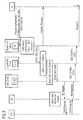
- FIG. 2 Fig. 10 shows a flow of the network access procedure performed upon the user's login to the access network ASN.
- the user's network terminal MS communicates with the base station BS via the air interface R1 and sends access information to the base station BS for the authentication of the user.
- the base station BS provides an authentication, authorization and billing request AAA request to the service flow management unit SFM or the authentication, authorization and billing client AAA client, these via the authentication, authorization and billing proxy Local AAA Forwards proxy to the home, home, and home user authentication, authorization, and billing server Home AAA Server.
- the authentication, authorization and billing server Home AAA Server or the policy function PF authenticates and authorizes the user for access to the access network ASN and, if necessary, collects and manages billing-relevant information in this regard.
- the user has been authenticated and authorized to the base station BS via the authentication, authorization and accounting proxy Local AAA Proxy and the authentication, authorization and accounting client AAA Client in the form of an authentication, authorization and accounting response AAA Response delivered and then communicated to the network access device MS of the user.
- the authentication, authorization and accounting server Home AAA Server knows the access network ASN in which the user is currently located.
- the user wishes to use a service quality-related application of the application function AF after completing the network access procedure, for example to receive a video stream from the application function AF
- the desired quality of service must be provided on the air interface R1.
- the application function AF generally does not know the access network ASN in which the user is currently located. In order to specify the desired quality of service on the air interface R1, however, the desired quality of service must be signaled to the base station BS.
- FIG. 3 shows a flow of quality of service signaling over the authentication, authorization and billing infrastructure.
- the application function AF requests from the authentication, authorization and accounting server Home AAA Server the authentication and authorization of the user for the benefit of the application function AF. Furthermore, the application function AF also sends the desired quality of service to the authentication, authorization and billing server Home AAA Server.
- the Authentication, Authorization and Billing Server Home AAA Server authenticates and authorizes the user and, where appropriate, the desired quality of service, and sends a 'Quality of Service Request Install QoS' to the Authentication, Authorization and Billing Proxy Local AAA Proxy of the access network ASN.
- the authentication, authorization and accounting server Home AAA Server may also return a tentative response to the application function AF to notify it of the authentication and authorization that has taken place.
- the Local AAA Proxy Authentication, Authorization, and Billing Proxy may apply the local policy Local Policies regarding the user's use of the ASN's access network resources. Furthermore, the authentication, authorization and accounting proxy Local AAA Proxy forwards the service quality request Install QoS to the authentication, authorization and accounting client AAA Client.
- the admission control admission control is performed for reserving the resources for the desired quality of service.
- the service flow management unit SFM provides a resource request RR request to the base station BS, which provides the desired resources locally through the local access control Local Admission Control.
- the base station BS sends an add request DSA request for dynamically adding a service to the user's network terminal MS.
- the addition request DSA Request may also be referred to as Dynamic Service Addition Request.
- the desired quality of service is set up on the air interface R1 between the network terminal MS and the base station BS at a connection level, which can also be referred to as a link layer.
- the network terminal MS answers the add request DSA request with an add response DSA response.
- the base station BS then sends a resource response RR-Response to the service flow management unit SFM for transmitting the done service or reservation of the quality of service on the air interface R.1.
- the authentication, authorization and accounting client AAA Client then sends a quality of service response QoS Confirm through the Authentication, Authorization and Billing Proxy Local AAA Proxy to the HomeAA Server Authentication, Authorization and Billing Server.
- the authentication, authorization and accounting server Home AAA Server notifies the application function AF of the provision, or in the event of an error, access restriction or unavailability of the desired quality of service, the non-provision of the quality of service on the air interface R1.
- the application function AF determines the access network ASN in which the user is currently located, by means of a corresponding request to the authentication, authorization and accounting server Home AAA Server, which then uses the application function AF of this access network ASN in a corresponding answer.
- the signaling of the quality of service can optionally also be carried out differently than described above with the information in which access network ASN the user is currently located. Furthermore, the information can also be used for purposes other than signaling the quality of service.
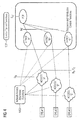
- a network architecture other than the network architecture of the WiMAX communication network is the subject of a standardization process, which in FIG. 4 is shown.
- the user is coupled via a customer access device CPE to an access network ACCESS.
- the customer access device CPE can also be referred to as customer premises equipment and allows, for example, connection to a digital subscriber line or short DSL or is eg a cable modem.
- the access network ACCESS can also be referred to as a network operator ACCESS.
- the access network ACCESS is coupled to a service-independent transport technology-specific access transport resource control function A-TRCF, which can also be referred to as an access-transport resource control function.
- the access transport resource control function A-TRCF is coupled via an interface Rq 'to a transport technology-independent, service-oriented policy decision function PDF, which may also be referred to as policy decision function.
- the policy decision function PDF is coupled via an interface Gq 'to a service control function SCF, which is also referred to as a service control function can be.
- the service control function SCF corresponds approximately to the application function AF in the WiMAX communication network with regard to the problem described here, and the policy decision function PDF corresponds approximately to the policy function PF.
- Each access network ACCESS has a network connection control function NACF, which can also be referred to as network attachment control function and which is coupled via a reference point Ub to the access transport resource control function A-TRCF assigned to the respective access network ACCESS.
- NACF network connection control function
- the network connection control function NACF knows the access network ACCESS in which the user is currently located, i. the network connection control function NACF is informed about the identity of this access network ACCESS, since the user has logged on via the associated customer access device CPE and the customer access device CPE is permanently assigned to this access network ACCESS. The identity of this access network ACCESS is thus used by the customer access device CPE to gain access to the access network ACCESS.
- the problem is to find out the access network ACCESS in which the user is currently located, e.g. to signal and specify the quality of service in this access network ACCESS, depending on the service control function SCF the user wishes to use.
- the policy decision function PDF must select that access transport resource control function A-TRCF, which is assigned to the customer access device CPE of the user via the associated access network ACCESS.
- This access transport resource control function A-TRCF is so far in the network access method based on a determined network address assigned to the customer access device CPE.
- this has the disadvantage that for this purpose a substantially static division or partitioning of the available network addresses to the different access networks ACCESS must be specified in order to be able to conclude the access network ACCESS via the network address of the customer access device CPE.
- the network addresses can not be allocated as needed, which can lead to bottlenecks that may lead to access restrictions.
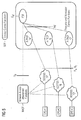
- the policy decision function PDF therefore communicates or interacts according to the invention with the network connection control function NACF.
- This communication or interaction preferably takes place via the reference point Ub instead of between the network connection control function NACF and the respective access transport resource control function A-TRCF (FIG. FIG. 4 ) is provided between the network connection control function NACF and the policy decision function PDF ( FIG. 5 ).
- the communication provided between the network connection control function NACF and the respective access transport resource control function A-TRCF then takes place via the policy decision function PDF and the interface Rq '.
- a non-illustrated additional reference point between the network connection control function NACF and the policy decision function PDF may be provided.
- the reference point Ub represents an authentication, authorization and billing infrastructure of the communication network, ie according to the WiMAX communication network in the communication network according to the ITU-T the access network ACCESS in which the user is currently located is determined by use of the authentication , Authorization and billing infrastructure, this access network ACCESS by the previously performed for the user network access method knows.
- signaling the quality of service in this access network ACCESS can be done very easily, eg also by using the authentication, authorization and billing infrastructure or by another method for signaling and providing the quality of service.
Landscapes
- Engineering & Computer Science (AREA)
- Computer Networks & Wireless Communication (AREA)
- Signal Processing (AREA)
- Computer Security & Cryptography (AREA)
- Quality & Reliability (AREA)
- Computer Hardware Design (AREA)
- Computing Systems (AREA)
- General Engineering & Computer Science (AREA)
- Business, Economics & Management (AREA)
- Accounting & Taxation (AREA)
- Multimedia (AREA)
- Mobile Radio Communication Systems (AREA)
Description
- Die Erfindung betrifft ein Verfahren zum Bereitstellen einer Dienstqualität auf einer Luftschnittstelle eines Zugangsnetzwerks in einem WiMAX-Kommunikationsnetzwerk. Ferner betrifft die Erfindung ein Verfahren zum Auswählen einer Zugangs-Transportressourcenkontrollfunktion, der ein Kundenzugangsgerät zugeordnet ist, durch eine Richtlinienentscheidungsfunktion in einem Kommunikationsnetzwerk, insbesondere gemäß einem Kommunikationsnetzwerk gemäß der ITU-T.
- WiMAX, kurz für Worldwide Interoperability for Microwave Access, ist ein Industriekonsortium, das basierend auf einer Technologie für eine Luftschnittstelle für drahtlose Datenübertragung gemäß dem IEEE 802.16-Standard eine Netzwerkarchitektur für ein WiMAX-Kommunikationsnetzwerk definiert. Die Netzwerkarchitektur des WiMAX-Kommunikationsnetzwerks ist Gegenstand eines Standardisierungsprozesses. Für das WiMAX-Kommunikationsnetzwerk ist vorgesehen, dass eine Dienstqualität für die Datenübertragung abhängig von Anforderungen des jeweiligen Dienstes vorgebbar ist. Die Dienstqualität wird auch als Quality of Service oder kurz mit QoS bezeichnet.
- In Parviz Yegani, "WiMAX Overview", IETF-64, 7.-11. November 2005, Vancouver, Canada, http://www3.ietf.org/proceedings/05nov/slides/16ng-4.pdf (heruntergeladen und ausgedruckt am 27.02.2006) ist ein Überblick über WiMAX-Kommunikationsnetzwerke und eine entsprechende Netzwerkarchitektur offenbart. Ferner ist ein Rahmen für eine Signalisierung der Dienstqualität offenbart. Es ist jedoch nicht offenbart, wie die Signalisierung der Dienstqualität erfolgt.
- In der
WO 2004/093480 A1 ist ein Kommunikationssystem und ein Kommunikationsverfahren offenbart. Ein Netzwerkendgerät, das einen Dienst in Anspruch nimmt, steuert eine Dienstqualität der Datenübertragung und sammelt dazu dienstqualitätsbezogene Daten. Eine Authentifizierungs-, Autorisierungs- und Abrechnungs-Infrastruktur wird genutzt zum Übertragen von dienstqualitätsbezogenen Konfigurationsparametern, die von einem Service Level Agreement Manager eines Heimatnetzwerks des Netzwerkendgeräts festgelegt werden, an das Endgerät. - Lösungen für die Signalisierung der Dienstqualität in Kommunikationsnetzwerken, die von anderen Standardisierungsorganisationen erarbeitet wurden, sind für WiMAX-Kommunikationsnetzwerke nur bedingt anwendbar. In der IETF wurde der Schwerpunkt der Arbeiten auf eine Pfad-gekoppelte Signalisierung gelegt (Path-Coupled Signaling), die z.B. als Next Step in Signaling oder kurz als NSIS oder als Resource reSerVation Protocol oder kurz als RSVP bekannt sind. In der 3GPP, der ITU-T und der ETSI TISPAN wird ein anderer architektureller Ansatz verfolgt. Dort ist vorgesehen, dass eine Applikation, die einem Benutzer eine dienstqualitätsbezogene Anwendung bereitstellt, dem jeweiligen Zugangsnetzwerk zugeordnet ist, in dem der Benutzer aktuell angemeldet ist. Für WiMAX-Kommunikationsnetzwerke ist jedoch vorgesehen, dass die Applikation unabhängig von dem jeweiligen Zugangsnetzwerk ist und z.B. einem Heimatnetzwerk des Benutzers zugeordnet ist. Dies hat jedoch zur Folge, dass die Applikation das Zugangsnetzwerk des Benutzers nicht kennt.
- In der ITU-T, kurz für International Telecommunication Union Telecommunication Standardization Sector, ist in der Study Group 11 eine weitere Netzwerkarchitektur eines Kommunikationsnetzwerks Gegenstand eines Standardisierungsprozesses. Dabei handelt es sich um ein so genanntes Next Generation Network, für das ebenfalls vorgesehen ist, dass eine Dienstqualität einer Datenübertragung vorgebbar ist.
- In "Series Q: Switching and Signalling - Signalling requirements for IP-QoS", ITU-T Q-series Recommendations, Supplement 51, 12/2004 ist offenbart, wie eine IP-basierte Signalisierung der Dienstqualität in dem Kommunikationsnetzwerk erfolgen soll. Weitere Informationen zur Signalisierung der Dienstqualität sind offenbart in Hui-Lan Lu, "Resource and Admission Control in Next Generation Networks - the ITU-T View", MFA Forum NGN Event, 31. Oktober 2005, http://-www.mfaforum.org/events/RACF-MFA_Hui-Lan%20Lu.pdf (heruntergeladen und ausgedruckt am 27.02.2006) und Hui-Lan Lu, "Quality of Service in Next Generation Networks", NGN Industry Event, 18. November 2005, London, http://www.itu.int/ITU-T/-worksem/ngn/200511/presentations/lu.zip (heruntergeladen und ausgedruckt am 27.02.2006).
- Die Aufgabe der Erfindung ist, ein Verfahren zum Bereitstellen einer Dienstqualität in einem WiMAX-Kommunikationsnetzwerk zu schaffen, das einfach ist. Ferner ist die Aufgabe der Erfindung, ein Verfahren zum Auswählen einer Zugangs-Transportressourcenkontrollfunktion durch eine Richtlinienentscheidungsfunktion in einem Kommunikationsnetzwerk zu schaffen, das einfach ist.
- Die Aufgabe wird gelöst durch die Merkmale des unabhängigen Patentanspruchs Vorteilhafte Ausgestaltungen der Erfindung sind in den Unteransprüchen gekennzeichnet.
- Gemäß eines ersten Aspekts zeichnet sich die Erfindung aus durch ein Verfahren zum Bereitstellen einer Dienstqualität auf einer Luftschnittstelle eines Zugangsnetzwerks in einem WiMAX-Kommunikationsnetzwerk durch eine Anwendungsfunktion. Die Anwendungsfunktion möchte einem Benutzer des WiMAX-Kommunikationsnetzwerks eine dienstqualitätbezogene Anwendung bereitstellen. Die gewünschte Dienstqualität wird über eine Authentifizierungs-, Autorisierungs- und Abrechnungs-Infrastruktur des WiMAX-Kommunikationsnetzwerks, kurz: AAA-Infrastruktur, signalisiert. Die Anwendungsfunktion kommuniziert mit einem Authentifizierungs-, Autorisierungs- und Abrechnungs-Server, kurz: AAA-Server, eines Heimatnetzwerks des Benutzers zum Authentifizieren und Autorisieren des Benutzers. Die gewünschte Dienstqualität für die dienstqualitätbezogene Anwendung wird bei dieser Kommunikation zum Autorisieren an den AAA-Server übertragen.
- Der Vorteil ist, dass die AAA-Infrastruktur bereits vorgesehen ist für das Authentifizieren und Autorisieren von Benutzern des WiMAX-Kommunikationsnetzwerks während eines Netzwerkzugangsverfahrens, durch das der jeweilige Benutzer Zugang zu dem Zugangsnetzwerk erhält oder diesem der Zugang versagt wird, und für das Abrechnen von Leistungen. Dadurch müssen keine neuen Komponenten in die Netzwerkarchitektur des WiMAX-Kommunikationsnetzwerks eingeführt werden, um die Dienstqualität zu signalisieren. Durch das Netzwerkzugangsverfahren ist in der AAA-Infrastruktur das Zugangsnetzwerk bekannt, in dem der Benutzer aktuell angemeldet ist. Dadurch ist auch bekannt, in welches Zugangsnetzwerk die Dienstqualität signalisiert werden muss. Dies ermöglicht ein einfaches, dynamisches Signalisieren der Dienstqualität abhängig von jeweiligen aktuellen Anforderungen an die Dienstqualität. Ein weiterer Vorteil ist, dass der Anwendungsfunktion der AAA-Server in dem Heimatnetzwerk des Benutzers bekannt ist und die Anwendungsfunktion so einfach mit dem AAA-Server kommunizieren kann. Ferner können die Anwendungsfunktion und der AAA-Server auch miteinander kommunizieren, um den Benutzer für das Nutzen der Anwendungsfunktion zu authentifizieren und zu autorisieren. Das Übertragen der gewünschten Dienstqualität von der Anwendungsfunktion an den AAA-Server ist so sehr einfach möglich.
- In diesem Zusammenhang ist es vorteilhaft, wenn nach dem Authentifizieren und Autorisieren des Benutzers eine Dienstqualitätsanfrage an einen Authentifizierungs-, Autorisierungs- und Abrechnungs-Client, kurz: AAA-Client, des Zugangsnetzwerks gestellt wird zum Bereitstellen der gewünschten Dienstqualität auf der Luftschnittstelle. Der Vorteil ist, dass der AAA-Client sich in dem Zugangsnetzwerk befindet, in dem der Benutzer angemeldet ist, und dem Benutzer in der AAA-Infrastruktur am nächsten ist und daher sehr einfach das Bereitstellen der gewünschten Dienstqualität auf der Luftschnittstelle veranlassen kann.
- In diesem Zusammenhang ist es weiter vorteilhaft, wenn der AAA-Server mit einem Authentifizierungs-, Autorisierungs- und Abrechnungs-Proxy, kurz: AAA-Proxy, kommuniziert und die Dienstqualitätsanfrage über den AAA-Proxy an den AAA-Client weitergegeben wird. Dies hat den Vorteil, dass bei einem großen Zugangsnetzwerk, das viele AAA-Clients aufweist, die AAA-Clients des Zugangsnetzwerks dem AAA-Server nicht unmittelbar bekannt sein müssen und die Kommunikation mit dem jeweiligen AAA-Client einfacher über den gemeinsamen AAA-Proxy des Zugangsnetzwerks erfolgen kann.
- In diesem Zusammenhang ist es ferner vorteilhaft, wenn durch den AAA-Proxy lokale Richtlinien angewendet werden und eine Zugangskontrolle in dem Zugangsnetzwerk durchgeführt wird. Der Vorteil ist, dass der AAA-Proxy die verfügbaren Ressourcen des gesamten Zugangsnetzwerks verwalten kann, so dass diese nicht erst von den einzelnen AAA-Clients abgefragt werden müssen. Die AAA-Clients können so einfacher ausgebildet sein.
- In einer weiteren vorteilhaften Ausgestaltung kommuniziert der AAA-Client mit einer Basisstation zum Durchführen der Signalisierung der gewünschten Dienstqualität auf einer Verbindungsebene zum Bereitstellen der Dienstqualität auf der Luftschnittstelle. Der AAA-Client kann separat von der Basisstation ausgebildet sein, insbesondere in einem Gateway des Zugangsnetzwerks, oder von der Basisstation umfasst sein. Die Basisstation stellt die Luftschnittstelle als Ressource dem Benutzer zur Verfügung. Der Vorteil ist, dass zwischen einem Netzwerkendgerät des Benutzers und der Basisstation so sehr einfach die Dienstqualität auf der Luftschnittstelle auf der Verbindungsebene eingerichtet werden kann.
- In diesem Zusammenhang ist es vorteilhaft, wenn nach der Signalisierung der Dienstqualität auf der Verbindungsebene eine Dienstqualitätsantwort entlang der AAA-Infrastruktur an den AAA-Server zurückgemeldet wird. Dies hat den Vorteil, dass dadurch der AAA-Server darüber informiert ist, dass die gewünschte Dienstqualität bereitgestellt ist oder gegebenenfalls nicht bereitgestellt werden konnte. Ferner kann dies von dem AAA-Server dann auch der Anwendungsfunktion zurückgemeldet werden.
- Ausführungsbeispiele der Erfindung sind im Folgenden anhand der schematischen Zeichnungen erläutert. Es zeigen:
- Figur 1
- eine Netzwerkarchitektur eines WiMAX-Kommunikationsnetzwerks bezüglich einer Signalisierung einer Dienstqualität,
- Figur 2
- einen Ablauf eines Netzwerkzugangsverfahrens,
- Figur 3
- einen Ablauf der Signalisierung der Dienstqualität über eine AAA-Infrastruktur,
- Figur 4
- eine erste Ausführungsform eines Kommunikationsnetzwerks gemäß ITU-T und
- Figur 5
- eine zweite Ausführungsform des Kommunikationsnetzwerks gemäß ITU-T.
- Elemente gleicher Konstruktion oder Funktion sind figürenübergreifend mit den gleichen Bezugszeichen versehen.
- Für ein WiMAX-Kommunikationsnetzwerk ist vorgesehen, dass eine Dienstqualität für eine Datenübertragung, die auch als Quality of Service oder kurz mit QoS bezeichnet wird, abhängig von Anforderungen des jeweiligen Dienstes vorgebbar ist. Die Dienstqualität umfasst beispielsweise eine Übertragungsbandbreite, die gewährleistet sein soll, oder eine maximale zeitliche Verzögerung der zu übertragenden Daten auf einem Weg von einem Absender zu einem Empfänger der Daten, die nicht überschritten werden soll. Beispielsweise stellen Dienste, die Audio- oder insbesondere Videostreams bereitstellen, hohe Anforderungen an eine Übertragungsbandbreite des Kommunikationsnetzwerks. Werden Telefongespräche übertragen, z.B. über Voice over IP oder kurz VoIP, dann wird eine geringe zeitliche Verzögerung der übertragenen Daten verlangt.
- Ein besonderes Merkmal einer Netzwerkarchitektur des WiMAX-Kommunikationsnetzwerks ist, dass eine Anwendungsfunktion AF einerseits und ein Zugangsnetzwerk ASN andererseits unabhängig voneinander sind. Die Anwendungsfunktion AF kann auch als Application Function bezeichnet werden und repräsentiert z.B. ein SIP-Proxy. Das Zugangsnetzwerk ASN kann auch als besuchtes Netzwerk oder als Access Service Network bezeichnet werden. An dem Zugangsnetzwerk ASN kann sich ein Benutzer mit einem Netzwerkendgerät MS anmelden. Das Netzwerkendgerät MS ist beispielsweise ein Mobiltelefon, ein Personal Digital Assistant oder kurz PDA oder ein anderer tragbarer Computer und ist ausgebildet zum drahtlosen Kommunizieren in dem WiMAX-Kommunikationsnetzwerk.
- Die jeweilige Anwendungsfunktion AF, die der Benutzer mit seinem Netzwerkendgerät MS benutzen möchte, kennt im Wesentlichen nur eine Netzwerkadresse des Netzwerkendgeräts MS, nicht jedoch in welchem Zugangsnetzwerk ASN das Netzwerkendgerät MS aktuell angemeldet ist. Dadurch besteht das Problem, dieses Zugangsnetzwerk ASN herauszufinden und diesem die für das Nutzen der Anwendungsfunktion AF erforderliche Dienstqualität zu Signalisieren, so dass das Zugangsnetzwerk ASN die gewünschte Dienstqualität bereitstellen kann. Bei dem WiMAX-Kommunikationsnetzwerk ist insbesondere das Bereitstellen der Dienstqualität auf einer Luftschnittstelle R1 zwischen dem Netzwerkendgerät MS des Benutzers und dem Zugangsnetzwerk ASN von Bedeutung.
-
Figur 1 zeigt die Netzwerkarchitektur des WiMAX-Kommunikationsnetzwerks bezüglich der Signalisierung der Dienstqualität auf der Luftschnittstelle R1. Das Netzwerkendgerät MS des Benutzers ist über die Luftschnittstelle R1 mit dem Zugangsnetzwerk ASN gekoppelt. Das Zugangsnetzwerk ASN weist mindestens eine Basisstation BS auf, die die Luftschnittstelle R1 für das Netzwerkendgerät MS bereitstellt. Die Basisstation BS weist eine Dienstflussverwaltungseinheit SFM auf, die auch als Service Flow Management bezeichnet werden kann, oder ist mit der Dienstflussverwaltungseinheit SFM gekoppelt. Die Dienstflussverwaltungseinheit SFM ist ausgebildet, lokal, d.h. bezogen auf die Basisstation BS, durch eine lokale Zugangskontrolle Local Admission Control Zugang zu Ressourcen der Basisstation BS zu gewähren oder abzulehnen und die Ressourcen, z.B. Übertragungsbandbreite auf der Luftschnittstelle R1, bereitzustellen und zu verwalten. - Die Dienstflussverwaltungseinheit SFM weist ferner einen lokalen Authentifizierungs-, Autorisierungs- und Abrechnungs-Client AAA Client auf oder ist als solcher ausgebildet. Alternativ kann der Authentifizierungs-, Autorisierungs- und Abrechnungs-Client AAA-Client die Dienstflussverwaltungseinheit SFM umfassen oder der Authentifizierungs-, Autorisierungs- und Abrechnungs-Client AAA-Client und die Dienstflussverwaltungseinheit SFM können auch separat voneinander ausgebildet oder angeordnet sein. Beispielsweise kann der Authentifizierungs-, Autorisierungs- und Abrechnungs-Client AAA-Client auch in einem Gateway des Zugangsnetzwerks ASN angeordnet sein. Der Authentifizierungs-, Autorisierungs- und Abrechnungs-Client AAA-Client beginnt ein Netzwerkzugangsverfahren, wenn sich der Benutzer mit seinem Netzwerkendgerät MS an dem Zugangsnetzwerk ASN anmelden möchte, um Zugang zu dem Zugangsnetzwerk ASN zu erhalten.
- Die Dienstflussverwaltungseinheit SFM ist über eine Schnittstelle R6 mit einer Dienstflussautorisierungseinheit SFA gekoppelt, die auch als Service Flow Authorization bezeichnet werden kann. Die Dienstflussautorisierungseinheit SFA ist ausgebildet, auf das Zugangsnetzwerk ASN bezogene lokale Richtlinien Local Policies anzuwenden für die Autorisierung des Benutzers für das Nutzen der Ressourcen des Zugangsnetzwerks ASN. Bevorzugt ist die Dienstflussautorisierungseinheit SFA ausgebildet, diese Autorisierung für alle Basisstationen BS des Zugangsnetzwerks ASN durchzuführen, d.h. es muss nur eine Dienstflussautorisierungseinheit SFA in dem Zugangsnetzwerk ASN vorgesehen sein. Vorzugsweise ist die Dienstflussautorisierungseinheit SFA über die verfügbaren Ressourcen der jeweiligen Basisstationen BS informiert.
- Die Dienstflussautorisierungseinheit SFA umfasst für das Autorisieren einen lokalen Authentifizierungs-, Autorisierungsund Abrechnungs-Proxy Local AAA Proxy oder ist als solcher ausgebildet. Alternativ kann der Authentifizierungs-, Autorisierungs- und Abrechnungs-Proxy Local AAA Proxy die Dienstflussautorisierungseinheit SFA umfassen. Der Authentifizierungs-, Autorisierungs- und Abrechnungs-Proxy Local AAA Proxy ist ausgebildet, mit dem jeweiligen Authentifizierungs-, Autorisierungs- und Abrechnungs-Client AAA Client zu kommunizieren für das Authentifizieren und Autorisieren des Benutzers bei dem Netzwerkzügangsverfahren.
- Das Zugangsnetzwerk ASN ist über Schnittstellen R3 und R5 mit einem Heimatnetzwerk Home NSP des Benutzers gekoppelt, das auch als Network Service Provider bezeichnet werden kann. Das Heimatnetzwerk Home NSP umfasst die Anwendungsfunktion AF oder ist mit dieser gekoppelt. Das Heimatnetzwerk Home NSP umfasst ferner eine Richtlinienfunktion PF, die auch als Policy Function bezeichnet werden kann. Die Richtlinienfunktion PF umfasst einen Authentifizierungs-, Autorisierungs- und Abrechnungs-Server Home AAA Server oder ist als solcher ausgebildet. Alternativ umfasst der Authentifizierungs-, Autorisierungs- und Abrechnungs-Server Home AAA Server die Richtlinienfunktion PF. Die Richtlinienfunktion PF bzw. der Authentifizierungs-, Autorisierungs- und Abrechnungs-Server Home AAA Server hat Zugriff auf Informationen über alle Benutzer des Heimatnetzwerks Home NSP, insbesondere auf Informationen bezüglich Zugangs- oder Nutzungsberechtigungen für den Zugang zu dem Zugangsnetzwerk ASN oder für das Nutzen der Anwendungsfunktion AF und auf Informationen die Abrechnung betreffend, z.B. die Abrechnung für das Nutzen der Anwendungsfunktion AF oder des Zugangsnetzwerks ASN. Die Anwendungsfunktion AF ist ausgebildet, mit der Richtlinienfunktion PF des Heimatnetzwerks Home NSP zu kommunizieren zu Authentifizierungs, Autorisierungs- und Abrechnungszwecken.
-
Figur 2 zeigt einen Ablauf des Netzwerkzugangsverfahrens, das bei dem Anmelden des Benutzers an dem Zugangsnetzwerk ASN durchgeführt wird. Das Netzwerkendgerät MS des Benutzers kommuniziert mit der Basisstation BS über die Luftschnittstelle R1 und sendet Zugangsinformationen an die Basisstation BS für die Authentifizierung des Benutzers. Die Basisstation BS stellt eine Authentifizierungs-, Autorisierungs- und Abrechnungs-Anfrage AAA Request an die Dienstflussverwaltungseinheit SFM bzw. den Authentifizierungs-, Autorisierungs- und Abrechnungs-Client AAA Client, der diese über den Authentifizierungs-, Autorisierungs- und Abrechnungs-Proxy Local AAA Proxy an den Authentifizierungs-, Autorisierungs- und Abrechnungs-Server Home AAA Server des Heimatnetzwerks Home NSP des Benutzers weiterleitet. Der Authentifizierungs-, Autorisierungs- und Abrechnungs-Server Home AAA Server bzw. die Richtlinienfunktion PF authentifiziert und autorisiert den Benutzer für den Zugang zu dem Zugangsnetzwerk ASN und erfasst und verwaltet diesbezüglich gegebenenfalls abrechnungsrelevante Informationen. Die erfolgte Authentifizierung und Autorisierung des Benutzers wird der Basisstation BS über den Authentifizierungs-, Autorisierungs- und Abrechnungs-Proxy Local AAA Proxy und den Authentifizierungs-, Autorisierungs- und Abrechnungs-Client AAA Client in Form einer Authentifizierungs-, Autorisierungs- und Abrechnungs-Antwort AAA Response zugestellt und dann dem Netzwerkzugangsgerät MS des Benutzers mitgeteilt. Durch dieses Netzwerkzugangsverfahren kennt der Authentifizierungs-, Autorisierungs- und Abrechnungs-Server Home AAA Server das Zugangsnetzwerk ASN, in dem sich der Benutzer aktuell befindet. - Möchte der Benutzer nach Abschluss des Netzwerkzugangsverfahrens eine dienstqualitätsbezogene Anwendung der Anwendungsfunktion AF nutzen, z.B. einen Videostream von der Anwendungsfunktion AF beziehen, dann ist es vorteilhaft, für das Übertragen des Videostreams von der Anwendungsfunktion AF an das Netzwerkendgerät MS die erforderliche Dienstqualität bereitzustellen, insbesondere bezüglich der dafür erforderlichen Übertragungsbandbreite, um einen störungsarmen Empfang des Videostreams an dem Netzwerkendgerät MS zu ermöglichen. Dazu muss insbesondere die gewünschte Dienstqualität auf der Luftschnittstelle R1 bereitgestellt werden.
- Die Anwendungsfunktion AF kennt das Zugangsnetzwerk ASN im Allgemeinen nicht, in dem sich der Benutzer aktuell befindet. Um die gewünschte Dienstqualität auf der Luftschnittstelle R1 vorgeben zu können, muss die gewünschte Dienstqualität jedoch an die Basisstation BS signalisiert werden.
Figur 3 zeigt einen Ablauf der Signalisierung der Dienstqualität über die Authentifizierungs-, Autorisierungs- und Abrechnungs-Infrastruktur. Die Anwendungsfunktion AF fordert von dem Authentifizierungs-, Autorisierungs- und Abrechnungs-Server Home AAA Server die Authentifizierung und Autorisierung des Benutzers für das Nutzen der Anwendungsfunktion AF an. Ferner sendet die Anwendungsfunktion AF an den Authentifizierungs-, Autorisierungs- und Abrechnungs-Server Home AAA Server auch die gewünschte Dienstqualität. Der Authentifizierungs-, Autorisierungs- und Abrechnungs-Server Home AAA Server authentifiziert und autorisiert den Benutzer und gegebenenfalls auch die gewünschte Dienstqualität und sendet eine'Dienstqualitätsanfrage Install QoS an den Authentifizierungs-, Autorisierungs- und Abrechnungs-Proxy Local AAA Proxy des Zugangsnetzwerks ASN. Der Authentifizierungs-, Autorisierungs- und Abrechnungs-Server Home AAA Server kann ferner auch eine vorläufige Antwort Tentative Response an die Anwendungsfunktion AF zurückschicken, um dieser die erfolgte Authentifizierung und Autorisierung mitzuteilen. - Der Authentifizierungs-, Autorisierungs- und Abrechnungs-Proxy Local AAA Proxy wendet gegebenenfalls die lokalen Richtlinien Local Policies bezüglich der Nutzung der Ressourcen des Zugangsnetzwerks ASN durch den Benutzer an. Ferner leitet der Authentifizierungs-, Autorisierungs- und Abrechnungs-Proxy Local AAA Proxy die Dienstqualitätsanfrage Install QoS an den Authentifizierungs-, Autorisierungs- und Abrechnungs-Client AAA Client weiter. In dem Zugangsnetzwerk ASN, insbesondere durch die Dienstflussverwaltungseinheit SFM und die Dienstflussautorisierungseinheit SFA, wird die Zugangskontrolle Admission Control durchgeführt für ein Reservieren der Ressourcen für die gewünschte Dienstqualität.
- Die Dienstflussverwaltungseinheit SFM stellt eine Ressourcenanfrage RR-Request an die Basisstation BS, die die gewünschten Ressourcen lokal durch die lokale Zugangskontrolle Local Admission Control bereitstellt. Die Basisstation BS sendet eine Hinzufügungsanfrage DSA-Request für ein dynamisches Hinzufügen eines Dienstes an das Netzwerkendgerät MS des Benutzers. Die Hinzufügungsanfrage DSA-Request kann auch als Dynamic Service Addition Anfrage bezeichnet werden. Abhängig von der Hinzufügungsanfrage DSA-Request wird zwischen dem Netzwerkendgerät MS und der Basisstation BS auf einer Verbindungsebene, die auch als Link Layer bezeichnet werden kann, die gewünschte Dienstqualität auf der Luftschnittstelle R1 eingerichtet. Das Netzwerkendgerät MS beantwortet die Hinzufügungsanfrage DSA-Request mit einer Hinzufügungsantwort DSA-Response. Die Basisstation BS sendet daraufhin eine Ressourcenantwort RR-Response an die Dienstflussverwaltungseinheit SFM zum Übermitteln der erfolgten Einrichtung oder Reservierung der Dienstqualität auf der Luftschnittstelle R.1. Der Authentifizierungs-, Autorisierungs- und Abrechnungs-Client AAA Client sendet daraufhin eine Dienstqualitätsantwort QoS Confirm über den Authentifizierungs-, Autorisierungs- und Abrechnungs-Proxy Local AAA Proxy an den Authentifizierungs-, Autorisierungs- und Abrechnungs-Server Home AAA Server. Der Authentifizierungs-, Autorisierungs- und Abrechnungs-Server Home AAA Server teilt der Anwendungsfunktion AF die Bereitstellung, oder bei Vorliegen eines Fehlers, einer Zugangsbeschränkung oder einer Nichtverfügbarkeit der gewünschten Dienstqualität, die Nichtbereitstellung der Dienstqualität auf der Luftschnittstelle R1 mit.
- Für das Signalisieren der Dienstqualität zwischen dem Authentifizierungs-, Autorisierungs- und Abrechnungs-Server Home AAA Server und dem Authentifizierungs-, Autorisierungs- und Abrechnungs-Client AAA Client können beispielsweise die in H. Tschofenig et al., "RADIUS Quality of Service Support", draft-tschofenig-radext-qos-02.txt, October 2005 oder in F. Alfano et al., "Diameter Quality of Service Application", draft-alfano-aaa-qosprot-04.txt, September 2005 offenbarten Parameter genutzt werden.
- Es ist jedoch ebenso möglich, dass die Anwendungsfunktion AF das Zugangsnetzwerk ASN, in dem sich der Benutzer aktuell befindet, ermittelt durch eine entsprechende Anfrage an den Authentifizierungs-, Autorisierungs- und Abrechnungs-Server Home AAA Server, der daraufhin der Anwendungsfunktion AF dieses Zugangsnetzwerk ASN in einer entsprechenden Antwort mitteilt. Die Signalisierung der Dienstqualität kann mit der Information, in welchem Zugangsnetzwerk ASN sich der Benutzer aktuell befindet, gegebenenfalls auch anders durchgeführt werden als oben beschrieben. Ferner kann die Information gegebenenfalls auch für andere Zwecke genutzt werden als für die Signalisierung der Dienstqualität.
- In der Study Group 11 der ITU-T ist eine von der Netzwerkarchitektur des WiMAX--Kommunikationsnetzwerks abweichende Netzwerkarchitektur Gegenstand eines Standardisierungsprozesses, die in
Figur 4 dargestellt ist. In dieser Netzwerkarchitektur ist der Benutzer über ein Kundenzugangsgerät CPE mit einem Zugangsnetzwerk ACCESS gekoppelt. Das Kundenzugangsgerät CPE kann auch als Customer Premises Equipment bezeichnet werden und ermöglicht beispielsweise Anschluß an eine Digital Subscriber Line oder kurz DSL oder ist z.B. ein Kabelmodem. Das Zugangsnetzwerk ACCESS kann auch als Netzwerkoperator ACCESS bezeichnet werden. Über Schnittstellen Re, Rc ist das Zugangsnetzwerk ACCESS mit einer dienstunabhängigen, transporttechnologiespezifischen Zugangs-Transportressourcenkontrollfunktion A-TRCF gekoppelt, die auch als Access-Transport Resource Control Function bezeichnet werden kann. Die Zugangs-Transportressourcenkontrollfunktion A-TRCF ist über eine Schnittstelle Rq' mit einer transporttechnologieunabhängigen, serviceorientierten Richtlinienentscheidungsfunktion PDF gekoppelt, die auch als Policy Decision Function bezeichnet werden kann. Die Richtlinienentscheidungsfunktion PDF ist über eine Schnittstelle Gq' mit einer Dienstkontrollfunktion SCF gekoppelt, die auch als Service Control Function bezeichnet werden kann. Die Dienstkontrollfunktion SCF entspricht in Bezug auf die hier beschriebene Problematik etwa der Anwendungsfunktion AF in dem WiMAX-Kommunikationsnetzwerk und die Richtlinienentscheidungsfunktion PDF entspricht etwa der Richtlinienfunktion PF. - Jedes Zugangsnetzwerk ACCESS weist eine Netzwerkanschlusskontrollfunktion NACF auf, die auch als Network Attachment Control Function bezeichnet werden kann und die über einen Referenzpunkt Ub mit der dem jeweiligen Zugangsnetzwerk ACCESS zugeordneten Zugangs-Transportressourcenkontrollfunktion A-TRCF gekoppelt ist. Über die Netzwerkanschlusskontrollfunktion NACF und den Referenzpunkt Ub wird der Benutzer beim Anmelden an dem Zugangsnetzwerk ACCESS authentifiziert und autorisiert. Dadurch kennt die Netzwerkanschlusskontrollfunktion NACF das Zugangsnetzwerk ACCESS, in dem sich der Benutzer aktuell befindet, d.h. die Netzwerkanschlusskontrollfunktion NACF ist informiert über die Identität dieses Zugangsnetzwerks ACCESS, da sich der Benutzer über das zugehörige Kundenzugangsgerät CPE angemeldet hat und das Kundenzugangsgerät CPE diesem Zugangsnetzwerk ACCESS fest zugeordnet ist. Die Identität dieses Zugangsnetzwerks ACCESS wird somit von dem Kundenzugangsgerät CPE genutzt, um Zugang zu dem Zugangsnetzwerk ACCESS zu erhalten.
- Entsprechend dem WiMAX-Kommunikationsnetzwerk besteht in dem Kommunikationsnetzwerk gemäß der ITU-T das Problem, dasjenige Zugangsnetzwerk ACCESS herauszufinden, in dem der Benutzer sich aktuell befindet, z.B. um die Dienstqualität in diesem Zugangsnetzwerk ACCESS abhängig von der Dienstkontrollfunktion SCF, die der Benutzer nutzen möchte, zu signalisieren und vorzugeben. Die Richtlinienentscheidungsfunktion PDF muss dazu diejenige Zugängs-Transportressourcenkontrollfunktion A-TRCF auswählen, der das Kundenzugangsgerät CPE des Benutzers über das zugehörige Zugangsnetzwerk ACCESS zugeordnet ist.
- Diese Zugangs-Transportressourcenkontrollfunktion A-TRCF wird bisher bei dem Netzwerkzugangsverfahren basierend auf einer dem Kundenzugangsgerät CPE zugeordneten Netzwerkadresse ermittelt. Dies hat jedoch den Nachteil, dass dazu eine im Wesentlichen statische Aufteilung oder Partitionierung der verfügbaren Netzwerkadressen auf die unterschiedlichen Zugangsnetzwerke ACCESS vorgegeben sein muss, um über die Netzwerkadresse des Kundenzugangsgeräts CPE auf das zugehörige Zugangsnetzwerk ACCESS schließen zu können. Dadurch können die Netzwerkadressen nicht nach Bedarf zugeteilt werden, wodurch Engpässe entstehen können, die gegebenenfalls zu Zugangsbeschränkungen führen können.
- Die Richtlinienentscheidungsfunktion PDF kommuniziert oder interagiert daher erfindungsgemäß mit der Netzwerkanschlusskontrollfunktion NACF. Diese Kommunikation oder Interaktion erfolgt vorzugsweise über den Referenzpunkt Ub, der dazu anstatt zwischen der Netzwerkanschlusskontrollfunktion NACF und der jeweiligen Zugangs-Transportressourcenkontrollfunktion A-TRCF (
Figur 4 ) zwischen der Netzwerkanschlusskontrollfunktion NACF und der Richtlinienentscheidungsfunktion PDF vorgesehen ist (Figur 5 ). Vorzugsweise erfolgt die zwischen der Netzwerkanschlusskontrollfunktion NACF und der jeweiligen Zugangs-Transportressourcenkontrollfunktion A-TRCF vorgesehene Kommunikation dann über die Richtlinienentscheidungsfunktion PDF und die Schnittstelle Rq'. Alternativ kann jedoch auch ausgehend von der inFigur 4 dargestellten Netzwerkarchitektur ein nicht dargestellter zusätzlicher Referenzpunkt zwischen der Netzwerkanschlusskontrollfunktion NACF und der Richtlinienentscheidungsfunktion PDF vorgesehen sein. - Bevorzugt repräsentiert der Referenzpunkt Ub eine Authentifizierungs-, Autorisierungs- und Abrechnungs-Infrastruktur des Kommunikationsnetzwerks, d.h. entsprechend dem WiMAX-Kommunikationsnetzwerk wird bei dem Kommunikationsnetzwerk gemäß der ITU-T das Zugangsnetzwerk ACCESS, in dem sich der Benutzer aktuell befindet, ermittelt durch Nutzen der Authentifizierungs-, Autorisierungs- und Abrechnungs-Infrastruktur, die dieses Zugangsnetzwerk ACCESS durch das zuvor für den Benutzer durchgeführte Netzwerkzugangsverfahren kennt. Mit der kenntnis dieses Zugangsnetzwerks ACCESS kann das Signalisieren der Dienstqualität in dieses Zugangsnetzwerk ACCESS sehr einfach erfolgen, z.B. ebenfalls durch Nutzen der Authentifizierungs-, Autorisierungs- und Abrechnungs-Infrastruktur oder durch ein anderes Verfahren zum Signalisieren und Bereitstellen der Dienstqualität.
Claims (6)
- Verfahren zum Bereitstellen einer Dienstqualität auf einer Luftschnittstelle (R1) eines Zugangsnetzwerks '(ASN) in einem WiMAX-Kommunikationsnetzwerk durch eine Anwendungsfunktion (AF), die einem Benutzer des WiMAX-Kommunikationsnetzwerks eine dienstqualitätbezogene Anwendung bereitstellen möchte, dadurch gekennzeichnet, dass- die gewünschte Dienstqualität über eine Authentifizierungs- , Autorisierungs- und Abrechnungs-Infrastruktur des WiMAX-Kommunikationsnetzwerks signalisiert wird,- die Anwendungsfunktion (AF) mit einem Authentifizierungs-, Autorisierungs- und Abrechnungs-Server (Home AAA Server) eines Heimatnetzwerks (Home NSP) des Benutzers kommuniziert zum Authentifizieren und Autorisieren des Benutzers und- die gewünschte Dienstqualität für die dienstqualitätbezogene Anwendung bei dieser Kommunikation zum Autorisieren an den Authentifizierungs-, Autorisierungs- und Abrechnungsserver (Home AAA Server) übertragen wird.
- Verfahren nach Anspruch 1, bei dem nach dem Authentifizieren und Autorisieren des Benutzers eine Dienstqualitätsanfrage (Install QoS) an einen Authentifizierungs-, Autorisierungs- und Abrechnungs-Client (AAA Client) des Zugangsnetzwerks (ASN) gestellt wird zum Bereitstellen der gewünschten Dienstqualität auf der Luftschnittstelle (R1).
- Verfahren nach Anspruch 2, bei dem- der Authentifizierungs-, Autorisierungs- und Abrechnungs-Server (Home AAA Server) mit einem Authentifizierungs-, Autorisierungs- und Abrechnungs-Proxy (Local AAA Proxy) kommuniziert und- die Dienstqualitätsanfrage (Install QoS) an den Authentifizierungs-, Autorisierungs- und Abrechnungs-Client (AAA Client) über den Authentifizierungs-, Autorisierungs- und Abrechnungs-Proxy (AAA Proxy) an den Authentifizierungs-, Autorisierungs- und Abrechnungsclient (AAA Client) weitergegeben wird.
- Verfahren nach Anspruch 3, bei dem durch den Authentifizierungs-, Autorisierungs- und Abrechnungs-Proxy (AAA Proxy) lokale Richtlinien (Local Policies) angewendet werden und eine Zugangskontrolle (Admission Control) in dem Zugangsnetzwerk (ASN) durchgeführt wird.
- Verfahren nach einem der Ansprüche 2 bis 4, bei dem der Authentifizierungs-, Autorisierungs- und Abrechnungs-Client (AAA Client) mit einer Basisstation (BS) kommuniziert zum Durchführen der Signalisierung der gewünschten Dienstqualität auf einer Verbindungsebene zum Bereitstellen der Dienstqualität auf der Luftschnittstelle (R1).
- Verfahren nach Anspruch 5, bei dem nach der Signalisierung der Dienstqualität auf der Verbindungsebene eine Dienstqualitätsantwort (QoS Confirm) entlang der Authentifizierungs-, Autorisierungs- und Abrechnungs-Infrastruktur an den Authentifizierungs-, Autorisierungs- und Abrechnungs-Server (Home AAA Server) zurückgemeldet wird.
Applications Claiming Priority (3)
| Application Number | Priority Date | Filing Date | Title |
|---|---|---|---|
| DE102006001274 | 2006-01-10 | ||
| DE102006012655A DE102006012655B4 (de) | 2006-01-10 | 2006-03-20 | Verfahren zum Bereitstellen einer Dienstqualität in einem WiMAX-Kommunikationsnetzwerk und Verfahren zum Auswählen einer Zugangs-Transportressourcenkontrollfunktion durch eine Richtlinienentscheidungsfunktion in einem Kommunikationsnetzwerk |
| PCT/EP2006/070011 WO2007080050A2 (de) | 2006-01-10 | 2006-12-20 | Verfahren zum bereitstellen einer dienstqualität in einem wimax-kommunikationsnetzwerk und verfahren zum auswählen einer zugangs-transportressourcenkontrollfunktion durch eine richtlinienentscheidungsfunktion in einem kommunikationsnetzwerk |
Publications (2)
| Publication Number | Publication Date |
|---|---|
| EP1972166A2 EP1972166A2 (de) | 2008-09-24 |
| EP1972166B1 true EP1972166B1 (de) | 2015-05-20 |
Family
ID=37969874
Family Applications (1)
| Application Number | Title | Priority Date | Filing Date |
|---|---|---|---|
| EP20060841511 Not-in-force EP1972166B1 (de) | 2006-01-10 | 2006-12-20 | Verfahren zum bereitstellen einer dienstqualität in einem wimax-kommunikationsnetzwerk und verfahren zum auswählen einer zugangs-transportressourcenkontrollfunktion durch eine richtlinienentscheidungsfunktion in einem kommunikationsnetzwerk |
Country Status (7)
| Country | Link |
|---|---|
| US (2) | US8873383B2 (de) |
| EP (1) | EP1972166B1 (de) |
| KR (1) | KR101359293B1 (de) |
| CN (1) | CN101356846B (de) |
| DE (1) | DE102006012655B4 (de) |
| RU (1) | RU2428816C2 (de) |
| WO (1) | WO2007080050A2 (de) |
Families Citing this family (10)
| Publication number | Priority date | Publication date | Assignee | Title |
|---|---|---|---|---|
| US8012501B2 (en) | 2004-06-10 | 2011-09-06 | Synthes Usa, Llc | Flexible bone composite |
| DE102006012655B4 (de) * | 2006-01-10 | 2008-12-24 | Siemens Ag | Verfahren zum Bereitstellen einer Dienstqualität in einem WiMAX-Kommunikationsnetzwerk und Verfahren zum Auswählen einer Zugangs-Transportressourcenkontrollfunktion durch eine Richtlinienentscheidungsfunktion in einem Kommunikationsnetzwerk |
| CN101325801B (zh) * | 2007-06-12 | 2013-05-01 | 北京三星通信技术研究有限公司 | Wimax网络中定位业务认证和授权检查的方法和装置 |
| US20090040993A1 (en) * | 2007-08-06 | 2009-02-12 | Samsung Electronics Co., Ltd. | Apparatus and method for supporting mixed quality of service setup type in a broadband wireless communication system |
| US9749142B2 (en) * | 2007-08-20 | 2017-08-29 | Telefonaktiebolaget Lm Ericsson (Publ) | Notification of resource restrictions in a multimedia communications network |
| KR100931828B1 (ko) * | 2007-10-26 | 2009-12-15 | 한국과학기술원 | 휴대인터넷단말기에 제공되는 응용프로그램의 서비스 등급관리 시스템 및 방법 |
| CN101459651B (zh) * | 2007-12-14 | 2011-10-05 | 华为技术有限公司 | 一种促进QoS建立的方法、服务器及系统 |
| EP2405594A4 (de) * | 2009-03-06 | 2017-05-17 | LG Electronics Inc. | Verfahren zur auswahl der reihenfolge von bandbreitenabfragepräambeln und direktzugriffsverfahren |
| TW201124391A (en) | 2009-10-20 | 2011-07-16 | Lundbeck & Co As H | 2-substituted-ethynylthiazole derivatives and uses of same |
| US9350876B2 (en) * | 2010-01-04 | 2016-05-24 | Tekelec, Inc. | Methods, systems, and computer readable media for detecting initiation of a service data flow using a Gx rule |
Family Cites Families (14)
| Publication number | Priority date | Publication date | Assignee | Title |
|---|---|---|---|---|
| FR2564230B1 (fr) * | 1984-05-14 | 1986-10-24 | Cogema | Enceinte etanche blindee equipee pour etre utilisable en spectrometrie d'emission |
| DE19736653C1 (de) * | 1997-08-22 | 1998-12-10 | Siemens Ag | Verfahren und Einrichtung zur Abschätzung der Dienstqualität auf Übertragungskanälen in einem digitalen Übertragungssystem |
| US6910074B1 (en) * | 2000-07-24 | 2005-06-21 | Nortel Networks Limited | System and method for service session management in an IP centric distributed network |
| FR2851104A1 (fr) * | 2003-02-10 | 2004-08-13 | France Telecom | Procede et systeme d'authentification d'un utilisateur au niveau d'un reseau d'acces lors d'une connexion de l'utilisateur au reseau internet |
| JP4520705B2 (ja) * | 2003-04-11 | 2010-08-11 | パナソニック株式会社 | 通信システム及び通信方法 |
| AT413929B (de) | 2003-05-07 | 2006-07-15 | Fischer Gmbh | Innenschuh für sportschuhe, insbesondere skischuhe |
| CN100337229C (zh) * | 2003-06-02 | 2007-09-12 | 华为技术有限公司 | 网络认证、授权和计帐系统及方法 |
| US20050169253A1 (en) * | 2004-02-03 | 2005-08-04 | Qingmin Hu | WLAN communication service platform |
| US9270770B2 (en) * | 2004-06-30 | 2016-02-23 | Cisco Technology, Inc. | System and method for optimizing publication of operating states |
| US7596225B2 (en) * | 2005-06-30 | 2009-09-29 | Alcatl-Lucent Usa Inc. | Method for refreshing a pairwise master key |
| DE102006012655B4 (de) * | 2006-01-10 | 2008-12-24 | Siemens Ag | Verfahren zum Bereitstellen einer Dienstqualität in einem WiMAX-Kommunikationsnetzwerk und Verfahren zum Auswählen einer Zugangs-Transportressourcenkontrollfunktion durch eine Richtlinienentscheidungsfunktion in einem Kommunikationsnetzwerk |
| ATE543298T1 (de) * | 2006-06-20 | 2012-02-15 | Alcatel Lucent | Wimax-netz, wimax-netzelement und eine verfahrensweise der behandlung der dienstleistungsqualität |
| ES2431051T5 (es) * | 2006-10-12 | 2018-03-06 | Huawei Technologies Co., Ltd. | Método para proporcionar una selección de modo de acceso a un terminal multimodo y sistema y aparato correspondientes |
| CN101442417B (zh) * | 2007-11-21 | 2011-11-16 | 华为技术有限公司 | 在网络中实现预付费的方法、装置及系统 |
-
2006
- 2006-03-20 DE DE102006012655A patent/DE102006012655B4/de not_active Expired - Fee Related
- 2006-12-20 RU RU2008132798/09A patent/RU2428816C2/ru not_active IP Right Cessation
- 2006-12-20 KR KR1020087019407A patent/KR101359293B1/ko not_active Expired - Fee Related
- 2006-12-20 EP EP20060841511 patent/EP1972166B1/de not_active Not-in-force
- 2006-12-20 WO PCT/EP2006/070011 patent/WO2007080050A2/de not_active Ceased
- 2006-12-20 CN CN200680050824.3A patent/CN101356846B/zh not_active Expired - Fee Related
- 2006-12-20 US US12/160,594 patent/US8873383B2/en not_active Expired - Fee Related
-
2013
- 2013-03-15 US US13/837,931 patent/US8982696B2/en not_active Expired - Fee Related
Also Published As
| Publication number | Publication date |
|---|---|
| RU2008132798A (ru) | 2010-02-20 |
| CN101356846B (zh) | 2015-09-16 |
| US20130208682A1 (en) | 2013-08-15 |
| EP1972166A2 (de) | 2008-09-24 |
| US20100329129A1 (en) | 2010-12-30 |
| KR20080092431A (ko) | 2008-10-15 |
| WO2007080050A3 (de) | 2007-09-27 |
| US8873383B2 (en) | 2014-10-28 |
| KR101359293B1 (ko) | 2014-02-10 |
| CN101356846A (zh) | 2009-01-28 |
| WO2007080050A9 (de) | 2007-11-08 |
| DE102006012655B4 (de) | 2008-12-24 |
| WO2007080050A2 (de) | 2007-07-19 |
| DE102006012655A1 (de) | 2007-07-12 |
| RU2428816C2 (ru) | 2011-09-10 |
| US8982696B2 (en) | 2015-03-17 |
Similar Documents
| Publication | Publication Date | Title |
|---|---|---|
| DE602004009913T2 (de) | Verfahren, system und netzwerkelement zur autorisierung einer datenübertragung | |
| DE60130114T2 (de) | Anwendungsbeeinflusste richtlinie | |
| EP2045974B1 (de) | Verfahren und system zur netzwerk-dienststeuerung | |
| DE60211881T2 (de) | Bindungsinformation für ip mediendatenströmen | |
| DE60310667T2 (de) | Netzarchitektur für mobile Kommunikationssysteme und entsprechendes Kommunikationsverfahren | |
| DE60206894T2 (de) | Verfahren und vorrichtung zur herstellung eines protokoll-proxy für ein mobiles host-endgerät in einer multimediasitzung | |
| EP1512260B1 (de) | Verfahren und vorrichtung zur authentifizierung eines teilnehmers für die inanspruchnahme von diensten in einem wirelees lan (wlan) | |
| DE60308620T2 (de) | Roaming-Dienst, der mehrere Anbieter für mobile Datenkommunikation abdeckt | |
| US8982696B2 (en) | Method for providing service quality in a WiMAX communication network, and method for selecting an access transport resource control function by means of a guideline decision-making function in a communication network | |
| EP2285050B1 (de) | Verfahren und system zur ressourcenzulassungskontrolle | |
| EP2018765A1 (de) | Verfahren zum ermöglichen einer steuerung der dienstqualität und/oder der dienstvergebührung bei telekommunikationsdiensten | |
| EP2055087B1 (de) | Verfahren zum weiterleiten von notfallnachrichten eines endgerätes in einem kommunikationsnetz | |
| EP1542401B1 (de) | Netzzugangsvorrichtung für funkbasierte drahlose lokale Netze | |
| EP1227692A1 (de) | Verfahren zur Übergabe von funkbasierten Datenverbindungen mit Qualitätsmerkmalen zwischen Funkbasisstationen | |
| KR100879164B1 (ko) | 통신 네트워크에서 서비스 품질 관리를 위한 결합 메커니즘 | |
| Zheng et al. | Ongoing research on QoS policy control schemes in mobile networks | |
| KR20040054090A (ko) | All-IP 망에서 사업자 정책에 기반 한 서비스 제공및 품질 보장을 위한 망 구조 및 자원 인증방법 | |
| EP2217026B1 (de) | Verfahren zur Herstellung einer Kommunikationsverbindung von einem elektronischen Endgerät zu einem Heimat-Kommunikationsnetz | |
| DE102005049108B4 (de) | Verfahren zur Bestimmung der Erreichbarkeit einer mobilen Station | |
| DE10103334A1 (de) | Verfahren zur Übergabe von funkbasierten Datenverbindungen mit Qualitätsmerkmalen zwischen Funkbasisstationen | |
| WO2013000850A1 (en) | A method to manage ip address assignment in access networks | |
| WO2010069362A1 (en) | Capacity leasing | |
| WO2007051744A1 (de) | Verfahren zur dynamischen zuteilung zumindest eines zugangsnetzes innerhalb eines mobilen kommunikationssystems | |
| Nieto et al. | Quality of service control mechanisms for multimedia services | |
| EP1936877A1 (de) | Verfahren zur teilnehmerspezifischen Vergabe von Übertragungseigenschaften in einem IMS |
Legal Events
| Date | Code | Title | Description |
|---|---|---|---|
| PUAI | Public reference made under article 153(3) epc to a published international application that has entered the european phase |
Free format text: ORIGINAL CODE: 0009012 |
|
| 17P | Request for examination filed |
Effective date: 20080603 |
|
| AK | Designated contracting states |
Kind code of ref document: A2 Designated state(s): AT BE BG CH CY CZ DE DK EE ES FI FR GB GR HU IE IS IT LI LT LU LV MC NL PL PT RO SE SI SK TR |
|
| DAX | Request for extension of the european patent (deleted) | ||
| RAP1 | Party data changed (applicant data changed or rights of an application transferred) |
Owner name: SIEMENS AKTIENGESELLSCHAFT |
|
| 17Q | First examination report despatched |
Effective date: 20131119 |
|
| REG | Reference to a national code |
Ref country code: DE Ref legal event code: R079 Ref document number: 502006014341 Country of ref document: DE Free format text: PREVIOUS MAIN CLASS: H04Q0007380000 Ipc: H04W0012060000 |
|
| RIC1 | Information provided on ipc code assigned before grant |
Ipc: H04W 28/24 20090101ALI20141029BHEP Ipc: H04W 12/06 20090101AFI20141029BHEP |
|
| GRAP | Despatch of communication of intention to grant a patent |
Free format text: ORIGINAL CODE: EPIDOSNIGR1 |
|
| INTG | Intention to grant announced |
Effective date: 20141217 |
|
| GRAS | Grant fee paid |
Free format text: ORIGINAL CODE: EPIDOSNIGR3 |
|
| GRAA | (expected) grant |
Free format text: ORIGINAL CODE: 0009210 |
|
| AK | Designated contracting states |
Kind code of ref document: B1 Designated state(s): AT BE BG CH CY CZ DE DK EE ES FI FR GB GR HU IE IS IT LI LT LU LV MC NL PL PT RO SE SI SK TR |
|
| REG | Reference to a national code |
Ref country code: GB Ref legal event code: FG4D Free format text: NOT ENGLISH |
|
| REG | Reference to a national code |
Ref country code: CH Ref legal event code: EP |
|
| REG | Reference to a national code |
Ref country code: AT Ref legal event code: REF Ref document number: 728278 Country of ref document: AT Kind code of ref document: T Effective date: 20150615 |
|
| REG | Reference to a national code |
Ref country code: IE Ref legal event code: FG4D Free format text: LANGUAGE OF EP DOCUMENT: GERMAN |
|
| REG | Reference to a national code |
Ref country code: DE Ref legal event code: R096 Ref document number: 502006014341 Country of ref document: DE Effective date: 20150625 |
|
| REG | Reference to a national code |
Ref country code: LT Ref legal event code: MG4D |
|
| REG | Reference to a national code |
Ref country code: NL Ref legal event code: MP Effective date: 20150520 |
|
| PG25 | Lapsed in a contracting state [announced via postgrant information from national office to epo] |
Ref country code: ES Free format text: LAPSE BECAUSE OF FAILURE TO SUBMIT A TRANSLATION OF THE DESCRIPTION OR TO PAY THE FEE WITHIN THE PRESCRIBED TIME-LIMIT Effective date: 20150520 Ref country code: FI Free format text: LAPSE BECAUSE OF FAILURE TO SUBMIT A TRANSLATION OF THE DESCRIPTION OR TO PAY THE FEE WITHIN THE PRESCRIBED TIME-LIMIT Effective date: 20150520 Ref country code: PT Free format text: LAPSE BECAUSE OF FAILURE TO SUBMIT A TRANSLATION OF THE DESCRIPTION OR TO PAY THE FEE WITHIN THE PRESCRIBED TIME-LIMIT Effective date: 20150921 Ref country code: LT Free format text: LAPSE BECAUSE OF FAILURE TO SUBMIT A TRANSLATION OF THE DESCRIPTION OR TO PAY THE FEE WITHIN THE PRESCRIBED TIME-LIMIT Effective date: 20150520 |
|
| PG25 | Lapsed in a contracting state [announced via postgrant information from national office to epo] |
Ref country code: IS Free format text: LAPSE BECAUSE OF FAILURE TO SUBMIT A TRANSLATION OF THE DESCRIPTION OR TO PAY THE FEE WITHIN THE PRESCRIBED TIME-LIMIT Effective date: 20150920 Ref country code: BG Free format text: LAPSE BECAUSE OF FAILURE TO SUBMIT A TRANSLATION OF THE DESCRIPTION OR TO PAY THE FEE WITHIN THE PRESCRIBED TIME-LIMIT Effective date: 20150820 Ref country code: GR Free format text: LAPSE BECAUSE OF FAILURE TO SUBMIT A TRANSLATION OF THE DESCRIPTION OR TO PAY THE FEE WITHIN THE PRESCRIBED TIME-LIMIT Effective date: 20150821 Ref country code: LV Free format text: LAPSE BECAUSE OF FAILURE TO SUBMIT A TRANSLATION OF THE DESCRIPTION OR TO PAY THE FEE WITHIN THE PRESCRIBED TIME-LIMIT Effective date: 20150520 |
|
| PG25 | Lapsed in a contracting state [announced via postgrant information from national office to epo] |
Ref country code: DK Free format text: LAPSE BECAUSE OF FAILURE TO SUBMIT A TRANSLATION OF THE DESCRIPTION OR TO PAY THE FEE WITHIN THE PRESCRIBED TIME-LIMIT Effective date: 20150520 Ref country code: EE Free format text: LAPSE BECAUSE OF FAILURE TO SUBMIT A TRANSLATION OF THE DESCRIPTION OR TO PAY THE FEE WITHIN THE PRESCRIBED TIME-LIMIT Effective date: 20150520 |
|
| REG | Reference to a national code |
Ref country code: DE Ref legal event code: R097 Ref document number: 502006014341 Country of ref document: DE |
|
| PG25 | Lapsed in a contracting state [announced via postgrant information from national office to epo] |
Ref country code: CZ Free format text: LAPSE BECAUSE OF FAILURE TO SUBMIT A TRANSLATION OF THE DESCRIPTION OR TO PAY THE FEE WITHIN THE PRESCRIBED TIME-LIMIT Effective date: 20150520 Ref country code: PL Free format text: LAPSE BECAUSE OF FAILURE TO SUBMIT A TRANSLATION OF THE DESCRIPTION OR TO PAY THE FEE WITHIN THE PRESCRIBED TIME-LIMIT Effective date: 20150520 Ref country code: SK Free format text: LAPSE BECAUSE OF FAILURE TO SUBMIT A TRANSLATION OF THE DESCRIPTION OR TO PAY THE FEE WITHIN THE PRESCRIBED TIME-LIMIT Effective date: 20150520 Ref country code: RO Free format text: LAPSE BECAUSE OF NON-PAYMENT OF DUE FEES Effective date: 20150520 |
|
| PLBE | No opposition filed within time limit |
Free format text: ORIGINAL CODE: 0009261 |
|
| STAA | Information on the status of an ep patent application or granted ep patent |
Free format text: STATUS: NO OPPOSITION FILED WITHIN TIME LIMIT |
|
| 26N | No opposition filed |
Effective date: 20160223 |
|
| PG25 | Lapsed in a contracting state [announced via postgrant information from national office to epo] |
Ref country code: IT Free format text: LAPSE BECAUSE OF FAILURE TO SUBMIT A TRANSLATION OF THE DESCRIPTION OR TO PAY THE FEE WITHIN THE PRESCRIBED TIME-LIMIT Effective date: 20150520 |
|
| PG25 | Lapsed in a contracting state [announced via postgrant information from national office to epo] |
Ref country code: SI Free format text: LAPSE BECAUSE OF FAILURE TO SUBMIT A TRANSLATION OF THE DESCRIPTION OR TO PAY THE FEE WITHIN THE PRESCRIBED TIME-LIMIT Effective date: 20150520 Ref country code: BE Free format text: LAPSE BECAUSE OF NON-PAYMENT OF DUE FEES Effective date: 20151231 |
|
| REG | Reference to a national code |
Ref country code: DE Ref legal event code: R119 Ref document number: 502006014341 Country of ref document: DE |
|
| PG25 | Lapsed in a contracting state [announced via postgrant information from national office to epo] |
Ref country code: LU Free format text: LAPSE BECAUSE OF FAILURE TO SUBMIT A TRANSLATION OF THE DESCRIPTION OR TO PAY THE FEE WITHIN THE PRESCRIBED TIME-LIMIT Effective date: 20151220 Ref country code: MC Free format text: LAPSE BECAUSE OF FAILURE TO SUBMIT A TRANSLATION OF THE DESCRIPTION OR TO PAY THE FEE WITHIN THE PRESCRIBED TIME-LIMIT Effective date: 20150520 |
|
| REG | Reference to a national code |
Ref country code: CH Ref legal event code: PL |
|
| GBPC | Gb: european patent ceased through non-payment of renewal fee |
Effective date: 20151220 |
|
| REG | Reference to a national code |
Ref country code: IE Ref legal event code: MM4A |
|
| REG | Reference to a national code |
Ref country code: FR Ref legal event code: ST Effective date: 20160831 |
|
| PG25 | Lapsed in a contracting state [announced via postgrant information from national office to epo] |
Ref country code: DE Free format text: LAPSE BECAUSE OF NON-PAYMENT OF DUE FEES Effective date: 20160701 Ref country code: GB Free format text: LAPSE BECAUSE OF NON-PAYMENT OF DUE FEES Effective date: 20151220 Ref country code: LI Free format text: LAPSE BECAUSE OF NON-PAYMENT OF DUE FEES Effective date: 20151231 Ref country code: CH Free format text: LAPSE BECAUSE OF NON-PAYMENT OF DUE FEES Effective date: 20151231 Ref country code: IE Free format text: LAPSE BECAUSE OF NON-PAYMENT OF DUE FEES Effective date: 20151220 |
|
| PG25 | Lapsed in a contracting state [announced via postgrant information from national office to epo] |
Ref country code: FR Free format text: LAPSE BECAUSE OF NON-PAYMENT OF DUE FEES Effective date: 20151231 |
|
| REG | Reference to a national code |
Ref country code: AT Ref legal event code: MM01 Ref document number: 728278 Country of ref document: AT Kind code of ref document: T Effective date: 20151220 |
|
| PG25 | Lapsed in a contracting state [announced via postgrant information from national office to epo] |
Ref country code: HU Free format text: LAPSE BECAUSE OF FAILURE TO SUBMIT A TRANSLATION OF THE DESCRIPTION OR TO PAY THE FEE WITHIN THE PRESCRIBED TIME-LIMIT; INVALID AB INITIO Effective date: 20061220 Ref country code: AT Free format text: LAPSE BECAUSE OF NON-PAYMENT OF DUE FEES Effective date: 20151220 |
|
| PG25 | Lapsed in a contracting state [announced via postgrant information from national office to epo] |
Ref country code: CY Free format text: LAPSE BECAUSE OF FAILURE TO SUBMIT A TRANSLATION OF THE DESCRIPTION OR TO PAY THE FEE WITHIN THE PRESCRIBED TIME-LIMIT Effective date: 20150520 Ref country code: SE Free format text: LAPSE BECAUSE OF FAILURE TO SUBMIT A TRANSLATION OF THE DESCRIPTION OR TO PAY THE FEE WITHIN THE PRESCRIBED TIME-LIMIT Effective date: 20150520 Ref country code: NL Free format text: LAPSE BECAUSE OF FAILURE TO SUBMIT A TRANSLATION OF THE DESCRIPTION OR TO PAY THE FEE WITHIN THE PRESCRIBED TIME-LIMIT Effective date: 20150520 |
|
| PG25 | Lapsed in a contracting state [announced via postgrant information from national office to epo] |
Ref country code: TR Free format text: LAPSE BECAUSE OF FAILURE TO SUBMIT A TRANSLATION OF THE DESCRIPTION OR TO PAY THE FEE WITHIN THE PRESCRIBED TIME-LIMIT Effective date: 20150520 |