EP1972093B1 - Verfahren zur automatischen erzeugung von arbeitsablaufmodellen insbesondere für eingriffe in einem telekommunikationsnetz - Google Patents
Verfahren zur automatischen erzeugung von arbeitsablaufmodellen insbesondere für eingriffe in einem telekommunikationsnetz Download PDFInfo
- Publication number
- EP1972093B1 EP1972093B1 EP05821492.5A EP05821492A EP1972093B1 EP 1972093 B1 EP1972093 B1 EP 1972093B1 EP 05821492 A EP05821492 A EP 05821492A EP 1972093 B1 EP1972093 B1 EP 1972093B1
- Authority
- EP
- European Patent Office
- Prior art keywords
- events
- commands
- workflow
- sequence
- command
- Prior art date
- Legal status (The legal status is an assumption and is not a legal conclusion. Google has not performed a legal analysis and makes no representation as to the accuracy of the status listed.)
- Expired - Lifetime
Links
Images



Classifications
-
- H—ELECTRICITY
- H04—ELECTRIC COMMUNICATION TECHNIQUE
- H04L—TRANSMISSION OF DIGITAL INFORMATION, e.g. TELEGRAPHIC COMMUNICATION
- H04L41/00—Arrangements for maintenance, administration or management of data switching networks, e.g. of packet switching networks
- H04L41/04—Network management architectures or arrangements
- H04L41/046—Network management architectures or arrangements comprising network management agents or mobile agents therefor
-
- H—ELECTRICITY
- H04—ELECTRIC COMMUNICATION TECHNIQUE
- H04L—TRANSMISSION OF DIGITAL INFORMATION, e.g. TELEGRAPHIC COMMUNICATION
- H04L12/00—Data switching networks
- H04L12/28—Data switching networks characterised by path configuration, e.g. LAN [Local Area Networks] or WAN [Wide Area Networks]
-
- H—ELECTRICITY
- H04—ELECTRIC COMMUNICATION TECHNIQUE
- H04L—TRANSMISSION OF DIGITAL INFORMATION, e.g. TELEGRAPHIC COMMUNICATION
- H04L41/00—Arrangements for maintenance, administration or management of data switching networks, e.g. of packet switching networks
- H04L41/08—Configuration management of networks or network elements
Definitions
- the invention relates to a method and system for the automatic generation of workflow models, in particular for interventions in a telecommunication network.
- the invention was developed with specific attention paid to its possible use in the context of distributed platforms for management and support to the operation of the workforce.
- the operational knowledge related to interventions in the networks management field constitutes a precious knowledge for telecommunications companies. For that reason, a difficulty for companies, such as telecommunication network operators, is to effectively manage this knowledge making it a corporate asset and not.only knowledge for few.
- the problem is therefore to make explicit, formalize, structure the tacit (operational) knowledge of the individuals.
- Knowledge Management (KM) field has supplied a valid support for companies that wanted to manage their own know-how.
- OKM Operational Knowledge Management
- OKM system A typical example of OKM system is provided by US-A-2004/0044542 , which describes a method and system for capturing and sharing knowledge to support the problem-solving activities, using Case-based Reasoning and Model-based Reasoning techniques.
- Execution of the workflows in these cases is monitored by recording the transitions in a workflow log that is the input of a mining algorithm whose purpose is to rebuild the workflow model.
- a workflow log that is the input of a mining algorithm whose purpose is to rebuild the workflow model.
- the above-mentioned article describes a method for workflow mining based on Petri networks.
- the authors define a standard XML Log for the recording of workflow instances. Starting from this log file and applying appropriate transformations the definition of the Petri network is reached, representing the final workflow model.
- US-A-2004/0254768 describes a method and an application aimed at the business process reengineering through the application of data mining techniques to the execution of workflows conveniently recorded in a database. Additional background information of interest can be found in " INTEGRATING MACHINE LEARNING AND WORKFLOW MANAGEMENT TO SUPPORT ACQUISITION AND ADAPTATION OF WORKFLOW MODELS", J. Herbst and D. Karagiannis, International DEXA (Database and Expert System Application) Conference, 1998 ; this paper describes a method and two different algorithms for the acquisition and remodelling of workflows. The two algorithms executed sequentially (merging and splitting) have as an input a log file related to the execution of the workflows and produce as an output a workflow model (general model) that represents them. While executing this, a Hidden Markov data structure model is used.
- Approximate regular expression matching is a generalization of regular expression matching, and, as it is, has a wider field of applicability.
- Approximate regular expression matching consists in finding all the sub-strings S of T so that d(S, P i ) ⁇ k, where P i is an occurrence of the regular expression P.
- the Hamming distance defined between strings of the same length, is the number of positions with different characters in the two strings. Approximate regular expression matching in which the d distance is the Hamming distance is known as the matching with k mismatch.
- the Levenshtein distance defined between two strings not necessarily having the same length, is the minimum number of insertions, deletions, and substitutions of characters required to transform a string into another. Approximate regular expression matching, in which the d distance is the Levenshtein distance, is known as the matching with k differences or errors.
- NR-GREP A FAST AND FLEXIBLE PATTERN MATCHING TOOL
- G. Navarro in Software Practice and Experience (SPE), 31, pages 1265-1312, 2001 describes a method, a set of algorithms and a tool for searching complex patterns.
- the algorithms used allow searching simple and complex patterns besides the regular expressions within the character sequences in two different modes: with errors and without errors.
- the errors that are treated with this tool are: deletion, insertion, substitution and transposition of characters.
- a Glushkov automaton is a finite state automaton composed by a set of states, one for each character or character class in the corresponding regular expression, and a set of labelled edges.
- the Glushkov automaton differs from the more widely known Thompson automaton in that all the arrows arriving to a state are labelled by the same letter.
- WO-01/84329 discloses a network management system that provides distributed task and data processing services to management processes by employing distributed autonomous agents.
- the network management system includes management units that are associated with network elements of the network.
- the management units store a dynamically updated model of the corresponding network elements.
- the model is used to implement data gathering tasks as well as network control operations.
- the model includes autonomous agents, each modeling a network element.
- the agents communicate with one another and cooperate to facilitate the implementation of a distributed algorithm.
- the management system provides the management processes with data management as well as one step network control operation services. Accordingly, the management processes do not process a large amount of data or execute step-by-step network control operations.
- US-5826239 discloses a system and method for distributed resource management in a computer network operating under control of workflow management software system (WFMS) to manage plural resources to perform a workflow process that includes multiple process activities, uses two-step resource assignment to manage resources at two levels.
- the resources are grouped by capabilities into resource groups controlled by a local resource manager (LRM), which maintains dynamic status of each resource, such as availability and load, as well as their roles and addresses.
- LRM local resource manager
- a global resource manager (GRM) stores resource data only about the groups: capabilities and status.
- the WFMS invokes the GRM, requesting a specified resource activity.
- the GRM checks the stored capabilities and status among the resource groups, selects the resource group capable of the specified activity and available, and forwards the request to the LRM for the selected group.
- the LRM selects one of the resources in the group to perform the specified activity and assigns the activity to that resource.
- workflow mining does not completely solve the problem of automatically discovering workflow models. This for a number of reasons:
- the object of the invention is thus to provide a fully satisfactory response to those needs.
- the workflow model related, to an intervention on a network equipment, having associated therewith a resource proxy agent can be generated by sending from the resource proxy agent to a recording unit used by the field engineer signals representative of commands sent to the network equipment and of events generated by interventions (commands and manual activities) performed on the network equipments, and then by analyzing the signals to produce therefrom a workflow model of the intervention.
- the workflow model is generated by using a technique of approximate matching, in which the recorded sequences of events and commands are compared with predefined regular expressions of interventions.
- an intervention is performed on a network equipment, including manual activities and/or commands
- a software agent connected to the considered network equipment to a further device, preferably an operator device (having associated therewith another software agent)
- information signals indicative of the commands executed together with a list of events occurred in the network equipment as a result of the manual activities and/or commands, and then to automatically analyse such information signals in order to generate a workflow model related to the intervention.
- the analysis can be performed by a software device employing a variety of techniques including regular expression matching and workflows mining.
- the arrangement described herein therefore provides a new method and architecture for the automatic recording and storage of the operational knowledge related to interventions in the telecommunications field and its formalization in workflow models.
- the workflow models are automatically generated starting from the recording of the interventions on the network equipments carried out by the operators.
- the present invention thus relates to a method for the automatic generation of workflow models related to interventions on network equipments (NE1 , NE2 , NE3 , ..., NEN) included in a communication network, wherein said network equipments have associated resource proxy agents (RP1 , RP2, ..., RPN) responsible for managing said equipments (NE1, NE2 , NE3, ..., NEN), the method including the steps of:- said resource proxy agents (RP1, RP2, ..., RPN) sending to at least a recording unit information signals (Ii, 12, 13, ..., IN) representative of commands sent to the network equipments (NE1, NE2, NE3, ..., NEN) and events generated by interventions performed on said network equipments (NE1, NE2, NE3, ..., NEN);- storing said information signals as respective logs; and- analyzing said information signals sent to said at least a recording unit, stored as respective logs, by scanning said respective logs for approximately matching said respective logs with at least one regular
- the method may also comprise the step of storing in the resource proxy agentsmapping information between the at least a recording unit and corresponding network equipments involved by the interventions.
- the method may also comprire the step of storing the information signals in the at least a recording unit.
- the information signals may be stored in the resource proxy agents.
- the method may also comprise creating a database recording the interventions performed on the network equipments.
- the method also comprises the steps of:
- the method may also comprise the step of equipping at least one of the at least a recording unit with camera means to visually record interventions performed by an operator on the network equipments.
- mathod may comprise the steps of:
- the method further includes the step of:
- Generating from the sets of XML logs a workflow model may include the step of subjecting the sets of XML logs to workflow mining processing.
- the method may also include the step of scanning the respective logs for approximately matching the respective logs with at least one regular expression describing at least one manual activity or command to be performed on the network equipments.
- the respective logs may comprise a sequence of events and the approximately matching may comprise locating recurrences of the regular expressions in the sequence of events with a maximum number of matching errors, the matching errors corresponding to insertions deriving from the superposition of groups of events related to different commands or manual activities.
- Approximately matching may further comprise removing, each time the recurrence of one of the regular expressions is located in the sequence of events, the group of events defined by the regular expression located, while leaving in the sequence of events those events corresponding to errors.
- the step of scanning the respective logs may involve the preliminary steps of:
- the step of scanning the respective logs may include the step of applying at least one rule selected out of:
- the method may further include the step of defining the timestamp compatibility on the basis of the following criteria:
- the method includes the step of selecting the sequence satisfying one of the following criteria:
- the method may also include the step of translating the sequences of events into corresponding symbols associated to regular expressions by considering at most the given number of insertions.
- the step of approximately matching the respective logs with at least one regular expression comprises processing in parallel a plurality of regular expressions.
- the method may also comprise the step of including in at least one of the workflow models a manual activity or command that does not trigger any events in one the network equipment.
- the method may include the steps of:
- the method may include the step of configuring a Graphic User Interface with features selected out of:
- the method preferably also includes the step of providing a Graphic User Interface (GUI) to support validation and modification of the workflow models and the step of configuring the Graphic User Interface with features selected out of:
- GUI Graphic User Interface
- the present invention further relates to a system for automatic generation of workflow models related to interventions on network equipments included in a communication network, wherein the network equipments have associated resource proxy agents responsible for managing the equipments, the system including a set of at least a recording unit and resource proxy agents configured to send to the at least a recording unit information signals representative of commands sent to the network equipments and events generated by interventions performed on the network equipments; the system being configured to analyze said information signals sent to said at least a recording unit to produce therefrom workflow models of the interventions performed on the network equipments according to the method previously described.
- the present invention further relates to a a computer program product comprising instructions which, when the program is executed by a computer, cause the computer to carry out the method previously described.
- references to such a computer program product is intended to be equivalent to reference to a computer-readable medium containing instructions for controlling a. computer system to coordinate the performance of the method of the invention.
- Reference to "at least one computer” is evidently intended to highlight the possibility for the present invention to be implemented in a distributed/modular fashion.
- Operator an operator is a member of the company staff being part of the workforce, meant as mobile workforce (field engineers) or specialized workforce (back-office staff).
- Agent an agent is an independent process with a possible persistent identity, and that requires communication (for example in a cooperative and/or competitive manner) with other agents in order to fulfil its tasks. This communication is implemented through asynchronous message exchange and by using well-known languages (i.e. Agent Communication).
- Proxy a proxy is a software component through which it is possible to control or intervene on network equipments and that manages communication between the highest levels in the network management hierarchy and the network equipments.
- a workflow is the complete or partial automation of a process in which information or tasks are passed from a participant to another according to a defined set of procedural rules (definition within the "Workflow Management consortium - WfMC").
- each step of a workflow corresponds to a manual activity or a command that has been executed by an operator on a given network equipment.
- a workflow can be represented through a flowchart as a sequence of tasks and temporal and logical dependencies among tasks, including alternative and parallel branches.
- a workflow can also be described as a finite state machine or with standard languages such as XPDL (XML Process Description Language).
- Workflow log a workflow log consists of a sequence of information related to the various steps that constitute a workflow.
- a workflow log can be expressed in XML language using a format known as XML Log.
- Workflow mining is an Artificial Intelligence methodology aimed at extracting the information related to the execution of the workflows from the workflow logs in order to produce a workflow model that represents their execution.
- Figure 1 illustrates the basic elements of the architecture described herein, designated 10 as a whole.
- the Mine Manager 14 co-ordinates operation of a layer of Recorder Agents 24 that in turn co-operate with a layer of Resource Proxy Agents RP 1 , RP 2 , RP 3 , ...,RP N associated with Network Elements NE 1 , NE 2 , NE 3 , ..., NE N .
- the architecture illustrated in figure 1 is based on some functionality available from the platform for the distributed telecommunications network management and related services described in the applications WO-A-2005/18249 and PCT/EP2005/008238 .
- WO-A-2005/18249 discloses a system architecture for managing a telecommunication network including network equipments and supported network services, the equipments having associated control interfaces.
- the architecture comprises a base layer for proxying the interfaces and decoupling them from management functions, as well as a support layer comprised of a community of agents co-ordinating operation of said base layer in order to support distributed management functionalities.
- the base layer and the support layer constitute separated superposed layers in the architecture.
- the layers include components adapted to perform respective functions based on respective instruction information provided to them.
- a database is provided for storing the instruction information and the architecture is arranged for distributing the instruction information from the database to the components.
- all the layers in the architecture include process executors.
- PCT/EP2005/008238 discloses a further improvement of the basic architecture of WO-A-2005/18249 wherein instruction signals arranged in workflows are generated for performing interventions on network equipments included in a communication network having associated Resource Proxy Agents.
- the method of PCT/EP2005/008238 includes the steps of:
- the Network Elements (or Equipments) NE 1 , NE 2 , NE 3 , ..., NE N are those network elements on which the operators carry out their interventions. Following these interventions that modify their internal status, the network equipments generate a set of events - E 1 , E 2 , E 3 , E N -.
- Each Resource Proxy Agent RP is associated to a single network equipment (so that the matching is a one-to-one relationship) and is responsible of the creation, maintenance and management of a so-called "image" of the corresponding network equipment.
- the image is a representation of the configuration of the network equipment according to a specific data model.
- Each Resource Proxy Agent RP is responsible for the communication with the corresponding network equipment as well as with the Recorder Agents 24 and comprises the following elements:
- Each PCL on behalf of an operator, can send commands - C 1 , C 2 , C 3 , ..., C N - to the network equipment managed by the Resource Proxy Agent to which it belongs.
- the events, triggered on the network equipment because of the commands, are conveniently recorded in the cache memory CM of the Resource Proxy Agent RP to which it belongs, together with the commands - C 1 , C 2 , C 3 , ..., C N .
- Each PCL can send information - I 1 , I 2 , I 3 , ..., I N - to the appropriate Recorder Agent 24; such information are relative to the network equipment to which the Resource Proxy Agent is associated and can comprise commands sent to the network equipment and events triggered on the network equipment.
- the Recorder Agent 24 is typically arranged in the device used by the operator (desktop, laptop, mobile-phone, hand-held computer). Each Recorder Agent 24 is responsible for recording the interventions that a specific operator performs on the network equipment. Further, each Recorder Agent 24 can be supported by a Web Cam to visually record the interventions that are being performed by the operator itself on the network equipment. Each Recorder Agent 24 may comprise a cache memory for storing the commands executed by the operator on the network equipment, the visual files of the manual activities executed by the operator on the network equipment and the events generated by the network equipment.
- Each Recorder Agent 24 can interact with the Resource Proxy Agents associated with the different network resources by sending recording requests RR 1 , RR 2 , RR 3 , ..., RR N in order to obtain the above-mentioned information containing commands sent by a Resource Proxy Agent RP to its associated network equipment and events generated by the network equipment as results of interventions performed by the operator that is associated to the Recorder Agent 24.
- the Mine Manager 14 is responsible for co-ordinating the first activities recording level. Further it automatically generates XML Log files, starting from the commands and the events on the network equipment, and the workflow models, starting from the XML Logs. Finally it makes available to the expert users the GUI 12 to support (in case the automatic process fails) the reconstruction of the intervention performed by the operator in a workflow model and the definition of the manual activities and of the commands in terms of regular expressions.
- the Mine Manager 14 comprises the following components (not shown):
- the Mine Manager 14 is also responsible for the management of the Workflow Log DB 16, of the Operational DB 18, of the Events Log DB 20, of the Visual log DB 22 as well as for the management of the single Recorder Agent 24.
- the Workflow DB 16 is a single storing point of all the workflow models present at the start of the intervention or obtained through the automatic recording process of the operator's intervention.
- the Workflow DB 16 stores the Workflow generated by the Mine Manager, which collects and processes the data coming from the different Recorder Agent and, therefore, from different expert users associated with said Recorder Agents.
- the Operational log DB 18 stores the data relative to the interventions (i.e., manual activities and commands) performed by the operator on the network equipments, by recording them in an appropriate XML Log format. This element supplies to the users, a single storing point (from a logical perspective).
- the Events log DB 20 stores the events generated by the network equipments and the commands that operators send to these equipments. This element supplies to the users a single storing point (from a logical perspective).
- the Visual log DB 22 is a single storing point of all the video records related to the execution of the interventions on the network equipments by the operators.
- a main feature of the arrangement described herein lies in that the related system architecture is able to record interventions performed by operators (field engineer and back-office staff) on the network equipments included in the system (typically a communication network).
- a Work Request - WR - i.e., a request addressed to the field expert
- an intervention request i.e., a request addressed to the back-office
- a field engineer if it is a WR.
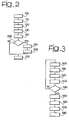
- the WR containing information such as intervention type, network equipment type, component type, and fault, is displayed on his device (laptop, mobile-phone, hand-held computer) (step 100).
- step 110 the Recorder Agent 24 running on his own device sends a request (automatically or by order of the operator) to the appropriate Resource Proxy Agent RP responsible of the network equipment (to which the WR or the intervention request is referred to) that specifies its will to receive the commands and events related to the network equipment.
- the request can be sent by using the ACL language, through a wired or wireless connection between the Recorder Agent 24 and the Resource Proxy Agent.
- the Recorder Agent 24 if conveniently supported by a Web Cam, can activate (automatically or by order of the field engineer) the visual recording of the intervention performed by the field engineer.
- the Resource Proxy Agent RP following a request received from the Recorder Agent 24, adds a record in an appropriate table that represents the interest of a Recorder Agent 24 to get commands and events related to the network equipment associated to the Resource Proxy Agent RP.
- the record contains at least an identifier of the Recorder Agent 24 and the start time of the activity (time_start_activity) (step 120).
- the Resource Proxy Agent RP through its PCL, periodically collects event information from the network equipment NE associated to it and stores such information (which represents a status information of the network equipments), together with the commands sent to the network equipment, in its own cache memory CM, on which also the network equipment's image can be recorded (step 130).
- the events triggered on network equipment can also be detected by the Resource Proxy Agent RP through independent reports sent by the network equipment to the Resource Proxy Agent RP itself. The events are then stored in the cache memory CM of the Resource Proxy Agent RP.
- the operator notifies to the Resource Proxy Agent RP to have completed his intervention and the Resource Proxy Agent RP can update the record of the reference Recorder Agent 24 by adding the end time of the activity (time_end_activity) (step 140). Then, the Recorder Agent 24 verifies, through the Resource Proxy Agent RP, the correct execution of the intervention (step 200).
- the Resource Proxy Agent RP communicates to the Recorder Agent 24 of the operator (who has finished his intervention), the events triggered on the network equipment and the possible commands executed by the operator on the network equipment through the Resource Proxy Agent RP in the time period that goes from the time_start_activity to the time_end_activity (step 210).
- the Resource Proxy Agent RP communicates to the Recorder Agent 24 the result of the verification of the correct execution of the intervention. In addition the Resource Proxy Agent RP deletes the record of the Recorder Agent 24 of the operator who has finished his intervention.
- the Recorder Agent 24 in the case of correct execution of the intervention, sends to the Mine Manager 14 (step 220), through wired or wireless connection an using ACL language, the data relative to the events triggered on the network equipment on which the operator has performed his intervention and the possible commands executed by the operator on the network equipment itself.
- the recording procedure stops (step 230) with the storage in the Events log DB 20 of the data relative to the events triggered on the network equipment and of the possible commands executed by the operator on the network equipment itself. Finally, the file related to the possible visual recording of the intervention of the field engineer is stored in the Visual Log DB 22.
- the Resource Proxy Agents RP are responsible to send to Recorder Agents 24 newly detected events triggered from the network equipment or commands issued to the network equipment as soon as they are observed. These data are then buffered by Recorder Agents 24. In this implementation events and commands are not temporarily stored inside Resource Proxy Agents RP that have only to keep track of which Recorder Agents 24 asked to be informed of events triggered and commands executed on network equipments.
- the system performs a reconstruction of the intervention.
- the reconstruction of interventions composed of manual activities and commands performed by operators on network equipments, has a log of events and a log of commands, appropriately recorded in the Events log DB 20, as input, and a workflow model, describing the type of intervention to which the sequences of manual activities and commands performed by operators and provided as input to the reconstruction process refer to, as output.
- interventions are composed of a sequence of manual activities and/or commands.
- the definition of commands and manual activities is supported by a GUI 12 available from the Mine Manager 14 described in the following.
- each command that can be executed by an operator through a Resource Proxy Agent can be associated with a "regular expression”.
- the regular expressions are defined in terms of the events that can be generated by network equipments. For a definition of the concept of "regular expression”, reference may be made to the various bibliographic documents and the discussion in the introductory portion of this description.
- the Log recorder part of the Mine Manager 14 queries the Events log DB 20 to acquire the sequences of events and commands relating to the intervention performed by an operator (step 500).
- the sequence of events is processed by the Log recorder part of the Mine Manager 14 through an approximate regular expression matching procedure described in detail below.
- the approximation is taken into account since network equipments may generate (independently or because stimulated by other network equipments) spurious events or because the manual activities or commands performed on network equipment may trigger simultaneous events.
- the system For each occurrence of a previously defined regular expression the system emits the manual activity or command Identifier (step 510).
- the sequence of the activities performed during an intervention is stored in the Operational log DB 18 in the XML Log format together with the associated WR or intervention request to which the intervention refers to, and the recorded data are tagged as "executed”.
- the Mine Manager 14 records in the Operational Log DB 18 only the WR or the intervention request to which the intervention refers to and the recorded data are tagged as "failed" (step 530).
- the Workflow miner part of the Mine Manager 14 checks whether there is a sufficient number (the specific value can be chosen on a case by case basis or can be a predetermined, fixed value) of XML logs related to the same type of WR or of intervention request (step 540); in the case of successful check (exit Y from step 540), the Workflow miner part of the Mine Manager 14 queries the Operational log DB 18 and acquires all the XML Logs related to that type of WR or of intervention request (step 550). In case there is not a sufficient number of XML Logs (exit Y from step 540) the process jumps back to step 500, where the Log recorder part of the Mine Manager 14 queries the Events log DB. 20 to acquire the sequences of events and commands to be processed. Furthermore if the discovering of the workflow model needs external supervision, expert users are provided with a GUI 12, described below, for the human-assisted discovery of the workflow model.
- the workflow model thus generated can be examined by an expert user by using the GUI 12 of the Mine Manager 14.
- the expert user is supposed to analyse the workflow model and at the end of this stage the workflow model can be validated and accepted.
- the expert can require a further feedback on the quality of the generated workflow model to the operators that performed the interventions based on which the workflow model was produced (step 570).
- the workflow model is stored in the Workflow DB 16 and is matched with the WR/intervention request to which the intervention or the set of interventions refers. Finally all the XML Logs related to the generated workflow model are deleted from the Operational log DB 18 (step 580).
- the following is a description of a method for determining a sequence of manual activities and commands from the log of a network equipment.
- the log of a given network equipment contains a sequence of events and/or commands in a format that is specific for that network equipment.
- the log is assumed to be complete (all the events triggered by commands or manual activities and all the commands executed on the network equipment are available in the log).
- the sequence of commands is sorted by time. It is assumed that a mapping between the format with which the events and the commands are reported and stored in a given network equipment (the log) and the values (for example characters) used in the method described below is defined.
- the data input to the automatic derivation process is expected to be pre-processed on the basis of the above-mentioned mapping.
- commands A similar mapping is defined for commands, but the set of values used to map commands is different from the one used to map events.
- commands will be represented with the capital letter C followed by a number, for example:
- Each command and event in the above sequences is marked with a timestamp (in arbitrary units).
- a sequence of events could be of the form (the timestamp is in subscript): a 1 b 3 a 4 a 7 c 9 b 13 d 14 f 23 g 26
- symbols The values used to represent activities performed during an intervention (i.e., manual activities and commands) are here referred to as "symbols".
- the symbols used to identify commands are the same used in the logs, i.e. the values C1, C2, ..., while manual activities will be represented with the symbols OP1, OP2, .... Therefore, in the following, the term symbol will identify either a manual activity (OP) or a command (C).
- OP manual activity
- C command
- Each symbol that identifies a manual activity or command that can trigger events is associated with a regular expression.
- Sequences of events that are triggered by the execution of a given command or manual activity are composed of events that are temporally "close” to each other.
- the derivation method described here expects that some constrains are satisfied.
- the events triggered by a command executed on a network equipment have a timestamp subsequent to the one of the corresponding command as it is recorded in the commands log. This means that, for example, the sequence a 3 b 5 b 6 b 7 is not ascribable to the observed command C1 4 .
- a sequence of events is ascribable to a given symbol if the regular expression of that symbol matches the sequence with less than k insertions.
- the match is done by considering up to k different insertions, using a lex-like tool allowing for non-exact matches.
- step 2 if a compatible match is reached with respect to one of the commands that triggers events that is present in the sequence of commands, the match is accepted and the command is removed from the sequence of commands.
- the entire process is stopped. If the process is correctly completed but one or more commands that trigger events are not removed from the sequence of commands, the entire process is stopped.
- command C1 and manual activities OP1, OP2, OP3 be defined in terms of the following regular expressions:
- the procedure gets as input the exact occurrence and the possible insertions (or all the insertion combinations for which the read occurrence can be ascribed to an occurrence of the matched regular expression with less than k+1 insertions).
- the detection of the insertions is performed as follows:
- the commands and the manual activities can be defined in terms of regular expressions (whose alphabet is the set of events) by using the GUI 12 of the Mine Manager 14, as described in the following.
- the automaton of Glushkov is created for a given regular expression P, as schematically shown in the example in Figure 7 .
- m be the number of states of the Glushkov automaton (which is also the number of characters and classes of characters present in the regular expression P).
- Each state (numeri) describes a character or character class in the corresponding regular expression and is marked with the position of the corresponding character or character class in the regular expression itself.
- the Glushkov automaton is characterized in that all the arrows arriving to a state are labelled by the same letter (which represents the character or character class associated to the state).
- a Labelled edge can be followed only if the input character matches the label.
- Unlabelled edges can be followed on any characters given as input to the automaton.
- Figure 7 is a representation of the Glushkov automaton corresponding to the regular expression ab(c
- An automaton composed of k+1 (where k is the maximum number of insertion errors allowed) automata of the type described above is built by connecting each state in one automaton to the corresponding state in the next automaton over vertical transitions on any character: see Figure 8 for an example of a Glushkov meta-automaton.
- the automaton depicted in Figure 8 accepts occurrences of the regular expression ab(c
- the configuration of the meta-automaton (that is the set of the k+1 automata) at a given time is stored in a stack containing all the states in which the meta-automaton can be at the same time.
- a list of tags is associated to every state: such list keeps track of which insertions it was necessary to take into account to reach that state.
- the stack will contain one or more final states, each representing a possible occurrence P i of the regular expression P with the list of possible insertions related to P i .
- the scanning process goes on by reading the character "b" of the string, starting from the previously activated states "0" and "1".
- no transition can be followed from state "0" of the lower automata, so that the active state "0" of the lower automata makes the meta-automaton run out of active states.
- the tag I1 associated to "0" of the lower automata is removed from the list of tags.
- the active state "1" in the upper automata makes the meta-automaton reach the destination state "2" in the upper automata by following the horizontal transition (no insertion), and the destination state "1" of the lower automata by following the vertical transition (insertion).
- a further tag I2, indicating the insertion position is therefore added to the destination state "1" in the lower automata.
- Character "c” is then read from the string. From state “2" of the lower automata it is possible to reach state “3" of the lower automata (i.e., with no insertion), so that tag I3 is maintained. From state “4" of the upper automata no horizontal transition is possible, while state “4" of the lower state can be reached through vertical transition (insertion). A tag I4, indicating the insertion position, is therefore added to the destination state "4" in the lower automata.
- character "e” is read from the string. From state “3" of the lower automata it is possible to reach state "5" of the lower automata, and tag I3 is kept in this case. From state “4" in the lower automata it is possible to reach state "5" either, and tag I4 is kept in this case.
- the active states of the meta-automaton are disposed in a stack.
- tokena represents sequences starting with 'a' followed by an arbitray number of 'b' and 'c' and ending with a sequence of one or more 'd'.
- tokenb represents only the two sequences:
- This log of events may for example correspond to the following sequence of events:
- the input log composed by the above sequence of events (in this case, no command log is present), has to be translated into a sequence of manual activities or commands. This step can be done by employing a method of approximate recognition of regular expressions. It will be shown that:
- the Mine Manager 14 is designed to provide full graphical support to the definition of commands and manual activities. This component is implemented as a GUI 12 through which it is possible to define the commands and the manual activities in terms of regular expressions whose alphabet is the set of events.
- GUI 12 is consistently designed according to usability principles, in order to allow expert users to accomplish their tasks with maximum effectiveness, efficiency and satisfaction.
- GUI 12 After authentication and selection of the type of network equipment for which definitions need to be written, GUI 12 shows up to the expert users.
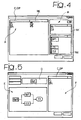
- GUI 12 The layout of GUI 12 is depicted in Figure 4 and includes the following items:
- commands and manual activities that do not trigger any events are performed by providing an automatic mechanism that transforms block of the input workflow model, produced as output by the above mentioned workflow mining algorithm, on the basis of manually defined rules.
- sub-flows related to commands and manual activities that do not trigger events are interted into flows generated for commands and manual activities that trigger events, on the basis of rules that correlate commands and manual activities that do not trigger events to commands and manual activities that trigger events.
- a rule is a pair (X, Y) where X is a manual activity or command that triggers events on the network equipment, and Y is an arbitrarily complex workflow sub-model (which could also be constituted by only one manual activity/command).
- the initial manual activities or commands are marked and uniquely distinguished by the final ones.
- the automatic mechanism replaces occurrences of X present in the workflow model with the sub-model Y according to the following procedure:
- the graphical user interface 12 facilitates the knowledge formalization and modelling process (i.e. the definition of the aforementioned rules).
- GUI 12 can include:
- the GUI 12 may also be configured to allow expert users to display, modify and validate workflow models previously generated and related to a certain type of intervention.
- GUI 12 may show to expert users the layout depicted in Figure 6 :
- the GUI 12 highlights, for each selected manual activity and command, the associated sequence of events in the events sub-window H2 and the related manual activity and command in the workflow model.
- the method described can find applications in the field of Operational Knowledge Management where it can be used for automatically acquiring knowledge as above described.
- the application field of the method of the present invention is nonetheless not limited to Knowledge Management.
- the method can be applied in all fields where human operators are expected to interact manually or by commands with equipments that are able to output and record in a log file the events correlated to the activities performed by those human operators.
- one of these field can be the field of Intrusion Detection systems, in particular the context of Misuse Detection where attacks are supposed to be well known command sequences, called scenarios or signature attacks, and the system activity (in the form of log, network traffic, etc7) can be tracked in order to detect the presence of such scenarios in the system.
- the method of the present invention can find application even if the system is under multiple attacks, made by different sequences of commands overlapping each other and for which there is no easy way to separate the sequences.
- workflow mining procedures such as those disclosed e.g. in " WORKFLOW MINING: A SURVEY OF ISSUES AND APPROACHES", Data and Knowledge Engineering, 47(2), pages 237-267, 2003 or US-A-2004/0254768 (both already cited in the introductory portion of this description) can be used as an alternative to the procedure specifically described herein.
- the Resource Proxy Agents RP can store events and commands and then send them directly to the Mine Manager 14, where they are stored and then analysed. The transfer of the information to the Mine Manager 14 can occur after the Recorder Agents 24 has checked the correct execution of the intervention and communicated the end of the intervention to the Resource Proxy Agent RP.
- the Resource Proxy Agents RP may communicate directly events and commands to the Mine Manager 14 as soon as they receive them from the corresponding apparatuses, without storing them.
- the Resource Proxy Agents RP must in this case know the connection between Recorder Agents 24 and Mine Manager 14 in order to correctly send the data.
- the field engineer communicates to the Resource Proxy Agent RP that the intervention is over and the Resource Proxy Agent RP checks the correct execution of the intervention and informs the Recorder Agent 24 and the Mine Manager 14 accordingly.
- the Recorder Agents 24 are not designed to record commands and events and these are sent directly from the Resource Proxy Agents RP to the Mine Manager 14, which then acts both as a data recording unit and a data processing unit. Even in case the Recorder Agents 24 do not record commands and events, they are still requested to send possible video records of the interventions to the Mine Manager 14 (however, in case of failure of the intervention, the video records can be deleted without being transmitted).
Landscapes
- Engineering & Computer Science (AREA)
- Computer Networks & Wireless Communication (AREA)
- Signal Processing (AREA)
- Management, Administration, Business Operations System, And Electronic Commerce (AREA)
Claims (16)
- Verfahren für die automatische Erzeugung von Arbeitsablaufmodellen bezüglich Eingriffen an Netzwerkgeräten (NE1, NE2, NE3, ..., NEN), die in einem Kommunikationsnetzwerk enthalten sind, wobei die Netzwerkgeräte assoziierte Resource-Proxy-Agents (RP1, RP2, ..., RPN) besitzen, die für das Verwalten der Geräte (NE1, NE2, NE3, ..., NEN) verantwortlich sind, wobei das Verfahren die folgenden Schritte beinhaltet:- die Resource-Proxy-Agents (RP1, RP2, ..., RPN) senden Informationssignale (I1, I2, I3, ..., IN), die für Befehle repräsentativ sind, die zu den Netzwerkgeräten (NE1, NE2, NE3, ..., NEN) gesendet werden, und Ereignisse, die durch an den Netzwerkgeräten (NE1, NE2, NE3, ..., NEN) durchgeführte Eingriffe generiert werden, an mindestens eine Aufzeichnungseinheit (24; 14);- Speichern der Informationssignale als jeweilige Protokolle (20); und- Analysieren der zu der mindestens einen Aufzeichnungseinheit (24; 14) gesendeten, als jeweilige Protokolle gespeicherten Informationssignale durch Scannen der jeweiligen Protokolle auf eine ungefähre Übereinstimmung der jeweiligen Protokolle mit mindestens einem regulären Ausdruck, der mindestens eine manuelle Aktivität oder einen manuellen Befehl, die oder der an dem Netzwerkgerät durchgeführt werden soll, beschreibt, um daraus Arbeitsablaufmodelle der an den Netzwerkgeräten (NE1, NE2, NE3, ..., NEN) durchgeführten Eingriffe herzustellen.
- Verfahren nach Anspruch 1, dadurch gekennzeichnet, dass es den Schritt des Speicherns von Statusinformationen der entsprechenden Netzwerkgeräte (NE1, NE2, NE3, ..., NEN) in den Resource-Proxy-Agents (RP1, RP2, ..., RPN) umfasst.
- Verfahren nach Anspruch 1, dadurch gekennzeichnet, dass es den Schritt des Speicherns von Abbildungsinformationen zwischen der mindestens einen Aufzeichnungseinheit (24) und entsprechenden, durch die Eingriffe beteiligten Netzwerkgeräten (NE1, NE2, NE3, ..., NEN) in den Resource-Proxy-Agents (RP1, RP2, ..., RPN) umfasst.
- Verfahren nach einem der vorhergehenden Ansprüche, dadurch gekennzeichnet, dass es die folgenden Schritte umfasst:- die Resource-Proxy-Agents (RP1, RP2, ..., RPN) zeichnen während einem an Netzwerkgeräten durchgeführten Eingriff Informationen auf bezüglich:- i) der an dem entsprechenden Netzwerkgerät (NE1, NE2, NE3, ..., NEN) während des Eingriffs ausgeführten Befehle;- ii) etwaigen auf dem entsprechenden Netzwerkgerät (NE1, NE2, NE3, ..., NEN) während des Eingriffs ausgelösten Ereignissen;- die Resource-Proxy-Agents (RP1, RP2, ..., RPN) kommunizieren die Informationen über Befehle und Ereignisse, während des Eingriffs aufgezeichnet, an die mindestens eine Aufzeichnungseinheit (24).
- Verfahren nach Anspruch 4, dadurch gekennzeichnet, dass es den folgenden Schritt beinhaltet:- Erzeugen von Sätzen von XML-Protokollen, die eine Sequenz von manuellen Aktivitäten und Befehlen beschreiben, aus den jeweiligen Protokollen.
- Verfahren nach Anspruch 4, dadurch gekennzeichnet, dass es weiter den folgenden Schritt umfasst:- Erzeugen eines Arbeitsablaufmodells, das einen Eingriffstyp beschreibt, der an Netzwerkgeräten (NE1, NE2, NE3, ..., NEN) durchgeführt werden kann, aus den Sätzen von XML-Protokollen.
- Verfahren nach Anspruch 6, dadurch gekennzeichnet, dass das Erzeugen eines Arbeitsablaufmodells aus den Sätzen von XML-Protokollen den Schritt des Unterziehens der Sätze von XML-Protokollen einer Arbeitsablauf-Mining-Verarbeitung beinhaltet.
- Verfahren nach einem der Ansprüche 5 bis 7, dadurch gekennzeichnet, dass die jeweiligen Protokolle eine Sequenz von Ereignissen umfassen und dass das ungefähre Übereinstimmen das Lokalisieren von Rekursionen der regulären Ausdrücke in der Sequenz von Ereignissen mit einer maximalen Anzahl von Übereinstimmungsfehlern umfasst, wobei die Übereinstimmungsfehler Einfügungen entsprechen, abgeleitet von der Überlagerung von Gruppen von Ereignissen bezüglich verschiedener Befehle oder manueller Aktivitäten.
- Verfahren nach Anspruch 8, dadurch gekennzeichnet, dass das ungefähre Übereinstimmen weiterhin das Entfernen der durch den lokalisierten regulären Ausdruck definierten Ereignisse immer dann umfasst, wenn sich die Rekursion eines der regulären Ausdrücke in der Sequenz von Ereignissen befindet, während in der Sequenz von Ereignissen jene Fehlern entsprechenden Ereignisse verbleiben.
- Verfahren nach einem der Ansprüche 5 bis 7, dadurch gekennzeichnet, dass der Schritt des Scannens der jeweiligen Protokolle die folgenden vorläufigen Schritte beinhaltet:- Assoziieren eines regulären Ausdrucks, der die möglichen Sequenzen von Ereignissen beschreibt, die die manuelle Aktivität oder der manuelle Befehl an den Netzwerkgeräten (NE1, NE2, NE3, ..., NEN) erzeugen können, mit jedem Typ von manueller Aktivität oder manuellem Befehl; und- Assoziieren von Zeitstempeln mit den Befehlen und Ereignissen in den jeweiligen Protokollen.
- Verfahren nach Anspruch 10, dadurch gekennzeichnet, dass der Schritt des Scannens der jeweiligen Protokolle den Schritt des Anwendens mindestens einer Regel beinhaltet ausgewählt unter:- eine Sequenz von Ereignissen in den jeweiligen Protokollen kann einer gegebenen manuellen Aktivität oder einem gegebenen manuellen Befehl zugeschrieben werden, falls der die manuelle Aktivität oder den manuellen Befehl beschreibende reguläre Ausdruck der Sequenz außer einer gegebenen Anzahl von Einfügungen darin entspricht; und- ein Ereignis mit einem vor einem gegebenen Befehl liegenden Zeitstempel besitzt keine Zeitstempelkompatibilität mit dem gegebenen Befehl und kann nicht dem gegebenen Befehl zugeschrieben werden.
- Verfahren nach Anspruch 11, dadurch gekennzeichnet, dass es den Schritt des Definierens der Zeitstempelkompatibilität auf Basis der folgenden Kriterien beinhaltet:- eine Sequenz von Ereignissen in den jeweiligen Protokollen, deren erstes Ereignis einen jenseits einer gegebenen maximalen Verzögerung von einem gegebenen Befehl getrennten Zeitstempel besitzt, hat keine Zeitstempelkompatibilität mit dem gegebenen Befehl und kann nicht dem gegebenen Befehl zugeschrieben werden; und- die Differenz zwischen den Zeitstempeln des Paares umfassend das erste und das letzte Ereignis einer Sequenz von Ereignissen in den jeweiligen Protokollen, angepasst durch einen gegebenen regulären Ausdruck muss unter einem maximalen Erweiterungswert liegen.
- Verfahren nach Anspruch 11 oder 12, dadurch gekennzeichnet, dass in dem Fall, dass mehrere Sequenzen von Ereignissen in den jeweiligen Protokollen zum Beschriebenwerden durch einen regulären Ausdruck ausgelegt sind, das Verfahren den Schritt des Wählens der Sequenz beinhaltet, die einem der folgenden Kriterien genügt:- die gewählte Sequenz minimiert die Anzahl von Übereinstimmungsfehlern; und- bei Vorliegen der gleichen Anzahl von Übereinstimmungsfehlern liefert die gewählte Sequenz die erweiterte Übereinstimmung.
- Verfahren nach einem der vorhergehenden Ansprüche, dadurch gekennzeichnet, dass es die folgenden Schritte beinhaltet:- Definieren von Regeln, wie etwa ein Paar (X, Y), wobei X eine manuelle Aktivität oder ein manueller Befehl ist, die oder der Ereignisse in dem Netzwerkgerät (NE1, NE2, NE3, ..., NEN) auslöst, und Y ein willkürlich komplexes Arbeitsablauf-Teilmodell ist, möglicherweise durch nur eine manuelle Aktivität/einen manuellen Befehl gebildet;- Ersetzen der Vorkommen der manuellen Aktivität oder des manuellen Befehls X, die in mindestens einem der Arbeitsablaufmodelle vorliegen, durch das Arbeitsablauf-Teilmodell Y.
- System für die automatische Erzeugung von Arbeitsablaufmodellen bezüglich Eingriffen an Netzwerkgeräten (NE1, NE2, NE3, ..., NEN), die in einem Kommunikationsnetzwerk enthalten sind, wobei die Netzwerkgeräte assoziierte Resource-Proxy-Agents (RP1, RP2, ..., RPN) besitzen, die für das Verwalten der Geräte (NE1, NE2, NE3, ..., NEN) verantwortlich sind, wobei das System einen Satz aus mindestens einer Aufzeichnungseinheit (24) enthält und die Resource-Proxy-Agents (RP1, RP2, ..., RPN) konfiguriert sind zum Senden von Informationssignalen (I1, I2, I3, ..., IN), die für Befehle repräsentativ sind, die zu den Netzwerkgeräten (NE1, NE2, NE3, ..., NEN) gesendet werden, und Ereignisse, die durch auf den Netzwerkgeräten (NE1, NE2, NE3, ..., NEN) durchgeführten Eingriffe generiert werden, an mindestens eine Aufzeichnungseinheit (24); wobei das System konfiguriert ist zum Analysieren der an die mindestens eine Aufzeichnungseinheit (24) gesendeten Informationssignale, um daraus Arbeitsablaufmodelle der an den Netzwerkgeräten (NE1, NE2, NE3, ..., NEN) durchgeführten Eingriffe herzustellen, gemäß dem Verfahren nach einem der Ansprüche 1 bis 14.
- Computerprogrammprodukt umfassend Anweisungen, die bei Ausführen des Programms durch einen Computer bewirken, dass der Computer das Verfahren nach einem der Ansprüche 1 bis 14 ausführt.
Applications Claiming Priority (1)
| Application Number | Priority Date | Filing Date | Title |
|---|---|---|---|
| PCT/EP2005/014062 WO2007073757A1 (en) | 2005-12-28 | 2005-12-28 | A method for the automatic generation of workflow models, in particular for interventions in a telecommunication network |
Publications (2)
| Publication Number | Publication Date |
|---|---|
| EP1972093A1 EP1972093A1 (de) | 2008-09-24 |
| EP1972093B1 true EP1972093B1 (de) | 2018-03-28 |
Family
ID=37036878
Family Applications (1)
| Application Number | Title | Priority Date | Filing Date |
|---|---|---|---|
| EP05821492.5A Expired - Lifetime EP1972093B1 (de) | 2005-12-28 | 2005-12-28 | Verfahren zur automatischen erzeugung von arbeitsablaufmodellen insbesondere für eingriffe in einem telekommunikationsnetz |
Country Status (6)
| Country | Link |
|---|---|
| US (1) | US7809822B2 (de) |
| EP (1) | EP1972093B1 (de) |
| JP (1) | JP5095629B2 (de) |
| KR (1) | KR101214195B1 (de) |
| CN (1) | CN101371496B (de) |
| WO (1) | WO2007073757A1 (de) |
Families Citing this family (25)
| Publication number | Priority date | Publication date | Assignee | Title |
|---|---|---|---|---|
| US9558298B2 (en) | 2005-12-28 | 2017-01-31 | Telecom Italia S.P.A. | Method for the approximate matching of regular expressions, in particular for generating intervention workflows in a telecommunication network |
| US20080065448A1 (en) * | 2006-09-08 | 2008-03-13 | Clairvoyance Corporation | Methods and apparatus for identifying workflow graphs using an iterative analysis of empirical data |
| US20080147453A1 (en) * | 2006-12-19 | 2008-06-19 | Kogan Sandra L | System and method for end users to create a workflow from unstructured work |
| JP4568320B2 (ja) * | 2007-11-19 | 2010-10-27 | 株式会社日立製作所 | 処理手順生成装置及び処理手順生成方法 |
| JP4973738B2 (ja) * | 2008-02-07 | 2012-07-11 | 富士通株式会社 | 業務フロー処理プログラム、方法及び装置 |
| CN101952843A (zh) * | 2008-02-22 | 2011-01-19 | 富士通株式会社 | 业务流程处理程序、方法和装置 |
| CN102292933B (zh) * | 2008-11-26 | 2014-05-07 | 意大利电信股份公司 | 用于监视经由基于分组的网络提供的业务的系统与方法 |
| US9672478B2 (en) | 2009-02-26 | 2017-06-06 | Oracle International Corporation | Techniques for semantic business policy composition |
| US8949236B2 (en) | 2010-02-26 | 2015-02-03 | Oracle International Corporation | Techniques for analyzing data from multiple sources |
| JP5431256B2 (ja) * | 2010-06-29 | 2014-03-05 | インターナショナル・ビジネス・マシーンズ・コーポレーション | 業務プロセス解析方法、システム及びプログラム |
| US9400958B2 (en) * | 2010-06-30 | 2016-07-26 | Oracle International Corporation | Techniques for display of information related to policies |
| US9400733B2 (en) * | 2010-12-01 | 2016-07-26 | Microsoft Technology Licensing, Llc | Pattern matching framework for log analysis |
| US8688499B1 (en) * | 2011-08-11 | 2014-04-01 | Google Inc. | System and method for generating business process models from mapped time sequenced operational and transaction data |
| AU2012334801A1 (en) * | 2011-11-07 | 2014-05-01 | Curtin University Of Technology | A method of analysing data |
| US20130173323A1 (en) * | 2012-01-03 | 2013-07-04 | International Business Machines Corporation | Feedback based model validation and service delivery optimization using multiple models |
| US9324033B2 (en) * | 2012-09-13 | 2016-04-26 | Nokia Technologies Oy | Method and apparatus for providing standard data processing model through machine learning |
| CN103793284B (zh) * | 2012-10-29 | 2017-06-20 | 伊姆西公司 | 基于共同序列模式的、用于智能客户服务的分析系统和方法 |
| US10643144B2 (en) * | 2015-06-05 | 2020-05-05 | Facebook, Inc. | Machine learning system flow authoring tool |
| CN107577586B (zh) * | 2016-07-04 | 2021-05-28 | 阿里巴巴集团控股有限公司 | 一种用于确定分布式系统中业务执行链路的方法和设备 |
| US11546227B2 (en) * | 2018-11-20 | 2023-01-03 | Cisco Technology, Inc. | Optimized detection of network defect exposure in network environment |
| CN110210387B (zh) * | 2019-05-31 | 2021-08-31 | 华北电力大学(保定) | 基于知识图谱的绝缘子目标检测方法、系统、装置 |
| CN110991983B (zh) * | 2019-11-05 | 2023-10-13 | 泰康保险集团股份有限公司 | 一种任务处理方法、装置、介质和设备 |
| US11403577B2 (en) | 2020-02-13 | 2022-08-02 | International Business Machines Corporation | Assisting and automating workflows using structured log events |
| US11681964B2 (en) * | 2021-03-15 | 2023-06-20 | Cerner Innovation, Inc. | System and method for optimizing design, workflows, performance, and configurations based on design elements |
| JP2023132617A (ja) * | 2022-03-11 | 2023-09-22 | 株式会社SmartHR | 情報処理方法、情報処理装置、及びプログラム |
Family Cites Families (14)
| Publication number | Priority date | Publication date | Assignee | Title |
|---|---|---|---|---|
| US5826239A (en) | 1996-12-17 | 1998-10-20 | Hewlett-Packard Company | Distributed workflow resource management system and method |
| WO2001020882A1 (fr) * | 1999-09-14 | 2001-03-22 | Fujitsu Limited | Systeme de gestion de reseau et procede de commande de collecte de donnees gerees |
| US6571230B1 (en) | 2000-01-06 | 2003-05-27 | International Business Machines Corporation | Methods and apparatus for performing pattern discovery and generation with respect to data sequences |
| CA2402854A1 (en) * | 2000-03-17 | 2001-09-27 | Emperative, Inc. | Communications services provisioning method and apparatus and object programming language for developing provisioning models |
| WO2001084329A1 (en) * | 2000-04-28 | 2001-11-08 | Sheer Networks, Inc. | Network management method and system |
| IL137305A (en) | 2000-07-13 | 2005-08-31 | Clicksoftware Technologies Ld | Method and system for sharing knowledge |
| US7475405B2 (en) | 2000-09-06 | 2009-01-06 | International Business Machines Corporation | Method and system for detecting unusual events and application thereof in computer intrusion detection |
| GB2411314B (en) * | 2001-03-26 | 2005-11-02 | Accenture Global Services Gmbh | Broadband communications |
| US6636860B2 (en) | 2001-04-26 | 2003-10-21 | International Business Machines Corporation | Method and system for data mining automation in domain-specific analytic applications |
| KR100500329B1 (ko) | 2001-10-18 | 2005-07-11 | 주식회사 핸디소프트 | 워크플로우 마이닝 시스템 및 방법 |
| CN1482566A (zh) * | 2003-01-22 | 2004-03-17 | 余育新 | 分布式工作流管理平台 |
| BRPI0318466B1 (pt) | 2003-08-19 | 2017-06-20 | Telecom Italia S.P.A. | System for administering a communication network, and method for administering a communication network |
| BRPI0520475B1 (pt) | 2005-07-29 | 2019-02-05 | Telecom Italia Spa | método e sistema para gerar sinais de instrução arranjados em fluxos de trabalho, e, meio de armazenamento legível por computador |
| US9558298B2 (en) | 2005-12-28 | 2017-01-31 | Telecom Italia S.P.A. | Method for the approximate matching of regular expressions, in particular for generating intervention workflows in a telecommunication network |
-
2005
- 2005-12-28 EP EP05821492.5A patent/EP1972093B1/de not_active Expired - Lifetime
- 2005-12-28 US US12/087,112 patent/US7809822B2/en not_active Expired - Lifetime
- 2005-12-28 JP JP2008547857A patent/JP5095629B2/ja not_active Expired - Fee Related
- 2005-12-28 KR KR1020087018541A patent/KR101214195B1/ko not_active Expired - Fee Related
- 2005-12-28 CN CN2005800525422A patent/CN101371496B/zh not_active Expired - Fee Related
- 2005-12-28 WO PCT/EP2005/014062 patent/WO2007073757A1/en not_active Ceased
Also Published As
| Publication number | Publication date |
|---|---|
| JP2009522627A (ja) | 2009-06-11 |
| US7809822B2 (en) | 2010-10-05 |
| JP5095629B2 (ja) | 2012-12-12 |
| CN101371496A (zh) | 2009-02-18 |
| KR101214195B1 (ko) | 2012-12-24 |
| KR20080091170A (ko) | 2008-10-09 |
| EP1972093A1 (de) | 2008-09-24 |
| US20090182856A1 (en) | 2009-07-16 |
| WO2007073757A1 (en) | 2007-07-05 |
| CN101371496B (zh) | 2012-01-18 |
Similar Documents
| Publication | Publication Date | Title |
|---|---|---|
| US7809822B2 (en) | Method for the automatic generation of workflow models, in particular for interventions in a telecommunication network | |
| JP2009522627A5 (de) | ||
| US11348019B2 (en) | Advanced workflow based self-serve automation system | |
| US20100058118A1 (en) | Storage medium recording information reacquisition procedure generation program and information reacquisition procedure generation apparatus | |
| US20020188618A1 (en) | Systems and methods for ordering categorical attributes to better visualize multidimensional data | |
| CN110515830A (zh) | 操作轨迹可视化方法、装置、设备及存储介质 | |
| WO2007076130A2 (en) | Method for systematic modeling and evaluation of application flows | |
| CN110428217A (zh) | 一种erp系统 | |
| US9558298B2 (en) | Method for the approximate matching of regular expressions, in particular for generating intervention workflows in a telecommunication network | |
| CN113296847A (zh) | 一种基于自解析节点的工作流引擎的实现方法 | |
| CN111917592A (zh) | 一种异构品牌网络设备的集中操作方法及装置 | |
| US12192063B2 (en) | Network inventory management system | |
| CN112328498A (zh) | 业务的测试方法和装置、存储介质、电子装置 | |
| Kraemer et al. | Synthesizing components with sessions from collaboration-oriented service specifications | |
| Hassine et al. | A framework for the recovery and visualization of system availability scenarios from execution traces | |
| Hillmann et al. | Automated enterprise architecture model mining | |
| US7664756B1 (en) | Configuration management database implementation with end-to-end cross-checking system and method | |
| CN112069031A (zh) | 异常查询方法、装置、设备及计算机可读存储介质 | |
| CN117390019A (zh) | 海量数据分析方法、装置、设备及存储介质 | |
| CN117472764B (zh) | 一种测试用例平台管理方法、装置及相关介质 | |
| CN114091412B (zh) | 一种系统集成方法、装置、存储介质及电子设备 | |
| CN115658363A (zh) | 排障引导方法、系统、电子设备及存储介质 | |
| US20030018505A1 (en) | Model for a strategic technology alliance | |
| Mertens et al. | DMISTA: Conceptual Data Model for Interactions in Support Ticket Administration. | |
| Andrés et al. | Preventing attacks by classifying user models in a collaborative scenario |
Legal Events
| Date | Code | Title | Description |
|---|---|---|---|
| PUAI | Public reference made under article 153(3) epc to a published international application that has entered the european phase |
Free format text: ORIGINAL CODE: 0009012 |
|
| 17P | Request for examination filed |
Effective date: 20080728 |
|
| AK | Designated contracting states |
Kind code of ref document: A1 Designated state(s): AT BE BG CH CY CZ DE DK EE ES FI FR GB GR HU IE IS IT LI LT LU LV MC NL PL PT RO SE SI SK TR |
|
| DAX | Request for extension of the european patent (deleted) | ||
| 17Q | First examination report despatched |
Effective date: 20140916 |
|
| RAP1 | Party data changed (applicant data changed or rights of an application transferred) |
Owner name: TELECOM ITALIA S.P.A. |
|
| GRAP | Despatch of communication of intention to grant a patent |
Free format text: ORIGINAL CODE: EPIDOSNIGR1 |
|
| INTG | Intention to grant announced |
Effective date: 20171010 |
|
| GRAS | Grant fee paid |
Free format text: ORIGINAL CODE: EPIDOSNIGR3 |
|
| GRAA | (expected) grant |
Free format text: ORIGINAL CODE: 0009210 |
|
| AK | Designated contracting states |
Kind code of ref document: B1 Designated state(s): AT BE BG CH CY CZ DE DK EE ES FI FR GB GR HU IE IS IT LI LT LU LV MC NL PL PT RO SE SI SK TR |
|
| REG | Reference to a national code |
Ref country code: GB Ref legal event code: FG4D |
|
| REG | Reference to a national code |
Ref country code: CH Ref legal event code: EP |
|
| REG | Reference to a national code |
Ref country code: AT Ref legal event code: REF Ref document number: 984348 Country of ref document: AT Kind code of ref document: T Effective date: 20180415 |
|
| REG | Reference to a national code |
Ref country code: IE Ref legal event code: FG4D |
|
| REG | Reference to a national code |
Ref country code: DE Ref legal event code: R096 Ref document number: 602005053741 Country of ref document: DE |
|
| PG25 | Lapsed in a contracting state [announced via postgrant information from national office to epo] |
Ref country code: FI Free format text: LAPSE BECAUSE OF FAILURE TO SUBMIT A TRANSLATION OF THE DESCRIPTION OR TO PAY THE FEE WITHIN THE PRESCRIBED TIME-LIMIT Effective date: 20180328 Ref country code: LT Free format text: LAPSE BECAUSE OF FAILURE TO SUBMIT A TRANSLATION OF THE DESCRIPTION OR TO PAY THE FEE WITHIN THE PRESCRIBED TIME-LIMIT Effective date: 20180328 |
|
| REG | Reference to a national code |
Ref country code: NL Ref legal event code: MP Effective date: 20180328 |
|
| REG | Reference to a national code |
Ref country code: LT Ref legal event code: MG4D |
|
| PG25 | Lapsed in a contracting state [announced via postgrant information from national office to epo] |
Ref country code: BG Free format text: LAPSE BECAUSE OF FAILURE TO SUBMIT A TRANSLATION OF THE DESCRIPTION OR TO PAY THE FEE WITHIN THE PRESCRIBED TIME-LIMIT Effective date: 20180628 Ref country code: LV Free format text: LAPSE BECAUSE OF FAILURE TO SUBMIT A TRANSLATION OF THE DESCRIPTION OR TO PAY THE FEE WITHIN THE PRESCRIBED TIME-LIMIT Effective date: 20180328 Ref country code: GR Free format text: LAPSE BECAUSE OF FAILURE TO SUBMIT A TRANSLATION OF THE DESCRIPTION OR TO PAY THE FEE WITHIN THE PRESCRIBED TIME-LIMIT Effective date: 20180629 Ref country code: SE Free format text: LAPSE BECAUSE OF FAILURE TO SUBMIT A TRANSLATION OF THE DESCRIPTION OR TO PAY THE FEE WITHIN THE PRESCRIBED TIME-LIMIT Effective date: 20180328 |
|
| PG25 | Lapsed in a contracting state [announced via postgrant information from national office to epo] |
Ref country code: RO Free format text: LAPSE BECAUSE OF FAILURE TO SUBMIT A TRANSLATION OF THE DESCRIPTION OR TO PAY THE FEE WITHIN THE PRESCRIBED TIME-LIMIT Effective date: 20180328 Ref country code: EE Free format text: LAPSE BECAUSE OF FAILURE TO SUBMIT A TRANSLATION OF THE DESCRIPTION OR TO PAY THE FEE WITHIN THE PRESCRIBED TIME-LIMIT Effective date: 20180328 Ref country code: ES Free format text: LAPSE BECAUSE OF FAILURE TO SUBMIT A TRANSLATION OF THE DESCRIPTION OR TO PAY THE FEE WITHIN THE PRESCRIBED TIME-LIMIT Effective date: 20180328 Ref country code: NL Free format text: LAPSE BECAUSE OF FAILURE TO SUBMIT A TRANSLATION OF THE DESCRIPTION OR TO PAY THE FEE WITHIN THE PRESCRIBED TIME-LIMIT Effective date: 20180328 Ref country code: PL Free format text: LAPSE BECAUSE OF FAILURE TO SUBMIT A TRANSLATION OF THE DESCRIPTION OR TO PAY THE FEE WITHIN THE PRESCRIBED TIME-LIMIT Effective date: 20180328 |
|
| PG25 | Lapsed in a contracting state [announced via postgrant information from national office to epo] |
Ref country code: SK Free format text: LAPSE BECAUSE OF FAILURE TO SUBMIT A TRANSLATION OF THE DESCRIPTION OR TO PAY THE FEE WITHIN THE PRESCRIBED TIME-LIMIT Effective date: 20180328 Ref country code: CZ Free format text: LAPSE BECAUSE OF FAILURE TO SUBMIT A TRANSLATION OF THE DESCRIPTION OR TO PAY THE FEE WITHIN THE PRESCRIBED TIME-LIMIT Effective date: 20180328 |
|
| REG | Reference to a national code |
Ref country code: AT Ref legal event code: MK05 Ref document number: 984348 Country of ref document: AT Kind code of ref document: T Effective date: 20180328 |
|
| PG25 | Lapsed in a contracting state [announced via postgrant information from national office to epo] |
Ref country code: PT Free format text: LAPSE BECAUSE OF FAILURE TO SUBMIT A TRANSLATION OF THE DESCRIPTION OR TO PAY THE FEE WITHIN THE PRESCRIBED TIME-LIMIT Effective date: 20180730 |
|
| REG | Reference to a national code |
Ref country code: DE Ref legal event code: R097 Ref document number: 602005053741 Country of ref document: DE |
|
| PG25 | Lapsed in a contracting state [announced via postgrant information from national office to epo] |
Ref country code: AT Free format text: LAPSE BECAUSE OF FAILURE TO SUBMIT A TRANSLATION OF THE DESCRIPTION OR TO PAY THE FEE WITHIN THE PRESCRIBED TIME-LIMIT Effective date: 20180328 Ref country code: DK Free format text: LAPSE BECAUSE OF FAILURE TO SUBMIT A TRANSLATION OF THE DESCRIPTION OR TO PAY THE FEE WITHIN THE PRESCRIBED TIME-LIMIT Effective date: 20180328 |
|
| PLBE | No opposition filed within time limit |
Free format text: ORIGINAL CODE: 0009261 |
|
| STAA | Information on the status of an ep patent application or granted ep patent |
Free format text: STATUS: NO OPPOSITION FILED WITHIN TIME LIMIT |
|
| 26N | No opposition filed |
Effective date: 20190103 |
|
| PG25 | Lapsed in a contracting state [announced via postgrant information from national office to epo] |
Ref country code: SI Free format text: LAPSE BECAUSE OF FAILURE TO SUBMIT A TRANSLATION OF THE DESCRIPTION OR TO PAY THE FEE WITHIN THE PRESCRIBED TIME-LIMIT Effective date: 20180328 |
|
| REG | Reference to a national code |
Ref country code: CH Ref legal event code: PL |
|
| PG25 | Lapsed in a contracting state [announced via postgrant information from national office to epo] |
Ref country code: LU Free format text: LAPSE BECAUSE OF NON-PAYMENT OF DUE FEES Effective date: 20181228 Ref country code: MC Free format text: LAPSE BECAUSE OF FAILURE TO SUBMIT A TRANSLATION OF THE DESCRIPTION OR TO PAY THE FEE WITHIN THE PRESCRIBED TIME-LIMIT Effective date: 20180328 |
|
| REG | Reference to a national code |
Ref country code: IE Ref legal event code: MM4A |
|
| REG | Reference to a national code |
Ref country code: BE Ref legal event code: MM Effective date: 20181231 |
|
| PG25 | Lapsed in a contracting state [announced via postgrant information from national office to epo] |
Ref country code: IE Free format text: LAPSE BECAUSE OF NON-PAYMENT OF DUE FEES Effective date: 20181228 |
|
| PG25 | Lapsed in a contracting state [announced via postgrant information from national office to epo] |
Ref country code: BE Free format text: LAPSE BECAUSE OF NON-PAYMENT OF DUE FEES Effective date: 20181231 |
|
| PG25 | Lapsed in a contracting state [announced via postgrant information from national office to epo] |
Ref country code: CH Free format text: LAPSE BECAUSE OF NON-PAYMENT OF DUE FEES Effective date: 20181231 Ref country code: LI Free format text: LAPSE BECAUSE OF NON-PAYMENT OF DUE FEES Effective date: 20181231 |
|
| PG25 | Lapsed in a contracting state [announced via postgrant information from national office to epo] |
Ref country code: TR Free format text: LAPSE BECAUSE OF FAILURE TO SUBMIT A TRANSLATION OF THE DESCRIPTION OR TO PAY THE FEE WITHIN THE PRESCRIBED TIME-LIMIT Effective date: 20180328 |
|
| PG25 | Lapsed in a contracting state [announced via postgrant information from national office to epo] |
Ref country code: CY Free format text: LAPSE BECAUSE OF FAILURE TO SUBMIT A TRANSLATION OF THE DESCRIPTION OR TO PAY THE FEE WITHIN THE PRESCRIBED TIME-LIMIT Effective date: 20180328 Ref country code: HU Free format text: LAPSE BECAUSE OF FAILURE TO SUBMIT A TRANSLATION OF THE DESCRIPTION OR TO PAY THE FEE WITHIN THE PRESCRIBED TIME-LIMIT; INVALID AB INITIO Effective date: 20051228 |
|
| PG25 | Lapsed in a contracting state [announced via postgrant information from national office to epo] |
Ref country code: IS Free format text: LAPSE BECAUSE OF FAILURE TO SUBMIT A TRANSLATION OF THE DESCRIPTION OR TO PAY THE FEE WITHIN THE PRESCRIBED TIME-LIMIT Effective date: 20180728 |
|
| REG | Reference to a national code |
Ref country code: DE Ref legal event code: R079 Ref document number: 602005053741 Country of ref document: DE Free format text: PREVIOUS MAIN CLASS: H04L0012240000 Ipc: H04L0041000000 |
|
| PGFP | Annual fee paid to national office [announced via postgrant information from national office to epo] |
Ref country code: GB Payment date: 20221227 Year of fee payment: 18 Ref country code: FR Payment date: 20221227 Year of fee payment: 18 |
|
| PGFP | Annual fee paid to national office [announced via postgrant information from national office to epo] |
Ref country code: IT Payment date: 20221221 Year of fee payment: 18 Ref country code: DE Payment date: 20221228 Year of fee payment: 18 |
|
| P01 | Opt-out of the competence of the unified patent court (upc) registered |
Effective date: 20230529 |
|
| P02 | Opt-out of the competence of the unified patent court (upc) changed |
Effective date: 20230604 |
|
| REG | Reference to a national code |
Ref country code: DE Ref legal event code: R119 Ref document number: 602005053741 Country of ref document: DE |
|
| GBPC | Gb: european patent ceased through non-payment of renewal fee |
Effective date: 20231228 |
|
| PG25 | Lapsed in a contracting state [announced via postgrant information from national office to epo] |
Ref country code: DE Free format text: LAPSE BECAUSE OF NON-PAYMENT OF DUE FEES Effective date: 20240702 |
|
| PG25 | Lapsed in a contracting state [announced via postgrant information from national office to epo] |
Ref country code: GB Free format text: LAPSE BECAUSE OF NON-PAYMENT OF DUE FEES Effective date: 20231228 |
|
| PG25 | Lapsed in a contracting state [announced via postgrant information from national office to epo] |
Ref country code: FR Free format text: LAPSE BECAUSE OF NON-PAYMENT OF DUE FEES Effective date: 20231231 |
|
| PG25 | Lapsed in a contracting state [announced via postgrant information from national office to epo] |
Ref country code: GB Free format text: LAPSE BECAUSE OF NON-PAYMENT OF DUE FEES Effective date: 20231228 Ref country code: FR Free format text: LAPSE BECAUSE OF NON-PAYMENT OF DUE FEES Effective date: 20231231 Ref country code: DE Free format text: LAPSE BECAUSE OF NON-PAYMENT OF DUE FEES Effective date: 20240702 |
|
| PG25 | Lapsed in a contracting state [announced via postgrant information from national office to epo] |
Ref country code: IT Free format text: LAPSE BECAUSE OF NON-PAYMENT OF DUE FEES Effective date: 20231228 |