EP1971128A2 - Bildverarbeitungsvorrichtung, Abbildungsgerät und Bildverarbeitungsprogramm - Google Patents
Bildverarbeitungsvorrichtung, Abbildungsgerät und Bildverarbeitungsprogramm Download PDFInfo
- Publication number
- EP1971128A2 EP1971128A2 EP08250919A EP08250919A EP1971128A2 EP 1971128 A2 EP1971128 A2 EP 1971128A2 EP 08250919 A EP08250919 A EP 08250919A EP 08250919 A EP08250919 A EP 08250919A EP 1971128 A2 EP1971128 A2 EP 1971128A2
- Authority
- EP
- European Patent Office
- Prior art keywords
- main area
- color
- section
- image
- image processing
- Prior art date
- Legal status (The legal status is an assumption and is not a legal conclusion. Google has not performed a legal analysis and makes no representation as to the accuracy of the status listed.)
- Withdrawn
Links
Images



Classifications
-
- H—ELECTRICITY
- H04—ELECTRIC COMMUNICATION TECHNIQUE
- H04N—PICTORIAL COMMUNICATION, e.g. TELEVISION
- H04N1/00—Scanning, transmission or reproduction of documents or the like, e.g. facsimile transmission; Details thereof
- H04N1/46—Colour picture communication systems
- H04N1/56—Processing of colour picture signals
- H04N1/60—Colour correction or control
- H04N1/6075—Corrections to the hue
-
- H—ELECTRICITY
- H04—ELECTRIC COMMUNICATION TECHNIQUE
- H04N—PICTORIAL COMMUNICATION, e.g. TELEVISION
- H04N1/00—Scanning, transmission or reproduction of documents or the like, e.g. facsimile transmission; Details thereof
- H04N1/46—Colour picture communication systems
- H04N1/56—Processing of colour picture signals
- H04N1/60—Colour correction or control
- H04N1/6083—Colour correction or control controlled by factors external to the apparatus
- H04N1/6086—Colour correction or control controlled by factors external to the apparatus by scene illuminant, i.e. conditions at the time of picture capture, e.g. flash, optical filter used, evening, cloud, daylight, artificial lighting, white point measurement, colour temperature
Definitions
- the embodiments relate to an image processing apparatus, an imaging apparatus, and an image processing program.
- a proposition is to estimate strong and weak of a color contrast effect more practically, and to appropriately control a color correction of a main area.
- Fig. 1 is a block diagram illustrating an imaging apparatus 11 of the present embodiment.
- the imaging apparatus 11 is schematically formed by including an imaging section 12, an image processing apparatus 13, a recording section 14 and an imaging control section 15.
- the imaging control section 15 controls the imaging section 12, the image processing apparatus 13, the recording section 14, and so on.
- the imaging control section 15 performs a calculation and setting of exposure set values (shutter speed, aperture value) at a time of imaging by using subject luminance information and ISO sensitivity setting information from a not-shown photometry section, an exposure mode setting, and so on, and performs processes such as a setting of a focus detecting area of an auto-focus, an acquisition of focal length information of a not-shown imaging lens and information of a focusing optical system of the imaging lens, a calculation of focusing distance information of the imaging lens, a setting of a utilized imaging area of an image pickup device at the time of crop imaging.
- the exposure mode means well-known exposure modes such as a scene mode including a portrait mode calculating the exposure set values (shutter speed, aperture value) and so on suitable for a human photographing and a landscape mode and so on calculating the exposure set values and so on suitable for a landscape photographing, a program auto-mode suitable for a general imaging, and an aperture priority auto-mode automatically calculating the shutter speed according to the aperture value set by a user.
- the set values, calculated values, detected values and so on processed at the imaging control section 15 can be output to a later-described information obtaining section 25 and so on.
- This image processing apparatus 13 has a constitution as stated below.
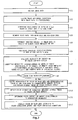
- Fig. 2 is a flowchart explaining operations of the image processing apparatus 13. Hereinafter, these process operations are described along step numbers shown in Fig. 2 .
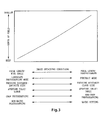
- Fig. 3 is a view illustrating a determination example of the depth of field.
- the depth of field is determined to be shallower as the image obtaining conditions satisfy more of the conditions stated below.
- the image segmenting section 22 performs well-known face recognition processes (such as a flesh color recognition, a contour recognition of a face, or a form recognition of eyes, nose, mouth, ears and so on), and detects a face position and a face size in the image data.
- the image segmenting section 22 can segments the image data into the main area containing a face area or a body area, and the non-main area other than the main area based on the process result of this face recognition.
- the image segmenting section 22 obtains a position of a focus detecting area (a focusing area) which is in a focus state at the time of photographing.
- the image segmenting section 22 can segments the image data into the main area containing the subject image at the focusing area and the non-main area other than the main area based on the detected result.
- the image segmenting section 22 detects a high contrast area and a high-pass spatial frequency area from the image data. It is possible to segments the image data into the main area containing the high contrast area or the high-pass spatial frequency area and the non-main area other than the main area based on the detected result.
- the image segmenting section 22 detects a contour place from the image data. It is possible to segments the image data into the main area surrounded by the contour place and the non-main area other than the main area based on the detected result.
- Fig. 4 is a view explaining a relation between the image obtaining conditions and the memory color emphasis.
- a photographing mode of the imaging section 12 when the image data is photographed is noticed.
- the subject determining section 27 determines that a degree of the memory color emphasis is high when the photographing mode is a photographing mode in which a photographic subject and a photographic intention are distinct such as a child snap mode.
- a user questionnaire may be performed in advance questioning whether the memory color is to be emphasized or not in the photographing by each of plural kinds of photographing modes. In this case, it is possible to score the degree of the memory color emphasis by each photographing mode according to the questionnaire result.
- the degree of the memory color emphasis may be determined to be high when the representative color of the image data is the memory color such as the flesh color, a blue sky color.
- the shallower the depth of field is the simpler a color arrangement becomes because the non-main area comes close to the similar colors, and therefore, it can be estimated that a psychological effect of the color contrast is emphasized. Consequently, it is possible to determine that the necessity of the color correction of the main area is high as the depth of field is shallower.
- the narrower the variance of hue of the non-main area is the simpler the color arrangement becomes because the non-main area comes close to the similar colors, and therefore, it can be estimated that the psychological effect of the color contrast is emphasized. Consequently, it is possible to determine that the necessity of the color correction of the main area is high as the variance of hue of the non-main area is narrower.
- correction necessity of the color contrast effect may be comprehensively determined based on an expression stated below.
- Correction necissity A ⁇ [ the shallowness of the depth of field ] + B ⁇ [the possibility of the subject of the memory color emphasis] + C ⁇ [the narrowness of the variance of hue of the non-main area]
- A”, “B” and “C” are coefficients of an evaluation weight. A weight distribution of these coefficients is preferable to be experimentally adjusted based on a priority of each item reflected to the correction necessity.
- the correcting section 23 completes a process routine without performing the color correction of the main area.
- the correcting section 23 transfers the operation to step S9 to perform the color correction of the main area.
- a color appearing at the area with the maximum frequency may be obtained as the representative color.
- colors appearing at the area are extracted to be averaged, and the average color may be regarded as the representative color.
- an outstanding color with high chroma saturation and high frequency is sorted out from the area, and the color may be regarded as the representative color.
- the correcting section 23 inquires the combination between the representative color of the main area and the representative color of the non-main area to the corresponding memory section 28, and obtains the accrual trend of the color contrast effect accrued at the main area.
- Fig. 6 and Fig. 7 are views illustrating accrual examples of this color contrast effect.
- a case is illustrated when the representative color of the main area is the flesh color and the representative color of the non-main area is the blue sky color. In this case, the flesh color of the main area seems to be shifted in yellow to orange directions.
- Fig. 7 a case is illustrated when the representative color of the main area is red and the representative color of the non-main area is green. In this case, the red of the main area seems to be shifted in a purple direction.
- Fig. 8 is a view explaining this color correction direction.
- a horizontal axis is an axis of a color difference component Cb
- a vertical axis is an axis of a color difference component Cr.
- a white circle shown in Fig. 8 is the representative color of the non-main area.
- a double circle shown in Fig. 8 illustrates a complementary color (strictly, a psychological complementary color) of the non-main area. It seems that the representative color of the main area (a black circle in Fig. 8 ) is covered with a transmission veil of this complementary color. Accordingly, the hue of the main area is corrected in a direction getting away from this complementary color, and thereby, the accrual trend of the contrast effect of hue can be negated.
- the color contrast effect also affects chroma of the main area. Namely, the higher the chroma of the non-main area becomes, the duller the chroma of the main area seems. Accordingly, when the chroma of the representative color of the non-main area is high, the chroma of the main area is adjusted in a direction enhanced relatively, and thereby, the accrual trend of the contrast effect of the chroma can be negated.
- the color contrast effect also affects lightness of the main area. Namely, the higher the lightness of the non-main area is, the lower the lightness of the main area seems. Accordingly, when the lightness of the representative color of the non-main area is high, the lightness of the main area is adjusted in a direction enhanced relatively, and thereby, the accrual trend of the contrast effect of the lightness can be negated.
- the image data completing the above-stated series of processes is recorded on a not-shown recording medium by the recording section 14 after passing through other image processes.
- the variance of hue of the non-main area or the shallowness of the depth of field is determined. It can be determined that the non-main area is close to the similar colors as the variance of hue of the non-main area is smaller. Besides, the shallower the depth of field is, the closer the non-main area becomes close to the similar colors because it becomes largely out of focus and colors are mixed.
- the non-main area falls within a range of the similar colors, though it does not become an excessive solid image.
- the present embodiment can practically estimate the strong and weak of the color contrast effect based on the hue variance of the non-main area or the depth of field as stated above. Further, it is possible to appropriately control the color correction of the main area based on the estimated result.
- the strong and weak of the color contrast effect is practically estimated by the variance of hue of the non-main area.
- the strong and weak of the color correction are changed in accordance with the estimated result, and thereby, it becomes possible to suppress the color contrast effect appropriately, and to obtain a visually-natural color reproducibility.
- the strong and weak of the color contrast effect is practically estimated by determining the shallowness of the depth of field from the image obtaining conditions. It becomes possible to appropriately control the strong and weak of the color correction also by this estimated result. As a result, it becomes possible to obtain the visually-natural color reproducibility.
- the strong and weak of the color contrast effect are roughly estimated from the image obtaining conditions. In this case, it becomes possible to estimate the color contrast effect easily and rapidly without performing a complicated image analysis.
- the image obtaining conditions from information associated with the image data (Exif information and so on).
- the image processing apparatus 13 may perform the correction of the color contrast effect for the non-main area.
- the image processing apparatus 13 may correct the color of the non-main area in a direction negating an influence of the color contrast effect. At this time, the image processing apparatus 13 sets which area is to be corrected either of the main area or the non-main area based on, for example, the following criteria.
- the image processing apparatus 13 may emphasize the color reproduction of an output flesh color, and may correct the hue, chroma and lightness at the non-main area (background) side under a case when the subject is a human (flesh color) which is judged as a main subject, and the image processing apparatus 13 performs an optimized output of the flesh color as the memory color.
- the image processing apparatus 13 may similarly correct the hue, chroma and lightness at the main area (main subject) side under a case when a subject being emphasized and optimizedly displayed is sky, and the subject is judged as the non-main area (background).
- the image processing apparatus 13 may reduce the chroma at the non-main area side when the background seems vivid and the main subject seems dull caused by a contrast effect of the chroma, and when the chroma of the main subject is already sufficiently high and a color saturation may occur in the main subject by making the chroma higher.
- the image processing apparatus 13 may reduce the lightness at the non-main area side when the background is bright and the lightness of the main subject seems to be low caused by a contrast effect of the lightness, and when the main subject is already sufficiently bright and an overexposure may occur in the main subject by making the lightness higher.
Landscapes
- Engineering & Computer Science (AREA)
- Multimedia (AREA)
- Signal Processing (AREA)
- Image Processing (AREA)
- Facsimile Image Signal Circuits (AREA)
- Color Image Communication Systems (AREA)
- Color Television Image Signal Generators (AREA)
- Processing Of Color Television Signals (AREA)
- Editing Of Facsimile Originals (AREA)
Applications Claiming Priority (1)
| Application Number | Priority Date | Filing Date | Title |
|---|---|---|---|
| JP2007068711 | 2007-03-16 |
Publications (2)
| Publication Number | Publication Date |
|---|---|
| EP1971128A2 true EP1971128A2 (de) | 2008-09-17 |
| EP1971128A3 EP1971128A3 (de) | 2011-06-01 |
Family
ID=39433766
Family Applications (1)
| Application Number | Title | Priority Date | Filing Date |
|---|---|---|---|
| EP08250919A Withdrawn EP1971128A3 (de) | 2007-03-16 | 2008-03-17 | Bildverarbeitungsvorrichtung, Abbildungsgerät und Bildverarbeitungsprogramm |
Country Status (3)
| Country | Link |
|---|---|
| EP (1) | EP1971128A3 (de) |
| JP (1) | JP5211768B2 (de) |
| CN (1) | CN101277372B (de) |
Families Citing this family (5)
| Publication number | Priority date | Publication date | Assignee | Title |
|---|---|---|---|---|
| JP5149858B2 (ja) * | 2009-04-20 | 2013-02-20 | 富士フイルム株式会社 | カラー画像の代表色決定装置およびその動作制御方法 |
| JP6279825B2 (ja) | 2011-05-18 | 2018-02-14 | ソニー株式会社 | 画像処理装置、画像処理方法、プログラムおよび撮像装置 |
| JP2014128001A (ja) * | 2012-12-27 | 2014-07-07 | Toshiba Corp | 画像処理装置および画像処理方法 |
| JP6287102B2 (ja) * | 2013-05-31 | 2018-03-07 | 株式会社リコー | 画像調整装置 |
| CN107025635B (zh) * | 2017-03-09 | 2020-01-24 | Oppo广东移动通信有限公司 | 基于景深的图像饱和度的处理方法、处理装置和电子装置 |
Citations (2)
| Publication number | Priority date | Publication date | Assignee | Title |
|---|---|---|---|---|
| JP2001292333A (ja) | 2000-02-03 | 2001-10-19 | Minolta Co Ltd | カラー画像処理装置 |
| US20040156544A1 (en) | 2002-11-29 | 2004-08-12 | Tamotsu Kajihara | Image processing apparatus and method |
Family Cites Families (8)
| Publication number | Priority date | Publication date | Assignee | Title |
|---|---|---|---|---|
| JP2612312B2 (ja) * | 1988-06-27 | 1997-05-21 | シャープ株式会社 | カラー表示方式 |
| JPH03279996A (ja) * | 1990-03-28 | 1991-12-11 | Photo Composing Mach Mfg Co Ltd | 文字図形処理方法および装置 |
| US6600833B1 (en) * | 1999-07-23 | 2003-07-29 | Intel Corporation | Methodology for color correction with noise regulation |
| JP3264273B2 (ja) * | 1999-09-22 | 2002-03-11 | 日本電気株式会社 | 自動色補正装置及び自動色補正方法並びにその制御プログラムを記録した記録媒体 |
| JP2004310504A (ja) * | 2003-04-08 | 2004-11-04 | Canon Inc | 画像処理方法 |
| CN100349456C (zh) * | 2003-10-30 | 2007-11-14 | 光宝科技股份有限公司 | 影像色差补偿方法 |
| JP2006332908A (ja) * | 2005-05-24 | 2006-12-07 | Matsushita Electric Ind Co Ltd | カラー画像表示装置、カラー画像表示方法、プログラム、および記録媒体 |
| US7529007B2 (en) * | 2005-06-10 | 2009-05-05 | Lexmark International, Inc. | Methods of identifying the type of a document to be scanned |
-
2008
- 2008-03-10 JP JP2008059961A patent/JP5211768B2/ja not_active Expired - Fee Related
- 2008-03-13 CN CN2008100829391A patent/CN101277372B/zh not_active Expired - Fee Related
- 2008-03-17 EP EP08250919A patent/EP1971128A3/de not_active Withdrawn
Patent Citations (2)
| Publication number | Priority date | Publication date | Assignee | Title |
|---|---|---|---|---|
| JP2001292333A (ja) | 2000-02-03 | 2001-10-19 | Minolta Co Ltd | カラー画像処理装置 |
| US20040156544A1 (en) | 2002-11-29 | 2004-08-12 | Tamotsu Kajihara | Image processing apparatus and method |
Also Published As
| Publication number | Publication date |
|---|---|
| JP5211768B2 (ja) | 2013-06-12 |
| CN101277372A (zh) | 2008-10-01 |
| EP1971128A3 (de) | 2011-06-01 |
| CN101277372B (zh) | 2011-10-12 |
| JP2008263597A (ja) | 2008-10-30 |
Similar Documents
| Publication | Publication Date | Title |
|---|---|---|
| US11503219B2 (en) | Image processing apparatus, image capture apparatus, and control method for adding an effect of a virtual light source to a subject | |
| US10070052B2 (en) | Image capturing apparatus, image processing apparatus, and control methods thereof | |
| JP4702635B2 (ja) | オートホワイトバランス補正値算出装置、方法およびプログラムならびに撮像装置 | |
| CN107277356B (zh) | 逆光场景的人脸区域处理方法和装置 | |
| EP1814081B1 (de) | Belichtungssteuerungsvorrichtung und Bildaufnahmevorrichtung | |
| EP2608527B1 (de) | Bildaufnahmevorrichtung, Steuerverfahren für eine Bildaufnahmevorrichtung und Speichermedium | |
| EP1814082A2 (de) | Vorrichtung und Verfahren zur Bestimmung des Gesichtsrelevanzgrades und Bildaufnahmevorrichtung | |
| US8391597B2 (en) | Image capturing apparatus, method for capturing image, and program | |
| US10091422B2 (en) | Image processing device and recording medium | |
| US8643743B2 (en) | Image processing apparatus and method | |
| US8989510B2 (en) | Contrast enhancement using gradation conversion processing | |
| EP1971128A2 (de) | Bildverarbeitungsvorrichtung, Abbildungsgerät und Bildverarbeitungsprogramm | |
| US7176965B1 (en) | Method of adjusting the brightness of an image, digital camera and image processor using the method | |
| US8055071B2 (en) | Image processing apparatus, imaging apparatus and recording medium storing image processing program | |
| JP2002150287A (ja) | 画像検出装置、画像検出方法、ディジタルカメラおよびプリンタ | |
| EP3364647B1 (de) | Bildverarbeitungsvorrichtung, bildverarbeitungsprogramm, bildverarbeitungsvorrichtung und bildverarbeitungsverfahren | |
| JP7297566B2 (ja) | 画像処理装置、撮像装置、画像処理方法およびプログラム | |
| JP5214749B2 (ja) | オートホワイトバランス補正値算出装置、方法およびプログラムならびに撮像装置 | |
| JP2007311895A (ja) | 撮像装置、画像処理装置、画像処理方法及び画像処理プログラム | |
| JP2007221678A (ja) | 撮像装置、画像処理装置、画像処理方法及び画像処理プログラム | |
| JP2007293686A (ja) | 撮像装置、画像処理装置、画像処理方法及び画像処理プログラム | |
| JP2007081550A (ja) | 撮像装置、画像処理装置、画像処理方法及び画像処理プログラム | |
| JP2007201679A (ja) | 撮像装置、画像処理方法、及び画像処理プログラム | |
| JP2007288245A (ja) | 撮像装置、画像処理方法及び画像処理プログラム | |
| JP2007243556A (ja) | 撮像装置、画像処理方法及び画像処理プログラム |
Legal Events
| Date | Code | Title | Description |
|---|---|---|---|
| PUAI | Public reference made under article 153(3) epc to a published international application that has entered the european phase |
Free format text: ORIGINAL CODE: 0009012 |
|
| AK | Designated contracting states |
Kind code of ref document: A2 Designated state(s): AT BE BG CH CY CZ DE DK EE ES FI FR GB GR HR HU IE IS IT LI LT LU LV MC MT NL NO PL PT RO SE SI SK TR |
|
| AX | Request for extension of the european patent |
Extension state: AL BA MK RS |
|
| RAP1 | Party data changed (applicant data changed or rights of an application transferred) |
Owner name: NIKON CORPORATION |
|
| PUAL | Search report despatched |
Free format text: ORIGINAL CODE: 0009013 |
|
| AK | Designated contracting states |
Kind code of ref document: A3 Designated state(s): AT BE BG CH CY CZ DE DK EE ES FI FR GB GR HR HU IE IS IT LI LT LU LV MC MT NL NO PL PT RO SE SI SK TR |
|
| AX | Request for extension of the european patent |
Extension state: AL BA MK RS |
|
| 17P | Request for examination filed |
Effective date: 20111201 |
|
| AKX | Designation fees paid |
Designated state(s): DE FR GB |
|
| RAP1 | Party data changed (applicant data changed or rights of an application transferred) |
Owner name: NIKON CORPORATION |
|
| STAA | Information on the status of an ep patent application or granted ep patent |
Free format text: STATUS: EXAMINATION IS IN PROGRESS |
|
| 17Q | First examination report despatched |
Effective date: 20171002 |
|
| GRAP | Despatch of communication of intention to grant a patent |
Free format text: ORIGINAL CODE: EPIDOSNIGR1 |
|
| STAA | Information on the status of an ep patent application or granted ep patent |
Free format text: STATUS: GRANT OF PATENT IS INTENDED |
|
| INTG | Intention to grant announced |
Effective date: 20190321 |
|
| STAA | Information on the status of an ep patent application or granted ep patent |
Free format text: STATUS: THE APPLICATION IS DEEMED TO BE WITHDRAWN |
|
| 18D | Application deemed to be withdrawn |
Effective date: 20190801 |