EP1968531B1 - Topical compositions for reducing skin irritation - Google Patents
Topical compositions for reducing skin irritation Download PDFInfo
- Publication number
- EP1968531B1 EP1968531B1 EP06775174.3A EP06775174A EP1968531B1 EP 1968531 B1 EP1968531 B1 EP 1968531B1 EP 06775174 A EP06775174 A EP 06775174A EP 1968531 B1 EP1968531 B1 EP 1968531B1
- Authority
- EP
- European Patent Office
- Prior art keywords
- actives
- salicylate
- skin care
- weight
- composition
- Prior art date
- Legal status (The legal status is an assumption and is not a legal conclusion. Google has not performed a legal analysis and makes no representation as to the accuracy of the status listed.)
- Active
Links
- 0 *C(*)C(c1ccccc1)C#N Chemical compound *C(*)C(c1ccccc1)C#N 0.000 description 3
Classifications
-
- A—HUMAN NECESSITIES
- A61—MEDICAL OR VETERINARY SCIENCE; HYGIENE
- A61K—PREPARATIONS FOR MEDICAL, DENTAL OR TOILETRY PURPOSES
- A61K8/00—Cosmetics or similar toiletry preparations
- A61K8/18—Cosmetics or similar toiletry preparations characterised by the composition
- A61K8/30—Cosmetics or similar toiletry preparations characterised by the composition containing organic compounds
- A61K8/40—Cosmetics or similar toiletry preparations characterised by the composition containing organic compounds containing nitrogen
-
- A—HUMAN NECESSITIES
- A61—MEDICAL OR VETERINARY SCIENCE; HYGIENE
- A61K—PREPARATIONS FOR MEDICAL, DENTAL OR TOILETRY PURPOSES
- A61K8/00—Cosmetics or similar toiletry preparations
- A61K8/18—Cosmetics or similar toiletry preparations characterised by the composition
- A61K8/30—Cosmetics or similar toiletry preparations characterised by the composition containing organic compounds
- A61K8/33—Cosmetics or similar toiletry preparations characterised by the composition containing organic compounds containing oxygen
-
- A—HUMAN NECESSITIES
- A61—MEDICAL OR VETERINARY SCIENCE; HYGIENE
- A61K—PREPARATIONS FOR MEDICAL, DENTAL OR TOILETRY PURPOSES
- A61K8/00—Cosmetics or similar toiletry preparations
- A61K8/18—Cosmetics or similar toiletry preparations characterised by the composition
- A61K8/30—Cosmetics or similar toiletry preparations characterised by the composition containing organic compounds
- A61K8/33—Cosmetics or similar toiletry preparations characterised by the composition containing organic compounds containing oxygen
- A61K8/35—Ketones, e.g. benzophenone
-
- A—HUMAN NECESSITIES
- A61—MEDICAL OR VETERINARY SCIENCE; HYGIENE
- A61K—PREPARATIONS FOR MEDICAL, DENTAL OR TOILETRY PURPOSES
- A61K8/00—Cosmetics or similar toiletry preparations
- A61K8/18—Cosmetics or similar toiletry preparations characterised by the composition
- A61K8/30—Cosmetics or similar toiletry preparations characterised by the composition containing organic compounds
- A61K8/33—Cosmetics or similar toiletry preparations characterised by the composition containing organic compounds containing oxygen
- A61K8/36—Carboxylic acids; Salts or anhydrides thereof
- A61K8/368—Carboxylic acids; Salts or anhydrides thereof with carboxyl groups directly bound to carbon atoms of aromatic rings
-
- A—HUMAN NECESSITIES
- A61—MEDICAL OR VETERINARY SCIENCE; HYGIENE
- A61K—PREPARATIONS FOR MEDICAL, DENTAL OR TOILETRY PURPOSES
- A61K8/00—Cosmetics or similar toiletry preparations
- A61K8/18—Cosmetics or similar toiletry preparations characterised by the composition
- A61K8/30—Cosmetics or similar toiletry preparations characterised by the composition containing organic compounds
- A61K8/33—Cosmetics or similar toiletry preparations characterised by the composition containing organic compounds containing oxygen
- A61K8/37—Esters of carboxylic acids
-
- A—HUMAN NECESSITIES
- A61—MEDICAL OR VETERINARY SCIENCE; HYGIENE
- A61Q—SPECIFIC USE OF COSMETICS OR SIMILAR TOILETRY PREPARATIONS
- A61Q13/00—Formulations or additives for perfume preparations
-
- A—HUMAN NECESSITIES
- A61—MEDICAL OR VETERINARY SCIENCE; HYGIENE
- A61Q—SPECIFIC USE OF COSMETICS OR SIMILAR TOILETRY PREPARATIONS
- A61Q15/00—Anti-perspirants or body deodorants
-
- A—HUMAN NECESSITIES
- A61—MEDICAL OR VETERINARY SCIENCE; HYGIENE
- A61Q—SPECIFIC USE OF COSMETICS OR SIMILAR TOILETRY PREPARATIONS
- A61Q19/00—Preparations for care of the skin
-
- A—HUMAN NECESSITIES
- A61—MEDICAL OR VETERINARY SCIENCE; HYGIENE
- A61K—PREPARATIONS FOR MEDICAL, DENTAL OR TOILETRY PURPOSES
- A61K2800/00—Properties of cosmetic compositions or active ingredients thereof or formulation aids used therein and process related aspects
- A61K2800/74—Biological properties of particular ingredients
- A61K2800/75—Anti-irritant
-
- A—HUMAN NECESSITIES
- A61—MEDICAL OR VETERINARY SCIENCE; HYGIENE
- A61K—PREPARATIONS FOR MEDICAL, DENTAL OR TOILETRY PURPOSES
- A61K31/00—Medicinal preparations containing organic active ingredients
- A61K31/275—Nitriles; Isonitriles
-
- A—HUMAN NECESSITIES
- A61—MEDICAL OR VETERINARY SCIENCE; HYGIENE
- A61K—PREPARATIONS FOR MEDICAL, DENTAL OR TOILETRY PURPOSES
- A61K8/00—Cosmetics or similar toiletry preparations
- A61K8/18—Cosmetics or similar toiletry preparations characterised by the composition
- A61K8/30—Cosmetics or similar toiletry preparations characterised by the composition containing organic compounds
- A61K8/33—Cosmetics or similar toiletry preparations characterised by the composition containing organic compounds containing oxygen
- A61K8/34—Alcohols
- A61K8/347—Phenols
Definitions
- the present invention relates to organic compounds having the ability to reduce or suppress the formation of skin irritation induced by extraneous causes, and to compositions comprising them for topical application to the skin. It further relates to a method of reducing or suppressing the onset of skin irritation by extraneous causes.
- the human skin is constantly exposed to environmental stresses, such as heat and cold, air pollution, exceptionally dry air or exaggerated UV irradiation.
- a further form of stress can come from the application of cosmetic products or personal wash products.
- certain soap acids and some surfactants, in particular anionic and cationic surfactants are known to stress the skin.
- Antiperspirant salts such as aluminum salts and zirconium salts contained in antiperspirant products, retinol arid derivatives thereof contained in anti-aging products, ⁇ -hydroxy acids such as glycolic acid or lactic acid contained in anti-wrinkle products are also known to stress the skin.
- compositions containing alkoxybenzoic acid esters for the treatment of sunburns are disclosed in US 4 136 165 .
- prostaglandins are mediators being formed upon a wide variety of different forms of external stress applied to the human skin, which may become apparent in redness of the skin, particularly on normal, healthy skin.
- topical application compositions such as cosmetic products and personal wash products, which suppress or reduce the formation of prostaglandins, in particular prostaglandin E2 (PGE 2 ).
- fragrance ingredients have the ability to reduce or suppress the formation of prostaglandins in skin cells.
- the present invention refers in one aspect to the use of a compound for the preparation of topical skin care compositions for reduction of skin irritation, wherein the compound is selected from the list consisting of
- the actives for reducing skin irritation as hereinabove described may be combined with all known odorant molecules selected from the extensive range of natural products and synthetic molecules currently available, such as essential oils, alcohols, aldehydes and ketones, ethers and acetals, esters and lactones, macrocycles and heterocycles, and/or in admixture with one or more ingredients or excipients conventionally used in conjunction with odorants in fragrance compositions, for example, carrier materials, and other auxiliary agents commonly used in the art.
- ingredients are, for example, described in " Perfume and Flavor Materials of Natural Origin", S. Arctander, Ed., Elizabeth, N.J., 1960 ; " Perfume and Flavor Chemicals", S. Arctander, Ed., Vol. I & II. Allured Publishing Corporation, Carol Stream, USA, 1994 ; and " International cosmetic ingredient dictionary” 6th ed., The Cosmetic, Toiletry and Fragrance Association, Inc., Washington, 1995 .
- the active compound While lower concentrations of the active compound show an effect in a cell culture system, as can be seen from the examples, higher concentrations in personal care products are necessary to allow for an effective concentration on the human skin even if, for example part of the product may be removed by abrasion of clothes or may be diluted by sweat. Furthermore, the healthy skin acts as a barrier which limits the penetration of the active compounds.
- the concentration of active compound needed for efficaciousness on skin is from about 50 to 100 times higher than that needed in in-vitro tests.
- the usual perfume concentration in a topical cosmetic product is about 0.3 to 2% by weight. In general, the amount of actives applied is in the range of from 0.2 to 2% by weight, based on the end-product applied to the skin, the amounts applied usually being in the range of from 0.3 to 1% by weight.
- the present invention refers in a further aspect to fragrance compositions comprising at least 30 weight % based on the total fragrance composition of at least two actives for reducing skin irritation as hereinabove described, wherein at least one is selected from compounds of formula (a) and at least one is selected from compounds of formula (b).
- a fragrance composition comprising more than 40 weight % of active compounds should preferably contain at least 4 different actives
- a fragrance composition comprising more than 50 weight % of active compounds should preferably contain at least 5 different actives
- a fragrance compositions comprising more than 60 weight % of active compounds should preferably contain at least 6 different actives.
- the present invention refers to fragrance compositions comprising at least 30 weight % of at least three, four or five actives for reducing skin irritation.
- the fragrance composition according to the present invention comprises at least two, three or four actives of which are selected from a different group of compounds, namely group (a), (b), (c), (d), (e), and (f) as hereinabove described.
- fragrance compositions comprising a compound of formula (a) and a compound of formula (b), and fragrance compositions comprising a compound of formula (c) and a compound of formula (d) or (d').
- fragrance compositions which are both hedonically attractive and which have irritation reducing properties may be prepared, for example, if the composition comprises at least four active compounds, each of which is selected from a different group of compounds.
- topical skin care compositions such as cosmetic products and personal wash products, comprising about 0.2 to about 3 weight %, preferably about 0.5 to about 2.5 weight % of a fragrance composition, the fragrance composition containing at least 30 weight % of at least two actives selected from the group (a), (b), (c), (d), (e), and (f) as hereinabove described, with the proviso that the topical skin care composition comprises at least 0.2 weight % of actives based on the total amount of the skin composition.
- topical skin care compositions wherein the fragrance composition containing a compound of formula (a) and a compound of formula (b).
- the present invention is directed to a method of reducing the onset of skin irritation by applying to the skin an effective amount of a topical skin care composition comprising a fragrance composition, the fragrance composition containing at least 30 weight % based on the total fragrance composition of at least two actives as defined hereinabove, with the proviso that the topical skin care composition comprises at least 0.2 weight % of actives based on the total amount of the skin composition.
- an “effective amount” is generally achieved if about 5 - 50mg/cm 2 skin or about 0.05 to about 0.5mm thick film of the topical skin product is applied to the skin.
- the expression “at least 30 weight %” includes fragrance compositions comprising at least 35, 40 or even 45 or 50 weight % of at least two actives as defined hereinabove.
- actives and “active compounds” as used within the meaning of the present invention refers to all compounds selected from the list of compounds of formula (a), (b), (c), (d), (d'), (e) and 2-heptylcyclopentanone, 2-ethoxynaphthalene, 2-methoxynaphthalene, 1-methoxy-4-(prop-1-enyl)benzene and 1-(cyclopropylmethyl)-4-methoxybenzene.
- Topical skin care compositions of the present invention may be divided into two classes of products, that is, cosmetic products and topical washing products, and may include but is not limited to antiperspirants, deodorants, day and night creams, shaving products, hand creams, body lotions, hair shampoo and conditioners, lipsticks, after-sun products, hand lotions, foundation creams, moisturizing creams, skin food, skin tonics, skin lightening products and overnight facial masks.
- the compositions may be in any form. These forms may include lotions, screams, sticks, roll-on formulations, mousses, aerosol sprays, pad-applied formulations, powders, tonics, and emulsions (oil-in-water, water-in-oil, or mixed emulsion systems).
- Example 1 Screening for compounds protecting keratinocytes against irritating agents
- NHEK Normal human epidermal keratinocytes
- keratinocyte growth medium supplemented with 10% heat inactivated fetal calf serum at a humidity of 98% in a 5% carbon dioxide atmosphere.
- a confluent culture was trypsinated and adjusted to a density of 5 x 10 4 cells / ml.
- the cells were then seeded in the same medium but with only 1 % fetal calf serum in 24 well plates and cultivated for a period of 48 h.
- a model irritating agent was then applied to the cells by adding calcimycin to a final level of 2.5 ⁇ M.
- the individual compounds, as listed below, dissolved in DMSO were added simultaneously.
- the final concentration of the compounds was 50 ⁇ M or 10 ⁇ M, the final DMSO concentration was adjusted to 1% (v/v).
- Parallel treatments received no calcimycin (non-irritated control) or calcimycin without compounds according to the present invention (irritated control).
- the DMSO concentration was adjusted to 1% in all these control treatments.
- the supernatant of the cells was harvested, diluted 1:1 and added to an enzyme linked immunoassay kit for the specific detection of prostaglandin E 2 as a marker of cellular irritation (Product # 404110, Neogen corporation, Lexington KY 40505, USA).
- Example 2 Fragrance compositions with the properties to reduce or suppress the formation of skin irritation
- the fragrance composition No. 3 comprises 47 weight % of actives.
- the fragrance composition No. 3 comprises 37.4 weight % of actives.
- the fragrance composition No. 5 comprises 31 weight % of actives.
- the fragrance composition No. 6 comprises 33.7 weight % of actives.
- the fragrance composition No. 7 comprises 37.2 weight % of actives.
- Table 2 level PGE 2 per ml culture medium t-test vs control t-test vs UVB irritation Control, no UVB 8.253 1.000 UVB 600 mJ, PBS treatment 42.143 0.003 1.000 UVB 600 mJ, Hydrogel treatment 48.778 0.046 0.742 UVB 600 mJ, Hydrogel containing 0.5% (w/w) fragrance comp. No. 1 12.135 0.384 0.001
- Example 5 Antiperspirant with reduced irritation on reconstituted epidermis
- An antiperspirant was formulated according the following formulation: Weight % Water 67 Aluminium chlorohydrate 20 Glycerin 5 Sunflower oil 4 Steareth 2 3 Steareth-20 1
- antiperspirants formulated with conventional perfumes led to significantly enhanced PGE 2 formation indicating an irritating nature of these products to the human skin, whereas upon treatment of EpiDerm with antiperspirants containing the inventive fragrance composition, no significantly enhanced PGE 2 levels were detected. All epidermal cultures retained 100% of the cellular viability showing that all the products are not cytotoxic.
Landscapes
- Health & Medical Sciences (AREA)
- Life Sciences & Earth Sciences (AREA)
- Animal Behavior & Ethology (AREA)
- General Health & Medical Sciences (AREA)
- Public Health (AREA)
- Veterinary Medicine (AREA)
- Epidemiology (AREA)
- Birds (AREA)
- Emergency Medicine (AREA)
- Dermatology (AREA)
- Cosmetics (AREA)
- Acyclic And Carbocyclic Compounds In Medicinal Compositions (AREA)
- Fats And Perfumes (AREA)
Description
- The present invention relates to organic compounds having the ability to reduce or suppress the formation of skin irritation induced by extraneous causes, and to compositions comprising them for topical application to the skin. It further relates to a method of reducing or suppressing the onset of skin irritation by extraneous causes.
- The human skin is constantly exposed to environmental stresses, such as heat and cold, air pollution, exceptionally dry air or exaggerated UV irradiation. A further form of stress can come from the application of cosmetic products or personal wash products. For example, certain soap acids and some surfactants, in particular anionic and cationic surfactants, are known to stress the skin. Antiperspirant salts, such as aluminum salts and zirconium salts contained in antiperspirant products, retinol arid derivatives thereof contained in anti-aging products, α-hydroxy acids such as glycolic acid or lactic acid contained in anti-wrinkle products are also known to stress the skin.
- The use of phenyl salicylate for the treatment of UV-induced erythema is known from
US 4 404 198 . Compositions containing alkoxybenzoic acid esters for the treatment of sunburns are disclosed inUS 4 136 165 . - It is known from the art that prostaglandins are mediators being formed upon a wide variety of different forms of external stress applied to the human skin, which may become apparent in redness of the skin, particularly on normal, healthy skin. Thus there is a need for additives in topical application compositions, such as cosmetic products and personal wash products, which suppress or reduce the formation of prostaglandins, in particular prostaglandin E2 (PGE2).
- Surprisingly the inventors have found that certain classes of chemical compounds, most of which are known as fragrance ingredients, have the ability to reduce or suppress the formation of prostaglandins in skin cells.
- Thus the present invention refers in one aspect to the use of a compound for the preparation of topical skin care compositions for reduction of skin irritation, wherein the compound is selected from the list consisting of
- (a) compounds of the formula

- R is hydrogen or isopropyl;
- R1 is methyl or ethyl; and R2 is C1-C6 alkyl or C2-C6 alkenyl; or
- R1 and R2 together with the carbon atom to which they are attached form a C5 or C6 cycloalkyl ring; and
- the dotted line together with the carbon carbon bond represents a single bond or a double bond;
- (b) compounds of the formula

- (c) compounds of the formula

- R4 is methyl or ethyl and
- I) R3 is hydrogen and R5 is -CH2-O-R6, wherein R6 is methyl or isopropyl; or
- II) R3 is -C(O)-R7, wherein R7 is benzyl, and R5 is -CH2-CH=CH2,
- (d) compounds of the formula

- R8 is methyl, C3-C4 alkyl, C3-C4 alkenyl, - (CH2)2-Ph, or -CH=CH-Ph;
- X is -CH=CH-CH2- or -(CH2)n-, wherein n is 1 or 2; and
- R9 is isobutyl or phenylethyl;
- (e) compounds of the formula

- R10 is hydrogen or methyl; and
- R" is a C3-C4 alkyl, e.g. isopropyl, isobutyl or tert-butyl, and
- (f) 2-heptylcyclopentanone, 2-ethoxynaphthalene, 2-methoxynaphthalene, 1-methoxy-4-(prop-1-enyl)benzene and 1-(cyclopropylmethyl)-4-methoxybenzene.
- Particularly preferred is the use of compounds selected from the list consisting of 2-cyclohexylidene-2-phenylacetonitrile, 2-cyclopentylidene-2-phenylacetonitrile, 3-ethyl-2-phenylpent-2-enenitrile, 2-ethoxy-4-(isopropoxymethyl)phenol, 2-ethoxy-4-(methoxymethyl)phenol, phenethyl cinnamate, 4-allyl-2-methoxyphenyl 2-phenylacetate, n-hexyl salicylate, cis-3-hexen-1-yl salicylate, cyclohexylsalicylate (=cyclohexyl 2-hydroxybenzoate), amylsalicylate (=pentyl 2-hydroxybenzoate), isobutylsalicylate (=isobutyl 2-hydroxybenzoate), phenylethyl benzoate, benzyl 2-methylbut-2-enoate, 2-methyl-3-(4-isopropylphenyl)propanal, isobutyl benzoate, cinnamyl cinnamate, phenethyl salicylate, 2-methyl-3-(4-(2-methylpropyl)phenyl)propanal, 2-heptylcyclopentanone, 2-ethoxynaphthalene, 2-methoxynaphthalene, 1-methoxy-4-(prop-1-enyl)benzene, phenethyl pivalate, 1-(cyclopropylmethyl)-4-methoxybenzene, cinnamyl acetate, 3-(4-tert-butylphenyl)propanal, phenethyl 2-methylbutanoate, and phenethyl isobutyrate.
- The availability of a greater number of compounds, which in addition to their odoriferous properties, have the ability to reduce or suppress the formation of skin irritation provides the perfumer with an adequate amount of molecules some of which posses quite varied odor notes, to create hedonically attractive fragrance compositions while providing reduction of skin irritation and/or redness reduction activity to the skin to which it is applied. In particular, the use of multiple perfume ingredients permits the design of hedonically attractive fragrance accords.
- The actives for reducing skin irritation as hereinabove described may be combined with all known odorant molecules selected from the extensive range of natural products and synthetic molecules currently available, such as essential oils, alcohols, aldehydes and ketones, ethers and acetals, esters and lactones, macrocycles and heterocycles, and/or in admixture with one or more ingredients or excipients conventionally used in conjunction with odorants in fragrance compositions, for example, carrier materials, and other auxiliary agents commonly used in the art. Such ingredients are, for example, described in "Perfume and Flavor Materials of Natural Origin", S. Arctander, Ed., Elizabeth, N.J., 1960; "Perfume and Flavor Chemicals", S. Arctander, Ed., Vol. I & II. Allured Publishing Corporation, Carol Stream, USA, 1994; and "International cosmetic ingredient dictionary" 6th ed., The Cosmetic, Toiletry and Fragrance Association, Inc., Washington, 1995.
- While lower concentrations of the active compound show an effect in a cell culture system, as can be seen from the examples, higher concentrations in personal care products are necessary to allow for an effective concentration on the human skin even if, for example part of the product may be removed by abrasion of clothes or may be diluted by sweat. Furthermore, the healthy skin acts as a barrier which limits the penetration of the active compounds. Generally, the concentration of active compound needed for efficaciousness on skin is from about 50 to 100 times higher than that needed in in-vitro tests. The usual perfume concentration in a topical cosmetic product is about 0.3 to 2% by weight. In general, the amount of actives applied is in the range of from 0.2 to 2% by weight, based on the end-product applied to the skin, the amounts applied usually being in the range of from 0.3 to 1% by weight.
- Thus the present invention refers in a further aspect to fragrance compositions comprising at least 30 weight % based on the total fragrance composition of at least two actives for reducing skin irritation as hereinabove described, wherein at least one is selected from compounds of formula (a) and at least one is selected from compounds of formula (b).
- Whereas some active compounds may be used in relatively high amounts in a fragrance composition others which are known to be very powerful odorants, such as Neroline™ and Propyl Diantilis, may be used only in smaller amounts in order to avoid negatively effecting the overall hedonic impression of the fragrance composition. In general, as the overall proportion of the active compound in the fragrance composition rises, so should the number of active compounds used. For example, a fragrance composition comprising more than 40 weight % of active compounds should preferably contain at least 4 different actives, a fragrance composition comprising more than 50 weight % of active compounds should preferably contain at least 5 different actives, and a fragrance compositions comprising more than 60 weight % of active compounds should preferably contain at least 6 different actives. Thus, in a further aspect the present invention refers to fragrance compositions comprising at least 30 weight % of at least three, four or five actives for reducing skin irritation. Optionally the fragrance composition according to the present invention comprises at least two, three or four actives of which are selected from a different group of compounds, namely group (a), (b), (c), (d), (e), and (f) as hereinabove described.
- From a hedonic point of view the actives are selected from two different group of compounds. In particular embodiments are fragrance compositions comprising a compound of formula (a) and a compound of formula (b), and fragrance compositions comprising a compound of formula (c) and a compound of formula (d) or (d'). As can be seen from the examples, fragrance compositions which are both hedonically attractive and which have irritation reducing properties may be prepared, for example, if the composition comprises at least four active compounds, each of which is selected from a different group of compounds.
- In an other embodiment the invention is directed to fragrance compositions comprising
- (a) at least one compound of the formula

- R is hydrogen or isopropyl;
- R1 is methyl or ethyl; and R2 is C1-C6 alkyl or C2-C6 alkenyl; or
- R1 and R2 together with the carbon atom to which they are attached form a C5 or C6 cycloalkyl ring; and
- the dotted line together with the carbon carbon bond represents a single bond or a double bond;
- (b) at least one compound of the formula

- wherein Y is selected from cyclohexyl, n-hexyl, n-pentyl, iso-butyl,
- cis-3-hexen-1-yl, and phenethyl;
- (c) at least one compound of the formula

- R4 is methyl or ethyl and
- I) R3 is hydrogen and R5 is -CH2-O-R6, wherein R6 is methyl or isopropyl; or
- II) R3 is -C(O)-R7, wherein R7 is benzyl, and R5 is -CH2-CH=CH2; and (d) at least one compound of the formula

- R8 is methyl, C3-C4 alkyl, C3-C4 alkenyl, - (CH2)2-Ph, or -CH=CH-Ph;
- X is -CH=CH-CH2- or -(CH2)n-, wherein n is 1 or 2; and
- R9 is isobutyl or phenylethyl.
- Furthermore, the present invention refers to topical skin care compositions, such as cosmetic products and personal wash products, comprising about 0.2 to about 3 weight %, preferably about 0.5 to about 2.5 weight % of a fragrance composition, the fragrance composition containing at least 30 weight % of at least two actives selected from the group (a), (b), (c), (d), (e), and (f) as hereinabove described, with the proviso that the topical skin care composition comprises at least 0.2 weight % of actives based on the total amount of the skin composition. In particular embodiments are topical skin care compositions wherein the fragrance composition containing a compound of formula (a) and a compound of formula (b).
- In another aspect the present invention is directed to a method of reducing the onset of skin irritation by applying to the skin an effective amount of a topical skin care composition comprising a fragrance composition, the fragrance composition containing at least 30 weight % based on the total fragrance composition of at least two actives as defined hereinabove, with the proviso that the topical skin care composition comprises at least 0.2 weight % of actives based on the total amount of the skin composition.
- An "effective amount" is generally achieved if about 5 - 50mg/cm2 skin or about 0.05 to about 0.5mm thick film of the topical skin product is applied to the skin.
- As used within the meaning of the present invention the expression "at least 30 weight %" includes fragrance compositions comprising at least 35, 40 or even 45 or 50 weight % of at least two actives as defined hereinabove. The term "actives" and "active compounds" as used within the meaning of the present invention refers to all compounds selected from the list of compounds of formula (a), (b), (c), (d), (d'), (e) and 2-heptylcyclopentanone, 2-ethoxynaphthalene, 2-methoxynaphthalene, 1-methoxy-4-(prop-1-enyl)benzene and 1-(cyclopropylmethyl)-4-methoxybenzene.
- Topical skin care compositions of the present invention may be divided into two classes of products, that is, cosmetic products and topical washing products, and may include but is not limited to antiperspirants, deodorants, day and night creams, shaving products, hand creams, body lotions, hair shampoo and conditioners, lipsticks, after-sun products, hand lotions, foundation creams, moisturizing creams, skin food, skin tonics, skin lightening products and overnight facial masks. The compositions may be in any form. These forms may include lotions, screams, sticks, roll-on formulations, mousses, aerosol sprays, pad-applied formulations, powders, tonics, and emulsions (oil-in-water, water-in-oil, or mixed emulsion systems).
- The invention is now further described with reference to the following non-limiting examples. All of the amounts are given as percentage amounts by weight, unless otherwise indicated.
- Normal human epidermal keratinocytes (NHEK) were obtained from skin biopsies and maintained as described by Rheinwald and Green (cell, 6:331-344, 1975) in keratinocyte growth medium supplemented with 10% heat inactivated fetal calf serum at a humidity of 98% in a 5% carbon dioxide atmosphere. A confluent culture was trypsinated and adjusted to a density of 5 x 10⁴ cells / ml. The cells were then seeded in the same medium but with only 1 % fetal calf serum in 24 well plates and cultivated for a period of 48 h. A model irritating agent was then applied to the cells by adding calcimycin to a final level of 2.5 µM. The individual compounds, as listed below, dissolved in DMSO were added simultaneously. The final concentration of the compounds was 50 µM or 10 µM, the final DMSO concentration was adjusted to 1% (v/v). Parallel treatments received no calcimycin (non-irritated control) or calcimycin without compounds according to the present invention (irritated control). The DMSO concentration was adjusted to 1% in all these control treatments. After 24 h incubation, the supernatant of the cells was harvested, diluted 1:1 and added to an enzyme linked immunoassay kit for the specific detection of prostaglandin E2 as a marker of cellular irritation (Product # 404110, Neogen corporation, Lexington KY 40505, USA). The prostaglandin levels in treated cell cultures were compared to the irritated and non-irritated control cultures in order to determine the relative inhibition of PGE2 formation. Results for the individual compounds are listed below.
relative inhibition in % of PGE2 formation in keratinocyte cultures at Compound 50 µM 10 µM PEONILE® (2-cyclohexylidene-2-phenylacetonitrile) 93.3 92.4 PROPYL DIANTILIS (2-Ethoxy-4-(isopropoxymethyl)phenol) 90.9 95.1 METHYL DIANTILIS® (2-Ethoxy-4-(methoxymethyl)phenol) n.d. 88.2 Phenethyl cinnamate 91.7 93.6 EUGENYL PHENYL ACETATE (Phenyl 2-(4-allyl-2-methoxyphenyl)acetate) 96.6 99 n-Hexyl salicylate 82.9 91.6 cis-3-Hexen-1-yl salicylate 94.8 81.4 Cyclohexyl salicylate 97.4 76.6 Amyl salicylate 89.8 73.5 Isobutyl salicylate 69.1 73.1 Phenethyl benzoate 92.4 56.9 TIGLATE BENZYLE (benzyl 2-methylbut-2-enoate) 72.4 50.2 CYCLAMEN ALDEHYDE™ (2-Methyl-3-(4-isopropylphenyl)propanal) 82.0 32 Isobutyl benzoate 52.5 n.d. Cinnamyl cinnamate 64.0 n.d. Phenethyl salicylate 50.9 n.d. SILVIAL® (2-Methyl-3-(4-(2-methylpropyl)phenyl)propanal) 62.7 n.d. ALISMONE™ (2-heptylcyclopentanone) 92.4 47 NEROLINE™ CRIST (2-ethoxynaphthalene) 83 50.2 YARA YARA™ (2-methoxynaphthalene) 78 46 ANETHOLE (1-methoxy-4-(prop-1-enyl)benzene) 51 n.d. CENTIFOLYL™ (phenethyl pivalate) 39 n.d. TOSCANOL® (1-(cyclopropylmethyl)-4-methoxybenzene) 56.7 n.d. Cinnamyl acetate 47.8 n.d. BOURGEONAL™ (3-(4-tert-butylphenyl)propanal) 65.0 n.d. ANATOLYL™ (phenethyl 2-methylbutanoate) 50.5 n.d. Phenethyl isobutyrate 44.8 n.d. 2-Cyclopentylidene-2-phenylacetonitrile 80.8 71.1 3-Ethyl-2-phenylpent-2-enenitrile 73.2 63.9 n.d. = not determined - Similar results as listed above were obtained by irritation of the cells either by UVB irradiation or exposure to the skin cells to irritating cationic surfactant benzalkonium chloride.
-
parts by weight 1/100 Peonile® 18.90 Alismone™ 5.30 Cyclohexyl salicylate 12.10 Silvial® 6.80 Toscanol® 0.15 Floral fragrance base 56.75 -
parts by weight 1/100 PEONILE® 1.00 PROPYL DIANTILIS 0.01 Phenethyl cinnamate 0.20 Hexyl salicylate 40.00 cis-3-Hexen-1-yl salicylate 1.00 Amyl salicylate 3.00 NEROLINE™ 0.10 Floral fragrance base 54.69 -
parts by weight 1/900 Citronellyl acetate 10 Cyclamen aldehyde™ * 3 Ambrettolide (oxacycloheptadec-10-en-2-one) 40 Ambrofix (CAS No. 6790-58-5) 10% in dipropyleneglycol 8 Bourgeonal™ * 30 Centifolyl™ * 45 Dihydromyrcenol (2,6-dimethyloct-7-en-2-ol) 8 Ethyllinalool (3,7-dimethyl-1,6-nonadien-3-ol) 45 Florol® (tetrahydro-2-isobutyl-4-methyl-2H-pyran-4-ol) 25 Galaxolide® (1,3,4,6,7,8-hexahydro-4,6,6,7,8,8-hexamethyl-cyclopenta-gamma-2-benzopyran) 50% dissolved in isopropylmyristate 12 Hedione® (methyl 2-(3-oxo-2-pentylcyclopentyl)acetate) 250 Cis-3-hexenol 10% in dipropyleneglycol 3 Phenethyl isobutyrate * 25 Ethyl-2-methyl-butyrate 10% in dipropyleneglycol 3 Neroline™ * 10% in dipropyleneglycol 2 Orange essence brazil 15 Pomarose (5,6,7-trimethylocta-2,5-dien-4-one) 10% in dipropyleneglycol 3 Prunella® subst (compounded perfumery base from Firmenich) 3 Cyclohexyl salicylate * 75 cis-3-Hexen-1-yl salicylate * 100 n-Hexyl salicylate * 20 Phenylethyl salicylate * 80 Slivial® * 45 Tropional (2-methyl-3-(3,4-methylenedioxyphenyl)propanal) 40 Velvione® (5-cyclohexadecen-1-one) 10 - All ingredients marked with an * are active compounds having the ability to reduce or suppress the formation of skin irritation, as defined according to the present invention. The fragrance composition No. 3 comprises 47 weight % of actives.
-
parts by weight 1/900 Benzyl-acetate 14 2-Phenylethanol 200 Cyclamen aldehyde™ * 3 Bourgeonal™ * 3 Centifolyl™ * 80 Phenethyl-cinnamate * 25 Citronellol 25 1-(1,1-Dimethoxypropan-2-yl)benzene 8 Dione (2-[2-(3,3,5-trimethylcyclohexyl)-1-ethanone]cyclopentanone) 10% in dipropyleneglycol 3 Dipropyleneglycol 128 Gardenol (alpha-Methylbenzyl acetate) 5 Georgywood (1-(1,2,3,4,5,6,7,8-octahydro-1,1,7,8-tetramethyl-naphthalen-7-yl)ethanone) 2 Geraniol 30 Hedione® 70 Heliotropine 4 Indolene (8-(1H-indol-2-yl)-8-(1H-indol-3-yl)-2,6-dimethyloctan-2-ol) 1 Isoraldeine 70 (mixture of 4/1-(2,6,6-trimethyl-2-cyclohexen-1-yl)-3-methyl-3-buten-2-one) 25 Methyl diantilis® * 25 Neroline™ * 1 Patchouli essential oil rectified (origin: Indonesia) 2 Peach pure (5-heptyl-dihydrofuran-2(3H)-one) 10 Pharaone (2-Cyclohexyl-1,6-heptadien-3-one) 1% in dipropyleneglycol 8 Pomarose 10% in dipropyleneglycol 3 Rose oxide 7 Cyclohexyl salicylate * 45 cis-3-Hexenyl salicylate * 55 n-Hexyl salicylate * 20 Phenethyl salicylate * 80- Vanillin 5 Viridine (phenylacetaldehyde dimethyl acetal) 3 Ylang Ylang essential oil 10 - All ingredients marked with an * are active compounds having the ability to reduce or suppress the formation of skin irritation, as defined according to the present invention. The fragrance composition No. 3 comprises 37.4 weight % of actives.
-
parts by weight 1/1000 Azurone 10% in triethyl citrate (7-(3-Methylbutyl)-2H-1,5-benzodioxepin-3(4H)-one) 4 Ethyl vanilline 10% in DPG 4 Evernyl™ (methyl 2,4-dihydroxy-3,6-dimethylbenzoate) 2 Fixolide (1-(3,5,5,6,8,8-hexamethyl-5,6,7,8-tetrahydronaphthalen-2-yl)ethanone) 55 Florhydral® (3-(3-isopropylphenyl)butanal) 5 Iso E super™ (1-(2,3,8,8-tetramethyl-1,2,3,4,5,6,7,8-octahydronaphthalen-2-yl)ethanone) 250 Kephalis (4-(1-ethoxyvinyl)-3,3,5,5-tetramethylcyclohexanone) 30 Cyclohexal 80 Linalool (3,7-dimethylocta-1,6-dien-3-ol) 40 Patchouli essential oil 10 Peonil® * 100 Diethyl phthalate 60 Radjanol™ (2-ethyl-4-(2,2,3-trimethyl-3-cyclopenten-1-yl)-2-buten-1-ol) 50 Phenethyl salicylate * 100 cis-3-Hexen-1-yl salicylate * 55 n-Hexyl salicylate * 55 Serenolide™ (2-(1-(3,3-dimethylcyclohexyl)ethoxy)-2-methylpropyl cyclopropanecarboxylate) 60 Velvione® 40 - All ingredients marked with an * are active compounds having the ability to reduce or suppress the formation of skin irritation, as defined according to the present invention. The fragrance composition No. 5 comprises 31 weight % of actives.
-
parts by weight 1/948 Dimethyl benzyl carbinyl acetate 25 Linalyle acetate 70 Phenylethyl alcohol 75 Methyl anthranilate 3 Cosmone (3-methylcyclotetradec-5-enone) 40 Florol® (2-isobutyl-4-methyltetrahydro-2H-pyran-4-ol) 70 Galbanum oil 35 Gardenol 15 Hedione® 55 Indole 1 % in dipropyleneglycol (DPG) 45 Isoraldeine 70 80 Methyl diantilis® * 45 Nirvanolide™ (13-methyloxacyclopentadec-10-en-2-one) 45 Peche pure 3 Peoriile® * 55 EUGENYL PHENYL ACETATE * 20 Phenethyl salicylate * 100 Cis-3-Hexen-1-yl salicylate * 100 Vertofix coeur (methyl cedryl ketone) 55 Ylang Ylang essential oil 12 - All ingredients marked with an * are active compounds having the ability to reduce or suppress the formation of skin irritation, as defined according to the present invention. The fragrance composition No. 6 comprises 33.7 weight % of actives.
-
parts by weight 1/825 Benzyl-acetate 20 2-Phenylethanol 200 Phenethyl benzoate * 130 Centifolyl® * 45 Cinnamyl cinnamate * 10 Phenyl ethyl cinnamate * 52 Citronellol 45 Dihydrofarnesal™ (3,7,11-trimethyldodeca-6,10-dienal) 20 Florhydral™ (3-(3-isopropylphenyl)butanal) 3 Hedione® 150 Phenethyl isobutyrate * 25 Isoraldeine 70 45 Methyl diantilis®* 45 Peche pure 10 Rose oxide 10 Vanillin 15 - All ingredients marked with an * are active compounds having the ability to reduce or suppress the formation of skin irritation, as defined according to the present invention. The fragrance composition No. 7 comprises 37.2 weight % of actives.
- Keratinocytes were grown in 24 well plates and irritated with calcimycin as described in example 1. Fragrance compositions of example 2 were dissolved in DMSO and added to the cultures simultaneously. Inhibition of PGE2 formation was measured as described in example 1. The results are listed in Table 1.
Table 1: Relative inhibition in % of PGE2 formation at different concentration of test fragrance 12.5 ppm 6.25 ppm Composition No. 1 79.0 42.4 Composition No. 2 82.6 85.6 Floral fragrance base 0 0 - As can been seen from the figures in Table 1, about 80% reduction of PGE2 formation was observed at 12.5 ppm if a fragrance composition according to the present invention is applied, whereas using the floral fragrance base without actives, no measurable reduction of PGE2 formation was observed.
- A hydrogel was prepared as follows:
INGREDIENT SUPPLIER INCl NAME %W/W CARBOPOL 980 Goodrich Carbomer 0.50 PEMULEN TR1 Goodrich Acrylate/ C10-C30 Alkyl acrylate crosscopolymer 0.20 LUBRAGEL CG Guardian Polyglycerylmethacrylate & Propylene glycol 0.50 UCON 75H450 Amerchol PEG/PPG-17/6 copolymer 1.00 GLYCERIN AMI Glycerin 4.00 HEXYLENE GLYCOL Hexylene Glycol 2.00 DEIONISED WATER Water qsq 100.00 GERMALL 115 Sutton Imidazolidinyl Urea 0.60 SODIUM HYDROXIDE Sodium Hydroxide 10% in water qsp pH = 5.50 CREMOPHOR RH 40 BASF PEG 40 Hydrogenated Castor oil 1.00 - Glycerin and water were mixed, Carbopol 980 was dispersed, then Pemulen TR 1 and then the remaining ingredients were added.
- Human reconstituted epidermis EpiDerm was purchased from Mattek (Ashland, USA). The cultures were exposed to a single Dose of 600 mJ UVB, and then either 50 mg phosphate buffered saline (PBS) or 50 mg of the above hydrogel was added on top of the individual EpiDerm cultures. After 24 h incubation, the culture medium beneath the air exposed EpiDerm cultures was sampled and analyzed for PGE2 as described in example 1. All skin samples retained 100% cellular viability throughout the experiment. Skin samples treated with a hydrogel containing the inventive perfume composition 1 from example 2 suppressed UVB induced PGE2 formation.
Table 2: level PGE2 per ml culture medium t-test vs control t-test vs UVB irritation Control, no UVB 8.253 1.000 UVB 600 mJ, PBS treatment 42.143 0.003 1.000 UVB 600 mJ, Hydrogel treatment 48.778 0.046 0.742 UVB 600 mJ, Hydrogel containing 0.5% (w/w) fragrance comp. No. 1 12.135 0.384 0.001 - An antiperspirant was formulated according the following formulation:
Weight % Water 67 Aluminium chlorohydrate 20 Glycerin 5 Sunflower oil 4 Steareth 2 3 Steareth-20 1 - The following antiperspirant compositions had been prepared:
- I) antiperspirant & 1 weight % conventional perfume A
- II) antiperspirant & 0.5 weight % conventional perfume B
- III) antiperspirant & 0.5 weight % fragrance composition No. 1 (Ex. 2.1)
- IV) antiperspirant & 1 weight % fragrance composition No. 1 (Ex. 2.1)
- 50 mg of the resulting antiperspirant I) - IV) or 50 mg of PBS as control was added to Mattek skin cultures as described above, and after 24 h the level of PGE2 in the culture medium was determined according to the procedure described above. The results are shown in Table 3.
Table 3: Level of PGE2 in culture medium t-test vs control PBS 12.54 Composition I) 35.49 0.002 Composition II) 27.66 0.011 Composition III) 16.05 0.302 Composition IV) 9.48 0.368 - As can be seen from the results above, antiperspirants formulated with conventional perfumes (i.e. composition I) and II)) led to significantly enhanced PGE2 formation indicating an irritating nature of these products to the human skin, whereas upon treatment of EpiDerm with antiperspirants containing the inventive fragrance composition, no significantly enhanced PGE2 levels were detected. All epidermal cultures retained 100% of the cellular viability showing that all the products are not cytotoxic.
Claims (8)
- A topical skin care composition comprising as actives(a) at least one compound of the formula
 R is hydrogen or isopropyl;R1 is methyl or ethyl; and R2 is C1-C6 alkyl or C2-C6 alkenyl; orR1 and R2 together with the carbon atom to which they are attached form a C5 or C6 cycloalkyl ring; andthe dotted line together with the carbon carbon bond represents a single bond or a double bond;(b) at least one compound selected from n-hexyl saticylate, cis-3-hexen-1-yl salicylate, cyclohexylsalicylate, amylsalicylate, isobutylsalicylate, and phenethyl salicylate; and(c) a cosmetically acceptable carrier;wherein the total amount of actives is 0.2 to 2 weight % based on the topical skin care composition.
 - A topical composition according to claim 1 comprising as actives(a) at least one compound selected from 2-cyclohexylidene-2-phenylacetonitrile, 2-cyclopentylidene-2-phenylacetonitrile and 3-ethyl-2-phenylpent-2-enenitrile; and(b) at least one compound selected from n-hexyl salicylate, cis-3-hexen-1-yl salicylate, cyclohexylsalicylate, amylsalicylate, isobutylsalicylate, and phenethyl salicylate.
- A topical skin care composition according to claim 1 further comprising as actives at least one compound of the formula

R4 is methyl or ethyl andI) R3 is hydrogen and R5 is -CH2-O-R6-, wherein R6 is methyl or isopropyl; orII) R3 is -C(O)-R7, wherein R7 is benzyl, and R5 is -CH2-CH=CH2. - A topical skin care composition according to claim 1 or claim 3 further comprising as actives at least one compound of the formula
 R8 is methyl, C3-C4 alkyl, C3-C4 alkenyl, - (CH2)2-Ph, or -CH=CH-Ph;X is -CH=CH-CH2- or -(CH2)6-, wherein n is 1 or 2; andR9 is isobutyl or phenylethyl;
 - A topical skin care composition comprising about 0.5 to about 3 weight % of a fragrance composition which comprises as actives at least 30 weight % based on the fragrance composition of(a) at least one compound of the formula
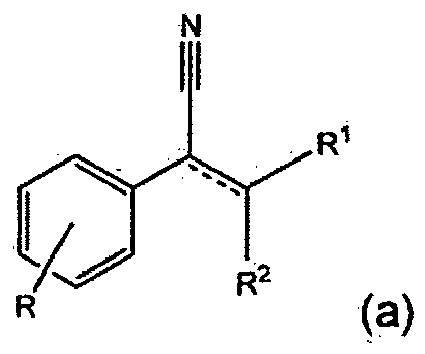 R is hydrogen or isopropyl;R1 is Methyl or ethyl; and R2 is C1-C6 alkyl or C2-C6 alkenyl; orR1 and R2 together with the carbon atom to which they are attached form a C5 or C6 cycloalkyl ring; andthe dotted line together with the carbon - carbon bond represents a single bond or a double bond; and(b) at least one compound selected from n-hexyl salicylate, cis-3-hexen-1-yl salicylate, cyclohexylsalicylate, amylsalicylate, isobutylsalicylate, and phenethyl salicylate;and the topical skin care composition comprising at least 0.2 weight % of actives based on the skin composition.
 - A topical skin care composition according to any one of the preceding claims wherein the skin composition is a cosmetic product.
- The use of a compound for the preparation of topical skin care compositions for reduction of skin irritation, wherein the compound is selected from the list consisting of(a) compounds of the formula
 R is hydrogen or isopropyl;R1 is methyl or ethyl; and R2 is C1-C6 alkyl or C2-C6 alkenyl; orR1 and R2 together with the carbon atom to which they are attached form a C5 or C6 cycloalkyl ring; andthe dotted line together with the carbon carbon bond represents a single bond or a double bond.
 - A topical skin care composition for use in a method for reducing the onset of skin irritation by applying to the skin an effective amount of said skin care composition comprising a fragrance composition, the fragrance composition containing at least 30 weight % of at least two actives as defined in claim 1, with the proviso that the topical skin care composition comprises at least 0.2 weight % of actives based on the total amount of the skin composition.
Applications Claiming Priority (2)
| Application Number | Priority Date | Filing Date | Title |
|---|---|---|---|
| GBGB0518558.2A GB0518558D0 (en) | 2005-09-12 | 2005-09-12 | Improvements in or related to organic compounds |
| PCT/CH2006/000481 WO2007030961A2 (en) | 2005-09-12 | 2006-09-08 | Topical compositions for reducing skin irritation |
Publications (2)
| Publication Number | Publication Date |
|---|---|
| EP1968531A2 EP1968531A2 (en) | 2008-09-17 |
| EP1968531B1 true EP1968531B1 (en) | 2014-12-31 |
Family
ID=35221322
Family Applications (1)
| Application Number | Title | Priority Date | Filing Date |
|---|---|---|---|
| EP06775174.3A Active EP1968531B1 (en) | 2005-09-12 | 2006-09-08 | Topical compositions for reducing skin irritation |
Country Status (8)
| Country | Link |
|---|---|
| US (3) | US20100063011A1 (en) |
| EP (1) | EP1968531B1 (en) |
| JP (1) | JP2009509929A (en) |
| CN (1) | CN101262843B (en) |
| BR (1) | BRPI0615927B1 (en) |
| GB (1) | GB0518558D0 (en) |
| MX (1) | MX2008002811A (en) |
| WO (1) | WO2007030961A2 (en) |
Families Citing this family (8)
| Publication number | Priority date | Publication date | Assignee | Title |
|---|---|---|---|---|
| EP1824952B1 (en) * | 2004-12-08 | 2010-04-28 | Givaudan SA | Organic compounds |
| JP4841208B2 (en) * | 2005-09-12 | 2011-12-21 | 高砂香料工業株式会社 | Flavor and fragrance composition |
| US20100021413A1 (en) * | 2006-11-07 | 2010-01-28 | Givaudan Sa | Malodor Counteracting Compositions |
| ES2534770T3 (en) * | 2007-12-05 | 2015-04-28 | 3-D Matrix, Ltd. | Material for wound healing and skin reconstruction |
| GB201021050D0 (en) * | 2010-12-13 | 2011-01-26 | Givaudan Sa | Moc compositions |
| WO2014077334A1 (en) * | 2012-11-15 | 2014-05-22 | 株式会社資生堂 | Melanin production inhibitor |
| GB201407383D0 (en) | 2014-04-28 | 2014-06-11 | Givaudan Sa | Improvements in or relating to organic compounds |
| KR101796866B1 (en) * | 2016-06-28 | 2017-11-13 | 연세대학교 산학협력단 | Composition having effects of skin moisturizing, exfoliating, improving skin elasticity, inhibiting erythema, anti-wrinkle or improving skin photoaging comprising at least one selected from the group consisting of cymene, behenic acid, 2-methoxynaphthalene, thymol and salts thereof |
Family Cites Families (33)
| Publication number | Priority date | Publication date | Assignee | Title |
|---|---|---|---|---|
| US2069861A (en) * | 1933-10-16 | 1937-02-09 | Givaudan Delawanna Inc | Alpha-alkylidene and alpha-alkyl cyclo-pentanone |
| DE2617817A1 (en) * | 1976-04-23 | 1977-11-10 | Henkel & Cie Gmbh | ANTI-INFLAMMATORS FOR COSMETIC PREPARATIONS |
| US4404198A (en) * | 1979-01-24 | 1983-09-13 | Beecham Inc. | Phenyl Salicylate as a topical anti-inflammatory |
| NL8101739A (en) * | 1981-04-08 | 1982-11-01 | Naarden International Nv | PERFUME COMPOSITIONS AND PERFUMED ARTICLES CONTAINING ALKYL SUBSTITUTED BENZYLCYANIDES AS PERFUME. |
| JPS59170011A (en) * | 1983-03-16 | 1984-09-26 | Pola Chem Ind Inc | Anti-sunburn cosmetic |
| US4657700A (en) * | 1983-10-07 | 1987-04-14 | Givaudan Corporation | Fragrance compositions containing benzyl ethers |
| DE3400342A1 (en) * | 1984-01-07 | 1985-07-18 | Henkel KGaA, 4000 Düsseldorf | USE OF SALICYL ACID ESTERS AS A FRAGRANT, THESE COMPOSITIONS CONTAINING IT, AND NEW SALICYL ACID ESTERS |
| DE3404310A1 (en) * | 1984-02-08 | 1985-08-08 | Henkel KGaA, 4000 Düsseldorf | USE OF SALICYL ACID ESTERS AS A FRAGRANCE AND COMPOSITIONS THAT CONTAIN THESE |
| JPS6271442A (en) | 1985-09-25 | 1987-04-02 | 株式会社東芝 | System stabilizer |
| EP0311616B1 (en) | 1986-06-17 | 1991-09-25 | Biogen, Inc. | Combinations of gamma interferons and anti-inflammatory or anti-pyretic agents for treating diseases |
| CA2082281C (en) * | 1991-11-08 | 1999-02-23 | John M. Behan | Perfume composition |
| JPH06271442A (en) * | 1993-03-19 | 1994-09-27 | Shiseido Co Ltd | Skin external preparation |
| US5389608A (en) * | 1994-05-12 | 1995-02-14 | International Flavors & Fragrances Inc. | 1-phenyl-1-cyano-C5 -C7 alkanes, organoleptic uses thereof and process for preparing same |
| CA2211004A1 (en) * | 1994-10-20 | 1996-05-02 | The Procter & Gamble Company | Personal treatment compositions and/or cosmetic compositions containing enduring perfume |
| US5716625A (en) * | 1994-12-21 | 1998-02-10 | Cosmederm Technologies | Formulations and methods for reducing skin irritation |
| EP0817825B1 (en) * | 1995-03-25 | 2001-05-30 | Quest International B.V. | Fragrance material |
| EP0858498B1 (en) * | 1995-11-01 | 2001-09-12 | Givaudan SA | Nitrile |
| EP0888591A1 (en) | 1996-03-22 | 1999-01-07 | University Of Guelph | Computational method for designing chemical structures having common functional characteristics |
| US5861144A (en) * | 1997-06-09 | 1999-01-19 | The Procter & Gamble Company | Perfumed compositions for reducing body odors and excess moisture |
| FR2765870B1 (en) * | 1997-07-09 | 1999-09-03 | Rhodia Chimie Sa | PROCESS FOR THE ETHERIFICATION OF A BENZYL ALCOHOL |
| DK1510213T3 (en) * | 1997-11-10 | 2009-03-23 | Strakan Int Ltd | Penetration-enhancing and irritation-reducing systems including testosterone |
| US5888962A (en) * | 1997-11-20 | 1999-03-30 | Bush Boake Allen Inc. | Nitrile perfumery material |
| US6030948A (en) * | 1997-12-19 | 2000-02-29 | Mann; Morris A. | Hair regeneration compositions for treatment of alopecia and methods of application related thereto |
| DK1041991T3 (en) | 1997-12-19 | 2008-07-28 | Univ New York | Non-antibacterial tetracyclines for the treatment of multiple sclerosis |
| US6106857A (en) * | 1998-03-10 | 2000-08-22 | Chesebrough-Pond's Usa Co., Division Of Conopco, Inc. | Fragranced cosmetic product for removal of keratotic plugs from skin pores |
| GB9814648D0 (en) * | 1998-07-07 | 1998-09-02 | Quest Int | Sub-lethal perfumes |
| DE19961598A1 (en) * | 1999-12-21 | 2001-07-05 | Haarmann & Reimer Gmbh | Perfume composition containing 4,8-dimethyl-3,7-nonadien-2-one |
| JP2003113019A (en) * | 2001-09-28 | 2003-04-18 | Lion Corp | External preparation for skin |
| WO2003076375A1 (en) * | 2002-03-14 | 2003-09-18 | National Institute Of Agrobiological Sciences | Novel diterpenoids imparting stress resistance to plants |
| WO2004014332A1 (en) * | 2002-08-09 | 2004-02-19 | Kao Corporation | Fragrance composition |
| JP4579509B2 (en) * | 2002-08-09 | 2010-11-10 | 花王株式会社 | Fragrance composition |
| ES2309662T3 (en) * | 2004-09-16 | 2008-12-16 | Firmenich S.A. | DERIVATIVES OF NITRILE AS INGREDIENTS OF PERFUMERIA. |
| EP1824952B1 (en) * | 2004-12-08 | 2010-04-28 | Givaudan SA | Organic compounds |
-
2005
- 2005-09-12 GB GBGB0518558.2A patent/GB0518558D0/en not_active Ceased
-
2006
- 2006-09-08 US US12/066,518 patent/US20100063011A1/en not_active Abandoned
- 2006-09-08 JP JP2008529445A patent/JP2009509929A/en active Pending
- 2006-09-08 EP EP06775174.3A patent/EP1968531B1/en active Active
- 2006-09-08 BR BRPI0615927A patent/BRPI0615927B1/en active IP Right Grant
- 2006-09-08 MX MX2008002811A patent/MX2008002811A/en not_active Application Discontinuation
- 2006-09-08 CN CN2006800335189A patent/CN101262843B/en active Active
- 2006-09-08 WO PCT/CH2006/000481 patent/WO2007030961A2/en not_active Ceased
-
2011
- 2011-01-14 US US13/006,791 patent/US9440097B2/en active Active
-
2016
- 2016-08-12 US US15/235,587 patent/US10512599B2/en active Active
Also Published As
| Publication number | Publication date |
|---|---|
| US10512599B2 (en) | 2019-12-24 |
| US20120184513A1 (en) | 2012-07-19 |
| WO2007030961A3 (en) | 2007-05-03 |
| BRPI0615927B1 (en) | 2016-09-06 |
| CN101262843A (en) | 2008-09-10 |
| JP2009509929A (en) | 2009-03-12 |
| BRPI0615927A2 (en) | 2011-05-31 |
| US9440097B2 (en) | 2016-09-13 |
| US20100063011A1 (en) | 2010-03-11 |
| MX2008002811A (en) | 2008-04-07 |
| EP1968531A2 (en) | 2008-09-17 |
| CN101262843B (en) | 2013-01-30 |
| WO2007030961A2 (en) | 2007-03-22 |
| GB0518558D0 (en) | 2005-10-19 |
| US20160346181A1 (en) | 2016-12-01 |
Similar Documents
| Publication | Publication Date | Title |
|---|---|---|
| US10512599B2 (en) | Organic compounds | |
| CN100356901C (en) | Body odor composition and fragrance composition for suppressing body odor | |
| US9050261B2 (en) | Compositions comprising fragrance substances and comprising cetyl nonanoate and/or stearyl nonanoate | |
| EP0714281B1 (en) | Deodorant composition containing acetyl hexamethyl tetralin (tonalide) | |
| US20070298994A1 (en) | Use of 3-Mercapto-3-Methyl-Hexan-1-Ol for Use as Malodour Standard | |
| AU2004218560B2 (en) | Pseudo body odor composition and perfume composition for inhibiting body odor | |
| JP2004262900A (en) | Body odor suppressing fragrance composition | |
| EP3307393B1 (en) | Fragrance composition | |
| BR112016013533B1 (en) | COMPOSITION, METHOD TO INCREASE THE FRAGRANCE PROFILE OF A COMPOSITION, METHOD TO PRODUCE A CONSUMER PRODUCT, PRODUCT OR PERFUMER ARTICLE FOR CONSUMER AND METHOD OF MODIFYING OR IMPROVING THE ODOR PROPERTIES OF A CORPORATE SURFACE | |
| MXPA04008843A (en) | Stabilization of terpenoids in cosmetic compositions. | |
| EP2158896A2 (en) | Materials containing aromas incorporating neopentyl glycol isononanoate | |
| JP2003238985A (en) | Fragrance composition | |
| EP0955035B1 (en) | Method of preventing aged body odor | |
| JPH11286423A (en) | Composition for suppressing body odor | |
| US9701605B2 (en) | Organoleptic compounds | |
| US20230404887A1 (en) | Compositions to limit or eliminate the perception of sweat malodor | |
| JPH11286425A (en) | Composition for suppressing aged person smell | |
| KR20070116026A (en) | Skin whitening methods, compositions and products | |
| CN114746071A (en) | Novel organoleptic compounds | |
| RU2214223C2 (en) | Component increasing aroma of cosmetic composition | |
| US11091418B2 (en) | Organoleptic compounds |
Legal Events
| Date | Code | Title | Description |
|---|---|---|---|
| PUAI | Public reference made under article 153(3) epc to a published international application that has entered the european phase |
Free format text: ORIGINAL CODE: 0009012 |
|
| 17P | Request for examination filed |
Effective date: 20080222 |
|
| AK | Designated contracting states |
Kind code of ref document: A2 Designated state(s): AT BE BG CH CY CZ DE DK EE ES FI FR GB GR HU IE IS IT LI LT LU LV MC NL PL PT RO SE SI SK TR |
|
| 17Q | First examination report despatched |
Effective date: 20110706 |
|
| DAX | Request for extension of the european patent (deleted) | ||
| GRAP | Despatch of communication of intention to grant a patent |
Free format text: ORIGINAL CODE: EPIDOSNIGR1 |
|
| INTG | Intention to grant announced |
Effective date: 20140723 |
|
| GRAS | Grant fee paid |
Free format text: ORIGINAL CODE: EPIDOSNIGR3 |
|
| GRAA | (expected) grant |
Free format text: ORIGINAL CODE: 0009210 |
|
| AK | Designated contracting states |
Kind code of ref document: B1 Designated state(s): AT BE BG CH CY CZ DE DK EE ES FI FR GB GR HU IE IS IT LI LT LU LV MC NL PL PT RO SE SI SK TR |
|
| REG | Reference to a national code |
Ref country code: CH Ref legal event code: EP Ref country code: GB Ref legal event code: FG4D |
|
| REG | Reference to a national code |
Ref country code: IE Ref legal event code: FG4D |
|
| REG | Reference to a national code |
Ref country code: CH Ref legal event code: NV Representative=s name: GIVAUDAN SCHWEIZ AG GLOBAL PATENTS, CH |
|
| REG | Reference to a national code |
Ref country code: AT Ref legal event code: REF Ref document number: 703940 Country of ref document: AT Kind code of ref document: T Effective date: 20150215 |
|
| REG | Reference to a national code |
Ref country code: DE Ref legal event code: R096 Ref document number: 602006044196 Country of ref document: DE Effective date: 20150226 |
|
| PG25 | Lapsed in a contracting state [announced via postgrant information from national office to epo] |
Ref country code: FI Free format text: LAPSE BECAUSE OF FAILURE TO SUBMIT A TRANSLATION OF THE DESCRIPTION OR TO PAY THE FEE WITHIN THE PRESCRIBED TIME-LIMIT Effective date: 20141231 Ref country code: LT Free format text: LAPSE BECAUSE OF FAILURE TO SUBMIT A TRANSLATION OF THE DESCRIPTION OR TO PAY THE FEE WITHIN THE PRESCRIBED TIME-LIMIT Effective date: 20141231 |
|
| REG | Reference to a national code |
Ref country code: NL Ref legal event code: VDEP Effective date: 20141231 |
|
| REG | Reference to a national code |
Ref country code: LT Ref legal event code: MG4D |
|
| PG25 | Lapsed in a contracting state [announced via postgrant information from national office to epo] |
Ref country code: LV Free format text: LAPSE BECAUSE OF FAILURE TO SUBMIT A TRANSLATION OF THE DESCRIPTION OR TO PAY THE FEE WITHIN THE PRESCRIBED TIME-LIMIT Effective date: 20141231 Ref country code: GR Free format text: LAPSE BECAUSE OF FAILURE TO SUBMIT A TRANSLATION OF THE DESCRIPTION OR TO PAY THE FEE WITHIN THE PRESCRIBED TIME-LIMIT Effective date: 20150401 Ref country code: SE Free format text: LAPSE BECAUSE OF FAILURE TO SUBMIT A TRANSLATION OF THE DESCRIPTION OR TO PAY THE FEE WITHIN THE PRESCRIBED TIME-LIMIT Effective date: 20141231 |
|
| REG | Reference to a national code |
Ref country code: AT Ref legal event code: MK05 Ref document number: 703940 Country of ref document: AT Kind code of ref document: T Effective date: 20141231 |
|
| PG25 | Lapsed in a contracting state [announced via postgrant information from national office to epo] |
Ref country code: NL Free format text: LAPSE BECAUSE OF FAILURE TO SUBMIT A TRANSLATION OF THE DESCRIPTION OR TO PAY THE FEE WITHIN THE PRESCRIBED TIME-LIMIT Effective date: 20141231 |
|
| PG25 | Lapsed in a contracting state [announced via postgrant information from national office to epo] |
Ref country code: ES Free format text: LAPSE BECAUSE OF FAILURE TO SUBMIT A TRANSLATION OF THE DESCRIPTION OR TO PAY THE FEE WITHIN THE PRESCRIBED TIME-LIMIT Effective date: 20141231 Ref country code: CZ Free format text: LAPSE BECAUSE OF FAILURE TO SUBMIT A TRANSLATION OF THE DESCRIPTION OR TO PAY THE FEE WITHIN THE PRESCRIBED TIME-LIMIT Effective date: 20141231 Ref country code: SK Free format text: LAPSE BECAUSE OF FAILURE TO SUBMIT A TRANSLATION OF THE DESCRIPTION OR TO PAY THE FEE WITHIN THE PRESCRIBED TIME-LIMIT Effective date: 20141231 Ref country code: RO Free format text: LAPSE BECAUSE OF FAILURE TO SUBMIT A TRANSLATION OF THE DESCRIPTION OR TO PAY THE FEE WITHIN THE PRESCRIBED TIME-LIMIT Effective date: 20141231 |
|
| PG25 | Lapsed in a contracting state [announced via postgrant information from national office to epo] |
Ref country code: AT Free format text: LAPSE BECAUSE OF FAILURE TO SUBMIT A TRANSLATION OF THE DESCRIPTION OR TO PAY THE FEE WITHIN THE PRESCRIBED TIME-LIMIT Effective date: 20141231 Ref country code: IS Free format text: LAPSE BECAUSE OF FAILURE TO SUBMIT A TRANSLATION OF THE DESCRIPTION OR TO PAY THE FEE WITHIN THE PRESCRIBED TIME-LIMIT Effective date: 20150430 Ref country code: PL Free format text: LAPSE BECAUSE OF FAILURE TO SUBMIT A TRANSLATION OF THE DESCRIPTION OR TO PAY THE FEE WITHIN THE PRESCRIBED TIME-LIMIT Effective date: 20141231 |
|
| REG | Reference to a national code |
Ref country code: DE Ref legal event code: R097 Ref document number: 602006044196 Country of ref document: DE |
|
| PG25 | Lapsed in a contracting state [announced via postgrant information from national office to epo] |
Ref country code: DK Free format text: LAPSE BECAUSE OF FAILURE TO SUBMIT A TRANSLATION OF THE DESCRIPTION OR TO PAY THE FEE WITHIN THE PRESCRIBED TIME-LIMIT Effective date: 20141231 Ref country code: EE Free format text: LAPSE BECAUSE OF FAILURE TO SUBMIT A TRANSLATION OF THE DESCRIPTION OR TO PAY THE FEE WITHIN THE PRESCRIBED TIME-LIMIT Effective date: 20141231 |
|
| PLBE | No opposition filed within time limit |
Free format text: ORIGINAL CODE: 0009261 |
|
| STAA | Information on the status of an ep patent application or granted ep patent |
Free format text: STATUS: NO OPPOSITION FILED WITHIN TIME LIMIT |
|
| 26N | No opposition filed |
Effective date: 20151001 |
|
| PG25 | Lapsed in a contracting state [announced via postgrant information from national office to epo] |
Ref country code: IT Free format text: LAPSE BECAUSE OF FAILURE TO SUBMIT A TRANSLATION OF THE DESCRIPTION OR TO PAY THE FEE WITHIN THE PRESCRIBED TIME-LIMIT Effective date: 20141231 |
|
| PG25 | Lapsed in a contracting state [announced via postgrant information from national office to epo] |
Ref country code: SI Free format text: LAPSE BECAUSE OF FAILURE TO SUBMIT A TRANSLATION OF THE DESCRIPTION OR TO PAY THE FEE WITHIN THE PRESCRIBED TIME-LIMIT Effective date: 20141231 |
|
| PG25 | Lapsed in a contracting state [announced via postgrant information from national office to epo] |
Ref country code: MC Free format text: LAPSE BECAUSE OF FAILURE TO SUBMIT A TRANSLATION OF THE DESCRIPTION OR TO PAY THE FEE WITHIN THE PRESCRIBED TIME-LIMIT Effective date: 20141231 Ref country code: LU Free format text: LAPSE BECAUSE OF FAILURE TO SUBMIT A TRANSLATION OF THE DESCRIPTION OR TO PAY THE FEE WITHIN THE PRESCRIBED TIME-LIMIT Effective date: 20150908 |
|
| PG25 | Lapsed in a contracting state [announced via postgrant information from national office to epo] |
Ref country code: BE Free format text: LAPSE BECAUSE OF FAILURE TO SUBMIT A TRANSLATION OF THE DESCRIPTION OR TO PAY THE FEE WITHIN THE PRESCRIBED TIME-LIMIT Effective date: 20141231 |
|
| REG | Reference to a national code |
Ref country code: IE Ref legal event code: MM4A |
|
| PG25 | Lapsed in a contracting state [announced via postgrant information from national office to epo] |
Ref country code: IE Free format text: LAPSE BECAUSE OF NON-PAYMENT OF DUE FEES Effective date: 20150908 |
|
| REG | Reference to a national code |
Ref country code: FR Ref legal event code: PLFP Year of fee payment: 11 |
|
| PG25 | Lapsed in a contracting state [announced via postgrant information from national office to epo] |
Ref country code: BG Free format text: LAPSE BECAUSE OF FAILURE TO SUBMIT A TRANSLATION OF THE DESCRIPTION OR TO PAY THE FEE WITHIN THE PRESCRIBED TIME-LIMIT Effective date: 20141231 Ref country code: HU Free format text: LAPSE BECAUSE OF FAILURE TO SUBMIT A TRANSLATION OF THE DESCRIPTION OR TO PAY THE FEE WITHIN THE PRESCRIBED TIME-LIMIT; INVALID AB INITIO Effective date: 20060908 |
|
| PG25 | Lapsed in a contracting state [announced via postgrant information from national office to epo] |
Ref country code: CY Free format text: LAPSE BECAUSE OF FAILURE TO SUBMIT A TRANSLATION OF THE DESCRIPTION OR TO PAY THE FEE WITHIN THE PRESCRIBED TIME-LIMIT Effective date: 20141231 |
|
| PG25 | Lapsed in a contracting state [announced via postgrant information from national office to epo] |
Ref country code: TR Free format text: LAPSE BECAUSE OF FAILURE TO SUBMIT A TRANSLATION OF THE DESCRIPTION OR TO PAY THE FEE WITHIN THE PRESCRIBED TIME-LIMIT Effective date: 20141231 |
|
| REG | Reference to a national code |
Ref country code: FR Ref legal event code: PLFP Year of fee payment: 12 |
|
| PG25 | Lapsed in a contracting state [announced via postgrant information from national office to epo] |
Ref country code: PT Free format text: LAPSE BECAUSE OF FAILURE TO SUBMIT A TRANSLATION OF THE DESCRIPTION OR TO PAY THE FEE WITHIN THE PRESCRIBED TIME-LIMIT Effective date: 20141231 |
|
| REG | Reference to a national code |
Ref country code: FR Ref legal event code: PLFP Year of fee payment: 13 |
|
| REG | Reference to a national code |
Ref country code: CH Ref legal event code: NV Representative=s name: GIVAUDAN INTERNATIONAL SA GLOBAL PATENTS, CH |
|
| REG | Reference to a national code |
Ref country code: CH Ref legal event code: U11 Free format text: ST27 STATUS EVENT CODE: U-0-0-U10-U11 (AS PROVIDED BY THE NATIONAL OFFICE) Effective date: 20251001 |
|
| PGFP | Annual fee paid to national office [announced via postgrant information from national office to epo] |
Ref country code: DE Payment date: 20250919 Year of fee payment: 20 |
|
| PGFP | Annual fee paid to national office [announced via postgrant information from national office to epo] |
Ref country code: GB Payment date: 20250918 Year of fee payment: 20 |
|
| PGFP | Annual fee paid to national office [announced via postgrant information from national office to epo] |
Ref country code: FR Payment date: 20250919 Year of fee payment: 20 |
|
| PGFP | Annual fee paid to national office [announced via postgrant information from national office to epo] |
Ref country code: CH Payment date: 20251001 Year of fee payment: 20 |