EP1946270B1 - Time-lapse cell cycle analysis of unstained nuclei - Google Patents
Time-lapse cell cycle analysis of unstained nuclei Download PDFInfo
- Publication number
- EP1946270B1 EP1946270B1 EP06850118A EP06850118A EP1946270B1 EP 1946270 B1 EP1946270 B1 EP 1946270B1 EP 06850118 A EP06850118 A EP 06850118A EP 06850118 A EP06850118 A EP 06850118A EP 1946270 B1 EP1946270 B1 EP 1946270B1
- Authority
- EP
- European Patent Office
- Prior art keywords
- cells
- cell
- cell cycle
- dimensional
- code
- Prior art date
- Legal status (The legal status is an assumption and is not a legal conclusion. Google has not performed a legal analysis and makes no representation as to the accuracy of the status listed.)
- Not-in-force
Links
Images





Classifications
-
- G—PHYSICS
- G06—COMPUTING OR CALCULATING; COUNTING
- G06T—IMAGE DATA PROCESSING OR GENERATION, IN GENERAL
- G06T7/00—Image analysis
- G06T7/20—Analysis of motion
-
- G—PHYSICS
- G06—COMPUTING OR CALCULATING; COUNTING
- G06T—IMAGE DATA PROCESSING OR GENERATION, IN GENERAL
- G06T7/00—Image analysis
- G06T7/0002—Inspection of images, e.g. flaw detection
- G06T7/0012—Biomedical image inspection
-
- G—PHYSICS
- G06—COMPUTING OR CALCULATING; COUNTING
- G06T—IMAGE DATA PROCESSING OR GENERATION, IN GENERAL
- G06T7/00—Image analysis
- G06T7/10—Segmentation; Edge detection
- G06T7/11—Region-based segmentation
-
- G—PHYSICS
- G06—COMPUTING OR CALCULATING; COUNTING
- G06T—IMAGE DATA PROCESSING OR GENERATION, IN GENERAL
- G06T7/00—Image analysis
- G06T7/10—Segmentation; Edge detection
- G06T7/12—Edge-based segmentation
-
- G—PHYSICS
- G06—COMPUTING OR CALCULATING; COUNTING
- G06T—IMAGE DATA PROCESSING OR GENERATION, IN GENERAL
- G06T7/00—Image analysis
- G06T7/10—Segmentation; Edge detection
- G06T7/149—Segmentation; Edge detection involving deformable models, e.g. active contour models
-
- G—PHYSICS
- G06—COMPUTING OR CALCULATING; COUNTING
- G06T—IMAGE DATA PROCESSING OR GENERATION, IN GENERAL
- G06T7/00—Image analysis
- G06T7/10—Segmentation; Edge detection
- G06T7/174—Segmentation; Edge detection involving the use of two or more images
-
- G—PHYSICS
- G06—COMPUTING OR CALCULATING; COUNTING
- G06V—IMAGE OR VIDEO RECOGNITION OR UNDERSTANDING
- G06V20/00—Scenes; Scene-specific elements
- G06V20/60—Type of objects
- G06V20/69—Microscopic objects, e.g. biological cells or cellular parts
- G06V20/695—Preprocessing, e.g. image segmentation
-
- G—PHYSICS
- G06—COMPUTING OR CALCULATING; COUNTING
- G06T—IMAGE DATA PROCESSING OR GENERATION, IN GENERAL
- G06T2207/00—Indexing scheme for image analysis or image enhancement
- G06T2207/10—Image acquisition modality
- G06T2207/10016—Video; Image sequence
-
- G—PHYSICS
- G06—COMPUTING OR CALCULATING; COUNTING
- G06T—IMAGE DATA PROCESSING OR GENERATION, IN GENERAL
- G06T2207/00—Indexing scheme for image analysis or image enhancement
- G06T2207/10—Image acquisition modality
- G06T2207/10056—Microscopic image
-
- G—PHYSICS
- G06—COMPUTING OR CALCULATING; COUNTING
- G06T—IMAGE DATA PROCESSING OR GENERATION, IN GENERAL
- G06T2207/00—Indexing scheme for image analysis or image enhancement
- G06T2207/10—Image acquisition modality
- G06T2207/10064—Fluorescence image
-
- G—PHYSICS
- G06—COMPUTING OR CALCULATING; COUNTING
- G06T—IMAGE DATA PROCESSING OR GENERATION, IN GENERAL
- G06T2207/00—Indexing scheme for image analysis or image enhancement
- G06T2207/20—Special algorithmic details
- G06T2207/20112—Image segmentation details
- G06T2207/20156—Automatic seed setting
-
- G—PHYSICS
- G06—COMPUTING OR CALCULATING; COUNTING
- G06T—IMAGE DATA PROCESSING OR GENERATION, IN GENERAL
- G06T2207/00—Indexing scheme for image analysis or image enhancement
- G06T2207/20—Special algorithmic details
- G06T2207/20112—Image segmentation details
- G06T2207/20161—Level set
-
- G—PHYSICS
- G06—COMPUTING OR CALCULATING; COUNTING
- G06T—IMAGE DATA PROCESSING OR GENERATION, IN GENERAL
- G06T2207/00—Indexing scheme for image analysis or image enhancement
- G06T2207/30—Subject of image; Context of image processing
- G06T2207/30004—Biomedical image processing
- G06T2207/30024—Cell structures in vitro; Tissue sections in vitro
Definitions
- the present technique relates generally to image analysis designed to determine the cell cycle phase of a particular cell. More specifically, the present technique relates to automatically segmenting a cell into a cell cycle phase using three-dimensional segmentation of two-dimensional time-lapse images.
- the cell cycle When eukaryotic cells replicate, they pass through a tightly regulated series of events known as the cell cycle.
- the cell cycle generally includes four phases: G1, S, G2, and M. Each phase of the cell cycle is marked by distinctive characteristics in cell morphology and total DNA content as the DNA is replicated and the cell splits into two daughter cells.
- a particular class of drugs or genetic manipulations may arrest cell growth at the G2 stage (second gap phase) and may act via a particular set of mechanisms or actions.
- Another class of drugs or genetic manipulations may arrest cells while in mitosis, and thus may act via a different mechanism.
- the ability to quickly determine whether a population of cells is blocked or arrested in G2 or mitosis (or some other stage) provides a valuable tool in assessing the mechanism of action of an uncharacterized compound that has been tested on the population of cells.
- cell cycle progression is assessed by image analysis of fluorescent cellular images.
- a nuclear dye generally a fluorescent dye
- fluorescent dyes present barriers for long-term cellular imaging.
- nuclear dyes rely on binding in one way or another to DNA in order to adequately stain the cells. While such dyes may be suitable for fixed cell assays or for live assays of short duration (e.g. several hours), fluorescent dyes have toxic side effects that prevent long-term studies. If cells are stained with a nuclear dye and cultured for extended periods, they die, either because they cannot replicate their DNA when it is intercalated with dye, or because the dye interferes with chromosome segregation during mitosis.
- GFP Green Fluorescent Protein
- GFP staining does not interfere with DNA replication in the same manner as intercalating fluorescent dyes, this approach involves genetic manipulation of the cells. This approach also does not distinguish among the various phases of the cell cycle. More specifically, a GFP protein marker may differentially stain cells in various phases of mitosis (e.g. prophase, metaphase, anaphase, and telophase), but the marker does not distinguish among the three phases of interphase: G1, S, and G2.
- a GFP protein marker may differentially stain cells in various phases of mitosis (e.g. prophase, metaphase, anaphase, and telophase), but the marker does not distinguish among the three phases of interphase: G1, S, and G2.
- this invention relates to image analysis techniques and devices facilitating image analysis. It also relates to machine-readable media on which is provided instructions, data structures, etc. for performing the processes of this invention.
- images of cells may be assessed by the use of specific algorithms. Using those analyzed images, the devices of this invention may automatically draw conclusions about the cell cycle phase of a cell over time.
- the present techniques may be also be used to generate processed image results, such as trees or other appropriate displays, that may graphically depict the progression of one or more cells through the cell cycle over time.
- a method for automatically tracking a cell cycle phase of a cell comprising the steps of: generating a three-dimensional spatio-temporal volume from a series of two-dimensional images of one or more cells taken over time; and performing a segmentation analysis of the three-dimensional volume to classify the one or more cells into a G1, S, G2, or M cell cycle phase over time, wherein performing the segmentation analysis comprises steps of: identifying bright and dark tubes within the three-dimensional volume; performing a three-dimensional segmentation using level sets on the dark tubes to classify cells into a G2 cell cycle phase; and classifying the bright tubes into G1, M, or S phase cell cycle phases using linking analysis.
- a computer readable medium for automatically tracking a cell cycle phase of a cell comprising: code for generating a three-dimensional satio-temporal volume from a series of two-dimensional images of one or more cells taken over time; and code for performing a segmentation analysis of the three-dimensional volume to classify the one or more cells into a G1, S, G2, or M cell cycle phase over time, wherein the code for performing the segmentation analysis comprises: code for identifying bright and dark tubes within the three-dimensional volume; code for performing a three-dimensional segmentation using level sets on the dark tubes to classify cells into a G2 cell cycle phase; and code for classifying the bright tubes into G1, M, or S phase cell cycle phases using linking analysis.
- FIG. 1 is a diagrammatical view of an exemplary system for use in acquiring image data of cells in accordance with aspects of the present technique
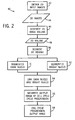
- FIG. 2 is a flow chart depicting a process segmenting cell images in accordance with the present technique
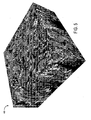
- FIG. 3 is an exemplary two-dimensional cell image in accordance with the present technique
- FIG. 4 is a flow chart depicting a process for generating a three-dimensional image volume in accordance with the present technique
- FIG. 5 is an exemplary three-dimensional cell image volume in accordance with the present technique
- FIGL 6 is an exemplary tree display indicating at which point during the cell cycle progression the segmenting and linking steps are performed
- FIG. 7 is a flow chart depicting a process for performing a fast marching technique on cell images
- FIG. 8 is an exemplary coded tree display illustrating progression of a parent cell and daughter cells through the cell cycle over time.
- FIG. 9 is an alternate tree display showing progression of a parent cell and daughter cells through the cell cycle over time.
- the cell cycle may be divided into four distinct phases.
- DNA in the cell nucleus is replicated during the "S" phase of the cell cycle (for "synthesis”).
- the entire cell-division phase is denoted as the “M” phase (for "mitosis”).
- M phase for "mitosis”
- Interphase is a term for the non-mitotic phases of the cell cycle, and includes G1, S, and G2 phases.
- interphase may comprise 90% or more of the total cell cycle time.
- a cell-cycle altering stimulus e.g. irradiation, sonification
- normal progress through the cell cycle may be blocked, so that the relative time spent in a particular cell cycle phase is much longer compared to untreated cells.
- one method of assessing the effect of a known or putative cell cycle altering agent or compound is to examine the cell cycle progression for a population of cells that have been treated with the compound. Cell cycle progression in live cells may be assessed automatically via the imaging techniques and devices provided herein.
- the present techniques track cellular changes over time.
- Standard tracking approaches generally assume either that the appearance of the objects or the trajectory are not changing. However, during the cell cycle, both the appearance and the trajectory of the cells change with time. Therefore, it is difficult to approach the problem using standard tracking techniques.
- the present techniques consider two-dimensional image slices taken over time as a spatiotemporal volume and then segment the nuclei in this volume in order to classify the cells within the various phases of the cell cycle.
- FIG. 1 An exemplary imaging system 10 capable of operating in accordance with the present technique is depicted in Fig. 1 .
- the imaging system 10 includes an imager 12 that detects signals and converts the signals to data that may be processed by downstream processors.
- the imager 12 may operate in accordance with various physical principles for creating the image data. In general, however, the imager 12 creates image data indicative of a population of cells 14, shown here as being grown in a multi-well culture plate, either in a conventional medium, such as photographic film, or in a digital medium.
- the imager 12 operates under the control of system control circuitry 16.
- the system control circuitry 16 may include a wide range of circuits, such as radiation source control circuits, timing circuits, circuits for coordinating data acquisition in conjunction with sample movements, circuits for controlling the position of radiation sources and detectors, and so forth.
- the system control circuitry 16 may also include memory elements, such as magnetic or optical storage media, for storing programs and routines executed by the system control circuitry 16 or by associated components of the system 10.
- the stored programs or routines may include programs or routines for performing all or part of the present technique.
- Image data acquired by the imager 12 may be processed by the imager 12, for a variety of purposes, for example to convert the acquired data or signal to digital values, and provided to data acquisition circuitry 18.
- the data acquisition circuitry 18 may perform a wide range of processing functions, such as adjustment of digital dynamic ranges, smoothing or sharpening of data, as well as compiling of data streams and files, where desired.
- the data acquisition circuitry 18 may also transfer acquisition image data to data processing circuitry 20, where additional processing and analysis may be performed.
- the data processing circuitry 20 may perform substantial analyses of image data, including ordering, sharpening, smoothing, feature recognition, and so forth.
- the data processing circuitry 20 may receive data for one or more sample sources, ( e.g. multiple wells of a multi-well plate.
- the processed image data may be stored in short or long term storage devices, such as picture archiving communication systems, which may be located within or remote from the imaging system 10 and/or reconstructed and displayed for an operator, such as at the operator workstation 22.
- the operator workstation 22 may control the above-described operations and functions of the imaging system 10, typically via an interface with the system control circuitry 16.
- the operator workstation 22 may include one or more processor-based components, such as general purpose or application specific computers 24.
- the operator workstation 22 may include various memory and/or storage components including magnetic and optical mass storage devices, internal memory, such as RAM chips.
- the memory and/or storage components may be used for storing programs and routines for performing the techniques described herein that are executed by the operator workstation 22 or by associated components of the system 10.
- the programs and routines may be stored on a computer accessible storage and/or memory remote from the operator workstation 22 but accessible by network and/or communication interfaces present on the operator workstation 22.
- the operator workstation 22 may also comprise various input/output (I/O) interfaces, as well as various network or communication interfaces.
- the various I/O interfaces may allow communication with user interface devices, such as a display 26, keyboard 28, mouse 30, and printer 32, that may be used for viewing and inputting configuration information and/or for operating the imaging system 10.
- the various network and communication interfaces may allow connection to both local and wide area intranets and storage networks as well as the Internet.
- the various I/O and communication interfaces may utilize wires, lines, or suitable wireless interfaces, as appropriate or desired.
- an imaging scanner or station may include an operator workstation 22 which permits regulation of the parameters involved in the image data acquisition procedure, whereas a different operator workstation 22 may be provided for manipulating, enhancing, and viewing results and reconstructed images.
- the imager 12 may be any suitable imaging device, including a fluorescence microscope, a confocal fluorescence microscope, a laser scanning confocal microscope, or a total internal reflection fluorescence microscope.
- the imaging system 10 may include an IN Cell Analyzer 1000 or an IN Cell Analyzer 3000 (GE Healthcare) using 488 nm excitation and a 535 nm emission filter for cells growing in 96 well plates and maintained on the instrument throughout the duration of imaging under standard culture conditions (37°C/5%CO2).
- the cells 14 may be any appropriate cell type.
- Cells that may be imaged may include mammalian cells, human cells, immortalized cell lines, hyperproliferative cells, cancer cells, vascular smooth muscle cells, endothelial cells, stem cells, gametes, etc.
- the cells 14 may be grown in any appropriate cell culture media.
- the cells 14 may be grown in varied conditions. Aliquots of cells from a single source or cells from multiple sources may be processed in parallel, wherein the cells arc subjected to the same or varied stimuli ( e.g. exposure to a chemical agent).
- multiple cell samples may be processed in a multi-well plate, wherein some wells include compounds, such as putative therapeutic compounds, while other wells contain no compound ( i.e. control cells).
- cells may be treated with known cell cycle blockers, such as Roscovitine or Nocodazole.
- test compound or “drug candidate” or “modulator” or grammatical equivalents as used herein describes any molecule, either naturally occurring or synthetic, e.g., protein, oligopeptide (e.g., from about 5 to about 25 amino acids in length), small organic molecule, polysaccharide, lipid, fatty acid, polynucleotide, oligonucleotide, etc., to be tested for the capacity to directly or indirectly affect the cell cycle.
- the test compound can be in the form of a library of test compounds, such as a combinatorial or randomized library that provides a sufficient range of compound structural diversity.
- cells may be genetically altered by "knocking out” or silencing specific genes. It may also be appropriate to assess the effect of the removal or alteration of particular genes on cell cycle progression.
- a cell cycle phase marker is a fluorescent protein-based sensor that provides an indication of cell cycle status of individual cells in an asynchronous population.
- the helicase B domain of the fusion protein moves between nucleus and cytoplasm during cell cycle progression, thus creating different fluorescence patterns as the cell moves through the cell cycle.
- the present techniques employ computer analysis algorithms for automatically segmenting nuclei based on this differential staining effect and generating simple and meaningful representations of the results.
- the computer analysis method 40 used to classify cells into various stages of the cell cycle is shown in Fig. 2 .
- the imaging system 10 obtains two-dimensional images 44 (see Fig. 3 ) of cells stained with an appropriate staining marker over time.
- the imaging system 10 may obtain a sufficient number of images over a sufficiently long amount of time to generate a three-dimensional image volume 48 in step 46.
- an imaging system may obtain around 100 images of 1280*1280 pixels in size, each taken approximately 30 minutes apart.
- the three-dimensional image voume is segmented into dark nuclei 51 and bright nuclei 52.
- the dark nuclei 51 are segmented using a three-dimensional implementation of level sets constrained with high curvature and strong attraction towards edges to prevent the evolving surface from leaking out of the nuclei into the background.
- the main advantages of using level sets is that arbitrarily complex shapes can be modeled and topological changes such as merging and splitting are handled implicitly.
- A is an advection term
- P is a propagation (expansion) term
- Z is a spatial modifier term for the mean curvature K .
- the scalar constants ⁇ , ⁇ , and ⁇ weight the relative influence of each of the terms on the movement of the interface.
- g is a decreasing function of the image gradient
- ⁇ is a weighing parameter
- s(D) is described below.
- This function g results in a speed image that is close to 1 in areas of low gradient and close to 0 in areas of high gradient so that the level set slows down at the edges.
- the function g may be set based on a sigmoid function.
- the level set leaks, it will proceed rapidly in the background, and, if allowed to propagate, the level set from these weak-edge nuclei can eventually join with other nuclei and result in unusable segmentations.
- the advection force may be increased, which attracts the level set to edges, and leaking is substantially diminished.
- the constantly changing intensity profile of the dynamic cell cycle sensor frequently yields gradients inside the nucleus, therefore, a high advection force can cause the level set to become stuck in local minima inside of the nucleus.
- a size constraint may be implemented, or the level set may incorporate prior knowledge of the nuclei locations.
- a set of seed points may be used to initialize the three-dimensional level set evolution.
- a seed placement step employing a normalized cross-correlation with a template at multiple scales in combination with a set of low level features places seed points near the medial axis of a cell.
- a model may be constructed of the location of the nuclear edge from a mapping of the distance function from the seeds that will affect the speed of the level set function.
- a sigmoid may be used for the mapping function because it results in smoothly varying speed values, and the parameters may be set so that the zero crossing of the speed function occurs at the expected nuclear size.
- the scalar multiplication and subtraction factors lead to a function that yields speeds from 1 to -1. Thus, rather than updating the model at every iteration as some other methods do, it only needs to be calculated at the beginning, leading to increased computational efficiency.
- the sigmoid function described above may be applied to the propagation term of the level set equation to slow down this term as the level set expands.
- the equation may be balanced against the g edge function that is already multiplied by the propagation term.
- a variable ⁇ may control the relative weight of these edge and distance forces. As ⁇ increases, more weight is given to the edge function and less to the distance function.
- the bright nuclei 52 are segmented using a region growing technique. As cells progress through the cell cycle, the intensity of the nucleus transitions from bright to dark and then back to bright again as the cells split into daughter cells. While the dark nuclei 51 are segmented using an implementation of level sets, bright nuclei 52 in the M and G1 phases are characterized by very bright image intensity, and these bright nuclei 52 may be segmented using a region growing method starting from a conservative threshold. The cells in the remaining S phase blend with the background and thus need to be bridged using three-dimensional spatial constraints.
- linking methods result in fully connected three-dimensional nucleus "trees" that describe the evolution of the cells through their cell cycles.
- the method thus enables the digital tracking of cell movement and division as well as cell cycle status, producing color coded (or otherwise visually coded) "trees" in step 56. From this output image 58, the spatial location, nuclear size (represented by the shape of the cross-section of the tree), and position of the cell in the cycle may be determined.
- the algorithm enables the user to track the history of cells in space and time in conjunction with measuring the output from any dynamic cellular marker (for example, GFP-based or other dynamic marker) in time across a population of cells, where each three-dimensional data "slice" comes from a separate frame of time lapse.
- the frame interval may be seconds, minutes, or hours, depending on the temporal characteristics of the sensor and the cellular process being studied.
- Such a three-dimensional representation of the cell cycle may allow a biologically relevant conclusion to be drawn from the imaging data.
- the three-dimensional representation may allow visualization of perturbations of the cell cycle, which may allow conclusions to be drawn regarding the effectiveness of a particular therapeutic cell cycle blocking agent.
- Such visualization may be at the level of a population of cells, or at the level of a single cell within the population.
- Fig. 3 is an exemplary two-dimensional stained cell image 44 that may be obtained from an imaging system 10 using the present techniques.
- Image analysis to achieve cell tracking and cell cycle analysis in the absence of a separate non-dynamic nuclear marker results in a change in fluorescence distribution through the cell cycle.
- the analysis procedure is capable of registering bright nuclei in G 1 cells and inferring nuclear position from the "holes" left in the cytoplasm in G2 cells, shown as dark spots within a brightly stained cytoplasm.
- the images 44 may be preprocessed to remove noise and identify nuclei seeds.
- Fig. 4 shows an exemplary preprocessing technique 60.
- the images 44 are smoothed using a level set smoothing algorithm in step 62.
- seeds are automatically detected in step 64 using a normalized cross-correlation model of the nuclei followed by a seed classification step 66.
- the background is masked in step 68 using a combination of threshold, edge based, and curvature constraints to segment the majority of the background while avoiding the dark nuclei.
- the dark nuclei in the two-dimensional time-lapse images are then segmented (see Fig. 2 ) as a three-dimensional volume 48 using level set methods.
- the images are first smoothed in two-dimensional space in step 62 using a curvature-based level set approach in order to remove spurious noise while retaining the edges of the nuclei.
- the method chosen for the smoothing is the modified curvature diffusion equation, which is a level set analog of the anisotropic diffusion equation.
- initial seeds may first be defined in step 64.
- a two-step approach may be employed for two-dimensional seed creation: normalized cross correlation with a ring-like kernel followed by point classification.
- the normalized cross-correlation with a ring kernel that is positive inside the ring band, negative inside, and zero outside yields high correlation values for nuclei, which are dark structures surrounded by bright cytoplasm. Thresholding of the correlation image can thus effectively detect nuclei.
- step 64 may also yield several detections in the background since background segments surrounded by the cytoplasm of nearby cells look similar to the nuclei.
- the point detection step may be followed by a seed point classification step 66 using edge curvature measures.
- a Canny-based edge detection step is carried out.
- the resulting edges are separated into those having positive curvature, negative curvature, and zero curvature.
- a set of training seed points are manually classified into the categories of strong nuclei, weak nuclei, and background from a training image.
- a region of interest around the point is evaluated, and the number of edges with positive curvature as well as the magnitude of those edges is measured.
- the nuclei are classified with two measures because the edges around the nuclei generally have positive curvature because nuclei comprise dark structures surrounded by bright structures.
- the edges with positive curvature around the background are generally fewer in number and magnitude, and thus may not significantly effect the classification of the nuclei with positive curvature around the edges.
- a Fisher linear discriminant classifier may be used to separate the scatter plot of seed points into nuclei versus background. Each training point is represented as a point in this classification scatter plot. The x-axis represents the sum of the number of positive curvature edges under the mask, and the y-axis represents the sum of the magnitude of these edges. Using this classification line, the automatically generated points from the normalized cross-correlation step for testing images are then classified.
- a background masking algorithm which captures most of the background, is used in step 68 to further remove candidate seeds and to prevent the three-dimensional "tunnel" level set from leaking into the background. Based on the image intensity characteristics, this algorithm thresholds the image with a conservative value to extract parts that are in the background but not in dark nuclei. The algorithm then grows these regions with a level set using a combination of an upper threshold with a gradient measure and curvature. With the smooth images, the seeds, and the masked background in place, the three-dimensional level set segmentation on the three-dimensional image volume 48, described in Fig. 2 , may then be carried out.
- Fig. 5 is shows an exemplary three-dimensional image volume 48.
- the G2 phase nuclei can be seen as dark tunnels that carve through the volume. Because a normally propagating cell spends the majority of its time in this phase, segmenting these dark tunnels facilitates classification of the cells within the cell cycle. It is envisioned that an operator may select individual sections or views of the three-dimensional image volume 48 for more detailed analysis. For example, because the three-dimensional image volume 48 is formed from a series of time-lapse two-dimensional images, an operator may be able to select individual two-dimensional images 44 from within the three-dimensional image volume 48 in order to view a population of cells at a particular temporal stage. The operator may then scroll through the individual two-dimensional images 44 by moving through space in the three-dimensional image volume 48.
- an operator may view an individual cell over time in the three-dimensional image volume 48.
- Such a view may be a visually coded tree (see Fig. 6 ), linking the individual cell to its daughter cells.
- An operator may move between tree views of individual cells to the three-dimensional image volume 48 or to a series of two-dimensional images 44.
- an operator may also move from a representational view of a three-dimensional image volume 48, visually coded tree, or a two-dimensional image 44 to obtain data that relates to either an individual cell or a population of cells.
- an operator may switch from a tree view to a data file that includes data relating to the parent and daughter cells represented in the tree.
- the three-dimensional image volume 48 may allow an operator to view multiple visual representations of the imaging data in order to facilitate analysis and tracking of cell cycle progression. Further, the three-dimensional image volume 48 may also allow an operator to directly access the raw data obtained from the images for further processing.
- Fig. 6 is a representation of cell cycle phases as a visually coded tree. As depicted, the present techniques may follow the progress of an individual cell with in a three-dimensional image volume 48. Shown are the coded trees of three parent cells and their corresponding daughter cells. The algorithms first segment the G2 phase, which is the longest lasting, and then link across the other phases to locate the corresponding daughter cells. To obtain a full three-dimensional tree structure, a subsequent step connects the corresponding G2 phase segmentations together by tracking across the other phases. In one embodiment, parent and daughter cells were associated by minimizing a Euclidean distance.
- a fast marching method may be used to associate parent and daughter cells.
- Fig. 7 is a flow chart describing such a process 70.
- a starting point is chosen at the end of the G2 phase of a parent cell.
- control is passed to step 74, in which a processor finds the speed image to the entire domain from the parent cell.
- the fast marching algorithm is performed in the speed image in step 76, allowing a processor to choose the two closest daughter cells to associate with the parent in step 76.
- the algorithm may extract the paths to the daughter cells using gradient descent from the daughters to the parent.
- this algorithm results in a time-crossing map for every point in the image, and the daughter cells of the parent may be determined by finding the two segmented G2 phases whose starting points have the smallest times.
- the fast marching method Given a starting point, the fast marching method builds the solution outwards from the boundary condition choosing the smallest time at each step of its evolution. Because it only allows the evolving curve to pass each point once, it can be solved without iteration, which makes it very fast.
- the domain in which the object travels may also have a weighted metric so that the front can evolve faster in some areas than others.
- This method can be used to solve path planning problems, where the goal is to find the shortest path from an initial position to a final position.
- the fast marching method is used to find the time-crossing map for the curve evolving from a starting point A.
- This method has been used for such applications as finding the optimal path for moving objects through mazes where the cost function (binary in this case) is defined to be zero at walls and unity everywhere else.
- the cost function is based on nuclear intensity. In this model, the cost function switches from emphasizing bright nuclei to dark nuclei along the tracks.
- the cost is low (fast moving) in bright nuclei and high in dark areas at the beginning of the track and gradually switches to a low cost for dark nuclei and high cost for bright areas.
- the speed function is found by mapping the intensities with a sigmoid function.
- Fig. 8 and Fig. 9 are alternate schematic tree displays for studying the effects of antiproliferative drugs on the progression of the cell cycle.
- Such tree and branch representations of high complexity data may enable visualization of variations in many parameters that characterize cell cycle modification.
- Such variations may include intra-lineage and inter-lineage changes in duration of cell cycle phases (length of colour on branch), cell cycle blocks (extended tree branch in single color), accelerated or delayed mitosis (distance between branch nodes), nuclear morphology (branch thickness), DNA endoreduplication (replication of DNA during S phase), or nuclear fragmentation (splitting of branches to twigs) and cell death (branch termination).
- intra-lineage and inter-lineage changes in duration of cell cycle phases length of colour on branch
- cell cycle blocks extended tree branch in single color
- accelerated or delayed mitosis distance between branch nodes
- nuclear morphology branch thickness
- DNA endoreduplication replication of DNA during S phase
- nuclear fragmentation splitting of branches to twigs
- Fig. 9 is a schematic image showing individual "slices" that may correspond to each original two-dimensional image. In any case, such displays may provide useful information to a researcher about the effects of a potential therapeutic compound on cell cycle progression. For example, as each three-dimensional image volume 48 may generate multiple trees, these trees may be averaged to provide a composite tree image detailing the average length of time in each cell cycle. Such a composite tree may be compared to other trees, such as controls, in order to provide an estimate of cell cycle alteration.
Landscapes
- Engineering & Computer Science (AREA)
- Physics & Mathematics (AREA)
- General Physics & Mathematics (AREA)
- Theoretical Computer Science (AREA)
- Computer Vision & Pattern Recognition (AREA)
- Multimedia (AREA)
- Health & Medical Sciences (AREA)
- General Health & Medical Sciences (AREA)
- Radiology & Medical Imaging (AREA)
- Nuclear Medicine, Radiotherapy & Molecular Imaging (AREA)
- Medical Informatics (AREA)
- Quality & Reliability (AREA)
- Software Systems (AREA)
- Life Sciences & Earth Sciences (AREA)
- Biomedical Technology (AREA)
- Molecular Biology (AREA)
- Investigating Or Analysing Biological Materials (AREA)
- Image Processing (AREA)
- Apparatus Associated With Microorganisms And Enzymes (AREA)
- Measuring Or Testing Involving Enzymes Or Micro-Organisms (AREA)
- Investigating, Analyzing Materials By Fluorescence Or Luminescence (AREA)
Priority Applications (1)
| Application Number | Priority Date | Filing Date | Title |
|---|---|---|---|
| PL06850118T PL1946270T3 (pl) | 2005-11-12 | 2006-11-08 | Poklatkowa analiza cyklu komórkowego dla niebarwionych jąder |
Applications Claiming Priority (2)
| Application Number | Priority Date | Filing Date | Title |
|---|---|---|---|
| US73634505P | 2005-11-12 | 2005-11-12 | |
| PCT/US2006/060646 WO2007097816A2 (en) | 2005-11-12 | 2006-11-08 | Time-lapse cell cycle analysis of unstained nuclei |
Publications (2)
| Publication Number | Publication Date |
|---|---|
| EP1946270A2 EP1946270A2 (en) | 2008-07-23 |
| EP1946270B1 true EP1946270B1 (en) | 2011-11-02 |
Family
ID=38437827
Family Applications (1)
| Application Number | Title | Priority Date | Filing Date |
|---|---|---|---|
| EP06850118A Not-in-force EP1946270B1 (en) | 2005-11-12 | 2006-11-08 | Time-lapse cell cycle analysis of unstained nuclei |
Country Status (10)
| Country | Link |
|---|---|
| US (1) | US7817841B2 (enExample) |
| EP (1) | EP1946270B1 (enExample) |
| JP (1) | JP5069245B2 (enExample) |
| AT (1) | ATE532154T1 (enExample) |
| AU (1) | AU2006338566B2 (enExample) |
| CA (1) | CA2629349C (enExample) |
| DK (1) | DK1946270T3 (enExample) |
| ES (1) | ES2373689T3 (enExample) |
| PL (1) | PL1946270T3 (enExample) |
| WO (1) | WO2007097816A2 (enExample) |
Families Citing this family (19)
| Publication number | Priority date | Publication date | Assignee | Title |
|---|---|---|---|---|
| JP4973162B2 (ja) * | 2006-12-01 | 2012-07-11 | 株式会社ニコン | 画像処理装置、画像処理プログラム及び観察システム |
| WO2008153836A2 (en) * | 2007-05-31 | 2008-12-18 | President And Fellows Of Harvard College | Target-locking acquisition with real-time confocal (tarc) microscopy |
| US7940978B2 (en) * | 2007-06-05 | 2011-05-10 | General Electric Company | Automatic characterization of cellular motion |
| US8411919B2 (en) * | 2008-07-07 | 2013-04-02 | Siemens Aktiengesellschaft | Fluid dynamics approach to image segmentation |
| JP2010540939A (ja) * | 2007-09-26 | 2010-12-24 | マサチューセッツ インスティテュート オブ テクノロジー | 単一半導体ナノクリスタルの高分解能3dイメージング |
| JP5762764B2 (ja) * | 2011-02-09 | 2015-08-12 | オリンパス株式会社 | 細胞画像解析システム |
| US9070004B2 (en) | 2012-05-03 | 2015-06-30 | General Electric Company | Automatic segmentation and characterization of cellular motion |
| CN103218828B (zh) * | 2013-03-22 | 2015-09-30 | 常熟理工学院 | 一种多细胞相互作用跟踪系统 |
| US9173909B2 (en) * | 2013-05-23 | 2015-11-03 | Drvision Technologies Llc | Image guided protocol for cell generation |
| US20150269314A1 (en) | 2014-03-20 | 2015-09-24 | Rudjer Boskovic Institute | Method and apparatus for unsupervised segmentation of microscopic color image of unstained specimen and digital staining of segmented histological structures |
| WO2016172612A1 (en) * | 2015-04-23 | 2016-10-27 | Cedars-Sinai Medical Center | Automated delineation of nuclei for three dimensional (3-d) high content screening |
| WO2017002300A1 (en) | 2015-06-30 | 2017-01-05 | Sony Corporation | Information processing apparatus, information processing system, and information processing method |
| JP6746945B2 (ja) * | 2015-06-30 | 2020-08-26 | ソニー株式会社 | 情報処理装置、情報処理システム及び情報処理方法 |
| US10510150B2 (en) | 2017-06-20 | 2019-12-17 | International Business Machines Corporation | Searching trees: live time-lapse cell-cycle progression modeling and analysis |
| JP2020530637A (ja) | 2017-08-09 | 2020-10-22 | アレン インスティテュート | 予測タグ付けを有する画像を生成するための画像処理のためのシステム、デバイス、および方法 |
| US10423819B2 (en) * | 2017-10-31 | 2019-09-24 | Chung Yuan Christian University | Method and apparatus for image processing and visualization for analyzing cell kinematics in cell culture |
| EP3734345B1 (en) | 2019-04-30 | 2023-08-02 | Leica Microsystems CMS GmbH | Image processing device, system, and method for improving signal-to-noise of microscopy images |
| US11947270B2 (en) * | 2020-02-26 | 2024-04-02 | Fei Company | Metrology of semiconductor devices in electron micrographs using fast marching level sets |
| US12399100B2 (en) | 2020-08-12 | 2025-08-26 | Allen Institute | Systems, devices, and methods for quality control of cell production using predictive tagging |
Citations (1)
| Publication number | Priority date | Publication date | Assignee | Title |
|---|---|---|---|---|
| WO2004088573A1 (en) * | 2003-04-02 | 2004-10-14 | Amersham Biosciences Uk Limited | Determining cell cycle phase data |
Family Cites Families (29)
| Publication number | Priority date | Publication date | Assignee | Title |
|---|---|---|---|---|
| DE2903855A1 (de) | 1979-02-01 | 1980-08-14 | Bloss Werner H Prof Dr Ing | Verfahren zum automatischen markieren von zellen und bestimmung der merkmale von zellen aus zytologischen abstrichpraeparaten |
| DE3836716A1 (de) | 1988-10-28 | 1990-05-03 | Zeiss Carl Fa | Verfahren zur auswertung von zellbildern |
| US5162990A (en) | 1990-06-15 | 1992-11-10 | The United States Of America As Represented By The United States Navy | System and method for quantifying macrophage phagocytosis by computer image analysis |
| US5548661A (en) | 1991-07-12 | 1996-08-20 | Price; Jeffrey H. | Operator independent image cytometer |
| US5361763A (en) | 1993-03-02 | 1994-11-08 | Wisconsin Alumni Research Foundation | Method for segmenting features in an image |
| WO1997004418A1 (en) | 1995-07-19 | 1997-02-06 | Morphometrix Technologies Inc. | Multi-spectral segmentation for image analysis |
| AUPP278698A0 (en) | 1998-04-03 | 1998-04-30 | University Of Queensland, The | Method of cell nuclei segmentation |
| US7151847B2 (en) | 2001-02-20 | 2006-12-19 | Cytokinetics, Inc. | Image analysis of the golgi complex |
| US7546210B2 (en) | 2000-06-08 | 2009-06-09 | The Regents Of The University Of California | Visual-servoing optical microscopy |
| AUPQ849200A0 (en) | 2000-06-30 | 2000-07-27 | Cea Technologies Inc. | Unsupervised scene segmentation |
| US20030134269A1 (en) * | 2000-11-22 | 2003-07-17 | Hiroyuki Hirai | Cell proliferation ability evaluation method and apparatus |
| US6956961B2 (en) | 2001-02-20 | 2005-10-18 | Cytokinetics, Inc. | Extracting shape information contained in cell images |
| WO2002080110A1 (en) | 2001-03-29 | 2002-10-10 | Koninklijke Philips Electronics N.V. | Image processing method for fitness estimation of a 3d mesh model mapped onto a 3d surface of an object |
| US20040071328A1 (en) | 2001-09-07 | 2004-04-15 | Vaisberg Eugeni A. | Classifying cells based on information contained in cell images |
| JP4749637B2 (ja) * | 2001-09-28 | 2011-08-17 | オリンパス株式会社 | 画像解析方法、装置、及び記録媒体 |
| US7756305B2 (en) * | 2002-01-23 | 2010-07-13 | The Regents Of The University Of California | Fast 3D cytometry for information in tissue engineering |
| DE10217858C1 (de) | 2002-04-22 | 2003-10-02 | Fraunhofer Ges Forschung | Verfahren zur Trennung einer in einer Probe enthaltenen Zellgruppe in Einzelzellen |
| US7274809B2 (en) | 2002-08-29 | 2007-09-25 | Perceptronix Medical, Inc. And British Columbia Cancer Agency | Computerized methods and systems related to the detection of malignancy-associated changes (MAC) to detect cancer |
| WO2004025556A2 (en) * | 2002-09-12 | 2004-03-25 | Baylor College Of Medecine | System and method for image segmentation |
| GB2401431B (en) | 2003-04-02 | 2005-04-27 | Amersham Biosciences Uk Ltd | Method of, and computer software for, classification of cells into subpopulations |
| WO2004099773A1 (en) | 2003-04-30 | 2004-11-18 | Pfizer Products Inc. | Automated in vitro cellular imaging assays for micronuclei and other target objects |
| US20060247862A1 (en) | 2003-09-08 | 2006-11-02 | Arini Nicholas S | Determining cell cycle phase data |
| JP3955953B2 (ja) | 2003-09-12 | 2007-08-08 | 国立大学法人広島大学 | 画像分割処理装置、画像分割処理方法及び画像分割処理集積化回路 |
| US7580556B2 (en) | 2004-01-26 | 2009-08-25 | Drvision Technologies Llc | Image region partitioning using pre-labeled regions |
| GB2412803A (en) | 2004-03-30 | 2005-10-05 | Amersham Biosciences Niagara I | Image segmentation using local and remote pixel value comparison |
| US20050273271A1 (en) | 2004-04-05 | 2005-12-08 | Aibing Rao | Method of characterizing cell shape |
| US7711174B2 (en) | 2004-05-13 | 2010-05-04 | The Charles Stark Draper Laboratory, Inc. | Methods and systems for imaging cells |
| EP1615170A1 (en) | 2004-07-10 | 2006-01-11 | Evotec Technologies GmbH | Image segmentation algorithms for applications in cellular biology |
| WO2006047502A2 (en) | 2004-10-25 | 2006-05-04 | Brigham And Women's Hospital | Automated segmentation, classification and tracking of cell nuclei in time-lapse microscopy |
-
2006
- 2006-10-27 US US11/589,001 patent/US7817841B2/en not_active Expired - Fee Related
- 2006-11-08 CA CA2629349A patent/CA2629349C/en not_active Expired - Fee Related
- 2006-11-08 AT AT06850118T patent/ATE532154T1/de active
- 2006-11-08 DK DK06850118.8T patent/DK1946270T3/da active
- 2006-11-08 JP JP2008540324A patent/JP5069245B2/ja not_active Expired - Fee Related
- 2006-11-08 ES ES06850118T patent/ES2373689T3/es active Active
- 2006-11-08 EP EP06850118A patent/EP1946270B1/en not_active Not-in-force
- 2006-11-08 WO PCT/US2006/060646 patent/WO2007097816A2/en not_active Ceased
- 2006-11-08 PL PL06850118T patent/PL1946270T3/pl unknown
- 2006-11-08 AU AU2006338566A patent/AU2006338566B2/en not_active Ceased
Patent Citations (1)
| Publication number | Priority date | Publication date | Assignee | Title |
|---|---|---|---|---|
| WO2004088573A1 (en) * | 2003-04-02 | 2004-10-14 | Amersham Biosciences Uk Limited | Determining cell cycle phase data |
Also Published As
| Publication number | Publication date |
|---|---|
| ATE532154T1 (de) | 2011-11-15 |
| AU2006338566B2 (en) | 2011-12-15 |
| AU2006338566A1 (en) | 2007-08-30 |
| CA2629349C (en) | 2014-08-26 |
| JP2009515533A (ja) | 2009-04-16 |
| US20070109874A1 (en) | 2007-05-17 |
| EP1946270A2 (en) | 2008-07-23 |
| JP5069245B2 (ja) | 2012-11-07 |
| CA2629349A1 (en) | 2007-08-30 |
| ES2373689T3 (es) | 2012-02-07 |
| PL1946270T3 (pl) | 2012-05-31 |
| DK1946270T3 (da) | 2011-12-12 |
| WO2007097816A2 (en) | 2007-08-30 |
| US7817841B2 (en) | 2010-10-19 |
| WO2007097816A3 (en) | 2008-01-10 |
Similar Documents
| Publication | Publication Date | Title |
|---|---|---|
| EP1946270B1 (en) | Time-lapse cell cycle analysis of unstained nuclei | |
| JP7201681B2 (ja) | 単一チャネル全細胞セグメンテーションのためのシステム及び方法 | |
| Di Cataldo et al. | Computer-aided techniques for chromogenic immunohistochemistry: status and directions | |
| Padfield et al. | Spatio-temporal cell cycle phase analysis using level sets and fast marching methods | |
| JP5602717B2 (ja) | 高密度細胞集団の自動セグメンテーション方法およびシステム | |
| İnik et al. | A new method for automatic counting of ovarian follicles on whole slide histological images based on convolutional neural network | |
| Kabir et al. | The utility of a deep learning-based approach in Her-2/neu assessment in breast cancer | |
| US10423820B2 (en) | Systems and methods for automatic generation of training sets for machine interpretation of images | |
| Kulikova et al. | Nuclei extraction from histopathological images using a marked point process approach | |
| Madhloom et al. | Computer-aided acute leukemia blast cells segmentation in peripheral blood images | |
| Uka et al. | FASTER R-CNN for cell counting in low contrast microscopic images | |
| Nazeran et al. | Biomedical image processing in pathology: a review | |
| Padfield et al. | Spatio-temporal cell cycle analysis using 3D level set segmentation of unstained nuclei in line scan confocal fluorescence images | |
| Kuo et al. | Automated assessment in HER-2/neu immunohistochemical expression of breast cancer | |
| Meruvia-Pastor et al. | Estimating cell count and distribution in labeled histological samples using incremental cell search | |
| Aboudessouki et al. | Enhanced Breast Cancer Molecular Biomarker Classification: A Novel Two-Stage Machine Learning Pipeline for Accurate Histological Analysis of Whole Slide Images | |
| Corrigan et al. | Quantitative measurement of transcription dynamics in living cells | |
| Jeffine et al. | Classification, Segmentation and Quantification of acute lymphoblastic leukemia cells in the bone marrow | |
| Gagniuc | Image Segmentation and Feature Extraction | |
| Rashmi et al. | Diagnosis of breast cancer from histopathological images using artificial intelligence | |
| EP4662601A1 (en) | Method for determining at least one physical value in data and associated products | |
| Enomoto et al. | Classification Method of Corneocytes from Brilliant Green-Stained Images Using Deep Learning | |
| Štajduhar | Computational histology image analysis of human cerebral cortex cytoarchitectonics | |
| Morales et al. | Cell Microscopy Imaging: A Review on Digital Image Processing Applications | |
| Meruvia-Pastor et al. | Research Article Estimating Cell Count and Distribution in Labeled Histological Samples Using Incremental Cell Search |
Legal Events
| Date | Code | Title | Description |
|---|---|---|---|
| PUAI | Public reference made under article 153(3) epc to a published international application that has entered the european phase |
Free format text: ORIGINAL CODE: 0009012 |
|
| 17P | Request for examination filed |
Effective date: 20080507 |
|
| AK | Designated contracting states |
Kind code of ref document: A2 Designated state(s): AT BE BG CH CY CZ DE DK EE ES FI FR GB GR HU IE IS IT LI LT LU LV MC NL PL PT RO SE SI SK TR |
|
| AX | Request for extension of the european patent |
Extension state: AL BA HR MK RS |
|
| RIN1 | Information on inventor provided before grant (corrected) |
Inventor name: SEBASTIAN, THOMAS Inventor name: PADFIELD, DIRK R. Inventor name: THOMAS, NICHOLAS Inventor name: RITTSCHER, JENS |
|
| 17Q | First examination report despatched |
Effective date: 20100511 |
|
| GRAP | Despatch of communication of intention to grant a patent |
Free format text: ORIGINAL CODE: EPIDOSNIGR1 |
|
| DAX | Request for extension of the european patent (deleted) | ||
| GRAS | Grant fee paid |
Free format text: ORIGINAL CODE: EPIDOSNIGR3 |
|
| GRAA | (expected) grant |
Free format text: ORIGINAL CODE: 0009210 |
|
| AK | Designated contracting states |
Kind code of ref document: B1 Designated state(s): AT BE BG CH CY CZ DE DK EE ES FI FR GB GR HU IE IS IT LI LT LU LV MC NL PL PT RO SE SI SK TR |
|
| REG | Reference to a national code |
Ref country code: GB Ref legal event code: FG4D |
|
| REG | Reference to a national code |
Ref country code: CH Ref legal event code: NV Representative=s name: SERVOPATENT GMBH Ref country code: CH Ref legal event code: EP |
|
| REG | Reference to a national code |
Ref country code: IE Ref legal event code: FG4D |
|
| REG | Reference to a national code |
Ref country code: DK Ref legal event code: T3 |
|
| REG | Reference to a national code |
Ref country code: DE Ref legal event code: R096 Ref document number: 602006025636 Country of ref document: DE Effective date: 20111229 |
|
| REG | Reference to a national code |
Ref country code: NL Ref legal event code: T3 |
|
| REG | Reference to a national code |
Ref country code: SE Ref legal event code: TRGR |
|
| REG | Reference to a national code |
Ref country code: ES Ref legal event code: FG2A Ref document number: 2373689 Country of ref document: ES Kind code of ref document: T3 Effective date: 20120207 |
|
| LTIE | Lt: invalidation of european patent or patent extension |
Effective date: 20111102 |
|
| PG25 | Lapsed in a contracting state [announced via postgrant information from national office to epo] |
Ref country code: IS Free format text: LAPSE BECAUSE OF FAILURE TO SUBMIT A TRANSLATION OF THE DESCRIPTION OR TO PAY THE FEE WITHIN THE PRESCRIBED TIME-LIMIT Effective date: 20120302 Ref country code: LT Free format text: LAPSE BECAUSE OF FAILURE TO SUBMIT A TRANSLATION OF THE DESCRIPTION OR TO PAY THE FEE WITHIN THE PRESCRIBED TIME-LIMIT Effective date: 20111102 |
|
| PG25 | Lapsed in a contracting state [announced via postgrant information from national office to epo] |
Ref country code: SI Free format text: LAPSE BECAUSE OF FAILURE TO SUBMIT A TRANSLATION OF THE DESCRIPTION OR TO PAY THE FEE WITHIN THE PRESCRIBED TIME-LIMIT Effective date: 20111102 Ref country code: BE Free format text: LAPSE BECAUSE OF FAILURE TO SUBMIT A TRANSLATION OF THE DESCRIPTION OR TO PAY THE FEE WITHIN THE PRESCRIBED TIME-LIMIT Effective date: 20111102 Ref country code: GR Free format text: LAPSE BECAUSE OF FAILURE TO SUBMIT A TRANSLATION OF THE DESCRIPTION OR TO PAY THE FEE WITHIN THE PRESCRIBED TIME-LIMIT Effective date: 20120203 Ref country code: PT Free format text: LAPSE BECAUSE OF FAILURE TO SUBMIT A TRANSLATION OF THE DESCRIPTION OR TO PAY THE FEE WITHIN THE PRESCRIBED TIME-LIMIT Effective date: 20120302 Ref country code: LV Free format text: LAPSE BECAUSE OF FAILURE TO SUBMIT A TRANSLATION OF THE DESCRIPTION OR TO PAY THE FEE WITHIN THE PRESCRIBED TIME-LIMIT Effective date: 20111102 |
|
| REG | Reference to a national code |
Ref country code: PL Ref legal event code: T3 |
|
| REG | Reference to a national code |
Ref country code: HU Ref legal event code: AG4A Ref document number: E012952 Country of ref document: HU |
|
| PG25 | Lapsed in a contracting state [announced via postgrant information from national office to epo] |
Ref country code: MC Free format text: LAPSE BECAUSE OF NON-PAYMENT OF DUE FEES Effective date: 20111130 Ref country code: CY Free format text: LAPSE BECAUSE OF FAILURE TO SUBMIT A TRANSLATION OF THE DESCRIPTION OR TO PAY THE FEE WITHIN THE PRESCRIBED TIME-LIMIT Effective date: 20111102 |
|
| PG25 | Lapsed in a contracting state [announced via postgrant information from national office to epo] |
Ref country code: CZ Free format text: LAPSE BECAUSE OF FAILURE TO SUBMIT A TRANSLATION OF THE DESCRIPTION OR TO PAY THE FEE WITHIN THE PRESCRIBED TIME-LIMIT Effective date: 20111102 Ref country code: EE Free format text: LAPSE BECAUSE OF FAILURE TO SUBMIT A TRANSLATION OF THE DESCRIPTION OR TO PAY THE FEE WITHIN THE PRESCRIBED TIME-LIMIT Effective date: 20111102 Ref country code: SK Free format text: LAPSE BECAUSE OF FAILURE TO SUBMIT A TRANSLATION OF THE DESCRIPTION OR TO PAY THE FEE WITHIN THE PRESCRIBED TIME-LIMIT Effective date: 20111102 Ref country code: BG Free format text: LAPSE BECAUSE OF FAILURE TO SUBMIT A TRANSLATION OF THE DESCRIPTION OR TO PAY THE FEE WITHIN THE PRESCRIBED TIME-LIMIT Effective date: 20120202 |
|
| PG25 | Lapsed in a contracting state [announced via postgrant information from national office to epo] |
Ref country code: RO Free format text: LAPSE BECAUSE OF FAILURE TO SUBMIT A TRANSLATION OF THE DESCRIPTION OR TO PAY THE FEE WITHIN THE PRESCRIBED TIME-LIMIT Effective date: 20111102 |
|
| PLBE | No opposition filed within time limit |
Free format text: ORIGINAL CODE: 0009261 |
|
| STAA | Information on the status of an ep patent application or granted ep patent |
Free format text: STATUS: NO OPPOSITION FILED WITHIN TIME LIMIT |
|
| REG | Reference to a national code |
Ref country code: AT Ref legal event code: MK05 Ref document number: 532154 Country of ref document: AT Kind code of ref document: T Effective date: 20111102 |
|
| 26N | No opposition filed |
Effective date: 20120803 |
|
| REG | Reference to a national code |
Ref country code: DE Ref legal event code: R097 Ref document number: 602006025636 Country of ref document: DE Effective date: 20120803 |
|
| PG25 | Lapsed in a contracting state [announced via postgrant information from national office to epo] |
Ref country code: AT Free format text: LAPSE BECAUSE OF FAILURE TO SUBMIT A TRANSLATION OF THE DESCRIPTION OR TO PAY THE FEE WITHIN THE PRESCRIBED TIME-LIMIT Effective date: 20111102 |
|
| PG25 | Lapsed in a contracting state [announced via postgrant information from national office to epo] |
Ref country code: LU Free format text: LAPSE BECAUSE OF NON-PAYMENT OF DUE FEES Effective date: 20111108 |
|
| PG25 | Lapsed in a contracting state [announced via postgrant information from national office to epo] |
Ref country code: FI Free format text: LAPSE BECAUSE OF FAILURE TO SUBMIT A TRANSLATION OF THE DESCRIPTION OR TO PAY THE FEE WITHIN THE PRESCRIBED TIME-LIMIT Effective date: 20111102 |
|
| PG25 | Lapsed in a contracting state [announced via postgrant information from national office to epo] |
Ref country code: TR Free format text: LAPSE BECAUSE OF FAILURE TO SUBMIT A TRANSLATION OF THE DESCRIPTION OR TO PAY THE FEE WITHIN THE PRESCRIBED TIME-LIMIT Effective date: 20111102 |
|
| PGFP | Annual fee paid to national office [announced via postgrant information from national office to epo] |
Ref country code: GB Payment date: 20131127 Year of fee payment: 8 Ref country code: CH Payment date: 20131127 Year of fee payment: 8 |
|
| PGFP | Annual fee paid to national office [announced via postgrant information from national office to epo] |
Ref country code: NL Payment date: 20131126 Year of fee payment: 8 |
|
| PGFP | Annual fee paid to national office [announced via postgrant information from national office to epo] |
Ref country code: DK Payment date: 20141126 Year of fee payment: 9 |
|
| PGFP | Annual fee paid to national office [announced via postgrant information from national office to epo] |
Ref country code: ES Payment date: 20141126 Year of fee payment: 9 Ref country code: SE Payment date: 20141128 Year of fee payment: 9 Ref country code: FR Payment date: 20141118 Year of fee payment: 9 Ref country code: IE Payment date: 20141126 Year of fee payment: 9 Ref country code: DE Payment date: 20141128 Year of fee payment: 9 |
|
| PGFP | Annual fee paid to national office [announced via postgrant information from national office to epo] |
Ref country code: PL Payment date: 20141020 Year of fee payment: 9 Ref country code: HU Payment date: 20141027 Year of fee payment: 9 |
|
| PGFP | Annual fee paid to national office [announced via postgrant information from national office to epo] |
Ref country code: IT Payment date: 20141125 Year of fee payment: 9 |
|
| REG | Reference to a national code |
Ref country code: NL Ref legal event code: V1 Effective date: 20150601 |
|
| REG | Reference to a national code |
Ref country code: CH Ref legal event code: PL |
|
| GBPC | Gb: european patent ceased through non-payment of renewal fee |
Effective date: 20141108 |
|
| PG25 | Lapsed in a contracting state [announced via postgrant information from national office to epo] |
Ref country code: LI Free format text: LAPSE BECAUSE OF NON-PAYMENT OF DUE FEES Effective date: 20141130 Ref country code: CH Free format text: LAPSE BECAUSE OF NON-PAYMENT OF DUE FEES Effective date: 20141130 |
|
| PG25 | Lapsed in a contracting state [announced via postgrant information from national office to epo] |
Ref country code: NL Free format text: LAPSE BECAUSE OF NON-PAYMENT OF DUE FEES Effective date: 20150601 |
|
| PG25 | Lapsed in a contracting state [announced via postgrant information from national office to epo] |
Ref country code: GB Free format text: LAPSE BECAUSE OF NON-PAYMENT OF DUE FEES Effective date: 20141108 |
|
| REG | Reference to a national code |
Ref country code: DE Ref legal event code: R119 Ref document number: 602006025636 Country of ref document: DE |
|
| REG | Reference to a national code |
Ref country code: DK Ref legal event code: EBP Effective date: 20151130 |
|
| PG25 | Lapsed in a contracting state [announced via postgrant information from national office to epo] |
Ref country code: IT Free format text: LAPSE BECAUSE OF NON-PAYMENT OF DUE FEES Effective date: 20151108 |
|
| REG | Reference to a national code |
Ref country code: IE Ref legal event code: MM4A |
|
| REG | Reference to a national code |
Ref country code: FR Ref legal event code: ST Effective date: 20160729 |
|
| PG25 | Lapsed in a contracting state [announced via postgrant information from national office to epo] |
Ref country code: SE Free format text: LAPSE BECAUSE OF NON-PAYMENT OF DUE FEES Effective date: 20151109 Ref country code: HU Free format text: LAPSE BECAUSE OF NON-PAYMENT OF DUE FEES Effective date: 20151109 |
|
| PG25 | Lapsed in a contracting state [announced via postgrant information from national office to epo] |
Ref country code: DE Free format text: LAPSE BECAUSE OF NON-PAYMENT OF DUE FEES Effective date: 20160601 Ref country code: DK Free format text: LAPSE BECAUSE OF NON-PAYMENT OF DUE FEES Effective date: 20151130 Ref country code: IE Free format text: LAPSE BECAUSE OF NON-PAYMENT OF DUE FEES Effective date: 20151108 |
|
| PG25 | Lapsed in a contracting state [announced via postgrant information from national office to epo] |
Ref country code: FR Free format text: LAPSE BECAUSE OF NON-PAYMENT OF DUE FEES Effective date: 20151130 |
|
| PG25 | Lapsed in a contracting state [announced via postgrant information from national office to epo] |
Ref country code: PL Free format text: LAPSE BECAUSE OF NON-PAYMENT OF DUE FEES Effective date: 20151108 |
|
| PG25 | Lapsed in a contracting state [announced via postgrant information from national office to epo] |
Ref country code: ES Free format text: LAPSE BECAUSE OF NON-PAYMENT OF DUE FEES Effective date: 20151109 |
|
| REG | Reference to a national code |
Ref country code: ES Ref legal event code: FD2A Effective date: 20180706 |