EP1935913B1 - Polyurethane foam dressing with improved moisturization - Google Patents
Polyurethane foam dressing with improved moisturization Download PDFInfo
- Publication number
- EP1935913B1 EP1935913B1 EP07002008.6A EP07002008A EP1935913B1 EP 1935913 B1 EP1935913 B1 EP 1935913B1 EP 07002008 A EP07002008 A EP 07002008A EP 1935913 B1 EP1935913 B1 EP 1935913B1
- Authority
- EP
- European Patent Office
- Prior art keywords
- polyurethane foam
- dressing material
- contact layer
- weight
- foam dressing
- Prior art date
- Legal status (The legal status is an assumption and is not a legal conclusion. Google has not performed a legal analysis and makes no representation as to the accuracy of the status listed.)
- Active
Links
Images


Classifications
-
- C—CHEMISTRY; METALLURGY
- C08—ORGANIC MACROMOLECULAR COMPOUNDS; THEIR PREPARATION OR CHEMICAL WORKING-UP; COMPOSITIONS BASED THEREON
- C08G—MACROMOLECULAR COMPOUNDS OBTAINED OTHERWISE THAN BY REACTIONS ONLY INVOLVING UNSATURATED CARBON-TO-CARBON BONDS
- C08G18/00—Polymeric products of isocyanates or isothiocyanates
- C08G18/06—Polymeric products of isocyanates or isothiocyanates with compounds having active hydrogen
- C08G18/70—Polymeric products of isocyanates or isothiocyanates with compounds having active hydrogen characterised by the isocyanates or isothiocyanates used
- C08G18/72—Polyisocyanates or polyisothiocyanates
- C08G18/721—Two or more polyisocyanates not provided for in one single group C08G18/73 - C08G18/80
- C08G18/724—Combination of aromatic polyisocyanates with (cyclo)aliphatic polyisocyanates
-
- A—HUMAN NECESSITIES
- A61—MEDICAL OR VETERINARY SCIENCE; HYGIENE
- A61F—FILTERS IMPLANTABLE INTO BLOOD VESSELS; PROSTHESES; DEVICES PROVIDING PATENCY TO, OR PREVENTING COLLAPSING OF, TUBULAR STRUCTURES OF THE BODY, e.g. STENTS; ORTHOPAEDIC, NURSING OR CONTRACEPTIVE DEVICES; FOMENTATION; TREATMENT OR PROTECTION OF EYES OR EARS; BANDAGES, DRESSINGS OR ABSORBENT PADS; FIRST-AID KITS
- A61F13/00—Bandages or dressings; Absorbent pads
- A61F13/01—Non-adhesive bandages or dressings
- A61F13/01008—Non-adhesive bandages or dressings characterised by the material
-
- A—HUMAN NECESSITIES
- A61—MEDICAL OR VETERINARY SCIENCE; HYGIENE
- A61F—FILTERS IMPLANTABLE INTO BLOOD VESSELS; PROSTHESES; DEVICES PROVIDING PATENCY TO, OR PREVENTING COLLAPSING OF, TUBULAR STRUCTURES OF THE BODY, e.g. STENTS; ORTHOPAEDIC, NURSING OR CONTRACEPTIVE DEVICES; FOMENTATION; TREATMENT OR PROTECTION OF EYES OR EARS; BANDAGES, DRESSINGS OR ABSORBENT PADS; FIRST-AID KITS
- A61F13/00—Bandages or dressings; Absorbent pads
- A61F13/01—Non-adhesive bandages or dressings
- A61F13/01034—Non-adhesive bandages or dressings characterised by a property
-
- A—HUMAN NECESSITIES
- A61—MEDICAL OR VETERINARY SCIENCE; HYGIENE
- A61L—METHODS OR APPARATUS FOR STERILISING MATERIALS OR OBJECTS IN GENERAL; DISINFECTION, STERILISATION OR DEODORISATION OF AIR; CHEMICAL ASPECTS OF BANDAGES, DRESSINGS, ABSORBENT PADS OR SURGICAL ARTICLES; MATERIALS FOR BANDAGES, DRESSINGS, ABSORBENT PADS OR SURGICAL ARTICLES
- A61L15/00—Chemical aspects of, or use of materials for, bandages, dressings or absorbent pads
- A61L15/16—Bandages, dressings or absorbent pads for physiological fluids such as urine or blood, e.g. sanitary towels, tampons
- A61L15/22—Bandages, dressings or absorbent pads for physiological fluids such as urine or blood, e.g. sanitary towels, tampons containing macromolecular materials
- A61L15/26—Macromolecular compounds obtained otherwise than by reactions only involving carbon-to-carbon unsaturated bonds; Derivatives thereof
-
- A—HUMAN NECESSITIES
- A61—MEDICAL OR VETERINARY SCIENCE; HYGIENE
- A61L—METHODS OR APPARATUS FOR STERILISING MATERIALS OR OBJECTS IN GENERAL; DISINFECTION, STERILISATION OR DEODORISATION OF AIR; CHEMICAL ASPECTS OF BANDAGES, DRESSINGS, ABSORBENT PADS OR SURGICAL ARTICLES; MATERIALS FOR BANDAGES, DRESSINGS, ABSORBENT PADS OR SURGICAL ARTICLES
- A61L15/00—Chemical aspects of, or use of materials for, bandages, dressings or absorbent pads
- A61L15/16—Bandages, dressings or absorbent pads for physiological fluids such as urine or blood, e.g. sanitary towels, tampons
- A61L15/42—Use of materials characterised by their function or physical properties
- A61L15/425—Porous materials, e.g. foams or sponges
-
- B—PERFORMING OPERATIONS; TRANSPORTING
- B32—LAYERED PRODUCTS
- B32B—LAYERED PRODUCTS, i.e. PRODUCTS BUILT-UP OF STRATA OF FLAT OR NON-FLAT, e.g. CELLULAR OR HONEYCOMB, FORM
- B32B5/00—Layered products characterised by the non- homogeneity or physical structure, i.e. comprising a fibrous, filamentary, particulate or foam layer; Layered products characterised by having a layer differing constitutionally or physically in different parts
- B32B5/18—Layered products characterised by the non- homogeneity or physical structure, i.e. comprising a fibrous, filamentary, particulate or foam layer; Layered products characterised by having a layer differing constitutionally or physically in different parts characterised by features of a layer of foamed material
-
- C—CHEMISTRY; METALLURGY
- C08—ORGANIC MACROMOLECULAR COMPOUNDS; THEIR PREPARATION OR CHEMICAL WORKING-UP; COMPOSITIONS BASED THEREON
- C08G—MACROMOLECULAR COMPOUNDS OBTAINED OTHERWISE THAN BY REACTIONS ONLY INVOLVING UNSATURATED CARBON-TO-CARBON BONDS
- C08G18/00—Polymeric products of isocyanates or isothiocyanates
- C08G18/06—Polymeric products of isocyanates or isothiocyanates with compounds having active hydrogen
- C08G18/08—Processes
- C08G18/10—Prepolymer processes involving reaction of isocyanates or isothiocyanates with compounds having active hydrogen in a first reaction step
-
- C—CHEMISTRY; METALLURGY
- C08—ORGANIC MACROMOLECULAR COMPOUNDS; THEIR PREPARATION OR CHEMICAL WORKING-UP; COMPOSITIONS BASED THEREON
- C08G—MACROMOLECULAR COMPOUNDS OBTAINED OTHERWISE THAN BY REACTIONS ONLY INVOLVING UNSATURATED CARBON-TO-CARBON BONDS
- C08G18/00—Polymeric products of isocyanates or isothiocyanates
- C08G18/06—Polymeric products of isocyanates or isothiocyanates with compounds having active hydrogen
- C08G18/28—Polymeric products of isocyanates or isothiocyanates with compounds having active hydrogen characterised by the compounds used containing active hydrogen
- C08G18/40—High-molecular-weight compounds
- C08G18/48—Polyethers
- C08G18/4833—Polyethers containing oxyethylene units
- C08G18/4837—Polyethers containing oxyethylene units and other oxyalkylene units
-
- A—HUMAN NECESSITIES
- A61—MEDICAL OR VETERINARY SCIENCE; HYGIENE
- A61F—FILTERS IMPLANTABLE INTO BLOOD VESSELS; PROSTHESES; DEVICES PROVIDING PATENCY TO, OR PREVENTING COLLAPSING OF, TUBULAR STRUCTURES OF THE BODY, e.g. STENTS; ORTHOPAEDIC, NURSING OR CONTRACEPTIVE DEVICES; FOMENTATION; TREATMENT OR PROTECTION OF EYES OR EARS; BANDAGES, DRESSINGS OR ABSORBENT PADS; FIRST-AID KITS
- A61F13/00—Bandages or dressings; Absorbent pads
- A61F2013/00089—Wound bandages
- A61F2013/00246—Wound bandages in a special way pervious to air or vapours
- A61F2013/00255—Wound bandages in a special way pervious to air or vapours with pores
-
- A—HUMAN NECESSITIES
- A61—MEDICAL OR VETERINARY SCIENCE; HYGIENE
- A61F—FILTERS IMPLANTABLE INTO BLOOD VESSELS; PROSTHESES; DEVICES PROVIDING PATENCY TO, OR PREVENTING COLLAPSING OF, TUBULAR STRUCTURES OF THE BODY, e.g. STENTS; ORTHOPAEDIC, NURSING OR CONTRACEPTIVE DEVICES; FOMENTATION; TREATMENT OR PROTECTION OF EYES OR EARS; BANDAGES, DRESSINGS OR ABSORBENT PADS; FIRST-AID KITS
- A61F13/00—Bandages or dressings; Absorbent pads
- A61F2013/00361—Plasters
- A61F2013/00727—Plasters means for wound humidity control
- A61F2013/00731—Plasters means for wound humidity control with absorbing pads
- A61F2013/0074—Plasters means for wound humidity control with absorbing pads containing foams
-
- A—HUMAN NECESSITIES
- A61—MEDICAL OR VETERINARY SCIENCE; HYGIENE
- A61F—FILTERS IMPLANTABLE INTO BLOOD VESSELS; PROSTHESES; DEVICES PROVIDING PATENCY TO, OR PREVENTING COLLAPSING OF, TUBULAR STRUCTURES OF THE BODY, e.g. STENTS; ORTHOPAEDIC, NURSING OR CONTRACEPTIVE DEVICES; FOMENTATION; TREATMENT OR PROTECTION OF EYES OR EARS; BANDAGES, DRESSINGS OR ABSORBENT PADS; FIRST-AID KITS
- A61F13/00—Bandages or dressings; Absorbent pads
- A61F2013/00361—Plasters
- A61F2013/00855—Plasters pervious to air or vapours
- A61F2013/00863—Plasters pervious to air or vapours with pores
-
- A—HUMAN NECESSITIES
- A61—MEDICAL OR VETERINARY SCIENCE; HYGIENE
- A61F—FILTERS IMPLANTABLE INTO BLOOD VESSELS; PROSTHESES; DEVICES PROVIDING PATENCY TO, OR PREVENTING COLLAPSING OF, TUBULAR STRUCTURES OF THE BODY, e.g. STENTS; ORTHOPAEDIC, NURSING OR CONTRACEPTIVE DEVICES; FOMENTATION; TREATMENT OR PROTECTION OF EYES OR EARS; BANDAGES, DRESSINGS OR ABSORBENT PADS; FIRST-AID KITS
- A61F13/00—Bandages or dressings; Absorbent pads
- A61F2013/00361—Plasters
- A61F2013/00902—Plasters containing means
- A61F2013/0091—Plasters containing means with disinfecting or anaesthetics means, e.g. anti-mycrobic
-
- A—HUMAN NECESSITIES
- A61—MEDICAL OR VETERINARY SCIENCE; HYGIENE
- A61F—FILTERS IMPLANTABLE INTO BLOOD VESSELS; PROSTHESES; DEVICES PROVIDING PATENCY TO, OR PREVENTING COLLAPSING OF, TUBULAR STRUCTURES OF THE BODY, e.g. STENTS; ORTHOPAEDIC, NURSING OR CONTRACEPTIVE DEVICES; FOMENTATION; TREATMENT OR PROTECTION OF EYES OR EARS; BANDAGES, DRESSINGS OR ABSORBENT PADS; FIRST-AID KITS
- A61F13/00—Bandages or dressings; Absorbent pads
- A61F2013/00361—Plasters
- A61F2013/00902—Plasters containing means
- A61F2013/00927—Plasters containing means with biological activity, e.g. enzymes for debriding wounds or others, collagen or growth factors
-
- A—HUMAN NECESSITIES
- A61—MEDICAL OR VETERINARY SCIENCE; HYGIENE
- A61F—FILTERS IMPLANTABLE INTO BLOOD VESSELS; PROSTHESES; DEVICES PROVIDING PATENCY TO, OR PREVENTING COLLAPSING OF, TUBULAR STRUCTURES OF THE BODY, e.g. STENTS; ORTHOPAEDIC, NURSING OR CONTRACEPTIVE DEVICES; FOMENTATION; TREATMENT OR PROTECTION OF EYES OR EARS; BANDAGES, DRESSINGS OR ABSORBENT PADS; FIRST-AID KITS
- A61F13/00—Bandages or dressings; Absorbent pads
- A61F2013/00361—Plasters
- A61F2013/00902—Plasters containing means
- A61F2013/00927—Plasters containing means with biological activity, e.g. enzymes for debriding wounds or others, collagen or growth factors
- A61F2013/00931—Plasters containing means with biological activity, e.g. enzymes for debriding wounds or others, collagen or growth factors chitin
-
- C—CHEMISTRY; METALLURGY
- C08—ORGANIC MACROMOLECULAR COMPOUNDS; THEIR PREPARATION OR CHEMICAL WORKING-UP; COMPOSITIONS BASED THEREON
- C08G—MACROMOLECULAR COMPOUNDS OBTAINED OTHERWISE THAN BY REACTIONS ONLY INVOLVING UNSATURATED CARBON-TO-CARBON BONDS
- C08G2110/00—Foam properties
- C08G2110/0041—Foam properties having specified density
- C08G2110/0066—≥ 150kg/m3
-
- C—CHEMISTRY; METALLURGY
- C08—ORGANIC MACROMOLECULAR COMPOUNDS; THEIR PREPARATION OR CHEMICAL WORKING-UP; COMPOSITIONS BASED THEREON
- C08G—MACROMOLECULAR COMPOUNDS OBTAINED OTHERWISE THAN BY REACTIONS ONLY INVOLVING UNSATURATED CARBON-TO-CARBON BONDS
- C08G2110/00—Foam properties
- C08G2110/0083—Foam properties prepared using water as the sole blowing agent
Definitions
- the present invention relates to a polyurethane foam dressing material with improved moisturizing rate. More precisely, the present invention relates to a hydrophilic dressing material in which a wound contact layer, having a sponge structure composed of multiple open cells and pores that make a tunnel from cell to cell, is laminated with a protective film.
- the lamination is characteristically performed at 150 ⁇ 250°C under a pressure of 0.0245 ⁇ 0.0981 MPa (0.25 ⁇ 1 kgf/cm 2 ), the moisturizing rate of the wound contact layer is 300 ⁇ 1200%, and the pore area (membrane opening) takes 10 ⁇ 35% of the total cell area.
- the polyurethane foam dressing material of the present invention has the advantages of maintaining desired moisturizing conditions by blocking the invasion of foreign materials, releasing absorbed exudation to the outside after changing it into water vapor or arresting the absorbed exudation inside the foam, having a wound healing effect owing to its excellent exudation absorption without adhering to the wound, ease of dressing replacement, particularly promoting wound healing by maintaining optimum moisturizing conditions due to the improved moisturizing, and preventing contamination of clothes or sheets by avoiding exudation release due to an external force.
- the 'inflammatory phase' a huge amount of exudation is generated, which is called the 'inflammatory phase', then the proliferative phase occurs, in which granulation takes place, and finally the growing phase occurs in which newly generated skin becomes firm as the wound heals.
- the most important factor in the process of wound healing is to minimize the inflammatory phase by quickly absorbing exudation generated in the early inflammatory phase and to maintain proper moisturizing conditions during the growing phase to provide various cell growth factors (PDGF, TGF- ⁇ , EGF, FGF, VEGF, IGF, etc) or cytokines (IL-1, IL-6, IL-8, TNF, etc) to accelerate wound healing by helping cell migration and proliferation. It is preferable to use a dressing material that does not adhere to the wound.
- the conventional gauze dressing absorbs wound exudate easily, but at the same time has the disadvantages of not-defending itself against infection by bacteria, keeping the wound area dry which delays recovery, and difficulty in changing dressings because it adheres to the wound, possibly damaging nascent tissues and causing pain. In the early treatment phase, a lot of exudate is generated so the dressing has to be changed frequently (for example, several times a day).
- various obstructive dressing materials have been developed, but these new dressings are expensive, lack adequate absorption, and cannot regulate their water vapor permeability. Thus, the obstructive dressing materials are only applied to some specific types of wounds.
- the obstructive dressing materials in use are films, hydrocolloids, hydrogels, polyurethane foams, etc. Particularly, hydrocolloids, hydrogels and polyurethane foams are favored because of their high treatment effect.
- US Patent No. 5,503,847 and No. 5,830,932 describe a hydrocolloid dressing material which is composed of an adhesive composition layer, a hydrocolloid layer that absorbs impact and exudation, and a film layer that prevents the invasion of bacteria and impurities.
- the hydrocolloid dressing material absorbs a small amount of wound exudate to form a gel and is able to provide humid conditions and maintain the pH as weakly acidic for a long time to prevent the disturbance of tissues and promote cell growth.
- water vapor permeability and exudation absorption are not satisfactory.
- the gel adheres to the wounded area and remains there, requiring secondary treatment to eliminate the residue.
- this dressing is not suitable for application to a wounded area that generates a large amount of exudate.
- the hydrogel dressing material contains a non-permeable polymer film coated with hydrogel.
- the polymer film prevents dehydration or dryness of the hydrogel, and the hydrogel layer absorbs exudation by adhering to a wounded area and maintains humid conditions to accelerate wound healing.
- this dressing material is not suitable for application to a severe wound that generates a lot of exudation because of its low water vapor permeability and water absorptiveness. Excessive absorption of the dressing material deforms the dressing material itself, thereby making it difficult to change the dressing, and causes infection of normal tissues.
- US Patent No. 5,445,604 and No. 5,065,752 describe a hydrophilic polyurethane foam dressing material having a triple layer structure in which both sides of the polyurethane foam are laminated with a film.
- a wound contact layer film which is laminated to prevent the huge wound contact layer pores from adhering to the wounded area, is designed to have a hole through which exudation is absorbed into the wound contact layer.
- exudation and blood cannot be completely absorbed from the wounded area, which generates blood clots on the area.
- US Patent No. 5,064,653 and No. 5,254,301 also describe a hydrophilic polyurethane foam dressing material.
- the dressing material has a triple layer structure in which a polyurethane foam produced by in situ reaction of a hydrophilic isocyanate-capped polyether prepolymer with a hydrotrope, water, an adjuvant and a wetting agent is laminated with films by two-part adhesive, which used to be added during continuous line foaming. Hydrophilicity and moisturizing rate have been improved by applying a hydrotrope and a wetting agent on the wound contact layer.
- the dressing material is still not suitable for operation wounds which produce a lot of exudation including blood, because excessive exudation is not absorbed in the dressing material and flows out through the wound contact layer to the patient's clothes or a sheet.
- the remaining blood generates blood clots on the wounded area, retarding wound healing, and the pore of the wound contact layer is bigger than a human cell so re-generated tissues adhere to the dressing, making it difficult to change the dressing ( J Korean Burn Soc., Vol.6, No.1, 45-51, 2003 ).
- the polyurethane foam dressing material having a double-layer structure in which an absorption layer having a water absorptiveness of 400 ⁇ 2,000 weight% is laminated with a protective film having a water vapor permeability of 200 ⁇ 1,500 g/m 2 ⁇ day, is a ground-breaking development in wound healing.
- a novel dressing material needs to be developed with an improved moisturizing rate that enables a hydrogel-like effect after absorbing exudation to provide comfortable humid conditions.
- the present invention provides a hydrophilic dressing material in which a wound contact layer (10) having a sponge structure composed of multiple open cells (12) and pores (15) passing through the cells (12) is laminated with a protective film (20).
- the lamination is performed at 150 ⁇ 250°C at a pressure of 0.0245 ⁇ 0.0981 MPa (0.25 ⁇ 1 kgf/cm 2 ), the moisturizing rate of the wound contact layer (10) is 300 ⁇ 1200%, and the pore area (membrane opening) takes 10 ⁇ 35% of the total cell area, as further defined in claim 1.
- the temperature for the lamination is lower than 150°C, the lamination of the protective film layer on the polyurethane foam absorption layer will not be successful. On the contrary, if the temperature is higher than 250°C, a color change will be observed in the polyurethane foam absorption layer. If the pressure for the lamination is lower than 0.0245 MPa (0.25 kgf/cm 2 ), the lamination of the protective film layer on the polyurethane foam absorption layer will not be successful. On the other hand, if the pressure is higher than 0.0981 MPa (1 kgf/ cm 2 ), the membrane opening will be increased in the polyurethane foam absorption layer, resulting in the decrease of the moisturizing rate.
- the mean diameter of the open cells (12) is 50 ⁇ 300 ⁇ m and the mean diameter of the pores (15) is 5 ⁇ 85 ⁇ m.
- the moisturizing rate will be significantly decreased. If the mean diameter of the open cells is less than 10 ⁇ m, exudation absorption will be decreased and the absorption speed will also be very slow, resulting in a pool of exudation from incomplete elimination of wound exudation.
- the ratio of the open cells to the wound contact layer (10) is 20 - 70%.
- the moisturizing rate will be significantly decreased, making it difficult to ensure humid conditions around the wounded area. If the open cells take less than 20% of the wound contact layer, exudation absorption will be significantly decreased.
- the density of the wound contact layer (10) is 0.15 ⁇ 0.45 g/cm 3 .
- the percentage of the open cells will be lowered to at best 20%, which decreases exudation absorption. If the density is less than 0.15 g/cm 3 , the percentage of the open cells will be at least 80%, which means the moisturizing rate will drop significantly and the humidity around the wound will be poor.
- the water absorptiveness of the wound contact layer (10) is 400 ⁇ 2,000 weight%.
- the inside structure of the foam requires a cell diameter of at least 300 ⁇ m and 90% open cells. If this is the case, the moisturizing rate of the dressing material will be significantly reduced and the humidity around the wound will be poor. If the water absorptiveness is less than 400 weight%, frequent dressing changes will be required.
- the wound contact layer (10) is prepared by the steps of mixing 40 ⁇ 70 weight% of a polyurethane prepolymer with 15 ⁇ 45 weight% of a foaming agent, 5 ⁇ 35 weight% of a cross-linking agent, 0.1 ⁇ 2 weight % of a surfactant and 0.5 ⁇ 15 weight % of an adjuvant with stirring; pour-foaming the mixture in a mold to prepare a polyurethane foam; and slicing thereof.
- the polyurethane prepolymer herein is preferably synthesized from an isocyanate (1 ⁇ 4 mol) and a polyetherpolyol (0.15 ⁇ 2 mol).
- the isocyanate herein can be selected from a group consisting of isophoronediisocyanate, 2,4-toluenediisocyanate and its isomer, diphenylmethanediisocyanate, hexamethylenediisocyanate, lysinediisocyanate, trimethylhexamethylenediisocyanate, bis(2-isocyanateether)-fumarate, 3,3'-dimethyl-4,4'-diphenylmethanediisocyanate, 1,6-hexanediisocyanate, 4,4'-biphenylenediisocyanate, 3,3'-dimethylphenylenediisocyanate, p-phenylenediisocyanate, m-phenylenediisocyanate, 1,5-naphthalenediisocyanate, 1,4-xylenediisocyanate and 1,3-xylenediisocyanate.
- diphenylmethanediisocyanate 2,4-toluenediisocyanate and its isomer
- p-phenylenediisocyanate isophoronediisocyanate
- hexamethylenediisocyanate is more preferred.
- the polyethylenepolyol can be prepared by mixing a ethyleneoxide/propyleneoxide random copolymer having at least three hydroxyl groups, a molecular weight of 3,000 ⁇ 6,000 and an ethyleneoxide content of 50 ⁇ 80% with a polypropyleneglycol having at least two hydroxyl groups and a molecular weight of 1,000 ⁇ 4,000 at the ratio of 30:70, and it is more preferred to select the above ethyleneoxide/propyleneoxide random copolymer alone as the polyethylenepolyol.
- other isocyanate compounds and polyols can be added to regulate the physical properties of the product.
- the foaming agent can be selected from a group consisting of chlorofluorocarbon (CFC-141b), methylenechloride and distilled water, with distilled water being more preferred.
- the cross-linking agent can be a single compound or a mixture of compounds having at least two hydroxyl groups selected from a group consisting of 1,3-butanediol, 1,4-butanediol, 1,5-pentanediol, 1,6-hexanediol, neopentylglycol, propyleneglycol, ethyleneglycol, polyethyleneglycol (MW: 200 ⁇ 2,000), glycerol, trimethylolethane, trimethylolpropane, pentaerythritol, sorbose and sorbitol. In particular, glycerol, sorbitol, polyethyleneglycol (MW: 200 ⁇ 2,000) and trimethylolpropane are more preferred.
- the surfactant is one or more compounds selected from a group consisting of ethyleneoxide/propyleneoxide copolymers such as L-62, L-64, P-84, P-85, P-105, F-68, F-87, F-88, F-108, F-127 or a mixture thereof (Basf, Germany), and silicon-based surfactants such as L-508, L-5305, L-5302 and L-3150 (Osi).
- a moisturizing agent and a wound healing accelerator As an adjuvant, a moisturizing agent and a wound healing accelerator, a pigment, an antimicrobial agent, and a growth factor can be added.
- the moisturizing agent and the wound healing accelerator herein can be one or more compounds selected from a group consisting of high-absorptive polymers and natural substances such as polyacrylic acid, polyvinylalcohol, polyoxyethylene, polyethyleneoxide, polysaccharide, polymethacrylic acid, polyacrylamide, polyethyleneoxide, cellulose, carboxymethylcellulose, pectin, guar gum, sodiumalginate, chitin, chitosan, gelatin, starch, hyaluronic acid, keratan, collagen, dermatansulfate, sodiumcarboxymethylcellulose, locust bean gum, hydroxyethylcellulose, xanthan gum, pulp and karaya gum.
- high-absorptive polymers and natural substances such as polyacrylic acid, polyvinylalcohol, polyoxyethylene, polyethyleneoxide, polysaccharide, polymethacrylic acid, polyacrylamide, polyethyleneoxide, cellulose, carboxymethylcellulose, pectin, gu
- the antimicrobial agent used in the present invention can be selected from a group consisting of gluconate chlorohexidine, acetate chlorohexidine, hydrochloride chlorohexidine, silversulfurdiazine, povidone iodine, benzalkonium chloride, furagin, idokine, hexachlorophene, chlorotetracycline, neomycin, penicillin, gentamycin or acrinol.
- the growth factor of the present invention can be one or more compounds selected from a group consisting of PDGF, TGF- ⁇ , EGF, FGF and VEGF.
- the protective layer (20) of the present invention is a waterproof breather film 10 ⁇ 300 ⁇ m thick, which is laminated directly on the wound contact layer (10) having a sponge structure, or indirectly laminated over the adhesive layer.
- the tensile strength of the protective layer (20) is 45 ⁇ 700 kg and the elasticity is preferably 200 ⁇ 1,000%.
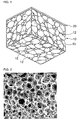
- Fig. 1 is a sectional diagram illustrating the polyurethane foam dressing material of the present invention.
- the polyurethane foam dressing material of the present invention has a double layer structure composed of the wound contact layer (10) and the protective layer (20).
- the protective layer (20) is a film 10 ⁇ 300 ⁇ m thick with a water vapor permeability of 200 ⁇ 1,500 g/m 2 ⁇ day.
- the protective layer (20) has a non-porous structure to prevent the invasion of foreign materials.
- Various films can be used as the protective layer (20) but polyurethane film is preferred.
- polyurethane film is preferred.
- polyurethane film Various types of polyurethane can be used for the film and an adhesive polyurethane film which is prepared by coating a polyurethane film with an adhesive can also be used.
- natural rubber or other synthetic polymer films can be used, and in this case the film is preferably a thin, soft film having a water vapor permeability of 200 ⁇ 1,500
- the wound contact layer (10) is composed of open cells (12) 50 ⁇ 300 ⁇ m in mean diameter, and pores (15) 5 ⁇ 85 ⁇ m in mean diameter which make a tunnel between the open cells (12).
- the open cells (12) take 20 ⁇ 80% of the total area to form a sponge like structure therein.
- the wound contact layer has high density of 0.15 ⁇ 0.45g/cm 3 and high water absorptiveness of 400 ⁇ 2,000 weight%.
- Fig. 2 is a photograph (x100) from a scanning electron microscope (SEM) of the wound contact layer (10) prepared in Example 1, which is easily distinguishable from SEM photographs of the prior art or other products.
- SEM scanning electron microscope
- Fig. 3 is a photograph from a scanning electron microscope ( ⁇ 100) of the section of the contact layer (absorption layer and contact layer combined) described in Korean Patent No. 553078 .
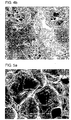
- Fig. 4a and Fig. 4b are photographs from a scanning electron microscope ( ⁇ 100) of the absorption layer (a) and the wound contact layer (b) described in US Patent No. 5,445,604 .
- Fig. 5a and Fig. 5b are photographs from a scanning electron microscope ( ⁇ 100) of the absorption layer (a) and the wound contact layer (b) described in US Patent No. 5,064,653 .
- the wound contact layer (10) of the present invention in which the absorption layer and the contact layer are combined, is expected to maintain a high moisturizing rate because the cells are smaller and more packed therein.
- the wound contact layer and the absorption layer according to the US Patent No. 5,445,604 and No. 5,064,653 have bigger porous cells, resulting in a decrease of the moisturizing rate, in addition to causing the adhesion of the wound contact layer to the wounded area owing to its big pores.
- the skin layer was eliminated by using a horizontal splitting machine and the rest was cut into 5 mm thick sheets.
- One side of the polyurethane foam was heat-pressed with a polyurethane film to give a foam dressing material.
- the density of the hydrophilic polyurethane foam dressing material of the present invention was 0.25g/cm 3 .
- Fig. 1 is a photograph from a scanning electron microscope (SEM) illustrating the polyurethane foam dressing material prepared in Example 1, and the physical properties thereof were measured as follows, with the results shown in Table 1.
- Exudation absorption depends not only on the hydrophilicity of the foam itself but also on the sizes of the cells and the pores therein. That is, the size and the percentage of the cells and the pores primarily affect the capillary phenomenon per unit area to change the absorption speed and absorption capacity, and secondarily affect the moisturizing capacity, which results in a big difference in exudation absorption capacity and the maintenance of humid conditions.
- the sizes of the cells and the pores can be measured by mercury intrusion porosimetry with a porosimeter, but a scanning electron microscope (SEM) is generally used. Thus, in the present invention, an SEM was used to measure the sizes and the percentages of the cells and the pores of the hydrophilic polyurethane foam dressing material.
- SEM scanning electron microscope
- rats (6 ⁇ 8 weeks old, 250 ⁇ 300 g) were used. After anesthetizing the rat by an intra-abdominal injection of Nembutal, the skin on the back was cut to make a 4 x 4 cm wound, followed by dressing. After dressing, the changes of the area of the skin defect were observed over time at weekly intervals, and detachment of the tissues during dressing change was also investigated. Also, a histological test was performed to determine the wound healing effect of the dressing.
- a polyurethane foam dressing material was prepared in the same manner as described in Example 1, except that a smaller amount of the foaming solution was poured in the mold than Example 1 and thus the density of this polyurethane foam dressing material was 0.13 g/cm 3 .
- the physical properties of the dressing material were measured in the same manner as described in Example 1, and the results are shown in Table 1.
- a polyurethane foam dressing material was prepared in the same manner as described in Example 1, except that a smaller amount of foaming solution was poured in the mold than Example 1 and thus the density of this polyurethane foam dressing material was 0.5 g/cm 3 .
- the physical properties of the dressing material were measured in the same manner as described in Example 1, and the results are shown in Table 1.
- the skin layer was eliminated by using a horizontal splitting machine and the rest was cut into a 5 mm thick sheet.
- One side of the polyurethane foam was heat-pressed with a polyurethane film to give a foam dressing material.
- the density of the hydrophilic polyurethane foam dressing material of the present invention was 0.25 g/cm 3 .
- Fig. 2 is a photograph from a scanning electron microscope (SEM) of the polyurethane foam dressing material prepared in Example 1; the physical properties thereof were measured and the results are shown in Table 1.
- Table 1 [Physical properties of the hydrophilic polyurethane foam dressing material] Tensile strength (gf/mm 2 ) Elongation (%) Mean diameter of open cells ( ⁇ m) Ratio of open cells (%) Mean diameter of pores ( ⁇ m) Ratio of pore area (%) Water absorptiveness (%) Moisturizing rate (%) Wound healing effect
- the density of the polyurethane foam dressing material and the mixing ratio of the foaming solution affected the mean diameter of the open cells (12), the ratio of the open cells, the mean diameter of the pores, the ratio of pore area, the water absorptiveness, and the moisturizing rate.
- the mean diameter of the open cells (12), the ratio of the open cells, the mean diameter of the pores and the ratio of pore area also affect the water absorptiveness and the moisturizing rate, suggesting that they are the factors regulating the wound healing effect of the dressing material.
- the tensile strength and the elongation of the polyurethane foam were confirmed to be consistent with those of a protective film adhered on the wound contact layer by heat-pressing, indicating that the protective film layer affects the physical properties of the final product.
- the polyurethane foam dressing material of the present invention has the advantages of preventing the invasion of foreign materials, releasing absorbed exudation in the form of water vapor or keeping the exudation inside the foam to maintain the desired humidity, excellent exudation absorption and non-adhesion of the wound contact layer, ease of dressing change, increased moisturizing rate to provide optimum humidity, and thereby promoting a wound healing effect.
Landscapes
- Health & Medical Sciences (AREA)
- Chemical & Material Sciences (AREA)
- General Health & Medical Sciences (AREA)
- Veterinary Medicine (AREA)
- Engineering & Computer Science (AREA)
- Public Health (AREA)
- Life Sciences & Earth Sciences (AREA)
- Animal Behavior & Ethology (AREA)
- Chemical Kinetics & Catalysis (AREA)
- Materials Engineering (AREA)
- Epidemiology (AREA)
- Hematology (AREA)
- Medicinal Chemistry (AREA)
- Polymers & Plastics (AREA)
- Organic Chemistry (AREA)
- Biomedical Technology (AREA)
- Heart & Thoracic Surgery (AREA)
- Vascular Medicine (AREA)
- Dispersion Chemistry (AREA)
- Materials For Medical Uses (AREA)
Description
- The present invention relates to a polyurethane foam dressing material with improved moisturizing rate. More precisely, the present invention relates to a hydrophilic dressing material in which a wound contact layer, having a sponge structure composed of multiple open cells and pores that make a tunnel from cell to cell, is laminated with a protective film. The lamination is characteristically performed at 150 ∼ 250°C under a pressure of 0.0245 ∼ 0.0981 MPa (0.25∼1 kgf/cm2), the moisturizing rate of the wound contact layer is 300 ∼ 1200%, and the pore area (membrane opening) takes 10 ∼ 35% of the total cell area.
- The polyurethane foam dressing material of the present invention has the advantages of maintaining desired moisturizing conditions by blocking the invasion of foreign materials, releasing absorbed exudation to the outside after changing it into water vapor or arresting the absorbed exudation inside the foam, having a wound healing effect owing to its excellent exudation absorption without adhering to the wound, ease of dressing replacement, particularly promoting wound healing by maintaining optimum moisturizing conditions due to the improved moisturizing, and preventing contamination of clothes or sheets by avoiding exudation release due to an external force.
- Once the skin has a wound, a huge amount of exudation is generated, which is called the 'inflammatory phase', then the proliferative phase occurs, in which granulation takes place, and finally the growing phase occurs in which newly generated skin becomes firm as the wound heals. The most important factor in the process of wound healing is to minimize the inflammatory phase by quickly absorbing exudation generated in the early inflammatory phase and to maintain proper moisturizing conditions during the growing phase to provide various cell growth factors (PDGF, TGF-β, EGF, FGF, VEGF, IGF, etc) or cytokines (IL-1, IL-6, IL-8, TNF, etc) to accelerate wound healing by helping cell migration and proliferation. It is preferable to use a dressing material that does not adhere to the wound.
- The conventional gauze dressing absorbs wound exudate easily, but at the same time has the disadvantages of not-defending itself against infection by bacteria, keeping the wound area dry which delays recovery, and difficulty in changing dressings because it adheres to the wound, possibly damaging nascent tissues and causing pain. In the early treatment phase, a lot of exudate is generated so the dressing has to be changed frequently (for example, several times a day). As an alternative to overcome the disadvantages of the conventional gauze dressing, various obstructive dressing materials have been developed, but these new dressings are expensive, lack adequate absorption, and cannot regulate their water vapor permeability. Thus, the obstructive dressing materials are only applied to some specific types of wounds.
- The obstructive dressing materials in use are films, hydrocolloids, hydrogels, polyurethane foams, etc. Particularly, hydrocolloids, hydrogels and polyurethane foams are favored because of their high treatment effect.
-
US Patent No. 5,503,847 and No.5,830,932 describe a hydrocolloid dressing material which is composed of an adhesive composition layer, a hydrocolloid layer that absorbs impact and exudation, and a film layer that prevents the invasion of bacteria and impurities. - The hydrocolloid dressing material absorbs a small amount of wound exudate to form a gel and is able to provide humid conditions and maintain the pH as weakly acidic for a long time to prevent the disturbance of tissues and promote cell growth. However, water vapor permeability and exudation absorption are not satisfactory. During the change or removal of the dressing, the gel adheres to the wounded area and remains there, requiring secondary treatment to eliminate the residue. Thus, this dressing is not suitable for application to a wounded area that generates a large amount of exudate.
-
US Patent No. 5,501,661 and No.5,489,262 describe a hydrogel dressing material. According to these descriptions, the hydrogel dressing material contains a non-permeable polymer film coated with hydrogel. The polymer film prevents dehydration or dryness of the hydrogel, and the hydrogel layer absorbs exudation by adhering to a wounded area and maintains humid conditions to accelerate wound healing. However, this dressing material is not suitable for application to a severe wound that generates a lot of exudation because of its low water vapor permeability and water absorptiveness. Excessive absorption of the dressing material deforms the dressing material itself, thereby making it difficult to change the dressing, and causes infection of normal tissues. -
US Patent No. 5,445,604 and No.5,065,752 describe a hydrophilic polyurethane foam dressing material having a triple layer structure in which both sides of the polyurethane foam are laminated with a film. Particularly, a wound contact layer film, which is laminated to prevent the huge wound contact layer pores from adhering to the wounded area, is designed to have a hole through which exudation is absorbed into the wound contact layer. However, exudation and blood cannot be completely absorbed from the wounded area, which generates blood clots on the area. Because of the generated blood clots, wound healing is retarded or the dressing adheres to the wound, and nascent tissues might also adhere to the dressing through the huge mechanically made pores, making it difficult to change the dressing and resulting in a dot shaped scar. When this dressing material is applied to a wound generating lots of exudation, the dressing has to be changed frequently because of the insufficient absorptiveness per unit area and the patient's clothes or sheets have to be changed often because exudation flows out through the dressing due to external forces owing to its weak moisturizing rate. In addition, the dryness around the wound or dryness of the wounded area itself when applied on a wound generating less exudation is another problem of this dressing material (J Korean Soc. Plast. Reconstr. Sur., Vol.29, No.4, 297-301, 2002 ; J Korean Burn Soc., Vol.6, No.1, 45-51, 2003). -
US Patent No. 5,064,653 and No.5,254,301 also describe a hydrophilic polyurethane foam dressing material. According to these descriptions, the dressing material has a triple layer structure in which a polyurethane foam produced by in situ reaction of a hydrophilic isocyanate-capped polyether prepolymer with a hydrotrope, water, an adjuvant and a wetting agent is laminated with films by two-part adhesive, which used to be added during continuous line foaming. Hydrophilicity and moisturizing rate have been improved by applying a hydrotrope and a wetting agent on the wound contact layer. However, the dressing material is still not suitable for operation wounds which produce a lot of exudation including blood, because excessive exudation is not absorbed in the dressing material and flows out through the wound contact layer to the patient's clothes or a sheet. In addition, the remaining blood generates blood clots on the wounded area, retarding wound healing, and the pore of the wound contact layer is bigger than a human cell so re-generated tissues adhere to the dressing, making it difficult to change the dressing (J Korean Burn Soc., Vol.6, No.1, 45-51, 2003). - The alternative to overcome the above mentioned problems has been proposed by the present inventors and described in Korean Patent No.
553078 - It is an object of the present invention, in order to solve the above problems, to provide a polyurethane foam dressing material with improved moisturizing rate, which is characterized by the ability to prevent the invasion of foreign materials, releasing absorbed exudation as water vapor or arresting it inside the foam to maintain humid conditions, the promotion of wound healing owing to its excellent exudation absorptiveness and non-adhesion to the wound contact layer, ease of dressing change, and accelerated wound healing by maintaining optimum humidity due to the improved moisturizing rate.
- To achieve the above object, the present invention provides a hydrophilic dressing material in which a wound contact layer (10) having a sponge structure composed of multiple open cells (12) and pores (15) passing through the cells (12) is laminated with a protective film (20). The lamination is performed at 150 ∼ 250°C at a pressure of 0.0245 ∼ 0.0981 MPa (0.25∼1 kgf/cm2), the moisturizing rate of the wound contact layer (10) is 300 ∼ 1200%, and the pore area (membrane opening) takes 10 ∼ 35% of the total cell area, as further defined in claim 1.
- If the temperature for the lamination is lower than 150°C, the lamination of the protective film layer on the polyurethane foam absorption layer will not be successful. On the contrary, if the temperature is higher than 250°C, a color change will be observed in the polyurethane foam absorption layer.
If the pressure for the lamination is lower than 0.0245 MPa (0.25 kgf/cm2), the lamination of the protective film layer on the polyurethane foam absorption layer will not be successful. On the other hand, if the pressure is higher than 0.0981 MPa (1 kgf/ cm2), the membrane opening will be increased in the polyurethane foam absorption layer, resulting in the decrease of the moisturizing rate. - The mean diameter of the open cells (12) is 50 ∼ 300 µm and the mean diameter of the pores (15) is 5 ∼ 85 µm.
- If the mean diameter of the open cells is more than 330 µm, the moisturizing rate will be significantly decreased. If the mean diameter of the open cells is less than 10 µm, exudation absorption will be decreased and the absorption speed will also be very slow, resulting in a pool of exudation from incomplete elimination of wound exudation.
- If the mean diameter of the pores is more than 85 µm, human cells migrate into the dressing material which causes the dressing to adhere to the wound and re-injures the wound during dressing change. If the mean diameter of the pores is less than 5 µm, clean elimination of the wound exudation will be difficult.
The ratio of the open cells to the wound contact layer (10) is 20 - 70%. - If the open cells take more than 80% of the wound contact layer, the moisturizing rate will be significantly decreased, making it difficult to ensure humid conditions around the wounded area. If the open cells take less than 20% of the wound contact layer, exudation absorption will be significantly decreased.
- The density of the wound contact layer (10) is 0.15 ∼ 0.45 g/cm3.
- If the density is more than 0.45 g/cm3, the percentage of the open cells will be lowered to at best 20%, which decreases exudation absorption. If the density is less than 0.15 g/cm3, the percentage of the open cells will be at least 80%, which means the moisturizing rate will drop significantly and the humidity around the wound will be poor.
- The water absorptiveness of the wound contact layer (10) is 400 ∼ 2,000 weight%.
- If the water absorptiveness is higher than 2,000 weight%, the inside structure of the foam requires a cell diameter of at least 300 µm and 90% open cells. If this is the case, the moisturizing rate of the dressing material will be significantly reduced and the humidity around the wound will be poor. If the water absorptiveness is less than 400 weight%, frequent dressing changes will be required.
- Herein, the wound contact layer (10) is prepared by the steps of mixing 40 ∼ 70 weight% of a polyurethane prepolymer with 15 ∼ 45 weight% of a foaming agent, 5 ∼ 35 weight% of a cross-linking agent, 0.1 ∼ 2 weight % of a surfactant and 0.5 ∼ 15 weight % of an adjuvant with stirring; pour-foaming the mixture in a mold to prepare a polyurethane foam; and slicing thereof.
- The polyurethane prepolymer herein is preferably synthesized from an isocyanate (1 ∼ 4 mol) and a polyetherpolyol (0.15 ∼ 2 mol).
- The isocyanate herein can be selected from a group consisting of isophoronediisocyanate, 2,4-toluenediisocyanate and its isomer, diphenylmethanediisocyanate, hexamethylenediisocyanate, lysinediisocyanate, trimethylhexamethylenediisocyanate, bis(2-isocyanateether)-fumarate, 3,3'-dimethyl-4,4'-diphenylmethanediisocyanate, 1,6-hexanediisocyanate, 4,4'-biphenylenediisocyanate, 3,3'-dimethylphenylenediisocyanate, p-phenylenediisocyanate, m-phenylenediisocyanate, 1,5-naphthalenediisocyanate, 1,4-xylenediisocyanate and 1,3-xylenediisocyanate. Particularly, diphenylmethanediisocyanate, 2,4-toluenediisocyanate and its isomer, p-phenylenediisocyanate, isophoronediisocyanate and hexamethylenediisocyanate are more preferred.
- The polyethylenepolyol can be prepared by mixing a ethyleneoxide/propyleneoxide random copolymer having at least three hydroxyl groups, a molecular weight of 3,000 ∼ 6,000 and an ethyleneoxide content of 50 ∼ 80% with a polypropyleneglycol having at least two hydroxyl groups and a molecular weight of 1,000 ∼ 4,000 at the ratio of 30:70, and it is more preferred to select the above ethyleneoxide/propyleneoxide random copolymer alone as the polyethylenepolyol. However, other isocyanate compounds and polyols can be added to regulate the physical properties of the product.
- The foaming agent can be selected from a group consisting of chlorofluorocarbon (CFC-141b), methylenechloride and distilled water, with distilled water being more preferred.
- The cross-linking agent can be a single compound or a mixture of compounds having at least two hydroxyl groups selected from a group consisting of 1,3-butanediol, 1,4-butanediol, 1,5-pentanediol, 1,6-hexanediol, neopentylglycol, propyleneglycol, ethyleneglycol, polyethyleneglycol (MW: 200 ∼ 2,000), glycerol, trimethylolethane, trimethylolpropane, pentaerythritol, sorbose and sorbitol. In particular, glycerol, sorbitol, polyethyleneglycol (MW: 200 ∼ 2,000) and trimethylolpropane are more preferred.
- The surfactant is one or more compounds selected from a group consisting of ethyleneoxide/propyleneoxide copolymers such as L-62, L-64, P-84, P-85, P-105, F-68, F-87, F-88, F-108, F-127 or a mixture thereof (Basf, Germany), and silicon-based surfactants such as L-508, L-5305, L-5302 and L-3150 (Osi).
- As an adjuvant, a moisturizing agent and a wound healing accelerator, a pigment, an antimicrobial agent, and a growth factor can be added.
- The moisturizing agent and the wound healing accelerator herein can be one or more compounds selected from a group consisting of high-absorptive polymers and natural substances such as polyacrylic acid, polyvinylalcohol, polyoxyethylene, polyethyleneoxide, polysaccharide, polymethacrylic acid, polyacrylamide, polyethyleneoxide, cellulose, carboxymethylcellulose, pectin, guar gum, sodiumalginate, chitin, chitosan, gelatin, starch, hyaluronic acid, keratan, collagen, dermatansulfate, sodiumcarboxymethylcellulose, locust bean gum, hydroxyethylcellulose, xanthan gum, pulp and karaya gum.
- The antimicrobial agent used in the present invention can be selected from a group consisting of gluconate chlorohexidine, acetate chlorohexidine, hydrochloride chlorohexidine, silversulfurdiazine, povidone iodine, benzalkonium chloride, furagin, idokine, hexachlorophene, chlorotetracycline, neomycin, penicillin, gentamycin or acrinol.
- The growth factor of the present invention can be one or more compounds selected from a group consisting of PDGF, TGF-β, EGF, FGF and VEGF.
- The protective layer (20) of the present invention is a
waterproof breather film 10 ∼ 300 µm thick, which is laminated directly on the wound contact layer (10) having a sponge structure, or indirectly laminated over the adhesive layer. - The tensile strength of the protective layer (20) is 45 ∼ 700 kg and the elasticity is preferably 200 ∼ 1,000%.
- The present invention is described in detail hereinafter with reference to the following figures.
-
Fig. 1 is a sectional diagram illustrating the polyurethane foam dressing material of the present invention. The polyurethane foam dressing material of the present invention has a double layer structure composed of the wound contact layer (10) and the protective layer (20). The protective layer (20) is afilm 10 ∼ 300 µm thick with a water vapor permeability of 200 ∼ 1,500 g/m2·day. The protective layer (20) has a non-porous structure to prevent the invasion of foreign materials. Various films can be used as the protective layer (20) but polyurethane film is preferred. Various types of polyurethane can be used for the film and an adhesive polyurethane film which is prepared by coating a polyurethane film with an adhesive can also be used. In addition, natural rubber or other synthetic polymer films can be used, and in this case the film is preferably a thin, soft film having a water vapor permeability of 200 ∼ 1,500 g/m2·day. - The wound contact layer (10) is composed of open cells (12) 50 ∼ 300 µm in mean diameter, and pores (15) 5 ∼ 85 µm in mean diameter which make a tunnel between the open cells (12). The open cells (12) take 20 ∼ 80% of the total area to form a sponge like structure therein.
- The wound contact layer has high density of 0.15 ∼ 0.45g/cm3 and high water absorptiveness of 400 ∼ 2,000 weight%.
-
Fig. 2 is a photograph (x100) from a scanning electron microscope (SEM) of the wound contact layer (10) prepared in Example 1, which is easily distinguishable from SEM photographs of the prior art or other products. -
Fig. 3 is a photograph from a scanning electron microscope (×100) of the section of the contact layer (absorption layer and contact layer combined) described in Korean Patent No.553078 Fig. 4a andFig. 4b are photographs from a scanning electron microscope (×100) of the absorption layer (a) and the wound contact layer (b) described inUS Patent No. 5,445,604 .Fig. 5a andFig. 5b are photographs from a scanning electron microscope (×100) of the absorption layer (a) and the wound contact layer (b) described inUS Patent No. 5,064,653 . - As shown in the figures, the wound contact layer (10) of the present invention, in which the absorption layer and the contact layer are combined, is expected to maintain a high moisturizing rate because the cells are smaller and more packed therein. However, the wound contact layer and the absorption layer according to the
US Patent No. 5,445,604 and No.5,064,653 have bigger porous cells, resulting in a decrease of the moisturizing rate, in addition to causing the adhesion of the wound contact layer to the wounded area owing to its big pores. - The application of the preferred embodiments of the present invention is best understood with reference to the accompanying drawings, wherein:
-
Fig. 1 is a sectional diagram of the polyurethane foam dressing material of the present invention, -
Fig. 2 is a photograph from a scanning electron microscope of a section of the contact layer of the polyurethane foam dressing material prepared by the method of the present invention, -
Fig. 3 is a photograph from a scanning electron microscope of a section of the contact layer described in Korean Patent No.553078 -
Fig. 4a andFig. 4b are photographs from a scanning electron microscope of the absorption layer and the wound contact layer described inUS Patent No. 5,445,604 , -
Fig. 5a andFig. 5b are photographs from a scanning electron microscope of the absorption layer and the wound contact layer described inUS Patent No. 5,064,653 . - Practical and presently preferred embodiments of the present invention are illustrated as shown in the following examples.
- To a 3 liter round bottom flask equipped with a stirrer were added 354 g of diphenylmethanediisocyanate and 314 g of isophoronediisocyanate. The temperature was raised to 60°C and then ethyleneoxide/propyleneoxide random copolymer having at least 2 hydroxyl groups was added drop by drop, followed by reaction until the theoretical NCO% reached 12 to give a polyurethane prepolymer having an isocyanate terminal group. In the middle of the reaction, a sample was taken and the NCO% was measured by a titrimetric method using n-butylamine standard solution.
- To a 3 liter round bottom flask equipped with a stirrer were added 296 g of diphenylmethanediisocyanate and 275 g of isophoronediisocyanate. The temperature was raised to 60°C and then ethyleneoxide/propyleneoxide random copolymer having at least 2 hydroxyl groups was added drop by drop, followed by reaction until the theoretical NCO% reached 5 to give a polyurethane prepolymer having an isocyanate terminal group. In the middle of the reaction, a sample was taken and the NCO% was measured by a titrimetric method using n-butylamine standard solution.
- To 66.85 weight% of the polyurethane prepolymer prepared in the above Synthetic Example 2 were added 20.5 weight% of distilled water as a foaming agent, 10 weight% of glycerin as a cross-linking agent, 0.5 weight% of F-87 (Basf) as an additive, 0.05 weight% of L-64, 2 weight% of sodiumalginate, 0.05 weight% of silver sulfadiazine, and 0.05 weight% of a soluble pigment, followed by stirring at 4,000 rpm for 5 seconds. The mixture was poured in the mold of a certain shape and foamed. The temperature of the mold was set at 25°C and separation was performed 10 minutes after the pouring. The skin layer was eliminated by using a horizontal splitting machine and the rest was cut into 5 mm thick sheets. One side of the polyurethane foam was heat-pressed with a polyurethane film to give a foam dressing material. The density of the hydrophilic polyurethane foam dressing material of the present invention was 0.25g/cm3.
-
Fig. 1 is a photograph from a scanning electron microscope (SEM) illustrating the polyurethane foam dressing material prepared in Example 1, and the physical properties thereof were measured as follows, with the results shown in Table 1. - Mechanical properties were measured by ASTM D638-02 with Universal Test Machine (Instron, USA).
- The hydrophilic polyurethane foam dressing material was cut into 3 cm x 3 cm pieces and dried in a 50°C vacuum oven for 24 hours. Then, the initial weight (A) of a section was measured, and then the section was dipped in 25°C distilled water for 4 hours. The moisture on the surface of the sample was dried with tissue and then the weight of the sample was measured (B). Water absorptiveness was calculated by the following formula.

- The hydrophilic polyurethane foam dressing material was cut into 3 cm x 3 cm pieces and dried in a 50°C vacuum oven for 24 hours. Then, the initial weight (A) of a section was measured, and then the section was dipped in 25°C distilled water for 4 hours. A 3 kg roller was rolled three times on the sample and then the weight of the sample was measured (C). Then, the moisturizing rate was calculated by the following formula.

- Exudation absorption depends not only on the hydrophilicity of the foam itself but also on the sizes of the cells and the pores therein. That is, the size and the percentage of the cells and the pores primarily affect the capillary phenomenon per unit area to change the absorption speed and absorption capacity, and secondarily affect the moisturizing capacity, which results in a big difference in exudation absorption capacity and the maintenance of humid conditions.
- The sizes of the cells and the pores can be measured by mercury intrusion porosimetry with a porosimeter, but a scanning electron microscope (SEM) is generally used. Thus, in the present invention, an SEM was used to measure the sizes and the percentages of the cells and the pores of the hydrophilic polyurethane foam dressing material.
- To examine the wound healing effect of the hydrophilic polyurethane foam dressing material, rats (6 ∼ 8 weeks old, 250 ∼ 300 g) were used. After anesthetizing the rat by an intra-abdominal injection of Nembutal, the skin on the back was cut to make a 4 x 4 cm wound, followed by dressing. After dressing, the changes of the area of the skin defect were observed over time at weekly intervals, and detachment of the tissues during dressing change was also investigated. Also, a histological test was performed to determine the wound healing effect of the dressing.
- To 39.5 weight% of the polyurethane prepolymer prepared in Synthetic Example 1 were added 35.5 weight% of distilled water as a foaming agent, 22.5 weight% of glycerin as a cross-linking agent, 0.5 weight% of F-108 (Basf) as a surfactant and 2 weight% of sodiumalginate. The mixture was poured in a mold of a certain shape and foamed. The temperature of the mold was set at 25°C and separation was performed 10 minutes after the pouring. The skin layer was eliminated by using a horizontal splitting machine and the rest was cut into a 5 mm thick sheet. One side of the polyurethane foam was heat-pressed with a polyurethane film to give a foam dressing material. The density of the hydrophilic polyurethane foam dressing material of the present invention was 0.27 g/cm3. The physical properties of the dressing material were measured in the same manner as described in Example 1, and the results are shown in Table 1.
- A polyurethane foam dressing material was prepared in the same manner as described in Example 1, except that a smaller amount of the foaming solution was poured in the mold than Example 1 and thus the density of this polyurethane foam dressing material was 0.13 g/cm3. The physical properties of the dressing material were measured in the same manner as described in Example 1, and the results are shown in Table 1.
- A polyurethane foam dressing material was prepared in the same manner as described in Example 1, except that a smaller amount of foaming solution was poured in the mold than Example 1 and thus the density of this polyurethane foam dressing material was 0.5 g/cm3. The physical properties of the dressing material were measured in the same manner as described in Example 1, and the results are shown in Table 1.
- To 75.35 weight% of the polyurethane prepolymer prepared in Synthetic Example 2 were added 10 weight% of distilled water as a foaming agent, 12 weight% of glycerin as a cross-linking agent, 0.5 weight% of F-87 (Basf) as an additive, 0.05 weight% of L-64, 2 weight% of sodiumalginate, 0.05 weight% of silver sulfadiazine and 0.05 weight% of a soluble pigment, followed by stirring at 4,000 rpm for 5 seconds. The mixture was poured in a mold of a certain shape and foamed. The temperature of the mold was set at 25°C and separation was performed 10 minutes after the pouring. The skin layer was eliminated by using a horizontal splitting machine and the rest was cut into a 5 mm thick sheet. One side of the polyurethane foam was heat-pressed with a polyurethane film to give a foam dressing material. The density of the hydrophilic polyurethane foam dressing material of the present invention was 0.25 g/cm3.
-
Fig. 2 is a photograph from a scanning electron microscope (SEM) of the polyurethane foam dressing material prepared in Example 1; the physical properties thereof were measured and the results are shown in Table 1.[Table 1] [Physical properties of the hydrophilic polyurethane foam dressing material] Tensile strength (gf/mm2) Elongation (%) Mean diameter of open cells (µm) Ratio of open cells (%) Mean diameter of pores (µm) Ratio of pore area (%) Water absorptiveness (%) Moisturizing rate (%) Wound healing effect Example 1 22 620 200 50 65 20 1,530 1,050 ⊚ Compa rative Example 1 27 670 550 85 152 65 1,750 215 × Compa rative Example 2 25 640 485 74 95 62 1,620 285 Δ Compa rative Example 3 23 620 47 28 12 8.5 620 560 Δ Compa rative Example 4 23 635 250 30 45 9.5 740 510 Δ ⊚ : Very good, ○ : Good, Δ : Not bad, × : Bad - As shown in Table 1, the density of the polyurethane foam dressing material and the mixing ratio of the foaming solution affected the mean diameter of the open cells (12), the ratio of the open cells, the mean diameter of the pores, the ratio of pore area, the water absorptiveness, and the moisturizing rate. The mean diameter of the open cells (12), the ratio of the open cells, the mean diameter of the pores and the ratio of pore area also affect the water absorptiveness and the moisturizing rate, suggesting that they are the factors regulating the wound healing effect of the dressing material. The tensile strength and the elongation of the polyurethane foam were confirmed to be consistent with those of a protective film adhered on the wound contact layer by heat-pressing, indicating that the protective film layer affects the physical properties of the final product.
- As explained hereinbefore, the polyurethane foam dressing material of the present invention has the advantages of preventing the invasion of foreign materials, releasing absorbed exudation in the form of water vapor or keeping the exudation inside the foam to maintain the desired humidity, excellent exudation absorption and non-adhesion of the wound contact layer, ease of dressing change, increased moisturizing rate to provide optimum humidity, and thereby promoting a wound healing effect.
Claims (9)
- A hydrophilic polyurethane foam dressing material with improved moisturizing rate, in which a wound contact layer (10) having a sponge structure composed of multiple open cells (12) and pores (15) passing through the cells (12) is laminated with a protective film (20), and the lamination is performed at 150 ∼ 250 °C under a pressure of 0.0245 ∼ 0.0981 MPa (0.25∼1 kgf/cm2),
wherein the wound contact layer (10) has a moisturizing rate of 300 ∼ 1200 % and the pore area (membrane opening) takes 10 ∼ 35 % of the total cell area;
wherein the mean diameter of the open cells (12) is 50 ∼ 300 µm and the mean diameter of the pores (15) is 5 ∼ 85 µm;
wherein the ratio of the open cells to the wound contact layer (10) is 20 ∼ 70 %;
wherein the wound contact layer (10) has a density of 0.15 ∼ 0.45 g/cm3; and
wherein the wound contact layer (10) has a water absorptiveness of 400 ∼ 2000 weight%. - The hydrophilic polyurethane foam dressing material with improved moisturizing rate according to claim 1, wherein the wound contact layer (10) is prepared by the steps of: mixing 40 ∼ 70 weight% of a polyurethane prepolymer with 15 ∼ 45 weight% of a foaming agent, 5 ∼ 35 weight% of a cross-linking agent, 0.1 ∼ 2 weight % of a surfactant and 0.5 ∼ 15 weight % of an adjuvant with stirring; pour-foaming the mixture in the mold to prepare a polyurethane foam; and slicing thereof.
- The hydrophilic polyurethane foam dressing material with improved moisturizing rate according to claim 2, wherein the surfactant is one or more compounds selected from a group consisting of ethyleneoxide/propyleneoxide copolymers or a mixture thereof and silicon-based surfactants.
- The hydrophilic polyurethane foam dressing material with improved moisturizing rate according to claim 2, wherein the adjuvant is one or more compounds selected from a group consisting of a moisturizing and wound healing accelerator, a pigment, an antimicrobial agent, and a growth factor.
- The hydrophilic polyurethane foam dressing material with improved moisturizing rate according to claim 4, wherein the moisturizing and wound healing accelerator is one or more compounds selected from a group consisting of high-absorptive polymers and natural substances such as polyacrylic acid, polyvinylalcohol, polyoxyethylene, polyethyleneoxide, polysaccharide, polymethacrylic acid, polyacrylamide, polyethyleneoxide, cellulose, carboxymethylcellulose, pectin, guar gum, sodiumalginate, chitin, chitosan, gelatin, starch, hyaluronic acid, keratan, collagen, dermatansulfate, sodiumcarboxymethylcellulose, locust bean gum, hydroxyethylcellulose, xanthan gum, pulp and karaya gum.
- The hydrophilic polyurethane foam dressing material with improved moisturizing rate according to claim 4, wherein the antimicrobial agent is selected from a group consisting of gluconate chlorohexidine, acetate chlorohexidine, hydrochloride chlorohexidine, silversulfurdiazine, povidone iodine, benzalkonium chloride, furagin, idokine, hexachlorophene, chlorotetracycline, neomycin, penicillin, gentamycin and acrinol.
- The hydrophilic polyurethane foam dressing material with improved moisturizing rate according to claim 4, wherein the cell growth factor is one or more selected from a group consisting of PDGF, TGF-β, EGF, FGF and VEGF.
- The hydrophilic polyurethane foam dressing material with improved moisturizing rate according to claim 1, wherein the protective layer (20) is a waterproof breather film 10 ∼ 300 µm thick, which is laminated directly on the wound contact layer (10) having a sponge structure.
- The hydrophilic polyurethane foam dressing material with improved moisturizing rate according to claim 1, wherein the protective layer (20) has a tensile strength of 45 ∼ 700 kg and an elongation of 200 ∼ 1,000 %.
Applications Claiming Priority (1)
| Application Number | Priority Date | Filing Date | Title |
|---|---|---|---|
| KR1020060130194A KR100777908B1 (en) | 2006-12-19 | 2006-12-19 | Polyurethane foam dressing with improved repair rate |
Publications (2)
| Publication Number | Publication Date |
|---|---|
| EP1935913A1 EP1935913A1 (en) | 2008-06-25 |
| EP1935913B1 true EP1935913B1 (en) | 2018-12-26 |
Family
ID=39080254
Family Applications (1)
| Application Number | Title | Priority Date | Filing Date |
|---|---|---|---|
| EP07002008.6A Active EP1935913B1 (en) | 2006-12-19 | 2007-01-30 | Polyurethane foam dressing with improved moisturization |
Country Status (7)
| Country | Link |
|---|---|
| US (1) | US7777091B2 (en) |
| EP (1) | EP1935913B1 (en) |
| JP (1) | JP4975465B2 (en) |
| KR (1) | KR100777908B1 (en) |
| BR (1) | BRPI0704126A (en) |
| DK (1) | DK1935913T3 (en) |
| ES (1) | ES2708139T3 (en) |
Cited By (1)
| Publication number | Priority date | Publication date | Assignee | Title |
|---|---|---|---|---|
| CN111228040A (en) * | 2020-01-08 | 2020-06-05 | 河南亚都实业有限公司 | Absorbable anti-adhesion dressing and preparation method thereof |
Families Citing this family (46)
| Publication number | Priority date | Publication date | Assignee | Title |
|---|---|---|---|---|
| KR100550807B1 (en) | 2002-10-29 | 2006-02-09 | 주식회사 바이오폴 | Filled Polyurethane Foam Dressing Material and Manufacturing Method Thereof |
| CN101720237A (en) * | 2007-06-25 | 2010-06-02 | 利波佩普蒂德有限公司 | New medical products |
| EP2254925B1 (en) * | 2008-03-14 | 2014-08-27 | Basf Se | Coarse-cell polyurethane elastomers |
| ES2829956T3 (en) * | 2008-10-02 | 2021-06-02 | Lrr & D Ltd | Interface Layer Wound Dressing |
| DE102010034819A1 (en) * | 2010-08-19 | 2012-02-23 | Paul Hartmann Ag | Use of a polyurethane foam as wound dressing in negative pressure therapy |
| EP2610310A4 (en) * | 2010-08-23 | 2014-10-15 | Nitto Denko Corp | W/o emulsion, foam, and functional foam |
| CA2828634A1 (en) | 2011-04-29 | 2012-11-01 | Kci Licensing, Inc. | Aptamer -modified polymeric materials for the binding of therapeutic factors in a wound environment |
| GB201117458D0 (en) * | 2011-10-10 | 2011-11-23 | Univ London Queen Mary | Antimicrobial polymer |
| KR101335176B1 (en) * | 2011-12-12 | 2013-11-29 | 테고사이언스 (주) | Wound Healing Dressing |
| KR20140104430A (en) | 2011-12-15 | 2014-08-28 | 콜게이트-파아므올리브캄파니 | Cleansing compositions with polyurethane-34 |
| KR101377569B1 (en) * | 2012-01-19 | 2014-03-25 | (주)시지바이오 | Antimicrobial Wound Dressing and Preparing Method of the Same |
| CN103357059B (en) * | 2012-03-27 | 2016-08-03 | 上海卫生材料厂有限公司 | Chitin gel adhesive bandage |
| US9132039B2 (en) | 2012-03-29 | 2015-09-15 | Principle Business Enterprises, Inc. | Disposable absorbent moisture management dressing |
| EP3763397B1 (en) * | 2012-08-31 | 2023-07-12 | Stryker European Operations Holdings LLC | Hemostatic foam |
| EP2906071B1 (en) | 2012-10-15 | 2017-12-06 | Velcro Bvba | Double-sided fasteners |
| EP2912087A1 (en) | 2012-10-24 | 2015-09-02 | KCI Licensing, Inc. | Amine-functionalized polymeric compositions for medical devices |
| CN103087453B (en) * | 2013-01-22 | 2015-07-01 | 广州医学院 | Ionic crosslinked PVA (polyvinyl alcohol) mandruka and preparation method and application thereof |
| KR101366956B1 (en) | 2013-08-12 | 2014-02-25 | 장미희 | Fastener having a network structure foam layer |
| GB201414147D0 (en) | 2014-08-08 | 2014-09-24 | Medtrade Products Ltd | Wound dressing |
| KR101462475B1 (en) * | 2014-08-19 | 2014-11-18 | 주식회사 세림티티시 | The preparation method and flexible polyurethane foam for bra cups with breathable, washable and anti-yellowing |
| CN104474570B (en) * | 2014-11-25 | 2016-08-17 | 广州创赛生物医用材料有限公司 | A kind of medical Povidone Iodine Dressings and preparation method thereof |
| EP3040086B1 (en) * | 2014-12-30 | 2023-05-03 | Paul Hartmann AG | Wound system |
| TWI597075B (en) * | 2015-05-12 | 2017-09-01 | Hydrophilic polyurethane, hydrophilic polyurethane foam and its preparation Wet wound dressing | |
| KR101787192B1 (en) * | 2015-08-12 | 2017-10-18 | 주식회사 제네웰 | Antimicrbacterial dressing material and method for preparing thereof |
| CN105251011B (en) * | 2015-11-13 | 2018-12-28 | 广州骏思知识产权管理咨询有限公司韶关分公司 | A kind of spray-filming agent and preparation method thereof for superficial burns |
| CN106113128B (en) * | 2016-06-23 | 2018-07-31 | 湖北祥源新材科技股份有限公司 | A kind of polymer flake, manufacturing method and application |
| JP6770475B2 (en) * | 2017-03-31 | 2020-10-14 | 株式会社イノアックコーポレーション | Hydrophilic polyurethane foam and its manufacturing method |
| CN107753180A (en) * | 2017-07-13 | 2018-03-06 | 江苏创铭医疗器械有限公司 | A kind of visual waterproof dressing |
| TWI638006B (en) * | 2017-07-20 | 2018-10-11 | 泰陞國際科技股份有限公司 | 疤 疤 patch and its manufacturing method |
| KR102223780B1 (en) * | 2017-12-21 | 2021-03-05 | 주식회사 엘지화학 | Composition for dressing film and dressing film |
| CN108384162B (en) * | 2018-03-05 | 2021-03-12 | 北京英佳麦迪克医用材料有限公司 | Sponge material and preparation method and application thereof |
| CN108623772A (en) * | 2018-03-23 | 2018-10-09 | 凃懿庭 | A kind of preparation method of modified polyurethane hydrophilic material |
| CN109248336B (en) * | 2018-11-08 | 2021-06-18 | 广州润虹医药科技股份有限公司 | Bacteriostatic healing-promoting foam dressing and preparation method and application thereof |
| CN109453412A (en) * | 2018-12-07 | 2019-03-12 | 上海新华瑞思医疗科技有限公司 | A kind of antibacterial dressing of quick imbibition and preparation method thereof |
| CN110013472A (en) * | 2019-04-30 | 2019-07-16 | 扬州大学 | A kind of milk cow teat film-forming medicated bath agent, its preparation method and its use method |
| CN110423375A (en) * | 2019-08-06 | 2019-11-08 | 杨建业 | Polyurethane foam composition, polyurethane foam prepared therefrom and product, and application thereof |
| CN112029065B (en) * | 2020-09-10 | 2023-09-12 | 宿迁嘉禾塑料金属制品有限公司 | Medical hydrophilic polyurethane sponge and preparation method thereof |
| CN112266455B (en) * | 2020-09-29 | 2022-07-12 | 万华化学集团股份有限公司 | Modified high blood-absorption polyurethane sponge, preparation method and application thereof |
| CN112251908B (en) * | 2020-10-12 | 2021-11-16 | 浙江王金非织造布有限公司 | Wood pulp/polyester composite wiping material with sandwich structure |
| JP7699314B2 (en) * | 2020-12-24 | 2025-06-27 | 株式会社イノアックコーポレーション | Sheet |
| CN113367891A (en) * | 2021-04-27 | 2021-09-10 | 苏州元禾医疗器械有限公司 | Multilayer dressing for assisting wound healing |
| CN114644375B (en) * | 2022-02-21 | 2023-08-25 | 上海交大平湖智能光电研究院 | Drip irrigation type polyurethane sponge seawater evaporation structure and application thereof |
| CN114588306A (en) * | 2022-03-04 | 2022-06-07 | 广东舒尔康生物科技有限公司 | High-absorption polyurethane foam and preparation method thereof |
| CN114632182B (en) * | 2022-03-30 | 2022-12-27 | 云南清逸堂实业有限公司 | Polyurethane foam absorbs core |
| EP4285944A1 (en) * | 2022-06-01 | 2023-12-06 | MedSkin Solutions Dr. Suwelack AG | Method of making a composition with a film-coated porous material |
| KR20240118541A (en) | 2023-01-27 | 2024-08-05 | 국립금오공과대학교 산학협력단 | Dressing foam capable of measuring of replacement time with pH change |
Family Cites Families (30)
| Publication number | Priority date | Publication date | Assignee | Title |
|---|---|---|---|---|
| US3800792A (en) * | 1972-04-17 | 1974-04-02 | Johnson & Johnson | Laminated collagen film dressing |
| US3978855A (en) * | 1975-01-17 | 1976-09-07 | Ionics Lyo Products Company | Polyurethane foam surgical dressing |
| US5445604A (en) | 1980-05-22 | 1995-08-29 | Smith & Nephew Associated Companies, Ltd. | Wound dressing with conformable elastomeric wound contact layer |
| GB2093702B (en) * | 1981-02-13 | 1985-07-10 | Smith & Nephew Ass | Wound dressings for burns |
| US4538603A (en) * | 1982-04-22 | 1985-09-03 | E. R. Squibb & Sons, Inc. | Dressings, granules, and their use in treating wounds |
| EP0106439B1 (en) * | 1982-08-12 | 1987-11-11 | Smith and Nephew Associated Companies p.l.c. | Wound dressing and its manufacture |
| US4704113A (en) | 1983-05-03 | 1987-11-03 | The Kendall Company | Dressing |
| GB8419745D0 (en) | 1984-08-02 | 1984-09-05 | Smith & Nephew Ass | Wound dressing |
| US5065752A (en) | 1988-03-29 | 1991-11-19 | Ferris Mfg. Co. | Hydrophilic foam compositions |
| US5254301A (en) | 1988-03-29 | 1993-10-19 | Ferris Mfg. Corp. | Process for preparing a sheet of polymer-based foam |
| US5064653A (en) | 1988-03-29 | 1991-11-12 | Ferris Mfg. Co. | Hydrophilic foam compositions |
| GB9102660D0 (en) * | 1991-02-07 | 1991-03-27 | Ultra Lab Ltd | Wound dressing materials |
| US5827247A (en) | 1991-08-20 | 1998-10-27 | Bioderm | External incontinence device and vapor-absorptive adhesive compositions |
| GB9123708D0 (en) * | 1991-11-07 | 1992-01-02 | Johnson & Johnson Medical Ltd | Method of making polyurethane foam |
| GB9208731D0 (en) | 1992-04-22 | 1992-06-10 | Squibb & Sons Inc | Hydrocolloid wound gel |
| US6326410B1 (en) * | 1992-11-04 | 2001-12-04 | Johnson & Johnson Medical, Inc. | Wound dressing comprising polyurethane foam |
| US5423737A (en) | 1993-05-27 | 1995-06-13 | New Dimensions In Medicine, Inc. | Transparent hydrogel wound dressing with release tab |
| NZ250994A (en) | 1993-05-27 | 1995-09-26 | Ndm Acquisition Corp | Wound dressing comprising a hydrogel layer bound to a porous backing layer which is bound to a thin film layer by adhesive |
| GB2290031B (en) | 1994-06-08 | 1998-09-30 | Seton Healthcare Group Plc | Wound dressings |
| SE9601853L (en) * | 1996-05-14 | 1997-06-09 | Moelnlycke Ab | Wound dressing and manufacturing process therefore |
| JP3686212B2 (en) * | 1997-04-28 | 2005-08-24 | 株式会社トクヤマ | Laminated film |
| SE513964C2 (en) * | 1999-03-01 | 2000-12-04 | Moelnlycke Health Care Ab | Wound dressing comprising a layer of a hydrophilic foam |
| WO2000078369A1 (en) | 1999-06-21 | 2000-12-28 | Foamex L.P. | Absorbent airlaid structure |
| KR100340981B1 (en) | 1999-07-01 | 2002-06-20 | 박명환 | Hydrophilic Polyurethane Foam Dressing and Method of Making the Same |
| US6548727B1 (en) * | 2000-02-17 | 2003-04-15 | 3M Innovative Properties Company | Foam/film composite medical articles |
| US6803495B2 (en) | 2000-06-28 | 2004-10-12 | World Properties, Inc. | Polyurethane foam composition and method of manufacture thereof |
| KR100404140B1 (en) | 2000-12-15 | 2003-11-01 | 주식회사 바이오폴 | Multilayer Foam Dressing And Method For Manufacturing Thereof |
| JP2004024724A (en) * | 2002-06-28 | 2004-01-29 | Biopol Co Ltd | Micro-porous foam dressing material with multilayer structure, and production method therefor |
| KR100550807B1 (en) * | 2002-10-29 | 2006-02-09 | 주식회사 바이오폴 | Filled Polyurethane Foam Dressing Material and Manufacturing Method Thereof |
| KR100553078B1 (en) | 2003-12-18 | 2006-02-15 | 주식회사 바이오폴 | 2-layer hydrophilic polyurethane foam dressing material |
-
2006
- 2006-12-19 KR KR1020060130194A patent/KR100777908B1/en active Active
-
2007
- 2007-01-26 US US11/627,651 patent/US7777091B2/en active Active
- 2007-01-30 DK DK07002008.6T patent/DK1935913T3/en active
- 2007-01-30 ES ES07002008T patent/ES2708139T3/en active Active
- 2007-01-30 EP EP07002008.6A patent/EP1935913B1/en active Active
- 2007-01-31 JP JP2007021428A patent/JP4975465B2/en active Active
- 2007-10-23 BR BRPI0704126-8A patent/BRPI0704126A/en not_active Application Discontinuation
Non-Patent Citations (1)
| Title |
|---|
| None * |
Cited By (2)
| Publication number | Priority date | Publication date | Assignee | Title |
|---|---|---|---|---|
| CN111228040A (en) * | 2020-01-08 | 2020-06-05 | 河南亚都实业有限公司 | Absorbable anti-adhesion dressing and preparation method thereof |
| CN111228040B (en) * | 2020-01-08 | 2021-06-25 | 河南亚都实业有限公司 | Absorbable anti-adhesion dressing and preparation method thereof |
Also Published As
| Publication number | Publication date |
|---|---|
| US20080146983A1 (en) | 2008-06-19 |
| JP2008149103A (en) | 2008-07-03 |
| KR100777908B1 (en) | 2007-11-28 |
| EP1935913A1 (en) | 2008-06-25 |
| JP4975465B2 (en) | 2012-07-11 |
| BRPI0704126A (en) | 2008-08-12 |
| ES2708139T3 (en) | 2019-04-08 |
| US7777091B2 (en) | 2010-08-17 |
| DK1935913T3 (en) | 2019-03-04 |
Similar Documents
| Publication | Publication Date | Title |
|---|---|---|
| US7777091B2 (en) | Polyurethane foam dressing with improved moisturization | |
| KR101787192B1 (en) | Antimicrbacterial dressing material and method for preparing thereof | |
| CN100344333C (en) | Polyurethane foam dressing for wound filler and method for man ufacturing thereof | |
| US20040018227A1 (en) | Multilayered microporous foam dressing and method for manufacturing the same | |
| EP0335669B1 (en) | Hydrophilic foam compositions | |
| RU2526175C2 (en) | Hydrogel matrix with improved adhesive characteristics | |
| AU2009265996B2 (en) | Wound dressing | |
| JPH06104116B2 (en) | Wound dressing | |
| KR102253879B1 (en) | Polyurethane foam dressing comprising silver-activated carbon composites and producing method thereof | |
| JP3304942B2 (en) | Medical material for wound treatment | |
| KR100359864B1 (en) | Dressing Having Microporous polyurethane film for Wound Healing | |
| KR100404140B1 (en) | Multilayer Foam Dressing And Method For Manufacturing Thereof | |
| CA2027894C (en) | Process for preparing a sheet of polymer-based foam | |
| KR100631108B1 (en) | Wound dressing materials | |
| KR100553078B1 (en) | 2-layer hydrophilic polyurethane foam dressing material | |
| KR100667292B1 (en) | Wound dressing materials | |
| KR20180075812A (en) | Antibacterial polyurethane foam dressing and producing method thereof | |
| KR20230078264A (en) | Wound dressing material with porous particles and method of manufacturing the same | |
| KR200185721Y1 (en) | Foam type dressing with microporous skin layer | |
| HK1185252A (en) | Wound dressing containing foam material and an ointment base for negative pressure therapy | |
| JPWO1992019194A1 (en) | wound dressing |
Legal Events
| Date | Code | Title | Description |
|---|---|---|---|
| PUAI | Public reference made under article 153(3) epc to a published international application that has entered the european phase |
Free format text: ORIGINAL CODE: 0009012 |
|
| 17P | Request for examination filed |
Effective date: 20070130 |
|
| AK | Designated contracting states |
Kind code of ref document: A1 Designated state(s): AT BE BG CH CY CZ DE DK EE ES FI FR GB GR HU IE IS IT LI LT LU LV MC NL PL PT RO SE SI SK TR |
|
| AX | Request for extension of the european patent |
Extension state: AL BA HR MK RS |
|
| 17Q | First examination report despatched |
Effective date: 20080929 |
|
| R17C | First examination report despatched (corrected) |
Effective date: 20080930 |
|
| AKX | Designation fees paid |
Designated state(s): AT BE BG CH CY CZ DE DK EE ES FI FR GB GR HU IE IS IT LI LT LU LV MC NL PL PT RO SE SI SK TR |
|
| RAP1 | Party data changed (applicant data changed or rights of an application transferred) |
Owner name: GENEWEL CO., LTD |
|
| STAA | Information on the status of an ep patent application or granted ep patent |
Free format text: STATUS: EXAMINATION IS IN PROGRESS |
|
| REG | Reference to a national code |
Ref country code: DE Ref legal event code: R079 Ref document number: 602007057206 Country of ref document: DE Free format text: PREVIOUS MAIN CLASS: C08G0018480000 Ipc: A61F0013000000 |
|
| GRAP | Despatch of communication of intention to grant a patent |
Free format text: ORIGINAL CODE: EPIDOSNIGR1 |
|
| STAA | Information on the status of an ep patent application or granted ep patent |
Free format text: STATUS: GRANT OF PATENT IS INTENDED |
|
| RIC1 | Information provided on ipc code assigned before grant |
Ipc: C08G 18/48 20060101ALI20180618BHEP Ipc: A61L 15/26 20060101ALI20180618BHEP Ipc: C08G 18/72 20060101ALI20180618BHEP Ipc: A61F 13/00 20060101AFI20180618BHEP Ipc: C08G 101/00 20060101ALI20180618BHEP Ipc: B32B 5/18 20060101ALI20180618BHEP Ipc: A61L 15/42 20060101ALI20180618BHEP Ipc: C08G 18/10 20060101ALI20180618BHEP |
|
| INTG | Intention to grant announced |
Effective date: 20180710 |
|
| GRAS | Grant fee paid |
Free format text: ORIGINAL CODE: EPIDOSNIGR3 |
|
| GRAA | (expected) grant |
Free format text: ORIGINAL CODE: 0009210 |
|
| STAA | Information on the status of an ep patent application or granted ep patent |
Free format text: STATUS: THE PATENT HAS BEEN GRANTED |
|
| AK | Designated contracting states |
Kind code of ref document: B1 Designated state(s): AT BE BG CH CY CZ DE DK EE ES FI FR GB GR HU IE IS IT LI LT LU LV MC NL PL PT RO SE SI SK TR |
|
| REG | Reference to a national code |
Ref country code: GB Ref legal event code: FG4D |
|
| REG | Reference to a national code |
Ref country code: CH Ref legal event code: EP |
|
| REG | Reference to a national code |
Ref country code: CH Ref legal event code: NV Representative=s name: VALIPAT S.A. GEVERS SA, CH Ref country code: AT Ref legal event code: REF Ref document number: 1080399 Country of ref document: AT Kind code of ref document: T Effective date: 20190115 |
|
| REG | Reference to a national code |
Ref country code: DE Ref legal event code: R096 Ref document number: 602007057206 Country of ref document: DE |
|
| REG | Reference to a national code |
Ref country code: IE Ref legal event code: FG4D |
|
| REG | Reference to a national code |
Ref country code: NL Ref legal event code: FP |
|
| REG | Reference to a national code |
Ref country code: SE Ref legal event code: TRGR |
|
| REG | Reference to a national code |
Ref country code: DK Ref legal event code: T3 Effective date: 20190225 |
|
| REG | Reference to a national code |
Ref country code: CH Ref legal event code: PCAR Free format text: NEW ADDRESS: RUE DES NOYERS 11, 2000 NEUCHATEL (CH) |
|
| REG | Reference to a national code |
Ref country code: ES Ref legal event code: FG2A Ref document number: 2708139 Country of ref document: ES Kind code of ref document: T3 Effective date: 20190408 |
|
| PG25 | Lapsed in a contracting state [announced via postgrant information from national office to epo] |
Ref country code: LV Free format text: LAPSE BECAUSE OF FAILURE TO SUBMIT A TRANSLATION OF THE DESCRIPTION OR TO PAY THE FEE WITHIN THE PRESCRIBED TIME-LIMIT Effective date: 20181226 Ref country code: FI Free format text: LAPSE BECAUSE OF FAILURE TO SUBMIT A TRANSLATION OF THE DESCRIPTION OR TO PAY THE FEE WITHIN THE PRESCRIBED TIME-LIMIT Effective date: 20181226 Ref country code: BG Free format text: LAPSE BECAUSE OF FAILURE TO SUBMIT A TRANSLATION OF THE DESCRIPTION OR TO PAY THE FEE WITHIN THE PRESCRIBED TIME-LIMIT Effective date: 20190326 Ref country code: LT Free format text: LAPSE BECAUSE OF FAILURE TO SUBMIT A TRANSLATION OF THE DESCRIPTION OR TO PAY THE FEE WITHIN THE PRESCRIBED TIME-LIMIT Effective date: 20181226 |
|
| REG | Reference to a national code |
Ref country code: LT Ref legal event code: MG4D |
|
| PG25 | Lapsed in a contracting state [announced via postgrant information from national office to epo] |
Ref country code: GR Free format text: LAPSE BECAUSE OF FAILURE TO SUBMIT A TRANSLATION OF THE DESCRIPTION OR TO PAY THE FEE WITHIN THE PRESCRIBED TIME-LIMIT Effective date: 20190327 |
|
| PG25 | Lapsed in a contracting state [announced via postgrant information from national office to epo] |
Ref country code: PT Free format text: LAPSE BECAUSE OF FAILURE TO SUBMIT A TRANSLATION OF THE DESCRIPTION OR TO PAY THE FEE WITHIN THE PRESCRIBED TIME-LIMIT Effective date: 20190426 Ref country code: CZ Free format text: LAPSE BECAUSE OF FAILURE TO SUBMIT A TRANSLATION OF THE DESCRIPTION OR TO PAY THE FEE WITHIN THE PRESCRIBED TIME-LIMIT Effective date: 20181226 Ref country code: PL Free format text: LAPSE BECAUSE OF FAILURE TO SUBMIT A TRANSLATION OF THE DESCRIPTION OR TO PAY THE FEE WITHIN THE PRESCRIBED TIME-LIMIT Effective date: 20181226 |
|
| PG25 | Lapsed in a contracting state [announced via postgrant information from national office to epo] |
Ref country code: EE Free format text: LAPSE BECAUSE OF FAILURE TO SUBMIT A TRANSLATION OF THE DESCRIPTION OR TO PAY THE FEE WITHIN THE PRESCRIBED TIME-LIMIT Effective date: 20181226 Ref country code: IS Free format text: LAPSE BECAUSE OF FAILURE TO SUBMIT A TRANSLATION OF THE DESCRIPTION OR TO PAY THE FEE WITHIN THE PRESCRIBED TIME-LIMIT Effective date: 20190426 Ref country code: SK Free format text: LAPSE BECAUSE OF FAILURE TO SUBMIT A TRANSLATION OF THE DESCRIPTION OR TO PAY THE FEE WITHIN THE PRESCRIBED TIME-LIMIT Effective date: 20181226 Ref country code: RO Free format text: LAPSE BECAUSE OF FAILURE TO SUBMIT A TRANSLATION OF THE DESCRIPTION OR TO PAY THE FEE WITHIN THE PRESCRIBED TIME-LIMIT Effective date: 20181226 |
|
| REG | Reference to a national code |
Ref country code: DE Ref legal event code: R097 Ref document number: 602007057206 Country of ref document: DE |
|
| PG25 | Lapsed in a contracting state [announced via postgrant information from national office to epo] |
Ref country code: LU Free format text: LAPSE BECAUSE OF NON-PAYMENT OF DUE FEES Effective date: 20190130 |
|
| REG | Reference to a national code |
Ref country code: IE Ref legal event code: MM4A |
|
| PG25 | Lapsed in a contracting state [announced via postgrant information from national office to epo] |
Ref country code: MC Free format text: LAPSE BECAUSE OF FAILURE TO SUBMIT A TRANSLATION OF THE DESCRIPTION OR TO PAY THE FEE WITHIN THE PRESCRIBED TIME-LIMIT Effective date: 20181226 |
|
| PLBE | No opposition filed within time limit |
Free format text: ORIGINAL CODE: 0009261 |
|
| STAA | Information on the status of an ep patent application or granted ep patent |
Free format text: STATUS: NO OPPOSITION FILED WITHIN TIME LIMIT |
|
| 26N | No opposition filed |
Effective date: 20190927 |
|
| PG25 | Lapsed in a contracting state [announced via postgrant information from national office to epo] |
Ref country code: IE Free format text: LAPSE BECAUSE OF NON-PAYMENT OF DUE FEES Effective date: 20190130 |
|
| PG25 | Lapsed in a contracting state [announced via postgrant information from national office to epo] |
Ref country code: SI Free format text: LAPSE BECAUSE OF FAILURE TO SUBMIT A TRANSLATION OF THE DESCRIPTION OR TO PAY THE FEE WITHIN THE PRESCRIBED TIME-LIMIT Effective date: 20181226 |
|
| PG25 | Lapsed in a contracting state [announced via postgrant information from national office to epo] |
Ref country code: TR Free format text: LAPSE BECAUSE OF FAILURE TO SUBMIT A TRANSLATION OF THE DESCRIPTION OR TO PAY THE FEE WITHIN THE PRESCRIBED TIME-LIMIT Effective date: 20181226 |
|
| PGFP | Annual fee paid to national office [announced via postgrant information from national office to epo] |
Ref country code: DK Payment date: 20200127 Year of fee payment: 14 Ref country code: SE Payment date: 20200114 Year of fee payment: 14 Ref country code: AT Payment date: 20200113 Year of fee payment: 14 Ref country code: NL Payment date: 20200127 Year of fee payment: 14 |
|
| PGFP | Annual fee paid to national office [announced via postgrant information from national office to epo] |
Ref country code: BE Payment date: 20200127 Year of fee payment: 14 Ref country code: CH Payment date: 20200103 Year of fee payment: 14 |
|
| REG | Reference to a national code |
Ref country code: AT Ref legal event code: UEP Ref document number: 1080399 Country of ref document: AT Kind code of ref document: T Effective date: 20181226 |
|
| PG25 | Lapsed in a contracting state [announced via postgrant information from national office to epo] |
Ref country code: CY Free format text: LAPSE BECAUSE OF FAILURE TO SUBMIT A TRANSLATION OF THE DESCRIPTION OR TO PAY THE FEE WITHIN THE PRESCRIBED TIME-LIMIT Effective date: 20181226 |
|
| PG25 | Lapsed in a contracting state [announced via postgrant information from national office to epo] |
Ref country code: HU Free format text: LAPSE BECAUSE OF FAILURE TO SUBMIT A TRANSLATION OF THE DESCRIPTION OR TO PAY THE FEE WITHIN THE PRESCRIBED TIME-LIMIT; INVALID AB INITIO Effective date: 20070130 |
|
| REG | Reference to a national code |
Ref country code: DK Ref legal event code: EBP Effective date: 20210131 |
|
| REG | Reference to a national code |
Ref country code: CH Ref legal event code: PL Ref country code: SE Ref legal event code: EUG |
|
| REG | Reference to a national code |
Ref country code: NL Ref legal event code: MM Effective date: 20210201 |
|
| REG | Reference to a national code |
Ref country code: AT Ref legal event code: MM01 Ref document number: 1080399 Country of ref document: AT Kind code of ref document: T Effective date: 20210130 |
|
| REG | Reference to a national code |
Ref country code: BE Ref legal event code: MM Effective date: 20210131 |
|
| PG25 | Lapsed in a contracting state [announced via postgrant information from national office to epo] |
Ref country code: AT Free format text: LAPSE BECAUSE OF NON-PAYMENT OF DUE FEES Effective date: 20210130 Ref country code: NL Free format text: LAPSE BECAUSE OF NON-PAYMENT OF DUE FEES Effective date: 20210201 |
|
| PG25 | Lapsed in a contracting state [announced via postgrant information from national office to epo] |
Ref country code: SE Free format text: LAPSE BECAUSE OF NON-PAYMENT OF DUE FEES Effective date: 20210131 Ref country code: LI Free format text: LAPSE BECAUSE OF NON-PAYMENT OF DUE FEES Effective date: 20210131 Ref country code: CH Free format text: LAPSE BECAUSE OF NON-PAYMENT OF DUE FEES Effective date: 20210131 |
|
| PG25 | Lapsed in a contracting state [announced via postgrant information from national office to epo] |
Ref country code: DK Free format text: LAPSE BECAUSE OF NON-PAYMENT OF DUE FEES Effective date: 20210131 |
|
| PG25 | Lapsed in a contracting state [announced via postgrant information from national office to epo] |
Ref country code: BE Free format text: LAPSE BECAUSE OF NON-PAYMENT OF DUE FEES Effective date: 20210131 |
|
| PGFP | Annual fee paid to national office [announced via postgrant information from national office to epo] |
Ref country code: GB Payment date: 20260121 Year of fee payment: 20 |
|
| PGFP | Annual fee paid to national office [announced via postgrant information from national office to epo] |
Ref country code: ES Payment date: 20260202 Year of fee payment: 20 |
|
| PGFP | Annual fee paid to national office [announced via postgrant information from national office to epo] |
Ref country code: DE Payment date: 20260122 Year of fee payment: 20 |
|
| PGFP | Annual fee paid to national office [announced via postgrant information from national office to epo] |
Ref country code: IT Payment date: 20260130 Year of fee payment: 20 |
|
| PGFP | Annual fee paid to national office [announced via postgrant information from national office to epo] |
Ref country code: FR Payment date: 20260122 Year of fee payment: 20 |