EP1929818B1 - Automatisierte Zulassungs-Bereitstellung für Anwendungsserver (AS) - Google Patents
Automatisierte Zulassungs-Bereitstellung für Anwendungsserver (AS) Download PDFInfo
- Publication number
- EP1929818B1 EP1929818B1 EP06787730.8A EP06787730A EP1929818B1 EP 1929818 B1 EP1929818 B1 EP 1929818B1 EP 06787730 A EP06787730 A EP 06787730A EP 1929818 B1 EP1929818 B1 EP 1929818B1
- Authority
- EP
- European Patent Office
- Prior art keywords
- database
- permissions
- audim
- logic
- user
- Prior art date
- Legal status (The legal status is an assumption and is not a legal conclusion. Google has not performed a legal analysis and makes no representation as to the accuracy of the status listed.)
- Active
Links
Images



Classifications
-
- H—ELECTRICITY
- H04—ELECTRIC COMMUNICATION TECHNIQUE
- H04L—TRANSMISSION OF DIGITAL INFORMATION, e.g. TELEGRAPHIC COMMUNICATION
- H04L63/00—Network architectures or network communication protocols for network security
- H04L63/10—Network architectures or network communication protocols for network security for controlling access to devices or network resources
- H04L63/101—Access control lists [ACL]
-
- H—ELECTRICITY
- H04—ELECTRIC COMMUNICATION TECHNIQUE
- H04L—TRANSMISSION OF DIGITAL INFORMATION, e.g. TELEGRAPHIC COMMUNICATION
- H04L61/00—Network arrangements, protocols or services for addressing or naming
- H04L61/45—Network directories; Name-to-address mapping
- H04L61/4541—Directories for service discovery
-
- H—ELECTRICITY
- H04—ELECTRIC COMMUNICATION TECHNIQUE
- H04L—TRANSMISSION OF DIGITAL INFORMATION, e.g. TELEGRAPHIC COMMUNICATION
- H04L61/00—Network arrangements, protocols or services for addressing or naming
- H04L61/45—Network directories; Name-to-address mapping
- H04L61/4588—Network directories; Name-to-address mapping containing mobile subscriber information, e.g. home subscriber server [HSS]
-
- H—ELECTRICITY
- H04—ELECTRIC COMMUNICATION TECHNIQUE
- H04L—TRANSMISSION OF DIGITAL INFORMATION, e.g. TELEGRAPHIC COMMUNICATION
- H04L65/00—Network arrangements, protocols or services for supporting real-time applications in data packet communication
- H04L65/10—Architectures or entities
- H04L65/1016—IP multimedia subsystem [IMS]
Definitions
- Devices including cellular telephones, PDAs, laptop computers, and so on, collectively referred to as user equipment (UE), may transmit and receive telephone calls, may transmit and receive text messages, may participate in video-conferencing, may participate in multi-player gaming, may share content, and so on.
- UE user equipment
- multimedia services may be provided over the Internet using the Internet Protocol (IP).
- IP Internet Protocol
- An IP multimedia core network subsystem includes core network (CN) elements for providing IP multimedia services. These IP multimedia services may include telephony (e.g., Voice over IP (VoIP)), push to talk over cellular (PoC), text messaging, and so on. Conventionally, services may have been provided by a stand-alone electronic system, computer, and/or computer system. In the IMS environment, services are hosted by an application server (AS). An AS may be a physical and/or logical entity. A single AS may host multiple services (e.g., telephony, messaging) and/or a single service may require more than one AS. An AS may be described by data that characterizes various attributes like a service provider location, capability, availability, and so on.
- VoIP Voice over IP
- PoC push to talk over cellular
- text messaging e.g., text messaging, and so on.
- AS application server
- An AS may be a physical and/or logical entity.
- a single AS may host multiple services (e.g., telephony
- An IMS may define how requests for service are routed to an AS that can provide the service.
- An IMS also may also define which protocols are supported in a communication network, how a user is charged, and so on. Services are not provided in a vacuum. User demand may provide a rationale for providing services. Furthermore, not all services are provided free of charge.
- organizations may establish an IMS to facilitate providing services to users, tracking usage, and charging users for services provided, among other things. Therefore, data concerning users and application servers may be stored. Furthermore, data concerning how an AS may interact with user data may be stored.
- Prior art systems configured within a signalling network supporting IP based services are known from WO 2004/089023 A and WO 2004/088950 A .
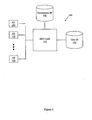
- Figure 1 illustrates an example system associated with automated application server (AS) permissions provisioning.
- AS automated application server
- Figure 2 illustrates an example system associated with automated AS permissions provisioning.
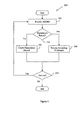
- Figure 3 illustrates an example method associated with automated AS permissions provisioning.
- Figure 4 illustrates an example method associated with automated AS permissions provisioning.
- Figure 5 illustrates an example computing environment in which example systems and methods illustrated herein can operate.
- Figure 6 illustrates an example set of AS-to-user-database-interface-messages.
- Figure 7 illustrates an example schema
- Computer-readable medium refers to a medium that participates in directly or indirectly providing signals, instructions and/or data.
- a computer-readable medium may take forms, including, but not limited to, non-volatile media, volatile media, and transmission media.
- Non-volatile media may include, for example, optical or magnetic disks and so on.
- Volatile media may include, for example, semiconductor memories, dynamic memory and the like.
- Transmission media may include coaxial cables, copper wire, fiber optic cables, and the like. Transmission media can also take the form of electromagnetic radiation, like that generated during radio-wave and infra-red data communications, or take the form of one or more groups of signals.
- a computer-readable medium include, but are not limited to, a floppy disk, a flexible disk, a hard disk, a magnetic tape, other magnetic medium, a CD-ROM, other optical medium, punch cards, paper tape, other physical media with patterns of holes, a RAM, a ROM, an EPROM, a FLASH-EPROM, or other memory chip or card, a memory stick, a carrier wave/pulse, and other media from which a computer, a processor or other electronic device can read.
- Signals used to propagate instructions or other software over a network like the Internet, can be considered a "computer-readable medium.”
- Data store refers to a physical and/or logical entity that can store data.
- a data store may be, for example, a database, a table, a file, a list, a queue, a heap, a memory, a register, and so on.
- a data store may reside in one logical and/or physical entity and/or may be distributed between two or more logical and/or physical entities.
- logic includes but is not limited to hardware, firmware, software and/or combinations of each to perform a function(s) or an action(s), and/or to cause a function or action from another logic, method, and/or system.
- logic may include a software controlled microprocessor, discrete logic like an application specific integrated circuit (ASIC), an analog circuit, a digital circuit, a programmed logic device, a memory device containing instructions, or the like.
- Logic may include one or more gates, combinations of gates, or other circuit components.
- Logic may also be fully embodied as software. Where multiple logical logics are described, it may be possible to incorporate the multiple logical logics into one physical logic. Similarly, where a single logical logic is described, it may be possible to distribute that single logical logic between multiple physical logics.
- an operable connection is one in which signals, physical communications, and/or logical communications may be sent and/or received.
- an operable connection includes a physical interface, an electrical interface, and/or a data interface, but it is to be noted that an operable connection may include differing combinations of these or other types of connections sufficient to allow operable control.
- two entities can be operably connected by being able to communicate signals to each other directly or through one or more intermediate entities like a processor, operating system, a logic, software, or other entity.
- Logical and/or physical communication channels can be used to create an operable connection.
- Signal includes but is not limited to one or more electrical or optical signals, analog or digital signals, data, one or more computer or processor instructions, messages, a bit or bit stream, or other means that can be received, transmitted and/or detected.
- Software includes but is not limited to, one or more computer or processor instructions that can be read, interpreted, compiled, and/or executed and that cause a computer, processor, or other electronic device to perform functions, actions and/or behave in a desired manner.
- the instructions may be embodied in various forms like routines, algorithms, modules, methods, threads, and/or programs including separate applications or code from dynamically linked libraries.
- Software may also be implemented in a variety of executable and/or loadable forms including, but not limited to, a stand-alone program, a function call (local and/or remote), a servelet, an applet, instructions stored in a memory, part of an operating system or other types of executable instructions.
- Suitable software for implementing the various components of the example systems and methods described herein may be developed using programming languages and tools like Java, Pascal, C#, C++, C, CGI, Perl, SQL, APIs, SDKs, assembly, firmware, microcode, and/or other languages and tools.
- Software whether an entire system or a component of a system, may be embodied as an article of manufacture and maintained or provided as part of a computer-readable medium as defined previously.
- Another form of the software may include signals that transmit program code of the software to a recipient over a network or other communication medium.
- a computer-readable medium has a form of signals that represent the software/firmware as it is downloaded from a web server to a user.
- the computer-readable medium has a form of the software/firmware as it is maintained on the web server.
- Other forms may also be used.
- User includes but is not limited to one or more persons, software, computers or other devices, or combinations of these.
- FIG. 1 illustrates an example system 100 associated with automated AS permissions provisioning.
- System 100 may, for example, be part of a Home Subscriber Server (HSS).
- HSS Home Subscriber Server
- System 100 may facilitate actions including automatically discovering application servers that become active in an IMS, automatically learning about the newly discovered application servers, selectively provisioning permissions concerning the newly discovered application servers, and so on.
- an AS When an AS is added to an IMS, or when an AS becomes newly active in an IMS, the AS may generate a request concerning user data. The request may be intended to acquire some user data, to change some user data, and/or to register to be notified when certain user data changes.
- an IMS will not simply freely hand over user data to an unknown AS.
- permissions information concerning interactions between an AS and user data may be stored by an IMS.
- Stored permissions information may facilitate controlling the types of messages that will be accepted from an AS by an HSS.
- a first AS may be allowed to read user data, to write user data, and to register for notifications concerning changes to user data.
- a second AS may only be allowed to read user data, while a third AS may be allowed to read user data and be notified about changes to user data.
- stored permissions information may facilitate controlling the type of user data with which an AS will be allowed to interact.
- an AS may be allowed to access some user data (e.g., public identifier) but may not be allowed to access some other user data (e.g., current location).
- An AS may be configured to provide multimedia services to which users may subscribe.
- the services may include, for example, telephony, video-conferencing, multi-player gaming, and so on.
- an AS may provide sub-services including, for example, call forwarding, call waiting, multi-party calling, and so on.
- an AS may be located in the home network of a user or in an external, third-party network.
- An AS may be described by information concerning, for example, an address, a location, a service(s) provided, a name, how processing should proceed if an AS can not be accessed, and so on.
- System 100 may include an HSS logic 110 configured as a portion of an IMS through which a user may access a service.
- An AS may communicate with HSS logic 110 using, for example, the Sh protocol.
- An example Sh protocol is described in 3GPP TS 29.328 and 29.329 V5 10.0 (2005-06).
- One example Sh protocol may define commands including a user data request (UDR) in which an AS asks an HSS to provide the AS with certain user data.
- the example Sh protocol may also include a profile update request (PUR) in which an AS asks an HSS to update certain data with values provided by the AS.
- PUR profile update request
- the example Sh protocol may also include a subscribe notify request (SNR) in which an AS asks an HSS to notify the AS when certain user data values change.
- the HSS may be configured to accept and/or reject messages from application servers based, at least in part, on permissions information associated with an AS.
- An example set of Sh messages are described in connection with Figure 6 .
- system 100 may also include a permissions database 130 .
- Permissions database 130 may store, for example, one record per AS. The record may store information concerning, for example, which commands to accept from an AS and upon which user data an accepted command can operate.
- One example layout for a permissions database is described in schema 700 ( Figure 7 ).
- “database” is used to refer to a table. In other examples, “database” may be used to refer to a set of tables. In still other examples, “database” may refer to a data store and/or a set of data stores. In some examples, “database” may also include methods for accessing and/or manipulating tables, files, data stores, and so on.
- System 100 may also include a user database 140 that is configured to store information concerning a user that may subscribe to access a service provided by an AS.
- the user information may be stored in a record in user database 140 .
- a user record may include, for example, data describing a user identity, a user location, user billing information, services to which a user is subscribed, and so on.
- the user data with which a message from an AS seeks to interact may be stored in user database 140 .
- HSS logic 110 , permissions database 130 , and user database 140 are illustrated as three separate components it is to be appreciated that in different examples these elements may be arranged in a greater and/or lesser number of logical and/or physical elements. Additionally, HSS logic 110 , permissions database 130 , and user database 140 may be arranged as components of an IMS.
- system 100 may include HSS logic 110 that is operably connectable to user database 140 , application servers (e.g., 120 , 122 , ... 128 ), and permissions database 130 .
- HSS logic 110 may be configured as part of an IMS and thus may be configured to receive an AS-to-user-database-interface-message (AUDIM) from an AS. After receiving the AUDIM, HSS logic 110 may selectively update permissions database 130 . How and/or whether permissions database 130 is updated may depend, at least in part, on data in the AUDIM. Additionally, HSS logic 110 may be configured to update permissions database 130 only after determining that the IMS is in an AS permissions auto-configure state.
- AUDIM AS-to-user-database-interface-message
- permissions database 130 may be configured to store permissions information for controlling an AUDIM initiated interaction between an AS and user database 140 .
- the AUDIM may be, for example, a user data request (UDR), a profile update request (PUR), and a subscriber notify request (SNR).
- the UDR, the PUR, and the SNR may be defined in a protocol like an IMS Sh protocol.
- updating permissions database 130 may include automatically adding a record to permissions database 130 .
- the record may be associated with an AS that provided an AUDIM and may include information for controlling future interactions between the AS that provided the AUDIM and user database 140. Conventionally, this record, if added at all, would have been manually created and inserted.
- Figure 2 illustrates an example system 200 associated with automated AS permissions provisioning.
- System 200 includes components similar to those described in connection with Figure 1 .
- system 200 includes a user database 260, an HSS logic 210, and a permissions database 250.
- System 200 may facilitate controlling an interaction between an AS 240 and user database 260, the action being initiated by a message 230 sent from AS 240.
- Message 230 may be, for example, an AUDIM message (e.g., SNR, UDR, PUR) described in the Sh protocol.
- AUDIM message e.g., SNR, UDR, PUR
- HSS logic 210 may include a discovery logic 220 that is configured to determine whether an AS from which an AUDIM is received is related to a record in permissions database 250 . While discovery logic 220 is illustrated inside HSS logic 210 , it is to be appreciated that in other examples discovery logic 220 may stand apart from and be operably connected to HSS logic 210 .
- HSS logic 210 may be configured to update permissions database 250 when discovery logic 220 determines that an AS from which an AUDIM is received is not related to a record in permissions database 250 . This determination may be made, for example, by searching permissions database 250 for an AS identifier that matches an AS identifier provided by AS 240 in AUDIM 230 .
- selectively updating permissions database 250 may include automatically adding a record to permissions database 250 .
- the record may be added, for example, by HSS logic 210 and/or discovery logic 220 . Conventionally, this record may have been manually created and added.
- the record may be related to an AS from which the AUDIM is received. For example, the record may include an AS identifier retrieved from the AUDIM and may store control information associated with the AUDIM.
- discovery logic 220 may be configured to establish pre-determined (e.g., default) values in the record added to permissions database 250 .
- the default values may be based, at least in part, on analyzing values stored in fields in the AUDIM.
- an AS realm field and/or AS identifier field may provide information that identifies a degree of trustworthiness to be associated with the AS. This degree of trustworthiness may in turn control the types of messages that will be accepted from the AS.
- the pre-determined configurable values may be used to control AUDIM initiated interactions between an AS and the user database.
- the UDR allowed field 720 , the PUR allowed field 740 , and the SNR allowed field 750 described in connection with Figure 7 may be fields whose values can be configured.
- data stored in these fields may control whether data can be provided from the user database to the AS, whether data can be provided from the AS to the user database, and whether the AS can subscribe to receive notifications from HSS logic 210 concerning updates to data in the user database.
- Example methods may be better appreciated with reference to flow diagrams. While for purposes of simplicity of explanation, the illustrated methods are shown and described as a series of blocks, it is to be appreciated that the methods are not limited by the order of the blocks, as some blocks can occur in different orders and/or concurrently with other blocks from that shown and described. Moreover, less than all the illustrated blocks may be required to implement an example method. Blocks may be combined or separated into multiple components. Furthermore, additional and/or alternative methods can employ additional, not illustrated blocks. While the figures illustrate various actions occurring in serial, it is to be appreciated that various actions could occur concurrently, substantially in parallel, and/or at substantially different points in time.
- FIG. 3 illustrates an example method 300 associated with automatically provisioning AS permissions in an HSS.
- the illustrated elements denote "processing blocks" that may be implemented in logic.
- the processing blocks may represent executable instructions that cause a computer, processor, and/or logic device to respond, to perform an action(s), to change states, and/or to make decisions.
- the described methods can be implemented as processor executable instructions and/or operations provided by a computer-readable medium.
- the processing blocks may represent functions and/or actions performed by functionally equivalent circuits like an analog circuit, a digital signal processor circuit, an application specific integrated circuit (ASIC), or other logic device.
- ASIC application specific integrated circuit
- Method 300 may include, at 310 , receiving an AUDIM from an AS.
- the AUDIM may be configured to initiate an interaction between the AS and a user database.
- the AS may be configured to provide a service for a user of the IMS.
- the user database may store data concerning the user.
- Method 300 may also include, at 320 , determining whether a permissions database includes a record concerning the AS. If the determination is Yes, processing may continue at 330 where the AUDIM is processed according to the existing record. If the determination is No, processing may continue at 340 .
- the permissions database and the user database may be components of an IMS.
- the permissions database and the user database may be portions of an HSS database.
- Method 300 may include, at 340 , automatically adding to the permissions database an entry concerning the AS.
- the entry may be, for example, a record.
- the record may be configured to store data to control the interaction between the AS and a user database.
- a layout for an example record is described in connection with Figure 7 .
- the record may be populated with default values based, for example, on a decision(s) made by a systems administrator. Conventionally, the record may have been manually established by a systems administrator and manually inserted in the database.
- Method 300 may also include, at 350 , making a determination concerning whether to process another AUDIM. If the determination is Yes, then processing may return to 310 , otherwise processing may conclude.
- the AUDIM may be, for example, a user data request (UDR), a profile update request (PUR), a subscribe notify request (SNR), and the like:
- the AUDIM may be defined, for example, in the Sh protocol.
- Figure 3 illustrates various actions occurring in serial, it is to be appreciated that various actions illustrated in Figure 3 could occur substantially in parallel.
- a first process could receive AUDIMs
- a second process could examine a permissions database with respect to whether the AS associated with the AUDIM is described in the permissions database
- a third process could update the permissions database. While three processes are described, it is to be appreciated that a greater and/or lesser number of processes could be employed and that lightweight processes, regular processes, threads, and other approaches could be employed.
- Figure 4 illustrates an example method 400 associated with automatically provisioning AS permissions in an HSS.
- Method 400 includes elements similar to those described in connection with Figure 3 .
- an AUDIM is received at 410
- a determination concerning whether a permissions record associated with an AS that provided the AUDIM exists is made at 420
- regular processing occurs at 430 .
- method 400 may include additional actions.
- method 400 may include, at 440 , determining whether the permissions database is in an auto-discovery state.
- the permissions database In an auto-discovery state, the permissions database may be configured to automatically have a record associated with a newly discovered AS added to the database.
- processing may move ahead at 450 , otherwise an error condition may exist.
- a record may automatically be added to the permissions database. Additional processing that examines the received AUDIM may be undertaken to customize the record added at 450 . Conventionally, the record, if added at all, would be manually added and/or customized at a later time.
- method 400 may also include, at 460 , making a determination concerning whether the permissions database is in an auto-learn state.
- the permissions database may have newly added records automatically reconfigured. If the permissions database is not in an auto-learning state, the record added at 450 may be left alone and processing may continue at 490 . If the permissions database is in an auto-learning state, then method 400 may continue at 470 to examine a field(s) in the AUDIM.
- Method 400 may include, at 480 , automatically manipulating a value in a field(s) in the record added to the permissions database at 450 .
- How the values in the fields are manipulated may be based, at least in part, on the value(s) in the AUDIM field(s). Values in these configurable fields may facilitate controlling interactions between an AS and a user database by controlling, for example, which types of AUDIM(s) will be accepted from the AS, and upon which data in the user database an accepted AUDIM will be allowed to operate. It is to be appreciated that manipulating a value may include updating a value.
- an AS that provides an AUDIM with an AS realm field value of *.abc may be allowed to provide a first set of commands (e.g., SNR) that may access a first set of data.
- an AS that provides an AUDIM with an AS realm field value of *.xyz may be allowed to provide a second set of commands (e.g., SNR, UDR) that may access a second larger set of data
- an AS that provides an AUDIM with an AS realm field value of *.jtk is retrieved may be allowed to provide a third set of commands (e.g., SNR, UDR, PUR) that may access all and/or substantially all available user data.
- SNR SNR
- Method 400 may also include, at 490 , making a determination concerning whether to process another AUDIM. If the determination at 490 is Yes, then processing may return to 410 , otherwise processing may conclude.
- a computer-readable medium may store processor executable instructions operable to perform a method that includes receiving from an AS an AUDIM configured to initiate an interaction between the AS and a user database and, upon determining that a permissions database does not include a record concerning the AS, automatically adding to the permissions database a record concerning the AS.
- the record may store data for controlling the interaction between the AS and a user database.
- the permissions database and the user database may be components of an IMS and the AS may provide a service(s) for a user of the IMS.
- the user database may store data concerning the IMS user.
- Figure 5 illustrates an example computing device in which example systems and methods described herein, and equivalents, can operate.
- the example computing device may be a computer 500 that includes a processor 502 , a memory 504 , and input/output ports 510 operably connected by a bus 508 .
- computer 500 may include a discovery logic 530 configured to facilitate detecting an AS.
- Discovery logic 530 may also facilitate automatically provisioning AS permissions for an AS.
- Discovery logic 530 may provide means (e.g., hardware, software, firmware) for detecting an attempt by an AS to interact with an IMS user data, means (e.g., hardware, software, firmware) for determining whether the AS associated with the attempt is described by IMS permissions data that facilitates controlling interactions between application servers and IMS user data, and means (e.g., hardware, software, firmware) for selectively manipulating the IMS permissions to control interactions between the AS associated with the attempt and the IMS user data. While discovery logic 530 is illustrated as a hardware component operably connected to bus 508, it is to be appreciated that in one example discovery logic 530 may be implemented as software stored on disk 506 , brought into memory 504 as a process 514 , and executed by processor 502 .
- the processor 502 can be a variety of various processors including dual microprocessor and other multi-processor architectures.
- the memory 504 can include volatile memory and/or non-volatile memory.
- the non-volatile memory can include, but is not limited to, ROM, PROM, EPROM, EEPROM, and the like.
- Volatile memory can include, for example, RAM, synchronous RAM (SRAM), dynamic RAM (DRAM), synchronous DRAM (SDRAM), double data rate SDRAM (DDR SDRAM), and direct RAM bus RAM (DRRAM).
- a disk 506 may be operably connected to the computer 500 via, for example, an input/output interface (e.g., card, device) 518 and an input/output port 510 .
- the disk 506 can include, but is not limited to, devices including a magnetic disk drive, a solid state disk drive, a floppy disk drive, a tape drive, a Zip drive, a flash memory card, and/or a memory stick.
- the disk 506 can include optical drives including a CD-ROM, a CD recordable drive (CD-R drive), a CD rewriteable drive (CD-RW drive), and/or a digital video ROM drive (DVD ROM).
- the memory 504 can store processes 514 and/or data 516 , for example.
- the disk 506 and/or memory 504 can store an operating system that controls and allocates resources of the computer 500 .
- the bus 508 can be a single internal bus interconnect architecture and/or other bus or mesh architectures. While a single bus is illustrated, it is to be appreciated that computer 500 may communicate with various devices, logics, and peripherals using other busses that are not illustrated (e.g., PCIE, SATA, Infiniband, 1394, USB, Ethernet).
- the bus 508 can be of a variety of types including, but not limited to, a memory bus or memory controller, a peripheral bus or external bus, a crossbar switch, and/or a local bus.
- the local bus can be of varieties including, but not limited to, an industrial standard architecture (ISA) bus, a microchannel architecture (MSA) bus, an extended ISA (EISA) bus, a peripheral component interconnect (PCI) bus, a universal serial (USB) bus, and a small computer systems interface (SCSI) bus.
- ISA industrial standard architecture
- MSA microchannel architecture
- EISA extended ISA
- PCI peripheral component interconnect
- USB universal serial
- SCSI small computer systems interface
- the computer 500 may interact with input/output devices via i/o interfaces 518 and input/output ports 510 .
- Input/output devices can include, but are not limited to, a keyboard, a microphone, a pointing and selection device, cameras, video cards, displays, disk 506 , network devices 520 , and the like.
- the input/output ports 510 can include but are not limited to, serial ports, parallel ports, and USB ports.
- the computer 500 can operate in a network environment and thus may be connected to network devices 520 via the i/o devices 518 , and/or the i/o ports 510 . Through the network devices 520 , the computer 500 may interact with a network. Through the network, the computer 500 may be logically connected to remote computers.
- the networks with which the computer 500 may interact include, but are not limited to, a local area network (LAN), a wide area network (WAN), and other networks.
- the network devices 520 can connect to LAN technologies including, but not limited to, fiber distributed data interface (FDDI), copper distributed data interface (CDDI), Ethernet (IEEE 802.3), token ring (IEEE 802.5), wireless computer communication (IEEE 802.11), Bluetooth (IEEE 802.15.1), and so on.
- the network devices 520 can connect to WAN technologies including, but not limited to, point to point links, circuit switching networks like integrated services digital networks (ISDN), packet switching networks, and digital subscriber lines (DSL).
- ISDN integrated services digital networks
- the AUDIM may include, but are not limited to, a user data request (UDR) and a user data answer (UDA), a profile update request (PUR) and profile update answer (PUA), and a subscribe notify request (SNR) and subscribe notify answer (SNA).
- UDR user data request
- UDA user data answer
- PUR profile update request
- PUA profile update answer
- SNR subscribe notify request
- SNA subscribe notify answer
- These commands may originate at an AS 610 and be answered by an HSS 620 .
- the commands may be intended to seek access and/or manipulate user data.
- the commands may include information about the originating AS (e.g., AS identity, AS realm).
- the AUDIM may also include a push notification request (PNR) and push notification answer (PNA) that originate at an HSS 620 and are answered by an AS 610 .
- PNR push notification request
- PNA push notification answer
- Figure 7 illustrates an example schema 700 that describes an example layout for a data store employed in connection with the example systems and methods described herein. It is to be appreciated that schema 700 is but one example layout and that different tables, different table arrangements, different dependencies, and so on may be employed.
- data store 710 illustrates the organization of one example AS permissions list file.
- the data store 710 includes entries that control whether various messages will be accepted from an AS and upon which IMS user data accepted messages will be allowed to operate. For example, entry 720 controls whether a UDR message will be accepted and entry 730 controls whether an accepted UDR message will be allowed to interact with a user public identity. The user public identity may be stored, for example, in a user data store. Entry 740 controls whether a PUR message will be accepted. Similarly, entry 750 controls whether an SNR message will be accepted.
- Example systems and methods described herein may be configured to initially automatically produce a default entry in a data store like AS Permissions List File 710 .
- the default entry may include a set of fields that may initially be set to default values. As described above, in some cases, these default values may be automatically manipulated based, for example, on information gained from a message from an AS. For example, entry 760 describes a realm in which an AS operates. Based on this realm value, default values may be reconfigured leading to more or less messages being accepted and/or allowing access to more or less user data.
- AS realm field is described as having a value upon which decisions to reconfigure default values may be made, it is to be appreciated that other data associated with an AS providing a message may be evaluated to determine whether and/or how to reconfigure default values. While a file is illustrated, it is to be appreciated that in other examples this information may be stored in other forms.
Landscapes
- Engineering & Computer Science (AREA)
- Computer Networks & Wireless Communication (AREA)
- Signal Processing (AREA)
- Computer Hardware Design (AREA)
- Computer Security & Cryptography (AREA)
- Computing Systems (AREA)
- General Engineering & Computer Science (AREA)
- Mobile Radio Communication Systems (AREA)
- Information Retrieval, Db Structures And Fs Structures Therefor (AREA)
- Telephonic Communication Services (AREA)
Claims (8)
- System (200), umfassend: eine Heim-Teilnehmer-Server-HSS-Logik (210), die im Betrieb mit Entitäten verbunden werden kann, darin eingeschlossen eine Benutzerdatenbank (260), ein Anwendungsserver, AS, (240) und eine Zulassungs-Datenbank (250), wobei die HSS-Logik (210) als ein Abschnitt eines Internetprotokoll-IP-Multimedia-Kernnetzwerk-Subsystems, IMS, konfiguriert ist, wobei die HSS-Logik (210) konfiguriert ist, um eine AS-Benutzer-Datenbank-Schnittstellenmeldung, AUDIM, (230) zu empfangen und selektiv automatisch die Zulassungs-Datenbank (250) zu aktualisieren, die mindestens teilweise auf der AUDIM (230) basiert; wobei die Benutzerdatenbank (260) konfiguriert ist, um Benutzerdaten zu speichern, die einen oder mehrere Benutzer des IMS betreffen; wobei der AS (240) konfiguriert ist, um dem einen oder den mehreren Benutzern einen oder mehrere Dienstleistungen bereitzustellen; und wobei die Zulassungs-Datenbank (250) konfiguriert ist, um Zulassungs-Informationen zu speichern, die konfiguriert sind, um einen AUDIM-initiierten Dialog zwischen einem AS (240) und der Benutzerdatenbank (260) zu steuern, wobei die HSS-Logik (210) ferner eine Entdeckungslogik (220) umfasst, die konfiguriert ist, um zu bestimmen, ob ein AS (240), von dem eine AUDIM (230) empfangen wird, auf eine Aufzeichnung in der Zulassungs-Datenbank (250) bezogen ist, dadurch gekennzeichnet, dass
die HSS-Logik (210) konfiguriert ist, um automatisch die Zulassungs-Datenbank (250) zu aktualisieren, wenn die Entdeckungslogik (220) bestimmt, dass ein AS (240), von dem die AUDIM (230) empfangen wird, nicht auf eine Aufzeichnung in der Zulassungs-Datenbank (250) bezogen ist, wobei die selektiv automatische Aktualisierung der Zulassungs-Datenbank (250) die automatische Hinzufügung zur Zulassungs-Datenbank (250) einer Aufzeichnung umfasst, die auf einen AS (240) bezogen ist, von dem die AUDIM (230) empfangen wird und konfiguriert, um die Zulassungs-Datenbank (130) nur nach der Bestimmung, dass sich das IMS in einem Zustand der AS-Zulassungs-Selbstkonfiguration befindet, zu aktualisieren. - System (200) nach Anspruch 1, wobei die AUDIM (230) eines einer Benutzerdatenanfrage, UDR, einer Profilaktualisierungsanfrage, PUR und einer Teilnehmerbenachrichtigungsanfrage, SNR, ist, wobei die UDR, die PUR und die SNR in einem IMS Sh-Protokoll definiert sind.
- System (200) nach Anspruch 1, wobei die automatische Aktualisierung der Zulassungs-Datenbank (250) die automatische Hinzufügung zur Zulassungs-Datenbank (250) einer Aufzeichnung umfasst, die mit einem AS (240) assoziiert ist, der eine AUDIM (230) bereitstellte.
- System (200) nach Anspruch 1, wobei die Entdeckungs-Logik (220) konfiguriert ist, um einen oder mehrere vorbestimmte konfigurierbare Werte in einem oder in mehreren Feldern der Aufzeichnung festzusetzen, die der Zulassungs-Aufzeichnung (250) hinzugefügt wird, mindestens teilweise basierend auf der Analyse des einen oder der mehreren Felder in der AUDIM (230), wobei das eine oder die mehreren Felder in der AUDIM (230) eines oder mehrere einer AS-Adresse, eines AS-Bereichs, eines AS-Namen und einer AS-Art umfasst, wobei die vorbestimmten konfigurierbaren Werte konfiguriert sind, um den AUDIM-initiierten Dialog zwischen einem AS (240) und der Benutzerdatenbank (260) zu steuern.
- Verfahren (400), durchgeführt durch eine Heim-Teilnehmer-Server-HSS-Logik (210), die im Betrieb mit Entitäten verbunden werden kann, darin eingeschlossen eine Benutzerdatenbank (260), ein Anwendungsserver, AS, (240), und eine Zulassungs-Datenbank (250), wobei die HSS-Logik (210) als ein Abschnitt eines Internetprotokoll-IP-Multimedia-Kernnetzwerk-Subsystems, IMS, konfiguriert ist, wobei die HSS-Logik (210) konfiguriert ist, um eine AS-Benutzer-Datenbank-Schnittstellenmeldung, AUDIM, (230) zu empfangen und selektiv automatisch die Zulassungs-Datenbank (250) zu aktualisieren, die mindestens teilweise auf der AUDIM (230) basiert; wobei die HSS-Logik (210) weiter eine Entdeckungslogik (220) umfasst, wobei das Verfahren (400) Folgendes umfasst:die Benutzerdatenbank (260), die Benutzerdaten speichert, die einen oder mehrere Benutzer des IMS betreffen;den AS (240), der eine oder mehrere Dienstleistungen an einen oder an mehrere Benutzer bereitstellt, die dazu konfiguriert sind; unddie Zulassungs-Datenbank (250), die Zulassungs-Informationen speichert, konfiguriert ist, um einen AUDIM-initiierten Dialog zwischen einem AS (240) und der Benutzerdatenbank (260) zu steuern; dadurch gekennzeichnet, dassdie Entdeckungslogik (220) bestimmt, ob ein AS (240), von dem eine AUDIM (230) empfangen wird, auf eine Aufzeichnung in der Zulassungs-Datenbank (250) bezogen ist, wobei die HSS-Logik (210) automatisch die Zulassungs-Datenbank (250) aktualisiert, wenn die Entdeckungslogik (220) bestimmt, dass eine AS (240), von der die AUDIM (230) empfangen wird, nicht auf eine Aufzeichnung in der Zulassungs-Datenbank (250) bezogen ist, wobei die selektive automatische Aktualisierung der Zulassungs-Datenbank (250) die automatische Hinzufügung zur Zulassungs-Datenbank (250) einer Aufzeichnung umfasst, die auf einen AS (240) bezogen ist, von dem die AUDIM (230) empfangen wird und konfiguriert, um die Zulassungs-Datenbank (130) nur nach der Bestimmung, dass sich das IMS in einem Zustand der AS-Zulassungs-Selbstkonfiguration befindet, zu aktualisieren.
- Verfahren (400) nach Anspruch 5, wobei die AUDIM eines von einer Benutzerdatenanfrage, UDR, einer Profilaktualisierungsanfrage, PUR und einer Teilnehmerbenachrichtigungsanfrage, SNR ist, definiert in einem IMS Sh-Protokoll.
- Verfahren (400) nach Anspruch 5, umfassend die Bestimmung (440), dass sich die Zulassungs-Datenbank in einem Zustand der Selbst-Entdeckung befindet, bevor automatisch die Aufzeichnung zur Zulassungs-Datenbank hinzugefügt wird.
- Verfahren (400) nach Anspruch 7, umfassend, nach der Bestimmung (460), dass sich die Zulassungs-Datenbank in einem Zustand des Selbstlernens befindet, die automatische Beeinflussung (480) eines Werts in einem oder in mehreren konfigurierbaren Feldern in der Aufzeichnung, die der Zulassungs-Datenbank hinzugefügt wurde, wobei die Beeinflussung mindestens teilweise auf dem Wert von einem oder von mehreren Feldern im AUDIM basiert, wobei die Werte in dem einen oder in den mehreren konfigurierbaren Feldern in der Aufzeichnung, die der Zulassungs-Datenbank hinzugefügt wurde, konfiguriert sind, um die Dialoge zwischen dem AS und der Benutzerdatenbank durch die Kontrolle von einem oder von mehreren davon zu kontrollieren, welche Arten von AUDIM von der AS akzeptiert werden, und nach den Daten in der Benutzer-Datenbank einer akzeptierten AUDIM laufen gelassen wird.
Applications Claiming Priority (2)
| Application Number | Priority Date | Filing Date | Title |
|---|---|---|---|
| US11/213,363 US8799490B2 (en) | 2005-08-26 | 2005-08-26 | Automated application server (AS) permissions provisioning |
| PCT/US2006/027874 WO2007024364A1 (en) | 2005-08-26 | 2006-07-18 | Automated application server (as) permissions provisioning |
Publications (2)
| Publication Number | Publication Date |
|---|---|
| EP1929818A1 EP1929818A1 (de) | 2008-06-11 |
| EP1929818B1 true EP1929818B1 (de) | 2013-06-05 |
Family
ID=37442059
Family Applications (1)
| Application Number | Title | Priority Date | Filing Date |
|---|---|---|---|
| EP06787730.8A Active EP1929818B1 (de) | 2005-08-26 | 2006-07-18 | Automatisierte Zulassungs-Bereitstellung für Anwendungsserver (AS) |
Country Status (3)
| Country | Link |
|---|---|
| US (1) | US8799490B2 (de) |
| EP (1) | EP1929818B1 (de) |
| WO (1) | WO2007024364A1 (de) |
Families Citing this family (15)
| Publication number | Priority date | Publication date | Assignee | Title |
|---|---|---|---|---|
| US8799490B2 (en) | 2005-08-26 | 2014-08-05 | Hewlett-Packard Development Company, L.P. | Automated application server (AS) permissions provisioning |
| US8213411B2 (en) * | 2005-08-26 | 2012-07-03 | Hewlett-Packard Development Company, L.P. | Charging database with class of service (COS) |
| US7783618B2 (en) | 2005-08-26 | 2010-08-24 | Hewlett-Packard Development Company, L.P. | Application server (AS) database with class of service (COS) |
| CN101127766B (zh) * | 2007-09-24 | 2010-06-09 | 中兴通讯股份有限公司 | 基于sip协议的消息处理方法、装置及ip通信系统 |
| US20110171958A1 (en) * | 2010-01-11 | 2011-07-14 | Suzann Hua | Mobile device usage management via home subscriber server operation and profile |
| CN102469070B (zh) * | 2010-11-05 | 2016-01-20 | 中兴通讯股份有限公司 | IP多媒体子系统、订阅Forking的方法及装置 |
| US9497033B2 (en) | 2013-11-20 | 2016-11-15 | Oracle International Corporation | Methods systems and computer readable media for providing real time data network usage information using subscription profile repository (SPR) |
| US20170124152A1 (en) | 2015-11-02 | 2017-05-04 | LeapYear Technologies, Inc. | Differentially private processing and database storage |
| WO2017108116A1 (en) * | 2015-12-22 | 2017-06-29 | Telefonaktiebolaget Lm Ericsson (Publ) | Controlling implentation of services in a mobile telecommunications network |
| US11055432B2 (en) | 2018-04-14 | 2021-07-06 | LeapYear Technologies, Inc. | Budget tracking in a differentially private database system |
| US10430605B1 (en) * | 2018-11-29 | 2019-10-01 | LeapYear Technologies, Inc. | Differentially private database permissions system |
| US11755769B2 (en) | 2019-02-01 | 2023-09-12 | Snowflake Inc. | Differentially private query budget refunding |
| US10642847B1 (en) | 2019-05-09 | 2020-05-05 | LeapYear Technologies, Inc. | Differentially private budget tracking using Renyi divergence |
| EP3866042B1 (de) | 2020-02-11 | 2022-07-20 | Leapyear Technologies, Inc. | Adaptive differentielle private zählung |
| US12418534B2 (en) * | 2023-02-06 | 2025-09-16 | Peter Barendse | Permissions management system and method |
Family Cites Families (20)
| Publication number | Priority date | Publication date | Assignee | Title |
|---|---|---|---|---|
| US8880639B2 (en) * | 2002-02-22 | 2014-11-04 | Nokia Solutions And Networks Oy | Method and system for provisioning services to a terminal |
| EP1396980A1 (de) * | 2002-09-05 | 2004-03-10 | Hewlett-Packard Company | Vorrichtung zur Verwaltung von Benutzerprofilen |
| US7802292B2 (en) * | 2003-02-10 | 2010-09-21 | At&T Mobility Ii Llc | Application of dynamic profiles to the allocation and configuration of network resources |
| GB0306863D0 (en) * | 2003-03-25 | 2003-04-30 | Nokia Corp | Service provisioning in a communication system |
| US20040234060A1 (en) * | 2003-03-31 | 2004-11-25 | Nokia Corporation | Method and system for deactivating a service account |
| US20040205212A1 (en) | 2003-03-31 | 2004-10-14 | Nokia Corporation | Method and system for forwarding a service-related information to a network user |
| US20050155036A1 (en) * | 2003-12-19 | 2005-07-14 | Nokia Corporation | Application server addressing |
| GB0329857D0 (en) * | 2003-12-23 | 2004-01-28 | Nokia Corp | User registration in a communication system |
| US20050190772A1 (en) * | 2004-02-26 | 2005-09-01 | Shang-Chih Tsai | Method of triggering application service using filter criteria and IP multimedia subsystem using the same |
| EP1583312A1 (de) * | 2004-04-02 | 2005-10-05 | France Telecom | Vorrichtungen und Verfahren zur Steuerung des Zugriffs auf ein IP - Multimediasystem von einem Anwendungsserver |
| GB0409496D0 (en) * | 2004-04-28 | 2004-06-02 | Nokia Corp | Subscriber identities |
| JP4819812B2 (ja) * | 2004-08-11 | 2011-11-24 | テレフオンアクチーボラゲット エル エム エリクソン(パブル) | 公開サービスアイデンティティの提供 |
| FI20045298A0 (fi) * | 2004-08-16 | 2004-08-16 | Nokia Corp | Mediapalvelun reititys |
| US7643626B2 (en) * | 2004-12-27 | 2010-01-05 | Alcatel-Lucent Usa Inc. | Method for deploying, provisioning and storing initial filter criteria |
| US7865602B2 (en) * | 2005-02-23 | 2011-01-04 | Nokia Siemens Networks Oy | System, method, and network elements for providing a service such as an advice of charge supplementary service in a communication network |
| US20060225128A1 (en) * | 2005-04-04 | 2006-10-05 | Nokia Corporation | Measures for enhancing security in communication systems |
| US20070002779A1 (en) * | 2005-06-15 | 2007-01-04 | Samsung Electronics Co., Ltd. | Method and system for providing PTT to conference |
| US8799490B2 (en) | 2005-08-26 | 2014-08-05 | Hewlett-Packard Development Company, L.P. | Automated application server (AS) permissions provisioning |
| US8213411B2 (en) * | 2005-08-26 | 2012-07-03 | Hewlett-Packard Development Company, L.P. | Charging database with class of service (COS) |
| US7613705B2 (en) * | 2005-08-26 | 2009-11-03 | Hewlett-Packard Development Company, L.P. | Initial filter criteria (IFC) database with class of service (COS) |
-
2005
- 2005-08-26 US US11/213,363 patent/US8799490B2/en active Active
-
2006
- 2006-07-18 EP EP06787730.8A patent/EP1929818B1/de active Active
- 2006-07-18 WO PCT/US2006/027874 patent/WO2007024364A1/en not_active Ceased
Also Published As
| Publication number | Publication date |
|---|---|
| US20070047558A1 (en) | 2007-03-01 |
| WO2007024364A1 (en) | 2007-03-01 |
| EP1929818A1 (de) | 2008-06-11 |
| US8799490B2 (en) | 2014-08-05 |
Similar Documents
| Publication | Publication Date | Title |
|---|---|---|
| US8799490B2 (en) | Automated application server (AS) permissions provisioning | |
| US9112928B2 (en) | Method and apparatus for automatic loading of applications | |
| US20070067470A1 (en) | Initial filter criteria (IFC) database with class of service (COS) | |
| US11323550B2 (en) | Techniques to send load-share notifications to multiple receivers | |
| WO2019223888A1 (en) | Methods and apparatuses for handling slice selection data for a user | |
| US9596347B2 (en) | Method and system for providing a hold media service | |
| CN1984196A (zh) | 用来管理互联网电话语音邮件的方法和系统 | |
| US20080243999A1 (en) | Method and system for management of an application ensemble | |
| EP2556653A1 (de) | Bereitstellung von präsenz- und sozialen netzwerkinformationen für telefone | |
| US7783618B2 (en) | Application server (AS) database with class of service (COS) | |
| KR20100136906A (ko) | 플러그가능 콘택트 결정 | |
| US20080298238A1 (en) | Filtering in bandwidth sharing ad hoc networks | |
| JP2010517122A (ja) | メディア文脈情報 | |
| US8291077B2 (en) | Provision of services over a common delivery platform such as a mobile telephony network | |
| EP2377046A1 (de) | Verfahren in einem datenbankserver | |
| US10959087B1 (en) | Maintaining electronic subscriber identity module (eSIM) profiles across multiple mobile network operators (MNOs) | |
| US8213411B2 (en) | Charging database with class of service (COS) | |
| KR20090074817A (ko) | 최종-사용자들로의 인터넷 멀티미디어 서브시스템 서비스들의 제공을 위한 방법 | |
| CN101554071A (zh) | 移动订户身份代码的自动置换 | |
| US8904000B2 (en) | Provision of services over a common delivery platform such as a mobile telephony network | |
| US9577967B2 (en) | Method and system for managing an informational site using a social networking application | |
| US20060161616A1 (en) | Provision of services over a common delivery platform such as a mobile telephony network | |
| US8146069B2 (en) | Method and apparatus for performing non service affecting software upgrades in place | |
| EP1681832A1 (de) | Bereitstellung von Diensten über eine allgemeine Anlieferungsplattform so als bewegliches Telephonienetz | |
| CN115551104A (zh) | 业务处理方法、装置、设备及存储介质 |
Legal Events
| Date | Code | Title | Description |
|---|---|---|---|
| PUAI | Public reference made under article 153(3) epc to a published international application that has entered the european phase |
Free format text: ORIGINAL CODE: 0009012 |
|
| 17P | Request for examination filed |
Effective date: 20080320 |
|
| AK | Designated contracting states |
Kind code of ref document: A1 Designated state(s): DE FR GB SE |
|
| RIN1 | Information on inventor provided before grant (corrected) |
Inventor name: CHILUKURI, SRINIVAS,HEWLETT PACKARD CO. Inventor name: CAMERON, JEFFREY M.,HEWLETT PACKARD CO. Inventor name: AYERS, JOHN I.,HEWLETT PACKARD CO. |
|
| RBV | Designated contracting states (corrected) |
Designated state(s): DE FR GB SE |
|
| 17Q | First examination report despatched |
Effective date: 20090818 |
|
| DAX | Request for extension of the european patent (deleted) | ||
| REG | Reference to a national code |
Ref country code: DE Ref legal event code: R079 Ref document number: 602006036682 Country of ref document: DE Free format text: PREVIOUS MAIN CLASS: H04Q0007380000 Ipc: H04L0029060000 |
|
| GRAP | Despatch of communication of intention to grant a patent |
Free format text: ORIGINAL CODE: EPIDOSNIGR1 |
|
| RIC1 | Information provided on ipc code assigned before grant |
Ipc: H04L 29/06 20060101AFI20130218BHEP Ipc: H04L 29/12 20060101ALI20130218BHEP |
|
| GRAS | Grant fee paid |
Free format text: ORIGINAL CODE: EPIDOSNIGR3 |
|
| GRAA | (expected) grant |
Free format text: ORIGINAL CODE: 0009210 |
|
| AK | Designated contracting states |
Kind code of ref document: B1 Designated state(s): DE FR GB SE |
|
| REG | Reference to a national code |
Ref country code: GB Ref legal event code: FG4D |
|
| REG | Reference to a national code |
Ref country code: DE Ref legal event code: R096 Ref document number: 602006036682 Country of ref document: DE Effective date: 20130801 |
|
| PG25 | Lapsed in a contracting state [announced via postgrant information from national office to epo] |
Ref country code: SE Free format text: LAPSE BECAUSE OF FAILURE TO SUBMIT A TRANSLATION OF THE DESCRIPTION OR TO PAY THE FEE WITHIN THE PRESCRIBED TIME-LIMIT Effective date: 20130605 |
|
| PLBE | No opposition filed within time limit |
Free format text: ORIGINAL CODE: 0009261 |
|
| STAA | Information on the status of an ep patent application or granted ep patent |
Free format text: STATUS: NO OPPOSITION FILED WITHIN TIME LIMIT |
|
| 26N | No opposition filed |
Effective date: 20140306 |
|
| REG | Reference to a national code |
Ref country code: DE Ref legal event code: R097 Ref document number: 602006036682 Country of ref document: DE Effective date: 20140306 |
|
| REG | Reference to a national code |
Ref country code: DE Ref legal event code: R082 Ref document number: 602006036682 Country of ref document: DE Representative=s name: SCHOPPE, ZIMMERMANN, STOECKELER, ZINKLER, SCHE, DE Ref country code: DE Ref legal event code: R081 Ref document number: 602006036682 Country of ref document: DE Owner name: HEWLETT PACKARD ENTERPRISE DEVELOPMENT LP, HOU, US Free format text: FORMER OWNER: HEWLETT-PACKARD DEVELOPMENT COMPANY, L.P., HOUSTON, TEX., US |
|
| REG | Reference to a national code |
Ref country code: FR Ref legal event code: PLFP Year of fee payment: 11 |
|
| REG | Reference to a national code |
Ref country code: GB Ref legal event code: 732E Free format text: REGISTERED BETWEEN 20160616 AND 20160622 |
|
| REG | Reference to a national code |
Ref country code: FR Ref legal event code: TP Owner name: HEWLETT PACKARD ENTREPRISE DEVELOPMENT LP, US Effective date: 20160819 |
|
| REG | Reference to a national code |
Ref country code: FR Ref legal event code: PLFP Year of fee payment: 12 |
|
| REG | Reference to a national code |
Ref country code: FR Ref legal event code: PLFP Year of fee payment: 13 |
|
| REG | Reference to a national code |
Ref country code: DE Ref legal event code: R079 Ref document number: 602006036682 Country of ref document: DE Free format text: PREVIOUS MAIN CLASS: H04L0029060000 Ipc: H04L0065000000 |
|
| REG | Reference to a national code |
Ref country code: DE Ref legal event code: R081 Ref document number: 602006036682 Country of ref document: DE Owner name: HEWLETT PACKARD ENTERPRISE DEVELOPMENT LP, SPR, US Free format text: FORMER OWNER: HEWLETT PACKARD ENTERPRISE DEVELOPMENT LP, HOUSTON, TEX., US |
|
| PGFP | Annual fee paid to national office [announced via postgrant information from national office to epo] |
Ref country code: DE Payment date: 20250728 Year of fee payment: 20 |
|
| PGFP | Annual fee paid to national office [announced via postgrant information from national office to epo] |
Ref country code: GB Payment date: 20250722 Year of fee payment: 20 |
|
| PGFP | Annual fee paid to national office [announced via postgrant information from national office to epo] |
Ref country code: FR Payment date: 20250725 Year of fee payment: 20 |