EP1926331A1 - Drahtlose basisstation und verfahren zum senden von benutzern gemeinsamen daten - Google Patents
Drahtlose basisstation und verfahren zum senden von benutzern gemeinsamen daten Download PDFInfo
- Publication number
- EP1926331A1 EP1926331A1 EP06797729A EP06797729A EP1926331A1 EP 1926331 A1 EP1926331 A1 EP 1926331A1 EP 06797729 A EP06797729 A EP 06797729A EP 06797729 A EP06797729 A EP 06797729A EP 1926331 A1 EP1926331 A1 EP 1926331A1
- Authority
- EP
- European Patent Office
- Prior art keywords
- common data
- user common
- data
- transmission
- base station
- Prior art date
- Legal status (The legal status is an assumption and is not a legal conclusion. Google has not performed a legal analysis and makes no representation as to the accuracy of the status listed.)
- Granted
Links
Images



Classifications
-
- H—ELECTRICITY
- H04—ELECTRIC COMMUNICATION TECHNIQUE
- H04W—WIRELESS COMMUNICATION NETWORKS
- H04W28/00—Network traffic management; Network resource management
- H04W28/02—Traffic management, e.g. flow control or congestion control
- H04W28/04—Error control
-
- H—ELECTRICITY
- H04—ELECTRIC COMMUNICATION TECHNIQUE
- H04L—TRANSMISSION OF DIGITAL INFORMATION, e.g. TELEGRAPHIC COMMUNICATION
- H04L47/00—Traffic control in data switching networks
- H04L47/10—Flow control; Congestion control
- H04L47/25—Flow control; Congestion control with rate being modified by the source upon detecting a change of network conditions
-
- H—ELECTRICITY
- H04—ELECTRIC COMMUNICATION TECHNIQUE
- H04W—WIRELESS COMMUNICATION NETWORKS
- H04W28/00—Network traffic management; Network resource management
- H04W28/02—Traffic management, e.g. flow control or congestion control
- H04W28/10—Flow control between communication endpoints
-
- H—ELECTRICITY
- H04—ELECTRIC COMMUNICATION TECHNIQUE
- H04W—WIRELESS COMMUNICATION NETWORKS
- H04W4/00—Services specially adapted for wireless communication networks; Facilities therefor
- H04W4/06—Selective distribution of broadcast services, e.g. multimedia broadcast multicast service [MBMS]; Services to user groups; One-way selective calling services
-
- H—ELECTRICITY
- H04—ELECTRIC COMMUNICATION TECHNIQUE
- H04W—WIRELESS COMMUNICATION NETWORKS
- H04W88/00—Devices specially adapted for wireless communication networks, e.g. terminals, base stations or access point devices
- H04W88/08—Access point devices
-
- H—ELECTRICITY
- H04—ELECTRIC COMMUNICATION TECHNIQUE
- H04L—TRANSMISSION OF DIGITAL INFORMATION, e.g. TELEGRAPHIC COMMUNICATION
- H04L47/00—Traffic control in data switching networks
- H04L47/10—Flow control; Congestion control
- H04L47/34—Flow control; Congestion control ensuring sequence integrity, e.g. using sequence numbers
-
- H—ELECTRICITY
- H04—ELECTRIC COMMUNICATION TECHNIQUE
- H04W—WIRELESS COMMUNICATION NETWORKS
- H04W72/00—Local resource management
- H04W72/30—Resource management for broadcast services
-
- H—ELECTRICITY
- H04—ELECTRIC COMMUNICATION TECHNIQUE
- H04W—WIRELESS COMMUNICATION NETWORKS
- H04W92/00—Interfaces specially adapted for wireless communication networks
- H04W92/04—Interfaces between hierarchically different network devices
- H04W92/045—Interfaces between hierarchically different network devices between access point and backbone network device
Definitions
- the present invention relates to a data transmission method and a radio base station for transmitting user common data such as multimedia broadcast/multicast service (MBMS) data.
- MBMS multimedia broadcast/multicast service
- MTCH MBMS transport channels
- Evolved-UTRAN for which discussions are started in 3GPP(3rd generation partnership project)
- synchronization among base stations are assumed as the system architecture.
- GPS Global Positioning System
- an object of the present invention is to provide a radio base station and a transmission method that can transmit same user common data at a same timing among adjacent cells even when frame loss occurs on a cable transmission route in a synchronous system in which base stations are synchronized with each other.
- a radio base station that transmits user common data distributed from a user common data control apparatus connected to a communication network to a plurality of mobile stations by radio.
- the radio base station includes:
- a user common data transmission method for transmitting user common data distributed from a user common data control apparatus connected to a communication network to a plurality of mobile stations by radio.
- the transmission method includes:
- the base station configuration and the method even when frame loss occurs between the user common data control apparatus and the radio base station, a same timing can be kept so that same user common data can be transmitted among radio base stations.
- Fig.1 is a schematic block diagram of a radio communication system of a first embodiment of the present invention.
- the radio communication system includes a core network (CN) 50 and a radio access network (RAN) 10.
- CN core network
- RAN radio access network
- the core network 50 includes route control apparatuses (AR: Access Router) 350 (350 1 , 350 2 , 350 3 , 350 4 ), a communication network that connects the route control apparatuses 350 each other, a broadcast/multicast service center (BM-SC) 300 for controlling distribution of MBMS (Multimedia Broadcast Multicast Service) content, and a MBMS server 400 for controlling MBMS data transmission to the RAN 10.
- the MBMS server 400 is located between the BM-SC 300 and the RAN 10, and functions as a control node for distributing MBMS data, to the RAN 10, that is an example of user common data.
- the radio access network 10 includes a plurality of radio base stations (Node B) 200 (200 1 , 200 2 , 200 3 ), and a plurality of mobile stations (UE: User Equipment) 100 (100 1 , 100 2 , 100 3 , 100 4 , 100 5 , 100 6 ) for performing communication with the radio base stations 200 via a radio interface.
- Node B radio base stations
- UE User Equipment
- the MBMS server 400 may be configured to manage only a plurality of radio base stations 200 connected under one route control apparatus 350, or may be configured to control a plurality of route control apparatuses 350 together. In the latter case, a plurality of route control apparatuses, that are the route control apparatuses 350 1 and 350 2 , for example, form a MBMS server control domain.
- user common data that is MBMS data is distributed from the MBMS server 400 connected to a communication network that is the core network 50, for example, so that the MBMS data is transmitted to a plurality of mobile stations 100 via the radio base stations 200.
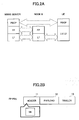
- Fig.2A is a figure showing a protocol configuration among the MBMS server 400, the radio base station (Node B) 200, and a mobile station (UE).
- Packet data convergence protocol (PDCP) is defined between the MBMS server 400 and the mobile station (UE).
- PDCP Packet data convergence protocol
- FP frame protocol
- GTP-U User Plane-U
- Fig.2B shows FP protocol data unit (PDU) that is a data unit, defined in FP, handled by UDP (user datagram protocol).
- FP-PDU includes a header 11, a payload 12, and a trailer 13.
- the header 11 at least stores a sequence number (SN) for detecting frame loss.
- the sequence number indicates which part of original data is stored in the PDU.
- the header 11 may store other information in addition to the sequence number.
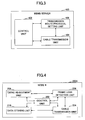
- Fig.3 shows a schematic block diagram of the MBMS server 400 used in the first embodiment.
- the MBMS server 400 includes a control unit 402, and a cable transmission unit 404 and a transmission route protocol setting unit 406 that are connected to the control unit 402.
- the transmission route protocol setting unit 406 and the cable transmission unit 404 are connected with each other.
- the control unit 402 controls each functional entity in the MBMS server 400, and manages operation of the whole of the MBMS server 400. In addition, the control unit 402 temporarily stores MBMS data delivered from the BM-SC 300 in its buffer.
- the cable transmission unit 404 performs processes, specific to cable transmission route, necessary for performing transmission using the FP protocol that is defined between the MBMS server 400 and the radio base station 200.
- the transmission route protocol setting unit 406 generates a PDU of the FP protocol defined between the MBMS server and the radio base station 200.
- Fig.4 is a schematic block diagram of a radio base station 200A used in the first embodiment.
- the radio base station 200A includes a control unit 202, a cable transmission unit 204, a frame loss detection unit 206, a timing adjustment unit 208 and a data storing unit 210.
- the frame loss detection unit 206 is connected to the cable transmission unit 204 and the timing adjustment unit 208.
- the data storing unit 210 is connected to the cable transmission unit 204.
- the control unit 202 controls each functional entity provided in the radio base station 200A, and manages operation of the whole of the radio base station 200.
- the cable transmission unit 204 performs processes, specific to cable transmission route, necessary for performing transmission using the FP protocol defined between the radio base station 200A and the MBMS server 400.
- the frame loss detection unit 206 checks a sequence number (SN) stored in a PDU of the FP protocol to detect a dropout of a sequence number (detect frame loss). That is, the frame loss detection unit 206 detects a sequence number corresponding to a lost PDU.
- SN sequence number
- the timing adjustment unit 208 calculates a lost data amount based on PDU and a dropped sequence number, that is, a sequence number corresponding to the lost PDU.
- the timing adjustment unit 208 changes transmission timing for the mobile station 100 based on a transport block size (TBS) indicating a data amount that can be transmitted within 1 TTI (Transmission Time Interval) when using a radio channel, according to dropouts of sequence numbers, that is, according to a number of sequence numbers corresponding to lost PDUs.
- TTI Transport Time Interval
- the timing adjustment unit 208 calculates a number of TTIs or a number of slots that should be skipped as the transmission timing, that is, calculates a change amount of transmission timing according to the number of sequence numbers corresponding to the lost PDUs.
- one TTI may include a plurality of slots.
- the data storing unit 210 stores MBMS data that is transmitted from the MBMS server 400 while transmission (distribution) of MBMS data to the mobile station 100 is being skipped.
- the data storing unit 210 stores MBMS data received via the cable transmission unit 204.
- Fig.5 shows a flowchart showing operation of the MBMS server 400 used in the first embodiment.
- a transmission protocol that is the FP protocol, for example, for transmitting MBMS data that is transmitted by the MBMS server 400 is defined beforehand (refer to Fig.2A ).
- the control unit 402 of the MBMS server 400 stores the received MBMS data into its buffer (not shown in the figure).
- the BM-SC 300 connected to the core network 50 transmits same MBMS data a plurality of times.
- the present embodiment is not limited to this example, and the BM-SC 300 may be configured to transmit MBMS data only once.
- the transmission route protocol setting unit 406 performs checking for resetting the sequence number for each one session.
- the transmission route protocol setting unit 406 uses up sequence numbers in one session, the transmission route protocol setting unit 406 uses the sequence number as it is by resetting it as described later.
- control unit 402 determines whether there is the MBMS data provided from the BM-SC 300 in the buffer (step S504). At the same, the control unit 402 checks a number of times of session repetition.
- the transmission protocol setting unit 406 increases the sequence number of the transmission route PDU to be transmitted by a predetermined number, that is, by 1, for example (step S506).
- the MBMS data to be transmitted is not stored in the buffer (No in S504), the process is terminated.
- step S508 it is checked whether the prepared sequence number is looped back (step S508).
- the sequence number is reset (step S510).
- the step returns to step S504. That is, until one session ends, processes from step S504 to step S508 are repeated.
- Fig.6 is a flowchart showing operation of the radio base station 200A according to the first embodiment.
- the radio base station 200 transmits MBMS data transmitted from the MBMS server connected to a communication network that is the core network 50, for example, to a plurality of mobile stations.
- the control unit 202 temporarily stores the MBMS data distributed from the MBMS server 400 into the data storing unit 210.
- absolute time a transmission time specified from the MBMS server 400
- radio base stations synchronize with each other based on the absolute time, so that each radio base station transmits same MBMS data at a same timing according to the sequence number associated with the transmission time.
- each radio base station performs processes based on the transmission time.
- the frame loss detection unit 206 determines whether there is an dropout of the sequence number stored in the transmission route PDU transmitted from the MBMS server 400, that is, determines whether there is any lost PDU (step S604).
- the timing adjustment unit 208 calculates a lost data amount from the sequence number and the PDU of the FP. Then, the timing adjustment unit 208 obtains a number of TTIs that should be skipped, that is, obtains a change amount of transmission timing as transmission timing obtained according to a number of sequence numbers corresponding to lost PDUs, so as to determine next transmission timing based on the change amount (step S606).
- a data amount that can be transmitted within 1 TTI on a radio channel is A bits
- a data amount transmitted by the FP protocol is B bits.
- the data amount B bits transmitted by FP are formed by combining a plurality of data units each being C bits, for example.
- relationship of C ⁇ A ⁇ B holds true among these data amounts.
- the data amount A transmitted by 1 TTI is smaller than twice C bits (C ⁇ A ⁇ 2C). That is, a case in which only one data unit can be transmitted within 1 TTI is assumed, so that padding is performed for the remaining part.
- a number of TTIs to be skipped is [B/C], wherein "[ ]" represents a maximum natural number that does not exceed a value in "[ ]".
- the header 11 and the trailer 13 of the PDU for data transmission in radio layer are not considered. But, when they are considered, it can be obtained by subtracting bits of the header 11 and the trailer 13 from the data amount A bits that can be transmitted within 1 TTI.
- calculation of the transmission timing in step S606 is not limited to the above-mentioned method, and other calculation methods can be used.
- the timing adjustment unit 208 determines whether current time is the next transmission timing calculated in step S606 (step S608). When it is the transmission timing (Yes in S608), the MBMS data temporarily stored in the data storing unit 210 is distributed at the transmission timing (step S610). On the other hand, when it is not the transmission timing (No in step S608), the process returns to step S608 so that the MBMS data after the dropout of the sequence number continues to be stored in the data storing unit 210 until the transmission timing comes.
- the radio base station 200A detects loss of MBMS data, that is, frame loss, for example, between the MBMS server 400 and the radio base station 200A based on the sequence number, and changes transmission timing of the MBMS data for the mobile station according to the loss of MBMS data, so that it becomes possible to transmit the same MBMS data at the same timing among adjacent base stations. Therefore, the mobile station can perform soft combining efficiently among a plurality of base stations.
- a radio communication system of the second embodiment of the present invention is described with reference to Figs.7-10 .
- a case is described in which PDCP and RLC that are defined between the MBMS server and the mobile station (UE) are used as a transmission route protocol.
- the present embodiment is not limited to those, and other transmission route protocol may be defined between the MBMS server and the mobile station.
- Fig.7 shows a schematic diagram showing a radio communication system of the second embodiment.
- This radio communication system has a configuration same as the radio communication system described in the first embodiment, and includes a core network 50 and a radio access network (RAN) 10.
- RAN radio access network
- the core network 50 includes route control apparatuses 350 (350 1 , 350 2 , 350 3 , 350 4 ), a communication network to which the route control apparatus 350 connects, a BM-SC 300 that is a control station that controls distribution of MBMS data, and a MBMS server 400 that controls MBMS data distribution to the RAN 10.
- the MBMS server 400 is located between the BM-SC 300 and the RAN 10, and functions as a control node for distributing MBMS data in the RAN 10.
- the RAN 10 includes a plurality of radio base stations 200 (200 1 , 200 2 , 200 3 ), and a plurality of mobile stations 100 (100 1 , 100 2 , 100 3 , 100 4 , 100 5 , 100 6 ) for performing communication with the radio base stations 200 via a radio interface.
- the MBMS server 400 may be configured to manage only a plurality of radio base stations 200 connected under one route control apparatus 350, or may be configured to control a plurality of route control apparatuses 350 together. In the latter case, a plurality of route control apparatuses 350 1 and 350 2 that are subjects for control form a MBMS control domain.
- MBMS data is transmitted from the MBMS server 400 connected to a communication network, that is the core network 50, for example, to the RAN 10, and this MBMS data is transmitted to a plurality of mobile stations via the radio base stations 200.
- Fig.8A shows an example of a transmission route protocol between the MBMS server 400 and the mobile station 100.
- PDCP Packet Data Convergence Protocol
- RLC radio link control
- the PDCP is a sublayer protocol of layer 2, and performs data conversion such as data compression of IP packets.
- RLC is a sublayer protocol in layer 2, and performs data separation/combining/reproduction, procedure control, retransmission control and the like.
- Fig.8B shows a configuration example of a PDU that is a unit of data, handled in UDP (user datagram protocol), defined in PDCP or RLC.
- the PDCP-PDU includes a header 11 and a payload 12.
- the header 11 stores a sequence number (SN) indicating which part of original data is stored in the PDU at least for detecting frame loss.
- the header 11 may store other elements such as an indicator other than the sequence number.
- the cable transmission unit 404 performs processes specific to cable transmission necessary for performing transmission using the transmission protocol (PDCP, for example) defined between the MBMS server 400 and the mobile station 100.
- the transmission protocol setting unit 406 generates PDU of PDCP defined between the MBMS server 400 and the mobile station 100, for example.
- Fig.9 is a schematic block diagram of the radio base station 200B used in the radio communication system of the second embodiment.
- the radio base station 200B includes a control unit 202, a cable transmission unit 204, a frame loss detection unit 206, a timing adjustment unit 208, a data storing unit 210 and an upper layer analyzing unit 212.
- the cable transmission unit 204 is connected to the data storing unit 210 and the upper layer analyzing unit 212
- the frame loss detection unit 206 is connected to the timing adjustment unit 208.
- the upper layer analyzing unit 212 analyzes a header of the U-plane protocol, that is, PDCP and RLC for example, terminated between the MBMS server 400 and the mobile station 100.
- the frame loss detection unit 206 detects a dropout (frame loss) of a sequence number added to the header of the U-plane protocol that is terminated between the MBMS server 400 and the mobile station 100, that is, detects a sequence number provided to a lost PDU.
- a dropout frame loss
- the timing adjustment unit 208 calculates a lost data amount based on PDCP-PDU and a number of dropped sequence numbers according to dropouts of the sequence numbers detected by the frame loss detection unit 206 such that MBMS data the same as that in adjacent cells can be transmitted to a residing mobile station.
- the timing adjustment unit 208 changes transmission timing for the mobile station 100 according to a number of dropped sequence numbers, that is, according to a number of sequence numbers corresponding to lost PDUs based on a transport block size (TBS) indicating a data amount that can be transmitted within 1 TTI (Transmission Time Interval) when using the radio channel.
- TBS transport block size
- the timing adjustment unit 208 counts a number of TTIs or a number of slots that should be skipped as transmission timing according to the number of sequence numbers corresponding to lost PDUs, so as to calculate a change amount of the transmission timing.
- one TTI may include a plurality of slots.
- the data storing unit 210 stores MBMS data that is transmitted from the MBMS server 400 while transmission (distribution) of MBMS data to the mobile station 100 is being skipped.
- the data storing unit 210 stores MBMS data received via the cable transmission unit 204.
- a transmission protocol that is PDCP or RLC, for example, is predefined for transmitting MBMS data sent by the MBMS server 400 on the transmission route between the MBMS server 400 and the mobile station 100.
- Fig.10 shows a flowchart showing operation of the radio base station 200B used in the second embodiment.
- the radio base station 200B transmits MBMS data provided from the MBMS server 400 connected to a communication network, that is the core network 50, for example, to a plurality of mobile stations.
- absolute time a transmission time specified from the MBMS server 400
- radio base stations synchronize with each other based on the absolute time, so that each radio base station transmits same MBMS data at a same timing according to the sequence number associated with the transmission time. In the following, each radio base station performs processes based on this transmission time.
- the upper layer analyzing unit 212 analyzes a sequence number stored in u-plane protocol that is PDCP, for example, transmitted from the MBMS server 400 to the mobile station 100.
- the information indicating the sequence number is provided to the frame loss detection unit 206.
- the frame loss detection unit 206 determines whether there is a dropout of the sequence number, that is, determines whether there is any lost PDU based on the provided information indicating the sequence number (step S1004).
- the timing adjustment unit 208 calculates a lost data amount based on sequence numbers and PDU of the U-plane protocol. Then, the timing adjustment unit 208 obtains a number of TTIs that should be skipped (change amount of transmission timing) so as to determine next transmission timing based on the number of sequence numbers corresponding to lost PDUs (step S1006).
- the method for obtaining the change amount of the transmission timing (number of TTIs to be skipped, for example) is the same as that in the first embodiment. Assuming that a data amount that can be transmitted by 1 TTI is A bits, and that a data amount transmitted by the frame protocol is B bits. Also, it is assumed that the data amount B bits transmitted by FP are formed by combining a plurality of data units each being C bits. Then, relationship of C ⁇ A ⁇ B and C ⁇ A ⁇ 2C holds true among these data amounts. That is, a case in which only one data unit can be transmitted within 1 TTI is assumed, and padding is performed for the remaining part. When only one sequence number is dropped, the number of TTIS to be skipped is [B/C].
- step S1004 When the dropout of the sequence number is not detected in step S1004, that is, when there is no lost PDU (No in S1004), the process returns to step S1004.
- control unit 202 determines whether it is the transmission timing determined in step S1006 (step S1008). When it is the transmission timing (Yes in S1008), distribution of MBMS data is performed at the transmission timing (step S1010). On the other hand, when it is not the transmission timing (No in step S1008), the process returns to step S1008 and MBMS data after sequence number dropout continues to be held (stored) until the transmission timing comes.
- the radio base station 200 detects loss of MBMS data, that is, frame loss, for example, between the MBMS server 400 and the radio base station 200B based on the sequence number obtained by analyzing the header, and changes transmission timing of the MBMS data for the mobile station according to the loss of MBMS data, so that it becomes possible to transmit the same MBMS data at the same timing among adjacent base stations. Therefore, the mobile station can perform soft combining efficiently among a plurality of base stations.
- the radio base station and the user common data transmission method of the present invention can be applied to a radio communication system.
Landscapes
- Engineering & Computer Science (AREA)
- Computer Networks & Wireless Communication (AREA)
- Signal Processing (AREA)
- Computer Security & Cryptography (AREA)
- Multimedia (AREA)
- Mobile Radio Communication Systems (AREA)
Applications Claiming Priority (2)
| Application Number | Priority Date | Filing Date | Title |
|---|---|---|---|
| JP2005267669A JP4859419B2 (ja) | 2005-09-14 | 2005-09-14 | 無線基地局およびユーザ共通データ伝送方法 |
| PCT/JP2006/317903 WO2007032288A1 (ja) | 2005-09-14 | 2006-09-08 | 無線基地局およびユーザ共通データ伝送方法 |
Publications (3)
| Publication Number | Publication Date |
|---|---|
| EP1926331A1 true EP1926331A1 (de) | 2008-05-28 |
| EP1926331A4 EP1926331A4 (de) | 2012-06-20 |
| EP1926331B1 EP1926331B1 (de) | 2013-04-17 |
Family
ID=37864882
Family Applications (1)
| Application Number | Title | Priority Date | Filing Date |
|---|---|---|---|
| EP06797729.8A Not-in-force EP1926331B1 (de) | 2005-09-14 | 2006-09-08 | Drahtloses system und verfahren zur sendung von gemeinsamen daten an benutzer |
Country Status (7)
| Country | Link |
|---|---|
| US (1) | US8023460B2 (de) |
| EP (1) | EP1926331B1 (de) |
| JP (1) | JP4859419B2 (de) |
| KR (1) | KR101242600B1 (de) |
| CN (1) | CN101292551B (de) |
| TW (1) | TW200718086A (de) |
| WO (1) | WO2007032288A1 (de) |
Cited By (1)
| Publication number | Priority date | Publication date | Assignee | Title |
|---|---|---|---|---|
| EP2375806A4 (de) * | 2008-12-15 | 2014-03-26 | Fujitsu Ltd | Datenübertragungsverfahren |
Families Citing this family (18)
| Publication number | Priority date | Publication date | Assignee | Title |
|---|---|---|---|---|
| PL2958393T3 (pl) * | 2006-11-01 | 2018-07-31 | Telefonaktiebolaget Lm Ericsson (Publ) | Dystrybucja danych nadawanych/rozsyłanych grupowo w systemach telekomunikacyjnych |
| JP4722188B2 (ja) * | 2007-02-08 | 2011-07-13 | 株式会社エヌ・ティ・ティ・ドコモ | 無線通信システム、下位局及び中位局 |
| JP2009147537A (ja) * | 2007-12-12 | 2009-07-02 | Ntt Docomo Inc | 移動通信システム、基地局装置、ユーザ装置及び方法 |
| CN101904197A (zh) * | 2007-12-20 | 2010-12-01 | 株式会社Ntt都科摩 | 移动台、基站装置、通信控制方法以及移动通信系统 |
| CN101911765A (zh) * | 2008-01-16 | 2010-12-08 | 日本电气株式会社 | 无线通信系统、数据分发方法、基站、基站控制装置以及程序 |
| CN101808277A (zh) * | 2009-02-13 | 2010-08-18 | 三星电子株式会社 | 多播广播服务中的智能辅助传输方法 |
| WO2010102425A1 (zh) * | 2009-03-13 | 2010-09-16 | 上海贝尔股份有限公司 | 演进多媒体广播组播业务分组传输方法、网关和基站 |
| WO2011024272A1 (ja) * | 2009-08-26 | 2011-03-03 | 富士通株式会社 | 基地局制御装置および通信システム |
| KR101232601B1 (ko) * | 2009-12-18 | 2013-02-12 | 한국전자통신연구원 | 통합 노드 시스템의 통신 노드 및 그 통신 방법 |
| GB2479939B (en) * | 2010-04-30 | 2016-05-25 | Samsung Electronics Co Ltd | Improvements to multicast traffic management |
| JP6027622B2 (ja) * | 2011-11-10 | 2016-11-16 | テレフオンアクチーボラゲット エルエム エリクソン(パブル) | 方法、無線基地局、及び無線ネットワーク制御装置 |
| TWI487408B (zh) | 2012-11-01 | 2015-06-01 | Innovative Sonic Corp | 在無線通訊系統中處理上行鏈路資訊之方法 |
| EP2785135A1 (de) * | 2013-03-29 | 2014-10-01 | Alcatel Lucent | Verbesserungen bei der Ressourcenzuweisung zur MBSFN-Übertragung in einem MBSFN-Bereich |
| CA2900488C (en) * | 2013-05-01 | 2018-01-02 | Lg Electronics Inc. | Apparatus and method of transmitting and receiving signal |
| CN105471825B (zh) * | 2014-09-03 | 2019-08-23 | 南京中兴软件有限责任公司 | 丢失数据报文的识别方法及装置 |
| CN109120383B (zh) * | 2017-06-26 | 2021-11-26 | 深圳市道通智能航空技术股份有限公司 | 无人机及其地面站、数据传输方法 |
| KR20200145577A (ko) | 2019-06-21 | 2020-12-30 | 황인혁 | 뒤집어 쓸 수 있는 4면 수세미 |
| US11240540B2 (en) * | 2020-06-11 | 2022-02-01 | Western Digital Technologies, Inc. | Storage system and method for frame trimming to optimize network bandwidth |
Family Cites Families (17)
| Publication number | Priority date | Publication date | Assignee | Title |
|---|---|---|---|---|
| US5916309A (en) | 1997-05-12 | 1999-06-29 | Lexmark International Inc. | System for dynamically determining the size and number of communication buffers based on communication parameters at the beginning of the reception of message |
| TW377421B (en) | 1998-02-12 | 1999-12-21 | Inst Information Industry | System and method of retrieving information intelligently from web |
| US6577599B1 (en) * | 1999-06-30 | 2003-06-10 | Sun Microsystems, Inc. | Small-scale reliable multicasting |
| US20020075857A1 (en) * | 1999-12-09 | 2002-06-20 | Leblanc Wilfrid | Jitter buffer and lost-frame-recovery interworking |
| TW528976B (en) | 2000-09-12 | 2003-04-21 | Sony Corp | Information providing system, information providing apparatus and information providing method as well as data recording medium |
| TW552539B (en) | 2000-09-29 | 2003-09-11 | Sony Corp | Agent system, agent transaction method, data providing device, and data recording medium |
| US7099273B2 (en) * | 2001-04-12 | 2006-08-29 | Bytemobile, Inc. | Data transport acceleration and management within a network communication system |
| CN1294757C (zh) * | 2001-08-21 | 2007-01-10 | 北京威速科技有限公司 | 视频压缩码率控制方法 |
| KR100891785B1 (ko) | 2002-04-27 | 2009-04-07 | 삼성전자주식회사 | 부호분할다중접속 이동통신시스템에서 멀티캐스트멀티미디어 방송 서비스를 위한 소프트 핸드오버 방법 |
| CN1468001A (zh) * | 2002-06-27 | 2004-01-14 | 上海汉唐科技有限公司 | 基于因特网的媒体流自适应传输方法 |
| US7586874B2 (en) * | 2003-01-06 | 2009-09-08 | Interdigital Technology Corporation | Wireless communication method and apparatus for providing multimedia broadcast services |
| US7079854B2 (en) * | 2003-01-11 | 2006-07-18 | Lg Electronics Inc. | Packet service system and method for controlling packet transmission |
| US7318187B2 (en) * | 2003-08-21 | 2008-01-08 | Qualcomm Incorporated | Outer coding methods for broadcast/multicast content and related apparatus |
| KR101015768B1 (ko) * | 2003-09-13 | 2011-02-22 | 삼성전자주식회사 | 이동통신 시스템에서 방송 컨텐츠 프레임의 동기화 방법 |
| US7626975B2 (en) | 2003-11-05 | 2009-12-01 | Telefonaktiebolaget Lm Ercisson (Publ) | Method of synchronizing broadcast streams in multiple soft handoff sectors |
| JP2005323113A (ja) * | 2004-05-07 | 2005-11-17 | Matsushita Electric Ind Co Ltd | 制御局装置及び基地局装置 |
| JP4452128B2 (ja) * | 2004-06-03 | 2010-04-21 | パナソニック株式会社 | 無線網制御方法、無線網制御システム、および無線網制御装置 |
-
2005
- 2005-09-14 JP JP2005267669A patent/JP4859419B2/ja not_active Expired - Fee Related
-
2006
- 2006-09-08 KR KR1020087008609A patent/KR101242600B1/ko not_active Expired - Fee Related
- 2006-09-08 US US12/067,033 patent/US8023460B2/en not_active Expired - Fee Related
- 2006-09-08 WO PCT/JP2006/317903 patent/WO2007032288A1/ja not_active Ceased
- 2006-09-08 CN CN2006800384791A patent/CN101292551B/zh not_active Expired - Fee Related
- 2006-09-08 EP EP06797729.8A patent/EP1926331B1/de not_active Not-in-force
- 2006-09-12 TW TW095133640A patent/TW200718086A/zh not_active IP Right Cessation
Cited By (1)
| Publication number | Priority date | Publication date | Assignee | Title |
|---|---|---|---|---|
| EP2375806A4 (de) * | 2008-12-15 | 2014-03-26 | Fujitsu Ltd | Datenübertragungsverfahren |
Also Published As
| Publication number | Publication date |
|---|---|
| KR101242600B1 (ko) | 2013-03-19 |
| US20090052407A1 (en) | 2009-02-26 |
| JP4859419B2 (ja) | 2012-01-25 |
| EP1926331A4 (de) | 2012-06-20 |
| KR20080057268A (ko) | 2008-06-24 |
| WO2007032288A1 (ja) | 2007-03-22 |
| EP1926331B1 (de) | 2013-04-17 |
| JP2007081883A (ja) | 2007-03-29 |
| TW200718086A (en) | 2007-05-01 |
| TWI320648B (de) | 2010-02-11 |
| CN101292551B (zh) | 2011-06-15 |
| CN101292551A (zh) | 2008-10-22 |
| US8023460B2 (en) | 2011-09-20 |
Similar Documents
| Publication | Publication Date | Title |
|---|---|---|
| EP1926331B1 (de) | Drahtloses system und verfahren zur sendung von gemeinsamen daten an benutzer | |
| US9031071B2 (en) | Header elimination for real time internet applications | |
| US11006388B2 (en) | Method for content synchronization when broadcasting data in a wireless network | |
| EP1916860B1 (de) | Mobiles Kommunikationssystem, Kernnetzwerkvorrichtung und dafür verwendetes MBMS-Datenübertragungsverfahren | |
| EP1929681B1 (de) | Synchronisierung der datenübertragung über drahtlose netze | |
| US20080101334A1 (en) | Method for distribution of data packets in a single frequency mobile communication network, an access network node, a base station and a single frequency mobile communication network therefor | |
| US7570670B2 (en) | Method and system for communicating and processing VOIP packets using a jitter buffer | |
| CN114946158A (zh) | 用于多播/广播业务数据的系统和方法 | |
| CN109673021B (zh) | 业务时延确定方法 | |
| EP2180651A1 (de) | Verfahren zur synchronisation von multimedia-broadcast/multicast | |
| EP2061183A1 (de) | Verfahren und system zum senden und verarbeiten eines multimedia-broadcast-multicast-dienstes | |
| WO2002084952A1 (en) | Flow control in radio access networks | |
| JP2010178157A (ja) | 基地局装置とその処理方法、移動通信システムとその処理方法 |
Legal Events
| Date | Code | Title | Description |
|---|---|---|---|
| PUAI | Public reference made under article 153(3) epc to a published international application that has entered the european phase |
Free format text: ORIGINAL CODE: 0009012 |
|
| 17P | Request for examination filed |
Effective date: 20080314 |
|
| AK | Designated contracting states |
Kind code of ref document: A1 Designated state(s): AT BE BG CH CY CZ DE DK EE ES FI FR GB GR HU IE IS IT LI LT LU LV MC NL PL PT RO SE SI SK TR |
|
| A4 | Supplementary search report drawn up and despatched |
Effective date: 20120522 |
|
| RIC1 | Information provided on ipc code assigned before grant |
Ipc: H04W 16/00 20090101ALI20120523BHEP Ipc: H04B 7/26 20060101ALI20120523BHEP Ipc: H04W 24/00 20090101AFI20120523BHEP Ipc: H04W 4/00 20090101ALI20120523BHEP |
|
| DAX | Request for extension of the european patent (deleted) | ||
| REG | Reference to a national code |
Ref country code: DE Ref legal event code: R079 Ref document number: 602006035743 Country of ref document: DE Free format text: PREVIOUS MAIN CLASS: H04Q0007340000 Ipc: H04W0028100000 |
|
| RIC1 | Information provided on ipc code assigned before grant |
Ipc: H04W 28/10 20090101AFI20120906BHEP |
|
| GRAP | Despatch of communication of intention to grant a patent |
Free format text: ORIGINAL CODE: EPIDOSNIGR1 |
|
| GRAS | Grant fee paid |
Free format text: ORIGINAL CODE: EPIDOSNIGR3 |
|
| GRAA | (expected) grant |
Free format text: ORIGINAL CODE: 0009210 |
|
| AK | Designated contracting states |
Kind code of ref document: B1 Designated state(s): AT BE BG CH CY CZ DE DK EE ES FI FR GB GR HU IE IS IT LI LT LU LV MC NL PL PT RO SE SI SK TR |
|
| REG | Reference to a national code |
Ref country code: GB Ref legal event code: FG4D |
|
| REG | Reference to a national code |
Ref country code: CH Ref legal event code: EP |
|
| REG | Reference to a national code |
Ref country code: IE Ref legal event code: FG4D |
|
| REG | Reference to a national code |
Ref country code: AT Ref legal event code: REF Ref document number: 607935 Country of ref document: AT Kind code of ref document: T Effective date: 20130515 |
|
| REG | Reference to a national code |
Ref country code: DE Ref legal event code: R096 Ref document number: 602006035743 Country of ref document: DE Effective date: 20130613 |
|
| REG | Reference to a national code |
Ref country code: AT Ref legal event code: MK05 Ref document number: 607935 Country of ref document: AT Kind code of ref document: T Effective date: 20130417 |
|
| REG | Reference to a national code |
Ref country code: LT Ref legal event code: MG4D |
|
| REG | Reference to a national code |
Ref country code: NL Ref legal event code: VDEP Effective date: 20130417 |
|
| PG25 | Lapsed in a contracting state [announced via postgrant information from national office to epo] |
Ref country code: IS Free format text: LAPSE BECAUSE OF FAILURE TO SUBMIT A TRANSLATION OF THE DESCRIPTION OR TO PAY THE FEE WITHIN THE PRESCRIBED TIME-LIMIT Effective date: 20130817 Ref country code: PT Free format text: LAPSE BECAUSE OF FAILURE TO SUBMIT A TRANSLATION OF THE DESCRIPTION OR TO PAY THE FEE WITHIN THE PRESCRIBED TIME-LIMIT Effective date: 20130819 Ref country code: SI Free format text: LAPSE BECAUSE OF FAILURE TO SUBMIT A TRANSLATION OF THE DESCRIPTION OR TO PAY THE FEE WITHIN THE PRESCRIBED TIME-LIMIT Effective date: 20130417 Ref country code: LT Free format text: LAPSE BECAUSE OF FAILURE TO SUBMIT A TRANSLATION OF THE DESCRIPTION OR TO PAY THE FEE WITHIN THE PRESCRIBED TIME-LIMIT Effective date: 20130417 Ref country code: GR Free format text: LAPSE BECAUSE OF FAILURE TO SUBMIT A TRANSLATION OF THE DESCRIPTION OR TO PAY THE FEE WITHIN THE PRESCRIBED TIME-LIMIT Effective date: 20130718 Ref country code: SE Free format text: LAPSE BECAUSE OF FAILURE TO SUBMIT A TRANSLATION OF THE DESCRIPTION OR TO PAY THE FEE WITHIN THE PRESCRIBED TIME-LIMIT Effective date: 20130417 Ref country code: ES Free format text: LAPSE BECAUSE OF FAILURE TO SUBMIT A TRANSLATION OF THE DESCRIPTION OR TO PAY THE FEE WITHIN THE PRESCRIBED TIME-LIMIT Effective date: 20130728 Ref country code: AT Free format text: LAPSE BECAUSE OF FAILURE TO SUBMIT A TRANSLATION OF THE DESCRIPTION OR TO PAY THE FEE WITHIN THE PRESCRIBED TIME-LIMIT Effective date: 20130417 Ref country code: BE Free format text: LAPSE BECAUSE OF FAILURE TO SUBMIT A TRANSLATION OF THE DESCRIPTION OR TO PAY THE FEE WITHIN THE PRESCRIBED TIME-LIMIT Effective date: 20130417 Ref country code: FI Free format text: LAPSE BECAUSE OF FAILURE TO SUBMIT A TRANSLATION OF THE DESCRIPTION OR TO PAY THE FEE WITHIN THE PRESCRIBED TIME-LIMIT Effective date: 20130417 |
|
| PG25 | Lapsed in a contracting state [announced via postgrant information from national office to epo] |
Ref country code: PL Free format text: LAPSE BECAUSE OF FAILURE TO SUBMIT A TRANSLATION OF THE DESCRIPTION OR TO PAY THE FEE WITHIN THE PRESCRIBED TIME-LIMIT Effective date: 20130417 Ref country code: LV Free format text: LAPSE BECAUSE OF FAILURE TO SUBMIT A TRANSLATION OF THE DESCRIPTION OR TO PAY THE FEE WITHIN THE PRESCRIBED TIME-LIMIT Effective date: 20130417 Ref country code: BG Free format text: LAPSE BECAUSE OF FAILURE TO SUBMIT A TRANSLATION OF THE DESCRIPTION OR TO PAY THE FEE WITHIN THE PRESCRIBED TIME-LIMIT Effective date: 20130717 Ref country code: CY Free format text: LAPSE BECAUSE OF FAILURE TO SUBMIT A TRANSLATION OF THE DESCRIPTION OR TO PAY THE FEE WITHIN THE PRESCRIBED TIME-LIMIT Effective date: 20130417 |
|
| PG25 | Lapsed in a contracting state [announced via postgrant information from national office to epo] |
Ref country code: CZ Free format text: LAPSE BECAUSE OF FAILURE TO SUBMIT A TRANSLATION OF THE DESCRIPTION OR TO PAY THE FEE WITHIN THE PRESCRIBED TIME-LIMIT Effective date: 20130417 Ref country code: EE Free format text: LAPSE BECAUSE OF FAILURE TO SUBMIT A TRANSLATION OF THE DESCRIPTION OR TO PAY THE FEE WITHIN THE PRESCRIBED TIME-LIMIT Effective date: 20130417 Ref country code: DK Free format text: LAPSE BECAUSE OF FAILURE TO SUBMIT A TRANSLATION OF THE DESCRIPTION OR TO PAY THE FEE WITHIN THE PRESCRIBED TIME-LIMIT Effective date: 20130417 Ref country code: SK Free format text: LAPSE BECAUSE OF FAILURE TO SUBMIT A TRANSLATION OF THE DESCRIPTION OR TO PAY THE FEE WITHIN THE PRESCRIBED TIME-LIMIT Effective date: 20130417 |
|
| PLBE | No opposition filed within time limit |
Free format text: ORIGINAL CODE: 0009261 |
|
| STAA | Information on the status of an ep patent application or granted ep patent |
Free format text: STATUS: NO OPPOSITION FILED WITHIN TIME LIMIT |
|
| PG25 | Lapsed in a contracting state [announced via postgrant information from national office to epo] |
Ref country code: RO Free format text: LAPSE BECAUSE OF FAILURE TO SUBMIT A TRANSLATION OF THE DESCRIPTION OR TO PAY THE FEE WITHIN THE PRESCRIBED TIME-LIMIT Effective date: 20130417 Ref country code: NL Free format text: LAPSE BECAUSE OF FAILURE TO SUBMIT A TRANSLATION OF THE DESCRIPTION OR TO PAY THE FEE WITHIN THE PRESCRIBED TIME-LIMIT Effective date: 20130417 Ref country code: IT Free format text: LAPSE BECAUSE OF FAILURE TO SUBMIT A TRANSLATION OF THE DESCRIPTION OR TO PAY THE FEE WITHIN THE PRESCRIBED TIME-LIMIT Effective date: 20130417 |
|
| 26N | No opposition filed |
Effective date: 20140120 |
|
| PG25 | Lapsed in a contracting state [announced via postgrant information from national office to epo] |
Ref country code: MC Free format text: LAPSE BECAUSE OF FAILURE TO SUBMIT A TRANSLATION OF THE DESCRIPTION OR TO PAY THE FEE WITHIN THE PRESCRIBED TIME-LIMIT Effective date: 20130417 |
|
| REG | Reference to a national code |
Ref country code: DE Ref legal event code: R097 Ref document number: 602006035743 Country of ref document: DE Effective date: 20140120 Ref country code: CH Ref legal event code: PL |
|
| GBPC | Gb: european patent ceased through non-payment of renewal fee |
Effective date: 20130908 |
|
| REG | Reference to a national code |
Ref country code: FR Ref legal event code: ST Effective date: 20140530 |
|
| REG | Reference to a national code |
Ref country code: IE Ref legal event code: MM4A |
|
| PG25 | Lapsed in a contracting state [announced via postgrant information from national office to epo] |
Ref country code: LI Free format text: LAPSE BECAUSE OF NON-PAYMENT OF DUE FEES Effective date: 20130930 Ref country code: GB Free format text: LAPSE BECAUSE OF NON-PAYMENT OF DUE FEES Effective date: 20130908 Ref country code: IE Free format text: LAPSE BECAUSE OF NON-PAYMENT OF DUE FEES Effective date: 20130908 Ref country code: CH Free format text: LAPSE BECAUSE OF NON-PAYMENT OF DUE FEES Effective date: 20130930 |
|
| PG25 | Lapsed in a contracting state [announced via postgrant information from national office to epo] |
Ref country code: FR Free format text: LAPSE BECAUSE OF NON-PAYMENT OF DUE FEES Effective date: 20130930 |
|
| PG25 | Lapsed in a contracting state [announced via postgrant information from national office to epo] |
Ref country code: TR Free format text: LAPSE BECAUSE OF FAILURE TO SUBMIT A TRANSLATION OF THE DESCRIPTION OR TO PAY THE FEE WITHIN THE PRESCRIBED TIME-LIMIT Effective date: 20130417 |
|
| PG25 | Lapsed in a contracting state [announced via postgrant information from national office to epo] |
Ref country code: LU Free format text: LAPSE BECAUSE OF NON-PAYMENT OF DUE FEES Effective date: 20130908 Ref country code: HU Free format text: LAPSE BECAUSE OF FAILURE TO SUBMIT A TRANSLATION OF THE DESCRIPTION OR TO PAY THE FEE WITHIN THE PRESCRIBED TIME-LIMIT; INVALID AB INITIO Effective date: 20060908 |
|
| PGFP | Annual fee paid to national office [announced via postgrant information from national office to epo] |
Ref country code: DE Payment date: 20170905 Year of fee payment: 12 |
|
| REG | Reference to a national code |
Ref country code: DE Ref legal event code: R119 Ref document number: 602006035743 Country of ref document: DE |
|
| PG25 | Lapsed in a contracting state [announced via postgrant information from national office to epo] |
Ref country code: DE Free format text: LAPSE BECAUSE OF NON-PAYMENT OF DUE FEES Effective date: 20190402 |