EP1923638A1 - Cooking device - Google Patents
Cooking device Download PDFInfo
- Publication number
- EP1923638A1 EP1923638A1 EP06783037A EP06783037A EP1923638A1 EP 1923638 A1 EP1923638 A1 EP 1923638A1 EP 06783037 A EP06783037 A EP 06783037A EP 06783037 A EP06783037 A EP 06783037A EP 1923638 A1 EP1923638 A1 EP 1923638A1
- Authority
- EP
- European Patent Office
- Prior art keywords
- door
- gasket
- comb teeth
- heating chamber
- microwave
- Prior art date
- Legal status (The legal status is an assumption and is not a legal conclusion. Google has not performed a legal analysis and makes no representation as to the accuracy of the status listed.)
- Granted
Links
Images


Classifications
-
- H—ELECTRICITY
- H05—ELECTRIC TECHNIQUES NOT OTHERWISE PROVIDED FOR
- H05B—ELECTRIC HEATING; ELECTRIC LIGHT SOURCES NOT OTHERWISE PROVIDED FOR; CIRCUIT ARRANGEMENTS FOR ELECTRIC LIGHT SOURCES, IN GENERAL
- H05B6/00—Heating by electric, magnetic or electromagnetic fields
- H05B6/64—Heating using microwaves
- H05B6/76—Prevention of microwave leakage, e.g. door sealings
- H05B6/763—Microwave radiation seals for doors
-
- A—HUMAN NECESSITIES
- A21—BAKING; EDIBLE DOUGHS
- A21B—BAKERS' OVENS; MACHINES OR EQUIPMENT FOR BAKING
- A21B3/00—Parts or accessories of ovens
- A21B3/04—Air-treatment devices for ovens, e.g. regulating humidity
-
- F—MECHANICAL ENGINEERING; LIGHTING; HEATING; WEAPONS; BLASTING
- F24—HEATING; RANGES; VENTILATING
- F24C—DOMESTIC STOVES OR RANGES ; DETAILS OF DOMESTIC STOVES OR RANGES, OF GENERAL APPLICATION
- F24C15/00—Details
- F24C15/02—Doors specially adapted for stoves or ranges
- F24C15/021—Doors specially adapted for stoves or ranges sealings for doors or transparent panel
-
- F—MECHANICAL ENGINEERING; LIGHTING; HEATING; WEAPONS; BLASTING
- F24—HEATING; RANGES; VENTILATING
- F24C—DOMESTIC STOVES OR RANGES ; DETAILS OF DOMESTIC STOVES OR RANGES, OF GENERAL APPLICATION
- F24C15/00—Details
- F24C15/32—Arrangements of ducts for hot gases, e.g. in or around baking ovens
- F24C15/322—Arrangements of ducts for hot gases, e.g. in or around baking ovens with forced circulation
- F24C15/327—Arrangements of ducts for hot gases, e.g. in or around baking ovens with forced circulation with air moisturising
-
- H—ELECTRICITY
- H05—ELECTRIC TECHNIQUES NOT OTHERWISE PROVIDED FOR
- H05B—ELECTRIC HEATING; ELECTRIC LIGHT SOURCES NOT OTHERWISE PROVIDED FOR; CIRCUIT ARRANGEMENTS FOR ELECTRIC LIGHT SOURCES, IN GENERAL
- H05B6/00—Heating by electric, magnetic or electromagnetic fields
- H05B6/64—Heating using microwaves
- H05B6/6414—Aspects relating to the door of the microwave heating apparatus
-
- H—ELECTRICITY
- H05—ELECTRIC TECHNIQUES NOT OTHERWISE PROVIDED FOR
- H05B—ELECTRIC HEATING; ELECTRIC LIGHT SOURCES NOT OTHERWISE PROVIDED FOR; CIRCUIT ARRANGEMENTS FOR ELECTRIC LIGHT SOURCES, IN GENERAL
- H05B6/00—Heating by electric, magnetic or electromagnetic fields
- H05B6/64—Heating using microwaves
- H05B6/647—Aspects related to microwave heating combined with other heating techniques
- H05B6/6473—Aspects related to microwave heating combined with other heating techniques combined with convection heating
- H05B6/6479—Aspects related to microwave heating combined with other heating techniques combined with convection heating using steam
-
- Y—GENERAL TAGGING OF NEW TECHNOLOGICAL DEVELOPMENTS; GENERAL TAGGING OF CROSS-SECTIONAL TECHNOLOGIES SPANNING OVER SEVERAL SECTIONS OF THE IPC; TECHNICAL SUBJECTS COVERED BY FORMER USPC CROSS-REFERENCE ART COLLECTIONS [XRACs] AND DIGESTS
- Y10—TECHNICAL SUBJECTS COVERED BY FORMER USPC
- Y10T—TECHNICAL SUBJECTS COVERED BY FORMER US CLASSIFICATION
- Y10T29/00—Metal working
- Y10T29/49—Method of mechanical manufacture
- Y10T29/49002—Electrical device making
- Y10T29/49016—Antenna or wave energy "plumbing" making
Definitions
- the present invention relates to a cooking device for performing cooking using a microwave and steam.
- a measure commonly taken to prevent leakage of a microwave is to provide a choke structure as described in Patent Publications 1 to 4 (listed below).
- a choke structure is provided at the door of a heating chamber, leakage is prevented relatively effectively at the sides of the door, but it is not easy to prevent leakage at the corners of the door.
- the choke provided at the four corners of the door is designed to have a particular longitudinal width.
- a slit-choke structure is provided in an area where an upper or a lower hinge overlaps the door body.
- the bending angle at which a bent section is bent is larger near a corner than at other locations.
- protruding surface sections located near the corners of the door are designed to protrude more than those in other locations.
- a gasket is commonly used as described in Patent Publications 5 and 6.
- An object of the present invention is to provide a cooking device where such necessity is fulfilled.
- a door of a heating chamber is provided with: a choke structure that prevents leakage of the microwave from the heating chamber; and a gasket that is fitted near the choke structure with a choke cover for covering the choke structure and prevents leakage of the steam from the heating chamber, and a bending angle of metal comb teeth of the choke structure is larger than in a case where the gasket is not installed, leaving metal comb teeth located at corners of the door as an exception.
- Provision of a gasket close to a choke structure causes a phase shift of a microwave, and thus conventional choke structures normally cannot prevent leakage of a microwave if a gasket is provided close thereto.
- the function of the choke structure to prevent leakage of the microwave can be maintained effective by making the bending angle of the comb teeth larger than in the case where no gasket is installed.
- making the bending angle of the comb teeth located at the corners of the door larger has an adverse effect on their function to prevent leakage of the microwave; however, this can be coped with by making the bending angle of these comb teeth, as an exception, not larger.
- the exception of the bending angle is limited to comb teeth located close to metal hinge assemblies of the door among the comb teeth located at the corners of the door.
- a door of a heating chamber is provided with: a choke structure that prevents leakage of the microwave from the heating chamber; and a gasket that is fitted near the choke structure with a choke cover for covering the choke structure and prevents leakage of the steam from the heating chamber, and a lip section of the gasket has a bag-like cross section in which an opening is formed on a side thereof that faces an inside of the heating chamber.
- steam pressure inside the heating chamber acts so as to inflate the bag-like cross section of the gasket, and thus the sealing function of the gasket is improved with an increase in steam pressure.
- an end of the lip section in the bag-like cross section is bent toward the door.
- leakage of a microwave and steam can be prevented by a choke structure and a gasket. Furthermore, a phase shift of a microwave due to the provision of a gasket near the choke structure can be compensated by changing the bending angle of the comb teeth of the choke structure, and thus the function of the choke structure to prevent leakage of a microwave can be maintained as effective as that of the conventional choke structure. Moreover, since the lip section of the gasket has a bag-like cross section in which an opening is formed on the side thereof that faces the inside of the heating chamber, the bag-like cross section is inflated with an increase in steam pressure inside the heating chamber, and this enhances the sealing function of the gasket.
- a cooking device 1 includes a microwave generator and a steam generator (neither shown), and is capable of cooking by: using only a microwave, using only steam, and using a microwave and steam in combination.
- the cooking device 1 has a heating chamber 3 formed inside a cabinet 2 (see Fig. 2 ) and a door provided in the front center of the cabinet 2 so as to cover an opening of the heating chamber 3.
- the door 4 rotates in a vertical plane around a hinge section (not shown) provided at the bottom end thereof, and has a handle 5 provided at the front top thereof.
- the door 4 is composed of many components, among which the following three components should be noted: an inner frame 10, a choke cover 20, and a gasket 30.
- the inner frame 10 is formed by pressing a metal plate (more specifically, a steel plate) into a frame shape, and to a window 11 in the center of the inner frame 10, there are fitted a punched metal plate, a glass plate, etc. so as to prevent leakage of the microwave while permitting the inside of the heating chamber to be visible.
- a choke structure 12 is formed to prevent leakage of a microwave.
- the choke structure 12 is built by forming along the edge of a metal plate a large number of comb teeth 13 having a predetermined size and arranged at predetermined intervals, and bending these comb teeth 13 at a predetermined angle. The end of each of the comb teeth 13 faces the outer surface of an inner protruding wall 14 formed in the inner frame 10, with a predetermined distance between the ends and the outer surface.
- the choke cover 20 includes a wall 21 (see Fig. 3 ) that is formed to be in parallel with the comb teeth 13, and an inner edge section 22 that continues from the wall 21 faces the inner protruding wall 14 with a predetermined gap therebetween.
- a gasket 30 is a product of a highly heat-resistant flexible synthetic resin molded by extrusion molding, and is built by forming the following sections so as to be continuous to each other: a lip section 32 that is tightly pressed against a wall 6 around the opening of the heating chamber 3; and a base section 31 (see Fig. 3 ) that covers the inner edge section 22 of the choke cover 20.
- the lip section 32 has a bag-like cross section in which an opening is formed on the side thereof that faces the inside of the heating chamber 3. An edge of the lip section 32 is bent toward the door 4, and this makes the bag-like cross section thereof appear to be a bag with its mouth narrowed.
- the sealing function of the gasket 30 is improved with an increase in steam pressure.
- the edge of the lip section 32 is bent toward the door 4, and thus it is not the edge of the lip section 32 but the portion thereof corresponding to the middle portion of its bag-like cross section that is tightly pressed against the wall 6 and mainly serves to cut off gas flow. Therefore, airtightness is not impaired even if the edge of the lip section 32 is deformed by heat to be, for example, wavy.
- the phase of the microwave headed for the choke structure 12 is shifted.
- the angle at which the comb teeth 13 are bent is left as it is in the case where the gasket 30 is not provided, leakage of the microwave cannot be prevented.
- the bending angle at which the comb teeth 13 are bent is adjusted such that the function to prevent leakage of a microwave is maintained effective.
- Fig. 6 shows the comb teeth 13 bent at a larger bending angle, and the comb teeth 13 form an angle of approximately 45° with respect to the front surface of the inner frame 10. This enables the comb teeth 13 to restore its function to prevent leakage of the microwave.
- bending the comb teeth 13 at a larger angle is not effective to all the comb teeth 13.
- the comb teeth located at the corners of the door 4 that is, the pairs of comb teeth denoted by reference numeral 13a in Fig. 4
- the shortest distance between the ends of each pair of the comb teeth 13a becomes longer, and this deprives the comb teeth 13a of the function to prevent leakage of a microwave.
- the comb teeth 13a arranged next to each other are bent not at a bending angle larger than conventional but at a conventional bending angle.
- Fig. 7 shows such a comb tooth 13a.
- the comb teeth 13a form an angle of approximately 30° with respect to the front surface of the inner frame 10.
- the present invention is widely applicable to cooking devices for performing cooking using a microwave and steam in combination.
Landscapes
- Engineering & Computer Science (AREA)
- Physics & Mathematics (AREA)
- Electromagnetism (AREA)
- Chemical & Material Sciences (AREA)
- Combustion & Propulsion (AREA)
- Mechanical Engineering (AREA)
- General Engineering & Computer Science (AREA)
- Life Sciences & Earth Sciences (AREA)
- Food Science & Technology (AREA)
- Electric Ovens (AREA)
- Constitution Of High-Frequency Heating (AREA)
Abstract
Description
- The present invention relates to a cooking device for performing cooking using a microwave and steam.
- Household cooking devices using a microwave, so-called microwave ovens, have been commonly used. Nowadays, cooking devices using steam, especially superheated steam that is highly effective for removing fat and salt contained in food, are also common. There are two types of cooking devices using steam: those which use only steam for cooking and those which use a microwave and steam in combination.
- Regardless of whether cooking is performed using a microwave or steam, leakage of a microwave and steam from a heating chamber may cause safety problems, and thus various measures have been taken to prevent such leakage. A measure commonly taken to prevent leakage of a microwave is to provide a choke structure as described in
Patent Publications 1 to 4 (listed below). When a choke structure is provided at the door of a heating chamber, leakage is prevented relatively effectively at the sides of the door, but it is not easy to prevent leakage at the corners of the door. To cope with this, in the device described inPatent Publication 1, the choke provided at the four corners of the door is designed to have a particular longitudinal width. In the device described inPatent Publication 2, a slit-choke structure is provided in an area where an upper or a lower hinge overlaps the door body. In the device described inPatent Publication 3, the bending angle at which a bent section is bent is larger near a corner than at other locations. In the device described inPatent Publication 4, protruding surface sections located near the corners of the door are designed to protrude more than those in other locations. In order to prevent leakage of steam, a gasket is commonly used as described inPatent Publications
[Patent Publication 1]JP-A-2003-243150 Pages 2 to 4,Figs. 1 and2 )
[Patent Publication 2]JP-A-2003-109745 Pages Figs. 1 to 10 )
[Patent Publication 3]JP-A-H8-124674 Pages Figs. 1 to 4 )
[Patent Publication 4]JP-A-H7-94272 Pages Figs. 1 to 5 )
[Patent Publication 5]JP-A-2000-30856 Pages Figs. 1 to 4 )
[Patent Publication 6]JP-A-H2-178524 Page 2,Figs. 1 to 5 ) - In order to cook using a microwave and steam in combination, it is necessary to effectively prevent leakage of the microwave and steam. An object of the present invention is to provide a cooking device where such necessity is fulfilled.
- To achieve the above object, according to one aspect of the present invention, in a cooking device using a microwave and steam in combination, a door of a heating chamber is provided with: a choke structure that prevents leakage of the microwave from the heating chamber; and a gasket that is fitted near the choke structure with a choke cover for covering the choke structure and prevents leakage of the steam from the heating chamber, and a bending angle of metal comb teeth of the choke structure is larger than in a case where the gasket is not installed, leaving metal comb teeth located at corners of the door as an exception.
- Provision of a gasket close to a choke structure causes a phase shift of a microwave, and thus conventional choke structures normally cannot prevent leakage of a microwave if a gasket is provided close thereto. In the present invention, in contrast, the function of the choke structure to prevent leakage of the microwave can be maintained effective by making the bending angle of the comb teeth larger than in the case where no gasket is installed. Here, making the bending angle of the comb teeth located at the corners of the door larger has an adverse effect on their function to prevent leakage of the microwave; however, this can be coped with by making the bending angle of these comb teeth, as an exception, not larger.
- According to the present invention, in the cooking device structured as described above, the exception of the bending angle is limited to comb teeth located close to metal hinge assemblies of the door among the comb teeth located at the corners of the door.
- Making the bending angle larger adversely affects, with respect to preventing leakage of the microwave, the comb teeth located near the metal hinge assemblies of the door among the comb teeth located at the corners of the door. Thus, only the bending angle of such comb teeth is made different from that of the other comb teeth, and this helps facilitate the fabrication process of the choke structure.
- According to another aspect of the present invention, in a cooking device using a microwave and steam in combination, a door of a heating chamber is provided with: a choke structure that prevents leakage of the microwave from the heating chamber; and a gasket that is fitted near the choke structure with a choke cover for covering the choke structure and prevents leakage of the steam from the heating chamber, and a lip section of the gasket has a bag-like cross section in which an opening is formed on a side thereof that faces an inside of the heating chamber.
- With this structure, steam pressure inside the heating chamber acts so as to inflate the bag-like cross section of the gasket, and thus the sealing function of the gasket is improved with an increase in steam pressure.
- According to the present invention, in the cooking device structured as described above, an end of the lip section in the bag-like cross section is bent toward the door.
- With this structure, since it is not an edge of the lip section but the portion of the lip section corresponding to the middle portion of its bag-like cross section that mainly serves to cut off the gas flow by being tightly pressed against a wall, airtightness is not impaired even if the edge of the lip section is deformed by heat.
- According to the present invention, leakage of a microwave and steam can be prevented by a choke structure and a gasket. Furthermore, a phase shift of a microwave due to the provision of a gasket near the choke structure can be compensated by changing the bending angle of the comb teeth of the choke structure, and thus the function of the choke structure to prevent leakage of a microwave can be maintained as effective as that of the conventional choke structure. Moreover, since the lip section of the gasket has a bag-like cross section in which an opening is formed on the side thereof that faces the inside of the heating chamber, the bag-like cross section is inflated with an increase in steam pressure inside the heating chamber, and this enhances the sealing function of the gasket.
-
- [
Fig. 1 ] is a front view of a cooking device; - [
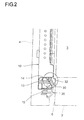
Fig. 2 ] is a partial sectional view of a heating chamber door; - [
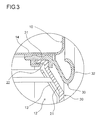
Fig. 3 ] is a partially enlarged view of the encircled area ofFig. 2 ; - [
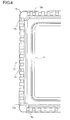
Fig. 4 ] is a partial front view showing a choke structure; - [
Fig. 5 ] is a side view of the choke structure; - [
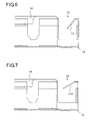
Fig. 6 ] is a partially enlarged view of the choke structure; and - [
Fig. 7 ] is a partially enlarged view of the choke structure showing another portion thereof. -
- 1
- cooking device
- 2
- cabinet
- 3
- heating chamber
- 4
- door
- 5
- handle
- 10
- inner frame
- 12
- choke structure
- 13, 13a
- comb teeth
- 20
- choke cover
- 30
- gasket
- 32
- lip section
- A description will be given below of an embodiment of the present invention with reference to the accompanying figures. A
cooking device 1 includes a microwave generator and a steam generator (neither shown), and is capable of cooking by: using only a microwave, using only steam, and using a microwave and steam in combination. Thecooking device 1 has aheating chamber 3 formed inside a cabinet 2 (seeFig. 2 ) and a door provided in the front center of thecabinet 2 so as to cover an opening of theheating chamber 3. Thedoor 4 rotates in a vertical plane around a hinge section (not shown) provided at the bottom end thereof, and has ahandle 5 provided at the front top thereof. - The
door 4 is composed of many components, among which the following three components should be noted: aninner frame 10, achoke cover 20, and agasket 30. - The
inner frame 10 is formed by pressing a metal plate (more specifically, a steel plate) into a frame shape, and to awindow 11 in the center of theinner frame 10, there are fitted a punched metal plate, a glass plate, etc. so as to prevent leakage of the microwave while permitting the inside of the heating chamber to be visible. At the periphery of theinner frame 10, achoke structure 12 is formed to prevent leakage of a microwave. Thechoke structure 12 is built by forming along the edge of a metal plate a large number ofcomb teeth 13 having a predetermined size and arranged at predetermined intervals, and bending thesecomb teeth 13 at a predetermined angle. The end of each of thecomb teeth 13 faces the outer surface of an inner protrudingwall 14 formed in theinner frame 10, with a predetermined distance between the ends and the outer surface. - A
choke cover 20, a resin product molded in a frame shape, encloses theinner frame 10. Thechoke cover 20 includes a wall 21 (seeFig. 3 ) that is formed to be in parallel with thecomb teeth 13, and aninner edge section 22 that continues from thewall 21 faces the inner protrudingwall 14 with a predetermined gap therebetween. - A
gasket 30 is a product of a highly heat-resistant flexible synthetic resin molded by extrusion molding, and is built by forming the following sections so as to be continuous to each other: alip section 32 that is tightly pressed against awall 6 around the opening of theheating chamber 3; and a base section 31 (seeFig. 3 ) that covers theinner edge section 22 of thechoke cover 20. Thelip section 32 has a bag-like cross section in which an opening is formed on the side thereof that faces the inside of theheating chamber 3. An edge of thelip section 32 is bent toward thedoor 4, and this makes the bag-like cross section thereof appear to be a bag with its mouth narrowed. - When the
choke cover 20 is fit to theinner frame 10 with theinner edge section 22 thereof covered with thebase section 31 of thegasket 30, thebase section 31 is pushed into the gap between theinner edge section 22 and the inner protrudingwall 14 so as to tightly close the gap. This prevents steam from entering the space between theinner frame 10 and thechoke cover 20. When theinner frame 10 and thechoke cover 20 connected to each other with thegasket 30 is engaged with other components of thedoor 4, the installation of thegasket 30 is completed. - When steam pressure inside the
heating chamber 3 rises, the pressure acts so as to inflate the bag-like cross section of thelip section 32, and thereby thelip section 32 is pressed more tightly against thewall 6. Thus, the sealing function of thegasket 30 is improved with an increase in steam pressure. The edge of thelip section 32 is bent toward thedoor 4, and thus it is not the edge of thelip section 32 but the portion thereof corresponding to the middle portion of its bag-like cross section that is tightly pressed against thewall 6 and mainly serves to cut off gas flow. Therefore, airtightness is not impaired even if the edge of thelip section 32 is deformed by heat to be, for example, wavy. - Since the
gasket 30 is fitted near thechoke structure 12, the phase of the microwave headed for thechoke structure 12 is shifted. Hence, if the angle at which thecomb teeth 13 are bent is left as it is in the case where thegasket 30 is not provided, leakage of the microwave cannot be prevented. To cope with this, the bending angle at which thecomb teeth 13 are bent is adjusted such that the function to prevent leakage of a microwave is maintained effective. - More specifically, the bending angle at which the
comb teeth 13 are bent is made larger.Fig. 6 shows thecomb teeth 13 bent at a larger bending angle, and thecomb teeth 13 form an angle of approximately 45° with respect to the front surface of theinner frame 10. This enables thecomb teeth 13 to restore its function to prevent leakage of the microwave. - However, bending the
comb teeth 13 at a larger angle is not effective to all thecomb teeth 13. As for the comb teeth located at the corners of thedoor 4, that is, the pairs of comb teeth denoted byreference numeral 13a inFig. 4 , if they are bent at a larger angle, the shortest distance between the ends of each pair of thecomb teeth 13a becomes longer, and this deprives thecomb teeth 13a of the function to prevent leakage of a microwave. To prevent this from happening, thecomb teeth 13a arranged next to each other are bent not at a bending angle larger than conventional but at a conventional bending angle.Fig. 7 shows such acomb tooth 13a. Thecomb teeth 13a form an angle of approximately 30° with respect to the front surface of theinner frame 10. - Bending the
comb teeth 13a at a bending angle different from that for thecomb teeth 13 is remarkably effective in the case where thecomb teeth 13a are located near the metal hinge assemblies (not shown) of thedoor 4; in contrast, it is not so effective in the case where thecomb teeth 13a are not located near the metal hinge assemblies. Hence, among thecomb teeth 13a, only those located near the metal hinge assemblies, more specifically those located at the two bottom corners of thedoor 4, may be bent at a bending angle different from that for thecomb teeth 13. This helps facilitate the fabrication of thechoke structure 12. - Although a description has been given of the embodiment of the present invention, this embodiment is only an example and does not limit the present invention in any way. It should be understood that the scope of the present invention is defined not by the embodiment but by the attached claims, and includes all modifications and variations that fall within the scope of the attached claims and equivalents thereof.
- The present invention is widely applicable to cooking devices for performing cooking using a microwave and steam in combination.
Claims (4)
- A cooking device using a microwave and steam in combination,
wherein
a door of a heating chamber is provided with:a choke structure that prevents leakage of the microwave from the heating chamber; anda gasket that is fitted near the choke structure with a choke cover for covering the choke structure and prevents leakage of the steam from the heating chamber, anda bending angle of metal comb teeth of the choke structure is larger than in a case where the gasket is not installed, leaving metal comb teeth located at corners of the door as an exception. - The cooking device of claim 1, wherein
the exception of the bending angle is limited to comb teeth located close to metal hinge assemblies of the door among the comb teeth located at the corners of the door. - A cooking device using a microwave and steam in combination,
wherein
a door of a heating chamber is provided with:a choke structure that prevents leakage of the microwave from the heating chamber; anda gasket that is fitted near the choke structure with a choke cover for covering the choke structure and prevents leakage of the steam from the heating chamber, anda lip section of the gasket has a bag-like cross section in which an opening is formed on a side thereof that faces an inside of the heating chamber. - The cooking device of claim 3, wherein
an end of the lip section in the bag-like cross section is bent toward the door.
Applications Claiming Priority (2)
| Application Number | Priority Date | Filing Date | Title |
|---|---|---|---|
| JP2005260016A JP4127553B2 (en) | 2005-09-08 | 2005-09-08 | Cooker |
| PCT/JP2006/316697 WO2007029521A1 (en) | 2005-09-08 | 2006-08-25 | Cooking device |
Publications (3)
| Publication Number | Publication Date |
|---|---|
| EP1923638A1 true EP1923638A1 (en) | 2008-05-21 |
| EP1923638A4 EP1923638A4 (en) | 2011-03-16 |
| EP1923638B1 EP1923638B1 (en) | 2012-05-16 |
Family
ID=37835644
Family Applications (1)
| Application Number | Title | Priority Date | Filing Date |
|---|---|---|---|
| EP06783037A Not-in-force EP1923638B1 (en) | 2005-09-08 | 2006-08-25 | Cooking device |
Country Status (6)
| Country | Link |
|---|---|
| US (1) | US8288695B2 (en) |
| EP (1) | EP1923638B1 (en) |
| JP (1) | JP4127553B2 (en) |
| KR (1) | KR100975459B1 (en) |
| CN (1) | CN100565016C (en) |
| WO (1) | WO2007029521A1 (en) |
Cited By (3)
| Publication number | Priority date | Publication date | Assignee | Title |
|---|---|---|---|---|
| EP2747515A1 (en) * | 2012-12-20 | 2014-06-25 | Miele & Cie. KG | Cooking device |
| WO2015110382A1 (en) * | 2014-01-27 | 2015-07-30 | BSH Hausgeräte GmbH | Cooking appliance |
| EP4357677A1 (en) | 2022-10-18 | 2024-04-24 | Miele & Cie. KG | Cooking appliance, preferably with self-cleaning function and/or. or with steam function, especially oven-steam cooker combination device, preferably with self-cleaning function |
Families Citing this family (7)
| Publication number | Priority date | Publication date | Assignee | Title |
|---|---|---|---|---|
| JP5214512B2 (en) * | 2009-03-24 | 2013-06-19 | シャープ株式会社 | Cooker |
| EP2420732A1 (en) * | 2009-04-16 | 2012-02-22 | Sharp Kabushiki Kaisha | Liquid tank and cooking device |
| JP2011179792A (en) * | 2010-03-03 | 2011-09-15 | Sanyo Electric Co Ltd | Cooker |
| JP6074660B2 (en) * | 2013-05-31 | 2017-02-08 | パナソニックIpマネジメント株式会社 | Cooker |
| KR101991956B1 (en) * | 2017-04-12 | 2019-06-24 | 엘지전자 주식회사 | Cooking appliance |
| CN113662416B (en) * | 2020-05-13 | 2025-02-07 | 宁波方太厨具有限公司 | Inner steam generating structure of cooking equipment |
| KR20240170258A (en) * | 2023-05-26 | 2024-12-03 | 엘지전자 주식회사 | Cooking appliance |
Family Cites Families (19)
| Publication number | Priority date | Publication date | Assignee | Title |
|---|---|---|---|---|
| US4102041A (en) * | 1977-03-28 | 1978-07-25 | Amana Refrigeration, Inc. | Method of making microwave oven seal structure |
| JPS58175732A (en) | 1982-04-07 | 1983-10-15 | Matsushita Electric Ind Co Ltd | Combined heating cooker |
| JPS6041912A (en) | 1983-08-18 | 1985-03-05 | 松下電器産業株式会社 | rice cooker |
| JP2839272B2 (en) | 1988-12-29 | 1998-12-16 | 松下電器産業株式会社 | High frequency heating equipment |
| US5095657A (en) * | 1990-10-26 | 1992-03-17 | Marsh Richard B | Door seal |
| JPH0794272A (en) | 1993-09-24 | 1995-04-07 | Sanyo Electric Co Ltd | Door for high frequency wave heating device |
| JPH08124674A (en) | 1994-10-24 | 1996-05-17 | Sanyo Electric Co Ltd | High frequency heating device |
| US5615859A (en) * | 1995-03-24 | 1997-04-01 | Haag, Iii; Earl C. | Sterilizable valve assembly |
| KR0148906B1 (en) * | 1995-04-03 | 1998-12-15 | 구자홍 | Door structure for preventing microwave leakage of microwave oven |
| KR0171337B1 (en) * | 1995-09-18 | 1999-05-01 | 배순훈 | Microwave shielding structure for microwave oven door |
| JP2000030856A (en) | 1998-07-15 | 2000-01-28 | Sanyo Electric Co Ltd | High-frequency heating system |
| DE19935836C2 (en) | 1999-07-29 | 2001-08-09 | Bsh Bosch Siemens Hausgeraete | Cooking appliance with a sealing profile and corresponding sealing profile |
| JP2001355844A (en) * | 2000-06-16 | 2001-12-26 | Matsushita Electric Ind Co Ltd | Cooking device |
| DE10131009C2 (en) | 2001-06-27 | 2003-07-03 | Bsh Bosch Siemens Hausgeraete | Household appliance, especially an oven |
| JP2003109745A (en) | 2001-09-28 | 2003-04-11 | Matsushita Electric Ind Co Ltd | High frequency heating equipment |
| JP2003243150A (en) | 2002-02-15 | 2003-08-29 | Mitsubishi Electric Corp | Chalk structure of high frequency heating device door |
| JP2004321290A (en) | 2003-04-22 | 2004-11-18 | Toshiba Home Technology Corp | Foodstuff heating and warming container |
| FR2862853B1 (en) | 2003-11-27 | 2006-09-15 | Seb Sa | PRESSURIZED COOKING APPARATUS PROVIDED WITH A SAFETY DEVICE AT THE OVERPRESSURE, AND SEALING SEAL FOR SUCH AN APPARATUS |
| JP2007115710A (en) | 2006-12-22 | 2007-05-10 | Sharp Corp | Cooker |
-
2005
- 2005-09-08 JP JP2005260016A patent/JP4127553B2/en not_active Expired - Fee Related
-
2006
- 2006-08-25 EP EP06783037A patent/EP1923638B1/en not_active Not-in-force
- 2006-08-25 KR KR1020087005589A patent/KR100975459B1/en not_active Expired - Fee Related
- 2006-08-25 CN CNB2006800329309A patent/CN100565016C/en not_active Expired - Fee Related
- 2006-08-25 US US12/066,046 patent/US8288695B2/en not_active Expired - Fee Related
- 2006-08-25 WO PCT/JP2006/316697 patent/WO2007029521A1/en not_active Ceased
Cited By (6)
| Publication number | Priority date | Publication date | Assignee | Title |
|---|---|---|---|---|
| EP2747515A1 (en) * | 2012-12-20 | 2014-06-25 | Miele & Cie. KG | Cooking device |
| EP2747515B1 (en) | 2012-12-20 | 2021-03-03 | Miele & Cie. KG | Cooking device |
| EP2747515B2 (en) † | 2012-12-20 | 2025-05-21 | Miele & Cie. KG | Cooking device |
| WO2015110382A1 (en) * | 2014-01-27 | 2015-07-30 | BSH Hausgeräte GmbH | Cooking appliance |
| EP4357677A1 (en) | 2022-10-18 | 2024-04-24 | Miele & Cie. KG | Cooking appliance, preferably with self-cleaning function and/or. or with steam function, especially oven-steam cooker combination device, preferably with self-cleaning function |
| BE1030966A1 (en) | 2022-10-18 | 2024-05-15 | Miele & Cie | Cooking appliance, preferably with self-cleaning function and/or with steam function, particularly preferably oven-steamer combination appliance, preferably with self-cleaning function |
Also Published As
| Publication number | Publication date |
|---|---|
| JP2007071464A (en) | 2007-03-22 |
| US20090134150A1 (en) | 2009-05-28 |
| WO2007029521A1 (en) | 2007-03-15 |
| JP4127553B2 (en) | 2008-07-30 |
| EP1923638B1 (en) | 2012-05-16 |
| KR20080033519A (en) | 2008-04-16 |
| KR100975459B1 (en) | 2010-08-11 |
| CN101258362A (en) | 2008-09-03 |
| CN100565016C (en) | 2009-12-02 |
| US8288695B2 (en) | 2012-10-16 |
| EP1923638A4 (en) | 2011-03-16 |
Similar Documents
| Publication | Publication Date | Title |
|---|---|---|
| CN107251647B (en) | Oven with microwave heating function and oven door for the same | |
| US8288695B2 (en) | Cooking device | |
| CN106489045B (en) | liner | |
| CN104919895B (en) | doors for microwave appliances | |
| US20170318630A1 (en) | Cooking household appliance | |
| EP3933271B1 (en) | Heating cooker | |
| KR101332522B1 (en) | Packing mounting for cooking vessel | |
| EP2541151A1 (en) | High-frequency cooking device | |
| EP3933274A1 (en) | Heating cooker | |
| JP2007115710A (en) | Cooker | |
| KR20170039986A (en) | Sealing assembly for display of top cover | |
| JP6660625B2 (en) | rice cooker | |
| CN217408502U (en) | Pot body and cooking utensil | |
| JP2005071739A (en) | High frequency cooking apparatus and method for manufacturing the same | |
| JP2013189211A (en) | Packaging container | |
| CN217547787U (en) | Pot body and cooking utensil | |
| JP6054703B2 (en) | Assembly structure of hollow parts | |
| JP4687134B2 (en) | Vehicle door glass seal structure | |
| JPH04109764U (en) | exterior cover | |
| KR101706249B1 (en) | Assembly for setting a top cover display | |
| JP2006335077A (en) | Corner part structure of door glass run | |
| JP6660623B2 (en) | rice cooker | |
| ITTO20121135A1 (en) | METHOD FOR FIXING A GASKET OF OVEN AND OVEN DOORS SO OBTAINED | |
| JP3158956U (en) | Instant food container lid | |
| JPH0588518B2 (en) |
Legal Events
| Date | Code | Title | Description |
|---|---|---|---|
| PUAI | Public reference made under article 153(3) epc to a published international application that has entered the european phase |
Free format text: ORIGINAL CODE: 0009012 |
|
| 17P | Request for examination filed |
Effective date: 20080328 |
|
| AK | Designated contracting states |
Kind code of ref document: A1 Designated state(s): DE FR GB |
|
| DAX | Request for extension of the european patent (deleted) | ||
| RBV | Designated contracting states (corrected) |
Designated state(s): DE FR GB |
|
| A4 | Supplementary search report drawn up and despatched |
Effective date: 20110215 |
|
| RIC1 | Information provided on ipc code assigned before grant |
Ipc: F24C 15/00 20060101ALI20110209BHEP Ipc: F24C 1/00 20060101ALI20110209BHEP Ipc: F24C 7/02 20060101ALI20110209BHEP Ipc: H05B 6/64 20060101ALI20110209BHEP Ipc: H05B 6/76 20060101AFI20110209BHEP |
|
| REG | Reference to a national code |
Ref country code: DE Ref legal event code: R079 Ref document number: 602006029540 Country of ref document: DE Free format text: PREVIOUS MAIN CLASS: F24C0007020000 Ipc: H05B0006760000 |
|
| GRAP | Despatch of communication of intention to grant a patent |
Free format text: ORIGINAL CODE: EPIDOSNIGR1 |
|
| RIC1 | Information provided on ipc code assigned before grant |
Ipc: F24C 15/02 20060101ALI20111012BHEP Ipc: F24C 7/02 20060101ALI20111012BHEP Ipc: H05B 6/76 20060101AFI20111012BHEP Ipc: H05B 6/64 20060101ALI20111012BHEP Ipc: F24C 15/00 20060101ALI20111012BHEP Ipc: F24C 1/00 20060101ALI20111012BHEP |
|
| GRAS | Grant fee paid |
Free format text: ORIGINAL CODE: EPIDOSNIGR3 |
|
| GRAA | (expected) grant |
Free format text: ORIGINAL CODE: 0009210 |
|
| AK | Designated contracting states |
Kind code of ref document: B1 Designated state(s): DE FR GB |
|
| REG | Reference to a national code |
Ref country code: GB Ref legal event code: FG4D |
|
| REG | Reference to a national code |
Ref country code: DE Ref legal event code: R096 Ref document number: 602006029540 Country of ref document: DE Effective date: 20120712 |
|
| PLBE | No opposition filed within time limit |
Free format text: ORIGINAL CODE: 0009261 |
|
| STAA | Information on the status of an ep patent application or granted ep patent |
Free format text: STATUS: NO OPPOSITION FILED WITHIN TIME LIMIT |
|
| 26N | No opposition filed |
Effective date: 20130219 |
|
| REG | Reference to a national code |
Ref country code: DE Ref legal event code: R097 Ref document number: 602006029540 Country of ref document: DE Effective date: 20130219 |
|
| REG | Reference to a national code |
Ref country code: FR Ref legal event code: PLFP Year of fee payment: 11 |
|
| REG | Reference to a national code |
Ref country code: FR Ref legal event code: PLFP Year of fee payment: 12 |
|
| REG | Reference to a national code |
Ref country code: FR Ref legal event code: PLFP Year of fee payment: 13 |
|
| PGFP | Annual fee paid to national office [announced via postgrant information from national office to epo] |
Ref country code: DE Payment date: 20190822 Year of fee payment: 14 Ref country code: FR Payment date: 20190822 Year of fee payment: 14 |
|
| PGFP | Annual fee paid to national office [announced via postgrant information from national office to epo] |
Ref country code: GB Payment date: 20190821 Year of fee payment: 14 |
|
| REG | Reference to a national code |
Ref country code: DE Ref legal event code: R119 Ref document number: 602006029540 Country of ref document: DE |
|
| GBPC | Gb: european patent ceased through non-payment of renewal fee |
Effective date: 20200825 |
|
| PG25 | Lapsed in a contracting state [announced via postgrant information from national office to epo] |
Ref country code: FR Free format text: LAPSE BECAUSE OF NON-PAYMENT OF DUE FEES Effective date: 20200831 Ref country code: DE Free format text: LAPSE BECAUSE OF NON-PAYMENT OF DUE FEES Effective date: 20210302 |
|
| PG25 | Lapsed in a contracting state [announced via postgrant information from national office to epo] |
Ref country code: GB Free format text: LAPSE BECAUSE OF NON-PAYMENT OF DUE FEES Effective date: 20200825 |