EP1917826B1 - Method for reducing discarded slots and frames in a wireless communications system - Google Patents
Method for reducing discarded slots and frames in a wireless communications system Download PDFInfo
- Publication number
- EP1917826B1 EP1917826B1 EP06789770.2A EP06789770A EP1917826B1 EP 1917826 B1 EP1917826 B1 EP 1917826B1 EP 06789770 A EP06789770 A EP 06789770A EP 1917826 B1 EP1917826 B1 EP 1917826B1
- Authority
- EP
- European Patent Office
- Prior art keywords
- transmission gap
- base station
- scheduled
- slot
- mobile device
- Prior art date
- Legal status (The legal status is an assumption and is not a legal conclusion. Google has not performed a legal analysis and makes no representation as to the accuracy of the status listed.)
- Active
Links
- 238000004891 communication Methods 0.000 title claims description 27
- 238000000034 method Methods 0.000 title claims description 25
- 230000005540 biological transmission Effects 0.000 claims description 112
- 238000012545 processing Methods 0.000 description 20
- 238000010586 diagram Methods 0.000 description 7
- 230000015654 memory Effects 0.000 description 7
- 230000008569 process Effects 0.000 description 5
- 230000008901 benefit Effects 0.000 description 3
- 230000000694 effects Effects 0.000 description 3
- 230000006870 function Effects 0.000 description 3
- 230000003287 optical effect Effects 0.000 description 3
- 230000001413 cellular effect Effects 0.000 description 2
- 238000011161 development Methods 0.000 description 2
- 238000012986 modification Methods 0.000 description 2
- 230000004048 modification Effects 0.000 description 2
- 238000012544 monitoring process Methods 0.000 description 2
- 101000741965 Homo sapiens Inactive tyrosine-protein kinase PRAG1 Proteins 0.000 description 1
- 102100038659 Inactive tyrosine-protein kinase PRAG1 Human genes 0.000 description 1
- 230000009471 action Effects 0.000 description 1
- 238000010276 construction Methods 0.000 description 1
- 238000007796 conventional method Methods 0.000 description 1
- 238000013461 design Methods 0.000 description 1
- 238000005259 measurement Methods 0.000 description 1
- 230000010076 replication Effects 0.000 description 1
- 239000004065 semiconductor Substances 0.000 description 1
- 230000003068 static effect Effects 0.000 description 1
- 238000012546 transfer Methods 0.000 description 1
Images



Classifications
-
- H—ELECTRICITY
- H04—ELECTRIC COMMUNICATION TECHNIQUE
- H04W—WIRELESS COMMUNICATION NETWORKS
- H04W74/00—Wireless channel access
- H04W74/04—Scheduled access
-
- H—ELECTRICITY
- H04—ELECTRIC COMMUNICATION TECHNIQUE
- H04L—TRANSMISSION OF DIGITAL INFORMATION, e.g. TELEGRAPHIC COMMUNICATION
- H04L1/00—Arrangements for detecting or preventing errors in the information received
- H04L1/12—Arrangements for detecting or preventing errors in the information received by using return channel
- H04L1/16—Arrangements for detecting or preventing errors in the information received by using return channel in which the return channel carries supervisory signals, e.g. repetition request signals
- H04L1/18—Automatic repetition systems, e.g. Van Duuren systems
- H04L1/1867—Arrangements specially adapted for the transmitter end
- H04L1/1887—Scheduling and prioritising arrangements
-
- H—ELECTRICITY
- H04—ELECTRIC COMMUNICATION TECHNIQUE
- H04W—WIRELESS COMMUNICATION NETWORKS
- H04W92/00—Interfaces specially adapted for wireless communication networks
- H04W92/04—Interfaces between hierarchically different network devices
- H04W92/10—Interfaces between hierarchically different network devices between terminal device and access point, i.e. wireless air interface
-
- H—ELECTRICITY
- H04—ELECTRIC COMMUNICATION TECHNIQUE
- H04W—WIRELESS COMMUNICATION NETWORKS
- H04W76/00—Connection management
- H04W76/20—Manipulation of established connections
Definitions
- This invention relates generally to telecommunications, and, more particularly, to a method for controlling transmissions that overlap with a transmission gap in a wireless communication system.
- a system typically includes a plurality of base stations (or NodeBs in 3GPP (3 rd Generation Partnership Project) terminology) distributed within an area to be serviced by the system.
- Various mobile devices (or User Equipment-UE in 3GPP terminology) within the area may then access the system and, thus, other interconnected telecommunications systems, via one or more of the base stations.
- a mobile device maintains communications with the system as it passes through an area by communicating with one or more base stations, as the mobile device moves.
- the process of moving among base stations is commonly referred to as a soft handoff and it may occur relatively often if the mobile device is moving rapidly.
- the mobile device may communicate with the closest base station, the base stations with the strongest signal, the base stations with a capacity sufficient to accept communications, etc.
- a wireless system such as UMTS (Universal Mobile Telecommunications System) allows for gaps to periodically occur where the mobile device is not required to communicate with its current serving base station, but instead use the gap to monitor other base stations to which it may subsequently desire to handoff.
- UMTS Universal Mobile Telecommunications System
- a small transmission time interval such as 2 ms (millisecond) data packets in 3 GPP-UMTS
- any overlap between a scheduled transmission and the transmission gap will result in the transmission of the slots or frames (if the frame is 2ms in duration) being cancelled (DTXed).
- canceled transmissions can create significant inefficiencies in wireless systems, such as 3 rd Generation Partnership Project (3GPP) systems.
- 3GPP 3 rd Generation Partnership Project
- the entire transmission such as an entire slot or the 2ms frame, may be cancelled, even though the slot may be transmitted without negatively affecting communications between the mobile devices and the non-serving base stations during the transmission gap.
- Kin, et al (WO 01/24566 A1 ) describes conventional techniques for implementing compressed mode communications over a radio interface. These techniques include transmitting control information (such as TFCI and TPC bits) when there is a transmission gap in the information or data bits being transmitted. Ikeda, et al (WO 05/0345 55 A1 ) describes techniques for transmitting downstream propagation path quality information in a compressed mode. The propagation path quality information may not be held until the end of the downlink and uplink transmission gap sections.
- Raaf (EP 1349328 A1 ) describes techniques for implementing transmission gaps in HSDPA transmissions using compressed mode.
- the present invention is directed to overcoming, or at least reducing, the effects of one or more of the problems set forth above.
- the following presents a simplified summary of the invention in order to provide a basic understanding of some aspects of the invention. This summary is not an exhaustive overview of the invention. It is not intended to identify key or critical elements of the invention or to delineate the scope of the invention. Its sole purpose is to present some concepts in a simplified form as a prelude to the more detailed description that is discussed later.
- the invention provides a method for controlling transmissions that overlap with a transmission gap in a wireless communications system, the method in accordance with claim 1.
- the method comprises identifying a scheduled transmission gap, and determining an actual transmission gap.
- the information that overlaps with the scheduled transmission gap and is outside the actual transmission gap is transmitted.
- a communications system 100 is illustrated, in accordance with one embodiment of the present invention.
- the communications system 100 of Figure 1 is generally compliant with technical specifications and technical reports for a 3 rd Generation Mobile System that have been developed by a 3 rd Generation Partnership Project (3GPP).
- 3GPP 3 rd Generation Partnership Project
- the communications system 100 allows one or more mobile devices 120 to communicate with a data network 125, such as the Internet, and/or a Publicly Switched Telephone Network (PSTN) 160 through one or more base stations 130.
- PSTN Publicly Switched Telephone Network
- the mobile device 120 may take the form of any of a variety of devices, including cellular phones, personal digital assistants (PDAs), laptop computers, digital pagers, wireless cards, and any other device capable of accessing the data network 125 and/or the PSTN 160 through the base station 130.
- PDAs personal digital assistants
- laptop computers laptop computers
- digital pagers digital pagers
- wireless cards any other device capable of accessing the data network 125 and/or the PSTN 160 through the base station 130.
- a plurality of base stations 130 may be coupled to a Radio Network Controller (RNC) 138 by one or more connections 139, such as Tl/EI lines or circuits, ATM circuits, cables, optical digital subscriber lines (DSLs), and the like.
- RNC Radio Network Controller
- connections 139 such as Tl/EI lines or circuits, ATM circuits, cables, optical digital subscriber lines (DSLs), and the like.
- RNC 138 operates to control and coordinate the base stations 130 to which it is connected.
- the RNC 138 of Figure 1 generally provides replication, communications, runtime, and system management services.
- the RNC 138 in the illustrated embodiment handles calling processing functions, such as setting and terminating a call path and is capable of determining a data transmission rate on the forward and/or reverse link for each user 120 and for each sector supported by each of the base stations 130.
- the RNC 138 is also coupled to a Core Network (CN) 165 via a connection 145, which may take on any of a variety of forms, such as Tl/EI lines or circuits, ATM circuits, cables, optical digital subscriber lines (DSLs), and the like.
- CN Core Network
- the CN 165 operates as an interface to a data network 125 and/or to the PSTN 160.
- the CN 165 performs a variety of functions and operations, such as user authentication, however, a detailed description of the structure and operation of the CN 165 is not necessary to an understanding and appreciation of the instant invention. Accordingly, to avoid unnecessarily obfuscating the instant invention, further details of the CN 165 are not presented herein.
- the data network 125 may be a packet-switched data network, such as a data network according to the Internet Protocol (IP).
- IP Internet Protocol
- RFC Request for Comments
- IPv6 IPv6
- RFC 2460 entitled “Internet Protocol, Version 6 (IPv6) Specification,” dated December 1998 .
- the data network 125 may also include other types of packet-based data networks in further embodiments. Examples of such other packet-based data networks include Asynchronous Transfer Mode (ATM), Frame Relay networks, and the like.
- ATM Asynchronous Transfer Mode
- Frame Relay networks and the like.
- a “data network” may refer to one or more communication networks, channels, links, or paths, and systems or devices (such as routers) used to route data over such networks, channels, links, or paths.
- the communications system 100 facilitates communications between the mobile devices 120 and the data network 125 and/or the PSTN 160. It should be understood, however, that the configuration of the communications system 100 of Figure 1 is exemplary in nature, and that fewer or additional components may be employed in other embodiments of the communications system 100 without departing from the scope of the invention as defined by the appended claims.
- terms such as “processing” or “computing” or “calculating” or “determining” or “displaying” or the like refer to the action and processes of a computer system, or similar electronic computing device, that manipulates and transforms data represented as physical, electronic quantities within the computer system's registers and memories into other data similarly represented as physical quantities within the computer system's memories or registers or other such information storage, transmission or display devices.
- FIG. 2 a block diagram of one embodiment of a functional structure associated with an exemplary base station 130 and mobile device 120 is shown for communications from the base station 130 to the mobile device 120, using the Enhanced Dedicated CHannels (E-DCH), such as the E-HICH, E-AGCH and the E-RGCH channels.
- E-DCH Enhanced Dedicated CHannels
- the base station 130 includes an interface unit 200, a controller 210, an antenna 215 and a plurality of channels, such as a DPCH (Dedicated Physical CHannel), an E-HICH/E-AGCH/E-RGCH (E-DCH HARQ Indicator CHannel / Absolute Grant CHannel / Relative Grant CHannel) and a HS-SCCH/HS-PDSCH (High Speed Shared Control CHannel / Physical Downlink Shared CHannel) along with processing circuitry 220, 230, 240 associated with each of these channels.
- DPCH Dedicated Physical CHannel
- E-HICH/E-AGCH/E-RGCH E-DCH HARQ Indicator CHannel / Absolute Grant CHannel / Relative Grant CHannel
- HS-SCCH/HS-PDSCH High Speed Shared Control CHannel / Physical Downlink Shared CHannel
- the interface unit 200 controls the flow of information between the base station 130 and the RNC 138 (see Figure 1 ).
- the controller 210 generally operates to control both the transmission and reception of data and control signals over the antenna 215 and the plurality of channels between the base station 130 and the mobile device 120, and to communicate at least portions of the received information to the RNC 138 via the interface unit 200.
- the DPCH processing circuit 220 transmits data and control information to the mobile device 120 over the DPCH channel.
- the data part in DPCH may be absent but pilot, TFCI (Transport Format Combination Indicator) and TPC (Transmit Power Control) bits are still present and can be used by the mobile device 120 to do tasks such as channel estimation, power control and measurement, channel monitoring, etc.
- the HS-SCCH/PDSCH processing circuit 240 sends HSDPA (High Speed Downlink Packet Access) control and data information to the mobile device 120 over the HS-SCCH/PDSCH channels, which is processed by the HSDPA processing circuit 280 in the mobile device 120.
- HSDPA High Speed Downlink Packet Access
- the HS-SCCH channel carries control information about the HS-PDSCH channel, such as the block size, retransmission sequence number, etc, while the HS-PDSCH carries the actual packet data for HS-DSCH (High Speed Downlink Shared CHannel).
- the information derived from HS-SCCH is used by the HS-PDSCH processing circuit 240 to process the data sent by the base station 130 over HSDPA channels.
- the E-HICH/E-AGCH/E-RECH processing circuit 230 is E-DCH related processing. It sends ACK/NACK information, absolute and relative grants to the mobile device 120 to aid the high speed uplink communications using E-DPCCH and E-DPDCH.
- the E-HICH/E-AGCH/E-RECH channels are processed by the E-HICH/E-AGCH/E-RECH processing circuit 270 in the UE 120.
- the mobile device 120 shares certain functional attributes with the base station 130.
- the mobile device 120 includes a controller 250, an antenna 255 and a plurality of channels and processing circuitry, such as a DPCH processing circuit 260, an E-HICH/E-AGCH/E-RECH processing circuit 270, a HS-SCCH/PDSCH processing circuit 280, and the like.
- the controller 250 generally operates to control both the transmission and reception of data and control signals over the antenna 255 and the plurality of channels 260, 270, 280.
- the channels in the mobile device 120 communicate with the corresponding channels in the base station 130.
- the channels and their associated processing circuits 220, 260; 230, 270; 240, 280 are used to effect a controlled scheduling for communications from the base station 130 to the mobile device 120.
- operation of the channels and their associated processing circuits 260, 270, 280 in the mobile device 120 and the corresponding channels and processing circuits 220, 230, 240 in the base station 130 have been subframe (2ms), frame (8ms) or frame (10ms) operated.
- the mobile devices 120 Periodically, the mobile devices 120 are permitted to monitor other base stations 130 in the immediate area. In this way, the mobile devices 120 may periodically determine the quality of communications that would be available with alternative serving base stations 130. Ultimately, the mobile devices 120 may "decide" to move to a different serving base station 130 or communicate with multiple base stations 130 based on various measured criteria. At that time, the mobile device 120 will enter a soft handoff mode and the process will be implemented through the coordinated efforts of at least the current serving base station 130, the target base station 130 and the mobile device 120.
- the mobile device 120 has to interrupt its communication with the serving base station 130. This interruption is achieved by canceling all transmissions for a certain amount of time from the serving base station 130 to that specific mobile device 120. Likewise all transmissions to the serving base station from the mobile device 120 are also cancelled during the same period of time.
- the cancelled period of time is usually referred to as a "transmission gap.”
- E-DCH and HSDPA related channels E-HICH, E-AGCH, E-RGCH, HS-SCCH, HS-PDSCH
- short data frames e.g., 2ms
- Type A transmissions maximize the transmission gap length
- type B transmissions are optimized for power control.
- Transmission gap length is usually measured in slots and may take values between 3 and 14. For both types of transmissions, the actual transmission gap may vary from the scheduled transmission gap.
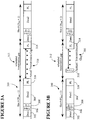
- a slot 300 (Slot # N first-1 ) is generally defined by a preselected duration of time, such as 2/3 msec., and is comprised of a plurality of predefined fields, such as two data fields (Data1 and Data2) 302, 304, a Transmission Power Control (TPC) field 306, Transmit Format Control Information (TFCI) 308 and a Pilot field (PL) 310.
- a scheduled transmission gap 312 is comprised of a whole integer multiple number of slots, such as 3 slots (2 msec).
- the PL 314 of the last slot that falls in the scheduled gap 312 is transmitted.
- the mobile device 120 only discards slots and subframes that overlap with the actual transmission gap 316.
- FIG. 3B a timing diagram illustrating the actual transmission gap 312 for a Type B frame structure is shown.
- the makeup and duration of a slot and a scheduled transmission gap 312 in a Type B frame structure is substantially identical to the makeup and duration of slots and scheduled transmission gaps 312 in Type A frame structures discussed above.
- the TPC field 318 of the first slot falling within the scheduled transmission gap 312 is transmitted and decoded.
- the mobile device continues "listening" and receiving information until the end of the TPC field 318.
- the actual transmission gap 316 starts after the reception of the TPC field 318, which should ordinarily end 512 chips from the start of the slot, in at least some embodiments of the instant invention.
- the PL field 314 of the last slot falling within the scheduled transmission gap 312 is ordinarily transmitted.
- the mobile device 120 since the mobile device 120 only discards slots and/or subframes that overlap with the actual transmission gap 316, it may be efficient for the base station 130 to continue transmitting to the mobile device 120 as long as the slot and/or subframe overlaps with the scheduled transmission gap but not the actual transmission gap.
- the process begins at block 400 with the base station 130 determining the actual transmission gap 316, which, as discussed above with respect to Figures 3A and 3B , is a function of the frame type (e.g., A or B) of a scheduled transmission gap 312. Thereafter in block 402 the various channels are checked to identify any transmissions that overlap with the actual transmission gap 316. These overlapping transmissions are discarded and not sent by the base station 130 at block 406. However, at block 404, those transmissions that fall within the scheduled transmission gap 312 but are outside the actual transmission gap 316 are sent by the base station 130 to the mobile device 120.
- the base station 130 determines the actual transmission gap 316, which, as discussed above with respect to Figures 3A and 3B , is a function of the frame type (e.g., A or B) of a scheduled transmission gap 312.
- the various channels are checked to identify any transmissions that overlap with the actual transmission gap 316. These overlapping transmissions are discarded and not sent by the base station 130 at block 406.
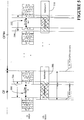
- FIG. 5 an example of an overlap between the HSDPA channels (HS-SCCH in this case) and the associated DPCH is shown. Since the DPCH frame and the HS-SCCH frames are not aligned, there can be up to 2 independent actual transmission gaps 500, 502 overlapping with a single frame of the HS-SCCH (an HS-SCCH frame consists of subframe 0 to subframe 4 in Figure5 ). If any single-chip duration overlap exists between the transmission gap 500, 502 and the HS-SCCH, then the subframe is discarded and ignored by the mobile device 120. Therefore, the subframe will not be able to be used by the base station 130.
- Subframe1 508 associated with CFN and Subframe0 510 associated with CFN+1 overlap only very slightly with the scheduled transmission gaps 504, 506.
- Subframe1 508 associated with CFN and Subframe0 510 associated with CFN+1 do not overlap with the actual transmission gaps 500, 502.
- these subframes can be preserved and transmitted to the mobile device 120, since the mobile device 120 will be monitoring the HS-SCCH during the entire period of time associated with Subframe1 508 and Subframe0 510.
- Figure 5 illustrates a frame type A for the actual transmission gap 500 and a frame type B for the actual transmission gap 502 for illustrative purposes only. Ordinarily, a channel will use only one of the frame types at a time.
- control units may include a microprocessor, a microcontroller, a digital signal processor, a processor card (including one or more microprocessors or controllers), an FPGA, an ASIC (Application Specific Integrated Circuits), an ASSP (Application Specific Standard Product) or other control or computing devices.
- the storage devices referred to in this discussion may include one or more machine-readable storage media for storing data and instructions.
- the storage media may include different forms of memory including semiconductor memory devices such as dynamic or static random access memories (DRAMs or SRAMs), erasable and programmable read-only memories (EPROMs), electrically erasable and programmable read-only memories (EEPROMs) and flash memories; magnetic disks such as fixed, floppy, removable disks; other magnetic media including tape; and optical media such as compact disks (CDs) or digital video disks (DVDs).
- DRAMs or SRAMs dynamic or static random access memories
- EPROMs erasable and programmable read-only memories
- EEPROMs electrically erasable and programmable read-only memories
- flash memories such as fixed, floppy, removable disks
- CDs compact disks
- DVDs digital video disks
Landscapes
- Engineering & Computer Science (AREA)
- Computer Networks & Wireless Communication (AREA)
- Signal Processing (AREA)
- Mobile Radio Communication Systems (AREA)
Applications Claiming Priority (2)
| Application Number | Priority Date | Filing Date | Title |
|---|---|---|---|
| US11/212,131 US7558229B2 (en) | 2005-08-25 | 2005-08-25 | Method for reducing discarded slots and frames in a wireless communications system |
| PCT/US2006/031809 WO2007024560A1 (en) | 2005-08-25 | 2006-08-16 | Method for reducing discarded slots and frames in a wireless communications system |
Publications (2)
| Publication Number | Publication Date |
|---|---|
| EP1917826A1 EP1917826A1 (en) | 2008-05-07 |
| EP1917826B1 true EP1917826B1 (en) | 2019-11-13 |
Family
ID=37460182
Family Applications (1)
| Application Number | Title | Priority Date | Filing Date |
|---|---|---|---|
| EP06789770.2A Active EP1917826B1 (en) | 2005-08-25 | 2006-08-16 | Method for reducing discarded slots and frames in a wireless communications system |
Country Status (6)
| Country | Link |
|---|---|
| US (1) | US7558229B2 (enExample) |
| EP (1) | EP1917826B1 (enExample) |
| JP (1) | JP4847529B2 (enExample) |
| KR (1) | KR101261392B1 (enExample) |
| CN (1) | CN101278587B (enExample) |
| WO (1) | WO2007024560A1 (enExample) |
Families Citing this family (15)
| Publication number | Priority date | Publication date | Assignee | Title |
|---|---|---|---|---|
| US8014343B2 (en) * | 2006-09-20 | 2011-09-06 | Interdigital Technology Corporation | Method for enhanced dedicated channel (E-DCH) transmission overlap detection for compressed mode gap slots |
| US8571066B2 (en) * | 2007-03-21 | 2013-10-29 | Qualcomm Incorporated | Methods and apparatus for RF channel switching in a multi-frequency network |
| JP5052377B2 (ja) * | 2007-06-19 | 2012-10-17 | パナソニック株式会社 | 無線通信基地局装置、無線通信端末装置及びギャップ生成方法 |
| US7949005B2 (en) * | 2007-09-25 | 2011-05-24 | Intel Corporation | Device, system, and method of wireless communication of base stations |
| US9100889B2 (en) * | 2007-10-30 | 2015-08-04 | Intel Mobile Communications GmbH | Methods for signaling and determining the time of the beginning of a measurement time interval, communication device and communication network element |
| US20090191883A1 (en) * | 2008-01-25 | 2009-07-30 | Infineon Technologies Ag | Method and device for transmitting data |
| CN101646251B (zh) * | 2008-08-07 | 2012-07-18 | 中兴通讯股份有限公司 | 随机接入过程和测量间隙冲突的处理方法 |
| US8873580B2 (en) * | 2008-10-10 | 2014-10-28 | The Trustees Of The Stevens Institute Of Technology | Method and apparatus for dynamic spectrum access |
| US8699430B2 (en) * | 2008-10-10 | 2014-04-15 | The Trustees Of The Stevens Institute Of Technology | Method and apparatus for dynamic spectrum access |
| CN102123503B (zh) * | 2010-01-07 | 2016-02-10 | 中兴通讯股份有限公司 | 一种中继链路的物理下行共享信道的资源分配方法及装置 |
| WO2011135719A1 (ja) * | 2010-04-30 | 2011-11-03 | 富士通株式会社 | 基地局、通信システム、移動局および通信方法 |
| US9059785B2 (en) * | 2011-07-07 | 2015-06-16 | Qualcomm Incorporated | Fast timing acquisition in cell search |
| US9532043B2 (en) | 2013-08-02 | 2016-12-27 | Blackberry Limited | Wireless transmission of real-time media |
| US9525714B2 (en) | 2013-08-02 | 2016-12-20 | Blackberry Limited | Wireless transmission of real-time media |
| CN117769871A (zh) * | 2021-09-02 | 2024-03-26 | 苹果公司 | Ntn中的重复上行链路传输 |
Family Cites Families (12)
| Publication number | Priority date | Publication date | Assignee | Title |
|---|---|---|---|---|
| US6868075B1 (en) * | 1999-09-28 | 2005-03-15 | Telefonaktiebolaget Lm Ericsson (Publ) | Method and apparatus for compressed mode communications over a radio interface |
| US6747958B2 (en) * | 2001-11-13 | 2004-06-08 | Qualcomm, Incorporated | Transport format combination selection for compressed mode in a W-CDMA system |
| KR100487245B1 (ko) | 2001-11-28 | 2005-05-03 | 삼성전자주식회사 | 고속 순방향 패킷 접속 방식을 사용하는 이동 통신시스템에서압축 모드에 따른 전송 불능 구간을 최소화하는장치 및 방법 |
| EP1349328A1 (en) | 2002-03-28 | 2003-10-01 | Siemens Aktiengesellschaft | Data transfer method |
| US7428406B2 (en) * | 2002-02-15 | 2008-09-23 | Siemens Aktiengesellschaft | Data transfer method for halting communication of data when a transfer gap is detected |
| US7406065B2 (en) * | 2002-03-14 | 2008-07-29 | Qualcomm, Incorporated | Method and apparatus for reducing inter-channel interference in a wireless communication system |
| JP4197266B2 (ja) * | 2003-04-10 | 2008-12-17 | 株式会社エヌ・ティ・ティ・ドコモ | 無線制御装置及びハンドオーバ制御方法 |
| US20040219919A1 (en) * | 2003-04-30 | 2004-11-04 | Nicholas Whinnett | Management of uplink scheduling modes in a wireless communication system |
| CN100474961C (zh) | 2003-09-30 | 2009-04-01 | 松下电器产业株式会社 | 用于发送压缩模式中的下行传播路径质量信息的方法和装置 |
| US7925953B2 (en) * | 2003-10-07 | 2011-04-12 | Nokia Corporation | Redundancy strategy selection scheme |
| KR101071816B1 (ko) * | 2004-04-02 | 2011-10-11 | 엘지전자 주식회사 | 무선 패킷 통신 시스템에서의 업링크 패킷 스케쥴링 방법 |
| SE0402210D0 (sv) * | 2004-09-13 | 2004-09-13 | Ericsson Telefon Ab L M | a telecommunication system |
-
2005
- 2005-08-25 US US11/212,131 patent/US7558229B2/en not_active Expired - Lifetime
-
2006
- 2006-08-16 EP EP06789770.2A patent/EP1917826B1/en active Active
- 2006-08-16 CN CN200680030327.7A patent/CN101278587B/zh not_active Expired - Fee Related
- 2006-08-16 WO PCT/US2006/031809 patent/WO2007024560A1/en not_active Ceased
- 2006-08-16 JP JP2008527979A patent/JP4847529B2/ja not_active Expired - Fee Related
-
2008
- 2008-02-25 KR KR1020087004472A patent/KR101261392B1/ko not_active Expired - Fee Related
Non-Patent Citations (1)
| Title |
|---|
| None * |
Also Published As
| Publication number | Publication date |
|---|---|
| EP1917826A1 (en) | 2008-05-07 |
| KR20080045153A (ko) | 2008-05-22 |
| JP4847529B2 (ja) | 2011-12-28 |
| US20070076644A1 (en) | 2007-04-05 |
| CN101278587B (zh) | 2014-09-24 |
| US7558229B2 (en) | 2009-07-07 |
| CN101278587A (zh) | 2008-10-01 |
| KR101261392B1 (ko) | 2013-05-07 |
| WO2007024560A1 (en) | 2007-03-01 |
| JP2009506637A (ja) | 2009-02-12 |
Similar Documents
| Publication | Publication Date | Title |
|---|---|---|
| KR101261392B1 (ko) | 무선 통신 시스템 내의 삭제되는 슬롯 및 프레임을감소시키기 위한 방법 | |
| EP2143224B1 (en) | Method and apparatus for dynamic adjustment of uplink transmission time | |
| US7948958B2 (en) | Coordinating uplink control channel gating with channel quality indicator reporting | |
| CN1774134B (zh) | 无线系统中高速数据信道的服务中断被减少的快速切换 | |
| KR100969833B1 (ko) | 통신 링크 신뢰도를 검사하는 방법 | |
| EP1811690B1 (en) | Radio communication system, mobile station, base station, radio communication system control method used for the same, and program of the same | |
| DK1847074T3 (en) | Methods and devices for handling unreliable programming grants in a telecommunications network | |
| EP1943861B9 (en) | Method and arrangement for activity detection in a telecommunication system | |
| JP4880687B2 (ja) | 不連続制御チャネル送信のためのプリアンブル長 | |
| EP1775982A1 (en) | Method and apparatus for transmitting/receiving control information of user equipment for uplink data transmission | |
| EP3008945B1 (en) | Apparatus and methods for modem assisted video telephony | |
| CN101558610A (zh) | 一种用于在无线电网络中对数据传输进行调度的方法 | |
| US20070047437A1 (en) | Method and apparatus for controlling retransmissions in a wireless communications system | |
| US20070049305A1 (en) | Method for adjusting timing of channels in a wireless communications system | |
| WO2016064519A1 (en) | Method and apparatus for determining and reporting channel quality indicator for temporally uncorrelated channels | |
| EP1944897A1 (en) | Communication device, radio communication terminal, radio base station and communication method | |
| TWI303134B (enExample) | ||
| CN106105337A (zh) | 多rab场景中hs‑dpcch开销减少 | |
| KR20170030498A (ko) | 비연속적 수신 기법들 | |
| JP4517732B2 (ja) | 無線制御装置及びそれを用いた移動通信システム並びにその動作制御方法 | |
| EP1480488A1 (en) | Controlled time scheduling |
Legal Events
| Date | Code | Title | Description |
|---|---|---|---|
| PUAI | Public reference made under article 153(3) epc to a published international application that has entered the european phase |
Free format text: ORIGINAL CODE: 0009012 |
|
| 17P | Request for examination filed |
Effective date: 20080116 |
|
| AK | Designated contracting states |
Kind code of ref document: A1 Designated state(s): AT BE BG CH CY CZ DE DK EE ES FI FR GB GR HU IE IS IT LI LT LU LV MC NL PL PT RO SE SI SK TR |
|
| RAP3 | Party data changed (applicant data changed or rights of an application transferred) |
Owner name: LUCENT TECHNOLOGIES INC. |
|
| RAP1 | Party data changed (applicant data changed or rights of an application transferred) |
Owner name: ALCATEL LUCENT |
|
| DAX | Request for extension of the european patent (deleted) | ||
| 111Z | Information provided on other rights and legal means of execution |
Free format text: AT BE BG CH CY CZ DE DK EE ES FI FR GB GR HU IE IS IT LI LT LU LV MC NL PL PT RO SE SI SK TR Effective date: 20130410 |
|
| RAP1 | Party data changed (applicant data changed or rights of an application transferred) |
Owner name: ALCATEL LUCENT |
|
| D11X | Information provided on other rights and legal means of execution (deleted) | ||
| 17Q | First examination report despatched |
Effective date: 20141104 |
|
| STAA | Information on the status of an ep patent application or granted ep patent |
Free format text: STATUS: EXAMINATION IS IN PROGRESS |
|
| RAP1 | Party data changed (applicant data changed or rights of an application transferred) |
Owner name: ALCATEL LUCENT |
|
| REG | Reference to a national code |
Ref country code: DE Ref legal event code: R079 Ref document number: 602006058819 Country of ref document: DE Free format text: PREVIOUS MAIN CLASS: H04Q0007380000 Ipc: H04L0001180000 |
|
| GRAP | Despatch of communication of intention to grant a patent |
Free format text: ORIGINAL CODE: EPIDOSNIGR1 |
|
| STAA | Information on the status of an ep patent application or granted ep patent |
Free format text: STATUS: GRANT OF PATENT IS INTENDED |
|
| RIC1 | Information provided on ipc code assigned before grant |
Ipc: H04L 1/18 20060101ALI20190522BHEP Ipc: H04W 72/12 20090101ALI20190522BHEP Ipc: H04W 76/20 20180101ALN20190522BHEP Ipc: H04W 74/08 20090101AFI20190522BHEP |
|
| RIC1 | Information provided on ipc code assigned before grant |
Ipc: H04W 76/20 20180101ALN20190528BHEP Ipc: H04L 1/18 20060101AFI20190528BHEP |
|
| INTG | Intention to grant announced |
Effective date: 20190612 |
|
| GRAS | Grant fee paid |
Free format text: ORIGINAL CODE: EPIDOSNIGR3 |
|
| GRAA | (expected) grant |
Free format text: ORIGINAL CODE: 0009210 |
|
| STAA | Information on the status of an ep patent application or granted ep patent |
Free format text: STATUS: THE PATENT HAS BEEN GRANTED |
|
| AK | Designated contracting states |
Kind code of ref document: B1 Designated state(s): AT BE BG CH CY CZ DE DK EE ES FI FR GB GR HU IE IS IT LI LT LU LV MC NL PL PT RO SE SI SK TR |
|
| REG | Reference to a national code |
Ref country code: GB Ref legal event code: FG4D |
|
| REG | Reference to a national code |
Ref country code: CH Ref legal event code: EP Ref country code: AT Ref legal event code: REF Ref document number: 1202787 Country of ref document: AT Kind code of ref document: T Effective date: 20191115 |
|
| REG | Reference to a national code |
Ref country code: DE Ref legal event code: R096 Ref document number: 602006058819 Country of ref document: DE |
|
| REG | Reference to a national code |
Ref country code: IE Ref legal event code: FG4D |
|
| REG | Reference to a national code |
Ref country code: NL Ref legal event code: MP Effective date: 20191113 |
|
| REG | Reference to a national code |
Ref country code: LT Ref legal event code: MG4D |
|
| PG25 | Lapsed in a contracting state [announced via postgrant information from national office to epo] |
Ref country code: NL Free format text: LAPSE BECAUSE OF FAILURE TO SUBMIT A TRANSLATION OF THE DESCRIPTION OR TO PAY THE FEE WITHIN THE PRESCRIBED TIME-LIMIT Effective date: 20191113 Ref country code: SE Free format text: LAPSE BECAUSE OF FAILURE TO SUBMIT A TRANSLATION OF THE DESCRIPTION OR TO PAY THE FEE WITHIN THE PRESCRIBED TIME-LIMIT Effective date: 20191113 Ref country code: LV Free format text: LAPSE BECAUSE OF FAILURE TO SUBMIT A TRANSLATION OF THE DESCRIPTION OR TO PAY THE FEE WITHIN THE PRESCRIBED TIME-LIMIT Effective date: 20191113 Ref country code: LT Free format text: LAPSE BECAUSE OF FAILURE TO SUBMIT A TRANSLATION OF THE DESCRIPTION OR TO PAY THE FEE WITHIN THE PRESCRIBED TIME-LIMIT Effective date: 20191113 Ref country code: ES Free format text: LAPSE BECAUSE OF FAILURE TO SUBMIT A TRANSLATION OF THE DESCRIPTION OR TO PAY THE FEE WITHIN THE PRESCRIBED TIME-LIMIT Effective date: 20191113 Ref country code: GR Free format text: LAPSE BECAUSE OF FAILURE TO SUBMIT A TRANSLATION OF THE DESCRIPTION OR TO PAY THE FEE WITHIN THE PRESCRIBED TIME-LIMIT Effective date: 20200214 Ref country code: PL Free format text: LAPSE BECAUSE OF FAILURE TO SUBMIT A TRANSLATION OF THE DESCRIPTION OR TO PAY THE FEE WITHIN THE PRESCRIBED TIME-LIMIT Effective date: 20191113 Ref country code: PT Free format text: LAPSE BECAUSE OF FAILURE TO SUBMIT A TRANSLATION OF THE DESCRIPTION OR TO PAY THE FEE WITHIN THE PRESCRIBED TIME-LIMIT Effective date: 20200313 Ref country code: FI Free format text: LAPSE BECAUSE OF FAILURE TO SUBMIT A TRANSLATION OF THE DESCRIPTION OR TO PAY THE FEE WITHIN THE PRESCRIBED TIME-LIMIT Effective date: 20191113 Ref country code: BG Free format text: LAPSE BECAUSE OF FAILURE TO SUBMIT A TRANSLATION OF THE DESCRIPTION OR TO PAY THE FEE WITHIN THE PRESCRIBED TIME-LIMIT Effective date: 20200213 |
|
| PG25 | Lapsed in a contracting state [announced via postgrant information from national office to epo] |
Ref country code: IS Free format text: LAPSE BECAUSE OF FAILURE TO SUBMIT A TRANSLATION OF THE DESCRIPTION OR TO PAY THE FEE WITHIN THE PRESCRIBED TIME-LIMIT Effective date: 20200313 |
|
| PG25 | Lapsed in a contracting state [announced via postgrant information from national office to epo] |
Ref country code: CZ Free format text: LAPSE BECAUSE OF FAILURE TO SUBMIT A TRANSLATION OF THE DESCRIPTION OR TO PAY THE FEE WITHIN THE PRESCRIBED TIME-LIMIT Effective date: 20191113 Ref country code: RO Free format text: LAPSE BECAUSE OF FAILURE TO SUBMIT A TRANSLATION OF THE DESCRIPTION OR TO PAY THE FEE WITHIN THE PRESCRIBED TIME-LIMIT Effective date: 20191113 Ref country code: DK Free format text: LAPSE BECAUSE OF FAILURE TO SUBMIT A TRANSLATION OF THE DESCRIPTION OR TO PAY THE FEE WITHIN THE PRESCRIBED TIME-LIMIT Effective date: 20191113 Ref country code: EE Free format text: LAPSE BECAUSE OF FAILURE TO SUBMIT A TRANSLATION OF THE DESCRIPTION OR TO PAY THE FEE WITHIN THE PRESCRIBED TIME-LIMIT Effective date: 20191113 |
|
| REG | Reference to a national code |
Ref country code: DE Ref legal event code: R097 Ref document number: 602006058819 Country of ref document: DE |
|
| REG | Reference to a national code |
Ref country code: AT Ref legal event code: MK05 Ref document number: 1202787 Country of ref document: AT Kind code of ref document: T Effective date: 20191113 |
|
| PG25 | Lapsed in a contracting state [announced via postgrant information from national office to epo] |
Ref country code: SK Free format text: LAPSE BECAUSE OF FAILURE TO SUBMIT A TRANSLATION OF THE DESCRIPTION OR TO PAY THE FEE WITHIN THE PRESCRIBED TIME-LIMIT Effective date: 20191113 |
|
| PLBE | No opposition filed within time limit |
Free format text: ORIGINAL CODE: 0009261 |
|
| STAA | Information on the status of an ep patent application or granted ep patent |
Free format text: STATUS: NO OPPOSITION FILED WITHIN TIME LIMIT |
|
| 26N | No opposition filed |
Effective date: 20200814 |
|
| PG25 | Lapsed in a contracting state [announced via postgrant information from national office to epo] |
Ref country code: AT Free format text: LAPSE BECAUSE OF FAILURE TO SUBMIT A TRANSLATION OF THE DESCRIPTION OR TO PAY THE FEE WITHIN THE PRESCRIBED TIME-LIMIT Effective date: 20191113 Ref country code: SI Free format text: LAPSE BECAUSE OF FAILURE TO SUBMIT A TRANSLATION OF THE DESCRIPTION OR TO PAY THE FEE WITHIN THE PRESCRIBED TIME-LIMIT Effective date: 20191113 |
|
| PG25 | Lapsed in a contracting state [announced via postgrant information from national office to epo] |
Ref country code: IT Free format text: LAPSE BECAUSE OF FAILURE TO SUBMIT A TRANSLATION OF THE DESCRIPTION OR TO PAY THE FEE WITHIN THE PRESCRIBED TIME-LIMIT Effective date: 20191113 |
|
| PG25 | Lapsed in a contracting state [announced via postgrant information from national office to epo] |
Ref country code: MC Free format text: LAPSE BECAUSE OF FAILURE TO SUBMIT A TRANSLATION OF THE DESCRIPTION OR TO PAY THE FEE WITHIN THE PRESCRIBED TIME-LIMIT Effective date: 20191113 |
|
| REG | Reference to a national code |
Ref country code: CH Ref legal event code: PL |
|
| PG25 | Lapsed in a contracting state [announced via postgrant information from national office to epo] |
Ref country code: LU Free format text: LAPSE BECAUSE OF NON-PAYMENT OF DUE FEES Effective date: 20200816 Ref country code: LI Free format text: LAPSE BECAUSE OF NON-PAYMENT OF DUE FEES Effective date: 20200831 Ref country code: CH Free format text: LAPSE BECAUSE OF NON-PAYMENT OF DUE FEES Effective date: 20200831 |
|
| REG | Reference to a national code |
Ref country code: BE Ref legal event code: MM Effective date: 20200831 |
|
| PG25 | Lapsed in a contracting state [announced via postgrant information from national office to epo] |
Ref country code: BE Free format text: LAPSE BECAUSE OF NON-PAYMENT OF DUE FEES Effective date: 20200831 Ref country code: IE Free format text: LAPSE BECAUSE OF NON-PAYMENT OF DUE FEES Effective date: 20200816 |
|
| PG25 | Lapsed in a contracting state [announced via postgrant information from national office to epo] |
Ref country code: TR Free format text: LAPSE BECAUSE OF FAILURE TO SUBMIT A TRANSLATION OF THE DESCRIPTION OR TO PAY THE FEE WITHIN THE PRESCRIBED TIME-LIMIT Effective date: 20191113 Ref country code: CY Free format text: LAPSE BECAUSE OF FAILURE TO SUBMIT A TRANSLATION OF THE DESCRIPTION OR TO PAY THE FEE WITHIN THE PRESCRIBED TIME-LIMIT Effective date: 20191113 |
|
| P01 | Opt-out of the competence of the unified patent court (upc) registered |
Effective date: 20230606 |
|
| PGFP | Annual fee paid to national office [announced via postgrant information from national office to epo] |
Ref country code: GB Payment date: 20241227 Year of fee payment: 19 |
|
| PGFP | Annual fee paid to national office [announced via postgrant information from national office to epo] |
Ref country code: FR Payment date: 20241226 Year of fee payment: 19 |
|
| PGFP | Annual fee paid to national office [announced via postgrant information from national office to epo] |
Ref country code: DE Payment date: 20250129 Year of fee payment: 19 |