EP1916245A1 - Indole derivative having pgd2 receptor antagonist activity - Google Patents
Indole derivative having pgd2 receptor antagonist activity Download PDFInfo
- Publication number
- EP1916245A1 EP1916245A1 EP06781305A EP06781305A EP1916245A1 EP 1916245 A1 EP1916245 A1 EP 1916245A1 EP 06781305 A EP06781305 A EP 06781305A EP 06781305 A EP06781305 A EP 06781305A EP 1916245 A1 EP1916245 A1 EP 1916245A1
- Authority
- EP
- European Patent Office
- Prior art keywords
- optionally substituted
- compound
- ring
- hydrate
- alkyloxy
- Prior art date
- Legal status (The legal status is an assumption and is not a legal conclusion. Google has not performed a legal analysis and makes no representation as to the accuracy of the status listed.)
- Granted
Links
- 0 Cc(c(*)c1c(*=C)c2*)c(C)c(*)c1[n]2I Chemical compound Cc(c(*)c1c(*=C)c2*)c(C)c(*)c1[n]2I 0.000 description 7
- OAIZOQPVUMTNOE-UHFFFAOYSA-N CC(C)OC(C=C1)=CCC1S(N(CC1)CC1c1c[n](CC(O)=O)c2cc(-c(cc3)ccc3F)ccc12)(=O)=O Chemical compound CC(C)OC(C=C1)=CCC1S(N(CC1)CC1c1c[n](CC(O)=O)c2cc(-c(cc3)ccc3F)ccc12)(=O)=O OAIZOQPVUMTNOE-UHFFFAOYSA-N 0.000 description 1
- OWZNYZPPWOMOJJ-UHFFFAOYSA-N CC(C)Oc(c(C)c1)ccc1S(N(CC1)CCC1c1c[n](CC(O)=O)c(cc2)c1cc2Cl)(=O)=O Chemical compound CC(C)Oc(c(C)c1)ccc1S(N(CC1)CCC1c1c[n](CC(O)=O)c(cc2)c1cc2Cl)(=O)=O OWZNYZPPWOMOJJ-UHFFFAOYSA-N 0.000 description 1
- BQAFELSPYVLYCK-UHFFFAOYSA-N CC(C)Oc(cc1)cc(C)c1S(N(CC1)CC=C1c1c[n](CC(O)=O)c2cc(Cl)ccc12)(=O)=O Chemical compound CC(C)Oc(cc1)cc(C)c1S(N(CC1)CC=C1c1c[n](CC(O)=O)c2cc(Cl)ccc12)(=O)=O BQAFELSPYVLYCK-UHFFFAOYSA-N 0.000 description 1
- DCIIJKVFTKOEDN-UHFFFAOYSA-N CC(C)Oc(cc1)ccc1C(N1CCN(Cc2c[n](CC(O)=O)c3cc(Br)ccc23)CC1)=O Chemical compound CC(C)Oc(cc1)ccc1C(N1CCN(Cc2c[n](CC(O)=O)c3cc(Br)ccc23)CC1)=O DCIIJKVFTKOEDN-UHFFFAOYSA-N 0.000 description 1
- KCHNSUCXELUORT-UHFFFAOYSA-N CC(C)Oc(cc1)ccc1S(N(CC1)CC1c1c[n](CC(N2)=NOC2=O)c2cc(Br)ccc12)(=O)=O Chemical compound CC(C)Oc(cc1)ccc1S(N(CC1)CC1c1c[n](CC(N2)=NOC2=O)c2cc(Br)ccc12)(=O)=O KCHNSUCXELUORT-UHFFFAOYSA-N 0.000 description 1
- QDYLDEOXKWQNQI-UHFFFAOYSA-N CC(C)Oc(cc1)ccc1S(N(CC1)CC1c1c[n](CC(O)=O)c2c1CCC(C1CCCC1)=C2)(=O)=O Chemical compound CC(C)Oc(cc1)ccc1S(N(CC1)CC1c1c[n](CC(O)=O)c2c1CCC(C1CCCC1)=C2)(=O)=O QDYLDEOXKWQNQI-UHFFFAOYSA-N 0.000 description 1
- PIRMJVITBXSFLL-UHFFFAOYSA-N CC(C)Oc(cc1)ccc1S(N(CC1)CC1c1c[n](CC(O)=O)c2c1ccc(-c1cc(Cl)ccc1)c2)(=O)=O Chemical compound CC(C)Oc(cc1)ccc1S(N(CC1)CC1c1c[n](CC(O)=O)c2c1ccc(-c1cc(Cl)ccc1)c2)(=O)=O PIRMJVITBXSFLL-UHFFFAOYSA-N 0.000 description 1
- SZBVMICHVYXQDO-UHFFFAOYSA-N CC(C)Oc(cc1)ccc1S(N(CC1)CC1c1c[n](CC(O)=O)c2cc(-c(cncc3)c3OC)ccc12)(=O)=O Chemical compound CC(C)Oc(cc1)ccc1S(N(CC1)CC1c1c[n](CC(O)=O)c2cc(-c(cncc3)c3OC)ccc12)(=O)=O SZBVMICHVYXQDO-UHFFFAOYSA-N 0.000 description 1
- ONBPWLVKNJQQTO-UHFFFAOYSA-N CC(C)Oc(cc1)ccc1S(N(CC1)CC1c1c[n](CC(O)=O)c2cc(-c3ccc[s]3)ccc12)(=O)=O Chemical compound CC(C)Oc(cc1)ccc1S(N(CC1)CC1c1c[n](CC(O)=O)c2cc(-c3ccc[s]3)ccc12)(=O)=O ONBPWLVKNJQQTO-UHFFFAOYSA-N 0.000 description 1
- HYMWQQZAEUTIJV-UHFFFAOYSA-N CC(C)Oc(cc1)ccc1S(N(CC1)CC1c1c[n](CC(O)=O)c2cc(F)ccc12)(=O)=O Chemical compound CC(C)Oc(cc1)ccc1S(N(CC1)CC1c1c[n](CC(O)=O)c2cc(F)ccc12)(=O)=O HYMWQQZAEUTIJV-UHFFFAOYSA-N 0.000 description 1
- NSEOUZOQIFMMSD-UHFFFAOYSA-N CC(C)Oc(cc1)ccc1S(N(CC1)CC1c1c[n](CC(O)=O)c2cc(N(C)C)ccc12)(=O)=O Chemical compound CC(C)Oc(cc1)ccc1S(N(CC1)CC1c1c[n](CC(O)=O)c2cc(N(C)C)ccc12)(=O)=O NSEOUZOQIFMMSD-UHFFFAOYSA-N 0.000 description 1
- JYMXQBDGIHYWPQ-UHFFFAOYSA-N CC(C)Oc(cc1)ccc1S(N(CC1)CC1c1c[n](CC(O)=O)c2cc(NC(OC(C)(C)C)=O)ccc12)(=O)=O Chemical compound CC(C)Oc(cc1)ccc1S(N(CC1)CC1c1c[n](CC(O)=O)c2cc(NC(OC(C)(C)C)=O)ccc12)(=O)=O JYMXQBDGIHYWPQ-UHFFFAOYSA-N 0.000 description 1
- OJGUMHYHEGFMJZ-UHFFFAOYSA-N CC(C)Oc(cc1)ccc1S(N(CC1)CC=C1c(c1c2)c[n](CC(O)=O)c1ccc2Cl)(=O)=O Chemical compound CC(C)Oc(cc1)ccc1S(N(CC1)CC=C1c(c1c2)c[n](CC(O)=O)c1ccc2Cl)(=O)=O OJGUMHYHEGFMJZ-UHFFFAOYSA-N 0.000 description 1
- LESDZIUBGCRJDV-UHFFFAOYSA-N CC(C)Oc(ccc(S(N(CC1)CCC1c1c[n](CC(O)=O)c2cc(Cl)ccc12)(O)=O)c1)c1F Chemical compound CC(C)Oc(ccc(S(N(CC1)CCC1c1c[n](CC(O)=O)c2cc(Cl)ccc12)(O)=O)c1)c1F LESDZIUBGCRJDV-UHFFFAOYSA-N 0.000 description 1
- LPGYWCHMLWLJML-UHFFFAOYSA-N OC(C[n](cc(C(CC1)CCN1S(c(cc1)ccc1OC(F)F)(=O)=O)c1c2)c1ccc2Cl)=O Chemical compound OC(C[n](cc(C(CC1)CCN1S(c(cc1)ccc1OC(F)F)(=O)=O)c1c2)c1ccc2Cl)=O LPGYWCHMLWLJML-UHFFFAOYSA-N 0.000 description 1
Classifications
-
- C—CHEMISTRY; METALLURGY
- C07—ORGANIC CHEMISTRY
- C07D—HETEROCYCLIC COMPOUNDS
- C07D403/00—Heterocyclic compounds containing two or more hetero rings, having nitrogen atoms as the only ring hetero atoms, not provided for by group C07D401/00
- C07D403/02—Heterocyclic compounds containing two or more hetero rings, having nitrogen atoms as the only ring hetero atoms, not provided for by group C07D401/00 containing two hetero rings
- C07D403/04—Heterocyclic compounds containing two or more hetero rings, having nitrogen atoms as the only ring hetero atoms, not provided for by group C07D401/00 containing two hetero rings directly linked by a ring-member-to-ring-member bond
-
- A—HUMAN NECESSITIES
- A61—MEDICAL OR VETERINARY SCIENCE; HYGIENE
- A61P—SPECIFIC THERAPEUTIC ACTIVITY OF CHEMICAL COMPOUNDS OR MEDICINAL PREPARATIONS
- A61P11/00—Drugs for disorders of the respiratory system
- A61P11/06—Antiasthmatics
-
- A—HUMAN NECESSITIES
- A61—MEDICAL OR VETERINARY SCIENCE; HYGIENE
- A61P—SPECIFIC THERAPEUTIC ACTIVITY OF CHEMICAL COMPOUNDS OR MEDICINAL PREPARATIONS
- A61P25/00—Drugs for disorders of the nervous system
- A61P25/28—Drugs for disorders of the nervous system for treating neurodegenerative disorders of the central nervous system, e.g. nootropic agents, cognition enhancers, drugs for treating Alzheimer's disease or other forms of dementia
-
- A—HUMAN NECESSITIES
- A61—MEDICAL OR VETERINARY SCIENCE; HYGIENE
- A61P—SPECIFIC THERAPEUTIC ACTIVITY OF CHEMICAL COMPOUNDS OR MEDICINAL PREPARATIONS
- A61P37/00—Drugs for immunological or allergic disorders
- A61P37/08—Antiallergic agents
-
- A—HUMAN NECESSITIES
- A61—MEDICAL OR VETERINARY SCIENCE; HYGIENE
- A61P—SPECIFIC THERAPEUTIC ACTIVITY OF CHEMICAL COMPOUNDS OR MEDICINAL PREPARATIONS
- A61P43/00—Drugs for specific purposes, not provided for in groups A61P1/00-A61P41/00
-
- C—CHEMISTRY; METALLURGY
- C07—ORGANIC CHEMISTRY
- C07D—HETEROCYCLIC COMPOUNDS
- C07D401/00—Heterocyclic compounds containing two or more hetero rings, having nitrogen atoms as the only ring hetero atoms, at least one ring being a six-membered ring with only one nitrogen atom
- C07D401/02—Heterocyclic compounds containing two or more hetero rings, having nitrogen atoms as the only ring hetero atoms, at least one ring being a six-membered ring with only one nitrogen atom containing two hetero rings
- C07D401/04—Heterocyclic compounds containing two or more hetero rings, having nitrogen atoms as the only ring hetero atoms, at least one ring being a six-membered ring with only one nitrogen atom containing two hetero rings directly linked by a ring-member-to-ring-member bond
-
- C—CHEMISTRY; METALLURGY
- C07—ORGANIC CHEMISTRY
- C07D—HETEROCYCLIC COMPOUNDS
- C07D401/00—Heterocyclic compounds containing two or more hetero rings, having nitrogen atoms as the only ring hetero atoms, at least one ring being a six-membered ring with only one nitrogen atom
- C07D401/14—Heterocyclic compounds containing two or more hetero rings, having nitrogen atoms as the only ring hetero atoms, at least one ring being a six-membered ring with only one nitrogen atom containing three or more hetero rings
-
- C—CHEMISTRY; METALLURGY
- C07—ORGANIC CHEMISTRY
- C07D—HETEROCYCLIC COMPOUNDS
- C07D405/00—Heterocyclic compounds containing both one or more hetero rings having oxygen atoms as the only ring hetero atoms, and one or more rings having nitrogen as the only ring hetero atom
- C07D405/14—Heterocyclic compounds containing both one or more hetero rings having oxygen atoms as the only ring hetero atoms, and one or more rings having nitrogen as the only ring hetero atom containing three or more hetero rings
-
- C—CHEMISTRY; METALLURGY
- C07—ORGANIC CHEMISTRY
- C07D—HETEROCYCLIC COMPOUNDS
- C07D409/00—Heterocyclic compounds containing two or more hetero rings, at least one ring having sulfur atoms as the only ring hetero atoms
- C07D409/14—Heterocyclic compounds containing two or more hetero rings, at least one ring having sulfur atoms as the only ring hetero atoms containing three or more hetero rings
-
- C—CHEMISTRY; METALLURGY
- C07—ORGANIC CHEMISTRY
- C07D—HETEROCYCLIC COMPOUNDS
- C07D413/00—Heterocyclic compounds containing two or more hetero rings, at least one ring having nitrogen and oxygen atoms as the only ring hetero atoms
- C07D413/14—Heterocyclic compounds containing two or more hetero rings, at least one ring having nitrogen and oxygen atoms as the only ring hetero atoms containing three or more hetero rings
-
- C—CHEMISTRY; METALLURGY
- C07—ORGANIC CHEMISTRY
- C07D—HETEROCYCLIC COMPOUNDS
- C07D417/00—Heterocyclic compounds containing two or more hetero rings, at least one ring having nitrogen and sulfur atoms as the only ring hetero atoms, not provided for by group C07D415/00
- C07D417/14—Heterocyclic compounds containing two or more hetero rings, at least one ring having nitrogen and sulfur atoms as the only ring hetero atoms, not provided for by group C07D415/00 containing three or more hetero rings
Definitions
- This invention relates to an indole derivative having DP receptor antagonistic activity and a medicinal use thereof.
- Prostaglandin D2(PGD2) is a metabolic product of arachidonic acid through PGG2 and PGH2, and known to have various potent physiological activities.
- PGD2 is involved in sleeping and secretion of hormones in central nervous system, and in inhibiting activity of platelet aggregation, contraction of bronchial smooth muscle, vasodilation and constriction of a blood vessel etc. in peripheral system.
- PGD2 is considered to be involved in forming pathological condition of an allergic disease such as bronchial asthma since it is a major metabolic product of arachidonic acid produced from a mast cell, and has a potent bronchoconstricting effect, causing an increase of blood vessel permeability and migration of inflammatory cell such as an eosinophil.
- a DP receptor also called DP1 receptor
- CRTH2 receptor also called DP2 receptor
- Patent literatures 1-9 indole derivatives having a DP receptor antagonistic activity is disclosed, and in Patent literatures 10-21 indole derivatives having a CRTH2 receptor antagonistic activity is disclosed
- Patent literature 22 indole derivatives having inhibitory activity against noradrenalin re-uptake are disclosed in Patent literature 22.
- Patent literature 1 WO 2005/056527 Pamphlet Patent literature 2: WO 2004/111047 Pamphlet Patent literature 3: WO 2004/103970 Pamphlet Patent literature 4: WO 2004/039807 Pamphlet Patent literature 5: WO 2003/062200 Pamphlet Patent literature 6: WO 2002/094830 Pamphlet Patent literature 7: WO 2001/079169 Pamphlet Patent literature 8: WO 2003/022814 Pamphlet Patent literature 9: WO 2003/022813 Pamphlet Patent literature 10: WO 2003/097598 Pamphlet Patent literature 11: WO 2003/097042 Pamphlet Patent literature 12: WO 2005/019171 Pamphlet Patent literature 13: WO 2004/106302 Pamphlet Patent literature 14: WO 2004/007451 Pamphlet Patent literature 15: WO 2003/101981 Pamphlet Patent literature 16: WO 2003/101961 Pamphlet Patent literature 17
- the present invention provides an indole derivative having DP receptor antagonistic activity and a pharmaceutical composition comprising the said compound as an active ingredient.
- the said pharmaceutical composition is useful as a therapeutic agent for treating allergic diseases.
- the indole carboxylic acid derivative shown below has a potent DP receptor antagonistic activity and the pharmaceutical composition comprising the said compound as an active ingredient is useful as a therapeutic agent for treating allergic diseases.
- the present invention relates to
- the present invention also includes the following inventions;
- halogen atom means a fluorine atom, a chlorine atom, a bromine atom and an iodine atom.
- a fluorine atom, a chlorine atom and a bromine atom are preferable.
- hetero atom means an oxygen atom, a sulfur atom and a nitrogen atom.
- alkyl means a monovalent straight or branched hydrocarbon group having one to eight carbon atom(s).
- methyl, ethyl, n-propyl, isopropyl, n-butyl, isobutyl, sec-butyl, tert- butyl, n-pentyl, isopentyl, neo-pentyl, n-hexyl, isohexyl, n-heptyl, n-octyl and the like are exemplified.
- C1-C6 alkyl is preferred.
- C1-C4 alkyl is further preferred.
- alkenyl means a monovalent straight or branched hydrocarbon group having two to eight carbon atoms and one or more double bond(s).
- vinyl, allyl, 1-propenyl, 2-butenyl, 2-pentenyl, 2-hexenyl, 2-heptenyl, 2-octenyl and the like are exemplified.
- C2-C6 alkenyl is preferred.
- C2-C4 alkenyl is further preferred.
- alkynyl means a monovalent straight or branched hydrocarbon group having two to eight carbon atoms and one or more triple bond(s).
- alkynyl a monovalent straight or branched hydrocarbon group having two to eight carbon atoms and one or more triple bond(s).
- ethynyl, 1-propynyl, 2-propynyl, 2-butynyl, 2-pentynyl, 2-hexynyl, 2-heptynyl, 2-octynyl and the like are exemplified.
- C2-C6 alkynyl is preferred.
- C2-C4 alkynyl is further preferred.
- cycloalkyl means a cycloalkyl having three to eight carbon atoms and for example, cyclopropyl, ctclobutyl, cyclopentyl, cyclohexyl, cycloheptyl, cyclooctyl and the like are exemplified.
- C3-C6 cycloalkyl is preferred.
- cycloalkenyl means a cycloalkenyl having three to eight carbon atoms and for example, cyclopropenyl, cyclobutenyl, cyclopentenyl, cyclohexenyl, cycloheptenyl, cycloocentyl and the like are exemplified. C3-C6 cycloalkenyl is preferred.
- alkyloxy means a group wherein an oxygen atom is substituted with one "alkyl” above and for example, methyloxy, ethyloxy, n-propyloxy, isopropyloxy, n-butyloxy, isobutyloxy, sec-butyloxy, tert-butyloxy, n-pentyloxy, isopentyloxy, 2-pentyloxy, 3-pentyloxy, n-hexyloxy, isohexyloxy, 2-hexyloxy, 3-hexyloxy, n-heptyloxy, n-octyloxy, and the like are exemplified.
- C1-C6 alkyloxy is preferred.
- C1-C4 alkyloxy is further preferred. When a number of carbon is specified, it means “alkyloxy" having the carbon number within the range.
- alkenyloxy means a group wherein an oxygen atom is substituted with one "alkenyl” above and for example, vinyloxy, allyloxy, 1-propenyloxy, 2-butenyloxy, 2-pentenyloxy, 2-hexenyloxy, 2-heptenyloxy, 2-octenyloxy and the like are exemplified.
- C2-C6 alkenyloxy is preferred.
- C2-C4 alkenyloxy is further preferred.
- a number of carbon it means “alkenyloxy" having the carbon number within the range.
- alkynyloxy means a group wherein an oxygen atom is substituted with one "alkynyl" above and for example, ethynyloxy, 1-propynyloxy, 2-propynyloxy, 2-butynyloxy, 2-pentynyloxy, 2-hexynyloxy, 2-heptynyloxy, 2-octynyloxy and the like are exemplified.
- C2-C6 alkynyloxy is preferred.
- C2-C4 alkynyloxy is further preferred.
- cycloalkyloxy means a group wherein an oxygen atom is substituted with one "cycloalkyl" above and for example, cyclopropyloxy, cyclobutyloxy, cyclopentyloxy, cyclohexyloxy, cycloheptyloxy and cyclooctyloxy are exemplified.
- C3-C6 cycloalkyloxy is preferred.
- a number of carbon it means “cycloalkyloxy" having the carbon number within the range.
- cycloalkenyloxy means a group wherein an oxygen atom is substituted with one "cycloalkenyl" above and for example, cyclopropenyloxy, ctclobutenyloxy, cyclopentenyloxy, cyclohexenyloxy, cycloheptenyloxy, and cyclooctenyloxy are exemplified.
- C3-C6 cycloalkenyloxy is preferred.
- a number of carbon it means “cycloalkenyloxy" having the carbon number within the range.
- alkylthio means a group wherein a sulfur atom is substituted with one "alkyl” above, and for example, methylthio, ethylthio, n-propylthio, isopropylthio, n-butylthio, isobutylthio, sec-butylthio, tert-butylthio, n-pentylthio, isopentylthio, 2-pentylthio, 3-pentylthio, n-hexylthio, isohexylthio, 2-hexylthio, 3-hexylthio, n-heptylthio, n-octylthio, and the like are exemplified.
- C1-C6 Alkylthio is preferred.
- C1-C4 alkylthio is more preferred. When a number of carbon is specified, it means "alkylthio
- alkynylthio means a group wherein a sulfur atom is substituted with one "alkynyl" above and for example, ethynylthio, 1-propynylthio, 2-propynylthio, 2-butynylthio, 2-pentynylthio, 2-hexynylthio, 2-heptynylthio, 2-octynylthio and the like are exemplified. C2-C6 alkynylthio is preferred. Moreover, C2-C4 alkynylthio is further preferred. When a number of carbon is specified, it means “alkynylthio" having the carbon number within the range.
- alkylsulfinyl means a group wherein sulfinyl is substituted with one "alkyl” above and for example, methylsulfinyl, ethylsulfinyl, n-propylsulfinyl, isopropylsulfinyl, n-butylsulfinyl, isobutylsulfinyl, sec-butylsulfinyl, tert-butylsulfinyl, n-pentylsulfinyl, isopentylsulfinyl, 2-pentylsulfinyl, 3-pentylsulfinyl, n-hexylsulfinyl, isohexylsulfinyl, 2-hexylsulfinyl, 3-hexylsulfinyl, n-heptylsul
- alkylsulfonyl means a group wherein sulfonyl is substituted with one "alkyl” above and for example, methylsulfonyl, ethylsulfonyl, n-propylsulfonyl, isopropylsulfonyl, n-butylsulfonyl, isobutylsulfonyl, sec-butylsulfonyl, tert-butylsulfonyl, n-pentylsulfonyl, isopentylsulfonyl, 2-pentylsulfonyl, 3-pentylsulfonyl, n-hexylsulfonyl, isohexylsulfonyl, 2-hexylsulfonyl, 3-hexylsulfonyl, n-heptylsul
- alkylsulfonyloxy means a group wherein an oxygen atom is substituted with one "alkylsulfonyl" above and for example, methylsulfonyloxy, ethylsulfonyloxy, n-propylsulfonyloxy, isopropylsulfonyloxy, n-butylsulfonyloxy, isobutylsulfonyloxy, sec-butylsulfonyloxy, tert-butylsulfonyloxy, n-pentylsulfonyloxy, isopentylsulfonyloxy, 2-pentylsulfonyloxy, 3-pentylsulfonyloxy, n-hexylsulfonyloxy, isohexylsulfonyloxy, 2-hexylsulfonyloxy, 3-hexylsulfonyloxy
- cycloalkylthio means a group wherein a sulfur atom is substituted with one "cycloalkyl" above and for example, cyclopropylthio, cyclobutylthio, cyclopantylthio, cyclohexylthio, cycloheptylthio, cyclooctylthio and the like are exemplified.
- C3-C6 cycloalkylthio is preferred. When a number of carbon is specified, it means “cycloalkylthio" having the carbon number within the range.
- cycloalkylsulfinyl includes a substituent group in which sulfinyl is substituted with one "cycloalkyl” described above.
- cyclopropylsulfinyl, cyclobutylsulfinyl, cyclopentylsulfinyl, cyclohexylsulfinyl, cycloheptylsulfinyl, and cyclooctylsulfinyl are exemplified.
- C3-C6 cycloalkylsulfinyl is exemplified.
- cycloalkylsulfonyl includes a substituent group in which sulfonyl is substituted with one "cycloalkyl” described above.
- cyclopropylsulfonyl, cyclobutylsulfonyl, cyclopentylsulfonyl, cyclohexylsulfonyl, cycloheptylsulfonyl, and cyclooctylsulfonyl are exemplified.
- C3-C6 cycloalkylsulfonyl is exemplified.
- cycloalkylsulfonyloxy includes a substituent group in which an oxygen atom is substituted with one "cycloalkylsulfonyl" described above.
- cyclopropylsulfonyloxy, cyclobutylsulfonyloxy, cyclopentylsulfonyloxy, cyclohexylsulfonyloxy, cycloheptylsulfonyloxy, and cyclooctylsulfonyloxy are exemplified.
- C3-C6 cycloalkylsulfonyloxy is exemplified.
- cycloalkenylthio includes a substituent group in which a sulfur atom is substituted with one "cycloalkenyl” described above.
- cyclopropenylthio, cyclobutenylthio, cyclopentenylthio, cyclohexenylthio, cycloheptenylthio, and cyclooctenylthio are exemplified.
- C3-C6 cycloalkenylthio is exemplified.
- a number of carbon it means “cycloalkenylthio" having the carbon number within the range.
- cycloalkenylsulfinyl includes a substituent group in which sulfinyl is substituted with one "cycloalkenyl” described above.
- cyclopropenylsulfinyl, cyclobutenylsulfinyl, cyclopentenylsulfinyl, cyclohexenylsulfinyl, cycloheptenylsulfinyl, and cyclooctenylsulfinyl are exemplified.
- C3-C6 cycloalkenylsulfinyl is exemplified.
- cycloalkenylsulfonyl includes a substituent group in which sulfonyl is substituted with one "cycloalkenyl” described above.
- cyclopropenylsulfonyl, cyclobutenylsulfonyl, cyclopentenylsulfonyl, cyclohexenylsulfonyl, cycloheptenylsulfonyl, and cyclooctenylsulfonyl are exemplified.
- C3-C6 cycloalkenylsulfonyl is exemplified.
- cycloalkenylsulfonyloxy includes a substituent group in which an oxygen atom is substituted with one "cycloalkenylsulfonyl" described above.
- cyclopropenylsulfonyloxy, cyclobutenylsulfonyloxy, cyclopentenylsulfonyloxy, cyclohexenylsulfonyloxy, cycloheptenylsulfonyloxy, and cyclooctenylsulfonyloxy are exemplified.
- C3-C6 cycloalkenylsulfonyloxy is exemplified.
- alkyloxycarbonyl includes a substituent group in which carbonyl is substituted with one "alkyloxy” described above.
- methyloxycarbonyl, ethyloxycarbonyl, n-propyloxycarbonyl, isopropyloxycarbonyl, n-butyloxycarbonyl, tert-butyloxycarbonyl and n-pentyloxycarbonyl are exemplified.
- C1-C4 alkyloxycarbonyl is exemplified.
- C1-C2 alkyloxycarbonyl is further preferable.
- alkenyloxycarbonyl includes a substituent group in which carbonyl is substituted with one "alkenyloxy” described above.
- vinyloxycarbonyl, allyloxycarbonyl, 1-propenyloxycarbonyl, and 2-pentenyloxyarbonyl are exemplified.
- C2-C4 alkyloxycarbonyl is exemplified.
- alkynyloxycarbonyl includes a substituent group in which carbonyl is substituted with one "alkynyloxy” described above.
- alkynyloxycarbonyl ethynyloxycarbonyl, 1-propynyloxycarbonyl, 2-propynyloxycarbonyl, 2-butynyloxyarbonyl and 2-pentynyloxycarbonyl are exemplified.
- C2-C4 alkynyloxycarbonyl is exemplified.
- acyl includes alkylcarbonyl wherein the part of alkyl is “alkyl” described before, alkenylcarbonyl wherein the part of alkenyl is “alkenyl” described before, alkynylcarbonyl wherein the part of alkynyl is “alkynyl” described before, cycloalkylcarbonyl wherein the part of cycloalkyl is “cycloalkyl” described before, arylcarbonyl wherein the part of aryl is “aryl” described below, heteroarylcarbonyl wherein the part of heteroaryl is “heteroaryl” described below and non-aromatic heterocycliccarbonyl wherein the part of non-aromatic heterocyclic group is "non-aromatic heterocyclic group” described below.
- alkenyl alkynyl
- cycloalkyl aryl
- heteroaryl heteroaryl
- non-aromatic heterocyclic may be substituted respectively with substituent groups exemplified in "optionally substituted alkyl”, “optionally substituted alkenyl”, “optionally substituted alkynyl”, “optionally substituted cycloalkyl”, “optionally substituted aryl”, “optionally substituted heteroaryl” and “optionally substituted non-aromatic heterocyclic group” described below.
- the acyl group include acetyl, propionyl, butyroyl, cyclohexylcarbonyl, benzoyl, pyridinecarbonyl and the like.
- a term of “optionally substituted amino” includes an amino group which may be substituted with one or two group(s) of "alkyl” before, “alkenyl” before, “alkynyl” before, “cycloalkyl” before, “cycloalkenyl” before, “aryl” below, “heteroaryl” below, “acyl” before, “alkyloxycarbonyl” before, “alkenyloxycarbonyl” before, “alkynyloxycarbonyl” before, “alkylsulfonyl”, “alkenylsulfonyl”, “alkynylsulfonyl”, “arylsulfonyl” and/or “heteroarylsulfonyl” before.
- Examples of the optionally substituted amino group include amino, methylamino, dimethylamino, ethylamino, diethylamino, ethylmethylamino, benzylamino, acetylamino, benzoylamino, methyloxycarbonylamino and methanesulfonylamino.
- amino, methylamino, dimethylamino, diethylamino, ethylmethylamino, acetylamino and methanesulfonylamino are exemplified.
- a term of "optionally substituted carbamoyl” includes an aminocarbonyl group wherein the part of optionally substituted amino is “optionally substituted amino" described before and examples of the optionally substituted carbamoyl group includes carbamoyl, N-methylcarbamoyl, N,N-dimethylcarbamoyl, N-ethyl-N-methylcarbamoyl, N,N-diethylcarbamoyl, N-phenylcarbamoyl, N-benzylcarbamoyl, N-acetylcarbamoyl and N-methylsulfonylcarbamoyl etc.
- carbamoyl, N-methylcarbamoyl, N,N-dimethylcarbamoyl and N-methylsulfonylcarbamoyl etc. are exemplified.
- optionally substituted sulfamoyl includes an aminosulfonyl group wherein the part of optionally substituted amino is “optionally substituted amino" described before and examples of the optionally substituted sulfamoyl group include sulfamoyl, N-methylsulfamoyl, N,N-dimethylsulfamoyl, N-ethyl-N-methylsulfamoyl, N,N-diethylsulfamoyl, N-phenylsulfamoyl, N-benzylsulfamoyl, N-acetylsulfamoyl and N-methylsulfonylsulfamoyl etc.
- sulfamoyl N-methylsulfamoyl, N,N-dimethylsulfamoyl and N-methylsulfonylsulfamoyl etc. are exemplified.
- alkylene includes a straight or branched alkylene group having one to eight carbon atom(s) and for example, methylene, ethylene, 1-methylethylene, trimethylene, 1-methyltrimethylene, pentamethylene, hexamethylene etc. are exemplified. C1-C4 alkylene is preferred. Moreover, C1-C2 alkylene is further preferred.
- aryl includes a monocyclic or fused cyclic aromatic hydrocarbons and it may be fused with "cycloalkyl” before, “cycloalkenyl” before or “non-aromatic heterocyclic group” below at any possible position. Both of monocyclic ring and fused ring may be substituted at any position and for example, phenyl, 1-naphthyl, 2-naphthyl, anthryl, tetrahydronaphthyl, 1,3-benzodioxolyl, 1,4-benzodioxanyl etc. are exemplified. Phenyl, 1-naphthyl and 2-naphthyl are preferred. Moreover, phenyl is further preferred.
- non-aromatic heterocyclic group in R 1 , R 2 , R 3 , R 4 and R 5 includes a 5- to 7-membered non-aromatic heterocyclic ring containing one or more of heteroatom(s) selected independently from oxygen, sulfur and nitrogen atoms or a multicyclic ring formed by fusing the two or more rings thereof.
- pyrrolidinyl e.g., 1-pyrrolidinyl, 2-pyrrolidinyl
- imidazolidinyl e.g., 2-imidazolidinyl
- imidazolinyl e.g., imidazolinyl
- pyrazolidinyl e.g., 1- pyrazolidinyl, 2-pyrazolidinyl
- pyrazolinyl e.g., pyrazolinyl
- piperadinyl e.g., 1-piperadinyl
- indolinyl e.g., 1-indolinyl
- morpholinyl e.g., morpholino, 3-morpholinyl
- non-aromatic heterocyclic group in R 7 , R 8 , R 10 , R 11 , R 13 and R 14 includes a 5- to 7-membered non-aromatic heterocyclic ring containing one or more of heteroatom(s) selected independently from oxygen, sulfur and nitrogen atoms or a multicyclic ring formed by fusing the two or more rings thereof.
- pyrrolidinyl e.g., 1-pyrrolidinyl, 2-pyrrolidinyl
- piperidyl e.g., piperidino, 2-piperidyl
- piperadinyl e.g., 1-piperadinyl
- morpholinyl e.g., morpholino, 3-morpholinyl
- heteroaryl in R 1 , R 2 , R 3 , R 4 and R 5 includes a 5- to 6-membered aromatic ring containing one or more of heteroatom(s) selected independently from oxygen, sulfur and nitrogen atoms and it may be fused with "cycloalkyl” before, “aryl” before, “non-aromatic heterocyclic group” or other heteroaryl at any possible position.
- the heteroaryl group may be substituted at any position whenever it is a monocyclic ring or a fused ring.
- pyrrolyl e.g., 1-pyrrolyl, 2-pyrrolyl, 3-pyrrolyl
- furyl e.g., 2-furyl, 3-furyl
- thienyl e.g., 2-thienyl, 3-thienyl
- imidazolyl e.g.,, 2-imidazolyl, 4-imidazolyl
- pyrazolyl e.g., 1-pyrazolyl, 3-pyrazolyl
- isothiazolyl e.g., 3-isothiazolyl
- oxazolyl e.g., 2-oxazolyl
- thiazolyl e.g., 2-thiazolyl
- pyridyl e.g., 2-pyridyl, 3-pyridyl, 4-pyridyl
- pyrazinyl e.g., 2-pyrazin
- heteroaryl in R 7 , R 8 , R 10 , R 11 , R 13 and R 14 includes a 5- to 6-membered aromatic ring containing one or more of heteroatom(s) selected independently fromoxygen, sulfur and nitrogen atoms and it may be fused with "cycloalkyl” before, “aryl” before, “non-aromatic heterocyclic group” before or other heteroaryl at any possible position.
- the heteroaryl group may be substituted at any position whenever it is monocyclic or fused ring.
- furyl e.g., 2-furyl, 3-furyl
- thienyl e.g., 2-thienyl, 3-thienyl
- imidazolyl e.g., 2-imidazolyl, 4-imidazolyl
- pyrazolyl e.g., 1-pyrazolyl, 3-pyrazolyl
- isothiazolyl e.g., 3-isothiazolyl
- oxazolyl e.g., 2-oxazolyl
- thiazolyl e.g., 2-thiazolyl
- pyridyl e.g., 2-pyridyl, 3-pyridyl, 4-pyridyl
- pyrazinyl e.g., 2-pyrazinyl
- pyrimidinyl e.g., 2-pyrimidinyl, 4-pyrimidinyl
- aryloxy includes a substituent group in which an oxygen atom is substituted with one "aryl” before and for example, phenyloxy and naphthyloxy etc. are exemplified.
- arylthio includes a substituent group in which a sulfur atom is substituted with one "aryl” before and for example, phenylthio and naphthylthio etc. are exemplified.
- arylsulfinyl includes a substituent group in which sulfinyl is substituted with one "aryl” before and for example, phenylsulfinyl and naphthylsulfinyl etc. are exemplified.
- arylsulfonyl includes a substituent group in which sulfonyl is substituted with one "aryl” before and for example, phenylsulfonyl and naphthylsulfoinyl etc. are exemplified.
- arylsulfonyloxy examples include phenylsulfonyloxy and naphthylsulfonyloxy etc.
- heteroaryloxy includes a substituent group in which an oxygen atom is substituted with one "heteroaryl” before.
- furyloxy, thienyloxy, imidazolyloxy, pyrazolyloxy, isothiazolyloxy, isoxazolyloxy, oxazolyloxy, thiazolyloxy, pyridyloxy, pyrazinyloxy, pyrimidinyloxy and pyridazinyloxy are exemplified
- heteroarylthio includes a substituent group in which a sulfur atom is substituted with one "heteroaryl” before.
- furylthio, thienylthio, imidazolylthio, pyrazolylthio, isothiazolylthio, isoxazolylthio, oxazolylthio, thiazolylthio, pyridylthio, pyrazinylthio, pyrimidinylthio, and pyridazinylthio etc. are exemplified.
- heteroarylsulfinyl includes a substituent group in which sulfinyl is substituted with one "heteroaryl” before.
- furylsulfinyl, thienylsulfinyl, imidazolylsulfinyl, pyrazolylsulfinyl, isothiazolylsulfinyl, isoxazolylsulfinyl, oxazolylsulfinyl, thiazolylsulfinyl, pyridylsulfinyl, pyrazinylsulfinyl, pyrimidinylsulfinyl and pyridazinylsulfinyl etc. are exemplified.
- heteroarylsulfonyl includes a substituent group in which sulfonyl is substituted with one "heteroaryl” before.
- furylsulfonyl, thienylsulfonyl, imidazolylsulfonyl, pyrazolylsulfonyl, isothiazolylsulfonyl, isoxazolylsulfonyl, oxazolylsulfonyl, thiazolylsulfonyl, pyridylsulfonyl, pyrazinylsulfonyl, pyrimidinylsulfonyl and pyridazinylsulfonyl are exemplified.
- heteroarylsulfonyloxy includes a substituent group in which an oxygen atom is substituted with one "heteroarylsulfonyl” before.
- furylsulfonyloxy, thienylsulfonyloxy, imidazolylsulfonyloxy, pyrazolylsulfonyloxy, isothiazolylsulfonyloxy, isoxazolylsulfonyloxy, oxazolylsulfonyloxy, thiazolylsulfonyloxy, pyridylsulfonyloxy, pyrazinylsulfonyloxy, pyrimidinylsulfonyloxy and pyridazinylsulfonyloxy etc. are exemplified.
- aromatic carbocyclic ring includes an aromatic monocyclic or fused carbocyclic ring and for example, a benzene ring, a naphthalene ring and an anthracene ring are exemplified.
- a benzene ring is preferred.
- aromatic heterocyclic ring includes an aromatic monocyclic or fused heterocyclic ring.
- C1-C6 alkylene includes a straight or branched alkylene group having one to six carbon atoms, and for example, -CH 2 -, -CH(CH 3 )-, -C(CH 3 ) 2 -, -CH 2 CH 2 -, -CH(CH 3 )CH 2 -, -C(CH 3 ) 2 CH 2 -, -CH 2 CH 2 CH 2 -, -CH 2 CH 2 CH 2 CH 2 -, -CH 2 CH 2 CH 2 CH 2 CH 2 - and -CH 2 CH 2 CH 2 CH 2 CH 2 CH 2 - are exemplified.
- -CH 2 -, -CH 2 CH 2 -, -CH 2 CH 2 CH 2 - and -CH 2 CH 2 CH 2 CH 2 CH 2 - are exemplified.
- alkylene optionally containing one or two heteroatom(s) includes a straight or branched alkylene group having one to six carbon atoms, optionally containing one or two heteroatom(s) which may be substituted with "alkyl” above, and for example, -CH 2 -, -CH 2 CH 2 -, -CH 2 CH 2 CH 2 -, -CH 2 CH 2 CH 2 CH 2 -, -CH 2 CH 2 CH 2 CH 2 -, -CH 2 CH 2 CH 2 CH 2 CH 2 -, -CH 2 CH 2 CH 2 CH 2 CH 2 -, -CH 2 CH 2 O-, -OCH 2 CH 2 -, -CH 2 CH 2 S-, -SCH 2 CH 2 -, -CH 2 CH 2 OCH 2 CH 2 -, -OCH 2 CH 2 O-, -OCH 2 O-, -NHCH 2 CH 2 CH 2 - and -N(CH 3 )CH 2 CH 2 CH 2 - etc.
- -CH 2 -, -CH 2 CH 2 -, -CH 2 CH 2 CH 2 -, -CH 2 CH 2 CH 2 CH 2 -, -OCH 2 CH 2 O-, -OCH 2 O- and -N(CH 3 )CH 2 CH 2 CH 2 - are exemplified.
- alkynylene optionally containing one or two heteroatom(s) includes a straight or branched alkynylene group having two to six carbon atoms, optionally containing one or two heteroatom(s) which may be substituted with "alkyl” above, and for example, -C ⁇ CCH 2 -, -CH 2 C ⁇ CCH 2 -, -CH 2 C ⁇ CH 2 O-, -OCH 2 C ⁇ CH-, -CH 2 C ⁇ CH 2 S-, -SCH 2 C ⁇ CH-, -CH 2 C ⁇ CH 2 NH-, -NHCH 2 C ⁇ CH-, -CH 2 C ⁇ CCH 2 N(CH 3 )- and -N(CH 3 )CH 2 C ⁇ CH- are exemplified. Especially, -CH 2 C ⁇ CCH 2 - and -OCH 2 C ⁇ CH- are preferred.
- examples of "3- to 8-membered nitrogen-containing non-aromatic heterocyclic ring” includes rings shown in the formula of
- a term of "3- to 8-membered nitrogen-containing heteroaromatic ring” includes a 3- to 8-membered heteroaromatic ring containing one or more of nitrogen atom(s), and further optionally an oxygen atom and/or sulfur atom in the ring.
- pyrrolyl e.g., 1- pyrrolyl, 2-pyrrolyl, 3-pyrrolyl
- imidazolyl e.g., 2-imidazolyl, 4-imidazolyl
- pyrazolyl e.g., 1-pyrazolyl, 3-pyrazolyl
- isoxazolyl e.g., 3-isoxazolyl
- oxazolyl e.g., 2-oxazolyl
- thiazolyl e.g., 2-thiazolyl
- pyridyl e.g., 2-pyridyl, 3-pyridyl, 4-pyridyl
- pyrazinyl e.g., 2-pyrazinyl
- pyrimidinyl e.g., 2-pyrimidinyl, 4-pyrimidinyl
- pyridazinyl e.g., 3-
- examples of "5- or 6-membered nitrogen-containing heteroaromatic ring containing only one nitrogen atom as a heteroatom” includes rings shown in the formula of
- substituents in “optionally substituted alkyl”, “optionally substituted alkyloxy”, “optionally substituted alkylthio”, “optionally substituted alkylsulfinyl”, “optionally substituted alkylsulfonyl”, “optionally substituted alkylsulfonyloxy” and “the optionally substituted alkyloxycarbonyl” include cycloalkyl, alkylene optionally containing one or two heteroatom(s), hydroxy, oxo, alkyloxy optionally substituted with a substituent group A at one to three position(s), mercapto, alkylthio, halogen atom, nitro, cyano, carboxy, alkyloxycarbonyl, optionally substituted amino, optionally substituted carbamoyl, acyl, aryl optionally substituted with a substituent group B at one to three position(s) (e.g., phenyl), heteroaryl optionally substituted with a substituent group
- substituents in “optionally substituted aryl”, “optionally substituted phenoxy”, “optionally substituted aryloxy”, “optionally substituted phenylthio”, “optionally substituted arylthio”, “optionally substituted arylsulfinyl”, “optionally substituted arylsulfonyl”, “optionally substituted arylsulfonyloxy”, “optionally substituted heteroaryl”, “optionally substituted heteroaryloxy”, “optionally substituted heteroarylthio",, “optionally substituted heteroarylsulfinyl”, “optionally substituted heteroarylsulfonyl”, “optionally substituted heteroarylsulfonyloxy” and “optionally substituted non-aromatic heterocyclic group” include alkyl optionally substituted with a substituent group D at one to three position(s), cycloalkyl, alkenyl, alkynyl, hydroxy, alkyloxy optionally substituted with
- Substituent group A is a group of a halogen atom and phenyl optionally substituted with one to three substituent(s) selected from the Substituent group B.
- Substituent group B is a group of a halogen atom, alkyl, alkyloxy, cyano and nitro.
- Substituent group C is a group of a halogen atom and alkyl.
- Substituent group D is a group of a halogen atom and alkyloxy.
- a term of "carboxy equivalent” means a biological equivalent and includes substituents having the same polar effect as a carboxy group.
- -CONHOt-Bu -CONHOCH 2 Ph, -SO 3 H, -CONHSO 2 Ph, -SO 2 NHCOMe, -SO 2 NHCOPh, and the formulae of; are exemplified.
- a benzen ring, a furan ring, a thiophen ring or a furan ring is preferable, and further (Ib) a benzene ring or a pyridine ring is preferable.
- R 1 , R 2 , R 4 and R 5 wherein each substituent is independent, (Ig) a hydrogen atom, a halogen atom, optionally substituted alkyl, optionally substituted alkoxy, optionally substituted amino, cyano, nitro, optionally substituted aryl or optionally substituted heteroaryl is preferable, (Ih) a hydrogen atom, a halogen atom or optionally substituted alkyl is more preferable and (Ii) a hydrogen atom is most preferable.
- R 3 (Ij) a hydrogen atom, a halogen atom, optionally substituted alkyl, optionally substituted cycloalkyl, optionally substituted alkyloxy, optionally substituted amino, optionally substituted carbamoyl, optionally substituted aryl, optionally substituted heteroaryl or non-aromatic heterocyclic group is preferable, (Ik) a halogen atom, optionally substituted amino, optionally substituted carbamoyl, optionally substituted aryl, optionally substituted heteroaryl or optionally substituted non-aromatic heterocyclic group is more preferable and (Il) a halogen atom, optionally substituted heteroaryl or optionally substituted non-aromatic heterocyclic group is most preferable.
- R 6 (Im) C2-C6 alkyloxy, substituted C1-C6 alkyloxy, C2-C6 alkylthio or substituted C1-C6 alkylthio is preferable, (In) C2-C4 alkyloxy or C2-C4 alkylthio is more preferable and (Io) C2-C4 alkyloxy is most preferable.
- R 7 (Ip) a halogen atom, optionally substituted alkyl, optionally substituted alkyloxy, cyano, nitro, optionally substituted aryl or optionally substituted heteroaryl is preferable, (Iq) a halogen atom, optionally substituted alkyl, optionally substituted alkyloxy, optionally substituted aryl or optionally substituted heteroaryl is more preferable, and (Ir) a halogen atom, optionally substituted alkyl or optionally substituted alkyloxy is most preferable.
- R 8 (Is) optionally substituted alkyl or oxo is preferable, and (It) alkyl is more preferable.
- R 9 (Iu) carboxy or carboxy-equivalent is preferable, and (Iv) carboxy is more preferable.
- (Iw) carbonyl and sulfonyl are preferable, and (Ix) carboxy is more preferable.
- Groups of preferred substituents in the ring C, R 1 to R 5 , R 12 to R 14 , M, Y, Z, L 4 n and q of the compound of generic formula (II) are shown with (Id) above to (It) above, (Iw) above to (Iy) above, (IIe) above to (IIk) above, (IIl) to (IIm). Compounds having possible combination of them are preferable.
- the groups are illustrated as substituents of the generic formula (II) but applicable for the corresponding substituents of the generic formula (II-b).
- R 1 , R 2 , R 4 and R 5 wherein all substituents are independent (Ig) above is preferable, (Ih) above is more preferable and (Ii) above is most preferable.
- the compounds of the present invention are useful as a therapeutic agent, especially for treating allergic diseases, since they have an excellent DP receptor antagonistic activity and high safety.
- the compounds of the present invention can be prepared by the method A or B shown below according to methods described in Tetrahedron, Vol.57, pp.2039-2049(2001) and WO 2003/097598 .
- a racemate or an optical isomer is included in chemical structures shown by the general formulae (I) to (IX), (I-b) and (II-b); wherein the ring A and B, R 1 , R 2 , R 3 , R 4 , R 5 , R 6 , R 7 , R 8 , R 9 , M, Y, L 1 , L 2 and L 3 have the same meanings as 1) before; the ring C, R 12 , R 13 , R 14 , L 4 and Z have the same meanings as 13) before; and Hal is a halogen atom or alkylsulfonyloxy.
- Step 1 is a process in which the compound of the formula (III) is condensed with the compound of the formula (IV) to give the compound of the formula (V).
- the reaction can be carried out in an inert solvent reacting one to five equivalent(s) of the compound (IV) compared to the compound (III) at 0°C to 80°C for 5 minutes to 48 hours.
- the reaction may be carried out under the presence of one to five equivalent(s) of a base.
- a base examples include triethylamine, pyridine, potassium carbonate, sodium carbonate, potassium bicarbonate, sodium bicarbonate, potassium hydroxide, sodium hydroxide and the like.
- the preferable inert solvent examples include pyridine, acetonitrile, methylenechloride, tetrahydrofuran and the like. These can be used alone or as a mixed solvent containing water.
- Step 2 is a process in which the compound of the formula (V) is condensed with the compound of the formula (VI), and then the product is hydrolyzed to give the compound of the formula (I).
- the condensation reaction can be carried out in an inert solvent under a presence of a base reacting one to five equivalent(s) of the compound (IV) compared to the compound (III) at 0°C to 100°C for 5 minutes to 48 hours.
- Examples of the preferable bases include sodium hydride, potassium hydride, potassium tert-butoxide, potassium carbonate and the like.
- One to five equivalent(s) of the base compared to the compound (VI) can be used.
- phase transfer catalyst such as tetrabutylammonium chloride, tetrabutylammonium bromide, tetrabutylammonium iodide, benzyltriethylammonium chloride and benzyltributylammonium chloride etc., may be used.
- the preferable inert solvent examples include pyridine, acetonitrile, methylene chloride, tetrahydrofuran, N,N-dimethylformamide, dimethylsulfoxide, acetone, methylethylketone, methylisobutylketone and the like. These can be used alone or as a mixed solvent containing water.
- the hydrolysis reaction can be carried out by using one to five equivalent(s) of the base compared to the compound (VI) in an inert solvent at 0°C to 100°C for 5 minutes to 48 hours.
- Examples of the preferable base include sodium hydroxide and potassium hydroxide etc.
- the preferable inert solvent examples include methanol and tetrahydrofuran etc. and these can be used alone or as a mixed solvent containing water.
- the compound (II) can be prepared from the compound (VII) through the step 1 and 2 in the same manner; wherein the ring A and B, R 1 , R 2 , R 3 , R 4 , R 5 , R 6 , R 7 , R 8 , R 9 , M, Y, L 1 , L 2 and L 3 have the same meanings as 1) before; the ring C, R 12 , R 13 , R 14 , L 4 and Z have the same meanings as 13) before; Hal is a halogen atom or alkylsulfonyloxy and Q is a protecting group.
- Step 1 is a process in which the compound of the formula (VIII) is prepared by protecting the amino group of the compound of the formula (III).
- the amino group may be protected by a t-butoxycarbonyl, benzyloxycarbonyl or allyloxycarbonyl group etc. described in PROTECTIVE GROUP IN ORGANIC SYNTHSIS, JOHN WILEY & SONS, INC for example.
- Step 2 is a process in which the compound of the formula (IX) is prepared by deprotecting the product after reacting the compound of the formula (VIII) with the compound of the formula (VI).
- the condensation reaction can be carried out in an inert solvent reacting one to five equivalent(s) of the compound (IV) compared to the compound (III) at 0°C to 100°C for 5 minutes to 48 hours.
- Examples of the preferable base include sodium hydride, potassium hydride, potassium t-butoxide, potassium carbonate and the like.
- One to five equivalent(s) of the base compared to the compound (VI) can be used.
- phase transfer catalyst such as tetrabutylammonium chloride, tetrabutylammonium bromide, tetrabutylammonium iodide, benzyltriethylammonium chloride and benzyltributylammonium chloride etc., may be used.
- the preferable inert solvent examples include pyridine, acetonitrile, methylene chloride, tetrahydrofuran, N,N-dimethylformamide, dimethylsulfoxide, acetone, methylethylketone, methylisobutylketone and the like. These can be used alone or as a mixed solvent containing water.
- the protecting group, Q is removed under conventional deprotecting condition.
- Step 2 is a process in which the compound of the formula (I) is prepared by hydrolyzing the product after reacting the compound of the formula (IX) with the compound of the formula (IV).
- the condensation reaction can be carried out in an inert solvent reacting one to five equivalent(s) of the compound (IV) compared to the compound (IX) at 0°C to 100°C for 5 minutes to 48 hours.
- the reaction may be carried out under the presence of one to five equivalent(s) of a base.
- a base examples include triethylamine, pyridine, potassium carbonate, sodium carbonate, potassium bicarbonate, sodium bicarbonate, potassium hydroxide, sodium hydroxide and the like.
- Examples of the preferable inert solvent include pyridine, acetonitrile, methylene chloride, tetrahydrofuran and the like.
- the hydrolysis reaction can be carried out in an inert solvent using one to five equivalent(s) of a base compared to the compound (IX) at 0°C to 100°C for 5 minutes to 48 hours.
- Examples of the preferable base include sodium hydroxide and potassium hydroxide etc.
- the preferable inert solvent examples include methanol and tetrahydrofuran etc., which is can be used alone or as a mixed solvent with water.
- the compound of the formula (VII) can be prepared from the compound (VII) through the step 1 to 3 in the same manner.
- solvate includes, for example, a solvate with an organic solvent, a hydrate and the like.
- any number of molecules of the organic solvent may coordinated.
- any number of water molecules may be coordinated.
- a hydrate is usually preferred.
- a term of "compound of the present invention” includes a pharmaceutically acceptable salt and a solvate thereof.
- the salt include salts with alkaline metal(lithium, sodium and potassium etc.), alkaline earth metal(magnesium and calcium etc.), ammonium, organic bases and amino acids and salts with inorganic acids(hydrochloric acid, hydrobromic acid, phosphoric acid and sulfuric acid, etc.) and organic acids(acetic acid, citric acid, maleic acid, fumaric acid, benzenesulfonic acid and p-toluenesulfonic acid etc.). These salts can be formed by the usual method.
- a compound of the present invention is not limited to the specified isomer but includes all possible isomers and racemates.
- a compound of the present invention shows an excellent DP receptor antagonistic activity as described in the following examples.
- a pharmaceutical composition of the present invention can be used as a therapeutic agent for preventing and/or treating allergic diseases such as asthma, allergic rhinitis, allergic dermatitis, allergic conjunctivitis, food allergy and the like; systemic mastocytosis; systemic disorder of mastcell-activation; lung emphysema; chronic bronchitis; chronic obstructive lung disease; skin disorder characterized by pruritus such as atopic dermatitis and hives; diseases occuring secondarily due to behavior accompanied by pruritus such as cataract and retinal detachment; brain damages such as cerebrovascular disorder, degenerative brain disorder and demyelinating disease; sleep-waking disorder; Churg-Strauss syndrome; papular dermatitis such as filariasis; vasculitis; polyarteritis; cutaneous eosoiophilic granuloma; autoimmune diseases
- a compound of the present invention When a compound of the present invention is administered to a human in order to treat the diseases above, oral administration through a powder, granule, tablet, capsule, pill, liquid formulation and the like, or parenteral administration through an injection, suppository, transdermal formulation, inhalant and the like is possible.
- a pharmaceutical composition can be obtained by mixing a therapeutically effective amount of a compound of the present invention with a pharmaceutical additives such as an excipient, binder, wetting agent, disintegrating agent, lubricant and the like, which is suitable to the selected formulation.
- a pharmaceutical additives such as an excipient, binder, wetting agent, disintegrating agent, lubricant and the like, which is suitable to the selected formulation.
- An injection can be formulated by sterilization together with a suitable carrier.
- the compound of the present invention can be used combined with or in a coupled formulation with the other therapeutic agent.
- the compound can be used combined with or in a coupled formulation with leukotriene receptor antagonist(e.g., montelukast sodium, zafirlukast, pranlukast hydrate, leukotriene B4 receptor antagonist); leukotriene synthesis inhibitor such as zileuton, PDE IV inhibitor(e.g., theophylline, cilomilast, roflumilast), corticosteroid(e.g., prednisolone, fluticasone, budesonide, ciclesonide), ⁇ 2-agonist(e.g., salbutamol, salmeterol, formoterol), anti IgE antagonist(e.g., omalizumab), histamine H1 receptor antagonist(e.g., chlorpheniramine,
- leukotriene receptor antagonist e.g., montelukast sodium,
- antitussive agent e.g., codein, hydrocodein
- cholesterol lowering agent lovastatin, simvastatin, fluvastatin. rosuvastatin
- anticholinergic drug e.g., tiotropium, ipratropium, flutropium, oxitropium
- Dose of the compounds of the present invention depends on condition of diseases, route of administration, age and body weight of a patient. In the case of oral administration to an adult, the dose range is usually 0.1 to 100 mg/kg/day, preferably 1 to 20 mg/kg/day.
- Triethylamine(118 ⁇ L, 0.84 mmol) and 4-isopropyloxybenzenesulfonyl chloride(104 mg, 0.44 mmol) were added to a solution of the compound(1) (93 mg, 0.42 mmol) in THF(2 mL) and the solution was stirred at room temperature for 1.5 hours.
- the solution was diluted with water, extracted with ethyl acetate, and the organic layer was washed with diluted hydrochloric acid and water successively, dried and concentrated.
- Trifluoroacetic acid(1.0 mL) was added to a solution of the compound (4) (183 mg, 0.303 mmol) obtained in the first step in methylene chloride(1.0 mL) and the solution was stirred at room temperature for 4 hours.
- the reaction solution was concentrated in vacuo and the resulting crude crystalline was recrystalized from ethanol to give the compound I-81 (78 mg, 47 %).
- Test Example 1 DP inhibitory activity in vitro
- peripheral blood 30 ml of peripheral blood was collected from a healthy volunteer using a syringe containing one ninth amount of 3.8 % sodium citrate for diagnosis. After being centrifuged at 180 g for 10 minutes at room temperature, a supernatant was collected and used as Platelet Rich Plasma(PRP). The resulting PRP was washed with wash buffer and centrifuged three times(Washed Platelet: WP) and platelets were counted by a microcell counter. WP was added to a plate in amount of 1.5 x 10 8 /assay and the plate was treated with 3-isobutyl-1-methylxanthin(IBMX; 0.5 mM) for 5 minutes.
- IBMX 3-isobutyl-1-methylxanthin
- a reaction was initiated by adding 100 nM of PGD 2 5 min after an addition of a test compound. The reaction was terminated with an addition of IN HCl after 2 minutes and the cells were destructed using 12 % triton X-100. An amount of cAMP in the supernatant was assayed by Homogeneous Trangient Fluorescence(HTRF)
- a prepared WP was homogenated and a membrane fraction was collected with high-speed centrifugation.
- a compound of the present invention or a reference compound A(No. IC-73 in WO 2003/097598 ) was added to the plate and [ 3 H]-PGD 2 was also added.
- a platelet membrane, a protein concentration is 2 mg/mL, was added and mixed in the plate, and placed on ice for 2 hours.
- the reaction solution was transferred to a low protein-adsorptive filter and washed with a wash solution eight times using a cell harvester. After the final washing, water was removed sufficiently, and micoscinti was added.
- DP inhibitory activity was investigated by measuring [ 3 H] by using Micro Beta.
- Agonistic and antagonistic activities of the compounds of the present invention were evaluated based on intracellular calcium flux or cAMP-production as an indicator using HEK 293 cells expressing human EP1, EP2, EP3, EP4, FP, TP and IP respectively. Any compounds did not show an agonistic activity against each prostanoid. In the other hand, more than twenty times potent antagonistic activity(IC 50 ) was found in every compound compared with IC 50 of cAMP assay with WP. [Table 37] No. of compounds IC50 (nM) Ki (nM) No.
- Test Example 2 Test using OVA asthma model of rat
- acetylcholine (3.9, 7.8, 15.6, 31.3, 62.5, 125, 250 and 500 ⁇ g/kg) was injected to jugular vein of the rats successively from a lower dose at intervals of 5 minutes three days after the fourth exposure to the antigen, and immediate contractile reaction of airways(an increase of insufflation pressure) was measured by a modified method of Konnzett & Rössler. Inhibition rate of increased hyperresponsive airway against the control group was calculated based on area under curve(AUC) obtained from concentration-response curve of acetylcholine.
- AUC area under curve
- bronchoalveoli of the rats were washed with 5 mL of saline three times. Total cell number in the washings was counted by a hemacytometer under light microscope, and inhibition rates of infiltration of inflammatory cells against the control group were calculated. Further, muchin in the airway lavage fluid was measured by ELIZA method using jacalin, a muchin-binding lectin, and the inhibition rates of mucus-secretion against the control group were calculated.
- Test Example 3 Test using nasal congestion model of guinea pig
- ovalbumin(OVA) A 1% solution of ovalbumin(OVA) was aerosolized by ultrasonic nebulizer, a male Hartley guinea pigs was sensitized by inhalation of the aerosol for 10 minutes twice at an interval of a week and a reaction was initiated by exposure to the antigen 7 days later.
- Trachea of the guinea pig was incised under pentobarbital anesthesia(30 mg/kg, i.p.), and cannulae were fitted at the sides of nasal cavity and lung respectively.
- a ventilator supplying 4 mL of air every time at a rate of 60 times/min was connected.
- Spontaneous breathing of the guinea pig was stopped by the administration of gallamine(2 mg/kg, i.v.) and 4 mL of air every time was supplied at a rate of 70 times/minute to rostrum of nose through the cannula of the nasal side using a ventilator.
- Air pressure necessary for supplying the air was measured by a transducer fitted at the side branch and used as an indicator for resistance of nasal cavity.
- Exposure to the antigen was performed by generating the aerosol of 3% OVA solution between the ventilator and the nasal cavity cannula for three minutes.
- Compounds of the present invention were administered intravenously 10 minutes before the exposure to the antigen.
- Resistance of nasal cavity was continuously measured during a period from 0 to 30 minutes, and the inhibition rate against the vehicle was obtained based on AUC of the 30 minutes, which was recorded with resistance of nasal cavity(cm H 2 O) as a longitudinal axis, and time(from 0 to 30 min.) as an abscissa axis.
- a term of "active ingredient” means the compounds of the present invention, pharmaceutically acceptable salt or hydrate thereof.
- a hard-gelatin capsule is prepared with the following ingredients; Amount (mg/capsule) active ingredient 250 starch (dried) 200 magnesium stearate 10 Total 460 mg
- a tablet is prepared with the following ingredients; Amount (mg/tablet) active ingredient 250 cellulose(micro crystalline) 400 silicon dioxide (fume) 10 stearic acid 5 Total 665 mg The ingredients above are mixed and compressed to give a tablet weighing 665 mg/tablet.
- the active ingredient and ethanol are mixed and the mixture is added to a part of propellant 22, and the resulting solution is transferred to a filling apparatus after being cooled to -30°C.
- the necessary amount is provided to a stainless-steel vessel and the content is diluted with the remaining propellant.
- a valve unit is fitted to the vessel.
- a tablet containing 60 mg of an active ingredient is prepared as follows; active ingredient 60 mg starch 45 mg microcrystalline cellulose 35 mg polyvinylpyrrolidone (10% aq. solution) 4 mg sodium carboxymethylstarch 4.5 mg magnesium stearate 0.5 mg talc 1 mg Total 150 mg
- the active ingredient, starch and cellulose are put through a sieve of No. 45 mesh US and mixed sufficiently.
- the resulting powder is mixed with a solution containing polyvinylpyrrolidone and the mixture is put through a sieve of No. 14 mesh US.
- the granulated powder is dried at 50°C and put through a sieve of No.18 mesh US.
- Sodium carboxymethylstarch, magnesium stearate and talc are put through a sieve of No.60 mesh US in advance and added to the granulated powder, mixed and compressed by a tableting machine to give a tablet weighing 150 mg/tablet.
- a capsule containing 80 mg of an active ingredient is prepared as follows; active ingredient 80 mg starch 59 mg microcrystalline cellulose 59 mg magnesium stearate 2 mg Total 200 mg
- the active ingredient, starch, cellulose and magnesium stearate are mixed, put through a sieve of No.45 mesh US and filled in hard-gelatin capsules to give a capsule formulation containing 200 mg/capsule.
- a suppository containing 225 mg of an active ingredient is prepared as follows; active ingredient 225 mg saturated fatty acid gliceride 2000 mg Total 2225 mg
- the active ingredient is put through a sieve of No.60 mesh US and suspended in the saturated fatty acid gliceride melted by the least amount of heating. Then, the mixture was cooled in a mold of 2 g in appearance.
- a suspension containing 50 mg of an active ingredient is prepared as follows; active ingredient 50 mg sodium carboxymethylcellulose 50 mg syrup 1.25 ml solution of benzoic acid 0.10 ml flavor q.v. pigment q.v. Total (adding purified water) 5 ml
- the active ingredient is put through a sieve of No.45 mesh US and mixed with sodium carboxymethylcellulose and syrup to give a smooth paste.
- the solution of benzoic acid and flavor are diluted with a part of water and added to the paste and stirred. A necessary amount of water is added to give the objective suspension.
- a formulation for i.v. injection is prepared as follows; active ingredient 100 mg saturated fatty acid gliceride 1000 ml
- the solution containing the active ingredient above is usually injected intravenously to a patient at a rate of 1 ml/min.
Landscapes
- Chemical & Material Sciences (AREA)
- Organic Chemistry (AREA)
- Health & Medical Sciences (AREA)
- Engineering & Computer Science (AREA)
- Bioinformatics & Cheminformatics (AREA)
- Life Sciences & Earth Sciences (AREA)
- Public Health (AREA)
- General Chemical & Material Sciences (AREA)
- Medicinal Chemistry (AREA)
- Nuclear Medicine, Radiotherapy & Molecular Imaging (AREA)
- Chemical Kinetics & Catalysis (AREA)
- Pharmacology & Pharmacy (AREA)
- Veterinary Medicine (AREA)
- Animal Behavior & Ethology (AREA)
- General Health & Medical Sciences (AREA)
- Pulmonology (AREA)
- Neurology (AREA)
- Biomedical Technology (AREA)
- Neurosurgery (AREA)
- Immunology (AREA)
- Hospice & Palliative Care (AREA)
- Psychiatry (AREA)
- Pharmaceuticals Containing Other Organic And Inorganic Compounds (AREA)
- Plural Heterocyclic Compounds (AREA)
Abstract

a pharmaceutically acceptable salt or hydrate thereof.
Description
- This invention relates to an indole derivative having DP receptor antagonistic activity and a medicinal use thereof.
- Prostaglandin D2(PGD2) is a metabolic product of arachidonic acid through PGG2 and PGH2, and known to have various potent physiological activities. For example, in non-patent literature 1 it is described that PGD2 is involved in sleeping and secretion of hormones in central nervous system, and in inhibiting activity of platelet aggregation, contraction of bronchial smooth muscle, vasodilation and constriction of a blood vessel etc. in peripheral system. Moreover, PGD2 is considered to be involved in forming pathological condition of an allergic disease such as bronchial asthma since it is a major metabolic product of arachidonic acid produced from a mast cell, and has a potent bronchoconstricting effect, causing an increase of blood vessel permeability and migration of inflammatory cell such as an eosinophil.
- A DP receptor (also called DP1 receptor) or CRTH2 receptor(also called DP2 receptor) is known as a receptor of PGD2 but these are completely different receptors. In Patent literatures 1-9 indole derivatives having a DP receptor antagonistic activity is disclosed, and in Patent literatures 10-21 indole derivatives having a CRTH2 receptor antagonistic activity is disclosed
- Also, indole derivatives having inhibitory activity against noradrenalin re-uptake are disclosed in Patent literature 22.
Patent literature 1:WO 2005/056527 Pamphlet
Patent literature 2:WO 2004/111047 Pamphlet
Patent literature 3:WO 2004/103970 Pamphlet
Patent literature 4:WO 2004/039807 Pamphlet
Patent literature 5:WO 2003/062200 Pamphlet
Patent literature 6:WO 2002/094830 Pamphlet
Patent literature 7:WO 2001/079169 Pamphlet
Patent literature 8:WO 2003/022814 Pamphlet
Patent literature 9:WO 2003/022813 Pamphlet
Patent literature 10:WO 2003/097598 Pamphlet
Patent literature 11:WO 2003/097042 Pamphlet
Patent literature 12:WO 2005/019171 Pamphlet
Patent literature 13:WO 2004/106302 Pamphlet
Patent literature 14:WO 2004/007451 Pamphlet
Patent literature 15:WO 2003/101981 Pamphlet
Patent literature 16:WO 2003/101961 Pamphlet
Patent literature 17:WO 2003/066047 Pamphlet
Patent literature 18:WO 2005/040112 Pamphlet
Patent literature 19:WO 2005/040114 Pamphlet
Patent literature 20:WO 2005/044260 Pamphlet
Patent literature 21:GB 2407318A
Patent literature 22:WO 2005/019208 Pamphlet
Non-patent literature 1: Pharmacol. Review, Vol.46, page 205-229(1994) - The present invention provides an indole derivative having DP receptor antagonistic activity and a pharmaceutical composition comprising the said compound as an active ingredient. The said pharmaceutical composition is useful as a therapeutic agent for treating allergic diseases.
- The present inventors have found that the indole carboxylic acid derivative shown below has a potent DP receptor antagonistic activity and the pharmaceutical composition comprising the said compound as an active ingredient is useful as a therapeutic agent for treating allergic diseases.
- The present invention relates to
- 1) a compound shown in the formula (I):

- the ring B is a 3- to 8-membered nitrogen-containing non-aromatic heterocyclic ring or a 3- to 8-membered nitrogen-containing aromatic heterocyclic ring;
- R1, R2, R3, R4 and R5 are independently a hydrogen atom, a halogen atom, optionally substituted alkyl, optionally substituted alkenyl, optionally substituted alkynyl, optionally substituted cyloalkyl, optionally substituted cyloalkenyl, hydroxy, optionally substituted alkyloxy, optionally substituted alkenyloxy, optionally substituted alkynyloxy, optionally substituted cycloalkyloxy, optionally substituted cycloalkenyloxy, mercapto, optionally substituted alkylthio, optionally substituted alkenylthio, optionally substituted alkynylthio, optionally substituted alkylsulfinyl, optionally substituted alkylsulfonyl, optionally substituted alkylsulfonyloxy, optionally substituted cycloalkylthio, optionally substituted cycloalkylsulfinyl, optionally substituted cycloalkylsulfonyl, optionally substituted cycloalkylsulfonyloxy, optionally substituted cycloalkenylthio, optionally substituted cycloalkenylsulfinyl, optionally substituted cycloalkenylsulfonyl, optionally substituted cycloalkenylsulfonyloxy, optionally substituted amino, acyl, optionally substituted alkyloxycarbonyl, optionally substituted alkenyloxycarbonyl, optionally substituted alkynyloxycarbonyl, optionally substituted carbamoyl, optionally substituted sulfamoyl, cyano, nitro, optionally substituted aryl, optionally substituted aryloxy, optionally substituted arylthio, optionally substituted arylsulfinyl, optionally substituted arylsulfony, optionally substituted arylsulfonyoxy, optionally substituted heteroaryl, optionally substituted heteroaryloxy, optionally substituted heteroarylthio, optionally substituted heteroarylsulfinyl, optionally substituted heteroarylsulfonyl, optionally substituted heteroarylsulfonyloxy or an optionally substituted non-aromatic heterocyclic group;
- R6 is C2-C6 alkyloxy, substituted C1-C6 alkyloxy, optionally substituted C2-C6 alkenyloxy, optionally substituted C2-C6 alkynyloxy, optionally substituted C3-C6 cycloalkyloxy, optionally substituted C3-C6 cycloalkenyloxy, optionally substituted aryloxy, optionally substituted heteroaryloxy, C2-C6 alkylthio, substituted C1-C6 alkylthio, optionally substituted C2-C6 alkenylthio, optionally substituted C2-C6 alkynylthio, optionally substituted C3-C6 cycloalkylthio, optionally substituted C3-C6 cycloalkenylthio, optionally substituted arylthio, or optionally substituted heteroarylthio;
- R7 is independently a halogen atom, optionally substituted alkyl, optionally substituted alkenyl, optionally substituted alkynyl, optionally substituted cycloalkyl, optionally substituted cycloalkenyl, hydroxy, optionally substituted alkyloxy, optionally substituted alkenyloxy, optionally substituted alkynyloxy, optionally substituted cycloalkyloxy, optionally substituted cycloalkenyloxy, mercapto, optionally substituted alkylthio, optionally substituted alkenylthio, optionally substituted alkynylthio, optionally substituted alkylsulfinyl, optionally substituted alkylsulfonyl, optionally substituted alkylsulfonyloxy, optionally substituted cycloalkylthio, optionally substituted cycloalkylsulfinyl, optionally substituted cycloalkylsulfonyl, optionally substituted cycloalkylsulfonyloxy, optionally substituted cycloalkenylthio, optionally substituted cycloalkenylsulfinyl, optionally substituted cycloalkenylsulfonyl, optionally substituted cycloalkenylsulfonyloxy, optionally substituted amino, acyl, optionally substituted alkyloxycarbonyl, optionally substituted alkenyloxycarbonyl, optionally substituted alkynyloxycarbonyl, optionally substituted carbamoyl, optionally substituted sulfamoyl, cyano, nitro, optionally substituted aryl, optionally substituted aryloxy, optionally substituted arylthio, optionally substituted arylsulfinyl, optionally substituted arylsulfonyl, optionally substituted arylsulfonyloxy, optionally substituted heteroaryl, optionally substituted heteroaryloxy, optionally substituted heteroarylthio, optionally substituted heteroarylsulfinyl, optionally substituted heteroarylsulfonyl, optionally substituted heteroarylsulfonyloxy, or optionally substituted non-aromatic heterocyclic group;
- R8 is independently optionally substituted alkyl, optionally substituted alkenyl, optionally substituted alkynyl, optionally substituted cycloalkyl, optionally substituted alkyloxy, oxo, optionally substituted aryl, optionally substituted heteroaryl or optionally substituted non-aromatic heterocyclic group;
- R9 is carboxy, optionally substituted alkyloxycarbonyl, optionally substituted carbamoyl or carboxy equivalent;
- M is carbonyl or sulfonyl;
Y is a single bond, optionally substituted alkylene which may contain one or two heteroatom(s), an oxygen atom, a sulfur atom or -N(R10)-.
L1, L2 and L3 are independently a single bond, optionally substituted alkylene which may contain one or two heteroatom(s), optionally substituted alkenylene which may contain one or two heteroatom(s), optionally substituted alkynylene which may contain one or two heteroatom(s) or -N(R11)-.
R10 and R11 are independently a hydrogen atom, optionally substituted alkyl, optionally substituted alkenyl, optionally substituted alkynyl, optionally substituted cycloalkyl, acyl, optionally substituted alkyloxy, optionally substituted aryl, optionally substituted heteroaryl, or optionally substituted non-aromatic heterocyclic group;
n is 0, 1 or 2; and
q is 0, 1, 2 or 3 provided that R9 is not optionally substituted carbamoyl when all of R1, R2, R3, R4 and R5 are hydrogen atoms;
a pharmaceutically acceptable salt or hydrate thereof, - 2) a compounds of 1) wherein R6 is C2-C6 alkyloxy, substituted C1-C6 alkyloxy, C2-C6 alkylthio or substituted C1-C6 alkylthio, a pharmaceutically acceptable salt or hydrate thereof,
- 3) a compound of 1) or 2) wherein the ring A is a benzene or pyridine ring, a pharmaceutically acceptable salt or hydrate thereof,
- 4) a compound of any of 1) to 3), wherein R9 is carboxy, a pharmaceutically acceptable salt or hydrate thereof,
- 5) a compound of any of 1) to 4), wherein L3 is methylene, a pharmaceutically acceptable salt or hydrate thereof,
- 6) a compound of any of 1) to 5), wherein M is sulfonyl, a pharmaceutically acceptable salt or hydrate thereof,
- 7) a compound of any of 1) to 6), wherein R3 is a hydrogen atom, a halogen atom, optionally substituted alkyl, optionally substituted cycloalkyl, optionally substituted alkyloxy, optionally substituted amino, optionally substituted carbamoyl, optionally substituted aryl, optionally substituted heteroaryl or optionally substituted non-aromatic heterocyclic group;
a pharmaceutically acceptable salt or hydrate thereof, - 8) a compound of 7), wherein R3 is a halogen atom, optionally substituted amino, optionally substituted carbamoyl, optionally substituted aryl, optionally substituted heteroaryl or optionally substituted non-aromatic heterocyclic group;
a pharmaceutically acceptable salt or hydrate thereof, - 9) a compound of any of 1) to 8) wherein L1 and L2 are a single bond, a pharmaceutically acceptable salt or hydrate thereof,
- 10) a compound of any of 1) to 9) wherein R5 is a hydrogen atom, a pharmaceutically acceptable salt or hydrate thereof,
- 11) a compound of any of 1) to 11) wherein the ring B is a ring of the formula of


a pharmaceutically acceptable salt or hydrate thereof, - 12) a compounds of any of 1) to 12), wherein Y is a single bond, a pharmaceutically acceptable salt or hydrate thereof,
- 13) a compound of the formula (II):


- R1, R2, R3, R4 and R5 are independently a hydrogen atom, halogen atom, optionally substituted alkyl, optionally substituted alkenyl, optionally substituted alkynyl, optionally substituted cycloalkyl, optionally substituted cycloalkenyl, hydroxy, optionally substituted alkyloxy, optionally substituted alkenyloxy, optionally substituted alkynyloxy, optionally substituted cycloalkyloxy, optionally substituted cycloalkenyloxy, mercapto, optionally substituted alkylthio, optionally substituted alkenylthio, optionally substituted alkynylthio, optionally substituted alkylsulfinyl, optionally substituted alkylsulfonyl, optionally substituted alkylsulfonyloxy, optionally substituted cycloalkylthio, optionally substituted cycloalkylsulfinyl, optionally substituted cycloalkylsulfonyl, optionally substituted cycloalkylsulfonyloxy, optionally substituted cycloalkenylthio, optionally substituted cycloalkenylsulfinyl, optionally substituted cycloalkenylsulfonyl, optionally substituted cycloalkenylsulfonyloxy, optionally substituted amino, acyl, optionally substituted alkyloxycarbonyl, optionally substituted alkenyloxycarbonyl, optionally substituted alkynyloxycarbonyl, optionally substituted carbamoyl, optionally substituted sulfamoyl, cyano, nitro, optionally substituted aryl, optionally substituted aryloxy, optionally substituted arylthio, optionally substituted arylsulfinyl, optionally substituted arylsulfonyl, optionally substituted arylsulfonyloxy, optionally substituted heteroaryl, optionally substituted heteroaryloxy, optionally substituted heteroarylthio, optionally substituted heteroarylsulfinyl, optionally substituted heteroarylsulfonyl, optionally substituted heteroarylsulfonyloxy, or optionally substituted non-aromatic heterocyclic group;
- R12 is C2-C6 alkyloxy, substituted C1-C6 alkyloxy, optionally substituted C2-C6 alkenyloxy, optionally substituted C2-C6 alkynyloxy, optionally substituted C3-C6 cycloalkyloxy, optionally substituted aryloxy, optionally substituted heteroaryloxy, C2-C6 alkylthio, substituted C1-C6alkylthio, optionally substituted C2-C6 alkenylthio, optionally substituted C2-C6 alkynylthio, optionally substituted C3-C6 cycloalkylthio, optionally substituted arylthio, or optionally substituted heteroarylthio;
- R13 is independently a halogen atom, optionally substituted alkyl, optionally substituted cycloalkyl, optionally substituted amino, acyl, optionally substituted alkyloxycarbonyl, optionally substituted carbamoyl, optionally substituted sulfamoyl, cyano, nitro, optionally substituted aryl, optionally substituted arylsulfonyloxy, optionally substituted heteroaryl or optionally substituted non-aromatic heterocyclic group;
- R14 is independently optionally substituted alkyl, optionally substituted alkenyl, optionally substituted alkynyl, oxo, optionally substituted aryl, optionally substituted heteroaryl, or optionally substituted non-aromatic heterocyclic group;
- M is carbonyl or sulfoyl;
- Y and L4 are independently a single bond or optionally substituted alkylene which may contain one or two heteroatom(s);
- Z is CH, C(R13) or N;
- n is 0, 1 or 2; and
- q is 0, 1 or 2;
- or a pharmaceutically acceptable salt or hydrate thereof,
- 14) a compound of 13) wherein M is sulfonyl, a pharmaceutically acceptable salt or hydrate thereof,
- 15) a compound of 13) or 14) wherein R12 is C2-C6 alkyloxy, substituted C1-C4 alkyloxy, C2-C6 alkylthio or substituted C1-C4 alkylthio, a pharmaceutically acceptable salt or hydrate thereof,
- 16) a compounds of 15) wherein R12 is C2-C4 alkyloxy, a pharmaceutically acceptable salt or hydrate thereof,
- 17) a compound of any of 13) to 16) wherein R3 is a hydrogen atom, a halogen atom, optionally substituted alkyl, optionally substituted cycloalkyl, optionally substituted alkyloxy, optionally substituted amino, optionally substituted carbamoyl, optionally substituted aryl, optionally substituted heteroaryl or optionally substituted non-aromatic heterocyclic group;
a pharmaceutically acceptable salt or hydrate thereof, - 18) a compound of any of 13) to 16) wherein R3 is a halogen atom, optionally substituted amino, optionally substituted carbamoyl, optionally substituted aryl, optionally substituted heteroaryl or optionally substituted non-aromatic heterocyclic group;
a pharmaceutically acceptable salt or hydrate thereof, - 19) a compound of any of 13) to 18) wherein R13 is a halogen atom, optionally substituted alkyl or optionally substituted alkyloxy;
a pharmaceutically acceptable salt or hydrate thereof, - 20) a compound of any of 13) to 19) wherein q is zero or 1, a pharmaceutically acceptable salt or hydrate thereof,
- 21) a compound of any of 13) to 20) wherein the ring C is a ring of the formula of

- 22) a compound of any of 13) to 21) wherein Y is a single bond, a pharmaceutically acceptable salt or hydrate thereof,
- 23) a compound of any of 13) to 22) wherein L4 is optionally substituted C1-C6 alkylene, a pharmaceutically acceptable salt or hydrate thereof,
- 24) a compound of any of 13) to 23) wherein R1, R2, R3, R4 and R5 are independently a hydrogen atom, a halogen atom or optionally substituted alkyl, a pharmaceutically acceptable salt or hydrate thereof,
- 25) a compound of any of 13) to 23) wherein R1, R2, R3, R4 and R5 are a hydrogen atom, a pharmaceutically acceptable salt or hydrate thereof,
- 26) a pharmaceutical composition comprising the compound of any of 1) to 25), a pharmaceutically acceptable salt or hydrate thereof,
- 27) a pharmaceutical composition of 26) which is a DP receptor antagonist,
- 28) a pharmaceutical composition of 26) which is a therapeutic agent for allergy,
- 29) a pharmaceutical composition of 28) wherein the therapeutic agent for allergy is a medicine for asthma,
- 30) a method for treating a disease related to DP receptor characterized by administration of the compound of any of 1) to 25), pharmaceutically acceptable salt or hydrate thereof,
- 31) a method of 30) wherein the disease related to DP receptor is asthma,
- 32) use of the compound of any of 1) to 25), pharmaceutically acceptable salt or hydrate thereof, in the manufacturing of a therapeutic agent for treating diseases related to DP receptor, and
- 33) use of the compound of 32), pharmaceutically acceptable salt or hydrate thereof wherein the disease related to DP receptor is asthma,
- The present invention also includes the following inventions;
- (1) a compound of the formula(I-b):

- the ring Bb is a 5- to 6-membered nitrogen-containing heterocyclic ring including only one nitrogen atom as a heteroatom;
- R1b, R2b, R3b, and R4b are independently a hydrogen atom, a halogen atom, optionally substituted alkyl, optionally substituted alkenyl, optionally substituted alkynyl, optionally substituted cycloalkyl, optionally substituted alkyloxy, optionally substituted alkenyloxy, optionally substituted alkynyloxy, optionally substituted alkylthio, optionally substituted alkenylthio, optionally substituted alkynylthio, optionally substituted alkylsulfinyl, optionally substituted alkylsulfonyl, optionally substituted alkylsulfonyloxy, optionally substituted amino, acyl, optionally substituted alkyloxycarbonyl, optionally substituted alkenyloxycarbonyl, optionally substituted alkynyloxycarbonyl, optionally substituted carbamoyl, cyano, nitro, optionally substituted aryl, optionally substituted aryloxy, optionally substituted arylthio, optionally substituted arylsulfinyl, optionally substituted arylsulfonyl, optionally substituted arylsulfonyloxy, optionally substituted heteroaryl, optionally substituted heteroaryloxy, optionally substituted heteroarylthio, optionally substituted heteroarylsulfinyl, optionally substituted heteroarylsulfonyl, optionally substituted heteroarylsulfonyloxy, or optionally substituted non-aromatic heterocyclic group;
- R5b is a hydrogen atom, optionally substituted alkyl, optionally substituted aryl, or optionally substituted heteroaryl;
- R6b is C2-C4 alkyloxy, C1-C4 alkyloxy substituted with a halogen atom, C2-C4 alkylthio, C1-C4 alkylthio substituted with a halogen atom, C3-C4 alkylcycloalkyloxy, C3-C4 cycloalkylmethyloxy, or optionally substituted phenoxy;
- R7b is independently a halogen atom, optionally substituted alkyl, optionally substituted alkenyl, optionally substituted alkynyl, optionally substituted cycloalkyl, optionally substituted alkyloxy, optionally substituted alkenyloxy, optionally substituted alkynyloxy, optionally substituted alkylthio, optionally substituted alkenylthio, optionally substituted alkynylthio, optionally substituted alkylsulfinyl, optionally substituted alkylsulfonyl, optionally substituted alkylsulfonyloxy, optionally substituted amino, acyl, optionally substituted alkyloxycarbonyl, optionally substituted alkenyloxycarbonyl, optionally substituted alkynyloxycarbonyl, optionally substituted carbamoyl, cyano, nitro, optionally substituted aryl, optionally substituted aryloxy, optionally substituted arylthio, optionally substituted arylsulfinyl, optionally substituted arylsulfonyl, optionally substituted arylsulfonyloxy, optionally substituted heteroaryl, optionally substituted heteroaryloxy, optionally substituted heteroarylthio, optionally substituted heteroaryl sulfinyl, optionally substituted heteroaryl sulfonyl, optionally substituted heteroaryl sulfonyloxy, or optionally substituted non-aromatic heterocyclic group;
- R8b is independently C1-C4 alkyl;
- R9b is a hydrogen atom, a halogen atom or C1-C4 alkyl;
- Yb is a single bond or optionally substituted C1-C2 alkylene;
- nb is 0, 1 or 2; and
- qb is 0, 1 or 2;
- a pharmaceutically acceptable salt, or hydrate thereof,
- (2) a compound of (1) wherein R5b and R9b are simultaneously a hydrogen atom, a pharmaceutically acceptable salt, or hydrate thereof,
- (3) a compound of (1) or (2) wherein Yb is a single bond, a pharmaceutically acceptable salt, or hydrate thereof,
- (4) a compound of any of (1) to (3) wherein R1b, R2b, R3b and R4b are independently a hydrogen atom, a halogen atom, C1-C4 alkyl, or C1-C4 alkyloxy, provided that R1b, R2b, R3b and R4b are not hydrogen atoms at the same time;
a pharmaceutically acceptable salt, or hydrate thereof, - (5) a compound of any of (1) to (4) wherein the ring B is a ring of the formula of

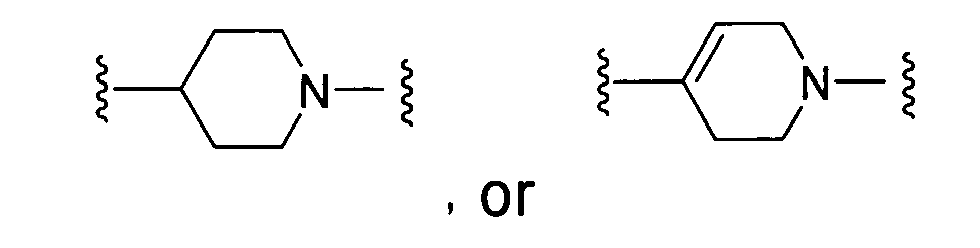
a pharmaceutically acceptable salt, or hydrate thereof, - (6) a compound of any of (1) to (5) wherein the ring Ab is a benzene ring, R6b is C2-C4 alkyloxy, C1-C4 alkyloxy substituted with a halogen atom, C2-C4 alkylthio or C1-C4 alkylthio substituted with a halogen atom;
a pharmaceutically acceptable salt, or hydrate thereof, - (7) a compound of the formula (II-b):


- R1b, R2b, R3b, and R4b are independently a hydrogen atom, a halogen atom, optionally substituted alkyl, optionally substituted alkenyl, optionally substituted alkynyl, optionally substituted cycloalkyl, optionally substituted alkyloxy, optionally substituted alkenyloxy, optionally substituted alkynyloxy, optionally substituted alkylthio, optionally substituted alkenylthio, optionally substituted alkynylthio, optionally substituted alkylsulfinyl, optionally substituted alkylsulfonyl, optionally substituted alkylsulfonyloxy, optionally substituted amino, acyl, optionally substituted alkyloxycarbonyl, optionally substituted alkenyloxycarbonyl, optionally substituted alkynyloxycarbonyl, optionally substituted carbamoyl, cyano, nitro, optionally substituted aryl, optionally substituted aryloxy, optionally substituted arylthio, optionally substituted arylsulfinyl, optionally substituted arylsulfonyl, optionally substituted arylsulfonyloxy, optionally substituted heteroaryl, optionally substituted heteroaryloxy, optionally substituted heteroarylthio, optionally substituted heteroaryl sulfinyl, optionally substituted heteroaryl sulfonyl, optionally substituted heteroaryl sulfonyloxy, or optionally substituted non-aromatic heterocyclic group;
- R10b is C2-C4 alkyloxy, C1-C4 alkyloxy substituted with a halogen atom, C2-C4 alkylthio, C1-C4 alkylthio substituted with a halogen atom, C3-C4 cycloalkyloxy, or optionally substituted phenoxy;
- R11b is independently a halogen atom, optionally substituted alkyl, optionally substituted cycloalkyl, optionally substituted amino, acyl, optionally substituted alkyloxycarbonyl, optionally substituted carbamoyl, cyano, nitro, optionally substituted aryl, optionally substituted arylsulfonyloxy, optionally substituted heteroaryl or optionally substituted non-aromatic heterocyclic group;
- Yb is a single bond or optionally substituted C1-C2 alkylene, and qb is 0, 1 or 2;
- (8) a compound of (7) wherein Yb is a single bond, a pharmaceutically acceptable salt, or hydrate thereof,
- (9) a compound of (7) or (8) wherein R1b, R2b, R3b and R4b are independently a hydrogen atom, a halogen atom, C1-C4 alkyl or C1-C4 alkyloxy, provided that R1b, R2b, R3b and R4b are not hydrogen atoms at the same time;
a pharmaceutically acceptable salt, or hydrate thereof, - (10) a compound of any or (7) to (9) wherein R10b is C2-C4 alkyloxy, C1-C4 alkyloxy substituted with a halogen atom, C2-C4 alkylthio or C2-C4 alkylthio substituted with a halogen atom;
a pharmaceutically acceptable salt, or hydrate thereof, - (11) a pharmaceutical composition comprising the compound of any or (1) to (10), a pharmaceutically acceptable salt, or hydrate thereof,
- (12) a pharmaceutical composition of (11) which is a therapeutic agent for allergic diseases,
- (13) a pharmaceutical composition of (12) wherein the therapeutic agent is a medicine for asthma,
- (14) a method for treating a disease related to DP receptor characterized by administering the compound of any of (1) to (10), pharmaceutically acceptable salt, or hydrate thereof,
- (15) a method of (14) wherein the disease related to DP receptor is asthma,
- (16) use of the compound of any of (1) to (10), pharmaceutically acceptable salt or hydrate thereof, in the manufacturing of a therapeutic agent for treating diseases related to DP receptor, and
- (17) use of the compound of (15), pharmaceutically acceptable salt or hydrate thereof, wherein the disease related to a DP receptor is asthma.
- Terms herein used are explained below. In the present specification each term is used under the unified definition and has the same meaning when used alone or in combination with other terms.
- In the present specification, a term of "halogen atom" means a fluorine atom, a chlorine atom, a bromine atom and an iodine atom. A fluorine atom, a chlorine atom and a bromine atom are preferable.
- In the present specification, a term of "hetero atom" means an oxygen atom, a sulfur atom and a nitrogen atom.
- In the present specification, a term of "alkyl" means a monovalent straight or branched hydrocarbon group having one to eight carbon atom(s). For example, methyl, ethyl, n-propyl, isopropyl, n-butyl, isobutyl, sec-butyl, tert- butyl, n-pentyl, isopentyl, neo-pentyl, n-hexyl, isohexyl, n-heptyl, n-octyl and the like are exemplified. C1-C6 alkyl is preferred. C1-C4 alkyl is further preferred. When a number of carbon is specified, it means "alkyl" having the carbon number within the range.
- In the present specification, a term of "alkenyl" means a monovalent straight or branched hydrocarbon group having two to eight carbon atoms and one or more double bond(s). For example, vinyl, allyl, 1-propenyl, 2-butenyl, 2-pentenyl, 2-hexenyl, 2-heptenyl, 2-octenyl and the like are exemplified. C2-C6 alkenyl is preferred. Moreover, C2-C4 alkenyl is further preferred.
- In the present specification, a term of "alkynyl" means a monovalent straight or branched hydrocarbon group having two to eight carbon atoms and one or more triple bond(s). For example, ethynyl, 1-propynyl, 2-propynyl, 2-butynyl, 2-pentynyl, 2-hexynyl, 2-heptynyl, 2-octynyl and the like are exemplified. C2-C6 alkynyl is preferred. Moreover, C2-C4 alkynyl is further preferred.
- In the present specification, a term of "cycloalkyl" means a cycloalkyl having three to eight carbon atoms and for example, cyclopropyl, ctclobutyl, cyclopentyl, cyclohexyl, cycloheptyl, cyclooctyl and the like are exemplified. C3-C6 cycloalkyl is preferred.
- In the present specification, a term of "cycloalkenyl" means a cycloalkenyl having three to eight carbon atoms and for example, cyclopropenyl, cyclobutenyl, cyclopentenyl, cyclohexenyl, cycloheptenyl, cycloocentyl and the like are exemplified. C3-C6 cycloalkenyl is preferred.
- In the present specification, a term of "alkyloxy" means a group wherein an oxygen atom is substituted with one "alkyl" above and for example, methyloxy, ethyloxy, n-propyloxy, isopropyloxy, n-butyloxy, isobutyloxy, sec-butyloxy, tert-butyloxy, n-pentyloxy, isopentyloxy, 2-pentyloxy, 3-pentyloxy, n-hexyloxy, isohexyloxy, 2-hexyloxy, 3-hexyloxy, n-heptyloxy, n-octyloxy, and the like are exemplified. C1-C6 alkyloxy is preferred. Moreover, C1-C4 alkyloxy is further preferred. When a number of carbon is specified, it means "alkyloxy" having the carbon number within the range.
- In the present specification, a term of "alkenyloxy" means a group wherein an oxygen atom is substituted with one "alkenyl" above and for example, vinyloxy, allyloxy, 1-propenyloxy, 2-butenyloxy, 2-pentenyloxy, 2-hexenyloxy, 2-heptenyloxy, 2-octenyloxy and the like are exemplified. C2-C6 alkenyloxy is preferred. Moreover, C2-C4 alkenyloxy is further preferred. When a number of carbon is specified, it means "alkenyloxy" having the carbon number within the range.
- In the present specification, a term of "alkynyloxy" means a group wherein an oxygen atom is substituted with one "alkynyl" above and for example, ethynyloxy, 1-propynyloxy, 2-propynyloxy, 2-butynyloxy, 2-pentynyloxy, 2-hexynyloxy, 2-heptynyloxy, 2-octynyloxy and the like are exemplified. C2-C6 alkynyloxy is preferred. Moreover, C2-C4 alkynyloxy is further preferred. When a number of carbon is specified, it means "alkynyloxy" having the carbon number within the range.
- In the present specification, a term of "cycloalkyloxy" means a group wherein an oxygen atom is substituted with one "cycloalkyl" above and for example, cyclopropyloxy, cyclobutyloxy, cyclopentyloxy, cyclohexyloxy, cycloheptyloxy and cyclooctyloxy are exemplified. C3-C6 cycloalkyloxy is preferred. When a number of carbon is specified, it means "cycloalkyloxy" having the carbon number within the range.
- In the present specification, a term of "cycloalkenyloxy" means a group wherein an oxygen atom is substituted with one "cycloalkenyl" above and for example, cyclopropenyloxy, ctclobutenyloxy, cyclopentenyloxy, cyclohexenyloxy, cycloheptenyloxy, and cyclooctenyloxy are exemplified. C3-C6 cycloalkenyloxy is preferred. When a number of carbon is specified, it means "cycloalkenyloxy" having the carbon number within the range.
- In the present specification, a term of "alkylthio" means a group wherein a sulfur atom is substituted with one "alkyl" above, and for example, methylthio, ethylthio, n-propylthio, isopropylthio, n-butylthio, isobutylthio, sec-butylthio, tert-butylthio, n-pentylthio, isopentylthio, 2-pentylthio, 3-pentylthio, n-hexylthio, isohexylthio, 2-hexylthio, 3-hexylthio, n-heptylthio, n-octylthio, and the like are exemplified. C1-C6 Alkylthio is preferred. Moreover, C1-C4 alkylthio is more preferred. When a number of carbon is specified, it means "alkylthio" having the carbon number within the range.
- In the present specification, a term of "alkynylthio" means a group wherein a sulfur atom is substituted with one "alkynyl" above and for example, ethynylthio, 1-propynylthio, 2-propynylthio, 2-butynylthio, 2-pentynylthio, 2-hexynylthio, 2-heptynylthio, 2-octynylthio and the like are exemplified. C2-C6 alkynylthio is preferred. Moreover, C2-C4 alkynylthio is further preferred. When a number of carbon is specified, it means "alkynylthio" having the carbon number within the range.
- In the present specification, a term of "alkylsulfinyl" means a group wherein sulfinyl is substituted with one "alkyl" above and for example, methylsulfinyl, ethylsulfinyl, n-propylsulfinyl, isopropylsulfinyl, n-butylsulfinyl, isobutylsulfinyl, sec-butylsulfinyl, tert-butylsulfinyl, n-pentylsulfinyl, isopentylsulfinyl, 2-pentylsulfinyl, 3-pentylsulfinyl, n-hexylsulfinyl, isohexylsulfinyl, 2-hexylsulfinyl, 3-hexylsulfinyl, n-heptylsulfinyl, n-octylsulfinyl and the like are exemplified. C1-C6 alkylsulfinyl is preferred. Moreover, C1-C4 alkylsulfinyl is further preferred.
- In the present specification, a term of "alkylsulfonyl" means a group wherein sulfonyl is substituted with one "alkyl" above and for example, methylsulfonyl, ethylsulfonyl, n-propylsulfonyl, isopropylsulfonyl, n-butylsulfonyl, isobutylsulfonyl, sec-butylsulfonyl, tert-butylsulfonyl, n-pentylsulfonyl, isopentylsulfonyl, 2-pentylsulfonyl, 3-pentylsulfonyl, n-hexylsulfonyl, isohexylsulfonyl, 2-hexylsulfonyl, 3-hexylsulfonyl, n-heptylsulfonyl, n-octylsulfonyl and the like are exemplified. C1-C6 alkylsulfonyl is preferred. Moreover, C1-C4 alkylsulfonyl is further preferred.
- In the present specification, a term of "alkylsulfonyloxy" means a group wherein an oxygen atom is substituted with one "alkylsulfonyl" above and for example, methylsulfonyloxy, ethylsulfonyloxy, n-propylsulfonyloxy, isopropylsulfonyloxy, n-butylsulfonyloxy, isobutylsulfonyloxy, sec-butylsulfonyloxy, tert-butylsulfonyloxy, n-pentylsulfonyloxy, isopentylsulfonyloxy, 2-pentylsulfonyloxy, 3-pentylsulfonyloxy, n-hexylsulfonyloxy, isohexylsulfonyloxy, 2-hexylsulfonyloxy, 3-hexylsulfonyloxy, n-heptylsulfonyloxy, n-octylsulfonyloxy and the like are exemplified. C1-C6 alkylsulfonyl is preferred. Moreover, C1-C4 alkylsulfonyl is further preferred.
- In the present specification, a term of "cycloalkylthio" means a group wherein a sulfur atom is substituted with one "cycloalkyl" above and for example, cyclopropylthio, cyclobutylthio, cyclopantylthio, cyclohexylthio, cycloheptylthio, cyclooctylthio and the like are exemplified. C3-C6 cycloalkylthio is preferred. When a number of carbon is specified, it means "cycloalkylthio" having the carbon number within the range.
- In the present specification, a term of "cycloalkylsulfinyl" includes a substituent group in which sulfinyl is substituted with one "cycloalkyl" described above. For example, cyclopropylsulfinyl, cyclobutylsulfinyl, cyclopentylsulfinyl, cyclohexylsulfinyl, cycloheptylsulfinyl, and cyclooctylsulfinyl are exemplified. Preferably C3-C6 cycloalkylsulfinyl is exemplified.
- In the present specification, a term of "cycloalkylsulfonyl" includes a substituent group in which sulfonyl is substituted with one "cycloalkyl" described above. For example, cyclopropylsulfonyl, cyclobutylsulfonyl, cyclopentylsulfonyl, cyclohexylsulfonyl, cycloheptylsulfonyl, and cyclooctylsulfonyl are exemplified. Preferably C3-C6 cycloalkylsulfonyl is exemplified.
- In the present specification, a term of "cycloalkylsulfonyloxy" includes a substituent group in which an oxygen atom is substituted with one "cycloalkylsulfonyl" described above. For example, cyclopropylsulfonyloxy, cyclobutylsulfonyloxy, cyclopentylsulfonyloxy, cyclohexylsulfonyloxy, cycloheptylsulfonyloxy, and cyclooctylsulfonyloxy are exemplified. Preferably C3-C6 cycloalkylsulfonyloxy is exemplified.
- In the present specification, a term of "cycloalkenylthio" includes a substituent group in which a sulfur atom is substituted with one "cycloalkenyl" described above. For example, cyclopropenylthio, cyclobutenylthio, cyclopentenylthio, cyclohexenylthio, cycloheptenylthio, and cyclooctenylthio are exemplified. Preferably C3-C6 cycloalkenylthio is exemplified. When a number of carbon is specified, it means "cycloalkenylthio" having the carbon number within the range.
- In the present specification, a term of "cycloalkenylsulfinyl" includes a substituent group in which sulfinyl is substituted with one "cycloalkenyl" described above. For example, cyclopropenylsulfinyl, cyclobutenylsulfinyl, cyclopentenylsulfinyl, cyclohexenylsulfinyl, cycloheptenylsulfinyl, and cyclooctenylsulfinyl are exemplified. Preferably C3-C6 cycloalkenylsulfinyl is exemplified.
- In the present specification, a term of "cycloalkenylsulfonyl" includes a substituent group in which sulfonyl is substituted with one "cycloalkenyl" described above. For example, cyclopropenylsulfonyl, cyclobutenylsulfonyl, cyclopentenylsulfonyl, cyclohexenylsulfonyl, cycloheptenylsulfonyl, and cyclooctenylsulfonyl are exemplified. Preferably C3-C6 cycloalkenylsulfonyl is exemplified.
- In the present specification, a term of "cycloalkenylsulfonyloxy" includes a substituent group in which an oxygen atom is substituted with one "cycloalkenylsulfonyl" described above. For example, cyclopropenylsulfonyloxy, cyclobutenylsulfonyloxy, cyclopentenylsulfonyloxy, cyclohexenylsulfonyloxy, cycloheptenylsulfonyloxy, and cyclooctenylsulfonyloxy are exemplified. Preferably C3-C6 cycloalkenylsulfonyloxy is exemplified.
- In the present specification, a term of "alkyloxycarbonyl" includes a substituent group in which carbonyl is substituted with one "alkyloxy" described above. For example, methyloxycarbonyl, ethyloxycarbonyl, n-propyloxycarbonyl, isopropyloxycarbonyl, n-butyloxycarbonyl, tert-butyloxycarbonyl and n-pentyloxycarbonyl are exemplified. Preferably C1-C4 alkyloxycarbonyl is exemplified. Moreover, C1-C2 alkyloxycarbonyl is further preferable.
- In the present specification, a term of "alkenyloxycarbonyl" includes a substituent group in which carbonyl is substituted with one "alkenyloxy" described above. For example, vinyloxycarbonyl, allyloxycarbonyl, 1-propenyloxycarbonyl, and 2-pentenyloxyarbonyl are exemplified. Preferably C2-C4 alkyloxycarbonyl is exemplified.
- In the present specification, a term of "alkynyloxycarbonyl" includes a substituent group in which carbonyl is substituted with one "alkynyloxy" described above. For example, ethynyloxycarbonyl, 1-propynyloxycarbonyl, 2-propynyloxycarbonyl, 2-butynyloxyarbonyl and 2-pentynyloxycarbonyl are exemplified. Preferably C2-C4 alkynyloxycarbonyl is exemplified.
- In the present specification, a term of "acyl" includes alkylcarbonyl wherein the part of alkyl is "alkyl" described before, alkenylcarbonyl wherein the part of alkenyl is "alkenyl" described before, alkynylcarbonyl wherein the part of alkynyl is "alkynyl" described before, cycloalkylcarbonyl wherein the part of cycloalkyl is "cycloalkyl" described before, arylcarbonyl wherein the part of aryl is "aryl" described below, heteroarylcarbonyl wherein the part of heteroaryl is "heteroaryl" described below and non-aromatic heterocycliccarbonyl wherein the part of non-aromatic heterocyclic group is "non-aromatic heterocyclic group" described below. "Alkyl", "alkenyl", "alkynyl", "cycloalkyl", "aryl", "heteroaryl" and "non-aromatic heterocyclic" may be substituted respectively with substituent groups exemplified in "optionally substituted alkyl", "optionally substituted alkenyl", "optionally substituted alkynyl", "optionally substituted cycloalkyl", "optionally substituted aryl", "optionally substituted heteroaryl" and "optionally substituted non-aromatic heterocyclic group" described below. Examples of the acyl group include acetyl, propionyl, butyroyl, cyclohexylcarbonyl, benzoyl, pyridinecarbonyl and the like.
- In the present specification, a term of "optionally substituted amino" includes an amino group which may be substituted with one or two group(s) of "alkyl" before, "alkenyl" before, "alkynyl" before, "cycloalkyl" before, "cycloalkenyl" before, "aryl" below, "heteroaryl" below, "acyl" before, "alkyloxycarbonyl" before, "alkenyloxycarbonyl" before, "alkynyloxycarbonyl" before, "alkylsulfonyl", "alkenylsulfonyl", "alkynylsulfonyl", "arylsulfonyl" and/or "heteroarylsulfonyl" before. Examples of the optionally substituted amino group include amino, methylamino, dimethylamino, ethylamino, diethylamino, ethylmethylamino, benzylamino, acetylamino, benzoylamino, methyloxycarbonylamino and methanesulfonylamino. Preferably, amino, methylamino, dimethylamino, diethylamino, ethylmethylamino, acetylamino and methanesulfonylamino are exemplified.
- In the present specification, a term of "optionally substituted carbamoyl" includes an aminocarbonyl group wherein the part of optionally substituted amino is "optionally substituted amino" described before and examples of the optionally substituted carbamoyl group includes carbamoyl, N-methylcarbamoyl, N,N-dimethylcarbamoyl, N-ethyl-N-methylcarbamoyl, N,N-diethylcarbamoyl, N-phenylcarbamoyl, N-benzylcarbamoyl, N-acetylcarbamoyl and N-methylsulfonylcarbamoyl etc. Preferably, carbamoyl, N-methylcarbamoyl, N,N-dimethylcarbamoyl and N-methylsulfonylcarbamoyl etc. are exemplified.
- In the present specification, a term of "optionally substituted sulfamoyl" includes an aminosulfonyl group wherein the part of optionally substituted amino is "optionally substituted amino" described before and examples of the optionally substituted sulfamoyl group include sulfamoyl, N-methylsulfamoyl, N,N-dimethylsulfamoyl, N-ethyl-N-methylsulfamoyl, N,N-diethylsulfamoyl, N-phenylsulfamoyl, N-benzylsulfamoyl, N-acetylsulfamoyl and N-methylsulfonylsulfamoyl etc. Preferably, sulfamoyl, N-methylsulfamoyl, N,N-dimethylsulfamoyl and N-methylsulfonylsulfamoyl etc. are exemplified.
- In the present specification, a term of "alkylene" includes a straight or branched alkylene group having one to eight carbon atom(s) and for example, methylene, ethylene, 1-methylethylene, trimethylene, 1-methyltrimethylene, pentamethylene, hexamethylene etc. are exemplified. C1-C4 alkylene is preferred. Moreover, C1-C2 alkylene is further preferred.
- In the present specification, a term of "aryl" includes a monocyclic or fused cyclic aromatic hydrocarbons and it may be fused with "cycloalkyl" before, "cycloalkenyl" before or "non-aromatic heterocyclic group" below at any possible position. Both of monocyclic ring and fused ring may be substituted at any position and for example, phenyl, 1-naphthyl, 2-naphthyl, anthryl, tetrahydronaphthyl, 1,3-benzodioxolyl, 1,4-benzodioxanyl etc. are exemplified. Phenyl, 1-naphthyl and 2-naphthyl are preferred. Moreover, phenyl is further preferred.
- In the present specification, a term of "non-aromatic heterocyclic group" in R1, R2, R3, R4 and R5 includes a 5- to 7-membered non-aromatic heterocyclic ring containing one or more of heteroatom(s) selected independently from oxygen, sulfur and nitrogen atoms or a multicyclic ring formed by fusing the two or more rings thereof. For example, pyrrolidinyl(e.g., 1-pyrrolidinyl, 2-pyrrolidinyl), pyrrolinyl(e.g., 3- pyrrolinyl), imidazolidinyl(e.g., 2-imidazolidinyl), imidazolinyl(e.g., imidazolinyl), pyrazolidinyl(e.g., 1- pyrazolidinyl, 2-pyrazolidinyl), pyrazolinyl(e.g., pyrazolinyl), piperidyl(e.g., piperidino, 2-piperidyl), piperadinyl(e.g., 1-piperadinyl), indolinyl(e.g., 1-indolinyl), isoindolinyl(e.g., isoindolinyl), morpholinyl(e.g., morpholino, 3-morpholinyl) etc. are exemplified.
- In the present specification, a term of "non-aromatic heterocyclic group" in R7, R8, R10, R11, R13 and R14 includes a 5- to 7-membered non-aromatic heterocyclic ring containing one or more of heteroatom(s) selected independently from oxygen, sulfur and nitrogen atoms or a multicyclic ring formed by fusing the two or more rings thereof. For example, pyrrolidinyl(e.g., 1-pyrrolidinyl, 2-pyrrolidinyl), piperidyl(e.g., piperidino, 2-piperidyl), piperadinyl(e.g., 1-piperadinyl), morpholinyl(e.g., morpholino, 3-morpholinyl) etc. are exemplified.
- In the present specification, a term of "heteroaryl" in R1, R2, R3, R4 and R5 includes a 5- to 6-membered aromatic ring containing one or more of heteroatom(s) selected independently from oxygen, sulfur and nitrogen atoms and it may be fused with "cycloalkyl" before, "aryl" before, "non-aromatic heterocyclic group" or other heteroaryl at any possible position. The heteroaryl group may be substituted at any position whenever it is a monocyclic ring or a fused ring. For example, pyrrolyl(e.g., 1-pyrrolyl, 2-pyrrolyl, 3-pyrrolyl), furyl (e.g., 2-furyl, 3-furyl), thienyl (e.g., 2-thienyl, 3-thienyl), imidazolyl (e.g.,, 2-imidazolyl, 4-imidazolyl), pyrazolyl(e.g., 1-pyrazolyl, 3-pyrazolyl), isothiazolyl (e.g., 3-isothiazolyl), isoxazolyl(e.g., 3-isoxazolyl), oxazolyl(e.g., 2-oxazolyl), thiazolyl(e.g., 2-thiazolyl), pyridyl(e.g., 2-pyridyl, 3-pyridyl, 4-pyridyl), pyrazinyl(e.g., 2-pyrazinyl), pyrimidinyl (e.g., 2-pyrimidinyl, 4-pyrimidinyl), pyridazinyl (e.g., 3-pyridazinyl), tetrazolyl (e.g., 1H- tetrazolyl), oxadiazolyl (e.g., 1,3,4-oxadiazolyl), thiadiazolyl (e.g., 1,3,4-thiadiazolyl), indolidinyl (e.g., 2-indolidinyl, 6-indolidinyl), isoindolynyl (e.g., 2-isoindolynyl), indolyl (e.g., 1-indolyl, 2-indolyl, 3-indolyl), indazolyl (e.g., 3- indazolyl), purinyl (e.g., 8-purinyl), quinolidinyl (e.g., 2-quinolidinyl), isoquinolyl (e.g., 3-isoquinolyl), quinolyl (e.g., 2-quinolyl, 5-quinolyl), phtharazinyl (e.g., 1-phtharazinyl), naphthylidinyl (e.g., 2-naphthylidinyl), quinolanyl (e.g., 2-quinolanyl), quinazolinyl (e.g., 2-quinazolinyl), cinnolinyl (e.g., 3-cinnolinyl), pteridinyl (e.g., 2-pteridinyl), carbazolyl (e.g., 2-carbazolyl, 4-carbazolyl), phenanthridinyl (e.g., 2-phenanthridinyl, 3-phenanthridinyl), acridinyl (e.g., 1-acridinyl, 2-acridinyl), dibenzofuranyl (e.g., 1-dibenzofuranyl, 2-dibenzofuranyl), benzoimidazolyl (e.g., 2-benzoimidazolyl), benzoisoxazolyl (e.g., 3-benzoisoxazolyl), benzooxazolyl (e.g., 2-benzooxazolyl), benzooxadiazolyl (e.g., 4-benzooxadiazolyl), benzoisothiazolyl (e.g., 3-benzoisothiazolyl), benzothiazolyl (e.g., 2- benzothiazolyl), benzofuryl (e.g., 3-benzofuryl), benzothienyl (e.g., 2-benzothienyl), dibenzothienyl (e.g., 2-dibenzothienyl) and benzodioxolyl (e.g., 1,3- benzodioxolyl) are exemplified.
- In the present specification, a term of "heteroaryl" in R7, R8, R10, R11, R13 and R14 includes a 5- to 6-membered aromatic ring containing one or more of heteroatom(s) selected independently fromoxygen, sulfur and nitrogen atoms and it may be fused with "cycloalkyl" before, "aryl" before, "non-aromatic heterocyclic group" before or other heteroaryl at any possible position. The heteroaryl group may be substituted at any position whenever it is monocyclic or fused ring. For example, furyl(e.g., 2-furyl, 3-furyl), thienyl(e.g., 2-thienyl, 3-thienyl), imidazolyl(e.g., 2-imidazolyl, 4-imidazolyl), pyrazolyl(e.g., 1-pyrazolyl, 3-pyrazolyl), isothiazolyl(e.g., 3-isothiazolyl), isoxazolyl(e.g., 3-isoxazolyl), oxazolyl(e.g., 2-oxazolyl), thiazolyl(e.g., 2-thiazolyl), pyridyl(e.g., 2-pyridyl, 3-pyridyl, 4-pyridyl), pyrazinyl(e.g., 2-pyrazinyl), pyrimidinyl (e.g., 2-pyrimidinyl, 4-pyrimidinyl), pyridazinyl(e.g., 3-pyridazinyl), oxadiazolyl(e.g., 1,3,4-oxadiazolyl), thiadiazolyl(e.g., 1,3,4-thiadiazolyl), benzoimidazolyl(e.g., 2-benzoimidazolyl), benzoisoxazolyl(e.g., 3-benzoisoxazolyl), benzooxazolyl(e.g., 2-benzooxazolyl), benzofuryl(e.g., 3-benzofuryl), benzothienyl(e.g., 2-benzothienyl) are exemplified.
- In the present specification, a term of "aryloxy" includes a substituent group in which an oxygen atom is substituted with one "aryl" before and for example, phenyloxy and naphthyloxy etc. are exemplified.
- In the present specification, a term of "arylthio" includes a substituent group in which a sulfur atom is substituted with one "aryl" before and for example, phenylthio and naphthylthio etc. are exemplified.
- In the present specification, a term of "arylsulfinyl" includes a substituent group in which sulfinyl is substituted with one "aryl" before and for example, phenylsulfinyl and naphthylsulfinyl etc. are exemplified.
- In the present specification, a term of "arylsulfonyl" includes a substituent group in which sulfonyl is substituted with one "aryl" before and for example, phenylsulfonyl and naphthylsulfoinyl etc. are exemplified.
- In the present specification, examples of "arylsulfonyloxy include phenylsulfonyloxy and naphthylsulfonyloxy etc.
- In the present specification, a term of "heteroaryloxy" includes a substituent group in which an oxygen atom is substituted with one "heteroaryl" before. For example, pyrrolyloxy, furyloxy, thienyloxy, imidazolyloxy, pyrazolyloxy, isothiazolyloxy, isoxazolyloxy, oxazolyloxy, thiazolyloxy, pyridyloxy, pyrazinyloxy, pyrimidinyloxy, pyridazinyloxy, tetrazolyloxy, oxadiazolyloxy, thiadiazolyloxy, indolidinyloxy, isoindolynyloxy, indolyloxy, indazolyloxy, purinyloxy, quinolidinyloxy, isoquinolyloxy, quinolyloxy, phtharazinyloxy, naphthylidinyloxy, quinolanyloxy, quinazolinyloxy, cinnolinyloxy, pteridinyloxy, carbazolyloxy, phenanthridinyloxy, acridinyloxy, dibenzofuranyloxy, benzoimidazolyloxy, benzoisoxazolyloxy, benzooxazolyloxy, benzooxadiazolyloxy, benzoisothiazolyloxy, benzothiazolyloxy, benzofuryloxy, benzothienyloxy, dibenzothienyloxy and benzodioxolyloxy are exemplified. Preferably furyloxy, thienyloxy, imidazolyloxy, pyrazolyloxy, isothiazolyloxy, isoxazolyloxy, oxazolyloxy, thiazolyloxy, pyridyloxy, pyrazinyloxy, pyrimidinyloxy and pyridazinyloxy are exemplified
- In the present specification, a term of "heteroarylthio" includes a substituent group in which a sulfur atom is substituted with one "heteroaryl" before. For example, pyrrolylthio, furylthio, thienylthio, imidazolylthio, pyrazolylthio, isothiazolylthio, isoxazolylthio, oxazolylthio, thiazolylthio, pyridylthio, pyrazinylthio, pyrimidinylthio, pyridazinylthio, tetrazolylthio, oxadiazolylthio, thiadiazolylthio, indolidinylthio, isoindolynylthio, indolylthio, indazolylthio, purinylthio, quinolidinylthio, isoquinolylthio, quinolylthio, phtharazinylthio, naphthylidinylthio, quinolanylthio, quinazolinylthio, cinnolinylthio, pteridinylthio, carbazolylthio, phenanthridinylthio, acridinylthio, dibenzofuranylthio, benzoimidazolylthio, benzoisoxazolylthio, benzooxazolylthio, benzooxadiazolylthio, benzoisothiazolylthio, benzothiazolylthio, benzofurylthio, benzothienylthio, dibenzothienylthio and benzodioxolylthio etc. are exemplified. Preferably furylthio, thienylthio, imidazolylthio, pyrazolylthio, isothiazolylthio, isoxazolylthio, oxazolylthio, thiazolylthio, pyridylthio, pyrazinylthio, pyrimidinylthio, and pyridazinylthio etc. are exemplified.
- In the present specification, a term of "heteroarylsulfinyl" includes a substituent group in which sulfinyl is substituted with one "heteroaryl" before. For example, pyrrolylsulfinyl, furylsulfinyl, thienylsulfinyl, imidazolylsulfinyl, pyrazolylsulfinyl, isothiazolylsulfinyl, isoxazolylsulfinyl, oxazolylsulfinyl, thiazolylsulfinyl, pyridylsulfinyl, pyrazinylsulfinyl, pyrimidinylsulfinyl, pyridazinylsulfinyl, tetrazolylsulfinyl, oxadiazolylsulfinyl, thiadiazolylsulfinyl, indolidinylsulfinyl, isoindolynylsulfinyl, indolylsulfinyl, indazolylsulfinyl, purinylsulfinyl, quinolidinylsulfinyl, isoquinolylsulfinyl, quinolylsulfinyl, phtharazinylsulfinyl, naphthylidinylsulfinyl, quinolanylsulfinyl, quinazolinylsulfinyl, cinnolinylsulfinyl, pteridinylsulfinyl, carbazolylsulfinyl, phenanthridinylsulfinyl, acridinylsulfinyl, dibenzofuranylsulfinyl, benzoimidazolylsulfinyl, benzoisoxazolylsulfinyl, benzooxazolylsulfinyl, benzooxadiazolylsulfinyl, benzoisothiazolylsulfinyl, benzothiazolylsulfinyl, benzofurylsulfinyl, benzothienylsulfinyl, dibenzothienylsulfinyl and benzodioxolylsulfinyl etc. are exemplified. Preferably furylsulfinyl, thienylsulfinyl, imidazolylsulfinyl, pyrazolylsulfinyl, isothiazolylsulfinyl, isoxazolylsulfinyl, oxazolylsulfinyl, thiazolylsulfinyl, pyridylsulfinyl, pyrazinylsulfinyl, pyrimidinylsulfinyl and pyridazinylsulfinyl etc. are exemplified.
- In the present specification, a term of "heteroarylsulfonyl" includes a substituent group in which sulfonyl is substituted with one "heteroaryl" before. For example, pyrrolylsulfonyl, furylsulfonyl, thienylsulfonyl, imidazolylsulfonyl, pyrazolylsulfonyl, isothiazolylsulfonyl, isoxazolylsulfonyl, oxazolylsulfonyl, thiazolylsulfonyl, pyridylsulfonyl, pyrazinylsulfonyl, pyrimidinylsulfonyl, pyridazinylsulfonyl, tetrazolylsulfonyl, oxadiazolylsulfonyl, thiadiazolylsulfonyl, indolizinylsulfonyl, isoindolylsulfonyl, indolylsulfonyl, indazolylsulfonyl, purinylsulfonyl, quinolidinylsulfonyl, isoquinolylsulfonyl, quinolylsulfonyl, phtharazinylsulfonyl, naphthilidinylsulfonyl, quinolanyl sulfonyl, quinazolinylsulfonyl, cinnolinylsulfonyl, pteridinylsulfonyl, carbazolylsulfonyl, phenanthridinylsulfonyl, acridinylsulfonyl, dibenzofuranylsulfonyl, benzoimidazolylsulfonyl, benzoisoxazolylsulfonyl, benzooxazolylsulfonyl, benzooxadiazolylsulfonyl, benzoisothiazolylsulfonyl, benzothiazolylsulfonyl, benzofurylsulfonyl, benzothienylsulfonyl, dibenzothienylsulfonyl and benzodioxolylsulfonyl are exemplified. Preferably furylsulfonyl, thienylsulfonyl, imidazolylsulfonyl, pyrazolylsulfonyl, isothiazolylsulfonyl, isoxazolylsulfonyl, oxazolylsulfonyl, thiazolylsulfonyl, pyridylsulfonyl, pyrazinylsulfonyl, pyrimidinylsulfonyl and pyridazinylsulfonyl are exemplified.
- In the present specification, a term of "heteroarylsulfonyloxy" includes a substituent group in which an oxygen atom is substituted with one "heteroarylsulfonyl" before. For example, pyrrolylsulfonyloxy, furylsulfonyloxy, thienylsulfonyloxy, imidazolylsulfonyloxy, pyrazolylsulfonyloxy, isothiazolylsulfonyloxy, isoxazolylsulfonyloxy, oxazolylsulfonyloxy, thiazolylsulfonyloxy, pyridylsulfonyloxy, pyrazinylsulfonyloxy, pyrimidinylsulfonyloxy, pyridazinylsulfonyloxy, tetrazolylsulfonyloxy, oxadiazolylsulfonyloxy, thiadiazolylsulfonyloxy, indolizinylsulfonyloxy, isoindolylsulfonyloxy, indolylsulfonyloxy, indazolylsulfonyloxy, purinylsulfonyloxy, quinolidinylsulfonyloxy, isoquinolylsulfonyloxy, quinolylsulfonyloxy, phtharazinylsulfonyloxy, naphthilidinylsulfonyloxy, quinolanyl sulfonyloxy, quinazolinylsulfonyloxy, cinnolinylsulfonyloxy, pteridinylsulfonyloxy, carbazolylsulfonyloxy, phenanthridinylsulfonyloxy, acridinylsulfonyloxy, dibenzofuranylsulfonyloxy, benzoimidazolylsulfonyloxy, benzoisoxazolylsulfonyloxy, benzooxazolylsulfonyloxy, benzooxadiazolylsulfonyloxy, benzoisothiazolylsulfonyloxy, benzothiazolylsulfonyloxy, benzofurylsulfonyloxy, benzothienylsulfonyloxy, dibenzothienylsulfonyloxy and benzodioxolylsulfonyloxy etc. are exemplified. Preferably, furylsulfonyloxy, thienylsulfonyloxy, imidazolylsulfonyloxy, pyrazolylsulfonyloxy, isothiazolylsulfonyloxy, isoxazolylsulfonyloxy, oxazolylsulfonyloxy, thiazolylsulfonyloxy, pyridylsulfonyloxy, pyrazinylsulfonyloxy, pyrimidinylsulfonyloxy and pyridazinylsulfonyloxy etc. are exemplified.
- In the present specification, a term of "aromatic carbocyclic ring" includes an aromatic monocyclic or fused carbocyclic ring and for example, a benzene ring, a naphthalene ring and an anthracene ring are exemplified. A benzene ring is preferred.
- In the present specification, a term of "aromatic heterocyclic ring" includes an aromatic monocyclic or fused heterocyclic ring. For example, a pyrrole ring, a furan ring, a thiophen ring, a pyrazole ring, an imidazole ring, an isothiazole ring, an isoxazole ring, an oxazole ring, a thiazole ring, a pyrazine ring, a pyrimidine ring, a pyridazine ring, a tetrazole ring, an oxadiazole ring, a thiadiazole ring, an indolizine ring, an isoindole ring, an indole ring, an indazole ring, a purine ring, a quinolidine ring, an isoquinoline ring, a quinoline ring, a phtharazine ring, a naphthyridine ring, a quinolane ring, a quinazoline ring, a cinnoline ring, a pteridine ring, a carbazole ring, a phenanthridine ring, an acridine ring, a dibenzofuran ring, a benzoimidazole ring, a benzoisoxazole ring, a benzooxazole ring, a benzooxadiazole ring, a benzoisothiazole ring, a benzothiazole ring, a benzofuran ring, a benzothiophen ring, a dibenzothiophen ring and a benzodixolane ring are exemplified. Preferably a pyridine ring, a furan ring and a thiophen ring are exemplified.
- In the present specification, a term of "C1-C6 alkylene" includes a straight or branched alkylene group having one to six carbon atoms, and for example, -CH2-, -CH(CH3)-, -C(CH3)2-, -CH2CH2-, -CH(CH3)CH2-, -C(CH3)2CH2-, -CH2CH2CH2-, -CH2CH2CH2CH2-, -CH2CH2CH2CH2CH2- and -CH2CH2CH2CH2CH2CH2- are exemplified. Preferably, -CH2-, -CH2CH2-, -CH2CH2CH2- and -CH2CH2CH2CH2- are exemplified.
- In the present specification, a term of "alkylene optionally containing one or two heteroatom(s)" includes a straight or branched alkylene group having one to six carbon atoms, optionally containing one or two heteroatom(s) which may be substituted with "alkyl" above, and for example, -CH2-, -CH2CH2-, -CH2CH2CH2-, -CH2CH2CH2CH2-, -CH2CH2CH2CH2CH2-, -CH2CH2CH2CH2CH2CH2-, -CH2CH2O-, -OCH2CH2-, -CH2CH2S-, -SCH2CH2-, -CH2CH2OCH2CH2-, -OCH2CH2O-, -OCH2O-, -NHCH2CH2CH2- and -N(CH3)CH2CH2CH2- etc. are exemplified. Preferably, -CH2-, -CH2CH2-, -CH2CH2CH2-, -CH2CH2CH2CH2-, -OCH2CH2O-, -OCH2O- and -N(CH3)CH2CH2CH2- are exemplified.
- In the present specification, a term of "alkenylene optionally containing one or two heteroatom(s)" includes a straight or branched alkenylene group having two to six carbon atoms, optionally containing one or two heteroatom(s) which may be substituted with "alkyl" above, and for example, -CH=CHCH=CH-, -CH=CHO-, -OCH=CH-, -CH=CHS-, -SCH=CH-, -CH=CHNH-, -NHCH=CH-, -CH=CH-CH=N- and -N=CH-CH=CH- are exemplified. Preferably, -CH=CHCH=CH-, -CH=CHCH=N- and -N=CHCH=CH- are exemplified.
- In the present specification, a term of "alkynylene optionally containing one or two heteroatom(s)" includes a straight or branched alkynylene group having two to six carbon atoms, optionally containing one or two heteroatom(s) which may be substituted with "alkyl" above, and for example, -C≡CCH2-, -CH2C≡CCH2-, -CH2C≡CH2O-, -OCH2C≡CH-, -CH2C≡CH2S-, -SCH2C≡CH-, -CH2C≡CH2NH-, -NHCH2C≡CH-, -CH2C≡CCH2N(CH3)- and -N(CH3)CH2C≡CH- are exemplified. Especially, -CH2C≡CCH2- and -OCH2C≡CH- are preferred.
- In the present specification, examples of "3- to 8-membered nitrogen-containing non-aromatic heterocyclic ring" includes rings shown in the formula of

- In the present specification, a term of "3- to 8-membered nitrogen-containing heteroaromatic ring" includes a 3- to 8-membered heteroaromatic ring containing one or more of nitrogen atom(s), and further optionally an oxygen atom and/or sulfur atom in the ring. For example, pyrrolyl(e.g., 1- pyrrolyl, 2-pyrrolyl, 3-pyrrolyl), imidazolyl(e.g., 2-imidazolyl, 4-imidazolyl), pyrazolyl(e.g., 1-pyrazolyl, 3-pyrazolyl), isothiazolyle.g., 3-isothiazolyl), isoxazolyl(e.g., 3-isoxazolyl), oxazolyl(e.g., 2-oxazolyl), thiazolyl(e.g., 2-thiazolyl), pyridyl(e.g., 2-pyridyl, 3-pyridyl, 4-pyridyl), pyrazinyl(e.g., 2-pyrazinyl), pyrimidinyl(e.g., 2-pyrimidinyl, 4-pyrimidinyl), pyridazinyl(e.g., 3-pyridazinyl), tetrazolyl(e.g., 1H-tetrazolyl), oxadiazolyl(e.g., 1,3,4-oxadiazolyl) and thiadiazolyl(e.g., 1,3,4-thiadiazolyl) are exemplified.
- In the present specification, examples of "5- or 6-membered nitrogen-containing heteroaromatic ring containing only one nitrogen atom as a heteroatom" includes rings shown in the formula of


- In the present specification, examples of substituents in "optionally substituted alkyl", "optionally substituted alkyloxy", "optionally substituted alkylthio", "optionally substituted alkylsulfinyl", "optionally substituted alkylsulfonyl", "optionally substituted alkylsulfonyloxy" and "the optionally substituted alkyloxycarbonyl" include cycloalkyl, alkylene optionally containing one or two heteroatom(s), hydroxy, oxo, alkyloxy optionally substituted with a substituent group A at one to three position(s), mercapto, alkylthio, halogen atom, nitro, cyano, carboxy, alkyloxycarbonyl, optionally substituted amino, optionally substituted carbamoyl, acyl, aryl optionally substituted with a substituent group B at one to three position(s) (e.g., phenyl), heteroaryl optionally substituted with a substituent group C at one to three position(s) (e.g., pyridyl, furyl, thienyl, imidazolyl, oxazolyl, thiazolyl, pyrazolyl), optionally substituted non-aromatic heteroaromatic ring group which may be substituted with a substituent group C at one to three position(s) (e.g., morpholinyl, pyrrolidinyl, piperadinyl), aryloxy optionally substituted with a substituent group B at one to three position(s) (e.g., phenyloxy), alkylsulfonyl and the like. These can be substituted with one to three substituent(s) at any possible position.
- In the present specification, examples of substituents in "optionally substituted alkenyl", "optionally substituted alkynyl", "optionally substituted alkenyloxy", "optionally substituted alkynyloxy", "optionally substituted alkenylthio", "optionally substituted alkynylthio", "optionally substituted alkenyloxycarbonyl", "optionally substituted alkynyloxycarbonyl", "optionally substituted cycloalkyl", "optionally substituted cycloalkenyl", "optionally substituted cycloalkyloxy, "optionally substituted cycloalkenyloxy, "optionally substituted cycloalkylthio", "optionally substituted cycloalkenylthio", "optionally substituted cycloalkylsulfinyl", "optionally substituted cycloalkenylsulfinyl", "optionally substituted cycloalkylsulfonyl", "optionally substituted cycloalkenylsulfonyl", "optionally substituted cycloalkylsulfonyloxy", "optionally substituted cycloalkenylsulfonyloxy", "optionally substituted alkenyloxycarbonyl", "optionally substituted C1-C6 alkylene", "optionally substituted alkenylene" and "the optionally substituted alkynylene" include alkyl optionally substituted with a substituent group D at one to three position(s), cycloalkyl, alkylene optionally containing one or two heteroatom(s), hydroxy, oxo, alkyoxyl optionally substituted with a substituent group A at one to three position(s), mercapto, alkylthio, a halogen atom, nitro, cyano, carboxy, alkyloxycarbonyl, optionally substituted amino, optionally substituted carbamoyl, acyl acyloxy, aryl optionally substituted with a substituent group B at one to three position(s) (e.g., phenyl), heteroaryl optionally substituted with a substituent group C at one to three position(s) (e.g., pyridyl, furyl, thienyl, imidazolyl, oxazolyl, thiazolyl, pyrazolyl), non-aromatic heterocyclic group optionally substituted with a substituent group C at one to three position(s) (e.g., morpholinyl, pyrrolidinyl, piperadinyl), aryloxy optionally substituted with a substituent group C at one to three position(s) (e.g., phenyloxy), alkylsulfonyl and the like. These can be substituted with one or more substituent(s) at any possible position.
- In the present specification, examples of substituents in "optionally substituted aryl", "optionally substituted phenoxy", "optionally substituted aryloxy", "optionally substituted phenylthio", "optionally substituted arylthio", "optionally substituted arylsulfinyl", "optionally substituted arylsulfonyl", "optionally substituted arylsulfonyloxy", "optionally substituted heteroaryl", "optionally substituted heteroaryloxy", "optionally substituted heteroarylthio",, "optionally substituted heteroarylsulfinyl", "optionally substituted heteroarylsulfonyl", "optionally substituted heteroarylsulfonyloxy" and "optionally substituted non-aromatic heterocyclic group" include alkyl optionally substituted with a substituent group D at one to three position(s), cycloalkyl, alkenyl, alkynyl, hydroxy, alkyloxy optionally substituted with a substituent group A at one to three position(s), aryloxy optionally substituted with a substituent group B at one to three position(s) (e.g., phenoxy),mercapto, alkylthio, a halogen atom, nitro, cyano, carboxy, alkyloxycarbonyl, acyl, alkylsulfonyl, optionally substituted amino, optionally substituted carbamoyl, aryl optionally substituted with a substituent group B at one to three position(s) (e.g., phenyl), heteroaryl optionally substituted with a substituent group C at one to three position(s) (e.g., pyridyl, furyl, thienyl, imidazolyl, oxazolyl, thiazolyl, pyrazolyl), non-aromatic heterocyclic group optionally substituted with a substituent group C at one to three position(s) (e.g., morpholinyl, pyrrolidinyl, piperadinyl) and the like. These can be substituted with one or more substituent(s) at any possible position.
- Substituent group A is a group of a halogen atom and phenyl optionally substituted with one to three substituent(s) selected from the Substituent group B.
- Substituent group B is a group of a halogen atom, alkyl, alkyloxy, cyano and nitro.
- Substituent group C is a group of a halogen atom and alkyl.
- Substituent group D is a group of a halogen atom and alkyloxy.
- In the specification a term of "carboxy equivalent" means a biological equivalent and includes substituents having the same polar effect as a carboxy group. For example, -CONHCN, -CONHOH, -CONHOMe, -CONHOt-Bu, -CONHOCH2Ph, -SO3H, -SO2NH2, -SO2NHMe, -NHCONH2, -NHCONMe2, -P(=O)(OH)2, -P(=O)(OH)(OEt), -P(=O)(OH)NH2, -P(=O)(OH)NHMe, -CONHSO2Ph, -SO2NHCOMe, -SO2NHCOPh, and the formulae of;


- Preferably, -CONHOt-Bu, -CONHOCH2Ph, -SO3H, -CONHSO2Ph, -SO2NHCOMe, -SO2NHCOPh, and the formulae of;

- Groups of preferred substituents in the ring A, ring B, R1 to R9, M, Y, L1, L2, L3, q and n of the compound of generic formula (I) are shown with (Ia) to (IIk). Compounds having possible combination of them are preferable. The groups are illustrated as substituents of the generic formula (I) but applicable for the corresponding substituents of the generic formula (I-b).
- In the ring A, (Ia) a benzen ring, a furan ring, a thiophen ring or a furan ring is preferable, and further (Ib) a benzene ring or a pyridine ring is preferable.
- In the ring B, (Ic) the formula of


- In R1, R2, R4 and R5 wherein each substituent is independent, (Ig) a hydrogen atom, a halogen atom, optionally substituted alkyl, optionally substituted alkoxy, optionally substituted amino, cyano, nitro, optionally substituted aryl or optionally substituted heteroaryl is preferable, (Ih) a hydrogen atom, a halogen atom or optionally substituted alkyl is more preferable and (Ii) a hydrogen atom is most preferable.
- In R3, (Ij) a hydrogen atom, a halogen atom, optionally substituted alkyl, optionally substituted cycloalkyl, optionally substituted alkyloxy, optionally substituted amino, optionally substituted carbamoyl, optionally substituted aryl, optionally substituted heteroaryl or non-aromatic heterocyclic group is preferable, (Ik) a halogen atom, optionally substituted amino, optionally substituted carbamoyl, optionally substituted aryl, optionally substituted heteroaryl or optionally substituted non-aromatic heterocyclic group is more preferable and (Il) a halogen atom, optionally substituted heteroaryl or optionally substituted non-aromatic heterocyclic group is most preferable.
- In R6, (Im) C2-C6 alkyloxy, substituted C1-C6 alkyloxy, C2-C6 alkylthio or substituted C1-C6 alkylthio is preferable, (In) C2-C4 alkyloxy or C2-C4 alkylthio is more preferable and (Io) C2-C4 alkyloxy is most preferable.
- In R7, (Ip) a halogen atom, optionally substituted alkyl, optionally substituted alkyloxy, cyano, nitro, optionally substituted aryl or optionally substituted heteroaryl is preferable, (Iq) a halogen atom, optionally substituted alkyl, optionally substituted alkyloxy, optionally substituted aryl or optionally substituted heteroaryl is more preferable, and (Ir) a halogen atom, optionally substituted alkyl or optionally substituted alkyloxy is most preferable.
- In R8, (Is) optionally substituted alkyl or oxo is preferable, and (It) alkyl is more preferable.
- In R9, (Iu) carboxy or carboxy-equivalent is preferable, and (Iv) carboxy is more preferable.
- In M, (Iw) carbonyl and sulfonyl are preferable, and (Ix) carboxy is more preferable.
- In Y, (Iy) a single bond or alkylene is preferable, and (Iz) a single bond alkyl is more preferable.
- In L1, (IIa) a single bond, alkylene or NH is preferable and (IIb) a single bond is more preferable.
- In L2, (IIc) a single bond, alkylene or NH is preferable and (IId) a single bond is more preferable.
- In L3, (IIe) optionally substituted alkylene wherein one or two heteroatom may be included is preferable, (IIf) optionally substituted C1-C6 alkylene is more preafrable and (IIg) methylene is most preferable.
- In n, (IIh) 0 or 1 is preferable and (IIi) 0 is more preferable.
- In q, (IIj) 0, 1 or 2 is preferable and (IIk) 0 or 1 is more preferable.
- Groups of preferred substituents in the ring C, R1 to R5, R12 to R14, M, Y, Z, L4 n and q of the compound of generic formula (II) are shown with (Id) above to (It) above, (Iw) above to (Iy) above, (IIe) above to (IIk) above, (IIl) to (IIm). Compounds having possible combination of them are preferable. The groups are illustrated as substituents of the generic formula (II) but applicable for the corresponding substituents of the generic formula (II-b).
- In the ring C, (Id) above is preferable, (Ie) above is more preferable and (If) above is most preferable.
- In R1, R2, R4 and R5 wherein all substituents are independent, (Ig) above is preferable, (Ih) above is more preferable and (Ii) above is most preferable.
- In R3, (Ij) above is preferable, (Ik) above is more preferable and (Il) above is most preferable.
- In R12, (Im) above is preferable, (In) above is more preferable and (Io) above is most preferable.
- In R13, (Ip) above is preferable, (Iq) above is more preferable and (Ir) above is most preferable.
- In R14, (Is) above is preferable, and (It) above is more preferable.
- In M, (Iw) above is preferable, and (Ix) above is more preferable.
- In Y, (Iy) above is preferable, and (Iz) above is more preferable.
- In Z, (III) CH or N is preferable, and (IIm) CH is more preferable.
- In L4, (IIe) above is preferable, (IIf) above is more preferable and (IIg) above is most preferable.
- In n, (IIh) above is preferable and (IIi) is more preferable.
- In q, (IIj) above is preferable and (IIk) is more preferable.
- The compounds of the present invention are useful as a therapeutic agent, especially for treating allergic diseases, since they have an excellent DP receptor antagonistic activity and high safety.
- The compounds of the present invention can be prepared by the method A or B shown below according to methods described in Tetrahedron, Vol.57, pp.2039-2049(2001) and
WO 2003/097598 . In addition, a racemate or an optical isomer is included in chemical structures shown by the general formulae (I) to (IX), (I-b) and (II-b);
- Step 1 is a process in which the compound of the formula (III) is condensed with the compound of the formula (IV) to give the compound of the formula (V).
- The reaction can be carried out in an inert solvent reacting one to five equivalent(s) of the compound (IV) compared to the compound (III) at 0°C to 80°C for 5 minutes to 48 hours.
- The reaction may be carried out under the presence of one to five equivalent(s) of a base. Examples of the preferable base include triethylamine, pyridine, potassium carbonate, sodium carbonate, potassium bicarbonate, sodium bicarbonate, potassium hydroxide, sodium hydroxide and the like.
- Examples of the preferable inert solvent include pyridine, acetonitrile, methylenechloride, tetrahydrofuran and the like. These can be used alone or as a mixed solvent containing water.
- Step 2 is a process in which the compound of the formula (V) is condensed with the compound of the formula (VI), and then the product is hydrolyzed to give the compound of the formula (I).
- The condensation reaction can be carried out in an inert solvent under a presence of a base reacting one to five equivalent(s) of the compound (IV) compared to the compound (III) at 0°C to 100°C for 5 minutes to 48 hours.
- Examples of the preferable bases include sodium hydride, potassium hydride, potassium tert-butoxide, potassium carbonate and the like. One to five equivalent(s) of the base compared to the compound (VI) can be used.
- In addition, 0.1 to 1.0 equivalent of a phase transfer catalyst such as tetrabutylammonium chloride, tetrabutylammonium bromide, tetrabutylammonium iodide, benzyltriethylammonium chloride and benzyltributylammonium chloride etc., may be used.
- Examples of the preferable inert solvent include pyridine, acetonitrile, methylene chloride, tetrahydrofuran, N,N-dimethylformamide, dimethylsulfoxide, acetone, methylethylketone, methylisobutylketone and the like. These can be used alone or as a mixed solvent containing water.
- The hydrolysis reaction can be carried out by using one to five equivalent(s) of the base compared to the compound (VI) in an inert solvent at 0°C to 100°C for 5 minutes to 48 hours.
- Examples of the preferable base include sodium hydroxide and potassium hydroxide etc.
- Examples of the preferable inert solvent include methanol and tetrahydrofuran etc. and these can be used alone or as a mixed solvent containing water.
- The compound (II) can be prepared from the compound (VII) through the step 1 and 2 in the same manner;

- Step 1 is a process in which the compound of the formula (VIII) is prepared by protecting the amino group of the compound of the formula (III).
- The amino group may be protected by a t-butoxycarbonyl, benzyloxycarbonyl or allyloxycarbonyl group etc. described in PROTECTIVE GROUP IN ORGANIC SYNTHSIS, JOHN WILEY & SONS, INC for example.
- Step 2 is a process in which the compound of the formula (IX) is prepared by deprotecting the product after reacting the compound of the formula (VIII) with the compound of the formula (VI).
- The condensation reaction can be carried out in an inert solvent reacting one to five equivalent(s) of the compound (IV) compared to the compound (III) at 0°C to 100°C for 5 minutes to 48 hours.
- Examples of the preferable base include sodium hydride, potassium hydride, potassium t-butoxide, potassium carbonate and the like. One to five equivalent(s) of the base compared to the compound (VI) can be used.
- In addition, 0.1 to 1.0 equivalent of a phase transfer catalyst such as tetrabutylammonium chloride, tetrabutylammonium bromide, tetrabutylammonium iodide, benzyltriethylammonium chloride and benzyltributylammonium chloride etc., may be used.
- Examples of the preferable inert solvent include pyridine, acetonitrile, methylene chloride, tetrahydrofuran, N,N-dimethylformamide, dimethylsulfoxide, acetone, methylethylketone, methylisobutylketone and the like. These can be used alone or as a mixed solvent containing water.
- In the deprotecting reaction, the protecting group, Q, is removed under conventional deprotecting condition.
- Step 2 is a process in which the compound of the formula (I) is prepared by hydrolyzing the product after reacting the compound of the formula (IX) with the compound of the formula (IV).
- The condensation reaction can be carried out in an inert solvent reacting one to five equivalent(s) of the compound (IV) compared to the compound (IX) at 0°C to 100°C for 5 minutes to 48 hours.
- The reaction may be carried out under the presence of one to five equivalent(s) of a base. Examples of the preferred base include triethylamine, pyridine, potassium carbonate, sodium carbonate, potassium bicarbonate, sodium bicarbonate, potassium hydroxide, sodium hydroxide and the like.
- Examples of the preferable inert solvent include pyridine, acetonitrile, methylene chloride, tetrahydrofuran and the like.
- The hydrolysis reaction can be carried out in an inert solvent using one to five equivalent(s) of a base compared to the compound (IX) at 0°C to 100°C for 5 minutes to 48 hours.
- Examples of the preferable base include sodium hydroxide and potassium hydroxide etc.
- Examples of the preferable inert solvent include methanol and tetrahydrofuran etc., which is can be used alone or as a mixed solvent with water.
- The compound of the formule (VII) can be prepared from the compound (VII) through the step 1 to 3 in the same manner.
- In this specification, a term of "solvate" includes, for example, a solvate with an organic solvent, a hydrate and the like. In a case of forming the solvate with an organic solvent, any number of molecules of the organic solvent may coordinated. In a case of forming the hydrate, any number of water molecules may be coordinated. A hydrate is usually preferred.
- A term of "compound of the present invention" includes a pharmaceutically acceptable salt and a solvate thereof. Examples of the salt include salts with alkaline metal(lithium, sodium and potassium etc.), alkaline earth metal(magnesium and calcium etc.), ammonium, organic bases and amino acids and salts with inorganic acids(hydrochloric acid, hydrobromic acid, phosphoric acid and sulfuric acid, etc.) and organic acids(acetic acid, citric acid, maleic acid, fumaric acid, benzenesulfonic acid and p-toluenesulfonic acid etc.). These salts can be formed by the usual method.
- A compound of the present invention is not limited to the specified isomer but includes all possible isomers and racemates.
- A compound of the present invention shows an excellent DP receptor antagonistic activity as described in the following examples. Accordingly, a pharmaceutical composition of the present invention can be used as a therapeutic agent for preventing and/or treating allergic diseases such as asthma, allergic rhinitis, allergic dermatitis, allergic conjunctivitis, food allergy and the like; systemic mastocytosis; systemic disorder of mastcell-activation; lung emphysema; chronic bronchitis; chronic obstructive lung disease; skin disorder characterized by pruritus such as atopic dermatitis and hives; diseases occuring secondarily due to behavior accompanied by pruritus such as cataract and retinal detachment; brain damages such as cerebrovascular disorder, degenerative brain disorder and demyelinating disease; sleep-waking disorder; Churg-Strauss syndrome; papular dermatitis such as filariasis; vasculitis; polyarteritis; cutaneous eosoiophilic granuloma; autoimmune diseases such as multiple sclerosis and transplant rejection; eosoiophilic pneumonopathy; histiocytosis; pneumonia; aspergillosis; pleurisy; sarcoidosis; pulmonary fibrosis; eosinophilia; skin flush such as face flush by nicotinic acid; filariasis; schistosomiasis; trichinelliasis; coccidioidomycosis; tuberculosis; bronchial cancer; lymphoma; Hodgkin's disease and the like.
- When a compound of the present invention is administered to a human in order to treat the diseases above, oral administration through a powder, granule, tablet, capsule, pill, liquid formulation and the like, or parenteral administration through an injection, suppository, transdermal formulation, inhalant and the like is possible.
- A pharmaceutical composition can be obtained by mixing a therapeutically effective amount of a compound of the present invention with a pharmaceutical additives such as an excipient, binder, wetting agent, disintegrating agent, lubricant and the like, which is suitable to the selected formulation. An injection can be formulated by sterilization together with a suitable carrier.
- In the treatment of the diseases related to DP receptor above, it is possible to use the compound of the present invention combined with or in a coupled formulation with the other therapeutic agent. In the case of treating inflammatory diseases including allergy, the compound can be used combined with or in a coupled formulation with leukotriene receptor antagonist(e.g., montelukast sodium, zafirlukast, pranlukast hydrate, leukotriene B4 receptor antagonist); leukotriene synthesis inhibitor such as zileuton, PDE IV inhibitor(e.g., theophylline, cilomilast, roflumilast), corticosteroid(e.g., prednisolone, fluticasone, budesonide, ciclesonide), β2-agonist(e.g., salbutamol, salmeterol, formoterol), anti IgE antagonist(e.g., omalizumab), histamine H1 receptor antagonist(e.g., chlorpheniramine, loratadine, cetirizine), immunosuppressant(tacrolimus, cyclosporin), thromboxane A2 receptor antagonist(e.g., ramatroban), chemokine receptor(especially CCR-1, CCR-2, CCR-3) antagonist, other prostanoid receptor antagonist(e.g., CRTH2 antagonist), adhesive molecule(e.g., VLA-4 antagonist), cytokine antagonist(e.g., anti-IL-4 antibody, anti-IL-3 antibody), Non-steroidal anti-inflammatory agent(e.g., propionic acid derivative such as ibuprofen, ketoprofen, andnaproxen etc.; acetic acid derivative such as indomethacin, and diclofenac etc.; salicylic acid such as acetyl salicylic acid; cyclooxigenase-2 inhibitor such as celecoxib and etoricoxib).
- Further, uses combined with or in a coupled formulation with antitussive agent(e.g., codein, hydrocodein), cholesterol lowering agent(lovastatin, simvastatin, fluvastatin. rosuvastatin), anticholinergic drug(e.g., tiotropium, ipratropium, flutropium, oxitropium) are also possible.
- Dose of the compounds of the present invention depends on condition of diseases, route of administration, age and body weight of a patient. In the case of oral administration to an adult, the dose range is usually 0.1 to 100 mg/kg/day, preferably 1 to 20 mg/kg/day.
- The present invention is illustrated more in detail below by examples and test examples, but not limited to these examples.
- In examples, the following abbreviations are used;
Me: methyl Et: ethyl Bu: butyl THF: tetrahydrofuran MeOH: methanol -

- Triethylamine(118 µL, 0.84 mmol) and 4-isopropyloxybenzenesulfonyl chloride(104 mg, 0.44 mmol) were added to a solution of the compound(1) (93 mg, 0.42 mmol) in THF(2 mL) and the solution was stirred at room temperature for 1.5 hours. The solution was diluted with water, extracted with ethyl acetate, and the organic layer was washed with diluted hydrochloric acid and water successively, dried and concentrated. The resulting residue was purified with a silica gel column chromatography(toluene:ethyl acetate= 5:1) and the compound (2)(175 mg, yield 99%) was obtained.
- Potassium carbonate(175 mg, 1.23 mmol), benzyltriethylammonium chloride(26 mg, 0.08 mmol), and methyl bromoacetate(97 mg, 0.63 mmol) were added to a solution of the compound(2) (175 mg, 0.41 mmol) in methylethylketone(2 mL) and the solution was heated to reflux for 2.5 hours. The solution was diluted with water, extracted with ethyl acetate and the extract was washed with water, dried and concentrated. The resulting residue was purified with a silica gel chromatography(hexane-ethyl acetate=1:1) and the product was dissolved in MeOH(1.0 mL)-THF(1.0 mL). An aqueous solution of 4M NaOH(0.22 mL, 0.88 mmol) was added and the mixture was stirred at room temperature for 2 hours. The solution was diluted with water and extracted with ethyl acetate after being acidified with an addition of diluted hydrochloric acid, and the extract was washed with water, dried and concentrated. The residue was crystallized from hexane-ethyl acetate and the compound I-19(138 mg, yield 46%) was obtained.
mp.162-163°C,
1H-NMR(DMSO-d6) δ ppm: 1.31 (d, 6H, J = 6.0 Hz), 1.79 (m, 1H), 2.20 (m, 1H), 3.07 (t, 1H, J = 7.5 Hz), 3.25-3.45 (m, 3H), 3.68 (dd, 1H, J = 7.5, 9.6 Hz), 4.74 (m, 1H), 5.08 (d, 1H, J = 18.3 Hz), 5.15 (d, 1H, J = 18.3 Hz), 6.97 (t, 1H, J = 7.8 Hz), 7.07-7.14 (m, 4H), 7.37 (d, 1H, J = 7.8 Hz), 7.70-7.75 (m, 2H), 12.98 (brs, 1H). -

- After a compound (3) prepared in the same manner as Example 1(289 mg, 0.500 mmol), 3-methoxyphenyl boric acid, palladium acetate(11 mg, 0.050 mmol), triphenyl phosphine and 2M aqueous solution of potassium carbonate were dissolved in dimethylformamide(5.0 mL) and stirred at room temperature for half an hour, the mixture was heated to 60°C for 2 hours. The solution was poured into ice - saturated aqueous solution of sodium biocarbonate and extracted with ethyl acetate. The organic layer was filtered through Celite, washed with water and a saturated brine successively and dried over anhydrous magnesium sulfate. The solvent was evaporated in vacuo and the resulting residue was purified with a silica gel chromatography(ethyl acetate-n-haxane=1:2). The obtained crude crystalline was washed with a little amount of ether to give the compound (4)(191 mg, 63%).
- 1H-NMR(DMSO-d6) δ ppm: 1.31 (d, J = 6.0Hz, 6H), 1.41 (s, 9H), 1.75-1.91 (m, 1H), 2.15-2.16 (m, 1H), 3.06-3.15 (m, 1H), 3.25-3.50 (m, 1H), 3.65-3.75 (m, 1H), 3.82 (s, 3H), 4.75 (tt, J = 6.0, 6.0 Hz, 1H), 4.96 (s, 2H), 6.90 (dd, J = 8.4, 2.0 Hz, 1H), 7.04 (s, 1H), 7.12 (d, J = 8.8 Hz, 2H), 7.20 (s, 1H), 7.24 (d, J = 8.0 Hz, 1H), 7.29 (d, J = 8.4, 1H), 7.32-7.40 (2H, m), 7.60 (s, 1H), 7.76 (d, J = 8.8 Hz, 2H)
- Trifluoroacetic acid(1.0 mL) was added to a solution of the compound (4) (183 mg, 0.303 mmol) obtained in the first step in methylene chloride(1.0 mL) and the solution was stirred at room temperature for 4 hours. The reaction solution was concentrated in vacuo and the resulting crude crystalline was recrystalized from ethanol to give the compound I-81 (78 mg, 47 %).
- 1H-NMR(DMSO-d6) δ ppm: 1.12 (6H, d, J = 5.9 Hz), 1.57-1.71 (1H, m), 1.95-2.07 (1H, m), 2.91 (1H, t, J = 9.1 Hz), 3.07-3.29 (3H, m), 3.50 (1H, dd, J = 9.1, 7.2 Hz), 3.63 (3H, s), 4.52-4.60 (1H, m), 4.78 (2H, s), 6.70 (1H, dd, J = 7.8, 2.2 Hz), 6.87-6.96 (3H, m), 7.01-7.10 (3H, m), 7.13-7.20 (2H, m), 7.45 (1H, s), 7.57 (2H, d, J = 8.8 Hz).
- Compounds (I-1) to (I-18), (I-20) to (I-34), (I-36) to (I-43), (I-45) to (I-49), (I-51) to (I-80), (I-82) to (I-84) and (I-86) to (I-107) were synthesized and their structures and physical properties were shown in the Tables 1 to 22. Also compounds (II-1) to (II-140) are synthesized in the same manner above. Their structures are shown in Tables 23 to 36.
[Table 1] Compound No. Structure 1H-NMR δppm Other phisical properties I-1 
(DMSO-d6) 1.73-1.86 (m, 1H), 2.20-2.25 (m, 1H), 3.07-3.14 (m, 1H), 3.24-3.49 (m, 4H), 3.72 (dd, J = 7.2, 8.1 Hz, 1H), 4.94 (s, 2H), 7.14 (dd, J = 1.8, 8.4 Hz, 1H), 7.35-7.48 (m, 4H), 7.93 (d, 2H, J = 8.4 Hz) I-2 
(DMSO-d6) 1.56-1.82 (m, 1H), 1.98-2.12 (m, 1H), 2.92 (t, 1H, J = 9.0 Hz), 3.05-3.31 (m, 3H), 3.55 (dd, 1H, J = 9.3, 9.9 Hz), 4.73 (s, 2H), 6.78 (td, 1H, J = 2.1, 9.0 Hz), 6.99-7.04 (m, 2H), 7.17 (dd, 1H, J = 4.5, 8.7 Hz), 7.21 (d, 2H, J = 8.7 Hz), 7.25 (t, 1H, J = 72.9 Hz), 7.74 (d, 2H, J = 8.7 Hz) I-3 
(DMSO-d6) 1.32 (d, 6H, J = 6.0 Hz), 1.53-1.67 (m, 2H), 2.00 (brd, 2H), 2.36 (brt, 2H), 2.75 (m, 1H), 3.72 (brd, 2H), 4.76 (m, 1H), 4.91 (s, 2H), 7.08 (dd, 1H, J = 2.1, 8.7 Hz), 7.13-7.18 (m, 3H), 7.35 (d, 1H, J = 8.7 Hz), 7.60 (d, 1H, J = 2.1 Hz), 7.65-7.70 (m, 2H), 12.95 (brs, 1H) I-4 
(DMSO-d6) 1.54-1.68 (m, 2H), 2.01 (brd, 2H), 2.43 (brt, 2H), 2.77 (m, 1H), 3.76 (brd, 2H), 4.94 (s, 2H), 7.08 (dd, 1H, J = 2.4, 8.7 Hz), 7.17 (s, 1H), 7.35 (d, 1H, J = 8.7 Hz), 7.43-7.48 (m, 2H), 7.45 (t, 1H, J = 72.9 Hz), 7.59 (d, 1H, J = 2.4 Hz), 7.83-7.88 (m, 2H), 12.95 (br, 1H) I-5 
(DMSO-d6) 1.54-1.68 (m, 2H), 2.01 (brd, 2H), 2.45 (brt, 2H), 2.80 (m, 1H), 3.77 (brd, 2H), 4.94 (s, 2H), 7.08 (dd, 1H, J = 2.1, 8.7 Hz), 7.17 (s, 1H), 7.35 (d, 1H, J = 8.7 Hz), 7.59 (d, 1H, J = 2.1 Hz), 7.66-7.69 (m, 2H), 7.91-7.96 (m, 2H), 12.95 (br, 1H) [Table 2] Compound No. Structure 1H-NMR δppm Other phisical properties I-6 
(DMSO-d6) 0.95 (t, 3H, J = 7.2 Hz), 1.40-1.79 (m, 6H), 2.00 (brd, 2H), 2.35 (brt, 2H), 2.74 (m, 1H), 3.72 (brd, 2H), 4.08 (t, 2H, J = 6.3 Hz), 4.94 (s, 2H), 7.08 (dd, 1H, J = 2.1, 8.7 Hz), 7.15-7.20 (m, 3H), 7.35 (d, 1H, J = 8.7 Hz), 7.59 (d, 1H, J = 2.1 Hz), 7.67-7.72 (m, 2H), 12.94 (br, 1H) I-7 
(DMSO-d6) 1.54-1.68 (m, 2H), 2.01 (brd, 2H), 2.41 (brt, 2H), 2.77 (m, 1H), 3.73 (brd, 2H), 4.95 (s, 2H), 7.09 (dd, 1H, J = 2.1, 8.7 Hz), 7.16-7.20 (m, 5H), 7.28 (m, 1H), 7.36 (d, 1H, J = 8.7 Hz), 7.46-7.53 (m, 2H), 7.61 (d, 1H, J = 1.8 Hz), 7.75-7.80 (m, 2H), 12.95 (br, 1H) I-8 
(DMSO-d6) 1.34 (d, 6H, J = 5.7 Hz), 1.46 (m, 1H), 1.60-1.86 (m, 2H), 1.93 (brd, 1H), 2.21-2.40 (m, 2H), 3.06 (m, 1H), 3.58-3.76 (brm, 2H), 4.72 (m, 1H), 4.95 (s, 2H), 7.07-7.14 (m, 3H), 7.23 (s, 1H), 7.39 (d, 1H, J = 8.7 Hz), 7.56 (d, 1H, J = 2.1 Hz), 7.62-7.67 (m, 2H), 12.98 (br, 1H) I-9 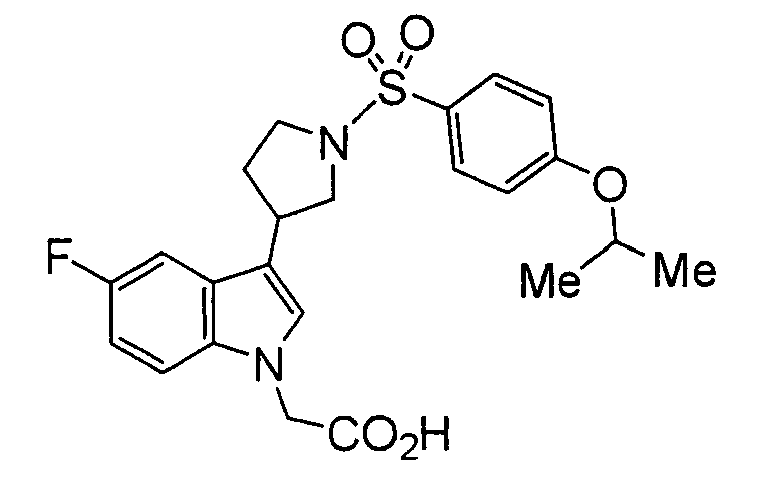
(DMSO-d6) 1.29 (d, 6H, J = 6.0 Hz), 1.72-1.82 (m, 1H), 2.12-2.22 (m, 1H), 3.05 (t, 1H, J = 8.7 Hz), 3.22-3.42 (m, 3H), 3.65 (dd, 1H, J = 8.7, 9.6 Hz), 4.68-4.76 (m, 1H), 4.87 (s, 2H), 6.93 (td, 1H, J = 2.4, 9.3 Hz), 7.08 (d, 2H, J = 8.7 Hz), 7.10 (s, 1H), 7.13 (dd, 1H, J = 2.4, 10.2 Hz), 7.31 (dd, 1H, J = 4.5, 9.0 Hz), 7.73 (d, 2H, J = 9.0 Hz) I-10 
(DMSO-d6) 1.29 (d, 6H, J = 6.0 Hz), 1.73-1.82 (m, 1H), 2.14-2.20 (m, 1H), 3.07 (t, 1H, J = 8.7 Hz), 3.24-3.43 (m, 3H), 3.67 (dd, 1H, J = 8.4, 9.6 Hz), 4.70-4.78 (m, 1H), 4.91 (s, 2H), 7.08-7.12 (m, 4H), 7.37 (d, J = 8.72 Hz, 1H), 7.44 (d, 1H, J = 2.1 Hz), 7.75 (d, 2H, J = 8.7 Hz) [Table 3] Compound No. Structure 1H-NMR δppm Other phisical properties I-11 
(DMSO-d6) 1.30 (d, 6H, J = 6.3 Hz), 1.79 (m, 1H), 2.20 (m, 1H), 3.06 (t, 1H, J = 9.0 Hz), 3.26-3.42 (m, 3H), 3.67 (dd, 1H, J = 7.5, 9.6 Hz), 3.73 (s, 3H), 4.74 (m, 1H), 4.83 (s, 2H), 6.75 (dd, 1H, J = 2.4, 8.7 Hz), 6.89 (d, 1H, J = 2.4 Hz), 6.97 (s, 1H), 7.08-7.13 (m, 2H), 7.20 (d, 1H, J = 8.7 Hz), 7.72-7.77 (m, 2H), 12.86 (br, 1H) I-12 
(DMSO-d6) 1.31 (d, 6H, J = 6.0 Hz), 1.81 (m, 1H), 2.17 (m, 1H), 2.34 (s, 3H), 3.07 (t, 1H, J = 9.3 Hz), 3.26-3.45 (m, 3H), 3.66 (dd, 1H, J = 7.5, 9.3 Hz), 4.74 (m, 1H), 4.83 (s, 2H), 6.92 (dd, 1H, J = 1.2, 8.4 Hz), 6.97 (s, 1H), 7.09-7.14 (m, 2H), 7.18 (d, 1H, J = 8.4 Hz), 7.73-7.78 (m, 2H), 12.87 (br, 1H) I-13 
(DMSO-d6) 1.31 (d, 6H, J = 6.0 Hz), 1.90 (m, 1H), 2.18 (m, 1H), 3.05 (m, 1H), 3.27-3.46 (m, 2H), 3.66-3.77 (m, 2H), 4.73 (m, 1H), 4.92 (s, 2H), 7.01-7.11 (m, 4H), 7.21 (s, 1H), 7.32 (dd, 1H, J = 0.9, 8.1 Hz), 7.70-7.75 (m, 2H), 13.01 (br, 1H) I-14 
(DMSO-d6) 1.31 (d, 3H, J = 6.0 Hz), 1.31 (d, 3H, J = 6.0 Hz), 1.79 (m, 1H), 2.19 (m, 1H), 3.06 (m, 1H), 3.24-3.46 (m, 3H), 3.67 (dd, 1H, J = 7.8, 9.6 Hz), 4.74 (m, 1H), 4.91 (s, 2H), 6.98 (dd, 1H, J = 1.8, 8.7 Hz), 7.08-7.13 (m, 3H), 7.09 (s, 1H), 7.34 (d, 1H, J = 8.7 Hz), 7.49 (d, 1H, J = 1.8 Hz), 7.72-7.77 (m, 2H), 12.97 (br, 1H) I-15 
(DMSO-d6) 1.32 (d, 3H, J = 6.0 Hz), 1.33 (d, 3H, J = 6.0 Hz), 1.99 (m, 1H), 2.20 (s, 3H), 3.15-3.61 (m, 6H), 4.77 (m, 1H), 4.91 (s, 2H), 6.99-7.03 (m, 2H), 7.14-7.19 (m, 2H), 7.37 (d, 1H, J = 8.4 Hz), 7.77-7.82 (m, 2H), 13.02 (br, 1H) [Table 4] Compound No. Structure 1H-NMR δppm Other phisical properties I-16 
(DMSO-d6) 1.54-1.68 (m, 2H), 2.02 (brd, 2H), 2.41 (brt, 2H), 2.74 (m, 1H), 3.74 (brd, 2H), 4.93 (s, 2H), 6.93 (td, 1H, J = 9.0, 2.4 Hz), 7.15-7.20 (m, 5H), 7.26-7.35 (m, 3H), 7.46-7.53 (m, 2H), 7.75-7.80 (m, 2H), 12.92 (brs, 1H) I-17 
(DMSO-d6) 1.37 (t, 3H, J = 6.9 Hz), 1.60 (q, 2H, J = 10.5 Hz), 2.01 (d, 2H, J = 11.4 Hz), 2.34 (t, 2H, J = 11.1 Hz), 2.62-2.78 (m, 1H), 3.72 (d, 2H, J = 10.8 Hz), 4.15 (q, 2H, J = 6.9 Hz), 6.92 (t, 1H, J = 9.3 Hz), 7.17 (s, 1H), 7.17 (d, 2H, J = 8.7 Hz), 7.28-7.34 (m, 2H), 7.70 (d, 2H, J = 8.7 Hz), 12.49 (brs, 1H) I-18 
(DMSO-d6) 1.00 (t, 3H, J = 7.5 Hz), 1.60 (q, 2H, J = 12.0 Hz), 1.77 (q, 2H, J = 6.9 Hz), 2.01 (d, 2H, J = 9.0 Hz), 2.34 (t, 2H, J = 11.4 Hz), 2.71 (t, 1H, J = 12.3 Hz), 3.72 (d, 2H, J = 8.1 Hz), 4.05 (t, 2H, J = 6.6 Hz), 6.93 (t, 1H, J = 9.0 Hz), 7.17 (s, 1H), 7.18 (d, 2H, J = 7.2 Hz), 7.29-7.34 (m, 2H), 7.70 (d, 2H, J = 8.7 Hz), 12.93 (brs, 1H) I-19 
(DMSO-d6) 1.31 (d, 6H, J = 6.0 Hz), 1.79 (m, 1H), 2.20 (m, 1H), 3.07 (t, 1H, J = 7.5 Hz), 3.25-3.45 (m, 3H), 3.68 (dd, 1H, J = 7.5, 9.6 Hz), 4.74 (m, 1H), 5.08 (d, 1H, J = 18.3 Hz), 5.15 (d, 1H, J = 18.3 Hz), 6.97 (t, 1H, J = 7.8 Hz), 7.07-7.14 (m, 4H), 7.37 (d, 1H, J = 7.8 Hz), 7.70-7.75 (m, 2H), 12.98 (brs, 1H) I-20 
(DMSO-d6) 1.31 (d, 6H, J = 6.0 Hz), 1.81 (m, 1H), 2.18 (m, 1H), 3.08 (t, 1H, J = 9.3 Hz), 3.26-3.47 (m, 3H), 3.68 (dd, 1H, J= 7.5, 9.3 Hz), 4.75 (m, 1H), 4.88 (s, 2H), 6.97 (t-like, 1H), 7.03 (s, 1H), 7.08-7.13 (m, 3H), 7.32 (t-like, 2H), 7.73-7.78 (m, 2H), 12.79 (br, 1H) [Table 5] Compound No. Structure 1H-NMR δppm Other phisical properties I-21 
(DMSO-d6) 1.27 (d, 3H, J = 6.0 Hz), 1.28 (d, 3H, J = 6.0 Hz), 1.85 (m, 1H), 2.25 (m, 1H), 3.12 (t-like, 2H), 3.28-3.50 (m, 3H), 3.73 (dd, 1H, J = 7.5, 9.3 Hz), 4.67 (m, 1H), 4.92 (s, 2H), 7.09 (d-like, 3H), 7.29-7.48 (m, 6H), 7.64-7.68 (m, 2H), 7.77 (d-like, 2H), 12.96 (brs, 1H) I-22 
(DMSO-d6) 1.27 (d, 6H, J = 5.7 Hz), 2.50 (brs, 2H), 3.21 (t-like, 2H), 3.68 (brs, 2H), 4.72 (m, 1H), 5.00 (s, 2H), 6.67 (brs, 1H), 7.12 (d-like, 2H), 7.16 (dd, 1H, J = 1.8, 9.0 Hz), 7.43 (d, 1H, J = 9.0 Hz), 7.47 (s, 1H), 7.69-7.74 (m, 2H), 7.78 (d, 1H, J = 1.8 Hz), 13.04 (br, 1H) I-23 
(DMSO-d6) 1.32 (d, 6H, J = 6.0 Hz), 1.53-1.67 (m, 2H), 2.01 (brd, 2H), 2.36 (brt, 2H), 2.72 (m, 1H), 3.72 (brd, 2H), 4.76 (m, 1H), 4.93 (s, 2H), 6.92 (td, 1H, J = 9.0, 2.4 Hz), 7.13-7.17 (m, 3H), 7.28-7.34 (m, 2H), 7.65-7.70 (m, 2H), 12.92 (brs, 1H) I-24 
(DMSO-d6) 1.31 (d, 6H, J = 6.0 Hz), 1.86 (m, 1H), 2.17 (m, 1H), 3.06 (t-like, 2H), 3.25-3.48 (m, 3H), 3.67 (t-like, 2H), 4.74 (m, 1H), 4.91 (s, 2H), 6.75 (dd, 1H, J = 7.8, 11.4 Hz), 7.04-7.11 (m, 4H), 7.17 (d, 1H, J = 8.4 Hz), 7.69-7.74 (m, 2H), 13.01 (brs, 1H) I-25 
(DMSO-d6) 1.61-1.82 (m, 2H), 1.99-2.50 (m, 3H), 3.09 (t, 1H, J = 8.4 Hz), 3.27-3.43 (m, 6H), 3.66 (dd, 1H, J = 8.1, 9.0 Hz), 4.74-4.83 (m, 1H), 4.89 (s, 2H), 7.02-7.12 (m, 4H), 7.36 (d, J = 9.0 Hz, 1H), 7.45 (d, 1H, J = 2.1 Hz), 7.75 (d, 2H, J = 8.7 Hz) [Table 6] Compound No. Structure 1H-NMR δppm Other phisical properties I-26 
(DMSO-d6) 1.66-2.22 (m, 8H), 3.07 (t, 1H, J = 9.6 Hz), 3.27-3.43 (m, 5H), 3.66 (dd, 1H, J = 8.1, 9.6 Hz), 4.92 (s, 2H), 4.93 (m, 1H), 7.07-7.13 (m, 4H), 7.36 (d, J = 9.0 Hz, 1H), 7.42 (d, 1H, J = 2.1 Hz), 7.74 (d, 2H, J=9.0Hz) I-27 
(DMSO-d6) 1.31 (d, 6H, J = 6.3 Hz), 1.84 (m, 1H), 2.15 (m, 1H), 3.05 (t-like, 1H), 3.25-3.45 (m, 3H), 3.64 (dd, 1H, J = 7.2, 9.3 Hz), 4.73 (m, 1H), 4.89 (s, 2H), 6.79 (m, 1H), 7.05-7.09 (m, 3H), 7.18 (dd, 1H, J = 1.8, 9.9 Hz), 7.68-7.73 (m, 2H), 13.03 (brs, 1H) I-28 
(DMSO-d6) 1.71-1.84 (m, 1H), 2.14-2.24 (m, 1H), 3.07 (t, 1H, J = 8.7 Hz), 3.25-3.46 (m, 3H), 3.68 (dd, 1H, J = 8.7, 9.6 Hz), 4.28-4.41 (m, 2H), 4.68-4.87 (m, 2H), 4.90 (s, 2H), 7.10 (dd, 1H, J = 1.8, 8.7 Hz), 7.13 (s, 1H), 7.16 (d, 2H, J = 9.0 Hz), 7.36 (d, 1H, J = 8.7 Hz), 7.44 (d, 1H, J = 1.8 Hz), 7.78 (d, 2H, J = 9.0 Hz), 12.98 (brs, 1H) I-29 
(DMSO-d6) 1.31 (d, 6H, J = 6.0 Hz), 1.90 (m, 1H), 2.19 (m, 1H), 3.06 (m, 1H), 3.28-3.47 (m, 2H), 3.67-3.78 (m, 2H), 4.73 (m, 1H), 5.10 (d, 1H, J = 18.3 Hz), 5.19 (d, 1H, J = 18.3 Hz), 7.02-7.14 (m, 4H), 7.29 (s, 1H), 7.67-7.72 (m, 2H), 13.08 (brs, 1H) I-30 
(DMSO-d6) 1.62-1.74 (m, 1H), 2.16-2.24 (m, 1H), 2.45 (s, 3H), 2.50 (s, 3H), 2.98 (brs, 2H), 3.09-3.72 (m, 5H), 4.25 (brs, 2H), 4.61 (s, 2H), 6.47 (s, 1H), 7.07 (d, 1H, J = 8.1 Hz), 7.13 (d, 2H, J = 8.1 Hz), 7.29 (d, 1H, J = 8.7 Hz), 7.45 (s, 1H), 7.78 (d, 2H, J=8.1Hz) [Table 7] Compound No. Structure 1H-NMR δppm Other phisical properties I-31 
1H NMR (DMSO-d6) δ 1.72-1.79 (m, 1H), 2.12-2.24 (m, 1H), 3.06 (t, 1H, J = 8.1 Hz), 3.27-3.44 (m, 6H), 3.65-3.70 (m, 3H), 4.18-4.20 (m, 2H), 7.09-7.14 (m, 4H), 7.36 (d, 1H, J = 9.0 Hz), 7.45 (s, 1H), 7.76 (d, 2H, J = 8.7 Hz), 13.00 (brs, 1H) I-32 
(DMSO-d6) 1.31 (d, 6H, J = 6.0 Hz), 1.80 (m, 1H), 2.19 (m, 1H), 3.08 (t-like, 1H), 3.25-3.46 (m, 3H), 3.68 (dd, 1H, J = 7.5, 9.3 Hz), 4.74 (m, 1H), 4.93 (s, 2H), 6.86-6.96 (m, 2H), 7.07 (s, 1H), 7.09 (d, 2H, J = 8.7 Hz), 7.18 (m, 1H), 7.73 (d, 2H, J = 8.7 Hz), 13.01 (br, 1H) I-33 
(DMSO-d6) 1.31 (d, 6H, J = 6.0 Hz), 1.86 (m, 1H), 2.17 (m, 1H), 3.06 (t-like, 1H), 3.26-3.46 (m, 3H), 3.65 (dd, 1H, J = 7.2, 9.6 Hz), 4.73 (m, 1H), 4.92 (s, 2H), 6.71 (m, 1H), 6.88 (m, 1H), 7.04-7.09 (m, 2H), 7.13 (s, 1H), 7.67-7.71 (m, 2H), 13.10 (br, 1H) I-34 
(DMSO-d6) 1.30 (d, 6H, J = 5.7 Hz), 1.87-1.72 (m, 1H), 2.12-2.23 (m, 1H), 3.06 (dd, 1H, J = 9.0 Hz), 3.24-3.45 (m, 3H), 3.68 (dd, 1H, J = 7.5, 9.6 Hz), 4.75 (m, 1H), 4.87 (s, 2H), 6.82 (ddd, 1H, J = 2.4, 9.6, 11.1 Hz), 7.04 (s, 1H), 7.11 (d, 1H, J = 8.7 Hz), 7.24 (dd, 1H), 7.35 (dd, 1H), 7.74 (d, 1H). I-36 
(DMSO-d6) 1.31 (d, 6H, J = 6.0 Hz), 1.81-1.94 (m, 1H), 2.08-2.18 (m, 1H), 2.99 (dd, 1H, J = 9.0, 9.0 Hz), 3.24-3.38 (m, 3H), 3.50-3.72 (m, 5H), 4.74 (ddd, 1H, J = 6.0 Hz), 4.83 (s, 2H), 6.49 (d, 1H, J = 7.5 Hz), 6.87-7.04 (m, 3H), 7.11 (d, 2H, J = 9.0 Hz), 7.72 (d, 2H). [Table 8] Compound No. Structure 1H-NMR δppm Other phisical properties I-37 
(DMSO-d6) 1.71-1.83 (m, 1H), 1.99 (s, 1H), 2.18-2.25 (m, 1H), 3.08 (dd, 1H, J = 9.3, 8.7 Hz), 3.27-3.44 (m, 2H), 3.65-3.71 (m, 2H), 4.91 (s, 4H), 7.11 (dd, 1H, J = 2.1, 8.7 Hz), 7.15-7.20 (m, 3H), 7.37 (d, 1H), 7.48 (d, 1H), 7.81 (m, 2H). I-38 
(DMSO-d6) 1.37 (t, 3H, J = 6.6 Hz), 1.70-1.82 (m, 1H), 2.12-2.22 (m, 1H), 3.07 (t, 1H, J = 9.3 Hz), 3.24-3.43 (m, 3H), 3.67 (dd, 1H, J = 8.7, 8.1 Hz), 4.13 (q, 2H), 7.12 (d, 4H), 7.37 (d, 1H, J= 8.7 Hz), 7.44 (br, 1H), 7.77 (d, 1H). I-39 
(DMSO-d6) 1.39 (s, 9H), 1.70-1.82 (m, 1H), 2.14-2.22 (m, 1H), 3.08 (t, 1H, J = 9.3 Hz), 3.24-3.46 (m, 3H), 3.69 (dd, 1H, J = 7.8, 9.6 Hz), 4.92 (s, 2H), 7.10-7.21 (m, 5H), 7.38 (d, 1H, J = 8.7 Hz), 7.47 (d, 1H, J = 1.8 Hz), 7.76 (d, 2H, J = 8.7 Hz). I-40 
(DMSO-d6) 0.93 (t, 3H, J = 7.5 Hz), 1.26 (d, 3H, J=6.0Hz), 1.58-1.82 (m, 3H), 2.15-2.24 (m, 1H), 3.07 (t, 1H, J = 9.3 Hz), 3.24-3.45 (m, 3H), 3.67 (dd, 1H, J = 7.8, 9.6 Hz), 4.52 (dd, 1H, J = 6.0, 12.0 Hz), 4.91 (s, 2H), 7.10-7.15 (m, 4H), 7.38 (d, 1H, J = 9.0 Hz), 7.45 (d, 1H, J = 1.8 Hz), 7.75 (d, 2H, J = 8.7 Hz). I-41 
(DMSO-d6) 0.93 (t, 3H, J = 7.5 Hz), 1.26 (d, 3H, J = 5.7 Hz), 1.56-1.84 (m, 3H), 2.15-2.26 (m, 1H), 3.07 (t, 1H, J = 9.0 Hz), 3.24-3.46 (m, 3H), 3.67 (dd, 1H, J = 9.3 Hz), 4.52 (dd, 1H, J = 6.0, 11.7 Hz), 4.91 (s, 2H), 7.10-7.15 (m, 4H), 7.37 (d, 1H, J = 8.7 Hz), 7.44 (br, 1H), 7.75 (d, 2H, J = 8.7 Hz). [Table 9] Compound No. Structure 1H-NMR δppm Other phisical properties I-42 
(DMSO-d6) 0.91 (t, 3H, J = 7.2 Hz), 1.60-1.84 (m, 5H), 2.14-2.25 (m, 1H), 3.08 (t, 1H, J = 9.3 Hz), 3.24-3.45 (m, 3H), 3.67 (dd, 1H, J = 8.1, 9.0 Hz), 4.38 (m, 1H), 4.91 (s, 2H), 7.10-7.17 (m, 4H), 7.38 (d, 1H, J = 8.4 Hz), 7.45 (br, 1H), 7.75 (d, 2H, J = 8.4 Hz). I-43 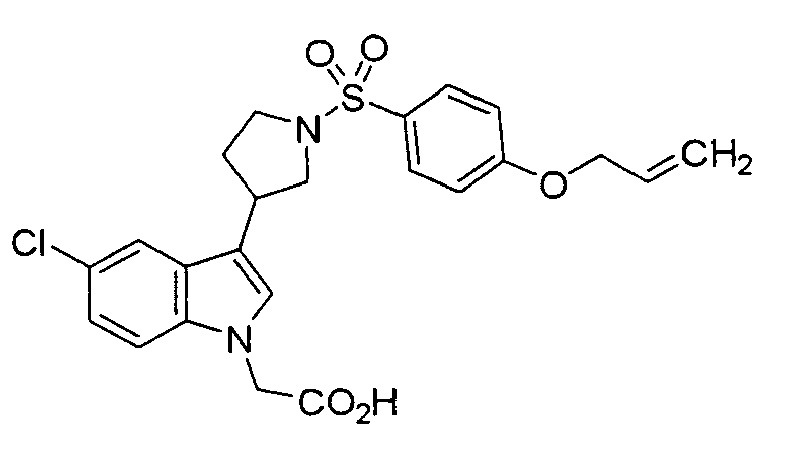
(DMSO-d6) 1.70-1.82 (m, 1H), 2.15-2.24 (m, 1H), 3.07 (t, 1H, J = 9.0 Hz), 3.27-3.45 (m, 3H), 3.67 (dd, 1H, J = 8.1, 9.0 Hz), 4.67 (d, 1H, J = 4.5 Hz), 4.91 (s, 2H), 5.30 (d, 1H, J = 10.5 Hz), 5.43 (d, 1H, J = 16.5 Hz), 6.00-6.13 (m, 1H), 7.10-7.17 (m, 4H), 7.37 (d, 1H, J = 8.7 Hz), 7.44 (br, 1H), 7.78 (d, 2H, J = 8.4 Hz). I-45 
(DMSO-d6) 1.30 (d, 6H, J = 5.7 Hz), 1.70-1.82 (m, 1H), 2.15-2.24 (m, 1H), 3.07 (t, 1H, 8.7 Hz), 3.24-3.45 (m, 3H), 3.67 (dd, 1H, J = 8.4, 8.7 Hz), 4.71-4.76 (m, 1H), 5.10 (s, 2H), 7.08 (d, 2H, J = 8.7 Hz), 7.21 (br, 2H), 7.52 (br, 1H), 7.72 (d, 2H, J = 8.7 Hz). I-46 
(DMSO-d6) 0.99 (t, 3H, J = 7.2 Hz), 1.70-1.82 (m, 1H), 2.10-2.23 (m, 1H), 3.07 (dd, 1H, J = 8.4, 9.6 Hz), 3.24-3.43 (m, 3H), 3.67 (dd, 1H, J = 7.2, 9.6 Hz), 4.87 (s, 2H), 7.08-7.14 (m, 4H), 7.36 (d, 1H, J = 9.0 Hz), 7.43 (d, 1H, J = 1.8 Hz), 7.74-7.78 (m, 2H). I-47 
(DMSO-d6) 1.73-1.86 (m, 1H), 2.17-2.23 (m, 1H), 3.12 (t, 1H, J = 9.0 Hz), 3.27-3.48 (m, 3H), 3.72 (dd, 1H, J = 7.5, 9.3 Hz), 4.62 (d, 1H, 2.4 Hz), 4.92-5.04 (m, 4H), 5.10 (s, 2H), 7.11 (dd, 2H, J = 1.5, 9.0 Hz), 7.18 (s, 1H), 7.30 (d, 2H, J = 8.4 Hz), 7.37 (d, 2H), 7.49 (d, 1H, J = 1.8 Hz), 7.88 (d, 2H). [Table 10] Compound No. Structure 1H-NMR δppm Other phisical properties I-48 
(DMSO-d6) 1.36 (t, 3H, J = 6.9 Hz), 1.71-1.84 (m, 1H), 2.13-2.23 (m, 1H), 3.06 (dd, 1H, J = 8.7, 9.3 Hz), 3.26-3.44 (m, 3H), 3.68 (dd, 1H, J = 7.5, 9.3 Hz), 4.12 (q, 2H,), 4.86 (s, 2H), 6.83 (ddd, 1H, J = 2.4 Hz), 7.00 (s, 1H), 7.11 (d, 2H, J = 9.0 Hz), 7.23 (dd, 1H, J = 2.1, 10.5 Hz), 7.37 (dd, 1H, J = 5.7 Hz, 8.7 Hz), 7.76 (d, 2H). I-49 
(DMSO-d6) 1.36 (t, 3H, J = 6.9 Hz), 1.80-1.94 (m, 1H), 2.07-2.17 (m, 1H), 3.00 (t, 1H, J = 9.0 Hz), 3.24-3.38 (m, 3H), 3.48-3.73 (m, 5H), 4.12 (q, 2H,), 4.82 (s, 2H), 6.49 (d, 1H, J = 7.8 Hz), 6.87-6.89 (m, 2H), 7.04 (t, 1H, J = 7.8 Hz), 7.12 (m, 2H), 7.74 (m, 2H). I-51 
(DMSO-d6) 1.36 (t, 3H, J = 6.9 Hz), 1.70-1.83 (m, 1H), 2.12-2.23 (m, 1H), 3.06 (t, 1H, J = 8.7 Hz), 3.23-3.43 (m, 3H), 3.67 (t, 1H, J = 8.4 Hz), 4.12 (q, 2H, J = 6.6 Hz), 4.88 (s, 2H), 6.95 (t, 1H, J = 8.4 Hz), 7.09-7.16 (m, 4H), 7.31-7.35 (m, 1H), 7.76 (d, 2H, J = 8.4 Hz), 12.97 (brs, 1H) I-52 
(DMSO-d6) 0.93 (t, 3H, J = 7.2 Hz), 1.26 (d, 3H, J = 6.0 Hz), 1.58-1.81 (m, 3H), 2.13-2.23 (m, 1H), 3.06 (t, 1H, J = 9.3 Hz), 3.20-3.40 (m, 3H), 3.67 (dd, 1H, J = 8.1, 8.4 Hz), 4.52 (q, 2H,), 4.89 (s, 2H), 6.95 (ddd, 1H), 7.10-7.17 (m, 4H), 7.33 (dd, 1H, J = 5.1, 9.0 Hz), 7.74 (d, 2H). I-53 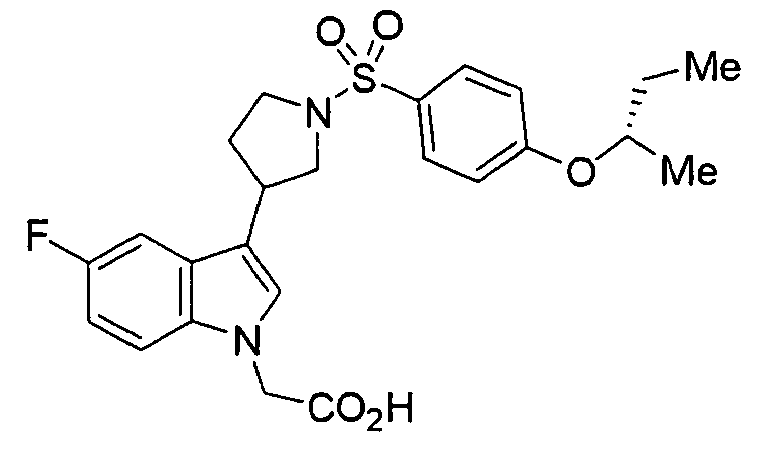
(DMSO-d6) 0.93 (t, 3H, J = 7.2 Hz), 1.27 (d, 3H, J = 6.0 Hz), 1.58-1.81 (m, 3H), 2.13-2.23 (m, 1H), 3.07 (t, 1H, J = 9.0 Hz), 3.20-3.40 (m, 3H), 3.67 (t, 1H, J = 8.4 Hz), 4.53 (q, 2H,), 4.89 (s, 2H), 6.95 (ddd, 1H), 7.10-7.17 (m, 4H), 7.33 (dd, 1H, J = 4.5, 8.7 Hz), 7.74 (d, 2H). [Table 11] Compound No. Structure 1H-NMR δppm Other phisical properties I-54 
(DMSO-d6) 0.94 (t, 3H, J = 7.5 Hz), 1.27 (d, 3H, J = 5.7 Hz), 1.55-1.76 (m, 3H), 2.00 (d, 2H, J = 10.8 Hz), 2.36 (t, 1H), 2.75 (t, 1H, J = 9.3 Hz), 3.05-3.59 (br, 3H), 3.72 (d, 2H, J = 10.2 Hz), 4.54 (q, 1H), 4.93 (s, 2H), 7.07-7.17 (m, 4H, 7.35 (d, 1H, J = 8.7 Hz), 7.60 (s, 1H), 7.67 (d, 2H, J= 8.4 Hz). I-55 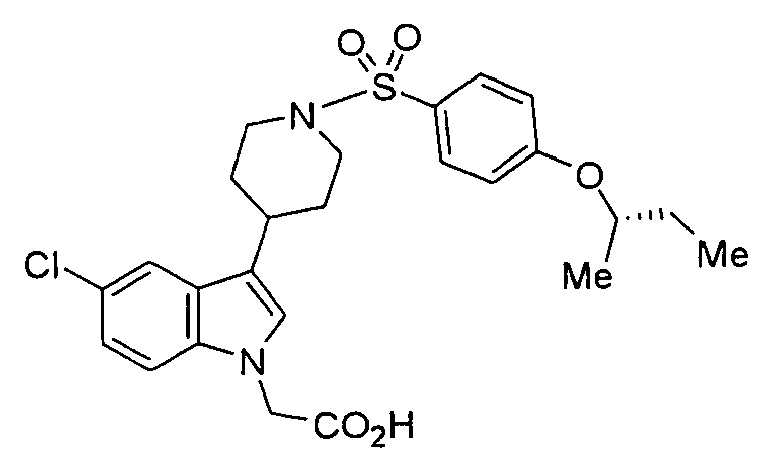
(DMSO-d6) 0.94 (t, 3H, J = 7.2 Hz), 1.28 (d, 3H, J = 6.3 Hz), 1.55-1.76 (m, 3H), 2.00 (d, 2H, J = 11.4 Hz), 2.36 (t, 1H), 2.75 (t, 1H), 3.05-3.59 (br, 3H), 3.72 (d, 2H, J = 9.9 Hz), 4.54 (q, 1H), 4.94 (s, 2H), 7.07-7.17 (m, 4H, 7.35 (d, 1H, J = 8.7 Hz), 7.60 (s, 1H), 7.67 (d, 2H, J= 8.4 Hz). I-56 
(DMSO-d6) 1.30 (d, 6H, J = 7.5 Hz), 1.75-1.85 (m, 1H), 2.12-2.25 (m, 1H), 3.06 (t, 1H, J = 8.7 Hz), 3.27-3.45 (m, 3H), 3.65 (dd, 1H, J = 7.8, 9.9 Hz), 3.78 (s, 3H), 4.74 (m, 1H), 4.93 (s, 2H), 6.64 (dd, 1H, J = 1.2, 7.5 Hz), 6.84-6.92 (m, 3H), 7.10 (d, 2H, J = 9.0 Hz), 7.74 (d, 2H). I-57 
(DMSO-d6) 1.37 (t, 3H, J = 7.2 Hz), 1.72-1.85 (m, 1H), 2.12-2.25 (m, 1H), 3.03 (t, 1H, J = 9.0 Hz), 3.24-3.43 (m, 3H), 3.65 (dd, 1H, J = 7.8, 9.3 Hz), 3.76 (s, 3H), 4.13 (q, 2H), 4.54 (s, 2H), 6.54 (d, 1H, J = 6.6 Hz), 6.73-6.86 (m, 3H), 7.12 (d, 2H, J = 9.0 Hz), 7.74 (d, 2H). I-58 
(DMSO-d6) 1.31 (d, 6H, J = 6.0 Hz), 1.77 (m, 1H), 2.16 (m, 1H), 3.04 (t, 1H, 9.0 Hz), 3.24-3.45 (m, 3H), 3.65 (dd, 1H, J = 7.8, 9.0 Hz), 3.74 (s, 3H), 4.75 (m, 1H), 4.83 (s, 2H), 6.61 (dd, 1H, J = 2.1, 8.7 Hz), 6.87 (s, 1H), 6.89 (d, 1H, J = 2.1 Hz), 7.11 (d, 2H, J =8.7 Hz), 7.18 (d, 1H, J = 8.7 Hz), 7.75 (d, 2H, J = 8.7 Hz), 12.84 (brs, 1H) [Table 12] Compound No. Structure 1H-NMR δppm Other phisical properties I-59 
(DMSO-d6) 1.31 (d, 6H, J = 6.6 Hz), 1.79 (m, 1H), 2.19 (m, 1H), 3.11 (t, 1H, J = 9.0 Hz), 3.28-3.45 (m, 3H), 3.65-3.73 (m, 2H), 4.92 (s, 2H), 7.10-7.15 (m, 2H), 7.37 (d, 2H, J = 8.7 Hz), 7.47-7.51 (m, 3H), 7.75 (d, 2H, J = 8.4 Hz). I-60 
(DMSO-d6) 1.31 (d, 3H, J = 6.0 Hz), 1.32 (d, 3H, J = 6.0 Hz), 1.82 (m, 1H), 2.18 (m, 1H), 3.06 (t, 1H, J = 9.3 Hz), 3.24-3.46 (m, 3H), 3.67 (dd, 1H, J = 7.5, 9.3 Hz), 4.74 (m, 1H), 4.91 (s, 2H), 7.08-7.12 (m, 4H), 7.28 (d, 2H, J = 8.4 Hz), 7.63 (d, 1H, J = 1.5 Hz), 7.74 (d, 2H, J = 8.7 Hz), 12.96 (brs, 1H) I-61 
(DMSO-d6) 1.33 (d, 3H, J = 6.0 Hz), 1.34 (d, 3H, J = 6.0 Hz), 1.86 (m, 1H), 2.23 (m, 1H), 3.13 (t-like, 1H), 3.28-3.52 (m, 3H), 3.73 (dd, 1H, J = 7.2, 9.6 Hz), 4.91 (s, 2H), 5.33 (m, 1H), 6.90 (dd, 1H, J = 0.6, 8.7Hz), 6.99 (dd, 1H, J = 1.8, 8.4 Hz), 7.15 (s, 1H), 7.42 (d, 1H, J = 8.4 Hz), 7.49 (d, 1H, J = 1.8 Hz), 8.05 (dd, 1H, J = 2.7, 8.7 Hz), 8.58 (dd, 1H, J = 0.6, 2.7 Hz), 12.96 (br, 1H) I-62 
(DMSO-d6) 1.31 (d, 3H, J = 6.0 Hz), 1.31 (d, 3H, J = 6.0 Hz), 1.79 (m, 1H), 2.19 (m, 1H), 3.06 (m, 1H), 3.24-3.46 (m, 3H), 3.67 (dd, 1H, J = 7.8, 9.6 Hz), 4.74 (m, 1H), 4.91 (s, 2H), 6.98 (dd, 1H, J = 1.8, 8.7 Hz), 7.08-7.13 (m, 3H), 7.09 (s, 1H), 7.34 (d, 1H, J = 8.7 Hz), 7.49 (d, 1H, J = 1.8 Hz), 7.72-7.77 (m, 2H), 12.97 (br, 1H) [α]D22 -8.7(DMSO, c=1.000) mp 188-189 °C RT: 19.2min (Chiralpak1A DICEL(4.6X250mm), n-Hex:AcOEt:TFA=65:35:0.1, 1ml/min) [Table 13] Compound No. Structure 1H-NMR δppm Other phisical properties I-63 
(CDCl3) 1.38(6H, d, J = 6.0 Hz), 2.01(1H, m), 2.28(1H, m), 3.31-3.58(4H, m), 3.79(1H, dd, J = 7.5 Hz, 9.6 Hz), 4.63(1H, tt, J = 6.0 Hz), 4.83(1H, s), 6.72(1H, d, J = 0.6 Hz), 6.96(2H, d, J = 9.0 Hz), 7.30-7.37(2H, m), 7.40-7.50(4H, m), 7.59-7.62(2H, m), 7.78(2H, d, J = 9.0 Hz). I-64 
(d6-DMSO) 1.31(6H, d, J = 6.0 Hz), 5.00(2H, s), 7.11-7.16(2H, m), 7.40(1H, m), 7.50(1H, m), 7.69-7.77(3H, m), 7.87(1H, m), 8.39(1H, m), 8.64(1H, m), 9.05(1H, m). I-65 
[α]D22 +8.0 (DMSO, c=1.013) mp 167 °C RT: 21.0min (Chiralpak1A DICEL(4.6X250mm), n-Hex:AcOEt:TFA=65:35:0.1, 1ml/min) I-66 
(DMSO-d6) 1.31 (d, 3H, J = 6.0 Hz), 1.32 (d, 3H, J = 6.0 Hz), 1.81 (m, 1H), 2.19 (m, 1H), 3.09 (t, 1H, J = 9.6 Hz), 3.27-3.49 (m, 3H), 3.69 (dd, 1H, J = 7.5, 9.6 Hz), 4.75 (m, 1H), 4.95 (s, 2H), 7.08 (s, 1H), 7.10-7.14 (m, 3H), 7.26 (dd, 1H, J = 1.5, 8.1 Hz), 7.33 (d, 1H, J = 8.1 Hz), 7.45-7.48 (m, 2H), 7.64 (d, 1H, J = 0.9 Hz), 7.73-7.78 (m, 2H), 12.90 (br, 1H) I-67 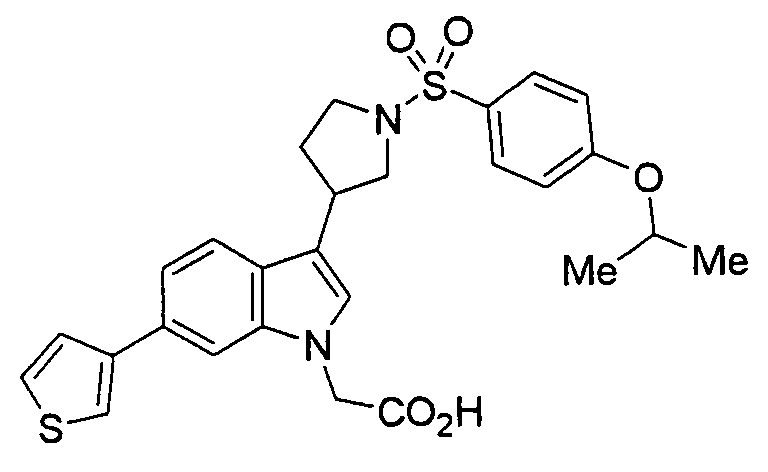
(DMSO-d6) 1.31 (d, 6H, J = 6.0 Hz), 1.82 (m, 1H), 2.21 (m, 1H), 3.10 (t, 1H, J = 9.3 Hz), 3.27-3.50 (m, 3H), 3.69 (dd, 1H, J = 7.5, 9.3 Hz), 4.75 (m, 1H), 4.94 (s, 2H), 7.05 (s, 1H), 7.10-7.15 (m, 2H), 7.35 (d, 2H, J = 0.6 Hz), 7.59 (dd, 1H, J = 1.5, 5.1 Hz), 7.62 (dd, 1H, J = 3.0, 5.1 Hz), 7.72-7.78 (m, 4H), 12.94 (br, 1H) [Table 14] Compound No. Structure 1H-NMR δppm Other phisical properties I-68 
(DMSO-d6) 1.34 (6H, d, J = 5.9 Hz), 1.76-1.95 (1H, m), 2.14-2.32 (1H, m), 3.13 (1H, t, J = 9.1 Hz), 3.26-3.54 (3H, m), 3.72 (1H, dd, J = 9.1, 7.2 Hz), 4.74-4.82 (1H, m), 5.02 (2H, s), 7.12-7.17 (3H, m), 7.33 (1H, d, J = 8.3 Hz), 7.36-7.42 (2H, m), 7.49 (1H, t, J = 7.9 Hz), 7.69 (1H, d, J = 7.8 Hz), 7.75-7.81 (5H, m). I-69 
(DMSO-d6) 1.33 (6H, d, J = 5.9 Hz), 1.77-1.93 (1H, m), 2.17-2.32 (1H, m), 3.13 (1H, t, J = 9.2 Hz), 3.27-3.54 (3H, m), 3.72 (1H, t, J = 8.5 Hz), 4.74-4.81 (1H, m), 4.98 (2H, s), 7.10-7.17 (4H, m), 7.30 (1H, d, J = 8.3 Hz), 7.41 (1H, d, J = 8.3 Hz), 7.51 (2H, d, J = 8.6 Hz), 7.70-7.80 (5H, m). I-70 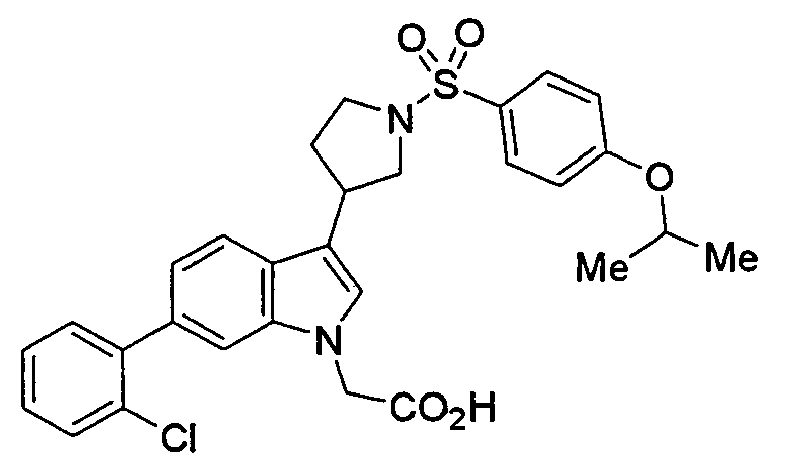
(DMSO-d6) 1.32 (6H, d, J = 5.9 Hz), 3.08-3.19 (1H, m), 3.26-3.53 (4H, m), 3.68-3.77 (1H, m), 4.71-4.83 (1H, m), 4.94 (2H, s), 7.07 (1H, d, J = 8.1 Hz), 7.11-7.18 (3H, m), 7.34-7.46 (5H, m), 7.58 (1H, d, J = 7.2 Hz), 7.79 (2H, d, J = 8.9 Hz). I-71 
(CDC13) 1.38(6H, d, J = 6.0 Hz), 1.95(1H, m), 2.24(1H, m), 3.29-3.57(4H, m), 3.72(1H, m), 4.63(1H, tt, J = 6.0 Hz, 6.0 Hz), 4.82(2H, s), 6.85(1H, s), 6.95(2H, d, J = 9.0 Hz), 7.32(1H, m), 7.45-7.51(2H, m), 7.76(2H, d, J = 9.0 Hz), 9.25(1H, brs). I-72 
(DMSO-d6) 1.31 (6H, d, J = 6.1 Hz), 1.76-1.91 (1H, m), 2.15-2.28 (1H, m), 3.11 (1H, t, J = 9.0 Hz), 3.25-3.50 (3H, m), 3.70 (1H, dd, J = 7.3, 9.0 Hz), 4.71-4.79 (1H, m), 5.00 (2H, d, J = 0.0 Hz), 7.09-7.17 (2H, m), 7.38 (1H, d, J = 8.4 Hz), 7.45 (1H, d, J = 8.4 Hz), 7.76 (2H, d, J = 9.0 Hz), 7.83 (1H, s), 7.88-7.95 (5H, m). [Table 15] Compound No. Structure 1H-NMR δppm Other phisical properties I-73 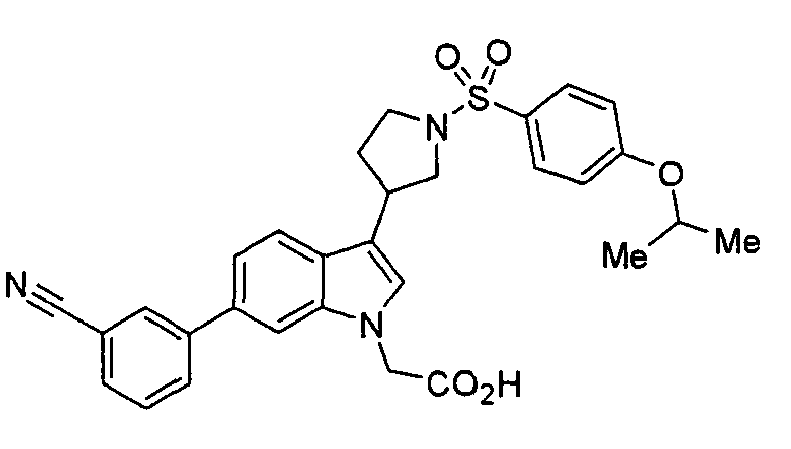
(DMSO-d6) 1.31 (6H, d, J = 6.1 Hz), 1.77-1.90 (1H, m), 2.16-2.28 (1H, m), 3.11 (1H, t, J = 9.0 Hz), 3.24-3.51 (3H, m), 3.70 (1H, dd, J = 9.0, 7.3 Hz), 4.71-4.80 (1H, m), 5.00 (2H, s), 7.09-7.16 (3H, m), 7.37 (1H, dd, J = 8.3, 1.2 Hz), 7.42 (1H, d, J = 8.3 Hz), 7.65 (1H, t, J = 7.9 Hz), 7.73-7.80 (3H, m), 7.85 (1H, s), 8.06 (1H, d, J = 8.1 Hz), 8.20 (1H, s). I-74 
(DMSO-d6) 1.32 (6H, d, J = 6.0 Hz), 3.06-3.15 (1H, m), 3.65-3.73 (1H, m), 3.80 (3H, s), 4.71-4.81 (1H, m), 4.95 (2H, s), 6.99-7.06 (3H, m), 7.13 (2H, d, J = 8.9 Hz), 7.23 (1H, d, J = 8.1 Hz), 7.33 (1H, d, J = 8.2 Hz), 7.55-7.64 (3H, m), 7.77 (2H, d, J = 8.9 Hz). I-75 
(DMSO-d6) 1.33 (6H, d, J = 5.9 Hz), 1.79-1.94 (1H, m), 2.21-2.32 (1H, m), 3.11-3.19 (1H, m), 3.28-3.56 (3H, m), 3.70-3.78 (1H, m), 4.72-4.81 (1H, m), 5.11 (2H, s), 7.14 (2H, d, J = 8.8 Hz), 7.35 (1H, s), 7.62-7.74 (2H, m), 7.78 (2H, d, J = 8.8 Hz), 8.29 (1H, s), 8.45 (2H, d, J = 6.6 Hz), 8.90 (2H, d, J = 6.6 Hz). I-76 
(DMSO-d6) 1.33 (6H, d, J = 5.9 Hz), 1.78-1.92 (1H, m), 2.18-2.30 (1H, m), 3.13 (1H, t, J = 9.1 Hz), 3.28-3.77 (4H, m), 3.93 (3H, s), 4.73-4.82 (1H, m), 4.99 (2H, s), 6.95 (2H, d, J = 8.6 Hz), 7.09-7.17 (3H, m), 7.29 (1H, d, J = 8.1 Hz), 7.43 (1H, d, J = 8.3 Hz), 7.70 (1H, s), 7.78 (2H, d, J = 8.9 Hz), 8.07 (1H, dd, J = 8.7, 2.4 Hz), 8.51 (1H, d, J=2.4Hz). I-77 
(DMSO-d6) 1.31 (d, 3H, J = 6.3 Hz), 1.32 (d, 3H, J = 6.3 Hz), 1.82 (m, 1H), 2.20 (m, 1H), 3.09 (t, 1H, J = 9.3 Hz), 3.26-3.48 (m, 3H), 3.69 (dd, 1H, J = 7.2, 9.3 Hz), 4.75 (m, 1H), 4.93 (s, 2H), 6.75 (dd, 1H, J = 1.8, 3.3 Hz), 6.85 (d, 1H, J = 3.0 Hz), 7.08-7.14 (m, 3H), 7.35 (d, 1H, J = 0.9 Hz), 7.65 (s, 1H), 7.69 (d, 1H, J = 1.2 Hz), 7.73-7.78 (m, 2H), 12.99 (br, 1H) [Table 16] Compound No. Structure 1H-NMR, δppm Other phisical properties I-78 
(DMSO-d6) 1.31 (d, 6H, J = 6.3 Hz), 1.81 (m, 1H), 2.20 (m, 1H), 3.09 (t, 1H, J = 9.0 Hz), 3.26-3.47 (m, 3H), 3.69 (dd, 1H, J = 7.2, 9.6 Hz), 4.75 (m, 1H), 4.93 (s, 2H), 6.98 (m, 1H), 7.02 (s, 1H), 7.09-7.14 (m, 2H), 7.24 (dd, 1H, J = 1.5, 8.4 Hz), 7.34 (d, 1H, J = 8.4 Hz), 7.61 (s-like, 1H), 7.71-7.78 (m, 3H), 8.11 (m, 1H), 12.93 (br, 1H) I-79 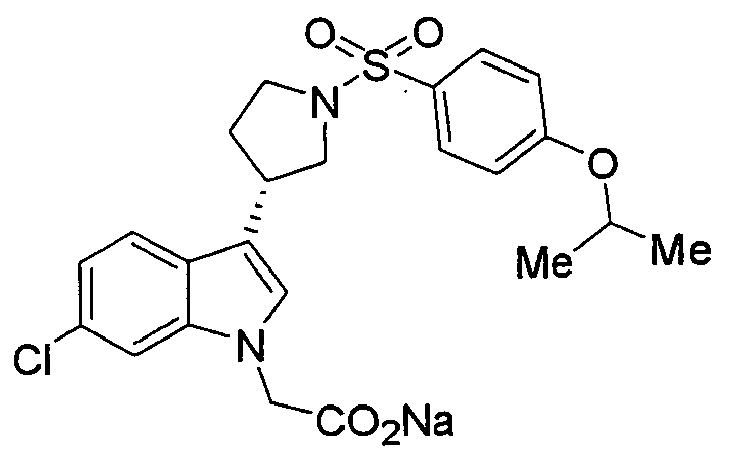
[α]D22 +0.8 (H2O, c=1.009) RT: 101.82min (Chiralcel OD-RH (DAICEL) (4.6X150mm), 40%MeCN/H2O(0.1%TFA), 0.5ml/min) I-80 
(DMSO-d6) 1.34 (6H, d, J = 5.9 Hz), 1.81-1.93 (1H, m), 2.17-2.27 (1H, m), 3.12 (1H, t, J = 9.0 Hz), 3.28-3.52 (3H, m), 3.67-3.75 (1H, m), 4.74-4.82 (1H, m), 4.97 (2H, s), 6.07 (2H, s), 7.01 (1H, d, J = 8.1 Hz), 7.07 (1H, s), 7.12-7.20 (3H, m), 7.24 (1H, d, J = 8.2 Hz), 7.29 (1H, d, J = 1.6 Hz), 7.34 (1H, d, J = 8.2 Hz), 7.61 (1H, s), 7.78 (2H, d, J = 8.9 Hz). I-81 
(DMSO-d6) 1.12 (6H, d, J = 5.9 Hz), 1.57-1.71 (1H, m), 1.95-2.07 (1H, m), 2.91 (1H, t, J = 9.1 Hz), 3.07-3.29 (3H, m), 3.50 (1H, dd, J = 9.1, 7.2 Hz), 3.63 (3H, s), 4.52-4.60 (1H, m), 4.78 (2H, s), 6.70 (1H, dd, J = 7.8, 2.2 Hz), 6.87-6.96 (3H, m), 7.01-7.10 (3H, m), 7.13-7.20 (2H, m), 7.45 (1H, s), 7.57 (2H, d, J = 8.8 Hz). I-82 
(CDCl3) 1.8-5.0 (br), 1.39(6H, d, J = 6.0 Hz), 6.89(1H, m), 6.95-6.99(3H, m), 7.61(1H, m), 7.74-7.79(2H, m), 8.19(1H, br). [Table 17] Compound No. Structure 1H-NMR δppm Other phisical properties I-83 
(DMSO-d6) 1.31 (d, 3H, J = 6.0 Hz), 1.31 (d, 3H, J = 6.0 Hz), 1.79 (m, 1H), 2.19 (m, 1H), 3.06 (m, 1H), 3.24-3.46 (m, 3H), 3.67 (dd, 1H, J = 7.8, 9.6 Hz), 4.74 (m, 1H), 4.91 (s, 2H), 6.98 (dd, 1H, J = 1.8, 8.7 Hz), 7.08-7.13 (m, 3H), 7.09 (s, 1H), 7.34 (d, 1H, J = 8.7 Hz), 7.49 (d, 1H, J = 1.8 Hz), 7.72-7.77 (m, 2H), 12.97 (br, 1H) I-84 
(DMSO-d6) 1.33 (d, 3H, J = 6.0 Hz), 1.34 (d, 3H, J = 6.0 Hz), 1.82 (m, 1H), 2.20 (m, 1H), 3.10 (t, 1H, J = 9.3 Hz), 3.27-3.51 (m, 3H), 3.71 (dd, 1H, J = 7.2, 9.3 Hz), 4.80 (m, 1H), 4.92 (s, 2H), 7.08-7.12 (m, 2H), 7.32-7.39 (m, 2H), 7.58-7.68 (m, 2H), 12.92 (br, 1H) RT: 110.0min (Chiralcel OD-RH (DAICEL) (4.6X150mm), 40%MeCN/H2O(0.1%TFA), 0.5ml/min) I-86 
(DMSO-d6) 1.33 (d, 3H, J = 6.0 Hz), 1.34 (d, 3H, J = 6.0 Hz), 1.82 (m, 1H), 2.20 (m, 1H), 3.10 (t, 1H, J = 9.3 Hz), 3.27-3.51 (m, 3H), 3.71 (dd, 1H, J = 7.2, 9.3 Hz), 4.80 (m, 1H), 4.92 (s, 2H), 7.08-7.12 (m, 2H), 7.32-7.39 (m, 2H), 7.58-7.68 (m, 2H), 12.92 (br, 1H) I-87 
(d6-DMSO) 1.31(6H, d, J = 6.0 Hz), 1.82(1H, m), 2.33(1H, m), 3.01(1H, m), 3.68(1H, m), 4.75(1H, tt, J = 6.0 Hz, 6.0 Hz), 4.94(2H, s), 7.11(2H, d, J = 9.0 Hz), 7.24(1H, s), 7.44(1H, m), 7.52(1H, m), 7.75(2H, d, J = 9.0 Hz), 7.91(1H, s), 10.2(1H, br). I-88 
(d6-DMSO) 1.32(6H, dd, J = 1.8 Hz, 6.0 Hz), 1.85(1H, m), 2.23(1H, m), 3.09(1H, m), 3.71(1H, m), 4.32(2H, s), 4.75(1H, tt, J = 6.0 Hz, 6.0 Hz), 7.11(2H, d, J = 9.0 Hz), 7.19(1H, s), 7.43(1H, d, J = 8.4 Hz), 7.56(1H, dd, J = 1.5 Hz, 8.4 Hz), 7.74(2H, d, J = 9.0 Hz), 7.82(1H, d, J = 1.5 Hz), 9.24(1H, s). [Table 18] Compound No. Structure 1H-NMR δppm Other phisical properties I-89 
(d6-DMSO) 1.09(3H, br), 1.31(6H, d, J = 6.0 Hz), 1.82(1H, m), 2.20(1H, m), 3.08(1H, t, J = 8.7 Hz), 3.29(1H, m), 3.43(2H, m), 3.68(1H, dd, J = 7. Hz, 9.6 Hz), 4.75(1H, tt, J = 6.0 Hz, 6.0 Hz), 4.93(2H, s), 6.98(1H, d, J = 8.4 Hz), 7.11(2H, d, J = 9.0 Hz), 7.15(1H, s), 7.34(1H, d, J = 8.4 Hz), 7.39(1H, br), 7.75(2H, d, J = 9.0 Hz), 13.0(1H, br). I-90 
(d6-DMSO) 1.31(6H, d, J = 6.0 Hz), 1.81(1H, m), 2.20(1H, m), 2.79(3H, d, J = 4.5 Hz), 3.09(1H, t, J = 9.6 Hz), 3.29(1H, m), 3.44(2H, m), 3.69(1H, dd, J = 7.8 Hz, 9.6 Hz), 7.45(1H, tt, J = 6.0 Hz, 6.0 Hz), 4.92(2H, s), 7.11(2H, d, J = 9.0 Hz), 7.20(1H, s), 7.40(1H, s), 7.51(1H, m), 7.75(2H, d, J = 9.0 Hz), 7.87(1H, s), 8.31(1H, br-q, J = 4.5 Hz), 13.0 (1H, br). I-91 
(d6-DMSO) 0.89(6H, d, J = 6.6 Hz), 1.31(6H, d, J = 6.0 Hz), 1.75-1.90(2H, m), 2.20 (1H, m), 3.05-3.12(3H, m), 3.29(1H, m), 3.42(2H, m), 3.69(1H, dd, J = 7.8 Hz, 9.9 Hz), 4.74(1H, tt, J = 6.0 Hz, 6.0 Hz), 4.93(2H, s), 7.11(2H, d, J = 9.0 Hz), 7.20(1H, s), 7.39(1H, d, J = 8.4 Hz), 7.54(1H, d, J = 8.4 Hz), 7.75(2H, d, J = 9.0 Hz), 7.89(1H, s), 8.32(1H, br-t, J = 5.7 Hz), 13.0(1H, br). I-92 
(d6-DMSO) 1.32(6H, dd, J = 2.1 Hz, 6.0 Hz), 1.83(1H, m), 2.21(1H, m), 2.58(3H, s), 3.10(1H, m), 3.27(1H, m), 3.45(2H, m), 3.70(1H, dd, J = 7.8 Hz, 9.9 Hz), 4.75(1H, tt, J = 6.0 Hz, 6.0 Hz), 5.04(2H, s), 7.11(2H, d, J = 8.7 Hz), 7.29(1H, s), 7.49(1H, d, J = 8.4 Hz), 7.60(1H, dd, J = 1.5 Hz, 8.4 Hz), 7.75(2H, d, J = 8.7 Hz), 7.96(1H, d, J = 1.5 Hz), 13.0(1H, br). [Table 19] Compound No. Structure 1H-NMR δppm Other phisical properties I-93 
(DMSO-d6) 1.34 (5H, dd, J = 6.0, 2.0 Hz), 1.78-1.94 (1H, m), 2.15-2.31 (1H, m), 3.12 (1H, t, J = 9.0 Hz), 3.40-3.54 (2H, m), 3.72 (1H, dd, J = 9.3, 7.5 Hz), 4.78 (1H, tt, J = 12.0, 6.0 Hz), 5.02 (2H, s), 7.14 (2H, d, J = 8.8 Hz), 7.22 (1H, s), 7.42 (1H, d, J = 8.1 Hz), 7.60 (1H, d, J = 8.1 Hz), 7.73 (1H, d, J = 3.3 Hz), 7.78 (2H, d, J = 8.8 Hz), 7.89 (1H, d, J = 3.1 Hz), 7.96 (1H, s). I-94 
(DMSO-d6) 1.32 (6H, dd, J = 6.0, 1.5 Hz), 1.81-1.91 (1H, m), 2.14-2.29 (1H, m), 3.12 (1H, t, J = 9.2 Hz), 3.38-3.52 (3H, m), 3.71 (1H, dd, J = 9.5, 7.6 Hz), 4.76 (1H, tt, J = 12.0, 6.0 Hz), 4.98 (2H, s), 7.09-7.16 (3H, m), 7.26-7.32 (1H, m), 7.39 (1H, d, J = 8.2 Hz), 7.73-7.79 (3H, m), 7.85 (1H, td, J = 7.7, 1.9 Hz), 7.99 (1H, d, J = 8.2 Hz), 8.08 (1H, d, J = 1.0 Hz), 8.64 (1H, dd, J = 4.8, 1.0 Hz). I-95 
(DMSO-d6) 1.32 (6H, d, J = 5.8 Hz), 1.60-1.78 (2H, m), 1.96-2.10 (2H, m), 2.34-2.48 (2H, m), 2.70-2.90 (1H, m), 3.70-3.80 (2H, m), 4.77 (1H, tt, J = 5.8, 5.8 Hz), 5.03 (2H, s), 7.12-7.21 (3H, m), 7.32-7.50 (2H, m), 7.61 (1H, d, J = 8.4 Hz), 7.68 (2H, d, J = 9.0 Hz), 7.77 (1H, d, J = 1.2 Hz), 8.09 (1H, d, J = 7.8 Hz), 8.51 (1H, br-s), 8.93 (1H, br-s). I-96 
(DMSO-d6) 1.34 (5H, dd, J = 6.0, 2.0 Hz), 1.78-1.94 (1H, m), 2.15-2.31 (1H, m), 3.12 (1H, t, J = 9.0 Hz), 3.40-3.54 (2H, m), 3.72 (1H, dd, J = 9.3, 7.5 Hz), 4.78 (1H, tt, J = 12.0, 6.0 Hz), 5.02 (2H, s), 7.14 (2H, d, J = 8.8 Hz), 7.22 (1H, s), 7.42 (1H, d, J = 8.1 Hz), 7.60 (1H, d, J = 8.1 Hz), 7.73 (1H, d, J = 3.3 Hz), 7.78 (2H, d, J = 8.8 Hz), 7.89 (1H, d, J = 3.1 Hz), 7.96 (1H, s). [Table 20] Compound No. Structure 1H-NMR δppm Other phisical properties I-97 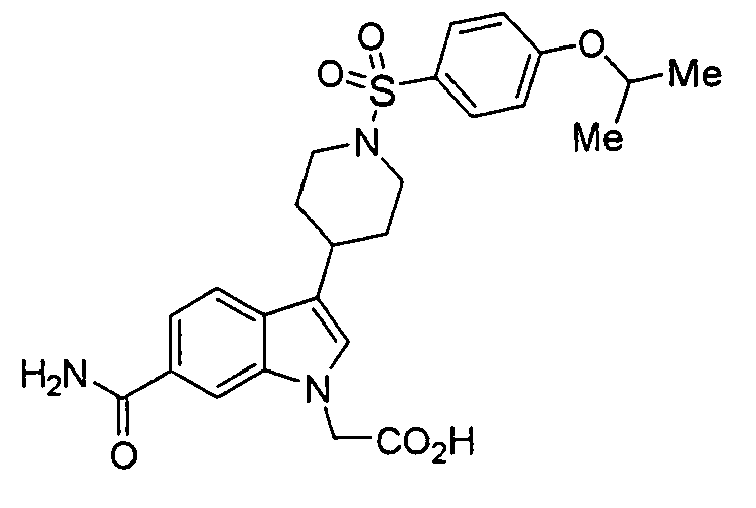
(DMSO-d6) 1.32 (6.0H, d, J = 6.00 Hz), 1.57-1.73 (2.0H, m), 1.98-2.06 (2.0H, m), 2.33-2.42 (2.0H, m), 2.73-2.83 (1.0H, m), 3.70-3.79 (2.0H, m), 4.77 (1.0H, tt, J = 6.00, 6.00 Hz), 4.97 (2.0H, s), 7.16 (2.0H, d, J = 9.00 Hz), 7.18 (1.0H, br s), 7.26 (1.0H, s), 7.54 (2.0H, br s), 7.69 (2.0H, d, J = 9.00 Hz), 7.84 (1.0H, br s), 7.93 (1.0H, br s), 13.00 (1.0H, br). I-98 
(CDC13) 1.39 (6.0H, d, J = 6.00 Hz), 1.77-1.93 (2.0H, m), 2.02-2.11 (2.0H, m), 2.37-2.47 (2.0H, m), 2.69-2.81 (1.0H, m), 3.88-3.97 (2.0H, m), 4.65 (1.0H, tt, J = 6.00, 6.00 Hz), 4.90 (2.0H, s), 6.99 (2.0H, d, J = 9.00 Hz), 7.03 (1.0H, s), 7.33 (1.0H, dd, J = 8.22, 1.34 Hz), 7.54-7.61 (2.0H, m), 7.72 (2.0H, d, J = 9.00 Hz). I-99 
(d6-DMSO) 1.33(6H, d, J = 6.0 Hz), 1.68(2H, m), 2.04(2H, m), 2.40(2H, m), 2.82(1H, m), 3.76(2H, m), 4.77(1H, tt, J = 6.0 Hz, 6.0Hz), 5.05(2H, s), 7.16(2H, d, J = 9.0 Hz), 7.30(1H, d, J = 6.6 Hz), 7.57(1H, br-m), 7.66-7.75(3H, m), 8.16-8.23(2H, m), 8.71(1H, m), 13.0(1H, br). I-100 
(DMSO-d6) 1.33 (6.0H, d, J = 6.00 Hz), 1.58-1.74 (2.0H, m), 1.97-2.07 (2.0H, m), 2.35-2.46 (2.0H, m), 2.74-2.85 (1.0H, m), 3.71-3.79 (2.0H, m), 4.77 (1.0H, tt, J = 6.00, 6.00 Hz), 5.04 (2.0H, s), 7.16 (2.0H, d, J = 9.00 Hz), 7.23 (1.0H, s), 7.54-7.62 (2.0H, m), 7.66-7.72 (3.0H, m), 7.85 (1.0H, d, J = 3.19 Hz), 7.93 (1.0H, br s), 12.97 (1.0H, br s). [Table 21] Compound No. Structure 1H-NMR, δppm Other phisical properties I-101 
(CDC13) 1.38 (6H, dd, J = 6.0, 1.9 Hz), 1.94-2.05 (1H, m), 2.20-2.29 (1H, m), 3.32 (1H, dd, J = 9.5, 7.5 Hz), 3.37-3.57 (3H, m), 3.77 (1H, dd, J = 9.5, 7.4 Hz), 4.58-4.67 (1H, m), 4.80 (2H, s), 6.47 (1H, dd, J = 3.4, 1.8 Hz), 6.63 (1H, d, J = 3.2 Hz), 6.67 (1H, s), 6.94 (2H, d, J = 8.8 Hz), 7.40 (2H, d, J = 0.8 Hz), 7.45 (1H, d, J = 1.4 Hz), 7.49 (1H, s), 7.76 (2H, d, J = 8.8 Hz). I-102 
(DMSO-d6) 1.33 (6.0H, d, J = 6.04 Hz), 1.58-1.75 (2.0H, m), 1.95-2.06 (2.0H, m), 2.34-2.46 (2.0H, m), 2.72-2.86 (1.0H, m), 3.70-3.80 (2.0H, m), 4.77 (1.0H, tt, J = 6.00, 6.00 Hz), 4.78 (2.0H, s), 7.16 (2.0H, d, J = 9.00 Hz), 7.25 (1.0H, s), 7.56-7.64 (2.0H, m), 7.69 (2.0H, d, J = 9.00 Hz), 7.94 (1.0H, br s), 9.51 (1.0H, s). I-103 
(CDC13) 1.42 (6H, d, J = 6.0 Hz), 1.97-2.09 (1H, m), 2.27-2.37 (1H, m), 3.35 (1H, dd, J = 9.7, 7.6 Hz), 3.40-3.64 (3H, m), 3.82 (1H, dd, J = 9.7, 7.4 Hz), 4.64-4.72 (1H, m), 4.90 (2H, s), 6.93 (1H, s), 7.01 (2H, d, J = 8.9 Hz), 7.37-7.41 (1H, m), 7.57 (1H, d, J = 8.4 Hz), 7.77-7.84 (4H, m), 8.29-8.33 (1H, m). I-104 
(DMSO-d6) 1.33 (6.0H, d, J = 6.00 Hz), 1.57-1.75 (2.0H, m), 1.96-2.07 (2.0H, m), 2.33-2.47 (2.0H, m), 2.73-2.87 (1.0H, m), 3.70-3.80 (2.0H, m), 4.76 (1.0H, tt, J = 6.00, 6.00 Hz), 5.05 (2.0H, s), 7.15 (2.0H, d, J = 9.00 Hz), 7.26 (1.0H, s), 7.32 (1.0H, d, J = 0.92 Hz), 7.62 (2.0H, d, J = 0.92 Hz), 7.68 (2.0H, d, J = 9.00 Hz), 7.92 (1.0H, br s), 8.15 (1.0H, d, J = 0.76 Hz), 13.0 (1.0H, br s). I-105 
(DMSO-d6) 1.29 (d, 6H, J = 6.0 Hz), 1.75-1.82 (m, 1H), 2.18-2.22 (m, 1H), 3.07 (t, 1H, J = 8.7 Hz), 3.21 (s, 3H), 3.24-3.43 (m, 3H), 3.67 (dd, 1H, J = 8.4, 9.6 Hz), 4.72-4.78 (m, 1H), 4.92 (s, 2H), 6.82 (brs, 1H), 7.09-7.20 (m, 4H), 7.35 (d, J = 8.72 Hz, 1H), 7.45 (d, 1H, J = 2.4 Hz), 7.75 (d, 2H, J = 8.7 Hz) [Table 22] Compound No. Structure 1H-NMR δppm Other phisical properties I-106 
(CDC13) 1.39 (d, 6H, J = 6.0 Hz), 1.89-2.01 (m, 1H), 2.19-2.29 (m, 1H), 3.31 (dd, 1H, J = 7.5, 9.6 Hz), 3.36-3.51 (m, 3H), 3.74 (dd, 1H, J = 6.9, 9.3 Hz), 4.65 (m, 1H), 4.73 (s, 2H), 6.97 (d, 2H, J = 8.7 Hz), 7.10 (d, 2H, J = 9.0 Hz), 7.17 (dd, 1H, J = 2.1, 8.7 Hz), 7.40 (s, 1H), 7.78 (d, 2H, J = 9.0 Hz) I-107 
(CDCl3) 1.38(6H, d, J = 6.0 Hz), 1.95(1H, m), 2.11-2.29(3H, m), 2.66(2H, t, J = 8.1 Hz), 3.28(1H, dd, J = 7.8 Hz, 9.6 Hz), 3.35-3.54(3H, m), 3.76(1H, dd, J = 7.2 Hz, 9.6 Hz), 3.92(2H, t, J = 6.9 Hz), 4.64(1H, tt, J = 6.0 Hz, 6.0 Hz), 4.73(2H, s), 6.68(1H, d, J = 0.6 Hz), 6.93-7.00(3H, m), 7.40(1H, d, J = 8.4 Hz), 7.74-7.79(3H, m). [Table 23] Compond No. Structure Compond No. Structure II-1 
II-7 
II-2 
II-8 
II-3 
II-9 
II-4 
II-10 
II-5 
II-11 
[Table 24] Compond No. Structure Compond No. Structure II-6 
II-12 
II-13 
II-19 
II-14 
II-20 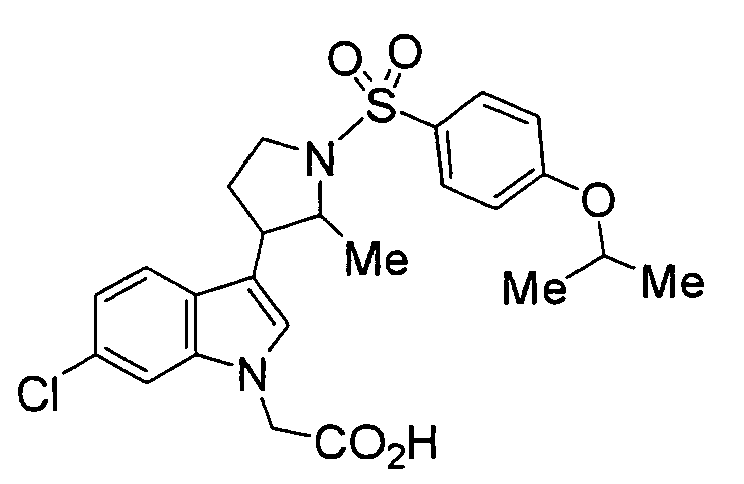
II-15 
II-21 
II-16 
II-22 
[Table 25] Compond No. Structure Compond No. Structure II-17 
II-23 
II-18 
II-24 
II-25 
II-31 
II-26 
II-32 
II-27 
II-33 
[Table 26] Compond No. Structure Compond No. Structure II-28 
II-34 
II-29 
II-35 
II-30 
II-36 
II-37 
II-43 
II-38 
II-44 
[Table 27] Compond No. Structure Compond No. Structure II-39 
II-45 
II-40 
II-46 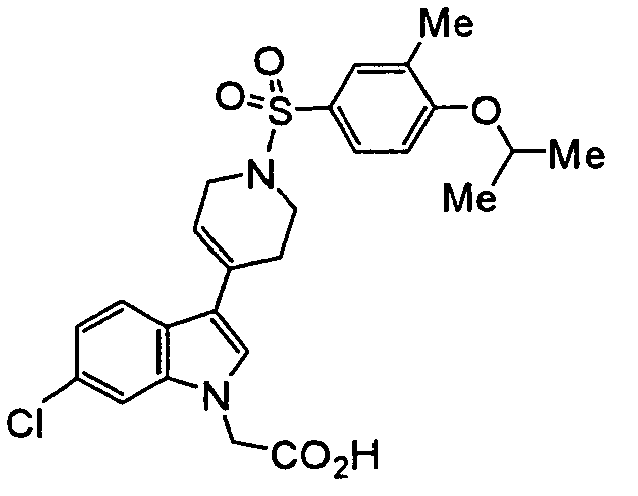
II-41 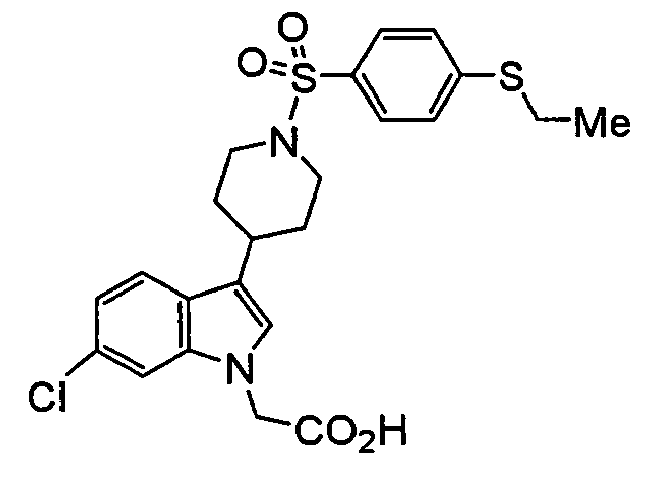
II-47 
II-42 
II-48 
II-49 
II-55 
[Table 28] Compond No. Structure Compond No. Structure II-50 
II-56 
II-51 
II-57 
II-52 
II-58 
II-53 
II-59 
II-54 
II-60 
[Table 29] Compond No. Structure Compond No. Structure II-61 
II-67 
II-62 
II-68 
II-63 
II-69 
II-64 
II-70 
II-65 
II-71 
[Table 30] Compond No. Structure Compond No. Structure II-66 
II-72 
II-73 
II-79 
II-74 
11-80 
II-75 
II-81 
II-76 
II-82 
[Table 31] Compond No. Structure Compond No. Structure II-77 
II-83 
II-78 
II-84 
II-85 
II-91 
II-86 
II-92 
II-87 
II-93 
[Table 32] Compond No. Structure Compond No. Structure II-88 
II-94 
II-89 
II-95 
II-90 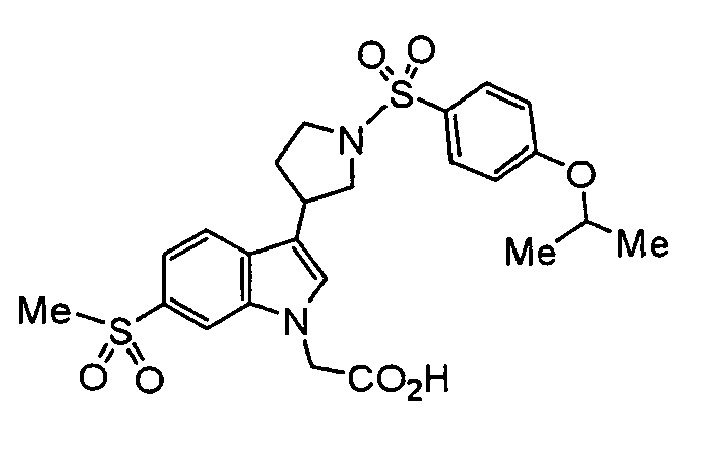
II-96 
II-97 
II-103 
II-98 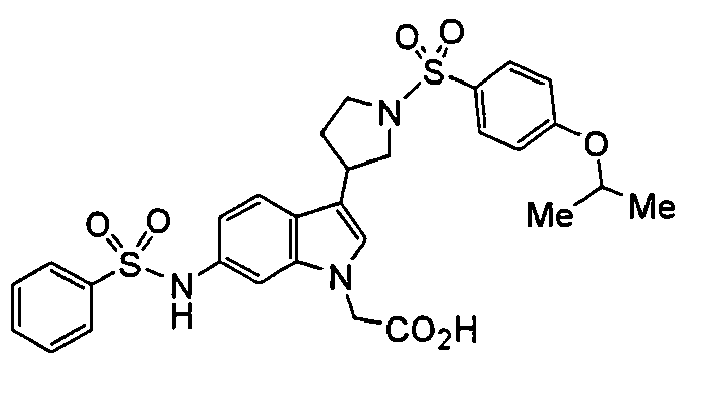
II-104 
[Table 33] Compond No. Structure Compond No. Structure II-99 
II-105 
II-100 
II-106 
II-101 
11-107 
II-102 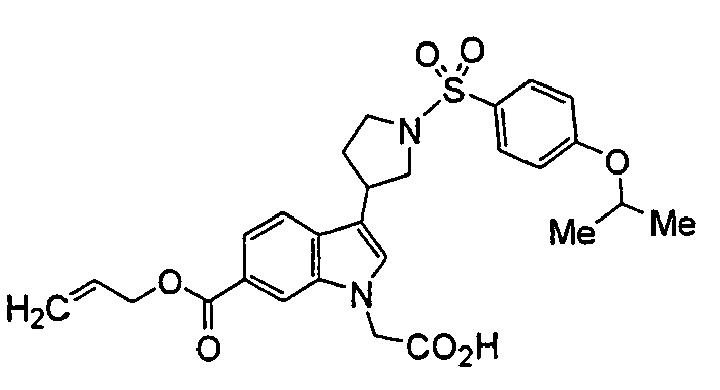
II-108 
II-109 
II-115 
[Table 34] Compond No. Structure Compond No. Structure II-110 
II-116 
II-111 
II-117 
II-112 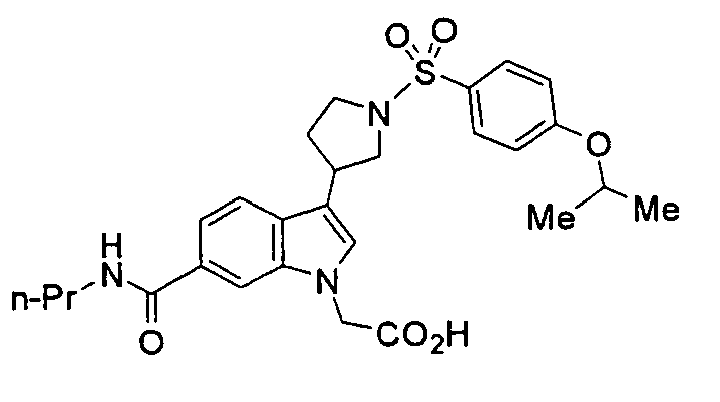
II-118 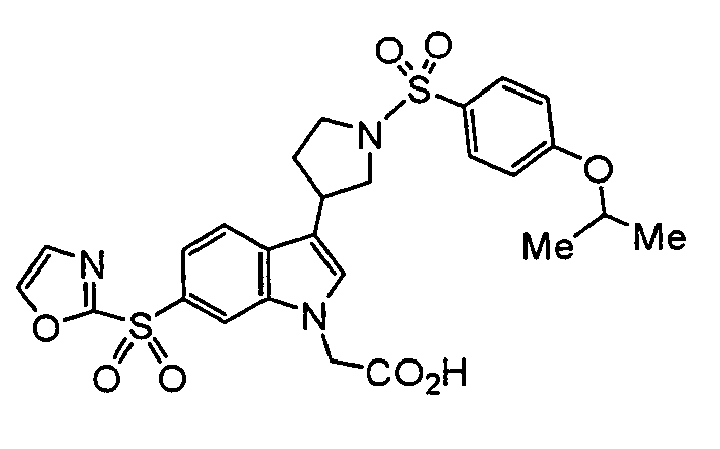
II-113 
II-119 
II-114 
II-120 
[Table 35] Compond No. Structure Compond No. Structure II-121 
II-126 
II-122 
II-127 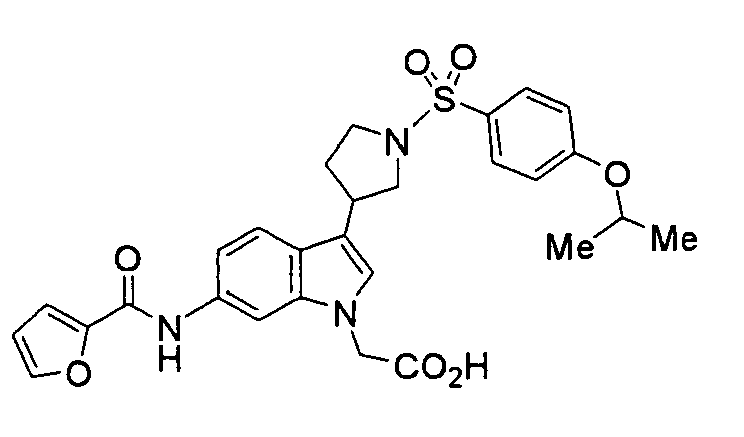
II-123 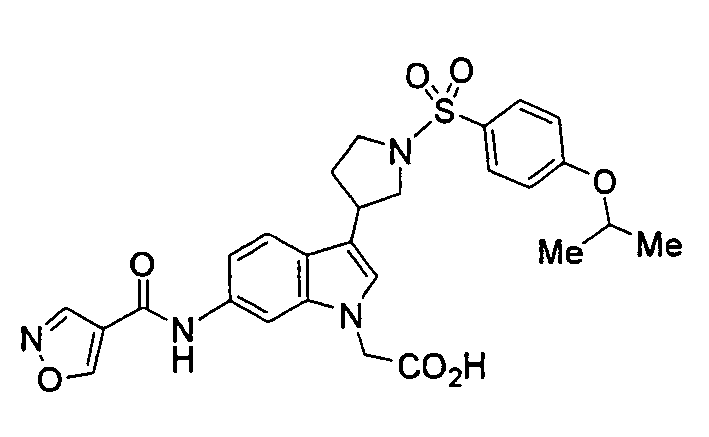
II-128 
II-124 
II-129 
II-125 
II-130 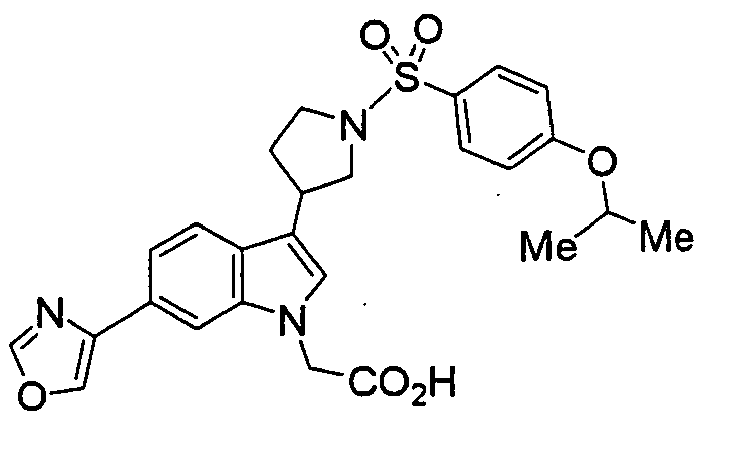
[Table 36] Compond No. Structure Compond No. Structure II-131 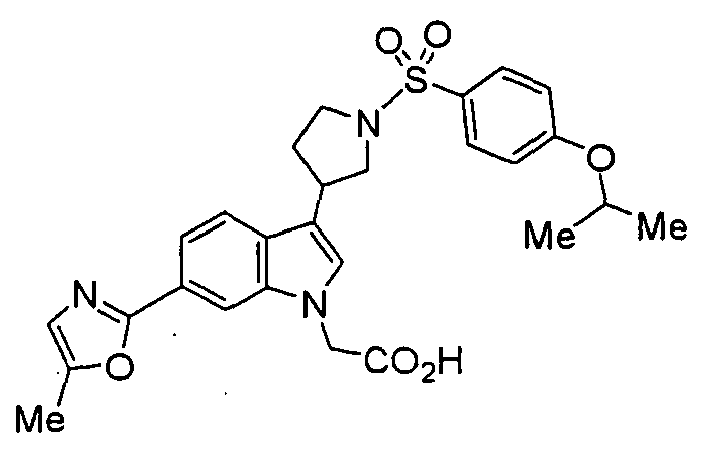
II-132 
II-133 
II-134 
II-135 
II-136 
II-137 
II-138 
II-139 
II-140 
- 30 ml of peripheral blood was collected from a healthy volunteer using a syringe containing one ninth amount of 3.8 % sodium citrate for diagnosis. After being centrifuged at 180 g for 10 minutes at room temperature, a supernatant was collected and used as Platelet Rich Plasma(PRP). The resulting PRP was washed with wash buffer and centrifuged three times(Washed Platelet: WP) and platelets were counted by a microcell counter. WP was added to a plate in amount of 1.5 x 10⁸/assay and the plate was treated with 3-isobutyl-1-methylxanthin(IBMX; 0.5 mM) for 5 minutes. A reaction was initiated by adding 100 nM of PGD2 5 min after an addition of a test compound. The reaction was terminated with an addition of IN HCl after 2 minutes and the cells were destructed using 12 % triton X-100. An amount of cAMP in the supernatant was assayed by Homogeneous Trangient Fluorescence(HTRF)
- A prepared WP was homogenated and a membrane fraction was collected with high-speed centrifugation. A compound of the present invention or a reference compound A(No. IC-73 in
WO 2003/097598 ) was added to the plate and [3H]-PGD2 was also added. A platelet membrane, a protein concentration is 2 mg/mL, was added and mixed in the plate, and placed on ice for 2 hours. The reaction solution was transferred to a low protein-adsorptive filter and washed with a wash solution eight times using a cell harvester. After the final washing, water was removed sufficiently, and micoscinti was added. DP inhibitory activity was investigated by measuring [3H] by using Micro Beta. - 50% DP-inhibitory concentrations (IC50) in the cAMP assay and Ki values in the receptor binding assay were shown in Table 29.
- Agonistic and antagonistic activities of the compounds of the present invention were evaluated based on intracellular calcium flux or cAMP-production as an indicator using HEK 293 cells expressing human EP1, EP2, EP3, EP4, FP, TP and IP respectively. Any compounds did not show an agonistic activity against each prostanoid. In the other hand, more than twenty times potent antagonistic activity(IC50) was found in every compound compared with IC50 of cAMP assay with WP.
[Table 37] No. of compounds IC50 (nM) Ki (nM) No. of compounds IC50 (nM) Ki (nM) I-3 1.3 1.3 I-77 0.62 0.37 I-9 2.3 4.5 I-78 1.2 I-10 1.0 2.5 I-79 0.19 0.91 I-14 0.98 2.1 I-80 1.4 I-19 1.3 4.2 I-81 0.86 I-23 1.9 2.2 I-86 1.3 I-34 2.3 3.4 I-88 1.2 2.5 I-38 2.0 4.7 I-93 0.50 0.24 I-45 1.5 19 I-96 0.23 0.21 I-59 1.1 I-98 0.97 I-60 0.73 3.5 I-99 1.9 I-65 0.34 2.3 I-100 1.9 I-66 1.9 I-101 0.27 0.21 I-67 1.4 I-102 0.56 I-72 2.2 I-103 0.14 20 I-73 2.0 I-104 1.2 1.3 I-74 1.9 I-107 2.3 I-75 1.7 0.66 Reference compound A 23 
- Brown Norway(BN) Rats were sensitized by i.p. administration of 0.1 mg/mL of ovalbumin(OVA) and 1 mg of aluminum hydroxide gel. A solution of 1% OVA was aerosolized by ultrasonic nebulizer(NE-U17) and the rats were subjected to inhalation exposure of the aerosol for 30 minutes in an exposing chamber 12, 19, 26 and 33 days after the sensitization. One hour before the 4th exposure of the antigen, compounds of the present invention were administered in a dose of 10 mg/kg p.o. once a day for three days consecutively. In a control group, 0.5% of methyl cellulose was administered in place of the compound of the present invention.
- Under pentobarbital anesthesia(80 mg/kg, i.p.), acetylcholine(3.9, 7.8, 15.6, 31.3, 62.5, 125, 250 and 500 µg/kg) was injected to jugular vein of the rats successively from a lower dose at intervals of 5 minutes three days after the fourth exposure to the antigen, and immediate contractile reaction of airways(an increase of insufflation pressure) was measured by a modified method of Konnzett & Rössler. Inhibition rate of increased hyperresponsive airway against the control group was calculated based on area under curve(AUC) obtained from concentration-response curve of acetylcholine.
- After the measurement of increased hyperresponsive airway was completed, bronchoalveoli of the rats were washed with 5 mL of saline three times. Total cell number in the washings was counted by a hemacytometer under light microscope, and inhibition rates of infiltration of inflammatory cells against the control group were calculated. Further, muchin in the airway lavage fluid was measured by ELIZA method using jacalin, a muchin-binding lectin, and the inhibition rates of mucus-secretion against the control group were calculated.
- Results were shown in Table 38.
[Table 38] No. of compounds dose (mg/kg) inhibition rate (%) increased hyperresponsive airway infiltration of inflammatory cells mucus-secretion I-14 10 31 57 55 I-65 10 62 61 40 I-75 10 58 71 77 I-77 10 110 28 72 I-82 10 59 35 47 I-103 10 71 58 52 - Methods of measuring nasal airway resistance and evaluating anti-nasal congestion activity using a rat were illustrated below.
- A 1% solution of ovalbumin(OVA) was aerosolized by ultrasonic nebulizer, a male Hartley guinea pigs was sensitized by inhalation of the aerosol for 10 minutes twice at an interval of a week and a reaction was initiated by exposure to the antigen 7 days later. Trachea of the guinea pig was incised under pentobarbital anesthesia(30 mg/kg, i.p.), and cannulae were fitted at the sides of nasal cavity and lung respectively. To the lung side, a ventilator supplying 4 mL of air every time at a rate of 60 times/min was connected. Spontaneous breathing of the guinea pig was stopped by the administration of gallamine(2 mg/kg, i.v.) and 4 mL of air every time was supplied at a rate of 70 times/minute to rostrum of nose through the cannula of the nasal side using a ventilator. Air pressure necessary for supplying the air was measured by a transducer fitted at the side branch and used as an indicator for resistance of nasal cavity. Exposure to the antigen was performed by generating the aerosol of 3% OVA solution between the ventilator and the nasal cavity cannula for three minutes. Compounds of the present invention were administered intravenously 10 minutes before the exposure to the antigen. Resistance of nasal cavity was continuously measured during a period from 0 to 30 minutes, and the inhibition rate against the vehicle was obtained based on AUC of the 30 minutes, which was recorded with resistance of nasal cavity(cm H2O) as a longitudinal axis, and time(from 0 to 30 min.) as an abscissa axis.
- The following formulating examples are just for illustrative purposes and not intended to limit the range of the present invention. A term of "active ingredient" means the compounds of the present invention, pharmaceutically acceptable salt or hydrate thereof.
- A hard-gelatin capsule is prepared with the following ingredients;
Amount (mg/capsule) active ingredient 250 starch (dried) 200 magnesium stearate 10 Total 460 mg - A tablet is prepared with the following ingredients;
Amount (mg/tablet) active ingredient 250 cellulose(micro crystalline) 400 silicon dioxide (fume) 10 stearic acid 5 Total 665 mg - An aerosol solution is prepared with the following ingredients;
weight active ingredient 0.25 ethanol 25.75 propellant 22(chlorodifluoroethane) 74.00 Total 100.00 - The active ingredient and ethanol are mixed and the mixture is added to a part of propellant 22, and the resulting solution is transferred to a filling apparatus after being cooled to -30°C. Next, the necessary amount is provided to a stainless-steel vessel and the content is diluted with the remaining propellant. A valve unit is fitted to the vessel.
- A tablet containing 60 mg of an active ingredient is prepared as follows;
active ingredient 60 mg starch 45 mg microcrystalline cellulose 35 mg polyvinylpyrrolidone (10% aq. solution) 4 mg sodium carboxymethylstarch 4.5 mg magnesium stearate 0.5 mg talc 1 mg Total 150 mg - The active ingredient, starch and cellulose are put through a sieve of No. 45 mesh US and mixed sufficiently. The resulting powder is mixed with a solution containing polyvinylpyrrolidone and the mixture is put through a sieve of No. 14 mesh US. The granulated powder is dried at 50°C and put through a sieve of No.18 mesh US. Sodium carboxymethylstarch, magnesium stearate and talc are put through a sieve of No.60 mesh US in advance and added to the granulated powder, mixed and compressed by a tableting machine to give a tablet weighing 150 mg/tablet.
- A capsule containing 80 mg of an active ingredient is prepared as follows;
active ingredient 80 mg starch 59 mg microcrystalline cellulose 59 mg magnesium stearate 2 mg Total 200 mg - The active ingredient, starch, cellulose and magnesium stearate are mixed, put through a sieve of No.45 mesh US and filled in hard-gelatin capsules to give a capsule formulation containing 200 mg/capsule.
- A suppository containing 225 mg of an active ingredient is prepared as follows;
active ingredient 225 mg saturated fatty acid gliceride 2000 mg Total 2225 mg - The active ingredient is put through a sieve of No.60 mesh US and suspended in the saturated fatty acid gliceride melted by the least amount of heating. Then, the mixture was cooled in a mold of 2 g in appearance.
- A suspension containing 50 mg of an active ingredient is prepared as follows;
active ingredient 50 mg sodium carboxymethylcellulose 50 mg syrup 1.25 ml solution of benzoic acid 0.10 ml flavor q.v. pigment q.v. Total (adding purified water) 5 ml - The active ingredient is put through a sieve of No.45 mesh US and mixed with sodium carboxymethylcellulose and syrup to give a smooth paste. The solution of benzoic acid and flavor are diluted with a part of water and added to the paste and stirred. A necessary amount of water is added to give the objective suspension.
- A formulation for i.v. injection is prepared as follows;
active ingredient 100 mg saturated fatty acid gliceride 1000 ml - The solution containing the active ingredient above is usually injected intravenously to a patient at a rate of 1 ml/min.
- It was found that a novel indole derivative had a DP receptor antagonistic activity and was effective on treating allergic diseases.
Claims (17)
- A compound of the generic formula (I):
 the ring B is a 3- to 8-membered nitrogen-containing non-aromatic heterocyclic ring or a 3- to 8-membered nitrogen-containing aromatic heterocyclic ring;R1, R2, R3, R4 and R5 are independently a hydrogen atom, a halogen atom, optionally substituted alkyl, optionally substituted alkenyl, optionally substituted alkynyl, optionally substituted cyloalkyl, optionally substituted cyloalkenyl, hydroxy, optionally substituted alkyloxy, optionally substituted alkenyloxy, optionally substituted alkynyloxy, optionally substituted cycloalkyloxy, optionally substituted cycloalkenyloxy, mercapto, optionally substituted alkylthio, optionally substituted alkenylthio, optionally substituted alkynylthio, optionally substituted alkylsulfinyl, optionally substituted alkylsulfonyl, optionally substituted alkylsulfonyloxy, optionally substituted cycloalkylthio, optionally substituted cycloalkylsulfinyl, optionally substituted cycloalkylsulfonyl, optionally substituted cycloalkylsulfonyloxy, optionally substituted cycloalkenylthio, optionally substituted cycloalkenylsulfinyl, optionally substituted cycloalkenylsulfonyl, optionally substituted cycloalkenylsulfonyloxy, optionally substituted amino, acyl, optionally substituted alkyloxycarbonyl, optionally substituted alkenyloxycarbonyl, optionally substituted alkynyloxycarbonyl, optionally substituted carbamoyl, optionally substituted sulfamoyl, cyano, nitro, optionally substituted aryl, optionally substituted aryloxy, optionally substituted arylthio, optionally substituted arylsulfinyl, optionally substituted arylsulfony, optionally substituted arylsulfonyoxy, optionally substituted heteroaryl, optionally substituted heteroaryloxy, optionally substituted heteroarylthio, optionally substituted heteroarylsulfinyl, optionally substituted heteroarylsulfonyl, optionally substituted heteroarylsulfonyloxy, or an optionally substituted non-aromatic heterocyclic group;R6 is C2-C6 alkyloxy, substituted C1-C6 alkyloxy, optionally substituted C2-C6 alkenyloxy, optionally substituted C2-C6 alkynyloxy, optionally substituted C3-C6 cycloalkyloxy, optionally substituted C3-C6 cycloalkenyloxy, optionally substituted aryloxy, optionally substituted heteroaryloxy, C2-C6 alkylthio, substituted C1-C6alkylthio, optionally substituted C2-C6 alkenylthio, optionally substituted C2-C6 alkynylthio, optionally substituted C3-C6 cycloalkylthio, optionally substituted C3-C6 cycloalkenylthio, optionally substituted arylthio, or optionally substituted heteroarylthio;R7 is independently a halogen atom, optionally substituted alkyl, optionally substituted alkenyl, optionally substituted alkynyl, optionally substituted cycloalkyl, optionally substituted cycloalkenyl, hydroxy, optionally substituted alkyloxy, optionally substituted alkenyloxy, optionally substituted alkynyloxy, optionally substituted cycloalkyloxy, optionally substituted cycloalkenyloxy, mercapto, optionally substituted alkylthio, optionally substituted alkenylthio, optionally substituted alkynylthio, optionally substituted alkylsulfinyl, optionally substituted alkylsulfonyl, optionally substituted alkylsulfonyloxy, optionally substituted cycloalkylthio, optionally substituted cycloalkylsulfinyl, optionally substituted cycloalkylsulfonyl, optionally substituted cycloalkylsulfonyloxy, optionally substituted cycloalkenylthio, optionally substituted cycloalkenylsulfinyl, optionally substituted cycloalkenylsulfonyl, optionally substituted cycloalkenylsulfonyloxy, optionally substituted amino, acyl, optionally substituted alkyloxycarbonyl, optionally substituted alkenyloxycarbonyl, optionally substituted alkynyloxycarbonyl, optionally substituted carbamoyl, optionally substituted sulfamoyl, cyano, nitro, optionally substituted aryl, optionally substituted aryloxy, optionally substituted arylthio, optionally substituted arylsulfinyl, optionally substituted arylsulfonyl, optionally substituted arylsulfonyloxy, optionally substituted heteroaryl, optionally substituted heteroaryloxy, optionally substituted heteroarylthio, optionally substituted heteroarylsulfinyl, optionally substituted heteroarylsulfonyl, optionally substituted heteroarylsulfonyloxy, or optionally substituted non-aromatic heterocyclic group;R8 is independently a halogen atom, optionally substituted alkyl, optionally substituted alkenyl, optionally substituted alkynyl, optionally substituted cycloalkyl, optionally substituted alkyloxy, oxo, optionally substituted aryl, optionally substituted heteroaryl or optionally substituted non-aromatic heterocyclic group;R9 is carboxy, optionally substituted alkylcarbonyl, optionally substituted carbamoyl or carboxy equivalent;M is carbonyl or sulfonyl;Y is a single bond, optionally substituted alkylene which may contain one or two heteroatom(s), an oxygen atom, a sulfur atom or -N(R10)-.L1, L2 and L3 are independently a single bond, optionally substituted alkylene which may contain one or two heteroatom(s), optionally substituted alkenylene which may contain one or two heteroatom(s), optionally substituted alkynylene which may contain one or two heteroatom(s) or -N(R11)-.R10 and R11 are independently a hydrogen atom, optionally substituted alkyl, optionally substituted alkenyl, optionally substituted alkynyl, optionally substituted cycloalkyl, acyl, optionally substituted alkyloxy, optionally substituted aryl, optionally substituted heteroaryl, or optionally substituted non-aromatic heterocyclic group;n is 0, 1 or 2; andq is 0, 1, 2 or 3 provided that R9 is not optionally substituted carbamoyl when all of R1, R2, R3, R4 and R5 are hydrogen atoms;a pharmaceutically acceptable salt or hydrate thereof;
 - A compound of the generic formula (II):


 R1, R2, R3, R4 and R5 are independently a hydrogen atom, halogen atom, optionally substituted alkyl, optionally substituted alkenyl, optionally substituted alkynyl, optionally substituted cycloalkyl, optionally substituted cycloalkenyl, hydroxy, optionally substituted alkyloxy, optionally substituted alkenyloxy, optionally substituted alkynyloxy, optionally substituted cycloalkyloxy, optionally substituted cycloalkenyloxy, mercapto, optionally substituted alkylthio, optionally substituted alkenylthio, optionally substituted alkynylthio, optionally substituted alkylsulfinyl, optionally substituted alkylsulfonyl, optionally substituted alkylsulfonyloxy, optionally substituted cycloalkylthio, optionally substituted cycloalkylsulfinyl, optionally substituted cycloalkylsulfonyl, optionally substituted cycloalkylsulfonyloxy, optionally substituted cycloalkenylthio, optionally substituted cycloalkenylsulfinyl, optionally substituted cycloalkenylsulfonyl, optionally substituted cycloalkenylsulfonyloxy, optionally substituted amino, acyl, optionally substituted alkyloxycarbonyl, optionally substituted alkenyloxycarbonyl, optionally substituted alkynyloxycarbonyl, optionally substituted carbamoyl, optionally substituted sulfamoyl, cyano, nitro, optionally substituted aryl, optionally substituted aryloxy, optionally substituted arylthio, optionally substituted arylsulfinyl, optionally substituted arylsulfonyl, optionally substituted arylsulfonyloxy, optionally substituted heteroaryl, optionally substituted heteroaryloxy, optionally substituted heteroarylthio, optionally substituted heteroarylsulfinyl, optionally substituted heteroarylsulfonyl, optionally substituted heteroarylsulfonyloxy, or optionally substituted non-aromatic heterocyclic group;R12 is C2-C6 alkyloxy, substituted C1-C6 alkyloxy, optionally substituted C2-C6 alkenyloxy, optionally substituted C2-C6 alkynyloxy, optionally substituted C3-C6 cycloalkyloxy, optionally substituted aryloxy, optionally substituted heteroaryloxy, C2-C6 alkylthio, substituted C1-C6alkylthio, optionally substituted C2-C6 alkenylthio, optionally substituted C2-C6 alkynylthio, optionally substituted C3-C6 cycloalkylthio, optionally substituted arylthio, or optionally substituted heteroarylthio;R13 is independently a halogen atom, optionally substituted alkyl, optionally substituted cycloalkyl, optionally substituted amino, acyl, optionally substituted alkyloxycarbonyl, optionally substituted carbamoyl, optionally substituted sulfamoyl, cyano, nitro, optionally substituted aryl, optionally substituted arylsulfonyloxy, optionally substituted heteroaryl or optionally substituted non-aromatic heterocyclic group;R14 is independently optionally substituted alkyl, optionally substituted alkenyl, optionally substituted alkynyl, oxo, optionally substituted aryl, optionally substituted heteroaryl, or optionally substituted non-aromatic heterocyclic group;M is carbonyl or sulfoyl;Y and L4 is independently a single bond or optionally substituted alkylene which may contain one or two heteroatom(s);Z is CH, C(R13) or N;n is 0, 1 or 2; andq is 0, 1 or 2;a pharmaceutically acceptable salt or hydrate thereof.
 - A compound of claim 2 wherein M is sulfonyl,
a pharmaceutically acceptable salt or hydrate thereof. - A compound of claim 2 wherein R12 is C2-C6 alkyloxy, substituted C1-C6 alkyloxy, C2-C6 alkylthio or substituted C1-C6 alkylthio;
a pharmaceutically acceptable salt or hydrate thereof. - A compound of claim 2 wherein R3 is a hydrogen atom, a halogen atom, optionally substituted alkyl, optionally substituted cycloalkyl, , optionally substituted alkyloxy, optionally substituted amino, optionally substituted carbamoyl, optionally substituted aryl, optionally substituted heteroaryl or optionally substituted non-aromatic heterocyclic group;
a pharmaceutically acceptable salt or hydrate thereof. - A compound of claim 2 wherein R13 is a halogen atom, optionally substituted alkyl or optionally substituted alkyloxy and q is 0 or 1;
a pharmaceutically acceptable salt or hydrate thereof. - A compound of claim 2 wherein the ring C is a formula of

- A compound of claim 2 wherein Y is a single bond and n is 0;
a pharmaceutically acceptable salt or hydrate thereof. - A compound of any of claims 2-8 wherein L4 is optionally substituted C1-C6 alkylene;
a pharmaceutically acceptable salt or hydrate thereof. - A pharmaceutical composition comprising the compound of any of claim 1-9, a pharmaceutically acceptable salt or hydrate thereof.
- A pharmaceutical composition of claim 10 which is a DP receptor antagonist.
- A pharmaceutical composition of claim 10 which is a therapeutic agent for allergic diseases.
- A pharmaceutical composition of claim 12 wherein the therapeutic agent for allergic diseases is a medicine for asthma.
- A method for treating a disease related to DP receptor characterized by administering the compound of any of claims 1-9, pharmaceutically acceptable salt or hydrate thereof.
- A method of claim 14 wherein the disease related to DP receptor is asthma.
- Use of the compound of any of claims 1-9, pharmaceutically acceptable salt or hydrate thereof, in the manufacturing of a therapeutic agent for treating diseases related to DP receptor.
- Use of the compound, its pharmaceutically acceptable salt or hydrate of claim 16 wherein the disease related to DP receptor is asthma.
Priority Applications (1)
| Application Number | Priority Date | Filing Date | Title |
|---|---|---|---|
| EP11006268A EP2397476A3 (en) | 2005-07-22 | 2006-07-20 | Indole derivative having PGD2 receptor antagonist activity |
Applications Claiming Priority (2)
| Application Number | Priority Date | Filing Date | Title |
|---|---|---|---|
| JP2005212874 | 2005-07-22 | ||
| PCT/JP2006/314345 WO2007010964A1 (en) | 2005-07-22 | 2006-07-20 | Indole derivative having pgd2 receptor antagonist activity |
Related Child Applications (2)
| Application Number | Title | Priority Date | Filing Date |
|---|---|---|---|
| EP11006268A Division EP2397476A3 (en) | 2005-07-22 | 2006-07-20 | Indole derivative having PGD2 receptor antagonist activity |
| EP11006268.4 Division-Into | 2011-07-29 |
Publications (3)
| Publication Number | Publication Date |
|---|---|
| EP1916245A1 true EP1916245A1 (en) | 2008-04-30 |
| EP1916245A4 EP1916245A4 (en) | 2009-10-28 |
| EP1916245B1 EP1916245B1 (en) | 2011-10-26 |
Family
ID=37668836
Family Applications (2)
| Application Number | Title | Priority Date | Filing Date |
|---|---|---|---|
| EP06781305A Not-in-force EP1916245B1 (en) | 2005-07-22 | 2006-07-20 | Indole derivative having pgd2 receptor antagonist activity |
| EP11006268A Withdrawn EP2397476A3 (en) | 2005-07-22 | 2006-07-20 | Indole derivative having PGD2 receptor antagonist activity |
Family Applications After (1)
| Application Number | Title | Priority Date | Filing Date |
|---|---|---|---|
| EP11006268A Withdrawn EP2397476A3 (en) | 2005-07-22 | 2006-07-20 | Indole derivative having PGD2 receptor antagonist activity |
Country Status (6)
| Country | Link |
|---|---|
| US (1) | US7956082B2 (en) |
| EP (2) | EP1916245B1 (en) |
| JP (1) | JP5072594B2 (en) |
| ES (1) | ES2372701T3 (en) |
| TW (1) | TWI318626B (en) |
| WO (1) | WO2007010964A1 (en) |
Cited By (6)
| Publication number | Priority date | Publication date | Assignee | Title |
|---|---|---|---|---|
| WO2009093026A1 (en) * | 2008-01-22 | 2009-07-30 | Oxagen Limited | Compounds having crth2 antagonist activity |
| US8697869B2 (en) | 2010-03-22 | 2014-04-15 | Actelion Pharmaceuticals Ltd. | 3-(heteroaryl-amino)-1,2,3,4-tetrahydro-9H-carbazole derivatives and their use as prostaglandin D2 receptor modulators |
| US9096595B2 (en) | 2011-04-14 | 2015-08-04 | Actelion Pharmaceuticals Ltd | 7-(heteroaryl-amino)-6,7,8,9-tetrahydropyrido[1,2-a]indol acetic acid derivatives and their use as prostaglandin D2 receptor modulators |
| US9850241B2 (en) | 2014-03-18 | 2017-12-26 | Idorsia Pharmaceuticals Ltd | Azaindole acetic acid derivatives and their use as prostaglandin D2 receptor modulators |
| US9879006B2 (en) | 2014-03-17 | 2018-01-30 | Idorsia Pharmaceuticals Ltd | Azaindole acetic acid derivatives and their use as prostaglandin D2 receptor modulators |
| US10351560B2 (en) | 2015-09-15 | 2019-07-16 | Idorsia Pharmaceuticals Ltd | Crystalline forms |
Families Citing this family (25)
| Publication number | Priority date | Publication date | Assignee | Title |
|---|---|---|---|---|
| GB0400895D0 (en) * | 2004-01-15 | 2004-02-18 | Smithkline Beecham Corp | Chemical compounds |
| AR050253A1 (en) | 2004-06-24 | 2006-10-11 | Smithkline Beecham Corp | COMPOSITE DERIVED FROM INDAZOL CARBOXAMIDE, COMPOSITION THAT INCLUDES IT AND ITS USE FOR THE PREPARATION OF A MEDICINAL PRODUCT |
| FR2878849B1 (en) | 2004-12-06 | 2008-09-12 | Aventis Pharma Sa | SUBSTITUTED INDOLES, COMPOSITIONS CONTAINING SAME, METHOD OF MANUFACTURE AND USE |
| US8063071B2 (en) | 2007-10-31 | 2011-11-22 | GlaxoSmithKline, LLC | Chemical compounds |
| MY147588A (en) | 2006-08-07 | 2012-12-31 | Actelion Pharmaceuticals Ltd | (3-amino-1,2,3,4-tetrahydro-9h-carbazol-9-yl)-acetic acid derivatives |
| PE20081889A1 (en) | 2007-03-23 | 2009-03-05 | Smithkline Beecham Corp | INDOL CARBOXAMIDES AS INHIBITORS OF IKK2 |
| US7750027B2 (en) | 2008-01-18 | 2010-07-06 | Oxagen Limited | Compounds having CRTH2 antagonist activity |
| US8168673B2 (en) * | 2008-01-22 | 2012-05-01 | Oxagen Limited | Compounds having CRTH2 antagonist activity |
| WO2010102968A1 (en) | 2009-03-10 | 2010-09-16 | Glaxo Group Limited | Indole derivatives as ikk2 inhibitors |
| TW201201805A (en) | 2010-07-05 | 2012-01-16 | Actelion Pharmaceuticals Ltd | 1-phenyl-substituted heterocyclyl derivatives and their use as prostaglandin D2 receptor modulators |
| EP2752410B1 (en) * | 2011-10-25 | 2016-08-31 | Shionogi & Co., Ltd. | Heterocycle derivative having pgd2 receptor antagonist activity |
| MX350516B (en) * | 2011-11-17 | 2017-09-08 | Kbp Biosciences Co Ltd | Nitrogen-containing fused ring compounds for use as crth2 antagonists. |
| CN104011021B (en) | 2011-12-21 | 2016-08-24 | 埃科特莱茵药品有限公司 | Heterocyclic derivatives and their use as prostaglandin D2 receptor modulators |
| US9169270B2 (en) | 2012-07-05 | 2015-10-27 | Actelion Pharmaceuticals Ltd. | 1-phenyl-substituted heterocyclyl derivatives and their use as prostaglandin D2 receptor modulators |
| US20140303121A1 (en) | 2013-03-15 | 2014-10-09 | Plexxikon Inc. | Heterocyclic compounds and uses thereof |
| HRP20181392T1 (en) * | 2013-03-15 | 2018-10-19 | Plexxikon Inc. | HETEROCYCLIC COMPOUNDS AND THEIR USE |
| JP6304877B2 (en) * | 2013-04-22 | 2018-04-04 | 塩野義製薬株式会社 | A pharmaceutical composition for treating and / or preventing allergic diseases, comprising a heterocycle derivative |
| GB201407820D0 (en) | 2014-05-02 | 2014-06-18 | Atopix Therapeutics Ltd | Polymorphic form |
| GB201407807D0 (en) | 2014-05-02 | 2014-06-18 | Atopix Therapeutics Ltd | Polymorphic form |
| TWI695831B (en) * | 2014-09-13 | 2020-06-11 | 香港商南北兄弟藥業投資有限公司 | Compounds as crth2 antagonist and uses thereof |
| CN105461693B (en) * | 2014-09-26 | 2019-10-25 | 广东东阳光药业有限公司 | CRTH2 antagonist compounds and uses thereof |
| LT3209655T (en) | 2014-10-24 | 2021-01-11 | Landos Biopharma, Inc. | Lanthionine synthetase c-like 2-based therapeutics |
| US10717735B2 (en) | 2017-10-13 | 2020-07-21 | Plexxikon Inc. | Solid forms of a compound for modulating kinases |
| CN113748109B (en) | 2019-12-20 | 2023-07-21 | 朗多生物制药股份有限公司 | Lanthionine C-like protein 2 ligands, cells prepared with said ligands, and therapies using said ligands |
| US12234578B2 (en) | 2020-01-29 | 2025-02-25 | Wisconsin Alumni Research Foundation | Tannin composite fibers |
Family Cites Families (23)
| Publication number | Priority date | Publication date | Assignee | Title |
|---|---|---|---|---|
| US6469006B1 (en) | 1999-06-15 | 2002-10-22 | Bristol-Myers Squibb Company | Antiviral indoleoxoacetyl piperazine derivatives |
| US20010047027A1 (en) | 2000-04-12 | 2001-11-29 | Marc Labelle | Prostaglandin D2 receptor antagonists |
| ATE340796T1 (en) | 2001-05-23 | 2006-10-15 | Merck Frosst Canada Inc | DIHYDROPYRROLO(1,2-AÖINDOLE AND TETRAHYDROPYRIDO)1,2-AÖINDOLE DERIVATIVES AS PROSTAGLANDIN RECEPTOR ANTAGONISTS |
| KR20040044856A (en) | 2001-09-07 | 2004-05-31 | 오노 야꾸힝 고교 가부시키가이샤 | Indole derivatives |
| JP4292402B2 (en) | 2001-09-07 | 2009-07-08 | 小野薬品工業株式会社 | Indole derivative compounds, methods for producing them, and agents containing them as active ingredients |
| AR038136A1 (en) | 2002-01-24 | 2004-12-29 | Merck Frosst Canada Inc | CYCLALCANINDOLS WITH REPLACEMENT WITH FLUOR COMPOSITIONS CONTAINING THESE COMPOUNDS AND TREATMENT METHODS |
| SE0200411D0 (en) | 2002-02-05 | 2002-02-05 | Astrazeneca Ab | Novel use |
| WO2003097598A1 (en) * | 2002-05-16 | 2003-11-27 | Shionogi & Co., Ltd. | Compound exhibiting pgd 2 receptor antagonism |
| WO2003097042A1 (en) | 2002-05-16 | 2003-11-27 | Shionogi & Co., Ltd. | Pgd2 receptor antagonist |
| SE0201635D0 (en) | 2002-05-30 | 2002-05-30 | Astrazeneca Ab | Novel compounds |
| TW200307542A (en) | 2002-05-30 | 2003-12-16 | Astrazeneca Ab | Novel compounds |
| SE0202241D0 (en) | 2002-07-17 | 2002-07-17 | Astrazeneca Ab | Novel Compounds |
| BR0315681A (en) | 2002-10-30 | 2005-09-06 | Merck Frosst Canada Inc | Compound and its pharmaceutically acceptable salts and hydrates, pharmaceutical composition, methods for treating prostaglandin d2-mediated diseases, treating nasal congestion, treating allergic asthma, and treating allergic rhinitis, compound or a salt thereof or pharmaceutically acceptable solvate, salt or hydrate of the compound, and use of a compound or a pharmaceutically acceptable salt or solvate thereof |
| EP1631547A1 (en) | 2003-05-20 | 2006-03-08 | Merck Frosst Canada Ltd. | Fluoro-methanesulfonyl-substituted cycloalkanoindoles and their use as prostaglandin d2 antagonists |
| SE0301569D0 (en) | 2003-05-27 | 2003-05-27 | Astrazeneca Ab | Novel compounds |
| WO2004111047A2 (en) | 2003-06-12 | 2004-12-23 | Merck Frosst Canada Ltd. | Cycloalkanepyrrolopyridines as dp receptor antagonists |
| DE10337184A1 (en) | 2003-08-13 | 2005-03-10 | Gruenenthal Gmbh | Substituted 3-pyrrolidine-indole derivatives |
| SE0302232D0 (en) | 2003-08-18 | 2003-08-18 | Astrazeneca Ab | Novel Compounds |
| JP2007508363A (en) | 2003-10-14 | 2007-04-05 | オキサジェン リミテッド | Compound having CRTH2 antagonist activity |
| WO2005040112A1 (en) | 2003-10-14 | 2005-05-06 | Oxagen Limited | Compounds with pgd2 antagonist activity |
| GB2407318A (en) | 2003-10-23 | 2005-04-27 | Oxagen Ltd | Substituted Indol-3-yl acetic acid derivatives |
| GB0324763D0 (en) | 2003-10-23 | 2003-11-26 | Oxagen Ltd | Use of compounds in therapy |
| US7019022B2 (en) | 2003-12-15 | 2006-03-28 | Merck Frosst Canada & Co. | Substituted tetrahydrocarbazole and cyclopentanoindole derivatives |
-
2006
- 2006-07-20 US US11/989,138 patent/US7956082B2/en not_active Expired - Fee Related
- 2006-07-20 JP JP2007526043A patent/JP5072594B2/en not_active Expired - Fee Related
- 2006-07-20 WO PCT/JP2006/314345 patent/WO2007010964A1/en not_active Ceased
- 2006-07-20 EP EP06781305A patent/EP1916245B1/en not_active Not-in-force
- 2006-07-20 EP EP11006268A patent/EP2397476A3/en not_active Withdrawn
- 2006-07-20 ES ES06781305T patent/ES2372701T3/en active Active
- 2006-07-21 TW TW095126628A patent/TWI318626B/en not_active IP Right Cessation
Cited By (7)
| Publication number | Priority date | Publication date | Assignee | Title |
|---|---|---|---|---|
| WO2009093026A1 (en) * | 2008-01-22 | 2009-07-30 | Oxagen Limited | Compounds having crth2 antagonist activity |
| US8697869B2 (en) | 2010-03-22 | 2014-04-15 | Actelion Pharmaceuticals Ltd. | 3-(heteroaryl-amino)-1,2,3,4-tetrahydro-9H-carbazole derivatives and their use as prostaglandin D2 receptor modulators |
| US9096595B2 (en) | 2011-04-14 | 2015-08-04 | Actelion Pharmaceuticals Ltd | 7-(heteroaryl-amino)-6,7,8,9-tetrahydropyrido[1,2-a]indol acetic acid derivatives and their use as prostaglandin D2 receptor modulators |
| US9879006B2 (en) | 2014-03-17 | 2018-01-30 | Idorsia Pharmaceuticals Ltd | Azaindole acetic acid derivatives and their use as prostaglandin D2 receptor modulators |
| US10301309B2 (en) | 2014-03-17 | 2019-05-28 | Idorsia Pharmaceuticals Ltd | Azaindole acetic acid derivatives and their use as prostaglandin D2 receptor modulators |
| US9850241B2 (en) | 2014-03-18 | 2017-12-26 | Idorsia Pharmaceuticals Ltd | Azaindole acetic acid derivatives and their use as prostaglandin D2 receptor modulators |
| US10351560B2 (en) | 2015-09-15 | 2019-07-16 | Idorsia Pharmaceuticals Ltd | Crystalline forms |
Also Published As
| Publication number | Publication date |
|---|---|
| EP1916245B1 (en) | 2011-10-26 |
| EP2397476A2 (en) | 2011-12-21 |
| JPWO2007010964A1 (en) | 2009-01-29 |
| TW200734322A (en) | 2007-09-16 |
| ES2372701T3 (en) | 2012-01-25 |
| US7956082B2 (en) | 2011-06-07 |
| WO2007010964A1 (en) | 2007-01-25 |
| US20090030014A1 (en) | 2009-01-29 |
| EP2397476A3 (en) | 2011-12-28 |
| TWI318626B (en) | 2009-12-21 |
| EP1916245A4 (en) | 2009-10-28 |
| JP5072594B2 (en) | 2012-11-14 |
Similar Documents
| Publication | Publication Date | Title |
|---|---|---|
| EP1916245B1 (en) | Indole derivative having pgd2 receptor antagonist activity | |
| US7842692B2 (en) | Azaindole derivative having PGD2 receptor antagonistic activity | |
| JP6577537B2 (en) | Pyrazine derivatives useful as inhibitors of ATR kinase | |
| ES2861351T3 (en) | Pyrazole compounds and method of making and using the compounds | |
| US8101770B2 (en) | Pyridones useful as inhibitors of kinases | |
| US8623903B2 (en) | Indolecarboxylic acid derivative having PGD2 receptor antagonistic activity | |
| KR101289995B1 (en) | Sulfonamide derivative having pgd2 receptor antagonistic activity | |
| US10059705B2 (en) | Acyclic cyanoethylpyrazolo pyridones as janus kinase inhibitors | |
| US11168079B2 (en) | Alkene compounds as farnesoid x receptor modulators | |
| US11370785B2 (en) | Multicyclic compounds as farnesoid X receptor modulators | |
| US11286252B2 (en) | Alkene spirocyclic compounds as farnesoid X receptor modulators | |
| JPWO2016098793A1 (en) | Thiazole derivatives having a cyclic guanidyl group | |
| CN101111479A (en) | Pyridones useful as kinase inhibitors | |
| HK1111690A (en) | Pyrid-2-ones useful as inhibitors of tec family protein kinases for the treatment of inflammatory, proliferative and immunologically-mediated diseases |
Legal Events
| Date | Code | Title | Description |
|---|---|---|---|
| PUAI | Public reference made under article 153(3) epc to a published international application that has entered the european phase |
Free format text: ORIGINAL CODE: 0009012 |
|
| 17P | Request for examination filed |
Effective date: 20080201 |
|
| AK | Designated contracting states |
Kind code of ref document: A1 Designated state(s): AT BE BG CH CY CZ DE DK EE ES FI FR GB GR HU IE IS IT LI LT LU LV MC NL PL PT RO SE SI SK TR |
|
| A4 | Supplementary search report drawn up and despatched |
Effective date: 20090925 |
|
| RAP1 | Party data changed (applicant data changed or rights of an application transferred) |
Owner name: SHIONOGI & CO., LTD. |
|
| 17Q | First examination report despatched |
Effective date: 20100115 |
|
| GRAP | Despatch of communication of intention to grant a patent |
Free format text: ORIGINAL CODE: EPIDOSNIGR1 |
|
| GRAS | Grant fee paid |
Free format text: ORIGINAL CODE: EPIDOSNIGR3 |
|
| GRAA | (expected) grant |
Free format text: ORIGINAL CODE: 0009210 |
|
| DAX | Request for extension of the european patent (deleted) | ||
| AK | Designated contracting states |
Kind code of ref document: B1 Designated state(s): AT BE BG CH CY CZ DE DK EE ES FI FR GB GR HU IE IS IT LI LT LU LV MC NL PL PT RO SE SI SK TR |
|
| REG | Reference to a national code |
Ref country code: GB Ref legal event code: FG4D |
|
| REG | Reference to a national code |
Ref country code: CH Ref legal event code: EP |
|
| REG | Reference to a national code |
Ref country code: IE Ref legal event code: FG4D |
|
| REG | Reference to a national code |
Ref country code: DE Ref legal event code: R096 Ref document number: 602006025438 Country of ref document: DE Effective date: 20111222 |
|
| REG | Reference to a national code |
Ref country code: ES Ref legal event code: FG2A Ref document number: 2372701 Country of ref document: ES Kind code of ref document: T3 Effective date: 20120125 |
|
| REG | Reference to a national code |
Ref country code: NL Ref legal event code: VDEP Effective date: 20111026 |
|
| LTIE | Lt: invalidation of european patent or patent extension |
Effective date: 20111026 |
|
| REG | Reference to a national code |
Ref country code: AT Ref legal event code: MK05 Ref document number: 530539 Country of ref document: AT Kind code of ref document: T Effective date: 20111026 |
|
| PG25 | Lapsed in a contracting state [announced via postgrant information from national office to epo] |
Ref country code: BE Free format text: LAPSE BECAUSE OF FAILURE TO SUBMIT A TRANSLATION OF THE DESCRIPTION OR TO PAY THE FEE WITHIN THE PRESCRIBED TIME-LIMIT Effective date: 20111026 Ref country code: LT Free format text: LAPSE BECAUSE OF FAILURE TO SUBMIT A TRANSLATION OF THE DESCRIPTION OR TO PAY THE FEE WITHIN THE PRESCRIBED TIME-LIMIT Effective date: 20111026 Ref country code: IS Free format text: LAPSE BECAUSE OF FAILURE TO SUBMIT A TRANSLATION OF THE DESCRIPTION OR TO PAY THE FEE WITHIN THE PRESCRIBED TIME-LIMIT Effective date: 20120226 |
|
| PG25 | Lapsed in a contracting state [announced via postgrant information from national office to epo] |
Ref country code: SE Free format text: LAPSE BECAUSE OF FAILURE TO SUBMIT A TRANSLATION OF THE DESCRIPTION OR TO PAY THE FEE WITHIN THE PRESCRIBED TIME-LIMIT Effective date: 20111026 Ref country code: NL Free format text: LAPSE BECAUSE OF FAILURE TO SUBMIT A TRANSLATION OF THE DESCRIPTION OR TO PAY THE FEE WITHIN THE PRESCRIBED TIME-LIMIT Effective date: 20111026 Ref country code: PT Free format text: LAPSE BECAUSE OF FAILURE TO SUBMIT A TRANSLATION OF THE DESCRIPTION OR TO PAY THE FEE WITHIN THE PRESCRIBED TIME-LIMIT Effective date: 20120227 Ref country code: LV Free format text: LAPSE BECAUSE OF FAILURE TO SUBMIT A TRANSLATION OF THE DESCRIPTION OR TO PAY THE FEE WITHIN THE PRESCRIBED TIME-LIMIT Effective date: 20111026 Ref country code: GR Free format text: LAPSE BECAUSE OF FAILURE TO SUBMIT A TRANSLATION OF THE DESCRIPTION OR TO PAY THE FEE WITHIN THE PRESCRIBED TIME-LIMIT Effective date: 20120127 Ref country code: PL Free format text: LAPSE BECAUSE OF FAILURE TO SUBMIT A TRANSLATION OF THE DESCRIPTION OR TO PAY THE FEE WITHIN THE PRESCRIBED TIME-LIMIT Effective date: 20111026 Ref country code: SI Free format text: LAPSE BECAUSE OF FAILURE TO SUBMIT A TRANSLATION OF THE DESCRIPTION OR TO PAY THE FEE WITHIN THE PRESCRIBED TIME-LIMIT Effective date: 20111026 |
|
| PG25 | Lapsed in a contracting state [announced via postgrant information from national office to epo] |
Ref country code: CY Free format text: LAPSE BECAUSE OF FAILURE TO SUBMIT A TRANSLATION OF THE DESCRIPTION OR TO PAY THE FEE WITHIN THE PRESCRIBED TIME-LIMIT Effective date: 20111026 |
|
| PG25 | Lapsed in a contracting state [announced via postgrant information from national office to epo] |
Ref country code: CZ Free format text: LAPSE BECAUSE OF FAILURE TO SUBMIT A TRANSLATION OF THE DESCRIPTION OR TO PAY THE FEE WITHIN THE PRESCRIBED TIME-LIMIT Effective date: 20111026 Ref country code: DK Free format text: LAPSE BECAUSE OF FAILURE TO SUBMIT A TRANSLATION OF THE DESCRIPTION OR TO PAY THE FEE WITHIN THE PRESCRIBED TIME-LIMIT Effective date: 20111026 Ref country code: SK Free format text: LAPSE BECAUSE OF FAILURE TO SUBMIT A TRANSLATION OF THE DESCRIPTION OR TO PAY THE FEE WITHIN THE PRESCRIBED TIME-LIMIT Effective date: 20111026 Ref country code: BG Free format text: LAPSE BECAUSE OF FAILURE TO SUBMIT A TRANSLATION OF THE DESCRIPTION OR TO PAY THE FEE WITHIN THE PRESCRIBED TIME-LIMIT Effective date: 20120126 Ref country code: EE Free format text: LAPSE BECAUSE OF FAILURE TO SUBMIT A TRANSLATION OF THE DESCRIPTION OR TO PAY THE FEE WITHIN THE PRESCRIBED TIME-LIMIT Effective date: 20111026 |
|
| PG25 | Lapsed in a contracting state [announced via postgrant information from national office to epo] |
Ref country code: RO Free format text: LAPSE BECAUSE OF FAILURE TO SUBMIT A TRANSLATION OF THE DESCRIPTION OR TO PAY THE FEE WITHIN THE PRESCRIBED TIME-LIMIT Effective date: 20111026 |
|
| PLBE | No opposition filed within time limit |
Free format text: ORIGINAL CODE: 0009261 |
|
| STAA | Information on the status of an ep patent application or granted ep patent |
Free format text: STATUS: NO OPPOSITION FILED WITHIN TIME LIMIT |
|
| 26N | No opposition filed |
Effective date: 20120727 |
|
| PGFP | Annual fee paid to national office [announced via postgrant information from national office to epo] |
Ref country code: GB Payment date: 20120718 Year of fee payment: 7 |
|
| REG | Reference to a national code |
Ref country code: DE Ref legal event code: R097 Ref document number: 602006025438 Country of ref document: DE Effective date: 20120727 |
|
| PGFP | Annual fee paid to national office [announced via postgrant information from national office to epo] |
Ref country code: ES Payment date: 20120731 Year of fee payment: 7 Ref country code: DE Payment date: 20120718 Year of fee payment: 7 Ref country code: FR Payment date: 20120719 Year of fee payment: 7 Ref country code: IT Payment date: 20120718 Year of fee payment: 7 |
|
| PG25 | Lapsed in a contracting state [announced via postgrant information from national office to epo] |
Ref country code: AT Free format text: LAPSE BECAUSE OF FAILURE TO SUBMIT A TRANSLATION OF THE DESCRIPTION OR TO PAY THE FEE WITHIN THE PRESCRIBED TIME-LIMIT Effective date: 20111026 |
|
| PG25 | Lapsed in a contracting state [announced via postgrant information from national office to epo] |
Ref country code: MC Free format text: LAPSE BECAUSE OF NON-PAYMENT OF DUE FEES Effective date: 20120731 |
|
| REG | Reference to a national code |
Ref country code: CH Ref legal event code: PL |
|
| PG25 | Lapsed in a contracting state [announced via postgrant information from national office to epo] |
Ref country code: LI Free format text: LAPSE BECAUSE OF NON-PAYMENT OF DUE FEES Effective date: 20120731 Ref country code: CH Free format text: LAPSE BECAUSE OF NON-PAYMENT OF DUE FEES Effective date: 20120731 |
|
| REG | Reference to a national code |
Ref country code: IE Ref legal event code: MM4A |
|
| PG25 | Lapsed in a contracting state [announced via postgrant information from national office to epo] |
Ref country code: FI Free format text: LAPSE BECAUSE OF FAILURE TO SUBMIT A TRANSLATION OF THE DESCRIPTION OR TO PAY THE FEE WITHIN THE PRESCRIBED TIME-LIMIT Effective date: 20111026 |
|
| PG25 | Lapsed in a contracting state [announced via postgrant information from national office to epo] |
Ref country code: IE Free format text: LAPSE BECAUSE OF NON-PAYMENT OF DUE FEES Effective date: 20120720 |
|
| GBPC | Gb: european patent ceased through non-payment of renewal fee |
Effective date: 20130720 |
|
| REG | Reference to a national code |
Ref country code: DE Ref legal event code: R119 Ref document number: 602006025438 Country of ref document: DE Effective date: 20140201 |
|
| REG | Reference to a national code |
Ref country code: FR Ref legal event code: ST Effective date: 20140331 |
|
| PG25 | Lapsed in a contracting state [announced via postgrant information from national office to epo] |
Ref country code: DE Free format text: LAPSE BECAUSE OF NON-PAYMENT OF DUE FEES Effective date: 20140201 Ref country code: GB Free format text: LAPSE BECAUSE OF NON-PAYMENT OF DUE FEES Effective date: 20130720 Ref country code: TR Free format text: LAPSE BECAUSE OF FAILURE TO SUBMIT A TRANSLATION OF THE DESCRIPTION OR TO PAY THE FEE WITHIN THE PRESCRIBED TIME-LIMIT Effective date: 20111026 |
|
| PG25 | Lapsed in a contracting state [announced via postgrant information from national office to epo] |
Ref country code: LU Free format text: LAPSE BECAUSE OF NON-PAYMENT OF DUE FEES Effective date: 20120720 Ref country code: IT Free format text: LAPSE BECAUSE OF NON-PAYMENT OF DUE FEES Effective date: 20130720 Ref country code: FR Free format text: LAPSE BECAUSE OF NON-PAYMENT OF DUE FEES Effective date: 20130731 |
|
| PG25 | Lapsed in a contracting state [announced via postgrant information from national office to epo] |
Ref country code: HU Free format text: LAPSE BECAUSE OF FAILURE TO SUBMIT A TRANSLATION OF THE DESCRIPTION OR TO PAY THE FEE WITHIN THE PRESCRIBED TIME-LIMIT Effective date: 20060720 |
|
| REG | Reference to a national code |
Ref country code: ES Ref legal event code: FD2A Effective date: 20140905 |
|
| PG25 | Lapsed in a contracting state [announced via postgrant information from national office to epo] |
Ref country code: ES Free format text: LAPSE BECAUSE OF NON-PAYMENT OF DUE FEES Effective date: 20130721 |