EP1909446A2 - Mobiles Kommunikationssystem und Signalübertragungsverfahren dafür - Google Patents
Mobiles Kommunikationssystem und Signalübertragungsverfahren dafür Download PDFInfo
- Publication number
- EP1909446A2 EP1909446A2 EP07018728A EP07018728A EP1909446A2 EP 1909446 A2 EP1909446 A2 EP 1909446A2 EP 07018728 A EP07018728 A EP 07018728A EP 07018728 A EP07018728 A EP 07018728A EP 1909446 A2 EP1909446 A2 EP 1909446A2
- Authority
- EP
- European Patent Office
- Prior art keywords
- signal
- communication system
- mobile communication
- preamble
- fourier transform
- Prior art date
- Legal status (The legal status is an assumption and is not a legal conclusion. Google has not performed a legal analysis and makes no representation as to the accuracy of the status listed.)
- Ceased
Links
Images


Classifications
-
- H—ELECTRICITY
- H04—ELECTRIC COMMUNICATION TECHNIQUE
- H04L—TRANSMISSION OF DIGITAL INFORMATION, e.g. TELEGRAPHIC COMMUNICATION
- H04L27/00—Modulated-carrier systems
- H04L27/26—Systems using multi-frequency codes
- H04L27/2601—Multicarrier modulation systems
- H04L27/2602—Signal structure
- H04L27/261—Details of reference signals
- H04L27/2613—Structure of the reference signals
-
- H—ELECTRICITY
- H04—ELECTRIC COMMUNICATION TECHNIQUE
- H04L—TRANSMISSION OF DIGITAL INFORMATION, e.g. TELEGRAPHIC COMMUNICATION
- H04L27/00—Modulated-carrier systems
- H04L27/26—Systems using multi-frequency codes
- H04L27/2601—Multicarrier modulation systems
- H04L27/2602—Signal structure
- H04L27/261—Details of reference signals
- H04L27/2613—Structure of the reference signals
- H04L27/26134—Pilot insertion in the transmitter chain, e.g. pilot overlapping with data, insertion in time or frequency domain
-
- H—ELECTRICITY
- H04—ELECTRIC COMMUNICATION TECHNIQUE
- H04L—TRANSMISSION OF DIGITAL INFORMATION, e.g. TELEGRAPHIC COMMUNICATION
- H04L27/00—Modulated-carrier systems
- H04L27/26—Systems using multi-frequency codes
- H04L27/2601—Multicarrier modulation systems
- H04L27/2626—Arrangements specific to the transmitter only
- H04L27/2627—Modulators
- H04L27/2634—Inverse fast Fourier transform [IFFT] or inverse discrete Fourier transform [IDFT] modulators in combination with other circuits for modulation
- H04L27/2636—Inverse fast Fourier transform [IFFT] or inverse discrete Fourier transform [IDFT] modulators in combination with other circuits for modulation with FFT or DFT modulators, e.g. standard single-carrier frequency-division multiple access [SC-FDMA] transmitter or DFT spread orthogonal frequency division multiplexing [DFT-SOFDM]
-
- H—ELECTRICITY
- H04—ELECTRIC COMMUNICATION TECHNIQUE
- H04L—TRANSMISSION OF DIGITAL INFORMATION, e.g. TELEGRAPHIC COMMUNICATION
- H04L27/00—Modulated-carrier systems
- H04L27/26—Systems using multi-frequency codes
- H04L27/2601—Multicarrier modulation systems
- H04L27/2647—Arrangements specific to the receiver only
- H04L27/2649—Demodulators
- H04L27/26524—Fast Fourier transform [FFT] or discrete Fourier transform [DFT] demodulators in combination with other circuits for demodulation
- H04L27/26526—Fast Fourier transform [FFT] or discrete Fourier transform [DFT] demodulators in combination with other circuits for demodulation with inverse FFT [IFFT] or inverse DFT [IDFT] demodulators, e.g. standard single-carrier frequency-division multiple access [SC-FDMA] receiver or DFT spread orthogonal frequency division multiplexing [DFT-SOFDM]
-
- H—ELECTRICITY
- H04—ELECTRIC COMMUNICATION TECHNIQUE
- H04L—TRANSMISSION OF DIGITAL INFORMATION, e.g. TELEGRAPHIC COMMUNICATION
- H04L7/00—Arrangements for synchronising receiver with transmitter
- H04L7/04—Speed or phase control by synchronisation signals
- H04L7/041—Speed or phase control by synchronisation signals using special codes as synchronising signal
- H04L7/042—Detectors therefor, e.g. correlators, state machines
Definitions
- the present invention relates to communication between a base station device and a terminal device in a mobile communication system.
- the logical channels of control signals and data signals are transferred through various transport channels according to the type thereof.
- a Random Access Channel that is one example of a transport channel, a preamble and a message are transferred.
- FIG. 1 is a diagram for illustrating a general method for generating a preamble.
- a generating polynomial of a Zadoff-Chu Zero Correlation Zone (ZC-ZCZ) sequence is used to generate a ZC sequence from a predetermined parameter, and the ZC sequence is cyclic-shifted, thus the preamble is generated.
- Information called a signature which is represented by the value of the parameter described above, the amount of cyclic shifts, or both of them, is attached to the generated preamble.
- the terminal device inserts a cyclic prefix (CP) into the generated preamble, and uses the RACH to send to an uplink the preamble into which the CP is inserted.
- CP cyclic prefix
- the base station device detects the preamble to be received from the uplink on the RACH. More specifically, the base station device calculates cross-correlation values between a plurality of predetermined preamble patterns and received signals, detects a preamble based on the cross-correlation values, and identifies the preamble sent from the terminal device.
- the base station device Upon verifying that the preamble has been received from the terminal device, the base station device identifies the preamble and the signature, and notifies the terminal device that the preamble has been detected. Upon receiving the notification, the terminal device sends a message to the uplink using a shared channel.
- Various signals are sent/received over various transport channels between the base station device and the terminal device of the LTE mobile communication system.
- preambles are sent/received through the RACH, for example.
- concrete regulation of the length of a signal sent/received over these transport channels has not been defined. What is required is that a signal length, that would be effective from the point of view of implementation, be defined.
- An exemplary object of the present invention is to provide a mobile communication system and a signal transfer method, which use a signal having a preferred signal length from the implementation view point.
- the mobile communication system has a sending device and a receiving device.
- the sending device sends a notification signal in which the time length is defined to be such a time that the number of samples, when sampling at the sampling frequency, becomes the product of the exponentiation of the predetermined number of prime numbers that are taken from the smaller number.
- the receiving device detects the notification signal by performing predetermined signal processing on the signal received from the sending device.
- the signal transfer method of an exemplary aspect of the invention is a signal transfer method in a mobile communication system having a sending device and a receiving device, which communicate with each other through a radio signal, wherein the sending device sends a notification signal in which the time length is defined to be such a time that the number of samples, when sampling at the sampling frequency, becomes the product of the exponentiation of the predetermined number of prime numbers that are taken from the smaller number, and the receiving device detects the notification signal by performing predetermined signal processing on the signal received from the sending device.
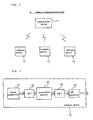
- FIG. 2 is a block diagram showing the configuration of a mobile communication system of the present exemplary embodiment.
- mobile communication system 10 includes base station device 11 and terminal device 12.
- Base station device 11 and terminal device 12 send/receive various signals through various transport channels on an air interface.
- terminal device 12 sends a preamble to base station device 11 through an RACH.
- RACH Radio Access Management Function
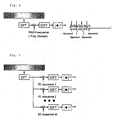
- FIG. 3 is a block diagram showing the configuration of terminal device 12.
- terminal device 12 includes signal generator 21, DFT section 22, subcarrier mapper 23, IDFT section 24 and CP inserter 25.
- Signal generator 21 generates a preamble to be sent to base station device 11 (RACH sequence).
- RACH sequence base station device 11
- a generating polynomial of a Zadoff-Chu Zero Correlation Zone (ZC-ZCZ) sequence is used to generate a ZC sequence from a predetermined parameter, and the ZC sequence is cyclic-shifted, thus the preamble is generated.
- Information called a signature which is represented by the value of the parameter described above, the shift amount of cyclic shifts, or both of them, is attached to the generated preamble.
- the signature may be used for data transfer.
- the preamble generated by signal generator 21 is a signal in a time domain, and has a predetermined time length.
- the predetermined time length (hereinafter referred to as "preamble time length") is defined to be such a time length that the number of samples obtained when sampling at the sampling frequency used in the mobile communication system, becomes the product of the exponentiation of the predetermined number of prime numbers that are taken from the smaller number (hereinafter referred to as "preamble sample number").
- DFT section 22 transforms the RACH sequence in time domain generated by signal generator 21 into a signal in frequency domain by discrete Fourier transform (DFT).
- DFT discrete Fourier transform
- Subcarrier mapper 23 maps the signal transformed by DFT section 22 into a frequency domain to a predetermined subcarrier (assigned frequency).
- the subcarrier mapping the RACH is predetermined by a base station parameter or the like.
- IDFT section 24 transforms the signal in a frequency domain mapped to the subcarrier by subcarrier mapper 23 into a signal in a time domain by inverse discrete Fourier transform (IDFT). Since the time length of the preamble transformed back to the time domain by IDFT is the preamble time length described above, it is preferred that the number of samples used in IDFT is the preamble sample number.
- IDFT inverse discrete Fourier transform
- the end of the preamble that has been returned to the signal in a time domain by IDFT section 24 is added as a cyclic prefix (CP) to the beginning of the preamble by CP inserter 25.
- CP cyclic prefix
- the preamble to which the CP is attached by CP inserter 25 is transmitted over the RACH.
- FIG. 4 is a block diagram showing the configuration of base station device 11.
- base station device 11 includes DFT section 31, multiplier 32, IDFT section 33, power converter 34 and signal detector 35.
- DFT section 31 transforms the signal received over the RACH from terminal device 12 into a signal in a frequency domain by DFT. Since the preamble that has been sent from terminal device 12 has the preamble time length, in order for the entirety of the preamble to become an input to DFT, it is sufficient that samples from the sampling of the received signal at the sampling frequency be inputted to the DFT, for a preamble sampling number that corresponds to the preamble time length. Then, DFT section 31 performs DFT with the preamble sample number.
- the amount of calculation of DFT depends on the number of complex multiplications. For example, when DFT is performed by software, the larger the number of complex multiplications, the larger is the amount of processing. When the DFT is performed by hardware, the larger the number of complex multiplication, the larger is the circuit scale. In addition, the number of complex multiplications of DFT varies depending on the number of samples. Performing complex multiplications only a small number of times is sufficient if the number of samples is a value that can be expressed as a product of the exponentiation of a small prime number.
- Multiplier 32 performs multiplication of a pattern from the transformation of a predetermined preamble pattern to a frequency domain and multiplication of a signal transformed to frequency domain by DFT section 31.
- multiplier 32 when there is one predetermined preamble pattern (ZC sequence), and when a signature is represented by only the shift amount of the cyclic shifts with respect to this ZC sequence, multiplier 32 only needs to multiply the one preamble pattern and the output of DFT section 31.
- multiplier 32 multiplies each of the plurality of preamble patterns and the output of DFT section 31.
- multiplier 32 is provided with a plurality of multipliers, and the output of DFT 31 is divided and input into each of the multipliers, is sufficient.
- the signal that is obtained through multiplication by Multiplier 32 is transformed by IDFT section 33, using the IDFT method, into a signal in a time domain. Accordingly, a cross-correlation value between the signal received over the RACH and the preamble pattern can be obtained.
- IDFT section 33 have a constitution that provides one IDFT.
- IDFT section 33 have a constitution that provides a plurality of IDFTs corresponding to respective multipliers.
- Power converter 34 converts by a square operation the cross-correlation value obtained by IDFT section 33 into a value corresponding to electrical power.
- Signal detector 35 detects a preamble from the output of power converter 34. More specifically, if there is a high cross-correlation value in the output of power converter 34, signal detector 35 determines that a preamble has been detected. In addition, at that time, signal detector 35 determines that the preamble of the pattern for which a high cross-correlation value was obtained is the preamble sent by terminal device 12.
- the time of a peak in the delay profile of the cross-correlation value obtained by power converter 34 indicates the time when a preamble has been detected.
- Signal detector 35 can obtain the amount of the cyclic shift, from the time when the preamble has been detected. In addition, signal detector 35 can identify the signature based on either or both of the patterns of the identified preamble and the amount of cyclic shift.
- the time length of the preamble is defined to be such a time length that the number of samples becomes the product of the exponentiation of the predetermined number of prime numbers that are taken from the smaller number, only a small amount of calculation for detecting a preamble at base station device 11 is sufficient.
- base station device 11 since base station device 11 has a sample number of DFT that is the product of the exponentiation of a predetermined number of prime numbers that are taken from the smaller number in a constitution in which a received signal is transformed by DFT into a frequency domain, the signal is multiplied by a preamble pattern in a frequency domain, and the signal is transformed back by IDFT to a time domain, only a small amount of calculations using DFT at base station device 11 is required.
- system design using various cell radii can be considered for a mobile communication system. If the cell radius becomes large, it is preferred that the CP length and guard time are extended accordingly. Therefore, it is preferred that a different value is used according to the cell radius for the time length of a preamble and for the number of samples.
- the generation scheme of RACH preamble in terminal device 12 is explained as follows. First, ZC sequence is generated in time domain. Here, the number of the generated ZC sequence may be a prime number. Then, it is mapped to the assigned frequency. Also, the sampling frequency of the generated RACH sequence may be transformed to fit with the transmitter's sampling frequency, which is usually 1.92 x2 N MHz.
- RACH Preamble For the detection of RACH Preamble, 2 methods can be considered. One is using a sliding correlator, the other is using DFT and IDFT. In this document, the complexity is evaluated as the required number of multiplication for both method.
- RACH preamble length is assumed to be 1800sample@1.92MHz, i.e. 0.9375msec as an example.
- N CML N PRE ⁇ N RANGE ⁇ N SGN
- N PRE Preamble Length
- N RANGE Search Range
- N SGN the number of Signatures.
- N PRE 1800
- the block diagram of this method is illustrated in Figure 6.
- the received signal is first transformed to frequency domain by DFT and multiplied with the Fourier transformed RACH sequence. Then the cross correlation is obtained by transforming back to time domain by IDFT.
- N CML N DFT ⁇ 2 + N PRE
- N CML 1800
- N CML 1800 x (2x3+3X2+5x2)
- x2 +1800 81,000
- the number of complex multiplications is reduced to 1/40 compared with Method 1 (Sliding Correlator). It is due to the fact that the number of complex multiplications for DFT is reduced when the number of DFT points can be factored to small prime numbers.
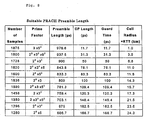
- the required condition to reduce the number of complex multiplications is that the number of the samples for the RACH Preamble can be factored to small prime numbers. Therefore, we propose to make the number of the samples for the RACH Preamble 2 K x3 L x5 M , where K, L and M are integer.
- the suitable PRACH Preamble length is obtained as in the table of figure 8, here the sampling frequency is assumed to 1.92MHz.
- the CP length, the Guard Time and the expected cell radius is also shown.
- the delay spread is assumed to be 5 ⁇ s.
Landscapes
- Engineering & Computer Science (AREA)
- Computer Networks & Wireless Communication (AREA)
- Signal Processing (AREA)
- Physics & Mathematics (AREA)
- Discrete Mathematics (AREA)
- General Physics & Mathematics (AREA)
- Mathematical Physics (AREA)
- Mobile Radio Communication Systems (AREA)
Applications Claiming Priority (3)
| Application Number | Priority Date | Filing Date | Title |
|---|---|---|---|
| JP2006271455 | 2006-10-03 | ||
| JP2006338372 | 2006-12-15 | ||
| JP2007211717A JP5023881B2 (ja) | 2006-10-03 | 2007-08-15 | 移動通信システム、信号転送方法、および受信装置 |
Publications (2)
| Publication Number | Publication Date |
|---|---|
| EP1909446A2 true EP1909446A2 (de) | 2008-04-09 |
| EP1909446A3 EP1909446A3 (de) | 2014-03-26 |
Family
ID=38973005
Family Applications (1)
| Application Number | Title | Priority Date | Filing Date |
|---|---|---|---|
| EP07018728.1A Ceased EP1909446A3 (de) | 2006-10-03 | 2007-09-24 | Mobiles Kommunikationssystem und Signalübertragungsverfahren dafür |
Country Status (2)
| Country | Link |
|---|---|
| EP (1) | EP1909446A3 (de) |
| KR (1) | KR100933345B1 (de) |
Cited By (4)
| Publication number | Priority date | Publication date | Assignee | Title |
|---|---|---|---|---|
| WO2010011863A1 (en) * | 2008-07-25 | 2010-01-28 | Qualcomm Incorporated | Apparatus and methods for computing constant amplitude zero auto-correlation sequences |
| CN101594691B (zh) * | 2008-05-27 | 2011-06-22 | 中兴通讯股份有限公司 | Lte系统的随机接入前导序列的生成方法和装置 |
| EP2747491A4 (de) * | 2011-09-02 | 2015-04-01 | Sony Corp | Kommunikationsvorrichtung, kommunikationsverfahren, kommunikationssystem und basisstation |
| GB2540594A (en) * | 2015-07-22 | 2017-01-25 | Sony Corp | Receiver and method of receiving |
Family Cites Families (6)
| Publication number | Priority date | Publication date | Assignee | Title |
|---|---|---|---|---|
| US5999561A (en) * | 1997-05-20 | 1999-12-07 | Sanconix, Inc. | Direct sequence spread spectrum method, computer-based product, apparatus and system tolerant to frequency reference offset |
| EP1109326A1 (de) | 1999-12-15 | 2001-06-20 | Lucent Technologies Inc. | Präambeldetektor für einen CDMA-Empfänger |
| KR100357706B1 (ko) * | 2000-11-02 | 2002-10-25 | 주식회사 하이닉스반도체 | 이동통신 기지국에서의 프리앰블 탐색장치 |
| KR100830888B1 (ko) * | 2004-08-27 | 2008-05-22 | 주식회사 케이티 | 휴대 인터넷 시스템의 프레임 프리엠블 검출 장치 및 그방법 |
| JP4687948B2 (ja) * | 2004-10-29 | 2011-05-25 | ソニー株式会社 | ディジタル信号処理装置、ディジタル信号処理方法及びプログラム並びに認証装置 |
| KR100868679B1 (ko) * | 2005-06-01 | 2008-11-13 | 삼성전자주식회사 | 무선 통신시스템에서 프리앰블 신호 송수신 장치 및 방법 |
-
2007
- 2007-09-24 EP EP07018728.1A patent/EP1909446A3/de not_active Ceased
- 2007-09-27 KR KR1020070097407A patent/KR100933345B1/ko active Active
Non-Patent Citations (1)
| Title |
|---|
| None * |
Cited By (9)
| Publication number | Priority date | Publication date | Assignee | Title |
|---|---|---|---|---|
| CN101594691B (zh) * | 2008-05-27 | 2011-06-22 | 中兴通讯股份有限公司 | Lte系统的随机接入前导序列的生成方法和装置 |
| WO2010011863A1 (en) * | 2008-07-25 | 2010-01-28 | Qualcomm Incorporated | Apparatus and methods for computing constant amplitude zero auto-correlation sequences |
| KR101243845B1 (ko) | 2008-07-25 | 2013-03-20 | 퀄컴 인코포레이티드 | 고정 진폭 제로 자기-상관 시퀀스들을 계산하기 위한 방법들 및 장치 |
| KR101246248B1 (ko) | 2008-07-25 | 2013-03-22 | 퀄컴 인코포레이티드 | 고정 진폭 제로 자기-상관 시퀀스들을 계산하기 위한 방법들 및 장치 |
| US8594250B2 (en) | 2008-07-25 | 2013-11-26 | Qualcomm Incorporated | Apparatus and methods for computing constant amplitude zero auto-correlation sequences |
| EP2747491A4 (de) * | 2011-09-02 | 2015-04-01 | Sony Corp | Kommunikationsvorrichtung, kommunikationsverfahren, kommunikationssystem und basisstation |
| US9538553B2 (en) | 2011-09-02 | 2017-01-03 | Sony Corporation | Communication apparatus, communication method, communication system, and base station |
| GB2540594A (en) * | 2015-07-22 | 2017-01-25 | Sony Corp | Receiver and method of receiving |
| US9847900B2 (en) | 2015-07-22 | 2017-12-19 | Sony Corporation | Receiver and method of receiving |
Also Published As
| Publication number | Publication date |
|---|---|
| KR100933345B1 (ko) | 2009-12-22 |
| EP1909446A3 (de) | 2014-03-26 |
| KR20080031111A (ko) | 2008-04-08 |
Similar Documents
| Publication | Publication Date | Title |
|---|---|---|
| US20090011717A1 (en) | Mobile communication system and its signal transfer method | |
| US8594250B2 (en) | Apparatus and methods for computing constant amplitude zero auto-correlation sequences | |
| KR101817290B1 (ko) | Lte 통신 시스템의 물리 랜덤 액세스 채널 프리앰블 감지 방법 및 장치 | |
| CN106464627B (zh) | 处理前导码序列的方法、无线设备、前导码接收机、网络节点和计算机可读存储介质 | |
| US9615386B2 (en) | Random access channel false alarm control | |
| EP2439973B1 (de) | Detektionsverfahren und vorrichtung auf direktzugriffsbasis | |
| US7564909B2 (en) | Apparatus and method for detecting ranging signal in an orthogonal frequency division multiple access mobile communication system | |
| EP1980030B1 (de) | Verfahren zur verbesserten synchronisation und informationsübertragung in einem kommunikationssystem | |
| US20150023329A1 (en) | Wireless network signal to interference plus noise ratio estimation for a random access channel | |
| EP2448151A1 (de) | Verfahren und vorrichtung zur übertragung von signalen für physikalische direktzugriffskanäle | |
| US8155251B2 (en) | Detection of access bursts in a random access channel | |
| CN101473586A (zh) | 基站装置 | |
| EP1852981B1 (de) | Methode zur Abschätzung der mobilen Terminals zugeordneten Umlaufverzögerungszeiten von RACH Signalen, die in zugeordneten Zeitschlitzen empfangen wurden auf einen Aufwärtslink Multiplexverkehrsrahmen. | |
| US20150271853A1 (en) | Fourier transform for a signal to be transmitted on a random access channel | |
| EP1909446A2 (de) | Mobiles Kommunikationssystem und Signalübertragungsverfahren dafür | |
| JP5569706B2 (ja) | プリアンブルシーケンス検出装置 | |
| CN101594168B (zh) | 一种随机接入信道的前导码检测方法、装置及设备 | |
| US8320258B2 (en) | Method and device for recognizing a synchronization message from a wireless telecommunication device | |
| EP3402148B1 (de) | Verfahren und vorrichtung zur bestimmung von zeitversatz | |
| US20160192236A1 (en) | Method and apparatus for generating efficient dft-ed preamble sequence | |
| KR101449865B1 (ko) | Ofdm 시스템에서의 초기 동기화 방법 및 그 장치 | |
| WO2008080258A1 (en) | Efficient bank of correlators for sets of gcl sequences | |
| KR20160081743A (ko) | 효율적인 이산 푸리에 변환된 프리엠블 시퀀스 생성 방법 및 장치 | |
| KR20090100172A (ko) | 통신 시스템에서 데이터 송수신 시스템 및 방법 |
Legal Events
| Date | Code | Title | Description |
|---|---|---|---|
| PUAI | Public reference made under article 153(3) epc to a published international application that has entered the european phase |
Free format text: ORIGINAL CODE: 0009012 |
|
| AK | Designated contracting states |
Kind code of ref document: A2 Designated state(s): AT BE BG CH CY CZ DE DK EE ES FI FR GB GR HU IE IS IT LI LT LU LV MC MT NL PL PT RO SE SI SK TR |
|
| AX | Request for extension of the european patent |
Extension state: AL BA HR MK RS |
|
| PUAL | Search report despatched |
Free format text: ORIGINAL CODE: 0009013 |
|
| AK | Designated contracting states |
Kind code of ref document: A3 Designated state(s): AT BE BG CH CY CZ DE DK EE ES FI FR GB GR HU IE IS IT LI LT LU LV MC MT NL PL PT RO SE SI SK TR |
|
| AX | Request for extension of the european patent |
Extension state: AL BA HR MK RS |
|
| RIC1 | Information provided on ipc code assigned before grant |
Ipc: H04L 7/04 20060101ALI20140217BHEP Ipc: H04L 27/26 20060101AFI20140217BHEP |
|
| 17P | Request for examination filed |
Effective date: 20140925 |
|
| RBV | Designated contracting states (corrected) |
Designated state(s): AT BE BG CH CY CZ DE DK EE ES FI FR GB GR HU IE IS IT LI LT LU LV MC MT NL PL PT RO SE SI SK TR |
|
| AKX | Designation fees paid |
Designated state(s): DE FR GB IT |
|
| STAA | Information on the status of an ep patent application or granted ep patent |
Free format text: STATUS: EXAMINATION IS IN PROGRESS |
|
| 17Q | First examination report despatched |
Effective date: 20180129 |
|
| STAA | Information on the status of an ep patent application or granted ep patent |
Free format text: STATUS: THE APPLICATION HAS BEEN REFUSED |
|
| 18R | Application refused |
Effective date: 20191128 |