EP1908281B1 - System, verfahren und vorrichtung zum ermöglichen des kanal-surfens, während bevorzugte kanäle gepuffert und aufgezeichnet werden - Google Patents
System, verfahren und vorrichtung zum ermöglichen des kanal-surfens, während bevorzugte kanäle gepuffert und aufgezeichnet werden Download PDFInfo
- Publication number
- EP1908281B1 EP1908281B1 EP05776497.9A EP05776497A EP1908281B1 EP 1908281 B1 EP1908281 B1 EP 1908281B1 EP 05776497 A EP05776497 A EP 05776497A EP 1908281 B1 EP1908281 B1 EP 1908281B1
- Authority
- EP
- European Patent Office
- Prior art keywords
- channel
- media content
- buffered
- buffer
- buffering
- Prior art date
- Legal status (The legal status is an assumption and is not a legal conclusion. Google has not performed a legal analysis and makes no representation as to the accuracy of the status listed.)
- Ceased
Links
- 230000003139 buffering effect Effects 0.000 title claims description 38
- 238000000034 method Methods 0.000 title claims description 21
- 239000000872 buffer Substances 0.000 claims description 61
- 238000010586 diagram Methods 0.000 description 6
- 230000003111 delayed effect Effects 0.000 description 4
- 230000006870 function Effects 0.000 description 2
- 230000002452 interceptive effect Effects 0.000 description 1
- 230000004044 response Effects 0.000 description 1
Images


Classifications
-
- H—ELECTRICITY
- H04—ELECTRIC COMMUNICATION TECHNIQUE
- H04N—PICTORIAL COMMUNICATION, e.g. TELEVISION
- H04N5/00—Details of television systems
- H04N5/76—Television signal recording
- H04N5/91—Television signal processing therefor
-
- H—ELECTRICITY
- H04—ELECTRIC COMMUNICATION TECHNIQUE
- H04N—PICTORIAL COMMUNICATION, e.g. TELEVISION
- H04N21/00—Selective content distribution, e.g. interactive television or video on demand [VOD]
- H04N21/40—Client devices specifically adapted for the reception of or interaction with content, e.g. set-top-box [STB]; Operations thereof
- H04N21/41—Structure of client; Structure of client peripherals
- H04N21/414—Specialised client platforms, e.g. receiver in car or embedded in a mobile appliance
- H04N21/4147—PVR [Personal Video Recorder]
-
- H—ELECTRICITY
- H04—ELECTRIC COMMUNICATION TECHNIQUE
- H04N—PICTORIAL COMMUNICATION, e.g. TELEVISION
- H04N21/00—Selective content distribution, e.g. interactive television or video on demand [VOD]
- H04N21/40—Client devices specifically adapted for the reception of or interaction with content, e.g. set-top-box [STB]; Operations thereof
- H04N21/41—Structure of client; Structure of client peripherals
- H04N21/426—Internal components of the client ; Characteristics thereof
- H04N21/42607—Internal components of the client ; Characteristics thereof for processing the incoming bitstream
- H04N21/4263—Internal components of the client ; Characteristics thereof for processing the incoming bitstream involving specific tuning arrangements, e.g. two tuners
-
- H—ELECTRICITY
- H04—ELECTRIC COMMUNICATION TECHNIQUE
- H04N—PICTORIAL COMMUNICATION, e.g. TELEVISION
- H04N21/00—Selective content distribution, e.g. interactive television or video on demand [VOD]
- H04N21/40—Client devices specifically adapted for the reception of or interaction with content, e.g. set-top-box [STB]; Operations thereof
- H04N21/43—Processing of content or additional data, e.g. demultiplexing additional data from a digital video stream; Elementary client operations, e.g. monitoring of home network or synchronising decoder's clock; Client middleware
- H04N21/433—Content storage operation, e.g. storage operation in response to a pause request, caching operations
- H04N21/4331—Caching operations, e.g. of an advertisement for later insertion during playback
-
- H—ELECTRICITY
- H04—ELECTRIC COMMUNICATION TECHNIQUE
- H04N—PICTORIAL COMMUNICATION, e.g. TELEVISION
- H04N21/00—Selective content distribution, e.g. interactive television or video on demand [VOD]
- H04N21/40—Client devices specifically adapted for the reception of or interaction with content, e.g. set-top-box [STB]; Operations thereof
- H04N21/43—Processing of content or additional data, e.g. demultiplexing additional data from a digital video stream; Elementary client operations, e.g. monitoring of home network or synchronising decoder's clock; Client middleware
- H04N21/438—Interfacing the downstream path of the transmission network originating from a server, e.g. retrieving encoded video stream packets from an IP network
- H04N21/4383—Accessing a communication channel
-
- H—ELECTRICITY
- H04—ELECTRIC COMMUNICATION TECHNIQUE
- H04N—PICTORIAL COMMUNICATION, e.g. TELEVISION
- H04N21/00—Selective content distribution, e.g. interactive television or video on demand [VOD]
- H04N21/40—Client devices specifically adapted for the reception of or interaction with content, e.g. set-top-box [STB]; Operations thereof
- H04N21/43—Processing of content or additional data, e.g. demultiplexing additional data from a digital video stream; Elementary client operations, e.g. monitoring of home network or synchronising decoder's clock; Client middleware
- H04N21/438—Interfacing the downstream path of the transmission network originating from a server, e.g. retrieving encoded video stream packets from an IP network
- H04N21/4383—Accessing a communication channel
- H04N21/4384—Accessing a communication channel involving operations to reduce the access time, e.g. fast-tuning for reducing channel switching latency
-
- H—ELECTRICITY
- H04—ELECTRIC COMMUNICATION TECHNIQUE
- H04N—PICTORIAL COMMUNICATION, e.g. TELEVISION
- H04N21/00—Selective content distribution, e.g. interactive television or video on demand [VOD]
- H04N21/40—Client devices specifically adapted for the reception of or interaction with content, e.g. set-top-box [STB]; Operations thereof
- H04N21/47—End-user applications
- H04N21/472—End-user interface for requesting content, additional data or services; End-user interface for interacting with content, e.g. for content reservation or setting reminders, for requesting event notification, for manipulating displayed content
-
- H—ELECTRICITY
- H04—ELECTRIC COMMUNICATION TECHNIQUE
- H04N—PICTORIAL COMMUNICATION, e.g. TELEVISION
- H04N5/00—Details of television systems
- H04N5/76—Television signal recording
-
- H—ELECTRICITY
- H04—ELECTRIC COMMUNICATION TECHNIQUE
- H04N—PICTORIAL COMMUNICATION, e.g. TELEVISION
- H04N5/00—Details of television systems
- H04N5/76—Television signal recording
- H04N5/765—Interface circuits between an apparatus for recording and another apparatus
-
- H—ELECTRICITY
- H04—ELECTRIC COMMUNICATION TECHNIQUE
- H04N—PICTORIAL COMMUNICATION, e.g. TELEVISION
- H04N5/00—Details of television systems
- H04N5/76—Television signal recording
- H04N5/84—Television signal recording using optical recording
- H04N5/85—Television signal recording using optical recording on discs or drums
Definitions
- the present invention generally relates to video recording systems and, more particularly, to systems and methods which record preferred channels while surfing other channels.
- PVRs Current personal video recorders
- a problem occurs when there is a loss of the buffer for the channel being recorded primarily as a result of the switching delay.
- a person could change inputs on the TV to check SURF outside of the PVR video loop (e.g., disconnect the buffering to surf live TV).
- the buffer is maintained during channel changes, this still presents a problem in this scenario.
- the person changes channels to see the weather, and the PRIME channel is delayed the first person has no idea if the live PRIME is in commercial or at a critical point in the program. So changing channels is risky because switching programs will put a hole in the buffer of the first person's PRIME channel.
- An alternative is to try and catch up to live TV and time the user's channel changing during a commercial break. This may be very inconvenient and difficult.
- US 2002/0009285 discloses a personal versatile recorder and US 2005/0073613 discloses a method and apparatus for selecting among multiple tuners.
- a system, method and apparatus for surfing channels while preserving content on a preferred channel includes buffering a prime channel using a first tuner. Simultaneously changing viewing channels while buffering the prime channel such that the buffering of the prime channel includes a complete record of received content.
- a system for permitting channel surfing while recording a designated channel includes a receiver having a first tuner and a second tuner for receiving content from a network.
- a buffer is associated with at least one of the tuners, and a switch is coupled to the tuners which disconnects the buffer from one of the tuners during channel changes to permit channel changes without buffering.
- a controller designates a channel to continue buffering using the first tuner while viewing of the channel changes occurs using the second tuner.
- FIG. 1 depicts a high level block diagram of a media recording system enabling the recording of a preferred channel while channel surfing in accordance with an embodiment of the present invention
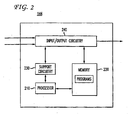
- FIG. 2 depicts a high level block diagram of an embodiment of a controller/processor suitable for use in the receiver of the media recording system of FIG. 1 ;
- FIG. 3 depicts a block/flow diagram of a method for channel surfing which permits recording of preferred channels without buffer loss in accordance with one embodiment of the present invention.
- the present invention advantageously provides systems, methods and apparatus for enabling channel surfing while buffering one or more preferred channels.
- a video recording system such as digital video recorders (DVRs), TIVOTM recorders, personal video recorders (PVR) or similar recording systems
- DVRs digital video recorders
- PVR personal video recorders
- the concepts of the present invention may be applied to substantially any digital multimedia systems capable of program recording.
- the present invention is applicable to any recording method including recording data received via telephone connections, set top boxes, computer, satellite links, and the like.
- the present invention is described in terms of receiving programming via cable or a satellite network, the concepts of the present invention may be extended to other wireless and wired network types from which programming is received.
- FIG. 1 depicts a high level block diagram of a media recording system enabling the recording of a preferred channel while channel surfing in accordance with an embodiment of the present invention.
- the media recording system 100 of FIG. 1 comprises a network 140 for providing media content (programs), a receiver 101 for receiving content from the network 140, a recording device 102 for recording media content (programming) received by the receiver 101 from the network 140 and a display device 104 for displaying the programming.
- the receiver may include a television, a set top box, a satellite box, a modem (e.g., for DSL or the like) or any other receiving device.
- the network 140 of the media recording system 100 may include a cable, satellite, broadcast, DSL, or any other network which transmits video or audio content.
- the recording device 102 may include one or more of a personal video recorder (PVR), a digital video recorder (DVR), a VCR or DVD recorder, a TIVOTM recorder or any other recording device or combination of recording devices.
- the recording device 102 may be included in the receiver 101 or the recording device 102 may comprise a separate device external to the receiver 101 and connected thereto by cables or wirelessly depending on the device and setup.
- the media recording system 100 of FIG. 1 illustratively further includes a remote control device 106 which provides an interactive interface for controlling the receiver 101 or the recording device 102 depending on the configuration.
- the receiver 101 of the media recording system 100 of FIG. 1 preferably comprises two or more tuners 108, 109 to enable concurrent surfing and buffering (and optionally recording) of various channels of received media content.
- the receiver 101 further illustratively comprises two buffers 112 and 114, however in alternate embodiments of the present invention, a single buffer may be employed and the functions described below for the two buffers 112 and 114 may be performed by a single buffer.
- the receiver 101 further illustratively comprises a timer 146 and two switches 142 1 and 142 2 .
- the receiver 101 of the media recording system 100 of FIG. 1 further comprises a controller/processor 144.
- the controller/processor 144 of the receiver 101 controls the switches 142 1 and 142 2 and the tuners 108 and 109 for enabling the selective surfing and buffering of the present invention in response to, for example, user inputs and commands.
- the recording device 102 (and/or its functionality) may be included as a component of the receiver 101 and, as such, may have access and may make use of the other components of the receiver 101 as described above.
- FIG. 2 depicts a high level block diagram of an embodiment of a controller/processor 144 suitable for use in the receiver 101 of the media recording system 100 of FIG. 1 .
- the controller/processor 144 of FIG. 2 comprises a processor 210 as well as a memory 220 for storing information, control programs, algorithms and the like.
- the processor 210 cooperates with conventional support circuitry 230 such as power supplies, clock circuits, cache memory and the like as well as circuits that assist in executing the software routines stored in the memory 220.
- conventional support circuitry 230 such as power supplies, clock circuits, cache memory and the like as well as circuits that assist in executing the software routines stored in the memory 220.
- the controller/processor 144 also contains input-output circuitry 240 that forms an interface between the various functional elements communicating with the controller/processor 144.
- controller/processor 144 of FIG. 2 is depicted as a general purpose computer that is programmed to perform various control functions in accordance with the present invention, the invention can be implemented in hardware, for example, as an application specified integrated circuit (ASIC). As such, the process steps described herein are intended to be broadly interpreted as being equivalently performed by software, hardware, or a combination thereof.
- ASIC application specified integrated circuit
- the present invention permits the changing of channels while maintaining a buffer to continue buffering a previous channel.
- the buffered programming may also be recorded.
- the receiver device 101 includes two or more tuners 108, 109 such that one tuned signal can be buffered while another is used to surf channels (preferably unbuffered).
- the switches 142 1 and 142 2 are employed to disconnect the signals output from the tuners 108 and 109.
- the switches 142 1 and 142 2 are controlled by the controller/processor 144 which ultimately controls the buffering (buffers 112 or 114).
- the controller/processor 144 which ultimately controls the buffering (buffers 112 or 114).
- the surfed channels are un-buffered, although they may be buffered in accordance with a user's preferences.
- the receiver 101 implements the first tuner 108 to select a first desired channel, considered by the inventors as a "PRIME" channel, of the programming channels being transmitted by the network 140 for viewing on the display device 104. Subsequently, if it is desired during viewing of the PRIME channel to surf other programming channels, considered by the inventors as "SURF" channels, provided to the receiver 101 by the network 140, a buffering and recording method in accordance with the present invention is initiated for the programming of the PRIME channel such that no programming information is lost while surfing the other programming channels available from the network 140.
- a first programming channel is only buffered while other programming channels are surfed.
- a first programming channel can be buffered or buffered and recorded while other programming channels are surfed in accordance with the concepts of the present invention.
- the programming information on the PRIME channel being received by the first tuner 108 is able to be buffered in the first buffer 112 and recorded by the recording device 102 while the weather channel (i.e., the SURF channel) is received by the second tuner 109 and displayed on the display device 104.
- the weather channel i.e., the SURF channel
- a user upon selection of a SURF channel (i.e., changing the programming channel away from the PRIME channel) while watching a PRIME channel, a user is prompted on the display 104 whether or not the user wishes to begin buffering and recording the PRIME channel programming. If the user chooses to buffer and record the PRIME channel programming, the invention follows the method described above. In alternate embodiments of the present invention, however, immediately upon changing the programming channel away from a selected PRIME channel, the PRIME channel programming is immediately buffered and recorded as described above.
- the programming on the extendedly watched SURF channel may instead be selected to be buffered and recorded upon changing the programming channel away from the extendedly watched SURF channel.
- the programming information on the PRIME channel being received by the first tuner 108 is able to be buffered in the first buffer 112 and recorded by the recording device 102 as described above, while the user surfs other programming channels received by the second tuner 109 and displayed on the display device 104.
- the programming on the extendedly watched and now preferred SURF channel may instead be selected to be buffered and recorded upon changing the programming channel away from the extendedly watched SURF channel. That is, the two switches 142 1 and 142 2 of the receiver 101 of the media recording system 100 are used to determine which of the programming content from which of the tuners 108, 109 is to be buffered and recorded.
- the programming information on the now preferred SURF channel being received by the second tuner 109 is able to be buffered in the second buffer 114 and recorded by the recording device 102 while the weather channel (i.e., the SURF channel) is received by a subsequent tuner (not shown) or alternatively the first tuner 108 and displayed on the display device 104.
- the first tuner 108 is subsequently used as the SURF tuner, the previously selected PRIME channel programming information will no longer be received by the tuner 108, which is now being used to surf the available programming channels provided by the network 140.
- the previously buffered programming of the PRIME channel may be optionally recorded by the recording device before beginning to buffer the programming of the now preferred SURF channel.
- a user upon changing the programming channel away from the now preferred SURF channel which was viewed for longer than a predetermined period of time as described above, a user is prompted on the display 104 whether or not the user wishes to begin buffering and recording the now preferred SURF channel programming. If the user chooses to buffer and record the now preferred SURF channel programming, the invention follows the method described above for recording the now preferred SURF channel programming while surfing other available programming channels provided by the network 140. Furthermore and as previously described, a user may also have the option to record the previously buffered programming of the PRIME channel before beginning to buffer then now preferred SURF channel programming.
- a receiver 101 or recording device 102 in accordance with the present invention may comprise more than two tuners for selecting several programming channels provided by the network 140 and for enabling a user to switch between the selected and tuned programming channels.
- the receiver 101 is depicted as comprising two switches 142 1 and 142 2 and two buffers 108 and 109, in alternate embodiments of the present invention, a receiver in accordance with the present invention may comprise a single switch and a single buffer or any combination of switches and buffers for performing the above described functionality of the present invention.
- a previously paused, buffered and recorded PRIME program channel is continued to be buffered and recorded during the surfing of other programming channels provided by the network 140. More specifically, in the media recording system 100 of FIG. 1 the receiver 101 implements the first tuner 108 to select a first channel (PRIME channel) of the programming channels being transmitted by the network 140 for viewing on the display device 104. If during viewing of the PRIME channel, the programming is paused, the PRIME channel programming is buffered in the buffer 112 and recorded by the recording device 102.
- PRIME channel first channel
- the PRIME channel programming Upon resuming the PRIME channel viewing (i.e., the pause is resumed) the PRIME channel programming is continued to be viewed without losing any programming, however, the PRIME channel programming will continue to be viewed in a delayed (e.g., time-shifted) manner. Subsequently, if it is desired during the delayed viewing of the PRIME channel to surf other programming channels provided to the receiver 101 by the network 140, a buffering and recording routine in accordance with the present invention is initiated for the programming of the PRIME channel such that no programming information is lost while surfing the other programming channels available from the network 140.
- the programming information on the PRIME channel being received by the first tuner 108 is continued to be buffered in the first buffer 112 and recorded by the recording device 102 while the weather channel (i.e., the SURF channel) is received by the second tuner 109 and displayed on the display device 104.
- the weather channel i.e., the SURF channel
- a user upon selection of a SURF channel (i.e., changing the programming channel away from the time-shifted PRIME channel) while watching a time-shifted PRIME channel, a user is prompted on the display 104 whether or not the user wishes to continue buffering and recording the PRIME channel programming. If the user chooses to buffer and record the PRIME channel programming, the invention follows the method as described above. In alternate embodiments of the present invention, however, upon changing the programming channel away from a selected time-shifted PRIME channel, the PRIME channel programming is continued to be buffered and recorded as described above.
- the programming on the extendedly watched SURF channel may instead be selected to be buffered and recorded upon changing the programming channel away from the extendedly watched SURF channel.
- the time-shifted programming information on the PRIME channel being received by the first tuner 108 is continued to be buffered in the first buffer 112 and recorded by the recording device 102 as described above, while the user surfs other programming channels received by the second tuner 109 and displayed on the display device 104.
- the programming on the extendedly watched and now preferred SURF channel may instead be selected to be buffered and recorded upon changing the programming channel away from the extendedly watched SURF channel. That is, the two switches 142 1 and 142 2 of the receiver 101 of the media recording system 100 are used to determine which of the programming content from which of the tuners 108, 109 is to be buffered and recorded.
- the programming information on the now preferred SURF channel being received by the second tuner 109 is able to be buffered in the second buffer 114 and recorded by the recording device 102 while the weather channel (i.e., the SURF channel) is received by a subsequent tuner (not shown) or alternatively the first tuner 108 and displayed on the display device 104.
- the first tuner 108 is subsequently used as the SURF tuner, the previously selected PRIME channel programming information will no longer be received by the tuner 108, which is now being used to surf the available programming channels provided by the network 140.
- an indication may be given to a user when the buffer is nearing its capacity that the buffer is nearly full and the user may elect to record the buffered PRIME programming information and to continue to buffer the PRIME channel programming or the user may elect to delete the buffered PRIME programming and to stop buffering the PRIME channel programming. At such point, the user may elect to begin buffering an alternate channel made available via one of the tuners of the receiver.
- FIG. 3 depicts a block/flow diagram of a method for channel surfing which permits recording of preferred channels without buffer loss in accordance with one embodiment of the present invention.
- the method 10 of FIG 3 is entered at block 12, where a video recorder, set top box or other receiver, recorder or receiver/recorder combination device begins to receive a preferred current channel.
- the current channel will be referred to for ease of explanation as a PRIME channel and a surfed channel as SURF.
- the user may wish to switch channels or surf for something different to watch.
- the receiver is asked to switch to a new channel and the user is able to surf through a plurality of channels in block 14.
- the system queries the user as to whether the user wishes to save the paused PRIME buffer. This may be performed automatically provided neither of two conditions met as determined by block 16 and block 18. If either of these conditions is met, the user is prompted to save the buffer of PRIME and change channels to SURF. In the first condition, if the delay as a result of switching channels is greater than a predetermined threshold X in block 16, the decision 16 (PRIME delayed > X seconds) determines if there is enough of PRIME buffered to worry about asking the user if they want to save it. For example, 1 second may not be worth asking the user about, but 1 hour worth of content would be. The user is prompted to save the PRIME buffer in block 22 if the buffered amount exceeds X. Otherwise, if the buffer is below X then a second condition is determined in block 18 as to whether PRIME is paused. When pausing, the buffer continues to fill with content but the start point for returning to the content remain fixed or paused.
- PRIME is paused in block 18, then the user is prompted to buffer PRIME. Otherwise, the channel is changed and the new channel becomes PRIME in block 20 since the previous channel was not paused (e.g., there was no desire by the user to save the content of that channel). If the user wants to buffer PRIME, in block 26, PRIME is paused and buffered. If the SURF channel is not paused, the SURF channel becomes the PRIME channel in block 20 and the path returns to block 12.
- the program uses subroutine A to determine an appropriate tuner if available. Subroutine A is employed if two or more tuners are available for viewing channels. In block 34, a check is performed to determine which tuner is tuned to the PRIME channels. If the first tuner (tuner 1) is tuned to the PRIME channel then, in block 38, tuner 2 is employed to change the channel. Otherwise, tuner 1 is employed to change the channel in block 36. New channels are SURF channels as indicted in block 39.
- PRIME may be unpaused in block 30 and viewed on delay and the program path returns to block 12. Otherwise, the user may be prompted to decide or request to buffer SURF and get rid of PRIME in block 31. This might be done in several ways. If the SURF channel is paused (asked to be buffered) and the buffered PRIME discarded in block 31, then SURF becomes PRIME in block 42 and the path returns to block 12. If the user remains on a SURF channel for longer than a given period, 10 minutes, for example, the user might be prompted to discard the PRIME buffer to buffer the current SURF channel. If the user were given options in a menu, the user could choose to discard the PRIME buffer to buffer the current SURF channel. Otherwise, surfing may continue in block 32 or the user can return to watch PRIME.
- the buffer in PRIME is uninterrupted and complete so that no content is lost despite the fact that the user was changing channels.
Landscapes
- Engineering & Computer Science (AREA)
- Multimedia (AREA)
- Signal Processing (AREA)
- Databases & Information Systems (AREA)
- Human Computer Interaction (AREA)
- Television Signal Processing For Recording (AREA)
- Two-Way Televisions, Distribution Of Moving Picture Or The Like (AREA)
Claims (19)
- Empfänger, der das Surfen durch Kanäle ermöglicht, während ein bevorzugter Kanal gepuffert wird, umfassend:mindestens einen ersten Tuner (108) und einen zweiten Tuner (109) zum Empfangen von Medieninhalten,einen Puffer (112) zum Puffern von empfangenen Medieninhalten,einen Schalter (142), der zwischen dem Puffer und den Tunern gekoppelt ist, um gezielt einen der Tuner mit dem Puffer zu verbinden, undeine Steuereinheit (144), umzu bewirken, dass erste Medieninhalte, die auf einem ersten Kanal unter Verwendung eines ersten Tuners empfangen werden, in dem Puffer gespeichert werden,die Anzeige einer Aufforderung zum Wechseln des Kanals von dem ersten Kanal zu einem zweiten Kanal von einem Benutzer zu empfangen,in Reaktion auf den Empfang der Aufforderung zum Wechseln des Kanals folgende Schritte auszuführen:Festlegen eines Werts, der sich auf den Betrag von gepufferten ersten Medieninhalten bezieht,Vergleichen des festgelegten Werts mit einem Schwellenwert,in Reaktion auf eine Feststellung, dass der festgelegte Wert, der sich auf den Betrag von gepufferten ersten Medieninhalten bezieht, unter dem Schwellenwert liegt, Bewirken, dass der erste Kanal unter Verwendung des ersten Tuners eingestellt wird, um zu dem zweiten Kanal zu wechseln, undin Reaktion auf eine Feststellung, dass der festgelegte Wert, der sich auf den Betrag von gepufferten ersten Medieninhalten bezieht, über dem Schwellenwert liegt, Bewirken, dass der zweite Kanal unter Verwendung des zweiten Tuners eingestellt wird, und weiterhin die ersten Medieninhalte, die auf dem ersten Kanal empfangen werden, derart Puffern, dass das Puffern des ersten Kanals eine vollständige Aufzeichnung der empfangenen Inhalte umfasst,unter Verwendung eines ersten der Tuner (108, 109) Bestimmen eines bevorzugten Kanals der Medieninhalte und, um das Kanal-Surfen durch andere Kanäle der Medieninhalte zu ermöglichen, Verwenden eines zweiten der Tuner (108, 109), wobei die Steuereinheit (144) unter Verwendung des Schalters (142) auswählt, welcher der von den Tunern kommenden Medieninhalte durch den Puffer (112) gepuffert werden soll.
- Empfänger (101) nach Anspruch 1, wobei die Steuereinheit (144) den ersten bevorzugten Kanal zum Puffern auswählt, während durch andere Kanäle der Medieninhalte unter Verwendung des zweiten der Tuner gesurft wird.
- Empfänger (101) nach Anspruch 1, ferner umfassend eine Aufzeichnungsvorrichtung (102) zum Aufzeichnen der gepufferten Medieninhalte.
- Empfänger (101) nach Anspruch 1, ferner umfassend einen Zeitschalter (146), um eine Zeitspanne festzulegen, nach der ein Kanal, durch den gesurft wird und der länger als die festgelegte Zeitspanne angeschaut worden ist, zum Puffern ausgewählt werden kann.
- Empfänger (101) nach Anspruch 4, wobei nach der Zeitspanne die Steuereinheit (144) den Kanal, durch den gesurft wird und der länger als die festgelegte Zeitspanne angeschaut worden ist, zum Puffern auswählt.
- Empfänger (101) nach Anspruch 1, wobei die Steuereinheit (144) einem Benutzer anzeigt, wenn der Puffer (112) fast die volle Kapazität erreicht hat.
- Empfänger (101) nach Anspruch 6, wobei gepufferte Informationen durch eine Aufzeichnungsvorrichtung (102) aufgezeichnet werden, wenn der Puffer (112) fast die volle Kapazität erreicht hat.
- System (100), welches das Surfen durch Kanäle ermöglicht, während ein bevorzugter Kanal aufgezeichnet wird, umfassend:ein Netzwerk (140) zum Bereitstellen von Medieninhalten, das eine Vielzahl von Programmierkanälen aufweist,einen Empfänger (101), umfassend:mindestens einen ersten Tuner (108) und einen zweiten Tuner (109) zum Empfangen von Medieninhalten,einen Puffer (112) zum Puffern von empfangenen Medieninhalten,einen Schalter (142), der zwischen dem Puffer (112) und den Tunern (108, 109) gekoppelt ist, um gezielt einen der Tuner (108, 109) mit dem Puffer (112) zu verbinden, und eine Steuereinheit (144), umzu bewirken, dass erste Medieninhalte, die auf einem ersten Kanal unter Verwendung eines ersten Tuners empfangen werden, in dem Puffer gespeichert werden, die Anzeige einer Aufforderung zum Wechseln des Kanals von dem ersten Kanal zu einem zweiten Kanal von einem Benutzer zu empfangen, undin Reaktion auf den Empfang der Aufforderung zum Wechseln des Kanals folgende Schritte auszuführen:Vergleichen eines Werts, der sich auf den Betrag von gepufferten ersten Medieninhalten bezieht, mit einem Schwellenwert,in Reaktion auf eine Feststellung, dass der festgelegte Wert, der sich auf den Betrag von gepufferten ersten Medieninhalten bezieht, unter dem Schwellenwert liegt, Bewirken, dass der erste Kanal unter Verwendung des ersten Tuners eingestellt wird, um zu dem zweiten Kanal zu wechseln, undin Reaktion auf eine Feststellung, dass der festgelegte Wert, der sich auf den Betrag von gepufferten ersten Medieninhalten bezieht, über dem Schwellenwert liegt, Bewirken, dass der zweite Kanal unter Verwendung des zweiten Tuners eingestellt wird, und weiterhin die ersten Medieninhalte, die auf dem ersten Kanal empfangen werden, derart-Puffern, dass das Puffern des ersten Kanals eine vollständige Aufzeichnung der empfangenen Inhalte umfasst,unter Verwendung eines ersten der Tuner (108, 109) Bestimmen eines bevorzugten Kanals der Medieninhalte und, um das Kanal-Surfen durch andere Kanäle der Medieninhalte zu ermöglichen, Verwenden eines zweiten der Tuner (108, 109), wobei die Steuereinheit (144) unter Verwendung des Schalters (142) auswählt, welcher der von den Tunern (108, 109) kommenden Medieninhalte durch den Puffer (112) gepuffert werden soll, undeine Anzeige (104) zum Anzeigen eines ausgewählten Programmierkanals.
- System (100) nach Anspruch 8, ferner umfassend eine Fernsteuerung (106), um Benutzerauswahlen zu dem Empfänger (101) zu übertragen.
- System (100) nach Anspruch 8, wobei die Steuereinheit (144) einen bevorzugten Kanal bestimmt, der in Übereinstimmung mit einer Benutzerauswahl gepuffert werden soll.
- System (100) nach Anspruch 10, wobei der Benutzer den bevorzugten Kanal auswählt, indem er einen aktuell angeschauten Kanal pausiert.
- System (100) nach Anspruch 8, ferner umfassend einen Zeitschalter (146), um eine Zeitspanne festzulegen, nach der ein Kanal, durch den gesurft wird und der länger als die festgelegte Zeitspanne angeschaut worden ist, zum Puffern ausgewählt werden kann.
- System (100) nach Anspruch 8, wobei die Steuereinheit (144) den ersten bevorzugten Kanal zum Puffern auswählt, während durch andere Kanäle der Medieninhalte unter Verwendung des zweiten der Tuner gesurft wird.
- System (100) nach Anspruch 8, ferner umfassend eine Aufzeichnungsvorrichtung (102) zum Aufzeichnen der gepufferten Medieninhalte.
- System (100) nach Anspruch 8, ferner umfassend einen zweiten Puffer (114) derart, dass ein Puffern von Inhalten für jeweils den ersten (108) und den zweiten (109) Tuner durchgeführt werden kann.
- Verfahren zum Surfen durch Kanäle, während Inhalte auf einem bevorzugten Kanal erhalten bleiben, folgende Schritte umfassend:Puffern eines ersten Kanals unter Verwendung eines ersten Tuners (108) undgleichzeitiges Ändern der Ansichtskanäle unter Verwendung eines zweiten Tuners (109), während der erste Kanal derart gepuffert wird, dass das Puffern des ersten Kanals eine vollständige Aufzeichnung der empfangenen Inhalte umfasst,Bewirken, dass erste Medieninhalte, die unter Verwendung eines ersten Tuners empfangen werden, in einem Puffer gespeichert werden,Empfangen der Anzeige einer Aufforderung zum Wechseln des Kanals von dem ersten Kanal zu einem zweiten Kanal, und in Reaktion auf den Empfang der Aufforderung zum Wechseln des Kanals Ausführen folgender Schritte:Festlegen eines Werts, der sich auf den Betrag von gepufferten ersten Medieninhalten bezieht, Vergleichen des festgelegten Werts mit einem Schwellenwert,in Reaktion auf eine Feststellung, dass der festgelegte Wert, der sich auf den Betrag von gepufferten ersten Medieninhalten bezieht, unter dem Schwellenwert liegt, Bewirken, dass der erste Kanal unter Verwendung des ersten Tuners eingestellt wird, um zu dem zweiten Kanal zu wechseln, undin Reaktion auf eine Feststellung, dass der festgelegte Wert, der sich auf den Betrag von gepufferten ersten Medieninhalten bezieht, über dem Schwellenwert liegt, Bewirken, dass der zweite Kanal unter Verwendung des zweiten Tuners eingestellt wird, und weiterhin die ersten Medieninhalte, die auf dem ersten Kanal empfangen werden, derart Puffern, dass das Puffern des ersten Kanals eine vollständige Aufzeichnung der empfangenen Inhalte umfasst.
- Verfahren nach Anspruch 16, wobei der erste Kanal gepuffert wird, wenn der erste Kanal vor dem Wechsel der Ansichtskanäle pausiert wird.
- Verfahren nach Anspruch 16, ferner umfassend den Schritt des Festlegens, ob gepufferte Inhalte des ersten Kanals vor dem Puffern eines neuen Kanals gespeichert oder verworfen werden sollen.
- Verfahren nach Anspruch 18, wobei die Entscheidung über das Puffern eines neuen Kanals durch einen Betrag der Zeit veranlasst wird, die bei dem Anschauen des neuen Kanals verstreicht.
Applications Claiming Priority (1)
| Application Number | Priority Date | Filing Date | Title |
|---|---|---|---|
| PCT/US2005/025436 WO2007011356A1 (en) | 2005-07-18 | 2005-07-18 | System, method and apparatus for enabling channel surfing while buffering and recording of preferred channels |
Publications (2)
| Publication Number | Publication Date |
|---|---|
| EP1908281A1 EP1908281A1 (de) | 2008-04-09 |
| EP1908281B1 true EP1908281B1 (de) | 2013-07-03 |
Family
ID=35501510
Family Applications (1)
| Application Number | Title | Priority Date | Filing Date |
|---|---|---|---|
| EP05776497.9A Ceased EP1908281B1 (de) | 2005-07-18 | 2005-07-18 | System, verfahren und vorrichtung zum ermöglichen des kanal-surfens, während bevorzugte kanäle gepuffert und aufgezeichnet werden |
Country Status (6)
| Country | Link |
|---|---|
| US (1) | US20090089832A1 (de) |
| EP (1) | EP1908281B1 (de) |
| JP (1) | JP5120956B2 (de) |
| KR (1) | KR101271862B1 (de) |
| BR (1) | BRPI0520372A2 (de) |
| WO (1) | WO2007011356A1 (de) |
Cited By (1)
| Publication number | Priority date | Publication date | Assignee | Title |
|---|---|---|---|---|
| EP3133822A1 (de) * | 2015-08-17 | 2017-02-22 | TP Vision Holding B.V. | Videoprogrammauswahlanordnung |
Families Citing this family (14)
| Publication number | Priority date | Publication date | Assignee | Title |
|---|---|---|---|---|
| KR100768911B1 (ko) * | 2006-07-25 | 2007-10-19 | 삼성전자주식회사 | 타임 쉬프트 기능을 위한 영상 기록방법 및 그 영상기록장치 |
| US8049821B2 (en) * | 2007-02-26 | 2011-11-01 | Hewlett-Packard Development Company, L.P. | Video buffer management |
| US8621502B2 (en) * | 2007-12-21 | 2013-12-31 | Microsoft Corporation | Obtaining user reactions to video |
| US9838750B2 (en) * | 2008-08-20 | 2017-12-05 | At&T Intellectual Property I, L.P. | System and method for retrieving a previously transmitted portion of television program content |
| US20150271437A1 (en) * | 2014-03-21 | 2015-09-24 | Joseph M. Orlando, JR. | Programmable interactive digital television system to record a primary channel while viewing the primary channel or viewing a secondary channel |
| US8532272B2 (en) * | 2009-10-21 | 2013-09-10 | Comcast Cable Communications, Llc | Service entry device |
| US9794220B2 (en) | 2010-08-31 | 2017-10-17 | Comcast Cable Communications, Llc | Wireless extension of broadband access |
| US8966555B2 (en) * | 2010-09-15 | 2015-02-24 | At&T Intellectual Property I, L.P. | Method and system for performance monitoring of network terminal devices |
| US20140068009A1 (en) * | 2012-09-06 | 2014-03-06 | Opentv, Inc. | Playing of multiple media streams in a single-player software environment |
| US10034043B2 (en) * | 2012-09-29 | 2018-07-24 | Arris Enterprises Llc | Recorded multimedia and live television roaming |
| GB2507764C (en) * | 2012-11-08 | 2017-08-16 | Nds Ltd | Review buffer |
| US9043822B1 (en) * | 2013-03-14 | 2015-05-26 | Cox Communications, Inc. | Remote time shift buffering with shadow tuning |
| US20140282790A1 (en) * | 2013-03-15 | 2014-09-18 | Echostar Technologies L.L.C. | Systems and methods for avoiding missing television programming when changing between television channels |
| SG11201903711WA (en) | 2016-10-28 | 2019-05-30 | Rovi Guides Inc | Systems and methods for storing programs |
Family Cites Families (13)
| Publication number | Priority date | Publication date | Assignee | Title |
|---|---|---|---|---|
| US20040255336A1 (en) * | 1999-03-30 | 2004-12-16 | Gotuit Video, Inc. | Methods and apparatus for simultaneous program viewing |
| US20020009285A1 (en) * | 2000-03-08 | 2002-01-24 | General Instrument Corporation | Personal versatile recorder: enhanced features, and methods for its use |
| US8312490B2 (en) * | 2000-03-23 | 2012-11-13 | The Directv Group, Inc. | DVR with enhanced functionality |
| US6766100B1 (en) * | 2000-10-19 | 2004-07-20 | Ati International Srl | Method and apparatus for multi-TV tuner display of video information |
| JP2002203363A (ja) * | 2000-10-30 | 2002-07-19 | Matsushita Electric Ind Co Ltd | Avストリーム記録再生装置、avストリーム記録装置、avストリーム記録再生方法、avストリーム記録方法 |
| IL149968A0 (en) * | 2002-05-31 | 2002-11-10 | Yaron Mayer | System and method for improved retroactive recording or replay |
| US7047273B2 (en) * | 2000-11-28 | 2006-05-16 | Navic Systems, Inc. | Load balancing in set top cable box environment |
| US20020194609A1 (en) * | 2001-06-18 | 2002-12-19 | Tran Thanh T. | Video client with dynamically allocable video buffer for efficiently streaming video |
| US6952576B2 (en) * | 2001-08-22 | 2005-10-04 | Matsushita Electric Industrial Co., Ltd. | Entertainment device having a content library and adaptive content selection |
| US6897904B2 (en) * | 2002-01-04 | 2005-05-24 | Microsoft Corporation | Method and apparatus for selecting among multiple tuners |
| JP2004032710A (ja) * | 2003-04-28 | 2004-01-29 | Sony Corp | 受信装置及び放送信号記録方法 |
| JP2004349745A (ja) * | 2003-05-19 | 2004-12-09 | Matsushita Electric Ind Co Ltd | 放送記録再生装置 |
| US20050044570A1 (en) * | 2003-08-20 | 2005-02-24 | Thomas Poslinski | Caching data from multiple channels simultaneously |
-
2005
- 2005-07-18 KR KR1020087001362A patent/KR101271862B1/ko not_active Expired - Fee Related
- 2005-07-18 WO PCT/US2005/025436 patent/WO2007011356A1/en not_active Ceased
- 2005-07-18 EP EP05776497.9A patent/EP1908281B1/de not_active Ceased
- 2005-07-18 BR BRPI0520372-4A patent/BRPI0520372A2/pt not_active Application Discontinuation
- 2005-07-18 JP JP2008522753A patent/JP5120956B2/ja not_active Expired - Fee Related
- 2005-07-18 US US11/988,463 patent/US20090089832A1/en not_active Abandoned
Cited By (1)
| Publication number | Priority date | Publication date | Assignee | Title |
|---|---|---|---|---|
| EP3133822A1 (de) * | 2015-08-17 | 2017-02-22 | TP Vision Holding B.V. | Videoprogrammauswahlanordnung |
Also Published As
| Publication number | Publication date |
|---|---|
| EP1908281A1 (de) | 2008-04-09 |
| KR101271862B1 (ko) | 2013-06-10 |
| JP2009502096A (ja) | 2009-01-22 |
| JP5120956B2 (ja) | 2013-01-16 |
| KR20080025159A (ko) | 2008-03-19 |
| BRPI0520372A2 (pt) | 2009-05-05 |
| WO2007011356A1 (en) | 2007-01-25 |
| US20090089832A1 (en) | 2009-04-02 |
Similar Documents
| Publication | Publication Date | Title |
|---|---|---|
| US20090089832A1 (en) | System, method and apparatus for enabling channel surfing while buffering and recording of preferred channels | |
| US6483986B1 (en) | Method and apparatus for recording streaming video data upon selection of alternative subject matter | |
| US7570871B2 (en) | Continue recording channel feature for personal video recorder | |
| US7872691B2 (en) | Program restart and commercial ending notification method and system | |
| EP1395057A1 (de) | Verfahren zur Vorspeicherung von Daten zur Ermöglichung eines echten aus einem beinahe Bestellvideodienstes oder einem auf Band begrenzten Dienst | |
| US20090245759A1 (en) | Transmission and reception apparatus, receiver, and reproduction method | |
| CN1984234A (zh) | 影像检索辅助方法及影像检索辅助设备、和广播接收设备 | |
| JP2003530031A (ja) | 番組を記録する際のカットオフを減らすためのシステムおよび方法 | |
| US20030063893A1 (en) | Faster channel change with PVR pause capability | |
| MX2012003100A (es) | Procesos ininterrumpibles de sincronizacion. | |
| US7827578B2 (en) | Method and apparatus for providing simplified peer-to-peer recording | |
| JP3721009B2 (ja) | 録画視聴システム | |
| US20060188221A1 (en) | Video device having priority-based recording function and control method for the same | |
| CN101228784A (zh) | 允许频道冲浪同时缓冲并记录优选频道的系统、方法和设备 | |
| US20060088290A1 (en) | Controller device connected via IEEE 1394 serial bus to device having tuner function and digital recording device | |
| US20030175009A1 (en) | Digital broadcasting reception apparatus and control method | |
| JP4968797B2 (ja) | ビデオ信号プロセッサにおいてテレビジョン・チャンネルを変更するためのシステムおよび方法 | |
| KR100731534B1 (ko) | Pvr 장치 및 그 재생방법 | |
| KR100617090B1 (ko) | 영상기기 및 그의 화질 설정 방법 | |
| KR20090027796A (ko) | 영상표시기기 및 녹화 제어 방법 | |
| KR100638941B1 (ko) | 저장기능을 갖는 영상표시기기 및 그 제어방법 | |
| KR100899237B1 (ko) | 영상표시기기의 녹화 제어장치 및 방법 | |
| US20060127033A1 (en) | Apparatus for recording and reproducing data and recording method therefor | |
| KR101125455B1 (ko) | 디지털 텔레비젼의 녹화 제어방법과 장치 | |
| KR100826165B1 (ko) | 프로그램 저장/재생을 위한 ci 모듈, 상기 ci 모듈을 이용한 프로그램 저장/재생 방법 및 수신 시스템 |
Legal Events
| Date | Code | Title | Description |
|---|---|---|---|
| PUAI | Public reference made under article 153(3) epc to a published international application that has entered the european phase |
Free format text: ORIGINAL CODE: 0009012 |
|
| 17P | Request for examination filed |
Effective date: 20080130 |
|
| AK | Designated contracting states |
Kind code of ref document: A1 Designated state(s): DE FR GB |
|
| 17Q | First examination report despatched |
Effective date: 20080402 |
|
| RBV | Designated contracting states (corrected) |
Designated state(s): DE FR GB |
|
| RAP1 | Party data changed (applicant data changed or rights of an application transferred) |
Owner name: THOMSON LICENSING |
|
| DAX | Request for extension of the european patent (deleted) | ||
| GRAP | Despatch of communication of intention to grant a patent |
Free format text: ORIGINAL CODE: EPIDOSNIGR1 |
|
| RIC1 | Information provided on ipc code assigned before grant |
Ipc: H04N 21/426 20110101ALI20130114BHEP Ipc: H04N 5/76 20060101AFI20130114BHEP Ipc: H04N 21/433 20110101ALI20130114BHEP Ipc: H04N 21/438 20110101ALI20130114BHEP Ipc: H04N 21/4147 20110101ALI20130114BHEP Ipc: H04N 21/472 20110101ALI20130114BHEP |
|
| GRAS | Grant fee paid |
Free format text: ORIGINAL CODE: EPIDOSNIGR3 |
|
| GRAA | (expected) grant |
Free format text: ORIGINAL CODE: 0009210 |
|
| AK | Designated contracting states |
Kind code of ref document: B1 Designated state(s): DE FR GB |
|
| REG | Reference to a national code |
Ref country code: GB Ref legal event code: FG4D |
|
| REG | Reference to a national code |
Ref country code: DE Ref legal event code: R096 Ref document number: 602005040265 Country of ref document: DE Effective date: 20130822 |
|
| REG | Reference to a national code |
Ref country code: DE Ref legal event code: R084 Ref document number: 602005040265 Country of ref document: DE Effective date: 20130723 |
|
| PLBE | No opposition filed within time limit |
Free format text: ORIGINAL CODE: 0009261 |
|
| STAA | Information on the status of an ep patent application or granted ep patent |
Free format text: STATUS: NO OPPOSITION FILED WITHIN TIME LIMIT |
|
| 26N | No opposition filed |
Effective date: 20140404 |
|
| GBPC | Gb: european patent ceased through non-payment of renewal fee |
Effective date: 20131003 |
|
| REG | Reference to a national code |
Ref country code: DE Ref legal event code: R097 Ref document number: 602005040265 Country of ref document: DE Effective date: 20140404 |
|
| PG25 | Lapsed in a contracting state [announced via postgrant information from national office to epo] |
Ref country code: GB Free format text: LAPSE BECAUSE OF NON-PAYMENT OF DUE FEES Effective date: 20131003 |
|
| REG | Reference to a national code |
Ref country code: FR Ref legal event code: PLFP Year of fee payment: 12 |
|
| REG | Reference to a national code |
Ref country code: FR Ref legal event code: PLFP Year of fee payment: 13 |
|
| REG | Reference to a national code |
Ref country code: DE Ref legal event code: R082 Ref document number: 602005040265 Country of ref document: DE Representative=s name: DEHNS, DE Ref country code: DE Ref legal event code: R082 Ref document number: 602005040265 Country of ref document: DE Representative=s name: DEHNS PATENT AND TRADEMARK ATTORNEYS, DE Ref country code: DE Ref legal event code: R082 Ref document number: 602005040265 Country of ref document: DE Representative=s name: HOFSTETTER, SCHURACK & PARTNER PATENT- UND REC, DE |
|
| REG | Reference to a national code |
Ref country code: FR Ref legal event code: PLFP Year of fee payment: 14 |
|
| REG | Reference to a national code |
Ref country code: DE Ref legal event code: R082 Ref document number: 602005040265 Country of ref document: DE Representative=s name: DEHNS, DE Ref country code: DE Ref legal event code: R081 Ref document number: 602005040265 Country of ref document: DE Owner name: INTERDIGITAL CE PATENT HOLDINGS SAS, FR Free format text: FORMER OWNER: THOMSON LICENSING, ISSY-LES-MOULINEAUX, FR Ref country code: DE Ref legal event code: R082 Ref document number: 602005040265 Country of ref document: DE Representative=s name: DEHNS PATENT AND TRADEMARK ATTORNEYS, DE |
|
| PGFP | Annual fee paid to national office [announced via postgrant information from national office to epo] |
Ref country code: DE Payment date: 20200729 Year of fee payment: 16 Ref country code: FR Payment date: 20200728 Year of fee payment: 16 |
|
| REG | Reference to a national code |
Ref country code: DE Ref legal event code: R119 Ref document number: 602005040265 Country of ref document: DE |
|
| PG25 | Lapsed in a contracting state [announced via postgrant information from national office to epo] |
Ref country code: DE Free format text: LAPSE BECAUSE OF NON-PAYMENT OF DUE FEES Effective date: 20220201 |
|
| PG25 | Lapsed in a contracting state [announced via postgrant information from national office to epo] |
Ref country code: FR Free format text: LAPSE BECAUSE OF NON-PAYMENT OF DUE FEES Effective date: 20210731 |