EP1908234B1 - Procede de controle de ressources dans des elements d'un reseau de telecommunication - Google Patents
Procede de controle de ressources dans des elements d'un reseau de telecommunication Download PDFInfo
- Publication number
- EP1908234B1 EP1908234B1 EP06791298A EP06791298A EP1908234B1 EP 1908234 B1 EP1908234 B1 EP 1908234B1 EP 06791298 A EP06791298 A EP 06791298A EP 06791298 A EP06791298 A EP 06791298A EP 1908234 B1 EP1908234 B1 EP 1908234B1
- Authority
- EP
- European Patent Office
- Prior art keywords
- data packet
- network
- data
- quality
- network elements
- Prior art date
- Legal status (The legal status is an assumption and is not a legal conclusion. Google has not performed a legal analysis and makes no representation as to the accuracy of the status listed.)
- Active
Links
Images



Classifications
-
- H—ELECTRICITY
- H04—ELECTRIC COMMUNICATION TECHNIQUE
- H04L—TRANSMISSION OF DIGITAL INFORMATION, e.g. TELEGRAPHIC COMMUNICATION
- H04L47/00—Traffic control in data switching networks
- H04L47/10—Flow control; Congestion control
-
- H—ELECTRICITY
- H04—ELECTRIC COMMUNICATION TECHNIQUE
- H04L—TRANSMISSION OF DIGITAL INFORMATION, e.g. TELEGRAPHIC COMMUNICATION
- H04L47/00—Traffic control in data switching networks
- H04L47/10—Flow control; Congestion control
- H04L47/24—Traffic characterised by specific attributes, e.g. priority or QoS
- H04L47/2408—Traffic characterised by specific attributes, e.g. priority or QoS for supporting different services, e.g. a differentiated services [DiffServ] type of service
-
- H—ELECTRICITY
- H04—ELECTRIC COMMUNICATION TECHNIQUE
- H04L—TRANSMISSION OF DIGITAL INFORMATION, e.g. TELEGRAPHIC COMMUNICATION
- H04L47/00—Traffic control in data switching networks
- H04L47/10—Flow control; Congestion control
- H04L47/24—Traffic characterised by specific attributes, e.g. priority or QoS
- H04L47/2441—Traffic characterised by specific attributes, e.g. priority or QoS relying on flow classification, e.g. using integrated services [IntServ]
-
- H—ELECTRICITY
- H04—ELECTRIC COMMUNICATION TECHNIQUE
- H04L—TRANSMISSION OF DIGITAL INFORMATION, e.g. TELEGRAPHIC COMMUNICATION
- H04L47/00—Traffic control in data switching networks
- H04L47/10—Flow control; Congestion control
- H04L47/24—Traffic characterised by specific attributes, e.g. priority or QoS
- H04L47/2483—Traffic characterised by specific attributes, e.g. priority or QoS involving identification of individual flows
-
- H—ELECTRICITY
- H04—ELECTRIC COMMUNICATION TECHNIQUE
- H04W—WIRELESS COMMUNICATION NETWORKS
- H04W28/00—Network traffic management; Network resource management
- H04W28/02—Traffic management, e.g. flow control or congestion control
-
- H—ELECTRICITY
- H04—ELECTRIC COMMUNICATION TECHNIQUE
- H04W—WIRELESS COMMUNICATION NETWORKS
- H04W8/00—Network data management
- H04W8/02—Processing of mobility data, e.g. registration information at HLR [Home Location Register] or VLR [Visitor Location Register]; Transfer of mobility data, e.g. between HLR, VLR or external networks
- H04W8/04—Registration at HLR or HSS [Home Subscriber Server]
-
- H—ELECTRICITY
- H04—ELECTRIC COMMUNICATION TECHNIQUE
- H04L—TRANSMISSION OF DIGITAL INFORMATION, e.g. TELEGRAPHIC COMMUNICATION
- H04L12/00—Data switching networks
- H04L12/02—Details
- H04L12/14—Charging, metering or billing arrangements specially adapted for data communications, e.g. authentication, authorisation and accounting [AAA] framework
-
- H—ELECTRICITY
- H04—ELECTRIC COMMUNICATION TECHNIQUE
- H04W—WIRELESS COMMUNICATION NETWORKS
- H04W28/00—Network traffic management; Network resource management
- H04W28/16—Central resource management; Negotiation of resources or communication parameters, e.g. negotiating bandwidth or QoS [Quality of Service]
- H04W28/24—Negotiating SLA [Service Level Agreement]; Negotiating QoS [Quality of Service]
Definitions
- the invention relates to methods for controlling resources in network elements of a telecommunications network, in particular a data network, such as the Internet or a mobile data network, such as the General Packet Radio Service (GPRS) Global System of Mobile Communication (GSM) and Universal Mobile Telecommunication System (UMTS) ) Networks.
- GPRS General Packet Radio Service
- GSM Global System of Mobile Communication
- UMTS Universal Mobile Telecommunication System
- the current state of the art in controlling resources in network elements of a GPRS data network is described in the specification of the 3GPP standard eg 3GPP TS 23.107, 3GPP 23.060, 3GPP 24.008.
- a quasi-static parameterization of a logical data connection is proposed, assuming that all data packets on this connection have the same importance.
- the logical data connection corresponds to the PDP Context.
- Each PDP context of a GPRS data service has QoS (Quality of Service) parameters associated with it, which defines the transmission property of the data service.
- QoS Quality of Service
- IP or GSM, UMTS different parameters are used for setting and measuring the quality of service (QoS).
- QoS traffic classes have been defined: "Background” for data transfer with the lowest possible error rate but uncritical requirements for bandwidth, delay and jitter.
- IA Interactive
- Streaming for distribution services.
- Delay Multiple classes of GPRS packet delay are defined that define the transmission time between GPRS access points.
- Urgency The urgency defines the relative importance with which the transmission parameters must be observed even in particularly critical situations and conditions.
- Peak Throughput It defines the maximum data rate to expect for a particular PDP context without guaranteeing that this data rate will actually be met.
- Average throughput The same applies here as for the peak throughput rates, except that these are time-averaged, ie average rates.
- QoS quality of service
- the object of the invention is to improve the resource control in a capacity-limited telecommunications network in comparison to the known methods.
- a better allocation of resources is achieved by the first-time combination of the inspection of data packets and the existing Quality of Service (QoS) mechanisms of Internet and mobile radio (3GPP).
- QoS Quality of Service
- 3GPP mobile radio
- the core of the invention lies in a use of a data packet inspection for the QoS control in telecommunication networks. So far, a packet inspection is used in telecommunications networks only for billing purposes. With the use of the package inspection according to the invention, dynamic consideration of services and customer classes for quality and resource control is possible for the first time.
- the resource control procedures in mobile networks are optimized for data flows and give a large part of the control to the mobile stations, whereby abuse potential is given.
- the inspection can be complete be relocated to the network. This can be prevented on the one hand the possible abuse and on the other hand, the network operator to be given the opportunity z. For example, use parameter settings to define the resource control criteria.
- a further embodiment of the invention provides for an improvement of the latencies. This concerns an improvement of the reaction times for the resource adaptation with the partial solutions, which decide on package basis, since here z. B. signaling and reconfiguration times omitted. This improvement also has a positive effect on the communication customer, since latencies for prioritized services or preferred customer classes are reduced.
- resources are made available in the network elements of a (mobile) network according to the meaning of the respective data packet.
- a network element inspects and classifies the data packets according to the importance z.
- the rating of the importance of the data packet is passed on to other involved network elements through appropriate signaling.
- the network elements involved take this signaling into account in such a way that dynamic resource control is achieved.
- the rules for classifying a data packet or data flow according to their importance are stored in the network elements that are responsible for the inspection.
- the importance assigned to a data packet or a data flow is transmitted by signaling between the network elements involved.
- the rules for implementing the signaled meaning of a data packet or a data flow in the network elements involved are stored in these.
- the rules relating to inspection, signaling and implementation can be administered by network operators.
- the resource to be controlled is represented by bars of different widths.
- the resource shown increases in proportion to the width of the bar in terms of data throughput and delay behavior.
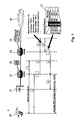
- the mobile station Before starting a data transmission, the mobile station initiates the establishment of a logical connection with the data network (PDP Context).
- PDP Context The procedure used and the behavior of the network elements until interrogation of the gateway node (GGSN) conforms to the 3GPP standard, see FIG. 1 , Steps 2-4.
- the switching node (SGSN) subscriber data from the home location register, HLR, 23 queried and stored.
- a PDP Context request is activated for a requested QoS profile (req. QoS, mainly for "booked” services).
- FIG. 1 the switching node (SGSN) subscriber data from the home location register, HLR, 23 queried and stored.
- a PDP Context request is activated for a requested QoS profile (req. QoS, mainly for "booked” services).
- FIG. QoS QoS
- allowed QoS Min (requested QoS, subscribed QoS).
- FIG. 1 a corresponding PDP Context Request is now generated.
- the interworking node GGSN 24 in steps 5 and 6 asks FIG. 1 , Authentication data and customer data, including the customer class, from billing and other database systems 25, such as RADIUS, MID-SD, from.
- FIG. 1 The GGSN 24 uses the customer class from a network operator-configurable table 27 to determine the stored start configuration of the quality parameters for this customer.
- the GGSN 24 transmits the newly determined quality parameters back to the switching node SGSN 22 (step 8, FIG. 1 ), who then negotiates these quality parameters with the radio system, RAN, 21 (step 9, FIG. 1 ).
- the RAN 21 establishes a logical partial connection of the PDP Context, a Radio Access Bearer (RAB), to the mobile station 20.
- RAB Radio Access Bearer
- the result of the negotiation between RAN 21 and SGSN 22 represents the final negotiated quality parameter (QoS class) for the logical connection (PDP Context) that the SGSN 22 informs the mobile station 20.
- QoS class quality parameter
- PDP Context logical connection
- the invention now provides that the network gateway node GGSN 24 inspects the data packets during the data transmission and checks possible criteria for a necessary adaptation of the quality parameters of the logical connection.
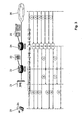
- the procedure of this procedure is in the Figures 2 and 3 shown.
- a data packet of the QoS class "IA3", for example an email data packet 30, is to be delivered to the subscriber terminal 20 of a GPRS data network (21-25).
- the data packet 30 reaches a gateway node GGSN 24 of the data network (step 1, Figs. 2 u. 3).
- GGSN 24 an inspection of the data packet 30, in particular of the packet header takes place (step 2, Figs. 2 u. 3).
- the data packet 30 corresponds to the negotiated QoS class "IA3".
- the data packet can be delivered to the receiver 20 (step 3, Figs. 2 u. 3).
- An adaptation is necessary according to the invention if the classification of the data packet for the determined service and for the customer class according to a network operator configurable table results in a difference between determined and actually set quality parameters (3GPP QoS parameters) for the logical connection.
- a data packet of the QoS class "IA1”, for example a PoC data packet 40 is to be delivered to the subscriber terminal 20.
- the data packet 40 reaches a gateway node GGSN 24 of the data network (step 1, Figs. 2 u. 3).
- An inspection of the data packet 40, in particular of the packet header, takes place in the GGSN 24.
- the data packet 40 does not correspond to the previously negotiated QoS class "IA3" (step 4, Figs. 2 u. 3).
- a necessary reconfiguration of the quality parameters of the logical connection is renegotiated with all involved network elements, for example the switching node SGSN 22 and the radio system RAN 21.
- This negotiation also includes adapting the RAB between RAN 21 and terminal 20 via a RAB MODIFICATION (step 5, Figs. 2 u. 3).
- the RAN 21 Upon successful completion of the negotiation, the RAN 21 will consider the new parameters for the current data connection in resource allocation.
- the terminal 20 is informed of the change by a PDP CONTEXT MODIFICATION.
- the adaptation of the quality parameters for the logical connection takes place in parallel to the further data transmission (step 6, FIG. Figs. 2 u. 3).
- a data packet of the QoS class "IA3", for example an email data packet 50, should again be delivered to the subscriber terminal 20.
- the data packet 50 reaches a gateway node GGSN 24 of the data network (step 1, Figs. 2 u. 3). An inspection of the data packet 50, in particular of the packet header, takes place in the GGSN 24. It is noted that the data packet 50 corresponds to the QoS class "IA3" (step 2, Figs. 2 u. 3). Again, it is necessary to adapt the QoS class from "IA1" to "IA3" because the classification of the data packet 50 for the determined service and for the customer class differs from the previous QoS class. A necessary reconfiguration of the quality parameters of the logical connection is renegotiated with all involved network elements, for example the switching node SGSN 22 and the radio system RAN 21.
- This negotiation also includes adapting the RAB between RAN 21 and terminal 20 via a RAB MODIFICATION (step 7, Figs. 2 u. 3).
- the RAN 21 Upon successful completion of the negotiation, the RAN 21 will consider the new parameters for the current data connection in resource allocation.
- the terminal 20 is informed of the change by a PDP CONTEXT MODIFICATION.
- the adaptation of the quality parameters for the logical connection takes place in parallel to the further data transmission (step 8, FIG. Figs. 2 u. 3).
- a hysteresis mechanism is used so that only a change in the quality parameters is made when there is a stable assessment of the determining service or QoS class.
- the mobile station Before starting a data transmission, the mobile station initiates the establishment of a logical connection with the data network (PDP Context).
- PDP Context data network
- the procedure used and the behavior of the network elements until interrogation of the gateway node (GGSN) complies with the 3GPP standard, see also FIG. 1 , Step 2-4 and related description.
- the interworking node GGSN 24 asks in steps 5 and 6, FIG. 1 , Authentication data and customer data, including the customer class, from billing and other database systems 25, such as RADIUS, MID-SD, from.
- step 7 FIG. 1
- the GGSN 24 uses the customer class from a network operator-configurable table 27 to determine the stored start configuration of the quality parameters for this customer.
- the GGSN 24 transmits the newly determined quality parameters back to the switching node SGSN 22 (step 8, FIG. 1 ), who then negotiates these quality parameters with the radio system RAN 21 (step 9, FIG. 1 ).
- the RAN 21 establishes a logical partial connection of the PDP Context, a Radio Access Bearer (RAB), to the mobile station 20.
- RAB Radio Access Bearer
- the result of the negotiation between RAN 21 and SGSN 22 represents the final negotiated quality parameters for the logical connection that the SGSN 22 tells the mobile station 20.
- the actual data transfer between mobile station 20 and server is possible.
- a QoS class "Interactive" with priority "3", or "IA3” was negotiated for the data transfer.
- the gateway node GGSN 24 inspects the incoming data packets and determines the quality parameters (IP priority) to be used for the respective data packet according to a network operator configurable table 27 depending on the determined service and the customer class.
- IP priority quality parameters
- a data packet of the QoS class "IA3", for example an email data packet 30, is to be delivered to a subscriber terminal 20 of a GPRS data network.
- the data packet 30 reaches a gateway node GGSN 25 of the data network (step 1, Figs. 4 u. 5).
- GGSN 24 an inspection of the data packet 30, in particular of the packet header takes place (step 2, Figs. 4 u. 5).
- the data packet 30 corresponds to the QoS class "IA3".
- the invention now overrides the GGSN 24 z.
- IP TOS field of the corresponding data packet 30 with the ascertained quality parameters "IA3" IP priority
- forwards the modified data packet 30a to a responsible switching node SGSN 22 step 3, Figs. 4 u. 5).
- All other network elements eg. As the switching node SGSN 22 and in particular the resource control in the radio system RAN 21, evaluate the inscribed by the GGSN 24 quality parameters and use this information for the control of the data packet 30 a (step 4, Figs. 4 u. 5).
- the control concerns the prioritization of the various packets for a mobile station 20 as well as the prioritization of packets for different mobile stations.
- the data packet 30a is delivered to the terminal 20 according to its QoS class (step 5, Figs. 4 u. 5).
- a subsequent data packet of the QoS class "IA1", for example a PoC data packet 40, is to be delivered to the subscriber terminal 20.
- the data packet 40 reaches a gateway node GGSN 24 of the data network (step 1, Figs. 4 u. 5).
- An inspection of the data packet 40, in particular of the packet header, takes place in the GGSN 24 (step 6, FIG. Figs. 4 u. 5).
- the data packet 40 corresponds to the QoS class "IA1".
- the invention now overrides the gateway node GGSN 24 z. B. the IP TOS field of the corresponding data packet 40 with the determined quality parameters "IA1" (IP priority) and forwards the modified data packet 40a to a responsible switching node SGSN 22 (step 7, Figs. 4 u. 5).
- All other network elements eg. As the switching node SGSN 22 and in particular the resource control in the radio system RAN 21, evaluate the inscribed by the GGSN 24 quality parameters and use this information for the control of the data packet 30 a (step 8, Figs. 4 u. 5).
- the control concerns the prioritization of the various packets for a mobile station 20 as well as the prioritization of packets for different ones Mobile stations.
- the data packet 40a is delivered to the terminal 20 according to its QoS class (step 9, Figs. 4 u. 5).
- the treatment of the data packet 50 or of the modified data packet 50a takes place in accordance with the data packets 30 or 30a.
- the implementation example refers to the direction from the network to the terminal, but also the opposite direction, i. from the terminal to the network, possible.
- the mobile station Before starting a data transmission, the mobile station initiates the establishment of a logical connection with the data network (PDP Context).
- PDP Context data network
- the procedure used and the behavior of the network elements until interrogation of the gateway node (GGSN) complies with the 3GPP standard, see also FIG. 1 , Steps 2-4.
- the interworking node GGSN 24 asks in steps 5 and 6, Figur1 , Authentication data and customer data, including the customer class, from billing and other database systems 25, such as RADIUS, MID-SD, from.
- step 7 The GGSN 24 uses the customer class from a network operator-configurable table 27 to determine the stored start configuration of the quality parameters for this customer. Subsequently, the GGSN 24 transmits the newly determined quality parameters back to the switching node SGSN 22 (step 8, Figur1 ), who then negotiates these quality parameters with the radio system RAN 21 (step 9, FIG. 1 ).
- the RAN 21 establishes a logical partial connection of the PDP Context, a Radio Access Bearer (RAB), to the mobile station 20.
- RAB Radio Access Bearer
- the result of the negotiation between RAN 21 and SGSN 22 represents the final negotiated quality parameter for the logical connection that the SGSN 22 reports to the mobile station 20.
- the actual data transfer between mobile station 20 and server is possible. In the following example, it is assumed that a QoS class "Interactive" with priority "3", or "IA3", was negotiated for the data transfer.
- the gateway node GGSN 24 inspects the data packets 30, 40, 50 and checks possible criteria for a data flow determination. With the result of the check, the GGSN 24 determines, from a table 27 that can be configured by the network operator, the quality parameters for the data packet to be used for the determined service and for the customer. According to solution b1), the GGSN 24 overwrites the IP TOS field of the data packet with the determined QoS parameters (IP priority) and forwards the modified data packet 30a, 40a or 50a. All other network elements, such as the responsible switching node SGSN 22 and in particular the resource control in the radio system RAN 12, evaluate the quality parameters and use this information for the control of the packets. The control concerns the prioritization of the different packets for a mobile station as well as the prioritization of packets for different mobile stations.
- IP priority IP priority
- Solution b2) according to FIGS. 6 and 7 corresponds in principle to the solution b1) according to FIGS. 4 and 5 ,
Landscapes
- Engineering & Computer Science (AREA)
- Computer Networks & Wireless Communication (AREA)
- Signal Processing (AREA)
- Databases & Information Systems (AREA)
- Mobile Radio Communication Systems (AREA)
- Data Exchanges In Wide-Area Networks (AREA)
Claims (10)
- Procédé pour commander des ressources dans des éléments de réseau (21, 22, 24) d'un réseau de télécommunication (26) lors de la transmission de paquets de données (30, 40, 50) ou de flux de données entre le réseau de télécommunication et un terminal d'abonné (20) et inversement, étant précisé que dans au moins un élément de réseau (21, 22, 24), chaque paquet de données (30, 40, 50) entrant est inspecté et est classé selon son importance dans une catégorie de qualité de service, que le classement du paquet de données selon l'importance est communiqué grâce à une signalisation à d'autres éléments de réseau impliqués dans la transmission, et que les éléments de réseau impliqués procèdent grâce à cette signalisation à une commande de ressources dynamique de la transmission,
caractérisé en ce que la commande des ressources a lieu par l'intermédiaire des caractéristiques d'une liaison logique par paquets, ce qu'on appelle un contexte PDP, et de l'identification de paquets de données individuels à l'intérieur de cette liaison par paquets, une adaptation dynamique de priorités relatives ayant lieu par l'intermédiaire de l'identification de paquets de données et chaque paquet d'informations étant soumis à un contrôle pour voir si une adaptation des paramètres de qualité devient nécessaire, en plus, pour la liaison logique, cette adaptation n'ayant lieu que si des paramètres de qualité absolus sont modifiés pour la liaison. - Procédé selon la revendication 1, caractérisé en ce que des règles pour le classement d'un paquet de données ou d'un flux de données selon son importance sont stockées dans un ensemble de règles (27) dans l'élément de réseau qui est compétent pour l'inspection.
- Procédé selon la revendication 1 ou 2, caractérisé en ce que les règles pour mettre en application l'importance signalée d'un paquet de données ou d'un flux de données sont stockées dans les éléments de réseau impliqués, dans un ensemble de règles (28).
- Procédé selon l'une des revendications 2 ou 3, caractérisé en ce que l'ensemble de règles (27 ; 28) est apte à être généré, pour l'inspection, la signalisation et la mise en application, par un exploitant de réseau.
- Procédé selon la revendication 1, caractérisé en ce que l'identification est définie par une classification qui est effectuée dans un élément de réseau et qui est signalée par l'intermédiaire d'une identification à d'autres éléments de réseau impliqués.
- Procédé selon la revendication 1, caractérisé en ce que l'identification est définie par une classification qui a lieu de manière autonome dans des éléments de réseau individuels ou dans chaque élément de réseau impliqué.
- Procédé selon l'une des revendications 1 à 6, caractérisé en ce que lors de l'inspection du paquet de données, la catégorie de qualité de service de celui-ci, la catégorie QoS, est définie, et sur la base de la catégorie de qualité de service déterminée est réalisée une adaptation de la liaison logique entre un système radio et le terminal d'abonné à la catégorie de qualité de service.
- Procédé selon l'une des revendications 1 à 6, caractérisé en ce que lors de l'inspection du paquet de données, la catégorie de qualité de service de celui-ci, la catégorie QoS, est définie, en ce que le début de fichier du paquet de données est écrasé avec la catégorie de qualité de service déterminée, et en ce que dans les éléments de réseau impliqués la catégorie de qualité de service inscrite est analysée et utilisée pour la commande du paquet de données.
- Procédé selon l'une des revendications 1 à 6, caractérisé en ce que dans chaque élément de réseau impliqué la catégorie de qualité de service, classe QoS, du paquet de données est définie, et chaque élément de réseau utilise la catégorie de qualité de service déterminée pour commander le paquet de données lors de la transmission à un autre élément de réseau.
- Système de télécommunication avec une commande améliorée de ressources dans des éléments de réseau (21, 22, 24) lors de la transmission de paquets de données (30, 40, 50) ou de flux de données entre les éléments de réseau et un terminal d'abonné (20) et inversement, avec un moyen d'inspection prévu dans au moins un élément de réseau (21, 22, 24) pour inspecter chaque paquet de données (30, 40, 50) entrant et pour classer le paquet de données selon son importance dans une catégorie de qualité de service, et des moyens pour signaler à d'autres éléments de réseau impliqués dans la transmission le classement du paquet de données selon son importance, et des moyens, dans les éléments de réseau impliqués, pour réaliser à l'aide de ce signalement une commande de ressources dynamique de la transmission, caractérisé en ce que les moyens dans les éléments de réseau impliqués sont conçus pour que la commande des ressources se fasse par l'intermédiaire des caractéristiques d'une liaison logique par paquets, ce qu'on appelle un contexte PDP, et par l'intermédiaire de l'identification de paquets de données individuels à l'intérieur de cette liaison par paquets, étant précisé qu'une adaptation dynamique de priorités relatives à lieu par l'intermédiaire de l'identification de paquets de données et que chaque paquet de données est soumis à un contrôle pour voir si une adaptation des paramètres de qualité devient nécessaire, en plus, pour la liaison logique, cette adaptation n'ayant lieu que si des paramètres de qualité absolus pour la liaison sont modifiés.
Applications Claiming Priority (2)
| Application Number | Priority Date | Filing Date | Title |
|---|---|---|---|
| DE102005035237A DE102005035237A1 (de) | 2005-07-25 | 2005-07-25 | Verfahren zur Steuerung von Ressourcen in Netzelementen eines Telekommunikationsnetzes |
| PCT/DE2006/001215 WO2007012304A1 (fr) | 2005-07-25 | 2006-07-13 | Procede de controle de ressources dans des elements d'un reseau de telecommunication |
Publications (2)
| Publication Number | Publication Date |
|---|---|
| EP1908234A1 EP1908234A1 (fr) | 2008-04-09 |
| EP1908234B1 true EP1908234B1 (fr) | 2011-02-16 |
Family
ID=37401588
Family Applications (1)
| Application Number | Title | Priority Date | Filing Date |
|---|---|---|---|
| EP06791298A Active EP1908234B1 (fr) | 2005-07-25 | 2006-07-13 | Procede de controle de ressources dans des elements d'un reseau de telecommunication |
Country Status (7)
| Country | Link |
|---|---|
| US (1) | US8218441B2 (fr) |
| EP (1) | EP1908234B1 (fr) |
| AT (1) | ATE498964T1 (fr) |
| CA (1) | CA2616165C (fr) |
| DE (2) | DE102005035237A1 (fr) |
| ES (1) | ES2361183T3 (fr) |
| WO (1) | WO2007012304A1 (fr) |
Families Citing this family (8)
| Publication number | Priority date | Publication date | Assignee | Title |
|---|---|---|---|---|
| US8553554B2 (en) | 2008-05-16 | 2013-10-08 | Alcatel Lucent | Method and apparatus for providing congestion control in radio access networks |
| US20090296613A1 (en) * | 2008-06-03 | 2009-12-03 | Colin Kahn | Method and apparatus for providing quality-of-service in radio access networks |
| US8503432B2 (en) | 2008-09-30 | 2013-08-06 | Alcatel Lucent | Method and apparatus for signaling proprietary information between network elements of a core network in a wireless communication network |
| US8027255B2 (en) | 2008-09-30 | 2011-09-27 | Alcatel Lucent | Method and apparatus for prioritizing packets for use in managing packets in radio access networks |
| US8446832B2 (en) | 2010-09-30 | 2013-05-21 | Telefonaktiebolaget L M Ericsson (Publ) | Dynamic control of air interface throughput |
| ES2441264B1 (es) * | 2012-04-24 | 2015-06-16 | Vodafone España, S.A.U. | Procedimiento para la optimización del reconocimiento de movilidad en redes móviles |
| EP3373683A4 (fr) * | 2015-11-30 | 2018-11-07 | Huawei Technologies Co., Ltd. | Procédé et dispositif de traitement de paquet de données de service |
| US10278198B2 (en) * | 2016-08-23 | 2019-04-30 | Realtek Singapore Private Limited | Packet forwarding device, and packet-forwarding priority setting circuit and method |
Family Cites Families (12)
| Publication number | Priority date | Publication date | Assignee | Title |
|---|---|---|---|---|
| US6023456A (en) * | 1996-12-23 | 2000-02-08 | Nortel Networks Corporation | Dynamic traffic conditioning |
| NO304570B1 (no) * | 1997-05-20 | 1999-01-11 | Ericsson Telefon Ab L M | FremgangsmÕte relatert til GPRS (General Packet Radio Service) system med pakkesvitsjede forbindelser |
| US6459682B1 (en) * | 1998-04-07 | 2002-10-01 | International Business Machines Corporation | Architecture for supporting service level agreements in an IP network |
| FI105969B (fi) * | 1998-08-10 | 2000-10-31 | Nokia Networks Oy | Palvelunlaadun hallinta matkaviestinjärjestelmässä |
| EP1154664A1 (fr) | 2000-05-09 | 2001-11-14 | Lucent Technologies Inc. | Réservation de ressources dans un réseau de télécommunication de troisième ou future generation |
| US7383048B2 (en) * | 2002-12-04 | 2008-06-03 | Nokia Corporation | Transmission of data packets by a node |
| FR2852178B1 (fr) | 2003-03-04 | 2005-07-08 | Cit Alcatel | Procede pour la gestion de la qualite de service dans un systeme de communications mobiles en mode paquet |
| EP2755345B1 (fr) * | 2003-03-31 | 2020-04-29 | Apple Inc. | Système de télécommunication radio et son procédé de fonctionnement avec invitation à émettre |
| US7746799B2 (en) * | 2003-06-20 | 2010-06-29 | Juniper Networks, Inc. | Controlling data link layer elements with network layer elements |
| DE10355117B4 (de) * | 2003-11-24 | 2005-10-13 | Siemens Ag | Verfahren und Vorrichtung zur Versendung von Datenpaketen |
| WO2006004472A1 (fr) * | 2004-07-05 | 2006-01-12 | Telefonaktiebolaget Lm Ericsson (Publ) | Procedes et dispositifs de fourniture de parametres de qualite de service dans des messages http |
| CN101431807B (zh) * | 2007-11-05 | 2012-02-22 | 上海华为技术有限公司 | 移动台代理、基站子系统和网络适配方法 |
-
2005
- 2005-07-25 DE DE102005035237A patent/DE102005035237A1/de not_active Withdrawn
-
2006
- 2006-07-13 AT AT06791298T patent/ATE498964T1/de active
- 2006-07-13 DE DE502006008915T patent/DE502006008915D1/de active Active
- 2006-07-13 CA CA2616165A patent/CA2616165C/fr active Active
- 2006-07-13 US US11/996,863 patent/US8218441B2/en active Active
- 2006-07-13 EP EP06791298A patent/EP1908234B1/fr active Active
- 2006-07-13 WO PCT/DE2006/001215 patent/WO2007012304A1/fr not_active Ceased
- 2006-07-13 ES ES06791298T patent/ES2361183T3/es active Active
Also Published As
| Publication number | Publication date |
|---|---|
| DE102005035237A1 (de) | 2007-03-01 |
| DE502006008915D1 (de) | 2011-03-31 |
| US8218441B2 (en) | 2012-07-10 |
| CA2616165C (fr) | 2015-01-06 |
| CA2616165A1 (fr) | 2007-02-01 |
| EP1908234A1 (fr) | 2008-04-09 |
| ES2361183T3 (es) | 2011-06-14 |
| WO2007012304A1 (fr) | 2007-02-01 |
| ATE498964T1 (de) | 2011-03-15 |
| US20090154402A1 (en) | 2009-06-18 |
Similar Documents
| Publication | Publication Date | Title |
|---|---|---|
| DE602004005604T2 (de) | Verfahren zur dienstqualitätsdifferenzierung in paketmodus-mobilkommunikationsnetzen | |
| DE60127869T2 (de) | Verfahren zum zuteilen von dienstparameterwerten an übertragungen, funkzugangsnetze und netzwerkelemente | |
| DE60003525T2 (de) | Übertragung von dienstqualitätsabbildungsinformation in einem paketfunknetz | |
| DE60112480T2 (de) | Dienstqualität (QoS) für ein Universales Mobiltelekommunikationssystem (UMTS) mit Unterstützung einer Verhandlung einer einstellbaren Dienstqualität | |
| DE60115967T2 (de) | Eine methode für handhabung von meldungen zwischen einem terminal und einem datennetz | |
| DE60108765T2 (de) | Basis-qos-mechanismen zur drahtlosen übertragung von ip-verkehr | |
| DE69932417T2 (de) | Verbindungseffizienz basierte planung in einem funkdatenübertragungssystem | |
| DE60211881T2 (de) | Bindungsinformation für ip mediendatenströmen | |
| DE602004009913T2 (de) | Verfahren, system und netzwerkelement zur autorisierung einer datenübertragung | |
| DE60120354T2 (de) | Rsvp-verarbeitung in 3g-netzwerken | |
| DE10302788B4 (de) | Einrichtung und Verfahren zum Umordnen von TFTs in einem Mobilkommunikationssystem | |
| EP1451980B1 (fr) | Procede de transmission de donnees d'application avec une qualite differente | |
| EP2018765A1 (fr) | Procede pour permettre la distribution d'une qualite de service et/ou la taxation du service dans le cas de services de telecommunication | |
| EP1908234B1 (fr) | Procede de controle de ressources dans des elements d'un reseau de telecommunication | |
| DE60101571T2 (de) | Datenträger in einem kommunikationssystem | |
| WO2003088592A1 (fr) | Procede pour le controle commun des largeurs de bande d'un groupe de flux d'informations individuels | |
| EP1985144B1 (fr) | Procédé de garantie de qualités de services dans les réseaux de radiocommunication mobile à commutation par paquets | |
| EP1308006B1 (fr) | Procede permettant d'etablir une communication d'une qualite de service donnee entre des reseaux de communication et des gestionnaires de ressources | |
| DE102004041013B3 (de) | Verfahren und Vorrichtung zur Optimierung der Auslastung eines Kommunikationsnetzes | |
| DE69931132T2 (de) | Funkstrecke mit dynamischer Anpassung | |
| WO2007113109A1 (fr) | Commande d'accès réseau avec catégorie de trafic supplémentaire dans un réseau de communication | |
| DE102004015267B4 (de) | Netzressourcengesteuerte Dienst-Bereitstellung | |
| DE10315066B4 (de) | Verfahren zur Steuerung der Übertragung von Daten | |
| EP1937026B1 (fr) | Procédé et appareil d'adaptation d'une liaison de communication dans un réseau de communication | |
| DE10204089A1 (de) | Verfahren zur Zugangskontrolle zu einem Kommunikationsnetz |
Legal Events
| Date | Code | Title | Description |
|---|---|---|---|
| PUAI | Public reference made under article 153(3) epc to a published international application that has entered the european phase |
Free format text: ORIGINAL CODE: 0009012 |
|
| 17P | Request for examination filed |
Effective date: 20080129 |
|
| AK | Designated contracting states |
Kind code of ref document: A1 Designated state(s): AT BE BG CH CY CZ DE DK EE ES FI FR GB GR HU IE IS IT LI LT LU LV MC NL PL PT RO SE SI SK TR |
|
| AX | Request for extension of the european patent |
Extension state: AL BA HR MK RS |
|
| RAP3 | Party data changed (applicant data changed or rights of an application transferred) |
Owner name: T-MOBILE INTERNATIONAL AG & CO. KG |
|
| RAP1 | Party data changed (applicant data changed or rights of an application transferred) |
Owner name: T-MOBILE INTERNATIONAL AG |
|
| RIN1 | Information on inventor provided before grant (corrected) |
Inventor name: LEHSER, FRANK Inventor name: KOPPENBORG, STEFAN Inventor name: ESSELING, UTE |
|
| 17Q | First examination report despatched |
Effective date: 20100517 |
|
| GRAP | Despatch of communication of intention to grant a patent |
Free format text: ORIGINAL CODE: EPIDOSNIGR1 |
|
| GRAS | Grant fee paid |
Free format text: ORIGINAL CODE: EPIDOSNIGR3 |
|
| GRAA | (expected) grant |
Free format text: ORIGINAL CODE: 0009210 |
|
| AK | Designated contracting states |
Kind code of ref document: B1 Designated state(s): AT BE BG CH CY CZ DE DK EE ES FI FR GB GR HU IE IS IT LI LT LU LV MC NL PL PT RO SE SI SK TR |
|
| AX | Request for extension of the european patent |
Extension state: AL BA HR MK RS |
|
| REG | Reference to a national code |
Ref country code: GB Ref legal event code: FG4D Free format text: NOT ENGLISH |
|
| REG | Reference to a national code |
Ref country code: CH Ref legal event code: EP |
|
| REG | Reference to a national code |
Ref country code: IE Ref legal event code: FG4D Free format text: LANGUAGE OF EP DOCUMENT: GERMAN |
|
| REF | Corresponds to: |
Ref document number: 502006008915 Country of ref document: DE Date of ref document: 20110331 Kind code of ref document: P |
|
| REG | Reference to a national code |
Ref country code: DE Ref legal event code: R096 Ref document number: 502006008915 Country of ref document: DE Effective date: 20110331 |
|
| REG | Reference to a national code |
Ref country code: NL Ref legal event code: T3 |
|
| REG | Reference to a national code |
Ref country code: ES Ref legal event code: FG2A Ref document number: 2361183 Country of ref document: ES Kind code of ref document: T3 Effective date: 20110614 |
|
| LTIE | Lt: invalidation of european patent or patent extension |
Effective date: 20110216 |
|
| PG25 | Lapsed in a contracting state [announced via postgrant information from national office to epo] |
Ref country code: GR Free format text: LAPSE BECAUSE OF FAILURE TO SUBMIT A TRANSLATION OF THE DESCRIPTION OR TO PAY THE FEE WITHIN THE PRESCRIBED TIME-LIMIT Effective date: 20110517 Ref country code: SE Free format text: LAPSE BECAUSE OF FAILURE TO SUBMIT A TRANSLATION OF THE DESCRIPTION OR TO PAY THE FEE WITHIN THE PRESCRIBED TIME-LIMIT Effective date: 20110216 Ref country code: LV Free format text: LAPSE BECAUSE OF FAILURE TO SUBMIT A TRANSLATION OF THE DESCRIPTION OR TO PAY THE FEE WITHIN THE PRESCRIBED TIME-LIMIT Effective date: 20110216 Ref country code: PT Free format text: LAPSE BECAUSE OF FAILURE TO SUBMIT A TRANSLATION OF THE DESCRIPTION OR TO PAY THE FEE WITHIN THE PRESCRIBED TIME-LIMIT Effective date: 20110616 Ref country code: LT Free format text: LAPSE BECAUSE OF FAILURE TO SUBMIT A TRANSLATION OF THE DESCRIPTION OR TO PAY THE FEE WITHIN THE PRESCRIBED TIME-LIMIT Effective date: 20110216 |
|
| PG25 | Lapsed in a contracting state [announced via postgrant information from national office to epo] |
Ref country code: SI Free format text: LAPSE BECAUSE OF FAILURE TO SUBMIT A TRANSLATION OF THE DESCRIPTION OR TO PAY THE FEE WITHIN THE PRESCRIBED TIME-LIMIT Effective date: 20110216 Ref country code: FI Free format text: LAPSE BECAUSE OF FAILURE TO SUBMIT A TRANSLATION OF THE DESCRIPTION OR TO PAY THE FEE WITHIN THE PRESCRIBED TIME-LIMIT Effective date: 20110216 Ref country code: CY Free format text: LAPSE BECAUSE OF FAILURE TO SUBMIT A TRANSLATION OF THE DESCRIPTION OR TO PAY THE FEE WITHIN THE PRESCRIBED TIME-LIMIT Effective date: 20110216 Ref country code: PL Free format text: LAPSE BECAUSE OF FAILURE TO SUBMIT A TRANSLATION OF THE DESCRIPTION OR TO PAY THE FEE WITHIN THE PRESCRIBED TIME-LIMIT Effective date: 20110216 Ref country code: BG Free format text: LAPSE BECAUSE OF FAILURE TO SUBMIT A TRANSLATION OF THE DESCRIPTION OR TO PAY THE FEE WITHIN THE PRESCRIBED TIME-LIMIT Effective date: 20110516 |
|
| REG | Reference to a national code |
Ref country code: IE Ref legal event code: FD4D |
|
| PG25 | Lapsed in a contracting state [announced via postgrant information from national office to epo] |
Ref country code: EE Free format text: LAPSE BECAUSE OF FAILURE TO SUBMIT A TRANSLATION OF THE DESCRIPTION OR TO PAY THE FEE WITHIN THE PRESCRIBED TIME-LIMIT Effective date: 20110216 Ref country code: DK Free format text: LAPSE BECAUSE OF FAILURE TO SUBMIT A TRANSLATION OF THE DESCRIPTION OR TO PAY THE FEE WITHIN THE PRESCRIBED TIME-LIMIT Effective date: 20110216 Ref country code: IE Free format text: LAPSE BECAUSE OF FAILURE TO SUBMIT A TRANSLATION OF THE DESCRIPTION OR TO PAY THE FEE WITHIN THE PRESCRIBED TIME-LIMIT Effective date: 20110216 |
|
| PG25 | Lapsed in a contracting state [announced via postgrant information from national office to epo] |
Ref country code: SK Free format text: LAPSE BECAUSE OF FAILURE TO SUBMIT A TRANSLATION OF THE DESCRIPTION OR TO PAY THE FEE WITHIN THE PRESCRIBED TIME-LIMIT Effective date: 20110216 Ref country code: CZ Free format text: LAPSE BECAUSE OF FAILURE TO SUBMIT A TRANSLATION OF THE DESCRIPTION OR TO PAY THE FEE WITHIN THE PRESCRIBED TIME-LIMIT Effective date: 20110216 Ref country code: RO Free format text: LAPSE BECAUSE OF FAILURE TO SUBMIT A TRANSLATION OF THE DESCRIPTION OR TO PAY THE FEE WITHIN THE PRESCRIBED TIME-LIMIT Effective date: 20110216 |
|
| PLBE | No opposition filed within time limit |
Free format text: ORIGINAL CODE: 0009261 |
|
| STAA | Information on the status of an ep patent application or granted ep patent |
Free format text: STATUS: NO OPPOSITION FILED WITHIN TIME LIMIT |
|
| 26N | No opposition filed |
Effective date: 20111117 |
|
| BERE | Be: lapsed |
Owner name: T-MOBILE INTERNATIONAL A.G. Effective date: 20110731 |
|
| PG25 | Lapsed in a contracting state [announced via postgrant information from national office to epo] |
Ref country code: MC Free format text: LAPSE BECAUSE OF NON-PAYMENT OF DUE FEES Effective date: 20110731 |
|
| REG | Reference to a national code |
Ref country code: CH Ref legal event code: PL |
|
| REG | Reference to a national code |
Ref country code: DE Ref legal event code: R097 Ref document number: 502006008915 Country of ref document: DE Effective date: 20111117 |
|
| PG25 | Lapsed in a contracting state [announced via postgrant information from national office to epo] |
Ref country code: BE Free format text: LAPSE BECAUSE OF NON-PAYMENT OF DUE FEES Effective date: 20110731 Ref country code: CH Free format text: LAPSE BECAUSE OF NON-PAYMENT OF DUE FEES Effective date: 20110731 Ref country code: LI Free format text: LAPSE BECAUSE OF NON-PAYMENT OF DUE FEES Effective date: 20110731 |
|
| PG25 | Lapsed in a contracting state [announced via postgrant information from national office to epo] |
Ref country code: LU Free format text: LAPSE BECAUSE OF NON-PAYMENT OF DUE FEES Effective date: 20110713 |
|
| PG25 | Lapsed in a contracting state [announced via postgrant information from national office to epo] |
Ref country code: IS Free format text: LAPSE BECAUSE OF FAILURE TO SUBMIT A TRANSLATION OF THE DESCRIPTION OR TO PAY THE FEE WITHIN THE PRESCRIBED TIME-LIMIT Effective date: 20110216 |
|
| PG25 | Lapsed in a contracting state [announced via postgrant information from national office to epo] |
Ref country code: TR Free format text: LAPSE BECAUSE OF FAILURE TO SUBMIT A TRANSLATION OF THE DESCRIPTION OR TO PAY THE FEE WITHIN THE PRESCRIBED TIME-LIMIT Effective date: 20110216 |
|
| PG25 | Lapsed in a contracting state [announced via postgrant information from national office to epo] |
Ref country code: HU Free format text: LAPSE BECAUSE OF FAILURE TO SUBMIT A TRANSLATION OF THE DESCRIPTION OR TO PAY THE FEE WITHIN THE PRESCRIBED TIME-LIMIT Effective date: 20110216 |
|
| REG | Reference to a national code |
Ref country code: FR Ref legal event code: PLFP Year of fee payment: 11 |
|
| REG | Reference to a national code |
Ref country code: FR Ref legal event code: PLFP Year of fee payment: 12 |
|
| REG | Reference to a national code |
Ref country code: FR Ref legal event code: PLFP Year of fee payment: 13 |
|
| REG | Reference to a national code |
Ref country code: FR Ref legal event code: PLFP Year of fee payment: 17 |
|
| PGFP | Annual fee paid to national office [announced via postgrant information from national office to epo] |
Ref country code: NL Payment date: 20240722 Year of fee payment: 19 |
|
| PGFP | Annual fee paid to national office [announced via postgrant information from national office to epo] |
Ref country code: DE Payment date: 20240719 Year of fee payment: 19 |
|
| PGFP | Annual fee paid to national office [announced via postgrant information from national office to epo] |
Ref country code: GB Payment date: 20240723 Year of fee payment: 19 |
|
| PGFP | Annual fee paid to national office [announced via postgrant information from national office to epo] |
Ref country code: FR Payment date: 20240717 Year of fee payment: 19 |
|
| PGFP | Annual fee paid to national office [announced via postgrant information from national office to epo] |
Ref country code: ES Payment date: 20240816 Year of fee payment: 19 |
|
| PGFP | Annual fee paid to national office [announced via postgrant information from national office to epo] |
Ref country code: AT Payment date: 20240718 Year of fee payment: 19 |
|
| PGFP | Annual fee paid to national office [announced via postgrant information from national office to epo] |
Ref country code: IT Payment date: 20240731 Year of fee payment: 19 |
|
| REG | Reference to a national code |
Ref country code: DE Ref legal event code: R119 Ref document number: 502006008915 Country of ref document: DE |
|
| REG | Reference to a national code |
Ref country code: NL Ref legal event code: MM Effective date: 20250801 |
|
| REG | Reference to a national code |
Ref country code: AT Ref legal event code: MM01 Ref document number: 498964 Country of ref document: AT Kind code of ref document: T Effective date: 20250713 |
|
| GBPC | Gb: european patent ceased through non-payment of renewal fee |
Effective date: 20250713 |
|
| PG25 | Lapsed in a contracting state [announced via postgrant information from national office to epo] |
Ref country code: GB Free format text: LAPSE BECAUSE OF NON-PAYMENT OF DUE FEES Effective date: 20250713 |
|
| PG25 | Lapsed in a contracting state [announced via postgrant information from national office to epo] |
Ref country code: DE Free format text: LAPSE BECAUSE OF NON-PAYMENT OF DUE FEES Effective date: 20260203 |
|
| PG25 | Lapsed in a contracting state [announced via postgrant information from national office to epo] |
Ref country code: AT Free format text: LAPSE BECAUSE OF NON-PAYMENT OF DUE FEES Effective date: 20250713 |
|
| PG25 | Lapsed in a contracting state [announced via postgrant information from national office to epo] |
Ref country code: NL Free format text: LAPSE BECAUSE OF NON-PAYMENT OF DUE FEES Effective date: 20250801 |
|
| PG25 | Lapsed in a contracting state [announced via postgrant information from national office to epo] |
Ref country code: FR Free format text: LAPSE BECAUSE OF NON-PAYMENT OF DUE FEES Effective date: 20250731 |