EP1905172B1 - Gerät, verfahren und computerprogrammprodukt zur ermöglichung des antennenbetriebs mit einem geschlossenen übertragungskreislauf für systeme mit mehreren antennen - Google Patents
Gerät, verfahren und computerprogrammprodukt zur ermöglichung des antennenbetriebs mit einem geschlossenen übertragungskreislauf für systeme mit mehreren antennen Download PDFInfo
- Publication number
- EP1905172B1 EP1905172B1 EP06795069.1A EP06795069A EP1905172B1 EP 1905172 B1 EP1905172 B1 EP 1905172B1 EP 06795069 A EP06795069 A EP 06795069A EP 1905172 B1 EP1905172 B1 EP 1905172B1
- Authority
- EP
- European Patent Office
- Prior art keywords
- information
- weights
- data signals
- antennas
- weight
- Prior art date
- Legal status (The legal status is an assumption and is not a legal conclusion. Google has not performed a legal analysis and makes no representation as to the accuracy of the status listed.)
- Active
Links
Images


Classifications
-
- H—ELECTRICITY
- H04—ELECTRIC COMMUNICATION TECHNIQUE
- H04B—TRANSMISSION
- H04B7/00—Radio transmission systems, i.e. using radiation field
- H04B7/02—Diversity systems; Multi-antenna system, i.e. transmission or reception using multiple antennas
- H04B7/04—Diversity systems; Multi-antenna system, i.e. transmission or reception using multiple antennas using two or more spaced independent antennas
- H04B7/0413—MIMO systems
-
- H—ELECTRICITY
- H04—ELECTRIC COMMUNICATION TECHNIQUE
- H04B—TRANSMISSION
- H04B7/00—Radio transmission systems, i.e. using radiation field
- H04B7/02—Diversity systems; Multi-antenna system, i.e. transmission or reception using multiple antennas
- H04B7/04—Diversity systems; Multi-antenna system, i.e. transmission or reception using multiple antennas using two or more spaced independent antennas
- H04B7/06—Diversity systems; Multi-antenna system, i.e. transmission or reception using multiple antennas using two or more spaced independent antennas at the transmitting station
- H04B7/0613—Diversity systems; Multi-antenna system, i.e. transmission or reception using multiple antennas using two or more spaced independent antennas at the transmitting station using simultaneous transmission
- H04B7/0615—Diversity systems; Multi-antenna system, i.e. transmission or reception using multiple antennas using two or more spaced independent antennas at the transmitting station using simultaneous transmission of weighted versions of same signal
- H04B7/0619—Diversity systems; Multi-antenna system, i.e. transmission or reception using multiple antennas using two or more spaced independent antennas at the transmitting station using simultaneous transmission of weighted versions of same signal using feedback from receiving side
- H04B7/0621—Feedback content
- H04B7/0632—Channel quality parameters, e.g. channel quality indicator [CQI]
-
- H—ELECTRICITY
- H04—ELECTRIC COMMUNICATION TECHNIQUE
- H04B—TRANSMISSION
- H04B7/00—Radio transmission systems, i.e. using radiation field
- H04B7/02—Diversity systems; Multi-antenna system, i.e. transmission or reception using multiple antennas
- H04B7/04—Diversity systems; Multi-antenna system, i.e. transmission or reception using multiple antennas using two or more spaced independent antennas
- H04B7/06—Diversity systems; Multi-antenna system, i.e. transmission or reception using multiple antennas using two or more spaced independent antennas at the transmitting station
- H04B7/0613—Diversity systems; Multi-antenna system, i.e. transmission or reception using multiple antennas using two or more spaced independent antennas at the transmitting station using simultaneous transmission
- H04B7/0615—Diversity systems; Multi-antenna system, i.e. transmission or reception using multiple antennas using two or more spaced independent antennas at the transmitting station using simultaneous transmission of weighted versions of same signal
- H04B7/0619—Diversity systems; Multi-antenna system, i.e. transmission or reception using multiple antennas using two or more spaced independent antennas at the transmitting station using simultaneous transmission of weighted versions of same signal using feedback from receiving side
- H04B7/0621—Feedback content
- H04B7/0634—Antenna weights or vector/matrix coefficients
-
- H—ELECTRICITY
- H04—ELECTRIC COMMUNICATION TECHNIQUE
- H04B—TRANSMISSION
- H04B7/00—Radio transmission systems, i.e. using radiation field
- H04B7/02—Diversity systems; Multi-antenna system, i.e. transmission or reception using multiple antennas
- H04B7/04—Diversity systems; Multi-antenna system, i.e. transmission or reception using multiple antennas using two or more spaced independent antennas
- H04B7/06—Diversity systems; Multi-antenna system, i.e. transmission or reception using multiple antennas using two or more spaced independent antennas at the transmitting station
- H04B7/0613—Diversity systems; Multi-antenna system, i.e. transmission or reception using multiple antennas using two or more spaced independent antennas at the transmitting station using simultaneous transmission
- H04B7/0615—Diversity systems; Multi-antenna system, i.e. transmission or reception using multiple antennas using two or more spaced independent antennas at the transmitting station using simultaneous transmission of weighted versions of same signal
- H04B7/0619—Diversity systems; Multi-antenna system, i.e. transmission or reception using multiple antennas using two or more spaced independent antennas at the transmitting station using simultaneous transmission of weighted versions of same signal using feedback from receiving side
- H04B7/0652—Feedback error handling
- H04B7/0654—Feedback error handling at the receiver, e.g. antenna verification at mobile station
-
- H—ELECTRICITY
- H04—ELECTRIC COMMUNICATION TECHNIQUE
- H04B—TRANSMISSION
- H04B7/00—Radio transmission systems, i.e. using radiation field
- H04B7/02—Diversity systems; Multi-antenna system, i.e. transmission or reception using multiple antennas
- H04B7/04—Diversity systems; Multi-antenna system, i.e. transmission or reception using multiple antennas using two or more spaced independent antennas
- H04B7/06—Diversity systems; Multi-antenna system, i.e. transmission or reception using multiple antennas using two or more spaced independent antennas at the transmitting station
- H04B7/0613—Diversity systems; Multi-antenna system, i.e. transmission or reception using multiple antennas using two or more spaced independent antennas at the transmitting station using simultaneous transmission
- H04B7/0615—Diversity systems; Multi-antenna system, i.e. transmission or reception using multiple antennas using two or more spaced independent antennas at the transmitting station using simultaneous transmission of weighted versions of same signal
- H04B7/0665—Feed forward of transmit weights to the receiver
-
- H—ELECTRICITY
- H04—ELECTRIC COMMUNICATION TECHNIQUE
- H04L—TRANSMISSION OF DIGITAL INFORMATION, e.g. TELEGRAPHIC COMMUNICATION
- H04L1/00—Arrangements for detecting or preventing errors in the information received
- H04L1/0001—Systems modifying transmission characteristics according to link quality, e.g. power backoff
- H04L1/0023—Systems modifying transmission characteristics according to link quality, e.g. power backoff characterised by the signalling
- H04L1/0025—Transmission of mode-switching indication
-
- H—ELECTRICITY
- H04—ELECTRIC COMMUNICATION TECHNIQUE
- H04L—TRANSMISSION OF DIGITAL INFORMATION, e.g. TELEGRAPHIC COMMUNICATION
- H04L1/00—Arrangements for detecting or preventing errors in the information received
- H04L1/02—Arrangements for detecting or preventing errors in the information received by diversity reception
- H04L1/06—Arrangements for detecting or preventing errors in the information received by diversity reception using space diversity
-
- H—ELECTRICITY
- H04—ELECTRIC COMMUNICATION TECHNIQUE
- H04L—TRANSMISSION OF DIGITAL INFORMATION, e.g. TELEGRAPHIC COMMUNICATION
- H04L1/00—Arrangements for detecting or preventing errors in the information received
- H04L1/12—Arrangements for detecting or preventing errors in the information received by using return channel
- H04L1/16—Arrangements for detecting or preventing errors in the information received by using return channel in which the return channel carries supervisory signals, e.g. repetition request signals
- H04L1/1607—Details of the supervisory signal
- H04L1/1671—Details of the supervisory signal the supervisory signal being transmitted together with control information
Definitions
- the examples of this invention relate generally to digital cellular communications systems, methods, terminals and computer programs and, more specifically, relate to techniques for providing antenna-related feedback information between user equipment and a base station.
- the DL packet data transmission in UTRA FDD is a feature included in Release 5 specifications (HSDPA) and is further enhanced in Release 6 with the support of fractional DPCH (F DPCH), and with the support of SRB mapping on the HS DSCH.
- HSDPA feature that is of most concern to this invention relates to the transmit and receive sub-systems of the Node-B and the UE.
- EP1392005 discloses a method for channel estimation in a downlink direction in a wireless communication system.
- the method involves a base station transmitting information to a subscriber station about a beam shaping vector used for the connection between the base station and the subscriber station, based on which the subscriber station carries out channel estimation.
- US 2003/148738 discloses a method of detecting and/or correcting errors in closed loop transmit diversity (CLTD) feedback signaling by a mobile station based on signals received from a base station.
- the mobile station is generally configured to compute antenna weights to be applied at the base station and feedback corresponding antenna control bits to the base station, as in conventional CLTD systems.
- the mobile station attempts to determine the antenna weights actually applied at the base station, and uses these determined antenna weights for processing the subsequent transmissions.
- an apparatus is provided as claimed in claim 10.
- an information bearing medium is provided as claimed in claim 18.
- an apparatus is provided as claimed in claim 27.
- an information bearing medium is provided as claimed in claim 36.
- a desirable HSDPA transmission scheme would be based on a closed loop antenna transmit technique with two transmit (Tx) and two receive (Rx) antennas (e.g., if used for HSDPA under realistic operating conditions in combination with fast packet scheduling).
- Tx transmit
- Rx receive
- problems associated with closed loop modes 1 and 2 schemes defined for HSDPA in 3GPP Release 5 are currently problems associated with closed loop modes 1 and 2 schemes defined for HSDPA in 3GPP Release 5.
- a 3GPP specification of particular interest in this regard is 3GPP TS 25.214, Physical layer procedures (FDD) (Release 5).
- FDD Physical layer procedures
- the problems are related to the resolution and update rate of the feedback from the UE, and antenna verification.
- the problem with antenna verification occurs because the UE does not have knowledge of the antenna weights that the Node B is using for transmission.
- the exemplary embodiments of this invention provide an enhancement to the closed loop transmit diversity scheme that is currently specified for HSDPA in 3GPP Releases 5 and 6.
- HSDPA closed loop transmit diversity scheme
- 3GPP Releases 5 and 6 3GPP Releases 5 and 6.
- these teachings are applicable to other types of wireless communications systems including, but not limited to EUTRAN.
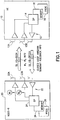
- FIG. 1 is a simplified block diagram showing the major elements used to implement this invention, specifically a HSDPA terminal 10, also referred to as User Equipment (UE) 10, and a BS, also referred to as a Node-B 20.
- UE User Equipment
- Node-B 20 a BS
- the Node-B may be assumed to be functionally equivalent to a 3GPP 25-series specification term Node-B.
- FIG. 1 shows that the HSDPA terminal 10 includes a suitable wireless transceiver 12 having first and second receive antennas 13A, 13B.
- the transceiver 12 is coupled to at least one data processor (DP) 14 that in turn includes or is coupled to a volatile and/or non-volatile memory 16.
- the memory 16 stores program code 18 that is executable by the DP 14 to operate with a Node-B 20, including program code that is provided to implement the UE 10 aspects of this invention.
- the Node-B 20 is constructed to include a transceiver 22 having first and second transmit antennas 23A, 23B. Associated with antennas 23A, 23B are assumed to be corresponding antenna weights (W1, W2).
- the Node-B 20 is also assumed to include at least one DP 24 that in turn includes or is coupled to a volatile and/or non-volatile memory 26.
- the memory 26 stores program code 28 that is executable by the DP 24 to operate with the UE 10, including program code that is provided to implement the Node-B 20 aspects of this invention.
- Figure 1 shows the use of separate transmit and receive antennas at the UE 10 and at the Node-B 20, in practice the same antenna(s) may used for both transmission and reception.
- the memories 16 and 26 may be of any type suitable to the local technical environment and may be implemented using any suitable data storage technology, such as semiconductor based memory devices, magnetic memory devices and systems, optical memory devices and systems, fixed memory and removable memory.
- the data processors 14 and 24 may be of any type suitable to the local technical environment, and may include one or more of general purpose computers, special purpose computers, microprocessors, digital signal processors (DSPs) and processors based on a multi core processor architecture, as non limiting examples.
- the various embodiments of the UE 10 can include, but are not limited to, cellular telephones, personal digital assistants (PDAs) having wireless communication capabilities, portable computers having wireless communication capabilities, image capture devices such as digital cameras having wireless communication capabilities, gaming devices having wireless communication capabilities, music storage and playback appliances having wireless communication capabilities, Internet appliances permitting wireless Internet access and browsing, as well as portable units or terminals that incorporate combinations of such functions.
- PDAs personal digital assistants
- portable computers having wireless communication capabilities
- image capture devices such as digital cameras having wireless communication capabilities
- gaming devices having wireless communication capabilities
- music storage and playback appliances having wireless communication capabilities
- Internet appliances permitting wireless Internet access and browsing, as well as portable units or terminals that incorporate combinations of such functions.
- the HSDPA to allow the UE 10 to send closed loop antenna transmit feedback information to the Node B 20, where the UE 10 sends the closed loop antenna transmit feedback information on the UL HS DPCCH, rather than sending FBI information on the DPCCH.
- This approach beneficially enables the use of more bits for sending feedback information to the Node B 20.
- the feedback rate may be made dynamic (e.g., corresponding to the CQI feed back rate).
- the feedback information may comprise information for specifying UE-recommended antenna weights to be used by the Node B 20 (e.g., BS or BTS), where an antenna weight may be expressed in terms of amplitude and phase.
- the transmission format for the DL HS SCCH is modified such that the HS SCCH also contains information on the applied transmit antenna scheme used at the Node B 20, including antenna weight (W1, W2) information. Sending this information on the HS SCCH to the UE 10 reduces or eliminates the problems referred to above regarding antenna verification (e.g., 3GPP Release '5).
- antenna verification e.g., 3GPP Release '5
- the closed loop transmit antenna feedback scheme in accordance with the exemplary embodiments of this invention supports antenna transmit diversity weights, and also MIMO multi stream closed loop feedback information. This is described in more detail in reference to Figures 2 and 3 .
- Wireless communication system 200 comprises a Node B 220 and a UE 210 communicating using the communication channels HS DSCH 240, the HS SSCH 245 and HS DPCCH 250.
- the Node B 220 comprises a DP 224, a memory 226, multipliers 296-1 and 296-2, and a transceiver 222.
- the memory 226 comprises program code 228, received weights 235, input data 260, and pilot symbols 265.
- the Node B 220 is coupled to or comprises antennas 230-1,230-2, and 230-3.
- the UE 210 comprises a DP 234, a memory 236, and a transceiver 232.
- the UE 210 is coupled to or comprises antennas 290-1, 290-2, and 290-3.
- the memory 236 includes program code 238, received weight information 280, determined weight information 282, feedback weight information 284, and output data DS1' 286 corresponding to the data in data signal DS1 225.
- Node B 220 communicates input data 260 by performing such functions as modulation, spreading, scrambling (e.g., encryption), and frequency shifting (e.g., from baseband to transmission band) to create data signal DS1 225.
- the data signal DS1 225 is coupled to both multipliers 296-1 and 296-2 and modified (e.g., multiplied) by a corresponding antenna weight W 1 , W 2 , respectively, to create modified data signals 297-1, 297-2 and communicated using antennas 230-1, 230-2, respectively.
- the DP 224 also causes the pilot symbols 265 to be transmitted as data signal DS1 225, although one or both antennas 230-1 and 230-2 may be used to transmit the data signal DS1 225 having the pilot symbols 265.
- the data signal DS 1 225 is transmitted using HS DSCH 240 to the UE 210. Additionally, the Node B 220 transmits (e.g., under control of the program code 228 and DP 224) weight information 270 on the HS SCCH 245 to the UE 210.
- the weight information 270 is "feed forward" indications of the weights W 1 , W 2 , and the weight information 270 can include information 271 corresponding to both antenna weights (i.e., W 1 , W 2 ) or information 272 corresponding to one of the weights (e.g., W 1 or W 2 ).
- the weight information 270 could include, e.g., a phase difference between the antenna weights W 1 and W 2 , values of W 1 , W 2 , or information that is mapped to give the W 1 and/or W 2 .
- information 272 e.g., corresponding to antenna weight W 2
- the UE would then be able to determine information corresponding to the other antenna weight (e.g., W 1 ) using the transmitted information 272.
- the UE 210 places the weight information 270 in received weight information 280, and if necessary determines determined weight information 282 from the received weight information 280.
- the received weight information 280 corresponds to both W 1 and W 2 and determined weight information 282 corresponds to both W 1 and W 2 .
- the received weight information 280 corresponds to W 2 (e.g., or W 1 ) and the UE 210 determines determined weight information 282 (e.g., corresponding to both W 1 and W 2 ) using the received weight information 280 of W 2 (e.g., or W 1 ).
- the UE 210 uses the determined weight information 282 during decoding of the received data signals 291-1 and 291-2 and determines output data (DS1') 286 corresponding to the data in data signal DS1 225.
- the UE 210 also uses this determined weight information 282 for channel estimation, including for estimating new antenna weights (i.e., feedback weight information 284) which are afterwards signaled back to the Node-B.
- the UE 210 e.g., again under control of the program code 238 and the DP 234) therefore determines feedback weight information 284 using, e.g., the pilot symbols 265 that are transmitted on the HS DSCH 240 and corresponding channel estimation determined using the determined weight information 282.
- the UE 210 communicates the feedback weight information 276 (corresponding to feedback weight information 284) to the Node B as part of closed loop transmit feedback information 275 on the HS DPCCH 250.
- the feedback weight information 276 includes one or more of feedback weight information W 1 ' 241 corresponding to a calculated W 1 and feedback weight information W 2 ' 242 corresponding to a calculated W 2 . Note also that the feedback weight information 276 could include differences, such as a phase difference, between the antenna weights W 1 and W 2 .
- the closed loop transmit feedback information 275 may also include CQI/CSI 278 and may also include Acknowledge (Ack)/No Acknowledge (Nack) from the current or previous transmissions.
- the Node B 220 uses the received weight information 235, which correspond to the feedback weight information 276, to revise antenna weights W 1 , W 2 .
- Exemplary techniques for determinations of antenna weights by the UE 210 and the revision of the antenna weights by the Node B 220 are described in, e.g., 3GPP TS 25.214, V5.0.0 (2002-03) and later documents. It is noted that the system 200 of FIG. 2 uses diversity transmission because the same signal (data signal DS1 225) is transmitted using different antennas 230-1, 230-2.
- Figure 3 shows another simplified block diagram showing exemplary elements used to implement multiple input, multiple output (MIMO) transmission and reception.
- System 300 in Figure 3 includes many of the same elements as in Figure 2 , and therefore only differences will be described herein.
- the communication system 300 includes a Node B 320 including DP 224 that is coupled to multipliers 336-1 through 336-4 and through transceiver 322 to the antennas 330-1 through 330-4.
- the DP 224 splits the input data 260 into the data signals DS1 325-1 to DS4 325-4, each of which is modified (e.g., multiplied) using the multipliers 336 by a corresponding weight W 1 through W 4 to create a modified data signal 337-1 through 337-4 that is then transmitted using the transceiver 322 and the antennas 330.
- the Node B 320 also communicates weight information 370, including one or more of the weight information 371 corresponding to W 1 , weight information 372 corresponding to W 2 , weight information 373 corresponding to W 3 , and weight information 374 corresponding to W 4 374, to the UE 210.
- the UE 210 receives the HS DSCH 240 using the antennas 390-1 through 390-4 and the transceiver 332 creates the received data signals 391-1 through 391-4.
- the DP 234 then creates output data DS1' 386-1, DS2' 386-2, DS3' 386-3, and DS4' 386-4, corresponding to data signals DS1 325-1, DS2 325-2, DS3 325-3, and DS4 325-4, respectively.
- N receive antennas 390 receive information from M transmit antennas 330, and there can be min(M,N) independent subchannels.
- M is not equal to N.
- the UE 310 communicates feedback weight information 376, including one or more of feedback weight information W 1 ' 341 corresponding to a calculated W 1 , including feedback weight information W 2 ' 342 corresponding to a calculated W 2 , including feedback weight information W 3 ' 343 corresponding to a calculated W 3 , including feedback weight information W 4 ' 344 corresponding to a calculated W 4 , using the HS DPCCH 250 to the Node B 320.
- the feedback weight information 376 (and also "feed forward" information 270, 370) can also include phase difference 345 ( ⁇ 1,2 ) between W 1 and W 2 , phase difference 346 ( ⁇ 3,4 ) between W 3 and W 4 , amplitude difference 347 ( A 1 , 2 ) between W 1 and W 2 , and amplitude difference 348 ( A 3 , 4 ) between W 3 and W 4 .
- each feedback weight information 341, 342, 343, 344 can include weight information 349 (A 1 , ⁇ 1 having an amplitude and a phase, in this example for W 1 . It is also noted that such feedback weight information 376 will typically be mapped from a set of bits to an appropriate amplitude and/or phase, as described below in reference to Figure 6 .
- the slot formats for the HS SCCH and HS DPCCH messaging that carries the aforementioned additional information may be arranged in any suitable manner.
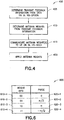
- Method 400 starts in block 405 when the closed loop transmit feedback information 275, 375 is determined from data on the UL HS DPCCH 250.
- the antenna weights are determined using the closed loop transmit feedback information 275, 375 (e.g., feedback antenna weight information 276, 376).
- the feedback antenna weight information 276 would therefore include only information 242 corresponding to W 2 , and the information 242 includes two bits, e.g., 00 (corresponding to a phase of zero), 01 (corresponding to a phase of ⁇ /2), 10 (corresponding to a phase of ⁇ ), or 11 (corresponding to a phase of - ⁇ /2). This is shown in Figure 6 , wherein weight information 610-1 through 610-4 corresponds to antenna weight information 242.
- Each weight information 610-1 through 610-4 is mapped using the table 600 to a corresponding phase 620-1 through 620-2.
- the network node, Node B 220 for instance, could then set the antenna weight W 2 equivalent to the phase indicated by the information 242 as the amplitude is already known.
- the antenna weights are communicated to the UE 210, 310 on the DL HS SCCH 245.
- the network node uses two bits in the weight information 270 (including only weight information 272 corresponding to W 2 ) to indicate the phase of W 2 .
- one of the two-bit sequences in weight information 610-1 through 610-4 is transmitted by the network node to the UE. It is noted that the table 600 could also map bits to amplitudes or amplitudes and phase, if desired.
- the antenna weights are applied to the data signals 225, 235 being transmitted.
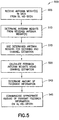
- Method 500 performed by a user equipment (UE 10, 210, 310) for providing closed loop transmit antenna operation.
- Method 500 is performed by a UE under direction, e.g., of the program code 18, 238.
- Method 500 begins in block 505 when the UE receives information corresponding to antenna weights (e.g., weight information 270, 370) in data from the DL HS SCCH 245.
- antenna weights are determined using the weight information.
- Block 510 is also performed when less the weight information corresponds to less than all antenna weights.
- antenna weight W 1 (and possibly antenna weights W 3 , W 4 ) can be determined based on information corresponding to the received antenna weight of W 2 .
- the antenna weight W 1 is fixed and the information 270 corresponding to the antenna weight W 2 includes two bits, as shown in Figure 6 as weight information 610-1 through 610-4.
- the two bits from weight information 610-1 through 610-4 select a phase 620-1 through 620-4 in the range the range ⁇ 0,- ⁇ /2, ⁇ /2, ⁇ ⁇ for the weight W 2 and the magnitude of the amplitude of W 2 is fixed.
- the bits are used to determine what the phase for W 2 should be.
- the antenna weights used by the Node-B 220 are used by the UE 210 when the UE 210 performs channel estimation (block 515, described below), and the channel estimation allows the UE 210 to estimate new antenna weights (e.g., corresponding to feedback weight information 276) to be signaled back to the Node-B 220.
- new antenna weights e.g., corresponding to feedback weight information 276
- the relative phase and/or amplitude difference between the antenna weights used for the two antennas needs to be estimated.
- this example assumes both the network node (e.g., Node B 220) and UE (e.g., UE 210) use the same number of bits to communicate antenna weight information.
- the network node and UE can use different numbers of bits for antenna weight information and can differ in the amount (e.g., bits per unit time) of antenna weight information transmitted.
- the determined antenna weights are used for decoding and channel estimation.
- feedback antenna weights e.g., feedback antenna weights 276, 376 are calculated based on the channel estimation.
- the amount of feedback information e.g., closed loop antenna transmit feedback information 275, 375
- the amount of closed loop antenna transmit feedback information 275, 375 can be made dynamic and can correspond, e.g., to the CQI/CSI feedback rate. For instance, in 3GPP Release 5, the CQI reporting is periodic, with a maximum reporting every 2 milliseconds (MS). Each CQI word is five bits. This is described in 3GPP TSs 25.214 and 25.215.
- the amount of closed loop antenna transmit feedback information 275, 375 can therefore also vary over time.
- the calculated antenna weights from step 520 are then encoded (e.g., as feedback weight information 276, 376) in block 545 and communicated from the UE to the network node on the UL HS DPCCH 250.
- the exemplary embodiments of this invention may be extended as well to the EUTRAN concept where OFDM will likely be used in the DL.
- those UEs 10 that support transmit diversity or closed loop MIMO are enabled to send transmit antenna feedback information in conjunction with sending UL Ack/Nack and CSI/CQI to the Node-B 20.
- an aspect of this invention relates to apparatus, methods and a computer program to operate a Node-B with a UE so as to transmit on the DL HS SCCH information descriptive of a transmit antenna scheme used by the Node B, the information comprising Node-B transmit antenna weight information.
- a further aspect of this invention relates to apparatus, methods and a computer program to operate a UE with a Node-B so as to transmit closed loop antenna transmit feedback information on the UL HS DPCCH.
- the functionality in the network node (e.g., Node B) and the UE can be performed as shown above, i.e., through software instructions that cause a corresponding DP to perform the functions described above.
- the embodiments may comprise a signal bearing medium tangibly embodying a program of machine-readable instructions executable by at least one data processor for carrying out functions described above.
- the various embodiments may be implemented in hardware such as special purpose circuits, software, logic or any combination thereof.
- some aspects may be implemented in hardware, while other aspects may be implemented in software (e.g., firmware) which may be executed by a data processor such as a controller, digital signal processor, general purpose microprocessor or other computing device, although the invention is not limited thereto.
- Embodiments of the inventions may be practiced in various components such as integrated circuit modules.
- the design of integrated circuits is by and large a highly automated process.
- Complex and powerful software tools are available for converting a logic level design into a semiconductor circuit design ready to be etched and formed on a semiconductor substrate.
- Programs such as those provided by Synopsys, Inc. of Mountain View, California and Cadence Design, of San Jose, California automatically route conductors and locate components on a semiconductor chip using well established rules of design as well as libraries of pre stored design modules.
- the resultant design in a standardized electronic format (e.g., Opus, GDSII, or the like) may be transmitted to a semiconductor fabrication facility or "fab" for fabrication.
Landscapes
- Engineering & Computer Science (AREA)
- Computer Networks & Wireless Communication (AREA)
- Signal Processing (AREA)
- Physics & Mathematics (AREA)
- Mathematical Physics (AREA)
- Quality & Reliability (AREA)
- Mobile Radio Communication Systems (AREA)
- Radio Transmission System (AREA)
Claims (36)
- Verfahren, das Folgendes umfasst:Bestimmen von Gewichten (W1-W4), die jeder von mehreren Antennen (230, 330) entsprechen, die verwendet werden, um Datensignale (225, 325) zu einem Empfänger (210, 310) zu senden, auf der Basis zumindest teilweise von durch den Empfänger (210, 310) empfohlenen Antennengewichten (241, 242, 341-344), wobei die empfohlenen Antennengewichte (241, 242, 341-344) mit Rückkopplungsinformationen (275) auf einem zweckgebundenen physikalischen Hochgeschwindigkeits-Steuerkanal (250) empfangen werden, wobei die Rückkopplungsinformationen mehrere Bits umfassen und jedes Gewicht (W1-W4) geeignet ist, um ein entsprechendes der Datensignale (225, 325) vor der Sendung von einem Sender (222, 322) unter Verwendung einer entsprechenden der Antennen (230, 330) zu modifizieren; wobei jedes Gewicht (W1-W4) anders sein kann als das Antennengewicht (241, 242, 341-344), das vom Empfänger (210, 310) empfohlen wird, wobei eine Menge an Rückkopplungsinformationen für die empfohlenen Antennengewichte (241, 242, 341-344) dynamisch ist und einer Kanalqualitätsinformationsrückkopplungsrate entspricht; undSenden von Informationen (270, 370) zum Empfänger (210, 310) entsprechend mindestens einem angewendeten Gewicht (W1-W4) am Sender (222, 322), wobei die Informationen (270, 370) ermöglichen, dass zumindest das mindestens eine Gewicht (W1-W4), wie tatsächlich angewendet, bestimmt wird.
- Verfahren nach Anspruch 1, wobei das Senden ferner das Senden der Informationen (270, 370) unter Verwendung eines gemeinsam genutzten Hochgeschwindigkeits-Steuerkanals (245) umfasst.
- Verfahren nach Anspruch 1, das ferner Folgendes umfasst:Modifizieren der Datensignale (225, 325) unter Verwendung von entsprechenden der Gewichte; undSenden der modifizierten Datensignale (297, 337) unter Verwendung der mehreren Antennen.
- Verfahren nach Anspruch 3, wobei das Modifizieren und Senden die Sendediversität durch Modifizieren eines einzelnen Datensignals (225) unter Verwendung von entsprechenden der Gewichte (W1-W2) und durch Senden der modifizierten Datensignale (297) des einzelnen Datensignals unter Verwendung der mehreren Antennen (230) aufrechterhält.
- Verfahren nach Anspruch 3, wobei die empfohlenen Antennengewichte Mehrfachstrom-Rückkopplungsinformationen in geschlossener Schleife mit mehreren Eingaben, mehreren Ausgaben sind und wobei das Modifizieren und Senden eine Sendung mit mehreren Eingaben, mehreren Ausgaben durch Modifizieren von mindestens zwei Datensignalen (325) unter Verwendung von entsprechenden der Gewichte (W1-W4) und durch Senden der modifizierten Datensignale (337) der mindestens zwei Datensignale (325) unter Verwendung der mehreren Antennen (330) verwendet.
- Verfahren nach Anspruch 3, wobei das Senden ferner das Senden der modifizierten Datensignale (297, 337) unter Verwendung eines gemeinsam genutzten Hochgeschwindigkeits-Abwärtsstreckenkanals (240) umfasst.
- Verfahren nach Anspruch 1, wobei mindestens ein anderes zusätzliches Gewicht (345-348) als das mindestens eine Gewicht (W1-W4) unter Verwendung der gesendeten Informationen (270, 370) bestimmt werden kann.
- Verfahren nach Anspruch 1, wobei die Informationen (270, 370) erste Informationen (270, 370) sind und wobei das Verfahren ferner das Empfangen von zweiten Informationen (276, 376) umfasst, die durch den Empfänger (210, 310) berechnet werden, wobei die zweiten Informationen (276, 376) Gewichten (W1-W4) entsprechen, die für jede der mehreren Antennen (230, 330) verwendet werden sollen, und wobei das Bestimmen von Gewichten (W1-W4) ferner das Bestimmen der Antennengewichte (W1-W4), die jeder der mehreren Antennen (230, 330) entsprechen, unter Verwendung der zweiten Informationen (276, 376), die durch den Empfänger (210, 310) berechnet werden, umfasst.
- Verfahren nach Anspruch 8, wobei die durch den Empfänger (210, 310) berechneten Informationen (276, 376) in Mengen empfangen werden, die über eine Zeitdauer variieren.
- Vorrichtung (220, 320), die Folgendes umfasst:einen Sender/Empfänger (222, 322), der so konfiguriert ist, dass er mit mehreren Antennen (230, 330) gekoppelt ist, die zum Senden von Datensignalen (225, 325) verwendet werden;einen oder mehrere Speicher (226) mit einem Programmcode (228); undeinen oder mehrere Datenprozessoren (224), die mit dem einen oder den mehreren Speichern (226) und mit dem Sender/Empfänger (322) gekoppelt sind, wobei der eine oder die mehreren Datenprozessoren (224) dazu konfiguriert sind, wenn der Programmcode (228) ausgeführt wird, die folgenden Operationen durchzuführen:Bestimmen von Gewichten (W1-W4), die jeder der mehreren Antennen (230, 330) entsprechen, auf der Basis zumindest teilweise von empfohlenen Antennengewichten (241, 242, 341-344), wobei die empfohlenen Antennengewichte (241, 242, 341-344) mit Rückkopplungsinformationen (275) auf einem zweckgebundenen physikalischen Hochgeschwindigkeits-Steuerkanal (250) empfangen werden, wobei die Rückkopplungsinformationen mehrere Bits umfassen und jedes Gewicht (W1-W4) geeignet ist, um ein entsprechendes der Datensignale (225, 325) vor dem Senden von einem Sender des Sender/Empfängers (222, 322) unter Verwendung einer entsprechenden der Antennen (230, 330) zu modifizieren; wobei jedes Gewicht (W1-W4) anders sein kann als das Antennengewicht (241, 242, 341-344), das vom Empfänger (210, 310) empfohlen wird, wobei eine Menge der Rückkopplungsinformationen für die empfohlenen Antennengewichte (241, 242, 341-344) dynamisch ist und einer Kanalqualitätsinformationsrückkopplungsrate entspricht; undBewirken, dass der Sender/Empfänger (222, 322) Informationen (270, 370), die mindestens einem angewendeten Gewicht (W1-W4) am Sender/Empfänger entsprechen, sendet, wobei die Informationen (270, 370) ermöglichen, dass zumindest das mindestens eine Gewicht (W1-W4), wie tatsächlich angewendet, bestimmt wird.
- Vorrichtung nach Anspruch 10, wobei das Senden ferner das Senden der Informationen (270, 370) unter Verwendung eines gemeinsam genutzten Hochgeschwindigkeits-Steuerkanals (245) umfasst.
- Vorrichtung nach Anspruch 10, wobei:die Vorrichtung (220, 320) ferner mehrere Multiplizierer (296, 336) umfasst, die dazu konfiguriert sind, ein entsprechendes der Datensignale (225, 325) mit einem entsprechenden Gewicht (W1-W2) zu multiplizieren und mehrere modifizierte Datensignale (297, 337) zu erzeugen; unddie Operationen ferner das Bewirken, dass die modifizierten Datensignale (297, 337) durch den Sender/Empfänger (222, 322) unter Verwendung der mehreren Antennen (230, 330) gesendet werden, umfassen.
- Vorrichtung nach Anspruch 12, wobei jedes der Datensignale (225) einem einzelnen Datensignal (225) entspricht, das zu jedem der Multiplizierer (296) geleitet wird.
- Vorrichtung nach Anspruch 12, wobei die Datensignale (325) mindestens zwei verschiedenen Datensignalen (325-1 bis 325-4) entsprechen, die zu jedem der Multiplizierer (336) geleitet werden.
- Vorrichtung nach Anspruch 10, wobei das Senden ferner das Senden der modifizierten Datensignale (297, 337) unter Verwendung eines gemeinsam genutzten Hochgeschwindigkeits-Abwärtsstreckenkanals (240) umfasst.
- Vorrichtung nach Anspruch 10, wobei mindestens ein anderes zusätzliches Gewicht (345-348) als das mindestens eine Gewicht (W1-W4) unter Verwendung der gesendeten Informationen (270, 370) bestimmt werden kann.
- Vorrichtung nach Anspruch 10, wobei die Informationen (270, 370) erste Informationen (270, 370) sind, wobei der Sender/Empfänger (222, 322) zweite Informationen (276, 376) empfängt, die durch den Empfänger (210, 310) berechnet werden, wobei die zweiten Informationen (276, 376) Gewichten (W1-W4) entsprechen, die für jede der mehreren Antennen (230, 330) verwendet werden sollen, und wobei das Bestimmen von Gewichten (W1-W4) ferner das Bestimmen der Gewichte (W1-W4), die jeder der mehreren Antennen (230, 330) entsprechen, unter Verwendung der zweiten Informationen (276, 376), die durch den Empfänger (210, 310) berechnet werden, umfasst.
- Informationsträgermedium, das konkret ein Programm von maschinenlesbaren Befehlen enthält, die durch mindestens einen Datenprozessor ausführbar sind, um Operationen durchzuführen, die Folgendes umfassen:Bestimmen von Gewichten (W1-W4), die jeder der mehreren Antennen entsprechen, die verwendet werden, um Datensignale (225, 325) zu einem Empfänger (210, 310) zu senden, auf der Basis zumindest teilweise von durch einen Empfänger (210, 310) empfohlenen Antennengewichten (241, 242, 341-344), wobei die empfohlenen Antennengewichte (241, 242, 341-344) mit Rückkopplungsinformationen (275) auf einem zweckgebundenen physikalischen Hochgeschwindigkeits-Steuerkanal (250) empfangen werden, wobei die Rückkopplungsinformationen mehrere Bits umfassen und jedes Gewicht (W1-W4) geeignet ist, um ein entsprechendes der Datensignale (225, 325) vor dem Senden von einem Sender (222, 322) unter Verwendung einer entsprechenden der Antennen (230, 330) zu modifizieren; wobei jedes Gewicht (W1-W4) anders sein kann als das Antennengewicht (241, 242, 341-344), das vom Empfänger (210, 310) empfohlen wird, wobei eine Menge der Rückkopplungsinformationen für die empfohlenen Antennengewichte (241, 242, 341-344) dynamisch ist und einer Kanalqualitätsinformationsrückkopplungsrate entspricht; undBewirken, dass Informationen (270, 370) gesendet werden, die mindestens einem angewendeten Gewicht (W1-W4) entsprechen, wobei die Informationen (270, 370) ermöglichen, dass zumindest das mindestens eine Gewicht (W1-W4), wie tatsächlich angewendet, bestimmt wird.
- Verfahren, das Folgendes umfasst:Senden von Rückkopplungsinformationen (276, 376) für empfohlene Antennengewichte (241, 242, 341-344) durch einen Empfänger (210, 310), wobei die empfohlenen Antennengewichte (241, 242, 341-344) mit Rückkopplungsinformationen (275) auf einem zweckgebundenen physikalischen Hochgeschwindigkeits-Steuerkanal (250) gesendet werden, wobei die Rückkopplungsinformationen mehrere Bits umfassen, wobei eine Menge der Rückkopplungsinformationen für die empfohlenen Antennengewichte (241, 242, 341-344) dynamisch ist und einer Kanalqualitätsinformationsrückkopplungsrate entspricht;Empfangen von Informationen (270, 370), die mindestens einem von mehreren angewendeten Gewichten (W1-W4) entsprechen, die an einem Sender (220, 320) verwendet werden, wobei die mehreren angewendeten Gewichte (W1-W4) mehreren ersten Antennen (230, 330) entsprechen, die verwendet werden, um erste Datensignale (225, 325) zu senden, wobei jedes Gewicht (W1-W4) verwendet wurde, um ein entsprechendes der ersten Datensignale (225, 325) vor dem Senden unter Verwendung einer entsprechenden der ersten Antennen (230, 330) zu modifizieren;unter Verwendung der empfangenen Informationen (270, 370) Bestimmen der mehreren Gewichte (W1-W4), die den mehreren ersten Antennen (230, 330) entsprechen; undunter Verwendung zumindest der mehreren Gewichte (W1-W4) Decodieren von zweiten Datensignalen (291, 391), die unter Verwendung von mehreren zweiten Antennen (290, 390) empfangen werden, um mindestens ein Ausgangssignal (286, 386) zu erzeugen.
- Verfahren nach Anspruch 19, wobei das Decodieren ferner das Durchführen einer Kanalabschätzung unter Verwendung zumindest der mehreren Gewichte (W1-W4) umfasst.
- Verfahren nach Anspruch 20, das ferner das Berechnen von zweiten Gewichten (241, 242, 341-344) für jede der mehreren ersten Antennen (230, 330) unter Verwendung der Kanalabschätzung umfasst.
- Verfahren nach Anspruch 21, das ferner das Senden von zweiten Informationen (276, 376), die den berechneten zweiten Gewichten (241, 242, 341-344) entsprechen, auf einem zweckgebundenen physikalischen Hochgeschwindigkeits-Steuerkanal (250) umfasst.
- Verfahren nach Anspruch 19, wobei das Empfangen ferner das Empfangen der Informationen (270, 370) auf einem gemeinsam genutzten Hochgeschwindigkeits-Steuerkanal (245) umfasst.
- Verfahren nach Anspruch 19, das ferner das Empfangen der zweiten Datensignale (291, 391) unter Verwendung eines gemeinsam genutzten Hochgeschwindigkeits-Abwärtsstreckenkanals (240) umfasst.
- Verfahren nach Anspruch 19, wobei das Decodieren ferner das Decodieren der zweiten Datensignale (291, 391) umfasst, die unter Verwendung der mehreren zweiten Antennen (290, 390) empfangen werden, um ein einzelnes Ausgangssignal (286) zu erzeugen, wobei jedes der ersten Datensignale (225, 325) unter Verwendung eines einzelnen Eingangssignals (225) bestimmt wurde, und wobei das einzelne Ausgangssignal (286) eine decodierte Version des einzelnen Eingangssignals (225) umfasst.
- Verfahren nach Anspruch 19, wobei das Decodieren ferner das Decodieren der zweiten Datensignale (291, 391) umfasst, die unter Verwendung der mehreren zweiten Antennen (290, 390) empfangen werden, um mehrere Ausgangssignale (386) zu erzeugen, wobei die ersten Datensignale (225, 325) unter Verwendung von mehreren Eingangssignalen (325) bestimmt wurden, und wobei die mehreren Ausgangssignale (386) decodierte Versionen der mehreren Eingangssignale (325) umfassen.
- Vorrichtung (210, 310), die Folgendes umfasst:einen Sender/Empfänger (232, 332), der so konfiguriert ist, dass er mit mehreren ersten Antennen (290, 390) gekoppelt ist, die verwendet werden, um erste Datensignale (291) zu empfangen, wobei der Sender/Empfänger dazu konfiguriert ist, Rückkopplungsinformationen (276, 376) für empfohlene Antennengewichte (241, 242, 341-344) zu senden, wobei die empfohlenen Antennengewichte (241, 242, 341-344) mit Rückkopplungsinformationen (275) auf einem zweckgebundenen physikalischen Hochgeschwindigkeits-Steuerkanal (250) gesendet werden, wobei die Rückkopplungsinformationen mehrere Bits umfassen, wobei eine Menge an Rückkopplungsinformationen für die empfohlenen Antennengewichte (241, 242, 341-344) dynamisch sind und einer Kanalqualitätsinformationsrückkopplungsrate entspricht, wobei der Sender/Empfänger (232, 332) dazu konfiguriert ist, Informationen (270, 370) zu empfangen, die mindestens einem von mehreren angewendeten Gewichten (W1-W4) an einem Sender (220, 320) entsprechen, wobei die mehreren Gewichte (W1-W4) mehreren zweiten Antennen (230, 330) entsprechen, die verwendet werden, um zweite Datensignale (225, 325) zu senden, wobei jedes Gewicht (W1-W4) verwendet wurde, um ein entsprechendes der zweiten Datensignale (225, 325) vor dem Senden unter Verwendung einer entsprechenden der zweiten Antennen (230, 330) zu modifizieren;einen oder mehrere Speicher (236) mit einem Programmcode (238); undeinen oder mehrere Datenprozessoren (234), die mit dem einen oder den mehreren Speichern (236) und mit dem Sender/Empfänger (232, 332) gekoppelt sind, wobei der eine oder die mehreren Datenprozessoren (234) dazu konfiguriert sind, wenn der Prorammcode (238) ausgeführt wird, die folgenden Operationen durchzuführen:unter Verwendung der empfangenen Informationen (270, 370) Bestimmen der mehreren Gewichte (W1-W4), die den mehreren zweiten Antennen (230, 330) entsprechen; undunter Verwendung mindestens der mehreren Gewichte (W1-W4) Decodieren der ersten Datensignale (291, 391), um mindestens ein Ausgangssignal (286, 386) zu erzeugen.
- Vorrichtung nach Anspruch 27, wobei die Operation des Decodierens ferner die Operation des Durchführens einer Kanalabschätzung unter Verwendung zumindest der mehreren Gewichte (W1-W4) umfasst.
- Vorrichtung nach Anspruch 28, wobei die Operationen ferner das Berechnen von zweiten Gewichten (241, 242, 341-344) für jede der mehreren zweiten Antennen (230, 330) unter Verwendung der Kanalabschätzung umfassen.
- Vorrichtung nach Anspruch 29, die ferner die Operation des Bewirkens, dass zweite Informationen (276, 376), die den berechneten zweiten Gewichten (241, 242, 341-344) entsprechen, unter Verwendung des Sender/Empfängers auf einem zweckgebundenen physikalischen Hochgeschwindigkeits-Steuerkanal (250) gesendet werden, umfasst.
- Vorrichtung nach Anspruch 30, wobei die Operation des Bewirkens, dass zweite Informationen (276, 376), die den berechneten zweiten Gewichten (241, 242, 341-344) entsprechen, gesendet werden, ferner das Bewirken, dass die zweiten Informationen (276, 376), die den berechneten zweiten Gewichten (241, 242, 341-344) entsprechen, auf der Basis einer Menge an Informationen gesendet werden, deren Sendung während einer Zeitdauer zugelassen ist.
- Vorrichtung nach Anspruch 27, wobei der Sender/Empfänger (232, 332) ferner dazu konfiguriert ist, die Informationen (270, 370) auf einem gemeinsam genutzten Hochgeschwindigkeits-Steuerkanal (245) zu empfangen.
- Vorrichtung nach Anspruch 27, wobei der Sender/Empfänger ferner dazu konfiguriert ist, die ersten Datensignale (291, 391) unter Verwendung eines gemeinsam genutzten Hochgeschwindigkeits-Abwärtsstreckenkanals (240) zu empfangen.
- Vorrichtung nach Anspruch 27, wobei die Operation des Decodierens ferner die Operation des Decodierens der zweiten Datensignale (225) umfasst, die unter Verwendung der mehreren ersten Antennen (290) empfangen werden, um ein einzelnes Ausgangssignal (286) zu erzeugen, wobei jedes der zweiten Datensignale (225) unter Verwendung eines einzelnen Eingangssignals (225) bestimmt wurde und wobei das einzelne Ausgangssignal (286) eine decodierte Version des einzelnen Eingangssignals umfasst.
- Vorrichtung nach Anspruch 27, wobei die Operation des Decodierens ferner die Operation des Decodierens der zweiten Datensignale (325) umfasst, die unter Verwendung der mehreren ersten Antennen (390) empfangen werden, um mehrere Ausgangssignale (386) zu erzeugen, wobei die zweiten Datensignale (325) unter Verwendung von mehreren Eingangssignalen (325) bestimmt wurden, und wobei die mehreren Ausgangssignale (386) decodierte Versionen der mehreren Eingangssignale (325) umfassen.
- Informationsträgermedium, das konkret ein Programm von maschinenlesbaren Befehlen enthält, die durch mindestens einen Datenprozessor ausführbar sind, um Operationen durchzuführen, die Folgendes umfassen:Senden von Rückkopplungsinformationen (276, 376) für empfohlene Antennengewichte (241, 242, 341-344) durch einen Empfänger (210, 310), wobei die empfohlenen Antennengewichte (241, 242, 341-344) mit Rückkopplungsinformationen (275) auf einem zweckgebundenen physikalischen Hochgeschwindigkeits-Steuerkanal (250) gesendet werden, wobei die Rückkopplungsinformationen mehrere Bits umfassen, wobei eine Menge an Rückkopplungsinformationen für die empfohlenen Antennengewichte (241, 242, 341-344) dynamisch ist und einer Kanalqualitätsinformationsrückkopplungsrate entspricht;Bewirken, dass Informationen (270, 370) empfangen werden, wobei die Informationen (270, 370) mindestens einem von mehreren angewendeten Gewichten (W1-W4) entsprechen, die an einem Sender (220, 320) verwendet werden, wobei die mehreren Gewichte (W1-W4) mehreren ersten Antennen (230, 330) entsprechen, die verwendet werden, um erste Datensignale (225, 325) zu senden, wobei jedes Gewicht (W1-W4) verwendet wurde, um ein entsprechendes der ersten Datensignale (225, 325) vor dem Senden unter Verwendung einer entsprechenden der ersten Antennen (230, 330) zu modifizieren, undunter Verwendung der empfangenen Informationen (270, 370) Bestimmen der mehreren Gewichte (W1-W4), die den mehreren ersten Antennen (230, 330) entsprechen; undunter Verwendung zumindest der mehreren Gewichte (W1-W4) Decodieren von zweiten Datensignalen (291, 391), die unter Verwendung von mehreren zweiten Antennen (290, 390) empfangen werden, um mindestens ein Ausgangssignal (286, 386) zu erzeugen.
Applications Claiming Priority (2)
| Application Number | Priority Date | Filing Date | Title |
|---|---|---|---|
| US69635705P | 2005-06-30 | 2005-06-30 | |
| PCT/IB2006/001820 WO2007004027A2 (en) | 2005-06-30 | 2006-06-30 | Apparatus, method and computer program product providing closed loop transmit antenna operation for systems using multiple antennas |
Publications (3)
| Publication Number | Publication Date |
|---|---|
| EP1905172A2 EP1905172A2 (de) | 2008-04-02 |
| EP1905172A4 EP1905172A4 (de) | 2013-04-24 |
| EP1905172B1 true EP1905172B1 (de) | 2017-06-21 |
Family
ID=37604838
Family Applications (1)
| Application Number | Title | Priority Date | Filing Date |
|---|---|---|---|
| EP06795069.1A Active EP1905172B1 (de) | 2005-06-30 | 2006-06-30 | Gerät, verfahren und computerprogrammprodukt zur ermöglichung des antennenbetriebs mit einem geschlossenen übertragungskreislauf für systeme mit mehreren antennen |
Country Status (10)
| Country | Link |
|---|---|
| US (1) | US7715488B2 (de) |
| EP (1) | EP1905172B1 (de) |
| JP (1) | JP5043005B2 (de) |
| KR (2) | KR101173527B1 (de) |
| CN (1) | CN101228711B (de) |
| BR (1) | BRPI0614224A2 (de) |
| MX (1) | MX2008000160A (de) |
| RU (1) | RU2382497C2 (de) |
| WO (1) | WO2007004027A2 (de) |
| ZA (1) | ZA200800808B (de) |
Families Citing this family (27)
| Publication number | Priority date | Publication date | Assignee | Title |
|---|---|---|---|---|
| KR101124932B1 (ko) * | 2005-05-30 | 2012-03-28 | 삼성전자주식회사 | 어레이 안테나를 이용하는 이동 통신 시스템에서의 데이터송/수신 장치 및 방법 |
| US9184898B2 (en) * | 2005-08-01 | 2015-11-10 | Google Technology Holdings LLC | Channel quality indicator for time, frequency and spatial channel in terrestrial radio access network |
| US8009622B2 (en) * | 2006-05-09 | 2011-08-30 | Telefonaktiebolaget Lm Ericsson (Publ) | Method and apparatus for improved single cell adaption due to change in environment |
| US20150030058A9 (en) * | 2006-05-17 | 2015-01-29 | Texas Instruments Inc. | Cqi feedback for mimo deployments |
| ES2590357T3 (es) * | 2006-08-22 | 2016-11-21 | Koninklijke Philips N.V. | Procedimiento para la transmisión de datos en un sistema móvil y las estaciones de radio para ello |
| KR100957011B1 (ko) * | 2006-09-13 | 2010-05-13 | 삼성전자주식회사 | 다중 입력 다중 출력 시스템에서 자동 반복 요청 장치 및 방법 |
| US20080310336A1 (en) | 2007-06-15 | 2008-12-18 | Broadcom Corporation | Dynamic receiver filter adjustment across preamble and information payload |
| US8369388B2 (en) * | 2007-06-15 | 2013-02-05 | Broadcom Corporation | Single-chip wireless tranceiver |
| US8199857B2 (en) * | 2007-06-15 | 2012-06-12 | Broadcom Corporation | Apparatus to reconfigure an 802.11a/n transceiver to support 802.11j/10 MHz mode of operation |
| US8526525B2 (en) * | 2008-09-01 | 2013-09-03 | Arvind V. Keerthi | Interference avoiding MIMO |
| EP2410784B2 (de) * | 2009-03-20 | 2017-02-15 | Huawei Technologies Co., Ltd. | Verfahren zum empfangen und rückkoppeln von vorkodierten steueranzeigeinformationen und kommunikationsvorrichtung dafür |
| US8895838B1 (en) | 2010-01-08 | 2014-11-25 | Magnolia Solar, Inc. | Multijunction solar cell employing extended heterojunction and step graded antireflection structures and methods for constructing the same |
| WO2012026868A1 (en) * | 2010-08-23 | 2012-03-01 | Telefonaktiebolaget L M Ericsson (Publ) | Device and method for improved closed loop diversity |
| WO2012026869A1 (en) * | 2010-08-23 | 2012-03-01 | Telefonaktiebolaget L M Ericsson (Publ) | Devices and methods for transmitting / receiving instructions for uplink transmission in a wcdma system |
| CN103081375B (zh) * | 2010-08-24 | 2016-04-27 | 瑞典爱立信有限公司 | 用于hspa wcdma上行链路导频的设备和方法 |
| SG191847A1 (en) * | 2011-01-07 | 2013-08-30 | Interdigital Patent Holdings | Method and apparatus for signaling for multi-antenna transmission with precoding |
| RU2473812C1 (ru) * | 2011-07-28 | 2013-01-27 | Открытое Акционерное Общество "Центральный Научно-Исследовательский Институт "Курс" | Автоматизированная система связи |
| US9209950B2 (en) * | 2011-10-03 | 2015-12-08 | Qualcomm Incorporated | Antenna time offset in multiple-input-multiple-output and coordinated multipoint transmissions |
| CA2932387C (en) * | 2011-11-04 | 2018-10-02 | Apple Inc. | Coordination of self-optimization operations in a self organizing network |
| KR101620248B1 (ko) | 2011-11-04 | 2016-05-12 | 인텔 코포레이션 | 협력 멀티포인트(comp) 시스템들에서의 다운링크(dl) 전송들을 위한 타이밍 동기화 |
| CN103368629A (zh) * | 2012-03-26 | 2013-10-23 | 中兴通讯股份有限公司 | 信道状态信息反馈方法及装置 |
| WO2015135117A1 (zh) * | 2014-03-10 | 2015-09-17 | 华为技术有限公司 | 处理信号的装置和方法 |
| US10505765B2 (en) * | 2016-04-28 | 2019-12-10 | Intel IP Corporation | Channel estimation fields for wireless networks |
| WO2018080586A1 (en) * | 2016-10-26 | 2018-05-03 | Intel Corporation | Channel estimation for wireless networks |
| KR20250150151A (ko) | 2022-01-04 | 2025-10-17 | 이 잉크 코포레이션 | 전하 조절제들의 조합물 및 전기영동 입자들을 포함하는 전기영동 매체들 |
| US12548529B2 (en) | 2022-10-25 | 2026-02-10 | E Ink Corporation | Methods for driving electro-optic displays |
| CN121385952B (zh) * | 2025-12-25 | 2026-04-21 | 天津云圣智能科技有限责任公司 | 无人机机库定位方法、装置、设备及介质 |
Family Cites Families (19)
| Publication number | Priority date | Publication date | Assignee | Title |
|---|---|---|---|---|
| EP0807989B1 (de) * | 1996-05-17 | 2001-06-27 | Motorola Ltd | Verfahren und Vorrichtung zur Gewichtung eines Uebertragungsweges |
| KR200176252Y1 (ko) | 1997-11-18 | 2000-04-15 | 정몽규 | 자동차의 테일게이트 댐퍼 |
| US6888809B1 (en) | 2000-01-13 | 2005-05-03 | Lucent Technologies Inc. | Space-time processing for multiple-input, multiple-output, wireless systems |
| WO2002041524A1 (en) | 2000-11-17 | 2002-05-23 | Nokia Corporation | Method for controlling the data signal weighting in multi-element transceivers and corresponding devices and telecommunications network |
| JP4298932B2 (ja) * | 2001-03-27 | 2009-07-22 | 富士通株式会社 | 送信ダイバーシティ通信装置 |
| US6859503B2 (en) * | 2001-04-07 | 2005-02-22 | Motorola, Inc. | Method and system in a transceiver for controlling a multiple-input, multiple-output communications channel |
| US6785341B2 (en) * | 2001-05-11 | 2004-08-31 | Qualcomm Incorporated | Method and apparatus for processing data in a multiple-input multiple-output (MIMO) communication system utilizing channel state information |
| US7116944B2 (en) | 2002-02-07 | 2006-10-03 | Lucent Technologies Inc. | Method and apparatus for feedback error detection in a wireless communications systems |
| CN1269330C (zh) * | 2002-03-22 | 2006-08-09 | 华为技术有限公司 | 一种自适应加权空时发射分集方法及其系统 |
| KR100640470B1 (ko) * | 2002-06-29 | 2006-10-30 | 삼성전자주식회사 | 패킷 서비스 통신 시스템에서 전송 안테나 다이버시티방식을 사용하여 데이터를 전송 장치 및 방법 |
| EP1392005A1 (de) | 2002-08-13 | 2004-02-25 | Siemens Aktiengesellschaft | Verfahren zur Kanalschätzung und zugehöriges Funkkommunikationssystem |
| JP4413545B2 (ja) * | 2003-07-08 | 2010-02-10 | 株式会社エヌ・ティ・ティ・ドコモ | 多入力多出力伝搬路信号伝送装置及び受信局 |
| US6927728B2 (en) * | 2003-03-13 | 2005-08-09 | Motorola, Inc. | Method and apparatus for multi-antenna transmission |
| KR100526542B1 (ko) | 2003-05-15 | 2005-11-08 | 삼성전자주식회사 | 이동 통신 시스템에서 다중안테나를 사용하는송신다이버시티 방식을 사용하여 데이터를 송수신하는장치 및 방법 |
| KR100617843B1 (ko) * | 2003-07-26 | 2006-08-28 | 삼성전자주식회사 | 적응 안테나 어레이 방식을 사용하는 이동 통신 시스템에서 신호 송수신 시스템 및 방법 |
| US7065144B2 (en) * | 2003-08-27 | 2006-06-20 | Qualcomm Incorporated | Frequency-independent spatial processing for wideband MISO and MIMO systems |
| JP2005184730A (ja) * | 2003-12-24 | 2005-07-07 | Sony Corp | 無線通信システム、無線通信装置及び無線通信方法、並びにコンピュータ・プログラム |
| JP4433867B2 (ja) * | 2004-04-28 | 2010-03-17 | ソニー株式会社 | 無線通信システム |
| US8340139B2 (en) * | 2004-10-06 | 2012-12-25 | Broadcom Corporation | Method and system for weight determination in a single channel (SC) multiple-input multiple-output (MIMO) system for WCDMA/HSDPA |
-
2006
- 2006-06-30 EP EP06795069.1A patent/EP1905172B1/de active Active
- 2006-06-30 BR BRPI0614224-9A patent/BRPI0614224A2/pt not_active Application Discontinuation
- 2006-06-30 KR KR1020087002273A patent/KR101173527B1/ko active Active
- 2006-06-30 KR KR1020107010563A patent/KR101123219B1/ko active Active
- 2006-06-30 CN CN200680026630.XA patent/CN101228711B/zh active Active
- 2006-06-30 RU RU2008102880/09A patent/RU2382497C2/ru active
- 2006-06-30 MX MX2008000160A patent/MX2008000160A/es active IP Right Grant
- 2006-06-30 US US11/479,842 patent/US7715488B2/en active Active
- 2006-06-30 JP JP2008519009A patent/JP5043005B2/ja active Active
- 2006-06-30 WO PCT/IB2006/001820 patent/WO2007004027A2/en not_active Ceased
-
2008
- 2008-01-28 ZA ZA200800808A patent/ZA200800808B/xx unknown
Non-Patent Citations (1)
| Title |
|---|
| None * |
Also Published As
| Publication number | Publication date |
|---|---|
| WO2007004027A2 (en) | 2007-01-11 |
| KR20100063824A (ko) | 2010-06-11 |
| EP1905172A2 (de) | 2008-04-02 |
| WO2007004027A3 (en) | 2007-03-22 |
| EP1905172A4 (de) | 2013-04-24 |
| US20070002963A1 (en) | 2007-01-04 |
| US7715488B2 (en) | 2010-05-11 |
| CN101228711A (zh) | 2008-07-23 |
| BRPI0614224A2 (pt) | 2011-03-15 |
| KR101123219B1 (ko) | 2012-03-20 |
| KR20080024219A (ko) | 2008-03-17 |
| MX2008000160A (es) | 2008-04-02 |
| KR101173527B1 (ko) | 2012-08-14 |
| JP2009500890A (ja) | 2009-01-08 |
| RU2382497C2 (ru) | 2010-02-20 |
| JP5043005B2 (ja) | 2012-10-10 |
| ZA200800808B (en) | 2009-02-25 |
| RU2008102880A (ru) | 2009-08-10 |
| CN101228711B (zh) | 2016-08-03 |
Similar Documents
| Publication | Publication Date | Title |
|---|---|---|
| EP1905172B1 (de) | Gerät, verfahren und computerprogrammprodukt zur ermöglichung des antennenbetriebs mit einem geschlossenen übertragungskreislauf für systeme mit mehreren antennen | |
| TWI435581B (zh) | 傳輸及接收用以防護錯誤回饋資訊之信號的方法 | |
| EP2052468B1 (de) | Rückkopplung einer vorkodierungssteuerungsanzeige und kanalqualitätsanzeige in einem drahtlosen kommunikationssystem | |
| US20080012764A1 (en) | Apparatus, method and computer program product providing protected feedback signaling transmission in uplink closed-loop MIMO | |
| US20100103877A1 (en) | Systems and methods providing mobile transmit diversity | |
| WO2009063342A2 (en) | Method, apparatus and computer readable medium providing power allocation for beamforming with minimum bler in an mimo-ofdm system | |
| US20100246697A1 (en) | Apparatus, Method and Computer Program Product Providing Feedback for Closed-Loop Wideband MIMO-OFDM System | |
| JP2006222937A (ja) | 移動局装置及び移動局装置の制御方法 | |
| CN101233702B (zh) | 移动设备、移动通信系统以及天线验证方法 | |
| AU2006200589A1 (en) | Method for antenna verification |
Legal Events
| Date | Code | Title | Description |
|---|---|---|---|
| PUAI | Public reference made under article 153(3) epc to a published international application that has entered the european phase |
Free format text: ORIGINAL CODE: 0009012 |
|
| 17P | Request for examination filed |
Effective date: 20080129 |
|
| AK | Designated contracting states |
Kind code of ref document: A2 Designated state(s): AT BE BG CH CY CZ DE DK EE ES FI FR GB GR HU IE IS IT LI LT LU LV MC NL PL PT RO SE SI SK TR |
|
| DAX | Request for extension of the european patent (deleted) | ||
| DAX | Request for extension of the european patent (deleted) | ||
| A4 | Supplementary search report drawn up and despatched |
Effective date: 20130322 |
|
| RIC1 | Information provided on ipc code assigned before grant |
Ipc: H04B 7/06 20060101AFI20130318BHEP |
|
| 17Q | First examination report despatched |
Effective date: 20130418 |
|
| RAP1 | Party data changed (applicant data changed or rights of an application transferred) |
Owner name: NOKIA CORPORATION |
|
| RAP1 | Party data changed (applicant data changed or rights of an application transferred) |
Owner name: NOKIA TECHNOLOGIES OY |
|
| GRAP | Despatch of communication of intention to grant a patent |
Free format text: ORIGINAL CODE: EPIDOSNIGR1 |
|
| INTG | Intention to grant announced |
Effective date: 20161128 |
|
| GRAJ | Information related to disapproval of communication of intention to grant by the applicant or resumption of examination proceedings by the epo deleted |
Free format text: ORIGINAL CODE: EPIDOSDIGR1 |
|
| GRAP | Despatch of communication of intention to grant a patent |
Free format text: ORIGINAL CODE: EPIDOSNIGR1 |
|
| INTC | Intention to grant announced (deleted) | ||
| INTG | Intention to grant announced |
Effective date: 20170323 |
|
| GRAS | Grant fee paid |
Free format text: ORIGINAL CODE: EPIDOSNIGR3 |
|
| GRAA | (expected) grant |
Free format text: ORIGINAL CODE: 0009210 |
|
| AK | Designated contracting states |
Kind code of ref document: B1 Designated state(s): AT BE BG CH CY CZ DE DK EE ES FI FR GB GR HU IE IS IT LI LT LU LV MC NL PL PT RO SE SI SK TR |
|
| REG | Reference to a national code |
Ref country code: GB Ref legal event code: FG4D |
|
| REG | Reference to a national code |
Ref country code: CH Ref legal event code: EP |
|
| REG | Reference to a national code |
Ref country code: IE Ref legal event code: FG4D |
|
| REG | Reference to a national code |
Ref country code: AT Ref legal event code: REF Ref document number: 903790 Country of ref document: AT Kind code of ref document: T Effective date: 20170715 |
|
| REG | Reference to a national code |
Ref country code: DE Ref legal event code: R096 Ref document number: 602006052855 Country of ref document: DE |
|
| REG | Reference to a national code |
Ref country code: NL Ref legal event code: MP Effective date: 20170621 |
|
| PG25 | Lapsed in a contracting state [announced via postgrant information from national office to epo] |
Ref country code: GR Free format text: LAPSE BECAUSE OF FAILURE TO SUBMIT A TRANSLATION OF THE DESCRIPTION OR TO PAY THE FEE WITHIN THE PRESCRIBED TIME-LIMIT Effective date: 20170922 Ref country code: FI Free format text: LAPSE BECAUSE OF FAILURE TO SUBMIT A TRANSLATION OF THE DESCRIPTION OR TO PAY THE FEE WITHIN THE PRESCRIBED TIME-LIMIT Effective date: 20170621 Ref country code: LT Free format text: LAPSE BECAUSE OF FAILURE TO SUBMIT A TRANSLATION OF THE DESCRIPTION OR TO PAY THE FEE WITHIN THE PRESCRIBED TIME-LIMIT Effective date: 20170621 |
|
| REG | Reference to a national code |
Ref country code: LT Ref legal event code: MG4D |
|
| REG | Reference to a national code |
Ref country code: AT Ref legal event code: MK05 Ref document number: 903790 Country of ref document: AT Kind code of ref document: T Effective date: 20170621 |
|
| PG25 | Lapsed in a contracting state [announced via postgrant information from national office to epo] |
Ref country code: SE Free format text: LAPSE BECAUSE OF FAILURE TO SUBMIT A TRANSLATION OF THE DESCRIPTION OR TO PAY THE FEE WITHIN THE PRESCRIBED TIME-LIMIT Effective date: 20170621 Ref country code: LV Free format text: LAPSE BECAUSE OF FAILURE TO SUBMIT A TRANSLATION OF THE DESCRIPTION OR TO PAY THE FEE WITHIN THE PRESCRIBED TIME-LIMIT Effective date: 20170621 Ref country code: NL Free format text: LAPSE BECAUSE OF FAILURE TO SUBMIT A TRANSLATION OF THE DESCRIPTION OR TO PAY THE FEE WITHIN THE PRESCRIBED TIME-LIMIT Effective date: 20170621 Ref country code: BG Free format text: LAPSE BECAUSE OF FAILURE TO SUBMIT A TRANSLATION OF THE DESCRIPTION OR TO PAY THE FEE WITHIN THE PRESCRIBED TIME-LIMIT Effective date: 20170921 |
|
| PG25 | Lapsed in a contracting state [announced via postgrant information from national office to epo] |
Ref country code: SK Free format text: LAPSE BECAUSE OF FAILURE TO SUBMIT A TRANSLATION OF THE DESCRIPTION OR TO PAY THE FEE WITHIN THE PRESCRIBED TIME-LIMIT Effective date: 20170621 Ref country code: EE Free format text: LAPSE BECAUSE OF FAILURE TO SUBMIT A TRANSLATION OF THE DESCRIPTION OR TO PAY THE FEE WITHIN THE PRESCRIBED TIME-LIMIT Effective date: 20170621 Ref country code: AT Free format text: LAPSE BECAUSE OF FAILURE TO SUBMIT A TRANSLATION OF THE DESCRIPTION OR TO PAY THE FEE WITHIN THE PRESCRIBED TIME-LIMIT Effective date: 20170621 Ref country code: CZ Free format text: LAPSE BECAUSE OF FAILURE TO SUBMIT A TRANSLATION OF THE DESCRIPTION OR TO PAY THE FEE WITHIN THE PRESCRIBED TIME-LIMIT Effective date: 20170621 Ref country code: RO Free format text: LAPSE BECAUSE OF FAILURE TO SUBMIT A TRANSLATION OF THE DESCRIPTION OR TO PAY THE FEE WITHIN THE PRESCRIBED TIME-LIMIT Effective date: 20170621 |
|
| REG | Reference to a national code |
Ref country code: CH Ref legal event code: PL |
|
| PG25 | Lapsed in a contracting state [announced via postgrant information from national office to epo] |
Ref country code: IS Free format text: LAPSE BECAUSE OF FAILURE TO SUBMIT A TRANSLATION OF THE DESCRIPTION OR TO PAY THE FEE WITHIN THE PRESCRIBED TIME-LIMIT Effective date: 20171021 Ref country code: IT Free format text: LAPSE BECAUSE OF FAILURE TO SUBMIT A TRANSLATION OF THE DESCRIPTION OR TO PAY THE FEE WITHIN THE PRESCRIBED TIME-LIMIT Effective date: 20170621 Ref country code: PL Free format text: LAPSE BECAUSE OF FAILURE TO SUBMIT A TRANSLATION OF THE DESCRIPTION OR TO PAY THE FEE WITHIN THE PRESCRIBED TIME-LIMIT Effective date: 20170621 Ref country code: ES Free format text: LAPSE BECAUSE OF FAILURE TO SUBMIT A TRANSLATION OF THE DESCRIPTION OR TO PAY THE FEE WITHIN THE PRESCRIBED TIME-LIMIT Effective date: 20170621 |
|
| REG | Reference to a national code |
Ref country code: DE Ref legal event code: R097 Ref document number: 602006052855 Country of ref document: DE |
|
| PG25 | Lapsed in a contracting state [announced via postgrant information from national office to epo] |
Ref country code: MC Free format text: LAPSE BECAUSE OF FAILURE TO SUBMIT A TRANSLATION OF THE DESCRIPTION OR TO PAY THE FEE WITHIN THE PRESCRIBED TIME-LIMIT Effective date: 20170621 |
|
| REG | Reference to a national code |
Ref country code: IE Ref legal event code: MM4A |
|
| PLBE | No opposition filed within time limit |
Free format text: ORIGINAL CODE: 0009261 |
|
| STAA | Information on the status of an ep patent application or granted ep patent |
Free format text: STATUS: NO OPPOSITION FILED WITHIN TIME LIMIT |
|
| PG25 | Lapsed in a contracting state [announced via postgrant information from national office to epo] |
Ref country code: DK Free format text: LAPSE BECAUSE OF FAILURE TO SUBMIT A TRANSLATION OF THE DESCRIPTION OR TO PAY THE FEE WITHIN THE PRESCRIBED TIME-LIMIT Effective date: 20170621 Ref country code: CH Free format text: LAPSE BECAUSE OF NON-PAYMENT OF DUE FEES Effective date: 20170630 Ref country code: LU Free format text: LAPSE BECAUSE OF NON-PAYMENT OF DUE FEES Effective date: 20170630 Ref country code: LI Free format text: LAPSE BECAUSE OF NON-PAYMENT OF DUE FEES Effective date: 20170630 Ref country code: IE Free format text: LAPSE BECAUSE OF NON-PAYMENT OF DUE FEES Effective date: 20170630 |
|
| REG | Reference to a national code |
Ref country code: FR Ref legal event code: ST Effective date: 20180404 |
|
| GBPC | Gb: european patent ceased through non-payment of renewal fee |
Effective date: 20170921 |
|
| 26N | No opposition filed |
Effective date: 20180322 |
|
| REG | Reference to a national code |
Ref country code: BE Ref legal event code: MM Effective date: 20170630 |
|
| PG25 | Lapsed in a contracting state [announced via postgrant information from national office to epo] |
Ref country code: GB Free format text: LAPSE BECAUSE OF NON-PAYMENT OF DUE FEES Effective date: 20170921 |
|
| PG25 | Lapsed in a contracting state [announced via postgrant information from national office to epo] |
Ref country code: BE Free format text: LAPSE BECAUSE OF NON-PAYMENT OF DUE FEES Effective date: 20170630 Ref country code: FR Free format text: LAPSE BECAUSE OF NON-PAYMENT OF DUE FEES Effective date: 20170821 Ref country code: SI Free format text: LAPSE BECAUSE OF FAILURE TO SUBMIT A TRANSLATION OF THE DESCRIPTION OR TO PAY THE FEE WITHIN THE PRESCRIBED TIME-LIMIT Effective date: 20170621 |
|
| PG25 | Lapsed in a contracting state [announced via postgrant information from national office to epo] |
Ref country code: HU Free format text: LAPSE BECAUSE OF FAILURE TO SUBMIT A TRANSLATION OF THE DESCRIPTION OR TO PAY THE FEE WITHIN THE PRESCRIBED TIME-LIMIT; INVALID AB INITIO Effective date: 20060630 |
|
| PG25 | Lapsed in a contracting state [announced via postgrant information from national office to epo] |
Ref country code: CY Free format text: LAPSE BECAUSE OF NON-PAYMENT OF DUE FEES Effective date: 20170621 |
|
| PG25 | Lapsed in a contracting state [announced via postgrant information from national office to epo] |
Ref country code: TR Free format text: LAPSE BECAUSE OF FAILURE TO SUBMIT A TRANSLATION OF THE DESCRIPTION OR TO PAY THE FEE WITHIN THE PRESCRIBED TIME-LIMIT Effective date: 20170621 |
|
| PG25 | Lapsed in a contracting state [announced via postgrant information from national office to epo] |
Ref country code: PT Free format text: LAPSE BECAUSE OF FAILURE TO SUBMIT A TRANSLATION OF THE DESCRIPTION OR TO PAY THE FEE WITHIN THE PRESCRIBED TIME-LIMIT Effective date: 20170621 |
|
| P01 | Opt-out of the competence of the unified patent court (upc) registered |
Effective date: 20230527 |
|
| PGFP | Annual fee paid to national office [announced via postgrant information from national office to epo] |
Ref country code: DE Payment date: 20250507 Year of fee payment: 20 |