EP1894968A2 - Kautschukmischung für Fahrzeugreifen-Laufstreifen - Google Patents
Kautschukmischung für Fahrzeugreifen-Laufstreifen Download PDFInfo
- Publication number
- EP1894968A2 EP1894968A2 EP07112309A EP07112309A EP1894968A2 EP 1894968 A2 EP1894968 A2 EP 1894968A2 EP 07112309 A EP07112309 A EP 07112309A EP 07112309 A EP07112309 A EP 07112309A EP 1894968 A2 EP1894968 A2 EP 1894968A2
- Authority
- EP
- European Patent Office
- Prior art keywords
- rubber
- styrene
- sbr
- mixture according
- rubber mixture
- Prior art date
- Legal status (The legal status is an assumption and is not a legal conclusion. Google has not performed a legal analysis and makes no representation as to the accuracy of the status listed.)
- Granted
Links
Images

Classifications
-
- B—PERFORMING OPERATIONS; TRANSPORTING
- B60—VEHICLES IN GENERAL
- B60C—VEHICLE TYRES; TYRE INFLATION; TYRE CHANGING; CONNECTING VALVES TO INFLATABLE ELASTIC BODIES IN GENERAL; DEVICES OR ARRANGEMENTS RELATED TO TYRES
- B60C1/00—Tyres characterised by the chemical composition or the physical arrangement or mixture of the composition
- B60C1/0016—Compositions of the tread
-
- B—PERFORMING OPERATIONS; TRANSPORTING
- B29—WORKING OF PLASTICS; WORKING OF SUBSTANCES IN A PLASTIC STATE IN GENERAL
- B29B—PREPARATION OR PRETREATMENT OF THE MATERIAL TO BE SHAPED; MAKING GRANULES OR PREFORMS; RECOVERY OF PLASTICS OR OTHER CONSTITUENTS OF WASTE MATERIAL CONTAINING PLASTICS
- B29B7/00—Mixing; Kneading
- B29B7/74—Mixing; Kneading using other mixers or combinations of mixers, e.g. of dissimilar mixers ; Plant
- B29B7/7476—Systems, i.e. flow charts or diagrams; Plants
- B29B7/7495—Systems, i.e. flow charts or diagrams; Plants for mixing rubber
-
- C—CHEMISTRY; METALLURGY
- C08—ORGANIC MACROMOLECULAR COMPOUNDS; THEIR PREPARATION OR CHEMICAL WORKING-UP; COMPOSITIONS BASED THEREON
- C08F—MACROMOLECULAR COMPOUNDS OBTAINED BY REACTIONS ONLY INVOLVING CARBON-TO-CARBON UNSATURATED BONDS
- C08F236/00—Copolymers of compounds having one or more unsaturated aliphatic radicals, at least one having two or more carbon-to-carbon double bonds
- C08F236/02—Copolymers of compounds having one or more unsaturated aliphatic radicals, at least one having two or more carbon-to-carbon double bonds the radical having only two carbon-to-carbon double bonds
- C08F236/04—Copolymers of compounds having one or more unsaturated aliphatic radicals, at least one having two or more carbon-to-carbon double bonds the radical having only two carbon-to-carbon double bonds conjugated
- C08F236/10—Copolymers of compounds having one or more unsaturated aliphatic radicals, at least one having two or more carbon-to-carbon double bonds the radical having only two carbon-to-carbon double bonds conjugated with vinyl-aromatic monomers
-
- C—CHEMISTRY; METALLURGY
- C08—ORGANIC MACROMOLECULAR COMPOUNDS; THEIR PREPARATION OR CHEMICAL WORKING-UP; COMPOSITIONS BASED THEREON
- C08K—Use of inorganic or non-macromolecular organic substances as compounding ingredients
- C08K3/00—Use of inorganic substances as compounding ingredients
- C08K3/02—Elements
- C08K3/04—Carbon
-
- C—CHEMISTRY; METALLURGY
- C08—ORGANIC MACROMOLECULAR COMPOUNDS; THEIR PREPARATION OR CHEMICAL WORKING-UP; COMPOSITIONS BASED THEREON
- C08K—Use of inorganic or non-macromolecular organic substances as compounding ingredients
- C08K3/00—Use of inorganic substances as compounding ingredients
- C08K3/34—Silicon-containing compounds
- C08K3/36—Silica
-
- C—CHEMISTRY; METALLURGY
- C08—ORGANIC MACROMOLECULAR COMPOUNDS; THEIR PREPARATION OR CHEMICAL WORKING-UP; COMPOSITIONS BASED THEREON
- C08L—COMPOSITIONS OF MACROMOLECULAR COMPOUNDS
- C08L21/00—Compositions of unspecified rubbers
-
- C—CHEMISTRY; METALLURGY
- C08—ORGANIC MACROMOLECULAR COMPOUNDS; THEIR PREPARATION OR CHEMICAL WORKING-UP; COMPOSITIONS BASED THEREON
- C08L—COMPOSITIONS OF MACROMOLECULAR COMPOUNDS
- C08L7/00—Compositions of natural rubber
-
- C—CHEMISTRY; METALLURGY
- C08—ORGANIC MACROMOLECULAR COMPOUNDS; THEIR PREPARATION OR CHEMICAL WORKING-UP; COMPOSITIONS BASED THEREON
- C08L—COMPOSITIONS OF MACROMOLECULAR COMPOUNDS
- C08L9/00—Compositions of homopolymers or copolymers of conjugated diene hydrocarbons
- C08L9/06—Copolymers with styrene
-
- C—CHEMISTRY; METALLURGY
- C08—ORGANIC MACROMOLECULAR COMPOUNDS; THEIR PREPARATION OR CHEMICAL WORKING-UP; COMPOSITIONS BASED THEREON
- C08C—TREATMENT OR CHEMICAL MODIFICATION OF RUBBERS
- C08C19/00—Chemical modification of rubber
- C08C19/30—Addition of a reagent which reacts with a hetero atom or a group containing hetero atoms of the macromolecule
- C08C19/42—Addition of a reagent which reacts with a hetero atom or a group containing hetero atoms of the macromolecule reacting with metals or metal-containing groups
- C08C19/44—Addition of a reagent which reacts with a hetero atom or a group containing hetero atoms of the macromolecule reacting with metals or metal-containing groups of polymers containing metal atoms exclusively at one or both ends of the skeleton
-
- C—CHEMISTRY; METALLURGY
- C08—ORGANIC MACROMOLECULAR COMPOUNDS; THEIR PREPARATION OR CHEMICAL WORKING-UP; COMPOSITIONS BASED THEREON
- C08K—Use of inorganic or non-macromolecular organic substances as compounding ingredients
- C08K3/00—Use of inorganic substances as compounding ingredients
- C08K3/01—Use of inorganic substances as compounding ingredients characterized by their specific function
- C08K3/013—Fillers, pigments or reinforcing additives
Definitions
- the invention relates to a vulcanizable rubber mixture having a rubber portion which contains at least one styrene-butadiene copolymer (SBR rubber) and optionally other natural or synthetic rubbers, with one or more fillers and optionally with additives. Furthermore, the invention relates to the use of this rubber composition for the production of treads for vehicle tires, vehicle tire treads produced from the mixture after conventional vulcanization and finally vehicle tires, in particular pneumatic vehicle tires, which contain these treads.
- SBR rubber styrene-butadiene copolymer
- Tire rubber compounds for treads are often SBR-based, especially in the passenger car sector.
- the DE 69312891 T2 discloses the improvement in the balance between abrasion resistance, wet-spinning and dry-spinning behavior and others Characteristics using an SBR-based tire mix which is said to have from 20% to 50% vinyl content less than 11% styrene microblocks from 4 to 10 continuous contiguous styrene units and less than 10% microblocks from 11 or more contiguous styrene units.
- the object of the invention is to provide a rubber composition which can be used for vehicle tire treads, which allows the simultaneous optimization of different tire properties and which allows tuning of opposing property pairs in the desired direction based on their composition and / or microstructure, in particular not otherwise simultaneously Optimizable property pairs such as ice brakes and wet grip or wet brakes and rolling resistance can be better reconciled.
- a vulcanizable rubber mixture of the type mentioned with at least one rubber polymer, one or more fillers and optionally additives in which the rubber content of 1 to 100 wt .-% of a conjugated diolefin-styrene copolymer (SBR) with contains a styrene content of 10 to 60 mol%, wherein the maximum value for tan ⁇ determined from the data of the dynamic mechanical analysis (DMA) of the SBR polymer exceeds the maximum maximum of the loss modulus by at least 30 ° C.
- SBR conjugated diolefin-styrene copolymer
- DMA dynamic mechanical analysis
- the distribution of the styrene units and the conjugated diene units along the chain has a decisive effect on the performance characteristics of the vulcanized tire rubber.
- the performance properties can thus be adjusted and finely regulated by varying the monomer concentrations in the production process.
- An advantageous process for the preparation of the SBR according to the invention is the copolymerization of a conjugated diolefin, preferably butadiene, and styrene in a Lewis base-containing hydrocarbon solvent using at least one compound selected from the group consisting of an organic alkali metal compound, an inorganic alkaline earth metal compound and a lithium amide compound as a starter, as known in the art.
- the properties of the resulting copolymer can be adjusted in the desired manner, for. B. to meet the condition that the determined from the data of the dynamic mechanical analysis (DMA) of the pure polymer maximum value for tan ⁇ exceeds the first temperature to maximum temperature increase of the loss modulus by at least 30 ° C.
- DMA dynamic mechanical analysis
- the distribution of the monomers along the chain of unvulcanized SBR rubber polymer is uneven. This may in particular mean that the distribution along the chain shows a gradient, i. H. that the average of the number of styrene units (or diene units, as viewed) over a given partial length of the chain varies mathematically monotonically along the chain of unvulcanized copolymer.
- the styrene is at least partially in micro-blocks, i. H. in units of 2 to 10 contiguous styrene molecular units.
- the styrene microblocks are composed of 3 to 6 styrene molecular units, in continuous order.
- styrene microblocks Preferably, 20 to 50 percent of the styrene units of the SBR rubber are present in styrene microblocks.
- the introduction of the micro-blocks can be known per se Procedure can be achieved.
- a suitable method is to add a potassium compound to the starter, e.g. B. as in the US 3,294,768 is described.
- the potassium compound is preferably a potassium salt of an organic sulfonic acid, a potassium salt of an inorganic carboxylic acid, a potassium salt of an alkoxide, a potassium phenoxide, or a potassium salt of an organic partial ester of the phosphorous acid.
- the total styrene content of the microblock-containing SBR copolymer is preferably 25 to 45 mol%.
- the diolefin content which is preferably the butadiene portion of the SBR, contributes to the content of vinyl groups still available after the copolymerization process.
- the vinyl content can be adjusted in a known manner via the polymerization conditions.
- the vinyl content of the SBR butadiene is preferably 5 to 80 mol%.
- the mixture may further contain the usual tire tread rubber additives.
- the filler provided in the mixture may contain a silica-based filler (silica, silica) or carbon black or may consist of a silica-based filler, preferably silica and / or carbon black.
- the filler contains a mixture of at least one silica-based filler and at least one grade of carbon black.
- Suitable silicon-based fillers and blacks for tire tread compounds are well known in the art and may be used herein.
- the fillers and rubbers of the blend may also be modified, as is well known in the art for rubber blends.
- the SBR may be functionalized on at least one of the chain ends.
- the functionalization is usually introduced by means of a functionalized initiator and / or terminator. Suitable methods and groups are known in the art. Examples are in the example EP 1 457 501 specified. Functionalizations are often introduced to improve the cohesion or bonding force between rubber and filler, ie, carbon black or silica-based fillers. In the same sense, optional bifunctional coupling agents, especially silanes and amines, can be used as additives to the rubber compositions.
- the functionalization is preferably selected from a group consisting of amino groups bound to the polymer chain with or without a spacer, e.g. B. the groups H 2 NR 1 -; R 2 HN-R 1 - and R 2 2 NR 1 -, wherein R 1 is a spacer, preferably an alkyl chain, branched or unbranched with C 0 to C 12 (C 0 means without spacer), and R 2 is an alkyl which is branched or unbranched from the group consisting of methyl, ethyl, propyl, butyl, and further from silane groups, preferably alkoxysilane groups, and from amino groups which Alkoxysilane groups are selected.
- the alkyl group of the alkoxysilane may preferably be R 1 or R 2 .
- the invention also encompasses the use of the rubber composition according to the invention for the manufacture of a tread for a vehicle tire and also comprises the tread and the vehicle tires produced therewith.
- the vehicle tire is usually a pneumatic vehicle tire.
- the unvulcanized rubber mixtures according to the invention are further processed in a known manner, i. H. vulcanized with the aid of vulcanizing agents present in the mixture.
- vulcanization is intended to generically refer to the crosslinking of the substantially linear, non-three-dimensional rubber to a rubber elastomer, whether used in the classical form, sulfur, sulfur-releasing reagents, or other crosslinkers suitable for natural and synthetic rubbers, such as the expert is known. Suitable additives such as retarders and accelerators, which are also familiar to the person skilled in the art, can be used for this purpose.
- sulfur can u. a. Peroxides are used.
- Mixture 1 (with polymer 1) Amount [phr] styrene 70 Natural rubber (NR) 30 silica 45 oil 32 soot 46 TESPT 50% on soot 8th antiaging 4 Wax for ozone protection 2.5 zinc oxide 2.5 stearic acid 1 Fatty acid esters and zinc soaps 4 accelerator 2.9 sulfur 1.8 Reference 1: same specifications, no monomer variation was used, therefore no gradient. Vulcanization: every 20 minutes at 160 ° C
- the measured material properties usually considered in the rubber industry can be used as so-called predictors or parameters for the prediction of certain performance characteristics of tires equipped with corresponding treads.
- predictors or parameters for the prediction of certain performance characteristics of tires equipped with corresponding treads For example, the lowest possible value for the rebound resilience at room temperature indicates a good wet grip and a high value of the rebound resilience at 70 ° C. indicates a good rolling resistance.
- Vulcanization conditions in each case 20 minutes at 160.degree.
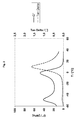
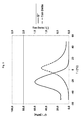
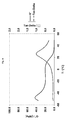
- Figures 1 to 4 show the data of the temperature sweep of the crude polymers measured in shear.
- the two polymers according to the invention (FIGS. 2 and 4) are distinguished by a large temperature difference of the peaks of the loss modulus and the tan delta curve. For polymer 1 it is 88 ° C and for polymer 2 it is 73 ° C.
- the two references have a temperature difference between the peak of the tan delta and the loss modulus curve of less than 30 ° C.
- the cause of the low temperature peak of the polymers with uneven distribution of the monomers is in the low styrene density polymer section, which has a very low glass transition relative to the total polymer.
Landscapes
- Chemical & Material Sciences (AREA)
- Health & Medical Sciences (AREA)
- Chemical Kinetics & Catalysis (AREA)
- Medicinal Chemistry (AREA)
- Polymers & Plastics (AREA)
- Organic Chemistry (AREA)
- Engineering & Computer Science (AREA)
- Mechanical Engineering (AREA)
- Compositions Of Macromolecular Compounds (AREA)
Abstract
Description
- Die Erfindung betrifft eine vulkanisierbare Kautschukmischung mit einem Kautschukanteil, der mindestens ein Styrol-Butadien-Copolymer (SBR-Kautschuk) und daneben gegebenenfalls andere Natur- oder Synthesekautschuke enthält, mit einem oder mehreren Füllstoffen sowie gegebenenfalls mit Additiven. Weiterhin betrifft die Erfindung die Verwendung dieser Kautschukmischung für die Herstellung von Laufstreifen für Fahrzeugreifen, aus der Mischung nach üblicher Vulkanisation hergestellte Fahrzeugreifen-Laufstreifen und schließlich Fahrzeugreifen, insbesondere Fahrzeugluftreifen, die diese Laufstreifen enthalten.
- Es ist bereits seit langem möglich, die Gebrauchseigenschaften von Vulkanisaten oder "Gummis", die für Fahrzeugreifen verwendet werden, durch Additive und/oder Funktionalisierung der vulkanisierbaren Kautschuke auf verschiedene Weise zu beeinflussen. Häufig besteht jedoch der Konflikt, dass bei Optimierung einer gewünschten Eigenschaft eine andere, ebenfalls gewünschte Eigenschaft verschlechtert wird.
- Reifenkautschukmassen für Laufstreifen sind gerade im PKW-Bereich häufig SBR-basiert. Ein SBR-Kautschuk, wie er hier verstanden wird, ist ein Copolymerkautschuk aus konjugiertem Dien und Styrol, wobei das praktisch bedeutsamste Element der Gruppe der Styrol-Butadien-Kautschuk (=SBR) selbst ist.
- Neben den statistischen SBR-Copolymeren sind seit langer Zeit Block-Copolymere bekannt, wobei die Blockbildung Einfluss auf die Gebrauchseigenschaften - wie auch auf andere Funktionen - nimmt. Die Herstellung von SBR Blockpolymeren wird beispielhaft in der
US 3294768 beschrieben. - Die
DE 69312891 T2 offenbart die Verbesserung des Gleichgewichts zwischen Abriebfestigkeit, Nassschleuderverhalten und Trockenschleuderverhalten und anderer Eigenschaften mit Hilfe einer SBR-basierten Reifenmischung, die mit 20 bis 50 % VinylGehalt weniger als 11 % Styrol-Mikroblöcke von 4 bis 10 kontinuierlich zusammenhängenden Styrol-Einheiten und weniger als 10 % Mikroblöcke von 11 oder mehr zusammenhängenden Styrol-Einheiten besitzen soll. - Aufgabe der Erfindung ist es, eine Kautschukmischung bereitzustellen, die für Fahrzeugreifen-Laufstreifen verwendet werden kann, die die gleichzeitige Optimierung unterschiedlicher Reifeneigenschaften ermöglicht und die anhand ihrer Zusammensetzung und/oder Mikrostruktur ein Tuning gegenläufiger Eigenschaftspaare in die gewünschte Richtung erlaubt, insbesondere um sonst nicht gleichzeitig optimierbare Eigenschaftspaare wie Eisbremsen und Nassgriff oder Nassbremsen und Rollwiderstand besser vereinbaren zu können.
- Gelöst wird diese Aufgabe durch eine vulkanisierbare Kautschukmischung der eingangs genannten Art, mit mindestens einem Kautschuk-Polymer, einem oder mehreren Füllstoffen sowie gegebenenfalls Additiven, bei welcher der Kautschukanteil 1 bis 100 Gew.-% eines konjugierten Diolefin-Styrol-Copolymers (SBR) mit einem Styrolgehalt von 10 bis 60 Mol-% enthält, wobei der aus den Daten der dynamisch mechanischen Analyse (DMA) des SBR-Reinpolymerisates ermittelte Maximalwert für tan δ das zu steigenden Temperaturen erste Maximum des Verlustmoduls um mindestens 30°C überschreitet. Diese Bedingung wird erfindungsgemäß dadurch erfüllt, dass die MonomerKonzentrationen von Diolefin bzw. Butadien und Styrol während der Reaktion so variiert werden, dass sich die angestrebte Bedingung ergibt.
- Überraschenderweise hat sich herausgestellt, dass die Verteilung der Styroleinheiten und der konjugierten Dien-Einheiten entlang der Kette eine entscheidende Wirkung auf die Gebrauchseigenschaften des vulkanisierten Reifenkautschuks hat Die Gebrauchseigenschaften können also durch Variation der Monomerkonzentrationen im Herstellungsverfahren eingestellt und fein reguliert.
- Durch die Variation der Monomer-Konzentration wird eine Feineinstellung verschiedener Gebrauchseigenschaften nebeneinander ermöglicht, die sonst häufig nicht gleichzeitig optimierbar sind. Dies zeigt sich bereits an den dem Fachmann bekannten Prädikatoren für diese Gebrauchseigenschaften, wie nachfolgend anhand der Beispiele noch näher beschrieben ist.
- Ein vorteilhaftes Verfahren für die Herstellung des erfindungsgemäßen SBRs ist das Copolymerisieren eines konjugierten Diolefins, vorzugsweise Butadien, und Styrols in einem eine Lewis-Base enthaltenden Kohlenwasserstofflösungsmittel unter Einsatz mindestens einer Verbindung, die ausgewählt ist aus der Gruppe bestehend aus einer organischen Alkalimetallverbindung, einer anorganischer Erdalkalimetallverbindung und einer Lithiumamidverbindung als Starter, wie im Stand der Technik bekannt. Aufgrund einer experimentell ermittelten Steuerung der Monomer-Konzentration können die Eigenschaften des resultierenden Copolymers in der gewünschten Weise eingestellt werden, z. B. um die Bedingung zu erfüllen, dass der aus den Daten der dynamisch mechanischen Analyse (DMA) des Reinpolymerisates ermittelte Maximalwert für tan δ das zu steigenden Temperaturwerten erste Maximum des Verlustmoduls um mindestens 30°C überschreitet.
- Erfindungsgemäß ist die Verteilung der Monomere entlang der Kette des unvulkanisierten SBR-Kautschuk-Polymers ungleichmäßig. Dies kann insbesondere bedeuten, dass die Verteilung entlang der Kette einen Gradienten zeigt, d. h. dass sich der Mittelwert der Anzahl der Styroleinheiten (oder der Dien-Einheiten, je nach Betrachtungsweise) über eine bestimmte Teillänge der Kette mathematisch monoton längs der Kette des unvulkanisierten Copolymers verändert.
- Gemäß einem anderen Aspekt der Erfindung ist das Styrol mindestens teilweise in Mikroblöcken, d. h. in Einheiten von 2 bis 10 zusammenhängenden Styrolmoleküleinheiten angeordnet. In einer bevorzugten Ausführungsform sind die Styrol-Mikroblöcke aus 3 bis 6 Styrolmoleküleinheiten - in kontinuierlicher Folge - zusammengesetzt. Dies sind natürlich statistische Werte, so dass es gelegentlich vorkommen kann, dass zuweilen mehr als 10 Einheiten in einer Reihe aufeinander folgen.
- Vorzugsweise sind 20 bis 50 % der Styrol-Einheiten des SBR-Kautschuks in Styrol-Mikroblöcken vorhanden. Die Einführung der Mikroblöcke kann nach an sich bekannten Verfahren erreicht werden. Ein geeignetes Verfahren ist es, dem Starter eine Kaliumverbindung beizufügen, z. B. wie es in der
US 3,294,768 beschrieben ist. Die Kaliumverbindung ist vorzugsweise ein Kaliumsalz einer organischen Sulfonsäure, ein Kaliumsalz einer anorganischen Karbonsäure, ein Kaliumsalz eines Alkoxids, ein Kaliumphenoxid, oder ein Kaliumsalz eines organischen Partialesters der phosphorigen Säure. - Die ungleichmäßige Verteilung derStyrol-Mikroblöcke zeigt sich darin, dass die aus den Daten der dynamisch-mechanischen Analyse (DMA) des Reinpolymerisates ermittelte Temperatur des Maximalwertes für Tangens δ das zu steigenden Temperaturwerten erste Maximum des Verlustmoduls um mindestens 30 °C überschreitet. Reifen-Laufstreifenmischungen nach der Erfindung, bzw. daraus hergestellte Prüfkörper, zeigen einen breiten Tangens δ-Wert, der zu relativ hohen Temperaturen verschoben ist. Eine derartige Verschiebung bringt üblicherweise eine Verbesserung des Nassschleuderverhaltens bei Verschlechterung des Rollwiderstandes mit sich. Überraschenderweise wurde jedoch gefunden, dass sich der Rollwiderstand bei verbesserter Kälteflexibilität, verbessertem Eisbremsen und erhöhtem Nassgriff nicht verschlechtert. Der Abrieb bleibt im Wesentlichen unverändert.
- Der Gesamt-Styrolgehalt des mikroblockhaltigen SBR-Copolymers beträgt vorzugsweise 25 bis 45 Mol-%.
- Der Diolefinanteil, der vorzugsweise der Butadienanteil des SBRs ist, trägt den Gehalt an Vinylgruppen bei, die nach dem Copolymerisationsprozess noch zur Verfügung stehen. Der Vinylgehalt ist in bekannter Weise über die Polymerisationsbedingungen einstellbar.
- Bei der Erfindung beträgt der Vinylgehalt des SBR-Butadiens vorzugsweise 5 bis 80 Mol-%.
- Der Kautschukanteil kann neben dem mikroblockhaltigen Styrol-Diolefin- bzw. Styrol-Butadien-Kautschuk (SBR) folgende Kautschuke einzeln oder im Gemisch enthalten:
- Naturkautschuk (NR), Butadienkautschuk (BR), Polyisoprenkautschuk (IR),
- Polychloropren-kautschuk (CR) und es kann auch ein mengenmäßig untergeordneter Anteil eines weiteren, nicht-mikroblockhaltigen SBR-Kautschuks vorhanden sein.
- Die Mischung kann weiterhin die für Reifen-Laufstreifengummi üblichen Additive enthalten.
- Der in der Mischung vorgesehene Füllstoff kann einen Siliziumoxid-basierten Füllstoff (Silica, Kieselsäure) oder Ruß enthalten oder aus einem auf Siliziumoxid basierenden Füllstoff, vorzugsweise Silica und/oder Ruß, bestehen.
- Vorzugsweise enthält der Füllstoff eine Mischung aus wenigstens einem Siliziumoxid-basierten Füllstoff und wenigstens einer Qualität an Ruß. Geeignete Silizium-basierte Füllstoffe und Ruße für Reifen-Laufstreifenmischungen sind im Stande der Technik bekannt und können hier verwendet werden.
- Die Füllstoffe und Kautschuke der Mischung können ebenfalls modifiziert sein, wie dies aus dem Stand der Technik für Kautschukmischungen grundsätzlich bekannt ist.
- Gemäß einem anderen Aspekt der Erfindung kann das SBR an mindestens einem der Kettenenden funktionalisiert werden. Die Funktionalisierung wird üblicherweise mittels eines funktionalisierten Starters und/oder Terminators eingebracht. Geeignete Verfahren und Gruppen sind aus dem Stand der Technik bekannt. Beispiele sind zum Beispiel in der
EP 1 457 501 angegeben. Funktionalisierungen werden oft eingeführt, um die Kohäsion oder Bindungskraft zwischen Kautschuk und Füllstoff, d. h. Ruß oder Siliziumoxid-basierten Füllstoffen, zu verbessern. In dem gleichen Sinne können wahlweise bifunktionelle_Haftvermittler, insbesondere Silane und Amine, als Additive zu den Kautschukmischungen verwendet werden. - Eine große Vielzahl an funktionellen Gruppen ist bereits für die vorstehend erwähnten Ziele vorgeschlagen worden. Bei dieser Erfindung ist die Funktionalisierung vorzugsweise aus einer aus Aminogruppen bestehenden Gruppe ausgewählt, die and die Polymerkette mit oder ohne Spacer gebunden sind, z. B. die Gruppen H2N-R1-; R2HN-R1- und R2 2N-R1-, wobei R1 einen Spacer, vorzugsweise eine Alkylkette, verzweigt oder nicht verzweigt mit C0 bis C12 (C0 bedeutet ohne Spacer), und R2 ein Alkyl ist, das aus der Gruppe Methyl, Ethyl, Propyl, Butyl, verzweigt oder nicht verzweigt, und weiterhin aus Silangruppen, vorzugsweise Alkoxysilangruppen, und aus Aminogruppen, die Alkoxysilangruppen enthalten, ausgewählt wird. Die Alkylgruppe des Alkoxysilans kann vorzugsweise R1 oder R2 sein.
- Die Erfindung umfasst ebenfalls die Verwendung der erfindungsgemäßen Kautschukmischung für die Herstellung eines Laufstreifens für einen Fahrzeugreifen und umfasst ebenfalls den Laufstreifen und die damit hergestellten Fahrzeugreifen. Der Fahrzeugreifen ist in aller Regel ein Fahrzeugluftreifen.
- Für die Gummiherstellung werden die erfindungsgemäßen unvulkanisierten Kautschukmischungen in bekannter Weise weiterverarbeitet, d. h. mit Hilfe von in der Mischung vorhandenen Vulkanisationsmitteln vulkanisiert. Der Begriff "Vulkanisation" soll hier allgemein die Vernetzung des im Wesentlichen linearen, nicht dreidimensionalen Kautschuks zu einem Kautschuk-Elastomer bezeichnen, unabhängig davon, ob in klassischer Form Schwefel, Schwefel freisetzende Reagenzien oder andere für Natur- und Synthesekautschuke geeignete Vernetzer verwendet werden, wie dem Fachmann bekannt ist. Zu diesem Zweck können passende Additive wie Verzögerer und Beschleuniger verwendet werden, die dem Fachmann ebenfalls geläufig sind. Neben Schwefel können für die Vernetzung u. a. Peroxide zur Anwendung kommen.
- Im Folgenden wird die Erfindung anhand von Ausführungsbeispielen näher illustriert, die lediglich dem besseren Verständnis der Erfindung, nicht aber der Beschränkung der Erfindung dienen sollen.
- In den nachfolgenden Tabellen sind Mischungsbeispiele und Messdaten zu dynamisch-mechanischen Kennwerten dieser Mischungsbeispiele sowie Daten der zugehörigen Rohpolymere zusammengefasst. Die Mengenangaben für die Mischungen sind jeweils Gewichtsteile, die auf 100 Gewichtsteile Gesamtkautschuk bezogen sind (phr). Die Mischungen werden in üblicher Weise in einem Laborkneter hergestellt. Hieraus werden vulkanisierte Prüfkörper hergestellt. Teils an den Prüfkörpern, teils am Rohpolymer (wie angegeben) werden für die Kautschukindustrie typische Materialeigenschaften mit den im Folgenden angegebenen Testverfahren ermittelt.
- Shore-A-Härte bei RT und 70 °C gemäß DIN 53 505
- Rückprallelastizität (elastische Rückverformung) bei RT und 70 °C gemäß DIN 53 512
- Zugfestigkeit bei Raumtemperatur gemäß DIN 53 504
- Bruchdehnung bei Raumtemperatur gemäß DIN 53 504
- Spannungswerte bei 50, 100, 200 und 300 % Dehnung bei RT gemäß DIN 53 504
- Bruchenergiedichte bestimmt im Zugversuch nach DIN 53 504, wobei die Bruchenergiedichte die bis zum Bruch erforderliche Arbeit bezogen auf das Volumen der Probe ist,
- Messbedingungen für die Rohpolymer DMA: Mettler-Toledo DMA/SDTA 861, Scherprobenhalter: Temperaturscan von -70°C bis 30 °C bei 10 Hz; maximale Kraftamplitude: 0,12 N, maximale Wegamplitude 25 µm
- Tangens Delta nach DIN 53 513 aus Messung mit konstanter Verformungsamplitude von 0,2 % bei 10 % Vorverformung in Kompression mit 10 Hz dynamischer Verformungsfrequenz
- Verlustmodul G" des Rohpolymers oder E" des Compounds nach DIN 53 513.
- Abrieb bei RT gemäß DIN 53 516
-
SBR-Polymer Referenz 1 Polymer 1 Vinylanteil (Mol-%) 47 43 Styrolanteil basierend auf SBR (Mol-%) 41 41 Monomer-Verteilung gleichmäßig ungleichmäßig -
Mischung 1 (mit Polymer 1) Menge [phr] Styrolbutadienkautschuk 70 Naturkautschuk (NR) 30 Silica 45 Öl 32 Ruß 46 TESPT 50 % auf Ruß 8 Alterungsverzögerer 4 Wachs für Ozonschutz 2.5 Zinkoxid 2.5 Stearinsäure 1 Fettsäureester und Zinkseifen 4 Beschleuniger 2.9 Schwefel 1.8 Referenz 1: gleiche Spezifikationen, es wurde nicht mit einer Monomervariation gearbeitet, daher kein Gradient.
Vulkanisation: jeweils 20 Minuten bei 160°C -
Referenz 1 Polymer 1 Shore-Härte A (RT) 69,5 70,6 Shore-Härte A 70°C 64,2 65,2 Rückprallelastizität RT (%) 13 12,9 Rückprallelastizität 70°C (%) 37,4 37,4 Zugtest (R1) RT: Zugfestigkeit (MPa) 15,3 15,1 Bruchdehnung (%) 339 317 Spannungswerte: Modul 50 (MPa) 1,98 2,04 Modul 100 (MPa) 3,83 3,93 Modul 200 (MPa) 9,23 9,67 Modul 300 (MPa) 14,78 - Bruchenergiedichte (J/cm3) 22,6 20,3 tan Delta 10°C 0,59 0,61 tan Delta 60 °C 0,176 0,154 Verlustmodul 10 °C (MPa) 31,3 36,7 Verlustmodul 60 °C (MPa) 2,5 2,5 - Die vermessenen in der Kautschukindustrie üblicherweise betrachteten Materialeigenschaften lassen sich als sogenannte Prädiktoren oder Kenngrößen für die Voraussage bestimmter Gebrauchseigenschaften der mit entsprechenden Laufstreifen ausgerüsteten Reifen verwenden. So zeigt beispielsweise ein möglichst niedriger Wert für die Rückprallelastizität bei Raumtemperatur einen guten Nassgriff und ein hoher Wert der Rückprallelastizität bei 70°C einen guten Rollwiderstand an.
- Charakterisierung der SBR-Polymere für Beispiel 2:
- SBR-Polymere mit Styrol-Mikroblöcken in gleichmäßiger Verteilung über die Kette (Referenz 2) und in ungleichmäßiger Verteilung über die Kette (Polymer 2)
- Die Polymerisationsbedingungen und Spezifikationen für Referenz 2 und Polymer 2 sind gleich bis auf die Variation der Monomerkonzentration bei Polymer 2.
- Mischungsspezifikationen für Beispielmischungen (Beispiel 2):
Polymer 2 Styrolbutadienkautschuk 70 Naturkautschuk (NR) 30 Silica 45 Öl 32 Ruß 46 TESPT 50 % auf Ruß 8 Alterungsverzögerer 4 Wachs für Ozonschutz 2,5 Zinkoxid 2,5 Stearinsäure 1 Fettsäureester und Zinkseifen 4 Beschleuniger 2,9 Schwefel 1,8 - Vulkanisationsbedingungen: jeweils 20 min bei 160 °C.
- Messung des dynamisch-mechanischen Verhaltens (Prädiktoren) - Beispiel 2:
Referenz 2 Polymer 2 Shore-Härte A (RT) 70 72,7 Shore-Härte A 70°C 65 64,7 Rückprallelastizität RT (%) 14,6 9,6 Rückprallelastizität 70°C (%) 39,4 36,9 Zugtest (R1) RT: Zugfestigkeit (MPa) 16,4 15,9 Bruchdehnung (%) 358 345 Spannungswerte: Modul 50 (MPa) 1,86 2,03 Modul 100 (MPa) 3,59 3,82 Modul 200 (MPa) 9,17 9,49 Modul 300 (MPa) 15,02 15,11 Bruchenergiedichte (J/cm3) 25,1 24 tan Delta 10 °C 0,458 0,472 tan Delta 60 °C 0,149 0,159 Verlustfaktor 10 °C (MPa) 18,6 54,3 Verlustfaktor 60 °C (MPa) 2,4 2,6 -
Kettencharakterisierung tan δ Maximum G" Maximum Referenz 1 keine Blöcke, kein Gradient + 6 - 23 Polymer 1 keine Blöcke, Monomergradient 10 -77 Referenz 2 Mikroblöcke, kein Gradient 4 -21 Polymer 2 Mikroblöcke Gradient 26 -47 -
- Fig. 1
- Tan Delta und Verlustmodul G" in Abhängigkeit von der Temperatur für Referenz 1 (Rohpolymer)
- Fig. 2
- Tan Delta und Verlustmodul G" in Abhängigkeit von der Temperatur für Polymer 1 (Rohpolymer)
- Fig. 3
- Tan Delta und Verlustmodul G" in Abhängigkeit von der Temperatur für Referenz 2 (Rohpolymer)
- Fig. 4
- Tan Delta und Verlustmodul G" in Abhängigkeit von der Temperatur für Polymer 2 (Rohpolymer)
- Die Abbildungen 1 bis 4 zeigen die Daten des in Scherung gemessenen Temperatursweeps der Rohpolymere. Die beiden erfindungsgemäßen Polymere ( Fig. 2 und Fig. 4) zeichnen sich durch eine große Temperaturdifferenz der Peaks der Verlustmodul- und der Tan Delta Kurve aus. Für Polymer 1 beträgt sie 88 °C und für Polymer 2 beträgt sie 73 °C. Die beiden Referenzen haben eine Temperaturdifferenz zwischen dem Peak der Tan Delta und der Verlustmodulkurve von weniger als 30 °C. Die Ursache für den Tieftemperaturpeak der Polymere mit ungleichmäßiger Verteilung der Monomere liegt in dem Polymerabschnitt mit geringer Styroldichte, der einen sehr niedrigen Glasübergang im Verhältnis zum Gesamtpolymer besitzt.
- (Messverfahren Rohpolymer DMA:
Mettler-Toledo DMA/SDTA861, Scherprobenhalter: Temperaturscan von -70 °C bis 30 °C bei 10 Hz; maximale Kraftamplitude: 0,12 N, maximale Wegamplitude 25 µm)
| SBR-Polymer | Referenz 2 | Polymer 2 |
| Vinylanteil (Mol-%) | 48 | 44 |
| Styrolanteil basierend auf SBR (Mol-%) | 40 | 41 |
| Styrol-Mikroblocks basierend auf Styrolanteil (%) | 39 | 43 |
| Verteilung der Styrol-Mikroblocks | gleichmäßig | Gradient |
Claims (12)
- Vulkanisierbare Kautschukmischung mit mindestens einem Kautschukpolymer, einem oder mehreren Füllstoffen und gegebenenfalls Additiven, dadurch gekennzeichnet, dass der Kautschukanteil 1 bis 100 Gew.-% eines konjugierten Diolefin-Styrol-Copolymers (SBR) mit einem Styrolgehalt von 10 bis 60 Mol-% enthält, wobei der aus den Daten der dynamisch mechanischen Analyse (DMA) des SBR-Reinpolymerisates ermittelte Maximalwert für tan δ das zu steigenden Temperaturwerten erste Maximum des Verlustmoduls um mindestens 30°C überschreitet.
- Kautschukmischung nach Anspruch 1, dadurch gekennzeichnet, dass 20 bis 50 % der Styrol-Einheiten in Styrol-Mikroblöcken aus 2 bis 10 zusammenhängenden Styroleinheiten vorliegen.
- Kautschukmischung nach Anspruch 2, dadurch gekennzeichnet, dass die Styrol-Mikroblöcke aus 3 bis 6 Styroleinheiten bestehen.
- Kautschukmischung nach einem der Ansprüche 1 bis 3, dadurch gekennzeichnet, dass der Anteil von Styrol-Polymerisationseinheiten 25 bis 45 mol% beträgt.
- Kautschukmischung nach einem der Ansprüche 1 bis 4, dadurch gekennzeichnet, dass der Vinylgehalt des SBR-Butadiens 5 bis 80 % beträgt.
- Kautschukmischung nach einem der Ansprüche 1 bis 5, dadurch gekennzeichnet, dass der Kautschukanteil neben dem mikroblockhaltigen Styrol-Butadien-Kautschuk folgende Kautschuke einzeln oder im Gemisch enthält: Naturkautschuk (NR), Butadien-Kautschuk (BR), (Poly)isoprenkautschuk (IR), (Poly)chloroprenkautschuk (CR) und/oder andere Styrol-Butadien-Kautschuke (SBR).
- Kautschukgemisch nach einem der Ansprüche 1 bis 6, dadurch gekennzeichnet, dass der Füllstoff einen Siliziumoxid-basierten Füllstoff oder Ruß oder beides enthält oder hieraus besteht.
- Kautschukgemisch nach einem der Ansprüche 1 bis 7, dadurch gekennzeichnet, dass das SBR an mindestens einem der Kettenenden funktionalisiert ist und die Funktionalisierung aus der Gruppe ausgewählt ist bestehend aus: Aminogruppen, die mit oder ohne Spacer an die Kette gebunden sind, Silangruppen, vorzugsweise Alkoxysilangruppen, und Aminogruppen-enthaltende Alkoxysilangruppen.
- Kautschukgemisch nach Anspruch 8, dadurch gekennzeichnet, dass die Aminogruppen durch eine der folgenden Formeln wiedergegeben werden: H2N-R1-; R2 2HN-R1- und R2 2N-R1-, wobei R1 ein Spacer ist, vorzugsweise eine Alkylkette, verzweigt oder unverzweigt mit C0 bis C12, und R2 ein Alkyl ist, das aus der Gruppe Methyl, Ethyl, Propyl, Butyl, verzweigt oder nicht verzweigt, ausgewählt ist.
- Verwendung einer Kautschukmischung nach einem der Ansprüche 1 bis 9 für die Herstellung eines Laufstreifens für einen Fahrzeugreifen.
- Laufstreifen für einen Fahrzeugreifen, der unter Verwendung einer Kautschukmischung nach einem der Ansprüche 1 bis 9 hergestellt ist.
- Fahrzeugreifen, insbesondere ein Fahrzeugluftreifen, mit einem Laufstreifen, der mit Hilfe eines Kautschukgemisches nach einem der Ansprüche 1 bis 9 hergestellt ist.
Applications Claiming Priority (1)
| Application Number | Priority Date | Filing Date | Title |
|---|---|---|---|
| DE102006040412A DE102006040412A1 (de) | 2006-08-29 | 2006-08-29 | Kautschukmischung für Fahrzeugreifen-Laufstreifen |
Publications (3)
| Publication Number | Publication Date |
|---|---|
| EP1894968A2 true EP1894968A2 (de) | 2008-03-05 |
| EP1894968A3 EP1894968A3 (de) | 2009-11-18 |
| EP1894968B1 EP1894968B1 (de) | 2018-05-02 |
Family
ID=38776282
Family Applications (1)
| Application Number | Title | Priority Date | Filing Date |
|---|---|---|---|
| EP07112309.5A Active EP1894968B1 (de) | 2006-08-29 | 2007-07-12 | Kautschukmischung für Fahrzeugreifen-Laufstreifen |
Country Status (3)
| Country | Link |
|---|---|
| EP (1) | EP1894968B1 (de) |
| DE (1) | DE102006040412A1 (de) |
| ES (1) | ES2672994T3 (de) |
Family Cites Families (1)
| Publication number | Priority date | Publication date | Assignee | Title |
|---|---|---|---|---|
| US7064171B1 (en) * | 2005-09-22 | 2006-06-20 | The Goodyear Tire & Rubber Company | Non-random styrene-butadiene rubber |
-
2006
- 2006-08-29 DE DE102006040412A patent/DE102006040412A1/de not_active Withdrawn
-
2007
- 2007-07-12 EP EP07112309.5A patent/EP1894968B1/de active Active
- 2007-07-12 ES ES07112309.5T patent/ES2672994T3/es active Active
Also Published As
| Publication number | Publication date |
|---|---|
| EP1894968B1 (de) | 2018-05-02 |
| EP1894968A3 (de) | 2009-11-18 |
| ES2672994T3 (es) | 2018-06-19 |
| DE102006040412A1 (de) | 2008-03-06 |
Similar Documents
| Publication | Publication Date | Title |
|---|---|---|
| DE69602212T2 (de) | Luftreifen auf Basis niedergeschlagener Kieselsaüre mit einem verbesserten Rollwiderstand | |
| DE10059236B4 (de) | Verwendung einer Kautschukmischung für Reifenlaufstreifen | |
| EP2257423B1 (de) | Kautschukmischung mit niedrigem wärmeaufbau | |
| EP2065221B1 (de) | Kautschukmischung und Reifen | |
| EP3769972B1 (de) | Schwefelvernetzte kautschukmischung und fahrzeugreifen | |
| EP2225323B1 (de) | Kautschukmischung, insbesondere für fahrzeugreifen | |
| EP2345696A1 (de) | Kautschukmischung mit verbessertem Rollwiderstand und verbessertem Trockenbremsen | |
| DE3424732C1 (de) | In der Waerme vulkanisierbare Laufstreifen fuer die Herstellung der Laufflaechen von Kraftfahrzeug-Luftreifen | |
| DE2710737C2 (de) | Laufflächenmaterial und Verfahren zu dessen Herstellung | |
| DE69116468T2 (de) | Luftreifen | |
| EP2026981B1 (de) | Kautschukmischung und reifen | |
| DE69209732T2 (de) | Kautschuk für Reifenlauffläche | |
| DE10127616A1 (de) | Reifen mit einer Lauffläche aus einer Kautschuk-Zusammensetzung mit Polyester-Weichmacher | |
| EP1837370B1 (de) | Kautschukmischung und Reifen | |
| DE69823479T2 (de) | Vulkanisierbare Kautschukzusammensetzung für Reifenlaufflächen mit einem geringeren Rollwiderstand | |
| EP1470937A1 (de) | Kautschukmischung und Fahrzeugluftreifen mit einer solchen Mischung | |
| EP3219510B1 (de) | Mit schwefel vernetzbare gummierungsmischung | |
| EP1894968B1 (de) | Kautschukmischung für Fahrzeugreifen-Laufstreifen | |
| EP1928947B1 (de) | Kautschukmischung und reifen | |
| WO2013135438A1 (de) | Fahrzeugluftreifen | |
| EP2236314B1 (de) | Verfahren zur Herstellung einer Kautschukmischung | |
| EP2080782A1 (de) | Kautschukmischung mit verbesserter Steifigkeit | |
| EP2227382B1 (de) | Kautschukmischung mit verbesserter reisseigenschaft und verbessertem abrieb | |
| DE102005027858A1 (de) | Kautschukmischung und Reifen | |
| DE102009026354A1 (de) | Fahrzeugluftreifen |
Legal Events
| Date | Code | Title | Description |
|---|---|---|---|
| PUAI | Public reference made under article 153(3) epc to a published international application that has entered the european phase |
Free format text: ORIGINAL CODE: 0009012 |
|
| AK | Designated contracting states |
Kind code of ref document: A2 Designated state(s): AT BE BG CH CY CZ DE DK EE ES FI FR GB GR HU IE IS IT LI LT LU LV MC MT NL PL PT RO SE SI SK TR |
|
| AX | Request for extension of the european patent |
Extension state: AL BA HR MK YU |
|
| RIN1 | Information on inventor provided before grant (corrected) |
Inventor name: WAGEMANN, JUERGEN, DR. Inventor name: DETTMER, FABIAN, DR. Inventor name: WEINREICH, HAJO, DR. Inventor name: SCHULZE, HERBERT, DR. Inventor name: RECKER, CARLA, DR. Inventor name: ALBERS, ISABEL, DR. Inventor name: LASCHET, MARC, DR. Inventor name: HERZOG, KATHARINA, DR. |
|
| PUAL | Search report despatched |
Free format text: ORIGINAL CODE: 0009013 |
|
| AK | Designated contracting states |
Kind code of ref document: A3 Designated state(s): AT BE BG CH CY CZ DE DK EE ES FI FR GB GR HU IE IS IT LI LT LU LV MC MT NL PL PT RO SE SI SK TR |
|
| AX | Request for extension of the european patent |
Extension state: AL BA HR MK RS |
|
| RAP1 | Party data changed (applicant data changed or rights of an application transferred) |
Owner name: CONTINENTAL REIFEN DEUTSCHLAND GMBH |
|
| 17P | Request for examination filed |
Effective date: 20100518 |
|
| AKX | Designation fees paid |
Designated state(s): AT BE BG CH CY CZ DE DK EE ES FI FR GB GR HU IE IS IT LI LT LU LV MC MT NL PL PT RO SE SI SK TR |
|
| 17Q | First examination report despatched |
Effective date: 20100810 |
|
| REG | Reference to a national code |
Ref country code: DE Ref legal event code: R079 Ref document number: 502007016165 Country of ref document: DE Free format text: PREVIOUS MAIN CLASS: C08L0009060000 Ipc: C08F0236100000 |
|
| GRAJ | Information related to disapproval of communication of intention to grant by the applicant or resumption of examination proceedings by the epo deleted |
Free format text: ORIGINAL CODE: EPIDOSDIGR1 |
|
| GRAP | Despatch of communication of intention to grant a patent |
Free format text: ORIGINAL CODE: EPIDOSNIGR1 |
|
| RIC1 | Information provided on ipc code assigned before grant |
Ipc: C08F 236/10 20060101AFI20170919BHEP |
|
| GRAP | Despatch of communication of intention to grant a patent |
Free format text: ORIGINAL CODE: EPIDOSNIGR1 |
|
| INTG | Intention to grant announced |
Effective date: 20171027 |
|
| GRAJ | Information related to disapproval of communication of intention to grant by the applicant or resumption of examination proceedings by the epo deleted |
Free format text: ORIGINAL CODE: EPIDOSDIGR1 |
|
| GRAP | Despatch of communication of intention to grant a patent |
Free format text: ORIGINAL CODE: EPIDOSNIGR1 |
|
| INTC | Intention to grant announced (deleted) | ||
| GRAS | Grant fee paid |
Free format text: ORIGINAL CODE: EPIDOSNIGR3 |
|
| GRAA | (expected) grant |
Free format text: ORIGINAL CODE: 0009210 |
|
| INTG | Intention to grant announced |
Effective date: 20180307 |
|
| AK | Designated contracting states |
Kind code of ref document: B1 Designated state(s): AT BE BG CH CY CZ DE DK EE ES FI FR GB GR HU IE IS IT LI LT LU LV MC MT NL PL PT RO SE SI SK TR |
|
| REG | Reference to a national code |
Ref country code: GB Ref legal event code: FG4D Free format text: NOT ENGLISH |
|
| REG | Reference to a national code |
Ref country code: CH Ref legal event code: EP Ref country code: AT Ref legal event code: REF Ref document number: 995162 Country of ref document: AT Kind code of ref document: T Effective date: 20180515 |
|
| REG | Reference to a national code |
Ref country code: DE Ref legal event code: R096 Ref document number: 502007016165 Country of ref document: DE Ref country code: IE Ref legal event code: FG4D Free format text: LANGUAGE OF EP DOCUMENT: GERMAN |
|
| REG | Reference to a national code |
Ref country code: ES Ref legal event code: FG2A Ref document number: 2672994 Country of ref document: ES Kind code of ref document: T3 Effective date: 20180619 |
|
| REG | Reference to a national code |
Ref country code: FR Ref legal event code: PLFP Year of fee payment: 12 |
|
| REG | Reference to a national code |
Ref country code: NL Ref legal event code: MP Effective date: 20180502 |
|
| REG | Reference to a national code |
Ref country code: LT Ref legal event code: MG4D |
|
| PG25 | Lapsed in a contracting state [announced via postgrant information from national office to epo] |
Ref country code: LT Free format text: LAPSE BECAUSE OF FAILURE TO SUBMIT A TRANSLATION OF THE DESCRIPTION OR TO PAY THE FEE WITHIN THE PRESCRIBED TIME-LIMIT Effective date: 20180502 Ref country code: BG Free format text: LAPSE BECAUSE OF FAILURE TO SUBMIT A TRANSLATION OF THE DESCRIPTION OR TO PAY THE FEE WITHIN THE PRESCRIBED TIME-LIMIT Effective date: 20180802 Ref country code: SE Free format text: LAPSE BECAUSE OF FAILURE TO SUBMIT A TRANSLATION OF THE DESCRIPTION OR TO PAY THE FEE WITHIN THE PRESCRIBED TIME-LIMIT Effective date: 20180502 |
|
| PG25 | Lapsed in a contracting state [announced via postgrant information from national office to epo] |
Ref country code: LV Free format text: LAPSE BECAUSE OF FAILURE TO SUBMIT A TRANSLATION OF THE DESCRIPTION OR TO PAY THE FEE WITHIN THE PRESCRIBED TIME-LIMIT Effective date: 20180502 Ref country code: GR Free format text: LAPSE BECAUSE OF FAILURE TO SUBMIT A TRANSLATION OF THE DESCRIPTION OR TO PAY THE FEE WITHIN THE PRESCRIBED TIME-LIMIT Effective date: 20180803 Ref country code: NL Free format text: LAPSE BECAUSE OF FAILURE TO SUBMIT A TRANSLATION OF THE DESCRIPTION OR TO PAY THE FEE WITHIN THE PRESCRIBED TIME-LIMIT Effective date: 20180502 |
|
| PG25 | Lapsed in a contracting state [announced via postgrant information from national office to epo] |
Ref country code: PT Free format text: LAPSE BECAUSE OF FAILURE TO SUBMIT A TRANSLATION OF THE DESCRIPTION OR TO PAY THE FEE WITHIN THE PRESCRIBED TIME-LIMIT Effective date: 20180903 |
|
| PG25 | Lapsed in a contracting state [announced via postgrant information from national office to epo] |
Ref country code: PL Free format text: LAPSE BECAUSE OF FAILURE TO SUBMIT A TRANSLATION OF THE DESCRIPTION OR TO PAY THE FEE WITHIN THE PRESCRIBED TIME-LIMIT Effective date: 20180502 Ref country code: CZ Free format text: LAPSE BECAUSE OF FAILURE TO SUBMIT A TRANSLATION OF THE DESCRIPTION OR TO PAY THE FEE WITHIN THE PRESCRIBED TIME-LIMIT Effective date: 20180502 Ref country code: SK Free format text: LAPSE BECAUSE OF FAILURE TO SUBMIT A TRANSLATION OF THE DESCRIPTION OR TO PAY THE FEE WITHIN THE PRESCRIBED TIME-LIMIT Effective date: 20180502 Ref country code: RO Free format text: LAPSE BECAUSE OF FAILURE TO SUBMIT A TRANSLATION OF THE DESCRIPTION OR TO PAY THE FEE WITHIN THE PRESCRIBED TIME-LIMIT Effective date: 20180502 Ref country code: EE Free format text: LAPSE BECAUSE OF FAILURE TO SUBMIT A TRANSLATION OF THE DESCRIPTION OR TO PAY THE FEE WITHIN THE PRESCRIBED TIME-LIMIT Effective date: 20180502 Ref country code: DK Free format text: LAPSE BECAUSE OF FAILURE TO SUBMIT A TRANSLATION OF THE DESCRIPTION OR TO PAY THE FEE WITHIN THE PRESCRIBED TIME-LIMIT Effective date: 20180502 |
|
| REG | Reference to a national code |
Ref country code: DE Ref legal event code: R097 Ref document number: 502007016165 Country of ref document: DE |
|
| PG25 | Lapsed in a contracting state [announced via postgrant information from national office to epo] |
Ref country code: IT Free format text: LAPSE BECAUSE OF FAILURE TO SUBMIT A TRANSLATION OF THE DESCRIPTION OR TO PAY THE FEE WITHIN THE PRESCRIBED TIME-LIMIT Effective date: 20180502 |
|
| REG | Reference to a national code |
Ref country code: CH Ref legal event code: PL |
|
| PLBE | No opposition filed within time limit |
Free format text: ORIGINAL CODE: 0009261 |
|
| STAA | Information on the status of an ep patent application or granted ep patent |
Free format text: STATUS: NO OPPOSITION FILED WITHIN TIME LIMIT |
|
| PG25 | Lapsed in a contracting state [announced via postgrant information from national office to epo] |
Ref country code: MC Free format text: LAPSE BECAUSE OF FAILURE TO SUBMIT A TRANSLATION OF THE DESCRIPTION OR TO PAY THE FEE WITHIN THE PRESCRIBED TIME-LIMIT Effective date: 20180502 Ref country code: LU Free format text: LAPSE BECAUSE OF NON-PAYMENT OF DUE FEES Effective date: 20180712 |
|
| REG | Reference to a national code |
Ref country code: BE Ref legal event code: MM Effective date: 20180731 |
|
| 26N | No opposition filed |
Effective date: 20190205 |
|
| REG | Reference to a national code |
Ref country code: IE Ref legal event code: MM4A |
|
| GBPC | Gb: european patent ceased through non-payment of renewal fee |
Effective date: 20180802 |
|
| PG25 | Lapsed in a contracting state [announced via postgrant information from national office to epo] |
Ref country code: IE Free format text: LAPSE BECAUSE OF NON-PAYMENT OF DUE FEES Effective date: 20180712 Ref country code: CH Free format text: LAPSE BECAUSE OF NON-PAYMENT OF DUE FEES Effective date: 20180731 Ref country code: LI Free format text: LAPSE BECAUSE OF NON-PAYMENT OF DUE FEES Effective date: 20180731 |
|
| PG25 | Lapsed in a contracting state [announced via postgrant information from national office to epo] |
Ref country code: SI Free format text: LAPSE BECAUSE OF FAILURE TO SUBMIT A TRANSLATION OF THE DESCRIPTION OR TO PAY THE FEE WITHIN THE PRESCRIBED TIME-LIMIT Effective date: 20180502 Ref country code: BE Free format text: LAPSE BECAUSE OF NON-PAYMENT OF DUE FEES Effective date: 20180731 |
|
| REG | Reference to a national code |
Ref country code: AT Ref legal event code: MM01 Ref document number: 995162 Country of ref document: AT Kind code of ref document: T Effective date: 20180712 |
|
| PG25 | Lapsed in a contracting state [announced via postgrant information from national office to epo] |
Ref country code: GB Free format text: LAPSE BECAUSE OF NON-PAYMENT OF DUE FEES Effective date: 20180802 |
|
| PG25 | Lapsed in a contracting state [announced via postgrant information from national office to epo] |
Ref country code: AT Free format text: LAPSE BECAUSE OF NON-PAYMENT OF DUE FEES Effective date: 20180712 |
|
| PG25 | Lapsed in a contracting state [announced via postgrant information from national office to epo] |
Ref country code: MT Free format text: LAPSE BECAUSE OF FAILURE TO SUBMIT A TRANSLATION OF THE DESCRIPTION OR TO PAY THE FEE WITHIN THE PRESCRIBED TIME-LIMIT Effective date: 20180502 |
|
| PG25 | Lapsed in a contracting state [announced via postgrant information from national office to epo] |
Ref country code: TR Free format text: LAPSE BECAUSE OF FAILURE TO SUBMIT A TRANSLATION OF THE DESCRIPTION OR TO PAY THE FEE WITHIN THE PRESCRIBED TIME-LIMIT Effective date: 20180502 |
|
| PG25 | Lapsed in a contracting state [announced via postgrant information from national office to epo] |
Ref country code: HU Free format text: LAPSE BECAUSE OF FAILURE TO SUBMIT A TRANSLATION OF THE DESCRIPTION OR TO PAY THE FEE WITHIN THE PRESCRIBED TIME-LIMIT; INVALID AB INITIO Effective date: 20070712 |
|
| PG25 | Lapsed in a contracting state [announced via postgrant information from national office to epo] |
Ref country code: CY Free format text: LAPSE BECAUSE OF FAILURE TO SUBMIT A TRANSLATION OF THE DESCRIPTION OR TO PAY THE FEE WITHIN THE PRESCRIBED TIME-LIMIT Effective date: 20180502 |
|
| PG25 | Lapsed in a contracting state [announced via postgrant information from national office to epo] |
Ref country code: IS Free format text: LAPSE BECAUSE OF FAILURE TO SUBMIT A TRANSLATION OF THE DESCRIPTION OR TO PAY THE FEE WITHIN THE PRESCRIBED TIME-LIMIT Effective date: 20180902 |
|
| PGFP | Annual fee paid to national office [announced via postgrant information from national office to epo] |
Ref country code: FI Payment date: 20230719 Year of fee payment: 17 |
|
| REG | Reference to a national code |
Ref country code: DE Ref legal event code: R081 Ref document number: 502007016165 Country of ref document: DE Owner name: CONTINENTAL REIFEN DEUTSCHLAND GMBH, DE Free format text: FORMER OWNER: CONTINENTAL REIFEN DEUTSCHLAND GMBH, 30165 HANNOVER, DE |
|
| PGFP | Annual fee paid to national office [announced via postgrant information from national office to epo] |
Ref country code: DE Payment date: 20240731 Year of fee payment: 18 |
|
| PGFP | Annual fee paid to national office [announced via postgrant information from national office to epo] |
Ref country code: FR Payment date: 20240729 Year of fee payment: 18 |
|
| PGFP | Annual fee paid to national office [announced via postgrant information from national office to epo] |
Ref country code: ES Payment date: 20240828 Year of fee payment: 18 |
|
| PG25 | Lapsed in a contracting state [announced via postgrant information from national office to epo] |
Ref country code: FI Free format text: LAPSE BECAUSE OF NON-PAYMENT OF DUE FEES Effective date: 20240712 |
|
| REG | Reference to a national code |
Ref country code: DE Ref legal event code: R119 Ref document number: 502007016165 Country of ref document: DE |
|
| PG25 | Lapsed in a contracting state [announced via postgrant information from national office to epo] |
Ref country code: DE Free format text: LAPSE BECAUSE OF NON-PAYMENT OF DUE FEES Effective date: 20260203 |
|
| PG25 | Lapsed in a contracting state [announced via postgrant information from national office to epo] |
Ref country code: FR Free format text: LAPSE BECAUSE OF NON-PAYMENT OF DUE FEES Effective date: 20250731 |