EP1893185B1 - USE OF UROKINASE INHIBITORS FOR THE TREATMENT AND/OR PREVENTION OF AMYOTROPhIC LATERAL SCLEROSIS (ALS) - Google Patents
USE OF UROKINASE INHIBITORS FOR THE TREATMENT AND/OR PREVENTION OF AMYOTROPhIC LATERAL SCLEROSIS (ALS) Download PDFInfo
- Publication number
- EP1893185B1 EP1893185B1 EP06754517A EP06754517A EP1893185B1 EP 1893185 B1 EP1893185 B1 EP 1893185B1 EP 06754517 A EP06754517 A EP 06754517A EP 06754517 A EP06754517 A EP 06754517A EP 1893185 B1 EP1893185 B1 EP 1893185B1
- Authority
- EP
- European Patent Office
- Prior art keywords
- denotes
- residue
- alkinyl
- alkenyl
- aryl
- Prior art date
- Legal status (The legal status is an assumption and is not a legal conclusion. Google has not performed a legal analysis and makes no representation as to the accuracy of the status listed.)
- Not-in-force
Links
- 206010002026 amyotrophic lateral sclerosis Diseases 0.000 title claims abstract description 37
- 238000011282 treatment Methods 0.000 title claims abstract description 19
- 239000002797 plasminogen activator inhibitor Substances 0.000 title claims description 19
- 230000002265 prevention Effects 0.000 title abstract 2
- 102000003990 Urokinase-type plasminogen activator Human genes 0.000 claims abstract description 14
- 108090000435 Urokinase-type plasminogen activator Proteins 0.000 claims abstract description 14
- 230000004770 neurodegeneration Effects 0.000 claims abstract description 13
- 208000015122 neurodegenerative disease Diseases 0.000 claims abstract description 11
- 230000002981 neuropathic effect Effects 0.000 claims abstract description 9
- 239000003112 inhibitor Substances 0.000 claims abstract description 8
- 239000000203 mixture Substances 0.000 claims abstract description 5
- 125000003118 aryl group Chemical group 0.000 claims description 39
- 125000006193 alkinyl group Chemical group 0.000 claims description 36
- 125000003342 alkenyl group Chemical group 0.000 claims description 35
- 150000001875 compounds Chemical class 0.000 claims description 33
- 125000001072 heteroaryl group Chemical group 0.000 claims description 33
- 125000000547 substituted alkyl group Chemical group 0.000 claims description 27
- 229910052760 oxygen Inorganic materials 0.000 claims description 25
- 102000019197 Superoxide Dismutase Human genes 0.000 claims description 19
- 108010012715 Superoxide dismutase Proteins 0.000 claims description 19
- 125000000217 alkyl group Chemical group 0.000 claims description 14
- 229910052736 halogen Inorganic materials 0.000 claims description 13
- 150000002367 halogens Chemical class 0.000 claims description 13
- 229910052717 sulfur Inorganic materials 0.000 claims description 13
- 150000003839 salts Chemical class 0.000 claims description 11
- -1 carboxyl- alkinyl Chemical group 0.000 claims description 10
- 229960005356 urokinase Drugs 0.000 claims description 9
- 125000003710 aryl alkyl group Chemical group 0.000 claims description 8
- 125000000472 sulfonyl group Chemical group *S(*)(=O)=O 0.000 claims description 8
- 102100039419 Plasminogen activator inhibitor 2 Human genes 0.000 claims description 7
- 125000002877 alkyl aryl group Chemical group 0.000 claims description 7
- 125000004475 heteroaralkyl group Chemical group 0.000 claims description 7
- 239000008194 pharmaceutical composition Substances 0.000 claims description 7
- 125000003367 polycyclic group Chemical group 0.000 claims description 7
- 108010065822 urokinase inhibitor Proteins 0.000 claims description 7
- 125000002619 bicyclic group Chemical group 0.000 claims description 6
- 229910002091 carbon monoxide Inorganic materials 0.000 claims description 6
- 125000006297 carbonyl amino group Chemical group [H]N([*:2])C([*:1])=O 0.000 claims description 6
- 150000001408 amides Chemical class 0.000 claims description 5
- 238000011321 prophylaxis Methods 0.000 claims description 5
- 125000005019 carboxyalkenyl group Chemical group 0.000 claims description 4
- 125000004181 carboxyalkyl group Chemical group 0.000 claims description 4
- 125000005026 carboxyaryl group Chemical group 0.000 claims description 4
- 229920001577 copolymer Chemical group 0.000 claims description 4
- 125000005740 oxycarbonyl group Chemical group [*:1]OC([*:2])=O 0.000 claims description 4
- 102000016938 Catalase Human genes 0.000 claims description 3
- 108010053835 Catalase Proteins 0.000 claims description 3
- 229910052799 carbon Inorganic materials 0.000 claims description 3
- QCQCHGYLTSGIGX-GHXANHINSA-N 4-[[(3ar,5ar,5br,7ar,9s,11ar,11br,13as)-5a,5b,8,8,11a-pentamethyl-3a-[(5-methylpyridine-3-carbonyl)amino]-2-oxo-1-propan-2-yl-4,5,6,7,7a,9,10,11,11b,12,13,13a-dodecahydro-3h-cyclopenta[a]chrysen-9-yl]oxy]-2,2-dimethyl-4-oxobutanoic acid Chemical compound N([C@@]12CC[C@@]3(C)[C@]4(C)CC[C@H]5C(C)(C)[C@@H](OC(=O)CC(C)(C)C(O)=O)CC[C@]5(C)[C@H]4CC[C@@H]3C1=C(C(C2)=O)C(C)C)C(=O)C1=CN=CC(C)=C1 QCQCHGYLTSGIGX-GHXANHINSA-N 0.000 claims description 2
- 239000011159 matrix material Substances 0.000 claims description 2
- 238000002360 preparation method Methods 0.000 claims description 2
- 239000004480 active ingredient Substances 0.000 claims 3
- 239000002671 adjuvant Substances 0.000 claims 2
- 239000003085 diluting agent Substances 0.000 claims 2
- 239000003937 drug carrier Substances 0.000 claims 2
- 239000000546 pharmaceutical excipient Substances 0.000 claims 2
- 239000003475 metalloproteinase inhibitor Substances 0.000 claims 1
- 238000000034 method Methods 0.000 abstract description 7
- MHAJPDPJQMAIIY-UHFFFAOYSA-N Hydrogen peroxide Chemical compound OO MHAJPDPJQMAIIY-UHFFFAOYSA-N 0.000 description 18
- 241000699670 Mus sp. Species 0.000 description 14
- 210000000278 spinal cord Anatomy 0.000 description 14
- 208000037265 diseases, disorders, signs and symptoms Diseases 0.000 description 13
- 201000010099 disease Diseases 0.000 description 12
- 229940088598 enzyme Drugs 0.000 description 12
- 102000004190 Enzymes Human genes 0.000 description 10
- 108090000790 Enzymes Proteins 0.000 description 10
- 241001465754 Metazoa Species 0.000 description 9
- 102000004504 Urokinase Plasminogen Activator Receptors Human genes 0.000 description 9
- 108010042352 Urokinase Plasminogen Activator Receptors Proteins 0.000 description 9
- 229960002163 hydrogen peroxide Drugs 0.000 description 9
- 210000004027 cell Anatomy 0.000 description 8
- 238000004519 manufacturing process Methods 0.000 description 8
- 210000002161 motor neuron Anatomy 0.000 description 8
- 230000006870 function Effects 0.000 description 7
- 201000006417 multiple sclerosis Diseases 0.000 description 7
- 230000035772 mutation Effects 0.000 description 7
- 210000002569 neuron Anatomy 0.000 description 7
- 108090000623 proteins and genes Proteins 0.000 description 7
- 238000011830 transgenic mouse model Methods 0.000 description 7
- 102000002274 Matrix Metalloproteinases Human genes 0.000 description 6
- 108010000684 Matrix Metalloproteinases Proteins 0.000 description 6
- 241000699660 Mus musculus Species 0.000 description 6
- 206010033799 Paralysis Diseases 0.000 description 6
- 102000013566 Plasminogen Human genes 0.000 description 6
- 108010051456 Plasminogen Proteins 0.000 description 6
- 230000015572 biosynthetic process Effects 0.000 description 6
- 230000000694 effects Effects 0.000 description 6
- 239000001301 oxygen Substances 0.000 description 6
- 235000018102 proteins Nutrition 0.000 description 6
- 102000004169 proteins and genes Human genes 0.000 description 6
- 102220020162 rs397508045 Human genes 0.000 description 6
- 108091032973 (ribonucleotides)n+m Proteins 0.000 description 5
- VREFGVBLTWBCJP-UHFFFAOYSA-N alprazolam Chemical compound C12=CC(Cl)=CC=C2N2C(C)=NN=C2CN=C1C1=CC=CC=C1 VREFGVBLTWBCJP-UHFFFAOYSA-N 0.000 description 5
- 210000004556 brain Anatomy 0.000 description 5
- 210000003169 central nervous system Anatomy 0.000 description 5
- 239000000499 gel Substances 0.000 description 5
- 229910052739 hydrogen Inorganic materials 0.000 description 5
- 239000001257 hydrogen Substances 0.000 description 5
- 125000001424 substituent group Chemical group 0.000 description 5
- 230000001225 therapeutic effect Effects 0.000 description 5
- 210000001519 tissue Anatomy 0.000 description 5
- DBMJMQXJHONAFJ-UHFFFAOYSA-M Sodium laurylsulphate Chemical compound [Na+].CCCCCCCCCCCCOS([O-])(=O)=O DBMJMQXJHONAFJ-UHFFFAOYSA-M 0.000 description 4
- 102100033571 Tissue-type plasminogen activator Human genes 0.000 description 4
- 230000002401 inhibitory effect Effects 0.000 description 4
- 230000002829 reductive effect Effects 0.000 description 4
- 239000000758 substrate Substances 0.000 description 4
- 208000024891 symptom Diseases 0.000 description 4
- 102100026802 72 kDa type IV collagenase Human genes 0.000 description 3
- 101710151806 72 kDa type IV collagenase Proteins 0.000 description 3
- QTBSBXVTEAMEQO-UHFFFAOYSA-N Acetic acid Chemical compound CC(O)=O QTBSBXVTEAMEQO-UHFFFAOYSA-N 0.000 description 3
- LFQSCWFLJHTTHZ-UHFFFAOYSA-N Ethanol Chemical compound CCO LFQSCWFLJHTTHZ-UHFFFAOYSA-N 0.000 description 3
- 102000010834 Extracellular Matrix Proteins Human genes 0.000 description 3
- 108010037362 Extracellular Matrix Proteins Proteins 0.000 description 3
- PEDCQBHIVMGVHV-UHFFFAOYSA-N Glycerine Chemical compound OCC(O)CO PEDCQBHIVMGVHV-UHFFFAOYSA-N 0.000 description 3
- 102000000380 Matrix Metalloproteinase 1 Human genes 0.000 description 3
- 108010016113 Matrix Metalloproteinase 1 Proteins 0.000 description 3
- 241000699666 Mus <mouse, genus> Species 0.000 description 3
- 108700013394 SOD1 G93A Proteins 0.000 description 3
- 102000012479 Serine Proteases Human genes 0.000 description 3
- 108010022999 Serine Proteases Proteins 0.000 description 3
- 108050006955 Tissue-type plasminogen activator Proteins 0.000 description 3
- 230000003213 activating effect Effects 0.000 description 3
- 238000013459 approach Methods 0.000 description 3
- 230000027455 binding Effects 0.000 description 3
- 125000004432 carbon atom Chemical group C* 0.000 description 3
- 230000000963 caseinolytic effect Effects 0.000 description 3
- 230000003197 catalytic effect Effects 0.000 description 3
- 125000004122 cyclic group Chemical group 0.000 description 3
- 230000034994 death Effects 0.000 description 3
- 238000003745 diagnosis Methods 0.000 description 3
- 238000003364 immunohistochemistry Methods 0.000 description 3
- 238000000338 in vitro Methods 0.000 description 3
- 239000012528 membrane Substances 0.000 description 3
- 108020004999 messenger RNA Proteins 0.000 description 3
- 210000003205 muscle Anatomy 0.000 description 3
- 230000001537 neural effect Effects 0.000 description 3
- 229910052757 nitrogen Inorganic materials 0.000 description 3
- IJGRMHOSHXDMSA-UHFFFAOYSA-N nitrogen Substances N#N IJGRMHOSHXDMSA-UHFFFAOYSA-N 0.000 description 3
- 230000003287 optical effect Effects 0.000 description 3
- 229940012957 plasmin Drugs 0.000 description 3
- 230000000750 progressive effect Effects 0.000 description 3
- 230000002797 proteolythic effect Effects 0.000 description 3
- 230000004083 survival effect Effects 0.000 description 3
- 231100000331 toxic Toxicity 0.000 description 3
- 230000002588 toxic effect Effects 0.000 description 3
- 238000007805 zymography Methods 0.000 description 3
- GVJHHUAWPYXKBD-UHFFFAOYSA-N (±)-α-Tocopherol Chemical compound OC1=C(C)C(C)=C2OC(CCCC(C)CCCC(C)CCCC(C)C)(C)CCC2=C1C GVJHHUAWPYXKBD-UHFFFAOYSA-N 0.000 description 2
- FBTSQILOGYXGMD-LURJTMIESA-N 3-nitro-L-tyrosine Chemical compound OC(=O)[C@@H](N)CC1=CC=C(O)C([N+]([O-])=O)=C1 FBTSQILOGYXGMD-LURJTMIESA-N 0.000 description 2
- KRKNYBCHXYNGOX-UHFFFAOYSA-K Citrate Chemical compound [O-]C(=O)CC(O)(CC([O-])=O)C([O-])=O KRKNYBCHXYNGOX-UHFFFAOYSA-K 0.000 description 2
- RYGMFSIKBFXOCR-UHFFFAOYSA-N Copper Chemical compound [Cu] RYGMFSIKBFXOCR-UHFFFAOYSA-N 0.000 description 2
- JPVYNHNXODAKFH-UHFFFAOYSA-N Cu2+ Chemical compound [Cu+2] JPVYNHNXODAKFH-UHFFFAOYSA-N 0.000 description 2
- 206010061818 Disease progression Diseases 0.000 description 2
- 102100031181 Glyceraldehyde-3-phosphate dehydrogenase Human genes 0.000 description 2
- 241000282412 Homo Species 0.000 description 2
- UFHFLCQGNIYNRP-UHFFFAOYSA-N Hydrogen Chemical compound [H][H] UFHFLCQGNIYNRP-UHFFFAOYSA-N 0.000 description 2
- KFZMGEQAYNKOFK-UHFFFAOYSA-N Isopropanol Chemical compound CC(C)O KFZMGEQAYNKOFK-UHFFFAOYSA-N 0.000 description 2
- 108010015302 Matrix metalloproteinase-9 Proteins 0.000 description 2
- 102100030412 Matrix metalloproteinase-9 Human genes 0.000 description 2
- 206010028980 Neoplasm Diseases 0.000 description 2
- 102000008763 Neurofilament Proteins Human genes 0.000 description 2
- 108010088373 Neurofilament Proteins Proteins 0.000 description 2
- 238000010222 PCR analysis Methods 0.000 description 2
- 206010033885 Paraparesis Diseases 0.000 description 2
- 208000018737 Parkinson disease Diseases 0.000 description 2
- 102000035195 Peptidases Human genes 0.000 description 2
- 108091005804 Peptidases Proteins 0.000 description 2
- 102000001938 Plasminogen Activators Human genes 0.000 description 2
- 108010001014 Plasminogen Activators Proteins 0.000 description 2
- 102000010752 Plasminogen Inactivators Human genes 0.000 description 2
- 108010077971 Plasminogen Inactivators Proteins 0.000 description 2
- PXIPVTKHYLBLMZ-UHFFFAOYSA-N Sodium azide Chemical compound [Na+].[N-]=[N+]=[N-] PXIPVTKHYLBLMZ-UHFFFAOYSA-N 0.000 description 2
- FAPWRFPIFSIZLT-UHFFFAOYSA-M Sodium chloride Chemical compound [Na+].[Cl-] FAPWRFPIFSIZLT-UHFFFAOYSA-M 0.000 description 2
- 208000007536 Thrombosis Diseases 0.000 description 2
- 206010044565 Tremor Diseases 0.000 description 2
- 239000011543 agarose gel Substances 0.000 description 2
- 150000001413 amino acids Chemical class 0.000 description 2
- 238000004458 analytical method Methods 0.000 description 2
- 230000006907 apoptotic process Effects 0.000 description 2
- QVGXLLKOCUKJST-UHFFFAOYSA-N atomic oxygen Chemical group [O] QVGXLLKOCUKJST-UHFFFAOYSA-N 0.000 description 2
- 125000001797 benzyl group Chemical group [H]C1=C([H])C([H])=C(C([H])=C1[H])C([H])([H])* 0.000 description 2
- 230000000903 blocking effect Effects 0.000 description 2
- 208000029028 brain injury Diseases 0.000 description 2
- 125000002915 carbonyl group Chemical group [*:2]C([*:1])=O 0.000 description 2
- 125000003178 carboxy group Chemical group [H]OC(*)=O 0.000 description 2
- 210000003710 cerebral cortex Anatomy 0.000 description 2
- 238000006243 chemical reaction Methods 0.000 description 2
- 239000002299 complementary DNA Substances 0.000 description 2
- 229910052802 copper Inorganic materials 0.000 description 2
- 239000010949 copper Substances 0.000 description 2
- 125000004093 cyano group Chemical group *C#N 0.000 description 2
- 230000006378 damage Effects 0.000 description 2
- 238000011161 development Methods 0.000 description 2
- 230000005750 disease progression Effects 0.000 description 2
- 239000003814 drug Substances 0.000 description 2
- 230000004064 dysfunction Effects 0.000 description 2
- 238000001962 electrophoresis Methods 0.000 description 2
- 108020004445 glyceraldehyde-3-phosphate dehydrogenase Proteins 0.000 description 2
- 125000002795 guanidino group Chemical group C(N)(=N)N* 0.000 description 2
- 238000011534 incubation Methods 0.000 description 2
- 230000004054 inflammatory process Effects 0.000 description 2
- 230000005764 inhibitory process Effects 0.000 description 2
- 230000003834 intracellular effect Effects 0.000 description 2
- 230000003902 lesion Effects 0.000 description 2
- 238000011068 loading method Methods 0.000 description 2
- 210000002540 macrophage Anatomy 0.000 description 2
- 230000002025 microglial effect Effects 0.000 description 2
- 230000002438 mitochondrial effect Effects 0.000 description 2
- 239000013642 negative control Substances 0.000 description 2
- 210000005036 nerve Anatomy 0.000 description 2
- 210000005044 neurofilament Anatomy 0.000 description 2
- 210000000715 neuromuscular junction Anatomy 0.000 description 2
- 125000000449 nitro group Chemical group [O-][N+](*)=O 0.000 description 2
- IOVCWXUNBOPUCH-UHFFFAOYSA-O nitrosooxidanium Chemical compound [OH2+]N=O IOVCWXUNBOPUCH-UHFFFAOYSA-O 0.000 description 2
- 210000004940 nucleus Anatomy 0.000 description 2
- 125000004043 oxo group Chemical group O=* 0.000 description 2
- 230000008506 pathogenesis Effects 0.000 description 2
- 230000036285 pathological change Effects 0.000 description 2
- 231100000915 pathological change Toxicity 0.000 description 2
- CMFNMSMUKZHDEY-UHFFFAOYSA-N peroxynitrous acid Chemical compound OON=O CMFNMSMUKZHDEY-UHFFFAOYSA-N 0.000 description 2
- 125000001997 phenyl group Chemical group [H]C1=C([H])C([H])=C(*)C([H])=C1[H] 0.000 description 2
- 229940127126 plasminogen activator Drugs 0.000 description 2
- 238000003752 polymerase chain reaction Methods 0.000 description 2
- 238000001556 precipitation Methods 0.000 description 2
- 230000008569 process Effects 0.000 description 2
- 239000000047 product Substances 0.000 description 2
- 230000002250 progressing effect Effects 0.000 description 2
- 230000017854 proteolysis Effects 0.000 description 2
- 238000011160 research Methods 0.000 description 2
- 238000010839 reverse transcription Methods 0.000 description 2
- 238000003757 reverse transcription PCR Methods 0.000 description 2
- 102200028488 rs782308462 Human genes 0.000 description 2
- 102200078754 rs863223435 Human genes 0.000 description 2
- 101150062190 sod1 gene Proteins 0.000 description 2
- 239000011780 sodium chloride Substances 0.000 description 2
- 239000000243 solution Substances 0.000 description 2
- 238000010186 staining Methods 0.000 description 2
- 230000007470 synaptic degeneration Effects 0.000 description 2
- 238000012360 testing method Methods 0.000 description 2
- 210000000115 thoracic cavity Anatomy 0.000 description 2
- 230000009261 transgenic effect Effects 0.000 description 2
- 230000007306 turnover Effects 0.000 description 2
- 210000001364 upper extremity Anatomy 0.000 description 2
- 230000004572 zinc-binding Effects 0.000 description 2
- WZUVPPKBWHMQCE-XJKSGUPXSA-N (+)-haematoxylin Chemical compound C12=CC(O)=C(O)C=C2C[C@]2(O)[C@H]1C1=CC=C(O)C(O)=C1OC2 WZUVPPKBWHMQCE-XJKSGUPXSA-N 0.000 description 1
- 125000000008 (C1-C10) alkyl group Chemical group 0.000 description 1
- 125000006274 (C1-C3)alkoxy group Chemical group 0.000 description 1
- 125000000923 (C1-C30) alkyl group Chemical group 0.000 description 1
- 125000004178 (C1-C4) alkyl group Chemical group 0.000 description 1
- 125000004169 (C1-C6) alkyl group Chemical group 0.000 description 1
- 125000006552 (C3-C8) cycloalkyl group Chemical group 0.000 description 1
- DSSYKIVIOFKYAU-XCBNKYQSSA-N (R)-camphor Chemical group C1C[C@@]2(C)C(=O)C[C@@H]1C2(C)C DSSYKIVIOFKYAU-XCBNKYQSSA-N 0.000 description 1
- BTGTUUXIAAOCGW-UHFFFAOYSA-N 2-(benzylsulfonylamino)-n-[2-[[4-(diaminomethylideneamino)phenyl]methylamino]-2-oxoethyl]-3-hydroxypropanamide Chemical compound C1=CC(NC(=N)N)=CC=C1CNC(=O)CNC(=O)C(CO)NS(=O)(=O)CC1=CC=CC=C1 BTGTUUXIAAOCGW-UHFFFAOYSA-N 0.000 description 1
- OVMMSSAXEILYLJ-UHFFFAOYSA-N 2-(benzylsulfonylamino)-n-[2-[[4-(diaminomethylideneamino)phenyl]sulfonylamino]ethyl]-3-hydroxypropanamide;hydrochloride Chemical compound Cl.C1=CC(NC(=N)N)=CC=C1S(=O)(=O)NCCNC(=O)C(CO)NS(=O)(=O)CC1=CC=CC=C1 OVMMSSAXEILYLJ-UHFFFAOYSA-N 0.000 description 1
- SVCYCXQSKSKHEP-UHFFFAOYSA-N 2-[[2-(benzylsulfonylamino)-3-hydroxypropanoyl]amino]-n-[[4-(diaminomethylideneamino)phenyl]methyl]-4-phenylbutanamide;hydrochloride Chemical compound Cl.C1=CC(NC(=N)N)=CC=C1CNC(=O)C(NC(=O)C(CO)NS(=O)(=O)CC=1C=CC=CC=1)CCC1=CC=CC=C1 SVCYCXQSKSKHEP-UHFFFAOYSA-N 0.000 description 1
- VKUYLANQOAKALN-UHFFFAOYSA-N 2-[benzyl-(4-methoxyphenyl)sulfonylamino]-n-hydroxy-4-methylpentanamide Chemical compound C1=CC(OC)=CC=C1S(=O)(=O)N(C(CC(C)C)C(=O)NO)CC1=CC=CC=C1 VKUYLANQOAKALN-UHFFFAOYSA-N 0.000 description 1
- QKNYBSVHEMOAJP-UHFFFAOYSA-N 2-amino-2-(hydroxymethyl)propane-1,3-diol;hydron;chloride Chemical compound Cl.OCC(N)(CO)CO QKNYBSVHEMOAJP-UHFFFAOYSA-N 0.000 description 1
- KXTUTHZAUZDAFX-UHFFFAOYSA-K 2-ethoxy-6-[2-[(3-ethoxy-2-oxidophenyl)methylideneamino]ethyliminomethyl]phenolate;manganese(3+);acetate Chemical compound [Mn+3].CC([O-])=O.CCOC1=CC=CC(C=NCCN=CC=2C(=C(OCC)C=CC=2)[O-])=C1[O-] KXTUTHZAUZDAFX-UHFFFAOYSA-K 0.000 description 1
- HBAQYPYDRFILMT-UHFFFAOYSA-N 8-[3-(1-cyclopropylpyrazol-4-yl)-1H-pyrazolo[4,3-d]pyrimidin-5-yl]-3-methyl-3,8-diazabicyclo[3.2.1]octan-2-one Chemical class C1(CC1)N1N=CC(=C1)C1=NNC2=C1N=C(N=C2)N1C2C(N(CC1CC2)C)=O HBAQYPYDRFILMT-UHFFFAOYSA-N 0.000 description 1
- 208000024827 Alzheimer disease Diseases 0.000 description 1
- 102100021569 Apoptosis regulator Bcl-2 Human genes 0.000 description 1
- 208000003174 Brain Neoplasms Diseases 0.000 description 1
- 0 C**NC(C(**)O*)=O Chemical compound C**NC(C(**)O*)=O 0.000 description 1
- OYPRJOBELJOOCE-UHFFFAOYSA-N Calcium Chemical compound [Ca] OYPRJOBELJOOCE-UHFFFAOYSA-N 0.000 description 1
- UXVMQQNJUSDDNG-UHFFFAOYSA-L Calcium chloride Chemical compound [Cl-].[Cl-].[Ca+2] UXVMQQNJUSDDNG-UHFFFAOYSA-L 0.000 description 1
- 241000283707 Capra Species 0.000 description 1
- 102000011727 Caspases Human genes 0.000 description 1
- 108010076667 Caspases Proteins 0.000 description 1
- 102000000844 Cell Surface Receptors Human genes 0.000 description 1
- 108010001857 Cell Surface Receptors Proteins 0.000 description 1
- 208000010859 Creutzfeldt-Jakob disease Diseases 0.000 description 1
- 239000004971 Cross linker Substances 0.000 description 1
- 239000003298 DNA probe Substances 0.000 description 1
- 230000008265 DNA repair mechanism Effects 0.000 description 1
- 108010073385 Fibrin Proteins 0.000 description 1
- 102000009123 Fibrin Human genes 0.000 description 1
- BWGVNKXGVNDBDI-UHFFFAOYSA-N Fibrin monomer Chemical compound CNC(=O)CNC(=O)CN BWGVNKXGVNDBDI-UHFFFAOYSA-N 0.000 description 1
- 102000013382 Gelatinases Human genes 0.000 description 1
- 108010026132 Gelatinases Proteins 0.000 description 1
- 206010018338 Glioma Diseases 0.000 description 1
- 102000006587 Glutathione peroxidase Human genes 0.000 description 1
- 108700016172 Glutathione peroxidases Proteins 0.000 description 1
- ZRALSGWEFCBTJO-UHFFFAOYSA-N Guanidine Chemical group NC(N)=N ZRALSGWEFCBTJO-UHFFFAOYSA-N 0.000 description 1
- WZUVPPKBWHMQCE-UHFFFAOYSA-N Haematoxylin Natural products C12=CC(O)=C(O)C=C2CC2(O)C1C1=CC=C(O)C(O)=C1OC2 WZUVPPKBWHMQCE-UHFFFAOYSA-N 0.000 description 1
- 101000971171 Homo sapiens Apoptosis regulator Bcl-2 Proteins 0.000 description 1
- 101000979333 Homo sapiens Neurofilament light polypeptide Proteins 0.000 description 1
- 101100149812 Homo sapiens SOD1 gene Proteins 0.000 description 1
- 101000664887 Homo sapiens Superoxide dismutase [Cu-Zn] Proteins 0.000 description 1
- VEXZGXHMUGYJMC-UHFFFAOYSA-N Hydrochloric acid Chemical compound Cl VEXZGXHMUGYJMC-UHFFFAOYSA-N 0.000 description 1
- WHUUTDBJXJRKMK-VKHMYHEASA-N L-glutamic acid Chemical compound OC(=O)[C@@H](N)CCC(O)=O WHUUTDBJXJRKMK-VKHMYHEASA-N 0.000 description 1
- 102100030417 Matrilysin Human genes 0.000 description 1
- 108090000855 Matrilysin Proteins 0.000 description 1
- 206010027202 Meningitis bacterial Diseases 0.000 description 1
- 208000010428 Muscle Weakness Diseases 0.000 description 1
- 206010028372 Muscular weakness Diseases 0.000 description 1
- 229910002651 NO3 Inorganic materials 0.000 description 1
- 108010025020 Nerve Growth Factor Proteins 0.000 description 1
- 102000007072 Nerve Growth Factors Human genes 0.000 description 1
- 208000012902 Nervous system disease Diseases 0.000 description 1
- 102100023057 Neurofilament light polypeptide Human genes 0.000 description 1
- 208000025966 Neurological disease Diseases 0.000 description 1
- NHNBFGGVMKEFGY-UHFFFAOYSA-N Nitrate Chemical compound [O-][N+]([O-])=O NHNBFGGVMKEFGY-UHFFFAOYSA-N 0.000 description 1
- 102000004179 Plasminogen Activator Inhibitor 2 Human genes 0.000 description 1
- 108090000614 Plasminogen Activator Inhibitor 2 Proteins 0.000 description 1
- 206010035664 Pneumonia Diseases 0.000 description 1
- 239000004365 Protease Substances 0.000 description 1
- 238000011530 RNeasy Mini Kit Methods 0.000 description 1
- 208000004756 Respiratory Insufficiency Diseases 0.000 description 1
- 206010071390 Resting tremor Diseases 0.000 description 1
- FTALBRSUTCGOEG-UHFFFAOYSA-N Riluzole Chemical compound C1=C(OC(F)(F)F)C=C2SC(N)=NC2=C1 FTALBRSUTCGOEG-UHFFFAOYSA-N 0.000 description 1
- 102100030416 Stromelysin-1 Human genes 0.000 description 1
- 101710108790 Stromelysin-1 Proteins 0.000 description 1
- 108010006785 Taq Polymerase Proteins 0.000 description 1
- 102000005353 Tissue Inhibitor of Metalloproteinase-1 Human genes 0.000 description 1
- 108010031374 Tissue Inhibitor of Metalloproteinase-1 Proteins 0.000 description 1
- 108090000373 Tissue Plasminogen Activator Proteins 0.000 description 1
- 108010018242 Transcription Factor AP-1 Proteins 0.000 description 1
- 102100023132 Transcription factor Jun Human genes 0.000 description 1
- 239000007983 Tris buffer Substances 0.000 description 1
- 229920004890 Triton X-100 Polymers 0.000 description 1
- 239000013504 Triton X-100 Substances 0.000 description 1
- 208000036142 Viral infection Diseases 0.000 description 1
- 229930003427 Vitamin E Natural products 0.000 description 1
- 230000005856 abnormality Effects 0.000 description 1
- 238000009825 accumulation Methods 0.000 description 1
- 239000002253 acid Substances 0.000 description 1
- 150000008043 acidic salts Chemical class 0.000 description 1
- 150000007513 acids Chemical class 0.000 description 1
- 230000009471 action Effects 0.000 description 1
- 210000001642 activated microglia Anatomy 0.000 description 1
- 230000004913 activation Effects 0.000 description 1
- 125000005073 adamantyl group Chemical group C12(CC3CC(CC(C1)C3)C2)* 0.000 description 1
- 230000004075 alteration Effects 0.000 description 1
- 150000001412 amines Chemical group 0.000 description 1
- 230000003321 amplification Effects 0.000 description 1
- 230000033115 angiogenesis Effects 0.000 description 1
- 210000002226 anterior horn cell Anatomy 0.000 description 1
- 210000003050 axon Anatomy 0.000 description 1
- 230000003376 axonal effect Effects 0.000 description 1
- 201000009904 bacterial meningitis Diseases 0.000 description 1
- 208000013404 behavioral symptom Diseases 0.000 description 1
- 230000003542 behavioural effect Effects 0.000 description 1
- 230000004071 biological effect Effects 0.000 description 1
- 230000033228 biological regulation Effects 0.000 description 1
- 229960002685 biotin Drugs 0.000 description 1
- 239000011616 biotin Substances 0.000 description 1
- 230000037396 body weight Effects 0.000 description 1
- 230000006931 brain damage Effects 0.000 description 1
- 231100000874 brain damage Toxicity 0.000 description 1
- 208000025698 brain inflammatory disease Diseases 0.000 description 1
- 210000000133 brain stem Anatomy 0.000 description 1
- 210000005013 brain tissue Anatomy 0.000 description 1
- 229910052794 bromium Inorganic materials 0.000 description 1
- UDSAIICHUKSCKT-UHFFFAOYSA-N bromophenol blue Chemical compound C1=C(Br)C(O)=C(Br)C=C1C1(C=2C=C(Br)C(O)=C(Br)C=2)C2=CC=CC=C2S(=O)(=O)O1 UDSAIICHUKSCKT-UHFFFAOYSA-N 0.000 description 1
- 239000000872 buffer Substances 0.000 description 1
- 239000006227 byproduct Substances 0.000 description 1
- 239000011575 calcium Substances 0.000 description 1
- 229910052791 calcium Inorganic materials 0.000 description 1
- 239000001110 calcium chloride Substances 0.000 description 1
- 229910001628 calcium chloride Inorganic materials 0.000 description 1
- 201000011510 cancer Diseases 0.000 description 1
- 239000002775 capsule Substances 0.000 description 1
- 125000003739 carbamimidoyl group Chemical group C(N)(=N)* 0.000 description 1
- 239000005018 casein Substances 0.000 description 1
- BECPQYXYKAMYBN-UHFFFAOYSA-N casein, tech. Chemical compound NCCCCC(C(O)=O)N=C(O)C(CC(O)=O)N=C(O)C(CCC(O)=N)N=C(O)C(CC(C)C)N=C(O)C(CCC(O)=O)N=C(O)C(CC(O)=O)N=C(O)C(CCC(O)=O)N=C(O)C(C(C)O)N=C(O)C(CCC(O)=N)N=C(O)C(CCC(O)=N)N=C(O)C(CCC(O)=N)N=C(O)C(CCC(O)=O)N=C(O)C(CCC(O)=O)N=C(O)C(COP(O)(O)=O)N=C(O)C(CCC(O)=N)N=C(O)C(N)CC1=CC=CC=C1 BECPQYXYKAMYBN-UHFFFAOYSA-N 0.000 description 1
- 235000021240 caseins Nutrition 0.000 description 1
- 230000015556 catabolic process Effects 0.000 description 1
- 210000005056 cell body Anatomy 0.000 description 1
- 238000004113 cell culture Methods 0.000 description 1
- 230000030833 cell death Effects 0.000 description 1
- 210000000170 cell membrane Anatomy 0.000 description 1
- 230000009087 cell motility Effects 0.000 description 1
- 210000003855 cell nucleus Anatomy 0.000 description 1
- 108091092328 cellular RNA Proteins 0.000 description 1
- 230000001413 cellular effect Effects 0.000 description 1
- 239000002738 chelating agent Substances 0.000 description 1
- 239000003795 chemical substances by application Substances 0.000 description 1
- 229910052801 chlorine Inorganic materials 0.000 description 1
- 230000001684 chronic effect Effects 0.000 description 1
- 230000001149 cognitive effect Effects 0.000 description 1
- NKLPQNGYXWVELD-UHFFFAOYSA-M coomassie brilliant blue Chemical compound [Na+].C1=CC(OCC)=CC=C1NC1=CC=C(C(=C2C=CC(C=C2)=[N+](CC)CC=2C=C(C=CC=2)S([O-])(=O)=O)C=2C=CC(=CC=2)N(CC)CC=2C=C(C=CC=2)S([O-])(=O)=O)C=C1 NKLPQNGYXWVELD-UHFFFAOYSA-M 0.000 description 1
- 229910001431 copper ion Inorganic materials 0.000 description 1
- 210000004748 cultured cell Anatomy 0.000 description 1
- KFAGNCXRTORBDS-UHFFFAOYSA-N cyano thiocyanate;guanidine Chemical compound NC(N)=N.N#CSC#N KFAGNCXRTORBDS-UHFFFAOYSA-N 0.000 description 1
- 125000000753 cycloalkyl group Chemical group 0.000 description 1
- 210000000805 cytoplasm Anatomy 0.000 description 1
- 230000003436 cytoskeletal effect Effects 0.000 description 1
- 230000001086 cytosolic effect Effects 0.000 description 1
- 230000007812 deficiency Effects 0.000 description 1
- 230000007850 degeneration Effects 0.000 description 1
- 230000001934 delay Effects 0.000 description 1
- 230000003297 denaturating effect Effects 0.000 description 1
- 230000002638 denervation Effects 0.000 description 1
- 238000010217 densitometric analysis Methods 0.000 description 1
- 230000001419 dependent effect Effects 0.000 description 1
- 238000001514 detection method Methods 0.000 description 1
- 238000001784 detoxification Methods 0.000 description 1
- 239000012895 dilution Substances 0.000 description 1
- 238000010790 dilution Methods 0.000 description 1
- OMBRFUXPXNIUCZ-UHFFFAOYSA-N dioxidonitrogen(1+) Chemical compound O=[N+]=O OMBRFUXPXNIUCZ-UHFFFAOYSA-N 0.000 description 1
- 208000035475 disorder Diseases 0.000 description 1
- 238000009826 distribution Methods 0.000 description 1
- 239000008298 dragée Substances 0.000 description 1
- 230000002500 effect on skin Effects 0.000 description 1
- 239000000839 emulsion Substances 0.000 description 1
- 206010014599 encephalitis Diseases 0.000 description 1
- 210000002889 endothelial cell Anatomy 0.000 description 1
- 230000002255 enzymatic effect Effects 0.000 description 1
- YQGOJNYOYNNSMM-UHFFFAOYSA-N eosin Chemical compound [Na+].OC(=O)C1=CC=CC=C1C1=C2C=C(Br)C(=O)C(Br)=C2OC2=C(Br)C(O)=C(Br)C=C21 YQGOJNYOYNNSMM-UHFFFAOYSA-N 0.000 description 1
- 150000002148 esters Chemical class 0.000 description 1
- ZMDQCRVENVSDDY-JOCZSTLJSA-N euk 207 Chemical compound [Mn].CC(O)=O.O1CCOCCOCCOC(C2=O)=CC=C/C2=C/NCCN/C=C2/C=CC=C1C2=O ZMDQCRVENVSDDY-JOCZSTLJSA-N 0.000 description 1
- 238000002474 experimental method Methods 0.000 description 1
- 210000002744 extracellular matrix Anatomy 0.000 description 1
- 210000003414 extremity Anatomy 0.000 description 1
- 229950003499 fibrin Drugs 0.000 description 1
- 210000002950 fibroblast Anatomy 0.000 description 1
- 229910052731 fluorine Inorganic materials 0.000 description 1
- 235000012631 food intake Nutrition 0.000 description 1
- 230000005021 gait Effects 0.000 description 1
- WIGCFUFOHFEKBI-UHFFFAOYSA-N gamma-tocopherol Natural products CC(C)CCCC(C)CCCC(C)CCCC1CCC2C(C)C(O)C(C)C(C)C2O1 WIGCFUFOHFEKBI-UHFFFAOYSA-N 0.000 description 1
- 230000000477 gelanolytic effect Effects 0.000 description 1
- 230000023747 glial cell migration Effects 0.000 description 1
- 230000002518 glial effect Effects 0.000 description 1
- 229930195712 glutamate Natural products 0.000 description 1
- RWSXRVCMGQZWBV-WDSKDSINSA-N glutathione Chemical compound OC(=O)[C@@H](N)CCC(=O)N[C@@H](CS)C(=O)NCC(O)=O RWSXRVCMGQZWBV-WDSKDSINSA-N 0.000 description 1
- 235000003969 glutathione Nutrition 0.000 description 1
- 229960003180 glutathione Drugs 0.000 description 1
- 125000005843 halogen group Chemical group 0.000 description 1
- 230000036541 health Effects 0.000 description 1
- 210000001320 hippocampus Anatomy 0.000 description 1
- 239000000710 homodimer Substances 0.000 description 1
- 102000056070 human SOD1 Human genes 0.000 description 1
- 150000003840 hydrochlorides Chemical class 0.000 description 1
- 150000002431 hydrogen Chemical class 0.000 description 1
- 125000004435 hydrogen atom Chemical group [H]* 0.000 description 1
- 125000002887 hydroxy group Chemical group [H]O* 0.000 description 1
- 230000001900 immune effect Effects 0.000 description 1
- 238000011532 immunohistochemical staining Methods 0.000 description 1
- 238000001727 in vivo Methods 0.000 description 1
- 230000008595 infiltration Effects 0.000 description 1
- 238000001764 infiltration Methods 0.000 description 1
- 210000004969 inflammatory cell Anatomy 0.000 description 1
- 229910052500 inorganic mineral Inorganic materials 0.000 description 1
- 230000003993 interaction Effects 0.000 description 1
- 230000035987 intoxication Effects 0.000 description 1
- 231100000566 intoxication Toxicity 0.000 description 1
- 229910052740 iodine Inorganic materials 0.000 description 1
- 230000002045 lasting effect Effects 0.000 description 1
- 239000002502 liposome Substances 0.000 description 1
- 230000033001 locomotion Effects 0.000 description 1
- 210000003141 lower extremity Anatomy 0.000 description 1
- 210000005230 lumbar spinal cord Anatomy 0.000 description 1
- 239000012139 lysis buffer Substances 0.000 description 1
- HBQGFROGWOHBAG-UHFFFAOYSA-K manganese(3+);2-[2-[(2-oxidophenyl)methylideneamino]ethyliminomethyl]phenolate;chloride Chemical compound [Cl-].[Mn+3].[O-]C1=CC=CC=C1C=NCCN=CC1=CC=CC=C1[O-] HBQGFROGWOHBAG-UHFFFAOYSA-K 0.000 description 1
- 230000001404 mediated effect Effects 0.000 description 1
- 230000002503 metabolic effect Effects 0.000 description 1
- 230000001394 metastastic effect Effects 0.000 description 1
- 206010061289 metastatic neoplasm Diseases 0.000 description 1
- WSFSSNUMVMOOMR-NJFSPNSNSA-N methanone Chemical compound O=[14CH2] WSFSSNUMVMOOMR-NJFSPNSNSA-N 0.000 description 1
- 125000000956 methoxy group Chemical group [H]C([H])([H])O* 0.000 description 1
- 239000011707 mineral Substances 0.000 description 1
- 210000001700 mitochondrial membrane Anatomy 0.000 description 1
- 201000000585 muscular atrophy Diseases 0.000 description 1
- 230000002232 neuromuscular Effects 0.000 description 1
- 230000016273 neuron death Effects 0.000 description 1
- 230000007171 neuropathology Effects 0.000 description 1
- 239000002858 neurotransmitter agent Substances 0.000 description 1
- 239000003900 neurotrophic factor Substances 0.000 description 1
- 238000006396 nitration reaction Methods 0.000 description 1
- 125000004433 nitrogen atom Chemical group N* 0.000 description 1
- QJGQUHMNIGDVPM-UHFFFAOYSA-N nitrogen group Chemical group [N] QJGQUHMNIGDVPM-UHFFFAOYSA-N 0.000 description 1
- 238000003199 nucleic acid amplification method Methods 0.000 description 1
- 210000000056 organ Anatomy 0.000 description 1
- 150000007524 organic acids Chemical class 0.000 description 1
- 235000005985 organic acids Nutrition 0.000 description 1
- 230000001151 other effect Effects 0.000 description 1
- 238000002638 palliative care Methods 0.000 description 1
- 230000001936 parietal effect Effects 0.000 description 1
- 230000001717 pathogenic effect Effects 0.000 description 1
- 230000003950 pathogenic mechanism Effects 0.000 description 1
- 230000001575 pathological effect Effects 0.000 description 1
- 230000007170 pathology Effects 0.000 description 1
- 230000004796 pathophysiological change Effects 0.000 description 1
- 230000001991 pathophysiological effect Effects 0.000 description 1
- 230000008289 pathophysiological mechanism Effects 0.000 description 1
- 239000008188 pellet Substances 0.000 description 1
- 239000000825 pharmaceutical preparation Substances 0.000 description 1
- 230000004962 physiological condition Effects 0.000 description 1
- 230000033885 plasminogen activation Effects 0.000 description 1
- 239000002243 precursor Substances 0.000 description 1
- 230000003449 preventive effect Effects 0.000 description 1
- 239000000651 prodrug Substances 0.000 description 1
- 229940002612 prodrug Drugs 0.000 description 1
- 238000004393 prognosis Methods 0.000 description 1
- 235000019833 protease Nutrition 0.000 description 1
- 230000001681 protective effect Effects 0.000 description 1
- 230000009993 protective function Effects 0.000 description 1
- 210000002804 pyramidal tract Anatomy 0.000 description 1
- 125000003373 pyrazinyl group Chemical group 0.000 description 1
- 125000004076 pyridyl group Chemical group 0.000 description 1
- 125000000714 pyrimidinyl group Chemical group 0.000 description 1
- 102000005962 receptors Human genes 0.000 description 1
- 108020003175 receptors Proteins 0.000 description 1
- 230000000241 respiratory effect Effects 0.000 description 1
- 201000004193 respiratory failure Diseases 0.000 description 1
- 230000029058 respiratory gaseous exchange Effects 0.000 description 1
- 230000002441 reversible effect Effects 0.000 description 1
- 229960004181 riluzole Drugs 0.000 description 1
- 239000000523 sample Substances 0.000 description 1
- 239000012723 sample buffer Substances 0.000 description 1
- 229920006395 saturated elastomer Polymers 0.000 description 1
- 230000028327 secretion Effects 0.000 description 1
- 239000003001 serine protease inhibitor Substances 0.000 description 1
- 210000002966 serum Anatomy 0.000 description 1
- 238000002415 sodium dodecyl sulfate polyacrylamide gel electrophoresis Methods 0.000 description 1
- 239000012453 solvate Substances 0.000 description 1
- 239000007921 spray Substances 0.000 description 1
- 239000000126 substance Substances 0.000 description 1
- 125000000020 sulfo group Chemical group O=S(=O)([*])O[H] 0.000 description 1
- 239000000829 suppository Substances 0.000 description 1
- 239000000725 suspension Substances 0.000 description 1
- 230000000946 synaptic effect Effects 0.000 description 1
- 238000003786 synthesis reaction Methods 0.000 description 1
- 239000003826 tablet Substances 0.000 description 1
- 102000035160 transmembrane proteins Human genes 0.000 description 1
- 108091005703 transmembrane proteins Proteins 0.000 description 1
- YNJBWRMUSHSURL-UHFFFAOYSA-N trichloroacetic acid Chemical compound OC(=O)C(Cl)(Cl)Cl YNJBWRMUSHSURL-UHFFFAOYSA-N 0.000 description 1
- 229960004319 trichloroacetic acid Drugs 0.000 description 1
- 125000000876 trifluoromethoxy group Chemical group FC(F)(F)O* 0.000 description 1
- LENZDBCJOHFCAS-UHFFFAOYSA-N tris Chemical compound OCC(N)(CO)CO LENZDBCJOHFCAS-UHFFFAOYSA-N 0.000 description 1
- 125000001493 tyrosinyl group Chemical group [H]OC1=C([H])C([H])=C(C([H])=C1[H])C([H])([H])C([H])(N([H])[H])C(*)=O 0.000 description 1
- 230000009385 viral infection Effects 0.000 description 1
- 210000000857 visual cortex Anatomy 0.000 description 1
- 235000019165 vitamin E Nutrition 0.000 description 1
- 229940046009 vitamin E Drugs 0.000 description 1
- 239000011709 vitamin E Substances 0.000 description 1
- XLYOFNOQVPJJNP-UHFFFAOYSA-N water Substances O XLYOFNOQVPJJNP-UHFFFAOYSA-N 0.000 description 1
- 230000029663 wound healing Effects 0.000 description 1
- 239000011592 zinc chloride Substances 0.000 description 1
- JIAARYAFYJHUJI-UHFFFAOYSA-L zinc dichloride Chemical compound [Cl-].[Cl-].[Zn+2] JIAARYAFYJHUJI-UHFFFAOYSA-L 0.000 description 1
Images



Classifications
-
- A—HUMAN NECESSITIES
- A61—MEDICAL OR VETERINARY SCIENCE; HYGIENE
- A61K—PREPARATIONS FOR MEDICAL, DENTAL OR TOILETRY PURPOSES
- A61K38/00—Medicinal preparations containing peptides
- A61K38/04—Peptides having up to 20 amino acids in a fully defined sequence; Derivatives thereof
- A61K38/05—Dipeptides
-
- A—HUMAN NECESSITIES
- A61—MEDICAL OR VETERINARY SCIENCE; HYGIENE
- A61K—PREPARATIONS FOR MEDICAL, DENTAL OR TOILETRY PURPOSES
- A61K31/00—Medicinal preparations containing organic active ingredients
-
- A—HUMAN NECESSITIES
- A61—MEDICAL OR VETERINARY SCIENCE; HYGIENE
- A61K—PREPARATIONS FOR MEDICAL, DENTAL OR TOILETRY PURPOSES
- A61K38/00—Medicinal preparations containing peptides
-
- A—HUMAN NECESSITIES
- A61—MEDICAL OR VETERINARY SCIENCE; HYGIENE
- A61P—SPECIFIC THERAPEUTIC ACTIVITY OF CHEMICAL COMPOUNDS OR MEDICINAL PREPARATIONS
- A61P25/00—Drugs for disorders of the nervous system
-
- A—HUMAN NECESSITIES
- A61—MEDICAL OR VETERINARY SCIENCE; HYGIENE
- A61P—SPECIFIC THERAPEUTIC ACTIVITY OF CHEMICAL COMPOUNDS OR MEDICINAL PREPARATIONS
- A61P25/00—Drugs for disorders of the nervous system
- A61P25/14—Drugs for disorders of the nervous system for treating abnormal movements, e.g. chorea, dyskinesia
- A61P25/16—Anti-Parkinson drugs
-
- A—HUMAN NECESSITIES
- A61—MEDICAL OR VETERINARY SCIENCE; HYGIENE
- A61P—SPECIFIC THERAPEUTIC ACTIVITY OF CHEMICAL COMPOUNDS OR MEDICINAL PREPARATIONS
- A61P25/00—Drugs for disorders of the nervous system
- A61P25/28—Drugs for disorders of the nervous system for treating neurodegenerative disorders of the central nervous system, e.g. nootropic agents, cognition enhancers, drugs for treating Alzheimer's disease or other forms of dementia
-
- A—HUMAN NECESSITIES
- A61—MEDICAL OR VETERINARY SCIENCE; HYGIENE
- A61P—SPECIFIC THERAPEUTIC ACTIVITY OF CHEMICAL COMPOUNDS OR MEDICINAL PREPARATIONS
- A61P43/00—Drugs for specific purposes, not provided for in groups A61P1/00-A61P41/00
Definitions
- the present invention relates to novel uses of inhibitors of Urokinase-type Plasminogen activator in the treatment of amyotrophic lateral sclerosis.
- Plasmin performs many functions, but it is generally accepted that its primary role is to degrade fibrin, the structural scaffold of a blood clot.
- the serine proteases tissue-type plasminogen activator (t-PA) and urokinase (u-PA) mediate the generation of plasmin from its inactive precursor plasminogen.
- Specific physiologic serine protease inhibitors such as plasminogen activator inhibitor (PAI)-1 and PAI-2, in turn regulate the proteolytic activity of t-PA and u-PA.
- a specific cell surface receptor for u-PA also exists, which not only provides a means of generating localised proteolytic activity in the pericellular environment, but, with the help of adjacent transmembrane proteins, can transmit signals to the cell nucleus and influence the expression pattern of other genes.
- the plasminogen activating system also actively participates in cell movement, wound healing and the metastatic spread of cancer. Finally, in addition there is evidence that the plasminogen activating system also contributes to the turnover of the extracellular matrix in the central nervous system.
- Urokinase and its receptor expressed in the central nervous system therefore seem to play a role in neuronal and/or (astro)glial cell migration, synaptogenesis, remodelling and reactive processes ( Del Biglio et al., Int J Dev Neurosci, 1999, 17, 387-99 ).
- t-PA has been shown to play a role in cognitive memory, can mediate reverse occlusion plasticity of the visual cortex, and promotes neurodegeneration.
- the serine proteases seem to play an active role in the plasticity of the neuromuscular junction and therefore are major thematic approaches to neural function and dysfunction.
- the Plasminogen system is also involved in proteolytic processes in brain injury and inflammation and, taken together, may contribute to the pathogenesis of neurodegenerative diseases, such as, for example Alzheimers Disease, Creutzfeld-Jacob disease, amyotrophic lateral sclerosis (ALS), multiple sclerosis (MS), Parkinson Disease etc.
- MS multiple sclerosis
- ALS is characterized by increasing loss of motorneurons, the pathological changes of which leads to pronounced muscle weakness leading to death in most of the afflicted patients in the course of 2-5 years after diagnosis.
- the pathology was already described in the beginning of the 20 th century as loss of the anterior horn cells of the spinal cord, Betz-cells in the cerebral cortex and degeneration of the corticospinal tract (Holmes, 1909).
- MMP-2 and MMP-9 have been documented in the central nervous system and spinal cord of ALS patients with the highest concentration of MMP-9 being found in the thoracic and lumbal sections. Statistically significant differences compared to controls were found in the frontal and occipital cortex as well as in the entire spinal cord of ALS patients ( Lim et al, J Neurochem. 1996,67, 251-9 .). Plasma of ALS patients reveals a significant increase of MMP-2 concentrations ( Beuche et al, Neuroreport, 2000, 11, 3419-22 ). On the other hand, the concentration of TIMP-1, an important counter regulator of MMP-2, is not altered when compared with controls. These data deliver hints of the potential pathogenic role of MMP's in ALS.
- the superoxide dismutases comprise a family of enzymes, playing a prominent protective role of cells from damage by free radicals ( Fridovich J Biol Chem, 1989, 264, 7761-4 ).
- SOD1 is a soluble homodimer of 153 amino acids in length found in the cytoplasm as well as in the nucleus of numerous eucaryotic cells.
- the enzymes main function lies in the detoxification of the superoxide anion radicals and the concomitantly synthesized hydrogen peroxide.
- the resulting hydrogen peroxide is transformed into water through the action of either glutathione peroxidase or catalase ( Halliwell J Neurochem, 1992, 59, 1609-23 ; Ann Neurol, 1992, 32, Suppl. S10-5 ).
- mice devoid of the SOD1 gene, do not have a shortened lifespan and do not develop motorneuron-related diseases ( Reaume et al, 1996, Nature Genet, 13, 43-47 ). Furthermore, mice expressing native unmutated human SOD1 in equivalent levels compared to endogenous mouse SOD also do not develop motorneuron-associated diseases.
- transgenic mice expressing the G93A or G37R mutation of the human SOD1 gene resulting in higher SOD1 activity or mice expressing the G85R SOD1 mutation, resulting in protein and activity concentrations comparable to endogenous levels, present progressive paraparesis and pronounced muscular atrophy ( Bruijn et al 1997, Neuron, 18, 327-338 ; Gurney et al 1994, Science, 264, 1772-1775 ; Wong et al 1995, Neuron, 14, 1105-1116 ).
- Mutated SOD1 reveals varied substrate binding of the catalytic copper ion at the active site of the enzyme as well as variations in binding of other substrates.
- Peroxynitrite may be transformed into the highly reactive nitronium intermediate via the catalytic copper of the mutated enzyme. This nitronium intermediate again is able to nitrate protein derived tyrosine residues.
- G93A-transgenic mice are used as a model system for ALS.
- the time course of neuronal degeneration in G93A-mice is known.
- the onset of clinical symptoms is characterized by fine tremor of the extremities approximately at the age of 90 days, followed by paralysis and consecutively death at an age of 120-10 days ( Dal Canto and Gurney, 1994, and 1995, Brain Res 676, 25-40 ; Chiu et al, 1995, Molec. Cell. Neurosci. 6, 349-363 ).
- the earliest pathological changes manifest in mitochondrial vacuolisation in spinal motorneurons, which can be observed from day 37, initially in proximal axons and later at the age of 45 days in the cell bodies ( Chiu et al 1995, Molec.
- the hydrogen peroxide production of the manganese-SOD is thought to correlate with the activation of various MMP's, such as MMP-1, MMP-3 and MMP-7 (Ranganathan et al 2001, ). Furthermore hydrogen peroxide stimulates the expression of MMP's in human endothelial cells in vitro ( Belkhiri et al 1997, Lab. Invest. 77, 533-539 ). The increase in the production of free radicals seems to be the consequence of the SOD1-muatation and can lead to an increased MMP-expression, which in turn may lead to neuronal cell death. Therefore, a close relation between the production of free oxygen radicals and the expression of MMP's may be concluded on one hand, whereas on the other hand the of MMP-expression can be initiated by a mutation of the CuZnSOD.
- ALS a progressive neurodegenerative disease characterized by the progressive neurodegenerative disease.
- Most cases are diagnosed at age 40 -70, with increasing incidence at higher ages.
- the disease generally progresses rapidly and patients die within 2-5 years of diagnosis.
- the final stage of the disease is characterized by affected trunk and respiratory musculature where the patients die of respiratory insufficiency often accompanied by aspirations pneumonia.
- the only known therapeutic approach comprises the treatment with riluzole, a substance that, besides others, reduces the secretion of glutamate. These treatments have been shown to reduce symptoms and to slow the progression of the physical disability. They result in prolongation of life of ca. 3 months.
- ALS is a disorder, as described above, that is caused by stimuli or agents that activate a cascade of extracellularly acting proteases that disrupt synaptic connections with catastrophic repercussions on the motorneurons in the spinal cord.
- Animal studies and cell culture experiments have pointed towards the involvement of serine proteases to be important regulators of remodelling at the neuromuscular junction, delicately tuned by physiologic inhibitors to prevent the disruption that occurs in ALS or other forms of denervation. This may also stand for other similar synaptic degenerations in the central nervous system.
- Urokinase A surprising role for Urokinase was found in this debilitating disease. These findings can have important consequences for preventive or therapeutic strategies in patients with urokinase-dependant neuropathologies and/or neurodegenerative diseases.
- the present invention aims at providing therapeutics in order to improve the health of patients suffering from the consequences of urokinase-dependant neuropathological and/or neurodegenerative disease.
- the present invention aims at providing the usage of urokinase inhibitors for the manufacture of a medicament, in order to treat patients suffering from such neuropathological and/or neurodegenerative disease.
- Another aim of the present invention is to provide pharmaceutical compositions for use in mentioned treatments, and yet another aim of the present invention is to provide methods for treating patients suffering from such urokinase-dependant neuropathological and/or neurodegenerative diseases.
- the present invention reveals a surprising therapeutic activity of urokinase inhibitors of the general formula I on the neurodegenerative disease ALS.
- the present invention presents the observation that the Urokinase plasminogen activator seems to have an intrinsic biological activity in neurodegenerative disease. By blocking such activity with specific and/or selective urokinase inhibitors positive therapeutic effects may be generated.
- urokinase inhibitors for use in the present invention are described in US2004/0266766 , i.e. compounds of the general formula I in which
- More preferred urokinase inhibitors are compounds of the general formula III in which
- the compounds can be present as salts, preferably as physiologically acceptable acidic salts e.g. as salts of mineral acids, particularly preferably as hydrochlorides or as salts of suitable organic acids.
- the guanidinium group can optionally carry protective functions that can be preferably cleaved under physiological conditions.
- the compounds can be present as optically pure compounds or as mixtures of enantiomers or/and diastereoisomers.
- the ring system Ar preferably contains 4 to 30 and in particular 5 to 10 C-atoms.
- Ar is preferably an aromatic or heteroaromatic ring system with one ring. Compounds are also preferred in which Ar and E together form a bicyclic system. Heteroaromatic systems preferably contain one or more O, S or/and N atoms.
- a preferred aromatic ring system is a benzene ring; preferred heteroaromatic ring systems are pyridinyl, pyrimidinyl or pyrazinyl, especially with nitrogen at position 2.
- Preferred bicyclic ring systems are those with nitrogen or oxygen at positions Z or W.
- Ar is most preferably a benzene ring.
- the substituents B e.g. CHX 1 R 1 and E, e.g. NHC(NH)NH 2 (guanidino) or NH 2 CNH (amidino) in the ring system Ar are preferably in the meta or para position and particularly preferably in the para position relative to one another.
- Ar can contain one or more additional substituents R 2 that are different from hydrogen.
- the number of substituents R 2 is preferably 0, 1, 2 or 3, particularly preferably 0 or 1 and most preferably 0.
- R 2 can denote halogen, C(R 6 ) 3 , C 2 (R 6 ) 5 , OC(R 6 ) 3 or OC 2 (R 6 ) 5 in which case R 6 is in each case independently H or halogen and in particular F.
- R 2 are halogen atoms (F, Cl, Br or I), CH 3 , CF 3 , OH, OCH 3 or OCF 3 .
- the compounds according to the invention contain a guanidino group and are characterized by a high selectivity. For this reason E is often preferably -NH-C(NH)-NH 2 .
- the substituent B in formula (I) or -CHX 1 R 1 in formula (III) is important for the inhibitor activity.
- B is preferably selected from -SO 2 -, -NR 3 -, -NH- or/and -CR 3 2 -, in particular -CR 1 2 -.
- R 1 can be H or an optionally substituted alkyl, alkenyl, alkinyl, aryl or/and heteroaryl residue or COOR 3 , CONR 3 R 4 or COR 5 .
- R 1 is most preferably H.
- an alkyl residue as used herein is preferably a straight-chained or branched C 1 -C 30 alkyl group, preferably a C 1 -C 10 alkyl group, in particular a C 1 -C 4 alkyl group or a C 3 -C 30 cycloalkyl group in particular a C 3 -C 8 cycloalkyl group that can for example be substituted with C 1 -C 3 alkoxy, hydroxyl, carboxyl, amino, sulfonyl, nitro, cyano, oxo or/and halogen and also with aryl or heteroaryl residues.
- alkenyl and alkinyl residues are herein preferably C 2 -C 10 groups, in particular C 2 -C 4 groups which can optionally be substituted as previously stated.
- Aryl and heteroaryl residues can for example be substituted with C 1 -C 6 alkyl, C 1 -C 3 alkoxy-hydroxyl, carboxyl, sulfonyl, nitro, cyano or/and oxo.
- Aryl and heteroaryl residues preferably contain 3 to 30, in particular 4 to 20, preferably 5 to 15 and most preferably 6 to 10 C atoms.
- X 1 preferably represents NR 13 R 4 .
- R 3 can denote H or any organic residue.
- the organic residue is in particular a residue with 1 to 30 carbon atoms. This residue can be saturated or unsaturated, linear, branched or cyclic and optionally contain substituents.
- B represents the group -SO 2 - so that they are sulfo compounds.
- This SO 2 group is isosteric to the CH 2 group. Replacing the CH 2 group by the isosteric SO 2 group enables the formation of additional H bridges to the NH groups of Gly 193, Asp 194 and Ser 195 of urokinase which further improves the inhibitory activity (cf. figure 1 ).
- R 13 represents a group of formula (IIa) or (IIb)
- Y is C(R 8 ) 2 , NH or NR 3 .
- R 4 in turn denotes H or a branched or unbranched, optionally substituted alkyl, alkenyl or alkinyl residue.
- R 7 denotes H or an optionally substituted alkyl, alkenyl, alkinyl, aryl or heteroaryl residue or -COR 9 where R 9 in turn represents H or a branched or unbranched, optionally substituted alkyl, alkenyl, alkinyl, aryl or/and heteroaryl residue.
- R 13 is preferably a group of formula (IIb).
- R 13 preferably represents a group of formula (VIa) or (VIb) especially in compounds of formula (III).
- X 2 preferably denotes NH, NR 4 , O or S, in particular O and X 3 represents NH, NR 4 , O, S, CO, COO, CONH or CONR 4 .
- Y represents C(R 8 ) 2 , NH or NR 3 .
- R 4 in turn denotes H or a branched or unbranched, optionally substituted alkyl, alkenyl or alkinyl residue.
- R 7 denotes H or an optionally substituted alkyl, alkenyl, alkinyl, aryl or heteroaryl residue or -COR 9 , where R 9 in turn represents H or a branched or unbranched, optionally substituted alkyl, alkenyl, alkinyl, aryl or/and heteroaryl residue.
- R 13 preferably represents a group of formula (IVb).
- R 8 is preferably hydrogen or (CH 2 ) m -OH and particularly preferably H.
- R 10 represents a residue (CRR 1 ) 2 ) o -X 3 R 5 .
- R 1 is particularly preferably hydrogen
- X 3 is particularly preferably oxygen
- R 5 is particularly preferably hydrogen
- o is particularly preferably 1.
- R 11 particularly preferably represents a sulfonyl residue -SO 2 -R 12 where R 12 is preferably an aralkyl residue and in particular a benzyl residue.
- R 12 is substituted at the meta and/or para position with halogen and most preferably with Cl.
- R 12 is an adamantyl or camphor residue.
- R 15 particularly preferably represents a carbonyl residue -CO, amine residue -NR 3 - or/and alkyl residue -CR 3 2 , preferably -CR 1 2 - and most preferably -CH 2 -.
- Compounds in which R 15 represents CH 2 are characterized by a particularly simple synthesis. Since this position is not involved in the formation of hydrogen bridges with urokinase, a CH 2 group may be present instead of a carbonyl without being associated with a loss in inhibitory activity.
- aza compounds are also preferred which contain a non-natural amino acid as a building block especially for the residue R 10 .
- Other particularly preferred compounds are bisulfonamides i.e. compounds which contain the element -SO 2 -NH twice.
- Compounds are also preferred in which R 13 represents a group of formula IIb and Y represents -C(R 8 ) 2 - where R 8 once represents H and once represents a residue which contains an aromatic group and in particular -CH 2 -CH 2 -C 6 H 5 .
- An especially preferred compound is 4-chlorobenzyl-sulfonyl-(D)-Ser-Gly-(4-guanidinobenzyl)amide, or a pharmaceutically acceptable salt thereof, e.g. the hydrochloride salt (WX-C340).
- the invention relates to the use of Urokinase inhibitors of general formula I in the preparation of a pharmaceutical composition for the treatment and/or prophylaxis of amyotrophic lateral sclerosis (ALS), Multiple Sclerosis, Morbus Parkinson, Morbus Alzheimer and bacterial meningitis.
- ALS amyotrophic lateral sclerosis
- Multiple Sclerosis Multiple Sclerosis
- Morbus Parkinson Morbus Alzheimer and bacterial meningitis.
- urokinase inhibitor also encompasses optical isomers of compounds, mixtures of optical isomers, pharmaceutically acceptable salts, solvates or derivatives, e.g. pharmaceutically acceptable derivatives such as esters or amides of the compounds of general formula I . Further, the term encompasses prodrugs which as such are not urokinase inhibitors but which are converted into active urokinase inhibitors upon administration.
- the urokinase inhibiting activity may be determined as described in US2004/0266766 , for example.
- the urokinase inhibitor of formula I may be administered alone or preferably formulated as a pharmaceutical composition.
- the active compound may be administered in combination with other known pharmaceutical compounds used for the treatment of neuropathological and/ or neurodegenerative diseases.
- the urokinase inhibitor may also be administered in combination with superoxide dismutase/catalase mimetics and/or other synthetic or non-synthetic catalytic scavengers, for example the compounds EUK-8, EUK.134, EUK-189, EUK-207 for the treatment of neuropathological and/or neurodegenerative diseases.
- the pharmaceutical preparations can be administered to humans and animals topically, orally, rectally or parenterally e.g. intravenously, subcutaneously, intramuscularly, intraperitoneally, sublingually, nasally or/and by inhalation e.g. in the form of tablets, dragees, capsules, pellets, suppositories, solutions, emulsions, suspensions, liposomes, inhalation sprays or transdermal systems such as plasters.
- parenterally e.g. intravenously, subcutaneously, intramuscularly, intraperitoneally, sublingually, nasally or/and by inhalation e.g. in the form of tablets, dragees, capsules, pellets, suppositories, solutions, emulsions, suspensions, liposomes, inhalation sprays or transdermal systems such as plasters.
- the dose of the compound is usually in the range of 0.01 to 100 mg/kg body weight per day.
- the duration of treatment depends on the severity of the disease and can range from a single administration to a treatment lasting several weeks or even many months which can optionally be repeated at intervals.
- FALS mice begin to show behavioral symptoms at about 90 days of age while G85R mice develop symptoms at about 8 months of age.
- the initial symptoms is a high frequency resting tremor. This progresses to gait abnormalities and uncoordinated movements. Later the mice begin to show paralysis of the hind limbs, eventually progressing to paralysis of the forelimbs and finally to complete paralysis. Animals were sacrificed when they were unable to roll over within 10 seconds of being pushed on their side. This time point is taken as the time of death.
- mice were given two days to get acquainted with the rotorod apparatus (Columbus Instruments, Columbus, OH) before testing. Testing was initialised with the animals trying to stay on a rod that is rotating at 1 rpm. In the following trials the speed was increased by 1 rpm every 10 seconds until the animal falls off. Each mouse had three trials. The speed of rod rotation at which the mouse falls off was used as the measure of competency on this task. Animals were tested every other day until they were unable to perform the task.
- Caseinolytic (uPA) activity was measured in tissue specimens of transgenic mice by zymography. Proteinases with caseinolytic activity was identified by SDS-PAGE in 15% polycrylamide gels containing 1mg/ml casein (Sigma). 16 ⁇ l of sample (with equal protein concentration) was diluted with 4 ⁇ l of sample buffer containing 62.5 mM Tris-HCL, 2% SDS, 25% glycerol, 0.01% bromophenol blue and subjected to electrophoresis at 25 mA for 1 h 30 min at 4°C.
- sample buffer containing 62.5 mM Tris-HCL, 2% SDS, 25% glycerol, 0.01% bromophenol blue
- RNA 15 ⁇ g was separated in a 1.4% denaturating agarose gel containing 2.2 mol/L formaldehyde, transferred overnight by capillary blot onto Duralton ultraviolet membrane (Stratagene, La Jolla, CA) and crosslinked with an ultraviolet cross-linker (Stratagen). The membranes were hybridised for 1 hour in Quick Hyb (Stratagene) at 68°C with randomly primed 32 P-labeled cDNA along with DNA probes.
- the membranes were washed twice for 15 min at 60°C in 2x standard saline citrate, 0.1% sodium dodecyl sulfate (SDS), and finally in 0.1% standard saline citrate and 0.1% SDS for 30 min and exposed to Biomax MR film (Kodak) with intensifying screen for 18 to 48 h at -80°C.
- the mRNA levels were quantified by densitometric analysis using Fluor-S Multimager system (BioRad) and Quantity one version 4.1.0. (BioRad). GAPDH is used as loading control.
- a reverse transcription system Promega, Madison, WI
- PCR polymerase chain reaction
- 2 ⁇ l of the reverse transcription reaction and Taq polymerase (high fidelity; Boehringer Mannheim, Germany) with the following thermocycle parameters: 4 minutes at 94°C; 31 cycles of 45 seconds at 94°C, 1 min at 55°C, and 1 min at 72°C; and 7 min at 72°C.
- GAPDH primers were used as a loading control.
- reverse transcription-PCR was carried out in the absence of RNA.
- the amplification products were separated in 1.5% agarose gels.
Landscapes
- Health & Medical Sciences (AREA)
- Life Sciences & Earth Sciences (AREA)
- Medicinal Chemistry (AREA)
- Chemical & Material Sciences (AREA)
- Engineering & Computer Science (AREA)
- Pharmacology & Pharmacy (AREA)
- Bioinformatics & Cheminformatics (AREA)
- Animal Behavior & Ethology (AREA)
- General Health & Medical Sciences (AREA)
- Public Health (AREA)
- Veterinary Medicine (AREA)
- Epidemiology (AREA)
- Neurosurgery (AREA)
- Biomedical Technology (AREA)
- Neurology (AREA)
- Nuclear Medicine, Radiotherapy & Molecular Imaging (AREA)
- Immunology (AREA)
- Organic Chemistry (AREA)
- General Chemical & Material Sciences (AREA)
- Proteomics, Peptides & Aminoacids (AREA)
- Chemical Kinetics & Catalysis (AREA)
- Gastroenterology & Hepatology (AREA)
- Psychiatry (AREA)
- Hospice & Palliative Care (AREA)
- Psychology (AREA)
- Pharmaceuticals Containing Other Organic And Inorganic Compounds (AREA)
- Medicines That Contain Protein Lipid Enzymes And Other Medicines (AREA)
- Enzymes And Modification Thereof (AREA)
- Acyclic And Carbocyclic Compounds In Medicinal Compositions (AREA)
Abstract
Description
- The present invention relates to novel uses of inhibitors of Urokinase-type Plasminogen activator in the treatment of amyotrophic lateral sclerosis.
- The removal of blood clots from the circulation and the turnover of extracellular matrix proteins are facilitated by specialized enzymes. One very important enzyme in this setting is plasmin. Plasmin performs many functions, but it is generally accepted that its primary role is to degrade fibrin, the structural scaffold of a blood clot. The serine proteases tissue-type plasminogen activator (t-PA) and urokinase (u-PA) mediate the generation of plasmin from its inactive precursor plasminogen. Specific physiologic serine protease inhibitors, such as plasminogen activator inhibitor (PAI)-1 and PAI-2, in turn regulate the proteolytic activity of t-PA and u-PA. A specific cell surface receptor for u-PA also exists, which not only provides a means of generating localised proteolytic activity in the pericellular environment, but, with the help of adjacent transmembrane proteins, can transmit signals to the cell nucleus and influence the expression pattern of other genes.
- The plasminogen activating system also actively participates in cell movement, wound healing and the metastatic spread of cancer. Finally, in addition there is evidence that the plasminogen activating system also contributes to the turnover of the extracellular matrix in the central nervous system.
- Functions of the Urokinase system in the brain are also thought to be found in a various normal and pathological events, including plasticity and neurological disorders and neural and/or glial derived tumors. Urokinase and its receptor expressed in the central nervous system therefore seem to play a role in neuronal and/or (astro)glial cell migration, synaptogenesis, remodelling and reactive processes (Del Biglio et al., Int J Dev Neurosci, 1999, 17, 387-99). For example, t-PA has been shown to play a role in cognitive memory, can mediate reverse occlusion plasticity of the visual cortex, and promotes neurodegeneration.
- Macrophages and microglial cells secrete plasminogen activators under various conditions. Interestingly microglial cells and macrophages proliferate and accumulate in damaged brain areas possibly triggering, besides other effects, extracellular proteolysis. Breakdown of extracellular matrix proteins involves not only secondary brain damages but also angiogenesis. Furthermore it is described that uPA in the brain may play a role in the regulation of food consumption (Miskin and Masos, J Gerontol. A Biol Sci Med Sci, 1997, 52, B118-24). Recent findings document the involvement of the urokinse system in learning-related plasticity (Meiri et al, Proc Natl. Acad Sci, 1994, 91, 3196-3200).
- Besides brain tumors such as malignant gliomas, a steadily increasing percentage of the western population suffers from neuropathological diseases in which serine proteases may play a significant role.
- The serine proteases seem to play an active role in the plasticity of the neuromuscular junction and therefore are major thematic approaches to neural function and dysfunction. The Plasminogen system is also involved in proteolytic processes in brain injury and inflammation and, taken together, may contribute to the pathogenesis of neurodegenerative diseases, such as, for example Alzheimers Disease, Creutzfeld-Jacob disease, amyotrophic lateral sclerosis (ALS), multiple sclerosis (MS), Parkinson Disease etc.
- In multiple sclerosis (MS) lesions components of the plasminogen activator system have been characterized and seems to be concentrated on inflammatory cells. It is proposed, that the urokinase plasminogen activator increase at MS lesions may facilitate the cellular infiltration into the brain parenchyma and so support the inflammatory process in the central nervous system of MS patients (Washington et al, J Neurosci. Re 1998, 45, 392-399).
- ALS is characterized by increasing loss of motorneurons, the pathological changes of which leads to pronounced muscle weakness leading to death in most of the afflicted patients in the course of 2-5 years after diagnosis. The pathology was already described in the beginning of the 20th century as loss of the anterior horn cells of the spinal cord, Betz-cells in the cerebral cortex and degeneration of the corticospinal tract (Holmes, 1909).
- Increased expression of the gelatinases MMP-2 and MMP-9 have been documented in the central nervous system and spinal cord of ALS patients with the highest concentration of MMP-9 being found in the thoracic and lumbal sections. Statistically significant differences compared to controls were found in the frontal and occipital cortex as well as in the entire spinal cord of ALS patients (Lim et al, J Neurochem. 1996,67, 251-9.). Plasma of ALS patients reveals a significant increase of MMP-2 concentrations (Beuche et al, Neuroreport, 2000, 11, 3419-22). On the other hand, the concentration of TIMP-1, an important counter regulator of MMP-2, is not altered when compared with controls. These data deliver hints of the potential pathogenic role of MMP's in ALS.
- In the familial form of ALS a mutation was identified in the Cu2+/Zn2+ superoxide dismutase (SOD1)-genes (Deng et al. Science, 1993, 261, 1047-51; Rosen et al., Am J Med Genet, 1994, 51, 61-9). Additionally it was described that specific alterations in the cell-surrounding matrix is a result of a generalized proteolysis at the neuromuscular endplates (Maselli et al, Muscle Nerve, 1993, 16,1193-203; Tsujihata et al, Muscle Nerve, 1984, 7, 243-9).
- The superoxide dismutases (SOD) comprise a family of enzymes, playing a prominent protective role of cells from damage by free radicals (Fridovich J Biol Chem, 1989, 264, 7761-4). SOD1 is a soluble homodimer of 153 amino acids in length found in the cytoplasm as well as in the nucleus of numerous eucaryotic cells. The enzymes main function lies in the detoxification of the superoxide anion radicals and the concomitantly synthesized hydrogen peroxide. The resulting hydrogen peroxide is transformed into water through the action of either glutathione peroxidase or catalase (Halliwell J Neurochem, 1992, 59, 1609-23; Ann Neurol, 1992, 32, Suppl. S10-5).
- An important development in the research of ALS-pathogenesis was the discovery of mutations in the SOD1 gene in 15-20% of patients diagnosed with familial ALS (Rosen et al Nature, 1993, 362, 59-62). These mutations cause the SOD1 to present reduced enzymatic activity in vivo and reduced half-life of the enzyme (Bowling et al 1993, J. Neurochem, 61, 2322-2325; Borchelt et al 1994, Proc. Natl Acad Sci USA, 91 8292-8296). The results of recent research however, move towards loss of function of the mutated enzyme. Strong arguments against the total loss of function however include the dominant inheritance of the disease and the correlation of the loss of function and the clinical course of the disease (Brown 1995, Cell, 80, 687-692). Transgenic mice, devoid of the SOD1 gene, do not have a shortened lifespan and do not develop motorneuron-related diseases (Reaume et al, 1996, Nature Genet, 13, 43-47). Furthermore, mice expressing native unmutated human SOD1 in equivalent levels compared to endogenous mouse SOD also do not develop motorneuron-associated diseases. In contrast thereto transgenic mice expressing the G93A or G37R mutation of the human SOD1 gene, resulting in higher SOD1 activity or mice expressing the G85R SOD1 mutation, resulting in protein and activity concentrations comparable to endogenous levels, present progressive paraparesis and pronounced muscular atrophy (Bruijn et al 1997, Neuron, 18, 327-338; Gurney et al 1994, Science, 264, 1772-1775; Wong et al 1995, Neuron, 14, 1105-1116).
- Basically two hypotheses try to explain the development of ALS due to SOD1 mutations. According to one hypothesis incorrect folding of the mutated protein leads to precipitation and formation of toxic intracellular aggregates. The second hypothesis argues that the mutated SOD1 has a changed substrate specificity, which leads to the formation of toxic side products.
- Mutated SOD1 reveals varied substrate binding of the catalytic copper ion at the active site of the enzyme as well as variations in binding of other substrates. (Deng et al 1993, Science, 261, 1047-1051). In particular the substrate binding of hydrogen peroxide and peroxynitrite seems facilitated (Beckman and Crow, 1993, Biochem Soc Trans, 21, 330-334). Peroxynitrite may be transformed into the highly reactive nitronium intermediate via the catalytic copper of the mutated enzyme. This nitronium intermediate again is able to nitrate protein derived tyrosine residues. In contrast the binding of zinc is not as pronounced (Crow et al 1997, J Neurochem, 69, 1936-1944; Lyons et al, 1996, Proc. Natl. Acad. Sci. USA 93, 12240-12244). This insufficient zinc binding destabilizes the enzyme, resulting in increased nitronium ion production. This may lead to the nitration of the neurofilament light chains, which in turn prevents neurofilament triplet formation (Crow et al 1997, J Neurochem, 69, 1936-1944). This reaction is in part responsible for the cytoskeletal changes that are pathognomic for ALS (Sasaki et al, 1990, J. Neurol. Sci, 97, 233-240; Rouleau et al 1996, Ann Neuro,. 39, 128-131). The concentration of 3-nitrotyrosine is increased in G37R or G93A-mutation carrying transgenic mice (Bruijn et al 1997, Neuron, 18, 327-338; Ferrante et al 1997, Ann Neurol, 42, 326-334). The detection of increased 3-nitrotyrosine concentrations was thereafter also described in the spinal cord of patients with sporadic and familial ALS (Beal et al 1997, Ann Neurol. 42, 646-654).
- A further potential toxic interaction between the mutated SOD1-enzyme and hydrogenperoxide is described. It was shown in vitro that the mutated SOD1-enzyme reacts more easily with hydrogenperoxide to produce hydroxyl radicals than the native enzyme (Wiedau-Pazo et al 1996, Science, 271, 515-518; Yim et al 1997, J. Biol. Chem, 272, 8861-8863). Expression of mutated SOD1 in PC-12 cells is accompanied with a increased production of free oxygen radicals. Giving copper chelators, Bcl-2, glutathion, vitamin E and caspase inhibitors can reduce the resulting cell death (Ghadge et al, 1997, J Neurosci, 17, 8756-8766). Additionally it was shown that cultured cells carrying the mutated SOD1, but not those with wild type SOD1, present an increased rate of apoptosis (Wiedau-Pazo et al, 1996, Science, 271, 515-518; Ghadge et al 1997, J Neurosci, 17, 8756-8766). Increased production of oxygen radicals and increased protein damage through oxygen radicals was demonstrated in transgenic mice with the G93A-muattion of SOD1 (Liu et al 1998, Ann. Neurol. 44, 763-770; Andrus et al 1998, J. Neurochem, 71, 2041-2048).
- G93A-transgenic mice are used as a model system for ALS. The time course of neuronal degeneration in G93A-mice is known. The onset of clinical symptoms is characterized by fine tremor of the extremities approximately at the age of 90 days, followed by paralysis and consecutively death at an age of 120-10 days (Dal Canto and Gurney, 1994, and 1995, Brain Res 676, 25-40; Chiu et al, 1995, Molec. Cell. Neurosci. 6, 349-363). The earliest pathological changes manifest in mitochondrial vacuolisation in spinal motorneurons, which can be observed from day 37, initially in proximal axons and later at the age of 45 days in the cell bodies (Chiu et al 1995, Molec. Cell. Neurosci. 6, 349-363). At the age of 70 days these changes can be found in almost all motorneurons followed by a significant loss of motorneurons from the age of 90 days. The mitochondrial vacuolisation directly precedes a phase of quickly progressing amyasthenia and therefore of pathophysiological importance (Kong and Xu 1997, Soc. Neurosci Abst. 23, 1913). Expression the G93A SOD1 mutant causes in vitro a loss of the mitochondrial membrane potentials as well as an increase of the cytosolic calcium concentration (Carri et al 1997, FEBS Lett. 414, 365-368). Furthermore, the G93A-mice develop an accumulation of neurofilament in axonal spheroids (Tu et al 1996, Proc. Natl. Acad. Sci. USA 93, 3155-3160).
- A connection between SOD dysfunction and MMP expression has been discussed recently. Inhibition of CuZn-SOD significantly reduced the mRNA levels of MMP-1 in dermal fibroblast (Brenneisen et al 1997, Free. Rad. Biol. Med. 22, 515-524). This study demonstrated further that this effect is coupled to the reduced production of intracellular hydrogen peroxide. By inhibiting the manganese-SOD a hydrogen peroxide driven rise in MMP-1 mRNA was found, which was partially transcription factor AP-1 mediated (Wenk et al 1999, J. Biol. Chem. 274, 25869-25876). The hydrogen peroxide production of the manganese-SOD is thought to correlate with the activation of various MMP's, such as MMP-1, MMP-3 and MMP-7 (Ranganathan et al 2001, ). Furthermore hydrogen peroxide stimulates the expression of MMP's in human endothelial cells in vitro (Belkhiri et al 1997, Lab. Invest. 77, 533-539). The increase in the production of free radicals seems to be the consequence of the SOD1-muatation and can lead to an increased MMP-expression, which in turn may lead to neuronal cell death. Therefore, a close relation between the production of free oxygen radicals and the expression of MMP's may be concluded on one hand, whereas on the other hand the of MMP-expression can be initiated by a mutation of the CuZnSOD.
- Despite first therapeutic approaches in amyotrophic lateral sclerosis and improved patient care through palliative treatments, the prognosis of this disease is still bad. Generally the afflicted patients die within 2- years after diagnosis. One of the main causes is the progressive amyasthenia eventually leading to paralysis of the auxiliary breathing muscles. The complex underlying pathophysiological mechanisms are only known partially. Currently there is no way of analysing the role of SOD1-mutations in the human or to perform extensive histopathological examinations on human organs at defined time points in disease progression. Interestingly the transgenic mice show pathophysiological changes and clinical findings such as progressive paraparesis and amyasthenia comparable to that found in the human disease.
- The prevalence of ALS is approx. 6-8 in 100 000 people with an incidence of 1.5 -2 in 100 000 people per year, with increasing tendency. Most cases are diagnosed at age 40 -70, with increasing incidence at higher ages. The disease generally progresses rapidly and patients die within 2-5 years of diagnosis. The final stage of the disease is characterized by affected trunk and respiratory musculature where the patients die of respiratory insufficiency often accompanied by aspirations pneumonia.
- The exact etiology of ALS is not known and a number of hypothesis try to explain the cause via immunological interferences in the neurotransmitter housekeeping, chronic intoxication, metabolic derailing, viral infections, neurotrophic factor deficiency, and disrupted DNA repair mechanisms.
- Largely unanswered are the questions regarding the vulnerability of the motorneurons to the suggested pathogenic mechanisms. Maybe the expression of MMP's through activated microglia or neurons may play a role in the occurrence of apoptotic cell death.
- The only known therapeutic approach comprises the treatment with riluzole, a substance that, besides others, reduces the secretion of glutamate. These treatments have been shown to reduce symptoms and to slow the progression of the physical disability. They result in prolongation of life of ca. 3 months.
- The role of the Plasminogen system in the pathogenesis of ALS was studied in more detail to elucidate the concepts of synapse degeneration. ALS is a disorder, as described above, that is caused by stimuli or agents that activate a cascade of extracellularly acting proteases that disrupt synaptic connections with catastrophic repercussions on the motorneurons in the spinal cord. Animal studies and cell culture experiments have pointed towards the involvement of serine proteases to be important regulators of remodelling at the neuromuscular junction, delicately tuned by physiologic inhibitors to prevent the disruption that occurs in ALS or other forms of denervation. This may also stand for other similar synaptic degenerations in the central nervous system.
- A surprising role for Urokinase was found in this debilitating disease. These findings can have important consequences for preventive or therapeutic strategies in patients with urokinase-dependant neuropathologies and/or neurodegenerative diseases.
- The present invention aims at providing therapeutics in order to improve the health of patients suffering from the consequences of urokinase-dependant neuropathological and/or neurodegenerative disease. In particular the present invention aims at providing the usage of urokinase inhibitors for the manufacture of a medicament, in order to treat patients suffering from such neuropathological and/or neurodegenerative disease. Another aim of the present invention is to provide pharmaceutical compositions for use in mentioned treatments, and yet another aim of the present invention is to provide methods for treating patients suffering from such urokinase-dependant neuropathological and/or neurodegenerative diseases.
- As will be shown in the following examples the present invention reveals a surprising therapeutic activity of urokinase inhibitors of the general formula I on the neurodegenerative disease ALS. The present invention presents the observation that the Urokinase plasminogen activator seems to have an intrinsic biological activity in neurodegenerative disease. By blocking such activity with specific and/or selective urokinase inhibitors positive therapeutic effects may be generated.
- Several urokinase inhibitors and pharmaceutical compositions are described in
U.S. Pat. No. 5,340,833 ,U.S. Pat. No. 5,550,213 ,U.S. Pat. No. 6,207,701 ,U.S. Pat. No. 6,093,731 ,U.S. Pat. No. 5,952,307 ,CH 689611 WO 00/06154 WO 00/05245 WO 00/05214 WO 01/14324 WO 99/40088 WO 99/20608 WO 99/05096 WO 98/11089 WO 01/44172 EP 1044967 ,EP 568289 WO 00/04954 WO 03/103644 WO 00/17158 WO 02/74756 WO 01/14324 WO 01/70204 WO 03/053999 WO 98/46632 US 6,586,405 ,EP 1 182 207 A ,WO 02/14349 WO 00/05245 WO 03/048127 WO 03/076391 WO 01/96286 WO 2004/103984 . - The urokinase inhibitors for use in the present invention are described in
US2004/0266766 , i.e. compounds of the general formula I
- Ar
- denotes an aromatic or heteroaromatic ring system,
- E
- denotes

- or Ar and E
- together form a residue

- in which Z
- can be O, NH or C=O and X4 can be C=O, NH or CH2 and W can be N, CR3 or CR6 and X5 can be CH, CR3, CR6 or N,
- B
- denotes -SO2-, -CR3 2-, -NR3- or -NH-,
- X1
- denotes NR13R4, OR3, SR3, COOR3, CONR3R4 or COR5,
- R1
- denotes H, an optionally substituted alkyl, alkenyl, alkinyl, aryl, heteroaryl residue or COOR3, CONR3R4 or COR5,
- R2
- denotes halogen, C(R6)3, C2(R6)5, OC(R6)3 or OC2(R6)5,
- R3
- denotes H or any organic residue,
- R13
- denotes a group of the general formula (IIa) or (IIb),


- X2
- denotes NH, NR4, O or S,
- X3
- denotes NH, NR4, O, S, CO, COO, CONH or CONR4,
- Y
- denotes C(R8)2, NH or NR3,
- R4
- denotes H or a branched or unbranched, optionally substituted alkyl, alkenyl or alkinyl residue,
- R5
- denotes H, an alkyl, alkenyl, alkinyl, carboxy-alkyl, carboxy-alkenyl, carboxyl-alkinyl, carboxy-aryl, carboxy heteroaryl, -(CO)NR3R4 or -COO-R3 in which the alkyl, aryl and heteroaryl residues can optionally be substituted,
- R6
- is in each case independently H or halogen and in particular F,
- R7
- denotes H or an optionally substituted alkyl, alkenyl, alkinyl, aryl or heteroaryl residue or -COR9,
- R8
- in each case independently denotes H, or a branched or unbranched, optionally substituted alkyl, alkenyl, alkinyl, aryl, heteroaryl, aralkyl, alkylaryl, heteroaralkyl residue or/and a substituted or unsubstituted bicyclic or polycyclic residue,
- R9
- denotes H or a branched or unbranched, optionally substituted alkyl, alkenyl, alkinyl, aryl or/and heteroaryl residue,
- R10
- denotes a residue (C(R1)2)o-X3R5,
- R11
- denotes H, a carbonyl residue -CO-R12, a carbonamido residue -CONR12 2, an oxycarbonyl residue -COO-R12 or particularly preferably a sulfonyl residue -SO2R12,
- R12
- denotes H, a branched or unbranched, substituted or unsubstituted alkyl, alkenyl, alkinyl, aryl or heteroaryl residue or a substituted or unsubstituted cyclic alkyl residue or a substituted or unsubstituted aralkyl, alkylaryl or heteroaralkyl residue or a substituted or unsubstituted bicylic or polycyclic residue,
- R15
- represents C=X2, NR3 or CR3 2,
- n
- is an integer from 0 to 2,
- m
- is an integer from 0 to 5,
- o
- is an integer from 1 to 5,
- p
- is an integer from 1 to 5,
- More preferred urokinase inhibitors are compounds of the general formula III

- Ar
- denotes an aromatic or heteroaromatic ring system,
- X1
- denotes NR13R4, OR3, SR3, COOR3, CONR3R4 or COR5,
- R1
- denotes H, an optionally substituted alkyl, alkenyl, alkinyl, aryl, heteroaryl residue or COOR3, CONR3R4 or COR5,
- R2
- denotes halogen, C(R6)3, C2(R6)5, OC(R6)3 or OC2(R6)5,
- R3
- denotes H or any organic residue,
- R13
- denotes a group of the general formula (IVa) or (IVb),


- X2
- denotes NH, NR4, O or S,
- X3
- denotes NH, NR4, O, S, CO, COO, CONH or CONR4,
- Y
- denotes C(R8)2, NH or NR3,
- R4
- denotes H or a branched or unbranched, optionally substituted alkyl, alkenyl or alkinyl residue,
- R5
- denotes H, an alkyl, alkenyl, alkinyl, carboxy-alkyl, carboxy-alkenyl, carboxyl-alkinyl, carboxy-aryl, carboxy-heteroaryl, -(CO)NR3R4 or -COO-R3 in which the alkyl, aryl and heteroaryl residues can optionally be substituted,
- R6
- is in each case independently H or halogen and in particular F,
- R7
- denotes H or an optionally substituted alkyl, alkenyl, alkinyl, aryl or heteroaryl residue or -COR9,
- R8
- in each case independently denotes H, halogen, or a branched or unbranched, optionally substituted alkyl, alkinyl, aryl, heteroaryl residue or/and (CH2)m-OH,
- R9
- denotes H or a branched or unbranched, optionally substituted alkyl, alkenyl, alkinyl, aryl or/and heteroaryl residue,
- R10
- denotes a residue (C(R1)2)o-X3R5,
- R11
- denotes H, a carbonyl residue -CO-R12, an oxycarbonyl residue -COO-R12 or particularly preferably a sulfonyl residue -SO2R12,
- R12
- denotes a branched or unbranched, substituted or unsubstituted alkyl, alkenyl, alkinyl, aryl or heteroaryl residue or a substituted or unsubstituted cyclic alkyl residue or a substituted or unsubstituted aralkyl, alkylaryl or heteroaralkyl residue or a substituted or unsubstituted bicylic or polycyclic residue,
- n
- is an integer from 0 to 2,
- m
- is an integer from 0 to 5,
- o
- is an integer from 1 to 5,
- The compounds can be present as salts, preferably as physiologically acceptable acidic salts e.g. as salts of mineral acids, particularly preferably as hydrochlorides or as salts of suitable organic acids. The guanidinium group can optionally carry protective functions that can be preferably cleaved under physiological conditions. The compounds can be present as optically pure compounds or as mixtures of enantiomers or/and diastereoisomers.
- The ring system Ar preferably contains 4 to 30 and in particular 5 to 10 C-atoms. In the compounds of the general formula (I) or (III), Ar is preferably an aromatic or heteroaromatic ring system with one ring. Compounds are also preferred in which Ar and E together form a bicyclic system. Heteroaromatic systems preferably contain one or more O, S or/and N atoms. A preferred aromatic ring system is a benzene ring; preferred heteroaromatic ring systems are pyridinyl, pyrimidinyl or pyrazinyl, especially with nitrogen at position 2. Preferred bicyclic ring systems are those with nitrogen or oxygen at positions Z or W. Ar is most preferably a benzene ring.
- Compounds with the following structural elements are particularly preferred


- In the compounds of the general formula (I) or (III), the substituents B e.g. CHX1R1 and E, e.g. NHC(NH)NH2 (guanidino) or NH2CNH (amidino) in the ring system Ar are preferably in the meta or para position and particularly preferably in the para position relative to one another. Moreover, Ar can contain one or more additional substituents R2 that are different from hydrogen. The number of substituents R2 is preferably 0, 1, 2 or 3, particularly preferably 0 or 1 and most preferably 0. R2 can denote halogen, C(R6)3, C2(R6)5, OC(R6)3 or OC2(R6)5 in which case R6 is in each case independently H or halogen and in particular F. Preferred examples of R2 are halogen atoms (F, Cl, Br or I), CH3, CF3, OH, OCH3 or OCF3.
- The compounds according to the invention contain a guanidino group and are characterized by a high selectivity. For this reason E is often preferably -NH-C(NH)-NH2.
- The substituent B in formula (I) or -CHX1R1 in formula (III) is important for the inhibitor activity. B is preferably selected from -SO2-, -NR3-, -NH- or/and -CR3 2-, in particular -CR1 2-.
- R1 can be H or an optionally substituted alkyl, alkenyl, alkinyl, aryl or/and heteroaryl residue or COOR3, CONR3R4 or COR5. R1 is most preferably H.
- If not stated otherwise an alkyl residue as used herein is preferably a straight-chained or branched C1-C30 alkyl group, preferably a C1-C10 alkyl group, in particular a C1-C4 alkyl group or a C3-C30 cycloalkyl group in particular a C3-C8 cycloalkyl group that can for example be substituted with C1-C3 alkoxy, hydroxyl, carboxyl, amino, sulfonyl, nitro, cyano, oxo or/and halogen and also with aryl or heteroaryl residues. If not stated otherwise, alkenyl and alkinyl residues are herein preferably C2-C10 groups, in particular C2-C4 groups which can optionally be substituted as previously stated. Aryl and heteroaryl residues can for example be substituted with C1-C6 alkyl, C1-C3 alkoxy-hydroxyl, carboxyl, sulfonyl, nitro, cyano or/and oxo. Aryl and heteroaryl residues preferably contain 3 to 30, in particular 4 to 20, preferably 5 to 15 and most preferably 6 to 10 C atoms.
- X1 preferably represents NR13R4.
- R3 can denote H or any organic residue. The organic residue is in particular a residue with 1 to 30 carbon atoms. This residue can be saturated or unsaturated, linear, branched or cyclic and optionally contain substituents. In a preferred embodiment R3 = H especially in the group B = -CR3 2-.
- In a particularly preferred embodiment B represents the group -SO2- so that they are sulfo compounds. This SO2 group is isosteric to the CH2 group. Replacing the CH2 group by the isosteric SO2 group enables the formation of additional H bridges to the NH groups of Gly 193, Asp 194 and Ser 195 of urokinase which further improves the inhibitory activity (cf.
figure 1 ). - R13 represents a group of formula (IIa) or (IIb)


- In formula (IIa) R15 denotes C=X2 or CR3 where X2 is NH, NR4, O or S and X3 is NH, NR4, O, S, CO, COO, CONH or CONR4. Y is C(R8)2, NH or NR3. R4 in turn denotes H or a branched or unbranched, optionally substituted alkyl, alkenyl or alkinyl residue. R7 denotes H or an optionally substituted alkyl, alkenyl, alkinyl, aryl or heteroaryl residue or -COR9 where R9 in turn represents H or a branched or unbranched, optionally substituted alkyl, alkenyl, alkinyl, aryl or/and heteroaryl residue.
- R13 is preferably a group of formula (IIb).
- In addition R13 preferably represents a group of formula (VIa) or (VIb) especially in compounds of formula (III).


- In formula (IVa) X2 preferably denotes NH, NR4, O or S, in particular O and X3 represents NH, NR4, O, S, CO, COO, CONH or CONR4. Y represents C(R8)2, NH or NR3. R4 in turn denotes H or a branched or unbranched, optionally substituted alkyl, alkenyl or alkinyl residue. R7 denotes H or an optionally substituted alkyl, alkenyl, alkinyl, aryl or heteroaryl residue or -COR9, where R9 in turn represents H or a branched or unbranched, optionally substituted alkyl, alkenyl, alkinyl, aryl or/and heteroaryl residue. In compounds of formula (III) R13 preferably represents a group of formula (IVb).
- R8 is preferably hydrogen or (CH2)m-OH and particularly preferably H. R10 represents a residue (CRR1)2)o-X3R5. In this case R1 is particularly preferably hydrogen, X3 is particularly preferably oxygen, R5 is particularly preferably hydrogen and o is particularly preferably 1.
- R11 particularly preferably represents a sulfonyl residue -SO2-R12 where R12 is preferably an aralkyl residue and in particular a benzyl residue. In a particularly preferred embodiment the benzyl residue is substituted at the meta and/or para position with halogen and most preferably with Cl. In another preferred embodiment R12 is an adamantyl or camphor residue.
- R15 particularly preferably represents a carbonyl residue -CO, amine residue -NR3- or/and alkyl residue -CR3 2, preferably -CR1 2- and most preferably -CH2-. Compounds in which R15 represents CH2 are characterized by a particularly simple synthesis. Since this position is not involved in the formation of hydrogen bridges with urokinase, a CH2 group may be present instead of a carbonyl without being associated with a loss in inhibitory activity.
- Compounds are also preferred which contain a non-natural amino acid as a building block especially for the residue R10. Furthermore aza compounds are preferred containing the group NH-NH in which for example Y = NH and n = 1 (compounds of formula IIb).
- Other particularly preferred compounds are bisulfonamides i.e. compounds which contain the element -SO2-NH twice. Compounds are also preferred in which R13 represents a group of formula IIb and Y represents -C(R8)2- where R8 once represents H and once represents a residue which contains an aromatic group and in particular -CH2-CH2-C6H5.
- Compounds are also preferred in which X1 denotes

- The following compounds are most preferred: N-[2-(4-guanidino-benzenesulfonyl-amino)-ethyl]-3-hydroxy-2-phenylmethanesulfonylaminopropionamide hydrochloride, Bz-SO2-(D)-Ser-(Aza-Gly)-4-guanidino-benzylamide hydrochloride or N-(4-guanidino-benzyl)-2-(3-hydroxy-2-phenylmethane-sulfonylaminopropionyl-amino)-4-phenyl-butyramide hydrochloride and N-[(4-guanidino-benzylcarbamoyl)-methyl]-3-hydroxy-2-phenylmethanesulfonylaminopropionamide (see also
figure 2 : WX-508). Further preferred compounds are 3-nitrobenzyl-sulfonyl-(D)-Ser-Gly-(4-guanidinobenzyl)amide hydrochloride (WXC-316), 3-chlorobenzyl-sulfonyl-(D)-Ser-Gly-(4-guanidinobenzyl)amide hydrochloride (WXC-318), 4-chlorobenzyl-sulfonyl-(D)-Ser-Gly-(4-guanidinobenzyl)amide hydrochloride (WXC-340), benzylsulfonyl-(D)-Ser-Ala-(4-guanidinobenzyl)amide hydrochloride (WX-532), 4-chlorobenzylsulfonyl-(D)-Ser-N-Me-Ala-(4-guanidinobenzyl)amide (WX-582) or benzylsulfonyl-(D)-Ser-N-Me-Gly-(4-guanidinobenzyl)amide (WX-538). - An especially preferred compound is 4-chlorobenzyl-sulfonyl-(D)-Ser-Gly-(4-guanidinobenzyl)amide, or a pharmaceutically acceptable salt thereof, e.g. the hydrochloride salt (WX-C340).
- Thus in a first aspect the invention relates to the use of Urokinase inhibitors of general formula I in the preparation of a pharmaceutical composition for the treatment and/or prophylaxis of amyotrophic lateral sclerosis (ALS), Multiple Sclerosis, Morbus Parkinson, Morbus Alzheimer and bacterial meningitis.
- The term "urokinase inhibitor" also encompasses optical isomers of compounds, mixtures of optical isomers, pharmaceutically acceptable salts, solvates or derivatives, e.g. pharmaceutically acceptable derivatives such as esters or amides of the compounds of general formula I. Further, the term encompasses prodrugs which as such are not urokinase inhibitors but which are converted into active urokinase inhibitors upon administration.
- The urokinase inhibiting activity may be determined as described in
US2004/0266766 , for example. - The urokinase inhibitor of formula I may be administered alone or preferably formulated as a pharmaceutical composition. Furthermore the active compound may be administered in combination with other known pharmaceutical compounds used for the treatment of neuropathological and/ or neurodegenerative diseases. For example, the urokinase inhibitor may also be administered in combination with superoxide dismutase/catalase mimetics and/or other synthetic or non-synthetic catalytic scavengers, for example the compounds EUK-8, EUK.134, EUK-189, EUK-207 for the treatment of neuropathological and/or neurodegenerative diseases.
- The pharmaceutical preparations can be administered to humans and animals topically, orally, rectally or parenterally e.g. intravenously, subcutaneously, intramuscularly, intraperitoneally, sublingually, nasally or/and by inhalation e.g. in the form of tablets, dragees, capsules, pellets, suppositories, solutions, emulsions, suspensions, liposomes, inhalation sprays or transdermal systems such as plasters.
- Described is a method for urokinase inhibition in living organisms especially in humans by administration of an effective amount of at least one compound of the general formula (I). The dose of the compound is usually in the range of 0.01 to 100 mg/kg body weight per day. The duration of treatment depends on the severity of the disease and can range from a single administration to a treatment lasting several weeks or even many months which can optionally be repeated at intervals.
-
-
Figure 1 : 1A-1D shows the expression of the Urokinase plasminogen activator receptor (uPAR) in spinal cord sections of ALS patients after Immunohistochemical staining with anti-uPAR antibodies. The arrows highlights stained neurons. Staining seems to be more prominent in the cell membrane. A) and B) show sections of spinal cord of control cases. No immunoreactivity is seen in spinal cord neurons. In C) and D) spinal cord sections of ALS cases are seen. In these cases the uPAR antibody weakly labelled singular neurons. -
Figure 2a : PCR analysis of uPAR expression in the spinal cord of G93A SOD1 mutant mice. Abbreviations: MW = mean; STD = Standard Deviation. The level of uPAR increases during disease progression in transgenic ALS mice. -
Figures 2b and 2c : Expression profile of uPA- and uPAR-mRNA in spinal cords of G93A mice during different times of age (d=days, End=endstage, Control=120 days old non-transgenic littermate). At the age of 90 days a significant increased expression of uPA- and uPAR-mRNA can be seen in the spincal cord of G93A mice as compared to the controls. *p<0,05; ***p<0,001. -
Figure 3a : PCR analysis of Urokinase plasminogen activator (uPA) expression in the spinal cord of G93A SOD1 mutant mice. -
Figures 3b and 3c : Resentative examples of zymography of spinal cord homogenates (b) and the optical band densities (c). The uPA dependent plasminogen activation significantly increased in G93A mice compared to the controls. ***p<0,001. -
Figure 4 : Results of treatment of G93A mutant mice with the uPA-inhibitor WX-C340. - Kaplan-Meyer-Analysis, G93A-ALS-model: Comparison of the survival of control group animals (N=42) with animals treated with 10 mg/kg WX-C340 i.p. Daily (treatment start
day 30, n=18). - FALS mice (G93A) begin to show behavioral symptoms at about 90 days of age while G85R mice develop symptoms at about 8 months of age. The initial symptoms is a high frequency resting tremor. This progresses to gait abnormalities and uncoordinated movements. Later the mice begin to show paralysis of the hind limbs, eventually progressing to paralysis of the forelimbs and finally to complete paralysis. Animals were sacrificed when they were unable to roll over within 10 seconds of being pushed on their side. This time point is taken as the time of death.
- Mice were given two days to get acquainted with the rotorod apparatus (Columbus Instruments, Columbus, OH) before testing. Testing was initialised with the animals trying to stay on a rod that is rotating at 1 rpm. In the following trials the speed was increased by 1 rpm every 10 seconds until the animal falls off. Each mouse had three trials. The speed of rod rotation at which the mouse falls off was used as the measure of competency on this task. Animals were tested every other day until they were unable to perform the task.
- Caseinolytic (uPA) activity was measured in tissue specimens of transgenic mice by zymography. Proteinases with caseinolytic activity was identified by SDS-PAGE in 15% polycrylamide gels containing 1mg/ml casein (Sigma). 16 µl of sample (with equal protein concentration) was diluted with 4 µl of sample buffer containing 62.5 mM Tris-HCL, 2% SDS, 25% glycerol, 0.01% bromophenol blue and subjected to electrophoresis at 25 mA for 1
h 30 min at 4°C. After electrophoresis the gels were washed twice for 30 min in 2% Triton X-100 (VWR Scientific products, West Chester, PA) and incubated for 20 h in incubation buffer (50 mM Tris base, 5 mM CaCl2, 1µM ZnCl2, 0.01% sodium azide, pH 7.5) at 37°C. After incubation gels were fixed in 20% trichloro acetic acid (Sigma T-4885) for 30 min and stained in 0.5% Coomassie brilliant blue (Sigma B-7920) for 90 min. After staining, gels were de-stained in 35% ethanol and 10% acetic acid for 60 min. Gelatinolytic activity was visible as clear bands on a blue background. Standard protein markers (BioRad) were used to identify the caseinolytic bands on the gels. - Total RNA was extracted from tissue samples using a two-step protocol. Frozen tissue was pulverized and RNA prepared in the first step by using the guanidinium thiocyanide method accoring to Chomczynski and Sacchi (Chomczynski and Sacchi , 1987). After precipitation with isopropanol, the RNA was redissolved in lysis buffer from the RNeasy mini kit (Qiagen, Hilden, Germany) and prepared according to the manufacturer's instructions. Total RNA (15 µg) was separated in a 1.4% denaturating agarose gel containing 2.2 mol/L formaldehyde, transferred overnight by capillary blot onto Duralton ultraviolet membrane (Stratagene, La Jolla, CA) and crosslinked with an ultraviolet cross-linker (Stratagen). The membranes were hybridised for 1 hour in Quick Hyb (Stratagene) at 68°C with randomly primed 32P-labeled cDNA along with DNA probes.
- The membranes were washed twice for 15 min at 60°C in 2x standard saline citrate, 0.1% sodium dodecyl sulfate (SDS), and finally in 0.1% standard saline citrate and 0.1% SDS for 30 min and exposed to Biomax MR film (Kodak) with intensifying screen for 18 to 48 h at -80°C. The mRNA levels were quantified by densitometric analysis using Fluor-S Multimager system (BioRad) and Quantity one version 4.1.0. (BioRad). GAPDH is used as loading control.
- The total cellular RNA was extracted as described above. A reverse transcription system (Promega, Madison, WI) was used to generate the first cDNA strand according to the instructions of the manufacturer. Subsequently, a polymerase chain reaction (PCR) was performed using 2 µl of the reverse transcription reaction and Taq polymerase (high fidelity; Boehringer Mannheim, Germany) with the following thermocycle parameters: 4 minutes at 94°C; 31 cycles of 45 seconds at 94°C, 1 min at 55°C, and 1 min at 72°C; and 7 min at 72°C.
- GAPDH primers were used as a loading control. As a negative control, reverse transcription-PCR was carried out in the absence of RNA. The amplification products were separated in 1.5% agarose gels.
- To assess the anatomical distribution of uPAR in patients with ALS and controls, immunohistochemistry was performed using anti uPAR antibody IIIF10. Human brain tissue from 5 neuropathologically confirmed cases of clinical and neuropathological defined ALS patients and 3 control patients was studied. Microscopic examination was carried out using 10 µm sections from formalin-fixed, paraffin-embedded tissue blocks taken from various cortical areas (frontal, parietal, hippocampus), the brain stem and thoracic and lumbar spinal cord specimens. The sections were incubated with a blocking solution containing 20% normal goat serum (Vector, Burlingham, CA, USA) and reacted with uPAR antibody at the recommended dilutions. Immunohistochemistry was performed using the avidin-biotin technique (Vector) and the nuclei were counterstained with haematoxylin/eosin. As a negative control, sections were incubated without primary antibody.
- Administration of 10 mg WX-C340 i.p. daily to FALS mice delays the progression of disease (onset of paralysis of the front legs) and significantly improves the survival of the animals as shown in
Fig. 4 .
Claims (5)
- Use of a urokinase inhibitor of the general formula I
 Ar denotes an aromatic or heteroaromatic ring system,E denotes
 B denotes -SO2-, -CR3 2-, -NR3- or -NH-,X1 denotes NR13R4, OR3, SR3, COOR3, CONR3R4 or COR5,R1 denotes H, an optionally substituted alkyl, alkenyl, alkinyl, aryl, heteroaryl residue or COOR3, CONR3R4 or COR5R2 denotes halogen, C(R6)3, C2(R6)5, OC(R6)3 or OC2(R6)5,R3 denotes H or any organic residue,R13 denotes a group of the general formula (IIa) or (IIb),
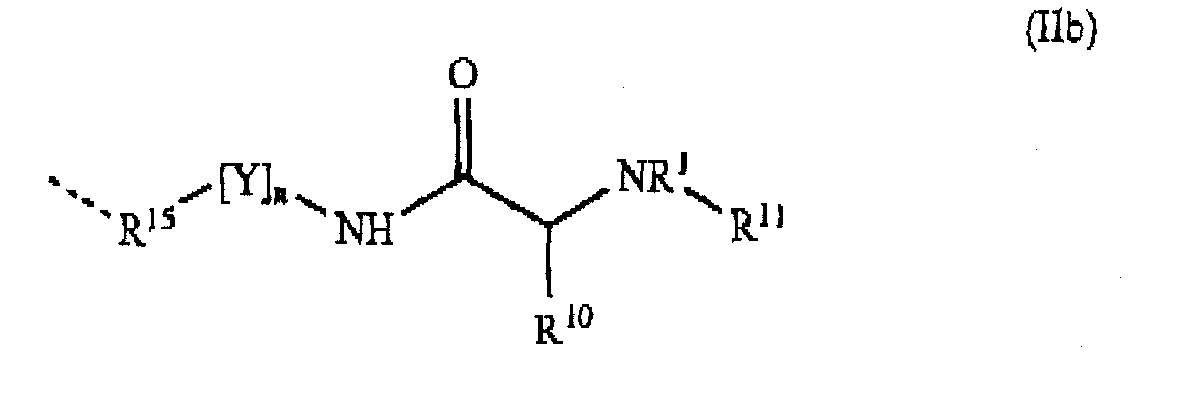 X2 denotes NH, NR4, O or S,X3 denotes NH, NR4, O, S, CO, COO, CONH or CONR4,Y denotes C(R8)2, NH or NR3,R4 denotes H or a branched or unbranched, optionally substituted alkyl, alkenyl or alkinyl residue,R5 denotes H, an alkyl, alkenyl, alkinyl, carboxy-alkyl, carboxy-alkenyl, carboxyl- alkinyl, carboxy-aryl, carboxy-heteroaryl, -(CO)NR3R4 or -COO-R3 in which the alkyl, aryl and heteroaryl residues can optionally be substituted,R6 is in each case independently H or halogen and in particular F,R7 denotes H or an optionally substituted alkyl, alkenyl, alkinyl, aryl or heteroaryl residue or -COR8,R8 in each case independently denotes H or a branched or unbranched, optionally substituted alkyl, alkenyl, alkinyl, aryl, heteroaryl, aralkyl, alkylaryl, heteroaralkyl residue or/and a substituted or unsubstituted bicyclic or polycyclic residue,R9 denotes H or a branched or unbranched, optionally substituted alkyl, alkenyl, alkinyl, aryl or/and heteroaryl residue,R10 denotes a residue (C(R1)2)0-X3R5,R11 denotes H, a carbonyl residue -CO-R12, a carbonamido residue -CONR12 2, an oxycarbonyl residue -COO-R12 or particularly preferably a sulfonyl residue -SO2R12,R12 denotes H, a branched or unbranched, substituted or unsubstituted alkyl, alkenyl, alkinyl, aryl or heteroaryl residue or a substituted or unsubstituted cyclic alkyl residue or a substituted or unsubstituted aralkyl, alkylaryl or heteroaralkyl residue or a substituted or unsubstituted bicyclic or polycyclic residue,R15 represents C=X2, NR3 or CR3 2,n is an integer from 0 to 2,m is an integer from 0 to 5,o is an integer from 1 to 5,p is an integer from 1 to 5,or salts of these compounds
in the preparation of a pharmaceutical composition for the prophylaxis and/or treatment of amyotrophic lateral sclerosis. - Use as claimed in claim 1, wherein the urokinase inhibitor is 4-chlorobenzyl-sulfonyl-(D)-Ser-Gly-(4-guanidinobenzyl)amide or a pharmaceutically acceptable salt thereof, e.g. a hydrochloride salt.
- A pharmaceutical composition for use in the prophylaxis and/or treatment of amyotrophic lateral sclerosis comprising as an active ingredient a urokinase inhibitor of the general formula I
 Ar denotes an aromatic or heteroaromatic ring system,E denotes
 B denotes -SO2-, -CR3 2-, -NR3- or -NH-,X1 denotes NR13R4, OR3, SR3, COOR3, CONR3R4 or COR5,R1 denotes H, an optionally substituted alkyl, alkenyl, alkinyl, aryl, heteroaryl residue or COOR3, CONR3R4 or COR5R2 denotes halogen, C(R6)3, C2(R6)5, OC(R6)3 or OC2(R6)5,R3 denotes H or any organic residue,R13 denotes a group of the general formula (IIa) or (IIb),
 X2 denotes NH, NR4, O or S,X3 denotes NH, NR4, O, S, CO, COO, CONH or CONR4,Y denotes C(R8)2, NH or NR3,R4 denotes H or a branched or unbranched, optionally substituted alkyl, alkenyl or alkinyl residue,R5 denotes H, an alkyl, alkenyl, alkinyl, carboxy-alkyl, carboxy-alkenyl, carboxyl- alkinyl, carboxy-aryl, carboxy-heteroaryl, -(CO)NR3R4 or -COO-R3 in which the alkyl, aryl and heteroaryl residues can optionally be substituted,R6 is in each case independently H or halogen and in particular F,R7 denotes H or an optionally substituted alkyl, alkenyl, alkinyl, aryl or heteroaryl residue or -COR9,R8 in each case independently denotes H, or a branched or unbranched, optionally substituted alkyl, alkenyl, alkinyl, aryl, heteroaryl, aralkyl, alkylaryl, heteroaralkyl residue or/and a substituted or unsubstituted bicyclic or polycyclic residue,R9 denotes H or a branched or unbranched, optionally substituted alkyl, alkenyl, alkinyl, aryl or/and heteroaryl residue,R10 denotes a residue (C(R1)2)0-X3R5,R11 denotes H, a carbonyl residue -CO-R12, a carbonamido residue -CONR12 2, an oxycarbonyl residue -COO-R12 or particularly preferably a sulfonyl residue -SO2R12,R12 denotes H, a branched or unbranched, substituted or unsubstituted alkyl, alkenyl, alkinyl, aryl or heteroaryl residue or a substituted or unsubstituted cyclic alkyl residue or a substituted or unsubstituted aralkyl, alkylaryl or heteroaralkyl residue or a substituted or unsubstituted bicyclic or polycyclic residue,R15 represents C=X2, NR3 or CR3 2,n is an integer from 0 to 2,m is an integer from 0 to 5,o is an integer from 1 to 5,p is an integer from 1 to 5,or salts of these compounds,
and optionally further comprising pharmaceutically acceptable carriers, diluents, adjuvants and/or excipients. - A pharmaceutical composition for use in the prophylaxis and/or treatment of amyotrophic lateral sclerosis, said composition comprising as an active ingredient a therapeutically effective amount of Urokinase inhibitor 4-chlorobenzyl-sulfonyl-(D)-Ser-Gly(4-guanidinobenzyl)amide hydrochloride or any other salt thereof, and optionally further comprising pharmaceutically acceptable carriers, diluents, adjuvants and/or excipients.
- The composition for use according to claims 3 or 4 which comprises at least one further pharmaceutically active ingredient suitable for the prophylaxis and/or treatment of urokinase-associated neuropathological and/or neurodegenerative diseases, particularly selected from matrix metalloprotease-Inhibitors and/or superoxide dismutase/catalase inhibitors and/or mimetics.
Priority Applications (1)
| Application Number | Priority Date | Filing Date | Title |
|---|---|---|---|
| EP09001466A EP2087885A1 (en) | 2005-06-24 | 2006-06-22 | Use of urokinase inhibitors for the treatment and /or prevention of neuropathological diseases |
Applications Claiming Priority (2)
| Application Number | Priority Date | Filing Date | Title |
|---|---|---|---|
| US69343205P | 2005-06-24 | 2005-06-24 | |
| PCT/EP2006/006029 WO2006136419A2 (en) | 2005-06-24 | 2006-06-22 | Use of urokinase inhibitors for the treatment and/or prevention of neuropathological diseases |
Related Child Applications (1)
| Application Number | Title | Priority Date | Filing Date |
|---|---|---|---|
| EP09001466A Division EP2087885A1 (en) | 2005-06-24 | 2006-06-22 | Use of urokinase inhibitors for the treatment and /or prevention of neuropathological diseases |
Publications (2)
| Publication Number | Publication Date |
|---|---|
| EP1893185A2 EP1893185A2 (en) | 2008-03-05 |
| EP1893185B1 true EP1893185B1 (en) | 2009-09-16 |
Family
ID=37570795
Family Applications (2)
| Application Number | Title | Priority Date | Filing Date |
|---|---|---|---|
| EP09001466A Withdrawn EP2087885A1 (en) | 2005-06-24 | 2006-06-22 | Use of urokinase inhibitors for the treatment and /or prevention of neuropathological diseases |
| EP06754517A Not-in-force EP1893185B1 (en) | 2005-06-24 | 2006-06-22 | USE OF UROKINASE INHIBITORS FOR THE TREATMENT AND/OR PREVENTION OF AMYOTROPhIC LATERAL SCLEROSIS (ALS) |
Family Applications Before (1)
| Application Number | Title | Priority Date | Filing Date |
|---|---|---|---|
| EP09001466A Withdrawn EP2087885A1 (en) | 2005-06-24 | 2006-06-22 | Use of urokinase inhibitors for the treatment and /or prevention of neuropathological diseases |
Country Status (12)
| Country | Link |
|---|---|
| US (1) | US8093258B2 (en) |
| EP (2) | EP2087885A1 (en) |
| JP (1) | JP2008543900A (en) |
| KR (1) | KR20080027875A (en) |
| AT (1) | ATE442842T1 (en) |
| AU (1) | AU2006261099A1 (en) |
| CA (1) | CA2612262A1 (en) |
| DE (1) | DE602006009257D1 (en) |
| ES (1) | ES2329286T3 (en) |
| MX (1) | MX2007016439A (en) |
| RU (1) | RU2410087C2 (en) |
| WO (1) | WO2006136419A2 (en) |
Families Citing this family (2)
| Publication number | Priority date | Publication date | Assignee | Title |
|---|---|---|---|---|
| WO2020228681A1 (en) * | 2019-05-10 | 2020-11-19 | 泰伦基国际有限公司 | Method and medicine for treating amyotrophic lateral sclerosis |
| EP4140498A4 (en) | 2020-05-11 | 2023-11-01 | Talengen International Limited | METHOD AND DRUGS FOR TREATING SPINAL MUSCLE ATROPHY |
Family Cites Families (30)
| Publication number | Priority date | Publication date | Assignee | Title |
|---|---|---|---|---|
| US5340833A (en) | 1992-05-01 | 1994-08-23 | Eisai Co., Ltd. | Urokinase inhibitors |
| US5550213A (en) | 1993-12-27 | 1996-08-27 | Rutgers, The State University Of New Jersey | Inhibitors of urokinase plasminogen activator |
| US5952307A (en) | 1994-01-21 | 1999-09-14 | Georgia Tech Research Corp. | Basic α-aminoalkylphosphonate derivatives |
| CH689611A5 (en) | 1995-03-01 | 1999-07-15 | Pentapharm Ag | New amidino-phenylalanine derivatives |
| AUPO227896A0 (en) | 1996-09-13 | 1996-10-03 | Fujisawa Pharmaceutical Co., Ltd. | Novel compounds and their preparation |
| EP0975743A1 (en) | 1997-04-11 | 2000-02-02 | Roche Diagnostics GmbH | Inhibitors for urokinase receptor |
| ZA986594B (en) | 1997-07-25 | 1999-01-27 | Abbott Lab | Urokinase inhibitors |
| GB9721964D0 (en) | 1997-10-16 | 1997-12-17 | Pfizer Ltd | Isoquinolines |
| NZ506507A (en) | 1998-02-09 | 2003-08-29 | Dimensional Pharm Inc | Heteroaryl amidine, methylamidine or guanidine derivatives useful as urokinase inhibitors |
| DE59903981D1 (en) | 1998-07-20 | 2003-02-13 | Wilex Ag | NEW UROKINASE INHIBITORS |
| WO2000005214A2 (en) | 1998-07-24 | 2000-02-03 | Pfizer Inc. | Isoquinolines as urokinase inhibitors |
| US6576613B1 (en) | 1998-07-24 | 2003-06-10 | Corvas International, Inc. | Title inhibitors of urokinase |
| ATE264678T1 (en) | 1998-07-29 | 2004-05-15 | Taiho Pharmaceutical Co Ltd | INHIBITORS OF ANGIOGENESIS AND UROCINASIS PRODUCTION AND ITS MEDICAL APPLICATION |
| AU9059798A (en) | 1998-09-18 | 2000-04-10 | Pentapharm Ag | Urokinase inhibitors |
| GB9908410D0 (en) | 1999-04-13 | 1999-06-09 | Pfizer Ltd | Pyridines |
| DE19940389A1 (en) | 1999-08-25 | 2001-03-01 | Wilex Biotechnology Gmbh | Selective inhibitors of the urokinase plasminogen activator |
| CA2394639A1 (en) | 1999-12-15 | 2001-06-21 | Danny Peter Claude Mcgee | Salicylamides as serine protease and factor xa inhibitors |
| EP1818326A1 (en) * | 2000-01-20 | 2007-08-15 | Eisai R&D Management Co., Ltd. | Nitrogen-containing heterocyclic compounds and pharmaceutical composition containing the compounds |
| US6207701B1 (en) | 2000-01-28 | 2001-03-27 | Abbott Laboratories | Urokinase inhibitors |
| DE10013715A1 (en) | 2000-03-20 | 2001-09-27 | Wilex Biotechnology Gmbh | New aryl-guanidines with side-chains comprising hydrogen bond donor and acceptor groups, are selective urokinase plasminogen activator inhibitors useful for treating tumors or tumor metastasis |
| DE10029014A1 (en) | 2000-06-15 | 2001-12-20 | Univ Schiller Jena | Urokinase inhibitors |
| NZ518195A (en) | 2000-08-11 | 2005-04-29 | Corvas Int Inc | Non-covalent inhibitors of urokinase and blood vessel formation |
| DE60034447T2 (en) | 2000-08-11 | 2008-02-14 | Wilex Ag | Noncovalent urokinase and angiogenesis inhibitors |
| WO2002074756A2 (en) | 2001-03-21 | 2002-09-26 | Pentapharm Ag | Urokinase inhibitors |
| AU2002364713A1 (en) | 2001-12-04 | 2003-06-17 | Corvas International, Inc. | Aromatic heterocyclic non-covalent inhibitors of urokinase and blood vessel formation |
| AU2002352245B2 (en) | 2001-12-12 | 2008-10-16 | Wilex Ag | Selective arylguanidine peptides as urokinase inhibitors |
| US7838560B2 (en) | 2002-03-11 | 2010-11-23 | The Medicines Company (Leipzig) Gmbh | Urokinase inhibitors, production and use thereof |
| DE10225876A1 (en) | 2002-06-11 | 2003-12-24 | Wilex Ag | Guanidinophenylalanine compounds as urokinase inhibitors |
| BRPI0410055A (en) * | 2003-05-05 | 2006-04-25 | Paion Deutschland Gmbh | glutamate receptor antagonists as neuroprotectors |
| DE10323898A1 (en) | 2003-05-26 | 2004-12-23 | Wilex Ag | Hydroxyamidine and hydroxyguanidine compounds as urokinase inhibitors |
-
2006
- 2006-06-22 EP EP09001466A patent/EP2087885A1/en not_active Withdrawn
- 2006-06-22 ES ES06754517T patent/ES2329286T3/en active Active
- 2006-06-22 WO PCT/EP2006/006029 patent/WO2006136419A2/en not_active Ceased
- 2006-06-22 US US11/922,774 patent/US8093258B2/en not_active Expired - Fee Related
- 2006-06-22 RU RU2008102730/15A patent/RU2410087C2/en not_active IP Right Cessation
- 2006-06-22 EP EP06754517A patent/EP1893185B1/en not_active Not-in-force
- 2006-06-22 JP JP2008517418A patent/JP2008543900A/en active Pending
- 2006-06-22 DE DE602006009257T patent/DE602006009257D1/en active Active
- 2006-06-22 KR KR1020087001816A patent/KR20080027875A/en not_active Withdrawn
- 2006-06-22 MX MX2007016439A patent/MX2007016439A/en active IP Right Grant
- 2006-06-22 CA CA002612262A patent/CA2612262A1/en not_active Abandoned
- 2006-06-22 AT AT06754517T patent/ATE442842T1/en active
- 2006-06-22 AU AU2006261099A patent/AU2006261099A1/en not_active Abandoned
Also Published As
| Publication number | Publication date |
|---|---|
| MX2007016439A (en) | 2008-03-04 |
| KR20080027875A (en) | 2008-03-28 |
| JP2008543900A (en) | 2008-12-04 |
| WO2006136419A3 (en) | 2007-04-19 |
| WO2006136419A2 (en) | 2006-12-28 |
| CA2612262A1 (en) | 2006-12-28 |
| EP1893185A2 (en) | 2008-03-05 |
| RU2008102730A (en) | 2009-07-27 |
| US8093258B2 (en) | 2012-01-10 |
| RU2410087C2 (en) | 2011-01-27 |
| ATE442842T1 (en) | 2009-10-15 |
| HK1109862A1 (en) | 2008-06-27 |
| ES2329286T3 (en) | 2009-11-24 |
| EP2087885A1 (en) | 2009-08-12 |
| DE602006009257D1 (en) | 2009-10-29 |
| US20090069251A1 (en) | 2009-03-12 |
| AU2006261099A1 (en) | 2006-12-28 |
| WO2006136419B1 (en) | 2007-05-31 |
Similar Documents
| Publication | Publication Date | Title |
|---|---|---|
| Scozzafava et al. | Modulation of carbonic anhydrase activity and its applications in therapy | |
| JP2003535034A (en) | Dipeptidyl peptidase IV inhibitors and methods for producing and using dipeptidyl peptidase IV inhibitors | |
| JP4500543B2 (en) | Use of pramipexole to treat amyotrophic lateral sclerosis | |
| US20080175848A1 (en) | Methods for treating conditions associated with the accumulation of excess extracellular matrix | |
| JP2005516911A5 (en) | ||
| Hook et al. | Cysteine protease inhibitors effectively reduce in vivo levels of brain β-amyloid related to Alzheimer's disease. | |
| US20260041663A1 (en) | Prevention of rosacea inflammation | |
| US20200255489A1 (en) | Novel Senolytic Peptides | |
| US20190365846A1 (en) | Methods and compositions for preventing or treating leber's hereditary optic neuropathy | |
| KR20190088475A (en) | Ganglioside Metabolism Inhibitor for the Treatment of Motor Neuron Disease | |
| US8093258B2 (en) | Use of urokinase inhibitors for the treatment and/or prevention of neuropathological diseases | |
| US7291599B2 (en) | Use of inhibitors of enzymes having activities of amino peptidase N and/or dipeptidyl peptidase IV and of pharmaceutical preparations thereof for a therapy and prevention of chronical neurodegenerative diseases | |
| BRPI0615588A2 (en) | use of an aureolysin inhibitor for the treatment of inflammatory skin conditions characterized by colonization with staphylococcus aureus | |
| HK1109862B (en) | Use of urokinase inhibitors for the treatment and/or prevention of amyotrophic lateral sclerosis (als) | |
| HK1128246A (en) | Use of urokinase inhibitors for the treatment and/or prevention of neuropathological diseases | |
| AU2013352294A1 (en) | Treatment of Autism Spectrum Disorders using glycyl-l-2-methylprolyl-l-glutamic acid | |
| WO2019097050A1 (en) | [2-[(5-nitro-1,3-thiazol-2-yl)carbamoyl]phenyl]ethanoate for use in lymphangioleiomyomatosis and other diseases | |
| WO2016190852A1 (en) | Therapeutic compositions including chromanyl compounds, variants and analogues thereof, and uses thereof | |
| HK40086581A (en) | Treatment of dermatological conditions | |
| Albano | Regulation of the cystine/glutamate antiporter and its contribution to neuronal death | |
| CA2524342A1 (en) | Glutamate receptor antagonists as neuroprotectives | |
| JP2021504477A (en) | Apratyramide therapeutic agents and methods of treatment |
Legal Events
| Date | Code | Title | Description |
|---|---|---|---|
| PUAI | Public reference made under article 153(3) epc to a published international application that has entered the european phase |
Free format text: ORIGINAL CODE: 0009012 |
|
| 17P | Request for examination filed |
Effective date: 20071115 |
|
| AK | Designated contracting states |
Kind code of ref document: A2 Designated state(s): AT BE BG CH CY CZ DE DK EE ES FI FR GB GR HU IE IS IT LI LT LU LV MC NL PL PT RO SE SI SK TR |
|
| DAX | Request for extension of the european patent (deleted) | ||
| 17Q | First examination report despatched |
Effective date: 20080404 |
|
| REG | Reference to a national code |
Ref country code: HK Ref legal event code: DE Ref document number: 1109862 Country of ref document: HK |
|
| DAX | Request for extension of the european patent (deleted) | ||
| GRAP | Despatch of communication of intention to grant a patent |
Free format text: ORIGINAL CODE: EPIDOSNIGR1 |
|
| RTI1 | Title (correction) |
Free format text: USE OF UROKINASE INHIBITORS FOR THE TREATMENT AND/OR PREVENTION OF AMYOTROPHIC LATERAL SCLEROSIS (ALS) |
|
| GRAS | Grant fee paid |
Free format text: ORIGINAL CODE: EPIDOSNIGR3 |
|
| GRAA | (expected) grant |
Free format text: ORIGINAL CODE: 0009210 |
|
| AK | Designated contracting states |
Kind code of ref document: B1 Designated state(s): AT BE BG CH CY CZ DE DK EE ES FI FR GB GR HU IE IS IT LI LT LU LV MC NL PL PT RO SE SI SK TR |
|
| REG | Reference to a national code |
Ref country code: GB Ref legal event code: FG4D |
|
| REG | Reference to a national code |
Ref country code: CH Ref legal event code: NV Representative=s name: BOHEST AG Ref country code: CH Ref legal event code: EP |
|
| REG | Reference to a national code |
Ref country code: IE Ref legal event code: FG4D |
|
| REF | Corresponds to: |
Ref document number: 602006009257 Country of ref document: DE Date of ref document: 20091029 Kind code of ref document: P |
|
| REG | Reference to a national code |
Ref country code: ES Ref legal event code: FG2A Ref document number: 2329286 Country of ref document: ES Kind code of ref document: T3 |
|
| REG | Reference to a national code |
Ref country code: HK Ref legal event code: GR Ref document number: 1109862 Country of ref document: HK |
|
| PG25 | Lapsed in a contracting state [announced via postgrant information from national office to epo] |
Ref country code: FI Free format text: LAPSE BECAUSE OF FAILURE TO SUBMIT A TRANSLATION OF THE DESCRIPTION OR TO PAY THE FEE WITHIN THE PRESCRIBED TIME-LIMIT Effective date: 20090916 Ref country code: SE Free format text: LAPSE BECAUSE OF FAILURE TO SUBMIT A TRANSLATION OF THE DESCRIPTION OR TO PAY THE FEE WITHIN THE PRESCRIBED TIME-LIMIT Effective date: 20090916 Ref country code: LT Free format text: LAPSE BECAUSE OF FAILURE TO SUBMIT A TRANSLATION OF THE DESCRIPTION OR TO PAY THE FEE WITHIN THE PRESCRIBED TIME-LIMIT Effective date: 20090916 |
|
| LTIE | Lt: invalidation of european patent or patent extension |
Effective date: 20090916 |
|
| PG25 | Lapsed in a contracting state [announced via postgrant information from national office to epo] |
Ref country code: PL Free format text: LAPSE BECAUSE OF FAILURE TO SUBMIT A TRANSLATION OF THE DESCRIPTION OR TO PAY THE FEE WITHIN THE PRESCRIBED TIME-LIMIT Effective date: 20090916 Ref country code: SI Free format text: LAPSE BECAUSE OF FAILURE TO SUBMIT A TRANSLATION OF THE DESCRIPTION OR TO PAY THE FEE WITHIN THE PRESCRIBED TIME-LIMIT Effective date: 20090916 Ref country code: LV Free format text: LAPSE BECAUSE OF FAILURE TO SUBMIT A TRANSLATION OF THE DESCRIPTION OR TO PAY THE FEE WITHIN THE PRESCRIBED TIME-LIMIT Effective date: 20090916 Ref country code: NL Free format text: LAPSE BECAUSE OF FAILURE TO SUBMIT A TRANSLATION OF THE DESCRIPTION OR TO PAY THE FEE WITHIN THE PRESCRIBED TIME-LIMIT Effective date: 20090916 |
|
| NLV1 | Nl: lapsed or annulled due to failure to fulfill the requirements of art. 29p and 29m of the patents act | ||
| PG25 | Lapsed in a contracting state [announced via postgrant information from national office to epo] |
Ref country code: CY Free format text: LAPSE BECAUSE OF FAILURE TO SUBMIT A TRANSLATION OF THE DESCRIPTION OR TO PAY THE FEE WITHIN THE PRESCRIBED TIME-LIMIT Effective date: 20090916 |
|
| PG25 | Lapsed in a contracting state [announced via postgrant information from national office to epo] |
Ref country code: RO Free format text: LAPSE BECAUSE OF FAILURE TO SUBMIT A TRANSLATION OF THE DESCRIPTION OR TO PAY THE FEE WITHIN THE PRESCRIBED TIME-LIMIT Effective date: 20090916 Ref country code: PT Free format text: LAPSE BECAUSE OF FAILURE TO SUBMIT A TRANSLATION OF THE DESCRIPTION OR TO PAY THE FEE WITHIN THE PRESCRIBED TIME-LIMIT Effective date: 20100118 Ref country code: CZ Free format text: LAPSE BECAUSE OF FAILURE TO SUBMIT A TRANSLATION OF THE DESCRIPTION OR TO PAY THE FEE WITHIN THE PRESCRIBED TIME-LIMIT Effective date: 20090916 Ref country code: EE Free format text: LAPSE BECAUSE OF FAILURE TO SUBMIT A TRANSLATION OF THE DESCRIPTION OR TO PAY THE FEE WITHIN THE PRESCRIBED TIME-LIMIT Effective date: 20090916 Ref country code: IS Free format text: LAPSE BECAUSE OF FAILURE TO SUBMIT A TRANSLATION OF THE DESCRIPTION OR TO PAY THE FEE WITHIN THE PRESCRIBED TIME-LIMIT Effective date: 20100116 |
|
| PG25 | Lapsed in a contracting state [announced via postgrant information from national office to epo] |
Ref country code: SK Free format text: LAPSE BECAUSE OF FAILURE TO SUBMIT A TRANSLATION OF THE DESCRIPTION OR TO PAY THE FEE WITHIN THE PRESCRIBED TIME-LIMIT Effective date: 20090916 |
|
| PG25 | Lapsed in a contracting state [announced via postgrant information from national office to epo] |
Ref country code: BE Free format text: LAPSE BECAUSE OF FAILURE TO SUBMIT A TRANSLATION OF THE DESCRIPTION OR TO PAY THE FEE WITHIN THE PRESCRIBED TIME-LIMIT Effective date: 20090916 |
|
| PLBE | No opposition filed within time limit |
Free format text: ORIGINAL CODE: 0009261 |
|
| STAA | Information on the status of an ep patent application or granted ep patent |
Free format text: STATUS: NO OPPOSITION FILED WITHIN TIME LIMIT |
|
| PG25 | Lapsed in a contracting state [announced via postgrant information from national office to epo] |
Ref country code: DK Free format text: LAPSE BECAUSE OF FAILURE TO SUBMIT A TRANSLATION OF THE DESCRIPTION OR TO PAY THE FEE WITHIN THE PRESCRIBED TIME-LIMIT Effective date: 20090916 |
|
| PGFP | Annual fee paid to national office [announced via postgrant information from national office to epo] |
Ref country code: ES Payment date: 20100623 Year of fee payment: 5 Ref country code: FR Payment date: 20100706 Year of fee payment: 5 |
|
| 26N | No opposition filed |
Effective date: 20100617 |
|
| PGFP | Annual fee paid to national office [announced via postgrant information from national office to epo] |
Ref country code: IT Payment date: 20100622 Year of fee payment: 5 |
|
| PG25 | Lapsed in a contracting state [announced via postgrant information from national office to epo] |
Ref country code: GR Free format text: LAPSE BECAUSE OF FAILURE TO SUBMIT A TRANSLATION OF THE DESCRIPTION OR TO PAY THE FEE WITHIN THE PRESCRIBED TIME-LIMIT Effective date: 20091217 |
|
| PGFP | Annual fee paid to national office [announced via postgrant information from national office to epo] |
Ref country code: CH Payment date: 20100623 Year of fee payment: 5 |
|
| PGFP | Annual fee paid to national office [announced via postgrant information from national office to epo] |
Ref country code: GB Payment date: 20100618 Year of fee payment: 5 |
|
| PG25 | Lapsed in a contracting state [announced via postgrant information from national office to epo] |
Ref country code: MC Free format text: LAPSE BECAUSE OF NON-PAYMENT OF DUE FEES Effective date: 20100630 |
|
| PG25 | Lapsed in a contracting state [announced via postgrant information from national office to epo] |
Ref country code: IE Free format text: LAPSE BECAUSE OF NON-PAYMENT OF DUE FEES Effective date: 20100622 |
|
| REG | Reference to a national code |
Ref country code: CH Ref legal event code: PL |
|
| GBPC | Gb: european patent ceased through non-payment of renewal fee |
Effective date: 20110622 |
|
| PG25 | Lapsed in a contracting state [announced via postgrant information from national office to epo] |
Ref country code: IT Free format text: LAPSE BECAUSE OF NON-PAYMENT OF DUE FEES Effective date: 20110622 |
|
| REG | Reference to a national code |
Ref country code: FR Ref legal event code: ST Effective date: 20120229 |
|
| PG25 | Lapsed in a contracting state [announced via postgrant information from national office to epo] |
Ref country code: CH Free format text: LAPSE BECAUSE OF NON-PAYMENT OF DUE FEES Effective date: 20110630 Ref country code: FR Free format text: LAPSE BECAUSE OF NON-PAYMENT OF DUE FEES Effective date: 20110630 Ref country code: LI Free format text: LAPSE BECAUSE OF NON-PAYMENT OF DUE FEES Effective date: 20110630 |
|
| PG25 | Lapsed in a contracting state [announced via postgrant information from national office to epo] |
Ref country code: GB Free format text: LAPSE BECAUSE OF NON-PAYMENT OF DUE FEES Effective date: 20110622 |
|
| PG25 | Lapsed in a contracting state [announced via postgrant information from national office to epo] |
Ref country code: HU Free format text: LAPSE BECAUSE OF FAILURE TO SUBMIT A TRANSLATION OF THE DESCRIPTION OR TO PAY THE FEE WITHIN THE PRESCRIBED TIME-LIMIT Effective date: 20100317 Ref country code: BG Free format text: LAPSE BECAUSE OF FAILURE TO SUBMIT A TRANSLATION OF THE DESCRIPTION OR TO PAY THE FEE WITHIN THE PRESCRIBED TIME-LIMIT Effective date: 20090916 Ref country code: LU Free format text: LAPSE BECAUSE OF NON-PAYMENT OF DUE FEES Effective date: 20100622 |
|
| PG25 | Lapsed in a contracting state [announced via postgrant information from national office to epo] |
Ref country code: TR Free format text: LAPSE BECAUSE OF FAILURE TO SUBMIT A TRANSLATION OF THE DESCRIPTION OR TO PAY THE FEE WITHIN THE PRESCRIBED TIME-LIMIT Effective date: 20090916 |
|
| REG | Reference to a national code |
Ref country code: AT Ref legal event code: MM01 Ref document number: 442842 Country of ref document: AT Kind code of ref document: T Effective date: 20110622 |
|
| PG25 | Lapsed in a contracting state [announced via postgrant information from national office to epo] |
Ref country code: AT Free format text: LAPSE BECAUSE OF NON-PAYMENT OF DUE FEES Effective date: 20110622 |
|
| REG | Reference to a national code |
Ref country code: ES Ref legal event code: FD2A Effective date: 20131030 |
|
| PG25 | Lapsed in a contracting state [announced via postgrant information from national office to epo] |
Ref country code: ES Free format text: LAPSE BECAUSE OF NON-PAYMENT OF DUE FEES Effective date: 20110623 |
|
| PGFP | Annual fee paid to national office [announced via postgrant information from national office to epo] |
Ref country code: DE Payment date: 20160621 Year of fee payment: 11 |
|
| REG | Reference to a national code |
Ref country code: DE Ref legal event code: R119 Ref document number: 602006009257 Country of ref document: DE |
|
| PG25 | Lapsed in a contracting state [announced via postgrant information from national office to epo] |
Ref country code: DE Free format text: LAPSE BECAUSE OF NON-PAYMENT OF DUE FEES Effective date: 20180103 |