EP1887823A1 - Drahtloses kommunikationssystem, basisstation, mobilstation und drahtloses kommunikationsverfahren - Google Patents
Drahtloses kommunikationssystem, basisstation, mobilstation und drahtloses kommunikationsverfahren Download PDFInfo
- Publication number
- EP1887823A1 EP1887823A1 EP06729980A EP06729980A EP1887823A1 EP 1887823 A1 EP1887823 A1 EP 1887823A1 EP 06729980 A EP06729980 A EP 06729980A EP 06729980 A EP06729980 A EP 06729980A EP 1887823 A1 EP1887823 A1 EP 1887823A1
- Authority
- EP
- European Patent Office
- Prior art keywords
- timing difference
- base station
- transmission timing
- cell search
- mobile station
- Prior art date
- Legal status (The legal status is an assumption and is not a legal conclusion. Google has not performed a legal analysis and makes no representation as to the accuracy of the status listed.)
- Withdrawn
Links
Images


Classifications
-
- H—ELECTRICITY
- H04—ELECTRIC COMMUNICATION TECHNIQUE
- H04B—TRANSMISSION
- H04B1/00—Details of transmission systems, not covered by a single one of groups H04B3/00 - H04B13/00; Details of transmission systems not characterised by the medium used for transmission
- H04B1/69—Spread spectrum techniques
- H04B1/707—Spread spectrum techniques using direct sequence modulation
- H04B1/7073—Synchronisation aspects
- H04B1/7083—Cell search, e.g. using a three-step approach
-
- H—ELECTRICITY
- H04—ELECTRIC COMMUNICATION TECHNIQUE
- H04B—TRANSMISSION
- H04B7/00—Radio transmission systems, i.e. using radiation field
- H04B7/14—Relay systems
- H04B7/15—Active relay systems
- H04B7/155—Ground-based stations
-
- H—ELECTRICITY
- H04—ELECTRIC COMMUNICATION TECHNIQUE
- H04W—WIRELESS COMMUNICATION NETWORKS
- H04W56/00—Synchronisation arrangements
- H04W56/004—Synchronisation arrangements compensating for timing error of reception due to propagation delay
- H04W56/0045—Synchronisation arrangements compensating for timing error of reception due to propagation delay compensating for timing error by altering transmission time
-
- H—ELECTRICITY
- H04—ELECTRIC COMMUNICATION TECHNIQUE
- H04B—TRANSMISSION
- H04B2201/00—Indexing scheme relating to details of transmission systems not covered by a single group of H04B3/00 - H04B13/00
- H04B2201/69—Orthogonal indexing scheme relating to spread spectrum techniques in general
- H04B2201/707—Orthogonal indexing scheme relating to spread spectrum techniques in general relating to direct sequence modulation
- H04B2201/70702—Intercell-related aspects
-
- H—ELECTRICITY
- H04—ELECTRIC COMMUNICATION TECHNIQUE
- H04L—TRANSMISSION OF DIGITAL INFORMATION, e.g. TELEGRAPHIC COMMUNICATION
- H04L27/00—Modulated-carrier systems
- H04L27/26—Systems using multi-frequency codes
- H04L27/2601—Multicarrier modulation systems
- H04L27/2647—Arrangements specific to the receiver only
- H04L27/2655—Synchronisation arrangements
- H04L27/2656—Frame synchronisation, e.g. packet synchronisation, time division duplex [TDD] switching point detection or subframe synchronisation
-
- Y—GENERAL TAGGING OF NEW TECHNOLOGICAL DEVELOPMENTS; GENERAL TAGGING OF CROSS-SECTIONAL TECHNOLOGIES SPANNING OVER SEVERAL SECTIONS OF THE IPC; TECHNICAL SUBJECTS COVERED BY FORMER USPC CROSS-REFERENCE ART COLLECTIONS [XRACs] AND DIGESTS
- Y02—TECHNOLOGIES OR APPLICATIONS FOR MITIGATION OR ADAPTATION AGAINST CLIMATE CHANGE
- Y02D—CLIMATE CHANGE MITIGATION TECHNOLOGIES IN INFORMATION AND COMMUNICATION TECHNOLOGIES [ICT], I.E. INFORMATION AND COMMUNICATION TECHNOLOGIES AIMING AT THE REDUCTION OF THEIR OWN ENERGY USE
- Y02D30/00—Reducing energy consumption in communication networks
- Y02D30/70—Reducing energy consumption in communication networks in wireless communication networks
Definitions
- the present invention relates to a radio communication system, a base station, a mobile station and a radio communication method.
- a mobile station performs a cell search for a cell to be connected to by a radio link (for identifying a base station) at the start time of communications, at handover time and at communication stand-by time for periodic reception.
- a radio link for identifying a base station
- a mobile station operates with the use of power supplied from a battery. Thus, if it takes a large amount of time to complete the cell search, the problem of more current consumption may arise.
- the W-CDMA scheme was adopted for use in mobile communication systems in IMT-2000 (International Mobile Telecommunications 2000); hence, a 3-step cell search method is proposed to reduce the time involved in the cell search. For example, see non-patent document 1.
- the scrambling code in a downlink control channel is masked, and correlation detection is performed on the masked portion by using a spreading code common to different cells.
- detection of timing and the type of scrambling code is achieved, resulting in reduced cell search time.
- Some techniques of reporting neighboring station scrambling codes as report information transmitted from a radio base station are disclosed for reducing current consumed in a CDMA type mobile device and improving the duration of the stand-by mode. See patent document 1, for example.
- the VSF-OFCDM Very Spreading Factor Orthogonal Frequency and Code Division Multiplexing
- OFCDM scheme cell search methods in a downlink some method of dividing into a frame timing detection process and a scrambling code identification process by means of a frequency multiplexing type synchronization channel (SCH) to achieve faster initial cell search (for example, see non-patent document 2), a 3-step cell search using only a common pilot channel (CPICH) without use of the SCH (for example, see non-patent document 3), and other methods have been proposed.
- SCH frequency multiplexing type synchronization channel
- an inter-base station asynchronization system operating a plurality of base stations in an asynchronous manner i.e. individual signals from base stations are transmitted without synchronization of the signals with each other
- adoption of an inter-base station asynchronization system is being considered.
- a mobile station since each base station operates at arbitrary timing independent of other base stations, a mobile station has to compute correlation values at the number of times equal to (the number N ft of candidate timings ⁇ the number N cr of candidate (cell-specific) scramble codes) and select the maximum timing and scramble code.
- the number N ft of candidate timings ⁇ the number N cr of candidate (cell-specific) scramble codes
- the maximum timing and scramble code since all candidate timings have to be correlated, there may arise a problem that the cell search leads to a significant increase in the computational complexity and more time for the cell search is required.
- a frame is divided into several slots, and the frame timing is derived after detection of the slot timing.
- the frame timing is derived after detection of the slot timing.
- it achieves reduction in the computational amount associated with cell search compared to the case where all candidate timings are correlated.
- detection of the slot timing for example, there are 2,560 (X oversamplings) candidate timings in the W-CDMA scheme, and thus a larger computational amount and a longer cell search results in increases in consumed power.
- the number N ft of candidate timings is approximately equal to that in W-CDMA scheme (as stated below).
- the present invention aims to eliminate the above-mentioned problem, and one object of the present invention provides a radio communication system, a base station, a mobile station and a radio communication method achieving less cell search time and less power consumed in a mobile station.
- the present invention relates to a radio communication system including a plurality of base station and a plurality of mobile stations, the mobile stations including a reception timing difference unit receiving reference signals transmitted from neighboring base stations, measuring a reception timing difference between the reference signals, and reporting the reception timing difference to one or more of the base stations, the base stations including a transmission timing difference unit and a transmission timing difference information report unit, the transmission timing difference unit computing a transmission timing difference of the reference signals between own base station and the neighboring base stations based on the reception timing difference reported from the mobile stations, the transmission timing difference information report unit reporting the transmission timing difference computed by the transmission timing difference computation unit to the mobile stations, the mobile stations further including a cell search unit performing cell search on a cell search range limited based on the transmission timing difference reported from the base stations.
- the base station may further include a scramble code report unit reporting a scramble code of a neighboring base station in the reporting of the transmission timing difference to the mobile station, the cell search unit of the mobile station performing cell search on a cell search range limited based on the transmission timing difference reported from the base station and the scramble code of the neighboring base stations.
- the present invention relates to a base station for communicating to a plurality of mobile stations, comprising: a transmission timing difference computation unit receiving a reception timing difference of reference signals between neighboring base stations from the mobile stations, and computing a transmission timing difference of reference signals between own base station and the neighboring base stations based on the received reception timing difference; and a transmission timing difference information report unit reporting the transmission timing difference computed by the transmission timing difference computation unit to the mobile stations.
- the base station may further include:
- the statistical operation may include an averaging operation on the reception timing differences.
- the base station may further include: a reception timing difference measurement unit transmitting a control signal to cause the mobile stations to measure the reception timing differences of the neighboring base stations reference signals.
- the present invention relates to a mobile station wirelessly connected to a base station, comprising: a reception timing difference report unit receiving reference signals transmitted from neighboring base stations, measuring a reception timing difference between the reference signals, and reporting the reception timing difference to one or more base stations; and a cell search unit performing cell search on a cell search range limited based on the transmission timing difference transmitted from the base stations.
- the cell search unit may perform cell search on a cell search range limited based on the transmission timing difference reported from the base stations and a scramble code of a neighboring base station.
- the cell search unit may include a limit unit limiting the cell search range by limiting the number of candidate timings based on the transmission timing difference and the number of candidate scramble codes based on the scramble code of the neighboring base station.
- a base station computes a transmission timing difference of reference signals between the base station and neighboring base stations based on reception timing differences of the reference signals between the base stations measured at and reported from a mobile station, and reports the transmission timing difference to the mobile station.
- the mobile station can limit a cell search range as much as possible, resulting in reduction of cell search time. In other words, according to the embodiments of the present invention, it is possible to reduce power consumed at a mobile station during stand-by mode and accordingly provide the advantage of longer duration of the stand-by mode.
- a radio communication system is configured as illustrated in FIG. 1 .
- the radio communication system 1 which may be configured as a mobile communication system, comprises a plurality of base stations (base station a (100) and base station b (200)) covering certain radio zones, and a plurality of mobile stations a-c (10-30) establishing radio channels between the base stations and themselves for communications.
- the base stations wirelessly communicate to the mobile stations in accordance with a CDMA scheme or multicarrier scheme.
- FIGS. 2A and 2B are diagrams to explain general operations according to embodiments of the present invention.
- a mobile station a (10) performs cell search for a target cell (base station) to establish connections to the base stations a (100) and b (200) and carry out handover.
- the mobile station a (10) measures a reception timing difference between common pilot channel signals (reference signals) with a known pattern always transmitted from the base stations a (100) and b (200), and then reports the measurement result to the base stations a (100) and b (200). Since the distance between the mobile station a (10) and the base station a (100) differs from the distance between the mobile station a (10) and the base station b (200), the propagation delay differs accordingly.
- the reception timing difference measured at the mobile station a (10) corresponds to the timing difference ( ⁇ t_rx) between the reception timing (a) with reception delay ⁇ T 1 relative to the transmission timing T 1 of a common pilot channel signal transmitted from the base station a (100) and the reception timing (b) with reception delay ⁇ T 2 relative to the transmission timing T 2 of a common pilot channel signal transmitted from the base station b (200).
- reception timing difference ( ⁇ t_rx) measured at the mobile station a (10) in the above-mentioned manner is reported as reception timing difference information to the base station a (100).
- reception timing difference information is reported to the base station a (100), and the subsequent description is focused on operation of the base station a (100).
- the base station a (100) derives the transmission timing difference between the base station a (100) and an adjacent base station (in this embodiment, the base station b (200)) based on the reception timing difference information received from the mobile station a (10). Since the transmission timing (T 1 ) of a common pilot channel signal at the base station a (100) is known to the base station a (100), it is estimated that the timing (T 1 + ⁇ t_rx) with the delay ( ⁇ t_rx), that is, the reception timing difference, from the known transmission timing T 1 may be the transmission timing (T 2 ) of a common pilot channel signal transmitted from the base station b (200).
- the transmission timing difference derived in this manner is reported as transmission timing difference information from the base station a (100) to the mobile station a (10).
- the mobile station a (10) performs cell search within some limited cell search range based on the transmission timing difference, which is received from the base station a (100), of a common pilot channel signal between the base stations (the base stations a-b (100,200)). This cell search is described in detail below.
- FIG. 3 is a block diagram illustrating an exemplary configuration of a mobile station (ex. mobile station a (10)) according to the first embodiment of the present invention.
- the mobile station comprises a common pilot channel reception timing difference measurement unit 51, an uplink control information generation unit 52, and an uplink control channel transmission unit 53.
- the common pilot channel reception timing difference measurement unit 51 includes a common pilot channel correlation device, detects correlation of common pilot channel signals of base stations to be searched, and measures reception timing differences between the common pilot channel signals transmitted from the base stations.
- the uplink control information generation unit 52 generates information on the reception timing differences measured at the common pilot channel reception timing difference measurement unit 51 as control information for reporting to the base stations.
- the uplink control channel transmission unit 53 transmits the generated control information to the base stations over the uplink control channel.
- FIG. 4 is a block diagram illustrating an exemplary configuration of a base station (ex. the base station a (100)) according to the first embodiment of the present invention.
- the base station comprises an uplink control channel reception unit 61, a transmission timing computation unit 62, a report information generation unit 63 and a broadcast control channel transmission unit 64.
- the uplink control channel reception unit 61 receives reception timing difference information transmitted from a mobile station over an uplink control channel, and supplies the received reception timing difference information to the transmission timing computation unit 62.
- the transmission timing computation unit 62 computes transmission timing (transmission timing difference) of a common pilot channel from the base station and an adjacent base station.
- the report information generation unit 63 generates information for transmitting the transmission timing difference information on the common pilot channel computed in the transmission timing computation unit 62 over a broadcast control channel.
- the broadcast control channel transmission unit 64 transmits the generated transmission timing difference information over the broadcast control channel.
- FIG. 5 is a control sequence diagram illustrating exemplary flow of control operations up to reporting of the transmission timing difference to a mobile station between the mobile station and a base station as configured above. A subsequent description is continued with reference to this illustration.
- base stations 1 and 2 transmit common pilot channel signals to mobile stations.
- a mobile station receives common pilot channel signals transmitted from different base stations, and measures reception timing differences of the common pilot channel signals. Then, the measurement results are reported as reception timing difference information to the respective base stations.
- operation of the base station 1 is focused on.
- the base station 1 computes a transmission timing difference based on the reception timing difference information transmitted from a mobile station, and transmits information indicative of the computation result including the broadcast control channel to the mobile station.
- the mobile station performs cell search within a limited search range based on the transmission timing difference information transmitted from the base station 1. Then, this cell search is described in detail.
- FIG. 6 is a block diagram illustrating an exemplary configuration around a cell search unit of a mobile station.
- a downlink broadcast control channel reception unit 71 and a candidate frame timing reduction unit 72 are provided around a cell search unit (frame timing detection unit) 73.
- the downlink broadcast control channel reception unit 71 receives a broadcast control channel transmitted from a base station.
- This broadcast control channel includes transmission timing difference information, and preferably includes frame timing difference information.
- the candidate frame timing reduction unit 72 limits a cell search range by using the frame timing difference information reported via the downlink report information to reduce the number of candidate frame timings.
- the frame timing detection unit 73 detects the boundary between candidate frames, that is, the start timing of the frames (frame timing) under the number of candidate frame timings reduced in the candidate frame timing reduction unit 72. In this embodiment, if the number of candidate frame timings is reduced to N ft' , the computation amount for detecting frame timing for cell search would become equal to N ft' /N ft .
- the number of candidate frame timings becomes equal to 38,400 (usually being multiples of this value for oversampling), which is the number of chips per slot within one frame of 10 ms.
- one frame is short, for example, one frame has about 0.5 ms.
- broadband signals of about 100 MHz are used, the number of candidate frame timings would become equivalent to the W-CDMA scheme.
- the frame timing detection unit 73 if scramble codes for neighboring stations are reported in downlink report information, does not detect correlation for all the scramble codes prepared in the system, but performs correlation detection on reported candidate scramble codes and detects scramble codes multiplied with signals for base stations to be connected.
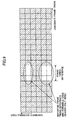
- FIGS. 7-9 are schematic diagrams illustrating search ranges in cell search.
- FIG. 7 schematically illustrates a search range in conventional cell search.
- FIGS. 8 and 9 schematically illustrate search ranges in cell search according to embodiments of the present invention.
- the horizontal axis represents candidate frame timing
- the vertical axis represents candidate scramble codes.
- cell search is performed for all frame timings and all scramble codes as candidates.
- the cell search requires enormous amounts of computation.
- FIG. 8 illustrates an exemplary cell search range in a case where only frame timing difference information is reported from a base station to a mobile station.
- outlined portions correspond to cell search ranges.
- a mobile station detects frame timing and scramble code by searching only the range of the frame timing difference reported.
- the number of candidate frame timings can be reduced to less than 100, for example, by using the frame timing difference information, it is possible to significantly reduce computational complexity for timing detection.
- the cell search time can be shortened (speeding up), resulting in reduced power consumed during the stand-by mode (battery saving) and longer duration of the stand-by mode.
- the mobile station detects frame timing, in particular start timing of the scramble codes, by searching only the range of the reported frame timing differences as candidates, and then correlates only the reported candidate scramble codes to identify the scramble code used in the base station.
- the candidate scramble code information is obtained, the reported candidate scramble codes (ex. dozens of them) only have to be correlated without correlation with all the 512 types of scramble codes.
- the search range in cell search is limited compared to the embodiment illustrated in FIG. 8 , resulting in a significant reduction in the computational complexity required for the cell search.
- the reduction in the search candidates makes it possible to reduce false positive error probability significantly and detect the optimal cell with high accuracy. As a result, it is possible to prevent an unnecessary increase in transmission power and facilitate large capacity systems.
- a base station has functionality of rendering transmission timing difference information reported to a mobile station more accurately.
- a radio communication system of the second embodiment has the same basic configuration as the radio communication system described in conjunction with the first embodiment. So, the corresponding references (with the same last numbers) are assigned to a mobile station, a base station and other components, and the description thereof is omitted. In the following, some features of this embodiment are described.
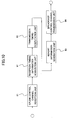
- FIG. 10 is a block diagram illustrating an exemplary configuration of a base station according to the second embodiment.
- the base station of this embodiment differs in that it includes a reception timing information acquisition unit 81.
- This reception timing information acquisition unit 81 acquires reception timing difference information transmitted from a large number of mobile stations.
- a transmission timing computation unit 62 performs some statistical operations such as an averaging operation on the acquired reception timing difference information. In other words, since more accurate reception timing differences between base stations can be detected by performing the averaging operation on the reception timing difference information reported from the many mobile stations, it is possible to compute transmission timing differences between base stations more accurately.
- a candidate frame timing reduction unit 72 of a mobile station uses the more accurate transmission timing difference to reduce the number of candidate frame timings under the accurate transmission timing difference.
- the target cell candidates for cell search are narrowed accurately, which prevents inappropriate cells from being searched. As a result, faster and more accurate cell search is facilitated.
- reception timing difference information reported from a large number of mobile stations for detection of accurate reception timing differences at a base station, and thereby more accurate transmission timing differences are obtained.
- location information of mobile stations is used to obtain more accurate transmission timing differences between base stations.
- a radio communication system of the third embodiment has the same basic configuration as the radio communication system described in conjunction with the first embodiment. So, the corresponding references (with the same last numbers) are assigned to a mobile station, a base station and other components, and the description thereof is omitted. In the following, some features of this embodiment are described.
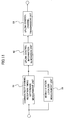
- FIG. 11 is a block diagram illustrating an exemplary configuration of a mobile station according to the third embodiment.
- a mobile station of this embodiment differs in that it includes a mobile station location measurement unit 91.
- This mobile station location measurement unit 91 uses a GPS signal or a common pilot channel signal from the base station to measure the location of a mobile station, and supplies the location of the mobile station, that is, measurement location of reception timing, as mobile station location information to an uplink control information generation unit 52.
- the uplink control information generation unit 52 generates the mobile station location information supplied from the mobile station location measurement unit 91 and reception timing difference information measured at a common pilot channel reception timing difference measurement unit 51 as control in formation.
- the uplink control channel transmission unit 53 transmits the generated control information to the base station over a control channel.
- a transmission timing computation unit 62 of a base station uses mobile station location information in the control information transmitted from the mobile station to correct propagation delay between the base station and the mobile station ( ⁇ T 1 , ⁇ T 2 (see FIG. 2 )). Specifically, the mobile station location information is used to derive the distance between the base station and the mobile station and correct the propagation delay correlated with this distance. In this correction method, a table of precomputed propagation delays correlated with the distance may be used to derive the corrected amount. Alternatively, the corrected amount may be computed without the use of such a table.
- a base station can obtain accurate transmission timing differences between the base station and some adjacent base stations by correcting propagation delay between the base station and a mobile station.
- a candidate frame timing reduction unit 72 of the mobile station reduces the number of candidate frame timings under this accurate transmission timing differences information.
- mobile station location information is used to obtain a more accurate transmission timing difference.
- a downlink reception level is used to obtain a more accurate transmission timing difference.
- a radio communication system of the fourth embodiment has the same basic configuration as the radio communication system described in conjunction with the first embodiment. So, the corresponding references (with the same last numbers) are assigned to a mobile station, a base station and other components, and the description thereof is omitted. In the following, some features of this embodiment are described with reference to FIGS. 3 and 4 .
- a common pilot channel reception timing difference measurement unit 51 of a mobile station measures the reception level of a common pilot channel signal together with reception timing. These information items are generated as control information by an uplink control information generation unit 52, and are transmitted from an uplink control channel transmission unit 53.
- a transmission timing computation unit 62 of a base station receives the incoming control information, computes the distance between the base station and the mobile station based on the reception level, and corrects propagation delay correlated with the distance.
- the correction method described in conjunction with the third embodiment may be used.
- a more accurate transmission timing difference can be obtained by correcting the propagation delay between a base station and a mobile station.
- a candidate frame timing reduction unit 72 of a mobile station reduces the number of candidate frame timings under this accurate transmission timing difference.
- the downlink reception level is simply measured and reported to a base station.
- no GPS receiver or other devices are required, and thus an additional advantage of reduced device cost is achieved.
- a mobile station measures reception timing differences of common pilot channel signals transmitted from neighboring base stations, and reports them to a base station.
- Some exemplary triggers of a mobile station measuring a reception timing difference of a common pilot channel signal are introduced below.
- the transmission timing difference information is transmitted over a broadcast control channel in these embodiments, the present invention is not limited to the embodiments. For example, if there are a small number of mobile stations within a cell, a user specific dedicated control channel may be used for the reporting. In other words, the transmission timing difference information can be reported with efficient use of radio resources by selecting a broadcast control channel or a dedicated control channel depending on the number of mobile stations within the cell.
Landscapes
- Engineering & Computer Science (AREA)
- Computer Networks & Wireless Communication (AREA)
- Signal Processing (AREA)
- Mobile Radio Communication Systems (AREA)
Applications Claiming Priority (2)
| Application Number | Priority Date | Filing Date | Title |
|---|---|---|---|
| JP2005105497A JP4592477B2 (ja) | 2005-03-31 | 2005-03-31 | 無線通信システム、基地局、移動局、及び無線通信方法 |
| PCT/JP2006/306032 WO2006109538A1 (ja) | 2005-03-31 | 2006-03-24 | 無線通信システム、基地局、移動局、及び無線通信方法 |
Publications (2)
| Publication Number | Publication Date |
|---|---|
| EP1887823A1 true EP1887823A1 (de) | 2008-02-13 |
| EP1887823A4 EP1887823A4 (de) | 2012-02-29 |
Family
ID=37086823
Family Applications (1)
| Application Number | Title | Priority Date | Filing Date |
|---|---|---|---|
| EP06729980A Withdrawn EP1887823A4 (de) | 2005-03-31 | 2006-03-24 | Drahtloses kommunikationssystem, basisstation, mobilstation und drahtloses kommunikationsverfahren |
Country Status (9)
| Country | Link |
|---|---|
| US (1) | US7912011B2 (de) |
| EP (1) | EP1887823A4 (de) |
| JP (1) | JP4592477B2 (de) |
| KR (1) | KR101151319B1 (de) |
| CN (2) | CN102201831B (de) |
| BR (1) | BRPI0608685A2 (de) |
| RU (1) | RU2419253C2 (de) |
| TW (1) | TW200644682A (de) |
| WO (1) | WO2006109538A1 (de) |
Cited By (8)
| Publication number | Priority date | Publication date | Assignee | Title |
|---|---|---|---|---|
| WO2011050182A1 (en) * | 2009-10-21 | 2011-04-28 | Qualcomm Incorporated | Time and frequency acquisition and tracking for ofdma wireless systems |
| US8614975B2 (en) | 2008-09-19 | 2013-12-24 | Qualcomm Incorporated | Synchronizing a base station in a wireless communication system |
| US8688139B2 (en) | 2009-09-10 | 2014-04-01 | Qualcomm Incorporated | Concurrent wireless transmitter mapping and mobile station positioning |
| US8731556B2 (en) | 2006-11-29 | 2014-05-20 | Kyocera Corporation | Radiophone apparatus, hand-off method in radiophone apparatus, and communication system |
| US8982851B2 (en) | 2009-01-06 | 2015-03-17 | Qualcomm Incorporated | Hearability improvements for reference signals |
| US9037155B2 (en) | 2008-10-28 | 2015-05-19 | Sven Fischer | Time of arrival (TOA) estimation for positioning in a wireless communication network |
| US9091746B2 (en) | 2010-07-01 | 2015-07-28 | Qualcomm Incorporated | Determination of positions of wireless transceivers to be added to a wireless communication network |
| US9100843B2 (en) | 2009-11-19 | 2015-08-04 | Qualcomm Incorporated | Per-cell timing and/or frequency acquisition and their use on channel estimation in wireless networks |
Families Citing this family (22)
| Publication number | Priority date | Publication date | Assignee | Title |
|---|---|---|---|---|
| JP4926047B2 (ja) * | 2005-04-28 | 2012-05-09 | パナソニック株式会社 | 無線通信装置および無線通信方法 |
| US8472374B2 (en) * | 2007-11-07 | 2013-06-25 | Telefonaktiebolaget L M Ericsson (Publ) | Distinguishing between synchronized and asynchronous mobile communications networks |
| US20090125630A1 (en) * | 2007-11-09 | 2009-05-14 | Qualcomm Incorporated | Method and apparatus for defining a search window based on distance between access points |
| US8300651B1 (en) * | 2008-01-30 | 2012-10-30 | Marvell International Ltd. | Channel estimation with co-channel pilots suppression |
| US8837349B2 (en) * | 2008-02-07 | 2014-09-16 | Gilat Satellite Networks Ltd. | Real-time sessions quality-of-service over reservation-based access |
| JP4956484B2 (ja) * | 2008-05-26 | 2012-06-20 | 株式会社エヌ・ティ・ティ・ドコモ | 携帯通信端末、通信システムおよびハンドオーバ方法 |
| US8170082B2 (en) * | 2008-12-05 | 2012-05-01 | Infineon Technologies Ag | Cross-talk mitigation in global navigation satellite systems |
| KR101028610B1 (ko) | 2008-12-30 | 2011-04-11 | 엘지에릭슨 주식회사 | 이동통신 시스템의 기지국간 동기 획득 방법 |
| WO2010146617A1 (ja) | 2009-06-15 | 2010-12-23 | 富士通株式会社 | 無線通信システム、基地局装置、端末装置、及び無線通信システムにおける無線通信方法 |
| US9042296B2 (en) * | 2009-07-23 | 2015-05-26 | Qualcomm Incorporated | Synchronization of devices in a wireless communication network |
| JP5115577B2 (ja) * | 2010-03-22 | 2013-01-09 | 住友電気工業株式会社 | 無線通信システムとその時刻補正方法 |
| WO2012042736A1 (ja) * | 2010-09-30 | 2012-04-05 | パナソニック株式会社 | 無線通信装置、無線通信システム、及び無線通信端末 |
| EP2456106B1 (de) * | 2010-11-22 | 2013-11-06 | Sequans Communications | Zellensuchverfahren für einen Abwärtskanal eines OFDMA-Übertragungssystems |
| EP2732655B1 (de) | 2011-07-15 | 2015-09-02 | Telefonaktiebolaget LM Ericsson (PUBL) | Verwaltung von nachbarbeziehungen |
| WO2013134948A1 (en) * | 2012-03-16 | 2013-09-19 | Telefonaktiebolaget L M Ericsson (Publ) | Methods for reliable reception of harq feedback information in heterogeneous deployments |
| US9325444B2 (en) * | 2012-07-18 | 2016-04-26 | Telefonaktiebolaget L M Ericsson (Publ) | Scrambling code resolution |
| JP5527375B2 (ja) * | 2012-08-28 | 2014-06-18 | 住友電気工業株式会社 | 無線通信システムとその時刻補正方法 |
| EP3203771B1 (de) * | 2012-11-14 | 2018-09-12 | Huawei Technologies Co., Ltd. | Verfahren zur aufrechterhaltung einer basisstation, vorrichtung und system |
| US20150257114A1 (en) * | 2013-02-15 | 2015-09-10 | Sharp Kabushiki Kaisha | Mobile station apparatus, integrated circuit, communication method, and communication program |
| US10090983B2 (en) | 2013-03-16 | 2018-10-02 | Telefonaktiebolaget L M Ericsson (Publ) | Systems and methods for configuring redundant transmissions in a wireless network |
| US9313698B2 (en) | 2013-10-11 | 2016-04-12 | Blackberry Limited | Method and apparatus for handover in heterogeneous cellular networks |
| WO2022019352A1 (ko) * | 2020-07-22 | 2022-01-27 | 엘지전자 주식회사 | 무선 통신 시스템에서 단말 및 기지국의 신호 송수신 방법 및 장치 |
Family Cites Families (13)
| Publication number | Priority date | Publication date | Assignee | Title |
|---|---|---|---|---|
| DE3673642D1 (de) * | 1986-04-11 | 1990-09-27 | Ant Nachrichtentech | Verfahren zum ermitteln der aufenthaltsfunkzelle einer mobilstation innerhalb eines mobilfunknetzes. |
| US5440561A (en) * | 1991-09-30 | 1995-08-08 | Motorola, Inc. | Method for establishing frame synchronization within a TDMA communication system |
| SE500830C2 (sv) * | 1993-05-17 | 1994-09-12 | Ericsson Telefon Ab L M | Förfarande och anordning vid kanalutnyttjandet i ett radiokommunikationssystem |
| WO1997047148A2 (en) * | 1996-06-06 | 1997-12-11 | Qualcomm Incorporated | Using a signal with increased power for determining the position of a mobile subscriber in a cdma cellular telephone system |
| US6526039B1 (en) * | 1998-02-12 | 2003-02-25 | Telefonaktiebolaget Lm Ericsson | Method and system for facilitating timing of base stations in an asynchronous CDMA mobile communications system |
| KR100308661B1 (ko) * | 1998-08-28 | 2001-10-19 | 윤종용 | 이동통신시스템의핸드오프장치및방법 |
| JP3813432B2 (ja) | 2000-10-12 | 2006-08-23 | 株式会社エヌ・ティ・ティ・ドコモ | Cdma方式の無線移動機およびそのセルサーチ方法 |
| US20030007471A1 (en) * | 2001-07-03 | 2003-01-09 | Daisuke Terasawa | Operation of wideband code division multiple access base stations |
| KR100557509B1 (ko) * | 2001-10-27 | 2006-03-03 | 삼성전자주식회사 | 유엠티에스 시스템에서의 셀 탐색 방법 |
| US7453863B2 (en) | 2002-04-04 | 2008-11-18 | Lg Electronics Inc. | Cell searching apparatus and method in asynchronous mobile communication system |
| TW567686B (en) | 2002-04-12 | 2003-12-21 | Accton Technology Corp | Method and apparatus for cell search for W-CDMA |
| US20040202119A1 (en) * | 2003-04-10 | 2004-10-14 | Edge Stephen William | Base station synchronization in a wireless network |
| JP2005105497A (ja) | 2003-10-02 | 2005-04-21 | Solotex Corp | 加撚糸及びその製造方法 |
-
2005
- 2005-03-31 JP JP2005105497A patent/JP4592477B2/ja not_active Expired - Fee Related
-
2006
- 2006-03-24 KR KR1020077023549A patent/KR101151319B1/ko not_active Expired - Fee Related
- 2006-03-24 WO PCT/JP2006/306032 patent/WO2006109538A1/ja not_active Ceased
- 2006-03-24 US US11/909,791 patent/US7912011B2/en not_active Expired - Fee Related
- 2006-03-24 EP EP06729980A patent/EP1887823A4/de not_active Withdrawn
- 2006-03-24 BR BRPI0608685-3A patent/BRPI0608685A2/pt not_active IP Right Cessation
- 2006-03-24 CN CN2011101458598A patent/CN102201831B/zh not_active Expired - Fee Related
- 2006-03-24 RU RU2007136023A patent/RU2419253C2/ru not_active IP Right Cessation
- 2006-03-24 CN CNA2006800136166A patent/CN101164364A/zh active Pending
- 2006-03-28 TW TW095110730A patent/TW200644682A/zh unknown
Cited By (17)
| Publication number | Priority date | Publication date | Assignee | Title |
|---|---|---|---|---|
| US8731556B2 (en) | 2006-11-29 | 2014-05-20 | Kyocera Corporation | Radiophone apparatus, hand-off method in radiophone apparatus, and communication system |
| US8614975B2 (en) | 2008-09-19 | 2013-12-24 | Qualcomm Incorporated | Synchronizing a base station in a wireless communication system |
| US9001742B2 (en) | 2008-09-19 | 2015-04-07 | Qualcomm Incorporated | Synchronizing a base station in a wireless communication system |
| US9037155B2 (en) | 2008-10-28 | 2015-05-19 | Sven Fischer | Time of arrival (TOA) estimation for positioning in a wireless communication network |
| US8982851B2 (en) | 2009-01-06 | 2015-03-17 | Qualcomm Incorporated | Hearability improvements for reference signals |
| US9774431B2 (en) | 2009-01-06 | 2017-09-26 | Qualcomm Incorporated | Hearability improvements for reference signals |
| US8688139B2 (en) | 2009-09-10 | 2014-04-01 | Qualcomm Incorporated | Concurrent wireless transmitter mapping and mobile station positioning |
| US20140135025A1 (en) * | 2009-10-21 | 2014-05-15 | Qualcomm Incorporated | Time and frequency acquisition and tracking for ofdma wireless systems |
| EP2755331A1 (de) * | 2009-10-21 | 2014-07-16 | Qualcomm Incorporated | Zeit- und Frequenzerfassung und -Verfolgung für drahtlose OFDMA-Systeme |
| WO2011050182A1 (en) * | 2009-10-21 | 2011-04-28 | Qualcomm Incorporated | Time and frequency acquisition and tracking for ofdma wireless systems |
| US9100150B2 (en) | 2009-10-21 | 2015-08-04 | Qualcomm Incorporated | Time and frequency acquisition and tracking for OFDMA wireless systems |
| US9401784B2 (en) | 2009-10-21 | 2016-07-26 | Qualcomm Incorporated | Time and frequency acquisition and tracking for OFDMA wireless systems |
| US9628228B2 (en) * | 2009-10-21 | 2017-04-18 | Qualcomm Incorporated | Time and frequency acquisition and tracking for OFDMA wireless systems |
| EP2667517A1 (de) * | 2009-10-21 | 2013-11-27 | Qualcomm Incorporated | Zeit- und Frequenzerfassung und -Verfolgung für drahtlose OFDMA-Systeme |
| US9100843B2 (en) | 2009-11-19 | 2015-08-04 | Qualcomm Incorporated | Per-cell timing and/or frequency acquisition and their use on channel estimation in wireless networks |
| US10111111B2 (en) | 2009-11-19 | 2018-10-23 | Qualcomm Incorporated | Per-cell timing and/or frequency acquisition and their use on channel estimation in wireless networks |
| US9091746B2 (en) | 2010-07-01 | 2015-07-28 | Qualcomm Incorporated | Determination of positions of wireless transceivers to be added to a wireless communication network |
Also Published As
| Publication number | Publication date |
|---|---|
| JP4592477B2 (ja) | 2010-12-01 |
| US20090149169A1 (en) | 2009-06-11 |
| CN102201831A (zh) | 2011-09-28 |
| CN102201831B (zh) | 2013-03-13 |
| CN101164364A (zh) | 2008-04-16 |
| BRPI0608685A2 (pt) | 2010-01-19 |
| JP2006287663A (ja) | 2006-10-19 |
| RU2007136023A (ru) | 2009-05-10 |
| US7912011B2 (en) | 2011-03-22 |
| RU2419253C2 (ru) | 2011-05-20 |
| TW200644682A (en) | 2006-12-16 |
| EP1887823A4 (de) | 2012-02-29 |
| WO2006109538A1 (ja) | 2006-10-19 |
| KR20070120988A (ko) | 2007-12-26 |
| KR101151319B1 (ko) | 2012-06-08 |
Similar Documents
| Publication | Publication Date | Title |
|---|---|---|
| US7912011B2 (en) | Radio communication system, base station, mobile station and wireless communication method | |
| US8102958B2 (en) | Pilot scrambling enabling direct pilot sequence detection in initial acquisition in evolved UTRA | |
| US9603111B2 (en) | Radio communication system and communication control method | |
| US7693106B1 (en) | Neighboring base station information update method, information management method for cell search in mobile communications system, cell search method of mobile station, mobile communications system, mobile station, base station and control station | |
| EP1337069A2 (de) | Synchronisierung in einem Spreizspektrummehrträgersystem | |
| US7324479B2 (en) | Cell search method in UMTS | |
| US7336699B2 (en) | Method and apparatus for code identification in wireless applications | |
| KR20050074853A (ko) | 이동통신시스템에서 인접 셀 경계 인식장치 및 방법 | |
| EP1890398B1 (de) | Mobilfunk-kommunikationssystem, basisstationsvorrichtung, funknetzwerksteuervorrichtung und mobilstationsvorrichtung | |
| US7027427B1 (en) | Cell search method in CDMA capable of carrying out a cell search processing at a high speed | |
| AU775897B2 (en) | Cell search method to subtract autocorrelation patterns from a correlation value profile | |
| CN101562822A (zh) | 基站间不同步的检测方法及装置 | |
| CN101461274B (zh) | 通信系统中使用异步信道的移动切换功能 | |
| WO2008022591A1 (fr) | Procédé de commande de l'identification des cellules dans un système lte et appareil à cet effet | |
| JP2002165275A (ja) | 基地局間非同期システム及びそれに用いるセル配置手法 | |
| JP2002280974A (ja) | 電波サービスエリア評価装置 | |
| US20140169360A1 (en) | Apparatus and method for transmitting a synchronization signal and detecting a cell id error | |
| JP2004159167A (ja) | セルサーチ方法および移動局 | |
| KR20090085398A (ko) | 이동 통신망의 상향 링크에서의 다중셀 결합 채널 추정방법 및 시스템 | |
| KR20090085739A (ko) | 이동 통신망의 하향 링크에서의 다중셀 결합 채널 추정방법 및 시스템 | |
| US20060246928A1 (en) | Synchronization processing apparatus and synchronization processing method |
Legal Events
| Date | Code | Title | Description |
|---|---|---|---|
| PUAI | Public reference made under article 153(3) epc to a published international application that has entered the european phase |
Free format text: ORIGINAL CODE: 0009012 |
|
| 17P | Request for examination filed |
Effective date: 20070927 |
|
| AK | Designated contracting states |
Kind code of ref document: A1 Designated state(s): AT BE BG CH CY CZ DE DK EE ES FI FR GB GR HU IE IS IT LI LT LU LV MC NL PL PT RO SE SI SK TR |
|
| DAX | Request for extension of the european patent (deleted) | ||
| A4 | Supplementary search report drawn up and despatched |
Effective date: 20120201 |
|
| RIC1 | Information provided on ipc code assigned before grant |
Ipc: H04B 1/707 20110101ALI20120127BHEP Ipc: H04W 4/00 20090101AFI20120127BHEP |
|
| 17Q | First examination report despatched |
Effective date: 20130515 |
|
| STAA | Information on the status of an ep patent application or granted ep patent |
Free format text: STATUS: THE APPLICATION IS DEEMED TO BE WITHDRAWN |
|
| 18D | Application deemed to be withdrawn |
Effective date: 20140624 |
|
| REG | Reference to a national code |
Ref country code: DE Ref legal event code: R079 Free format text: PREVIOUS MAIN CLASS: H04Q0007380000 Ipc: H04W0004000000 |
|
| REG | Reference to a national code |
Ref country code: DE Ref legal event code: R079 Free format text: PREVIOUS MAIN CLASS: H04Q0007380000 Ipc: H04W0004000000 Effective date: 20141119 |