EP1886552B1 - Procede permettant d'evaluer une propriete d'enracinement profond d'une plante - Google Patents
Procede permettant d'evaluer une propriete d'enracinement profond d'une plante Download PDFInfo
- Publication number
- EP1886552B1 EP1886552B1 EP05739266.4A EP05739266A EP1886552B1 EP 1886552 B1 EP1886552 B1 EP 1886552B1 EP 05739266 A EP05739266 A EP 05739266A EP 1886552 B1 EP1886552 B1 EP 1886552B1
- Authority
- EP
- European Patent Office
- Prior art keywords
- plants
- culture vessel
- water
- culture medium
- culture
- Prior art date
- Legal status (The legal status is an assumption and is not a legal conclusion. Google has not performed a legal analysis and makes no representation as to the accuracy of the status listed.)
- Expired - Lifetime
Links
- 238000000034 method Methods 0.000 title claims description 80
- 241000196324 Embryophyta Species 0.000 claims description 176
- XLYOFNOQVPJJNP-UHFFFAOYSA-N water Substances O XLYOFNOQVPJJNP-UHFFFAOYSA-N 0.000 claims description 152
- 239000001963 growth medium Substances 0.000 claims description 66
- 230000008641 drought stress Effects 0.000 claims description 49
- 206010042209 Stress Diseases 0.000 claims description 24
- 230000003247 decreasing effect Effects 0.000 claims description 5
- 239000000203 mixture Substances 0.000 claims description 4
- 239000004576 sand Substances 0.000 claims description 3
- 241000218922 Magnoliophyta Species 0.000 claims description 2
- 239000004927 clay Substances 0.000 claims description 2
- 239000002361 compost Substances 0.000 claims description 2
- 238000010413 gardening Methods 0.000 claims description 2
- 239000002689 soil Substances 0.000 description 40
- 240000007594 Oryza sativa Species 0.000 description 16
- 235000007164 Oryza sativa Nutrition 0.000 description 16
- 238000009395 breeding Methods 0.000 description 16
- 230000001488 breeding effect Effects 0.000 description 16
- 238000012360 testing method Methods 0.000 description 16
- 230000012010 growth Effects 0.000 description 14
- 235000009566 rice Nutrition 0.000 description 13
- 229920003023 plastic Polymers 0.000 description 10
- 230000002786 root growth Effects 0.000 description 9
- 239000004033 plastic Substances 0.000 description 8
- 238000003973 irrigation Methods 0.000 description 7
- 230000002262 irrigation Effects 0.000 description 7
- 239000000463 material Substances 0.000 description 7
- 239000004800 polyvinyl chloride Substances 0.000 description 6
- 229920000915 polyvinyl chloride Polymers 0.000 description 6
- 238000012216 screening Methods 0.000 description 6
- 238000009271 trench method Methods 0.000 description 6
- 208000024891 symptom Diseases 0.000 description 5
- 240000008042 Zea mays Species 0.000 description 4
- 235000016383 Zea mays subsp huehuetenangensis Nutrition 0.000 description 4
- 235000002017 Zea mays subsp mays Nutrition 0.000 description 4
- 235000009973 maize Nutrition 0.000 description 4
- 230000001404 mediated effect Effects 0.000 description 4
- 108090000623 proteins and genes Proteins 0.000 description 4
- 238000009331 sowing Methods 0.000 description 4
- 241000894007 species Species 0.000 description 4
- 230000007704 transition Effects 0.000 description 4
- 235000002637 Nicotiana tabacum Nutrition 0.000 description 3
- 244000061176 Nicotiana tabacum Species 0.000 description 3
- 230000000052 comparative effect Effects 0.000 description 3
- 230000018044 dehydration Effects 0.000 description 3
- 238000006297 dehydration reaction Methods 0.000 description 3
- 238000011156 evaluation Methods 0.000 description 3
- 238000002474 experimental method Methods 0.000 description 3
- 239000002184 metal Substances 0.000 description 3
- 229910052751 metal Inorganic materials 0.000 description 3
- 230000004083 survival effect Effects 0.000 description 3
- 241000219195 Arabidopsis thaliana Species 0.000 description 2
- 240000002791 Brassica napus Species 0.000 description 2
- 235000004977 Brassica sinapistrum Nutrition 0.000 description 2
- 244000068988 Glycine max Species 0.000 description 2
- 235000010469 Glycine max Nutrition 0.000 description 2
- 244000104275 Phoenix dactylifera Species 0.000 description 2
- 235000010659 Phoenix dactylifera Nutrition 0.000 description 2
- 244000184734 Pyrus japonica Species 0.000 description 2
- 235000021307 Triticum Nutrition 0.000 description 2
- 244000098338 Triticum aestivum Species 0.000 description 2
- 238000007796 conventional method Methods 0.000 description 2
- 230000007797 corrosion Effects 0.000 description 2
- 238000005260 corrosion Methods 0.000 description 2
- 230000034994 death Effects 0.000 description 2
- 238000010586 diagram Methods 0.000 description 2
- 238000001035 drying Methods 0.000 description 2
- 238000001704 evaporation Methods 0.000 description 2
- 230000008020 evaporation Effects 0.000 description 2
- 230000003203 everyday effect Effects 0.000 description 2
- 239000003337 fertilizer Substances 0.000 description 2
- 230000002068 genetic effect Effects 0.000 description 2
- 230000035784 germination Effects 0.000 description 2
- 238000004519 manufacturing process Methods 0.000 description 2
- 150000002739 metals Chemical class 0.000 description 2
- 238000005580 one pot reaction Methods 0.000 description 2
- 238000011176 pooling Methods 0.000 description 2
- 238000005086 pumping Methods 0.000 description 2
- 230000001105 regulatory effect Effects 0.000 description 2
- DSSYKIVIOFKYAU-XCBNKYQSSA-N (R)-camphor Chemical compound C1C[C@@]2(C)C(=O)C[C@@H]1C2(C)C DSSYKIVIOFKYAU-XCBNKYQSSA-N 0.000 description 1
- 235000011468 Albizia julibrissin Nutrition 0.000 description 1
- 235000003840 Amygdalus nana Nutrition 0.000 description 1
- 244000296825 Amygdalus nana Species 0.000 description 1
- 241000759834 Aucuba japonica Species 0.000 description 1
- 240000001548 Camellia japonica Species 0.000 description 1
- 235000006467 Camellia japonica Nutrition 0.000 description 1
- 241000723436 Chamaecyparis obtusa Species 0.000 description 1
- 229920000742 Cotton Polymers 0.000 description 1
- 240000005109 Cryptomeria japonica Species 0.000 description 1
- 240000008067 Cucumis sativus Species 0.000 description 1
- 235000010799 Cucumis sativus var sativus Nutrition 0.000 description 1
- 240000005636 Dryobalanops aromatica Species 0.000 description 1
- 244000307545 Elaeagnus angustifolia Species 0.000 description 1
- 235000017643 Elaeagnus angustifolia Nutrition 0.000 description 1
- 244000166124 Eucalyptus globulus Species 0.000 description 1
- 241001138420 Fagus crenata Species 0.000 description 1
- 241000219146 Gossypium Species 0.000 description 1
- 235000007340 Hordeum vulgare Nutrition 0.000 description 1
- 240000005979 Hordeum vulgare Species 0.000 description 1
- 240000004296 Lolium perenne Species 0.000 description 1
- 235000007688 Lycopersicon esculentum Nutrition 0.000 description 1
- 241000218394 Magnolia liliiflora Species 0.000 description 1
- 240000005852 Mimosa quadrivalvis Species 0.000 description 1
- 235000019082 Osmanthus Nutrition 0.000 description 1
- 241000333181 Osmanthus Species 0.000 description 1
- KYGZCKSPAKDVKC-UHFFFAOYSA-N Oxolinic acid Chemical compound C1=C2N(CC)C=C(C(O)=O)C(=O)C2=CC2=C1OCO2 KYGZCKSPAKDVKC-UHFFFAOYSA-N 0.000 description 1
- 244000115721 Pennisetum typhoides Species 0.000 description 1
- 235000007195 Pennisetum typhoides Nutrition 0.000 description 1
- 235000008331 Pinus X rigitaeda Nutrition 0.000 description 1
- 241000018646 Pinus brutia Species 0.000 description 1
- 235000011613 Pinus brutia Nutrition 0.000 description 1
- 241000219000 Populus Species 0.000 description 1
- 235000011432 Prunus Nutrition 0.000 description 1
- 235000011158 Prunus mume Nutrition 0.000 description 1
- 244000018795 Prunus mume Species 0.000 description 1
- 241000593922 Quercus acutissima Species 0.000 description 1
- 241000208422 Rhododendron Species 0.000 description 1
- 235000007201 Saccharum officinarum Nutrition 0.000 description 1
- 240000000111 Saccharum officinarum Species 0.000 description 1
- 241000124033 Salix Species 0.000 description 1
- 235000008515 Setaria glauca Nutrition 0.000 description 1
- 240000005498 Setaria italica Species 0.000 description 1
- 240000003768 Solanum lycopersicum Species 0.000 description 1
- 244000061458 Solanum melongena Species 0.000 description 1
- 235000002597 Solanum melongena Nutrition 0.000 description 1
- 235000011684 Sorghum saccharatum Nutrition 0.000 description 1
- 244000062793 Sorghum vulgare Species 0.000 description 1
- 241000592344 Spermatophyta Species 0.000 description 1
- 244000228451 Stevia rebaudiana Species 0.000 description 1
- 235000010185 Tamarix canariensis Nutrition 0.000 description 1
- 235000014265 Tamarix gallica Nutrition 0.000 description 1
- 240000001869 Tamarix ramosissima Species 0.000 description 1
- 235000010154 Tamarix ramosissima Nutrition 0.000 description 1
- 241001106462 Ulmus Species 0.000 description 1
- 238000010521 absorption reaction Methods 0.000 description 1
- 230000006978 adaptation Effects 0.000 description 1
- 230000002411 adverse Effects 0.000 description 1
- 239000000956 alloy Substances 0.000 description 1
- 229910045601 alloy Inorganic materials 0.000 description 1
- 229910052782 aluminium Inorganic materials 0.000 description 1
- XAGFODPZIPBFFR-UHFFFAOYSA-N aluminium Chemical compound [Al] XAGFODPZIPBFFR-UHFFFAOYSA-N 0.000 description 1
- 238000004458 analytical method Methods 0.000 description 1
- QVGXLLKOCUKJST-UHFFFAOYSA-N atomic oxygen Chemical compound [O] QVGXLLKOCUKJST-UHFFFAOYSA-N 0.000 description 1
- 230000008901 benefit Effects 0.000 description 1
- 239000000919 ceramic Substances 0.000 description 1
- 235000013339 cereals Nutrition 0.000 description 1
- 239000004567 concrete Substances 0.000 description 1
- 238000012272 crop production Methods 0.000 description 1
- 230000002354 daily effect Effects 0.000 description 1
- 238000000354 decomposition reaction Methods 0.000 description 1
- 230000007423 decrease Effects 0.000 description 1
- 238000010790 dilution Methods 0.000 description 1
- 239000012895 dilution Substances 0.000 description 1
- 230000000694 effects Effects 0.000 description 1
- 230000007613 environmental effect Effects 0.000 description 1
- 239000004744 fabric Substances 0.000 description 1
- 230000009969 flowable effect Effects 0.000 description 1
- 239000012634 fragment Substances 0.000 description 1
- ZZUFCTLCJUWOSV-UHFFFAOYSA-N furosemide Chemical compound C1=C(Cl)C(S(=O)(=O)N)=CC(C(O)=O)=C1NCC1=CC=CO1 ZZUFCTLCJUWOSV-UHFFFAOYSA-N 0.000 description 1
- 230000001771 impaired effect Effects 0.000 description 1
- 230000006872 improvement Effects 0.000 description 1
- 238000009434 installation Methods 0.000 description 1
- 230000000670 limiting effect Effects 0.000 description 1
- 238000012423 maintenance Methods 0.000 description 1
- 239000002609 medium Substances 0.000 description 1
- 239000011490 mineral wool Substances 0.000 description 1
- 230000004048 modification Effects 0.000 description 1
- 238000012986 modification Methods 0.000 description 1
- 239000008239 natural water Substances 0.000 description 1
- 230000009972 noncorrosive effect Effects 0.000 description 1
- 229910052760 oxygen Inorganic materials 0.000 description 1
- 239000001301 oxygen Substances 0.000 description 1
- 235000002252 panizo Nutrition 0.000 description 1
- 239000010451 perlite Substances 0.000 description 1
- 235000019362 perlite Nutrition 0.000 description 1
- 230000029553 photosynthesis Effects 0.000 description 1
- 238000010672 photosynthesis Methods 0.000 description 1
- 230000008635 plant growth Effects 0.000 description 1
- 229920000515 polycarbonate Polymers 0.000 description 1
- 239000004417 polycarbonate Substances 0.000 description 1
- 235000014774 prunus Nutrition 0.000 description 1
- HELXLJCILKEWJH-NCGAPWICSA-N rebaudioside A Chemical compound O([C@H]1[C@H](O)[C@@H](CO)O[C@H]([C@@H]1O[C@H]1[C@@H]([C@@H](O)[C@H](O)[C@@H](CO)O1)O)O[C@]12C(=C)C[C@@]3(C1)CC[C@@H]1[C@@](C)(CCC[C@]1([C@@H]3CC2)C)C(=O)O[C@H]1[C@@H]([C@@H](O)[C@H](O)[C@@H](CO)O1)O)[C@@H]1O[C@H](CO)[C@@H](O)[C@H](O)[C@H]1O HELXLJCILKEWJH-NCGAPWICSA-N 0.000 description 1
- 238000011084 recovery Methods 0.000 description 1
- 230000000284 resting effect Effects 0.000 description 1
- 230000000717 retained effect Effects 0.000 description 1
- -1 sandy loam Substances 0.000 description 1
- 230000004936 stimulating effect Effects 0.000 description 1
- 230000015378 stomatal closure Effects 0.000 description 1
- 239000000126 substance Substances 0.000 description 1
- 238000012546 transfer Methods 0.000 description 1
- 235000013311 vegetables Nutrition 0.000 description 1
- 239000010455 vermiculite Substances 0.000 description 1
- 235000019354 vermiculite Nutrition 0.000 description 1
- 229910052902 vermiculite Inorganic materials 0.000 description 1
Images



Classifications
-
- A—HUMAN NECESSITIES
- A01—AGRICULTURE; FORESTRY; ANIMAL HUSBANDRY; HUNTING; TRAPPING; FISHING
- A01G—HORTICULTURE; CULTIVATION OF VEGETABLES, FLOWERS, RICE, FRUIT, VINES, HOPS OR SEAWEED; FORESTRY; WATERING
- A01G7/00—Botany in general
Definitions
- the present invention relates to methods for evaluating a trait which allows plants to elongate their roots more deeply into the soil, i.e., a trait relating to deep root growth (deep rooting property) of plants. Further described are methods for conveniently selecting plants capable of deeply elongating their roots under drought conditions.
- Drought avoidance refers to a property, for example, of avoiding drought stress by deeply elongating their roots into the soil or resting during periods when moisture is lacking in the soil.
- Physiological tolerance to drought refers to a property of plants which allows them to grow even in dry environments.
- plants are cultivated in a field and a trench of about 0.5 m to 2 m in depth is dug to examine the thickness and number of roots of the plants at different depths in the trench ( Nemoto, H., Suga, R., et al., Breeding Science 48: 321-324, 1998 ).
- the trench method requires much labor for digging a trench and involves difficulty in evaluating a large number plants.
- soil moisture conditions are influenced by natural weather because plants are cultivated in a field. Individuals, lines or varieties evaluated as rapidly elongating their roots under sufficient soil moisture conditions do not always rapidly elongate their roots under drought conditions, because it may be highly possible that the root growth speed varies with soil moisture conditions, i.e., moisture content. Thus, even if such labor-intensive examination is used, there exists a risk of selecting varieties/lines which are poor at elongating their roots under drought conditions.
- a plant is cultivated in a cylinder made from plastic or the like and the growth of roots is examined.
- An example of the cylinder method comprises cultivating a plant in a transparent plastic cylinder inclined to allow roots to appear on the lateral face and measuring the growth speed or maximum depth of the roots ( Mia, M. W., Yamauchi, A., et al., Japanese Journal of Crop Science, 13: 131-140, 1996 ).
- This method has the advantage that roots can be directly observed, but only one plant can be examined in a cylinder because it cannot be known for certain which root originates from which plant if multiple plants are planted in one cylinder.
- Trillana et al. sowed rice seeds in a pot of 1 m in length made from polyvinyl chloride, followed by submerged cultivation at a water level of 2 or 3 cm above the surface of soil for 14 days after sowing, and partially drained water on 62 days after sowing to lower the water level to 30 cm from the bottom of the pot (60 cm below the surface of soil), and continued cultivation for 6 days, followed by submerged cultivation at a water level of 2 or 3 cm above the surface of soil again, and compared the densities of roots and dry weights of leaves and stems ( Trillana, N., Inamura, T., et al., Plant Production Science 4: 155-159, 2001 ). The method of Trillana et al.
- Trillana et al. requires 4 hours to drain water for drought stress treatment. The water level is lowered only once in this test, which is very inconvenient when the water level is to be gradually lowered in several steps. If water is added from above to fill a tall vessel packed with soil, it is difficult to remove the air in the soil and a considerable time is required until water penetrates into the soil. Thus, the method of Trillana et al. is suitable for basic studies dealing with few tested plants, but unsuitable for breeding, which requires analyses of a large number of individuals.
- JPA 2003-230318 A method for evaluating drought resistance of plants rather than deep rooting property using plastic pots has been proposed ( JPA 2003-230318 ).
- This method comprises growing a test plant in multiple pots under suitable cultivation conditions for a short period, then stopping irrigation to perform drought stress treatment, followed by cultivation under sufficient irrigation for a given period by varying the irrigation period pot by pot, and then examining the survival rate in relation to a period of drought stress treatment.
- this method for evaluating drought resistance it is also shown that the soil moisture content varies between pots over time after drought stress treatment because only one type (variety) of plant is grown in one pot.
- the survival rate widely differs between two varieties having the same drought resistance limit even if they are treated drought stress for the same number of days.
- This method is very complicated because it involves preparing multiple pots for each tested plant and measuring the soil moisture content for each period to compare the survival rate at the same soil moisture content.
- the drought resistance test using pots also causes a difference in soil moisture content when different plants are cultivated in separate vessels, which makes it difficult to compare drought resistance between the plants.
- JP 9191770A and JP 3084897U disclose an apparatus for evaluating plants for deep rooting property.
- An object of the present invention is to provide a method for conveniently and efficiently evaluating deep-rooted plants.
- Another object of the present invention is to provide a method for evaluating multiple individuals or lines for deep rooting property under the same culture medium moisture conditions without actually measuring the root length.
- Another object of the present invention is to provide a method for efficiently evaluating plants for deep rooting property wherein test conditions such as culture medium moisture content can be readily controlled.
- the present invention is characterized in that plants are evaluated for drought avoidance mediated by deep rooting property by planting multiple plant individuals in a vessel having a depth enough for the plants to elongate their roots and then gradually decreasing the moisture content downward from the surface of the culture medium.
- the present invention provides a method for evaluating multiple plant individuals for deep rooting property under the same culture medium moisture conditions, comprising the steps of:
- the deep rooting property evaluation methods of the present invention described above can also be used to select deep-rooted plants. Such methods for selecting deep-rooted plants are also described herein.
- the methods for selecting deep-rooted plants comprise selecting individuals showing mild drought stress symptoms in the plants during the last step of the deep rooting property evaluation methods of the present invention as deep-rooted plants.
- the culture vessel is open-bottomed to allow water to travel between the water tank and the culture vessel so that the water level in the culture vessel also drops by lowering the water level in the water tank and the culture medium in the culture vessel is gradually dehydrated downward from the surface.
- All of the plants cultivated in the same culture vessel are under the same culture medium moisture conditions, though the manner in which dehydration of the culture medium proceeds may somewhat differ between culture vessels. Plants capable of elongating their roots downward faster than the rate of dehydration of the culture medium, i.e., deep-rooted plants are not subjected to drought stress because they can absorb water. However, plants slowly elongating their roots show drought stress symptoms because soil around the roots dries.
- Drought stress refers to the influence imposed on plants when the moisture content decreases in the environment where they grow.
- the symptoms observed in plants under drought stress are herein referred to as drought stress symptoms.
- Drought stress symptoms include, e.g., apparent symptoms such as growth arrest, leaf curl, wilting, death as well as stomatal closure and impaired photosynthesis.
- the same culture medium moisture conditions can be provided by cultivating multiple plant individuals in the same vessel and deep-rooted plants can be readily selected by comparing their drought stress symptoms.
- multiple plant individuals evaluated for deep rooting property in the methods of the present invention may belong to the same species or different species.
- the multiple plant individuals may belong to the same species, but may belong to the same line or different lines.
- the same species means that two or more plant individuals belong to the same taxonomical plant species.
- the same line means that two or more plant individuals are substantially identical to each other at the genetic level.
- different line means that two or more plant individuals belong to strains of different traits because of one or more differences at the genetic level.
- relationships between plant individuals of different lines include, but are not limited to, e.g., relationship between plants of different varieties; relationship between a wild-type plant and a plant transformed from the wild-type plant; relationship between a plant of F 0 generation and a plant of F n generation (wherein n is an integer of 1 or more) in a crossing experiment; relationship between plants of F 1 generation having inherited different genes in a crossing experiment, etc.
- the methods for evaluating multiple plant individuals of different lines for deep rooting property and selecting deep-rooted plants provide effective tools in breeding drought resistant plants.
- Plants that can be evaluated for deep rooting property by the methods of the present invention are not limited so far as they have relatively long roots and a size suitable for growth in a culture vessel, but preferably include seed plants, more preferably angiosperms, more preferably herbaceous plants, more preferably herbaceous plants having roots growing to a length of 10 cm or more.
- they may be selected from a group consisting of rice, maize, wheat, barley, sorghum, pearl millet, Italian millet, sugar cane, Italian ryegrass, tobacco, rapeseed, cotton, eggplant, tomato, cucumber, stevia, soybean, Arabidopsis thaliana, and ornamental plants, more preferably the group consisting of rice, maize, and tobacco.
- the methods of the present invention can be used for even plants having very long roots such as trees when they are young.
- the shape of the vessel in which plants are cultivated (hereinafter referred to as "culture vessel") is not specifically limited, but is preferably cylindrical or cubic because of ease of handling.
- the depth of the culture vessel is not specifically limited so far as it is sufficient for the target plant to elongate its roots and it also depends on the target plant, but typically preferably 30 cm or more and 300 cm or less, more preferably 40 cm or more and 250 cm or less, more preferably 50 cm or more and 200 cm or less.
- the cross-sectional area of the culture vessel is not specifically limited so far as it is sufficient for cultivating the target plant, but typically preferably 20 cm 2 to 25 m 2 , more preferably 30 cm 2 to 10 m 2 , more preferably 40 cm 2 to 5 m 2 .
- the culture vessel preferably has a depth of 30 cm or more and 100 cm or less and a cross-sectional area of 20 cm 2 to 1 m 2 .
- the culture vessel preferably has a depth of 50 cm or more and 200 cm or less and a cross-sectional area of 20 cm 2 to 1m 2 .
- the culture vessel preferably has a depth of 50 cm or more and 300 cm or less and a cross-sectional area of 400 cm 2 to 25m 2 .
- the culture vessel has an open bottom for feeding and draining water.
- the opening may be of any kind that allows a culture medium to be retained in the vessel and water to travel between the culture vessel and the water tank.
- at least one hole through which sufficient water can pass is typically formed in the bottom or the lateral wall near the bottom (hereinafter referred to as "bottom hole”).
- a hole for feeding or draining water may be formed in the lateral face of the culture vessel as appropriate to also serve as a vent hole for feeding oxygen to roots, though it is not essential.
- Materials for the culture vessel are preferably plastics such as polyvinyl chloride or polycarbonates; non-corrosive or corrosion-resistant metals such as stainless alloys or aluminum; or ceramics; and materials that corrode or release harmful substances during cultivation are not preferable. When plants having very long roots are cultivated, a necessary length may be ensured by forming the culture vessel as a coiled plastic or metal tube.
- the culture vessel is packed with a culture medium suitable for the plant to be cultivated.
- the type of the culture medium is not specifically limited, and may be natural or artificial such as perlite, vermiculite or rockwool so far as it can moderately contain water and air so that the moisture content of the culture medium slowly varies when the water level in the water tank is changed and it is suitable for cultivating the plant to be evaluated.
- Such culture media that can be preferably used include sand, sandy loam, clay loam, andosol, or mixtures thereof, or commercially available composts for gardening. Fertilizers necessary for the growth of the plant are preferably added to the culture medium.
- the culture vessel is preferably packed with the culture medium as uniformly as possible to avoid large gaps.
- a net or unwoven cloth is preferably laid on the bottom hole to prevent leakage of the culture medium through the bottom hole of the culture vessel.
- the net or the like laid on the bottom hole can be selected from those having any shape and made from a material resistant to decomposition or corrosion and clogging.
- the culture vessel is installed in a container capable of pooling water (hereinafter referred to as "water tank").
- the method for installation is not specifically limited so far as the culture medium can be supplied with water through the bottom hole of the culture vessel from the water tank by preventing close contact between the inner bottom of the water tank and the bottom hole of the culture vessel, e.g., the culture vessel can be readily installed by placing it on a plastic or the like net having some thickness laid on the bottom of the water tank. In this case, water in the water tank can sufficiently penetrate to the bottom face of the culture vessel through the meshes of the net.
- the depth of the water tank may be smaller or greater than that of the culture vessel, but it is preferably in such a range that the surface of the culture medium in the culture vessel may not be dry when the water tank is full of water while the shadow of the lateral wall may not adversely affect the growth of the plant when the water tank is deeper than the culture vessel.
- the difference in height between the water tank and the culture vessel is preferably within 50 cm, or within 30 cm, or even within 10 cm.
- a necessary culture medium moisture may be kept by irrigation from above the vessel until drought stress treatment starts.
- the opening of the water tank is not limited, but is preferably large enough for ten or more culture vessels to be installed in terms of operating efficiency. Materials of the water tank are not limited, but preferably include plastics, metals, concrete, etc., because of high strength and availability.
- Water is pooled in the water tank to moisten the culture medium.
- the air in the culture medium can be readily removed and the entire culture medium can be certainly and rapidly moistened because water can be fed through the bottom hole of the culture vessel from the water tank.
- the water level in the water tank is not specifically limited, but water is preferably pooled to a height that allows the surface of the culture medium to be moistened before plant cultivation. Even in the case of plants not favoring high culture medium moisture, sufficient water is preferably pooled in the water tank to moisten the entire culture medium once and then the water level is lowered to provide moderate culture medium moisture conditions before cultivation starts.
- the culture medium may be irrigated from above to moisten the culture medium, in which case, however, it must be carefully irrigated many times for several days to moisten the entire culture medium.
- the water level may also be adjusted by for e.g., separately installing the water tank and the culture vessel and connecting the bottom hole of the culture vessel and the bottom or lower part of the water tank via a tube or other like object, instead of installing the culture vessel in the water tank.
- the water level in the culture vessel can also be adjusted by vertically regulating the water level in the water tank or the position thereof.
- the expression “installing the culture vessel in the water tank” as used herein means that the water tank and the culture vessel are installed in such a manner that the water level in the culture vessel can be adjusted by regulating the water level in the water tank, and include installing the culture vessel in the water tank as well as connecting the culture vessel to the bottom or lower part of the water tank.
- the planting density is not specifically limited so far as the plant can normally grow, but e.g., 1 to 100 individuals, more preferably 5 to 30 individuals per 100 cm 2 of the planting area in the culture vessel in the case of rice.
- the planting density is preferably lower, e.g., 1 to 200 individuals, more preferably 10 to 100 individuals per m 2 of the planting area in the culture vessel.
- Planting of the plant to be evaluated may be performed by directly sowing seeds in the culture vessel or transplanting a seedling grown in a seedling box or the like.
- a seedling may be grown in a container having a hole or the like for passage of plant roots and the container including the seedling may be mounted on the culture vessel.
- the methods of the present invention are preferably performed on a plant which has been cultivated for some time after germination.
- the methods of the present invention are preferably performed after the seedling has been rooted.
- the plant is preferably cultivated under moisture conditions suitable for the growth of the plant at an early stage of cultivation, and once roots have somewhat elongated the water level in the water tank is gradually lowered to impose drought stress on the plant.
- the water level in the culture vessel can be readily lowered by lowering the water level in the water tank because water in the culture vessel and the water tank communicate via the bottom hole.
- the time to start lowering the water level and the scheme of lowering it depend on the plant to be evaluated, but the start time is preferably after the period during which roots elongate by at least about 10 cm and before they reach half of the depth of the culture vessel. This period is preferably determined on the basis of a preliminary experiment or the like that roughly examines root growth characteristics of the plant to be evaluated. It may also be based on the root growth observed by using a transparent plastic culture vessel.
- the decrement in water level is not specifically limited and is preferably determined by observing the state of the plant with due attention to the temperature and light amounts, but specifically 10 cm to 100 cm per week is preferred.
- the time to start lowering the water level is preferably between 1 week and 5 weeks, more preferably between 1 week and 4 weeks after planting, and the decrement in water level is preferably 10 cm to 100 cm, more preferably 20 cm to 70 cm per week.
- the decrement in water level is preferably 10 cm to 100 cm, more preferably 20 cm to 70 cm per week.
- the water level is lowered by 50 cm per week, for example, it may be lowered by 50 cm at once or in steps every several days.
- the water level in the water tank can be lowered by pumping water, draining water from a drain port formed near the bottom of the water tank, draining water from drain ports formed at intervals of e.g., 10 cm on the lateral wall of the water tank, etc.
- the culture medium gradually dries downward from the surface by water absorption by the plant and evaporation from the surface of the culture medium because the water level in the culture vessel drops with the water level in the water tank.
- Individuals capable of deeply elongating their roots faster than the rate of dehydration of the culture medium proceeds to retain the ends of the roots in a layer rich in water and are not subjected to drought stress.
- individuals slowly elongating their roots stop growth for lack of water available around the roots and show drought stress symptoms such as leaf curl, and as the culture medium further dries, leaves begin to die and finally death.
- the state of leaves and stems is observed to select deep-rooted individuals.
- Individuals showing milder drought stress symptoms are selected as deep-rooted individuals because individuals having undergone drought stress earlier, i.e., individuals elongating their roots more slowly show more severe symptoms.
- Selection of plants can be facilitated by planting one to several plants of a control line in each vessel to evaluate the degrees of stress symptoms of the test plant in comparison with these control plants.
- the methods of the present invention can be used as tools for breeding plants having drought resistance mediated by deep rooting property because multiple plant individuals can be conveniently and efficiently evaluated and screened for their deep rooting property. This involves evaluating and/or screening multiple lines of plants for deep-rooted plants.
- the methods of the present invention can be used in the step of selecting deep-rooted individuals or lines as breeding mother plants from breeding materials or the step of selecting deep-rooted individuals or lines from a progeny obtained by crossing breeding materials or breeding mother plants during breeding.
- selected individuals or lines can also be used as further breeding mother plants.
- transformants containing a gene supposed to be related to deep rooting property can be tested by using the methods of the present invention to evaluate them for the gene.
- a number of transformants containing a given DNA fragment can be tested/evaluated by the methods of the present invention to search for a gene related to deep rooting property.
- an apparatus for evaluating plants for deep rooting property by the methods of the present invention comprising an open-bottomed culture vessel having enough depth for plants to elongate their roots and a water tank in which the culture vessel is to be installed, wherein the culture vessel is packed with a culture medium and installed in the water tank to cultivate plants and the moisture content of the culture medium in the culture vessel can be controlled by adjusting the water level in the water tank.
- Deep-rooted plants selected and bred by the methods of the present invention are suitable for cultivation primarily in dry environments, and the present invention can be applied to select and breed not only grains, vegetables, ornamental plants and other commercial crops but also trees planted as forest resources or for desert greening.
- Such trees include Fagus crenata, Camellia japonica, Cinnamomum camphora, Osmanthus, Prunus spp., Salix, Magnolia quinquepeta, Prunus mume, Quercus acutissima, Aucuba japonica, Rhododendron, Cryptomeria japonica, Chamaecyparis obtusa, Phoenix dactylifera, Tamarix, Mimosa, Phoenix dactylifera, Eucalyptus, pines, poplar, elm, Elaeagnus angustifolia, etc.
- the present invention is preferably applied to these trees when they are still young with short roots.
- the methods of the present invention are suitable for large-scale screening because deep-rooted individuals can be selected without actually measuring root growth so that these methods include no labor-intensive step such as digging a trench in a field as in the trench method and save much labor as compared with the trench method.
- deep rooting property can be compared under the same culture medium moisture conditions because multiple plants can be cultured in the same culture vessel, in contrast to previously known cylinder methods in which different varieties were cultivated in separate vessels so that root growth of multiple varieties cannot be compared under the same culture medium moisture conditions.
- the methods of the present invention greatly facilitate management of cultivation conditions such as water level adjustment as compared with conventional methods.
- the methods of the present invention are practical methods capable of large-scale screening for deep-rooted plants, which not only allow multiple plants to be cultivated and compared under the same moisture conditions but also greatly facilitate management of cultivation conditions such as water level adjustment. According to the methods of the present invention, plants can be conveniently, efficiently and reliably evaluated for deep rooting property.
- Seeds were sterilized in a 200-fold dilution of Healthied Starner Flowable for 4 days and treated for stimulating germination, and sown at a density of one seed per well in a nursery box for paddy rice seedlings (61 x 31 x height 2.5 cm, cell diameter about 15mm, 32 cell columns x 14 wells) and raised there.
- PVC pipes Three types of vessels made of polyvinyl chloride pipes (hereinafter referred to as "PVC pipes") were used for cultivation.
- VU50 has a diameter so small that only a limited number of plants can be planted, and therefore, it was fitted with a reducing socket (nominal diameter 75 x 50) at the upper end so that the same number of plants as those of VU75 and VU100 could be planted.
- Each PVC pipe was fitted with a socket having a compatible diameter (nominal diameter 50 x 50, 75 x 50 or 100 x 50) at the lower end and further fitted with a cap (nominal diameter 50) having a hole of 9.5 mm in diameter (hereinafter referred to in the present example as "bottom hole") via VU50 having a moderate length so that all of the three culture vessels had an equal total length of about 117 cm.
- the vessels using VU50, VU75 and VU100 for their bodies were designated as culture vessel A, culture vessel B and culture vessel C, respectively.
- the amounts of the culture medium packed in vessel A, B and C were about 3, 6.5, and 10 liters, respectively.
- tank Four cylindrical water tanks of 88 cm in height, 56 cm in outer diameter, and 200 liters in volume (hereinafter referred to in the present example as "tank") were prepared, and a plastic net was laid at the bottom of each tank, and 4 culture vessels A, 4 culture vessels B and 3 culture vessels C were installed in each tank and then water was introduced into the tank. Water in the tank entered into the culture vessels through the bottom holes of the vessels and gradually moistened the culture medium. Even when the tank was full of water, an upper part of about 29 cm of each culture vessel remained above the water level, but water was sucked up to the surface of the culture medium within a day in most culture vessels. However, some vessels in which water was not sucked up to the surface of the culture medium were irrigated from above to moisten the culture medium.
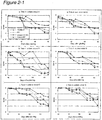
- Table 1 shows a scheme of lowering the water level in each tank. As shown, the water level in tank 1 was lowered by 20 cm at week 2 weeks after planting, then 20 cm and 30 cm at intervals of a week, and finally to the bottom of the tank at 5 weeks after planting. Similarly, the water level in tank 2 was lowered from 3 weeks after planting by 40 cm, 30 cm and 18 cm, while the water level in tank 3 was lowered from 3 weeks after planting by 20 cm, 30 cm, 30 cm and 8 cm.
- Table 1 Table 1. Transition of water levels Water level above the tank bottom in cm At Planting 2nd Week 3rd Week 4th Week 5th Week 6th Week Tank 1 88 68 48 18 0 (0) Tank 2 88 (84) 48 18 0 (0) Tank 3 88 (84) 68 38 8 0 Tank 4 88 (84) (81) 38 8 (8)
- the distance from the top of each vessel to the surface of water is 117 minus the value in the table (cm).
- Table 2 Scores and severities of stress symptoms Score Degree of stress symptoms 6 No visible stress symptoms (neither leaf curl nor wilting is observed). 5 Leaves curl in a cylindrical form. Or leaves slightly wilt and their tips hang down. 4 Leaves tightly curl in a cylindrical form to needle form. Or leaves totally wilt and hang down. 3 Leaf blades partially begin to dry - water remains somewhere in the leaf blades. 2 Leaf blades dry out, but leaf sheaths are alive. 1 The entire outsides of leaf sheaths dry and look whitish. 0 Leaf sheaths almost dry and feel soft to the touch. Presumably died.
- Figure 2-1 a to f and Figure 2-2 g to l show transition of the averages of scores in various varieties in each culture vessel in each tank.
- culture vessel A was removed from tanks 1, 2 and 3 and tapped on the lateral wall with the planting face downward, and the culture medium was drawn out with care to avoid breaking roots and the dryness of the culture medium and roots were observed.
- the longest root in each culture vessel had a length of 73 to 80 cm in tank 1, 62 to 64 cm in tank 2, and 70 to 83 cm in tank 3, and the culture medium was wet to about 10 to 15 cm above the end of the longest root, but dry above it. The longest root was traced to show that it belongs to Yumenohatamochi.
- the seedlings tested in the example were evaluated for drought resistance by testing them using shallow vessels according to the method of Wada et al. ( Wada, Suzuki et al., Japanese Journal of Crop Science 70:580-587,2001 , which is incorporated herein by reference in its entirety).
- the seedlings were planted in plastic pots (diameter 12 cm, height 10 cm) packed with the culture medium having the same composition as that of the example and cultivated on a bed containing water to a depth of about 3 to 4 cm while water was fed from the bottom.
- the seedlings were identical to those tested in the example and planted by the same method as used in the example. On 37 and 44 days after planting, watering to 2 pots was stopped and a drought stress treatment was performed.
- the state of the plants was observed three to four times daily, and when leaf sheaths of Yukihikari dried to their bases, the pots were rewatered.
- the state of leaves and stems was observed during drought stress treatment and 3 days after rewatering, and scored as shown in Table 2 during drought stress treatment and Table 3 after rewatering.
- Table 3 Scores and the state of leaves and stems after rewatering Score State of leaves and stems 0 Both blade and sheath remain dry. 1 A part to about half of the sheath is green and alive. 2 Half to most of the sheath is alive, but no leaf recovers the blade. 3 One leaf shows that the blade is partially green and alive. 4 2-4 leaves show that the blade is partially green and alive. 5 5 or more leaves show that the blade is alive.
- FIGs 3a and 3b show the results of the pots in which drought stress treatment started on 37 and 44 days after planting, respectively.
- Suweon 287 was the most resistant to drought, followed by IR36, Yukihikari, and finally Yumenohatamochi. These results were quite different from the evaluation results by a method of the present invention that Yumenohatamochi was the most resistant to drought while Suweon 287 was the most sensitive to drought.
- the methods of the present invention are convenient and efficient methods capable of large-scale screening for deep-rooted plants, which not only allow multiple plants to be cultivated and compared under the same moisture conditions but also significantly facilitate management of cultivation conditions such as water level adjustment.
- the use of the methods of the present invention allows deep-rooted plants to be efficiently selected and therefore contributes to the improvement of the breeding efficiency of drought-avoidant plants.
Landscapes
- Life Sciences & Earth Sciences (AREA)
- Biodiversity & Conservation Biology (AREA)
- Botany (AREA)
- Ecology (AREA)
- Forests & Forestry (AREA)
- Environmental Sciences (AREA)
- Cultivation Of Plants (AREA)
Claims (9)
- Procédé pour évaluer de multiples plantes individuelles, quant à leur propriété d'enracinement profond dans les mêmes conditions d'humidité du milieu de culture, comprenant les étapes consistant à :(1) planter de multiples plantes individuelles dans un récipient de culture de profondeur suffisante pour que les plantes étendent leurs racines et rempli d'un milieu de culture ;(2) réduire progressivement la teneur en humidité du milieu de culture pour imposer un stress de sécheresse aux plantes ; et(3) évaluer les plantes quant à leur propriété d'enracinement profond d'après des symptômes de stress de sécheresse observés chez les plantes.
- Procédé selon la revendication 1, dans lequel le récipient de culture est un récipient de culture à fond ouvert installé dans un réservoir d'eau, et dans lequel la teneur en humidité du milieu de culture est progressivement réduite par abaissement du niveau d'eau dans le réservoir d'eau.
- Procédé selon la revendication 1 ou 2, dans lequel le récipient de culture présente une profondeur d'au moins 30 cm et d'au plus 300 cm.
- Procédé selon la revendication 2 ou 3, dans lequel la différence de profondeur entre le réservoir d'eau et le récipient de culture est de moins de 50 cm.
- Procédé selon l'une quelconque des revendications 1 à 4, dans lequel le milieu de culture est choisi dans le groupe constitué de sable, de limon sableux, de limon argileux, d'andosol et de leurs mélanges, ainsi que de composts de jardinage disponibles dans le commerce.
- Procédé selon l'une quelconque des revendications 1 à 5, dans lequel la densité de plantation des plantes dans le récipient de culture est de 1 à 100 individu(s) pour 100 cm2.
- Procédé selon l'une quelconque des revendications 1 à 5, dans lequel la densité de plantation des plantes dans le récipient de culture est de 1 à 200 individu(s) par m2.
- Procédé selon l'une quelconque des revendications 1 à 7, dans lequel la plante est une angiosperme.
- Procédé selon l'une quelconque des revendications 1 à 8, dans lequel les multiples plantes individuelles appartiennent à des lignées différentes.
Applications Claiming Priority (1)
| Application Number | Priority Date | Filing Date | Title |
|---|---|---|---|
| PCT/JP2005/008876 WO2006123392A1 (fr) | 2005-05-16 | 2005-05-16 | Procede permettant d'evaluer une propriete d'enracinement profond d'une plante |
Publications (3)
| Publication Number | Publication Date |
|---|---|
| EP1886552A1 EP1886552A1 (fr) | 2008-02-13 |
| EP1886552A4 EP1886552A4 (fr) | 2011-05-18 |
| EP1886552B1 true EP1886552B1 (fr) | 2017-03-01 |
Family
ID=37430976
Family Applications (1)
| Application Number | Title | Priority Date | Filing Date |
|---|---|---|---|
| EP05739266.4A Expired - Lifetime EP1886552B1 (fr) | 2005-05-16 | 2005-05-16 | Procede permettant d'evaluer une propriete d'enracinement profond d'une plante |
Country Status (5)
| Country | Link |
|---|---|
| US (1) | US8156687B2 (fr) |
| EP (1) | EP1886552B1 (fr) |
| JP (1) | JPWO2006123392A1 (fr) |
| CN (1) | CN101175397B (fr) |
| WO (1) | WO2006123392A1 (fr) |
Families Citing this family (9)
| Publication number | Priority date | Publication date | Assignee | Title |
|---|---|---|---|---|
| KR101806342B1 (ko) | 2009-12-24 | 2017-12-07 | 고쿠리츠겐큐가이하츠호징 노우교 · 쇼쿠힝 산교기쥬츠 소고겐큐기코 | 식물의 심근성을 제어하는 유전자 Dro1과 그의 이용 |
| CN104303882B (zh) * | 2014-10-24 | 2016-06-01 | 三峡大学 | 一种根系破岩机理可视化监控装置 |
| JP6751626B2 (ja) * | 2016-09-06 | 2020-09-09 | 住友林業株式会社 | 山林樹木の挿し木育成方法 |
| CN108739369A (zh) * | 2018-03-16 | 2018-11-06 | 福建农林大学 | 一种实时观察甘蔗组培苗根系生长模型 |
| CN108605760A (zh) * | 2018-05-22 | 2018-10-02 | 四川农业大学 | 一种紫山药栽培方法 |
| CN110432100B (zh) * | 2019-09-11 | 2024-10-29 | 上海市农业生物基因中心 | 基于深浅层根胁迫处理的水稻双筒抗旱鉴定装置和方法 |
| CN111819950A (zh) * | 2020-07-27 | 2020-10-27 | 黔南民族师范学院 | 一种探究无机盐对植物生长影响的教学实验方法 |
| CN113092283B (zh) * | 2021-04-17 | 2022-09-27 | 西安科技大学 | 植物根系作用下土的力学特性分析装置及方法 |
| CN113973612B (zh) * | 2021-10-27 | 2023-08-29 | 华南农业大学 | 植物分根观察装置及方法 |
Family Cites Families (7)
| Publication number | Priority date | Publication date | Assignee | Title |
|---|---|---|---|---|
| CN2052603U (zh) * | 1989-07-28 | 1990-02-14 | 乔金星 | 自流浇水双层花盆 |
| JPH0384897A (ja) | 1989-08-28 | 1991-04-10 | Matsushita Electric Works Ltd | 放電灯点灯装置 |
| JPH09191770A (ja) * | 1996-01-22 | 1997-07-29 | Horon Corp:Kk | 二重植木鉢 |
| JP2685048B2 (ja) | 1997-01-06 | 1997-12-03 | 富士通株式会社 | プラズマディスプレイパネル用基板構体の製造方法 |
| CN2394429Y (zh) * | 1999-11-18 | 2000-09-06 | 蔡晓辉 | 双层陶瓷花盆 |
| JP3084897U (ja) * | 2001-09-26 | 2002-03-29 | 政広 加藤 | プットポット |
| JP2003230318A (ja) | 2002-02-07 | 2003-08-19 | Hitachi Ltd | 植物の耐干性の簡易評価法 |
-
2005
- 2005-05-16 WO PCT/JP2005/008876 patent/WO2006123392A1/fr not_active Ceased
- 2005-05-16 US US11/920,423 patent/US8156687B2/en not_active Expired - Fee Related
- 2005-05-16 JP JP2007516151A patent/JPWO2006123392A1/ja active Pending
- 2005-05-16 EP EP05739266.4A patent/EP1886552B1/fr not_active Expired - Lifetime
- 2005-05-16 CN CN2005800497884A patent/CN101175397B/zh not_active Expired - Fee Related
Non-Patent Citations (1)
| Title |
|---|
| None * |
Also Published As
| Publication number | Publication date |
|---|---|
| EP1886552A1 (fr) | 2008-02-13 |
| US20090064575A1 (en) | 2009-03-12 |
| EP1886552A4 (fr) | 2011-05-18 |
| US8156687B2 (en) | 2012-04-17 |
| JPWO2006123392A1 (ja) | 2008-12-25 |
| CN101175397A (zh) | 2008-05-07 |
| WO2006123392A1 (fr) | 2006-11-23 |
| CN101175397B (zh) | 2012-07-04 |
Similar Documents
| Publication | Publication Date | Title |
|---|---|---|
| CN103548562B (zh) | 一种天麻有性繁殖的高产栽培方法 | |
| CN104541668B (zh) | 一种提高烟草漂浮育苗种子发芽率和壮苗的方法 | |
| Hochmuth et al. | Containerized strawberry transplants reduce establishment-period water use and enhance early growth and flowering compared with bare-root plants | |
| CN110558183B (zh) | 魔芋双行条栽二次作垄栽培法 | |
| CN108901792A (zh) | 一种铁皮石斛仿野生栽培方法 | |
| CN105684739A (zh) | 一种湖南山核桃做砧木嫁接山核桃的培育方法 | |
| MX2010006553A (es) | Metodo para acelerar el crecimiento y desarrollo de árboles vía desarrollo radicular mejorado. | |
| CN102870571A (zh) | 一种野生大叶茶树的繁育方法 | |
| CN113455365A (zh) | 一种普通野生稻种茎盆栽保存方法 | |
| CN102124927B (zh) | 一种老鹰茶种子繁殖育苗的方法 | |
| US8156687B2 (en) | Method for evaluating deep rooting property of plant | |
| CN106831140A (zh) | 一种可重复使用的水果蔬菜育苗基质 | |
| CN106069493A (zh) | 一种大面积油茶与映山红混种造林栽培技术 | |
| CN104782364A (zh) | 一种甘薯压条育苗方法 | |
| CN103975755B (zh) | 一种黑地膜全膜覆盖种植黄芩的方法 | |
| CN106941910A (zh) | 天麻的种植方法 | |
| CN108575474A (zh) | 一种红锥采穗圃的营建与扦插方法 | |
| WO2001070010A1 (fr) | Procede de fabrication de graines de plantes | |
| CN104663345A (zh) | 用于苹果矮化砧木的嫩枝扦插繁殖方法和促根剂组合物 | |
| CN108990665A (zh) | 一种榉树芽苗培育方法 | |
| CN113841556A (zh) | 一种杉木苗的培育方法 | |
| Marzi et al. | Effect of soil depth on the rooting system growth in Glycyrrhiza glabra L. | |
| CN104663190A (zh) | 一种野百合鳞片繁殖方法 | |
| CN111328629B (zh) | 灵芝山稻共生栽培方法 | |
| CN114258825A (zh) | 一种提升肉苁蓉种子质量和产量的培育方法 |
Legal Events
| Date | Code | Title | Description |
|---|---|---|---|
| PUAI | Public reference made under article 153(3) epc to a published international application that has entered the european phase |
Free format text: ORIGINAL CODE: 0009012 |
|
| 17P | Request for examination filed |
Effective date: 20071214 |
|
| AK | Designated contracting states |
Kind code of ref document: A1 Designated state(s): AT BE BG CH CY CZ DE DK EE ES FI FR GB GR HU IE IS IT LI LT LU MC NL PL PT RO SE SI SK TR |
|
| DAX | Request for extension of the european patent (deleted) | ||
| A4 | Supplementary search report drawn up and despatched |
Effective date: 20110418 |
|
| 17Q | First examination report despatched |
Effective date: 20140205 |
|
| GRAP | Despatch of communication of intention to grant a patent |
Free format text: ORIGINAL CODE: EPIDOSNIGR1 |
|
| INTG | Intention to grant announced |
Effective date: 20160915 |
|
| GRAS | Grant fee paid |
Free format text: ORIGINAL CODE: EPIDOSNIGR3 |
|
| STAA | Information on the status of an ep patent application or granted ep patent |
Free format text: STATUS: GRANT OF PATENT IS INTENDED |
|
| GRAA | (expected) grant |
Free format text: ORIGINAL CODE: 0009210 |
|
| STAA | Information on the status of an ep patent application or granted ep patent |
Free format text: STATUS: THE PATENT HAS BEEN GRANTED |
|
| RIN1 | Information on inventor provided before grant (corrected) |
Inventor name: KASHIHARA, MASAKAZU, C/O JAPAN TOBACCO INC., PLANT Inventor name: OKA, ICHIRO, C/O JAPAN TOBACCO INC., PLANT INNOVAT |
|
| AK | Designated contracting states |
Kind code of ref document: B1 Designated state(s): AT BE BG CH CY CZ DE DK EE ES FI FR GB GR HU IE IS IT LI LT LU MC NL PL PT RO SE SI SK TR |
|
| REG | Reference to a national code |
Ref country code: GB Ref legal event code: FG4D |
|
| REG | Reference to a national code |
Ref country code: CH Ref legal event code: EP Ref country code: AT Ref legal event code: REF Ref document number: 870200 Country of ref document: AT Kind code of ref document: T Effective date: 20170315 |
|
| REG | Reference to a national code |
Ref country code: IE Ref legal event code: FG4D |
|
| RIN2 | Information on inventor provided after grant (corrected) |
Inventor name: OKA, ICHIRO Inventor name: KASHIHARA, MASAKAZU |
|
| REG | Reference to a national code |
Ref country code: DE Ref legal event code: R096 Ref document number: 602005051407 Country of ref document: DE |
|
| REG | Reference to a national code |
Ref country code: FR Ref legal event code: PLFP Year of fee payment: 13 |
|
| REG | Reference to a national code |
Ref country code: NL Ref legal event code: MP Effective date: 20170301 |
|
| REG | Reference to a national code |
Ref country code: LT Ref legal event code: MG4D |
|
| REG | Reference to a national code |
Ref country code: AT Ref legal event code: MK05 Ref document number: 870200 Country of ref document: AT Kind code of ref document: T Effective date: 20170301 |
|
| PG25 | Lapsed in a contracting state [announced via postgrant information from national office to epo] |
Ref country code: LT Free format text: LAPSE BECAUSE OF FAILURE TO SUBMIT A TRANSLATION OF THE DESCRIPTION OR TO PAY THE FEE WITHIN THE PRESCRIBED TIME-LIMIT Effective date: 20170301 Ref country code: GR Free format text: LAPSE BECAUSE OF FAILURE TO SUBMIT A TRANSLATION OF THE DESCRIPTION OR TO PAY THE FEE WITHIN THE PRESCRIBED TIME-LIMIT Effective date: 20170602 Ref country code: FI Free format text: LAPSE BECAUSE OF FAILURE TO SUBMIT A TRANSLATION OF THE DESCRIPTION OR TO PAY THE FEE WITHIN THE PRESCRIBED TIME-LIMIT Effective date: 20170301 |
|
| PG25 | Lapsed in a contracting state [announced via postgrant information from national office to epo] |
Ref country code: LU Free format text: LAPSE BECAUSE OF NON-PAYMENT OF DUE FEES Effective date: 20170531 Ref country code: BG Free format text: LAPSE BECAUSE OF FAILURE TO SUBMIT A TRANSLATION OF THE DESCRIPTION OR TO PAY THE FEE WITHIN THE PRESCRIBED TIME-LIMIT Effective date: 20170601 Ref country code: ES Free format text: LAPSE BECAUSE OF FAILURE TO SUBMIT A TRANSLATION OF THE DESCRIPTION OR TO PAY THE FEE WITHIN THE PRESCRIBED TIME-LIMIT Effective date: 20170301 Ref country code: AT Free format text: LAPSE BECAUSE OF FAILURE TO SUBMIT A TRANSLATION OF THE DESCRIPTION OR TO PAY THE FEE WITHIN THE PRESCRIBED TIME-LIMIT Effective date: 20170301 Ref country code: SE Free format text: LAPSE BECAUSE OF FAILURE TO SUBMIT A TRANSLATION OF THE DESCRIPTION OR TO PAY THE FEE WITHIN THE PRESCRIBED TIME-LIMIT Effective date: 20170301 |
|
| PG25 | Lapsed in a contracting state [announced via postgrant information from national office to epo] |
Ref country code: NL Free format text: LAPSE BECAUSE OF FAILURE TO SUBMIT A TRANSLATION OF THE DESCRIPTION OR TO PAY THE FEE WITHIN THE PRESCRIBED TIME-LIMIT Effective date: 20170301 |
|
| PG25 | Lapsed in a contracting state [announced via postgrant information from national office to epo] |
Ref country code: CZ Free format text: LAPSE BECAUSE OF FAILURE TO SUBMIT A TRANSLATION OF THE DESCRIPTION OR TO PAY THE FEE WITHIN THE PRESCRIBED TIME-LIMIT Effective date: 20170301 Ref country code: IT Free format text: LAPSE BECAUSE OF FAILURE TO SUBMIT A TRANSLATION OF THE DESCRIPTION OR TO PAY THE FEE WITHIN THE PRESCRIBED TIME-LIMIT Effective date: 20170301 Ref country code: EE Free format text: LAPSE BECAUSE OF FAILURE TO SUBMIT A TRANSLATION OF THE DESCRIPTION OR TO PAY THE FEE WITHIN THE PRESCRIBED TIME-LIMIT Effective date: 20170301 Ref country code: SK Free format text: LAPSE BECAUSE OF FAILURE TO SUBMIT A TRANSLATION OF THE DESCRIPTION OR TO PAY THE FEE WITHIN THE PRESCRIBED TIME-LIMIT Effective date: 20170301 Ref country code: RO Free format text: LAPSE BECAUSE OF FAILURE TO SUBMIT A TRANSLATION OF THE DESCRIPTION OR TO PAY THE FEE WITHIN THE PRESCRIBED TIME-LIMIT Effective date: 20170301 |
|
| PG25 | Lapsed in a contracting state [announced via postgrant information from national office to epo] |
Ref country code: PT Free format text: LAPSE BECAUSE OF FAILURE TO SUBMIT A TRANSLATION OF THE DESCRIPTION OR TO PAY THE FEE WITHIN THE PRESCRIBED TIME-LIMIT Effective date: 20170703 Ref country code: IS Free format text: LAPSE BECAUSE OF FAILURE TO SUBMIT A TRANSLATION OF THE DESCRIPTION OR TO PAY THE FEE WITHIN THE PRESCRIBED TIME-LIMIT Effective date: 20170701 Ref country code: PL Free format text: LAPSE BECAUSE OF FAILURE TO SUBMIT A TRANSLATION OF THE DESCRIPTION OR TO PAY THE FEE WITHIN THE PRESCRIBED TIME-LIMIT Effective date: 20170301 |
|
| REG | Reference to a national code |
Ref country code: DE Ref legal event code: R119 Ref document number: 602005051407 Country of ref document: DE |
|
| REG | Reference to a national code |
Ref country code: CH Ref legal event code: PL |
|
| PLBE | No opposition filed within time limit |
Free format text: ORIGINAL CODE: 0009261 |
|
| STAA | Information on the status of an ep patent application or granted ep patent |
Free format text: STATUS: NO OPPOSITION FILED WITHIN TIME LIMIT |
|
| PG25 | Lapsed in a contracting state [announced via postgrant information from national office to epo] |
Ref country code: MC Free format text: LAPSE BECAUSE OF FAILURE TO SUBMIT A TRANSLATION OF THE DESCRIPTION OR TO PAY THE FEE WITHIN THE PRESCRIBED TIME-LIMIT Effective date: 20170301 Ref country code: DK Free format text: LAPSE BECAUSE OF FAILURE TO SUBMIT A TRANSLATION OF THE DESCRIPTION OR TO PAY THE FEE WITHIN THE PRESCRIBED TIME-LIMIT Effective date: 20170301 |
|
| 26N | No opposition filed |
Effective date: 20171204 |
|
| REG | Reference to a national code |
Ref country code: IE Ref legal event code: MM4A |
|
| GBPC | Gb: european patent ceased through non-payment of renewal fee |
Effective date: 20170601 |
|
| PG25 | Lapsed in a contracting state [announced via postgrant information from national office to epo] |
Ref country code: CH Free format text: LAPSE BECAUSE OF NON-PAYMENT OF DUE FEES Effective date: 20170531 Ref country code: LI Free format text: LAPSE BECAUSE OF NON-PAYMENT OF DUE FEES Effective date: 20170531 Ref country code: SI Free format text: LAPSE BECAUSE OF FAILURE TO SUBMIT A TRANSLATION OF THE DESCRIPTION OR TO PAY THE FEE WITHIN THE PRESCRIBED TIME-LIMIT Effective date: 20170301 |
|
| PG25 | Lapsed in a contracting state [announced via postgrant information from national office to epo] |
Ref country code: LU Free format text: LAPSE BECAUSE OF NON-PAYMENT OF DUE FEES Effective date: 20170516 |
|
| PG25 | Lapsed in a contracting state [announced via postgrant information from national office to epo] |
Ref country code: DE Free format text: LAPSE BECAUSE OF NON-PAYMENT OF DUE FEES Effective date: 20171201 Ref country code: GB Free format text: LAPSE BECAUSE OF NON-PAYMENT OF DUE FEES Effective date: 20170601 Ref country code: IE Free format text: LAPSE BECAUSE OF NON-PAYMENT OF DUE FEES Effective date: 20170516 |
|
| REG | Reference to a national code |
Ref country code: FR Ref legal event code: PLFP Year of fee payment: 14 |
|
| PGFP | Annual fee paid to national office [announced via postgrant information from national office to epo] |
Ref country code: BE Payment date: 20180425 Year of fee payment: 14 Ref country code: FR Payment date: 20180502 Year of fee payment: 14 |
|
| PG25 | Lapsed in a contracting state [announced via postgrant information from national office to epo] |
Ref country code: HU Free format text: LAPSE BECAUSE OF FAILURE TO SUBMIT A TRANSLATION OF THE DESCRIPTION OR TO PAY THE FEE WITHIN THE PRESCRIBED TIME-LIMIT; INVALID AB INITIO Effective date: 20050516 |
|
| PG25 | Lapsed in a contracting state [announced via postgrant information from national office to epo] |
Ref country code: CY Free format text: LAPSE BECAUSE OF NON-PAYMENT OF DUE FEES Effective date: 20170301 |
|
| REG | Reference to a national code |
Ref country code: BE Ref legal event code: MM Effective date: 20190531 |
|
| PG25 | Lapsed in a contracting state [announced via postgrant information from national office to epo] |
Ref country code: TR Free format text: LAPSE BECAUSE OF FAILURE TO SUBMIT A TRANSLATION OF THE DESCRIPTION OR TO PAY THE FEE WITHIN THE PRESCRIBED TIME-LIMIT Effective date: 20170301 |
|
| PG25 | Lapsed in a contracting state [announced via postgrant information from national office to epo] |
Ref country code: BE Free format text: LAPSE BECAUSE OF NON-PAYMENT OF DUE FEES Effective date: 20190531 |
|
| PG25 | Lapsed in a contracting state [announced via postgrant information from national office to epo] |
Ref country code: FR Free format text: LAPSE BECAUSE OF NON-PAYMENT OF DUE FEES Effective date: 20190531 |