EP1886469B1 - A method for generating an update status alert in a device - Google Patents
A method for generating an update status alert in a device Download PDFInfo
- Publication number
- EP1886469B1 EP1886469B1 EP06763125A EP06763125A EP1886469B1 EP 1886469 B1 EP1886469 B1 EP 1886469B1 EP 06763125 A EP06763125 A EP 06763125A EP 06763125 A EP06763125 A EP 06763125A EP 1886469 B1 EP1886469 B1 EP 1886469B1
- Authority
- EP
- European Patent Office
- Prior art keywords
- entity
- profile
- status
- receiving device
- received
- Prior art date
- Legal status (The legal status is an assumption and is not a legal conclusion. Google has not performed a legal analysis and makes no representation as to the accuracy of the status listed.)
- Expired - Lifetime
Links
Images

Classifications
-
- H—ELECTRICITY
- H04—ELECTRIC COMMUNICATION TECHNIQUE
- H04L—TRANSMISSION OF DIGITAL INFORMATION, e.g. TELEGRAPHIC COMMUNICATION
- H04L67/00—Network arrangements or protocols for supporting network services or applications
- H04L67/01—Protocols
- H04L67/12—Protocols specially adapted for proprietary or special-purpose networking environments, e.g. medical networks, sensor networks, networks in vehicles or remote metering networks
- H04L67/125—Protocols specially adapted for proprietary or special-purpose networking environments, e.g. medical networks, sensor networks, networks in vehicles or remote metering networks involving control of end-device applications over a network
-
- H—ELECTRICITY
- H04—ELECTRIC COMMUNICATION TECHNIQUE
- H04L—TRANSMISSION OF DIGITAL INFORMATION, e.g. TELEGRAPHIC COMMUNICATION
- H04L67/00—Network arrangements or protocols for supporting network services or applications
- H04L67/01—Protocols
- H04L67/04—Protocols specially adapted for terminals or networks with limited capabilities; specially adapted for terminal portability
-
- H—ELECTRICITY
- H04—ELECTRIC COMMUNICATION TECHNIQUE
- H04L—TRANSMISSION OF DIGITAL INFORMATION, e.g. TELEGRAPHIC COMMUNICATION
- H04L43/00—Arrangements for monitoring or testing data switching networks
Definitions
- the invention relates to the field of network computing.
- the invention relates to a method and a system for generating an update status alert in a device.
- Computing has transformed the way in which many companies run their business. This transformation comprises computer systems running and managing manufacturing systems or automating business processes. Automation of these systems has brought with it great benefits, for example, efficiency, speed and reduced costs. There are however some systems which to date have not been automated, for example, determining when to switch off a mobile phone in response to certain environmental variables or turning off a car's fog lights on leaving an area of fog. In each of these systems it has not been possible to automate these systems because of the complexity involved in doing so. Yet, the need to do so is a pressing one, for example, how annoying is it to drive behind someone who has left their car's fog lights on?
- US 2003/233660 discloses a method for establishing device interaction among electronics devices.
- the device comprises a transmitter, receiver, memory storing interaction rules and a process for implementing the interaction rules in association with the transmitter, receiver and other devices of the environment.
- the method involve detecting a change of state at a device and then communicating in accordance with the interaction rules.
- WO 03/098908 discloses a system and method for remote asset management which includes a remote monitoring system, a means for communicating with and for monitoring the status and or location of a plurality of diverse assets for the purpose of modifying the operational status of one or more assets.
- GB 2 397 471 A discloses an on board device which provides control and monitoring and anti-theft capability that is designed for open or exposed moorings.
- the present invention provides a method for generating an update status alert at a receiving device, the receiving device operating in a network of participating devices, each participating device broadcasting status information about a monitored entity associated with the respective participating device, the method comprising the steps of: receiving broadcast status information from each of the participating devices; aggregating the received status information to derive a consensus of the status information received from each of the participating devices; comparing the derived consensus with the status of the monitored entity of the receiving device; characterised by, detecting a difference between the derived consensus and the status of the monitored entity; and in dependence of a difference being determined, generating an update status alert at the receiving device.
- the present invention advantageously provides for devices operating in a collaborative environment to broadcast data concerning the current status of an application, a system or another type of device that they are monitoring, to other devices near them.
- Devices are able to receive data broadcast from each of the devices and aggregate the received data to derive a consensus view of what the status of a particular monitored entity should be. For example, if the monitored entity is a ringer application on a mobile phone, the consensus view maybe that the ringer application should be switched off.
- a comparison is performed between the current status of the monitored entity of the receiving device with the generated consensus view. If the statuses differ an alert is generated to inform the receiving device to update its settings.
- the generation of the alert allows an operator of the monitored entity to update its settings manually.
- the alert may take the form of a vibration alert in a mobile phone followed by a visual alert on the mobile phone's screen or if the invention is operating in a vehicle an alert on the dashboard etc.
- the present invention provides a method wherein each of the received broadcast status information forms a profile comprising data identifying the participating device, the monitored entity and the monitored entity attributes.
- the present invention provides a method wherein the aggregation step further comprises deriving an idealised profile from the aggregation of the received broadcast status information from each of the plurality of participating devices.
- the present invention provides a method further comprising a conversion step mapping the data format of the entity's attributes of the received profile to the same data format of the entity's attributes of the receiving device.
- the present invention provides a method wherein the aggregation step further comprises deriving a set of statistical data from the aggregation of the received status information.
- the present invention provides a method wherein a weightings rule set is applied to the derived statistical data to determine whether the derived statistical data provides a positive indication that a particular recommended action should be performed.
- the present invention provides a method wherein the aggregation step further comprises parsing each received profile to determine which entity types each of the received profiles have in common with the monitored entity types of the receiving device in order to from a plurality of working sets of profiles.
- the present invention provides a method wherein the monitored entity is an entity in which an manual operation is required in order to update the entity's operational parameters in response to the alert being generated.
- the present invention provides a method wherein the device is a vehicle.
- the present invention provides a method wherein the device is a mobile phone.
- the present invention provides a system for generating an update status alert at a receiving device, the receiving device operating in a network of participating devices, each participating device broadcasting status information about a monitored entity associated with the respective participating device, the system comprising: a receiving component for receiving broadcast status information from each of the participating devices; an aggregation component for aggregating the received status information to derive a consensus of the status information received from each of the participating devices; a comparing component for comparing the derived consensus with the status of the monitored entity of the receiving device; characterised by, a detecting component for detecting a difference between the derived consensus and the status of the monitored entity; and in dependence of a difference being determined, a generation component for generating an update status alert at the receiving device.
- the present invention provides a system wherein each of the received broadcast status information comprises means for forming a profile comprising data identifying the participating device, the monitored entity and the monitored entity attributes.
- the present invention provides a system wherein the aggregation component further comprises means for deriving an idealised profile from the aggregation of the received broadcast status information from each of the plurality of participating devices.
- the present invention provides a system further comprising a conversion component for converting the data format of the entity's attributes of the received profile to the same data format of the entity's attributes of the receiving device.
- the present invention provides a system wherein the aggregation component further comprises means for deriving a set of statistical data from the aggregation of the received status information.
- the present invention provides a system wherein a weightings rule set is applied to the derived statistical data to determine whether the derived statistical data provides a positive indication that a particular recommended action should be performed.
- the present invention provides a system wherein the aggregation step further comprises parsing each received profile to determine which entity types each of the received profiles have in common with the monitored entity types of the receiving device in order to from a plurality of working sets of profiles.
- the present invention provides a computer program product loadable into the internal memory of a digital computer, comprising software code portions for performing, when said product is run on a computer, to carry out the invention as described above.
- the present invention provides a vehicle adapted for receiving an onboard processing device for performing the invention as described above.
- the present invention provides a mobile phone adapted for receiving an onboard processing device for carrying out the invention as described above.
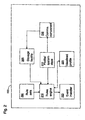
- Figure 1 shows a number of known computing devices 100, 105, 110, 115.
- Each device comprises a processor 1, random access memory 2, a storage device 3 and a communications interface 4.
- Each computing device 100, 105, 110, 115 operates within a peer to peer network 6 and is capable of sending and receiving information to and from other computing devices 100, 105, 110, 115.
- the peer to peer network 6 may comprise any suitable communication medium 5 applicable to the environment in which the invention is to be implemented.
- the communication medium may form a Bluetooth wireless network.
- the network may comprise an Ethernet type implementation.
- the peer to peer network 6 is more transient in nature with many devices 100, 105, 110, 115 joining and leaving the network in any given time period, for example, vehicles moving in and out of an area of fog.
- the peer to peer network may be of a more static form, for example, a number of mobile phones in a cinema. In this example, the number of mobile phones within the network is likely to remain static until the film viewing has finished and the computing devices leave the cinema.
- Each of the computing devices 100, 105, 110, 115 may take the form of a standalone computing device, such as, mobile phone, PDA; MP3 player or laptop computer etc, an embedded device within a larger system or other industrial control type applications etc.
- a computing device may be embedded in a car or a server type system. The type of computing device is dependent on the type of environment in which the invention is to be implemented.
- Each computing device 100, 105, 110, 115 comprises a number of known prior art components, for example, a processor 1, some form of permanent storage medium 2, random access memory 3 and a communications component 4 for sending and receiving data from other computing devices 100, 105, 110, 115.
- a processor 1 some form of permanent storage medium 2
- random access memory 3 random access memory 3
- a communications component 4 for sending and receiving data from other computing devices 100, 105, 110, 115.
- each computing device 100, 105, 110, 115 comprises a monitoring component 10 for carrying out the invention.
- Each computing devices 100, 105, 110, 115 comprises a monitoring component 10 for monitoring an entity.
- An entity may be a system, such as, the front or rear fog lights of a vehicle or an application, such as, the ringer application of a mobile phone.
- the monitoring component 10 may monitor an entity installed on the device 100, 105, 110, 115, such as, a ring tone application or the monitoring component 10 may monitor an entity which is external to the device 100, 105, 110, 115.
- the monitoring component 10 may be installed in an embedded device in a car and the entity being monitored being the front and/or rear fog.lights of the car.
- the monitoring component 10 may also monitor more than one entity.
- a monitoring component 10 may monitor the front and/or rear fog lights of a car and the speed at which the vehicle is travelling through the fog.
- a notification may be generated by the monitoring component to recommend to the operator of a vehicle to turn their fog lights on when driving through fog and also to slow the speed of the vehicle down because compared to the speed of other vehicles the vehicle is travelling too fast.
- the monitoring component 10 may be in the form of a plug-in component for extending and modifying the computing capabilities of a known computing device.
- the monitoring component 10 may be developed as a down-loadable add-on component for mobile phone or as a specialised tailored application for installing in a vehicle at the time of the manufacture of the vehicle.
- the monitoring component 10 may be developed using any programming language which is suitable for the environment in which the monitoring component 10 is to operate.
- the monitoring component 10 functions by monitoring an entity to determine the entity's current status. Thus when an operator changes an entity's settings the monitoring component 10 detects the change in the entity's current status.
- the monitoring component 10 On detecting a change to the entity's current status the monitoring component 10 writes the entity's current status to a profile for broadcasting to other monitoring components 10 operating on other devices.
- the monitoring component 10 also receives profiles broadcasted from other monitoring components 10 installed on other computing devices 100, 105, 110, 115.
- the monitoring component 10 on receipt of a number of broadcasted profiles proceeds to perform statistical analysis to derive an idealised profile based on the consensus view of each of the received broadcasted profiles. Once an idealised profile is generated an alert is generated to recommend to the operator of the device to update the entity's status to reflect the recommended status within the idealised profile. It will also be apparent to the person skilled in the art that the notification could trigger a further add-on application which automatically updated the entity's current settings without any intervention from the operator.
- the monitoring component 10 comprises a number of sub components which interact with each other to perform the monitoring function.
- the sub components comprise a number of rules 200, a rules engine 210, an event handler 220, a storage facility 205, a system state profile 215, idealised profile 225 and a communication component 230.
- rules 200 a rules engine 210
- event handler 220 a storage facility 205
- storage facility 205 a system state profile 215, idealised profile 225 and a communication component 230.
- Each device 100, 105, 110, 115 comprises a profile 215.
- the profile 215 stores information about each entity the device 100, 105, 110, 115 is monitoring. For example, if the entity being monitored is a ring application of a mobile phone, then data would be stored detailing the volume setting, for example high or low, a percentage value, for example fifty percent or as an integer value i.e. 1, 2, 3, 4 or 5. The integer value 1 being the quietest and the integer value 5 being the loudest.
- the profile 215 is updated periodically by the rules engine 210 on detecting a change to the status of the monitored entity.
- An interface may be provided which interfaces with the monitored entity to detect updates in the status of the monitored entity.
- the interface on detecting an update sends a message to the rules engine 210 which in turn updates the profile/system state of the monitored entity.
- the detected update overwrites any previously stored status pertaining to the monitored entity in the profile.
- the communication component 230 broadcasts the data within the profile 215 out into the peer to peer network for receiving by other computing devices 100, 105, 110, 115.
- the data may be stored within the profile 215 using any suitable data format.
- the data maybe stored in an XML format which provides a universal naming convention for describing data or any other self describing format.
- An example of a simple profile 215 is shown in example 1.
- DEVICE_ID ⁇ unique 128bit identifier> ⁇ Entity ⁇ Entity_ID ⁇ 128bit index> TYPE RINGER STATUS ON RINGER_VOLUME 10 ⁇ Entity ⁇ Entity_ID ⁇ 128bit index> TYPE VIBRATE STATUS OFF INTENSITY 10 ⁇ ⁇
- Example 1 shows an example of a simple profile 215 for a computing device 100, 105, 110, 115.
- the profile 215 begins by identifying the computing device 100, 105, 110, 115 where the monitoring component 10 is installed by the usage of a device identifier (ID).
- ID comprises an identifier which uniquely identifies the device 100, 105, 110, 115 from other devices 100, 105, 110, 115 within the peer to peer network 6.
- the profile 215 details each of the entities which are being monitored by the device 100, 105, 110, 115. Again each entity is assigned a unique identifier which identifies it from other entities listed within that specific profile 215.
- each entity are the attributes associated with each of the entities, for example, type, status and intensity.
- the type 'attribute' identifies to the monitoring component 10 the type of entity that is being monitored.
- the monitored entities are a ringer application and a vibrate application.
- Other types of attributes may be listed depending on the type of entity being monitored. Each attribute may be characterised by a Boolean value or integer value etc.
- a Nokia ® mobile phone may define a ring application attributes in terms of integer values i.e. integer value 1, 2, 3, 4 and 5; integer value 1 pertaining to a low ring volume and integer value 5 representing a loud ring volume.
- a Sony Ericsson® mobile phone may represent a ring application's attributes as low, medium or high.
- a conversion mechanism (not shown), which forms part of the rules within the rules engine 210, is provided to convert between one manufacture's defined attributes to another.
- the communication component 230 also receives profiles 215 broadcast from other devices. On receipt of a profile the communication component 230 sends a message to the rules engine 210 to trigger a validation process to determine whether the received profile is of any interest to the rules engine 210.
- Each device 100, 105, 110, 115 stores a generated idealised profile 310.
- the idealised profile 310 stores statistical information, which is generated by the rules engine 210, for each monitored entity of the receiving device 100. Once the idealised profile 310 is generated by the rules engine 210, the rules engine 210 informs the event handler 220 whether there is any recommended action that should be generated. For example, an operator should update a monitored entity's status from 'on' to 'off'.
- the profiles 215 and the generated idealised profile 225 are stored in a storage facility 205. Any type of storage facility 205 may be embodied that is suitable for data storage and/or retrieval.
- the rules engine 210 comprises a number of rule sets 200 for performing the following operations:
- the rule sets 200 are stored in the storage facility 205 and can be updated and modified by accessing the storage facility 2 05.
- the rules engine 210 receives from the communication component 230 or from one or more of the above rule sets, the rules engine 210 parses each of the above listed rule sets to determine how to process the data within each of the received profiles 215.
- Each of the rule sets performs a unique function.
- the conversion rule set provides for the analysis of the monitored entity attributes where the entity attributes are manufacture or application specific.
- the validation rule set determines whether a received profile 215 is a) readable and b) whether the profile 215 comprises information about an entity for which the receiving device 100, 105, 110, 115 is interested in. For example in order to derive an idealised profile about a particular entity type, the validation rule set must first determine whether the received profile does comprise information about the particular entity type. Continuing with an example, if device A is monitoring entity A and device B is monitoring entity A and entity B, then from device A's point of view it is only interested in analysing the attributes associated with entity A and not entity B because device A is not monitoring device B. Another example may be that device A is monitoring entities A and B. Device A receives a profile comprising data pertaining to monitored entities A, B, C and D.
- the monitoring component of device A determines whether the received profile comprises data pertaining to entities that it is interested in, namely entities A and B. In this instance the received profile does comprise data pertaining to entities A and B and thus the received profile is stored by the monitoring component. If, for example, a profile is received comprising data pertaining to entities C and D and the receiving device is monitoring entities A and B, then in this instance the monitoring component would disregard the received profile as the profile does not comprise any data relating to entities A and B and is therefore of no interest to the receiving device.
- a conversion rule set takes each of the received profiles and identifies each of the data types used to describe an entity and its attributes. For example a Nokia mobile phone may describes its ringer application attributes in terms of integer values 1 to 5, whereas a Motorola mobile phone may describe its ringer application in terms of high, medium and low, for example.
- the conversion rule sets identifies each of these attributes and maps this to the attributes used by the receiving device to allow for easier computation of entities attributes. For example, if the receiving device is a Sony Ericsson mobile phone and the ringer application's attributes of the Sony Ericsson is described by way of percentage values, the conversion rule set will map the attributes of the Nokia mobile phone and the Motorola mobile phone to percentage values.
- each of the profiles are stored in the storage facility 205 for processing by the statistical analysis rule set.
- the validation rule set determines a number of working sets of profiles for processing.
- a working set of profiles is a set of profiles comprising a number of common monitored entities and their respective attributes. For example, if a receiving device is monitoring entity A and entity C and the following validated profiles are stored in the storage facility:
- the following 'circled' entities are of interest to the receiving device and also form working sets of profiles for entity A and entity B.
- the receiving device is monitoring entity A and entity C. Therefore looking at each of the device ID'S profiles above device ID'S 1, 2 and 3 each have entity A in common with the receiving device and device ID's 2 and 3 each have entity c in common with the receiving device.
- the validation rule set determines there are two working profile sets for analysis i.e. working profile set A comprising the respective attributes of entity A for device ID's 1, 2 and 3 and working profile set B comprising the respective attributes of entity C for device ID'S 2 and 3.
- the statistical analysis rule set begins by determining whether there are enough profiles within each identified working set of profiles to be able to perform the statistical analysis.
- the number of profiles required may vary depending on the implementation of the invention. For example, in a mobile phone environment where accuracy of the result is not of the up most importance, the number of profiles could be for example, as little as 10 profiles. But in an environment where the accuracy of the result is of the up most importance, the number of profiles may be much higher for example.
- the statistical analysis rule set begins to analyse the attributes of each of the entities to determine the various operational status. For example how many entity A's have an attribute of A and how many entity A's have an attribute of B. To put this into a more meaningful context by using an example of a number of profiles pertaining to mobile phone devices each having an entity of a ring application with a number of different attributes. For example:
- the statistical analysis rule set begins by parsing each of the profiles within the defined working set of profiles to identify the status of each of the entity's attributes.
- entity ID A has an attribute of ring application and a status of low.
- Entity ID B has an attribute of ring application with a status of low and entity ID C has an attribute of ring application with an intensity of loud.
- the statistical analysis rule set can determine that within this working profile set two entity ID'S have a status of low and one entity ID has a status of loud. Taking this information the statistical analysis rule set can begin to perform other statistical analysis operations to determine, for example, the average status of the totality of the profiles in each working profile set and the modal value.
- the statistical analysis rule set triggers the weightings rule set in order to determine whether the percentage values derived from the statistical data give enough of a majority value to generate a recommended action. For example, if for any given working set of profiles the following statistics are derived:
- the weighting rule set parses each of the statistical records and analyses each of the percentages in relation to each other to determine if the percentage weightings give enough of a majority value to recommend an action within the monitored entity. For example taking the derived statistics for entity A; 65% of profiles pertaining to entity A have a status of on and 35% of profiles pertaining to entity A have a status of off. In this instance the rules may decide that 65% is a clear majority and recommend that all entity A's should have a recommended status of on. Conversely, moving onto the derived statistics for entity B, 51% of entity B profiles have a status of on and 49% of entity B profiles have a status of off. In this instance the rules may decide that 51% is not a clear majority and thus no recommended action is necessary. It will also be obvious to a person skilled in the art that although the above example is very simplistic, more complicated rules may be developed to analyse more complex situations.
- a storage management rule set manages the profiles 215 stored in the storage facility 205. For example, if on receiving a new profile 215 from a device 100, 105, 110, 115, there is no capacity within the storage facility 2 05 to store the new profile 215, a rule may state to delete all profiles 215 that have been stored within the storage facility for more than ten days.
- the last rule set determines how the monitored entity should be notified of a recommended action.
- the rule set takes into account the type of device and the entity that is being monitored.
- a vibration action maybe a suitable alert to alert the operator that they should look at their device to read a notification on their screen.
- a notification alert on the vehicle's dashboard maybe suitable.
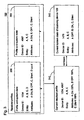
- FIG. 3 illustrates two received profiles 300, 305, a current system state profile 315 for the receiving device 100 and a generated idealised profile 310.
- Each profile 300, 305 details the device ID of the device that broadcast its profile, along with each of the monitored entities identifier and its attributes.
- the rules engine 210 calls into action a number of rule sets to process each of the received profiles 300, 305. Firstly the validation rule sets determines whether the received profiles 300, 305 are valid profiles, for example, are each of the received profiles 300, 3 05. readable?
- the validation rule sets determines if the received profiles are profiles of interest to the receiving device 100.
- the receiving device 100 is monitoring entities A, B and C.
- the only profiles of interest to the receiving device 100 are profiles listing data about entities A or B or C. Therefore in this example, the receiving device 100 accepts the profiles 300 and 315 - this is even though profile 300 comprises data about an entity D.
- entity D is of no interest to the receiving device it is part of the received profile 300 and is thus stored.
- an optimisation process may be deployed by the conversion rule set which on detecting that entity D is of no interest to the receiving device it deletes the entry for entity D before storing the received profile.
- the rule set parses each entity's attributes to derive a value representative of the overall status of the entity, for example, a percentage value.
- a value representative of the overall status of the entity for example, a percentage value.
- profile 300 details entity A having an attribute of on and profile 305 details entity A having an attribute of on.
- the percentage value for both entities having an attribute of on is 100%.
- the same percentage value can be calculated for entity B and entity C.
- the weighting rule set may also derive weightings at this point within the process in order to analyse the percentages further and to determine whether it is sensible to generate a recommendation based on the derived percentages.
- the weighting rule set further analyses the detected difference and the recommended action to determine if it would be appropriate in this particular instance to send a trigger to the event handler 220 to generate a notification detailing the recommended action. For example, turn the volume of the mobile phone to low or the fog lights of the car off etc.
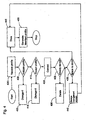
- a receiving device 100 receives a profile 215 which has been broadcast from another device 105, 110, 115 via the communications component 230.
- the validation rule set 200 determines whether the profile 215 is a valid profile and one that is not corrupted such that the profile can not be read. If the profile 215 is corrupted the validation rule set ignores the profile 215 and waits for the next profile 215 to be processed at step 455. If the profile 215 is a valid profile control moves to step 410 and a further determination is performed to determine whether the profile 215 is a profile 215 that the receiving device 100 is interested in. For example, does the profile 215 comprise entries relating to the same type of monitored entities? For example, if device A is monitoring entity of type A does the received profile comprise an entry for entity of type A?
- step 415 If the determination is negative control moves to step 415 and the profile 215 is disregarded. For example, if the receiving device is monitoring entity of type A and the received profile only comprises entries for entity of type B the profile is disregarded.
- step 420 the conversion rule set analyses the received profile to map the entities attributes into a data format which is consistent with the data format of the entity's attributes of the receiving device. For example, if the receiving device is a mobile phone and its entity's attributes are described by a percentage value and the entity's attributes of the received profile are described by way of integer values 1 to 5, the conversion rule set will map the integer values 1 to 5 to a percentage value.
- the validation rule set proceeds to determine if the received profile 215 has previously been stored in the storage facility 205 at step 425. If the determination is positive control moves to step 430 and the previously received profile for the device 105 which sent the received profile is deleted and control moves to step 435. At step 435 a further determination is made as to whether there is enough space within the storage facility 205 to store the received profile. If the determination is positive control moves to step 445 and the received profile is stored in the storage facility 205 for generating an idealised profile at step 450. Moving back to step 435 if it is determined that there is not available space in which to store the received profile, a storage management rule set is triggered at step 440.
- the rule set may state that if a profile has been stored for greater that 30 days then the profile can be deleted. If there is space available within the storage facility/ or space is made available within the storage facility (step 445) the received profile 215 is stored at step 445 and at step 450 the statistical analysis rule set is triggered to begin to generate an idealised profile.
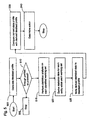
- the statistical analysis rule set begins to generate an idealised profile 225. Firstly, at step 510, the statistical analysis rule set determines whether there are enough profiles stored in each working profile set to proceed with the analysis. If the determination is a negative determination, control moves to step 505 and the statistical analysis rule set waits for further profiles to be received.
- step 510 control moves to step 515 and statistical analysis is performed to determine the overall statistical values for each type of entity's attributes. Further statistical analysis is performed to calculate the mean, mode, median and the standard deviation for each entity's attributes at step 520, for example.
- step 530 a comparison is performed between the current status of each of the entities being monitored by the receiving device 100 with the statistical data stored in the idealised profile 225.
- the weightings rule set determines in response to the comparison what recommended actions should be performed at step 535, such as what type of notification should be generated by the event handler.
- the event handler on receipt of a trigger from the weightings rule set proceeds to generate the most appropriate alert to notify the operator to change the operational settings of the device in line with the recommendation listed within the notification.
Landscapes
- Engineering & Computer Science (AREA)
- Computer Networks & Wireless Communication (AREA)
- Signal Processing (AREA)
- Health & Medical Sciences (AREA)
- Computing Systems (AREA)
- General Health & Medical Sciences (AREA)
- Medical Informatics (AREA)
- Mobile Radio Communication Systems (AREA)
- Telephonic Communication Services (AREA)
- Data Exchanges In Wide-Area Networks (AREA)
- Emergency Alarm Devices (AREA)
- Alarm Systems (AREA)
Applications Claiming Priority (2)
| Application Number | Priority Date | Filing Date | Title |
|---|---|---|---|
| GBGB0511033.3A GB0511033D0 (en) | 2005-05-28 | 2005-05-28 | A method for generating an update status alert in a device |
| PCT/EP2006/062269 WO2006128785A1 (en) | 2005-05-28 | 2006-05-12 | A method for generating an update status alert in a device |
Publications (2)
| Publication Number | Publication Date |
|---|---|
| EP1886469A1 EP1886469A1 (en) | 2008-02-13 |
| EP1886469B1 true EP1886469B1 (en) | 2008-11-26 |
Family
ID=34834874
Family Applications (1)
| Application Number | Title | Priority Date | Filing Date |
|---|---|---|---|
| EP06763125A Expired - Lifetime EP1886469B1 (en) | 2005-05-28 | 2006-05-12 | A method for generating an update status alert in a device |
Country Status (8)
| Country | Link |
|---|---|
| US (1) | US8219666B2 (enExample) |
| EP (1) | EP1886469B1 (enExample) |
| JP (1) | JP4711453B2 (enExample) |
| CN (1) | CN101176333B (enExample) |
| AT (1) | ATE415777T1 (enExample) |
| DE (1) | DE602006003889D1 (enExample) |
| GB (1) | GB0511033D0 (enExample) |
| WO (1) | WO2006128785A1 (enExample) |
Families Citing this family (24)
| Publication number | Priority date | Publication date | Assignee | Title |
|---|---|---|---|---|
| JP5140580B2 (ja) | 2005-06-13 | 2013-02-06 | インテリジェント メカトロニック システムズ インコーポレイテッド | 車両没入型通信システム |
| US8270933B2 (en) | 2005-09-26 | 2012-09-18 | Zoomsafer, Inc. | Safety features for portable electronic device |
| US7505784B2 (en) | 2005-09-26 | 2009-03-17 | Barbera Melvin A | Safety features for portable electronic device |
| US11450331B2 (en) * | 2006-07-08 | 2022-09-20 | Staton Techiya, Llc | Personal audio assistant device and method |
| US9976865B2 (en) | 2006-07-28 | 2018-05-22 | Ridetones, Inc. | Vehicle communication system with navigation |
| US8365096B2 (en) * | 2007-12-31 | 2013-01-29 | Motorola Mobility Llc | Method and apparatus for transparently mapping personalized alert preferences onto thin client devices with differing capabilities |
| US20100292890A1 (en) * | 2009-05-12 | 2010-11-18 | Morris William S | Vehicle Rules Engine |
| US9715665B2 (en) | 2009-09-21 | 2017-07-25 | Ford Global Technologies, Llc | Methods and systems for monitoring the condition of vehicle components from a nomadic wireless device or computer |
| US20110071725A1 (en) * | 2009-09-23 | 2011-03-24 | Ford Global Technologies, Llc | Remotely interacting with a vehicle to perform servicing and engineering functions from a nomadic device or computer |
| US8346432B2 (en) * | 2009-09-23 | 2013-01-01 | Ford Global Technologies, Llc | System and method for remotely controlling vehicle components from a nomadic communication device or computer |
| US8558690B2 (en) | 2009-10-01 | 2013-10-15 | Ford Global Technologies, Llc | Vehicle system passive notification using remote device |
| US8558678B2 (en) | 2010-02-25 | 2013-10-15 | Ford Global Technologies, Llc | Method and systems for detecting an unauthorized use of a vehicle by an authorized driver |
| US8525657B2 (en) | 2010-02-25 | 2013-09-03 | Ford Global Technologies, Llc | Methods and systems for determining a tire pressure status |
| US8614622B2 (en) | 2010-03-08 | 2013-12-24 | Ford Global Technologies, Llc | Method and system for enabling an authorized vehicle driveaway |
| US10075806B2 (en) | 2010-03-19 | 2018-09-11 | Ford Global Technologies, Llc | Wireless vehicle tracking |
| WO2013128069A1 (en) * | 2012-02-29 | 2013-09-06 | Nokia Corporation | Method and apparatus for hierarchy-based control setting change |
| US10099700B2 (en) | 2014-04-30 | 2018-10-16 | Ford Global Technologies, Llc | Method and system for driver tailored interaction time alert |
| US9845097B2 (en) | 2015-08-12 | 2017-12-19 | Ford Global Technologies, Llc | Driver attention evaluation |
| CN106200427B (zh) * | 2016-06-30 | 2020-07-24 | 联想(北京)有限公司 | 一种处理方法及电子设备 |
| US10628237B2 (en) * | 2016-09-16 | 2020-04-21 | Oracle International Corporation | Cloud service integration flow |
| US10057761B1 (en) * | 2017-05-31 | 2018-08-21 | T-Mobile Usa, Inc. | Capability- and user-based profile downloads for networked devices |
| US11057442B2 (en) * | 2018-01-27 | 2021-07-06 | Vmware, Inc. | System and method for workspace sharing |
| US11122071B2 (en) * | 2018-06-29 | 2021-09-14 | Forescout Technologies, Inc. | Visibility and scanning of a variety of entities |
| CN116713630B (zh) * | 2023-05-26 | 2026-01-20 | 中车青岛四方机车车辆股份有限公司 | 焊接辅助监督方法及系统 |
Family Cites Families (13)
| Publication number | Priority date | Publication date | Assignee | Title |
|---|---|---|---|---|
| JPH01109952A (ja) * | 1987-10-23 | 1989-04-26 | Nec Corp | データ通信方式 |
| JPH08307544A (ja) | 1995-04-28 | 1996-11-22 | Canon Inc | 通信会議システム |
| JP2001268094A (ja) * | 2000-03-22 | 2001-09-28 | Toshiba Corp | ノード装置、同装置を複数備えた情報処理システム、及びパラメータ交換方法 |
| US6847892B2 (en) * | 2001-10-29 | 2005-01-25 | Digital Angel Corporation | System for localizing and sensing objects and providing alerts |
| JP4362977B2 (ja) * | 2001-01-16 | 2009-11-11 | セイコーエプソン株式会社 | デバイス状態監視装置 |
| EP1237329B1 (en) * | 2001-01-17 | 2007-08-29 | Canon Kabushiki Kaisha | Method and device for network device status notification |
| GB0211644D0 (en) | 2002-05-21 | 2002-07-03 | Wesby Philip B | System and method for remote asset management |
| US20030233660A1 (en) * | 2002-06-18 | 2003-12-18 | Bellsouth Intellectual Property Corporation | Device interaction |
| JP3722094B2 (ja) * | 2002-06-26 | 2005-11-30 | ブラザー工業株式会社 | 音量制御装置、及びプログラム |
| GB0300068D0 (en) | 2003-01-03 | 2003-02-05 | Stock Paul R | Boat link |
| JP2005001425A (ja) * | 2003-06-09 | 2005-01-06 | Nissan Motor Co Ltd | 車両用前照灯制御装置 |
| CN100440899C (zh) * | 2004-11-15 | 2008-12-03 | 北京中星微电子有限公司 | 一种手机音量自动调节的方法及装置 |
| US20060123080A1 (en) * | 2004-12-03 | 2006-06-08 | Motorola, Inc. | Method and system of collectively setting preferences among a plurality of electronic devices and users |
-
2005
- 2005-05-28 GB GBGB0511033.3A patent/GB0511033D0/en not_active Ceased
-
2006
- 2006-05-12 CN CN2006800166513A patent/CN101176333B/zh not_active Expired - Fee Related
- 2006-05-12 DE DE602006003889T patent/DE602006003889D1/de not_active Expired - Lifetime
- 2006-05-12 AT AT06763125T patent/ATE415777T1/de not_active IP Right Cessation
- 2006-05-12 JP JP2008512799A patent/JP4711453B2/ja not_active Expired - Fee Related
- 2006-05-12 US US11/915,597 patent/US8219666B2/en not_active Expired - Fee Related
- 2006-05-12 EP EP06763125A patent/EP1886469B1/en not_active Expired - Lifetime
- 2006-05-12 WO PCT/EP2006/062269 patent/WO2006128785A1/en not_active Ceased
Also Published As
| Publication number | Publication date |
|---|---|
| US20080215665A1 (en) | 2008-09-04 |
| ATE415777T1 (de) | 2008-12-15 |
| JP2008546264A (ja) | 2008-12-18 |
| US8219666B2 (en) | 2012-07-10 |
| CN101176333B (zh) | 2011-05-11 |
| WO2006128785A1 (en) | 2006-12-07 |
| JP4711453B2 (ja) | 2011-06-29 |
| EP1886469A1 (en) | 2008-02-13 |
| GB0511033D0 (en) | 2005-07-06 |
| DE602006003889D1 (de) | 2009-01-08 |
| CN101176333A (zh) | 2008-05-07 |
Similar Documents
| Publication | Publication Date | Title |
|---|---|---|
| US8219666B2 (en) | Generating an update status alert in a device | |
| CN114968643B (zh) | 链路分析方法、装置、电子设备、存储介质及车辆 | |
| US10284608B2 (en) | Method and apparatus for providing state information | |
| CN1534514B (zh) | 适用于位置感知的架构和系统 | |
| US8122491B2 (en) | Techniques for physical presence detection for a communications device | |
| CA2742697C (en) | Communication device and method for coherent updating of collated message listings | |
| US9961536B2 (en) | System and method for implementing histogram controlled mobile devices | |
| CN114915521A (zh) | 一种智能家居网关及数据处理方法 | |
| CN113535207B (zh) | 车辆及其车载软件的更新方法、移动终端 | |
| CN113892279A (zh) | 资源订阅方法、设备、服务器以及计算机存储介质 | |
| CN115767478B (zh) | 基于面向服务架构的车云通信方法和存储介质 | |
| CN113391559A (zh) | 智慧家居设备控制方法和终端设备 | |
| CN116016121B (zh) | 告警数据的关联数据确定方法、装置、设备及存储介质 | |
| CN111984895A (zh) | 用于订阅资源的方法、装置、设备和存储介质 | |
| CN112637821A (zh) | 车辆通信芯片的管理平台、管理方法及车辆通信管理系统 | |
| WO2019000468A1 (zh) | 用户位置识别方法、装置、存储介质及电子设备 | |
| CN115333891B (zh) | 数字实体的处理方法、装置、电子设备及存储介质 | |
| US12192031B2 (en) | Invoking device services in preset software frameworks | |
| CN118132210A (zh) | 设备资源模拟方法、装置、电子设备及可读存储介质 | |
| CN113965915A (zh) | 数据处理方法和电子设备 | |
| CN112788153A (zh) | 一种物联网设备升级管理方法、装置、设备及存储介质 | |
| CN114827340B (zh) | 移动终端及其通信消息的显示方法 | |
| EP4664857A1 (en) | Method and apparatus for processing vehicle data, storage medium, and program product | |
| JP7173086B2 (ja) | 命令を生成するシステム、方法および非一時的な記録媒体 | |
| CN120675741A (zh) | 业务执行方法、装置、计算机设备和存储介质 |
Legal Events
| Date | Code | Title | Description |
|---|---|---|---|
| PUAI | Public reference made under article 153(3) epc to a published international application that has entered the european phase |
Free format text: ORIGINAL CODE: 0009012 |
|
| 17P | Request for examination filed |
Effective date: 20071115 |
|
| AK | Designated contracting states |
Kind code of ref document: A1 Designated state(s): AT BE BG CH CY CZ DE DK EE ES FI FR GB GR HU IE IS IT LI LT LU LV MC NL PL PT RO SE SI SK TR |
|
| GRAP | Despatch of communication of intention to grant a patent |
Free format text: ORIGINAL CODE: EPIDOSNIGR1 |
|
| DAX | Request for extension of the european patent (deleted) | ||
| GRAS | Grant fee paid |
Free format text: ORIGINAL CODE: EPIDOSNIGR3 |
|
| GRAA | (expected) grant |
Free format text: ORIGINAL CODE: 0009210 |
|
| AK | Designated contracting states |
Kind code of ref document: B1 Designated state(s): AT BE BG CH CY CZ DE DK EE ES FI FR GB GR HU IE IS IT LI LT LU LV MC NL PL PT RO SE SI SK TR |
|
| REG | Reference to a national code |
Ref country code: GB Ref legal event code: FG4D |
|
| REG | Reference to a national code |
Ref country code: CH Ref legal event code: EP |
|
| REG | Reference to a national code |
Ref country code: CH Ref legal event code: NV Representative=s name: IBM RESEARCH GMBH ZURICH RESEARCH LABORATORY INTEL |
|
| REG | Reference to a national code |
Ref country code: IE Ref legal event code: FG4D Ref country code: GB Ref legal event code: 746 Effective date: 20081202 |
|
| REF | Corresponds to: |
Ref document number: 602006003889 Country of ref document: DE Date of ref document: 20090108 Kind code of ref document: P |
|
| REG | Reference to a national code |
Ref country code: SE Ref legal event code: TRGR |
|
| PG25 | Lapsed in a contracting state [announced via postgrant information from national office to epo] |
Ref country code: LT Free format text: LAPSE BECAUSE OF FAILURE TO SUBMIT A TRANSLATION OF THE DESCRIPTION OR TO PAY THE FEE WITHIN THE PRESCRIBED TIME-LIMIT Effective date: 20081126 Ref country code: ES Free format text: LAPSE BECAUSE OF FAILURE TO SUBMIT A TRANSLATION OF THE DESCRIPTION OR TO PAY THE FEE WITHIN THE PRESCRIBED TIME-LIMIT Effective date: 20090308 Ref country code: AT Free format text: LAPSE BECAUSE OF FAILURE TO SUBMIT A TRANSLATION OF THE DESCRIPTION OR TO PAY THE FEE WITHIN THE PRESCRIBED TIME-LIMIT Effective date: 20081126 |
|
| PG25 | Lapsed in a contracting state [announced via postgrant information from national office to epo] |
Ref country code: SI Free format text: LAPSE BECAUSE OF FAILURE TO SUBMIT A TRANSLATION OF THE DESCRIPTION OR TO PAY THE FEE WITHIN THE PRESCRIBED TIME-LIMIT Effective date: 20081126 Ref country code: PL Free format text: LAPSE BECAUSE OF FAILURE TO SUBMIT A TRANSLATION OF THE DESCRIPTION OR TO PAY THE FEE WITHIN THE PRESCRIBED TIME-LIMIT Effective date: 20081126 Ref country code: LV Free format text: LAPSE BECAUSE OF FAILURE TO SUBMIT A TRANSLATION OF THE DESCRIPTION OR TO PAY THE FEE WITHIN THE PRESCRIBED TIME-LIMIT Effective date: 20081126 Ref country code: IS Free format text: LAPSE BECAUSE OF FAILURE TO SUBMIT A TRANSLATION OF THE DESCRIPTION OR TO PAY THE FEE WITHIN THE PRESCRIBED TIME-LIMIT Effective date: 20090326 Ref country code: FI Free format text: LAPSE BECAUSE OF FAILURE TO SUBMIT A TRANSLATION OF THE DESCRIPTION OR TO PAY THE FEE WITHIN THE PRESCRIBED TIME-LIMIT Effective date: 20081126 |
|
| PG25 | Lapsed in a contracting state [announced via postgrant information from national office to epo] |
Ref country code: RO Free format text: LAPSE BECAUSE OF FAILURE TO SUBMIT A TRANSLATION OF THE DESCRIPTION OR TO PAY THE FEE WITHIN THE PRESCRIBED TIME-LIMIT Effective date: 20081126 Ref country code: EE Free format text: LAPSE BECAUSE OF FAILURE TO SUBMIT A TRANSLATION OF THE DESCRIPTION OR TO PAY THE FEE WITHIN THE PRESCRIBED TIME-LIMIT Effective date: 20081126 Ref country code: DK Free format text: LAPSE BECAUSE OF FAILURE TO SUBMIT A TRANSLATION OF THE DESCRIPTION OR TO PAY THE FEE WITHIN THE PRESCRIBED TIME-LIMIT Effective date: 20081126 Ref country code: BG Free format text: LAPSE BECAUSE OF FAILURE TO SUBMIT A TRANSLATION OF THE DESCRIPTION OR TO PAY THE FEE WITHIN THE PRESCRIBED TIME-LIMIT Effective date: 20090226 Ref country code: BE Free format text: LAPSE BECAUSE OF FAILURE TO SUBMIT A TRANSLATION OF THE DESCRIPTION OR TO PAY THE FEE WITHIN THE PRESCRIBED TIME-LIMIT Effective date: 20081126 |
|
| PG25 | Lapsed in a contracting state [announced via postgrant information from national office to epo] |
Ref country code: PT Free format text: LAPSE BECAUSE OF FAILURE TO SUBMIT A TRANSLATION OF THE DESCRIPTION OR TO PAY THE FEE WITHIN THE PRESCRIBED TIME-LIMIT Effective date: 20090427 Ref country code: CZ Free format text: LAPSE BECAUSE OF FAILURE TO SUBMIT A TRANSLATION OF THE DESCRIPTION OR TO PAY THE FEE WITHIN THE PRESCRIBED TIME-LIMIT Effective date: 20081126 |
|
| PG25 | Lapsed in a contracting state [announced via postgrant information from national office to epo] |
Ref country code: SK Free format text: LAPSE BECAUSE OF FAILURE TO SUBMIT A TRANSLATION OF THE DESCRIPTION OR TO PAY THE FEE WITHIN THE PRESCRIBED TIME-LIMIT Effective date: 20081126 |
|
| PLBE | No opposition filed within time limit |
Free format text: ORIGINAL CODE: 0009261 |
|
| STAA | Information on the status of an ep patent application or granted ep patent |
Free format text: STATUS: NO OPPOSITION FILED WITHIN TIME LIMIT |
|
| 26N | No opposition filed |
Effective date: 20090827 |
|
| PG25 | Lapsed in a contracting state [announced via postgrant information from national office to epo] |
Ref country code: MC Free format text: LAPSE BECAUSE OF NON-PAYMENT OF DUE FEES Effective date: 20090531 |
|
| PG25 | Lapsed in a contracting state [announced via postgrant information from national office to epo] |
Ref country code: IE Free format text: LAPSE BECAUSE OF NON-PAYMENT OF DUE FEES Effective date: 20090512 |
|
| PG25 | Lapsed in a contracting state [announced via postgrant information from national office to epo] |
Ref country code: GR Free format text: LAPSE BECAUSE OF FAILURE TO SUBMIT A TRANSLATION OF THE DESCRIPTION OR TO PAY THE FEE WITHIN THE PRESCRIBED TIME-LIMIT Effective date: 20090227 |
|
| PG25 | Lapsed in a contracting state [announced via postgrant information from national office to epo] |
Ref country code: IT Free format text: LAPSE BECAUSE OF FAILURE TO SUBMIT A TRANSLATION OF THE DESCRIPTION OR TO PAY THE FEE WITHIN THE PRESCRIBED TIME-LIMIT Effective date: 20081126 |
|
| PG25 | Lapsed in a contracting state [announced via postgrant information from national office to epo] |
Ref country code: LU Free format text: LAPSE BECAUSE OF NON-PAYMENT OF DUE FEES Effective date: 20090512 |
|
| PG25 | Lapsed in a contracting state [announced via postgrant information from national office to epo] |
Ref country code: HU Free format text: LAPSE BECAUSE OF FAILURE TO SUBMIT A TRANSLATION OF THE DESCRIPTION OR TO PAY THE FEE WITHIN THE PRESCRIBED TIME-LIMIT Effective date: 20090527 |
|
| PG25 | Lapsed in a contracting state [announced via postgrant information from national office to epo] |
Ref country code: TR Free format text: LAPSE BECAUSE OF FAILURE TO SUBMIT A TRANSLATION OF THE DESCRIPTION OR TO PAY THE FEE WITHIN THE PRESCRIBED TIME-LIMIT Effective date: 20081126 |
|
| PG25 | Lapsed in a contracting state [announced via postgrant information from national office to epo] |
Ref country code: CY Free format text: LAPSE BECAUSE OF FAILURE TO SUBMIT A TRANSLATION OF THE DESCRIPTION OR TO PAY THE FEE WITHIN THE PRESCRIBED TIME-LIMIT Effective date: 20081126 |
|
| PGFP | Annual fee paid to national office [announced via postgrant information from national office to epo] |
Ref country code: CH Payment date: 20120601 Year of fee payment: 7 Ref country code: NL Payment date: 20120530 Year of fee payment: 7 |
|
| REG | Reference to a national code |
Ref country code: NL Ref legal event code: V1 Effective date: 20131201 |
|
| REG | Reference to a national code |
Ref country code: CH Ref legal event code: PL |
|
| PG25 | Lapsed in a contracting state [announced via postgrant information from national office to epo] |
Ref country code: CH Free format text: LAPSE BECAUSE OF NON-PAYMENT OF DUE FEES Effective date: 20130531 Ref country code: LI Free format text: LAPSE BECAUSE OF NON-PAYMENT OF DUE FEES Effective date: 20130531 |
|
| PG25 | Lapsed in a contracting state [announced via postgrant information from national office to epo] |
Ref country code: NL Free format text: LAPSE BECAUSE OF NON-PAYMENT OF DUE FEES Effective date: 20131201 |
|
| PGFP | Annual fee paid to national office [announced via postgrant information from national office to epo] |
Ref country code: SE Payment date: 20150512 Year of fee payment: 10 |
|
| REG | Reference to a national code |
Ref country code: FR Ref legal event code: PLFP Year of fee payment: 11 |
|
| PG25 | Lapsed in a contracting state [announced via postgrant information from national office to epo] |
Ref country code: SE Free format text: LAPSE BECAUSE OF NON-PAYMENT OF DUE FEES Effective date: 20160513 |
|
| REG | Reference to a national code |
Ref country code: FR Ref legal event code: PLFP Year of fee payment: 12 |
|
| REG | Reference to a national code |
Ref country code: FR Ref legal event code: PLFP Year of fee payment: 13 |
|
| REG | Reference to a national code |
Ref country code: DE Ref legal event code: R082 Ref document number: 602006003889 Country of ref document: DE Representative=s name: KUISMA, SIRPA, FI |
|
| REG | Reference to a national code |
Ref country code: DE Ref legal event code: R079 Ref document number: 602006003889 Country of ref document: DE Free format text: PREVIOUS MAIN CLASS: H04L0029080000 Ipc: H04L0065000000 |
|
| PGFP | Annual fee paid to national office [announced via postgrant information from national office to epo] |
Ref country code: DE Payment date: 20220506 Year of fee payment: 17 |
|
| P01 | Opt-out of the competence of the unified patent court (upc) registered |
Effective date: 20230423 |
|
| REG | Reference to a national code |
Ref country code: DE Ref legal event code: R119 Ref document number: 602006003889 Country of ref document: DE |
|
| PG25 | Lapsed in a contracting state [announced via postgrant information from national office to epo] |
Ref country code: DE Free format text: LAPSE BECAUSE OF NON-PAYMENT OF DUE FEES Effective date: 20231201 |
|
| PGFP | Annual fee paid to national office [announced via postgrant information from national office to epo] |
Ref country code: GB Payment date: 20250520 Year of fee payment: 20 |
|
| PGFP | Annual fee paid to national office [announced via postgrant information from national office to epo] |
Ref country code: FR Payment date: 20250527 Year of fee payment: 20 |
|
| REG | Reference to a national code |
Ref country code: GB Ref legal event code: PE20 Expiry date: 20260511 |
|
| PG25 | Lapsed in a contracting state [announced via postgrant information from national office to epo] |
Ref country code: GB Free format text: LAPSE BECAUSE OF EXPIRATION OF PROTECTION Effective date: 20260511 |