EP1883699B1 - Nicht virales vektorsystem zum transport von nukleinsäure in die lunge - Google Patents
Nicht virales vektorsystem zum transport von nukleinsäure in die lunge Download PDFInfo
- Publication number
- EP1883699B1 EP1883699B1 EP06753191A EP06753191A EP1883699B1 EP 1883699 B1 EP1883699 B1 EP 1883699B1 EP 06753191 A EP06753191 A EP 06753191A EP 06753191 A EP06753191 A EP 06753191A EP 1883699 B1 EP1883699 B1 EP 1883699B1
- Authority
- EP
- European Patent Office
- Prior art keywords
- pei
- peg
- peptide
- vector system
- viral vector
- Prior art date
- Legal status (The legal status is an assumption and is not a legal conclusion. Google has not performed a legal analysis and makes no representation as to the accuracy of the status listed.)
- Expired - Lifetime
Links
Images




Classifications
-
- C—CHEMISTRY; METALLURGY
- C08—ORGANIC MACROMOLECULAR COMPOUNDS; THEIR PREPARATION OR CHEMICAL WORKING-UP; COMPOSITIONS BASED THEREON
- C08G—MACROMOLECULAR COMPOUNDS OBTAINED OTHERWISE THAN BY REACTIONS ONLY INVOLVING UNSATURATED CARBON-TO-CARBON BONDS
- C08G81/00—Macromolecular compounds obtained by interreacting polymers in the absence of monomers, e.g. block polymers
-
- A—HUMAN NECESSITIES
- A61—MEDICAL OR VETERINARY SCIENCE; HYGIENE
- A61P—SPECIFIC THERAPEUTIC ACTIVITY OF CHEMICAL COMPOUNDS OR MEDICINAL PREPARATIONS
- A61P11/00—Drugs for disorders of the respiratory system
-
- A—HUMAN NECESSITIES
- A61—MEDICAL OR VETERINARY SCIENCE; HYGIENE
- A61P—SPECIFIC THERAPEUTIC ACTIVITY OF CHEMICAL COMPOUNDS OR MEDICINAL PREPARATIONS
- A61P35/00—Antineoplastic agents
Definitions
- the present invention relates to a non-viral vector system for the transport of nucleic acids, which is based on polyethyleneimine (PEI) with polyethylene glycol (PEG) modified and having a peptide sequence with PTD / CPP functionality. It is due to low toxicity and good stability for the transport of nucleic acids into the lungs and therefore well suited for the treatment of lung diseases.
- PEI polyethyleneimine
- PEG polyethylene glycol
- One of the key problems in gene therapy and the associated treatment of diseases with genetic material is finding a suitable means of transport to bring the genetic material to the appropriate target cells for expression there.
- the lung is an important organ at the interface between the environment and the body's interior. Gaseous or particulate substances can enter the various branches of the lung via the respiratory tract, which is conductively connected to the environment, and interact there with the limiting inner surfaces of the respiratory tract.
- lung diseases such as pulmonary hypertension, cystic fibrosis and lung tumors there is a great need for a means of transport for DNA.
- vector systems in the form of viral vectors, e.g. Retroviral, adenoviral vectors or adeno-associated vectors, as well as non-viral vectors e.g. Polyethyleneimines or dendrimers and the application of naked DNA by physical methods such. Electroporation or "gene gun".
- viral vectors are very efficient as transfection and expression vectors for the transfer of genes into mammalian cells, however, their uptake capacity for foreign therapeutic DNA is very limited and they always have immonogenic properties to varying degrees. This means that while they transmit genes quite accurately, they can damage the cell and trigger strong reactions of the immune system.
- Non-viral vectors use pure DNA that codes for a particular protein and the necessary regulatory elements provided for expression of this protein sequence. This pure DNA is brought into the cell in different ways, is not stably integrated into the genome, but remains there extrachromosomal and leads to an endogenous synthesis of the protein.
- the genes to be transferred are also encased in liposomes or polymers and can be safely transported into the cells by membrane fusion or endocytosis. So-called lipoplexes are already used today in human therapy, for example in the treatment of cystic fibrosis and black skin cancer (malignant melanoma).
- naked DNA as a vector has the advantage that it is easily genetically manipulable so that it can be used in gene therapy.
- Plasmids are small extrachromosomal pieces of DNA that are particularly well suited as vectors to transport large genes into a variety of cells. They are routinely used for gene transfer from one organ to another. Unlike viral vectors, plasmids can be produced in large quantities, good quality and cheaply.
- Carsten et al. discloses complexes of PEI, special TAT peptides and DNA. These TAT peptides are variations of the sequence C (YGRKKRRQRRG) n . The complexes formed are characterized by a relatively large particle diameter.
- US 2003/238832 A1 discloses complexes of polyethylenimine (PEI) modified with a hydrophilic polymer as a bifunctional linker.
- PEI polyethylenimine
- the polyethyleneimine can be coupled to a cellular ligand, namely transferrin.
- WO 02/060412 A3 discloses the co-use of polyethylene glycol (PEG) and polyethyleneimine (PEI), but not a peptide having a protein transduction domain or a cell-penetrating domain.
- the object of the invention is to provide a non-viral vector system for the transport of nucleic acid, which has a high transfection efficiency and low toxicity and is suitable for use in the lung, as well as an easily feasible and cost-effective production process.
- vector systems based on PEI have particularly good stability and high transfection efficiency under in vivo conditions when they carry peptide sequences with PTD / CPP functionality via a linker.
- a peptide with PTD / CPP functionality is understood to mean a peptide having a protein transduction domain (PTD) or a cell penetration domain (CPP).
- PTD protein transduction domain
- CPP cell penetration domain
- this is the TAT peptide or a peptide sequence related to the TAT peptide.
- the TAT peptide is a membrane peptide made up of 86 amino acids from the human immunodeficiency virus (HIV) virus type 1.
- peptides with a protein transduction domain or a cell-penetrating domain are known, including MAP, Antp and MAT, and their derivatives.
- Polyethylene glycol (PEG) is preferably used as the linker, but it is also possible to use other suitable linkers.
- Transfection generally means the introduction of nucleic acid, especially foreign DNA, into cells, wherein the introduction of nucleic acid may be transient or stable.
- the nucleic acid preferably codes for substances which, alone or in combination, are said to have a positive effect in the treatment of lung diseases.
- the nucleic acid may be DNA or RNA.
- the synthesis of the polymer conjugate is carried out by modifying an oligopeptide with PTD / CPP functionality at the C-terminus, for example, via a cysteine residue and covalently coupled to PEI via the heterobifunctional linker, for example PEG.
- the non-viral vector system of the present invention for transporting nucleic acids exhibits outstanding lung-use properties for the treatment of patients suffering from lung diseases.
- the non-viral vector system according to the invention can be used for the transport of nucleic acids in human and veterinary medicine.
- it is used for the preparation of an agent for the treatment of pulmonary diseases, such as pulmonary hypertension, cystic fibrosis and lung tumors.
- the non-viral vector system of the present invention is administered to the patient as part of a pharmaceutically acceptable composition either by inhalation, oral, rectal, parenterally intravenous, intramuscular or subcutaneous, intracisternal, intravaginal, intraperitoneal, intravascular, local (powder, ointment or drops) intratracheal intubation, intratracheal instillation, or administered in spray form.
- compositions may include the modifications as salts, esters, amides, and prodrugs, provided that they do not cause excessive toxicity, irritation, or allergic reactions to the patient upon reliable medical judgment.
- prodrug refers to compounds that are transformed to enhance uptake, such as by hydrolysis in the blood.
- Local administration dosage forms of this invention include ointments, powders, sprays or inhalants.
- the active component is mixed under sterile conditions with a physiologically acceptable carrier and possible preservatives, buffers or propellants as needed.
- the non-viral vector system for transporting nucleic acids is a polymer conjugate of PEG, PEI and peptide sequences with PTD / CPP functionality.
- exemplary of a protein with PTD / CPP functionality is the TAT peptide or a peptide sequence related to the TAT peptide.
- TAT-peptide related peptide sequence is the decapeptide sequence GRKKKRRQRC.
- Other related TAT peptide sequences are known and may alternatively be used. These are commissioned synthesized, for example, by the company Bachem.
- Plasmid pGL3, which has a luciferase coding region and is under the control of the promoter of cytomegalovirus (CMV), can be purchased from Promega GmbH and is propagated, isolated and purified according to the standard protocol given there in E. coli.
- Herring testes DNA is commercially available e.g. at Sigma.
- Plasmid peGFP-N1 carrying the green fluorescence coding region under the control of the cytomegalovirus (CMV-N1) promoter is available from ClonTech (1290 Terra Bella Avenue Mountain View, Calif. 94043 USA) and is described in the standard protocol set forth therein E. coli, isolated and purified.
- the natural surfactant Alveofact® is commercially available e.g. available from Boehringer-Ingelheim.
- Bronchial alveolar lavage fluid (BALF) is prepared according to standard protocol from C57BL / 6 mice via intra-tracheal instillation. To remove interfering cells, BALF is centrifuged e.g. at 300 g and 4 ° C and the supernatant further treated.
- the method of producing the non-viral vector system for transporting nucleic acids involves preparing a polymer conjugate of PEG and PEI and reacting with peptide sequences having PTD / CPP functionality, for example, the TAT peptide or TAT-like peptide.
- the starting material of the process is bifunctional branched polyethylene glycol (PEG) having an ⁇ -vinyl-sulfone and an ⁇ -N-hydroxy-succinimide ester group (NHS-PEG-VS), as it is commercially available from Nektar Therapeutics (Huntsville, USA ) is available.
- PEG polyethylene glycol
- NHS-PEG-VS ⁇ -vinyl-sulfone and an ⁇ -N-hydroxy-succinimide ester group
- NHS-PEG-VS is treated with polyethyleneimine (PEI), which is commercially available e.g. available from BASF, reacted at pH 5.5.
- PEI polyethyleneimine
- the thus activated PEI (VS-PEG-PEI) is coupled in a further reaction with the TAT-like peptide through the reaction via SH group.
- Any unbound PEG or peptide and low molecular weight residues are removed, e.g. through an ultrafiltration cell (Amicon, Bedford, USA) with a 10 kDa molecular weight cut-off membrane (Millipore, Bedford, USA) and eluted with 0.1 M borate buffer at pH 7.5.
- the polymer solution is added to the nucleic acid, for example DNA, and mixed well by rapidly pipetting up and down. This is followed by an incubation period of 10-20 minutes at room temperature.
- Quenching of ethidium bromide (EtBr) fluorescence is a measure of the ability of DNA to condense.
- zeta potential Important parameters for improved gene transfer in cells are the zeta potential and the particle size of the polyplexes according to the invention.
- the endocytosis of particles increases with increasing zeta potential, at the same time they increase but also the toxic side effects of non-specific interactions between the particles and the cell membrane.
- N / P value indicates the ratio of DNA to PEI by the indication of the molar ratio of the nitrogen atoms in the PEI to the phosphate atoms in the DNA.
- TAT-PEG-PEI polyplexes according to the invention fulfill these requirements as a non-viral vector system for the transport of nucleic acids.
- the measurement of the surface charge and the corresponding zeta potential is carried out by means of laser Doppler anemometry.
- Naked DNA has a strongly negative zeta potential of -33 mV, whereas the complexes according to the invention show a positive zeta potential.
- a zeta potential of 15 ⁇ 3 mV to 20 ⁇ 3 mV (depending on the NP ratio) is observed, PEI 25kDa complexes show a zeta potential of 32 mV.
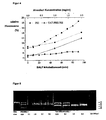
- FIG. 2 shows the results of the particle size measurement of TAT-PEG-PEI polyplexes and plasmid DNA in comparison.
- Part A shows hydrodynamic diameters of TAT-PEG-PEI / pGL3 polyplexes in various media.
- the dark bar refers to the results in NaCl 150 mM pH 7.5, the lighter bars on results in glucose 5% pH 7.5.
- Part B shows the comparison of TAT-PEG-PEI polyplexes to PEI polyplexes in their tendency to form aggregates in strongly ionic medium (NaCl 150 mM at pH 7.5).
- PEI 25kDa polyplexes are prepared by N / P 3 (black squares), PEI 25kDa polyplexes by N / P ratio 7 (black triangles), TAT-PEG-PEI polyplexes at N / P ratio 3 (white squares) and TAT-PEG-PEI polyplexes at N / P ratio 7 (white triangles).
- the polyplexes according to the invention have sizes of 135 to 176 nm in 150 mM NaCl solution, and in glucose 5% sizes of 89 to 107 nm at pH 7.5. A smaller particle size is observed for TAT-PEG-PEI / DNA in glucose solution as the N / P ratio increases from 3 to 10. Polyplexes prepared with an N / P ratio of 3 have a higher particle size.
- TAT-PEG-PEI polyplexes prepared in high ionic strength medium (150 mM NaCl) are stable for over 20 minutes, while PEI polyplexes as controls show a dramatic increase in particle size due to aggregation.
- TAT-PEG-PEI polyplexes with and without DNA are examined for complex stability with respect to polyanions and enzymatic degradation in the lung environment.
- the stability of the polyplexes is experimentally determined in the presence of heparin, Alveofact®, BALF and DNase I ( Figure 3-5 ).
- the polyplexes (N / P ratio 8) are mixed with increasing amounts of heparin ( FIG. 3 ).
- PEI protects the plasmid DNA against exchange by heparin up to 0.2 IU heparin.
- DNA is released from the PEI polyplexes.
- TAT-PEG-PEI polyplexes are also stable in the presence of 0.5 IU heparin and do not release DNA.
- FIG. 3 shows the results of these experiments on the stability of polyplexes in heparin.
- Increasing amounts of heparin are added to PEI and TAT-PEG-PEI polyplexes (N / P ratio 8) (0.1, 0.2, 0.5, 1, 1.5, 2, IU heparin per 1 ⁇ g pGL3).
- the different morphological forms of DNA are designated A: supercoiled, B: linear and C: open circular. D indicates the start line.
- FIG. 4 shows the results after treatment of PEI and TAT-PEG-PEI polyplexes with N / P ratio of 8 with increasing amounts of Alveofact ® (gray line) and BALF (black line).
- FIG. 5 shows the results of the DNA digestion study with the DNase 1 nuclease.
- TAT-PEG-PEI polyplexes are spiked with increasing concentrations of DNase I over 15 minutes. DNA cleavage occurs at a concentration of 2.5 IU DNase I per 1 ⁇ g DNA. Only at more than 5 IU the entire plasmid DNA is released.
- the non-viral vector system according to the invention for the transport of nucleic acid is also very stable to extracellular environment and thus suitable for efficient use in the lung.
- the stability of TAT-PEG-PEI polyplexes in the presence of high concentrations of heparin, Alveofact ®, BALF, and DNase I is significantly higher.
- FIG. 6A shows the in vitro results and FIG. 6B the in vivo results on the mouse lung.
- TAT-PEG-PEI polyplexes While the transfection efficiency of the TAT-PEG-PEI polyplexes in lung epithelial cells A549 is lower than that of PEI 25kDa polyplexes, strong gene expression occurs in mouse lung studies. At N / P ratio 10, strong gene expression of TAT-PEG-PEI (12.6 pg luciferase / mg lung tissue) is shown to be lower for PEI (2 pg luciferase / mg lung tissue). Overall, TAT-PEG-PEI polyplexes show 600% increase in transfection efficiency in vivo compared to PEI.
- FIG. 7A shows the toxicity of the polymers depending on the concentration.
- PEI reduces the viability of cells at concentrations of 0.1 mg / ml (- 23% viability), TAT-PEG-PEI polyplexes show little effect on the cells ( ⁇ 70% viability).
- IC 50 values are for BPEI: 0.071 mg / ml, TAT-PEG-PEI: 0.2 mg / ml.
- FIG. 7B shows the cell count of the PEI polyplexes after treatment in the lung
- FIG. 7C shows the total protein concentration in BALF
- Figure 7D shows the experiments to increase the TNF- ⁇ level.
- double-labeled TAT-PEG-PEI / plasmid polyplex is added to the mouse lung and the distribution in formaldehyde-fixed cryosections is measured four hours after application. Plasmid DNA and polymer are largely co-localized. The double-labeled polyplexes are located in the bronchial epithelial cells and in the alveolar region.
Landscapes
- Health & Medical Sciences (AREA)
- Chemical & Material Sciences (AREA)
- Organic Chemistry (AREA)
- Chemical Kinetics & Catalysis (AREA)
- Medicinal Chemistry (AREA)
- General Health & Medical Sciences (AREA)
- Veterinary Medicine (AREA)
- Pharmacology & Pharmacy (AREA)
- Life Sciences & Earth Sciences (AREA)
- Animal Behavior & Ethology (AREA)
- General Chemical & Material Sciences (AREA)
- Public Health (AREA)
- Nuclear Medicine, Radiotherapy & Molecular Imaging (AREA)
- Polymers & Plastics (AREA)
- Bioinformatics & Cheminformatics (AREA)
- Pulmonology (AREA)
- Engineering & Computer Science (AREA)
- Medicines That Contain Protein Lipid Enzymes And Other Medicines (AREA)
- Medicinal Preparation (AREA)
- Medicines Containing Material From Animals Or Micro-Organisms (AREA)
- Pharmaceuticals Containing Other Organic And Inorganic Compounds (AREA)
Abstract
Description
- Die vorliegend Erfindung betrifft ein nicht-virales Vektorsystem für den Transport von Nukleinsäuren, das auf der Basis von Polyethylenimin (PEI) mit Polyethylenglycol (PEG) modifiziert ist und eine Peptidsequenz mit PTD/CPP- Funktionalität aufweist. Es ist aufgrund geringer Toxizität und guter Stabilität für den Transport von Nukleinsäuren in die Lunge und daher für die Behandlung von Lungenerkrankungen gut geeignet.
- Eines der Schlüsselprobleme in der Gentherapie und der damit verbundenen Behandlung von Krankheiten mit genetischem Material ist das Auffinden eines geeigneten Transportmittels, um das genetische Material zu den entsprechenden Zielzellen zu bringen, damit es dort zur Expression kommt.
- Die Lunge stellt ein wichtiges Organ an der Grenzfläche zwischen Umgebung und Körperinnerem dar. Gasförmige oder partikuläre Substanzen können über den leitend mit der Umgebung verbundenen Respirationstrakt in die verschiedenen Verzweigungen der Lunge gelangen und dort mit den begrenzenden Innenflächen des Atemtrakts interagieren. Insbesondere bei der Behandlung von Lungenerkrankungen wie pulmonaler Hypertonie, Mukoviszidose und Lungentumoren besteht großer Bedarf an einem Transportmittel für DNA.
- Um in vivo einsetzbar zu sein, werden an ein geeignetes Vektorsystem generell besondere Anforderungen gestellt
- Gewebespezifität:
- das Vektorsystem muss Zielzell-spezifisch sein, besonders, wenn das Vektorsystem die zu exprimierenden Gene in nur einen bestimmten Zelltyp schleusen soll
- Größe der eingefügten DNA
- das Vektorsystem sollte eine unlimitierte Größe an einzusetzender DNA tolerieren und auch große Gene transportieren können
- Immunogenität
das Vektorsystems sollte selbst nicht immunogen sein, keine Immunantwort in der transfizierten Zelle oder im Patienten auslösen - Toxizität
das Vektorsystem sollte selbst keine zytotoxischen Effekte auf die Zellen haben - Stabilität
das Vektorsystem muss stabil gegenüber Degradation durch Endo- und Exonukleasen sein, je nach Anwendungsgebiet auch stabil gegenüber der Anwendungsform, z.B. der Vemeblung - Größe
das Vektorsystem sollte möglichst klein sein, um in die Zelle und in oder an den Zellkern eingeschleust werden zu können - Zellpenetration und Kemtransport
das Vektorsystem sollte mit großer Transfektionseffizienz zur Zelle, in oder an den Zellkern gelangen - Herstellbarkeit
das Vektorsystem sollte für die kommerzielle Anwendung leicht und preiswert herzustellen, lagerbar und transportfähig sein. - Der Stand der Technik kennt Vektorsysteme in Form von viralen Vektoren, z.B. Retrovirale, Adenovirale Vektoren oder Adeno-assoziierte Vektoren, sowie nicht-virale Vektoren z.B. Polyethylenimine oder Dendrimere und die Applikation von nackter DNA mittels physikalischer Methoden wie z.B. Elektroporation oder "Gene gun".
- Prinzipiell sind virale Vektoren als Transfektions- und Expressionsvektoren zum Transfer von Genen in Säugetierzellen sehr effizient, jedoch ist Ihre Aufnahmekapazität für therapeutische Fremd-DNA sehr begrenzt und sie weisen in unterschiedlichem Ausmaß stets immonogene Eigenschaften auf. Dies bedeutet, dass sie zwar Gene recht zielsicher übertragen, dabei aber die Zelle schädigen und starke Reaktionen des Immunsystems auslösen können.
- Um dem Problem der Nebenwirkungen der Viren aus dem Weg zu gehen, haben Forscher nicht-virale Transportsysteme entwickelt. Nicht-virale Vektoren verwenden pure DNA, die für ein bestimmtes Protein kodiert und mit den nötigen Regulationselementen zur Expression dieser Proteinsequenz versehen ist. Diese pure DNA wird auf verschiedene Weise in die Zelle gebracht, nicht stabil ins Genom integriert, sondern verbleibt dort extrachromosomal und führt zu einer endogenen Synthese des Proteins. Alternativ werden die zu übertragenden Gene auch in Liposomen oder Polymere eingehüllt und können mittels Membranfusion bzw. Endozytose sicher in die Zellen transportiert werden. So genannte Lipoplexe werden heute bereits in der Therapie am Menschen eingesetzt z.B. bei der Behandlung von Mukoviszidose und dem schwarzen Hautkrebs (malignes Melanom). Die Verwendung von nackter DNA als Vektor hat den Vorteil, dass sie leicht genetisch manipulierbar ist, so dass sie in der Gentherapie eingesetzt werden kann.
- Plasmide sind kleine extrachromosomale DNA-Stücke, die als Vektoren besonders gut geeignet sind, große Gene in eine Vielzahl von Zellen zu transportieren. Sie werden routinemäßig zum Gentransfer von einem zum anderen Organismus eingesetzt. Im Gegensatz zu viralen Vektoren können Plasmide in großen Mengen, guter Qualität und billig hergestellt werden.
- Carsten et al. (Journal of Biological Chemistry, Bd. 278, Nr. 13, 28.03.2003, S. 11411-11418) offenbart Komplexe aus PEI, speziellen TAT-Peptiden und DNA. Bei diesen TAT-Peptiden handelt es sich um Variationen der Sequenz C(YGRKKRRQRRG)n. Die dabei gebildeten Komplexe zeichnen sich durch einen relativ großen Partikeldurchmesser aus.
-
US 2003/238832 A1 offenbart Komplexe aus Polyethylenimin (PEI), die mit einem hydrophilen Polymer als bifunktionalem Linker modifiziert sind. Das Polyethylenimin kann dabei an einen zellulären Liganden, nämlich Transferrin gekoppelt sein. -
WO 02/060412 A3 - Ho et al. (CancerResearch, American Association for cancer Research, Baltimore, MD, US, Bd. 61, 15.01.2011, Seiten 474-477) beschreiben synthetische Proteintransduktionsdomänen (PTD). Sie sieht jedoch nicht vor, dass diese Proteintransduktionsdomänen in Kombination mit Polyethylenglykol (PEG) und Polyethylenimin (PEI) als nicht-virales Vektorssystem dienen.
- Aufgabe der Erfindung ist es, ein nicht-virales Vektorsystem für den Transport von Nukleinsäure bereitzustellen, das eine große Transfektionseffizienz und geringe Toxizität aufweist und für den Einsatz in der Lunge geeignet ist, sowie ein leicht durchführbares und kostengünstiges Herstellungsverfahren.
- Diese Aufgabe wird gemäß Anspruch 1 gelöst, indem ein Vektorsystem für den Transport von Nukleinsäure mit Polyplexen aus Polyethylenimin (PEI), Polyethylenglycol (PEG) und einem Peptid mit PTD/CPP-Funktionalität bereitgestellt wird sowie ein Verfahren gemäß Anspruch 18 zu dessen Herstellung.
- Besonders vorteilhafte Eigenschaften des erfindungsgemäßen Vektorsystems aus einem Peptid mit PTD/CPP-Funktionalität, PEG und PEI sind:
- verstärkte Stabilität und Schutz der eingeschlossenen Nukleinsäure vor allem in der pulmonalen Umgebung
- das Zeta-Potential und somit die Oberflächenladung der Polyplexe ist reduziert und führt zu einer geringen Zytotoxizität in-vitro und in-vivo beispielsweise an Lungenepithelzellen
- Polyplexe weisen eine verminderte Aggregationstendenz in Medium mit großer Ionenstärke auf
- 600% Anstieg der Transfektionseffizienz in vivo verglichen mit Polyethylenimin 25kDa (PEI)
- Transport von Nukleinsäure z.B. DNA, RNA und/oder Plasmid-DNA direkt in die epithelialen Zellen der Bronchien und Alveolen
- Anwendung in der lokalen Lungentherapie
- Überraschenderweise wurde gefunden, dass Vektorsysteme auf der Basis von PEI unter in vivo-Bedingungen besonders gute Stabilität und hohe Transfektionseffizienz aufweisen, wenn sie über einen Linker Peptidsequenzen mit PTD/CPP-Funktionalität tragen.
- Erfindungsgemäß wird hierbei unter einem Peptid mit PTD/CPP-Funktionalität ein Peptid mit einer Proteintransduktionsdomäne (PTD) oder einer Zellpenetrationsdomäne (CPP) verstanden. Vorzugsweise ist dies das TAT-Peptid oder eine dem TAT-Peptid verwandte Peptidsequenz. Das TAT-Peptid ist ein aus 86 Aminosäuren aufgebautes Membranpeptid aus dem HIV-Virus (human immune deficiency virus type 1).
- Weitere Peptide mit einer Proteintransduktionsdomäne oder einer Zellpenetrationsdomäne sind bekannt, darunter MAP, Antp und MAT, sowie deren Derivate. Als Linker wird vorzugsweise Polyethylenglycol (PEG) eingesetzt, es ist aber auch möglich andere geeignete Linker einzusetzen.
- Transfektion bedeutet allgemein das Einbringen von Nukleinsäure, insbesondere Fremd-DNA in Zellen, wobei das Einbringen von Nukleinsäure transient oder stabil sein kann.
- Die Nukleinsäure kodiert bevorzugt für Substanzen, denen alleine oder in Kombination ein positiver Effekt bei der Behandlung von Lungenerkrankungen zugesprochen wird. Die Nukleinsäure kann dabei DNA oder RNA sein.
- Die Synthese des Polymerkonjugates erfolgt, indem ein Oligopeptid mit PTD/CPP-Funktionalität am C-Terminus beispielsweise über einen Cysteinrest modifiziert und über den hetero-bifunktionalen Linker, beispielsweise PEG, kovalent an PEI gekoppelt wird.
- Das erfindungsgemäße nicht-virale Vektorsystem zum Transport von Nukleinsäuren zeigt herausragende Eigenschaften zur Verwendung an der Lunge zur Behandlung von Patienten, die an Lungenerkrankungen leiden.
- Der Begriff Patient bezieht sich dabei gleichermaßen auf Menschen und Wirbeltiere. Damit kann das erfindungsgemäße nicht-virale Vektorsystem zum Transport von Nukleinsäuren in der Human- und Veterinärmedizin verwendet werden. Vorzugsweise wird es zur Herstellung eines Mittels zur Behandlung von Lungenerkrankungen, wie pulmonaler Hypertonie, Mukoviszidose und Lungentumoren eingesetzt.
- Das nicht-virale Vektorsystem der vorliegenden Erfindung wird den Patienten, als Teil einer pharmazeutisch akzeptablen Komposition entweder inhalativ, oral, rektal, parenteral intravenös, intramuskulär oder subkutan, intracisternal, intravaginal, intraperitoneal, intravasculär, lokal (Puder, Salbe oder Tropfen), über intratracheale Intubation, intratracheale Instillation oder in Sprayform verabreicht.
- Pharmazeutisch akzeptable Kompositionen können die Modifikationen als Salze, Ester, Amide und "Prodrugs" beinhalten, sofern sie nach zuverlässiger medizinischer Beurteilung keine übermäßige Toxizität, Irritationen oder allergische Reaktionen am Patienten auslösen.
- Der Terminus "Prodrug" bezieht sich auf Verbindungen, die zur Verbesserung der Aufnahme transformiert werden, wie beispielsweise durch Hydrolyse im Blut.
- Dosierungsformen für die örtliche Administration dieser Erfindung schließen Salben, Puder, Sprays oder Inhalationsmittel ein. Die aktive Komponente wird unter sterilen Bedingungen, mit einem physiologisch akzeptablen Trägerstoff und möglichen Preservativen, Puffern oder Treibmitteln, je nach Bedarf, vermischt.
- Das nicht-virale Vektorsystem zum Transport von Nukleinsäuren ist ein Polymerkonjugat aus PEG, PEI und Peptidsequenzen mit PTD/CPP-Funktionalität. Beispielhaft für ein Protein mit PTD/CPP-Funktionalität wird das TAT-Peptid oder eine dem TAT-Peptid verwandte Peptidsequenz verwendet.
- Beispielhaft für eine TAT-Peptid verwandte Peptidsequenz ist die Decapeptidsequenz GRKKKRRQRC. Weitere verwandte TAT-Peptidsequenzen sind bekannt und können alternativ eingesetzt werden. Diese werden auftragsmäßig synthetisiert beispielsweise von der Firma Bachem.
- Plasmid pGL3, das eine Luziferase codierende Region aufweist und unter der Kontrolle des Promotor des Cytomegalovirus (CMV) steht, ist bei Promega GmbH zu kaufen und wird nach dem dort angegebenen Standardprotokoll in E. coli vermehrt, isoliert und gereinigt.
- Hering Testes-DNA ist kommerziell erhältlich z.B. bei der Firma Sigma.
- Plasmid peGFP-N1, das die green fluorescence coding region unter der Kontrolle des Promotor des Cytomegalovirus (CMV-N1) trägt, ist bei ClonTech (1290 Terra Bella Avenue Mountain View, CA 94043 USA) zu kaufen und wird nach dem dort angegebenen Standardprotokoll in E. coli vermehrt, isoliert und gereinigt. Das natürliche Surfactant Alveofact® ist kommerziell z.B. bei Boehringer-Ingelheim erhältlich. Bronchial alveolar lavage fluid (BALF) wird nach Standardprotokoll aus C57BL/6 Mäusen via intra-tracheal Instillation hergestellt. Zur Entfernung störender Zellen wird BALF zentrifugiert z.B. bei 300 g und 4°C und der Überstand weiterbehandelt.
- Das Verfahren zur Herstellung des nicht-viralen Vektorsystems zum Transport von Nukleinsäuren beinhaltet die Herstellung eines Polymerkonjugates aus PEG und PEI und die Umsetzung mit Peptidsequenzen mit PTD/CPP-Funktionalität beispielsweise dem TAT-Peptid oder TAT-ähnlichem Peptid.
- Die TAT-PEG-PEI Polyplexe aus PEI, beispielsweise einem 25 kDa verzweigten PEI, einem Linker aus PEG und einer TAT-ähnlichen Oligopeptidsequenz beipielsweise GRKKKRRQRC werden nach folgendem Reaktionsschema hergestellt:
- i) Umsetzung von bifunktionalem verzweigtem Polyethylenglykol (PEG) mit einer α-Vinyl-Sulfon- und einer ω-N-Hydroxy-succinimid-Estergruppe (NHS-PEG-VS) mit Polyethylenimin (PEI) zu aktiviertem PEI (VS-PEG-PEI)
- ii) Reaktion des aktivierten PEI (VS-PEG-PEI) mit einem Peptid mit PTD/CPP-Funktionalität
- iii) Abtrennung der Polymerkomplexe von nicht-gebundenem PEG und niedermolekularen Resten

- Ausgangsstoff des Verfahrens ist bifunktionales verzweigtes Polyethylenglykol (PEG) mit einer α-Vinyl-Sulfon- und einer ω-N-Hydroxy-succinimid-Estergruppe (NHS-PEG-VS), wie es beispielsweise kommerziell von der Firma Nektar Therapeutics (Huntsville, USA) erhältlich ist.
- NHS-PEG-VS wird mit Polyethylenimine (PEI), das kommerziell z.B. bei BASF erhältlich ist, bei pH 5.5 umgesetzt.
- Das so aktivierte PEI (VS-PEG-PEI) wird in einer weiteren Reaktion mit dem TAT-ähnlichen Peptid durch die Umsetzung via SH-Gruppe gekoppelt.
- 19.2 mg (565 µmol) bifunktionales PEG (3.4 kDa) mit einer α-Vinylsulfon- und einer ω-N-hydroxysuccinimid-Gruppe werden in einem Kolben vorgelegt. 4.293 ml einer PEI Lösung (entspricht 12.15 mg/0.486 µmol PEI; 282.4 µmol total Amin in 0.1 M Boratpuffer pH 5.5) werden hinzugefügt und gerührt. Die Aktivierungsreaktion wird für 4 Stunden bei Raumtemperatur weitergeführt. Der pH-Wert wird mit 1 N Salzsäure auf 7 eingestellt und die Reaktion zusätzlich 2 Stunden bei Raumtemperatur weitergeführt.
- Für die Kopplung werden 2.98 mg (2.26 µmol) des Decapeptids GRKKKRRQRC in 866 µl Wasser gelöst. Die Peptidlösung wird zu dem aktivierten PEG-PEI hinzugefügt und die Reaktion 2 Stunden bei Raumtemperatur weitergeführt.
- Eventuell nicht gebundenes PEG oder Peptid und niedermolekulare Reste werden entfernt, z.B. durch eine Ultrafiltrationszelle (Amicon, Bedford, USA) mit einer 10 kDa Molekulargewichtsausschlussmembran (Millipore, Bedford, USA) und eluiert mit 0.1 M Boratpuffer bei pH 7.5.
- Zur Komplexherstellung wird Konjugat bzw. DNA getrennt mit 5%iger Glucoselösung pH 7.4 auf die gewünschte Konzentration verdünnt.
- Dann wird die Polymerlösung der Nukleinsäure beispielsweise DNA hinzugefügt und durch schnelles auf und abpipettieren gut gemischt. Es folgt eine Inkubationszeit von 10-20 Minuten bei Raumtemperatur.
- Das Quenching der Ethidiumbromid (EtBr)-Fluoreszenz ist ein Maß für die Kondensationsfähigkeit der DNA.
- Dazu wird in 96-well Platten je 8 µg Herings- oder Lachs-Testes-DNA in 60 mM Trispuffer pH 7.4 mit steigenden Mengen an PEI oder TAT-PEG-PEI in ingesamt 280 µL Puffer komplexiert. Nach 10 min Inkubationszeit wird 20 µl EtBr-Lösung (0.1 mg/ml) hinzugefügt. Die Fluoreszenz wird bei λ ex = 518 nm und λ em = 605 nm gemessen z.B. mit einem Perkin Elmer LS 50 B Fluoreszenz-Plattenleser.
- Freies Ethidiumbromid zeigt an sich schwache Fluoreszenz. Diese Fluoreszenz steigt, sobald es in die DNA interkaliert.
Figur 1 zeigt den Ethidiumbromid-Ausschluss-Aassay, darin ist das Quenchen der DNA/Ethidiumbromidfluoreszenz dargestellt als "relative fluorescence", dabei entsprechen 100% der Kontrolle aus DNA mit Ethidiumbromid ohne Polymer. Dargestellt ist das Quenchen für PEI (schwarzer Kreis) und TAT-PEG-PEI (schwarzes Dreieck) in Gegenwart von Lachs-Testes-DNA. Die Werte sind dargestellt als Mittelwert ± SD (n = 4). Es wird deutlich, dass TAT-PEG-PEI ein stärkeres Quenchen der Fluoreszenz und damit stärkere Kondensationsfähigkeit aufweist als reines PEI 25kDa. - Wichtige Parameter für einen verbesserten Gentransfer in Zellen sind das Zeta-Potential und die Partikelgröße der erfindungsgemäßen Polyplexe. Die Endocytose von Partikeln steigt bei steigendem Zeta-Potential, gleichzeitig verstärken sich aber auch die toxischen Nebeneffekte durch unspezifische Interaktionen zwischen den Partikeln und der Zellmembran.
- Wünschenswert sind daher Partikel zum Gentransfer in Zellen mit einem stark positiven Zeta-Potential bei gleichzeitig geringer Toxizität.
- Der Gentransfer in Lungenzellen ist zusätzlich von weiteren Schwierigkeiten charakterisiert, z.B. durch eine Mukusschicht, welche den Zellkontakt von Polyplexen hemmt und zur Entfernung von Partikeln aus der Lunge führt (Mukoziliäre Clearance). Ferner ist die Phagozytose durch alveolare Makrophagen eine Verlustquelle für Polyplexe. Die endozytotische Aufnahme der Partikel ist insgesamt abhängig von der Partikelgröße, diese steigt, mit Abnahme des Partikeldurchmessers. Wünschenswert sind daher Partikel zum Gentransfer in Lungenzellen, die klein und auch bei verschiedenen N/P Verhältnissen in verschiedenen Medien stabil sind. Dem Fachmann ist bekannt, dass der N/P Wert das Verhältnis von DNA zu PEI durch die Angabe des molaren Verhältnisses der Stickstoffatome im PEI zu den Phosphatatomen in der DNA angibt.
- Die erfindungsgemäßen TAT-PEG-PEI-Polyplexe erfüllen diese Anforderungen als nicht-virales Vektorsystem zum Transport von Nukleinsäuren.
- Die Messung der Oberflächenladung und des korrespondierenden Zeta-Potentials erfolgt mittels Laser Doppler Anemometrie. Nackte DNA hat ein stark negatives Zeta-Potential von -33 mV, die erfindungsgemäßen Komplexe zeigen dagegen ein positives Zeta-Potential. Für TAT-PEG-PEI-Polyplexe wird ein Zeta-Potential von 15 ± 3 mV bis 20 ± 3 mV (abhängig vom NP-Verhältnis) beobachtet, PEI 25kDa-Komplexe zeigen ein Zeta-Potential von 32 mV.
-
Figur 2 zeigt die Ergebnisse der Messung der Partikelgröße von TAT-PEG-PEI-Polyplexen und Plasmid-DNA im Vergleich. - Teil A zeigt hydrodynamische Durchmesser der TAT-PEG-PEI/pGL3-Polyplexe in verschiedenen Medien. Der dunkle Balken bezieht sich auf die Ergebnisse in NaCl 150 mM pH 7.5, der hellere Balken auf Ergebnisse in Glucose 5% pH 7.5. Teil B zeigt den Vergleich von TAT-PEG-PEI-Polyplexen zu PEI-Polyplexen in ihrer Tendenz in stark ionischem Medium (NaCl 150 mM bei pH 7.5) Aggregate zu bilden. Verglichen werden PEI 25kDa-Polyplexe hergestellt bei N/P 3 (schwarze Quadrate), PEI 25kDa Polyplexe bei N/P-Verhältnis 7 (schwarze Dreiecke), TAT-PEG-PEI-Polyplexe bei N/P-Verhältnis 3 (weiße Quadrate) und TAT-PEG-PEI-Polyplexe bei N/P-Verhältnis 7 (weiße Dreiecke).
- Die erfindungsgemäßen Polyplexe weisen in 150 mM NaCl-Lösung Größen von 135 bis 176 nm auf, in Glucose 5% Größen von 89 bis 107 nm bei pH 7.5. Eine geringere Partikelgröße wird für TAT-PEG-PEI/DNA in Glucose-Lösung beobachtet wenn das N/P-Verhältnis von 3 auf 10 ansteigt. Polyplexe, die mit einem N/P Verhältnis von 3 präpariert werden, weisen eine höhere Partikelgröße auf.
- Die in Medium mit hoher Ionenstärke (150 mM NaCl) hergestellten TAT-PEG-PEI-Polyplexe sind über 20 Minuten stabil, während PEI Polyplexe als Kontrolle einen drastischen Anstieg der Partikelgröße in Folge von Aggregation zeigen.
- TAT-PEG-PEI Polyplexe mit und ohne DNA werden hinsichtlich der Komplexstabilität bezüglich Polyanionen und enzymatische Degradation in der Lungenumgebung untersucht. Die Stabilität der Polyplexe wird experimentell in Gegenwart von Heparin, Alveofact®, BALF und DNase I (
Figur 3-5 ) gezeigt. - Dazu werden die Polyplexe (N/P Verhältnis 8) mit steigenden Mengen an Heparin versetzt (
Figur 3 ). PEI schützt die Plasmid-DNA gegen Austausch durch Heparin bis zu 0.2 IU Heparin. Bei einer Menge von 0.5 IU Heparin erfolgt die Freisetzung der DNA von den PEI-Polyplexen. TAT-PEG-PEI-Polyplexe sind auch in Gegenwart von 0.5 IU Heparin stabil und lassen keine DNA frei. -
Figur 3 zeigt die Ergebnisse dieser Versuche zur Stabilität der Polyplexe in Heparin. PEI und TAT-PEG-PEI-Polyplexe (N/P Verhältnis 8) werden mit steigenden Mengen an Heparin versetzt (0.1, 0.2, 0.5, 1, 1.5, 2, IU Heparin per 1 µg pGL3). Die verschiedenen morphologischen Formen der DNA sind bezeichnet mit A: supercoiled, B: linear und C: open circular. D gibt die Startlinie an. - Die Stabilitätsstudien mit Alveofact® und BALF werden mit dem reversen EtBr Ausschlussassay durchgeführt und sind in
Figur 4 gezeigt. Ohne Alveofact® und BALF, zeigt sich die Fähigkeit zur Kondensation der DNA bis zu einer Fluoreszenz von 8 % (PEI) und 5 % (TAT-PEG-PEI). Zugabe von Alveofact® steigert die Fluoreszenz für beide Polyplexe konzentrationsabhängig. PEI/DNA zeigt bei einer Alveofact(8)-Konzentration von 2 µg/µl eine Stabilität von 14.1 % und TAT-PEG-PEI-Polyplexe zeigen eine Stabilität von 11.8 %. Die Fluoreszenz, die mit der DNA-Freigabe ansteigt, der PEI-Polyplexe in BALF steigt linear von 8 % (0 min) bis zu 18.5 % relative Fluoreszenz (90 min), die Fluoreszenz von den TAT-PEG-PEI-Polyplexen (1,4 %) steigt nicht an innerhalb der Beobachtungszeit von 90 min. Dies zeigt, dass die DNA in den Polyplexen TAT-PEG-PEI gegen extrazelluläre pulmonare Enzyme und Proteolipide geschützt ist. -
Figur 4 zeigt die Ergebnisse nach Behandlung von PEI und TAT-PEG-PEI-Polyplexen mit N/P-Verhältnis von 8 mit steigenden Mengen an Alveofact® (graue Linie) und BALF (schwarze Linie). -
Figur 5 zeigt die Ergebnisse der DNA-Abbaustudie mit der Nuclease DNase 1. TAT-PEG-PEI-Polyplexe werden mit steigenden Konzentrationen an DNase I über 15 Minuten versetzt DNA-Spaltung erfolgt bei einer Konzentration von 2.5 IU DNase I per 1 µg DNA. Erst bei über 5 IU wird die gesamte Plasmid DNA freigesetzt. - Neben der Stabilität gegenüber intrazellulären Enzymen (z.B. in Endosomen, Lysosomen) ist das erfindungsgemäße nicht-virale Vektorsystem für den Transport von Nukleinsäure auch sehr stabil gegenüber extrazellulärer Umgebung und damit zum effizienten Einsatz in der Lunge geeignet. Verglichen mit PEI ist die Stabilität der TAT-PEG-PEI-Polyplexe in Gegenwart von hohen Konzentrationen an Heparin, Alveofact®, BALF und DNase I signifikant höher.
- Um die Transfektionseffizienz zu untersuchen wird Plasmid-DNA komplexiert mit PEI oder TAT-PEG-PEI (N/P-Verhältnis 8 und 10).
Figur 6A zeigt die in vitro Ergebnisse undFigur 6B die in vivo Ergebnisse an der Mäuselunge. - Während die Transfektionseffizienz der TAT-PEG-PEI-Polyplexe in Lungenepithelzellen A549 niedriger ist als die von PEI 25kDa-Polyplexen, erfolgt eine starke Genexpression in den Versuchen mit Mäuselunge. Bei N/P-Verhältnis 10, zeigt sich eine starke Genexpression des TAT-PEG-PEI (12.6 pg Luciferase/mg Lungengewebe) eine geringere für PEI (2 pg Luciferase/mg Lungengewebe). Insgesamt zeigen TAT-PEG-PEI-Polyplexe 600% Anstieg in der Transfektionseffizienz in vivo verglichen mit PEI.
- Die metabolische und mitochondriale Aktivität von Zellen wird mit dem kolorimetrischen MTT-Assay bestimmt.
Figur 7A zeigt die Toxizität der Polymere konzentrationsabhängig. PEI reduziert die Lebensfähigkeit der Zellen bei Konzentrationen von 0.1 mg/ml (- 23 % Lebensfähigkeit), TAT-PEG-PEI-Polyplexe zeigen wenig Einfluss auf die Zellen (~ 70 % Lebensfähigkeit). IC50 Werte liegen für BPEI: 0.071 mg/ml, TAT-PEG-PEI: 0.2 mg/ml. -
Figur 7B zeigt die Zellzahl der PEI-Polyplexe nach Behandlung in der Lunge,Figur 7C zeigt die Gesamtproteinkonzentration in BALF undFigur 7D zeigt die Experimente zur Steigerung des TNF-α Levels. - Zur Bestimmung der Verteilung der Polyplexe wird doppelt markiertes TAT-PEG-PEI/Plasmid-Polyplex der Mäuselunge zugeführt und die Verteilung in Formaldehyd fixierten Kryoschnitten vier Stunden nach Applikation gemessen. Plasmid-DNA und Polymer sind größtenteils co-lokalisiert. Die doppelt markierten Polyplexe befinden sich in den bronchialen Epithelzellen und in der alveolaren Region. Diese Ergebnisse bestätigen die gute Eignung der TAT-PEG-PEI-Polyplexe als Vektorsystem für verschiedene Erkrankungen der Lunge.
-
-
Figur 1 zeigt das Quenchen der Ethidiumbromidfluoreszenz (relative fluorescence in %) in einem Assay. Dargestellt ist das Quenchen für PEI (schwarzer Kreis) und TAT-PEG-PEI (schwarzes Dreieck) in Gegenwart von Lachs-Testes-DNA. Die Werte sind dargestellt als Mittelwert ± SD (n = 4). -
Figur 2 zeigt Ergebnisse bezüglich der Partikelgröße
Teil A zeigt hydrodynamische Diameter der TAT-PEG-PEI/pGL3-Polyplexe in verschiedenen Medien. Der dunkle Balken bezieht sich auf die Ergebnisse in NaCl 150 mM pH 7.5, der hellere Balken auf Ergebnisse in Glucose 5% pH 7.5.
Teil B zeigt den Vergleich von TAT-PEG-PEI-Polyplexen zu PEI-Polyplexen in ihrer Tendenz in stark ionischem Medium (NaCl 150 mM bei pH 7.5) Aggregate zu bilden. Verglichen werden PEI-Polyplexe mit N/P ratio 3 (schwarze Quadrate), PEI-Polyplexe mit N/P-Verhältnis 7 (schwarze Dreiecke), TAT-PEG-PEI-Polyplexe mit N/P-Verhältnis 3 (weiße Quadrate) und TAT-PEG-PEI-Polyplexe mit N/P-Verhältnis 7 (weiße Dreiecke). -
Figur 3 zeigt die Stabilität der Polyplexe in Heparin.
PEI und TAT-PEG-PEI-Polyplexe (N/P-Verhältnis 8) werden mit steigenden Mengen an Heparin versetzt (0.1, 0.2, 0.5, 1, 1.5, 2, IU Heparin per 1 µg pGL3).
Die verschiedenen DNA-Morphologien sind bezeichnet mit A: supercoiled, B: linear und C: open circular. D gibt die Startlinie an. -
Figur 4 zeigt die Ergebnisse nach Behandlung von PEI und TAT-PEG-PEI-Polyplexen (N/P Verhältnis 8) mit steigenden Mengen an Alveofact® (graue Linie) und BALF (schwarze Linie). Die Werte sind mit Standardabweichung ± SD angegeben und als Prozent der maximalen Fluoreszenz angegeben (pGL3 alleine). -
Figur 5 zeigt PEI und TAT-PEG-PEI-Polyplexe (N/P-Verhältnis 8) und Plasmid-DNA mit steigenden Mengen an DNase I (Bild oben: PEI 25kDa, Bild unten :TAT-PEG-PEI-Polyplexe) (0.01, 0.1, 1, 2.5 and 5 IU DNase I per 1 µg pGL3) Spur 1 zeigt die Kontrolle freie, ungespaltene pGL3. Die verschiedenen DNA-Morphologien sind bezeichnet mit A: supercoiled, B: linear und C: open circular. D gibt die Startlinie an. -
Figur 6 zeigt die Transfektionseffizienz der Polyplexe bei N/P-Verhältnis 8 und 10: A) Luciferase-Expression in A549, B) Luciferase-Expression in C57BU6 Mäuselunge. Die in-vivo Resultate sind mit ± SD dargestellt. -
Figur 7 zeigt die Ergebnisse der Toxizitätsstudien: A) Zytotoxische Effekte der Polymere bei Konzentrationen von 0.001, 0.01, 0.1, 0.5, und 1.0 mg/ml an A549 Zellen, bestimmt durch MTT-Assay und dargestellt als relative Zellviabilität (Werte ± SD von 6 Messungen). Pulmonale Inflammationsindikatoren (Werte ± SD von 3 Messungen) in BALF 24 h nach Applikation der Polyplexe (N/P 10) in der Mäuselunge: B) Gesamte Zellen und PMN Nummer, C) Gesamt-Proteinkonzentration, D) TNF-alpha-Konzentration.
Claims (14)
- Nicht-virales Vektorsystem für den Transport von Nukleinsäuren, wobei das Vektorsystem ein Polymerkonjugat aus Polyethylenimin (PEI), Polyethylenglykol (PEG) als hetero-bifunktionalem Linker und einem Peptid, wobei das Peptid über den hetero-bifunktionalen Linker kovalent an das Poylethylen (PEI) gekoppelt ist, dadurch gekennzeichnet dass das Peptid eine Proteintransduktionsdomäne (PTD) oder eine Zellpenetrationsdomäne (CPP) aufweist und dass das Peptid ein Oligopeptid ist, welches am C-Terminus über einen Cysteinrest modifiziert und über den hetero-bifunktionalen Linker kovalent an das Polyethylenimin (PEI) gekoppelt ist, wobei das Peptid ein TAT-Peptid ist und wobei das Peptid die Decapeptidsequenz GRKKKRRQRC hat.
- Nicht-virales Vektorsystem entsprechend Anspruch 1, dadurch gekennzeichnet, dass das nicht-virale Vektorsystem ein Polymerkonjugat ist, das einen als Polyplex bezeichneten Komplex mit Nukleinsäure bildet.
- Nicht-virales Vektorsystem entsprechend einem der Ansprüche 1 oder 2, dadurch gekennzeichnet, dass die Polyplexe in 150 mM NaCl-Lösung eine Größe von 135 bis 176 nm aufweisen und in 5%-Glucose eine Größe von 89 bis 107 nm aufweisen.
- Nicht-virales Vektorsystem entsprechend einem der Ansprüche 1 bis 3, dadurch gekennzeichnet, dass es wenigstens eine eingeschlossen Nukleinsäure aufweist.
- Nicht-virales Vektorsystem entsprechend Anspruch 4, dadurch gekennzeichnet, dass die Nukleinsäure DNA oder RNA ist.
- Nicht-virales Vektorsystem entsprechend wenigstens einem der Ansprüche 1 bis 5 dadurch gekennzeichnet, dass es hergestellt ist durch ein Verfahren umfassend die Schrittea. Umsetzung von Polyethylenimin mit bifunktionalem verzweigtem Polyethylenglykol, umfassend eine α-Vinyl-Sulfon- und eine ω-N-Hydroxy-succinimid-Estergruppe (NHS-PEG-VS), zu aktiviertem PEG-PEI (VS-PEG-PEI);b. Kopplung des Oligopeptides an das aktivierte PEG-PEIc. Reinigung des Peptid-PEG-PEI-Konjugatesd. Komplexbildung.
- Nicht-virales Vektorsystem nach Anspruch 6, dadurch gekennzeichnet dass die Kopplung des Oligopeptides an das aktivierte PEG-PEI durch Reaktion des aktivierten PEI (VS-PEG-PEI) mit einem Peptid mit einer Proteintransduktionsdomäne (PTD) oder einer Zellpenetrationsdomäne (CPP) erfolgt, wobei das Peptid C-terminal über eine aktivierte Cystein-Gruppe an die Vinyl-Sulfongruppe des bifunktionalen Linkers PEG gekoppelt wird.
- Nicht-virales Vektorsystem nach einem der Ansprüche 6 oder 7, dadurch gekennzeichnet, dass die Reinigung des Peptid-PEG-PEI-Konjugates durch Entfernung von nicht-gebundenem PEG und niedermolekularen Resten erfolgt, wobei die folgenden Schritte ausgeführt werden:a. Ultrafiltration mit einer Ultrafiltrationszelle mit einer 10 kDa Molekulargewichtsausschlussmembran undb. Elution mit 0.1 M Boratpuffer bei pH 7.5.
- Verfahren zur Herstellung eines nicht-viralen Vektorsystems entsprechend wenigstens einem der Ansprüche 1 bis 5, umfassend die Schrittea. Umsetzung von Polyethylenimin mit bifunktionalern verzweigtem Polyethylenglykol, umfassend eine -α-Vinyl-Sulfon- und eine ω-N-Hydroxy-succinimid-Estergruppe (NHS-PEG-VS), zu aktiviertem PEG-PEI (VS-PEG-PEI);b. Kopplung des Oligopeptides an das aktivierte PEG-PEIc. Reinigung des Peptid-PEG-PEI-Konjugatesd. Komplexbildung.
- Verfahren nach Anspruch 9, dadurch gekennzeichnet, dass die Kopplung des Oligopeptides an das aktivierte PEG-PEI durch Reaktion des aktivierten PEI (VS-PEG-PEI) mit einem Peptid mit einer Proteintransduktionsdomäne (PTD) oder einer Zellpenetrationsdomäne (CPP) erfolgt, wobei das Peptid C-terminal über eine aktivierte Gystein-Gruppe an die Vinyl-Suffongruppe des bifunktionalen Linkers PEG gekoppelt wird.
- Verfahren nach einem der Ansprüche 9 oder 10, dadurch gekennzeichnet, dass die Reinigung des Peptid-PEG-PEI-Konjugates durch Entfernung von nicht-gebundenem PEG und niedermolekularen Resten erfolgt, wobei die folgenden Schritte ausgeführt werden:a. Ultrafiltration mit einer Ultrafiltrationszelle mit einer 10 kDa Molekulargewichtsausschlussmembran undb. Elution mit 0.1 M Boratpuffer bei pH 7.5.
- Verfahren nach einem der Ansprüche 9 bis 11, dadurch gekennzeichnet dass die Komplexbildung die Schritte umfassta. Verdünnung des Konjugats mit einer 5%iger Glucoselösung, die einen pH-Wert von 7.4 hat, auf die gewünschte Konzentration und Verdünnung der DNA mit einer 5%iger Glucoselösung, die einen pH-Wert von 7.4 hat, auf die gewünschte Konzentration,b. Vermischung der verdünnten Konjugat-Lösung mit der Nukleinsäurec. Inkubation für 10 bis 20 Minuten bei Raumtemperatur.
- Verwendung eines Peptides umfassend die Sequenz GRKKKRRQRC zur Herstellung eines nicht-viralen Vektorsystems gemäß einem der Ansprüche 1 bis 5.
- Verwendung entsprechend Anspruch 13, dadurch gekennzeichnet dass die Herstellung des nicht-viralen Vektorsystems mit Hilfe des Verfahrens nach einem der Ansprüche 10 bis 13 erfolgt.
Applications Claiming Priority (2)
| Application Number | Priority Date | Filing Date | Title |
|---|---|---|---|
| DE102005023993A DE102005023993A1 (de) | 2005-05-20 | 2005-05-20 | Nicht virales Vektorsystem zum Transport von Nukleinsäure in die Lunge |
| PCT/DE2006/000875 WO2006122542A2 (de) | 2005-05-20 | 2006-05-20 | Nicht virales vektorsystem zum transport von nukleinsäure in die lunge |
Publications (2)
| Publication Number | Publication Date |
|---|---|
| EP1883699A2 EP1883699A2 (de) | 2008-02-06 |
| EP1883699B1 true EP1883699B1 (de) | 2012-07-04 |
Family
ID=37074438
Family Applications (1)
| Application Number | Title | Priority Date | Filing Date |
|---|---|---|---|
| EP06753191A Expired - Lifetime EP1883699B1 (de) | 2005-05-20 | 2006-05-20 | Nicht virales vektorsystem zum transport von nukleinsäure in die lunge |
Country Status (4)
| Country | Link |
|---|---|
| US (1) | US20090298917A1 (de) |
| EP (1) | EP1883699B1 (de) |
| DE (1) | DE102005023993A1 (de) |
| WO (1) | WO2006122542A2 (de) |
Families Citing this family (9)
| Publication number | Priority date | Publication date | Assignee | Title |
|---|---|---|---|---|
| CA2791278C (en) | 2010-02-25 | 2015-11-24 | The Johns Hopkins University | Sustained delivery of therapeutic agents to an eye compartment |
| WO2012109363A2 (en) * | 2011-02-08 | 2012-08-16 | The Johns Hopkins University | Mucus penetrating gene carriers |
| EP2825207B1 (de) | 2012-03-16 | 2020-08-19 | The Johns Hopkins University | Nichtlineare multiblock-copolymer-arzneimittelkonjugate zur verabreichung von wirkstoffen |
| US9533068B2 (en) | 2012-05-04 | 2017-01-03 | The Johns Hopkins University | Drug loaded microfiber sutures for ophthalmic application |
| WO2014124006A1 (en) | 2013-02-05 | 2014-08-14 | The Johns Hopkins University | Nanoparticles for magnetic resonance imaging tracking and methods of making and using thereof |
| WO2015175545A1 (en) | 2014-05-12 | 2015-11-19 | The Johns Hopkins University | Highly stable biodegradable gene vector platforms for overcoming biological barriers |
| CA2974715C (en) | 2015-01-27 | 2020-05-05 | The Johns Hopkins University | Hypotonic hydrogel formulations for enhanced transport of active agents at mucosal surfaces |
| US12496279B2 (en) | 2019-04-11 | 2025-12-16 | The Johns Hopkins University | Nanoparticles for drug delivery to brain |
| CN116848146A (zh) | 2020-09-03 | 2023-10-03 | I·S·Y·陈 | 可溶性碱性磷酸酶构建体和包含编码可溶性碱性磷酸酶构建体的多核苷酸的表达载体 |
Family Cites Families (7)
| Publication number | Priority date | Publication date | Assignee | Title |
|---|---|---|---|---|
| NZ244306A (en) * | 1991-09-30 | 1995-07-26 | Boehringer Ingelheim Int | Composition for introducing nucleic acid complexes into eucaryotic cells, complex containing nucleic acid and endosomolytic agent, peptide with endosomolytic domain and nucleic acid binding domain and preparation |
| DE19726186A1 (de) * | 1997-06-20 | 1998-12-24 | Boehringer Ingelheim Int | Komplexe für den Transport von Nukleinsäure in höhere eukaryotische Zellen |
| EP1063254A1 (de) * | 1999-06-25 | 2000-12-27 | Technische Uni München, Klinikum rechts der Isar, Inst. für Experiment. Onkoligie und Therapieforschung | Copolymere für den Transport von Nukleinsäuren in die Zelle |
| DE10015906B4 (de) * | 2000-03-30 | 2006-09-07 | Ibfb Pharma Gmbh | Gerichteter Gentransfer in Thy-1-positive Zellen |
| EP1355628A2 (de) * | 2001-02-01 | 2003-10-29 | Board of Regents, The University of Texas System | Stabilisierte aerosollösungen von polymeren zur verabreichung von genen an die lunge |
| AU2002256398A2 (en) * | 2001-04-30 | 2002-11-11 | Targeted Genetics Corporation | Lipid-comprising drug delivery complexes and methods for their production |
| US6586524B2 (en) * | 2001-07-19 | 2003-07-01 | Expression Genetics, Inc. | Cellular targeting poly(ethylene glycol)-grafted polymeric gene carrier |
-
2005
- 2005-05-20 DE DE102005023993A patent/DE102005023993A1/de not_active Withdrawn
-
2006
- 2006-05-20 EP EP06753191A patent/EP1883699B1/de not_active Expired - Lifetime
- 2006-05-20 WO PCT/DE2006/000875 patent/WO2006122542A2/de not_active Ceased
- 2006-05-20 US US11/920,500 patent/US20090298917A1/en not_active Abandoned
Also Published As
| Publication number | Publication date |
|---|---|
| DE102005023993A1 (de) | 2006-11-23 |
| US20090298917A1 (en) | 2009-12-03 |
| WO2006122542A2 (de) | 2006-11-23 |
| EP1883699A2 (de) | 2008-02-06 |
| WO2006122542A3 (de) | 2007-01-18 |
Similar Documents
| Publication | Publication Date | Title |
|---|---|---|
| DE69535540T9 (de) | Zusammensetzung enthaltend nukleinsäuren und kationische polymere, zubereitung und verwendung | |
| Elfinger et al. | Characterization of lactoferrin as a targeting ligand for nonviral gene delivery to airway epithelial cells | |
| Park et al. | Galactosylated chitosan-graft-poly (ethylene glycol) as hepatocyte-targeting DNA carrier | |
| Malhotra et al. | Synthesis of TAT peptide-tagged PEGylated chitosan nanoparticles for siRNA delivery targeting neurodegenerative diseases | |
| US9289505B2 (en) | Compositions and methods for delivering nucleic acid molecules and treating cancer | |
| DE60032739T2 (de) | Immunoliposome mit einem targeting-antikörperfragment zur systemischen genverabreichung | |
| DE69433519T2 (de) | Sich selbst zusammensetzendes polynukleotid-abgabesystem, das dendrimer-polykationen enthält | |
| US20050025821A1 (en) | Lipid-comprising drug delivery complexes and methods for their production | |
| US10799601B2 (en) | Method of making peptide-tagged PEGylated chitosan nanoparticles | |
| Wang et al. | Retracted Article: A multifunctional self-dissociative polyethyleneimine derivative coating polymer for enhancing the gene transfection efficiency of DNA/polyethyleneimine polyplexes in vitro and in vivo | |
| US20040142474A1 (en) | Novel cationic lipopolymer as a biocompatible gene delivery agent | |
| JPH09508530A (ja) | 核酸を含む組成物、その調製および使用 | |
| CN101970687A (zh) | 用于体内基因输送的自组装胶束样纳米颗粒 | |
| CN102027043A (zh) | 生物可降解的交联支链聚(亚烷基亚胺) | |
| EP0571414A1 (de) | Neue, über endozytose in höhere eukaryotische zellen aufnehmbare, nukleinsäure enthaltende komplexe. | |
| US20130236510A1 (en) | Multiplexed supramolecular assemblies for non-viral delivery of genetic material | |
| WO2006122542A2 (de) | Nicht virales vektorsystem zum transport von nukleinsäure in die lunge | |
| EP1270586B1 (de) | Zusammensetzung zum zellspezifischen Transfer von Wirkstoffen | |
| DE69928679T2 (de) | Kationische dendrimer-verbindungen und deren verwendung als oligonucleotid/polynucleotid-träger | |
| Zhang et al. | A zwitterionic polymer-inspired material mediated efficient CRISPR-Cas9 gene editing | |
| WO2001000709A1 (de) | Copolymere für den transport von nukleinsäuren in die zelle | |
| DE69709891T2 (de) | Chitosan enthaltende zusammensetzung | |
| Breunig et al. | Polyplexes of polyethylenimine and per-N-methylated polyethylenimine-cytotoxicity and transfection efficiency | |
| KR101459185B1 (ko) | 스페르민 공중합체 및 이를 핵산 전달체로 이용하는 유전자 치료 | |
| KR20200135224A (ko) | 마이셀 구조의 나노 전달체 및 이의 용도 |
Legal Events
| Date | Code | Title | Description |
|---|---|---|---|
| PUAI | Public reference made under article 153(3) epc to a published international application that has entered the european phase |
Free format text: ORIGINAL CODE: 0009012 |
|
| AK | Designated contracting states |
Kind code of ref document: A2 Designated state(s): AT BE BG CH CY CZ DE DK EE ES FI FR GB GR HU IE IS IT LI LT LU LV MC NL PL PT RO SE SI SK TR |
|
| 17P | Request for examination filed |
Effective date: 20071217 |
|
| RIN1 | Information on inventor provided before grant (corrected) |
Inventor name: DIE ANDERE ERFINDER HABEN AUF IHRE NENNUNG VERZICH Inventor name: NEU, MICHAEL Inventor name: SCHMEHL, THOMAS Inventor name: KLEEMANN, ELKE Inventor name: KISSEL, THOMAS |
|
| RIN1 | Information on inventor provided before grant (corrected) |
Inventor name: SCHMEHL, THOMAS Inventor name: KISSEL, THOMAS Inventor name: KLEEMANN, ELKE Inventor name: DIE ANDERE ERFINDER HABEN AUF IHRE NENNUNG VERZICH Inventor name: NEU, MICHAEL |
|
| DAX | Request for extension of the european patent (deleted) | ||
| 17Q | First examination report despatched |
Effective date: 20090129 |
|
| REG | Reference to a national code |
Ref country code: DE Ref legal event code: R079 Ref document number: 502006011683 Country of ref document: DE Free format text: PREVIOUS MAIN CLASS: C12N0015630000 Ipc: A61K0048000000 |
|
| GRAP | Despatch of communication of intention to grant a patent |
Free format text: ORIGINAL CODE: EPIDOSNIGR1 |
|
| RIC1 | Information provided on ipc code assigned before grant |
Ipc: A61K 38/00 20060101ALI20120124BHEP Ipc: C08G 81/00 20060101ALI20120124BHEP Ipc: A61K 47/48 20060101ALI20120124BHEP Ipc: C12N 15/63 20060101ALI20120124BHEP Ipc: A61K 48/00 20060101AFI20120124BHEP |
|
| GRAS | Grant fee paid |
Free format text: ORIGINAL CODE: EPIDOSNIGR3 |
|
| GRAA | (expected) grant |
Free format text: ORIGINAL CODE: 0009210 |
|
| AK | Designated contracting states |
Kind code of ref document: B1 Designated state(s): AT BE BG CH CY CZ DE DK EE ES FI FR GB GR HU IE IS IT LI LT LU LV MC NL PL PT RO SE SI SK TR |
|
| REG | Reference to a national code |
Ref country code: GB Ref legal event code: FG4D Free format text: NOT ENGLISH |
|
| REG | Reference to a national code |
Ref country code: CH Ref legal event code: EP |
|
| REG | Reference to a national code |
Ref country code: AT Ref legal event code: REF Ref document number: 564879 Country of ref document: AT Kind code of ref document: T Effective date: 20120715 |
|
| REG | Reference to a national code |
Ref country code: IE Ref legal event code: FG4D Free format text: LANGUAGE OF EP DOCUMENT: GERMAN |
|
| REG | Reference to a national code |
Ref country code: DE Ref legal event code: R096 Ref document number: 502006011683 Country of ref document: DE Effective date: 20120830 |
|
| REG | Reference to a national code |
Ref country code: NL Ref legal event code: VDEP Effective date: 20120704 |
|
| PG25 | Lapsed in a contracting state [announced via postgrant information from national office to epo] |
Ref country code: SI Free format text: LAPSE BECAUSE OF FAILURE TO SUBMIT A TRANSLATION OF THE DESCRIPTION OR TO PAY THE FEE WITHIN THE PRESCRIBED TIME-LIMIT Effective date: 20120704 |
|
| REG | Reference to a national code |
Ref country code: LT Ref legal event code: MG4D Effective date: 20120704 |
|
| PG25 | Lapsed in a contracting state [announced via postgrant information from national office to epo] |
Ref country code: IS Free format text: LAPSE BECAUSE OF FAILURE TO SUBMIT A TRANSLATION OF THE DESCRIPTION OR TO PAY THE FEE WITHIN THE PRESCRIBED TIME-LIMIT Effective date: 20121104 Ref country code: FI Free format text: LAPSE BECAUSE OF FAILURE TO SUBMIT A TRANSLATION OF THE DESCRIPTION OR TO PAY THE FEE WITHIN THE PRESCRIBED TIME-LIMIT Effective date: 20120704 Ref country code: CY Free format text: LAPSE BECAUSE OF FAILURE TO SUBMIT A TRANSLATION OF THE DESCRIPTION OR TO PAY THE FEE WITHIN THE PRESCRIBED TIME-LIMIT Effective date: 20120704 Ref country code: LT Free format text: LAPSE BECAUSE OF FAILURE TO SUBMIT A TRANSLATION OF THE DESCRIPTION OR TO PAY THE FEE WITHIN THE PRESCRIBED TIME-LIMIT Effective date: 20120704 |
|
| PG25 | Lapsed in a contracting state [announced via postgrant information from national office to epo] |
Ref country code: SE Free format text: LAPSE BECAUSE OF FAILURE TO SUBMIT A TRANSLATION OF THE DESCRIPTION OR TO PAY THE FEE WITHIN THE PRESCRIBED TIME-LIMIT Effective date: 20120704 Ref country code: LV Free format text: LAPSE BECAUSE OF FAILURE TO SUBMIT A TRANSLATION OF THE DESCRIPTION OR TO PAY THE FEE WITHIN THE PRESCRIBED TIME-LIMIT Effective date: 20120704 Ref country code: PL Free format text: LAPSE BECAUSE OF FAILURE TO SUBMIT A TRANSLATION OF THE DESCRIPTION OR TO PAY THE FEE WITHIN THE PRESCRIBED TIME-LIMIT Effective date: 20120704 Ref country code: PT Free format text: LAPSE BECAUSE OF FAILURE TO SUBMIT A TRANSLATION OF THE DESCRIPTION OR TO PAY THE FEE WITHIN THE PRESCRIBED TIME-LIMIT Effective date: 20121105 |
|
| PG25 | Lapsed in a contracting state [announced via postgrant information from national office to epo] |
Ref country code: NL Free format text: LAPSE BECAUSE OF FAILURE TO SUBMIT A TRANSLATION OF THE DESCRIPTION OR TO PAY THE FEE WITHIN THE PRESCRIBED TIME-LIMIT Effective date: 20120704 |
|
| PG25 | Lapsed in a contracting state [announced via postgrant information from national office to epo] |
Ref country code: EE Free format text: LAPSE BECAUSE OF FAILURE TO SUBMIT A TRANSLATION OF THE DESCRIPTION OR TO PAY THE FEE WITHIN THE PRESCRIBED TIME-LIMIT Effective date: 20120704 Ref country code: ES Free format text: LAPSE BECAUSE OF FAILURE TO SUBMIT A TRANSLATION OF THE DESCRIPTION OR TO PAY THE FEE WITHIN THE PRESCRIBED TIME-LIMIT Effective date: 20121015 Ref country code: RO Free format text: LAPSE BECAUSE OF FAILURE TO SUBMIT A TRANSLATION OF THE DESCRIPTION OR TO PAY THE FEE WITHIN THE PRESCRIBED TIME-LIMIT Effective date: 20120704 Ref country code: DK Free format text: LAPSE BECAUSE OF FAILURE TO SUBMIT A TRANSLATION OF THE DESCRIPTION OR TO PAY THE FEE WITHIN THE PRESCRIBED TIME-LIMIT Effective date: 20120704 Ref country code: CZ Free format text: LAPSE BECAUSE OF FAILURE TO SUBMIT A TRANSLATION OF THE DESCRIPTION OR TO PAY THE FEE WITHIN THE PRESCRIBED TIME-LIMIT Effective date: 20120704 |
|
| PLBE | No opposition filed within time limit |
Free format text: ORIGINAL CODE: 0009261 |
|
| STAA | Information on the status of an ep patent application or granted ep patent |
Free format text: STATUS: NO OPPOSITION FILED WITHIN TIME LIMIT |
|
| PG25 | Lapsed in a contracting state [announced via postgrant information from national office to epo] |
Ref country code: IT Free format text: LAPSE BECAUSE OF FAILURE TO SUBMIT A TRANSLATION OF THE DESCRIPTION OR TO PAY THE FEE WITHIN THE PRESCRIBED TIME-LIMIT Effective date: 20120704 Ref country code: SK Free format text: LAPSE BECAUSE OF FAILURE TO SUBMIT A TRANSLATION OF THE DESCRIPTION OR TO PAY THE FEE WITHIN THE PRESCRIBED TIME-LIMIT Effective date: 20120704 |
|
| 26N | No opposition filed |
Effective date: 20130405 |
|
| PG25 | Lapsed in a contracting state [announced via postgrant information from national office to epo] |
Ref country code: BG Free format text: LAPSE BECAUSE OF FAILURE TO SUBMIT A TRANSLATION OF THE DESCRIPTION OR TO PAY THE FEE WITHIN THE PRESCRIBED TIME-LIMIT Effective date: 20121004 |
|
| REG | Reference to a national code |
Ref country code: DE Ref legal event code: R097 Ref document number: 502006011683 Country of ref document: DE Effective date: 20130405 |
|
| PG25 | Lapsed in a contracting state [announced via postgrant information from national office to epo] |
Ref country code: MC Free format text: LAPSE BECAUSE OF FAILURE TO SUBMIT A TRANSLATION OF THE DESCRIPTION OR TO PAY THE FEE WITHIN THE PRESCRIBED TIME-LIMIT Effective date: 20120704 |
|
| REG | Reference to a national code |
Ref country code: IE Ref legal event code: MM4A |
|
| PG25 | Lapsed in a contracting state [announced via postgrant information from national office to epo] |
Ref country code: IE Free format text: LAPSE BECAUSE OF NON-PAYMENT OF DUE FEES Effective date: 20130520 |
|
| PGFP | Annual fee paid to national office [announced via postgrant information from national office to epo] |
Ref country code: GB Payment date: 20140521 Year of fee payment: 9 |
|
| PGFP | Annual fee paid to national office [announced via postgrant information from national office to epo] |
Ref country code: DE Payment date: 20140521 Year of fee payment: 9 Ref country code: AT Payment date: 20140513 Year of fee payment: 9 Ref country code: CH Payment date: 20140521 Year of fee payment: 9 Ref country code: FR Payment date: 20140527 Year of fee payment: 9 |
|
| PGFP | Annual fee paid to national office [announced via postgrant information from national office to epo] |
Ref country code: BE Payment date: 20140523 Year of fee payment: 9 |
|
| PG25 | Lapsed in a contracting state [announced via postgrant information from national office to epo] |
Ref country code: TR Free format text: LAPSE BECAUSE OF FAILURE TO SUBMIT A TRANSLATION OF THE DESCRIPTION OR TO PAY THE FEE WITHIN THE PRESCRIBED TIME-LIMIT Effective date: 20120704 |
|
| PG25 | Lapsed in a contracting state [announced via postgrant information from national office to epo] |
Ref country code: HU Free format text: LAPSE BECAUSE OF FAILURE TO SUBMIT A TRANSLATION OF THE DESCRIPTION OR TO PAY THE FEE WITHIN THE PRESCRIBED TIME-LIMIT; INVALID AB INITIO Effective date: 20060520 Ref country code: LU Free format text: LAPSE BECAUSE OF NON-PAYMENT OF DUE FEES Effective date: 20130520 |
|
| PG25 | Lapsed in a contracting state [announced via postgrant information from national office to epo] |
Ref country code: GR Free format text: LAPSE BECAUSE OF NON-PAYMENT OF DUE FEES Effective date: 20120704 |
|
| REG | Reference to a national code |
Ref country code: DE Ref legal event code: R119 Ref document number: 502006011683 Country of ref document: DE |
|
| REG | Reference to a national code |
Ref country code: CH Ref legal event code: PL |
|
| REG | Reference to a national code |
Ref country code: AT Ref legal event code: MM01 Ref document number: 564879 Country of ref document: AT Kind code of ref document: T Effective date: 20150520 |
|
| GBPC | Gb: european patent ceased through non-payment of renewal fee |
Effective date: 20150520 |
|
| PG25 | Lapsed in a contracting state [announced via postgrant information from national office to epo] |
Ref country code: CH Free format text: LAPSE BECAUSE OF NON-PAYMENT OF DUE FEES Effective date: 20150531 Ref country code: LI Free format text: LAPSE BECAUSE OF NON-PAYMENT OF DUE FEES Effective date: 20150531 |
|
| REG | Reference to a national code |
Ref country code: FR Ref legal event code: ST Effective date: 20160129 |
|
| PG25 | Lapsed in a contracting state [announced via postgrant information from national office to epo] |
Ref country code: AT Free format text: LAPSE BECAUSE OF NON-PAYMENT OF DUE FEES Effective date: 20150520 |
|
| PG25 | Lapsed in a contracting state [announced via postgrant information from national office to epo] |
Ref country code: GB Free format text: LAPSE BECAUSE OF NON-PAYMENT OF DUE FEES Effective date: 20150520 Ref country code: DE Free format text: LAPSE BECAUSE OF NON-PAYMENT OF DUE FEES Effective date: 20151201 |
|
| PG25 | Lapsed in a contracting state [announced via postgrant information from national office to epo] |
Ref country code: FR Free format text: LAPSE BECAUSE OF NON-PAYMENT OF DUE FEES Effective date: 20150601 |
|
| PG25 | Lapsed in a contracting state [announced via postgrant information from national office to epo] |
Ref country code: BE Free format text: LAPSE BECAUSE OF NON-PAYMENT OF DUE FEES Effective date: 20150531 |