EP1879570B1 - Inhibition d'especes reactives de l'oxygene et protection de cellules mammaliennes - Google Patents
Inhibition d'especes reactives de l'oxygene et protection de cellules mammaliennes Download PDFInfo
- Publication number
- EP1879570B1 EP1879570B1 EP06751658A EP06751658A EP1879570B1 EP 1879570 B1 EP1879570 B1 EP 1879570B1 EP 06751658 A EP06751658 A EP 06751658A EP 06751658 A EP06751658 A EP 06751658A EP 1879570 B1 EP1879570 B1 EP 1879570B1
- Authority
- EP
- European Patent Office
- Prior art keywords
- cells
- ceo
- oxygen species
- reactive oxygen
- ros
- Prior art date
- Legal status (The legal status is an assumption and is not a legal conclusion. Google has not performed a legal analysis and makes no representation as to the accuracy of the status listed.)
- Expired - Lifetime
Links
Images




Classifications
-
- A—HUMAN NECESSITIES
- A61—MEDICAL OR VETERINARY SCIENCE; HYGIENE
- A61P—SPECIFIC THERAPEUTIC ACTIVITY OF CHEMICAL COMPOUNDS OR MEDICINAL PREPARATIONS
- A61P27/00—Drugs for disorders of the senses
- A61P27/02—Ophthalmic agents
-
- A—HUMAN NECESSITIES
- A61—MEDICAL OR VETERINARY SCIENCE; HYGIENE
- A61K—PREPARATIONS FOR MEDICAL, DENTAL OR TOILETRY PURPOSES
- A61K33/00—Medicinal preparations containing inorganic active ingredients
- A61K33/24—Heavy metals; Compounds thereof
- A61K33/244—Lanthanides; Compounds thereof
Definitions
- This invention relates to biological uses of nanoceria particles, and in particular to compositions for use in the protection of mammalian retinal cells from reactive oxygen species in vivo and is supported in part by funding from the National Science Foundation and National Institutes of Health under the Contract numbers: P20 RR17703, FY014427, FY13050, and FY12190.
- Cerium is a silvery metallic element, belonging to the lanthanide group. Cerium Oxide (CeO 2 ) is used in precision polishing and lapping applications. Ultra fine nano-size cerium oxide, less than 10 nanometers, is more efficient for coating purposes. Recently, it was reported by B. Rzigalinski et al. that nanoparticles prolong the life of cortical neurons in culture 4 fold over the cells without treatment; decreased the intracellular Ca2+ concentration and prevented UV damage of cortical neurons. See B.
- ROS reactive oxygen species
- Retina tissue generates a large amount of ROS which are involved in light-induced retina degeneration and age-related macular degeneration (AMD).
- ALD age-related macular degeneration
- the present invention tests the hypothesis that nanoparticles can promote the lifespan of retinal neurons in culture and protect them from apoptosis induced by hydrogen peroxide (H 2 O 2 ) in vitro by decreasing the intracellular concentration of reactive oxygen species.
- AMD age-related macular degeneration
- compositions of present invention promote a longer lifespan for retinal neurons.
- the greatest benefit of the nanoceria is its ability to get inside the cells and provide protection from reactive oxygen species (ROS).
- ROS reactive oxygen species
- An objective of the present invention is to provide a composition for use in protecting retinal neurons from apoptosis induced by reactive oxygen species in vivo.
- Another objective of the present invention is to inhibit the rise in the intracellular concentration of reactive oxygen species (ROS).
- ROS reactive oxygen species
- a further objective of the present invention is to provide a composition for use in a method for inhibiting apoptosis induced by reactive oxygen species in retinal neurons in vivo in a dose and time dependent manner.
- a further objective of the present invention is to provide a composition for use in preventing an increase in the intracellular reactive oxygen species (ROS) in a dose and time dependent manner.
- ROS reactive oxygen species
- a further objective of the present invention is to manufacture and modify cerium oxide (CeO 2 ) nanoparticles for effective use in neuronal protection in retinal cells.
- a further objective of the present invention is to manufacture and modify cerium oxide (CeO 2 ) nanoparticles for effective use in mammalian retinal cells in vivo to inhibit damage caused by reactive oxygen species (ROS).
- CeO 2 cerium oxide
- a preferred composition for use in promoting longevity of retinal neurons includes at least one of CeO.sub.n1 wherein 0 ⁇ n1 ⁇ 2 or CeO 2 in the form of ultra-fine particles.
- the preferred ultra-fine particles have a diameter in a range between 1 nanometer (nm) and 10 nm and the preferred CeO.sub.n1 is further defined as n1 equals 2.
- a preferred composition for use in inhibiting apoptosis induced by hydrogen peroxide oxidation of retinal neurons includes at least one of CeO.sub.n1 wherein 0 ⁇ n1 ⁇ 2 or CeO 2 in the form of ultra-fine particles.
- the preferred ultra-fine particles have a diameter in a range between 1 nanometer (nm) and 10 nm and the preferred CeO.sub.n1 is further defined as n1 equals 2.
- a preferred composition for use in inhibiting apoptosis of retinal neurons in a dose and time dependent manner includes at least one of CeO.sub.n1 wherein 0 ⁇ n1 ⁇ 2 or CeO 2 in the form of ultra-fine particles.
- the preferred ultra-fine particles have a diameter in a range between 1 nanometer (nm) and 10 nm and the preferred CeO.sub.n1 is further defined as n1 equals 2.
- a more preferred composition that decreases the concentration of intracellular reactive oxygen species includes at least one of CeO.sub.n1 wherein 0 ⁇ n1 ⁇ 2 or CeO 2 in the form of ultra-fine particles.
- the more preferred composition is used in the treatment of diseases of the retina selected from the group consisting of light-induced retina degeneration and age-related macular degeneration, and is also used in vivo for the treatment of other diseases in mammalian retinal cells to inhibit damage caused by reactive oxygen species (ROS).
- the mammalian retinal cells that can be treated by the composition of the present invention include, but are not limited to, retinal neurons.
- a preferred method for promoting longevity of retinal neurons includes preparing ultra- fine particles of at least one of CeO.sub.n1 wherein 0 ⁇ n1 ⁇ 2 or CeO 2 in a preselected concentration, and adding the preselected concentration of CeO.sub.n1 wherein 0 ⁇ n1 ⁇ 2 or CeO 2 to primary retinal neurons.
- the preferred ultra-fine particles have a diameter in a range between 1 nanometer (nm) and 10 nm and the CeO.sub.n1 is further defined as n1 equals 2.
- the preferred preselected concentrations of CeO 2 are in a range between 3 nanomolar (nM) and fifty nanomolar (nM), more preferably in a range between 3 nanomolar (nM) and twenty nanomolar (nM).
- the preselected concentrations of CeO 2 are administered to mammalian cells in vivo to protect the mammalian body system from damage to retinal tissue due to reactive oxygen species (ROS).
- ROS reactive oxygen species
- the invention provides a composition for use in medical treatment of diseases as defined in the appended claims.
- the present invention describes in detail a composition for use for in vivo treatment of mammalian retinal cells with ultra fine nano-size cerium oxide particles, less than 10 nanometers in diameter, to protect that "body system” from damage to tissue due to reactive oxygen species (ROS).
- ROS reactive oxygen species
- Hydrogen peroxide is one of many reactive oxygen species. H 2 O 2 is added directly to cultures for the in vitro treatments. H 2 O 2 is not added to the live tissue samples, since H 2 O 2 is one of the ROS products of light damage. The discussion below confirms that nanoceria particles inhibit all forms of reactive oxygen species (ROS).
- ROS reactive oxygen species
- nanoceria particles can protect the brain against stroke and reperfusion injury, the heart cells from effects of cardiac infarction, the skin from UV rays and burn injuries.
- Neurodegeneration e.g., Alzheimer's, Parkinson's,
- dementia amyotrophic lateral sclerosis
- mental retardation due to loss of brain cells
- This protection can extend to diseases which produce chronic problems such as cirrhosis of the liver or kidney or the multi-organ effects of aging itself.
- the nanoceria can become the universal treatment for all major and minor diseases and events which involve reactive oxygen species.
- the nanoceria (CeO 2 nanoparticles) have the ability to destroy toxic products of metabolism known as reactive oxygen species (ROS). It has been shown herein that the nanoceria particles prevent the ROS induced death of mammalian retinal neurons in culture (in vitro) and subsequently prolonged the life of the cells in culture and protected the cells from ROS. In the embodiment of the invention, the ability of the composition to provide mammalian retinal cell protection in vivo is disclosed.
- a method and composition are disclosed for promoting the lifespan of retinal neurons and protecting the nerve cells in the eye from apoptosis induced by hydrogen peroxide (H 2 O 2 ) in vitro by decreasing generation of intracellular reactive oxygen species.
- the treatment of the eye with ultra fine nano-size cerium oxide is a significant advance in biological uses of cerium oxide. Persons afflicted with such conditions as, light-induced retina degeneration and age-related macular degeneration (AMD) have hope for brighter, clearer vision.
- a primary retinal neuron culture is obtained from albino rat pups. Retinae of Sprague-Dawley albino rat pups (0-2-day old) were dissected out and mechanically dissociated in 25ml of DMEM/F12 medium. After being filtered through 230 ⁇ m and 140 ⁇ m sieves, the dissociated cells were centrifuged at 1200rpm for 5min. The cell pellets were re-suspended in the medium to 1 ⁇ 10 5 cells/ml. 1ml of the cell suspension was plated in each well pre-treated with 10 ⁇ g/ml of poly-D-lysine. The cells were maintained in the medium until day 7, when different concentrations of CeO 2 nanoparticles were added to the cultures.
- Fig. 1 The timeline for the addition of CeO 2 nanoparticles is shown in Fig. 1 .
- the treated neuronal cells were harvested on day 14, day 19, day 24 and day 29 after the beginning of treatment on day 7.
- the mixture was incubated on ice for 10 minutes.
- the fluorescent emissions of FITC and PI were detected by flow cytometry (Beckman Coulter) with the excitation filters of 492 nanometers (nm) and 550nm.
- the FITC fluorescent emissions signals the presence of cells undergoing apoptosis; whereas, the PI signals with an automatic red color fluorescence the binding to DNA fragments identifying cells in a necrotic stage.
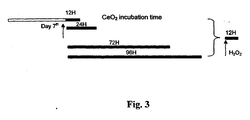
- Fig. 3 shows a treatment timeline with CeO 2 incubation after the 7 th day of treatment at the time intervals of 12 hours, 24 hours, 72 hours and 96 hours with each treated sample subsequently exposed to 12 hours incubation time with H 2 O 2 .
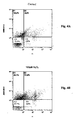
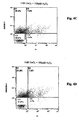
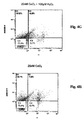
- Figures 4A - 4H are representative flow cytometry plots of retinal neurons with and without incubation with CeO 2 nanoparticles. Measurements were taken after 96 hours. The cytometry plot shows activity of approximately 10,000 cells in four quadrants, as described below.
- C1 represents the percentage of 10,000 cells showing Annexin V positive signals, which are interpreted to indicate the percentage of 10,000 cells undergoing apoptosis.
- C2 represents the percentage of 10,000 cells showing both Annexin V and PI positive signals, which is interpreted as the percentage of 10,000 cells which are in late apoptotic or necrotic stage. (AnnexinV signals apoptotic stage; PI signals necrotic stage.)
- C3 represents the percentage of 10,000 cells showing neither Annexin V nor PI positive signals, which is interpreted as the percentage of 10,000 cells which are still viable.
- C4 represents the percentage of 10,000 cells showing a PI positive signal, which is interpreted as the percentage of 10,000 cells in a necrotic stage.
- Quadrants C2 and C4 show the percentage of 10,000 cells committed to die. In quadrant C1 the percentage of 10,000 cells undergoing apoptosis are shown and some may be salvaged. It is important to observe the percentage of 10,000 cells in quadrant C2 for the efficacy of the cerium oxide treatment.
- Fig. 4A Focusing on the viable cells, the control in Fig. 4A has no CeO 2 nanoparticle treatment and 73.9% of the cell population is viable after 96 hours.
- Fig. 4B is treated with 100 ⁇ M H 2 O 2 , causing a deadly assault and leaving the lowest percentage (57.7%) of viable cells.
- the addition of gradually increasing concentrations of cerium oxide with 100 [mu]M H 2 O 2 are shown in Figures 4C - 4G .
- Fig. 4C is treated with 1nM CeO 2 nanoparticles and 100 ⁇ M H 2 O 2 and 60.6% of the cell population remains viable.
- Fig. 4D is treated with 3nM CeO 2 nanoparticles and 100 ⁇ M H 2 O 2 and 67.0% of the cell population is viable.
- Fig. 4E is treated with 5nM CeO 2 nanoparticles and 100 ⁇ M H 2 O 2 , with 68.9% of the cell population remaining viable.
- Fig. 4F is treated with 10nM CeO 2 nanoparticles and 100 ⁇ M H 2 O 2 and 72.6% of the cell population is viable.
- Fig. 4G is treated with 20nM CeO 2 nanoparticles and 100 ⁇ M H 2 O 2 and 72.3% of the cell population remains viable.
- Fig. 4H is treated with 20nM CeO 2 nanoparticles without the addition of H 2 O 2 and 73.4% of the cell population remains viable showing that the CeO 2 nanoparticles alone have no negative effect on the cell population.
- FIG. 4A The data in Figures 4A - 4H can also be summarized from the analysis of cells undergoing apoptosis as shown in quadrant C1.
- the control, Fig. 4A shows 16.2% of cells undergoing apoptosis under normal conditions, without any treatment, after 96 hours.
- Fig. 4B shows 26.1% of cells undergoing apoptosis after the 100 ⁇ M H 2 O 2 challenge.
- Figures 4C - 4G show there are 28.3%, 21.9%, 22.2%, 18.5% and 15.8% of cells undergoing apoptosis with 1, 3, 5, 10 and 20nM CeO 2 nanoparticle treatment, respectively.
- Fig. 4H shows 15.7% of cells undergoing apoptosis with 20nM CeO 2 nanoparticle treatment, which is a slight improvement over no treatment at all as shown by the control in Fig. 4A .
- cerium oxide nanoparticles inhibit apoptosis in retinal neurons in vitro in a dose and time dependent manner.
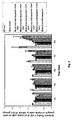
- Fig. 5 shows relative viable retinal neurons with and without incubation of different concentration of CeO 2 nanoparticles for different time periods.
- the concentration of CeO 2 nanoparticles were 1nM, 3nM, 5nM, 10nM, 20nM each with 100 ⁇ M H 2 O 2 ; one sample was treated with only 100 ⁇ M H 2 O 2 and another sample was treated with only 20nM CeO 2 nanoparticles.
- the measurement of relative viable cells for each group was determined after 12 hours, 24 hours, 48 hours, 72 hours and 96 hours. The effects showed dose and time dependency.
- 5nM cerium oxide nanoparticles started to decrease the apoptosis at 24h of incubation. As incubation time increased, the protective effect from 5nM nanoparticles was more significantly increased. Additionally, 10nM and 20nM nanoparticles began to have effects late with 96h of incubation. (Statistical analysis was done by ANOVA, and Duncan test for post hoc analysis. Data are presented in M ⁇ S.D. n ⁇ 3, *p ⁇ 0.05, **p ⁇ 0.01). Fig. 5 shows that among the various treatment doses, 5nM CeO 2 nanoparticle treatment gave the earliest response with moderate protective effect and 20nM CeO 2 nanoparticle treatment gave the highest protective effect with late response.
- ROS reactive oxygen species
- Fig. 6 is an experimental paradigm showing the beginning of the CeO 2 nanoparticle treatment on the 7 th day and simultaneous incubation with H 2 O 2 and DCFH-DA and a timeline of exposure at 30 minutes, 12 hours, 24 hours, and 96 hours.
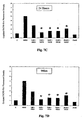
- Figures 7A - 7D show how the CeO 2 nanoparticles decreased the generation of ROS in a dose and time dependent manner.
- the ROS generated in the groups of 5nM, 10nM, and 20nM nanoparticle incubation were statistically significantly less than the group without treatment at the earliest (12h) of the tested points. 3nM nanoparticle incubation had an effect at 24h. However, 1nM nanoparticles did not show any significant decrease within the tested time point.
- the cerium oxide of the present invention includes those cerium compounds that have reacted with atmospheric oxygen to have stable oxide layers identified as CeO.sub.n1, wherein O is less than 1 or equal to 2 (0 ⁇ n1 ⁇ 2) or CeO 2 .
- the cerium oxide particles of the present invention are characterized as ultra-fine and are preferably in a size range of from 1 nanometer in diameter to 10 nanometers in diameter; more preferably from 1 nm to 7 nm. A judicious selection of particle size is required by someone skilled in the art.
- the results of testing in the above examples document the ability of cerium oxide nanoparticles to promote the longevity of retinal neurons in vitro and inhibit apoptosis induced by hydrogen peroxide on retinal neurons in vitro in a dose and time dependent manner. It has also been determined that cerium oxide nanoparticles decrease generation of intracellular reactive oxygen species in a dose and time dependent manner.
- the present invention represents a significant advance in the treatment in degenerative diseases of the retina, such as light-induced retina degeneration and age-related macular degeneration (AMD).
- a rat "light damage” model for retinal degeneration was used as the test system.
- the data demonstrate that the nanoceria prevented the death of retinal neurons when given prior to the "light insult”.
- the nanoceria particles protected the cells at the time of exposure as well as prevented the subsequent death seen days later in the untreated animals.
- the in vivo route of administration including, direct injection into the eye, intravenous, intraperitoneal, intramuscular, oral or topically on the eye or skin may improve the result.
- the time of administration of the nanoparticle, both before or after an insult is important.
- the nanoceria will also prevent the death of retinal cells due to glaucoma, diabetic retinopathy, inherited retinal degeneration (for example, Retinitis Pigmentosa), macular degeneration, retinal detachment or any disease or event which proceeds through the production of ROS. These particles should preserve and prolong vision when administered in vivo.
- Rats were injected intravitreally with 2 microliters ( ⁇ l) of nanoceria (concentrations from 0.1 to 1.0 micromolar) three days before they were exposed for six hours to a bright light (2700 LUX) in a light box.
- the animals were returned to normal lighting for 3.5 days, then killed, the eyes enucleated, fixed, processed for paraffin embedding, sectioned, and either stained with H & E or processed for immunocytochemistry.
- the number of photoreceptors remaining was determined with the H&E sections by using a microscope connected to a digital camera to record the images and then measuring the thickness of the outer nuclear layer every 240 microns from the optic nerve along both the superior and the inferior retina to the ora seratta. The data was then plotted as retina thickness versus the distance from the optic nerve head. The changes in other layers of retinal cells were recorded with images but not quantified. Cells actively undergoing apoptosis were also visualized using a commercially available "Apoptosis kit" and recording the microscopic images with a fluorescence microscope.
- nanoceria particles could be used in vivo for preventing blindness or death of retinal cells, or, more in general and outside the scope of the invention as claimed, for preventing the death in vivo of any other cell type in any disease.
- the chemical properties of CeO 2 nanoparticles enable the destruction of reactive oxygen species (ROS) produced by toxins and/or products of oxygen metabolism within cells.
- ROS reactive oxygen species
- nanoceria can protect any cell type from ROS induced damages.
- Diseases which could possibly be prevented, cured or ameliorated would include hereditary blindness, macular degeneration, glaucoma, diabetic retinopathy, retinal detachment, and other blinding diseases which involve ROS would be potentially solved.
- CNS central nervous system
- neuronal death in strokes degenerative diseases such as Alzheimer's Disease, Parkinson's, Huntington's Disease, and the death of peripheral nerves are preventable or at least the rate of cell death can be decreased and would result in prolonged function of the cells, tissues, organs, and individual.
Landscapes
- Health & Medical Sciences (AREA)
- Public Health (AREA)
- Chemical & Material Sciences (AREA)
- Veterinary Medicine (AREA)
- Medicinal Chemistry (AREA)
- Pharmacology & Pharmacy (AREA)
- Life Sciences & Earth Sciences (AREA)
- Animal Behavior & Ethology (AREA)
- General Health & Medical Sciences (AREA)
- Epidemiology (AREA)
- Inorganic Chemistry (AREA)
- Ophthalmology & Optometry (AREA)
- Engineering & Computer Science (AREA)
- Bioinformatics & Cheminformatics (AREA)
- Chemical Kinetics & Catalysis (AREA)
- General Chemical & Material Sciences (AREA)
- Nuclear Medicine, Radiotherapy & Molecular Imaging (AREA)
- Organic Chemistry (AREA)
- Pharmaceuticals Containing Other Organic And Inorganic Compounds (AREA)
- Medicines Containing Material From Animals Or Micro-Organisms (AREA)
- Polysaccharides And Polysaccharide Derivatives (AREA)
- Medicines That Contain Protein Lipid Enzymes And Other Medicines (AREA)
Claims (1)
- Composition pour une utilisation dans le traitement médical de maladies de la rétine choisies dans le groupe constitué par la dégénérescence rétinienne induite par la lumière et la dégénérescence maculaire liée à l'âge comprenant au moins l'un de CeO.sub.n1 où 0 < n1 < 2 ou CeO2 sous la forme de particules ultrafines
dans laquelle les particules ultrafines ont un diamètre dans une plage comprise entre 1 nanomètre (nm) et 10 nm.
Priority Applications (1)
| Application Number | Priority Date | Filing Date | Title |
|---|---|---|---|
| EP10181322A EP2359907A1 (fr) | 2005-04-29 | 2006-04-27 | Inhibition d'especes réactives de l'oxygène et protection de cellules mammaliennes |
Applications Claiming Priority (3)
| Application Number | Priority Date | Filing Date | Title |
|---|---|---|---|
| US67604305P | 2005-04-29 | 2005-04-29 | |
| US71663005P | 2005-09-13 | 2005-09-13 | |
| PCT/US2006/016050 WO2006118954A2 (fr) | 2005-04-29 | 2006-04-27 | Inhibition d'especes reactives de l'oxygene et protection de cellules mammaliennes |
Publications (3)
| Publication Number | Publication Date |
|---|---|
| EP1879570A2 EP1879570A2 (fr) | 2008-01-23 |
| EP1879570A4 EP1879570A4 (fr) | 2008-10-01 |
| EP1879570B1 true EP1879570B1 (fr) | 2010-09-29 |
Family
ID=37308499
Family Applications (2)
| Application Number | Title | Priority Date | Filing Date |
|---|---|---|---|
| EP06751658A Expired - Lifetime EP1879570B1 (fr) | 2005-04-29 | 2006-04-27 | Inhibition d'especes reactives de l'oxygene et protection de cellules mammaliennes |
| EP10181322A Withdrawn EP2359907A1 (fr) | 2005-04-29 | 2006-04-27 | Inhibition d'especes réactives de l'oxygène et protection de cellules mammaliennes |
Family Applications After (1)
| Application Number | Title | Priority Date | Filing Date |
|---|---|---|---|
| EP10181322A Withdrawn EP2359907A1 (fr) | 2005-04-29 | 2006-04-27 | Inhibition d'especes réactives de l'oxygène et protection de cellules mammaliennes |
Country Status (7)
| Country | Link |
|---|---|
| US (2) | US7727559B2 (fr) |
| EP (2) | EP1879570B1 (fr) |
| AT (1) | ATE482748T1 (fr) |
| AU (1) | AU2006242541B2 (fr) |
| CA (1) | CA2610296C (fr) |
| DE (1) | DE602006017199D1 (fr) |
| WO (1) | WO2006118954A2 (fr) |
Cited By (1)
| Publication number | Priority date | Publication date | Assignee | Title |
|---|---|---|---|---|
| CN108685847A (zh) * | 2018-06-29 | 2018-10-23 | 温州医科大学 | 一种针对氧化损伤诱导炎症的长效抗炎眼用分散制剂 |
Families Citing this family (27)
| Publication number | Priority date | Publication date | Assignee | Title |
|---|---|---|---|---|
| US20110111007A1 (en) * | 2005-04-29 | 2011-05-12 | Mcginnis James F | Inhibition of retinal cell degeneration or neovascularization by cerium oxide nanoparticles |
| US10857178B2 (en) * | 2005-06-27 | 2020-12-08 | Edward Via Virginia College Of Osteopathic Medicine | Cerium oxide nanoparticles for treatment and prevention of Alzheimer's disease, Parkinson's disease, and disorders associated with free radical production and/or mitochondrial dysfunction |
| WO2007002662A2 (fr) * | 2005-06-27 | 2007-01-04 | Edward Via Virginia College Of Osteopathic Medicine | Capacites de nanoparticules d'oxyde de cerium anti-inflammatoires, radioprotectrices et renforçant de la longevite |
| US9649337B2 (en) | 2005-06-27 | 2017-05-16 | Edward Via Virginia College Of Osteopathic Medicine | Cerium oxide nanoparticles for the treatment and prevention of stroke and cardiovascular disease |
| US7959949B2 (en) | 2006-04-27 | 2011-06-14 | University Of Central Florida Research Foundation, Inc. | Functionalized nanoceria composition for ophthalmic treatment |
| WO2008064357A2 (fr) * | 2006-11-22 | 2008-05-29 | University Of Florida Research Foundation, Inc. | Nanoparticules pour protéger les cellules du stress oxydatif |
| WO2008083401A1 (fr) | 2007-01-02 | 2008-07-10 | University Of Central Florida Research Foundation Inc. | Procédés et matériaux pour la stimulation de la prolifération de cellules souches |
| US9119391B1 (en) | 2007-07-16 | 2015-09-01 | University Of Central Florida Research Foundation, Inc. | Polymer coated ceria nanoparticles for selective cytoprotection |
| US8916199B1 (en) | 2008-04-25 | 2014-12-23 | University of Central Florida Research Foundation, Ind. | Inhibition of angiogenesis associated with ovarian cancer by nanoparticles of cerium oxide |
| WO2009132277A1 (fr) * | 2008-04-25 | 2009-10-29 | The Board Of Regents Of The University Of Oklahoma | Inhibition de la néovascularisation par des nanoparticules d'oxyde de cérium |
| US9207385B2 (en) | 2008-05-06 | 2015-12-08 | Qd Vision, Inc. | Lighting systems and devices including same |
| WO2009151515A1 (fr) | 2008-05-06 | 2009-12-17 | Qd Vision, Inc. | Dispositifs d'éclairage à semi-conducteurs comprenant des nanoparticules semi-conductrices confinées quantiques |
| US9127202B1 (en) | 2008-07-18 | 2015-09-08 | University Of Central Florida Research Foundation, Inc. | Biocompatible nano rare earth oxide upconverters for imaging and therapeutics |
| US20100098768A1 (en) * | 2008-10-16 | 2010-04-22 | Clarkson University | Method of neuroprotection from oxidant injury using metal oxide nanoparticles |
| US8883519B1 (en) | 2009-03-17 | 2014-11-11 | University Of Central Florida Research Foundation, Inc. | Oxidase activity of polymeric coated cerium oxide nanoparticles |
| WO2010129350A2 (fr) | 2009-04-28 | 2010-11-11 | Qd Vision, Inc. | Matériaux optiques, optiques, composants, dispositifs et procédés |
| US9585840B1 (en) | 2009-07-10 | 2017-03-07 | University Of Central Florida Research Foundation, Inc. | Redox active cerium oxide nanoparticles and associated methods |
| US8795731B1 (en) | 2009-10-12 | 2014-08-05 | University Of Central Florida Research Foundation, Inc. | Cerium oxide nanoparticle-based device for the detection of reactive oxygen species and monitoring of chronic inflammation |
| WO2012036786A1 (fr) | 2010-09-17 | 2012-03-22 | University Of L'aquila | Nanoparticules d'oxyde de cérium ciblées pour un antigène bêta-amyloïde de la maladie d'alzheimer |
| US11116792B1 (en) | 2010-12-22 | 2021-09-14 | Biocurity Holdings, Inc. | Cerium oxide nanoparticle formulation for use in skin radioprotection and associated methods |
| US8951539B1 (en) | 2011-06-07 | 2015-02-10 | University Of Central Florida Research Foundation, Inc. | Methods of promoting angiogenesis using cerium oxide nanoparticles |
| US9161950B2 (en) | 2011-09-21 | 2015-10-20 | University Of Central Florida Foundation, Inc. | Neuronal protection by cerium oxide nanoparticles |
| CA2869554A1 (fr) | 2012-04-04 | 2013-10-10 | Duke University | Procedes pour utiliser des nanoparticules d'oxyde de cerium pour attenuer ou proteger contre une atteinte par rayonnement |
| US9463437B2 (en) | 2013-02-14 | 2016-10-11 | University Of Central Florida Research Foundation, Inc. | Methods for scavenging nitric oxide using cerium oxide nanoparticles |
| US9669055B1 (en) | 2014-04-11 | 2017-06-06 | Marshall University Research Corporation | Methods for treating sepsis |
| US11389536B2 (en) | 2015-07-17 | 2022-07-19 | BioCurity Pharmaceuticals Inc. | Treatment of cancer with a combination of radiation, cerium oxide nanoparticles, and a chemotherapeutic agent |
| EP4074319A1 (fr) | 2021-04-15 | 2022-10-19 | Fundació Hospital Universitari Vall d'Hebron - Institut de Recerca | Composition topique ophtalmique avec des nanoparticules à cérium pour le traitement des maladies du segment postérieur de l' il |
Family Cites Families (10)
| Publication number | Priority date | Publication date | Assignee | Title |
|---|---|---|---|---|
| US676043A (en) | 1899-11-22 | 1901-06-11 | John C Lincoln | Electric drill. |
| US716630A (en) | 1902-03-24 | 1902-12-23 | August Eimer | Crucible. |
| AU5251999A (en) * | 1998-08-04 | 2000-02-28 | Wisconsin Alumni Research Foundation | Method of reducing retinal ganglion cell degeneration |
| EP1137395A1 (fr) * | 1998-12-11 | 2001-10-04 | Cognis Deutschland GmbH | Utilisation de filtres organiques a nanoparticules, pour la protection contre les uv |
| US7930285B2 (en) * | 2000-03-22 | 2011-04-19 | Comscore, Inc. | Systems for and methods of user demographic reporting usable for identifying users and collecting usage data |
| FR2809637B1 (fr) * | 2000-06-05 | 2003-01-24 | Rhodia Terres Rares | Dispersion colloidale d'un compose de cerium ou d'un compose de cerium et d'au moins un autre element choisi parmi les terres rares et des metaux de transition et comprenant un acide amine |
| EP1298159A4 (fr) * | 2000-07-05 | 2004-03-31 | Nippon Arc Co Ltd | Lamine transparent, lentille plastique pour monture de lunette et composition d'amor age |
| US8097270B2 (en) * | 2001-12-21 | 2012-01-17 | Novartis Ag | Use of nanoparticles as carriers for biocides in ophthalmic compositions |
| KR101087763B1 (ko) * | 2002-10-28 | 2011-11-30 | 닛산 가가쿠 고교 가부시키 가이샤 | 산화 세륨 입자 및 그 제조방법 |
| WO2004096146A2 (fr) * | 2003-04-25 | 2004-11-11 | Nolan Gerard M | Procede et composition pour prevenir, reduire et inverser les lesions neuronales ischemiques oculaires |
-
2006
- 2006-04-27 EP EP06751658A patent/EP1879570B1/fr not_active Expired - Lifetime
- 2006-04-27 AU AU2006242541A patent/AU2006242541B2/en not_active Ceased
- 2006-04-27 AT AT06751658T patent/ATE482748T1/de not_active IP Right Cessation
- 2006-04-27 WO PCT/US2006/016050 patent/WO2006118954A2/fr not_active Ceased
- 2006-04-27 CA CA2610296A patent/CA2610296C/fr not_active Expired - Fee Related
- 2006-04-27 EP EP10181322A patent/EP2359907A1/fr not_active Withdrawn
- 2006-04-27 US US11/412,665 patent/US7727559B2/en not_active Expired - Lifetime
- 2006-04-27 DE DE602006017199T patent/DE602006017199D1/de not_active Expired - Lifetime
-
2007
- 2007-04-27 US US11/796,347 patent/US7347987B2/en not_active Expired - Lifetime
Cited By (1)
| Publication number | Priority date | Publication date | Assignee | Title |
|---|---|---|---|---|
| CN108685847A (zh) * | 2018-06-29 | 2018-10-23 | 温州医科大学 | 一种针对氧化损伤诱导炎症的长效抗炎眼用分散制剂 |
Also Published As
| Publication number | Publication date |
|---|---|
| US20070202193A1 (en) | 2007-08-30 |
| EP2359907A1 (fr) | 2011-08-24 |
| US7347987B2 (en) | 2008-03-25 |
| DE602006017199D1 (de) | 2010-11-11 |
| WO2006118954A8 (fr) | 2007-08-23 |
| EP1879570A2 (fr) | 2008-01-23 |
| US20060246152A1 (en) | 2006-11-02 |
| US7727559B2 (en) | 2010-06-01 |
| WO2006118954A3 (fr) | 2007-05-24 |
| WO2006118954A2 (fr) | 2006-11-09 |
| ATE482748T1 (de) | 2010-10-15 |
| CA2610296A1 (fr) | 2006-11-09 |
| EP1879570A4 (fr) | 2008-10-01 |
| CA2610296C (fr) | 2016-06-14 |
| AU2006242541A1 (en) | 2006-11-09 |
| AU2006242541B2 (en) | 2011-12-08 |
Similar Documents
| Publication | Publication Date | Title |
|---|---|---|
| US7347987B2 (en) | Inhibition of reactive oxygen species and protection of mammalian cells | |
| Zia et al. | Insights into nanoparticles-induced neurotoxicity and cope up strategies | |
| Liu et al. | Astaxanthin attenuates cognitive deficits in Alzheimer’s disease models by reducing oxidative stress via the SIRT1/PGC-1α signaling pathway | |
| d’Amora et al. | Effects of metal oxide nanoparticles in zebrafish | |
| Passamaneck et al. | Cell proliferation is necessary for the regeneration of oral structures in the anthozoan cnidarian Nematostella vectensis | |
| KR101106344B1 (ko) | 구조수 중 미네랄 이온 | |
| Prasannaraj et al. | Enhanced cytotoxicity of biomolecules loaded metallic silver nanoparticles against human liver (HepG2) and prostate (PC3) cancer cell lines | |
| Heidari et al. | The effect of titanium dioxide nanoparticles on mice midbrain substantia nigra | |
| Sundararajan et al. | Investigation of therapeutic potential of cerium oxide nanoparticles in Alzheimer’s disease using transgenic Drosophila | |
| Marti et al. | Light-induced cell death of retinal photoreceptors in the absence of p53. | |
| Hasan et al. | RETRACTED ARTICLE: Roflumilast and tadalafil improve learning and memory deficits in intracerebroventricular Aβ1–42 rat model of Alzheimer’s disease through modulations of hippocampal cAMP/cGMP/BDNF signaling pathway | |
| Kim et al. | Au nanozyme-driven antioxidation for preventing frailty | |
| Chen et al. | Nanoceria particles prevent ROI-induced blindness | |
| Hou et al. | Multi-target nanocomposites for Alzheimer’s treatment via microenvironment modulation and β-amyloid plaque clearance | |
| Anguchamy et al. | Enhancing the neuroprotective effect of squid outer skin astaxanthin against rotenone-induced neurotoxicity in in-vitro model for Parkinson's disease | |
| Zhao et al. | Selenium nanoparticles decorated with polysaccharides from Sargassum fusiforme protects against 6-OHDA-induced neurotoxicity in PC12 cells and rat model of Parkinson's disease | |
| TW201538509A (zh) | 用於預防及治療神經退化性疾病之含鎳超氧化物岐化酶擬態化合物及其衍生物 | |
| Manikandaselvi et al. | Neuroprotective activity of S-allylcysteine on haloperidol induced Parkinson’s disease in albino mice | |
| Babu et al. | Single microinjection of L‐glutamate induces oxidative stress in discrete regions of rat brain | |
| Kumari et al. | Green Synthesis and Characterization of Gold Nanoparticles Using Withania somnifera Leaf Extract: In Vivo Biocompatibility with Embryonic Zebrafish and Antibacterial Activity | |
| CN108324711A (zh) | 一种化合物在拮抗蛋白聚积治疗老年痴呆方面的应用 | |
| Arafa et al. | Effect of intraperitoneal injection of curcumin nanoparticles on parotid salivary glands of diabetic albino rats | |
| Bawankule et al. | Protective effect of Ocimum sanctum on ethanol-induced oxidative stress in Swiss Albino Mice brain | |
| Jalili et al. | Effects of royal jelly on the prefrontal cortex in a rat-morphine toxicity model | |
| Bianchi et al. | The relationship between lipofuscin and neuromelanin in some sites of the nervous system of the horse. |
Legal Events
| Date | Code | Title | Description |
|---|---|---|---|
| PUAI | Public reference made under article 153(3) epc to a published international application that has entered the european phase |
Free format text: ORIGINAL CODE: 0009012 |
|
| 17P | Request for examination filed |
Effective date: 20071129 |
|
| AK | Designated contracting states |
Kind code of ref document: A2 Designated state(s): AT BE BG CH CY CZ DE DK EE ES FI FR GB GR HU IE IS IT LI LT LU LV MC NL PL PT RO SE SI SK TR |
|
| AX | Request for extension of the european patent |
Extension state: AL BA HR MK YU |
|
| DAX | Request for extension of the european patent (deleted) | ||
| A4 | Supplementary search report drawn up and despatched |
Effective date: 20080902 |
|
| RIC1 | Information provided on ipc code assigned before grant |
Ipc: A61P 27/02 20060101ALI20080825BHEP Ipc: G02B 3/00 20060101ALI20080825BHEP Ipc: G02B 7/00 20060101ALI20080825BHEP Ipc: B32B 23/02 20060101ALI20080825BHEP Ipc: A61K 33/24 20060101ALI20080825BHEP Ipc: G02C 7/02 20060101AFI20080825BHEP |
|
| 17Q | First examination report despatched |
Effective date: 20090511 |
|
| GRAP | Despatch of communication of intention to grant a patent |
Free format text: ORIGINAL CODE: EPIDOSNIGR1 |
|
| RIC1 | Information provided on ipc code assigned before grant |
Ipc: A61P 27/02 20060101AFI20100304BHEP Ipc: A61K 33/24 20060101ALI20100304BHEP |
|
| GRAS | Grant fee paid |
Free format text: ORIGINAL CODE: EPIDOSNIGR3 |
|
| GRAA | (expected) grant |
Free format text: ORIGINAL CODE: 0009210 |
|
| AK | Designated contracting states |
Kind code of ref document: B1 Designated state(s): AT BE BG CH CY CZ DE DK EE ES FI FR GB GR HU IE IS IT LI LT LU LV MC NL PL PT RO SE SI SK TR |
|
| REG | Reference to a national code |
Ref country code: GB Ref legal event code: FG4D |
|
| REG | Reference to a national code |
Ref country code: CH Ref legal event code: EP |
|
| REG | Reference to a national code |
Ref country code: IE Ref legal event code: FG4D |
|
| REF | Corresponds to: |
Ref document number: 602006017199 Country of ref document: DE Date of ref document: 20101111 Kind code of ref document: P |
|
| PG25 | Lapsed in a contracting state [announced via postgrant information from national office to epo] |
Ref country code: LT Free format text: LAPSE BECAUSE OF FAILURE TO SUBMIT A TRANSLATION OF THE DESCRIPTION OR TO PAY THE FEE WITHIN THE PRESCRIBED TIME-LIMIT Effective date: 20100929 Ref country code: FI Free format text: LAPSE BECAUSE OF FAILURE TO SUBMIT A TRANSLATION OF THE DESCRIPTION OR TO PAY THE FEE WITHIN THE PRESCRIBED TIME-LIMIT Effective date: 20100929 Ref country code: AT Free format text: LAPSE BECAUSE OF FAILURE TO SUBMIT A TRANSLATION OF THE DESCRIPTION OR TO PAY THE FEE WITHIN THE PRESCRIBED TIME-LIMIT Effective date: 20100929 |
|
| REG | Reference to a national code |
Ref country code: CH Ref legal event code: PK Ref country code: CH Ref legal event code: NV Representative=s name: OK PAT AG PATENTE MARKEN LIZENZEN |
|
| REG | Reference to a national code |
Ref country code: NL Ref legal event code: VDEP Effective date: 20100929 |
|
| LTIE | Lt: invalidation of european patent or patent extension |
Effective date: 20100929 |
|
| PG25 | Lapsed in a contracting state [announced via postgrant information from national office to epo] |
Ref country code: SI Free format text: LAPSE BECAUSE OF FAILURE TO SUBMIT A TRANSLATION OF THE DESCRIPTION OR TO PAY THE FEE WITHIN THE PRESCRIBED TIME-LIMIT Effective date: 20100929 |
|
| PG25 | Lapsed in a contracting state [announced via postgrant information from national office to epo] |
Ref country code: LV Free format text: LAPSE BECAUSE OF FAILURE TO SUBMIT A TRANSLATION OF THE DESCRIPTION OR TO PAY THE FEE WITHIN THE PRESCRIBED TIME-LIMIT Effective date: 20100929 Ref country code: GR Free format text: LAPSE BECAUSE OF FAILURE TO SUBMIT A TRANSLATION OF THE DESCRIPTION OR TO PAY THE FEE WITHIN THE PRESCRIBED TIME-LIMIT Effective date: 20101230 Ref country code: SE Free format text: LAPSE BECAUSE OF FAILURE TO SUBMIT A TRANSLATION OF THE DESCRIPTION OR TO PAY THE FEE WITHIN THE PRESCRIBED TIME-LIMIT Effective date: 20100929 |
|
| PG25 | Lapsed in a contracting state [announced via postgrant information from national office to epo] |
Ref country code: NL Free format text: LAPSE BECAUSE OF FAILURE TO SUBMIT A TRANSLATION OF THE DESCRIPTION OR TO PAY THE FEE WITHIN THE PRESCRIBED TIME-LIMIT Effective date: 20100929 Ref country code: RO Free format text: LAPSE BECAUSE OF FAILURE TO SUBMIT A TRANSLATION OF THE DESCRIPTION OR TO PAY THE FEE WITHIN THE PRESCRIBED TIME-LIMIT Effective date: 20100929 Ref country code: CZ Free format text: LAPSE BECAUSE OF FAILURE TO SUBMIT A TRANSLATION OF THE DESCRIPTION OR TO PAY THE FEE WITHIN THE PRESCRIBED TIME-LIMIT Effective date: 20100929 Ref country code: SK Free format text: LAPSE BECAUSE OF FAILURE TO SUBMIT A TRANSLATION OF THE DESCRIPTION OR TO PAY THE FEE WITHIN THE PRESCRIBED TIME-LIMIT Effective date: 20100929 Ref country code: EE Free format text: LAPSE BECAUSE OF FAILURE TO SUBMIT A TRANSLATION OF THE DESCRIPTION OR TO PAY THE FEE WITHIN THE PRESCRIBED TIME-LIMIT Effective date: 20100929 Ref country code: IS Free format text: LAPSE BECAUSE OF FAILURE TO SUBMIT A TRANSLATION OF THE DESCRIPTION OR TO PAY THE FEE WITHIN THE PRESCRIBED TIME-LIMIT Effective date: 20110129 Ref country code: PT Free format text: LAPSE BECAUSE OF FAILURE TO SUBMIT A TRANSLATION OF THE DESCRIPTION OR TO PAY THE FEE WITHIN THE PRESCRIBED TIME-LIMIT Effective date: 20110131 |
|
| PG25 | Lapsed in a contracting state [announced via postgrant information from national office to epo] |
Ref country code: BE Free format text: LAPSE BECAUSE OF FAILURE TO SUBMIT A TRANSLATION OF THE DESCRIPTION OR TO PAY THE FEE WITHIN THE PRESCRIBED TIME-LIMIT Effective date: 20100929 |
|
| REG | Reference to a national code |
Ref country code: DE Ref legal event code: R081 Ref document number: 602006017199 Country of ref document: DE Owner name: THE BOARD OF REGENTS OF THE UNIVERSITY OF OKLA, US Free format text: FORMER OWNER: UNIVERSITY OF CENTRAL FLORIDA R, UNIVERSITY OF OKLAHOMA, CORP., , US Effective date: 20110429 Ref country code: DE Ref legal event code: R081 Ref document number: 602006017199 Country of ref document: DE Owner name: UNIVERSITY OF CENTRAL FLORIDA RESEARCH FOUNDAT, US Free format text: FORMER OWNER: UNIVERSITY OF CENTRAL FLORIDA R, UNIVERSITY OF OKLAHOMA, CORP., , US Effective date: 20110429 Ref country code: DE Ref legal event code: R081 Ref document number: 602006017199 Country of ref document: DE Owner name: THE BOARD OF REGENTS OF THE UNIVERSITY OF OKLA, US Free format text: FORMER OWNERS: UNIVERSITY OF CENTRAL FLORIDA RESEARCH FOUNDATION, INC., ORLANDO, FLA., US; UNIVERSITY OF OKLAHOMA, CORP., OKLAHOMA, OKLA., US Effective date: 20110429 Ref country code: DE Ref legal event code: R081 Ref document number: 602006017199 Country of ref document: DE Owner name: UNIVERSITY OF CENTRAL FLORIDA RESEARCH FOUNDAT, US Free format text: FORMER OWNERS: UNIVERSITY OF CENTRAL FLORIDA RESEARCH FOUNDATION, INC., ORLANDO, FLA., US; UNIVERSITY OF OKLAHOMA, CORP., OKLAHOMA, OKLA., US Effective date: 20110429 |
|
| PG25 | Lapsed in a contracting state [announced via postgrant information from national office to epo] |
Ref country code: ES Free format text: LAPSE BECAUSE OF FAILURE TO SUBMIT A TRANSLATION OF THE DESCRIPTION OR TO PAY THE FEE WITHIN THE PRESCRIBED TIME-LIMIT Effective date: 20110109 |
|
| PLBE | No opposition filed within time limit |
Free format text: ORIGINAL CODE: 0009261 |
|
| STAA | Information on the status of an ep patent application or granted ep patent |
Free format text: STATUS: NO OPPOSITION FILED WITHIN TIME LIMIT |
|
| REG | Reference to a national code |
Ref country code: GB Ref legal event code: S117 Free format text: REQUEST FILED; REQUEST FOR CORRECTION UNDER SECTION 117 FILED ON 6 JANUARY 2011 |
|
| REG | Reference to a national code |
Ref country code: GB Ref legal event code: S117 Free format text: CORRECTIONS ALLOWED; REQUEST FOR CORRECTION UNDER SECTION 117 FILED ON 6 JANUARY 2011 ALLOWED ON 21 JULY 2011 |
|
| REG | Reference to a national code |
Ref country code: FR Ref legal event code: CD |
|
| PG25 | Lapsed in a contracting state [announced via postgrant information from national office to epo] |
Ref country code: DK Free format text: LAPSE BECAUSE OF FAILURE TO SUBMIT A TRANSLATION OF THE DESCRIPTION OR TO PAY THE FEE WITHIN THE PRESCRIBED TIME-LIMIT Effective date: 20100929 Ref country code: PL Free format text: LAPSE BECAUSE OF FAILURE TO SUBMIT A TRANSLATION OF THE DESCRIPTION OR TO PAY THE FEE WITHIN THE PRESCRIBED TIME-LIMIT Effective date: 20100929 |
|
| REG | Reference to a national code |
Ref country code: DE Ref legal event code: R097 Ref document number: 602006017199 Country of ref document: DE Effective date: 20110630 |
|
| PG25 | Lapsed in a contracting state [announced via postgrant information from national office to epo] |
Ref country code: MC Free format text: LAPSE BECAUSE OF NON-PAYMENT OF DUE FEES Effective date: 20110430 |
|
| PG25 | Lapsed in a contracting state [announced via postgrant information from national office to epo] |
Ref country code: CY Free format text: LAPSE BECAUSE OF FAILURE TO SUBMIT A TRANSLATION OF THE DESCRIPTION OR TO PAY THE FEE WITHIN THE PRESCRIBED TIME-LIMIT Effective date: 20100929 Ref country code: LU Free format text: LAPSE BECAUSE OF NON-PAYMENT OF DUE FEES Effective date: 20110427 |
|
| PG25 | Lapsed in a contracting state [announced via postgrant information from national office to epo] |
Ref country code: BG Free format text: LAPSE BECAUSE OF FAILURE TO SUBMIT A TRANSLATION OF THE DESCRIPTION OR TO PAY THE FEE WITHIN THE PRESCRIBED TIME-LIMIT Effective date: 20101229 Ref country code: TR Free format text: LAPSE BECAUSE OF FAILURE TO SUBMIT A TRANSLATION OF THE DESCRIPTION OR TO PAY THE FEE WITHIN THE PRESCRIBED TIME-LIMIT Effective date: 20100929 |
|
| PG25 | Lapsed in a contracting state [announced via postgrant information from national office to epo] |
Ref country code: HU Free format text: LAPSE BECAUSE OF FAILURE TO SUBMIT A TRANSLATION OF THE DESCRIPTION OR TO PAY THE FEE WITHIN THE PRESCRIBED TIME-LIMIT Effective date: 20100929 |
|
| REG | Reference to a national code |
Ref country code: FR Ref legal event code: PLFP Year of fee payment: 10 |
|
| REG | Reference to a national code |
Ref country code: FR Ref legal event code: PLFP Year of fee payment: 11 |
|
| REG | Reference to a national code |
Ref country code: FR Ref legal event code: PLFP Year of fee payment: 12 |
|
| PGFP | Annual fee paid to national office [announced via postgrant information from national office to epo] |
Ref country code: DE Payment date: 20170426 Year of fee payment: 12 Ref country code: CH Payment date: 20170421 Year of fee payment: 12 Ref country code: FR Payment date: 20170420 Year of fee payment: 12 Ref country code: IE Payment date: 20170419 Year of fee payment: 12 Ref country code: GB Payment date: 20170419 Year of fee payment: 12 |
|
| PGFP | Annual fee paid to national office [announced via postgrant information from national office to epo] |
Ref country code: IT Payment date: 20170428 Year of fee payment: 12 |
|
| REG | Reference to a national code |
Ref country code: DE Ref legal event code: R119 Ref document number: 602006017199 Country of ref document: DE |
|
| REG | Reference to a national code |
Ref country code: CH Ref legal event code: PL |
|
| GBPC | Gb: european patent ceased through non-payment of renewal fee |
Effective date: 20180427 |
|
| REG | Reference to a national code |
Ref country code: IE Ref legal event code: MM4A |
|
| PG25 | Lapsed in a contracting state [announced via postgrant information from national office to epo] |
Ref country code: DE Free format text: LAPSE BECAUSE OF NON-PAYMENT OF DUE FEES Effective date: 20181101 |
|
| PG25 | Lapsed in a contracting state [announced via postgrant information from national office to epo] |
Ref country code: CH Free format text: LAPSE BECAUSE OF NON-PAYMENT OF DUE FEES Effective date: 20180430 Ref country code: LI Free format text: LAPSE BECAUSE OF NON-PAYMENT OF DUE FEES Effective date: 20180430 Ref country code: GB Free format text: LAPSE BECAUSE OF NON-PAYMENT OF DUE FEES Effective date: 20180427 |
|
| PG25 | Lapsed in a contracting state [announced via postgrant information from national office to epo] |
Ref country code: IE Free format text: LAPSE BECAUSE OF NON-PAYMENT OF DUE FEES Effective date: 20180427 Ref country code: FR Free format text: LAPSE BECAUSE OF NON-PAYMENT OF DUE FEES Effective date: 20180430 Ref country code: IT Free format text: LAPSE BECAUSE OF NON-PAYMENT OF DUE FEES Effective date: 20180427 |