EP1878811A1 - Process for manufacturing iron-carbon-manganese austenitic steel sheet with excellent resistance to delayed cracking, and sheet thus produced - Google Patents
Process for manufacturing iron-carbon-manganese austenitic steel sheet with excellent resistance to delayed cracking, and sheet thus produced Download PDFInfo
- Publication number
- EP1878811A1 EP1878811A1 EP06291136A EP06291136A EP1878811A1 EP 1878811 A1 EP1878811 A1 EP 1878811A1 EP 06291136 A EP06291136 A EP 06291136A EP 06291136 A EP06291136 A EP 06291136A EP 1878811 A1 EP1878811 A1 EP 1878811A1
- Authority
- EP
- European Patent Office
- Prior art keywords
- steel sheet
- steel
- weight
- chosen
- sheet according
- Prior art date
- Legal status (The legal status is an assumption and is not a legal conclusion. Google has not performed a legal analysis and makes no representation as to the accuracy of the status listed.)
- Withdrawn
Links
Images

Classifications
-
- C—CHEMISTRY; METALLURGY
- C21—METALLURGY OF IRON
- C21D—MODIFYING THE PHYSICAL STRUCTURE OF FERROUS METALS; GENERAL DEVICES FOR HEAT TREATMENT OF FERROUS OR NON-FERROUS METALS OR ALLOYS; MAKING METAL MALLEABLE, e.g. BY DECARBURISATION OR TEMPERING
- C21D9/00—Heat treatment, e.g. annealing, hardening, quenching or tempering, adapted for particular articles; Furnaces therefor
- C21D9/46—Heat treatment, e.g. annealing, hardening, quenching or tempering, adapted for particular articles; Furnaces therefor for sheet metals
-
- B—PERFORMING OPERATIONS; TRANSPORTING
- B32—LAYERED PRODUCTS
- B32B—LAYERED PRODUCTS, i.e. PRODUCTS BUILT-UP OF STRATA OF FLAT OR NON-FLAT, e.g. CELLULAR OR HONEYCOMB, FORM
- B32B15/00—Layered products comprising a layer of metal
- B32B15/01—Layered products comprising a layer of metal all layers being exclusively metallic
- B32B15/013—Layered products comprising a layer of metal all layers being exclusively metallic one layer being formed of an iron alloy or steel, another layer being formed of a metal other than iron or aluminium
-
- C—CHEMISTRY; METALLURGY
- C21—METALLURGY OF IRON
- C21D—MODIFYING THE PHYSICAL STRUCTURE OF FERROUS METALS; GENERAL DEVICES FOR HEAT TREATMENT OF FERROUS OR NON-FERROUS METALS OR ALLOYS; MAKING METAL MALLEABLE, e.g. BY DECARBURISATION OR TEMPERING
- C21D1/00—General methods or devices for heat treatment, e.g. annealing, hardening, quenching or tempering
- C21D1/26—Methods of annealing
-
- C—CHEMISTRY; METALLURGY
- C21—METALLURGY OF IRON
- C21D—MODIFYING THE PHYSICAL STRUCTURE OF FERROUS METALS; GENERAL DEVICES FOR HEAT TREATMENT OF FERROUS OR NON-FERROUS METALS OR ALLOYS; MAKING METAL MALLEABLE, e.g. BY DECARBURISATION OR TEMPERING
- C21D1/00—General methods or devices for heat treatment, e.g. annealing, hardening, quenching or tempering
- C21D1/34—Methods of heating
- C21D1/42—Induction heating
-
- C—CHEMISTRY; METALLURGY
- C21—METALLURGY OF IRON
- C21D—MODIFYING THE PHYSICAL STRUCTURE OF FERROUS METALS; GENERAL DEVICES FOR HEAT TREATMENT OF FERROUS OR NON-FERROUS METALS OR ALLOYS; MAKING METAL MALLEABLE, e.g. BY DECARBURISATION OR TEMPERING
- C21D1/00—General methods or devices for heat treatment, e.g. annealing, hardening, quenching or tempering
- C21D1/74—Methods of treatment in inert gas, controlled atmosphere, vacuum or pulverulent material
- C21D1/767—Methods of treatment in inert gas, controlled atmosphere, vacuum or pulverulent material with forced gas circulation; Reheating thereof
-
- C—CHEMISTRY; METALLURGY
- C21—METALLURGY OF IRON
- C21D—MODIFYING THE PHYSICAL STRUCTURE OF FERROUS METALS; GENERAL DEVICES FOR HEAT TREATMENT OF FERROUS OR NON-FERROUS METALS OR ALLOYS; MAKING METAL MALLEABLE, e.g. BY DECARBURISATION OR TEMPERING
- C21D6/00—Heat treatment of ferrous alloys
- C21D6/001—Heat treatment of ferrous alloys containing Ni
-
- C—CHEMISTRY; METALLURGY
- C21—METALLURGY OF IRON
- C21D—MODIFYING THE PHYSICAL STRUCTURE OF FERROUS METALS; GENERAL DEVICES FOR HEAT TREATMENT OF FERROUS OR NON-FERROUS METALS OR ALLOYS; MAKING METAL MALLEABLE, e.g. BY DECARBURISATION OR TEMPERING
- C21D6/00—Heat treatment of ferrous alloys
- C21D6/004—Heat treatment of ferrous alloys containing Cr and Ni
-
- C—CHEMISTRY; METALLURGY
- C21—METALLURGY OF IRON
- C21D—MODIFYING THE PHYSICAL STRUCTURE OF FERROUS METALS; GENERAL DEVICES FOR HEAT TREATMENT OF FERROUS OR NON-FERROUS METALS OR ALLOYS; MAKING METAL MALLEABLE, e.g. BY DECARBURISATION OR TEMPERING
- C21D6/00—Heat treatment of ferrous alloys
- C21D6/005—Heat treatment of ferrous alloys containing Mn
-
- C—CHEMISTRY; METALLURGY
- C21—METALLURGY OF IRON
- C21D—MODIFYING THE PHYSICAL STRUCTURE OF FERROUS METALS; GENERAL DEVICES FOR HEAT TREATMENT OF FERROUS OR NON-FERROUS METALS OR ALLOYS; MAKING METAL MALLEABLE, e.g. BY DECARBURISATION OR TEMPERING
- C21D6/00—Heat treatment of ferrous alloys
- C21D6/008—Heat treatment of ferrous alloys containing Si
-
- C—CHEMISTRY; METALLURGY
- C21—METALLURGY OF IRON
- C21D—MODIFYING THE PHYSICAL STRUCTURE OF FERROUS METALS; GENERAL DEVICES FOR HEAT TREATMENT OF FERROUS OR NON-FERROUS METALS OR ALLOYS; MAKING METAL MALLEABLE, e.g. BY DECARBURISATION OR TEMPERING
- C21D8/00—Modifying the physical properties of ferrous metals or ferrous alloys by deformation combined with, or followed by, heat treatment
- C21D8/02—Modifying the physical properties of ferrous metals or ferrous alloys by deformation combined with, or followed by, heat treatment during manufacturing of plates or strips
-
- C—CHEMISTRY; METALLURGY
- C21—METALLURGY OF IRON
- C21D—MODIFYING THE PHYSICAL STRUCTURE OF FERROUS METALS; GENERAL DEVICES FOR HEAT TREATMENT OF FERROUS OR NON-FERROUS METALS OR ALLOYS; MAKING METAL MALLEABLE, e.g. BY DECARBURISATION OR TEMPERING
- C21D8/00—Modifying the physical properties of ferrous metals or ferrous alloys by deformation combined with, or followed by, heat treatment
- C21D8/02—Modifying the physical properties of ferrous metals or ferrous alloys by deformation combined with, or followed by, heat treatment during manufacturing of plates or strips
- C21D8/0221—Modifying the physical properties of ferrous metals or ferrous alloys by deformation combined with, or followed by, heat treatment during manufacturing of plates or strips characterised by the working steps
- C21D8/0236—Cold rolling
-
- C—CHEMISTRY; METALLURGY
- C22—METALLURGY; FERROUS OR NON-FERROUS ALLOYS; TREATMENT OF ALLOYS OR NON-FERROUS METALS
- C22C—ALLOYS
- C22C38/00—Ferrous alloys, e.g. steel alloys
- C22C38/001—Ferrous alloys, e.g. steel alloys containing N
-
- C—CHEMISTRY; METALLURGY
- C22—METALLURGY; FERROUS OR NON-FERROUS ALLOYS; TREATMENT OF ALLOYS OR NON-FERROUS METALS
- C22C—ALLOYS
- C22C38/00—Ferrous alloys, e.g. steel alloys
- C22C38/002—Ferrous alloys, e.g. steel alloys containing In, Mg, or other elements not provided for in one single group C22C38/001 - C22C38/60
-
- C—CHEMISTRY; METALLURGY
- C22—METALLURGY; FERROUS OR NON-FERROUS ALLOYS; TREATMENT OF ALLOYS OR NON-FERROUS METALS
- C22C—ALLOYS
- C22C38/00—Ferrous alloys, e.g. steel alloys
- C22C38/02—Ferrous alloys, e.g. steel alloys containing silicon
-
- C—CHEMISTRY; METALLURGY
- C22—METALLURGY; FERROUS OR NON-FERROUS ALLOYS; TREATMENT OF ALLOYS OR NON-FERROUS METALS
- C22C—ALLOYS
- C22C38/00—Ferrous alloys, e.g. steel alloys
- C22C38/04—Ferrous alloys, e.g. steel alloys containing manganese
-
- C—CHEMISTRY; METALLURGY
- C22—METALLURGY; FERROUS OR NON-FERROUS ALLOYS; TREATMENT OF ALLOYS OR NON-FERROUS METALS
- C22C—ALLOYS
- C22C38/00—Ferrous alloys, e.g. steel alloys
- C22C38/06—Ferrous alloys, e.g. steel alloys containing aluminium
-
- C—CHEMISTRY; METALLURGY
- C22—METALLURGY; FERROUS OR NON-FERROUS ALLOYS; TREATMENT OF ALLOYS OR NON-FERROUS METALS
- C22C—ALLOYS
- C22C38/00—Ferrous alloys, e.g. steel alloys
- C22C38/08—Ferrous alloys, e.g. steel alloys containing nickel
-
- C—CHEMISTRY; METALLURGY
- C22—METALLURGY; FERROUS OR NON-FERROUS ALLOYS; TREATMENT OF ALLOYS OR NON-FERROUS METALS
- C22C—ALLOYS
- C22C38/00—Ferrous alloys, e.g. steel alloys
- C22C38/12—Ferrous alloys, e.g. steel alloys containing tungsten, tantalum, molybdenum, vanadium, or niobium
-
- C—CHEMISTRY; METALLURGY
- C22—METALLURGY; FERROUS OR NON-FERROUS ALLOYS; TREATMENT OF ALLOYS OR NON-FERROUS METALS
- C22C—ALLOYS
- C22C38/00—Ferrous alloys, e.g. steel alloys
- C22C38/16—Ferrous alloys, e.g. steel alloys containing copper
-
- C—CHEMISTRY; METALLURGY
- C23—COATING METALLIC MATERIAL; COATING MATERIAL WITH METALLIC MATERIAL; CHEMICAL SURFACE TREATMENT; DIFFUSION TREATMENT OF METALLIC MATERIAL; COATING BY VACUUM EVAPORATION, BY SPUTTERING, BY ION IMPLANTATION OR BY CHEMICAL VAPOUR DEPOSITION, IN GENERAL; INHIBITING CORROSION OF METALLIC MATERIAL OR INCRUSTATION IN GENERAL
- C23C—COATING METALLIC MATERIAL; COATING MATERIAL WITH METALLIC MATERIAL; SURFACE TREATMENT OF METALLIC MATERIAL BY DIFFUSION INTO THE SURFACE, BY CHEMICAL CONVERSION OR SUBSTITUTION; COATING BY VACUUM EVAPORATION, BY SPUTTERING, BY ION IMPLANTATION OR BY CHEMICAL VAPOUR DEPOSITION, IN GENERAL
- C23C2/00—Hot-dipping or immersion processes for applying the coating material in the molten state without affecting the shape; Apparatus therefor
- C23C2/04—Hot-dipping or immersion processes for applying the coating material in the molten state without affecting the shape; Apparatus therefor characterised by the coating material
- C23C2/06—Zinc or cadmium or alloys based thereon
-
- C—CHEMISTRY; METALLURGY
- C23—COATING METALLIC MATERIAL; COATING MATERIAL WITH METALLIC MATERIAL; CHEMICAL SURFACE TREATMENT; DIFFUSION TREATMENT OF METALLIC MATERIAL; COATING BY VACUUM EVAPORATION, BY SPUTTERING, BY ION IMPLANTATION OR BY CHEMICAL VAPOUR DEPOSITION, IN GENERAL; INHIBITING CORROSION OF METALLIC MATERIAL OR INCRUSTATION IN GENERAL
- C23C—COATING METALLIC MATERIAL; COATING MATERIAL WITH METALLIC MATERIAL; SURFACE TREATMENT OF METALLIC MATERIAL BY DIFFUSION INTO THE SURFACE, BY CHEMICAL CONVERSION OR SUBSTITUTION; COATING BY VACUUM EVAPORATION, BY SPUTTERING, BY ION IMPLANTATION OR BY CHEMICAL VAPOUR DEPOSITION, IN GENERAL
- C23C28/00—Coating for obtaining at least two superposed coatings either by methods not provided for in a single one of groups C23C2/00 - C23C26/00 or by combinations of methods provided for in subclasses C23C and C25C or C25D
- C23C28/02—Coating for obtaining at least two superposed coatings either by methods not provided for in a single one of groups C23C2/00 - C23C26/00 or by combinations of methods provided for in subclasses C23C and C25C or C25D only coatings only including layers of metallic material
- C23C28/021—Coating for obtaining at least two superposed coatings either by methods not provided for in a single one of groups C23C2/00 - C23C26/00 or by combinations of methods provided for in subclasses C23C and C25C or C25D only coatings only including layers of metallic material including at least one metal alloy layer
-
- C—CHEMISTRY; METALLURGY
- C23—COATING METALLIC MATERIAL; COATING MATERIAL WITH METALLIC MATERIAL; CHEMICAL SURFACE TREATMENT; DIFFUSION TREATMENT OF METALLIC MATERIAL; COATING BY VACUUM EVAPORATION, BY SPUTTERING, BY ION IMPLANTATION OR BY CHEMICAL VAPOUR DEPOSITION, IN GENERAL; INHIBITING CORROSION OF METALLIC MATERIAL OR INCRUSTATION IN GENERAL
- C23C—COATING METALLIC MATERIAL; COATING MATERIAL WITH METALLIC MATERIAL; SURFACE TREATMENT OF METALLIC MATERIAL BY DIFFUSION INTO THE SURFACE, BY CHEMICAL CONVERSION OR SUBSTITUTION; COATING BY VACUUM EVAPORATION, BY SPUTTERING, BY ION IMPLANTATION OR BY CHEMICAL VAPOUR DEPOSITION, IN GENERAL
- C23C28/00—Coating for obtaining at least two superposed coatings either by methods not provided for in a single one of groups C23C2/00 - C23C26/00 or by combinations of methods provided for in subclasses C23C and C25C or C25D
- C23C28/02—Coating for obtaining at least two superposed coatings either by methods not provided for in a single one of groups C23C2/00 - C23C26/00 or by combinations of methods provided for in subclasses C23C and C25C or C25D only coatings only including layers of metallic material
- C23C28/023—Coating for obtaining at least two superposed coatings either by methods not provided for in a single one of groups C23C2/00 - C23C26/00 or by combinations of methods provided for in subclasses C23C and C25C or C25D only coatings only including layers of metallic material only coatings of metal elements only
-
- C—CHEMISTRY; METALLURGY
- C23—COATING METALLIC MATERIAL; COATING MATERIAL WITH METALLIC MATERIAL; CHEMICAL SURFACE TREATMENT; DIFFUSION TREATMENT OF METALLIC MATERIAL; COATING BY VACUUM EVAPORATION, BY SPUTTERING, BY ION IMPLANTATION OR BY CHEMICAL VAPOUR DEPOSITION, IN GENERAL; INHIBITING CORROSION OF METALLIC MATERIAL OR INCRUSTATION IN GENERAL
- C23C—COATING METALLIC MATERIAL; COATING MATERIAL WITH METALLIC MATERIAL; SURFACE TREATMENT OF METALLIC MATERIAL BY DIFFUSION INTO THE SURFACE, BY CHEMICAL CONVERSION OR SUBSTITUTION; COATING BY VACUUM EVAPORATION, BY SPUTTERING, BY ION IMPLANTATION OR BY CHEMICAL VAPOUR DEPOSITION, IN GENERAL
- C23C28/00—Coating for obtaining at least two superposed coatings either by methods not provided for in a single one of groups C23C2/00 - C23C26/00 or by combinations of methods provided for in subclasses C23C and C25C or C25D
- C23C28/02—Coating for obtaining at least two superposed coatings either by methods not provided for in a single one of groups C23C2/00 - C23C26/00 or by combinations of methods provided for in subclasses C23C and C25C or C25D only coatings only including layers of metallic material
- C23C28/023—Coating for obtaining at least two superposed coatings either by methods not provided for in a single one of groups C23C2/00 - C23C26/00 or by combinations of methods provided for in subclasses C23C and C25C or C25D only coatings only including layers of metallic material only coatings of metal elements only
- C23C28/025—Coating for obtaining at least two superposed coatings either by methods not provided for in a single one of groups C23C2/00 - C23C26/00 or by combinations of methods provided for in subclasses C23C and C25C or C25D only coatings only including layers of metallic material only coatings of metal elements only with at least one zinc-based layer
-
- C—CHEMISTRY; METALLURGY
- C23—COATING METALLIC MATERIAL; COATING MATERIAL WITH METALLIC MATERIAL; CHEMICAL SURFACE TREATMENT; DIFFUSION TREATMENT OF METALLIC MATERIAL; COATING BY VACUUM EVAPORATION, BY SPUTTERING, BY ION IMPLANTATION OR BY CHEMICAL VAPOUR DEPOSITION, IN GENERAL; INHIBITING CORROSION OF METALLIC MATERIAL OR INCRUSTATION IN GENERAL
- C23C—COATING METALLIC MATERIAL; COATING MATERIAL WITH METALLIC MATERIAL; SURFACE TREATMENT OF METALLIC MATERIAL BY DIFFUSION INTO THE SURFACE, BY CHEMICAL CONVERSION OR SUBSTITUTION; COATING BY VACUUM EVAPORATION, BY SPUTTERING, BY ION IMPLANTATION OR BY CHEMICAL VAPOUR DEPOSITION, IN GENERAL
- C23C28/00—Coating for obtaining at least two superposed coatings either by methods not provided for in a single one of groups C23C2/00 - C23C26/00 or by combinations of methods provided for in subclasses C23C and C25C or C25D
- C23C28/02—Coating for obtaining at least two superposed coatings either by methods not provided for in a single one of groups C23C2/00 - C23C26/00 or by combinations of methods provided for in subclasses C23C and C25C or C25D only coatings only including layers of metallic material
- C23C28/028—Including graded layers in composition or in physical properties, e.g. density, porosity, grain size
-
- C—CHEMISTRY; METALLURGY
- C23—COATING METALLIC MATERIAL; COATING MATERIAL WITH METALLIC MATERIAL; CHEMICAL SURFACE TREATMENT; DIFFUSION TREATMENT OF METALLIC MATERIAL; COATING BY VACUUM EVAPORATION, BY SPUTTERING, BY ION IMPLANTATION OR BY CHEMICAL VAPOUR DEPOSITION, IN GENERAL; INHIBITING CORROSION OF METALLIC MATERIAL OR INCRUSTATION IN GENERAL
- C23C—COATING METALLIC MATERIAL; COATING MATERIAL WITH METALLIC MATERIAL; SURFACE TREATMENT OF METALLIC MATERIAL BY DIFFUSION INTO THE SURFACE, BY CHEMICAL CONVERSION OR SUBSTITUTION; COATING BY VACUUM EVAPORATION, BY SPUTTERING, BY ION IMPLANTATION OR BY CHEMICAL VAPOUR DEPOSITION, IN GENERAL
- C23C30/00—Coating with metallic material characterised only by the composition of the metallic material, i.e. not characterised by the coating process
-
- Y—GENERAL TAGGING OF NEW TECHNOLOGICAL DEVELOPMENTS; GENERAL TAGGING OF CROSS-SECTIONAL TECHNOLOGIES SPANNING OVER SEVERAL SECTIONS OF THE IPC; TECHNICAL SUBJECTS COVERED BY FORMER USPC CROSS-REFERENCE ART COLLECTIONS [XRACs] AND DIGESTS
- Y02—TECHNOLOGIES OR APPLICATIONS FOR MITIGATION OR ADAPTATION AGAINST CLIMATE CHANGE
- Y02P—CLIMATE CHANGE MITIGATION TECHNOLOGIES IN THE PRODUCTION OR PROCESSING OF GOODS
- Y02P10/00—Technologies related to metal processing
- Y02P10/25—Process efficiency
-
- Y—GENERAL TAGGING OF NEW TECHNOLOGICAL DEVELOPMENTS; GENERAL TAGGING OF CROSS-SECTIONAL TECHNOLOGIES SPANNING OVER SEVERAL SECTIONS OF THE IPC; TECHNICAL SUBJECTS COVERED BY FORMER USPC CROSS-REFERENCE ART COLLECTIONS [XRACs] AND DIGESTS
- Y10—TECHNICAL SUBJECTS COVERED BY FORMER USPC
- Y10T—TECHNICAL SUBJECTS COVERED BY FORMER US CLASSIFICATION
- Y10T428/00—Stock material or miscellaneous articles
- Y10T428/12—All metal or with adjacent metals
- Y10T428/12493—Composite; i.e., plural, adjacent, spatially distinct metal components [e.g., layers, joint, etc.]
- Y10T428/12771—Transition metal-base component
- Y10T428/12785—Group IIB metal-base component
- Y10T428/12792—Zn-base component
- Y10T428/12799—Next to Fe-base component [e.g., galvanized]
Definitions
- the invention relates to the manufacture of hot-rolled and cold-rolled sheet from iron-carbon-manganese austenitic steels having very high mechanical properties, and especially a high mechanical strength combined with excellent resistance to delayed cracking.
- patent FR 2 829 775 discloses for example austenitic alloys having as main elements iron, carbon (up to 2%) and manganese (between 10 and 40%) which can be hot-rolled or cold-rolled and have a strength that may exceed 1200 MPa.
- the mode of deformation of these steels depends on the stacking fault energy : for a sufficiently high stacking fault energy, the observed mode of mechanical deformation is twinning, which results in a high work hardenability. By acting as an obstacle to the propagation of dislocations, the twins increase the flow stress.
- small amounts of hydrogen may be introduced at some stages of steel fabrication such as chemical or electrochemical pickling, annealing under special atmospheres, electroplating or hot dip galvanizing and during Plasma Vacuum Deposition (PVD). Subsequent machining operations using lubricating oils and greases may be also a cause for hydrogen production after decomposition of these substances at high temperatures.
- PVD Plasma Vacuum Deposition
- delayed cracking may be encountered in the fabrication of bolts made out medium-carbon steels, which includes a cold forging step.
- US patent US 6,261,388 discloses cold forging steels for the fabrication of wires and bars for bolts, gears or shafts.
- the main elements of the composition are: C: 0,1-0,4%, Mn: 0,3-1%, Si ⁇ 0,15%, Cr: 0,5-1,2%, B: 0,0003-0,005%, Ti: 0,020-0,100% and the matrix contains fine Ti or Nb carbonitrides for limiting grain coarsening.
- Good resistance to delayed cracking of steels with an ultimate tensile strength (UTS) of 1000-1400MPa is obtained by forming a dense scale enriched in Cr, thereby increasing corrosion resistance and thus reducing the amount of hydrogen produced in the process of corrosion.
- Reduction of sulphur and phosphorus were also found as solutions to increase delayed cracking resistance. However, these solutions address to quenched and tempered steels whose microstructure totally differs from the fully austenitic steels which will be considered here.
- the object of the invention is therefore to provide a hot-rolled or cold-rolled steel sheet or strip which has a ultimate tensile strength of greater than 900 MPa, a fracture elongation higher than 50%, which is particularly suitable for cold forming and has a very high resistance to delayed cracking at every stage of fabrication or use.
- the object of the invention is also to provide a coated product whose resistance to delayed cracking could be assessed with simple metallographic observations.
- one subject of the invention is an austenitic steel sheet, or strip, the chemical composition of which comprises, the contents being expressed by weight: 0,35% ⁇ C ⁇ 1,05%, 15% ⁇ Mn ⁇ 26%, Si ⁇ 3%, Al ⁇ 0,050%, S ⁇ 0,030%, P ⁇ 0,080% , N ⁇ 0,1%, at least one metallic element X chosen among vanadium, titanium, niobium, molybdenum, chromium: 0,050% ⁇ V ⁇ 0,50%, 0,040% ⁇ Ti ⁇ 0,50%, 0,070% ⁇ Nb ⁇ 0,50%, 0,14% ⁇ Mo ⁇ 2%, 0,070% ⁇ Cr ⁇ 2 %, and optionally, one or several elements chosen among : 0,0005% ⁇ B ⁇ 0,010%, Ni ⁇ 2%, Cu ⁇ 5%, the remainder consisting of iron and unavoidable impurities inherent to smelting, including hydrogen, the quantity X p of metallic element under the form
- the hydrogen content H max and the quantity X p are such that : 1000 ⁇ H max X p ⁇ 2 , 5
- the steel sheet or strip is fabricated with a zinc or zinc-alloy coating.
- Another object of the invention is a coated steel sheet, comprising a base steel having a zinc or zinc-alloy coating on the said base steel, the composition of the base steel comprising, in weight: 0,35% ⁇ C ⁇ 1,05%, 15% ⁇ Mn ⁇ 26%, Si ⁇ 3%, Al ⁇ 0,050%, S ⁇ 0,030%, P ⁇ 0,080%, N ⁇ 0,1%, at least one metallic element X chosen among vanadium, titanium, niobium, molybdenum, chromium: 0,050% ⁇ V ⁇ 0,50%, 0,040% ⁇ Ti ⁇ 0,50%, 0,070% ⁇ Nb ⁇ 0,50%, 0,14% ⁇ Mo ⁇ 2%, 0,070% ⁇ Cr ⁇ 2 %, and optionally, one or several elements chosen among : 0,0005% ⁇ B ⁇ 0,010%, Ni ⁇ 2%, Cu ⁇ 5%, the remainder consisting of iron and unavoidable impurities inherent to smelting, the quantity
- the thickness of the alloyed layer is greater than or equal to 4 micrometers.
- the thickness of the alloyed layer is greater than or equal to 7 micrometers.
- the sheet comprising a base steel with a zinc or zinc-alloy coating on the base steel comprises a metallic coating layer acting as an hydrogen barrier between the steel and the zinc or zinc-alloy coating.
- the metal of the metallic coating layer is preferably chosen among Sn, Ni, Ti, Cu, W, or Al, or alloys based on these said metals.
- the metallic coating layer has a thickness between 0,1 and 1 micrometer.
- the composition of the steel comprises in weight: 0,35% ⁇ C ⁇ 0,50%
- the steel composition comprises: 0,50% ⁇ C ⁇ 0,70%.
- the composition of the steel comprises in weight: 0,70% ⁇ C ⁇ 1,05%.
- the composition of the steel comprises: 17% ⁇ Mn ⁇ 24%.
- the composition of the steel comprises in weight: 16% ⁇ Mn ⁇ 19%.
- the steel composition comprises 0,070% ⁇ V ⁇ 0,40 %, the amount of vanadium Vp under the form of precipitated carbides, nitrides, carbonitrides, being : 0,070% ⁇ V p ⁇ 0,140%
- the steel composition comprises 0,060% ⁇ Ti ⁇ 0,40%, the amount of titanium Ti p under the form of precipitated carbides, nitrides, carbonitrides, being: 0,060% ⁇ Ti p ⁇ 0,110%
- the steel composition comprises 0,090% ⁇ Nb ⁇ 0,40%, the amount of niobium Nb p under the form of precipitated carbides, nitrides, carbonitrides, being 0,090% ⁇ Nb p ⁇ 0,200%.
- the steel composition comprises 0,20% ⁇ Mo ⁇ 1,8%, the amount of molybdenum Mop under the form of precipitated carbides being : 0,20% ⁇ Mo p ⁇ 0,35%.
- the mean size d of said carbides, nitrides, carbonitrides is comprised between 7 and 20 nanometers
- At least 75% of the population of said carbides, nitrides, carbonitrides, is located in intragranular position.
- Another object of the invention is a fabrication process of a steel sheet offering excellent resistance to delayed cracking, comprising the steps of supplying a steel with composition comprising, in weight: 0,35% ⁇ C ⁇ 1,05%, 15% ⁇ Mn ⁇ 26%, Si ⁇ 3%, Al ⁇ 0,050%, S ⁇ 0,030%, P ⁇ 0,080%, N ⁇ 0,1%, at least one metallic element X chosen among vanadium, titanium, niobium, molybdenum, chromium: 0,050% ⁇ V ⁇ 0,50%, 0,040% ⁇ Ti ⁇ 0,50%, 0,070% ⁇ Nb ⁇ 0,50%, 0,14% ⁇ Mo ⁇ 2%, 0,070% ⁇ Cr ⁇ 2 %, and optionally, one or several elements chosen among 0,0005% ⁇ B ⁇ 0,010%, Ni ⁇ 2%, Cu ⁇ 5%, the remainder being iron and unavoidable impurities inherent to fabrication, of which hydrogen,
- the temperature ⁇ and the time t are chosen such as 1000 ⁇ H max X p ⁇ 2 , 5.
- the semi-product is heat-treated at a temperature between 900 and 1000°C for a time comprised between 5 and 20 days.
- Another object of the invention is a fabrication process of a coated steel strip or sheet offering excellent resistant resistance to delayed cracking, comprising the steps of :
- the time and temperature satisfy: ⁇ (°C)Ln(t (s)) ⁇ 2450
- the time and temperature satisfy : ⁇ (°C)Ln(t (s)) ⁇ 2750
- the soaking is performed by continuous annealing.
- soaking is performed by batch annealing.
- the soaking treatment is performed by open coil annealing
- soaking is performed by induction heating.
- the heating is performed with transversal electromagnetic field.
- the invention has also for object a fabrication process according to the steps above, characterized in that the steel sheet is cold formed to obtain a part, and the soaking is performed before or after cold forming of the part.
- the invention has also for object the use of an austenitic steel sheet according to the description above, or fabricated by a process according to the description above, for the fabrication of structural parts, reinforcing elements or external parts for the automotive industry.
- carbon plays a very important role in the formation of the microstructure and the mechanical properties. It increases the stacking fault energy and promotes stability of the austenitic phase. When combined with a manganese content ranging from 15 to 26% by weight, this stability is achieved for a carbon content of 0,35% or higher. However, for a carbon content above 1,05%, it becomes difficult to prevent excessive precipitation of carbides during certain thermal treatments during industrial manufacture, which degrades the ductility.
- the carbon content is between 0,35 and 0,50% by weight so as to obtain satisfactory strength combined with sufficient carbides or carbonitrides precipitation.
- the UTS is higher than 900 MPa and the carbides and carbonitrides precipitate in an optimal way.
- the strength is higher than 1050 MPa.
- Manganese is also an essential element for increasing the strength, for increasing the stacking fault energy and for stabilizing the austenitic phase. If its content is less than 15%, there is a risk of forming martensite which greatly reduces the deformability. When the manganese content is higher than 26%, the UTS at room temperature is lowered. Moreover, for cost reasons, it is undesirable for the manganese content to be high.
- the manganese content is between 17 and 24% so as to optimize the stacking fault energy and to prevent the formation of martensite under the effect of cold deformation. Moreover, when the manganese content is greater than 24%, the deformation mode by twinning is less favoured than the mode of deformation by perfect dislocation glide.
- the manganese content is between 16 and 19%: this range is particularly well suited when carbon content is comprised between 0,70 and 1,05%C since the stacking fault energy is optimal.
- Aluminium is a particularly effective element for the deoxidation of steel. Like carbon, it increases the stacking fault energy. However, aluminium in excess has a drawback in steels having a high manganese content, since manganese increases the solubility of nitrogen in liquid iron. If an excessively large amount of aluminium is present in the steel, the nitrogen which combines with aluminium precipitates in the form of aluminium nitrides that impede the migration of grain boundaries and appreciably increase the risk of cracks in continuous casting. An Al content of 0,050% or less prevents the precipitation of AIN.
- the nitrogen content must be 0,1% or less so as to prevent this precipitation and the formation of volume defects (blowholes) during solidification.
- the nitrogen content must not exceed 0,1% for fear of causing coarse precipitation which is ineffective for hydrogen trapping.
- Silicon is also an effective element for deoxidizing steel and for solid-phase hardening. However, above 3%, it reduces the elongation and tends to form undesirable oxides during certain assembly processes and must therefore be kept below this limit.
- Sulphur and phosphorus are impurities that embrittle the grain boundaries. Their respective contents must not exceed 0,030 and 0,080% so as to maintain sufficient hot ductility.
- boron may be added in an amount of between 0,0005 and 0,010%. This element segregates at the austenitic grain boundaries and increases their cohesion. Below 0,0005%, this effect is not obtained. Above 0,010%, boron precipitates in the form of borocarbides and the effect is saturated.
- Nickel may be used optionally for increasing the strength of the steel by solution hardening. Nickel contributes to achieve a high fracture elongation and to increase toughness. However, it is desirable again for cost reasons, to limit the nickel content to a maximum content of 2% or less.
- an addition of copper with a content not exceeding 5% is one means of hardening the steel by precipitation of copper metal
- copper is responsible for the appearance of surface defects in hot-rolled sheet.
- Metallic elements capable of forming precipitates such as vanadium, titanium, niobium, chromium and molybdenum, play an important role within the context of the invention in conjunction with the hydrogen content. This is because delayed cracking is caused by an excessive local concentration of hydrogen, in particular at the austenitic grain boundaries.
- the inventors have found that certain types of precipitates, the nature, amount, size and distribution of which are precisely defined in the invention, very appreciably reduce the sensitivity to delayed cracking and do so without degrading the ductility and toughness properties.
- the inventors have firstly demonstrated that precipitated vanadium, titanium or niobium carbides, nitrides or carbonitrides are very effective as hydrogen traps. Chromium or molybdenum carbides may also fulfil this role. At room temperature, the hydrogen is therefore trapped irreversibly at the interface between these precipitates and the matrix. However, it is necessary, to ensure trapping of the residual hydrogen that might be encountered under certain industrial conditions, for the amount of metal elements in the form of precipitates to be equal to or above a critical content, which depends on the nature of the precipitates and of the total maximum hydrogen content.
- the amount of metal elements in the form of carbide, nitride and carbonitride precipitates is denoted by V p , Ti p and Nb p in the case of vanadium, titanium and niobium respectively and by Crp and
- Mop in the case of chromium and molybdenum in carbide form. More generally, these metallic elements (V, Ti, Nb, Mo, Cr) are designated by “X”, and the corresponding amount in the form of precipitates is designated by “X p ".
- the steel contains one or more metallic element X chosen from:
- the minimum value expressed for these various elements corresponds to an amount of addition needed to form precipitates in the manufacturing heat cycles.
- a preferred minimum content (for example 0,070% in the case of vanadium) is recommended, so as to obtain a higher amount of precipitates.
- the maximum value expressed for these various elements corresponds to excessive precipitation, or precipitation in an inappropriate form, degrading the mechanical properties, or to an uneconomical implementation of the invention.
- a preferred maximum content (for example 0,40% in the case of vanadium) is recommended, so as to optimize the addition of the element.
- the lower value of metal elements in precipitate form corresponds to the minimum amount of precipitation required to be effective in reducing the sensitivity to delayed cracking.
- a preferred minimum amount (for example 0,070% in the case of vanadium) is recommended, so as to obtain a particularly high resistance to delayed cracking.
- the maximum value of metallic elements in the form of precipitates marks the deterioration in the ductility or toughness, fracture being initiated on the precipitates. Moreover, above this maximum value, intense precipitation occurs, which may prevent complete recrystallisation during continuous annealing heat treatments after cold rolling.
- a preferred maximum content in precipitate form (for example 0,140% in the case of vanadium) is recommended, so that the ductility is maintained as high as possible and so that the precipitation obtained is compatible with the recrystallisation under the annealing conditions.
- the inventors have shown that an excellent resistance to delayed cracking is obtained when the ratio of the hydrogen content (H max x 1000) over X p is inferior or equal to 3,3. In this ratio, the H max and X p contents are expressed in the same weight units. If different elements X are present in the form of precipitates, the quantity X p in the ratio 1000 ⁇ H max X p designates the sum of the different quantities precipitated.
- H max designates the total hydrogen which can be measured on a steel sheet, either bare or coated sheet, in particular with Zn or Zn alloy coating.
- the term of "total” hydrogen is used here by opposition to the "diffusible" hydrogen, which can be measured for example in a ferritic steel by degassing under a flux of pure dried nitrogen at a temperature of 200°C for instance.
- the distinction between diffusible and trapped hydrogen is not so obvious to obtain experimentally.
- the inventors have experienced that measuring the total hydrogen, i.e. diffusible plus trapped hydrogen, gives more reliable correlations with delayed fracture than if only diffusible hydrogen is measured with current techniques.
- H max The measurement of H max is the following: a specimen is cut to a sufficient size to provide a weight of at least 1g. After cleaning and drying in order avoid any pollution that could lead to erroneous values, the specimen is heated at a sufficiently high temperature to be melt inside a chamber submitted to a flux of pure nitrogen. A cell measures the thermal conductibility of the gas and detects the proportion of hydrogen.
- the total hydrogen measurement is performed on at least 5 different specimens : the value H max does not designate the mean value H obtained from these different measurements, but the maximum value of all the individual hydrogen measurements.
- the inventors have shown a strong correlation between the ratio H max /X p and the resistance to hydrogen cracking, while the correlation with the ratio H / X p was not so satisfactory.
- mean precipitate size means here the size that can be measured for example using extraction replicas, followed by transmission electron microscope observations: the diameter (in the case of spherical or almost spherical precipitates) or the longest length (in the case of precipitates of irregular shape) of each precipitate is measured and then a size distribution histogram for these precipitates is generated, from which the mean d is calculated by counting a statistically representative number of particles, for example more than 400.
- mean size d of 20 nanometers, the effectiveness of the hydrogen trapping decreases owing to the reduced interfacial area between the precipitates and the matrix.
- a mean precipitate size exceeding 20 nanometers also reduces the density of precipitates that are present, thus excessively increasing the distance between trapping sites.
- the interfacial area for hydrogen trapping is also reduced
- the mean particle size d is less than 7 nanometers, the precipitates will have a tendency to form so as to be coherent with the matrix, thus reducing the trapping capability.
- the difficulty of controlling these very fine precipitates is also increased.
- This mean value may include the presence of numerous very fine precipitates, having a size of the order of a nanometer.
- the inventors have also found that the precipitates are advantageously located in intragranular positions so as to reduce the sensitivity to delayed cracking. This is because, when at least 75% of the population of the precipitates lie in intragranular position, the hydrogen which is possibly present is distributed more uniformly without accumulation at the austenitic grain boundaries that are potential sites of embrittlement.
- this coating includes a particular alloyed layer with a minimal thickness of 1 micrometer : this layer rich in iron (which means at least 6% iron in weight in the layer) and rich in manganese (which means at least 1,7% Mn in weight in the layer) is located at the interface between the steel substrate and the zinc or zinc-alloy layer.
- a steel is smelted with the following composition : 0,35% ⁇ C ⁇ 1,05%, 15% ⁇ Mn ⁇ 26%, Si ⁇ 3%, Al ⁇ 0,050%, S ⁇ 0,030%, P ⁇ 0,080%, N ⁇ 0,1%, at least one metallic element X chosen among vanadium, titanium, niobium, molybdenum, chromium: 0,050% ⁇ V ⁇ 0,50%, 0,040% ⁇ Ti ⁇ 0,50%, 0,070% ⁇ Nb ⁇ 0,50%, 0,14% ⁇ Mo ⁇ 2%, 0,070% ⁇ Cr ⁇ 2 %, and optionally, one or several elements chosen among : 0,0005% ⁇ B ⁇ 0,010%, Ni ⁇ 2%, Cu ⁇ 5%, the remainder consisting of iron and unavoidable impurities inherent to smelting, including hydrogen.
- this semi-product is cast in the form of a semi-product, for example a slab.
- this semi-product may be heat treated at a temperature between 900 and 1000°C, for a time comprised between 5 and 20 days. This heat treatment makes it possible to obtain a very low level of hydrogen and an improved resistance to delayed cracking of the final product.
- the steel semi-product is reheated, hot rolled and coiled in order to obtain a strip or sheet with thickness ranging for example from 2 to 5-10 mm.
- This strip or sheet may be optionally cold-rolled down to a thickness ranging from 0,2mm to a few millimeters and annealed, namely by continuous annealing, for obtaining recrystallisation.
- the reheating temperature before hot rolling, the end rolling temperature, the coiling temperature, and, in the case of a cold rolled sheet, the annealing temperature will be chosen so as to obtain a precipitation of the following quantity X p of metallic element under the form of carbides, nitrides or carbonitrides : 0,030% ⁇ V p ⁇ 0,40%, 0,030% ⁇ Ti p ⁇ 0,50%, 0,040% ⁇ Nb p ⁇ 0,40%, 0,14% ⁇ Mo p ⁇ 0,44%, 0,070% ⁇ Cr p ⁇ 0,6.
- the coiling temperature will be chosen in the range where the kinetics of precipitation of X p is maximal in conditions of isothermal holding.
- the reheating temperature before hot rolling, the end rolling temperature and the coiling temperature will be chosen so as to minimise the amount of precipitation in the hot coil, thus facilitating cold rolling.
- the continuous annealing temperature is then chosen so as to maximise the precipitation of X p .
- X p 0,070% ⁇ V p ⁇ 0,140%, 0,060% ⁇ Ti p ⁇ 0,110%, 0,090% ⁇ Nb p ⁇ 0,200%, 0,20% ⁇ Mo p ⁇ 0,35%, 0,070% ⁇ Cr p ⁇ 0,6%.
- the strip or sheet is subsequently soaked at a temperature ⁇ comprised between 250 and 900°C during a time t of at least 15 seconds in order that the hydrogen content H max of the sheet after soaking and the quantity X p , in weight, satisfy : 1000 ⁇ H max X p ⁇ 3 , 3.
- H max designates the maximum value which is measured from at least 5 different hydrogen measurements.
- This soaking treatment may be performed one or several times in the fabrication cycle, provided that the condition: 1000 ⁇ H max X p ⁇ 3 , 3 is respected at the end of each of these soaking treatments.
- the inventors have found that improvement of the resistance to delayed cracking is obtained when the parameters ( ⁇ , t) for the soaking treatment are such that : ⁇ Ln(t) ⁇ 2200, ⁇ being in ° Celsius, and t being in seconds.
- a higher resistance to delayed cracking is obtained when: ⁇ (°C)Ln(t (s)) ⁇ 2450, an extremely high resistance being observed when: ⁇ (°C)Ln(t (s)) ⁇ 2750.
- These particular soaking conditions are associated with the formation of the layer rich in iron and manganese at the interface between the steel substrate and the zinc or zinc-alloy layer mentioned above. According to these three soaking conditions, Fe and Mn-rich layer with minimal thicknesses of respectively 1 micrometer, 4 micrometers and 7 micrometers are formed.
- the soaking treatment may be performed by different processes, such as for example, continuous annealing, batch annealing, or annealing by induction heating.
- the soaking treatment may be performed by batch annealing, i.e. where the steel sheets, generally in the form of coils, are static as respect to the annealing furnace.
- this soaking treatment may be advantageously performed by open coil annealing: This refers to the technique where steel sheet is wound with separations between each successive wrap of the coil. As a consequence, the separations allow easier gas circulation and exchanges. The coil separation allows gas to circulate between the sheets during annealing and easier degassing from the coating.
- the soaking treatment may be performed by induction heating sheets or parts : as the steel compositions above are amagnetic, induction heating may be advantageously performed with transverse flux inductors : the induction coils are placed on one or both sides of the sheet or part to heat. Lines of the magnetic field are perpendicular to the longitudinal direction and the relative displacement.
- soaking in the conditions of the invention may be performed on a part which has been taken out of a sheet and afterwards cold formed, for example by stamping.
- the heat treatment does not only yield hydrogen degassing and the formation of an interfacial alloyed layer in the case of coated steel, but also efficiently reduces the residual stresses which are introduced during the cold forming of the part.
- a thin intermediate metallic layer between the Zn or Zn-alloy coating and the steel substrate may be also used to improved resistance to delayed cracking.
- This thin metallic intermediate layer acts as a barrier against hydrogen which may come from the Zn or Zn-alloy coating, or from further processing.
- the manufacturing process is the following: the bare sheet of the above composition is coated with a thin metallic coating whose thickness may range between 0,1 and 1 micrometer for example.
- the metal of this thin layer may be Sn, Ni, Ti, Cu, W, or Al, or alloys based on these metals.
- This coating may be performed by processes such as electroplating or PVD for example.
- the Zn or Zn-alloy coating is performed through electroplating.
- Steels having the composition given in the table 1 below were elaborated.
- the steels were smelted, and cast in the form of semi-products. These were reheated, hot rolled down to a thickness of between 2.5 and 3.5mm and further coiled.
- the strips obtained were further cold rolled down to a thickness of between 1 and 1.5mm.
- Steel D has almost no metallic element "X" able to precipitate for further hydrogen trapping.
- After continuous annealing at 800°C for 180s, some sheets or strips obtained from the composition A and C were further coated with Zn, 7,5 micrometers on each face, by electroplating in a ZnSO4 bath.
- Table 1 Steel compositions, expressed in percentage by weight Steel C(%) Mn(%) Si(%) Al(%) S(%) P(%) N(%) V(%) Mo(%) Ni(%) Cu(%)
- All the cold rolled sheets were continuously annealing at a soaking temperature between 740°C and 810°C in order to obtain a full recrystallisation of the austenitic microstructure.
- some cold rolled sheets of the same composition were annealed with different conditions.
- References A1, A2, A3... designate for example sheets of the composition A annealed in conditions 1, 2, 3...
- A5 and C3 For two sheets, referred as A5 and C3, further soaking by batch annealing was performed on the cold rolled and continuously-annealed sheets.
- the different temperatures ( ⁇ ) and time (t) of soaking conditions are shown in table 2.
- table 2 shows the hydrogen content H max and the quantity of precipitates X p , here under the form of vanadium carbonitrides, which were measured on the sheets after soaking.
- the amount X p was determined in these various sheets by selective chemical dissolution followed by ICP-OES (Inductive Coupled Plasma-Optical Emission Spectroscopy) analysis method.
- H max was measured according to the method explained previously, using five specimens. Other characteristics of the precipitates such as the mean size and their localization as respect to grain boundaries were measured on the basis of extraction replicas observed using transmission electron microscopy.
- Table 3 shows the mechanical properties, Ultimate Tensile Strength (UTS) and fracture elongation A obtained under these conditions.
- circular blanks, 135mm in diameter were cut from the sheets. These blanks were then fully drawn so as to obtain flat-bottomed cups (cup tests) using a punch of 75mm in diameter. After forming, elastic springback of the cup increases its diameter to 83mm. In this way, the factor ⁇ characterizing the severity of the test (i.e. the ratio of the initial blank diameter to the punch diameter) was 1,8.
- the cups are deformed in the deep drawing mode, which produces locally high residual tensile stresses especially at the cup rim. As a supplementary source of stresses, the cups were submitted to an elastic compression reducing their diameter to 75mm.
- Table 3 Mechanical properties and resistance to delayed cracking on uncoated steel sheets Sheet 1000 ⁇ H max X p UTS (MPa) A(%) Resistance to delayed cracking (severe test condition)
- Invention A4 1,46 1150 51 ( ⁇ ) A5 1,73 1155 50 ( ⁇ ) A1 2,06 1147 50 ( ⁇ ) C2 2,19 1150 53 ( ⁇ ) A2 2,28 1136 56 ( ⁇ ) C1 2,76 1150 51 ( ⁇ ) B 3,16 1132 54 ( ⁇ ) Reference A3 3,91 1137 53 (•) D >46 1056 60 (•) ( ⁇ ) : Satisfactory result (•) : Unsatisfactory result. Underlined values are outside the conditions of invention
- GDOES Glow Discharge Optical Emission Spectroscopy
- Sheets in the conditions A1' to A3' show an insufficient thickness of the alloyed layer.
- the soaking temperature is too low in these conditions.
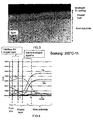
- Figure 1 shows the example of the sheet A1' soaked at 200°C for an 1 h. No alloyed layer is present in such condition.
- Figure 2 displays the repartition of Fe, Mn, Zn, H as measured by GDOES near the surface.
- a high intensity on figure 2 reveals the presence of a given element within the coating or the substrate.
- the hydrogen concentration is mainly localized in the coating with a significant concentration peak. While interface between the coating and the substrate is actually very sharp, it must be remarked that the GDOES technique tends to artificially smear out this interface, due to undesired emission around the crater of erosion.
- FIG. 3 illustrates the example of the sheet A1' soaked at 300°C for 1 h.
- the thickness of the alloyed layer, rich in iron and manganese, is greater than 5 micrometers.
- Hydrogen distribution, as measured by GDOES and illustrated on figure 4 is more uniform in the coating and the substrate, thus avoiding large hydrogen accumulation.
- the invention is a convenient means to provide coated steel sheet resistant to delayed cracking.
- the steel sheets according to the invention have a UTS higher than 900 MPa and a fracture elongation of greater than 50%, conditions which are particularly suitable for cold forming and energy absorption.
- the hot-rolled or cold-rolled sheets according to the invention are advantageously used in the automotive industry in the form of structural parts, reinforcing elements or external parts which, because of their very high strength and ductility, reduce effectively the weight of vehicles while increasing safety in the event of an impact.
Landscapes
- Chemical & Material Sciences (AREA)
- Engineering & Computer Science (AREA)
- Materials Engineering (AREA)
- Mechanical Engineering (AREA)
- Metallurgy (AREA)
- Organic Chemistry (AREA)
- Thermal Sciences (AREA)
- Physics & Mathematics (AREA)
- Crystallography & Structural Chemistry (AREA)
- Chemical Kinetics & Catalysis (AREA)
- Heat Treatment Of Sheet Steel (AREA)
- Oil, Petroleum & Natural Gas (AREA)
- Heat Treatment Of Steel (AREA)
Abstract
Description
- The invention relates to the manufacture of hot-rolled and cold-rolled sheet from iron-carbon-manganese austenitic steels having very high mechanical properties, and especially a high mechanical strength combined with excellent resistance to delayed cracking.
- In view of fuel economy and safety in the case of collisions, high strength steels are more and more used in the automobile industry. This requires the use of structural materials that combine a high tensile strength with high ductility. To meet these requirements, patent
FR 2 829 775 - Furthermore, it is known that the sensitivity to delayed cracking increases with the mechanical strength, in particular after certain cold-forming operations since high residual tensile stresses are liable to remain after deformation. In combination with atomic hydrogen possibly present in the metal, these stresses are liable to result in delayed cracking, that is to say cracking that occurs a certain time after the deformation itself. Hydrogen may progressively build up by diffusion to crystal lattice defects, such as matrix/inclusion interfaces, twin boundaries and grain boundaries. It is in the latter defects that hydrogen may become harmful when it reaches a critical concentration after a certain time. For a constant grain size, the time required to attain a critical level depends on the initial concentration of mobile hydrogen, the intensity of the residual stress concentration field and the kinetics of hydrogen diffusion.
- In particular circumstances, small amounts of hydrogen may be introduced at some stages of steel fabrication such as chemical or electrochemical pickling, annealing under special atmospheres, electroplating or hot dip galvanizing and during Plasma Vacuum Deposition (PVD). Subsequent machining operations using lubricating oils and greases may be also a cause for hydrogen production after decomposition of these substances at high temperatures.
- For example, delayed cracking may be encountered in the fabrication of bolts made out medium-carbon steels, which includes a cold forging step.
-
US patent US 6,261,388 discloses cold forging steels for the fabrication of wires and bars for bolts, gears or shafts. The main elements of the composition are: C: 0,1-0,4%, Mn: 0,3-1%, Si<0,15%, Cr: 0,5-1,2%, B: 0,0003-0,005%, Ti: 0,020-0,100% and the matrix contains fine Ti or Nb carbonitrides for limiting grain coarsening. Good resistance to delayed cracking of steels with an ultimate tensile strength (UTS) of 1000-1400MPa is obtained by forming a dense scale enriched in Cr, thereby increasing corrosion resistance and thus reducing the amount of hydrogen produced in the process of corrosion. Reduction of sulphur and phosphorus were also found as solutions to increase delayed cracking resistance. However, these solutions address to quenched and tempered steels whose microstructure totally differs from the fully austenitic steels which will be considered here. - Furthermore, it is known that, according to the level of steel resistance, annealing treatment may be performed to reduce the sensitivity to delayed cracking: ISO standard 2081-1986 related to electrolytic deposits on iron and steel defines annealing treatments on high strength martensitic steels for bolts : annealing temperature θ and holding times t increase with steel resistance. For the most resistant steels, annealing treatments with θ=150-220°C, t=24h, causing hydrogen diffusion, are recommended.
- However the document indicates that these treatments are not applicable to coatings applied to sheets or strips in the unfabricated form. Moreover, these treatments address medium carbon martensitic steels with low ductility and not the austenitic Fe-C-Mn alloys mentioned above, whose compositions are totally different. It is also known that the hydrogen diffusion coefficient is very different in austenite when compared to martensite.
- Thus, there is a need to have hot or cold-rolled steel sheets or strips for the fabrication of parts with very high strength and ductility combined with an excellent resistance to delayed cracking. The steel sheets should be bare or zinc-coated. This high resistance to delayed cracking should be obtained even in the case when high tensile residual stresses are present in cold formed parts.
- There is also a need to provide a simple process for increasing the resistance to delayed cracking without lowering other properties such as toughness.
- The object of the invention is therefore to provide a hot-rolled or cold-rolled steel sheet or strip which has a ultimate tensile strength of greater than 900 MPa, a fracture elongation higher than 50%, which is particularly suitable for cold forming and has a very high resistance to delayed cracking at every stage of fabrication or use.
- The object of the invention is also to provide a coated product whose resistance to delayed cracking could be assessed with simple metallographic observations.
- For this purpose, one subject of the invention is an austenitic steel sheet, or strip, the chemical composition of which comprises, the contents being expressed by weight: 0,35% ≤ C ≤ 1,05%, 15%≤ Mn ≤ 26%, Si ≤ 3%, Al ≤ 0,050%, S ≤ 0,030%, P≤ 0,080% , N ≤ 0,1%, at least one metallic element X chosen among vanadium, titanium, niobium, molybdenum, chromium: 0,050% ≤V ≤ 0,50%, 0,040% ≤Ti ≤ 0,50%, 0,070% ≤ Nb ≤ 0,50%, 0,14%≤Mo ≤ 2%, 0,070% ≤Cr ≤ 2 %, and optionally, one or several elements chosen among : 0,0005% ≤B ≤ 0,010%, Ni ≤ 2%, Cu ≤ 5%, the remainder consisting of iron and unavoidable impurities inherent to smelting, including hydrogen, the quantity Xp of metallic element under the form of carbides, nitrides or carbonitrides being, in weight : 0,030% ≤Vp ≤ 0,40%, 0,030%≤Tip ≤ 0,50%, 0,040% ≤ Nbp ≤ 0,40%, 0,14%≤Mop ≤ 0,44%, 0,070% ≤Crp≤ 0,6%, the hydrogen content Hmax and the quantity Xp, in weight, being such that:

- Preferably, the hydrogen content Hmax and the quantity Xp are such that :
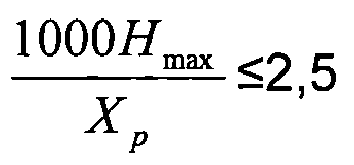
- According to a preferred embodiment, the steel sheet or strip is fabricated with a zinc or zinc-alloy coating.
- Another object of the invention is a coated steel sheet, comprising a base steel having a zinc or zinc-alloy coating on the said base steel, the composition of the base steel comprising, in weight: 0,35% ≤ C ≤ 1,05%, 15%≤ Mn ≤ 26%, Si ≤ 3%, Al ≤ 0,050%, S ≤ 0,030%, P≤ 0,080%, N ≤ 0,1%, at least one metallic element X chosen among vanadium, titanium, niobium, molybdenum, chromium: 0,050% ≤V ≤ 0,50%, 0,040% ≤Ti ≤ 0,50%, 0,070% ≤ Nb ≤ 0,50%, 0,14%≤Mo ≤ 2%, 0,070% ≤Cr ≤ 2 %, and optionally, one or several elements chosen among : 0,0005% ≤B ≤ 0,010%, Ni ≤ 2%, Cu ≤ 5%, the remainder consisting of iron and unavoidable impurities inherent to smelting, the quantity Xp of metallic element under the form of carbides, nitrides or carbonitrides being, in weight : 0,030% ≤Vp ≤ 0,40%, 0,030%≤Tip ≤ 0,50%, 0,040% ≤ Nbp ≤ 0,40%, 0,14%≤Mop ≤ 0,44%, 0,070% ≤CrP≤ 0,6%, the thickness of the coating being less or equal to 50 micrometers, the coating comprising at its interface with the said base material, an iron and manganese rich-Zn alloyed layer, the thickness of the alloyed layer being greater than or equal to 1 micrometer.
- Preferably, the thickness of the alloyed layer is greater than or equal to 4 micrometers.
- According to a preferred embodiment, the thickness of the alloyed layer is greater than or equal to 7 micrometers.
- Preferably, the sheet comprising a base steel with a zinc or zinc-alloy coating on the base steel, comprises a metallic coating layer acting as an hydrogen barrier between the steel and the zinc or zinc-alloy coating.
- The metal of the metallic coating layer is preferably chosen among Sn, Ni, Ti, Cu, W, or Al, or alloys based on these said metals.
- According to a preferred embodiment, the metallic coating layer has a thickness between 0,1 and 1 micrometer.
- Preferably, the composition of the steel comprises in weight: 0,35% ≤ C ≤ 0,50%
- According to another preferred embodiment, the steel composition comprises: 0,50%<C ≤ 0,70%.
- Preferably, the composition of the steel comprises in weight: 0,70%<C ≤ 1,05%.
- According to a preferred embodiment, the composition of the steel comprises: 17% ≤ Mn ≤ 24%.
- Preferably, the composition of the steel comprises in weight: 16% ≤ Mn ≤ 19%.
- Advantageously, the steel composition comprises 0,070% ≤V ≤ 0,40 %, the amount of vanadium Vp under the form of precipitated carbides, nitrides, carbonitrides, being : 0,070%≤ Vp ≤0,140%
- Preferably, the steel composition comprises 0,060% ≤Ti ≤ 0,40%, the amount of titanium Tip under the form of precipitated carbides, nitrides, carbonitrides, being: 0,060%≤ Tip ≤ 0,110%
- According to a preferred embodiment, the steel composition comprises 0,090% ≤Nb ≤ 0,40%, the amount of niobium Nbp under the form of precipitated carbides, nitrides, carbonitrides, being 0,090% ≤Nbp ≤ 0,200%.
- Preferably, the steel composition comprises 0,20% ≤Mo ≤1,8%, the amount of molybdenum Mop under the form of precipitated carbides being : 0,20%≤ Mop ≤ 0,35%.
- Preferably, the mean size
d of said carbides, nitrides, carbonitrides is comprised between 7 and 20 nanometers - Advantageously, at least 75% of the population of said carbides, nitrides, carbonitrides, is located in intragranular position.
- Another object of the invention is a fabrication process of a steel sheet offering excellent resistance to delayed cracking, comprising the steps of supplying a steel with composition comprising, in weight: 0,35% ≤ C ≤ 1,05%, 15%≤ Mn ≤ 26%, Si ≤ 3%, Al ≤ 0,050%, S ≤ 0,030%, P≤ 0,080%, N ≤ 0,1%, at least one metallic element X chosen among vanadium, titanium, niobium, molybdenum, chromium: 0,050% ≤V ≤ 0,50%, 0,040% ≤Ti ≤ 0,50%, 0,070% ≤ Nb ≤ 0,50%, 0,14%≤Mo ≤ 2%, 0,070% ≤Cr ≤ 2 %, and optionally, one or several elements chosen among 0,0005% ≤B ≤ 0,010%, Ni ≤ 2%, Cu ≤ 5%, the remainder being iron and unavoidable impurities inherent to fabrication, of which hydrogen,
- casting the steel in the form of a semi-product, reheating the semi-product, performing hot rolling of the semi-product up to an end rolling temperature to obtain a sheet, coiling the sheet, optionally performing cold rolling and annealing, the reheating temperature, the end rolling temperature, the coiling temperature, the annealing temperature being chosen to obtain the following quantity Xp of metallic element under the form of carbides, nitrides or carbonitrides : 0,030% ≤Vp ≤ 0,40%, 0,030%≤Tip ≤ 0,50%, 0,040% ≤ Nbp ≤ 0,40%, 0,14%≤Mop ≤ 0,44%, 0,070% ≤Crp≤ 0,6%,
- performing at least one soaking treatment where the sheet is soaked at a temperature θ comprised between 250 and 900°C during a time t of at least 15s in order that the hydrogen content Hmax after soaking, Hmax designating the maximal hydrogen content that can be measured from a series of at least five specimens, and the quantity Xp, in weight, satisfies :

- Preferably, the temperature θ and the time t are chosen such as

- Preferably, the semi-product is heat-treated at a temperature between 900 and 1000°C for a time comprised between 5 and 20 days.
- Another object of the invention is a fabrication process of a coated steel strip or sheet offering excellent resistant resistance to delayed cracking, comprising the steps of :
- supplying a Zn or Zn-alloyed coated steel strip or sheet with composition comprising, in weight: 0,35% ≤ C ≤ 1,05%, 15%≤ Mn ≤ 26%, Si ≤ 3%, Al ≤ 0,050%, S ≤ 0,030%, P≤ 0,080%, N≤ 0,1%, at least one metallic element X chosen among vanadium, titanium, niobium, molybdenum, chromium: 0,050% ≤V ≤ 0,50%, 0,040% ≤Ti ≤ 0,50%, 0,070% ≤ Nb ≤ 0,50%, 0,14%≤Mo ≤ 2%, 0,070% ≤Cr ≤ 2 %, and optionally, one or several elements chosen among : 0,0005% ≤B ≤ 0,010%, Ni ≤ 2%, Cu ≤ 5%, the remainder consisting of iron and unavoidable impurities inherent to smelting, the quantity Xp of metallic element under the form of carbides, nitrides or carbonitrides being, in weight: 0,030% ≤Vp ≤ 0,40%, 0,030%≤Tip ≤ 0,50%, 0,040% ≤ Nbp ≤ 0,40%, 0,14%≤Mop ≤ 0,44%, 0,070% ≤Crp≤ 0,6%
- Soaking the strip or sheet at a temperature θ comprised between 250 and 900°C during a time t, the temperature and time satisfying: θ(°C) Ln(t (s)) ≥ 2200.
- Preferably, the time and temperature satisfy: θ(°C)Ln(t (s)) ≥ 2450
- Advantageously, the time and temperature satisfy : θ(°C)Ln(t (s)) ≥ 2750
- Preferably, the soaking is performed by continuous annealing.
- According to a preferred embodiment, soaking is performed by batch annealing.
- Preferably, the soaking treatment is performed by open coil annealing
- According to another preferred embodiment, soaking is performed by induction heating.
- Preferably, the heating is performed with transversal electromagnetic field.
- The invention has also for object a fabrication process according to the steps above, characterized in that the steel sheet is cold formed to obtain a part, and the soaking is performed before or after cold forming of the part.
- The invention has also for object the use of an austenitic steel sheet according to the description above, or fabricated by a process according to the description above, for the fabrication of structural parts, reinforcing elements or external parts for the automotive industry.
- Further features and advantages of the invention will become apparent over the course of the description below and in the annexed figures which are given by way of example.
- Figure 1 illustrates a Zn-coated steel sheet whose coating characteristics do not correspond to the invention.
- Figure 2 illustrates the repartition of some elements : Fe, Mn, Zn, H in the coating and the substrate according to the case of figure 1
- Figure 3 illustrates a Zn-coated steel sheet whose coating characteristics are according to the invention.
- Figure 4 illustrates the repartition of some elements : Fe, Mn, Zn, H in the coating and the substrate, according to the case of figure 3
- After numerous trials, the inventors have found that the various requirements mentioned above can be met by observing the following conditions:
- As regard to the chemical composition of the steel, carbon plays a very important role in the formation of the microstructure and the mechanical properties. It increases the stacking fault energy and promotes stability of the austenitic phase. When combined with a manganese content ranging from 15 to 26% by weight, this stability is achieved for a carbon content of 0,35% or higher. However, for a carbon content above 1,05%, it becomes difficult to prevent excessive precipitation of carbides during certain thermal treatments during industrial manufacture, which degrades the ductility.
- Preferably, the carbon content is between 0,35 and 0,50% by weight so as to obtain satisfactory strength combined with sufficient carbides or carbonitrides precipitation.
- When the carbon content is higher than 0,50% and lower than or equal to 0,70%, the UTS is higher than 900 MPa and the carbides and carbonitrides precipitate in an optimal way.
- When the carbon content is higher than 0,70% and lower than or equal to 1,05%, the strength is higher than 1050 MPa.
- Manganese is also an essential element for increasing the strength, for increasing the stacking fault energy and for stabilizing the austenitic phase. If its content is less than 15%, there is a risk of forming martensite which greatly reduces the deformability. When the manganese content is higher than 26%, the UTS at room temperature is lowered. Moreover, for cost reasons, it is undesirable for the manganese content to be high.
- Preferably, the manganese content is between 17 and 24% so as to optimize the stacking fault energy and to prevent the formation of martensite under the effect of cold deformation. Moreover, when the manganese content is greater than 24%, the deformation mode by twinning is less favoured than the mode of deformation by perfect dislocation glide.
- According to another preferable embodiment, the manganese content is between 16 and 19%: this range is particularly well suited when carbon content is comprised between 0,70 and 1,05%C since the stacking fault energy is optimal.
- Aluminium is a particularly effective element for the deoxidation of steel. Like carbon, it increases the stacking fault energy. However, aluminium in excess has a drawback in steels having a high manganese content, since manganese increases the solubility of nitrogen in liquid iron. If an excessively large amount of aluminium is present in the steel, the nitrogen which combines with aluminium precipitates in the form of aluminium nitrides that impede the migration of grain boundaries and appreciably increase the risk of cracks in continuous casting. An Al content of 0,050% or less prevents the precipitation of AIN.
- Correspondingly, the nitrogen content must be 0,1% or less so as to prevent this precipitation and the formation of volume defects (blowholes) during solidification. In addition, the nitrogen content must not exceed 0,1% for fear of causing coarse precipitation which is ineffective for hydrogen trapping.
- Silicon is also an effective element for deoxidizing steel and for solid-phase hardening. However, above 3%, it reduces the elongation and tends to form undesirable oxides during certain assembly processes and must therefore be kept below this limit.
- Sulphur and phosphorus are impurities that embrittle the grain boundaries. Their respective contents must not exceed 0,030 and 0,080% so as to maintain sufficient hot ductility.
- Optionally, boron may be added in an amount of between 0,0005 and 0,010%. This element segregates at the austenitic grain boundaries and increases their cohesion. Below 0,0005%, this effect is not obtained. Above 0,010%, boron precipitates in the form of borocarbides and the effect is saturated.
- Nickel may be used optionally for increasing the strength of the steel by solution hardening. Nickel contributes to achieve a high fracture elongation and to increase toughness. However, it is desirable again for cost reasons, to limit the nickel content to a maximum content of 2% or less.
- Likewise, optionally, an addition of copper with a content not exceeding 5% is one means of hardening the steel by precipitation of copper metal However, above this limit, copper is responsible for the appearance of surface defects in hot-rolled sheet.
- Metallic elements capable of forming precipitates, such as vanadium, titanium, niobium, chromium and molybdenum, play an important role within the context of the invention in conjunction with the hydrogen content. This is because delayed cracking is caused by an excessive local concentration of hydrogen, in particular at the austenitic grain boundaries. The inventors have found that certain types of precipitates, the nature, amount, size and distribution of which are precisely defined in the invention, very appreciably reduce the sensitivity to delayed cracking and do so without degrading the ductility and toughness properties.
- The inventors have firstly demonstrated that precipitated vanadium, titanium or niobium carbides, nitrides or carbonitrides are very effective as hydrogen traps. Chromium or molybdenum carbides may also fulfil this role. At room temperature, the hydrogen is therefore trapped irreversibly at the interface between these precipitates and the matrix. However, it is necessary, to ensure trapping of the residual hydrogen that might be encountered under certain industrial conditions, for the amount of metal elements in the form of precipitates to be equal to or above a critical content, which depends on the nature of the precipitates and of the total maximum hydrogen content. The amount of metal elements in the form of carbide, nitride and carbonitride precipitates is denoted by Vp, Tip and Nbp in the case of vanadium, titanium and niobium respectively and by Crp and
- Mop in the case of chromium and molybdenum in carbide form. More generally, these metallic elements (V, Ti, Nb, Mo, Cr) are designated by "X", and the corresponding amount in the form of precipitates is designated by "Xp".
- In this regard, the steel contains one or more metallic element X chosen from:
- vanadium, in an amount of between 0,050 and 0,50% by weight, and with the amount in precipitate form Vp between 0,030% and 0,40% by weight. Preferably, the vanadium content is between 0,070% and 0,40%, the amount Vp being between 0,070% and 0,140% by weight;
- titanium, in an amount Ti of between 0,040 and 0,50% by weight, the amount Tip in precipitate form being between 0,030% and 0,50%. Preferably, the titanium content is between 0,060% and 0,40%, the amount Tip being between 0,060% and 0,110% by weight;
- niobium, in an amount of between 0,070 and 0,50% by weight, the amount Nbp in precipitate form being between 0,040 and 0,40%. Preferably, the niobium content is between 0,090% and 0,40%, the amount Nbp being between 0,090% and 0,200% by weight;
- chromium, in an amount of between 0,070% and 2% by weight, the amount Crp in precipitate form being between 0,070% and 0,6%, and
- molybdenum, in an amount of between 0,14 and 2% by weight, the amount Mop in precipitate form being between 0,14 and 0,44%. Preferably, the molybdenum content is between 0,20 and 1,8%, the amount Mop being between 0,20 and 0,35%.
- The minimum value expressed for these various elements (for example 0,050% in the case of vanadium) corresponds to an amount of addition needed to form precipitates in the manufacturing heat cycles. A preferred minimum content (for example 0,070% in the case of vanadium) is recommended, so as to obtain a higher amount of precipitates.
- The maximum value expressed for these various elements (for example 0,50% in the case of vanadium) corresponds to excessive precipitation, or precipitation in an inappropriate form, degrading the mechanical properties, or to an uneconomical implementation of the invention. A preferred maximum content (for example 0,40% in the case of vanadium) is recommended, so as to optimize the addition of the element.
- The lower value of metal elements in precipitate form (for example 0,030% in the case of vanadium) corresponds to the minimum amount of precipitation required to be effective in reducing the sensitivity to delayed cracking. A preferred minimum amount (for example 0,070% in the case of vanadium) is recommended, so as to obtain a particularly high resistance to delayed cracking.
- The maximum value of metallic elements in the form of precipitates (for example 0,40% in the case of vanadium) marks the deterioration in the ductility or toughness, fracture being initiated on the precipitates. Moreover, above this maximum value, intense precipitation occurs, which may prevent complete recrystallisation during continuous annealing heat treatments after cold rolling.
- A preferred maximum content in precipitate form (for example 0,140% in the case of vanadium) is recommended, so that the ductility is maintained as high as possible and so that the precipitation obtained is compatible with the recrystallisation under the annealing conditions.
- The inventors have shown that an excellent resistance to delayed cracking is obtained when the ratio of the hydrogen content (Hmax x 1000) over Xp is inferior or equal to 3,3. In this ratio, the Hmax and Xp contents are expressed in the same weight units. If different elements X are present in the form of precipitates, the quantity Xp in the ratio

- A particularly high resistance is obtained when this ratio is inferior or equal to 2,5. Thus, it appears that the hydrogen content Hmax has to be maintained below a certain level, this level being a function of the amount of metallic precipitates mentioned above.
- Hmax designates the total hydrogen which can be measured on a steel sheet, either bare or coated sheet, in particular with Zn or Zn alloy coating. The term of "total" hydrogen is used here by opposition to the "diffusible" hydrogen, which can be measured for example in a ferritic steel by degassing under a flux of pure dried nitrogen at a temperature of 200°C for instance. However, as the diffusion of hydrogen in austenitic steel is much lower than in a ferritic steel, the distinction between diffusible and trapped hydrogen is not so obvious to obtain experimentally. Furthermore, the inventors have experienced that measuring the total hydrogen, i.e. diffusible plus trapped hydrogen, gives more reliable correlations with delayed fracture than if only diffusible hydrogen is measured with current techniques. The measurement of Hmax is the following: a specimen is cut to a sufficient size to provide a weight of at least 1g. After cleaning and drying in order avoid any pollution that could lead to erroneous values, the specimen is heated at a sufficiently high temperature to be melt inside a chamber submitted to a flux of pure nitrogen. A cell measures the thermal conductibility of the gas and detects the proportion of hydrogen.
- The total hydrogen measurement is performed on at least 5 different specimens : the value Hmax does not designate the mean value
H obtained from these different measurements, but the maximum value of all the individual hydrogen measurements. The inventors have shown a strong correlation between the ratio Hmax/Xp and the resistance to hydrogen cracking, while the correlation with the ratioH / Xp was not so satisfactory. - Furthermore, the inventors have found that an excessive mean precipitate size reduces the trapping effectiveness. The expression "mean precipitate size" means here the size that can be measured for example using extraction replicas, followed by transmission electron microscope observations: the diameter (in the case of spherical or almost spherical precipitates) or the longest length (in the case of precipitates of irregular shape) of each precipitate is measured and then a size distribution histogram for these precipitates is generated, from which the mean
d is calculated by counting a statistically representative number of particles, for example more than 400. Above a mean sized of 20 nanometers, the effectiveness of the hydrogen trapping decreases owing to the reduced interfacial area between the precipitates and the matrix. For a given precipitate amount, a mean precipitate size exceeding 20 nanometers also reduces the density of precipitates that are present, thus excessively increasing the distance between trapping sites. The interfacial area for hydrogen trapping is also reduced - However when the mean particle size
d is less than 7 nanometers, the precipitates will have a tendency to form so as to be coherent with the matrix, thus reducing the trapping capability. The difficulty of controlling these very fine precipitates is also increased. This mean value may include the presence of numerous very fine precipitates, having a size of the order of a nanometer. - The inventors have also found that the precipitates are advantageously located in intragranular positions so as to reduce the sensitivity to delayed cracking. This is because, when at least 75% of the population of the precipitates lie in intragranular position, the hydrogen which is possibly present is distributed more uniformly without accumulation at the austenitic grain boundaries that are potential sites of embrittlement.
- In the case of steel strips or sheets of the above composition coated by a zinc or zinc-alloy (the latter designating zinc-based alloys such as for example Zn-Ni), either on one or both faces of the strips or sheets, the thickness of the coating being less than or equal to 50 micrometers, the inventors have shown that an excellent resistance to delayed cracking was obtained when this coating includes a particular alloyed layer with a minimal thickness of 1 micrometer : this layer rich in iron (which means at least 6% iron in weight in the layer) and rich in manganese (which means at least 1,7% Mn in weight in the layer) is located at the interface between the steel substrate and the zinc or zinc-alloy layer.
- Improved resistance to delayed cracking is obtained when the thickness of this alloyed layer is greater than 4 micrometers, and optimal when the thickness is more than 7 micrometers. No upper limit is fixed since the totality of the coating may be composed by the alloyed layer for an improved resistance to delayed cracking. Without being bound by a theory, it is thought that the formation of this alloyed layer improves the homogenization of hydrogen repartition and smoothes the hydrogen peak which may be present at the interface between the coating and the substrate, as will be explained later.
- The manufacturing process according to the invention is carried out as follows: a steel is smelted with the following composition : 0,35% ≤ C ≤ 1,05%, 15%≤ Mn ≤ 26%, Si ≤ 3%, Al ≤ 0,050%, S ≤ 0,030%, P≤ 0,080%, N ≤ 0,1%, at least one metallic element X chosen among vanadium, titanium, niobium, molybdenum, chromium: 0,050% ≤V ≤ 0,50%, 0,040% ≤Ti ≤ 0,50%, 0,070% ≤ Nb ≤ 0,50%, 0,14%≤Mo ≤ 2%, 0,070% ≤Cr ≤ 2 %, and optionally, one or several elements chosen among : 0,0005% ≤B ≤ 0,010%, Ni ≤ 2%, Cu ≤ 5%, the remainder consisting of iron and unavoidable impurities inherent to smelting, including hydrogen. After smelting, the steel is cast in the form of a semi-product, for example a slab. Optionally, this semi-product may be heat treated at a temperature between 900 and 1000°C, for a time comprised between 5 and 20 days. This heat treatment makes it possible to obtain a very low level of hydrogen and an improved resistance to delayed cracking of the final product.
- The steel semi-product is reheated, hot rolled and coiled in order to obtain a strip or sheet with thickness ranging for example from 2 to 5-10 mm. This strip or sheet may be optionally cold-rolled down to a thickness ranging from 0,2mm to a few millimeters and annealed, namely by continuous annealing, for obtaining recrystallisation.
- The reheating temperature before hot rolling, the end rolling temperature, the coiling temperature, and, in the case of a cold rolled sheet, the annealing temperature will be chosen so as to obtain a precipitation of the following quantity Xp of metallic element under the form of carbides, nitrides or carbonitrides : 0,030% ≤Vp ≤ 0,40%, 0,030%≤Tip ≤ 0,50%, 0,040% ≤ Nbp ≤ 0,40%, 0,14%≤Mop ≤ 0,44%, 0,070% ≤Crp≤ 0,6.
- In particular, for hot rolled strips the coiling temperature will be chosen in the range where the kinetics of precipitation of Xp is maximal in conditions of isothermal holding. Where the final product is a cold rolled strip, the reheating temperature before hot rolling, the end rolling temperature and the coiling temperature will be chosen so as to minimise the amount of precipitation in the hot coil, thus facilitating cold rolling. The continuous annealing temperature is then chosen so as to maximise the precipitation of Xp.
- The above parameters will be more particularly chosen in order to obtain the following preferred range for the quantity of precipitation : Xp: 0,070% ≤Vp ≤ 0,140%, 0,060%≤Tip ≤ 0,110%, 0,090% ≤ Nbp ≤ 0,200%, 0,20%≤Mop ≤ 0,35%, 0,070% ≤Crp≤ 0,6%.
- According to the invention, the strip or sheet, either in the hot-rolled state, or in the hot and subsequently cold-rolled state, or in the hot-rolled and subsequently cold-rolled and annealed state (the cold rolling and annealing steps being eventually performed more than one time) is subsequently soaked at a temperature θ comprised between 250 and 900°C during a time t of at least 15 seconds in order that the hydrogen content Hmax of the sheet after soaking and the quantity Xp, in weight, satisfy :

- As mentioned above, Hmax designates the maximum value which is measured from at least 5 different hydrogen measurements. This soaking treatment may be performed one or several times in the fabrication cycle, provided that the condition:

- For a soaking temperature θ under 250°C or for a time below 15 seconds, no improvement in the resistance to delayed cracking is observed. Above 900°C, the growth of grains is rapid producing a detrimental effect on the yield strength.
- When the combination (θ, t) is such that


- In the case where the steel sheet having the composition above is coated by zinc or zinc alloy, the inventors have found that improvement of the resistance to delayed cracking is obtained when the parameters (θ, t) for the soaking treatment are such that : θ Ln(t) ≥ 2200, θ being in ° Celsius, and t being in seconds.
- A higher resistance to delayed cracking is obtained when: θ(°C)Ln(t (s)) ≥ 2450, an extremely high resistance being observed when: θ(°C)Ln(t (s)) ≥2750. These particular soaking conditions are associated with the formation of the layer rich in iron and manganese at the interface between the steel substrate and the zinc or zinc-alloy layer mentioned above. According to these three soaking conditions, Fe and Mn-rich layer with minimal thicknesses of respectively 1 micrometer, 4 micrometers and 7 micrometers are formed.
- Without being bound by a theory, it is thought that soaking in the particular conditions of the invention, has the following effects on a coated sheet:
- Hydrogen degassing from the coating
- Homogenization of the hydrogen distribution through the sheet thickness
- Activation of hydrogen trapping on the particular metallic precipitates mentioned above
- The soaking treatment may be performed by different processes, such as for example, continuous annealing, batch annealing, or annealing by induction heating. According to a preferred embodiment, the soaking treatment may be performed by batch annealing, i.e. where the steel sheets, generally in the form of coils, are static as respect to the annealing furnace.
- This treatment is all the more efficient since the furnace atmosphere exhibits the following characteristics:
- dry atmosphere, e.g. with a dew point lower than -30°C,
- lowest fraction of hydrogen, for example by using a 100% nitrogen atmosphere, to improve the driving force for H degassing from the material
- Dynamic circulation of a regenerated atmosphere by opposition to a static and stagnant atmosphere that may enrich in nitrogen from the material during the treatment and thus limit the degassing efficiency.
- According to a particular embodiment, this soaking treatment may be advantageously performed by open coil annealing: This refers to the technique where steel sheet is wound with separations between each successive wrap of the coil. As a consequence, the separations allow easier gas circulation and exchanges. The coil separation allows gas to circulate between the sheets during annealing and easier degassing from the coating.
- According to another particular embodiment, the soaking treatment may be performed by induction heating sheets or parts : as the steel compositions above are amagnetic, induction heating may be advantageously performed with transverse flux inductors : the induction coils are placed on one or both sides of the sheet or part to heat. Lines of the magnetic field are perpendicular to the longitudinal direction and the relative displacement. A particular advantage is obtained from this heating mode, since the sheets or parts are thin and are efficiently and uniformly heated with transverse flux inductors.
- According to another particular embodiment, soaking in the conditions of the invention may be performed on a part which has been taken out of a sheet and afterwards cold formed, for example by stamping. In this way, the heat treatment does not only yield hydrogen degassing and the formation of an interfacial alloyed layer in the case of coated steel, but also efficiently reduces the residual stresses which are introduced during the cold forming of the part.
- Alternatively, in the case of Zn or Zn-alloy sheets, a thin intermediate metallic layer between the Zn or Zn-alloy coating and the steel substrate may be also used to improved resistance to delayed cracking. This thin metallic intermediate layer acts as a barrier against hydrogen which may come from the Zn or Zn-alloy coating, or from further processing.
- The manufacturing process is the following: the bare sheet of the above composition is coated with a thin metallic coating whose thickness may range between 0,1 and 1 micrometer for example. The metal of this thin layer may be Sn, Ni, Ti, Cu, W, or Al, or alloys based on these metals. This coating may be performed by processes such as electroplating or PVD for example. Thereafter, the Zn or Zn-alloy coating is performed through electroplating.
- By way of nonlimiting example, the following results will show the advantageous characteristics afforded by the invention.
- Steels having the composition given in the table 1 below were elaborated. The steels were smelted, and cast in the form of semi-products. These were reheated, hot rolled down to a thickness of between 2.5 and 3.5mm and further coiled. The strips obtained were further cold rolled down to a thickness of between 1 and 1.5mm. Steel D has almost no metallic element "X" able to precipitate for further hydrogen trapping. After continuous annealing at 800°C for 180s, some sheets or strips obtained from the composition A and C were further coated with Zn, 7,5 micrometers on each face, by electroplating in a ZnSO4 bath.
Table 1: Steel compositions, expressed in percentage by weight Steel C(%) Mn(%) Si(%) Al(%) S(%) P(%) N(%) V(%) Mo(%) Ni(%) Cu(%) A 0,627 21,96 0,193 <0,040 <0,005 0,023 0,011 0,210 - 0,044 0,014 B 0,593 21,92 0,232 <0,040 <0,005 0,023 0,011 0,202 0,010 0,071 0,039 C 0,604 22,06 0,199 <0,040 <0,005 0,022 0,010 0,231 0,011 0,058 0,029 D 0,574 22,57 0,198 < 0,040 <0,005 0,017 0,009 0,005 0,004 0,034 0,011 - All the cold rolled sheets were continuously annealing at a soaking temperature between 740°C and 810°C in order to obtain a full recrystallisation of the austenitic microstructure. In some cases, some cold rolled sheets of the same composition were annealed with different conditions. References A1, A2, A3... designate for example sheets of the composition A annealed in
conditions 1, 2, 3... For two sheets, referred as A5 and C3, further soaking by batch annealing was performed on the cold rolled and continuously-annealed sheets. The different temperatures (θ) and time (t) of soaking conditions are shown in table 2. By using different soaking conditions, namely dew point or hydrogen content in the gas of the annealing atmosphere, the hydrogen content was varied : table 2 shows the hydrogen content Hmax and the quantity of precipitates Xp, here under the form of vanadium carbonitrides, which were measured on the sheets after soaking. The amount Xp was determined in these various sheets by selective chemical dissolution followed by ICP-OES (Inductive Coupled Plasma-Optical Emission Spectroscopy) analysis method. Hmax was measured according to the method explained previously, using five specimens. Other characteristics of the precipitates such as the mean size and their localization as respect to grain boundaries were measured on the basis of extraction replicas observed using transmission electron microscopy.Table 2: Soaking conditions on uncoated steel sheets and characteristics of hydrogen and precipitates. Underlined values are outside the conditions of invention. (o)= Satisfactory (•)= Unsatisfactory Sheet Θ(°C) t(s) Hmax(%) Xp(%) 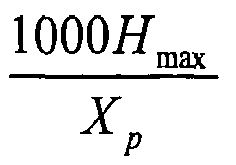
Precipitates Xp with size d (µm)) comprised between 7 and 20nmLocalisation of >75% of precipitates Xp in intragranular position A4 (invention) 780 120 0,00022 0,150 1,46 (○) (○) A5 (invention) 320 259200 0,00026 0,150 1,73 (○) (○) A1 (invention) 787 174 0,00026 0,127 2,06 (○) (○) C2 (invention) 320 259200 0,00031 0,141 2,19 (○) (○) A2 (invention) 800 180 0,00029 0,128 2,28 (○) (○) C1 (invention) 800 180 0,00040 0,144 2,76 (○) (○) B (invention) 800 180 0,00036 0,114 3,16 (○) (○) A3 (reference) 808 188 0,00047 0,119 3,91 (○) (○) D(reference) 740 120 0,00023 <0,005 >46 (•) (•) - Table 3 shows the mechanical properties, Ultimate Tensile Strength (UTS) and fracture elongation A obtained under these conditions. Moreover, circular blanks, 135mm in diameter were cut from the sheets. These blanks were then fully drawn so as to obtain flat-bottomed cups (cup tests) using a punch of 75mm in diameter. After forming, elastic springback of the cup increases its diameter to 83mm. In this way, the factor β characterizing the severity of the test (i.e. the ratio of the initial blank diameter to the punch diameter) was 1,8. The cups are deformed in the deep drawing mode, which produces locally high residual tensile stresses especially at the cup rim. As a supplementary source of stresses, the cups were submitted to an elastic compression reducing their diameter to 75mm. These conditions tests are severe since the major principal stress is in the order of magnitude of the fracture stress. The eventual presence of microcracks was checked in this test, either immediately after forming or after waiting for 3 months, thus characterizing any sensitivity to delayed cracking. For obtaining even more severe test conditions, a test with a plastic deformation reducing the diameter to 70mm has been also performed on some specimens. The results of the observations are given in Table 3.
Table 3: Mechanical properties and resistance to delayed cracking on uncoated steel sheets Sheet 
UTS (MPa) A(%) Resistance to delayed cracking (severe test condition) Invention A4 1,46 1150 51 (○) A5 1,73 1155 50 (○) A1 2,06 1147 50 (○) C2 2,19 1150 53 (○) A2 2,28 1136 56 (○) C1 2,76 1150 51 (○) B 3,16 1132 54 (○) Reference A3 3,91 1137 53 (•) D >46 1056 60 (•) (○) : Satisfactory result (•) : Unsatisfactory result.
Underlined values are outside the conditions of invention - When

- When

- As mentioned above, steel sheets with compositions A and C which have been cold rolled, then continuous-annealed and electroplated, were soaked by batch annealing in argon atmosphere with different conditions of temperature (θ) and time (t) shown in table 4. For all the conditions, UTS was higher than 1100MPa, and elongation greater than 50%. The sensitivity to delayed cracking was evaluated on cups, deep-drawn and submitted to external stress in the same experimental conditions than for uncoated sheets, excepted that the cups were submitted to two stress levels: compression down to 75mm (severe test condition) or 70mm (extremely severe test condition). Furthermore, Glow Discharge Optical Emission Spectroscopy (GDOES) was performed in order to evaluate the distribution of elements in the coating and in the steel substrate.
Table 4 : Resistance to delayed cracking of coated steel sheets Sheet Hmax (%) Xp (%) 
Θ(°C) t(h) θ(°C)Ln(t (s)) Thickness of alloyed layer (µm) Resistance to delayed cracking (severe test condition) Invention C1' 0,00035 0,141 2,48 350 48 4221 8 (○) A7' 0,00019 0,127 1,50 300 8 3080 7,5 (○) A6' 0,00037 0,127 2,91 300 1 2457 5,3 (○) A5' 0,00040 0,127 3,15 250 8 2567 4,5 (○) A4' 0,00041 0,127 3,22 250 1 2047 1 (○) Reference A3' 0,00043 0,127 3,38 200 24 2273 0,9 (•) A2' 0,00047 0,127 3,7 200 8 2054 0 (•) A1' 0,00066 0,127 5,19 200 1 1638 0 (•) (○) : Satisfactory result (•) : Unsatisfactory result
Underlined values are outside the conditions of invention. - Sheets in the conditions A1' to A3' show an insufficient thickness of the alloyed layer. The soaking temperature is too low in these conditions. Figure 1 shows the example of the sheet A1' soaked at 200°C for an 1 h. No alloyed layer is present in such condition. Figure 2 displays the repartition of Fe, Mn, Zn, H as measured by GDOES near the surface. A high intensity on figure 2 reveals the presence of a given element within the coating or the substrate. The hydrogen concentration is mainly localized in the coating with a significant concentration peak. While interface between the coating and the substrate is actually very sharp, it must be remarked that the GDOES technique tends to artificially smear out this interface, due to undesired emission around the crater of erosion.
- The specimens with alloyed layer thicker than 4 micrometers treated in the condition: θ(°C)Ln(t(s))≥2450, display superior results for extremely severe test conditions. For example, figure 3 illustrates the example of the sheet A1' soaked at 300°C for 1 h. The thickness of the alloyed layer, rich in iron and manganese, is greater than 5 micrometers. Hydrogen distribution, as measured by GDOES and illustrated on figure 4, is more uniform in the coating and the substrate, thus avoiding large hydrogen accumulation.
- Specimens with an alloyed layer thicker than 7 micrometers, treated in the condition: θ(°C)Ln(t (s)) ≥ 2750, display a homogeneous hydrogen repartition in the coating layer and in the substrate.
- Thus, as the presence of the alloyed layer whose thickness is superior to 1 micrometer is simple to assess by metallographic observation, the invention is a convenient means to provide coated steel sheet resistant to delayed cracking.
- The steel sheets according to the invention have a UTS higher than 900 MPa and a fracture elongation of greater than 50%, conditions which are particularly suitable for cold forming and energy absorption.
- The hot-rolled or cold-rolled sheets according to the invention are advantageously used in the automotive industry in the form of structural parts, reinforcing elements or external parts which, because of their very high strength and ductility, reduce effectively the weight of vehicles while increasing safety in the event of an impact.
Claims (33)
- - An austenitic steel sheet excellent in resistance to delayed cracking, the composition of said steel comprising, in weight0,35% ≤ C ≤ 1,05%15% ≤ Mn ≤ 26%Si ≤ 3%Al ≤ 0,050%S ≤ 0,030%P ≤ 0,080%N ≤ 0,1%,at least one metallic element X chosen among vanadium, titanium, niobium, molybdenum, chromium0,050% ≤ V ≤ 0,50%,0,040% ≤ Ti ≤ 0,50%0,070% ≤ Nb ≤ 0,50%0,14% ≤ Mo ≤ 2%0,070% ≤ Cr ≤ 2 %and optionally, one or several elements chosen among0,0005% ≤B ≤ 0,010%Ni ≤ 2%Cu ≤ 5%,The remainder being iron and unavoidable impurities inherent to fabrication, including hydrogen, the quantity Xp of said at least one metallic element under the form of carbides, nitrides or carbonitrides being, in weight:0,030% ≤ Vp ≤ 0,40%0,030% ≤ Tip ≤ 0,50%0,040% ≤ Nbp ≤ 0,40%0,14% ≤ Mop ≤ 0,44%0,070% ≤Crp≤ 0,6%the hydrogen content Hmax designating the maximal hydrogen content that can be measured from a series of at least five specimens, and the quantity Xp, in weight, being such that:

- - A steel sheet according to claim 1, characterized in that

- - A steel sheet according to any one of the claims 1 to 2, characterised in that said sheet comprises a zinc or zinc-alloy coating
- - A coated steel sheet, comprising a base steel having a zinc or zinc-alloy coating on the said base steel, the composition of said base steel comprising, in weight0,35% ≤ C ≤ 1,05%15%≤ Mn ≤ 26%Si ≤ 3%Al ≤ 0,050%S ≤ 0,030%P ≤ 0,080%N ≤ 0,1%,at least one metallic element X chosen among vanadium, titanium, niobium, molybdenum, chromium0,050% ≤V ≤ 0,50%,0,040% ≤Ti ≤ 0,50%0,070% ≤ Nb ≤ 0,50%0,14%≤Mo ≤ 2%0,070% ≤Cr ≤ 2 %and optionally, one or several elements chosen among0,0005% ≤B ≤0,010%Ni ≤ 2%Cu ≤ 5%,The remainder being iron and unavoidable impurities inherent to fabrication, the quantity Xp of said at least one metallic element under the form of carbides, nitrides or carbonitrides being, in weight:0,030% ≤Vp ≤ 0,40%0,030%≤Tip ≤ 0,50%0,040% ≤ Nbp ≤ 0,40%0,14%≤Mop ≤ 0,44%0,070% ≤Crp≤ 0,6%the thickness of said coating being less or equal to 50 micrometers, said coating comprising at its interface with the said base material, an iron and manganese rich-Zn alloyed layer, the thickness of said alloyed layer being greater than or equal to 1 micrometer
- - A steel sheet according to claim 4, characterized in that the thickness of said alloyed layer is greater than or equal to 4 micrometers
- - Steel sheet according to claim 4, characterized in that the thickness of said alloyed layer is greater than or equal to 7 micrometers
- - A coated steel sheet with composition according to claim 4, comprising a base steel with a zinc or zinc-alloy coating on the said base steel, characterised in that said sheet comprises a metallic coating layer acting as an hydrogen barrier between said steel and said zinc or zinc-alloy coating
- - A steel sheet according to claim 7, characterised in that the metal of said metallic coating layer is chosen among Sn, Ni, Ti, Cu, W, or Al, or alloys based on these said metals
- - A steel sheet according to claims 7 or 8, characterised in that said metallic coating layer has a thickness between 0,1 and 1 micrometer
- - A steel sheet according to any of the claims 1 to 9, characterized in that the said composition comprises, in weight0,35% ≤ C ≤ 0,50%
- -A steel sheet according to any one of the claims 1 to 10, characterized in that the said composition comprises, in weight0,50%<C≤ 0,70%
- - A steel sheet according to any one of the claims 1 to 11, characterized in that the said composition comprises, in weight0,70%<C ≤ 1,05%
- - A steel sheet according to claim 10 or 11, characterized in that the said composition comprises, in weight17% ≤ Mn ≤ 24%
- - A steel sheet according to claim 12, characterized in that the said composition comprises, in weight16% ≤ Mn ≤ 19%
- - A steel sheet according to any one of the claims 1 to 14, characterized in that the said composition comprises 0,070% ≤V≤ 0,40 %, vanadium Vp under the form of precipitated carbides, nitrides, carbonitrides, being0,070%≤ Vp≤0,140%
- - A steel sheet according to any one of the claims 1 to 15, characterized in that the said composition comprises 0,060% ≤Ti ≤ 0,40%, titanium Tip under the form of precipitated carbides, nitrides, carbonitrides, being0,060%≤ Tip ≤ 0,110%
- - A steel sheet according to any one of the claims 1 to 16, characterized in that the said composition comprises 0,090% ≤Nb ≤ 0,40%, niobium Nbp under the form of precipitated carbides, nitrides, carbonitrides, being0,090% ≤Nbp ≤ 0,200%
- - A steel sheet according to any one of the claims 1 to 17, characterized in that the said composition comprises 0,20% ≤Mo ≤1,8%, molybdenum Mop under the form of carbides being0,20%≤ Mop ≤ 0,35%
- - A steel sheet according to any one of the claims 1 to 18, characterized in that the mean size
d of said carbides, nitrides, carbonitrides is comprised between 7 and 20 nanometers - - Steel sheet according to any one of the claims 1 to 19, characterized in that at least 75% of the population of said carbides, nitrides, carbonitrides, is located in intragranular position
- - A fabrication process of a steel sheet offering excellent resistance to delayed cracking, comprising the steps of- Supplying a steel with composition comprising, in weight0,35% ≤ C ≤ 1,05%15%≤ Mn ≤ 26%Si ≤ 3%Al ≤ 0,050%S ≤ 0,030%P≤ 0,080%N ≤ 0,1%,at least one metallic element X chosen among vanadium, titanium, niobium, molybdenum, chromium0,050% ≤ V ≤ 0,50%,0,040% ≤ Ti ≤ 0,50%0,070% ≤ Nb ≤ 0,50%0,14% ≤ Mo ≤ 2%0,070% ≤ Cr ≤ 2 %,and optionally, one or several elements chosen among0,0005% ≤B ≤ 0,010%Ni ≤ 2%Cu ≤ 5%,the remainder being iron and unavoidable impurities inherent to fabrication, of which hydrogen,- casting said steel in the form of a semi-product- reheating said semi-product- performing hot rolling said semi-product up to an end rolling temperature to obtain a sheet- coiling said sheet- optionally performing cold rolling and annealing,
the reheating temperature, the end rolling temperature, the coiling temperature, the annealing temperature being chosen to obtain the following quantity Xp of metallic element under the form of carbides, nitrides or carbonitrides :0,030% ≤Vp ≤ 0,40%0,030%≤Tip ≤ 0,50%0,040%≤ Nbp ≤ 0,40%0,14%≤Mop ≤ 0,44%0,070% ≤Crp≤ 0,6%- Performing at least one soaking treatment where said sheet is soaked at a temperature θ comprised between 250 and 900°C during a time t of at least 15s in order that the hydrogen content Hmax after soaking, Hmax designating the maximal hydrogen content that can be measured from a series of at least five specimens, and the quantity Xp, in weight, satisfies:
- A fabrication process according to claim 21, characterised in that said temperature θ and said time t are chosen such as

- A fabrication process according to claims 21 or 22, characterised in that said semi-product is heat-treated at a temperature between 900 and 1000°C for a time comprised between 5 and 20 days
- A fabrication process of a coated steel sheet offering excellent resistant resistance to delayed cracking, comprising the steps of :- Supplying a Zn or Zn-alloyed coated steel sheet with composition of said steel comprising, in weight0,35% ≤ C ≤ 1,05%15%≤ Mn ≤ 26%Si ≤ 3%Al ≤ 0,050%S ≤ 0,030%P≤ 0,080%N ≤ 0,1%,at least one metallic element X chosen among vanadium, titanium, niobium, molybdenum, chromium0,050% ≤V ≤ 0,50%,0,040% ≤Ti ≤ 0,50%0,070% ≤ Nb ≤ 0,50%0,14%≤Mo ≤ 2%0,070% ≤Cr ≤ 2 %and optionally, one or several elements chosen among0,0005% ≤B ≤ 0,010%Ni ≤ 2%Cu ≤ 5%,The remainder being iron and unavoidable impurities inherent to fabrication, the quantity Xp of said at least one metallic element under the form of carbides, nitrides or carbonitrides being :0,030% ≤Vp ≤ 0,40%0,030%≤Tip ≤ 0,50%0,040% ≤ Nbp ≤ 0,40%0,14%≤Mop ≤ 0,44%0,070% ≤Crp≤ 0,6%- Soaking said sheet at a temperature θ comprised between 250 and 900°C during a time t, said temperature and time satisfying: θ(°C) Ln(t (s)) ≥2200
- - A fabrication process according to claim 24, characterized in that θ(°C)Ln(t (s)) ≥ 2450
- - A fabrication process according to claim 24, characterized in that θ(°C)Ln(t (s)) ≥ 2750
- - A fabrication process according to any one of the claims 21 to 26, characterized in that said soaking is performed by continuous annealing
- - A fabrication process according to any one of the claims 21 to 26, characterized in that said soaking is performed by batch annealing
- - A fabrication process according to claim 28 where said soaking is performed by open coil annealing
- - A fabrication process according to any one of the claims 21 to 26, characterized in that said soaking is performed by induction heating
- - A fabrication process according to claim 30, characterized in that said soaking is performed with transversal electromagnetic field
- - A fabrication process according to any one of the claims 21 to 31, characterized in that said steel sheet is cold formed to obtain a part, and said soaking is performed before or after cold forming of said part
- - Use of an austenitic steel sheet according to any one of the claims 1 to 20, or fabricated by a process according to any one of the claims 21 to 32, for the fabrication of structural parts, reinforcing elements or external parts for the automotive industry.
Priority Applications (23)
| Application Number | Priority Date | Filing Date | Title |
|---|---|---|---|
| EP06291136A EP1878811A1 (en) | 2006-07-11 | 2006-07-11 | Process for manufacturing iron-carbon-manganese austenitic steel sheet with excellent resistance to delayed cracking, and sheet thus produced |
| UAA200901097A UA95642C2 (en) | 2006-07-11 | 2007-06-07 | Steel Sheet, Steel Sheet with Coating, method for producing steel sheets, method for producing steel sheets with Coating, method for producing hot rolled and cold rolled steel sheet, AND USE of the Steel Sheets |
| ES07804569T ES2757815T3 (en) | 2006-07-11 | 2007-07-06 | Procedure for manufacturing an austenitic iron-carbon-manganese steel sheet with excellent resistance to delayed cracking and the sheet thus produced |
| BR122013030320A BR122013030320B8 (en) | 2006-07-11 | 2007-07-06 | austenitic sheet steel fabrication process offering delayed fracture resistance |
| AU2007273982A AU2007273982B2 (en) | 2006-07-11 | 2007-07-06 | Process for manufacturing iron-carbon-manganese austenitic steel sheet with excellent resistance to delayed cracking, and sheet thus produced |
| EP19171657.0A EP3587611A1 (en) | 2006-07-11 | 2007-07-06 | Process for manufacturing iron-carbon-manganese austenitic steel sheet with excellent resistance to delayed cracking, and sheet thus produced |
| KR1020097002711A KR101105178B1 (en) | 2006-07-11 | 2007-07-06 | Process for manufacturing iron-carbon-manganese austenitic steel sheet with excellent resistance to delayed cracking, and sheet thus produced |
| JP2009518992A JP5697125B2 (en) | 2006-07-11 | 2007-07-06 | Method for producing iron-carbon-manganese austenitic steel sheet having excellent delayed crack resistance, and steel sheet thus produced |
| BRPI0715458-5A BRPI0715458B1 (en) | 2006-07-11 | 2007-07-06 | PROCESS FOR PRODUCING AUSTENIC IRON-MANGANESE STEEL PLATE WITH EXCELLENT RESISTANCE TO DELAYED FRACTURES, AND THE PRODUCED PLATE |
| RU2009104474/02A RU2417265C2 (en) | 2006-07-11 | 2007-07-06 | Procedure for production of sheet out of iron-carbon-manganese austenite steel super-resistant to delayed cracking and sheet manufactured by this procedure |
| PL07804569T PL2041330T3 (en) | 2006-07-11 | 2007-07-06 | The method of producing iron-carbon-manganese austenitic steel sheet with excellent resistance to delayed cracking, and the sheet produced by this method |
| PCT/IB2007/001866 WO2008007192A2 (en) | 2006-07-11 | 2007-07-06 | Process for manufacturing iron-carbon-manganese austenitic steel sheet with excellent resistance to delayed cracking, and sheet thus produced |
| US12/373,152 US9200355B2 (en) | 2006-07-11 | 2007-07-06 | Process for manufacturing iron-carbon-manganese austenitic steel sheet with excellent resistance to delayed cracking, and sheet thus produced |
| HUE07804569A HUE046647T2 (en) | 2006-07-11 | 2007-07-06 | Process for the production of austenitic iron-carbon-manganese steel sheet with excellent resistance to delayed fracture and the sheet thus produced |
| CA2657508A CA2657508C (en) | 2006-07-11 | 2007-07-06 | Process for manufacturing iron-carbon-manganese austenitic steel sheet with excellent resistance to delayed cracking, and sheet thus produced |
| EP07804569.7A EP2041330B1 (en) | 2006-07-11 | 2007-07-06 | Process for manufacturing iron-carbon-manganese austenitic steel sheet with excellent resistance to delayed cracking, and sheet thus produced |
| CA2787998A CA2787998C (en) | 2006-07-11 | 2007-07-06 | Process for manufacturing iron-carbon-manganese austenitic steel sheet with excellent resistance to delayed cracking, and sheet thus produced |
| CN2007800305760A CN101506402B (en) | 2006-07-11 | 2007-07-06 | Process for manufacturing iron-carbon-manganese austenitic steel sheet with excellent resistance to delayed cracking, and sheet thus produced |
| MX2009000356A MX2009000356A (en) | 2006-07-11 | 2007-07-06 | PROCESS FOR THE MANUFACTURE OF AUSTENITIC IRON-CARBON-MANGANESE STEEL SHEET WITH EXCELLENCE RESISTANCE TO REAR GRINDING, AND SHEET PRODUCED IN THIS MODE. |
| ZA200900177A ZA200900177B (en) | 2006-07-11 | 2009-01-08 | Process for manufacturing iron-carbon-manganese austenitic steel sheet with excellent resistance to delayed cracking, and sheet thus produced |
| MA31559A MA30583B1 (en) | 2006-07-11 | 2009-01-09 | PROCESS FOR MANUFACTURING FER-CARBON-MANGANIZED AUSTENITIC STEEL SHEET WITH EXCELLENT RESISTANCE TO DELAYED CRACKING, AND FEEL THUS PRODUCED |
| US14/672,906 US10131964B2 (en) | 2006-07-11 | 2015-03-30 | Iron-carbon-manganese austenitic steel sheet |
| US14/858,276 US10006099B2 (en) | 2006-07-11 | 2015-09-18 | Process for manufacturing iron-carbon-maganese austenitic steel sheet with excellent resistance to delayed cracking |
Applications Claiming Priority (1)
| Application Number | Priority Date | Filing Date | Title |
|---|---|---|---|
| EP06291136A EP1878811A1 (en) | 2006-07-11 | 2006-07-11 | Process for manufacturing iron-carbon-manganese austenitic steel sheet with excellent resistance to delayed cracking, and sheet thus produced |
Publications (1)
| Publication Number | Publication Date |
|---|---|
| EP1878811A1 true EP1878811A1 (en) | 2008-01-16 |
Family
ID=37022992
Family Applications (3)
| Application Number | Title | Priority Date | Filing Date |
|---|---|---|---|
| EP06291136A Withdrawn EP1878811A1 (en) | 2006-07-11 | 2006-07-11 | Process for manufacturing iron-carbon-manganese austenitic steel sheet with excellent resistance to delayed cracking, and sheet thus produced |
| EP19171657.0A Pending EP3587611A1 (en) | 2006-07-11 | 2007-07-06 | Process for manufacturing iron-carbon-manganese austenitic steel sheet with excellent resistance to delayed cracking, and sheet thus produced |
| EP07804569.7A Active EP2041330B1 (en) | 2006-07-11 | 2007-07-06 | Process for manufacturing iron-carbon-manganese austenitic steel sheet with excellent resistance to delayed cracking, and sheet thus produced |
Family Applications After (2)
| Application Number | Title | Priority Date | Filing Date |
|---|---|---|---|
| EP19171657.0A Pending EP3587611A1 (en) | 2006-07-11 | 2007-07-06 | Process for manufacturing iron-carbon-manganese austenitic steel sheet with excellent resistance to delayed cracking, and sheet thus produced |
| EP07804569.7A Active EP2041330B1 (en) | 2006-07-11 | 2007-07-06 | Process for manufacturing iron-carbon-manganese austenitic steel sheet with excellent resistance to delayed cracking, and sheet thus produced |
Country Status (17)
| Country | Link |
|---|---|
| US (3) | US9200355B2 (en) |
| EP (3) | EP1878811A1 (en) |
| JP (1) | JP5697125B2 (en) |
| KR (1) | KR101105178B1 (en) |
| CN (1) | CN101506402B (en) |
| AU (1) | AU2007273982B2 (en) |
| BR (2) | BRPI0715458B1 (en) |
| CA (2) | CA2787998C (en) |
| ES (1) | ES2757815T3 (en) |
| HU (1) | HUE046647T2 (en) |
| MA (1) | MA30583B1 (en) |
| MX (1) | MX2009000356A (en) |
| PL (1) | PL2041330T3 (en) |
| RU (1) | RU2417265C2 (en) |
| UA (1) | UA95642C2 (en) |
| WO (1) | WO2008007192A2 (en) |
| ZA (1) | ZA200900177B (en) |
Cited By (18)
| Publication number | Priority date | Publication date | Assignee | Title |
|---|---|---|---|---|
| EP2208803A1 (en) | 2009-01-06 | 2010-07-21 | ThyssenKrupp Steel Europe AG | High-tensile, cold formable steel, steel flat product, method for producing a steel flat product and use of a steel flat product |
| ITRM20100641A1 (en) * | 2010-12-07 | 2012-06-08 | Ct Sviluppo Materiali Spa | PROCEDURE FOR THE PRODUCTION OF HIGH MANGANESE STEEL WITH MECHANICAL RESISTANCE AND HIGH FORMABILITY, AND STEEL SO OBTAINABLE. |
| WO2015083141A1 (en) * | 2013-12-06 | 2015-06-11 | Fives Celes | Continuous processing line for processing a non-magnetic metal strip including a galvannealing section and method for induction heating of said strip in said galvannealing section |
| US9650703B2 (en) | 2011-12-28 | 2017-05-16 | Posco | Wear resistant austenitic steel having superior machinability and toughness in weld heat affected zones thereof and method for producing same |
| WO2017203343A1 (en) * | 2016-05-24 | 2017-11-30 | Arcelormittal | Method for producing a twip steel sheet having an austenitic microstructure |
| WO2017203341A1 (en) | 2016-05-24 | 2017-11-30 | Arcelormittal | Method for the manufacture of twip steel sheet having an austenitic matrix |
| CN110093573A (en) * | 2019-06-06 | 2019-08-06 | 阿克索健康科技(北京)有限公司 | The preparation method and energy of a quantum message slot, object wearing device of energy of a quantum message slot |
| WO2020070545A1 (en) * | 2018-10-04 | 2020-04-09 | Arcelormittal | A press hardening method |
| CN112176245A (en) * | 2019-07-02 | 2021-01-05 | 通用汽车环球科技运作有限责任公司 | Press hardened steel with surface layered homogeneous oxide after hot forming |
| CN113061798A (en) * | 2021-03-22 | 2021-07-02 | 中铁宝桥集团有限公司 | Smelting process of alloyed high manganese steel |
| US11486017B2 (en) | 2016-05-24 | 2022-11-01 | Arcelormittal | Cold rolled and annealed steel sheet, method of production thereof and use of such steel to produce vehicle parts |
| US11613789B2 (en) | 2018-05-24 | 2023-03-28 | GM Global Technology Operations LLC | Method for improving both strength and ductility of a press-hardening steel |
| US11612926B2 (en) | 2018-06-19 | 2023-03-28 | GM Global Technology Operations LLC | Low density press-hardening steel having enhanced mechanical properties |
| CN116479320A (en) * | 2022-09-29 | 2023-07-25 | 武汉科技大学 | A kind of ultra-high strength and high plasticity copper-containing austenitic stainless steel and its production method |
| CN117448688A (en) * | 2023-11-17 | 2024-01-26 | 山西中煤平朔宇辰有限公司铸造厂 | A Cu-containing austenitic high manganese wear-resistant steel bucket tooth and its manufacturing method |
| CN117600492A (en) * | 2023-11-27 | 2024-02-27 | 贵州航天新力科技有限公司 | A laser selective melting technology forming method and the D406A ultra-high strength steel used |
| CN118147541A (en) * | 2024-02-01 | 2024-06-07 | 大湾区大学(筹) | Ultra-high strength, high toughness steel and its preparation method and application |
| US12509741B2 (en) | 2016-05-24 | 2025-12-30 | Arcelormittal | Cold rolled and annealed steel sheet, method of production thereof and use of such steel to produce vehicle parts |
Families Citing this family (43)
| Publication number | Priority date | Publication date | Assignee | Title |
|---|---|---|---|---|
| EP1878811A1 (en) | 2006-07-11 | 2008-01-16 | ARCELOR France | Process for manufacturing iron-carbon-manganese austenitic steel sheet with excellent resistance to delayed cracking, and sheet thus produced |
| US9067260B2 (en) | 2006-09-06 | 2015-06-30 | Arcelormittal France | Steel plate for producing light structures and method for producing said plate |
| WO2009090443A1 (en) | 2008-01-15 | 2009-07-23 | Arcelormittal France | Process for manufacturing stamped products, and stamped products prepared from the same |
| DE102008056844A1 (en) | 2008-11-12 | 2010-06-02 | Voestalpine Stahl Gmbh | Manganese steel strip and method of making the same |
| AU2008364127B2 (en) * | 2008-11-14 | 2014-09-18 | Clecim SAS | Method and device for measuring a chemical composition of a liquid metal suitable for coating a steel strip |
| DE102010034161B4 (en) * | 2010-03-16 | 2014-01-02 | Salzgitter Flachstahl Gmbh | Method for producing workpieces made of lightweight steel with material properties that can be adjusted via the wall thickness |
| WO2012052626A1 (en) | 2010-10-21 | 2012-04-26 | Arcelormittal Investigacion Y Desarrollo, S.L. | Hot-rolled or cold-rolled steel plate, method for manufacturing same, and use thereof in the automotive industry |
| CN102330019A (en) * | 2011-10-28 | 2012-01-25 | 上海大学 | Preparation method for vanadium-containing twin crystal induced plastic steel with low carbon, high strength and high plasticity |
| KR101353649B1 (en) * | 2011-12-23 | 2014-01-20 | 주식회사 포스코 | Wire rod and steel wire having high corrosion resistance, method of manufacturing spring and steel wire for spring |
| KR101382950B1 (en) * | 2011-12-28 | 2014-04-09 | 주식회사 포스코 | Austenitic wear resistant steel with excellent toughness of heat affected zone |
| DE102012100509B4 (en) * | 2012-01-23 | 2015-10-08 | Thyssenkrupp Rasselstein Gmbh | Process for refining a metallic coating on a steel strip |
| EP2848715B1 (en) * | 2013-09-13 | 2018-10-31 | ThyssenKrupp Steel Europe AG | Method for producing a steel component with an anti-corrosive metal coating |
| JP5608280B1 (en) * | 2013-10-21 | 2014-10-15 | 大同工業株式会社 | Chain bearing, its manufacturing method, and chain using the same |
| KR101568526B1 (en) | 2013-12-24 | 2015-11-11 | 주식회사 포스코 | Austenitic steel having excellent toughness in heat affected zone |
| KR101585741B1 (en) | 2013-12-25 | 2016-01-14 | 주식회사 포스코 | High strength lightweight clad steel sheet having excellent stiffness, dent resistance and corrosion resistance properties |
| WO2015114405A1 (en) * | 2014-01-30 | 2015-08-06 | Arcelormittal | Method of producing parts with slight undulation from an electrogalvanized sheet, corresponding part and vehicle |
| CN103805864B (en) * | 2014-03-13 | 2016-08-24 | 国家电网公司 | A kind of bolting steel and preparation method thereof |
| AR101904A1 (en) * | 2014-09-29 | 2017-01-18 | Nippon Steel & Sumitomo Metal Corp | STEEL MATERIAL AND EXPANSIBLE PIPES FOR THE PETROLEUM INDUSTRY |
| DE102015111680A1 (en) * | 2015-07-17 | 2017-01-19 | Benteler Steel/Tube Gmbh | inflator |
| KR101889187B1 (en) * | 2015-12-23 | 2018-08-16 | 주식회사 포스코 | Nonmagnetic steel having superior hot workability and method for manufacturing the same |
| KR101758525B1 (en) * | 2015-12-23 | 2017-07-27 | 주식회사 포스코 | HEAT TREATMENT METHOD OF HIGH STRENGH AND HIGH ELONGATION HIGH-Mn STEEL |
| WO2017203309A1 (en) * | 2016-05-24 | 2017-11-30 | Arcelormittal | Twip steel sheet having an austenitic matrix |
| WO2017203314A1 (en) * | 2016-05-24 | 2017-11-30 | Arcelormittal | Twip steel sheet having an austenitic matrix |
| WO2017203313A1 (en) * | 2016-05-24 | 2017-11-30 | Arcelormittal | Method for the manufacture of a recovered steel sheet having an austenitic matrix |
| RU2652934C1 (en) * | 2016-11-28 | 2018-05-03 | Федеральное государственное автономное образовательное учреждение высшего образования "Национальный исследовательский технологический университет "МИСиС" | Structural wrought austenitic non-magnetic heat-resistant cryogenic steel with high specific strength and method of its treatment |
| KR101917473B1 (en) * | 2016-12-23 | 2018-11-09 | 주식회사 포스코 | Austenitic steel having excellent wear resistance and toughness and method for manufacturing thereof |
| RU2644709C1 (en) * | 2017-06-01 | 2018-02-13 | Юлия Алексеевна Щепочкина | Wear resistant alloy based on iron |
| US11033963B1 (en) * | 2017-10-31 | 2021-06-15 | United States Of America As Represented By The Administrator Of National Aeronautics And Space Administration | Method for making small diameter nickel-titanium metal alloy balls |
| KR102020386B1 (en) | 2017-12-24 | 2019-09-10 | 주식회사 포스코 | High manganese austenitic steel having high strength and method for manufacturing the same |
| WO2019171157A1 (en) | 2018-03-09 | 2019-09-12 | Arcelormittal | A manufacturing process of press hardened parts with high productivity |
| US10481052B2 (en) | 2018-03-28 | 2019-11-19 | Ford Global Technologies, Llc | Quality control process to assess the aluminized coating characteristics of hot stamped parts |
| KR102245226B1 (en) * | 2018-10-25 | 2021-04-28 | 주식회사 포스코 | High manganese steel having excellent oxygen cutting property and manufacturing method for the same |
| WO2020085855A1 (en) * | 2018-10-25 | 2020-04-30 | 주식회사 포스코 | High manganese steel having excellent oxygen cutting properties, and manufacturing method therefor |
| KR20200046831A (en) * | 2018-10-25 | 2020-05-07 | 주식회사 포스코 | Low temperature austenitic high manganese steel having excellent surface quality and resistance to stress corrosion cracking, and manufacturing method for the same |
| CN109487178B (en) * | 2018-12-29 | 2020-06-16 | 广西长城机械股份有限公司 | High-purity ultrahigh manganese steel and preparation process thereof |
| KR102145761B1 (en) | 2019-01-03 | 2020-08-19 | (주)영신특수강 | High manganese casting alloy steel for crusher and manufacturing method thereof |
| US11819909B2 (en) * | 2019-01-25 | 2023-11-21 | Jfe Steel Corporation | Method for manufacturing high-manganese steel cast slab and method for manufacturing high-manganese steel slab or steel sheet |
| EP3726206B1 (en) | 2019-03-26 | 2022-11-02 | FEI Company | Methods and systems for inclusion analysis |
| WO2021084303A1 (en) | 2019-10-30 | 2021-05-06 | Arcelormittal | A press hardening method |
| CN114787407B (en) * | 2019-11-07 | 2023-10-17 | 伟尔矿物澳大利亚私人有限公司 | Alloy for high stress gouging abrasion |
| CN111334796B (en) * | 2020-03-23 | 2022-05-20 | 首钢集团有限公司 | Method for manufacturing steel for hot stamping, and method for manufacturing hot stamped member |
| US12539115B2 (en) | 2021-05-10 | 2026-02-03 | Cilag Gmbh International | System of surgical staple cartridges comprising absorbable staples |
| CN115449697B (en) * | 2022-09-29 | 2023-04-25 | 南通高欣耐磨科技股份有限公司 | Ceramic particle reinforced high manganese steel-based composite material hammer and preparation method thereof |
Citations (6)
| Publication number | Priority date | Publication date | Assignee | Title |
|---|---|---|---|---|
| US6358338B1 (en) * | 1999-07-07 | 2002-03-19 | Usinor | Process for manufacturing strip made of an iron-carbon-manganese alloy, and strip thus produced |
| WO2002033139A1 (en) * | 2000-10-19 | 2002-04-25 | The Frog Switch And Manufacturing Company | Grain-refined austenitic manganese steel casting having microadditions of vanadium and titanium and method of manufacturing |
| FR2829775A1 (en) * | 2001-09-20 | 2003-03-21 | Usinor | Fabrication of small rolled and welded tubes with elevated mechanical properties involves using a method including a final drawing or hydroforming stage |
| WO2005019483A1 (en) * | 2003-07-22 | 2005-03-03 | Usinor | Method of producing austenitic iron/carbon/manganese steel sheets having a high strength and excellent toughness and being suitable for cold forming, and sheets thus produced |
| WO2006056670A2 (en) * | 2004-11-24 | 2006-06-01 | Arcelor France | Method of producing austentic iron/carbon/manganese steel sheets having very high strength and elongation characteristics and excellent homogeneity |
| WO2006077301A1 (en) * | 2005-01-21 | 2006-07-27 | Arcelor France | Method for producing austenitic iron-carbon-manganese metal sheets, and sheets produced thereby |
Family Cites Families (18)
| Publication number | Priority date | Publication date | Assignee | Title |
|---|---|---|---|---|
| US3963531A (en) * | 1975-02-28 | 1976-06-15 | Armco Steel Corporation | Cold rolled, ductile, high strength steel strip and sheet and method therefor |
| JPS63266042A (en) * | 1986-12-24 | 1988-11-02 | Kawasaki Steel Corp | Steel for nonmagnetic mold suitable for cvd treatment |
| CA2006292C (en) * | 1988-12-22 | 1997-09-09 | Yoshiyuki Ushigami | Very thin electrical steel strip having low core loss and high magnetic flux density and a process for producing the same |
| RU2017859C1 (en) * | 1991-10-14 | 1994-08-15 | Мариупольский металлургический институт | Steel |
| WO1993013233A1 (en) | 1991-12-30 | 1993-07-08 | Pohang Iron & Steel Co., Ltd. | Austenitic high manganese steel having superior formability, strength and weldability, and manufacturing process therefor |
| JPH06346192A (en) * | 1993-06-11 | 1994-12-20 | Kawasaki Steel Corp | Thin steel plate with excellent impact resistance |
| JPH07113117A (en) * | 1993-10-14 | 1995-05-02 | Kobe Steel Ltd | Method for preventing decarburization in heating slab of high mn non-magnetic steel |
| JP3403263B2 (en) * | 1994-11-14 | 2003-05-06 | 臼井国際産業株式会社 | Heat-resistant and corrosion-resistant plated steel with excellent workability and corrosion resistance uniformity |
| JPH11102777A (en) * | 1997-07-28 | 1999-04-13 | Nkk Corp | Continuous induction heating device |
| US6261388B1 (en) | 1998-05-20 | 2001-07-17 | Nippon Steel Corporation | Cold forging steel having improved resistance to grain coarsening and delayed fracture and process for producing same |
| IT1302329B1 (en) | 1998-09-15 | 2000-09-05 | Acciai Speciali Terni Spa | PROCESS FOR HEAT TREATMENT OF STEEL TAPES. |
| RU2149213C1 (en) * | 1999-12-27 | 2000-05-20 | Закрытое акционерное общество "Росредмет" | Wear-resistant steel |
| CN1169991C (en) * | 2001-10-19 | 2004-10-06 | 住友金属工业株式会社 | Thin steel sheet having excellent workability and forming accuracy and method for manufacturing the same |
| FR2859064B1 (en) | 2003-08-18 | 2005-12-30 | Satimo Sa | DEVICE FOR CONTROLLING THE SPECIFIC ABSORPTION RATE OF RADIANT OBJECTS MADE IN SERIES AND IN PARTICULAR PORTABLE TELEPHONES |
| EP1666865A4 (en) | 2003-08-18 | 2007-09-26 | Nikon Corp | Illuminant distribution evaluating method, optical member manufacturing method, illumination optical device, exposure apparatus, and exposure method |
| JP2006063358A (en) * | 2004-08-24 | 2006-03-09 | Tanaka Galvanizing Co Ltd | Surface treatment method for imparting high weatherability to steel |
| FR2876711B1 (en) | 2004-10-20 | 2006-12-08 | Usinor Sa | HOT-TEMPERATURE COATING PROCESS IN ZINC BATH OF CARBON-MANGANESE STEEL BANDS |
| EP1878811A1 (en) | 2006-07-11 | 2008-01-16 | ARCELOR France | Process for manufacturing iron-carbon-manganese austenitic steel sheet with excellent resistance to delayed cracking, and sheet thus produced |
-
2006
- 2006-07-11 EP EP06291136A patent/EP1878811A1/en not_active Withdrawn
-
2007
- 2007-06-07 UA UAA200901097A patent/UA95642C2/en unknown
- 2007-07-06 MX MX2009000356A patent/MX2009000356A/en active IP Right Grant
- 2007-07-06 RU RU2009104474/02A patent/RU2417265C2/en active
- 2007-07-06 ES ES07804569T patent/ES2757815T3/en active Active
- 2007-07-06 HU HUE07804569A patent/HUE046647T2/en unknown
- 2007-07-06 US US12/373,152 patent/US9200355B2/en active Active
- 2007-07-06 EP EP19171657.0A patent/EP3587611A1/en active Pending
- 2007-07-06 KR KR1020097002711A patent/KR101105178B1/en active Active
- 2007-07-06 CA CA2787998A patent/CA2787998C/en active Active
- 2007-07-06 CN CN2007800305760A patent/CN101506402B/en active Active
- 2007-07-06 BR BRPI0715458-5A patent/BRPI0715458B1/en active IP Right Grant
- 2007-07-06 PL PL07804569T patent/PL2041330T3/en unknown
- 2007-07-06 AU AU2007273982A patent/AU2007273982B2/en not_active Ceased
- 2007-07-06 EP EP07804569.7A patent/EP2041330B1/en active Active
- 2007-07-06 JP JP2009518992A patent/JP5697125B2/en active Active
- 2007-07-06 BR BR122013030320A patent/BR122013030320B8/en active IP Right Grant
- 2007-07-06 CA CA2657508A patent/CA2657508C/en active Active
- 2007-07-06 WO PCT/IB2007/001866 patent/WO2008007192A2/en not_active Ceased
-
2009
- 2009-01-08 ZA ZA200900177A patent/ZA200900177B/en unknown
- 2009-01-09 MA MA31559A patent/MA30583B1/en unknown
-
2015
- 2015-03-30 US US14/672,906 patent/US10131964B2/en active Active
- 2015-09-18 US US14/858,276 patent/US10006099B2/en active Active
Patent Citations (6)
| Publication number | Priority date | Publication date | Assignee | Title |
|---|---|---|---|---|
| US6358338B1 (en) * | 1999-07-07 | 2002-03-19 | Usinor | Process for manufacturing strip made of an iron-carbon-manganese alloy, and strip thus produced |
| WO2002033139A1 (en) * | 2000-10-19 | 2002-04-25 | The Frog Switch And Manufacturing Company | Grain-refined austenitic manganese steel casting having microadditions of vanadium and titanium and method of manufacturing |
| FR2829775A1 (en) * | 2001-09-20 | 2003-03-21 | Usinor | Fabrication of small rolled and welded tubes with elevated mechanical properties involves using a method including a final drawing or hydroforming stage |
| WO2005019483A1 (en) * | 2003-07-22 | 2005-03-03 | Usinor | Method of producing austenitic iron/carbon/manganese steel sheets having a high strength and excellent toughness and being suitable for cold forming, and sheets thus produced |
| WO2006056670A2 (en) * | 2004-11-24 | 2006-06-01 | Arcelor France | Method of producing austentic iron/carbon/manganese steel sheets having very high strength and elongation characteristics and excellent homogeneity |
| WO2006077301A1 (en) * | 2005-01-21 | 2006-07-27 | Arcelor France | Method for producing austenitic iron-carbon-manganese metal sheets, and sheets produced thereby |
Cited By (29)
| Publication number | Priority date | Publication date | Assignee | Title |
|---|---|---|---|---|
| EP2208803A1 (en) | 2009-01-06 | 2010-07-21 | ThyssenKrupp Steel Europe AG | High-tensile, cold formable steel, steel flat product, method for producing a steel flat product and use of a steel flat product |
| ITRM20100641A1 (en) * | 2010-12-07 | 2012-06-08 | Ct Sviluppo Materiali Spa | PROCEDURE FOR THE PRODUCTION OF HIGH MANGANESE STEEL WITH MECHANICAL RESISTANCE AND HIGH FORMABILITY, AND STEEL SO OBTAINABLE. |
| WO2012077150A3 (en) * | 2010-12-07 | 2012-11-22 | Centro Sviluppo Materiali S.P.A. | Process for manufacturing high manganese content steel with high mechanical resistance and formability, and steel so obtainable |
| US9650703B2 (en) | 2011-12-28 | 2017-05-16 | Posco | Wear resistant austenitic steel having superior machinability and toughness in weld heat affected zones thereof and method for producing same |
| EP3077562B1 (en) | 2013-12-06 | 2019-03-06 | Fives Celes | Continuous processing line for processing a non-magnetic metal strip including a galvannealing section and method for induction heating of said strip in said galvannealing section |
| WO2015083141A1 (en) * | 2013-12-06 | 2015-06-11 | Fives Celes | Continuous processing line for processing a non-magnetic metal strip including a galvannealing section and method for induction heating of said strip in said galvannealing section |
| US10995381B2 (en) | 2016-05-24 | 2021-05-04 | Arcelormittal | Method for producing a TWIP steel sheet having an austenitic microstructure |
| US11486017B2 (en) | 2016-05-24 | 2022-11-01 | Arcelormittal | Cold rolled and annealed steel sheet, method of production thereof and use of such steel to produce vehicle parts |
| CN109154048A (en) * | 2016-05-24 | 2019-01-04 | 安赛乐米塔尔公司 | Method for manufacturing the TWIP steel plate with austenitic microstructure |
| WO2017203310A1 (en) * | 2016-05-24 | 2017-11-30 | Arcelormittal | Method for producing a twip steel sheet having an austenitic microstructure |
| US12509741B2 (en) | 2016-05-24 | 2025-12-30 | Arcelormittal | Cold rolled and annealed steel sheet, method of production thereof and use of such steel to produce vehicle parts |
| WO2017203341A1 (en) | 2016-05-24 | 2017-11-30 | Arcelormittal | Method for the manufacture of twip steel sheet having an austenitic matrix |
| WO2017203343A1 (en) * | 2016-05-24 | 2017-11-30 | Arcelormittal | Method for producing a twip steel sheet having an austenitic microstructure |
| CN109154048B (en) * | 2016-05-24 | 2021-12-31 | 安赛乐米塔尔公司 | Method for manufacturing TWIP steel sheet having austenitic microstructure |
| US11414721B2 (en) | 2016-05-24 | 2022-08-16 | Arcelormittal | Method for the manufacture of TWIP steel sheet having an austenitic matrix |
| US11613789B2 (en) | 2018-05-24 | 2023-03-28 | GM Global Technology Operations LLC | Method for improving both strength and ductility of a press-hardening steel |
| US11951522B2 (en) | 2018-06-19 | 2024-04-09 | GM Global Technology Operations LLC | Low density press-hardening steel having enhanced mechanical properties |
| US11612926B2 (en) | 2018-06-19 | 2023-03-28 | GM Global Technology Operations LLC | Low density press-hardening steel having enhanced mechanical properties |
| WO2020070575A1 (en) * | 2018-10-04 | 2020-04-09 | Arcelormittal | A press hardening method |
| US11773464B2 (en) | 2018-10-04 | 2023-10-03 | Arcelormittal | Press hardening method |
| WO2020070545A1 (en) * | 2018-10-04 | 2020-04-09 | Arcelormittal | A press hardening method |
| CN110093573A (en) * | 2019-06-06 | 2019-08-06 | 阿克索健康科技(北京)有限公司 | The preparation method and energy of a quantum message slot, object wearing device of energy of a quantum message slot |
| US11530469B2 (en) | 2019-07-02 | 2022-12-20 | GM Global Technology Operations LLC | Press hardened steel with surface layered homogenous oxide after hot forming |
| CN112176245A (en) * | 2019-07-02 | 2021-01-05 | 通用汽车环球科技运作有限责任公司 | Press hardened steel with surface layered homogeneous oxide after hot forming |
| CN113061798A (en) * | 2021-03-22 | 2021-07-02 | 中铁宝桥集团有限公司 | Smelting process of alloyed high manganese steel |
| CN116479320A (en) * | 2022-09-29 | 2023-07-25 | 武汉科技大学 | A kind of ultra-high strength and high plasticity copper-containing austenitic stainless steel and its production method |
| CN117448688A (en) * | 2023-11-17 | 2024-01-26 | 山西中煤平朔宇辰有限公司铸造厂 | A Cu-containing austenitic high manganese wear-resistant steel bucket tooth and its manufacturing method |
| CN117600492A (en) * | 2023-11-27 | 2024-02-27 | 贵州航天新力科技有限公司 | A laser selective melting technology forming method and the D406A ultra-high strength steel used |
| CN118147541A (en) * | 2024-02-01 | 2024-06-07 | 大湾区大学(筹) | Ultra-high strength, high toughness steel and its preparation method and application |
Also Published As
Similar Documents
| Publication | Publication Date | Title |
|---|---|---|
| EP2041330B1 (en) | Process for manufacturing iron-carbon-manganese austenitic steel sheet with excellent resistance to delayed cracking, and sheet thus produced | |
| EP3647447B1 (en) | Hot-pressed member and method for manufacturing same, and cold-rolled steel sheet for hot pressing and method for manufacturing same | |
| KR102890661B1 (en) | Steel plate and method for manufacturing the same | |
| KR102629666B1 (en) | Method for producing high-strength steel parts with improved ductility, and parts obtained by said method | |
| JP7736476B2 (en) | High-strength member, method of manufacturing high-strength member, and method of manufacturing steel plate for high-strength member | |
| KR102529040B1 (en) | Hot-rolled steel sheet and its manufacturing method | |
| KR102569628B1 (en) | Hot-pressed member, cold-rolled steel sheet for hot pressing, and manufacturing methods therefor | |
| JP2009542920A5 (en) | ||
| JP7401826B2 (en) | Steel plate and method for manufacturing steel plate | |
| WO2017057570A1 (en) | Galvanized steel sheet for hot pressing and method for producing hot pressed molded article | |
| KR20200013727A (en) | Hot press member, its manufacturing method and cold rolled steel sheet for hot press, and its manufacturing method | |
| EP2527484A1 (en) | High-strength hot-dip galvanized steel sheet with excellent processability and spot weldability and process for producing same | |
| EP4316718A1 (en) | Automotive member and resistance-spot-welding method therefor | |
| CN114207170A (en) | High-strength thin steel sheet and method for producing same | |
| KR20230038239A (en) | Hot-pressed member and manufacturing method thereof | |
| JP7666748B2 (en) | High strength steel plate and method for manufacturing same | |
| JP7659207B2 (en) | Steel plates and welded joints | |
| EP4682283A1 (en) | Steel member and steel sheet | |
| KR20250063935A (en) | A plated steel sheet for hot press forming, a hot press formed member and a method for producing thereof | |
| JP2023045975A (en) | Hot-pressing steel sheet, method for producing the same, and hot-pressing member and method for producing the same |
Legal Events
| Date | Code | Title | Description |
|---|---|---|---|
| PUAI | Public reference made under article 153(3) epc to a published international application that has entered the european phase |
Free format text: ORIGINAL CODE: 0009012 |
|
| AK | Designated contracting states |
Kind code of ref document: A1 Designated state(s): AT BE BG CH CY CZ DE DK EE ES FI FR GB GR HU IE IS IT LI LT LU LV MC NL PL PT RO SE SI SK TR |
|
| AX | Request for extension of the european patent |
Extension state: AL BA HR MK YU |
|
| 17P | Request for examination filed |
Effective date: 20080716 |
|
| 17Q | First examination report despatched |
Effective date: 20080818 |
|
| AKX | Designation fees paid |
Designated state(s): AT BE BG CH CY CZ DE DK EE ES FI FR GB GR HU IE IS IT LI LT LU LV MC NL PL PT RO SE SI SK TR |
|
| STAA | Information on the status of an ep patent application or granted ep patent |
Free format text: STATUS: THE APPLICATION IS DEEMED TO BE WITHDRAWN |
|
| 18D | Application deemed to be withdrawn |
Effective date: 20081230 |