EP1872609B1 - Auswahl einer schnittstelle für richtlinienbasierte kommunikation auf einem multimodalen endgerät - Google Patents
Auswahl einer schnittstelle für richtlinienbasierte kommunikation auf einem multimodalen endgerät Download PDFInfo
- Publication number
- EP1872609B1 EP1872609B1 EP06765508A EP06765508A EP1872609B1 EP 1872609 B1 EP1872609 B1 EP 1872609B1 EP 06765508 A EP06765508 A EP 06765508A EP 06765508 A EP06765508 A EP 06765508A EP 1872609 B1 EP1872609 B1 EP 1872609B1
- Authority
- EP
- European Patent Office
- Prior art keywords
- communication
- policy
- selection
- interface
- controller
- Prior art date
- Legal status (The legal status is an assumption and is not a legal conclusion. Google has not performed a legal analysis and makes no representation as to the accuracy of the status listed.)
- Not-in-force
Links
- 238000004891 communication Methods 0.000 title claims abstract description 156
- 230000007246 mechanism Effects 0.000 claims abstract description 14
- 238000012545 processing Methods 0.000 claims abstract description 11
- 230000006855 networking Effects 0.000 claims description 49
- 238000005516 engineering process Methods 0.000 claims description 46
- 238000000034 method Methods 0.000 claims description 28
- 230000005540 biological transmission Effects 0.000 claims description 4
- 238000012544 monitoring process Methods 0.000 claims description 4
- 238000004590 computer program Methods 0.000 claims description 2
- 230000001419 dependent effect Effects 0.000 claims 1
- 230000001413 cellular effect Effects 0.000 description 13
- 230000008569 process Effects 0.000 description 8
- 238000010295 mobile communication Methods 0.000 description 7
- 230000004913 activation Effects 0.000 description 4
- 238000012546 transfer Methods 0.000 description 4
- 230000008901 benefit Effects 0.000 description 2
- 230000010267 cellular communication Effects 0.000 description 2
- 230000008859 change Effects 0.000 description 2
- 230000008867 communication pathway Effects 0.000 description 2
- 244000223014 Syzygium aromaticum Species 0.000 description 1
- 235000016639 Syzygium aromaticum Nutrition 0.000 description 1
- 230000000295 complement effect Effects 0.000 description 1
- 230000003247 decreasing effect Effects 0.000 description 1
- 230000001934 delay Effects 0.000 description 1
- 238000013461 design Methods 0.000 description 1
- 238000001514 detection method Methods 0.000 description 1
- 230000000694 effects Effects 0.000 description 1
- 230000006870 function Effects 0.000 description 1
- 238000013507 mapping Methods 0.000 description 1
- 239000012092 media component Substances 0.000 description 1
- 238000012986 modification Methods 0.000 description 1
- 230000004048 modification Effects 0.000 description 1
- 238000005457 optimization Methods 0.000 description 1
- 230000004044 response Effects 0.000 description 1
- 230000011664 signaling Effects 0.000 description 1
- 238000013519 translation Methods 0.000 description 1
- 230000014616 translation Effects 0.000 description 1
Images

Classifications
-
- H—ELECTRICITY
- H04—ELECTRIC COMMUNICATION TECHNIQUE
- H04W—WIRELESS COMMUNICATION NETWORKS
- H04W88/00—Devices specially adapted for wireless communication networks, e.g. terminals, base stations or access point devices
- H04W88/02—Terminal devices
- H04W88/06—Terminal devices adapted for operation in multiple networks or having at least two operational modes, e.g. multi-mode terminals
-
- H—ELECTRICITY
- H04—ELECTRIC COMMUNICATION TECHNIQUE
- H04L—TRANSMISSION OF DIGITAL INFORMATION, e.g. TELEGRAPHIC COMMUNICATION
- H04L12/00—Data switching networks
- H04L12/28—Data switching networks characterised by path configuration, e.g. LAN [Local Area Networks] or WAN [Wide Area Networks]
-
- H—ELECTRICITY
- H04—ELECTRIC COMMUNICATION TECHNIQUE
- H04L—TRANSMISSION OF DIGITAL INFORMATION, e.g. TELEGRAPHIC COMMUNICATION
- H04L12/00—Data switching networks
- H04L12/66—Arrangements for connecting between networks having differing types of switching systems, e.g. gateways
-
- H—ELECTRICITY
- H04—ELECTRIC COMMUNICATION TECHNIQUE
- H04W—WIRELESS COMMUNICATION NETWORKS
- H04W80/00—Wireless network protocols or protocol adaptations to wireless operation
-
- H—ELECTRICITY
- H04—ELECTRIC COMMUNICATION TECHNIQUE
- H04W—WIRELESS COMMUNICATION NETWORKS
- H04W40/00—Communication routing or communication path finding
- H04W40/02—Communication route or path selection, e.g. power-based or shortest path routing
-
- Y—GENERAL TAGGING OF NEW TECHNOLOGICAL DEVELOPMENTS; GENERAL TAGGING OF CROSS-SECTIONAL TECHNOLOGIES SPANNING OVER SEVERAL SECTIONS OF THE IPC; TECHNICAL SUBJECTS COVERED BY FORMER USPC CROSS-REFERENCE ART COLLECTIONS [XRACs] AND DIGESTS
- Y02—TECHNOLOGIES OR APPLICATIONS FOR MITIGATION OR ADAPTATION AGAINST CLIMATE CHANGE
- Y02D—CLIMATE CHANGE MITIGATION TECHNOLOGIES IN INFORMATION AND COMMUNICATION TECHNOLOGIES [ICT], I.E. INFORMATION AND COMMUNICATION TECHNOLOGIES AIMING AT THE REDUCTION OF THEIR OWN ENERGY USE
- Y02D30/00—Reducing energy consumption in communication networks
- Y02D30/70—Reducing energy consumption in communication networks in wireless communication networks
Definitions
- the present invention relates to selection of an appropriate communication interface for communication via a communications system.
- a communications system is a facility which enables communication between two or more entities such as user terminal equipment (mobile or fixed) or other communication device, network entities and other nodes.
- the communication may comprise, for example, communication of voice, electronic mail (email), text messages, data, multimedia and so on.
- An appropriate communications network provides a user with an access to the communications system.
- a communication device of the user may be capable of accessing a communications system by means of a plurality of different access networks, this requiring that the communication device is compatible with different access technologies.
- a communications network typically operates in accordance with a given standard or with a given set of specifications which set out what the various elements of a system are permitted to do and how that should be achieved.
- the standard or specification may define if the user, or more precisely user equipment, is provided with a circuit switched bearer or a packet switched bearer, or both.
- Communication protocols and/or parameters which should be used for the connection are also typically defined.
- the manner in which communication should be implemented between the user equipment and the elements of the communication networks is typically based on a predefined communication protocol. In other words, a specific set of "rules" on which the communication, can be based needs to be defined to enable the user equipment to communicate via the communications system.
- An access interface may be provided by a fixed line or wireless communication interface.
- Communication systems providing wireless access enable at least some degree of mobility for the users thereof. More advanced mobility support can typically be added as an enhanced feature.
- An example of communication networks providing wireless access is a public land mobile network (PLMN), such as the second generation (2G) GSM (Global System for Mobile communications), the so called 2.5 generation GPRS (General Packet Radio Service) or the third generation (3G) WCDMA (Wideband Code Division Multiple Access) or EDGE (Enhanced Data for GSM Evolution).
- the public land mobile networks (PLMN) are commonly based on cellular technology.
- a base transceiver station (BTS) or similar access entity services mobile communication device or user equipment (use) via a wireless interface between these entities.
- the communication on the wireless interface between the user equipment and elements of the communication network can be based on an appropriate communication protocol.
- the operation of the base station apparatus and other apparatus required for the communication can be controlled by one or several control entities.
- Other examples of wireless access technologies include various wireless local area networks (WLANs) and satellite based systems.
- Examples of fixed line access technologies include public switched telephone networks (PSTN), cable networks, digital subscriber line (DSL) networks, and so on.
- PSTN public switched telephone networks
- DSL digital subscriber line
- the various control entities of a communication system may be interconnected.
- One or more gateway nodes may be provided for connecting an access network to other communication networks, for example to an IP (Internet Protocol) and/or other packet switched data networks.
- the communications network provides an access network enabling a user with appropriate user equipment to access external networks, hosts, or services offered by specific service providers.
- a packet data carrier or bearer may be established to carry traffic flows over the network.
- An example of such a packet data carrier is a packet data protocol (PDP) context in current GPRS, EGPRS and WCDMA networks.
- PDP packet data protocol
- Conventional mobile terminals may support only cellular access technology .for data communication, and usage of data in those mobile terminals is relatively simple. For example, in response to a user launching a data application a pre-defined GSM data connection, a GSM based EDGE, data connection, or a WCDMA data connection or similar may be created.
- More sophisticated user equipments provided with multi-radio capabilities may access services provided via the communications system via a number of access network technologies.
- a mobile device may connect to services provided via the communications system by setting up a PDP context on an EDGE network of a 3G access network, or by setting up as connection through a non-cellular complementary access system, for example a WLAN.
- a mobile terminal is enabled to select an access technology automatically, then other problems may arise. This may be the case especially in association with protocols used in different networks to access services. For example, although a set of protocols might be enough when using a GPRS connection, another set of protocols might be needed when using a WLAN connection. If the WLAN access is provided by a WLAN network that does not offer enabled security features better security may be required on IP level (like IPsec) to prevent evesdropping. An average user may have difficulties if he/she tries to manage all the required settings manually. Therefore it might be advantageous to have an improved mechanism for selection of a communication interface.
- IP level like IPsec
- WO 02/41580 discloses a method for selecting network accesses according to which L2 available interfaces of a telecommunication terminal are detected and available L3 interfaces are detected and then a respective interface of the detected L2 and L3 interfaces is selected.
- EP1519615 discloses a wireless communication apparatus including a wireless communication unit configured to conduct wireless communication by selecting one wireless scheme among a plurality of wireless schemes capable of conducting wireless communication.
- a data processing mechanism comprises a third controller entity for executing a third selection routine.
- the third routine may be for considering at least one third policy on communication via the communication system, the at least one third policy being related to a different aspect of communication than the at least one first policy and the at least one second policy.
- the data processing mechanism may then decide the communication interface based on the output of the third selection routine.
- One of the selection routines may be for considering at least one policy on communication protocols, and/or on flow requirements.
- One of the selection routines may be for considering at least one policy on access interfaces, and another one of the selection routines may be adapted to consider parameters that associate with the communication device.
- One of the controller entities may be configured to request another one of the controller entities to activate a communication interface.
- a controller entity may be configured to notify another controller entity of a selected communication interface, and to route application data to yet another controller entity.
- One of the controller entities may be configured to monitor for availability of a communication interface, and to notify at least one other of the controller entities of an available communication interface.
- the data processing mechanism may be provided in a communication device, for example, in a mobile terminal or another mobile communication device:
- the data processing mechanism may be provided by means of a program code product.
- the embodiments of the invention may provide various advantages, including, but not limited to enhanced mobile terminal usability, efficient utilization of available access technologies, efficient utilization of terminal resources, for example battery, processors, for example the central processing unit (CPU) of the communication device, and memory capacities and so forth.
- the embodiments may provide an efficient tool for a user equipment to automatically select an access technology and connectivity for a connection.
- the available interfaces may be based on access technologies such as GSM, GPRS, EDGE, WCDMA, CDMA, WLAN, UWB (Ultra Wide Band), or short range links such as the BluetoothTM (a short range radio link), WiMax (Worldwide Interoperability for Microwave Access), or the Rfid (radio frequency identification; an infrared link) and so forth.
- access technologies such as GSM, GPRS, EDGE, WCDMA, CDMA, WLAN, UWB (Ultra Wide Band), or short range links such as the BluetoothTM (a short range radio link), WiMax (Worldwide Interoperability for Microwave Access), or the Rfid (radio frequency identification; an infrared link) and so forth.
- a mobile device may use various applications based on appropriate protocols, for example the mobile IP protocol.
- the applications available for mobile devices are shown by a cloud 14 for simplicity.
- the applications may be provided, for example, by means of the internet, and thus the cloud 14 can be understood as, for example, denoting an IP based data network system.
- a cellular system is typically arranged to serve a plurality of mobile user equipment, via a wireless interface between the user equipment and base stations of the communication system.
- a mobile communication network 32 provides packet switched data transmission in the packet switched domain between a support node 33 and a mobile device 30.
- the network 32 in turn is connected to external data networks, for example the Internet, via a gateway GPRS support node (GGSN) 34.
- GGSN gateway GPRS support node
- the GPRS service allows transmission of packet data between mobile communication devices and external data networks.
- a 3G network typically comprises also a number of packet data service nodes (SN).
- the service node is provided by a serving GPRS, support nodes (SGSN) 33.
- Each of nodes 33 is connected to at least one mobile access network, typically to a base station system 31.
- the base station 31 is arranged to transmit signals to and receive signals from the mobile device 30, via respective wireless interfaces.
- each mobile device is able to transmit signals to and receive signals from the base stations via the wireless interface.
- a mobile device within a radio access network may communicate with a radio network controller via radio network channels which are typically referred to as radio bearers.
- Each mobile device such as a mobile user equipment may have one or more radio channels open at any one time with the radio network controller.
- a user may access, the cellular network by means of communication devices such as a personal computer, personal data assistant (PDA), mobile station (MS), portable computer, combinations thereof or the like.
- PDA personal data assistant
- MS mobile station
- portable computer combinations thereof or the like.
- the mobile device can be used for various tasks such as making and receiving phone calls, for receiving and sending data from and to a network and for experiencing, for example, multimedia or other context.
- the communication device is typically provided with a processor and memory for accomplishing these tasks.
- the operation of the user equipment may be controlled by means of a suitable user interface such as key pad, voice commands, touch sensitive screen or pad, combinations thereof or the like.
- Each PDP context provides a communication pathway between a particular user equipment and a GGSN.
- Each PDP context identifies the characteristics of data to be transferred, for example quality of service (QoS), to be transferred in the PDP context.
- QoS quality of service
- the PDP context therefore often represents a logical communication pathway for one or more flows across the cellular network.
- radio access bearers need to be established which commonly allow for data transfer for the user equipment.
- a user equipment may have one or more active PDP contexts at a time.
- FIG. 1 shows also a WLAN network 38.
- the mobile device 30 may access the communication system via the WLAN 38.
- the WLAN is an example of an access technology that provides radio access to another system, for example an IP network, another device and so forth. It is noted that no IP based communications is necessarily required but some other protocol may be used instead.
- Each WLAN is provided with at least one access point 37 and a packet data gateway 39.
- the data carrier can be provided by means of a number of protocols. For example, when accessing an IP network and services provided in the IP network, the IP protocol is used to carry data, UpnP (Universal plug and play) may be used to discover devices and services, and so on. IP security may be enhanced by using a so called IPsec tunnel. Internet Key Exchange (IKEv2) signalling may be used to negotiate and manage IPsec tunnels between the mobile device 30 and the packet data gateway 39.
- the packet data gateway 39 may connect the WLAN.to network 14.
- IKEv2 Internet Key Exchange
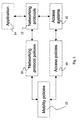
- FIG. 2 showing an embodiment wherein automated connectivity decisions are made in a mobile device by means of separated selection processes.
- Each one of the selection processes is executed in respective selection entity.
- Each of the selection entities is adapted to execute a routine that considers at least one predefined policy directed to particular aspect of the available communication interfaces.
- Figure 2 shows a networking protocol policy entity, mobility policy entity and an access policy entity.
- These entities of the mobile device each adapted to consider a different aspect of communication interfaces may be located in their own respective modules 20, 22, and 44. Selection of a suitable communication interface can then be based on information collected from each of these modules.
- the modules 20, 22 and 44 are connected to each other and may interact during the decision-making process.
- the access technology i.e. communication interface selection may be based on a predefined networking policy or policies that is directed in considering the communication protocols and services that lie behind the available access technologies.
- An appropriate networking policy narrows down the list of possible access technologies that allow connection to a desired service.
- the final access technology selection can then be made based on mobile device system information and user preferences.
- the access technology selection may also be based on a predefined networking policy or policies directed in considering the communication requirements of a flow.
- An appropriate networking policy may receive flow requirements from an application.
- the requirements may also be obtained from networking protocols. For example, the IP Diffserv can be used to reveal required priority information, QoS information and so on. Flow requirements may also be decided based on flow information, like used source or destination port number.
- a FTP service may be decided based on TCP port number, the FTP characteristics (which may be non-real-time, high bit-rate, reliable, delay-tolerant, and so on), or by investigating used protocols (RTP header means delay sensitive traffic).
- RTP header means delay sensitive traffic. The final access technology selection can then be made based on flow requirements.
- Different functional decision levels can be introduced in the control software of the mobile device to automate the connectivity decisions.
- the purpose of the different decision levels is to perform the decision-making process in functional locations that have enough and detailed information readily available for the decision-making.
- a networking policy may know, for example, IP level flow, protocol and service information.
- An access policy is not necessarily capable of handling IP protocols, but it may be able to handle, for example, the EDGE PDP context logic. Therefore networking policy is executed on the IP level rather than at the EDGE (access) level.
- locations can be understood to mean that a certain policy functionality is located such that is can interwork with a certain system functionality.
- the levelled decision making process may also assist in keeping the design modular.
- a process for selecting an access technology can be based on detecting available interfaces, detecting if a virtual private network (VPN), a mobile IP (MIP) network or any other required protocol or service is available, and checking mobility policy settings. The bearer switching may then be done "seamlessly" with the help of the MIP or VPN. Seamless handovers are enabled between systems by the MIP because applications on mobile device can use the same IP address despite of used interface.
- a VPN may be considered by the selection process to provide seamless operation such that, for example, decreased radio security is compensated appropriately by VPN, and therefore satisfies the criteria. If no MIP or mobility enabled VPN is available, so called “hard roaming" may occur.
- An example of hard roaming is when a mobile device activates a WLAN connection and moves flow from a EDGE connection to the WLAN connection, this resulting to a change of the IP address.
- the application has then to establish a new TCP connection because of the changed IP address, since otherwise data cannot be transferred, or the application may stop working because of the changed IP address.
- the highest level of policy decision making entity is close to networking protocols 12 such that necessary sharing of information can be ensured.
- An access policy entity does not need to be clove to the networking protocols because these entities do not need to share information directly.
- the networking protocols can include, for example, protocols such as the internet Protocol (IP), Mobile-IP, Transport Control Protocol (TCP), User Datagram Protocol (UDP), Stream Control Transmission Protocol (SCTP) and so on.
- IP internet Protocol
- TCP Transport Control Protocol
- UDP User Datagram Protocol
- SCTP Stream Control Transmission Protocol
- the networking protocol policy controller 20 may include a plurality of policies defining routing limitations for different destinations and services. Let us consider an example of a corporate email where a virtual private network (VPN) can be used for a connection. A VPN solution is typically the subject of various security restrictions.
- the networking protocol policy controller 20 may be adapted to decide if a direct connection without a VPN or a connection using the VPN that may need a connection to a security gateway of the organisation shall be used.
- a WCDMA network might be a candidate, in which case the WCDMA network provides squired security and Quality of Service (QoS) levels and the WCDMA network may have secure connection to organisation network.
- QoS Quality of Service
- the networking protocol policy controller 20 may have information that some access networks provide connectivity to the domain of the organisation that contains a required security gateway. Some other access networks might not provide access to said domain, for example because of firewalls, name (or network) address translations (NATs) and so on. Thus connection to the security gateway would fail. As a result, the networking protocol policy controller 20 may provide a list of candidate access networks that may be used for the connection so that the security requirements are satisfied and connection to the required protocols and services is guaranteed, and provide the list to the next level of the decision making.
- the networking protocol policy controller 20 may also include flow requirement logic for flows.
- the networking protocol policy controller 20 may receive flow requirements directly from applications via a special application program interface (API).
- the networking protocols policy controller may also receive flow requirements from used protocols, for example from the IP (for example related to DiffServ).
- the networking protocol policy controller 20 may also be able to determine flow requirements. For example, when a flow uses a certain port number (e.g. File Transfer Protocol; FTP or World Wide Web; WWW), service or protocol (Real-Time Transport Protocol; RTP), the networking protocol policy controller 20 may determine flow requirements and provide the requirements to the next level of the decision making. For example, real-time traffic does not tolerate delays and thus a GPRS network might not be acceptable for the flow.
- port number e.g. File Transfer Protocol; FTP or World Wide Web; WWW
- RTP Real-Time Transport Protocol
- the networking protocol policy controller 20 may also include preselection of network interface to be used for a connection. For example, GPRS, WLAN, WCDMA may be indicated as being preferable if such an interface is already available and active.
- the networking protocol policy controller 20 may decide that a new connection created by an application is directed to an existing interface because the connection fulfils defined networking protocol policies. An example of this is when a user launches a browser and starts connecting to a certain http address, the browser may make tens of Transport Control Protocol (TCP) connections. The networking protocol policy controller 20 may then decide to route all the flows over the same network interface.
- TCP Transport Control Protocol
- a possible next level policy controller entity is a mobility policy controller 22.
- the networking protocol policy controller 20 may request the mobility policy controller 22 to choose an interface for the connection.
- the networking protocol policy controller 20 may provide a candidate interface list and/or flow requirements to the mobility policies controller 22.
- the candidate interface list and/or flow requirements may be left empty to denote that all interfaces are allowed.
- the mobility policy controller 22 may then choose an interface to be used for the connection instead of a selection by the networking policy controller 20.
- the mobility policy controller 22 may manage features such as user preferences, application preferences and system information.
- User preferences may include parameters such as general connectivity price limitations, coverage requirements, battery consumption rules (or power in general), QoS limitations, for example relating to high/mean/average bit-rate, delay, reliability, and other parameters that provide common framework for interface selection.
- Application preferences may include application specific preferences, such as the QoS and service description.
- System information include information such as interface availability, location and battery capacity level. The latter may be important especially in association with the WLAN interface usage as this is known for high power consumption, and usage thereof may not be desired if the remaining battery capacity is low.
- Other parameters, such as mobile terminal restrictions for multiple interface usage may also be considered. For example, the restrictions may depend on the model of the mobile device. Any other appropriate system level information may also be utilised in the decision making process.
- the mobility policy controller 22 may then request an access policy controller 44 to activate the chosen access technology provided by an access system 10.
- the mobility policy controller 22 may also notify the networking protocol policy controller 20 about the selected interface so that the networking protocol policy controller 20 is able to route application data to correct access technology.
- an access technology for example an EDGE PDP context is activated, negotiated QoS parameters, assigned IP address etc. parameters may be communicated from the selected access technology to networking protocols and applications. For example, an IP address assigned to a PDP context is used by IP protocol and QoS may be used by the whole system, including applications, to provide required treatment for the flow.
- the mobility policy controller may also request an access policy controller to add a flow to an already active access technology.
- an access policy controller 44 When an access policy controller 44 receives an access technology activation or usage request from the mobility policy controller 22, the access policy controller 44 maps the request to access technology specific policy decisions.
- the usage request is for adding a flow to an already active access technology.
- the access policy controller 44 can thus be used to manage the used access technology i.e. the interface specific policies and information.
- Such information may be definition of interfaces that can be active simultaneously (for example not to cause interference or run out of CPU capacity or memory) and also interface specific information, like characteristics of active PDP contexts.
- the access policy controller 44 defines a mechanism for managing connectivity decisions for specific access technologies.
- the access policy controller entity may hide access technology specific decisions from the mobility policy controller and the networking protocol policy controller entities.
- the operation of the access policy controller can be clarified by the following examples. If a WLAN is inactive, the mobility policy controller 22 may request for activation of the WLAN, where after the access policy controller 44 initiates activation of the WLAN. In another example, if a GPRS network is already active with one PDP context, the mobility policy controller 22 may request for increase of bit-rate transferred over the GPRS network because of the new connection that would need to start using the GPRS network. The access policy controller 44 has then to decide if an existing GPRS connection and PDP context configuration should also be used for the new connection, if an existing PDP context should be modified, for example to initiate increased bit-rate negotiation with the network, or if creation of a new PDP context for the new connection shall be initiated.
- a WCDMA connection is active with a PDP context.
- a mobile conferencing application starts with audio and video streaming and presentation sharing applications.
- the access policy controller 44 may be used to decide if a normal WCDMA is enough for the connection or if a WCDMA high speed downlink packet access (HSDPA) shall be used instead. If the latter decision is made, the access policy controller 44 may then initiate a WCDMA HSDPA activation routine to provide the service required by the mobile conferencing application and other applications.
- HSDPA high speed downlink packet access
- An access policy controller may also provide monitoring of interfaces. For example, when a mobility policy controller prefers a WLAN but no WLAN is available, the mobility policy controller might request the access policy controller to monitor for availability of a WLAN. The access policy controller might then initiate scheduling of different interfaces already active to enable monitoring for a WLAN interface. Scheduling of interfaces means that some active interfaces might be put on hold for the WLAN monitoring purposes. When a WLAN becomes available, the access policy controller notifies the mobility policy controller thereof. The mobility policy controller may then decide to change one or more connections to be carried over the WLAN.
- Entities providing the networking protocol policies, mobility policies and access policies may include all functionalities as described above. It is noted that additional functionalities may be added to them and that some functionalities above may be unnecessary in certain applications, and are thus not needed to be provided.
- a functionality described as a part of one policy entity may be implemented as part of another policy entity. For example, an application connectivity requirement might as well be implemented as a part of networking protocol policies instead of mobility policies.
- the decision entities 20, 22 and 44 of Figure 2 are provided with distinct functionalities.
- the networking policy may be located closely to the IP stack and thus when a browser that makes several TCP connections is opened, the networking policy may choose access technology for the TCP connections and therefore global policy controller components may not be loaded by the decision making, this assisting in modularization and performance optimization.
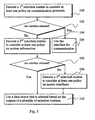
- Figure 3 shows a flowchart in accordance with an embodiment for automated selection of a communication interface for a communication device. More particularly, Figure 3 shows an embodiment how a communication interface can be selected based on outputs of a plurality of selection routines step 110 in hierarchical manner such that the output of a selection routine is used as an input of a next selection routine, and if required, the output of the next selection routine is used as an input of a yet further selection routine, and so forth.
- a first selection routine is executed in a first controller entity at step 100 to consider at least one predefined policy on communication protocols. This may be performed as explained above with reference to networking protocol policies block 20. If it is determined in step 102 that it is not possible to select a communication interface, a request is sent to a second controller entity for execution of another selection routine at step 104. If an interface can be selected already at this phase, then this interface may be used for communication, see step 105.
- the first controller entity may output a list of candidates and/or any other appropriate information, like flow requirements, that may then be input into the second selection routine.
- the second selection routine executed at the second controller entity at step 104 may then consider at least one predefined policy on system information.
- Example of possible system information to be considered are explained above with reference to mobility policies block 22.
- the mobility policy has chosen an interface.
- the interface may then be used as such and there may be no need to communicate information to other policies, for example to an access policy. If the interface need to be activated, monitored or modified, an access policy may need to be involved.
- Access policy can be used to map mobility policy requirements to access technology specific requirements, for example one or more PDP contexts, QoS defined for the radio access, and so on. Therefore, in certain embodiments at least one, further selection routine may be desired. In Figure 3 this is shown by the optional step 108 of executing a third selection routine for considering at least one policy on access interfaces for mapping the policy requirements to access technology specific requirements.
- networking policy may be executed in different order than shown in the Figures and described above.
- the mobility policy may be done first and only then apply networking policy. It is thus first decided which interfaces are usable and only then networking policy may select one of the candidate interfaces that fills networking requirements.
- the policies may also be executed in parallel, this being an implementation level issue.
- a networking protocol policy may have a logic to determine if an application is unable to reach the services it requires. In such a case, networking protocol policy may exclude the access technology used currently for an application flow or flows from the candidate access technologies list resulting in choosing another access technology for the application flow or flows. For example, in case a WLAN connection has been activated for an application flow but the WLAN network is unable to provide connectivity to required services, for example because of a firewall along the route, the networking policy might notice the situation and exclude the used WLAN network from the list of candidate access technologies resulting in selection of a different WLAN network or a different access technology. Networking protocol policy may notice the situation, for example, through communication with networking protocols or the application may provide the required information.
- a further data processing mechanism for selection of a communication interface for a communication device from a plurality of already selected communication interfaces is provided in a communication system where plurality of controlling entities participate in the communication interface selection routine.
- the mechanism comprising a controller entity for executing a local communication interface selection from a group of already selected and activated communication interfaces. The selection is based on information of at least one policy on communication via the communication system the local entity may have.
- the required data processing functions of the mobile device may be provided by means of one or more data processors.
- Appropriately adapted computer program code product may be used for implementing the embodiments, when loaded to the mobile device, for example a processor of the mobile device.
- the program code means may, for example, perform the selection operations, generation of messages and/or information elements, interpretation of information and so forth.
- the program code product for providing the operation may be stored on and provided by means of a carrier medium such as a carrier disc, card or tape. A possibility is to download the program code product to the mobile device via a data network.
- policy decision parameters discussed are only examples, and that any parameters may be employed by a hierarchical mechanism.
Landscapes
- Engineering & Computer Science (AREA)
- Computer Networks & Wireless Communication (AREA)
- Signal Processing (AREA)
- Mobile Radio Communication Systems (AREA)
- Communication Control (AREA)
- Computer And Data Communications (AREA)
- Telephone Function (AREA)
- Telephonic Communication Services (AREA)
- Information Transfer Systems (AREA)
Claims (38)
- Vorrichtung zur Auswahl einer Kommunikationsschnittstelle für eine Anwendung auf einer Kommunikationsvorrichtung (30) aus mehreren Kommunikationsschnittstellen, die durch ein Kommunikationssystem (10) bereitgestellt werden, umfassend:- eine erste Steuereinheit (20) zum Ausführen einer ersten Auswahlroutine zur Berücksichtigung von mindestens einer Richtlinie in Bezug auf Kommunikation mittels des Kommunikationssystems (10);
dadurch gekennzeichnet, dass- die erste Steuereinheit vorgesehen ist, um eine Liste mit Schnittstellenkandidaten bereitzustellen und um zu bestimmen, ob die Anwendung nicht in der Lage ist, Dienste zu erreichen, welche die Anwendung benötigt, und um derzeit verwendete Zugangstechnologien aus der Liste mit Schnittstellenkandidaten auszuschließen;
und wobei die Vorrichtung weiter umfasst- eine zweite Steuereinheit (22) zum Ausführen einer zweiten Auswahlroutine zum Auswählen der Schnittstelle aus der Liste mit Schnittstellenkandidaten, wobei die zweite Steuereinheit (22) mindestens eine zweite Richtlinie in Bezug auf Kommunikation mittels des Kommunikationssystems (10) berücksichtigt, wobei die mindestens eine zweite Richtlinie sich auf einen anderen Aspekt von Kommunikation bezieht als die mindestens eine erste Richtlinie;- wobei die Vorrichtung dazu eingerichtet ist, die Kommunikationsschnittstelle basierend auf einer Ausgabe der zweiten Auswahlroutine auszuwählen. - Vorrichtung nach Anspruch 1, umfassend eine dritte Steuereinheit (44) zum Ausführen einer dritten Auswahlroutine zur Berücksichtigung von mindestens einer dritten Richtlinie in Bezug auf Kommunikation mittels des Kommunikationssystems (10), wobei die mindestens eine dritte Richtlinie sich auf einen anderen Aspekt von Kommunikation bezieht als die mindestens eine erste Richtlinie und die mindestens eine zweite Richtlinie, wobei die Vorrichtung dazu eingerichtet ist, basierend auf der Ausgabe der dritten Auswahlroutine über die Kommunikationsschnittstelle zu entscheiden.
- Vorrichtung nach Anspruch 1 oder 2, wobei eine der Auswahlroutinen vorgesehen ist, um mindestens eine Richtlinie in Bezug auf Kommunikationsprotokolle zu berücksichtigen.
- Vorrichtung nach einem der vorherigen Ansprüche, wobei eine der Auswahlroutinen vorgesehen ist, um mindesten eine Richtlinie in Bezug auf Flussanforderungen zu berücksichtigen.
- Vorrichtung nach einem der vorherigen Ansprüche, wobei eine der Auswahlroutinen vorgesehen ist, um mindestens eine Richtlinie in Bezug auf Zugangsschnittstellen zu berücksichtigen.
- Vorrichtung nach einem der vorherigen Ansprüche, wobei eine der Auswahlroutinen vorgesehen ist, um mit der Kommunikationsvorrichtung (30) verknüpfte Parameter zu berücksichtigen.
- Vorrichtung nach einem der vorherigen Ansprüche, wobei eine der Auswahlroutinen vorgesehen ist, um Parameter zu berücksichtigen, die verknüpft sind mit mindestens einem aus Verbindungsfähigkeit, Preisgestaltung, Stromquelle, Dienstgüte, und der Art der Kommunikationsvorrichtung (30).
- Vorrichtung nach einem der vorherigen Ansprüche, wobei eine der Auswahlroutinen vorgesehen ist, um mindestens eines zu berücksichtigen aus Internet Protocol, Mobile Internet Protocol, Transport Control Protocol, und Stream Control Transmission Protocol.
- Vorrichtung nach einem der vorherigen Ansprüche, wobei eine der Steuereinheiten (20, 22, 44) dazu eingerichtet ist, bei einer der anderen Steuereinheiten anzufordern, eine Kommunikationsschnittstelle zu aktivieren.
- Vorrichtung nach Anspruch 2 oder einem der Ansprüche 3 bis 9, wenn er von Anspruch 2 abhängt, wobei die zweite Steuereinheit (22) dazu eingerichtet ist, die erste Steuereinheit (20) über eine ausgewählte Kommunikationsschnittstelle zu benachrichtigen, und die erste Steuereinheit (20) dazu eingerichtet ist, Anwendungsdaten zu der dritten Steuereinheit (44) zu leiten.
- Vorrichtung nach einem der vorherigen Ansprüche, wobei eine der Steuereinheiten (20, 22, 44) dazu eingerichtet ist, die Verfügbarkeit einer Kommunikationsschnittstelle zu überwachen, und um mindestens eine andere der Steuereinheiten über eine verfügbare Kommunikationsschnittstelle zu informieren.
- Vorrichtung nach einem der vorherigen Ansprüche, wobei der Datenverarbeitungsmechanismus dazu eingerichtet ist, die Kommunikationsschnittstelle auszuwählen, indem eine Liste von Kandidaten von Zugangstechnologien basierend auf Anforderungen eines Dienstes eingegrenzt wird.
- Vorrichtung nach einem der vorherigen Ansprüche, wobei der Datenverarbeitungsmechanismus dazu eingerichtet ist, die Kommunikationsschnittstelle basierend auf Datenflussanforderungen auszuwählen.
- Vorrichtung nach einem der vorherigen Ansprüche, wobei eine der Steuereinheiten (20, 22, 44) durch eine Netzwerkrichtlinien-Steuerung der Kommunikationsvorrichtung (30) bereitgestellt wird.
- Vorrichtung nach einem der vorherigen Ansprüche, wobei eine der Steuereinheiten (20, 22, 44) durch eine Mobilitätsrichtlinien-Steuerung der Kommunikationsvorrichtung bereitgestellt wird.
- Vorrichtung nach einem der vorherigen Ansprüche, wobei eine der Steuereinheiten durch eine Zugangsrichtlinien-Steuerung der Kommunikationsvorrichtung bereitgestellt wird.
- Vorrichtung nach einem der vorherigen Ansprüche, wobei die Kommunikationsschnittstelle bereitgestellt wird durch eines aus einem GPRS-Netzwerk, einem CDMA-Netzwerk, einem WCDMA-Netzwerk, einem GSM-Netzwerk, einem EDGE-Netzwerk, einer Ultra-Breit-Band-, einer Kurzreichweiten-Verbindung und einem drahtlosen lokalen Netzwerk.
- Kommunikationsvorrichtung, umfassend eine Vorrichtung nach einem der vorhergehenden Ansprüche.
- Kommunikationsvorrichtung nach Anspruch 18, umfassend eine mobile Vorrichtung.
- Verfahren zur automatischen Auswahl einer Kommunikationsschnittstelle für eine Anwendung auf einer Kommunikationsvorrichtung (30) aus mehreren Kommunikationsschnittstellen, die durch ein Kommunikationssystem bereitgestellt werden, umfassend:- Ausführen einer ersten Auswahlroutine, die angepasst ist, mindestens eine Richtlinie in Bezug auf Kommunikation mittels des Kommunikationssystems (10) zu berücksichtigen;
dadurch gekennzeichnet, dass das Verfahren weiter umfasst- Bereitstellen einer Kandidatenliste;- Bestimmen, ob die Anwendung nicht in der Lage ist, Dienste zu erreichen, die die Anwendung benötigt;- Ausschließen derzeit verwendeter Zugangstechnologien aus der Kandidatenliste; und- Ausführen einer zweiten Auswahlroutine, die angepasst ist, die Schnittstelle aus der Liste mit Schnittstellenkandidaten auszuwählen, wobei die zweite Auswahlroutine mindestens eine zweite Richtlinie in Bezug auf Kommunikation mittels des Kommunikationssystems (10) berücksichtigt, wobei die mindestens eine zweite Richtlinie sich auf einen anderen Aspekt von Kommunikation bezieht als die mindestens eine erste Richtlinie; und- Auszuwählen der Kommunikationsschnittstelle basierend auf einer Ausgabe der zweiten Auswahlroutine. - Verfahren nach Anspruch 20, umfassend Ausführen einer dritten Auswahlroutine, die eingerichtet ist, mindestens eine dritte Richtlinie in Bezug auf Kommunikation mittels des Kommunikationssystems zu berücksichtigen, wobei die mindestens eine dritte Richtlinie sich auf einen anderen Aspekt von Kommunikation bezieht als die mindestens eine erste Richtlinie und die mindestens eine zweite Richtlinie, und Treffen einer Entscheidung betreffend die Auswahl, basierend auf der Ausgabe der dritten Auswahlroutine.
- Verfahren nach Anspruch 21, wobei der Schritt des Ausführens der dritten Auswahlroutine umfasst, mindestens eine Richtlinie in Bezug auf Zugangsschnittstellen zu berücksichtigen.
- Verfahren nach einem der Ansprüche 20 bis 22, wobei der Schritt des Ausführens der ersten Auswahlroutine umfasst, mindestens eine Richtlinie in Bezug auf Kommunikationsprotokolle zu berücksichtigen.
- Verfahren nach einem der Ansprüche 20 bis 23, wobei der Schritt des Ausführens der ersten Auswahlroutine umfasst, mindestens eine Richtlinie in Bezug auf Flussanforderungen zu berücksichtigen.
- Verfahren nach einem der Ansprüche 20 bis 24, wobei der Schritt des Ausführens der zweiten Auswahlroutine umfasst, eine vorbestimmte Richtlinie in Bezug auf Parameter, die mit der Kommunikationsvorrichtung (30) verknüpft sind, zu berücksichtigen.
- Verfahren nach einem der Ansprüche 20 bis 25, umfassend die Schritte des Ausgebens einer Liste von Kandidaten von Kommunikationsschnittstellen und/oder Flussanforderungen aus einer Auswahlroutine, und Eingeben der Liste in eine andere Auswahlroutine.
- Verfahren nach Anspruch 26, umfassend Erzeugen einer leeren Liste, um anzugeben, dass alle verfügbaren Schnittstellen gestattet sind.
- Verfahren nach einem der Ansprüche 20 bis 27, umfassend Analysieren der Auswahlroutinen eine nach der anderen daraufhin, ob, falls überhaupt, eine der möglichen Kommunikationsschnittstellen eine Sicherheitsrichtlinie erfüllt.
- Verfahren nach einem der Ansprüche 20 bis 28, umfassend Auswählen, durch eine der Auswahlroutinen, einer Kommunikationsschnittstelle aus bereits aktivierten Kommunikationsschnittstellen.
- Verfahren nach einem der Ansprüche 20 bis 29, umfassend Auswählen, durch eine der Auswahlroutinen, einer Kommunikationsschnittstelle aus einer Gruppe bevorzugter Kommunikationsschnittstellen, falls eine solche Schnittstelle verfügbar ist.
- Verfahren nach einem der Ansprüche 20 bis 30, umfassend Senden einer Anforderung an die zweite Auswahlroutine, eine Kommunikationsschnittstelle auszuwählen, falls die erste Auswahlroutine nicht in der Lage ist, eine Kommunikationsschnittstelle auszugeben, die von der Kommunikationsvorrichtung (30) verwendet werden soll.
- Verfahren nach einem der Ansprüche 20 bis 31, umfassend Eingrenzen einer Liste von Kandidaten von Zugangstechnologien basierend auf Anforderungen eines Dienstes.
- Verfahren nach einem der Ansprüche 20 bis 32, umfassend Auswählen einer Kommunikationsschnittstelle basierend auf Datenflussanforderungen.
- Verfahren nach einem der Ansprüche 20 bis 33, wobei die zweite Auswahlroutine vor der Ausführung der ersten Auswahlroutine ausgeführt wird.
- Verfahren nach einem der Ansprüche 20 bis 34, umfassend Überwachen der Verfügbarkeit von Kommunikationsschnittstellen.
- Verfahren nach einem der Ansprüche 20 bis 35, wobei die Kommunikationsvorrichtung eine mobile Vorrichtung umfasst.
- Computerprogrammprodukt, umfassend Programmcodemittel, die eingerichtet sind, die Schritte von einem der Ansprüche 20 bis 36 auszuführen, wenn das Programm auf einem Prozessor ausgeführt wird.
- Vorrichtung nach Anspruch 1, wobei die Kommunikationsschnittstelle weiter aus einer Gruppe von bereits ausgewählten Kommunikationsschnittstellen ausgewählt wird, basierend auf mindestens einer Richtlinie in Bezug auf Kommunikation mittels des Kommunikationssystems (10).
Applications Claiming Priority (2)
| Application Number | Priority Date | Filing Date | Title |
|---|---|---|---|
| GBGB0508057.7A GB0508057D0 (en) | 2005-04-21 | 2005-04-21 | Selection of a communication interface |
| PCT/IB2006/001558 WO2006114712A1 (en) | 2005-04-21 | 2006-04-18 | Policy based communication interface selection of a multimode terminal |
Publications (2)
| Publication Number | Publication Date |
|---|---|
| EP1872609A1 EP1872609A1 (de) | 2008-01-02 |
| EP1872609B1 true EP1872609B1 (de) | 2012-03-07 |
Family
ID=34639879
Family Applications (1)
| Application Number | Title | Priority Date | Filing Date |
|---|---|---|---|
| EP06765508A Not-in-force EP1872609B1 (de) | 2005-04-21 | 2006-04-18 | Auswahl einer schnittstelle für richtlinienbasierte kommunikation auf einem multimodalen endgerät |
Country Status (9)
| Country | Link |
|---|---|
| US (1) | US8174994B2 (de) |
| EP (1) | EP1872609B1 (de) |
| JP (1) | JP2008538475A (de) |
| KR (1) | KR100965521B1 (de) |
| CN (1) | CN101189893B (de) |
| AT (1) | ATE548883T1 (de) |
| GB (1) | GB0508057D0 (de) |
| TW (1) | TWI395498B (de) |
| WO (1) | WO2006114712A1 (de) |
Cited By (3)
| Publication number | Priority date | Publication date | Assignee | Title |
|---|---|---|---|---|
| US10382305B2 (en) | 2013-11-15 | 2019-08-13 | Microsoft Technology Licensing, Llc | Applying sequenced instructions to connect through captive portals |
| US10560853B2 (en) | 2013-11-15 | 2020-02-11 | Microsoft Technology Licensing, Llc | Configuring captive portals with a cloud service |
| US10582550B2 (en) | 2013-11-15 | 2020-03-03 | Microsoft Technology Licensing, Llc | Generating sequenced instructions for connecting through captive portals |
Families Citing this family (106)
| Publication number | Priority date | Publication date | Assignee | Title |
|---|---|---|---|---|
| US10522026B2 (en) | 2008-08-11 | 2019-12-31 | Icontrol Networks, Inc. | Automation system user interface with three-dimensional display |
| US11677577B2 (en) | 2004-03-16 | 2023-06-13 | Icontrol Networks, Inc. | Premises system management using status signal |
| US11368429B2 (en) | 2004-03-16 | 2022-06-21 | Icontrol Networks, Inc. | Premises management configuration and control |
| US10721087B2 (en) | 2005-03-16 | 2020-07-21 | Icontrol Networks, Inc. | Method for networked touchscreen with integrated interfaces |
| EP1738540B1 (de) | 2004-03-16 | 2017-10-04 | Icontrol Networks, Inc. | Gebäudeverwaltungssystem |
| US9729342B2 (en) | 2010-12-20 | 2017-08-08 | Icontrol Networks, Inc. | Defining and implementing sensor triggered response rules |
| US10237237B2 (en) | 2007-06-12 | 2019-03-19 | Icontrol Networks, Inc. | Communication protocols in integrated systems |
| US11244545B2 (en) | 2004-03-16 | 2022-02-08 | Icontrol Networks, Inc. | Cross-client sensor user interface in an integrated security network |
| US11582065B2 (en) | 2007-06-12 | 2023-02-14 | Icontrol Networks, Inc. | Systems and methods for device communication |
| US12063220B2 (en) | 2004-03-16 | 2024-08-13 | Icontrol Networks, Inc. | Communication protocols in integrated systems |
| US10339791B2 (en) | 2007-06-12 | 2019-07-02 | Icontrol Networks, Inc. | Security network integrated with premise security system |
| US10127802B2 (en) | 2010-09-28 | 2018-11-13 | Icontrol Networks, Inc. | Integrated security system with parallel processing architecture |
| US11489812B2 (en) | 2004-03-16 | 2022-11-01 | Icontrol Networks, Inc. | Forming a security network including integrated security system components and network devices |
| US10142392B2 (en) | 2007-01-24 | 2018-11-27 | Icontrol Networks, Inc. | Methods and systems for improved system performance |
| US11343380B2 (en) | 2004-03-16 | 2022-05-24 | Icontrol Networks, Inc. | Premises system automation |
| US11916870B2 (en) | 2004-03-16 | 2024-02-27 | Icontrol Networks, Inc. | Gateway registry methods and systems |
| US8635350B2 (en) | 2006-06-12 | 2014-01-21 | Icontrol Networks, Inc. | IP device discovery systems and methods |
| US11811845B2 (en) | 2004-03-16 | 2023-11-07 | Icontrol Networks, Inc. | Communication protocols over internet protocol (IP) networks |
| US11368327B2 (en) | 2008-08-11 | 2022-06-21 | Icontrol Networks, Inc. | Integrated cloud system for premises automation |
| US20170180198A1 (en) | 2008-08-11 | 2017-06-22 | Marc Baum | Forming a security network including integrated security system components |
| US10999254B2 (en) | 2005-03-16 | 2021-05-04 | Icontrol Networks, Inc. | System for data routing in networks |
| US20120324566A1 (en) | 2005-03-16 | 2012-12-20 | Marc Baum | Takeover Processes In Security Network Integrated With Premise Security System |
| US20110128378A1 (en) * | 2005-03-16 | 2011-06-02 | Reza Raji | Modular Electronic Display Platform |
| US11496568B2 (en) | 2005-03-16 | 2022-11-08 | Icontrol Networks, Inc. | Security system with networked touchscreen |
| US11615697B2 (en) | 2005-03-16 | 2023-03-28 | Icontrol Networks, Inc. | Premise management systems and methods |
| US11700142B2 (en) | 2005-03-16 | 2023-07-11 | Icontrol Networks, Inc. | Security network integrating security system and network devices |
| US8155693B2 (en) * | 2006-02-27 | 2012-04-10 | Broadcom Corporation | Mobile communication device providing communication pathway determination assistance |
| US7958355B2 (en) * | 2006-03-01 | 2011-06-07 | Microsoft Corporation | Keytote component |
| US8391865B2 (en) * | 2006-03-27 | 2013-03-05 | Kyocera Corporation | System selection method and arrangement for mobile wireless communication devices |
| US12063221B2 (en) | 2006-06-12 | 2024-08-13 | Icontrol Networks, Inc. | Activation of gateway device |
| US10079839B1 (en) | 2007-06-12 | 2018-09-18 | Icontrol Networks, Inc. | Activation of gateway device |
| EP1895800A1 (de) * | 2006-08-31 | 2008-03-05 | France Télécom | Bestimmung einer Liste von bevorzugten Mobilfunknetzwerken |
| JP5341771B2 (ja) * | 2006-12-28 | 2013-11-13 | ノキア コーポレイション | 移動体接続 |
| US11706279B2 (en) | 2007-01-24 | 2023-07-18 | Icontrol Networks, Inc. | Methods and systems for data communication |
| US7756068B2 (en) * | 2007-02-08 | 2010-07-13 | Sony Ericsson Mobile Communications Ab | Selecting an interface in a multi-radio enabled device |
| US7633385B2 (en) | 2007-02-28 | 2009-12-15 | Ucontrol, Inc. | Method and system for communicating with and controlling an alarm system from a remote server |
| US8451986B2 (en) | 2007-04-23 | 2013-05-28 | Icontrol Networks, Inc. | Method and system for automatically providing alternate network access for telecommunications |
| US8191106B2 (en) * | 2007-06-07 | 2012-05-29 | Alcatel Lucent | System and method of network access security policy management for multimodal device |
| US10523689B2 (en) | 2007-06-12 | 2019-12-31 | Icontrol Networks, Inc. | Communication protocols over internet protocol (IP) networks |
| US11316753B2 (en) | 2007-06-12 | 2022-04-26 | Icontrol Networks, Inc. | Communication protocols in integrated systems |
| US12184443B2 (en) | 2007-06-12 | 2024-12-31 | Icontrol Networks, Inc. | Controlling data routing among networks |
| US12003387B2 (en) | 2012-06-27 | 2024-06-04 | Comcast Cable Communications, Llc | Control system user interface |
| US11646907B2 (en) | 2007-06-12 | 2023-05-09 | Icontrol Networks, Inc. | Communication protocols in integrated systems |
| US11218878B2 (en) | 2007-06-12 | 2022-01-04 | Icontrol Networks, Inc. | Communication protocols in integrated systems |
| US11423756B2 (en) | 2007-06-12 | 2022-08-23 | Icontrol Networks, Inc. | Communication protocols in integrated systems |
| US11212192B2 (en) | 2007-06-12 | 2021-12-28 | Icontrol Networks, Inc. | Communication protocols in integrated systems |
| US12283172B2 (en) | 2007-06-12 | 2025-04-22 | Icontrol Networks, Inc. | Communication protocols in integrated systems |
| US11601810B2 (en) | 2007-06-12 | 2023-03-07 | Icontrol Networks, Inc. | Communication protocols in integrated systems |
| EP2012473A1 (de) * | 2007-07-06 | 2009-01-07 | Nokia Siemens Networks Oy | Verfahren und Vorrichtung zur Verwaltung von Verkehrsflüssen und ein Kommunikationssystem mit solcher Vorrichtung |
| EP2177059B1 (de) | 2007-07-13 | 2019-02-27 | Telefonaktiebolaget LM Ericsson (publ) | Abstimmung von verwendeten und erlaubten funkzugangstechnologietypen |
| US11831462B2 (en) | 2007-08-24 | 2023-11-28 | Icontrol Networks, Inc. | Controlling data routing in premises management systems |
| WO2009051528A1 (en) * | 2007-10-17 | 2009-04-23 | Telefonaktiebolaget Lm Ericsson (Publ). | Method and arragement for deciding a security setting |
| US8189532B2 (en) * | 2007-12-26 | 2012-05-29 | Nokia Corporation | Mobile node, a method or handover and a computer program |
| US11916928B2 (en) | 2008-01-24 | 2024-02-27 | Icontrol Networks, Inc. | Communication protocols over internet protocol (IP) networks |
| GB2457656C (en) * | 2008-02-18 | 2014-09-17 | Sony Corp | Cellular communication system, apparatus and method for network discovery |
| US9483755B2 (en) | 2008-03-04 | 2016-11-01 | Apple Inc. | Portable multifunction device, method, and graphical user interface for an email client |
| US9131425B2 (en) * | 2008-06-09 | 2015-09-08 | Qualcomm Incorporated | Method and apparatus for PCC enhancement for flow based mobility |
| US20170185278A1 (en) | 2008-08-11 | 2017-06-29 | Icontrol Networks, Inc. | Automation system user interface |
| US11792036B2 (en) | 2008-08-11 | 2023-10-17 | Icontrol Networks, Inc. | Mobile premises automation platform |
| US10530839B2 (en) | 2008-08-11 | 2020-01-07 | Icontrol Networks, Inc. | Integrated cloud system with lightweight gateway for premises automation |
| US11258625B2 (en) | 2008-08-11 | 2022-02-22 | Icontrol Networks, Inc. | Mobile premises automation platform |
| US11758026B2 (en) | 2008-08-11 | 2023-09-12 | Icontrol Networks, Inc. | Virtual device systems and methods |
| US11729255B2 (en) | 2008-08-11 | 2023-08-15 | Icontrol Networks, Inc. | Integrated cloud system with lightweight gateway for premises automation |
| US8660065B2 (en) * | 2008-12-19 | 2014-02-25 | Nec Europe Ltd. | Radio network and a method for operating a radio network |
| TWI487394B (zh) * | 2009-01-09 | 2015-06-01 | 內數位專利控股公司 | 資料流移動性 |
| US8638211B2 (en) | 2009-04-30 | 2014-01-28 | Icontrol Networks, Inc. | Configurable controller and interface for home SMA, phone and multimedia |
| ITTO20090967A1 (it) * | 2009-12-09 | 2011-06-10 | Elsag Datamat Spa | Sistema per comunicazioni punto-punto su reti ip |
| US8836467B1 (en) | 2010-09-28 | 2014-09-16 | Icontrol Networks, Inc. | Method, system and apparatus for automated reporting of account and sensor zone information to a central station |
| US9047128B1 (en) | 2010-09-30 | 2015-06-02 | Emc Corporation | Backup server interface load management based on available network interfaces |
| US8725848B1 (en) * | 2010-09-30 | 2014-05-13 | Emc Corporation | Multipath distribution |
| US9678804B1 (en) | 2010-09-30 | 2017-06-13 | EMC IP Holding Company LLC | Dynamic load balancing of backup server interfaces based on timeout response, job counter, and speed of a plurality of interfaces |
| US11750414B2 (en) | 2010-12-16 | 2023-09-05 | Icontrol Networks, Inc. | Bidirectional security sensor communication for a premises security system |
| US9147337B2 (en) | 2010-12-17 | 2015-09-29 | Icontrol Networks, Inc. | Method and system for logging security event data |
| JP5722726B2 (ja) * | 2011-08-04 | 2015-05-27 | Kddi株式会社 | ポリシー制御方法ならびにそのポリシーサーバおよび移動端末 |
| BR112014004719B1 (pt) * | 2011-08-30 | 2022-03-03 | Toyota Jidosha Kabushiki Kaisha | Dispositivo de comunicação sem fio e método de comunicação sem fio |
| JP2013141170A (ja) * | 2012-01-06 | 2013-07-18 | Ricoh Co Ltd | 通信装置 |
| EP2805529A2 (de) * | 2012-01-16 | 2014-11-26 | Alcatel Lucent | Chipkarte der nächsten generation |
| US8488577B1 (en) * | 2012-06-06 | 2013-07-16 | Google Inc. | Apparatus for controlling the availability of internet access to applications |
| US9356804B1 (en) * | 2012-06-12 | 2016-05-31 | Amazon Technologies, Inc. | Policy-based network connection resource selection |
| US9160497B2 (en) * | 2012-07-02 | 2015-10-13 | Intel Corporation | Application continuity with reroute and reset in a wireless communication network |
| JP6274211B2 (ja) * | 2012-09-05 | 2018-02-07 | 日本電気株式会社 | 無線通信端末、通信方法、プログラム、情報処理装置および配信サーバ |
| US9271254B2 (en) * | 2012-10-22 | 2016-02-23 | Qualcomm Incorporated | Network directed system selection using wireless device input |
| CN103441991A (zh) * | 2013-08-12 | 2013-12-11 | 江苏华大天益电力科技有限公司 | 一种移动终端安全接入平台 |
| US10545657B2 (en) | 2013-09-03 | 2020-01-28 | Apple Inc. | User interface for manipulating user interface objects |
| TWI633461B (zh) | 2013-09-03 | 2018-08-21 | 蘋果公司 | 用於操縱使用者介面物件之電腦實施方法、非暫時性電腦可讀儲存媒體及電子器件 |
| US12287962B2 (en) | 2013-09-03 | 2025-04-29 | Apple Inc. | User interface for manipulating user interface objects |
| US10503388B2 (en) | 2013-09-03 | 2019-12-10 | Apple Inc. | Crown input for a wearable electronic device |
| US11068128B2 (en) | 2013-09-03 | 2021-07-20 | Apple Inc. | User interface object manipulations in a user interface |
| US9693276B1 (en) * | 2013-11-25 | 2017-06-27 | Google Inc. | System and method for intelligent network connection selection |
| US10051533B2 (en) | 2014-01-28 | 2018-08-14 | Openet Telecom Ltd. | System and method for performing network selection |
| US11405463B2 (en) | 2014-03-03 | 2022-08-02 | Icontrol Networks, Inc. | Media content management |
| EP4036685A1 (de) | 2014-06-27 | 2022-08-03 | Apple Inc. | Benutzerschnittstelle mit reduzierter grösse |
| KR101481757B1 (ko) * | 2014-07-30 | 2015-01-21 | 주식회사 파이오링크 | 동적 플로우 분배를 이용하여 플로우를 처리하기 위한 방법, 장치 및 컴퓨터 판독 가능한 기록 매체 |
| WO2016036510A1 (en) | 2014-09-02 | 2016-03-10 | Apple Inc. | Music user interface |
| WO2016036414A1 (en) | 2014-09-02 | 2016-03-10 | Apple Inc. | Button functionality |
| TWI676127B (zh) | 2014-09-02 | 2019-11-01 | 美商蘋果公司 | 關於電子郵件使用者介面之方法、系統、電子器件及電腦可讀儲存媒體 |
| US20160062571A1 (en) | 2014-09-02 | 2016-03-03 | Apple Inc. | Reduced size user interface |
| TWI753846B (zh) | 2014-09-02 | 2022-02-01 | 美商蘋果公司 | 用於電子訊息使用者介面之方法、系統、電子器件以及電腦可讀取媒體 |
| CN113763377B (zh) * | 2015-01-31 | 2025-10-31 | 文塔纳医疗系统公司 | 用于使用载片缩略图图像的感兴趣区域检测的系统和方法 |
| US10365807B2 (en) | 2015-03-02 | 2019-07-30 | Apple Inc. | Control of system zoom magnification using a rotatable input mechanism |
| MY194025A (en) * | 2015-06-29 | 2022-11-08 | Ericsson Telefon Ab L M | Communication policy control in a machine-to-machine communication system |
| CN109156022B (zh) | 2016-06-22 | 2022-08-09 | 英特尔公司 | 用于全双工调度的通信设备和方法 |
| KR102581310B1 (ko) | 2016-10-25 | 2023-09-22 | 삼성전자 주식회사 | 무선 통신 시스템에서 접속 네트워크를 선택하는 방법 및 장치 |
| US11435830B2 (en) | 2018-09-11 | 2022-09-06 | Apple Inc. | Content-based tactile outputs |
| DK179896B1 (en) | 2018-09-11 | 2019-08-30 | Apple Inc. | CONTENT-BASED TACTILE OUTPUTS |
| WO2021087272A1 (en) * | 2019-10-31 | 2021-05-06 | Battelle Energy Alliance, Llc | Processing flows and related systems and methods are disclosed |
Family Cites Families (23)
| Publication number | Priority date | Publication date | Assignee | Title |
|---|---|---|---|---|
| US5898667A (en) * | 1996-12-31 | 1999-04-27 | Northern Telecom Limited | SS7 network management primeship |
| AU2001239819A1 (en) * | 2000-02-23 | 2001-09-03 | Dave D. Adams | System and method for dynamically routing messages transmitted from mobile platforms |
| US6674769B1 (en) * | 2000-03-07 | 2004-01-06 | Advanced Micro Devices, Inc. | Simultaneous searching of layer 3 policy filter and policy cache in a network switch port |
| US7114010B2 (en) | 2000-06-28 | 2006-09-26 | Broadcom Corporation | Multi-mode controller |
| JP3813431B2 (ja) | 2000-09-29 | 2006-08-23 | 株式会社東芝 | 無線端末装置、無線通信システム |
| US20020039892A1 (en) * | 2000-10-04 | 2002-04-04 | Bo Lindell | System and method for network and service selection in a mobile communication station |
| AU2001221501A1 (en) | 2000-11-14 | 2002-05-27 | Siemens Aktiengesellschaft | Device and method for selecting network accesses |
| JP3782671B2 (ja) | 2001-02-28 | 2006-06-07 | 株式会社エヌ・ティ・ティ・ドコモ | リンクマネージャ及びリンク管理方法 |
| FI20010979A7 (fi) | 2001-05-09 | 2002-11-10 | Nokia Corp | Puhelunohjausmenetelmä |
| EP1286270A1 (de) * | 2001-07-24 | 2003-02-26 | Deutsche Thomson-Brandt Gmbh | Integrierte Schaltung mit generischer Kommunikationsschnittstelle |
| US6801777B2 (en) * | 2001-11-27 | 2004-10-05 | Intel Corporation | Device and method for intelligent wireless communication selection |
| US6897805B2 (en) * | 2001-12-19 | 2005-05-24 | Intel Corporation | Method and apparatus for location based wireless roaming between communication networks |
| JP4161028B2 (ja) * | 2002-03-06 | 2008-10-08 | 株式会社日立国際電気 | マルチサービス無線通信システム |
| AU2003242944A1 (en) * | 2002-07-10 | 2004-02-02 | Koninklijke Philips Electronics N.V. | Interface selection from multiple networks |
| US7065367B2 (en) * | 2002-07-11 | 2006-06-20 | Oliver Michaelis | Interface selection in a wireless communication network |
| AU2003251821A1 (en) | 2002-08-30 | 2004-03-19 | Sprint Spectrum, L.P. | Method and system for intersystem wireless communication session arbitration |
| JP2006502678A (ja) | 2002-10-02 | 2006-01-19 | コーニンクレッカ フィリップス エレクトロニクス エヌ ヴィ | 携帯用装置のスマート接続の管理 |
| JP2004272563A (ja) | 2003-03-07 | 2004-09-30 | Fujitsu Ltd | 通信制御プログラム、コンテンツ配信プログラム、端末装置、およびコンテンツサーバ |
| US7139570B2 (en) * | 2003-03-24 | 2006-11-21 | Starhome Gmbh | Preferred network selection |
| WO2005004437A1 (en) | 2003-06-25 | 2005-01-13 | Hotspot Wireless Devices, Inc. | Systems and metods using multiprotocol communication |
| JP2005109722A (ja) * | 2003-09-29 | 2005-04-21 | Toshiba Corp | 無線通信装置および無線通信方法 |
| US7610057B2 (en) * | 2004-04-23 | 2009-10-27 | Microsoft Corporation | Selecting a wireless networking technology on a device capable of carrying out wireless network communications via multiple wireless technologies |
| US7761607B2 (en) * | 2004-04-23 | 2010-07-20 | Microsoft Corporation | User based communication mode selection on a device capable of carrying out network communications |
-
2005
- 2005-04-21 GB GBGB0508057.7A patent/GB0508057D0/en not_active Ceased
-
2006
- 2006-04-14 US US11/403,884 patent/US8174994B2/en active Active
- 2006-04-18 CN CN2006800199061A patent/CN101189893B/zh not_active Expired - Fee Related
- 2006-04-18 KR KR1020077027040A patent/KR100965521B1/ko not_active Expired - Fee Related
- 2006-04-18 EP EP06765508A patent/EP1872609B1/de not_active Not-in-force
- 2006-04-18 AT AT06765508T patent/ATE548883T1/de active
- 2006-04-18 JP JP2008507196A patent/JP2008538475A/ja active Pending
- 2006-04-18 WO PCT/IB2006/001558 patent/WO2006114712A1/en not_active Ceased
- 2006-04-19 TW TW095113889A patent/TWI395498B/zh not_active IP Right Cessation
Cited By (3)
| Publication number | Priority date | Publication date | Assignee | Title |
|---|---|---|---|---|
| US10382305B2 (en) | 2013-11-15 | 2019-08-13 | Microsoft Technology Licensing, Llc | Applying sequenced instructions to connect through captive portals |
| US10560853B2 (en) | 2013-11-15 | 2020-02-11 | Microsoft Technology Licensing, Llc | Configuring captive portals with a cloud service |
| US10582550B2 (en) | 2013-11-15 | 2020-03-03 | Microsoft Technology Licensing, Llc | Generating sequenced instructions for connecting through captive portals |
Also Published As
| Publication number | Publication date |
|---|---|
| GB0508057D0 (en) | 2005-06-01 |
| JP2008538475A (ja) | 2008-10-23 |
| CN101189893A (zh) | 2008-05-28 |
| EP1872609A1 (de) | 2008-01-02 |
| TWI395498B (zh) | 2013-05-01 |
| KR100965521B1 (ko) | 2010-06-23 |
| ATE548883T1 (de) | 2012-03-15 |
| TW200704216A (en) | 2007-01-16 |
| KR20080009131A (ko) | 2008-01-24 |
| WO2006114712A1 (en) | 2006-11-02 |
| US20060259951A1 (en) | 2006-11-16 |
| US8174994B2 (en) | 2012-05-08 |
| CN101189893B (zh) | 2011-11-30 |
Similar Documents
| Publication | Publication Date | Title |
|---|---|---|
| EP1872609B1 (de) | Auswahl einer schnittstelle für richtlinienbasierte kommunikation auf einem multimodalen endgerät | |
| US8620307B2 (en) | Selection of access interface | |
| RU2481749C2 (ru) | Мобильное устройство и способ для выборочной передачи данных по нелицензируемым беспроводным сетям ближнего действия и глобальным беспроводным сетям | |
| CN103843375B (zh) | 多穴终端 | |
| CN114521335B (zh) | Ue以及通信控制方法 | |
| Olsson et al. | SAE and the Evolved Packet Core: Driving the mobile broadband revolution | |
| EP2830364B1 (de) | Verfahren und vorrichtung zur auswahl eines drahtlosen zugangs unter verwendung von identifikationsinformationen in einem drahtlosen kommunikationssystem | |
| EP2438791B1 (de) | Verbindungsmanager für eine drahtlose kommunikationsvorrichtung | |
| JP5257815B2 (ja) | 通信インターフェースの評価 | |
| CN102450086B (zh) | 用于在异类无线电单元之间进行互配的技术 | |
| EP2039198B1 (de) | Handover eines kommunikationsgeräts | |
| CN105594257B (zh) | 用于传输和接收数据的方法和系统 | |
| US20080247346A1 (en) | Communication node with multiple access support | |
| US20130265986A1 (en) | Method for re-selecting a communication network | |
| Wisely et al. | Transparent IP radio access for next-generation mobile networks | |
| Sapru | SAE and the evolved packet core |
Legal Events
| Date | Code | Title | Description |
|---|---|---|---|
| PUAI | Public reference made under article 153(3) epc to a published international application that has entered the european phase |
Free format text: ORIGINAL CODE: 0009012 |
|
| 17P | Request for examination filed |
Effective date: 20071026 |
|
| AK | Designated contracting states |
Kind code of ref document: A1 Designated state(s): AT BE BG CH CY CZ DE DK EE ES FI FR GB GR HU IE IS IT LI LT LU LV MC NL PL PT RO SE SI SK TR |
|
| 17Q | First examination report despatched |
Effective date: 20080327 |
|
| DAX | Request for extension of the european patent (deleted) | ||
| GRAP | Despatch of communication of intention to grant a patent |
Free format text: ORIGINAL CODE: EPIDOSNIGR1 |
|
| RIC1 | Information provided on ipc code assigned before grant |
Ipc: H04W 88/06 20090101AFI20101216BHEP |
|
| GRAS | Grant fee paid |
Free format text: ORIGINAL CODE: EPIDOSNIGR3 |
|
| GRAA | (expected) grant |
Free format text: ORIGINAL CODE: 0009210 |
|
| AK | Designated contracting states |
Kind code of ref document: B1 Designated state(s): AT BE BG CH CY CZ DE DK EE ES FI FR GB GR HU IE IS IT LI LT LU LV MC NL PL PT RO SE SI SK TR |
|
| REG | Reference to a national code |
Ref country code: GB Ref legal event code: FG4D |
|
| REG | Reference to a national code |
Ref country code: CH Ref legal event code: EP Ref country code: AT Ref legal event code: REF Ref document number: 548883 Country of ref document: AT Kind code of ref document: T Effective date: 20120315 |
|
| REG | Reference to a national code |
Ref country code: IE Ref legal event code: FG4D |
|
| REG | Reference to a national code |
Ref country code: DE Ref legal event code: R096 Ref document number: 602006028063 Country of ref document: DE Effective date: 20120503 |
|
| REG | Reference to a national code |
Ref country code: NL Ref legal event code: VDEP Effective date: 20120307 |
|
| PG25 | Lapsed in a contracting state [announced via postgrant information from national office to epo] |
Ref country code: NL Free format text: LAPSE BECAUSE OF FAILURE TO SUBMIT A TRANSLATION OF THE DESCRIPTION OR TO PAY THE FEE WITHIN THE PRESCRIBED TIME-LIMIT Effective date: 20120307 Ref country code: LT Free format text: LAPSE BECAUSE OF FAILURE TO SUBMIT A TRANSLATION OF THE DESCRIPTION OR TO PAY THE FEE WITHIN THE PRESCRIBED TIME-LIMIT Effective date: 20120307 |
|
| LTIE | Lt: invalidation of european patent or patent extension |
Effective date: 20120307 |
|
| PG25 | Lapsed in a contracting state [announced via postgrant information from national office to epo] |
Ref country code: FI Free format text: LAPSE BECAUSE OF FAILURE TO SUBMIT A TRANSLATION OF THE DESCRIPTION OR TO PAY THE FEE WITHIN THE PRESCRIBED TIME-LIMIT Effective date: 20120307 Ref country code: LV Free format text: LAPSE BECAUSE OF FAILURE TO SUBMIT A TRANSLATION OF THE DESCRIPTION OR TO PAY THE FEE WITHIN THE PRESCRIBED TIME-LIMIT Effective date: 20120307 Ref country code: GR Free format text: LAPSE BECAUSE OF FAILURE TO SUBMIT A TRANSLATION OF THE DESCRIPTION OR TO PAY THE FEE WITHIN THE PRESCRIBED TIME-LIMIT Effective date: 20120608 |
|
| REG | Reference to a national code |
Ref country code: AT Ref legal event code: MK05 Ref document number: 548883 Country of ref document: AT Kind code of ref document: T Effective date: 20120307 |
|
| PG25 | Lapsed in a contracting state [announced via postgrant information from national office to epo] |
Ref country code: CY Free format text: LAPSE BECAUSE OF FAILURE TO SUBMIT A TRANSLATION OF THE DESCRIPTION OR TO PAY THE FEE WITHIN THE PRESCRIBED TIME-LIMIT Effective date: 20120307 |
|
| PG25 | Lapsed in a contracting state [announced via postgrant information from national office to epo] |
Ref country code: RO Free format text: LAPSE BECAUSE OF FAILURE TO SUBMIT A TRANSLATION OF THE DESCRIPTION OR TO PAY THE FEE WITHIN THE PRESCRIBED TIME-LIMIT Effective date: 20120307 Ref country code: BE Free format text: LAPSE BECAUSE OF FAILURE TO SUBMIT A TRANSLATION OF THE DESCRIPTION OR TO PAY THE FEE WITHIN THE PRESCRIBED TIME-LIMIT Effective date: 20120307 Ref country code: EE Free format text: LAPSE BECAUSE OF FAILURE TO SUBMIT A TRANSLATION OF THE DESCRIPTION OR TO PAY THE FEE WITHIN THE PRESCRIBED TIME-LIMIT Effective date: 20120307 Ref country code: SE Free format text: LAPSE BECAUSE OF FAILURE TO SUBMIT A TRANSLATION OF THE DESCRIPTION OR TO PAY THE FEE WITHIN THE PRESCRIBED TIME-LIMIT Effective date: 20120307 Ref country code: PL Free format text: LAPSE BECAUSE OF FAILURE TO SUBMIT A TRANSLATION OF THE DESCRIPTION OR TO PAY THE FEE WITHIN THE PRESCRIBED TIME-LIMIT Effective date: 20120307 Ref country code: IS Free format text: LAPSE BECAUSE OF FAILURE TO SUBMIT A TRANSLATION OF THE DESCRIPTION OR TO PAY THE FEE WITHIN THE PRESCRIBED TIME-LIMIT Effective date: 20120707 Ref country code: CZ Free format text: LAPSE BECAUSE OF FAILURE TO SUBMIT A TRANSLATION OF THE DESCRIPTION OR TO PAY THE FEE WITHIN THE PRESCRIBED TIME-LIMIT Effective date: 20120307 Ref country code: SI Free format text: LAPSE BECAUSE OF FAILURE TO SUBMIT A TRANSLATION OF THE DESCRIPTION OR TO PAY THE FEE WITHIN THE PRESCRIBED TIME-LIMIT Effective date: 20120307 |
|
| PG25 | Lapsed in a contracting state [announced via postgrant information from national office to epo] |
Ref country code: MC Free format text: LAPSE BECAUSE OF NON-PAYMENT OF DUE FEES Effective date: 20120430 Ref country code: PT Free format text: LAPSE BECAUSE OF FAILURE TO SUBMIT A TRANSLATION OF THE DESCRIPTION OR TO PAY THE FEE WITHIN THE PRESCRIBED TIME-LIMIT Effective date: 20120709 Ref country code: SK Free format text: LAPSE BECAUSE OF FAILURE TO SUBMIT A TRANSLATION OF THE DESCRIPTION OR TO PAY THE FEE WITHIN THE PRESCRIBED TIME-LIMIT Effective date: 20120307 |
|
| REG | Reference to a national code |
Ref country code: CH Ref legal event code: PL |
|
| PLBE | No opposition filed within time limit |
Free format text: ORIGINAL CODE: 0009261 |
|
| STAA | Information on the status of an ep patent application or granted ep patent |
Free format text: STATUS: NO OPPOSITION FILED WITHIN TIME LIMIT |
|
| REG | Reference to a national code |
Ref country code: IE Ref legal event code: MM4A |
|
| REG | Reference to a national code |
Ref country code: FR Ref legal event code: ST Effective date: 20121228 |
|
| PG25 | Lapsed in a contracting state [announced via postgrant information from national office to epo] |
Ref country code: LI Free format text: LAPSE BECAUSE OF NON-PAYMENT OF DUE FEES Effective date: 20120430 Ref country code: IE Free format text: LAPSE BECAUSE OF NON-PAYMENT OF DUE FEES Effective date: 20120418 Ref country code: DK Free format text: LAPSE BECAUSE OF FAILURE TO SUBMIT A TRANSLATION OF THE DESCRIPTION OR TO PAY THE FEE WITHIN THE PRESCRIBED TIME-LIMIT Effective date: 20120307 Ref country code: CH Free format text: LAPSE BECAUSE OF NON-PAYMENT OF DUE FEES Effective date: 20120430 Ref country code: AT Free format text: LAPSE BECAUSE OF FAILURE TO SUBMIT A TRANSLATION OF THE DESCRIPTION OR TO PAY THE FEE WITHIN THE PRESCRIBED TIME-LIMIT Effective date: 20120307 |
|
| 26N | No opposition filed |
Effective date: 20121210 |
|
| GBPC | Gb: european patent ceased through non-payment of renewal fee |
Effective date: 20120607 |
|
| PG25 | Lapsed in a contracting state [announced via postgrant information from national office to epo] |
Ref country code: IT Free format text: LAPSE BECAUSE OF FAILURE TO SUBMIT A TRANSLATION OF THE DESCRIPTION OR TO PAY THE FEE WITHIN THE PRESCRIBED TIME-LIMIT Effective date: 20120307 Ref country code: FR Free format text: LAPSE BECAUSE OF NON-PAYMENT OF DUE FEES Effective date: 20120507 |
|
| REG | Reference to a national code |
Ref country code: DE Ref legal event code: R097 Ref document number: 602006028063 Country of ref document: DE Effective date: 20121210 |
|
| PG25 | Lapsed in a contracting state [announced via postgrant information from national office to epo] |
Ref country code: ES Free format text: LAPSE BECAUSE OF FAILURE TO SUBMIT A TRANSLATION OF THE DESCRIPTION OR TO PAY THE FEE WITHIN THE PRESCRIBED TIME-LIMIT Effective date: 20120618 Ref country code: GB Free format text: LAPSE BECAUSE OF NON-PAYMENT OF DUE FEES Effective date: 20120607 |
|
| PG25 | Lapsed in a contracting state [announced via postgrant information from national office to epo] |
Ref country code: BG Free format text: LAPSE BECAUSE OF FAILURE TO SUBMIT A TRANSLATION OF THE DESCRIPTION OR TO PAY THE FEE WITHIN THE PRESCRIBED TIME-LIMIT Effective date: 20120607 |
|
| PG25 | Lapsed in a contracting state [announced via postgrant information from national office to epo] |
Ref country code: TR Free format text: LAPSE BECAUSE OF FAILURE TO SUBMIT A TRANSLATION OF THE DESCRIPTION OR TO PAY THE FEE WITHIN THE PRESCRIBED TIME-LIMIT Effective date: 20120307 |
|
| PG25 | Lapsed in a contracting state [announced via postgrant information from national office to epo] |
Ref country code: LU Free format text: LAPSE BECAUSE OF NON-PAYMENT OF DUE FEES Effective date: 20120418 |
|
| PG25 | Lapsed in a contracting state [announced via postgrant information from national office to epo] |
Ref country code: HU Free format text: LAPSE BECAUSE OF FAILURE TO SUBMIT A TRANSLATION OF THE DESCRIPTION OR TO PAY THE FEE WITHIN THE PRESCRIBED TIME-LIMIT Effective date: 20060418 |
|
| REG | Reference to a national code |
Ref country code: DE Ref legal event code: R081 Ref document number: 602006028063 Country of ref document: DE Owner name: NOKIA TECHNOLOGIES OY, FI Free format text: FORMER OWNER: NOKIA CORPORATION, HELSINKI, FI |
|
| PGFP | Annual fee paid to national office [announced via postgrant information from national office to epo] |
Ref country code: DE Payment date: 20230307 Year of fee payment: 18 |
|
| REG | Reference to a national code |
Ref country code: DE Ref legal event code: R119 Ref document number: 602006028063 Country of ref document: DE |
|
| PG25 | Lapsed in a contracting state [announced via postgrant information from national office to epo] |
Ref country code: DE Free format text: LAPSE BECAUSE OF NON-PAYMENT OF DUE FEES Effective date: 20241105 |
|
| PG25 | Lapsed in a contracting state [announced via postgrant information from national office to epo] |
Ref country code: DE Free format text: LAPSE BECAUSE OF NON-PAYMENT OF DUE FEES Effective date: 20241105 |