EP1857120B1 - Infusion for mastitis - Google Patents
Infusion for mastitis Download PDFInfo
- Publication number
- EP1857120B1 EP1857120B1 EP06711869A EP06711869A EP1857120B1 EP 1857120 B1 EP1857120 B1 EP 1857120B1 EP 06711869 A EP06711869 A EP 06711869A EP 06711869 A EP06711869 A EP 06711869A EP 1857120 B1 EP1857120 B1 EP 1857120B1
- Authority
- EP
- European Patent Office
- Prior art keywords
- infusion
- cez
- mastitis
- mcm
- main ingredient
- Prior art date
- Legal status (The legal status is an assumption and is not a legal conclusion. Google has not performed a legal analysis and makes no representation as to the accuracy of the status listed.)
- Expired - Lifetime
Links
Images




Classifications
-
- A—HUMAN NECESSITIES
- A61—MEDICAL OR VETERINARY SCIENCE; HYGIENE
- A61K—PREPARATIONS FOR MEDICAL, DENTAL OR TOILETRY PURPOSES
- A61K9/00—Medicinal preparations characterised by special physical form
- A61K9/0012—Galenical forms characterised by the site of application
- A61K9/0019—Injectable compositions; Intramuscular, intravenous, arterial, subcutaneous administration; Compositions to be administered through the skin in an invasive manner
-
- A—HUMAN NECESSITIES
- A61—MEDICAL OR VETERINARY SCIENCE; HYGIENE
- A61K—PREPARATIONS FOR MEDICAL, DENTAL OR TOILETRY PURPOSES
- A61K31/00—Medicinal preparations containing organic active ingredients
- A61K31/185—Acids; Anhydrides, halides or salts thereof, e.g. sulfur acids, imidic, hydrazonic or hydroximic acids
- A61K31/19—Carboxylic acids, e.g. valproic acid
- A61K31/20—Carboxylic acids, e.g. valproic acid having a carboxyl group bound to a chain of seven or more carbon atoms, e.g. stearic, palmitic, arachidic acids
-
- A—HUMAN NECESSITIES
- A61—MEDICAL OR VETERINARY SCIENCE; HYGIENE
- A61K—PREPARATIONS FOR MEDICAL, DENTAL OR TOILETRY PURPOSES
- A61K31/00—Medicinal preparations containing organic active ingredients
- A61K31/21—Esters, e.g. nitroglycerine, selenocyanates
- A61K31/215—Esters, e.g. nitroglycerine, selenocyanates of carboxylic acids
- A61K31/22—Esters, e.g. nitroglycerine, selenocyanates of carboxylic acids of acyclic acids, e.g. pravastatin
-
- A—HUMAN NECESSITIES
- A61—MEDICAL OR VETERINARY SCIENCE; HYGIENE
- A61K—PREPARATIONS FOR MEDICAL, DENTAL OR TOILETRY PURPOSES
- A61K31/00—Medicinal preparations containing organic active ingredients
- A61K31/21—Esters, e.g. nitroglycerine, selenocyanates
- A61K31/215—Esters, e.g. nitroglycerine, selenocyanates of carboxylic acids
- A61K31/235—Esters, e.g. nitroglycerine, selenocyanates of carboxylic acids having an aromatic ring attached to a carboxyl group
- A61K31/24—Esters, e.g. nitroglycerine, selenocyanates of carboxylic acids having an aromatic ring attached to a carboxyl group having an amino or nitro group
- A61K31/245—Amino benzoic acid types, e.g. procaine, novocaine
-
- A—HUMAN NECESSITIES
- A61—MEDICAL OR VETERINARY SCIENCE; HYGIENE
- A61K—PREPARATIONS FOR MEDICAL, DENTAL OR TOILETRY PURPOSES
- A61K31/00—Medicinal preparations containing organic active ingredients
- A61K31/33—Heterocyclic compounds
- A61K31/395—Heterocyclic compounds having nitrogen as a ring hetero atom, e.g. guanethidine or rifamycins
- A61K31/41—Heterocyclic compounds having nitrogen as a ring hetero atom, e.g. guanethidine or rifamycins having five-membered rings with two or more ring hetero atoms, at least one of which being nitrogen, e.g. tetrazole
- A61K31/425—Thiazoles
- A61K31/429—Thiazoles condensed with heterocyclic ring systems
- A61K31/43—Compounds containing 4-thia-1-azabicyclo [3.2.0] heptane ring systems, i.e. compounds containing a ring system of the formula, e.g. penicillins, penems
-
- A—HUMAN NECESSITIES
- A61—MEDICAL OR VETERINARY SCIENCE; HYGIENE
- A61K—PREPARATIONS FOR MEDICAL, DENTAL OR TOILETRY PURPOSES
- A61K31/00—Medicinal preparations containing organic active ingredients
- A61K31/33—Heterocyclic compounds
- A61K31/395—Heterocyclic compounds having nitrogen as a ring hetero atom, e.g. guanethidine or rifamycins
- A61K31/41—Heterocyclic compounds having nitrogen as a ring hetero atom, e.g. guanethidine or rifamycins having five-membered rings with two or more ring hetero atoms, at least one of which being nitrogen, e.g. tetrazole
- A61K31/425—Thiazoles
- A61K31/429—Thiazoles condensed with heterocyclic ring systems
- A61K31/43—Compounds containing 4-thia-1-azabicyclo [3.2.0] heptane ring systems, i.e. compounds containing a ring system of the formula, e.g. penicillins, penems
- A61K31/431—Compounds containing 4-thia-1-azabicyclo [3.2.0] heptane ring systems, i.e. compounds containing a ring system of the formula, e.g. penicillins, penems containing further heterocyclic rings, e.g. ticarcillin, azlocillin, oxacillin
-
- A—HUMAN NECESSITIES
- A61—MEDICAL OR VETERINARY SCIENCE; HYGIENE
- A61K—PREPARATIONS FOR MEDICAL, DENTAL OR TOILETRY PURPOSES
- A61K31/00—Medicinal preparations containing organic active ingredients
- A61K31/33—Heterocyclic compounds
- A61K31/395—Heterocyclic compounds having nitrogen as a ring hetero atom, e.g. guanethidine or rifamycins
- A61K31/54—Heterocyclic compounds having nitrogen as a ring hetero atom, e.g. guanethidine or rifamycins having six-membered rings with at least one nitrogen and one sulfur as the ring hetero atoms, e.g. sulthiame
- A61K31/542—Heterocyclic compounds having nitrogen as a ring hetero atom, e.g. guanethidine or rifamycins having six-membered rings with at least one nitrogen and one sulfur as the ring hetero atoms, e.g. sulthiame ortho- or peri-condensed with heterocyclic ring systems
- A61K31/545—Compounds containing 5-thia-1-azabicyclo [4.2.0] octane ring systems, i.e. compounds containing a ring system of the formula:, e.g. cephalosporins, cefaclor, or cephalexine
- A61K31/546—Compounds containing 5-thia-1-azabicyclo [4.2.0] octane ring systems, i.e. compounds containing a ring system of the formula:, e.g. cephalosporins, cefaclor, or cephalexine containing further heterocyclic rings, e.g. cephalothin
-
- A—HUMAN NECESSITIES
- A61—MEDICAL OR VETERINARY SCIENCE; HYGIENE
- A61K—PREPARATIONS FOR MEDICAL, DENTAL OR TOILETRY PURPOSES
- A61K31/00—Medicinal preparations containing organic active ingredients
- A61K31/70—Carbohydrates; Sugars; Derivatives thereof
- A61K31/7028—Compounds having saccharide radicals attached to non-saccharide compounds by glycosidic linkages
- A61K31/7034—Compounds having saccharide radicals attached to non-saccharide compounds by glycosidic linkages attached to a carbocyclic compound, e.g. phloridzin
- A61K31/7036—Compounds having saccharide radicals attached to non-saccharide compounds by glycosidic linkages attached to a carbocyclic compound, e.g. phloridzin having at least one amino group directly attached to the carbocyclic ring, e.g. streptomycin, gentamycin, amikacin, validamycin, fortimicins
-
- A—HUMAN NECESSITIES
- A61—MEDICAL OR VETERINARY SCIENCE; HYGIENE
- A61K—PREPARATIONS FOR MEDICAL, DENTAL OR TOILETRY PURPOSES
- A61K47/00—Medicinal preparations characterised by the non-active ingredients used, e.g. carriers or inert additives; Targeting or modifying agents chemically bound to the active ingredient
- A61K47/06—Organic compounds, e.g. natural or synthetic hydrocarbons, polyolefins, mineral oil, petrolatum or ozokerite
- A61K47/08—Organic compounds, e.g. natural or synthetic hydrocarbons, polyolefins, mineral oil, petrolatum or ozokerite containing oxygen, e.g. ethers, acetals, ketones, quinones, aldehydes, peroxides
- A61K47/14—Esters of carboxylic acids, e.g. fatty acid monoglycerides, medium-chain triglycerides, parabens or PEG fatty acid esters
-
- A—HUMAN NECESSITIES
- A61—MEDICAL OR VETERINARY SCIENCE; HYGIENE
- A61K—PREPARATIONS FOR MEDICAL, DENTAL OR TOILETRY PURPOSES
- A61K47/00—Medicinal preparations characterised by the non-active ingredients used, e.g. carriers or inert additives; Targeting or modifying agents chemically bound to the active ingredient
- A61K47/44—Oils, fats or waxes according to two or more groups of A61K47/02-A61K47/42; Natural or modified natural oils, fats or waxes, e.g. castor oil, polyethoxylated castor oil, montan wax, lignite, shellac, rosin, beeswax or lanolin
-
- A—HUMAN NECESSITIES
- A61—MEDICAL OR VETERINARY SCIENCE; HYGIENE
- A61K—PREPARATIONS FOR MEDICAL, DENTAL OR TOILETRY PURPOSES
- A61K9/00—Medicinal preparations characterised by special physical form
- A61K9/0012—Galenical forms characterised by the site of application
- A61K9/0041—Mammary glands, e.g. breasts, udder; Intramammary administration
-
- A—HUMAN NECESSITIES
- A61—MEDICAL OR VETERINARY SCIENCE; HYGIENE
- A61P—SPECIFIC THERAPEUTIC ACTIVITY OF CHEMICAL COMPOUNDS OR MEDICINAL PREPARATIONS
- A61P15/00—Drugs for genital or sexual disorders; Contraceptives
-
- A—HUMAN NECESSITIES
- A61—MEDICAL OR VETERINARY SCIENCE; HYGIENE
- A61P—SPECIFIC THERAPEUTIC ACTIVITY OF CHEMICAL COMPOUNDS OR MEDICINAL PREPARATIONS
- A61P15/00—Drugs for genital or sexual disorders; Contraceptives
- A61P15/14—Drugs for genital or sexual disorders; Contraceptives for lactation disorders, e.g. galactorrhoea
-
- A—HUMAN NECESSITIES
- A61—MEDICAL OR VETERINARY SCIENCE; HYGIENE
- A61P—SPECIFIC THERAPEUTIC ACTIVITY OF CHEMICAL COMPOUNDS OR MEDICINAL PREPARATIONS
- A61P31/00—Antiinfectives, i.e. antibiotics, antiseptics, chemotherapeutics
-
- A—HUMAN NECESSITIES
- A61—MEDICAL OR VETERINARY SCIENCE; HYGIENE
- A61P—SPECIFIC THERAPEUTIC ACTIVITY OF CHEMICAL COMPOUNDS OR MEDICINAL PREPARATIONS
- A61P31/00—Antiinfectives, i.e. antibiotics, antiseptics, chemotherapeutics
- A61P31/04—Antibacterial agents
Definitions
- the present invention relates to infusion for mastitis in which dissolubility of a main ingredient from base is enhanced to enhance pharmacologic action of the main ingredient.
- Mastitis often develops in domestic animals raised for milking such as dairy cows and goats.
- Mastitis is a disease in which mammas of the domestic animals are infected with staphylococcus (e.g., Staphylococcus aureus ), colon bacillus ( Escherichia coli ) or other pathogenic bacteria causing inflammation or a disease related to such bacteria.
- staphylococcus e.g., Staphylococcus aureus
- colon bacillus Escherichia coli
- Mastitis is a very serious disease which may cause a matter of life or death for milk manufacturers due to its high incidence, and resultant reduced milk production, deteriorated milk quality and increased culling of diseased animals from dairy herds.
- milk manufacturers have kept mammillae sanitized through various ways such as wiping or cleaning or immersing them into antiseptic solution. However, even if mammillae have been kept sanitized in such ways, it is still difficult to prevent mastitis from developing.
- an established therapy frequently used upon development of mastitis is administration by infusing infusion for mastitis into mammas of domestic animals affected with mastitis.
- Most of infusion for mastitis is a turbid mixture of a main ingredient comprising antibiotic with an oily base such as canola oil.
- the oily base used is corn oil, canola oil, peanut oil, olive oil, cotton seed oil or the like.
- compositions and methods for treating mastitis in milk animals which comprises administering by intramammary infusion an effective amount of an anti-mastitis medicament dispersed in a vehicle comprising an oil, a fatty acid ester and, optionally, a fatty acid salt.
- JP 08-175989 describes a dipping liquid composition for preventing mammilitis comprising monoglyceride caprylate and/or monoglyceride caprate and monoglyceride laurate.
- dissolubility releasability of a main ingredient from a base
- absorbency of the main ingredient is also low, so that no sufficient pharmacologic action by the main ingredient can be expected.
- Such low dissolubility and absorbency disadvantageously result in substantial increase in consumed amount of the main ingredient and prolongation of its residence term in animal body.
- the invention was made in view of the above and has its object to provide infusion for mastitis in which diffusivity or dispersivity of a base is improved to enhance dissolubility of a main ingredient, thereby enhancing pharmacologic action of the main ingredient.
- the invention is directed to infusion for treating mastitis which comprises cephem antibiotic as a main ingredient, medium-chain fatty acid monoglyceride having carbon atoms in the range of C8 through C12 and an oily base.
- an amount of the medium-chain fatty acid monoglyceride is 0.5% by weight or more of total.
- infusion for mastitis of the invention which comprises a main ingredient, medium-chain fatty acid monoglyceride and an oily base
- diffusivity or dispersivity of the main ingredient is improved by the monoglyceride to enhance dissolubility and thus absorbency of the main ingredient.
- the infusion of the invention has excellent effects and advantages, in comparison with conventional infusions for mastitis, that it has immediate effectivity and is short in residual term and that the main ingredient can be expected to be utilized effectively and without waste, thereby reducing a consumed amount of the main ingredient.
- the invention is directed to infusion for mastitis with a main ingredient dispersed to or dissolved in a mixture of oily base with medium-chain fatty acid monoglyceride, additive being added thereto as needs demand.
- the main ingredient of the infusion for mastitis includes cephem.
- cephem antibiotic usable may be conventionally used cefalonium, cefapirin benzathine, cefapirin sodium, cefazolin, cefuroxime sodium or the like.
- the oily base serves for effective dispersion of the main ingredient and to add satisfactory flowability thereto as infusion for mastitis.
- the oily base usable may be conventionally used corn oil, canola oil, peanut oil, olive oil, cotton seed oil or the like.
- the additive usable may be colorant, dispersant or the like.
- the medium-chain fatty acid monoglyceride (hereinafter referred to as MCM) is a kind of glycerin fatty acid ester; to admix MCM with an oily base can be expected to bring about effect as diffusing agent for enhancing dissolubility (releasability) of the main ingredient. More specifically, MCM has been known to have effects such as interfacial diffusion, facilitation of absorption of hardly absorbable drugs and antibacterial activity and therefore has been used as percutaneous absorbent, suppository base or the like. However, there have been no production nor disclosure up to the present on infusion for mastitis with MCM as in the invention.
- MCMs having carbon atoms in the range of C8 through C12 any of which may be used in the invention.
- MCM commercially available is, for example, Sunsoft 707 (product of Taiyo Kagaku Co., Ltd.) which is monoester of caprylic acid with 8 carbon atoms or Sunsoft 757 (product of Taiyo Kagaku Co., Ltd.) which is monoester of lauric acid with 12 carbon atoms.
- the invention is not limited to such MCMs and may employ any other various kinds of monoglyceride.
- MCM which itself has weak emulsifiability, has function that mixing it in small amount to oil phase lowers surface tension of the phase; the oil phase with MCM has dispersive tendency at phase boundary due to lowered surface tension.
- infusion 1 main ingredient cefazolin (CEZ) 150 mg (potency) MCM: 75 mg (2.5% by weight)
- a plastic syringe of the type ordinary used for ointment for mastitis in the applicant company was charged with the above infusion 1 to prepare a prototype of infusion for mastitis.
- the prototypical infusion 1 exhibited physical properties suitable for use as infusion for mastitis.
- test liquid used was phosphate buffer (pH 6.5) (a mixture of 4.86 g of potassium dihydrogenphoshate (product of Wako Pure Chemical Industries, Ltd.) with 5.12 g of disodium hydrogenphosphate 12-water (product of Wako Pure Chemical Industries, Ltd.) in 1 L of distilled water, pH being adjusted).
- phosphate buffer pH 6.5
- disodium hydrogenphosphate 12-water product of Wako Pure Chemical Industries, Ltd.
- test liquid was sampled with time lapsed to carry out measurement of CEZ concentration dissolved in the test liquid, i.e., dissolution ratio of CEZ according to liquid chromatograph of potency examination in Animal Antibiotic Medical Supplies Standard (hereinafter referred to as HPLC method: high-performance liquid chromatography method).
- HPLC method high-performance liquid chromatography method.
- MCM concentrations in stepwise in a range of 0-10% by weight. The results are shown in Fig. 1 .
- prescription with highest dissolution ratio was that with 2.5% by weight of MCM. It was predicted in the test that prescription with 10% by weight of MCM would exhibit best dissolution since the higher the MCM concentration is, the higher the dispersivity of the main ingredient is; contrary to such prediction, prescription with 2.5% by weight of MCM exhibited the best dissolubility. This is considered to be owing to the fact that a feature as dissolution helper or solubilizer for hardly-soluble drugs, which is one of features of MCM, affects on dissolution of CEZ.
- infusion 1 test was conducted in the following manner on transition of concentrations in blood and in milk. Reagents used were products of Wako Pure Chemical Industries, Ltd. unless otherwise specified.
- the column was washed with 20 ml of water and then CEZ was dissolved by 5 ml of acetonitrile and the solvent was evaporated under reduced pressure at a temperature of 40°C or less.
- 7.0 g of potassium dihydrogenphosphate and 6.0 g of disodium hydrogenphosphate 12-hydrate were dissolved in distilled water to make 1000 ml of solution in total.
- the solution was added with accurately measured 1 ml of phosphate buffer, pH 6.0, which has been adjusted beforehand to pH 6.0 ⁇ 0.1 by phosphoric acid, re-dissolved by ultrasonic treatment (1 min.) and filtered by Ekicrodisc 13 CR (0.45 ⁇ m membrane filter; product of Nihon Pall Ltd.) to provide a sample solution.
- Culture medium for passage reservation Mil-P slant agar culture medium (Mil-P No. 1 culture medium)(product of Kyokuto Pharmaceutical Industrial Co., Ltd.: this also applies to culture mediums mentioned hereinafter.)
- Growth culture medium Mil-P strain broth culture medium (Mil-P No. 2 culture medium)
- Test culture medium Mil-P disc agar culture medium (Mil-P No. 3 culture medium)
- Phosphate buffer (pH 6.0): Dissolved in about 750 ml of distilled water were 3.5 g of potassium dihydrogenphosphate and 3.0 g of disodium hydrogenphosphate 12-water. The solution was adjusted to pH 6.0 ⁇ 0.1 by phosphoric acid and added with distilled water to prepare 1000 ml of solution.
- Test strain Bacillus stearothermophilus var. calidolactis C-953
- test strain liquid Test strain with repeated passage on reservation culture medium was propagated, upon usage, on the growth culture medium and cultured at 55 ⁇ 1°C for 17 ⁇ 1 hours into the strain liquid.
- Test culture medium kept warm at about 55°C was mixed with test strain liquid at a ratio of 5 : 1.
- the mixture was dispensed each by 10 ml into sterilized plastic Petri dishes with inner diameter of 90 mm and cooled and solidified on horizontal plates.
- each of the plates was formed with four holes with a diameter of 8 mm by using a drill (product of Toyo Sokuteiki Co., Ltd.) such that the holes were situated on respective apexes of a substantially cyclic square in a circle with a radius of about 25 mm about a center point of the flat plate, thereby providing the flat test plates.
- a drill product of Toyo Sokuteiki Co., Ltd.
- phosphate buffer pH 6.0
- An appropriate amount of working reference cefazolin was dissolved in a small amount of acetone (product of Fisher Scientific International, Inc.), and further diluted with phosphate buffer (pH 6.0) to prepare about 1 mg (potency)/ml of reference stock solution with definite concentration.
- the stock solution was reserved at 5°C or less, and was used within 10 days after the preparation.
- an appropriate amount of the reference stock solution was accurately measured and accurately diluted with phosphate buffer (pH 6.0) into dilute solutions each with 0.16, 0.08, 0.04, 0.02 and 0.01 ⁇ g (potency)/ml concentration to thereby provide reference solutions.
- an appropriate amount of reference stock solution was accurately measure and accurately diluted with phosphate buffer (pH 6.0) to prepare dilute solution with 0.04 ⁇ g (potency)/ml concentration as central working reference dilute solution.
- the prepared solutions were used to conduct milk analysis through microbioassay method. More specifically, the holes drilled on the test flat plats were charged with 50 ⁇ l each of sample and reference solutions and cultured at 55 ⁇ 1°C for 55 hours or more. Diameters of developed inhibition zones were measured, and regression equation of calibration curve was determined from inhibition zone diameter of the reference solution. Inhibition zone diameter of the sample solution was substituted in the equation to calculate CEZ concentration in the sample solution. The calculated CEZ concentration was multiplied by dilution strength upon re-dissolution to obtain CEZ concentration in the sample. When definite inhibition zones were not obtained in the test results and when calculation results were less than measurable limit, the scores were recorded as ND (not detectable).
- infusion 1 (with 2.5% by weight of MCM and 150 mg of CEZ) and cefamezin QR as contrast drug (cefazolin oily infusion containing no MCM and 150 mg of CEZ: product of Nippon Zenyaku Kogyo Co., Ltd.) were infused into mammas of five Holstein dairy cows to examine transition of CEZ concentrations in blood and in milk.
- Analysis blood serum HPLC method milk: bioassay method
- Fig. 2 shows results of transition of CEZ concentrations in blood of cows administered with infusion 1 for mastitis; detectable limit was 0.015 ⁇ g (potency)/ml and values higher than that were recorded as data.
- Fig. 3 shows results in transition of CEZ concentrations in milk of cows administered with infusion 1 for mastitis and cefamezin QR.
- Infusion 1 with 2.5% by weight of MCM has rapid start in rising CEZ concentration in blood in comparison with current cefamezin QR and has significant difference in maximum concentrations in blood and in milk. It was revealed that CEZ, which is a bactericidal antibacterial agent, can exhibit pharmacologic effects, providing that sufficient concentration can be kept in blood and in milk for a short period of time; infusion 1 which can, as mentioned in the above, have rapid start in rising of concentration in blood and keep the maximum concentration in blood is much effective in treatment of mastitis. It was revealed that infusion 1 with 2.5% by weight of MCM can keep high utilization ratio of the main ingredient since it is superior in diffusivity or dispersivity and has main ingredient easily dissolubable into milk and has higher absorbency.
- infusion 1 i.e., prescription (infusion 1) with CEZ content of 150 mg/3g same as that of conventional prescription, one half prescription (infusion 2) with CEZ content of 75 mg/3g as shown in Table 4 below and one third prescription (infusion 3) with CEZ content of 50 mg/3g as shown in Table 5 below and cefamezin QR as contrast drug, were separately charged and dissolution amount and dissolution ratio to test liquid were measured with predetermined time interval.
- infusion 1 prescription with CEZ content of 150 mg/3g same as that of conventional prescription
- infusion 2 with CEZ content of 75 mg/3g as shown in Table 4 below
- infusion 3 with CEZ content of 50 mg/3g as shown in Table 5 below and cefamezin QR as contrast drug
- a plastic syringe for mastitis ointment ordinarily used in the applicant company was charged with the above infusion 2, thereby experimentally prepared infusion for mastitis.
- the experimentally prepared above-mentioned infusion 2 exhibits physical properties suitable for use as infusion for mastitis.
- a plastic syringe for mastitis ointment always used in the applicant company was charged with the above-mentioned infusion 3 to experimentaliy prepare infusion for mastitis.
- the above-mentioned experimentaliry prepared infusion 3 exhibits physical properties suitable to use as infusion for mastitis.
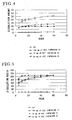
- FIGs. 4 and 5 Shown in Figs. 4 and 5 are dissolution amounts and ratios of the above-mentioned infusions 1, 2 and 3 and cefamezin QR as control drug, respectively.
- infusion 3 as one third prescription of CEZ with MCM was instantly started to be dissolved and dissolved out substantially by 100% for 10 minutes.
- infusion 1 of CEZ with MCM in an amount same as that of the conventional drug and infusion 2 as one half prescription, the dissolution at substantially 100% was completed for about 40 minutes.
- Test drugs shown in Table 6 below i.e., infusion 2 (one half prescription with 75 mg/3g of CEZ), infusion 3 (one third prescription with 50 mg/3g of CEZ) and cefamezin QR as control drug with 150 mg/3g of CEZ were injected to mammas of six Holstein dairy cows after milking in the morning; this was repeated for 3 days and transition in concentrations in blood and in milk was examined.
- Table 7 shows transition of concentration in blood.
- the blood was extracted before the administration and 0.5, 1, 3, 4, 6, 8 and 24 hours after the 1st day administration.
- the measurable limit (ND) of the concentration in blood was 0.05 ⁇ g (potency)/ml or less.
- infusions 2 and 3 with MCM appeared fast and eliminated fast; while cefamezin QR became undetectable after 8 hours, infusions 2 and 3 became undetectable after 4 and 2 hours, respectively.
- infusions 2 and 3 had the main ingredient in small quantity and did not greatly affect on concentrations in blood, they exhibited higher concentrations in blood from the viewpoint of their concentrations of main ingredient as low as one half or one third.
- the main ingredient was effectively utilized without waste so that obtained was the possibility of reducing consumed amount of the main ingredient.
- concentration in milk is the highest upon first milking after each administration and that in the next morning is lower.
- concentration at the first milking after each administration infusions 2 and 3 with MCM exhibited substantially same values in any of 1st, 2nd and 3rd days whereas cefamezin QR exhibited tendency of increase day by day and had the similar tendency of increase in the sample 24 hours after the final administration.
- cefamezin QR is gradually accumulated in a teat cistern while infusions 2 and 3 has less accumulativeness.
- Test drugs used were infusion 1 (with 2.5% by weight of MCM and 150 mg of CEZ) same as that in Example 1 and cefamezin QR (cefazolin oily infusion with no MCM and with 150 mg of CEZ: product of Nippon Zenyaku Kogyo Co., Ltd.) as control drug. Under the conditions shown in Table 9, the respective test drugs were infused to mammas of four Holstein milk cows once a day and for three days to examine transition of CEZ concentrations in milk and blood.
- Blood was obtained at 0.5, 1, 2, 4, 8 and 12 hours after each administration of 1st to 3rd days and milk was obtained in the morning and at night of 1st to 3rd days and 12, 24, 36, 48, 60, 72 hours after the final administration and measurements were made for the respective materials.
- Table 9 Test animal four Holstein dairy cows test drugs infusion 1: with 2.5% by weight of MCM and 150 mg of CEZ control drug: cefamezin QR (150 mg of CEZ) Administration Administration through infusion to 4 mammas with each specimen drug per mamma; this was repeated for three days.
- Sampling blood 0.5, 1, 2, 4, 8 and 12 hours after each administration of 1st through 3rd days milk: at each milking (morning and night) of 1st through 3rd days and 12, 24, 36, 48, 60 and 72 hours after the final administration
- blood serum HPLC method milk: bioassay method
- Measurable limit (ND; not detectable) of concentration in milk in Table 10 was 0.05 ⁇ g (potency)/ml or less.
- CEZ concentrations in milk were 2.03 ⁇ 1.35 ⁇ g (potency)/mL at the first time, 1.30 ⁇ 0.67 ⁇ g (potency)/mL at the second time and 1.28 ⁇ 0.44 ⁇ g (potency)/mL at the third time, which are substantial lowering in comparison with the above-mentioned first milking after each administration.
- CEZ concentrations in milk were 3.87 ⁇ 3.23 ⁇ g (potency)/mL at the first time, 4.74 ⁇ 3.85 ⁇ g (potency)/mL at the second time and 3.87 ⁇ 2.38 ⁇ g (potency)/mL at the third time, which are substantial lowering in comparison with the above-mentioned first milking after each administration.
- Cmax for the respective administrations were 0.04 ⁇ 0.03 ⁇ g (potency)/mL at the first time, 0.06 ⁇ 0.04 ⁇ g (potency)/mL at the second time and 0.08 ⁇ 0.04 ⁇ g (potency)/mL at the third time.
- Cmax for the respective administrations were 0.05 ⁇ 0.02 ⁇ g (potency)/mL at the first time, 0.04 ⁇ 0.01 ⁇ g (potency)/mL at the second time and 0.03 ⁇ 0.01 ⁇ g (potency)/mL at the third time.
- Examples 5-9 are shown in Table 11 with different main ingredients and different added amounts of MCM. It was revealed that dissolubility of main ingredient in infusion for mastitis is significantly enhanced by addition of medium-chain fatty acid monoglyceride (MCM) even in an amount as little as 0.5% by weight as shown in example 9. Thus, it was revealed that addition of 0.5% by weight or more of MCM to infusion for mastitis enhances dissolubility of main ingredient, which enhances absorbency, so that its main ingredient can be effectively utilized to reduce consumed amount of main ingredient in comparison with conventional infusion for mastitis.
- MCM medium-chain fatty acid monoglyceride
- Example 1 150 mg (potency) of cefazolin (CEZ) 75 mg (2.5% by weight) 25 mg of food blue No. 1 canola oil.
- remainder Suitable Example 2 75 mg (potency) of cefazolin (CEZ) 75 mg (2.51 by weight) 25 mg of food blue No. 1 canola oil, remainder Suitable Example 3 (infusion 3) 50 mg (potency) of cefazolin (CEZ) 75 mg (2.5% by weight) 25 mg of food blue No. 1 canola oil.
- remainder Suitable Example 4 infusion 1) 150 mg (potency) of cefazolin(CEZ) 75 mg (2.5% by weight) 25 mg of food blue No.
- Example 5 300 mg (potency) of 300 mg (potency) of tiamulin base 1500 mg (50% by weight) 25 mg of food blue No. 1 canola oil, remainder Suitable Example 6 250 mg (potency) of tiamuline fumarate tiamuline fumarate 30mg (1.0% by weight) 25mg of food blue No. 1 canola oil, remainder Suitable Example 7 300.000 units benzylpenicillin procaine and 300 mg (potency) of kanamycin sulfate 75 mg (2.5% by weight) 25 mg of food blue No.
- Example 8 300,000 units benzylpenicillin procaine and 300 mg (potency) of sodium dihydrostreptomycine 75 mg (2.5% by weight) 25 mg of food blue No. 1 canola oil, remainder Suitable Example 9 200 mg (potency) of cloxacillin sodium cloxacillin sodium and 75 mg (potency) of ampicillin 15 mg (0.5% by weight) 25 mg of food blue No. 1 canola oil. remainder Suitable
- Infusion (3 g) of the invention was prepared by 300 mg (potency) of tiamulin base, 1500 mg (50% by weight) of MCM, 25 mg of food blue No. 1 and canola oil, remainder.
- Infusion of Example 5 exhibited physical properties suitable as infusion for mastitis.
- Infusion (3 g) of the invention was prepared by 250 mg of tiamuline fumarate, 30 mg (1.0% by weight) of MCM, 25 mg of food blue No. 1 and canola oil, remainder.
- Infusion of Example 6 exhibited physical properties suitable as infusion for mastitis.
- Infusion (3 g) of the invention was prepared by 300,000 units benzylpenicillin procaine and 300 mg potency of kanamycin sulfate, 75 mg (2.5% by weight) of MCM, 25 mg of food blue No. 1 and canola oil, remainder.
- Infusion of Example 7 exhibited physical properties suitable as infusion for mastitis.
- Infusion (3 g) of the invention was prepared by 300,000 units benzylpenicillin procaine and 300 mg (potency) of sodium dihydrostreptomycine, 75 mg (2.5% by weight) of MCM, 25 mg of food blue No. 1 and canola oil, remainder.
- Infusion of Example 8 exhibited physical properties suitable as infusion for mastitis.
- Infusion (3 g) of the invention was prepared from 200 mg (potency) of cloxacillin sodium and 75 mg of (potency) ampicillin, 15 mg (0.5% by weight) of MCM, 25 mg of food blue No. 1 and canola oil, remainder.
- Infusion of Example 9 exhibited physical properties suitable as infusion for mastitis.
- Infusion for mastitis can improve diffusivity or dispersivity of main ingredient, enhance dissolubility of main ingredient to enhance absorbency thereof, so that, in comparison with conventional infusions for mastitis, it has immediate effectivity, can reduce residual period and can reduce consumed amount of main ingredient.
Landscapes
- Health & Medical Sciences (AREA)
- Chemical & Material Sciences (AREA)
- Life Sciences & Earth Sciences (AREA)
- Pharmacology & Pharmacy (AREA)
- Veterinary Medicine (AREA)
- Public Health (AREA)
- General Health & Medical Sciences (AREA)
- Medicinal Chemistry (AREA)
- Animal Behavior & Ethology (AREA)
- Epidemiology (AREA)
- General Chemical & Material Sciences (AREA)
- Chemical Kinetics & Catalysis (AREA)
- Oil, Petroleum & Natural Gas (AREA)
- Emergency Medicine (AREA)
- Engineering & Computer Science (AREA)
- Nuclear Medicine, Radiotherapy & Molecular Imaging (AREA)
- Organic Chemistry (AREA)
- Bioinformatics & Cheminformatics (AREA)
- Endocrinology (AREA)
- Reproductive Health (AREA)
- Communicable Diseases (AREA)
- Dermatology (AREA)
- Molecular Biology (AREA)
- Oncology (AREA)
- Pregnancy & Childbirth (AREA)
- Gynecology & Obstetrics (AREA)
- Pharmaceuticals Containing Other Organic And Inorganic Compounds (AREA)
- Medicinal Preparation (AREA)
Abstract
Description
- The present invention relates to infusion for mastitis in which dissolubility of a main ingredient from base is enhanced to enhance pharmacologic action of the main ingredient.
- Conventionally, mastitis often develops in domestic animals raised for milking such as dairy cows and goats. Mastitis is a disease in which mammas of the domestic animals are infected with staphylococcus (e.g., Staphylococcus aureus), colon bacillus (Escherichia coli) or other pathogenic bacteria causing inflammation or a disease related to such bacteria. Mastitis is a very serious disease which may cause a matter of life or death for milk manufacturers due to its high incidence, and resultant reduced milk production, deteriorated milk quality and increased culling of diseased animals from dairy herds.
- In order to prevent mastitis from developing, milk manufacturers have kept mammillae sanitized through various ways such as wiping or cleaning or immersing them into antiseptic solution. However, even if mammillae have been kept sanitized in such ways, it is still difficult to prevent mastitis from developing.
- Thus, an established therapy frequently used upon development of mastitis is administration by infusing infusion for mastitis into mammas of domestic animals affected with mastitis. Most of infusion for mastitis is a turbid mixture of a main ingredient comprising antibiotic with an oily base such as canola oil. By directly infusing such infusion for mastitis into mammas, most of mastitis is cured or alleviated.
- In old times, used as a main ingredient of infusion for mastitis was penicillin antibiotic and then synthesized penicillin antibiotic prevailed; thereafter, it was replaced by cephem antibiotic. Nowadays, cephem antibiotic is most frequently used.
- The oily base used is corn oil, canola oil, peanut oil, olive oil, cotton seed oil or the like.
- In old times, used as an infusion barrel was an aluminum tube with a capped needle; then, used was an aluminum tube with a one-touch cap. Nowadays, a syringe is frequently used.
- Prior art for infusion for mastitis has been disclosed, for example, in References 1 and 2.
- [Reference 1]
JP 2001-206849A - [Reference 2]
JP 2001-511451A -
US 4,034,099 describes compositions and methods for treating mastitis in milk animals which comprises administering by intramammary infusion an effective amount of an anti-mastitis medicament dispersed in a vehicle comprising an oil, a fatty acid ester and, optionally, a fatty acid salt. -
JP 08-175989 - Generally, most of the established infusion for mastitis is, as mentioned above, a mere turbid mixture of a main ingredient with an oily base; no substantial ingenuity has been made as to the base.
- As a result, in the above-mentioned conventional infusions for mastitis, dissolubility (releasability) of a main ingredient from a base is low and thus absorbency of the main ingredient is also low, so that no sufficient pharmacologic action by the main ingredient can be expected. Such low dissolubility and absorbency disadvantageously result in substantial increase in consumed amount of the main ingredient and prolongation of its residence term in animal body.
- The invention was made in view of the above and has its object to provide infusion for mastitis in which diffusivity or dispersivity of a base is improved to enhance dissolubility of a main ingredient, thereby enhancing pharmacologic action of the main ingredient.
- The invention is directed to infusion for treating mastitis which comprises cephem antibiotic as a main ingredient, medium-chain fatty acid monoglyceride having carbon atoms in the range of C8 through C12 and an oily base.
- It is preferable in the above means that an amount of the medium-chain fatty acid monoglyceride is 0.5% by weight or more of total.
- According to infusion for mastitis of the invention, which comprises a main ingredient, medium-chain fatty acid monoglyceride and an oily base, diffusivity or dispersivity of the main ingredient is improved by the monoglyceride to enhance dissolubility and thus absorbency of the main ingredient. As a result, the infusion of the invention has excellent effects and advantages, in comparison with conventional infusions for mastitis, that it has immediate effectivity and is short in residual term and that the main ingredient can be expected to be utilized effectively and without waste, thereby reducing a consumed amount of the main ingredient.
-
- [
Fig. 1 ] A diagram showing dissolution ratio of CEZ when MCM concentrations are varied stepwise from 0 to 10% by weight in dissolution test, Method 2 (puddle method). - [
Fig. 2 ] A diagram showing transition of CEZ concentrations in blood of cows with respect to infusion for mastitis. - [
Fig. 3 ] A diagram showing transition of CEZ concentrations in milk of cows with respect to infusion for mastitis. - [
Fig. 4 ] A diagram showing a dissolution amount of CEZ in dissolution test, Method 2 (puddle method). - [
Fig. 5 ] A diagram showing a dissolution ratio of CEZ in dissolution test, Method 2 (puddle method). - [
Fig. 6 ] A diagram showing transition of CEZ concentrations in milk of cows in administrations to the cows with different CEZ ratios. - [
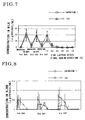
Fig. 7 ] A diagram showing transition of CEZ concentrations in milk. - [
Fig. 8 ] A diagram showing transition of CEZ concentrations in blood. - [
Fig. 9 ] A diagram showing transition of Cmax in administrations. - The invention is directed to infusion for mastitis with a main ingredient dispersed to or dissolved in a mixture of oily base with medium-chain fatty acid monoglyceride, additive being added thereto as needs demand. The main ingredient of the infusion for mastitis includes cephem.
- The cephem antibiotic usable may be conventionally used cefalonium, cefapirin benzathine, cefapirin sodium, cefazolin, cefuroxime sodium or the like.
- The oily base serves for effective dispersion of the main ingredient and to add satisfactory flowability thereto as infusion for mastitis. The oily base usable may be conventionally used corn oil, canola oil, peanut oil, olive oil, cotton seed oil or the like.
- The additive usable may be colorant, dispersant or the like.
- The medium-chain fatty acid monoglyceride (hereinafter referred to as MCM) is a kind of glycerin fatty acid ester; to admix MCM with an oily base can be expected to bring about effect as diffusing agent for enhancing dissolubility (releasability) of the main ingredient. More specifically, MCM has been known to have effects such as interfacial diffusion, facilitation of absorption of hardly absorbable drugs and antibacterial activity and therefore has been used as percutaneous absorbent, suppository base or the like. However, there have been no production nor disclosure up to the present on infusion for mastitis with MCM as in the invention.
- There are MCMs having carbon atoms in the range of C8 through C12 any of which may be used in the invention. MCM commercially available is, for example, Sunsoft 707 (product of Taiyo Kagaku Co., Ltd.) which is monoester of caprylic acid with 8 carbon atoms or Sunsoft 757 (product of Taiyo Kagaku Co., Ltd.) which is monoester of lauric acid with 12 carbon atoms. The invention is not limited to such MCMs and may employ any other various kinds of monoglyceride. MCM, which itself has weak emulsifiability, has function that mixing it in small amount to oil phase lowers surface tension of the phase; the oil phase with MCM has dispersive tendency at phase boundary due to lowered surface tension.
- Thus, the inventors, who hoped that oily base with MCM may enhance dispersivity of the base and releasability of main ingredient, conducted various tests for validation.
- As a result, it was surprisingly revealed that this can provide infusion for mastitis which not only has originally expected improvement in releasability of main ingredient in combination with enhanced facilitation of absorbency of main ingredient, but also has immediate effectivity and short residual term in animal body and can obtain satisfactory pharmacologic action with use of main ingredient in a smaller amount, thus completing the invention.
- Examples of the invention will be disclosed hereinafter minutely. However, the invention is not limited to those examples.
- Sunsoft 707 (product of Taiyo Kagaku Co., Ltd.) which is monoester of caprylic acid with 8 carbon atoms was used as MCM to prepare infusion 1 (3 g) with composition shown in Table 1.
-
Table 1 infusion 1 main ingredient: cefazolin (CEZ) 150 mg (potency) MCM: 75 mg (2.5% by weight) Additive: food blue No. 1 25 mg oily base: canola oil remainder total: 3 g - As to infusion 1, test was made on the basis of dissolution test, Method 2 (puddle method) of Japanese Pharmacopoeia general test methods. Test liquid used was phosphate buffer (pH 6.5) (a mixture of 4.86 g of potassium dihydrogenphoshate (product of Wako Pure Chemical Industries, Ltd.) with 5.12 g of disodium hydrogenphosphate 12-water (product of Wako Pure Chemical Industries, Ltd.) in 1 L of distilled water, pH being adjusted). The test was conducted with revolution speed of 25 r.p.m.; test liquid was sampled with time lapsed to carry out measurement of CEZ concentration dissolved in the test liquid, i.e., dissolution ratio of CEZ according to liquid chromatograph of potency examination in Animal Antibiotic Medical Supplies Standard (hereinafter referred to as HPLC method: high-performance liquid chromatography method). The test was conducted with variety of MCM concentrations in stepwise in a range of 0-10% by weight. The results are shown in
Fig. 1 . - In
Fig. 1 , prescription with highest dissolution ratio was that with 2.5% by weight of MCM. It was predicted in the test that prescription with 10% by weight of MCM would exhibit best dissolution since the higher the MCM concentration is, the higher the dispersivity of the main ingredient is; contrary to such prediction, prescription with 2.5% by weight of MCM exhibited the best dissolubility. This is considered to be owing to the fact that a feature as dissolution helper or solubilizer for hardly-soluble drugs, which is one of features of MCM, affects on dissolution of CEZ. - As to infusion 1, test was conducted in the following manner on transition of concentrations in blood and in milk. Reagents used were products of Wako Pure Chemical Industries, Ltd. unless otherwise specified.
- In order to determine transition of concentrations in blood, blood serum analysis was conducted. The following solutions were prepared beforehand.
- Accurately measured 2 ml of blood serum, 87.1 g of potassium dihydrogenphosphate (product of Nacalai Tesque, Inc.), 39.9 g of citric acid monohydrate (product of Nacalai Tesque, Inc.) were dissolved in distilled water to make 1000 ml of solution in total. The solution was added and mixed with 20 ml of phosphate buffer, pH 5.3, having been adjusted to pH 5.3±0.1 by 1N KOH, and was introduced into a solid-phase extraction column, Sep-pak plus C18 cartridge (product of Waters Inc.) which has been treated beforehand with 5 ml of methanol and 10 ml of water. After the introduction, the column was washed with 20 ml of water and then CEZ was dissolved by 5 ml of acetonitrile and the solvent was evaporated under reduced pressure at a temperature of 40°C or less. To the residue, 7.0 g of potassium dihydrogenphosphate and 6.0 g of disodium hydrogenphosphate 12-hydrate were dissolved in distilled water to make 1000 ml of solution in total. The solution was added with accurately measured 1 ml of phosphate buffer, pH 6.0, which has been adjusted beforehand to pH 6.0±0.1 by phosphoric acid, re-dissolved by ultrasonic treatment (1 min.) and filtered by Ekicrodisc 13 CR (0.45 µm membrane filter; product of Nihon Pall Ltd.) to provide a sample solution.
- Precisely measured 25 mg (potency) of working reference cefazolin, 3.4 g of potassium dihydrogenphosphate and 10.65 g of disodium hydrogenphosphate (anhydrous) were dissolved in distilled water to make 1000 ml of solution in total. The solution was dissolved in phosphate buffer, pH7, having been adjusted to pH 6.0±0.1 by phosphoric acid to prepare a reference solution with definite concentration of 500 µg (potency)/ml. An appropriate amount of reference stock solution was precisely measured and was diluted stepwise by phosphate buffer,
pH 6, to prepare 5.0, 1.0, 0.5, 0.25 and 0.10 µg (potency) /ml each of reference solution. - Test was conducted through liquid chromatography to 200 µl each of prepared sample and reference solutions under the following conditions to determine peak area of CEZ. By regression formula of analytical curve prepared from peak area of chromatogram of the reference solution, the CEZ concentration in the sample solution was calculated.
[HPLC conditions (ion-pair gradient)]
detection wavelength: UV 270 nm
column:Inertsil PH 5 µm 4.6 × 250 nm (product of GL Sciences Inc.)
column temperature: 25°C
flow rate: 1 ml/l min.
mobile phase: - Liquid A (pH 3.0, phosphoric acid)
- TBA Liquid : acetonitrile = 9 : 1
- Liquid B (pH 3.0, phosphoric acid)
- TBA Liquid : acetonitrile : methanol - 55 : 30 : 15
- TBA Liquid was a solution prepared by dissolving 0.34 g of tetrabutylammonium sulfate (product of Nacalai Tesque, Inc.) and 17.9 g of disodium hydrogenphosphate 12-hydrate in distilled water to provide 1000 ml of solution in total.
- Time lapsed and change in concentration of Liquid B are as shown in Table 2.
-
Table 2 time program (analysis time: 45 min.) time lapsed (min.) concentration (%) of Liquid B 12 8 25 20 30 20 35 8 44 8 - With respect to infusion 1, milk analysis was conducted so as to examine transition in concentration in milk. The following solutions were prepared beforehand.
- Culture medium for passage reservation: Mil-P slant agar culture medium (Mil-P No. 1 culture medium)(product of Kyokuto Pharmaceutical Industrial Co., Ltd.: this also applies to culture mediums mentioned hereinafter.)
- Phosphate buffer (pH 6.0): Dissolved in about 750 ml of distilled water were 3.5 g of potassium dihydrogenphosphate and 3.0 g of disodium hydrogenphosphate 12-water. The solution was adjusted to pH 6.0±0.1 by phosphoric acid and added with distilled water to prepare 1000 ml of solution.
- Preparation of test strain liquid: Test strain with repeated passage on reservation culture medium was propagated, upon usage, on the growth culture medium and cultured at 55±1°C for 17±1 hours into the strain liquid.
- Test culture medium kept warm at about 55°C was mixed with test strain liquid at a ratio of 5 : 1. The mixture was dispensed each by 10 ml into sterilized plastic Petri dishes with inner diameter of 90 mm and cooled and solidified on horizontal plates. Then, each of the plates was formed with four holes with a diameter of 8 mm by using a drill (product of Toyo Sokuteiki Co., Ltd.) such that the holes were situated on respective apexes of a substantially cyclic square in a circle with a radius of about 25 mm about a center point of the flat plate, thereby providing the flat test plates.
- Sample frozen at -15°C or less till just before measurement was allowed to melt at room temperature, and 1 ml of the sample was accurately measured in a stoppered sedimentation tube. This was added with 20 ml of methanol, was shaken for 10 minutes and centrifuged at 3000 r.p.m. for 5 minutes; and supernatant liquid was transferred to a pear-shaped flask. This was added with 1 ml of n-propanol (product of Kanto Chemical Co., Inc.) and evaporated under reduced pressure at a temperature of 45°C or less. The residue was added with and dissolved in 5 ml of phosphate buffer (pH 6.0) to provide sample solution.
- An appropriate amount of working reference cefazolin was dissolved in a small amount of acetone (product of Fisher Scientific International, Inc.), and further diluted with phosphate buffer (pH 6.0) to prepare about 1 mg (potency)/ml of reference stock solution with definite concentration. The stock solution was reserved at 5°C or less, and was used within 10 days after the preparation. Just before use, an appropriate amount of the reference stock solution was accurately measured and accurately diluted with phosphate buffer (pH 6.0) into dilute solutions each with 0.16, 0.08, 0.04, 0.02 and 0.01 µg (potency)/ml concentration to thereby provide reference solutions. Aside from this, an appropriate amount of reference stock solution was accurately measure and accurately diluted with phosphate buffer (pH 6.0) to prepare dilute solution with 0.04 µg (potency)/ml concentration as central working reference dilute solution.
- The prepared solutions were used to conduct milk analysis through microbioassay method. More specifically, the holes drilled on the test flat plats were charged with 50 µl each of sample and reference solutions and cultured at 55±1°C for 55 hours or more. Diameters of developed inhibition zones were measured, and regression equation of calibration curve was determined from inhibition zone diameter of the reference solution. Inhibition zone diameter of the sample solution was substituted in the equation to calculate CEZ concentration in the sample solution. The calculated CEZ concentration was multiplied by dilution strength upon re-dissolution to obtain CEZ concentration in the sample. When definite inhibition zones were not obtained in the test results and when calculation results were less than measurable limit, the scores were recorded as ND (not detectable).
- In the conditions shown in the following Table 3, infusion 1 (with 2.5% by weight of MCM and 150 mg of CEZ) and cefamezin QR as contrast drug (cefazolin oily infusion containing no MCM and 150 mg of CEZ: product of Nippon Zenyaku Kogyo Co., Ltd.) were infused into mammas of five Holstein dairy cows to examine transition of CEZ concentrations in blood and in milk.
-
Table 3 Test animal five Holstein dairy cows Test drug infusion 1: with 2.5% by weight of MCM and 150 mg of CEZ control drug: cefamezin QR (150 mg of CEZ) Administration administration through infusion to 4 mammas with each specimen drug (150 mg potency) per mamma Sampling blood: before administration and 0.5, 1, 2, 3, 4, 6, 8 and 24 hours after administration milk: before administration and 6, 24, 30. 48, 54 and 72 hours after administration Analysis blood serum: HPLC method milk: bioassay method -
Fig. 2 shows results of transition of CEZ concentrations in blood of cows administered with infusion 1 for mastitis; detectable limit was 0.015 µg (potency)/ml and values higher than that were recorded as data. - It is revealed from the results in
Fig. 2 that, in comparison with cefamezin QR, prescription with MCM has early start in rising of concentration in blood and its maximum concentration (Cmax) in blood is higher. - From this it is revealed that infusion 1 with 2.5% by weight of MCM can rapidly enhance CEZ concentration in blood in shorter time and thus main ingredient is expected to have a rapid-acting pharmacologic effect.
-
Fig. 3 shows results in transition of CEZ concentrations in milk of cows administered with infusion 1 for mastitis and cefamezin QR. - In
Fig. 3 , no substantial differences were seen between administration groups. Prescription with MCM has higher concentration in milk than that of cefamezin QR, which fact seems to reveal that the former has higher dissolution into milk than cefamezin QR. This is in conformity with results of dissolution test. - Infusion 1 with 2.5% by weight of MCM has rapid start in rising CEZ concentration in blood in comparison with current cefamezin QR and has significant difference in maximum concentrations in blood and in milk. It was revealed that CEZ, which is a bactericidal antibacterial agent, can exhibit pharmacologic effects, providing that sufficient concentration can be kept in blood and in milk for a short period of time; infusion 1 which can, as mentioned in the above, have rapid start in rising of concentration in blood and keep the maximum concentration in blood is much effective in treatment of mastitis. It was revealed that infusion 1 with 2.5% by weight of MCM can keep high utilization ratio of the main ingredient since it is superior in diffusivity or dispersivity and has main ingredient easily dissolubable into milk and has higher absorbency.
- In view of the above, the inventors conjectured that infusion even with reduced amount of CEZ may exhibit effect similar to that of current cefamezin QR, and conducted the following tests.
- Each 1 g of infusions, i.e., prescription (infusion 1) with CEZ content of 150 mg/3g same as that of conventional prescription, one half prescription (infusion 2) with CEZ content of 75 mg/3g as shown in Table 4 below and one third prescription (infusion 3) with CEZ content of 50 mg/3g as shown in Table 5 below and cefamezin QR as contrast drug, were separately charged and dissolution amount and dissolution ratio to test liquid were measured with predetermined time interval.
-
Table 4 infusion 2 main ingredient: cefazolin (CEZ) 75 mg (potency) MCM: 75 mg (2.5% by weight) additive: food blue No. 1 25 mg oily base: canola oil remainder total: 3 g - A plastic syringe for mastitis ointment ordinarily used in the applicant company was charged with the above infusion 2, thereby experimentally prepared infusion for mastitis. The experimentally prepared above-mentioned infusion 2 exhibits physical properties suitable for use as infusion for mastitis.
-
Table 5 infusion 3 main ingredient: cefazolin (CEZ) 50 mg (potency) MCM: 75 mg (2.5% by weight) Additive: food blue No. 1 25 mg oily base: canola oil remainder total: 3 g - A plastic syringe for mastitis ointment always used in the applicant company was charged with the above-mentioned infusion 3 to experimentaliy prepare infusion for mastitis. The above-mentioned experimentaliry prepared infusion 3 exhibits physical properties suitable to use as infusion for mastitis.
- Shown in
Figs. 4 and 5 are dissolution amounts and ratios of the above-mentioned infusions 1, 2 and 3 and cefamezin QR as control drug, respectively. As shown inFig. 5 , infusion 3 as one third prescription of CEZ with MCM was instantly started to be dissolved and dissolved out substantially by 100% for 10 minutes. With respect to infusion 1 of CEZ with MCM in an amount same as that of the conventional drug and infusion 2 as one half prescription, the dissolution at substantially 100% was completed for about 40 minutes. - It was revealed from the above that prescriptions with MCM are dissolved out at 100% in a short time even if CEZ ratios are variously changed.
- Concentrations in blood and in milk were respectively measured in the same way as that mentioned in the above.
- Test drugs shown in Table 6 below, i.e., infusion 2 (one half prescription with 75 mg/3g of CEZ), infusion 3 (one third prescription with 50 mg/3g of CEZ) and cefamezin QR as control drug with 150 mg/3g of CEZ were injected to mammas of six Holstein dairy cows after milking in the morning; this was repeated for 3 days and transition in concentrations in blood and in milk was examined.
-
Table 6 Test animals six Holstein dairy cows Test drug infusion 2: with 2.5% by weight of MCM and 75 mg of CEZ infusion 3: with 2.5% by weight of MCM and 50 mg of CEZ control drug: cefamezin QR (150 mg of CEZ) Administration Administration through infusion to 4 mammas with each specimen drug (150 mg potency) per mamma; this was repeated for three days Sampling blood: before administration and 0.5, 1, 2, 3, 4, 6, 8 and 24 hours after administration milk: before administration, at milking (morning and night) in the administration period and 6, 24, 30, 48, 54 and 72 hours after the final administration Analysis blood serum: HPLC method milk: bioassay method - Table 7 shows transition of concentration in blood. The blood was extracted before the administration and 0.5, 1, 3, 4, 6, 8 and 24 hours after the 1st day administration. The measurable limit (ND) of the concentration in blood was 0.05 µg (potency)/ml or less.
-
Table 7 Transition of concentrations in blood (µg (potency)/mL) Group Unity code Before admin. 0 Time lapsed (hour) 0.5 1 2 4 6 8 24 Infusion 2 with 75 mg of CEZ A ND ND 0.017 ND ND ND ND ND B ND ND 0.036 0.051 ND ND ND ND C ND ND 0.015 ND ND ND ND ND D ND 0.018 ND ND ND ND ND ND E ND 0.032 0.028 0.033 ND ND ND ND F ND 0.020 0.022 0.022 0.018 ND ND ND Infusion 3 with 50 mg of CEZ A ND 0.0200 0.0232 ND ND ND ND ND B ND 0.0372 0.0289 0.0164 ND ND ND ND C ND ND ND ND ND ND ND ND D ND 0.0422 0.0407 ND ND ND ND ND E ND 0.0291 0.0314 ND ND ND ND ND F ND 0.0316 0.0380 ND ND ND ND ND Control drug cefamezin QR A ND 0.0603 0.0843 0.0410 0.0247 0.0250 0.0208 ND B ND ND ND 0.0211 0.0322 0.0228 0.0188 ND C ND ND ND 0.0167 ND ND ND ND D ND 0.0442 0.0596 0.0349 0.0318 ND ND ND E ND 0.0154 0.0226 0.0433 0.0349 0.0198 0.0203 ND F ND ND 0.0167 0.0282 0.0319 0.0182 ND ND - According to the above Table 7, infusions 2 and 3 with MCM appeared fast and eliminated fast; while cefamezin QR became undetectable after 8 hours, infusions 2 and 3 became undetectable after 4 and 2 hours, respectively. Although infusions 2 and 3 had the main ingredient in small quantity and did not greatly affect on concentrations in blood, they exhibited higher concentrations in blood from the viewpoint of their concentrations of main ingredient as low as one half or one third.
- Thus, according to infusion with MCM, the main ingredient was effectively utilized without waste so that obtained was the possibility of reducing consumed amount of the main ingredient.
- Just like the above-mentioned measurement of transition of the concentrations in blood, transition of concentrations in milk on samples obtained through milking was measured and measurement results are shown in Table 8 and
Fig. 6 . Milk was got upon milking in the morning and at night during three day's administrations and up to 72 hours after the final administration. Such 72 hours after the final administration was the 3rd day's morning after the final administration. Measurable limit (ND; not detectable) of concentration in milk was 0.05 µg (potency)/ml or less. -
Table 8 Transition of concentrations in milk (µg (potency)/mL) Group Unity code 1st day 2nd day 3rd day After the final administration morning night morning night morning 6h 24h 30h 48h 54h 72h Infusion 2 with 75 mg of CEZ A ND 20.33 1.59 16.33 0.57 15.81 0.67 0.12 ND ND ND B ND 21.97 1.84 15.66 1.14 10.24 0.92 0.29 ND ND ND C ND 26.24 3.16 28.07 2.05 18.93 1.28 0.15 ND ND ND D ND 15.76 1.30 18.38 1.12 10.79 1.56 0.47 ND ND ND E ND 10.95 0.51 9.06 0.37 16.48 0.53 0.11 ND ND ND F ND 19.79 0.80 16.32 1.48 14.88 0.79 0.16 ND ND ND average ±SD - 19.17 1.53 17.30 1.12 14.52 0.96 0.22 - - - - 5.27 0.93 6.16 0.61 3.39 0.39 0.14 - - - Infusion 3 with 50 mg of CEZ A ND 16.9630 0.3940 6.8600 0.5450 9.9220 0.5270 0.0570 ND ND ND B ND 12.5500 0.7210 5.1480 0.5430 16.6510 0.8840 0.1130 ND ND ND C ND 9.7650 1.3810 8.6350 0.7410 12.0680 0.6250 0.1740 ND ND ND D ND 14.7070 1.1740 27.2310 1.1190 12.4870 1.3240 0.1890 ND ND ND E ND 18.0560 0.5940 17.7300 0.4470 12.6820 1.1430 0.0600 ND ND ND F ND 5.7410 0.9070 8.2950 1.0930 6.8660 1.2610 0.2280 ND ND ND average ±SD - 12.9637 0.8618 12.3165 0.7480 11.7793 0.9607 0.1368 - - - - 4.6376 0.3686 8.5163 0.2934 3.2472 0.3353 0.0711 - - - Control drug cefamezin QR A ND 23.8740 2.9050 22.7920 3.8280 19.5050 5.6450 ND ND ND ND B ND 10.4510 5.9370 17.7940 5.7720 30.3120 6.6140 1.9650 0.3510 0.0510 ND C ND 20.1640 6.9870 26.1430 8.9550 23.7410 9.6260 4.4310 0.7800 0.2880 ND D ND 27.5280 5.1260 17.7300 4.3210 33.3340 6.8420 0.8830 0.0730 ND ND E ND 11.7240 5.6840 19.3590 5.7160 25.4810 5.4150 1.4100 0.3880 0.1110 ND F ND 21.6560 2.6460 25.5950 3.2080 19.7010 5.0850 0.9770 0.1100 ND ND average ±SD - 19.2328 4.7142 21.5688 5.3000 25.3457 6.5378 - - - - - 6.7911 1.8115 3.8078 2.0619 5.6044 1.6615 - - - - - According to
Fig. 6 and Table 8, in any administration group, concentration in milk is the highest upon first milking after each administration and that in the next morning is lower. However, as to concentration at the first milking after each administration, infusions 2 and 3 with MCM exhibited substantially same values in any of 1st, 2nd and 3rd days whereas cefamezin QR exhibited tendency of increase day by day and had the similar tendency of increase in thesample 24 hours after the final administration. Thus, it is considered that cefamezin QR is gradually accumulated in a teat cistern while infusions 2 and 3 has less accumulativeness. - As to concentration in milk, that of cefamezin QR was the highest; that of infusion 2 with one half prescription was the second highest; and that of infusion 3 with one third prescription was the lowest. Since infusion 2, which has main ingredient in an amount half as much as that of cefamezin QR, actually has concentration in milk as much as that of the latter, it was confirmed that prescription with MCM has high dissolubility in comparison with cefamezin QR.
- Next, reference is made to drug holiday. As shown in transition of concentrations in milk of Table 8, the final detection of infusions 2 and 3 with MCM was at 30 hours after the final administration whereas cefamezin QR had last detection after 54 hours; that is, the final detection of infusions 2 and 3 is shorter than that of cefamezin QR by 24 hours. Thus, it was indicated that, in comparison with cefamezin QR, infusion with MCM may shorten its drug holiday by 1 day (24 hours).
- As revealed in the above tests, infusions with MCM had tendency of lowering CEZ concentration in milk by repeated administrations whereas no such decline tendency was admitted in administrations of cefamezin QR; thus, it was conjectured that lowering in CEZ concentration in milk is a phenomenon specific to prescription with MCM. Since MCM has absorption acceleration effect and was considered to affect on absorbency of CEZ through repeated administrations, it was thought out that drug holiday may be shortened in ordinary dose regimen and dosage even if the main ingredient is of the same amount as that in current prevailing drugs; thus, the following tests were conducted.
- Sunsoft 707 (product of Taiyo Kagaku Co., Ltd.) which is monoester of caprylic acid with 8 carbon atoms was used as MCM to prepare infusion 4 (3g) with composition shown in Table 9.
- Test drugs used were infusion 1 (with 2.5% by weight of MCM and 150 mg of CEZ) same as that in Example 1 and cefamezin QR (cefazolin oily infusion with no MCM and with 150 mg of CEZ: product of Nippon Zenyaku Kogyo Co., Ltd.) as control drug. Under the conditions shown in Table 9, the respective test drugs were infused to mammas of four Holstein milk cows once a day and for three days to examine transition of CEZ concentrations in milk and blood. Blood was obtained at 0.5, 1, 2, 4, 8 and 12 hours after each administration of 1st to 3rd days and milk was obtained in the morning and at night of 1st to 3rd days and 12, 24, 36, 48, 60, 72 hours after the final administration and measurements were made for the respective materials.
-
Table 9 Test animal four Holstein dairy cows test drugs infusion 1: with 2.5% by weight of MCM and 150 mg of CEZ control drug: cefamezin QR (150 mg of CEZ) Administration Administration through infusion to 4 mammas with each specimen drug per mamma; this was repeated for three days. Sampling blood: 0.5, 1, 2, 4, 8 and 12 hours after each administration of 1st through 3rd days milk: at each milking (morning and night) of 1st through 3rd days and 12, 24, 36, 48, 60 and 72 hours after the final administration Analysis blood serum: HPLC method milk: bioassay method - Transition of CEZ concentrations in milk is shown in Table 10 and
Fig. 7 . Measurable limit (ND; not detectable) of concentration in milk in Table 10 was 0.05 µg (potency)/ml or less. -
Table 10 Transition of concentrations in milk (pg (potency)/mL) Test drug Unity Code 1st day 2nd day 3rd day After the final administration morning night morning night morning 12 24 36 48 60 72 Infusion 1 A ND 30.28 3.93 24.55 2.23 16.56 1.57 0.14 ND ND ND B ND 24.55 1.47 18.77 1.21 9.76 0.53 0.06 ND ND ND C ND 18.79 1.93 19.47 1.13 15.08 1.16 0.11 ND ND ND D ND 13.92 0.79 10.95 0.64 7.73 0.85 ND ND ND ND average - 21.89 2.03 18.44 1.30 12.28 1.28 - - - - ±SD - 7.09 1.35 5.62 0.67 4.21 0.44 - - - - Control drug QR A ND 21.18 8.34 24.08 10.12 25.85 6.58 2.35 0.36 0.11 ND B ND 23.87 3.12 26.91 4.56 23.21 4.69 0.63 0.24 ND ND C ND 17.82 3.38 14.02 3.10 16.89 3.29 0.73 0.06 ND ND D ND 8.94 0.62 7.71 1.17 9.95 0.93 0.11 ND ND ND average - 17.95 3.87 18.21 4.74 18.98 3.87 0.96 - - - ±SD - 6.50 3.23 8.93 3.85 7.10 2.38 0.97 - - - - In Table 10, upon first milking (at night) at 12 hours after each administration (in the morning) of test drugs in 1st to 3rd days, respective CEZ concentrations in milk (average) were 21.89±7.09 µg (potency)/mL at the first time, 18.44±5.62 µg (potency)/mL at the second time and 12.28±4.21 µg(potency)/mL at the third time; also in the tests, the tendency of CEZ concentration lowering, administration by administration, was confirmed. Moreover, upon second (morning) milking at 24 hours after each administration of test drugs, CEZ concentrations in milk were 2.03±1.35 µg (potency)/mL at the first time, 1.30± 0.67 µg (potency)/mL at the second time and 1.28±0.44 µg (potency)/mL at the third time, which are substantial lowering in comparison with the above-mentioned first milking after each administration.
- Final detection of CEZ in milk was at 36 hours after the final administration in one of the four cows; at 48 hours after the final administration, CEZ concentrations for all the cows were lower than measurable limit.
- In Table 10, upon first milking (at night) at 12 hours after each administration of test drugs in each morning in 1st to 3rd days, respective CEZ concentrations in milk were 17.95±6.50µg (potency)/mL at the first time, 18.21±8.93 µg (potency)/mL at the second time and 18.98± 7.10 µg (potency)/mL at the third time. Moreover, upon second (morning) milking at 24 hours after each administration of test drugs, CEZ concentrations in milk were 3.87±3.23 µg (potency)/mL at the first time, 4.74± 3.85 µg (potency)/mL at the second time and 3.87±2.38 µg (potency)/mL at the third time, which are substantial lowering in comparison with the above-mentioned first milking after each administration.
- Final detection of CEZ in milk was at 36 hours after the final administration in one of the four cows, at 48 hours after the final administration in two of the four cows and at 60 hours after the final administration in the remaining cow; thus, at 72 hours after the final administration, CEZ concentrations for all of the cows were lower than measurable limit.
- Transition of CEZ concentrations in blood are shown in
Fig. 8 . Transition of Cmax for respective administrations are shown inFig. 9 . - Maximum concentration in blood reached at 0.5-2 hours after each administration of infusion 1; at 24 hours after each administration, all of the cows had concentrations in blood lower than measurable limit. Cmax for the respective administrations were 0.04±0.03 µg (potency)/mL at the first time, 0.06±0.04 µg (potency)/mL at the second time and 0.08±0.04 µg (potency)/mL at the third time.
- Maximum concentration in blood reached 0.5-8 hours after each administration of contrast drug; at 24 hours after each administration, all of the cows had concentrations in blood lower than measurable limit. Cmax for the respective administrations were 0.05±0.02 µg (potency)/mL at the first time, 0.04±0.01 µg (potency)/mL at the second time and 0.03±0.01 µg (potency)/mL at the third time.
- From the above tests and as shown in Table 10, with respect to infusion 1 the final detection in milk was at 36 hours after the final administration and with respect to control drug, at 60 hours after the final administration. Thus, it was indicative just like the above test results that even in infusion 1 which has main ingredient in an amount same as that of current prevailing drugs, there is a possibility of shortening drug holiday by 24 hours in comparison with current prevailing drugs by use of base with MCM.
- It was confirmed that lowering of CEZ concentration in milk in repeated administrations noticed only in prescription with MCM was similarly exhibited in the above test. With respect to concentration in blood, Cmax for infusion 1 has tendency of increase, administration by administration; it was considered that absorbency is increased as administrations are repeated. Since concentration in blood itself is low, it is hardly considered that all of lowering in concentration in milk is transferred to increase in concentration in blood; however, it can be envisaged that such increase in absorbency contributes to lowering of concentration in milk.
- In addition to the above-mentioned Examples 1-4, Examples 5-9 are shown in Table 11 with different main ingredients and different added amounts of MCM. It was revealed that dissolubility of main ingredient in infusion for mastitis is significantly enhanced by addition of medium-chain fatty acid monoglyceride (MCM) even in an amount as little as 0.5% by weight as shown in example 9. Thus, it was revealed that addition of 0.5% by weight or more of MCM to infusion for mastitis enhances dissolubility of main ingredient, which enhances absorbency, so that its main ingredient can be effectively utilized to reduce consumed amount of main ingredient in comparison with conventional infusion for mastitis.
-
Table 11 main ingredient MCM additive oily base Physical yes properties Example 1 (infusion 1) 150 mg (potency) of cefazolin (CEZ) 75 mg (2.5% by weight) 25 mg of food blue No. 1 canola oil. remainder Suitable Example 2 (infusion 2) 75 mg (potency) of cefazolin (CEZ) 75 mg (2.51 by weight) 25 mg of food blue No. 1 canola oil, remainder Suitable Example 3 (infusion 3) 50 mg (potency) of cefazolin (CEZ) 75 mg (2.5% by weight) 25 mg of food blue No. 1 canola oil. remainder Suitable Example 4 (infusion 1) 150 mg (potency) of cefazolin(CEZ) 75 mg (2.5% by weight) 25 mg of food blue No. 1 canola oil. remainder Suitable Example 5 300 mg (potency) of 300 mg (potency) of tiamulin base 1500 mg (50% by weight) 25 mg of food blue No. 1 canola oil, remainder Suitable Example 6 250 mg (potency) of tiamuline fumarate tiamuline fumarate 30mg (1.0% by weight) 25mg of food blue No. 1 canola oil, remainder Suitable Example 7 300.000 units benzylpenicillin procaine and 300 mg (potency) of kanamycin sulfate 75 mg (2.5% by weight) 25 mg of food blue No. 1 canola oil, remainder Suitable Example 8 300,000 units benzylpenicillin procaine and 300 mg (potency) of sodium dihydrostreptomycine 75 mg (2.5% by weight) 25 mg of food blue No. 1 canola oil, remainder Suitable Example 9 200 mg (potency) of cloxacillin sodium cloxacillin sodium and 75 mg (potency) of ampicillin 15 mg (0.5% by weight) 25 mg of food blue No. 1 canola oil. remainder Suitable - Infusion (3 g) of the invention was prepared by 300 mg (potency) of tiamulin base, 1500 mg (50% by weight) of MCM, 25 mg of food blue No. 1 and canola oil, remainder. Infusion of Example 5 exhibited physical properties suitable as infusion for mastitis.
- Infusion (3 g) of the invention was prepared by 250 mg of tiamuline fumarate, 30 mg (1.0% by weight) of MCM, 25 mg of food blue No. 1 and canola oil, remainder. Infusion of Example 6 exhibited physical properties suitable as infusion for mastitis.
- Infusion (3 g) of the invention was prepared by 300,000 units benzylpenicillin procaine and 300 mg potency of kanamycin sulfate, 75 mg (2.5% by weight) of MCM, 25 mg of food blue No. 1 and canola oil, remainder. Infusion of Example 7 exhibited physical properties suitable as infusion for mastitis.
- Infusion (3 g) of the invention was prepared by 300,000 units benzylpenicillin procaine and 300 mg (potency) of sodium dihydrostreptomycine, 75 mg (2.5% by weight) of MCM, 25 mg of food blue No. 1 and canola oil, remainder. Infusion of Example 8 exhibited physical properties suitable as infusion for mastitis.
- Infusion (3 g) of the invention was prepared from 200 mg (potency) of cloxacillin sodium and 75 mg of (potency) ampicillin, 15 mg (0.5% by weight) of MCM, 25 mg of food blue No. 1 and canola oil, remainder. Infusion of Example 9 exhibited physical properties suitable as infusion for mastitis.
- It is to be understood that infusion for mastitis according to the invention is not limited to the above examples and that various changes and modifications may be made without leaving the scope of the invention.
- Infusion for mastitis according to the invention can improve diffusivity or dispersivity of main ingredient, enhance dissolubility of main ingredient to enhance absorbency thereof, so that, in comparison with conventional infusions for mastitis, it has immediate effectivity, can reduce residual period and can reduce consumed amount of main ingredient.
Claims (2)
- Infusion for treating mastitis comprising cephem antibiotic as a main ingredient, medium-chain fatty acid monoglyceride having carbon atoms in the range of C8 through C12 and an oily base.
- Infusion for treating mastitis as claimed in claim 1, wherein an amount of the medium-chain fatty acid monoglyceride is 0.5% by weight or more of total.
Priority Applications (1)
| Application Number | Priority Date | Filing Date | Title |
|---|---|---|---|
| PL06711869T PL1857120T3 (en) | 2005-01-19 | 2006-01-18 | Infusion for mastitis |
Applications Claiming Priority (2)
| Application Number | Priority Date | Filing Date | Title |
|---|---|---|---|
| JP2005011646 | 2005-01-19 | ||
| PCT/JP2006/300600 WO2006077856A1 (en) | 2005-01-19 | 2006-01-18 | Injection for mastitis |
Publications (3)
| Publication Number | Publication Date |
|---|---|
| EP1857120A1 EP1857120A1 (en) | 2007-11-21 |
| EP1857120A4 EP1857120A4 (en) | 2008-10-22 |
| EP1857120B1 true EP1857120B1 (en) | 2011-12-28 |
Family
ID=36692245
Family Applications (1)
| Application Number | Title | Priority Date | Filing Date |
|---|---|---|---|
| EP06711869A Expired - Lifetime EP1857120B1 (en) | 2005-01-19 | 2006-01-18 | Infusion for mastitis |
Country Status (9)
| Country | Link |
|---|---|
| US (1) | US20090005448A1 (en) |
| EP (1) | EP1857120B1 (en) |
| JP (1) | JP5037948B2 (en) |
| KR (1) | KR101232101B1 (en) |
| CN (1) | CN101107015B (en) |
| DK (1) | DK1857120T3 (en) |
| ES (1) | ES2377878T3 (en) |
| PL (1) | PL1857120T3 (en) |
| WO (1) | WO2006077856A1 (en) |
Families Citing this family (5)
| Publication number | Priority date | Publication date | Assignee | Title |
|---|---|---|---|---|
| JP5439638B2 (en) * | 2009-05-19 | 2014-03-12 | Adekaクリーンエイド株式会社 | Mastitis treatment |
| CN103230365B (en) * | 2013-03-19 | 2014-12-03 | 中国牧工商(集团)总公司 | Novel slow-release breast perfusion agent for preventing cow subclinical mastitis in milk shortage stage |
| WO2021039951A1 (en) * | 2019-08-29 | 2021-03-04 | 国立研究開発法人農業・食品産業技術総合研究機構 | Injection for mastitis |
| CN114404365B (en) * | 2022-01-18 | 2023-03-14 | 山东鲁抗舍里乐药业有限公司 | Cefalonium breast injection and preparation method and application thereof |
| CN115715760A (en) * | 2022-12-22 | 2023-02-28 | 河北科星药业有限公司 | Preparation method of breast injection |
Family Cites Families (15)
| Publication number | Priority date | Publication date | Assignee | Title |
|---|---|---|---|---|
| US2804421A (en) * | 1951-04-24 | 1957-08-27 | American Cyanamid Co | Tetracycline type antibiotic ointment |
| US4034099A (en) * | 1974-03-29 | 1977-07-05 | The Upjohn Company | Compositions and method for treating mastitis in milk animals |
| JPS5283924A (en) * | 1976-01-01 | 1977-07-13 | Sumitomo Chem Co Ltd | Preparation of pharmaceuticals for rectal infusion containing penicill ins and cephalosporins |
| IL58461A0 (en) * | 1978-10-27 | 1980-01-31 | Beecham Group Ltd | Intramammary compositions comprising a clavulanic acid salt |
| JPS56100712A (en) | 1980-01-18 | 1981-08-12 | Sankyo Co Ltd | Preparation of pharmaceutical of 7-methoxycephalosporin for rectal administration |
| JPS56104812A (en) | 1980-01-23 | 1981-08-20 | Sankyo Co Ltd | Production of cephalosporin compound preparation for rectal infusion |
| GB8629481D0 (en) * | 1986-12-10 | 1987-01-21 | Beecham Group Plc | Veterinary treatment |
| HU199682B (en) * | 1988-04-01 | 1990-03-28 | Egyt Gyogyszervegyeszeti Gyar | Process for producin synergetic veterinary composition |
| JPH05283924A (en) | 1992-03-31 | 1993-10-29 | Nippon Telegr & Teleph Corp <Ntt> | Array antenna |
| JPH08175989A (en) * | 1994-12-26 | 1996-07-09 | Nissan Gosei Kogyo Kk | Composition for prevention of mastitis |
| AU1530697A (en) * | 1996-09-06 | 1998-03-26 | Minnesota Mining And Manufacturing Company | Antimicrobial compositions |
| FR2814074B1 (en) * | 2000-09-15 | 2003-03-07 | Theramex | NOVEL TOPICAL ESTRO-PROGESTIVE COMPOSITIONS WITH SYSTEMIC EFFECT |
| AU2003296937A1 (en) * | 2002-12-10 | 2004-06-30 | Biosynexus Incorporated | Topical anti-infective formulations |
| US7842791B2 (en) * | 2002-12-19 | 2010-11-30 | Nancy Jean Britten | Dispersible pharmaceutical compositions |
| JP4252497B2 (en) * | 2004-06-07 | 2009-04-08 | 日東電工株式会社 | Local anesthetic preparation for upper gastrointestinal endoscopy pretreatment |
-
2006
- 2006-01-18 CN CN2006800027262A patent/CN101107015B/en not_active Expired - Fee Related
- 2006-01-18 EP EP06711869A patent/EP1857120B1/en not_active Expired - Lifetime
- 2006-01-18 PL PL06711869T patent/PL1857120T3/en unknown
- 2006-01-18 US US11/813,928 patent/US20090005448A1/en not_active Abandoned
- 2006-01-18 JP JP2006553914A patent/JP5037948B2/en not_active Expired - Lifetime
- 2006-01-18 DK DK06711869.5T patent/DK1857120T3/en active
- 2006-01-18 ES ES06711869T patent/ES2377878T3/en not_active Expired - Lifetime
- 2006-01-18 KR KR1020077018891A patent/KR101232101B1/en not_active Expired - Fee Related
- 2006-01-18 WO PCT/JP2006/300600 patent/WO2006077856A1/en not_active Ceased
Also Published As
| Publication number | Publication date |
|---|---|
| KR101232101B1 (en) | 2013-02-12 |
| EP1857120A4 (en) | 2008-10-22 |
| US20090005448A1 (en) | 2009-01-01 |
| JP5037948B2 (en) | 2012-10-03 |
| JPWO2006077856A1 (en) | 2008-06-19 |
| CN101107015B (en) | 2013-01-23 |
| CN101107015A (en) | 2008-01-16 |
| KR20070106522A (en) | 2007-11-01 |
| DK1857120T3 (en) | 2012-04-10 |
| ES2377878T3 (en) | 2012-04-02 |
| PL1857120T3 (en) | 2012-05-31 |
| WO2006077856A1 (en) | 2006-07-27 |
| EP1857120A1 (en) | 2007-11-21 |
Similar Documents
| Publication | Publication Date | Title |
|---|---|---|
| Park et al. | Pharmacokinetics of florfenicol and its metabolite, florfenicol amine, in dogs | |
| Stegemann et al. | Pharmacokinetics of cefovecin in cats | |
| US11938109B2 (en) | Methods for the preparation of a levothyroxine solution | |
| EP2293777B1 (en) | Pharmaceutical transdermal compositions and method for treating inflammation in cattle | |
| KR20250017247A (en) | Aqueous pharmaceutical composition comprising an SGLT-2 inhibitor | |
| NZ542379A (en) | Compositions for treating microbial and parasitic infections in cattle and other animals | |
| JP2008516967A (en) | Composition comprising piperacillin, tazobactam and aminocarboxylic acid in a dilute solution of sodium lactate | |
| Ahmad et al. | Comparative study on pharmacokinetics of four long-acting injectable formulations of enrofloxacin in pigs | |
| EP1857120A1 (en) | Injection for mastitis | |
| Aboubakr | Evaluation of bioequivalence of two enrofloxacin formulations after intramuscular administration in goats | |
| Waterman et al. | Concentration of cefamandole in serum interstitial fluid, bile, and urine | |
| CN106727578A (en) | Compound Sulfachorpyrdazine Sodium Powder and preparation method thereof | |
| US20090082326A1 (en) | Soluble dosage forms containing cephem derivatives suitable for parenteral administration | |
| Maradiya et al. | Pharmacokinetics of ceftriaxone in calves. | |
| Khan et al. | Assessment of bioequivalence of ciprofloxacin in healthy male subjects using HPLC. | |
| Pathania et al. | Pharmacokinetics and bioavailability of moxifloxacin in buffalo calves | |
| KR20140117523A (en) | Pediatric oral suspension formulations of amoxicillin and clavulanate potassium and method for using same | |
| CA2661099C (en) | Pharmaceutical compositions comprising cefquinome | |
| US20200330441A1 (en) | Pediatric oral suspension formulations of amoxicillin and clavulanate potassium and methods for using same | |
| KR102958404B1 (en) | Animal injectable composition comprising amoxicillin | |
| RU2827450C1 (en) | Preparation for treating mastitis in lactating cows | |
| CN112438975A (en) | Application of diabetes treatment medicine in bacteriostasis | |
| US20080318919A1 (en) | Cefquinome Compositions and Methods of Their Use | |
| RU2762088C1 (en) | Method for treating mastitis in cows | |
| CN110917127A (en) | Method for preparing enrofloxacin injection |
Legal Events
| Date | Code | Title | Description |
|---|---|---|---|
| PUAI | Public reference made under article 153(3) epc to a published international application that has entered the european phase |
Free format text: ORIGINAL CODE: 0009012 |
|
| 17P | Request for examination filed |
Effective date: 20070707 |
|
| AK | Designated contracting states |
Kind code of ref document: A1 Designated state(s): AT BE BG CH CY CZ DE DK EE ES FI FR GB GR HU IE IS IT LI LT LU LV MC NL PL PT RO SE SI SK TR |
|
| DAX | Request for extension of the european patent (deleted) | ||
| A4 | Supplementary search report drawn up and despatched |
Effective date: 20080923 |
|
| RIC1 | Information provided on ipc code assigned before grant |
Ipc: A61K 31/43 20060101ALI20080915BHEP Ipc: A61K 9/00 20060101ALI20080915BHEP Ipc: A61K 31/7036 20060101ALI20080915BHEP Ipc: A61P 15/00 20060101ALI20080915BHEP Ipc: A61K 47/44 20060101ALI20080915BHEP Ipc: A61K 31/245 20060101ALI20080915BHEP Ipc: A61K 31/22 20060101ALI20080915BHEP Ipc: A61K 9/08 20060101ALI20080915BHEP Ipc: A61K 47/14 20060101AFI20060802BHEP Ipc: A61K 31/546 20060101ALI20080915BHEP Ipc: A61K 31/431 20060101ALI20080915BHEP |
|
| 17Q | First examination report despatched |
Effective date: 20090216 |
|
| GRAP | Despatch of communication of intention to grant a patent |
Free format text: ORIGINAL CODE: EPIDOSNIGR1 |
|
| RTI1 | Title (correction) |
Free format text: INFUSION FOR MASTITIS |
|
| GRAS | Grant fee paid |
Free format text: ORIGINAL CODE: EPIDOSNIGR3 |
|
| GRAA | (expected) grant |
Free format text: ORIGINAL CODE: 0009210 |
|
| AK | Designated contracting states |
Kind code of ref document: B1 Designated state(s): AT BE BG CH CY CZ DE DK EE ES FI FR GB GR HU IE IS IT LI LT LU LV MC NL PL PT RO SE SI SK TR |
|
| REG | Reference to a national code |
Ref country code: GB Ref legal event code: FG4D |
|
| REG | Reference to a national code |
Ref country code: CH Ref legal event code: EP |
|
| REG | Reference to a national code |
Ref country code: AT Ref legal event code: REF Ref document number: 538815 Country of ref document: AT Kind code of ref document: T Effective date: 20120115 |
|
| REG | Reference to a national code |
Ref country code: IE Ref legal event code: FG4D |
|
| REG | Reference to a national code |
Ref country code: CH Ref legal event code: NV Representative=s name: FIAMMENGHI-FIAMMENGHI |
|
| REG | Reference to a national code |
Ref country code: DE Ref legal event code: R096 Ref document number: 602006026675 Country of ref document: DE Effective date: 20120308 |
|
| REG | Reference to a national code |
Ref country code: RO Ref legal event code: EPE |
|
| REG | Reference to a national code |
Ref country code: SE Ref legal event code: TRGR |
|
| REG | Reference to a national code |
Ref country code: NL Ref legal event code: T3 |
|
| REG | Reference to a national code |
Ref country code: ES Ref legal event code: FG2A Ref document number: 2377878 Country of ref document: ES Kind code of ref document: T3 Effective date: 20120402 |
|
| REG | Reference to a national code |
Ref country code: DK Ref legal event code: T3 |
|
| PG25 | Lapsed in a contracting state [announced via postgrant information from national office to epo] |
Ref country code: GR Free format text: LAPSE BECAUSE OF FAILURE TO SUBMIT A TRANSLATION OF THE DESCRIPTION OR TO PAY THE FEE WITHIN THE PRESCRIBED TIME-LIMIT Effective date: 20120329 Ref country code: SI Free format text: LAPSE BECAUSE OF FAILURE TO SUBMIT A TRANSLATION OF THE DESCRIPTION OR TO PAY THE FEE WITHIN THE PRESCRIBED TIME-LIMIT Effective date: 20111228 Ref country code: LV Free format text: LAPSE BECAUSE OF FAILURE TO SUBMIT A TRANSLATION OF THE DESCRIPTION OR TO PAY THE FEE WITHIN THE PRESCRIBED TIME-LIMIT Effective date: 20111228 |
|
| REG | Reference to a national code |
Ref country code: PL Ref legal event code: T3 |
|
| PG25 | Lapsed in a contracting state [announced via postgrant information from national office to epo] |
Ref country code: CY Free format text: LAPSE BECAUSE OF FAILURE TO SUBMIT A TRANSLATION OF THE DESCRIPTION OR TO PAY THE FEE WITHIN THE PRESCRIBED TIME-LIMIT Effective date: 20111228 |
|
| PG25 | Lapsed in a contracting state [announced via postgrant information from national office to epo] |
Ref country code: BG Free format text: LAPSE BECAUSE OF FAILURE TO SUBMIT A TRANSLATION OF THE DESCRIPTION OR TO PAY THE FEE WITHIN THE PRESCRIBED TIME-LIMIT Effective date: 20120328 Ref country code: EE Free format text: LAPSE BECAUSE OF FAILURE TO SUBMIT A TRANSLATION OF THE DESCRIPTION OR TO PAY THE FEE WITHIN THE PRESCRIBED TIME-LIMIT Effective date: 20111228 Ref country code: SK Free format text: LAPSE BECAUSE OF FAILURE TO SUBMIT A TRANSLATION OF THE DESCRIPTION OR TO PAY THE FEE WITHIN THE PRESCRIBED TIME-LIMIT Effective date: 20111228 Ref country code: IS Free format text: LAPSE BECAUSE OF FAILURE TO SUBMIT A TRANSLATION OF THE DESCRIPTION OR TO PAY THE FEE WITHIN THE PRESCRIBED TIME-LIMIT Effective date: 20120428 |
|
| PG25 | Lapsed in a contracting state [announced via postgrant information from national office to epo] |
Ref country code: PT Free format text: LAPSE BECAUSE OF FAILURE TO SUBMIT A TRANSLATION OF THE DESCRIPTION OR TO PAY THE FEE WITHIN THE PRESCRIBED TIME-LIMIT Effective date: 20120430 |
|
| PLBE | No opposition filed within time limit |
Free format text: ORIGINAL CODE: 0009261 |
|
| STAA | Information on the status of an ep patent application or granted ep patent |
Free format text: STATUS: NO OPPOSITION FILED WITHIN TIME LIMIT |
|
| 26N | No opposition filed |
Effective date: 20121001 |
|
| REG | Reference to a national code |
Ref country code: DE Ref legal event code: R097 Ref document number: 602006026675 Country of ref document: DE Effective date: 20121001 |
|
| PG25 | Lapsed in a contracting state [announced via postgrant information from national office to epo] |
Ref country code: FI Free format text: LAPSE BECAUSE OF FAILURE TO SUBMIT A TRANSLATION OF THE DESCRIPTION OR TO PAY THE FEE WITHIN THE PRESCRIBED TIME-LIMIT Effective date: 20111228 |
|
| PG25 | Lapsed in a contracting state [announced via postgrant information from national office to epo] |
Ref country code: TR Free format text: LAPSE BECAUSE OF FAILURE TO SUBMIT A TRANSLATION OF THE DESCRIPTION OR TO PAY THE FEE WITHIN THE PRESCRIBED TIME-LIMIT Effective date: 20111228 |
|
| PG25 | Lapsed in a contracting state [announced via postgrant information from national office to epo] |
Ref country code: HU Free format text: LAPSE BECAUSE OF FAILURE TO SUBMIT A TRANSLATION OF THE DESCRIPTION OR TO PAY THE FEE WITHIN THE PRESCRIBED TIME-LIMIT Effective date: 20060118 |
|
| REG | Reference to a national code |
Ref country code: FR Ref legal event code: PLFP Year of fee payment: 11 |
|
| PGFP | Annual fee paid to national office [announced via postgrant information from national office to epo] |
Ref country code: DK Payment date: 20151207 Year of fee payment: 11 Ref country code: LT Payment date: 20151130 Year of fee payment: 11 |
|
| PGFP | Annual fee paid to national office [announced via postgrant information from national office to epo] |
Ref country code: BE Payment date: 20151211 Year of fee payment: 11 Ref country code: CZ Payment date: 20151207 Year of fee payment: 11 Ref country code: LU Payment date: 20151221 Year of fee payment: 11 |
|
| PGFP | Annual fee paid to national office [announced via postgrant information from national office to epo] |
Ref country code: MC Payment date: 20160201 Year of fee payment: 11 |
|
| PGFP | Annual fee paid to national office [announced via postgrant information from national office to epo] |
Ref country code: SE Payment date: 20160112 Year of fee payment: 11 Ref country code: AT Payment date: 20160121 Year of fee payment: 11 |
|
| REG | Reference to a national code |
Ref country code: FR Ref legal event code: PLFP Year of fee payment: 12 |
|
| PG25 | Lapsed in a contracting state [announced via postgrant information from national office to epo] |
Ref country code: BE Free format text: LAPSE BECAUSE OF NON-PAYMENT OF DUE FEES Effective date: 20170131 |
|
| REG | Reference to a national code |
Ref country code: LT Ref legal event code: MM4D Effective date: 20170118 |
|
| REG | Reference to a national code |
Ref country code: DK Ref legal event code: EBP Effective date: 20170131 |
|
| REG | Reference to a national code |
Ref country code: AT Ref legal event code: MM01 Ref document number: 538815 Country of ref document: AT Kind code of ref document: T Effective date: 20170118 |
|
| PG25 | Lapsed in a contracting state [announced via postgrant information from national office to epo] |
Ref country code: MC Free format text: LAPSE BECAUSE OF NON-PAYMENT OF DUE FEES Effective date: 20170131 |
|
| PG25 | Lapsed in a contracting state [announced via postgrant information from national office to epo] |
Ref country code: AT Free format text: LAPSE BECAUSE OF NON-PAYMENT OF DUE FEES Effective date: 20170118 Ref country code: CZ Free format text: LAPSE BECAUSE OF NON-PAYMENT OF DUE FEES Effective date: 20170118 Ref country code: LT Free format text: LAPSE BECAUSE OF NON-PAYMENT OF DUE FEES Effective date: 20170118 |
|
| PG25 | Lapsed in a contracting state [announced via postgrant information from national office to epo] |
Ref country code: SE Free format text: LAPSE BECAUSE OF NON-PAYMENT OF DUE FEES Effective date: 20170119 Ref country code: LU Free format text: LAPSE BECAUSE OF NON-PAYMENT OF DUE FEES Effective date: 20170118 |
|
| REG | Reference to a national code |
Ref country code: FR Ref legal event code: PLFP Year of fee payment: 13 |
|
| PG25 | Lapsed in a contracting state [announced via postgrant information from national office to epo] |
Ref country code: DK Free format text: LAPSE BECAUSE OF NON-PAYMENT OF DUE FEES Effective date: 20170131 |
|
| REG | Reference to a national code |
Ref country code: BE Ref legal event code: MM Effective date: 20170131 |
|
| PGFP | Annual fee paid to national office [announced via postgrant information from national office to epo] |
Ref country code: RO Payment date: 20230105 Year of fee payment: 18 Ref country code: IE Payment date: 20230119 Year of fee payment: 18 Ref country code: FR Payment date: 20230124 Year of fee payment: 18 Ref country code: ES Payment date: 20230330 Year of fee payment: 18 Ref country code: CH Payment date: 20230119 Year of fee payment: 18 |
|
| PGFP | Annual fee paid to national office [announced via postgrant information from national office to epo] |
Ref country code: PL Payment date: 20230109 Year of fee payment: 18 Ref country code: IT Payment date: 20230120 Year of fee payment: 18 Ref country code: GB Payment date: 20230119 Year of fee payment: 18 Ref country code: DE Payment date: 20230123 Year of fee payment: 18 |
|
| PGFP | Annual fee paid to national office [announced via postgrant information from national office to epo] |
Ref country code: NL Payment date: 20230119 Year of fee payment: 18 |
|
| REG | Reference to a national code |
Ref country code: DE Ref legal event code: R119 Ref document number: 602006026675 Country of ref document: DE |
|
| REG | Reference to a national code |
Ref country code: CH Ref legal event code: PL |
|
| REG | Reference to a national code |
Ref country code: NL Ref legal event code: MM Effective date: 20240201 |
|
| GBPC | Gb: european patent ceased through non-payment of renewal fee |
Effective date: 20240118 |
|
| PG25 | Lapsed in a contracting state [announced via postgrant information from national office to epo] |
Ref country code: DE Free format text: LAPSE BECAUSE OF NON-PAYMENT OF DUE FEES Effective date: 20240801 |
|
| PG25 | Lapsed in a contracting state [announced via postgrant information from national office to epo] |
Ref country code: GB Free format text: LAPSE BECAUSE OF NON-PAYMENT OF DUE FEES Effective date: 20240118 |
|
| PG25 | Lapsed in a contracting state [announced via postgrant information from national office to epo] |
Ref country code: FR Free format text: LAPSE BECAUSE OF NON-PAYMENT OF DUE FEES Effective date: 20240131 |
|
| PG25 | Lapsed in a contracting state [announced via postgrant information from national office to epo] |
Ref country code: NL Free format text: LAPSE BECAUSE OF NON-PAYMENT OF DUE FEES Effective date: 20240201 |
|
| PG25 | Lapsed in a contracting state [announced via postgrant information from national office to epo] |
Ref country code: CH Free format text: LAPSE BECAUSE OF NON-PAYMENT OF DUE FEES Effective date: 20240131 |
|
| PG25 | Lapsed in a contracting state [announced via postgrant information from national office to epo] |
Ref country code: RO Free format text: LAPSE BECAUSE OF NON-PAYMENT OF DUE FEES Effective date: 20240118 Ref country code: NL Free format text: LAPSE BECAUSE OF NON-PAYMENT OF DUE FEES Effective date: 20240201 Ref country code: GB Free format text: LAPSE BECAUSE OF NON-PAYMENT OF DUE FEES Effective date: 20240118 Ref country code: FR Free format text: LAPSE BECAUSE OF NON-PAYMENT OF DUE FEES Effective date: 20240131 Ref country code: DE Free format text: LAPSE BECAUSE OF NON-PAYMENT OF DUE FEES Effective date: 20240801 Ref country code: CH Free format text: LAPSE BECAUSE OF NON-PAYMENT OF DUE FEES Effective date: 20240131 |
|
| PG25 | Lapsed in a contracting state [announced via postgrant information from national office to epo] |
Ref country code: IE Free format text: LAPSE BECAUSE OF NON-PAYMENT OF DUE FEES Effective date: 20240118 |
|
| PG25 | Lapsed in a contracting state [announced via postgrant information from national office to epo] |
Ref country code: IE Free format text: LAPSE BECAUSE OF NON-PAYMENT OF DUE FEES Effective date: 20240118 |
|
| PG25 | Lapsed in a contracting state [announced via postgrant information from national office to epo] |
Ref country code: IT Free format text: LAPSE BECAUSE OF NON-PAYMENT OF DUE FEES Effective date: 20240118 |
|
| REG | Reference to a national code |
Ref country code: ES Ref legal event code: FD2A Effective date: 20250228 |
|
| PG25 | Lapsed in a contracting state [announced via postgrant information from national office to epo] |
Ref country code: ES Free format text: LAPSE BECAUSE OF NON-PAYMENT OF DUE FEES Effective date: 20240119 |
|
| PG25 | Lapsed in a contracting state [announced via postgrant information from national office to epo] |
Ref country code: PL Free format text: LAPSE BECAUSE OF NON-PAYMENT OF DUE FEES Effective date: 20240118 |