EP1855450B1 - Remote control of network appliances using voice over internet protocol phone - Google Patents
Remote control of network appliances using voice over internet protocol phone Download PDFInfo
- Publication number
- EP1855450B1 EP1855450B1 EP07005937.3A EP07005937A EP1855450B1 EP 1855450 B1 EP1855450 B1 EP 1855450B1 EP 07005937 A EP07005937 A EP 07005937A EP 1855450 B1 EP1855450 B1 EP 1855450B1
- Authority
- EP
- European Patent Office
- Prior art keywords
- voip phone
- wireless
- network appliances
- voip
- control
- Prior art date
- Legal status (The legal status is an assumption and is not a legal conclusion. Google has not performed a legal analysis and makes no representation as to the accuracy of the status listed.)
- Ceased
Links
- 230000005236 sound signal Effects 0.000 claims description 6
- 238000010586 diagram Methods 0.000 description 11
- 230000001413 cellular effect Effects 0.000 description 9
- 230000006870 function Effects 0.000 description 8
- 238000000034 method Methods 0.000 description 5
- 238000004891 communication Methods 0.000 description 4
- 230000005540 biological transmission Effects 0.000 description 3
- 238000004422 calculation algorithm Methods 0.000 description 3
- 238000004590 computer program Methods 0.000 description 3
- RYGMFSIKBFXOCR-UHFFFAOYSA-N Copper Chemical compound [Cu] RYGMFSIKBFXOCR-UHFFFAOYSA-N 0.000 description 2
- 230000008901 benefit Effects 0.000 description 2
- 229910052802 copper Inorganic materials 0.000 description 2
- 239000010949 copper Substances 0.000 description 2
- 238000013500 data storage Methods 0.000 description 2
- 239000000835 fiber Substances 0.000 description 2
- 238000012545 processing Methods 0.000 description 2
- 238000004378 air conditioning Methods 0.000 description 1
- 238000013459 approach Methods 0.000 description 1
- 238000004364 calculation method Methods 0.000 description 1
- 238000004140 cleaning Methods 0.000 description 1
- 230000006835 compression Effects 0.000 description 1
- 238000007906 compression Methods 0.000 description 1
- 230000006837 decompression Effects 0.000 description 1
- 230000001419 dependent effect Effects 0.000 description 1
- 238000005516 engineering process Methods 0.000 description 1
- 238000010438 heat treatment Methods 0.000 description 1
- 238000012986 modification Methods 0.000 description 1
- 230000004048 modification Effects 0.000 description 1
- 230000036651 mood Effects 0.000 description 1
- 230000003287 optical effect Effects 0.000 description 1
- 238000012546 transfer Methods 0.000 description 1
- 238000009423 ventilation Methods 0.000 description 1
Images




Classifications
-
- H—ELECTRICITY
- H04—ELECTRIC COMMUNICATION TECHNIQUE
- H04M—TELEPHONIC COMMUNICATION
- H04M1/00—Substation equipment, e.g. for use by subscribers
- H04M1/253—Telephone sets using digital voice transmission
- H04M1/2535—Telephone sets using digital voice transmission adapted for voice communication over an Internet Protocol [IP] network
-
- H—ELECTRICITY
- H04—ELECTRIC COMMUNICATION TECHNIQUE
- H04M—TELEPHONIC COMMUNICATION
- H04M1/00—Substation equipment, e.g. for use by subscribers
- H04M1/72—Mobile telephones; Cordless telephones, i.e. devices for establishing wireless links to base stations without route selection
- H04M1/724—User interfaces specially adapted for cordless or mobile telephones
- H04M1/72403—User interfaces specially adapted for cordless or mobile telephones with means for local support of applications that increase the functionality
- H04M1/72409—User interfaces specially adapted for cordless or mobile telephones with means for local support of applications that increase the functionality by interfacing with external accessories
- H04M1/72415—User interfaces specially adapted for cordless or mobile telephones with means for local support of applications that increase the functionality by interfacing with external accessories for remote control of appliances
-
- G—PHYSICS
- G08—SIGNALLING
- G08C—TRANSMISSION SYSTEMS FOR MEASURED VALUES, CONTROL OR SIMILAR SIGNALS
- G08C2201/00—Transmission systems of control signals via wireless link
- G08C2201/30—User interface
- G08C2201/31—Voice input
-
- G—PHYSICS
- G08—SIGNALLING
- G08C—TRANSMISSION SYSTEMS FOR MEASURED VALUES, CONTROL OR SIMILAR SIGNALS
- G08C2201/00—Transmission systems of control signals via wireless link
- G08C2201/40—Remote control systems using repeaters, converters, gateways
- G08C2201/42—Transmitting or receiving remote control signals via a network
Definitions
- the present disclosure relates to Voice Over Internet Protocol (VOIP) phones.
- VOIP Voice Over Internet Protocol
- VOIP Voice Over Internet Protocol
- an analog telephone adaptor can be used to allow a standard phone to connect to the Internet via a computer.
- the ATA includes an analog-to-digital (A/D) converter and a coder/decoder that converts the analog signals from the standard phone to digital data for transmission over the Internet.
- the coder/decoder may also perform coding/decoding and/or compression/decompression.
- VOIP Internet protocol
- RJ-45 Ethernet connector
- VOIP phones can be used instead of the standard phone and typically include an Ethernet connector such as an RJ-45 connector.
- VOIP phones connect directly to a router (or wirelessly to an access point) and directly handle the phone calls.
- Computers can also be programmed to perform as VOIP phones using an Internet connection and the microphone and speakers of the computer.
- VOIP technology uses packet-switching capabilities of the Internet to provide phone service.
- VOIP has several advantages over circuit switching. For example, packet switching allows several telephone calls to occupy the same bandwidth occupied by only one call in a circuit-switched network.
- GB 2 419 687 A relates to a robot control system including a wireless IP sharing device, connected with the Internet for transmitting and receiving an image signal and/or a control signal.
- a robot is running by itself in accordance with a command received through the wireless IP sharing device.
- the robot contains a wireless communication module, a portable wireless terminal having a motion sensor for wirelessly transmitting an operation command to the wireless communication module, and a robot server.
- Preferably an IP address, serial number, password identification is assigned to the robot.
- the control method comprises outputting a control screen of the robot through a display window of the portable wireless terminal, inputting an operation command by use of a motion sensor installed at the portable wireless terminal and the control screen, transmitting the operation command inputted through the portable wireless terminal to the robot via the wireless IP sharing device which is connected with the Internet.
- the control screen may consist of a set menu, a clean menu and a security menu in the particular example of a cleaning robot.
- US 2006/044106 A1 relates to a remote control system capable of detecting an operating status of devices through the Internet at real time.
- US 2006/041916 A1 relates to remote control for electronic devices, like a television, an audio component, a computer or other electronic devices.
- VOIP Voice Over Internet Protocol
- a control module communicates with the network interface and controls operation of the VOIP phone.
- a coder/decoder module communicates with the control module.
- a microphone outputs audio signals to the coder/decoder module.
- An audio output device receives audio signals from the coder/decoder module.
- An input/output interface receives user input.
- the control module and the network Interface transmit the user input as packets to a network appliance to adjust an operating parameter of the network appliance.
- the network interface includes at least one of a wireless network interface and a wired network interface.
- the network appliance includes one of a wireless network interface and a wired network interface.
- a system comprises the VOIP phone and further comprises the wireless network appliance that communicates with the VOIP phone using a peer-to-peer mode.
- a system comprises the VOIP phone and further comprises the network appliance that communicates with the VOIP phone.
- a system comprises the VOIP phone and further comprises the network appliance that wirelessly communicates with the VOIP phone using an infrastructure mode.
- the network appliance may be located in a remote network.
- a system comprises the VOIP phone and further comprises a router that communicates with the wired network interface and a wired network appliance that communicates with the VOIP phone via the router.
- a system comprises the VOIP phone and further comprises the network appliance.
- the network appliance includes at least one of a thermostat, an audio system, a lighting controller and a window shade controller.
- the VOIP phone includes at least one of a keypad, a touchpad and a display for receiving the user input to alter the operating parameters.
- the network appliance further includes a setpoint temperature arbitrator that selects a setpoint temperature based on a setpoint program when setpoint temperatures have not been received within a first predetermined period, a single setpoint temperature when one setpoint temperature has been received within a second predetermined period, and a function of a plurality of setpoint temperatures when more than one setpoint temperature has been received within a third predetermined period.
- a computer program executed by a processor for operating a Voice Over Internet Protocol (VOIP) phone comprises providing a network interface that communicates with a medium; controlling operation of the VOIP phone; coding audio input signals; decoding audio output signals; receiving user input at the VOIP phone; and transmitting the user input to a network appliance using the network interface to adjust an operating parameter of the network appliance.
- VOIP Voice Over Internet Protocol
- the network interface includes a wireless and/or wired network interface.
- the computer program includes communicating with the VOIP phone using one of a peer-to-peer mode and an infrastructure mode.
- the network appliance includes at least one of a thermostat, an audio system, a window shade controller and a lighting controller.
- the computer program includes selecting a setpoint temperature.
- the selecting includes selecting the setpoint temperature based on a setpoint program when setpoint temperatures has not been received within a first predetermined period, a single setpoint temperature when one setpoint temperature has been received within a second predetermined period, and a function of a plurality of setpoint temperatures when more than one setpoint temperature has been received within a third predetermined period.
- module, circuit and/or device refers to an Application Specific Integrated Circuit (ASIC), an electronic circuit, a processor (shared, dedicated, or group) and memory that execute one or more software or firmware programs, a combinational logic circuit, and/or other suitable components that provide the described functionality.
- ASIC Application Specific Integrated Circuit
- processor shared, dedicated, or group
- memory that execute one or more software or firmware programs, a combinational logic circuit, and/or other suitable components that provide the described functionality.
- phrase at least one of A, B, and C should be construed to mean a logical (A or B or C), using a non-exclusive logical or. It should be understood that steps within a method may be executed in different order without altering the principles of the present disclosure.
- Wireless and/or wired VOIP phones can be used to control one or more operating parameters of wireless and/or wired network appliances.
- the wireless and/or wired VOIP phones provide an interface such as a keyboard, a touchpad and/or a display that can be used to control the network appliances.
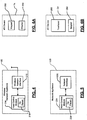
- the wireless VOIP phone 50 includes a control module 54 that performs data processing and other control functions of the wireless VOIP phone 50.
- a wireless network interface 58 communicates with the control module 54 and provides a wireless interface to a wireless medium.
- the wireless network interface 58 may be compliant with any suitable wireless network protocol. Examples of suitable protocols include IEEE standards 802.11, 802.11a, 802.11b, 802.11g, 802.11n, 802.16, and 802.20 and/or Bluetooth.
- the control module 54 of the wireless VOIP phone 50 may support caller identification (ID), call waiting, call transfer, repeat dial, return call, and/or three-way calling. Additional supported functions may include forwarding the call to a particular number, sending the call directly to voicemail, giving the caller a busy signal, playing a "not-in-service" message, send the caller to a call rejection hotline, etc.
- ID caller identification
- Additional supported functions may include forwarding the call to a particular number, sending the call directly to voicemail, giving the caller a busy signal, playing a "not-in-service" message, send the caller to a call rejection hotline, etc.
- the control module 54 and/or the wireless network interface 58 communicate with a coder/decoder module 62.
- the coder/decoder module 62 may convert an audio signal from a microphone into a compressed digital form for transmission. Audio from the other end of the call is decompressed and replayed on speakers.
- the coder/decoder 62 may include a G.729A coder/decoder, a G.711 coder/decoder or any other suitable coder/decoder.
- the coder/decoder 62 may convert each sample into digitized data and may compress it for transmission.
- the coder/decoder 62 may operate by using algorithms that sample, sort, compress and packetize audio data.
- the coder/decoder 62 may include a conjugate-structure algebraic-code-excited linear prediction (CS-ACELP) algorithm. Other algorithms may also be used.
- CS-ACELP conjugate-structure algebraic-code-excited linear prediction
- the coder/decoder 62 communicates with an audio output device such as an output jack and/or a speaker 66.
- the coder/decoder 62 also may communicate with an audio input device such as a microphone 70.
- the control module 54 also may communicate with input/output devices 74.
- the input/output devices 74 may include a keypad and/or touchpad, a display and/or other input/output devices.
- the wireless network interface 58 communicates with one or more wireless network appliances 80-1, 80-2, ..., and 80-X (collectively wireless network appliances 80), where X is an integer greater than zero.
- the wireless VOIP phone 50 generates packets that are sent to the network appliance to control operating parameters thereof.
- the wireless network interface 58 may communicate with the wireless network appliances 80 using an ad-hoc or peer-to-peer mode. However, the wireless network interface 58 may also communicate using an infrastructure mode via an access point.
- the user can move about with the wireless VOIP phone 50 within the range of one or more of the wireless network appliances 80. If the user wishes to remotely control an operating parameter of one of the wireless network appliances 80, the user manipulates the input/output device 74 of the wireless VOIP phone 50 to effectuate control of one or more of the wireless network appliances 80.
- the control module 54 may provide a suitable graphical user interface (GUI) via a display of the input/output device 74.
- GUI graphical user interface
- the control module 54 may provide a selectable list of available network appliances. Once a particular wireless network appliance is selected, the control module 54 may provide another menu and/or list of available functions or operating parameters, and/or a remote control interface and/or touchpad screen that is specific to the selected wireless network appliance.
- a wired VOIP phone 100 includes a wired network interface 102 instead of or in addition to the wireless network interface described above.
- the VOIP phone 100 includes a control module 104 that controls operation of the VOIP phone 100.
- the wired network interface 102 communicates with the control module 104 and provides an interface to a wired medium.
- the network interface 102 may be an Ethernet-based network interface.
- the wired medium may be copper and/or fiber optic-based.
- the control module 104 and/or the wired network interface 102 communicate with a coder/decoder 112.
- the coder/decoder 112 communicates with an audio output such as an output jack and/or a speaker 116.
- the coder/decoder 112 also communicates with an audio input device such as a microphone 120 to receive audio input.
- the control module 104 also communicates with input/output devices 124.
- the input/output devices 124 may include a keypad, touchpad, a display and/or other input/output devices.
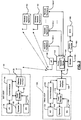
- the wireless VOIP phone 50 and the wired VOIP phone 100 communicate with wireless network appliances 80 and/or wired network appliances 130-1, 130-2, ..., and 130-P (collectively wired network appliances 130) as will be described below.
- the wireless VOIP phone 50 transmits packetized voice, control and/or other data wirelessly to an access point 140, which is connected to a router 144.
- the router 144 may include a speech recognition module 145. Selection of the network appliance and/or control of the network appliance may be performed using voice commands that are sent by the VOIP phone to the speech recognition module. Alternately, the network appliance can be selected using the input device on the VOIP phone and control of the selected network appliance can be performed using voice commands. In operation, the user may verbally initiate a command mode by stating a command keyword such as "Command" or another word. Alternately, one or more buttons or other input devices associated with the VOIP phone may be used to initiate the command mode.
- the speech recognition module 145 may respond to the command keyword or button by sending a command mode acknowledgement. For example, the speech recognition module 145 may send a packet that triggers the VOIP phone to output a tone. Alternately the packet may include a tone. Then, the user selects the network appliance and/or states a command for the network appliance. The VOIP phone sends the command to the speech recognition module 145, which performs speech recognition on the command and outputs a packet to the target network appliance. If one or more target network appliances can be controlled, the user may specify the particular target appliance either before or after the command.
- the router 144 is connected to wired network appliances 130.
- the access point 140 forwards the packets to the router 144, which routes the packets to the correct wired network appliance 130.
- the wireless VOIP phone 50 may also send packetized voice, control and/or other data to one or more of the wireless network appliances 80.
- the access point 140 receives packetized data addressed to one of the wireless network appliances 80, the access point 140 wirelessly retransmits the data to the wireless network appliance 80.
- the wireless VOIP phone 50 may also communicate with the wireless network appliances 80 using a peer-to-peer mode as described above in FIG. 1 .
- the wired VOIP phone 100 may also send packetized data via the wired medium 152 to the router 144.
- the router 144 forwards the packets directly to the wired network appliance 130.
- the router 144 routes the packets to the wireless network appliance 80 using the access point 140.
- the router 144 may also route packetized data to control either wired and/or wireless network appliances that are located in remote networks via a modem 160, a service provider 164 and a distributed communications system 166, such as the Internet.
- remote network includes networks that are not local to the local network including the VOIP phone.
- remote networks may include networks that are accessed indirectly via one or more routers, via distributed communications system such as the Internet, etc. Therefore, the range of the wireless remote control provided by the VOIP phone is relatively limitless.
- wireless and/or wired VOIP phones can also remotely control local and/or remote wireless and/or wired network appliances.
- the wireless VOIP phone 50 and/or wired VOIP phone 100 may also communicate and control wired and/or wireless network appliances that are located in remote networks.
- a router 186 and/or access point 190 receives packetized data. Packets are routed to the remote wireless network appliance 200 via the access point 190.
- the wireless network appliance 80 includes a wireless network interface 210.
- the wireless network interface 210 includes a physical layer (PHY) device that provides a wireless interface to a wireless medium and a medium access control (MAC) device that provides a wireless interface between the PHY device and a host device.
- the wireless network appliance 80 also includes a host control module 214.
- One or more operating parameters 218 of the wireless network appliance 80 may be remotely controlled.
- the operating parameters 218 may include on/off control, volume control, operating mode, temperature and/or other suitable operating parameters.
- the wired network appliance 130 includes a wired network interface 230.
- the wired network interface 230 includes a PHY device that provides wired interface to a wired medium such as fiber or copper and a MAC device that provides an interface between the PHY device and a host device.
- the wired network appliance 130 also includes a host control module 234.
- One or more operating parameters 238 of the wired network appliance 130 may be remotely controlled.
- the operating parameters 238 may include on/off control, volume control, operating mode, temperature and/or other operating parameters.
- the input/output device 74 includes a keypad 250 and a display 254.
- the input/output device 74' includes a touchpad 260 and/or a keypad 264. Still other input/output interfaces may be provided by the input/output device 74 or 74'.
- the control modules of the devices in FIGs. 6A and 6B may also provide a graphical user interface.
- the network appliance sends a custom GUI and/or data relating to its inputs and outputs to the VOIP phone.
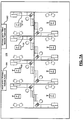
- FIGs. 7A-7D an exemplary audio and/or temperature control system that employs wireless and/or wired VOIP phones is shown.
- a plurality of employees work in office 278.
- Each of the employees may have a VOIP phone 50.
- the VOIP phones 50 selectively communicate with wired and/or wireless network appliances 280 and 282 using the input/output devices 74 described above.
- the network appliance 280 may include a network-addressable audio system and the network appliance 282 may include a network addressable thermostat system for the office 278.
- the network appliances can be wireless and/or wired.
- the employees use the input/output devices on their VOIP phones 50 and 51 to adjust operational parameters of the wireless and/or wired network appliances 280 and 282.
- the wireless VOIP phones 50 and/or wired VOIP phones 51 may input a desired temperature to the wireless and/or wired network appliance 282 associated with the thermostat system.
- the thermostat system may choose a setpoint based upon a prestored program, a single requested setpoint, and/or as a function of multiple requested setpoints. For example, an average of multiple desired temperatures input by the VOIP phones may be used when multiple setpoints are requested. A time-based weighted approach may be used with more current setpoint requests being given greater weight.
- the VOIP phones may be used to add songs to a playlist associated with the wireless and/or wired network appliance 280 that controls the audio system, select a different source component, adjust volume, etc.
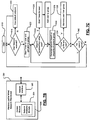
- the wireless and/or wired network thermostat 282 includes a wireless and/or wired network interface 300.
- the wireless and/or wired network appliance 282 includes a control module 304.
- the control module 304 may include a setpoint arbitrator module 308, which controls the temperature setpoint based upon none, one or multiple temperature setpoint inputs from the wireless and/or wired VOIP phones 50 as described above.
- step 310 control determines whether a user setpoint is received. If step 314 is false, control uses a default setpoint and/or temperature program in step 320. If step 314 is true, control starts a timer for the user and adds the user to a group in step 322.
- control determines whether a setpoint is received from another user. If step 324 is true, control starts a timer associated with the user and adds the user to the group in steps 326 and 328, respectively. If step 324 is false, control generates a setpoint based on setpoints of users in the group in step 330. In step 334, control determines whether a timer associated with any user is up.
- step 334 control removes the user from the group in step 336. Control continues from steps 336 and step 334 (if step 334 is false) with step 340. In step 340, control determines whether there are any users remaining in the group. If step 340 is true, control returns to step 324. Otherwise, control returns to step 314.
- FIG. 7D an exemplary block diagram of the wireless and/or wired network appliance 280 is shown.
- the wireless and/or wired network appliance 280 includes a wireless and/or wired network interface 360.
- the network interface 360 communicates with a control module 364, which controls the wireless and/or wired network appliance 280.
- the control module 364 stores one or more operating parameters 365 of the wireless and/or wired network appliance 280.
- One or more audio components 370-1, 370-2, ... and 370-C may be connected to the control module 364 and/or an amplifier 366.
- One or more operating parameters of the wireless and/or wired network appliance may be controlled remotely as described above.
- the source audio component 370 and/or operating parameters of the source component can be selected remotely.
- one of the audio components 370 may be a FM receiver that may be selected as the output.
- the audio from the selected source audio component 370 is output to the amplifier 366, which is connected to one or more speakers 390.
- Additional operating parameters may include traditional control functions of the particular audio component 370 such as volume control, fade, balance, etc..
- the control module 364 and amplifier 366 can be integrated into a single device.
- control module coder/decoder
- wired and/or wireless network interface can be integrated into a system on chip (SOC).
- SOC system on chip
- the VOIP phones and/or network appliances may employ http protocol, XML, and/or any other protocol. These devices may operative using Microsoft, Linux or other operating systems.
- Other exemplary network appliances include but are not limited to heating, ventilation and air conditioning (HVAC), lighting, hot tubs, etc.
- the speech recognition module 145 was shown in conjunction with FIG. 2 , the speech recognition module may be associated with other embodiments described herein. Furthermore, the speech recognition module 145 may be associated with other devices on the network and/or the VOIP phone.
- control relating to the VOIP phone and the speech recognition module 145 begins in step 400.
- control determines whether the user of the VOIP phone requests a command mode. As set forth above, the user may request a command mode using speech and/or using the input/output devices of the VOIP phone. If step 402 is true, control sends a command mode request to the remote speech recognition module.
- control determines whether a command mode acknowledgement has been received.
- the command mode acknowledgement may be sent in packets and/or on control channels.
- the VOIP phone may acknowledge the receipt using a tone, turning on a light, sending a message to the display or any other method to indicate to the user that the command mode has been enabled.
- the user identifies the selected network appliance if more than one network appliance can be controlled and the VOIP phone forwards the device selection command to the speech recognition module.
- the user inputs the network appliance command, which is forwarded to the speech recognition module. Control ends in step 412.
- control determines whether a command mode request has been received from the VOIP phone. As can be appreciated, more than one VOIP phone may be associated with the speech recognition module. If step 422 is true, the speech recognition module sends a command mode acknowledgement in step 424. In step 426, control determines whether a device selection command has been received. If step 426 is true, control determines whether a device command has been received in step 428. If step 428 is true, control forwards the command packet to the selected network appliance in step 430. Control ends in step 432. As can be appreciated, timeouts can be associated with steps 402, 406, 426 and 428 to prevent an endless loop.
- the device can be implemented in a cellular phone 450 that may include a cellular antenna 451.
- the cellular phone 450 includes a microphone 456, an audio output 458 such as a speaker and/or audio output jack, a display 460 and/or an input device 462 such as a keypad, pointing device, voice actuation and/or other input device.
- the signal processing and/or control circuits 452 and/or other circuits (not shown) in the cellular phone 450 may process data, perform coding and/or encryption, perform calculations, format data and/or perform other cellular phone functions.
- the cellular phone 450 may communicate with mass data storage 464 that stores data in a nonvolatile manner such as optical and/or magnetic storage devices for example hard disk drives HDD and/or DVDs.
- the HDD may be a mini HDD that includes one or more platters having a diameter that is smaller than approximately 1.8".
- the cellular phone 450 may be connected to memory 466 such as RAM, ROM, low latency nonvolatile memory such as flash memory and/or other suitable electronic data storage.
- the cellular phone 450 also may support connections with a WLAN via a WLAN network interface 468.
- a functional block diagram of a lighting network appliance 500 is shown to include a lighting control module 514.
- a wired and/or wireless network interface 510 provides network connectivity as described above.
- the lighting control module 514 allows a user to control one or more operating parameters of one or more lights 522. For example, lights 524-1, 524-2, ..., 524-N can be controlled for one or more rooms to provide mood lighting, timed operation, dimming, on/of control, etc.
- a functional block diagram of a window shade network appliance 540 is shown to include a window shade control module 554.
- a wired and/or wireless network interface 550 provides network connectivity as described above.
- the window shade control module 554 allows a user to control one or more operating parameters of one or more window shades 562.
- window shades 564-1, 564-2, ..., 564-N can be controlled for one or more rooms to open shades, close shades, partially open/closed positions, etc.
- the VOIP phones described herein can select multiple network appliances at the same time and address commands to the multiple devices in a multicast manner. For example, multiple lights and/or window shades can be selected and adjusted the same way at the same time.
Landscapes
- Engineering & Computer Science (AREA)
- Signal Processing (AREA)
- Human Computer Interaction (AREA)
- Computer Networks & Wireless Communication (AREA)
- Telephonic Communication Services (AREA)
- Selective Calling Equipment (AREA)
Applications Claiming Priority (3)
| Application Number | Priority Date | Filing Date | Title |
|---|---|---|---|
| US79928906P | 2006-05-10 | 2006-05-10 | |
| US82100506P | 2006-08-01 | 2006-08-01 | |
| US11/504,093 US9363346B2 (en) | 2006-05-10 | 2006-08-14 | Remote control of network appliances using voice over internet protocol phone |
Publications (2)
| Publication Number | Publication Date |
|---|---|
| EP1855450A1 EP1855450A1 (en) | 2007-11-14 |
| EP1855450B1 true EP1855450B1 (en) | 2018-03-07 |
Family
ID=38432875
Family Applications (1)
| Application Number | Title | Priority Date | Filing Date |
|---|---|---|---|
| EP07005937.3A Ceased EP1855450B1 (en) | 2006-05-10 | 2007-03-22 | Remote control of network appliances using voice over internet protocol phone |
Country Status (6)
| Country | Link |
|---|---|
| US (1) | US9363346B2 (https=) |
| EP (1) | EP1855450B1 (https=) |
| JP (1) | JP5292717B2 (https=) |
| CN (1) | CN101072264B (https=) |
| SG (3) | SG137742A1 (https=) |
| TW (1) | TWI435582B (https=) |
Families Citing this family (29)
| Publication number | Priority date | Publication date | Assignee | Title |
|---|---|---|---|---|
| US20070121606A1 (en) * | 2005-11-03 | 2007-05-31 | Fun Racquets, Inc. | VOIP Hub Using Existing Audio or Video Systems |
| ATE533289T1 (de) * | 2006-05-26 | 2011-11-15 | Incard Sa | Verfahren zum implementieren von voice over ip mittels eines mit einem paketorientierten netz verbundenen elektronischen geräts |
| TW200841689A (en) * | 2007-04-03 | 2008-10-16 | Inventec Appliances Corp | Network communication device |
| US9112985B2 (en) | 2007-12-19 | 2015-08-18 | Core Wireless Licensing S.A.R.L | Methods, apparatus and computer program product for altering device functionality |
| US20100311406A1 (en) * | 2009-06-03 | 2010-12-09 | Hui-Nan Lin | Phone Control Device for Remotely Controlling Electric Appliances |
| US8638767B2 (en) * | 2011-02-14 | 2014-01-28 | Qualcomm Incorporated | Multi-communication mode packet routing mechanism for wireless communications systems |
| AU2013203392B2 (en) * | 2011-11-07 | 2015-01-22 | Kortek Industries Pty Ltd | Adaptable Wireless Power, Light and Automation System |
| CN103959911B (zh) * | 2011-11-07 | 2016-11-23 | 科泰克工业有限公司 | 可适配的无线功率、照明和自动化系统 |
| US9007934B1 (en) | 2012-01-31 | 2015-04-14 | Google Inc. | Control signaling between VoIP phone and computing device |
| US20130238326A1 (en) * | 2012-03-08 | 2013-09-12 | Lg Electronics Inc. | Apparatus and method for multiple device voice control |
| CA2871254A1 (en) | 2012-05-01 | 2013-11-07 | Kortek Industries Pty Ltd | Modular wireless power, light and automation control |
| US10088853B2 (en) | 2012-05-02 | 2018-10-02 | Honeywell International Inc. | Devices and methods for interacting with an HVAC controller |
| KR101866860B1 (ko) * | 2012-09-04 | 2018-06-14 | 엘지전자 주식회사 | 전자기기 및 그것의 제어방법 |
| US20140156281A1 (en) * | 2012-12-03 | 2014-06-05 | Qualcomm Incorporated | Voice-controlled configuration of an automation system |
| WO2014138822A1 (en) * | 2013-03-15 | 2014-09-18 | Kortek Industries Pty Ltd | Wireless light pairing, dimming and control |
| US9929876B2 (en) * | 2013-03-15 | 2018-03-27 | Kortek Industries Pty Ltd | Adaptable multi-mode wireless power, light and automation |
| US10145579B2 (en) | 2013-05-01 | 2018-12-04 | Honeywell International Inc. | Devices and methods for interacting with a control system that is connected to a network |
| US10030878B2 (en) | 2013-08-21 | 2018-07-24 | Honeywell International Inc. | User interaction with building controller device using a remote server and a duplex connection |
| CN105659179B (zh) | 2013-08-21 | 2018-07-17 | 霍尼韦尔国际公司 | 用于与hvac控制器相交互的设备和方法 |
| CA2928625A1 (en) * | 2013-10-29 | 2015-05-07 | Kortek Industries Pty Ltd | Adaptable multi-mode wireless power, light and automation |
| CN105934784A (zh) | 2013-11-28 | 2016-09-07 | 科泰克工业私人有限公司 | 具有用户验证的模块化无线电力、光和自动化控制 |
| US10514677B2 (en) * | 2014-04-11 | 2019-12-24 | Honeywell International Inc. | Frameworks and methodologies configured to assist configuring devices supported by a building management system |
| CN106464845B (zh) * | 2014-05-15 | 2020-05-19 | 科洛普拉斯特公司 | 用于捕捉并数字地存储伤口、瘘管、或造口部位的图像的方法和装置 |
| JP2018037976A (ja) * | 2016-09-02 | 2018-03-08 | 富士ゼロックス株式会社 | 画像形成装置及びプログラム |
| JP6258439B1 (ja) * | 2016-10-26 | 2018-01-10 | 東芝エレベータ株式会社 | エレベータ用空調制御装置およびエレベータ用空調制御システム |
| US10158728B1 (en) * | 2017-08-30 | 2018-12-18 | Lenovo (Singapore) Pte. Ltd. | Method and device to track objects |
| CN108012185B (zh) * | 2017-11-30 | 2024-05-17 | 杭州众传数字设备有限公司 | 一种网络音频解码器 |
| US10524046B2 (en) | 2017-12-06 | 2019-12-31 | Ademco Inc. | Systems and methods for automatic speech recognition |
| CN110753078B (zh) * | 2018-12-04 | 2021-01-12 | 北京嘀嘀无限科技发展有限公司 | 提示方法、装置、电子设备及存储介质 |
Family Cites Families (20)
| Publication number | Priority date | Publication date | Assignee | Title |
|---|---|---|---|---|
| JPH11318666A (ja) | 1998-05-16 | 1999-11-24 | Tanaka Sewing Machine Hosei:Kk | 電気毛布と電気毛布の製造方法 |
| JP2000330650A (ja) | 1999-05-17 | 2000-11-30 | Sanyo Electric Co Ltd | 温度制御装置 |
| AU1078901A (en) * | 1999-10-11 | 2001-04-23 | Qualcomm Incorporated | Combined wireless telephone and remote controller with voice commands |
| US6721705B2 (en) * | 2000-02-04 | 2004-04-13 | Webley Systems, Inc. | Robust voice browser system and voice activated device controller |
| US6595430B1 (en) * | 2000-10-26 | 2003-07-22 | Honeywell International Inc. | Graphical user interface system for a thermal comfort controller |
| JP2002185626A (ja) | 2000-12-14 | 2002-06-28 | Furukawa Electric Co Ltd:The | ネットワーク中継装置、リモートアクセス端末登録方法およびその方法をコンピュータに実行させるプログラムを記録したコンピュータ読み取り可能な記録媒体 |
| US20020147814A1 (en) * | 2001-04-05 | 2002-10-10 | Gur Kimchi | Multimedia devices over IP |
| JP2003115939A (ja) | 2001-10-05 | 2003-04-18 | Yamaha Corp | 携帯電話装置 |
| JP3978599B2 (ja) | 2002-09-19 | 2007-09-19 | 三和シヤッター工業株式会社 | ホームネットワークシステム |
| AU2003278495A1 (en) | 2002-11-25 | 2004-06-18 | Nokia Corporation | System and method for user-initiated group messaging |
| JP2004186945A (ja) * | 2002-12-03 | 2004-07-02 | Sharp Corp | テレビリモートコントロール機能付き移動体通信端末および移動体通信端末システム |
| US7839299B2 (en) | 2003-03-12 | 2010-11-23 | Panasonic Corporation | Remote control device, remote control method, and remotely controlled device |
| US7460467B1 (en) * | 2003-07-23 | 2008-12-02 | Current Technologies, Llc | Voice-over-IP network test device and method |
| JP3921668B2 (ja) | 2003-10-14 | 2007-05-30 | 株式会社日本イトミック | 給湯器管理システム |
| JP2005295168A (ja) * | 2004-03-31 | 2005-10-20 | Casio Comput Co Ltd | 電子機器、リモコン機能制御プログラム |
| JP4518829B2 (ja) | 2004-04-07 | 2010-08-04 | パナソニック株式会社 | 機器制御システムおよび機器制御方法 |
| US7257387B2 (en) * | 2004-06-30 | 2007-08-14 | At&T Intellectual Property, Inc. | Method and system for emergency control of a voice/data communications device |
| US20060041916A1 (en) | 2004-08-17 | 2006-02-23 | Mcquaide Arnold Jr | Personal multi-modal control and communications system |
| KR100645379B1 (ko) | 2004-10-29 | 2006-11-15 | 삼성광주전자 주식회사 | 로봇 제어 시스템 및 로봇 제어방법 |
| US20060209857A1 (en) * | 2005-03-15 | 2006-09-21 | Bellsouth Intellectual Property Corporation | Broadband home applications gateway/residential gateway systems, methods and computer program products |
-
2006
- 2006-08-14 US US11/504,093 patent/US9363346B2/en not_active Expired - Fee Related
-
2007
- 2007-03-22 SG SG200702065-4A patent/SG137742A1/en unknown
- 2007-03-22 SG SG200907064-0A patent/SG156676A1/en unknown
- 2007-03-22 SG SG2013016803A patent/SG188854A1/en unknown
- 2007-03-22 EP EP07005937.3A patent/EP1855450B1/en not_active Ceased
- 2007-04-05 CN CN2007100937230A patent/CN101072264B/zh not_active Expired - Fee Related
- 2007-04-09 TW TW96112272A patent/TWI435582B/zh active
- 2007-04-10 JP JP2007102557A patent/JP5292717B2/ja not_active Expired - Fee Related
Non-Patent Citations (1)
| Title |
|---|
| None * |
Also Published As
| Publication number | Publication date |
|---|---|
| SG188854A1 (en) | 2013-04-30 |
| TWI435582B (zh) | 2014-04-21 |
| EP1855450A1 (en) | 2007-11-14 |
| CN101072264A (zh) | 2007-11-14 |
| US9363346B2 (en) | 2016-06-07 |
| JP2007318733A (ja) | 2007-12-06 |
| JP5292717B2 (ja) | 2013-09-18 |
| SG137742A1 (en) | 2007-12-28 |
| TW200743338A (en) | 2007-11-16 |
| SG156676A1 (en) | 2009-11-26 |
| US20070263600A1 (en) | 2007-11-15 |
| CN101072264B (zh) | 2013-12-18 |
Similar Documents
| Publication | Publication Date | Title |
|---|---|---|
| EP1855450B1 (en) | Remote control of network appliances using voice over internet protocol phone | |
| US11176922B2 (en) | System and method for integrating a home media system and other home systems | |
| US11171803B2 (en) | Smart home communications architecture | |
| CN1280722C (zh) | 通信系统、控制设备和被控制设备 | |
| KR101917126B1 (ko) | 홈 네트워크 시스템에서 컨텐츠 재생 장치 및 방법 | |
| US11258880B2 (en) | Wearable device for controlling endpoint devices | |
| US9547980B2 (en) | Smart gateway, smart home system and smart controlling method thereof | |
| US20190304448A1 (en) | Audio playback device and voice control method thereof | |
| US10277519B2 (en) | Response time for a gateway connecting a lower bandwidth network with a higher speed network | |
| US20080026725A1 (en) | Gateway device for remote control and method for the same | |
| US20150131485A1 (en) | Mapping connected devices in a home area network to ip addresses in a local area network | |
| US11749249B2 (en) | System and method for integrating a home media system and other home systems | |
| CN108711424B (zh) | 一种分布式语音控制方法及系统 | |
| KR20160024386A (ko) | 구성 접속 디바이스 | |
| US20150117462A1 (en) | Method for encapsulating a message | |
| WO2009090707A1 (ja) | 通信端末装置及び通信機器接続制御方法 | |
| JP2002315066A (ja) | 通信装置及びプロトコル選択方法 | |
| JP2005176382A (ja) | 1つまたは複数の移動通信装置と1つまたは複数のモジュール・コンポーネントの間で行われる1つまたは複数のメッセージのx10通信 | |
| KR20200024813A (ko) | 홈 네트워크 시스템에서 홈 디바이스를 원격으로 제어하는 방법 및 장치 | |
| JP2005520389A (ja) | ネットワーク用の結合モジュール | |
| KR20180112325A (ko) | 음성 전달 방법, 이를 구현하는 음성 전달 장치 및 이를 포함하는 시스템 | |
| HK1114985A (en) | Remote control of network appliances using voice over internet protocol phone | |
| CN115129368A (zh) | 智能终端的控制方法、装置和智能音箱 | |
| KR101385136B1 (ko) | Sip 서버를 이용한 댁내 기기 제어 방법 및 장치 | |
| JP2002319949A (ja) | 通信制御装置及び通信制御方法 |
Legal Events
| Date | Code | Title | Description |
|---|---|---|---|
| PUAI | Public reference made under article 153(3) epc to a published international application that has entered the european phase |
Free format text: ORIGINAL CODE: 0009012 |
|
| AK | Designated contracting states |
Kind code of ref document: A1 Designated state(s): AT BE BG CH CY CZ DE DK EE ES FI FR GB GR HU IE IS IT LI LT LU LV MC MT NL PL PT RO SE SI SK TR |
|
| AX | Request for extension of the european patent |
Extension state: AL BA HR MK YU |
|
| 17P | Request for examination filed |
Effective date: 20080514 |
|
| 17Q | First examination report despatched |
Effective date: 20080612 |
|
| AKX | Designation fees paid |
Designated state(s): DE FR GB |
|
| GRAP | Despatch of communication of intention to grant a patent |
Free format text: ORIGINAL CODE: EPIDOSNIGR1 |
|
| INTG | Intention to grant announced |
Effective date: 20170925 |
|
| GRAS | Grant fee paid |
Free format text: ORIGINAL CODE: EPIDOSNIGR3 |
|
| GRAA | (expected) grant |
Free format text: ORIGINAL CODE: 0009210 |
|
| AK | Designated contracting states |
Kind code of ref document: B1 Designated state(s): DE FR GB |
|
| REG | Reference to a national code |
Ref country code: GB Ref legal event code: FG4D |
|
| REG | Reference to a national code |
Ref country code: FR Ref legal event code: PLFP Year of fee payment: 12 |
|
| REG | Reference to a national code |
Ref country code: DE Ref legal event code: R096 Ref document number: 602007054115 Country of ref document: DE |
|
| PGFP | Annual fee paid to national office [announced via postgrant information from national office to epo] |
Ref country code: GB Payment date: 20180327 Year of fee payment: 12 |
|
| PGFP | Annual fee paid to national office [announced via postgrant information from national office to epo] |
Ref country code: FR Payment date: 20180326 Year of fee payment: 12 |
|
| PGFP | Annual fee paid to national office [announced via postgrant information from national office to epo] |
Ref country code: DE Payment date: 20180328 Year of fee payment: 12 |
|
| REG | Reference to a national code |
Ref country code: DE Ref legal event code: R097 Ref document number: 602007054115 Country of ref document: DE |
|
| PLBE | No opposition filed within time limit |
Free format text: ORIGINAL CODE: 0009261 |
|
| STAA | Information on the status of an ep patent application or granted ep patent |
Free format text: STATUS: NO OPPOSITION FILED WITHIN TIME LIMIT |
|
| 26N | No opposition filed |
Effective date: 20181210 |
|
| REG | Reference to a national code |
Ref country code: DE Ref legal event code: R119 Ref document number: 602007054115 Country of ref document: DE |
|
| GBPC | Gb: european patent ceased through non-payment of renewal fee |
Effective date: 20190322 |
|
| PG25 | Lapsed in a contracting state [announced via postgrant information from national office to epo] |
Ref country code: GB Free format text: LAPSE BECAUSE OF NON-PAYMENT OF DUE FEES Effective date: 20190322 Ref country code: DE Free format text: LAPSE BECAUSE OF NON-PAYMENT OF DUE FEES Effective date: 20191001 |
|
| PG25 | Lapsed in a contracting state [announced via postgrant information from national office to epo] |
Ref country code: FR Free format text: LAPSE BECAUSE OF NON-PAYMENT OF DUE FEES Effective date: 20190331 |