EP1850410A2 - Rechargeable battery fabrication method - Google Patents
Rechargeable battery fabrication method Download PDFInfo
- Publication number
- EP1850410A2 EP1850410A2 EP07008100A EP07008100A EP1850410A2 EP 1850410 A2 EP1850410 A2 EP 1850410A2 EP 07008100 A EP07008100 A EP 07008100A EP 07008100 A EP07008100 A EP 07008100A EP 1850410 A2 EP1850410 A2 EP 1850410A2
- Authority
- EP
- European Patent Office
- Prior art keywords
- negative pole
- positive pole
- material film
- zone
- pole
- Prior art date
- Legal status (The legal status is an assumption and is not a legal conclusion. Google has not performed a legal analysis and makes no representation as to the accuracy of the status listed.)
- Withdrawn
Links
- 238000004519 manufacturing process Methods 0.000 title claims abstract description 15
- 238000000034 method Methods 0.000 title claims description 11
- 239000000463 material Substances 0.000 claims abstract description 51
- RYGMFSIKBFXOCR-UHFFFAOYSA-N Copper Chemical compound [Cu] RYGMFSIKBFXOCR-UHFFFAOYSA-N 0.000 claims abstract description 31
- 229910052802 copper Inorganic materials 0.000 claims abstract description 31
- 239000010949 copper Substances 0.000 claims abstract description 31
- XAGFODPZIPBFFR-UHFFFAOYSA-N aluminium Chemical compound [Al] XAGFODPZIPBFFR-UHFFFAOYSA-N 0.000 claims abstract description 29
- 229910052782 aluminium Inorganic materials 0.000 claims abstract description 29
- 238000002955 isolation Methods 0.000 claims abstract description 25
- 239000012528 membrane Substances 0.000 claims abstract description 25
- 239000008151 electrolyte solution Substances 0.000 claims abstract description 10
- 238000005096 rolling process Methods 0.000 claims abstract description 3
- OKTJSMMVPCPJKN-UHFFFAOYSA-N Carbon Chemical compound [C] OKTJSMMVPCPJKN-UHFFFAOYSA-N 0.000 claims description 12
- 239000000203 mixture Substances 0.000 claims description 8
- WEVYAHXRMPXWCK-UHFFFAOYSA-N Acetonitrile Chemical compound CC#N WEVYAHXRMPXWCK-UHFFFAOYSA-N 0.000 claims description 6
- XEKOWRVHYACXOJ-UHFFFAOYSA-N Ethyl acetate Chemical compound CCOC(C)=O XEKOWRVHYACXOJ-UHFFFAOYSA-N 0.000 claims description 6
- ZMXDDKWLCZADIW-UHFFFAOYSA-N N,N-Dimethylformamide Chemical compound CN(C)C=O ZMXDDKWLCZADIW-UHFFFAOYSA-N 0.000 claims description 6
- XTHFKEDIFFGKHM-UHFFFAOYSA-N Dimethoxyethane Chemical compound COCCOC XTHFKEDIFFGKHM-UHFFFAOYSA-N 0.000 claims description 4
- IAZDPXIOMUYVGZ-UHFFFAOYSA-N Dimethylsulphoxide Chemical compound CS(C)=O IAZDPXIOMUYVGZ-UHFFFAOYSA-N 0.000 claims description 4
- XEEYBQQBJWHFJM-UHFFFAOYSA-N Iron Chemical compound [Fe] XEEYBQQBJWHFJM-UHFFFAOYSA-N 0.000 claims description 4
- ATHHXGZTWNVVOU-UHFFFAOYSA-N N-methylformamide Chemical compound CNC=O ATHHXGZTWNVVOU-UHFFFAOYSA-N 0.000 claims description 4
- PXHVJJICTQNCMI-UHFFFAOYSA-N Nickel Chemical compound [Ni] PXHVJJICTQNCMI-UHFFFAOYSA-N 0.000 claims description 4
- WYURNTSHIVDZCO-UHFFFAOYSA-N Tetrahydrofuran Chemical compound C1CCOC1 WYURNTSHIVDZCO-UHFFFAOYSA-N 0.000 claims description 4
- FKRCODPIKNYEAC-UHFFFAOYSA-N ethyl propionate Chemical compound CCOC(=O)CC FKRCODPIKNYEAC-UHFFFAOYSA-N 0.000 claims description 4
- IIPYXGDZVMZOAP-UHFFFAOYSA-N lithium nitrate Chemical compound [Li+].[O-][N+]([O-])=O IIPYXGDZVMZOAP-UHFFFAOYSA-N 0.000 claims description 4
- -1 r -butyrolactone Substances 0.000 claims description 4
- 238000003466 welding Methods 0.000 claims description 4
- VAYTZRYEBVHVLE-UHFFFAOYSA-N 1,3-dioxol-2-one Chemical compound O=C1OC=CO1 VAYTZRYEBVHVLE-UHFFFAOYSA-N 0.000 claims description 3
- OIFBSDVPJOWBCH-UHFFFAOYSA-N Diethyl carbonate Chemical compound CCOC(=O)OCC OIFBSDVPJOWBCH-UHFFFAOYSA-N 0.000 claims description 3
- KMTRUDSVKNLOMY-UHFFFAOYSA-N Ethylene carbonate Chemical class O=C1OCCO1 KMTRUDSVKNLOMY-UHFFFAOYSA-N 0.000 claims description 3
- 229910052799 carbon Inorganic materials 0.000 claims description 3
- 239000002134 carbon nanofiber Substances 0.000 claims description 3
- 239000002041 carbon nanotube Substances 0.000 claims description 3
- 229910021393 carbon nanotube Inorganic materials 0.000 claims description 3
- 239000003792 electrolyte Substances 0.000 claims description 3
- JBTWLSYIZRCDFO-UHFFFAOYSA-N ethyl methyl carbonate Chemical compound CCOC(=O)OC JBTWLSYIZRCDFO-UHFFFAOYSA-N 0.000 claims description 3
- 239000011325 microbead Substances 0.000 claims description 3
- YKYONYBAUNKHLG-UHFFFAOYSA-N n-Propyl acetate Natural products CCCOC(C)=O YKYONYBAUNKHLG-UHFFFAOYSA-N 0.000 claims description 3
- 229940090181 propyl acetate Drugs 0.000 claims description 3
- RUOJZAUFBMNUDX-UHFFFAOYSA-N propylene carbonate Chemical class CC1COC(=O)O1 RUOJZAUFBMNUDX-UHFFFAOYSA-N 0.000 claims description 3
- 239000002904 solvent Substances 0.000 claims description 3
- NQPDZGIKBAWPEJ-UHFFFAOYSA-N valeric acid Chemical compound CCCCC(O)=O NQPDZGIKBAWPEJ-UHFFFAOYSA-N 0.000 claims description 3
- LZDKZFUFMNSQCJ-UHFFFAOYSA-N 1,2-diethoxyethane Chemical compound CCOCCOCC LZDKZFUFMNSQCJ-UHFFFAOYSA-N 0.000 claims description 2
- VKSWWACDZPRJAP-UHFFFAOYSA-N 1,3-dioxepan-2-one Chemical class O=C1OCCCCO1 VKSWWACDZPRJAP-UHFFFAOYSA-N 0.000 claims description 2
- GDXHBFHOEYVPED-UHFFFAOYSA-N 1-(2-butoxyethoxy)butane Chemical compound CCCCOCCOCCCC GDXHBFHOEYVPED-UHFFFAOYSA-N 0.000 claims description 2
- HNAGHMKIPMKKBB-UHFFFAOYSA-N 1-benzylpyrrolidine-3-carboxamide Chemical compound C1C(C(=O)N)CCN1CC1=CC=CC=C1 HNAGHMKIPMKKBB-UHFFFAOYSA-N 0.000 claims description 2
- JWUJQDFVADABEY-UHFFFAOYSA-N 2-methyltetrahydrofuran Chemical compound CC1CCCO1 JWUJQDFVADABEY-UHFFFAOYSA-N 0.000 claims description 2
- 229920000049 Carbon (fiber) Polymers 0.000 claims description 2
- VYZAMTAEIAYCRO-UHFFFAOYSA-N Chromium Chemical compound [Cr] VYZAMTAEIAYCRO-UHFFFAOYSA-N 0.000 claims description 2
- JGFBQFKZKSSODQ-UHFFFAOYSA-N Isothiocyanatocyclopropane Chemical compound S=C=NC1CC1 JGFBQFKZKSSODQ-UHFFFAOYSA-N 0.000 claims description 2
- 229910013375 LiC Inorganic materials 0.000 claims description 2
- 229910013458 LiC6 Inorganic materials 0.000 claims description 2
- 229910000552 LiCF3SO3 Inorganic materials 0.000 claims description 2
- 229910010937 LiGaCl4 Inorganic materials 0.000 claims description 2
- 229910013406 LiN(SO2CF3)2 Inorganic materials 0.000 claims description 2
- 229910001290 LiPF6 Inorganic materials 0.000 claims description 2
- 229910012423 LiSO3F Inorganic materials 0.000 claims description 2
- RJUFJBKOKNCXHH-UHFFFAOYSA-N Methyl propionate Chemical compound CCC(=O)OC RJUFJBKOKNCXHH-UHFFFAOYSA-N 0.000 claims description 2
- ZOKXTWBITQBERF-UHFFFAOYSA-N Molybdenum Chemical compound [Mo] ZOKXTWBITQBERF-UHFFFAOYSA-N 0.000 claims description 2
- SECXISVLQFMRJM-UHFFFAOYSA-N N-Methylpyrrolidone Chemical compound CN1CCCC1=O SECXISVLQFMRJM-UHFFFAOYSA-N 0.000 claims description 2
- OHLUUHNLEMFGTQ-UHFFFAOYSA-N N-methylacetamide Chemical compound CNC(C)=O OHLUUHNLEMFGTQ-UHFFFAOYSA-N 0.000 claims description 2
- XBDQKXXYIPTUBI-UHFFFAOYSA-M Propionate Chemical compound CCC([O-])=O XBDQKXXYIPTUBI-UHFFFAOYSA-M 0.000 claims description 2
- GOOHAUXETOMSMM-UHFFFAOYSA-N Propylene oxide Chemical compound CC1CO1 GOOHAUXETOMSMM-UHFFFAOYSA-N 0.000 claims description 2
- UCKMPCXJQFINFW-UHFFFAOYSA-N Sulphide Chemical compound [S-2] UCKMPCXJQFINFW-UHFFFAOYSA-N 0.000 claims description 2
- RTAQQCXQSZGOHL-UHFFFAOYSA-N Titanium Chemical compound [Ti] RTAQQCXQSZGOHL-UHFFFAOYSA-N 0.000 claims description 2
- RLJDSHNOFWICBY-UHFFFAOYSA-N [P]=O.[Fe].[Li] Chemical compound [P]=O.[Fe].[Li] RLJDSHNOFWICBY-UHFFFAOYSA-N 0.000 claims description 2
- YIYYFENAYNNCQR-UHFFFAOYSA-N [P]=O.[V].[Li] Chemical compound [P]=O.[V].[Li] YIYYFENAYNNCQR-UHFFFAOYSA-N 0.000 claims description 2
- KXKVLQRXCPHEJC-UHFFFAOYSA-N acetic acid trimethyl ester Natural products COC(C)=O KXKVLQRXCPHEJC-UHFFFAOYSA-N 0.000 claims description 2
- 239000006230 acetylene black Substances 0.000 claims description 2
- 150000008065 acid anhydrides Chemical class 0.000 claims description 2
- OBNCKNCVKJNDBV-UHFFFAOYSA-N butanoic acid ethyl ester Natural products CCCC(=O)OCC OBNCKNCVKJNDBV-UHFFFAOYSA-N 0.000 claims description 2
- PWLNAUNEAKQYLH-UHFFFAOYSA-N butyric acid octyl ester Natural products CCCCCCCCOC(=O)CCC PWLNAUNEAKQYLH-UHFFFAOYSA-N 0.000 claims description 2
- 239000006229 carbon black Substances 0.000 claims description 2
- 239000004917 carbon fiber Substances 0.000 claims description 2
- 229910052804 chromium Inorganic materials 0.000 claims description 2
- 239000011651 chromium Substances 0.000 claims description 2
- 229910017052 cobalt Inorganic materials 0.000 claims description 2
- 239000010941 cobalt Substances 0.000 claims description 2
- GUTLYIVDDKVIGB-UHFFFAOYSA-N cobalt atom Chemical compound [Co] GUTLYIVDDKVIGB-UHFFFAOYSA-N 0.000 claims description 2
- 239000000571 coke Substances 0.000 claims description 2
- IEJIGPNLZYLLBP-UHFFFAOYSA-N dimethyl carbonate Chemical compound COC(=O)OC IEJIGPNLZYLLBP-UHFFFAOYSA-N 0.000 claims description 2
- BDUPRNVPXOHWIL-UHFFFAOYSA-N dimethyl sulfite Chemical compound COS(=O)OC BDUPRNVPXOHWIL-UHFFFAOYSA-N 0.000 claims description 2
- VUPKGFBOKBGHFZ-UHFFFAOYSA-N dipropyl carbonate Chemical class CCCOC(=O)OCCC VUPKGFBOKBGHFZ-UHFFFAOYSA-N 0.000 claims description 2
- 229910021397 glassy carbon Inorganic materials 0.000 claims description 2
- 229910002804 graphite Inorganic materials 0.000 claims description 2
- 239000010439 graphite Substances 0.000 claims description 2
- 229910052742 iron Inorganic materials 0.000 claims description 2
- 229910001547 lithium hexafluoroantimonate(V) Inorganic materials 0.000 claims description 2
- 229910001540 lithium hexafluoroarsenate(V) Inorganic materials 0.000 claims description 2
- MHCFAGZWMAWTNR-UHFFFAOYSA-M lithium perchlorate Chemical compound [Li+].[O-]Cl(=O)(=O)=O MHCFAGZWMAWTNR-UHFFFAOYSA-M 0.000 claims description 2
- 229910001486 lithium perchlorate Inorganic materials 0.000 claims description 2
- 229910001537 lithium tetrachloroaluminate Inorganic materials 0.000 claims description 2
- 229910001496 lithium tetrafluoroborate Inorganic materials 0.000 claims description 2
- QSZMZKBZAYQGRS-UHFFFAOYSA-N lithium;bis(trifluoromethylsulfonyl)azanide Chemical compound [Li+].FC(F)(F)S(=O)(=O)[N-]S(=O)(=O)C(F)(F)F QSZMZKBZAYQGRS-UHFFFAOYSA-N 0.000 claims description 2
- VNWKTOKETHGBQD-UHFFFAOYSA-N methane Chemical compound C VNWKTOKETHGBQD-UHFFFAOYSA-N 0.000 claims description 2
- 229940017219 methyl propionate Drugs 0.000 claims description 2
- 229910052750 molybdenum Inorganic materials 0.000 claims description 2
- 239000011733 molybdenum Substances 0.000 claims description 2
- UUIQMZJEGPQKFD-UHFFFAOYSA-N n-butyric acid methyl ester Natural products CCCC(=O)OC UUIQMZJEGPQKFD-UHFFFAOYSA-N 0.000 claims description 2
- 229910052759 nickel Inorganic materials 0.000 claims description 2
- 229910052758 niobium Inorganic materials 0.000 claims description 2
- 239000010955 niobium Substances 0.000 claims description 2
- GUCVJGMIXFAOAE-UHFFFAOYSA-N niobium atom Chemical compound [Nb] GUCVJGMIXFAOAE-UHFFFAOYSA-N 0.000 claims description 2
- 238000004806 packaging method and process Methods 0.000 claims description 2
- 150000003346 selenoethers Chemical class 0.000 claims description 2
- XSOKHXFFCGXDJZ-UHFFFAOYSA-N telluride(2-) Chemical compound [Te-2] XSOKHXFFCGXDJZ-UHFFFAOYSA-N 0.000 claims description 2
- YLQBMQCUIZJEEH-UHFFFAOYSA-N tetrahydrofuran Natural products C=1C=COC=1 YLQBMQCUIZJEEH-UHFFFAOYSA-N 0.000 claims description 2
- 239000010936 titanium Substances 0.000 claims description 2
- 229910052719 titanium Inorganic materials 0.000 claims description 2
- 229910052720 vanadium Inorganic materials 0.000 claims description 2
- LEONUFNNVUYDNQ-UHFFFAOYSA-N vanadium atom Chemical compound [V] LEONUFNNVUYDNQ-UHFFFAOYSA-N 0.000 claims description 2
- WPBNNNQJVZRUHP-UHFFFAOYSA-L manganese(2+);methyl n-[[2-(methoxycarbonylcarbamothioylamino)phenyl]carbamothioyl]carbamate;n-[2-(sulfidocarbothioylamino)ethyl]carbamodithioate Chemical compound [Mn+2].[S-]C(=S)NCCNC([S-])=S.COC(=O)NC(=S)NC1=CC=CC=C1NC(=S)NC(=O)OC WPBNNNQJVZRUHP-UHFFFAOYSA-L 0.000 claims 1
- 238000007599 discharging Methods 0.000 description 6
- 238000010586 diagram Methods 0.000 description 3
- 238000010276 construction Methods 0.000 description 2
- 229910032387 LiCoO2 Inorganic materials 0.000 description 1
- PWHULOQIROXLJO-UHFFFAOYSA-N Manganese Chemical compound [Mn] PWHULOQIROXLJO-UHFFFAOYSA-N 0.000 description 1
- 239000004698 Polyethylene Substances 0.000 description 1
- 239000004721 Polyphenylene oxide Substances 0.000 description 1
- 239000004743 Polypropylene Substances 0.000 description 1
- 229910052748 manganese Inorganic materials 0.000 description 1
- 239000011572 manganese Substances 0.000 description 1
- 238000012986 modification Methods 0.000 description 1
- 230000004048 modification Effects 0.000 description 1
- 229920000570 polyether Polymers 0.000 description 1
- 229920000573 polyethylene Polymers 0.000 description 1
- 229920001155 polypropylene Polymers 0.000 description 1
- 238000007789 sealing Methods 0.000 description 1
Images



Classifications
-
- H—ELECTRICITY
- H01—ELECTRIC ELEMENTS
- H01M—PROCESSES OR MEANS, e.g. BATTERIES, FOR THE DIRECT CONVERSION OF CHEMICAL ENERGY INTO ELECTRICAL ENERGY
- H01M10/00—Secondary cells; Manufacture thereof
- H01M10/05—Accumulators with non-aqueous electrolyte
- H01M10/058—Construction or manufacture
- H01M10/0587—Construction or manufacture of accumulators having only wound construction elements, i.e. wound positive electrodes, wound negative electrodes and wound separators
-
- H—ELECTRICITY
- H01—ELECTRIC ELEMENTS
- H01M—PROCESSES OR MEANS, e.g. BATTERIES, FOR THE DIRECT CONVERSION OF CHEMICAL ENERGY INTO ELECTRICAL ENERGY
- H01M10/00—Secondary cells; Manufacture thereof
- H01M10/04—Construction or manufacture in general
- H01M10/0431—Cells with wound or folded electrodes
-
- H—ELECTRICITY
- H01—ELECTRIC ELEMENTS
- H01M—PROCESSES OR MEANS, e.g. BATTERIES, FOR THE DIRECT CONVERSION OF CHEMICAL ENERGY INTO ELECTRICAL ENERGY
- H01M10/00—Secondary cells; Manufacture thereof
- H01M10/05—Accumulators with non-aqueous electrolyte
- H01M10/052—Li-accumulators
- H01M10/0525—Rocking-chair batteries, i.e. batteries with lithium insertion or intercalation in both electrodes; Lithium-ion batteries
-
- H—ELECTRICITY
- H01—ELECTRIC ELEMENTS
- H01M—PROCESSES OR MEANS, e.g. BATTERIES, FOR THE DIRECT CONVERSION OF CHEMICAL ENERGY INTO ELECTRICAL ENERGY
- H01M10/00—Secondary cells; Manufacture thereof
- H01M10/05—Accumulators with non-aqueous electrolyte
- H01M10/056—Accumulators with non-aqueous electrolyte characterised by the materials used as electrolytes, e.g. mixed inorganic/organic electrolytes
-
- H—ELECTRICITY
- H01—ELECTRIC ELEMENTS
- H01M—PROCESSES OR MEANS, e.g. BATTERIES, FOR THE DIRECT CONVERSION OF CHEMICAL ENERGY INTO ELECTRICAL ENERGY
- H01M10/00—Secondary cells; Manufacture thereof
- H01M10/05—Accumulators with non-aqueous electrolyte
- H01M10/056—Accumulators with non-aqueous electrolyte characterised by the materials used as electrolytes, e.g. mixed inorganic/organic electrolytes
- H01M10/0561—Accumulators with non-aqueous electrolyte characterised by the materials used as electrolytes, e.g. mixed inorganic/organic electrolytes the electrolyte being constituted of inorganic materials only
- H01M10/0563—Liquid materials, e.g. for Li-SOCl2 cells
-
- H—ELECTRICITY
- H01—ELECTRIC ELEMENTS
- H01M—PROCESSES OR MEANS, e.g. BATTERIES, FOR THE DIRECT CONVERSION OF CHEMICAL ENERGY INTO ELECTRICAL ENERGY
- H01M10/00—Secondary cells; Manufacture thereof
- H01M10/05—Accumulators with non-aqueous electrolyte
- H01M10/056—Accumulators with non-aqueous electrolyte characterised by the materials used as electrolytes, e.g. mixed inorganic/organic electrolytes
- H01M10/0564—Accumulators with non-aqueous electrolyte characterised by the materials used as electrolytes, e.g. mixed inorganic/organic electrolytes the electrolyte being constituted of organic materials only
- H01M10/0566—Liquid materials
- H01M10/0569—Liquid materials characterised by the solvents
-
- H—ELECTRICITY
- H01—ELECTRIC ELEMENTS
- H01M—PROCESSES OR MEANS, e.g. BATTERIES, FOR THE DIRECT CONVERSION OF CHEMICAL ENERGY INTO ELECTRICAL ENERGY
- H01M4/00—Electrodes
- H01M4/02—Electrodes composed of, or comprising, active material
- H01M4/04—Processes of manufacture in general
- H01M4/0402—Methods of deposition of the material
- H01M4/0404—Methods of deposition of the material by coating on electrode collectors
-
- H—ELECTRICITY
- H01—ELECTRIC ELEMENTS
- H01M—PROCESSES OR MEANS, e.g. BATTERIES, FOR THE DIRECT CONVERSION OF CHEMICAL ENERGY INTO ELECTRICAL ENERGY
- H01M4/00—Electrodes
- H01M4/02—Electrodes composed of, or comprising, active material
- H01M4/13—Electrodes for accumulators with non-aqueous electrolyte, e.g. for lithium-accumulators; Processes of manufacture thereof
- H01M4/131—Electrodes based on mixed oxides or hydroxides, or on mixtures of oxides or hydroxides, e.g. LiCoOx
-
- H—ELECTRICITY
- H01—ELECTRIC ELEMENTS
- H01M—PROCESSES OR MEANS, e.g. BATTERIES, FOR THE DIRECT CONVERSION OF CHEMICAL ENERGY INTO ELECTRICAL ENERGY
- H01M4/00—Electrodes
- H01M4/02—Electrodes composed of, or comprising, active material
- H01M4/13—Electrodes for accumulators with non-aqueous electrolyte, e.g. for lithium-accumulators; Processes of manufacture thereof
- H01M4/133—Electrodes based on carbonaceous material, e.g. graphite-intercalation compounds or CFx
-
- H—ELECTRICITY
- H01—ELECTRIC ELEMENTS
- H01M—PROCESSES OR MEANS, e.g. BATTERIES, FOR THE DIRECT CONVERSION OF CHEMICAL ENERGY INTO ELECTRICAL ENERGY
- H01M4/00—Electrodes
- H01M4/02—Electrodes composed of, or comprising, active material
- H01M4/36—Selection of substances as active materials, active masses, active liquids
- H01M4/48—Selection of substances as active materials, active masses, active liquids of inorganic oxides or hydroxides
- H01M4/485—Selection of substances as active materials, active masses, active liquids of inorganic oxides or hydroxides of mixed oxides or hydroxides for inserting or intercalating light metals, e.g. LiTi2O4 or LiTi2OxFy
-
- H—ELECTRICITY
- H01—ELECTRIC ELEMENTS
- H01M—PROCESSES OR MEANS, e.g. BATTERIES, FOR THE DIRECT CONVERSION OF CHEMICAL ENERGY INTO ELECTRICAL ENERGY
- H01M4/00—Electrodes
- H01M4/02—Electrodes composed of, or comprising, active material
- H01M4/36—Selection of substances as active materials, active masses, active liquids
- H01M4/48—Selection of substances as active materials, active masses, active liquids of inorganic oxides or hydroxides
- H01M4/50—Selection of substances as active materials, active masses, active liquids of inorganic oxides or hydroxides of manganese
- H01M4/505—Selection of substances as active materials, active masses, active liquids of inorganic oxides or hydroxides of manganese of mixed oxides or hydroxides containing manganese for inserting or intercalating light metals, e.g. LiMn2O4 or LiMn2OxFy
-
- H—ELECTRICITY
- H01—ELECTRIC ELEMENTS
- H01M—PROCESSES OR MEANS, e.g. BATTERIES, FOR THE DIRECT CONVERSION OF CHEMICAL ENERGY INTO ELECTRICAL ENERGY
- H01M4/00—Electrodes
- H01M4/02—Electrodes composed of, or comprising, active material
- H01M4/36—Selection of substances as active materials, active masses, active liquids
- H01M4/48—Selection of substances as active materials, active masses, active liquids of inorganic oxides or hydroxides
- H01M4/52—Selection of substances as active materials, active masses, active liquids of inorganic oxides or hydroxides of nickel, cobalt or iron
- H01M4/525—Selection of substances as active materials, active masses, active liquids of inorganic oxides or hydroxides of nickel, cobalt or iron of mixed oxides or hydroxides containing iron, cobalt or nickel for inserting or intercalating light metals, e.g. LiNiO2, LiCoO2 or LiCoOxFy
-
- H—ELECTRICITY
- H01—ELECTRIC ELEMENTS
- H01M—PROCESSES OR MEANS, e.g. BATTERIES, FOR THE DIRECT CONVERSION OF CHEMICAL ENERGY INTO ELECTRICAL ENERGY
- H01M4/00—Electrodes
- H01M4/02—Electrodes composed of, or comprising, active material
- H01M4/36—Selection of substances as active materials, active masses, active liquids
- H01M4/58—Selection of substances as active materials, active masses, active liquids of inorganic compounds other than oxides or hydroxides, e.g. sulfides, selenides, tellurides, halogenides or LiCoFy; of polyanionic structures, e.g. phosphates, silicates or borates
- H01M4/583—Carbonaceous material, e.g. graphite-intercalation compounds or CFx
- H01M4/587—Carbonaceous material, e.g. graphite-intercalation compounds or CFx for inserting or intercalating light metals
-
- H—ELECTRICITY
- H01—ELECTRIC ELEMENTS
- H01M—PROCESSES OR MEANS, e.g. BATTERIES, FOR THE DIRECT CONVERSION OF CHEMICAL ENERGY INTO ELECTRICAL ENERGY
- H01M4/00—Electrodes
- H01M4/02—Electrodes composed of, or comprising, active material
- H01M4/64—Carriers or collectors
-
- H—ELECTRICITY
- H01—ELECTRIC ELEMENTS
- H01M—PROCESSES OR MEANS, e.g. BATTERIES, FOR THE DIRECT CONVERSION OF CHEMICAL ENERGY INTO ELECTRICAL ENERGY
- H01M50/00—Constructional details or processes of manufacture of the non-active parts of electrochemical cells other than fuel cells, e.g. hybrid cells
- H01M50/40—Separators; Membranes; Diaphragms; Spacing elements inside cells
- H01M50/46—Separators, membranes or diaphragms characterised by their combination with electrodes
-
- H—ELECTRICITY
- H01—ELECTRIC ELEMENTS
- H01M—PROCESSES OR MEANS, e.g. BATTERIES, FOR THE DIRECT CONVERSION OF CHEMICAL ENERGY INTO ELECTRICAL ENERGY
- H01M50/00—Constructional details or processes of manufacture of the non-active parts of electrochemical cells other than fuel cells, e.g. hybrid cells
- H01M50/50—Current conducting connections for cells or batteries
- H01M50/531—Electrode connections inside a battery casing
- H01M50/536—Electrode connections inside a battery casing characterised by the method of fixing the leads to the electrodes, e.g. by welding
-
- H—ELECTRICITY
- H01—ELECTRIC ELEMENTS
- H01M—PROCESSES OR MEANS, e.g. BATTERIES, FOR THE DIRECT CONVERSION OF CHEMICAL ENERGY INTO ELECTRICAL ENERGY
- H01M4/00—Electrodes
- H01M4/02—Electrodes composed of, or comprising, active material
- H01M4/13—Electrodes for accumulators with non-aqueous electrolyte, e.g. for lithium-accumulators; Processes of manufacture thereof
- H01M4/136—Electrodes based on inorganic compounds other than oxides or hydroxides, e.g. sulfides, selenides, tellurides, halogenides or LiCoFy
-
- Y—GENERAL TAGGING OF NEW TECHNOLOGICAL DEVELOPMENTS; GENERAL TAGGING OF CROSS-SECTIONAL TECHNOLOGIES SPANNING OVER SEVERAL SECTIONS OF THE IPC; TECHNICAL SUBJECTS COVERED BY FORMER USPC CROSS-REFERENCE ART COLLECTIONS [XRACs] AND DIGESTS
- Y02—TECHNOLOGIES OR APPLICATIONS FOR MITIGATION OR ADAPTATION AGAINST CLIMATE CHANGE
- Y02E—REDUCTION OF GREENHOUSE GAS [GHG] EMISSIONS, RELATED TO ENERGY GENERATION, TRANSMISSION OR DISTRIBUTION
- Y02E60/00—Enabling technologies; Technologies with a potential or indirect contribution to GHG emissions mitigation
- Y02E60/10—Energy storage using batteries
-
- Y—GENERAL TAGGING OF NEW TECHNOLOGICAL DEVELOPMENTS; GENERAL TAGGING OF CROSS-SECTIONAL TECHNOLOGIES SPANNING OVER SEVERAL SECTIONS OF THE IPC; TECHNICAL SUBJECTS COVERED BY FORMER USPC CROSS-REFERENCE ART COLLECTIONS [XRACs] AND DIGESTS
- Y02—TECHNOLOGIES OR APPLICATIONS FOR MITIGATION OR ADAPTATION AGAINST CLIMATE CHANGE
- Y02P—CLIMATE CHANGE MITIGATION TECHNOLOGIES IN THE PRODUCTION OR PROCESSING OF GOODS
- Y02P70/00—Climate change mitigation technologies in the production process for final industrial or consumer products
- Y02P70/50—Manufacturing or production processes characterised by the final manufactured product
-
- Y—GENERAL TAGGING OF NEW TECHNOLOGICAL DEVELOPMENTS; GENERAL TAGGING OF CROSS-SECTIONAL TECHNOLOGIES SPANNING OVER SEVERAL SECTIONS OF THE IPC; TECHNICAL SUBJECTS COVERED BY FORMER USPC CROSS-REFERENCE ART COLLECTIONS [XRACs] AND DIGESTS
- Y10—TECHNICAL SUBJECTS COVERED BY FORMER USPC
- Y10T—TECHNICAL SUBJECTS COVERED BY FORMER US CLASSIFICATION
- Y10T29/00—Metal working
- Y10T29/49—Method of mechanical manufacture
- Y10T29/49002—Electrical device making
- Y10T29/49108—Electric battery cell making
- Y10T29/49114—Electric battery cell making including adhesively bonding
Definitions
- the present invention relates to battery and more particularly, to a rechargeable battery fabrication method practical for making a rechargeable battery having excellent high current discharge characteristic.
- a roll type battery has a roll construction formed of a positive pole, a first isolation membrane, a negative pole and a second isolation membrane in order.
- the positive pole has a conducting pole at its end.
- the negative pole has a conducting pole at its end.
- the roll construction is packaged in a housing. Thereafter, an electrolyte is filled in the housing, forming the rechargeable battery.
- the discharge efficiency of a 2.0 Ah rechargeable battery is about 50% when discharged at 15C (30A) (see line D in FIG. 6), or about zero when discharged at 20C (40A) (see line F in FIG 7). Therefore, how to improve the discharge efficiency of a rechargeable battery during high current discharging has become a research and develop problem in the battery industry.
- the present invention has been accomplished under the circumstances in view. It is the main object of the present invention to provide a rechargeable battery fabrication method, which is practical for making a rechargeable battery having excellent discharge efficiency during high current discharging.
- the rechargeable battery fabrication method comprises the steps of: (a) preparing a positive pole, a negative pole and two isolation membranes; wherein said positive pole includes an elongated aluminum strip and a positive pole material film partially covering said elongated aluminum strip so that a bare aluminum zone is defined on said positive pole; said negative pole includes an elongated copper strip and a negative pole material film partially covering said copper strip so that a bare copper zone is defined on said negative pole; said negative pole material film has a width larger than or equal to a width of said positive pole material film; said two isolation membranes each have a width larger than or equal to the width of said negative pole material film and smaller than both of the width of said aluminum strip and the width of said copper strip; (b) rolling up said positive pole, one of said isolation membranes, said negative pole and the other one of said isolation membranes, which are orderly arranged in a stack, into a multilayer roll to have said positive pole material film of said positive pole and said negative pole material film of said
- FIGS. 1 ⁇ 4 illustrate the fabrication method of a rechargeable battery 10 in accordance with the first embodiment of the present invention.
- the positive pole 20 comprises a narrow, elongated aluminum strip 22 , and a positive pole material film 24 covered on the two opposite surfaces of the aluminum strip 22.
- the positive pole material film 24 is a LiCoO 2 film, having a width w1 smaller than the width w2 of the aluminum strip 22 so that the positive pole 20 has a bare aluminum zone 21.
- the negative pole 30 comprises a narrow, elongated copper strip 32, and a negative pole material film 34 covered on the two opposite surfaces of the copper strip 32.
- the negative pole material film 34 is a MCMB (Mesophase Carbon Micro Beads) film, having a width w3 approximately equal to the width w1 of the positive pole material film 24 and smaller than the width w4 of the copper strip 32 so that the negative pole 30 has a bare copper zone 31.
- the negative pole material film 34 may be made having its width w3 greater than the width w1 of the positive pole material film 24.
- the isolation membranes 40 are made of polyethylene, having a width w5 approximately equal to the width w3 of the negative pole material film 34, and smaller than both of the width w2 of the aluminum strip 22 or the width w4 of the copper strip 32.
- the isolation membranes 40 may be made having their width w5 greater than the width w3 of the negative pole material film 34.
- the positive pole 20, the negative pole 30 and the two isolation membranes 40 are approximately equal in length.
- the positive pole material film 24 may be made of any of a variety of other equivalent materials such as lithiated oxide, lithiated sulfide, lithiated selenide, lithiated telluride, lithium-iron-phosphorus oxide, lithium-vanadium-phosphorus oxide of vanadium, titanium, chromium, copper, molybdenum, niobium, iron, nickel, cobalt, manganese or a mixture thereof.
- the negative pole material film 34 may be made of any of a variety of other equivalent materials such as Mesophase Carbon Micro Beads (MCMB), Vapor-Grown Carbon Fiber (VGCF), Carbon Nanotube (CNT), coke, carbon black, graphite, acetylene black, carbon fiber, vitreous carbon or a mixture thereof.
- the isolation membranes 40 may be made of polypropylene or polyether.
- the multilayer roll 50 in a housing 60, and then fill an electrolyte solution 62 in the housing 60.
- the electrolyte solution 62 is 1.5M LiPF 6 (lithium hexafluorophosphate).
- LiBF 4 , LiAsF 6 , LiSbF 6 , LiClO 4 , LiAlCl 4 , LiGaCl 4 , LiNO 3 , LiC(SO 2 CF 3 ) 3 , LiN(SO 2 CF 3 ) 2 , LiSCN, LiO 3 SCF 2 CF 3 , LiC 6 F 5 SO 3 , LiO 2 CCF 3 , LiSO 3 F, LiB(C 6 H 5 ) 4 , LiCF 3 SO 3 , LiB(C 2 O 4 ) 2 , or a mixture thereof can be adopted as electrolyte solution 62.
- the concentration of the electrolyte in the electrolyte solution 62 can be 1.1 ⁇ 2.0M.
- the solvent for the electrolyte solution 62 is comprised by volume of 30% ethylene carbonates, 20% propylene carbonates, and 50% propyl acetate.
- the solvent can be prepared from ethylene carbonates, propylene carbonates, butylene carbonates, dipropyl carbonates, acid anhydrides, n-methyl pyrrolidone, n-methyl acetamide, n-methyl formamide, dimethyl formamide, r -butyrolactone, acetonitrile, dimethyl sulfoxide, dimethyl sulfite, vinylene carbonate (VC), 1,2-diethoxyethane, 1,2-dimethoxyethane, 1,2-dibutoxyethane, tetrahydrofuran, 2-methyl tetrahydrofuran, propylene oxide, methyl acetate, ethyl acetate, propyl acetate, methyl butyrate, ethyl butyrate, methyl propionate, ethyl propionate
- the moving distance of electrons in both of the positive pole 20 and the negative pole 30 is greatly reduced during discharging of the rechargeable battery 10.
- the average moving distance is about 2cm.
- the average moving distance of electrons is about 20cm. Therefore, the rechargeable battery 10 of the present invention has excellent high current discharge efficiency.
- the discharge voltage of the rechargeable battery 10 according to the present invention is maintained at about 3.4 ⁇ 3.5V when discharging at 10C (see line A) and the discharge voltage of a conventional roll type battery at 10C is maintained at about 3.2V (see line B).
- the discharge efficiency of the rechargeable battery 10 of the present invention is over 90%, obviously superior to the prior art.
- the discharge voltage of the rechargeable battery 10 according to the present invention is maintained at about 3.3 V when discharging at 15C (see line C) and the discharge voltage of a conventional roll type battery at 15C is maintained below 3V (see line D).
- the discharge efficiency of the rechargeable battery 10 of the present invention is about 90%, which is obviously superior to the discharge efficiency of the prior art (about 50%).
- the discharge voltage of the rechargeable battery 10 according to the present invention is maintained at about 3.2V when discharging at 20C (see line E) and the discharge efficiency of the rechargeable battery 10 of the present invention is about 80%.
- a conventional roll type battery cannot discharge under the same situation (see line F).
- the positive pole material film can simply be coated on one of the two surfaces of the aluminum strip.
- the negative pole material film can simply be coated on one of the two surfaces of the copper strip provided that the negative pole material film faces the positive pole material film.
- the positive pole material film and the negative pole material film may be respectively coated on the aluminum strip and the copper strip to show any of a variety of patterns.
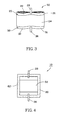
- FIG. 8 is a front view of a positive pole 70 for a rechargeable battery in accordance with the second embodiment of the present invention. According to this second embodiment, the positive pole material film 72 extends along one long side of the positive pole 70, having its two ends spaced from the two opposite short sides of the positive pole 70 at a distance.
- FIG. 9 is a front view of a positive pole 80 for a rechargeable battery in accordance with the third embodiment of the present invention. According to this third embodiment, the positive pole material film 82 shows a parallel pattern.
Landscapes
- Chemical & Material Sciences (AREA)
- Chemical Kinetics & Catalysis (AREA)
- Electrochemistry (AREA)
- General Chemical & Material Sciences (AREA)
- Engineering & Computer Science (AREA)
- Manufacturing & Machinery (AREA)
- Inorganic Chemistry (AREA)
- Materials Engineering (AREA)
- Physics & Mathematics (AREA)
- Condensed Matter Physics & Semiconductors (AREA)
- General Physics & Mathematics (AREA)
- Secondary Cells (AREA)
- Cell Electrode Carriers And Collectors (AREA)
- Sealing Battery Cases Or Jackets (AREA)
Abstract
Description
- The present invention relates to battery and more particularly, to a rechargeable battery fabrication method practical for making a rechargeable battery having excellent high current discharge characteristic.
- Conventional rechargeable batteries include the so-called roll type battery. A roll type battery has a roll construction formed of a positive pole, a first isolation membrane, a negative pole and a second isolation membrane in order. The positive pole has a conducting pole at its end. The negative pole has a conducting pole at its end. The roll construction is packaged in a housing. Thereafter, an electrolyte is filled in the housing, forming the rechargeable battery.
- When a conventional rechargeable battery is used for high current discharge, its discharge efficiency is poor. For example, the discharge efficiency of a 2.0 Ah rechargeable battery is about 50% when discharged at 15C (30A) (see line D in FIG. 6), or about zero when discharged at 20C (40A) (see line F in FIG 7). Therefore, how to improve the discharge efficiency of a rechargeable battery during high current discharging has become a research and develop problem in the battery industry.
- The present invention has been accomplished under the circumstances in view. It is the main object of the present invention to provide a rechargeable battery fabrication method, which is practical for making a rechargeable battery having excellent discharge efficiency during high current discharging.
- To achieve this and other objects of the present invention, the rechargeable battery fabrication method comprises the steps of: (a) preparing a positive pole, a negative pole and two isolation membranes; wherein said positive pole includes an elongated aluminum strip and a positive pole material film partially covering said elongated aluminum strip so that a bare aluminum zone is defined on said positive pole; said negative pole includes an elongated copper strip and a negative pole material film partially covering said copper strip so that a bare copper zone is defined on said negative pole; said negative pole material film has a width larger than or equal to a width of said positive pole material film; said two isolation membranes each have a width larger than or equal to the width of said negative pole material film and smaller than both of the width of said aluminum strip and the width of said copper strip; (b) rolling up said positive pole, one of said isolation membranes, said negative pole and the other one of said isolation membranes, which are orderly arranged in a stack, into a multilayer roll to have said positive pole material film of said positive pole and said negative pole material film of said negative pole be overlapped, the bare aluminum zone of said positive pole and the bare copper zone of said negative pole be respectively positioned at top and bottom sides of said multilayer roll, and said two isolation membranes be respectively positioned corresponding to said positive pole material film of said positive pole and said negative pole material film of said negative pole; (c) welding a first conducting pole to said bare aluminum zone of said positive pole of said multilayer roll to electrically connect each layer of said bare aluminum zone, and welding a second conducting pole to said bare copper zone of said negative pole of said multilayer roll to electrically connect each layer of said bare copper zone; and (d) packaging said multilayer roll in a housing in such a manner that said first conducting pole and said second conducting pole extend out of said housing, and then filling an electrolyte solution in said housing.
-
- FIG. I is a schematic drawing showing the fabrication of a rechargeable battery in accordance with a first embodiment of the present invention (I).
- FIG 2 is a schematic drawing showing the fabrication of a rechargeable battery in accordance with the first embodiment of the present invention (II).
- FIG. 3 is a schematic drawing showing the fabrication of a rechargeable battery in accordance with the first embodiment of the present invention (III).
- FIG. 4 is a schematic drawing showing the fabrication of a rechargeable battery in accordance with the first embodiment of the present invention (IV).
- FIG. 5 is a diagram of 10C discharge efficiency curves according to the present invention and the prior art.
- FIG. 6 is a diagram of 15C discharge efficiency curves according to the present invention and the prior art.
- FIG 7 is a diagram of 20C discharge efficiency curves according to the present invention and the prior art.
- FIG 8 is a front view of a positive pole for a rechargeable battery in accordance with a second embodiment of the present invention.
- FIG 9 is a front view of a positive pole for a rechargeable battery in accordance with a third embodiment of the present invention.
- FIGS. 1~4 illustrate the fabrication method of a
rechargeable battery 10 in accordance with the first embodiment of the present invention. At first, as shown in FIG. 1, prepare apositive pole 20, anegative pole 30, and twoisolation membranes 40. Thepositive pole 20 comprises a narrow,elongated aluminum strip 22, and a positivepole material film 24 covered on the two opposite surfaces of thealuminum strip 22. The positivepole material film 24 is a LiCoO2 film, having a width w1 smaller than the width w2 of thealuminum strip 22 so that thepositive pole 20 has abare aluminum zone 21. Thenegative pole 30 comprises a narrow,elongated copper strip 32, and a negativepole material film 34 covered on the two opposite surfaces of thecopper strip 32. The negativepole material film 34 is a MCMB (Mesophase Carbon Micro Beads) film, having a width w3 approximately equal to the width w1 of the positivepole material film 24 and smaller than the width w4 of thecopper strip 32 so that thenegative pole 30 has abare copper zone 31. The negativepole material film 34 may be made having its width w3 greater than the width w1 of the positivepole material film 24. Theisolation membranes 40 are made of polyethylene, having a width w5 approximately equal to the width w3 of the negativepole material film 34, and smaller than both of the width w2 of thealuminum strip 22 or the width w4 of thecopper strip 32. Theisolation membranes 40 may be made having their width w5 greater than the width w3 of the negativepole material film 34. Further, thepositive pole 20, thenegative pole 30 and the twoisolation membranes 40 are approximately equal in length. - Alternatively the positive
pole material film 24 may be made of any of a variety of other equivalent materials such as lithiated oxide, lithiated sulfide, lithiated selenide, lithiated telluride, lithium-iron-phosphorus oxide, lithium-vanadium-phosphorus oxide of vanadium, titanium, chromium, copper, molybdenum, niobium, iron, nickel, cobalt, manganese or a mixture thereof. Alternatively, the negativepole material film 34 may be made of any of a variety of other equivalent materials such as Mesophase Carbon Micro Beads (MCMB), Vapor-Grown Carbon Fiber (VGCF), Carbon Nanotube (CNT), coke, carbon black, graphite, acetylene black, carbon fiber, vitreous carbon or a mixture thereof. Alternatively, theisolation membranes 40 may be made of polypropylene or polyether. - Thereafter, as shown in FIG 2, roll up the
positive pole 20, one of theisolation membranes 40, thenegative pole 30 and the other on of theisolation membranes 40, which are orderly arranged in a stack, into amultilayer roll 50 to have said positivepole material film 24 of saidpositive pole 20 and said negativepole material film 34 of saidnegative pole 30 be overlapped. Thebare aluminum zone 21 of thepositive pole 20 and thebare copper zone 31 of thenegative pole 30 are respectively positioned at two opposite (top and bottom) sides of saidmultilayer roll 50. The twoisolation membranes 40 are respectively positioned corresponding to the positivepole material film 24 of thepositive pole 20 and the negativepole material film 34 of thenegative pole 30 to isolate the positivepole material film 24 from the negativepole material film 34. Alternatively, the sequence of the layers in themultilayer roll 50 can be so arranged with oneisolation membrane 40, thepositive pole 20, the other one of theisolation membranes 40 and thenegative pole 30. - Thereafter, as shown in FIG 3, weld a first conducting
pole 26 to thebare aluminum zone 21 of thepositive pole 20 of themultilayer roll 50 to electrically connect each layer of thebare aluminum zone 21 of thepositive pole 20, and weld a second conductingpole 36 to thebare copper zone 31 of thenegative pole 30 of themultilayer roll 50 to electrically connect each layer of thebare copper zone 31 of thenegative pole 30. - At final, as shown in FIG. 4, package the
multilayer roll 50 in ahousing 60, and then fill anelectrolyte solution 62 in thehousing 60. After sealing of thehousing 60, the desired rechargeable battery is thus obtained, and the first conductingpole 26 and the second conductingpole 36 extend out of thehousing 60. According to this embodiment, theelectrolyte solution 62 is 1.5M LiPF6 (lithium hexafluorophosphate). Alternatively, LiBF4, LiAsF6, LiSbF6, LiClO4, LiAlCl4, LiGaCl4, LiNO3, LiC(SO2CF3)3, LiN(SO2CF3)2, LiSCN, LiO3SCF2CF3, LiC6F5SO3, LiO2CCF3, LiSO3F, LiB(C6H5)4, LiCF3SO3, LiB(C2O4)2, or a mixture thereof can be adopted aselectrolyte solution 62. The concentration of the electrolyte in theelectrolyte solution 62 can be 1.1~2.0M. The solvent for theelectrolyte solution 62 is comprised by volume of 30% ethylene carbonates, 20% propylene carbonates, and 50% propyl acetate. Actually, the solvent can be prepared from ethylene carbonates, propylene carbonates, butylene carbonates, dipropyl carbonates, acid anhydrides, n-methyl pyrrolidone, n-methyl acetamide, n-methyl formamide, dimethyl formamide, r -butyrolactone, acetonitrile, dimethyl sulfoxide, dimethyl sulfite, vinylene carbonate (VC), 1,2-diethoxyethane, 1,2-dimethoxyethane, 1,2-dibutoxyethane, tetrahydrofuran, 2-methyl tetrahydrofuran, propylene oxide, methyl acetate, ethyl acetate, propyl acetate, methyl butyrate, ethyl butyrate, methyl propionate, ethyl propionate, dimethyl carbonate (DMC), diethyl carbonate (DEC), ethyl methyl carbonate (EMC), or a mixture thereof. - Because the first conducting
pole 26 of thepositive pole 20 is electrically connected to each layer of thebare aluminum zone 21 and the second conductingpole 36 of thenegative pole 30 is electrically connected to each layer of thebare copper zone 31, the moving distance of electrons in both of thepositive pole 20 and thenegative pole 30 is greatly reduced during discharging of therechargeable battery 10. The average moving distance is about 2cm. In a conventional roll type battery, the average moving distance of electrons is about 20cm. Therefore, therechargeable battery 10 of the present invention has excellent high current discharge efficiency. When compared with a conventional roll type battery, as shown in FIG. 5, the discharge voltage of therechargeable battery 10 according to the present invention is maintained at about 3.4~3.5V when discharging at 10C (see line A) and the discharge voltage of a conventional roll type battery at 10C is maintained at about 3.2V (see line B). The discharge efficiency of therechargeable battery 10 of the present invention is over 90%, obviously superior to the prior art. As shown in FIG. 6, the discharge voltage of therechargeable battery 10 according to the present invention is maintained at about 3.3 V when discharging at 15C (see line C) and the discharge voltage of a conventional roll type battery at 15C is maintained below 3V (see line D). The discharge efficiency of therechargeable battery 10 of the present invention is about 90%, which is obviously superior to the discharge efficiency of the prior art (about 50%). As shown in FIG 7, the discharge voltage of therechargeable battery 10 according to the present invention is maintained at about 3.2V when discharging at 20C (see line E) and the discharge efficiency of therechargeable battery 10 of the present invention is about 80%. A conventional roll type battery cannot discharge under the same situation (see line F). - Based on the spirit and scope of the invention, the positive pole material film can simply be coated on one of the two surfaces of the aluminum strip. Similarly, the negative pole material film can simply be coated on one of the two surfaces of the copper strip provided that the negative pole material film faces the positive pole material film. Further, the positive pole material film and the negative pole material film may be respectively coated on the aluminum strip and the copper strip to show any of a variety of patterns. FIG. 8 is a front view of a
positive pole 70 for a rechargeable battery in accordance with the second embodiment of the present invention. According to this second embodiment, the positivepole material film 72 extends along one long side of thepositive pole 70, having its two ends spaced from the two opposite short sides of thepositive pole 70 at a distance. FIG. 9 is a front view of apositive pole 80 for a rechargeable battery in accordance with the third embodiment of the present invention. According to this third embodiment, the positivepole material film 82 shows a parallel pattern. - Although particular embodiments of the invention have been described in detail for purposes of illustration, various modifications and enhancements may be made without departing from the spirit and scope of the invention. Accordingly, the invention is not to be limited except as by the appended claims.
Claims (5)
- A rechargeable battery fabrication method, which is characterized in that the method comprises the steps of:(a) preparing a positive pole (20, 70, 80), a negative pole (30) and two isolation membranes(40);
wherein said positive pole (20, 70, 80) includes an elongated aluminum strip (22) and a positive pole material film (24, 72, 82) partially covering said elongated aluminum strip (22) so that a bare aluminum zone (21) is defined on said positive pole (20, 70, 80); said negative pole (30) includes an elongated copper strip (32) and a negative pole material film (34) partially covering said copper strip (32) so that a bare copper zone (31) is defined on said negative pole (30); said negative pole material film (34) has a width (w3) larger than or equal to a width (w1) of said positive pole material film (24, 72, 82); said two isolation membranes (40) each have a width (w5) larger than or equal to the width (w3) of said negative pole material film (34) and smaller than both of the width (w2) of said aluminum strip (22) and the width (w4) of said copper strip (32);(b) rolling up said positive pole (20, 70, 80), one of said isolation membranes (40), said negative pole (30) and the other one of said isolation membranes (40), which are orderly arranged in a stack, into a multilayer roll (50) to have said positive pole material film (24, 72, 82) of said positive pole (20, 70, 80) and said negative pole material film (34) of said negative pole (30) be overlapped, the bare aluminum zone (21) of said positive pole (20, 70, 80) and the bare copper zone (31) of said negative pole (30) be respectively positioned at top and bottom sides of said multilayer roll (50), and said two isolation membranes (40) be respectively positioned corresponding to said positive pole material film (24, 72, 82) of said positive pole (20, 70, 80) and said negative pole material film (34) of said negative pole (30);(c) welding a first conducting pole (26) to said bare aluminum zone (21) of said positive pole (20, 70, 80) of said multilayer roll (50) to electrically connect each layer of said bare aluminum zone (21), and welding a second conducting pole (36) to said bare copper zone (31) of said negative pole (30) of said multilayer roll (50) to electrically connect each layer of said bare copper zone (31); and(d) packaging said multilayer roll (50) in a housing (60) in such a manner that said first conducting pole (26) and said second conducting pole (36) extend out of said housing (60), and then filling an electrolyte solution (62) in said housing (60). - The rechargeable battery fabrication method as claimed in claim 1, which is characterized in that said positive pole material film (24, 72, 82) is made of one or more materials selected from the group consisting of lithiated oxide, lithiated sulfide, lithiated selenide, lithiated telluride, lithium-iron-phosphorus oxide, lithium-vanadium-phosphorus oxide of vanadium, titanium, chromium, copper, molybdenum, niobium, iron, nickel, cobalt or manganese, and a mixture thereof.
- The rechargeable battery fabrication method as claimed in claim 1, which is characterized in that said negative pole material film (34) is made of one or more materials selected from the group consisting of mesophase carbon micro beads, vapor-grown carbon fiber, carbon nanotube, coke, carbon black, graphite, acetylene black, carbon fiber, vitreous carbon, and a mixture thereof.
- The rechargeable battery fabrication method as claimed in claim 1, which is characterized in that said electrolyte solution (62) comprises an electrolyte selected from the group consisting of LiPF6, LiBF4, LiAsF6, LiSbF6, LiClO4, LiAlCl4, LiGaCl4, LiNO3, LiC(SO2CF3)3, LiN(SO2CF3)2, LiSCN, LiO3SCF2CF3, LiC6F5SO3, LiO2CCF3, LiSO3F, LiB(C6H5)4, LiCF3SO3, LiB(C2O4)2, and a mixture thereof.
- The rechargeable battery fabrication method as claimed in claim 1, which is characterized in that said electrolyte solution (62) comprises a solvent selected from the group consisting of ethylene carbonates, propylene carbonates, butylene carbonates, dipropyl carbonates, acid anhydrides, n-methyl pyrrolidone, n-methyl acetamide, n-methyl formamide, dimethyl formamide, r -butyrolactone, acetonitrile, dimethyl sulfoxide, dimethyl sulfite, vinylene carbonate, 1,2-diethoxyethane, 1,2-dimethoxyethane, 1,2-dibutoxyethane, tetrahydrofuran, 2-methyl tetrahydrofuran, propylene oxide, methyl acetate, ethyl acetate, propyl acetate, methyl butyrate, ethyl butyrate, methyl propionate, ethyl propionate, dimethyl carbonate, diethyl carbonate, ethyl methyl carbonate, and a mixture thereof.
Applications Claiming Priority (2)
| Application Number | Priority Date | Filing Date | Title |
|---|---|---|---|
| TW095114004A TW200742150A (en) | 2006-04-19 | 2006-04-19 | Method for producing secondary battery |
| CNB2006100794567A CN100477363C (en) | 2006-04-19 | 2006-04-29 | Method for manufacturing secondary battery |
Publications (2)
| Publication Number | Publication Date |
|---|---|
| EP1850410A2 true EP1850410A2 (en) | 2007-10-31 |
| EP1850410A3 EP1850410A3 (en) | 2008-11-26 |
Family
ID=59959671
Family Applications (1)
| Application Number | Title | Priority Date | Filing Date |
|---|---|---|---|
| EP07008100A Withdrawn EP1850410A3 (en) | 2006-04-19 | 2007-04-20 | Rechargeable battery fabrication method |
Country Status (5)
| Country | Link |
|---|---|
| US (1) | US20070245548A1 (en) |
| EP (1) | EP1850410A3 (en) |
| KR (1) | KR100821244B1 (en) |
| CN (1) | CN100477363C (en) |
| TW (1) | TW200742150A (en) |
Cited By (1)
| Publication number | Priority date | Publication date | Assignee | Title |
|---|---|---|---|---|
| US20120244425A1 (en) * | 2009-09-29 | 2012-09-27 | Mitsubishi Chemical Corporation | Nonaqueous-electrolyte batteries and nonaqueous electrolytic solutions |
Families Citing this family (6)
| Publication number | Priority date | Publication date | Assignee | Title |
|---|---|---|---|---|
| US20080026293A1 (en) * | 2006-07-26 | 2008-01-31 | Eveready Battery Company, Inc. | Lithium-iron disulfide cylindrical cell with modified positive electrode |
| KR100930566B1 (en) | 2007-10-15 | 2009-12-09 | 엘지전자 주식회사 | Clothes dryer |
| TWI419395B (en) * | 2011-04-19 | 2013-12-11 | Ind Tech Res Inst | Secondary battery structure |
| TWI493767B (en) * | 2012-03-07 | 2015-07-21 | Nisshin Steel Co Ltd | External cladding for a laminate battery, method for manufacturing an external cladding for a laminate battery, method for manufacturing a laminate battery and laminate battery |
| CN103050732B (en) * | 2012-12-20 | 2015-04-29 | 上海奥威科技开发有限公司 | Lithium titanate-based chemical power supply |
| EP4258404A4 (en) * | 2022-02-28 | 2024-05-08 | Ningde Amperex Technology Ltd. | ELECTROCHEMICAL DEVICE AND ELECTRONIC DEVICE |
Citations (2)
| Publication number | Priority date | Publication date | Assignee | Title |
|---|---|---|---|---|
| EP0771040A2 (en) | 1995-09-27 | 1997-05-02 | Sony Corporation | High-capacity secondary battery of jelly roll type |
| US20050214642A1 (en) * | 2004-03-29 | 2005-09-29 | Kim Ki-Ho | Electrode package and secondary battery using the same |
Family Cites Families (10)
| Publication number | Priority date | Publication date | Assignee | Title |
|---|---|---|---|---|
| US6287719B1 (en) * | 1998-06-15 | 2001-09-11 | Eveready Battery Company, Inc. | Battery including a non-aqueous multi-cell spiral-wound electrode assembly |
| CN1277330C (en) * | 1999-08-10 | 2006-09-27 | 三洋电机株式会社 | Non-aqueous electrolyte secondary battery and its mfg. method |
| JP2001202985A (en) * | 2000-01-21 | 2001-07-27 | Shin Kobe Electric Mach Co Ltd | Cylindrical lithium-ion battery |
| JP4439226B2 (en) * | 2003-09-11 | 2010-03-24 | 日立マクセル株式会社 | Nonaqueous electrolyte secondary battery |
| JP4502616B2 (en) | 2003-09-30 | 2010-07-14 | 三洋電機株式会社 | Batteries having a film-like outer package |
| JP4439870B2 (en) * | 2003-10-17 | 2010-03-24 | パナソニック株式会社 | Nonaqueous electrolyte secondary battery |
| JP3972205B2 (en) * | 2003-11-06 | 2007-09-05 | 日本電気株式会社 | Stacked battery |
| JP4780923B2 (en) * | 2004-03-30 | 2011-09-28 | 三洋電機株式会社 | Lithium secondary battery |
| KR100601562B1 (en) * | 2004-07-29 | 2006-07-19 | 삼성에스디아이 주식회사 | Electrode Assembly and Lithium Secondary Battery Using the Same |
| JP4599314B2 (en) * | 2006-02-22 | 2010-12-15 | 株式会社東芝 | Non-aqueous electrolyte battery, battery pack and automobile |
-
2006
- 2006-04-19 TW TW095114004A patent/TW200742150A/en unknown
- 2006-04-29 CN CNB2006100794567A patent/CN100477363C/en not_active Expired - Fee Related
-
2007
- 2007-04-18 US US11/785,476 patent/US20070245548A1/en not_active Abandoned
- 2007-04-19 KR KR1020070038517A patent/KR100821244B1/en not_active Expired - Fee Related
- 2007-04-20 EP EP07008100A patent/EP1850410A3/en not_active Withdrawn
Patent Citations (2)
| Publication number | Priority date | Publication date | Assignee | Title |
|---|---|---|---|---|
| EP0771040A2 (en) | 1995-09-27 | 1997-05-02 | Sony Corporation | High-capacity secondary battery of jelly roll type |
| US20050214642A1 (en) * | 2004-03-29 | 2005-09-29 | Kim Ki-Ho | Electrode package and secondary battery using the same |
Cited By (1)
| Publication number | Priority date | Publication date | Assignee | Title |
|---|---|---|---|---|
| US20120244425A1 (en) * | 2009-09-29 | 2012-09-27 | Mitsubishi Chemical Corporation | Nonaqueous-electrolyte batteries and nonaqueous electrolytic solutions |
Also Published As
| Publication number | Publication date |
|---|---|
| KR20070103714A (en) | 2007-10-24 |
| TW200742150A (en) | 2007-11-01 |
| CN101064371A (en) | 2007-10-31 |
| TWI302389B (en) | 2008-10-21 |
| KR100821244B1 (en) | 2008-04-11 |
| CN100477363C (en) | 2009-04-08 |
| US20070245548A1 (en) | 2007-10-25 |
| EP1850410A3 (en) | 2008-11-26 |
Similar Documents
| Publication | Publication Date | Title |
|---|---|---|
| US11799081B2 (en) | Positive electrode material for lithium secondary battery, positive electrode including same, and lithium secondary battery | |
| US9590273B2 (en) | Non-aqueous electrolyte solution and lithium secondary battery including the same | |
| JP5810401B2 (en) | Multilayer secondary battery providing two or more operating voltages | |
| JP5948660B2 (en) | Non-aqueous electrolyte and lithium secondary battery including the same | |
| US9786916B2 (en) | Electrode and secondary battery including the same | |
| JP6138436B2 (en) | Non-aqueous electrolyte secondary battery and manufacturing method thereof | |
| EP1850410A2 (en) | Rechargeable battery fabrication method | |
| KR20150037535A (en) | Battery | |
| US20160301105A1 (en) | Non-Aqueous Electrolytic Solutions and Electrochemical Cells Comprising the Same | |
| US9640832B2 (en) | Non-aqueous electrolyte secondary battery | |
| JP2014035929A (en) | Nonaqueous electrolyte secondary battery | |
| KR20150044004A (en) | Additive for non-aqueous liquid electrolyte, non-aqueous liquid electrolyte and lithium secondary battery comprising the same | |
| KR20200109270A (en) | Secondary battery | |
| JP3229757B2 (en) | Lithium secondary battery | |
| US11114661B2 (en) | Electrochemical cell having a serpentine anode with a plurality of interleaved cathode plates having extending tabs stacked and connected to each other by a welded surrounding metal hoop | |
| KR20120096388A (en) | Lithium battery and method for fabricating the same | |
| US9831526B2 (en) | Lithium secondary battery | |
| US20110016706A1 (en) | Rechargeable battery fabrication method | |
| KR101640634B1 (en) | Non-aqueous liquid electrolyte and lithium secondary battery comprising the same | |
| EP2731188B1 (en) | Electrolyte for lithium secondary battery and lithium secondary battery including same | |
| EP4177999B1 (en) | Electrode assembly | |
| KR102940091B1 (en) | Electrode for lithium secondary battery and manufacturing method thereof | |
| JP2016085884A (en) | battery | |
| JP2007250499A (en) | Lithium ion secondary battery | |
| US12322756B2 (en) | Electrolyte solution for lithium secondary battery and lithium secondary battery including same |
Legal Events
| Date | Code | Title | Description |
|---|---|---|---|
| PUAI | Public reference made under article 153(3) epc to a published international application that has entered the european phase |
Free format text: ORIGINAL CODE: 0009012 |
|
| 17P | Request for examination filed |
Effective date: 20070420 |
|
| AK | Designated contracting states |
Kind code of ref document: A2 Designated state(s): AT BE BG CH CY CZ DE DK EE ES FI FR GB GR HU IE IS IT LI LT LU LV MC MT NL PL PT RO SE SI SK TR |
|
| AX | Request for extension of the european patent |
Extension state: AL BA HR MK YU |
|
| PUAL | Search report despatched |
Free format text: ORIGINAL CODE: 0009013 |
|
| AK | Designated contracting states |
Kind code of ref document: A3 Designated state(s): AT BE BG CH CY CZ DE DK EE ES FI FR GB GR HU IE IS IT LI LT LU LV MC MT NL PL PT RO SE SI SK TR |
|
| AX | Request for extension of the european patent |
Extension state: AL BA HR MK RS |
|
| 17Q | First examination report despatched |
Effective date: 20090622 |
|
| AKX | Designation fees paid |
Designated state(s): AT BE BG CH CY CZ DE DK EE ES FI FR GB GR HU IE IS IT LI LT LU LV MC MT NL PL PT RO SE SI SK TR |
|
| STAA | Information on the status of an ep patent application or granted ep patent |
Free format text: STATUS: THE APPLICATION IS DEEMED TO BE WITHDRAWN |
|
| 18D | Application deemed to be withdrawn |
Effective date: 20110628 |